Serge Devant returns to Crosstown Rebels with his mesmerising new single ‘A Little Bit Of Love’, complete with a remix from Art Department & MDL Child. Thanks to his fresh house sound, New York resident Serge Devant has turned the heads of tastemakers like Jamie Jones and Damian Lazarus for several years. A regular on Crosstown Rebels dating back to his label debut in 2015, dropping a string of EPs on the label since, he arrives in fine form once again as he unveils his latest single.
His brilliant ‘A Little Bit Of Love’ is an inventive rhythm that soon sweeps you up with its wavy beats and slick hits. Gorgeous chords are draped over it next to steamy vocals to ensure a truly emotive dance floor trip, while the dub version strips out the lead vocal to lay the focus on the remaining musical elements. The remix comes from Jonny White, aka pioneering underground artist and No. 19 Music boss Art Department, and fellow Canadian talent MDL Child. They flip the production into seven minutes of emotionally intense house music with muted acid lines undulating throughout the mix, while immense percussive energy and lush cosmic keys make for a fulsome dancefloor rush.
out of Stock
Last delivered 7 months ago available to reorder, subject to availability
Rare Jazz-Soul-Funk Fusion From Milwaukee.
Originally released as a private pressing in 1982.
First Ever Vinyl Reissue.
Released in collaboration with the Numero Group.
180g BLACK vinyl limited to 500 copies w/obi strip. Non-Returnable.
James Dallas is a talented producer, songwriter and saxophonist from Milwaukee. He started playing the clarinet in Junior High School at the age of thirteen, during this time public schools would loan students an instrument who could not afford their own. James originally requested an alto saxophone but none of those were available. In 1967 he got his hands on a baritone saxophone…and it became his main instrument for the next 15 years.
Dallas decided to pursue a career in entertainment (influenced by his parents who allowed him to play in a professional R&B band at the age of 14) and was possessed by an exceptional drive to excel in music. James wanting to showcase his talents as a multi-instrumentalist led him to his pursuit in playing the flute, various forms of the piano…and of course all the saxes & clarinets.
Soon he started playing with local bands and solo artists in the jazz & blues scene, he even participated on several recordings (mostly as part of the horn section)…but things really started to take of when James (together with his brother Chris and his cousin Kevin) started the outfit Heavy Weather. Most of the other bandmembers where his friends and would later become regular players on Dallas’ two solo albums ‘Life Forms’ (1982) and ‘Here And Now’ (1984).
The album we are proudly presenting you today: Life Forms (1982) was James Dallas debut album. Recorded at Mauer Brothers’ Studio and completely self-funded with the help and encouragement of his peers and family. Dallas paid for all the recording time and the privately pressed 1000 copies of the album…back then he could not have imagined that decades later it would become a much sought-after collectible that fetches high prices.
On Life Forms James Dallas is joined by a top cast of musicians such as Earl Thompson on percussion, Myron McClain and Noland Clark on drums, Rick Lacey and Robert Walls Jr. on guitar, Jake Simmons and Kevin Whitehead on bass. Kevin Whitehead (who is James’ cousin and known for his work with Ben Webster, Ella Fitzgerald, Miles Davis, Sun Ra and Pharoah Sanders) also wrote a track for the album. The whole venture truly is a family affair because James’ brother Christopher can also be heard on keyboards and the album design was handled by his other brother Calvin.
James Dallas surely deserves the title of ‘multi-instrumentalist’ because not only did he compose the majority of the songs (and produced the whole album) but next to his trademark soprano saxophone work, he also took care of playing the electric piano, flute, vocoder and keyboards.
The six songs on the fantastic Life Forms album are a heavy mix of mind-blowing funk, fusion and Vocoder/Odyssey synth extravaganza. If you are a serious collector or a smooth jazz underground enthusiast, then this is the thing for you! Also included is the magnificent ‘Sidetrack’ song that was included on the Numero compilation ‘NuLeaf’ released in 2020.
Vathres is the new project by Swedish-based keyboardist and composer Alex Zethson, who usually
performs with acts such as Angles 9, Fire! Orchestra Goran Kajfeš Tropiques, Sven Wunder and
Mariam the Believer, in addition to his own ensembles and solo projects. Record consists of three
extended pieces of cinematic, minimalist post-rock featuring a large ensemble and appearances by
guitar-wizard Reine Fiske (Dungen), keyboardist Tomas Hallonsten, former Meshuggah-bassist
Gustaf Hielm and Cult of Luna-drummer Christian Augustin, among others. LP comes in a Tip-On
sleeve with artwork by Michell Zethson.
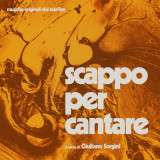
Another dream coming true! One of Giuliano Sorgini's finest and most sought-after titles is finally available as an official LP reissue – the first ever – remastered from the original tapes.
Originally released in 1971on the small library music imprint FAMA, which operated as a sub-label of RCA Italy, the record contains the original music written for Scappo per cantare, a small, pseudo-psychedelic 'musicarello' (musical comedy film) broadcast on RAI television and starring, among others, Italian singers Gianni Morandi and Mauro Lusini.
The only credited album artist is Sorgini, but it's impossible not to perceive, in this record, the hand of his close friend and colleague Alessandro Alessandroni.
This should not come as a surprise. In the early 70s, the two composers and multi-instrumentalists had a fruitful collaboration that saw them, under the monikers Braen (Alessandroni) and Raskovich (Sorgini), produce an abundance of works together, most of which have now gained the recognition they deserve. These include, among others, two 7" singles from their band The Pawnshop, three records in the series Alle sorgenti delle civiltà (Folkmusic), the crime/noir library albums Quarta pagina (Usignolo) and Inchiesta giudiziaria (Octopus Records), as well as the LP Tempo Libero (Panda Records), which was released shortly after the record presented here and in some ways drew rhythmic inspiration from it.
While their collaboration remained unacknowledged on the original release of Scappo per cantare (this was not uncommon at the time, especially in the field of library music), the record sounds perfectly in line with other works composed by Alessandroni in the early 70s, such as Complesso Gisteri's Mostra Collettiva (co-written with Oronzo De Filippi), or even a landmark album like Spontaneous, where Sorgini contributed to a handful of tracks.
So, yes, the sheer beauty of Scappo per cantare is the result of an incredible synergy between two heavyweights of Italian library music! Airy and sweeping melodies à la Zoo Folle, psychedelia à la Under Pompelmo, and various percussion instruments played by Sorgini seamlessly blend and fuse with elements and touches provided by Alessandroni.
More specifically, we find Alessandroni's signature, melancholy whistle in "Desolazione"; the peaceful and dreamy sound of his 12-string guitar in "Scogliere" and "Con Amore"; the trademark harmonies of his vocal ensemble Cantori Moderni in the last two tracks mentioned and in "Per cantare"; and his ingenious use of distortion on his Fender Stratocaster in the suspenseful transitions "Concentrazione" and "Fantocci", as well as in the frantic/hypnotic hippie numbers "Mordente" and "Fendente" (as a side note, it is worth remembering that Alessandroni experimented extensively with distortion in the rock-infused album Underground, co-written with De Filippi and released in 1971 under the moniker Braen's Machine, probably a reference to British psychedelic band Soft Machine).
The creative relationship between Sorgini and Alessandroni was so symbiotic that it would be useless to try to identify in more detail their respective contributions to the sound of Scappo per cantare. The alchemy between these two musical geniuses is the key to the album's exquisitely Italian mixture of cheerful lounge, sweet psychedelia and smooth easy listening.
To do justice to the quality of the music, this remastered reissue is enriched by a new artwork by Eric Adrian Lee, who drew inspiration from the psychedelic visual culture of the period in which the album was written and recorded.
Prog Rock band from Bergen, Norway, formed in late 1969 , and disbanded in the spring of 1974.
They had several reunions since then. Saft was among the first rock bands to sing in Nynorsk
("Fjovisere" in 1971), also made history when they won the European summit with "People In Motion"
in November 1971. The members of the first Saft incarnation came from other established Bergen
bands: Ove Thue (vocals, guitar), Tom Harry Halvorsen (keyboards, vocals) and Trygve Thue (guitar,
vocals) from Neither Nor, Magne Lunde (drums) from Human Beings, and Rolf Skogstrand (bass)
from various - including Human Beings. The band had ample opportunity to play in the hippie musical
Hair on the National Stage in Bergen in the autumn of 1970. A recording from the performance was
released on LP by Polydor just before Christmas 1970. Saft made a demo recording of their
self-composed material at about the same time, and a contract deal with Polydor. In summer of 1971
they released "People In Motion" / "Albertine Hall", which was a big success and critical aclaimed. The
record was chosen as Norway's contribution to the European Summit on November 20, 1971. “Horn”
was their second album released in 1971 an experimental record with diverse styles, and
improvisations with all members contribute in songwriting. Available on vinyl again for the first time
since 1971
If you were to ask for a defining Habibi Funk track, there are a few that come to mind: from Fadoul’s “Sid Redad,” Dalton’s “Soul Brother” to Ahmed Malek’s “Omar Gatlato.” However, none are as widely connected with us at this point as Hamid Al Shaeri’s “Ayonha.” We heard the track for the first time when we were working on selecting tracks for your first compilation and we instantly loved it. We obviously had heard of Hamid El Shaeri’s music before, but only material from his Al Jeel phase when he was already the full-blown
superstar he is now.
Listening to his releases from the early 1980’s opened a whole new door for us. At the time, Hamid had just left Libya to pursue his career in Egypt via a detour in London, where he recorded his
first album. Hamid’s distinct sound of the sound is quintessentially reliant on heavy synths and so it was particularly important to purchase these synths in a timely manner. “Whenever a new one synthesizer would come out, we would have to buy it immediately, otherwise someone else would get their hands on that sound.” London also played an important role for Hamid as a musical epicenter.
He fondly reminisces about the many live shows he attended there, including some of the biggest international musicians like Freddie Mercury and Michael Jackson. After returning to Cairo where he also recorded his following albums, he connected with SLAM! for the
release of his debut, laying the foundation of a collaboration that lasted for 5 albums. Luckily, we were able to connect with Hamid through our friend Youssra El Hawary, whose extensive network has opened many doors for us within the Egyptian music scene. We met Hamid for the first time probably in 2016 at his office / rehearsal studio in the outskirts Cairo. We were expecting a larger-than-life
character in-line with his status as a certified superstar, yet the actual person turned out to be very approachable and super easy to connect with. He liked the idea of an effort to amplify his early works again,
which, when originally released, were far from an economic success.
While he was down to assist with an interview and his blessing for the project he also told us that for any license we needed to speak with the original label SLAM! who released these songs, still held the rights and also remained in business over the decades though they didn’t actively release any new music. Hany Sabet had started SLAM! records in the early 1980s and focused on cassette tape releases, the
format that expedited the success of a new generation of record labels in Egypt. By the mid 1980’s, SLAM! had become one of the most successful and economically dominant record labels in Egypt, with Hamid El Shaeri being just one of their key artists, alongside Mohamed Mounir, Hanan, Hakim, Mustafa Amar and many more. Luckily, Hany Sabet turned out to be a friend of our colleague Malak Makar’s father, which probably helped to warm him to the idea of licen- sing “Ayonha” to this - in the scale of his world - tiny label
from Germany. Eventually “Ayonha” ended up becoming a widely successful release and either Hany or we brought up the idea of a full album dedicated to Hamid El Shaeri’s work on SLAM!.
"Maktoub Aleina” is the first single and will be released January 14th. Following the massive success of "Ayonha,” “Maktoub Aleina” is another mid-tempo groover with a beautiful, synth-forward melody, that brings together a lovely combination of soul, disco and Arabic pop music of the highest order, giving a taste of full album. The second single, “Yekfini Nesma Sotak” will be released January 28th and combines Hamid’s unique formula of soul and pop, held together by a catchy synth melody. “Yekfini Nesma Sotak” picks up the
pace a bit, making the uplifting mood of the track even more powerful. Third single, arriving February 11th, is “Dari Demou’ek,” one of the stand out tracks of Hamid’s early recordings done for SLAM! in the early 1980s. Dominated by a disco infused bassline, the track offers a lot of space of the funky production to shine while Hamid inserts his vocals at all the right moments. A masterpiece of disco touched by Arabic pop music.
Full album arrives February 25th. This release is dedicated to Hany Sabet, the founder of SLAM! and his wife Rosemary Jane Sabet (who
took the photos we used for the cover and the booklet), who sadly passed away during the time it took us to prepare the release.
Vinyl comes with an extensive booklet with an interview with Hamid as well as unseen photos
out of Stock
Last delivered 3 years ago available to reorder, subject to availability
The most potent memories I have of music are from my early childhood listening to the oldie's station, riding in the back of my Pops' 1975 Cadillac Seville to work alongside him moving plants in Sacramento at the now long gone Capitol Nursery during white hot summer afternoons, and then the drives back home in the purple twilights and oily blue-oranged nights. I'm talkin' The Temptations, War, Earth Wind and Fire, Al Green, Sly and the Family Stone, The Delfonics, Stevie Wonder, Chaka Khan...soul music. I loved the melodrama of it all. The world outside refracted and transmuted through the crackling speakers past Pops' thumping thumb and my tiny whirring mind and left whatever road behind us fundamentally changed in our wake. Through the years other sounds too left its imprint well before I picked up a guitar. Rap, Punk, hardcore, dub, R&B--and a little later in middle school, blues, folk and country. But those early Cadillac memories always remained the bedrock. With folk and blues music, I fell in love with the immediacy of it and found the acoustic guitar economical for all the solitary roaming of my early 20's. All the while I knew that one day, when I had something I felt like I could add, I wanted to incorporate the sound of those early Cadillac memories. But only after I felt established as a songwriter in its most simple form, banging on a wooden guitar and yodeling up some melody did I feel comfortable exploring other sounds and only recently did I find the time and space to do that. The pandemic trapped all the world in their rooms. While recording my last record in the height of it and at the behest of my friend and You, Yeah, You producer Brad Cook and his friend Justin Vernon, I bought my first keyboard. A Roland Juno DS. I started tinkering on it throughout the past couple of years and as I became more stationary started writing songs on different instruments that I accumulated. Layering sounds on garageband in my apartment writing bass and horn parts, making drum loops, adding synth... I became pretty obsessive with the endless possibilities it brought and got quicker and quicker at making songs that way. It was just so fun and limitless.
The most potent memories I have of music are from my early childhood listening to the oldie's station, riding in the back of my Pops' 1975 Cadillac Seville to work alongside him moving plants in Sacramento at the now long gone Capitol Nursery during white hot summer afternoons, and then the drives back home in the purple twilights and oily blue-oranged nights. I'm talkin' The Temptations, War, Earth Wind and Fire, Al Green, Sly and the Family Stone, The Delfonics, Stevie Wonder, Chaka Khan...soul music. I loved the melodrama of it all. The world outside refracted and transmuted through the crackling speakers past Pops' thumping thumb and my tiny whirring mind and left whatever road behind us fundamentally changed in our wake. Through the years other sounds too left its imprint well before I picked up a guitar. Rap, Punk, hardcore, dub, R&B--and a little later in middle school, blues, folk and country. But those early Cadillac memories always remained the bedrock. With folk and blues music, I fell in love with the immediacy of it and found the acoustic guitar economical for all the solitary roaming of my early 20's. All the while I knew that one day, when I had something I felt like I could add, I wanted to incorporate the sound of those early Cadillac memories. But only after I felt established as a songwriter in its most simple form, banging on a wooden guitar and yodeling up some melody did I feel comfortable exploring other sounds and only recently did I find the time and space to do that. The pandemic trapped all the world in their rooms. While recording my last record in the height of it and at the behest of my friend and You, Yeah, You producer Brad Cook and his friend Justin Vernon, I bought my first keyboard. A Roland Juno DS. I started tinkering on it throughout the past couple of years and as I became more stationary started writing songs on different instruments that I accumulated. Layering sounds on garageband in my apartment writing bass and horn parts, making drum loops, adding synth... I became pretty obsessive with the endless possibilities it brought and got quicker and quicker at making songs that way. It was just so fun and limitless.
Alien Transistor is proud to announce a reissue of Such December, the fourth album by Japanese indie folk-pop artist, Gratin Carnival. Listeners might already know Gratin Carnival from their appearance on the Alien Parade Japan compilation of indie pop groups working with brass and woodwind; compiled by Markus Acher of The Notwist and Saya of Tenniscoats, it introduced this beautiful genre to the wider world. Gratin Carnival’s “Just Watching” was one of the many highlights of that compilation, and its gentle bossa-folk glide reappears on Such December.
Originally released in 2020, Such December captures beautifully the happy-sad charm of Gratin Carnival. The project of Koreyuki Mitsunaga, Gratin Carnival started in 2011; Mitsunaga had been home recording for some time and decided on the name as an umbrella for his music-making. Mitsunaga’s main instruments are guitar, which he uses to great effect throughout, his gorgeous acoustic playing reminiscent of players like Ueno Takashi of Tenniscoats or João Gilberto, and alto saxophone and clarinet. Those three instruments make up the core of Gratin Carnival’s sound, along with Mitsunaga’s charmingly doleful singing.
Recording at his parents’ home, with a four-track cassette recorder and a MacBook, Mitsunaga created Such December during 2020, though the songs on it stretch back to 2016. The closing “On The Train” was the first song written for the album – “a song about a small trip,” Mitsunaga recalls – and from there, he built a beautiful collection of songs that sit together perfectly. There’s great clarity in Mitsunaga’s writing, with nothing extraneous getting in the way of the lucid arrangements and gorgeous melodies; there’s something of chamber jazz about it at times, so it’s no surprise that Mitsunaga shares his love of Benny Goodman’s small group playing.
He's also a fan of Japanese folk artists like Kenji Endo and Kyouzou Nishioka, and grew up listening to Japanese popular music, The Beatles, and The Carpenters. You can hear trace elements of all this in Such December, in the clear-headedness of the melodic decisions made by Mitsunaga, and the quiet charm of the song’s gentle arrangements. They take on different shapes live, too, where Mitsunaga often invites other musicians to join in – his live band currently includes Masafumi Ezaki (trumpet), Nahoko Kamei (bass clarinet, piano, keyboards) and Tadashi Yonago (trombone, self-made instruments).
As with plenty of musicians from the Japanese underground, Mitsunaga is involved in other music, too – he’s been working with The Otoasobi Project, which performs music in collaboration with individuals with learning disabilities, and their families; and he’s also involved in improvised music. With Such December, though, you get to hear Mitsunaga’s music at its most personal and individual, ten songs of still, gorgeously poised indie folk-pop, where the swooning clang of six strings meets the breathy bliss of woodwind and brass.
In 1964 Dave Davies of the Kinks singlehandedly made rock history when he sliced his little green Elpico amp speaker with a razor blade. Little did he know he was creating the 1st heavy metal guitar tone and riff in rock n roll, which he played on his band The Kinks' worldwide hit 'You Really Got Me.' Nearly fifty years after influencing generations of guitarists Dave continues to rock and tour. His 2013 return to the U.S. to support the album I Will Be Me was a triumph both creatively and spiritually as he found new inspiration for his soon to be follow up album, the highly acclaimed, Rippin Up Time. Released in 2014, Dave embarked on yet another U.S. tour to support it. He was joined by Jonathan Lea on guitar, Tom Currier on bass and keyboards and legendary drummer Dennis Diken of the Smithereens. The tour swept through venues in Milwaukee, Chicago, New Jersey, NYC and many more. Jim Sclavunos played drums for one gig in Bethlehem, PA. On every date Dave Davies and band played a highly charged set of solo album favorites, Kinks classics and new tracks. At the City Winery NYC on November 24 and 25, 2014 Dave and band put on an amazing concert to an audience of new and longtime Kinks fans, music industry stars and legends. They delivered two exhilarating nights of performances that rocked and ripped up the city's nightlife.
The Madlib Invazion Music Library Series Entry #4: Dan Ubick (Connie Price & The Keystones, The Lions) explores the realms of Canyon Funk. This is the next up in a series of music library releases, with future volumes produced by DJ Muggs, Karriem Riggins and more. The Madlib Invazion Music Library Series was created by Madlib and Egon to give their creative friends a chance to stretch out and indulge in whatever type of music they wanted. This music was created for easy, one-stop clearance in film and television synchronization usage and for sampling. You can also enjoy these albums in the way that many do with the best of the best vintage library catalogs – listen, ponder, repeat.
Horros, the third album by Finnish sonic voyagers Virta, is issued in September 2023. With Horros, Virta build on and take into new terrain the questing, jazz-tinged electroacoustic adventures of their last album, December 2016’s Hurmos, and its predecessor, their November 2012 debut Tales From Deep Waters. Still recognisable as who they were, the Virta of 2023 now delves further than ever before into their inner world to craft their most affecting, most atmospheric and most cinematic music to date. Even so, Horros does not need to be accompanied by images – it envelops so much that signposts are unnecessary. The music itself is the guide through this sound world. The creators of this environment are Antti Hevosmaa (electronics, flugelhorn, trumpet, vocals), Erik Fräki (electronics, drums, percussion, vocals) and Heikki Selamo (bass, electronics, guitar, lap steel, vocals). Together as Virta – which translates from Finnish as electricity, energy or stream – the trio were acclaimed as a “cornerstone of Finnish experimental music” by Finnish daily by newspaper Savon Sanomat in 2016. Horros will ensure this status becomes the case internationally. Beyond Finland, Virta already have dedicated listeners in Canada, France, Germany, Poland, the United States and the UK. Reflecting on Horros, Antti says “We’ve always made music we want to listen to ourselves. We’ve asked what is the sound we want to listen to? We are digging deeper now, with new elements – more vocals. Lyrics too, which we haven’t done before.” Without sacrificing who they are, Virta now have a wider scope than ever. “A key idea with Virta is to make the music you hear in your head and share it with people,” adds Heikki. “Yes, to share what is in our heads,” agrees Erik. “But also, it becomes live music, that’s the point
Sermon On The Rocks is Josh Ritter's eight studio album, released in 2015. Singles from the album include "Getting Ready To Get Down" and "Homecoming." According to Ritter, the album is "messianic oracular honky-tonk." Produced by Trina Shoemaker and Josh, the 12-song album was recorded over two weeks at New Orleans’ The Parlor Recording Studio and features Matt Barrick from The Walkmen on drums, Zachariah Hickman on bass, Josh Kaufman on guitars, and Sam Kassirer on keyboards. Josh Ritter is the definition of an experienced songwriter. After graduating from Oberlin College in 1999 Ritter devoted his life to a songwriting career, releasing albums independently and garnering word-of-mouth popularity. He eventually caught the attention of Irish- songwriter Glen Hansard (writer of the song 'Falling Slowly' from the movie Once) and was invited to be the tour opener for his band The Frames. This then resulted in Josh gaining international success, with his third record 'Hello Starling', becoming a charting hit in Ireland. His songs have been featured on the TV show Parenthood, and in movies like The Other Woman and Typeface. Josh Ritter has so far released 7 studio albums, is an author, husband, father, and is considered one of the best living songwriters by Paste Magazine.
Hania Rani announces her new album, Ghosts, bringing her songwriting and beautiful vocals to the fore and featuring special guests Patrick Watson, Olafur Arnalds and Duncan Bellamy (Portico Quartet). Ghosts will be released via Gondwana Records, followed by Hania"s most monumental tour to date, with shows in the EU, US and Canada. Ghosts is the sound of an ever-evolving artist and, just as the album"s title suggests she passes repeatedly and gracefully between musical worlds: as composer, singer, songwriter, and producer. This album builds on Rani"s earlier successes Esja and Home with an expanded yet still minimal setup of piano, keyboards, synths (most importantly her Prophet) and features more of her mysterious, bewitching voice. Its spirit is warm, beckoning one into an ambitious double album that unfolds at an exquisite pace, informed by her revelatory, exploratory live performances. Ghosts is also an album of collaborations as Rani is joined by Patrick Watson, who breathes unearthly life into the ethereal "Dancing with Ghosts". "Whispering House"is written and recorded with her friend, Olafur Arnalds and casts a peaceful, ineluctable spell; and Portico Quartet"s Duncan Bellamy contributes vital loops to "Don"t Break My Heart" and "Thin Line".
out of Stock
Last delivered 20 months ago available to reorder, subject to availability
The prolific Brussels-based ensemble Razen is back on Hands in the Dark with a new stunning collection of fascinating improvisations: ‘Hier l’An 4000’.
Based upon the theme of reincarnation hypnosis and inspired by the writings of Donoso and Slauerhoff, 1940s SF drawings, sky burials and a fantasy of future music where savagery and sophistication meet, the band ventures here into reverse mesozoic exotica. Each piece leans on sampled hand percussion (by grace of the legendary Algerian percussionist Abdelmajid ‘Guem’ Guemguem), augmented by Brecht Ameel, Kim Delcour and David Poltrock’s trademark devotional approach on early music wind instruments and pre-digital keys and synthesisers, spiralling down into their own rabbit hole of repetition and changes.
As gorgeously illustrated by the contemporary British painter Nicholas William Johnson: whilst proposing a futuristic trance-like trek through magenta night skies, toxic radiations and a hostile flora, Razen has never sounded more ecstatic and disruptive.
"Tale Spinnin'" - Joe Zawinul (keyb, perc, voc); Wayne Shorter (ts, ss); Alphonso Johnson (b); Alyrio Lima (perc); Leon "Ndugu" Chandler (dr)
»We played music that people listened to every day just as they watch the news every evening, music which changed constantly - just like the weather«, reminisced Joe Zawinul when talking about coming up with a name for the group. This would probably frighten off listeners in today's mass market. But back in those days CBS was satisfied with the group's sound being somewhat similar to the Miles Davis Combo and offered them a recording contract without carrying out the usual sound check. The magic potion "Bitches Brew", which Zawinul and Wayne Shorter had conjured up with Miles Davis, was promising of exhilarating new things to come.
The heart-stopping mix of motivic fixed points and exciting improvisations, »the sketchy melodies, all that a synthesizer and other similar electronic devices could offer, combined with a Milky Way of rhythms« (Der Spiegel) was the pathway down which the group went - without ever becoming pure routine. The fifth album, "Tale Spinnin'", is captivating for its wealth of distinctive, often warm, synthesized sounds, which are further enhanced by Wayne Shorter's bright, twangy soprano saxophone, lending it a jazzy aura. To be sure, this gripping jazz fusion never progresses steadily all the time, but takes up snatchy, though seemingly familiar, melodic ingredients and combines them to produce a new mixture. "Badia", however, is completely different: a quietly flowing and totally rhythmic ethnic work, which today would be classified as World Music.
Moments of eternity: the first plucks at the strings, a bass note cementing the drift into place a little more than a minute in. The organ drones, iterating unrelivable ancient history, a chiming note of the church. Guitars strings, climbing that stairway to heaven. Gossamer-light when viewed from a distance; up close, the gears grind with a visceral physicality. With BCMC, Cooper Crain and Bill MacKay unite to create Foreign Smokes: provocalogues, equal parts avant-garde noir and fire-and-icy jams to recall bright shades and warm stretches of infinity drawn through the buzzy overdrive of this side of life"s strange and sunny days. Cooper"s organ and synths and Bill"s guitar draw songs from spontaneous statements and elegiac scraps, floating closer, then farther, and closer again to the sounds of the other. Starting with a melody, as set of progressions or even as little as a scale or just a key, gives room for either one of "em to take the lead, depending on where they are or are going at any given time. The reigning motif most often seems to be, to melt and wind around each other"s sound, part of a singular undulation, handed back and forth, a slowly emerging trip up into and through an ideal of exuberance.
Dutch four-piece Lewsberg are set to release their fourth studio album, Out And About, in October 2023.
Recorded by Yulya Divakova at Schenk Studio in 2023. Mixed by Yulya Divakova and Michiel Klein. Mastered by Timothy Stollenwerk. Lewsberg are Shalita Dietrich (bass guitar, vocals), Michiel Klein (guitar, keys), Marrit Meinema (drums, vocals) and Arie van Vliet (guitar, violin, vocals).
Joyce Cooling went on to become a hugely successful pop and jazz singer and guitarist but before all that she recorded Cameo, a much-revered debut album that now gets reissued for the very first time. It's a tune with rich Brazilian influences that veers from swing to pop and back again with her vocals on three of the seven tunes as much of the focus is on her guitar. She is joined by skilled sideman such as keyboardist Jay Wagner and it makes for a superb listen featuring several fine performances.
out of Stock
Last delivered 3 years ago available to reorder, subject to availability
Highly anticipated by his legions of fans, Andrew Rayel's album Lifeline limelights the incredible versatility - and the innate musicality - of the Moldovan DJ, producer, radio show host and label boss. Flaunting his melodic prowess across eighteen tracks, this body of work underlines Andrew Rayel's intentions to remain amongst dance music's key figures as he gives all his loyal supporters yet another reason to smile.
Lifeline contains several of his biggest hits to date, including “Silver Lining”, “Wild Feelins”, “Closer”, and “Stars Collide”. The album features guest performances by Takis, Zagata, Florentin, Sam Gray, AVIAN GRAYS, Olivia Sebastianelli, Mike Schmid, Amanda Collis, Robbie Seed, and That Girl amongst many others.
The 2LP Lifeline is available as a limited edition of 500 individually numbered copies and includes an insert.
out of Stock
Last delivered 3 years ago available to reorder, subject to availability
Heavenly Recordings release the next two volumes in their series of remixed classics and unreleased versions. ‘Heavenly Remixes 7 & 8’ sees the label going back into the archive, as well as picking off some more recent remixes, and both albums primarily feature either previously unreleased versions or re-workings available for the first time on vinyl and CD.
Heavenly have always seen immense value in the remix, a value way beyond what it might bring commercially. Since their first release in 1990 (where Andrew Weatherall overhauled a one-off single by club kids Sly and Lovechild) Heavenly remixes have been carefully curated and treated as a key part of the A&R process. It’s an opportunity to view an artist through a different prism, to play out a musical ‘what if’ scenario. It’s the kind of exploration that’s happened consistently through the thirty plus years the label has released music.
The ‘Heavenly remixes’ series continues to showcase the very best remixes, versions, meditations, re-rubs and dubs from all around the world of artists right across the roster of the country’s most exciting record label. In most cases, the albums offer the first physical release for a remix, elevating them from streaming playlists to their rightful, spiritual home on super heavy vinyl (or shiny, super-packed compact disc).
Heavenly remixes 7’ heads to Belfast, where David Holmes - a producer who first appeared on Heavenly in 1994 amping up the acid on Saint Etienne’s ‘Like A Motorway’ - appears as solo artist and as one third of Unloved, who get a lift right to the heart of a Vauxhall sweatbox by Horse Meat Disco. It draws a line between Amsterdam and Frankfurt as Ludwig A.F. amps up the electronics on Pip Blom’s ‘Keep It Together’. It stops off in a south London studio where super producer Dan Carey plays the desk with Toy, then relocates LA psych rock band Fever The Ghost to an Ibizan shoreline as the sun sets on the horizon. It cements Sheffield’s reputation as the home of modern British techno with the return of true originators Forgemasters. And it pitches up in front of a renegade soundsystem late night at Glastonbury as Erol Alkan’s mighty rework of Con Man gets its third rewind of the night.
‘Heavenly remixes 8’ opens with Space Afrika’s lush, ambient reimagining of the Orielles’ ‘BEAM/S’ before Justin Robertson stretches Amber Arcades’ ‘Turning Light’ into eight minutes of electronic dub. Elsewhere, Baxter Dury’s peerless ‘Miami’ becomes a string-laden electro skank in the hands of French producer Pilooski; Edinburgh’s bedroom techno genius Eyes of Others’ ‘Safehouse’ turns into an East End bathhouse courtesy of disco deviants Decius; Ashley Beedle’s Black Science Orchestra turns Unloved’s heartworn torch song into seven minutes of glimmering dreamlike percussive house and Katy J. Pearson’s freak flag is flown high thanks to The Umlauts’ throbbing filtered electro mix. It ends similarly to how it began as TONE takes
Fran Lobo’s ‘All I Want’ on a gorgeous slow motion spacewalk.
out of Stock
Last delivered 34 days ago available to reorder, subject to availability
Tibi Dabo returns with ‘Overture’, a from his forthcoming Crosstown Rebels album, with remixes from Map.ache and Aline Umber.
A label favourite having dropped his ‘Isla’ EP on Crosstown Rebels back in 2022, ahead of his much-anticipated debut LP comes this third superb taster from it. The superb ‘Overture’ is an eight-minute gem with super smooth percussion and elastic grooves, with wispy sci-fi chords and gentle synth modulations. It’s full of future feels and catchy drum funk that is sophisticated and smartly detailed with chopped-up vocal fragments.
First to remix is Liepzig’s Map.ache, co-founder of Kann Records and half of Manamana. His take builds with fatter drums that are just as infectious, while rippling synth loops weave in and out as flashy basslines cut loose, and balmy pads add extra cosmic absence to a hypnotic mix of the heady and the physical.
Aline Umber, a collaborative live project from French composers, producers and DJs Aline Brooklyn and Aman Umber, are second to remix. They run the Airfunk label and are no stranger to playing cult spots like Rex Club in Paris. Their ‘23% Eventide’ mix is a blissed-out and synth-laced trip with subtle, smeared chords and starry-eyed keys that have you gazing off into the distance as you get lost in the warm drums.
out of Stock
Last delivered 6 months ago available to reorder, subject to availability
Roy Davis Jr. & Byron The Aquarius and Jamie 3:26 & Danou P remix Radio Slave’s Wildlife.
‘Wildlife’, released a few months back, found Radio Slave tapping into his house and disco roots. It proved a dancefloor smash that got support from a wide array of artists, from DJ Bone and Tim Sweeney to Roman Flugel and Axel Boman. As such, the artists chosen to remix come from similar backgrounds and bring all new perspectives to this irresistible gem.
First up are Chicago house legend Roy Davis Jr. and keys playing maestro Byron The Aquarius. Both make the sort of dusty, feel-good deep house that will never grow old and have done so on the scene's best labels. Their sizzling seven-minute rework of 'Wildlife' has jazzy, life-affirming keys and smeared synths that bring the warmth. The drums are rubbery and inviting, and the whole thing brings real musicality to the floor.
The second remix is from original Chicago innovator, deep digger and edit king Jamie 3:26 and a young Dutch artist he has long since mentored, Danou P. Between them, they have cooked up gems like 'What It Is' together on Shake Records and remixed for Defected, all with a healthy respect for disco, funk and soul from the 80s onwards. Their take on 'Wildlife' is a piano-laced and upbeat party starter. Noodling bass riffs,zippy synth details and lavish chords make for a sophisticated sound that will swell the heart.
out of Stock
Last delivered 22 months ago available to reorder, subject to availability
If the name of this collection of traxxx offends you, move on — there’s no hope for you here. If, on the other hand, Toribio’s salacious fun-pun cracked your cool exterior, here’s an introduction to a set of bangers that helps exemplify New York’s increasingly exuberant dancefloor, and what producer/DJ Cesar Toribio brings to it. His is a ribald, rhythmic take on dance music, neither for the weak of musical character (purists need not apply) nor for the weak of ass (-shaking). In fact, the proof is right there, in Toribio’s label’s and monthly party’s name: Bring Dat Ass. This command is not optional, but *the* key ingredient for a good time.
The five songs Toribio has created for “Tongue In Cheeks,” BDA’s first release, comprise a horny melting pot of tribal house and Linn-drum plug-ins, minimalist synth textures and basslines, hi-hats reminiscent of electro and freestyle classics, some of which are infused with New York’s Latin club history and futures. The lead-off track, “No Pare,” is based on the producer’s 808-driven reinvention of the call-and-response hook from Proyecto Uno’s 1993 merengue-house smash “El Tiburón,” marking the first time the group has ever cleared a sample of this Nuyodominican classic. We predict that “No Pare” will be a Fall 2023 monster.
Guest vocal appearances by The Illustrious Blacks and Maluca, cornerstones of different dance-floor scenes in a city currently hitting peak-energy levels, show the breadth of Toribio’s regard for community: There is a lot of crossover to how the punky Dominicana MC from Washington Heights chooses to slang-tastically “Werk It Out,” and how the Neo-Afro-Futuristic-Psychedelic-Surrealistic-Hippys Monstah Black and Manchildblack infuse a dollop of booty into “Work Dat Shit.” And the two different metallic beats point at seemingly separate parts of Toribio’s musical heritage uniting. There’s no formula, but if there was, it would be: Make it sexy. Make it (consensually) grindy. Make it funny to the point of ridiculous but so funky that the laughter becomes more fuel to the joyous momentum propelling the movement. Then make it home — or try to.
Cesar Toribio’s home is, originally Tampa — and the DR, where he’d spend summers with family. He was a drum-corps prodigy who went to Berklee to become a jazz drummer and be like Gil Evans. He idolized Miles’ orchestral arranger’s work as much as Dilla’s beats, but then discovered house music, so it was a wrap. The 2021 band album Toribio made under the name Conclave — which included his sister Sharin and musicians from such great projects as Standing On the Corner, No Regular Play and Irreversible Entanglements — unearthed the work of a singer-songwriter-arranger-producer of immeasurably nuanced, soulful jazz-house music. But when Toribio started DJing more and more, he decided to listen to the devil on his shoulder who told him to Bring Dat Ass. As Cesar damn-well knows, it’s the devil who has the better jokes and holds the better parties, so his ears perked up. “Tongue in Cheeks” is the music Toribio says he made to play at these parties, because he can’t find it anywhere else. It’s hard to disagree.
out of Stock
Last delivered 3 years ago available to reorder, subject to availability
A pungent ooze emanates from the subway. As a sticky drum machine sequence rolls out like thick dark fog, ice cold synth swirls rise from the depths.
Since the debut album Europe By Night, one of the main references associated with Henrik Stelzer and his Metro Riders project has been that of cinema, and particularly the European genre films of the 1980s. With its seedy subject matters manifesting both in visual style and music, the vibe of that era has crystallized over time. Passed down to us from deteriorating video cassettes, it became an invaluable key to decoding our present day reality.
And this is true for this album as well; Stelzer does not hide the fact that he builds heavily on that vibe; referencing it through track titles and utilizing a particular recording setup consisting of a Fostex and a reel to reel in order to achieve and recreate the feeling of those soundtracks — as heard on magnetic tape rather than vinyl.
The motion picture soundtrack as an arbitrary genre definition becomes, in the hands of Stelzer, a pair of X-ray specs for him to envision a kind of music that deals in grains and contrasts rath- er than hooks and choruses. And like Roddy Piper in John Carpenter's 1988 film They Live, he hands those glasses over for us to see the true face of our times.
On Lost In Reality Metro Riders maps out an emotional geography of the cities at night, wherein the cinematic haze becomes a tool by which we can view the cities with new eyes. Not steering away from the darker alleys nor the harsh realities of modern day politics masquerading as progress. Yet escapism, in the end, seems the only viable option. But not as an endgame, but rather a stepping stone for building a new vocabulary for an utopian language.
After re-signing to Nuclear Blast in early 2021, the Finnish heavy metal sextet BATTLE BEAST are once again getting ready to unleash their force upon the world in the shape of their brand new masterpiece »Circus Of Doom«. The album is set to be released on January 21st 2022 via Nuclear Blast and in true BATTLE BEAST fashion, the 10 tracks blend true heavy metal with pop and rock-vibes, paired with Noora Louhimo’s unique voice. »Circus Of Doom« was once again recorded at JKB Studios in Helsinki, Finland and produced and mixed by keyboardist Janne Björkroth, while the stunning artwork was created by Jan Yrlund (KORPIKLAANI, MANOWAR etc.), who already took care of BATTLE BEAST’s previous two album designs.
Having only formed in 2008, BATTLE BEAST first signed a record deal with the renowned German metal label Nuclear Blast in 2011. The release of their acclaimed debut »Steel« (2012), won the band a support slot for their labelmates NIGHTWISH. Frontwoman Noora Louhimo finally joined the band in 2012 and the band’s self-titled record (2013) was released shortly afterwards. BATTLE BEAST then got the opportunity to open for bands such as SONATA ARCTICA and POWERWOLF on extensive runs. Their ascent up the metal ladder was quick and the band’s 3rd studio album »Unholy Savior«, achieved remarkable chart positions all over Europe (#1 Finland, #23 UK Rock, #39 Germany etc.). This release was accompanied by another big European tour, but this time with Swedish heavy metal heroes SABATON and DELAIN. BATTLE BEAST’s very first headline run throughout the Continent rounded off their »Unholy Savior« touring cycle.
Their 4th studio album, »Bringer Of Pain« in 2017 reached even higher chart positions (a.o. #1 in Finland, #14 in Germany) and was also BATTLE BEAST’s first output without their original songwriter Anton Kabanen. In 2019, alongside the huge #1 success in the album charts of their home country, Finland, their last album »No More Hollywood Endings« reached a remarkable #11 in German album charts and proved to be their most successful piece yet.
Their latest masterpiece, »Circus Of Doom«, is overall heavier, but still as catchy as ever with bangers like “Masters Of Illusion”, “Freedom”, or the title track “Circus Of Doom”. Once again, the band stay true to their formula of “100% heavy metal - 0% bullshit!”
In February 1942, having fled persecution but lost all hope in the world,
the Jewish Austrian writer Stefan Zweig and his second wife Lotte took
their own lives in the Brazilian city Petropolis
There is a photo of both of them in bed, dead but still holding hands, that has
haunted Robert Rotifer for a long time.
This is Robert Rotifer's 11th record and his first new music since 2019. Having
since worked with Helen McCookerybook, Louis Philippe & The Night Mail, Andre
Heller, Fay Hallam, Swansea Sound and more alongside his day job as a journalist
and broadcaster, in the summer of 2022 Rotifer set to work on this new set of
songs, calling on friends and collaborators to contribute. Guests include,Ian
Button on drums, Fay Hallam on keys, Helen McCookerybook and Kenji Kitahama
on added backing vocals, plus contributions from Amelia Fletcher, and Austrian
musicians Ernst Molden and Paul Pfleger, uniting the two separate musical
worlds Rotifer has been moving in since leaving Vienna for the UK some 26 years
ago.
Limited rerelease. Unavailable for years. The legendary album from 1984. Fully remastered by David Cunningham. These recordings were originally released on cassette by Touch in 1984 with the exception of 'Parts Of My Body', released on a single by Canal Records in 1979. Performed by: Steve Beresford: bass, piano, farfisa organ, prophet 5, trumpet, flugelhorn, euphonium, percussion, glockenspiel, voice, toy piano, melodica, noises, rhythm tracks, drumkit. David Toop: guitar, prepared guitar, bass, percussion, flute, alto flute, glockenspiel, voice, tapes, noises, rhythm tracks David Cunningham: tape treatments with guests: Lol Coxhill, Dawn Roberts and Maartje ten Hoorn 'The atmosphere which General Strike conjure together suits an old fashioned, cold war-ish scenario of technology. Their 'Interplanetary Music' is the space pop of George Pal and 'The Day The Earth Stood Still', of computers built like Blackpool Tower in order to struggle through simple trigonometry, of 'The Jetsons' and I.G.Y. They go no further than Expo 67, the world's last gasp of optimism. And although there are dark and disquieting moods set in this mosaic which their listeners have pieced together, it is made with a humour which is true to the spirit of adventure which those references apply. The sanitation merchants who make up most of the world's record-makers today would forbid our ears from hearing these strangely electric keyboards, earthworked textures, bizarre chattering of percussion, and voices that seem like puzzled robots. Cataloguing the sound in that way makes it all seem a bit of a joke, but it isn't: laughter is encouraged, but it's serious music, made with a great deal more serious spirit than the great and disheartening mountain of music which today implores you to hear and not listen.' (Richard Cook).
The House Of Love – guitarist and vocalist Guy Chadwick, lead guitarist
Terry Bickers, bassist Chris Groothuizen and drummer Pete Evans –
formed in London in 1986 - Chadwick had been around the music
industry for several years, but was energised seeing The Jesus And Mary
Chain, inspiring him to form the band - Signing to Creation, The House Of
Love were greeted enthusiastically by the music press and their single,
Shine On and self-titled debut album became indie disco classics - By
1989, the band were big news and had signed to Fontana, part of the
PolyGram group
The group's debut album for Fontana, also confusingly entitled The House Of
Love, was released in February 1990. Known often as 'The Butterfly Album' after
Trevor Key's distinctive artwork, much was made at the time of its protracted
birth and the weight of expectation, and the fact it was produced by five different
people. Years later, it sounds assured and confident commercial indie, bursting
with invention and melody. The re-recording of their Creation calling card, Shine
On, gave them a UK Top 20 hit and Beatles And The Stones points the way to the
gentler side of Oasis some years later.
This re-issue replicates the original 1990 Fontana UK release with printed inner
sleeve and lyric sheet and is pressed onto high quality 180g vinyl.
The mystery continues to deepen, as you hear whispers beckoning you out to the sea...
After refining their dark and seductive vision of alternative/gothic metal to surreal, cinematic levels with three EPs and a full-length album, The Cause of Shipwreck, behind them, the Assen-based Blackbriar continue to set their sails towards the future in 2023, signing with Nuclear Blast Records and working towards their second full-length album, again accompanied by long-time collaborator Joost van den Broek.
Formed in 2012 by Zora Cock, René Boxem, Bart Winters, and Frank Akkerman, they crafted their first single in 2014 with “Ready to Kill,” but it was 2015’s second single “Until Eternity” that truly propelled them into the scene. A sweeping track with an equally compelling and beautiful video, it continues to draw many to the act with over 18.1 million views since its debut. Taking advantage of the growing buzz surrounding the band, they independently recorded and released their first EP, Fractured Fairytales, as well as acquiring a second guitarist in Robin Koezen. This EP layed down an impressive foundation for the band’s ethereal and breathtaking sound and brought about new opportunities for the act, including tour dates in The Netherlands, Germany, Belgium, France, Switzerland, Czech Republic, Hungary, and more, where the band played alongside Epica, Halestorm, In This Moment, Delain and MaYan. To keep moving ahead with full control of their creative ideals, the band successfully crowdfunded their follow-up EP, We’d Rather Burn, and brought it to life in October 2018. This EP would be the first time the band worked alongside esteemed producer Joost van den Broek to arrange and produce the effort, and this fruitful collaboration allowed Blackbriar’s whimsical and enigmatic sound to reach new sonic heights. Released the same day as their self-made video for “I’d Rather Burn,” this EP showcased a stronger sense of dreamy atmosphere and brought listeners beautifully grim tales of witches, banshees, and sea sirens. In the time following, keyboardist Ruben Wijga (ex-Re-Vamp) took a larger role within the band and began playing shows, after being involved in the songwriting process since Fractured Fairytales.
A busy 2019 followed, the band released a haunting single in May entitled “Snow White and Rose Red.” A duet with Ulli Perhonen, their take on the Grimm’s fairytale featured striking cinematic visuals to accompany the spellbinding track. Continuing to dig deeper into fairytale realms, Blackbriar closed the year with their third EP, Our Mortal Remains. Ever-sharpening their intoxicating blend of storytelling and breathtaking musicianship, the EP brought about new live exposures for the act as well. Small, sold out tours with Epica in 2019 and 2020, as well as a sold out opening for Delain’s Apocalypse & Chill release show in Utrecht followed, with more future plans then being put on hold due to COVID-19. Championing their continued independence, which included everything from songwriting, maintaining their web presence, overseeing merch, as well as shooting and producing their own videos and photos, Blackbriar reached out to their ever-growing and loyal fanbase for assistance to make their full-length album a reality in 2020. Fans fervently heeded the call, reaching the € 25,000 goal in under 24 hours and ending with a total of € 70,000 and achieving all five stretch goals. An impressive accomplishment for an independent act, which also showcases a strong internet presence with over 214,000 YouTube subscribers and 46.1 million channel views as well as 27.6 million Spotify streams and 150,000 monthly streamers on the platform.
1981 SYNTH CLASSIC BY JAPANESE KEYBOARD WIZARD AND YMO PROGRAMMER HIDEKI MATSUTAKE REISSUED OUTSIDE OF JAPAN FOR THE FIRST TIME IN 40 YEARS. REMASTERED FROM THE ORIGINAL TAPES WITH STRIKING ORIGINAL ARTWORK BY LEGENDARY ILLUSTRATOR PATER SATO INCLUDING ITS STUNNING FULLY ILLUSTRATED
8-PAGE BOOKLET
His name may not be instantly familiar, but Hideki Matsutake has had a huge influence over Electronic music. Starting his career as the assistant of Japanese Electronic Music master Isao Tomita in the early 70s, he went on to work with Ryuichi Sakamoto and then Yellow Magic Orchestra as their keyboard programmer and unofficial fourth member. In 1981 he started his own Logic System project recording "Venus" that year in Los Angeles with Don Grusin, Nathan East and Michael Boddicker, brilliantly mixing Synth Funk, Ambient and Boogie with a touch of Fusion Jazz predating Vaporwave by a mere 30 years. Wewantsounds is delighted to reissue this visionary album, which
comes remastered from the original tapes and features Pater Sato stunning artwork including the rare beautiful 8-page insert with an exclusive interview of Hideki Matsutake by Hashim Kotaro Bharoocha.
The early 80s were prolific for Hideki Matsutake. As the go-to keyboard programmer for the tokyo music scene, he worked on Akiko Yano's "Gohan Ga Dekitayo", YMO's "BGM", Ryuichi Sakamoto's "B-2 Unit", Mkwaju Ensemble's "Mkwaju" and found time to record two Logic System albums in 1981. While the first album, "Logic" had a harder techno feel, the second one "Venus" was different affair. Recorded in Los Angeles at the new state of the art Yamaha Studio, it was loosely themed on the Greek goddess Venus and had a funkier more organic sound. For the album Matsutake had asked a handful of American musicians to provide songs he would then add his synth magic touch to. Michael Boddicker, Don Grusin, Nathan East and Roger Powell duly complied and also played on the album.
The updated sound was achieved by switching from the Moog III to the E-mu modular System (which Matsutake brought over to LA) and other synths like the Prophet 5, the Roland MC-8 and TR 808 and the Yamaha GS-1, a forerunner of the DX7.
The result is an amazing futuristic mix of electronic music and early 80s funk, announcing many genres to come, from techno and house to French electro and Vaporwave. From the breezy ambient synth of "I Love You" to the city pop edge of "Be Yourself" (originally written by Nathan East for Debra Laws) and the vocoder-led Daft Punk-ish "Take A Chance", Venus is a fascinating album that both pushes the boundaries of electronic music and is yet strangely accessible and beautiful.
The other key elements of Venus is the artwork designed by Japanese legendary illustrator Pater Sato. Sato had started in Japan in the early 70s doing many album covers for Japanese artists including Tatsuro Yamashita's cult Spacy LP before moving to New York in 1979 to pursue a career in fashion and advertising. His airbrush style became hugely influential over the years and in 2018, Stella McCartney dedicated a whole Men’s collection based on his Venus. Star make up artist Pat McGrath also regularly posts his artwork to her 3 million fans on her instagram.
The original album came with a beautiful 8-panel insert illustrated by Sato which Wewantsounds has reproduced on this deluxe reissue also featuring remastered sound, OBI strip and a second insert featuring credits and line up plus liner notes by Hashim Bharoocha. The notes will feature an exclusive interview with Hideki Matsutake reminiscing about the making of this visionary album which Wewantsounds is delighted to reissue.
out of Stock
Last delivered 6 years ago available to reorder, subject to availability
Classic Jazz Album from 1978.
Featuring an all-star line-up.
First ever vinyl reissue since 1986.
Released for the first time in the UK & North America.
180g BLACK vinyl limited to 500 copies (w/obi strip).
Curtis Fuller (December 15, 1932 – May 8, 2021) was an American jazz trombonist best known for being a member of several legendary jazz outfits, his impressive catalog of solo albums and a contributor to many classic jazz recordings.
Fuller was born in Detroit and lost both his parents at a very young age. He spent several years in an orphanage run by Jesuits where he developed a passion for jazz after one of the nuns there took him to see his first live performance. Curtis attended public school in his hometown (together with Donald Byrd and Milt Jackson) where he took up the trombone at the age of sixteen.
Curtis Fuller was a well-respected member of iconic outfits such as Art Blakey & The Jazz Messengers, Art Farmer’s Tentet, The Benny Golson Quintet and Eastern Rebellion. The list of his collaborations is impressive to say the least, Mr. Fuller recorded and performed with greats such as Quincy Jones, John Coltrane, Count Basie, Dizzy Gillespie, Freddie Hubbard, Roland Kirk Rashaan, Miles Davis…and many others.
Fuller was granted an honorary doctorate of music from Berklee College of Music in 1999 and eight years later he was honored as a NEA Jazz Master. Curtis Fuller’s performances were included on classic recordings released by prominent labels from the likes of Blue Note, Savoy, Prestige, Strata-East, Muse, Verve and Impulse!
On the album we are presenting you today: Four On The Outside (Recorded in 1978 at the famous New York CI Recording Studio and released on Timeless Records the same year) the listener is treated to six majestic tracks of the highest caliber and features a remarkable outing of advanced musicianship by jazz-giants in their prime, delivering an inspirational gem of an album.
The all-star line-up includes Pepper Adams (Oliver Nelson, Lalo Schifrin, Herbie Hancock) on saxophone, Dennis Irwin (The Jazz Messengers, Chet Baker) on bass and James Williams (Calvin Keys, Thelonious Monk) on piano.
Four On The Outside shows off Fuller’s mastery of the Trombone and this delightful set features him in a front line with Pepper Adams delivering a unique trombone-baritone saxophone combination (few others have followed this intriguing coupling). Curtis Fuller plays from the heart and is on top of his game. Expect sharp and elegant original compositions, machine gun-like spurts, angular boppish lines and top rhythm section work that never gets in the way of the horns spreading their wings. All of the above makes this record a must have for any self-respecting jazz fan or collector!
Dreams are made and displaced on Mark Fell & Rian Treanor’s oneiric electro-acoustic inception 'Last Exit', borne from long days in the family garden, and assembled into a mesmerising masterpiece of minimalist modal rhythm and atmospheric exploration, into rapt smallsound detailing in breathtaking form. It’s a bit like listening to Virginia Astley’s ‘From Gardens Where We Feel Secure’, with washes of Autechre seeping into the mix from outside.
‘Last Exit…’ originally appeared in a different form as a cassette release for our Documenting Sound series in 2021, and was edited this year by Mark and Rian for this new expanded and altered edition, mastered by Rashad Becker. It renders a painterly,psychedelic, and diaristic depiction of sublime atmospheric tension, occasionally ruptured by their typical, asymmetric rhythm impulses in a form that rudely transcends their respective aesthetics. Across four parts, they kern, juxtapose and diffract synthesised percussion and field recordings into polymetric arrangements riddled with timbral nuance of a highly unpredictable nature.
While patently inflected with nods to Indonesian gamelan, Ugandan folk, Indian Carnatic classical, Morton Feldman-esque minimalism, free jazz improvisation and a sort of rhythmic cubism that speaks to their mutual, voracious listening habits and tastes, the results are arguably without direct compare. Attentive listeners will recognise, however, that ‘Last Exit’ effortlessly transcends their respective styles, achieving a new high watermark of imaginary future-hyperfolk expressed in a sort of personalised but highly relatable meta-musical language.
Seriously, they’re working beyond known conventions here; opening to a sublime frisson of Feldman-esque keys, birdsong and distant car engines, and closing to a combo of just-intoned drone and wafts of distant ballroom music. The 80 minutes in between feel like returning to a dream, with flashes of FM strings dabbed to sloshing rhythms and domestic detritus, tilting into a nervously tentative tension ruptured with abstract dance dynamism and angular free jazz ballistics.
The rejigged recordings also reflect the fidelity of memory recall, expressing an altered perspective on their time spent in the multigenerational family’s Rotherham garden during spring/summer 2020, replete with their mum/grandmother on piano and overheard singing and in convo, but now fraught with a more melancholic, distempered quality that makes for a genuinely unforgettable listening experience. A long-form isolationist fantasy, consider it crucial listening if yr into Robert Ashley's 'Automatic Writing', Graham Lambkin, Autechre or Nuno Canavarro.
Twenty-two rare and unreleased vintage tracks from the secret vaults of one of the most enigmatic composers in 60s/70s/80s European cinema. Originally recorded in the best studios in Poland, Italy and France for experimental film, political allegories, lost television shows, sound libraries and radio – these tracks have been hidden behind the Iron Curtain on lost master tapes and film reels until now! »Secret Enigma«, the first ever dedicated anthology of this great composer’s work, is now back in print.
Originally released exactly 30 years ag In artistic cinema Andrzej Korzyński’s unique experiments with jazz, pop, rock, orchestral and electronic music make his name synonymous with the most praised (Andrzej Wajda) and the most provocative (Andrzej Żuławski) Polish filmmakers (counting many more in between). As an early patron of the Polish New Wave and a key exponent of the development of conceptual Polish pop music his expansive portfolio has remained commercially unreleased and untravelled (like many of the original socialist era Polish made films) and has yet to find its deserved place next to the work of Ennio Morricone, François de Roubaix and John Barry. Now enhanced by a renewed interest in vintage art house film and a subculture of open minded music collectors many Easter European artists, such as Krzysztof Komeda (Poland), Zdeněk Liška (Czechoslovakia) and now Andrzej Korzynski,have finally begun to earn their place alongside their Central European peers.
For lovers of film music and experimental pop this debut anthology and appraisal of Andrzej Korzyński.
Bristol's soul jazz kings The Jazz Defenders release a new vinyl 45 single this autumn as a taster for their third album, which is destined for release in spring 2024. Once again, they are bringing together their love of 1960's soul jazz and golden era 90's hip-hop, just as they did on a couple of tracks on their last album "King Phoenix" (Haggis Records 2022). This new single sees them reunited with London MC/rapper Doc Brown, who guested on the track "Perfectly Imperfect", and his flow sits so naturally over the Jazz Defenders' music and beats, you'd think he's a permanent band member.
The A-side "Rolling On A High" is a real old school boom bap style party hip-hop jam. Big beats, rolling bassline (acoustic double bass), Ramsey Lewis soul jazz piano vamps, funky Hammond organ and some punchy horn section business, all topped off with Doc Brown bouncing bars back and forth with that laid back vibe he always brings to the mic. A guaranteed dance-floor bomb, whether you're a breaker, a jazz dancer or simply a Saturday night disco shuffler. The B-side "Looking Back" takes the tempo right down. An 'end of the night' number when the lights in the club are low, the last drinks are being drained and you're thinking and reminiscing about times gone by. The good times and bad, successes and mistakes. And made even more poignant and reflective halfway through when the mellow strings come into the song (once again excellently arranged by pianist/bandleader George Cooper). If "Rolling On A High" is the fire then "Looking Back" is definitely the ice. Proof that the Jazz Defenders can rock the party and grab the dancers but also dig deep with emotive tunes that draw in the discerning listener.
The Jazz Defenders, led by keyboard maestro George Cooper from The Haggis Horns, have been building a reputation as a great musical unit since their debut Blue Note/hard bop-inspired album "Scheming" appeared on Haggis Records back in 2019, which received a huge amount of praise from critics, and subsequently went on to spend 5 weeks in the top ten of the American jazz charts In 2021, their double A-side vinyl single "The Big Man/Love's Vestige" got them the breakthrough they deserved. It garnered heavy support on radio from top folks like Craig Charles (BBC6 Music), Helen Mayhew (Jazz FM), Jamie Cullum (BBC Radio 2), and Worldwide FM resident DJ's Ashley Beedle and Colin Curtis. They further enhanced their reputation as a rocking band with album number two "King Phoenix" and by electrifying audiences at sold out live shows across the UK, including the legendary Ronnie Scott's Jazz Club in London.
Album number three is well on its way but for now, check out this tasty limited edition 45 single on Haggis Records. The JDs and Doc Brown...the perfect combination, still keeping that sweet jazz/hip-hop love affair alive today.
out of Stock
Last delivered 3 years ago available to reorder, subject to availability
Dan Auerbach’s debut solo album, Keep It Hid, returns to physical formats, with the seminal 2009 collection being reissued on vinyl and CD via Easy Eye Sound - the label that Keep It Hid first inspired him to create. The fourteen-song debut marked Auerbach’s first major work outside of The Black Keys, helping to establish his multifaceted career as a Grammy®-winning producer, mentor to emerging talent and founder of Easy Eye Sound, which is now Billboard’s reigning Blues Label Of The Year. Keep It Hid was originally recorded by Auerbach as he was building his first home studio in Akron, Ohio - a precursor to his Easy Eye Sound Studio in Nashville, where Auerbach now records and produces most of the label’s current releases. Inspired by trips to many of his all-time favorite rooms - from Suma Recording in Cleveland to Robin Hood in Texas to Toe Rag in London - Auerbach discovered a passion for studio work that remains at the center of his musical world nearly fifteen years on. Also tapping into his love of record-collecting and crate-digging more than ever before, Keep It Hid was inspired by forgotten 60s psych rock, obscure British power-pop, bluegrass family bands and even the lyricism of his own father, Chuck Auerbach (Dan would go onto produce Chuck’s debut album, Remember Me, in 2018). The album was hailed as “intimate and thrilling” by NPR’s Fresh Air upon its original release, with reviewer Ken Tucker adding it “sounds like a clearing of the throat and mind.”
Released in 1998, THE CHRISTMAS ATTIC earned double-platinum certification and continues to captivate audiences with fan favorites like “Music Box Blues,” “Boughs Of Holly,” and “Ghosts Of Christmas Eve.” The album also introduced “Christmas Canon,” which has become one of the band’s most popular songs and a modern holiday classic. THE CHRISTMAS ATTIC tells the heartwarming tale of a little girl’s magical night spent in an attic filled with yuletide memories, accompanied by spellbinding guitar solos and soaring choral vocals set against a rock orchestral backdrop. The record serves as the second installment in TSO’s celebrated Christmas trilogy, which also includes Christmas Eve and Other Stories (1996) and The Lost Christmas Eve (2004).
TSO was conceived by the group’s late founder, composer, and lyricist Paul O’Neill. His ambitious vision was to create a progressive rock band that combined rock opera and classical rock with a dazzling live show that featured lights, lasers, and pyrotechnics. In the 1980s and 1990s, O’Neill produced several albums for the influential heavy metal band Savatage, which is how he connected with longtime collaborators Jon Oliva (vocals), Al Pitrelli (guitar), and Robert Kinkel (keyboards/producer).
With more than 10 million albums sold, TSO has inspired generations of fans to rediscover the multi-dimensional art form of rock opera. Since its touring debut in 1999, the band has emerged as one of the world’s top live acts, performing for over 10 million people across the globe, selling more than $280 million worth of tickets, and donating $11 million to charity.
Released in 1998, THE CHRISTMAS ATTIC earned double-platinum certification and continues to captivate audiences with fan favorites like “Music Box Blues,” “Boughs Of Holly,” and “Ghosts Of Christmas Eve.” The album also introduced “Christmas Canon,” which has become one of the band’s most popular songs and a modern holiday classic. THE CHRISTMAS ATTIC tells the heartwarming tale of a little girl’s magical night spent in an attic filled with yuletide memories, accompanied by spellbinding guitar solos and soaring choral vocals set against a rock orchestral backdrop. The record serves as the second installment in TSO’s celebrated Christmas trilogy, which also includes Christmas Eve and Other Stories (1996) and The Lost Christmas Eve (2004).
TSO was conceived by the group’s late founder, composer, and lyricist Paul O’Neill. His ambitious vision was to create a progressive rock band that combined rock opera and classical rock with a dazzling live show that featured lights, lasers, and pyrotechnics. In the 1980s and 1990s, O’Neill produced several albums for the influential heavy metal band Savatage, which is how he connected with longtime collaborators Jon Oliva (vocals), Al Pitrelli (guitar), and Robert Kinkel (keyboards/producer).
With more than 10 million albums sold, TSO has inspired generations of fans to rediscover the multi-dimensional art form of rock opera. Since its touring debut in 1999, the band has emerged as one of the world’s top live acts, performing for over 10 million people across the globe, selling more than $280 million worth of tickets, and donating $11 million to charity.
Ahora, die neue Platte von Melenas, ist das genaue Gegenteil von "dem schwierigen dritten Album". Während andere Bands unter einem Mangel an Inspiration leiden, der typisch für diesen heiklen kreativen Moment ist, erscheint unser spanisches Quartett unbesiegbarer denn je, mit einer Sammlung umwerfender Songs und revitalisiert mit einer herrlichen neuen Klangpalette, die folgende Frage aufwirft: Kann man Jangle Pop und Garage Rock mit Synthesizern machen? Wenn man sich Songs wie 'K2' oder 'Bang' anhört, ist die Antwort ein klares Ja, denn das herrliche Pochen der analogen Keyboards, die Ahora dominieren, verrät nicht den Sound von Melenas, diese brodelnde Vibration, die bisher die Gitarren lieferten und ihre Songs in den Pop-Himmel trieben.
Die neuen Texturen, die Vintage-Synthesizer wie der Korg Delta oder der Yamaha PSR-36 liefern, bewahren diese Unmittelbarkeit und prägen faszinierende neue Farbschattierungen, indem sie die klangliche Identität der Band ausdehnen und mit neuen Nuancen versehen, vom kristallinen Pop von '1986' bis zu den düsteren, aber bewegenden Untertönen von 'Flor de la Frontera'. Dieser neue Reichtum an Klangfarben steht im Übrigen im Einklang mit einem Album, auf dem Melenas viel zu sagen haben: Sein Titel (übersetzt "Now") will, so die Band, "die Bedeutung der Zeit rechtfertigen, um darüber nachzudenken, wie wir unseren Alltag leben, mit wem wir unsere Momente teilen und wie wir es tun (oder nicht tun) wollen". Eine Erkundung ihrer eigenen Identität, ihrer Beziehungen zu anderen und der Bedeutung von "Zusammengehörigkeit, geteilten Gefühlen und gemeinsamen Aktionen". Gleichzeitig vertiefen die neuen Klänge symbolisch diese Themen: Das Konzept der Zusammengehörigkeit wird in den Gesangsharmonien vermittelt, die reichhaltiger und ausgefeilter sind.
Das Konzept der Zeit wird mit Hilfe einiger verblüffender Sequenzer, Arpeggiatoren und mechanischer Rhythmen vermittelt. Kombiniert mit Melenas' Gespür für Pop machen diese Elemente viele dieser Songs zu einer aufregenden Mischung aus dunkleren, maschinenartigen Tönen (die Cold-Wave-Echos von 'Flor de la Frontera', der Kraut-Rhythmus von 'Bang') und himmlischen Melodien. All dies wird mit einer Fülle von schillernden elektronischen Arrangements verwoben, die handwerklich perfekt gemacht sind, aber mit der Energie einer Live-Band gespielt werden, in einer sehr post-punkigen Verbindung von Synthesizern mit echtem Bass und Schlagzeug.
Das Ergebnis sind solche Wunder wie "Dos pasajeros", "Tú y yo", "1986" oder das wunderschöne "Promesas", letzteres ein wahrer Neo-Synth-Pop-Klassiker. Melenas sind mehr denn je im Besitz ihrer kreativen Kräfte. Nicht so sehr, um ihrer Musik - die im Wesentlichen immer noch in der Liebe zum Pop verwurzelt ist - eine neue Wendung zu geben, sondern um ihre Songs mit einer neuen elektronischen Energie und einem neuen Vibe zu versehen.
Ahora, die neue Platte von Melenas, ist das genaue Gegenteil von "dem schwierigen dritten Album". Während andere Bands unter einem Mangel an Inspiration leiden, der typisch für diesen heiklen kreativen Moment ist, erscheint unser spanisches Quartett unbesiegbarer denn je, mit einer Sammlung umwerfender Songs und revitalisiert mit einer herrlichen neuen Klangpalette, die folgende Frage aufwirft: Kann man Jangle Pop und Garage Rock mit Synthesizern machen? Wenn man sich Songs wie 'K2' oder 'Bang' anhört, ist die Antwort ein klares Ja, denn das herrliche Pochen der analogen Keyboards, die Ahora dominieren, verrät nicht den Sound von Melenas, diese brodelnde Vibration, die bisher die Gitarren lieferten und ihre Songs in den Pop-Himmel trieben.
Die neuen Texturen, die Vintage-Synthesizer wie der Korg Delta oder der Yamaha PSR-36 liefern, bewahren diese Unmittelbarkeit und prägen faszinierende neue Farbschattierungen, indem sie die klangliche Identität der Band ausdehnen und mit neuen Nuancen versehen, vom kristallinen Pop von '1986' bis zu den düsteren, aber bewegenden Untertönen von 'Flor de la Frontera'. Dieser neue Reichtum an Klangfarben steht im Übrigen im Einklang mit einem Album, auf dem Melenas viel zu sagen haben: Sein Titel (übersetzt "Now") will, so die Band, "die Bedeutung der Zeit rechtfertigen, um darüber nachzudenken, wie wir unseren Alltag leben, mit wem wir unsere Momente teilen und wie wir es tun (oder nicht tun) wollen". Eine Erkundung ihrer eigenen Identität, ihrer Beziehungen zu anderen und der Bedeutung von "Zusammengehörigkeit, geteilten Gefühlen und gemeinsamen Aktionen". Gleichzeitig vertiefen die neuen Klänge symbolisch diese Themen: Das Konzept der Zusammengehörigkeit wird in den Gesangsharmonien vermittelt, die reichhaltiger und ausgefeilter sind.
Das Konzept der Zeit wird mit Hilfe einiger verblüffender Sequenzer, Arpeggiatoren und mechanischer Rhythmen vermittelt. Kombiniert mit Melenas' Gespür für Pop machen diese Elemente viele dieser Songs zu einer aufregenden Mischung aus dunkleren, maschinenartigen Tönen (die Cold-Wave-Echos von 'Flor de la Frontera', der Kraut-Rhythmus von 'Bang') und himmlischen Melodien. All dies wird mit einer Fülle von schillernden elektronischen Arrangements verwoben, die handwerklich perfekt gemacht sind, aber mit der Energie einer Live-Band gespielt werden, in einer sehr post-punkigen Verbindung von Synthesizern mit echtem Bass und Schlagzeug.
Das Ergebnis sind solche Wunder wie "Dos pasajeros", "Tú y yo", "1986" oder das wunderschöne "Promesas", letzteres ein wahrer Neo-Synth-Pop-Klassiker. Melenas sind mehr denn je im Besitz ihrer kreativen Kräfte. Nicht so sehr, um ihrer Musik - die im Wesentlichen immer noch in der Liebe zum Pop verwurzelt ist - eine neue Wendung zu geben, sondern um ihre Songs mit einer neuen elektronischen Energie und einem neuen Vibe zu versehen.