Javonntte is back on Ten Lovers Music with a 7" following on from his three albums he did for us No Rush (2019), Runaway Galaxy (2020) and Flight 77 (2021). This limited 7" shows Javonntte in his best form to date with two amazing tracks for the summer kicking off with Wind Of Seven Seas, a killer track that just makes you smile. Backed up with the superb Orion's Belt. This is a collectors item for any fan of Detroit's finest Jazz Fusion artist.
out of Stock
Last delivered 2 years ago available to reorder, subject to availability
A rigorous recollection of all the music that went into last year's Netflix smash The Queen's Gambit. You were probably too busy trying to keep up with actress Anya Taylor-Joy's timer-stopping and piece-placing chops to notice the ingenuity of the soundtrack; packed with contemporaneous music to the time in which the series is set, from Donovan to The Monkees to The Vogues, we're duly thrown back by this new 2xLP edition (which comes to a special black and white colour vinyl). Check it, mate.
out of Stock
Last delivered 4 years ago available to reorder, subject to availability
Well, sometimes the mountain goes to Mehemet, not the usual other way round. After years spent chasing soul Artists on the other side of the world we managed to find one right here in Rome, at the heart of our beloved boot-shaped peninsula. And boy what an Artist! Just a few bars into "Let You In" and that Warren-G style flavours back to my ears like if it still was a saturday night in 1994 and we were packing 12" and heading to dj at our regular venue up north-east, the Rototom. A few bars in and soon as I hear the chorus it instantly becomes a Tesla Groove release. Like many a true Soul singers, the amazing Fatimah Provillon (a Newark, New Jersey native) started her musical career singing in churches at the early age of eight. She would later hone her singing skills in various choirs where she was both lead vocalist and choir member. As a teen she fell in love with hiphop music and began writing songs and performing in talent shows. As a songwriter she prefers to mix her soul and hiphop roots to speak on topics ranging from heartbreak to consumerism. As a singer, her biggest influences include Gladys Knight, Sade, Patsy Cline, Lauryn Hill, Wu Tang Clan, and Nas. Fatimah is currently living and working in Europe with Rome, Italy, as her base as she tours performing live concerts and collaborating with deejays in house music productions, entering now our catalogue as a true headliner. Enjoy Mrs. Provillon folks, you'll hear her name more and more in the future!
Two years after his first EP Bagarre Bagarre, French artist Julien Granel brilliantly signs the soundtrack of the summer and continues his chromatic odyssey with Cooleur, his solar and bewitching first album. With its orchestral melodies, its pop and funky accents and its explosive collaborations, Cooleur appears as an ode to colorful joy and will certainly shake the heads of cool kids. Julien surrounded himself with Pedro Winter, the boss of the Ed Banger label, the Montreal duo Chromeo and Jean Charles de Castelbajac. Through this deliberately cool album, stuffed with irresistible grooves, burning jams and feel-good nuggets, Julien Granel rolls out the red carpet for us for a super cool summer.
Das zweite Album der US Thrasher ATROPHY erstmals seit 1990 erhältlich als limitierter Vinyl LP Re-release!
Im Vergleich zum Debütalbum der Band, bietet "Violent By Nature" eine gewisse musikalische Weiterentwicklung, wobei das Material ein größeres Bewusstsein für Melodien und einen etwas weniger extremen Ansatz aufweist.
Das zweite Album der US Thrasher ATROPHY erstmals seit 1990 erhältlich als limitierter Vinyl LP Re-release!
Im Vergleich zum Debütalbum der Band, bietet "Violent By Nature" eine gewisse musikalische Weiterentwicklung, wobei das Material ein größeres Bewusstsein für Melodien und einen etwas weniger extremen Ansatz aufweist.
Das zweite Album der US Thrasher ATROPHY erstmals seit 1990 erhältlich als limitierter Vinyl LP Re-release!
Im Vergleich zum Debütalbum der Band, bietet "Violent By Nature" eine gewisse musikalische Weiterentwicklung, wobei das Material ein größeres Bewusstsein für Melodien und einen etwas weniger extremen Ansatz aufweist.
PLEASURE ZONE welcomess Rupert Hartick to the artist family!
We are very happy to present you this great talent from Frankfurt on our 38th edition.
For his first appearance on vinyl, he delievered us this beautiful EP with two very strong tracks, declaring his definiton of sound by blending between some deep early moring vibes and late night office grooves.
We are pretty sure, this release won't be his last. Highly recommended!
out of Stock
Last delivered 6 months ago available to reorder, subject to availability
Philip Lawn is an Italian music producer, co-founder of Turbokitchen, releasing on labels such as Motek and My Favorite Robot Recordings.
In his debut EP as solo artist for Thisbe Recordings, “Ten Years of Travel”, he tells the tale of the Odyssey and his protagonist Ulysses through the use of machines (such as Nord Lead 4, Roland SPD-30, Behringer TD -3, Yamaha Reface CS & Moog sub 37) and hot grooves. Out of his secret garden, a perfect acoustically isolated walk-in closet, “Ten Years of Travel” was born. Particular to the structure of the EP is that each track has its own remix.
With a rework of “Distorted View”, Days of Being Wild deliver a dark disco classic, true to their idiosyncratic sound and original beats, mesmerizing the dancefloor straight away. Traveller and cosmic poet Pyrame rework of the single “Start” first feels like rain dropping before the storm comes and reveals an euphoric feeling as the break starts. Romain FX nails a fine remix of Ten Years of Travel, the main single of Philip Lawns´EP. His remix is a pure italo disco rework of the original, infused with pop synths and keys, that won´t leave anyone still and quiet. Banger.
out of Stock
Last delivered 4 years ago available to reorder, subject to availability
Lonefront puts out his first EP on wax with Kajunga Records. Two raw and hypnotic techno tracks channeled from deep.
“Additive spectra” uses the basics masterfully to draw in the mind and body and transport the spirit to ancient spaces. A deep kick and bass drive through the whole track while the high end remains sparse with a subtly shifting pulse and restrained hi hats keeping the tension alive.
On the B side, “South of Forever” is an even more stripped back, slow burner. Nonstop kick and trance inducing percussion anchor the listener in while resonations and reverberations are twisted and mangled to create a strange evolving space out of darkness.
Lonefront is an artist out of MN by way of the bay area. He produces raw explorative techno tracks and performs live using modular hardware. His stripped back productions shift between the speculative future of progress and the drone of decay. Get in tune with carcasses of factories, a chorus of tongues spouting silent mantras, a silent stream of error-riddled program scripts: the flux and snap of trauma incants the noise beyond language that compels movement, and sets you free.
out of Stock
Last delivered 4 years ago available to reorder, subject to availability
Following appearances on Ellen Allien’s UFO Inc. and Bpitch Control, Lobster Theremin,and many more, NYC-based singer,multi-instrumentalist, DJ, and producer Heidi Sabertooth readies her first appearance on New York Trax this Spring, turning in a fierce four track EP of gritty hardware techno jams. Leading the release, ‘BeMyISM’ brings raw and crunching percussion alongside grinding low end for a high energy start to the EP. The fast-paced ‘JupiterCalling’ follows, raising thetempo to 150bpm as pounding kicks meet grinding, machinist percussion while trippy synthesis unfurls towards the tail end of the track. On the flip, ‘Welcome2MirrorWorld’ sees warped acid lines and sizzling percussion bring a dark and moodyatmosphere, before ‘You Must Have 10000 Followers (For Me To Book You)’closes out the release. A jittery slice of bass heavy electro, the punchy track makes use of squelchy synthesis, knocking drums and an assortment of unruly sounds. Heidi Sabertooth ‘Nine Hundred Lives EP ’drops this Spring
out of Stock
Last delivered 4 years ago available to reorder, subject to availability
In this first release, four seafarers coming from across France set off for a unique music journey. Grotz with his deep tech-house and up-beat touch. Ionescu with his groovy minimal combining a jazzy flow with rhythmic breaks. Sunaas and his 90’s references with a mellow and acid punch. Sekance with his trance and electro beaming vibes. It is a melting pot of styles and sounds representing the label's core: a unique quest for sounds that the artists chose to share in every release. Through this first eclectic EP, the crew of 3 MÂTS invite us for a sea sprayed journey right in the heart of emerging house music.
Anchors aweigh!!
out of Stock
Last delivered 2 years ago available to reorder, subject to availability
An absolutely legendary album from Lebanon by Issam Hajali’s group Ferkat Al Ard, “Oghneya” stands out as one of the great musical gems of the Arab world. A groundbreaking release from 1978 that represents the meeting point of Arab, jazz, folk and Brazilian styles with the talent of Ziad Rahbani, who did the albums arrangements. Filled with a variety of sounds and genres, from Baroque Pop to Psych-Folk to flashes of Bossa Nova, Tropicalia and MPB, “Oghneya” is like if Arthur Verocai took a trip to Beirut in the 70’s to record an album.
In 2015 we heard Ferkat Al Ard’s music for the first time, a Lebanese trio compromised of Issam Hajali, Toufic Farroukh and Elia Saba. It was a stunningly unique release that blends traditional Arabic elements, jazz and Brazilian rhythms hand in hand with poetic-yet-politically engaged lyrics. The band was active in the left-wing movement of Lebanon of the time and they communicated their political ideas candidly through their songwriting.
In our mind the idea was to see whether Issam was interested in re-releasing “Oghneya.” He was not opposed to it, but also made it clear that it was not his priority for a first project. He suggested we start with his first album, before Ferkat Al Ard was formed, “Mouasalat Ila Jacad El Ard,” which was recorded in 1977 in Paris together with his friend Roger Fakhr (whose work we have been privileged to re-release in the meantime as well.) “Mouasalat Ila Jacad El Ard” is melancholic, stripped-down, guitar-based folk intertwined with jazz-fused breaks, and the unique sound of the santour glistens through. While the music is very accessible, some song structures are rather atypical, neglecting common patterns of verse, hook, verse, hook. The lyrics mostly trace back to the poetic work of Palestinian author Samih El Kasem, with one song also written by Issam, who composed the music for the whole album.
We re-released Issam’s “Mouasalat Ila Jacad El Ard” in 2019 to a great reception, with positive reviews all over the place and an ongoing appreciation for the album. This meant it was time for us to undertake an “Oghneya” re-release again!
If you compare “Mouasalat Ila Jacad El Ard” and “Oghneya,” one apparent distinction is the strong Brazilian influence in the music. Issam Hajali explained that you can already hear traces of this influence on his debut, but it’s “Oghneya” where this musical relationship really peaks. Lebanon and Brazil have had a strong connection for nearly a century due to the continuous flow of immigrants from one country to the other. Today, Brazil has the largest Lebanese diaspora in the world, the “Brasilibanês”. The migratory route was not a one-way street, however, and some Lebanese returned to their home country, taking recordings of the music they learned to love in Brazil with them. They were followed by Brazilian musicians who visited primarily Beirut during the 1960’s and the first half of the 1970’s, just like many other musicians from around the world. In these years between the independence and the beginning of the civil war, Beirut became even more of a cultural center and regional hub than it already was.
Bossa Nova, at that time, was one of the defining sounds of Brazilian popular music. Issam Hajali remembers hearing it at a bar in Beirut’s Hamra district in 1974, which hosted musicians from Brazil playing the occasional gig. When Issam had returned from Paris in 1976 he got to know Ziad Rahbani, son of Fairouz, who had a shared passion with Issam for a lot of things, among them Brazilian music. Issam showed him some of the tracks he was working on, and Ziad agreed to help with arranging. The music that evolved from this cooperation between Ferkat Al Ard and Ziad Rahbani’s arrangement is, to put it lightly, outstanding. Issam’s singing is embedded into the uniquely beautiful string arrangements backed by the band’s poignant, swinging groove. The lyrics of the songs on “Oghneya” are based on poems by Mahmoud Darwish, Samih Al Qasem and Tawfiq Ziad, three pillars of Palestinian poetry within the last century, and their influence on “Oghneya” was itself a strong political statement during the Lebanese war.
“Oghneya” was eventually released in 1978 by the band themselves on cassette tapes. Finding a blank tape that fit the playing time proved to be impossible during the war so they needed to open up the case of each cassette to physically cut down the tape and customize it to the playing time. The album was well received, though some cultural critics deemed it too “occidental” in its sound. While the cassette was circulating, Ziad Rahbani started a label called Zida, together with Khatchik Mardirian. They decided to help the band with a re-release on vinyl in 1979, a year after “Oghneya” was originally released on cassette.
Sadly, there are two tracks from the original release of “Oghneya” that did not make it onto the reissue. “Ghfyara Ghaza” was replaced by the song “Juma’a 6 Hziran.” while “Huloul” was taken off without a replacement. This happened as a precondition from the band for this reissue to happen. We would have loved to include all tracks, but the decision ranged between having either a reissue like the one we put out or no reissue at all. Thus, an easy choice for us.
As always both vinyl and CD come with an extensive booklet with an interview with Issam as well as unseen photos from the recording sessions.
out of Stock
Last delivered 4 years ago available to reorder, subject to availability
The original version of 'Angel' needs no further introduction as its
already been a big club smasher since released in mid March.
The remixes are now about to hit the clubs and of course we got
something special everyone. Ripperton is behind the haunting and techno driven remix which definitely up there with his best work to date and Hot Since 82 does his thing and delivers a phat driving tech house remix sure to pack the floors around the globe.
To round the package of singer/songwriter Hayze has given us his wonderfull deephouse interpretation of the song and this will go down well for the early hours we reckon.
out of Stock
Last delivered 3 months ago available to reorder, subject to availability
Choki Biki Records is proud to present: Coakley Collabs Vol.1! A new collaboration EP curated by DJ and Producer Josh Coakley; a Dublin based DJ & Producer. Coakley Collabs Vol.1 consists of six Techno orientated collaborations between Josh Coakley and other Irish talent including; blk., Sharpson, jxck, KIRK, Karl Seery and Black Traffic. Each track varies between a blend of Acid, Electro, Trance and Breakbeat, under the umbrella of Coakley’s signature Techno sound. Josh Coakley & Karl Seery – W.O.T.U You might be familiar with the introductory track: W.O.T.U by Coakley and Dublin producer Karl Seery, as it has already received serious airtime on BBC Introducing thanks to Jaguar. This techno banger features an array of rave stabs and classic hardcore breaks, which perfectly represents the collaboration between Coakley’s signature techno sound, and Choki Biki’s Nu-Rave aesthetic. Josh Coakley & blk. – Detroit Next up is Detroit featuring prolific techno producer blk..This dubby – techno track features the iconic acapella of Fedde Le Grande’s iconic ‘Put Your Hands Up For Detroit’. Its use of 808 programming gives an authentic replication of the early Detroit techno productions. Its contemporary hard-hitting nature is influenced by the likes of FJAAK, which blends nicely with its clear influence from Jeff Mills. Josh Coakley & Black Traffic – Fade To Grey Fade To Grey comes from Josh Coakley’s Collaboration with Scott Prendergast AKA Black Traffic. The pair have composed a track that tows the lines between Trance and Melodic Techno. Black Traffic’s signature use of rich textures and melodies contrast with Coakley’s ‘in your face’ techno drum programming. Fade To Grey is already making the rounds in Irish clubs as it was featured in Four Four Magazine as track of the week. Josh Coakley & KIRK – Illusionist Illusionist is an Acid Techno track from Coakley and Carlow based producer KIRK. Illusionist steers away from the direction of the ‘retro’ Detroit sounding Techno and moves towards the more atmospheric sounds of European Acid Techno producers such as A.S.Y.S. & T78. Its arpeggiated 303 programming and use of psychedelic vocal samples creates an atmosphere that would be right pounding throughout a club in Amsterdam. Josh Coakley & Jxck – MYB Next up is MYB, an Electro-Breaks collaboration between Coakley and Jxck. This syncopated belter is sure to make you do exactly what it says on the tin; Move Your Body! Featured by the one and only HOUZ, this Break track has already seen serious support from Techno and Electro DJs alike. With a return to a ‘4 to the Floor’ beat halfway through, this heavy hitter is sure to keep an audience on their toes. Josh Coakley & Sharpson – Who’s In The Garden (feat. Wax White) The Final Track of Coakley Collabs Vol.1 takes a total turn with Who’s In The Garden?. This track is a double collaboration between Coakley, Choki Biki label boss Sharpson, and Irish Hip-Hop group Wax White. This high tempo breakbeat track has a cheeky, lighthearted nature to it thanks to the use of happy hardcore sounding synths and Wax White’s hilarious Dublin Mannerisms thrownout throughout the track. The track comes to a screeching halt with an Electro Breaks breakdown supplied by Sharpson. Coakley’s intricate arrangement and production skills really shine through in this final track, as its numerous ideas fit tightly knit together.
out of Stock
Last delivered 8 months ago available to reorder, subject to availability
Kicking off proceedings on new label, Scene Unseen is Yorkshire’s finest, Jinjé a.k.a. Lee J Malcolm.
Scene Unseen will focus on exploring and showcasing scenes from around the world (some seen or some maybe unseen), as well as releasing music from artists who incorporate sounds from across the globe within a music style that's closer to home. This is where Jinjé steps in, delivering an EP of Afro-funk and Afro-tech. He draws upon his usual duties as a fine Techno, House and Electronica producer and combines them with rhythms inspired by African and Indian music, using instruments (played and recorded live by Jinjé) and field recordings from both regions.
Jinjé (Lee J Malcolm) has released on labels such as Messrs. Kicks & Drums, EPM Music, Mesh and Ostgut Ton. He was also a founding member and mainstay in the Leeds band, Vessels (Different Recordings), until leaving a couple of years ago to concentrate on solo projects.
The track names tell all, as Jinjé gives a clear nod to the Africanism is his music. First track, 'Ngoma' is a name used across Africa to describe certain drums and percussive instruments, which can be heard here, like Djembes from the Conga region, as well as live and acoustic components, blended with modular and other electronic sounds.
'Burkina Faso' takes us west and hits the ground running with a vocal sample of Tribal women from the area, singing praise and joy to engineers who have come to provide fresh water to the village: "Praise God for they have come to build us a well." The progression of the track is based around this joy and develops nicely alongside some intense bass and drums.
'Dusk' is inspired by thoughts of the Serengeti planes at night fall, all built around Jinjé's live M'bira plugged into a modular synth, grouped with live flute and field recordings from India which provide additional percussion.
'Ya Maji' is a collection of high energy rhythms from a Moroccan frame drum, congas, clapping, live bass, distorted marimba and the mighty Korg Ms20 playing the lead synth lines.
Last up is 'Jara', a nod to Steve Reich and his six marimbas, as well as drawing inspiration from Fela Kuti. Vocal samples bring in more of the field recordings Jinjé made in India, as well as the clapping elements. Acoustic and electronic sounds intertwine to great effect and sum up the EP as a whole.
Look out for more from Jinjé in this musical direction as he seeks to bring these tracks and future ones to a live band setup.
out of Stock
Last delivered 4 years ago available to reorder, subject to availability
In 1990 Ronald Lee Trent Jr. was the teenage creator of Altered States – a raw, futuristic techno-not-techno anthem, which in retrospect was something of a stylistic anomaly for the young artist. Across subsequent years, with time spent in Chicago, New York and Detroit, came the development of his signature sound, and renown as a world class purveyor of deep, soul infused house/garage. This story has already been told, and on casual inspection, the well-worn platitude ‘house music legend’ is an old shoe that still fits. However, in fact, he’s actually so much more, and has been for quite a while. A genuine musician, songwriter, and ‘producer’ in the proper, old-school sense, the artist today has more in common with Quincy Jones than he does your average journeyman DJ track-hack.
To those in the know, these broader skills haven’t gone unnoticed, which is why on the highly collaborative, career-topping new LP ‘What Do The Stars Say To You’, it took little persuasion to recruit serious star power. Brazilian royalty Ivan Conti and Alex Malheriros from Azymuth, violin maestro Jean Luc Ponty, ambient hero Gigi Masin, hype band Khruangbin and more performed, whilst NY cornerstone François K provided mastering duties. At various points Ron himself played drums, percussion, keys, synths, piano, guitar and electronics.
Harking back to the 70s and 80s boom in adventurous, luxurious albums, WDTSSTY is a love letter to the longplayer, where rich musicality and a liquid smooth, silky flow make seemingly odd genre bedfellows acquiesce harmoniously. Each song its own high-fidelity odyssey, Trent incorporated a broad range of live instruments and electronics into a sophisticated, euphonic whole. Described by him as being “designed for harmonising with spirit, urban life and nature”, this is aural soul food, gently easing you into balmy nights, where everything is alright.
Originally wanting to be an architect, Trent’s views his approach to collaboration and music in general as having the same principles. A firm believer in the nourishing qualities of sound, he sees direct parallels between the two disciplines, being as the purpose of good architecture is to improve quality of life. “With WARM, through sound design, I built frameworks for the musicians, who furnished and occupied these structures beautifully, which was a big compliment for me”, he comments.
The conditions required for a good collab are more than simply structural though, as Trent expounds, “I’m a huge fan of everyone on the record, especially Jean Luc and Azymuth, who’re part of my DNA. Each track was made with that guest in mind – for example, when I started writing ‘Sphere’, I immediately thought ‘this IS Ponty’. I played the keys in his style, and did a guide violin solo using a synth, which he then re-did, amazingly. ‘Cool Water’ is based around Azymuth themes, so when I sent it to Ivan, he could immediately see himself in the piece; He got what I was going for straight away. For ‘Melt Into You’ I hit up Alex on Instagram, sent him the track, he liked it, and within 24 hours he’d sent back six different bass passes!”
“Conversely, Admira began with a sketch sent by Gigi and became something combining Jon Hassell-esque chords and the feel of ‘Aquamarine’ by Carlos Santana, which links back to Masin’s recurrent nautical theme”, he adds.
With community, history and the need for racial equality never far from Ron’s mind, ‘Flos Potentia’ translates from Spanish as flower power, but rather than promoting some hippy idyll, instead it refers to plants which drove the slave trade: tobacco, sugar and cotton. Joined by Khruangbin, together they propel Dinosaur L, Hi-Tension and afrobeat into an ethereal, clear-skyed stratosphere.
Aside from these esteemed guests, other key influences cited by Trent include ‘Gigolos Get Lonely Too’ by Prince, ‘Beyond’ by Herb Alpert, David Mancuso, Jan Hammer, Tangerine Dream, The Cars, Trevor Horn, Alan Parsons Project and pre-Kraftwerk incarnation Organization. A multitude of others are audible too, including George Bension, Vangelis, Loose Ends, Maze, Flora Purim, Weather Report, Atmosphere, Grace Jones, James Mason and Brass Construction.
On the subject of influences, although opposed to the fences erected by genre tags, to understand where Ron is coming from, and where he’s at, it’s important to acknowledge just how big the palette is from which he paints. Traversing jazz funk, quiet storm, sophisti-pop, new age, new wave, kosmische, Balearic, samba, afrobeat, Latin rock, soft rock and yacht rock, his deeply entrenched digger’s knowledge pays off in dividends.
out of Stock
Last delivered 8 months ago available to reorder, subject to availability
In 1990 Ronald Lee Trent Jr. was the teenage creator of Altered States – a raw, futuristic techno-not-techno anthem, which in retrospect was something of a stylistic anomaly for the young artist. Across subsequent years, with time spent in Chicago, New York and Detroit, came the development of his signature sound, and renown as a world class purveyor of deep, soul infused house/garage. This story has already been told, and on casual inspection, the well-worn platitude ‘house music legend’ is an old shoe that still fits. However, in fact, he’s actually so much more, and has been for quite a while. A genuine musician, songwriter, and ‘producer’ in the proper, old-school sense, the artist today has more in common with Quincy Jones than he does your average journeyman DJ track-hack.
To those in the know, these broader skills haven’t gone unnoticed, which is why on the highly collaborative, career-topping new LP ‘What Do The Stars Say To You’, it took little persuasion to recruit serious star power. Brazilian royalty Ivan Conti and Alex Malheriros from Azymuth, violin maestro Jean Luc Ponty, ambient hero Gigi Masin, hype band Khruangbin and more performed, whilst NY cornerstone François K provided mastering duties. At various points Ron himself played drums, percussion, keys, synths, piano, guitar and electronics.
Harking back to the 70s and 80s boom in adventurous, luxurious albums, WDTSSTY is a love letter to the longplayer, where rich musicality and a liquid smooth, silky flow make seemingly odd genre bedfellows acquiesce harmoniously. Each song its own high-fidelity odyssey, Trent incorporated a broad range of live instruments and electronics into a sophisticated, euphonic whole. Described by him as being “designed for harmonising with spirit, urban life and nature”, this is aural soul food, gently easing you into balmy nights, where everything is alright.
Originally wanting to be an architect, Trent’s views his approach to collaboration and music in general as having the same principles. A firm believer in the nourishing qualities of sound, he sees direct parallels between the two disciplines, being as the purpose of good architecture is to improve quality of life. “With WARM, through sound design, I built frameworks for the musicians, who furnished and occupied these structures beautifully, which was a big compliment for me”, he comments.
The conditions required for a good collab are more than simply structural though, as Trent expounds, “I’m a huge fan of everyone on the record, especially Jean Luc and Azymuth, who’re part of my DNA. Each track was made with that guest in mind – for example, when I started writing ‘Sphere’, I immediately thought ‘this IS Ponty’. I played the keys in his style, and did a guide violin solo using a synth, which he then re-did, amazingly. ‘Cool Water’ is based around Azymuth themes, so when I sent it to Ivan, he could immediately see himself in the piece; He got what I was going for straight away. For ‘Melt Into You’ I hit up Alex on Instagram, sent him the track, he liked it, and within 24 hours he’d sent back six different bass passes!”
“Conversely, Admira began with a sketch sent by Gigi and became something combining Jon Hassell-esque chords and the feel of ‘Aquamarine’ by Carlos Santana, which links back to Masin’s recurrent nautical theme”, he adds.
With community, history and the need for racial equality never far from Ron’s mind, ‘Flos Potentia’ translates from Spanish as flower power, but rather than promoting some hippy idyll, instead it refers to plants which drove the slave trade: tobacco, sugar and cotton. Joined by Khruangbin, together they propel Dinosaur L, Hi-Tension and afrobeat into an ethereal, clear-skyed stratosphere.
Aside from these esteemed guests, other key influences cited by Trent include ‘Gigolos Get Lonely Too’ by Prince, ‘Beyond’ by Herb Alpert, David Mancuso, Jan Hammer, Tangerine Dream, The Cars, Trevor Horn, Alan Parsons Project and pre-Kraftwerk incarnation Organization. A multitude of others are audible too, including George Bension, Vangelis, Loose Ends, Maze, Flora Purim, Weather Report, Atmosphere, Grace Jones, James Mason and Brass Construction.
On the subject of influences, although opposed to the fences erected by genre tags, to understand where Ron is coming from, and where he’s at, it’s important to acknowledge just how big the palette is from which he paints. Traversing jazz funk, quiet storm, sophisti-pop, new age, new wave, kosmische, Balearic, samba, afrobeat, Latin rock, soft rock and yacht rock, his deeply entrenched digger’s knowledge pays off in dividends.
out of Stock
Last delivered 4 years ago available to reorder, subject to availability
Dark Entries presents a reissue of Shawn Pittman’s 1989 Dreams, an obscure and highly sought-after private press gem produced and written by Art Forest. An undersung figure in the development of the late 80’s Detroit techno sound, Forest collaborated with, produced, or penned material for many of the key players in the movement, including Inner City, Suburban Knight, and the Belleville Three themselves (on Kreem’s “Triangle of Love”). This reissue gives Forest’s own productions some shine while providing a thrill for both dancers and collectors.
Dreams features two songs, both written and produced by Art Forest and featuring Shawn Pittman on vocals. The A-side contains two mixes of “Dreams”, a smooth R&B/modern soul number driven by Pittman’s vocal. While the song is undeniably radio-friendly, it contains some of the hallmarks of the Detroit techno sound – sparse arrangement, lush reverb, and booming bass. On the B-side, we are treated to two different versions of the clubbier “I’m Losing Control”. The original mix leans towards boogie/freestyle, with syncopated 909 beats and sassy synth vamps, and wouldn’t sound out of place next to Forest’s work with Inner City. The Extended-Bass-ment Club Mix strips things down and dubs them out, leaving us with shards of bass synth, brooding strings, and Pittman’s vocals eerily warped to the edge of recognition; a perfect late-night warehouse anthem.
All songs were remastered by George Horn at Fantasy Studios. The sleeve is a replica of the original cover art. Also included is a 2-sided postcard with lyrics and photos of Art.
out of Stock
Last delivered 3 years ago available to reorder, subject to availability
After his contribution to the label’s 2nd Anniversary compilation, Justin K. Broadrick returns to KR3 with a 6-track solo EP as JK FLESH. One of the most legendary names in the British alternative music scene, with a career spanning three decades with various projects such as Godflesh, JK Flesh, Jesu, ZONAL and more, Broadrick has always been able to push the emotional boundaries that lie within us through sonic violence, and yet he strikes once again with this new release. VENEER OF TOLERANCE – is pure electronic power, brain-scratching metal techno. The album opens its dark doors with a rough intro; a driving speech that Justin himself proclaims to be a manifesto on the irregularity and unpredictability of life. From then onwards, the whole album assumes the appearance of a running horse. Heavy bass lines with raw resonances feel like an approaching earthquake… A brutal cerebral assault!
out of Stock
Last delivered 3 years ago available to reorder, subject to availability
Camisole is proud to unveil another part of the french cold wave history with the reissue of "Paroles Absurdes" LP by White Pain.
Hailing from Lyon the band began as a duo with Patrick Saveau and Patrick Gravier in 1984.Active figures in the underground scene of their city, they played some gigs and even had their own show on the local radio station.They developed a small following around them and recruited other members to record this album in 1986.
"Paroles Absurdes" is driven by the feeling that you can't escape your fate. Saying Words that you sometimes regret but you feel to be true.This testimony infuses this whole album.However, positive assumptions flow from time to time and left their more pop appeal roll into some songs.
This reissue also includes the first two tracks of the group only released on tape in 1985.As a duo, White Pain was a synth and drum machine band inspired by early 80's german pioneers like DAF or Din a Testbild.They used to have a raw, powerful, and dark sound quite unique in France at this time."Vienna" is probably the best way to resume their first intention.
out of Stock
Last delivered 4 years ago available to reorder, subject to availability
Between the late 70s and the early 80s, pop music was in a transitional phase. After a return to the roots of punk, rock was morphing into new wave, while disco was rapidly declining and the electronic revolution, already on the rise, was ushering in the transition from analog to digital. This period also saw the emergence and relatively brief flowering of a commercially dominant style that mixed soul influences (especially Stevie Wonder and Ear th Wind & Fi re) , folk/pop songwriting and jazz sensibilities in equal measure, creating a hybrid easy on the ears but also emotionally and musically rich. It was the style represented by artists like Christopher Cross, Michael McDonald, Gino Vannelli and Kenny Loggins, who were all influenced by black music. They belonged to a larger trend that took place in all major music producing countries, including Italy where, like so many other things, the style was not merely imported or copied, but reshaped into a specifically local version based on the nation's tastes and cultural traditions. In Italy, a soulful and sophisticated approach to pop music was embraced not only by established names like Mina, Alan Sorrenti and Loredana Berté, but also, and perhaps most importantly, by an entire generation of writers, arrangers and musicians who had grown up listening to early fusion, to Steely Dan's refined recordings, and to Quincy Jones's productions. So, with this compilation we hope to give new exposure to artists and songs that, despite having moderate or little success when first released, must be regarded as among the creative peaks of Italian pop music. "Paisà Got Soul" features pop veterans Peppino Di Capri, Mario Lavezzi and Alberto Radius alongside atypical singer-songwriters (Enzo Carella, Enzo Cervo, Gino D'Eliso), Italo-disco heroes (Stefano Pulga), international hit composers (Beppe Cantarelli, who has co-written for Aretha Franklin and Mariah Carey), Brazilian-born naturalized Italians (Jim Porto) and complete unknowns (Franco Camassa, I Ricci, Massimo Stella).It brings together little gems that in most cases are no longer available on the market, or only available in their original and now very rare vinyl format. We believe they all deserve to be rediscovered today, partly because of the recently renewed interest in "yacht rock", as this music style has been retrospectively named, and partly because they provide further evidence that Italian artists rework international music styles in creative and original ways.
Compiled and conceived by David Nerattini partnered by Pierpaolo De Sanctis
out of Stock
Last delivered 4 years ago available to reorder, subject to availability
The unique sounds of Ray Phiri's Stimela are showcased on this gem of a 12” EP from 1986. It was originally released only in South Africa on Gallo / CBS Records, although a 12" featuring the track 'I Hate Telling A Lie' was previously released on Plum Records in 1983. It has now become a sought-after item due to its addictive and original-sounding Balearic disco / cosmic boogie-esque nature.
Stimela were a popular and successful Mbaquanga / fusion outfit led by the guitarist, vocalist, songwriter, producer and arranger Ray Phiri; who was previously a member of the legendary band The Cannibals. The musicians would go on to gain global fame after featuring on Paul Simon's iconic 'Graceland' album and the mega tour that followed.
Kicking off the EP is a magical track that floored us from the first moment we heard it and one that has since become a Mr Bongo firm favourite. ‘I Hate Telling A Lie’ is a slow, infectious building groove that sits somewhere between lowdown jazz-funk, soul, reggae and gospel with shades of new wave pop and Balearic. It’s a truly stunning track that is hard to pigeonhole and all the better for it.
Another highlight from the EP is the monster instrumental, synth-boogie sound of 'I Love You'; championed by DJs such as Jeremy Spellacey (Crown Ruler). This hypnotic groove bubbles to perfection and is a slo-mo chugger extraordinaire.
We hope you dig it as much as we do.
out of Stock
Last delivered 4 years ago available to reorder, subject to availability
After releasing her sophomore album Inner Song in the midst of the pandemic, Kelly Lee Owens was faced with the sudden realisation that her world tour could no longer go ahead. Keen to make use of this untapped creative energy, she made the spontaneous decision to go to Oslo instead. There was no overarching plan, it was simply a change of scenery and a chance for some undisturbed studio time. It just so happened that her flight from London was the last before borders were closed once again. The blank page project was underway.
Arriving to snowglobe conditions and sub-zero temperatures, she began spending time in the studio with Lasse Marhaug. An esteemed avant-noise artist, Marhaug envisioned making music that would fall loosely in line with Throbbing Gristle. Kelly, on the other hand, had planned to create something inspired by Enya, an artist who has had an enduring impact on her creative being. They met each other halfway, pairing tough, industrial sounds with ethereal Celtic mysticism, and creating music that ebbs and flows between tension and release.
One month later, Kelly called her label to tell them she had created something of an outlier, her ‘eighth album’.
out of Stock
Last delivered 4 years ago available to reorder, subject to availability
A.B. Crentsil is a heavyweight of Highlife music and the main vocalist of Sweet Talks, one of the most popular Ghanaian bands of the 1970’s. In 1992, musician Charles Amoah and producer Richie Osei Kuffour offered him the opportunity to explore a new popular sound: Bürger Highlife. Little did he know these studio sessions would give birth to the biggest song of his career.
Charles Amoah, who had released his Sweet Vibrations LP in 1984 to great acclaim, extensively toured in Europe with bands such as Black Earth and Saraba, was eager to bring a new sound to Crentsil, an artist he had admired for years. Throughout the 1980’s, Highlife had been changing pretty radically, following the same evolution as Congolese Soukous, Caribbean Zouk and most popular black music
genres of that era: Heavy use of drum machines, synths and digital technology was conveniently replacing big bands and expensive
analog studios and equipments. Mostly recorded, produced or mixed in Germany, this new breed of electric Highlife dubbed ‘Bürger Highlife’ could be defined as a fusion of Disco, Jazz, Funk and Pop with the popular Highlife beats, rhythms and lyrics.
According to A.B. Crentsil, the name was a reference to the ever present American cultural influence on Ghanaian musicians. Charles
Amoah has his own take: “I initially called this particular kind of Highlife ‘Ethno Pop’. Bürger is the German word for citizen, and that’s how Ghanaian musicians living and working in Germany were calling each other”.
The music for both “Obi Baa Wiase'' and “Sika Be Ba” was entirely composed and played by Charles Amoah, using minimal equipment: a
DX7 synth, a Korg M1, a Yamaha RX5 drum machine, and an Akai 1000 sampler. A.B. Crentsil provided the lyrics for both tunes on the spot. Obi Ba Wiase’s message is one of gratitude and faith: it says we should appreciate our life way more and follow the example of people who have a lot less but still praise God all day.
Charles remembers fondly Crentsil’s larger than life personality: "A.B. slept a lot, he really loved sleeping. His lack of punctuality was easily dismissed by his wonderful sense of humour and it wasn't uncommon to find musicians rolling with laughter on the studio floor."
Charles also remembers vividly the "Obi Baa Wiase" session: he could feel the magic in the air while working on the soon to be hit, and
knew something special was happening. A.B. asked for a break in the middle of the session, which Charles adamantly refused until the song was finished and the magic fully captured.
Success was not immediate, and Charles was first a little concerned by the lack of buzz following the immediate release of the Gyae Me
Life Ma Me album. But a few months down the line, the situation took a new turn. "Obi Baa Wiase" was making its way into radio playlists,
weddings and festive celebrations. It was covered by local bands, and soon most of Ghana and its European and American diasporas were hooked. It became A.B. Crentsil’s most requested song at live events for the following decades.
As producer Richie Moore wrote on the album back cover : "A perfect integration of two musical geniuses, the result of which are the
scintillating tracks of music on this record… so all you party fans go onto the floor and dance the body music"
out of Stock
Last delivered 4 years ago available to reorder, subject to availability
(Emmanuel Top, Tom Hades, Kony Donales + original remastered) Zolex heads up our next Bonzai Classics vinyl release with his 1993 cut, Time Modulator. New remixes come from Emmanuel Top, Tome Hades and Kony Donales who add their own unique twists to a techno classic.
Zolex heads up our next Bonzai Classics vinyl release with his 1993 cut, Time Modulator. New remixes come from Emmanuel Top, Tome Hades and Kony Donales who add their own unique twists to a techno classic. Back in the mid-nineties, Frank Struyf was churning out top club hits on Dance Opera, Circus, Frank’s own Zolex Records and our very own XTC and Bonzai Records imprints. Despite his busy DJ schedule Frank still found the time to produce his own sounds. Many years of producing quality records followed and he is still twiddling the knobs and spinning sets to this day.
The Original Mix graces the A1 slot, with its dark drums and rolling techno vibe hitting the spot. Moody and twisty, the groove becomes infectious and hypnotic thanks to a combination of blippy, bleepy sounds and relentless strings. The energy levels rise after the break, causing chaotic scenes on the floor, an absolute stomper. French DJ and producer Emmanuel Top takes up the A2 slot, delivering a fine remix with his instantly recognisable signature sound. Responsible for so many acid laden moments throughout his career, Emmanuel Top remains an inspiration to many. On the remix here, the tension mounts as 303 lines fade up alongside a hybrid drum construction and hypnotic FX. The acid effect takes hold, dominating the groove, the perfect set builder to whip up the crowd. Over on the flip, Belgian artist Tom Hades offers up his interpretation, turning the original into a slamming slice of techno for the modern dancefloor. Undoubtedly, Tom is responsible for some of the best techno joints released in recent years. Here, he employs his skills to great effect, using banging beats and minimalistic sounds that drive a solid, dark room techno vibe. This one is a must have, no doubt. To complete the vinyl, we have French artist Kony Donales on remix duties. Kony is the owner of Cayden Records which has churned out top techno tracks since 2011. He is known for his minimal style and he definitely knows how to work a track. The remix here brings the essence of Time Modulator into the 21st century with a strong contemporary groove. Nice pounding kicks and crispy percussions set the rhythm loose as metallic hits join raucous percussions and FX. Top-notch stuff once again.
out of Stock
Last delivered 2 years ago available to reorder, subject to availability
Boogie Butt Records presents its new release: we are happy to find on this one our friend Will The Funkboss that we had presented on our previous compilation Boogie Slice Vol. 1. He comes back with an incredible dancefloor banger with two slices of Electro Funk coming in 7inch limited vinyl.
Willie The Funkboss is one of the French Rap producers we respect. From his beginning as a DJ in 1991 to his sparks in production at the end of the 90's, everything he touched was good.
He began his career as the resident DJ of the only French club dedicated to Soul and Hip-Hop and started to produce remixes and hip-hop instrumentals before leaving for NYC to perfect his productions and DJ's, before returning to Lyon.
Upon his return, he puts his discoveries to good use by founding Le Gang Du Lyonnais with his friend Raf, a group that specialized in producing French rappers and singers, collaborating with the best of French urban artists. In 2003, they went gold with the single of 113 (Mafia K'1 Fry) "Au Summum".
Today, Will The Funkboss produces Hip-Hop, Soul, Nu-Disco and House on quality labels (Plaizir Musik, Smokin Beats, …), still in the groove!
Just pop it!
out of Stock
Last delivered 4 years ago available to reorder, subject to availability
Second Sub Pop album by acclaimed UK act TV Priest finds them building on the
post-punk of their early material and maturing into a powerhouse of tense, politically
caustic, and thoughtful rock music.
Without a brutal evaluation of their own becoming, TV Priest might have never made
their second album. Heralded as the next big thing in post-punk, they were
established as a bolshy, sharp-witted outfit, the kind that starts movements with their
political ire. There was of course truth in that, but it was a suit that quickly felt heavy
on its wearer’s shoulders, leaving little room for true vulnerability. “A lot of it did feel
like I was being really careful and a bit at arm's length,” says vocalist Charlie
Drinkwater. “I think maybe I was not fully aware of the role I was taking. I had to take
a step back and realize that what we were presenting was quite far away from the
opinion of myself that I had. Now, I just want to be honest.”
Having made music together since their teenage years, the London four-piece piqued
press attention in late 2019 with their first gig as a newly solidified group, a raucous
outing in the warehouse district of Hackney Wick. Debut single ‘House of York’
followed with a blistering critique of monarchist patriotism, and they were signed to
Sub Pop for their debut album. When ‘Uppers’ arrived in the height of a global
pandemic, it reaped praise from critics and fans alike for its “dystopian doublespeak,”
but the band - Drinkwater, guitarist Alex Sprogis, producer, bass and keys player Nic
Bueth and drummer Ed Kelland - were at home like the rest of us, drinking cups of
tea and marking time via government-sanctioned daily exercise. As such, the
personal and professional landmark of its release felt “both colossal and minuscule”
dampened by the inability to share it live. “It was a real gratification and really
cathartic, but on the other hand, it was really strange, and not great for my mental
health,” admits Drinkwater. “I wasn’t prepared, and I hadn’t necessarily expected it to
reach as many people as it did.”
As such, ‘My Other People’ maintains a strong sense of earth-rooted emotion, taking
advantage of the opportunity to physically connect. Using ‘Saintless’ (the closing
song from ‘Uppers’) as something of a starting point, Drinkwater set about crafting
lyrics that allowed him to articulate a deeper sense of personal truth, using music as
a vessel to communicate with his bandmates about his depleting mental health.
“Speaking very candidly, it was written at a time and a place where I was not, I would
say, particularly well,” he says. “There was a lot of things that had happened to
myself and my family that were quite troubling moments. Despite that I do think the
record has our most hopeful moments too; a lot of me trying to set myself reminders
for living, just everyday sentiments to try and get myself out of the space I was in.”
“It was a bit of a moment for all of us where we realised that we can make something
that, to us at least, feels truly beautiful,” agrees Bueth. “Brutality and frustration are
only a part of that puzzle, and despite a lot of us feeling quite disconnected at the
time, overwhelmingly beautiful things were also still happening.”
This tension between existential fear born from the constant uncertainties of life, and
an affirmative, cathartic urge to seize the moment, is central to ‘My Other People’, a
record that heals by providing space for recognition, a ground zero in which you’re
welcome to stay awhile but which ultimately only leads up and out. For TV Priest, it is
a follow-up that feels truly, properly them; free of bravado, unnecessary bluster or
any audience pressure to commit solely to their original sound.
Without a brutal evaluation of their own becoming, TV Priest might have never made their second album. Heralded as the next big thing in post-punk, they were established as a bolshy, sharp-witted outfit, the kind that starts movements with their political ire. There was of course truth in that, but it was a suit that quickly felt heavy on its wearer's shoulders, leaving little room for true vulnerability. "A lot of it did feel like I was being really careful and a bit at arm's length," says vocalist Charlie Drinkwater. "I think maybe I was not fully aware of the role I was taking. I had to take a step back and realize that what we were presenting was quite far away from the opinion of myself that I had. Now, I just want to be honest." Having made music together since their teenage years, the London four-piece piqued press attention in late 2019 with their first gig as a newly solidified group, a raucous outing in the warehouse district of Hackney Wick. Debut single "House of York" followed with a blistering critique of monarchist patriotism, and they were signed to Sub Pop for their debut album. When Uppers arrived in the height of a global pandemic, it reaped praise from critics and fans alike for its "dystopian doublespeak," but the band - Drinkwater, guitarist Alex Sprogis, producer, bass and keys player Nic Bueth and drummer Ed Kelland - were at home like the rest of us, drinking cups of tea and marking time via government-sanctioned daily exercise. As such, the personal and professional landmark of its release felt "both colossal and minuscule" dampened by the inability to share it live. "It was a real gratification and really cathartic, but on the other hand, it was really strange, and not great for my mental health" admits Drinkwater. "I wasn't prepared, and I hadn't necessarily expected it to reach as many people as it did." As such, My Other People maintains a strong sense of earth-rooted emotion, taking advantage of the opportunity to physically connect. Using "Saintless" (the closing song from Uppers) as something of a starting point, Drinkwater set about crafting lyrics that allowed him to articulate a deeper sense of personal truth, using music as a vessel to communicate with his bandmates about his depleting mental health. "Speaking very candidly, it was written at a time and a place where I was not, I would say, particularly well," he says. "There was a lot of things that had happened to myself and my family that were quite troubling moments.Despite that I do think the record has our most hopeful moments too; a lot of me trying to set myself reminders for living, just everyday sentiments to try and get myself out of the space I was in." "It was a bit of a moment for all of us where we realised that we can make something that, to us at least, feels truly beautiful," agrees Bueth. "Brutality and frustration are only a part of that puzzle, and despite a lot of us feeling quite disconnected at the time, overwhelmingly beautiful things were also still happening." This tension between existential fear born from the constant uncertainties of life, and an affirmative, cathartic urge to seize the moment, is central to My Other People, a record that heals by providing space for recognition, a ground zero in which you're welcome to stay awhile but which ultimately only leads up and out. For TV Priest, it is a follow-up that feels truly, properly them; free of bravado, unnecessary bluster or any audience pressure to commit solely to their original sound.
Without a brutal evaluation of their own becoming, TV Priest might have never made their second album. Heralded as the next big thing in post-punk, they were established as a bolshy, sharp-witted outfit, the kind that starts movements with their political ire. There was of course truth in that, but it was a suit that quickly felt heavy on its wearer's shoulders, leaving little room for true vulnerability. "A lot of it did feel like I was being really careful and a bit at arm's length," says vocalist Charlie Drinkwater. "I think maybe I was not fully aware of the role I was taking. I had to take a step back and realize that what we were presenting was quite far away from the opinion of myself that I had. Now, I just want to be honest." Having made music together since their teenage years, the London four-piece piqued press attention in late 2019 with their first gig as a newly solidified group, a raucous outing in the warehouse district of Hackney Wick. Debut single "House of York" followed with a blistering critique of monarchist patriotism, and they were signed to Sub Pop for their debut album. When Uppers arrived in the height of a global pandemic, it reaped praise from critics and fans alike for its "dystopian doublespeak," but the band - Drinkwater, guitarist Alex Sprogis, producer, bass and keys player Nic Bueth and drummer Ed Kelland - were at home like the rest of us, drinking cups of tea and marking time via government-sanctioned daily exercise. As such, the personal and professional landmark of its release felt "both colossal and minuscule" dampened by the inability to share it live. "It was a real gratification and really cathartic, but on the other hand, it was really strange, and not great for my mental health" admits Drinkwater. "I wasn't prepared, and I hadn't necessarily expected it to reach as many people as it did." As such, My Other People maintains a strong sense of earth-rooted emotion, taking advantage of the opportunity to physically connect. Using "Saintless" (the closing song from Uppers) as something of a starting point, Drinkwater set about crafting lyrics that allowed him to articulate a deeper sense of personal truth, using music as a vessel to communicate with his bandmates about his depleting mental health. "Speaking very candidly, it was written at a time and a place where I was not, I would say, particularly well," he says. "There was a lot of things that had happened to myself and my family that were quite troubling moments.Despite that I do think the record has our most hopeful moments too; a lot of me trying to set myself reminders for living, just everyday sentiments to try and get myself out of the space I was in." "It was a bit of a moment for all of us where we realised that we can make something that, to us at least, feels truly beautiful," agrees Bueth. "Brutality and frustration are only a part of that puzzle, and despite a lot of us feeling quite disconnected at the time, overwhelmingly beautiful things were also still happening." This tension between existential fear born from the constant uncertainties of life, and an affirmative, cathartic urge to seize the moment, is central to My Other People, a record that heals by providing space for recognition, a ground zero in which you're welcome to stay awhile but which ultimately only leads up and out. For TV Priest, it is a follow-up that feels truly, properly them; free of bravado, unnecessary bluster or any audience pressure to commit solely to their original sound.
If you check the credits of The Rolling Stones' Goats Head Soup LP from 1973 you'll find a certain "Pascal" listed on the percussion section. That is none other than Los Angeles based artist Nicolas Pascal Raicevik (1933-1994), aka 107-34-8933, aka Head, aka Nik Pascal, aka Nik Raicevic. Besides his hitting the bongoes on the Stones album, Nik was a great artist on his own, both as a painter and as a musician. As a musician, he was a pioneer in the use of synthesizers, preceeding the Berlin school by some years when his Head LP was released on on Buddah in 1970. Buddah probably saw in Head the opportunity to cash in some money from the remains of the psychedelic scene - the three tracks on the LP are named after drugs used in the late sixties. The sounds, however, are accomplished works that show Raicevic as one of the most interesting pioneers in the use of synths. The album probably didn't do too well, since Buddah didn't renew the contract with Raicevic, who instead took his own way releasing his works on his very own Narco Records and Tapes label. Between 1968 and 1975 Narco would issue 4 LPs credited either to Nik Raicevic (Beyond The End... Eternity) or Nik Pascal (The Sixth Ear, Magnetic Web and Zero Gravity) plus one credited to 107-34-8933 (Numbers, which is in fact the same LP as Buddah's Head, albeit with different cover art). Copies of these LPs came with an ironic sticker over the shrinkwrap that read "Do not listen to this LP if you are stoned".
Numbers was the first reference in the Narco catalogue (NR101), each of the three tracks it contains is named after a drug: Cannabis Sativa, Methedrine and Lysergic Acid Diethylamide. The album was credited to 107-34-8933, there is no date of release on the disc, some sources take it as back as 1968 - in any case, this is the same record that was issued on Buddah in 1970 credited to Head and eponymously-titled. The Wah Wah reissue features the original cover artwork from the Narco edition.
Besides his musical explorations, Nik was also an interesting painter. His paintings are auctioned from time to time, and are consciousness expanding works influenced by abstract cubism and surrealism, some kind of Salvador Dalí on drugs exploring the outter and inner space. All the artwork on the sleeves of his LPs is done by himself. Spacey landscapes and psychedelic colours that fit perfectly to the music they contain.
"Nik Raicevic's music is at the intersection of radical psycho-electronic weirdness and kraut kosmische music (in particular the scifi-hypno-minimal modules of Conrad Schnitzler in Grun, Rot and Blau). It presents mega epic & tripped out electronic improvisations.
"This is an absolute must for collectors and fans of visceral, neurotic soundscapes."
"As far as late-60s / early-70s American Bedroom' Electronic Music goes, these LPS have to be among the first transmissions from this sector, made all the more attractive when coupled with Raicevic's alien topographIes - the covers are high-color portrayals of Venusian lanes, knotted growths, & future-past architecture in a style you might equate with Vintage' sci-fi pulp-novel covers - & copious Downer' sentiment. This music is imbued with a sort of lonely, anti-social sensibility that's about as far as you can get from the Academic' Early Electronic vector. I will say that if the Steve Birchall, Cellutron & the Invisible, and/or Pythagoron™ seed your garden, this will likely do the same."
Never reissued before on vinyl format, the Wah Wah reissue features original sleeve artwork made of paintings and drawings by Nik himself and reproduction of the famous ironic "Do not listen if you are stoned".
Limited edition, 500 copies only.
"To kick off the yearlong celebration and provide the perfect summer soundtrack, Capitol Records and UMe will release a newly remastered and expanded edition of The Beach Boys career-spanning greatest hits collection, Sounds Of Summer: The Very Best Of The Beach Boys, on June 17. Originally released in 2003, the album soared to no. 16 in the US and stayed on the chart for 104 weeks. Now certified 4x platinum for sales of nearly four and a half million albums, the collection has been updated in both number of songs and audio quality, expanding the original 30-track best of with 50 more of the band’s most beloved songs for a total of 80 tracks that span their earliest hits to deeper fan-favorite cuts and from their 1962 debut album, Surfin’ Safari through to 1989’s Still Cruisin’.
Assembled by Mark Linett and Alan Boyd, the team behind 2013's GRAMMY® Award-winning SMiLE Sessions and last year’s acclaimed boxed set, Feel Flows – The Sunflower and Surf's Up Sessions 1969-1971, Sounds Of Summer features nearly every US Top 40 hit of The Beach Boys’ incredible career, including “California Girls,” “I Get Around,” “Surfer Girl,” “Surfin’ U.S.A.,” “Fun, Fun, Fun,” “God Only Knows,” “Good Vibrations,” “Be True To Your School,” “Wouldn’t It Be Nice,” “Kokomo,” “Barbara Ann,” “Help Me, Rhonda,” “In My Room,” and many others. Fifty additional tracks showcase a broad mix of songs from across their wide-ranging catalog with some of the many highlights including “All Summer Long,” “Disney Girls,” “Forever,” “Feel Flows,” “Friends,” “Roll Plymouth Rock,” “Sail on Sailor,” “Surf’s Up,” and “Wind Chimes.”
The collection boasts 24 new mixes including two first-time stereo mixes, plus 22 new-and-improved stereo mixes, which in some cases feature the latest in digital stereo extraction technology, allowing for the team to separate the original mono backing tracks for the first time.
The expanded edition of Sounds Of Summer will be available in a variety of formats, including a 3CD softpack, and as a Super Deluxe Edition 6LP vinyl boxed set on 180-gram black vinyl in two options – a standard set or a numbered, limited edition version featuring a rainbow foil slipcase and four collectible lithographs. Both versions will feature color printed sleeves that replicate the original “Capitol Catalog” sleeves that highlight the entire Beach Boys discography, and all formats will include a booklet with new liner notes and updated photos. The original 30-track version will also be available in its newly remastered and upgraded form on single CD or double gatefold LP on standard weight vinyl or as a higher-end limited edition numbered version pressed on 180-gram vinyl with a tip-on jacket and a lithograph. "
If you check the credits of The Rolling Stones' Goats Head Soup LP from 1973 you'll find a certain "Pascal" listed on the percussion section. That is none other than Los Angeles based artist Nicolas Pascal Raicevik (1933-1994), aka 107-34-8933, aka Head, aka Nik Pascal, aka Nik Raicevic. Besides his hitting the bongoes on the Stones album, Nik was a great artist on his own, both as a painter and as a musician. As a musician, he was a pioneer in the use of synthesizers, preceeding the Berlin school by some years when his Head LP was released on on Buddah in 1970. Buddah probably saw in Head the opportunity to cash in some money from the remains of the psychedelic scene - the three tracks on the LP are named after drugs used in the late sixties. The sounds, however, are accomplished works that show Raicevic as one of the most interesting pioneers in the use of synths. The album probably didn't do too well, since Buddah didn't renew the contract with Raicevic, who instead took his own way releasing his works on his very own Narco Records and Tapes label. Between 1968 and 1975 Narco would issue 4 LPs credited either to Nik Raicevic (Beyond The End... Eternity) or Nik Pascal (The Sixth Ear, Magnetic Web and Zero Gravity) plus one credited to 107-34-8933 (Numbers, which is in fact the same LP as Buddah's Head, albeit with different cover art). Copies of these LPs came with an ironic sticker over the shrinkwrap that read "Do not listen to this LP if you are stoned".
"Raicevic is clearly still in the early learning-curve stages," which it a key LP to understand Nik's evolution and setting the path for more evolved works to follow.
Besides his musical explorations, Nik was also an interesting painter. His paintings are auctioned from time to time, and are consciousness expanding works influenced by abstract cubism and surrealism, some kind of Salvador Dalí on drugs exploring the outter and inner space. All the artwork on the sleeves of his LPs is done by himself. Spacey landscapes and psychedelic colours that fit perfectly to the music they contain.
"Nik Raicevic's music is at the intersection of radical psycho-electronic weirdness and kraut kosmische music (in particular the scifi-hypno-minimal modules of Conrad Schnitzler in Grun, Rot and Blau). It presents mega epic & tripped out electronic improvisations.
"This is an absolute must for collectors and fans of visceral, neurotic soundscapes."
"As far as late-60s / early-70s American Bedroom' Electronic Music goes, these LPS have to be among the first transmissions from this sector, made all the more attractive when coupled with Raicevic's alien topographIes - the covers are high-color portrayals of Venusian lanes, knotted growths, & future-past architecture in a style you might equate with Vintage' sci-fi pulp-novel covers - & copious Downer' sentiment. This music is imbued with a sort of lonely, anti-social sensibility that's about as far as you can get from the Academic' Early Electronic vector. I will say that if the Steve Birchall, Cellutron & the Invisible, and/or Pythagoron™ seed your garden, this will likely do the same."
Never reissued before on vinyl format, the Wah Wah reissue features original sleeve artwork made of paintings and drawings by Nik himself and reproduction of the famous ironic "Do not listen if you are stoned" sticker. Limited edition, 500 copies only.
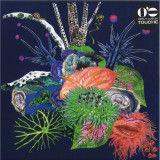
O’o share many of the musical characteristics of their ornithological namesake. The Kaua’i O’O produced the most exquisite birdsong before its extinction in Hawaii in the late 1980s. The beauty and character of its voice was delicate and mysterious, tuneful and surprising. You can experience it with just a cursory websearch, a haunting cri de coeur from the last century. If the poor O’O is consigned to history, then life is just beginning for this French duo, based in Spain, who’ve won plaudits and awards already in their short musical lifespan.
O’o are about to release their sublime debut album Touche. This is not an endling, it’s just the beginning: “I found the name on a website of weird English language words, and I loved the way the letters were arranged like a pair of glasses,” says O’o singer Victoria Suter. “Afterwards, I went onto YouTube and started listening to the last bird of its species, calling for a mate that would never come. I thought: ‘Oh my God, that’s so sad’. Then we talked about the name and we thought it could be a nice thing to honour it and keep it alive in some way.”
Suter met her musical partner Mathieu Daubigné at college in Agen, South West France, when the pair were studying music theory in their teens. Victoria moved to Barcelona in 2010; Mathieu followed six years later. Their debut EP, Spells, appeared in 2018 a beautifully crafted patchwork of vocals and samples that is redolent of the uncanny vocalese of Laurie Anderson. The bird makes an appearance at the beginning of the EP: “Sweet tooth beak. Soft melody peak / Oh O’o, go round and round in circles / Looking for a honeydrop, til you vanish, til you drop”.
That sense of profound longing for something lost is carried over to Touche, as well as the same heightened sensory awareness of the world around them. What has developed in spades is the creative process. O’o have blossomed organically, augmenting their pop sensibilities. Avant-garde techniques have been brought to heel as the pair create off-kilter pop music that warms the heart and nourishes the brain. The catalyst that enabled this bold pop transformation came with the song ‘Touche’ itself, a saucy chanson at the heart of the album. Suter’s wry narrative about a botanical femme fatale is inserted into a lithe and skittish song with reggaeton beats and an inviting, balmy atmosphere.
“The song is about a flower which attracts male insects, producing the very same smell as the female of the species,” explains Victoria. “The poor male is fooled by the sex-appeal of this botanical trap, and gets so excited that he exhausts himself and wastes all his other chances of ulterior mating and having any offspring. The flower entices the insect in in mermaid-like fashion, to come nearer and touch her. It’s the hot track!”
‘Touche’ reaches into hitherto unexplored areas of pop, while the rest of the album is accessible in the way that James Blake, Radiohead or Kate Bush are accessible, and it always challenges, in a way that pop isn’t supposed to. Suter writes playful, poignant, observational songs that tell stories as well as tell us something about ourselves. Songs like ‘Dorica Castra’ are built upon the voice as an instrument, centrifugal and layered from its core.
Complimentary to this method is Daubigné, who brings startling innovation with found sounds, samples and clever vocal manipulations—creating unique, otherworldly sonic flourishes. A guitar whirs like a musical spinning top on ‘Spin’, created in Ableton; an Ondes Martenot appears to make a guest appearance on the title track, though it’s the ingenuity of the Prophet 8 synthesiser. “I’ll often say to Mathieu, ‘what’s that?’” says Suter, He’ll reply, ‘that’s your voice’.”
O’o found their own voice when they won a competition held by the legendary festival organisers Primavera Sound. Victoria entered the band into a competition she saw on Instagram, sending off rough demos on the final day of entry, thinking little more about it other than the fact Mathieu might be annoyed. Soon they would have to build a live set from scratch and figure out how to present their music for the first time. At stake was seventy hours of recording time at Aclam studios, used by Rosalía and Kendrick Lamar, and for the winner a coveted spot at the festival. A pool of 350 acts were whittled down, and then O’o triumphed at a Battle of the Band style face off.
The O’O might be extinct, but O’o the band have learned how to fly. Just watch them go.
out of Stock
Last delivered 4 years ago available to reorder, subject to availability
Rising star Amy Dabbs delivers us another huge house EP, dropping as the debut release on her brand new label Dabbs Traxx. The modern take on classic house that she's become renowned for in her recent
highly acclaimed releases permeates every track on Four Track Mind EP, serving up Amy's trademark pacey rhythmic percussion, emotive melodies, and fat subby basslines.
Ghosts kicks things off with ticking clocks and haunting melodies woven throughout, creating a deeply atmospheric track. It surrounds you with thick layers of pads and strings, underpinned with tear-jerking chords and vocals, sprinkled with touches of Amy’s beloved Juno 106. This track relays a moving tale of facing the ghosts of your past which, alongside Ghosts’ powerful percussive drops, is guaranteed to give the dancefloor goosebumps in more ways than one.
Til You See takes us in an uplifting direction, with a powerful bassline blazing against a backdrop of soaring pads and delicately placed arpeggiators, leading towards a spine-tingling yet subtle vocal as the track reaches its peak. Bringing Amy's desire to create music that moves you to life, this stunning track is brimming with jubilance and optimism from beginning to end.
Last but by no means least comes the EP's title track, Four Track Mind, its nostalgic organ sounds, bouncy percussive chops and big basslines ensuring it will be a huge dancefloor moment when played out. This energetic track takes you into the heavens with its relentlessly uplifting transitions throughout, Amy's intention clearly to place you firmly in the centre of the dancefloor with a massive smile on your face.
Having recently been named as one of BBC Radio 1's Future Stars 2022, and with a string of solo EPs coming out over the next 6 months, it's quickly becoming clear that Amy Dabbs is going to be a name we'll be hearing a lot more of this year
out of Stock
Last delivered 3 years ago available to reorder, subject to availability
A spellbinding tribute from one multi-faceted artist to another. New York-based artist Aki Onda (b. 1967) conjured a transduction to the Korean multi-media pioneer Nam June Paik (1932-2006). Aki himself describes the project:
“Nam June’s Spirit Was Speaking to Me occurred purely by chance. In 2010, I was spending four days at Nam June Paik Art Center in South Korea for a series of performances and had plenty of free time to wander. The building was packed with Paik’s artwork and related material. I have always felt a close kinship with him as an artist, and so it was a great opportunity to immerse myself in his works and ephemera.
It was that night I made the first contact, via a hand-held radio in a hotel room in Seoul. It was literally out of the blue. Scanning through the stations, I stumbled upon what sounded like a submerged voice and I began to record it in fascination. I concluded this was Paik’s spirit reaching out to me.
The project continued to grow organically as I kept channeling Paik’s spirit over long distance and receiving cryptic broadcasts/messages. The series of séances, conducted in different cities across the globe, began in Seoul in 2010, and continued in Köln, Germany in 2012, Wrocław, Poland in 2013, and Lewisburg, USA in 2014. The original recordings were captured by the same radio which has a tape recorder, with almost no editing, save for some minimal slicing and mastering.
Paik is known for his association with shamanism, a practice that constantly surfaces in his works all through his career. In an interview, he stated “In Korea, diverse forms of shamanism are strongly remained. Even though I have created my work unconsciously, the most inspiring thing in my work came from Korean female shaman Mudang.” Paik himself was a master shaman and vividly used shaman rituals and symbols for staging his performances and installations.
These recordings also became a way for me to explore the mythic form of radio—a medium which is full of mysteries. The transmissions captured may be “secret broadcasts” on anonymous radio stations. There are in fact hundreds of those stations around the world, although the numbers dwindle as clandestine messages can now be sent via encrypted digital channels. Some of these stations were likely for military use or espionage or relics of the Cold War. But many others continue without apparent explanation. These are just some of the questions that remain unanswered.”
Commissioned in 2017 by documenta 14's radio program “Every Time A Ear di Soun,” these recordings were continually broadcast on eight radios stations around the world that year. Nam June’s Spirit is a beautifully formed homage, I cannot think of any other like it. An intimate, flickering language discovered through the air. The LP comes replete with a booklet of photographs of Paik on the set of Michael Snow’s unreleased film Rameau’s Nephew (1974).
Sean McCann, 2020
Aki Onda, 2017
20-page art booklet including rare photographs of Nam June Paik from the set of Michael Snow’s film Rameau’s Nephew (1974), two essays on radio-wave phenomenon (by Onda and Marcus Gammel), and a remembrance of Paik by Yuji Agematsu
From deep in the heart of Moomin Valley, frozen in time for many
midwinters passed, comes a genuine treasure chest of never
heard Moomin melodies and instrumental comet songs composed
for the continued animated adventures of our Fuzzy-Felt freak folk
friends who disappeared from UK TV pastures in the mid-1980s.
From the top of the Hobgoblin’s Hat and the bottom of Snufkin’s
satchel, original Moomins composer Graeme Miller (‘The Carrier
Frequency’) kindly shares this patchwork selection of spellbinding
sound poems and percussive peons made using the very same
selection of ocarinas, kalimbas, miniature squeak boxes, Waspy
synths, cornflake box shakers and a seemingly endless array of
talent and lo-fi home studio trickery.
Regarded as one of the most enigmatic, beguiling and haunting
imported children’s programmes to ever grace UK TV screens,
‘The Moomins’ was one of the first-ever commissions by Anne
Wood (‘The Teletubbies’) who ingeniously replaced the original
Polish/Austrian/Finnish soundtrack with homemade music
experiments by unknown post-punk theatre students Graeme
Miller and Steve Shill (aka The Commies From Mars) who, after
the screening of two unforgettable series in 1983 and 1985, were
left in eager anticipation of rescoring further Moomin adventures
with new melodies, arrangements and sound designs, which then
lingered in the ether waiting until the Groke awoke and
Snorkmaiden sang once more.
With future felt adventures screened exclusively in Poland and
Germany for many years (often as feature films) these unheard
recordings are the only genuine musical sequel to the bizarre UK
version of ‘The Moomins’ and stand as important inclusions in
Graeme Miller’s own portfolio of theatrical theme music and sound
installations as part of The Impact Theatre Cooperative, including
collaborations with artists and writers such as Russell Hoban.
Witnessed in fragmented form during a short run of incredible rare
live screenings at The Barbican Theatre and various film festivals,
this record marks the first time this music has been heard in its
original full-length form, free from sound effects, dialogue and
whimpers of euphoric joy and nostalgia from those who have
continued to crave the company of our Moomintrolls and their
mysterious music over the last five decades.
D'Cruze, the legendary DnB producer synonymous with some of Suburban Base's biggest tracks such as 'Lonely' and 'Watch Out' now sees some of his unreleased productions finally getting a much sought-after release.
The Hidden Trax EP's theme comes from concept that the D'Cruze limited US only edition album contained tracks that were only discovered if you allowed that album to play on beyond what was supposed to be the last song, after a gap of silence no track ID and not listed on the track titles. This is where you’d find 'Bittersweet' pt 2 as a hidden track on the CD. This was Bittersweet’s only ever appearance having never been released in the UK and never released on vinyl or digitally worldwide.
The lush rolling workout of ‘Hardstep' is probably our most requested track that has never had a vinyl release having only briefly appeared on the very limited CD only ‘Subbase Sampler’, demand for a vinyl pressing of this has been called for since 1996.
Another beautiful hidden gem 'Sublime State' from 1995 wouldn’t be known to our UK audience as it’s an exclusive tune to the US only CD release that has never seen a UK or vinyl release.
Rounded off with the incredibly beautiful 'Meus Precious Filius', an unheard unreleased D’Cruze track that was considered a 'lost DAT' until recently surfaced. We are now able to bring this to the world as an epic slice of fresh music from D’Cruze.
The EP is presented on blue and black splattered vinyl making every single piece uniquely different. Original custom sleeve artwork is provided by Suburban Base legendary artist Dave Nodz in his iconic graffiti influenced style.
These are already high demand tracks all brought together for a fantastic value 4 track EP, so grab yourself a piece of future history now whilst we have these available for a limited time.
out of Stock
Last delivered 3 years ago available to reorder, subject to availability
"Blues styles have been used and adapted extensively throughout country music’s recorded history. In fact along with elements of Southern rock, the core of Country Music Hall of Fame member Hank Williams Jr.’s sound has always been the blues, and his latest album, Rich White Honky Blues, is a sonic testimony to that. Having used these same blues elements on his early albums, this raw and gritty new studio album returns to those roots. The project came together this past summer over three hot days in Nashville, Tennessee inside producer Dan Auerbach’s legendary studio, Easy Eye Sound. The vibrant and raucous album was recorded live with some of the finest blues session players in the country with Kenny Brown (guitar), Eric Deaton (bass) and Kinney Kimbrough (drums) all joining Bocephus and Auerbach in the studio. Never one to rest on his laurels, even after 56 studio albums and induction into the Country Music Hall of Fame, the acclaimed singer/songwriter and musician is still finding new creative ground to explore.
"
Following the sublime smash debut "X17", LA-based label Elbow Grease head conductor Dave Aju continues on his righteous piece-by-piece journey toward a multi-genre multiverse, where deep musical roots come together in kaleidoscopic expression, and unfakeable funk reigns supreme.
"Spacio Tempo" picks up where we last left off, though with a notable drop in bpm as the title implies, with a rolling 4/4 textural tapestry that combines pulsating layers of soulful synth work, effervescent live percussion, and heavenly strings into a dense yet open-as-the-night-sky extended gem yet again. Just as the machine patterns of near-equator rhythms bubble over and begin to lock into a hypnotic groove, a bold left turn into a dank latin jazz noir vibraphone solo and SH-101 duet tango ensues, before landing us safely back at home base - right on time, at its own spacial pace.
As per the Elbow Grease release recipe so far, the B1 cut offers DJs a more driving flex, this time in the form of the "Acido Tempo Mix": a raw 303-driven take on the original which will undoubtedly stomp its way fiercely thru many bass bins in sweaty basements and warehouses worldwide. Finally the B2 blessing "Domingo Dub" closes things out, removing all but the highest vibes as an ambient drifting and uplifting take on the main theme, where the faintest of vocal tones, space echoes, and light percussive touches leave us elated in a West Coast, with subtle splashes from the D, sunset dream. Another solid single turned three-tracker sure-shot from EG.
out of Stock
Last delivered 3 years ago available to reorder, subject to availability