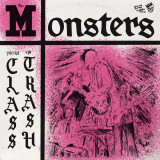
Dies ist die zweite Auflage von The Monsters "You're Class, I'm Trash", dem noch aktuellem Monsters-Album aus dem Jahre 2021 (erste Auflage war gelb und mit einer 7" Bonus-Single). Diese zweite Auflage hat ein neues pinkfarbendes Sleeve-Design, kommt als 180g Vinyl und mit einem zweiseitig bedrucktem Insert. HI-SPEED-BOOGIE-FUZZ-GARAGE-TRASH-ROCK-N-ROLL FROM LEGENDARY BERNESE GARAGE PUNKS PLAYED WITH A CHAINSAW-ON-STEEL 13 SPLATTER HITS INCLUDING SMALL HORROR OPERA BY SWISS FILM COMPOSER MARIO BATKOVIC The Monsters wurden 1986 in Bern der Schweiz gegründet, als Alternative zur damaligen populären Musik (z. B. Disco, Pop, Top 40 Rock). Sie nannten dies "Teenage Primitive Rock n' Roll Chainsaw Massacre Garage Trash Mix up Rockabilly mit Punkrock und Garage" und haben sich zu einer gefragten Garagen-Punkrockband gemausert, die auf Festivals, in Klubs und großen Hallen so weit gen Osten wie Japan, gen Süden wie Brasilien und gen Norden zu den Skandinavier resit und dort audspielt. Sogar im so Wilden Westen wie New York City in Amerika. Und dann öffnet 2020 die Türen, YAHOO!!! Die Welt wurde komplett abgeschottet und die Pläne aller änderten sich! Da es in naher Zukunft keine Tourneen gäbe, war es jetzt an der Zeit, ein neues Album zu machen. So widmete sich die Band zwei Wochen, um ihren Proberaum aufzuräumen und neue Musik zu schreiben, und 3 Tage im Berner Shirt Off Studio um diese aufzunehmen. Voila! Hier hast du Rosemary's Baby den Knüppel aus dem Sack: 13 raue, laute und spritzig klingende Tracks, die live ohne Overdubs (nur der Gesang/das Geschrei') aufgenommen wurden. Textlich ist das Album eine komplette Katastrophe mit nicht viel mehr als 120 Wörtern, welche aneinandergereiht meistenfalls keinen Sinn ergeben! Es ist eigentlich völliger Quatsch, aber THE MONSTERS lieben es! Das Cover stammt übrigens vom Berner Surrealisten Jerry Haenggli.
quête:6 th studio
Black Vinyl[13,66 €]
Irish rock band The Murder Capital Return with their third studio album ‘Blindness’ recorded in Los Angeles earlier this year with producer John Congelton (St Vincent, Angel Olsen, Sharon Van Etten) and featuring the recently released single ‘Can’t Pretend To Know’ and coming single ‘Words Lost Meaning’. ‘Blindness’ is the vividly realised, clear-sightedly ambitious new album from The Murder Capital. A record that’s both momentous and charged with momentum. That’s intimate and simultaneously expansive. Eleven songs that don’t hang about in terms of grabbing the listener.
‘4th DIMENSION’ is the last and probably greatest album ever recorded by Italian piano Maestro Mario Rusca. This monumental music produc"on features tracks in Nonet, Quintet and Trio. Along with the faithful rhythm sec"on composed by Riccardo Fioravan" on bass and Maxx Furian on drums, on this slamming cinema"c jazz album Mario Rusca teamed up with two extraordinary wind players: legendary Flavio Boltro (of Michel Petrucciani Quintet fame) on trumpet and Gabriele Comeglio on sax alto.
As far as the choruses are concerned, Nicole4a Tiberini, Mar"na Rossi and Alice Macchi, from Maestro Rusca’s ensemble music courses at the Civica di Jazz School, provide inspired and swinging backing vocals. The cherry on the cake, the element that gives to ‘4th DIMENSION’ a pulsa"ng and swinging’ drive, is the par"cipa"on on the album of Marco Fadda, one of Italy’s leading percussion players.
This heterogeneous ensemble has shaped, during 5 days of intense studio recordings, an absolute masterpiece full of swinging rhythms along with a few magical in"mate moments. In his 65 years career, Italian piano legend Mario Rusca has shared the stage and recording studios with luminaries such as Chet Baker, Cur"s Fuller, Gerry Mulligan, Lou Donaldson, Art Farmer, Lee Konitz, Dusko Gojkovic, Enrico Rava, Tullio De Piscopo, Kenny Clarke, Stan Getz, Toots Thielemans, Gianni Basso, Pepper Adams, Steve Lacy and Tony Sco4 (with whom he formed an indissoluble partnership).
Being accompanied in this album by extraordinary musicians, Rusca chooses to flow in a repertoire that, like in his most recent records for Mono Jazz, bridges between original pieces and revisited standards from the American Jazz Songbook, approached with unprecedented sensi"vity and depth.
The journey of ‘4th DIMENSION’ is an extraordinary cinema"c musical voyage across various styles ranging from Bop, Hard Bop, Cool, Funk and La"n Jazz. ‘4th DIMENSION’ is a perfect follow up to the interna"onally acclaimed Easy Tempo legacy! In these 13 tracks, “il Maestro” embraces and enhances a ‘cinema"c’ component in his music - an a4ribute he has long cul"vated through original soundtracks and library albums recorded for diverse cult Italian labels.
This, as we were saying, is achieved through the addi"on of percussionist Marco Fadda, who introduces a series of rhythmic nuances across several tracks, and of the extraordinary female vocal trio reminiscent of I Cantori Moderni of Alessandro Alessandroni & Edda Dell'Orso, used in the tradi"on of Italian composers of ‘60s and ‘70s film music.
This natural progression reflects Italy's history, where jazz musicians have long been involved in soundtracks and film scoring since the late ‘50s. Italian jazz has integrated this approach into its composi"on and arranging styles, as demonstrated in the first 10 volumes of the Easy Tempo series. A spirit and tradi"on that Rusca's ‘4th DIMENSION’ record con"nues. Listening to some of the tracks on the record evokes the legendary works created for cinema by Piero Umiliani, Piero Piccioni, Lelio Lu4azzi, Armando Trovajoli, Gianni Ferrio and others.
Mit "Let The Dominoes Fall" meldete sich eine der erfolgreichsten US-Punkbands nach langer Pause in 2009 zurück. Es war das insgesamt siebte Album der Kalifornier und das erste Studiowerk seit "Indestructible" (2003), das in den USA Platinstatus erreichte. Das Quartett um Tim Armstrong (Gesang, Gitarre), Lars Frederiksen (Gitarre), Matt Freeman (Bass) und Branden Steineckert (Schlagzeug) hat das Album im George Lucas" Skywalker-Sound-Studio aufgenommen, als Produzent wirkte Epitaph-Gründer und Bad-Religion-Gitarrist Brett Gurewitz "Let The Dominoes Fall" ist Punkrock pur: ein Meilenstein des Genres.
- A1: Crystal Ann
- A2: Alison Hell
- A3: W.t.y.d
- A4: Wicked Mystic
- A5: Word Salad
- B1: Phantasmagoria ‘86
- B2: Human Insecticide (Live)
- B3: The Fun Palace
- B4: Road To Ruin
- C1: Stonewall
- C2: Never, Neverland
- C3: Imperiled Eyes
- C4: I Am In Command (Live)
- D1: Set The World On Fire
- D2: No Zone
- D3: Phoenix Rising
- D4: Brain Dance
Canada’s answer to Metallica? The Eddie Van Halen of thrash metal? Both these terms could have easily applied to Annihilator and its mastermind, lead guitarist and songwriter Jeff Waters. A fan of both speed metal and classic rock, the Canadian emphasized a flair for both. The fresh invention of Waters’ guitar work was a major reason why Annihilator got off to a promising start and have survived to the present, with a dozen or more albums under their belts.
THE BEST OF ANNIHILATOR compiles cuts from the band’s first three studio albums, a rarities collection, and a live disc, all of which emerged on Roadrunner between 1989 and 1996.
There have been many records in the years since, as Annihilator has continued to be one of the few bands to fly the flag for the classic thrash metal sound, earning themselves a devoted following and a regular spot on the European concert and festival circuit. THE BEST OF ANNIHILATOR takes the listener back to the early days of that sound, which stands up to anything else of it’s time - and even most metal today.
Two albums filled with the best that this band has to offer and for the first time available on vinyl.
Best Of Annihilator is available as limited numbered edition of 1500 copies on silver coloured vinyl
- Me And My Shadow
- Gotta Be This Or That
- How Are Ya Fixed For Love
- Lonesome Man Blues
- Moonlight In Vermont: I May Be Wrong
- Nice Work If You Can Get It
- Exactly Like You
- Cherry Pies Ought To Be You
- A Little Learnin Is A Dangerous Thing 1 & 2
- Can T We Be Friends?
- The One I Love Belong To Someone Else
- Peachtree Street
- You, My Love
- The Birth Of The Blues
- You Brought A New Kind Of Love To Me
- Well Did You Evah?
- Witchcraft; Love Me Tender
- Nothing In Common
- Together
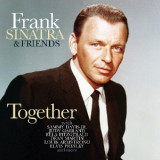
"This album is a superb collection of Frank and friends from a part of Frank’s career that’s long been underrated. Here, Sinatra scales the jazz summit with Louis Armstrong on “Birth Of The Blues” and does three electrifying collaborations with one of his favorites, Ella Fitzgerald. Ella’s voice is at her best in each. Rival Elvis Presley gets the Chairman’s respect on a wonderfully playful meeting-of-the-icons medley of “Witchcraft”/”Love Me Tender.” The tunes are bright and lively and many benefit from Nelson Riddle’s arranging genius. Frank and Dean are great, improvising and playing off one another as always. But wait until you hear “Together” in which Bing joins Dino and Frank for a happy, hilarious threesome.
Bursting forth from the darkness of this pre-apocalyptic winter comes 'The Cabanists', the first release of an improvisational project of the same name, comprising three members of the UK's seminal avant-rock band, Nøught. Garnering a cult following since their initial self-titled debut, Nøught became known in the London experimental underground for their tightly orchestrated yet highly complex compositions, ranging from heavy atonal riffage to mesmerizing and hypnotic meditations. 'The Cabanists' builds on Nøught's musical language and are a boundary-pushing trio fusing intricate guitar riffs, dynamic keyboard textures and explosive percussion into a sound that defies convention. Featuring James Sedwards on guitar (most recently known for his involvement with the Thurston Moore Group and This Is Not This Heat), Luke Barlow on keyboards (who co-runs Copepod Records with musician Alex Ward) and Bo Mapper on drums, the band recorded their groundbreaking material during an extended session at London's Lonely Man Studio, marking a defining moment in their musical journey.
With influences spanning progressive rock, experimental jazz and post-punk energy, The Cabanists weave a sonic tapestry that is as cerebral as it is visceral. They challenge standard rock and jazz norms while crafting deeply resonant soundscapes, inviting listeners into a thrilling journey of sound and intense emotion.
Prepare to lose yourself in the intricate chaos and undeniable groove of 'The Cabanists' - where every note is a revelation.
fellice founder effgee welcomes the first new family member: Hiroyuki Kato delivers a deep house EP that is organic and warm, characterised by jazzy chords, grooves, and distinctive sound design.
The EP, Potter, features emotive loops that at times carry a live, dreamy feel or a heavier, club-ready energy, and is a handcrafted piece—much like the pottery surrounding Hiroyuki Kato’s studio in Seto City, Japan.
VETO aus Süddeutschland starteten Anfang der Achtziger als Hardrockband mit deutschen Texten. Nach einigen Besetzungswechseln und einer Neuausrichtung in Richtung englischsprachigem Heavy Metal, bekam man einen Plattenvertrag bei der Firma GAMA (Label: Scratch). Mangels Schlagzeuger übernahm diesen Posten einer der beiden Labelbosse persönlich: Peter Garattoni.
Das Debüt “Veto“ erschien 1986 und wurde von den Fans und der Presse wohlwollend aufgenommen. In Folge spielte man unter anderem mit Bands wie Saxon, Vengeance, Lee Aaron, Warlock, Sinner und Grave Digger. Das zweite Album „Carthago“ wurde im Stuttgarter Zuckerfabrik-Studio aufgenommen und gehört heute zu den absoluten Geheimtipps der German Metal Szene. Nicht nur, dass die Band an sich mit überdurchschnittlichen Fähigkeiten ausgestattet war, sie konnten auch mit packenden Songs zwischen Hardrock und Speed Metal überzeugen. Dazu eine knackige und druckvolle Produktion, die so manch Majorlabel damals nicht geboten hat.
Mit dem Titelstück “Carthago“ gelang VETO zudem ein episches Meisterwerk. Die Ankündigung einer wertigen Wiederveröffentlichung von “Carthago“ auf Golden Core hat in der Metalszene bereits Staub aufgewirbelt und in den sozialen Medien für positive Reaktionen gesorgt. Die remasterte CD enthält als Bonus das gesamte Debütalbum “Veto“, sowie das rare und spannende Drumsolo “Thunderstorm“ von Peter Garattoni, welches als Veto-Song auf einer heute raren Metal-Compilation aus den Neunzigern zu finden ist. Die LP, separat für Vinyl gemastert, enthält als Bonus zwei Songs vom Debüt und ebenso “Thunderstorm“. Beide Formate beinhalten Liner Notes und viele rare Abbildungen.
Swedish talent Dold drops nuanced techno cuts on 10" via SHDW's Mutual Rytm X.
Stockholm-based Patrik Eriksson, aka Dold, is a cultured producer known for crafting hypnotic loops with a minimalist, emotive touch-bridging underground dancefloors and introspective listening.
As a DJ, producer, and co-founder of Arsenik, Dold has championed raw, unembellished techno since 2015. His releases on Key and Fuse blend Detroit techno's legacy with IDM's intricacy and ambient's ethereal tones, creating a style that is both timeless and forward-thinking. Whether it's crafting tapestry's recorded via hardware in the studio or performing live, Dold continues to innovate, honouring techno's roots while exploring its future, and his talent is on full display across his label debut on Mutual Rytm X.
'Grainy' opens the EP and showcases Dold's ability to craft deep and loopy techno with a stripped-back, emotive
edge. It's deft but enthralling, with innovative synths rising and falling through the minimal drums. 'Surface' is another compelling deep cut with hurried drum funk and subtle synth pulses, adding a futuristic edge to the groove. The fantastic 'Blush' brings smears of warm synth and machine soul to a dynamic dub techno rhythm that bends the
past with the present. Digital bonus cuts 'Dub at Heart (Club Version)' and 'Dub at Heart (Sofa Version)' offer
contrasting perspectives of the same track, with the first aiming directly for peak-time sessions, while the latter closes the package on a laid-back tip.
- 1: Prologue
- 1: 2 The Sweet
- 1: 3 Music Box - Philip Glass
- 1: 4 Row Houses
- 1: 5 Graffiti
- 1: 6 Rows And Towers
- 1: 7 What's Candyman?
- 1: 8 I Thought We Could/The Turn
- 1: 9 Joke Summoning
- 1: 0 End Of Clive And Jerrica
- 1: Brianna Finds Bodies
- 1: 2 Brianna's Mirror Dream
- 1: 3 The Library
- 1: 4 The Elevator
- 1: 5 Frantic Painting
- 1: 6 You Should Say It
- 1: 7 End Of Finley
- 1: 8 Frantic Cycles
- 1: 9 The Story Of Daniel Robitaille
- 1: 20 Brianna In The Studio
- 1: 2 The End Of The Kids
- 1: 22 Anthony's Arm
- 1: 23 Got Taken
- 1: 24 Called To Row Houses
- 1: 29 End Of Burke
- 1: 30 Brianna Says His Name
- 1: 3 Music Box (Reprised) - Philip Glass
- 1: 32 Cabrini Walk (Bonus Track)
- 1: 33 Cabrini Walk Ii (Bonus Track)
- 1: 34 The Bridge (Bonus Track)
- 1: 25 The Laundromat
- 1: 26 Young William
- 1: 27 Leaves A Stain
- 1: 28 William Chases Brianna
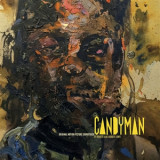
The Complete Film Music Composed by Robert Aiki Aubrey Lowe - 2xLP 180 Gram Colored Vinyl - Old-Style Tip-On Gatefold Jackets with Satin Coating and a Built-In Booklet Page - Composer Liner Notes - 12 Page Art Gallery Exhibit Catalogue // In partnership with Universal Pictures, Metro Goldwyn Mayer (MGM) and Monkeypaw Productions, Waxwork Records is thrilled to present CANDYMAN Original Motion Picture Soundtrack by Robert Aiki Aubrey Lowe. Directed by Nia DaCosta (next year's The Marvels) from a screenplay by Oscarr winner Jordan Peele, Win Rosenfeld and DaCosta, Candyman, currently in theaters nationwide, is a fresh take on the blood-chilling urban legend and a contemporary incarnation of the 1992 cult horror classic. About Robert Aiki Aubrey Lowe: Robert Aiki Aubrey Lowe (b.1975) is an artist, curator and composer who works primarily with, but not limited to, voice and modular synthesizer for sound in the realm of spontaneous music. Along with analog video synthesis works, he has brought forth an A/V proposal that has been a focus of live performance and installation / exhibition. The marriage of synthesis and the voice has allowed for a heightened physicality in the way of ecstatic music, both in a live setting and recorded. The sensitivity of analogue modular synthesis echoes the organic nature of vocal expression, which in this case is meant to put forth a trancelike state. Lowe's works on paper tend towards human relations to the natural/magical world and the repetition of motifs. The deluxe 2xLP vinyl release features 180-gram colored vinyl, old-style tip-on gatefold jackets with satin coating and a built-in booklet page, liner notes by composer Robert Aiki Aubrey Lowe, a 12-page art gallery exhibition catalogue, artwork by Sherwin Ovid and Julian Williams and puppetry art by Manual Cinema.
Two records came out in 1988 that forever changed the perception of "experimental" or "serious" music produced in Portugal. These were "Plux Quba" by Nuno Canavarro and "Música de Baixa Fidelidade" by Tózé (António) Ferreira. Both were released by the same label - Ama Romanta -, an influential independent imprint closely linked to avantgarde pop band Pop Dell'Arte. Because those records appeared in what could be perceived as an "alternative pop" framework, they rescued this difficult music from Academia. It helps that Canavarro played in a successful new wave pop band (Street Kids) during the period 1980-83. By association, being a friend since 1976, António was in close contact with many of the musicians and bands that were part of the equally celebrated and detested Portuguese Rock Boom (roughly 79-82).
He was not a musician then but through his friendship with Canavarro, who had the means to acquire electronic equipment, António became involved with that equipment and shared Canavarro's passion for experimentation and curiosity for knowledge. They tried to get hold of as many technical magazines as possible and learn while testing ideas. In 1983, Street Kids were about to break up, young lives drafted into the Army and maybe, in Canavarro's case, a whole new passion for challenging music similar to his bandmate Nuno Rebelo, by then in the process of discovering a wide range of "other" music mainly through Jorge Lima Barreto. Barreto, who had started Telectu with Vítor Rua, possessed a huge book and record collection and, like Rua before them, Canavarro, Rebelo and Ferreira became fascinated by the pool of knowledge they now had access to by frequenting Barreto's house in Lisbon. He was roughly a decade older, had published several books and other writings throughout the 1970s, cultivated an anarchic stance and a penchant for cultural indoctrination. Rebelo was the first to be introduced via his contact with Rua (who had invited him to play in his other band GNR).
Overwhelmed, he felt the need to share his enthusiasm with friends and eventually took a few to the house in true pilgrimage fashion. To see the Light. Among the few he led there was even João Peste, founder of Ama Romanta. Canavarro and Ferreira preceded him.
Ferreira recalls an exciting learning process added to his experiments with Canavarro's array of synths such as the Korg Ms 20, Korg polysix, ARP Axxe, Roland SH-01, the Ensoniq Mirage sampler... He read in a magazine article about someone who had studied at the Institute of Sonology (then in Utrecht, Netherlands) and went there during a vacation trip in the Summer of 1983. He became excited by the prospect of studying at the Institute but money was a problem. Canavarro, on the other hand, was admitted there in the following year. Back in Portugal, Ferreira eventually abandoned his Chemical Engineering studies in Lisbon's Technical Institute in favour of a more focused music practice. He collaborated with Telectu during 1984 and 85 as a sort of technical engineer, implementing some recording solutions and background tapes and went to work at a thermoelectric power plant in Sines, hoping to make enough money to fund his musical studies. He did and proceeded with the paperwork for admission at the Institute of Sonology, now based in The Hague. António studied there in 1986-87 and the present album includes two compositions developed at the Institute: "More Adult Music" and "This Is Music, As It Was Expected", both featuring the voice of Rodney Waschka II. Among other activities and talents, Rodney is an expert in computer music and to António his voice sounded similar to Robert Ashley's, whose work he admired.
What happened at the Institute was a systematization of António's self-taught practice. Computer software, Musique Concrète, noise and silence, organisation of abstract ideas and sounds. The original notes on the back sleeve of the LP give some indication of process and thinking, but a more detailed account was given by António in the liner notes of the CD reissue in 2002, which are also included in this 2025 LP reissue.
The music sounds deep and detailed, despite the fact of António calling it low-fi ("Baixa Fidelidade"). It flows like an improvised performance where several musicians might be responding to each other, respectful of their mutual space. Drama occurs, as a natural emotional connection is sought by the listener. Piano, bells, drone, processed voices, even the clear narrative of Rodney Waschka II, contribute to create a sort of alternative perceptual reality. The sounds are almost tangible, more a part of the physical world than ethereal manifestations and thus it would not be correct to invoke "ambient music" as a selling point. But although "physical" and distinct, this music is still alien, more so in Portugal's 1988 environment. In March, helped by Canavarro, António set up a home studio and there he recorded the remaining material for this album: "Algumas Pessoas Olharam O Sul E Viram Deserto", "Um Som, Seguido De Uma Cena Negra E Malva" and "O Verão Nasceu Da Paixão De 1921".
"Música de Baixa Fidelidade" stands not only as a proof of great resilience but as one of those magnificent works of art coming from someone who balanced technical inclination and emotional sensibility. Because of that, Tózé Ferreira is able to decode the phantom world of sound for anyone who cares to experience the sensation of inhabiting a version of the Future. First ever vinyl reissue, reproduction of the original artwork with an additional insert. Made in collaboration with the artist and the support of Paulo Menezes (Plancton Music), who provided valuable assistance. Remastered by Taylor Deupree.
- A1: Von Hass Getrieben
- A2: Todschick
- A3: Nachtgeweiht
- A4: Das Leben Der Anderen
- A5: Manchmal Kommen Sie Wieder
- B1: Mein Ist Die Hölle
- B2: Götterstille
- B3: Kinder Des Zorns
- B4: Stirb Langsam
- B5: Schneller Als Der Tod
Deutschlands Dark Metal Vorreiter NACHTBLUT veröffentlichen ihr siebtes Studioalbum Todschick am 21. Februar 2025 via Napalm Records. Nach
ihrem Erfolgsalbum Vanitas (2020), das Platz 19 der offiziellen deutschen Albumcharts erreichte und als das erfolgreichste Werk der Band gilt, bringen
sie nun zehn Songs, die blutdurstige Fans begeistern werden. Mit Todschick erweitert die Band ihr Repertoire mit verschiedenen Stilelementen und
Synthesizer Sounds, die beispielsweise den 80er Jahren Tribut zollen. Diese Variabilität, die schon immer den Stil der Band prägt, verbindet sich dabei
mit den einschlägigen Dark Metal-Elementen sowie Askeroths markantem Gesang.
Mit Todschick erweitert NACHTBLUT nicht nur den düsteren Dark Metal mit mitreißenden, genreübergreifenden Sounds, die in dieser Kombination
neue Akzente setzen, sondern trifft auch mit aktuellen gesellschaftlichen Themen den Nerv der Zeit! Das neue Meisterwerk ist eine Einladung, die
dunkle Schönheit des Lebens und die Herausforderungen in einem neuen Licht zu betrachten und dies gemeinsam mit der Band auf ihrer Headline
Tour 2025 zu tun!
Our debut single with Senpolya was born out of desire to create some modern Russian pop infused with references to the 80s dance music. While making 80s-inspired tunes is popular nowadays, this decade means different things to different people: be it A-ha and Modern Talking or African boogie and Chicago house. But we ended up making neither one nor the other.
The crowd who contributed to this release is absolutely legendary. Each time I listen to it and think of them, a new dimension opens up in my mind, adding up some deeper layers of context Ive immersed myself in over the past few years.
An italian producer and bass player Marco Boccamazzo created the first remix. By adding bass guitar and strings, he took the track back by another ten years.
DJ Popinjay, an alter ego of a tropical disco master who wishes to remain anonymous, provided the second rework.
The third remix or more like an essentially an entirely new track, comes from Sonestrose, a duo consisting of Andrey Algorithmic, an art director of Moscow Powerhouse, and Alexander Basian, the studio's sound engineer.
Ignat Akimov, also known as DJ Pecan and an art director of Esthetic Joys Embassy, crafted the fourth hallucinogenic remix, which spans from acid house with Indian drums to cool jazz sound.
Lipelis and Scruscru help me in making some key decisions about the tracks structure, arrangement, and mixing.
Ilya Varankin made a photo of us (on film!) and Nikita Demin designed the cover picture inspired by Daptone Records.
At last, I want to thank my wife, Masha Dostoewskaya, without whose love and patience I wouldn't have been able to see this project to an end.
- 1: Canto De Enramada
- 2: A Temple By The River
- 3: Exuviae
- 4: Burial Of The Patriarchs
- 5: Siphonophores
- 6: Despe?Aperros
- 7: O Rubor
- 8: Fiat Lux
- 9: Kwisatz Haderach
Coloured Vinyl[29,20 €]
Maud the moth, the solo project of Spanish-born and Scotland-based pianist, singer and songwriter Amaya Lopez-Carromero announces her new album, The Distaff, to be released via The Larvarium (digital +CD) and La Rubia Producciones (vinyl) Amaya has long used the mantle of Maud the moth as an alter-ego, a séance-like conduit to explore themes of rootlessness, identity and trauma. The Distaff in particular refers to the stick or spindle onto which wool or flax is wound for spinning, and an object which has historically been used across multiple cultures as a symbol wielded by the “virtuous woman”, an authoritarian ideal around which much of the trauma surrounding the feminine coalesces. The album takes the form of a sort of self reflective and surreal autobiography. It was in part inspired by the poem of the same name written by the Greek poet Erinna, as she mourns her friend's loss of individuality and agency in exchange for marriage - and therefore safety and acceptance in the eyes of society. The album exists in an ethereal but violent world of aesthetic overlaps where time stands still and fictional and reimagined folk sits at the table with Maud the moth’s usual sonic menagerie. It is the result of a lifetime of obsession with sound and music, where glimpses of musical genre offer insight into Amaya’s artistic interests and her participation in the underground European scene for many years, in bands such as healthyliving. Heavier, darker, and more exposed than any of her previous works it features some highly accomplished artists, such as Seb Rochford (Patti Smith, Polar Bear, Sons of Kemet, Pulled by magnets, etc.) on drums, Alison Chesley (Helen Money) on cello, Fay Guiffo on violin and Scott McLean (Ashenspire, healthyliving, Falloch) on guitar, saxophone and synthesiser. Maud the moth shares the video for "Siphonophores". About the track, Maud the moth says; I wrote "Siphonophores" on guitar, during the first lockdown, a period where I was kind of trapped between an almost empty flat in Edinburgh and Dresden. It was an incredibly harrowing time, but also one of hope and where important new things were being birthed. I felt incredibly sensitive to everything, almost like life was happening in slow motion. I´m not a confident guitarist since I am completely self-taught, but, probably because of this, I feel that this instrument allows me to focus on aspects of the songwriting that I normally overlook when writing on piano, and I think it was a necessary step for this song to exist. Something else which I've been really exploiting lately and features strongly in the album is the percussive capabilities of the piano, and in particular, of the sustain pedal when mic'd up. This can be heard very clearly at the beginning of "Siphonophores". Written and arranged by Amaya, with some contributions in the later role from the aforementioned collaborators, the album presents nine tracks originally written entirely on acoustic piano as accompanied voice pieces, in pure singer-songwriter fashion. The album was co-produced and recorded by Scott and Amaya in different studios across the UK between January and July of 2024, in a process that started shortly after the 2020 pandemic and finished alongside the album recordings in a detailed, organic and at times obsessive process aimed primarily at capturing the natural dynamics and expression of free performance. The Distaff was mixed in its entirety by Scott and mastered at Abbey Road by Alex Wharton (Radiohead, My Bloody Valentine, Aurora, Kathryn Joseph etc.) Despite being born of a very personal point of view, the album lacks a specific narrator and was conceived almost as a sonic trousseau, where the needle point, silks and other family heirlooms have been swapped for out-of-the-corner-of-the-eye memories of rural Spain by the vineyards, family disputes, old tales of wartime pains, generational breaches and finally the conflict of migration and estrangement. The songs paint dystopian pastoral scenes which evolve throughout the span of one fictional day outside of time and coherent locations and where imagination (often the only account surviving from traumatic events and gaslighting) has become indistinguishable from fact. The Distaff attempts to acknowledge past trauma, comprehend and process some of the more difficult aspects which have contributed to our darker self and offer closure and solace through creative catharsis.
- A1: To A Child
- A2: The Right To Vote
- A3: A Wilderness
- A4: Melody In The Sky
- A5: Late For Love
- A6: A Free Thinker
- A7: Man In The Moon
- B1: Talk To A Green Tree
- B2: Trees Of The Ages
- B3: The Brighter Song
- B4: Roadnotes
- B5: Sophia
- B6: Mother’s Spiritual
- B7: Refrain
Mother’s Spiritual is the eighth studio album by New York City-born singer, songwriter, and pianist Laura Nyro. The album was originally released at the beginning of 1984, following a year of difficult and expensive recording sessions, and came more than five years after its well-received predecessor, 1978’s Nested. Thanks to a small buzz surrounding Nyro’s return to the spotlight after a period of semi-retirement, Mother’s Spiritual became her last US chart entry, reaching #182 on the Billboard 200.
Musically, the album stands out as the most serene and easygoing of all Nyro’s works, presenting a more maternal tone compared to the wilder and more experimental nature of albums like Eli and the Thirteenth Confession and New York Tendaberry. Thematically, the focus shifts from personal explorations of passion and love to broader societal concerns, such as environmentalism, motherhood, and feminism. Laura Nyro was Inducted into the Songwriters Hall of Fame in 2010 and the Rock and Roll Hall of Fame in 2012.
Red Marbled Vinyl. Play Dirty is the fourth studio album by British heavy metal band Girlschool released in 1983 and produced by Noddy Holder and Jim Lea from the hard rock band Slade. It has very polished sound, filled with keyboards, choruses andmelodies, containing covers of the Slade songs ,High & Dry" and ,Burning in the Heat" and of T.Rex's ,20th Century Boy". Drummer Denise Dufort rated the album as her favourite of all the band`s career saying it had a more mature sound to it and comparing it to Def Leppard. Girlschool are thelongest-running all-female rock band, still active after more than 40 years. During their career they travelled the world, playing in many rock and metal festivals and co-headlining or supporting important heavy metal bands. They maintain a worldwide cult following, and are an inspiration for many female rock musicians.
Red Vinyl. Play Dirty is the fourth studio album by British heavy metal band Girlschool released in 1983 and produced by Noddy Holder and Jim Lea from the hard rock band Slade. It has very polished sound, filled with keyboards, choruses andmelodies, containing covers of the Slade songs ,High & Dry" and ,Burning in the Heat" and of T.Rex's ,20th Century Boy". Drummer Denise Dufort rated the album as her favourite of all the band`s career saying it had a more mature sound to it and comparing it to Def Leppard. Girlschool are thelongest-running all-female rock band, still active after more than 40 years. During their career they travelled the world, playing in many rock and metal festivals and co-headlining or supporting important heavy metal bands. They maintain a worldwide cult following, and are an inspiration for many female rock musicians.
Some records come from the head, others from the heart. Weltraum EP by Cara Carpaccio is a bit of both—an interstellar blend of cosmic vibes, disco roots, and a touch of robot melancholy. Born out of a time when the world felt both distant and strange, the EP channels those moments of isolation, longing, and unexpected creativity into something playful and deeply human. What started as an open-ended studio session turned into a journey guided by synthesizers we could only dream of owning, Marvin the robot’s dry wit from The Restaurant at the End of the Universe, and Cara’s love for cosmic sounds and disco grooves. The tracks came together in single evenings, capturing emotions as they unfolded.
Cara brought her energy, composing, performing, and singing her way into the stars, with Luis (aka Planet Zwo) riffing on guitar to ground it all. Marabou (Fabian) tied it together, wiring up gear, recording, and even finding a remix idea in the middle of mixing.
The result? A collection of tracks that balances nostalgia and futurism, melancholy and euphoria. Adding even more fuel to the ship are remixes from the likes of Intergalactic FM’s I-F + Gerd Janson, and Dan Tyler of the Idjut Boys.