Alien Transistor News

  • 1
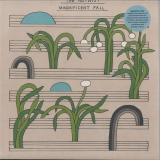
The Notwist - Magnificent Fall LP 2x12"

Magnificent Fall, The Notwist's new rarities compilation, compiles some special and wild moments from this unique German indie group's rich history. They've always snuck gorgeous songs and thrilling remixes onto split singles, extended plays, and other formats, across their career, and pieced together here – compiled thoughtfully, with sensitivity to flow and the listening experience – these thirteen selections work as a kind of ‘shadow narrative’ of The Notwist, an alternative index of the possibilities this shape-shifting group uncovered during their time together.

They've been smart to let go of chronology when sequencing Magnificent Fall, so the songs here move across phases and stages of The Notwist's career, helmed by brothers Markus and Micha Acher. This approach makes plenty of sense, as this music compiled here abstracts from two impulses – to push forward and not repeat what has come before, while building from the group's very specific musical language. Just one example: the loveliness of the instrumental “Avalanche”, from 2020's Ship, follows elegantly from the happy-sad glitch-pop of “Blank Air”, from a 2010 split with former member Martin Gretschmann's project Console. Different phases, different memberships, shared concerns.

The Notwist have always been interested in and open to community, and one of the many ways they reach out to others is through the remix. There are three here, sent back to The Notwist from different corners of the world, both aesthetically and geographically: Grizzly Bear take on “Boneless”, Ada tackles “Run Run Run”, and Odd Nosdam submerges “Sleep” in noise and clatter. Another connection, of course: Odd Nosdam is part of The Notwist's extended family, through Markus and Micha Acher's 13 & God project with fellow Anticon artists Themselves and Subtle.

So, the music on Magnificent Fall traverses varying terrain – abstract hip-hop, chamber pop, sweet and simple folk song, indietronica, free-floating improvisation. There are several unreleased songs, as well, drawn from across the group's history. Core to it all, though, the thing that makes The Notwist so singular, is the thumbprint of the Acher brothers, their gently poetic way of moving through the world and welcoming other musicians and artists into the fold, expressively and with generosity.

Historically aware without being nostalgic, Magnificent Fall is the perfect way to introduce The Notwist's reissue programme with Morr Music, too, including a box set, and the group's eight albums, documenting their three-and-a-half decades of music and community-making. Looking back to move forward? It's a very good idea.

En stock

Disponible en stock et prêt pour l'expédition

26,01
Joasihno - Spots

Joasihno

Spots

12inchN103LP
Alien Transistor
21.11.2025

Moving freely through time and space via experimental DIY recordings since 2009, Joasihno return with their fourth album "Spots".

“Find your spot in the shade,” a truly laid-back and incredibly soft-spoken MC once advised, yet in a world that seems to get shadier every day, it’s probably time to finally get out and face the sun. Southern German experimental pop duo Joasihno – initial solo founder Cico Beck (The Notwist, Aloa Input, Spirit Fest) and drummer/composer Nico Sierig (Instrument, Fehler Kuti) – seem to know exactly when it’s time to shine. Idiosyncratic genre tweakers since day one, they have been operating at their own pace, mostly staying in their own shady corner. Yet, almost a decade after their most recent “Meshes” (an album that came with a whole legion of tiny music robots), it’s high time for them to take over more corners, to reclaim even more spots between lo-fi and sci-fi, retro electronica and contemporary classic. Drawing upon influences as varied as Reich, Riley, and Ryuichi, múm, Meek, and Moondog, while also nodding to other experimental twosomes (e.g. The Books), the duo’s fourth full-length “Spots” is set to arrive via Alien Transistor in late 2025.

Leaving soulless automation and all things artificial to others, Joasihno launch the latest record on “2 Squares” that feel like a peaceful, almost bucolic version of retro space age: lights blink ever so softly as easy-going bass tones point at today’s introspective flight arc. Electronic shapes align and things lift off – with a majestic 8-bit sunrise soon appearing right in front of us. Whereas playful title song “Spots” is a miniature Rube Goldberg kind of device, with quirky plucked strings and glitches setting off more and more contraption layers, “Crackleboom” is uncharted energy, an open landscape, an expanding bonfire that leads to a long-forgotten piano, all dust-covered in some kind of saloon. Space might be only noise to others, here, it’s foreboding screeches (“Dizzle Whistle”) that make room for A-side center piece “Forest Lights”: a steady beat that lures us to a clearance in the woods. Things break and shatter in the distance, but this spot right here is for hypnosis, dancing, sylvan spirits. And yeah, it’s surprisingly hot down here in the undergrowth…

Opening side B with a fun banger that takes the unhinged dancing to the playground – “Characa Orb.” feels like French kids on swings going crazy, a tipsy, tongue-in-cheek electro blow-out between Oizo and Orbis Tertius –, things get even more cinematic throughout the second half. Even the cheapest, lo-fiest gear is sufficient to make “The Slow Hour” glow like true, timeless pop royalty. In fact, the very same pop spirits roam and celebrate freely in the chirpy coves of mesmerizing “Detune Lagoon” – more hand-crafted sci-fi/lo-fi loops you’ll only find after facing the ghosts of Lynch or Sakamoto on those night-time trails under the “Deep Moon”. It’s all DIY spots, spots that leave room to dream or dangle, drape yourself over or dive into. Returning to the leafy bower on a melancholy post rock tip, we eventually learn that “Death Is Real” – and so we’re left with a laterna magica that turns and turns and turns. It’s a beautiful spot where light and shadows keep on dancing, just like they’ve always done, ever since the dawn of this madcap universe.

pas en stock

Commandez maintenant et nous commanderons l'article pour vous chez notre fournisseur.

26,47

Last In: 4 months ago
The Alien Dub Orchestra - Plays the Breadminster Songbook

The Alien Dub Orchestra is ragtag collective of Bavarian musicians, featuring members of The Notwist and G.Rag y los hermanos Patchekos. The cohort formed around the idea of performing the standards of the fabled Breadminster Songbook, aka the back-catalogue of lone dubman Elijah Minnelli. Minnelli is known for constructing wheezy, forlorn odes to his hometown, both as highly sought-after self-released 7" singles, and a critically-acclaimed debut album, ‘Perpetual Musket’ for FatCat Records, lauded by the likes of The Guardian, The Wire, and The Quietus. ‘The Alien Dub Orchestra: Plays the Breadminster Songbook’ finds group covering Minnelli’s cumbia-infused dub reggae with full band, playing an eclectic array of instruments including: guiro, accordion, melodica, sousaphone, trumpet and assorted percussion.

The tale begins in 2022, when Minnelli was invited to lend his unique dubbing style to a pair of remixes for The Notwist, and what followed was an ever-flourishing relationship between the Breadminster native and the wider Munich scene. The seeds of the Alien Dub Orchestra were sown during a support gig for The Notwist, where assorted musicians joined Minnelli for a encore, reinterpreting one of his dub remixes across woodwind, brass and assorted percussion.

“The idea of real, competent professionals playing something you’ve muddled together on a computer in a damp basement is quite overwhelming,” reflects Minnelli on the process, “hearing them interpret and improve these melodies is a real joy and privilege.”

Despite the non-traditional origins of the source material, the inherent musicality of Minnelli’s songwriting shines through across his releases, and this creative kinship is what attracted the Orchestra to reimagining his work. The first live collaboration led to recording sessions and further gigs, with the Orchestra building a full set of Minnelli’s music.

The resulting album puts forward the strongest case yet of the shared musical throughline between the acts, where cumbia, dub and folk sensibilities coalesce to something all together unique. The tracks are wrought new, with melodies fleshed out and broader instrumentation expanding the sonic possibilities of the compositions. The tactility of the tracks is perhaps best demonstrated on the gorgeous ‘Vine and Fig Tree’, with it’s layed vocals and expressive bassline returning as a cavorting sousaphone line. Elsewhere, fan favourite ‘SLATS’ sounds as if it was simply written to be performed this way.

To further instill the cylindrical nature of these collaborations, the entire second half of the album is made up of dub versions of the Orchestra’s renditions. For these dubs, Minnelli is joined by Raimund Wong, who had caught his ear with his ambitious live sets, a daisy chain of tape machines and FX pedals. Again, despite their differing creative processes, the two bonded over a shared love of dub music. Each dub was a one-take, with Minnelli riding the faders and Wong’s filters and FX supplying a sound that doesn’t seek to imitate dub, so much as it tries to be it’s own chaotic self. The droning, psychedelic hypnosis of ‘Pundit Dub’ stretches the material to a whole new realm that feels outside of anything else Minnelli has produced before, an ode to the benefits of recycling sound if ever there was one. The whole second half is a perfect closing note to an album that is undoubtedly a love letter to folk tradition, dub ideology and, most importantly, the joy of uninhibited collaboration.

​Elijah Minnelli - voc, guiro, percussion
Philip Gross - accordion, melodica
Theresa Loibl - clarinet, melodica
Cico Beck - electronics, keyboards
Sascha Schwegeler - congas, steel drum, percussion
Micha Acher - sousaphone, trumpet
Markus Acher - drums, voc
Dub mixes performed live by Elijah Minnelli & Raimund Wong at Breadminster County Council Studios

pas en stock

Commandez maintenant et nous commanderons l'article pour vous chez notre fournisseur.

25,17

Last In: 5 months ago
Spinnen - Warmes Licht

No matter how much of their filthy riches Munich’s oh-so shiny and smart glitterati are going to spend on generic pest control, they’ll never manage to exterminate SPINNEN (n.b. German for “spiders” – and also for “being bonkers” ;) Instead, SPINNEN will spread even further, they’ll form new networks, take over new corners, new spots, connect more musical dots with invisible, incendiary cobwebs.

Whereas these two SPINNEN – Sophie Neudecker (drums) and Veronica “Katta” Burnuthian (bass) – have been doing their spidery thing(s) in countless muggy, experimental corners of Munich for years (think bands such as Bombo, Uschi, Apian, The Living Object, Friends of Gas + other art ventures, tats, Schaufel & Besen Records…), the duo’s first full-length offering for Weilheim-based Alien Transistor sees them move on towards a warm kind of light – “Warmes Licht”. Inspired by Lambrini Girls, Peaches, McLusky, Amyl And The Sniffers, and all things loud and gain-heavy around their hometown, the album – obviously two body parts (A + B side), 8 legs (tracks) – is set to arrive in March 2025.

“Zusammen wachsen/Zusammen fallen,” meaning grow together/fall together feels like a fitting motto on opening track “Träume,” an initial onslaught of shouts, spiky basslines, crunchy chords, a whole lot of awesome friction in that lovely lower end. “Visionen folgen/Kämpfen und Erschaffen,” is another apt line while doing just that, fighting, creating, turning visions into soundscapes, into pure sonic fun & resistance. Putting even more pressure on the mosh pit with wordless “Wirken,” that titular warm light eventually breaks through towards the end of hypnotic “Moment”: The lyrics might talk about a calm state of mind – but these two are certainly not slowing down, not aiming for consistency, or for “making it”…

“Warm” has no drums, no message, it’s pure light, all playful organ hypnosis, paving the way for the b-side that opens with first single “Geister” (spirits/ghosts/genies): Arriving with a rough wind that immediately turns things upside down, it’s all screams and riffs, turbines and propellers – one of many moments that make you realize how bad you want to see this hi-octane duo live, how good it must feel to have them scare the shit out of your body (“Verscheuche mich aus meinem Körper”). They’re like two genies coming from the same smashed bottle, offering three wishes to those who’re lucky enough to listen (Fuzzy Noise Pop? Punk Catharsis? Rrriot Krautsound?).

Following a quick melancholy breather (“Lichter”), things once again get restless as they rush towards the punk finale via slow-burning demolisher anthem “Ermüdend”/“Immer wieder,” only to unleash one last battle cry, one last middle finger made of light and noise to the heated room (“Mäuse”) they’ve long taken over.

It’s certainly no coincidence that a certain square/fine/upstanding citizen named Margit O. gave Munich’s Bürgerpark Oberföhring a scathing 1-star review on Google Maps exactly four years ago – at the very moment that Sophie and Katta first met just there, which eventually lead to the formation of SPINNEN. The reason for O.’s negative rating: “Too loud”.

pré-commande07.03.2025

il devrait être publié sur 07.03.2025

26,47

Last In: 2026 years ago
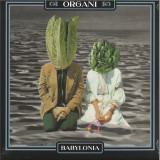
Organi - Babylonia

Organi

Babylonia

12inchN98LP
Alien Transistor
11.12.2024

Well-versed in vintage vernaculars, Oakland-based producer/musician Mike Walti is about to return with his sophomore offering under the Organi moniker – as new album “Babylonia” follows 2020’s “Parlez-vous Français?,” a landmark in vibe acquisition ever since.

Wyldwood Studios is a portal. It’s a secret gateway to analog spheres. Cross the threshold and you’ll feel the difference: you can pick any ol’ time, any place, any tongue or vibe, in fact. Hit the dancefloor in 1967, feel that plushy loveseat in the early 70s. It’s a welcoming place where better, saner vibes are still within reach. Fueled, at least in part, by those long-classic 12”s on the walls – just imagine the sepia-tinted countenance of Melody Nelson alongside actual Birkin sans wig, right next to Shadow’s immortal crate diggers, forever blurred –, and channeled through ancient time travel devices such as the MCI 416B only to arrive on classic 2-inch tape (MM1000 aka Ol’ Bessy), it’s a haven for all things organic, for all things imbued with that warm élan. Built and run by Oakland’s own Mike Walti, countless artists from many different genres have felt that flair, creating sonic spheres and moving back and forth along the malleable axis that is space-time. Capturing magic.

Emerging from this unique portal back in 2020, Walti’s aka Organi’s first studio album was a stunning answer to its titular question – “Parlez-vous Français?” It was a soothing, somewhat psychedelic trip so magnétique and alluring that it immediately brought back those bits of Franglais you never knew you remembered. Whereas the debut LP indeed felt like a spontané voyage to the French Riviera ca. 1968, its follow-up “Babylonia” is so much more than linguistic confusion and ancient Akkadian Rhythms. Using that hidden portal near Alameda’s finest port to access all kinds of remote regions and sonic spheres, it’s super tight and feels, well, decent, even though, just like the ol’ Babylon, it’s full of surprising tongues and dreams, schemes and melodies.

“Where do we go from here?,” someone asks in opening “Organii-“ – all majestically cinematic boom bap, buoyant bass, sick strings. A fittingly massive opener that feels like cracking open a cold one after long weeks at work (that ecstatic “ahhhh”), it perfectly sets the tone for another half hour of pure time traveling, globe-spanning bliss. Whereas that certain prédilection pour all things French makes “La Rockette” so tempting and tantalizing (think MalMalNonBien), the sophomore album’s Berlin-based guest singer Nana Lacrima soon takes us elsewhere: title track “Babylonia” spins ever so softly, like a magic lantern, with images of dreamier Stones Throw funksters or Savath y Savalas looming over the steady flow of an arrangement that washes you clean like an ancient, unpolluted River Euphrates or Brazil’s actual Amazon. A sexy Portuguese-flavored anthem, occasional guest singer Alix Koliha also enters the scene to add yet another layer of French chic to this Brazilian landscape. Next, we’re back at the Riviera, but the “Italiano” version of it, splendido sunsets and bell towers in the distance, the ragazze laughing and shaking it up, perhaps even some Portofino Gin so you can really feel that “me ne batto il belin,” as your fingers align form some half-serious “ma che vuoi?”

Tim Maia-penned “Padre Cicero” (1970) deals with the stunning transformation of the titular hero – “De reverendo a lutador,” and what a soaring, sensual hook –, and Organi’s take on Elephant Memory’s “Old Man Willow” (now an “Old Man Waltz”) perfectly underlines what Walti’s Wyldwood endeavor is all about: Easy-Going Experimental Dream Pop, fueled by Gainsbourg, Broadcast, Stereolab, etc.

Later on, even though something seems to be tres complique in “Remembering Anna,” it all sounds carefree like a spontaneous Friday afternoon with a bottle of fine wine. Right before the outro, key album guest Yea-Ming Chen (of Yea-Ming & The Rumors) returns to the mic, adding her dark and dusky trademark timbre to melancholy anthem “Pictures Of Your Face”. Reminiscent of Nico and Trish (rip & rip), it’s a track that’s both dark and strangely propelling, hypnotic and hip-shaking.

A third generation Bay Area native, Mike Walti aka Organi has been running Wyldwood Studios in Oakland CA for some 15+ years (recording artists like Tommy Guerrero, Spelling, Why?, Latyrx, Del, Dan The Automator, and Big Freedia, to name but a few). A multi-instrumentalist who’s obviously in love with the 60s/70s, he loves to work with analog equipment (“We just love us some analog!” “Just listen to those relays purr…”). Recorded and mixed by Mike Walti at Wyldwood, “Babylonia” will be released on vinyl/digital by Alien Transistor.

pas en stock

Commandez maintenant et nous commanderons l'article pour vous chez notre fournisseur.

22,65

Last In: 15 months ago
o'summer vacation - Electronic Eye

Readers of encyclopedic tomes are obviously familiar with exploding animals – there are numerous reports of torn-apart toads (even in Hamburg, Germany!), actual ants exploding altruistically – but humans that decide to jointly detonate, and with no harm done, that’s rare: Kobe’s own o'summer vacation are unique (and volatile) like that, and they’re back to light the fuse for the second time, presenting 13 more musical quarter sticks that have already blown up venues in Europe and Japan.

“Keep it lean, keep it mean,” they say, and that’s what this band loves to take to the extreme: breakneck concision and collective combustion meet freeform noise punk hazards on o'summer vacation's second (not quite) full-length – as the Kobe-based three-piece’s “Electronic Eye” is set to arrive on October 11, 2024. Following a bunch of trips to Berlin, Munich etc., the Japanese fire starters have found a new home with Alien Transistor, and it’s the perfect launch pad for their latest set of guitarless pyrotechnics. Going right for max q (maximum dynamic pressure), “Electronic Eye” is (unlike those Starships) actually supposed to explode right after lift-off ;)

Even though there have been some line-up changes since the group recorded its sophomore album, the energy caught by producer Shinji Masuko (DMBQ, Boredoms) is still unmatched: a very physical and hard-knocking barrage of mosh-inducing madness that leaves you speechless + inevitably twitching towards the pit. Mastering was done by Masaki Oshima aka Watchman (Melt-Banana).

Opening with sizzling hi-hats and heavy ripples of breathless bass, singer Ami presents a non-sequitur kind of lullaby over the math rock-style interlocutions of “宿痾 (Shuku - A)” – which at 6+ minutes makes up more than a quarter of the album. A shapeshifting frenzy of voice (Ami), unbridled, pedal-powered bassline insanity (Mikkki, formerly Mikiiiii), and hot-blooded drums (Manu, meanwhile replaced by Karry), the album features mosh-inducing blows (previously released “Luna,” “Anti Christ 大体 Super Star”), 30-sec mini noise punk anthems (“竦(shou)”, “Days Go By Fast”), and continues to surf at breakneck pace up and down scales (“@ The”), which often feels like catharsis served with a hammer (“Ultra”). Whereas some tracks are bigger more song-y than others (“Song#2,” that full-throttle “Poodle”), “Vs I” is on time like Tierra Whack (exactly 60 seconds of pick-grinding action), and “Rage” indeed feels like Zack is about to join the party – only to see Ami wipe the floor with pure onomatopoetic fire. Finally, “Aloooooone” and “Humming” (that opening lilt!) are sure going to be live favorites, shifting up and down via hardcore speeds and various break-downs.

Quite hotheaded and terminating things on a high note, o'summer vacation point out that the quick-fire lyrics of their “songs have no meaning. It’s called onomatopoeia in English. Ami, our vocalist, does not like to communicate her thoughts through her music.” Although she considers her contribution “a part of the instrumentation,” they still have strong messages and concerns (unrest, discontent, willingness to shake, wake up, enliven anyone near the audible bomb crater): “That doesn’t mean we don’t have a point of view, but we choose to express ourselves through sound rather than words. Generally, but not exclusively, we are anti-racism, anti-war, gender-free, angry at the companies we work for and their bosses, etc., which are very common sentiments held by so-called rock bands.”

It’s only three ingredients, just like sonic gunpowder: bass, drums, voice – but they tend to explode a few bars into each new track. In a perfect world, there’d be giant colorful clouds of dust gracing the sky over each venue they descend upon.

pas en stock

Commandez maintenant et nous commanderons l'article pour vous chez notre fournisseur.

22,90

Last In: 17 months ago
Soft Violet - Sterner Stuff LP

When the body starts screaming...SOFT VIOLET harnesses the pain with beats and rhythms, bass, synth and vocals, to manifest a rejuvenated writhing musical being that thumps and bumps. Downtrodden...upbeat! Upbeat!

Following multiple band projects, including the parallel powerhouse acts Spinnen and the ecstatic Turkish-Armenian-Friendship TAF, multi-instrumentalist SOFT VIOLET, now releases her solo debut album: Sterner Stuff. And that it is: Guttural with a pounding heart laid out on sexy stainless-steel surface, defiantly glinting.

Playful experimentation reigns free, fusing drum-machine and analogue synths with bass and vocals, to create a hybrid glittering creature that shines sublime.

SOFT VIOLET has a special power to tap in, making clearly conscious decisions to break and irritate, strutting through techno beats, poetically proclaiming personal and political urgency with a confidence, sincerity and sense of humour echoing the likes of Zheani and Sneaks or (thrillingly also) the 1990's heroes Cibo Matto.

SOFT VIOLET urges the listener to unite, to love and be loved and find ways, through music, of transforming pain into something joyous and uplifting, porous and free, as well as incessantly danceable.

SOFT VIOLET dares to go places that others do not, tapping into an honesty that others shy away from, welcoming everyone in to come play.

SOFT VIOLET is a fighter rising in solidarity. The beginning of the matriarchy is already in full effect. See You In The International Court Of Justice Bitch. Let's bounce!

pré-commande20.09.2024

il devrait être publié sur 20.09.2024

26,47

Last In: 2026 years ago
What Are People For? / The Notwist - Criminals / Illusions

Following their acclaimed debut album from 2022 on Alien Transistor Records, What Are People For? now release their first 7" single from the upcoming album, with a dark ambient R’n’B banger "Criminals" on the A-side, telling tales of snoozing criminals and tantalising promises of "Someday we will all be rich".

The already legendary B-Side features a charming smokefilled-bubblegum Spanish & English cover of the Cypress Hill song "Illusions", together with The Notwist, which they developed whilst on tour together last year. Obviously, a product of the recent legalisation of marijuana in Germany: Ich liebe dich Marianne.

pas en stock

Commandez maintenant et nous commanderons l'article pour vous chez notre fournisseur.

14,92

Last In: 18 months ago
Minhwi Lee - Hometown to Come

Hometown to Come' is the second full-length album by Minhwi Lee from Seoul, South Korea. The eight tracks were written over a period of seven years after Lee's first album and loosely form a single story, contemplating how people who have lost their hometown can return.

“What I had imagined from the title, Hometown to Come, was something forever delayed yet constantly approaching; however, upon repeated listens, it takes on a different meaning—a promise of hospitality being realized every day. Even if our places to meet disappear, ‘the song we sing today’ will remain. We will continue to grow, cross paths again, venture far away, and encounter more faces. And when time has passed and you, having forgotten me, ask about my smile or sadness, I will hum ‘the same song,’ cherishing it as a keepsake.” (morceau j. woo, sound designer)

pré-commande12.07.2024

il devrait être publié sur 12.07.2024

27,52

Last In: 2026 years ago
SUN - I Can See Our House From Here LP

A home, a house, has countless frequencies. Each room, each corner feels different. Swings differently. And as you grow older, you realize which corner is yours. But yeah, it takes time…

It certainly marks the end of an era when the house one called home as a kid no longer exists. This home, it was the starting point of so many journeys. Of one big, ongoing journey. And so it feels good, soothing, reassuring to at least return to a spot nearby – to that (proverbial) hill from where you can see it. Feel the vibe that made you.

Andi Haberl’s debut solo album as Sun is sort of dedicated to that house. It’s a journey leading to that hill overlooking everything that made him. It’s not about nostalgia, not about actually returning to a specific place. Instead, it’s about finding a personal frequency, an overlapping of sounds and samples, an open space that mirrors and extends whatever frequencies felt right at different points in time.

“To me, the results feel like Gold Panda/Four Tet meets Steve Reich meets Krautrock meets film scores. I just really wanted to create moods that touch me – and ideally others, too.”

Talking about his first solo album, Haberl recalls many stages: early compositions that ended up on Alien Ensemble’s albums, early DIY/home studio/multi-instrumentalist inspirations (Le Millipede), new technologies that came and went, even a set of wildly convincing arrangements (done with Cico Beck’s crucial input) that ultimately became stepping stones for yet another round of DIY takes. “It was a long, recurring process, and the songs went through so many different versions,” he says, talking about phases of growth (“I added more and more equipment over time”) and pruning, “cleaning up my music a bit.” Tending towards instruments that open up space, and slowly falling in love with sampling, he certainly didn’t rush things once it was time for interior design decisions ;)

“During this whole process I got to learn so much about my own taste, how I prefer to listen to the pieces, which musical elements really matter to me… and what my own voice is. For example, that acoustic elements are most important to me: the banjo, piano, drums, my voice, glockenspiel, trumpet, melodica. Anything that opens up some space.”

Every journey begins with a search: “Missing” with its plucked chords opens like a sunrise over pastoral plains, gently leading the way towards the intricate, playful explosion that occurs once a certain amount of energy (“Sun”) hits dirt and other surfaces: things grow, clot and curdle into new shapes, like new buds; layers of sound move forward, drenched in Spring’s new light. Relying on samples to ask for precipitation (“Rain On Me”), robotic “Low” goes from barren to bass-heavy after its midway shift in pace, full of loops plucked from the shade.

Towards the album’s midpoint, things are suddenly reversed: “Cluster” has that backwards pull, you can’t tell what’s what, yet everything is perfectly locked in, as the pace increases once again. And before the title song shimmers with densified cheering (to eventually stand tall like early Lymbyc Systym), “Beside Me” swipes you off your feet with its booming bass drum. The beat returns once again (“Daydream”), full of searching voices underneath, and at “Dawnday,” we can finally catch a melancholy view of the house. Voices hum. It’s the score moment of the album. Everything makes sense now. A happy end of sorts?

“I want to take people on a journey. A personal journey, too, because when my parents split up and sold the house I grew up in, I felt a bit like the ground had fallen out from under my feet. But I have dedicated the album title and the accompanying piece to this house… so I can keep it in good memory.”

“I Can See Our House From Here” has been a long time coming. It’s been a long journey. Homeward-bound. Leading to a place that’s really Haberl’s – his sound. His frequencies.

Known as a long-time member of The Notwist and various other bands/projects (Alien Ensemble, AMEO, jersey, Ditty etc.), Berlin-based drummer/composer Andi Haberl has also worked with My Brightest Diamond, Till Brönner, Owen Pallet, and Kurt Rosenwinkel, to name a few. “I Can See Our House From Here” is his first solo offering.

pré-commande07.06.2024

il devrait être publié sur 07.06.2024

23,74

Last In: 2026 years ago
Rayon - Libanon

Rayon

Libanon

12inchN15
Alien Transistor
31.05.2024

'Libanon' is music composed for the film "Maître, lihseb please" by Michael Shamberg, composed and performed by Rayon aka Markus Acher, with the help of Sebastian Hess on cello, a computer, a harmonium and a few libanese records .The music was also heavily inspired by the work of fotographer Fouad Elkoury (one of his photographs of Beirut is on the cover) and writer Etel Adnan.

pré-commande31.05.2024

il devrait être publié sur 31.05.2024

10,29

Last In: 2026 years ago
Hochzeitskapelle - We Dance

Enid Valu normally relies on lenses and light to express herself. Known to create stunning visuals, to capture sonic worlds with her preferred instrument (the camera), the US-born, Munich-based photographer and video artist has been working with various bands, shooting concerts, creating music videos, visualizing what she hears. However, now that she’s become an indispensable part of the local scene, she for once ditches the cam and steps up to the mic instead – appearing as featured vocalist on two of the four brand-new covers Hochzeitskapelle recorded for the forthcoming EP entitled “We Dance.”

“It’s later than you think,” she reminds us, just like Stephen Malkmus once did in Pavement’s “We Dance” – beautifully rearranged and reworked some three decades later. Also musing about “Stockholm Syndrome,” just like Yo La Tengo’s bass player James McNews did back then, this new Hochzeitskapelle interpretation is obviously less reminiscent of Neil Young, if compared to the original take. Instead, their Yo La Tengo cover feels almost like a song recorded by The Notwist – which, interestingly enough, is not because two of The Notwist’s core members also play in Hochzeitskapelle. Nope, it’s the vibe of Enid Valu’s guest vocals that somehow points in that direction.

As for the two remaining cover choices, it’s all-instrumental business as usual. For Low’s classic “Silver Rider,” it’s the banjo that does Alan Sparhawk’s vocal part, whereas the trombone soon joins in, contributing Mimi Parker’s second vocal layer as the tune unfolds. Eventually adding a German song to the mix – Wir Sind Helden’s “Elefant” –, it’s an EP that comprises four beautiful half-forgotten indie classics that Hochzeitskapelle reworks, adding the group’s unique, charmingly handmade/oddball “Rumpeljazz” trademark. One can immediately tell how much they love the original tracks: these are recordings, done by fans and admirers who aren’t even trying to sound much like the musicians who wrote them. However, the new versions are so compelling in their own right, they make you want to revisit the original tracks as well… (Dirk Wagner)

pré-commande22.03.2024

il devrait être publié sur 22.03.2024

23,95

Last In: 2026 years ago
Hochzeitskapelle + Japanese Friends - The Orchestra In The Sky (TOKYO) LP

There’s a big clue to the pacific wisdom of The Orchestra in the Sky in the artist name – Hochzeitskapelle + Japanese Friends. For this is, indeed, music based in, and resonating with, friendship, camaraderie, collaboration, and creative exchange. Across two albums – one documenting recordings from Tokyo, the other an expansive double album of sessions from Kobe – Hochzeitskapelle gather around them some of the finest voices in Japanese independent and underground pop music, like Tenniscoats, Eddie Marcon, Yuko Ikema, and Kama Aina, and explore an open field of music, full of creative encounters.

You may already know Hochzeitskapelle as the German instrumental quintet formed by members of The Notwist, Alien Ensemble, and friends from the jazz scene. Across three albums, one a collaboration with Kama Aina (2018’s Wayfaring Suite), they’ve developed a way of playing together that’s intimate and playful, rich and human; it’s a music that’s deliberately rough around the edges, and that nestles cosily into the everyday. Their relationship with Japanese indie has developed over the years, doubtless encouraged by Saya´s „Minna Miteru“, compilations series of Japanese indie pop for Morr Music. A peripatetic gang, Hochzeitskapelle also recently backed Japanese singer-songwriter Makoto Kawamoto on her new album, Hikari.

In many ways, The Orchestra in the Sky feels like the culmination of a set of ongoing cross-cultural exchanges: the Minna Miteru compilations; tours of Japan by Hochzeitskapelle and The Notwist; and indeed, Markus Acher’s Spirit Fest group with Saya and Ueno of Tenniscoats. The latter are present throughout much of The Orchestra in the Sky, and Saya’s voice is particularly winning on songs like “Tsuki no oto”, where the two outfits are joined by brass ensemble Zayaendo. There are several lovely turns from singer-songwriter Yuko Ikema, and Eddie Marcon appear twice; their songs are still beautiful, spectral acid folk, but with Hochzeitskapelle filling the details with lush, sad brass and strings.

But it’s also the potentially lesser-known names that shine through The Orchestra in the Sky, like the frail folk of Gratin Carnival; the delightful, gentle pop songs by sekifu and Zayaendo member, Kanako Numata; a trio of beautiful, stumble-drunk melodies played in swaying consort with popo. That group, along with the presence of Zayaendo, Fuigo, and Mitamurakandadan?, make strong connections with the Japanese underground’s love of brass bands, partly informed by the tradition of chindon’ya, marching bands that walk the streets of Japanese cities. They also all appeared on the recent Alien Parade Japan compilation of such groups, assembled by Acher and Saya.

All things converge, then, on The Orchestra in the Sky, a smart, spirited collection of heavenly pop songs, intimate folk melodies, lungfuls of joyous brass, deep weeping strings, and swooning sighs. The last words go to Acher himself: “Many things we did in the last years come together here and it feels like something special was captured.” We hope you like what you hear.

pas en stock

Commandez maintenant et nous commanderons l'article pour vous chez notre fournisseur.

22,65

Last In: 2 years ago
Hochzeitskapelle + Japanese Friends - The Orchestra In The Sky (Kobe) 2x12"
 
16

There’s a big clue to the pacific wisdom of The Orchestra in the Sky in the artist name – Hochzeitskapelle + Japanese Friends. For this is, indeed, music based in, and resonating with, friendship, camaraderie, collaboration, and creative exchange. Across two albums – one documenting recordings from Tokyo, the other an expansive double album of sessions from Kobe – Hochzeitskapelle gather around them some of the finest voices in Japanese independent and underground pop music, like Tenniscoats, Eddie Marcon, Yuko Ikema, and Kama Aina, and explore an open field of music, full of creative encounters.

You may already know Hochzeitskapelle as the German instrumental quintet formed by members of The Notwist, Alien Ensemble, and friends from the jazz scene. Across three albums, one a collaboration with Kama Aina (2018’s Wayfaring Suite), they’ve developed a way of playing together that’s intimate and playful, rich and human; it’s a music that’s deliberately rough around the edges, and that nestles cosily into the everyday. Their relationship with Japanese indie has developed over the years, doubtless encouraged by Saya´s „Minna Miteru“, compilations series of Japanese indie pop for Morr Music. A peripatetic gang, Hochzeitskapelle also recently backed Japanese singer-songwriter Makoto Kawamoto on her new album, Hikari.

In many ways, The Orchestra in the Sky feels like the culmination of a set of ongoing cross-cultural exchanges: the Minna Miteru compilations; tours of Japan by Hochzeitskapelle and The Notwist; and indeed, Markus Acher’s Spirit Fest group with Saya and Ueno of Tenniscoats. The latter are present throughout much of The Orchestra in the Sky, and Saya’s voice is particularly winning on songs like “Tsuki no oto”, where the two outfits are joined by brass ensemble Zayaendo. There are several lovely turns from singer-songwriter Yuko Ikema, and Eddie Marcon appear twice; their songs are still beautiful, spectral acid folk, but with Hochzeitskapelle filling the details with lush, sad brass and strings.

But it’s also the potentially lesser-known names that shine through The Orchestra in the Sky, like the frail folk of Gratin Carnival; the delightful, gentle pop songs by sekifu and Zayaendo member, Kanako Numata; a trio of beautiful, stumble-drunk melodies played in swaying consort with popo. That group, along with the presence of Zayaendo, Fuigo, and Mitamurakandadan?, make strong connections with the Japanese underground’s love of brass bands, partly informed by the tradition of chindon’ya, marching bands that walk the streets of Japanese cities. They also all appeared on the recent Alien Parade Japan compilation of such groups, assembled by Acher and Saya.

All things converge, then, on The Orchestra in the Sky, a smart, spirited collection of heavenly pop songs, intimate folk melodies, lungfuls of joyous brass, deep weeping strings, and swooning sighs. The last words go to Acher himself: “Many things we did in the last years come together here and it feels like something special was captured.” We hope you like what you hear.

pas en stock

Commandez maintenant et nous commanderons l'article pour vous chez notre fournisseur.

31,89

Last In: 2 years ago
Gratin Carnival - Such December LP

Alien Transistor is proud to announce a reissue of Such December, the fourth album by Japanese indie folk-pop artist, Gratin Carnival. Listeners might already know Gratin Carnival from their appearance on the Alien Parade Japan compilation of indie pop groups working with brass and woodwind; compiled by Markus Acher of The Notwist and Saya of Tenniscoats, it introduced this beautiful genre to the wider world. Gratin Carnival’s “Just Watching” was one of the many highlights of that compilation, and its gentle bossa-folk glide reappears on Such December.

Originally released in 2020, Such December captures beautifully the happy-sad charm of Gratin Carnival. The project of Koreyuki Mitsunaga, Gratin Carnival started in 2011; Mitsunaga had been home recording for some time and decided on the name as an umbrella for his music-making. Mitsunaga’s main instruments are guitar, which he uses to great effect throughout, his gorgeous acoustic playing reminiscent of players like Ueno Takashi of Tenniscoats or João Gilberto, and alto saxophone and clarinet. Those three instruments make up the core of Gratin Carnival’s sound, along with Mitsunaga’s charmingly doleful singing.

Recording at his parents’ home, with a four-track cassette recorder and a MacBook, Mitsunaga created Such December during 2020, though the songs on it stretch back to 2016. The closing “On The Train” was the first song written for the album – “a song about a small trip,” Mitsunaga recalls – and from there, he built a beautiful collection of songs that sit together perfectly. There’s great clarity in Mitsunaga’s writing, with nothing extraneous getting in the way of the lucid arrangements and gorgeous melodies; there’s something of chamber jazz about it at times, so it’s no surprise that Mitsunaga shares his love of Benny Goodman’s small group playing.

He's also a fan of Japanese folk artists like Kenji Endo and Kyouzou Nishioka, and grew up listening to Japanese popular music, The Beatles, and The Carpenters. You can hear trace elements of all this in Such December, in the clear-headedness of the melodic decisions made by Mitsunaga, and the quiet charm of the song’s gentle arrangements. They take on different shapes live, too, where Mitsunaga often invites other musicians to join in – his live band currently includes Masafumi Ezaki (trumpet), Nahoko Kamei (bass clarinet, piano, keyboards) and Tadashi Yonago (trombone, self-made instruments).

As with plenty of musicians from the Japanese underground, Mitsunaga is involved in other music, too – he’s been working with The Otoasobi Project, which performs music in collaboration with individuals with learning disabilities, and their families; and he’s also involved in improvised music. With Such December, though, you get to hear Mitsunaga’s music at its most personal and individual, ten songs of still, gorgeously poised indie folk-pop, where the swooning clang of six strings meets the breathy bliss of woodwind and brass.

pré-commande06.10.2023

il devrait être publié sur 06.10.2023

24,16

Last In: 2026 years ago
You + Your D. Metal Friend - Sonnier

In 2015, Cico Beck ( Joasihno, Aloa Input, the Notwist ) and Markus Acher ( the Notwist, Tied & Tickled Trio, Rayon ) started the project "You + Your D.Metal Friend" as a collective for improvisations and ideas apart from their other bands.

They will experiment with different settings and instrumentations and will collaborate with other artists for the music and the cover-artwork.

For "Sonnier", their first recordings, Cico and Markus started with percussion instruments from around the globe, analogue synthesizers and all kinds of acoustic and electronic devices to layer music that sounds like the memory of Gamelan, Italian library-records and minimal electronic experimentation... music, they listened to a lot before recording.

"Sonnier" will be available on vinyl (incl. download-code), limited to 300 for the world, and will not be repressed. Packaged in heavy-cardboard-LP-covers from second-hand records, they collected from their local record-stores with a screen-printed and numbered artwork glued on it. Designed by Richard Greenan from kit-records, London, and printed by Senor Burns (Red Can). Each cover is unique and hand numbered.

pré-commande15.09.2023

il devrait être publié sur 15.09.2023

19,29

Last In: 2026 years ago
Minhwi Lee - Borrowed Tongue LP

Borrowed Tongue is the debut solo album by Korean singer-songwriter Minhwi Lee. It’s a mysterious, strangely compelling thing, an album of rare poetry, and remarkably self-assured. Originally released in November 2016, the album made waves, winning best folk album of 2016 at the 14th Korean Music Awards. Its eight songs, written and predominantly arranged by Lee, don’t reveal their secrets easily, or at first blush; rather, they take their time slowly to unfurl in her listeners’ worlds. There are hints of other music here, from time to time: the intimacy of Stina Nordenstam, perhaps; the gauzy haze of Hope Sandoval, on the blissed-out pop of “Broken Mirror”; there are touches of acid-folk, and ECM jazz, and a slyly filmic approach to songwriting and arrangement that makes every song fit perfectly into the album’s arc.

Lee arrived at her solo music through a complex, circuitous route. After studying musicology in Seoul, she learned her trade, film scoring, in New York and Paris. She also studied classical music, blowing off steam in a wild punk duo, Mukimukimanmansu, who released one album, 2012, on Korean indie label Beatball. Subsequently, Lee has been refining her music, focusing both on her solo songs, and on writing for television series and films; she’s written scores for films by such directors as Sangmoon Lee, Jeongwon Kam, and Wanmin Lee. She also plays in the jazz outfit Cubed, and recently joined doom metal group Gawthrop on bass.

Since its release in 2016, Borrowed Tongue has slowly bewitched listeners with its idiosyncratic arrangements and evocative songwriting. It’s an album that hints at plenty, but refuses to make grand statements, something Lee seems intent to pursue: in correspondence, she’s very clear that she wants these songs to enact a kind of transmutation, to be adopted into the listeners’ lives and exist within their own imaginings. She does, however, offer a few hints to what propels these mercurial songs, explaining, “this album is about a person who again opens their mouth, which was once shut. The album deals with what it means to speak: things that are known but not said, things that should be said but are not, things that cannot be said but nonetheless are.”

This may well explain the curious mood of Borrowed Tongue, the multiple ‘voices’ that inhabit the album; Lee’s singing voice is pliable and mutable, approaching each song as its own diorama and ensuring the song is sung with just the right tone. The arrangements Lee conjures for her songs are all in service to narrative and melody; they appear to her alongside the composition, which is surely why everything here fits together so beautifully. From there, Lee approaches her songs carefully, in deference to their ‘need to be sung’ a certain way. There isn’t a moment wasted: everything on Borrowed Tongue is as it needs to be, whether a melancholy folk song taking to the air, or a psychedelic reverie dreamed into being. It’s a beautiful, poised and confident debut.

pas en stock

Commandez maintenant et nous commanderons l'article pour vous chez notre fournisseur.

21,64

Last In: 2 years ago
Saroos - Turtle Roll LP

How about you forget for a moment all the things you thought you knew about Saroos, okay? First of all, let’s forget about all the other projects these guys are part of. Why? Because thinking of The Notwist, Driftmachine, Lali Puna, Tvii Son, to name “only” half a dozen things, might be misleading in this case. What’s more, please make sure to forget the fact that they’re mostly filed under “instrumental,” “post-rock dub,” or “kraut-flavored indie-tronica,” you know, all that. And most importantly, let’s forget that they’re a closed, three-minded system: a fixed and fully committed entity of three. No more!

Known to reinvent themselves in less drastic ways, Christoph Brandner, Max Punktezahl and Florian Zimmer, have opened the floodgates to COLLABORATION – making things open, porous, different, new, in many ways, on their quietly explosive latest album “Turtle Roll”.

Announced by 2021 singles “Tin & Glass” feat. Ronald Lippok and aptly titled “Frequency Change” feat. Leila Gharib aka Sequoyah Tiger, the sixth full-length sees the Berlin threesome add another handful of vocal guests along the way – thus turning into shape-shifting full bands and/or temp quartets, perfectly at home in about as many genres as there are tracks on the LP.

Kicked off by the motoric B-funk (Berlin represent) of the Lippok-assisted “Tin & Glass,” complete with retro-futuristic effects, spoken declarations, and non-terrestrial vibes, it might not be Daft Punk playing at their house, but a byobv (vibe) house party of musical minds isn’t too far off, actually! Once again as much a mixtape as an album, the mood, vibe, and color changes with every new collaborative tune: From ethereally soothing and dreamy (“The Mind Knows” feat. Solent from Canada) to clap-driven and wildly hypnotic (that pounding “Mutazione,” featuring vocals and rhymes courtesy of Eva Geist from Italy) and almost radio-ready (“current, bass-heavy alternative indie hits only!”), when that stadium-sized oomph of “Frequency Change” feat. Sequoyah Tiger arrives around halfway in.

Elsewhere, Japanese guest Kiki Hitomi (WaqWaq Kingdom) adds exotic ecstasy to the hypothermic beatscapes of “The Sign,” while Ukrainian vocalist Lucy Zoria pushes poetic layers over “Southern Blue”’s wonky foundation that hardens and finds more direction with each round the beat clock takes – until it’s impossible to escape that undertow. “My baby makes it better,” sings Caleb Dailey on the faithful and still-loving “Being with You,” a sepia, softly churning look back by the US songsmith, a sweetly shimmering ode to a relationship.

Speaking of foursomes, there’s four instrumental tracks scattered throughout the new LP – ranging from a painting in crystal clear colors of night (“Organ of Recall”) to the highly dramatic sonic tapestry of “Thicket” (actually feat. vocals as well). Before the perfect goodbye of slow-moving album closer “Here Before,” “Passed Out” sounds like Odd Nosdam finding his feet after blacking out on a German carnival.

Titled after a surf maneuver that allows you to break through the crests on the way out, Saroos have skipped the obvious waves with “Turtle Roll” – creating their own kind of sonic “Hang Ten” by adding 7 new voices to the mix.

pré-commande16.06.2023

il devrait être publié sur 16.06.2023

20,38

Last In: 2026 years ago
What Are People For? - What Are People For?

What Are People For? make the perfect kind of dystopic dance music for our times. Born from a collaboration between artist Anna McCarthy and musician/producer Manuela Rzytki, the band could be the illicit lovechild of Tom Tom Club and Throbbing Gristle, displaying the ideal balance of hip shaking vibes and dark provocative content.

On their collaborative debut, McCarthy and Rzytki share songwriting duties. The album was produced by Rzytki herself. They are joined by Paulina Nolte on backing vocals and Tom Wu on drums, while Keith Tenniswood mastered the record.

The whole project stems from a publication and exhibition by McCarthy laying the foundations for the content and lyrics of the album, which is humorous, poetic and political. As a lyricist, McCarthy uses her storytelling ability to explore anxieties and desires, digging into free surreal word associations reminiscent of Su Tissues’ tongue in cheek experiments with Suburban Lawns, but also explosive and gripping like a Kae Tempest rap.
Rzytki’s precise sonic palette and talent at penning structured bangers perfectly complement McCarthy’s playful and subversive language manipulations. Rzytki's beats are rooted in old school Hiphop loop principles and an authentic love for the analog. Her use of an array of synthesizers and other "real" instruments adds to WAPF's depth, soul and sincerity.

The album opens with a joyful anthem, full of energy and melodic hooks. The audience is confronted with the quintessential titular question What Are People For? and told that they are just a mere disposable commodity. Throughout the album, lyrical themes revolve around underground aspects of society, violence, political ideologies, sexuality and mysticism. The content is deep but the album is as danceable as it is biting.

73, with its drum machine hysteria and hypnotic synth basses is a a text collage written on the 73 bus through London, consisting of situations and conversation snippets encountered along the way. Drones indulges in the narrator’s paranoia as they feel they are being watched by cigarette machines, whilst the haunting choir is half spoken, half sung, ending on the orgasmic chanting of the word “mummy”. Nursery Rhyme brings more soothing incantations. There is definitely an affinity for fairytales, albeit adult ones and especially the anarchistic ones such as The Moomins, who were a consistent influence on the band. The artwork for the record, created by McCarthy, is a beautiful children's book-style painting of the group in a forest, seemingly about to engage in a magical encounter to which we are invited.

WAPF? have absorbed and digested a variety of influences. Trip hop, Punk and Techno are rubbing shoulders on Party Time. 1977 was coined “Summer of Hate” in the UK and unsurprisingly in WAPF?’s Summer of War, ethereal singing alternates with a powerful marching Garage/Grime chorus reminiscent of street protests and UK culture.

Mz. Lazy starts like an invitation to meditation and references Gertrude Stein’s book Ida in which she develops the idea that publicity is a new religion and people are now famous for being famous. Repressed anger explodes into violence and freedom at the end of the song as our heroine eventually grabs an axe to destroy her oppressors.
Fantasize, on its part, is raw, sexual and liberating while the closing track Bring Back the Dirt is a welcome hymn into a world that is becoming more and more sanitised.

While exploring deep subject matters throughout their album, WAPF? manage to remain satirical, exciting and funny. Each and everyone of their songs have a cathartic quality.

The visual identity of the band is intrinsic to their appeal. Live, they are eccentric, wild and unapologetic, wearing see-through costumes, bright miniskirts and intricate headpieces while delivering their songs with sharp intensity. Their performances radiate queer sexiness and transcend B52's thrift store aesthetics, creating a space for collective dreaming.

WAPF? is a rare combination of contemporary punk energy, irresistible groove, absurdist dry humour and astounding depth of field. They have the mighty power to create a party with their music and soon you will find yourself lifting your arms as if controlled by an external force, to chant: WAPF? WAPF? WAPF?

– Marie Merlet (Malphino, Little Trouble Girls, London)

pré-commande21.10.2022

il devrait être publié sur 21.10.2022

18,45

Last In: 2026 years ago
Various - Alien Parade Japan LP (2x12")

Alien Transistor present Alien Parade Japan, a joyous double-album compilation of groups from Japan’s indie-pop and avant-garde undergrounds, all of which feature brass or woodwind instruments as part of their line-up. Compiled by Markus Acher (Alien Transistor, The Notwist, Hochzeitskapelle) with plenty of support and help from his Spirit Fest bandmate, Saya (also of Tenniscoats), it features some familiar names – Tenniscoats, naturally, but also Zayaendo, Tori Kudo’s Maher Shalal Hash Baz – alongside lesser-known groups like Biobiopatata, Mitamurakandadan?, Kourakuen, sekifu, and Noah Lewis Mahlon’ Taits, amongst many others.

The collection of songs here rests upon a simple question, and an interesting parallel: Why do so many groups from Japan include brass and woodwind, and how closely does this echo the scene that Acher is involved with in Munich? The idea was formulated in Acher’s mind after one of his groups, Hochzeitskapelle, had been invited by Saya to Japan in 2019, to take part in the Alien Parade Japan tour. “Saya and her friends recommended a lot of music to me that I didn’t know of,” Acher recalls, “and I was surprised and excited to find so many Japanese bands who use brass and woodwind instruments.”

This approach was something Acher had been familiar with for a while, thanks to his experiences in Munich: “Until then I thought of the Munich scene, where Hochzeitskapelle come from, as being quite unique in having ex-punk and still-indie musicians form loud acoustic bands with many brass instruments and play a wild mixture of styles.” And indeed, that variety is reflected in the twenty-two songs on Alien Parade Japan, which flits from the pastoral melody of Maher Shalal Hash Baz’s “Crossin The Tama River”, through the tenderness of various sighhorns’s “people have called them flowers”, to the folksy lament of Gratin Carnival’s “Just Watching”.

Alien Parade Japan reaches further afield, too, drawing in some groups, like HOSE, Fuigo, and popo, that feature musicians like Toshihiro Koike, Masafumi Ezaki and Taku Unami, who may be better known for their experimental and improvised releases on labels like ftarri and Erstwhile. It also looks back to material recorded in the 1990s - the swinging slide guitars and sax/tuba duet of Strada’s “Swamp”, from 1998, and Compostela’s energetic, rousing “ghhgh”, from 1990. Both pieces were written by, and feature, saxophonist Kanji Nakao; Compostela’s membership also included late saxophonist Masami Shinoda, who was also part of such storied Japanese groups as Pungo, A-Musik, Orquestra Del Viento, Ché-SHIZU, and the fiery free jazz outfit, Seikatsu Kōjyō Iinkai.

Groups like Compostela help to draw some through-lines to the aesthetics of chindon’ya, a type of Japanese marching band made up of costumed street performers who advertise businesses; the music made by these bands is brash, spirited, and full of energy. Alien Parade Japan weaves all of this together – chindon’ya; jazz; indie-pop; psych-folk; big band – into one beautiful, big tapestry of gorgeous melody, sweetness, and melancholy, with plenty of creative fraying at its edges. “The collection is a very personal view of Japanese bands using brass and woodwind instruments,” Acher concludes: “it’s not a representative anthology, it’s mainly held together by my personal taste, experiences, and friendships.” But it’s also a wonderfully coherent collection of some of the most playful and elated music you’re likely to hear this year. As musician and writer David Grubbs says:

„Now it is confirmed: my favorite genre of music is Alien Parade Japan. Hopefully now people will know what I’m talking about when I gush about the unassailable brilliance of longtime favorites like Maher Shalal Hash Baz, Popo, Mitamurakandadan?, Hose, and Tenniscoats, presented here alongside others whose music I have only begun to search out. Please share in my gratitude and enjoyment of this lovingly assembled collection, one that I welcome into my home as I would a long-anticipated guest.“

pas en stock

Commandez maintenant et nous commanderons l'article pour vous chez notre fournisseur.

26,51

Last In: 3 years ago
The Plastik Beatniks - All Those Streets I Must Find Cities For

Sounds like supergroup. Rarely have outstanding figures of such a variety of musical styles collaborated on one album to pay homage to a nearly forgotten artist, one of the few black Beatnik poets, Bob Kaufman.

"All Those Streets I Must Find Cities For" by The Plastik Beatniks is an attempt to acoustically reanimate Bob Kaufman, to return the Beat to him in a transatlantic collaboration. It is a shimmering psychedelic, at times jazzy concept album, sometimes reminiscent of Krautrock or hip hop, about a Beat-era poet who was as great as he was forgotten. It takes spoken word to a new level, as a transatlantic showcase of musical avant-gardes and a joyful "sound archaeology" of modernity, in which the tracks of the "Plastik Beatniks" meet the best voices of America.

The 12 wildly different songs and audi collages, on the transatlantically-produced album, "All the Streets I Must Find Cities For," is based on lyrics by Beat author Bob Kaufman. They were originally part of the radio play "Thank God for Beatniks," for which author Andreas Ammer ("Ammer & Einheit"), Notwist‘s Markus Acher and Micha Acher and loop maker Leo Hopfinger ("LeRoy") formed "The Plastik Beatniks." On the eastern side of the Atlantic they composed music and crafted soundscapes. On the west side of the ocean, they asked three of the most renowned singers, activists and producers in the U.S. to recite or sing Bob Kaufman's poetry.

Punk-pop icon Patti Smith immediately signed on to read Kaufman's poem "Ginsberg (For Allen)". Free jazz vocalist Moor Mother passionately performed Bob Kaufman's "War Memoir". American jazz clarinetist, composer, singer and “International Anthem” labelmate Angel Bat Dawid, a legitimate successor to Sun Ra, polyphonically read and sang such poems as "The Sun is a Negroe" and "West Coast Sound 1956" and included some clarinet solos on top. Also on the album, Bob Kaufman himself recites his previously unknown poems "Hollywood Beat", "Would You Wear My Eyes", and the "Jail Poem" "All Those Streets I Must Find Cities For". Beat chronicler Raymond Foye, who still lives at the Chelsea Hotel in New York, contributed an interview he conducted with late beatnik Allen Ginsberg about Bob Kaufman. Completing the circle was hip-hop artist Adam "DoseOne" ("13&God"), who once gave Markus Acher a well-thumbed volume of Bob Kaufman, whom he admired. He contributed some raps. Thus 12 tracks emerged, as diverse as the artists, poets and musicians who contributed to it. More than an album. An epitaph. A work for the eternity of Beat.

Regarding Bob Kaufman - of course the FBI kept a file on him – first as a sailor, then a communist, and finally a Beat poet. As one of the mainstays of the movement, he edited the literary magazine "Beatitude" in San Francisco and defined "Beatnik" to Allen Ginsberg: half rhythm, half sputnik. Bob recited his poetry loudly on the streets (when he wasn't sunk into years of silence in protest of the Vietnam War) and in the bars and bagel shops of North Beach. Once, he almost landed a pop hit ("Green Green Rocky Road"), which then made Dylan's companion Dave van Ronk famous. That Kaufman is today less known than his friend Allen Ginsberg may be because he was a black Beat poet, and also a Jew. This was not compatible with fame in the US of the 1950s. Though Kaufman had the same publisher, City Lights, as Ginsberg, he was frequently arrested and jailed, and was treated with electric shocks until he developed serious mental heath issues. There he wrote his "Jail Poems". The seventh of these lent this album its name:

"Someone whom I am is no one / Something I have done is nothing Someplace I have been is nowhere / I am not me What of the answers / I must find questions for? All these strange streets I must find cities for, Thank god for beatniks."

pas en stock

Commandez maintenant et nous commanderons l'article pour vous chez notre fournisseur.

21,64

Last In: 3 years ago
Fuchs - Fuchs

Fuchs

Fuchs

12inchN79LP
Alien Transistor
10.06.2022

Fuchs is a band that never was. It vanished as quickly as it appeared in the picture, much like the animal that can be seen on this album and after whom it was named. In 2005, Kante singer and guitarist Peter Thiessen travelled to Weilheim to visit Markus and Micha Acher in their studio, where they were joined, among others, by Notwist-affiliated musicians like Cico Beck, Robert Klinger, Carl Oesterhelt and Stefan Schreiber. Spirits were high, but schedules were full: after a week of improvised sessions, everyone went their own way. The recordings gathered dust until Markus Acher found them again in 2021 while cleaning out his studio. After carefully re-evaluating the rough mixes, the musicians decided to finally release them. The resulting album comprises six tracks that musically draw on jazz, aesthetically lean on dub techniques and ideologically pick up on krautrock: there’s no solos to be heard on this record, just a few equally skilled and open-minded musicians listening to each other carefully, providing each other with space in which to unfold. »Fuchs« is a document of egos dissolving in a collective spirit.

Thiessen and the Acher brothers met in the 1990s and bonded not only over their shared background in hardcore music and the DIY ethos in which it was rooted, but also over their love for jazz. »If you look at those two things combined, you will eventually become convinced that you don’t have to be formally trained to make music that at least resembles jazz«, says Thiessen today. He invited Micha Acher to join his band Kante on flügelhorn in 2004 for a tour that saw the expanded group play unusual encores after the official concert was over. »Micha had taught us some dixie pieces, so night after night we would play a freestyle dixieland ska set in front of the remaining audience!« Naturally, the Acher brothers didn’t have to ask twice when they invited him for a visit in Weilheim to further explore their mutual interests in a studio setting. »I got on my way immediately and took two or three loose ideas, a tape echo and a guitar on whose headplate you could create fantastic sounds with me«, says Thiessen.

Between immersing themselves in books by the photographer Leonore Mau, cooking together and drinking the occasional fruit schnapps, the trio went into the studio. Says Thiessen, »Micha brought his flügelhorn and some wonderful ideas with him, Markus an Indian harmonium and a plan, Carl Oesterhelt came with a glockenspiel and a Chinese zither and a bunch of amazing jazz musicians joined in, too.« He considers the resulting recording sessions to be a kind of attempt at musically translating their conversations during those days. They discussed different approaches to jazz, whether sampling and musical miscitations can unlock ecstatic potentials and the possible parallels between syncretistic religions and pop music. »There’s traces of glossolalia, it's like a blurry séance«, adds Thiessen in regard to the sessions.

It is especially this spirit that managed to live on even though the recordings themselves were abandoned. »What we all liked most when listening back to the recordings is probably their marginal and fragmentary character, the empty spaces—the moments in which the virtuoso solo never comes, in which the centre remains empty.« The six pieces on »Fuchs« are chock-full of exactly these moments. When at one instant, the players seem to disperse and improvise freely, they always meet again on common ground a short time later, continuing on their way together. There are no conventions or even previous agreements that guide them, just a shared will to explore a vast range of curious sounds and unusual rhythms together as a truly unified constellation of very different musicians. Fuchs is a band that never was. Its ideas still reverberate vividly even 17 years later.

pré-commande10.06.2022

il devrait être publié sur 10.06.2022

18,45

Last In: 2026 years ago
Caleb Dailey - Warm Evenings, Pale Mornings: Beside You Then

Growing up in the Californian sprawl and the vast suburbs of Phoenix, Arizona, Caleb Dailey largely dismissed the country and western music that surrounded him. Instead, he was drawn to independent rock, experimental zones, and other genre-defying forms, which led him to create skewed rock music with Bear State and establish the “minimal art label” Moone Records with his brother Micah Dailey in 2013. But in the early half of the 2010s, Dailey began to hear things differently. Drawn into the left-of-center works of artists like Gram Parsons and Blaze Foley, a more idiosyncratic take on country, folk, and roots music began to swirl in his imagination.

Wandering into the form’s cowboy chords and lonesome scenes, Dailey found himself wondering what his own country album might sound like. The result is his debut solo album, a collection of covers called Warm Evenings, Pale Mornings; Beside You Then. Produced by John Dieterich of Deerhoof, Keiko Beers, and Dailey himself, it’s a melancholy charmer, rooted in traditional ideas but free roaming in its scope. Laced with synths, pedal steel, acoustic guitars, and commanded by Dailey’s full and woozy voice, it owes as much to the busted waltzes of Lambchop and the homespun lo-fi folk of Little Wings (whose Kyle Field appears on the album via a spoken intermission) as it does to the songwriters and performers who provide its source material, which include Parsons, Foley, Elvis Presley associate Chips Moman, steel guitarist Buddy Emmons, and others.

“The subversive nature of country music isn’t as much at the surface as some other genres,” Dailey says. “But the deeper down the ‘country hole’ I went, the more I wanted to be part of it. It is truly a strange world.”

The hands of Dailey and his collaborators, which includes a wide roster of DIY experimentalists like James Fella of art punks Soft Shoulder, Jay Hufman (Gene Tripp), Lonna Kelley of Giant Sand, Japanese DIY hero’s Koji Shibuya and Tori Kudo, Nicholas Krgovich, Markus Acher of The Notwist, and more, that strangeness is accentuated. Dailey doesn't aspire to retro Nashville fetishism or sanctioned notions of “realness” so much as a genuine outsider authenticity. Take his version of Gordon Lightfoot’s “If You Could Read My Mind” for example: a highlight of the record, it pairs familiar genre signifiers like pedal steel and guitar strums with warbled synths. Then there’s his read of “Dreaming My Dreams,” originally made famous by Waylon Jennings (who also did time in the Arizona desert), which morphs from a mournful ballad into a wash of far-off sonic noise.

The attention here is on the songcraft itself, with Dailey inhabiting these songs and turning them inside out to reveal unexpected tenderness and playfulness.

Recorded at home with an acoustic guitar and 4-track, Dailey began open correspondences with his collaborators, who fleshed out ideas and added touches, often working with skeletal frames before Dieterich and Dailey shaped it into a cohesive whole. “John is the reason this album exists,” Dailey says. “He sculpted all these parts together in such an otherworldly way. He is truly a magician.” Deeply allergic to insincerity, Dailey avoids any trace of irony. He’s created a cohesive gem out of disparate parts, uniting Americana songcraft with experimental disassemblage. From this bric-à-brac, he’s made something touching and beautifully strange.

pré-commande08.04.2022

il devrait être publié sur 08.04.2022

25,67

Last In: 2026 years ago
Atsuko Hatano & Midori Hirano - Water Ladder

Following their recent solo releases Soniscope (Dauw) and Cells #5 (Important Records), Berlin-based multi-instrumentalist Midori Hirano and Tokyo based string experimentalist Atsuko Hatano have teamed up for their first collaborative full-length: Water Ladder. An intense, multilayered continuation of earlier collaborations (Atsuko was featured on Midori’s debut LP back in 2006), the foundation for this new collaborative album was laid when they shared stages in Berlin (Ausland) and Japan in 2019. Working remotely at first, they later recorded parts of the album in Nara’s snoihouse (using omnidirectional polyhedral speakers).

“As we rallied back and forth with our recordings in the process of creating this album, unanticipated fluctuations and irregularities emerged, coming together into a kind of music with a unique resilience and buoyancy that cannot be confined to existing molds. It was as though we had built a Water Ladder to bridge the gap between us,” explains prolific composer and viola player Atsuko Hatano, who’s been busy recording solo and with colleagues such as Jim O’Rourke, Eiko Ishibashi, Mocky, Tatsuhisa Yamamoto, Takeo Toyama, and Anzu Suhara (Asa-chang & Junrei).

Kyoto-born, Berlin-based Midori Hirano, who’s also been releasing music under her MimiCof moniker, adds multiple instruments to the ever-changing sonic landscapes of Water Ladder – an album defined by suspenseful and seemingly suspended compositions that often feel like floating in midair, a sensation the musicians compare to “that distinctive feeling you get from riding a high-speed elevator, where you can no longer tell whether you’re going up or down.”

Devoid of birdsong, the late summer air is nevertheless full of buzzing, whirring, hissing sounds on foreboding album opener “Summer Noise,” a cinematic intro with slow-moving piano chords and an ominous build-up over the course of its sprawling eight minutes. Elsewhere, sudden bursts of viola cut through nighttime peace (“Nocturnal Awakening”), followed by “Cotton Sphere” – which makes the sensation of floating in midair complete: harmonies and melodies rise and form to fall apart again, leaving only trails of previously defined space shimmering in their wake…

Whereas the title track truly explodes half-way in, the final “Cascade” brings closure to the electro-acoustic six-track collection: the floating continues, but the interlocking musical planes are no longer ruffled or rippling, no longer torn in many directions at once. Instead, the sonic streams merge and eventually disappear like ephemeral water falls after heavy rain or sudden snowmelt.

“Water cannot retain its form on its own, and can take any shape as effected by external forces. Its movements cannot be captured by eyesight alone: A body of water that appears to be crashing down into a deep, bottomless waterfall could actually be rising up very slowly into midair,” says Atsuko. “This is an invitation for you to cross the ever-transforming Water Ladder built between Midori and myself.”

pré-commande03.12.2021

il devrait être publié sur 03.12.2021

18,78

Last In: 2026 years ago
Fehler Kuti - Professional People 2x12"

In view of the immense Black Lives Matter mobilisation in reaction to the murder of George Floyd and the comparatively meagre societal reaction to the attack in Hanau, the question arises: How come our society does not show the same empathy and solidarity towards its own fellow citizens with Kurdish, Turkish, Bulgarian, Bosnian, Afghan migrant backgrounds or members of the Roma and Sinti?

How limited is our postcolonial discourse if we are unable to address the racist exploitation of those who repair our cars, deliver our parcels or harvest our asparagus?

It’s all a sham. Shake it off like a biometric photograph. Shake off that false consciousness. The Black Diaspora is a transatlantic lie invented by music curators and journalists. Embrace this nuanced return to structures and superstructures, to articulations and historical constellations as analytical tools.

Allow me to dampen your expectations. This is not the sound of decolonisation. This is no compilation of BLM protest songs. This is no celebration of Black emancipatory struggles. You will not be able to play this at your hip post-pandemic house party. This will not go down well with your woke friends. This is music for the square in the room. For that reluctant BAME/Person of Color repelled by your fetishisation of the African-American experience.

This is music for gated communities. This is Fehler Kuti singing of class relations, not of identities and positionalities. This is Fehler Kuti resisting.

Listen to these songs of infrastructure and appraisal of the welfare state. Join me in mourning the broken promises of prosperity for all. Send that “Ausländer“ of your mind to heaven. Colonialism fucked you up. Platform Capitalism is keeping you in chains. Are we to unionise all human and non-human workers at Amazon? Will modernity always have that "forever nigger“? What about those dispossessed field hands harvesting your asparagus?

All is lost. The system is rigged. Because all histories, gestures and identities have been absorbed into this late capitalist apparatus we call diversity. It can integrate anything and anyone. It made me. It is the price of the ticket. And it is unable to challenge its own premise of an atomised society. As if you and I had so little in common.

They will try and help you. They will build a museum for your history and a scholarship program for your future. I warn you. Don‘t let them give you a name. Resist appellation. Don’t get that German passport. Don‘t eat asparagus.

Fehler Kuti, Spring 2021

All songs by Julian Warner. Produced by Markus Acher and Tobias Siegert.

Markus Acher – drums, percussion, backing vocals Micha Acher – sousaphone, trumpet Cico Beck – synthesizer Jenny Bohn – backing vocals Pacifico Boy – vocals Katja Kobolt – spoken word Theresa Loibl – bass clarinet, backing vocals Sascha Schwegeler – steeldrum, kalimba, percussion, backing vocals Tobias Siegert – bass, synthesizers, percussion, backing vocals Julian Warner – piano, memotron, vocals

recorded and mixed by Tobias Siegert at Minga Records, july – december 2020 mastered by Moritz Illner at Duophonic

Cover art and photography by Andreas Neumeister. Layout by Sascha Schwegeler.

Fehler Kuti “Professional People” is part of the same multiverse as “The History of the Federal Republic of Germany as told by Fehler Kuti und die Polizei”. A production by Julian Warner. In cooperation with Münchner Kammerspiele. Funded by the Department of Arts and Culture of the City of Munich. Released by Alien Transistor.

pas en stock

Commandez maintenant et nous commanderons l'article pour vous chez notre fournisseur.

24,16

Last In: 4 years ago
Organi - Parlez-vous Français?

A quick, spontané voyage to the French Riviera ca. 1968, good times long before things went south, Organi’s “Parlez-vous Français?” is a woozy, tripping, soothing sojourn: DIY dream pop, hazy psychedelia, blurred-but-steady beats dripping down the golden boulevard, complete with mystical chants, a dash of half-remembered Franglais that goes down like some vintage eau-de-vie. There’s a fine massage waiting behind those venetian blinds. Pay half an hour, you’ll be relaxed and revived after 22 minutes. Très irrésistible when streamed, Organi’s haunting, hard-boiled French lesson is even better with that classique vinyl crackle in the mix.

Following the cinematic title skit with its bass loop appendix, Oakland-based producer and multi-instrumentalist Mike Walti (and his songwriting partner Maryam) aka Organi invites singer Jessica Bailiff along for the majestic entrée, an interpretation of Philamore Lincoln’s 1970 tune “The North Wind Blew South” (doesn’t it always?), adding anticon. heavyweights Jel and Odd Nosdam on synths and bass for à la mode enhancements and additional bric-à- brac.

Whereas the theme tune “Organi” comes with big drums, big organ, seductive overtones, pure hypnosis, “Whispers” is the soundtrack to some kind of psychedelic campfire tableau vivant: all brumeux, hazy, with spare guitar, Gauloises or Gitanes dangling, a glass of Bordeaux waiting on the dusty old amp, and featuring guest vocalists Yea-Ming Chen & Susy Borhan. It gets even more Parisienne after that: a French woman just knows how to look classic, even when all she’s got is some attitude, a ramshackle tambourine, a craving for old Sukia weirdness and those budget-couture “4 Dolla Jeans”...

Clearly in love with analog equipment, Organi turn The Vaselines’ “Slushy” into a slow- moving, bottomless lullaby – “... you'll never miss what you never had” –, and the femme fatale minimalism of “Stay The Night” is too magnétique and alluring: A fuckin’ sexy chanson, très léger and yet such a hard-knockin’ head-nod anthem, it’ll make you stay for sure, hungry for la petite mort.

Before the expansive denouement – a bank robbery in style: with bangs and a bucket bag (“Danger Walked In”) – the session gets super loose on “The Getaway,” head scarves and berets shimmering in the cabriolet, and featuring Jena Ezzadine on vocals & Headnodic on bass.

Mike Walti aka Organi is an Oakland-based musician and producer. A third generation Bay Area native, Walti has been running wyldwood Studios in Oakland CA for 10+ years (recording artists like Why?, Latyrx, Del, Dan The Automator, and Big Freedia, to name but a few). A longtime friend of Odd Nosdam, he loves to work with analog equipment (“We just love us some analog!” “Just listen to those relays purr...”). Recorded and mixed by Mike Walti at wyldwood, and mastered by Odd Nosdam.

pré-commande19.03.2021

il devrait être publié sur 19.03.2021

16,43

Last In: 2026 years ago
Tenniscoats - Music Exists Box
 
45

Now finally, the great "Music Exists"-series by Tokyo-based duo the Tenniscoats is completed. Apart from the regular 4 volumes, there is a heavy cardboard box, beautifully screenprinted and hand-numbered by senorburns, in 12 different color-combinations. Inside you'll find an extra-LP of bonus-tracks and alternative versions, "Music Exists disc 5", which only comes exclusively with this box. Like on the other LPs, you’ll hear heartbreaking songs, beautifully arranged with acoustic guitar, melodica, psychedelic keyboards and soundexperiments. Also included is a A3-Poster with a drawing by Ueno not used within the previous album-artworks.

Limited one-time pressing of only 500 copies worldwide. There is a small amount of full boxes with all 5 LPs and Poster available, for those, who don‘t have any of the albums so far.

Tenniscoats have devoted followers allover the world, but their releases were always hard to find outside of Japan. Except for their album "Tokinouta", which saw a very limited run on vinyl, and the seminal "Two Sunsets", their collaboration with the Pastels (and a small handfull of 7"s), there were never any vinyl-releases, and also the CDs were hard to get for any-one, who doesn't speak or read japanese.

So, this is the chance to dive deep into the beautiful, unique world of the Tenniscoats and their opus magnum "music exists".

"It may even be their greatest ever music, essential plus" Monorail Music, Glasgow

"Whatever's ailing you, Tokyo's Tenniscoats have got something for that" Boomkat, Manchester

pas en stock

Commandez maintenant et nous commanderons l'article pour vous chez notre fournisseur.

83,99

Last In: 5 years ago
Tenniscoats - Music Exists Box

Now finally, the great "Music Exists"-series by Tokyo-based duo the Tenniscoats is completed. Apart from the regular 4 volumes, there is a heavy cardboard box, beautifully screenprinted and hand-numbered by senorburns, in 12 different color-combinations. Inside you'll find an extra-LP of bonus-tracks and alternative versions, "Music Exists disc 5", which only comes exclusively with this box. Like on the other LPs, you’ll hear heartbreaking songs, beautifully arranged with acoustic guitar, melodica, psychedelic keyboards and soundexperiments. Also included is a A3-Poster with a drawing by Ueno not used within the previous album-artworks.

Limited one-time pressing of only 500 copies worldwide. There is a small amount of full boxes with all 5 LPs and Poster available, for those, who don‘t have any of the albums so far.

Tenniscoats have devoted followers allover the world, but their releases were always hard to find outside of Japan. Except for their album "Tokinouta", which saw a very limited run on vinyl, and the seminal "Two Sunsets", their collaboration with the Pastels (and a small handfull of 7"s), there were never any vinyl-releases, and also the CDs were hard to get for any-one, who doesn't speak or read japanese.

So, this is the chance to dive deep into the beautiful, unique world of the Tenniscoats and their opus magnum "music exists".

"It may even be their greatest ever music, essential plus" Monorail Music, Glasgow

"Whatever's ailing you, Tokyo's Tenniscoats have got something for that" Boomkat, Manchester

pas en stock

Commandez maintenant et nous commanderons l'article pour vous chez notre fournisseur.

28,19

Last In: 5 years ago
Saroos - OLU

Saroos

OLU

12inchN72LP
Alien Transistor
16.03.2020

Deliberately breaking all the rules Mr. Hornby once famously outlined regarding the creation of homemade (tape) compilations, Saroos’ members indeed had the term “mixtape” on their minds while working on their latest full-length – albeit in the hip-hop sense: a sonic snack box, interconnected shots from the hip, something that just came together and immediately felt right.

Whereas hip-hop folks nowadays often use the vacuous term “project” in order to steer clear of the ontological debate caused by the almost synonymous use of album/mixtape, Florian Zimmer, Christoph Brandner, and Max Punktezahl, otherwise busy with The Notwist, Driftmachine & Lali Puna, stick to the classics: their new 16-track project “OLU” (Off Label Use) is, officially, still an album. But it’s wild and vibrant like a mixtape, interwoven like its cover: a seamless burst of ideas, impulsively combined to form a split-screen snapshot of recent moments and momentums.

Re-appropriating the term “Off Label Use” – which actually means: using prescription drugs in ways that aren’t mentioned on the instruction leaflet – in their own “off-label” way, Saroos never sounded more loose-limbed and elastic. Whereas the trio’s earlier releases were rather conceptual and homogenous, “OLU” indeed has a more loose, spur-of-the-moment feel, a spontaneous force at its core. Checking the weighty sci-fi inspirations at the door, they use that Bomb Shelter-type of freedom to reinvent themselves at every turn, chasing sounds that happened to emerge in the group’s triangular energy field.

Kicking it off “with a killer, to grab attention” (Hornby/Cusack, after all), the massive reverb-stumblin’ adjustment between beats and bass of opening track “Quarantaine” cross-fades smoothly into “Humdrum Rolloff,” an early hint at the group’s off-label practices: the underwater creepers floating around here were really voices (mostly). From majestically built oriental sound-pieces (“Looney Suite Serenade”), synth-based “End House Mario” and a triptych of speaker-boxxxing gas lamp experimentations entitled “Cord Burn 1-3,” Saroos have rarely sounded this playful and unrestricted: there’s a new energy at work that welds all the different sonic playing fields together to create one continuous 40 minute mix.

For the B-side descent, “Tatsu Jam,” at less than 4 minutes still the longest cut, billows over the kind of sizzling hi-hats you’d expect to hear on real trap tapes from Hotlanta. A prelude to a bunch of quicker-paced instrumentals (“Scratch Pets”, “24h Love Gumbo”) and ambient sun showers, until the next “Plateau” (Mo’Wax vibes!) brings the beats to the fore once again (“Tomorrow’s Kudos”), and the ultimate “Whirligig” sounds like a mix of Oktoberfest 2020 and Johnston’s “Casper The Friendly Ghost” coming apart at the seams.
Whatever you wanna call it – album, LP, mixtape, project, who cares? –, it’s definitely a double A-side tour-de-force.

pas en stock

Commandez maintenant et nous commanderons l'article pour vous chez notre fournisseur.

15,92

Last In: 6 years ago
Fehler Kuti - Schland Is The Place For Me

I remember the first time I read W.E.B. DuBois eclectic masterpiece The Souls of Black Folk. The way in which this Weberian scholar flowed from personal account to prose to sociological analysis to music and even political intervention has had a lasting impact on my own work as a cultural anthropologist. It made me understand that as scholars we must use different means in order to give expression to the totality of the lived experience: There is only so much in an academic text.

The experience of alienation has always been at the heart of my scholarly and artistic practice. I have used academic writing, lecturing, theatre performance and electronic improvisation to understand and represent it as a theoretical concept, postcolonial condition and lived experience. I believe, some issues need to be told like a story, some analyzed in most abstract terms and others need to be sung like a gospel. The medium changes the message.

In this sense, I guess, I’m a singing cultural anthropologist.

For some time now I have been engaged in the use of dystopian themes and sounds to paint a sonic picture of structural racism and whiteness of our present. But recently I have grown weary of this Ballardian idea of Future Now and the resulting phantasmagorian aesthetics myself and others have been invested in. The widespread availability of Digital Audio Workstations, sequencers, loopers and delay pedals has lead us into a futuristic cul de sac best described by Mark Fisher as the very absence of future.

Likewise, I am most skeptical of the “naturalist” countermovement, the return of folk. Especially in Germany, I am convinced there is no such thing as an innocent or progressive folk musical expression as it is always connected to the idea of the homeland (“Heimat”) which in turn produces the colony. It seems to me, the current zeitgeist is stuck between a “museum of a dystopian future” and a “museum of an idealized past”, but I wanted to sing about the present.

So, I involuntarily returned to pop music in its two-folded meaning of something popular and addressing not an essentialist notion of “Volk” or its woke cousin “communities”, but society as a whole.

I entered the studio just with a few lo-fi sounding melodies and rhythms from my circuit bent CASIO synthesizer. I had no clue what the finished product would sound like. But as soon as Markus started drumming, in a way strangely reminding me of CAN’s Ethnographic Forgery Series, my uptight sounds were suddenly embedded within a warmer global sound spectrum. The alien at home and abroad and the strange overlapped: We were seeing one and the same sound differently but were gently held together by Tobias’ producing.

Making music is about building coalitions. It’s about suggesting an articulation of styles, sounds and people, that hasn’t materialized, yet, but may help us in the current crisis: I wanted Amon Düül II to send their drug induced archangel thunderbird to rescue the refugees, that had tried to escape the police by climbing up a tree in Munich in 2016. I wanted Sun Ra to taunt far-right protesters in Chemnitz in 2018. And I wanted to mourn the loss of a former kebab shop cum discotheque that served as proof that there is such a thing as a minoritarian universalism.

SCHLAND IS THE PLACE FOR ME is a pop album featuring songs of alienation, not only as a tragic experience, but as a pop-cultural promise. Maybe Bill Callahan sung it best, “I am Star Wars today, I am no longer English grey”. I want those who suffer from alienation to stand in alliance with those who seek alienation, and vice-versa. A coalition, that tolerates the possibility that we are moved by the same groove for contrary reasons.

Fehler Kuti
Munich, Autumn 2019

Music by Julian Warner, Markus Acher & Tobias Siegert
Saxophone on RINDERMARKT by Franz Brunner
Trombone on RINDERMARKT and IL by Matthias Götz
Recorded and mixed by Tobias Siegert in Munich.
SONTAGSFAVORIT mixed by Dario Albiez in Dusseldorf.
Mastered by Duphonic in Augsburg.
Artwork by Atelier Grande, Munich.

pas en stock

Commandez maintenant et nous commanderons l'article pour vous chez notre fournisseur.

15,92

Last In: 4 years ago
Tenniscoats - Music Exists Disc 3

Alien Transistor and Tokyo-based label Afterhours release a vinyl-version of tenniscoats' masterpiece "music exists", which consists of 4 LPs in total.

Disc 3 reunites the couple with their old friends and collegues, the swedish musicians from Tape, they concentrate once more on their very own language of making music, and give us another collection of essential tenniscoats-songs.

With the forth LP, there will be a strictly limited box available, either for putting your already purchased other 3 records in, or as the whole glorious 4-LP-package.

Tenniscoats have devoted followers allover the world, but their releases were always hard to find outside of Japan. Except for their album "Tokinouta", which saw a very limited run on vinyl, and the seminal "Two Sunsets", their collaboration with the Pastels (and a small handfull of 7"s), there were never any vinyl-releases, and also the CDs were hard to get for any-one, who doesn't speak or read japanese.

So, this is the chance to dive deep into the beautiful, unique world of the tenniscoats and their opus magnum "music exists".

"It may even be their greatest ever music, essential plus" Monorail Music, Glasgow

"Whatever's ailing you, Tokyo's Tenniscoats have got something for that" Boomkat, Manchester

pas en stock

Commandez maintenant et nous commanderons l'article pour vous chez notre fournisseur.

15,76

Last In: 6 years ago
Tenniscoats - Music Exists Disc 1

Alien Transistor and Tokyo-based label Afterhours release a vinyl-version of tenniscoats' masterpiece "music exists". It consists of 4 LPs, which will be released over the year, full of intimate, wonderful, psychedelic folk-music. With the fourth LP, there will be a strictly limited box available, either for putting in your already purchased other 3 records, or as the whole glorious 4-LP-package.

Tenniscoats have devoted followers allover the world, but their releases were always hard to find outside of Japan. Except for their album "Tokinouta", which saw a very limited run on vinyl, and the seminal "Two Sunsets", their collaboration with the Pastels (and a small handfull of 7"s ), there were never any vinyl-releases, and also the CDs were hard to get for any-one, who doesn't speak or read japanese.

So, this is the chance to dive deep into the beautiful, unique world of the tenniscoats and their opus magnum "music exists".

The Tenniscoats are a duo that have enjoyed a long career in the music scene of their home country of Japan. They have collaborated with unique artists from different backgrounds (Tape, Pastels, Pastacas and Jad Fair), while maintaining their own laid back approach and sound. Their songs are built primarily from guitar and vocals with lyrical themes focusing on everyday life. It could be their expansion on simplicity that has captivated music lovers of all ages throughout their existence.

While the aforementioned collaborations produced bold and sensitive experiences and results, it has taken Tenniscoats five years to release an entire studio album of their own. The wait has not been in vain, as four discs will be released consecutively beginning with 'Music Exists - disc 1'. Music Exists saw a previously limited release on the Tenniscoats' own majikick label.

'We started recording around January of 2013 with just the two of us in our 10 tatami-room in Tokyo we were using as a private studio. Arrangements were produced without computers by overdubbing on an analog console with mixing assistance provided by Saya. As we sent selected songs to be mastered by Yasushi Utsunomia, we were able to see the tracks grown into a full length album.'

What turned into a huge 4 disc project began in earnest three years ago. Tenniscoats wrote and recorded themselves using an analog console, a microphone, and what few instruments they had. As the project developed, they were surprised to find that they had amassed several albums' worth of material.

'We tried throwing up the ideas we had in the beginning and not put too much of our strength into playing in order to develop the ideas of each song. Utsunomia, who did the mastering was the first person to ever hear the material for this album outside of the band. We sent songs to him carefully choosing an order that we felt would not make him bored. Thanks to his distinctive way of mastering, we were inspired to go further and further into the process.'

2016 marks the Tenniscoats' 20th anniversary together. You could consider 'Music Exists' as a sort of compilation of material stemming from these years spent together. With their unique combination of melodies, unexaggerated arrangements, and detailed mastering, Alien Transistor are extremely delighted to make this recording available to the public!

pas en stock

Commandez maintenant et nous commanderons l'article pour vous chez notre fournisseur.

17,61

Last In: 6 years ago
Byul.org - Nobody's Gold

The demons of night are out again: Seoul's one-stop shop creative collective Byul.org returns this fall with its third international album, entitled Nobody's Gold, out via Alien Transistor (worldwide) and the group's own Club Bidanbaem imprint (South Korea). Comprising 14 new songs, it's a dizzying, haunting affair that channels the group's manifold influences and references points (from post-punk to Stockhausen and back via club culture) and yet sounds intriguingly coherent.

Moving in and out of the shadows, Nobody's Gold breaks forth as pure sonic landscape - a universe of its own, folding and unfolding into both more experimental patterns, yet also with occasional hooks and dark catchy structures, gracious build-ups flickering among the hazy roar and thunder. After the screak and squeal of 'Lamb with a Wolf Mask,' the foreboding sounds of 'The Museum of The Two of Us' segue into a synthesized party tune about a missing friend being chased by police ('Nari Yuko Yin'), one of several vocal tracks with a sinister edge. Taking things up another notch, 'Friendly Enemies' is probably the closest this group will ever get to creating a stadium-ready anthem. On the other end of the spectrum, 'The Place Where Designers Go To Die' is a magnificent void with an immense and irresistible undertow...

Never too jolly (not even while 'Day Drinking at a Seaside Town' or during takeoff via epic pop tune 'Bats We Are'), Nobody's Gold compiles soundscapes with a very tangible, corporeal presence - iridescent sonic sculptures placed in unlikely settings (e.g. outer space, see: 'Dirty Dirtiness'), born at the fringes where night blends into day and vice versa.

Inspired by everyday life, half-remembered drug/club experiences, Pascal Quignard's disturbing La haine de la musique, Stockhausen and Bill Evans, the new LP sees the collective remain true to its DIY foundations while repeatedly questioning our listening habits and 'the exaggerated love for the concept of love,' as they put it.

Founded around the dawn of the millennium as a group of poetry-loving friends who'd occasionally meet for drinks, Byul.org has long become an extremely prolific and versatile collective within Seoul's scene: Main song-writer TaeSang Cho and his mates Yu Hur, Jowall, YunYi Yi, SuhnJoo YI, HyunJung Suh, and SoYoon Hwang went from publishing to recording, from releasing tunes to design, art direction and more. Although their list of clients includes Atelier Herme`s and the Venice Biennale (they did the Korean Pavilion twice), the group still remains a drinking circle of close friends at its core: Pals who simply like to create and carouse and dream and live and perform and play tunes together.

pré-commande30.11.2018

il devrait être publié sur 30.11.2018

21,30

Last In: 2026 years ago
Johannes Enders & Micha Acher - Brookland Suite

Brookland Suite' is inspired by Micha Acher travels to New Orleans and Johannes Enders' admiration for Gil Evans soundscapes. The unique instrumentation and the rough sound make Brookland a very special Suite for lovers of deep sounds.. Enders and Acher grew up together in Weilheim, a small town near Munich. Already back in 1992 they played together in the electro/free jazz band Tied & Tickled Trio (with Billy Hart). Now they decided it's time for another collaboration. For 'Brookland Suite' they invited New Orleans based sax player Dan Oestereicher and drummer Howard Curtis from Washington to join them

pas en stock

Commandez maintenant et nous commanderons l'article pour vous chez notre fournisseur.

19,29

Last In: 8 years ago
Le Millipede - The Sun Has No Money

Alien Ensemble's trombone man Mathias Goetz caused quite a splash when he released his eponymous debut LP under his Le Millipede moniker back in 2015: The multi-instrumentalist's initial offering was clearly something else, impossible to grasp, a musical vessel beyond genre, beyond style or era, seemingly beyond space and time even, a vessel that carried an almost cosmic kind of song-craft - music with no fixed stamp of origin, though it did somehow feel like an Alien Transistor release. Followed by remix album Mirror Mirror, which comprised reworks by 1115, Protein, LeRoy, Olaf Opal, and Saroos, to name a few, it's now time for album #2: The Sun Has No Money.Let's face it: There's nothing as majestic as the sun. At least not in our world. If it runs out of juice one day, it's game over: The End. Light's out. For everyone. At that point, it wouldn't even matter if you're rich or poor. We're all equal under the sun. Same level. And yeah, this might not be major news, but then again... we're talking about the sun. The sun! Guess it's about time to acknowledge its power and superiority, right In fact, you can feel it on your bicycle: pedaling at night, when it's on duty in other hemispheres, and you're working hard at the dynamo, sweating, you can actually feel how powerful it is. In the end you get off the bike all recharged, a tune on your lips - and somehow feeling like a miniature version of the sun yourself. And whenever you feel like that, that's exactly the right moment to grab a melodica and get to work.Following an initial warm-up round sans electricity, this new album soon begins to glow: Mathias Goetz aka Le Millipede doesn't need pedals, he boosts circulation by single-handedly* playing tons and tons of different instruments - it actually feels like thousands, easily. And thus begins a show that has countless levels to it: There are various sonic illusions... and yet Le Millipede doesn't hide anything: He's also willing to show the inner workings, the actual recording process and everything else. In short: he goes meta. Makes songs about making songs. That's right: why not use all these beautiful means to address the issue of money It's not the sun that casts shadows, all it does is recharge, fuel: growth & thriving, that's the sun's area of responsibility. And yet there came a man whose plan was simple: steal the fruit from your garden, only to sell it right back to you, for money. We can hear the sea gulls crying in the distance, as somebody is throwing breadcrumbs up into the wind that carries their voices...It's not the sun that casts shadows - all it does is radiate light. And yet there came a time when someone blocked those rays of light. Now if you're some kind of Diogenes, you'll simply say, Move at least a little out of the sun.' But if you're a teacher, you'll maybe light up your pipe and use that to lighten up. What matters is that the percussion parts, in this case, resemble some serious musique concréte. The sun doesn't know shadows - all it knows, is itself. And yet somebody entered the picture and built an entire city. A city full of streets, so that houses can cast shadows into these avenues. Plus, there's music in the streets, music originally written inside the walls of said houses.One of those streets is known as the Tin Pan Alley: a place that got its name from a music writer who compared the sound of so many pianos to the banging of tin pans. That sound: that's one side of the road that is this album. Some of these melodies appear to be shadows of earlier tunes, dating back to, say, 1898 or even before that, melodies that were first registered in the Tin Pan Alley publishers' offices back in 1912 or 1917. We actually get to see this Alley at that point in time. We see the ropes, the workings. How things come together, the actual act of creation. Suddenly, we can hear the shadows!
Okay, so one side of this street is America. The US of A. The opposite side: Russia. And smack dab in the middle: Europe. A pothole in the center. All the back-and-forth that occurs between these two poles ultimately depends on the movement of the sun. Night and day, taking turns, commuting in and out of sight. We get to meet Prokofiew's and Scriabin's ghost, among other spirits, reframed and published by Le Millipede's own imaginary label imprint on the historic Tin Pan Alley. Indeed there are moments on this album when Le Millipede seems to be playing Scriabin's clavier a` lumie`res (tastiera per luce), when his performance seems to be based on synesthesia, a wild cross-pollination of colors and sounds. In case you didn't know this: In the States, Prokofiew goes by the name Brian Wilson, and Scriabin's also known as Sun Ra - yet another guy who's usually broke, but gets to spend a lot of time out in the sun. Together, these assorted protagonists ask the people of the Antilles for Mutabor dance-tokens and send postcards to Moondog in Germany, right back into the darkness. On the postcards you can see people dancing the Biguine...Firing foreign fossil fuels from all pipes (Brennelementsteuer!), Le Millipede controls the very center of this hustle and bustle: going as far as to employ some southern Chopped & Screwed styles, he's 100% current and zeitgeisty! Houston, we've got a problem: there's some kind of myriapod, centi- or millipede on the loose! Well, give me another sip of lean, sizzurp, dirty Sprite, and on goes the journey in the Pullman coach. Let's follow the sun! Keep on moving, keep things motorik! Here comes the Trans-Eureka-Express. Cherish the backpacking days! A piercing rhapsody of sound (bohrende Rhapsodie), we'll remember them fondly! And thus things move on, the sun, the days, the earth: rise, set, action, round and round... onwards eternally. The sun: the biggest loop known to mankind. As if it was some kind of sonic Rube Goldberg contraption, time seems to be stretching out while listening to that hmmm. After all: time is a lot (a lot!) more than just money. And yeah, the sun is the real big shot on (or rather: above) Planet Earth. Le Millipede's live line-up also includes Markus & Micha Acher (The Notwist etc.), Nico Sierig (Joasihno), and Manuela Rzytki (G. Rag & die Landlergschwister, Kamerakino etc.).
*sole exception: Evi Keglmaier (Zwirbeldirn, Hochzeitskapelle) plays the viola. Words/sun worship: Pico Be
pas en stock

Commandez maintenant et nous commanderons l'article pour vous chez notre fournisseur.

17,61

Last In: 8 years ago
Jam Money - A Gathering Kind

Jam Money is the shared musical vision of Kevin Cormack and Mathew Fowler. Mathew (Bons) and Kevin (Half Cousin, Harry Deerness) first began collaborating as part of the Blank Tape Spillage Fete, an ongoing collective project of art and music which focuses on the creation and perpetuation of small DIY exhibitions, related events and limited releases that celebrates the hobbyist nature of home recording.

Jam Money revolves around a passion for the simple and sometimes restrictive nature of four-track cassette recording. Using old half-broken guitars, clarinets, charity shop keyboards, toys, family heirlooms, zithers, home-made percussion, and household objects a shared dialogue appears, involving both mark making and musical mishaps, allowing the makers to be carried along as the music finds its own way.

Genre definitions melt away in Jam Money's music as ambient dissolves into lo-fi rock, noise into fragile naive classroom melodies. Creativity beyond easy categorisation.The first recordings titled 'Blowing Stones' were self-released in 2014. The cover and insert artwork for this record featured abstract paintings by the artist Aimée Henderson whose work and process is a great influence on their music. Having played gigs alongside kindred spirits National Bedtime and Plinth, the tail end of 2015 saw the the band travel to Germany to play with the Notwist and Le Millipede for a series of 'Alien Disko' nights organised by Alien Transistor, a label with a shared kinship of both the weird and wonderful.

'A Gathering Kind' is the second album by Jam Money: a journey of sound and colour, subliminal images and narrative. The roots of this collection found Fowler and Cormack using an earthier, more instinctive language, making it a rougher-edged sibling to their other recordings, with parallels to the home-spun worlds of Flaming Tunes, Pumice, Maher Shalal Hash Baz and World Standard. Aimée's artwork features again, both paintings and music forming a collective language of dream-like adventure.

"Poignant and exploratory. Melting together acoustic and electronic elements, the narrative throughout is one of a ghostly world heading for winter. A firm fan favourite Stephen Pastel (The Pastels & Monorail Music) on Blowing Stones.

"Created in question and answer form, their songs exist like little sculptures - wayward and peaceful, sometimes whirring into automatic life under the pair's combined attention."

pré-commande25.11.2016

il devrait être publié sur 25.11.2016

17,61

Last In: 2026 years ago
The Notwist - Superheroes, Ghostvillains + Stuff LP 3x12"

Remember how badly we wanted to join them and be part of those sea-faring adventures: Jack London’s The Sea-Wolf, classic TV shows based on his novel The Road, on Radu Toduran’s novels... back then, a couple decades ago, the titles of these shows alone were enough to trigger some strong gusts in our hearts, salty squalls perfect for imaginary downwind journeys we dreamed of with billowing sails. We wanted to cruise alongside albatrosses, seagulls, and fellow sailors. Floating high above a three-masted vessel, we watched our own adventures unfold far below, an imagined movie scene complete with a whole crew that worked the rigging, and all the rest. Cutting waves. Amidst the storm and stress of sounds hitting our eardrums far out in the ocean. Combined with the sounds of rotors, of tropics crossed, of marimbas and cabin wood pounded, of strange music spotted in the distance. And even though it was merely for an hour or two that we were rescued by that seal-hunting ship “Ghost,” as Jack London had it, plus, even worse, often found ourselves surrounded by villains: it was a great escape, for we’d successfully set sails – to new and exciting places.

Both around their own Weilheim shores and elsewhere, brothers Markus and Micha Acher have launched various musical vessels, bands and free-floating constellations over the past three decades – and yet: amid all these other speedboats and unlikely sonic barges, The Notwist has always remained the mother ship. This new album documents the latest live incarnation of this very band, which also features Andi Haberl, Max Punktezahl, Karl Ivar Refseth, and Cico Beck. Recorded on December 16, 2015 on the second of three consecutive, sold-out nights at UT Connewitz in Leipzig, Germany, "Superheroes, Ghost-Villains & Stuff" indeed feels like a first-hand live experience caught on triple vinyl. That’s why it’s the definitive album of The Notwist’s career.

Although there is one song that points to the early, “louder years” of The Notwist – “One Dark Love Poem” off the album Nook –, the rest of the night’s set sees the band perform all the major hits off Neon Golden, The Devil, You + Me, and Close To The Glass. However, these are different, organically enhanced versions, new interpretations and combinations that feel much more alive; thanks to Olaf Opal’s incredible mix, they sometimes even outshine the original studio recordings. Listening to "Superheroes, Ghost-Villains & Stuff" feels like watching these songs evolve and change, moving from one frame to the next, much like a baroque triptych.

What starts out like ‘wimmelbook’ imagery, the music soon folds and unfolds like a Moebius strip: Sans bottom or top, sans inside or outside, the inside becomes the outside and vice versa. It’s all about sonic interconnection, about music as entanglement, music as reconciliation. The rather majestic, cinematic (indie) pop and experimental, kraut- infused jazz, the spirit of the enlightenment and baroque playfulness, the traces of modernism and minimal music, dub leanings, hip-hop lessons, and even hints of house music: here is where they all come together, reconciled in a sound that’s both melancholy and romantic. And ultimately, the spirit of these songs is set free – and the band has released itself, is free at last.

As for the album title, it’s lifted from the song “Kong,” and encapsulates Markus Acher’s motto. Throughout the track, the water theme first appears as a dangerous threat: a force that’s strong enough to wash away an entire house; and yet the fluid state keeps transforming and eventually releases that sense of threat into something rather hopeful, a new musical beginning, a melodic departure that ultimately leads to euphoria and a renewed spirit of adventure. These are the strong gusts mentioned above, it’s the spirit of discovery, the urge to set sail together. The crew’s back at it, working the instruments, the rigging, with sails a- billow, launching the next voyage of discovery, assuming the East in the West and vice versa. And thus the adventure saga continues.

Pico Be (Das Weiße Pferd)

pré-commande14.10.2016

il devrait être publié sur 14.10.2016

29,20

Last In: 2026 years ago
Tenniscoats - Music Exists Disc 2

Alien Transistor and Tokyo-based label Afterhours release a vinyl-version of tenniscoats' masterpiece "music exists", which consists of 4 LPs in total. "Music exists" Disc 2 functions as a complement and extension of Disc 1. Even more incredibly beautiful melodies, more subtle and psychedelic orchestration (spanish guitar, casio-keyboards, trombone, drumcomputer), and more heartfelt singing and playing.

pré-commande14.10.2016

il devrait être publié sur 14.10.2016

17,61

Last In: 2026 years ago
Alien Ensemble - Alien Ensemble LP

Earlier this year, Micha Acher and his band The Notwist returned with their latest full-length 'Close To The Glass' and received rave reviews around the globe. Yet, it's not the only album he's going to release this year, since Acher's about to introduce his latest musical entity - the Alien Ensemble. It's an all-acoustic line-up, devoid of electronic enhancements. And even though all members have a background in jazz, this is no classic 'jazz music' either - there's simply no need to show off technical skills... Since you'll hear anything from Minimal Music to Krautrock influences, from delicate brass sections to the sound of New Orleans, it's pretty much impossible to pigeonhole Alien Ensemble's sound or slap a genre term on it.

pas en stock

Commandez maintenant et nous commanderons l'article pour vous chez notre fournisseur.

13,40

Last In: 11 years ago
  • 1
Articles par page:
N/ABPM
Vinyl