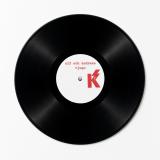
Belgian artist, label boss and DJ, End-jy, glances back at one of his most revered releases to date, the 2003 ‘Red Alert’ EP, originally released on Lupp Records it marked a defining moment, earning widespread support from scene-shaping artists including Carl Cox, Tiësto, Marco Bailey, Dave Clarke and Mark Broom. Long regarded as a personal milestone, the track now returns in renewed form on the artist’s own label as MV08. This forthcoming EP revisits the original with fresh perspective, featuring a powerful remix from Pig&Dan alongside a newly reworked version by Dimitri Andreas and the artist himself, bridging the track’s enduring legacy with a contemporary evolution.
Pig&Dan take the reins first, extracting fragments of the original version of ‘Red Alert’ and reshaping them into a dub tinged, deep techno cut fuelled by circling synth stabs, robust percussion, tension building atmospherics and a driving bottom end. Following on is ‘Red Alert’ (Dimitri Andreas & End-jy 2026 Remix), the pair lay down a deeper, more hypnotic and minimalist interpretation courtesy of crisp, stripped-down drums and oscillating resonant synth flutters underpinned by the original’s dark, dubby aesthetic.
The original version of ‘Red Alert’ opens the flip side, capturing the essence of the underground at the turn of the millennium, the track fuses, gritty stabs with organic percussive elements, hypnotic siren like synths and a subtly evolving feel throughout.
‘Flexibeat’ then concludes the release, a composition that veers into the realms of early Detroit techno and electro via an amalgamation of twitchy synth pops, cinematic strings, saturated 808 drums and murky bass tones.
Already Supported by Jamie Jones, Calao, Amé, Marco Faraone, Timo Maas, Nick Varon, Steve Parry, Just Her, Dax J, Perc, Massimiliano Pagliara, Alex Neri.
Search:andreas
- 01: The Lake Will Give You Everything You Need
- 02: Sounding The Voice (Feat. Koleka Putuma)
- 03: The Poetry Of The In-Between
- 04: Iqhude: A Tale Of Horns And Bones
- 05: I Am Because You Are
- 06: Portals
- 07: A Basic Guide To String Theory (Feat. Shane Cooper)
- 08: Everything Is Connected To Everything (Feat. Ben Lamar Gay &Amp; Gontse Makhene)
- 09: We Oscillate, We Modulate
- 10: Mothers
Pioneering Swiss trombonist and composer Andreas Tschopp marries contemporary jazz with South African horns and homemade ocarinas, creating a record quite unlike anything you've heard before. "What if We Align Our Breath" disregards the curvature of borders, genre, and time itself - tugging a thread through the history of wind instrumentation with ghostly agility.
At the heart of the record lie spiralling, bonelike kudu (antelope) horns - instruments that have lent their stirring calls to indigenous South African rituals and signalling systems for millennia. These horns are clustered, harmonised and stretched beyond their godly usage by Tschopp - his extended techniques coaxing an array of melancholy, playful voices to canter through the album.
Flourishes of trombone, alpine flutes and a stellar supporting cast on double bass (Shane Cooper), cornet (Ben LaMar Gay), udu drums (Gontse Makhene) and spoken word (Koleka Putuma) bring groove, countermelody and a sense of earthy introspection to the proceedings. This is inconceivable music: a sighing tapestry of brass, clay and bone that hints at some preconscious connectedness, tracing figures that rejoice, exhale and embrace outside of time.
Recommended if you like Francis Bebey, quantum physics, peat bogs.
Explore the sonic landscapes of Trobollowitsch's latest vinyl release, where trumpet strains intertwine with resonant energies, able to fold, deform, and compress time and space so deftly that one has the impression of hearing echoes of distant worlds and times - 'everything everywhere all at once.'
- 45: Lux
- 431: 42
- Vienna Sur Mer
- Runde Um Runde
- Ich Kann Nicht Schlafen
- Alles Ist Gleich
- Tourist
- Verbautes Haus
- Hinter Jalousien
- Der Regen In Wien
- Mädchen Mit Herz
- Lass Uns Spazieren
- Wolfgang Von Kempelens Sprechmaschine
- Platz Auf Erden
- Ottakringer Lightboy
- Rauchen In Wien
- Ich Schwöre
- Tiere Im Prater
- Teddy
- Ein Augenblick Mit Unterschrift
- Schlangen In Der Stadt
- Austropop
- Der Spleen
- Nichts Ist So Wie Es Einmal Schien
Andreas Doraus Album "Wien" - eine musikalische Liebeserklärung an die Stadt mit dem schönsten Namen. Kein Kitsch, keine Klischees - dafür feinsinniger Pop, schräge Perspektiven und Geschichten abseits der Touristenpfade. Produziert mit Zwanie Jonson und vielen Gästen. Jetzt die letzten signierten Exemplare sichern!
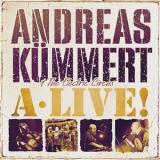
Andreas Kümmert ist DER Blues-, Rock Sänger aus Deutschland. Seine Stimme und seine Musik sind zeitlos. Die Songs auf dem neuen Album „Working Class Hero“ sind emotional, tief, mitreißend, berührend und tröstend zugleich.
Stillstand ist für Vollblutmusiker Andreas Kümmert ein Fremdwort. Inmitten einer Welt im Ausnahmezustand ist sein neues Album „Working Class Hero“ entstanden. Und weil sich Andreas eben nicht in einem sterilen Studio zurückgezogen, sondern sich als Künstler mitten im Zeitgeschehen bewegt hat, ist es ein grundehrliches, authentisches Abbild dessen geworden, was der gebürtige Lohrer dabei erlebt, gefühlt, gedacht und durchgemacht hat. „Es sind großenteils sehr wütende Songs mit wütenden, manchmal auch sehr sarkastischen Texten geworden“, sagt Andreas. „Sie handeln von dem, was in der Welt abgeht, aber auch dem, wie es mir persönlich damit geht. Eine Gegenüberstellung von Makro- und Mikrokosmos sozusagen. Man sieht und erlebt die Welt, und zugleich macht das etwas mit einem selbst, mit seinen eigenen Gefühlen und Gedanken. Und inmitten dieser Zeitgeschehnisse hat man noch seine ganz eigenen Probleme, die man bewältigen muss.“ Die Musik und Andreas gehören – das wird auf „Working Class Hero“ deutlicher denn je – untrennbar zusammen. Die Songs von Andreas Kümmert sind emotional, tief, mitreißend, berührend und tröstend zugleich. Sie bringen so viel von dem zum Ausdruck, was diese Welt nun einmal ist und was sie aus einem machen kann.
ver the years, Andreas O. Hirsch has shaped a distinctive sound, exploring the possibilities of the electro-acoustic instruments he const- ructs. The Carbophone as well as the Electrified Palm Leaf are plucked instruments akin to the African Kalimba or Mbira. In combination with effects and loops, Hirsch creates an experimen- tal space, influenced by early electronics, Asian and African music as well as the possibilities of editing and collage. The majority of the pieces on The Salamander Treaty were made using the Carbophone Jr., a small traveling version of his original Carbophone which was the basis of the previously released Early Carbophonics. Shaped by the joy of discovery, the eight tracks traverse peculiar worlds of sound, carried by a warm downbeat and analogue vibe. Alongside the Car- bophone Jr., other instruments come into play: a vibrato-soaked guitar leads through the slowly evolving ‘Rise’, marked by a recurring Shepard tone and sounds made by striking the bars of an antique wall clock. In the straightforward yet sub-aquatic ‘Te- atime Unlimited’, a pitch-shifted Morse key wanders erratically in the background. Tape-delayed har- monicas serve as a flying carpet for ‘Drifting Newts’, and rubber bands make their melodic-rhythmical appearance through ‘Back Door Minimal’.
The Salamander Treaty refers to War with the Newts, a prophetic and black-humoured science fiction novel by Karel Čapek from 1936, which tells the story of the rise of the salamanders, who become in- creasingly intelligent and eventually begin to compete with mankind. The album is a pacifist response to this dark scenario: Hirsch’s salamanders prefer to hang out under the stars (‘Drifting Newts’), drink tea (‘Tea Time Unlimited’) and — as illustrated on the back cover — write conspiratorial-pacifist demands instead of calling for war (e.g., ‘Teaoism International’, ‘White Lilies’, ‘For Congress’). In image and word, the album invites looking at the term ‘treaty’, which phonetically contains the words ‘tree’ and ‘tea’, as a friendly reminder that the drafting of every treaty and agreement on this planet should be accompanied by a peaceful spirit.
Music, mix and artwork by Andreas Oskar Hirsch. Mastered by Volker Hennes. Pressed on BioVinyl by Optimal, who state that their manufacturing process reduces CO2 emissions by approximately 90% for the PVC component. 12“ LP, coloured sleeve, download code included,
LIMITED TO 100 COPIES!.
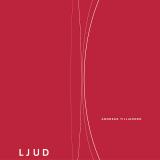
Across eight tracks, Tilliander and Kajfes masterfully balance slow, lumbering machine pulses, delicate synth textures, and impeccable trumpet lines. Tilliander's use of both analog and digital synths carve out the structure of these sonic sculptures, while Kajfes's elegant trumpet playing pushes against them, infusing the dreamy soundscapes with both acoustic tension and melodic detail. Individually, Andreas Tilliander and Goran Kajfes have long been recognized as leading names in Swedish electronic music and jazz, respectively. Both have consistently pushed and transcended the boundaries of their genres. Tilliander has explored everything from techno, drones, and dub to clicks'n'cuts under monikers like TM404 and Mokira. Kajfes has been a relentless innovator in jazz, playing a central role in bands such as Oddjob, Subtropic Arkestra, Tropiques, Nacka Forum, and Fire! Orchestra. Now, they join forces, forging a new path for both ambient and jazz music.
Der visionäre Jazzsänger lädt ein auf eine kühne musikalische Reise in Richtung einer grenzenlosen, integrativen Gesellschaft.
Dieses Album verkörpert Freiheit - sowohl in seiner emotionalen Unmittelbarkeit als auch in seiner Umarmung einer neuen, imaginären Sprache, die sich über kulturelle und territoriale Grenzen hinwegsetzt. Es ist ein aufrichtiges Angebot, das den Hörer dazu einlädt, Grenzen und Egoismus zu überwinden und in ein utopisches Reich einzutauchen, in dem Musik verbindet.
- 45: Lux
- 431: 42
- Vienna Sur Mer
- Runde Um Runde
- Ich Kann Nicht Schlafen
- Alles Ist Gleich
- Tourist
- Verbautes Haus
- Hinter Jalousien
- Der Regen In Wien
- Mädchen Mit Herz
- Lass Uns Spazieren
- Wolfgang Von Kempelens Sprechmaschine
LIMITED 2 LP[30,04 €]
"Wien - die Stadt mit dem wahrscheinlich schönsten Namen. Allein der Klang ist schon Musik." (Andreas Dorau) Grund genug, der österreichischen Hauptstadt ein ganzes Album zu widmen. Die Idee dafür entstand, als Dorau gemeinsam mit zwei Freunden an einem Stadtplan Lübecks arbeitete und dessen brachliegende Geschichten abseits der üblichen Attraktionen erforschte. In Dorau entflammte die Faszination für das Porträtieren einer Stadt aus der Sicht des unvoreingenommenen Touristen, des Besuchers und Außenstehenden. Musikalisch spannt das Album einen weiten Bogen und bietet sowohl wunderschöne Pop-Momente ("Der Regen in Wien"), knarzigen Kawaii-Minimalismus zusammen mit der Kölnerin Stefanie Schrank ("Lass uns spazieren gehen") aber auch Stücke, die sich in ihrem Charakter jeder Einordnung entziehen ("Alles ist gleich"). "Wien" ist somit nicht das erwartbare Album, das der Titel zunächst vermuten lässt. Vielmehr bietet die Platte Einblicke in Andreas Doraus" persönlichen Zugang zur Stadt, die zuweilen auch ein schwierig-schmieriges Verhältnis offenbaren. Und während Popmusik aus und über Österreich im Grunde schon bei Mozart und Schönberg begann, ist Pop aus Deutschland über Österreich vermutlich eher eine Neuerung. Wenn es dann auch noch ein norddeutscher Musiker ist, der ein monothematisches Album über die österreichische Hauptstadt macht, drängt sich fast zwangsläufig die Frage auf: Ist das schon Austro-Pop?
- 45: Lux
- 431: 42
- Vienna Sur Mer
- Runde Um Runde
- Ich Kann Nicht Schlafen
- Alles Ist Gleich
- Tourist
- Verbautes Haus
- Hinter Jalousien
- Der Regen In Wien
- Mädchen Mit Herz
- Lass Uns Spazieren
- Wolfgang Von Kempelens Sprechmaschine
- Platz Auf Erden
- Ottakringer Lightboy
- Rauchen In Wien
- Ich Schwöre
- Tiere Im Prater
- Teddy
- Ein Augenblick Mit Unterschrift
- Schlangen In Der Stadt
- Austropop
- Der Spleen
- Nichts Ist So Wie Es Einmal Schien
Black Vinyl[23,49 €]
"Wien - die Stadt mit dem wahrscheinlich schönsten Namen. Allein der Klang ist schon Musik." (Andreas Dorau) Grund genug, der österreichischen Hauptstadt ein ganzes Album zu widmen. Die Idee dafür entstand, als Dorau gemeinsam mit zwei Freunden an einem Stadtplan Lübecks arbeitete und dessen brachliegende Geschichten abseits der üblichen Attraktionen erforschte. In Dorau entflammte die Faszination für das Porträtieren einer Stadt aus der Sicht des unvoreingenommenen Touristen, des Besuchers und Außenstehenden. Musikalisch spannt das Album einen weiten Bogen und bietet sowohl wunderschöne Pop-Momente ("Der Regen in Wien"), knarzigen Kawaii-Minimalismus zusammen mit der Kölnerin Stefanie Schrank ("Lass uns spazieren gehen") aber auch Stücke, die sich in ihrem Charakter jeder Einordnung entziehen ("Alles ist gleich"). "Wien" ist somit nicht das erwartbare Album, das der Titel zunächst vermuten lässt. Vielmehr bietet die Platte Einblicke in Andreas Doraus" persönlichen Zugang zur Stadt, die zuweilen auch ein schwierig-schmieriges Verhältnis offenbaren. Und während Popmusik aus und über Österreich im Grunde schon bei Mozart und Schönberg begann, ist Pop aus Deutschland über Österreich vermutlich eher eine Neuerung. Wenn es dann auch noch ein norddeutscher Musiker ist, der ein monothematisches Album über die österreichische Hauptstadt macht, drängt sich fast zwangsläufig die Frage auf: Ist das schon Austro-Pop?
'Hollywood' is Andreas Raser debut album. After their single releases 'Willow' 'Reignite' and 'Spent' the LA-Hamburg band will release their first vinyl on Polly Records.
Andreas Raser consists of Camille Clair, from Los Angeles, and Albert Dietrich, from Hamburg, who first started making music together in 2020 while studying art in Frankfurt am Main, Germany. Their debut album "Hollywood" was recorded in the school, and realized simultaneously with a collaborative visual arts practice. Andreas Raser is currently based in Vienna, Austria. They recently had their live debut opening 3 show for Bar Italia.
Andreas Vollenweider erklomm den Loreley-Felsen. Nicht um hier die schöne Aussicht auf den Rhein zu genießen und sich von Lore Lay, der Zauberin, auf Grund ihrer Schönheit den Verstand rauben zu lassen, was dann - der Sage nach - unweigerlich zu seinem Tod geführt hätte. Eher hatte er vorgehabt, mit seinen "Friends" (Walter Keiser - drums, percussions und Pedro Haldemann - percussions) am Abend des 29. August 1982 auf der Bühne des wunderschönen Freilichttheaters ein atemberaubendes Konzert zu geben. 1982 - die außergewöhnliche Karriere des jungen Andreas Vollenweiders, damals 28 Jahre alt - nahm gerade so richtig Fahrt auf. Ein Jahr zuvor hatte er sein Album "Behind The Gardens - Behind The Wall - Under The Tree" veröffentlicht. Ein Mega-Erfolg, weltweit. Mit seinem unverkennbaren, eigenen Stil, seiner sehr farbigen, dynamischen Musik, auch geprägt durch die Vielfalt an exotischen Klangfarben, begeisterte Vollenweider in kurzer Zeit ein Millionenpublikum. So gelingt es ihm auch mit seinen Mitstreitern, diese Magie an dem Abend auf dem Loreleyfelsen zu entfachen und das Publikum in seinen musikalischen Bann zu ziehen. Die sagenumwobene Lore Lay konnte sich zurücklehnen, ihre Zauberkünste waren nicht gefragt. Das erledigte der Zeremonienmeister Vollenweider persönlich, zusammen mit seinen beiden "Gehilfen": Sie verzauberten (musikalisch) das Publikum. Kleines Novum am Rande: Dieser Rockpalast wurde aus welchen Gründen auch immer nie gesendet. Umso mehr erfreulich, dass es ihn jetzt in toller Aualität gibt. Einzigartiges live-Konzert des damaligen 28jährigen Andreas Vollenweider, aufgenommen vom WDR beim Loreley Open Air Festival am 29.08.1982.
Missing out on that super-chill, uber-jittery minimal groove thing? Let"s get real, real Ghosted again. Oren Ambarchi has been collaborating with the Fire! trio (Mats Gustafsson, Johan Berthling and Andreas Werliin) for over a decade - and both Johan and Andreas played on Oren"s Live Hubris as well. Oren and Johan began music-making together back in the early aughts - but it wasn"t until 2021 that the three of them got together to record music. That became the first Ghosted album. When they were done, it was clear they had founded a new group. A music of sustained tension and deep atmosphere marked by subtle, shifting dynamics, Ghosted was released in May of 2022 to psyched response everywhere; the trio embarked upon an ongoing series of concert bookings around Europe, with loads of other people in the world still hoping to have the chance to be in the room at the next show. Two years on, Ghosted has gone through several represses, now it"s time for the "dreaded follow up album"! Rather than go back to the well, the guys decided to tear everything down and start all over again, reimagining themselves from scratch. Just kidding! As we"ve noted, Oren, Johan and Andreas have been playing together for years and years, developing an essential telepathy within their shared space. They get each other and feed each other"s music processes on an elemental level. Why change that? What made the most sense was to go back to Daneil Bengtsson at Studio Rymden in Stockholm for a couple days, then have Oren and Joe Talia mix and Joe master it at Good Mixture in Melbourne again, then get Pål Dybwik to do some well-distinctive cover art, and once more, call it a record. That"s just what they did - and it should be no surprise at all that the new Ambarchi/ Berthling/Werliin album looks and sounds as engrossing as their debut, if not more so! Ghosted II has a definitively fresh quality radiating throughout. The mutual feeling among the three players goes deep, allowing for lots more to say every time they get together - a further recombination of elements, a new expedition through alternative angles... there"s always more, and incredibly, it"s all improvised, with next-to-nothing prepared going in and minimal overdubs after they"ve laid things down. References are shared in shorthand, with just a single word, like "Santana," or "Police" acting as working titles for certain pieces on this record (have a guess!). It"s a disservice to call them jams: above and beyond the innate feel of the songs, there"s a strong sense of structure, informed by the band"s communal aesthetic, and edified immeasurably by their time spent in concert the last couple years. As noted at the top, these guys balance their music improbably between a relaxed feel and a nervy resolve, as each member holds down their corner in an open sound field. Making Ghosted II, the band found that there"s a different kind of tension making something for an established project rather than the kind one feels making something for the first time - and they used this new variety, as before, as a kind of fuel - driving their terse minimalism fruit-fully through the process of succumbing to and then transcending guilty pleasures. Finding fresh territory in funk sketches, jazzy heads, ambient pastorals and droning soundtrack pieces, Ambarchi, Berthling and Werliin compellingly haunt a mad variety of spaces, leaving us wanting to get Ghosted II.
- A1: Die Konstante
- A2: Ich Sein
- A3: Auf Der Weidenallee
- A4: Das Ist Nur Musik
- A5: Das Glück
- A6: Die Welt Ist Ein Seltsamer Planet
- B1: Situationen
- B2: Storchengesang
- B3: Was Nimmst Du Mit
- B4: Mein Englischer Winter
- B5: Rainy Days In Moscow
- B6: Ich Bin Nicht Ich
- B7: Die Vergangenheit War Gestern Wieder Da
- C1: Augen Sind Zum Weinen Da
- C2: Der Rostocker Pfeilstorch
- C3: Wenn Du Aufwachst
- C4: Der Wald
- C5: Wir Sind Nicht Da
- D1: Das Feuer
- D2: Ich Sein (Originalversion)
- D3: Im Haus Der Träume
- D4: Der Biber
- D5: Schlangenfüsse
LP[27,61 €]
Andreas Dorau wird am 19. Januar 2024 zum ersten Mal sechzig. Anlässlich dessen legt er sein neues Album "Im Gebüsch" vor. Darin lauern 13 Stücke, auf denen Kaleidoskop-artig verschiedene Pop-Realitäten aufblitzen, erstmals auch auf Englisch: "Touristen-Englisch", wie es Dorau selbst bezeichnet, die Platte als eine Sightseeing-Tour des Pop. Dabei begibt sich Dorau auf einen Streifzug durch diverse Spielarten elektronischer Musik, wobei eine fröhliche Traurigkeit seine treue Begleitung ist. Außerdem wurden für dieses Album u. a. Gäste wie die Musikerinnen Güner Künier und JJ Weihl (Discovery Zone, Fenster) sowie Brezel Göring (Stereo Total) rekrutiert. "Im Gebüsch" ist modern, retro und postmodern gleichzeitig. Das kann nur einer, das kann nur Andreas Dorau!
- Derived From The Trout Mask In A Tentative Manner 04:55
- The Dissolution Of Time 08:57
- Abdication 05:02
- The Alphabet Of Steps 06:23
- Les Cycles Extatiques 06:52
- The Geometry Of Rhythmics 05:26
- At The Margin Of Moments 06:37
- Through The Deserts Of Postmodernity 09:36
- Stereometry Of Moving Bodies 06:27
- Suspecting Metaphysical Symbols 07:28
After two years, Carl and Andreas present their second album, and once again, it opens up a wide associative space for us. What strikes us initially is the uncommon instrumentation: a church organ, harpsichord, glass tubes, and more. Like their first album (The Aporias of Futurism), it is mysterious and dark. But it also carries a strong touch of rebellion and adrenaline, sometimes quite pointedly. The pieces are now shorter and feature intricate yet irresistible rhythms. The impact is immediate, yet it maintains a sense of solemnity and ceremony. The Apollonian complexity of the rhythms and subtle melodic interweavings is transformed into a Dionysian, ecstatic, hypnotic, and at times tribal context. "Music for Unknown Rituals" oscillates between primitive instincts and avant-garde intrigues.
The process began in Döblitz, a small village on the Saale river in Germany, inside an old church that houses an organ built in 1886 by Johann Adolph Ibach. Carl and Andreas gained access and secluded themselves there for a few days, accompanied by the organ, an instrument made of glass tubes, and a set of modular synthesizers. After recording the basic tracks in Döblitz, the work continued in Munich and Berlin. Carl played electric guitars, harpsichord, bass, metallophone, xylophone, Indian harmonium, and various percussive instruments. Andreas added layers of electronic sounds, noises, and atmospheric drones. He also created percussive structures extracted and derived from recorded material of technical and industrial noises, which contrasted with the acoustic drums played by Carl. The antithetical approach continues with the dichotomous arrangement of the instruments, often panned hard left and right in the stereo field, creating an antiphonic communication. Some parts, especially the use of the electric guitar, evoke memories of the psychedelic sixties. However, this is anything but a nostalgic album—these musical references are merely remnants, set pieces, and fragments used from a contemporary, post-modern, post-youth-cultural, and post-romantic perspective.
Although Andreas and Carl continue on their chosen path of composing music with an almost literary narrative structure, this album is conceptually and formally completely different from their first effort. If “The Aporias of Futurism” was a revolutionary manifesto (in a pataphysical sense), "Music for Unknown Rituals" is more like the implementation in action; it is the practical application of the previous statement. To put it another way, if "The Aporias of Futurism” was the conceptual manifesto of a dark utopia of modernity, "Music for Unknown Rituals" is the staging of free will surrendering to the myths and catharsis of a Greek tragedy. And in response to this, the artwork features a leitmotif of histrionics with hands, the hands being the first and intuitive part of the body to express something: a ritual, a prayer, a defeat...
— Andreas Gerth is one half of Driftmachine, and Carl Osterhelt is part of F.S.K and collaborates with Hans-Joachim Irmler of Faust. Both became connected through their participation in the Tied & Tickled Trio.
Swiss vocal acrobat Andreas Schaerer and Finnish
guitarist Kalle Kalima have some things in common. As
artists, each is essentially in a category completely of his
own. Both are musicians who can always conjure
something special from their chosen instruments. Both are
known on the international jazz scene for the completely
distinctive and original ways their music constantly crosses
genres.
Both have played together for several years in the quartet,
A Novel Of Anomaly. And now they have recorded a first
album together in which the focus is on the two of them.
However, for this ‘evolution’ (as the album title has it), they
have also involved - and drawn inspiration from - a
musician whom they both admire, Tim Lefebvre. The
American bassist has worked with many pop and jazz
stars, notably Sting, Elvis Costello, David Bowie, Mark
Guiliana, Wayne Krantz... Lefebvre’s involvement in the
Michael Wollny Trio’s breakthrough was, incidentally,
anything but tangential. In other words, his playing is at
home in practically every context.
Listeners familiar with Schaerer’s and Kalima’s previous
work may find ‘Evolution’ somewhat surprising. “An album
is such a different platform from playing live on stage,”
explains Schaerer. “Over the course of our many
recordings, we have become increasingly aware quite how
differently one has to play.” That awareness has also
resulted in a particularly careful focus on the postproduction phase of ‘Evolution’.
With ‘Evolution’, Schaerer, Kalima and Lefebvre have redrawn the roadmap for the production of a jazz album.
New avenues are constantly opening up in these complex
but also catchy songs which are just made for repeated
listening... and, of course, listening to the album is also a
reminder that it will all sound completely different again
when heard live.
The extraordinary trio creates a fascinating, atmospheric fusion of electronic sounds, piano, violin, percussion, field recordings, and mystical Ladino texts and chants with "Metamorfosa." Metamorfosa is a new band project founded by Marlene Schuen (Italy), Dimitri Andreas (Belgium), and Marc Romboy (Germany).
The arrangements, co-compositions, and production come from Marc Romboy and Dimitri Andreas (Music Man, Systematic). Marc Romboy has been releasing electronic music since 1991 and has performed worldwide in legendary clubs like Berghain, Rex Paris, Fabric London, and Womb Tokyo. Marlene Schuen's lyrics for Metamorfosa revolve around nature and stories of mythical creatures in the mountain world of South Tyrol, taking the listener into the world of her homeland.
Her impressive voice and singing style deeply touched and fascinated
Marc and Andreas from the very beginning, ultimately inspiring them to create this fusion of electronic sounds, atmospheric piano parts, violin, field recordings, percussion, and Ladino singing.
- A1: La Strega (Her Journey To The Grand Ball)
- A2: The Grand Ball Of The
- A3: Duljas
- A4: Morning At Boma Park
- A5: The Five Curtains
- A6: Book Of Roses
- A7: In Doga
- A8: Gamée
- B1: Passage To Promise
- B2: In The Woods Of Kroandal
- B3: Jugglers In Obsidian
- B4: Chanson De L'heure Bleue
- B5: Czippa And The Ursanian Girl
- B6: The Birds Of Tilmun
- B7: Hirzel / Jours D'amour
- B8: Manto's Arrow And The Sphinx
- B9: Letters To A Young Rose
Book of Roses is yet another brilliant Vollenweider album, yet it's notably
different from the rest of his works to date
There is a wide range of styles and a tremendous range of different instruments
and sound effects used here. In addition to his electroacoustic harp, you hear
orchestral music, vocals, hammer dulcimer, bassoon, flutes, harmonica, horns/
brass instruments, piano, electric and acoustic guitars, accordion, bass, and
many different types of percussion, e.g. hand clapping, chalk/crayon scratching,
and various kinds of drums. In addition you hear many sound effects: pages
turning in a book, footsteps, clocks ticking, dogs barking, birds chirping, bow and
arrow, and many other special effects.Even though this album is perhaps more
"chopped up" into different songs (and four separate "chapters" like in the book) it
flows together nicely as do the rest of his albums and the songs are great to
listen to. There is a diverse range of styles. It starts off with orchestral
movements, then we have the cheery "Morning at Boma Park" and the smooth
crayon- scratching rhythm of the title track, to the optimistic sounding South
African "Passage to Promise" to the fast paced Spanish- guitar/ harp piece
"Jugglers in Obsidian." Track 13 "Hirzel" is probably the most mainstream
Vollenweider track on this CD. It is an upbeat song with a pop-rock feel and brings
back a similar style and intensity of many of the songs from "Dancing With the
Lion." The final track "Letters to a Young Rose" has a somewhat festive African
feel and beat with several different kinds of percussion and is a perfect way to
end the album.Bottom line: It may be different and more diverse from many of his
previous albums, with many different instruments and sound effects in addition
to his harp, but "Book of Roses" is another must-have Vollenweider album.
'Wenn du mich nicht begehrst, verlasse ich dich,' singt uns die Demokratie mit der Stimme des Wiener Liedermachers Thomas Andreas Beck entgegen wie eine gekränkte Geliebte. Die Klänge sind dunkel, der Beat treibt. Das 6. Album 'Ernst' ist textlich eine Mischung aus brandaktuellen politischen Ereignissen, verdrängter Geschichte und starken Emotionen. Musikalisch fühlt man sich wie im Underground Club aus Wim Wender`s Film 'Engel über Berlin', nur dieses Mal steht nicht Nick Cave auf der Bühne.
Dieser Titel kann nur ironisch verstanden werden. Mit seinem sechsten Album „Vergiss mein nicht“ unterstrich Andreas Gabalier erneut seine Bestimmung als Gipfelstürmer. Platz eins in Deutschland, Österreich
und der Schweiz waren die Folge. Inzwischen mit sieben Amadeus Awards dekoriert, hatte Andreas Gabalier
in nur neun Jahren eine Album-Karriere hingelegt, die nur als kometenhaft beschrieben werden kann, von
seinem unbestrittenen Status als Bühnen-Schwerarbeiter ganz zu schweigen. Sollte jemand nun – vier Jahre
sind schließlich ins Land gezogen – auf die Idee kommen, dies dennoch zu vergessen, erhält „Vergiss mein
nicht“ nun als krönender Abschluss einer gesamten Serie aller seiner Alben eine Neuauflage auf edlem 180
Gramm-Vinyl, mit der sein Label Electrola/Universal eine konkurrenzlose Zusammenarbeit würdigt.
Mit seinem Debütalbum „Da komm‘ ich her“ hielt er sich sagenhafte 33 Wochen in den deutschen Charts
und beinah absurde 295 Wochen in den österreichischen. Über 315.000x ging das kometenhafte Debüt von
Andreas Gabalier physisch über die Ladentheke. Volksmusik und Rock‘n’Roll hatten scheinbar plötzlich im
Alpenvorland eine Fusion gefunden, die noch niemanden erahnen ließ, was daraus erwachsen würde. Nun
erscheint „Da komm‘ ich her“ als Neuauflage auf Vinyl. Längst hat das Debütalbum einer Karriere diesen
Ausmaßes Klassiker-Status verdient. Jetzt dreht es sich endlich auch auf einem Plattenteller in einem
Tonträgerformat wie es einem Andreas Gabalier und seiner Vision gerecht wird.
Auf 180 Gramm-Vinyl erscheint „Da komm‘ ich her“ als Neuauflage via Electrola im Vertrieb von Universal Music und legt den Grundstein einer ganzen Serie an analogen Neuveröffentlichungen die die ‚Volks
Rock’n’Roll“- Idee vollständig manifestieren.
2011 manifestierte Andreas Gabalier sich selbst als Marke. Der Steyrer hatte endgültig sein Selbstverständnis und seinen einzigartigen Stil gefunden und entsprechend getauft. Er war und ist der „VolksRock’n’Roller“! Sein drittes Album stieg in seiner Heimat Österreich – wie schon der Vorgänger – direkt
auf der Poleposition ein und wurde allein dort 8x mit Platin ausgezeichnet. Dieser Klassiker in seiner
Diskografie erscheint nun auf 180 Gramm-Vinyl. Die artgerechte Haltung von Rock‘n’Roll ist traditionell
die LP, da gehört der „Volks Rock’n’Roller“ erst recht auf Vinyl genossen. Electrola/Universal kommt dem
nun nach und legt dieses Album old-school neu auf, als festen Bestandteil der kompletten Neuauflage von
Andreas Gabaliers Album-Diskografie.
Andreas Gabaliers zweites Album „Herzwerk“ war eben dies, es entsprang direkt aus seinem Herzen. Und
es wurde ihm gebührend gedankt. 10x Platin und beinahe eine Million abgesetzte Einheiten machten
dem Steyrer Arbeitstier klar, dass er die sprichwörtliche Nadel im Heuhaufen war. Gabalier hatte seine
Stimme gefunden und „Herzwerk“ beinhaltete einige Hits, die natürlich bis heute fester Bestandteil seiner
fulminanten Liveshows sind. Natürlich verdienen die Bergbauernbuam eine Reissue auf Vinyl, die nun auf
180 Gramm-Vinyl nun via Electrola/Universal erscheinen.
2013 legte Andreas Gabalier in rasanter Taktung sein viertes, bis dato erfolgreichstes Album „Home Sweet
Home“ vor, welches von einem Amadeus Award in der Kategorie „Volkstümliche Musik“ begleitet wurde.
Beinahe schon traditionell enterte es aus dem Stand in Österreich Platz eins der Charts und stand dem
in Deutschland und der Schweiz nur wenig nach. Weit über hundert Wochen hielt es sich in den Charts,
die dazugehörige Tour führte ihn durch die größten Hallen und fand einen sensationellen, hochemotionalen
Abschluss in Wien. „Home Sweet Home“ wird nun von seinem Label Electrola/Universal neu aufgelegt, in
einem Format, das die Heimat aller Musikformate darstellt: Vinyl. Hier als Doppel-Vinyl in 180g Qualität!
Als essentieller Bestandteil einer Serie seiner kompletten Album-Diskografie darf „Home Sweet Home“
natürlich nicht fehlen.
Was macht man, wenn der Erfolgsstrang nicht abreißt und die heimische Hütt’n bereits vor Gold- und
Platin-Auszeichnungen überquillt? Richtig, man erfindet sich wieder neu. Mit seinen ersten vier Alben und
einer beeindruckenden Karriere als Live-Performer hat Andreas Gabalier bewiesen, über stramme Wadl’n
zu verfügen - die Berge sind schließlich seine Heimat. Als „Mountainman“ stieg er 2015 in Deutschland,
Österreich und der Schweiz auf Platz eins ein. Parallel erhielt er den Amadeus Award als „Bester Live Act“
und nun wird auch sein fünftes Album von seinem Label Electrola/Universal als Teil einer ganzen Serie mit
einer Neuauflage auf edlem 180 Gramm-Vinyl gewürdigt.
After Quiet Places (2020) Andreas Vollenweider has grouped his music
on his new album according to atmosphere and character: Slow Flow is a collection of pieces with a relaxed, flowing feel, while "Dancer" is full of movement and rhythm All 11 songs on "Slow Flow" and "Dancer" were created between 2010 and 2021 in collaboration with British producer Andy Wright (Eurythmics, Simply Red, Jeff Beck, Simple Minds, among many others). The two were supported in their
creative process by Vollenweider's talented circle of friends, who laid the foundation for the songs: Walter Keiser (drums), Andi Pupato (percussion), Daniel Kueffer (bass clarinet), Oliver Keller (guitars) and the young Swiss rapper and beat boxer Steff La Cheffe, a.k.a. Stefanie Peter. The music of "Dancer" also reflects Vollenweider's connection with Africa. The South African vocal harmony band Africapella and singer Ayanda Nhlangothi embody this connection. The London Session Orchestra, consisting of musicians from the Royal Symphonic
Orchestra under the direction of James McWilliam, filled out the sound.
Renowned British producer and arranger Peter Vettese is responsible for most of the orchestration. The recordings took place at Andreas' Lakeside Studios in Switzerland, as well as at SABC Studios in Johannesburg, South Africa, and finally at the legendary Abbey Road Studios in London. Andy Wright's long-time sound engineer Gavin Goldberg has set new sonic standards for Vollenweider's music
with his work, and is able to delight even the most discerning audiophiles with a punchy yet transparent, dynamic soundscape.
In August she is releasing her solo debut "Changes Like the Weather in the
Mountain", consisting of her songs wrapped in electric guitar, wurlitzer, fiddles
and some high- pitched choir voices. Selma's music reveals an admiration for
Norwegian and English folk music, as well as containing an airy energy from
somewhere unknown – moving from an open space like big mountain into the
hidden rooms in one's heart.Selma is already known in the folk-scene in Norway
as a member of bands such as Norwegian Grammy nominated Masava and
Norwegian Grammy winner Morgonrode. She has toured and worked with artists
like Frokedal & Familien, Kristian Kristensen, Siv Jakobsen and the Switch. Her
musical work has been acknowledged by many, lastly featured as the theme song
in the Viaplay series Furia.
Growing up in the suburban university town of As, Selma French was exposed to
folk music from an early age, playing violin and Hardanger fiddle all her life, as
well as making songs on guitar. The list of musical inspirations is long, from
Linda Perhacs, Nick Drake, Fairport Convention and Judee Sill, to Frokedal,
Susanne Sundfor, Sandy Denn and The Roches.
Artists:
Selma French: vocals, acoustic guitar
Anja Lauvdal: synths, wurlitzer
Christian Winther: el-guitar
Andreas Winther: drums
Andreas Toftemark is a young and talented Danish saxophonist and composer, who has spent the last 8 years of his life making a career for himself abroad; with 1 year in Sweden, 3 years in Amsterdam and 4 years in New York - where he was very inspired and influenced by the capital of jazz. Toftemark has studied with prominent names, such as Joel Frahm, Ben Wendel, Sam Yahel and Eric Alexander. He has performed around the world and he has played with many internationally acclaimed jazz musicians, like Peter Bernstein, Rodney Green, Ethan Iverson and Paul Sikivie. The six tracks on 'A New York Flight' are melodic and driven by the rhythmic open-mindedness that jazz is moving towards today. This is something that can be heard on both the two tracks that Andreas Toftemark has composed himself and on the four jazz standards which the quartet also play. It is swinging and at the same time open to the individual interpretations of both the listeners and of the musicians. The overall subject of the songs are love and passion, whether it's the love for New York - or perhaps the regained love for Denmark...? - or the love expressed on the track, which was the first single from the album, and which also has the most mysterious title of all of the tracks on the album, '2223', which is a row of numbers that seem to follow Toftemark in love and in friendships. Andreas Toftemark Quartet consists of some of the absolutely finest young musicians on the contemporary Danish jazz scene; Felix Moseholm on bass, Andreas Svendsen on drums, Calle Brickman on piano and, of course, Andreas Toftemark himself on sax. Each one of them is an overwhelming joy to listen to, and brought together in a band, they bring music to a both sincere and playful level.
"Ihr brüllt von Liebe in engen Gewändern / Doch einer wie ich will die Welt noch verändern", singt Andreas Dorau im, zusammen mit Sven Regener verfassten, Hit "Kein Liebeslied". Statt von Liebe, wollte er lieber von anderen Dingen singen, von Wildschweinen ("Schwarze Furchen"), Prozessionen ("40 Frauen") und vom Hinterhaus, aus dem die Leute vorne rauskommen ("Hinterhaus"). Und so geschah es. Acht lange Jahre tüftelte der Maestro an der sogenannten "Wildschwein-Platte". Ihm zur Seite standen dabei Wolfgang Müller, Justus Köhncke, Carsten "Erobique" Meyer, Paul Kominek sowie Andreas und Dorau. So nämlich das Konzept des Albums, die Trennung von Andreas und Dorau. Auf dem Papier ein interessantes Konzept - hier der zarte Songs schreibende Künstler Andreas, dort das Partyanimal Dorau mit der fetten Bassdrum. "IbdEvuB" sollte ein Trennungsalbum der besonderen Art werden. Wie gesagt, auf dem Papier ganz gut, in der Praxis... na ja, ich sag nur "acht Jahre", aber acht Jahre nervenzerfetzende Tüftelei, die sich gelohnt haben. House, Softrock, Disco, Glampop, zusammengefügt zu einem schillernden Ganzen von Andreas und Dorau. Zum Teil in der Garage, zum Teil in den legendären Can-Studios in Weilerswist aufgenommen und produziert. Haben Andreas und Dorau mit "Ich bin der Eine von uns Beiden" die Welt verändert? Vermutlich nicht, aber sie haben ein großartiges, zeitloses, elektronisches Pop-Album erschaffen, welches sich lohnt wiederentdeckt zu werden. Ist doch auch was! Erschien erstmals 2005 auf Mute Enthält Klassiker wie "Kein Liebeslied", "40 Frauen" und "Im September" Endlich als re-mastertes Reissue wieder überall verfügbar