Timeless – yet always fresh: Regardless of the whims of the pop business, Planet Yello has been making its rounds for almost fifty years, repeatedly whisking us away to a world where past and future greet each other and James Bond joins forces with the Man in the Moon, Dionysus and Philip K. Dick.
"To the future, through the past"—with their fifteenth studio album, "Time Lab," Dieter Meier and Boris Blank put this maxim into practice more vividly than ever. Blank meticulously crafts his imaginary soundtracks from fresh samples and found objects from his own archive, which has accumulated a vast collection of sonic fragments, riffs, and motifs over nearly fifty years of creative work. Meier immerses himself in these parallel soundscapes, discovering within them his romantic tales of robbers, mysterious night creatures, and Dadaist wordplay. Essentially, every Yello track is both ancient and brand new at the same time. This principle is perfectly illustrated by the first single, "Around the Sun." It's based on a dormant Meier recording that was cut at the last minute from the selection for "Claro Que Si" (1981). Blank gave Meier's sonorous voice a fresh sonic makeover – the result is an elegant and flexible, thoroughly Yello-esque combination of past and present, romantic wanderlust and driving percussion. "Break Out" also plays with stylistic elements that can be traced back to Yello's earliest days: a dangerously prowling bass riff, fiery percussion, and storyteller Meier in hypnotic top form.
Time begins where it ends, or vice versa. Or, as Boris Blank says: "Yello's music doesn't really know time."
Nu Vision is the latest project of Duke Cooper, band leader and label boss of Nation, Kode and DirtyBlends. There are three humans who make up Nu Vision, and they all have their own stories and discographies, records released on labels you might know, gigs played in Chicago or Berlin or someone’s loft, lives lived, friends made, sleep lost - fighting for theirart, standing by truths, defending voices, honoring progenitors, whilst pushing a new paradigm. Time is both fleeting and heavy for us all, but it is not without receipts.
Nu Vision is a band in the classic do-you-believe-in-alchemy sense - equal parts rhythm, damage, and deep feeling. Drenched in nostalgia and futurism, The Seed is a singularity of sound + vision; as if heavily rotated by VJ Dave Kendall on MTV’s 120 Minutes but materialized via today’s technology.
The Seed 10 inch provides additional music inspired significant icons Section 25, Liaisons Dangeruses and Adrian Sherwood having paved the way with their prior successes..- this package of The Seed is no freshman effort; but rather, a masterclass in continuing sonic education, delivering a unified experience from beginning to end. A NU VISION.
The Seed 10 inch provides additional music inspired significant icon band: Section 25 from the period of 1981-1984 with a more electronic-dance direction, process which culminated in the album ' From the Hip ' and remix single "Looking From A Hilltop", both released in 1984 as "Insecure Man is about being true to manhood with Robert Lane leading the charge with his vocabulary message of the current state of society.
Insecure Dub focuses on the period of 1981-1984 with an alternative electronic-dance direction process as an inspired blueprint from Nu Vision inspired from Adrian Sherwood having paved the way with his individual success.
Inspired from electrifying songs produced by Chrislo Haas (DAF) and Beate Bartel (Mania D. / Matador) reinforced by Krishna Goineau’s French and Spanish Speech-Attack-Lyrics Liaisons Dangereuses created a unique style anything other than a Berlin or Düsseldorf ‘thing’ – that was propelled to an international underground phenomenon of fame.
Nu VIsion was inspired to create a blueprint from the period of their productions of 1981-1982 with an electronic-dance direction paying homage with passionate craftsmanship utilizing what equipment was possible in the studio at the time of this recording featuring new members; Zoe Murphy & Fletch The Stranger on vocals and James Chazz on Saxaphone with a Ring Modulator.
Hope & Sorrow turns 20: Wax Tailor announces a limited collector's edition in Orange & Black Marbled double vinyls.
Twenty years ago, Wax Tailor released Hope & Sorrow, his second album. Following the success of Tales of the Forgotten Melodies, this new record confirmed and amplified a trajectory already well underway. Gold record certification, a world tour, an Indie Music Award in the United States, and a nomination at the Victoires de la Musique in the "Best Electronic Artist" category: Hope & Sorrow would firmly establish his singular world, blending trip-hop, finely cut samples, and cinematic arrangements, far beyond French borders.
Two decades later, Hope & Sorrow has lost none of its power. To celebrate this anniversary, Wax Tailor unveils a limited collector's edition on double gatefold vinyl, crafted both for those who have followed the album since its release and for those discovering it today.
An opportunity to revisit a pivotal record in his discography, one that played a major role in establishing Wax Tailor on the international stage.
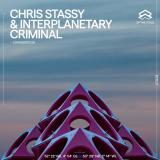
There are collaborations that make sense on paper, and then there are the ones that feel like they were always going to happen. CHRIS STASSY and Interplanetary Criminal now bring their first recorded meeting to Up The Stuss with ‘Dangerous’, a four-track EP that sees two artists with unmistakable identities find common ground somewhere between house, garage, breaks and pure dancefloor energy. With the sounds of this collaboration having quietly made their way into the world long before the full picture was revealed, its arrival feels like the moment the pieces finally fall into place.
Across the EP, the chemistry is immediate. STASSY’s knack for infectious grooves and vivid synth work meets IPC’s breakbeat-driven energy and distinctly UK-rooted sensibility, with neither side disappearing into the other. ‘I Just Can’t Get’ sets things in motion with skippy rhythms, breakbeat drums and those unmistakable STASSY synths, before ‘Movin’’ accelerates the pace with punchy percussion and a more restless, breaks-heavy charge. ‘From The South Coast Mate’ pushes the meeting point further, bringing weighty low-ends and unmistakable UK touches while keeping both artists’ distinct approaches clearly in view. Title track, ‘Dangerous’, brings the journey to its natural conclusion. Bright and dark elements pull against one another as the two approaches lock into a shared rhythm, delivering a track that feels simultaneously euphoric, gritty and slightly unpredictable. It’s the clearest expression yet of what makes the collaboration work: two established sounds remaining entirely themselves while discovering what happens when those worlds meet.
For CHRIS STASSY, ‘Dangerous’ marks the first EP to arrive on Up The Stuss under his new name, following the release of the euphoric ‘U know me’ on CCS, adding to this new chapter with a collaboration of serious weight. For Interplanetary Criminal, it adds another dimension to the Manchester artist’s ever-expanding take on UK garage, which has seen him become one of the defining forces of its current resurgence. It’s the sound of two worlds meeting at exactly the right point - and one that many have been waiting for.
Format: LP , Limited
With his first longplay EUROSTAR, the Danish disco-dj-turned-rock-crooner Boogie Rookie seeks to bridge the troubled waters between UK new-wavey rock and sleazy euro-disco. It's a ten track italo-rock outburst uniting extreme hedonism, climate crisis and the European railnet.
The album is produced partly in Copenhagen with Danish disco royalty Vinnie Who and balearic-proghouse wunderkind William Winding, and partly on the hills of Napoli with the Neapolitan Italo-don Whodamanny. In the middle of the album there are steamy vocal features from the Parisian disco queen Corine and the Danish model-chanteuse Klara Kristin.
The album is already remixed by the likes of Prins Thomas, Italo Deviance and Danger Boys and has gained traction amongst DJ's all over who fear neither kitsch or raw rock'n'roll power.
When he's not busy making punky HI-NRG tunes, Boogie Rookie is one of the busiest European cosmic disco dj's. On weekend nights, you're very likely to find him with a glass of red wine behind the booth of his countless Copenhagen residencies, his residency at Paris' hyped disco La Fète or at happening disco dances elsewhere in Europe.
STAR CREATURE is proud to welcome aboard a new collaboration between some of the globe’s heaviest funkers. French disco collective Spaced Out Krew (S.O.K.) and Geneva’s Ghostape have teamed up for two sides of cosmonautical freaky mutant funk selected from vaults by label-head TIM ZAWADA. Drawing inspiration from the backroom and basement boogie bombs of yesteryear, the krew has assembled 2 giant cuts of bass heavy, booty shakers with a dangerous feeling twist, perfect alternative cuts to keep a set on the edge.
Logout Record Shop Firenze is happy to present its first official release: LGT 001, signed by Novosti Kulturi. Known for his raw blend of electro, raw synth and underground industrial textures, Novosti Kulturi has been active within the darker electronic circuit through the Waveform community — a cult underground platform and party series connecting artists and dancefloors across Europe and beyond. Alongside connected to legendary German coldwave label Kernkrach, Berlin-based cassette label Detriti Records and London’s Meta Moto. Widely associated with contemporary electro, dark disco, techno and EBM-oriented dancefloors, Novosti Kulturi continues to shape a personal sonic language balancing cold machine-driven rhythms with saturated synth pressure, cinematic atmospheres, tape saturation and distorted nocturnal nostalgia. Built around classic TR drum machines, VCO and DCO synthesizers, 12-bit sampling and tape recordings, Novosti Kulturi operates like a transmission from an unidentified place — where past and future dissolve into raw sonic waves and frequency distortions.
This debut EP delivers five tracks moving across sharp electro rhythms, stripped techno structures and darker EBM-infused territories. Cold machine grooves, industrial tension and late-night melancholia define the release, balancing dancefloor functionality with a distinctly cinematic approach. Influences from electro-industrial, new beat and dark synth-driven club music emerge throughout the record’s sonic palette. With LGT 001, Logout Record Shop introduces a vision centered on artistic identity and storytelling, embracing a broad sonic spectrum rather than a fixed aesthetic direction. The label’s first release reflects this approach through Novosti Kulturi’s personal language — crossing styles, moods and textures while keeping a strong connection to modern underground dancefloors.
The incredible story that began with The Most Mysterious Song on the Internet (TMMS) now enters an exciting new chapter: Skyscraper, the debut album by FEX.
Skyscraper features ten original tracks recorded in the early to mid-1980s-carefully re-transferred, remastered, and brought back to life. The album cover, designed by Darius S., brings the story full circle. Darius is the very person who preserved the now-iconic track Subways of Your Mind by recording it from NDR radio in the mid-80s. Without him, FEX may never have been discovered.
FEX's debut opens with its namesake, Skyscraper-a brooding, previously unreleased track the band once described as part of their "psychedelic phase." With haunting synth-helicopter textures and deep guitar riffs, it immediately sets the tone and raises tension.
The release flows naturally into the energetic and fully remastered studio version of Subways of Your Mind. This version of the TMMS - re-discovered on the "yellow label tape" by Reddit user Marijn-was long believed to be from a smaller home studio, but was actually recorded in November 1984 at Hawkeye Studios in Ganderkesee, near Hamburg.
Goldrush, first teased in raw form on FEX's YouTube channel, bends toward mechanical rhythm and shimmering synths, a snapshot of the band's experiments with programmed drum machine sound. Rückwardt's lyrics point to greed and criticizes materialism, and while the music leans toward pop sensibilities, it carries a raw, fractured edge.
Heart in Danger and I've Got My Eyes On You offer contrasting experiences-one rooted in classic post-punk tension, the other floating in melodic synth layers. The latter in particular feels like a fragment from a parallel radio history: a precise and one of a kind synth pop love song with a progressive touch.
From a rehearsal tape comes Dirty Slapstick, its urgency intact. Missing keyboard parts were later reconstructed by Michael Hädrich using his original DX7 synthesizer-recovering lost elements without rewriting the past. The lyrics take a wry look at forced optimism. Also included are the songs Talking Hands, Jenny and Strange Feeling, the latter being a slower blues-tinged cut, revealing yet another facet of the band's reach and Rückwardt's songwriting diversity.
The album closes where the legend began-with the original radio recording of Subways of Your Mind from Darius' cassette. This version of The Most Mysterious Song features alternate vocal effects, contributing to the track's enigmatic aura. Digitally transferred using a high-end Revox machine and carefully remastered, it now has its long-deserved official release.
The cover features a photo of the Eichenberg Bunker in Kiel-one of FEX's original rehearsal spaces and a symbolic monument to their sonic legacy.
For the second chapter of JESUS LOVES SKYLAX, we return to the source: raw emotion, machine soul, and the sacred pulse of the underground. A continuation of the Todd Edwards spirit — not imitation, but devotion. On the A-side, Byron The Aquarius opens with “House Music Was Good While It Lasted (Goodtimes)” — a bittersweet sermon in sound. Dusty, looping, hypnotic — somewhere between lost tapes and eternal truth, echoing the soul of Detroit at its most intimate. UK craftsman Tom Carruthers follows with “Crank Up” — raw, skeletal, almost industrial in its tension. A direct lineage from early machine music, channeling the stark energy of Cabaret Voltaire through a house framework. No compromise. Just rhythm and intent.
Flip the record.
Blue Mondays deliver “Warm Up For Ron Hardy (Disco Mix)” — a fever dream built for the booth. Loose, emotional, and dangerously effective. A tribute not in name, but in spirit — the kind of record that lives between two worlds, where disco dissolves into house under strobe lights and sweat. Closing the EP, CNVX – “L’Amour (Floorfillers Remix)” hits with pure peak-time electricity. Acid lines twisting through the mix, driven and ecstatic — a modern weapon forged in the language of the underground. A direct nod to the timeless pressure of Floorfillers energy, built for dancers who still believe.
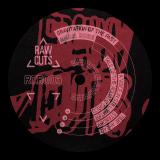
For RCR003, we looked to someone carrying the West Coast lineage forward with our first full solo EP from upcoming producer Adam Rose.
“Gravitation of the Past” honors the past while setting its sights on the future.
A quiet drag from somewhere behind, like the past has unfinished business.
A moment suspended Time Ahead & Standby caught between where you’ve been and where you’re headed. Mostly static, then a brief moment where everything clicks. Then the voice shows up.
Familiar enough to trust. Dangerous enough not to.
Out by the still waters of Atitlán, watching the surface hold everything and nothing at once, it becomes clear some things aren’t meant to be solved. Just seen.
You can look, just don’t linger.
What’s left is lighter funked out, a little crooked, still moving.
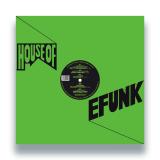
EFUNK Volume V is the fifth installation of the annual VA compilation featuring music from a curated collection of artists set to perform at Soul Clap’s House Of EFUNK touring party series. This release date on wax and digital is right in time for the official Movement Festival afterparty @ TV Lounge in Detroit that spans 2 days with 3 areas of sound. This year’s compilation features music from Soul Clap alongside long time friend and Baltimore favorite Baronhawk Poitier who present “Set The Scene”, a futuristic earthshaking groove with Baronhawk’s spoken vocals backed by Charles Levine’s vocoder and a Moog topline played by Baronhawk that won’t quit. Hercules & Love Affair makes a debut on the label with “Stay Ready” a chugging tracky / acid infused banger which should absolutely induce a dancefloor sweat. Kai Alce shares a discofied sample-licious crowd pleaser called “Boogie” with the help of additional keys by Byron Blaylock better known as Byron The Aquarius. Detroit’s new school starchild JMT joins with the hard hitting peaktime soul powered “Black Magic Touch” and last but certainly not least, Lauren Flax adds an edge of danger while calling for “Revolution” featuring vocals from Liz Wight. These tracks are sounding warm and round thanks to the mastering expertise of Caserta and have been dancefloor approved by Soul Clap!
Italian multi-instrumentalist, composer, producer and vocalist Alex Puddu is returning with at brand new album "Francia Meccanica" A strong set of songs with catchy hook lines and up tempo groove. Taking us back to the late ’80s and early ’90s disco-house production with refined, sexy vibes that introduces eroticism in both Italian and French. It’s a perfect cocktail mix that pairs seamlessly with Alex’s voice and performance, beats, funky bass, acid sax, and sultry French spoken words. Alex Puddu brings pop disco and retro vibes back in trend — always essential to his style and musical world — and sweeps us into wild French nights blending transgression and romance.
With Get Together III, the journey moves into its next chapter, as four artists come together once again to bring the many colors of electronic music to life.
modul808 opens the journey with deep, warm chords and a driving groove that instantly pulls the listener into the depths of its sonic landscape. In “Kamuro”, shimmering details line the explorer’s path, while the magical vocals of Igor Pose are elegantly woven into the arrangement, creating a dense and hypnotic atmosphere. With “Habits”, Heidmann continues the journey in a similarly groovy fashion, leading the way to sunlit clearings filled with memorable melodic gems. Cie effortlessly picks up the uplifting mood on the B-side, where the magnificent “Schlosshotel” unfolds with majestic chords and shimmering strings, inviting every house lover to stay for a while.
Finally, the journey home begins with Dip’s “Module”, which follows a deep path once more, uncovering sparkling sonic secrets along the way.
Together, the four tracks form another chapter in the Get Together series - a warm and timeless deep house journey shaped by four distinct artistic voices.
Mit Get Together III geht die Reise in ihr nächstes Kapitel: Vier Künstler kommen erneut zusammen und bringen die vielfältigen Farben elektronischer Musik zum Leuchten.
modul808 eröffnet die Reise mit tiefen, warmen Chords und einem treibenden Groove, der den Hörer sofort in die Tiefen seiner Klangwelt zieht. In „Kamuro“ säumen glitzernde Details den Weg des Entdeckers, während die magischen Vocals von Igor Pose elegant in das Arrangement verwoben sind und eine dichte, hypnotische Atmosphäre entstehen lassen. Mit „Habits“ führt Heidmann die Reise ebenso groovig fort und öffnet den Weg zu sonnendurchfluteten Lichtungen voller einprägsamer melodischer Klangperlen. Die gute Laune greift Cie auf der B-Seite mühelos auf: Vor ihm erhebt sich das prächtige „Schlosshotel“, das mit majestätischen Chords und schimmernden Strings jeden House Liebhaber zum Verweilen einlädt. Beschwingt beginnt schließlich die Heimreise mit Dip’s „Module“, das erneut einen deepen Pfad einschlägt und auf seinem Weg funkelnde klangliche Geheimnisse offenbart. So entsteht ein weiteres stimmiges Kapitel der Get Together-Reihe - vier Künstler, vier Perspektiven und eine gemeinsame Reise durch warme, zeitlose Deep-House-Landschaften.
Early DJ Feedback:
Christian Seitz / Show "Neuland" on Radio Z
A beautiful compilation that brings together deepness and dancefloor
Sebastian / f.a.r.e.s / Bass And Space
Great EP, thanks!
ed2000 / Dangerous Drums, Cashmere Radio, Face Radio, dub intervention
Very nice set of tracks, support and thanks radio and dj set plays.
Sasha / Circus Recordings, Renaissance, Global Underground
Cool from Cie
Anthony Pappa / Selador / Renaissance
Nice tunes. Thank you.
Timo Maas / Cocoon Recordings, Crosstown Rebels, Rockets and Ponies, Mobilee, Moon
Harbour, Tenampa, etc etc
Nice Heidmann
Stéphane Chambord / Radio Resonance ("DeeJay Academy" Radio Show)
repérages : Kamuro & Habits je prépare une émission spéciale avec un mix des productions du label
Cyprien Rose / Lui, Houz-Motik, Waxdoesmatter
Amazing > Modul808 - Kamuro feat. Igor Pose
Rob Zile / Brain Food Radio (Kiss FM) / Brain Food Records
Great deep tunes
John Digweed / Bedrock Records
Downloading
T. Carlita / In My House
Good Vibe
Laurent / WTM
Another wtm's playlist is coming soon…;)
Douglas Arellanes / Radio 1
Cool chilled out vibe on this record.
Valerio Vaudano
I like "Kamuro" and "Habits". Will try these warming up the dance floor. thx for sending
Stuart Bruce / Chain DLK
Downloading for possible review on ChainDK
Noah Pred / Thoughtless, Biotop, Highgrade
Some nice ones here, thanks.
Ninu / Hipodrome
I like Habits
BARRcode / Backseat Mafia
Solid release.
Carl Craig / Planet-E
dl 4 erno thx!
Ilario Alicante / Cocoon Recordings, Alphahouse, Bosconi, Prism
Downloading for Ilario Alicante, thanks for the music!
Andrew Till / Machine, Fnoob
Cool dubbed out grooves ,,,Heidmann - Habits is my pick.
Ju / Upperberry
Dope =)
Kat Davids
nice and smooth!
Como Las Grecas / Kali Modernphase, Denis Yurgens, Alejandro Club, German MT, Como Las
Grecas
Deep mind in house groove. Interesting VA of deep house.
Dole & Kom / Death By Disco, Mixmag
Really liking Modul808's and Cie's traxxx Thank you
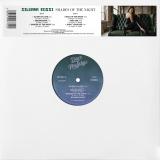
Silvana Rossi emerges from the new wave of Italo revivalists with a sound that feels both timeless and sharply contemporary, where vintage drum machines, analog synth lines and nocturnal romance collide with a modern club sensibility. Rooted in classic Italo disco but filtered through today’s underground circuitry, her music speaks directly to selectors navigating the space between wave, electro and slow-burning techno. The tracks carry a distinctly personal edge—melancholy, desire, and late-night introspection wrapped in icy melodies and hypnotic grooves. This is music made for dimly lit booths, smoke-filled basements, and DJs who still believe in storytelling through vinyl.
A seductive opener “Elixir Of Love” built on cascading arps and a steady pulse, romantic but restrained, like a whispered confession over a rolling bassline. Perfect for setting the tone early set. Tension-driven and emotionally charged, italo anthem “Breakdown” balances crisp electro rhythms with a sense of inner collapse. A cold wave-leaning cut that hits hardest when the lights stay low and the energy turns inward. Shades Of The Night – a cinematic slow-burner drenched in shadow and atmosphere. This one is all about texture and space. Walk In The Night, another italo classic on the EP, stripped-back and hypnotic, with a confident groove that nods to classic Italo while staying firmly rooted in modern club aesthetics. “Bad Girl” brings a sharper, more playful edge, driving, stylish, and slightly dangerous. A weapon with crossover appeal for electro and wave crowds alike. A versatile tool for both warm-ups and deeper moments. Emotionally direct yet sonically controlled lush pads and restrained vocals create a sense of distance that pulls you in “Don’t Leave Me”. A melancholic highlight for DJs who know how to play with tension.
Chicago legend K. Alexi returns to Dark Entries with K.A. Posse’s Strkes Again, an EP of preleased unreleased acid and house mayhem. K’Alexi Shelby’s illustrious career has included releases on legendary labels such as Trax, DJ International, and Transmat, as well as collaborations with high-profile artists like Marshall Jefferson and Pet Shop Boys. But his musical journey began at the young age of 12, when he befriended Ron Hardy and Frankie Knuckles while frequenting the Music Box and Warehouse. In high school, he began to write songs and hone his poetic craft. “I recognized I had a gift to say what I was thinking. I would study Prince and Marvin Gaye, figure out what they meant and put my spin on it. The power of the word. I was writing love notes for all my boys in high school and making a killing. I would know what to say and what they should do.”
Dark Entries previously reissued Shelby’s debut record, Essence of a Dream, which was recorded under the name Risque III in 1987. Strikes Again brings us six tracks recorded in Chicago between 1988 and 1990, which come courtesy of Mike Dunn’s personal archive. This record showcases the rawer, more immediate side of Shelby’s sound, with tracks full of overdriven 808’s, careening sirens, and dangerously funky breakbeats. “Imported Taste” brings Shelby’s signature deep pads to the front of wild congo-laced percussion. “Suckas Be Ready” is a slamming hip-house cut featuring vocals from MCD-TA, while disco-samples duel with crunchy 909s on the jacking “Muzic Box.” Strikes Back showcases the real underground sound of Chicago, where sonic abstraction meets full-body kinetics. The record comes housed in a retro-styled sleeve designed by Eloise Shir-Juen Leigh.
Uruguayan-based Diego Infanzon makes his debut on Partout with a powerful EP that bridges the energy of classic House and the raw pulse of Techno. Known for his groove-driven productions and hypnotic rhythmic language, Infanzon delivers a collection of tracks built for heavy rotation, blending sharp drum work, deep atmospheres and his unmistakable sense of movement on the dancefloor. Carrying the spirit of openness to genres and freedom in sound, the EP reflects the forward-thinking approach that has defined Infanzon’s rise across labels like Cod3QR, Turbo Recordings and Sous Music, now landing naturally within Partout’s vision.
Steve Moore reprises his beloved Lovelock guise by presenting his unique riff on the library breaks genre. Business And Pleasure contains grimy groove and sleazy, funk-laden lounge music.
This vinyl release is hyper-limited, with just 500 pressed for the world.
The LP is ushered in by the spacey synth-funk of the sleazy, woozy title track. This is that serious slo-mo cosmic-balearic head-nod shit. Laidback bass, heavy funk with dreamy synth and electric guitars. An outstanding opener. Up next, the dynamic, swaggering "Last Call" is a sophisticated, elegant stroll - sweeping, mellow strings, a smooth bassline and gorgeous percussion with urgent keys and swelling synths.
"Slinky Strut" is another spaced-out, sleazy funk groove with jazz rock by way of a heavy, heavy guitar riff, mellotron and bass breakdowns which build to brass crescendos. Gigantic. "First Class" closes out the side, and, like classic Hawkshaw / Bennett noir, it's got that mysterious and murky stretched out sleuth / detective soul with a great bassline and percussive elements, with swelling strings, ace synths and smooth Rhodes piano melodies entering the mix halfway through. Dramatic guitars and groovy percussion add extra intrigue. It's 7 minutes of funk!
Side B opens with the stretched-out psychedelic funk and jazz groove of "Stank 49". It takes its sweet time to unfurl, creating enormous - almost sensual - anticipation for the ensuing beauty but, as it does, we're left beguiled and straight-up hypnotised. Heaven-sent synth flourishes and a laidback bassline over smooth drums cement its simple, vivacious grace. "Dangerous Man" is that creeping crime funk we all love; heavy bass and fuzzy guitar riffs, mellow strings and sumptuous piano/synths. It's irresistible, it's ominous and it's pretty gargantuan. It's basically like an El-P hip-hop instrumental. We need to get some rappers over this stuff, stat!
"Stinkbug" is a dazzling and funky groove-fuelled jazz-rock workout with fizzing synth riffs joined by full percussion and drum breaks, building with strings to a strong swagger. Vigour! To close out this remarkable set, the breezy "Win Or Lose" is laidback soul-inflected funk, utilising urgent, skipping drums and galloping basslines. Just stunning.
This collection was written and recorded in Spring and Summer of ’24. Everything was tracked at Steve's home studio in Albany, NY except the drums and percussion, which were recorded by Jeff Gretz at his space in NYC. The whole collection is basically a rhythm section feature, so Steve's Rickenbacker 4003 and Fender Jazz Bass play very prominently. The bass guitar serves as lead instrument in a lot of these tracks. Also, lots of Rhodes and stringers (Solina, Logan etc) and guitar (Strat and Les Paul). He even dusted off my sax for this one, which he doesn’t do as often as he’d like!
This type of groove-oriented library music has been a steady part of Steve's diet since the late 90’s. In heavy rotation while writing this collection were the following classics: “Time Signals” by Klaus Weiss, “Tilsley Orchestral No. 10” by Reg Tilsley, and “Heavy Truckin’” by Simon Haseley. “Voyage” by Brian Bennett was also a big one.
Lovelock started as a dedicated Italo-disco project, but over the years Steve expanded it to include anything directly informed by the commercial/pop side of the music of his childhood (70s/80s). Writing and recording this album was, like a lot of Steve's music these days, basically a test to see whether or not he could do it.
The song titles, like the music, are meant to be evocative yet vague. But there is a bit of a travel theme. Steve imagined this record being the soundtrack to a sleazy salesman’s business trip. The kind of guy who, when asked if he’s traveling for business or pleasure, responds “both.” Beyond the traveling salesman comparison, the title directly relates to the creation of this album. This was something he wanted to do just for his own enjoyment. Yet, like our sleazy salesman, he still found a way to get paid.
The album’s cover was designed by Chris Stevenson, with no little direction from Steve. He knew that he wanted to go with something photography-based for this cover so, in true DIY/cheapskate spirit, Steve started by looking through his own photos. He found the cover image on his phone, taken through an almost empty bottle of beer, and it clicked. The whole album has a very boozy vibe (especially with titles like “Last Call”) so this shot seemed appropriate. We, hic, agree.
Mastering for this vinyl edition was overseen by Be With regular Simon Francis, and it was cut by the esteemed Cicely Balston at Abbey Road Studios to be pressed in the Netherlands by Record Industry.
MEMBERS ONLY comes thru with more obscure disco cuts sounding like they've been run thru a wood chipper before being rearranged to maximize their potential to cause mass dance floor chaos. These 3 tunes may be dangerous in the hands of the untrained. Proceed with caution.
For Peggy Gou, recording an instalment of !K7’s DJ-Kicks series was one of the items on her list of career goals. “It’s the premier class of DJ mixes,” she says. “Some of my favourite selectors have contributed to it.” In 2019, Peggy Gou was able to tick that off her list as she proudly presented the 69th edition of the mix series.
To kickstart 2025, which is !K7's 40th anniversary year, the release is re-issued on a tigerfur-coloured 2LP. Peggy started working on the mix in 2018. It was a busy time for the then 28-year-old: she’d just scored her first Mixmag cover and her single ‘It Makes You Forget (Itgehane)’ was receiving awards and critical acclaim. Each month she would DJ in 20 nightclubs all over the world. And yet, the goal for her mix was ambitious: instead of trying to capture the energy of her DJ sets, she aimed to create a portrayal of her own musical journey.
An 18-track listening session that takes you straight into Peggy Gou’s living room where she plays you the formative tunes from her collection. No genre boundaries – she moves across disco, house, techno and electro. No tempo limits – the mix ranges from 90 to 150 BPM. And no age restriction – the earliest tunes on the mix are from 1983.
The same level of attention was brought to the arresting cover artwork, in which the well-documented animal lover references both Korean iconography and the endangered status of the creature of the country's foundational mythology, the tiger. The album artwork shows Gou posing alongside a tiger. "As the first Korean woman to contribute to the DJ-Kicks series I wanted to do something from my heritage," she said in a statement. "I chose the tiger, which is very important in Korean traditions and a metaphor for my personality. As it is inhumane to shoot with a real tiger, I and the photographer Jonas Lindstroem used a library image to make a composite. The tiger disappears when you turn to the inside-cover photo, to highlight that these beautiful animals are already extinct in my home country and in danger of disappearing from our world entirely.”
4LP set containing 29 original / extended / full-length / 12” versions of Queer club classics – 1980-1989
‘More Sin’ features Pet Shop Boys, Sylvester, Divine, New Order, Eartha Kitt, Grace Jones, Hazell Dean, Desireless and many more.
Highlights include the hard-to-find 12” version of ‘Can’t Stop The Music’ by Village People and the rarely compiled underground club anthems ‘Pistol In My Pocket’ by Lana Pellay and ‘After The Rainbow’ by Joanne Daniëls.
All tracks fully annotated and with a foreword by Ian Wade – author ‘1984: The Year Pop Went Queer’. Following the success of the first ‘Box Of Sin’ in 2023, Demon / Edsel and Disco Discharge are proud to announce the sequel – ‘More Sin: Box of Sin 2’ will be released on 31st January 2025.
Over 4 LPs, ‘More Sin’ presents 29 choice selections from the music you might have heard on Queer dancefloors between 1980 and 1989 – a decade of dance in all its devilish delights. Meticulously researched from the published gay club charts at the time, the LP set encompasses full-length versions of Diva, High Energy, Alternative, Pop, Europop and House classics. Not only were the ‘80s Queer clubs where you were most likely to hear the latest groundbreaking developments in dance music, there was a lot of diversity on offer – on a given night you might hear a legendary soul singer’s new opus right next to some post-punks from Manchester and the latest European pop chart topper.
‘More Sin’ aims to reflect this. On ‘More Sin’, the space-age soulful club sound of Jean Carne rubs up against the widescreen Europop beauty of Desireless and cutting-edge house music from London courtesy of Wee Papa Girl Rappers… and along the way come some of the most important and era-defining artists of the decade – from Sylvester to Siouxsie & The Banshees, from Pet Shop Boys to Divine, from Hazell Dean to Grace Jones. Producing and mixing these classics is like a roll-call of the era’s studio giants – Trevor Horn, Larry Levan, Clivillés & Cole, Ian Levine, John Luongo, Bobby “O”, Martin Rushent and Stock, Aitken & Waterman to name a few. It’s time to give in to sin again.
– Meow, Doc! Are you serious?!
– Hopefully, now we'll be able to program the cognitive processes of different creatures.
– The intranasal mutagen?
– With consciousness, too!
Spacelunch devoted all of his spare time to developing the virus. Once in the body, its molecules activate: they replace the configuration of neurotransmitters and start evolving independently. A small dosage of vapours reactivates brain navigation, whereas readings are taken from a nano-oscilloscope and sent to a tablet for further analysis. Augmented reality has long gone beyond virtuality, ladies and gentlemen!
The simulation of the collective mind has undergone a series of public tests initiated by enthusiasts from the Venus Biomolecular Institute. After a data leak from the lab's journal, the dangerous technology could have fallen into the hands of Aerospace Corporation, but luckily was intercepted by the Meta-Warp operational unit. Putting the development on pause, they shut down access to any information about the project. It remained unexplored, but the Professor's inquisitive mind wanted to understand the discovery that could change the future.
Long Beach legend Scotty Coats links the West Coast eclecticism of Stones Throw to the NYC cool of DFA and Rong to the Balearic gods of DJ Harvey et al. He personally introduced Be With to Ned Doheny 10 years ago and he was immortalised on Smith & Mudd's last LP. And he's the main man behind the mysteriously titled duo Todd Russell & The Dangerous Coats, alongside Erick "Todd" Coomes (Lettuce founder/bassist).
In very real danger of being lost forever, we unearthed two of their private recordings and present them as a double A-Side 12", adorned with S-T-U-N-N-I-N-G artwork, courtesy of Arizona artist Frank Gonzales.
"Playa Larga" is a melodic, mellow masterpiece and is quintessentially Balearic. It's stretched out, low slung, guitar-soaked drum-machine soul music. It's multi-layered and contains multitudes: it builds and builds and builds and mesmerises as it does so. On the flip, "1900 Ocean Avenue" is a super slo-mo, sunbaked drug-chug which is already blowing minds thanks to early leaks of this cosmic, psychedelic detonation.
On first listen back, Erick said to Scotty: “So wait, nothing really happens, I mean nothing bad happens but nothing really happens”. Apparently these tracks were a bit foreign for Erick, musically, because of the lack of structure in the songs.
One morning, years later, Erick called Scotty and excitedly declared: “dude, I get it now!”. He was listening to random music with a lady friend while watching the sunrise in his 1900 Ocean Ave apartment and "Playa Larga" came on randomly. He'd forgotten all about it and said he had to get up and see what song it was because "it was the perfect soundtrack for a psychedelic sunrise over the ocean."
And that's exactly how we came across it, circa 2018, randomly popping up on a playlist while we were busy doing other things. It stopped us in our tracks but, when trying to find any info on iTunes, we were out of luck. It was only years later that we worked out Scotty had sent it to us. Ever since, we've been working on getting this out to you all. It's finally time.
We've only 500 pressed for the world, with many of them spoken for by those lucky enough to be already ITK, so these are gonna fly: be warned!
Scotty is a world class raconteur so we'll hand over to him to explain how these songs came about and why they mean so much to him in the context of his wider raison d'être:
"These were made 13 years ago when I was a new dad and left my job at Ubiquity Records to provide security for my newborn son, Nolan Liam Chai Coats. I became miserable working a job outside of music for the first time in my life and I was laid off 4 months into it. I was left wondering how the fuck am I going to provide for my family?
I lived in Long Beach and Erick lived a few blocks away. I would walk to his house when Jen finally got Nolan to sleep so I could escape my panic, drink some beers (is it beerlearic?) and make some music. He lived overlooking the ocean with the Queen Mary on the horizon, so I guess mellow Long Beach nights unintentionally inspired the music. These songs were the first two songs we ever made and they embody the desperation and hope I really needed at that time. 12 years later, when Rob at Be With expressed an interest in releasing it, we had Erick's brother Tyler Tycoon Coomes play drums on it at Jazzcats Studio in LBC, with Jonny Bell.
Shortly after I was laid off, I discovered The Stepkids. I was blown away by "Shadows On Behalf" and sent it on to Gilles Peterson. He played it on Worldwide the next day. The Stepkids pulled me back into music and made me realize I wasn't prepared to do anything but be involved with music. After I heard their unreleased album, I knew there was something there so I sent it to my good friend Jamie Strong who was at Stones Throw at the time. Jamie passed it along to Peanut Butter Wolf and the band asked me to be their manager. I didn't think I was the right guy for the job but wanted to see them do well so I told them I would help shop their album. Jamie suggested I take his place at Stones Throw, just as he did when he left Ubiquity Records. I always joke that Jamie can call me Scotty Coat Tails because I had been riding his for years.
Wolf told him that "Scotty is a nice guy but has horrible taste in music", which was ironic because he was literally trying to sign the band that I brought him. The Stepkids signed with Stones Throw and found a real manager. 6 or so months later Jamie sent me a note saying "Stones Throw is hiring and you should apply lol". I told him I was going to send my resume and the subject of the email was to read I HAVE GREAT FUCKING TASTE IN MUSIC. I did just that and got a call the next day from their new GM asking me to come in for an interview. When I walked in I was in Wolf's office where I had been 6 months before, signing The Stepkids
deal. Wolf and Jason McGuire were asking me some questions and wanted to introduce me to Jeff Jank. Jank walked in and said "Isn't this the guy that Jamie wanted to bring on 6 months ago?" They confirmed and he threw his hands up and walked out saying "I've seen enough". I got the job. I worked there for 2 or 3 years until I left to join forces with Jamie Strong at his label and stayed there for almost 7 years."
Scotty wanted to use a painting by his good friend, Frank Gonzales, for the front cover image. Frank was incredibly generous in letting us use this one, and Scotty was completely honoured. We think you'll agree, it's pretty striking. Simon Francis carefully mastered the original audio for both tracks and Cicely Balston's precise cut for Alchemy at AIR Studios ensures this double A-side 12" sounds appropriately outstanding. The immaculate Record Industry pressing will ensure these previously unheard, recently discovered recordings finally get a chance to shine.
For this uniquely personal retrospective spread over twelve vinyl discs, Sven Väth takes us back to the early days of his DJ career. On What I Used To Play we meet great pioneers of electronic music, gifted percussionists, obscure wave bands, and innovative producers of a bygone 'new electronic' era. Rough beats and irresistible grooves from the identification stage of house, techno, and acid remind us not just how far electronic music has evolved over the past four decades, but how great it was to dance to EBM, techno, and house for the very first time.
If there is one protagonist of the electronic music scene who has remained curious, innovative and at the very cutting edge of music for over four decades, it's Sven Väth. His multi-layered artist albums and Sound of the Season mix compilations have been defining the genre for over two decades, and even today, he is constantly on the lookout for the next top tune to add to the highlights of his next set. At least, that's the case when he's not producing them himself as an artist or remixer. "Actually, it's always been part of my DNA to think ahead," and nothing had been further from his mind than looking back at his past, but when in spring of 2020 the international DJ circuit had to be scaled down to virtually zero, the 'restless traveler' suddenly had time. Time to stop and reflect on "how it actually was back then, at the very beginning of my career..."
"It was a great trip and with every track, beautiful memories came flooding back".
In the London apartment, he had just moved into, Sven has set up a "little music room", where he cocooned himself for several days, "to look way back for the first time and review my musical journey through the eighties, so to speak."
The interim result was six thematically oriented playlists with a grand total of 120 tracks from 'early 80s' to 'Balearic late 80s', together with excursions into afrobeat, European new wave, and EBM sounds and a few epochal techno/house tracks from the USA in between. From these 'Best of Sven Väth's favorites', the project What I Used To Play crystallized. Sven remembers how the Cocoon team reacted to his proposal: "They found the idea of making a compilation out of it MEGA from the beginning and everyone said 'Sven, go for it', but then, of course, the work really started, namely, to clear the rights and to get clean sounding masters of the up to 40-year-old tracks. There was also disappointment, of course. We couldn't clear certain titles because the rights holders in the USA had fallen out with each other or simply disappeared from the scene. In short, it wasn't easy, but now I can safely say we got the most important tracks."
Finally, after two years of research, curation, design, and administrative fine-tuning, the "little retrospective" from 1981 to 1990 is available. The exquisitely packaged, and three-kilo heavy box set is not only physically impressive, WIUTP is also the definitive record of Sven Väth's musical development. On each of the twenty-four sides of vinyl, you can trace track by track, what influenced him during which phase, and how he took off as a DJ from his parents' Queen's Pub straight into the spotlight at Dorian Gray. There and at Vogue (later OMEN), Sven became the style-defining player in the DJ booth that he still is today.
1981 - 1990: Future Sounds of Now
In the early eighties, the crowd in clubs like Vogue and Dorian Gray danced to what nowadays we call 'dance classics' - mainly disco, funk, soul, and chart pop. It was up to a new generation of DJs, including Sven Väth, the youngest protagonist in the Rhine-Main area at the time, to create their own club-ready music mix. Good new tracks and potential floor-fillers were rarities that had to be sought out and found, in order to prove oneself worthy.
Without MP3s, internet streaming, or other digital download possibilities, music didn't just gravitate to the DJ, instead, it had to be tracked down. In well-stocked record stores in Frankfurt and Wiesbaden or even in Amsterdam, London, or New York, Sven and friends sourced the material for countless magical nights. On WIUTP we can follow Sven's very personal journey through this wild, innovative era in which synth-pop, funk, hip-hop, and disco were successively replaced as 'club music' by house, techno, acid, and breakbeat. By the end of the decade, it was clear to see that these once exotic 'fringe' phenomena would soon become 'mass' phenomena.
Early 80s
Dirty Talk by the Italian-American duo Klein & M.B.O. represents the most innovative phase of the Italo-disco genre in the early eighties like no other track. Mario Boncaldo (I) and Tony Carrasco relied entirely on the original synthetic drum and percussion sounds of the Roland TR-808, coupled with the raunchy vocals of Rossana Casale and guitar accents of Davide Piatto. Of course, other tracks from this period were also influential in style, most notably Unit by Logic System, which worked as the perfect soundtrack to the laser lighting system at the legendary Dorian Gray club. With stomping beats and robotic rap interludes, Bostich by Yello also belongs on Sven's eternal playlist - after all, it caught the attention of Afrikaa Bambaataa, who invited the Swiss duo to perform at the Roxy in New York in 1983.
EBM Wave - Mid 80s
From today's point of view, the almost ten-minute-long, downtempo track Giant by Matt Johnson's band project The The, would probably not be considered an obvious club classic. However, a closer (re)listen reveals the rhythmic intricacies of the percussion overdubs by JG Thirlwell (aka Foetus) on Johnson's composition, and it becomes clear why this exceptional piece of music is one of Sven's absolute favorites. Other classics from this phase include Kaw-Liga by the mysterious The Residents, the hypnotic-synthetic Our Darkness by Anne Clark (and David Harrow), and last but not least, the somber, monotonous anthem Where Are You? by 16Bit, one of Sven Väth's projects together with Michael Münzing, Luca Anzilotti from 1986.
US House - Late 80s
You certainly can't talk about Chicago house without mentioning Frankie Knuckles. The resident DJ at the Warehouse not only gave the name to an entire genre, but also produced epochal floor fillers on the Trax label like the timeless Your Love, sung (and moaned) by Jamie Principle. Acid house protagonists Phuture also hail from Chicago, and on We Are Phuture (also released on Trax) we hear the chirping acid sounds of the legendary Roland TB-303 in full effect. Another featured classic is No UFO's by Detroit's Model 500 aka Juan Atkins, who is rightly considered the 'Godfather of Techno' even if the genre-defining track from 1985 still breathes with the spirit of hip-hop and electro from the first breakdance era.
Afrobeat
Le Serpent, by Algerian-born Abdelmadjid Guemguem, is a track that sounds completely different from everything else on WIUTP. Made in 1978, it's a monumental, rousing groove created without bass or synths, just with five congas! Even though Guem sadly passed away in 2021, his immortal, acoustic beats are understood all over the world and will continue to enrich many thousands of DJ sets for years to come. Another classic that not only Sven appreciates beyond measure is Hugh Masekela's Don't Go Lose it, Baby. In addition to being one of the most important jazz pioneers, the trumpeter and freedom fighter from Johannesburg was very experimental, integrating electronic sounds into his music in later years, in a similar vein to Miles Davis and Herbie Hancock. Dutch jazz pianist Jasper van't Hof's afrobeat project Pili Pili has also aged well. The trance-like, almost sixteen-minute-long track of the same name, manages to fill a whole side on the seventh of twelve vinyl discs in the WIUTP box.
UK-US-Euro - Late 80s
Time for a change of scene, in the truest sense of the word, and from a musical perspective, this section is like landing on another planet. First up is Andrew Weatherall's classic remix of Primal Scream's Loaded, featuring the iconic Peter Fonda sample (lifted from the 1966 biker film Wild Angels) that came to personify the mood triggered by the British Second Summer of Love in the late eighties: "We wanna be free to do what we wanna do, and we wanna get loaded...". This period also saw the emergence of M/A/R/R/S whose only single, 1987's Pump Up The Volume, became a club classic with support from DJ legend CJ Mackintosh. In this most eclectic of sections, we also encounter New York house and reggae producer Bobby Konders and his seminal Nervous Acid.
Balearic - Late 80s
Those who know him, know that Sven had already lost his heart to the 'magic island' of Ibiza as a teenager, so with that in mind, the WIUTP project couldn't end without a Balearic chapter. Inspired by Manuel Göttsching's E2-E4, the immortal, eponymously titled Sueño Latino belongs in there without question. Equally popular on the island was, and still is Break 4 Love by Raze, which thinking about it, would also fit perfectly into the house chapter. Last, but not least, there's an overdue reunion with Sven Väth himself, in his role as frontman of the successful Frankfurt trio OFF. Together with Michael Münzing and Luca Anzilotti (later of Snap!) this 'Organization For Fun' created the off-the-wall club hit Electric Salsa in 1986 which incidentally turned into an international chart smash, putting Sven in the enviable position of having to decide between pop stardom and a DJ career. Well, we all know how that decision turned out and the rest, as they say, is history. A not insignificant part of his story is What I Used To Play. Enjoy!
Four Flies Records is proud to present its brand new imprint Edizioni Della Notte, which expands the label's musical range. The sound of Edizioni Della Notte is a sound of twilight atmospheres and moonlit nights, traversing genres from disco-funk to soft rock, jazz-fusion and city pop. It's the music that creeps out of smoky nightclubs and car cassette radios, breaking the silence of empty streets and offering an escape from metropolitan reality into cosmic-exotic dreamlands.
Quite fittingly, the first official release on Edizioni Della Notte is called By Night. It's the debut EP of Scerida, a solo project of musician and singer-songwriter Daniela Resconi, and a perfect match for the sound that the new imprint intends to represent.
Its four tracks explore the idea of night as a time of ecstasy and torment, as a land of freedom and imagination but also of delusion, as an accomplice, a friend and an enemy described through feelings and mental states that range from expectation and euphoria to disillusionment and resignation.
Resconi, who hails from Brescia, northern Italy, formerly released music under the moniker Cara and as part of the duo The Loud Vice. Her new alias Scerida, which combines the French term chérie with the Spanish word querida, signals both a revolution and an evolution. "Scerida is a dive into the exotic side of my imagination, into mischevious thoughts, into a crazy night where I lost and found myself again," she explains. "She is still me, Daniela, but she keeps her eyes wide open on this restless, troubled world to write songs that try to ward off the horror vacui of everyday life."
By Night celebrates the dark hours as magical and mesmerizing, even when mysterious or dangerous. It evokes images and scenarios cinematically – a taxi passing by and fading into the distance, ice-cold Martinis during a party, whirlwinds of emotion, psychedelic sunrises and neon sunsets – through a stream of consciousness filled with noir-inflected pop, lo-fi vibes, slow hypnotic rhythms, suspended grooves and swelling atmospheres.
From one of the most colourful and vibrant eras of music, comes “DISCO FLOORFILLERS”, a 28 Track DoubleLP set featuring some of the biggest hits of from the era.
Amongst the 24 top 10 hits, Artists/Bands include Chic, McFadden & Whitehead, Earth, Wind & Fire with The
Emotions, Shalamar, The Whispers, Sister Sledge, Edwin Starr, The Real Thing and Gladys Knight & The Pips.
The set also includes the #1 singles by Anita Ward, The Village People, Carl Douglas and George McCrae!
Cute Heels is the project of Victor Lenis, a contemporary electronic artist living in Berlin, Germany. He grew up in Bogotá, Columbia during the 1990s, surrounded by the radial punk scene. Over the years, Victor's passion and fascination for synthesizers and drum machines to produce and compose resulted in his debut album 'Spiritual" for Dark Entries in 2014 as well as the Third Skin' EP in 2016. Inspired by equal parts Liaisons Dangereuses, Drexciya and Black Devil Disco Club, Cute Heels connects the dots between Detroit techno, early Chicago house and Belgium electronic body music.State of Mind' is a 4-track EP featuring the vocal talents of Berlin artist Aga Wilk, of electro-punk projects Walkman Music and 77TM, on the the title track. On the A-side are two fresh compositions recorded in New York and Bogota between 2016 and 2017. Victor says, 'State of Mind refers to the subconscious as dominated by real facts, natural, unnatural ,metaphysical or virtual and dynamism of the body as physical shield.' The track is a slow building foray into techno, elegantly suited for intangible moments. 'Golden Tears' kicks off with Cute Heels' signature metallic EBM funk played with punchy, percussive analog synths. On the flip we present two banging club remixes. The first is from LA-4A, techno DJ and producer Kevin McHugh aka Ambivalent, who adds a strong kick drum and lacerating hi-hats that build up to a mind melting breakdown with a full on acid squelch attack. The second remix comes from Noncompliant, Midwest US-based producer Lisa Smith aka DJ Shiva, who creates a raw, thumping exercise though off-kilter mechanics and punishing percussion. All songs have been mastered for vinyl by George Horn at Fantasy Studios in Berkeley. The record comes in a custom-made die-cut jacket designed by Eloise Leigh featuring suggestive rope bondage graphic printed spot black matte on black hi-gloss finish. Each copy includes a postcard.
Cute Heels is the solo project of Victor Lenis, a contemporary artist living in Barcelona, Spain. He grew up in Bogotá, Columbia during the 1990s, surrounded by the radial punk scene. Over the years, Victor's passion and fascination for synthesizers and drum machines to produce and compose resulted in various digital-only releases as well as his debut album Spiritual" for Dark Entries in 2014. Cute Heels has been called ''the new blood and spirit for the next step in techno music'' by Electro/Techno pioneer Juan Atkins. Third Skin' is a 4-track EP that connects the dots between Detroit techno, early Chicago house and Belgium electronic body music. Inspired by equal parts Liaisons Dangereuses, Drexciya and Black Devil Disco Club. On the A-side are two fresh compositions recorded in 2015. Third Skin' kicks things in a metallic EBM funk with a pounding bottom end. Lipstick Information' takes the listener on a dark, psychedelic and twisted journey through thrillingly intense arpeggiations. On the flip we present two remixes. The first is from Steffi, House and Techno DJ and producer born in The Netherlands and residing in Berlin. She picks up the pace for an uplifting, percussion-driven, DAF-eque dystopian stomper. The second remix comes from Michel Amato aka The Hacker, French born DJ and producer and frequent collaborator with Miss Kittin. His early musical influences of bands such as Cabaret Voltaire, Throbbing Gristle and Front 242 shine through on this pumping and sophisticated remix ready for any dance floor.
All songs have been mastered for vinyl by George Horn at Fantasy Studios in Berkeley. The record comes in a custom-made jacket designed by Eloise Leigh featuring a photograph by Corinne Schiavone printed with hi-gloss finish. Each copy includes a postcard with with notes and image for fetish lovers
Cute Heels is the solo project of Bogota´ born, experimental producer Victor Lenis. Since the early 2000's Lenis has been working on a myriad of electronic projects, including the management of the labels Black Leather Records and Romance Moderne, in his current home of Brussels. Drawing on the influences of the radical punk scene that surrounded him growing up in Columbia while nurturing his passion for synthesizers and drum machines, Lenis developed the broody, gloomy brand of electro-techno that is Cute Heels. Deemed by Juan Atkins as ''the new blood and spirit for the next step in techno music'' Cute Heels has released various digital only releases over the years, as well as his first vinyl release, an EP on Gooiland Elektro. His debut album Spiritual, rides the line between cold electro-techno and left field electronic body music. Inspired by equal parts Liaisons Dangereuses and Drexciya, Spiritual takes the listener on a journey over 8 tracks and 40 minutes of music. Listening to "Spiritual" you can see why. The songs on this full length reveal a sublime influence from Detroit techno, early Chicago house and new wave; advanced electronics for the dance floor, pumping and sophisticated. The album was recorded and mixed by Victor at Sensorium Studio in Zagreb, Croatia in November 2013. Each song has been mastered for vinyl at Fantasy Studios in Berkeley by George Horn. Each LP is packaged in a custom-made jacket by our in-house designer Eloise Leigh and incorporates the geometry of analog synthesizers and celestial rose patterns.
"Cinematic Visionaries Calibro 35 and Noir Master James Ellroy Pay Homage to L.A. with a Pure Crime-Funk Original Soundtrack. Out October 9" There are collaborations that feel inevitable like they were waiting to happen in some shadowed corner of culture. The union between Italian cinematic funk visionaries Calibro 35 and internationally acclaimed master of noir fiction and New York Times bestselling author James Ellroy is undoubtedly one of them. When Calibro 35 were invited to compose the original soundtrack for Francesco Zippel's documentary Ellroy vs L.A., they didn't simply write music for film. They stepped directly into Ellroy's universe the most dangerous corners of American crime fiction and discovered, to no one's surprise, that its darkness felt strangely familiar. The result is Ellroy vs L.A., the band's new album out October 9 on Record Kicks. Twelve brand new tracks of cinematic crime funk, psychedelia, and hypnotic groove that don't accompany Ellroy's world so much as inhabit it. The soundtrack's move through Ellroy's fictional and real-world mythologies with deliberate precision. Stylistically, the album finds Calibro 35 in their most natural yet most cinematic state: crime funk, psychedelia, and hypnotic groove pushed into darker, more narrative-driven territory by the weight of Ellroy's world. From the gloomy, suspense-laden groove of the opener Black Dahlia to the evocative closing piece Moonlight Sonative, the album unfolds as a complete cinematic arc, showcasing Calibro 35 at their very best. L.A. Confidential delivers a super-suspenseful, thrilling tension that feels like a chase through neon-lit streets, while Riots erupts into explosive cinematic funk, capturing chaos and urban unrest in full force. LSD on Sunset Boulevard drifts into a hazy, instrumental soul journey psychedelic, warm, and disorienting, like a late-night hallucination of the city itself. The Big Nowhere (Part I & II) expands the narrative into a slow-burning, atmospheric descent, unfolding like a two-act crime saga. Welcome to the Land of Vacation and Probation hits with kick-ass, uptempo crime-funk madness, urgent and relentless in its propulsion, while White Jazz is a mood of suspended, noir-infused jazz tension cool, shadowy, and unresolved. Together, the tracks map Los Angeles as a fractured yet hypnotic landscape suspended between glamour and violence, beauty and decay, myth and reality Born in Milan in 2007 with the mission of excavating the golden age of Italian film music Morricone, Piccioni, Trovajoli, Calibro 35 have spent nearly two decades transforming that initial obsession into a singular artistic language. Their work bridges vintage Italian soundtracks with contemporary jazz and cinematic funk, earning them a global following rare for an Italian instrumental act. Their music has been sampled by Dr. Dre (Compton, "One Shot One Kill" feat. Snoop Dogg), Jay-Z ("Picasso Baby"), and Damon Albarn's The Child of Lov. Rolling Stone described them as "the most fascinating, retro-maniac and genuine thing that has happened to Italy in the past few years," while Far Out Magazine called them "one of the most skilful and innovative instrumental outfits on the planet right now." The band (Enrico Gabrielli, Massimo Martellotta, Fabio Rondanini, and Tommaso Colliva) continue to evolve without losing their core identity. In 2025 they released the critically acclaimed Exploration, further expanding their sonic universe, and were invited to perform at the closing ceremony of the Winter Olympic Games at the Arena di Verona, confirming their growing international stature. With Ellroy vs L.A., Calibro 35 don't just compose a soundtrack they translate a mythology into rhythm, tension, and groove. Between fiction and reality, they find a city that never truly sleeps, only pulses in darkness. Press play, and Los Angeles begins to unfold in sound.
In the ever-evolving landscape of the underground music scene, few bands have made an impact quite like Selofan, an immensely talented duo of Joanna Pavlidou and Dimitris Pavlidis, has carved a niche for themselves within the international pantheon of darkwave, post-punk, and '80s synthpop, blending these influences to create a sound uniquely their own. Their journey, marked by a commitment to artistic integrity and evolution, has taken them from the cozy confines of local venues to the grand stages of international festivals, earning them a dedicated following and critical acclaim along the way. Their sixth album, Partners in Hell, released in October 2020, navigated the band through unprecedented times, testing their adaptability and resilience. Despite the hurdles to performing live and the global pandemic's challenges, Selofan emerged stronger, embarking on international tours with a newfound appreciation and connection with their global audience, during this period of introspection and isolation, Joanna Pavlidou embarked on a new venture, GIOVANNA, released under Selofan’s house label, Fabrika Records. GIOVANNA, which places Pavlidou at the helm of vocal and lyrical composition, represents a full on foray into synth-pop. showcasing a different facet of her artistic identity, with lyrics entirely in Greek. In 2023, Selofan hit the circuit hard, lighting up revered festivals with their presence. They stood shoulder to shoulder with heavy hitters like Molchat Doma and Lebanon Hanover at Grey Scale and performed with with the likes of The Sisters of Mercy, VNV Nation, and She Past Away at the Death Disco fest in their hometown of Athens. With each album they have released Selofan made significant strides in their evolution, deepening their engagement with their art. And their forthcoming seventh full length studio release, Animal Mentality, is poised to be their most compelling work yet. Animal Mentality unfolds as a labyrinthine journey through the elemental aspects of human emotion and experience, set against the backdrop of Selofan's signature darkwave sound. Each track on the album delves into different facets of the human condition, from the depths of desire to the pangs of isolation, encapsulating the duo's profound understanding of the intricate spectrum of human emotion and subjective experiences. The album kicks off with "Sticky Fingers," a track that melds cinematic scope with a haunting storyline, reminiscent of Jean-Michel Jarre's icy synths and a lyrical nod to Joy Division. This opening salvo revisits the tragic allure of classic car accident songs, weaving a tale of joy turned to sorrow amidst the snowy Alps. "Love's Secret Game" delves into the depths of forbidden desire, with vocals that echo the melancholy timbre of Xmal Deutschland, Lebanon Hanover, and Nico. It's a tale of passion and ephemeral connection, promising an enduring presence despite the inevitable fracture of time and distance. In "Lucille," sung by Dimitris Pavlidis, the plot is ensnared in the machinations of a tempestuous affair, with gothic undertones evoking the dramatic soundscapes of Ultravox and Clan of Xymox. The lyrics are steeped in danger and desire - a dance with the shadows. "Sacrifice Me" plunges into the abyss of despair, driven by a Bauhaus-esque bassline. It's a plea for release from the chains of alienation, a yearning for a final gesture of solace in the face of overwhelming darkness. "Bluebirds" offers a poignant reflection on solitude, with the fleeting imagery of bluebirds symbolizing the elusive quest for happiness. The song serves as a meditation on the internal struggle to maintain hope in a world shaded by sorrow. The narrative shifts with "Glassplitter," where German lyrics paint a portrait of deceptive allure and toxic entanglement. We are confronted with irresistible danger, masked by a veneer of beauty. "Ignoranz" continues the exploration in German, pondering the universality of misunderstanding. It's a reflection on the subjective nature of truth and the shared human experience of ignorance. "Behind My Eyelids" closes the odyssey, a contemplation on melancholy and metamorphosis. The phoenix rises from the ashes of betrayal to the brighter realm of renewal - a beautiful homage to the resilience of the human spirit amidst the often harrowing cycles of life. More than just an album, Animal Mentality is a milestone in Selofan's career, marking a decade of musical innovation and growth. It's a testament to their enduring spirit and a bold step into new realms of artistic expression. As Selofan continues to evolve, they remain at the forefront of their genre, pushing boundaries and exploring the depths of the human psyche through their haunting melodies and poignant lyrics.
The album title, Bachar Mar-Khalifé Plays Christophe, inevitably comes as a surprise: the Lebanese composer, singer, and multi-instrumentalist ventures into the world of the pop dandy who escaped the yé-yé era… From the very first notes, one thing becomes clear: splendor flows effortlessly from melodies restored to their fragility and simplicity. Bachar Mar-Khalifé explores the hypnotic melancholy of a world that is both sophisticated and crystal clear. A fascinating plunge “into this collapsing luxury,” as the lyrics of Paradise Lost say. Seven tracks with his collaborators Dogan Poyraz on drums and Aleksander Angelov on bass, seven narratives unfolding the musical richness of Christophe’s songs as much as that of Bachar Mar-Khalifé’s playing and singing. A captivating journey, both on record and on stage. It all started there, in fact. In April 2025, BMK dared to pay tribute to Christophe at the Fragile Festival, at the Cirque Zingaro, five years after his death. At first glance, it wasn't his familiar world. "I haven't idolized him my whole life," he explains. "I really knew Christophe personally before I knew his work in detail." During his childhood in Lebanon, and then after arriving in France in 1989 at the age of six, the music played at home left little room for Christophe's pop. "We listened more to Brassens, Brel, Ferré, Barbara. I hardly knew anything more than 'Les Mots bleus.' Then we met. Christophe loved the night, young musicians, exploring together..." In 2018, Bachar and Christophe recorded a Unik session for FIP, which involved recording a 45 rpm single live, followed by a concert at the Maison de la Radio. The younger brother has the opportunity to discover a legend, but also how it works: “His melodies allow you to go very far—even him, who seems to be searching for a new version with each interpretation, as if he wanted to return to the organic aspect of the song. A researcher who, out of a need for freedom, wants to escape the image people have of him.” So there was no question of overproducing these covers as one might do with the stage fright of tackling an intimidating work. “I tried to go very fast to deliver each song, as if I had composed it myself.” Working instinctively, very spontaneously, the bulk of the album comes from the trio's rehearsals and the concerts that followed. “I chose songs that moved me. Very beautiful melodies and very beautiful lyrics.” Whether the lyrics are by Jean-Michel Jarre or Alain Kan, “they often speak of love in danger.” “I like to hear this quote from Paradise Lost: ‘Dandy, a little cursed, a little aged / In this crumbling luxury.’ Here and there, he pruned the lyrics, as if to make them more audible, in Les Mots bleus, ‘The winter wind blows in April / I love the still silence’ – an evocation of the month of Christophe’s death. And he chose a little-known song from the yé-yé era, Les Amoureux qui passent, in which we hear the young trumpeter Siméon Petrov, who further expands the play on the archetypes of vintage romantic song. Between accepted fragility and the vertigo of feeling, between virtuosity of lightness and unfathomable depths, Bachar Mar-Khalifé unfolds an unexpected kinship with Christophe.” A kinship of silences and sonic surprises (a synthesized zurna sound in "Emporte-moi," for example) that will continue on tour. He is also preparing an album of original songs, his first since 2020, after many compositions for film and collaborations with other artists. He writes songs of love and dance, at a time when Lebanon and the world are experiencing such dark times. Perhaps this is yet another lesson from Christophe: to love and sing "in this crumbling luxury."
A remarkable mixture of echo, reverb, smoke, and resourcefulness, MERCILESS DUB lives on the edge of danger and adventure. This one's a real DUBWISE SITUATION! Remastered & Pressed on 180-gram vinyl.
Following the solid showing of global love and support for the collective Point Winona Sound Library Vol 1, LA’s Elbow Grease label runs it back with a sultry summer scene LP entry from one of the compilation’s most promising new talents.
Nashville-born/LA-bred Michael Griffin aka Gryph’s aptly-titled debut album Nash Angeles is a rare and refreshing example of true musical worlds colliding, that never loses focus of keeping the big fun in funky. The Tennessee-raised rock and blues guitarist/singer-songwriter’s newfound passion for dance music roots and devotion to the sonic feels of his current Cali home base are on full display here. Along with the studio-ace touches of co-producer Dave Aju and a cast of brilliant feature vocalists and live session musicians, the LP offers up only the most adventurous twists on contemporary genre fusion - from disco to dub, modern soul to post-punk, italo to r&b, and jazz-funk to classic house music, all while firing loved-up arrows straight through the hearts of any dance floors or fellow party animals, just in time for open-air bbq season
Already in heavy support rotation by legends such as: Glenn Underground, Francois K, Bill Brewster, Daniele Baldelli, Pete Herbert, Louise Chen, Graeme Park, Felix Joy, DJ Rocca, Massimiliano Pagliara, and many more..
out of Stock
Last delivered 39 days ago available to reorder, subject to availability
The dogs bark and the heavy-metal caravan tears through everything in its path. What lies ahead is a twisting, high-voltage journey for anyone with a taste for contemporary sound, and this record offers no lukewarm sightseeing, no pre-retirement indie pop-rock playlist drift. You'll have to learn to dance off-beat, wringing out every neuron before the final rinse. Drink your sweat, not your tears, and burn off the bitterness: that's the intended destination of the trip. This monstrous album has a computer where its heart should be. Three humans are wired into it: Michel Cloup, Manon Labry and Julien Rufié. Layer after layer, they've fed this sandpaper-and-digital-custard mille-feuille. On the menu, heaped and hurtling by the wagonload, the beast is stuffed with screams, laughter, melodies, noise: a frantic feast. It even leaves you wondering who's driving whom. Who seized control? The flesh? The printed circuits? Michel as a Titanic-'n'-Roll conductor? Julien and Manon as demolition apostles? Doesn't matter. For now, it rips, it saws, it strafes, it smashes, without pause. Rock debris_post or not_grumbling Parmentier-pop mash, white-hot hip hop spinning out, electro-disco-kraut fissuring, furious new French chanson: everything shoves its way into the blender. The real free world is here. Michel veers between naïve chants of dwindling hope, barking tsunamis of black fury and other delights, recounting the world in full 360 degrees as well as the twenty metres outside his front door. As ever, he speaks of himself, of us, speaks a lot, speaks too much. The intensity barely drops below the danger line; even the lows are stratospheric. Foot to the floor, calmly. In the thick of it, you'll wander room to room through the small theatre of France's grand political tragicomedy (David, Goliath and Godzilla), the consultation chamber of our disappointments (2027), the community repair shop of our hopes (Catharsis), the literary gym (The Poison, The Antidote), the torture room (H&M, with old Toulousain comrade Fredo Nonstop), the nightclub in flames (Shame, RIP), the electronic shooting gallery (Maria, Background Noise), the XXL confessional (For Whom? For What?) before ending in the Munch Room, the chamber of the primal scream (SISRAHTAC). "In the end, there are no words left. It howls, it howls, and it doesn't stop."
Douglas Robinson and Sal Mignano (both of The Sleeping) and Josh Eppard (co-founding member of Coheed And Cambria) share passions for authentic expression and genuine creativity. Held. isn’t so much a beginning as it is a culmination. The post-hardcore trio’s debut album, GREY, arrives fully realized, not as the tentative first step of newcomers, but as the collective fire of seasoned lifers discovering a new language together. It’s the sound of raw instinct coalescing with earned wisdom. GREY doesn’t announce itself so much as it emerges, inevitable and undeniable, like thunder rolling across a dark horizon.
It’s a force that feels eternal. Held.’s music feels elemental, evoking storms crashing against jagged cliffs or burning embers kindling, ready to reignite at any moment. It’s urgent and relentless, yet also spacious, textured, and deeply human. There’s gravity in every note, the kind that comes from survival turned into strength. Their sound is born of paradox: fiercely old-school in its emphasis on live performance and feel, but modern in its production and scope. Each song sounds both timeless and timely. Held. is less a band than a force: fierce yet vulnerable, raw yet refined. They play as if the walls themselves are trembling, channeling a purity that feels rare in an age of algorithmic noise. Listening isn’t consumption—it’s recognition, like rediscovering something thats always been within you. Held. carve out a place that feels both unshakably grounded and dangerously alive. Its more than music—its an invocation, a reminder of the raw pulse that connects struggle to transcendence. For those who find themselves in the storm, Held. offer not escape, but resonance: proof that inevitability can sound like liberation.
Singer, songwriter, guitarist and producer Butch Walker started out as a member of acclaimed band Marvelous 3 and has since embarked on a solo career, with equal successes as both artist and producer. In addition to five studio albums released since 2002, he was named Producer of the Year by Rolling Stone in 2005. Many of his songs have been hits for other artists, including Weezer’s #1 Modern Rock smash “If You’re Wondering If I Want You To… (I Want You To),” as well as Pink, Katy Perry, Avril Lavigne, Panic! At The Disco, Fall Out Boy, and many others. In 2010 he accompanied Taylor Swift for her live duet with Stevie Nicks at that year’s televised Grammy Awards, and also released his latest artist record, I Liked It Better When You Had No Heart, under the name Butch Walker & The Black Widows.
Oceanine, Jolanda Moletta’s third album and her first for Beacon Sound, is a powerful and ethereal statement of artistic community. Expanding on her previous work, each track represents a collaboration with a different female vocalist, with the foundational elements being generated entirely by her own voice. By turns haunting, enchanting, and inspiring, you won’t want to come up for air once you’ve been pulled under. Representing a musical practice that is distinctly feminist, this is an album with a longer view in mind, to an age when the altars were to goddesses and women were centered as powerful beings representing the earth’s cycles of regeneration and renewal. Oceanine then, in all its beauty, can be viewed as an album of survival. It is deeply transportive, accessing something that lies within all of us. As the late, great Lithuanian folklorist and archaeologist Marija Gimbutas noted, “We must refocus our collective memory. The necessity for this has never been greater as we discover that the path of 'progress' is extinguishing the very conditions for life on earth.”
Jolanda Moletta is a multimedia artist and one-woman electronic choir. She creates wordless compositions through extended vocal techniques, integrating wearable-controlled live processing, alongside symbolic visuals. Moletta considers her performances to be a collective ritual and creates her Sonic & Visual Spells following the cycles of nature and the moon. Jolanda's 2022 critically acclaimed album Nine Spells was released on the Ambientologist label, followed by Night Caves on Whitelabrecs in 2025. Moletta’s artistic practice is a radical and spiritual journey through sound art, ritual, and the symbolic archaeology of the feminine.
Oceanine is inspired by sirens, water nymphs, and the timeless call of the sea. At its core lies Jolanda’s deep, lifelong connection to the Mediterranean Sea and to the ancient and modern myths and folklore that have emerged from its waters. Growing up by the Mar Ligure, Jolanda was surrounded by stories carried by salt, wind, and waves: legends of sirens, echoes of ancient voices, and the sea as both origin and oracle. This intimate relationship with the Mediterranean is not merely a backdrop, but a living source that shapes Oceanine’s emotional, symbolic, and sonic world.
Each track features a different female vocalist, creating a rich tapestry of voices, styles, and perspectives. This artistic choice not only broadens the album’s sonic palette, but also deepens its narrative core: celebrating the power, beauty, and mystique of feminine energy through myth, history, and sound.
The entire album is built exclusively from the human voice, processed and layered, yet always remaining voice, and nothing else. For each piece, Jolanda invited every vocalist involved to contribute a raw stem: a short, unedited melodic fragment of just a few seconds, inspired by the album’s themes. These intimate vocal seeds became the foundation of each track: the guest artists’ voices appear as brief, melodic stems, while the entire surrounding “orchestral” fabric is created solely from Jolanda’s own layered and processed voice. In this way, Jolanda’s voice becomes the Ocean itself, embracing, absorbing, and carrying the sirens’ calls within a vast, immersive soundscape. Every song is a unique expression of the feminine experience, revealing its depth, complexity, and emotional range, echoing the call of the sea and the many faces of the siren archetype.
The figure of the siren has transformed across centuries. In myths of Ancient Greece and Rome, sirens were hybrid beings, part woman, part bird, whose irresistible songs lured sailors to their doom. During the Middle Ages, the image shifted toward the half-woman, half-fish figure, often associated with temptation and danger. Historically, the voice of women has often been feared. Sirens were considered harbingers of misfortune not simply because they seduced or destroyed, but because they were powerful liminal beings.
In Ancient Greek, sirens functioned as psychopomps: figures who existed between worlds and guided souls, especially between life and death. Their songs were believed to carry forbidden knowledge, including prophetic insight and the ability to reveal truths about fate and the future. The danger of the sirens lay in what they revealed: knowledge that humans were not meant, or ready, to hear.
Oceanine confronts this legacy head-on. The voices heard throughout the album are not merely beautiful: they are dark and luminous, wild and enchanting, magical, soothing, dreamy, and at times fractured or distorted. They whisper, lament, beckon, and enchant. Like sirens, they skim the surface of the water and sink into its depths, hovering on the edge between tenderness and danger, vulnerability and power. They rise toward the sky, dissolve into mist, and return as echoes charged with raw, elemental emotion: voices that seduce, warn, mourn, and remember. They refuse to be reduced to decoration.
Alongside the album’s release in May, Oceanine will also unfold as a visual and performative work through a short art film. The film includes a live session recorded inside a sea cave facing the Mar Ligure, the very coastline where Jolanda spent her childhood, dreaming of sirens and listening to the sea as if it were speaking directly to her. This site-specific performance reconnects the music to its place of origin, allowing the voice to resonate within stone, water, and air, and transforming the cave into both a sanctuary and a threshold between myth and reality.
What if the sirens’ songs were considered dangerous because they carried another truth, an ancient truth long forgotten?
Oceanine embraces the idea that we are still deeply woven into myth. Though we may see ourselves as rational and modern beings, our world is saturated with ancient symbols and archetypes, often distorted, simplified, or stripped of their original meaning. And if those symbols are allowed to shift, if the mirror once held by the siren becomes an invitation to look beyond appearances and into what has been obscured, then we may finally uncover a deeper truth and reclaim the voice that was always ours.
Oceanine is not just an album. It is a reclamation, a spell, and a call from the depths.
For if their first album ALLOMBON could be seen as the opening of a secret passage, this second record, FLOWERS TOO, is something else entirely: no longer the discovery of a world, but its methodical exploration, its feverish mapping, its deepening down to the underground layers. At a time when contemporary psychedelia seems at a standstill, when ecstasy has lost its effect, when the vast territories of the imagination have been parceled out, signposted, monetized they keep digging. And deeper still. Esoteric pop the noblest, the most dangerous kind is no longer practiced on the surface. It has abandoned the grand avenues to retreat into hidden laboratories, mental back rooms, basements more deeply buried than those of garage, punk, or black metal. It is there that the secret society Dorian Pimpernel has been working for years, with a stubbornness that feels less like a career than a calling.
SELF-iSH is a quick but intensely dramatic concept album with dark psychedelic themes and nonstop experimental energy. Will Wood and the Tapeworms quickly grabbed attention in the punk scene following "Everything is a Lot" due to Wood's unique writing and refusal to break character even backstage and the band's dangerously high-energy shows. Face paint, confetti, and on-stage violence became the project's calling card, making SELF-iSH's dark and intense drama an inevitable direction for Wood. Mere months after the debut, producer Kevin Antreassian offered Wood a deal on his follow-up but only had a narrow time window, so Wood improvised. Bringing together a new lineup and with the help of guitarist Mike Bottiglieri, Wood wove scraps of discarded or unfinished songs together and created a tight yet abstract psychedelic concept album with the intent of taking every risk and trying every off-kilter idea he had. SELF-iSH began its highly conceptual production process during the holiday season in 2015, and the studio became littered with notepads, graphic charts, and teeth. The result was a manic little album featuring screaming, theremin, kazoo, power drills, the sound of breaking furniture, and an almost heavy-metal twist on Wood's off-kilter vision. By the time the album was finished, the piano was bloody, and the studio was wrecked. The album became what Wood described as the "bastard child" of his discography. Will Wood's early career can be primarily defined by his experimental vocal delivery, honky-tonk piano smashing, and darkly edgy songwriting. While his stylings have matured and taken on a more precise approach, his refusal to conform to expectations and constant shifts in the genre have continued to be hallmarks of his songwriting and production. In his "Will Wood and the Tapeworms" releases (Everything Is A Lot in 2015, SELF-iSH in 2016), audiences can see the first glimpses into what would eventually become his signature style, presented in a uniquely raw and chaotic state of potential.
out of Stock
Last delivered 44 days ago available to reorder, subject to availability
Writings on the topic that go off in all directions, mind-numbing lectures given by academics, and testimonies, most of them heavily doctored, from those who “lived through that era”: so many people today fantasize about the early days of punk in our country… This blessed moment when no one had yet thought of flaunting a ridiculous green mohawk, taking Sid Vicious as a hero, or – even worse – making the so-called alternative scene both festive and boorish. There was no such thing in 1976 or 1977, when it wasn’t easy to get hold of the first 45s by the Pistols or the Clash. Few people were aware of what was happening on the fringes of the fringes at the time. Malcolm McLaren was virtually unknown, and having short hair made you seem strange. Who knew then that rock music, which had taken a very bad turn since the early 1970s, would once again become an essential element of liberation? That, thanks to short and fast songs, it would once again rediscover that primitive, social side that was so hated by older generations? Who knew that, besides a few loners who read the music press (it was even better if they read it in English) and frequented the right record stores? Many of these formed bands, because it was impossible to do otherwise. We quickly went from listening to the Velvet Underground to trying to play the Stooges’ intros. It’s a somewhat collective story, even though there weren’t many people to start it.
The Guilty Razors were among those who took part in this initial upheaval in Paris. They were far from being the worst. They had something special and even released a single that was well above the national average. They also had enough songs to fill an album, the one you’re holding. In everyone’s opinion, they were definitely not among the punk impostors that followed in their wake. They were, at least, genuine and credible.
Guilty Razors, Parisian punk band (1975-1978). To understand something about their somewhat linear but very energetic sound, we might need to talk about the context in which it was born and, more broadly, recall the boredom (a theme that would become capital in punk songs) coupled with the desire to blow everything off, which were the basis for the formation of bands playing a rejuvenated rock music ; about the passion for a few records by the Kinks or the early Who, by the Stooges, by the Velvet mostly, which set you apart from the crowd.
And of course, we should remember this new wave, which was promoted by a few articles in the specialized press and some cutting-edge record stores, coming from New York or London, whose small but powerful influence could be felt in Paris and in a handful of isolated places in the provinces, lulled to sleep by so many appalling things, from Tangerine Dream to President Giscard d’Estaing...
In 1975-76, French music was, as almost always, in a sorry state ; it was still dominated by Johnny Hallyday and Sylvie Vartan. Local rock music was also rather bleak, apart from Bijou and Little Bob who tried to revive this small scene with poorly sound-engineered gigs played to almost no one.
In the working class suburbs at the time, it was mainly hard rock music played to 11 that helped people forget about their gruelling shifts at the factory. Here and there, on the outskirts of major cities, you still could find a few rockers with sideburns wearing black armbands since the death of Gene Vincent, but it wasn’t a proper mass movement, just a source of real danger to anyone they came across who wasn't like them. In August 1976, a festival unlike any other took place in Mont-de-Marsan – the First European Punk Festival as the poster said – with almost as many people on stage as in the audience. Yet, on that day, a quasi historical event happened, when, under the blazing afternoon sun, a band of unknowns called The Damned made an unprecedented noise in the arena, reminiscent of the chaotic Stooges in their early adolescence. They were the first genuine punk band to perform in our country: from then on, anything was possible, almost anything seemed permissible.
It makes sense that the four+1 members of Guilty Razors, who initially amplified acoustic guitars with crappy tape recorder microphones, would adopt punk music (pronounced paink in French) naturally and instinctively, since it combines liberating noise with speed of execution and – crucially – a very healthy sense of rebellion (the protesters of May 1968 proclaimed, and it was even a slogan, that they weren’t against old people, but against what had made them grow old. In the mid-1970s, it seemed normal and obvious that old people should now ALSO be targeted!!!).
At the time, the desire to fight back, and break down authority and apathy, was either red or black, often taking the form of leafleting, tumultuous general assemblies in the schoolyard, and massive or shabby demonstrations, most of the time overflowing with an exciting vitality that sometimes turned into fights with the riot police. Indeed, soon after the end of the Vietnam War and following Pinochet’s coup in Chile, all over France, Trotskyist and anarcho-libertarian fervour was firmly entrenched among parts of the educated youth population, who were equally rebellious and troublemakers whenever they had the chance. It should also be noted that when the single "Anarchy in the UK" was first heard, even though not many of us had access to it, both the title and its explosive sound immediately resonated with some of those troublemakers crying out for ANARCHY!!! Meanwhile, the left-wing majority still equated punks with reckless young neo-Nazis. Of course, the widely circulated photos in the mainstream press of Siouxsie Sioux with her swastikas didn’t necessarily help to win over the theorists of the Great Revolution. It took Joe Strummer to introduce The Clash as an anti-racist, anti-fascist and anti-ignorance band for the rejection of old-school revolutionaries to fade a little.
The Lycée Jean-Baptiste Say at Porte d’Auteuil, despite being located in the very posh and very exclusive 16th arrondissement of Paris, didn’t escape these "committed" upheavals, which doubled as the perfect outlet for the less timid members of this generation.
“Back then, politics were fun,” says Tristam Nada, who studied there and went on to become Guilty Razors’ frontman. “Jean-Baptiste was the leftist high-school in the neighbourhood. When the far right guys from the GUD came down there, the Communist League guys from elsewhere helped us fight them off.”
Anything that could challenge authority was fair game and of course, strikes for just about any reason would lead to increasingly frequent truancy (with a definitive farewell to education that would soon follow). Tristam Nada spent his 10th and 11th unfinished grades with José Perez, who had come from Spain, where his father, a janitor, had been sentenced to death by Franco. “José steered my tastes towards solid acts such as The Who. Like most teenagers, I had previously absorbed just about everything that came my way, from Yes to Led Zeppelin to Genesis. I was exploring… And then one day, he told me that he and his brother Carlos wanted to start a rock band.” The Perez brothers already played guitar. “Of course, they were Spanish!”, jokes their singer. “Then, somewhat reluctantly, José took up the bass and we were soon joined by Jano – who called himself Jano Homicid – who took up the rhythm guitar.” Several drummers would later join this core of not easily intimidated young guys who didn’t let adversity get the better of them.
The first rehearsals of the newly named Guilty Razors took place in the bedroom of a Perez aunt. There, the three rookies tried to cover a few standards, songs that often were an integral part of their lives. During a first, short gig, in front of a bewildered audience of tough old-school rockers, they launched into a clunky version of the Velvet Underground's “Heroin”. Challenge or recklessness? A bit of both, probably… And then, step by step, their limited repertoire expanded as they decided to write their own songs, sung in a not always very accurate or academic English, but who cared about proper grammar or the right vocabulary, since what truly mattered was to make the words sound as good as possible while playing very, very fast music? And spitting out those words in a language that left no doubt as to what it conveyed mattered as well.
Trying their hand a the kind of rock music disliked by most of the neighbourhood, making noise, being fiercely provocative: they still belonged to a tiny clique who, at this very moment, had chosen to impose this difference. And there were very few places in France or elsewhere, where one could witness the first stirrings of something that wasn’t a trend yet, let alone a movement.
In the provinces, in late 1976 or early 1977, there couldn’t be more than thirty record stores that were a bit more discerning than average, where you could hear this new kind of short-haired rock music called “punk”. The old clientele, who previously had no problem coming in to buy the latest McCartney or Aerosmith LP, now felt a little less comfortable there…
In Paris, these enlightened places were quite rare and often located nex to what would become the Forum des Halles, a big shopping mall. Between three aging sex workers, a couple of second-hand clothes shops, sellers of hippie paraphernalia and small fashion designers, the good word was loudly spread in two pioneering places – propagators of what was still only a new underground movement. Historically, the first one was the Open Market, a kind of poorly, but tastefully stocked cave. Speakers blasted out the sound of sixties garage bands from the Nuggets compilation (a crucial reference for José Perez) or the badly dressed English kids of Eddie and the Hot Rods. This black-painted den was opened a few years earlier by Marc Zermati, a character who wasn’t always in a sunny disposition, but always quite radical in his (good) choices and his opinions. He founded the independent label Skydog and was one of the promoters of the Mont-de-Marsan punk festivals. Not far from there was Harry Cover, another store more in tune with the new New York scene, which was amply covered in the house fanzine, Rock News (even though it was in it that the photos of the Sex Pistols were first published in France).
It was a favorite hang-out of the Perez brothers and Tristam Nada, as the latter explained. “It’s at Harry Cover’s that we first heard the Pistols and Clash’s 45s, and after that, we decided to start writing our first songs. If they could do it, so could we!”
The sonic shocks that were “Anarchy in the UK”, “White Riot” or the Buzzcocks’s EP, “Spiral Scratch” – which Guilty Razors' sound is reminiscent of – were soon to be amplified by an unparalleled visual shock. In April 1977, right after the release of their first LP, The Clash performed at the Palais des Glaces in Paris, during a punk night organised by Marc Zermati. For many who were there, it was the gig of a lifetime…
Of course, Guilty Razors and Tristam were in the audience: “That concert was fabulous… We Parisian punks were almost all dressed in black and white, with white shirts, skinny leather ties, bikers jackets or light jackets, etc. The Clash, on the other hand, wore colourful clothes. Well, the next day, at the Gibus, you’d spot everyone who had been at this concert, but they weren’t wearing anything black, they were all wearing colours.”
It makes sense to mention the Gibus club, as Guilty Razors often played there (sometimes in front of a hostile audience). It was also the only place in Paris that regularly scheduled new Parisian or Anglo-Saxon acts, such as Generation X, Siouxsie and the Banshees, the Slits, and Johnny Thunders who would become a kind of messed-up mascot for the venue. A little later, in 1978, the Rose Bonbon – formerly the Nashville – also attracted nightly owls in search of electric thrills… In 1977, the iconic but not necessarily excellent Asphalt Jungle often played at the Gibus, sometimes sharing the bill with Metal Urbain, the only band whose aura would later transcend the French borders (“I saw them as the French Sex Pistols,” said Geoff Travis, head of their British label Rough Trade). Already established in this small scene, Metal Urbain helped the young and restless Guilty Razors who had just arrived. Guitarist for Metal Urbain Hermann Schwartz remembers it: “They were younger than us, we were a bit like their mentors even if it’s too strong a word… At least they were credible. We thought they were good, and they had good songs which reminded of the Buzzcocks that I liked a lot. But at some point, they started hanging out with the Hells Angels. That’s when we stopped following them.”
The break-up was mutual, since, Guilty Razors, for their part, were shocked when they saw a fringe element of the audience at Metal Urbain concerts who repeatedly shouted “Sieg Heil” and gave Nazi salutes. These provocations, even still minor (the bulk of the skinhead crowd would later make their presence felt during concerts), weren’t really to the liking of the Perez brothers, whose anti-fascist convictions were firmly rooted. Some things are non-negotiable.
A few months earlier (in July 1978), Guilty Razors had nevertheless opened very successfully for Metal Urbain at the Bus Palladium, a more traditonally old-school rock night-club. But, as was sometimes the case back then, the night turned into a mass brawl when suburban rockers came to “beat up punks”.
Back then, Parisian nights weren’t always sweet and serene.
So, after opening as best as they could for The Jam (their sound having been ruined by the PA system), our local heroes were – once again – met outside by a horde of greasers out to get them. “Thankfully,” says Tristam, “we were with our roadies, motorless bikers who acted as a protective barrier. We were chased in the neighbouring streets and the whole thing ended in front of a bar, with the owner coming out with a rifle…”
Although Tristam and the Perez brothers narrowly escaped various, potentially bloody, incidents, they weren’t completely innocent of wrongdoing either. They still find amusing their mugging of two strangers in the street for example (“We were broke and we simply wanted to buy tickets for the Heartbreakers concert that night,” says Tristam). It so happened that their victims were two key figures in the rock business at the time: radio presenter Alain Manneval and music publisher Philippe Constantin. They filed a complaint and sought monetary compensation, but somehow the band’s manager, the skilful but very controversial Alexis, managed to get the complaint withdrawn and Guilty Razors ended up signing with Constantin with a substantial advance.
They also signed with Polydor and the label released in 1978 their only three-track 45, featuring “I Don't Wanna be A Rich”, “Hurts and Noises” and “Provocate” (songs that exuded perpetual rebellion and an unquenchable desire for “class” confrontation). It was a very good record, but due to a lack of promotion (radio stations didn’t play French artists singing in English), it didn’t sell very well. Only 800 copies were allegedly sold and the rest of the stock was pulped… Initially, the three tracks were to be included on a LP that never came to be, since they were dropped by Polydor (“Let’s say we sometimes caused a ruckus in their offices!” laughs Tristam.) In order to perfect the long-awaited LP, the band recorded demos of other tracks. There was a cover of Pink Floyd's “Lucifer Sam” from the Syd Barrett era – proof of an enduring love for the sixties’ greats –, “Wake Up” a hangover tale and “Bad Heart” about the Baader-Meinhof gang, whose actions had a profound impact on the era and on a generation seeking extreme dissent... On the album you’re now discovering, you can also hear five previously unreleased tracks recorded a bit later during an extended and freezing stay in Madrid, in a makeshift studio with the invaluable help of a drummer also acting as sound engineer. He was both an enthusiastic old hippie and a proper whizz at sound engineering. Here too, certain influences from the fifties and sixties (Link Wray, the Troggs) are more than obvious in the band’s music.
Shortly after a final stormy and rather barbaric (on the audience’s side) “Punk night” at the Olympia in June 1978, Tristam left the band ; his bandmates continued without him for a short while.
But like most pioneering punk bands of the era, Guilty Razors eventually split up for good after three years (besides once in Spain, they’d only played in Paris). The reason for ceasing business activities were more or less the same for everyone: there were no venues outside one’s small circuit to play this kind of rock music, which was still frightening, unknown, or of little interest to most people. The chances of recording an LP were virtually null, since major labels were only signing unoriginal but reassuring sub-Téléphone clones, and the smaller ones were only interested in progressive rock or French chanson for youth clubs. And what about self-production? No one in our small safety-pinned world had thought about it yet. There wasn’t enough money to embark on that sort of venture anyway.
So yes, the early days of punk in France were truly No Future!
out of Stock
Last delivered 6 months ago available to reorder, subject to availability