
Reservar20.12.2024
debe ser publicado en 20.12.2024
24,33 €
debe ser publicado en 20.12.2024

Creole Culture is the triumphant return of Dawn Richard’s King Creole era. Steeped in history but with its flag planted firmly in the future, Creole Culture pulls elements from Richard’s heritage as a Black and Native American woman who has spent a lifetime making and engaging with music. Following New Breed (2019) and Second Line (2021), Creole Culture is akin to a panel of a triptych: a fully-realized sonic and narrative universe in which Richard, as King Creole, rebuilds her hometown of New Orleans in her image. She not only honors her city for what it was or what it gave her, but stakes a claim for it as a cradle of global culture now and for all time.
Creole Culture follows two acclaimed avant-garde R&B albums with composer Spencer Zahn — the later of which, 2024’s Quiet in a World Full of Noise, found Richard exorcising the specters of grief and trauma in the wake of her father Frank Richard’s health struggles and the killing of her cousin Cisco. It is a softer take on the brass-soaked swagger of Richard’s previous King Creole efforts, an evolution brought about when she realized she had left a crucial viewpoint out of her exploration of New Orleans: her own. “New Breed was the story of New Orleans through my father’s eyes,” Richard explains. “I used his samples, his music, his cultures, his work with Chocolate Milk, his side of the family. Second Line was my mom — her interludes riddled the album with her depiction of what is meant to be a Creole woman in New Orleans. The masculine and feminine sides of King Creole had expressed themselves through them, but the story felt unfinished, like my version of the story was untold.”
That story is, for lack of a better word, complex: at turns triumphant and tragic, sexy and mournful, braggadocious and contemplative. Creole Culture presents Richard’s New Orleans as a utopian soundscape — an intoxicating blend of R&B, soul, hip-hop, pop, and jazz — that’s survived and thrived despite the dystopian circumstances visited upon it. Richard presents the melange of influence and artifact on Creole Culture with the care of a botanist nurturing new hybrids in a rose garden.
What emerges from that care is at once delightful and unexpected, enlisting a crew of guest stars including Big Freedia, Anjelika “Jelly” Joseph, Tarriona “Tank” Ball, and Durand Bernarr for features that play against type. Tank’s turn at spoken word verse on “l v r” serves to add dimension to King Creole’s New Orleans, as does Joseph’s undeniable voice on “chuuuurch.” “I’m not normally a features girl,” says Richard, ”but King Creole can’t build a world from scratch without help. What’s beautiful about the features here — which is also true of my band and producers — is they come from people who understand the materials of the world they’re from, they’re people I love, and they’re people who are just extraordinary at what they do. They’re part of the atmosphere of this place. You need them for the record to breathe.”
In the end, that’s what King Creole creates: a space where Dawn Richard can breathe, can be at peace with herself, and let loose with others. From finding love in opening single “enough” to relishing in the Afrocaribbean futurism of “fiesta,” Creole Culture is a tremendous, freeing breath of fresh air. It captures the resolve of a woman and a place who’ve survived the unimaginable and sees the future not as something to be endured, but as something to be created. Dawn Richard has been making that future one album at a time over the course of her career. Creole Culture is her most stunning one yet.
debe ser publicado en 09.10.2026

Black Vinyl[25,00 €]
Creole Culture is the triumphant return of Dawn Richard’s King Creole era. Steeped in history but with its flag planted firmly in the future, Creole Culture pulls elements from Richard’s heritage as a Black and Native American woman who has spent a lifetime making and engaging with music. Following New Breed (2019) and Second Line (2021), Creole Culture is akin to a panel of a triptych: a fully-realized sonic and narrative universe in which Richard, as King Creole, rebuilds her hometown of New Orleans in her image. She not only honors her city for what it was or what it gave her, but stakes a claim for it as a cradle of global culture now and for all time.
Creole Culture follows two acclaimed avant-garde R&B albums with composer Spencer Zahn — the later of which, 2024’s Quiet in a World Full of Noise, found Richard exorcising the specters of grief and trauma in the wake of her father Frank Richard’s health struggles and the killing of her cousin Cisco. It is a softer take on the brass-soaked swagger of Richard’s previous King Creole efforts, an evolution brought about when she realized she had left a crucial viewpoint out of her exploration of New Orleans: her own. “New Breed was the story of New Orleans through my father’s eyes,” Richard explains. “I used his samples, his music, his cultures, his work with Chocolate Milk, his side of the family. Second Line was my mom — her interludes riddled the album with her depiction of what is meant to be a Creole woman in New Orleans. The masculine and feminine sides of King Creole had expressed themselves through them, but the story felt unfinished, like my version of the story was untold.”
That story is, for lack of a better word, complex: at turns triumphant and tragic, sexy and mournful, braggadocious and contemplative. Creole Culture presents Richard’s New Orleans as a utopian soundscape — an intoxicating blend of R&B, soul, hip-hop, pop, and jazz — that’s survived and thrived despite the dystopian circumstances visited upon it. Richard presents the melange of influence and artifact on Creole Culture with the care of a botanist nurturing new hybrids in a rose garden.
What emerges from that care is at once delightful and unexpected, enlisting a crew of guest stars including Big Freedia, Anjelika “Jelly” Joseph, Tarriona “Tank” Ball, and Durand Bernarr for features that play against type. Tank’s turn at spoken word verse on “l v r” serves to add dimension to King Creole’s New Orleans, as does Joseph’s undeniable voice on “chuuuurch.” “I’m not normally a features girl,” says Richard, ”but King Creole can’t build a world from scratch without help. What’s beautiful about the features here — which is also true of my band and producers — is they come from people who understand the materials of the world they’re from, they’re people I love, and they’re people who are just extraordinary at what they do. They’re part of the atmosphere of this place. You need them for the record to breathe.”
In the end, that’s what King Creole creates: a space where Dawn Richard can breathe, can be at peace with herself, and let loose with others. From finding love in opening single “enough” to relishing in the Afrocaribbean futurism of “fiesta,” Creole Culture is a tremendous, freeing breath of fresh air. It captures the resolve of a woman and a place who’ve survived the unimaginable and sees the future not as something to be endured, but as something to be created. Dawn Richard has been making that future one album at a time over the course of her career. Creole Culture is her most stunning one yet.
debe ser publicado en 09.10.2026
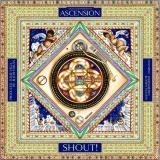
There's a moment during every great dance floor experience when the music takes over and everyone becomes part of something bigger. "SHOUT!", the latest release from 2SoulFusion Presents Ascension, captures that feeling in its purest form. Featuring the powerhouse voices and ad-libs of Dames Brown and Dawn Tallman, along with an all-star ensemble of master vocalists including Josh Milan, Rahsaan Patterson, Lisa Fischer, Cindy Mizelle, Audrey Wheeler, Ramona Dunlap, and Lea Lorien, this joyful anthem is an invitation to let go, lift your spirit, and celebrate through music.
Produced, written, arranged, and mixed by 2SoulFusion—Louie Vega and Josh Milan—"SHOUT!" draws inspiration from the communal spirit of gospel while embracing the energy and freedom of house music. Driven by simple yet powerful affirmations—"Shout," "Sing," "Move," "Love," "Get Up On Your Feet," "Listen Up," and "Let This Music Take You Higher"—the song transforms into an experience where every voice becomes part of the celebration. It's a journey of anthemic hooks, soaring harmonies, infectious grooves, and unforgettable melodies designed to ignite dance floors, uplift hearts, and remind us that music has the power to unite people through rhythm, joy, and love.
The inspiration for "SHOUT!" was born from a creative exchange between Louie Vega and Charaf Tajer, founder and creative director of the internationally acclaimed fashion house Casablanca. Introduced by longtime friend Joseph Capriati, Charaf shared a bold vision—to bring together the worlds of fashion, gospel, and house music for one unforgettable Casablanca runway presentation in Paris.
Louie Vega recalls: “Charaf was introduced to me by my friend Joseph Capriati, who said Charaf was looking to meet me about an idea he had. His vision was to marry fashion, gospel, and house music within Casablanca's collection. At first, he wanted me to DJ and play gospel house music. I said, 'Instead of playing existing music, why don't I create an original song with a gospel house flavor?' I immediately got together with my 2SoulFusion partner Josh Milan, and together we came up with 'SHOUT!'”
That vision came to life during Casablanca's spectacular Paris presentation inside a breathtaking cathedral, where Louie Vega premiered the original twelve-minute and nine-second composition live. As the music echoed through the cathedral, Dames Brown joined the London House Gospel Choir in a soul-stirring performance while the models walked the aisle on Casablanca's carpet made of their signature green color and a dashing vibrating giant mirror echoing the runway visually. Renowned DJs Luciano and Chloé Caillet were among those who walked the runway, while friends of Charaf Tajer and special guests—including Jaden Thompson, Folamour, Dimitri From Paris, Kapela, and many others—were in attendance, making it an unforgettable gathering where music, spirituality, fashion, and culture merged into one extraordinary experience.
Inspired by that magical evening in Paris, Louie Vega and Josh Milan returned to the studio to expand the original composition into the powerful recording heard today. Built around rich live musicianship, Josh Milan's keyboards, organ, piano and synth bass provide the foundation alongside Axel Tosca's expressive grand piano recorded live, Sherrod Barnes' soulful guitar, and Gene Perez's unmistakable bass groove. Together they create an infectious, organic driving sound that allows the vocals to soar while delivering the unmistakable musical depth and musicianship that define 2SoulFusion.
Leading the celebration are Dames Brown and Dawn Tallman, whose commanding performances are elevated by an extraordinary choir of world-class vocalists. Dames Brown's spirited sermon and ad-libs, and Dawn Tallman’s powerful ad-lib vamping out together with the soaring harmonies of Lisa Fischer, Cindy Mizelle, Audrey Wheeler, Rahsaan Patterson, Ramona Dunlap, Lea Lorien, and Josh Milan, recreate the feeling of a joyful gospel congregation—not confined to four walls, but alive on dance floors around the world. Every chorus encourages listeners to get up, listen up, feel it, sing, move, love, and become part of the experience. Recorded between Honeycomb Studios in Pennsylvania, The Hub Ibiza and Manhattan Center Studios, New York City, and mixed at The Hub Ibiza, "SHOUT!" reflects the continuing vision of the Ascension project, where spirituality, musicianship, community, fashion, and dance music become one.
debe ser publicado en 23.10.2026

One of the key architects of Gospel House Music, DJ Spen, gets set to release his brand new full-length artist album, ‘The Praise Party’ on Quantize Recordings. DJ Spen’s weekly Sunday ‘Praise Party’ live stream was born in the pandemic, when a heartfelt idea from his wife Kelly, “go live and bring hope to people”, grew into a global online family united by music, faith, and irresistible gospel house edits. Six years on, that community still gathers, and ‘The Praise Party’ album carries that legacy forward, continuing to bring hope and inspiration through music. A true labour of love, this album sees DJ Spen deliver fifteen uplifting songs where joyful voices rise together in spine-tingling harmony, and stunning solo performances flow over a musical feast of heart lifting, hand clapping and roof raising Gospel grooves.
En el almacen y preparando para el envío

For more than two decades, Eamon Harkin has helped shape New York’s communal pulse. As a founder of Mister Saturday Night, Mister Sunday, Planetarium, and Nowadays, he’s created and DJed in spaces where dance, listening, and connection blur into something deeper — places where people come together to make sense of the world through sound.
On his new album, The Place Where We Live, Harkin turns that lens inward. Drawing on 25 years as a DJ and curator, he moves between house, techno, and ambient currents with a sense of stillness and searching. The result is a record that feels both physical and introspective — the sound of the dance floor seen through memory.
The title comes from psychoanalyst D.W. Winnicott’s idea of “the place where we live,” the psychic space between the inner and outer world — where play, art, and culture help us build meaning. For Harkin, an Irish immigrant long settled in another land, that idea resonates both philosophically and personally. The Place Where We Live captures the tension and beauty of the pulse of the club and the quiet of reflection — an album about belonging, transition, and the quiet resonance of finding home somewhere in between.
En el almacen y preparando para el envío
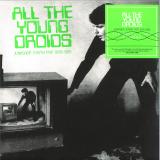
2025 REPRESS ON TRANSPARENT GREEN VINYL
Compiled by Philip King “And then came the rise of synth pop : blokes with dodgy haircuts hunched over keyboard-operated machines stuffed with wires and do-it-yourself tone oscillators making sounds like a brood of geese passing gas in a wind tunnel. Whoopee! This is the way the ‘70s ended : not with a blood-curdling bang bang but with a cheap, synthesized, emasculating whimper.” NICK KENT, NME. All The Young Droids: Junkshop Synth Pop 1978-1985 is a new compilation that charts the underbelly of the epoch-defining sound of the synthesiser in 80s popular music. Compiled by Philip King (previously seen compiling All The Young Droogs, Glitterbest and Boobs - The Junkshop Glam Discotheque), the music here connects the dots between DIY synth enthusiasts grappling with new, cheap synthesisers at the tail-end of punk and wannabe, jobbing songwriters enthral to the new music pioneered by Gary Numan, Depeche Mode and Daniel Miller’s Mute Records. Featuring rare tracks of auto-didactic progressive pop music, proto-techno punk, shoot-for-the-stars-land-in-the-gutter chart flops and heralded, underground synth classics, School Daze paints a picture of beautiful failure. Complete with extensive sleeve notes written by King and never before seen imagery, all 24 tracks were remastered by RPM in-house engineer Simon Murphy, many from vinyl copies due to lost master tapes. The story told on All The Young Droids is one of the dawning opportunity presented by both the emergence to the market of cheaper analog synthesisers and the distribution networks plus indie labels that exploded with the advent of punk music in 1976. While the music that sprouted out all over the globe in the wake of these factors was decried as fake, plastic, a refutation of punk’s guitar-led revolution, it’s telling that much of the music on All The Young Droids.. was created in bedrooms, ramshackle studios and home-made set ups with often borrowed equipment. In the era of record labels jumping to capitalise on the success of The Sex Pistols, The Clash (both on major labels, of course) these artists struggled to stand out from a new gold-rush with next to no budget or PR team. With radio and labels desperate for the new Yazoo, what resulted was a testament to necessity being the mother of invention. At the time, the synthesiser was the music of the future, a shiny new machine that could paint like an orchestra with a single finger and a 4-track. In the hands of Manchester avant-pranksters Gerry & The Holograms it’s a pulsing, sardonic weapon.. the only instrument on the Messthetics classic lampooning of New Wave fashion. In Hamburg, a 16 year old Andreas Dorau used it to write and record (with his female classmates on vocals) a global smash in Fred Vom Jupiter (later licensed to Mute Records). The hard-to-find English version (Fred From Jupiter, natch) is included here. Many artists with alreadystoried careers caught the bug and recorded synthesiser-fuelled peons to space, computers, the future and, of course, love-interests. Harry Kakoulli, late of Squeeze, recorded a solo album in 1979 that included the incredible power-synth-pop smash-that-never-smashed I’m On A Rocket. Similarly, Ian North of Neo and American Power Pop stalwarts Milk ’n’ Cookies bought a Korg MS20 and used a tape machine to record We’re Not Lonely, an absolute lost-classic of minimal synth pop. We’re Not Lonely also features on the Junkshop Synth Pop sampler 7” twinned with John Howard unreleased track You Will See, released April 12th 2025. There are plenty of compilation debuts in evidence. Sole Sister were a mysterious trio who were featured on the Scaling Triangles compilation of female-fronted, queer-adjacent post-punk / underground music that also featured The Petticoats. Selwin Image were from San Francisco and featured members of the recently defunct power pop/punk group The Pushups. Their stupidly catchy The Unknown fizzes with New Wave energy - think XTC to Sparks but remains unreleased until now. Dream Unit’s A Drop In The Ocean is an early synth wave cut, positively teaming with Joy Division instrumentation, previously only released on a long-forgotten and super rare, self-released EP. Incandescent Luminaire’s Famous Names belies an archetypal struggle of a small-town trying to make it in a cruel industry but is a thrilling New Romantic-Synth Wave cross over with a OMD gloominess that’s a joy to hear. Feminist Minimal Wave track I Am A Time Bomb by performance artist Peta Lilly and Michael Chance is a revelation destined for new found cult status. It was released on 7” and lost until now. The flipside to the subterranean, never-made-it synth pop mentioned above are the ambitious, even fruity attempts at success that have a perennial elegance to their confidence. New Jersey-ite Billy London (real name Ed Barth) tried to cash in on the synth boom with Woman, released by a major label, a lurching new wave track built on the Louie Louie rhythm and a wonderfully camp Lou Reedstyle sleazy vocal before exploding in the synthesised chorus. The song bombed but with a chorus like this, you have to wonder why? Ex-Glitter Band member John Springate’s My Life is truly epic, with doomed chord progressions and massive sounding drums turning into at least 3 different songs in the course of the track. Before you wonder what’s going on the song resolves with a glorious return to the main refrain. The dry-ice-dressed dance floor is well catered for too. Design’s Premonition and Vision’s Lucifer’s Friend are stone-cold minimal synth bangers, well loved but given a new lease of life here. The Warlord’s The Ultimate Warlord was released in 1978, a homespun proto Hi NRG banger that was later re-recorded by The Immortals in Canada who had a club hit with it. One-man- band Disco Volante’s No Motion was re-issued by Synth wave label Medical in 2012 but makes its first vinyl compilation appearance here. Close your eyes and you can imagine what Lawrence of Felt would have sounded like with some cheap Korgs a little earlier in his career. Gibraltar-based trio The Microbes imagined a computer programming people to dance - how prescient - and ended up with a propulsive, robo-funk track with splendid rubbery bass playing over a tectonic drum machine. Previously picked up by Belgian label Stroom TV, Dee Jay Bert & Eagle’s heavily Euro-accented I Am Your Master demands the listener to “come to paradise!” In a frankly terrifying manner. All The Young Droids is the first compilation to peel away from the narrative that dour, Minimal Synth and Cold Wave were the only musical children of the first rush of synth pop. Philip King and School Daze Records describe a much more complicated world: along with the austere, Brutalist children of Daniel Miller (who produced Alan Burnham’s Bowie-Low-influenced Science Fiction here) was a plethora of desperate cash-ins, accidental mainstream hits, ambitious pop dramas and major label punts that went nowhere. Crucially, the compilation blurs the line between junk and treasure. What if the two things are interchangeable. What if it’s all science fiction?
En el almacen y preparando para el envío

Vibe Ride is the sixth release of Adam Rudolph's Hu Vibrational project and marks his 60th release as a leader or co-leader. Comes with insert and download code.
“With every record, the goal is to explore new creative territory,” explains Rudolph. Vibe Ride continues a deeper exploration of a trance-like groove and a conceptual framework known as Sonic Mandala. This album marks the most complete realization of that idea, partly due to the group's experience touring beforehand. That time on the road helped to refine ideas and strengthen musical chemistry. The recording process unfolded organically—likely due to the long-standing collaboration within ensembles like Go: Organic Orchestra and Moving Pictures, where the musicians have developed a deep familiarity with the shared musical language.
Sonic Mandala refers to a musical approach distinct from traditional linear structures of theme and development. Found in cultures across the globe, it may represent one of the oldest forms of musical expression—predating written history by tens of thousands of years. Today, it is most vividly preserved in the music of the Ituri Forest peoples (Aka, Baka, Ba Benzele, Mbuti), whose sound traditions revolve in cyclical, orbit-like patterns. Vibe Ride seeks to bring that ancient sense of circularity into a contemporary—and perhaps even futuristic—context.
The ensemble of Vibe Ride—Alexis Marcelo, Jerome Harris, Harris Eisenstadt, Neel Murgai, Tim Kieper, and Tripp Dudley—brings exceptional creativity and skill to the project. While grounded in the sonic languages of today, their performance channels an ancient vibrational lineage, connecting with ancestral sound makers who were attuned to the rhythms of the sun, moon, stars, and seasons. Human beings have always been deeply responsive to natural cycles.
Like a mandala, where the circle reveals itself as a spiral—always returning, but never to the exact same point—the Sonic Mandala musical experience spirals through motion. Refined signal patterns emerge through overtone-rich instrumentation. The groove becomes a threshold, shifting the listener from passive observation into active, even transcendent, participation. With open ears and an open mind, the sound spirals inward—toward a primal center—and outward into the cosmos. When this elevated state is shared among participants, it creates what mystics describe as resonance.
Vibe Ride thrives on the distinctive sonic voices of its players, interwoven with care and nuance into the compositions. Hu Vibrational merges elements of world music, electronica, and improvised jazz into something both funky and spiritual, intense and soothing.
Using signature techniques of organic orchestration, layered arrangement, and electronic processing, the compositions are sculpted from percussion, electronics, and ethereal textures. Rhythmic foundations drawn from diverse traditions serve not as endpoints, but as building blocks. As the saying goes, “Orchestration is the key.” In shaping the sound, the aim was to discover fresh ways of balancing structure and sonic color. As Don Cherry once said: “The swing is in the sound.”
The audiophile LP was carefully recorded, mixed, and mastered by James Dellatacoma—longtime engineer for both Bill Laswell and Rudolph—at Laswell’s Orange Studio.
“This crew artfully blends together to create a seamless tapestry of rhythm… the end results are mesmerizing. Hu Vibrational is all about communing with the groove spirits and creating worlds where earthy rhythms and other-worldly sounds are one.”
— Dan Bilawsky, All Music Guide
“You can be sure that when Adam Rudolph and an ensemble of breathtaking drummers get together mystical and wonderful things will happen.”
— Raul da Gama,
“A stunning effort, enjoyable and grows with repeated listening.”
— Stefan Wood, Freejazzcollective
En el almacen y preparando para el envío

Zara is the first album of Parus ethno-ambient project from Belarus that combines pagan songs that are sang by ethnographer and folk singer Hanna Silivonchyk on various dialects of Belarusian language and mixture of synthesizers and field recordings that where reordered in national parks of the country by electroacoustic music composer - Anton Anishchanka. The songs where collected during ethnographic expeditions in remote territories by Belarusian ethnographers in different periods of time
"What I choose to sing from the vast amount of authentic material are songs that
somehow feel like mine for all sorts of reasons, but that I love to be inside." - Hanna Silivonchyk
"Soniejka" is a summer song from the Dnepr river region, which sings about the readiness to meet life in any of its manifestations, about acceptance and love. "Zara" is also from the Dnepr river region, depicting the main Indo-European mythological story of the heavenly love between the Moon and the Dawn and their melting.
"Ruzovyja cviaty" is a lyrical song from Dzvina river region, romantic and touching, which sings about the very beginning of love between two people. And the song "Oj luhom idu" is a spring song from the territory of modern Poland, from Podlasie region, which tells about the life of a married woman, about the fate that may befall her and how it can be experienced. All of them are about one's own feeling of the present time, one's life, about personal life
experience, but at the same time - about universal human contents and meanings that exist outside of time.
En el almacen y preparando para el envío

Liner Notes by Martyn Pepperell
A collection of ten hypnotic guitar renditions that dive deeply into the traditional compositional musicality that underpins Harakami’s hallucinatory beatscapes before reconsidering them under a fresh, innovative and engaging new light. River: The Timbre of Guitar #2 Rei Harakami signals a new level of awareness and understanding of both Rei Harakami’s significance and Ayane Shino’s undeniable talent.
VITAL SALES POINTS:
In 1996 Tokyo-based label Sublime Records received a cassette demo from Rei Harakami, a 26-year-old Japanese experimental filmmaker, and musician. Within one year Harakami’s debut LP ‘Unrest’ was released. As the 21st century dawned, Harakami was becoming a critically acclaimed figure, and there was a feeling in Japan that Harakami would be an inevitable successor to such luminaries as Haruomi Hosono and Ryuichi Sakamoto. Sadly Harakami passed away at age 40 in 2011, leaving behind a musical legacy that seemed to deserve more recognition. A fitting tribute now comes from the incredibly gifted classical guitarist Ayane Shino. Continuing her album series ‘The Timbre of Guitar’ (the inaugural release of which was ‘Sakura’ - a cover album of Susumu Yokota's seminal album, released through the Swiss label, Mental Groove Records in 2021), she now presents ‘River ???? : The Timbre of Guitar #2 Rei Harakami’. Ayane has reworked some of Harakami’s standout tracks into an album of tranquil yet complex compositions helping to build a new level of awareness and understanding of Rei Harakami’s significance. A collection of ten hypnotic guitar renditions that dive deeply into the traditional compositional musicality that underpins Harakami’s hallucinatory beatscapes before reconsidering them under a fresh, innovative and engaging new light.
In the years that followed Harakami’s untimely passing, Sublime Records continued to sign and support new artists emerging from Japan’s rich and fertile electronic music scene. This eventually led to a meeting with gifted classical guitarist Ayane Shino in 2020. Although a new name within electronica, Shino’s classical resume is impeccable. She has performed with a range of prestigious orchestras in concert halls and at music festivals across Japan, Europe, and South America while playing classical guitar for numerous animations, movies and television commercials and holding various educational roles. These days, she also hosts the Tokyo Harmonics radio show, which is syndicated through Hyogo prefecture’s Ashiya Radio and TJS Radio in Los Angeles.
During her time completing a masters at Tokyo’s University of the Arts, Shino became fascinated by Brian Eno, Aphex Twin, Oneohtrix Point Never, Steve Reich, and, closer to home, Harakami and Susumu Yokota. ”I found myself in an environment where I was surrounded by fellow students who produced computer music, live electronics, and installations,” she explains. Following her meeting with Sublime, Hideoki Amano, the producer and owner of Musicmine, the parent company of the label, asked Shino if she would be open to transcribing and recording an album of covers of the late, great composer, producer and DJ Susumu Yokota’s music in incorporate into then-upcoming events commemorating the 5th anniversary of his death and reissues of his past works. “Yokota made music with the Roland TB-303 bass synthesizer and samplers, not in a way like a conventional instrumentalist, so I was aware it might be more of a challenge for her,” Amano explains. Fittingly, Shino was up for his suggestion, leading to ‘Sakura: The Timbre Of Guitars #1 Susumu Yokota’. Song by song, Sakura highlighted Shino’s free-flowing playing and prowess at translating electronic music into classical guitar shapes.
After considering Harakami’s background as an instrumentalist, Amano felt revisiting his catalogue should be the next step for Shino. Well-versed in how often classical versions of electronic music tend to fall flat, he asked her to examine Harakami’s songs closely, select the musical phrases suitable for guitar and create arrangements that would sound interesting to music listeners with a deep engagement with ambient, techno and electronica. In Harakami’s discography, Shino discovered “a sense of simplicity, warmth, moisture and a floating sensation.” “I was gripped by his songs, which had an array of sounds that gave me a sense of mystery but also coexisted with a sense of familiarity,” she explained. Moving beyond his official releases, Shino began digging through YouTube to find live recordings, radio appearances and obscure outtakes. Within her mind’s eye, imagining playing his songs on guitar was effortless. On her approach to the album, Ayane explains: “For this album, I succeeded in spinning some exquisite, silk thread like delicate tones, interwoven with human warmth, gentleness and simplicity. And I was also able to rework Rei Harakami's distinctive sound with a floating feel to it and transform it into a very classical guitar sound. I hope many people will be able to receive this group of sounds that I created in this album that I played with all my heart.” A record of limitless innate beauty, ‘River ???? : The Timbre of Guitar #2 Rei Harakami’ is a delicate and thoughtful body of work. A true masterclass in deconstruction and subsequent rebuilding, and an eternal lesson in how the art that we leave behind can outlive us all.
En el almacen y preparando para el envío

The critically acclaimed Colours & Light, Project Gemini’s second album, takes on a new life in Deluxe Edition format. Firmly rooted in the mood and melodies of the original album, the Deluxe Edition features an unreleased album track, alternate versions and a whole host of remixes from friends of Project Gemini. To accompany the digital release, Jack Sharp’s (Wolf People/Large Plants) distinctive, distortion-heavy remix of ‘After The Dawn’, and the previously unreleased ‘Darkness Rising’, receive a special 7” pressing.
On the A side, Jack Sharp of the psychedelic, folk rock bands Wolf People and Large Plants, takes on ‘After The Dawn’. Sharp, who featured heavily on Colours & Light, dials up the distortion with this all-consuming, darker shade of a remix. Sucking you down into a wormhole of layered guitar reverberations and Paul’s spiralling, echoed vocals, it’s an intoxicating, driving hit of mind-bending, progressive rock.
Taken from the Colours & Light album recording session, the B side features ‘Darkness Rising’. A previously unreleased, original track that didn’t make it onto the album, Project Gemini leans in on the wah-wah fuzzed guitars, using it as the basis for a sonic brew of synths, percussion and bass-heavy, psychedelic rock synergy.
En el almacen y preparando para el envío
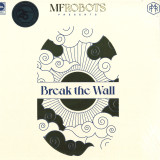
Effortlessly dismantling the barriers between R&B, soul, funk, disco and jazz sounds, MF Robots present long player ‘Break The Wall’, on BBE Music. Astonishing musicianship, pristine production and top-tier songwriting, ‘Break The Wall’ immediately calls to mind those iconic American rhythm sections of the 70s and 80s. The music is energising, uplifting and the potent result of a highly accomplished musical partnership maturing, growing and hitting their stride together in lock-step. Jan Kincaid and Dawn Joseph met as members of one of the UK’s most successful Acid Jazz bands, which influenced Mark Ronson, D’Angelo, Jamiroquai, Erykah Badu and The Roots to name a few. Founding the Brand New Heavies was an important chapter for Jan, but once he and vocalist and songwriting partner Dawn began working together, the chemistry was instant and irresistible. It was time to turn the page, and soon MF Robots was born. “When we made our first album, we didn’t have a band as such. We basically made a lot of the record at home and called on other musicians as and when we needed them. Our sound was developing organically, and when we finally released the record to great critical acclaim, it was time to get out on the road,” says Jan. “We put together a band of like-minded young musicians, playing intimate gigs and big festivals all over Europe and beyond, growing tight as a unit, so that when it came time to think about making this, our second album, we knew we had an extra level of musicianship full of personality that could realise our vision.” Inviting band members Alex Montaque (keys), Naz Adamson (bass), Mark Beaney (guitar), Jack Birchwood (trumpet), Ben Treacher (sax) to improvise and contribute their own ideas over song-sketches laid out by Jan and Dawn gives ‘Break The Wall’ a special sense of off-the-cuff brilliance. Even on the polished final product you can detect a collaborative, fluid and unhurried approach to production that’s all-too rare these days. There’s guest performances from bassist Gail Ann Dorsey (‘The Love It Takes’, ‘Make Me Happy’) and guitarist Cory Wong ('Shine', 'Make Me Happy'), the former a top-flight session player who’s collaborated with Lenny Kravitz and David Bowie among others, the latter a member of the incredible Vulfpeck collective and an accomplished solo artist in his own right.
En el almacen y preparando para el envío

Repress!
After the enormous support received in previous releases, we believe that the time has come to give our music a bit of color and this time we have opted for green, the color of our natural habitat ... "La Jungla de Andalucía"
Sekret Chadow surprises us again and shows us the most sentimental side of him with his "I Love You Mommy" We can already imagine what this artist would be thinking about when creating this beautiful musical composition, a true tribute to one of the most important people in our life, without a doubt a track created with a lot of love, loaded with arpeggiated melodies, vocals, basses. and powerful breaks that create perfect harmony. Close your eyes and let yourself be hypnotized by the magic of his music.
Baymont Bross joins our family and we could not start in a better way than presenting this beautiful version of one of his greatest hits throughout his career "Enjoy Yourself" Do you remember those infinite closings at Carpas Yerbabuena? Are you one of those who danced in Mangueta Beach until dawn? Surely you once danced to this track and now we can relive those wonderful moments with this vocal version created on the occasion of the 10th anniversary and extended for this occasion. Welcome to the monkey family.
Adam Vyt brings us his track "Don´t Give Up" a message of strength and encouragement for the times. A track with piano melodies followed by an elegant line of atmospheres and basses, vocals and a powerful base with airs of Uk Garage, a mixture of styles that already define this artist. This track was previously released in digital version by the "Distorsion Records" label, making it one of the best tracks in Beatport's Top100. Never give up...!!!!
Case82 is back with us and this time with another of his most powerful tracks "Pump This Party" and that's how it is ... the party's pump .... !!!
Once again this Dutch artist shows us that his strength is pure Old School, a mixture of powerful bases, vocals, stabs and wonderful melodies with violins and piano to which he is already accustomed. This is "Lost in The Jungle"
En el almacen y preparando para el envío

Reissue of Elizio De Buzios's "Tamanquiro". Remastered and pressed on 45 RPM!
Sitting a good 90-minute drive away from Rio de Janeiro’s crowded beaches and packed tourist hot-spots, Campo Grande is not a neighbourhood that attracts travellers from around the World. Traditionally it is home to the city’s lower middle-class, whose aspirations of moving up the social ladder were played out in a suburb that has always been solidly working-class.
Campo Grande is home to Elizio De Buzios, a Brazilian musician who started playing music in the late 1970s and early 1980s. De Buzios began as a drummer, before learning to play guitar and starting to compose and sing his own music. When he turned 18, De Buzios joined a local band formed by some of his friends and other like-minded local musicians: Sol da Terra. The band mostly played samba in neighbourhood bars and small venues around Camp Grande, but De Buzios was interested in more than just samba. While he naturally admired great samba composers such as Cartola and Beth Carvalho, his musical pass went far beyond Brazil’s national music. He also loved MPB and bossa-nova and at home he listed to Joäo Bosco, Milton Nascimento, Luis Melodia, Tom Jobim, and many bossa-nova singers.
In 1980 De Buzios was noticed by a local representative of international major label Polygram, who gave him the opportunity to record two songs. He was excited, so started searching for inspiration for the songs he would eventually lay down. He found that inspiration close to home while passing a neighbourhood shop which made and sold clogs. After noticing a display of then fashionable Portuguese clogs outside the store, De Buzios popped inside to talk to the owner. It turned out that he was a tamanqueiro – as clog-makers are traditionally called in his native Portugal – and was as passionate about music as he was about the footwear he made. Thus inspired, De Buzios returned home to work more on the lyrics and music.
The next day, he headed into the studio to record the song, with Vale Ribeiro, who later went on to produce tracks for Marcos Valle, behind the desk. With Ribeiro’s assistance, De Buzios managed to record two songs in one day: ‘Tamanqueiro’ and ‘Sou Um Louco’, a ballad with English lyrics blended into the mostly Portuguese text. From the start, it was clear that ‘Tamanqueiro’ would be the single’s A-side. Incredibly catchy and funky, with some subtle disco elements, the song remained distinctively Brazilian thanks to the use of the cuíca. Listening back all these years on, De Buzios’ lyrics seem almost spontaneous, carry the track forward, and make it almost impossible not to sing along. Its infectiousness and funkiness made it an instant hit with the first few people to hear it.
When it was released, responses to the song were enthusiastic, even if it never became the Brazil-wide smash it should have been. It resonated well in the local clubs and on the radio, but unfortunately the marketing was handled by an inexperienced Polygram employee who failed to adequately promote the track. As a result, the record sank without trace and De Buzios’ dreams of stardom evaporated. Having just started a family, he realized he could not live off the uncertainty of being a musician. Instead, he got a job at city hall as a civil servant, a role he continued until his retirement a few years ago. ‘Tamanqueiro’ and ‘Sou Um Louco’ remain the only two songs he ever recorded.
In the early 2000s, with the rise of diggers’ culture, ‘Tamanqueiro’ slowly surfaced again. It became a sought after, hard to find seven-inch single, finding its way onto the airwaves once more and into the ears of a new generation of listeners. Some started appreciating the song so much that it was referred to as the “best-Jorge-Ben-song-Jorge-Ben-never-recorded”. And they are right: ‘Tamanqueiro’ does have that Jorge Ben-straight-forwardness. It’s a completely honest song that’s almost impossible not to fall in love with. Thanks to this remastered reissue on Rush Hour, De Buzios may now get the props his sole record so richly deserves.
Now for the good news: De Buzios is still singing in local bars and clubs in and around Campo Grande. He is surprised, but also incredibly proud, that the record he had almost forgotten about is appreciated so much by a group of music lovers he didn’t even know existed. But above all, he is happy that more than 40 years after the recording session, the record lives on – not only on this re-release, but also in his weekend sets in the bars of Campo Grande.
En el almacen y preparando para el envío

Coloured Vinyl[35,50 €]
Bonobo alias Simon Green returns with "Distance In Static", his new album, which will be released on September 11, 2026, by Ninja Tune.
On "Distance In Static", Bonobo collaborates with a characteristically impressive lineup of artists, including Arooj Aftab, Joy Crookes, Nilüfer Yanya, Ichiko Aoba, Nicole Miglis (Hundred Waters), and Aanya Martin. The lyrics are written in English, Urdu, and Japanese, while historical Iranian samples and guzheng recordings stand alongside Bonobo's carefully crafted instrumental sounds. These were created during recording sessions in Los Angeles, Tokyo, London, and beyond: a significant part of the album was completed at Neil Young's legendary Broken Arrow Ranch in California, where he had retreated for several weeks earlier this year.
The album's title - "Distance In Static" - aptly describes Bonobo's current situation: it evokes images of distorted transmissions and fleeting frequencies, memory fragments and glimmers of meaning that echo through more than two decades at the forefront of electronic music. He sees the traces of his work reflected in a younger generation rediscovering trip-hop, downtempo, and experimental electronic music of the 1990s from a contemporary perspective. "I think the beginning of my work is relevant to younger people today," he says. "I liked the idea of listening for a distant signal - finding something in the noise," he continues. The entire album conveys the feeling of a search for transcendence: music that hovers between intimacy and vastness, the familiar and the unknown.
Within the universe of "Distance In Static", there is also a sense that this album marks something truly monumental. It is a moment of transition, a celebration of Bonobo's 25th anniversary, but perhaps also his last album in the traditional sense: with numerous guest contributions and a multi-year world tour with a full live band.
Whatever comes next, one thing is certain: "Distance In Static" is arguably Bonobo's best album to date; as ambitious and forward-thinking as ever and a reminder of why he has influenced so many people so strongly for so long.
Haga su pedido ahora y le encargaremos el artículo en nuestro proveedor.

Black Vinyl[34,03 €]
Bonobo alias Simon Green returns with "Distance In Static", his new album, which will be released on September 11, 2026, by Ninja Tune.
On "Distance In Static", Bonobo collaborates with a characteristically impressive lineup of artists, including Arooj Aftab, Joy Crookes, Nilüfer Yanya, Ichiko Aoba, Nicole Miglis (Hundred Waters), and Aanya Martin. The lyrics are written in English, Urdu, and Japanese, while historical Iranian samples and guzheng recordings stand alongside Bonobo's carefully crafted instrumental sounds. These were created during recording sessions in Los Angeles, Tokyo, London, and beyond: a significant part of the album was completed at Neil Young's legendary Broken Arrow Ranch in California, where he had retreated for several weeks earlier this year.
The album's title - "Distance In Static" - aptly describes Bonobo's current situation: it evokes images of distorted transmissions and fleeting frequencies, memory fragments and glimmers of meaning that echo through more than two decades at the forefront of electronic music. He sees the traces of his work reflected in a younger generation rediscovering trip-hop, downtempo, and experimental electronic music of the 1990s from a contemporary perspective. "I think the beginning of my work is relevant to younger people today," he says. "I liked the idea of listening for a distant signal - finding something in the noise," he continues. The entire album conveys the feeling of a search for transcendence: music that hovers between intimacy and vastness, the familiar and the unknown.
Within the universe of "Distance In Static", there is also a sense that this album marks something truly monumental. It is a moment of transition, a celebration of Bonobo's 25th anniversary, but perhaps also his last album in the traditional sense: with numerous guest contributions and a multi-year world tour with a full live band.
Whatever comes next, one thing is certain: "Distance In Static" is arguably Bonobo's best album to date; as ambitious and forward-thinking as ever and a reminder of why he has influenced so many people so strongly for so long.
Haga su pedido ahora y le encargaremos el artículo en nuestro proveedor.

Color Vinyl[32,56 €]
Finally for this time round we have Tieum back again on the UM label with one of his greatest EPs from the just before the dawn of the new millennium. Tcher No Beat #5 was one of the best records on the label with the classic track “French People Piss Me As” with the samples from Cartman from South Park! Such a memorable 12” from the 90’s that has been out of reach for most collectors. A split of coloured and black vinyl for this release. Big respect to Tieum for such amazing music from that with its awesome programming and production still stand up well today!
Haga su pedido ahora y le encargaremos el artículo en nuestro proveedor.

Black Vinyl[20,38 €]
Finally for this time round we have Tieum back again on the UM label with one of his greatest EPs from the just before the dawn of the new millennium. Tcher No Beat #5 was one of the best records on the label with the classic track “French People Piss Me As” with the samples from Cartman from South Park! Such a memorable 12” from the 90’s that has been out of reach for most collectors. A split of coloured and black vinyl for this release. Big respect to Tieum for such amazing music from that with its awesome programming and production still stand up well today!
Haga su pedido ahora y le encargaremos el artículo en nuestro proveedor.
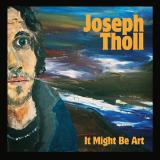
Joseph Tholl is widely known as a Swedish multi-instrumentalist, singer and songwriter. He gained international recognition as a founding member and guitarist for the speed metal band Enforcer (officially leaving in 2019). Following his time with Enforcer, he formed Black Trip (later Vojd) and is currently playing guitar for Tribulation. Following 2019’s »Devil’s Drum«, »It Might Be Art« is his second solo album (and the second for High Roller Records). It was recorded and mixed at Humbucker Studio, which he co-owns with Robert Pehrsson (who’s also on High Roller Records). On »It Might Be Art« Joseph Tholl is singing, playing guitar and most of the bass, he also handles piano and synthesizer parts. Robert Eriksson (The Hellacopters) and Jakob Ljungberg (Second Sun) share drum duties on this album. Besides that, there’s a few guest appearances by musicians such as Johannes Andersson (Tribulation), Tobias Lindkvist (Tyrann), Pia Stjärnvind (Serpent Omega), Adam Zaars (Tribulation) and Robert Pehrsson (Dundertåget, Robert Pehrsson’s Humbucker). Joseph Tholl thinks that despite its broad variety »It Might Be Art« is still suitable for heavy metal fans: “I couldn’t see why not. I mean it’s not heavy metal. But I hope people will like it for what it is, a very honest and well-crafted melodic rock album.” “»It Might Be Art« is both darker and brighter than »Devil’s Drum«,” compares the Swede both his solo albums. “Musically it probably sounds a little brighter and poppy overall. But then there’s songs like ”I’m In A Darkness” or ‘The Burial’, which are very dark.” At times, influences of Sisters Of Mercy, The Cure, New Model Army and Midnight Oil can be detected on »It Might Be Art«, leading Joseph Tholl to ponder: “It’s incredibly hard to name a few bands as influences, there’s just too many. Besides those bands you mentioned, there’s a mix of grunge, heavy metal, Swedish pop/rock, AOR etc., that I mold into my own kind of rock n roll.”
debe ser publicado en 17.07.2026

Ever since the late 1950s bossa-nova revolution, Brazil’s influence on French music has been undeniable. Pierre Barouh, Georges Moustaki and a vast array of lesser known artists, all made the Musica Popular Brasileira (MPB) an axis of promotion at the service of a cool and metaphysical, modern and mixed Brazilian lifestyle. Some were seduced by the poetic languors of the bossa, some were looking for fun, and others just loved the American hybridization of jazz-bossa, jazz-samba.
What is bossa nova? One of its creators, Joao Gilberto said: "Its style, cadence, everything is samba. At the very start, we didn't call it bossa nova, we sang a little samba made up of a single note - Samba de uma nota so .... The discussion around the origins of bossa nova is therefore useless”. It is nevertheless useful to remember that these magnificent Brazilian songs, which the guitarist describes as samba, were shifted and balanced around improbable chords. "I like things that lean, the in-betweens that limp with grace," said Pierre Barrouh, quoting Jean Cocteau.
With emotion, arrangements for violin and supple guitar licks, bossa nova rapidly changed. A transformation that can be heard in the Tchic, tchic, French Bossa Nova 1963-1974 compilation, the result of a cultural reappropriation, which traveled through the United States and supplemented itself in France.
A musical revolution that has remained significant, bossa nova was born in Rio. From 1956 to 1961, Brazil lived through its golden years. In five years, the country had invented its modernist style. Elected president in 1956, Juscelino Kubitschek de Oliveira, an elegant man with a broad forehead, brandished a promising slogan: "Fifty years of progress in five years". He quickly got to work. Not worried about increasing debt, he launched the project for a new federal capital, Brasilia, designed by the communist architect Oscar Niemeyer. Volkswagen opened state-of-the-art factories and created the “fusquinha”, the Beetle. In Rio, the Vespa made its first appearance. The Arpoador Surf Club crew run into the “girl” from Ipanema, Helô Pinheiro - the tanned garota ("chick"), between a flower and mermaid, who at 17 walked by the Veloso bar, where the fiery author and composer, Tom Jobim and Vinicius de Moraes, were getting drunk on whiskey. From then on, bossa symbolized cool.
In 1958, Joao Gilberto recorded Chega de Saudade, which the directors of Philips denied, calling it "music for fagots". The marketing director, who believed in it, secretly pressed 3000 78-inch vinyls and distributed them at schools around Rio, creating a tidal wave.
American jazzmen then took over. In particular, trumpeter Dizzy Gillespie and guitarist Charlie Byrd. In November 1962, the Brazilian Ministry of Foreign Affairs funded a "Bossa-Nova" concert at Carnegie Hall in New York, inviting the genre’s pioneers. Unprepared, the show soon turned to disaster. But the troupe was invited to the White House by Jackie Kennedy. The first lady loved "the new beat" and in particular Maria Ninguem, a song by Carlos Lyra, later covered by Brigitte Bardot.
In Brazil, the 1964 military coup quickly ended this euphoria. The destructive atmosphere that ensued pushed many Brazilian musicians to leave, if not to exile. Thus, Tom Jobim, Sergio Mendes and Joao Gilberto arrived to the United States. In New York, Joao Gilberto met saxophonist Stan Getz. At the time, he was married to the Bahianese Astrud Weinert Gilberto, who had a German father. She had never sung before, but she knew how to speak English. Getz therefore asked her to replace her husband on The Girl From Ipanema. The Getz/Gilberto record with Tom Jobim on piano, was released in March 1964. Phil Ramone, the "pope of pop" was in charge of sound.
Bossa nova arrived in Paris through the classic “guitar-voice” channel (Pierre Barouh, Baden Powell, Moustaki…) But France loved jazz and Paris had already welcomed its American contributors. All these good people were to pass through Saint-Germain-des-Prés. The cabaret l'Escale became the Mecca of Latin American sound where one could find Pierre Barrouh and his friends, such as the Camara Trio, samba-jazz aces, whose only record was published by the Saravah label. With a band strangely called Les Masques (a band that included Nicole Croisille and Pierre Vassiliu, among others), the Camara Trio recorded an interesting Brazilian Sound, including the track Il faut tenir which is present on this tasty compilation of rarities.
Other enlightened musicians can also be found on the compilation, such as Jean-Pierre Sabar (songwriter for Hardy, Auffray, Leforestier ...) and the French pop rock organist Balthazar. In 1975, Sabar recorded Aurinkoinen Musiikkimatka on a Finnish label, which featured the crazy Vai, Vai, included on this record. We are now following the footsteps of Brazilian electronic musicians such as Sergio Mendes, Eumir Deodato or Marcos Valle who created funk and disco sounds on their keyboards and synthesizers. A style that influenced Véronique Sanson when she wrote Jusqu’à la Tombée de la nuit in 1969 for Isabelle de Funès, the niece of Louis and a great friend of Michel Berger - Sanson did end up singing this track on her 1992 Sans Regret record.
The pinnacle of exoticism and travel, Sylvia Fels’ Corto Maltese includes bongos, sea mist and ocean sounds. The title was taken from Jacky Chalard’s concept album written in 1974, Je suis vivant, mais j’ai peur (I am alive, but I am scared), based on Gilbert Deflez’s science fiction novel.
However, bossa nova extended the scope of popularity. "In the 1970s, I was a fan of Sergio Mendes, Getz / Gilberto. I fell in love with this music that I knew because I had been an orchestral singer, " explained Isabelle Aubret, who in 1971 delivered a composite record of covers by the very funky Jorge Ben, Orfeu Negro, Tom Jobim, Vinicius de Morais and Jean Ferrat. "I recorded this album for Meys Records in Paris, far from Brazil, with wonderful musicians, François Raubert, Roland Vincent, Alain Goraguer...". The latter wrote the arrangements for Casa Forte, a very percussive title borrowed from Edu Lobo, one of the initiators of the bossa who spent time in California. "Jazz and bossa came together and produced very rhythmic music. I love singing, it allows me to dream, to have fun, to feel a high on stage, and these songs brought me joy, made me swing, my singing felt like a dance.”
The world tours of French singers and their desire for the tropics, often brought them to Rio with its hills, forests, caipirinhas and tanned bodies. There are surprises though, like this Iemenja (Iemenja is the goddess of the sea in the Afro-Brazilian candomblé religion). Not unlike the composer and musician Jean-Pierre Lang, based in Sao Paulo, Claire Chevalier taught Brazil to Brazil. In 1970, the singer and painter published a 45-inch vinyl, Mon mari et mes amants (My husband and my lovers), under the improbable pseudonym of Clarinha (little Claire). She was then living in Rio, with her husband, Joël Leibovitz, who founded a band called Azimuth, and who owned a record label specialized in "sambas enredos" songs for samba school parades.
For its B side, she asked Pierre Perret to come up with lyrics for a song composed by Carlos Imperial: "Oh goddess of the sea, o goddess Iemenja, I bring a white rose to adorn your long hair ..." . "Perret came to see us, and we had fun, remembers Joël Leibovitz. We wrote Lemenja for fun, we recorded it at the Havaí studio, behind the Central do Brasil the central station. Erlon Chaves, the arranger who worked with Elis Regina, joined us" adding his share of Afro-Brazilian percussions and funky brass to the mix.
There is a common misunderstanding in Franco-Brazilian history: that bossa, admittedly hedonistic, is perceived as funny, even though the poets who wrote the texts are often philosophizing on the human condition. Its French interpreters pull it towards a carnival inspired universe, far removed from its fundamental essence. Thus, Jean Constantin covered the famous Samba da minha terra, an ode to the art of samba written by the classic Bahian composer Dorival Caymmi, renaming it with the enticing title of Pas tant de tchi tchi pompon: "On your pier there is no tchi tchi / when you arch your back, you know everything is alright ”(lyrics by Gérard Calvi). This expedited bossa aims for the absurd, but retains a certain elegance.
Indeed, Jean Constantin was not an idiot, the rather large man had a huge mustache and liked fantasy, (Les pantoufles à papa, Le pacha, inspired by cha-cha-cha-cha, salsa and jazz) but he was also the lyricist of Mon manège à moi interpreted by Edith Piaf, the composer of Mon Truc en plume by Zizi Jeanmaire and the soundtrack of François Truffaut’s 400 Blows. Le Poulpe, published in 1970, from which this bossa is extract, was arranged by Jean-Claude Vannier, an accomplice of Serge Gainsbourg’s Melody Nelson. In short: "There is enough of samba / By looking at the parasol / Because my poor cabeza / Is going to die in the sun".
Even the American actress Marpessa Down, who was at the heart of the bossa nova revolution with her role as Euridyce in Marcel Camus’ film Orfeu Negro, winner of the 1959 Cannes Palme d'or, fed the clichée with Je voudrais parler au petit cuica - "Tell me how you manage to always make people want to dance / It's true, I must admit that I cannot resist your magic" - in consequence, once can hear the cuica, a little drum inherited from the Bantu.
But bossa nova had many angles. Societal, of course, pushing actresses who were symbols of women's liberation like Brigitte Bardot, Jeanne Moreau, or Sophia Loren to engage in the exercise of accelerated bossa. In February of 1963, Sophia Loren made a record in French in Rome, Je ne t'aime plus, featuring the song De jour en jour, a bossa written by two Italians, Armando Trovajoli and Tino Fornai, which was released a little later by Barclay. Bossa accompanied the 1960s, a decade of moral liberation. Ann Sorel, who interpreted La Poupée des favellas, caused a sensation with L’amour à plusieurs, a provocative song written by Frédéric Bottom and Jean-Claude Vannier. As for the actress Andrea Parisy, she displayed her bourgeois cheekiness in Marcel Carné's Les Tricheurs before interpreting Les mains qui font du bien. And Magalie Noël, the friend of Boris Vian, who sung Johnny fais-moi mal, was hired to sing Une énorme Samba, composed by Alain Goraguer (arranger to Gainsbourg, Bobby Lapointe and Jean Ferrat) with lyrics by Frédéric Botton.
But in the end, of what wood is bossa nova made of? The answer is given by Christianne Legrand, daughter of Raymond the conductor, and sister to Michel the composer: "With me, with jà" - jà means "immediately" in Portuguese. In 1972, the singer, an expert in vocal jazz and a member of the Double Six, published Le Brésil de Christianne Legrand. Two songs included on the Tchic Tchic compilation that demonstrate how bossa, jazz, funk, rock, etc. work like a swiss army knife: the music is used to denounce broken systems, or miracles, HLM et ciné roman, Cent mille poissons dans ton filet, two songs from the O Cafona soundtrack, a successful telenovela broadcast, at the time in black and white, on TV Globo. The first was adapted in French by the fighter and friend of the Legrand tribe, Agnès Varda. The second is content with a play on words, jostling them into a summer fun.
Véronique Mortaigne
Haga su pedido ahora y le encargaremos el artículo en nuestro proveedor.

Welcome to the ROCKSTEADY SOUND from Jamaica..
Towards the end of 1965 some say due to the extreme heatwave that was hitting the island, the people that followed the Sound System Dances demanded a slower beat so they could still move and groove to the all night musical affairs.
So sit back and enjoy the tunes that rocked the island between 1966-1968 the Rocksteady Sound that hit the town…..
debe ser publicado en 19.06.2026

The eagerly awaited return of WORM SHEPHERD, back after a two year hiatus and member shift. With new singer Ian and the addition of members of Ingested (Thomas O'Malley), Immortal Disfigurement (Harry Tadayon) and Psycho Frame (Leo McLain), DAWN OF THE ICONOCLAST is a masterclass in Blackened Deathcore. The band comment: "I’m very excited about the new lineup. I feel like we have the most talented members that we’ve had to date. Harry (Ex Immortal Disfigurement) brings so much to the table for writing and meshes with my style so well. Tom (Ingested) is an absolute workforce on the bass and really adds some flare to the rhythm guitars with his aggressive style and tones. I’m also very excited that Leo (McClain - Original drummer) is back in the band and having him back behind the kit for the Worm Shepherd sound gives some of that original tone from our first albums together. Us having this new sort of style that we’re doing, Ian (Archaic Epidemic) fits in perfectly with his aggressiveness and tonality of our new music and I can’t wait to see what people think. This is the beginning of a new era for Worm Shepherd." - Tre Perdue (Guitars)
debe ser publicado en 15.05.2026

Mai Mai Mai’s artistic path has never rested on laurels, it’s been a constant evolution, a profound and poetic research, a dark and dusty journey through awareness and collaborations where the heart of the process has always been about building connections and understanding people and their rituals. Mai Mai Mai’s new album ‘Karakoz’ was mostly recorded in Palestine (Ramallah and Bethlehem) in 2024 during an ongoing genocide and follows his acclaimed Southern Gothic double-album ‘Rimorso’. The album opens a new chapter for the Roma based artist, a deeply personal record where his traditional industrial miasma flows into a weeping vortex of spiritual hymns, Mediterranean hauntology and Middle Eastern chants of sorrow, carrying the despair of a battered population and matching the fighting hope with echoes of ambient bliss. Recorded during his artistic residency in collaboration with Radio Alhara and Wonder Cabinet, the album is the result of an immersive six-week residency between January and May 2024, in Bethlehem and Ramallah, where Mai Mai Mai delved deep into the traditional music of Palestine, meeting and collaborating with local musicians, exploring archives, and recording the resonances of the land. This deep engagement allowed him to unearth the intricate layers of Palestinian sonic heritage, weaving them into his own sonic language.
debe ser publicado en 06.03.2026

Introducing Self Portrait, the latest chapter from the endlessly inventive one-man force Ryan Adams — a brand‐new, 24-track album that brings together fresh, unheard originals alongside spellbinding reinterpretations of classics by R.E.M., New Order and more.Capturing restless creativity and emotional depth across the two dozen songs, this bold collection once again proves why Ryan Adams is one of the most distinctive voices in modern music. Self Portrait shows Adams at his finest – poignant, unpredictable and sonically rich. For long-time fans, it’s another essential chapter in a prolific career, for newcomers, it is the perfect entry point into the world of Ryan Adams. This project isn’t just another album from Ryan Adams—it’s a dual‐mission: hear where he’s been, and where he’s going.
Haga su pedido ahora y le encargaremos el artículo en nuestro proveedor.
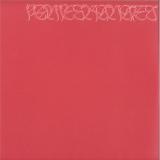
It's been 10 years since Pomegranates - Nicolás Jaar's unofficial/alternative soundtrack to Sergei Parajanov's 1969 film The Color of Pomegranates - was first released, and to highlight this occasion we are reissuing the album on vinyl, with the first edition (a collaboration with the label Mana) having long been out of print.
Longer and slower-releasing than his other albums, Pomegranates often parallels the cinematic epic on which it’s based, with ideas pursued over long timelines and across dark landscapes, assembling elements and moods from the aesthetic and folkloric landscapes of Armenia. Jaar’s identity is perceived within this, folding in his heritage as Palestinian and Chilean as he attempts to build a musical architecture outwards that frames as much of the mess and sprawl of life as possible; using a language that investigates the movement and fluctuation of his own artistic career and character similarly to the film’s tracing of the coming of age of the young poet, Sayat-Nova.
At times, Pomegranates feels profoundly intimate, as though looking through the archive of a friend’s music and discovering the accent and common currency that lives within each of these tracks. Much of Jaar’s most elegant and touching melodic work is nestled here, its power residing in its simplicity and willingness to speak to the heart and not the mind of the listener.
In the text document included in the first freely distributed version of the album in 2015, Jaar writes that the album was conceived during a moment of change, and that the pomegranate became an icon that heralded that passage of time. The physical publication of Pomegranates closes one door whilst opening another, keeping promises and marking a significant point in the career of an artist who restlessly reinvents himself, with a document that illustrates a common language of lyricism, freedom, and emotional resonance linking his many paths and projects
Haga su pedido ahora y le encargaremos el artículo en nuestro proveedor.

As trans-Atlantic alchemists pulling from a shared dialectic that somehow encompassed both postmodern deconstructionist tendencies and a delightfully subversive sense of poptimism, it’s easy to see how David Cunningham and Peter Gordon immediately hit it off upon initially meeting each other back in the late-1970s at the height of their youthful transgressions. Having initially worked together on the second Flying Lizards’ LP fourth wall, with its ingenious fusion of dismantled rhythms and rearranged melodies juxtaposed against the slyly sultry singing of Snatch’s Patti Palladin— with Gordon adding a few sprinkles of mischievous sax in the mix— it’s no wonder the collaboration would lead to further musical adventures.
Which leads us directly to the genesis of The Yellow Box. Embarking on a collaborative exercise in the structural repurposing of music as untethered puzzle pieces in need of rearrangement with no predetermined outcomes, the duo gave birth to a project that would see them move through both time and recording studios across Europe, taking nearly two years from 1981-1983 to complete. Enlisting the great Anton Fier on drums from The Feelies/Lounge Lizards nexus and John Greaves on bass from Henry Cow/Soft Heap lore to round out their dueling creative counterparts, the album would be something of a lost treasure until its eventual release on Cunningham’s Piano imprint in 1996.
Cinematic in scope, and filled with drifting drones, beautiful counter-melodies, eery minimalism, Kraftwerkian synthesizers, looped voices, skronky interludes, and other shifting undercurrents of sound, it was an album that utilized both a diverse array of expressive languages, as well as early sampling techniques and prepared instruments, well before most people were thinking in such expansive, integrated terms at the dawn of the 80’s. But such is life at the vanguard of new music. And one of the reasons that it likely sat on the shelf for so long before finally being released well over a decade later. Like a sparser, less groove-oriented version of My Life in the Bush of Ghosts, or a more radical take on the experimental work of Can’s Holger Czukay, The Yellow Box stands at the crossroads of time and technology, fusing multiple strands of musical thought and compositional techniques into a disjointed whole that somehow still comes off as a conceptually complete record.
Now, here it is again, over 40 years later, with perhaps even more historical resonance than it had before, remade and remodeled just waiting to be rediscovered again.
debe ser publicado en 07.11.2025

2024 Reissue
“Tubby did three original dub albums, ‘Dub From The Roots’. ‘The Roots of Dub’ and the third is ‘Brass Rockers’ with Tommy McCook ‘pon the flying cymbals. Where he mixed it with the horn going in and out in a dub way and one named ‘Shalom Dub’ you can call Tubby’s too because he mixed the versions as they were off forty fives’’
Bunny ‘Striker‘ Lee
King Tubby and Producer Bunny ‘Striker’ Lee are intertwined in the birth of Dub Music. After discovering a mistake that made a ‘serious joke’ ( more of which later...) they went on to release the first pressings of this new musical genre namely ‘Dub Music’. Tubby’s vast knowledge of electronics and Bunny’s vast catalogue of rhythms would lay the foundations of what today is taken as a standard... the Remix / Version cuts to an existing vocal tune.
Osbourne ‘King Tubby’ Ruddock was born in Kingston, Jamaica on 28th January 1941 and grew up in the High Holborn Street area of downtown Kingston. He studied electronics at Kingston’s National Technical College and also on two correspondence courses from the U.S.A... When he had qualified Tubby began repairing radios and other electrical appliances in a shack in the back yard of his mother’s home. His work in the early days included winding transformers and building amplifiers for Kingston’s Sound Systems. Tubby built his first Sound System in 1957 playing jazz and Rhythm & Blues at local weddings and birthday parties. His reputation as a man who knew and understood both electronics and music grew steadily and as the sixties drew to a close. Tubby purchased his own basic two track equipment. He installed this alongside his dub cutting machine, a home made mixing console and his impressive collection of Jazz albums in the back bedroom of his home at 18 Dromilly Avenue which he christened his music room.
Tubby and Striker were at Treasure Isle Studio’s one day while Ruddy from Spanish Town was working with the engineer Byron Smith....
“Tubby and myself was talking when Ruddy was cutting some dub but Smithy (engineer) made a mistake through we were talking and forgot to put in the voice. It was two track recording in those days. Ruddy said ‘No Man! Make it stay! and so they cut the rhythm. When I went over to Ruddy’s that Saturday night a dance was in progress and when they played the vocal to the tune... then he said we’re going to play ‘Part Two’. They never called it ‘Version’..and then he played the rhythm track. The song was a catchy song and everybody started to sing along and the deejay started to toast so everything went down well. On Monday morning I went up and I said ‘Tubbs the mistake we made was a serious joke.It mash up Spanish Town! The people went wild. So you have to start to do that now ‘cause when the man put on the ‘Part Two’ everyone start singing this song. It played about twenty times. I said you try Tubbs!’...Well the next Saturday night now when Tubby strung up down the farm U Roy said he’s going to play ‘Part Two’ but Tubby did it different now. He started with the voice then dropped it out and let the rhythm run and then he brought in the voice in the middle and from there Tubby started to get really popular.’’
Bunny ‘Striker’ Lee
Dynamic Sounds upgraded to sixteen track recording in 1972 and Tubby purchased, again with the help of a deal brokered by Bunny Lee. The old four track equipment and the MCI console from their Studio B. The four tracks now gave him far wider scope to work with and he began to create a new musical form where the bass and drum parts were brought up while the faders allowed Tubby to ease the vocal and rhythm in and out of the mix. It was only a matter of time before Tubby’s dub plate experiments began to make it on to vinyl and the first ever long playing King Tubby releases would feature a collection of his mixes to a selection of Strikers rhythms. So please sit back and enjoy this historic set of sounds. Lovingly restored and with a few extra gems added to the CD Editions. These releases were the first to carry the name of King Tubby and the first to credit the great musicians that contributed so much to the rhythms that made these albums possible.
Haga su pedido ahora y le encargaremos el artículo en nuestro proveedor.
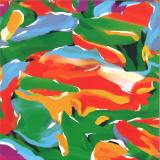
Celebrated DJ, producer, and sonic explorer Auntie Flo (aka Brian d’Souza) — described by The Guardian as “one of global club culture’s most vital voices” — returns this autumn with ‘Birds of Paradise’: a rhythmically rich, emotionally resonant, and ecologically grounded new album, out 23 October via his A State of Flo imprint. The album will be launched with a special live show at London’s Jazz Caféon the same day.
‘Birds of Paradise’ draws on d’Souza’s global club experience while deepening his connection with the natural world. Built around classic Roland drum machines and iconic vintage synths, the record is a joyful, body-driven celebration of rhythm and movement, but one grounded in ecology and place. The album’s spiritual centre lies in Saligao, Goa, near d’Souza’s maternal homeland where his Auntie Florie (where the name is derived from) is buried. Where he found his ‘paradise’ nearby, staying in a converted fisherman’s hut and recorded dawn choruses from a riverside studio overlooking mangrove-lined waters. Environmental textures from Japan also make their way into the music, creating a sonic map rooted in lived experience.
“Birds of Paradise is about finding beauty and rhythm in a chaotic world. It’s about listening, to nature, to our bodies, to what’s real. It’s a reminder that dance music can be both joyful and grounded.” The album blends Afro-Latin polyrhythms with Western 4/4 patterns, fusing instinctive, dancefloor energy with field recordings that anchor the music in the earth. Described by d’Souza as “tropical with a few deeper edges, a balance of light and dark.”
The new record follows the acclaimed ‘In My Dreams, I’m A Bird and I’m Free’, which earned 4 stars and Global Album of the Month from The Guardian, featured in Disco Pogo’s Albums of the Year, and received support from Luke Una, Resident Advisor, Juno, Bandcamp, Mixmag, DJ Mag, Electronic Sound, The Skinny, Beatport, Ban Ban Ton Ton, and more. The album’s launch show at Omeara London sold out. Other recent projects include the ‘Outernational Dance’ EP on cult label Multi Culti, event series ‘Plants Can Dance (and Mushroom’s Sing)’ which explore plant and fungi bioelectricity as a means of live composition, and ‘Black Beacon’, a haunting cassette release and soundwalk series recorded on the abandoned military island of Orford Ness. There, d’Souza explored the eerie intersection of nature, decay, and deep time, gaining special access to restricted buildings to capture long-form soundscape compositions.
Alongside his production work, d’Souza has emerged as a leading voice at the intersection of sound and science. He curated music for Imperial College’s groundbreaking psychedelic therapy trials, developing six-phase playlists to guide participants through psilocybin-assisted sessions treating conditions such as fibromyalgia and gambling addiction. His five-hour ambient set at Watching Trees Festival, selected as Resident Advisor’s Mix of the Day, continued this exploration into the therapeutic potential of sound in altered states. He also spent six months collaborating with BBC producer Tom Raine on a documentary for BBC World Service, centred on a two-week journey through Kenya and Goa. There, he performed live, led plant music workshops, and joined a deep listening retreat rooted in field recording. “I realised my studio isn’t just four soundproofed walls filled with instruments — it’s the journey itself. It’s the people I meet, the natural world I listen to, and the connections I feel.”
This same commitment to deep listening fuels his live concept Plants Can Dance, a project that combines the biosonification of plants and fungi with modular synthesis. The next event, on 14 September at Hideout Hackney Wick, will feature performances by Stella Z and Lapalace, with d’Souza and resident Lamine playing live alongside responsive plants in collaboration with Repot Hackney Wick and the label Music To Watch Seeds Grow By. “I’ve spent years exploring how electronic music can connect us, not just to each other, but to the natural world. Whether it’s translating mushroom data into melody or capturing birdsong at dawn, it’s about finding resonance across bodies, ecosystems, and machines.”
Rooted in his Goan and Kenyan heritage and shaped by years of travel and collaboration, d’Souza’s creative mission is simple: to reconnect the electronic world with the natural one. Through A State of Flo, he continues to blur the boundaries between club culture, sound art, and ecological awareness.

Transparent orange vinyl[24,58 €]
Dusted Angel is a band that likes to keep it in the family. Made up of a group of close friends that have known each since the early 80s, stemming from playing in various intertwined bands engraved in the extended Santa Cruz family of friends. Featuring Ed Gregor, guitar (hedgehog, no use for a name), Eric "Dog" Fieber, guitar (Mock, creature, fire sermon) Steve Ilse drums (creature, Herbert, Automatic Animal) Clifford Dinsmore vocals (Bl'ast!, Seized Up, Spaceboy) and Eliot Young (Lost in Line, Seance) on bass. Formed in 2009, Dusted Angel is a sleeping giant that awakens from time to time to enlighten people with their unique brand of heavy, heavy groove laden music. Now it's time for a new album via Heavy Psych Sounds Records!
debe ser publicado en 19.09.2025

Transparent orange vinyl, limited to 300 copies. Dusted Angel is a band that likes to keep it in the family. Made up of a group of close friends that have known each since the early 80s, stemming from playing in various intertwined bands engraved in the extended Santa Cruz family of friends. Featuring Ed Gregor, guitar (hedgehog, no use for a name), Eric "Dog" Fieber, guitar (Mock, creature, fire sermon) Steve Ilse drums (creature, Herbert, Automatic Animal) Clifford Dinsmore vocals (Bl'ast!, Seized Up, Spaceboy) and Eliot Young (Lost in Line, Seance) on bass. Formed in 2009, Dusted Angel is a sleeping giant that awakens from time to time to enlighten people with their unique brand of heavy, heavy groove laden music. Now it's time for a new album via Heavy Psych Sounds Records!
debe ser publicado en 19.09.2025

2025 Repress
Nach der Veröffentlichung seines neuen gemeinsamen Albums "Tall Tales" mit Thom Yorke erscheint eine Vinylneuauflage von Mark Pritchards 2016er Soloalbum "Under The Sun" über Warp Records. Pritchard entzieht sich hier wie gewohnt einer einfachen Kategorisierung, was diesem Werk Tiefe und Nuancen verleiht. Er greift auf Klänge und Einflüsse seiner musikalischen DNA zurück: Ambient, Nu-Wave, Avantgarde-Elektronik und Folk, interpretiert sie aber durch einen jenseitigen Filter neu, der "Under The Sun" eher in der Zukunft statt in der Vergangenheit verortet. Das Album enthält Beiträge von Kollegen und Freunden wie Thom Yorke, Linda Perhacs, Bibio und Beans und behandelt Themen wie Schönheit, Trostlosigkeit und Heimatsehnsucht.
* "Wunderschöner melancholischer Downtempo von einem meisterhaften Elektronik-Polyglotten." – MOJO****
* "Under The Sun ist tief atmosphärisch und tief impressionistisch." – Pitchfork
Haga su pedido ahora y le encargaremos el artículo en nuestro proveedor.

A year on from Dawn Again's pubwave classic Every Dog's Hotel, the Australian producer returns to Hell Yeah with more dreamy, breaks-driven downtempo brilliance.
Melbourne-based Nick Verwey won plenty of new fans for the sunlit, lo-fi sounds of his last album. It came after years of making music for, and playing records to, people who like to get down anywhere from rooftops to beaches and living rooms. The prolific producer has released on the likes of Houseworx and Enjoyment Division before now, and this new EP is another wonderfully dreamy and carefree outing.
'A Day In The Life of Pond Algae' unfolds over a lazy, dubby groove that is gently brought to life with bulbous synth loops and shakers, sunny chords and little smears of sound that pass like clouds. 'Guided Meditation For Dancefloor Nirvana' picks things up with dusty broken beats and instructional spoken words that encourage you to breathe over painterly synth strokes and effortlessly cool grooves. 'Vanilla Sky' lays you out flat on the lawn, the beach or the lounger and has you gazing up to an azure blue sky as gentle drums and synths wash over you like a cooling breeze. Lastly 'Crying Outside the Stadium' captures the magic of later afternoon on a summer day with more blurry pads and vocals and hints of cosmic melody that lead you towards nightfall with a loving hand.
This is another superbly soothing soundtrack for a calming day of outdoor dancing.
Haga su pedido ahora y le encargaremos el artículo en nuestro proveedor.

Compiled by Philip King
“And then came the rise of synth pop : blokes with dodgy haircuts hunched over keyboard-operated
machines stuffed with wires and do-it-yourself tone oscillators making sounds like a brood of geese
passing gas in a wind tunnel. Whoopee! This is the way the ‘70s ended : not with a blood-curdling bang
bang but with a cheap, synthesized, emasculating whimper.”
NICK KENT, NME.
All The Young Droids: Junkshop Synth Pop 1978-1985 is a new compilation that charts the
underbelly of the epoch-defining sound of the synthesiser in 80s popular music. Compiled by Philip
King (previously seen compiling All The Young Droogs, Glitterbest and Boobs - The Junkshop
Glam Discotheque), the music here connects the dots between DIY synth enthusiasts grappling with
new, cheap synthesisers at the tail-end of punk and wannabe, jobbing songwriters enthral to the new
music pioneered by Gary Numan, Depeche Mode and Daniel Miller’s Mute Records. Featuring rare
tracks of auto-didactic progressive pop music, proto-techno punk, shoot-for-the-stars-land-in-the-gutter
chart flops and heralded, underground synth classics, School Daze paints a picture of beautiful failure.
Complete with extensive sleeve notes written by King and never before seen imagery, all 24 tracks
were remastered by RPM in-house engineer Simon Murphy, many from vinyl copies due to lost master
tapes. The story told on All The Young Droids is one of the dawning opportunity presented by both the
emergence to the market of cheaper analog synthesisers and the distribution networks plus indie labels
that exploded with the advent of punk music in 1976. While the music that sprouted out all over the
globe in the wake of these factors was decried as fake, plastic, a refutation of punk’s guitar-led
revolution, it’s telling that much of the music on All The Young Droids.. was created in bedrooms,
ramshackle studios and home-made set ups with often borrowed equipment. In the era of record labels
jumping to capitalise on the success of The Sex Pistols, The Clash (both on major labels, of course)
these artists struggled to stand out from a new gold-rush with next to no budget or PR team. With radio
and labels desperate for the new Yazoo, what resulted was a testament to necessity being the mother
of invention.
At the time, the synthesiser was the music of the future, a shiny new machine that could paint like an
orchestra with a single finger and a 4-track. In the hands of Manchester avant-pranksters Gerry & The
Holograms it’s a pulsing, sardonic weapon.. the only instrument on the Messthetics classic lampooning
of New Wave fashion. In Hamburg, a 16 year old Andreas Dorau used it to write and record (with his
female classmates on vocals) a global smash in Fred Vom Jupiter (later licensed to Mute Records).
The hard-to-find English version (Fred From Jupiter, natch) is included here. Many artists with alreadystoried careers caught the bug and recorded synthesiser-fuelled peons to space, computers, the future
and, of course, love-interests. Harry Kakoulli, late of Squeeze, recorded a solo album in 1979 that
included the incredible power-synth-pop smash-that-never-smashed I’m On A Rocket. Similarly, Ian
North of Neo and American Power Pop stalwarts Milk ’n’ Cookies bought a Korg MS20 and used a
tape machine to record We’re Not Lonely, an absolute lost-classic of minimal synth pop. We’re Not
Lonely also features on the Junkshop Synth Pop sampler 7” twinned with John Howard unreleased
track You Will See, released April 12th 2025.
There are plenty of compilation debuts in evidence. Sole Sister were a mysterious trio who were
featured on the Scaling Triangles compilation of female-fronted, queer-adjacent post-punk /
underground music that also featured The Petticoats. Selwin Image were from San Francisco and
featured members of the recently defunct power pop/punk group The Pushups. Their stupidly catchy
The Unknown fizzes with New Wave energy - think XTC to Sparks but remains unreleased until now.
Dream Unit’s A Drop In The Ocean is an early synth wave cut, positively teaming with Joy Division
instrumentation, previously only released on a long-forgotten and super rare, self-released EP.
Incandescent Luminaire’s Famous Names belies an archetypal struggle of a small-town trying to
make it in a cruel industry but is a thrilling New Romantic-Synth Wave cross over with a OMD
gloominess that’s a joy to hear. Feminist Minimal Wave track I Am A Time Bomb by performance artist
Peta Lilly and Michael Chance is a revelation destined for new found cult status. It was released on 7”
and lost until now.
The flipside to the subterranean, never-made-it synth pop mentioned above are the ambitious, even
fruity attempts at success that have a perennial elegance to their confidence. New Jersey-ite Billy
London (real name Ed Barth) tried to cash in on the synth boom with Woman, released by a major
label, a lurching new wave track built on the Louie Louie rhythm and a wonderfully camp Lou Reedstyle sleazy vocal before exploding in the synthesised chorus. The song bombed but with a chorus like
this, you have to wonder why? Ex-Glitter Band member John Springate’s My Life is truly epic, with
doomed chord progressions and massive sounding drums turning into at least 3 different songs in the
course of the track. Before you wonder what’s going on the song resolves with a glorious return to the
main refrain.
The dry-ice-dressed dance floor is well catered for too. Design’s Premonition and Vision’s Lucifer’s
Friend are stone-cold minimal synth bangers, well loved but given a new lease of life here. The
Warlord’s The Ultimate Warlord was released in 1978, a homespun proto Hi NRG banger that was
later re-recorded by The Immortals in Canada who had a club hit with it. One-man- band Disco
Volante’s No Motion was re-issued by Synth wave label Medical in 2012 but makes its first vinyl
compilation appearance here. Close your eyes and you can imagine what Lawrence of Felt would have
sounded like with some cheap Korgs a little earlier in his career. Gibraltar-based trio The Microbes
imagined a computer programming people to dance - how prescient - and ended up with a propulsive,
robo-funk track with splendid rubbery bass playing over a tectonic drum machine. Previously picked up
by Belgian label Stroom TV, Dee Jay Bert & Eagle’s heavily Euro-accented I Am Your Master
demands the listener to “come to paradise!” In a frankly terrifying manner.
All The Young Droids is the first compilation to peel away from the narrative that dour, Minimal Synth
and Cold Wave were the only musical children of the first rush of synth pop. Philip King and School
Daze Records describe a much more complicated world: along with the austere, Brutalist children of
Daniel Miller (who produced Alan Burnham’s Bowie-Low-influenced Science Fiction here) was a
plethora of desperate cash-ins, accidental mainstream hits, ambitious pop dramas and major label
punts that went nowhere. Crucially, the compilation blurs the line between junk and treasure. What if the
two things are interchangeable. What if it’s all science fiction?
Haga su pedido ahora y le encargaremos el artículo en nuestro proveedor.

Repress!
In the mid-1970s, a force of nature swept across the continental United States, cutting across all strata of race and class, rooting in our minds, our homes, our culture. It wasn’t The Exorcist, Goodbye Yellow Brick Road, or even bell-bottoms, but instead a book called The Secret Life of Plants. The work of occultist/former OSS agent Peter Tompkins and former CIA agent/dowsing enthusiast Christopher Bird, the books shot up the bestseller charts and spread like kudzu across the landscape, becoming a phenomenon. Seemingly overnight, the indoor plant business was in full bloom and photosynthetic eukaryotes of every genus were hanging off walls, lording over bookshelves, and basking on sunny window ledges. The science behind Secret Life was specious: plants can hear our prayers, they’re lie detectors, they’re telepathic, able to predict natural disasters and receive signals from distant galaxies. But that didn’t stop millions from buying and nurturing their new plants.
Perhaps the craziest claim of the book was that plants also dug music. And whether you purchased a snake plant, asparagus fern, peace lily, or what have you from Mother Earth on Melrose Avenue in Los Angeles (or bought a Simmons mattress from Sears), you also took home Plantasia, an album recorded especially for them. Subtitled “warm earth music for plants…and the people that love them,” it was full of bucolic, charming, stoner-friendly, decidedly unscientific tunes enacted on the new-fangled device called the Moog. Plants date back from the dawn of time, but apparently they loved the Moog, never mind that the synthesizer had been on the market for just a few years. Most of all, the plants loved the ditties made by composer Mort Garson.
Few characters in early electronic music can be both fearless pioneers and cheesy trend-chasers, but Garson embraced both extremes, and has been unheralded as a result. When one writer rhetorically asked: “How was Garson’s music so ubiquitous while the man remained so under the radar?” the answer was simple. Well before Brian Eno did it, Garson was making discreet music, both the man and his music as inconspicuous as a Chlorophytumcomosum. Julliard-educated and active as a session player in the post-war era, Garson wrote lounge hits, scored plush arrangements for Doris Day, and garlanded weeping countrypolitan strings around Glen Campbell’s “By the Time I Get to Phoenix.” He could render the Beatles and Simon & Garfunkel alike into easy listening and also dreamed up his own ditties. “An idear” as Garson himself would drawl it out. “I live with it, I walk it, I sing it.”
But as his daughter Day Darmet recalls: “When my dad found the synthesizer, he realized he didn’t want to do pop music anymore.” Garson encountered Robert Moog and his new device at the Audio Engineering Society’s West Coast convention in 1967 and immediately began tinkering with the device. With the Moog, those idears could be transformed. “He constantly had a song he was humming,” Darmet says. “At the table he was constantly tapping.” Which is to say that Mort pulled his melodies out of thin air, just like any household plant would.
The Plantae kingdom grew to its height by 1976, from DC Comics’ mossy superhero Swamp Thing to Stevie Wonder’s own herbal meditation, Journey Through the Secret Life of Plants. Nefarious manifestations of human-plant interaction also abounded, be it the grotesque pods in Invasion of the Body Snatchers or the pothead paranoia of the US Government spraying Mexican marijuana fields with the herbicide paraquat (which led to the rise in homegrown pot by the 1980s). And then there’s the warm, leafy embrace of Plantasia itself.
“My mom had a lot of plants,” Darmet says. “She didn’t believe in organized religion, she believed the earth was the best thing in the whole world. Whatever created us was incredible.” And she also knew when her husband had a good song, shouting from another room when she heard him humming a good idear. Novel as it might seem, Plantasia is simply full of good tunes.
Garson may have given the album away to new plant and bed owners, but a decade later a new generation could hear his music in another surreptitious way. Millions of kids bought The Legend of Zelda for their Nintendo Entertainment System back in 1986 and one distinct 8-bit tune bears more than a passing resemblance to album highlight “Concerto for Philodendron and Pothos.” Garson was never properly credited for it, but he nevertheless subliminally slipped into a new generations’ head, helping kids and plants alike grow.
Hearing Plantasia in the 21st century, it seems less an ode to our photosynthesizing friends by Garson and more an homage to his wife, the one with the green thumb that made everything flower around him. “My dad would be totally pleased to know that people are really interested in this music that had no popularity at the time,” Darmet says of Plantasia’snew renaissance. “He would be fascinated by the fact that people are finally understanding and appreciating this part of his musical career that he got no admiration for back then.” Garson seems to be everywhere again, even if he’s not really noticed, just like a houseplant.
Haga su pedido ahora y le encargaremos el artículo en nuestro proveedor.
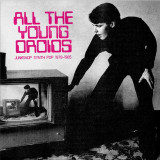
Compiled by Philip King
“And then came the rise of synth pop : blokes with dodgy haircuts hunched over keyboard-operated
machines stuffed with wires and do-it-yourself tone oscillators making sounds like a brood of geese
passing gas in a wind tunnel. Whoopee! This is the way the ‘70s ended : not with a blood-curdling bang
bang but with a cheap, synthesized, emasculating whimper.”
NICK KENT, NME.
All The Young Droids: Junkshop Synth Pop 1978-1985 is a new compilation that charts the
underbelly of the epoch-defining sound of the synthesiser in 80s popular music. Compiled by Philip
King (previously seen compiling All The Young Droogs, Glitterbest and Boobs - The Junkshop
Glam Discotheque), the music here connects the dots between DIY synth enthusiasts grappling with
new, cheap synthesisers at the tail-end of punk and wannabe, jobbing songwriters enthral to the new
music pioneered by Gary Numan, Depeche Mode and Daniel Miller’s Mute Records. Featuring rare
tracks of auto-didactic progressive pop music, proto-techno punk, shoot-for-the-stars-land-in-the-gutter
chart flops and heralded, underground synth classics, School Daze paints a picture of beautiful failure.
Complete with extensive sleeve notes written by King and never before seen imagery, all 24 tracks
were remastered by RPM in-house engineer Simon Murphy, many from vinyl copies due to lost master
tapes. The story told on All The Young Droids is one of the dawning opportunity presented by both the
emergence to the market of cheaper analog synthesisers and the distribution networks plus indie labels
that exploded with the advent of punk music in 1976. While the music that sprouted out all over the
globe in the wake of these factors was decried as fake, plastic, a refutation of punk’s guitar-led
revolution, it’s telling that much of the music on All The Young Droids.. was created in bedrooms,
ramshackle studios and home-made set ups with often borrowed equipment. In the era of record labels
jumping to capitalise on the success of The Sex Pistols, The Clash (both on major labels, of course)
these artists struggled to stand out from a new gold-rush with next to no budget or PR team. With radio
and labels desperate for the new Yazoo, what resulted was a testament to necessity being the mother
of invention.
At the time, the synthesiser was the music of the future, a shiny new machine that could paint like an
orchestra with a single finger and a 4-track. In the hands of Manchester avant-pranksters Gerry & The
Holograms it’s a pulsing, sardonic weapon.. the only instrument on the Messthetics classic lampooning
of New Wave fashion. In Hamburg, a 16 year old Andreas Dorau used it to write and record (with his
female classmates on vocals) a global smash in Fred Vom Jupiter (later licensed to Mute Records).
The hard-to-find English version (Fred From Jupiter, natch) is included here. Many artists with alreadystoried careers caught the bug and recorded synthesiser-fuelled peons to space, computers, the future
and, of course, love-interests. Harry Kakoulli, late of Squeeze, recorded a solo album in 1979 that
included the incredible power-synth-pop smash-that-never-smashed I’m On A Rocket. Similarly, Ian
North of Neo and American Power Pop stalwarts Milk ’n’ Cookies bought a Korg MS20 and used a
tape machine to record We’re Not Lonely, an absolute lost-classic of minimal synth pop. We’re Not
Lonely also features on the Junkshop Synth Pop sampler 7” twinned with John Howard unreleased
track You Will See, released April 12th 2025.
There are plenty of compilation debuts in evidence. Sole Sister were a mysterious trio who were
featured on the Scaling Triangles compilation of female-fronted, queer-adjacent post-punk /
underground music that also featured The Petticoats. Selwin Image were from San Francisco and
featured members of the recently defunct power pop/punk group The Pushups. Their stupidly catchy
The Unknown fizzes with New Wave energy - think XTC to Sparks but remains unreleased until now.
Dream Unit’s A Drop In The Ocean is an early synth wave cut, positively teaming with Joy Division
instrumentation, previously only released on a long-forgotten and super rare, self-released EP.
Incandescent Luminaire’s Famous Names belies an archetypal struggle of a small-town trying to
make it in a cruel industry but is a thrilling New Romantic-Synth Wave cross over with a OMD
gloominess that’s a joy to hear. Feminist Minimal Wave track I Am A Time Bomb by performance artist
Peta Lilly and Michael Chance is a revelation destined for new found cult status. It was released on 7”
and lost until now.
The flipside to the subterranean, never-made-it synth pop mentioned above are the ambitious, even
fruity attempts at success that have a perennial elegance to their confidence. New Jersey-ite Billy
London (real name Ed Barth) tried to cash in on the synth boom with Woman, released by a major
label, a lurching new wave track built on the Louie Louie rhythm and a wonderfully camp Lou Reedstyle sleazy vocal before exploding in the synthesised chorus. The song bombed but with a chorus like
this, you have to wonder why? Ex-Glitter Band member John Springate’s My Life is truly epic, with
doomed chord progressions and massive sounding drums turning into at least 3 different songs in the
course of the track. Before you wonder what’s going on the song resolves with a glorious return to the
main refrain.
The dry-ice-dressed dance floor is well catered for too. Design’s Premonition and Vision’s Lucifer’s
Friend are stone-cold minimal synth bangers, well loved but given a new lease of life here. The
Warlord’s The Ultimate Warlord was released in 1978, a homespun proto Hi NRG banger that was
later re-recorded by The Immortals in Canada who had a club hit with it. One-man- band Disco
Volante’s No Motion was re-issued by Synth wave label Medical in 2012 but makes its first vinyl
compilation appearance here. Close your eyes and you can imagine what Lawrence of Felt would have
sounded like with some cheap Korgs a little earlier in his career. Gibraltar-based trio The Microbes
imagined a computer programming people to dance - how prescient - and ended up with a propulsive,
robo-funk track with splendid rubbery bass playing over a tectonic drum machine. Previously picked up
by Belgian label Stroom TV, Dee Jay Bert & Eagle’s heavily Euro-accented I Am Your Master
demands the listener to “come to paradise!” In a frankly terrifying manner.
All The Young Droids is the first compilation to peel away from the narrative that dour, Minimal Synth
and Cold Wave were the only musical children of the first rush of synth pop. Philip King and School
Daze Records describe a much more complicated world: along with the austere, Brutalist children of
Daniel Miller (who produced Alan Burnham’s Bowie-Low-influenced Science Fiction here) was a
plethora of desperate cash-ins, accidental mainstream hits, ambitious pop dramas and major label
punts that went nowhere. Crucially, the compilation blurs the line between junk and treasure. What if the
two things are interchangeable. What if it’s all science fiction?
Haga su pedido ahora y le encargaremos el artículo en nuestro proveedor.

'Wherever You Are' is a new solo piano album, played and composed by John Foxx. Most of the recordings were made at home and in the early hours of morning in the weeks following his rare live performance at Kings Place, London in October 2023, as part of the BBC Radio 3 'Night Tracks' event. 'Around dawn is the best time to play piano,' says Foxx. 'Self-critical mechanisms mostly dormant, so I'm free to invent and enjoy for a while. The piano faces a window overlooking a valley surrounded by hills, where the sun comes up. There's often an early mist in the valley - and quite often, it rains. Some notes and sounds resonate with remembered experiences and you get glimpses of times and people. It's valuable. Quiet. Free association, myriad moments orbiting - and off you go.' He adds: 'Lately I'm realising how we get formed by other people. Everyone we know or knew, who affects the way we think and the way we see things - even in a small way, has a voice, and all those voices remain in a sort of lifelong conversation. I hear them all the time. It's not at all frantic, it's more oceanic - calm and pleasant and it eventually makes us the way we are. Luckily, I seem to have met - and meet - mostly good, generous, bright people and I'm still learning a great deal from all of them. They give you the touchstones, the maps, the weather. It's how we find our way. So - simply, thanks. Wherever you are.'
debe ser publicado en 04.04.2025

Cross Record's new album, Crush Me, is steeped in the pressures and wonders of existence—a profound statement, especially coming from artist and death doula Emily Cross. A two-and-a-half-year gestation period offered challenges, disappointments, and joys reflected in the cramped space of the album, which explores how we handle the weights we carry. Emily Cross had held hundreds of Living Funerals and was as many episodes deep into her podcast, What I’m Looking At. She was five years into serving clients as a death doula and fresh off a tour with Loma, her band with Jonathan Meiburg (Shearwater) and Dan Duszynski, when she began work on her fourth album. After moving from Austin, TX to Dorset, UK, she established the Steady Waves Center for Contemplation (named after a track from her second record, Wabi-Sabi ), where she hosted Living Funerals, met clients, scheduled mindful tea sessions, and showcased experimental music nights. All the while, she was scribbling down song ideas. Cross’s Tascam four-track demos finally reached readiness, and she sent them to an interested major independent label. She was encouraged to push her imagination to the limits of what a record could be. So, unlike her usual process of recording as inexpensively as possible, she prepared a two-week recording session in Germany with a group of skilled musicians from around the world. True to her previous work, Cross left plenty of room in her demos for experimentation, collaboration, chance, improvisation, and complete obliteration, then resurrection when necessary. Comfort and traditional structure were eschewed in favor of unaccountable magic, prayers whispered into The Void. Cross is comfortable with the chaotic and unpredictable, a perspective demanded by her work and writing style. The Berlin Airbnb was packed with people, instruments and luggage. During a ride down in a tiny elevator to the studio, Cross realized how central the sense of being crushed was to the album. “I thought of it later and it dawned on me that ‘Crush Me’ perfectly embodied the record,” says Cross. Yes, the weight of a body laying limply atop yours, or the tight squeeze of a hug, can be pleasant. Go too far, and you’re in the hands of a cruel, adolescent god. Upon leaving Germany, the record was unfinished, and without a roadmap. As passages were recorded as isolated parts, Cross and musician Marcin Sulewski collaborated, facing a haphazard brick pile, waiting to be assembled. Work dipped in and out of view like a buoy bobbing in a violent sea over many months. During that time, the aforementioned interested label went radio silent, suddenly not seeming so sure of a thing. Collaborators disappeared, continuing the themes of abandonment, surrender, and disarray that followed the project. Cross physically felt her entire body go numb: In a twist of fate, the record was rescued by long-time friend and supporter Ben Goldberg at Ba Da Bing Records who was eager to help realize the project. Cross worked for months on the album, all the while nursing a pregnancy and continuing her full-time funeral work. The last minute participation of Seth Manchester of Machines with Magnets, who mixed and mastered, was an essential liferaft. He gave true final form to the abstracted songs. Crush Me has the effect of a spell being cast, with songs balancing heaviness and levity. Vocals, guitars, and keyboards float above, as drums and upright bass (often bowed) lurch beneath. On “Rolling Backwards” percussion wanders about while feedback squeals and persists in the distance. “Dorset Area Of Natural Beauty” starts with a thick, unhinged church organ progression punctuated by the disquieting sounds of laughter reaching the point of hysteria. “God Fax” is a slow-moving panic attack, with shallow breaths in and out framing a guttural cacophony like a wooden freighter encountering increasingly turbulent waters and vocals struck emotionless by autotune. The album ends with “Twisted Up Fence,” a reflection on life from outside the wall--wistful, warm, and comforting. Cross, likely with a smile on her face, sings: “You say it’s an endless abyss” “And I say the abyss is the best”
debe ser publicado en 21.03.2025

DETROIT ASSEMBLY LINE
......the dawning of a successive genealogy of Detroit’s underground rhythm science and technology.
Two mainstays in the fabled legacy of Detroit’s authentic electronic music birthright, align to unleash 4 tracks of undeniable pure techno intensity.
This is the first of the Detroit Assembly Line series; a music manifest to the world, calculated and anticipated to affirm the bona fide noise from Detroit.
Haga su pedido ahora y le encargaremos el artículo en nuestro proveedor.

(Limited edition to 500 copies, remastered audio, pressed and printed in Indonesia) The 13 tracks contained in this compilation “Begadang: Soneta Group Best Songs, 1975-1980” are some the most innovative music that came out of Indonesia’s music scene in the 1970s, tunes that has cemented Rhoma Irama’s status as the king of the genre.
Dangdut is the biggest musical genre in Indonesia. Dangdut, onomatopoetic name from the sound of hand drums used in this type of music, is what reggae to Jamaicans, country to Americans or skiffle to mid 20th century British people. And in this genre of dang dut, the name Rhoma Irama looms large. He is until today the undisputable king of dangdut and his role as pioneer of the music is already in the history book. In fact, there's one book documenting the outsized role of Rhoma in establishing dangdut as the father of this music. The book is aptly titled Dangdut Story, written by Pittsburgh University music professor Andrew N. Weintraub.
Among Indonesian fans of dangdut, there’s this one misconceptions that dangdut music is that it is an indigenous art form from Indonesia and that it constitutes an amalgamation of local, traditional music of this Southeast Asian nation, with Malay music being the most prominent feature in the mix.
Dangdut pioneer Rhoma Irama is among the first to reject this assertion. “Dangdut music may have originated in Deli (in North Sumatra) but then got the influences from the West and India”, he said.
Indeed, most of Rhoma’s well-known compositions may have been influenced by Indian tunes but some of his best quality works owed much to the West.
Rhoma had long found home in Western pop music. In the early 1960s, after honing his guitar playing skill, Rhoma set up his first band Gayhand to play the tunes of The Beatles, Paul Anka and Tom Jones. In 1972, Rhoma won best singer title in a Southeast Asia singing competition in Singapore playing Tom Jones “I Who Have Nothing.”
Yet, nothing changed Rhoma’s fortune in the music industry, to a point where he decided to leave pop and switched to playing Orkes Melayu (Malay Orchestra) music, first with Orkes Melayu Purnama and later with Soneta Group.
His career soon took off with Soneta, especially after he introduced what ethnomusicologist William H. Frederick considered as “theatre”, through which Rhoma borrows many elements from stage performances of British and American rock bands. These elements, kitsch and pomp, he liberally adopted and became an inseparable part of dangdut itself; tight pants, long hair, platform shoes, glitter and glamour which would not be out of place in Elton John and David Bowie stage show.
And this is actually the contradiction of Rhoma’s brand of Malay music. “One might legitimately ask how imaginative, not to say bizarre, costuming and dancing with abandon could be related to some of the objectives of Rhoma has set for himself and soneta group”, Frederick wrote on his seminal work on the singer, Rhoma Irama and the Dangdut Style: Aspects of Contemporary Indonesian Popular Culture, published in 1982.
From technical point of view, Rhoma not only replaced the acoustic elements from Melayu Music with electric instruments but also created new synthetic sounds that has never been attempted before in Indonesia’s music industry.
Detractors like to point out how much he was indebted to Deep Purple, but a closer inspection reveals how he in fact had mined his influences even deeper.
Notice how Rhoma reproduced funk, which is all the rage in early 1970s, in the song “Santai” (Relax), this album’s closer or “Credit Title (Instrumentalia)” which opens this Darah Muda (Young Blood) soundtrack. The rubbery bass lines that open both songs can easily find home in any Sly and the Family Stone’s or Isaac Hayes’ tunes from that era. Other highlights of the song is the funky guitar licks and the droning Hammond a la George Clinton that stabs deep in the record groove. In the guitar solo, you can also hear the bark of George Harrison’s licks from “Taxman”.
The 13 tracks contained in this compilation “Begadang: Soneta Group Best Songs, 1975-1980” are some the most innovative music that came out of Indonesia’s music scene in the 1970s, tunes that has cemented Rhoma Irama’s status as the king of the genre. Only 500 copies were pressed for this compilation.
debe ser publicado en 28.02.2025

Loyle Carner will release his highly anticipated sophomore record, 'Not Waving, But Drowning' on 19 April via AMF Records.
'Not Waving, But Drowning' follows Loyle's BRIT (Best Male, Best Newcomer) and Mercury Prize nominated, top 20 debut 'Yesterday's Gone'. The bedrock of honest and raw sentimentality that you heard on 'Yesterday's Gone' left an inextinguishable mark on music in general and UK Hip Hop in particular, standing out as an ageless, bulletproof debut.
'Not Waving, But Drowning', Loyle's new album, gives yet more evidence - as if it were needed - of his razor-sharp flow and his unique storytelling ability. Yes, he can rap, but he allies that with the sensitivity of a poet, the observational skills of a novelist, and warmth of your best friend. The album opens with 'Dear Jean', a letter to his mother in which he's telling her that he has found the love of his life, 'a woman from the skies', and he's moving out.
It goes without saying that Loyle's music is hard to categorise, but what is even more impressive is that for someone who grew up listening to Mos Def, Biggie Smalls, Roots Manuva, and Wu Tang Clan, he doesn't sound like any of them. Although he might from time to time give lyrical nods to them, he's no imitator.
Loyle loves cooking. There are two tracks on this album named after chefs. The British-Israeli chef Yotam Ottolenghi, and the now deceased Italian chef Antonio Carluccio. 'Ottolenghi' the first single from the album was featured on the BBC Radio 1 B-list, BBC 6 Music A-list and has already been streamed over 5 million times.
Loyle refers to real life for everything, the title of 'Yesterday's Gone' came from a song of his step father, the title of his new album 'Not Waving, But Drowning' comes from a poem by his grandfather, which in turn came from a Stevie Smith poem. What you hear on the track 'Krispy' is real. He is pouring his heart out to his best friend Rebel Kleff after their relationship went downhill, he invites him on the track to say his piece but he doesn't turn up, so we get a flugel solo instead.
Loyle also has his own personal black consciousness movement. When he refers to his 'fathers' in the track 'Looking Back' he really is referring to two fathers. His biological father, a black man who he knows, but knows very little of, and his step father, a poet and musician who happens to be a white man but died a sudden unexpected death from epilepsy (SUDEP). With no real emotional ties to his biological father, but a deep connection with a deceased step-father, where does a young child turn He succinctly captures many of the great, unspoken, cultural and historical paradoxes of multicultural Britain on 'Looking Back'.
An album like this is hard to find. It is for those who like their Hip Hop to have soul, and their soul to have spirit. This is because it works on so many levels, but it is reflecting the personality of its creator. There are a host of collaborators here, Jorja Smith, Rebel Kleff, Kiko Bun, Kwes, Jordan Rakei, Sampha, Tom Misch and more, but none are overpowering. They blend righteously into place.
Loyle is not bitter with people who have let him down, or a society that lets so many down, but the combination of anger and love he has gives his voice the perfect blend of strength and vulnerability. This might be a coming of age album, but it's also a coming of ageless album. Loyle's 2019 Spring tour - which includes London's Roundhouse - sold out within 20 minutes of being on sale.
Not Waving, But Drowning
A rapper that raps about family is hard to find. The boys in the 'hood' tend not to be that interested in how much a 'brother' loves his mother, or how much he misses his dad, or even how much he misses his best friend. The boys in the 'hood' tend to be obsessed with the size of their cars, girls, bank accounts, and other personal 'possessions'. Loyle Carner's Mercury and BRIT Prize nominated debut 'Yesterday's Gone' (Released 2017), made it clear that he wasn't that kind of rapper. In fact, every time I talk to him about his work we talk about the world, and we tended to confuse ourselves by calling his work rap, poems, or songs, sometimes in the same sentence. They are in truth all of these things.
Here's some poetry.
Honestly I need them.
I hate them but I grieve them
I think I've finally found the reason
Trust
Like the fire needs the air.
I won't burn unless you're there.
'Not Waving, But Drowning', Loyle's forthcoming new album, gives us yet more evidence, (if it were needed), that he still has what rappers call, flow, but he hasn't lost any of his story telling qualities. Yes, the boy can rap, but a rapper with the sensitivity of a true poet, the observational skills of a novelist, and warmth of your best friend. The album opens with 'Dear Jean', a letter to his mother in which he's telling her that he has found the love of his life, (a woman from the skies), and he's moving out. He really loves the woman from the skies, but he still loves his mum, and so he reassures her that there is no competition, and tells her that 'She's not behind me or behind you, but beside we and beside two', his words. Or to put it another way, moving out without moving out. My words.
It goes without saying that Loyle's music is hard to categorise, but what is even more impressive is that for someone who grew up listening to Mos Def, Biggie Smalls, Roots Manuva, and Wu Tang Clan, he doesn't sound like any of them. Although he might from time to time give lyrical nods to them, he's no imitator. He says finding his own voice was something he always found easy. Although young, (in terms of a musical career), he has confidence in his own words and his own voice, and has never been tempted to sound like he's been hanging out in the USA, or rolling in 'Grime' on the mean streets of East London. And so when it comes to the creative process he doesn't simply find a beat to jump on and ride. Beats are important, but they are tenderly layered with samples, keyboards, or live drums, all imaginatively assembled for the laying on of words. Some tracks start with the idea, some with poetry, and some with a verse from a singer or some other melodic inspiration, but there is no formula.
Here's some poetry.
Don't hold any memories of us
Rather hold you everyday until the memories are dust
Yo we only caught the train
Cos you know I hate the bus
A prolific reader, who has dyslexia is hard to find. Add ADHD (Attention deficit hyperactivity disorder) to that and life should become even more difficult. To deal with your difficulties you devise coping strategies, which can differ from person to person. Loyle loves cooking. There are two tracks on this album named after chefs. The British-Israeli chef Ottolenghi, and the now deceased Italian chef Antonio Carluccio. Loyle describes himself as 'weird' because he is happy to read a cookbook as if he was reading a novel or a book of poetry. He has opened a cookery school for young adults not just because he loves food and wants to make more of it, but because it is one of the few things that can focus the ADHD mind. And when it comes to his other love, football, his approach is the same. Focus. He wanted to be a striker he says, up front scoring goals, but found his best position was in midfield because he was able to focus, check options, and see passes ahead of time, providing passes for other players just when they needed them. He says, 'You don't grow out of ADHD, you grow into it.' Loyle is also working with Levi's® on their music project where he is mentoring young musicians over a six month period, culminating at Liverpool Sound City festival.
More poetry.
When the going is tough
I wait till it falls on deaf ears
Hearsay
Without the boundaries of love
He also said, 'Ask most people and they will say that they love their mothers, but most are not going to rap about her'. On his first album Loyle's mum Jean wrote about the 'scribble of a boy' that growing up would take things apart to see how they worked. On this album she speaks with pride about a man who has found his place in the world.
Yes, poetry.
I'm still looking for the answers
Trying to find the right questions
Still waiting for my fathers
But can't break them in to sections
This poetry is serious. Loyle has his own personal black consciousness movement. He told me that he always felt safe at home, and being the darkest one in the family never meant a thing, but then when he had to face the outside world he felt hostility. It shook him up. Now he had to start asking questions, but what were the questions. This is serious. When he refers to his 'fathers' in the verse above taken from the track 'Looking Back' he really is referring to two fathers. His biological father, a black man who he knows, but knows very little of, and his step father, a poet and musician who happens to be a white man but died a sudden unexpected death from epilepsy (SUDEP). So to whom would a young black (or mixed race) kid turn He succinctly captures many of the great, unspoken, cultural and historical paradoxes of multicultural Britain when he says, 'My great grandfather could of owned my other one.' We are a people descended from enslaved people on one hand, and enslavers on the other, something we are still struggling to come to terms with, and this can be apparent in one family. A big book could have told you that, but here we get it in one line on the track, Looking Back.
Loyle refers to real life for everything. The album is peppered with captured moments that he records on his phone. These moments can range from conversations with taxi drivers, to capturing the moment when England scores a goal in the world cup. The title of 'Yesterday's Gone' came from a song of his step father, the title of his new album 'Not Waving but Drowning' comes from a poem by his grandfather, which in turn came from a Stevie Smith poem. What you hear on the track 'Krispy' is real. He is pouring his heart out to his best friend after their relationship went downhill, he invites him on the track to say his piece but he doesn't turn up, so we get a flugel solo instead. Yes people, this is real.
An album like this is hard to find. It is for those who like their Hip Hop to have soul, and their soul to have spirit, this is an album for those who have, (I'm sorry, I'm going to say it), emotional intelligence. This is because it works on so many levels, but it is reflecting the personality of its creator. There are a host of collaborators here, Jorja Smith, Rebel Kleff, Kiko Bun, Jordan Rakei, Sampha, Tom Misch and more, but none are overpowering. They blend righteously into place. Loyle is not bitter with people who have let him down, or the society that has let him down, but the combination of anger and love he has gives his voice the perfect blend of strength and vulnerability. This might be a coming of age album, but it's also a coming of ageless album. His first album worked, and this second album is a continuation of that work. Not creating a form, but being formless, as someone like Bruce Lee once said.
And here's some poetry from mum.
We talked long in to the darkest hours
Until we saw the burnished sky
And our eyes stung
As our words blurred and became thoughts
As we were silenced by the dawn
We clung to each other like sailors in a storm
Haga su pedido ahora y le encargaremos el artículo en nuestro proveedor.
