
Reservar17.10.2025
debe ser publicado en 17.10.2025
25,84 €
debe ser publicado en 17.10.2025

2026 Repress!
Two of Jean Carn's seminal hits combined. 'Was That All It Was' is a big hitting disco exploration with hints of Jean's gospel choir background coming to the fore. The flip houses the classic 'Don't Let It Go To Your Head' - covered on many an occasion since it's release back in '78.

debe ser publicado en 16.01.2026

debe ser publicado en 25.10.2023

Nearly fifteen years of touring with peripheral regional projects (Mixtapes, Ogikubo Station, The Homeless Gospel Choir, Direct Hit!, The Mimes, Boys) has kept her tethered to both the road and to sounds that were not always her own.The solo endeavor marks the beginning of an autonomous output for her vision, harkening to sounds that are distinct to Ohio's brand of humble experimentation, roots aesthetics and pop-centric reliability.
debe ser publicado en 13.10.2023

The seeds of Her's have well and truly rooted themselves in Liverpool. Originally a meeting of minds between Norway's Audun Laading and Barrow-born Stephen Fitzpatrick, Her's forged a strong chemical bond through a mutual love of off-kilter humour and outsider art. Having clocked over one million streams between the two tracks on their debut single 'Dorothy' and 'What Once Was', and after following it up with the lackadaisical thrift-store humour of their sun-bleached single 'Marcel', Her's have compiled a rollicking record of their infant career so far. 'Songs of Her's' will be released on LP 16th March and it includes all their recorded output to date plus six new songs to make for the most complete introduction to their slacker world yet. Her's will be teasing this gnarly collectors-item-to-be with the release of 'Speed Racer'. With its sultry vocals and signature descending guitar and bass lick, it plays like the soundtrack to some oddball American stoner comedy involving a beach, a girl, a conspiracy, and a musical group from Liverpool.
debe ser publicado en 20.06.2025

debe ser publicado en 26.11.2021

Haga su pedido ahora y le encargaremos el artículo en nuestro proveedor.

While Soul Togetherness' on Expansion continues to feature the best new floor fillers of each year, Soul Festival' is here now with a collection of music reflecting the label's love of 70s soul.
Soul Festival' spans the period from when new soul music took influence from the Northern soul we enjoy here at UK clubs and events. As the decade progressed, records became more lavish in their arrangement and grander in production, always with that essential soul feel, and that's what you will find here on this compilation.
Haga su pedido ahora y le encargaremos el artículo en nuestro proveedor.

After over 100 million album sales the Backstreet Boys return newly signed to RCA Records. Formats are double LP (1st Feb) and CD (25th Jan). Includes the singles "Don't Go Breaking My Heart", "No Place" and the Ryan Tedder/Shawn Mendes penned song "Chances". Radio support across R2, ILR network, plus ad campaign. Video plays at Vevo and MTV. Ads, features, interviews and reviews across all press. Online/social media activity. Recent TV performances have included Strictly Come Dancing, Loose Women, This Morning, Lorraine, ITN News, 'Stand Up To Cancer'. Sold out June UK arena dates. Poster campaign and database mailout.
Haga su pedido ahora y le encargaremos el artículo en nuestro proveedor.

Seit Dem Plötzlichen Und Völlig Unbemerkten Erscheinen Ihres Manifests Im Jahr 2016 Schwor Das Weird Folk-songwriter-duo The Mañana People, 100 Lieder Zu Schreiben, Die Die Wege Des Pop-genre-diskurses Erkunden. In Der Mitte Ihres Kampfes, Während Sie Eine Reihe Von Hausgemachten Freak-folk- Und Psycho-country-kuriositäten Erfanden, Wurden Ihre Bemühungen Gnadenlos Von Dem Deutschen Kult-label Unique Records Unterbrochen, Das Sie An Den Ohren Packte Und Ihnen Sagte, Dass Sie Aufwachsen Und Eine Richtige Platte Machen Sollten.
Das Ergebnis Ist Ihr Bevorstehendes Debüt "princess Diana", Ein Hauch Frischer Radioaktiver Luft In Der Welt Der Autorenmusik. Die Exzentrische Sammlung Von Melodien Bietet Theremin-getriebene Honky-tonk-kracher, Zombie-themen-electro-pop-balladen Und Horror-spirituals, Sowie Eine Zusammenarbeit Mit Dem Besten Troubadour Selbst, Bonnie 'prince' Billy.
Die Erste Anstrengung Der Mañana People Schafft Es, Harmonisch Zwischen Experimentierrinnen Und Der Angenehmen Leichtigkeit Der Popmusik Zu Schwingen. Tim Weissinger Und Alvaro Arango Trafen Sich An Einem Winterabend Auf Den Grünen Wiesen Ihrer Universität.
Ihre Musikalische Chemie Und Das Kalte Wetter Zwangen Sie Quasi, Sofort Musik Zu Machen. Ihre Debüt-ep "the Mañana People" Wurde Am Halloween-abend 2014 Online Veröffentlicht. Ihre Musik Wurde Sofort Von Ihren Freunden Gelobt, Von Ihren Feinden Gefürchtet Und Von Vielen Anderen Ignoriert.
Seit Anfang 2015, Und Mit Hilfe Von Tobi Mercer (keyboards) Und Simon Mead (schlagzeug), Haben Die Mañana People Ihr Wort Verbreitet Und In Jeder Bar, Café Oder Straßenecke Neue Seelen Gefordert.
Nach Einer Zweiten Ep - "horror Songs" - Ist Es 2016 An Der Zeit Für Ein Komplettes Und Mit Spannung Erwartetes Debütalbum Auf Unique Records!
Die Jungs Supporten Honig Auf Seiner Herbsttour.
Live
14.09.18 Ulm Roxy
15.09.18 Mainz Schon Schön
16.09.18 Dresden Beatpol
17.09.18 Berlin Privatclub
18.09.18 Leipzig Werk 2
19.09.18 Nürnberg Club Stereo
20.09.18 Essen Zeche Carl
21.09.18 Köln Kulturkirche
22.09.18 Bremen Tower
28.09.18 Konstanz Kulturladen
29.09.18 Saarbrücken Kleiner Klub
30.09.18 Aachen Musikbunker
02.10.18 Langenberg Kgb
03.10.18 Haldern Pop Bar
04.10.18 Hamburg Knust
05.10.18 Münster Sputnikhalle
Für Anfang 2019 Ist Eine Kleine Eigene Tour In Planung.
Haga su pedido ahora y le encargaremos el artículo en nuestro proveedor.

15 Jahre nach seinem frühen Tod feiert - The 20th Century Records Albums (1973-1979)' Barry White als einen der größten Künstler / Songwriter / Produzenten der 70er Jahre. Er etablierte den neuen Klang der Orchesterseele, der über das Jahrzehnt und darüber hinaus zu einem Grundbestandteil wurde. Das Vinyl-Box-Set enthält alle 9 LP-Alben, die Barry White über das Label 20th Century Records veröffentlicht hat und werden hier zum ersten Mal zusammengestellt. Alle neun Alben wurden zum ersten Mal seit ihrer Veröffentlichung in den 70er Jahren von den originalen analogen Masterbändern remastert und werden hier mit ihrem originalen Sleeve und Label Art präsentiert. Die Alben wurden in den Abbey Road Studios in London auf hochwertigem 180g Vinyl geschnitten, um die höchstmögliche Audioqualität zu garantieren.
[ZZA] q4 | Oh Me, Oh My (I'm Such a Lucky Guy)
[ZZB] r1 | I Can't Leave You Alone
[ZZC] r2 | Call Me, Baby
[ZZD] r3 | How Did You Know It Was Me
Haga su pedido ahora y le encargaremos el artículo en nuestro proveedor.

Both hailing from Italy, Was A Be and Synth Ethics are two of the freshest talents emerging in drum & bass right now. Joining forces for Critical's Systems series sees them cementing this reputation even further with four unflinching tracks full of dance floor and ingenuity. Viva Italia!
Haga su pedido ahora y le encargaremos el artículo en nuestro proveedor.

Silver Vinyl[44,50 €]
Haga su pedido ahora y le encargaremos el artículo en nuestro proveedor.

Recently, Superpitcher was invited to go on a safari in South Africa. He bought a custom made safari hat at his favorite milliner in Cologne (Ju¨rgen Eifler) and set off with big eyes and a pair of binoculars. It was wild and wonderful and he saw many exotic (and big!) animals, even a leopard in a tree that told him the secret of the universe. He forgot what the leopard said because his mind was still playing and replaying the sound of what he heard on the first night of his arrival - the hypnotic and moving sound of the voices of Africa, the voices of the wonderful Tanda Tula staff choir. There, the choir members work during the day at the camp and at night entertain the guests with their captivating voices and energetic dancing. So impressed was he with their songs and beautiful Shangaan language that he decided to record a CD for them to sell in the shop at their camp and now this precious recording is also available through Hippie Dance / Bush Recordings on vinyl and CD for you in whatever wherever camp you are. The LP of the Tanda Tula Choir comes with a very pretty poster.
Haga su pedido ahora y le encargaremos el artículo en nuestro proveedor.

includes 10 classic reworks remastered and spread across the 5 pieces of vinyl, an exclusive interview and download code to the full digital album containing a further 10 reworks. Box is covered in linen with a red foil print.
DISC 1 (PH61)
DISC 2 (PH62)
DISC 3 (PH63)
DISC 4 (PH64)
DISC 5 (PH65)
Haga su pedido ahora y le encargaremos el artículo en nuestro proveedor.

hain & the Gang : Ian Svenonius
Chain & the Gang ... the world's only 'DOWN WITH LIBERTY' group ... the best and most radical rock n roll group ever ... have a BRAND NEW long playing record out on RADICAL ELITE records and its a 'head scratcher' for sure ...
Chain & the Gang - known as the dynamic and irresistible live combo that pens provocative, unforgettable odes to obedi- ence and total destruction (e.g. 'Devitalize', 'Certain Kinds of Trash', 'Detroit Music' ) got sick of the simple fare so prevalent at the rock festivals these days. After nodding off to the washed-out zzzounds of the latest five-star folly critic's catastrophe, 'Chain & the Gang' decided to respond with their patented perversity ; they reached to the farther corner of the lab and came up with an immortal classic in the hard-to-hear genre of 'EXPERIMENTAL MUSIC' (!!!!!!!!)
In fact, this record is so confounding, so new and uncharted, they decided to call it 'EXPERIMENTAL MUSIC.' Not only is it a pounding super-classic, but it's the final word in the experimental music genre, answering the questions initially proposed by John Cage, Yoko Ono, LaMonte Young etc., shutting down the need for further experiments forever. The Lab is Closed!
Besides CHAIN & the GANG's 'Chain' — aka Ian Svenonius -- the 'EXPERIMENTAL MUSIC' LP features an all-star cast of avant-garde geniuses such as DANNY KROHA (the Gories, Demolition Dollrods, Danny and the Darleans), FRED THOMAS (Saturday Looks Good to Me, Lovesick, Tyvek, His Name is Alive), SHELLEY SALANT (Shells, Tyvek, SLGTM, Swimsuit), AMBER FELLOWS (Swimsuit), MADELINE MCCORMICK (Chain & the Gang) and BEN COLLINS (Mini- Horse) and was recorded live to four-tracks at WORLD CLASS TAPES in ANN ARBOR, Michigan.
The title track sets forth the premise and the rest of the tunes expound upon it. Its a foot-tapping, head scratching, torso tornado that will crinkle the connossieur's temple in a tantrum of cerebral delight.
Writers in one hundred years will still be piecing together the puzzle of perversity that's named EXPERIMENTAL MUSIC by CHAIN & the GANG on RADICAL ELITE Records.
debe ser publicado en 13.10.2017

Haga su pedido ahora y le encargaremos el artículo en nuestro proveedor.

Trek With Quintronic are the duo, formed from the ashes of prog rock band Masque in 1979. They recorded two pioneering albums of unique electronic rock. 'Landing Plus' compiles the complete discography of Trek With Quintronic on a double vinyl for the first time in over 30 years. Trek With Quintronic wrote songs with a powerful sound, myriads of compositional ideas, synthetic noises and catchy melodies. Paul's rather unique vocals lie somewhere between David Bowie and Richard Butler of the Psychedelic Furs.nThis collection highlights a lost duo with a big sound on par with Ultravox, Human League, OMD or Devo
Haga su pedido ahora y le encargaremos el artículo en nuestro proveedor.
The unconscious element to the conscious process.
The practice of dub techno and its tendrils is a fundamental for me, both aesthetically and from an engineering perspective.
I start every recording session with a dub inspired jam, the first piece I ever recorded in 1996 was an effort to recreate Phylyps Trak with only a Korg X3 and an Ibanez PUE5 (borrowed from Gary Howell). It was an awesome introduction to jamming, and the footing stones of noise, delay and saturation were explored with my foot hard on the enthusiasm pedal.
These practice jams are in some sense cathartic, the first step taken again & again, which helps me move forwards each session and additionally helps to 'warm the circuits' both of myself and the machines.
After realising the genius of Basic Channel is akin to the genius of peasant food, using every ingredient with nothing left to waste, (up to and including the oft maligned working noise of the machines themselves), this was a watershed moment for my own subjective progression. No longer tied to just emulation of something inspiring, but taking these learned tools into other areas of music helped to break free from a strong current of influence and also to progress into other areas with the new toolbox.
Dub:
The importance of the dub pioneers should never be understated, in modern music and my own practice. Yet with my initial inspiration being two german dudes issuing extreme techno variants with obscured label designs, who then signposted their listeners to their own inspirations (via their Wackies re-issues or nodded to on their Rhythm & Sound/Burial Mix sub-labels), meant that I started late and travelled backwards.
Learning to notice the live mixing of Mikey Dread or Lee Perry when the faders are bleeding through even when turned down, (echoed in BC's Quadrant Dub), or the brash send effects literally thrown into the mix also taught me that 'rough' mixing can inject a recording with life, uniqueness and the most right wrongness. Looking back Basic Channels very few elements helped me realise that the rules to be understood, are also the best ones to be broken.
Push the mixer into the red.
Amp that noise up from the tape delay cos it sounds sick.
Pseudo side-chain effects cos the kicks are way too loud and the mixer can't sum it nicely.
Spam the send knob into the delay units now, now and now.
Carelessness.
Noise:
Once I wrapped my head around the intrinsic 'noise' element that set those records apart, this became a torchlight into the alt noise movements which I was tentatively exploring at the time, and also is evidently a connection or thread into them.
Whether the Industrial/Post Punk UK scene (This Heat, TG, A Tent, F.E.) or the prolific output of the US Noise scene (Wolf Eyes, Live & Shave in LA, and subsequently following the lineage all the way back to Chrome's Alien Soundtracks), I had finally discovered a connection from techno to this 'free for all' corner of music.
This input from the Noise arena of sound is, in my experience, an all important step for a sonic artist, taking it's roots and extending out from Stockhausen/Pierre Henry and utilised/warped/mangled by thousands of adventurous pioneers ever since, I now see the line separating the high brow and the low brow is actually an artery carrying information from the head to the heart.
Vault is a selection of these jams that precede each of my solo recording sessions, for 30 years I've recorded hundreds of these 'workouts'. They are never intended as serious statements, just moments of naive enjoyment, yet most importantly they are time & space captured as practice.
The objective is always a warm up exercise, but sometimes those exercises turn a different corner, with a certain focus or direction dependent on what random samples are left in my machines from the previous session, instead of conscious choices, these unconscious elements can facilitate those 'positive mistakes' that make a piece of sound retain a different feel or colour and thus become special, or at least special to the creator.
I am quite conscious that the 'record everything' aspect of my ethos has been invaluable in cataloguing and saving these jams, while the attitude of carelessness during this process (after all, it's only a warm up jam) invites more enjoyment than seriousness ever could. Even if you don't feel the piece at the time, record it, because some years later it may well fit, or become relevant in a way you never intended.
-Miles
debe ser publicado en 30.09.2026

Phonogramme Is Super Happy to Announce the Repress of “Holding On" by Dj Steaw, Featuring the Original Plus an Exceptional Remix by the Legendary Ron Trent. Originally Released in 2012, "Holding On" From Dj Steaw's Debut Ep Was Instrumental in Launching Both the Label and Dj Steaw's Production Career. Now, With Ron Trent's Masterful Touch, This Remix Ep Offers a Fresh Perspective While Honoring the Original's Essence. Complemented by Two Additional Tracks From Dj Steaw, This Release Is Set to Make Waves Once Again. Don't Miss Out on This Timeless Classic, Revived for a New Generation of Listeners....
debe ser publicado en 30.09.2026
Hara Discs is proud to present the first EP from Sheffield-based DJ Harry Shackleton, co-owner of Grub Records and one half of DJ duo Wow & Flutter. This release draws influence from their longstanding residency at underground electro party Control., melding together sounds which have made this one of the North of England’s best kept secrets for the past 7 years. In an extremely long-winded and uncertain move, he has finally donned his rather fetching production hat and completely self generated the alias Hypno Disc with which he aims to unleash some music that is 100% OK.
The EP and alias are a homage to the late 90s and early 00s TV show Robot Wars. The title track combines the carnage of Craig Charles with something a bit UK and tribal. The remaining tracks bear the names of robots which took part in the wars. These are written from the perspective of the robots and as such are internal monologues of what each robot was thinking. The concept comes from an early fascination with this show and how it made the artist feel as someone growing up in the UK around 2000.
We hope you enjoy this release. Complaints will be tolerated.
CEASE!!!
debe ser publicado en 30.09.2026

Ashley Beedle’s remix of "Unmask Me" by MAMA is a masterpiece of deep, atmospheric house music. Characterized by shimmering chords and shuffling percussion, Beedle transforms the original into a sunlit, Balearic-tinged gem. It famously became a signature track for the late DJ Andrew Weatherall, he notoriously played and closed his set with it at his Convenanza Festival in September 2017. Where a now trended meme video of The Guvnor vibing to the gem, whist the crowd was in absolute euphoria to the magic being made.
Now released on purple vinyl, with all profits donated to our friend Mr Beedle and his ongoing care.
You need this in your life.
En el almacen y preparando para el envío
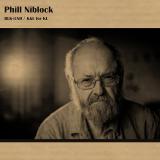
Phill Niblock completed BLK+LND in late November 2023. It is one of Phill Niblock's final compositions and was commissioned by bassist Robert Black (who passed away in the summer of 2023). The piece is based on recordings of acoustic bass and bass clarinet performed by Neil Leonard and Robert Black under Niblock's direction in 2021.
Phill Niblock (1933-2024) as an artist whose fifty-year career spanned minimalist and experimental music, film and photography. He has been a maverick presence on the fringes of the avant-garde. In the history books he is the forgotten Minimalist. Since 1985, he served as director of Experimental Intermedia, a foundation for avant-garde music based in New York with a branch in Ghent, and curator of the foundation's record label XI. Known for his thick, loud drones of music, his signature sound is filled with microtones of instrumental timbres that generate many other tones in the performance space. He said: 'What I am doing with my music is to produce something without rhythm or melody, by using many microtones that cause movements very, very slowly.' In 2013, his diverse artistic career was the subject of a retrospective realized in partnership between Circuit (Centre d'art contemporain Lausanne) and Musée de l'Elysée (Paris). The following year he was honored with the prestigious Foundation for Contemporary Arts John Cage Award. Since 1968 he also put on over 1000 concerts in his loft space in New York.
"On January 6, 2024, two days before his passing, Phill called me to discuss the premiere and tour of BLK+LND. To distract him from his rapid decline, I engaged in his touring plan, only for him to reveal that all the details were still in his head and none of the events had been confirmed. He was entrusting the project to me. Phill would have been thrilled and honored by this concert at the Donaueschinger Musiktage. The thought of one more performance with Robert Black, whom he greatly admired, presenting his new work for low-pitched instruments that he was particularly fond of, andreconnecting with old and new friends in Donaueschingen would have meant the world to him." - Neil Leonard, Berklee College of Music, Boston
debe ser publicado en 02.10.2026

vinyl 2x12"[34,66 €]
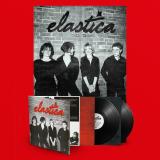
Elastica’s iconic self-titled debut album is set to be reissued by Rough Trade Records on 2 October in a new edition boasting rarities and b-sides.
Striking their own, distinct path in March 1995, Elastica proved uniquely fresh-sounding as the London four-piece delivered on the reputation they had built up gigging around the capital beyond in the months ahead its release.
Home to the likes of Line Up, Waking Up and Connection, singles at once timeless yet in the moment, Elastica’s debut captured the fraying emotions, hazy experience and burning energy of life, love and after-hours adventure.
Absorbing atmospheres and attitudes of their post-punk and new wave forbears, Justine Frischmann (vocals, guitar), Annie Holland (bass), Donna Matthews (guitar, vocals) and Justin Welch (drums) poured their own identities into the album’s 15 tracks which balancing youthful swagger, with sage-like observation and a knowing cool that made Elastica and their debut effortlessly timeless.
debe ser publicado en 02.10.2026
Tape[16,60 €]
Elastica’s iconic self-titled debut album is set to be reissued by Rough Trade Records on 2 October in a new edition boasting rarities and b-sides.
Striking their own, distinct path in March 1995, Elastica proved uniquely fresh-sounding as the London four-piece delivered on the reputation they had built up gigging around the capital beyond in the months ahead its release.
Home to the likes of Line Up, Waking Up and Connection, singles at once timeless yet in the moment, Elastica’s debut captured the fraying emotions, hazy experience and burning energy of life, love and after-hours adventure.
Absorbing atmospheres and attitudes of their post-punk and new wave forbears, Justine Frischmann (vocals, guitar), Annie Holland (bass), Donna Matthews (guitar, vocals) and Justin Welch (drums) poured their own identities into the album’s 15 tracks which balancing youthful swagger, with sage-like observation and a knowing cool that made Elastica and their debut effortlessly timeless.
debe ser publicado en 02.10.2026
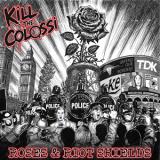
Ready to take our streets back? Kill the Colossi sind wohl eine der spannendsten neuen Bands aus England und haben mit ihrer (zuerst nur) selbstveröffentlichten Debut-CD "Braces for Impact" vor zwei Jahren sofort für weltweite Beachtung in der Szene gesorgt (mittlerweile auf Vinyl von Sunny Bastards erhältlich)! Kein Wunder die aggressive Mischung aus "in your face"-OI!-Shoutern und markanten Streetpunk-Melodien umrahmt von fetten Gitarrensound und wohlplatzierten Singalongs knallen alles weg. Vergleiche mit Kalibern wie "Lion's Law" machten schnell die Runde. Das Ox-Magazin schrieb zurecht: "KILL THE COLOSSI sind neben THE CHISEL die gegenwärtig wohl beste englische Oi!-Punk-Combo." Und selbst die Metalszene wurde auf die Band aufmerksam (Rock Hard 9/10) und bescherte der Band eine Einladung zum Kuhzi-Festival. Jetzt erscheint der Nachfolger "Roses & Riot Shields" und setzt den Weg von Kill the Colossi eindrucksvoll fort: Mitreißend-kraftvoller UK-Streetpunk/ Oi! mit ausgeklügeltem Songwriting und dem "gewissen Etwas", den man schwer in Worte fassen, dafür umso mehr im Herzen spüren kann! 10 neue Songs bei denen man übliche Klischees und abgenudelte Stereotypen vergebens sucht. Stattdessen sozialkritische Lyrics (Empire of the Dirt, Scarcity), wütende Bestandsaufnahmen über das verzerrte Spiegelbild der Gesellschaft (Working the weak), bis hin zu all dem neumodischem Scheiss, der manipuliert und beeinflusst (Under the Influencer; Legal High). Mit "Boots don't fit" schließlich gibt's eine unter die Haut gehende Hymne, die fernab der üblichen oft banalen Bekenntnisse gegen Rassismus viel tiefer in die Wunde sticht und deutlicher nicht sein kann! Jede Gesellschaft kriegt halt was sie verdient_"Kill the Colossi" dürfte mit diesem Album der Sprung in die nächste Liga sicher sein!
debe ser publicado en 02.10.2026
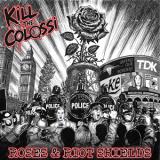
Ready to take our streets back? Kill the Colossi sind wohl eine der spannendsten neuen Bands aus England und haben mit ihrer (zuerst nur) selbstveröffentlichten Debut-CD "Braces for Impact" vor zwei Jahren sofort für weltweite Beachtung in der Szene gesorgt (mittlerweile auf Vinyl von Sunny Bastards erhältlich)! Kein Wunder die aggressive Mischung aus "in your face"-OI!-Shoutern und markanten Streetpunk-Melodien umrahmt von fetten Gitarrensound und wohlplatzierten Singalongs knallen alles weg. Vergleiche mit Kalibern wie "Lion's Law" machten schnell die Runde. Das Ox-Magazin schrieb zurecht: "KILL THE COLOSSI sind neben THE CHISEL die gegenwärtig wohl beste englische Oi!-Punk-Combo." Und selbst die Metalszene wurde auf die Band aufmerksam (Rock Hard 9/10) und bescherte der Band eine Einladung zum Kuhzi-Festival. Jetzt erscheint der Nachfolger "Roses & Riot Shields" und setzt den Weg von Kill the Colossi eindrucksvoll fort: Mitreißend-kraftvoller UK-Streetpunk/ Oi! mit ausgeklügeltem Songwriting und dem "gewissen Etwas", den man schwer in Worte fassen, dafür umso mehr im Herzen spüren kann! 10 neue Songs bei denen man übliche Klischees und abgenudelte Stereotypen vergebens sucht. Stattdessen sozialkritische Lyrics (Empire of the Dirt, Scarcity), wütende Bestandsaufnahmen über das verzerrte Spiegelbild der Gesellschaft (Working the weak), bis hin zu all dem neumodischem Scheiss, der manipuliert und beeinflusst (Under the Influencer; Legal High). Mit "Boots don't fit" schließlich gibt's eine unter die Haut gehende Hymne, die fernab der üblichen oft banalen Bekenntnisse gegen Rassismus viel tiefer in die Wunde sticht und deutlicher nicht sein kann! Jede Gesellschaft kriegt halt was sie verdient_"Kill the Colossi" dürfte mit diesem Album der Sprung in die nächste Liga sicher sein!
debe ser publicado en 02.10.2026
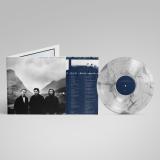
“One day, I’ll be a ghost, a spirit, that moves with you along the winds,” pines Twin Atlantic’s Sam McTrusty on the beautiful and cinematic ballad ‘Your, The End’, the fitting opener to the Scottish alt-rockers’ eighth album ‘Separation From The Animals’. “It’s about the responsibility I feel around being a parent,” he says, revealing that he cried while recording his vocal over bandmate Ross McNae’s tender Beatles-y piano part. If the album says anything, it’s ‘All You Need Is Love’, told with maturity and reckoning with the past to make sense of the present. ‘Separation From The Animals’ is an album born of two tales of triumph and perseverance – one of McTrusty grappling with his own ghosts, and the other of their finest album to date coming after a time when band morale was at an all time low. When their friends’ bands and peers were all calling it quits, words of wisdom from those close to the band were urging them to take time off. The album started out as a McTrusty solo effort, isolated in his new home. The day the band finished work on their last album, 2024’s ‘Meltdown’, was also the day McTrusty packed up his entire life and studio to start a new life in Toronto with wife and two kids, unaware of the rich seam of songwriting that it would inspire.
debe ser publicado en 02.10.2026
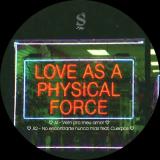
Love is not soft. It was never meant to be. It sweats, it pulses, it burns through skin. It lives in the space between bodies. In friction, in tension, in heat that doesn’t ask for permission. LOVE AS A PHYSICAL FORCE is not about romance as an idea, but as an experience. Something you feel at 5AM, when the night has already taken everything from you, and still asks for more. Across four tracks, DJ Hermano moves between intimacy and impact. From the longing of Vem pro meu amor to the rupture of No encontrarte nunca mas, love reveals itself as contradiction: tender and aggressive, distant and consuming. The collaboration with Cuerpos brings a raw edge. Where visceral collides with desire. Voices don’t just sing; they confront, they provoke, they touch. On the B-side, the body takes over. Friction Lovers and Desire and Heatwave at 5AM dissolve the emotional into the physical. Where connection happens through movement, sweat, repetition. This is not love you write about. This is love you survive. A record for the late-night moments, between the club and sleep. For the moments where the line between pleasure and exhaustion disappears. For when desire becomes the only language left. Love, here, is not a promise. It’s a force.
debe ser publicado en 02.10.2026
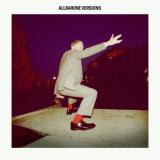
Baxter Dury’s eighth album, 'Allbarone', seemed to be done and dusted after release last autumn, yet super-producer Paul Epworth (Adele, U2) decided it was a good idea to work on extensions of five of tracks from the album. Not just extensions - full on electro-disco mixes that take tracks apart from the edges and reorder them into relentless dance floor tools built to perfectly soundtrack the small hours.
Each track finds a groove and takes its journey right through the middle of the original track, to create classic 12" extended remixes, adding a whole load of echoing dub over flickering percussion tracks, madly addictive basslines and gloriously languid disco rhythm tracks. From 'Kubla Khan’s hefty low-end groove to 'Alpha Dog’s deconstructed nightclub dub via 'Schadenfreude’s Eurodisco bass and fizzing hi-hat pulse, Paul Epworth’s phenomenal new mixes lift Baxter’s tracks up to another level.
debe ser publicado en 02.10.2026
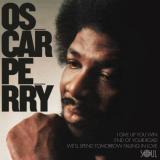
Oscar Perry may not be a household name even in soul/blues circles, but this Texan's fine and expansive body of work deserves greater recognition. Throughout his career, he demonstrated multifarious talents as a producer, arranger, singer, songwriter and guitarist. He first cut his teeth in the late 1960s on Don Robey's Duke/Peacock/Backbeat set-up, writing for Bobby Bland amongst others. Once his contract with Robey had lapsed, Oscar signed with the equally colourful character Huey P. Meaux, for whom he recorded a slew of excellent albums on the Crazy Cajun imprint. It is the source of the three self-penned tracks presented here. Echoes of Jerry Butler can be heard on the string-laden emotive ballad "We'll Spend Tomorrow Falling In Love" (co-written with studio engineer Mickey Moody) with its femme support, whilst the piano-led deep beat-ballad "End Of The Road" was subsequently recorded by Bland on his Dreamer LP for ABC-Dunhill in 1974. The strong, mid-paced, bluesy "I Give Up You Win" completes this wonderful EP.
debe ser publicado en 02.10.2026

Originally released on cd in 2017 on Rope a dope and Sounds of Crenshaw, this landmark project now receives a strictly limited audiophile vinyl edition. This release marks the debut of Terrace Martin’s all-star collective, featuring Robert Glasper, Kamasi Washington, Chachi a.k.a. Problem and more, a defining statement of modern Los Angeles jazz, hip-hop and soul.
En el almacen y preparando para el envío

Project Pat, the older brother of Three 6 Mafia’s Juicy J, is a legend in the Memphis rap scene. He began rapping in the 90s with Killa Klan Kaze and released several independent mixtapes. In 1999 he released his debut album Ghetty Green via Hypnotize Minds/Loud Records. In December of 2000, he released a new single and video “Chickenhead” which blew up on the charts and led to the release of his second album Mista Don’t Play: Everythangs Working. Mista Don’t Play produced by Three 6 Mafia’s DJ Paul and Juicy J was certified Gold a mere two months after its release.
debe ser publicado en 05.10.2026

180g Heavy double vinyl LP with liner notes by Tyran Grillo. Limited Japanese Obi for the first pressing. Original artwork by Russell Mills and photography by Jean-Baptiste Mondino.
The third Time Capsule is a body of dub reinterpretations by celebrated producer Bill Laswell of Ethiopian singer Gigi. Curated by Tokyo record collector, music researcher and seasoned reissue supervisor Ken Hidaka, it is the first time Illuminated Audio is pressed to vinyl after its CD release in 2003.
Ejigayehu Shibabaw was born in 1974 in Chagni, northwestern Ethiopia and by pursuing a career as a singer, went against her father’s strict, traditional gender roles. As Gigi, she embraced the same musical freedom she had strived for in her personal life, incorporating the Ethiopian church, funk, hip-hop, West and South African music into her work. She first settled in Nairobi, then Addis Ababa, where she quickly established herself as one of the city’s leading singers. A move to San Francisco in 1998 led to a long and fruitful creative partnership with bassist and producer Bill Laswell.
Around the same time, Chris Blackwell had stepped away from Island Records to start the art house film company and label Palm Pictures. He took an interest in Gigi and together with Laswell, pulled together an all-star cast of musicians for her self-titled US debut album, including Herbie Hancock, Pharoah Sanders and Wayne Shorter. It won international critical acclaim, not just for its musicianship but for making Gigi a “defining voice for the Ethiopian expatriate community”, as journalist Tyran Grillo praises in his Time Capsule liner notes. From the nation-defining 1896 victory over Italian invaders to the quiet revolutionaries who wear simple shemma garments, Grillo believes the themes in Gigi make it “a shower of sunlight on her homeland for those ignorant of its struggles.”
After its success, Blackwell encouraged them to go back into the studio to rethink the album and Illuminated Audio was born. “Anyone can make a voice sound worldly”, Grillo remarks, “but rare are those who can make one sound inner-worldly.” Gigi was clear with Laswell to give her vocals a minor role “because it’s already been done.” Instead her Amharic verse is fleeting, exhaling through the textures like ghostly fragments; soaring yet muted. Yet the album is still titled under her name, an assertion by Laswell of her central role in the album’s creation. Not only was it a fully endorsed project by Gigi, but she would be present throughout its development, giving feedback on half-finished ideas as Laswell played them back in the studio. “It works perfectly”, she reflected after the album’s release. “We wanted to capture the whole spirit of each track, and Bill’s remixes create a different music language that really puts you in a pleasant place”.
This new vocabulary takes its lead from a technical approach that Laswell had been perfecting during a furtive creative period at the turn of the millennium. Much like his ambient interpretations of Miles Davis (Panthalassa, 1998), Bob Marley (Dreams of Freedom, 1997), and Carlos Santana (Divine Light, 2001), Laswell approached Illuminated Audio by returning to the original multitrack masters. Gigi wasn’t just reworked, but recomposed into an expansive lattice of instruments, submerged in a watery ambience of dub and trance undercurrents.
Sonically, this new language that Gigi refers to, is manifested by the original album’s more understated parts being pushed to the fore. Explaining his contrasting methods, Laswell saw Gigi as being “put together in a way that fits”. Contrastingly, in Illuminated Audio, “a lot of things that I featured in the remix weren’t as audible in the original.” Instrumentation laying near-dormant, deep in the mix, are brought to the fore: the acid rock guitar and Wayne Shorter’s saxophone on ‘Tew Ante Sew’, Graham Haynes’ flugelhorn on ‘Nafekeñ’, Laswell’s bass on ‘Kahn’, the melodica in Mengedegna or the floating synths and talking drums in ‘Gud Fella’.
Brought to his attention by mentor DJ Nori, Hidaka describes Illuminated Audio as a “masterful sonic exploration into ethereal ambience and dub” and made sure this reissue also contained a full remaster to give its “deep musicality” much better dynamics and density in the overall sound. Hidaka admits that Laswell's music “is sometimes so out-there, it is often misunderstood” and, indeed, to dub album non-believers this might seem like a prolific producer imposing himself on another artist’s work; eternally developing rearrangements that never quite get to its destination. But that’s missing its true power and triumph. This is more than the reissue of a remix, but “a wholly unique musical entity”, as Hidaka describes. Illuminated Audio refers to the illuminated manuscripts that comprise the major part of Ethiopian art and its new compositions stand in proud solitude as a rare body of reworks that both informs and enhances their originals.
debe ser publicado en 05.10.2026

The Nu’rons were a family group consisting of two sets of brothers and cousins, the four young men in question being brothers Daryl Howard and Raymond Gibson (Daryl’s mother registered him under his father’s surname of Howard and Raymond under her maiden name of Gibson) together with Otho Bateman and Charles Bateman. They were all born and raised in Salem, New Jersey and from the age of ten and eleven began singing with a fifth member and Gibson brother Rudolph as a group called The Gospel 5. They eventually decided to crossover to secular music and as a group known for their energetic dance routines they came up with the new performing name of ‘The Nu’rons’ (taken from the word ‘Neuron’ which is a cell that transmits nerve impulses). However Rudolph was soon to leave the group due to physical illness. Also Daryl Howard and Charles Bateman had also been part of a working group known as The Devotions prior to becoming The Nu-Ron’s.Following hours of practice The Nu’rons eventually felt confident enough to put their own shows together and began to perform at local dances and parties around New Jersey and Philadelphia, often being used as a non-paid warm up act for bigger named artists. They moved between several different managers including Jimmy Bishop (Duo Dynamic Productions) until they came under the tutelage of WDAS radio DJ Georgie Woods (his wife Gilda, being the owner of the Philadelphia Gil, Dion and Top & Bottom record Labels). It was Georgie who introduced them to Manny Campbell who in turn invited them to an audition at his and partner Charles Bowen’s Emandolynn Music studio in Chester P.A. The song The Nu’rons chose to audition with was the self penned “I’m A Loner”, the audition went well, as during late January/early February of 1970 Manny and Charles took The Nu’rons into the Sigma Sound Studio’s with Tom Bell and the TSOP musicians to record “I’m A Loner” and “All My Life” which was released on the Nu-Ron label in April of the same year. The two studio takes presente don this release came short after the band moved on from the collaboration with producer Emanuel Campbell to take music matters in their own hands. Beside recording "Disco Hustle" to be part of the disco boom in Philly of the times, they recorded also “You Came Thru”, a rough yet beautiful heavy bassline driven soul funk recording, and the just amazing “Hurry Up Tomorrow”, here presented in one of the original Studio takes.
debe ser publicado en 05.10.2026

Clear Vinyl - Repress!
Trumpeter Don Cherry, an Ornette Coleman soulmate and a world musician decades ago, became one of jazz's many early losses 10 years back. But saxophonist Pharoah Sanders, who joins him on this fizzing 1966 set, has since ascended to cult status, and he is still around to admire . In the 1960s, he knew no melodic fear at all, in which respect he was aptly partnered with Cherry. This is a quartet set, strongly influenced by the melodic approach of Coleman, but with a fierce abstraction of tone quite different from Coleman's playful lyricism.
Moreover, the rhythm team of Ed Blackwell on drums and Henry Grimes on bass provides a scintillating underpinning for the music that is worth listening to all on its own. Sanders' mix of Coltrane's yearning long notes, Ayler's ghostly, fluttering wail, Coleman's fast, bumpy phrasing and his own manic bagpipe screams certainly separates the faint-hearted from the stayers on the opening Awake Nu. But the conversation between Sanders and Cherry is light, lyrical and engaging on The Thing, and the saxophonist even gets into a stubborn, Sonny Rollins-like repeating Latin vamp on There Is the Bomb. An unflinchingly quirky classic. (THE GUARDIAN)
debe ser publicado en 05.10.2026

Split System, the Aussie group featuring Jackson Reid Briggs (Jackson Reid Briggs & The Heaters) on vocals and Arron Mawson (Stiff Richards) on guitar, took the punk world by storm with its debut EP this past spring. That was hardly surprising given the talent involved. But whatever my expectations were for Split System, the Melbourne-based outfit far exceeded them. Not just another "super group" (also on board are guitarist Ryan Webb Speed Week, bassist Deon Slaviero, and drummer Mitch McGregor [No Zu]), Split System is straight-up one of the most powerful and exciting punk rock and roll bands of recent memory. The band's EP was a smasher, and now debut album Vol. 1 emphatically follows suit. My god, this record is a monster! Essentially Split System's sound is classic Aussie punk. That may sound like nothing new, but this band executes the style with a force and fury rarely heard these days. It doesn't hurt that Jackson Reid Briggs is one of the best rock and roll screamers going. He's got a fire inside of him. Meanwhile, Mawson and Webb form one hell of a guitar tandem. And that rhythm section is insane. These are all brilliant players who come together to make an extraordinary band. Vol. 1 comes storming out of the gates with "The End" and never lets up. Of course we knew some of the previously-released tracks ("Hit Me," "Demolition," "Climbing") were going to rip. But the newer material is just as good and will just about melt your face off. Songs like "Ringing In My Head" and "Grip" are pure energy and ferocity, while closing track "Feelings" has a mellowed-out Saints feel. This band knows how to rock and roll, and there are literally no songs on this album that don't entirely kick ass. Sometimes we think of these all-star groups as "side projects," but such categorization would sell Split System woefully short. If we're talking about the top three or four punk bands in Australia right now, this has to be one of them! Josh Rutledge/ Faster and Louder
debe ser publicado en 05.10.2026

Hiroshi Sato's masterpiece “Awakening” has been reissued for the fourth time in a new color “Pastel Blue Vinyl”. The album was cut by world-renowned engineer Bernie Grundman based on high-spec sound data digitally converted to 96KHz/24bit from the original master tapes. The pressing was done at Sony Music's factory in Japan. This is Hiroshi Sato's fourth original album released in June 1982 after his career in Los Angeles, and his first album for Alpha Records. Featuring Canadian female vocalist Wendy Matthews and using the most advanced drum machine at the time, “LinnDrum,” this mellow and soulful album is a perfect fusion of Sato's sound sense and the atmosphere of American West Coast, and has transcended generations, continues to influence many musicians. Guest guitarists include Tatsuro Yamashita, Tsunehide Matsuki, and Yuji Toriyama! Limited edition.
debe ser publicado en 05.10.2026

Along with Bikini Kill, Bratmobile spearheaded the riot grrrl revolution of the early 1990s, battling the long-standing dominance of men within the punk rock community to help empower a new generation of female musicians and fans - Comprised of singer Allison Wolfe, guitarist Erin Smith, and drummer Molly Neuman, Bratmobile made their debut at 1991's International Pop Underground convention; after a handful of singles--with members spread out between California, Washington, and Maryland, recording was a logistical nightmare--the trio finally released Pottymouth in 1993
debe ser publicado en 05.10.2026
