Dr. Suzuki, Stokyo and Turntable Training Wax give you TTM branded 12 inch slipmats with slip sheets! This all new slipmat design is the upgraded and improved successor of the third series Tablecloth. The fabric has been upgraded to a higher quality for durability and anti-static. Slip sheets are printed with the Dr. Suzuki logos!
Search:dr suzuki
DJ Support: Ashley Beedle, Phil Mison (Ibiza legend), Nick The Record, Kenneth Bager (Music For Dreams), Ross Allen (NTS, Worldwide FM), Simon Dunmore, Cedric Woo (Beauty & the Beat), Ban Ban Ton Ton, The Mighty Zaf (Love Vinyl), Femi Fem (Young Disciples), Jay Negron (NYC legend), Bruce Forest (Better Days, NYC), Bruce Tantum (NYC), Colleen “Cosmo” Murphy, Mr Shiver, Hugh Mane, Eccentrics Disco, Eclectics Disco, Fannoire Ge, Percebes Records (Lisbon), For Mankind (Pikes, Ibiza), S/A/M (Cafe Del Mar, Ibiza).
Winner of the 2020 Bob James “Black Lives Matter” remix competition on François Kevorkian’s World Of Echoes Facebook page, Love For Black Lives is available on vinyl for the first time, alongside 2 brand new mixes, on this 4-track EP. It is the debut release on Hobbes Music’s new sub-label Noetic Rhythm, dedicated to releasing music that brings people together on the dancefloor.
Leonidas debuted in 2012 with Sequential EP on Kay Suzuki's Round In Motion label, gaining praise from industry legends. He has collaborated with Hobbes on several releases, including the Balearic hit Web of Intrigue, which topped Bill Brewster’s 2017 DJ poll. His music has appeared on compilations like DJ Harvey’s The Sound of Mercury Rising Vol II, as well as BBC Radio 1 & 6 music.
- 1: Akashia No Ame Ga Yamu Toki
- 2: Meiko No Yume Wa Yoru Hiraku
- 3: Onna Kokoro No Uta
- 4: Ginza No Cho
- 5: Shinjuku Blues
- 6: Kasbah No Onna
- 7: Tokyo Nagare Mono
- 8: Uramachi Jinsei
- 9: Sake Wa Namida Ka Tameiki Ka
- 10: Otoko No Junjo
- 11: Ame No Yatai
- 12: Shiretoko Ryojo
Wewantsounds is delighted to continue its extensive reissue program of Meiko Kaji"s early discography, originally released by Teichiku Records in Japan between 1972 and 1974. The Quentin Tarantino muse-famous for her starring roles in Lady Snowblood and Stray Cat Rock-was also a gifted singer. Otoko Onna Kokoro No Aika is another collection of superb cinematic songs featuring Kaji"s signature mix of Japanese Pop and Groove, backed by lush, atmospheric orchestrations. This includes her rendition of "Tokyo Nagare Mono," the theme song for Seijun Suzuki"s cult 1966 film Tokyo Drifter. This reissue features the original artwork, an OBI strip, and a four-page insert with new liner notes by Hashim Kotaro Bharoocha, who interviewed Meiko Kaji for the occasion.
- A1: Kazumi Watanabe - Park Avenue
- A2: Shigeharu Mukai - Hip Cruiser
- A3: Kiyoshi Sugimoto - The Island Skyline
- A4: Soul Media - Memory Lane
- B1: Spick & Span - Still Love You
- B2: Hidefumi Toki & Temps - Atsui Yujo
- B3: Shigeru Suzuki - West Beach Drive
- B4: Chika Asamoto - Gypsy Moon
- B5: Toshiyuki Daitoku - Living In A City
Selecting melodious and groovy crossover, fusion, and jazz-funk tracks from the Nippon Columbia catalog, including its sub-label Better Days, that City Pop fans will love.
The track selection and commentary are curated by Hitoshi Kurimoto, the most popular City Pop influencer in Japan.
This unique selection includes tracks from Soul Media, Hiromasa Suzuki, Kazumi Watanabe, and Kiyoshi Sugimoto, along with previously unreissued gems.
The artwork is designed by Stereo Tennis, known for its popular '80s-inspired graphics.
A must-have for fans of Japanese Jazz and City Pop.
2025 Repress
Renowned producer and DJ Yuri Suzuki is back with a bang, releasing his latest record titled "Border" via the iconic Detroit Underground label. This new release features eight electrifying acid tracks that blend the infectious grooves of jacking house and the driving energy of techno.
Yuri Suzuki has been a pivotal figure in the electronic music scene, known for his unique sound and innovative production techniques. With "Border," he takes listeners on a journey through the pulsating heart of the underground music culture. Each track showcases his knack for crafting infectious rhythms and hypnotic melodies, making this vinyl a must-have for any serious collector or DJ looking to elevate their set.
The tracks on "Border" are a perfect representation of the classic acid sounds that have been making a resurgence in recent years. From the moment the needle hits the vinyl, listeners are transported to a world where the dance floor is king, and the beats are relentless. Yuri's signature style shines through, combining crisp percussion, gritty basslines, and infectious samples that create an irresistible urge to move.
“Most of these tracks were produced in the 90s, in my small room at my parents' apartment in Tokyo. At the time, I hadn't experienced a real rave, and my exposure to the culture was limited to the information I could find on the early internet. As a result, the music I created was inspired by an imagined rave scene, capturing the essence of something both distant and exciting.” - Yuri Suzuki
Detroit-based electronic music producer and DJ Rebecca Goldberg presents, Dancing Dreamland, a four-track journey of raw techno, electro, and acid. The EP was created during her 2024 artist residency at Modja Modja House in Margate, UK.
Drawing inspiration from Margate’s eclectic soundscape, Goldberg crafted the EP using field recordings captured around the coastal town: its prominent resident seagulls, carnival games, and bustling seaside energy. These organic textures were fused with analog hardware during sessions in renowned artist Yuri Suzuki’s studio, where she was granted access to a range of vintage and modern synthesizers and drum machines.
The result is Dancing Dreamland, a gritty and hypnotic blend of rhythmic percussion and experimental textures. Each track reflects Goldberg’s signature Detroit-rooted minimalism while embracing the playful chaos of the British seaside. The EP pays homage to the cultural crossover between the industrial sound of techno and the natural, atmospheric noise of a historic resort town in artistic transition.
- A1: Korogi ‘73 - Fushigi Song
- A2: Yas-Kaz - Hei (Theme Of Shikioni)
- A3: Yoichiro Yoshikawa - Tassili N'ajjer
- A4: Norihiro Tsuru - Farsighted Person
- B1: Geinoh Yamashirogumi - Theme Of Kaneda
- B2: Yoichiro Yoshikawa - Fiesta Del Fuego
- B3: Columbia Orchestra - Heart Beats / Theme For Andrew Glesgow
- B4: Kan Ogasawara - Gishin Anki
LP vinyl only release + 4 page liner notes (comes with hype sticker)
The percussive new age soundtracks of '80s and early '90s Japanese TV, anime and manga built alternative worlds and pushed boundaries in the process.
When Japanese composer Yas-Kaz left Tokyo for Bali in the mid 1970s he had little idea of how influential his trip would become. In studying the storied art of gamelan, the jazz and avant-garde percussionist opened a door to a world of sound and rhythm left behind by the West. The music he and his contemporaries made would become known as new age. It also happened to soundtrack the golden era of anime.
Awash with money and with the prerogative to entertain the burgeoning middle classes, anime in the 1980s experienced a creative and commercial boom. Not constricted by generic expectations, production houses such as the now renowned Studio Ghibli were able to experiment liberally with both form and content. And with it came the space for composers to be similarly adventurous.
TV, Anime & Manga New Age Soundtracks 1984-1993 charts this moment across eight tracks spanning classics of the genre and previously unknown rarities. The collection brings together music that found kinship in electronic and acoustic instrumentation, often combining spiritual or environmental themes with percussive, varied and highly refined syncopations of non-Western musical traditions.
Among them is ‘Kaneda’ by Geinoh Yamashirogumi, the shape-shifting group of self-styled musicians, anthropologists and computer scientists that masterminded the soundtrack to game-changing dystopian anime Akira - and with whom the sound, tuning and breakneck speed of Balinese gamelan has become indelibly entwined.
Reflecting the desires of the era to reach beyond Japan’s borders, many of the soundtracks featured were commissioned for narratives set in distant lands or alternative worlds. There’s violinist and composer Norihiro Tsuru’s ‘Farsighted Person’, written for The Heroic Legend of Arslān, set in ancient Persia; Yas-Kaz’s own ‘Hei (Theme of Shikioni)’, for period sci-fi manga & anime series Peacock King - Spirit Warrior; and two tracks - Tassili N’Ajjer and Fiesta Del Fuego - from Yoichiro Yoshikawa’s soundtrack to NHK’s proto-Planet Earth series The Miracle Planet.
Such was the variety and quality of the music produced, if there is a guiding principle to the tracks collected here it is a sense of escapism and adventure that came with the confluence of modern electronic instruments and a fascination with percussive traditions.
Elsewhere, pioneering children’s TV composer Chumei Watanabe’s ‘Fushigi Song’ (performed by a vocal group Korogi ‘72) offers a trippy and infectious groove with sonic similarities to Don Cherry’s ‘Brown Rice’; little-known jazz-funk library group Columbia Orchestra showcase the best of Tokyo’s session musicians on ‘Hearts Beats - Theme for Andrew Glasgow’; before lawyer-turned-composer Kan Ogasawara closes out the compilation with a dramatic flourish on ‘Gishin Anki’.
Following on from Time Capsule’s acclaimed deep-dive into the world of manga & anime synth-pop in 2022, this vinyl only collection is set to broaden and diversify an understanding of how soundtracks shaped the sound of new age music in Japan for a generation.
Curators: Kay Suzuki, Rintaro Sekizuka (Vinyl Delivery Service)
Artwork: Tu-yang
- A1: Genji Sawai - Hikobae
- A2: Today's Latin Project - Danza Lucumi
- A3: Shigeru Suzuki - On The Coast
- B1: Air Suspension Club Band - In The Hot City
- B2: Yasunori Soryo&Jim Rocks - So Long America
- B3: Jugando - Twisty
- C1: Kingkong Paradise - Samarkand
- C2: Katsutoshi Morizono With Bird's Eye View - Imagery
- C3: Om - Windmill
- D1: Parachute - Mystery Of Asian Port
- D2: Yuji Toriyama - Bay/Sky Provincetown 1977
- D3: Keiichi Oku - Heat Wave
- D4: Safari - Day Dream At The Bob's Beach
2025 Repress
Midnight In Tokyo 2, the second installment to the compilation series that rounds up hidden gems by Japanese artists that's perfect for listening at night in Tokyo, is here. This time the collection brings together some tasty electric jazz fusion from the '80s , compiled by Dubby, the man behind the online record store Ondas.
The compilation begins with "Hikobae," a dark and slow cosmic jazz by saxophonist Genji Sawai, followed by "Danza Lucumi," an odd Caribbean-style jam by Today's Latin Project, a band fronted by Tadaaki Misago of Tokyo Cuban Boys, with arrangements by Yasuaki Shimizu. "On The Coast" is a soulful and mellow vocal track arranged by Ryuichi Sakamoto, from guitarist Shigeru Suzuki's album White Heat, and fusion boogie cut "In The Hot City" is by Mr. Theodore, which was a one-off project by a mysterious artist.
The melancholic soul jazz number "So Long America" is the title track from the album Yasunori Soryo released in '82, following a stint in America with the band Brown Rice. "Twisty" is a tropical reggae tune from the album Samba Kathy, an underrated classic by Jugando which was released on Trash, a sublabel of one of Japan's finest jazz labels, Trio. "Samarkand" is an electric Latin jazz jam that sounds like something Miles Davis and Santana could have played on, performed by a Latin funk band from Fussa. "Imagery" is a primal African fusion track by Katsutoshi Morizono, a member of the prog rock band Yoninbayashi.
"Windmill" is the most acoustic sounding tune on this compilation, a breezy Brazilian affair with a Hermeto Pascoal feel. "Mystery Of Asian Port" is by the band Parachute, which consisted of Japa-nese fusion giants like Akira Inoue, Tatsuo Hayashi and Masaki Matsubara. The cosmic jazz record sounds like something Daniele Baldelli would play in his sets. "Bay Sky Provincetown 1977" is a classic Japanese fusion tune by guitarist Yuji Toriyama.
The set also features the mellow but danceable "Heatwave" by keyboardist Keiichi Oku, featuring a female vocalist (which some have identified as Rie Ida), and last but not least, closing out the 13 track compilation is "Day Dream At The Bob's Beach," a wonderful urban fusion with a beautiful vibraphone melody, from the Japanese fusion classic album that was a one-off project by studio musicians
2024 repress.
Dive into the spiritual depths of Carnatic Music (Southern Indian classical music) - An enchanting journey of devotion and transcendence pulsates with raw sincerity and profound spirituality, casting a spell that transcends boundaries of belief.
Originally released on CD in 2000 from South Indian Carnatic music label and reissued on vinyl and digital first time in 2019 by Time Capsule. New 2024 repress vinyl has different tracks on the B side and it still remains as the reverse cut as the 2019 version.
2024 new vinyl repress with different track list on the side B. Reverse Cut Vinyl - This record plays from the inner groove to the outer groove. Comes with a hype sticker.
Born into a musician family steeped in the south Indian tradition of vocal music, the Mumbai-raised singer took advantage of the city’s cosmopolitism to study northern Hindustani disciplines, one of the few vocalists to train in both. Now revered as one of the greatest living exponents of Carnatic music, she received an Oscar nomination for her work on Ang Lee’s Life of Pi.
Within the first minute of opener Sada Bada (Slokam), Jayashri’s intensely spiritual vocals give a clear indication of why she has been increasingly embraced by a new generation of western listeners who’ve made the natural leap from ambient soundscapes to new age and devotional music. Accompanied on the following Bhajeham Bhajeham by a hypnotic rhythmic backing of mridangam drums, bells and the drone of a tambura, over its epic twenty-minute length she stretches her voice into a variety of spellbinding forms – her softly enunciated dedications to Shiva enveloping you with their immersive warmth and cosmic beauty. Keshvaya Namaha is an invocation to Lord Vishnu, the protector of creation and one of the other major deities of the Hindu tradition, while Raghavam recites the names and attributes of two of his most popular avatars: the heroic Rama and the playful, loving Krishna.
One of the album’s new-found devotees is label boss Kay Suzuki: “every time I listen I’m amazed at how such a small ensemble can create such a deep musical landscape. The incredible production plays a big part. That intricate percussion sounds so clear and sits in all the right pockets rhythmically and sonically. Just by following this groove I’m put into a timeless zone, but when her voice hits on top of that gorgeous drone sound and I focus on the details of her small melodies within melodies, my heart centres and I find myself in a blissful place.”
As professor of cultural and political theory in Universicty of East London, Jeremy Gilbert states in the album’s liner notes, the mesmerising sincerity and deep spirituality of these songs present an intense and spiritual charge that will appeal to an audience well beyond believers and devotees of Hinduism.
- A1: World Standard - Fellini & Rota
- A2: Masumi Hara - Your Dream
- A3: Normal Brain - M.u.s.i.c
- A4: Hiroyuki Namba - Who Done It? (Part 2)
- B1: Yasuaki Shimizu - Crow
- B2: Hiroyuki Namba - Tropical Exposition
- B3: Imitation - Exotic Dance
- B4: Pecker - Sha La La
- C1: Ep-4 - Db
- C2: Earthling - You Go On Natural
- C3: Masumi Hara - Camera
- D1: Geinoh Yamashirogumi - Rinne Kohkyogaku Meikei
- D2: D-Day - Ki·ra·i
- D3: Ryuichi Sakamoto - A Wongga Dance Song
Ever since he made his first trip to Japan to DJ, Optimo Music founder JD Twitch has been bewitched by Japanese music, and particularly the vibrant, imaginative, and often far-sighted sounds which emerged from the island nation during the 1980s. Now he’s put years of digging in Japanese record shops to good use on Polyphonic Cosmos, the latest release on his compilation-focused Cease & Desist imprint.
Subtitled ‘A Beginners Guide to Japan In The ‘80s’, the collection offers a personal selection of Japanese gems recorded and released between 1981 and ’86 – a period when advances in recording and musical technology offered the nation’s artists and producers a whole new tool kit to employ. When combined with the unique musical culture of Japan, where local traditions are frequently fused with Western styles to create timeless, off-kilter aural fusions, this embrace of locally pioneered music technology had spectacular, often unusual results.
Eight years in the making, Polyphonic Cosmos provides an endlessly entertaining musical snapshot of Japanese music of the early-to-mid ‘80s with all of the open-minded eclecticism and sonic twists that you would expect from the Glasgow-based DJ.
Compare and contrast, for example, the gently breezy, morning-fresh folk-plus-electronics bliss of ‘ばら二曲 Baranikyoku (Fellini&Rota)’ by World Standard – the most familiar alias of long-serving musician/producer Sohichiro Suzuki – and the hallucinatory, slow-motion tribal rhythms, post-punk rhythms and tape delay-laden electronics of Imitation’s ‘Exotic Dance’. Or, for that matter, the tipsy mid-‘80s electronic reggae of Pecker’s ‘Sha La La’, the grungy but melodic post-punk strut of ‘You Go On Natural’ by Earthling (a track Twitch accurately describes as “sheer unrelenting groove”), and the unearthly, swirling sonics, new age instrumentation and flotation tank vocals of prolific (and seemingly mysterious) act Geinoh Yamashirogumi’s ‘Rimme Kohkyogaku Meiki’.
It’s a credit to JD Twitch’s curatorial skills that the quality never dips, and sonic surprises lurk around every corner. Consider for a moment the hard to describe, far-sighted audio immersion of D-Day’s ‘Ki-Ra’ – all languid post-pop guitar, enveloping chords, spoken word vocals, shuffling 808 beats and marimba melodies – and the two contributions from video games soundtrack specialist (and driving instrumental synth-pop specialist) Hiroyuki Namba.
The collection naturally includes some selections that have long been favourites in Twitch’s DJ sets – see Masumi Hara’s ‘Your Dream’ – as well as a handful of tracks from artists who may be more recognisable to those with only rudimentary knowledge of Japanese musical culture. The great Yasuaki Shimizu, whose work as Mariah has become far better known in recent years thanks to reissues of some of his most magical albums, is represented via ‘The Crow’, a picturesque chunk of horizontal, hard-to-define jazz-not-jazz smokiness, while the collection fittingly concludes with a sublimely funky, oddball electronic workout from Yellow Magic Orchestra legend Ryuichi Sakamoto (the frankly incredible ‘Wongga Dance Song’).
Matt Anniss
SAISEI founder Junki Inoue continues his vital archival work uncovering the riches of Japan’s distinctive electronic music scene and bringing them to new audiences around the world. The Sounds Of Transonic compiles six tracks recorded in Tokyo between 1991 and 1995 and released by the pioneering Transonic label, founded in 1994 by Kazunao Nagata and active until 2004.
Transonic’s catalogue is a glittering roll call of the scene’s major players, whose inventive and genre-blending work established forward-thinking house and techno in Japan in a way that would shape the country’s electronic sound for years to come. Transonic was instrumental in giving exposure to the work of these artists with its emblematic series of CD compilations, released over a short couple of years in the mid 90s. Beginning with 970-1450km/h, Feedback and Range, the series also included The Roots Of Transonic, featuring music from parent label Trigger. Alongside these compilations came much sought-after solo albums each packaged with striking cover art that makes the discs a visual treat for collectors to this day.
The Sounds Of Transonic brings together six tracks from the catalogue into one breath-taking package. The influence of hi-tech jazz and machine funk from Detroit is undeniable in ‘Dream Trance’ (Mind Design) and ‘Blasting Soul’ (Interferon), while ‘Under The Ground’ (Palomatic) and ‘Chelsea’ (Suzukiski) are permeated by the artificial intelligence and trip hop emanating from the UK at the time. The compilation is bookended by two tracks by Nagata himself (as Organization): ‘Space Ball’, a Model 500-worthy chase through the cosmos, and ‘Call’, an eerie echo of Kraftwerk’s telephone, transmitting expectantly out into the void and, finally, receiving its celestial answer.
With The Sounds Of Transonic these formative pieces of music will now be available internationally and, for the first time, on vinyl.
SAISEI is a Japanese word which translates to ‘reproduction’ and ‘to play’ (as in playing records). Japanese culture is widely known for its traditional nature just as much as it is for being forward into the future and this label’s concept does justice to exactly that. Having started digging for records as early as 16 years old, Inoue delved into productions from 1990s Japan to uncover these native gems. SAISEI’s core concept is to recapture and reintroduce unique pieces of Japanese electronic music onto vinyl, to an audience it never reached before as most of this music was only released in Japan.
Debut album from Alex Ho out of Los Angeles.
In his foundational essay on Los Angeles, L.A. Glows, the essayist Lawrence Weschler speaks on the city's uncanny, immediately recognizable light; "The late-afternoon light of Los Angeles—golden pink off the bay through the smog and onto the palm fronds." Weschler traces the city's mysterious refracted light from the iconic paintings of David Hockney through the city's frequent portrayal on film and TV, noting its ability to put residents into a state of "egoless bliss."
Similarly, Alex Ho's new album for Music From Memory, 'Move Through It', radiates with the unmistakable LA glow. While the Pasadena native's studio work is just now coming to light, Ho has long been a fixture in the Los Angeles dance music scene, throwing what are perhaps the city's most musically expansive warehouse events and carving out a singular voice as a DJ, as heard on his brilliant Moony Habits show for NTS. The eight-track record, however, lands in a more contemplative zone, better suited for a golden hour drive than a night out.
Though it's his first record, 'Move Through It' is the accomplished work of a fully-formed artist, produced patiently between 2017 and 2020 with help from friends including Baba Stiltz, Phil Cho, Damon Palermo and John Jones. "Mark," the Koanic track conclusion side A, is an arpeggiated slow burn reminiscent of Pino Donaggio's brilliant score for Brian De Palma's 1984 film Body Double. Ho's stunning, pure falsetto soars above gentle melodies. "Miss Suzuki," the piece that originally caught the ear of MFM's Jamie Tiller and Tako, opens the record with a blue, cinematic sway. Ho's facility for poignant melodies—easily conveyed through saxophone, vibes, various keyboards and his own voice—shines on "College Crest Drive," as well as the title track. The lyrical "Move Through It" and the restrained and beautiful closing cut, "TYFC," are abetted by glimmering Kraut guitar figures courtesy of John Jones.
While Ho's rhythms and melodies paint a crystal-clear musical vision, the music's emotional centre is more elusive, indicative of a yearning feeling synonymous with the City Of Angels. Hitting these hazy and subtle notes, Move Through It falls within a canon of sun-addled records spanning from Herb Alpert's "Rotation" to Dam-Funk's Private Life trilogy as Garrett. An immersive and concise statement, Alex Ho's 'Move Through It' is as warm and uncanny as the city that inspired it, a definitive LA album.
Whiskey Disco returns with another brilliant EP by Australian producer Kayroy, known for creating new intersections between edits, reworks, and originals that the label is known for.
A driving, tension-heavy original A-side reminiscent of early Sound Stream, complimented by two wonderfully selected reworks - a smartly tightened up beautiful instrumental gem originally by Japanese guitarist & composer, Shigeru Suzuki, and an almost necessary revision of euro-disco genius Alec Costandinos’s opus "Romeo & Juliet".
A wide ranging and fantastic record all around.
Eight releases in, Leonidas & Hobbes have honed a mutual love of soundtracks, disco, jazz, house, techno, acid, psychedelic, African and dub sounds.
Web Of Intrigue is one part tribute to lost 70s soundtracks, when music was created on the finest analogue hardware, featuring full bands, session players and lush orchestrations, one part tribute to 70s disco gods Nile Rodgers and Bernard Edwards (Chic) and one part mid-tempo but nonetheless cosmic house. The three parts fuse to form an instrumental track sounding as fresh as a whole meadow of daisies in 2017 and one that's been going down extremely well with international DJs who have road-tested the material.
Heavy Weather flips the script for a deeper workout in a 3/4 time signature - more of a cosmic waltz. Taking its main cue from 70s jazz fusion heroes Weather Report and The Doors' Ray Manzarek, it incorporates rich African percussion, spaced-out flourishes exhibiting the duo's love for the dubs of Lee Perry, King Tubby et al, and a good old fashioned arpeggio of an acid line - definitely a more esoteric number, all told.
The 'Dawn' and 'Acid Rain' mixes push different buttons for the heads, as suits the mood. It all adds up to a very Balearic confection, fitting snugly in with the burgeoning revival for this somewhat ineffable sound - a trend that seems to be getting stronger/bigger every year, popping up every time the sun gets his hat on and we all remember how to party like the lucky residents of that infamous White Isle....
MORE INFO
London/Edinburgh analogue electronic duo Leonidas & Hobbes released debut EP "Machines, Tapes & Electronic Setups" via the Hobbes Music label back in May 2013, picking up plaudits and support from the likes of Resident Advisor, Mixmag, Erol Alkan, Ashley Beedle, Alan Braxe, Shadow Child, Jimpster, Nick Warren, M.A.N.D.Y., Leftside Wobble, Mr G, Auntie Flo, Sasha, John Digweed and many more... The duo were consequently commissioned to remix the Pet Shop Boys.
Second EP "Mo' Machines" came out on the label in April 2014 and received equally high praise, with i-D Magazine inviting the duo to record a DJ mix which has to date chalked up a whole lot of love on Soundcloud.
Leonidas has released two other collaborative EPs with London-based Japanese DJ/producer Kay Suzuki via his Round In Motion imprint, equally winning fans worldwide, with a track now forthcoming on new label YAM Records' You And Music Volume 1 EP plus much more in the pipeline for 2017. Leonidas also has his own lovetoparty label, releasing edits of much-loved disco tunes on limited edition 12" vinyl format and free download. Previously, Leonidas made a name for throwing word-of-mouth parties around east London on his audiophile 'lovetoparty' sound system (providing some of the inspiration for much-admired late-night watering hole Brilliant Corners).
Equally, Hobbes ran the widely acclaimed Trouble nights for ten years in Edinburgh/Scotland, working with the great and the good from across the soul/jazz/dance spectrum since '02, and championed up-and-coming live talent via his Limbo 'gig-in-a-club' nights at The Voodoo Rooms for nine years since '07. Hobbes has toured his DJing style to the various corners of the dancing planet, including gigs in the Far East, much of Europe and across the UK. The Hobbes Music label has otherwise featured artists as diverse as Auntie Flo, JD Twitch (Optimo), Neil Landstrumm, Craig Smith (6th Borough Project), Ali Renault, iO Sounds, Joe Howe, Debukas, Fudge Fingas, Marco Bernardi, Dimitri Veimar, Mick Wills and Nightwave, with further support from Ben UFO, Justin Robertson, Motor City Drum Ensemble, KiNK, The Revenge, T.E.E.D, Kiki, Groove Armada, Maceo Plex, OOFT!, Domenic Capello (Sub Club), XDB, Ben Mono, Masa Sutela, Bawrut/Scuola Furano, Numbers, John Heckle and many more...
- A1: Nica's Dream
- A2: Avenue
- B1: Greensleeves
- B2: Lamento
- B3: Sheila's Song
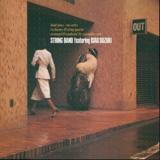
This album was recorded by Isao Suzuki with an international string band lineup featuring Hank Jones, Roy Haynes, and Ron Carter. Widely supported by jazz fans both in Japan and abroad, it remains highly sought after and continues to command strong popularity on the used market.
Bass (Piccolo Bass): Isao Suzuki
Bass: Ron Carter
Piano: Hank Jones
Drums: Roy Haynes
This striking and thought-provoking album, born from the encounter between a towering jazz personality and youthful sensibilities, captures the direction of Japanese jazz in the 1980s. It will be reissued as the fourth release in the "Spin This Now!" series.
Double Bass, Acoustic Piccolo Bass, Percussion: Isao Suzuki
Drums, Congas, Percussion: Keiyu Hirayama
Electric Guitar: Takayuki Kato
Piano, Electric Piano, Synthesizer: Masayoshi Yoneda
Trumpet, Flugelhorn: Shuji Miyake
“Tectonic” is a concise portrait of SIMON BERZ’s geological sound explorations across continents over the last 15 years: drums, electronics, and a set of electronically manipulated basalt stones from Iceland.
SIMON BERZ is a transdisciplinary drummer, sound artist, and music educator based in Switzerland and Berlin. Working at the intersection of improvised music, sound art, and performance, and deliberately crossing boundaries between disciplines, his aesthetics are shaped by a sustained engagement with natural materials, particularly stone, and their sonic transformation through electronic manipulation. Beyond his performance work, BERZ founded BADABUM as an art label and a music school.
For the last 30 years, BERZ has been performing in Japan, China, Russia, the USA, Cuba, Iceland, Turkey, and across Europe. He has collaborated with artists including BILL LASWELL,BABY SOMMER, DAMO SUZUKI (CAN), JAMES TURRELL, JIMI TENOR, JOHN SINGLAIR, JOJO MAYER (NERVE), KONDO TOSHINORI, KIDD JORDAN, LAUREN NEWTON, LEE “SCRATCH“ PERRY, MAURO PAWLOWSKI (dEUS), NILS PETTER MOLVÆR, NIKI GLASPIE, NORBERT MÖSLANG, PAUL LOWENS, PFADFINDEREI, ROB MAZUREK, SKÚLI SVERRISSON, and he was the live drummer for APPARAT. As BERZ understands artistic practice as energy emerging from nature and through dialogue with people, his recorded output is intentionally selective, with one highlight being “Beats versus Breath” with KONDO and LASWELL (2023). Alongside a regular drumkit and electronics, he has developed his own instruments such as the “Lithophon” in which resonating stones are turned into amplified sound through water drops, and “Tectonic”, a set of Icelandic basalt stones shaped through electronic manipulation. These self- built instruments form the material basis for his performances, installations, and sound recordings.
“Tectonic” is also the title of BERZ’s latest work: a summary of his geological sound explorations across continents. From Iceland to Indonesia and Bali, from New Orleans to China, in caves and at shores, BERZ carried his millions-of-years-old basalt stones as both instrument and collaborator. On Java, he met Baron, a builder of stone gamelan instruments. At the Pacitan Tabuhan Cave (Indonesia) he performed with MISBACH BILOK and WUKIR SURYADI (SENYAWA) who work with corals as instruments. BERZ brought these encounters and “field recordings” to the Stöðvarfjörður studio in Iceland, where he recorded with his “Tectonic” set-up, drums, and electronics. The music was later mixed in Berlin by DIRK DRESSELHAUS (SCHNEIDER TM). The resulting album moves from club-driven tracks to ambient passages, from gamelan-inspired textures to HipHop-like beat patterns. It resists easy categorization while staying direct and physical in its impact.
- A1: Wave
- A2: Solitude
- A3: A Child Is Born
- A4: Killing Me Softly With Her Song
- B1: Black Is The Color Of My True Love's Hair
- B2: Good Morning Heartache
- B3: What Are You Doing The Rest Of Your Life
Acoustic Bass: Nobuyoshi Ino
Acoustic Piccolo Bass: Isao Suzuki
Alto Saxophone: Sadao Watanabe
Arranged, Conducted, and Piano: Masahiko Satoh
Drums: Motohiko Hino
Guitar: Sadanori Nakamure
The beautiful new world that master bassist Isao Suzuki built with the support of a diverse group of musicians finally returns to life after nearly 50 years!
With his deep musical insight and collaboration among some of Japan’s finest jazz artists, Isao Suzuki created a work of timeless beauty that now resonates
once again in the modern era.
- A1: Cadillac Woman
- A2: Bamboo
- B1: For All We Know
- B2: Blue Road
- B3: Going Home
Bass: Sam Jones
Cello, Bass: Isao Suzuki
Drums: Billy Higgins
Electric Guitar: Kazumi Watanabe, Kazumasa Akiyama
Recording & Remix Engineer: Yoshikane Okada
Executive Producer: Toshinari Koinuma
Piano, Electric Piano, Fender Rhodes: Cedar Walton
A gem of a crossover album from Isao Suzuki, who has continued to lead the Japanese jazz scene as a bassist.
Capturing the vibrant energy of the 1970s, this record has been rediscovered by club music aficionados and rare groove collectors alike.
The album fuses Van Morrison–like bluesy grooves with deep funk and jazz sensibilities, along with a uniquely Japanese melodic sense.
Cloud Holding is NYC-based Bryce Hackford's fifth album, and first for Futura Resistenza. Seven sound sculptures are coaxed out of recorded improvisations by a group of musicians--Ka Baird, Shelley Burgon, Alice Cohen, Michael Hurder, Dominika Mazurova, Camilla Padgitt-Coles--and worked into formless figures that express an always drifting present. Guided by the Suzuki Nobara--a kind of electric koto with many traditional instrument sounds and unique pitch adjustment controls--and the lyric-less utterances of the human voice, Cloud Holding traces delicate outlines in a collaborative sound world that shines with mysterious, searching affinity.
Electric Satie is a one-off conceptual project by Japanese composer Mitsuto Suzuki, who is mostly known for his work on Final Fantasy soundtracks. Released on CD-only in 1998, “Gymnopédie ’99” reimagines Erik Satie’s beloved piano compositions in electronic form ranging sonically from downtempo bossa-nova (featuring Brazilian percussionist Marco Bosco and vocalist Silvio Anastacio) to freestyle ambience and chillout room IDM, not far from the music featured on Music from Memory’s “Virtual Dreams II” or Warp Record’s “Artificial Intelligence.” A deeply imaginative composer and arranger, Suzuki harnesses a unique mix of drum machines, synthesizers, live percussion, soprano saxophone, piano, and spoken word to craft a lush and vividly futuristic sound world that video game soundtrack enthusiasts will easily fall into.
It has been said of Hiroshi Suzuki, one of Japan's leading trombonists, "If you want to sound good, you need to have him as a member of your group”. Suzuki moved to the U.S. in 1971 when he was invited to play with the Buddy Rich Orchestra, and had been living in Las Vegas ever since. The album Cat was recorded when he returned to Japan for the first time in about four years, and released on Nippon Columbia in 1976. The musicians are the same as in Freedom Unity, the group Suzuki had been a member of until his 1971 departure – consisting of pianist Hiromasa Suzuki, drummer Akira Ishikawa, bassist Kunimitsu Inaba, and saxophonist Takeru Muraoka.
Cat is a kind of second chance for that group, which once had a promising future but came to a premature demise. Based on the synergy that they had cultivated together in the past, the players brought their individual technical and musical growth to the album and collectively refined their efforts even further. Each of them had been active on the front lines of the jazz scene, and the quality of their compositions, arrangements, and performances here are extremely high. Cat is one of the most revered albums in the extraordinary Japanese Jazz discography and an essential piece of any music collection.
(Text by Yusuke Ogawa - Universounds)
- A1: The Loving Touch
- A2: Softly As In A Morning Sunrise
- A3: Blues For Edith
- A4: Cleopatra's Dream
- B1: Misty
- B2: Summertime
- B3: Last Tango In Paris
- La Vallée Du Sommeil
- Corridor
- Vieux Silence
- La Nuit Voilée
- Au Point Du Jour
- Le Temps D'antan
- Entre Deux Mondes
- La Saison Blanche
Da ich schon seit Jahren von Andrew Chalks Arbeit mit MIRROR (und auch von seinen Solo-Projekten als FERIAL CONFINE sowie seinen vielen Kollaborationen mit David Jackman, The New Blockaders, Daisuke Suzuki usw.) und Timo van Luijk (als Af Ursin, In Camera, La Poupée Vivante und Kollaborationen mit Kris Vanderstraeten und anderen) fasziniert, war ich natürlich neugierig, von ihrem Duo-Projekt ELODIE zu hören. Das Projekt wurde 2010 gegründet und hat bis heute schon elf wunderschöne Alben rausgebracht. ,Vieux Silence" für Ideologic Organ ist ihre erste Veröffentlichung außerhalb ihres eigenen Plattenlabels Faraway Press & La Scie Dorée. Das ist aber nicht das erste Mal, dass Ideologic Organ und ELODIE zusammenarbeiten. Sie traten im Februar 2012 bei einem von mir kuratierten Abend in London zusammen mit Jessika Kenney und Eyvind Kang auf. Elodies Auftritt war einer der feinfühligsten und gekonntesten, die ich je gesehen habe ... so still, während draußen vor den Fenstern des Cafe Oto in London der Schnee fiel, versank das Publikum spürbar in hochkonzentriertem Zuhören. Die Erinnerung daran ist echt beeindruckend, wenn man bedenkt, wie sparsam die einzelnen Elemente an diesem Abend eingesetzt wurden. ,Vieux Silence" und ELODIE im Allgemeinen regen sofort die visuelle Vorstellungskraft an, vielleicht gefiltert durch alte Aquarelle, Bandkorn, antike Linsen, vergessene Ebenen des Zuhörens und beobachtende Geduld. Auf diesem wunderschönen Album arbeiten Chalk & van Luijk auch mit Klavier, Pedal Steel und Klarinette zusammen (gespielt von Tom James Scott, Daniel Morris und Jean-Noel Rebilly). Jedes Detail wurde sorgfältig durchdacht und Schritt für Schritt koloriert, wie ein impressionistisches Aquarell. - Stephen O'Malley, Les Lilas 2017
An’archives presents Kagome Kagome, the first collaboration between France’s Delphine Dora and Japan’s Ayami Suzuki. Curious listeners might know Dora from the string of lovely, idiosyncratic albums she’s released over the past two decades, most recently for labels like Modern Love, Morc and Recital; she’s also worked with the likes of Michel Henritzi and Sophie Cooper. Suzuki’s performances, predominantly for voice, place her within a tradition of Japanese improvised music – see the music she’s made with artists such as Takashi Masubuchi, TOMO and Leo Okagawa – but her approach also takes in folk song, ambience and claustrophobic drone.
On Kagome Kagome, Dora and Suzuki play to their many strengths: a gentle, free-willed folksiness; long, aerated drone constructs; ghostly, time-warping explorations for voice. They met on Dora’s May 2024 tour of Japan, though they’d been in touch beforehand, with Dora proposing the collaboration to Suzuki, developed around “concepts of ‘otherworldliness’ and ‘impermanence’,” the latter says, “and explored the relationship between ‘the invisible’ and sound in Japanese culture – a common interest we share.”
They recorded across several days that month, with the sessions for Kagome Kagome taking place in Kanumi, in Tochigi prefecture, at a space named Center. “I was particularly looking forward to seeing Delphine encounter the vintage 104-year-old harmonium from Nippon Gakki Seizo Co. that had just been repaired at Center,” Suzuki recalls. “It was as if the harmonium had been waiting for Delphine to draw sound from it. I felt it was a beautiful relationship where they could guide each other.”
Indeed, there’s something channelled about the music that Dora and Suzuki made together in the session that constitutes Kagome Kagome. Dora’s harmonium might be the spine of the album, but Suzuki’s free- floating voice, and gaseous, muddied banks of electronics, wrap around the wheezing, ancient tonality of the harmonium beautifully – they, too, sound as though they were just waiting to be willed out of the daytime air. Their voices nestle together beautifully – “when we sang together in a tunnel,” Suzuki says, “there were times when we sang the exact same melody without planning. It happened so naturally that the boundaries between us became blurred.”
And that title? It’s drawn from a Japanese children’s song, and the song titles themselves constitute the song’s lyrics, in alternating Japanese (Romanized) and French language. Urban legend connects the song “Kagome Kagome” to the Nikko Toshogu Shrine, nearby Center, that Suzuki and Dora visited while they were in Kanumi. “The mysterious lyrics of ‘Kagome Kagome’ and its puzzle-like connection to Nikko Toshogu were a perfect fit for this mysterious album,” Suzuki reflects, “which I think has its own kind of puzzle-like elements.”
A deep album of prayer and magic, of divination and ritual, Kagome Kagome’s sense of serious play, its rich beauty, feels somehow dislocated from our time. If you’ve ever enjoyed the music of Nico, Kendra Smith, Charalambides, or other channelers of ghostly mystery, its eerie otherness will, somehow, feel oddly familiar.
- A1: Sinfonia Al Sole Che Nasce
- A2: Miss Springtime (...Mia)
- A3: Non Una Corda Al Cuore
- A4: Lady Moon
- A5: La Ragazza Che Amava Il Mare E Il Vento
- B1: Disco Divina
- B2: Oasis
- B3: Immenso Mare, Immenso Amore
- B4: Zenith
- B5: Finale
The Time Capsule label unites record collectors and DJs of Brilliant Corners and Beauty & The Beat communities in London. For each release, Kay Suzuki works alongside one co-curator to reinstate and repackage the music they hold dear into perfectly restored historic artifacts.
For the first release, Brilliant Corners regular and Meda Fury signing Ryota OPP curates the reissue of Il Guardiano Del Faro’s 1978 album Oasis.
Born 1940 in Milan, Federico Monti Arduini was a child prodigy who studied piano and was already performing at concerts from the age of eight. He composed pop songs for other artists which sold millions of copies, but his own solo success came after he encountered synthesizers in the early 70s.
Viewed as a precursor of New Age sound art, Arduini was one of the first producers in Italy to use the Moog synthesizer and a meeting with Bob Moog in New York only added to this obsession. He was also an early adopter of the tradition among electronic producers to use a moniker to disguise his identity. Il Guardiano Del Faro (translated as “the guardian of lighthouse”) is a nod to the small Italian fishing town Porto Santo Stefano, where Arduini created his studio in the mid-70s.
He produced a number of albums from this seaside idyl of electronic instruments and tape recorders, but Oasis stands out from the pack. Released in 1978, it became a cult classic for its experimental sounds and emotional expressions. Spiritual synth sounds cover the album in a dreamy haze, oscillating between ambient and psychedelic. Sparing deployment of the Roland rhythm box gives dance floor favourites ‘Disco Divina’ and ‘Oasis’ touches of space disco and even teases proto-house elements like the great Sun Palace.
“The passionate, sweet and dramatic sound of Il Guardiano Del Faro made me fantasise about so many romantic aspects of Italian culture. Oasis is sonically more interesting than his other albums and these exotic, eccentric rhythms sound quite familiar to the modern music fans.” – Ryota OPP
- Apartment Life
- The Machinist
- The Men Are Fighting
- Lakeland
- Seven And Seven
- Over & Over, Pt. 1
- Bells And Bells
Fit for Consequences: Original Recordings, 1984–1987 is the first ever archival release from Repetition Repetition, the “two-man electric minimalist band” consisting of Ruben Garcia and Steve Caton hailing from Los Angeles in the mid 1980’s. Repetition Repetition’s unique blend of cosmic art-rock minimalism / maximalism was self-released across a series of cassettes produced in micro editions, and while garnering the attention and participation of luminaries such as Harold Budd, remained under the radar during the band’s existence. Fit for Consequences: Original Recordings, 1984–1987 collects select material from across the duo’s catalog.
It was over a plate of Mexican breakfast food when Ruben Garcia and Steve Caton first told Harold Budd of Repetition Repetition and the worlds they intended to explore by respective way of synthesizers and guitars --- a rendezvous instigated by the former’s fan mail to the legendary composer. If the upstarts entered this restaurant from a one-way street of admiration, they would leave with not only Budd’s interest but, sometime later, a blessing in the wake of many hours shared by the three in Garcia’s Los Angeles home recording studio: “This is going to be difficult, but God help them, I think they’re great,” noted Budd in a USC lecture in 1985. Now several degrees removed from prior rock music aspirations, the real game was afoot.
Between 1984 and 1988, Repetition Repetition operated within something akin to the underground of the experimental underground, although even that designation perhaps overstates the case. The duo’s sparse output consisted of three cassettes self-released on Garcia’s Third Stone Music label: Repetition Repetition (1985), Lakeland (1987), and The Machinist (1987). Their songs would also be included during this period on Trance Port Tapes’ vital scene-scanning compilations assembled by A Produce. Live performances occurred with similar infrequency, but Garcia and Caton counted converts in quality over quantity, numbering among them the aforementioned Budd, a Chambers Brother, and, judging by a memorably drop-jawed reaction following a rare Repetition Repetition gig, Jackson Browne.
Likewise, critical support materialized in the form of KCRW deejays Brent Wilcox and Dean Suzuki, whose steady airplay positioned Repetition Repetition’s music amidst fearless company like Jon Hassell, Hiroshi Yoshimura, and Richard Horowitz. Yet, to hear fellow Trance Port featured players like Tom Recchion and Bruce Licher of Savage Republic tell it, Garcia and Caton moved as ghosts --- a notion more vexingly endorsed by the silence of record companies that failed to come knocking --- and therein lies an overarching truth to the work itself.
Journey to the heart of Repetition Repetition and one discovers a collective ear impossibly attuned to the hypnotic possibilities of stylistic convergence, the resulting music possessed of seamless multimodalities which beckon to a glimmering plane of the disembodied. Where Caton sought his artistic fixes at an intersection of popular genres, Garcia zoned in on the sonically spare, drawing from the same wellspring as the Enos and Rileys of his personal avant-garde pantheon, and in their coming together the two tapped into a deeper cosmic source. Synthetic walls of keyboard sound in forever states of reprise met waves of shimmering --- and at times even punishing --- guitar in reply, their soundscapes hovering convincingly between, as suggested in fittingly dualistic fashion in a press kit assembled by Garcia, such disparate sensations as bird flight in one song and oil drilling in the next.
But don’t call it a push-pull dynamic, as this was a creative partnership founded upon fluidity and organicism by way of, naturally, repetition. In contrast to, say, the Bressonian ideal of repetitive motion as a great stripping away, the concept in the hands of Garcia and Caton equated to ascendancy via continuous unfolding, a maximal route to minimalism. To be sure, their recording philosophy morphed over the course of the act’s short history, and what started as a process defined by consistent in-person interplay developed into a more isolated method formulated by Garcia, who eventually took to his own one-man bedroom-studio sessions in order to fully chart any and all potential ostinato-loaded paths which he could travel down, the Tascam-captured resonances subsequently provided to Caton as blueprints from which to take flight himself, adding layer upon layer of steel to the proceedings.
If the practice and execution changed, however, the evidence certainly didn’t rest in the results: The seamlessness remained, and, despite the brevity of their time together, so has Repetition Repetition. With this finely calibrated collection of songs in Fit for Consequences: Original Recordings, 1984–1987, Freedom To Spend sees to it that the private worlds of Garcia and Caton can now be visited by all rather than just the count-‘em-on-both-hands lucky few whose musical endeavors or collector vocations carried them into this once-distant dimension.
Repetition Repetition’s Fit for Consequences: Original Recordings, 1984–1987 will be released on Freedom To Spend in vinyl and digital editions on May 30, 2025. The collection includes extensive liner notes from Bill Perrine, and wil be offered alongside Over & Over, a supplemental collection of music available exclusively as a mail order cassette from Freedom To Spend and RVNG Intl.
THE NIGHTINGALES veröffentlichen ihr erstes Studioalbum seit dem viel gelobten Vorgänger "The Last Laugh" von 2022. Ihr neues Album "The Awful Truth", das am 4. April bei Fire Records erscheint, ist eine moderne Music-Hall-Interpretation mit Popsongs und 80er Nostalgie. Gefeiert in dem exzellenten, von Stewart Lee erzählten Film "King Rocker of 2020", in dem der Vorhang für die Magie des "altgedienten Punk/Alternative-Rock-Freiwilligen" (The Quietus) Robert Lloyd gelüftet wurde, sind THE NIGHTINGALES so aktuell wie eh und je, denn sie veröffentlichen eine scharfes Statement-Album auf die moderne Zeit, die zu Recht als "The Awful Truth" betitelt wird. Das Eröffnungsstück "The New Emperor's New Clothes" ist ein beschwingter, mitreißender Ausbruch mit einem dröhnenden Klavier, das den Song einleitend begleitet und dann in wilder, improvisierter Popmusik endet. Die Band über den Track: "A stream of consciousness. Initially inspired by the tawdry but tractable trend of the vacant, voluntarily egged on by ego hungry politicians, pop stars, beauties, ballers, ingrowing haters and hard-nosed influencers. One hundred percent on point with the nonsense of neo populism and savagely edited to fit the music, it is far from silky, it is futile and silly. Real rock 'n' roll." In den frühen 80er Jahren genossen sie Kultstatus als Lieblinge der glaubwürdigen Musikszene und wurden von John Peel angepriesen, der über sie sagte: ,Ihre Auftritte werden dazu dienen, ihre Exzellenz zu bestätigen, wenn wir weit genug von den 1980er Jahren entfernt sind, um diese Zeit rational zu betrachten, und andere, unendlich viel bekanntere Bands als Scharlatane entlarvt werden." Ihre Zeit ist in der Tat gekommen. The Nightingales sind Robert Lloyd, Andreas Schmid (Faust) am Bass, Fliss Kitson (Violet Violet) am Schlagzeug und Gitarrist James Smith (Damo Suzuki). "They genuinely sound more vital than ever." Uncut - "One of rock's unsung heroes" Esquire - "Still stunningly relevant" London Evening Standard - "Lloyd is the most underestimated songwriter of his generation" The Independent
- A1: Mari Nakamoto - Day Dreaming
- A2: Yudai Suzuki - Midnight Calling
- A3: Yasuhiro Abe - Night Fish
- A4: Amateras - Un Blco Nella Sabbia
- B1: Maki Asakawa - Kohi Hitotsu
- B2: Yuji Ozeki - Futaribun No Yume
- B3: Mari Nakamoto - Bird Of Beauty
- B4: Hiroshi Kamayatsu - Aruke Aruke
- B5: Jin Kirigaya - Matenro Monogatari
Fourth Wave's latest compilation feels like a musical postcard from Japan's vibrant underground, gliding through genres with effortless charm. Mari Nakamoto's 'Day Dreaming' sets a tranquil mood with her airy vocals drifting over soft, dreamy instrumentals. Yudai Suzuki's 'Midnight Calling' brings smoky sax riffs and laid-back grooves, perfect for late-night introspection. Yasuhiro Abe's 'Night Fish' dives into psychedelic waters, swirling with hypnotic melodies and unpredictable rhythms. Maki Asakawa's 'Kohi Hitotsu' radiates raw emotion, her voice rich with longing. Yuji Ozeki's 'Futaribun No Yume' blends traditional Japanese sounds with modern electronics, crafting a sound both timeless and futuristic. Jin Kirigaya's 'Matenro Monogatari' closes the collection with cinematic depth, its sweeping arrangement lingering long after the final note.
"In celebration of its 20th Anniversary, Waxwork Records is proud to present THE RING Original Motion Picture Music by Hans Zimmer! This long anticipated release marks the first time that The Ring will be available on vinyl. The Ring is a 2002 supernatural horror film directed by Gore Verbinski and starring Naomi Watts and Brian Cox. It is a remake of Hideo Nakata’s 1998 Japanese horror film Ringu, based on Koji Suzuki’s 1991 eponymous novel. The plot follows a journalist who investigates an urban legend of a cursed videotape that seemingly kills the viewer seven days after watching it. The Ring was released on October 18, 2002 to positive reviews praising its atmosphere, visuals, and Watt’s performance. It is one of the highest grossing horror remakes and paved the way for English-language remakes of other Asian horror films such as The Grudge and Dark Water. The score by composed by Hans Zimmer is a dark symphonic orchestration that shifts from ghostly and melancholic to frightening and terror stricken. Constructed from a base of a piano, violins, synthesizer, and two cellos, Zimmer’s score is thoroughly effective in bringing the listener into the haunting space that is The Ring with dreadfully anxious strings, mournful keys, and rolling percussion. Zimmer creates a shadowy ambience that pulls you into the gripping ghost story. Waxwork Records is thrilled to present the full score to The Ring composed by Hans Zimmer for the very first time on vinyl as a deluxe double LP for the film’s 20th Anniversary. Featuring 180 gram “Samara & The Well” Green & Black Marbled Vinyl and “Cursed VHS Tape” Black with White Splatter Colored Vinyl, heavyweight gatefold jackets with matte satin coating, new art and design by Matt Needle, exclusive liner notes by director Gore Verbinski, a 12”x12” printed insert, and enthusiastic album packaging approvals from director Verbinski and composer Hans Zimmer.
Alkisah Versi Hitam is a radical deconstruction and reimagination of Indonesian duo Senyawa's most recent album Alkisah by Hamburg's Marc Richter aka Black To Comm. The original album was released to critical acclaim in February of this year as a decentralized release on a multitude of labels from all corners of the world, Germany’s Dekorder being one of them. Richter is now completely reinventing the original album from scratch by doing an almost Teo Macero-level production job here, cutting up the originals and (re)constructing new material from scratch.
Arcane chants and vocal cut-ups, fierce freeform percussion, grimy No Wave collage, monochrome drones exploding into multicolour streams, unearthly psychedelic Noise and sheer sonic mayhem, warped discordant rhythms between moments of calming beauty - it's never easy to digest but the outcome is both ecstatic and transcendental - never sounding anything less than a fully formed singular album.
A special cassette version of the album will be released by Jordanian label Drowned By Locals.
BLACK TO COMM is the moniker of Hamburg composer/musician Marc Richter who is creating intricate multi-layered collage based works for labels like Thrill Jockey, Type and Dekorder. His 2019 album "Seven Horses For Seven Kings" revealed an increasingly angry, transcendental and fearless approach, attaining new levels of urgency through noise, volume, rhythm, repetition, atonality and beauty.
Jogjakarta’s SENYAWA embody the aural elements of traditional Indonesian music whilst exploring the framework of experimental music practice, pushing the boundaries of both traditions. Their music strikes a perfect balance between their avant-garde influences and cultural heritage to create truly contemporary Indonesian new music. Their sound is comprised of Rully Shabara’s deft extended vocal techniques punctuating the frenetic sounds of instrument builder, Wukir Suryadi’s modern-primitive instrumentation. Inventions like his handcrafted ‘Bamboo Spear’; a thick stem of bamboo strung up with percussive strips of the animal skin along side steel strings. Amplified it fuses elements of traditional Indonesian instrumentation with garage guitar distortion. Sonically dynamic, the instrument can be rhythmically percussive on one side whilst being melodically bowed and plucked on the other.
They have collaborated and performed with many notable musicians such as Stephen O'Malley of Sunn o))), Otomo Yoshide, KK Null, Keiji Haino, Rabih Beiani, Trevor Dunn, Greg Fox, Arrington De Dionysus, Melt Banana, Damo Suzuki and Oren Ambarchi.
Record includes 2 page insert and download
Flipping rhythms from Guadeloupe, Cuba, Senegal and Puerto Rico, Time Capsule founder Kay Suzuki releases an acid-soaked collection of remixes that transcends time and space.
From the blacked-out basement of Plastic People to the psychedelic dancefloor of Beauty and the Beat, Kay Suzuki’s musical world has been shaped by some of London’s most iconic sound systems. High quality audio, he says, can open portals to new universes. Rhythm is time made plastic and beauty is the space between the beats.
Spanning over fifteen years of music from the prolific DJ, producer, Time Capsule label boss and one time Brilliant Corners sushi chef, this collection of remixes is the logical conclusion of Kay Suzuki’s musical thinking. Drawn to unique percussive or syncopated rhythms, he describes remixes as conversations between the original artist’s sense of time and his own. Weaving broken beat, house and dub influences into rhythms from across the Black Atlantic, these four tracks find each other kinship on the dance floor.
The A-side begins with a dubbed-out rework of the Gwoka celebration rhythm ‘A Ka Titine’ by Guadeloupe’s Gaoulé Mizik that was originally released by Beauty and the Beat in 2022. Layering electronic flares, dub sirens and space echo reverb across the shuffling toumblak beat, Suzuki leans into the track’s creole heritage, turning the track into a sought-after dancefloor jam, played by everyone from Colleen Cosmo Murphy and John Gomez to Yu-Su and Bradley Zero.
Skipping to Puerto Rico, Broki’s ‘Es Que Lo Es’ emerged from a collaboration between Bugz in the Attic’s Afronaut and Seiji and local musicians. Here Suzuki reworks the Afro-Latin percussion into a subtle bruk, conjuring a third space between London and San Juan that remains both of and outside the era in which it was made.
Blackbush Orchestra’s ‘Sortez, Les Filles!’ opens the B-side, taking apart the original and kneading the Senegalese percussion into a chugging Balearic house track, buoyant and full of life. Also first released by Beauty and the Beat, the track features new synth and structural elements that bring out the innate dancefloor potential beneath the surface of the original.
The final track on the collection heads back to the Caribbean and the island of Cuba, where Sunlightsquare a.k.a. Claudio Passavanti worked with vocalist Rene Alvarez and expert in Afro-Cuban percussion, Giovanni Imparato, on ‘Oyelo’. Here, Suzuki strips out the kick completely, leaving an implied rhythm which he calls an “imaginary four-to-the-floor” - a groove that is felt rather than heard, leaving the listener floating in another universe entirely.
- A1: Omen
- A2: The Night Unfurls
- A3: Hunter's Dream
- A4: The Hunter
- A5: Cleric Beast
- A6: Blood-Starved Beast
- B1: Watchers
- B2: Hail The Nightmare
- B3: Darkbeast
- B4: The Witch Of Hemwick
- B5: Rom, The Vacuous Spider
- C1: Moonlit Melody
- C2: The One Reborn
- C3: Micolash, Nightmare Host
- C4: Queen Of The Vilebloods
- C5: Soothing Hymn
- D1: Celestial Emissary
- D2: Ebrietas, Daughter Of The Cosmos
- D3: The First Hunter
- D4: Moon Presence
- D5: Bloodborne
- A1: Keele 77 Eins
- A2: Keele 77 Zwei
- B1: Keele 77 Drei
- B2: Keele 77 Vier
- C1: Keele 77 Fünf
- D1: Etching On D-Side (No Music)
'Can Live in Keele 1977' ist die neueste Veröffentlichung in einer Reihe von Live-Alben, die aus den Tresoren von Spoon Records und aus Fanaufnahmen ausgegraben und dann von Gründungsmitglied Irmin Schmidt und Produzent/Ingenieur René Tinner sorgfältig zusammengestellt wurden.
Live in Keele 1977 ist ein dynamisches Dokument der Spätzeit von Can. Die im März 1977 aufgenommene Kernbesetzung bestehend aus Irmin Schmidt, Jaki Liebezeit, Michael Karoli und Holger Czukay wird durch Rosko Gee (Traffic) am Bass ergänzt. Gees kürzliche Ergänzung des Line-Ups bedeutete, dass Holger Czukay von seinen Bassaufgaben entbunden wurde, um „Waveform Radio und Spec“ zu spielen. Sounds“, die sich hier als jenseitige Klänge, Samples und das manifestieren, was ein Rezensent einer späteren Show als „Mondgespräch mit einem weißen Kontinentaltelefon“ beschrieb.
Das neue Album ist die letzte Veröffentlichung in der aktuellen Reihe von Live-Dokumenten, die 1975 mit „Can Live in Stuttgart“ starteten (Uncuts Reissues of the Year, Platz 2 in MOJOs Reissues of the Year, Platz 7 in The Wire's Archive Reissues of the Year und mehr). ), gefolgt von „Can Live in Cuxhaven 1976“ (das erneut eine große Rolle in den Neuauflagen des Jahres spielte); „Can Live in Brighton 1975“ („Pure Dynamit… Keep They Coming“ – MOJO); „Can Live in Paris 1973“, das erste der Reihe mit dem verstorbenen Damo Suzuki („eine lebhafte Hommage an eine der besten Improvisationsgruppen des Rock“ – Financial Times), und „Can live in Aston 1977“ (The Quietus's Reissue of the Week – „ Es ist zweifellos Musik zur Erweiterung des Geistes, aber sie dehnt das Gehirn auf eine Weise, die einzigartig bleibt – „Can waren schon immer Anbieter von Inner-Space-Rock, und jede Reise ins Unbekannte war so anders wie ihre Shows“).
Black Vinyl[38,61 €]
The drums of fire scorch the age. With his young and talented Sound Limited, Takeshi Inomata heralds the arrival of the golden age of jazz rock in high spirits. Drummer Takeshi Inomata, who led the Japanese jazz scene with his precise stick work and musicality with an eye on the times, formed Sound Limited at the end of the 1960s, influenced by the brass rock music that was flourishing at the time. He said, “I wanted to fuse jazz and rock and bring together young musicians to play music with vitality. I want this group to be a group with a large scale that is not confined to the small frame of modern jazz,” he said, launching a new axis. Their first album, “The Sound of Sound Limited” (1970), became their masterpiece. It is a masterpiece that is full of energy and enthusiasm throughout the album, starting with “Theme~Mustache,” which has become one of the most beloved and iconic songs of the band.
Drums, Music Director – Takeshi Inomata
Electric Bass – Jun Suzuki
Electric Guitar – Ryo Kawasaki, Shigenori Kamiya
Flute – Toshiaki Yokota
Mixed By – Eiji Uemura
Organ – Yusuke Hoguchi
Tenor Saxophone – Takao Uematsu
Trombone – Shigemichi Domoto, Takashi Imai
Trumpet – Shunzo Ohno, Takashi Kumagai
- Meditation
- Going Home
- A-1 Funk
- Every Step Of The Way
- Black Magic Woman
- Gypsy Queen
- Oye Como Va
- Yours Is The Light
- Batukada Xibaba (She-Ba-Ba)
- Stone Flower (Introduction)
- Waiting
- Castillos De Arena, Part I
- (Sand Castle)
- Free Angela
- Samba De Sausalito
- Matra
- Kyoto
- Castillos De Arena, Part Ii
- (Sand Castle)
- Se A Cabo
- Samba Pa Ti
- Mr. Udo
- Toussaint L’overture
- Incident At Neshabur
One of the Most Exhilarating Live Albums Ever Released: Santana’s Lotus Documents 1973 Performances Distinguished by Passionate Soulfulness, Chemistry, and Inventiveness
Mobile Fidelity’s 180g 33RPM 3LP Set Features Reference Sound and Deluxe Trifold Packaging Faithful to That of the Original Japanese Import: Strictly Limited to 5,000 Numbered Copies, Includes Four Photo Inserts and Two Fold-Out Posters
The bizarre legacy of Lotus transcends its status as both the definitive onstage document of Santana’s career and one of the most spectacular live albums ever released. Originally issued in 1974, the triple LP contains exhilarating performances of the band recorded at two shows in early July 1973 at the 2400-seat Osaka Kosei Nenkin Kaikan concert hall. It bears witness to the eight-piece collective playing with a chemistry, inventiveness, cohesiveness, and soulfulness no other Santana lineup would ever surpass. Featuring seven previously unreleased tracks as well as remarkable renditions of material from Santana’s first four albums and the Carlos SantanaJohn McLaughlin collaboration Love Devotion Surrender, Lotus simultaneously suggests and inspires, dreams and delivers.
Transferred by original engineer Tomoo Suzuki, strictly limited to 3,000 numbered copies, and housed in deluxe trifold packaging faithful to that of the original pressing, Lotus benefits from reference audiophile treatment on Mobile Fidelity’s 180g 3LP set. Featuring rich tones, smooth dynamics, excellent separation, deep soundstages, and involving presence, this reissue pays tribute to both the virtuosic lineup and the magnetic fusion of Latin- and Afro-Cuban-influenced jazz, rock, psychedelia, R&B, and blues. The complexity of the spiritual passages, demands of the crescendos, delicacy of the calm transitions, electricity of the solos: everything is rendered with superb balance and free of the harshness, compression, and fatiguing peaks that would otherwise distract from the presentations at hand. Black magic, indeed.
- Waldgeist
- Face-Off At Mammoth Mountain
- Wily Stage 1 & Boss (Mega Man)
- Iron Whale (Shovel Knight)
- Ultramarine
- Quick Man Stage (Mega Man 2)
- Wily Stage 1 (Mega Man 2)
- Full Circle
- Needle Man Stage (Mega Man 3)
- Wily Medley (Mega Man 3)
- Mission (Pulstar)
- Ronin
- The Amazing Ryu (Ninja Gaiden)
- The Parasprinter (Ninja Gaiden 2)
- Stage 4-2 & Stage 1-1 (Ninja Gaiden 3)
- Terra Incognita
- Art Thou The Holy One (Panzer Dragoon Saga)
- Atolm Dragon (Panzer Dragoon Saga)
- Quiet & Falling (Celeste)
- Apricot Dreams
- Ultimate Medley (Gimmick!)
- Echoes
Pressed on heavy-weight 3xLP 180g curaçao vinyl GIANTS is an ambitious video game concept album, meticulously crafted over six years by Tokyo-based record label Brave Wave Productions under the direction of Mohammed Taher. The colossal 98-minute album showcases the talents of legendary composers known for their iconic work on series like Mega Man, Ninja Gaiden, Panzer Dragoon, Sonic the Hedgehog, Final Fantasy, among others. The album is a rich tapestry of new, gameinspired compositions from these celebrated artists, paired with innovative remixes from their classic catalogue as reimagined by their contemporaries. A highlight of the album is its emphasis on collaboration, exemplified by original tracks like Ultramarine_the first collaborative effort from Mega Man 2's Takashi Tateishi with Mega Man 3's Harumi Fujita and Sonic Mania's Tee Lopes. Another standout track, Ronin, marks a historic reunion for the Ninja Gaiden composer trio_Keiji Yamagishi, Ryuichi Nitta, and Kaori Nakabai_collaborating for the first time since their work on the NES Ninja Gaiden titles. The collaborative spirit extends to the remixes as well, such as Final Fantasy series composer Yoshitaka Suzuki's cinematic reimagining of Mega Man 2's Wily Stage, featuring Bayonetta co-composer Takahiro Izutani on acoustic guitars and producing, as well as Celeste composer Lena Raine's tranquil rendition of Panzer Dragoon Saga's Art Thou the Holy One, crafted in harmony with original composer Saori Kobayashi. GIANTS transcends traditional boundaries, featuring a diverse array of genres and styles brought to life by over two dozen talented musicians, making it a celebratory anthology of game music's rich history and evolution, led by Brave Wave's in-house rock band Super Strikers and a legion of legendary game composers.