Suche:fiesta
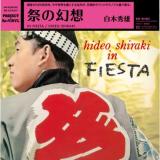
Original released in 1961
It's been over 60 years since the original recording, and now, this classic masterpiece is back in a monaural version with fantastic sound.
Hideo Shiraki, a key figure in Japanese jazz, left his mark with unique music and a strong presence. One of his standout works is "Matsuri no Gensou," recorded in 1961. This incredible piece takes a Japanese melody and transforms it into a cool jazz style, using a special arrangement with the koto. The collection also features exciting tracks like "Just One Or Eight" and the dynamic "Cherokee" with an amazing solo. Contributions from experts like Hidehiko Matsumoto and Yuzuru Sera add to the greatness. Even after 60 years, the music still feels fresh and passionate. Now reissued in monaural for the first time, this work stands as a timeless masterpiece that continues to captivate audiences worldwide. Enjoy the overwhelming sound of this significant piece in Japanese jazz history.
* Limited edition 2 x LP vinyl with full colour outer sleeve and printed inners.
* The sound of a D&B original. Carlito's debut LP blends timeless vibes with fresh energy and presents a masterclass in liquid funk.
* A long-awaited debut from one of liquid drum & bass's true pioneers, Fiesta En La Playa sees Carlito step out solo on Liquid V with a full-length that's been years in the making. Known for his work with DJ Addiction and iconic releases on labels like Moving Shadow, Creative Source, Hospital Records and Defunked, Carlito helped shape the early sound of soulful D&B, and here he refines it with maturity, depth and a forward-thinking touch.
* Includes the standout singles Fiesta En La Playa, Wide World, Savanna Rain and Take Me Down, plus a host of new tracks exclusive to the LP.
* An album that brings Carlito's classic touch into the present — deep, melodic and musical, with the weight and clarity to hold its own in any modern DJ set. Also featuring vocal contributions from V regular MC T.R.A.C.
* "I've always loved the more musical side of things," says Carlito, "and with this album I really wanted to stay true to my sound but bring it into the now."
* A personal and creative milestone, marking Carlito's return to the scene and celebrating the spirit of D&B culture past, present and future.
* Full support from Bryan Gee, DJ Marky, LTJ Bukem, Jumpin Jack Frost and the V family, with roots that run deep and a sound that continues to inspire across generations.
* Built around standout singles and brand new material, the LP is as much about feel as it is finesse, lush, rolling and warm, but with weight where it matters. From start to finish, it's the sound of a producer reconnecting with the craft: "I still get the same buzz turning the kit on, not knowing where a session might go."
* With a legacy that spans decades, Carlito delivers a record that speaks to both long-time heads and the new wave alike — soulful, confident and packed full of funk.
c A3. Sing It Now Swerve Mix
e B1. Fiesta En La Playa VIP
Brazilian Bruno Furlan returns to Hot Creations once again with his ‘La Fiesta’ EP, featuring two scorching house tracks.
One of Brazil’s leading house artists, Bruno Furlan continues to build a dedicated following across the globe, with his current US tour welcoming memorable performances at Club Space in Miami to Club Vinyl in Denver. His return to Hot Creations comes following the success of his ‘Bongoloco’ EP on the label to open 2023, alongside a slew of other releases on the likes of DIRTYBIRD, Club Sweat, Fool’s Gold Records, and his very own Track ID imprint. Delivering two fresh cuts for his fourth outing on Hot Creations Furlan showcases his growing sound once more here with ‘La Fiesta’.
Leading with a spicy fusion of rattling percussions and vibrant bongo drums, the title track ‘La Fiesta’ ignites a Dancefloor frenzy, honouring his roots through rich, pounding beats and impassioned vocals. Next up ‘Give Me That Bass’ is another production built with main stage energy, bringing punchy stabs and alluring calls to get people locked into the groove.
As a complete artist, Luna Maria Cedron gently and melancholy brings together the influences and facets of her existence. Behind her alias, Fiesta En El Vacio, the artist summons a number of Latin musicalities that make her career: Castilian flamenco, popular ballads from Venezuela meet the new generations of urban music: reggaeton rythms and sharp electronics. The uncompromising texts leave no alternative: this record claims the emancipation of women, the fight against this order of things that no longer suits anyone. Fiesta En El Vacio is a cry from the heart for and an encouragement to hope.
Vinyl Only
Undefined 014 is crafted by dutchies only! 2 not so young youngsters under the monniker 'Young Adults' are making name in the scene. They provided 4 deep techno driven peaktime cuts. The perfect blend of minimal and techno - deep kicks, thriving subs and bleeps. As a counteract weve came up with a remix by fellow dutchie Mathijs Smit - rolling tech-house, warm vibe and crisp sounds. Enjoy this dutch delightfullness.
- A1: Biguine Willy - Biguine
- A2: Oh Esto Y De Irvaba Cumabo - Mambo Espagnol
- A3: Saoco - Charanga Cubain
- A4: En Guantánomo - Son Montuno
- A5: A M. Decantonio - Son Montuno
- A6: No Me Persigas - Cha Cha Cubain
- B1: Mama Egée - Rumba Lingala
- B2: Vivo Africa - Rumba Lingala
- B3: Ngonga Ebeti - Rumba Lingala
- B4: Minge Rumba Fiesta - Rumba Lingala
- B5: Matulekele - Folklore
- B6: Mitele Ngo Mama - Rumba Lingala
- C1: African Negra - Cha Cha Cha Indubil-Lingala
- C2: Rithmo Ya Suka - Cha Cha Lingala
- C3: Seis Linda Cubana - Son Cubain
- C4: Mi Amor - Cha Cha Cha Espagnol
- C5: Sabrosito - Cha Cha Cha Indubil Lingala
- C6: Nadie No Puede - Cha Cha Espagnol
- D1: Nella Negrita - Bolero Lingala
- D2: Arsene Diongue - Bolero Lingala
- D3: Liliane Yo Nsomi - Bolero Lingala
- D4: Yve Ya Fabien - Bolero Lingala
- D5: Tu Te Rappelles - Bolero Français
- D6: L’edera - Bolero Italien
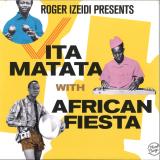
'The creation of the band African Fiesta, founded in 1963 by three well-known musicians, Nicolas Kasanda, Tabu Ley Rochereau and Roger Izeidi, and the contributions of the VITA label, established by Roger Izeidi, occupy an exciting chapter in the history of Congolese popular music. During the mid-1960s, African Fiesta consistently reached the top of the hit parade. The band, which back in the day positioned itself as a competitor to a current called ‘Fiesta Cubana’, breathed new life into Congolese Rumba, continuing the tradition of the African Jazz school started by Joseph Kabasele.
'The VITA label, with African Fiesta as their sole provider, besides four songs of Eduardo De Veracruz Vinagre et Son Orchestre, ran between May 1963 and early 1966. It created a spectacular legacy and back catalog full of tasteful sentiments and sensual melodies, deeply rooted in the Afro-Latin sound.
'This new compilation offers a few of the classic African Fiesta songs and complements them with an eclectic and original selection, divided into four thematic sides: Showcase, Rumba Lingala, Cha Cha Cha & Bolero. This double LP album comes with a 16-page booklet featuring the history of VITA and African Fiesta, song commentary by Congolese journalist Herman Bangi Bayo, and a written catalog of the VITA label. The heirs of Roger Izeidi kindly gave permission in Kinshasa to release this album of African Fiesta on Planet Ilunga.'
- Mobali Nakobala (Nico – Ngoma J 5127, © Sukisa) Rumba Lingala
- Nalingi Yo Na Motema (Nico, Chantal – Ngoma J 5130 © Sukisa) Kiri-Kiri
- Mokili Makambo (Nico – Sukisa 93) Kiri-Kiri
- Ata Osali (Chantal – Ngoma Dnj 5214, © Sukisa) Rumba Lingala
- 1: Er Boeing (Kwamy – Air Congo) Merengue
- Hommage A Lumumba Patrice (Sukisa 44) Mabanga
- Bougie Ya Motema (Nico – Sukisa 47) Rumba Lingala
- Okosambuisa Ngai (Mizele – Sukisa 66) Rumba Lingala
- Sule (Nico – Sukisa 50) Rumba Lingala
- Okosuka Wapi ? (Josky – Sukisa 110) Danse Kono
- Kamungaziko (Lessa Lassan – Sukisa 114) Danse Kono
- Mokili Matata (Nico – Tcheza 10.001; © Sukisa) Rumba-Kono Lingala
- Baoulé (Lassan – Sukisa 99) Kiri-Kiri
- Beauté (Nico – Sukisa 101) Rumba Lingala
- Mansanga (Nico – Sukisa 131) Rumba Lingala
- Souzi (Sangana – Sukisa 117) Rumba Lingala
- Naboyi Koswana (Sangana – Sukisa 120) Rumba Cha Cha
- July (Julie – Sukisa 120) Madre Rumba
- Runeme Mama (Nico – Sukisa 47) Cha Cha Cha
- A Morow (Arr. Nico – Sukisa 66) Cha Cha Cha
- Apôtre Del Si Boney (Apôtre – Sukisa 73) Charanga
- A La Savana (Arr. Nico – Sukisa 62) Pachanga
- Alto Songo (Arr. Nico – Ngoma J5126, © Sukisa) Rumba Espagnol
- Para Bailar (Nico – Sukisa 50) Pachanga
- Meta Fua Mudia (Kaba – Sukisa 118) Rumba Lingala
- Exhibition Show (Nico – Sukisa 135) Instrumental
- Exhibition Dechaud (Dechaud – Sukisa 71) Instrumental
- Bolala - Ayando (Nico – Sukisa 132) Extrait Show Kasanda
- Excitation - Makwandungu - Ngombele (Nico – Sukisa 132) Extrait Show Kasanda
- Kamulangu
'In collaboration with the children of Nico Kasanda, better known as Docteur Nico, Planet Ilunga proudly presents an anthology dedicated to African Fiesta Sukisa, available as a 3LP set and a digital release with bonus songs. This release is the result of many years of preparations and was realized in close partnership with Liliane Kasanda, Nico’s eldest daughter. Marking forty years since his passing, we felt that the year 2025 was the right time to honor Docteur Nico’s legacy with this original collection.
'Almost all of the African Fiesta Sukisa songs were released on Nico’s Sukisa label which translates in Lingala for “the final accomplishment”. The music on Sukisa, crafted by Nico and legendary vocalists such as Chantal, Sangana, Apôtre, Mizele, Lessa Lassan and Josky, embodies the essence of that powerful phrase with genius, class and depth. The label ran between 1966 and 1975 and released approximately 280 songs. Ngoma also issued the group between 1967 and 1971 and, in addition, reissued material from the Sukisa label. Many of these songs have become part of the collective memory of Congolese society and are still heard, discussed, and analyzed daily across digital platforms worldwide, as well as on numerous Congolese radio and TV stations.
'The album we put together features some of Nico’s signature songs alongside never before reissued tracks from the Sukisa catalog. It furthermore contains a large booklet with song commentary, testimonial interviews from well-known musicians, journalists, fans and Nico’s entourage, besides never before published photography about his personal and musical life.
'Alastair Johnston, author of the book ‘A Discography of Docteur Nico’ and longstanding Planet Ilunga collaborator, designed a stylish booklet and cover using all our collected material. Audifax Bemba, longtime admirer, compiler and connoisseur of Nico’s music, and the author of most of the song commentary in our accompanying booklet, offers his portrait of Docteur Nico:
“After displaying technical virtuosity with African Jazz, expert and accomplished guitar with African Fiesta, which musicologist Sylvain Bemba described as a dream guitar, Nico Kasanda was consecrated ‘dieu de la guitare’ by the public in the late sixties. With his band African Fiesta Sukisa, Docteur Nico displays his wide palette of unusual sounds. While exploring the Hawaiian guitar with its clear, airy, plangent, psychedelic effluvia, he continues to replicate the piano comping technique, and adds two missing strings to his bow: a simulation of the sanza (likembé or thumb piano), whose sounds he reproduces right down to the noisemakers of the tiny tin rings, on the one hand, and the sounds of the Luba balafon on the other. The right note, in the right place, at the right time, is the triptych on which Nico Kasanda’s playing is based, a note dressed in the perfect sound. A guitar of pure emotion. With African Fiesta Sukisa, his playing takes a ‘Chopin-esque’ turn, sending out more notes in a sublime adagio. The true artist is the one who simplifies everything. Docteur Nico is a genius of our time, whose style makes him the supreme exponent of the most important guitar school in Congolese music. He is recognized by his peers as the greatest African solo guitarist of all time. Sculpting sound in a tireless quest for beauty, Nico Kasanda has sublimated the guitar throughout his career.”
[xd] Kamulangu [Outro] (Dr. Kasanda – Sukisa 135) Folklore Baluba
- A1: Big Chief; Written-By – Gaines*, Quezerque*
- A2: Her Mind Is Gone; Written-By – Byrd*
- A3: Something On Your Mind; Written-By – Mcneely*
- A4: You're Driving Me Crazy; Written-By – Byrd*
- A5: Red Beans; Written-By – Morgenfield*
- A6: Willie Fugal's Blues; Written-By – Byrd*
- B1: It's My Fault, Darling; Written-By – Horton*, Grayson*
- B2: In The Wee Wee Hours; Written-By – Byrd*
- B3: Cry To Me; Written-By – Russell*
- B4: Bald Head; Written-By – Byrd*
- B5: Whole Lotta Loving; Written-By – Domino & Bartholomew
- B6: Crawfish Fiesta; Written-By – Byrd*
- A1: Fiesta En La Jungla
- A2: Fuga En La Selva
- A3: Tu Partida
- A4: Agua De Cachilde
- A5: La Chicharra
- A6: Dolor Y Pena
- B1: Izango
- B2: El Shiringuero
- B3: A Jenny
- B4: Linda Tocachina
- B5: Para Mi Gente
- B6: Tragedia En Uchiza
Carrying the torch of psychedelic cumbia, with a healthy dose
of surf guitar and Amazonian dancefloor flourishes from Peru
and Brazil alike, Fiesta en la Jungla by Los Dexter’s de Uchiza
is the first release from the newly formed London-label Ritmo
del Barrio. Originally released in 1982, it captures the finest
cumbia being made in Peru at the time, decked out with
frenetic surf-rock guitar riffs, rhythms floating on crisp
cumbia percussion and occasionally punctuated by carimbó
breakdowns native to the Pará region of north-eastern Brazil.
The album is filled with energy, a gem that was always
intended to animate any dancefloor. Peruvian cumbia came to national attention in the late 60s
through the recordings of Juaneco y su Combo, Los Destellos
and Los Wembler’s de Iquitos, but it’s had many revivals, and
Fiesta en la Jungla arrived when the style was going through a
major transition. In 1977, a passenger plane carrying most of
the members of Juaneco y su Combo crashed, killing everyone
on board. In 1980, Los Destellos retired, and Los Wembler’s
released their tenth and final record, they were ready for a
break. This left a big void in Peruvian music. Wasting no time,
Los Dexter’s Emerson Ruiz Mosquera took the opportunity and
gave his band new life, filling the band’s ranks with young and
energetic musicians who were hungry for success. He built the
new band around a solid base of dexterous guitars, a dynamite
rhythm section, and added oodles of percussion and an electric
organ, giving them a powerful psychedelic sound that called
back to the sounds of the original chichamasters, but added a
new sheen. Along with bands like Los Shapis and Los Walkers
de Huánuco, Peruvian cumbia was reborn as chicha in the
1980s, and was now the sound of Peru’s barrios up and down
the country.
Based in the city of Uchiza, on the edges of the Amazon basin,
Los Dexter’s were uniquely located in central Peru, closer to the
largest urban centres of the country than Amazonian outposts
like Pucallpa or Iquitos, and therefore better positioned to
travel to the furthest reaches of the country with ease. In a
sense, Los Dexter’s were a bridge between the Amazon and the
rest of Peru, a bridge over which the sounds of Amazonian
cumbia could travel to the rest of the country on their way to
becoming one of the most ubiquitous elements of Peru’s musical
identity. Fiesta en la Jungla represents Los Dexter’s in their third
iteration. Led by Emerson Ruiz Mosquera, who was just a
young boy in 1970 when his older brother founded the group
with four of his friends, the ensemble by the time of Fiesta en la
Jungla included Orlando Abad on the timbales and lead vocals,
Lucho Bendezú on lead guitar, Javier Quiroz as second
guitarist, Alejandro Almeira on bass, Rufino Bustamante on
keyboard, Ramon Siu on bongos and bells, Ivan Rios on conga,
and Emerson as musical director and composer. Remarkably,
most of the group’s members helped to write at least one
track, Los Dexter’s were a collective endeavour.
Reissued on vinyl for the first time by Ritmo del Barrio, this
record is essential for any collector of Peruvian cumbia.
Showcasing the unique sound of Los Dexter’s, it carries hits
like “Fuga en la Selva” and “El Shiringuero”, which are sure to
set any dancefloor on fire, combined with slower, carimbó-
infused cumbias like “Fiesta en la Jungla,”and “Agua de
Cachilde.” Its closing track, “Tragedia en Uchiza'', is a key
piece of local history and tells of the flooding of the
Chontayacu River in 1982, a mortal tragedy that affected
thousands of people. Despite the subject matter, the album
maintains a joyful vibe throughout, with high energy riffs and
irresistible rhythms, contrasted with terse love ballads, like “A
Jhenny.” It is both a piece of musical history, and a sure-fire
tool for the dance floor.
Los Dexter’s became a fixture of festivals and celebrations in
the provinces of San Martin and Huánuco, and from expanded
across the country, taking Amazonian cumbia from the
Peruvian Amazon, to the heights of the Peruvian sierra, the
coastal plains, and the capital city of Lima.
In 2023 Deutsche Grammophon celebrates a wonderful milestone: its 125th birthday. To mark the occasion the Yellow Label makes a selection of LPs available on vinyl for the first time ever. Including legendary recordings by Daniil Trifonov, Hélène Grimaud, Hilary Hahn, Jan Lisiecki and many others. Gustavo Dudamel and the Simón Bolívar Symphony Orchestra of Venezuela celebrate the best in Latin American music, which “is all about dance, about rhythm” (Dudamel). “They set the concert hall afire with an enthusiastic fervor the likes of which none of us had ever witnessed from a symphony orchestra” (Los Angeles Times). Here is their recording – live, in concert, in Caracas – of the repertoire with which they’ve been thrilling audiences in around the world.
Fiesta Soundsystem arrives on the burgeoning YUKU imprint with a fiercely experimental and timeless album - "Sinking" - which simultaneously draws on the nostalgic complexity of IDM and breakcore while leaning heavily into the future on the artist's own unique terms.
Leatherette are, by their own description, “five shy guys who sometimes get off the stage and punch people,” a quintet whose car-crash of jagged noise, twisted love and dark, anguished melody has delivered a remarkable – and eminently combustible – debut album. The group are based in Bologna, but all hail from different towns in Italy. These five young men – singer/guitarist Michele, bassist Marco, drummer Francesco, guitarist Andrea and saxophonist Jacopo – are united by a profound need to make music, to express themselves naturally and honestly. The group bonded over wildly differing influences – everything from midwestern emo gods American Football, to Berlin-era Bowie, to James Chance & The Contortions, to rap and electronic music – to create a dense, passionate, articulate sound of their own. You can file them near fiery post-punk kindreds like Shame and Squid, or unhinged 90s noisers like Unwound or Hoover, or squalling No Wavers like James Chance, but the truth is there are few bands like Leatherette that walk this Earth. Their first full-length, Fiesta follows an EP, Mixed Waste, recorded during lockdown. The songs on Fiesta precede the Covid era, though the group spent the pandemic rewriting and overhauling their maiden batch of songs at leisure. The result is an astonishing and remarkable debut: poetic, caterwauling, broken and beautiful. The album title is “a reference to the bullfights in Pamplona,” the group say. It’s no empty metaphor. “Bullfight is a strange ritual,” they elaborate. “And we’re against bullfights, but they’re fascinating in an iconographic way. And also metaphorically, violence flows on both sides, but in a feastful way. It’s similar to a concert, really – you’re expressing violent things, in a physical way. And people react to that, which is wonderful, which is fantastic.”
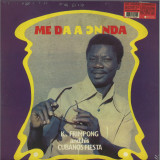
Me Da A Onnda by K. Frimpong and his Cubanos Fiesta isclassic and essential Hi-Life & Afro
Funk album from one of the greatest Ghanaian singer and composer, finally reissued for the first time!
This legendary K Fimpong's fantastic rare album was recorded in 1980.
K . Frimpong was born on July 22nd, 1939 at Ofoase in the Ashanti - Akim district and entered right
into music after elementary school by joining "Star de Republic" and later "Oko's band" after which he left
to K. Gyasy's band where he worked for more than 6 years. As a prolific songwriter and singer, here's
the reissue of his amazing album, a modern fusion of Hi- life and Soul.The excellent background is given
by the famous Cubanos Fiesta with members of Vis-A-Vis band.
Originally produced on the major Polydor, this four songs recording is a blend of danceable and
spiritual Soul and straight Hi-Life. A must-have vinyl of percussive Afro Funk for all the music
connoisseurs, K. Frimpong backed by Cubanos Fiesta LP is a true masterpiece, so hard to find and
reaching crazy skills for a decent copy affordable.
Remastered by Frank Merritt at The Carvery. Pressed on Replika format. Fully licensed by the Alhadji
Kwame Frimpong Family
- A1: Mexican Rhapsody
- A2: Savannah River Holiday
- A3: Kentucky Mountain Portraits
- B1 1: Cindy
- B2 2: Ballad
- B3 3: Shivaree
- B4: Joe Clark Steps Out
Long a collector favourite, this early stereo recording presents a set of lively American light classics: ‘Mexican Rhapsody’ (Robert McBride); ‘Savannah River Holiday’ (Ron Nelson); ‘Kentucky Mountain Portaits’ (Lyndol Mitchell); ‘Joe Clark Steps Out’ (Charles G. Vardell Jr.). Recorded in the Eastman Theatre, Rochester NY, October 28, 1956 with a Schoeps M201 microphone in the centre and Neumann U-47’s on the left and right sides.
London based producer Fiesta Soundsystem has been rapidly gathering attention over the past few years with a string of acclaimed records for Warehouse Rave. His latest outing ‘Rites Of Passage’ for Time Is Now sees the rising producer release his debut full long play, featuring ten cuts of broken beat bass music.
- A1: Amor Verdadero
- A2: Alto Songo
- B1: Habana Del Este
- B2: A Toda Cuba Le Gusta
- C1: Fiesta De La Rumba
- C2: Los Sito' Asere
- C3: Pío Mentroso
- D1: María Caracoles
- D2: Clasiqueando Con Rubén
- D3: Elube Changó
'A Toda Cuba le Gusta', the classic debut album by the Afro-Cuban All Stars. The frst in a trilogy of extraordinary albums recorded by World Circuit in a single two-week session
at Havana's EGREM studios, 1996. The other albums, which share many of the same personnel, were 'Buena Vista Social Club' and 'Introducing Rubén González'. Remastered by Bernie Grundman from the original analogue tapes and now available
for the frst tme on double 180gm heavyweight vinyl, housed in a gatefold sleeve and presented alongside a 32 page booklet as part of World Circuit's classic album series. Plays at 45rpm.
- A1: Fairytale Of New York
- A2: Sally Maclennane
- A3: Dirty Old Town
- A4: The Irish Rover
- A5: A Pair Of Brown Eyes
- A6: Streams Of Whiskey
- A7: A Rainy Night In Soho
- B1: Fiesta
- B2: Rain Street
- B3: Misty Morning, Albert Bridge
- B4: White City
- B5: Thousands Are Sailing
- B6: The Broad Majestic Shannon
- B7: The Body Of An American
- A1: Silvestre Montez Y Sus Guantanameros - El Avispón
- A2: Los Orientales De Paramonga - Lobos Al Escape
- A3: Los Destellos - Pasión Oriental
- A4: Grupo Celeste - Viento
- A5: Los Mirlos - Cabalgando Con Ella
- A6: Manzanita Y Su Conjunto - Arre Caballito
- B1: Los Mirlos - El Escape
- B2: Los Wembler's De Iquitos - Un Silbido Amoroso
- B3: Los Destellos - La Ardillita
- B4: Los Beltons - Cumbia Pop
- B5: Los Beta 5 - Beteando
- B6: Los Galax - Lamento De Un Galax
- B7: Aniceto Y Sus Fabulosos - Mi Gran Noche
- C1: Juaneco Y Su Combo - Mujer Hilandera
- C2: Los Sander's De Ñaña - El Tramboyito
- C3: Los Beta 5 - La Danza De La Tortuga
- C4: Los Destellos - Guajira Sicodélica
- C5: Los Orientales De Paramonga - Captura De Lobos
- C6: Los Diablos Rojos - Malambo
- D1: Los Átomos De Paramonga - El Trencito
- D2: Los Beta 5 - La Jorobita
- D3: Los Ecos - Aquí En La Fiesta (I Don't Want To Spoil The Party)
- D4: Los Demonios De Corocochay - La Chichera
- D5: Los Demonios Del Mantaro - Liliana
- D6: Los Mirlos - Lamento En La Selva
Peruvian cumbia, also know as "chicha", brings together tropical music styles from Colombia and Cuba, Western influences such as 60s beat and psychedelic rock, and mixes them with indigenous melodies from the Amazonian jungle and traditional Andean songs. The result is a unique and vibrant style of music which reverberates with life. Vampisoul's compilation includes tracks by the most important bands of the genre. Peruvian cumbia is currently being rediscovered by new audiences and there exists a thriving club and live venue scene in cities like New York, London and Madrid.
36-page booklet with extensive liner notes in English and Spanish plus photos and memorabilia.
- A1: Listen To The Music' - Ft The Doobie Brothers & Ellis Hall
- A2: Everlasting Arms' - Ft Dr. John, Luke Winslow-King, Vasti Jackson & Roots Gospel Voices Of Mississippi
- A3: All Along The Watchtower' - Ft John Cruz, Cyril Neville, Ivan Neville, Louis Mhlanga & Warren Haynes
- A4: Natural Mystic - Just A Little Bit' - Ft Jack Johnson, Paula Fuga, Afro Fiesta, Donald Kinsey & Lee Oskar
- A5: Skin Deep' - Ft Buddy Guy, Tom Morello & The Chicago Children's Choir
- B1: Chan Chan' - Ft Teté García Catulra & Pancho Amat 'Africa Mokili Mobimba' - Ft The Preservation Hall Jazz Band & The Tpok Jazz Band (From Congo To Congo Square Usa)
- B2: Ahoulaguine Akaline' - Ft Bombino & Lee Oskar
- B3: Rasta Children' - Ft Paulo Da Luz & Blue King Brown
- B4: Congo To The Mississippi' - Ft Afro Fiesta, Grandpa Elliott, Vasti Jackson & Leon Mobley
- B5: Bring It On Home To Me' - Ft The Late Roger Ridley (Singer From Pfc's 103M Views: Stand By Me), Alice Tan Ridley (Roger's Sister), Grandpa Elliott (Pfc Star) & Karl Denson
'Listen To The Music' is the fourth star-studded 'Songs Around The World' album and video series from the world-renowned Playing For Change organization. It features audio recordings of hit rock and world-beat songs, along with a compelling series of performance videos in which Playing For Change's unique recording process is documented to great effect. each song is multi-track recorded and videotaped in multiple picturesque locations around the world by visionary producer and hilanthropist Mark Johnson. The full 12 song project features more than 200 Artists and was recorded in 25 different countries. Featured stars include The Doobie Brothers, Ellis Hall, Jack Johnson, Dr. John, Warren Haynes, Cyril and Ivan Neville, John Cruz, Preservation Hall Jazz Band (New Orleans), TP OK Jazz Band from Congo
(Kinshasa), John Densmore, Bombino, Buddy Guy, Waddy Wachtel, Roots Gospel Voices of Mississippi, James Gadson, Reggie McBride, Karl Denson,Roberto Carcasses, Mamadou Diabate, Lee Oskar,Anders Osborne and Pancho Amat.
Now available on vinyl.
Original year of release: 1991. Features the tracks 'Out Of Time Man', 'King Of Bongo', 'Madame Oscar', etc. Mano Negra the legendary first band of French singer Manu Chao ... featuring songs in Spanish, French, English and Arabic.. We are celebrating this year the 30th anniversary of its foundation. The album has been unavailable on vinyl since its first original pressing.
Gatefold Sleeve
M’Bamina – African Roll (1975)
The story of an album born between Africa, Italy, and the nightclub culture of the 1970s
In the heart of 1970s Italy — a country undergoing profound social change and a music scene just beginning to open itself to distant sounds and cultures — an extraordinary, almost improbable story took shape. It is the story of a group of young African musicians who found their way to Europe, of a Turin nightclub that became a crossroads for communities and experimenters, and of an album which, released in small numbers and largely unnoticed at the time, is now considered a rare jewel of Afro-fusion.
The band called themselves M’Bamina — an ensemble of musicians from Congo, Cameroon, and Benin, who arrived in Italy in the early Seventies. Settling between northern Italy and the Pavia area, they began performing in small clubs and community events, bringing with them a vibrant rhythmic heritage: African polyrhythms, call-and-response vocals, funk-infused bass lines, and Caribbean or Afro-Latin colours absorbed along their musical journeys. Their raw, contagious energy on stage quickly drew attention.
Meanwhile, in Turin, another story was unfolding. There was a venue becoming almost legendary: Voom Voom, one of the city’s liveliest nightclubs, run by Ivo Lunardi. The club attracted an eclectic crowd — students, artists, foreigners, night owls — and Lunardi quickly understood that the dancefloor wasn’t just a place for music, but a melting pot for a new kind of cultural energy. Out of this vibrant atmosphere came his idea: to turn the club’s name into a small independent record label, Voom Voom Music, capable of capturing the spirit of those years and giving voice to unconventional projects.
When Lunardi heard M’Bamina, he immediately sensed that this was the sound he had been searching for: fresh, different from anything circulating in Italy at the time, and capable of blending African tradition with funk and European sensibility. He brought them into the studio.
Production was handled by Lunardi along with Christian Carbaza Michel, while the engineering was entrusted to Danilo Pennone, a young sound technician with a sharp, intuitive ear.
The recording sessions — held in Turin in 1975 — produced a remarkably warm and direct sound. The music feels almost live: grooves rooted in African tradition, but open to funk-rock structures and modern arrangements. It is a natural fusion, never forced. Tracks move between tribal rhythms, funk basslines, light electric guitars, congas and Afro-Latin percussion, with call-and-response vocals and melodies that echo both Congolese tradition and the lineage of Latin jazz. Not by chance, one of the album’s most striking tracks, Watchiwara, reinterprets a Latin standard through M’Bamina’s own rhythmic language.
The album was titled African Roll — a name that was already a statement of intention. It is African music that “rolls,” that moves, adapts, transforms within a new geographic and cultural setting. It is not strictly Afrobeat, nor Congolese rumba, nor Western funk: it is a spontaneous, hybrid blend, shaped more by lived experience than by any calculated aesthetic program.
When African Roll was released, the world around it barely noticed. Distribution was limited, and 1970s Italy had yet to develop a cultural framework for receiving such music. The national music press rarely paid attention to African or “world” productions. The album slipped into silence — though the band’s own story did not.
M’Bamina continued performing across Europe and Africa, even sharing a stage in Cameroon with none other than Manu Dibango. By the late Seventies, they moved to Paris, signed with Fiesta/Decca, and recorded a second LP, Experimental (1978). Meanwhile, the peculiar record they had made in Turin began to resurface quietly among vinyl collectors, Afro-funk enthusiasts, and DJs hunting for forgotten grooves.
That is when the album’s fate began to shift.
Over the decades, African Roll emerged as an almost unique document: a snapshot of an intercultural Italy before the word “intercultural” even existed, a fragment of migrant history, a spontaneous experiment in musical fusion born far from major industry circuits but rich in authenticity. Original copies began commanding high prices on the collector’s market, and the album became recognized as one of the hidden classics of European Afro-fusion from the 1970s.
Today, more than fifty years later, this reissue finally restores visibility and dignity to a project that deserves to be heard, studied, and celebrated. It is not simply an album: it is the testimony of a rare cultural encounter, born in an Italy unaware of how fertile such exchanges would one day become.
It is the story of a visionary producer, an extraordinary band, and a fleeting moment in which music, migration, and nightlife came together to create something genuinely new.
African Roll is — now more than ever — the sound of a bridge: between continents, between eras, between cultures. A record that, after rolling far and wide, has finally come home.
Neighbourhood is proud to release MJK's debut EP "Close Encounter".
The whole release visually represents a field of beautiful flowers with a dark swampy twist at the end! Picture that sonically and this is what you get with MJK's majestic "close encounter"!
The sound palette is similar across the EP, deep, lush pads, rhythmic, percussive beats, swirling you into a heady haze - MJ's Groove, Fiesta 132, Close Encounter... Featuring two collaborations with the brilliant Bluetoof on the B side, Indigo, again in line with a similar sound palette. Yet the last track "sweeter than" ironically takes you by a dark surprise!
Blue Album[22,65 €]
Two Seminal albums from cult Ghanaian musician Alhaji K. Frimpong and his group the Cubano Fiestas, recorded in 1976 and 1977 respectively and considered to be some of the best highlife albums ever recorded, at the pinnacle of West African musical tradition and innovation.
Both originally self titled, they have become known by the colour of the covers - Blue and Black respectively. The Blue Album brings new arrangements to traditional Ghanaian melodies and features the masterpiece Kyenkyen Bi Adi M’awu (come back my love) - universally known in Ghana, covered and sampled by artists such as Chronnix, Gnarls Barkley and many more. The Black Album expands the electronic elements and features the equally visionary Hwehwe Mu Na Yi Wo Mpena, although the real gem is hiding on the B side: the extended groove of “Adam Nana”. Sinuously evolving guitar lines, clavinet vamps, harmonised vocal snatches and otherworldly percussion expand and contract over a full quarter of an hour - a Ghanaian repost to the Afro Jazz experiments going on at the same time on the other side of the Atlantic. Although popular in Ghana at the time of the release, the albums were never distributed internationally and original copies of the album are extremely rare.
The albums got a limited reissue in 2011 and have been unavailable since - even reissue copies sell for high prices on the second hand market
- A1: Raz Olsher Ft. Luzmira Zerpa - Infinite Blue
- A2: La China De La Gasolina - Ricky Ricardo
- A3: Charlie Chimi - Echale Candela
- A4: El Dragón Criollo - Ponte A Trabajar
- A5: Ron Juan - Party People
- B1: Pancæs - One4Chicho
- B2: Juan Hundred - No Pares, Juanito
- B3: Pinchado & Tribilin Sound - Cumbia Ritual
- B4: Q.a.p Band Aka (Swin Batuka) - La Picosa (Remix)
- B5: Whodamanny - La Fiesta
- B6: Addict Ameba - Michael Collins
New compilation by Coco Maria on her own new founded imprint Club Coco. Comes with a 4 page folded insert.
There are albums that aren’t just listened to—they’re lived in. Club Coco – New Dimensions in Latin Music is one of them. This compilation, curated by Coco María, marks the first release on her own label and serves as a sonic portrait of what Latin music can become when it’s guided by intuition rather than labels. Eleven tracks open the windows and cross continents as effortlessly as changing a song. Here, Neapolitan synthesizers coexist with digital cumbias, voices whisper from within the groove, and rhythms invite movement—without urgency or pretense.
This selection isn’t defined by a genre but by a feeling: that of someone dancing with an open heart and keen ears. Each track is a postcard from a corner of the world, and also a love letter to rhythm and the emotions it stirs. From Bogotá to Naples, passing through Lima, Amsterdam, and New York, this compilation offers a journey where past and future brush against each other in the present moment. Club Coco doesn’t aim to define a sonic truth, but to invite listeners to discover new ways of hearing and feeling.
The party has already started. Come on in.
More Rice returns with its ninth release and second vinyl drop of the year, delivering a heavy-hitting EP from label cofounder Sarayu. The Don. Mueang. marks his first full solo release on the label since 2021, reaffirming his distinct voice in Asia’s underground dance scene. The A side features two peak-time weapons: no nonsense, bass-driven influenced techno rollers built with the dancefloor firmly in mind and straight to the point. On the flip, trusted More Rice regulars step in on remix duties. O-Wells reimagines Don Vito Bingus with a warm, rolling take that leans into house and tech
house territory, giving the track a smoother, hypnotic swing.
Mogwaa closes out the EP with his Fiesta Mix — an electrified, rhythm-forward version that does exactly what it says on the tin: it bangs. As always, all tracks made for the dancefloor
Original Gravity Records Ignites the Summer with Latin Fever Vol. 4
Available on Limited Edition Vinyl & Digital Platforms
Original Gravity Records turns up the heat once again with the explosive release of Latin Fever Vol. 4 — the highly anticipated fourth instalment in the label’s signature Latin groove series. Packed with sizzling salsa, fiery guajira, and vintage Latin soul, this EP is a globe-spanning collaboration anchored in the UK and powered by musicians from Peru, Cuba, the USA, and Italy.
From the opening tumbao of El Tumbao Del Solar by Abramo & Néstor, to the irresistible charisma of Chévere Girl by Luchito & Néstor, this record is a celebration of rhythm, culture, and cross-continental energy. Flip the wax, and you’ll find La Vieja Escuela serving up Vacilar Mi Guajira — a classic throwback dancefloor gem — before Néstor Álvarez brings the party home with the brass-heavy burner La Fiesta Se Va.
With drums, bass, and production led by OG’s own Neil Anderson and a tight brass section along with standout soloists from both sides of the Atlantic, Latin Fever Vol. 4 is pure analog fire — recorded with heart, soul, and serious groove.
Whether you're a crate digger, DJ, or just a lover of Latin rhythms, this is one for the shelf and the stereo.
Get it while it's hot. This is Latin Fever — and it's contagious.
A pioneering force in African music, Jo Tongo has always been on top of the game. Since the late 60s he has been recording music under his early Jojo L'Explosif moniker. His debut album "Jo Tongo" was released 1976 on Fiesta/Decca and features classic tracks like Jangolo and Piani. Now, after decades of underground influence and global recognition, his second album Sa Discossa (1980) is re-released for the first time. Being an electrifying fusion of African rhythms, disco, makossa, reggae and funk it is reflecting his lifelong journey of musical exploration and cultural storytelling and claims its place as an essential recording in the Afro-disco movement.
Jo Tongo's music is inseparable from his life's story-a journey that spans continents, struggles, and victories. From his early years as a leading African musician before the global rise of Afrobeat, to his deep roots in classical training, and his time performing in France and Germany, his sound is shaped by a rich blend of influences. Having played in bands across Europe, from American military bases in Germany to the jazz and soul circuits of Paris, he absorbed the pulse of multiple musical worlds, creating a sound uniquely his own.
"My music is my life. I never saw it as a way to become a star-I am a simple man," Tongo explains. "I came into music to say something, to tell about life, to share my experiences with the world." His perspective on fame and artistry is deeply rooted in his Cameroonian background. "I wasn't interested in business. I wanted to build something with music, to create a sound that was mine."
But Jo Tongo's music has always carried a deeper message. His work reflects his strong political stance against colonialism, social injustice, and oppression. "I cannot stay silent while my people suffer," he says. "Music is a way to resist, to stand strong, and to remind people of their dignity and their power." Throughout his career, Tongo has used his platform to advocate for African identity and independence. His songs, layered with messages of social consciousness, have continued to resonate with younger generations who recognize the relevance of his words even today.
Sa Discossa is more than just a disco record. It embodies Jo Tongo's philosophy of resistance, identity, and celebration. The title itself is a blend of "disco" and "makossa," reflecting the seamless fusion of African groove and the dancefloor energy that defined the era. Tracks like Bunya, sung in his native language, carry messages of love, gratitude, and resilience-sentiments that remain as relevant today as they were nearly 50 years ago. As Tongo describes it, "Every day, give thanks and praise to your Lord. Every day, show me your love. Every day, let me show you my tender love."
Tongo's musical journey also took him through the world of reggae, inspired by his exposure to American and Caribbean artists. "At first, I didn't like reggae-it was too slow for me," he admits. "But then I heard Bob Marley, and I realized the power in its simplicity. The rhythm, the
message-it was all connected to something bigger." He later found himself embracing reggae as an essential part of his musical DNA. "I realized that my music and reggae shared the same roots. We are all connected, all telling the same story in different ways."
Having spent much of his career performing across Europe, Jo Tongo reflects on his connection with international audiences. "I've played everywhere-from Africa to Germany, from Paris to other cities in France and what I've learned is that music speaks a universal language. You don't need to know the words to feel the message."
Despite taking a step back from the stage in recent years, he remains open to new possibilities. "Music is like a fire-it never truly dies. I have a lot to say, and music is the best way to say it."
For Jo Tongo, music is more than entertainment-it's a language of truth, a testament to history, and a bridge between cultures. The rhythm of Sa Discossa lives on, stronger than ever. With Sa Discossa returning under the African Edge series on The Outer Edge label, Jo Tongo's legacy continues to resonate, proving that real music never fades.
Collecting Orders For Repress
PCLUB019 serves as a reminder to always check demos. An instagram DM from AR:MG in Mexico City has proved to be one of the most vibrant records we've ever released.
Includes expert remixing courtesy of Radioactive Man and Sansibar.
¿Dónde está la fiesta?
People Unpleased strikes again with this 4-track EP, designed for the dancefloor through the unique vision of each contributing artist. Featuring talents from across the globe—Bolivia, Spain, Argentina, and the United Kingdom—this collaboration delivers an exceptional record for your collection
- A1: Korogi ‘73 - Fushigi Song
- A2: Yas-Kaz - Hei (Theme Of Shikioni)
- A3: Yoichiro Yoshikawa - Tassili N'ajjer
- A4: Norihiro Tsuru - Farsighted Person
- B1: Geinoh Yamashirogumi - Theme Of Kaneda
- B2: Yoichiro Yoshikawa - Fiesta Del Fuego
- B3: Columbia Orchestra - Heart Beats / Theme For Andrew Glesgow
- B4: Kan Ogasawara - Gishin Anki
LP vinyl only release + 4 page liner notes (comes with hype sticker)
The percussive new age soundtracks of '80s and early '90s Japanese TV, anime and manga built alternative worlds and pushed boundaries in the process.
When Japanese composer Yas-Kaz left Tokyo for Bali in the mid 1970s he had little idea of how influential his trip would become. In studying the storied art of gamelan, the jazz and avant-garde percussionist opened a door to a world of sound and rhythm left behind by the West. The music he and his contemporaries made would become known as new age. It also happened to soundtrack the golden era of anime.
Awash with money and with the prerogative to entertain the burgeoning middle classes, anime in the 1980s experienced a creative and commercial boom. Not constricted by generic expectations, production houses such as the now renowned Studio Ghibli were able to experiment liberally with both form and content. And with it came the space for composers to be similarly adventurous.
TV, Anime & Manga New Age Soundtracks 1984-1993 charts this moment across eight tracks spanning classics of the genre and previously unknown rarities. The collection brings together music that found kinship in electronic and acoustic instrumentation, often combining spiritual or environmental themes with percussive, varied and highly refined syncopations of non-Western musical traditions.
Among them is ‘Kaneda’ by Geinoh Yamashirogumi, the shape-shifting group of self-styled musicians, anthropologists and computer scientists that masterminded the soundtrack to game-changing dystopian anime Akira - and with whom the sound, tuning and breakneck speed of Balinese gamelan has become indelibly entwined.
Reflecting the desires of the era to reach beyond Japan’s borders, many of the soundtracks featured were commissioned for narratives set in distant lands or alternative worlds. There’s violinist and composer Norihiro Tsuru’s ‘Farsighted Person’, written for The Heroic Legend of Arslān, set in ancient Persia; Yas-Kaz’s own ‘Hei (Theme of Shikioni)’, for period sci-fi manga & anime series Peacock King - Spirit Warrior; and two tracks - Tassili N’Ajjer and Fiesta Del Fuego - from Yoichiro Yoshikawa’s soundtrack to NHK’s proto-Planet Earth series The Miracle Planet.
Such was the variety and quality of the music produced, if there is a guiding principle to the tracks collected here it is a sense of escapism and adventure that came with the confluence of modern electronic instruments and a fascination with percussive traditions.
Elsewhere, pioneering children’s TV composer Chumei Watanabe’s ‘Fushigi Song’ (performed by a vocal group Korogi ‘72) offers a trippy and infectious groove with sonic similarities to Don Cherry’s ‘Brown Rice’; little-known jazz-funk library group Columbia Orchestra showcase the best of Tokyo’s session musicians on ‘Hearts Beats - Theme for Andrew Glasgow’; before lawyer-turned-composer Kan Ogasawara closes out the compilation with a dramatic flourish on ‘Gishin Anki’.
Following on from Time Capsule’s acclaimed deep-dive into the world of manga & anime synth-pop in 2022, this vinyl only collection is set to broaden and diversify an understanding of how soundtracks shaped the sound of new age music in Japan for a generation.
Curators: Kay Suzuki, Rintaro Sekizuka (Vinyl Delivery Service)
Artwork: Tu-yang
The annual Bonkers Music compilation returns, delivering another round of high-energy bangers. This year, the release explores a slightly evolved musical style while staying true to its signature sound. Celebrating its sixth edition, “Year VI” will be available on 12” vinyl, accompanied by a few exciting surprises.
A1. Neskeh’s “106 Cabrel” revolves around a melodic yet hypnotically repetitive lead sequence, crafted to evoke a trance-like state on the dance floor and radiate positive energy. The foundation of big, punchy kicks and a robust bassline gives it a quintessential club vibe.
A percussive break in the middle shifts the mood entirely, paying homage to Goa rhythms and shamanic rituals, immersing listeners in a more primal atmosphere. The drop reignites the momentum, enhanced by the warm tones of the beloved Minilogue, adding an almost epic dimension to the journey.
A2. Berlin’s Mike Sacchetti and Madrid’s David Meyer unite on “Agria Pachanga,” a dance energy piece that pulses with percussive drive and a subtle touch of Latin identity.
Acid-inspired arrangements swirl around classic drum machine sounds. The syncopated rhythms and pumping basslines push the track towards an agitated club atmosphere, building this song into a bold declaration of fiesta.
A3. Two friends from Guadalajara, Mexico, Leonor & Ludviq, now living in different European cities, (Barcelona & Lyon) join forces to bring you Capybara Trance, This electrifying track combines dark, driving energy with intricately sequenced melodies, a hard-hitting chugging bassline, and the unique touch of capybara-inspired sounds. Anchored by a commanding kick drum that sets an unrelenting tempo.
B1. “Nebula” is a deep, atmospheric journey through cosmic sounds and pulsating rhythms. The track blends hypnotic melodies with dark synthetic textures, evoking a sense of drifting through endless galaxies. With a strong groove and intricate arrangements, it delivers energy that fits perfectly in both morning sets and more conceptual playlists. The collaboration between Radial Gaze, Ducati Flux, and Persona RS captures the spirit of exploration, creating a versatile track that can be the highlight of any set
B2. Intruso hailing from Bogota, now based in Barcelona brings “Somos Acido” this track draws inspiration from the early 2000’s House and Trance, capturing the nostalgia and emotional resonance of his first experiences with electronic music as a child. A driving Acid bassline injects dynamic energy, making it perfectly suited for the dance floor.
B3. Argentinian born, Australia based producer Poulper teams up with Mexican maestro Hugo Vallejo to kick off this intergalactic adventure. This track weaves together acid-laced elements and an infectious rhythm, layered with haunting post-dark vocals that narrate the fiery, cosmic tale of love burning in the vast expanse of space. A bold and immersive journey into the unknown, perfect for this stellar compilation.
Announcing the debut album from one of London’s most electrifying acts, New Regency Orchestra. An 18-piece Afro-Cuban big band, inspired by the musical melting pot of NYC in the 1950s, but with the punch and power of a whole host of London’s best Latin and jazz musicians. Blowing new life into these compositions, the album is a reimagining of some of the finest music from that golden era. From early 1950s René Hernandez and Tito Puente, through to the 1970s salsa of Rafael Labasta and Orlando Marin, produced and performed with fresh fire.
NRO is the brainchild of its artistic director, and the man behind Total Refreshment Centre and Church of Sound, Lex Blondin. Through a long-held passion for jazz, Lex discovered the explosive Afro-Cuban rhythms of mid-1940s NYC via the godfather of Afro-Cuban jazz, Mario Bauzá. A time when two musical worlds collided in a fusion of creativity and energy, jazz luminaries like Dizzy Gillespie and Charlie Parker joining forces with Cuban greats like Machito and Chano Pozo. This vibrant sound was music to dance to and found a home at The New York Palladium, a formative space of freedom and expression that was key to the scene’s development.
Although dance-focussed in their makeup, those early recordings are not often heard in modern club environments and Lex dreamt of retelling their story with a contemporary dynamism. A slice of serendipity followed, as a slot at a new festival opened up and Lex jumped at the chance to make this idea a reality, an 18-piece big band breathing new life into these beloved songs.
Enlisting the expertise of some of the capital’s finest talent, Lex and co-captain Andy Wood, of Como No fame, put together a world-class line-up of talent. Bringing in Eliane Correa as musical director and bandleader, a fluid and interchanging 18-piece band was formed.
The album itself is a hand-picked selection of timeless Afro-Cuban jazz classics, reimagined with NRO’s unbridled energy. It contains ten incredible instrumental tracks including 'Pregon' with its anthemic horn stabs and the addictive head nod bounce of 'Mambo Rama', alongside two scorching vocal numbers in 'Papa Boco' and 'Labasta Llego'. Coupling a heavyweight rhythm section with a wall of horns, they provide a fresh spin on songs from Tito Puente and Chico O'Farrill, René Hernandez through to Rafael Labasta.
“Some of the tunes like Tito Puente’s ‘Mambo Rama’ and ‘Scarlet Mambo’ might sound like they went to a gym as extra drums and bass synth were added to them whilst the tune ‘Sahib & Tito’ is a mix of Tito’s ‘Mambo Buda’ and Sahib Shihab’s ‘Nus’. Our intention is to be both respectful to the innovators and inventors of this incredible music and to pay our dues, but also to add something special from London where the city’s new jazz scene connects with its Latin American musicians and the musical influences around us.”
This pure collective joy, shared experience and music you can’t help but move to.
This group is led by Roland Nieto, a former trumpet player and composer for Or- questa La 33, who has 18 years of experience in international tours. Additionally, the lead vocalist and songwriter is the versatile musician Pío Molina. This album emerged from a desire to explore the origins of brass bands in various parts of the world, including Colombia, Mexico, the United States, Serbia, and Nigeria. In two of its tracks, it also delves into electronic sounds and Dub. While inviting listeners to celebrate with a powerful ensemble of winds and percussion, the album's lyrics address socially relevant issues.
LP on blue coloured vinyl in printed inner sleeve.This is country as it was meant to be: raw and honest. Not perfect-and it doesn't need to be. The beauty lies in the off-note, the stumbling rhythm, the simplicity of three chords that tell you everything you need to know.
The West is crumbling. It's values, once unshakable, have buckled under the weight of a world spinning ever faster and growing ever more hollow. Revival Of The West, Blue Gene's debut album, is his exploration of this collective malaise-a call to rediscover meaning in a world that has grown estranged from itself.
On his debut, Blue Gene gives voice to the contemporary themes that keep him awake at night: consumer hysteria, the numbing grip of social media, the solace found at the bottom of a bottle, the crushing weight of taxes, and the paralyzing complexity of a world where humanity seems to have been reduced to a cog in the machine. Yet, despite all the despair, his songs always carry a spark of hope: after the fall, you can rise again. These stories are wrapped in the sound of classic country music-music about life as it truly is: bent, battered, but full of resilience.
This is country as it was meant to be: raw and honest. Not perfect-and it doesn't need to be. The beauty lies in the off-note, the stumbling rhythm, the simplicity of three chords that tell you everything you need to know. Blue Gene's country music is the song of a man wrestling with life and himself, infused with humor, sharp lyrics, and anecdotal musical moments. Because sometimes, we just need to remember to laugh. In short, it's a mirror showing us our demons, but also a reassurance that teaches us how to live with them.
And yet, the question lingers: who is Blue Gene? Is he just a country singer putting strugglesto music? Or is he a modern Robin Hood in cowboy boots, a voice trying to do justice to lost ideals? Blue Gene exists in the grey area where music and meaning meet-and it's precisely there that he finds his strength.
Revival Of The West is no nostalgic longing for a bygone era. It's an invitation to reinvent the values we've lost. It urges us to return to a place where life can be honest again-where music doesn't aim to please, but to say something real. Because sometimes, a song is all it takes to make sense of the world around us.
Blue Gene (vocals & rhythm guitar) is joined on Revival Of The West by his loyal band of outlaws: Nathan Ysebaert (lead guitar & vocals), Tijl Van de Casteele (drums & percussion), and Tom Vienne (bass guitar, saxophone & vocals). The record is further enriched by guest appearances from Bart Vervaeck (pedal steel), Nils De Caster (violin, mandolin), Mathijs Steels (piano), Ciska Dhaenens (vocals), and Harry Descamps (vocals). Recorded in spring 2023 by Michiel Renson, mixed by Jan Chantrain and Michiel Renson, and mastered by Uwe Teichert. Produced, composed, and written by Timotheus De Beir.
Revival Of The West will be released on January 24, 2025, via On The Level.