Buscar:fight from within

Estilos
Todo
Fight From Within - Talk Is Cheap LP
  • A1: Talk Is Cheap
  • A2: Abort
  • A3: Letdown
  • A4: Hard Flex (Feat. Jacob Wallace)
  • A5: Show Me Your Worst
  • B1: Anxiety
  • B2: Deadweight
  • B3: Collapse
  • B4: Malevolence
  • B5: Get Back (Ludacris Cover)

"Talk Is Cheap" ist das mit Spannung erwartete erste vollständige Album der neuen Metalcore-Shootingstars "Fight From Within" aus dem Norden des Bundesstaates New York. Ihre authentische „Don't give a f%8k“ Attitüde überzeugt die Metal-Community, wie ihre schnell steigenden Zahlen auf verschiedenen Social Media Plattformen beweisen. Jose Mangin von SiriusXM hat sie als eine der Bands bezeichnet, die man im Auge behalten sollte.

Reservar20.02.2026

debe ser publicado en 20.02.2026

22,65

Ültimo hace: 2026 Años
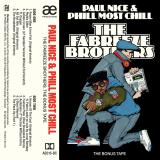
Paul Nice & Phill Most Chill - The Fabreeze Brothers LP

AE Productions in association with Sure Shot Recordings and In Effect Recordings are pleased to announce a 10 Year Anniversary Edition of the critically acclaimed Phill Most Chill and Paul Nice album as the Fabreeze Brothers.

The hugely successful first edition which was pressed on colour vinyl and supplied in double fold out sleeve sold out in only 2 weeks from release date and then the 2nd pressing black vinyl edition sold out a little while later but has for years been out of print but is increasingly requested by shops, via email, social media, AE Productions website back in stock requests, etc…

As it has been 10 years since original release back in 2015 at the time of proceeding with manufacturing, it was the perfect opportunity to do a 3rd pressing to mark the anniversary but we had to pull out all the stops for a 3rd run of this incredible album and also make it subtly different again in packaging design from the 1st and 2nd pressings so that each has it’s own particular feel and quality.

With help from the original designer and all-round vinyl artwork supremo Mr Krum we have found some nice adjustments for the gatefold sleeve where the detail from the insert sheet found in the original issues is incorporated into the inside panels of the sleeve. We have also tweaked the hype sticker to mark the 10th Anniversary Edition and updated the vinyl labels so as to work better with the new Splatter vinyl which follows the original red and yellow vinyl but each splattered with the opposite colour.

For something a little extra we have compiled a Limited Expanded Edition Double Cassette Box Set that includes the original album and also a ‘Bonus Tape’ which features all of the remixes, alternate versions, Original Versions of album cuts and bonus tracks found on B-sides of the array of singles and we included for good measure 2 tracks that only appeared on the promotional only LP sampler that ended up being different on the final release. This is limited to cassette just for the non-vinyl heads as all of these tracks already appear on vinyl. The outer box is A5 card in black with gold foil Fabreeze Brothers logo and comes with discography booklet.

‘The Bonus Tape’ from the box set is also available as a standalone cassette release with alternate j-card art work so that it has it’s own flavour and so that anyone that purchased one of the original run of cassettes that sold out before we could even ship any copies, did not need to purchase the main album again unnecessarily and to make it noticeable from the Expanded Edition Box Set version.

This version also has an alternate shell design in keeping with the clear shell with dark liner that was commonplace back in the 90’s and the cassette geeks may note the red text on the spine as was also a common design back then – giving this a pseudonym of ‘the 90’s tape’ during the design process.

We couldn’t stop there so we also have an extremely low quantity Limited Edition Mini Disc version which is the main album plus 8 of the bonus tracks from The Bonus Tape – only missing the 2 least significant alternate versions but clocking in at just a few seconds under 80 minutes – the absolute maximum for the format! Mini Disc???!!! You’re probably asking – yes!

While looking into the cassette duplication options we realised that the duplicator also offers Mini Disc production so we thought that it may be worth doing a very small run just because not only are professionally manufactured Mini Disc’s rare in Hip Hop, they are rare within the entire music industry as they never really took off as a medium to purchase music but ended up as the choice for home recorded Walkman and car use. Indeed, AE boss Mr Fantastic still has his main machine, portable and old discs. Amazingly also, the sleeve artwork transferred brilliantly to the Mini Disc template. They are manufactured using high quality Sony discs using ATRAC 4.5 codec.

All releases are supplied with unique free download codes on cards that are included inside the packaging but also with the Expanded Edition cassette and Mini Disc having 2 cards – 1 for the main album and a 2nd card for ‘The Bonus Tape’. The free downloads are supplied direct from Phill Most Chill’s Bandcamp page keeping it independent.

Reservar27.03.2026

debe ser publicado en 27.03.2026

29,20

Ültimo hace: 2026 Años
Paul Nice & Phill Most Chill - The Fabreeze Brothers (Tape)

Expanded Edition Double Cassette Box Set including main album and Bonus Cassette with unique download cards


AE Productions in association with Sure Shot Recordings and In Effect Recordings are pleased to announce a 10 Year Anniversary Edition of the critically acclaimed Phill Most Chill and Paul Nice album as the Fabreeze Brothers.

The hugely successful first edition which was pressed on colour vinyl and supplied in double fold out sleeve sold out in only 2 weeks from release date and then the 2nd pressing black vinyl edition sold out a little while later but has for years been out of print but is increasingly requested by shops, via email, social media, AE Productions website back in stock requests, etc…

As it has been 10 years since original release back in 2015 at the time of proceeding with manufacturing, it was the perfect opportunity to do a 3rd pressing to mark the anniversary but we had to pull out all the stops for a 3rd run of this incredible album and also make it subtly different again in packaging design from the 1st and 2nd pressings so that each has it’s own particular feel and quality.

With help from the original designer and all-round vinyl artwork supremo Mr Krum we have found some nice adjustments for the gatefold sleeve where the detail from the insert sheet found in the original issues is incorporated into the inside panels of the sleeve. We have also tweaked the hype sticker to mark the 10th Anniversary Edition and updated the vinyl labels so as to work better with the new Splatter vinyl which follows the original red and yellow vinyl but each splattered with the opposite colour.

For something a little extra we have compiled a Limited Expanded Edition Double Cassette Box Set that includes the original album and also a ‘Bonus Tape’ which features all of the remixes, alternate versions, Original Versions of album cuts and bonus tracks found on B-sides of the array of singles and we included for good measure 2 tracks that only appeared on the promotional only LP sampler that ended up being different on the final release. This is limited to cassette just for the non-vinyl heads as all of these tracks already appear on vinyl. The outer box is A5 card in black with gold foil Fabreeze Brothers logo and comes with discography booklet.

‘The Bonus Tape’ from the box set is also available as a standalone cassette release with alternate j-card art work so that it has it’s own flavour and so that anyone that purchased one of the original run of cassettes that sold out before we could even ship any copies, did not need to purchase the main album again unnecessarily and to make it noticeable from the Expanded Edition Box Set version.

This version also has an alternate shell design in keeping with the clear shell with dark liner that was commonplace back in the 90’s and the cassette geeks may note the red text on the spine as was also a common design back then – giving this a pseudonym of ‘the 90’s tape’ during the design process.

We couldn’t stop there so we also have an extremely low quantity Limited Edition Mini Disc version which is the main album plus 8 of the bonus tracks from The Bonus Tape – only missing the 2 least significant alternate versions but clocking in at just a few seconds under 80 minutes – the absolute maximum for the format! Mini Disc???!!! You’re probably asking – yes!

While looking into the cassette duplication options we realised that the duplicator also offers Mini Disc production so we thought that it may be worth doing a very small run just because not only are professionally manufactured Mini Disc’s rare in Hip Hop, they are rare within the entire music industry as they never really took off as a medium to purchase music but ended up as the choice for home recorded Walkman and car use. Indeed, AE boss Mr Fantastic still has his main machine, portable and old discs. Amazingly also, the sleeve artwork transferred brilliantly to the Mini Disc template. They are manufactured using high quality Sony discs using ATRAC 4.5 codec.

All releases are supplied with unique free download codes on cards that are included inside the packaging but also with the Expanded Edition cassette and Mini Disc having 2 cards – 1 for the main album and a 2nd card for ‘The Bonus Tape’. The free downloads are supplied direct from Phill Most Chill’s Bandcamp page keeping it independent.

Reservar27.03.2026

debe ser publicado en 27.03.2026

38,87

Ültimo hace: 2026 Años
Bruce - four more then four (Tape)

As Poorly Knit completes it's first arc of the Sun, it's children become four, as a new mini LP is born.

Tending to his crop with dreams of rotation, Bruce sows and scythes four new grains in the porky mill. Of this strange fruit, that further explores his increasingly familiar, hyper-real and sonically surreal work within this current “movement,” he finds his foothold once more in a wild world intensity: fear and fury grappled in equal measure.

What's more, in celebration of the plentiful harvest thus far, (let alone in the interest of seed diversity), Bruce invites four fellow reapers to the farm, offering their recipe from the spoils of the label's yield:

Vancouver based Brit-abroad, dj_2button pulls apart 'The Hand,' with his 'Accidental Mood Mix,' to be reborn as an Odyssian 13 minute stomper: "a fight of emotions, of light and dark; in quiet protest to the incessant fear mongering that slowly numbs us on a global scale." Balearic shores can be seen glimmering in the distance, whilst you are dragged by part man part (very horny) bull into the depths of dancefloor madness.

re:ni proves she is the captain of her own ship as sweet SSRI numbness billows in the sheets and fraying, dubwise halyards tether and tear through her devilishly elegant 'sertraline queen mix'. polyrhythms plotted and percussion plundered; the vocal from 'Golden Water Queen' sounds oh so sweet in the claws of its new Regina.

Hotly titted deep house reviver, fka boursin empties clips with their bubblegum 'boomkat mix,' of 'The Price,' swivelling the original's brash and bawdy bonce, to face a 120 reality we all need to wake up and start sniffing. Sprinkled with trauma on an icing of a bassline more than a little rood, boursin is packing enough cake for the whole function to take home in (dreadful) goody bags (and even allowed compression in the mastering - mental).

Last and indubitably not least, from lying somewhat dormant in the depths of UK dance music legend, none other than flippin' Untold (!?) rises to seal the release with typically megalithic prowess. Proving he was just resting his eyes for a bit, his 'A1 Mirabelle Mix,' weaves and whips an otherworldly beauty, technically tantalising 'Dham's Jam' in adornments both sour and sweet. It's nothing short of a cloaks and daggers banger, primed for the darkest of dancefloor cosmic moments, and serving as a little less-than-warm-reminder that Untold’s presence in the world of dance music is crucial as ever.

Frankly, if you couldn't tell from all the verbose waffle, they have all absolutely smashed and finessed it: they were all approached after expressing a real resonance from the previous releases and it's such an honour to have them and their fantastic visions on the label.

Available digitally or on high quality cassette, the final chapter of the Poorly Knit's first act has been woven whimsically into the fraying folds.

a A1. It Ain’t Over Till… 04:37
b A2. Wesley’s Sniped All Our Bleeding’ K (Re-Vamped) 05:40
[c] A3. Rockfall [05:06]
[d] A4. You Were Right [10:00
[e] B1. The Hand (dj_2button's accidental mood mix) [13:07]
[f] B2. Golden Water Queen (re:ni's sertraline queen mix) [05:36]
[g] B3. The Price (fka boursin's boomkat mix) [08:30]
[h] B4. Dham's Jam (Untold's A1 Mirabelle Mix) [09:42]

[a] A1. It Ain’t Over Till… [04:37]
[b] A2. Wesley’s Sniped All Our Bleeding’ K (Re-Vamped) [05:40]
[c] A3. Rockfall [05:06]
[d] A4. You Were Right [10:00
[e] B1. The Hand (dj_2button's accidental mood mix) [13:07]
[f] B2. Golden Water Queen (re:ni's sertraline queen mix) [05:36]
[g] B3. The Price (fka boursin's boomkat mix) [08:30]
[h] B4. Dham's Jam (Untold's A1 Mirabelle Mix) [09:42]

Disponible

En el almacen y preparando para el envío

11,35
WIKSTROM & LEWEN - TIME TO MAKE A CHANGE

It’s been a journey, but thanks to the guys at Universal Music we are very grateful and privileged to bring you this fine piece of modern soul music on vinyl.

Both tracks, on the 7-inch, are taken from the MP3 only 2020 album “Vintage R&B”.
It’s an Anglo-Swedish affair, delivered to you by Swedish songwriters, composers and musicians, Henrik Wikstrom and Anders Lewen, together with UK producer Andrew Stannard.

Side A “Time to Make A Change”, features in Episode One of the 2023 BBC documentary “Fight the Power – How Hip Hop Changed the World”. A track to surely get the dancefloor moving.
After some deliberation of which track to include as a Side B, it was decided as a “Thank you” gesture to invite Universal Music to pick the song of their choice from the MP3 album. “Good, Good Feeling” was the proposal, a song title that is reflected in the composition.

The top side, with its driving beat and the strong vocal ability of Liverpudlian Tommy Blaize, is reminiscent of a Motown track at the peak of its popularity. After listening to the lyrics, it is understandable why this track was used in a “Civil rights” segment within a documentary. A timeless message that can be applied to many social and personal life situations. Listen to the tight musical arrangement. These guys know what they are doing. A track that will surely even get my ageing hips loosened up for the dancefloor. Don’t be tricked by the “paused” ending, a wonderful touch!

The title of the flip side, “Good, good feeling” is exactly that……… A “good feeling” song. Here, the tempo is lowered slightly and the sixties vibe here also leads to a more mainstream direction compared to the A side. Those floaty soulful tones from the UK’s Louise Marshall are very pleasant to the ears, lifting your spirits on any day of the week. Like the A side, get your earlobes in to that musical arrangement. There was no holding back with the broadness of musical instruments in the studio and I especially like the sound of the flute happily skipping throughout. Overall, an enjoyable easy listen.

Disponible

En el almacen y preparando para el envío

17,61
sr² - Diving Solo LP 2x12"

"Diving Solo" is the debut album of an artist who, after years of recognition under a different alias, has now redefined himself as "sr²." Central to this project is a deliberate departure from self-staging—shifting the focus entirely onto the art itself.

The album emerges from a deeply rooted vision that took shape over a decade ago. It navigates the fundamental questions of existence: the inevitability of impermanence, the search for meaning, and the quest to carve one's own path. Each track draws from formative experiences—from the electrifying pulse of countless club nights to the quiet, introspective moments that challenge our understanding of everyday life.

The tracks on this 9-track double LP transcend mere functionality; they evoke profound emotions and offer space for personal reflection. "Perpetuated on Canvas..." delves into how the first encounter with mortality can profoundly shape one's perception of life. "Diving Solo" inspires a break from conventions to seek what truly matters—even if that journey must sometimes be taken alone.

While the album weaves a coherent narrative, every listener is invited to discover their own nuances and shades of meaning within it. For, in the end, the artwork always extends beyond the artist.

Disponible

En el almacen y preparando para el envío

24,79
Michael Mayer - The Floor Is Lava LP 2x12"

Michael Mayer albums don’t come round too often, which is one of many reasons why his fourth collection, The Floor Is Lava, is a genuine event. It’s been eight years since his last one, the collaborative & released on !K7; its predecessors, Mantasy (2012) and Touch (2004), took their sweet time, too. It’s no real surprise, given the many hats Mayer wears – globetrotting DJ, revered remixer, inveterate collaborator, and boss of both Kompakt and Imara – that his solo productions are relatively sparing. But this also speaks to their quality: Mayer’s name on a record sleeve is a sign of quality, of music that’s both looking to the future and calling back to the past, that balances the imperatives of the dancefloor and the loungeroom, that’s as exploratory as it is functional.

On The Floor Is Lava, Mayer seems to be taking the temperature of both the music that surrounds him (past and present), and the ides of the industry he works within. There’s that iconic album title, for a start. “The album’s mindset,” he says, reflecting on those four words together. For Mayer, it’s partly a critique of the way the industry boxes in both producer and listener, focuses them on genre, on market, on the next new thing: “Being a free minded spirit that transcends genres has become an uphill battle.” A battle worth fighting, though, and with The Floor Is Lava, the result is an album that’s varied, quixotic, idiosyncratic, charming, and deeply, addictively listenable.

Throughout, Mayer finds thrills in exploration and juxtaposition, allowing unexpected things to blossom and giving them their life, their platform, throwing the listener exciting curveballs: “It’s a DJ album by a DJ that’s easily bored.” Either easily bored, or endlessly curious, The Floor Is Lava is rich with ideas. It opens with “The Problem”, which looks back to look forward, embracing the rickety way early house productions threw samples together with gleeful abandon. Mayer mentions Pal Joey, and the scene around Rockers Hi-Fi and their Different Drummer imprint, as reference points, and you can hear that freewheeling spirit throughout.

It’s followed by “Vagus”, a slinky, sensual minimal house number that Mayer describes as his “musical catnip”. The flow of these two opening cuts defines the dynamic of The Floor Is Lava, defining the dialectical drive at its core: thesis and antithesis leads to synthesis, but with a welcome prickliness that means you’re always excited, always engaged. It’s also productive in the way it derives energy from rubbing genres and sounds against each other, in unexpected ways, for maximum musical frisson. There’s psychedelic techno on “Feuerstuhl”, more minimal techno with “Ardor” (Mayer mentions ‘Immer 1’ era 90s minimal as inspiration), slippery, Shepard-tone breakbeat through “Sycophant”, a lovely, lush vocal turn on the poppy “The Solution”.

The album closes with the melancholy “Süßer Schlaf”, where Mayer sets a poem by Goethe to one of his most haunted, moving pieces of music yet, in abstract tribute to a lost friend. It’s one of the most affecting moments on The Floor Is Lava. There’s also an update on 2020’s wild Brainwave Technology EP, with the surrealist glitter-stomp of “Brainwave 2.0” (check out those handclaps!),where Mayer’s thinking about the socio-political precipice of the now: “I’m reading with great interest about this whole complex of how humanity is about to cross so many lines and the implications that the resulting financial and educational inequality will bring.”

That’s The Floor Is Lava: then and now, brainwaves and nerve structures, problems and solutions, genres on fire; the real, the unreal, and the surreal. An album for the easily bored and the endlessly curious. Mayer has the last word, telling us all you need to know about the album’s spirit: “Burning for the cause, being zealous, being addicted to the heat of the night, the exuberant powers of music.”

Michael Mayer veröffentlicht nicht oft Alben, was einer von vielen Gründen ist, warum ‘The Floor Is Lava’ ein echtes Ereignis ist. Es sind acht Jahre vergangen seit seinem letzten Werk, dem Kollaborationsalbum &, das auf !K7 erschien; seine Vorgänger, Mantasy (2012) und Touch (2004), ließen ebenfalls auf sich warten. Es überrascht nicht wirklich, da Mayer viele Rollen gleichzeitig erfüllt – weltreisender DJ, vielbeschäftigter Remixer, unermüdlicher Kollaborateur und Chef von sowohl Kompakt als auch Imara – weshalb seine Solo-Produktionen eher sparsam ausfallen. Doch das spricht auch für deren Qualität: Ein Album mit Mayers Namen auf dem Cover steht für Qualität, für Musik, die sowohl in die Zukunft blickt als auch auf die Vergangenheit verweist, die das Gleichgewicht zwischen den Anforderungen des Dancefloors und des Wohnzimmers hält, die genauso erforschend wie funktional ist.

Auf The Floor Is Lava scheint Mayer sowohl die Musik um ihn herum (vergangen und gegenwärtig) als auch die Strömungen der Branche, in der er arbeitet, zu reflektieren. Da wäre zunächst der ikonische Albumtitel. „Die Grundhaltung des Albums“, sagt er, drückt sich in diesen vier Worte aus. Für Mayer ist es teilweise eine Kritik daran, wie die Industrie sowohl Produzenten als auch Hörer in Schubladen steckt, sie auf Genres, auf den Markt und auf das nächste große Ding fokussiert: „Ein freier Geist zu sein, der Genres überschreitet, ist zu einem steinigen Weg geworden.“ Ein Kampf, der sich jedoch lohnt, und mit The Floor Is Lava ist das Ergebnis ein Album, das vielfältig, eigenwillig, charmant und tiefsinnig, aber auch süchtig machend ist.

Im gesamten Album findet Mayer Freude an der Erforschung und Gegenüberstellung von Stilen, lässt unerwartete Dinge erblühen und gibt ihnen Raum, überrascht den Hörer mit spannenden Wendungen: „Es ist ein DJ-Album von einem DJ, der sich schnell langweilt.“ Entweder langweilt er sich schnell oder er ist unendlich neugierig – The Floor Is Lava ist reich an Ideen. Es beginnt mit „The Problem“, das in die Vergangenheit blickt, um nach vorne zu schauen, und die wilde Art, wie frühe House-Produktionen Samples mit fröhlicher Unbekümmertheit zusammenwarfen, aufgreift. Mayer nennt Pal Joey und die Szene um Rockers Hi-Fi und ihr Label Different Drummer als Referenzpunkte, und dieser freie Geist zieht sich durch das gesamte Album.

Es folgt „Vagus“, eine sinnliche Minimal-House-Nummer, die Mayer als seine „musikalische Katzenminze“ beschreibt. Der Fluss dieser beiden Eröffnungstracks definiert die Dynamik von The Floor Is Lava und den dialektischen Antrieb im Kern: These und Antithese führen zu einer Synthese, jedoch mit einer willkommenen Schärfe, die dafür sorgt, dass man immer aufgeregt und engagiert bleibt. Zudem gewinnt das Album Energie, indem es Genres und Klänge auf unerwartete Weise aneinanderreibt, um maximalen musikalischen Nervenkitzel zu erzeugen. Es gibt psychedelischen Techno in „Feuerstuhl“, mehr Minimal Techno mit „Ardor“ (Mayer erwähnt ‘Immer’ Ära Minimal als Bezugspunkt), gleitenden Shepard-Ton-Breakbeat in „Sycophant“ und einen lieblichen, üppigen Vocal-Auftritt im poppigen „The Solution“.

Das Album schließt mit dem melancholischen „Süßer Schlaf“, in dem Mayer ein Gedicht von Goethe vertont und eine seiner bisher eindringlichsten und bewegendsten musikalischen Kompositionen schafft, als abstrakten Tribut an eine verschiedene Freundin. Es ist einer der ergreifendsten Momente auf The Floor Is Lava. Ebenfalls gibt es ein Update der wilden Brainwave Technology-EP von 2020, mit dem surrealistischen Glitzer-Stampfer „Brainwave 2.0“ (hör dir diese Handclaps an!), in dem Mayer über den sozio-politischen Abgrund der Gegenwart nachdenkt: „Ich lese mit großem Interesse über diesen ganzen Komplex, wie die Menschheit dabei ist, so viele Grenzen zu überschreiten und welche Auswirkungen die daraus resultierende finanzielle und bildungstechnische Ungleichheit haben wird.“

Das ist The Floor Is Lava: Damals und heute, Gehirnwellen und Nervengeflechte, Probleme und Lösungen, brennende Genres; das Reale, das Unreale und das Surreale. Ein Album für die schnell Gelangweilten und die unendlich Neugierigen. Mayer hat das letzte Wort und sagt uns alles, was wir über den Geist des Albums wissen müssen: „Brennen für die Sache, leidenschaftlich sein, süchtig nach der Hitze der Nacht, den überschwänglichen Kräften der Musik.“

Disponible

En el almacen y preparando para el envío

22,65
Nídia - 95 MINDJERES

Nídia

95 MINDJERES

12inchP053LP
Príncipe
02.10.2024

Ever more secure in her chosen path, Nídia radiates gloriously in all moods for the dancefloor in this, her album number 3. Consistent with her fiery nature and mixed roots in Guinea-Bissau and Cape Verde, »95 MINDJERES« is framed by the decisive role of women freedom fighters in PAIGC's struggle for the independence of Guinea-Bissau from Portuguese colonial domination during the 1960s and 1970s. Among others, the names of Teodora Gomes and Titina Silá shine brightly as leaders of a group of 95 women, providing them with military training and political awareness.

The album starts righteously with a question-themed banger; ambiguous in its sense of curiosity, even mischief, or perhaps it is a passionate commentary on the hard atavic realities of the world. It sets the tone for the wonderfully bouncy »Deep«, pads gently pulling at the legs, longing for action.

All of Nídia’s work has been basically concerned with pushing forward, instant piece by instant piece, a particular, some would say peculiar, view of what culture is, what role it plays in social life. She exercises her experimental inclination within the groove, interweaving percussion sequences and melodies in a very lean way - track durations are generally within range of what many would call "sketches" but the music just says what needs to be said. Beats are never artificially extended for the dancefloor, there's not a hint of that culture in »95 MINDJERES«. Closest would be "cp", an actual drum tool. Ideas are in motion now. And they fly out during the following »Mindjeres«, marked by gentle stabs as if counting the steps skyward. Unexpected turns near the end make final songs "abcd" and "Paradise" accentuate a longing sensation.

Stuff is ready, bodies alert, mind is sharp with warmth and fellowship, detoxed, we can now hear the overall tone of the album, a clear view on self nurture, freedom and responsibility. We believe it is sustained by Nídia’s progressive interpretations and approaches to promote harmony in never-ending family entanglements, reconcile notions of ancestry and uproot, and try out means to resist and fight. In praise of Love.

Disponible

En el almacen y preparando para el envío

20,59
Nelembe - Bourgeois LP

Nelembe

Bourgeois LP

12inchJAZZEGO008
Jazzego
08.04.2024

Created by musician and multi-instrumentalist Jorge Queijo, Nelembe emerged with some drum rhythms recorded at random and stored on a hard drive. From them, and in the middle of the pandemic, Jorge Queijo built a musical concept that goes beyond borders and styles, embracing afrobeat and highlife, without forgetting soul, funk and jazz all of which in constant confrontation.

In addition to the rhythmic and sound issue, with several latitudes within it, afrobeat translates into a revolutionary and combative behavioral DNA of the fight for freedom and social justice. Daniel Belo's vocals and saxophonist João Cabrita's arrangements defined what the band came to call dirty afrobeat - a musical celebration where the only rule is the absence of rules, and the desire to be free that only music gives us.

Disponible

En el almacen y preparando para el envío

22,48
HDSN - No Place Like Home

Hdsn

No Place Like Home

exclNBASTWAX016
NBAST
02.06.2023

“My mother” says HDSN “is my biggest idol to date. She gave me the roots to grow and the wings to fly and pretty much dedicated her life to my sister and i. She has been holding herself accountable day in day out for more than twenty years to raise two kids as a single mom. Although my dad couldn´t be there she always kept the cable long and so we lacked of nothing - she literally gave us all that she got. It´s been her strength, her humbleness and her relentless effort which has made me and my sister the beautiful human beings we are today. Most importantly it was her acknowledgement of my passion for music that saw me being able to pursue what i call my destiny today. She has been my biggest supporter since day one even she couldn’t understand at first. She oftentimes called my music too “esoteric” little did we know how many peoples hearts these songs would touch on the way. From the very beginning i wanted to dedicate a song to her but as she was pretty delicate when it comes to my tracks i knew i needed to find the right notes to hit the right spots. It´s been eight years now since i started out to make music and with very much excitement i can announce i finally been able to thrill her soul. It´s with little hesitation that i dedicated this song which i ended up calling “Stronger” to her. I come from a family full of fighters, there have been many ups and downs for all of us but we stood strong to the struggle and managed to keep our shine. This goes especially for my sister as life dealt her a couple of rough patches early on. She was fighting her own war marching through the valley of death from a very young age. She never gave up though, thrived out of darkness into light like a poppy seed and now eventually became a mother, too. Life kinda neglected us over the year. I had to leave my loved ones behind to live my dream but there has always been a part of me that tried to find his way back home, which i finally stopped denying. “No Place Like Home” is dedicated to most important women in my life, my mother, my sister and her newborn child. This record is an homage to my family and the beauty that lies within our tribe.”

Disponible

En el almacen y preparando para el envío

8,36
Alpha Sect - Felt Her Knife EP

Alpha Sect

Felt Her Knife EP

12inchCRAVE012
Crave Tapes
20.03.2026out soon

Crave Tapes strikes back with its second vinyl release. Felt Her Knife – an ode to romanticism and betrayal, portrayed by the Greek artist George Core McCall, known as Alpha Sect.
This 6-track EP opens with an invitation to take a step back in time, with a charming introductory descent, like the opening of a post-rock album. A melancholy cry, "Felt Her Knife", follows our journey into the psyche of this EP, driven by Alpha Sect’s sentimental but powerful vocals. "Drowning" merges the boundaries of what is real and what is lost in an ocean of despair. Not all those who wander are lost, and the "Fight in the Light" shows, with its powerful rhythms, that our guidance is within us. The call is stronger than we
sometimes think.
The vinyl is completed with beautiful remixes by the Swedish synthwave legend Tobias Bernstrup and Radondo from Slow Motion Records, adding an extra touch of “dancefloor-oriented” hopelessness and melancholia. Have you felt her knife yet?

Reservar

El artículo no se ha publicado. Tú puedes reservar ahora el artículo y después de ser pagado se te será enviado.

15,08

Ültimo hace: 2026 Años
SOUL OF ANUBIS - RITUAL

Red Vinyl. Soul of Anubis is a power duo formed in 2010 from the North of Portugal. Their music is a blast on stage with a ferocity of sound that goes from thrash to sludge, capturing doom and post-metal at same time, performing energetic and contagious live acts. "Ritual" represents the passage from life to death and rebirth into a new cycle. During these last years, we have lost beloved ones, we have lost the freedom to breathe, we have lost some companionship and we had to fight to lift our souls back on trial. In Egyptian mythology, Ra, God of the Sun, goes down to the underworld every night to help the dead cross to the other world and ensure that a new dawn would happen. So, "Ritual" is a memorial to our beloved ones who passed away, speaks for the mental struggle that everyone has to face to overcome their demons and glorifies the victory of rebirth. As we have our demons, this is our ritual to cross our pathway.n. So, "Ritual" is a memorial to our beloved ones who passed away, speaks for the mental struggle that everyone has to face to overcome their demons and glorifies the victory of rebirth. As we have our demons, this is our ritual to cross our pathway.

Reservar20.02.2026

debe ser publicado en 20.02.2026

26,01

Ültimo hace: 2026 Años
SOUL OF ANUBIS - RITUAL
  • Ritual
  • Mind Crusher (Feat. Keijo Niinimaa From Rotten Sound)
  • Incarnation
  • Vermin
  • Dead Cult
  • God's Burial
  • Human Torch
  • Remnants Of Hatred
  • Shield Of The Son
  • The Evil Within
  • Sands Of Time
  • Beast With Vengeance
  • Back From Beyond
  • Honor The Fallen
También disponible

Red Vinyl[26,01 €]


Soul of Anubis is a power duo formed in 2010 from the North of Portugal. Their music is a blast on stage with a ferocity of sound that goes from thrash to sludge, capturing doom and post-metal at same time, performing energetic and contagious live acts. "Ritual" represents the passage from life to death and rebirth into a new cycle. During these last years, we have lost beloved ones, we have lost the freedom to breathe, we have lost some companionship and we had to fight to lift our souls back on trial. In Egyptian mythology, Ra, God of the Sun, goes down to the underworld every night to help the dead cross to the other world and ensure that a new dawn would happen. So, "Ritual" is a memorial to our beloved ones who passed away, speaks for the mental struggle that everyone has to face to overcome their demons and glorifies the victory of rebirth. As we have our demons, this is our ritual to cross our pathway.

Reservar20.02.2026

debe ser publicado en 20.02.2026

23,11

Ültimo hace: 2026 Años
The Mars Volta - Noctourniquet

The Mars Volta

Noctourniquet

2x12inch4250795604969
CLOUDS HILL
30.01.2026
  • A1: The Whip Hand
  • A2: Aegis
  • A3: Dyslexicon
  • B1: Empty Vessels Make The Loudest Sound
  • B2: The Malkin Jewel
  • B3: Lapochka
  • C1: In Absentia
  • C2: Imago
  • C3: Molochwalker
  • C4: Trinkets Pale Of Moon
  • D1: Vedamalady
  • D2: Noctourniquet
  • D3: Zed And Two Naughts

Noctourniquet And then everything went black, at least for a while, at least for The Mars Volta. In the months and years following their fifth full-length, Octahedron, Omar kept on at his usual fearsome creative pace. In fact, he ramped up his output considerably, starting up his own Rodriguez Lopez Productions label and releasing a slew of solo albums. It was a practice he’d begun shortly after De-Loused’s release, with his solo debut A Manual Dexterity: Soundtrack Volume One, but as the decade reached its close, Omar grew to rely upon his solo recordings as an outlet for his prolific creativity, these albums often exploring musical pastures far beyond even The Mars Volta’s wide-ranging parameters. Before choosing to release music under his own name, Omar would always play it to Cedric first, to see if the frontman thought it had potential to become Mars Volta music. Shortly after Octahedron’s completion, Cedric flagged one batch of tracks Omar had cut with Deantoni Parks, a brilliant drummer and composer who’d briefly occupied the Mars Volta drumstool in-between Jon Theodore and Thomas Pridgen’s tenures, and whose volcanic creativity and unique, unpredictable approach to rhythm and composition had quickly made him one of Omar’s favourite artistic foils.

As with the music that made up Octahedron, the new tracks Cedric had optioned for The Mars Volta often veered far from the riotous, Grand Guignol visions of their earlier releases. It possessed the punchy, song-based focus of Octahedron, though this was a considerably darker, more menacing strain of pop, with synthesisers figuring heavily in the productions. Cedric took the tracks in 2009 and set about writing songs to the music. But no more new Mars Volta music would be heard until 2012. The years that passed in-between were nonetheless momentous, and busy, witnessing an unexpected reunion of the members of At The Drive-In, and Cedric joining his own side-project, Anywhere. But there wasn’t any sign of life within the Mars Volta until Omar, Cedric and their bandmates took to the road for a series of live shows in the spring of 2011, billed as The Omar Rodriguez-Lopez Group, debuting the songs that would become Noctourniquet. The album followed the next year, and it remains one of The Mars Volta’s finest, its electronic textures staking out unfamiliar but fertile new ground.

An unsettling, subtly turbulent listen, Noctourniquet found Cedric sketching out a story about “some sort of device that stops the darkness from bleeding”, drawing influence variously from the nursery rhyme Solomon Grundy, the Greek myth of Hyacinthus and the song Birth, School, Work, Death by British underground rockers The Godfathers. It was an album of dystopian futurism, signalled by the paranoid cyber-rock of opener The Whip Hand and its unnerving chorus, “That’s when I disconnect from you”. But it was also an album of inspired, unexpected moves and uncanny invention, like how Dyslexicon seemed to eerily evoke Blondie’s Rapture, before rushing headlong into its bruising chorus, tempos shifting restlessly throughout like quaking earth beneath the listener’s feet, or how Aegis put a brave new spin on The Mars Volta’s trademark rewiring of salsa’s overdriven passions, or how Cedric had never sounded as scary as he did on The Malkin Jewel’s mutant burlesque shuffle. Tracks like Molochwalker were sleek and concise in a way The Mars Volta had never really attempted before – which was all part of Omar’s plan.

“It had all been guitar, guitar, guitar, overdubs, everything fighting for space in the same frequency,” he explains. “So for Noctourniquet, it was all about subtracting elements, of sticking to how I made demos.” Deantoni’s presence helped revivify the group, playing against cliché and expectation, and taking each song in unexpected directions. “I’d beatbox a rhythm for him to play, to go with my guitar part, and he’d come back with three or four alternate options. It was so great.” Similarly, Cedric had never sung better than on Noctourniquet, staking out a fearsome spectrum from the chilling Tom Waitsian growl of The Malkin Jewel to the keening, beautiful vocalisation on Vedamalady, rising to match some of Omar’s most deft, most immediately effective and melodic songs yet. Indeed, Noctourniquet is the sound of a band discovering new ways to do familiar things, renewing their commitment to their mission, finding fresh inspiration a decade in, and shaking off any complacency that might have come with ten years of acclaim and success.

Reservar30.01.2026

debe ser publicado en 30.01.2026

27,69

Ültimo hace: 2026 Años
STORNOWAY - Bonxie (10th Anniversary Edition) (Deluxe Edition) LP

“Stornoway’s best work yet: big music, which deserves the largest stage.”★★★★★ – The Guardian


Lauded on release as Stornoway’s most expansive and confident work, Bonxie remains a hymn to connection, ecology, and the beauty of life. This expanded edition includes previously unreleased B-side tracks from the original recording sessions, new liner notes from each member of the band, and some of their well-known unplucked versions of tracks on the album.


Bonxie is Stornoway’s boldest and most outward-looking record, an album infused with a sense of wonder for the natural world and humanity’s place within it. Produced by Gil Norton (Pixies, Foo Fighters, Twin Atlantic), and a contribution from Craig Potter (Elbow), the songs carry field recordings of birds (20 species appear across the album), weaving them into melodies that soar like the great skua (or “bonxie”) that gives the record its name.


Stornoway will be playing a very special show at the Royal Albert Hall on 30th March 2026.

Reservar12.12.2025

debe ser publicado en 12.12.2025

26,68

Ültimo hace: 2026 Años
Demetrio Stratos - Box-set, includes LP, Book and Poster (Limited)
  • A1: Filastrocca (Nursery Rhyme) 1:11
  • A2: Scuola Di Retorica (School Of Rethorics) 2:08
  • A3: Retarius In Lotta (Retarius' Fight) 2:13
  • A4: Scena, Fiaba, Pantomima (Scene, Tale, Pantomime) 5:24
  • A5: Quartilla 0:31
  • A6: Quartiere Dei Bordelli (Brothels' Quarter) 2:26
  • A7: Mercato, Nebbia (Market, Fog) 1:02
  • A8: Orgia (Orgy) 2:34
  • B1: Bali 7:02
  • B2: Epitaffio (Epitaph) 1:09
  • B3: La Nave (The Ship) 1:34
  • B4: Inizio Tempesta (Storm Begins) 1:04
  • B5: Tempesta Violenta (Violent Storm) 1:30
  • B6: Succhiata (Sucking) 0:12
  • B7: Naufragio (Shipwreck) 1:33
  • B8: Giardino Di Circe (Circe's Garden) 0:43
  • B9: Proseleno 0:51
  • B10: La Maga (The Witch) 1:19
  • B11: Mangiando Il Cadavere + L'uccello (Eating The Corpse + The Bird) 2:27

Within the world of theatrical archives, there are the known, the unknown, the forgotten, and the lost. Demetrio Stratos' stage compositions for Teatro dell'Elfo's groundbreaking 1979 production Satyricon - directed by future Oscar winner Gabriele Salvatores - represents one such lost artifact now wondrously returned to life. This radical sonic work, integrating extended vocal techniques, Balinese instruments, and pioneering whale song recordings, stands as the final masterpiece of Italy's most visionary vocal experimenter, lost for over four decades until Die Schachtel's extraordinary recovery. As Stratos himself explained: "The musical operation performed on Satyricon is particular: the composer-musician here does not compose, but borrows ready-made music, vivisects it, melts it, intervenes and recomposes it on magnetic tape. The structure of the signifier, from a morphological point of view, presents itself as a conceptual collage." The music is obtained by utilizing compositions and musical elements from David Behrman, Joan La Barbara, Balinese Ketyak, Turkish Nay flute, Yugoslavian bagpipe, Pan flute, and whale song, with synthesizer interventions by Paolo Tofani. It began as part of something known - a wild, immersive theatrical event that inaugurated Teatro dell'Elfo's historic venue in 1979, was almost entirely forgotten, becoming lost and then unknown. The original production marked a radical departure for the company: no longer popular street theatre, but a dark, immersive, sophisticated spectacle that transformed their space into a rough wooden arena with a sand floor. Demetrio Stratos, working with Paolo Tofani (fellow Area member), created an entire sonic universe that subverted every conventional function of stage music. Their composition wasn't accompaniment, but autonomous sonic dramaturgy that integrated extended vocal techniques, archaic electronic elements, Nay flutes, Balinese instruments, and pioneering whale song recordings. The result was a three-dimensional soundscape that enveloped audiences, creating an otherworldly acoustic dimension. Stratos' score even intervened in the actors' vocal delivery, with the recordings capturing both the performance and his coaching sessions with the cast. The production featured young actors destined for fame - Elio De Capitani, Ferdinando Bruni, Cristina Crippa, Corinna Agustoni, Ida Marinelli - guided by Gabriele Salvatores in this adaptation of Petronius' ancient novel. Shortly after the Satyricon performances, Stratos was hospitalized for the condition that would lead to his death at just 33 years old. This work represents his final composition - a haunting farewell from one of Italy's most innovative sound artists. Die Schachtel presents this recovered work in collaboration with Teatro dell'Elfo, pulled from the original magnetic tape and carefully restored. Satyricon '79 is one of the great artifacts of 1970s Italian avant-garde - a wild, grinding sonic expose which sucks the ear into its depths, made in the spirit of collaboration and creative risk-taking. The edition includes critical apparatus with essays, testimonies from protagonists, and period photographic documentation, documenting an unrepeatable moment where theatre, vocal research and sonic experimentation converged. This release marks a poignant moment in experimental music history - Stratos' final work, now rescued from the archives and restored to its rightful place in the canon of Italian avant-garde masterpieces. A true wonder of towering historical importance. As essential as it gets for any fan of experimental music, or the history of the Italian avant-garde. Fully restored and newly mastered from the original analog tapes. Absolutely essential.

Reservar21.11.2025

debe ser publicado en 21.11.2025

98,28

Ültimo hace: 2026 Años
Eve Adams - American Dust LP

Eve Adams

American Dust LP

12inchBR023LP
Basin Rock
22.08.2025

"Astral Americana hymns hovering somewhere between the dirt and the stars" Pitchfork

"Mood music for moments of solitude, best experienced without distraction" The Times

"Overwhelmingly effective and ravishingly beautiful" The Wire

American Dust is an ode to the beauty of the American Southwest, where vast desert landscapes hold stories both stark and tender. Eve Adams’ characteristic folk noir weaves a vivid tapestry of love, sacrifice and quiet revelation, conjuring images of dust storms, stray dogs and far off trains.

The high desert of California is a vast and confounding place. Equally inspiring as it is punishing, it’s a landscape that carries magic in its deep dark nights, holding stories both tender and stark in the coarse layer of dust that settles upon everything. It’s long been a source of inspiration for musicians, writers, and painters, each of them adding to the same current, carried forward over time, through hope and hardship and the passing years.

Somewhere out there in that broad and boundless landscape, Eve Adams has been living her own desert life, quietly writing the follow-up to 2021’s Metal Bird LP. Where that album sang of liminal space, the dream-like turbulence of Hollywood’s golden age, American Dust is far more rooted in traditional storytelling; a eulogy for the American Dream channeled through that sweeping part of the country that holds such power and mystery. Slipping into different and varied costumes throughout its ten songs, it finds Eve not just observing the people around her but stepping into their shoes and peeling back the layers of their quiet lives.

Adams writes from within. A few years ago she moved out there, to “the middle of nowhere”, finding a slowness that didn’t exist in the city, and she knows only too well about the mystical nature of the land and those who live within it. Weaving together themes of grit and romance, American Dust holds its focus on the bittersweet poetry of lives lived in solitude, most notably the women who sustain life at the center of it all. “There’s something very radical about domestic life,” Adams says of this thread. “So many women live their entire lives behind closed doors, completely in the shadows. Within those lives is such sacrifice, devotion, and love. I wanted to honor that: the poetry in the mundane, the longing in the repetition. The way love survives boredom and dust and time.”

Eve is joined on American Dust by Canadian musician Bryce Cloghesy, aka Military Genius of Crack Cloud, who plays throughout and also helped produce the album. Musically bold and vivid, it’s an ambitious and detailed stride forward from what’s come before, the scope of the LP’s narrative reflected in the radiant sweep of the playing. On top of gentle piano and guitar, gorgeous strings drift through the album, lending the songs a woozy sense of romanticism; a collaboration with Gamaliel Traynor (Cello) and Caroline’s Oliver Hamilton (Violin).

For all the drama that’s coiled around these songs, it’s the recurring notion of love and hope fighting against everything that holds true throughout American Dust. Musically it’s lush and vibrant, intimate and cinematic side by side, and always bursting with warmth. But it’s what it holds in its weary bones that elevates it to something truly special, something more than just a collection of songs penned in the heart of the desert. The characters it speaks of, and from, feel shadowed but wholly real, like they’re bursting to share their stories that have remained hidden for years and years and they allow Eve Adams to grow as a songwriter right in front of our eyes.

“The same swirling dust that clung to the covered wagons of my ancestors as they crossed the Great American Desert is the same dust my great-great-grandmother swept off her porch during the Dust Bowl of 1936 in Oklahoma, is the same dust that blows in through the cracks in my windows here in the desert, carrying stories from a time long gone,” Eve says, reflecting on the personal narrative that runs through her new album.

“It’s not just dust—it’s American Dust, the kind that settles into the bones of a family and never leaves. I think about that dust as a symbol of the passage of time. I hope this album will be part of that same current, carrying forward for the next generations of my family to find. I’ve been lucky enough to have journals and poetry from my ancestors that documents their lives during times of pure hope and pure hardship. I’d like to think of this album as a contribution to that family history.”

Reservar22.08.2025

debe ser publicado en 22.08.2025

22,27

Ültimo hace: 2026 Años
WYTCH HAZEL - III: PENTECOST

WYTCH HAZEL

III: PENTECOST

12inchOMENSLP23
Bad Omen
27.06.2025

Over the past near-decade, Lancashire's medieval metal phenomenon WYTCH HAZEL have been honing an uncommonly wholesome, rustic and devotional brand of timewarped hard rock that's all their own, with 2016's Prelude and 2018's II: Sojourn summoning to mind fevered images of Robin Hood and his Merry Men grooving to Jethro Tull and Thin Lizzy. Yet within moments of pressing play on their third LP, III: Pentecost, the musty mystical minstrelsy takes a back seat in favour of a rich, sumptuous, anthemic late-night drivetime vibe, passionately embracing the most high-end smash-hit classic rock and metal circa its late 1970s heyday. "I thought I put a lot into the second album, but this album has been an absolute obsession," stresses the band leader, Colin Hendra. "Every aspect had to be as good as possible. We've gone back and forth, Ed was tinkering with it for months on end. There's quadruple tracking going on with the rhythm parts, then we've doubled, tripled and quadrupled all our lead parts to get that richness and fullness of sound, all meticulously planned with pages and pages of organisational notes. It wasn't just `get in the studio and see how it goes!'" he laughs. "One day I did 14 hours of vocal recording. All vocals are double-tracked, I can't express how much hard work that is. The last album feels like a breeze compared to what we've done with this - and I don't plan on ramping it down!" Musically there are gorgeous self-professed touches of Black Sabbath, Blue Öyster Cult, AC/DC and early Scorpions_"With the soloing I was trying to go for Michael Schenker" beams Colin_while the scampering headbanger I Will Not initially took a nod from Angel Witch, who Hendra was helping out on second guitar back in 2015 when the track was composed, before studio treatment made it sound "a lot more Wytch Hazelly". But perhaps the most lateral comparison is to a band from the opposite spiritual realm, with Archangel an explicit homage to Swedish faux-Satanic devil cult Ghost. "I find them fascinating, Ghost; musically great, the songwriting is spot-on," enthuses the frontman. "We share an intrinsic connection, with Bad Omen honcho Will Palmer being the person who discovered us both. "Music is created for all, it's a common grace for everyone," he affirms, "which is why the music that shows the glory of God the most, in my opinion, is not music created by Christians. It's Black Sabbath!"

Reservar27.06.2025

debe ser publicado en 27.06.2025

31,72

Ültimo hace: 2026 Años
Repetition Repetition - Fit for Consequences: Original Recordings, 1984–1987
 
2

Fit for Consequences: Original Recordings, 1984–1987 is the first ever archival release from Repetition Repetition, the “two-man electric minimalist band” consisting of Ruben Garcia and Steve Caton hailing from Los Angeles in the mid 1980’s. Repetition Repetition’s unique blend of cosmic art-rock minimalism / maximalism was self-released across a series of cassettes produced in micro editions, and while garnering the attention and participation of luminaries such as Harold Budd, remained under the radar during the band’s existence. Fit for Consequences: Original Recordings, 1984–1987 collects select material from across the duo’s catalog.

It was over a plate of Mexican breakfast food when Ruben Garcia and Steve Caton first told Harold Budd of Repetition Repetition and the worlds they intended to explore by respective way of synthesizers and guitars --- a rendezvous instigated by the former’s fan mail to the legendary composer. If the upstarts entered this restaurant from a one-way street of admiration, they would leave with not only Budd’s interest but, sometime later, a blessing in the wake of many hours shared by the three in Garcia’s Los Angeles home recording studio: “This is going to be difficult, but God help them, I think they’re great,” noted Budd in a USC lecture in 1985. Now several degrees removed from prior rock music aspirations, the real game was afoot.

Between 1984 and 1988, Repetition Repetition operated within something akin to the underground of the experimental underground, although even that designation perhaps overstates the case. The duo’s sparse output consisted of three cassettes self-released on Garcia’s Third Stone Music label: Repetition Repetition (1985), Lakeland (1987), and The Machinist (1987). Their songs would also be included during this period on Trance Port Tapes’ vital scene-scanning compilations assembled by A Produce. Live performances occurred with similar infrequency, but Garcia and Caton counted converts in quality over quantity, numbering among them the aforementioned Budd, a Chambers Brother, and, judging by a memorably drop-jawed reaction following a rare Repetition Repetition gig, Jackson Browne.

Likewise, critical support materialized in the form of KCRW deejays Brent Wilcox and Dean Suzuki, whose steady airplay positioned Repetition Repetition’s music amidst fearless company like Jon Hassell, Hiroshi Yoshimura, and Richard Horowitz. Yet, to hear fellow Trance Port featured players like Tom Recchion and Bruce Licher of Savage Republic tell it, Garcia and Caton moved as ghosts --- a notion more vexingly endorsed by the silence of record companies that failed to come knocking --- and therein lies an overarching truth to the work itself.

Journey to the heart of Repetition Repetition and one discovers a collective ear impossibly attuned to the hypnotic possibilities of stylistic convergence, the resulting music possessed of seamless multimodalities which beckon to a glimmering plane of the disembodied. Where Caton sought his artistic fixes at an intersection of popular genres, Garcia zoned in on the sonically spare, drawing from the same wellspring as the Enos and Rileys of his personal avant-garde pantheon, and in their coming together the two tapped into a deeper cosmic source. Synthetic walls of keyboard sound in forever states of reprise met waves of shimmering --- and at times even punishing --- guitar in reply, their soundscapes hovering convincingly between, as suggested in fittingly dualistic fashion in a press kit assembled by Garcia, such disparate sensations as bird flight in one song and oil drilling in the next.

But don’t call it a push-pull dynamic, as this was a creative partnership founded upon fluidity and organicism by way of, naturally, repetition. In contrast to, say, the Bressonian ideal of repetitive motion as a great stripping away, the concept in the hands of Garcia and Caton equated to ascendancy via continuous unfolding, a maximal route to minimalism. To be sure, their recording philosophy morphed over the course of the act’s short history, and what started as a process defined by consistent in-person interplay developed into a more isolated method formulated by Garcia, who eventually took to his own one-man bedroom-studio sessions in order to fully chart any and all potential ostinato-loaded paths which he could travel down, the Tascam-captured resonances subsequently provided to Caton as blueprints from which to take flight himself, adding layer upon layer of steel to the proceedings.

If the practice and execution changed, however, the evidence certainly didn’t rest in the results: The seamlessness remained, and, despite the brevity of their time together, so has Repetition Repetition. With this finely calibrated collection of songs in Fit for Consequences: Original Recordings, 1984–1987, Freedom To Spend sees to it that the private worlds of Garcia and Caton can now be visited by all rather than just the count-‘em-on-both-hands lucky few whose musical endeavors or collector vocations carried them into this once-distant dimension.

Repetition Repetition’s Fit for Consequences: Original Recordings, 1984–1987 will be released on Freedom To Spend in vinyl and digital editions on May 30, 2025. The collection includes extensive liner notes from Bill Perrine, and wil be offered alongside Over & Over, a supplemental collection of music available exclusively as a mail order cassette from Freedom To Spend and RVNG Intl.

Reservar30.05.2025

debe ser publicado en 30.05.2025

26,01

Ültimo hace: 2026 Años
Dukwa - Zeitgeist

Dukwa

Zeitgeist

12inchSLACKER010
Slacker 85
07.05.2025

‘Zeitgeist’, the debut LP from celebrated Italian electronic music producer Dukwa, begins with a timeless dancefloor equation; swung drums, a clattering cobwell and flickering hi-hats lurch forward into a serious bassline. Within seconds, dancers are flung into the house anthem ‘You Don’t Want It’ that’s equally raw and charismatic, sensual and powerful. For the next forty-five minutes of rhythm, melody and studio trickery, ‘Zeitgeist’ continues to bend time, eras and bodies.

Having released EPs on respected labels including Numbers, Gudu and Diynamic Records, invariably with the support of Jackmaster, Peggy Gou and Solomun, Dukwa folds into the Slacker85 philosophy with ease, laying down a statement of intent that’s squarely for the dancers. Indebted to a youth digging in Florence’s record stores, embracing the peerless Italian rave scene, as well as his recent appearances at Circoloco and Kappa Future, ‘Zeitgeist’ subverts it’s knowing title to dance between styles with an urgency you can feel in your heels.

Before long, Dukwa is smoothly oscillating between acid overdrive and weightless house on ‘Catch All’, while the balance between softness and severity is refined even further on ‘Show Me’, showcasing the record’s first euphoric breakdown, a heads down, hands up moment that sacrifices none of his organic flow. Ably mastering many corners of his record box, ‘Avec Moi’ makes a confident left turn into tunneling trance, interspersed with a sensual french vocal.

‘All You Need’ provides the record’s beating heart, Dukwa’s overarching philosophy front and center around layers of synthesised groove, build and release: “The world is full of fighting, ignorance and greed, but right here on the dancefloor - the rhythm’s all you need”. Meanwhile, ‘My Turn’ channels more cinematic instincts, zoning in on an elegant piano riff in order to unravel a quietly epic deep house trip.

As ‘Zeitgeist’ heads toward its conclusion, Dukwa effortlessly squeezes the most emotive juice from his well-oiled studio. ‘Sad Eyes’ possesses the emotional punch of many vintage end-of-night anthems, still driving yet touched with a wistful ecstasy. Finally, for closing passage ‘Stck1’, Dukwa truly lets the machines sing, capturing a brief symphony of harmonising modulations that dip into weirdo electronica, without ever skipping his signature beats.

No en stock

Haga su pedido ahora y le encargaremos el artículo en nuestro proveedor.

15,76

Ültimo hace: 6 Meses
Metal Church - Human Factor LP

Metal Church’s 4th album is often cited as their best. Breaking through in the-mid eighties within a blossoming Thrash Metal scene, these guys from Seattle stuck to their guns while other bands were polishing their sound to meet popular demand. The Human Factor (1991) excels in chugging riffs, melodic breaks, pulsing beats and furious vocals - a true Thrash classic. The lyrics stand out in their substance: singer Mike Howe tackles political and social subjects on “Date with Poverty”, “Flee From Reality” and “The Final Word”.

The Human Factor is available as a limited edition of 1000 individually numbered copies on translucent red coloured vinyl.

Reservar07.02.2025

debe ser publicado en 07.02.2025

34,03

Ültimo hace: 2026 Años
BEÃTFÓØT - Too Cute (LP)

In a world of division, BEÃTFÓØT’s delayed second album is as an invitation to unite at a utopian celebration of life. Originally scheduled for release in October 2023 but postponed due to the ongoing Israel/Palestine war, the intrinsically-political ‘TOO CUTE’ has taken on more prominence than the Tel Aviv duo of Udi Naor and Adi Bronicki could have imagined.
“It's more urgent than ever for us to share this now, even though the album has been ready for a while,” says producer Naor. “BEÃTFÓØT are against any war, and believe that people should talk and not use violence - never,” he adds vehemently. “We feel the pain of Palestinians and Israeli loss of life, and are devastated by it. We hope the war will be finished soon and that peace and prosperity will come soon for both sides.”
While both Naor and vocalist Bronicki have been active in protests, charity work and community efforts over the past year - explicitly against the current government in Israel - such values of peace, acceptance, coexistence, inclusiveness and anti-hate from all sides are further instilled in the songs that form ‘TOO CUTE’.
“We're really trying to highlight that there are people here working tirelessly for a brighter future for our ill kids and our neighbour’s kids,” adds Naor, who is also co-founder of techno duo Red Axes. Having had to flee the country with his family, it’s through music that Naor and Bronicki have found hope.
In light of such conflict, the multi-layered yet sonically-bonkers record also enables escapism, which is needed more now than ever. Following their self-titled 2021 debut (released on DJ Tennis’ label Life and Death), ‘TOO CUTE’ is a refreshingly-ridiculous dark-rave rollercoaster which careers between hard-dance, big-beat, post-punk, techno, hyperpop, country and everything in between.
Things blast off at breakneck speed with the chaotic title track’s hyperpop snares, instantly-catchy lyrics (which feel ominously striking considering the war) and a stadium-ready chorus that erupts into rolling breakbeats, punishing EDM and even a nod to The Bloodhound Gang’s ‘The Magic Touch’. Somehow, we’re just three minutes into the record.
The tongue-in-cheek ‘HEART OF LEAD (TAKE IT OFF)’ still bangs despite its silliness, like if Kero Kero Bonito got in the studio with will.i.am. Later, ‘LEO’S SONG (THE SOCIAL MEDIA GUY)’s wittily satirical one-liners - “I just wanna get high with AI” - come thick and fast amid a barrage of glitches and guitars. ‘SUKC MY DIKC !!!’, meanwhile, pairs flute with pulsing hardstyle beats.
While their first record’s experimental explosion captured the pure carnage and energy of the BEÃTFÓØT universe in a conceptual fashion (though remaining polished in its own way), album two is primed to connect with a bigger audience thanks to its pop melodies, structures and songwriting.

Much of ‘TOO CUTE’ was written while the duo toured Europe for the first time, with rough sketches of tracks created in the moment during their incendiary live shows, and then recorded in planes and cars.
If their first record was a case of testing the vibes, album two is more assured and confident within their sonic world. “In the first album, we stepped into the club, metaphorically, and started making eye contact with everyone to figure out the energy,” Bronicki says. “But, this time round, I already had an idea of the story that I wanted to tell to these random people.”
And what is that story? “Radical silliness, or radical fun – that’s the essence of BEÃTFÓØT,” Naor confirms. “What we really want to do is goof around and have fun, and that brings out something very profound and honest,” he explains. A sense of nostalgic freedom is also at the album’s core, thanks to the removal of adult predetermined social constructs that decide how people should behave or look. “There’s a very honest and positive energy in holding onto your childlike wonder and trying to explore that with others,” Bronicki suggests, adding that “the adult world can be so wrong and angering”.
She feels this relates to both the album’s lyrics and the artistic state of mind that the duo always work to: “the goal is to feed a really thought-out and profound idea, but through a playful spoon,” she says. With this in mind, the recurring theme of ‘TOO CUTE’ stems from the duo’s “radical and lived experience of existing in a place that holds a lot of guilt and fear – because death is so imminent and prevalent in a very confronting way”. This is clearly represented on ‘FOOTYLICIOU$’, on which Bronicki screams “someone’s gonna die tonight!” before emphatically shouting “NOT ME!”
The album title is BEÃTFÓØT’s response to that: “We want to be a celebration of life, and that applies to all lives, of all backgrounds, including animals… that’s our guiding light,” Bronicki says.
“We create in the context of living in a country where the current government’s anti-democratic measures are limiting who is included in the celebration of life. Because different people are always being pushed out and excluded: whether it’s queers, Palestinians or people from different religions.”
BEÃTFÓØT - who have found a home among the LGBTQIA+ community - are fighting back against oppression. “We want everybody to come to the party and celebrate life together,” says Naor, setting out his and Bronicki’s mission… “and our goal is to widen that party as wide as it can go.”


c MANIAC ft. Princess Rani

e WHERE HAVE I BEEN ALL MY LIFE ft. Bugle Boy


c MANIAC ft. Princess Rani

[e] WHERE HAVE I BEEN ALL MY LIFE [ft. Bugle Boy]


[c] MANIAC [ft. Princess Rani]

[e] WHERE HAVE I BEEN ALL MY LIFE [ft. Bugle Boy]

No en stock

Haga su pedido ahora y le encargaremos el artículo en nuestro proveedor.

21,81

Ültimo hace: 16 Meses
SAMORA PINDERHUGHES - VENUS SMILES NOT IN THE HOUSE OF TEARS

Forgive Yourself. Learn to live with yourself. Don't hurt yourself. This is the mantra of the new album Venus Smiles Not in the House of Tears from Samora Pinderhughes. Made over 8 years with loving detail by Pinderhughes and his longtime producer Jack DeBoe, it is a deeply personal exploration & reflection of mental health in the modern age. It tells a non-linear story about a relationship that didn't last, and the lessons learned through it. How can love exist when grief is in the way? Musically it's intentionally tough to pin down. Although Pinderhughes is Juilliard-trained, Venus is an open-genre exploration of musicmaking with wide-ranging production and a cinematic landscape of feeling and spirit. From quiet, contemplative piano pieces to hard-hitting and soulful full band jams, to expansive and fullthroated choir celebrations, Venus is a fitting accompaniment to a multitude of daily human experiences. It also features artists from Pinderhughes's tight-knit NYC community, representing a wave of new artists who thread the ethics of honesty & vulnerability into their work. Says Pinderhughes of the album, "Mental health isn't solitary; it's about how our feelings, fears, traumas, and conceptions of self meet the world around us. Like so many, I've struggled with depression, anxiety, and isolation within a complicated matrix of identities. I wanted to make a project that would be brutally and lovingly honest about what it feels like to try to sift through the debris of time. A project that really engages with what it means to love, in the midst of a society that teaches us all the wrong lessons. Our modern world wants us to get over things quickly and easily. That's where shame enters the picture, because when you struggle with deep cyclical feelings, the process of engaging with these elements in your life is never linear. It is always two steps forward, one step back. Kindness and honesty are required in equal measure in this life. Hopefully through the prism of these songs, you can feel something that resonates with you in your own life and experience." Pinderhughes is known for striking intimacy and carefully crafted, radically honest lyrics alongside high-level musicianship, and for using his music to examine sociopolitical issues and fight for change. His work delves into the things our society tries to hide - its history, its structures, and the things we all experience but don't know how to talk about. It is an invitation to feel and think deeply about how we live and a commitment to making art that is useful for everyday life. The New York Times described Pinderhughes' 2022 album GRIEF as a "visionary" work from "one of the most affecting singer-songwriters today, in any genre." Pinderhughes - a collaborator across boundaries with artists including Herbie Hancock, Glenn Ligon, Sara Bareilles, Common, Robert Glasper - is the creator and director of The Healing Project, a project that examines trauma & healing from incarceration, detention, and structural violence. Pinderhughes was the first-ever Art for Justice + Soros Justice Fellow and a recipient of Chamber Music America's 2020 Visionary Award. He is also a United States Artist Fellow, Creative Capital awardee, and Sundance Composers Lab fellow.

Reservar18.10.2024

debe ser publicado en 18.10.2024

22,27

Ültimo hace: 2026 Años
Johnny Cash - At Folsom Prison LP 2x12"

THE 1968 ALBUM ON WHICH JOHNNY CASH BECAME A LEGEND: AT FOLSOM PRISON AMONG THE MOST IMPORTANT AND POTENT STATEMENTS OF THE 20TH CENTURY


Johnny Cash already knew his way around Folsom Prison when he and his band stepped inside the institution’s forbidding walls on the morning of January 13, 1968 to record At Folsom Prison. He’d played there two years prior. But this time was different.

Cash took the stage that day for two shows amid a darkening sociopolitical atmosphere and a raging war in Vietnam, as well as the knowledge his career and health hung on by a thread. The Arkansas native shared many of the long odds and abject failures of the inmates for which he performed. The songs he chose, and the conviction with which he delivered them, say as much. The point at which Cash transformed from a country star into a legendary artist, and a bold statement about the American prison state and its commitment to rehabilitation, the triple-platinum At Folsom Prison remains one the most important, potent, and fabled records of the 20th century.

You can hear it echo off the walls of the room; pulse through the itchiness of the Tennessee Three’s acoustic-based boom-chick rhythms; crackle in the announcements conveyed over the intercom; ring in the comedy of the off-cuff remarks and pair of novelty tunes; sense it in palpable energy that wells up within Cash and his audience. And you can experience it like never before via Cash’s knockout singing. The bedrock foundation of all his music, the singer’s baritone resonates with profound degrees of depth, pliability, and passion that underscore how much this appearance meant to him — and the extent he was living the narratives.

Indeed, every song on At Folsom Prison serves a purpose and speaks to the conditions — mental, emotional, physical, geographical, legal, social — the inmates confronted on a daily basis. Beginning with the explicit messages of the opening “Folsom Prison Blues,” Cash makes it clear he understands and shares many of their plights. Not for nothing did the myth of Cash having done hard time persist for decades once this record hit the streets. That’s how real it is, and how dedicated Cash remains to conveying every note with the same truth he invests in the impromptu comments he makes between and amid songs.

Listen to the sorrow, regret, pity, and loneliness of Merle Travis’ “Dark as the Dungeon,” Cash pulling syllables til they threaten to break and inhabiting the mood of bleak phrases such as “pleasures are few” and “the sun never shines.” Witness the isolation, dejection, and sadness punctuating the walking-blues “I Still Miss Someone,” matched in gravity by a solemn reading of “The Long Black Veil” — a traditional dirge that involves murder, cheating, and deception. Cash cuts even deeper on a heartbreaking solo rendition of “Send a Picture of Mother” and plainspoken version of Harlan Howard’s “The Wall,” detailing a suicide disguised as jailbreak through cliched-jaw deliveries that softly curse the impossible situation.

In chronicling temptations, mistakes, mortality, punishment, and life “inside” — for better or worse, the stories of the disenfranchised, forgotten, written-off, and unrepentant — At Folsom Prison also has a blast playing the outlaw role. Cash captures wild-eyed craziness and out-of-control mayhem on a revved-up take of “Cocaine Blues,” taking extra satisfaction in its dastardly tales by way of voice that shifts into character for the sheriff and judge. The gallows humor and racing drama of “25 Minutes to Go”; quicksilver accents and resigned acceptance of “I Got Stripes”; train-whistle blare and twangy locomotion of “Folsom Prison Blues” — all fight the law only to see the law win.

Cash remains deeply committed at every moment, and inseparably connected with the tortured souls removed from the goings-on of the outside world. No wonder all but two songs here stem from the day’s first performance that saw Cash, Luther Perkins, Marshall Grant, and company give everything. As does the Man in Black’s soon-to-be-wife, June Carter. The couple’s fiery duet on “Jackson” scorches; their combination of surrender and fortitude “Give My Love to Rose” puts us in the dying protagonist’s shoes.

And with the closing “Greystone Chapel,” famously penned by convict Glen Sherley, who watched it all happen under the watchful eye of guards, Cash separates the corporeal from the spiritual, relaying lessons about salvation and survival. Heady themes to which he’d return for the remainder of his illustrious career.

Reservar31.05.2024

debe ser publicado en 31.05.2024

83,99

Ültimo hace: 2026 Años
MILES DAVIS - A Tribute To Jack Johnson LP

Miles Davis' A Tribute to Jack Johnson is the best jazz-rock record ever made. Equally inspired by the leader's desire to assemble the "greatest rock and roll band you have ever heard,” his adoration of Johnson, and Black Power politics, Davis created a hard-hitting set that surges with excitement, intensity, majesty, and power. Bridging the electric fusion he'd pursued on earlier efforts with a funkier, dirtier rhythmic approach, Davis zeroes in on concepts of spontaneity, freedom, and identity seldom achieved in the studio — and just as infrequently accepted by the mainstream.

Sourced from the original analog master tapes, pressed on MoFi SuperVinyl, and housed in a Stoughton jacket, Mobile Fidelity's 180g LP reissue brings it all to fore with startling realism. Benefitting from SuperVinyl’s nearly inaudible noise floor, superb groove definition, and clean, ultra-quiet surfaces, this 180g LP showcases everything — from the bold tonality of the headliner's white-hot trumpet solos to the decay of crashing cymbals, carry of wiry guitar notes, and echoes of the studio — in reference fashion.

Bristling with exuberance, Davis' high-register passages explode with authority and commanding presence. Around him, a barrage of urgent backbeats, knifing riffs, and supple bass lines emerge amidst black backgrounds. One of the most prominent differences long-time fans will notice is how much more aggressive, immediate, and vibrant the music sounds, with those aspects central to the composer's original desires.

Utilizing wah-wah and distortion, the go-to instrumentalist of the performances— guitarist John McLaughlin — attacks with a nasty edge, slashing style, and vicious streak that allows A Tribute to Jack Johnson< cross the until-then-impenetrable divide between rock and jazz. Davis puts both feet in the former camp and erases any gap. The stories of the record’s creation are nearly as legendary as the sounds within: Two sessions, multiple jams, different sets of musicians (several uncredited), and near-miraculous production perfectionism that made it all appear cohesive.

The least-well-known masterpiece of Davis' career, the 1971 record — seamlessly assembled and spliced together by producer Teo Macero — was a victim of limited record-label promotion. Audiences also didn’t immediately know what to make of its original cover art — faithfully replicated here. In addition, the powers that be at Columbia Records were directing the public’s attention to Miles at Fillmore, a completely different kind of album guided by two keyboardists. A Tribute to Jack Johnson practically lives in a different universe, one from the future. To many listeners who did manage to hear it — among them critic/musician Robert Quine, Stooges leader Iggy Pop, and renowned critic Robert Christgau — it surpassed everything that came before.

Indeed, Davis treated it as a personal manifesto: An opportunity to salute the Black championship boxer admired for his threatening image to the establishment and impeccable taste in clothes, cars, women and music. Davis explains in the liner notes his affinity for Johnson — a stance mirrored by the defiant music, which hits with a prize fighter's force and reflects the graceful elegance with which a pugilist navigates the ring — and closes the album with a Johnson quote read by Brock Peters.

Inspired not only by Johnson but by Jimi Hendrix and Sly Stone, Davis changed his approach and his band. He surrounds himself with a cadre of musicians in their 20s and, in the case of bassist Michael Henderson, a 19-year-old fresh from touring with Stevie Wonder. Henderson gives Davis what he requested: boogie-based grooves that don’t lose shape or direction. Soprano saxophonist Steve Grossman, drummer Billy Cobham, and organist Herbie Hancock adhere to a similar aesthetic that prizes brazenness, innovation, and energy.

In that vein, during a portion of “Yesternow,” Davis segues into a separate performance (which became known in its entirety as “Willie Nelson”) played by guitarists McLaughlin and Sonny Sharrock, bass clarinetist Bernie Maupin, keyboardist Chick Corea, bassist Dave Holland, and drummer Jack DeJohnette. Dig it!

Talking with jazz scholar Bill Milkowski — who himself noted how McLaughlin’s unrestrained style, decibel-forward volumes, and rapid-fire power chords engendered himself to the rock crowd at the same time that his harmonics and syncopation still definitely made him a jazz player — guitarist Henry Kaiser summed up part of the appeal of A Tribute to Jack Johnson as well as anyone, saying: “It’s a jazz record that way way more open than other jazz records at the time, but still not free jazz. McLaughlin’s rhythm guitar playing on ‘Right Off’ — the use of different chords in a rock shuffle than what anybody had used before — was revolutionary.”

And to think that’s just one aspect of a record that contains multitudes. “Never let them forget it.” Indeed.

Reservar15.03.2024

debe ser publicado en 15.03.2024

75,21

Ültimo hace: 2026 Años
The Big Idea - Tales of Crematie LP 2x12"

If the genesis of The Big Idea was written both in the corridors of their high school and the surroundings of La Rochelle, the first chapter truly takes place in a big house in outskirts of Paris, where the six boys settled once they got their baccalaureate in 2015. Throughout these five years, The Big Idea hosted every European band playing in Paris with no landing place. The house of Champigny-sur-Marne, almost invisible in the monstrous metropolis, became a central location of the capital’s underground scene.

That creative cyclone within which the band is placed quickly shows results and the band hit it hard with their debut LP “La Passion du crime 3” (2017). This quadruple album, written as the movie score of a police investigation story, affirms something fundamental: The Big Idea is determined not to do things like everybody else. The influences of the great psychedelic rock’n’roll tribes naturally appear, the band release several record, start touring all around Europe allowing them to develop a furious alchemy on stage. But then covid brought everything to a halt. However, the band returned to La Rochelle and plotted a new, mad project.

The Big Idea becomes the first band to record an album on a sailing boat while crossing the Atlantic. Once again, the idea is fabulous, and “The Fabulous Expedition of Le Grand Vésigue” represents both the thirst of adventure of the sextet from La Rochelle, and their yearning for calm, psychedelic horizons. After the release of the documentary film and the big tour that followed this extraordinary adventure, the band decides to reaffirm the most essential part of its identity and announces for February 2024 the releasing of a new record more electric and radical, in the image of their live performance with more and more intensity. “Tales of Crematie” is a story built on a fantasy medieval backdrop, but could have however taken place in our modern era. If the elegant, psychedelics parts have not disappeared, the record’s tone is clearly more rock than what the band has ever created before, and as The Big Idea always likes to go overboard, the album will be released as a double LP in which you’ll hear trumpets as well as pianos, violins, tropical influences, post-punk, and above all, loads, loads of fuzz. Just like a toy chest whose key would’ve been thrown away on purpose, hidden arrangement treasures abound inside of “Tales of Crematie” , along with a violent revolt against the modern archetypes of “too normal music.”

Reservar02.02.2024

debe ser publicado en 02.02.2024

26,85

Ültimo hace: 2026 Años
Collapsed Dimention Agent - Story Of Collapsed Dimention

Story Of Collapsed Dimention unfold in 4 tracks multi-genres musical accompaniment and 12 frame comics, as artwork. The EP symbolizes a journey of personal transformation, the courage to confront the unknown and fight against circumstances and suffering. In order to become something new, we need to give up what we are now.

The tracks span across various styles, including funky house with a live-band feel, featuring infectious rhythms and vibrant instrumentation. There is a breakbeat track infused with a groovy bassline seized from NBA Live 95 on Sega Genesis, accompanied by turntablism hard drops and scratchy sounds that add an edgy and gritty vibe.

B-side explores psychedelic frequency modulations of polyharmonic intertwined with jungle-oriented breaks, creating a mesmerizing fusion of intricate melodies and rhythmic complexity. Finally, the EP concludes with an electro banger that has been accidentally reinvented with its captivating energy and a profound message.

Overall, the EP showcases a diverse and dynamic musical journey through these genres, offering a rich and immersive listening experience or valuable universal DJ-tool.

The artwork features hand-drawn comics by the talented artist Larisa Shalyapina, script and production by CDA.

The unique texture, blurriness, and overall quality of the illustration are meticulously preserved through a process of manual assembly and duplication, resulting in a visually captivating and tactile experience.

Used gear: Roland MC-808, Roland MC-505, Moog Subphatty, Waldorf Wave XT, MAM33, Volca FM, Volca Bass, Tascam Midistudio 644, Jomox t-resonator II, Boss Digital Delay, Teletron SAQ-206B Amp, KME Sound GBA 80 Bassbox, Culture vulture distortion, Distress compressors. DAW Ableton.

conceptualization:

Tracks are written during frequent relocations, capturing experienced moments and raw emotions. As the physical changes in our living environment are comparable to the collisions and evolving paths within the domain of knowledge reflected in the trials of spiritual awakening.

In Berlin, a city of expats, it has a special relevance to people who came here to find themselves. It also resonates with those who have been brought here by circumstances.

Record id released with all Ukrainian brothers and sisters in heart.

While we find comfort in our safe spaces, it is inevitable that some stress will eventually provoke us to take action. We may long for that period of comfort and feel a sense of anger or sadness for what once was. Once the truth is revealed, much like the unveiling of light, there is no turning back — a path to enlightenment shall be accepted.

Within the EP, each track serves as a chapter for this path.

A1

First track encapsulates escapism by chasing a feel-good sense in the run from responsibilities into fantasy-land. In the moment of careless life in careless time, where the future is sacrificed in the name of immediate pleasure.

A2

Robotboy incorporates a superficial state of mind with a reactive personality rooted in a narcissistic ego, dishonestly denying the righteous path. Subconscious struggle from hedonistic lifestyle with no relief.

B1

A deeply intimate and personal, embodied introspective sentiment kept hidden from the world, revealing when we’re alone and usually stifled with distraction and entertainment. Nostalgic feeling of loss follows us during the abandonment of a beloved place. Overwhelming weight of regret in presents.

B2

Taking action of the first step makes us unstoppable and disclosure of knowledge leads to destruction of the illusory world. Finding out the truth, same as seeing the light, excludes the retreat into darkness. As comprehension is the way to enlightenment.

No en stock

Haga su pedido ahora y le encargaremos el artículo en nuestro proveedor.

12,82

Ültimo hace: 2 Años
Julien Lourau - Crianças ⏤ The Music of Wayne Shorter LP

“A piece of music never truly comes to An end. Revisiting a theme illustrates this idea that life goes on.” These are the words of Wayne Shorter, uttered in 2018 upon the release of Emanon, his final opus. On this record, the octogenarian uses dusky hues to shade in the passions of his youth - drawing and science-fiction, as well as the causes he has defended all his life - the fight against ecological upheaval and structural racism. This sentiment did not fail to resonate with Julien Lourau, who has reached a stage in life where he has begun to look back over certain pages written by the man he has always considered one of the masters of his trade. Five years later, this Parisian native has also chosen to revisit his glory days, offering reworked versions of specific tracks composed by his titular elder throughout the 80s. “When I play this music, I find myself back in my teenage bedroom. These are my standards, and they remind me of autumn in Rambouillet.” At that time, after practising his scales, Julien would also play Dungeons & dragons, and immerse himself in SF as well as heroic fantasy - epic influences which are not without a certain connection to the dreamworlds Shorter conjured up, as another fan of landscapes beyond the grasp of reality.

This album features four themes taken from Atlantis, which came out in 1985, and two from Joy Ryder, released three years later. To these, he has added a composition penned at around the same time for Sportin’ Life, the penultimate LP by Weather Report. This is rounded off by a tune taken

from Native Dancer, the record which, ten years earlier, in 1975, brought together this saxophonist who learnt his trade alongside Art Blakey, before joining Miles’ second quintet, and Brazilian Milton Nascimento.

“Between Native Dancer and Atlantis, Shorter did not release anything under his own name, but he took the time and care to really perfect his writing. Upon his return, he injected a very Brazilian form of subtlety into his compositions, especially rhythmically. And from a harmonic point of view, these themes are extremely sophisticated, and reveal truly singular colours. In fact, he decided to display the score as if it constituted the liner notes of Atlantis.”

Julien Lourau is a fan of every Wayne Shorter era, from his Blue Note days, where Mr Gone defined the bases of a truly unique repertoire, all the way to his final quartet - a reference like no other. He decided to focus on this “highly electric” period, which is not necessarily Shorter’s best known, nor his most widely appreciated - despite being a unanimous reference, Shorter has nonetheless never had a direct descendent. In Lourau’s line of sight there lies a desire to focus on typically South American tonic accents which characterise this repertoire, twinned with the ambition to switch up their actual sound “by attempting to open up onto a production highly influenced by eighties fusion". However, he admits that modifying the structures of these most unique of worlds constituted a fresh challenge. “There’s this labyrinthine harmonic system where you’ve no idea how it holds together, but where it’s actually impossible to touch the slightest element without the whole edifice wavering. It is in fact a very difficult thing to achieve!”

In order to successfully transcribe all this creativity free of obstacles, Julien Lourau once again called upon the help of Mathieu Debordes. From January 2023 onwards, Mathieu endeavoured to break down all the musical elements, on paper, before creating any actual music. The record was therefore constructed on the faith of these scores, without necessarily transiting through a creative residency - just two live gigs, to make sure the setup worked. Besides Mathieu Debordes and his synthesisers, Julien Lourau has assembled an ad hoc team by his side. On the bass, according to the track, we can hear erstwhile companion Sylvain Daniel or a new acolyte on the fretless bass, Joan Eche Puig.

Stéphane Edouard, on percussion, even dives headfirst into an unlikely proto-rap of sorts, on Pearl On The Half Shell (where, on the original version, Bobby McFerrin adjusted his interventions in a rather madcap style). Aesthete and drummer Jim Hart as well as pianist Leo Jassef also figure on this release - both were present on previous project devoted to label

CTI. “At sixteen, I wanted to sound like Michael Brecker rather than Ben Webster - that was equated with modernity in those days”, adds Julien with a smile, as for him, all this rings out a little like a logical next step, a joyful immersion into the fountain of youth. And if, for this record, he plays the soprano more than ever, the saxophone Shorter set in his sights on, he never tries to replicate an unattainable ideal note by note. What would be the point?

“Wayne Shorter is not just a saxophonist’s saxophonist. In fact, I don’t know a single person who has risen to challenge of his solos. I have not done it myself either, but on the other hand, I have retained a lot of his phraseology. His way of approaching the instrument reveals a more evanescent language, a work on colour and shape. Keeping this in mind has allowed me to gravitate towards certain elements, that in hindsight, I find echoes of in my work, even in Groove Gang.” Shorter etches out these phrases, creating a groove within which Lourau had traced subtle punctuation, managing, from a highly written base, to create fresh apertures, promises of a great escape. Emblematic of this standpoint, his regal version of Ponte de Areia, originally a wonderful dialogue between Milton Nascimento and Wayne Shorter. Here, the Frenchman takes liberties with the original melodies, without ever growing distant from the original spirit, extending one section with delicacy, offering a rubato development and then a groove “like a little suite”. Julien Lourau also renews with an accomplice from last century, Magic Malik, who lends his high-pitched vocals to the track. Though they had not recorded together for more than twenty years, the two of them got on as if they had only ceased collaborating yesterday, everything flowed naturally. The track was wrapped up in just one take, much like other themes, such as opener Who Goes There where the flautist deploys smooth, enchanted and smoky wisps.

Fundamentally, reflecting of the sleeve which features a child playing with a ball, image that could symbolise the sun just as much as the moon, Julien Lourau manages to translate the ambiguous candour which characterizes Shorter’s work - solar and crepuscular at the same time, that of a visionary and poet definitively situated outside of all chronology, but with whom Julien shares surprising and ‘timely’ coincidences. Shorter was born August 25, 1933, the same day as Julien’s father, “if we take time zones into account”, and who died on Lourau’s birthday, March 2, 2023. Should we take this as a random fact? Or could we not see here the sign of a destiny connecting the agnostic Frenchman to the man who, as a fervent Buddhist, believed in the transmission of his spiritual flow ?

Reservar10.11.2023

debe ser publicado en 10.11.2023

20,97

Ültimo hace: 2026 Años
Otis - Euphonia EP

Founded by the visionary mind of Masedia, Lost In Sound ignited its vibrant inception in 2017 as an unparalleled recurring series of events pulsing through the veins of Stuttgart's underground scene in Southern Germany.

Now, Lost In Sound Recordings ascends to a new zenith, celebrating its very first release with a four-track EP crafted by renowned Italian DJ and producer Otis. Behold his Euphonia EP, a transcendent journey that weaves a tapestry of emotions and casts an indescribably radiant aura on hot nights. Prepare to surrender to the cascading waves of organic sounds that will unleash a flood of joyous hormones within you.

Otis' EP "Euphonia", a masterpiece of sonic fusion, seamlessly weaves powerful house bombs with captivating influences from electro, acid and trance. This sonic odyssey promises an unforgettable experience that defies categorization. Get ready for the upcoming arrival of LISR001.

No en stock

Haga su pedido ahora y le encargaremos el artículo en nuestro proveedor.

11,98

Ültimo hace: 12 Meses
Vumbi Dekula - Congo Guitar LP

Hive Mind and Sing A Song Fighter are delighted to present to you their first collaborative release, the amazing solo guitar album from legendary Congolese guitarist Kahanga Dekula aka ”Vumbi”.

Swedish producer Karl-Jonas Winqvist (founder of Sing-A-Song Fighter and member of Senegalese/Swedish act Wau Wau Collectif) has been a longtime fan of Vumbi Dekula’s artistry which led to him releasing The Dekula Band's debut album ”Opika” in 2019 with the Dekula Band.

While watching the band perform was always a blast, says Karl Jonas, his desire to hear Vumbi play on his own, without the thunderous drums, wailing saxophones and chanting vocals grew in his mind, “Because, in a way, Vumbi’s guitar playing is like an orchestra on its own. And the idea of just concentrating on all the amazing riffs and beautiful, uplifting melodies was just so appealing”. Karl-Jonas proposed the idea of producing a solo album to Vumbi, and within a week the production process began

Recorded in two days during lockdown at the Helter Skelter Studios in Stockholm, Karl and Vumbi allowed the music to guide them. Vumbi was inspired to play 2nd guitar adding some harmonies and melodies here and there, and on the final track (”UN Forces Get Out of the DR of Congo”) he introduced a banjo into the world of ”Congo guitar”. Karl Jonas started up his old rhythm box machine to some of the songs to see how Vumbi and his playing would react to it. Elsewhere, wordless backing vocals from Karl-Jonas and Emma Nordenstam were added to Maamajacy, bass melodica by Karl-Jonas appears on Weekend, and a little piano tinkering from Emma adds some sparkle to Zuku. But clearly, Vumbi's virtuoso playing remains the star of Congo Guitar.'

Reservar22.09.2023

debe ser publicado en 22.09.2023

21,64

Ültimo hace: 2026 Años
The Tragically Hip - Road Apples - 30th Anniversary

"The Tragically Hip announce they will be releasing a special version of their sophomore album, Road Apples 30th Anniversary Deluxe, on Friday, October 15. The album is available in comprehensive physical deluxe CD and Vinyl and Pure Audio blu-ray audio box set editions.
Created to mark the 30th anniversary of the band’s second studio album which became their first record to hit #1, the Road Apples 30th Anniversary Deluxe editions were carefully crafted with input from each living member of the band. The outcome is a deep dive behind the scenes of what made this album one of the most beloved in The Tragically Hip’s vast catalogue. With all tracks completely remastered in 2021 by Ted Jensen at Sterling Sound in Nashville, for the first time, fans will hear music from the band with all the grit, vibrancy, and passion of their original recordings, second only to being in the recording studio with them. The physical box set editions, (CD and Vinyl), of the release will contain special Dolby Atmos, 7.1, 5.1 and binaural mixes by Richard Chycki of Road Apples and 5 cuts from Saskadelphia, ensuring fans have a one-of-a-kind listening experience. Fans and collectors will also appreciate the brand-new artwork for each of the packages within the physical box sets.
The expansive deluxe editions of the release are jam packed with rare and more previously unreleased and never heard before pieces of music chronicling The Tragically Hip’s Road Apples era, including:
• Road Apples, the original album re-mastered in 2021 by Ted Jensen at Sterling Sound in Nashville.
• Saskadelphia, as released earlier this year.
• Live At The Roxy Los Angeles, May 3rd 1991, originally recorded for a Westwood One radio show, often bootlegged and sought after by fans for many years. It has been re-mastered and expanded and includes the rare “Killer Whale Tank” version of New Orleans Is Sinking. This legendary Roxy show is now a double vinyl album. This album is available exclusively in physical product.
• Hoof-Hearted, an album of previously unreleased demos, outtakes, and alternate versions."

Reservar17.08.2023

debe ser publicado en 17.08.2023

219,54

Ültimo hace: 2026 Años
Soundwalk Collective - All The Beauty And The Bloodshed LP

Laura Poitras’ Oscar-nominated film »All the Beauty and the Bloodshed« is an epic, emotional and interconnected story about internationally renowned artist and activist Nan Goldin. Told through intimate interviews, photography, and footage, central to the story is her personal fight to hold the Sackler family accountable for the opioid crisis. The film cuts to the bone with its incandescent celebration of life and condemnation of those who threaten it. Art and activism are one and the same.

Helping to interweave Goldin’s past and present, multi-disciplinary duo Soundwalk Collective soundtrack her personal and political struggles to sublime effect. The contemporary sonic arts platform of founder and artist Stephan Crasneanscki and producer Simone Merli, the pair work with a rotating constellation of artists and musicians, developing site-and-context-specific sound projects through which to examine conceptual, literary, or artistic themes. And for all the beauty and the bloodshed on show here, the duo strike the balance just right; their compositions in collaboration with Zacharias Falkenberg and Johannes Malfatti producing a trance that oscillates between grace and madness.

Within the score, Crasneanscki draws connections with the life and work of German poet Friedrich Hölderlin, who was removed from society through confinement in institutions. In his last poems, written as fragments while he was plagued by mental illness, Hölderlin renders nature, in all its fragility and ephemerality. Similar themes merge in Laura's portrait of Goldin and serve as an inspiration for the composition of the choral songs and cantus within the soundtrack. Through the repetition of words and the layering of voices, the lyric scansion operates like a language possessed, echoing various styles from sacred music to modern minimalist techniques. The music is characterised by quivering strings and swells, de-tuning and lingering, shifting around the surreal, and creating a spectrum of musical experience. Exerts of Nan’s narration are featured in two of the tracks, her powerful narration offering a more direct approach to the storytelling.

In »All the Beauty and the Bloodshed,« Poitras shows protest is really Goldin’s great artwork: Her entire life had been leading to this moment of passionate expression, an inspired situationist gesture which fused the personal and the political. Art can change the world, which Poitras and Goldin tell us with powerful results. While there are multiple threads in this remarkable portrait which could have carried entire films, the soundtrack provides a sonic identity that helps keep track of proceedings. Utterly unique in their approach, Soundwalk Collective have delivered a gripping and thoughtful score, helping turn Goldin’s personal pain into culture-rattling impact.

Reservar09.06.2023

debe ser publicado en 09.06.2023

23,49

Ültimo hace: 2026 Años
Charlie Morrow, Sten Hanson, Carles Santos - The Heavyweight Sound Fight LP 2x12"

A precedent of sorts to, erm, Armand van Helden vs Fatboy Slim’s 1999 bout, ‘The Heavyweight Sound Fight’ takes pride of place among iDEAL’s hall of oddities with one of the zaniest recordings by three international leaders of the avant-garde. Double LP with an LP-sized 12-page booklet designed by Sean McCann of Recital.

Adapting all the pomp and ceremony of a boxing match to ludicrous ends - including a flier depicting each artist with their dukes up - they produced what sounds like a great night out for NYC’s experimental cognoscenti with Charlie Morrow (USA) vs Carles santos (Spain) each backed by a band - Soho Baroque Opera Company with the assistance of the New Wilderness Foundation - while Sweden’s Sten Hanson acts as referee, and Armand Schwerner takes the role of announcer in thick, nasal New York brogue. It’s brilliantly daft and subversive but accomplished in a witty way that maybe escapes too many solemnly po-faced avant-garde conceptualists nowadays, and remains a strange outlier in the history of NYC avant garde and beyond.

“Operating as an aural window into an happening that occurred more than 40 years ago, “The Heavyweight Sound Fight” unveils a different context of experimental music than is not often encountered today. Running across the album’s four sides, within all the seriousness of art and technique, is the unmistakable presence of humor, play, and the absurd. The audience can’t help but laugh and cheer as the announcer - effecting a deep New York accent and nodding toward notable attendees like Allison Knowles, Dick Higgins, and Jackson Mac Low - takes an active role in the fight, each artist delivering an array of vocalizations - from extended technique utterances to rants - against the next, with the bands weighing in and engaging in their own battles, ranging from big band dirges and marches, to outright experimental electronic madness. It’s a trully raucous affair that brings that radicalism carried by its sounds into entirely new zones.

According to Marrow, he was deemed “winner” in an “off-script” move by the judges, and Santos never spoke to him again, continuing the wild and wonderful mystery and humor of the performance into the present day. Who knows what Santos, who sadly passed away in 2017, would say.”

Reservar05.05.2023

debe ser publicado en 05.05.2023

41,39

Ültimo hace: 2026 Años
Mohamad Zatari Trio - Istehlal LP

Mohamad Zatari Trio

Istehlal LP

12inchZEHRA007
Zehra
08.02.2023

ZEHRA is proud to present the debut album ISTEHLAL by the MOHAMAD ZATARI TRIO, consisting of musicians from Syria, Iran & India. The trio merges traditional Middle Eastern sounds with contemporary vibes incl. interpretations of Hossein Alizadeh & Riad Al-Sunbati classics.

In a contemporary globalised world where music has lost its borders and is fighting a constant – yet particular – stream of Western commodification, the Mohamad Zatari Trio stands out as an original cultural artefact, aiming at transcending the boundaries between different music worlds.
Founded in 2019 the ensemble had its first public appearance in 2020 at the Outernational Virtual Festival. Comprising the performers Sara Eslami (Iran) on tar, Avadhut Kasinadhuni (India / Romania) on tabla and Mohamad Zatari (Syria) on oud.
Their debut ISTEHLAL plunges into its own aesthetics, politics and sound intricacies and represents the combined efforts of three musicians hailing from different, yet deeply rooted cultures. Over the course of eleven songs, the album transcends stylistic, ideologic and
geographic boundaries and reflects on the human condition in an interconnected and interrelated technological world. The repertoire includes not only original compositions in different stylistics
but also rearranged traditional pieces by influential composers Riad Al Sunbati (Egypt) and Hossein Alizadeh (Iran).
The Mohamad Zatari Trio introduces itself as a strong new voice within a new generation of young musicians that carry the musical heritage of great masters like Ravi Shankar, Nusrat Fateh Ali Khan or Zakir Hussain with a fresh and contemporary approach.

Mohamad Zatari is a composer and oud player from Aleppo, Syria, currently based in Bucharest, Romania. His artistic effort is devoted to deconstructing stereotypes and blending various musical genres. He has been taught traditional and regional music by Tarek Al-Sayed,
and has a Bachelor in classical composition at the National University of Music Bucharest (2021). His compositions were used for short films as well as educational courses. He performed in various ensembles and groups, in countries such as Syria, Romania, Hungary, Germany, Italy
and Austria.

Sara Eslami is an Iranian composer, tar and setar instrumentalist and improviser. She has a bachelor's in musical Performing at the Tehran University of Arts (2011).


Romanian/Indian Avadhut Kasinadhuni has a Master in Musical Performing / Violin at the National University of Music Bucharest (2022) and started studying tabla intermittently in India with Prof. Kamal Kant (2008) and Prof. Durjay Bhaumik (2017).

Credits:
Recorded by Alexandru Zaharencu at Avanpost media, Bucharest, Romania
on 29th & 30th January 2022
Mixed by Dirk Dresselhaus at ZONE, Berlin, Feb. 2022.
Mastering & lacquer cut by Anne Taegert at D&M.

No en stock

Haga su pedido ahora y le encargaremos el artículo en nuestro proveedor.

21,81

Ültimo hace: 3 Años
Molly - Picturesque

Molly

Picturesque

12inchSCR255LP
SONIC CATHEDRAL
26.01.2023

The album’s seemingly brief tracklisting belies a work of great beauty and depth, and one which turned into a one-man crusade for singer/guitarist Lars Andersson, intertwining deeply personal stories with his love for the era of Romanticism. “Every time I go to a museum and I’m about to pass through the era of Romanticism I stop in awe,” says Lars of the enduring appeal of the 18th century artistic movement. “Whatever it is – stories, paintings, music – it triggers something deep within me, something profoundly human. It really hits a nerve, and it utterly immerses me to a point where I can’t move.” The album replicates this feeling; a gloriously over-the-top blend of Slowdive and Sigur Rós, mixed with the single-mindedness of Daniel Johnston and the noisiness of Nirvana, it’s as bold and beautiful and every bit as ornate as the art that inspired it. Unlike their acclaimed debut, 2019’s All That Ever Could Have Been, which gradually came into focus with a 15-minute opening track, Picturesque hits home from the very first note of the short and sweet opener, ‘Ballerina’. That’s not to say there aren’t epics here – ‘Metamorphosis’ is essentially a 12-minute suite of three movements; blistering closer ‘The Lot’ is 11 minutes of Swans-inspired heaviness – but everything is much more direct and focused. This isn’t an album to lose yourself in, it’s one to get swept away by. “‘More is more’ was definitely the credo when making this record,” agrees Lars. “A big inspiration were bands like Pond and the way they manage to fill their songs up with stuff to the absolute maximum. While I definitely tried to give the listener some room to breathe at certain points and while, in good old post-rock fashion, it still builds up and breaks down, it relies much more on simple melody and harmony as opposed to noisy experimentation to transport feeling.” Never more so than on the first single, ‘The Golden Age’, which is the album’s centrepiece; a soaring slice of über-shoegaze that is so stunning you can’t take your eyes or ears off it. Like all the songs on the album, it’s based around a fairy-tale from the Romantic era. In this case, it’s Heinrich von Ofterdingen by the German poet, author and philosopher Novalis (other influences are: The Steadfast Tin Soldier by Hans Christian Andersen; The Seven Ravens and Hans in Luck by the Brothers Grimm; Undine by Friedrich de la Motte Fouqué and The Golden Pot by E.T.A. Hoffmann), with Lars drawing parallels between the titular character’s mystical and romantic searchings and his own personal quest. This is apt as the album has been an overriding obsession for Lars for the past two-and-a-half years; as well as writing and recording the songs (bandmate Phillip Dornauer played drums), he also mixed and mastered them at his Alpine Audio studio and Picturesque is very much his Brian Wilson or Kevin Shields moment. MOLLY were in the middle of their European tour when Covid hit in early 2020, forcing Lars to retreat back to his home outside Innsbruck and giving him time and space to think about every detail of the record. “Well, I was on a quest I guess,” he admits. “Like everyone, I was stranded at home and at some point I just said to myself, ‘If not now, then when?’ It was an intense process. I’ve worked on music from other bands and artists before but producing and mixing your own music is an utterly different animal. It was probably the most intense thing I’ve ever done, but it was also incredibly rewarding and the feeling of it all coming together piece by piece is incomparable.” The artwork is just as effective. “I think of Radiohead’s OK Computer – what you hear on the record is what you see on the cover,” explains Lars. “We were inspired by what we call ‘wimmelbilder’ hidden pictures in German, a very specific style in art where there are a lot of little things happening. When you see it from further away, it looks organic like a lost painting from the area of Romanticism, but the closer you look the more digital it gets. It’s a nice analogy.” He’s right, it perfectly sums up the conflict between Romanticism and 21st century life. “Romanticism was basically an answer to the Industrial Revolution as well as the social and political norms of the Age Of Enlightenment,” concludes Lars. “Now, we all live in a much more industrialised, materialistic, individualistic and sterile society than any early Romanticist could have ever possibly imagined. Over 200 years later the Romanticists have lost the battle.” With the divine and downright pulchritudinous Picturesque, MOLLY begin the fightback.1.Ballerina 2.Metamorphosis 3.The Golden Age 4.Sunday Kid 5.So To Speak 6.The Lot

No en stock

Haga su pedido ahora y le encargaremos el artículo en nuestro proveedor.

25,84

Ültimo hace: 3 Años
Beyond The Black - Beyond The Black LP

Beyond The Black

Beyond The Black LP

12inch4065629615116
Rhino
13.01.2023

German Symphonic Metal shooting stars Beyond the Black look back on a stratospheric success story. Already their 2015 debut album hit like a bomb in their home country. “Songs Of Love And Death” besieged the German Top 15 for weeks and lead up to the band being awarded the Metal Hammer Award 2015 for “Best Debut”.
Its successor “Lost In Forever” (2016) entered the German charts on #4 right away and paved ways for a huge tour from Germany over countries like UK, Russia or Japan. Since the band’s live debut in 2014 they have played the world’s biggest Metal festival Wacken Open Air several times and toured as a support act for heavyweights such as Aerosmith, Korn, Scorpions, Saxon or Within Temptation.
In the course of album release number three (“Heart Of the Hurricane”) Beyond the Black absolved their first own European headline tour in fall 2019 consisting of over 20 shows in 10 countries – most of them sold out. But even before finishing their touring cycle in Beyond the Black got back to the studio to write record number four.
The highly anticipated “Horizons” was finally released in June 2020, entered the German album charts on #3 (CH #6, AT #16, BE #53) and marks the band’s most successful album release to date.

Now, two years after that, Beyond the Black are back with a bang and start a new chapter with the release of their new single “Reincarnation”. Jennifer Haben proclaims:
“Reincarnation materialized from a growing recognition of our mortality as humans and the consequent responsibility to live our lives to the fullest. This responsibility means to stand up for yourself, relentlessly fight for your values and also confront your biggest fears. Reincarnation is about becoming your true self and starts a new, epic chapter. This is Beyond the Black! And Beyond the Black is back!"

Reservar13.01.2023

debe ser publicado en 13.01.2023

30,21

Ültimo hace: 2026 Años
Lee Tracy & Isaac Manning - Is it What You Want

As the sun sets on a quaint East Nashville house, a young man bares a piece of his soul. Facing the camera, sporting a silky suit jacket/shirt/slacks/fingerless gloves ensemble that announces "singer" before he's even opened his mouth, Lee Tracy Johnson settles onto his stage, the front yard. He sways to the dirge-like drum machine pulse of a synth-soaked slow jam, extends his arms as if gaining his balance, and croons in affecting, fragile earnest, "I need your love… oh baby…"

Dogs in the yard next door begin barking. A mysterious cardboard robot figure, beamed in from galaxies unknown and affixed to a tree, is less vocal. Lee doesn't acknowledge either's presence. He's busy feeling it, arms and hands gesticulating. His voice rises in falsetto over the now-quiet dogs, over the ambient noise from the street that seeps into the handheld camcorder's microphone, over the recording of his own voice played back from a boombox off-camera. After six minutes the single, continuous shot ends. In this intimate creative universe there are no re-takes. There are many more music videos to shoot, and as Lee later puts it, "The first time you do it is actually the best. Because you can never get that again. You expressing yourself from within."

"I Need Your Love" dates from a lost heyday. From some time in the '80s or early '90s, when Lee Tracy (as he was known in performance) and his music partner/producer/manager Isaac Manning committed hours upon hours of their sonic and visual ideas to tape. Embracing drum machines and synthesizers – electronics that made their personal futurism palpable – they recorded exclusively at home, live in a room into a simple cassette deck. Soul, funk, electro and new wave informed their songs, yet Lee and Isaac eschewed the confinement of conventional categories and genres, preferring to let experimentation guide them.

"Anytime somebody put out a new record they had the same instruments or the same sound," explains Isaac. "So I basically wanted to find something that's really gonna stand out away from all of the rest of 'em." Their ethos meant that every idea they came up with was at least worth trying: echoed out half-rapped exhortations over frantic techno-style beats, gospel synth soul, modal electro-funk, oddball pop reinterpretations, emo AOR balladry, nods to Prince and the Fat Boys, or arrangements that might collapse mid-song into a mess of arcade game-ish blips before rallying to reach the finish line. All of it conjoined by consistent tape hiss, and most vitally, Lee's chameleonic voice, which managed to wildly shape shift and still evoke something sincere – whether toggling between falsetto and tenor exalting Jesus's return, or punctuating a melismatic romantic adlib with a succinct, "We all know how it feels to be alone."

"People think we went to a studio," says Isaac derisively. "We never went to no studio. We didn't have the money to go to no studio! We did this stuff at home. I shot videos in my front yard with whatever we could to get things together." Sometimes Isaac would just put on an instrumental record, be it "Planet Rock" or "Don't Cry For Me Argentina" (from Evita), press "record," and let Lee improvise over it, yielding peculiar love songs, would-be patriotic anthems, or Elvis Presley or Marilyn Monroe tributes. Technical limitations and a lack of professional polish never dissuaded them. They believed they were onto something.

"That struggle," Isaac says, "made that sound sound good to me."

In the parlance of modern music criticism Lee and Isaac's dizzying DIY efforts would inevitably be described as "outsider." But "outsider" carries the burden of untold additional layers of meaning if you're Black and from the South, creating on a budget, and trying to get someone, anyone within the country music capital of the world to take your vision seriously. "What category should we put it in?" Isaac asks rhetorically. "I don't know. All I know is feeling. I ain't gonna name it nothing. It's music. If it grabs your soul and touch your heart that's what it basically is supposed to do."

=

Born in 1963, the baby boy of nine siblings, Lee Tracy spent his earliest years living amidst the shotgun houses on Nashville's south side. "We was poor, man!" he says, recalling the outhouse his family used for a bathroom and the blocks of ice they kept in the kitchen to chill perishables. "But I actually don't think I really realized I was in poverty until I got grown and started thinking about it." Lee's mom worked at the Holiday Inn; his dad did whatever he had to do, from selling fruit from a horse drawn cart to bootlegging. "We didn't have much," Lee continues, "but my mother and my father got us the things we needed, the clothes on our back." By the end of the decade with the city's urban renewal programs razing entire neighborhoods to accommodate construction of the Interstate, the family moved to Edgehill Projects. Lee remembers music and art as a constant source of inspiration for he and his brothers and sisters – especially after seeing the Jackson 5 perform on Ed Sullivan. "As a small child I just knew that was what I wanted to do."

His older brother Don began musically mentoring him, introducing Lee to a variety of instruments and sounds. "He would never play one particular type of music, like R&B," says Lee. "I was surrounded by jazz, hard rock and roll, easy listening, gospel, reggae, country music; I mean I was a sponge absorbing all of that." Lee taught himself to play drums by beating on cardboard boxes, gaining a rep around the way for his timekeeping, and his singing voice. Emulating his favorites, Earth Wind & Fire and Cameo, he formed groups with other kids with era-evocative band names like Concept and TNT Connection, and emerged as the leader of disciplined rehearsals. "I made them practice," says Lee. "We practiced and practiced and practiced. Because I wanted that perfection." By high school the most accomplished of these bands would take top prize in a prominent local talent show. It was a big moment for Lee, and he felt ready to take things to the next level. But his band-mates had other ideas.

"I don't know what happened," he says, still miffed at the memory. "It must have blew they mind after we won and people started showing notice, because it's like everybody quit! I was like, where the hell did everybody go?" Lee had always made a point of interrogating prospective musicians about their intentions before joining his groups: were they really serious or just looking for a way to pick up girls? Now he understood even more the importance of finding a collaborator just as committed to the music as he was.

=

Isaac Manning had spent much of his life immersed in music and the arts – singing in the church choir with his family on Nashville's north side, writing, painting, dancing, and working various gigs within the entertainment industry. After serving in the armed forces, in the early '70s he ran The Teenage Place, a music and performance venue that catered to the local youth. But he was forced out of town when word of one of his recreational routines created a stir beyond the safe haven of his bohemian circles.

"I was growing marijuana," Isaac explains. "It wasn't no business, I was smoking it myself… I would put marijuana in scrambled eggs, cornbread and stuff." His weed use originated as a form of self-medication to combat severe tooth pain. But when he began sharing it with some of the other young people he hung out with, some of who just so happened to be the kids of Nashville politicians, the cops came calling. "When I got busted," he remembers, "they were talking about how they were gonna get rid of me because they didn't want me saying nothing about they children because of the politics and stuff. So I got my family, took two raggedy cars, and left Nashville and went to Vegas."

Out in the desert, Isaac happened to meet Chubby Checker of "The Twist" fame while the singer was gigging at The Flamingo. Impressed by Isaac's zeal, Checker invited him to go on the road with him as his tour manager/roadie/valet. The experience gave Isaac a window into a part of the entertainment world he'd never encountered – a glimpse of what a true pop act's audience looked like. "Chubby Checker, none of his shows were played for Black folks," he remembers. "All his gigs were done at high-class white people areas." Returning home after a few years with Chubby, Isaac was properly motivated to make it in Music City. He began writing songs and scouting around Nashville for local talent anywhere he could find it with an expressed goal: "Find someone who can deliver your songs the way you want 'em delivered and make people feel what you want them to feel."

One day while walking through Edgehill Projects Isaac heard someone playing the drums in a way that made him stop and take notice. "The music was so tight, just the drums made me feel like, oh I'm-a find this person," he recalls. "So I circled through the projects until I found who it was.

"That's how I met him – Lee Tracy. When I found him and he started singing and stuff, I said, ohhh, this is somebody different."

=

Theirs was a true complementary partnership: young Lee possessed the raw talent, the older Isaac the belief. "He's really the only one besides my brother and my family that really seen the potential in me," says Lee. "He made me see that I could do it."

Isaac long being a night owl, his house also made for a fertile collaborative environment – a space where there always seemed to be a new piece of his visual art on display: paintings, illustrations, and dolls and figures (including an enigmatic cardboard robot). Lee and Issac would hang out together and talk, listen to music, conjure ideas, and smoke the herb Isaac had resumed growing in his yard. "It got to where I could trust him, he could trust me," Isaac says of their bond. They also worked together for hours on drawings, spreading larges rolls of paper on the walls and sketching faces with abstract patterns and imagery: alien-like beings, tri-horned horse heads, inverted Janus-like characters where one visage blurred into the other.

Soon it became apparent that they didn't need other collaborators; self-sufficiency was the natural way forward. At Isaac's behest Lee, already fed up with dealing with band musicians, began playing around with a poly-sonic Yamaha keyboard at the local music store. "It had everything on it – trumpet, bass, drums, organ," remembers Lee. "And that's when I started recording my own stuff."

The technology afforded Lee the flexibility and independence he craved, setting him on a path other bedroom musicians and producers around the world were simultaneously following through the '80s into the early '90s. Saving up money from day jobs, he eventually supplemented the Yamaha Isaac had gotten him with Roland and Casio drum machines and a Moog. Lee was living in an apartment in Hillside at that point caring for his dad, who'd been partially paralyzed since early in life. In the evenings up in his second floor room, the music put him in a zone where he could tune out everything and lose himself in his ideas.

"Oh I loved it," he recalls. "I would really experiment with the instruments and use a lot of different sound effects. I was looking for something nobody else had. I wanted something totally different. And once I found the sound I was looking for, I would just smoke me a good joint and just let it go, hit the record button." More potent a creative stimulant than even Isaac's weed was the holistic flow and spontaneity of recording. Between sessions at Isaac's place and Lee's apartment, their volume of output quickly ballooned.

"We was always recording," says Lee. "That's why we have so much music. Even when I went to Isaac's and we start creating, I get home, my mind is racing, I gotta start creating, creating, creating. I remember there were times when I took a 90-minute tape from front to back and just filled it up."

"We never practiced," says Isaac. "See, that was just so odd about the whole thing. I could relate to him, and tell him about the songs I had ideas for and everything and stuff. And then he would bring it back or whatever, and we'd get together and put it down." Once the taskmaster hell bent on rehearsing, Lee had flipped a full 180. Perfection was no longer an aspiration, but the enemy of inspiration.

"I seen where practicing and practicing got me," says Lee. "A lot of musicians you get to playing and they gotta stop, they have to analyze the music. But while you analyzing you losing a lot of the greatness of what you creating. Stop analyzing what you play, just play! And it'll all take shape."

=

"I hope you understood the beginning of the record because this was invented from a dream I had today… (You tell me, I'll tell you, we'll figure it out together)" – Lee Tracy and Isaac Manning, "Hope You Understand"

Lee lets loose a maniacal cackle when he acknowledges that the material that he and Isaac recorded was by anyone's estimation pretty out there. It's the same laugh that commences "Hope You Understand" – a chaotic transmission that encapsulates the duality at the heart of their music: a stated desire to reach people and a compulsion to go as leftfield as they saw fit.

"We just did it," says Lee. "We cut the music on and cut loose. I don't sit around and write. I do it by listening, get a feeling, play the music, and the lyrics and stuff just come out of me."

The approach proved adaptable to interpreting other artists' material. While recording a cover of Whitney Houston's pop ballad "Saving All My Love For You," Lee played Whitney's version in his headphones as he laid down his own vocals – partially following the lyrics, partially using them as a departure point. The end result is barely recognizable compared with the original, Lee and Isaac having switched up the time signature and reinvented the melody along the way towards morphing a slick mainstream radio standard into something that sounds solely their own.

"I really used that song to get me started," says Lee. "Then I said, well I need something else, something is missing. Something just came over me. That's when I came up with 'Is It What You Want.'"

The song would become the centerpiece of Lee and Isaac's repertoire. Pushed along by a percolating metronomic Rhythm King style beat somewhere between a military march and a samba, "Is It What You Want" finds Lee pleading the sincerity of his commitment to a potential love interest embellished by vocal tics and hiccups subtlely reminiscent of his childhood hero MJ. Absent chord changes, only synth riffs gliding in and out like apparitions, the song achieves a lingering lo-fi power that leaves you feeling like it's still playing, somewhere, even after the fade out.

"I don't know, it's like a real spiritual song," Lee reflects. "But it's not just spiritual. To me the more I listen to it it's like about everything that you do in your everyday life, period. Is it what you want? Do you want a car or you don't want a car? Do you want Jesus or do you want the Devil? It's basically asking you the question. Can't nobody answer the question but you yourself."

In 1989 Lee won a lawsuit stemming from injuries sustained from a fight he'd gotten into. He took part of the settlement money and with Isaac pressed up "Saving All My Love For You" b/w "Is It What You Want" as a 45 single. Isaac christened the label One Chance Records. "Because that's all we wanted," he says with a laugh, "one chance."

Isaac sent the record out to radio stations and major labels, hoping for it to make enough noise to get picked up nationally. But the response he and Lee were hoping for never materialized. According to Isaac the closest the single got to getting played on the radio is when a disk jock from a local station made a highly unusual announcement on air: "The dude said on the radio, 107.5 – 'We are not gonna play 'Is It What You Want.' We cracked up! Wow, that's deep.

"It was a whole racist thing that was going on," he reflects. "So we just looked over and kept on going. That was it. That was about the way it goes… If you were Black and you were living in Nashville and stuff, that's the way you got treated." Isaac already knew as much from all the times he'd brought he and Lee's tapes (even their cache of country music tunes) over to Music Row to try to drum up interest to no avail.

"Isaac, he really worked his ass off," says Lee. "He probably been to every record place down on Music Row." Nashville's famed recording and music business corridor wasn't but a few blocks from where Lee grew up. Close enough, he remembers, for him to ride his bike along its back alleys and stumble upon the occasional random treasure, like a discarded box of harmonicas. Getting in through the front door, however, still felt a world away.

"I just don't think at the time our music fell into a category for them," he concedes. "It was before its time."

=

Lee stopped making music some time in the latter part of the '90s, around the time his mom passed away and life became increasingly tough to manage. "When my mother died I had a nervous breakdown," he says, "So I shut down for a long time. I was in such a sadness frame of mind. That's why nobody seen me. I had just disappeared off the map." He fell out of touch with Isaac, and in an indication of just how bad things had gotten for him, lost track of all the recordings they'd made together. Music became a distant memory.

Fortunately, Isaac kept the faith. In a self-published collection of his poetry – paeans to some of his favorite entertainment and public figures entitled Friends and Dick Clark – he'd written that he believed "music has a life of its own." But his prescience and presence of mind were truly manifested in the fact that he kept an archive of he and Lee's work. As perfectly imperfect as "Is It What You Want" now sounds in a post-Personal Space world, Lee and Isaac's lone official release was in fact just a taste. The bulk of the Is It What You Want album is culled from the pair's essentially unheard home recordings – complete songs, half-realized experiments, Isaac's blue monologues and pronouncements et al – compiled, mixed and programmed in the loose and impulsive creative spirit of their regular get-togethers from decades ago. The rest of us, it seems, may have finally caught up to them.

On the prospect of at long last reaching a wider audience, Isaac says simply, "I been trying for a long time, it feels good." Ever the survivor, he adds, "The only way I know how to make it to the top is to keep climbing. If one leg break on the ladder, hey, you gotta fix it and keep on going… That's where I be at. I'll kill death to make it out there."

For Lee it all feels akin to a personal resurrection: "It's like I was in a tomb and the tomb was opened and I'm back… Man, it feels so great. I feel like I'm gonna jump out of my skin." Success at this stage of his life, he realizes, probably means something different than what it did back when he was singing and dancing in Isaac's front yard. "What I really mean by 'making it,'" he explains isn't just the music being heard but, "the story being told."

Occasionally Lee will pull up "Is It What You Want" on YouTube on his phone, put on his headphones, and listen. He remembers the first time he heard his recorded voice. How surreal it was, how he thought to himself, "Is that really me?" What would he say to that younger version of himself now?

"I would probably tell myself, hang in there, don't give up. Keep striving for the goal. And everything will work out."

Despite what's printed on the record label, sometimes you do get more than one chance.

No en stock

Haga su pedido ahora y le encargaremos el artículo en nuestro proveedor.

11,72

Ültimo hace: 3 Años
Lee Tracy & Isaac Manning - Is it What You Want LP

As the sun sets on a quaint East Nashville house, a young man bares a piece of his soul. Facing the camera, sporting a silky suit jacket/shirt/slacks/fingerless gloves ensemble that announces "singer" before he's even opened his mouth, Lee Tracy Johnson settles onto his stage, the front yard. He sways to the dirge-like drum machine pulse of a synth-soaked slow jam, extends his arms as if gaining his balance, and croons in affecting, fragile earnest, "I need your love… oh baby…"

Dogs in the yard next door begin barking. A mysterious cardboard robot figure, beamed in from galaxies unknown and affixed to a tree, is less vocal. Lee doesn't acknowledge either's presence. He's busy feeling it, arms and hands gesticulating. His voice rises in falsetto over the now-quiet dogs, over the ambient noise from the street that seeps into the handheld camcorder's microphone, over the recording of his own voice played back from a boombox off-camera. After six minutes the single, continuous shot ends. In this intimate creative universe there are no re-takes. There are many more music videos to shoot, and as Lee later puts it, "The first time you do it is actually the best. Because you can never get that again. You expressing yourself from within."

"I Need Your Love" dates from a lost heyday. From some time in the '80s or early '90s, when Lee Tracy (as he was known in performance) and his music partner/producer/manager Isaac Manning committed hours upon hours of their sonic and visual ideas to tape. Embracing drum machines and synthesizers – electronics that made their personal futurism palpable – they recorded exclusively at home, live in a room into a simple cassette deck. Soul, funk, electro and new wave informed their songs, yet Lee and Isaac eschewed the confinement of conventional categories and genres, preferring to let experimentation guide them.

"Anytime somebody put out a new record they had the same instruments or the same sound," explains Isaac. "So I basically wanted to find something that's really gonna stand out away from all of the rest of 'em." Their ethos meant that every idea they came up with was at least worth trying: echoed out half-rapped exhortations over frantic techno-style beats, gospel synth soul, modal electro-funk, oddball pop reinterpretations, emo AOR balladry, nods to Prince and the Fat Boys, or arrangements that might collapse mid-song into a mess of arcade game-ish blips before rallying to reach the finish line. All of it conjoined by consistent tape hiss, and most vitally, Lee's chameleonic voice, which managed to wildly shape shift and still evoke something sincere – whether toggling between falsetto and tenor exalting Jesus's return, or punctuating a melismatic romantic adlib with a succinct, "We all know how it feels to be alone."

"People think we went to a studio," says Isaac derisively. "We never went to no studio. We didn't have the money to go to no studio! We did this stuff at home. I shot videos in my front yard with whatever we could to get things together." Sometimes Isaac would just put on an instrumental record, be it "Planet Rock" or "Don't Cry For Me Argentina" (from Evita), press "record," and let Lee improvise over it, yielding peculiar love songs, would-be patriotic anthems, or Elvis Presley or Marilyn Monroe tributes. Technical limitations and a lack of professional polish never dissuaded them. They believed they were onto something.

"That struggle," Isaac says, "made that sound sound good to me."

In the parlance of modern music criticism Lee and Isaac's dizzying DIY efforts would inevitably be described as "outsider." But "outsider" carries the burden of untold additional layers of meaning if you're Black and from the South, creating on a budget, and trying to get someone, anyone within the country music capital of the world to take your vision seriously. "What category should we put it in?" Isaac asks rhetorically. "I don't know. All I know is feeling. I ain't gonna name it nothing. It's music. If it grabs your soul and touch your heart that's what it basically is supposed to do."

=

Born in 1963, the baby boy of nine siblings, Lee Tracy spent his earliest years living amidst the shotgun houses on Nashville's south side. "We was poor, man!" he says, recalling the outhouse his family used for a bathroom and the blocks of ice they kept in the kitchen to chill perishables. "But I actually don't think I really realized I was in poverty until I got grown and started thinking about it." Lee's mom worked at the Holiday Inn; his dad did whatever he had to do, from selling fruit from a horse drawn cart to bootlegging. "We didn't have much," Lee continues, "but my mother and my father got us the things we needed, the clothes on our back." By the end of the decade with the city's urban renewal programs razing entire neighborhoods to accommodate construction of the Interstate, the family moved to Edgehill Projects. Lee remembers music and art as a constant source of inspiration for he and his brothers and sisters – especially after seeing the Jackson 5 perform on Ed Sullivan. "As a small child I just knew that was what I wanted to do."

His older brother Don began musically mentoring him, introducing Lee to a variety of instruments and sounds. "He would never play one particular type of music, like R&B," says Lee. "I was surrounded by jazz, hard rock and roll, easy listening, gospel, reggae, country music; I mean I was a sponge absorbing all of that." Lee taught himself to play drums by beating on cardboard boxes, gaining a rep around the way for his timekeeping, and his singing voice. Emulating his favorites, Earth Wind & Fire and Cameo, he formed groups with other kids with era-evocative band names like Concept and TNT Connection, and emerged as the leader of disciplined rehearsals. "I made them practice," says Lee. "We practiced and practiced and practiced. Because I wanted that perfection." By high school the most accomplished of these bands would take top prize in a prominent local talent show. It was a big moment for Lee, and he felt ready to take things to the next level. But his band-mates had other ideas.

"I don't know what happened," he says, still miffed at the memory. "It must have blew they mind after we won and people started showing notice, because it's like everybody quit! I was like, where the hell did everybody go?" Lee had always made a point of interrogating prospective musicians about their intentions before joining his groups: were they really serious or just looking for a way to pick up girls? Now he understood even more the importance of finding a collaborator just as committed to the music as he was.

=

Isaac Manning had spent much of his life immersed in music and the arts – singing in the church choir with his family on Nashville's north side, writing, painting, dancing, and working various gigs within the entertainment industry. After serving in the armed forces, in the early '70s he ran The Teenage Place, a music and performance venue that catered to the local youth. But he was forced out of town when word of one of his recreational routines created a stir beyond the safe haven of his bohemian circles.

"I was growing marijuana," Isaac explains. "It wasn't no business, I was smoking it myself… I would put marijuana in scrambled eggs, cornbread and stuff." His weed use originated as a form of self-medication to combat severe tooth pain. But when he began sharing it with some of the other young people he hung out with, some of who just so happened to be the kids of Nashville politicians, the cops came calling. "When I got busted," he remembers, "they were talking about how they were gonna get rid of me because they didn't want me saying nothing about they children because of the politics and stuff. So I got my family, took two raggedy cars, and left Nashville and went to Vegas."

Out in the desert, Isaac happened to meet Chubby Checker of "The Twist" fame while the singer was gigging at The Flamingo. Impressed by Isaac's zeal, Checker invited him to go on the road with him as his tour manager/roadie/valet. The experience gave Isaac a window into a part of the entertainment world he'd never encountered – a glimpse of what a true pop act's audience looked like. "Chubby Checker, none of his shows were played for Black folks," he remembers. "All his gigs were done at high-class white people areas." Returning home after a few years with Chubby, Isaac was properly motivated to make it in Music City. He began writing songs and scouting around Nashville for local talent anywhere he could find it with an expressed goal: "Find someone who can deliver your songs the way you want 'em delivered and make people feel what you want them to feel."

One day while walking through Edgehill Projects Isaac heard someone playing the drums in a way that made him stop and take notice. "The music was so tight, just the drums made me feel like, oh I'm-a find this person," he recalls. "So I circled through the projects until I found who it was.

"That's how I met him – Lee Tracy. When I found him and he started singing and stuff, I said, ohhh, this is somebody different."

=

Theirs was a true complementary partnership: young Lee possessed the raw talent, the older Isaac the belief. "He's really the only one besides my brother and my family that really seen the potential in me," says Lee. "He made me see that I could do it."

Isaac long being a night owl, his house also made for a fertile collaborative environment – a space where there always seemed to be a new piece of his visual art on display: paintings, illustrations, and dolls and figures (including an enigmatic cardboard robot). Lee and Issac would hang out together and talk, listen to music, conjure ideas, and smoke the herb Isaac had resumed growing in his yard. "It got to where I could trust him, he could trust me," Isaac says of their bond. They also worked together for hours on drawings, spreading larges rolls of paper on the walls and sketching faces with abstract patterns and imagery: alien-like beings, tri-horned horse heads, inverted Janus-like characters where one visage blurred into the other.

Soon it became apparent that they didn't need other collaborators; self-sufficiency was the natural way forward. At Isaac's behest Lee, already fed up with dealing with band musicians, began playing around with a poly-sonic Yamaha keyboard at the local music store. "It had everything on it – trumpet, bass, drums, organ," remembers Lee. "And that's when I started recording my own stuff."

The technology afforded Lee the flexibility and independence he craved, setting him on a path other bedroom musicians and producers around the world were simultaneously following through the '80s into the early '90s. Saving up money from day jobs, he eventually supplemented the Yamaha Isaac had gotten him with Roland and Casio drum machines and a Moog. Lee was living in an apartment in Hillside at that point caring for his dad, who'd been partially paralyzed since early in life. In the evenings up in his second floor room, the music put him in a zone where he could tune out everything and lose himself in his ideas.

"Oh I loved it," he recalls. "I would really experiment with the instruments and use a lot of different sound effects. I was looking for something nobody else had. I wanted something totally different. And once I found the sound I was looking for, I would just smoke me a good joint and just let it go, hit the record button." More potent a creative stimulant than even Isaac's weed was the holistic flow and spontaneity of recording. Between sessions at Isaac's place and Lee's apartment, their volume of output quickly ballooned.

"We was always recording," says Lee. "That's why we have so much music. Even when I went to Isaac's and we start creating, I get home, my mind is racing, I gotta start creating, creating, creating. I remember there were times when I took a 90-minute tape from front to back and just filled it up."

"We never practiced," says Isaac. "See, that was just so odd about the whole thing. I could relate to him, and tell him about the songs I had ideas for and everything and stuff. And then he would bring it back or whatever, and we'd get together and put it down." Once the taskmaster hell bent on rehearsing, Lee had flipped a full 180. Perfection was no longer an aspiration, but the enemy of inspiration.

"I seen where practicing and practicing got me," says Lee. "A lot of musicians you get to playing and they gotta stop, they have to analyze the music. But while you analyzing you losing a lot of the greatness of what you creating. Stop analyzing what you play, just play! And it'll all take shape."

=

"I hope you understood the beginning of the record because this was invented from a dream I had today… (You tell me, I'll tell you, we'll figure it out together)" – Lee Tracy and Isaac Manning, "Hope You Understand"

Lee lets loose a maniacal cackle when he acknowledges that the material that he and Isaac recorded was by anyone's estimation pretty out there. It's the same laugh that commences "Hope You Understand" – a chaotic transmission that encapsulates the duality at the heart of their music: a stated desire to reach people and a compulsion to go as leftfield as they saw fit.

"We just did it," says Lee. "We cut the music on and cut loose. I don't sit around and write. I do it by listening, get a feeling, play the music, and the lyrics and stuff just come out of me."

The approach proved adaptable to interpreting other artists' material. While recording a cover of Whitney Houston's pop ballad "Saving All My Love For You," Lee played Whitney's version in his headphones as he laid down his own vocals – partially following the lyrics, partially using them as a departure point. The end result is barely recognizable compared with the original, Lee and Isaac having switched up the time signature and reinvented the melody along the way towards morphing a slick mainstream radio standard into something that sounds solely their own.

"I really used that song to get me started," says Lee. "Then I said, well I need something else, something is missing. Something just came over me. That's when I came up with 'Is It What You Want.'"

The song would become the centerpiece of Lee and Isaac's repertoire. Pushed along by a percolating metronomic Rhythm King style beat somewhere between a military march and a samba, "Is It What You Want" finds Lee pleading the sincerity of his commitment to a potential love interest embellished by vocal tics and hiccups subtlely reminiscent of his childhood hero MJ. Absent chord changes, only synth riffs gliding in and out like apparitions, the song achieves a lingering lo-fi power that leaves you feeling like it's still playing, somewhere, even after the fade out.

"I don't know, it's like a real spiritual song," Lee reflects. "But it's not just spiritual. To me the more I listen to it it's like about everything that you do in your everyday life, period. Is it what you want? Do you want a car or you don't want a car? Do you want Jesus or do you want the Devil? It's basically asking you the question. Can't nobody answer the question but you yourself."

In 1989 Lee won a lawsuit stemming from injuries sustained from a fight he'd gotten into. He took part of the settlement money and with Isaac pressed up "Saving All My Love For You" b/w "Is It What You Want" as a 45 single. Isaac christened the label One Chance Records. "Because that's all we wanted," he says with a laugh, "one chance."

Isaac sent the record out to radio stations and major labels, hoping for it to make enough noise to get picked up nationally. But the response he and Lee were hoping for never materialized. According to Isaac the closest the single got to getting played on the radio is when a disk jock from a local station made a highly unusual announcement on air: "The dude said on the radio, 107.5 – 'We are not gonna play 'Is It What You Want.' We cracked up! Wow, that's deep.

"It was a whole racist thing that was going on," he reflects. "So we just looked over and kept on going. That was it. That was about the way it goes… If you were Black and you were living in Nashville and stuff, that's the way you got treated." Isaac already knew as much from all the times he'd brought he and Lee's tapes (even their cache of country music tunes) over to Music Row to try to drum up interest to no avail.

"Isaac, he really worked his ass off," says Lee. "He probably been to every record place down on Music Row." Nashville's famed recording and music business corridor wasn't but a few blocks from where Lee grew up. Close enough, he remembers, for him to ride his bike along its back alleys and stumble upon the occasional random treasure, like a discarded box of harmonicas. Getting in through the front door, however, still felt a world away.

"I just don't think at the time our music fell into a category for them," he concedes. "It was before its time."

=

Lee stopped making music some time in the latter part of the '90s, around the time his mom passed away and life became increasingly tough to manage. "When my mother died I had a nervous breakdown," he says, "So I shut down for a long time. I was in such a sadness frame of mind. That's why nobody seen me. I had just disappeared off the map." He fell out of touch with Isaac, and in an indication of just how bad things had gotten for him, lost track of all the recordings they'd made together. Music became a distant memory.

Fortunately, Isaac kept the faith. In a self-published collection of his poetry – paeans to some of his favorite entertainment and public figures entitled Friends and Dick Clark – he'd written that he believed "music has a life of its own." But his prescience and presence of mind were truly manifested in the fact that he kept an archive of he and Lee's work. As perfectly imperfect as "Is It What You Want" now sounds in a post-Personal Space world, Lee and Isaac's lone official release was in fact just a taste. The bulk of the Is It What You Want album is culled from the pair's essentially unheard home recordings – complete songs, half-realized experiments, Isaac's blue monologues and pronouncements et al – compiled, mixed and programmed in the loose and impulsive creative spirit of their regular get-togethers from decades ago. The rest of us, it seems, may have finally caught up to them.

On the prospect of at long last reaching a wider audience, Isaac says simply, "I been trying for a long time, it feels good." Ever the survivor, he adds, "The only way I know how to make it to the top is to keep climbing. If one leg break on the ladder, hey, you gotta fix it and keep on going… That's where I be at. I'll kill death to make it out there."

For Lee it all feels akin to a personal resurrection: "It's like I was in a tomb and the tomb was opened and I'm back… Man, it feels so great. I feel like I'm gonna jump out of my skin." Success at this stage of his life, he realizes, probably means something different than what it did back when he was singing and dancing in Isaac's front yard. "What I really mean by 'making it,'" he explains isn't just the music being heard but, "the story being told."

Occasionally Lee will pull up "Is It What You Want" on YouTube on his phone, put on his headphones, and listen. He remembers the first time he heard his recorded voice. How surreal it was, how he thought to himself, "Is that really me?" What would he say to that younger version of himself now?

"I would probably tell myself, hang in there, don't give up. Keep striving for the goal. And everything will work out."

Despite what's printed on the record label, sometimes you do get more than one chance.

No en stock

Haga su pedido ahora y le encargaremos el artículo en nuestro proveedor.

23,49

Ültimo hace: 3 Años
Blind Channel - Lifestyles of the Sick & Dange LP (2x12")

“Rohkea rokan syö", or to loosely translate this Finnish saying: “Fortune Favours The Brave”. Truly, none have been braver than Blind Channel. Focusing intently on their mission to take their brand of infectiously ferocious nu-metal outside of Finland’s linguistic restrictions this bravery is engrained within. “It took me eight years to become an overnight success”, this line, buried away in Blind Channel’s fourth album Lifestyles Of The Sick & Dangerous is where their uncompromising journey finds its continuation. Furiously fighting their way into the worldwide mainstream, the six-piece have always been embracing their influences, from nu-metal iconoclasts to pop and hip-hop behemoths, it’s all a part of Blind Channel’s DNA. That’s the key to their draw, they’re only interested in sticking true to themselves while studiously searching for the keys to unlock the doors of success. Blind Channel knew that they had something to process. Not only the "modern-day misery” plaguing the world, as Joel puts it, but also proving that they could deliver more than the crowd-pleasing anthem of ‘Dark Side’. Lifestyles Of The Sick & Dangerous is a lashing, brutal, bravado and swagger filled, sincere depiction of their lives, backed by their trademark unforgiving “violent pop music”. As well as a winking homage to the Good Charlotte track Lifestyles of the Rich & Famous, it’s most importantly a righteous statement of intent. That this is only the beginning.

Reservar08.07.2022

debe ser publicado en 08.07.2022

23,49

Ültimo hace: 2026 Años
Minru - Liminality

Minru

Liminality

12inchMORR183-LP
Morr Music
01.07.2022

Minru is the project of Caroline Blomqvist, a Swedish musician based in Berlin. Woven from light and shadow, the interplay of her folk and indie-rock blend appears from a personal space of finding life after death. On her debut LP »Liminality« she paints melody in soft tones, whispering secrets to navigate feelings of loss.

Built around winding layers of acoustic guitar, piano, and strings, Minru is a surprisingly uplifting and stirring testament to Blomqvist’s own suffering from the passing of someone close to her. Returning to Berlin from Sweden feelings of grief, confusion, and pain travelled with her, and these emotions prompted the journey both of and within the album, heard as a dreamlike actualisation of wandering lost between them. "I read that Carl Jung used the word "»Liminality«” to describe the psychological process of transitioning. I instantly felt seen; it reflected my own experience and the feelings I carried whilst making the album – a sense of the old certainties being gone, but the new not being quite there yet,” she says.

Defined as "the threshold separating one space from another" »Liminality« moves between feeling the ground beneath your feet fall away, fighting through the darkness and the doubt, and the emerging shades of hope and light as you painstakingly make peace with mortality and find yourself as a person again. "I am happy to have encapsulated this moment of time in sound," Blomqvist says, "it will always be there as a memory."

Flourishing from a preferred position of solitude, »Liminality« sees Blomqvist’s vision radiate with intensity from her home-based studio in Neukölln - a small, 2-room apartment with squeaky old wooden floors. Capturing the intimacy of the space, she recorded vocals and synth on gear partly borrowed from friends (to swiftly reunite it with its owners), and the songs flow with a stream of consciousness as feelings become entwined with melody. Time-restraint drew the process to a natural close, preventing Blomqvist from losing herself to experimentation. “Maybe I would have been stuck in »Liminality«, trying out sounds forever,” she suggests of the way ‘Into the well’s instrumental swims into a warm stream of synth pads. "It’s the cosiest moment on the album,” she says, “Cosy is a feeling I always strive for in life."

Finished and self-produced at a Berlin-Lichtenberg recording studio alongside musical friends (Povel Widestrand, Tobias Blessing, Sunniva Lilian Shaw Of-Tordarroch, Marlene Becher and Liv Solveig Wagner), the result is beautifully detailed and rich like the folk of her Swedish roots. First picking up a guitar as a kid and becoming obsessed with it, she would skip school to spend extra hours mastering the instrument, grappling to perfect the ‘Stairway to Heaven’ intro. “As a child I was fascinated by my dad’s acoustic guitars around the house and would hit the strings to make them sound,” she recalls. After attending music high school in Gothenburg and playing in bands during her teens, Blomqvist later moved to Germany. As well as enjoying walks at Tempelhofer Feld and coffee at Leuchtstoff café, she performed with Tuvaband, Adna, and Tara Nome Doyle and played in Berlin venues Loophole and Schokoladen, where music became her world. With the passing of time she felt a growing urge to find an outlet for her own songs; Minru was the answer along with her first »Yearnings« EP.

Now writing whenever she returns to Sweden, within the calm and stillness of her family’s mountainside cabin, her skilfully constructed arrangements summon the comforting atmosphere of home. “I hope listeners will feel inspired to slow down a bit, create, draw, cook something. Just be in the moment that is now.” »Liminality« is the kind of record that rewards attention. Give this album your time, it will give you its soul.

Reservar01.07.2022

debe ser publicado en 01.07.2022

21,64

Ültimo hace: 2026 Años
Artículos por página
N/ABPM
Vinyl