Search:freedom john

Styles
All
Various - Peace Chant Vol.1

Various

Peace Chant Vol.1

12inchTRLP90551
Tramp Records
13.10.2020

From 1963 to 2014: "Peace Chant - raw deep and spiritual jazz" exhibits 51 years of music. A well matched anthology with sounds to dive into, hard rhythms to dance to and vocals to meditate on.

The Tramp Records crew has compiled 9 tracks in nice order and dramaturgy. Some tunes you might have never heard before unless you own one of the rare original vintage vinyl records. Peace Chant is released on two separate LPs with own catalogue numbers and on one CD. Some songs I can't get out of my mind:

The previously unreleased "Don't Give Up Your Smile Today" is opening the compilation. It's from Das Goldene Zeitalter, a band that didn't survive - but whose members had a huge influence on German jazz, soul, afrobeat and funk within the last years merging into groups like The Poets of Rhythm, The Whitefiled Bros., and The Malcouns. Boris Geiger aka. Bo Baral sings a Pharoah Sanders like tune, his voice deeply resonating, the rhythm section heavily grooving.

After the first three woolly recorded tracks Walt Bolen's "Peace Chant" with its dry and funky sounds with flute, two guitars and percussion is quite a pleasure to listen to. Organ and voice are Bolen's who used to play the keys in San Fernando Valley church when he was a child. "Peace Chant" was recorded for his own Ar-Que label in 1972 and is one of the few cuts with him as a leader. He has played sessions and clubs for years and today he is sitting at the church organ again.

This publication's oldest recording dates back to 1963: "Mozambique" by Luna Brothers Trio, a Caribbean and hypnotic instrumental. For my jazz trained ears it is rather unusual that the güiro (the gherkin played with a stick) is being played throughout the entire song. Heavily laid back cowbell, concas and timbales and the slightly detuned piano are wonderful! "Mozambique" sounds like from another star but its origin is Los Angeles, where the brothers Fred and Ricardo Luna had their night club band. You could imagine a bast skirt strip and at the same time the great Raumpatrouille (Space Patrol) landing on German B&W TV screens in 1966.

Hozan Yamamoto recorded crime jazz with the Japanese bamboo flute shakuhachi. He belonged to Tony Scotts "Music for Zen Meditation" in 1964, played with Ravi Shankar, avant-garde jazz bassist Gary Peacock and appeared at Donaueschingen Festival for contemporary music. Tokio university's open minded lecturer recorded the funky and modal "Spotlight on Sapporo" in 1972.

out of Stock

Order now and we will order the item for you at our supplier.

12,73

Last In: 5 years ago
Various - Astral Daze: Psychedelic South African Rock 1968-1972

This collection brings together rarities from well-known artists like Abstract Truth, Suck, Otis Waygood, Freedom's Children, John & Philipa Cooper, McCully Workshop and Hawk, as well as lesser known acts like Buzzard, The Fireflies, The Idiots, Tidal Wave, and The Invaders. Although the South African rock movement of the late sixties and early seventies was not a major commercial success, its participants heralded an exciting new age in South African rock and started a movement aimed at changing the musical tastes of fans in a spectacular way. Stadium concerts became the vehicle for feeding the youth with heavier rock sounds, and behind studio glass were producers like Clive Calder, Billy Forrest, Graham Beggs and Selwyn Miller who acted as change agents to transform conventional pop into heavier 4 to 5 minute songs. The movement's struggle for recognition through airplay remained unanswered and only the true fans of rock knew about their existence. Licensed by the Fresh Music label in South Africa and available on vinyl for the first time, complete with insert and liner notes.

out of Stock

Order now and we will order the item for you at our supplier.

19,96

Last In: 7 years ago
Natrus - Natrus

Natrus

Natrus

12inchNEMYLP023
Needle Mythology
24.04.2026
  • 1: Mash It (Ft. Ranking Glad(Stone))
  • 2: Freedom Inna Babylon
  • 3: Don’t Cry (Never Gonna Run)
  • 4: Free At Last
  • 5: Come From Africa
  • 6: Time Has Come
  • 7: Free At Last Dub
  • 8: Don’t Cry (Never Gonna Run) Dub

FOR THE FIRST TIME EVER: THE LONG-LOST RECORDINGS OF BIRMINGHAM ROOTS REGGAE PIONEERS NATRUS Mastered from the original tapes by Guy Davie at Electric Needle Mythology, the label founded by music writer, author and broadcaster Pete Paphides, is thrilled to announce the archival release of newly-discovered recordings by Birmingham reggae band Natrus. Comprising members of the same family – seven in total – Natrus were a ubiquitous presence of the live circuit within and beyond the West Midlands in the late 1970s. Used as an ad hoc “Wrecking Crew” by local producer and promoter Toney Owens, NATRUS frequently provided live accompaniment to visiting Jamaican artists such as Sugar Minott, Johnny Osbourne and Freddie McKay. With an age span ranging from 9 to 25, NATRUS’S live work had to be structured around the educational obligations of their younger members. But when they weren’t playing live, they would frequently hone their own compositions at Owens’ studio in Saltley, Birmingham.

During their collective lifetime, NATRUS released one very limited edition single Mash It, with a stellar guest vocal from deejay Ranking Glad(Stone). Featured alongside Mash It on this release are a selection of recordings previously thought lost by the group who laid them down. They were only discovered after Toney Owens’ alerted Needle Mythology’s Pete Paphides to the existence of some 60 quarter-inch reels featuring all the music recorded by Owens over a period of ten years or so. When Paphides finally tracked down NATRUS rhythm guitarist Owen Taylor, he was stunned to hear of their existence. After a meeting with Taylor and his siblings, Needle Mythology collaborated with NATRUS on the restoration and remastering of the tracks featured on this, their very belated debut album. As well as Mash It and its original flipside Come From Africa, highlights on ‘NATRUS’ include a superb version of Slim Smith’s The Time Has Come and the deep roots entreaties of Freedom Inna Babylon, both showcasing the soulful vocal of lead singer Fitzdonald “Fitz” English and the almost psychic sense of musical attunement that percolates right down the the formidable rhythm section of Beverley Stewart (bass) and Clinton Gordon (drums).

pre-order now24.04.2026

expected to be published on 24.04.2026

32,14
Matias Aguayo - El Internet

Matias Aguayo

El Internet

12inchREKIDS262
Rekids
24.04.2026

Matias Aguayo drops debut single on Rekids‘El Internet’ is a prelude to the Coméme founder’ upcoming album on the label. Chile’s Matias Aguayo debuts on Rekids with ‘El Internet’, the first single of his upcoming album on Radio Slave’s acclaimed label. Coméme co-founder Aguayo’s ‘El Internet’ is a dancefloor-tested, pumping and uptempo track with personal, intimate vocals phoning in.

“El Internet” tells about walking through the city in hot summer nights looking for the perfect dancefloor and about moments in life where you feel (musical) freedom and change, revolutions in music and dreams in community, about YouTube, MySpace, Fotolog and about people who dance in their houses, yards and on the streets to primitive, raw, and direct music (like the rhythm of the track itself).” - Matias Aguayo

Chilean-born musician and DJ Matias Aguayo has been active for three decades, co-founding the Cómeme label in 2009 and releasing work on the likes of Kompakt, Pschent, Hard Fist, and Permanent Vacation. Beyond music, he has organised underground parties and led social projects, including a theatre production at Le Châtelet in Paris.

Radio Slave’s Rekids was founded in 2006 and has since spawned successful offshoots with the Techno-focused Rekids Special Projects in 2017 and its newest sublabel, REK’D, in 2024. With Matt Edwards as the sole A&R, Rekids has been crucial in developing early artist careers and has become a haven for established acts operating in House and adjacent genres, having recently featured the likes of Hilit Kolet, William Kiss, Tal Fussman, Tiger Stripes, Harry Rimero, The Hacker, Sean Johnston, and many more.

pre-order now24.04.2026

expected to be published on 24.04.2026

13,66

Last In: 4 months ago
Tim Paris - That Boy Remixes feat. Foremost Poets

Incl. Remixes by Red Axes, Roman Flügel & Abe Duque

What does it mean to exist in sound?

It does not begin with a beat, but with a choice. With the moment when someone decides not merely to inhabit the space, but to shape it – and in doing so, makes themselves visible.

Roman Flügel stands as a constant in the background. Not as an authority, but as a collective consciousness. Since the 1990s, he has moved through club music like a seeker, never content with the first answer. House, techno, experimentation – these are not genres, but states of being. His remix thinks, hesitates, opens, strikes like a surging acid wave, warping reality and demanding true presence.

New York taught him that club music is never neutral. It is body, friction, attitude. Abe Duque’s remix carries a strangely enchanting relentlessness, a resistance to smoothness – as if the dancefloor were a place where freedom is not claimed, but fought for.

Red Axes do not enter this space; they conjure it. Their sound is raw, repetitive, circular, as if deliberately refusing linearity. House, dub, and acid elements become material for a movement that is more trance than structure. Their remix does not ask where it is going; it asks why one should ever stand still.

And then there is Tim Paris. Not at the center, but as a narrator. As someone who knows that the voice is an attitude. “That Boy” is not a pose, but a mirror, ironic, direct, vulnerable. Paris moves between new wave house and club, always aware that identity is never fixed, but formed in the moment.

This remix record is not a gathering of names. It is a situation, four perspectives on the same question:

What does it mean to exist in sound?

Yet sound alone does not tell the full story: like music, the visual is a space to be shaped, felt, and deciphered. The cover of Tim Paris feat. Foremost Poets – That Boy, created by Konstantin Fürchtegott Kipfmüller, a visual artist at the Hochschule für Gestaltung in Offenbach under Heiner Blum, embodies this principle. Drawing inspiration from the urban environment, Kipfmüller transforms traces of decay, weather, and time into abstract narratives that, like the music of Tim Paris, Roman Flügel, Abe Duque and Red Axes, unfold meaning layer by layer. The result is no mere adornment, but a mirror of the sonic landscape: every line, every surface an echo of the question of what it means to exist – fully, in the moment, in sound.

In Stock

On Stock and ready to ship

18,45
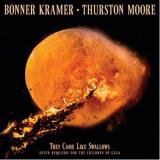
BONNER KRAMER | THURSTON MOORE - THEY CAME LIKE SWALLOWS - SEVEN REQUIEMS FOR THE CHILDREN OF GAZA LP
  • 1: Urn Burial
  • 2: The Redness In The West
  • 3: The Third Migration
  • 4: They Came Like Swallows
  • 5: The Living Theater
  • 6: The Oceans Are Crying
  • 7: Insight
also available

Black Vinyl[30,67 €]


They Came Like Swallows is the first album-length collaboration between Thurston Moore and Kramer (now officially Bonner Kramer), two giants of alternative/ experimental music. The accomplishments and influence of these two artists in the world of independent music cannot be overstated and the result of their artistic union is a startlingly cohesive statement that burns through landscapes of primitive outsider rock, avant-garde composition, progressive ambient and further locales boldly and beautifully unnamable. “Kramer and I reconnected in Miami, Florida, a few years back, many many years after each of us had departed NYC on separate life adventures. It was only a matter of time before Kramer and I started making plans to record together and with his irrepressible due diligence he quickly set up a mobile recording contraption in the pad I was decamped in, the Florida sunshine flowing through the palm leaves, lithe lizards skittering across the windowsills, and we just went for it.

Kramer had the idea to cover a Joy Division tune, a left turn from the improvisations we had been tracking, though wholly in keeping with both our sensibilities of light and dark unifying in transcendent songwriting, both of us devotees of 'the song' as well as 'the freedom.’ What transpired is They Came Like Swallows, a session we immediately felt should exist as a prayer to the war-torn souls of the families of Palestine continually decimated by the brutality of genocide. We agreed beyond words to offer our music as a sonic activism and as a beneficent energy. This album is our duo exchange for human dignity, it is our soul music for any semblance of a peaceful planet.” ~ Thurston Moore “For the first time in our nearly 45 years of friendship, we had identical time windows open to make a record together,” recounts Kramer. After all this time not a moment is wasted as the duo immediately taps into the heightened core of improvisational tension across these seven offerings. Volcanic opener “Urn Burial” notches a similar historic union (John Cale and Terry Riley) to meet the circumstances of the moment, with swirling mists of organ and pounding toms over guitar that thickens the atmosphere with jagged, grimy dissonance.

Solemn strings open the second track, “The Redness In The West,” with Kramer’s cello and viola in dueling bow beneath the high tension drive and sustain of Thurston’s electric guitar, tapping out a Morse code of tension that mounts endlessly into a fog of inevitable war by the end. Moore and Kramer’s sense of experimentalism is in free and full grandeur throughout They Came Like Swallows, though the duo keep a strong and constant sideways eye on melody, composition and architecture, to the ends that any strict lines between song and improvisation are blurred beyond qualification.

As if to punctuate this point, Swallows closes with a nightwork cover of Joy Division’s “Insight,” a doleful coda that breathes out with a solemn inner grace under Thurston’s instantly stylistically recognizable guitar melodies as they weave into he and Kramer’s unison voices. As the lone vocal piece and only traditional ‘song’ form on the album, “Insight” is unique to this set and as a closing statement draws connective lines back to the kind of dynamic, electrified melodicism that wove deep, melancholy patterns into the untamed fire of Sonic Youth’s Sister and Daydream Nation. In the album’s final moments, the two voices repeat the lyric “I’m not afraid anymore” as mantra, underscoring the heavy, unsettled themes and methods that preceded it. Kramer describes the creative process of They Came Like Swallows: “I had composed and recorded a few pieces at my home studio over the course of a couple weeks. Thurston was spending the winter in South Florida, so I flew down and spent a few days recording his guitar parts in his home there. Watching him spontaneously compose his parts was pretty astonishing, to say the least. Once we'd finished working on those pieces, we began improvising and following wherever the music pointed us, and another few pieces were born. We got straight to it, without anything driving us other than the joy of finally working together.

My personal goal was to remain present and catch as many surprises as I could from Thurston's guitar work, and there were plenty during those few days. We had a fucking blast.” Thurston’s contributions here will be readily familiar to any acolytes of his other works, the through-line between his inspired playing, cradled in Kramer’s meticulous, solid arrangements. “If I had to make this record again, I'd do it all exactly the same way,” Kramer says. “It’s like jazz, you don't think about it. You just do it. It was miraculous, and you don't fuck with a miracle.”

pre-order now01.05.2026

expected to be published on 01.05.2026

32,35
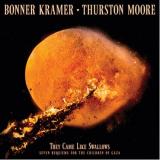
BONNER KRAMER | THURSTON MOORE - THEY CAME LIKE SWALLOWS - SEVEN REQUIEMS FOR THE CHILDREN OF GAZA LP

They Came Like Swallows is the first album-length collaboration between Thurston Moore and Kramer (now officially Bonner Kramer), two giants of alternative/ experimental music. The accomplishments and influence of these two artists in the world of independent music cannot be overstated and the result of their artistic union is a startlingly cohesive statement that burns through landscapes of primitive outsider rock, avant-garde composition, progressive ambient and further locales boldly and beautifully unnamable. “Kramer and I reconnected in Miami, Florida, a few years back, many many years after each of us had departed NYC on separate life adventures. It was only a matter of time before Kramer and I started making plans to record together and with his irrepressible due diligence he quickly set up a mobile recording contraption in the pad I was decamped in, the Florida sunshine flowing through the palm leaves, lithe lizards skittering across the windowsills, and we just went for it.

Kramer had the idea to cover a Joy Division tune, a left turn from the improvisations we had been tracking, though wholly in keeping with both our sensibilities of light and dark unifying in transcendent songwriting, both of us devotees of 'the song' as well as 'the freedom.’ What transpired is They Came Like Swallows, a session we immediately felt should exist as a prayer to the war-torn souls of the families of Palestine continually decimated by the brutality of genocide. We agreed beyond words to offer our music as a sonic activism and as a beneficent energy. This album is our duo exchange for human dignity, it is our soul music for any semblance of a peaceful planet.” ~ Thurston Moore “For the first time in our nearly 45 years of friendship, we had identical time windows open to make a record together,” recounts Kramer. After all this time not a moment is wasted as the duo immediately taps into the heightened core of improvisational tension across these seven offerings. Volcanic opener “Urn Burial” notches a similar historic union (John Cale and Terry Riley) to meet the circumstances of the moment, with swirling mists of organ and pounding toms over guitar that thickens the atmosphere with jagged, grimy dissonance.

Solemn strings open the second track, “The Redness In The West,” with Kramer’s cello and viola in dueling bow beneath the high tension drive and sustain of Thurston’s electric guitar, tapping out a Morse code of tension that mounts endlessly into a fog of inevitable war by the end. Moore and Kramer’s sense of experimentalism is in free and full grandeur throughout They Came Like Swallows, though the duo keep a strong and constant sideways eye on melody, composition and architecture, to the ends that any strict lines between song and improvisation are blurred beyond qualification.

As if to punctuate this point, Swallows closes with a nightwork cover of Joy Division’s “Insight,” a doleful coda that breathes out with a solemn inner grace under Thurston’s instantly stylistically recognizable guitar melodies as they weave into he and Kramer’s unison voices. As the lone vocal piece and only traditional ‘song’ form on the album, “Insight” is unique to this set and as a closing statement draws connective lines back to the kind of dynamic, electrified melodicism that wove deep, melancholy patterns into the untamed fire of Sonic Youth’s Sister and Daydream Nation. In the album’s final moments, the two voices repeat the lyric “I’m not afraid anymore” as mantra, underscoring the heavy, unsettled themes and methods that preceded it. Kramer describes the creative process of They Came Like Swallows: “I had composed and recorded a few pieces at my home studio over the course of a couple weeks. Thurston was spending the winter in South Florida, so I flew down and spent a few days recording his guitar parts in his home there. Watching him spontaneously compose his parts was pretty astonishing, to say the least. Once we'd finished working on those pieces, we began improvising and following wherever the music pointed us, and another few pieces were born. We got straight to it, without anything driving us other than the joy of finally working together.

My personal goal was to remain present and catch as many surprises as I could from Thurston's guitar work, and there were plenty during those few days. We had a fucking blast.” Thurston’s contributions here will be readily familiar to any acolytes of his other works, the through-line between his inspired playing, cradled in Kramer’s meticulous, solid arrangements. “If I had to make this record again, I'd do it all exactly the same way,” Kramer says. “It’s like jazz, you don't think about it. You just do it. It was miraculous, and you don't fuck with a miracle.”

pre-order now01.05.2026

expected to be published on 01.05.2026

30,67
Arjuna Oakes & John Psathas - Sierra

Arjuna Oakes & John Psathas

Sierra

12inchSIERRA001
Sierra
30.01.2026

Rising star Arjuna Oakes and renowned composer John Psathas return for a new collaborative project ‘Sierra’ after their underground hit ‘Future Lullaby’. Fusing Greek folk instrumentation with modern Jazz and recorded live in Athens’ iconic Sierra Studios, this EP brings together electrifying musicians from New Zealand and Greece to experiment and express themselves through the lens of Oakes and Psathas’ compositions.

The ‘Sierra’ EP is a unique capture, a snapshot in time for all those involved in its creation. For Arjuna and Sam, the EP marked their departure from New Zealand to live in London to pursue their respective music careers. For everyone else involved the EP offered a chance to create something different from their usual work, and express themselves in a different musical landscape. The excitement and creative freedom is an essential ingredient in what makes this EP work, and you can hear it all bubbling to the surface throughout the record.

In Stock

On Stock and ready to ship

15,34
Pharoah Sanders - You’ve Got To Have Freedom/ Got To Give It Up

Pharoah Sanders has been described as ‘probably the best tenor player in the world’, emerging as a star from playing saxophone with John Coltrane in the 1960s. As a solo recording artist he is best loved by fusion fans for the jazz dance classic “You’ve Got To Have Freedom”. It’s taken from his 1980 album “Journey To The One” featured here for the first time on the complete side of a 12” single.
“Got To Give It Up” is Pharoah’s outstanding rendition of the Marvin Gaye classic. It has previously been on 7” but never until now in its full length version on 12” single. It was originally a feature on the 1978 album “Love Will Find A Way” produced by Norman Connors. To have both of these masterful recordings on one 12” single is something special.

In Stock

On Stock and ready to ship

19,54
ORIGINAL SOUNDTRACK - DJANGO UNCHAINED
  • A6: Anthony Hamilton & Elayna Boynton– Freedom, Acoustic Guitar – Elayna Boynton, Co-Producer – Daniel Beard, Mixed By, Mastered By – Daniel Beard, Duane Allen (2), Piano, Electric Piano
  • B7: Don Johnson And Christoph Waltz– Five-Thousand-Dollar Nigga's And Gummy-Mouth Bitches, Written-By
  • B9: Don Straud– Sneaky Schultz And The Demise Of Sharp, Written-By
  • B12: Rick Ross With Walton Goggins And Jamie Foxx– 100 Black Coffins, Engineer
  • Recorded | By
  • C14: Samuel L Jackson, Leonardo Dicaprio And Christoph Waltz– Hildi's Hot Box, Written-By
  • C17: James Brown And 2Pac With James Russo (2), Christoph Waltz And Jamie Foxx– Unchained (The Payback / Untouchable), Mixed By
  • D19: Brother Dege– Too Old To Die Young, Lyrics By, Music By – Dege Legg, Mastered By – Bruce Barielle, Mixed By – Dege Legg, Primo (9), Tony Daigle, Producer – Dege Legg, Primo (9), Tony Daigle, Recorded By – Dege Legg, Vocals, Resonator Guitar
  • D20: Samuel L Jackson And Jamie Foxx– Stephen The Poker Player, Written-By
  • D22: Samuel L Jackson And Jamie Foxx– Six Shots Two Guns, Written-By
  • D23: Annibale E I Cantori Moderni*– Trinity Titoli, Composed By – Franco Micalizzi, L Stott*, Conductor
  • A1: James Russo (2)– Winged, Written-By
  • A4: Jamie Foxx And Christoph Waltz– "In That Case Django, After You ..", Written-By
  • A2: Luis Bacalov, Rocky Roberts– Django Theme Song (English Version), Written-By – Luis Bacalov
  • A3: Ennio Morricone– The Braying Mule, Written-By – Ennio Morricone
  • A5: Luis Bacalov, Edda Dell'orso– Main Titles Theme Song (Lo Chiamavano King), Written-By – Luis Bacalov
  • B8: Luis Bacalov– La Corsa (2Nd Version), Written-By – Luis Bacalov
  • B10: Jim Croce– I Got A Name, Written-By – Charles Fox, Norman Gimbel
  • B11: Riz Ortolani– I Giorni Dell'ira, Conductor – Riz Ortolani, Written-By – Riziero Ortolani*
  • C13: Jerry Goldsmith Featuring Pat Metheny– Nicaragua, Soloist – Pat Metheny, Written-By – Jerry Goldsmith
  • C15: Ennio Morricone– Sister Sara's Theme, Written-By – Ennio Morricone
  • C16: Elisa– Ancora Qui, Written-By – Elisa Toffoli, Ennio Morricone
  • D21: Ennio Morricone– Un Monumento, Written-By – Ennio Morricone

a A1 James Russo (2)– Winged, Written-By Dialogue – Quentin Tarantino


d A4 Jamie Foxx And Christoph Waltz– "In That Case Django, After You...", Written-By [Dialogue] – Quentin Tarantino

[f] A6 Anthony Hamilton & Elayna Boynton– Freedom, Acoustic Guitar – Elayna Boynton, Co-producer – Daniel Beard, Mixed By, Mastered By – Daniel Beard, Duane Allen (2), Piano, Electric Piano [Wurlitzer], Bass, Electric Guitar, Acoustic Guitar, Programmed By, Percussion – Kelvin Wootenm, Producer – Kelvin Wooten, Recorded By – Daniel Beard, Kelvin Wooten, Vocals, Backing Vocals – Anthony Hamilton, Elayna Boynton, Written-By – Anthony Hamilton, Elayna Boynton, Kelvin Wooten
[g] B7 Don Johnson And Christoph Waltz– Five-Thousand-Dollar Nigga's And Gummy-Mouth Bitches, Written-By [Dialogue] – Quentin Tarantino

[i] B9 Don Straud– Sneaky Schultz And The Demise Of Sharp, Written-By [Dialogue] – Quentin Tarantino


[l] B12 Rick Ross With Walton Goggins And Jamie Foxx– 100 Black Coffins, Engineer [Recording Engineer] – Isaiah Pryor, Phillip "Logann" Scott III*, Guitar – Charlie Burrel*, Lyrics By – Jamie Foxx, Rick Ross, Mixed By – Jaycen Joshua, Mixed By [Assisted] – Trehy Harris, Music By – Jamie Foxx, Producer – Ainz "Brainz" Dimilo*, Jamie Foxx
[m] Recorded By [Rick Ross's Vocals] – John Rivers*, Written-By [Dialogue] – Quentin Tarantino

[o] C14 Samuel L. Jackson, Leonardo DiCaprio And Christoph Waltz– Hildi's Hot Box, Written-By [Dialogue] – Quentin Tarantino


[r] C17 James Brown And 2Pac With James Russo (2), Christoph Waltz And Jamie Foxx– Unchained (The Payback / Untouchable), Mixed By [The Payback], Edited By [The Payback] – Claudio Cueni, Voice [As Ace Speck] – James Remar, Written-By [Dialogue] – Quentin Tarantino, Written-By [The Payback] – Fred Wesley, James Brown, John Starks*, Written-By [Untouchable (Swizz Beatz Remix)] – Anthony Henderson, Bruce Washington, Kasseem Dean*, Tupac Amaru Shakur*, Yafeu Fula, D18 John Legend– Who Did That To You?, Performer [Sample] – The Mighty Hannibal, Producer – Paul Epworth, Written-By – James T. Shaw (The Mighty Hannibal)*, John Stephens (3), Paul Epworth
[s] D19 Brother Dege– Too Old To Die Young, Lyrics By, Music By – Dege Legg, Mastered By – Bruce Barielle, Mixed By – Dege Legg, Primo (9), Tony Daigle, Producer – Dege Legg, Primo (9), Tony Daigle, Recorded By – Dege Legg, Vocals, Resonator Guitar [Slide/Dobro], Body Percussion [Stomps], Handclaps [Claps] – Dege Legg
[t] D20 Samuel L. Jackson And Jamie Foxx– Stephen The Poker Player, Written-By [Dialogue] – Quentin Tarantino

[v] D22 Samuel L. Jackson And Jamie Foxx– Six Shots Two Guns, Written-By [Dialogue] – Quentin Tarantino
[w] D23 Annibale E I Cantori Moderni*– Trinity: Titoli, Composed By – Franco Micalizzi, L. Stott*, Conductor [Orchestra Directed By] – M° Gianfranco Plenizio*

[a] A1 James Russo (2)– Winged, Written-By [Dialogue] – Quentin Tarantino


[d] A4 Jamie Foxx And Christoph Waltz– "In That Case Django, After You...", Written-By [Dialogue] – Quentin Tarantino

[f] A6 Anthony Hamilton & Elayna Boynton– Freedom, Acoustic Guitar – Elayna Boynton, Co-producer – Daniel Beard, Mixed By, Mastered By – Daniel Beard, Duane Allen (2), Piano, Electric Piano [Wurlitzer], Bass, Electric Guitar, Acoustic Guitar, Programmed By, Percussion – Kelvin Wootenm, Producer – Kelvin Wooten, Recorded By – Daniel Beard, Kelvin Wooten, Vocals, Backing Vocals – Anthony Hamilton, Elayna Boynton, Written-By – Anthony Hamilton, Elayna Boynton, Kelvin Wooten
[g] B7 Don Johnson And Christoph Waltz– Five-Thousand-Dollar Nigga's And Gummy-Mouth Bitches, Written-By [Dialogue] – Quentin Tarantino

[i] B9 Don Straud– Sneaky Schultz And The Demise Of Sharp, Written-By [Dialogue] – Quentin Tarantino


[l] B12 Rick Ross With Walton Goggins And Jamie Foxx– 100 Black Coffins, Engineer [Recording Engineer] – Isaiah Pryor, Phillip "Logann" Scott III*, Guitar – Charlie Burrel*, Lyrics By – Jamie Foxx, Rick Ross, Mixed By – Jaycen Joshua, Mixed By [Assisted] – Trehy Harris, Music By – Jamie Foxx, Producer – Ainz "Brainz" Dimilo*, Jamie Foxx
[m] Recorded By [Rick Ross's Vocals] – John Rivers*, Written-By [Dialogue] – Quentin Tarantino

[o] C14 Samuel L. Jackson, Leonardo DiCaprio And Christoph Waltz– Hildi's Hot Box, Written-By [Dialogue] – Quentin Tarantino


[r] C17 James Brown And 2Pac With James Russo (2), Christoph Waltz And Jamie Foxx– Unchained (The Payback / Untouchable), Mixed By [The Payback], Edited By [The Payback] – Claudio Cueni, Voice [As Ace Speck] – James Remar, Written-By [Dialogue] – Quentin Tarantino, Written-By [The Payback] – Fred Wesley, James Brown, John Starks*, Written-By [Untouchable (Swizz Beatz Remix)] – Anthony Henderson, Bruce Washington, Kasseem Dean*, Tupac Amaru Shakur*, Yafeu Fula, D18 John Legend– Who Did That To You?, Performer [Sample] – The Mighty Hannibal, Producer – Paul Epworth, Written-By – James T. Shaw (The Mighty Hannibal)*, John Stephens (3), Paul Epworth
[s] D19 Brother Dege– Too Old To Die Young, Lyrics By, Music By – Dege Legg, Mastered By – Bruce Barielle, Mixed By – Dege Legg, Primo (9), Tony Daigle, Producer – Dege Legg, Primo (9), Tony Daigle, Recorded By – Dege Legg, Vocals, Resonator Guitar [Slide/Dobro], Body Percussion [Stomps], Handclaps [Claps] – Dege Legg
[t] D20 Samuel L. Jackson And Jamie Foxx– Stephen The Poker Player, Written-By [Dialogue] – Quentin Tarantino

[v] D22 Samuel L. Jackson And Jamie Foxx– Six Shots Two Guns, Written-By [Dialogue] – Quentin Tarantino
[w] D23 Annibale E I Cantori Moderni*– Trinity: Titoli, Composed By – Franco Micalizzi, L. Stott*, Conductor [Orchestra Directed By] – M° Gianfranco Plenizio*

[a] A1 | James Russo (2)– Winged, Written-By [Dialogue] – Quentin Tarantino


[d] A4 | Jamie Foxx And Christoph Waltz– "In That Case Django, After You ..", Written-By [Dialogue] – Quentin Tarantino

[f] A6 | Anthony Hamilton & Elayna Boynton– Freedom, Acoustic Guitar – Elayna Boynton, Co-producer – Daniel Beard, Mixed By, Mastered By – Daniel Beard, Duane Allen (2), Piano, Electric Piano [Wurlitzer], Bass, Electric Guitar, Acoustic Guitar, Programmed By, Percussion – Kelvin Wootenm, Producer – Kelvin Wooten, Recorded By – Daniel Beard, Kelvin Wooten, Vocals, Backing Vocals – Anthony Hamilton, Elayna Boynton, Written-By – Anthony Hamilton, Elayna Boynton, Kelvin Wooten
[g] B7 | Don Johnson And Christoph Waltz– Five-Thousand-Dollar Nigga's And Gummy-Mouth Bitches, Written-By [Dialogue] – Quentin Tarantino

[i] B9 | Don Straud– Sneaky Schultz And The Demise Of Sharp, Written-By [Dialogue] – Quentin Tarantino


[l] B12 | Rick Ross With Walton Goggins And Jamie Foxx– 100 Black Coffins, Engineer [Recording Engineer] – Isaiah Pryor, Phillip "Logann" Scott III*, Guitar – Charlie Burrel*, Lyrics By – Jamie Foxx, Rick Ross, Mixed By – Jaycen Joshua, Mixed By [Assisted] – Trehy Harris, Music By – Jamie Foxx, Producer – Ainz "Brainz" Dimilo*, Jamie Foxx
[m] Recorded | By [Rick Ross's Vocals] – John Rivers*, Written-By [Dialogue] – Quentin Tarantino

[o] C14 | Samuel L Jackson, Leonardo DiCaprio And Christoph Waltz– Hildi's Hot Box, Written-By [Dialogue] – Quentin Tarantino


[r] C17 | James Brown And 2Pac With James Russo (2), Christoph Waltz And Jamie Foxx– Unchained (The Payback / Untouchable), Mixed By [The Payback], Edited By [The Payback] – Claudio Cueni, Voice [As Ace Speck] – James Remar, Written-By [Dialogue] – Quentin Tarantino, Written-By [The Payback] – Fred Wesley, James Brown, John Starks*, Written-By [Untouchable (Swizz Beatz Remix)] – Anthony Henderson, Bruce Washington, Kasseem Dean*, Tupac Amaru Shakur*, Yafeu Fula, D18 John Legend– Who Did That To You?, Performer [Sample] – The Mighty Hannibal, Producer – Paul Epworth, Written-By – James T Shaw (The Mighty Hannibal)*, John Stephens (3), Paul Epworth
[s] D19 | Brother Dege– Too Old To Die Young, Lyrics By, Music By – Dege Legg, Mastered By – Bruce Barielle, Mixed By – Dege Legg, Primo (9), Tony Daigle, Producer – Dege Legg, Primo (9), Tony Daigle, Recorded By – Dege Legg, Vocals, Resonator Guitar [Slide/Dobro], Body Percussion [Stomps], Handclaps [Claps] – Dege Legg
[t] D20 | Samuel L Jackson And Jamie Foxx– Stephen The Poker Player, Written-By [Dialogue] – Quentin Tarantino

[v] D22 | Samuel L Jackson And Jamie Foxx– Six Shots Two Guns, Written-By [Dialogue] – Quentin Tarantino
[w] D23 | Annibale E I Cantori Moderni*– Trinity Titoli, Composed By – Franco Micalizzi, L Stott*, Conductor [Orchestra Directed By] – M° Gianfranco Plenizio*

[a] A1 | James Russo (2)– Winged, Written-By [Dialogue] – Quentin Tarantino


[d] A4 | Jamie Foxx And Christoph Waltz– "In That Case Django, After You ..", Written-By [Dialogue] – Quentin Tarantino

[f] A6 | Anthony Hamilton & Elayna Boynton– Freedom, Acoustic Guitar – Elayna Boynton, Co-producer – Daniel Beard, Mixed By, Mastered By – Daniel Beard, Duane Allen (2), Piano, Electric Piano [Wurlitzer], Bass, Electric Guitar, Acoustic Guitar, Programmed By, Percussion – Kelvin Wootenm, Producer – Kelvin Wooten, Recorded By – Daniel Beard, Kelvin Wooten, Vocals, Backing Vocals – Anthony Hamilton, Elayna Boynton, Written-By – Anthony Hamilton, Elayna Boynton, Kelvin Wooten
[g] B7 | Don Johnson And Christoph Waltz– Five-Thousand-Dollar Nigga's And Gummy-Mouth Bitches, Written-By [Dialogue] – Quentin Tarantino

[i] B9 | Don Straud– Sneaky Schultz And The Demise Of Sharp, Written-By [Dialogue] – Quentin Tarantino


[l] B12 | Rick Ross With Walton Goggins And Jamie Foxx– 100 Black Coffins, Engineer [Recording Engineer] – Isaiah Pryor, Phillip "Logann" Scott III*, Guitar – Charlie Burrel*, Lyrics By – Jamie Foxx, Rick Ross, Mixed By – Jaycen Joshua, Mixed By [Assisted] – Trehy Harris, Music By – Jamie Foxx, Producer – Ainz "Brainz" Dimilo*, Jamie Foxx
[m] Recorded | By [Rick Ross's Vocals] – John Rivers*, Written-By [Dialogue] – Quentin Tarantino

[o] C14 | Samuel L Jackson, Leonardo DiCaprio And Christoph Waltz– Hildi's Hot Box, Written-By [Dialogue] – Quentin Tarantino


[r] C17 | James Brown And 2Pac With James Russo (2), Christoph Waltz And Jamie Foxx– Unchained (The Payback / Untouchable), Mixed By [The Payback], Edited By [The Payback] – Claudio Cueni, Voice [As Ace Speck] – James Remar, Written-By [Dialogue] – Quentin Tarantino, Written-By [The Payback] – Fred Wesley, James Brown, John Starks*, Written-By [Untouchable (Swizz Beatz Remix)] – Anthony Henderson, Bruce Washington, Kasseem Dean*, Tupac Amaru Shakur*, Yafeu Fula, D18 John Legend– Who Did That To You?, Performer [Sample] – The Mighty Hannibal, Producer – Paul Epworth, Written-By – James T Shaw (The Mighty Hannibal)*, John Stephens (3), Paul Epworth
[s] D19 | Brother Dege– Too Old To Die Young, Lyrics By, Music By – Dege Legg, Mastered By – Bruce Barielle, Mixed By – Dege Legg, Primo (9), Tony Daigle, Producer – Dege Legg, Primo (9), Tony Daigle, Recorded By – Dege Legg, Vocals, Resonator Guitar [Slide/Dobro], Body Percussion [Stomps], Handclaps [Claps] – Dege Legg
[t] D20 | Samuel L Jackson And Jamie Foxx– Stephen The Poker Player, Written-By [Dialogue] – Quentin Tarantino

[v] D22 | Samuel L Jackson And Jamie Foxx– Six Shots Two Guns, Written-By [Dialogue] – Quentin Tarantino
[w] D23 | Annibale E I Cantori Moderni*– Trinity Titoli, Composed By – Franco Micalizzi, L Stott*, Conductor [Orchestra Directed By] – M° Gianfranco Plenizio*

In Stock

On Stock and ready to ship

35,50
Electronic - Raise The Pressure LP 2x12"

Electronic

Raise The Pressure LP 2x12"

2x12inch5054197896644
Parlophone
27.08.2025

Electronic were Bernard Sumner (New Order) and Johnny Marr (The Smiths), who together produced critically-acclaimed alternative dance, and gave both Bernard and Johnny the creative freedom to fully express themselves.

Raise The Pressure will be out on vinyl for the first time since its original release in 1996, as a 2LP for superior sound quality. Its original release was on 1LP.

This album had the added touch of Karl Bartos from Kraftwerk.

In Stock

On Stock and ready to ship

35,50
Electronic - Twisted Tenderness LP 2x12"

Electronic

Twisted Tenderness LP 2x12"

2x12inch5054197896675
Parlophone
27.08.2025

Electronic were Bernard Sumner (New Order) and Johnny Marr (The Smiths), who together produced critically-acclaimed alternative dance, and gave both Bernard and Johnny the creative freedom to fully express themselves.

Twisted Tenderness has never been released on vinyl and will also be released on 2LP.

The album was recorded alongside bassist Jimi Goodwin from Doves, and drummer Ged Lynch of Black Grape.

In Stock

On Stock and ready to ship

35,50
David Lee Jr. - Evolution

David Lee Jr.

Evolution

12inchSJRLP551C
Soul Jazz Records
08.08.2025

Drummer and Composer David Lee Jr.’s stunning and rare album Evolution (1974) blends the deep experimentalism of John Coltrane and Sun Ra with the pulsating second-line and parade rhythms of New Orleans to create a stunning sonic and rhythmical tour de force. In a lineage of incredible New Orleans drummers that includes James Black, Idris Muhammed, Zigaboo Modeliste of The Meters, and stretching back to Earl Palmer and Baby Dodds, David Lee Jr. stands out for his fire, experimentalism and an out-there-ness like no other. 'Evolution' is a super deep, ‘lost classic’ radical and groundbreaking deep spiritual jazz album. Originally released in New York in 1974 (400 copies only ever pressed!), ‘Evolution’ is an extraordinary one-off solo album, pressed on the artist’s own Supernal Records, a record company whose slogan ‘seeking creative progress’ and dedication ‘to peace and freedom’ clearly displayed artistic intent over any commercial or market-led forces. David Lee Jr was born in New Orleans and the deep experimental drum-compositions featured on ‘Evolution’ are as rooted in this southern city rhythmically as they are in the spiritual and metaphysical musical ideas of Afro-Futurist pioneers like Coltrane, Sun Ra and others. In the early 1970s Lee Jr. headed off to New York, playing in Roy Ayers’ Ubiquity and later immersing himself in the thriving loft deep jazz scene playing with Leon Thomas, Lonnie Liston Smith, Harold Alexander, Charles Rouse, and recording for a host of seminal deep jazz labels including Strata-East, India Navigation and Flying Dutchman. Today 'Evolution' remains one of the rarest and heaviest of all deep and spiritual jazz albums ever made. One-off super-limited edition magenta colour vinyl, newly digitally remastered, complete with new reproduction artwork, sleevenotes and download code.

In Stock

On Stock and ready to ship

28,53
Dennis Harte - Summer’s Over 7"

Efficient Space charts Ghost Riders’ North American roadmap, crashing into 1973 New York to ignite the unfiltered teen dreams of Dennis Harte.

In the late ’60s, 11-year-old prodigy Dennis Harte was handed a Sears-bought Silvertone 1448, its in-case amplifier primed for street-level incantations. Recruiting two neighbourhood friends, the trio hammered out raw rhythms, drawing in Brooklyn’s wandering bohemians, keen to glimpse a prepubescent Alex Chilton in the making.

Also jamming with his older brothers, Bart and John, a family friend introduced the siblings to budding music exec Carl Edelson, who had spent the better part of two decades hustling through a string of local labels. A father figure of sorts, Edelson backed them immediately, facilitating sessions at the famed A-1 Sound Studios and Sanders Recording Studio and pressing four 7”s on his newly minted Roundtable Records. To maximise his chances of courting major labels, he strategically assigned each release a different artist name - Dennis Harte, Pure Madness, Harte Brothers and the wryly titled Harte Attack.

Dennis’ emotional maturity and sheer talent bleed into the defining ‘Summer’s Over’, penned by Edelson and once recorded by mid-'60s New Jersey garage vocal group The Wouldsmen. Morphing into an unfathomably teenage, blue-eyed soul/psych lament, it aches for a season slipping away forever. Its Harte Attack edition counterpart - the candied ballad ‘Running Thru My Mind’ - delivers unison harmonies and kinetic guitar interplay with a streetwise punch, channeling the spirit of NYC-area icons The Rascals, The Lovin’ Spoonful, and The Youngbloods.

Roaring like the Spencer Davis Group, Pure Madness’ organ-driven bruiser ‘Freedom Rides’ screams of biker gangs, yet its true subject - ’60s civil rights activists the Freedom Riders - looms as another towering theme for an adolescent perspective. Meanwhile, the loose, bluesy ruckus ‘Treat Me Like a Man’ digs back into Edelson’s catalogue, covering the Beatles-inflected Levittown group The Shandels.

Though Dennis later found success touring with Wilson Pickett and now doubles as a piano tuner to the stars, these four snapshots frame ambition on its outer edge - a heartfelt homage to an unbreakable brotherhood.

In Stock

On Stock and ready to ship

11,72
Fashion Flesh - Atoms Revolt/New Freedom

Fashion Flesh tears the fabric of space and time. This is his first offering for the ESP Institute. With side A’s 'Atoms Revolt', ESP cordially introduces Fashion Flesh, AKA John Talaga, to the deepest corners of your mind. Using largely homemade electronics, circuit-bent gadgets, and tape manipulation, John manages to tap into the innate character of these otherwise introverted machines, eavesdropping and documenting their buried inner dialogue. His command of distortion is multi-tiered. On a micro level, he induces happy accidents and shepherds stray elements. Zooming out a bit, we begin to understand the sonic meat grinder that equalizes his bag of disparate ingredients. And from a macro vantage point, we fully recognize the greater tool that sculpts all of the above into form. Side B’s 'New Freedom' conjures a specific dystopian image—the byproduct of an artist involuntarily conditioned by the commute between up-river Bay County, Michigan and the Detroit metropolitan area. Like cutting away at flesh and muscle, breaking through the bone to suck the marrow, John depicts both the contrast and parallels between two post-industrial urban landscapes, the banal trek across The Thumb between them, and the gradual disintegration of agriculture as one nears the Techno city. Voice fragments begin to stutter in syncopation like radio frequencies interfering with our psyche, Geiger counters wail and moan, untamed oscillations mimic caged primates rioting at the zoo, and a steady-firing piston of drums struggles to break through a dense harmonic soot. The depth of personality John extracts through his manipulation process is remarkable— a point-of-view that foreshadows humanity’s looming technological singularity while hinting that it may have always been here, hiding in plain sight, waiting to be given a voice. These two songs will trip your circuit breakers.

In Stock

On Stock and ready to ship

13,24
Babs Robert & The Love Planet - Babs Robert & The Love Planet LP

360 mcn white-white light cardboard paper / one side only hand plasticization / 2 separated parts prints / hand gluing / PVC outers / original artwork / gatefold sleeve / Bandcamp limited edition 30x60 cm insert with extended liner notes by Tony Higgins and Interview with Babs Robert and Sébastien Gorlé with exclusive pictures and self-portrait by Babs Robert himself printed on GF Smith "Takeo Tant Select" Canvas Paper tip-on left jacket panel / Exclusive never released Memorabilia from Babs Robert's vault.

Personnel:
Babs Robert - alt sax, tenor-sax, electric tenor-sax, Bin Recorder, Acme siren, Chinese-bell, sleigh-bells, maracas, tambourine,hand-rattle,claves)
John Van Rymenant - baritone-sax, fluegelhorn, Bala, tambourine, sleight-bells, cowbell, triangle, claves
Johnny Peret - vibes, bongo's, cowbell, maracas, castanets, rattle-snakes, tambourine, drums, woodclock, trinagle
Johnny Brouwers - piano, prepared-piano, triangle, cowbell, sleigh-bells, maracas, caves,hand-rattle, guiro, woodblock, tambourine
Paul Dubois - bass, triangle, cowbell, claves, rattlesnakes, hand-rattle, woodblock, tambourine
Michel Gobbe - bass,Chinese-bell, claves
Robert Pernet - drum, tambourine, seven-notes M'Bichi, guiro, alarm-siren, home-made metal xylophone, African telephone-drum, triangle, sleigh-bells, Siku

Notes:
Despite its modest role on the world stage, Belgium has produced a number of internationally renowned musicians and composers. There is the iconic gypsy jazz guitar maestro Django Reinhardt, whose position remains unassailable, and guitarist/harmonica player Toots Thielemans, who became an internationally renowned artist performing and recording with Bill Evans, Oscar Peterson, Ella Fitzgerald, Peggy Lee, Shirley Horn and Quincy Jones. The other key Belgian figure is composer/arranger Francy Boland, co-leader with US bebop drumming legend Kenny Clarke of Europe's leading big band of the 60s, the Clarke-Boland Big Band.

The Love Planet performed in the main clubs of Brussels, such as Blue Note, Pol's Jazz Place, and Smog as well as in major musical events throughout Belgium including to big festivals in 1969 - the Avant-Garde Festival in Ghent and the First International Jazz Event in Liege – where the Love Planet shared the bill with Miles Davis - and the Bilzen Jazz Festival in 1970. The contrast between the musical architecture of the themes and sonic freedom in the improvised playing perfectly illustrated the polymorphism – an order within disorder – which the Love Planet aimed for.

The initial original quartet line-up was Babs Robert (sax), Paul Dubois (bass), Johnny Brouwers (piano), and Johnny Peret / Robert Pernet (dru- ms). On the album session, the quartet was augmented with the addition of John Van Rjimenant (saxes) and Michel Gobbe (bass). As well as their main instruments, the band members also played an array of unusual instruments, principally percussion. This is the first official re-release
of the 'Babs Robert and the Love Planet'. Original copies of the album fetch many hundreds of Euros on the collecting circuit and it remains a curious and fascinating window into a moment in time that still resona- tes some fifty years later. Come with us to the Love Planet. (Tony Higgins)

In Stock

On Stock and ready to ship

33,82
Edictum - A Cosmic Scale

The album’s title deftly gestures to the sheer vastness of astronomical dimensions, while simultaneously capturing the musical breadth within, where the eight planets are imagined as the eight notes of an octave. The work draws inspiration not only from earlier compositions —most notably Gustav Holst’s The Planets—but also from the rich astronomical and cultural contexts surrounding these celestial bodies. Here, the focus transcends direct citation of melodic motifs, instead embracing an intriguing conceptual approach on a meta level, unfolding in a series of vividly contrasting soundscapes. These contrasts shape a sweeping sonic journey, one that fully embraces the album format with both arms, inviting the listener to venture into realms both strange and wondrous, feeling the immensity of the interstellar space that lies between them. Contrast, after all, is the brushstroke that enriches our world.

Embarking on an auditory voyage, "Astral Guide" establishes the sonic framework that propels us into the boundless expanses of the cosmos. Its ethereal tones evoke the vastness of space, crafting a mood ripe for exploration within the realms of sci-fi. The subsequent tracks unfold like constellations, weaving a rich tapestry of sound that seamlessly marries cinematic soundscapes with pulsating, club-oriented rhythms. This album invites listeners to traverse its immersive landscapes, whether nestled in the comfort of home or dancing under the starlit sky, each note a guide through the transcendent experience of a nocturnal journey.

"Solar Flares" draws its inspiration from the awe-inspiring expanse of solar phenomena, capturing the majestic power of the sun as it reaches into the cosmos. This track resonates with the idea that energy, while vital, can also be a force of destruction when unleashed with overwhelming intensity. The composition beautifully mirrors the sun’s duality, where brilliance and devastation coexist, inviting listeners to reflect on the delicate balance between creation and annihilation. Through its rich textures and dynamic shifts, "Solar Flares" serves as both a homage to the celestial and a poignant reminder of nature's formidable power.

"Mercury – The Winged Messenger" embodies a meticulously crafted soundscape where artistry meets astronomy. The tempo of 173.6 BPM, derived from precise astronomical data, propels the composition into a vibrant realm that resonates with cosmic energy. Synthwave sound design intertwines seamlessly with the fluid rhythms of Drum’n’Bass, imbuing the piece with an uplifting dynamism that evokes the ethereal grace of Mercury itself. In this sonic exploration, listeners are invited to ascend on wings of sound, navigating the celestial tapestry of the universe with each invigorating beat.

"Venus, The Bringer of Peace" strikes a decidedly cozy note, presenting a poignant contrast to the more tempestuous themes often found in cosmic narratives. This composition evokes a nostalgic vision of an optimistic era, one in which humanity transcended borders and embraced the infinite possibilities of space exploration, where no destination felt too distant. The dense, languid atmosphere envelops the listener, creating a tangible sense of serenity that unfolds gradually, allowing for a meditative journey through sound. Each note serves as an invitation to linger in this tranquil embrace, reflecting on the harmonious potential of our collective aspirations and the beauty of connection in a vast universe.

The central theme of „Gaia, The Bringer of Life“ —originally not part of the planetary cycle— is the profound enabler of life on Earth. The arrangement delicately mirrors the slow, tentative unfolding of this potential, marked by an initially sparse orchestration that gradually builds in momentum. This progression crescendos, embodying the explosive dynamism of the Cambrian burst of life, ultimately culminating in a euphoric fanfare—a triumphant, celebratory flourish echoing life’s victorious emergence.

"Blue Moon" unfolds as a contemplative reverie on the tranquil clarity of a night sky, now seldom glimpsed in its natural purity, unclouded by the relentless haze of urban light. The listener is drawn into the vast embrace of the star-strewn firmament, a journey that sways between euphoric awe at nature’s sublime beauty and a profound melancholy for its fragile and imperiled state. Musically, this duality finds expression in the delicate interplay of modal mixtures, while an ever-shifting triplet groove, poised at the intersection of Outrun and melodic house, lends a pulse that is both nostalgic and forward-looking—echoing the beauty and transience of a world on the brink.

Rather than replicating the original composition of „Mars, The Bringer of War“, this interpretation seeks to evoke its profound, foreboding atmosphere. Cyberpunk emerges here as an ideal genre, channeling the dark, relentless march synonymous with Mars, the ancient god of war. The piece reverberates with intensity, as distorted vocalizations rise, embodying the anguish and visceral torment that shadow war’s violent crescendo. This auditory descent into conflict captures the relentless pulse of warfare, where sound itself becomes an embodiment of suffering and fury.

Majestically, "Jupiter, the Bringer of Jollity" emerges on the celestial stage, sweeping away the somber tones with its radiant vigor. Drawing inspiration from the triumphant strains of the original, and borrowing a melodic motif in the refrain, the piece expresses joy and buoyancy through a shift to a major key and the lilting sway of a danceable 12/8 meter. Spirited and exuberant, it leaps boldly from major to minor and back again, playfully shifting time signatures to capture a mood of unbridled festivity and jollity.

Here, a more conciliatory concept is chosen than in the original inspiration. „Saturn“ aligns with the number six, being the sixth planet from the Sun and bearing the iconic hexagonal pattern at its northern pole. What, then, could be more fitting than to render this piece in a 6/8 time signature? The arrangement unfolds with a multifaceted richness, mirroring the countless stones and ice fragments that form the foundations of Saturn’s majestic rings.

„Uranus“ adopts the theme of a light-footed, dancing instrumentation, giving the impression of perpetual motion, never quite settling. This musical choice harmonizes with the planet’s own orbit, as it spins with breathtaking velocity, teetering and swaying, seemingly unable to attain rest or stability.

The chill and vastness of the cosmos find expression in „Neptune, The Mystic“. At its core, an electronic soundscape envelops a classical arrangement, its unreachability intensified by an ethereal, otherworldly choir. Hovering at the outermost boundaries of the solar system, where warmth is but a distant memory, the composition lingers in a slow, contemplative tempo, evoking a realm where space for speculation stretches wide and silence reigns supreme.

Though Pluto may have lost its planetary status, and its companion Charon never achieved one, this shift in classification subtly aligns with the cosmic scale invoked here—one that mirrors the musical tradition of an eight-note sequence. Fittingly, the album closes with „Kuiper Belt“, a composition emblematic of the turbulence and vitality of countless smaller

celestial bodies that, though diminutive, find their rightful place within the vast architecture of the solar system.

They say nature is the greatest composer, shaping the universe with a symphony of chaos and order, beauty and danger. It is this duality that fuels the artistic vision of Edictum—a producer who, armed with a doctorate in chemistry, delves as deeply into the mysteries of molecules as he does into the depths of sound. In the tension between the vastness of the cosmos and the microscopic processes that dictate life’s rhythm, Edictum creates sonic landscapes that dissolve the boundaries between science and art.

His music is a story of contrasts—a sonic tale where the raw forces of nature clash with the intricate structures of human culture. Opposites intertwine to form a harmonious whole: the primal rhythms of the earth meet the celestial melodies of the cosmos, the rigid laws of physics blend with the boundless freedom of art. Edictum explores these polarities with meticulous devotion, each composition an expedition into uncharted soundscapes—a quest to give voice to the unfathomable.

With over 20 years immersed in the realms of electronic music, Edictum has honed a keen sense for rhythm and movement. His driving beats compel both body and mind into a hypnotic flow. Yet beyond the pulse of dance lies a complex framework of conceptual thought. Today, his creative focus revolves around holistic album projects—self-contained worlds with overarching narratives that embrace contrast and complexity. Each track stands alone as a fragment of the whole, but together, they weave a cohesive tapestry, much like the chapters of a novel that guide the listener on an emotional and sonic journey.

Edictum’s distinctive musical signature has earned him international recognition. With over 150 releases, many on prestigious platforms like the iconic *NewRetroWave* label, and collaborations with artists such as Jan Johnston, Azumi Inoue, Powernerd, and Turbo Knight, he has solidified his place in the global electronic music scene. His latest work, *A Cosmic Scale*, marks his seventh vinyl album and is released under his own label, *Echoes of Expanse*. The label’s name is no coincidence—it captures the essence of his art: echoes of infinity, the vibrations of the universe distilled into a singular sonic experience that carries the listener ever further into the boundless expanse of sound and space.

In Stock

On Stock and ready to ship

22,90
Francesco Mami & Julien Chaptal - Reconnect

Francesco Mami & Julien Chaptal

Reconnect

12inchSATYA018
Satya
26.11.2024

“Reconnect”, a collaborative project between Italy’s Francesco Mami and France’s Julien Chaptal, is a musical exploration that originated during a unique period of global confinement, where creativity flourished in unexpected ways.

The genesis of "Reconnect" traces back to a time when the world was asked to pause and stay indoors. During the first 50 days of this period, Julien Chaptal found joy and inspiration in reconnecting with his instruments and the myriad of musical ideas that constantly filled his mind. Embracing the freedom to create without boundaries, he produced a track a day, amassing around 50 tracks, many of which remained unfinished.

A year later, a serendipitous meeting in Geneva with Francesco Mami over sake, good food, and music sparked the idea of collaboration. Julien sent some of his initial tracks to Francesco, who reworked them, adding his unique touch and bringing them to life. Their online exchange and collaborative efforts resulted in the tracks that now form the EP. Francesco, a true studio craftsman, expanded on Julien's original vision, creating a synergy that neither could have achieved alone.

The record encapsulates a theme of "Confined Freedom," a reflection of the period of its creation and draws from three decades of electronic music influences, a melting pot of inspiration that shaped its sound. The warmth of the gear used in the studio sessions provided a comforting contrast to the external circumstances. Various drum machines and synthesizers were employed, contributing to the unique sound of the EP, though no specific piece of equipment was highlighted as central to its creation. "Reconnect" is not just a collection of tracks; it is a testament to the resilience of creativity and the power of collaboration, even from a distance.

With remixes by masterminds Reboot and Johnny D, the vinyl dropping on the shelves December 6th, 2024, is set to catch the ears of many!

In Stock

On Stock and ready to ship

15,76
Various - John Gomez & Nick The Record Present Tangent LP 2x12"

To celebrate 10 years of one of London’s most loved underground club nights, Tangent, Mr Bongo are thrilled to launch this new compilation series. Crafted by its two residents, John Gómez and Nick the Record, it aims to transmit a taste of Tangent’s spirit. A party rooted in inclusivity and open-mindedness, whose name captures the spontaneous switches in musical direction that are a defining element of their nights. For the compilation, the pair have cherry-picked a selection of their prized, rare and dancefloor-ready tracks from around the globe, that have soundtracked the past decade of parties.

Friends for close to 20 years, music lovers, record obsessives and internationally renowned DJs in their own right, John and Nick have two lifetimes worth of musical knowledge to draw from. John a long-standing NTS Radio resident and compiler for Music From Memory. Nick one of the UK’s go-to record dealers, resident DJ since the ‘90s at one of Japan’s pioneering parties, Life Force, and co-captain / co-edit-expert of Record Mission with Dan Tyler (Idjut Boys).

In 2014, the pair decided to bring some of Life Force’s grassroots principles to the UK, whilst channelling underground clubbing institution Plastic People’s meticulous attitude to sound. Tangent grew from being a small gathering of friends, to an established fixture in London’s nightlife, whilst always maintaining a strict no guest DJ policy. “As London’s clubs have become increasingly reliant on international guests, we wanted to emphasize the importance of a club night growing through its residents”, John and Nick reflect. With 10 years of the duo at the helm, an intimate connection between DJ and dancefloor has been built, allowing for freedom of expression on both sides of the decks.

Tangent reaches around the globe and across different eras to make connections that stimulate emotional reverberations in the unfamiliar. Where the blissfully Balearic ‘Laberinto’ by Miguel Perikás, goes hand-in-hand with the Cameroonian hip-house of King B.’s ‘Love is Crazy’. The thundering ‘Amek Amek’ by L'Innovateur Djoe Ahmed et le Zoukabyle, rubs shoulders with the soulful Caribbean-influenced touch of Champagn’s ‘Bel Ti Négress’. And Pellegrin El Kady’s afro-cosmic ‘Seiva de Carnaval’, crosses paths with Kajou’s Kompa disco anthem ‘Tet Chajé’.

Tangent’s longevity is in part down to it having always embraced contemporary sounds. The sub-rattling bass of Srirajah Sound System’s stunning Molam dub stepper ‘Si Phan Don Lovers Rock’ and the slow, woozy mantra of leftfield dancehall explorer Androo’s ‘Lyriso’, are two shining examples.

This compilation represents an ongoing dialogue between past and present, transporting listeners to the heart of a pure musical experience, where open minds and open hearts are eager to follow the tangent.

In Stock

On Stock and ready to ship

19,12
Various - AfroMagic Vol.2 – Hypnotic Grooves & Ecstatic Moves LP

"Deep Dancefloor Jams of African Disco, Funk, Boogie, Reggae & Proto Electro Music 1977-1986reggWhen a passionate DJ and crate digger intuitively selects music for a DJ compilation, without artistic compromise and without the burden of trends, AfroMagic vol.1 emerges from the depths of his soul. Herewith we present the new favorite phonomancer’s tool for all the DJs who experience the dance floor as a sanctuary and a source of freedom and love.

The most fundamental thing that defines African music is that it was created for dancing. In African dance, there is often no clear distinction between ritual celebration and social recreational entertainment – one can seemlessly merge with the other. Because dance and rhythm have more power than gesture and more richness than words, and because they express the deepest experiences of human beings, dance is in itself a complete and self-sufficient language. It is truly an expression of life with all of its emotions – joy, love, sadness and hope – without which there is no African music and dance. For the African people, dance and music are integral parts of the body and soul, thus depicting the expression of life, current emotional states, visions or dreams. Through hypnotic repetitive music and dance, people communicate with each other and with the souls of the dead, the animals, the plants, the stars, the Gods… They free the body and the spirit through ecstatic states, reaching a healing sense of freedom, happiness, and satisfaction.

Throughout history, this transcendental perception of rhythm and dance originating from Africa, influenced popular music worldwide, thus creating new living and breathing forms of musical genres – freeing them from their industrial mold. Funk, disco, soul, boogie, reggae, dancefloor jazz etc., developed in parallel all over the world. It is foolish to perpetually discuss where they originated from and who were the creators of all these fiery dance floor genres – being obvious that they directly or indirectly originate from the African continent and its people who were as well, over the centuries, influenced by disturbing socio-cultural factors of colonialism. However, no one can enslave the soul. The seeds of free and uninhibited dance and rhythm, true to their original form, initially first sprouted onto the USA’s fertile fields of clubbing and popular music while later evolving in other parts of the world.

The disco funk club culture manifested itself as a phenomenal explosion of artists and grooves in the second half of the 70s in the USA. Shortly it spread around the world continually reigning over charts in its various forms – to this day. Clubs emerged where the DJ is an almighty shaman and the dancers are a tribe united under one roof. This urban ritual had and still has a single goal: togetherness, freedom, and love. Clubs have evolved into temples where we free ourselves from the burden of a consumerist lifestyle and suppressed emotions – a place where we receive love and give love – to be who we really are.

Disco funk clubbing was such an influential global phenomenon that its influence can be observed in various other genres from the disco funk era i.e. progressive rock, which mutated by layering complex rock arrangements with a disco funk groove resulting in hybrids, highly sought by today’s diggers, producers and collectors. The profit-hungry music industry of the 80s very quickly commercialized the original disco funk sound by amputating of its original Afro groove to be able to easily ‘sell’ it globally. So, the original disco funk groove became underground again, and it has remained so until this day. Today, for a DJ to unearth that ravishing groove that will lead the dancers to the stars, he must dig passionately like a true musical archaeologist in search of that groove that picks you up after just a few initial beats. That groove which forces the atoms in your body to vibrate, that groove which unites the body and releases the burden.

The AfroMagic compilation series is created as a tool for real DJs who stick to the aesthetics and essence of clubbing.

This continuation of the Afromagic compilation by DJ Borovich was created in a private jam session which served as an escape route from intense and complex love problems.

Unconsciously driven by intuition and emotion and following a live mix tape framework where many tunes are arranged instantaneously, Borovich narrates his story with a strong rhythm that cuts loose even the most blocked off energy nodes and restores happiness to the spirit and the body.

The musical experience of the groove is completed by the lyrics of the songs, which symbolically give DJ Borovich universal answers to his questions arising from questioning the boundaries, nuances and other forms of love.

When considering that Borovich’s selection was created to facilitate an escape from the burdens of reality through rhythm and dance, we can be sure that Afromagic Vol. 2 will have a 100% uplifting, energized and spaced-out effect on the listeners.

The intro to A1, “Feeling Happy” by the Apostles, introduces us to an experienced and slow, cool and irregularly tight groove containing a confidently sung chorus that instantly gives a sense of freedom and hints at the remainder of Afromagic Vol. 2: “I’m gonna feel happy, ´cause I know I’m gonna be myself.” After the anthemic song mantra of the Apostles, Aigbe Lebarty uncompromisingly continues with a dirty disco rhythm. Acidified by accented synths that elevate it to shamanic levels and held together by a female tribal choir, we embark on an uncompromising ritual disco journey. Without a moment to take a breather the prog funk band Mighty Flames and their Road Man launch a highly vicious and raw, thick funk groove spiced with acid synths and dirty RnR breaks, raising the bar for the A side. Jimi Hendrix himself would surely praise it given the ultimate freedom and virtuosity in the solo sections. With the last tune on A side DJ Borovich decides to burn the floor with Geraldo Pino’s psychedelic, acid furious groove and lyrics which describe this HEAVY part of love problems: “The way she walk, the way she talk, the way she does a funky dances, she is really really heavy – that woman”.

While the A side represents a compact intoxicating afro groove machine that separates us from reality and lifts us up to the stars in over 23 minutes, the B side is a treasure trove of proto sub-genres gems. This selection represents the mission of the Afromagic: to find singular events in African recorded discography of popular music from the 70s and 80s that give evidence to the birth of new modern genres on the Dark Continent even before they emerged in the U.S.A. or Europe. The beginnings of electronic music influenced genres are represented back to back with 80s synth jazzy pop, all painted in African colours.

The B side opens big with Jake Sollo and a huge reggae blues number singing about the humiliation of a man – goosebumps guaranteed! “You think I’m nobody that’s why, you don’t know the way for me, I’m somebody I know, I found myself at last”. Adolf Ahanotu then enters the scene with a hard sliding tackle at B2 and an exotic rare disco funk dancefloor napalm. A ‘Sensation’ that would ignite even the coldest of introverts. While we approach the end of the compilation the narrative revolves again and takes a different turn. No less and no more than to the proto-electro that Baad John Cross serves us in “Give Me Some Lovin´”. The fat and repetitive broken electro synth groove, championing many early 90s electro tracks, is presented here without hesitation and with constant tension accompanied by a mantric chorus “Gimme some, gimme some, gimme some looooovin’, EVERBODY!!!”. Finally, we’re guided to the end of Afromagic Vol. 2 by Eji Oyevole’s 80s synth pop style presented in an authentic afro manner, giving us a glimpse at yet another released Afromagic edition, as well as giving an answer to DJ Borovich’s love problems. A smoothly broken electronic rhythm resembling electrified highlife sounds, carried on the wings of a virtuoso dreamy saxophone on top of which Eji presents the most intimate parts of himself. Finalizing the track with a symbolic chorus, on the surface referring to the dancefloor and simply having fun, but in actuality referring to the skill and happiness of living: “I´m a dancer, I can dance”. So, get up and dance among the stars with DJ Borovich and Afromagic.

In Stock

On Stock and ready to ship

25,17
Studio 1 Ska Fever - More Ska Sounds From Sir Coxsone's Downbeat LP  2x12"

Repress!

A blistering collection of ska tunes from Clement 'Sir Coxsone' Dodd's legendary Studio One Records, Jamaica's foundation label of reggae music. Featuring classic cuts from the originators of Ska - The Skatalites, The Wailers, Lee Perry - alongside a heavy dose of superb rarities from the might vaults of 13 Brentford Road - pure Ska Fever !

Soul Jazz Records new Studio One Ska Fever returns back to the early 1960s when Ska was the soundtrack to Jamaica's Independence and Sir Coxsone ruled the land and The Skatalites and Studio One were creating history on a daily basis with an endless stream of blistering, scorching classic tunes.

This album includes an incredible line-up of only the finest artists in reggae music, including Roland Alphonso, The Gaylads, The Ethiopians, Don Drummond, Jackie Opel and many more. An all-star cast from Studio One, as Chris Blackwell famously noted, the 'University of Reggae'.

The accompanying booklet contains extensive sleeve-notes from Studio One historian Rob Chapman (author of Never Grow Old and Downbeat Special), with information on musicians, tracks, label scans and more. Soul Jazz Records' Studio One Ska Fever is released in
CD- jewel case, 24-page booklet with card slipcase, as well as a heavyweight double-vinyl edition in deluxe strong gatefold sleeve (with full sleeve notes).

In Stock

On Stock and ready to ship

30,21
Wildflower - Wildflower LP

Wildflower

Wildflower LP

12inchSTACLP001
Ill Considered
03.07.2023

Wildflower is a trio comprising Idris Rahman (sax), Leon Brichard (bass) and Tom Skinner (drums).

The trio takes you on an intense, meditative and spiritual musical journey that embodies the spirit of freedom. Based around hypnotic grooves laid down by Brichard’s unswervingly solid bass lines, drummer Skinner plays around artfully with the beats, grooving hard in constantly shifting, unexpected turns of rhythmic play. Rahman’s contributions range from subtle conversational interplay to loudly expressed angry passion to the most delicate of whispers, conveying a depth of emotion and a deep sense of musical structure withIn an ever changing sea of musical conversation.

Using simple, arresting melodies as a starting point, the trio create freely improvised waves of emotion ranging from powerful climaxes to hauntingly beautiful breath-like passages and everything in-between, creating unique forms and structures that react to the acoustics and the atmosphere of the situation.

Taking inspiration from the spiritual jazz pioneers such as John and Alice Coltrane, Pharoah Sanders, Yusef Lateef and Sun Ra, compositional influences range from Gnawa music to modal jazz to Bengali folk music but the scope is wider still and the important unifying factor is the spontaneous communication and interplay between the three musicians. Rather than having a tight rigid structure, the tunes are allowed to breathe and develop into new unexplored forms, allowing fresh interpretations that make each performance a unique experience.

The album is a collection of live and studio recordings that have been recorded and mixed by the band.

In Stock

On Stock and ready to ship

16,77
Pig & Dan - Rock You All Night

Known as the “Dynamic Duo” Pig&Dan celebrate twenty years by making a long-awaited debut on Crosstown Rebels next month. The two-track Rock You All Night EP draws inspiration from the USA’s heritage house scene, with a slice of Hot Filtered Disco!

The influences of Chicago and New York are heard right from the offset, with rolling homegrown stabs coupled next to heavy and wholesome bassline grooves. There’s an inherent feel-good atmosphere to the piece, reflective of the era’s freedom and openness, before Let Yourself Unwind finishes proceedings on a similarly euphoric close. Disco-esque melodies flitter beneath an upbeat, repeating vocal as choir-like instrumentals build to create the perfect synergy for both dancefloor and radio play.

Pig&Dan have firmly established their presence as one of electronic music’s most esteemed duos. The pair’s releases speak for themselves, be it on Sven Väth’s Cocoon, Adam Beyer’s Drumcode or John Digweed’s Bedrock to name a mere few of the labels they’ve found success on. Their DJ performances are similarly impressive, with recent years marking the launch of a new live show that debuted across some of the biggest global stages, including Fabric (London), Warung (Brazil) and AIM festival (Canada).

In Stock

On Stock and ready to ship

12,40
LARRISON - CONNECTERS VOL. 1: ORIGINAL RECORDINGS, 1992-1999
  • Ripples
  • Driving To Austin
  • Rewind
  • Waiting For Sleep
  • Fancy Free
  • Water Montage
  • Wake / The City / Sleep
  • On Glass Ii
  • In Motion
  • Fancy Finish
  • A Late Start
  • Leaving Again
  • Dazzling Showroom / Future City
  • Winter Wave
  • Swarm
  • On Glass I
  • Dap
  • Ice Planet (Alt)
  • Song From A Bedroom In Podunk Indiana
  • Exiting
  • Hi And Lo
  • Sea Level
  • Sequencer Sway
  • Moonplay
  • Aquarium

Connecters Vol. 1: Original Recordings, 1992-1999 ist die erste Veröffentlichung von Larrison, dem Pseudonym des bildenden Künstlers und Musikers Larrison Seidle aus dem Mittleren Westen. Larrison komponierte, programmierte und nahm alles komplett auf einem Casio CZ-5000 auf, während der guten alten Zeit der selbstgemachten Experimente und Entdeckungen in den frühen 90ern. Er lebte in einer Traumwelt, die er selbst erfunden hatte, mit Soundtracks aus Space-Age-Pop-Vignetten, gespickt mit hypnotischen, überschwänglichen, vielschichtigen Synthesizer-Melodien. Mit 26 Tracks, die alle neu restauriert und aus den Originalquellen gemastert wurden, erfindet sich Connecters Vol. 1 Song für Song neu, überwindet die Zeit und trotzt der vorbestimmten Vergessenheit dieser brillanten, diskreten Musik, die vor drei Jahrzehnten entstanden ist. Larrison Seidle wuchs in den 70er und 80er Jahren in Greenwood, Indiana, einem Arbeitervorort von Indianapolis, auf. Er stammte nicht aus einer Musikerfamilie, aber aus einem Haushalt, in dem Musikalität gefördert wurde. Sein Vater kaufte eine elektrische Orgel, in der Hoffnung, dass Larrison und sein älterer Bruder das Instrument lernen würden. ,Am Ende saß mein Vater einige Abende an der Orgel, improvisierte und spielte immer wieder dieses eine Lied, von dem ich mich noch an die ersten Takte erinnern kann", erinnert sich Larrison. Möglicherweise war es in diesem Moment, in dem es zwar keine formale Ausbildung gab, aber viel Ermutigung und Entdeckungsfreude, dass der Künstler seine ersten musikalischen Experimente machte. Diese Erlaubnis, sich auszuprobieren, sollte seine kreative Arbeit in den folgenden Jahren deutlich prägen. Während in Larrisons Elternhaus klassische Rockplatten leicht zugänglich waren, lieh sich sein Vater 35-mm-Dokumentarfilme aus der Bibliothek aus, um sie im Wohnzimmer zu zeigen, die alle mit skurrilen Instrumentalstücken unterlegt waren. Als Teenager nahm er John Carpenters und Alan Howarths Endthema aus ,Die Klapperschlange" mit einem kleinen Kassettenrekorder neben dem Fernsehlautsprecher auf und liebte Tangerine Dreams Beiträge zu Ridley Scotts düsterer Fantasy ,Legend". Seine Faszination für diese weitgehend textlosen, synthesizerbasierten Kompositionen führte zu einem eigenwilligen Verständnis davon, wie Musik nicht nur das ergänzt, was wir vor uns sehen, sondern auch das, was wir in den Tiefen unseres Bewusstseins erleben. 1985, als er dreizehn Jahre alt war, überzeugte Larrison seinen Vater, ihm ein Casio CZ-5000-Keyboard zu kaufen. Wie zuvor die Orgel war auch dieses Instrument eine Neuheit im Haushalt der Seidles. Erst nach seinem Highschool-Abschluss 1991 und dem Beginn seines Studiums an der Herron School of Art in Indianapolis entdeckte er den in das Casio integrierten Sequenzer und begann, seine Kompositionen auf Band aufzunehmen. ,Das CZ-5000 und sein 8-Spur-Sequenzer sind die einzigen Musikinstrumente, die ich benutzt habe. Es hat eine fast unbegrenzte Funktion zur Erzeugung neuer Klänge", erklärte Seidle. Während seiner Zeit an der Herron School of Art freundete sich Larrison mit seinem Kommilitonen und Klangkünstler Michael Northam an, den er bei einem Konzert auf dem Campus kennengelernt hatte. Nachdem Northam Larrison für die Musik von Severed Heads, Throbbing Gristle und Roger Doyle begeistert und damit seine Zuneigung und sein Vertrauen gewonnen hatte, überredete er ihn, nach Austin, Texas, zu ziehen, das in den frühen 90er Jahren für seine lebendige Kunst- und Musikszene bekannt war. Die beiden wohnten zunächst bei Northams Freund Daniel Plunkett, dem Herausgeber und Verleger von ND, einem einflussreichen Magazin, das sich von 1982 bis 1999 mit DIY-Musik und Tape-Trading beschäftigte. In seiner Blütezeit hatte ND Tausende von Lesern, und Plunkett verschickte die Ausgaben weltweit. In den letzten Monaten des Jahres 1993 und Anfang 1994 schrieb und nahm Larrison mit begrenzten Mitteln und grenzenloser Intuition eine Reihe von Songs mit seinem CZ-5000 in einer kleinen Wohnung nördlich der Innenstadt von Austin auf, bastelte eine farbenfrohe, illustrierte Beilage, in der einige Songtitel durch Linien oder Pfeile dargestellt waren, und gab sie an Plunkett weiter, damit er sie für ND rezensieren konnte. Diese einzelne Kassette mit dem Titel Connecters sic war eine von 1200, die im Laufe des Bestehens der Publikation bei ND eingereicht wurden und die Jed Bindeman, Mitbegründer von Freedom To Spend, 2020 erworben und fast wie durch ein Wunder entdeckt hat. ,Ich hatte große Schwierigkeiten, mir die Kassetten in dieser Sammlung anzuhören", gibt Bindeman zu. ,Aber dann legte ich Larrisons Connecters ein und dachte sofort: ,Wow! Was höre ich da?' Die Kassette war von Anfang bis Ende einfach fantastisch." Mit Musik von genau dieser Kassette und anderen Aufnahmen aus Larrisons Experimenten in den 90er Jahren ist Connecters eine Übersicht über Instrumentalmusik, die sowohl durch vielfältige konzeptionelle Strategien als auch durch spielerische Neugierde geprägt ist. Seidle arbeitete unter Bedingungen, die viele Musiker als Einschränkung empfinden würden, und entwickelte technisch innovative Ansätze, um die Klänge und integrierten Effekte des CZ-5000 zu modifizieren. Das Gerät ermöglichte es ihm, die Wellenform, die Hüllkurve und die Tonart von Klängen mithilfe der Phasenverzerrungssynthese zu verändern und so im Grunde genommen Instrumente zu schaffen, während er Songs komponierte. Die Tracks zeichnen sich durch eine durchdachte impressionistische Vielfalt aus, die mal lo-fi, mal symphonisch klingt. Inmitten der Zerlegung und Verstärkung der Fähigkeiten des CZ-5000 gibt es auch einen geschmackvollen Rückgriff auf eine kindliche Interaktion und Erfahrung von Klang. Vielleicht ist es diese Erfahrungsqualität, die es so schwierig macht, Larrisons Projekt einfach als Ambient oder Elektronik zu verstehen. Sein Wille, die ihm zur Verfügung stehenden Werkzeuge zu transformieren, hebt die daraus resultierenden Kompositionen auf eine persönliche Ebene und verleiht der Musik einen bezaubernden Sinn für Mystik. Connecters ist ein Beweis für eine künstlerische Vision, die sich nicht durch Grenzen einschränken lässt und keine Angst vor Informalität hat. Diese Aufnahmen, die dreißig Jahre nach ihrer Dokumentation auf magische Weise an die Oberfläche kommen, zeigen, wie personalisierte Produktionsmittel die Zeit ausdehnen und verkürzen können. Larrison lädt die Zuhörer ein, sich auf die Wunder der auditiven Vorstellungskraft einzulassen - eine Brücke zwischen visueller Erinnerung, emotionaler Resonanz und der grenzenlosen Möglichkeit, mit den uns zur Verfügung stehenden Mitteln Musik zu machen. Larrison's Connecters Vol. 1: Original Recordings, 1992-1999 wird am 3. April 2026 von Freedom To Spend als Vinyl- und Digitalausgabe veröffentlicht.

pre-order now

This item has not yet been released. You can pre-order the product now.

22,27
GANGLOFF / SCHENKER / SHEPPARD - UNIVERSAL LIGHT LP

GANGLOFF / SCHENKER / SHEPPARD

UNIVERSAL LIGHT LP

12inchVHF168LP
VHF
27.02.2026

Debut by a new string trio of Pelt and Elkhorn veterans with the wild card contributions of Kaily Schenker, creating a new variant of supremely pleasing acoustic-psychedelic-drone-Americana etc. “Lullaby>Summer Field” is an aptly named gentle rise, with Sheppard’s fingerpicked 12 string snaking through waves of elongated fiddle and cello. “Triode>Freedom” follows a darker minor-key ostinato with Gangloff’s keening melody over the top. “Freedom>Universal Blues” starts as a dirge and builds to a transition into the traditional “The Squirrel is a Pretty Thing,” with Kaily Schenker’s droning harmonium and vocal delivering a riveting, epic version of what’s usually cast as a short “kids”/folk-tale song (e.g. Peggy Seeger’s version). Originally this album was released by the band in an instantly sold-out edition of 100 for sale at their shows. This updated version includes a new insert by Kaily, a new cut by John Golden and a thick pressing from Smashed in Chicago.

pre-order now27.02.2026

expected to be published on 27.02.2026

24,79
Jackie Mittoo - Rides On LP
  • A1: Jah Jah Harmony
  • A2: Natty Congo Rides On
  • A3: Soulful Times
  • A4: Jumping Up
  • A5: Freedom Smile
  • A6: Taking You Somewhere
  • B1: Nanny Skank
  • B2: Look At Life
  • B3: Hard Times
  • B4: Pray To Play
  • B5: Too Bad Bull
  • B6: No Get Dub Over

Jackie Mittoo, organ and piano maestro, was also one of the founding members of Jamaica's top session band The Skatalites. Musical arranger for Studio One he provided the backbone to so many of Jamaica's finest tunes. The invention of Ska music and the sounds that rode through the Rocksteady and Reggae period all carry his stamp. Whether it be in his various incarnations, the aforementioned Skatalites, The Soul Brothers, Soul Vendors and the Sound Dimension or under his own name, his distinctive organ and piano sound and musical arrangements have all played a major part in Jamaica's musical history.

Jackie Mittoo (born 1948, Kingston, Jamaica) began playing musical instruments at a very early age. Taught piano by his grandmother he was performing live by the age of 10 and recording by the age of 15. Two Kingston bands that he played with the Rivals and the Sheiks brought him to the attention of Studio One's founder Coxsone Dodd. Who at the time was putting a group of musicians together to be his studio band. Impressed by his skills on both the organ and the piano, Jackie was asked to join in what would become Jamaica's foremost band The Skatalites. The fellow band members were Lloyd Brevett (bass), Lloyd Knibbs (drums), Don Drummond (trombone), Tommy McCook, Roland Alphonso and Lester Sterling (Sax), Johnny Moore (trumpet), Jah Jerry (guitar) and Mr Mittoo (piano). This line up ruled the Jamaican scene between 1964 - 1965 as well as inventing the Ska sound, they also performed the backing duties for the other top labels of the time including Duke Reid's Treasure Isle and Justin Yap's Top Deck label.

1965 saw The Skatalites disband and Jackie Mittoo move on to his next musical project The Soul Brothers. Formed with fellow Skatalite Roland Alphonso, this band would back all the hits coming out of Studio One for the next three years with Jackie Mittoo working as band leader and musical arranger. Around this time Jackie also had his own single released, a Ska underground classic called 'Got My Bugaloo'. Rare, as it also features Jackie in the unusual role for him, as lead singer!!!!.

1966 saw the Ska sound evolve into Rocksteady, again with Jackie's band at the helm, and his first hit single the Rocksteady cut 'Ram Jam'. The success of which would lead to a solo career and album releases under his own name such as 'Now', 'Macka Fat', 'Evening Time', 'In London' and 'Keep on Dancing', to name but a few. In1967 the hits at Studio One were still flowing when The Soul Brothers morphed into The Soul Venders and began backing such luminaries as Ken Boothe, Alton Ellis, Delroy Wilson, The Heptones, The Cables, The Wailers and many other of the labels solo artists.

By 1968 Jamaican music was ready for another change and Rocksteady rolled into a slower groove soon to be called Reggae. Jackie Mittoo would be at the forefront with his latest band The Sound Dimension. A line up that included Leroy Sibbles (bass), Roland Alphonso and Cedric Brooks (saxophone), Eric Frater and Ernest Ranglin (guitar) and Bunny Williams (drums). Being the house band at Studio One they backed all the leading names of the time, John Holt, Horace Andy and Alton Ellis, all of Studio One's output carried his sound.

Jackie Mittoo emigrated in the late 60's to Canada, but travelled to Jamaica and London to record with many of the big new names, who were trying to redress Studio One's supremacy and needed his magic touch. Such Producers as Bunny Lee used Jackie Mittoo on many of his sessions, Sugar Minott among others were always glad of his services.

We have captured some fine 1970's cuts that feature Jackies numerous talents, showing his ability to embellish tracks with a feel that few could better, Musical arranger, band leader all round studio ace. We hope you enjoy the set and I'm sure you'll agree with us Jackie Mittoo does indeed Ride On.........

pre-order now13.02.2026

expected to be published on 13.02.2026

13,24
TURNER CODY & THE SOLDIERS OF LOVE UNVEIL - OUT FOR BLOOD
  • We Need Each Other
  • Recognize A Friend
  • Cigarettes Inside
  • Out For Blood
  • Particular Poison
  • Delmar Avenue
  • Drinkin' In The Land Of Lincoln
  • My Song On The Radio
  • Pay For Being Free
  • The Walls Are Closing In
  • Evening Prayer

Turner Cody first collaborated with Nicolas Michaux and the Soldiers of Love (Clément Nourry, Ted Clark, and Morgan Vigilante) on his album Friends in High Places (2021). This album marked a turning point for Turner Cody, in which he started to incorporate country influences to his songwriting. But that was only the beginning, and Out For Blood is without question a country album. This new album offers the perfect canvas for him to express his poetic lyricism, and to paint portraits inspired by American mythologies. The songs explore such themes as freedom, individualism, destiny, sin and redemption. Rooted in traditional narratives yet resonating with our times, these songs are to be seen as parables: imaginary characters faced with the dichotomy of good and evil. In the vein of Kris Kristofferson, Townes Van Zandt, or John Prine, Out For Blood stands as a major contribution to the great repertoire of American song. ut For Blood bears witness to a transformation in Turner Cody"s life. While his songwriting already hinted at a certain Americana, it primarily reflected his twenty years spent in New York and the legacy of the anti-folk scene-closer to the Velvet Underground than to Hank Williams. Then came the move: Cody and his family left New York to settle in St. Louis, on the banks of the Mississippi. This change of scenery and perspective fueleda new way of writing. The challenge was clear: maintaining the subtlety and textural work characteristic of his previous works while integrating the country heritage of the new songs. The collaboration between Turner Cody and Nicolas Michaux signs the perfect communion between an artist who writes in the language of poetry and another who crafts sound and textures. The Soldiers of Love, far more than a backing band, have influences ranging from jazz to fusion, from pop to Congolese rhythms. Their subtle, atmospheric sound merges with Turner Cody"s "three chords and the truth" to create this unique magic!

pre-order now13.02.2026

expected to be published on 13.02.2026

27,31
JOE ALLOTTA - TRANSITION

JOE ALLOTTA

TRANSITION

12inchSGH00020
Irma Records
13.02.2026
 
5

Joe Allotta's solo project (drummer, composer, and singer) was born from his need for freedom of expression after numerous experiences
as a session musician for artists such as Davide Shorty, Johnny Marsiglia, Funk Shui Project, Mario Biondi, Leburn Maddox, Giles Robson,
Amy True, and Imaani (Incognito).
His compositions embody the desire to make jazz, in its various forms and influences, accessible to the widest possible audience without sacrificing the impact of an engaging and captivating live performance.
Joe Allotta blends hip hop, funk, and drum 'n' bass with contemporary jazz, perfectly blending vocals with his performances. He combines
his rhythmic exploration with a sweet and surprising voice, capable of lending further emotional depth to his music.
"Transition" is a musical journey that reflects a life in constant motion, where everything seems fleeting, fast, and fleeting, immersed in the
frenetic rhythms that surround us every day. The title also encompasses a more intimate dimension: the growth of his artistic identity. Joe is
no longer just a drummer and composer, but also a singer. His intense and surprising voice intertwines with his drumming in a continuous
dialogue, opening up new expressive possibilities and adding further depth to his musical language.
The album was produced in the studios of the Sghetto Club in Bologna, where Joe, together with his producer Jacopo Trapani, spent weeks
researching and experimenting: rehearsing, playing, processing and synthesizing sounds, developing and arranging ideas, thanks also to
the collaboration of extraordinary musicians. The result is a work that blends instinct and research, intimacy and openness, movement and
transformation: exactly what Transition aims to convey.
CREDITS
Giuseppe "Joe" Allotta: Compositions, Vocals, Drums, Bass, Keyboards
Jacopo Trapani: Compositions, Recording, Mixing
Chicco Allotta: Piano (Track 1)
Giovanni Galdo: Bass (Track 1)
Riccardo Dalle Vedove: Trombone (Track 1)
Piergiorgio Perrella: Guitar (Tracks 2, 5, 8, 9)
Elijah Lee Last Jacinto: Piano (Track 6)
Matteo Diego Scarcella: Sax (Track 6) Francesco Brini: Master

pre-order now13.02.2026

expected to be published on 13.02.2026

22,65
Lukas Traxel - One-Eyed Daruma LP

Swiss artist Lukas Traxel releases his powerful debut album One-Eyed Daruma on We Jazz Records, March 10. The trio features Traxel on double bass, Otis Sandsjö on sax and Moritz Baumgärtner on drums. Compact, deep, and organic to the bone, Traxel & co's sound echoes the innovations of rhythmically driven avantgarde jazz while keeping things moving at all times. There's both drive and freedom to this sound.
ONe-Eyed Daruma features eight new compositions by Traxel, who crafted the outline for the album while dealing with the loss of his father. The group came together after an open invitation from the Zurich jazz club Moods to present a new group. The trio of Traxel, Sandsjö and Baumgärtner creates a full, symphonic, and powerful body of sound despite the instrumentation without a harmony instrument. The trio functions as a collective where the boundaries between composition, melody, and accompaniment are in flux, while keeping the common goal of creating new music together in sight at all times. Traxel reports that after playing bass in various groups with guitar and/or piano, he wanted to create a counterpoint of sorts with his new group and specifically go about it with a more sparse setup. As One-Eyed Drama proves, the idea behind the trio dynamic is a strong one and the unit makes use of their extra space in creating evocative, moody, swinging creative jazz with a distinguishable fingerprint of its own.
Lukas Traxel says:

"The process of composing this music while dealing with the loss of a loved one resulted in a writer's block at first. The notes would just not flow out of my pen until I noticed a mysterious-looking figure in the right upper corner of my piano. It was a daruma, an eyeless figure that in the Japanese tradition brings luck and prosperity. According to the myth, the first eye must be drawn onto the figure while expressing a wish. The second eye can be added only if the wish comes true. My daruma is meant to stay one-eyed as my wish, strongly connected and intertwined with my now gone father, is not meant to be fulfilled. The feeling of unfulfillment and imperfection of life serves as a common thread throughout this album, right down to its title. In a similar fashion, a composition remains incomplete until it is interpreted by musicians, and given form as music. That being said, for me playing together with this trio symbolises the upside: the sense of fulfillment in music and life.

Our musical influences include the American composer and singer Caroline Shaw, Swiss pianist Colin Vallon's trio, and composer/singer-songwriter Gabriel Kahane. In addition, I have listened a lot to the trio albums of Jimmy Guiffre and Sonny Rollins. Besides that, my musical heroes like Charlie Haden, John Coltrane, and Keith Jarrett always flow into the music. Another very important influence in the music is the work of American visual artist Agnes Martin, in whose works the imperfection of a multiplicity of repetitions results in a lively big whole in the end. (See "Wild Flower")

Live, the trio takes a lot of freedom in interpreting this music, yet we have a deeper, almost pop-like attitude towards the live performance as an experience. For me it's always important to build a strong narrative with the band while on stage."

One-Eyed Daruma by Lukas Traxel is released on 10 March 2023 by We Jazz Records on LP/CD/digitally. The LP edition is shelved in an inside-out sleeve and pressed on white vinyl. The CD is housed in a cardboard digisleeve with UV lacquer finish.

out of Stock

Order now and we will order the item for you at our supplier.

22,65

Last In: 3 years ago
Eva Novoa - The Freedom Suite, Novoa / Carter / Mela Trio, Vol. 2

"Brooklyn-based pianist Eva Novoa returns with The Freedom Suite: Novoa / Carter / Mela Trio, Vol. 2 — the second radiant release from her compelling trio with saxophone icon Daniel Carter and celebrated drummer Francisco Mela. This marks Novoa’s sixth album with 577 Records. The trio first came together live in 2021, followed by a series of performances, including appearances in Cambridge (Boston) and later at the Brooklyn edition of the NY Forward Festival.
"The Freedom Suite is an homage to jazz titan Duke Ellington — particularly his masterful big band suites and legendary orchestra featuring Johnny Hodges and other luminaries who helped define an era of jazz greatness. In contrast, Novoa presents her Suite in a more intimate format: the piano trio. The album comprises twelve pieces — mostly brief — with a few extended tracks such as Free to Be Free and Cyborgs.
"For this recording, Novoa also steps in as a vocalist on several tracks, including Mainstream Media, Big Grande, Global, Free to Be Free, Dream, and Cyborgs. These pieces often feature a vocal dialogue between Novoa and Mela, whose expressive, word-infused style draws from rich Cuban traditions.
'Words are powerful,' says Novoa. 'They define who we are, where we come from, and who we hope to become. Without words, there is no conversation — and without conversation, there is no real sense of time, space, or connection.'
The Freedom Suite emerged from deep philosophical and creative conversations — spoken, written, and improvised — between Novoa, Carter, and Mela. In the studio, Novoa introduced printed texts that served as thematic foundations for spontaneous, in-the-moment musical interpretation. The result is an urgent and organic interplay, where instruments speak to one another in a language as fluid as it is fearless.
"Standout track Cyborgs begins with Novoa’s percussive piano, exemplifying the trio’s dynamic, conversational energy. Creative Destruction features Novoa on electric harpsichord in a wild, electric exchange. While Free to Be Free stands out as the album’s leading single, it also captures the essence and message of the entire Suite.
"Recorded in 2021 at New York City’s legendary Sear Sound Studio, the album captures a creative explosion of sound and spirit. Novoa dazzles on piano, Fender Rhodes, electric harpsichord, Chinese gongs — even whistle — showcasing her expansive sonic palette. Together, the trio embodies the power of free improvisation and emotional storytelling.
"Originally from Barcelona, Spain, Eva Novoa has been cultivating her distinctive voice since childhood. Now a staple of the New York creative music scene, she has performed across the globe and collaborated with some of the most adventurous voices in jazz and beyond."

pre-order now30.01.2026

expected to be published on 30.01.2026

23,32
Various - Wizzz! French Psychorama Volume 5 (67-75)

The journey through French-speaking pop archives continues with this fifth volume, packed with fuzz, gimmicks, and dissent. Far from the charts, the selected tracks display a great creative freedom, often backed by corrosive humor. Welcome to the surprising, kaleidoscopic, and colorful world of the late sixties and early seventies, Wizzz!
Born in Montauban, Robert Pico stumbled into music by chance when he met René Vaneste, then artistic director at Pathé-Marconi. René brought him to Paris to record his first 45 RPM EP in 1964. A year later, Pierre Perret introduced him to Vogue, where he recorded his second album with Claude Nougaro’s orchestra. Sylvie Vartan then introduced him to RCA, where he recorded four singles, including the astonishing "Chien Fidèle," a track backed by a hair-rising fuzz guitar. Alongside his solo career, he also composed for other artists like Alain Delon (the song was recorded but remains unreleased), Magali Noël, Bourvil, and Georges Guétary. In the Paris of the sixties, he mingled with Mireille Darc, Elsa Martinelli, Marie Laforêt, France Gall, Françoise Hardy, Petula Clark, Régine, Dani, Serge Gainsbourg, Joe Dassin, Franck Fernandel, Charles Level, and Roland Vincent. Despite his efforts and winning a Grand Prix Sacem for his final record, Robert Pico didn’t achieve the expected success in show business and decided to leave Paris and return to the Southwest, where he devoted himself to writing. He is the author of 23 books (including Delon et Compagnie, Jean-Marc Savary Editions 2025, a memoir about his youth and his many encounters). Today, he is relieved to never have become a celebrity and devotes himself to his work with passion.
In 1969, the Franco-Italian movie Erotissimo was released, directed by Gérard Pirès (who later directed Taxi in 1998, written and produced by Luc Besson). This pop comedy features Annie Girardot, Jean Yanne, Francis Blanche, Serge Gainsbourg, Nicole Croisille, Jacques Martin, and Patrick Topaloff. The soundtrack was written by Michel Polnareff and William Sheller, with lyrics by Jean-Lou Dabadie. "La Femme Faux-cils," performed by Annie Girardot. It recounts the feelings of a rich CEO's wife who seeks to develop her sex appeal under the influence of advertisement and magazines. Groovy, sparkling and light, this track, with ITS lush arrangements humorously critiques consumer society and feminine beauty standards.
“Je suis l’Etat” (1967) is the flagship track of the first EP by singer-songwriter Spauv Georges, aka Georges Larriaga, better known as Jim Larriaga (1941-2022). Born into a family of bakers, the young man was initially planning to become a hairdresser when he discovered English-speaking music through Elvis Presley and the Beatles. After this revelation, he decided he would become a songwriter and gave himself five years to succeed. He recorded his first two EP’s independently for RCA under the pseudonym Spauv Georges; meaning “that poor George”, a nickname given to him by the mother of her friend Jean-Pierre Prévotat (future drummer of the Players, Triangle, or Johnny Hallyday). Portraying a depressed and eccentric young man, Spauv Georges created corrosive and amusing songs that didn’t reach a wide audience, despite a TV appearance with Jean-Christophe Averty.
Supported by his loyal friend and fellow songwriter Jean-Max Rivière, Georges Larriaga met the future singer Carlos in the early '70s, then Sylvie Vartan’s assistant. He wrote songs for Carlos, including the popular "La vie est belle," "Y’a des indiens partout," and "La cantine", which went onto become a huge hit in 1972. He also composed for Claude François (“Anne-Marie”, 1971), Charlotte Julian (“Fleur de province”, 1972), helped launch child singer Roméo (who sold 4 million records), and later wrote the hit "Pas besoin d’éducation sexuelle" (1975) for the young Julie Bataille. In 1971, Jim recorded an album for Disc'Az: “L’univers étrange et fou de Jim Larriaga”, which featured pop gems like “La maison de mon père”.
The story of the song "Zoé" began when Pierre Dorsay, artistic director at Vogue Records, asked Swiss singer and musician Pierre Alain to write a song for a new female singer. The inspiration came when he realized that Zoé (the artist's name) was also the name of France's first atomic battery, created in 1948, which consisted of uranium oxide immersed in heavy water! The lyrics reflect a bubbling energy that must be handled with caution, while the instrumentation echoes this atomic theme, notably with the use of a theremin.
Zoé’s career lasted only as long as a single 45 RPM, but it seems Christine Fontane was the vocalist behind this pseudonym, who is known for several EPs, a good "popcorn" album in 1964, and a handful of children’s singles in the '70s. Regardless, the photograph on the cover is of a different girl entirely.
Later, Pierre Alain continued his career, writing songs for himself, Marie Laforêt, Danièle Licari, Alice Dona, Arlette Zola (3rd place in Eurovision 1982), and achieving multiple gold and platinum records in Canada. Also an inventor with several patents, president of the Romande Academy, and head of the French Alliance in Geneva, he now composes atonal music, books, and poetry. Moreover, he is also the host of "Les Mardis de Pierre Alain" at "Le P'tit Music'Hohl" in Geneva.
Filled with oriental choruses and fuzz guitar, "Fou" is from Jacques Da Sylva's only EP released by Vogue in 1967. Despite the quality of this recording, all traces of this singer disappear after this first effort.
Valentin is a baroque pop singer born in Belgium. He is the songwriter and composer of most of the tracks on his three singles released in the late 60s in Canada. A legend says that he reincarnated himself as Jacky Valentin during the 1970s for a rock'n'roll revival career in Belgium, but his older brother sadly debunked this story. Valentin's first two singles were arranged by Claude Rogen, a Parisian session pianist who had come to Canada to promote the song “Mister A Gogo”, a cover of David Bowie’s “Laughing Gnome”, adapted by singer Delphine, his wife at the time. Far from his usual network, Claude Rogen arranged music for Polydor, including the arrangements for “Je suis un vagabond” in 1969, a jerk tune with string arrangements and a furious optimism.
Jacques Malia wrote, composed, and recorded his only 45 EP for Festival in 1966. “Histoire de gitan” is an incredible beat track with bohemian scat that tells the story of a gypsy musician who came to Paris to make it in the Music-Hall, to no avail. The hero of the song and its author probably shared a similar fate, as Jacques Malia faded into anonymity after this remarkable attempt.
Bernard Jamet recorded two EPs for Barclay in the late sixties and co-wrote several songs with Christine Pilzer, Pascal Danel, and prolific songwriters Michel Delancray and Mya Simile. The track “Raison Légale” (1968), his masterpiece, immerses the listener in a courtroom right when a murderer is being judged, with jerk rhythm and free arrangements. A unique, paranoid, judicial, and psychedelic oddity.
Jean-Pierre Lebrot-Millers started his career in show business in 1967 as a singer and songwriter for the Philips label. After three singles, he wrote several songs of a new kind with his friend Pierre Halioche, in the midst of the sexual liberation movement and the democratization of drugs. With provocative lyrics, “Les filles du hasard” and “Barbara au Chapeau Rose” were released on a Philips singles in 1968. The character of Barbara was inspired by a queen of Parisian nightlife during the psychedelic years: model Charlotte Martin, who dated Eric Clapton from 1965 to 1968, then Jimmy Page from 1970 to 1983. Jean-Claude Petit’s arrangements, with a table-filled intro, soul brass, and Hendrixian guitar, emphasize the flamboyance of a hedonistic and sexy character, whose dog is named Junkie because “Junkie est un nom exquis”! The track was recorded live in three takes with a full orchestra.
Upon its release, the record was censored by Europe 1 and RTL due to its references to drug use. Jean-Pierre Lebrot was then banned from the airwaves and later dismissed by his record label. He changed his artist name to Jean-Pierre Millers, while his companion Pierre Halioche became D. Dolby for a new dreamy composition, “Chilla”, which Jean-Pierre produced himself with arrangements by Jean Musy. Once again, the song was immediately censored everywhere. After this setback, he decided to stop singing and started taking on odd jobs to support his Swedish wife and their son until the day he met Jean-Pierre Martin, then production manager at Decca, who had worked with Manu Dibango. Martin offered Jean-Pierre Lebrot-Millers, then employed at Rank Xerox, the position of artistic director at Decca. He accepted and became, a year later, promotion director (radio, press, TV). He worked on Julio Iglesias’s first album for Decca, which became a massive hit and allowed him to meet Claude Carrère. The latter asked him to write new songs and find their performers, much like a “talent scout.” It’s through him that Jean-Pierre discovered Julie Pietri and Corinne Hermès. He composed “Ma Pompadour” for Ringo, Sheila’s husband, and took the microphone again for the syncope hit “Rendez-Vous” in 1982.
That same year, Jean-Pierre Lebrot-Millers tried to release a track for which he had heavily gone into debt: “Si la vie est un cadeau”. Having recorded it in London, he presented it to numerous professionals, all of whom refused to get involved. The same thing happened with Antenne 2 and the Sacem when he proposed the song as France’s entry for Eurovision. He then met Haïm Saban, who was producing cartoon soundtracks and had just launched the Goldorak theme song. Saban, having listened to the song, declared it had the potential to become a hit. He sent Jean-Pierre and Corinne Hermès to meet the CEO of the Luxembourg radio and television network. The latter received them, asked to hear a verse and chorus a cappella in his office, and immediately hired them to represent Luxembourg at Eurovision 1983. They reworked the arrangements and recorded a new version with Haïm Saban as co-producer. The song ended up winning Eurovision 1983, a great comeback for our hero. He continued producing and hung out with the band Nacash in Belgium when a couple came to introduce their daughter for an impromptu audition in a hotel room. The girl sang “Les démons de minuit” while dancing to a radio cassette. Impressed, he had her take singing lessons for a year and composed a song for her (for which he had the melody and title, but no lyrics). This required him to go on the hunt for a lyricist, who ended up being Guy Carlier. They recorded the song, which was initially a ballad, at Bernard Estardy’s CBE studio, and gave the singer a new name: Melody. They showed the song around their industry network without success. Later, Estardy called Jean-Pierre to suggest changing the rhythm and making it pop-rock. Orlando, Dalida’s brother, liked the result and decided to co-produce the track. “Y’a pas que les grands qui rêvent » became a classic hit. The song has since been covered by Juliette Armanet (as a ballad, like the original) and Valentina.

Born into an aristocratic Breton family, Hervé Mettais-Cartier worked as a DJ at Queen Kiss, a nightclub in Poitiers, where he formed the band Les Concentrés with Michel (an actor) and Christian (a radio technician). Together, they created a repertoire of whimsical songs (“Ma bique est morte”, “J’suis un salaud”, “Fils de dégénéré”...) that they performed on stage dressed in white (in homage to “concentrated milk”). They performed at Bliboquet and Olympia in 1968 for the 10th edition of the “Relais de la chanson Française” organized by L’Humanité-Dimanche and Nous les Garçons et les Filles, sponsored by Pepsi Cola. Winners in the author-composer category, alongside Danish singer Dorte, their visibility allowed them to record a 45, and appear on television in Jean-Christophe Averty’s show. The A-side of the disc features Bruno le ravageur, a casatchok dedicated to Bruno Caquatrix, the director of Olympia, nicknamed in the song “Coq Atroce” or “croque-actrices”. The B-side is dedicated to “Fils de dégénéré”, a quirky tribute to Hervé's aristocratic roots, mixing absurdity with sophisticated vocal harmonies.
After Les Concentrés, Hervé Mettais-Cartier formed the duo La Paire et sa Bêtise with his friend Olivier Robert. They performed in Parisian cabarets and toured with Pierre Vassiliu. In the late 1970s, Hervé began a solo career. He recorded two albums for the Motors label in 1978 and 1979, which did not achieve their anticipated success due to lack of promotion. In 1980, he met Bernadette, with whom he started a family and created a “Chansons à voir” (songs to see) show that he performed until his death at the end of 2024.

Publicité comes from the final EP by the Missiles (Ducretet Thomson, 1966), a disc that also includes “La (nouvelle) guerre de cent ans”, featured on Volume 4 of our Wizzz! series. Please refer to the booklet for the story of the band.

“He’s 1.82 meters tall, 28 years old, weighs 135 kg, is black and Belgian”: this is the description of singer Hegesippe on the back of his sole single (Decca, 1967). He appears on the album cover wearing a Greek toga, like a hippie gag – we are at the end of the year 1967. In “Le crédo d’Hegesippe”, this former bodyguard of Antoine and the Charlots plays the delightful card of the thick brute converted to Flower-Power and non-violence, with arrangements by Jean-Daniel Mercier, aka Paul Mille.
“Ethéro-disco” was released on a promotional record for clients of the Maréchal company (Liège, Belgium) for the New Year 1979. Over a funky rhythm, celebrity impersonations (Brigitte Bardot, Jacques Dutronc, Fernandel…) deliver an enigmatic text about pharmaceutical products like ether, bismuth, and aspartate. The track was composed by Dan Sarravah (responsible for Joanna's “Hold-up inusité” featured on Wizzz! Volume 3) and Tony Talado, who was also a singer (one 45 in 1967), songwriter (with over a dozen credits between 1964 and 1985 in various styles from surf music to disco), author (Devenez Végétarien, Dricot Editions, 1985), ad designer, and psychologist.

Décollez-les is on the A-side of Mamlouk's only single, a pseudonym for Marsel Hurten, who is known for his work on several EPs in the late sixties, as well as composing music for Hervé Vilard’s “Capri, c’est fini”, Claude Channes' “La Haine”, Annie Philippe’s “On m’a toujours dit”, and Nancy Holloway’s “Panne de Cœur”.
This strange song, with Afrobeat horns and absurd dialogues between a chef and his kitchen staff, is the result of a collaboration between Marsel Hurten and one of his neighbors, a photographer from Pavillon-sous-Bois (93), where the musician settled after returning from the Algerian War. A music video was shot to promote the record.
Marsel Hurten was born in Tourcoing (59) into a musical family. At a young age, he joined the brass band founded by his grandfather, playing the piston before studying trumpet at the conservatory, as well as teaching himself how to play the guitar. As an orchestra musician, he toured in France, Belgium, Germany, and England. He released a series of solo 45’s between 1965 and 1968 for the DMF and Az labels before stopping recording to focus on working for other artists (Gilles Olivier, Noëlle Cordier…).
“L’amour nu” (Vogue, 1971) is the work of the short-lived Belgian band Mozaïque. The track, written by singer Jacques Albin, closely resembles another of his compositions, “Carré Blanc”, which he recorded in 1969 for Disc’AZ.
Represented by the Lumi Son micro-label based in Marignane (Côte d'Azur), Jean-Marc Garrigues released two 45 RPMs in the late sixties, defending the French jerk sound. The song “Je dis Non” is a short, joyful ode to youth, pop music, and rebellion.
Songwriter and performer Jacques Penuel released three singles. The first one, “Astronef 328” (Fontana, 1969), features a dizzying series of chords punctuated by sound effects, a sci-fi story, and arrangements by Jean-Claude Vannier.

We would like to sincerely thank Pierre Alain, Moon Blaha, Marsel Hurten, Bastien Larriaga, Jean-Pierre Lebrot-Millers, Bernadette Mettais-Cartier, Robert Pico, Olivier Robert, Claude Rogen, Micky Segura.

out of Stock

Order now and we will order the item for you at our supplier.

23,11

Last In: 76 days ago
Miles Davis - Agharta LP 2x12"

Miles Davis

Agharta LP 2x12"

2x12inchMOVLP134C
Music On Vinyl
Release unknown
  • A1: (Part I)
  • B1: Prelude (Part Ii)
  • B2: Maiysha
  • C1: Interlude
  • C2: Theme From Jack Johnson

The capstone of Miles Davis’ electric period, Agharta reigns as a funk-rock fireball — a blazing comet streaked energy and elan, a fearless organism feasting on adventure and freedom, a seven-headed Godzilla stomping its way through Osaka, Japan. Recorded on February 1, 1975 at Osaka Festival Hall at the first of a two-show stand, the double album offers an endless abundance of surprises and shifts — as well as a road-proven ensemble whose chemistry and abilities equal that of any of Davis’ celebrated bands. If the true measure of jazz is the capacity to adapt to the moment and challenge perception, Agharta is consummate.

Sourced from the original master tapes, housed in a Stoughton gatefold jacket, and pressed at Fidelity Record Pressing in California, Mobile Fidelity’s numbered-edition 180g 33RPM 2LP set of this epic live release presents it in audiophile sound on a domestic pressing for the first time. Offering greater degrees of separation, detail, and richness than the compressed CD editions and more clarity, openness, and presence than older vinyl copies, this version of the 1975 release helps bring the concert stage to your home. Just make sure your turntable and speakers are up to the challenge of Davis and Co.’s explosive performances — and producing the decibels they demand.

Teeming with vibrant colors, tones, and pace, Mobile Fidelity’s reissue captures the hear-it-to-believe-it flow, sweep, and moodiness of the music. Though the group honors looseness and freedom with religious verve, the specificity and scale rendered by this remaster allows you to detect methods behind the alleged madness that are often otherwise harder to discern. This insight extends to the understated changes in volume, harmonics, and phrasings. In many ways, you can listen as Davis himself did that early February evening as he helped coordinate the overall direction and decided on whether to blow his wah-wah-wired trumpet or take a turn on the organ.

Tellingly, Agharta would likely never have been made if not for Davis’ ventures overseas and, specifically, to the Land of the Rising Sun. Having for years faced a backlash on his native soil for his choices to experiment and blow past all known borders, Davis was welcomed with open arms in Japan. The concert documented on Agharta — as well as the day’s later show, captured on the equally exciting Pangea — stemmed from a sold-out three-week tour that would ultimately mark Davis’ final public appearances for years, as he soon settled into semi-retirement and nursed the wounds connected to an unprecedented stretch of restless and relentless output.

For all the band-fueled merit of Agharta — and there’s plenty, given the cast of saxophonist Sonny Fortune, bassist Michael Henderson, drummer Al Foster, percussionist James Mtume, and guitarists Reggie Lucas and Pete Cosey seemingly blasts off to outer space and travels distant galaxies by the time this minimally edited record runs its course — Davis’ own playing often remains overlooked. As critics Richard Cook and Brian Morton observed, it is “often fantastically subtle, creating surges and ebbs in a harmonically static line, allowing him to build huge melismatic variations on a single note.” He attacks like a man on a mission, out to prove naysayers wrong and bent on trailblazing another new path forward. Convention and skeptics be damned.

Noisy and furious, dark and discordant, abstract and off-balance, radical and intense, abrasive and atmospheric, strangely beautiful and hypnotically eccentric: Agharta evades simple description, and refuses to be pinned down in any established category — rock, jazz, punk, ambient, prog, avante-garde, or otherwise. Shot through with trench-deep grooves, screaming riffs, scalding solos, and free-improv leads, its cosmic thrust comes on as the equivalent of an animated pointillist painting comprised of millions of textured dots, dashes, and dabs that hold your attention so raptly you want to revisit the ideas again and again.

Always steps ahead of everyone else, Davis knew what he was doing even when Agharta debuted in Japan before later hitting U.S. markets. Though “Maiysha” and “Theme from Jack Johnson” are identified in the track listing, the record contains a number of uncredited references to other Davis works, including a nod to “So What.” This decision to bypass labels only adds to the art of the reveal — the rare black magic in which Agharta expertly deals.

pre-order now

This item has not yet been released. You can pre-order the product now.

46,18
Gilles Peterson & Stuart Baker - Freedom, Rhythm & Sound CHAPTER TWO: Revolutionary Jazz Cover Art

Freedom, Rhythm and Sound showcases the stunning graphic works of independently published jazz record cover designs in the 1960s, 70s, 80s and beyond, from radical jazz musicians such as Sun Ra, John Coltrane, Pharoah Sanders, The Art Ensemble of Chicago and others. This second Freedom, Rhythm and Sound book is a new ‘chapter’, featuring hundreds more unique, rare and beautiful jazz record cover designs.

This book documents the continued development in jazz as African-American artists set out on new journeys to enlightenment, heading out into Europe at the end of the 1960s. The artwork of these (often self-produced) record cover designs during this era reflected their radical agenda, spiritual awareness and singular search for musical and personal freedoms. From raw, DIY aesthetics to lyrical and poetic illustrations, sometimes containing futuristic worlds and ancient landscapes, the designs are always bold, strikingly graphic, and most importantly capture the spirit of the music, giving them a unique beauty. The book also includes sections on African-American poets and writers, Civil Rights and Black Power Movement leaders (Martin Luther King, Malcolm X) and early musical pioneers (Yusef Lateef, Max Roach, Art Blakey and others), all of which helped influence and shape the world of radical and spiritual jazz from the 1960s and onwards to its rebirth today. Since the 1980s, Gilles Peterson has been a pivotal figure in the club scene, renowned for his genre-defying approach to music with jazz at its core. As one of the UK’s most iconic DJs, he has spent over 40 years shaping music trends as a radio presenter, club DJ, producer, and festival curator.

He hosts a flagship show on BBC Radio 6 Music and, in 2016, launched Worldwide FM. He is founder of the Worldwide Festival in the South of France and We Out Here festival in the UK. He runs the label Brownswood Recordings, dedicated to discovering and promoting new talent and bringing fresh voices to the global stage. Stuart Baker founded Soul Jazz Records in 1992. For more than 30 years the record company has released over 500 records covering a genre-defying array of non-mainstream musical worlds – Jazz, Reggae, Punk, Latin, Brazilian, Disco, African, Gospel, Acid House and more.

In 2017, part of Stuart Baker’s jazz record collection (much of which appears in Freedom, Rhythm and Sound) was featured and displayed as part of the Soul of a Nation: Art in the Age of Black Power exhibition at Tate Modern in London, and subsequently at The Broad in Los Angeles (2019) and Brooklyn Museum (2019). Soul Jazz Books launched in 2007, a similarly diverse and critically acclaimed publishing house with graphic art, culture and photography titles that include ‘Voguing and The House Ballroom Scene of New York’, ‘Dancehall – The Rise of Jamaican Dancehall Culture’, ‘Yo! The Early Days of Hip-Hop’, ‘Freedom, Rhythm and Sound – Revolutionary Jazz Cover Art 1965-83’, ‘Punk 45 – The Singles Cover Art of Punk 1976-80’ and others. Reviews of the first Freedom, Rhythm and Sound: “A remarkable book” The New Yorker “If there can be such a thing as a revolutionary coffee table book, Freedom Rhythm & Sound is it―a chance to wallow in the Afrocentric visual language of the non-mainstream black jazz vinyl of this extraordinary fertile and creative period.” Eye “Like the uncompromising music they represent, all the covers broadcast a sense of bold, brazen ideology” Pitchfork “A definitive account of a complex passage of cultural upheaval.” The Independent “For decades, no one was sure how to refer to this extraordinary music.

Calling it ‘fire music’ does justice to its incandescent spirit, still burning from the pages of a book that preserves the memory of a special time.” The Guardian “These sleeves are the original independent legacy to America’s premier art form – Jazz. In terms of African-American cultural expression they are part of a long line of thought that was charged in the 1960s by John Coltrane, Martin Luther King, Ornette Coleman, Malcolm X and others” The Wire “A hefty compendium of radical jazz cover art” Mojo

out of Stock

Order now and we will order the item for you at our supplier.

34,87

Last In: 28 days ago
Biboul Darouiche & The Bantu Jazz Connection - Strolling Through The Worlds

Strolling through the world by Biboul Darouiche & The Bantu Jazz Connection marks the first vinyl release on Crispy Water and is a vibrant fusion of African rhythms, jazz improvisation, and soulful storytelling, blending ancestral rhythm with contemporary jazz expression. Recorded with an ensemble of outstanding musicians, the album moves effortlessly between groove, spirit, and freedom — connecting continents through sound.

BIBOUL DAROUICHE is a singer, percussionist, composer and head of the ensemble. By playing the conga, djembe, calimba and - the African treetrunk drum (also called nkul or tam-tam, which by the way should not be missing at any concert!) Darouiche brings a very special color to his music. He works mainly in Europe, but his engagements also take him to the Middle East, the countries of the CIS, Brazil and the USA. Since1995 he has been a member of Klaus Doldinger's Passport. He has also worked with musicians such as Al Di Meola, Pee Wee Ellis, Roy Ayers, Graham Haynes, Paquito D'Rivera and the Jazz Baltica Ensemble.

The Austrian multi-instrumentalist and producer MICHAEL HORNEK, who is part of the permanent cast of Klaus Doldinger's Passport as a keyboardist, plays keyboards, percussion and sings. His free-jazzy percussive playing inspires every listener. Hornek's keyboard skills can be heard on over 750 music productions, and the trend is of course increasing!

Mauritian bassist LINLEY MARTHE is one of the world's best bassists. He was a long time permanent member of the band Joe Zawinul Syndicate,worked with musicians like Dave Liebmann, Richard Galliano, Omar Hakimand many more. Zawinul said of Linley Marthe in an interview: “Linley is a phenomenon. I don't know if anyone can match him in terms of bass playing."

ROGER BIWANDU, french musician born and raised in Bordeaux/France, with roots from Congo (DRC) is an artist resident at l'Apollo bar in Bordeaux since june 1997, he plays there one time per month. He played with a lot of great musicians all over the world, with some heavy weights too, like Joe Zawinul, Salif Keita, Marcus Miller, Lee Ritenour, John Beasley, Dee Dee Bridgewater, Franck McComb, to name a few.

out of Stock

Order now and we will order the item for you at our supplier.

18,28

Last In: 4 months ago
Florian Pellissier Quintet - Pacifiques Biches
  • 1: The Weed (.5)
  • 2: Carnaval De Barranquilla (7.0)
  • 3: Archie Et John Feat Archie Shepp (4.26)
  • 4: The Movie Critic (3.2)
  • 5: La Naissance De La Comédie (2.4)
  • 6: Wonderful World Leaders (.03)
  • 7: Pacifiques Biches (5.25)
  • 8: Only Fan Feat Iggy Pop ( 2.10)
  • 9: Où C’est ? Qui Sait ?Feat Djeuhdjoah ( 5.55)

Wild by nature, the Does of the Florian Pellissier Quintet could never be contained in a creative pen that would have forced them never to cross potential geographical limits. Travelers, spending their energy without restraint to let the hard bop of their jazz wander and export itself wherever the groove guided them, they went as far as Africa or South America, from the Cape of Good Hope to Rio. Rio, precisely where, for their last appearance, exposure to a brief electric current had carried them into outer space. A revelation.


Furious strides, exhausting gambols, the Does had done so much that they could not escape the obvious call of calm and serenity. Freed from distances, and after a stop in Colombia to mingle with the crowd at the Barranquilla carnival, it was California and its Pacific coast they reached, to rest before the peaceful immensity of the ocean.


One hundred sixty-five million square kilometers, an infinite expanse to contemplate in order to fling wide open the gates to an even vaster space. A spiritual domain conducive to the search for new sounds. That of the open sea, where measuring miles is neither relevant nor meaningful, and where the only compass becomes the musical tracks the Does follow.


Beneath their coppery hooves, to the crystalline sound of the Fender Rhodes and the sweep of electric layers, the path to take revealed itself in this meditative and abstract realm they had never before explored. Invited to join the purely organic textures, the synthetic notes distilled a few aromas of sweetness into an album of ten tracks, where the FPQ abandoned written scores on some pieces in order to be guided only by the inspiration born of a newfound freedom.


Blue when they began their journey five albums ago, their coat has now taken on the colors that illuminate the Pacific coast. That moment when, as you gaze at the horizon swallowing the sun, only glowing shades filter through—reddish, orange, violet.


Departing without haste or frenzy from one of the shores bordering the ocean, the voices of Archie Shepp, Iggy Pop, and DjeuhDjoah still resonating in their antlers, the Does may now be on the opposite shore. Carried all the way to the Japanese coast by Hokusai’s wave…

pre-order now05.12.2025

expected to be published on 05.12.2025

23,49
Florian Pellissier Quintet - Pacifiques Biches LP

Wild by nature, the Does of the Florian Pellissier Quintet could never be contained in a creative pen that would have forced them never to cross potential geographical limits. Travelers, spending their energy without restraint to let the hard bop of their jazz wander and export itself wherever the groove guided them, they went as far as Africa or South America, from the Cape of Good Hope to Rio. Rio, precisely where, for their last appearance, exposure to a brief electric current had carried them into outer space. A revelation.
Furious strides, exhausting gambols, the Does had done so much that they could not escape the obvious call of calm and serenity. Freed from distances, and after a stop in Colombia to mingle with the crowd at the Barranquilla carnival, it was California and its Pacific coast they reached, to rest before the peaceful immensity of the ocean.
One hundred sixty-five million square kilometers, an infinite expanse to contemplate in order to fling wide open the gates to an even vaster space. A spiritual domain conducive to the search for new sounds. That of the open sea, where measuring miles is neither relevant nor meaningful, and where the only compass becomes the musical tracks the Does follow.
Beneath their coppery hooves, to the crystalline sound of the Fender Rhodes and the sweep of electric layers, the path to take revealed itself in this meditative and abstract realm they had never before explored. Invited to join the purely organic textures, the synthetic notes distilled a few aromas of sweetness into an album of ten tracks, where the FPQ abandoned written scores on some pieces in order to be guided only by the inspiration born of a newfound freedom.
Blue when they began their journey five albums ago, their coat has now taken on the colors that illuminate the Pacific coast. That moment when, as you gaze at the horizon swallowing the sun, only glowing shades filter through—reddish, orange, violet.
Departing without haste or frenzy from one of the shores bordering the ocean, the voices of Archie Shepp, Iggy Pop, and DjeuhDjoah still resonating in their antlers, the Does may now be on the opposite shore. Carried all the way to the Japanese coast by Hokusai’s wave…

pre-order now05.12.2025

expected to be published on 05.12.2025

22,27
Billy Hart - Multidirectional
  • 1: Song For Balkis
  • 2: Giant Steps
  • 3: Sonnet For Stevie
  • 4: Amethyst
  • 5: Showdown

Drummer and NEA Jazz Master Billy Hart releases his first live album, MULTIDIRECTIONAL, with his longtime all-star quartet featuring saxophonist Mark Turner, pianist Ethan Iverson, and bassist Ben Street. --- Legendary drummer Billy Hart credits the great Rashied Ali for introducing him to the term “multidirectional” – a descriptor for the elusive, daring approach to the kit that Hart and others of his generation had developed intuitively in response to the increasing freedom and exploration of the era’s jazz experimentation. “Rashied Ali told me that ‘multidirectional’ was what John Coltrane called this freeform feel, where conventional structure was abandoned and the rhythms could cut in any direction,” he writes in Oceans of Time: The Musical Autobiography of Billy Hart, his captivating new memoir. Hart had begun to explore that style under the influence of Coltrane’s pioneering work, first venturing into the terrain while playing with Pharoah Sanders at the famed East Village club Slugs’. More than half a century later, Hart has refined and evolved the approach into a singular percussive voice of unparalleled elegance, finesse, and intricacy – as exemplified on MULTIDIRECTIONAL, the first live recording by his longstanding quartet featuring tenor saxophonist Mark Turner, pianist Ethan Iverson, and bassist Ben Street.

pre-order now21.11.2025

expected to be published on 21.11.2025

25,63
SISTER IRENE O'CONNOR - FIRE OF GOD'S LOV
  • Fire (Luke 12:49)
  • Nature Is A Song
  • Springtime (In Australia)
  • Mass-Emmanuel
  • Messe Du Saint Esprit
  • Light (John 8:12)
  • O Brother (Matt. 7:1-5)
  • Mary Was Here
  • Teenager's Chorus
  • O Great Mystery (John 6)
  • Christ Our King (Col. 1:13)
  • Keshukoran
also available

FIRE VINYL[24,79 €]


Fire of God's Love ist das legendäre Album der australischen Nonne Schwester Irene O'Connor aus dem Jahr 1973 - eine aufrichtige, gefühlvolle und unbewusst psychedelische Songfolge, die der Selbstreflexion und dem Erwachen des inneren Geistes gewidmet ist. Das Album ist eine Sammlung von originellen spirituellen Folksongs, die von O'Connor geschrieben und mit Gitarre, E-Orgel, Drumcomputer und ihrer engelsgleichen Stimme interpretiert wurden. Es wurde von ihrer Mitschwester und Toningenieurin Sister Marimil Lobregat auf erstaunlich futuristische Weise aufgenommen und abgemischt. Freedom To Spend bietet die erste autorisierte Neuauflage dieses heiligen Grals seit 1976; das Album wurde mit Sorgfalt und Bedacht aus den besten verfügbaren Quellen restauriert und remastered. Als junge römisch-katholische Nonne im Orden der Franziskanerinnen von Maria begann Schwester Irene 1953 ihre musikalischen Aktivitäten, als sie von Sydney in ein Kloster in Singapur zog und begann, Kinder mit Lernschwierigkeiten zu unterrichten. Nachdem sie sich eine Akustikgitarre zugelegt und drei einfache Akkorde gelernt hatte, blühten Irenes Lieder dank der Begeisterung der Kinder auf. Durch einen glücklichen Zufall arbeitete ein Elternteil eines Schülers bei einem kommerziellen Radiosender in Singapur, und Irene wurde eingeladen, im Studio des Senders aufzutreten und aufzunehmen. Sie ging hin, trug ihre Ordenstracht und hatte ihre Gitarre dabei, und nahm dort 1965 ihren ersten eigenen Song auf. Unter dem Pseudonym Myiriam Frances, um innerhalb ihres Ordens anonym zu bleiben (,Nonnen machten so etwas nicht", bemerkte O'Connor), veröffentlichte Phillips Ende der 1960er Jahre eine Reihe von Platten von Schwester Irene. Im Kloster in Singapur lernte Schwester Irene Schwester Marimil Lobregat kennen, eine Mitbrüderin aus dem Franziskanerorden, die Anfang der 1960er Jahre von den Philippinen auf die Insel gezogen war. Mehr als ein Jahrzehnt später trafen sie sich, wie durch göttliche Fügung, in einem anderen Kloster in Point Piper in Sydney wieder. Marimil, ebenfalls Musikerin und Klangenthusiastin, arbeitete als Audio- und Videotechnikerin beim Catholic Radio and Television Centre in Homebush im Westen Sydneys. Schwester Irene, die treu an ihren musikalischen Fähigkeiten feilte, und Schwester Marimil schmiedeten den Plan, sich an mehreren Sonntagnachmittagen im Zentrum zu treffen und die Lieder zu komponieren, die später auf ,Fire of God's Love" erscheinen sollten. Die Lieder von ,Fire of God's Love" werden von Schwester Irene mit ihrer engelsgleichen Sopranstimme gesungen (mit Texten in Englisch, Latein und Malaiisch) und von Schwester Marimil produziert und auf einem Teac 3340S 4-Spur-Tonbandgerät aufgenommen. Marimil trug maßgeblich dazu bei, die unheimliche Jenseitigkeit zu zaubern, die das Album durchzieht. Die kristallklare Stimme von Schwester Irene wird exquisit von einem schimmernden Mosaik aus Hall und analogen Synthesizer-Klängen umhüllt, während sie wie eine Glocke in der Dunkelheit erklingt und so lange nachhallt, bis die Wahrheit oder das Göttliche erscheint. Themen wie Barmherzigkeit, Gnade, Licht und Geheimnis werden von sanften Akustikgitarrenklängen und ewigen Pianotönen untermalt, die sich langsam auf vibrierenden Fäden drehen. Bei den Songs mit Keyboards spielte Schwester Irene alle Parts live in Echtzeit, einschließlich der Basspedale. Die Drum Machine wurde von derselben Orgel erzeugt, die sie spielte, und gleichzeitig ausgeführt. All dies trägt zu einer Atmosphäre erhöhter Präsenz bei, einem organischen Blitz, der tief aus dem Unterbewusstsein kommt. Entstanden aus Ideen, die in einem ruhigen Kloster und abgeschieden von weltlichen Einflüssen entstanden sind, wird der liturgische Rahmen des Albums durch die innige Hingabe zweier Schwestern gefiltert - ihre eigene Interpretation von Popmusik, befreit von Anmaßung und oberflächlichem Glamour. Der Titel des Albums stammt, wie viele seiner Songs, aus einem Bibelvers, in diesem Fall Lukas 12:49. Aber Schwester Irene und Schwester Marimil haben ihn in einen Raum gebracht, in dem alle spirituell Suchenden die Übertragung oder: ungewöhnliche Hermeneutik schätzen können. Die Texte sprechen universelle Bedürfnisse, Wünsche und Sehnsüchte an: ewige Liebe und Zuneigung, ein Ende der Einsamkeit, eine neue Form der Erleichterung, Befreiung von der Angst vor dem Tod. Anstelle von Hymnenformeln bedient sich Schwester Irene, vielleicht unbeabsichtigt, der damals modischen Folk- und Psychedelic-Musik, um eine Predigt zu halten, die sich wie Liebesbriefe an eine göttliche Präsenz liest und über jede formale Religion hinaus zur Seele spricht. ,Fire of God's Love" ist ein inspirierendes Archiv früher elektronischer Experimente zwischen zwei befreundeten Frauen und Mystikerinnen, eine Dokumentation ihrer göttlichen Energie, die auf disziplinierte Weise kanalisiert wurde. Bei seiner Erstveröffentlichung war es weder ein durchschlagender Erfolg noch ein Misserfolg, sondern wurde vor allem mit Neugierde aufgenommen. Die beiden haben nie wieder gemeinsam Musik gemacht, und in den 50 Jahren seitdem zieht ihre einmalige Zusammenarbeit weiterhin Zuhörer an, die sie in Plattenläden entdecken (sei es die Originalpressung von Phillips oder die klanglich überlegene Neuauflage von 1976 bei Alba House Communications) oder eher über YouTube, als zufällig entdeckter und heiß diskutierter Kultklassiker. Heute lebt Schwester Irene in Sydney, Australien, und freut sich, dass ein neues Publikum in ihrer Musik mit Schwester Marimil einen Sinn findet. Ihre Geschichte ist ein Beweis dafür, dass man nicht viel braucht, um ein visionäres, zeitloses Album zu schaffen: ein Tonbandgerät, Freundschaft und ,The Fire of God's Love", um den Weg in die Zukunft zu ebnen. Das kann ein spiritueller Freund sein oder ein irdischer Begleiter direkt neben einem. Sister Irene O'Connors ,Fire of God's Love" wird am 14. November über Freedom To Spend auf Vinyl, CD und als digitale Ausgabe veröffentlicht.

pre-order now14.11.2025

expected to be published on 14.11.2025

23,49
SISTER IRENE O'CONNOR - FIRE OF GOD'S LOV

SISTER IRENE O'CONNOR

FIRE OF GOD'S LOV

12inchFTSLPC134
Freedom to Spend
14.11.2025

Fire of God's Love ist das legendäre Album der australischen Nonne Schwester Irene O'Connor aus dem Jahr 1973 - eine aufrichtige, gefühlvolle und unbewusst psychedelische Songfolge, die der Selbstreflexion und dem Erwachen des inneren Geistes gewidmet ist. Das Album ist eine Sammlung von originellen spirituellen Folksongs, die von O'Connor geschrieben und mit Gitarre, E-Orgel, Drumcomputer und ihrer engelsgleichen Stimme interpretiert wurden. Es wurde von ihrer Mitschwester und Toningenieurin Sister Marimil Lobregat auf erstaunlich futuristische Weise aufgenommen und abgemischt. Freedom To Spend bietet die erste autorisierte Neuauflage dieses heiligen Grals seit 1976; das Album wurde mit Sorgfalt und Bedacht aus den besten verfügbaren Quellen restauriert und remastered. Als junge römisch-katholische Nonne im Orden der Franziskanerinnen von Maria begann Schwester Irene 1953 ihre musikalischen Aktivitäten, als sie von Sydney in ein Kloster in Singapur zog und begann, Kinder mit Lernschwierigkeiten zu unterrichten. Nachdem sie sich eine Akustikgitarre zugelegt und drei einfache Akkorde gelernt hatte, blühten Irenes Lieder dank der Begeisterung der Kinder auf. Durch einen glücklichen Zufall arbeitete ein Elternteil eines Schülers bei einem kommerziellen Radiosender in Singapur, und Irene wurde eingeladen, im Studio des Senders aufzutreten und aufzunehmen. Sie ging hin, trug ihre Ordenstracht und hatte ihre Gitarre dabei, und nahm dort 1965 ihren ersten eigenen Song auf. Unter dem Pseudonym Myiriam Frances, um innerhalb ihres Ordens anonym zu bleiben (,Nonnen machten so etwas nicht", bemerkte O'Connor), veröffentlichte Phillips Ende der 1960er Jahre eine Reihe von Platten von Schwester Irene. Im Kloster in Singapur lernte Schwester Irene Schwester Marimil Lobregat kennen, eine Mitbrüderin aus dem Franziskanerorden, die Anfang der 1960er Jahre von den Philippinen auf die Insel gezogen war. Mehr als ein Jahrzehnt später trafen sie sich, wie durch göttliche Fügung, in einem anderen Kloster in Point Piper in Sydney wieder. Marimil, ebenfalls Musikerin und Klangenthusiastin, arbeitete als Audio- und Videotechnikerin beim Catholic Radio and Television Centre in Homebush im Westen Sydneys. Schwester Irene, die treu an ihren musikalischen Fähigkeiten feilte, und Schwester Marimil schmiedeten den Plan, sich an mehreren Sonntagnachmittagen im Zentrum zu treffen und die Lieder zu komponieren, die später auf ,Fire of God's Love" erscheinen sollten. Die Lieder von ,Fire of God's Love" werden von Schwester Irene mit ihrer engelsgleichen Sopranstimme gesungen (mit Texten in Englisch, Latein und Malaiisch) und von Schwester Marimil produziert und auf einem Teac 3340S 4-Spur-Tonbandgerät aufgenommen. Marimil trug maßgeblich dazu bei, die unheimliche Jenseitigkeit zu zaubern, die das Album durchzieht. Die kristallklare Stimme von Schwester Irene wird exquisit von einem schimmernden Mosaik aus Hall und analogen Synthesizer-Klängen umhüllt, während sie wie eine Glocke in der Dunkelheit erklingt und so lange nachhallt, bis die Wahrheit oder das Göttliche erscheint. Themen wie Barmherzigkeit, Gnade, Licht und Geheimnis werden von sanften Akustikgitarrenklängen und ewigen Pianotönen untermalt, die sich langsam auf vibrierenden Fäden drehen. Bei den Songs mit Keyboards spielte Schwester Irene alle Parts live in Echtzeit, einschließlich der Basspedale. Die Drum Machine wurde von derselben Orgel erzeugt, die sie spielte, und gleichzeitig ausgeführt. All dies trägt zu einer Atmosphäre erhöhter Präsenz bei, einem organischen Blitz, der tief aus dem Unterbewusstsein kommt. Entstanden aus Ideen, die in einem ruhigen Kloster und abgeschieden von weltlichen Einflüssen entstanden sind, wird der liturgische Rahmen des Albums durch die innige Hingabe zweier Schwestern gefiltert - ihre eigene Interpretation von Popmusik, befreit von Anmaßung und oberflächlichem Glamour. Der Titel des Albums stammt, wie viele seiner Songs, aus einem Bibelvers, in diesem Fall Lukas 12:49. Aber Schwester Irene und Schwester Marimil haben ihn in einen Raum gebracht, in dem alle spirituell Suchenden die Übertragung oder: ungewöhnliche Hermeneutik schätzen können. Die Texte sprechen universelle Bedürfnisse, Wünsche und Sehnsüchte an: ewige Liebe und Zuneigung, ein Ende der Einsamkeit, eine neue Form der Erleichterung, Befreiung von der Angst vor dem Tod. Anstelle von Hymnenformeln bedient sich Schwester Irene, vielleicht unbeabsichtigt, der damals modischen Folk- und Psychedelic-Musik, um eine Predigt zu halten, die sich wie Liebesbriefe an eine göttliche Präsenz liest und über jede formale Religion hinaus zur Seele spricht. ,Fire of God's Love" ist ein inspirierendes Archiv früher elektronischer Experimente zwischen zwei befreundeten Frauen und Mystikerinnen, eine Dokumentation ihrer göttlichen Energie, die auf disziplinierte Weise kanalisiert wurde. Bei seiner Erstveröffentlichung war es weder ein durchschlagender Erfolg noch ein Misserfolg, sondern wurde vor allem mit Neugierde aufgenommen. Die beiden haben nie wieder gemeinsam Musik gemacht, und in den 50 Jahren seitdem zieht ihre einmalige Zusammenarbeit weiterhin Zuhörer an, die sie in Plattenläden entdecken (sei es die Originalpressung von Phillips oder die klanglich überlegene Neuauflage von 1976 bei Alba House Communications) oder eher über YouTube, als zufällig entdeckter und heiß diskutierter Kultklassiker. Heute lebt Schwester Irene in Sydney, Australien, und freut sich, dass ein neues Publikum in ihrer Musik mit Schwester Marimil einen Sinn findet. Ihre Geschichte ist ein Beweis dafür, dass man nicht viel braucht, um ein visionäres, zeitloses Album zu schaffen: ein Tonbandgerät, Freundschaft und ,The Fire of God's Love", um den Weg in die Zukunft zu ebnen. Das kann ein spiritueller Freund sein oder ein irdischer Begleiter direkt neben einem. Sister Irene O'Connors ,Fire of God's Love" wird am 14. November über Freedom To Spend auf Vinyl, CD und als digitale Ausgabe veröffentlicht.

pre-order now14.11.2025

expected to be published on 14.11.2025

24,79
Items per Page:
N/ABPM
Vinyl