non in magazzino
Ordina ora e ordineremo l'articolo per te presso il nostro fornitore.
Last In: 56 days ago
14,24 €
Ordina ora e ordineremo l'articolo per te presso il nostro fornitore.
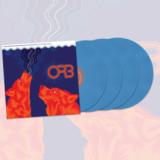
In 2000, after almost two decades of hibernation under the ambient waves and dub currents of the Sargasso Sea, LSD revived the seminal ‘Auntie Aubrey's' series, an Orb Remix Project. Released as a 2 x CD compilation, Part 3 is a veritable smorgasbord of classic, new and unreleased labour-of love remixes that span three decades yet still transcend space and time.
Many influential artists have been involved with The Orb since the beginning, and the project keeps evolving and adapting. Dr. Alex Paterson, the gravitation centre of the Orb is known for his playfully subversive remixes and true to form this album highlights the diversity of his musical mind.
We see the good doctor remix the melancholy and evocative “The Last Lighthouse Keeper” from The Transit Kings, an early British electronic music group that included Jimmy Cauty of The KLF, one of the original members of The Orb. The remix of ‘Davy Jones’ Locker’ from System 7 takes you surfing on a sun-dappled sea of ambient dance nostalgia, while Killing Jokes’ ‘European Super State’ remix (in which LSD label founder Martin ‘Youth’ Glover plays bass guitar) sounds like the soundtrack for an imaginary spy thriller with the powerful lyrics and hypnotizing voice of Jaz Summers.
Legendary producer Youth teams up with Lx yet again on a psychedelic rocker with spellcasting vocals by Lara Smiles, and this is just the beginning! Boasting an all-star lineup, the compilation includes many of our scenes most esteemed electronic music producers such as Coldcut, David Harrow, Sendelica and Gaudi as well as the ambient blissed out vibes from the enigmatic DF Tram, Duende India Collective and The Gyuto Monks of Tibet, this collection offers up such the variety to appease even the most dedicated Orbsessives and music connoisseurs
dovrebbe essere pubblicato su 05.10.2026
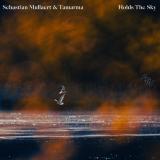
Acclaimed, Swedish composer, producer and live artist Sebastian Mullaert, and Georgian electronic artist Tamarma (Tamara Davitashvili), are set to release the deeply personal and genre-fluid album ‘Holds the Sky’ on the 25th September via Awesome Soundwave, the label curated by Christopher Coe and Carl Cox.
Spanning ambient, experimental and alternative electronic forms, alongside a set of dancefloor-oriented reworks that expand the project’s sonic spectrum, at its core, the album is the result of an unusual artistic convergence that traces back to 2020. Tamarma entered Mullaert’s successful In Bloom mentorship programme on a scholarship, and over a year-long deep exploration of album creation, her work revealed a rare clarity and emotional depth.
One piece in particular became the catalyst. Developed further through Mullaert’s 4 step studio process, it unfolded into a full length album collaboration. What began as a single composition has since grown into an album that documents an organic and intuitive exchange between two distinct artistic voices.
The result is less a collection of tracks than a continuous unfolding; a dialogue shaped by trust, listening and shared curiosity. Rather than aiming for a fixed genre position, the album operates as a living process: a meeting point between tradition and experimentation, between voice and synthesis, between two artists allowing something larger to emerge through their collaboration.
With compositions such as the chiming ‘Being Colours’ and hypnotic ‘Holds The Sky,’ Mullaert and Tamarma have created a body of work that resists easy categorization. The album moves through intimate, meditative passages and more rhythmically driven moments, always anchored in a sense of presence and emotional immediacy. The flickering beats of ‘Winnow’ and ambient manifestations of ‘Lost In Dimension’ and ‘Field of Us’ add a sense of tranquillity, stillness and convergence.
Tamarma’s voice carries both a personal and cultural depth throughout the album, while remaining fluid and responsive to the moment. The result is a sound that feels both intimate and spatial, where voice, texture and atmosphere are closely connected. Her Georgian musical heritage combined with Mullaert’s open-ended electronic exploration, allows something beautiful to emerge, shaped by listening, space and a sense of something larger than either artist alone.
Widely celebrated in the electronic music community, Mullaert has spent the last three decades moving beyond the boundaries of electronic music, from shaping the sound of cult duo Minilogue to creating the fully improvised global platform, Circle of Live, which has seen him perform and collaborate with artists such as Mathew Jonson, Âme, Amp Fiddler, Aurora Halal, Speedy J, Sam Barker, Dorisburg, Move D, Sleep D, Kuniyuki, Pantha du Prince, Leafar Legov, Wayne Snow, Laurence Guy, VRIL, Neel and Erika.
Initially making a name for himself in the world of techno, his performances have moved fluidly between environments, from underground spaces including Berghain’s Panorama Bar to festivals around the world, and venues including the Barbican, London, where he has appeared alongside artists including Joep Beving, Laura Misch and JakoJako. Platforms such as ARTE have featured his performances, placing his work within a broader European cultural context, while support from Resident Advisor and Boiler Room reflect his continued presence within the core of electronic music culture. He has received a Swedish Grammy and the P3 Guld award from Swedish National Radio.
His 2020 album ‘Natthall,’ developed in collaboration with Tonhalle Orchestra Zürich and performed with Subchamber Ensemble, saw Mullaert enter the world of contemporary composition, and merged electronics with chamber music and improvisation. The album was later named among the top post classical releases of the year by BBC Music Magazine.
A new documentary film by Ableton, set for release this summer, captures Mullaert’s Circle of Live project through a performance at Brighton Dome in the UK, featuring Mullaert and electronic artists Clark and Rival Consoles. The film offers a rare insight into the inner workings of collective improvisation at a high artistic level, further cementing Mullaert’s role as a leading voice in contemporary live electronic practice.
Tamara's background is rooted in the landscapes and traditions of Georgia. Raised near the Caucasus Mountains, classically trained in piano and shaped by years as a jazz vocalist, her work carries traces of Georgian polyphonic singing and a strong connection to nature and place. Her transition into electronic music is not stylistic but transformational; a recontextualisation of heritage into new sonic forms.
‘Holds The Sky’ will be available on vinyl and digitally on the 25th September via Awesome Soundwave. The digital release includes three exclusive album track reworks from Mullaert.
dovrebbe essere pubblicato su 09.10.2026
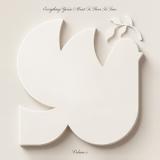
Over the last decade and a half, Rotation Sound System’s annual gathering in the Staffordshire countryside has become one of underground dance music culture’s true success stories – an intimate gathering of like-minded friends and partygoers, powered by a custom-built six-way sound system, with music provided by a carefully curated line-up of dusty-fingered diggers, selectors and hand-picked live performers.
At the heart of the collective’s unique and much-loved approach lies a dedication to finding and sharing lesser-known gems and audio obscurities – fantastic records whose charm and quality has long been overlooked.
Last year, the core members of the crew – founders Dean Meredith and Ben Shenton (renowned for their productions as Mind Fair), and Wrekin’ Havoc trio Rob J, Stuart Robinson and Rich Hall – offered a snapshot of their unique musical approach via debut compilation Everything You Are About To Hear Is True, Volume 1, in the process introducing a global audience to some of the countless unknown mid-tempo classics nestled in their collections.
Fresh from another sold out edition of their acclaimed micro-festival, they’re back with volume two, another must-have collection of slept-on classics, loved-up shufflers and wide-eyed Balearic beats, all of which have played a part in Rotation’s story over the last 13 years.
Appearing on gatefold double vinyl with extensive liner notes telling the stories behind the tracks, Everything You’re About To Hear Is True, Volume 2 is full to bursting with music that sounds mind-blowing on the crew’s high-end sound system.
For proof, check the analogue-rich intergalactic shuffle of Paul Atreides’ 2015 jam ‘Arrakis Walk’, the relaxed boogie-soul of Rocky Winters’ Chaz Jankel produced ‘Vicious Circle’, the easy-listening-jazz-rock bliss of Vincent Maclin’s ‘Should’ve Took a Chance’, the 80s soul squelch of ‘Ecstasy (Centurion Mix)’ by Endgames and the immersive British dub drift of Sigma’s ‘Remember (Dub Style)’.
Everywhere you look, you’ll find eye-opening and ear-pleasing delights. There’s Pinky’s lightly acid-flecked, breakbeat-fuelled, acid house-era street soul classic ‘I Wanna Be The One (Instrumental Groove)’, the 1992 new age downtempo seduction of Linda Myers (‘Shine On Me’), the Clavinet-and-synth sporting jazz-rock/space-rock fusion of Wolfhound (1984 gem ‘Another Moon Song’), the Gallic colour of Buzy’s ‘Keep Cool (Version Maxi)’ and the guitar solo-laden electrofunk explorations of mid-80s UK act Lifesighs (‘Get Serious’, here presented in its extended instrumental form).
dovrebbe essere pubblicato su 18.10.2026
For Luca, Cuylan’s new album of elegant modern classical, globally informed folk and gentle electronic music, is in part a tribute to his dearly departed dog. Luca came into Cuylan’s life like a key unlocking a door, leading to experiences and experiments simultaneously new and familiar. Back then the Turkish-born musician was living in LA with his wife, leading a busy creative life, writing and recording scores for films and Netflix series, and suddenly with the adoption of Luca here’s this bouncy, furry being demanding constant attention. Cuylan accepted the responsibility like a father welcoming a child. He grew closer to his wife. He started psychoanalysis. He returned to acoustic guitar, his original instrument, waylaid for 20 years in favor of synthesizers and electronics, pulsing post-rock and skittering jazz. Luca was there in the studio when Cuylan recorded his first solo album, 2021’s No Such Thing As Free Will, which The Guardian said “seems to invent new languages for the guitar.” Without a doubt, Luca the dog made Deniz the musician more expressive and more vulnerable. Better at his craft. Better at his humanity. Luca was just five years old when bone cancer struck. He exited far too quickly, a comet of joy passing into the dark, unfathomable universe. Cuylan found his absence very hard to process–he was just right here! It took a couple years, but inevitably Luca, the catalyst for Cuylan’s current chapter, inspired new artistry after his death–from Cuylan, and from a host of collaborators from around the world who contributed to For Luca. All of them share an abiding compassion for the more-than-human creatures with whom we share this planet–dogs, cats, whales, ants, trees. The entire menagerie, humankind’s kindred. The album is a collective meditation on–and celebration of–their immeasurable essence. It was born not from despair but from a transcendent love that burns all the brighter for its brevity.
dovrebbe essere pubblicato su 30.10.2026
For 3+ years Razor-N-Tape has held their quarterly A Joyful Noise event in the Sound Room at Public Records. Conceived as a hearkening back to an early 2000s era of NYC nightlife, it is a club night that includes both DJs and live music. Led by JKriv as musical director and bassist, the live band is a collective of luminary NYC talent including singer Brandon Markell Holmes, guitarist Peter Matson, flutist/singer Domenica and percussionist Olatunji Ojore (Underground System), trumpeter Carter Yasutake (Midnight Magic), keyboardist Jason Lindner (Now Vs. Now/David Bowie), and saxophonist Stuart Bogie (Antibalas/Arcade Fire). Merging club sensibilities with jazz, funk and afrobeat pedigree, the A Joyful Noise repertoire includes live-interpreted renditions of J’s music and remixes, features by Razor-N-Tape artists, and original works. This album is a document of this special event, capturing all the live energy, moments of dazzling ensemble interplay, and features by artists Adi Oasis, Toribio and Corece.
dovrebbe essere pubblicato su 06.11.2026
**BenArt Ensemble ft. Baptiste Herbin** unveil a distinctive debut album at the crossroads of jazz, world music and groove. Led by bassist and producer Ben Artuphel, this eight-piece ensemble brings together musicians from diverse backgrounds and with a wide range of influences: Baptiste Herbin (saxophones), Amina Mezaache (flute), Céline Bonacina (baritone saxophone), Ben Artuphel (bass), Antoine Banville (drums), Alexis Bajot-Nercessian (keyboards), Laurent Avenard-Kohler (guitar) and Nils Wekstein (percussion).
Born from a musical encounter in 2023, the band has developed a unique sound in which intricate bop-inspired writing meets 1970s funk, Afro and Creole rhythms, and the vibrant energy of samba. The album features 13 original compositions, the result of a deeply collaborative process and an exceptional musical chemistry between the eight musicians.
At the heart of the project, saxophonist **Baptiste Herbin** brings his virtuosic playing and extensive international experience. Nominated for the Victoires du Jazz in 2013 for his debut album *Brother Stoon*, he went on to receive the Django Reinhardt Prize and was named Musician of the Year by the Académie du Jazz in 2019. He has released four albums under his own name and has appeared on around fifty recordings alongside some of the leading figures in jazz.
With its finely crafted arrangements, rich melodies and irresistibly groove-driven rhythm section, **BenArt Ensemble ft. Baptiste Herbin** delivers a vibrant and generous take on jazz, where each musician's individual voice shines through while serving the collective. Balancing heritage and modernity, this album is an invitation to dance, dream and travel.
dovrebbe essere pubblicato su 13.11.2026
ORUMA is a trio formed by Ola Rzepka (drums, zither, percussion), Artur Rumiński (electric guitar) and Mat Barski (electric guitar). At its foundation is the musical dialogue previously developed by Rumiński and Barski as a guitar duo and documented on the albums “On the Margin” and “At the Junction”. Their encounter with Ola Rzepka during Kraków’s Kakofonie series opened this music to a new sense of dynamics, pulse and
collective form.
ORUMA’s music exists at the intersection of free improvisation, noise, experimental postrock and post-kraut repetition. It avoids the conventional division between soloist and accompaniment. Instead, two electric guitars and drums gradually abandon their individual roles to form a single, constantly shifting sound organism — moving from silence, open space and isolated gestures towards dense masses of sound.
The trio’s debut album consists of five pieces: “Satellites”, “Stranger”, “This Mountain Is Alive”, “A Rough Plan For Nostalgia” and “Hyperborea”. Together, they form a coherent journey: from distant signals and the first moment of contact, through friction and increasing physical intensity, to an expansive fourteen-minute finale.
Ola Rzepka
Drummer, pianist, composer and performer. She graduated from the Karol Szymanowski Academy of Music in Katowice, where she studied at the Faculty of Composition, Interpretation, Education and Jazz. She was also a scholarship student at the Rhythmic Music Conservatory in Copenhagen, studying piano and percussion. She teaches piano improvisation at the Wojciech Kilar State Music School Complex in Katowice and runs her own music lessons and workshops. As a composer, she collaborates with acclaimed theatre directors in Poland, Germany and Switzerland. Her musical collaborators have included Raphael Rogiński and Antoni “Ziut” Gralak. She has performed her original music at numerous avant-garde, popular, jazz, improvised and contemporary music festivals across Poland and Europe. In Jazz Forum magazine’s 2024 Jazz Top critics’ poll, she was named among Poland’s leading drummers.
Artur Rumiński
Guitarist and member of bands including Furia, Thaw and ARRM. He also composes and improvises under his own name and performs in the experimental duo Marmur, which he co-founded with Macio Moretti. He has released several solo albums on labels including Antenna Non Grata, Gusstaff Records, Zoharum and Szara Reneta.
Mat Barski
Guitarist associated with the Kraków and Tricity music scenes. His projects include the duo Ekotonika, the Rumiński / Barski duo. He has released albums through Gusstaff Records and Antenna Non Grata. Alongside music, he works in motion design and visual postproduction. He is a member of the Kraków-based Skład Solny Association, where he coorganises concerts and exhibitions.
dovrebbe essere pubblicato su 13.11.2026
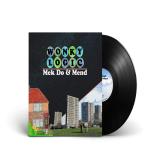
This November, Brownswood Recordings will release Mek Do & Mend, the debut album from self-taught producer, multi-instrumentalist, composer and artist Wonky Logic. Although his name may not yet be familiar to everyone, Wonky Logic (AKA Dwayne Kilvington) has spent the past two decades quietly becoming one of the UK's most respected musical collaborators. His career has moved comfortably between London's jazz, electronic and contemporary music scenes, performing and recording with artists including Nala Sinephro, Yussef Dayes, Nightmares On Wax, Shabaka Hutchings and Emma-Jean Thackray. Alongside his work as a producer and composer, he's been musical director for projects with Eddie Chacon, John Carroll Kirby and I.G Culture's LCSM, scored the feature documentary Zandra With A Zed, contributed music to A24's The Smashing Machine, and continues to lead music workshops with young people, refugees and people experiencing incarceration.
Far more than a collection of compositions, Mek Do & Mend is a deeply personal reflection on the people, places and experiences that have shaped Kilvington throughout his life. It's the story of growing up on a Leeds council estate, where music became both a creative outlet and a way of understanding the world. Making music often meant working with whatever was available: a second-hand keyboard, a makeshift studio desk or ageing equipment that simply had to last a little longer. The title itself came from a conversation with his mother, capturing the resourcefulness that defined his upbringing and continued into the making of the album itself, which was written and produced to a tight deadline around touring, family life and Kilvington's work as a musician and educator.
Built from material spanning more than fifteen years, Mek Do & Mend brings together some of Wonky Logic's earliest compositions alongside brand new pieces written during the making of the record itself. Childhood ideas sit alongside music conceived only months before recording, creating an album that draws together a lifetime of writing rather than documenting a single moment. Running throughout are voice notes from family members, teachers, friends, mentors and collaborators—not simply as interludes, but as a reminder that no creative life is ever self-made. Rather than telling his own story outright, Kilvington invites listeners to discover him through the people who've shaped him: an aunt remembering him playing in church as a child, lifelong friends recalling early experiments making beats together, fellow musicians from different stages of his career and his mother describing him in her own words. Together they reveal the invisible network of relationships, philosophies, communities and experiences behind the music. "The album exists somewhere between being a biography and an autobiography," says Dwayne. "The biography is in the voice notes and how other people see me. The autobiography is in the music."
That same philosophy extends to the musicians who appear on the record. Every contributor has played a meaningful role in Wonky Logic's life beyond the studio. Long-time collaborator Luke Wynter, Steam Down drummer Benji Appiah, partner Vanessa Rani, Jonathan Enser, Joe Bristow, Brother Portrait and Nubiya Imani all feature not simply because of their musicianship, but because they form part of the album's story.
Across its fourteen tracks, Mek Do & Mend moves effortlessly between dynamic jazz arrangements, pulsating broken rhythms, delicate, twinkling piano passages, interstellar synth textures and elegant brass lines. Album opener and first single 'Strange Attractor' begins with a shimmering introduction before unfolding into an exhilarating surge of rhythm and momentum. Named after the mathematical concept of the same name, it serves as the conceptual point of origin for the album. Written when Kilvington was just seventeen, the composition reflects the idea that even the most unpredictable lives are guided by hidden patterns that often only become visible with time. Second single 'A Thousand Hands' features the unmistakable vocal tones of Brother Portrait, whose cerebral lyricism drifts over a low-slung, constantly shifting groove as woozy synth lines ebb and flow overhead. At its heart, the track celebrates the family, friends, mentors and collaborators whose often unseen influence shapes who we become, echoing the album's belief that every achievement is, in some way, a collective one. LP focus track 'BAME (Beyond All Marginalised Expectations)' is a lush, spiralling composition, brimming with both emotion and resolve. Reclaiming an acronym long imposed on racialised communities in the UK, the piece transforms it into a statement of possibility rather than limitation: a defiant rejection of stereotypes and a refusal to let identity be defined by other people's expectations.
The album itself only exists because other people believed in it. Isabel Gracefield made the RAK sessions possible, Rick David brought the record together with his characteristically thoughtful mix, and Gilles Peterson committed to releasing it on Brownswood before hearing any of the music. Away from the stage, Kilvington works with the charity Finding Rhythms, writing and producing original records with people experiencing incarceration, while also leading workshops with Arts Train and Dovetail Orchestra.
Recorded live in a single day in Studio One at RAK, Mek Do & Mend was mixed by Rick David through an analogue Cadac console before being mastered by Stuart Hawkes at Metropolis. The aim wasn't nostalgia or audiophile perfection, but to create a record people could return to throughout their lives, discovering something new with each listen.
As Dwayne puts it: "I don't want this body of work to be reduced to a jazz record. It's more like a novel about life told through music."
dovrebbe essere pubblicato su 13.11.2026

Siân Pottok is a citizen of the world.
Born in West Palm Beach, Florida, to a mother of Indian and Congolese heritage and a father of Slovak and Belgian descent, Siân grew up between Belgium and New York before finally letting her travelling wings come to rest in Paris. What could have become a story of fragmentation instead became a source of creative strength. Singer, songwriter, composer and photographer, Siân has always turned borders into bridges.
She first honed her voice in the jazz clubs of Paris and New York, performing alongside renowned artists such as Richard Bona, Jon Batiste and Mike Stern. Yet her path has always extended far beyond the stage. For nearly a decade, she led cultural initiatives with women and children living through exile, violence and poverty across India and Southern Africa, weaving together music, photography and artistic transmission as tools for dialogue and empowerment.
The true turning point came when she discovered the kamele ngoni, the West African harp whose ethereal sound seemed to echo something long buried within her. The instrument became her musical alter ego—the invisible thread binding together her many inheritances. Guided by Malian master Abou Diarra, Siân embarked on an inward journey towards her African roots. Yet this return to her origins was never an act of retreat into identity. Instead, it gave rise to a body of work that remains profoundly open to the world, where Africa enters into conversation with jazz, folk, soul, alternative pop and the rhythms of Brazil.
Along the way, she has crossed paths with remarkable artists including Rogê, Chico César, Fatoumata Diawara, Lokua Kanza, Flavia Coelho, Thomas de Pourquery and Philippe Baden Powell. On stage and in the studio, Siân continues to shape a musical universe that refuses labels. Like artists such as Björk, Joni Mitchell and Laura Mvula, she moves forward as an explorer, guided not by genre but by intuition.
Today, Siân stands as one of the most distinctive voices of the new Francophone music scene an artist capable of uniting musical sophistication with emotional power, introspection with collective celebration, depth with an irresistible urge to dance.
Animal — The New Album
With Animal, produced by British musician Tom Excell (Nubiyan Twist, Africa Express...), Siân delivers her most intimate and assured work to date. Every song feels like a shedding of skin, a quiet metamorphosis, exploring self-acceptance, femininity, the freedom to be oneself, cultural heritage, and the reconciliation of one's own imperfections.
From Stereotype, a fearless manifesto against the expectations imposed on women, to the title track Animal, an anthem celebrating the beauty of imperfection ("I've turned my cracks into a crown"), the album gives a voice to everyone who refuses to fit into predefined boxes. In Terre, je danse sur toi, featuring Fatoumata Diawara, Siân pays tribute to Mother Earth and to the roots that unite us all. Oh! Congo, recorded with Lokua Kanza, reconciles her cultural heritage with an ancestral homeland that feels both distant and intimately familiar. En équilibre, with Flavia Coelho, embraces the exhilaration of risk and the courage to leap, while Put a Mask and I Could Kill confront hidden wounds and the invisible violences that quietly shape who we become.
In ADé, Siân addresses Adenomyosis as though speaking to an unwanted housemate. "My body is your battlefield," she sings, giving voice to an intimate shadow lodged deep within herself. This bittersweet lullaby transforms a pain so often left unspoken into an act of profound tenderness towards oneself.
The album also holds a rare treasure: Reste tel(le), an unpublished text by Pierre Barouh, the founder of the Saravah label. Never before set to music or performed, this elusive poem of free love finds new life through Siân's voice, becoming a dialogue across time between two artists united by the same devotion to freedom, métissage and openness to the world.
Driven by Tom Excell's vibrant Afro-pop pulse, the spiritual breath of the kamele ngoni, organic arrangements and deeply personal songwriting, Animal is an album of liberation. It invites us to lay down our masks, embrace our contradictions and reconnect with the free, instinctive and powerful animal that lies dormant within us all. More than a collection of songs, it is a radiant manifesto for the richness of identity, the passing on of memory, and reconciliation with oneself.
Animal is not simply the title of an album, it is a declaration of independence. An invitation to live fully, unapologetically, and without instructions.
A citizen of the world, travelling freely between continents, languages and memories, Siân Pottok delivers with Animal her most personal, and perhaps her most universal work to date: an album that reminds us that our fragilities, our roots and our differences are, beyond doubt, our greatest strength.
— Christophe Tison
dovrebbe essere pubblicato su 13.11.2026

2026 Repress
Coming in hot on Berlin's Toy Tonics label: a new EP by the talented duo ALMA NEGRA!
Founded in 2013, Alma Negra is a Swiss collective centered around the brother duo Dersu and Diego Figueira, whose diverse roots in Switzerland and Cape Verde inform their sound. The project was launched with the ambitious vision to explore the world's diverse rhythms and drive musical innovation by mixing different styles. Their work is anchored in a process of digging and sampling, skillfully blending traditional sounds-from Fela Kuti-influenced Nigerian afrobeat and Angolan Lamento to Caribbean Zouk and the Maloya sound of Réunion-into a contemporary dance music context.
The Figueira brothers' eclectic DJ sets embody this ethos, peppering disco and house with salsa, samba, jazz, and Afro-Caribbean carnival rhythms, all under their guiding motto: "As long as it's Funky."
Since 2014, Alma Negra has made an important contribution to intercultural exchange in their hometown of Basel. Their international presence began in 2015 with their first shows abroad in countries like France, the Netherlands, and Portugal. From 2016 to 2019, their reach expanded significantly, with performances in major hubs like London, Paris, and Berlin, as well as Istanbul, Tel Aviv, and Tunisia. Highlights from this period include sets at the Montreux Jazz Festival, Dimensions Croatia, and Fuse Club in Brussels. Their standing is further cemented by releases on respected labels like Heist Recordings, Sofrito, and Basic Fingers, alongside remixes from an elite group of peers, including Soulphiction, Kuniyuki, and Yuksek.
Parallel to their studio and DJ work, the project expanded into the Alma Negra Live Band, formed with jazz musicians from Basel. While the band is currently on hiatus, this collaboration made live instrumentation increasingly central to their productions, creating a dynamic they feel is essential for any dancefloor. The live band has performed in cities like London and Hamburg and has led to collaborations with artists such as French singer Pat Kalla and jazz trumpeter Bodo Maier.
dovrebbe essere pubblicato su 20.11.2026

Disponibile in Stock e pronto per la spedizione
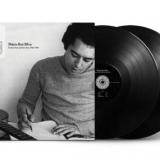
Originally released by Time Capsule in 2021 and long out of print, Stories From Another Time 1982-1988 returns in an upgraded edition following years of demand and rising collector prices on the secondhand market. Widely regarded as a modern cult classic, Mário Rui Silva’s visionary recordings blend acoustic folk, cinematic soul, spiritual jazz and saudade-filled Lusophone rhythm into a deeply timeless and universal work that transcends genre and geography.
This new edition features half-speed mastering cut at Metropolis alongside an expanded 4-page insert with a tribute essay and unseen photographs following Silva’s passing in 2024.
Double LP + 4-page insert
==========================================================
The roots of Angolan popular music explored in the meticulous guitar studies of Mário Rui Silva. For fans of Naná Vasconcelos, John Hassell’s Fourth World ambient, Eduardo Mateo’s psychedelic folk and Cameroonian electronic music visionary Francis Bebey.
Whether on mesmerising acoustic ballads or hypnotic groove-led tracks, the music of Angolan guitarist, researcher and intellectual Mário Rui Silva has a beguiling, melancholy quality, woven into the dynamics of his deft guitar playing.Rhythmically complex yet supremely effortless, the music collected here stems from three albums Mário released in Luanda in the 1980s that reflect his diverse range of influences, from traditional Angolan and West African rhythms to European jazz and classical instrumentation. It is united by a sense of low-key beauty, whether on the chugging opener ‘Kazum-zum-zum’, the jazz-funk keys of ‘Lembrança Dum Velho’, or the twinkling, late-night poly-rhythms of ‘Kizomba Kya Kisanji’.
Born in Luanda, Angola in 1953, Mário dedicated his life to Angolan popular music. His fifty-year career has seen him live between Angola and Europe, rub shoulders with Cameroonian musicians Francis Bebey and Ewanjé, record the seminal album Angola ’72 with fellow Angolan musician Bonga, and draw influence from Brazilian guitarist Baden Powell.
It was the teaching of Angolan legend and Ngola Ritmos co-founder Liceu Vieira Dias that Mário gained a technical, political and spiritual understanding of Angolan musical culture. In the hands of Liceu, the traditional Angolan semba and kazukuta rhythms of the 1940s and ‘50s helped create an emancipatory sense of national pride and collective agency that awakened its listeners to the racism and tyranny of colonial rule, underpinning the country’s push for independence in the process.
What might sound like the intonations of Brazilian influence are what Mário attributes to the “African rhythms taken by the slaves which gave rise to other musical cultures” around the globe. Instead, this music emerged from a collective instinct to assert a cosmopolitan Angolan identity free from the patronising falsehoods of Lusotropicalism.
“There was a need within me to contribute in doing new things,” Mário describes. “In the sense of solidifying the music of Angola that was the result of the meeting of two cultures, and wanting to value the Angolan part whenever possible.”A selection from Mário’s three 1980s albums, Sung’Ali (1982), Tunapenda Afrika (1985) and Koizas dum Outru Tempu (1988) have been compiled here as a 2xLP release by Time Capsule’s Sam Jacob and Kay Suzuki. Together, they provide a snapshot of one man’s journey to the core of his nation’s music, charged with the search for a culture uprooted by colonialism
Disponibile in Stock e pronto per la spedizione

If art is to be exhibited, then Ulrika Spacek will ensure that their art is collective; that even as the world becomes inhospitable to community, their intentions are an act of resistance.
Whether it is Oysterland, the self-curated night the band have been Hosting for over ten years to platform artists of other disciplines in live music spaces, or Total Refreshment Centre, the East London studio Syd runs which connects the dots between the jazz scene and like-minded experimental artists of the capital and beyond, or their creative bleed as musicians and producers over the years with the likes of Crack Cloud, caroline, DIIV, Holy Wave and Slowdive, the band’s existence is inseparable from their community.
In a hyper-individual world, the band’s fourth album, ‘EXPO’, offers an antidote. It’s there, in the shared dream logic of the music, the off-kilter melodies, jagged guitars and cirrus cloud atmospherics. It’s there, in all the things that are said and unsaid between them; there in the writing, producing and mixing processes they share in. And even as each of their parts Moves toward a unified vision, it’s never more keenly felt than in the bigger Picture to which Ulrika Spacek belong.
Though their well-established foundations are in the art-rock world - and though they are inspired by electronic elements more than ever - Ulrika Spacek are interested in the glitch that exists between the two. Their Music reckons with human warmth and digital isolation, equal parts welcoming and altogether alienating. “Our music has always been a collage - a bit patchwork, sonically - but what makes this album a landmark for us is that we went one step further and made our own sample bank,” explains singer / guitarist Rhys. They create their own doppelgängers in a world of almostreal, where the band appear as if in a hall of mirrors. Digital drums are sampled layered upon real drums, and the effect is almost like birth in reverse - pulled from the ether and returned back to the tangible world.
“There’s a lot that can be said about writing when there is no aim, there is a freedom and a purity in it which opens a door to more music, and in this case, it set a mood for a new album, one that would be colder, darker and one that would embrace electronics and new instrumentation in a new terrain,” the band share. “The album’s greater theme is isolation and alienation in an online world where it seems everybody around you is constantly exhibiting themselves, living in public wanting to be seen and heard. The age of ‘individuality’ is lonely, it’s a room of concave mirrors, and with this in mind, we set upon making our most collective effort; ‘It’s back to strength in numbers, count in fives.”
For fans of Radiohead, Moin, DIIV, Astrel K, Slowdive.
LP presented on Crystal Clear vinyl.
Disponibile in Stock e pronto per la spedizione

East London producer and DJ IZCO announces his debut solo studio album ‘POWERSCROFT’, set for release on 1st May via Brownswood Recordings. The album’s first single, ‘Strike a Pose’ featuring the vocals of Camille Munn offers an early glimpse into the project. To celebrate the release, he will go on a run of UK dates from March to May, culminating at London’s Jazz Cafe.
Named after the road where he grew up, ‘POWERSCROFT’ marks a defining new chapter for an artist who has spent the past decade shaping the sound of UK dance music. Drawing from jungle, broken beat, grime, garage, soul and dub, the album channels the energy of the dancefloor while remaining deeply rooted in memory, instinct and identity. It captures what it feels like to be inside IZCO’s world, where thoughts, memories and influences collide.
Hailing from East London, IZCO is a producer and DJ spearheading a new generation that is bringing soul back to the dancefloor. Shaped by the rich musical heritage of his hometown, he has developed a sound that feels familiar yet forward-looking, diverse yet distinctly his own. That sound has taken him across the globe, from New York to Tokyo, alongside standout sets at We Out Here, Outlook and Glastonbury.
IZCO began his journey making grime beats for local rappers including Capo Lee, Novelist and Reek0, before becoming a key figure in the UK’s evolving garage and dance music landscape. In 2018, he launched his long-running Rinse FM show and released his debut EP Tek 5, earning early underground acclaim. His production credits include PinkPantheress’ breakout track ‘Passion’, created alongside Jkarri, as well as collaborations and remixes for artists such as Katy B and Greentea Peng.
Beyond his solo work, IZCO is a label head, promoter and co-founder of the Brighter Days Family, a collective built on community, craft and cooperation. With ‘POWERSCROFT’, he steps fully into the spotlight, presenting his most personal and fully realised body of work to date. “This album is about channeling my true musical personality and character,” he says. “I’m marking a new chapter by paying tribute to my foundations.”
Disponibile in Stock e pronto per la spedizione
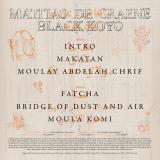
With Black Koyo, Mattias De Craene enters a sound world at once intimate and vast. Born from journeys in Morocco and Brussels, the project traces the rhythms, chants, and spirits of the Gnawa tradition, revealing a quiet resonance that echoes De Craene's own search for depth and presence. Guibri, qraqueb, call-and-response chants, saxophone, loops, and electronics come together in a trance-induced dialogue - ritualistic, elemental, and dreamlike - creating a space where listening becomes immersion, tradition meets imagination, and music unfolds as a shared act of reflection and wonder.
About Mattias De Craene
Mattias De Craene's artistic path is marked by rare coherence. As a central voice in Nordmann and MDC III, he developed a physical, rock-inflected jazz language driven by propulsion, volume, and trance-like collective energy. Over time, a period of personal rupture - burnout, tinnitus, depression - shifted his focus inward. The saxophone became a breathing, textural presence, and in his solo work, he weaves saxophone, electronics, loops, and minimal forms into a cinematic, hushed world where repetition, resonance, and silence slow perception. Rooted in ambient and introspection, his music prizes attention over impact, precision over excess - a quiet intensity recognized with a nomination as Musician for the Music Industry Awards (MIA's).
About Black Koyo
Black Koyo is a Brussels-based ensemble and one of the most compelling voices of the Gnawa tradition outside Morocco. Led by maalem Hicham Bilali, the group brings guibri, qrraqueb, and call-and-response chants to life with trance-like intensity and ritual precision. Their music is both rooted and contemporary, weaving earthbound rhythms and vocal invocations into ecstatic, immersive soundscapes, creating a space where ancestral resonance meets present-day imagination.
About Jan Bang
Jan Bang is a pioneering Norwegian producer and musician, celebrated for his mastery of live sampling and his ability to merge electronics with improvisation, rhythm, and texture in real time. He mixed the album and occasionally joins live performances, bringing his signature approach to sound as co-founder of the influential Punkt Festivaland collaborator with artists such as Jon Hassell, David Sylvian, Arve Henriksen, and ECM Records' roster. As a performer and sound architect, Bang creates immersive, trance-like sonic textures where silence and sound carry equal weight. Within Mattias De Craene ftBlack Koyo, his live sampling becomes an organic instrument, weaving saxophone, electronics, and Gnawa rhythms into hypnotic, physically charged soundscapes.
Line-up & credits
Mattias De Craene - sax, electronics | Hicham Bilali - guibri, vocals, qraqueb |Ismael Akhraz - vocals, qraqueb | Marwan Abantor - vocals, qraqueb
All tracks are original gnawa traditionals played by Black Koyo and arranged by Mattias De Craene.
Album produced & recorded by Mattias De Craene in Essaouira, Morocco and hometown Ghent, Belgium 2025.
Text by Hicham Bilali.
Mixed by Jan Bang at Punkt Studio
Mastered by Lieven Van Pee
Artwork by Marina Sviridova
Design by Benoit Van Geel
Manufactured and distributed by N.E.W.S.
Executive production by W.E.R.F. records
Supported by Flemish Government, Jazzlab, nona, HA Concerts, Aubergine artist Management,
KAAP, La Bestia (Wout Van Putten) & mdcmu.sic vzw.
2026 (c) W.E.R.F. records
Disponibile in Stock e pronto per la spedizione

This first-time reissue of Quinteplus’ 1971 album revives a key moment in Argentine jazz, featuring crisp trumpet and tenor sax, electric piano-driven funk and modal grooves, and a tight, spacious rhythm section. It showcases prominent figures like Jorge Anders and “Pocho” Lapouble.
==================================
Quinteplus was born in Buenos Aires at the end of the 1960s, emerging directly from the ideas and experiments of the legendary Agrupación Nuevo Jazz. Founded in the early ’60s, this collective brought together some of the most forward thinking figures in Argentine jazz functioned as a creative lab where musicians questioned where jazz could go next. Among the key ideas discussed was the fusion of jazz with Argentine folk styles such as zamba, chacarera, malambo, cueca, and candombe, as well as a deeper look into African rhythms as a bridge between musical worlds.
Two members of that collective, keyboardist Santiago Giacobbe and bassist Jorge “Negro” González, carried those ideas forward when they formed Quinteplus in 1969. The group came together naturally: all the musicians already knew each other and had played in different projects around the Buenos Aires scene. They shared a strong admiration for Julian “Cannonball” Adderley’s quintet, along with a clear goal—to develop a modern jazz language grounded in local Argentine rhythms.
From the start, Quinteplus stood out for its openness and adventurous spirit. Rhythm was central, and so was experimentation. The band belonged to a generation of Argentine jazz musicians eager to explore electric instruments and new textures, anticipating what would soon be known as jazz-rock. This was happening in Buenos Aires at the very same time Miles Davis was opening new doors with “In a Silent Way” and “Bitches Brew”. Giacobbe introduced one of the first Fender electric pianos in Argentina, while González pioneered the amplification of the upright bass and even developed a hybrid electric, boxless version of the instrument. Trumpeter Gustavo Bergalli, meanwhile, maintained close ties with the emerging Argentine rock scene, collaborating with Luis Alberto Spinetta and appearing on Almendra’s first album.
In 1971, Quinteplus recorded its first and only studio album for EMI. The original lineup featured Jorge Anders on tenor saxophone, Bergalli on trumpet, Giacobbe on keyboards, González on upright and electric bass, and Norberto “Pocho” Lapouble on drums and percussion—who also illustrated the album’s iconic sleeve. The record is a refined showcase of the band’s musical vision: original compositions, fluent jazz language, folk-derived rhythms, funky electric textures, tight ensemble playing, and standout brass solos. Though critically praised, the album received little label support and sold modestly, eventually becoming a sought-after collector’s item.
Quinteplus disbanded in 1973, their music was perhaps too bold and unconventional for its time.
Disponibile in Stock e pronto per la spedizione

Dreamweavers II sees Mark de Clive-Lowe reunited with Italian rhythm masters Andrea Lombardini and Tommaso Cappellato for the next chapter in their electro-acoustic trio journey.
Recorded at Sotto il Mare Recording Studios in Verona, Italy in summer 2024, the album builds on the cosmic, hypnotic language established on Dreamweavers (2020) while pushing deeper into groove-driven terrain, dancefloor jazz and textural improvisation. Across eight tracks, the trio explore the elastic space between jazz tradition, beat culture, and club-influenced momentum – without samples or looping – relying purely on live interaction, feel and shared intuition.Opening with the Azymuth-inspired “Terra de Luz,” the album immediately signals its global outlook. “Kaze no Michi” follows with late-night Tokyo energy – dancefloor jazz that feels equally at home in jazz clubs or after-hours rooms. Two intentional reinterpretations bridge jazz and beat culture: J Dilla’s “Raise It Up” (from Slum Village – Fantastic Vol. 2) is reimagined with its original groove and bass line as the launch pad, while “The Bass That Don’t Stop” becomes a lush house-jazz tribute to the late Phil Asher, originally co-created by Asher and de Clive-Lowe in 2002 under the moniker musiclovelife.Bassist Andrea Lombardini’s “Pam” brings the album inward – introspective, spacious, and deeply melodic; while “Lucid Dreams” draws on the trio’s shared love of jungle, drum’n’bass and the exploratory spirit of greats like Chick Corea, amplifying the journey with forward motion and harmonic curiosity.Dreamweavers II is a concisely intentional sound narrative: a trio record rooted in jazz lineage, shaped by beat culture and guided by a collective curiosity for texture, rhythm, and movement.
Disponibile in Stock e pronto per la spedizione

Black Vinyl[28,36 €]
“I've always dreamed of making an album where I could bring together artists I deeply admire, curating voices, energies, and sensibilities that have inspired me,” says Brussels-born producer and multidisciplinary artist ShunGu of his new record, Faith in the Unknown. “It took time, and it grew into something very human, rooted in trust, patience, and creative risk. These songs are conversations, not just between me and the artists, but between worlds, eras, and ways of feeling.”
That spirit of dialogue and discovery is what defines Faith in the Unknown. Emerging from years of steady, meticulous work in the underground, the album is both a bold statement of identity and an invitation into Shungu’s world. Across 14 tracks, each a self-contained vignette, ShunGu guides the listener through shifting moods and perspectives- moments of intimacy, defiance, reflection and release, coalescing into a much larger story.
His distinct touch threads through the surefire cast of collaborators - Pink Siifu, Liv.e, Fly Anakin, Chester Watson, Fatima, Maxo, Navy Blue, Dreamcastmoe, Ruqqiyah, Zekeultra and Goya Gumbani — each track unfolding as a new dimension in the same universe.
ShunGu has long been a boundary-pusher, known for weaving jazz-inflected samples, skilfully constructed textures, and MPC-driven grooves into production that feels timeless yet untethered. With Faith in the Unknown he pushes further still: a project as much about collective energy as it is about personal vision. It’s a leap into uncertainty, carried by trust in the process and the people involved.
From the lo-fi beat tapes that first won him a cult following, to collaborations that span the globe, Shungu has forged a body of work rooted in exploration and community. Faith in the Unknown crystallises those qualities into his most ambitious statement yet; a record that doesn’t just blur boundaries between genres, but asks what happens when vulnerability and experimentation are treated as shared ground.
The result is a record that trades in subtlety. Each artistic contribution adds its own shade to the larger mosaic, pulling the listener deeper into an expanding narrative. If Faith in the Unknown has a message, it’s that art can thrive in uncertainty - that in the spaces where trust, risk, and vulnerability intersect, something entirely new can emerge.
Disponibile in Stock e pronto per la spedizione

Cassette[16,39 €]
“I've always dreamed of making an album where I could bring together artists I deeply admire, curating voices, energies, and sensibilities that have inspired me,” says Brussels-born producer and multidisciplinary artist ShunGu of his new record, Faith in the Unknown. “It took time, and it grew into something very human, rooted in trust, patience, and creative risk. These songs are conversations, not just between me and the artists, but between worlds, eras, and ways of feeling.”
That spirit of dialogue and discovery is what defines Faith in the Unknown. Emerging from years of steady, meticulous work in the underground, the album is both a bold statement of identity and an invitation into Shungu’s world. Across 14 tracks, each a self-contained vignette, ShunGu guides the listener through shifting moods and perspectives- moments of intimacy, defiance, reflection and release, coalescing into a much larger story.
His distinct touch threads through the surefire cast of collaborators - Pink Siifu, Liv.e, Fly Anakin, Chester Watson, Fatima, Maxo, Navy Blue, Dreamcastmoe, Ruqqiyah, Zekeultra and Goya Gumbani — each track unfolding as a new dimension in the same universe.
ShunGu has long been a boundary-pusher, known for weaving jazz-inflected samples, skilfully constructed textures, and MPC-driven grooves into production that feels timeless yet untethered. With Faith in the Unknown he pushes further still: a project as much about collective energy as it is about personal vision. It’s a leap into uncertainty, carried by trust in the process and the people involved.
From the lo-fi beat tapes that first won him a cult following, to collaborations that span the globe, Shungu has forged a body of work rooted in exploration and community. Faith in the Unknown crystallises those qualities into his most ambitious statement yet; a record that doesn’t just blur boundaries between genres, but asks what happens when vulnerability and experimentation are treated as shared ground.
The result is a record that trades in subtlety. Each artistic contribution adds its own shade to the larger mosaic, pulling the listener deeper into an expanding narrative. If Faith in the Unknown has a message, it’s that art can thrive in uncertainty - that in the spaces where trust, risk, and vulnerability intersect, something entirely new can emerge.
Disponibile in Stock e pronto per la spedizione

Color Vinyl[31,51 €]
"The Land of the Sun, the Moon and Cosmic Melodies" is a conceptual Opera of III movements, inspired by a cosmogony that features the planets of the sun and the moon. These two characters guides us on a journey of light and shadow, rising and setting in a cycle of unexplored musical territories.
The Collective Move presents its debut album with a broad palette of sounds, ranging from jazz to opera, from southern Italian folk music to northern Indian classical music, orchestrating a 60-minute "sonic narration" that ends with the fable "What do the birds tell?".
The Collective Move is an international group of young musicians formed in the Amsterdam Conservatory in 2022. The Collective's vision is to unite diverse artistic expressions and musical genres, inviting diverse artists and musicians from diverse cultures and countries to collaborate in flexible and interdisciplinary formations.
Disponibile in Stock e pronto per la spedizione

‘Açid Blüüs Räägs Vol.2’ is the latest evolution of the sound of last year’s Volume 1. The debut album was described by Joe Banks for Shindig! Magazine as; “Shivering slabs of drone blues transcendentalism…a burning junkyard of sheet metal blues… Hot stuff.” Volume 2 builds on the skronk blues guitar, sax and electronic drones of it’s predecessor, to explore cosmic free jazz, concrete exotica and dub, channelling influences of Moondog, Terry Riley, 75 Dollar Bill and Wolf Eyes. Playing like the imagined film soundtracks to a dystopian, re-wilded, post eco crash world in the style of Tarkovsky's ‘Stalker’ and ’Solaris’, Jodorowsky's surreal desert western ‘El Topo’, or the early novels of JG Ballard. This new collection sees the addition of minimal analogue drum machine loops as well as live instrumental contributions from the new players of the ever evolving Invocation band, plus some superstar guest contributors.
Featuring five brand new tracks, including the forthcoming single; ‘Cosmic Fanfare’, has already picked up BBC 6 Music support from Gideon Coe. The new album was mixed by Alex McGowan (aka Captain Future) of Space Eko Studios and features Invocation band regulars Rick Jensen of Apocalypse Jazz Unit, Skronk and Oneirologist on sax and bass clarinet, Will Emms aka Tiki Eerie on melodica, horns and claviola, plus special guest appearances from Duke Garwood on clarinet and Mikey 'Moondog' Chestnut of Snapped Ankles on bass synth. “….Acid fried kosmiche blues meets drone raag transcendentalism”. Jonny Halifax is a primitivist free blues outsider, sonic shaman of the acid fuzzed lap steel guitar, demented blower of the howling harmonica of doom. His new band project now combines avant swamp blues heaviosity with kosmic free jazz experimentalism in a fluid collective of godless raag brut improvisations - sonic visions of an hallucinatory apocalyptic near future. Inspired by Henry Flynt’s avant bluegrass experiments fusing country blues with eastern acoustic musical stylings, Spacemen 3’s contemporary sitar music, and the monolithic drone doom immersion of Sunn 0))), THE JONNY HALIFAX INVOCATION build hypnotic instrumental soundscapes using lap steel and homemade slide guitars, harmonica and alto sax. Underpinned by layers of acoustic and electronic drone instruments and fed through an arsenal of pedalboard electronics that would make Kevin Shields weep, the blues are transmogrified, unhinged, reduced and re-imagined as intoxicating, trance-inducing, feedback-drenched noise paintings. THE JONNY HALIFAX INVOCATION follows Jonny’s junkshop skronk blues one man band Honkeyfinger, and the Julian Cope endorsed gospel fuzz psychedelia of Jonny Halifax & The Howling Truth, whilst not forgetting his ambient drone metal side project; Deathenteredinerror. His musical CV also includes studio contributions to tracks by Andrew Weatherall’s Two Lone Swordsmen, UK metal behemoths Orange Goblin, Heck and Melting Hand.
Disponibile in Stock e pronto per la spedizione
When Leng Records founders Paul ‘Mudd’ Murphy and Simon Purnell marked the imprint’s 10th birthday, they did so via a celebratory compilation that mixed classic catalogue cuts, remixes and exclusives. Five years on, and with the label’s 15th birthday upon us, they’ve decided to look to the future via a compilation made up entirely of fresh productions from Leng’s roster of current and new artists. Presented on limited-edition gatefold double vinyl with a bonus 10” single, the collection offers an updated showcase of Leng’s much-loved trademark sound, a distinctive fusion of mid-tempo sleazy-disco, Balearica and chugging house interspersed with elements of electronic psychedelia and synth-powered space disco. Fittingly for a compilation that wholeheartedly looks to the future, you’ll find first contributions from a handful of label newcomers.
Fast-rising duo Flying Mojito Bros give their spin on ‘Smoke Signals’ by label debutants Joe HarveyWhyte and Bobby Lee, turning in a heady and inspired revision that sits somewhere between dusk-ready cosmic disco and flash-fried desert blues. There’s also an appearance from Swedish producer Bo Wosticz with the dreamy and ultra-deep nu-jazz of ‘Bs As’. Naturally, you’ll also find plenty of heat from those who have already proved their mettle through prior releases on Leng. Danish duo Liminal, who made their debut earlier this year with the much-played ‘Keep Coming Back To Me’, open proceedings with the tactile, slow-disco flex of ‘Tzatziki Bay’ where sweet synth melodies and a heady electric piano riff ride a warming groove.
Roberto Intrallazzi and Dario Piana from Italy’s original Afro-cosmic movement return with ‘Plutos’, a typically deep dubbed-out cosmic chugger. Then there’s Rose Robinson AKA Tigerbalm, whose ‘Mexicana’ featuring singer Joi N’Juno is presented across the package in two different forms. Pete Herbert, who contributed to some of the earliest Leng releases, drops a driving dub disco take on the main compilation, while Robinson’s original mix – a more organic, percussive and horn-heavy affair blessed with plenty of hallucinatory intent – opens the bonus 10”.
There’s a welcome return to Leng for the brilliant Payfone, whose ‘Dime Algo’ is a typically classy, analogue-rich affair in which attractive Rhodes riffs, atmospheric female vocals and pitched-down house pianos rise above shuffling drum machine beats and a slow-motion bassline. Long-serving label contributor Lex (Athens) delivers the loose-limbed nu-disco breeze of ‘Stolen Dance’, while the imprint’s San Francisco connection – the ever-brilliant 40 Thieves collective – drop the dubbed-out Bay Area brilliance of ‘Such A Great Trip’.
Then there are the contributions of the label’s most storied artist, Andrew Meecham AKA Emperor Machine with ‘Eumig’, a deliciously slow, synth-rich chugger full of colourful chords, bubbly electronic melodies and jaunty electronic bass. Then, to round off the bonus 10” single, Meecham joins forces with Paul Murphy (as Mudd) on ‘Road To Nikko’, an extended, Japanese musical culture-influenced slab of pitched-down alien-funk packed to the rafters with squelchy synth sounds, effects-laden percussion, chiming melodies and rubbery bass guitar.
Disponibile in Stock e pronto per la spedizione

Various Small Whistles and a Song, the new album by Chicago-based artist Lia Kohl, incorporates notions of space, social relations, and humor. As the title suggests, the album responds to Ed Ruscha’s 1964 photographic artist book Various Small Fires and Milk, which Kohl sees as a wondrous celebration of ordinariness, one that reveals Ruscha’s trademark deadpan humor and depth. In the spirit of that publication, Kohl created her own series of sonic vignettes, with guest appearances from her close community of collaborators including claire rousay, Macie Stewart, Patrick Shiroishi, and others, reflecting the same sense of humor and mundanity.
The structure of the album—16 one-minute tracks—directly mirrors Ruscha’s book, which comprises 15 photographs of fire and one of a glass of milk. Ruscha’s “small fires” are represented here by recordings of whistles—mostly human whistling, with occasional appearances by train whistles, emergency whistles, and a woman selling penny whistles on the street in Guangzhou, China. About this choice of material, Kohl writes: “I’ve always been captivated by whistling—it’s musical but often a bit unconscious; usually solo but often done in public places. There’s something tender and human about hearing someone whistle, a socially acceptable version of hearing their mind wander.” As with Ruscha’s photographs, the whistles are not random snapshots but windows into social situations, narratives, or spaces.
The “milk” of the title — the 16th photograph in Ruscha’s book — is interpreted here as a single recording: a group of people singing together in Barcelona around 6 a.m. on New Year’s morning, captured through the floor of an Airbnb. Kohl describes this as a social, collective sound that contrasts with the solitary nature of whistling. The song functions as a counterbalance—a quiet celebration of shared experience.
Lia Kohl is a composer and sound artist based in Chicago. Her wide-ranging practice includes composition and performance, installation, improvisation, and collaboration. She tours nationally and internationally, working in theater, jazz, rock, and experimental contexts. Her work centers curiosity and patience, an exploration of the mundane and profound possibilities of sound.
Disponibile in Stock e pronto per la spedizione

Limited repress!
What is it about New York City, that concrete jungle that continually inspires the creative spirit? From Warhol’s Factory to Larry Levan’s Paradise Garage to David Mancuso’s Loft, collectives that celebrate and nurture unfettered, organic artistry have been absolutely intrinsic to the story of this sprawling metropolis. Its latest chapter is being written at the hands of ‘The Maestro’, Grammy Award winner Louie Vega and his Expansions NYC parties, the sound documented in his latest album Expansions In The NYC (Nervous Records).
Starting in February 2019 in Manhattan and Brooklyn venues, Vega’s Expansions NYC parties have their origin not in his revered prowess as a DJ but rather his whole-hearted appreciation of the different elements of the dance floor surrounding him: the dancers, the musicians who bring their instruments to join him ad-hoc on the night, the small, dedicated crowd of clubbers whose ears to the ground keep them informed on the underground party information. The events included 6-hour DJ Sets with Louie under his select curation, and would usually end with 3 AM jam sessions involving keyboardists, guitar players and poets all performing in front of a jam packed crowd. In just a few short years the Expansions NYC events have evolved into an NYC-clubland institution, an intimate celebration of house, funk, disco, afro, R&B and more.
As with his parties, so goes his album. The collective vibe that forms the beating heart of Expansions NYC parties is absolutely front and centre in Expansions In The NYC, Vega drawing in one of the most comprehensive lists of collaborators in recent memory. House heavyweights Honey Dijon, Joe Claussell, Moodymann, Kerri Chandler and Anané rub up against legendary vocalists Bernard Fowler, Cindy Mizelle, Lisa Fischer, Audrey Wheeler and Tony Momrelle. Gospel royalty BeBe Winans and Debbie Winans, pop icon Robyn and rising star Karen Harding sit alongside disco-era champions Unlimited Touch, Cuban jazz pianist Axel Tosca, Nico Vega, Two Soul Fusion with Josh Milan and Vega and underground legend DJ Spinna. At the centre of it all, fingerprint on every beat, touch on every groove, sits a master at work, weaving the individual threads into a rich dance music tapestry.
"In the past few years I’ve found new inspiration both from the musicians I’m working with and the audiences coming to see me at my DJ shows,” Vega says. “So for me this album represents new beginnings, bringing together a beautiful mosaic of artistic perspectives to express musically what we call Expansions In The NYC."
At its heart, Expansions In The NYC is a love letter to New York, as much as melting pot as the city it represents, the scope of its line-up possible only because of the influence and reverence of Vega the artist, the DJ, the producer, the curator. In creating this album, Louie Vega has once again utterly enriched the lives and libraries of music lovers the world over, far beyond the hustling streets of NYC that have so indelibly left their mark on his work.
Disponibile in Stock e pronto per la spedizione

The 7:45s are an original soul collective from Manchester, UK – the brainchild of songwriter and bassist Sam Flynn. Inspired by the house bands of soul labels from Motown to Big Crown, the young collective spotlights guest vocalists such as Martin Connor and Nicole Battick. Named after 7-inch vinyl, The 7:45s write snappy singles that blend the vintage feel of rare groove with the songcraft of perfect pop.The 7:45s have been played on BBC Radio 6 Music by Craig Charles, Stuart Maconie and Chris Hawkins and on Jazz FM by Simon Phillips.
A concept album for the soul, Spinning is a retro-soul love story. Side A is sunshine soul about the dizziness of an on-off relationship, as heard in the Charles Bradley-inspired opener 'The Way That I Love You'. Side B is nocturnal. Head-spinning heartbreak is the subject of rare groove-influenced 'The Writing's on the Wall' while dancing to a new dawn is the theme of Prince-inspired disco number 'We Will Be Friends'. The album also features a reimagination of The Beatles' 'Don't Let Me Down'.
Disponibile in Stock e pronto per la spedizione

INDEPENDENT RECORD SHOP AND LABEL KLANG TONE RECORDS RE-ISSUE DEBUT ALBUM BY 8 PIECE INSTRUMENTAL EHTIOPIAN JAZZ/AFRO-BEAT/PROG COLLECTIVE;
TEZETA
“Absolutley gorgeous from start to finish…”
- Deb Grant, BBC 6 Music
“An instant obsession. Impeccable rhythms and hypnotic melodies—Tezeta crafts a spellbinding fusion of Addis and Avon that takes you on a journey."
- Don Leisure
“Gorgeous mood music with more than a nod to Addis. Lovely tapestries and textures”
- Matt Temple, Matsuli Music
'Formed in Bristol back in2014 Tezeta were an experimental 8 piece instrumental group effortlessly combining Ethiopian jazz, Afrobeat, prog and improvisation. The band spawned out of the much loved Bloom Collective - a collective of musicians and friends from an experimental corner of the city’s buzzing music scene.
Led by composer, pianist and bandleader Daniel Inzani (Spindle Ensemble, Cosmo Sheldrake) the band also featured tenor saxophonists Andrew Neil Hayes (Run Logan Run) and Lorenzo Prati (Count Bobo, the Evil Usses, Itchigo Evil), Harriet Riley (Spindle Ensemble, Paraorchestra) on Marimba, vibraphone and percussion, Pete Gibbs (Count Bobo) on bass, Conrad Singh (Alabaster dePlume, the Evil Usses) on electric guitar and finally two(!) drummers Matthew Jones (The Brackish, Slate Trio) and Daniel Truen (Yama Warashi, The Evil Usses, Rozi Plain, Count Bobo).
They initially got together to play music from ‘The Ethiopiques Volumes’, in particular, the work of Mulatu Astatke, hence the name Tezeta (Ethiopian for nostalgia) but quickly evolved into their own style with all original material, incorporating many other influences along the way. Their much loved, debut album 'Seventh Place' was released in Sept 2016.
“We at Klang Tone have been admirers of Daniel Inzani’s work with Spindle Ensemble and I was fortunate to catch Tezeta perform before they disbanded. I bought one of the last available copies of their home released cdr at their gig at local Stroud venue The Prince Albert. It became a firm favourite - a recording I keep playing and never got tired of. It’s such a beguiling mix of styles - always evolving and resolving in different ways to what you might expect - some thrilling ensemble playing rhythmically propelled by two drummers and a percussionist with Daniel’s evocative melodies at the centre. I was convinced this was a recording that deserved a bigger audience and felt it needed to be heard on vinyl so I started a conversation with Daniel about releasing it on Klang Tone as it perfectly encapsulated the raison d'être of the shop and label. We didn’t want this recording to languish online barely listened to - I felt it was in danger of becoming a lost classic. I hope that this vinyl release is a worthy testament to this great band and helps draw attention to the creative genius of composer Daniel Inzani and the talented ensemble of players featured on the recording.” - Sean Roe, Klang Tone Records
Tezeta had a cult following among other musicians and were known for their wild group solo wig outs, virtuoso musicianship and creative use of unusual rhythm, harmony and melody. They toured across the UK at various venues and festivals including Glastonbury, Shambala and Green Man, and subsequently released an EP named ‘Curious Bubble’ in 2020.
In 2023 Tezeta performed a sold out final show at Strange Brew, Bristol as Inzani decided to pursue solo releases, notably his critically acclaimed triple vinyl album ‘Selected Worlds’ released on Hidden Notes Records which landed in the Guardian Top 10 Contemporary Albums of the Year in 20204. The third disc ‘Play’ was a clear continuation and development of the music Inzani had developed with Tezeta and featured many of the same musicians.'
The cover image is from ‘Project Rewind’, a double exposure photography collaboration between Karen Dews and Paul Blakemore.
Graphic design by Adam Hinks.
Disponibile in Stock e pronto per la spedizione

180 G. BLACK VINYL WITH LINER NOTES IN CREOLE, FRENCH, ENGLISH
Originally released in 1979, "Spiritual Sound" lives up to its name, a soaring, triumphant album, six tracks of spirit magic from Guadeloupe.
Telluric, intense, terribly alive, the gwoka drums of Guadeloupe carry the identity of a painful and fervent island. Marked forever by the crime of slavery, Guadeloupe's créolité cherishes the ka drums and their natural environment: the low-pitched boula drum with male goatskin, the high-pitched soloist makè drum with female goatskin, the chacha, ti bwa, triangle, calabash and other percussion instruments that surround them, and the voices - the fiery, proud, timbred, urgent voices of the gwoka.
This album is also a legend for its voices: in his then dazzling youth, singer Lukuber Séjor was one of the first gwoka artists to largely feminize the chorus of répondè, who converse with his text delivered in a straight and powerful voice.
And everything here sets new standards. In 1979, Mizik Filamonik - Spiritual Sound proclaimed a spiritual patriotism of ferocious intensity. The album by Lukuber Séjor - whose spelling alone is a battle - sets out to give Guadeloupe the intangible weapons of self-respect and self-knowledge, through a singular practice of traditional music.
The genesis of gwoka music is less straightforward than one might imagine... The drums performed the servile task of accompanying the work of slaves in the fields and during the “corvées” imposed by the administration, before being freely practiced by the common people after the abolition of 1848. At the heart of the conviviality of the Guadeloupeans furthest from the cities - geographically and socially - the gwoka drums come out for carnival, funeral wakes and neighborhood celebrations, but also during strikes, fits of anger and armed vigils of the riots and revolts that have punctuated the island's history. For generations, governors of the colony and then the prefects of the overseas department of Guadeloupe have been viewing the gwoka as a potential for turbulence and a threat to public order.
But as the Beatlesmania, “chanson engagée” and rock revolutions unfolded in Europe, young people turned to the drums of mizik a vié nèg (“bad negro music”, in Creole), which Guadeloupeans had learned to despise by following the “assimilation” process advocated by the school system and most of the political class. At the end of the sixties, in a Guadeloupe mourning the deadly repression of the May 1967 social movement, they played traditional music, refusing to wrap it up in tourist prettiness and madras folk costumes. Instinctively, they played a rough and contemporary gwoka, led by the incendiary Guy Konkèt. This was the era of decisive 45 rpm records such as Robert Loyson's Kann a la richès, which brought to light the fieriest words of union rallies.
At his home in Sainte-Anne, Lukuber Séjor played with flautist Olivier Vamur and his brother Claude Vamur, who cobbled together a drum kit from tin crockery and became, a few years later, the most influential drummer in Kassav'.
These were the years of the Bumidom program, when young Guadeloupeans were encouraged to emigrate to mainland France. At the age of twenty, Lukuber Séjor embarked on the liner Irpinia, disembarking at Le Havre and taking the train to the Gare Saint-Lazare - the route taken by thousands of young West Indians who went on to study or looked for work, all the while trying to maintain a link with their homeland. In this case, it's at the Antony university residence, where Lukuber played the drum and participated in a thousand gwoka updates and aggiornamentos, while exile reinforced the need for a spiritual link with the native land.
In 1978, Guy Konkèt played at the Salle Wagram, a historic event for West Indian music. After serving as répondè - i.e. backing vocalist - on one of his home-recorded albums, Lukuber joined his live band. Little by little, he became one of the key artists on a circuit parallel to French show business. At a student party in Caen, he met a young woman from Martinique who, at the time, was more motivated by her ambitions as a visual artist than by her vocation as a musician. Her name was Jocelyne Béroard and, a few years before she plunged into the Kassav' adventure and became the greatest West Indian singer of her generation, she designed the cover of Lukuber Séjor's LP.
This ambition was obvious and imposed its will. A more or less regular band was formed, with Roger Raspail, Rudy Mompière and Éric Danquin on ka drums, Claude Vamur on ti bwa, Olivier Vamur and Françoise Lancréot on flutes and Annick Noël on keyboards. Lukuber Séjor is set on wanting to extend the gwoka palette to other instruments, as the jazz-rock revolution opens a thousand new doors. Annick Noël will play a wide range of timbres and textures on electric piano and synthesizer. Another novelty: the répondè are two men and two women, Roger Raspail, Olivier Vamur, Françoise Lancréot and Maryann Mathéus ...
Mizik Filamonik - Spiritual Sound is a self-production in which the singer and leader sank all his savings, allowing him no more than a single day in the studio. The first side is more of a musical manifesto, with the first two tracks, Éritage and Penn é plézi, being instrumentals. The third, Son, forcefully celebrates the need for Guadeloupeans to connect with the gwoka. In fact, Jocelyne Béroard's cover shows a tambouyé in the shadow of a cloudy sky, against which a radiant sun is rising and whose light will soon flood the entire landscape. The silhouette and face of this man strongly evoke the immense Vélo, master of the ka, rejected at the time on the fringes of society.
The second side of the LP is surprising. Formally, three tracks are explicitly linked like the three parts of a triptych. Primyé voyaj evokes the appalling tribulation of Africans deported as slaves to Guadeloupe; dézyèm voyaj speaks of the Bumidom program and the economic, political and social forces driving young Guadeloupeans towards the mirage of prosperity in France; twazyèm voyaj closes the cycle with the emigrants' return from Europe after years away from their island...
This gwoka, obsessed with the need to save Guadeloupe spiritually, appeals far beyond the politicized audience. Mizik Filamonik - Spiritual Sound instantly became a classic, although Lukuber Séjor never really made a career for himself as a musician.
After all, the album was released in 1980, with no promotional resources in France or Guadeloupe - and therefore no concerts. The thirty-two-year-old author, composer and performer made his own third trip back to Guadeloupe. He set up a small woodworking business, which he lost in Hurricane Hugo in 1989. His other activity, teaching in a medical-educational institute, became the core of his professional life. He continued to be an active campaigner - a campaigner for the Creole language, a campaigner for the reawakening of identity, a campaigner for special education, a campaigner for a thousand causes that he ignited with his generous and perceptive enthusiasm, such as the defense of breadfruit fries...
The echoes of his 1979 album have not died down. Of course, the use of Penn é plézi as the theme tune for Radio Guadeloupe's funeral notices from 1980 to 1992 kept him in the collective memory, but he continues to sing and compose sporadically, as with his all-female
vocal group Vwapoulouéka... Still convinced that music is a means of liberating the spirit, he continues the journey of a young man eager to deploy the power of Creole music and language.
Bertrand Dicale
Disponibile in Stock e pronto per la spedizione

The Situation collective headed up by Mr Mulatto and Frank Situation return with their much-anticipated new album ‘Audio Proxemics’. Across nine sumptuous tracks it explores a warm array of sounds from jazz-flecked deep house to soulful nu-disco with guests like Javonntte, Faze Action's Robin Lee and more. Situation is a collective of DJs, producers, editors, and musicians who hail from the five valleys of Stroud in the UK. Between them they have deep roots in electronic music and have been entrenched in the scene on many levels from hosting their own events, organising free parties, releasing everything from deep house to tech under several aliases and, since 2014, have established Situationism Records with cultured sounds from the likes of Ashley Beedle, Greg Wilson, Dr. Packer, and more.
This accomplished new album has been two years in the making and began with three tracks recorded by South African vocalist Venessa Jackson while she was on tour in the UK. As well as Venessa’s sweet tones, vocalists from across the globe contribute alongside some core Situation members: James Payne, Phil aka Dr Keys and Jon Gray aka BitterSuite who take care of bass, arrangement, production, and guitar.
It’s a timeless record that spans everything from jazz to funk with real musicality and standout instrumental skills lighting up each track. Underground favourite Javonntte adds deep and smoky tones to the flute laced and sunny house sounds of 'Bullit' while 'Never Taken A Weekend Off' is a lush broken beat sound with radiant synth leads and vocal hooks that echo classic Brit funk. 'Mrs Donovan' is a more club-ready sound with dazzling keys dancing over dusty house drums and 'Fairy Godmother' is a gorgeous slice of disco house with vibrant strings from Faze Action's Robin Lee and an effortlessly cool acid jazz vocal. Add in 'Over & Over', a lovely jumble of chords, organic percussion and life-affirming horns, and the hip-swinging drums and expressive interplay of sax and synth on the uplifting 'Rodborough Groove' and you have an album perfectly suited to bright days and hot summer nights.
Disponibile in Stock e pronto per la spedizione

Hard Times proudly welcomes a new release from an artist deeply connected to the label’s storied past. Alex Arnout presents BLACK LOGIC with their debut EP, ‘Pull Up’, a project born from passion, collaboration, and a return to House music's soulful roots
Hailing from West Yorkshire, Arnout spent his formative years on the Hard Times dancefloors, absorbing the beats and vibes that would later shape his own productions. His journey with the label reignited when he was invited to remix Michael Watford’s classic 'Love Change Over' and Steve Silk Hurley’s fresh hit 'All I Need'. Now, he returns with something truly special
“Black Logic was born out of the pandemic,” says Arnout. “I wanted to move away from drum machines and synths, getting back to sampling jazz and the deep house sounds of the ‘90s - taking inspiration from artists like Bugs in the Attic, Jazzanova, and Ernest Saint Laurent.
What began as a solo project soon evolved into a collective effort. Bassist and guitarist Alan Riggs, a former member of Delta 5, joined the sessions, bringing warmth and groove to the productions. Vocalists Tempo O’Neil, Anthony Beckford, Mariana Orsho, and Sophie Barker added their distinct voices, completing the vision.
The ‘Pull Up’ EP is the first of a debut double-header from Black Logic, delivering five stunning tracks that blend jazzy keys, deep grooves, and rich, soulful vocals. From the warm basslines to the celestial closing moments, this EP is a statement of intent - a wonderfully fresh, yet nostalgic take on deep house from a collective of masterful musicians.
Disponibile in Stock e pronto per la spedizione

Over three years in the making, Needle Mythology Records is delighted to announce a super deluxe, expanded remastered reissue of The Lilac Time’s 1991 masterpiece, Astronauts. Released as a triple vinyl, triple CD or single vinyl, only 1000 copies of each format will be produced, there will be no further pressings. Both the 3LP and 3CD editions will come with an extensive 11,000 word oral history of Astronauts and liner notes by Needle Mythology co-founder and longtime Stephen Duffy fan, Pete Paphides.
All three albums including a 2024 remaster, a collection of works in progress entitled‘Softened By Rain The Making Of Astronauts’ and a live compilation ‘Any Road Up The Lilac Time Live 1990/91’ have been mastered for vinyl by Miles Showell at Abbey Roadand will be housed in a triple gatefold sleeve with a colour inner sleeve and new artwork for each disc, which has been especially created by designer Mike Storey. The main sleeve for Astronauts itself will replicate the original artwork but with the four distinctive “blobs” rendered in a red “foil” texture. In addition to these three disc sets, 1000 single vinyl remastered copies of Astronauts will also be made available, in a cherry red vinyl edition to match the outer sleeve.
With the shoegaze and baggy movements at their zenith, The Lilac Time’s fourth album was released at a moment when the left-field music zeitgeist was shaped by the nascent shoegaze, baggy and grunge movements. Whilst Astronauts conformed to none of those trends, neither was it the record Stephen had in his head when he finally finished working on it. We’ll never know how that record would have sounded, but it’s hard to imagine a better version of the album he did end up making. The songwriter who brought ‘A Taste of Honey’ and ‘Hats Off, Here Comes The Girl’ into the world envisaged the sort of choruses that would jump from the single speaker of your favourite transistor and lodge themselves into the collective memory bank.
But while he really was writing some of his most beautiful melodies, Astronauts is a family of songs that demands to be kept together in the sundazed cloud of inspiration that created it. It constitutes a partial retreat from the outwardfacing utopianism of its predecessors, choosing instead to dwell on the journey taken to get to this point. That this is an audibly different band to the pastoral expeditionaries of the group’s previous releases is almost entirely down to the departure of Nick Duffy and the arrival of Sagat Guirey. Suddenly, accordions, banjos and mandolins are out; jazz guitar is in. Sagat’s filigree work on the outro of ‘A Taste for Honey’ acts as a sublime parting shot to a lyric which acts as a wiser, wistful companion piece to Stephen’s 1985 solo hit ‘Kiss Me’, something tantamount to the camera retreating to reveal the years elapsed between the time depicted and the present day. The distance between the carefree youth of pop stardom and the first intimations of mortality can be measured between the first and second verses of the quietly devastating ‘Madresfield’; from the depiction of the deserted cricket pavilion obscured by fresh snowfall to the sudden shift in perspective from subject to protagonist: ‘No one ever told me/That killing time is harmful/For time cannot recover/What soon the ground will offer.’ For all of that, however, the resulting album didn’t correspond to the vision its creator had for it. At a loss as to what to do with it, Stephen surrendered Astronauts to Creation with no plans to promote or draw attention to it. The consciousness shift of which Stephen had hoped The Lilac Time might be a precursor hadn’t happened. Or, rather, it had – but it had happened elsewhere, in the Haçienda and Shoom and in Ibiza. Not on the hills of Herefordshire. In a nod to that sea change, Stephen handed over one song, ‘Dreaming’ to Hypnotone, who
Disponibile in Stock e pronto per la spedizione

10, 9, 8, 7, 6… the countdown to blastoff has started! Paris-based band Setenta is preparing for their upcoming 20th anniversary by releasing their sixth album, Apollo Solar Drive. The record is poised to be their best yet and is the culmination of an odyssey of artistic discovery. Setenta has been constantly striving for illumination through the years, yet also exploring the dark side of the human condition along the way. As the band describes it, this record is an Afro-Latin retro-futurist tribute to the sun. If their previous album, Materia Negra, launched the Setenta space shuttle crew into the void of “dark” matter and black holes, they now change course and valiantly approach the sun at full warp speed, taking us from darkness into the light. Miraculously, Setenta manage to bring some of the rhythmic and harmonic material they’ve explored on Earth with them, yet boldly dare to go where no one has gone before, challenging themselves to take their music, and their audience, to uncharted dimensions and new realms of existence.
In keeping with the themes of Materia Negra, FIP (Radio France) selection in 2020, Setenta’s sixth mission to explore “the great beyond” of “inner space” is aptly titled Apollo Solar Drive, emphasizing the band’s turning to the life-giving light of the sun for inspiration while playfully echoing the title of Eddie Palmieri’s Latin funk and social commentary masterpiece, Harlem River Drive. The overall vibe is warm and positive, propelled by the dual energy thrusters of funky, fierce beats and deceptively complex arrangements, yet going down smooth in the best sense of the word, like your favorite tropical cocktail or classic jazz dance fusion record of the 1970s. Of course this delicious treat is served with a special Setenta flavor all its own.
This time around, Apollo Solar Drive celebrates the trajectory of the band’s unique interstellar journey by deploying a resolutely jazzy, “funkadelic” angle to their beloved Afro-Latin music. Setenta’s band members tell their truths as a collective, with an emphasis on instrumental sections, focusing on the interweaving of multiple keyboards and guitars, while condensing the vocals to group choruses, as opposed to the solo voices of the past. The overall approach is more futuristic in its conception and realization, from the arrangements to the sonic engineering, although the rhythmic base still remains rooted in Afro-Cuban traditions as well as those of other Caribbean nations.
Pablo E. Yglesias (DJ Bongohead) of Peace & Rhythm (USA)
Disponibile in Stock e pronto per la spedizione

Back in stock soon !
First Word Records is very proud to present a brand new EP from Yazmin Lacey - 'When The Sun Dips 90 Degrees'.
This EP follows on from her two recent singles, '90 Degrees' and 'Something My Heart Trusts', both of which are included here, along with three previously unreleased tracks, 'Heaven', 'Body Needs Healing' and 'Burn & Rise'. This set illustrates again Yazmin's candid songwriting delivered in her uniquely laidback soulful style, whilst a glorious fusion of neo-soul and jazz performed by Pete Beardsworth and her trusty band rides throughout.
In recent times, Yazmin has made live appearances on Jazz FM, BBC Radio 4, 1Xtra and NTS, & received widespread acclaim across the airwaves, including BBC Radio 2, BBC 6 Music, Worldwide FM and Mi-Soul, plus Spotify love from the likes of The Independent and heavy support from DJs such as Gilles Peterson, Jamz Supernova, Tom Ravenscroft, Huey Morgan and Jamie Cullum. Yazmin appeared heavily in The Guardian / The Observer's recent extensive feature on the UK's new Jazz movement too.
Initially a Brownswood 'Future Bubbler' graduate, Yazmin self-released her debut EP, 'Black Moon', last year. This lead to a Maida Vale session late 2017 with Jordan Rakei, Moses Boyd, Oscar Jerome and now label-mates, Children of Zeus. She kicked off the year with a performance at the Worldwide Awards with Skinny Pelembe, and has recently done shows with artists such as Ezra Collective, Tall Black Guy and Fatima. Yazmin has a UK tour scheduled for later in the year, as well as several festival appearances across Europe locked in. There's a lot more to come from this Notts-based Londoner yet.
In Yazmin's words: "'90 Degrees' is about that time of the day / night when there's a shift in pace and energy. When you decide to lock off from the 'outside' world and create your own atmosphere, take some time to give thanks for what's breathing love into your life and smoke off the fuckeries. Everyone needs a little routine for self preservation."
Disponibile in Stock e pronto per la spedizione

As the tenth candle flickers atop the torta alla panna, Archeo Recordings play the Uno reverse card, breaking with tradition to give us a gift in celebration of its birthday: the first in a series of exquisite EPs on which the label's favourite contemporaries pay homage to past masters. Each re-polished gem is plucked either directly from the beatific back catalogue of the fine Florentine label or is at least Archeo-adjacent, perhaps a sign of future wonders to come. Like a musical version of Janus, who can be found at the heart of Bertoldo di Giovanni's frieze in the Medici villa, Archeo Recordings will continue to look forwards and backwards to provide sublime sounds for us all.
Pepe Maina officially joined the Archeo family in 2019 with the much-needed reissue of his 1979 masterpiece Scerizza (AR015), but his astounding music has been a constant companion to label head Manu for much longer. An inter-dimensional, multi-instrumental maverick, Maina weaves the frayed edges of prog rock, new age, organic jazz and global minimalism into a shimmering tapestry all of his own. The results are spread across fifty years and almost as many albums, largely self-released and always absolutely untarnished by commercial concerns.
Based in a small village in the hills of Brianza, just north of Milan, Maina translates the beauty of his surroundings into transformative tone poems, and the folkloric fusion of "The Infinite", originally released on his 2014 CD Tales From The Hill, is the perfect example of his practice. It opens with a recitation of Giacomo Leopardi's 1825s poem "L'Infinito" by famed Italian actor Vittorio Gassman. A leading figure in the romantic movement, Leopardi explores the idea of time and space within the natural world, and the peace that comes with an appreciation of the immensity of eternity. Manu, longtime digger and now a burgeoning producer, expands upon the original with tribal percussion, chirping electronics and a spheric bassline, folding Maina's elegant strings and gossamer pads into a new arrangement suited for a slow dance under the stars.
Unless you had a well-trained ear tuned to Italy's avant-jazz scene, chances are your first encounter with innovative flautist Roberto Aglieri came via the 2017 Archeo reissue of hisalmost untraceable LP Ragapadani (AR011). It's a true testament to Manu's digging credentials that he snatched this masterpiece out of the esoteric atmosphere and brought it attention it so richly deserved. A delicate union of digital synthesis and versatile flute - be it soft and silvery or
brilliant and clear - the 1987 album was a shapeshifting masterpiece, replaying scenes from Virgil, Verdi, Visconti and Pasolini with a neon glow. Quintessentially Italian, but uncanny and previously unimagined - Penthouse and Portico perhaps. Powered by a percolating prototechno sequence, cascading keys, hallucinogenic vocal snippets and a variety of tonal timbres from Roberto's reed, "Danza N. 1" long deserved the praise reserved for Jean-Luc Ponty's pinnacle, so many thanks to Manu for our collective introduction. The tall task of reinterpreting this particular paragon falls to Perugian polymath Daniele Tomassini AKA Feel Fly, whose peerless skills as both producer and musician have delighted DJs and dancers alike. Hot on the heels of his diverse and definitive remixes of Tony Esposito for AR027, Daniele delivers a radical rework of "Danza N. 1" perfect for both day rave sunshine and full moon party alike. Enhanced by snapping breaks and a rattling kick, the bassline gurgle emerges as a progressive powerhouse, laying the foundation for the trilling flute and circular keys to cast a psychedelic spell. As the slow-Goa revival picks up pace, this one is way ahead of the pack.
Archeo take us all the way back to the start of its story here - well almost. Though it bore the stamp AR001 (2015), this Radio Band reissue actually hit shelves months after Tony Esposito's "Je-Na' / Pagaia"; a false start perhaps but a true classic all the same. Radio Band were a group of DJs from Florence who all sailed the airways of Radio Fantasy in 1984 and whose one and only release was this super groovy slice of Italo-boogie. Following the example of Milanese DJs Band of Jocks but far surpassing their formulaic funk fizzle, Radio Band employed an intergalactic bassline, cosmic keys and that undeniably Italian style of rapping to deliver a sophisticated party-starter which even found its way to disco deity Ron Hardy. Back to the here and now, and if you've found yourself pumping an ecstatic fist to a supercharged Italian epic of late, chances are its from the mind of the mysterious Radiomarc. Operating on the ascendent Popcorn Groove imprint, this shadowy figure steers his country's lost classics into peaktime territories, finding a sweet spot between late Italo-disco, early Italo-house and contemporary cool. Pushing the tempo with a club-ready 4/4, setting the sequencer to stun and supplementing the original melodies with a series of synth riffs, the mystery producer send this one into orbit. Radio Band - Radio Rap - Radiomarc, the circle is complete.
Few have done more to develop cross-cultural musical exchange than Futuro Antico. A collaborative venture from musician, archeologist and ethnomusicologist Walter Maioli, keyboardist and tonal theoretician Riccardo Sinigaglia and multi-disciplinary artist and composer Gabin Dabiré, Futuro Antico formed in Milan in 1979, combining ancient international folkloric traditions with otherworldly electronics. The result is an arresting melange of Mediterranean, African and Asian instrumentation, mimicked by esoteric synth tones and hypnotic minimalism, which the group perfected on their acclaimed 1990 LP Dai Primitivi All'Elettronica. The meditative and transportive "Pan Tuning" belongs to their largely overlooked 2005 CD only release Intonazioni Archetipe, and has been amongst Manu's most loved tracks from the first moment he heard it. Who else is better placed to reshape this evocative opus into an immersive, transcendental dance floor journey than label favourites Mushrooms Project? The duo sows the original elements into a sprawling fifteen minute fusion of séance and science, at times propulsive with a ritualist rhythm of tuned percussion and crunching drum machine at others drifting off into ethereal ambience. Mushrooms Project continue to push the boundaries of the Afro-cosmic style, and this remix marks a new zenith.
Disponibile in Stock e pronto per la spedizione

An appetite for the unknown" - Daniel Lanois
No collaboration is unlikely when the end goals are the same. A meeting of two artists who illustrate different corners of the musical landscape, come together to create a new statement that takes their collective strengths to higher elevations and encompasses new terrains.
So it is on the first collaborative journey of Canadian musicians Venetian Snares and Daniel Lanois. What started as mutual respect for one another's work, led to several years of a creative germination resulting in an eight-track full-length exploration released May 4th on Timesig/Planet Mu.
The path began in 2014, after Lanois reached out to Venetian Snares (Aaron Funk) as a fan of his work. The project started to take root in Summer of 2016, after Funk hung around Toronto between shows. Taking his gear to Lanois' studio, the two began to play for the first time together in what would prove to be a formative moment in their creative journey together.
I love making music with Dan, he has a real understanding of how to create a world and build what may exist within that world. Bassdrums are trombones and they are a colossal whale which floats on clouds of leaves speaking to the blast furnace feeding the mammoth. A small painting of forest horses hangs in the cranium of the sea horse.' - Aaron Funk
Recorded live in a former Buddhist temple-turned-studio in Toronto,
'Venetian Snares x Daniel Lanois' travels to new zones in what Lanois describes as a body of work driven by exploration'. Like all the best collaborations, it's brought something new out of both musicians. Equipped with their production acuity, they let their natural workflow guide them through uncharted waters. Funk laid the groundwork with drums while Lanois rode the pedal steel, weaving their sounds together in a new sonic tapestry. The two ultimately landed at their destination, their work ready to be shared with those willing to explore.
In Daniel Lanois 'own words:
"To come upon a new form reassures the head that frontier lives on The unlikely pairing of Venetian Snares and Daniel Lanois may very well have provided us with a nice new pair of shoes to walk to new sonic frontier A melange of gospel and electronics As madness of the world trips over its heels these Canadian sonic innovators prepare for travel A body of work driven by exploration, brings to us in our modern times what we remember and admire from the Jazz explorations of the 50s A splintering An appetite for the unknown"
Disponibile in Stock e pronto per la spedizione

Vol. 3[18,36 €]
Truth Manifest Records is proud and excited to release Beyond Jazz Volume 2, the second volume in this wonderful, futuristic four-part series!
This stellar vinyl release on Truth Manifest Records is from executive producer Malik Alston, with distribution from Mother Tongue. As we travel to the edge of our senses with Beyond Jazz Volume 2, it is immersed in poetry pulling on the heartstrings of urban reality. This is where live meets a hip-hop foundation, sped up and transformed into a dance jazz Afro-Cuban up-tempo banger, to tell the story of the groove. Put Volume 2 to a funky jazz lick phrase, reminding us that through the struggle, there is victory. Let your spirit shine as you feel the essence of boom bap jazz.
This powerful collection has special new remixes and edits based on Malik’s current radio show, Beyond Jazz
Disponibile in Stock e pronto per la spedizione

Souffle Continu records presents Byard Lancaster – The Complete Palm Recordings 1973-1974, the definitive package of Philadelphia-born jazz wizard Byard Lancaster including his 4 legendary albums released on Jef Gilson’s Palm Records in the 1970s, Us, Mother Africa, Exactement and Funny Funky Rib Crib, along with the first ever standalone edition of Love Always, a fifteen minute modal jazz beauty plus a 20 page booklet with rare photos and in-depth article about Byard Lancaster’s Parisian years by Pierre Crépon.
At the beginning of the 1960s, at the Berklee College of Music, Byard Lancaster met some feisty friends: Sonny Sharrock, Dave Burrell and Ted Daniel. It is easy to see why he rapidly became involved in free jazz. Once he was settled in New York, he appeared on Sunny Murray Quintet, recorded under the leadership of the drum crazy colleague of Albert Ayler.
In 1968, the saxophonist and flutist recorded his first album under his own name: It’s Not Up To Us. The following year he came to Paris in the wake of... Sunny Murray. He would come back to France in 1971 (again with Murray) and in 1973 (without Murray for a change). This is when he met Jef Gilson, the pianist and producer who encouraged him to record under his own name again. On Palm Records (Gilson’s label), he would release four albums: Us, Mother Africa, Exactement and Funny Funky Rib Crib.
“Us”, the first of the four records was recorded on November 24th, 1973 with Sylvin Marc on electric bass (a Fender... Lancaster?) and the evergreen Steve McCall on drums.
On the album, the trio works from the John Coltrane model; free jazz shook up by the timely contributions of the bassist, followed by a mesmerizing atmospheric music. Then, Lancaster delivers a sinuous solo path, which is a reminder of his unique tone. On the album’s companion single, the trio launches into great black music of a different genre which would lead the clairvoyant François Tusques to claim that Byard Lancaster is an “authentic representative of soul/free jazz”, to sum up this is Great Black Music! A few months after recording “Us”, Lancaster recorded “Mother Africa” along with Clint Jackson III, a trumpeter, partner of Khan Jamal or Noah Howard on other recordings.
On march 8th, 1974, Lancaster and Jackson headed up a group composed of Jean-François Catoire (electric and double bass), Keno Speller (percussion) and Jonathan Dickinson (drums). Together, they create an immediate impression. From the first seconds of “We The Blessed”, they develop a free jazz which rapidly abandons any virulence under the effect of blues and soul based interventions. When Gilson’s composition “Mother Africa” begins, listeners are transported into the studio, listening to the musicians setting up: chatting and joking... Then comes the melody: a dozen or so notes of a repeated theme which is accelerated and deformed according to their whims... The jazz played by the association Byard Lancaster / Clint Jackson III is rare: creative AND recreational. “We the blessed”, is apt listening to this again today!
The recording of “Exactement” required two sessions in the studio: February 1st and May 18th 1974 – in between the two dates, Lancaster recorded, alongside Clint Jackson, the excellent Mother Africa.
Two names appear on the cover of “Exactement”: Lancaster (Byard) and Speller (Keno). Byard Lancaster wanted to be precise, moving regularly from one instrument to another: first on piano, which was the first instrument he learned. On “Sweet Evil Miss Kisianga”, his inspiration is first and foremost Coltrane (even if leaning more towards Alice than John), this announces the storm to follow.
It is Lancaster’s horn-playing which really stands out: on alto (the sound of which is transformed by an octavoice on one track, "Dr. Oliver W. Lancaster") or soprano saxophones, as well as on flute or bass clarinet, the musician walks a tightrope making the most of all the risks he takes. Using the full register of his instruments, he has fun with the possibilities.
Then, Lancaster invokes or evokes Ornette Coleman, Eric Dolphy and even Prokofiev, before going into a danse alongside Keno Speller on percussion. Above all, he has a unique sound. Byard Lancaster, on whatever instrument he plays and by continually seeking, always ends up hitting the right note... ends up by playing exactement the note he had to play.
“Funny Funky Rib Crib” is an unforgettable recording (made up of several sessions dating from the middle of 1974) of creative jazz overwhelmed by funk and soul. If Lancaster had already made successful albums in the same genre – notably New Horizons, under the name Sounds Of Liberation which he co-led with Khan Jamal –, this one is an homage to James Brown and Sammy Davis enjoying the company of a host of guests including François Tusques (electric piano), Clint Jackson III (trumpet), François Nyombo (guitar), Joseph Traindl (trombone)...
Funny Funky Rib Crib’s cover is a three-quarter profile portrait of the saxophonist (who can also be heard on flute, piano and even vocals), however, on the record, it is the whole group, inspired and frenetic, that tests the melodies of “Just Test”, “Dogtown” or “Rib Crib” – the two versions of which display leader Lancaster’s art of nuance. On both sides of the album, the group also moves into a calmer groove, infused by blues and soul, “Work And Pray” and “Loving Kindness” are meditative tracks where listeners can lay back and relax before asking for more: Funny Funky Rib Crib!
The magnificent “Love Always” was originally released on the fourth (and last) volume of the Jef Gilson Anthology series released in 1975.
Recorded on 8th March 1974, it is a beautiful 15-minute-long modal jazz piece. Four notes from the bass (the relentless Jean-François Catoire, who makes up the rhythm section alongside drummer Jonathan Dickinson and percussionist Keno Speller), and the group is up and running!
On piano, Gilson shows the subtle tact of a sideman, leaving the lions’ share of the place to the horns. This allows us to hear the trumpet of Clint Jackson III and the alto (which sometimes sounds almost flute-like) of Byard Lancaster each staking their claim in a long hallucinatory march which moves from moments of direct exaltation to profoundly sensitive collective playing. And if further proof was required of the confidence that Byard Lancaster and Jef Gilson inspire, “Love Always” provides it on this one sided release exclusive to the box set.
Disponibile in Stock e pronto per la spedizione

Matching breezy, Bossa nova-tinged sophistication with softly spiralling psychedelia, Testbild! arrive in the Quindi lounge as though they've always been there. On their 12th album, Bed Stilt, the Swedish collective cast their attention back to the earlier days of their 25-year trip through sweetly mysterious pop-not-pop rendered in warm tones and shot through with surrealism. It's tricky to get a precise fix on the story and structure of Testbild! The project was spearheaded by Petter Herbertsson in his hometown of Malmö in the late 90s, although the story on their website credits the inspiration and source material to a chance meeting and unpublished manuscript from a retiring scientist. The collective's evolution since then is a tangled web of facts and fiction spun by a revolving cast of collaborators including Siri af Burén, Katja Ekman, Rikard Heberling, Douglas Holmquist, Mattias Nihlén and Petter Samuelsson. Along the way, their music has touched on chamber pop, post-punk and modern jazz with the elaborate harmonies and catchy songwriting charm of the Canterbury scene. The tracks which make up Bed Stilt were in fact track recorded in Malmö back in the mid- 00s, lying in wait for the right opportunity to be brought to light with some delicate overdubs and finishing flourishes in the here and now. The core musicians working on the record were Herbertsson and Douglas Holmquist on a similarly expansive list of vocals, guitars, bass, synths and keys, Siri af Burén on lead vocals and Mattias Nihlén on synths and additional mixing. Meanwhile Tomas Bodén - better known as Civilistjavel - lent some additional synth work as well as mastering the record. Musically, Testbild! stay true to their idiosyncratic approach on Bed Stilt with six immaculately rendered sojourns through lilting harmonies and brushed rhythms, feeling nostalgic but beguiling in equal measure. Theirs is a luxurious sound, not least on the opening strains of 'The First New Years Eve,' which purrs to life draped in silky Rhodes and chiming vibes. Behind this comfortable veneer the enigmatic lyrical themes unfurl through Herbertsson, Holmquist and af Burén's vocal harmonies like fractalized puzzles waiting to be solved. The finger-picking delicacy and languid harmonica of 'Streams' strike a pastoral mood neatly countered by the elegant slide into dislocated ambience for the track's final stretch. By contrast, 'And Her Eyes Are Red' surges with a big beat urgency which plays beautifully with the mellow jazziness of the chord sequences, boldly toying with song structure to dart down curious tangents without losing the immediate impulse of a great pop record. Somewhere in this tension between clarity and chaos we can understand the addictive charm of Testbild! - a band steeped in the considerable craft of making accomplished and unconventional music so very easy to sink into. If that doesn't make for a perfect addition to the Quindi catalogue, we don't know what does.
Disponibile in Stock e pronto per la spedizione

Accomplished NYC singer-songwriter Kelli Sae unveils joyful new single Good Feeling on 21st June 2024, the first fruit of her fourth solo artist album due early next year. Good Feeling swings, sways and shimmies with playful Latino spirit; a summer-fun delight all about seizing the day and embracing love and life. Sae’s sizzling vocals dance in and around deft keys, layered horns, tight guitar parts and, of course, that infectious percussion. Verses switch up to agile scat solos and down to emotive breakdowns – it’s the very best of feelings….
Good Feeling is produced by Chris Franck, co-founder of Da Lata, chief instigator behind Zeep, Smoke City and Batu, and long-standing mastermind for a wealth of other studio projects and remixes. The record features a talented cast of musicians including award-winning Brazilian composer Rafael Martini, who arranged and conducted the horn sections in one of Latin music’s truest heartlands Belo Horizonte.
Kelli Sae’s story has it all. An internationally acclaimed artist, she previously shone as lead vocalist for renowned jazz-funk collectives Incognito, Count Basic and Defunkt, and worked with Tina Turner, Chaka Khan, Patti LaBelle, Ashford & Simpson and Me’shell Ndegéocello among others. Born of Puerto Rican, African and French descent, Sae has soulful eclecticism in her blood. The exciting mix of sounds, cultures and influences across her three, independently-released solo albums to date is testament to this, as well as her respected forays into composing, playwrighting and stage performance.
Good Feeling is Kelli Sae’s latest impactful outing for Reel People Music, following singles Good Love, Right Now and Believe In A Brighter Day earlier this decade. The special relationship is set to blossom further over the coming months. We. Can’t. Wait.
Disponibile in Stock e pronto per la spedizione

Stefano De Santis kicks off this Best Of Various with Murk, as the name suggests its a dark workout from one of Rome’s finest producers. Following that are Batavia Collective from Jakarta. When we first heard the live demo for this we were blown away and had to get it out on TLM. Batavia Collective are Elfa Zulham on drums, Doni Joesran on keys and Kenny Gabriel on synth bass. All mixed by Stefano De Santis. Rounding off the A side we have Cormac Fulton and his follow up to Perplexed on TLM025 with a new track called Loungeware. Based in Salford this is another atmospheric track from Cormac featuring Netherlands born but now Rio de Janeiro based flautist Floor Polder. Floor also appeared on Steve Conry’s rework of Guinu - Eletromadinga which featured on Colin Curtis Presents Jazz Dance Fusion 4 Part 2. Loungeware was mixed by Steve Conry and Matt Cox. Onto the AA side and we have Montreal resident Mike Perras with Soullous, a superb dancefloor track, live drums and amazing keys, in fact everything you want from house music. Next up is Future Jazz Ensemble from Vibo Valentia who follow on from their Rough Time EP TLM028 and appearance on TLM030 with another broken jazz monster of a track called Over The Rainbow. Finishing off side AA is Takahiro Fuchigami from Fukuoka with another fine track called Outer Heaven, a great follow up to Strange Acquaintance which was on TLM034.
Disponibile in Stock e pronto per la spedizione
