Music From Memory presents ‘Sleep Machines’, a new collaborative album from UK ambient pioneers O Yuki Conjugate and German producer and DJ Philipp Otterbach.
Formed in Nottingham in 1982, O Yuki Conjugate have spent more than four decades developing a singular approach to what they now describe as ‘dirty ambient’. Emerging from the post-punk DIY scene and drawing early inspiration from artists including Cabaret Voltaire, The Durutti Column and Jon Hassell, the group gradually carved out a space between post-industrial electronics, ambient music and Fourth World experimentation. Centred today around founding members Roger Horberry and Andrew Hulme, their work has retained an outsider sensibility throughout its many periods of activity and hibernation.
Philipp Otterbach approaches music from an equally open-ended perspective. As a producer, collector and DJ, his work moves freely between drone, dub, techno, house and electronics. His sets and productions share a fascination with unexpected connections, allowing disparate sounds to drift into one another through intuition rather than fixed genre boundaries.
‘Sleep Machines’ began with a chance meeting at The Gun on Well St. in London. Otterbach asked, “Would you be interested in doing a collaboration?”
“A collaboration? Sorry, we don't do collaborations,” came the reply.
“But wouldn’t it be fun?”
“We don't do fun either.”
Despite themselves, O Yuki Conjugate tentatively sent over an initial track. An avalanche of ideas quickly came back, and what began as an unlikely proposal developed into 18 months of recording, file-swapping, mixing and repeated reworking between the UK and Germany.
Produced by Otterbach, the resulting ten tracks bring together recognisable elements of both sides while gradually dissolving the lines between them. O Yuki Conjugate’s hazy atmospheres, dubwise spaces and tactile rhythms meet Otterbach’s instinct for strange detail, low-slung electronics and shifting forms. Rather than functioning as a collection of separate pieces, the album moves without gaps, unfolding as a single continuous work in which one environment slowly slips into the next.
‘Sleep Machines’ is both O Yuki Conjugate’s first collaborative album and an unlikely meeting point between two generations of musicians whose work has consistently existed at the edges of established forms.
Gap Mangione's monumentally influential Diana In The Autumn Wind. AKA BEWITH200LP. And, without question, Be With's White Whale.
They said it could never be done. And with good reason.
We've spent the past 12 years trying to license this legendary 1968 recording from Gap and, after much work, it's finally here. Remarkably, this is the first ever vinyl reissue of Gap Mangione's Diana In The Autumn Wind, produced with the full and extensive participation of Gap. An exceedingly rare album, it's been coveted by funk, soul, jazz and hip-hop sample fiends for decades.
It's unarguably *the* most sought after album for J Dilla / Madlib sample collectors. It has also been brilliantly sampled by A Tribe Called Quest, Large Professor, Ghostface Killah, Kendrick Lamar and Talib Kweli.
But this record is so much more than a sample-spotters curio. It's solid gold throughout. Bursting with killer funky-jazz grooves and tracks adorned with warm electric piano, the release is notable for featuring some extremely significant players at the very outset of their careers; Tony Levin, at 21, whose superb playing on both acoustic and electric bass was the harmonic mainstay of the trio and Steve Gadd, at 23, one of the greatest drummers of his generation.
With acceptable copies of this holy grail changing hands for $400, to call this reissue "much-needed" underplays just how vital it is. Gap's story is told in his words alongside rare photos across a sumptuously designed 2-page insert and, to augment this deluxe edition further, its all wrapped up in a beautiful, no-expense-spared luxury tip-on sleeve, as per the original hens-teeth release. And, while we're talking packaging, just take a look at that cover - a work of art in and of itself.
The tracks are short but complex, with that extraordinary rhythm section backing the beautiful piano, organ and electric piano work of Gap. It's like the best ever library funk breaks record you never heard - but all your favourite golden age rap producers were all over it, long ago. It's a stunning blend of the vibrant, driving music of the Gap Mangione Trio coupled with the sensitive composition and superb orchestration of Gap's legendary brother, Chuck Mangione, who helmed an amalgam of seemingly disparate elements – rock, big band jazz, solo improvisation and "classical" music - into a spectacularly cohesive whole that has aged wonderfully well. As Gap himself notes in the liners, "with this group I was able to explore and add new and exciting elements from rock, Brazilian and then-current pop music."
Opener "Boy With Toys" triumphantly swaggers out the gate, all big band horns, flutes and dextrous organ work. The synthesis of everything going on is nothing short of stunning. When one wise YouTube commentator called this tune "old school superhero music", Gap agreed. Rap luminaries did, too, amongst them Talib Kweli, who rapped over DJ Scratch's chopped up intro for "Shock Body" on his Quality album back in 2002.
You've barely recovered from that incredibly affecting opener when you get hit over the head with the exquisite title-track. And now you see how two of the greatest beats of all time emerged from one single track produced nearly 50 years earlier. Unforgettably utilised by Dilla for Slum Village's heartbreakingly good "Fall In Love" and then Madlib for his "Official" beat for Dilla to rap over, on the Jaylib record. Regardless of the records it went on to spawn, this is just a staggering tune in its own right. Be beguiled by the flutes and the flutter tonguing, the counter-melody from the trombones, the soprano sax solo. All of it. Simply beautiful.
The questing organ and horn workout "Long Hair Soulful" deserves a lot more attention, overshadowed somewhat by the opening two monsters but no less fantastic. It swings, it grooves and Gadd and Levin truly cook. Up next, Gap's wonderfully percussive, mellifluously piano-heavy cover of "Yesterday" by some fellas called The Beatles. It's a subtly arresting gem. "The XIth Commandment" is damn fine, with thick, gorgeous electric piano and snappy drum work underpinning chaotic soundtracky horns. To close out the side, "St. Thomas" showcases the "fourth" member of the Gap Mangione Trio, conga drummer Dhui Mandingo. Having performed with the Trio since 1965, Dhui‘s African-based and jazz-latin-influenced style amazed listeners and its way to hear why.
Opening the B-Side, standard "You're Nobody Till Somebody Loves You" breezes along in the late-night jazz club fashion before things get super deep with the outstanding and - up to now - un-sampled "Pond With Swans". It's simply heavenly, and how its moody, melancholic intro has yet to be pilfered is anybody's guess. It oscillates between gentle, sombre movements and bombastic grooves, equally hypnotic and joyous. The rendition of "You Are My Sunshine" is yet another showcase for Gap's virtuoso playing and Gadd's mastery of the pocket. Indeed Gadd's drumming on "Free Again" is nothing short of neck-SNAPPING! Ghostface took it for not one but two "Iron's Theme" tracks across his seminal Supreme Clientele. It's got that Galt MacDermot "Coffee Cold" feel. Suuuuuper cool. The frantic "Dream On Little Dreamer" hurtles along and must've surely had the whole room absolutely swinging from the chandeliers back in Rochester in the late 60s. The album closes with the magnificent Graduate Medley, featuring memorable renditions of "Scarborough Fair", "The Sounds of Silence" and "Mrs. Robinson". The warm electric piano lines of the former were sampled by The Ummah (Dilla again!) for Tribe's "Pad & Pen" from their reappraised final album, The Love Movement, as well as by Large Professor on his much-loved "The LP (For My People)".
Under the watchful eye - and extremely attentive ears - of Gap Mangione himself, the audio for Diana In The Autumn Wind has been carefully remastered by Be With regular Simon Francis, with a few much needed tweaks here and there, according to the artist's wishes. At the prestigious Abbey Road Studios, Cicely Balston's expert skills have made sure nothing is lost in the cut whilst the records have been pressed to the highest possible standard at the always stellar Record Industry in Holland. The artwork restoration has taken place here at Be With HQ and has that drop-dead gorgeous cover artwork popping like new. Buy on sight!
The long-overdue revival of Bim Sherman’s catalog begins here. These essential recordings will become widely available again for the first time in decades, opening a new chapter in the appreciation of one of Jamaica’s most distinctive voices and representing a major moment for reggae and dub aficionados around the world. This reissue series will not only preserve his legacy but will also offer listeners the chance to experience the depth and timeless resonance of Sherman’s work in its full glory.
Bim Sherman—born Jarret Lloyd Vincent, in Westmoreland, Jamaica—holds a unique place in reggae history. Emerging in the mid 70s, his ethereal, haunting vocal style quickly set him apart from his contemporaries. He was soon collaborating with the top producers and musicians of the era, including Adrian Sherwood and the On-U Sound collective, bridging the gap between roots reggae and experimental dub and laying the groundwork for the fusion of Jamaican sounds with the vibrant underground scene in the UK. His career, from Kingston to London to Mumbai, was marked by an artistic daring and spiritual intensity that has earned him enduring respect across generations.
The centerpiece of this reissue campaign is Ghetto Dub from 1988, a record that distills Sherman’s artistry into its most potent form. Originally released in a limited number, the album embodies the stark yet soulful beauty of dub production. With its reverb-drenched drums, cavernous basslines, and echo-laden atmospherics, Ghetto Dub transforms Sherman’s various tracks into spectral presences that drift in and out of the mix. The arrangement and production—minimal yet profoundly textured—captures both the raw urgency of Jamaican street culture and the forward-looking experimentation of the UK dub scene. Each track unfolds like a meditation, balancing grit with grace, density with space. Ghetto Dub is more than an album; it is an immersive soundscape that reaffirms Bim Sherman as one of reggae’s most otherworldly and visionary figures.
Benny Howell (aka DJ Subaru) is a UK based producer, DJ and overall promoter of good times who's undoubtedly propelling a new generation of music appreciation with an honourable respect for the earlier beginnings of club culture. Benny Howell might also be the pioneer of a new post-Brexit Eurodance genre, with "Surrender", a catchy Pop oriented production with strong influences from Italodisco and HiNRG, written and produced entirely from scratch with best friend Bella Quirin who co-wrote the lyrics after a break up with her ex. Innocent and charming lyrics over 120's BPM drum machine and a simple melody that you'll be humming in the back of your mind for days to come. Equipped with a Yamaha TX81Z, a few guitar pedals and a makeshift bedroom studio, "Surrender" is the product of a dear friendship between the two music lovers, as per Benny's recount: "Bella came and sung on the track in my bedroom during one of the gaps between Covid lockdowns after I asked her at the pub if she knew any singers and said me of course, and we went from just friends to best friends."
The remix on the B-side by Castro takes a darker turn into what almost sounds like a Techno version with heavy dubbed out effects taking the "Surrender" theme through an unhinged Ketamine flanger vortex. Full cover artwork and mastered at Manmade mastering in Berlin.
A kaleidoscopic sonic riot, Nandakke? is the hotly anticipated debut album from Japanese-Belgian duo Aili. Featuring 10 tracks of surreal electro-pop, joyful electronica, house music and more, Nandakke? is a euphoric album that sees Aili Maruyama and Orson Wouters more than fulfil the promise of their acclaimed debut EP.
Recorded over the course of six months in Orson's studio, packed full of vintage synths, Nandakke? captures the spontaneous spirit and creativity of those sessions. Exchanging riffs and rhythms, bouncing sounds and samples off each other, Aili and Orson would let the music take them where it wanted. The result,an album full of wild ideas and bold, playful experimentation.
More than anything an exhilarating feeling of discovery courses through Nandakke?, leaving you never sure where it will go next. One minute a pulsing electro-pop number featuring Aili's dad discussing his takoyaki (battered octopus) recipe, the next an explosive high energy workout song like Up & Down.
Certainly Aili was surprised to find herself singing in her own unique version of Japanese again.
"I thought that I was done with that after our debut EP, but apparently not as I speak even more Japanese on the album!" said Maruyama. "Every time we were in the studio these words would just tumble out. It's a complicated language but I just love to play with it.
"In many ways I'm an outsider, I left Tokyo aged 7, so there's a lot I notice as someone who is not a native speaker and it doesn't always make sense, there's a lot of mistakes in it.But in a way that sums up the whole philosophy of the album and how Orson and I work together."
That notion of duality, a sense of belonging but feeling apart, of being between two worlds and inventing your own captures the spirit of Nandakke?, itself a Japanese word that roughly translates to "Well, what was it?".
"It's something you say when you're looking for a word, like you know it but have forgotten how to say it. That's literally how I communicate with my dad the whole time," Maruyama explains. "The main feeling I have when I go to Japan is that I know the language, I can speak it, but part of me still feels like it doesn't have all the vocabulary. There's a gap there that nandakke has always filled for me. All the lyrics come from that place, that seven-year old trying to speak Japanese."
Whether Aili's singing about the language she invented with her father over the years to bridge the gap between them (Nandakke?), the idiosyncratic Japanese relationship to fashion (Fashion) or riffing on children's playground songs (Yubikiri) the result is a remarkable album that defies easy categorisation.
Bursting onto the Belgian scene in 2021 with their acclaimed debut EP, Dansu, its lead track spent 8 consecutive weeks at the #1 spot of Radio 1's VOX list and saw the band nominated for Studio Brussel's De Nieuwe Lichting ('New Generation') award. Since then Aili have appeared playing live on the Belgian TV show Roomies, been tipped by the likes of Rolling Stone, become regulars on tastemaker stations like KEXP and KCRW in the US and Nova in France, toured across Europe and, just recently, played their first sell out shows in Japan.
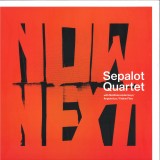
NOWNEXT is a voyage from the past to the future, from now to then, from what's behind us to what's waiting for us just around the next corner. In musical terms these are the gaps that appear when you drift between genres and take risks. Strolling far from the well travelled Zeitgeist path. The second album by the Sepalot Quartet floats through this timeless space and fills those cracks with a relaxed fusion of Jazz meets Indie meets Electronica, not once denying Sepalots hip hop roots.
This freedom of expression can also be considered a sign of our times, with a generation coming of age without rivalling youth phenomena. Where a jazz show is held in a techno club with no further explaination needed.
With their first release the Quartet still relied on remakes from the established Sepalot dicography, with their current work they laid the foundation for a truly solid form of musical self discovery.
NOWNEXT is enlivened by this spirit and offers a fascinating and confindent blend of varied sounds spanning time and space.
With all this being said, NOWNEXT is truly an up to date album of international format, feeding from the rich experience of its diverse members (Sepalot, Angela Aux, Fabian Füss, Matthias Lindermayr). Memories, associations and a well carved vision are melted into a masterpiece.
NOWNEXT is the latest offering by SEPALOT and his QUARTET and needs to experienced with all senses.
Twenty-five years after his debut album I’m Serious permanently altered the DNA of Southern hip-hop, Tip "T.I." Harris is officially closing this chapter with KILL THE KING, his twelfth and final studio album. For a man who has spent over two decades as the self proclaimed “King," the project’s title speaks volumes. This is not a surrender of the crown to a rival, but rather a symbolic death of the ego. T.I. is choosing to dismantle the moniker on his own terms, trading the battlefield for peace, legacy, and the freedom to step out of the booth and into the next phase of his life as an actor and family man.
Rather than leaning on pure nostalgia, KILL THE KING proves T.I. is walking away while his pen is still razor-sharp. The project is anchored by the certified gold lead single "LET 'EM KNOW," produced by long-time collaborator Pharrell Williams, which sets an immediate tone of veteran-level precision and polished bravado. Across the 18-track album, T.I. pulls together a masterclass of multi-generational talent that bridges the gap between his trap origins and modern dominance. The album boasts heavy-hitting Southern anthems like "DOPE BOYS ACADEMY” featuring 2 Chainz, Jeezy, and T-Pain, alongside soulful reflections from the Dr. Dre produced track "WHERE I’M FROM" with Anderson .Paak, Atlanta eloquence with Usher on "GORGEOUS," and moody, atmospheric cuts featuring Summer Walker and YoungBoy Never Broke Again.
Ultimately, KILL THE KING is designed to leave nothing unsaid, directly addressing the trials, tribulations, triumphs, and the undeniable imprint he’s left on global hip-hop culture. To mark the end of this historic era, T.I. isn't just letting the music speak for itself; he will be taking his final bow on the road with The King Succession Tour, bringing his sons Domani and King along to officially pass the musical torch. With this final statement, T.I. ensures that the trap music foundation he helped lay the framework for what will endure long after he sets down the mic. The King is dead; long live the legacy.
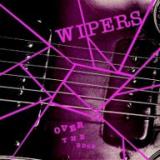
The bleak, hard-driven third LP by the Wipers (originally released in 1983) offers Greg Sage at his most chased and breathless, lashing out with sharp staccato notes as if melody were his only defense. The 3rd LP from the PDX punks finds them tightening up their sound to create what is arguably the Wipers' definitive album statement. Kurt Cobain listed it in his top 50 albums of all time. A distant cousin of the preceding Youth of America but undoubtedly no less excellent and no less venomous, Over the Edge is a return to the easily digestible song lengths of Is This Real?; however, it all but leaves that debut in its wake. On the strength of some brave/smart radio stations that decided to play this album's "Romeo" (a propulsive horn-flecked slammer in the vein of "Youth of America"), Wipers solidified their status as a certifiable force in the American underground of the early '80s. Songs like "Messenger" and "What Is" show Greg Sage's increasing skill as a pop songwriter. Despite the fusion of punk and pop, the record hardly mirrors the bands that would later be called punk-pop. In fact, this collision of the two elements makes what followed decades later seem twee.
Manonmars’ 3rd album sees him at his most amorphous and psychedelic, at points sharper and laser focused, and at others more blurred and impressionistic than his previous records. Many of the core players remain the same, all of the production is once again handled by O$VMV$M (the duo of Neek and Amos Childs of Jabu) while Paulina Korobkiewicz (also of Young Echo) makes a return handling both the album’s cover artwork and contributing a series of diaristic field recordings and voice notes.
‘The project references movies, cartoons, fictional characters and video games, among other things. The album title is open to interpretation but all of these elements are forms of visual entertainment which have their own unique ability to transcend things like language barriers and cultural divides. The visual element is key because those details bridge the gap on a communicative level.’ - Manonmars
The album blends abstract, blurred braggadocio with more immediate personal details such as on ‘Volcanic Shield’ a posse cut of sorts featuring Bristol improv luminary Dali de Saint Paul and Franco Franco (½ of cyborg rap duo Kinlaw & Franco Franco) - where Mars recalls;
‘Memories of brighter days, happy meal hit the spot
Mum was spinning vinyl playing Super Ape or Pressure Drop
I would spend the weekend with the Turkish mandem on the block
single parent household, mum was studying or on the job
money came and went always was an on and off
made it back from school time to see what’s on the box’
The beat fades away to leave one of Korobkiewicz’s recordings of Mars’ mum talking about her life in London in the 80s, spending her money on reggae records as an ambient chord fades in like an echo of a jungle intro – stretching out as a link between generations of UK music.
The production by and large is brighter and more kinetic than earlier Manonmars records – with O$VMV$M drawing on everything from modern underground rap and drill through to jazz and acid ambient passages.
London is also a central character here, bustling and constantly shifting, either when bleeding in through field recordings, or as an ever-present backdrop in the lyrics;
‘I’m a fusion of Tippa Irie and Topper Harley
Hit the target like the black Atari
I dropped a tab now shit’s A Scanner Darkly
Got the munchies, Imma yam a sarnie
Pour the Wray and Ting like man at Carni
Exit Peckham Rye and turn left, walk past Hannah Barry
Get your (w)raps up like its January’
‘I've always considered London my home, despite spending some time in the South West of England too. My mum had been living in London for 25 years (...) That was a pretty big deal in some ways because it removed us from multicultural society during the period which overlapped with my teenage years. (...) I never got used to how quiet it was in the countryside (...) Bristol was the closest city to where we lived and it was through travelling there and making connections that I became involved in making music and playing gigs.’ - Manonmars
Mars’ practice as a painter (under his given name Jack Martyn Richardson) and photographer also loom heavy over the album, he cites Paul Verhoeven, Abdul Mati Klariwein and H.R Giger as influences – as well as Miles Davis, Drakeo the Ruler and DJ Rashad.
As with much of Richardson’s work the raps at times feel blurred to a point of almost inscrutability, creating a distance between the audience and himself. A process that ties into his visual work and the way he experiences the world as mainly abstract colour without his glasses. He explores this further in an ongoing visual collaboration with Korobkiewicz, ‘Fun and Games’ which serves as a visual archive of one of London's largest and oldest travelling fairgrounds.
‘I was diagnosed with very severe short-sightedness at the age of seven. I remember my early formative years as visually blurred. Some of my photography reflects this experience of partial vision and uncertainty, referencing memory and perception rather than fixed representation.’
Manonmars’ first public outing as a rapper was at a Young Echo radio event, broadcast shambolically from a practice room just off Jamaica street, Bristol in 2011, as much as things have moved on both stylistically and in terms of focus - strong links back to the city remain a key foundation throughout the collaborations and guest appearances.
‘I have no problem with being an outsider looking in. One of the things I enjoy about London is the anonymity (...) it's easy to be a stranger here when so much is happening. I feel like thats more valuable than people may realise.’
Skyjack — the borderless five piece band spread across South Africa and Switzerland — announce their fourth studio album, Let The Sky Open Under Your Feet, out 3rd July.
Recorded in December 2025 at a secluded studio outside Stellenbosch, South Africa, the album captures the vibrant live energy of the band at its most expansive — drawing together free improvisation, South African jazz traditions, chamber music, kinetic groove, and ecstatic collective interplay into a singular body of work.
“This record is a very articulate representation of our sound, having grown deep roots into the earth with high branches reaching upward and outward”, says bassist Shane Cooper. “My desire is always to create sonic universes that can envelope the listener.”
The album’s title comes from a line in a poem by the 13th-century Persian poet Rumi, reflecting the music’s balance between groundedness and transcendence. Here, Skyjack move fluidly between meditative improvisation and lush orchestration across twelve tracks of free-spirited, cosmic journeying. Inspired both by the cultural traditions and natural environments of South Africa, Let The Sky Open Under Your Feet is a testament to the band’s intuitive connection and innate musical curiosity.
It arrives just over a year after Light Cycle (2024), a short gap that reflects the momentum built on tour. After exchanging sketches remotely across two continents, the band reunited in Johannesburg in late 2025, workshopped the new material onstage across South Africa, and then headed directly into the studio, where much of the album was recorded live in first takes — preserving the looseness and unpredictability central to Skyjack’s sound.
Comprised of Kyle Shepherd (piano), Shane Cooper (bass), Jonno Sweetman (drums), Andreas Tschopp (trombone), and Marc Stucki (saxophones), Skyjack first formed in Cape Town in 2013 during a fertile moment in South African jazz, as a new generation of musicians pushed against rigid genre definitions and opened the music outward toward broader sonic possibilities. Over the past decade, the band has built a singular sound drawing equally on South African groove traditions and European improvisation.
Individually, the members move between jazz, electronic music, film scoring, rock, hip-hop and experimental composition, with collaborations spanning artists including William Parker, Lionel Loueke, Zim Ngqawana, Ben LaMar Gay, Jorge Rossy, Shabaka Hutchings, William Kentridge, Makaya McCraven and Sylvie Courvoisier.
Since their self-titled debut in 2015, followed by The Hunter (2019) and Light Cycle (2024), the group has developed a reputation for immersive live performances and music that continuously reshapes itself in motion — rooted in what they describe as “warm menacing African grooves,” while refusing fixed stylistic borders.
out of Stock
Last delivered 70 days ago available to reorder, subject to availability
Freddie McGregor was born in Clarendon, Jamaica on June 27, 1956. At age seven, he started singing backup for a local ska harmony duo called The Clarendonians and did his first recordings aged 10 years with the name "Little Freddie" or "Young Freddie", and as a duo with Ernest Wilson aka "Freddie & Fitsy".
During the 1970s, McGregor was closely associated with the legendary Studio One label. He sang lead for groups like Generation Gap and Soul Syndicate, and also recorded off and on as a solo act during the '70s. In 1975, McGregor converted to Rastafarianism.
His debut album Mr. McGregor was released in 1979. The album opens with "We Got Love" featuring a Tower of Power influenced horn section underneath McGregor's tale of love conquering all. The classic "Rastaman Camp" combines muted horn and an earthy, Nyahbinghi-like chorus for one of producer Niney's deeper constructions, but the lightweight fare is equally welcome as the easy strolling and not too sugary version of "Brandy" displays.
Mr. McGregor is available as a limited numbered edition of 750 copies on orange vinyl.
A kickstart without brakes – straight into the heart of the German-speaking rock scene with performances at Rock am Ring, Rock im Park, Lollapalooza, and more. And all of this completely independently – without a label, without a booking agency, without a producer. Because wasting time was never on the agenda for the punk & alternative trio from Frankfurt since their very first performance in May 2023 at the Warsteiner Band Contest, which they won right away. If we ended the band description at this point, everything would sound perfect. But if you take a closer look at the dozen singles that Friends Don't Lie have released in just 18 months, you'll discover a second layer: vulnerable lyrics about self-doubt, fears, and big emotions. At the same time, it becomes clear that the band also takes a political stance. It's about discontent – against racism, resentment, selfishness – against all forms of hatred. Friends Don't Lie are thus becoming the voice of a generation, as we last saw with acts like Kraftklub and Casper. In May 2026, Uncle M Music will release their long-awaited debut album, Zenit der Dramaturgie. Ten German-language rock/punk songs that set the bar extremely high and bridge the gap between Donots and Kraftklub.
The Complete Piano Etudes of Philip Glass available for the first time on vinyl, housed in a 4LP Box set (also available as a 2CD format).
After more than thirty years of working with and performing the great repertoire, the music of Philip Glass has, in a way, almost revolutionized my life as a musician,” confides Vanessa Wagner.
An emblematic artist on the French music scene, winner of a Victoire de la musique award and director of the Chambord and Giverny festivals, Vanessa Wagner is as inspired in her interpretation of Mozart, Debussy, Tchaikovsky and Dusapin as she is alongside Murcof and Rone.
With her innovative and daring approach, she has established herself as a major influence on the classical music landscape, crossing boundaries and blazing inspiring trails.
A tireless pioneer of new repertoires, she has been exploring the repertoire of minimalist composers for several years. For InFiné, she has dedicated 4 albums to the major figures of this movement, John Adams, Meredith Monk, Brian Eno, Ryūichi Sakamoto, as well as to the new generation Caroline Shaw, Bryce Dessner and Nico Muhly.
After giving numerous concerts based on these works, she felt the need to record in their entirety this essential monument in the history of music, which bridges the gap between the 20th and 21st centuries: Philip Glass's 20 Etudes for piano
by Philip Glass.
His approach helps to place these two books in the great repertoire, alongside the great cycles of studies by Ligeti, Debussy, Dusapin, and before them, Chopin and Liszt.
Philip Glass was born in 1937 and grew up in Baltimore. He studied at the University of Chicago, the Juilliard School and in Aspen with Darius Milhaud. Dissatisfied with much of what was then considered modern music, he moved to Europe, where he studied with the legendary pedagogue Nadia Boulanger (who also taught Aaron Copland, Virgil Thomson and Quincy Jones) and worked closely with sitar virtuoso and composer Ravi Shankar.
The thread linking Philip Glass to Vanessa Wagner may be as simple as a detail: a moment, a pedagogy, a way of looking at the piano. In Words Without Music, Glass recalls his apprenticeship with Nadia Boulanger in Paris - a lesson in rigorous received just as the Nouvelle Vague was about to shatter the conventions of cinema the conventions of cinema, just as the composers of the minimalist movement had done with with the language of music. Nurtured by Ravel and Debussy, the great French pedagogue disciplined yet inquisitive minds, capable of embracing modernity without denying modernity without denying their heritage.
With Vermilion Hours, Melaine Dalibert offers a condensed rereading of his Musique pour le lever du jour, still exploring minimal variations and subtle piano resonances. This new version, enriched by David Sylvian's discreet electronic textures, retains the atmospheric magic of the original while offering a new density. Sylvian, best known as the singer of Japan, is also an important figure in ambient music, collaborating with Czukay, Hassell and Sakamoto. Their collaboration, born of a sincere artistic affinity, acts here as a transmission between generations. The two tracks on the album - Musique pour le lever du jour and Arabesque - evoke a soundscape where each note is reflected and diffracted infinitely. The electronic work acts like a halo, a vibrant aura. Dalibert speaks of a desire to humanize his theoretical processes, to touch through the organic. Like a Klee painting, each stratum of sound builds depth. This is, indeed, "landscape music," where, if you listen closely, you might hear birds singing in the background. And that is the true essence of these suspended harmonies, these vermilion hours-which transport us, as only the contemplation of nature can, into another space-time, a sonic bath that is also a renewal of the senses. Since his career with Japan began in 1974, David Sylvian has explored a wide range of musical territories, collaborating with the likes of Robert Fripp, Jon Hassell, Readymade FC and Ryuichi Sakamoto - venturing as far as ambient music, which he further develops here in tandem with Melaine Dalibert. While continuing to teach at the Rennes Conservatoire, Melaine Dalibert regularly releases albums on various labels and performs both his own works and those of other composers - most recently, a reworking of Keith Jarrett's Köln Concert. He also co-curates the Autres Mesures festival. The two pieces forming Vermilion Hours feel like transcending the generations. Between Melaine Dalibert (born in 1979) and David Sylvian (1958) lies the same generational gap as between Sylvian and Czukay (1938-2017) or Hassell (1937-2021). The CD versions adds two edit versions of both long tracks.
When the late Jazz impresario and trailblazer Meghan Stabile first launched the Revivalist platform and Revive Da Live concert series in NYC, the goal was to bridge the gap between younger Hip-Hop audiences and traditional Jazz purists. Born from this vision in 2010 was the Revive Big Band, an inventive 20+ piece ensemble led by artistic director, trumpeter, and composer Igmar Thomas. Merging tradition with groundbreaking creativity since its inception, the multi-generational band’s world-class cadre of musicians unites for Like A Tree It Grows. As the Revive Big Band’s official full-length debut, this album represents not only a 14-year timeline of the Revive collective’s journey, but also a deeper tribute to the Black American Music lineage. It’s a celebration of community that uses the timeless power of music to tell a story of cultural legacy, innovation, and artistic collaboration. From original compositions like “R&P” and “The Coming”, to reinterpretations of classic records paying homage to musical legends (e.g. Wayne Shorter, Dizzy Gillespie, etc.) Like A Tree It Grows showcases Thomas’ intricate arrangements that blend Jazz, Hip-Hop, Soul, and a range of genres from the lineage of Black American music. With guest features from Talib Kweli, Dr. Lonnie Smith, Terrace Martin, Jean Baylor, Bilal, and more, the album provides a bridge between past and future, inviting listeners to explore the roots of Black music while reimagining its possibilities.
Tradition shapes your work. For saxophonist and bandleader Shabaka Hutchings, that's something he's long understood. After years spent in the orbit of London's jazz circuit, he examines and reimagines his influences with a dexterity that's unique. Drawing out the vision underlying his new album, he says, I see energy as being a form of wisdom to be passed down through the ages.'
Unpicking the album's title, he continues, "When we study the music, the lives, the words of our master musicians we obtain a glimpse of that artist's essential energy source. This is the core vitality of the individual which leads them to utilise the musical specifics of their chosen genre in a way that mirrors their inner source of power. This is an intuited wisdom that's handed to us from the legacies of our elders.
The album is a document of sessions combining Hutchings with a group of South African jazz musicians he's long admired. His connection to the group was Mandla Mlangeni (bandleader of the Amandla Freedom Ensemble), whom he'd flown there to play with over the past few years. Recorded across just one day, the group drew on their South African lineage - heroes like Zim Ngquwana and Bheki Mseleku - to bring their own slant to the American jazz lineage which is reconfigured in Hutchings' compositions themselves.
Going beyond the jazz greats Hutchings cites, influences are drawn from plenty of other sources: Caribbean calypso, central African song structures and Southern African Nguni music all play a part. Bringing together those ideas with the contributions of his bandmates is, he explains, crucial to what he sees in the role of an album artist. Even though I wrote all the music, for me, the leader of the project isn't the person who writes all the music but the one who has a vision for how certain musical elements will be combined."
A regular sight on stages around London and beyond, playing - and often leading - groups like The Comet Is Coming, Sons of Kemet and Melt Yourself Down, he's part of a generation whose idea of jazz is pointedly unrefined. That's to say, Wisdom of the Elders comes from an artist interested in the indefinable gaps more than fitting into boxes.
The Leeds jazz scene is the gift that keeps on giving. From the dub-leaning ambience of Submotion Orchestra through to the afro-jazz fusion of Nubiyan Twist and TC & The Groove Family, a multi-generational lineage has emerged. Adding yet another page to the eclectic story of jazz from the city, emerging punk-jazz upstarts Plantfood announce the imminent arrival of their debut album ‘Carnivores’ on Friday 4th October via Bridge The Gap.
Consisting of JJ Petrie (percussion), Ruben Maric (keyboards), Joe van der Meulen (tenor saxophone), Woolley (baritone saxophone), Finn Hamilton (drums) and Woody Hayden (bass), Plantfood began in the throes of lockdown, during which all the members lived together. The group spent day after day sharing their eclectic music tastes, ranging from the electronic punk of The Prodigy and art-rock of Black Country New Road, through to the jazz dance of Steam Down and The Comet Is Coming. Taking these influences, they crafted their own sound, but without live shows, their only audience was the plants in their rehearsal room:
“We called the band Plantfood because we were writing and rehearsing in one of our bedrooms which was full of house plants. The plants kind of became our only audience, so it was like the music was food for the plants.”
The band’s debut album ‘Carnivores’, plays on this theme, referring to the plants as carnivores for consuming the bands music, whilst also reflecting the apocalyptic palette of sounds and chaos found within the record. However, mirroring the dynamism of a Plantfood live show, the album is anything but one-dimensional. The group expertly balance moments of serenity and vulnerability with cataclysmic urgency, all brought together under the guidance of producer David Haynes (TC & The Groove Family, Nubiyan Twist). The group share:
“The album’s moments of vulnerability and hope are intended as the depiction of a return-to- earth theme (circle of life, growth and decay), reflecting that the cycle of nature is not simply destructive.”
The project’s lead single ‘Y.U.S.’ drew praise from tastemakers including Jamz Supernova on BBC Radio 6, with the track featuring the talents of UK-Palestinian MC Yung Yusuf, a serial collaborator who also appears on album closer ‘Monstera’. Both tracks channel Plantfood’s explosive live energy into a blend of afro-latin rhythms and broken grooves, with the distinctive blend of tenor and baritone saxophone weaving in and out of grime-leaning, poetic exchanges with Yusuf.
Elsewhere, the second single from the project ‘Birdgang Pt. II’ is a fresh take on the band’s contemporary jazz sound, blending jazz, Balkan folk and Moroccan rhythms with a punk edge. The album’s title track resets the balance, soothing the soul through a swirling approach to spiritual jazz that wouldn’t be amiss amongst the Gondwana Records catalogue.
His list of collaborators is a who's- who of adventurous improvised music. Recently he's extended into an actual new territory, moving to Lisbon, Portugal in 2021. This new record Beast captures him playing in front of a live audience with a new multi-generational ensemble of musicians from the fertile European improv scene. Rhythm section duties are handled by the Portuguese team of Ze Almeida on bass and drummer Joao Lencastre.
Joining the band on piano is the German musical polymath Samuel Gapp, so that this recording marks the first time in John's prodigious and storied career that he has recorded as a leader with the classic piano quartet line-up. The album presents four extended improvisational settings, with half of these drawing upon John's compositional ideas as inspiration for exploring unknown territory, manipulating timbre and density as well as pitch and rhythm. "My compositions are used as frameworks, with the caveat that they are only to be used to provide cohesion when we sense the need. Otherwise, everything's wide open."
This album presents the next instalment in the journey of one of the music's greatest questing musical innovators, exploring all the possibilities opening up with a new set of collaborators in a new country.
In 2013, between Hypnoflip Invasion and Stup Virus, Julien Barthélémy aka Stupeflip composed the soundtrack for Parenthèse, the first feature film directed by Bernard Tanguy. Julien and Bernard had recently met at a photo exhibition by Nathalie Sauvegrain, whose film Océane Bernard produced. Bernard, who has just been nominated for a César and shortlisted for an Oscar for a short film, is developing his first feature-length film as a director: Parenthèse, a buddy film about the feeling of growing old, an in camera film on a sailing boat in the Mediterranean, set against the magnificent backdrop of the Port-Cros and Porquerolles National Park (Var). A Stupeflip fan, Bernard considered Julien to compose the music, in his Pop Hip version rather than King Ju, convinced that his 80's style would fit perfectly with the nostalgic vision of the heroes of the story and that Stupeflip was also capable of bridging the gap between generations. Julien composed 11 tracks for the occasion, 8 of which found their way into the final version of the film. The title track, "Parenthèse", features arrangements by Anne Gravoin's string orchestra, giving it a depth and density never before seen in Stupeflip's discography. For the 10th anniversary of the filming, the soundtrack, which was only available on the DVD released in 2017, is being offered for the first time in a remastered version (Marie Pieprzownik, Translab), including 3 previously unreleased tracks not included in the original cut.
Available for the first time on vinyl in a remastered version + 3 previously unreleased tracks
Written by veteran journalist Shawn Reynaldo, First Floor is a weekly newsletter that focuses on electronic music, along with the culture and industry that surround it. Over the course of just a few years, it’s become one of electronic music’s most influential platforms, routinely putting many of the genre’s thorniest issues under the microscope while reckoning with changes in the culture during a time of profound transformation.
A collection of Reynaldo’s most thought-provoking essays, First Floor Volume 1 provides a nuanced, wide-ranging look at contemporary electronic music culture, with a particular focus on systemic issues that often go undiscussed.
Topics covered included the evolving nature of electronic music fandom and artistry, value shifts brought on by the current changing of the generational guard, the shortcomings of the modern music press and the growing gap between electronic music’s foundational rhetoric and the genre’s present-day norms.
Incorporating both pieces originally published in the newsletter (all of which have been updated) and exclusive new material from Reynaldo himself, the book also features a foreword by veteran artist and 3024 label founder Martyn.
With their profound take on electronic music, Animistic Beliefs have steadily solidified their spot in the global underground. Influenced by cultural concepts such as ancestry, animism and mythology, as well as the languages of political techno, punk, bubbling and IDM, Linh Luu and Marvin Lalihatu consistently translate their visions into sensitive productions as well as high-octane live performances. On MERDEKA, the artists explore and embrace their cultural heritage in all of its pride, pain and complexity. It symbolizes Animistic Beliefs' breaking free, coming to terms with their changing selves and letting go of external expectations. The record rethinks childhood memories, confronts the generational trauma left by (post-)colonialism, and re-connects Linh and Marvin â?? respectively of Vietnamese-Chinese and Dutch-Moluccan descent â?? with their formative cultures. MERDEKA marks their first step in an overall departure from western club music. For its layered sound, Animistic Beliefs once again draw from the past, present and future of global club music, creating a sonic space where fast techno, warped breakbeats and ambient soundscapes make way for the augmented influence of (Southeast Asian) tribal music. The record incorporates Indonesian scales and recordings of the Tahuri (a wind instrument made out of a conch shell), Totobuang (Gamelan-like gongs) and Tifa drums, known as â??the Moluccan heartbeatâ??. In true Animistic Beliefs fashion, MERDEKA will set fire to sweltering clubs and (sleepless) dreams. Yet, for the artists, it is essential to amplify the stories that spark that flame and keep it burning. The release of MERDEKA follows CACHE/SPIRIT, their ongoing collaboration with visual artist Jeisson Drenth, which extensively explores the artistsâ?? intersectional identities. As such, the latest album is the next step within a bigger, introspective investigation. More unapologetic than ever, MERDEKA embodies a turning point on Animistic Beliefsâ?? ongoing journey towards self-acceptance â?? fuelled by the sound of urgency.
out of Stock
Last delivered 2 years ago available to reorder, subject to availability
- 20-track collection includes Charles Bradley & The Menahan Street Band covering Sixto Rodriguez, Iggy Pop & Zig Zags performing a Betty Davis classic, Ethan & Maya Hawke interpreting Willie Nelson, and Angel Olsen paying homage to Karen Dalton - Double LP pressed on special limited edition color wax - Featuring new cover art by renowned British artist Sophy Hollington - Booklet with track-by-track notes by Lydia Hyslop // For more than 20 years, acclaimed reissue label Light in the Attic Records has shined a spotlight on some of music's most unique - and often forgotten - voices. But reviving these long-out-of-print recordings is only half of the process. "We believe that an essential component of archival work, aside from simply honoring the music, is to seek ways in which to bring fresh perspectives, context, and reverence to the original artists and their work," says LITA founder, Matt Sullivan. Thus, LITA's acclaimed cover series was born, in which contemporary acts pay homage to their favorite LITA artists and songs. Spanning more than a decade, 20 of these inspired cover songs will be available together for the very first time on the 2xLP Light in the Attic & Friends. From Charles Bradley & The Menahan Street Band covering Detroit singer-songwriter Sixto Rodriguez and Mac DeMarco performing a song by Japanese icon Haruomi Hosono, to Iggy Pop & Zig Zags honoring funk queen Betty Davis, and Ethan & Maya Hawke covering country great Willie Nelson, these performances bridge the gap between generations, languages, and musical traditions.
Soundway presents Circus Underwater’s 1984 self-titled masterpiece. Remastered and extended to a double LP, this deluxe version includes six unreleased tracks unearthed from the original ¼” tapes, and presented with an insert, including never-before-seen photos and the fascinating story behind the music.
Featuring artwork from Grateful Dead collaborator, David Lundquist, the album encapsulates a unique moment in time. Echoing the story of a generation that grew up in the 50s and 60s where music was everything, two friends embark on a journey of experimentation which begins in the beatnik suburbs of Washington DC and travels to the heart of hippie San Francisco.
The result is an opus that fearlessly blurs the boundaries of genres and embraces diverse influences. Elements of prog, rock, ambient and wave music culminate in an odyssey that seamlessly bridges the gap between the spaced-out creativity of the 70s and electronic music of today
This Moment' - Shakti's first new studio album in more than 45 years - is
a work of immense depth and radiant optimism
With John McLaughlin (guitar, guitar synth) and Zakir Hussain (tabla) joined by
vocalist Shankar Mahadevan, violinist Ganesh Rajagopalan, and percussionist
Selvaganesh Vinayakram, the Shakti of now is a powerfully dynamic collective,
defined by deft interplay, dazzling unison passages, extraordinarily dexterous
improvisations, and the ability to draw from a vast well of global traditions and,
miraculously, put them in conversation with one another.
As a cornerstone of what is now called World Music, the vision and virtuosity of
Shakti has inspired generations of musicians from around the world to explore
sonic hybrids once thought impossible. Born of the musical and spiritual
brotherhood shared by the revolutionary British guitarist and bandleader John
McLaughlin and master Indian percussionist Zakir Hussain, Shakti's soulful,
organic intermingling of Eastern and Western musical traditions has proven
transformative for both the band's members and its listeners. Fifty years after the
informal conversations and jam sessions that sparked the band into existence,
their music continues to resonate and evolve.
Despite the large gap in their studio discography, Shakti has persisted
intermittently over the years as a live proposition, releasing several concert
recordings. "Shakti is very much a 'live' band, " explains McLaughlin. "A part of the
problem with making a studio recording has always been the fact that we live on
different continents, and we all follow our individual careers – in addition to
working together in Shakti. 'This Moment' is the result of me calling everyone in
the fall of 2021 and persuading them to use today's recording technology to
realise it."
Recorded and mixed in the U.S., Monaco, India, and Great Britain, This Moment is
nevertheless cohesive, bound by the deeply held bond shared by the players - a
bond that is audibly apparent across the album's eight tracks.
Written by veteran journalist Shawn Reynaldo, First Floor is a weekly newsletter that focuses on electronic music, along with the culture and industry that surround it. Over the course of just a few years, it’s become one of electronic music’s most influential platforms, routinely putting many of the genre’s thorniest issues under the microscope while reckoning with changes in the culture during a time of profound transformation.
A collection of Reynaldo’s most thought-provoking essays, First Floor Volume 1 provides a nuanced, wide-ranging look at contemporary electronic music culture, with a particular focus on systemic issues that often go undiscussed.
Topics covered included the evolving nature of electronic music fandom and artistry, value shifts brought on by the current changing of the generational guard, the shortcomings of the modern music press and the growing gap between electronic music’s foundational rhetoric and the genre’s present-day norms.
Incorporating both pieces originally published in the newsletter (all of which have been updated) and exclusive new material from Reynaldo himself, the book also features a foreword by veteran artist and 3024 label founder Martyn.
Formed in the bygone barren period for British rock music that were the nascent
2010s, The St Pierre Snake Invasion have consistently shown themselves to be
an unapologetically creative force.
The long gap between debut album, A Hundred Years A Day (October 31st 2015)
and the release of underground sophomore smash Caprice Enchanté (June 21st
2019) was something the five- piece were reticent to repeat, but circumstance
beyond the Bristolians' control dictates that third LP, Galore, comes to us in a
markedly different world than the one in which St Pierre were building their
reputation and acclaim.
Sayell himself has been adamant that this latest offering would not be a COVID
album. He did not want it to address the ubiquitous isolation of global lockdown.
It immediately would date the record to a fixed point in time and not allow its
ideas to flourish and find a receptive audience for a continued period. Instead, the
changes represented in Galore are so fundamentally powerful and relatable to the
human condition. It is an album centered around universally resonant themes of
growth.
The summer of 2021 saw the birth of Sayell's first child. The concurrent writing of
the band's third LP has, naturally, been greatly informed by the experience of
impending fatherhood. Wondering about one's own impact on a life that you have
been a part in creating, the anxieties of what will be passed down to another
generation, and reflections on garnered wisdom with age; these are the key
themes that bring us to the band's magnum opus to date.
Alongside these introspective lyrics, the band's sound has taken on new life.
Where Carprice Enchanté was primarily informed by the musicality of Every Time
I Die, The Chariot, Refused and Mclusky, Galore builds on this framework by
incorporating influences as disparate as LCD Soundsystem, Soulwax and
Meshuggah into a coherent and daring whole. A song like That There's Fighting
Talk sees seething aggression taken to a mathcore nightclub, while the title track
and Apex Prey see the band exploring looser, quieter melodicism alongside Sang
Froid's Aisling Whiting, who brings a stake dynamic counterpart to Sayell in a
beautiful and captivating performance.
There are still tracks reminiscent of the band's previous work, such as
Submechano and Sleep Well - the latter featuring a sterling guest appearance
from Sugar Horse's Ashley Tubb - in which we hear the brash punk attitude St
Pierre's ever-growing fanbase adore. But ultimately, from the opening syncopated
notes of Pete Reisner's percussion and Sayell's distinctive vocals on Kracked
Velvet, it's impossible not to hear the palpable shift to another echelon of artis
For Oleg Azelitskiy, known as DJ Slon, the nineties and the first half of the aughts were an era of "firsts". First squat parties on the banks of the Obvodny Canal and more legitimate ones at Tunnel, first proper techno club in Russia. First DJ sets, first vinyl records in his collection, first radio shows at Port FM. He is a true veteran of the Russian techno movement, who carried his love for the genre through three decades and inspired more than one generation of musicians. Album Nr. 1 is the first edition of his music on vinyl. It comprises the music that Azelitskiy made during 1995 - 2005, except for the track My 40th Vesna, produced in 2010.
Azelitskiy's love for techno was born out of contradictions. Thanks to the Soviet synth band Zodiac and the French pioneer Jean-Michel Jarre, he had loved electronic music since his childhood. When he grew up, he got into the dark, introspective pieces by Einsturzende Neubauten and Bauhaus. Not only does the wide-ranging palette on Album Nr. 1 reflect its creator's taste, it echoes the changing times of the Russian nineties. It was the time when confrontations with criminals were inseparable from the parties and get-togethers bustling with local artists.
His affection for various genres led to many monikers and projects, all represented here on Album Nr. 1. He recorded most of his music as DJ Slon. Then there was a project Zhutkiy Lazer (Scary Laser), where Azelitskiy made music that was more experimental but still techno-oriented, with the occasional help of his friend Aleksey Gaponenko (Lazer became a proper solo project of DJ Slon in 1999). There are also tracks under the aliases Mass Fatality, which combined techno and synth-pop, and Razrushiteli Mozgovych Uliev (Brain Hive' Destroyers), with its more direct tight techno tracks.
The music of DJ Slon sounds fresher and more alive on Album Nr. 1 than ever before.
Noticeably, this record, first and foremost, is dance music. As a voice on one of the album tracks boldly states, we came to dance.
out of Stock
Last delivered 7 months ago available to reorder, subject to availability
ALL THEIR LEGENDARY RECORDINGS, PLUS LOADS OF UNRELEASED STUFF!
“The Lipstick Killers were easily one of the greatest live bands I've witnessed in my 65 yrs. on this planet” – Keith Morris (Black Flag/Circle Jerks/Off!!)
HINDU GODS ARE CALLING YOU!!! Grown Up Wrong! Records is thrilled beyond belief to present the LONG-AWAITED anthology of material by the legendary Lipstick Killers, who blazed a trail in late ‘70s post-Radio Birdman Sydney before gigging with the likes of the Gun Club and the Flesh Eaters in Los Angeles where they crashed and burned in 1981.
The Lipstick Killers released just one single in their life time – the perfect ’79 Deniz Tek-produced pairing of “Hindu Gods of Love” and ”Shakedown USA” on their own Lost in Space Records and Greg Shaw’s Voxx Records - but a posthumous live album and a couple of archival releases followed. It was all incredible. All that material is included here, as is a plethora of additional stuff, all from the best-available sources (mostly original tapes).
The Lipstick Killers’ enigmatic and high-energy sound – heavily inspired by the Stooges and the ‘60s psychedelic punk sounds of bands like the Thirteenth Floor Elevators and the Chocolate Watchband – bridged the gap between Radio Birdman and subsequent Sydney groups like the Sunnyboys (whose first-ever show was opening for the Lipstick Killers), Lime Spiders, Hoodoo Gurus, the Screaming Tribesmen and the Psychotic Turnbuckles. And of course they anticipated generation after generation of other bands with similar things in mind, right up to today’s ‘60s-inspired freaks like The Straight Arrows, The Living Eyes and Thee Oh Sees.
Grönland Records announce a revised, remastered reissue of “Sleepwalkers” by DAVID SYLVIAN. Available as a gatefold 2LP with exclusive art print and as a gatefold digipack CD, this new edition also features the previously unreleased track “Modern Interiors”.
in the 00s, DAVID SYLVIAN produced two of his strongest and most solitary statements, BLEMISH and MANAFON. but those records don’t tell the whole story. during that the same period, SYLVIAN created an alternate body of work: a series of collaborations and side projects with leading talents of pop and improv, electronic and contemporary classical music. the best of these recordings are gathered here on SLEEPWALKERS, meticulously sequenced and remixed: the fruits of one-off meetings and lifelong partnerships, they jump from bliss to intrigue, romance to sensuality, as arch experiments lead into the lushest pop.
the single ‘world citizen – i won’t be disappointed,’ written with RYUICHI SAKAMOTO, is a sublime example, with an impeccable melody and lyric warmed by SYLVIAN’S gorgeous tenor. SYLVIAN has worked with SAKAMOTO for close to three decades. by contrast, on ‘pure genius,’ a collaboration with CHRIS VRENNA aka tweaker, he sounds like he’s walked into a heist flick, singing the part of a delusional, dangerous bedroom genius. as sylvian explains, tracks like this ‘give me a chance to write in a way that’s completely non-personal, playful. it’s an exercise of some kind, working within the parameters of a given assignment.’
intrigue of a different kind drives ‘sugarfuel,’ with music by JEAN-PHILIPPE VERDIN, aka READYMADE FC. the lyrics offered ‘an opportunity to grapple with a more overt sexual theme than anything i’d previously attempted, as suggested by a vocal sample in the original track provided, a threateningly insistent ‘i’m on your side.’ so i took that as my point of entry and ran with it. i would love to write more on this subject should i find the right context. you’re always aware of walking a thin line exploring sexuality with language alone. the failings of the great and the good are strewn all around.’
NINE HORSES’ ‘wonderful world’ strolls in on a black tie bassline and the echoing coos of swedish chanteuse STINA NORDENSTAM, whose high chirps brush hands with SYLVIAN’S lead; there’s the blistering ‘money for all’ by FRIEDMAN and SYLVIAN, an oblique response to the fallout of 9/11 and the war on iraq. this is followed by the last known recording of SYLVIAN’S singing voice in over a decade, ‘do you know me now?’, a live studio recording later augmented by JAN BANG, EIVIND AARSET and ERIK HONORÉ. it’s certainly a title that’s become more relevant over time as SYLVIAN, in the latter stages of his career, repeatedly comes face to face with a new generation of admirers fixated on the life and times of the band formed by his younger self. SYLVIAN is one of only a handful of musicians to have successfully moved on from overt pop beginnings into a domain all his own but is consistently plagued by the misguided desires or expectations of some unfamiliar with his evolution to do a u-turn, pick up where he left off in the late 90s. although this compilation, as well as his writing for NINE HORSES, adequately shows SYLVIAN’S traditional love of melody is
intact, that it’s consistently remained part of his output, there’s no denying his focus has shifted, evolved.
the refusal to embrace complacency, the need to cover new ground ‘as older generations of popular musicians have a moral duty to explore despite, or because of, the greater possibility of failure’ will, i believe, lead to a reassessment of his later work that embraces a sightly more complex relationship with what we’re referring to as ‘melodic’, accompanied by an exploration of improvisation without dogma or beholden to any ‘givens’ for which he’s not infrequently been castigated. for SYLVIAN, there are no such boundaries. it’s obvious that different facets of his work co-exist without conflict but not necessarily for the majority of his audience. again, this places SYLVIAN in the odd, rare, unenviable(?) position of moving forwards leaving many in his devoted audience behind as, should he decide to return to music, it’s unlikely he’ll be aiming to placate an audience in love with work that preceded the 00s. in fact we’ve no idea where new work, should it surface, may lead.
SLEEPWALKERS also spotlights the innovators who contributed to MANAFON and BLEMISH. CHRISTIAN FENNESZ hangs a crackling, shimmering curtain behind the vocal on ‘transit,’ matching his signature mass of sui generis sounds to sylvian’s stately performance. and the title track began with an instrumental handed to SYLVIAN by MARTIN BRANDLMAYR of POLWECHSEL, soon after the first recording session for MANAFON. spite crackles in the gaps between the percussion, and onkyo artists TOSHIMARU NAKAMURA and SACHIKO M set the stage for the scathing lyrics in the chorus.
it cuts close to the bone and so do the two spoken word cuts, ‘angel’ and ‘thermal,’ produced by SAMADHISOUND recording artists JAN BANG and ERIK HONORÉ (and featuring ARVE HENRIKSEN on trumpet). SYLVIAN describes the latter work as a ‘love poem’ to his daughter. ‘‘thermal’ reflects on a period when our time in sonoma, ca was coming to an end. we’d stayed in temporary accommodation which had lulled us into a false sense of security. we had pear, apple, lemon, and figs trees growing in the yard. a small but exotic paradise. a cocoon. but the cracks were beginning to show in the relationship between ex-wife INGRID CHAVEZ and i which is where i think this underlying sense of anxiety, which runs throughout the poem, is derived from, coupled with the need to provide physical and spiritual stability to the children, the youngest of whom was just under two at the time. the poem is addressed to her. our world was dissipating, coming apart at the seams, but we were an island unto ourselves.’
‘five lines’ marked the start of a new partnership with acclaimed young composer DAI FUJIKURA, who at the time of recording was also working on remixes of MANAFON for what became DIED IN THE WOOL. the string quartet was performed by the celebrated ICE ENSEMBLE and written for SYLVIAN, who FUJIKURA cites as an early influence. says SYLVIAN, ‘the composition moves through numerous changes in time signature but as i had no knowledge of what these were i just relied on my gut instinct, and responded, as i always do, with what felt right to me, composing an entirely new melody in the process. some months later i was working in a studio in london and dai dropped by. i rather tentatively asked if he’d like to hear a rough mix of the song as it stood, painfully aware that my contribution might make no sense to him at all but, to my relief he loved the result.’
there’s one further new addition to this collection, the first official release of a track composed in response to the tsunami in fukushma, ‘modern interiors’, featuring SYLVIAN once again in collaboration with BANG and AARSET.
like 2000s EVERYTHING AND NOTHING, SLEEPWALKERS is a retrospective of a particular decade when SYLVIAN was free of major label interference and could follow his own instincts without having to explaining himself – but it’s also an eye-opening complement to his solo releases. as SYLVIAN explains, ‘some collaborations seem to be a one-off exchange but you can never be too certain of that fact. others have been long term. in this respect, RYUICHI comes to mind. there’s others with whom you hope to continue working as you feel you’ve barely scratched the surface. other times offers come out of the blue, welcome, inspired. regardless, it’s wonderfully explorative to have so many possibilities to juggle with. each collaboration seems timely. it’s as if there’s a rightness to the exchange at a given moment in time.’
in the meantime, we hope you enjoy the work presented here, personally selected, remixed and sequenced and entirely remastered. these are the orphans, abused, estranged, exotic, migrating from diverse corners of the globe, brought together under one roof which they're learning to share despite their differences.
‘as many of you will already be aware, despite relatively continuous work on solo albums, i’ve maintained strong ties with a number of musicians throughout my life in one context or another. on this new collection, let’s call it SLEEPWALKERS 2.0, a selection of collaborative work produced over the period encompassing blemish through to manafon, i’ve included compositions by nine horses as well as more fleeting flirtations and one-offs. neglected offspring. represented also is long term friend and writing partner, RYUICHI SAKAMOTO, as well as more recent but potentially equally productive partnerships such as CHRISTIAN FENNESZ, ARVE HENRIKSEN and contemporary classical composer DAI FUJIKURA.
i hope you enjoy the work presented here, personally selected, remixed and sequenced and entirely remastered. these are the orphans, abused, estranged, exotic, migrating from diverse corners of the globe, brought together under one roof which they're learning to share despite their differences.
we contain multitudes. we’re nothing if not contradictory.’
DAVID SYLVIAN, 2010
(consistency is contrary to nature, contrary to life: aldous huxley)
out of Stock
Last delivered 4 years ago available to reorder, subject to availability
LP has a Deluxe Foil Jacket. Features Bonus Side of Rare Mixes, Outtakes, and more from the 1982 sessions. Includes unseen photos plus Wipers Etching on Vinyl. Cut by Kevin Gray. Limited to 3000 copies worldwide.
AOW is a new collaborative project from Dan Ghenacia and Tolga Fidan emerging from a new period of creativity and inspiration for the Lisbon-based artists.
Long time friends and fellow lynchpins of the European house and techno scene, Ghenacia and Fidan started working closely together through 2020 and 2021 while sharing studio space at Boa Lab. They found themselves at the heart of an artistic community of musicians, designers and engineers, which took shape around Ghenacia’s experiments with alpha wave generation, inspired by Bryon Gysin’s Dream Machine.
Ghenacia and engineer Anine Kirsten developed a modern update on Gysin’s 1950s design, which has been installed at exhibitions in London, Lisbon and Paris. At its heart, the project explores the natural hallucinatory effects of alpha wave projections on the eyelids, and the therapeutic benefits of the experience. Out of this spirit of psychedelically-charged experimentation, Ghenacia and Fidan have been working beyond the confines of their typical club-oriented material, creating ambient soundtracks to artist exhibitions in Boa and auditory backdrops to Alpha Wave Experience installations.
AOW bridges the gap between this new period of creativity and Ghenacia and Fidan’s life-long passion for electronic dance music. Compared to the strictures of house and techno they’re best known for, the three tracks on Hear the Light explore a more open, inquisitive sound with roots in UK electronica and West Coast psychedelic breaks (a seminal scene when Ghenacia was in the Bay Area in the 90s). Crucially though, it’s not a pointedly retro sound, but rather a result of rich streams of inspiration meeting and passing through crisp, modernist production techniques to offer something
genuinely fresh on the ears.
Working outside of their comfort zones and guided by creative philosophies springing from research, shared experience and community, Hear the Light marks a new step forward for Ghenacia and Fidan, with many more developments promised for the future.
out of Stock
Last delivered 3 years ago available to reorder, subject to availability
Third album from the Wipers. Mastered by Greg Sage. Now available on cassette for the first time on Jackpot Records. The bleak, hard-driven third LP by the Wipers (originally released in 1983) offers Greg Sage at his most chased and breathless, lashing out with sharp staccato notes as if melody were his only defense. The 3rd LP from the PDX punks finds them tightening up their sound to create what is arguably the Wipers' definitive album statement.
The Vapors are an English new wave band who were initially active between 1978 and 1981. The
group were spotted by Bruce Foxton of the Jam who went on to manage them alongside John
Weller (father of Paul Weller). They rose to prominence with the release of their debut album
‘New Clear Days’ which features their best-known track and international hit single ‘Turning
Japanese’.
• The songs on the album focus on prominent societal issues from the time including nuclear
weapons, power stations and the generation gap.
• The album is now reissued on vinyl for the first time, pressed on 180g yellow and black split
colour vinyl.
ALL THEIR LEGENDARY RECORDINGS, PLUS LOADS OF UNRELEASED STUFF!
“The Lipstick Killers were easily one of the greatest live bands I've witnessed in my 65 yrs. on this planet” – Keith Morris (Black Flag/Circle Jerks/Off!!)
HINDU GODS ARE CALLING YOU!!! Grown Up Wrong! Records is thrilled beyond belief to present the LONG-AWAITED anthology of material by the legendary Lipstick Killers, who blazed a trail in late ‘70s post-Radio Birdman Sydney before gigging with the likes of the Gun Club and the Flesh Eaters in Los Angeles where they crashed and burned in 1981.
The Lipstick Killers released just one single in their life time – the perfect ’79 Deniz Tek-produced pairing of “Hindu Gods of Love” and ”Shakedown USA” on their own Lost in Space Records and Greg Shaw’s Voxx Records - but a posthumous live album and a couple of archival releases followed. It was all incredible. All that material is included here, as is a plethora of additional stuff, all from the best-available sources (mostly original tapes).
The Lipstick Killers’ enigmatic and high-energy sound – heavily inspired by the Stooges and the ‘60s psychedelic punk sounds of bands like the Thirteenth Floor Elevators and the Chocolate Watchband – bridged the gap between Radio Birdman and subsequent Sydney groups like the Sunnyboys (whose first-ever show was opening for the Lipstick Killers), Lime Spiders, Hoodoo Gurus, the Screaming Tribesmen and the Psychotic Turnbuckles. And of course they anticipated generation after generation of other bands with similar things in mind, right up to today’s ‘60s-inspired freaks like The Straight Arrows, The Living Eyes and Thee Oh Sees.
ALL THEIR LEGENDARY RECORDINGS, PLUS LOADS OF UNRELEASED STUFF!
“The Lipstick Killers were easily one of the greatest live bands I've witnessed in my 65 yrs. on this planet” – Keith Morris (Black Flag/Circle Jerks/Off!!)
HINDU GODS ARE CALLING YOU!!! Grown Up Wrong! Records is thrilled beyond belief to present the LONG-AWAITED anthology of material by the legendary Lipstick Killers, who blazed a trail in late ‘70s post-Radio Birdman Sydney before gigging with the likes of the Gun Club and the Flesh Eaters in Los Angeles where they crashed and burned in 1981.
The Lipstick Killers released just one single in their life time – the perfect ’79 Deniz Tek-produced pairing of “Hindu Gods of Love” and ”Shakedown USA” on their own Lost in Space Records and Greg Shaw’s Voxx Records - but a posthumous live album and a couple of archival releases followed. It was all incredible. All that material is included here, as is a plethora of additional stuff, all from the best-available sources (mostly original tapes).
The Lipstick Killers’ enigmatic and high-energy sound – heavily inspired by the Stooges and the ‘60s psychedelic punk sounds of bands like the Thirteenth Floor Elevators and the Chocolate Watchband – bridged the gap between Radio Birdman and subsequent Sydney groups like the Sunnyboys (whose first-ever show was opening for the Lipstick Killers), Lime Spiders, Hoodoo Gurus, the Screaming Tribesmen and the Psychotic Turnbuckles. And of course they anticipated generation after generation of other bands with similar things in mind, right up to today’s ‘60s-inspired freaks like The Straight Arrows, The Living Eyes and Thee Oh Sees.
Four Flies is proud and excited to present the first full-album release of the long-forgotten soundtrack composed by Armando Trovajoli for Piero Vivarelli's 1964 movie Il Vuoto.
Rightly considered by many to be a key figure, if not the key figure, in the history of Italian jazz, Trovajoli was responsible for fostering an appreciation and understanding of jazz among the generation of music listeners and musicians raised under Mussolini and Fascist nationalism. His outstanding work as a pianist, composer and conductor contributed immensely to the popularization of the genre among the general public and to the reduction of institutional bias against it.
The collaboration between Trovajoli and Vivarelli did not happen by chance. The latter, now regarded as one of Italy's "kings of the B's" for his work in the 'exotic-erotic' genre (Il dio serpente, Codice d'amore orientale, etc.), was a great music expert, a skilled talent scout for the Italian music industry, and a true lover of jazz.
Most of Trovajoli's score for Il vuoto has a refined smoothness that is clearly reminiscent of cool jazz – many tracks on the soundtrack are performed by a sextet featuring Trovajoli himself on piano, Carlo Zoffoli on vibraphone, Gino Marinacci on baritone sax and flute, Enzo Grillini on electric guitar, Berto Pisano on double bass, and Sergio Conti on drums and percussion. At the same time, Trovajoli explores other jazz styles or sub-styles in faster, more rhythm-oriented tracks influenced by bossa nova, samba, and even rock'n'roll, where instruments like drums and percussion, electric guitar, or flute take center stage.
This stylistic variety demonstrates both the maestro's versatility as a composer and the fine skills of the musicians who performed on the soundtrack. Like Trovajoli, they were all pioneers of Italian jazz and played in Italy's very first 'institutional' jazz orchestra: the Orchestra di Musica Leggera of the RAI (the Italian public broadcasting company), formed under Trovajoli's leadership in 1956 and credited as "his orchestra" in public performances and in the album The Beat Generation (RCA Italiana, 1960).
By making available for the first time ever almost all of the music recorded by Trovajoli for Il vuoto, this LP fills an important gap in the maestro's discography. Most importantly, it offers further insight not only into the history of Italian jazz, but also into the penetration of the genre into Italian film music, which was possible thanks to Trovajoli's mastery as a composer and to the virtuosity of the pioneering musicians who performed in his orchestra.
Out on Friday 4 October, independent label Low Key Source is proud to be releasing Raiza Biza’s forthcoming album Bygones.
A hypnotic culmination of hundreds of hard drive demos, eclectic musical inspiration and collaboration, enter Bygones - a record striking the balance between the intricacies of electronic production and at times, melodic half-sung poetry, delivered with raw intensity.
The nine track record features cameo appearances from Sudanese-American rapper/producer extraordinaire Oddisee, Australia’s REMI and B Wise along with AmmoNation collaborators Blaze the Emperor, Embher, VULC, and more.
Speaking with a sense of urgency in his flowing baritone voice, Biza’s work has always carried a socially conscious heart, backed up by honest storytelling and captivating jazz/soul infused
production as the aura to his words. His new material follows a new sound arch, and with those changes comes a newly found freedom.
On Bygones, Biza found inspiration in the deeply written metaphors of the Marvin Gaye-era soul and the heart-hitting rhythms of 1970’s funk groups like Gapp Band. Binding his grounding in socially conscious thought and observational storytelling, he studies the human condition and the world around us - from his own experience.
Though this time, he admits, the record finds the balance between fun and seriousness. Rather than be ruled by the lyrics, the music plays an emotive part.
“I wanted to create space for emotional interpretation of the audience,” he reflects. “I’ve tried to find a balance between the things I’ve released in the past and the further left-sitting things on my hard drive.”
The newest generation of hip-hop has forced him to just do; and overthink less. “Being able to take that fun within the music and combine it with raw melody, you hopefully connect with people.”
He tells the angles of the human condition through high octane moments, the party life, through to the low, self-reflective moments found in tracks like ‘Stolen Youth’ and ‘Trouble’ where he teams up with Oddisee and Zenyth. Both tracks have gone onto become student radio network hits, sitting in the top 10 of the Radioscope Alternative Airplay chart in New Zealand for consecutive weeks.
A humble titan within the antipodean isles and Aotearoa’s underground scene, Biza has firmly planted roots, supporting the up-and-coming generation of local MCs and hip-hop producers. As the hearty driving force behind AmmoNation, Biza believes in the power of community and the sharing of knowledge. A voice from within the African-New Zealand diaspora, Biza has strived to bridge the gaps of understanding and preservation of his experience in New Zealand, while also supporting his fellow artists on the same mission.
“We, the African diaspora, we are no longer toddlers in the places we immigrated to. We have an identity and a growing presence.”
The Radio 2 Top 2000 is the largest annual radio event in The Netherlands. The audience of Radio gets to vote for their favorite all-time songs. These literally millions of votes come together in the Top 2000. All these 2000 songs are broadcasted back to back from Christmas until a few minutes before New Years Eve, when they air the No.1 of the chart.
Top 2000 - The 60’s contains the best hits from the century in which the music industry saw its biggest change. It were the years some of the biggest bands in the history of music rose to fame, like The Beach Boys, The Kinks, The Who, and Fleetwood Mac. Rock, pop, funk, soul and psychedelia all stand side by side on this release, with artists like James Brown, Nina Simone, David Bowie, Etta James, Elvis Presley, and Dusty Springfield. These artists and many more you’ll find on this wonderful 2LP.
The Top 2000 bridges the gaps between all musical generation from the Sixties to the present, making it the most eclectic chart out there, and keeping more that half of the country glued to their radio day and night for the whole week it’s broadcasted. And with a daily tv spin-off during its broadcast, it has reached an even bigger audience.
Top 2000 - The 60’s is available as a limited edition of 2000 individually numbered copies on yellow vinyl. The package includes an insert.
out of Stock
Last delivered 5 years ago available to reorder, subject to availability
DANDANA is a musical collective with musicians from the Netherlands, Senegal and The Gambia with members Bas Ackermann, Ebou Gaye Mada, Filly Dioma, Jackson Loman, Joop de Graaf and Modou Joof. Their sound pays tribute to traditional West African rhythm and grooves, and the love for ambient and synthesizers. On this album, they combine spiritual griot music, traditional instruments from Senegal and The Gambia such as the sabar, xalam and balafon, percussion, electronic drum pads and a range of vintage synthesizers. Inspiration is drawn from West African psychedelic mandingue pioneers Guelewar, Ifang Bondi & Touré Kunda and the synth-driven vibes of bands like Air & Tame Impala.
Most of the album was recorded in The Gambia and Senegal in 2019. In these urgent times of COVID-19 and the Black Lives Matter movement it becomes clear that we have to free ourselves from the current system. 'Free The System!' is about the gap between the older and the younger generation. The old system can’t easily deal with young or new ideas. The system needs to be changed, we have to free ourselves from it.
out of Stock
Last delivered 5 years ago available to reorder, subject to availability
ANNA HOMLER & ALESSIO CAPOVILLA - VASI COMUNICANTI
Vasi Comunicanti is the oneiric record born from the collaboration between L.A. performer and avant-garde artist Anna Homler and Alessio Capovilla, co-founder of Gang of Ducks.
Alessio Capovilla (1985, Turin, Italy ) is an Italian composer interested in sound modelling.
Imperfect sounds, unpunctual distortion and unsuitable atmospheres are constantly researched by Alessio.
A dialogue between ancient tools and new technologies through synthesis, computer music and field recording, crossing beats and genres towards something not easily definable.
Co-founder of the collective Gang Of Ducks, on which he's published two releases ("NO" and "Eocity") under the moniker of XIII, alter-ego through which he mainly examines the most tactile and digital part of his sound.
Anna Homler is a multy-disciplinary artist working on a blurred line between music, performance, spiritual and visual arts and giving birth to several different projects.
In 1985 she released, in collaboration with composer Steve Moshier, the seminal album "Breadwoman & Other Tales", shamanic and meditative songs brought to life with astonishing live performances.
The record was then re-released in 2016 by NYC label RVNG Intl, bridging the gap with a new generation of listeners, discovering the universal and unique world of Homler.
Capovilla, who was born in the same year of the original release, is one of them. His work focuses on imaginary landscapes and oneiric feelings. He has released two records on Gang of Ducks with his XIII moniker, dedicated to his digital and more computer-oriented sound.
The two of them met for the first time for an improvised live performance in Torino in 2017, after which they decided to spend studio time together exploring where this connection could lead.
The record flows along 5 tracks, with Capovilla taking care of synths, drums programming and audio engineering, and Homler singing in her melodic phonetic language, mixing unique voice and sound effects .
"De'la cocce" moves around on a slow quasi-dub rhythm accompanied by whistle and vocal interventions. In "Ricordo" Anna's voice is more prominent, travelling through a digital dimension made of flutes, Buchla Music Easel sequences and rainsticks.
The B side starts with "Bread Dance", where different layers of vocals and drums repeat themselves in an obsessive and haunting atmosphere.
"Be'ya Sa'di" is an ambient and cinematic piece, which quietly introduces "Mem", the most emotionally and intense song of the collection, transporting the listener into a different dimension.
The whole record creates a world with no geographical coordinates, where humans meet their primary feelings in a suspended time, escaping the present and the intelligible world.
out of Stock
Last delivered 5 years ago available to reorder, subject to availability