
non in magazzino
Ordina ora e ordineremo l'articolo per te presso il nostro fornitore.
10,04 €
Ordina ora e ordineremo l'articolo per te presso il nostro fornitore.

Raw, heavy, aggressive and at times genuinely creepy, Kent metallers Graphic Nature are one of the most energized and exciting new bands to emerge from the British metal scene in years. Taking their name from a track on Deftones’ Koi No Yokan album, in 2019 Graphic Nature announced themselves with the single Grit, and immediately began carving a name for themselves as a ferocious new force in British metal. With their first EP new skin, mixing moments of snarling nu-metal and the scalding fury of Slipknot’s debut album with instrumental passages that at times recall the genius of Nine Inch Nails’ Trent Reznor, they have found their sonic identity, the band released their first LP in 2023, produced by Sam Bloor. As the band continues to rise Things are only going to get bigger. Graphic Nature are here to stay!
dovrebbe essere pubblicato su 12.07.2024

Formed in 2019, Graphic Nature have spent the last two years honing their sound and taking influences from their love of nu metal and early 2000’s metal-core era but adding their own contemporary approach and aggression. The band is excited to share new music later this year.
[e] 5. de
dovrebbe essere pubblicato su 30.11.2023

Raw, heavy, aggressive and at times genuinely creepy, Kent metallers Graphic Nature are one of the most energized and exciting new bands to emerge from the British metal scene in years. Taking their name from a track on Deftones’ Koi No Yokan album, in 2019 Graphic Nature announced themselves with the single Grit, and immediately began carving a name for themselves as a ferocious new force in British metal. With their first EP New Skin, mixing moments of snarling nu-metal aggro and the scalding fury of Slipknot’s debut album with instrumental passages that at times recall the genius of Nine Inch Nails’ Trent Reznor, they have found their sonic identity, and are ready to release their first LP, produced by George Lever. As the band continue to rise – having already shared the stage with the likes of Employed To Serve and Palm Reader - there’s even more confidence now in who they are and what they’re doing. Things are only going to get bigger. Graphic Nature are here to stay!
dovrebbe essere pubblicato su 17.02.2023

DBLP – Black Vinyl Double vinyl version of Rhys Fulber’s latest album. Pressed on black vinyl with an extraordinarily designed sleeve. Photography by R. Fulber, graphics by Janina Schütz. Ships out from Berlin, Germany, using DHL. The package is tracked and insured. Includes unlimited streaming of Brutal Nature via the free Bandcamp app, plus high-quality download in MP3, FLAC and more.
Disponibile in Stock e pronto per la spedizione

Intricate structures with an intertwining of spontaneity and randomness, meeting the diverse genre influences of the band members from mediaeval music to shoegaze to noise. That is Unravel, the new album, and first in six years, from Czech band Manon Meurt.
"Unravel reflects the different stages of dissociation, a person's thoughts, observations - whether of the environment or of oneself - and admiration for the beauty and cruelty that nature mirrors," multi-instrumentalist and lyricist Kateřina Elznicová says of the album.
Produced by Eddie Stevens (Freakpower, Zero 7, Moloko, Roisin Murphy) the album was pieced together from recorded fragments, meticulously pieced together. The title Unravel refers to the development of the band, unravelling what they are to find the full potential of their music as well as uncovering the layered nature of the songs and emotions.
"Eddie Stevens’ approach to recording was a big surprise. We understood that there was no one right version of the songs. Each of our themes carries a certain energy that can manifest and blossom in many ways. Compared to previous records, the vision of each member was much more evident, while we learned not to cling to our individual ideas of a signifying break or a nu-metal bounce at the end of an ambient song. The main thing was a common concept," adds keyboardist David Tichý on creating the seven songs on the record.
Abum producer Eddie Stevens describes the collaboration, “Each album is an adventure. You do some preparation, check the route over and over, prepare for any eventuality that your packing space and imagination will allow, plan some places to stop and rest en route, places to eat, sleep, then consider the challenges - the ice wall, the summit, even just finding your way in foreign land. But despite all that planning, you can never really say for sure what’s going to happen, what unexpected path you might take, what strangers might invite you in for a cup of tea and to what ends. So it was making Unravel with Manon Meurt and engineer and studio owner Lukas Martinek at Svárov studios and of course back home in the relative safety of my studio. Musicians who quickly became friends showed me more than I showed them, people with ideas, with creativity seeping from their pores. Music making the right way: no blinkers, no walls, no preconceptions, no barriers, no rules. What a pleasure, and what a magical, technicoloured,
kaleidoscopic album we’ve made together, “
The combination of industrial material with plant motifs in the work Untitled_1 by Ukrainian artist Liza Libenko, which adorns the cover of Unravel, strongly attracted the band. After all, floral motifs have always been close to Manon Meurt's music. Libenko, a student of the Academy of Fine Arts and a finalist of the prestigious Austrian Strabag Artaward International Prize, has recently been working on overcoming the narrative boundaries of the canvas, the paintings "attack"the viewer. Sunflowers are a powerful symbol of life and the sun; in Libenko's paintings they are black and burnt, serving as an allegory for contemporary conditions. The work was photographed by photographer and artist Marcel Rozhoň, and the final processing of the Unravel album was done by graphic artist Zuzana Malá.
dovrebbe essere pubblicato su 19.02.2026

Rooted in electronic music yet fueled with organic sounds of nature and acoustic instruments, Late Present explores sonic landscapes beyond Mirlaqi’s signature dance moves. Journeying between jazzy hip-hop, psychedelic downtempo and colorful ambient, the twelve-piece work aims at a thorough and sincere representation of the Swiss artist’s musical soul. With simple themes such as love and loss as well as a poetic approach to the inexorable coming of our end, the double LP is a reflection on the unicity of consciousness.
As always with Mirlaqi, talented and caring friends bring their energy and craft to the project. Antoine “Favi” Favennec’s sense of melody adds another level of emotion to Passager de la Terre, Velvet Love and Riddimer. Thomas “Nips” Abbet’s soft as silk trumpet sound delves deeper in the jazzy horizon of Caucasian Tree and Inter Lux. Augustin “Gus” Von Arx’s various percussion turns the heat up on Prendre le Soleil. Finally, Tim Spoerli’s uncompromised trumpet experience overwhelms Prendre le Soleil in glitters.
On the vocal level, Mirlaqi explores various dimensions of expression through spoken words and processed singing, as well as French and English vocals. In Passager de la Terre, Velvet Love and Prendre le Soleil, he receives passionate support from Alice Moeschinger and her touching yet strong crystalline voice.
Once again, fainek’s graphic and conceptual talent turns sound into vision with style. A true masterclass of artistic depth combined with visual clarity.
A multi-layered project to be savoured over and over again.
Ordina ora e ordineremo l'articolo per te presso il nostro fornitore.

New Environments & Rhythm Studies finds Andrew Pekler returning to the humid zones he explored on previous albums such as Sounds From Phantom Islands and Tristes Tropiques. Split between longer immersive compositions and shorter glimpse-like sketches, these 12 tracks feature new juxtapositions of Pekler's familiar palette of synthetic field recordings, warm, undulating electronic textures, shifting percussion patterns and serene melodies.
As with much of his recent work, Pekler's compositions here are structured around the beguiling effect of synthetic and non-synthetic sounds mirroring, mimicking and modulating one another. The teeming atmospheres within tracks such as Globestructures, Cymbals In The Mist or Globestructures: Option II are, despite their seemingly anthropogenic nature, entirely synthetic. Elsewhere, the lopsided grooves of Cumbia Para Los Grillos or Fabulation For K are derived from recordings of crickets and other insects which Pekler loops and uses to trigger electronic percussion – producing a pleasantly skewed rhythmic base for the fragments of melody which are layered on top. The six Rhythm Studies also follow the same principle – a playful interweaving of the organic and synthetic.
New Environments & Rhythm Studies is a further attempt to re-describe past tropes which laid claims to authentically represent music and sound from beyond the Western world (exotica, ethnomusicology, field recording) as undertakings of the imaginary.
Written and produced by Andrew Pekler, mastered by Giuseppe Ielasi, artwork by Morgan Cuinet, graphic design by Dmytro Nikolaienko.
Ordina ora e ordineremo l'articolo per te presso il nostro fornitore.

“Recorded at BBC Broadcasting House and partially aired on BBC Radio 3’s Late Junction, the first studio encounter between London-based duo Exotic Sin and Swiss percussionist Julian Sartorius is now published in full on this album from Sagome.
Winding through six distinct and interconnected paths, the trio effortlessly create a shared language in this expansive improvised session.
Listening back two years later — the session was recorded on March 24, 2023 — it’s evident how they build at a relaxed pace, offering space for the listener to enter into their evolving sound. Anchored by piano, delicate wood, metal, and air instruments, a fluid system of interactions develops: repeating, deepening, but not fixating. The direction of travel is not cyclical or linear and the pace insists on forward confidently, avoiding the trap or comfort of recurring motifs.
Percussion is not a timekeeper, but a key element, introducing new textures that even on the final track Path 6, trace out a horizon that feels more like a blurred beginning than a definitive end.
In Session, Exotic Sin moves into a lighter, perhaps more playful language for improvisation than on their debut album Customer’s Copy. This could be influenced by Sartorius’ tactile approach to sonic materials or the more stripped-back nature of the improvised session, with less emphasis on synthesised and electric sounds. While the emotional imprint from their debut album—murkier and insistent—remains, it has been aired out to dry. In Session, their sound-world is broad and moves with levity.”
Andrea Zarza Canova – April 2025
Music by
Kenichi Iwasa (electric and acoustic percussion, trumpet, horns, thumb piano, effects).
Naima Nefertari (piano, Yamaha keyboard, flute, bells, percussion).
Julian Sartorius (drums, percussion).
Recorded and mixed live for Late Junction at BBC Broadcasting House, London, on the 24th of March 2023 by Joe Yon and John Boland.
Mastered by Giuseppe Ielasi.
Produced by Silvia Malnati at Reduced Listening for BBC Radio 3.
Extracts from the session were played on Late Junction on the 14th of April 2023.
Artwork by Josef William Back.
Graphic design by Nicola Tirabasso.
dovrebbe essere pubblicato su 30.06.2025

Iori Wakasa, one of the leading lights of the Tokyo club scene is set to release his second 12” from his own label, “BOTANICA” which he established to express his own primal sensibilities.
The Concept of the Label:
Tokyo-based DJ/producer, Iori Wakasa launched BOTANICA to assert that his label’s activities in itself is art and a palette for his creative, self-expression. It is also based on 2 main concepts: To integrate the sensibilities of both "nature" and “artificial and human activities" and to “contribute music that presents a scenery from the listener's point of view”.
For Iori, his label is an interface of some sort and is also a symbol of his own personal musical expectations.
Iori produced these 2 new tracks during the recent pandemic when the world was under severe restrictions. While taking into account and focusing on both 'his current outlook' and returning to “the roots of his own production aesthetic', he strived to produce something that would substitute it and as a result, created these two new tracks and the artwork that are presented in the label's second release, 'The Party Is Here EP’.
In this EP, he also attempts to express the sentiment that 'the experience that music provides to people is invaluably infinite' and that 'if you truly want to go out and party, it will happen, then and there!’.
About the tracks:
For the track, ’Bedroom Disco’, Iori tries to express his memories of 'a virtual night of partying’ that he experienced during Covid and created this track while being ‘in a state of wanting to break free from oppression’ and reminiscing about a party in a bedroom at night.
He also wanted to express the idea that no matter what situation or environment you are in, you can go to anywhere you want if you really want to and with that sentiment, he wanted to express a scenerio that transcends it and at the same time, he also wanted to convey his feelings of nostalgia for the past, rebellion against the environment and his feelings of desire.
For this track, Iori did not use any sampled voices or field recordings and created it by layering pure sonic imagery repeatedly folded and desolved which triggered the creation of new developments while imagining the thought that “a party actually begins when you step out” and the swaying of emotions that take place from it.
’Tropica' is a track that Iori produced by heavily mixing a utopian feel that people have inside of them with his own sensuality and is designed to ‘guide you to a tropical seaside', regardless of what the listener may have experienced in the past.
Unlike 'Bedroom Disco', this track uses a variety of samples and envisages "many elements intertwining with each other, working together to create this sound structure”. And it also expresses that equal opportunity exists for anyone who wants to visit an imaginary tropical land as well as the hope that even a brief break of the mind can be created by yourself and those close to you, if one pursues it.
About the artwork:
The cover of this new EP, the concept text 'Is your window open?', and the label's logo was designed by illustrator, HILOSHI SHINOZAKI who also worked on the first release, BOTANICA EP. For over 10 years, he has been a regular visitor of Hawaii, where he tries to cultivate his "true way of life” in his art.
And, artwork for the cover and label design of the EP is complemented by the label design and art direction of the record by hiro, a graphic designer who has been his partner and best friend since the first Botanica EP.
hiro expresses Bedroom Disco track's shifting compositional changes and its complex series of sound waves by creating an intricately multi-layered design that is a perfect representation of the way he sees it.
Also initially inspired by the fluctuations of waves, islands, sun, rays, sky and time, the artwork of Tropica also found inspiration from a drawing that made by Iori’s daughter who drew a picture of a scenery when she listened to the track. So through this design, one of the label’s concept of “the label’s activities is in itself art” was realised via the surprising contribution coming from his own family.
Ordina ora e ordineremo l'articolo per te presso il nostro fornitore.

Music in the soul can be heard by the universe. This record is not considered a product, but rather a time stamp of the underground minimal house music culture of 2025. Thank you, Mother Nature, for providing the materials that allow humans to express their creativity. Mastered by: Rob Small. Graphics: Peter Koblinger
Ordina ora e ordineremo l'articolo per te presso il nostro fornitore.
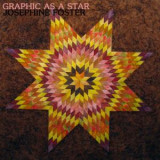
1000 copies pressed on Black vinyl & DL card. First time on vinyl for 10 years .The poems of iconic 19th century American writer Emily Dickinson crafted into the esoteric sounds of Josephine Foster. Originally released in 2009, this highly collectable record is now back on vinyl for the first time in over a decade.
dovrebbe essere pubblicato su 16.05.2025

dovrebbe essere pubblicato su 10.01.2025

Tape
On Repetitions, New York-based Swiss artist and composer Samuel Reinhard brings us close enough to a piece of music that its systematic nature begins to buckle and fade. Across four movements, three pianos pursue their own respective threadbare motifs, which overlap at the hands of a predetermined ratio of duration. What unfolds—at first glance slow, melancholic, deliberate, even plain—is a study of repetition’s in-betweens, populated by unexpected resonances and delicate traces of notes in the process of being played by human hands. The three pianos are not in sync, but are nevertheless in relation, the nature of which shifts with the listener’s orientation and attention. Each piece within Repetitions arrives as a constant whole, containing harmonies and silences that are in a never-ending process of unfurling.
Repetitions is a joint release from Hallow Ground and Präsens Editionen and follows offerings by Kali Malone, Lawrence English, and FUJI | | | | | | | | | | TA on Hallow Ground, and Robert Turman, Magda Drozd, and Anna Homler on Präsens Editionen.
* Edition of 100 professionally dubbed cassette tapes
* special artwork by artist Jeff Rossi, graphic desing by Coline Houot
Ordina ora e ordineremo l'articolo per te presso il nostro fornitore.

Joni Mitchell Gets Jazzy, Counterbalances Love and Trust with Freedom and Confusion on Court and Spark
Mobile Fidelity's UltraDisc One-Step 180g 45RPM 2LP
Plays with Definitive Detail and Clarity: Pressed on MoFi SuperVinyl Strictly Limited to 5,000 Numbered Copies
Box Set Features New Liner Notes
1/4" / 15 IPS / Dolby A analogue master to DSD 256 to analogue console to lathe
Court and Spark, the most commercially successful album of Joni Mitchell's trailblazing career, arrived after a year in which she took some time to breathe and kept a low profile. The pause led to more breakthroughs for the singer-songwriter. Marking Mitchell's increasing drift toward jazz (and affinity for Miles Davis and John Coltrane), Court and Spark garnered four Grammy nominations, earned the Best Album of the Year vote in the prestigious Pazz & Jop poll, and ranks #110 on Rolling Stone’s list of the 500 Greatest Albums of All Time.
Sourced from the original analog master tapes, pressed at Fidelity Record Pressing on MoFi SuperVinyl, strictly limited to 5,000 numbered copies, and featuring new liner notes, Mobile Fidelity's UltraDisc One-Step 180g 45RPM 2LP box set presents the 1974 classic with definitive detail, tonality, and directness. Marking the first time the revered LP has received audiophile-quality treatment, it's one of six iconic 1970s Mitchell records Mobile Fidelity is reissuing on vinyl and SACD sets.
Benefitting from a virtually nonexistent noise floor, dead-quiet surfaces, and superior groove definition, this collectible edition reproduces without compromise the textures, details, and breathtaking craftsmanship that help make Court and Spark into what many fans believe is the Canadian native’s finest hour. Notes bloom and decay as they do amid an acoustic live environment. Soundstages extend far and deep, with black backgrounds and balanced tones adding to the uncanny realism.
The reference-grade presence and openness put in transparent view Mitchell’s incisive words and unique phrasing, as well as the contributions of her prized support musicians — including Tom Scott and the L.A. Express as well as guest turns by the likes of David Crosby, Graham Nash, Jose Feliciano, and Robbie Robertson. Mitchell, experimenting with the melodic parameters of guitar and piano, is rightly found at the center of it all. The jazz-rock rhythms of drummer John Guerin, slippery guitar lines of Larry Carlton, vibrant horns and reeds laid down by Scott — crucial to the songs’ shape-shifting arrangements — can now also be heard with fresh ears.
Visually and physically, the packaging of the Court and Spark UD1S set complements its distinguished status. Housed in a deluxe slipcase, both LPs come in foil-stamped jackets with faithful graphics that illuminate the splendor of the recording. This reissue is for listeners who desire to engage themselves in everything involved with the album, including Mitchell’s “The Mountain Loves the Sea” painting — a picture of waves embracing and receding away from a mountain, a metaphor for the record’s lyrical themes — on the cover art.
Pitching deceptively light compositions against underlying tensions, Court and Spark witnesses the singer-songwriter finding her footing with a group of top-shelf musicians who seemingly understand her visions as well as expanding her lyrical palette and venturing further into territory no artist had dared explore. Mitchell’s accessibly complex structures, beat-propelled rhythms, and spirited interplay with Scott & Co. both give the music a different identity than her prior efforts and point in the directions she soon headed.
Lyrically, Court and Spark matches the wit, integrity, originality, and intellect of anything in Mitchell’s oeuvre — no small feat. Offsetting positives with negatives, and considering circumstances from multiple angles, Mitchell explores issues connected to love and freedom, certainty and confusion, and trust and fear with unfettered boldness and introspective empathy. She teeters between surrender and retreat, and spends a majority of the record sussing out the complications and sacrifices involved with such actions.
Mitchell addresses the transactional nature of desire (the intimate title track, the upbeat “Raised on Robbery,” complete with rock ‘n’ roll pep from Robertson and zesty sax from Scott); anticipation and disappointment of romance (“Car on a Hill,” “”Down to You); fame and celebrity (“A Free Man in Paris,” “People’s Parties”); and sanity (the dark and stormy “Trouble Child,” a satirical cover of Annie Ross’ “Twisted”). Throughout, she sings with an emotionally penetrating beauty and devastating honesty that teaches about ourselves.
Or, as Mitchell relays on “People’s Parties”: “Laughing and crying/You know it’s the same release.”
dovrebbe essere pubblicato su 15.11.2024

By it's very nature "Radio Chevére", the new album by Rio 18 and their host of guests cannot be categorized simply: at once both a Latin mixtape and a radio show, it's also an internationalist love letter, an offering to the goddess of Tropical Music and all that it encompasses. Ambitious, yes. Foolhardy, possibly. But sincere, committed and FUNKY? Definitely.
With the voice of guest DJ Coco Maria as our guide, "Radio Chévere" takes us on a journey through myriad musical styles and stories. Stopping off at Uruguay, Brazil, Venezuela, Colombia, Mexico, California, New York and countless other sonic destinations via Samba, Salsa, Funk, Cumbia, Joropo, Disco, Psychedelic and Electronic stylings, "Radio Chévere" is also a musical metaphor for migration - a journey from one continent, one life to another.
This album features songs in no less than four languages (Spanish, Portuguese, Welsh and English) and includes collaborations with Brazilian legends the +2's (Moreno Veloso, Kassin and Domenico Lancellotti) on the tender samba ballad, "Oh Minha Querida", transatlantic Yacht Rock gods Young Gun Silver Fox ("She's In LA"), "Sao Paulo's finest" Silvia Machete on the sweaty funk "Maybe Man" and Venezuelan Llanera and Joropo queen Luzmira Zerpa sings "Padre Tiempo", set to an incessant Afro-Venezuelan pulse. Why this torrent of eclectica now? Having recorded three albums in Welsh, predominantly inspired by Brazilian music, Rio 18 founder, Carwyn Ellis had a hard time following 2021's "Yn Rio": "We'd made a concept album with an orchestra. How do you follow that?" he says. "So I retreated to my laboratory, learned as much new music as I could, started learning Spanish too, and ended up writing tunes in a bunch of languages and styles, all of which reflected things I've learned or experienced over the last couple of years."
Since the group's inception in 2018, on the suggestion of Chrissie Hynde when he toured South America as a member of the Pretenders, Carwyn has been on a voyage of musical discovery through the styles of that continent. And in those five years he learnt a lot! But in a radical new move, Carwyn has stepped back from the mic, preferring to focus on writing and producing, handing over the vocal duties to band members Baldo Verdu (Venezuela) and Elan Rhys (Wales) plus a host of collaborators. "They can sing and express what I'm feeling so much better than I can, and both Elan and Baldo bring an authenticity and strength to our songs that surprise and elevate me. Collaborating with so many other inspiring artists on this album has helped us to grow and assimilate more styles - we're halfway through our next album already."
Rio 18 is an internationalist collective with Celtic and Latin roots and love at their core. With eye popping carnivalesque cover art by the brilliant Colombian graphic artist, Yoda, "Radio Chévere" is both timely and timeless.
Ordina ora e ordineremo l'articolo per te presso il nostro fornitore.

"The organ dates back to 1790 and was made by Venanzo Fedeli, who came from a prestigious family of organ builders. This particular organ is tuned in the ancient way at 430 Hz. Tuning relies on pure thirds that aim to create dissonances within the instrument itself.
Since the organ is an instrument modeled according to the principles of nature, the intonation of the pipes was performed according to an incompletely equal system that reflects the natural intonation based on mathematical ratios.
This produces a purer sound for the thirds but slightly harsher and more difficult to listen to. The hardness of the intervals of the organ is a metaphor for the hostile climate that prevails in the Potenza valley during winter and autumn.
The sound of the organ with the register of the flute returns a particularly sweet and penetrating sound but, at the same time, a very complex timbre with intricate harmonic texture, given the numerous fluctuations and beats. The warm tones of the organ reflect the good and welcoming sould of the people who inhabit these lands. The absence of dynamics inside the instrument allows the listener to focus and understand the harmonic texture and timbral differences between the various notes more clearly.
Trombone and trumpet played by Matteo Paggi on track 2 and 3 were recorded during a hot summer day at Elefante Bianco Studio in Rome by Matteo Scarchilli. Sax, effects and noises in track 6 played by Giulio De Asmundis and Pietro Rianna were recorded in Fauna53 studio.
Many thanks goes to Marco and Giuseppe for making this happen. Thanks Federico, Sami, Marisa, Romeo and everyone involved in this project. You know who you are."
Mastered by Alessandro Caldarola.
Photos and color grading by Filippo Corsi.
Graphic project and design by Flavio Mancini.
Vinyl pressed by AFG Record Manufacturing.
dovrebbe essere pubblicato su 01.02.2024

Since I started collecting records I have been slightly obsessed with underwater music. I could analyse this in many ways but the most obvious starting point for me was the weekly dose of Sunday afternoon TV onboard the Calypso with Jacques Cousteau throughout the 1970s.
My collection of underwater LPs and singles is now extensive - in the hundreds I reckon. But in amongst it all is only one underwater soundtrack from the UK. And this is it. It took me an age to track down Jezz, but I did. And now you don’t have to take an age to track down an original super rare copy of the 1981 pressing.
These days when there are so may represses, rediscoveries and reissues, I thought we’d make this stand out a little more, so I decided to take us all back to my childhood 1970’s when I used to get a little “Action Transfer” set on very special occasions, and stick the little transfers of scuba divers, fish and mini subs all over a small paper underwater landscape. Sadly we couldn’t get classic rub down Letraset style transfers but I think Kev (DJ Food) has done a miraculous job in creating a modern version.
So sit back (mess about with the stickers) and wonder at the beautiful, submersive electronic sounds created by Jezz all those years ago. Dive in, the water is lovely.
Jonny Trunk 2023
THE SLEEVE
To put together such a unique sleeve Jonny Trunk teamed up with Kevin Foakes / DJ Food who used AI programming to generate this underwater wonderland, the sleeve images and the record labels. The sticker sheet was generated using influences from vintage 1970s “Action Transfer” imagery and period graphic styles. The result is a magical clash of then and now tech and a totally unique sleeve for an incredible soundtrack.
THE MUSIC
As underwater albums go, this is the very peak. Made using the best cutting edge synth tech of the day (see tech list below - most used by Vangelis at the time too!!!), the result is a sublime wash of underwater ambience, emotions and more. IT GETS NO BETTER.
THE COMPOSER
Jezz Woodroffe (aged 29 when this LP was originally made), having played keyboards from the age of five and reaching musical distinction at the age of ten, has played in many bands.
Jezz left ‘Black Sabbath’ in his pursuit to find alternative ways to stretch his ability and because of his obsession with perfection released his first solo album “Opposite Directions” and single “Peace In Our Space” (Graduate Records). The resulted in the offer to score for the film ‘Wonders Of The Underwater World”. Faced with a difficult task, Jezz set up his complex of equipment at the foot of the screen (as in the silent movies) and played to the action. It soon became obvious that his talents and sympathy for the underwater environment were enhancing the filming beautifully.
Having been totally involved in this project from its original conception I could only sit back in awe and admiration during the three months it took Jezz to complete the soundtrack, which, when viewed with the film is a very moving experience. The music, listened to in its own right - as an album - is for me as much an amazing trip as the two years around the world it took to make the film!
THE STUDIO EQUIPMENT USED ON THE LP
Yamaha Polyphonic Synthesisers CS80 & CS60 ~ Yamaha Symphonic Ensemble SK20 ~ Yamaha Monophonic Synthesisers CS30, CS150 & CS20M ~ Yamaha Electric Grand CP708 ~ Roland Monophonic Synthesisers SH1, PRO-MARS ~ Roland Digital Sequencer CSQ600 ~ Roland Vocoder VP330 ~ Roland Organ / String Synth. RS09 ~ Mini Moog & Moog Prodigy Monophonic Synthesisers ~ Godwin String Concert 649 ~ H/H Electric Piano P73
Ordina ora e ordineremo l'articolo per te presso il nostro fornitore.

Fire and water collide again: On her latest album "Wandering Through Time", Swiss sorceress ASHTAR opens up a menacing yet ethereal world of opposing forces, fans of emotional yet dirty Blackened Doom Metal should willingly enter. ASHTAR - a duo at first - emerged on the scene in 2015 with their critically acclaimed debut album, "Ilmasaari", voted by Tom G Warrior (Celtic Frost, Triptykon) as one of his favorite albums of the year in Deaf Forever magazine The follow-up, "Kaikuja", released in 2020, took the project's unique blend of black and doom metal to the next level. Since then, ASHTAR has shared the stage with renowned bands such as Inter Arma, Primordial, Bell Witch, Bolzer, and Schammasch.
Now, with "Wandering Through Time", frontwoman Witch N. takes the helm as a one-woman band, pushing the limits of her creative expression to new heights. On her latest offering, she aims to express the darkness, power, and magic of most notably female forces in nature in a saturnine and poetic way. The deeply personal songs take listeners on a journey through the darkest corners of the human soul while embracing the beauty of the natural world. They never fail to showcase Witch N.'s accomplished songwriting and her talents in delivering tortured, gritty screams as well as super- heavy, leaden guitar riffs. Consequently, she names metal masters such as Winter, Darkthrone, and Black Sabbath as her major influences.
From the gloomy and depressive "Into the Gloom" to the tragic tale of the Waterman in "The Submerged Empire", each track is a cathartic work of art. The lyrics transcend metal-cliches of fantasy and lore by telling stories about personal growth, finding soulmates within a cold world, and keeping one's own inner black flame alive. Recording and mixing of the album were handled by V. Noir at Inferno Studio in Switzerland. He also provided additional guitars and jaw harp. The album was mastered by Greg Chandler (Esoteric) at Priory Recording Studios in Birmingham, UK. The front cover photo was captured by Raphael Wolf, while Anti Graphic laid his skilled hands on the new logo design. For Fans of: Oranssi Pazuzu, Wolvserpent, Mizmor, Mantar, Blut aus Nord, Dark Buddha Rising, Eagle Twin, Glorior Belli
dovrebbe essere pubblicato su 21.11.2023

Celebrated composer, performer, saxophonist, soloist, band leader, educator, activist, and mixed-media artist Matana Roberts returns with a new installment of their acclaimed Coin Coin series. For over a decade, Coin Coin has been the central artistic project for Roberts, a remarkable exploration of American ancestry and the nature of memory through "sound quilting": modern composition that draws on a wide range of musical sources and traditions, along with research-driven historical and genealogical narratives that yield prose and poetry both spoken and sung, field recordings, and graphic scores. The Quietus declares "when the 12-album cycle is complete, it will be regarded as a singular masterpiece of 21st century sonic and narrative art" and Pitchfork calls it "one of the most provocative ongoing bodies of work by any American musician." Coin Coin Chapter Five: In the garden... is the first new recorded audio chapter since 2019 and centers upon reproductive rights, summoning the story of a family ancestor who died in early adulthood, from a cause kept obfuscated and hushed, shrouded in disinformation and shame. Roberts reimagines diaristic and oral narratives, delivered in strident streams of spoken word that punctuate the hour-long work, with recurring musical themes frequently accompanied by the declarative refrain "my name is your name / our name is their name / we are named / we remember / they forget." As Roberts writes in the accompanying liner notes essay: I find it absolutely disgusting that the same trauma my grand ancestor, whose story we are telling in this chapter, is closely mirroring the experiences of some poor soul today as I write this... Our aforementioned grand, who perished at a young age, leaving her growing children motherless, did not have to die. The negative consequences of her death have reverberated down through generations in my family line, in the same way that a similar resounding might happen for someone else's ancestral line generations from today. While often jazz-adjacent, and with Matana's inimitable saxophone and indomitable voice at the core, Roberts situates Coin Coin outside the Jazz genre and within heterodox pathways of post-modern composition, electroacoustic music, sound collage, experimental voice, and sound art. In the garden... undeniably continues to express and expand upon the project's magnificent iconoclasm, nonetheless being the most jazz-inflected chapter since Coin Coin Chapter Two: Mississippi Moonchile(2013). Recorded in Brooklyn with a stellar acoustic ensemble that includes Stuart Bogie, Gitanjali Jain, Darius Jones, Matt Lavelle, Mike Pride, Ryan Sawyer, Corey Smythe, and Mazz Swift, abetted by some sparkling pieces featuring modular synthesis courtesy of album producer Kyp Malone (Bent Arcana, TV On The Radio), In the garden... traverses a vivid stylistic array of thematic overtures, excursions and set pieces, ranging from spacious textural invocations to gorgeously tempered horn-led compositions to driving free jazz and exhilarating through composed bursts of cacophony. With storytelling spoken-word lead vocals by Roberts channeled recurringly throughout, alongside various other deployments of layered and group voices, the album is alternately a meditation and fever dream of narrative potency. This is some of the most intense and intensive music Roberts has composed and captured to date, richly conceived and deeply felt, restless yet focused, unflinchingly substantive and unique. Coin Coin Chapter Five: In the garden... channels epigenetic trauma and tragedy with teeming complexity and fierce beauty _ a eulogy, testimony, and celebration, melding music and language in a stunning polychromatic flow of vernaculars and poetics. A powerful work of subjective commemoration and historical-cultural communion that speaks indelibly to the present moment.
2x10” in 350 gsm widespine jacket w/interior colour flood + 300 gsm printed inners + 20”x 10” fold-out insert + DL card
dovrebbe essere pubblicato su 29.09.2023

BOTANICA is the newly established Japanese label created by DJ/ Producer, Iori Wakasa. It was formed for him to utilize it as a foundation for the realization of his own unique, artistic expression.
And now, he has the pleasure to announce his label’s inaugural title with the release of his own BOTANICA EP.
Born in 1988 in a rural Japanese city surrounded by mountains and the sea with a mild climate, Iori grew up playing RPGs with a father who was a devoted game aficionado. And he was introduced to electronic music through game music from an early age and formed his musical sensibilities through playing the classical piano around the same time.
Influenced by the spirituality and idiosyncrasies of punk rock and ethnic and indigenous music in his youth, also gradually influenced by the Tokyo club scene and the music, it didn't take him long before
he made the choice to start DJing at the age of 17 and soon afterwards, started exploring the path of music production as a form of self-expression.
Iori set up Botanica to convey 2 main concepts of 'presenting music that provides each listener with their own viewpoint' and ‘to construct a fusion between 'nature' and 'man-made objects and human
activity’. Through the experience of traveling around Japan, Europe and Asia and connecting with people of different languages and cultures, he became to appreciate that music transcends all languages and grooves, and the framework in which he would like to shape his perspective and embody it as his way of life is what he envisions as the vital expression for BOTANICA, The two tracks and the artwork included in this first EP are the first steps towards hopefully chronicling the story of the vortex that he resides in now and the new forest that he plans to weave in the future with his label.
'The Pure Land' means in Japanese 'Gokuraku-Jodo (= a space where you can live in bliss)', but in English it is closer to 'utopia' or 'paradise'. However, 'The Pure Land' is a musical work that evokes a
hypnotic and pleasant euphoria through the gradual layering of multiple rhythms and soft particles of spatial sound design. It is also shaped with the aim of liberating the listener and guiding them towards their primal self.
In contrast, 'Lunar Down' expresses the changes that occur in the human state of mind during the extended period from moonrise to moonset especially when the moon sets from its zenith and is completed with a focus on maximum dance floor impact via an inner voice that resonates in the brain that echoes throughout a well-textured bass line and rhythm track.
The artwork for the front cover of this EP was created by SHINOZAKI HILOSHI, an illustrator who has been traveling and painting to express his true way of life that he learnt in the 10+ years of commuting between Tokyo (the end) and the Hawaii Islands (the beginning), and the graphic designer hiro, who stands by Iori`s side as his life partner and as the person who understands him the best. Iori`s first steps are complemented by the label design and art direction by graphic designer hiro, who stands by his side as his life partner and most understanding partner, and the proof is the physical cut, which is presented as the foundation for the future.
Ordina ora e ordineremo l'articolo per te presso il nostro fornitore.

Electric Light Orchestra leader Jeff Lynne did more than figuratively reach for the sky on Eldorado. Daring to be bold, and creating imaginative worlds that invite the listener to escape the mundane, the visionary composer-musician achieved a multidisciplinary fantasia and, in the process, a prog-rock landmark. Nearly 50 years later, the concept album's brilliance can be experienced like never before in cinematic, IMAX-worthy fashion.
Sourced from the original analogue master tapes, pressed on MoFi SuperVinyl vinyl at RTI, housed in a keepsake box, and limited to 10,000 numbered copies, Mobile Fidelity's UltraDisc One-Step 180g 45RPM 2LP set of Eldorado allows the long-time audiophile staple to resonate with reference-setting dynamics, tones, and colours. Conjuring the feeling of journeying to different horizons, the record's songs teem with layer upon layer of details, which can now be heard as the producers intended. This very special release both pays tribute to the record's merit and enhances the spectacular program for generations to come.
Presenting the album with breathtaking clarity yet retaining the warmth, texture, and emotion that differentiate live music from reproduced sounds, the collectible reissue features beguiling levels of in-the-moment presence, grand-scale sound-staging, and instrumental balance. Bursting with a veritable cornucopia of stimuli, MoFi's Eldorado package also benefits from superb separation and immersive atmospherics that stem from the meticulous remastering process – as well as an ultra-low noise floor, industry-leading groove definition, and dead-quiet surfaces courtesy of the MoFi SuperVinyl properties.
The premium packaging and gorgeous presentation of the UD1S Eldorado pressing befit its extremely select status. Housed in a deluxe box, it features special foil-stamped jackets and faithful-to-the-original graphics that illuminate the splendour of the recording. No expense has been spared. Aurally and visually, the reissue exists as a curatorial artefact meant to be preserved, touched, and examined. It is made for discerning listeners that prize sound quality and production, and who desire to fully immerse themselves in everything involved with the album.
An artistic breakthrough that established Electric Light Orchestra as a pioneering band (and confirmed Lynne as the leading practising Beatles disciple), the 1974 effort remains notable for its involvement of a full orchestra and choral section, the range of which are captured with exquisite results on this LP. Eldorado distinguished itself from the band's first two works not only via Lynne's sharpened songwriting but due to the hiring of an orchestra that augmented the group's three string players. Co-arranged by Lynne and conductor Louis Clark, the symphonic movements bolster the contagious fare without ever drowning it. The accents also act as transports into the varied narrative universes.
Finished as a story before Lynne put notes down on paper, Eldorado ironically owes its inspiration to Lynne's father. In response to his dad's criticisms about the band, Lynne conceived a melodic tour de force that, like The Wizard of Oz, which informs the cover art, emphasizes the power of everyday dreams and everyman heroism. It's no coincidence that the sonic journey begins with an overture punctuated by the words of a cynic who condemns "the dreamer, the un-woken fool."
Beautiful yet fun, ambitious yet consistent, Eldorado proceeds to celebrate such romantics and escapists. A Technicolour escapade marked by lush melodies, fluid crescendos, and an intoxicating blend of energetic rock and sweeping orchestral elements, the album weds rich imagery and sweeping sounds in manners that make the two inseparable. In Lynne and company's hands, reality and fantasy collide, and dissolve any dividing lines. The proof is not just in the epic production, but in the timeless (and catchy) nature of songs such as the balladic "Boy Blue," power-pop packed "Illusions in G Major," and, of course, the aptly titled hit, "Can't Get It Out of My Head."
Decades later, Eldorado doubles as an invitation to break away from monotony whether you're listening to your Mobile Fidelity reissue on a large system or an excellent pair of headphones.
MoFi SuperVinyl
Developed by NEOTECH and RTI, MoFi SuperVinyl is the most exacting-to-specification vinyl compound ever devised. Analogue lovers have never seen (or heard) anything like it. Extraordinarily expensive and extremely painstaking to produce, the special proprietary compound addresses two specific areas of improvement: noise floor reduction and enhanced groove definition. The vinyl composition features a new carbonless dye (hold the disc up to the light and see) and produces the world's quietest surfaces. This high-definition formula also allows for the creation of cleaner grooves that are indistinguishable from the original lacquer. MoFi SuperVinyl provides the closest approximation of what the label's engineers hear in the mastering lab.
More About Mobile Fidelity UltraDisc One-Step and Why It Is Superior
Mobile Fidelity Sound Lab's UltraDisc One-Step (UD1S) technique bypasses generational losses inherent to the traditional three-step plating process by removing two steps: the production of father and mother plates, which are created to yield numerous stampers from each lacquer that is cut. For UD1S plating, stampers (also called "converts") are made directly from the lacquers. Since each lacquer yields only one stamper, multiple lacquers need to be cut. Mobile Fidelity's UD1S process produces a final LP with the lowest-possible noise floor. The removal of two steps of the plating process also reveals musical details and dynamics that would otherwise be lost due to the standard multi-step process. With UD1S, every aspect of vinyl production is optimized to produce the best-sounding vinyl album available today.
dovrebbe essere pubblicato su 24.02.2023

Formed in 2007 in the Dolomite Alps region of Italy with a deep admiration for their native country’s hardcore punk luminaries in La Quiete and Raein, as well as eighties and nineties cult heroes in Negazione, Wretched and Indigesti. STORMO’s steady rise from unassuming beginnings has been one of consistently stirring song writing. Having amassed over 400 shows across Europe and the UK - including support slots to Converge, Full of Hell and La Dispute, as well as appearances at Fluff Fest - STORMO’s next chapter sees the band fully come of age. Lyrically, Endocannibalismo was written entirely in the band’s native tongue; partly as a byproduct of the albums nocturnal and instinctive writing process and partly in honour of their history as a band. Recorded and mixed by Giulio Favero (Zu) for mixing before being placed in the hands of Giovanni Versari at La Maesta for mastering, Endocannibalismo’s 11 tracks possess a crystalline clarity to service STORMO’s surging blastbeats, spiralling rhythms and noise punk cacophony, whilst staying true to the each songs deep seated primal nature. Seeking to tie together the whole process visually, STORMO took to artificial intelligence when creating Endocannibalismo’s art. Utilising specific prompts, the AI render was put through stages of mutation before culminating in its final form. A haunting graphic representation of living beings in a state of constant death and rebirth.
dovrebbe essere pubblicato su 10.02.2023

With its name indicative of the music's boundary-testing diversity and Southwestern inspiration, On the Border finds the Eagles leaving everything on the table and embracing a harder edge that takes the band out of more relaxed territory and establishes it as a group that knows how – and wants – to rock. Glenn Frey, Don Henley, new member Don Felder, and company immediately announce their intent on the defiant album-opening hit "Already Gone" and never look back, crafting a gem of a record that from start to finish is arguably their most consistent and balanced effort.
Limited to 10,000 numbered copies, pressed on dead-quiet MoFi SuperVinyl at RTI, and mastered from the original analogue master tapes, Mobile Fidelity's ultra-hi-fi UltraDisc One-Step 180g 45RPM 2LP collector's edition pays tribute to the record's significance and enhances the experience for generations to come. Playing with reference sonics that elevate an effort revered by audiophiles, it provides a lively, dynamic, transparent, and intimate view of a release whose contemporary importance continues to grow. The opportunity to zero in on the particulars of the Eagles' golden harmonies, distinct vocal timbres, and cohesive interplay has never been better.
Visually, the premium packaging and gorgeous presentation of the UD1S On the Border pressing befit its select status. Housed in a deluxe box, it features special foil-stamped jackets and faithful-to-the-original graphics that illuminate the splendor of the recording. No expense has been spared. From every angle, this UD1S reissue exists as a curatorial artefact meant to be preserved, touched, and examined. It is made for discerning listeners that prize sound quality and production, and who desire to fully immerse themselves in the art – and everything involved with the album, from the iconic Navajo cover painting to the meticulous finishes.
And with On the Border, there's plenty to take in and soak up. Declared by famed critic Robert Christgau as "the Eagles' best album," the 1974 set claims a rich backstory. Initially recorded amid tumultuous sessions with producer Glyn Johns in London shortly after the release of the group's sophomore Desperado set, On the Border took a new turn after the band elected to scrap most of the prior work, return to its native California, and team with producer Bill Szymczyk to give the material less of a smooth, polished sheen and more toughness. Szymczyk also afforded the Eagles more input and freedom in the arrangements, and suggested adding another guitarist to play on "Good Day in Hell." Felder got the call, and so won over the Eagles with his skills, he quickly became the fifth member of the band.
While the late-arriving Felder only plays on one other album cut, "Already Gone," his mates more than prove their muster on the remainder of a double-platinum affair that established the Eagles as a force whose range transcended the calmer country-leaning style it perfected on their first two LPs. Primarily written by Jackson Browne and shelved during the Desperado sessions due to its higher-energy nature, the throttle-twisting "James Dean" ricochets with barbed riffs and rebellious swagger. Listen without limits to how Szymczyk's raw production stamps the song with a leather-and-jeans cool befitting its protagonist. Similarly rugged, the slide-guitar-fueled "Good Day in Hell" boasts its own mean streak. And the funk-laced, boot-stomping title track cautions "don't you tell me 'bout your law and order." Throughout On the Border, the Eagles are in no mood to mess around.
Not that the band skirts sentimental territory. On one of the era's finest covers, the Eagles nail the bittersweet feelings and bring high-definition detail to the vivid scenery of Tom Waits' "Ol' '55," a song the group makes its own. The rustic ballad "My Man" serves as a tribute to the recently deceased Gram Parsons, with singer-guitarist Bernie Leadon taking the lead on the microphone as he pours his heart out to his former Flying Burrito Brothers mate. And when it comes to romance, is it possible to top "Best of My Love"? Graced with Henley's honey-dipped vocals, refined wordless group harmonies, brushed drums, and the gentle strum of acoustic guitars, the Johns-produced cut soared to Number One and set the stage for what would soon be the Eagles' reality: global dominance.
More About Mobile Fidelity UltraDisc One-Step and Why It Is Superior
Instead of utilizing the industry-standard three-step lacquer process, Mobile Fidelity Sound Lab's new UltraDisc One-Step (UD1S) uses only one step, bypassing two processes of generational loss. While three-step processing is designed for optimum yield and efficiency, UD1S is created for the ultimate in sound quality. Just as Mobile Fidelity pioneered the UHQR (Ultra High-Quality Record) with JVC in the 1980s, UD1S again represents another state-of-the-art advance in the record-manufacturing process. MFSL engineers begin with the original master recordings, painstakingly transfer them to DSD 256, and meticulously cut a set of lacquers. These lacquers are used to create a very fragile, pristine UD1S stamper called a "convert." Delicate "converts" are then formed into the actual record stampers, producing a final product that literally and figuratively brings you closer to the music. By skipping the additional steps of pulling another positive and an additional negative, as done in the three-step process used in standard pressings, UD1S produces a final LP with the lowest noise floor possible today. The removal of the additional two steps of generational loss in the plating process reveals tremendous amounts of extra musical detail and dynamics, which are otherwise lost due to the standard copying process. The exclusive nature of these very limited pressings guarantees that every UD1S pressing serves as an immaculate replica of the lacquer sourced directly from the original master recording. Every conceivable aspect of vinyl production is optimized to produce the most perfect record album available today.
dovrebbe essere pubblicato su 30.12.2022

We are happy to release another vinyl 12“ with Carsten Halm adding up to the series we have released with him so far. This ep marks the end of the series, but not the end of the relationship with Carsten. Carsten has been very successful with his releases on Traum starting with his "Taubenflug" ep in June 2020 followed by "Fuchsbau" and "Hammerhai". As we stated with his first ep: „His music has the unique quality to bring people together and experience something very positive“. Carsten showed this quality with all of his eps and last but not least this also makes him a popular DJ. Carsten plays clubs all over Germany but he still sticks to his roots and organizes parties in his hometown Cologne in his own dedicated space which he has rebuild with his friends after it was destroyed last year.
The fourth vinyl release with Carsten Halm "Licht Und Schatten" highlights another cover design by graphic designer Daniela Thiel and shows collages of the animals in a similar graphic context as his previous releases. The idea was to keep the graphic idea of the series but to use only artifacts of his previous designs to create a new cover.
The ep kicks off with "Licht" a track that has the quality to embrace you emotionally as well as musically with a massive warm and widening synth sounds that is a true a-side tune.
"Chimäre" instead is more jumpy and good natured, resulting in a nice break to carry the listener throughout the track.
"Schatten" kicks off with a rather dry drumming but in the course of the track is joined by a merry melody which is pushed aside by a bad ass rectangle synth sound that inflates the track with a techno spirit that is very welcomed at open airs.
The ep closes with the track "Notes" a horse ride though valleys of sparse vegetation with a happy sad Morricone inspired soundtrack that is very easy to like.
Ordina ora e ordineremo l'articolo per te presso il nostro fornitore.

Strictly limited to 10,000 numbered copies, pressed on MoFi SuperVinyl at RTI, and mastered from the original master tapes, Mobile Fidelity's ultra-hi-fi UltraDisc One-Step 180g 45RPM 2LP collector's edition enhances the blockbuster work for today – and the ages to come. Surpassing the sonics of any prior version, it peels away any remaining limitations to provide a transparent, lively, ultra-nuanced presentation of a record that won six Grammy Awards – including prizes for Album of the Year, Best Male Rock Vocal Performance, and Best Rock Song. The expanse and depth of the soundstage, fullness of tones, natural snap and extension of the guitar strings, realistic rise and decay of individual notes, and roll of Clapton's vocals all attain demonstration-grade levels.
Housed in a deluxe box, the UD1S Unplugged pressing features special foil-stamped jackets and faithful-to-the-original graphics that illuminate the splendor of the recording and the reissue's premium quality. No expense has been spared. Aurally and visually, this UD1S reissue exists as a curatorial artifact meant to be preserved, touched, and examined. It is made for discerning listeners that prize sound quality and production, and who desire to fully immerse themselves in the art – and everything involved with the album, from the images to the finishes.
Truly, everything about Unplugged matters. Having sold more than 10 million copies in the U.S. and more than 26 million copies worldwide, the 1992 work resonates with listeners of all generations and speaks a universal language. Recorded for MTV before a very small audience on January 16, 1992, the 14-track set became the signpost for future acoustic-based endeavours that witnessed artists of all stripes re-examining their catalogues and, in many instances, as Clapton does here, placing familiar originals in fresh contexts and unveiling spirited versions of cover material. Needless to say, Clapton's session turned MTV's series into can't-miss programming for which the likes of Rod Stewart, Tony Bennett, Nirvana, Pearl Jam, and more would soon participate.
Kicking off his performance with a spirited instrumental to establish the mood, Clapton immediately wades into the style that originally caught his attention as a British teenager in the early 1960s: American blues. Backed by a superb band that includes guitarist Andy Fairweather Low, pianist Chuck Leavell, bassist Nathan East, and drummer Steve Ferrone, Slowhand delivers a rhythmic, toe-tapping rendition of Bo Diddley's "Before You Accuse Me" that announces he's come to reconnect with his muse. What follows over the course of nearly the next hour stirs the heart, shakes the soul, moves the mind, and invigorates the senses.
Of course, there's no talking about Unplugged without keying in on "Tears in Heaven," the striking ballad Clapton penned about the death of his four-year-old son. More emotional, direct, spare, and healing than the studio version released a year prior, it crackles with an intimacy, maturity, poignancy, honesty, sweetness, and integrity that inform the entire concert. Indeed, how Clapton frames other favorites here – transforming "Layla" into a relaxed, comfortable stroll and ruminating on the seasoned ripples flowing throughout "Old Love," for example – indicate both a creative rebirth and gleeful acceptance of the next phase of his career.
And that very direction (two of Clapton's next three albums would be all-blues projects) is what really makes Unplugged so indispensable. Equivalent in mastery if not in volume to the output that earned him his "God" nickname, interpretations of Jesse Fuller's "San Francisco Bay Blues" (complete with kazoo!), Big Bill Broonzy's "Hey Hey," Robert Johnson's "Walkin' Blues" and "Malted Milk," and Muddy Waters' "Rollin' & Tumblin'" showcase a learned professor in his element and all the wheels turning.
In every regard, Clapton's Unplugged session was appointment listening when it came out in August 1992. With the arrival of MoFi's UD1S pressing, that sensation is more urgent than before.
More About Mobile Fidelity UltraDisc One-Step and Why It Is Superior
Instead of utilizing the industry-standard three-step lacquer process, Mobile Fidelity Sound Lab's new UltraDisc One-Step (UD1S) uses only one step, bypassing two processes of generational loss. While three-step processing is designed for optimum yield and efficiency, UD1S is created for the ultimate in sound quality. Just as Mobile Fidelity pioneered the UHQR (Ultra High-Quality Record) with JVC in the 1980s, UD1S again represents another state-of-the-art advance in the record-manufacturing process. MFSL engineers begin with the original master tapes and meticulously cut a set of lacquers. These lacquers are used to create a very fragile, pristine UD1S stamper called a "convert." Delicate "converts" are then formed into the actual record stampers, producing a final product that literally and figuratively brings you closer to the music. By skipping the additional steps of pulling another positive and an additional negative, as done in the three-step process used in standard pressings, UD1S produces a final LP with the lowest noise floor possible today. The removal of the additional two steps of generational loss in the plating process reveals tremendous amounts of extra musical detail and dynamics, which are otherwise lost due to the standard copying process. The exclusive nature of these very limited pressings guarantees that every UD1S pressing serves as an immaculate replica of the lacquer sourced directly from the original master tape. Every conceivable aspect of vinyl production is optimized to produce the most perfect record album available today.
MoFi SuperVinyl
Developed by NEOTECH and RTI, MoFi SuperVinyl is the most exacting-to-specification vinyl compound ever devised. Analog lovers have never seen (or heard) anything like it. Extraordinarily expensive and extremely painstaking to produce, the special proprietary compound addresses two specific areas of improvement: noise floor reduction and enhanced groove definition. The vinyl composition features a new carbonless dye (hold the disc up to the light and see) and produces the world's quietest surfaces. This high-definition formula also allows for the creation of cleaner grooves that are indistinguishable from the original lacquer. MoFi SuperVinyl provides the closest approximation of what the label's engineers hear in the mastering lab.
SACD
Mastered from the original master tapes, Mobile Fidelity's numbered hybrid SACD enhances the blockbuster work for today – and the ages to come. Peeling away remaining sonic limitations to provide a transparent, lively, ultra-nuanced presentation of a record that won six Grammy Awards (including prizes for Album of the Year, Best Male Rock Vocal Performance, and Best Rock Song), it places Clapton and company in your room. The expanse and depth of the soundstage, fullness of tones, natural snap and extension of the guitar strings, realistic rise and decay of individual notes, and roll of Clapton's vocals all attain demonstration-grade levels. A perennial audiophile favourite, Unplugged now tosses its hat into the ring as a demonstration disc.
dovrebbe essere pubblicato su 10.06.2022

Kicks & Hugs, a multi-disciplinary platform established in 2017 to hold space for like-minded creators, now launches its own label showcasing emerging sonic spheres that reach beyond momentary hype and trends alike. Based in Berlin, the foundation of Kicks & Hugs lies at intersectional crossroads of music and art, with their first record establishing a definite attitude towards contemporary artistry. Kicks & Hugs celebrates an immersive spectrum of talent across different mediums and promotes ideas composed of color to challenge a steady current of long exhausted black & white patterns within the realm of electronic music. The debut EP available on black & limited edition colored marble vinyl assorts a kinetic flow of ideas produced by a seemingly divergent roster. Completely ecstatic & exhilarating maze of rhythm by The Lone Flanger, additionally reworked with Varg2TM versus contrasting yet innovative dancefloor mechanics by Bertrand., ending with a hypnotic mix by Dasha Rush, the record is an absorbing material of dynamics that subtly surprise and leave nothing but an ambitious statement for what’s yet to come. KH01 is dedicated to a musical shape-shifter, a paramount figure, ephemeral talent & a dear friend – Andrew Smith. To end in his own words, Keep It Fungki. The Lone Flanger was an audio-visual project from the artist Jasen Loveland also known as Andrew Smith (1980-2021). Dedicated to exploring the intersection of music and visual arts in the expanded dimension, the work of TLF picked up where Loveland’s eponymous acid-based project left off, aspiring for a kind of transcendence that takes the listener beyond the previously known concepts to experiments with the possibility of creating a resonant bridge between frequencies, worlds and dimensions. The work of TLF questions, obfuscates and complexifies notions of rhythm, melody and musical genre… even our ability to rely on our senses for accurate information about the work in question Varg2TM also known as Jonas Rönnberg casts a cryptic shadow from the North over contemporary aesthetics, continuing to create in his largely collaborative and always thrilling approach. Tempering a caustic rhythmic sensibility with a pneumatic palette for high definition synthesis, his unique embrace of risk tests the reliability of the forms he works in as well as the genre borders he surveys. Bertrand.’s work as a producer incorporates a wide spectrum of influences and aims to create beyond the common means of electronic dance music. Bertrand.’s restless nature and desire for technical perfection bleed into his productions of bass-heavy futuristic soundscapes often juxtaposed with playfully intense dancefloor fundamentals. Dasha Rush constructs a rather wide assortment of electronic music and arts projects. She sees the genre as a starting place, not a destination. Rush brings up a mixture of rather rare electronic experimentation more akin to the brief movement of underground music. Credits: Mastering and mastercut by Andreas LUPO Lubich at Loop-O Cover artwork by Fredrik Altinell Graphic Design by Marta Braga Inner label artwork by Tommy Dwane Vocals by Kawala Bravo
Ordina ora e ordineremo l'articolo per te presso il nostro fornitore.

Ferocious JP / US free jazz bomb. A rare meeting between the NYC free jazz scene and the Japanese free music scene. Old-style Gatefold LP, with rare photographs & liner notes by Alan Cummings.
Following hot on the heels of the first, mid-sixties generation of Japanese free jazz players like Kaoru Abe, Masayuki Takayanagi, Yōsuke Yamashita, Motoharu Yoshizawa, etc., an exciting second wave of younger players began to emerge in the seventies. Two of its leading members were the saxophonist Kazutoki Umezu and multi-instrumentalist Yoriyuki Harada. Both were post-war babies and immigrants to the city, Umezu from Sendai in the north and Harada from Shimane in the west. They first met as students in the clarinet department at the Kunitachi College of Music, a well-known conservatory in western Tokyo. Harada was already securing sideman gigs on bass with professional jazz groups and was active in student politics, making good use of his connections to set up jazz concerts on campus. It was around this time that the two began to play together in an improvised duo, with Umezu on clarinet and bass clarinet and Harada on piano. They also experimented with graphic scores and prepared piano.
These experiments eventually led to the creation of a trio, with a high-school student called Tetsuya Morimura on drums, that they decided to name Seikatsu Kōjyō Iinkai (Lifestyle Improvement Committee) in joking reference to the Marxist discourse of the student radicals of the time. Around 1973, Umezu and Harada decided to call it a day and go their separate ways. Umezu began playing with the Toshinori Kondo Unit and Harada with the Tadashi Yoshida Quintet. In 1974 Harada formed his own trio and began to play at jazz coffeehouses across Japan.
Then, in September 1974 Umezu travelled alone to New York, where he set about building connections with the loft jazz scene in the city. It was a fortuitous moment to arrive in New York. Rents were cheap in the Lower East Side, possibilities for squatting existed, so many musicians and artists had moved to the area. Umezu soon became known on the scene as Kappo and he started to make connections with some of the young musicians like David Murray, Arthur Blythe, and Oliver Lake. He recalls making the rounds of the lofts every evening, checking out the performances, and getting the chance to sit in with many groups including Juma Sultan’s Aboriginal Music Society and trumpeter Ted Daniel’s orchestra.
Things were going so well that Umezu wrote to Harada and invited him to come to New York. He accepted and arrived in the city in July 1975. Harada and Umezu took the opportunity to resume their artistic collaboration. Their first concert together in over two years took place on July 20th at another loft, Sunrise Studios at 122 2nd Avenue. Umezu remembers Sunrise as an unusually sunny loft with the rarest of things, a grand piano. He invited along Ahmed Abdullah, a trumpeter he had got to know while playing with Ted Daniel. Abdullah led his own group and was a long-term Sun Ra sideman. William Parker, one of the key figures in the loft jazz scene of the period, was on bass. Abdullah also brought along Rashid Sinan on drums. Sinan drummed in Abdullah’s units throughout the seventies, but he had also played on Frank Lowe’s immortal Black Beings album and collaborated with Arthur Doyle, playing on Doyle’s Alabama Feeling album. By all accounts the evening was a huge success, with speed and dynamism of Harada’s piano playing gaining him lots of support.
Since they had managed to save some money from their day jobs, Umezu and Harada decided to set up a recording session with the same line-up on August 11 at Studio We, where there was a well-equipped studio on the third floor. Umezu recalls the session as follows, Of course, we recorded our performances in one take, with zero retakes as far as I remember. On all the tracks we recorded, we moved as one unit, sharp and fast. That was the nature of Lifestyle Improvement Committee, New York Branch.
Umezu and Harada would later become known for the elements of parody and entertainment that they brought to their music, a freewheeling blend of pastiche, humour and on-stage performativity that paralleled the approaches of the Art Ensemble, Sun Ra, and Holland’s ICP. But here, on their first recordings, the humour element is not yet present. Instead, there is a febrile sense of joy in creation and connection. On the Umezu-penned “Kim”, for example, Harada opens the piece with a speedy exploration of the full-range of the keyboard, hitting hard on the bass keys to create a rhythmic bed out of which patterns begin to emerge. Umezu enters at a much slower pace, longer held notes that at first float weightlessly over the urgency of the piano before they begin in splinter and accelerate. When Parker and Sinan kick in, it’s a rollicking tempo with Parker plucking deep and hard and the left-handed Sinan skittering hard across the topside of his kit. Abdullah kicks in a glorious solo twelve minutes in, bright and breathy at once. The piece slows and grows more spacious towards the end, giving Parker a chance to showcase some arco work that shades beautifully into the air against Abdullah’s trumpet.
dovrebbe essere pubblicato su 06.05.2022

Swiss firebrand alchemists Zeal & Ardor are excited to announce their forthcoming, self-titled new album, set for release February 11th, 2022, via MVKA.
Hissing and seeping justifiable rage from every pore - yet not an unrelenting musical battering - the 14-track opus was recorded by Marc Obrist and Manuel Gagneux at Hutch Sounds and mixed/mastered by Will Putney at Graphic Nature Audio. All songs were written by the softly spoken, multi-lingual frontman Gagneux, with some German lyrics intermixed with the English.
Gagneux declares, "With the self-titled record, we have arrived at where I imagined this project should sound like. It’s the longest we’ve worked on a single record and I believe it shows. The most important thing for an album of ours to do, is transport you instantly into our mood, our world. Even though this might not be the one you might expect from us, this record certainly delivers on that front. We had time to hone in to what we think makes us interesting and what sounds we would like to explore through this we have found our home. Home is burning. Welcome home.
dovrebbe essere pubblicato su 11.02.2022

Swiss firebrand alchemists Zeal & Ardor are excited to announce their forthcoming, self-titled new album, set for release February 11th, 2022, via MVKA.
Hissing and seeping justifiable rage from every pore - yet not an unrelenting musical battering - the 14-track opus was recorded by Marc Obrist and Manuel Gagneux at Hutch Sounds and mixed/mastered by Will Putney at Graphic Nature Audio. All songs were written by the softly spoken, multi-lingual frontman Gagneux, with some German lyrics intermixed with the English.
Gagneux declares, "With the self-titled record, we have arrived at where I imagined this project should sound like. It’s the longest we’ve worked on a single record and I believe it shows. The most important thing for an album of ours to do, is transport you instantly into our mood, our world. Even though this might not be the one you might expect from us, this record certainly delivers on that front. We had time to hone in to what we think makes us interesting and what sounds we would like to explore through this we have found our home. Home is burning. Welcome home.
dovrebbe essere pubblicato su 11.02.2022

Swiss firebrand alchemists Zeal & Ardor are excited to announce their forthcoming, self-titled new album, set for release February 11th, 2022, via MVKA.
Hissing and seeping justifiable rage from every pore - yet not an unrelenting musical battering - the 14-track opus was recorded by Marc Obrist and Manuel Gagneux at Hutch Sounds and mixed/mastered by Will Putney at Graphic Nature Audio. All songs were written by the softly spoken, multi-lingual frontman Gagneux, with some German lyrics intermixed with the English.
Gagneux declares, "With the self-titled record, we have arrived at where I imagined this project should sound like. It’s the longest we’ve worked on a single record and I believe it shows. The most important thing for an album of ours to do, is transport you instantly into our mood, our world. Even though this might not be the one you might expect from us, this record certainly delivers on that front. We had time to hone in to what we think makes us interesting and what sounds we would like to explore through this we have found our home. Home is burning. Welcome home.
dovrebbe essere pubblicato su 11.02.2022

»Infuso Giallo aka Philipp Carbotta originally hails from rural Western Germany, first cut his teeth in the music scene of nearby Cologne and conducts a host of activities in Berlin for a couple of years now – co-running the label Kame House, designing graphics and producing and playing leftfield electronic music. His debut LP Ocular Soda presents an intersection of these activities – self-released, self-designed and of course self-produced. Even before the first synth chords and reverse atmospheres of the two-part opener 'Every Waking Hour' tickle the ear, it is the eye that is drawn to the bright, cut-out style cover art – itself made up of two eyes on the front and what seem to be their rough shapes or discarded counterparts on the back.
To stay within that metaphor, Infuso Giallo's music is indeed of a reflective and calm nature, taking cues from Berlin School, library and New Age musics from roughly the 1970s to the 1990s – steadily repeating and slowly evolving ostinatos, lush digital pads, quirky filtered toplines and electronic percussion that mostly eschews four-four monotony in favor of much more subtle syncopations. Balearic bomb 'The Big Rip' with its big drums and acid bass turns the energy level up a notch while retaining the somnambulistic, lingering quality that makes Ocular Soda such a coherent listening experience – music on the sheath of waking and dreaming, both worlds and their inherent logics freely bleeding into each other. There are moments of great expanse, such as in 'Mole Gaze' – I couldn't help but see myself hovering somewhere in mid-air while the music unfolds as if on a great deserted plane below me. Maybe this is what it sounds like once the mole leaves his tunnels and takes in the sound of the world overground. 'Hello World', indeed, in its multitude of information to eye and ear, in its gently overwhelming quality. The title track 'Ocular Soda' closes the proceedings with a whimsical nod to 1970s botany-centered library music, its brooding chord sequence and sweet lead lines gradually fading in the distance. A fitting ending to an impressive LP of highly evocative, at times sombre and at times blissfully naive pieces that leave me yearning for more.«
Written, recorded & produced by Infuso Giallo in 2020 & 2021 in Berlin. Mixed by Philipp Janzen & Sebastian Blume at Dumbo Studios, Cologne. Mastered by Sam Irl in Vienna. Design by Infuso Giallo.
Ordina ora e ordineremo l'articolo per te presso il nostro fornitore.

Survival depends on evolution. As conditions change and tides turn, we must change with them in order to stay one step ahead of the coming challenges. It’s clear that Fit For An Autopsy have embraced that mantra as they continue to perpetually evolve with each subsequent body of work. Not just blurring, but eradicating the lines between technical metal virtuosity, death metal menace, hardcore intensity, melodic insidiousness, and abstract approaches, the New Jersey band embody an uncompromising vision of their own.
The six-piece—Joseph Badolato vocals, Patrick Sheridan guitar, Timothy Howley guitar, Will Putney [guitar], Peter Blue Spinazola [bass], and Josean Orta Martinez [drums]—perfect this approach on their sixth full-length offering, Oh What The Future Holds [Nuclear Blast Records].
Fit For An Autopsy have never stopped moving forward though. Following their caustic 2011 debut The Process of Human Extermination, the group quietly carved out a place among extreme metal’s modern vanguard with their second LP Hellbound. Revolver cited 2015’s Absolute Hope Absolute Hell among “15 Essential Deathcore Albums.” And In the wake of The Great Collapse two years later, the band had truly created their own space in the realm of what could be described as “post-deathcore”. This ascent reached another level on the 2019 opus The Sea of Tragic Beasts. Widespread praise from the fans and press alike is all but too common for their refreshing approach to modern aggressive music both on record and in concert.
When the Global Pandemic changed everyone’s tour plans, Fit For An Autopsy dove into writing in spring 2020 and made the most of their time off the road.
“We had no real timeline, so we didn’t feel much pressure,” says Putney. “Once we realized touring wasn’t opening up, we decided to have fun with the process. I got to spend more time than I usually do on records. We definitely took some of the songs into new places because of that. It’s our longest album. We composed more than we ever have and it was a rewarding feeling to put real work into all these ideas.”
In early 2021, Fit For An Autopsy congregated in-person at Putney’s Graphic Nature Audio and recorded Oh What The Future Holds. Now, they introduce the album with the single “Far From Heaven.” Swirling as a perfect storm, airy guitar cuts through a pummeling percussive groove as melodic vocals slip into a guttural groan offset by neck-snapping riffs and powerful dynamics.
“The world we exist in is clearly “far from heaven”. Institutions are exploited, and people are taken advantage of. There’s a power struggle between those in control and those who aren’t. This is a fairly literal reflection on the world today.”
In the end, Fit For An Autopsy haven’t just personally evolved on Oh What The Future Holds; they’ve brought heavy music with them.
dovrebbe essere pubblicato su 14.01.2022

The third entry in Lucy's trio of adventurous full-lengths is visually introduced by artwork of a pearl-bearing shell, designed by Stroboscopic Artefacts' resident visual artist (and Lucy's brother) Ignazio Mortellaro. This drops a subtle hint as to the nature of its contents: just as a pearl slowly forms within its enclosing body in response to organic challenges, Lucy's work is also a kind of crystallization of memory and experience into an artifact of great value.
Listeners to this album will be struck immediately by how different it sounds from past Lucy productions, while still retaining the feel of relentless questing that defined his previous two solo LPs Wordplay for Working Bees and Churches, Schools, and Guns (or, as Lucy himself defines the feeling, the equal valuation of precision and exploration'). Initially feeling like Lucy is guiding his listeners on a slow and slightly apprehensive down-river trip through the Amazon, or some similarly thriving but as-of-yet undiscovered terrain, the album is enriched by several layers of ambience and by the wordless, improvisational (yet still somehow narrative) vocals and flute of Jon Jacobs. Without a doubt, it's an album with an initiatory' atmosphere that listeners should commit themselves to hearing in one sitting, with as little interruption as possible. However, unlike many initiatory rites, this is no arduous ordeal at all: great care has gone into connecting each chapter of the album with the same silver thread of entrancing story-telling. On standout pieces like She-Wolf Night Mourning,' electronic arpeggiation and persistent synthetic flutters perfectly merge with the unique tone colors of resonant acoustic percussion and pensive woodwind. Elsewhere, pieces like A Selfless Act' reconcile technoid pulses with melancholic, yet intoxicating echoes of Mediterranean musical traditions.
Interestingly, many of the tracks on Self-Mythology refer to old legends and well-known fairytales (e.g. the opening track which references Baba Yaga's magical hut), or to more broadly defined states of consciousness ( Samsara,' which features an especially strong, sustained choral interplay between glassy synth sequences and earthy flute sonorities). This is where the album is truly unique and relevant in its ambition. The interplay between the graphic design, the vocal and flute performances of Jacobs, and the sound design chosen by Lucy aims to be an intimate audio autobiography of its creators while also referring back to the stories that have shaped human destiny for millennia. This work is a meditation upon the reciprocity between personal hopes and fears and collective dreams and nightmares, an exploration of the endless interplay between the universal and the deeply individual. It is the tale of that uncanny process by which our own conscious experience draws from the pool of archetypal information, while also contributing to it.
Ordina ora e ordineremo l'articolo per te presso il nostro fornitore.
![[KRTM] - SSSPCR 005](https://www.deejay.de/images/l/8/4/957184.jpg)
Repress
KRTM is back with a solo EP for SSSPCR005. These new tracks are diving further into the vast spectrum of electronic music with an obsessive, yet playful tone. Although, throughout the entirety of this record, deranged and demented tendencies are hiding underneath the layers of electrical grain.
On this edition's artwork, Casimir is collaborating with the illustrator and graphic virtuoso Lukas Verstraete, forming a series of energetic and radical drawings covering the narrative nature of these tracks.
Designed by Lukas Verstraete.
Mastering by Casimir Desmet.
Ordina ora e ordineremo l'articolo per te presso il nostro fornitore.

LIMITED ICE BLUE VINYL
On Delta, a dozen artists across four continents freely interpret Fountain across a double LP, again featuring Donna Huanca’s surreal artwork, and the unearthly graphic manipulations of Nufolklore Studios. Remaining faithful to Fountain’s presentation, Lyra’s curation reflects her commitment to stylistic diversity, with the old guard and the next wave alongside each other. Where some artists chose to rework existing works, others composed new material from fragments found across the record. The results showcase the very themes of wordless identity conflict and technological concerns that Lyra and her foremothers have projected.
the limitless highs of Sigur Ros and the steady pulse of The Knife. KMRU cloaks Lyra in a hazy film, soundtracking the depths of space embedded within the ghosts of jungle past. Gabber Modus Operandi expose the realities of artificial nature in a multicoloured rave dystopia. Eris Drew’s double opus takes the tenets of her philosophies into both ambient and peaktime expressions of the trip, the things that lead to the decision before, and the portals that can open up after.
Ben Frost dissolves Cradle’s deep and tremulous hymn in analogue warble, distressed tape spooling out of control and breaking up over the heavens, while remaining oddly serene. Heaven In Stereo conjures up post-rock with trap drums out of Gossip, buried in bass weight and dub space. Nailah Hunter and Tygapaw transform New Moon into an earthbound ode to nature and a pounding trance state induction, while Caterina Barbieri and Hudson Mohawke extract and amplify Tendril’s mind and soul. Vessel takes what feels like the entire album and builds it up to a frantic climax before subsuming into Enoesque pastoralia.
Alongside Delta, Lyra has collaborated with Spitfire Audio to develop Siren Songs, a free plug-in for their LABS series made from playable samples from Fountain, able to work across DAWs in multiple formats. By removing barriers to access, the listener can craft their own responses to the album’s themes, or use its language to express their innermost feelings in their own works.
Life and society emerge where water tessellates over land and provides fertile soil. The chances of evolution that made them interact as they did could have had meaningful environmental consequences had things developed differently. For Lyra Pramuk, that fertile geology provides the ground for her albums. Fountain was that burst of water and swell of energy that propelled her to critical acclaim. Delta is a new take on a traditional remix album, centred on transgenerational dialogue and global storytelling, and will be released again via Iceland’s Bedroom Community label. Projecting Fountain through prisms, wordless songs fractalize into lush creations that blossom with new life.
The ability to have such sheer diversity of material in one place is thanks to the global increase in accessible technologies, fueling an explosion of creativity and genre exploration that was thought of as unthinkable in our lifetimes. Like its namesake, Delta is a point where creative flows meet and triangulate, where global and personal folk histories are presented in novel ways, where transcultural collaboration is celebrated, where many worlds emerge from the depths below.
RIYL: The Knife, Spacetime Continuum, Lorenzo Senni, the soundtrack to Planete Sauvage, 3:45 AM by the front left speaker, 7:45 AM as light pours in and everything winds down.
Ordina ora e ordineremo l'articolo per te presso il nostro fornitore.

The first vinyl LP release from Fluxus pioneer Alison Knowles (b. 1933). Sounds from the Book of Bean is an assemblage of noises and texts related to The Book of Bean (1982), Knowles’ 8-foot tall walk-in book constructed at Franklin Furnace in New York. This recording, the sounds of making the big book, was continually played back inside of the installation. Echoes of Yoshi Wada hammering together the circular spine of the book, other collaborators mixing ink, feeding a horse, the flowing waters of the Hudson Valley... all superimposed with texts and poems read by Knowles and her daughter Jessica Higgins.
On the second side of the album, the piece Essential Divisions features Knowles performing with red, black, and white beans. Recorded in Annea Lockwood’s underground studio, Knowles sounds the beans in glass, ceramics, wood, as well as in her mouth. Further bean histories and sound poems are recited, concluding with “Popular Bean Soup” – an ancient recipe translated by George Brecht.
Knowles’ big books are, as she describes them, transvironments: a transformationally experienced environment. The phenomenological nature of her book is distilled aurally in the case of this record. As Knowles describes the end of her book, “the reader leaves via a ladder or out the window and through a muslin panel printed with contradictory wisdom concerning beans and dreaming… one can begin again either by going on or turning back.”
Originally published as a cassette in 1982 on the New Wilderness Audiographics label, this remastered edition has been transferred from original tapes. An expansive 20-page booklet is included, holding graphics and writings from Alison Knowles, George Quasha, and Charlie Morrow.
Recorded by Alison Knowles, 1980
Produced by Alison Knowles, Sean McCann, & Charlie Morrow
Design by Alison Knowles, cover image courtesy George Quasha
Jessica Higgins adds voice to tracks 1, 3, 4, 5
dovrebbe essere pubblicato su 19.11.2021

Ultimately, Can't Swim feel that Change of Plans is "the most Can't Swim record yet." LoPorto says, "All of our endeavours as a band have led us to make what I think is the most honest and transparent album in our discography. We spent way less time recording what we thought we should be writing and put down whatever came naturally. The recording process was certainly the easiest to date as well — we knew what we wanted going into it. I'm constantly writing songs and some of the tracks on Change of Plans have been in the demo stage for almost four years now so it feels great to finally have them all together on one release." Change of Plans was produced, mixed, and mastered by Will Putney (A Day to Remember, Every Time I Die, Body Count, Knocked Loose) of Graphic Nature Audio and is the culmination of everything Can't Swim have been building and exploring over the last six years, combining their signature visceral lyricism and cathartic rock sound with influences ranging from the worlds of folk to EDM. One could say it's a little bit of everything all rolled into one, and in a way, that's true. When life is more unpredictable than ever, Can't Swim are striking the perfect balance of hope and realism by writing songs that embrace the chaos of life. They want to find and harness a vibe that makes living a bit easier for everyone, and with each release, they're getting closer to that goal.
dovrebbe essere pubblicato su 22.10.2021

HIGHLIGHTS An emblematic figure of the Brazilian avant-garde and a key part of the cultural climate that made the rise of tropicália possible, Walter Smetak was a Swiss musician and inventor of instruments who developed his career in Brazil. "Smetak" (1974), his debut album, was produced by Caetano Veloso and Roberto Santana, and had the support of Gilberto Gil. It sums up a personal universe that combines Afro-Brazilian ritual traditions, theosophy, microtonal studies, collective improvisation and the use of unconventional musical instruments. Liner notes by Caetano Veloso. DESCRIPTION Walter Smetak was a Swiss cellist, composer, inventor of musical instruments, sculptor and writer who developed his career in Salvador, Brazil, and became an emblematic figure of the Bahian avant-garde and a key part of the cultural climate that made the rise of tropicália possible. Since 1969, he has carried out various workshops of experimental music at University of Bahia. His music was materialized in two albums: "Smetak" (1974) and "Interregno" (1980). "Smetak" was produced by Caetano Veloso and Roberto Santana, with the support of Gilberto Gil. There he unfolded a radical sound universe, based on the investigation of Afro-Brazilian ritualistic traditions, microtonality studies and collective improvisational open processes, always under the influence of theosophy, which he discovered in Brazil, and which allowed him to generate a symbolism represented in the construction of his own unconventional instruments, many of them of a sculptural nature, made with unusual materials such as PVC pipes, pumpkins and polystyrene foam, which he called plásticas sonoras. Around 150 instruments were created by Smetak, many of them in a surrealist style. They have been exhibited on various occasions in museums and galleries. His music was often based on graphic scores, many of them of great beauty. In addition to Smetak, Caetano Veloso and Roberto Santana, musicians such as Gereba, Tuzé Abreu, Djalma Correa, Capenga, among others, participated in the recording of this album. The author of one of the most important studies on Smetak, Marco Scarassatti, has written on the work of the Swiss-Brazilian artist: "His original and metaphysical work goes beyond any mysticism created around his figure. He investigated the relationship between sound and light, space and form, microtonality, collective improvisation, as a sound alchemist, a multimedia and unplugged prophet-visionary. While transforming matter, Smetak transformed himself and many of those around him." This reissue reproduces the much sought after original 1974 edition, published by Phillips. It includes the catalog of instruments used, adds a brochure with new photos and presents the remastered audio. The liner notes were written by Caetano Veloso. This project is part of Incidencias Sonoras: COINCIDENCIA experimental music & sound art platform, by the Swiss Arts Council Pro Helvetia.
dovrebbe essere pubblicato su 04.06.2021

Brave Wave’s first 3-LP vinyls colored (Red, Black and White) set , Samurai Shodown The Definitive Soundtrack will come in a box set featuring three LP sleeves decorated with artwork from the game, with the box set featuring the original iconic Japanese cover drawn by famed illustrator Shinkiro. Both 3LP and 2CD version includes booklet.
SNK and Brave Wave Productions are proud to reveal their fourth collaboration, Generation Series 010: Samurai Shodown for both CD and vinyl.
Known as Samurai Spirits in Japan and originally released for NEOGEO in 1993, Samurai Shodown is one of SNK’s most classic and timeless 2D fighting games, featuring fast-paced gameplay, beautiful graphics and catchy music.
The soundtrack, composed by Norio Tate, achieves the difficult task of producing traditional Japanese sound comprised of instruments such as the shamisen and shachihata while maintaining a distinct NEOGEO vibe. The result is a beloved soundtrack that is simultaneous timeless, yet historical.
There are two variations of the soundtrack: an AES version and a NEOGEO CD arranged version. Samurai Shodown The Definitive Soundtrack will include both versions, featuring the entirety of the original soundtracks remastered and restored to the highest possible quality, in collaboration and consultation with SNK.
The CD and vinyl editions will feature a booklet containing artwork from the SNK archives, in addition to in-depth liner notes written by some of the original creators of the game, including series creator Yasushi Adachi, as well as Tate. In addition, the booklet will feature an in-depth essay by Greg Kasavin of Supergiant Games on the impact of Samurai Shodown on video game culture and history.
dovrebbe essere pubblicato su 15.04.2020
