Pellegrino & Zodyaco, with their new single 'Malìa', continue the aesthetic and sonic journey of the project led by the Neapolitan producer, with a mixture of Neapolitan disco-funk and fusion steeped in Latin flavour that already explored the innermost corners of the soul with 'Quimere'. This new work captures the frenzy and vibrant character of Naples, with its rarefied atmospheres and infectious groove that evoke the beating heart of the city and take us on a journey through the wonder of life in search of the Mediterranean essence.
The 'Malìa' is enchanting, it’s that mysterious force that hides deep inside, transforming itself into a vortex of emotions through the fusion of involving rhythms and reflections on inner battles, on the importance of finding the 'light' to overcome conflicts and difficulties that hinder the ability to choose, a dreamlike mirage that opens a window on human vulnerability, a hymn to authenticity, to self-acceptance.
The celebration of dance in the Caribbean Escapade version is also an exhortation to escape from everyday life; it takes us into a sonic imagery that plays with the Neapolitan musical tradition and the freshness of Caribbean and Latin sounds. This summer single becomes an ode to the vital energy of dance music: there is no more time for hesitation, one must let oneself be carried away by the enthralling embrace of 'Malìa', like a call to awareness and the search for authenticity in life. Malìa becomes the guiding thread, the mystery that urges us to go beyond the confines of everyday life, to explore and celebrate the complexity of existence.
quête:malia
2014 erschien es erstmals und hat sich seitdem zum Dauerbrenner entwickelt: das Album “Convergence”
von Malia und Boris Blank. Die Soul-Jazz-Sängerin und der Sound-Tüftler von Yello bringen ihre jeweils
ganz eigenen Klangwelten in das Album ein, dessen Titel man mit „Annäherung“ übersetzen kann.
Die Musik ist eindeutig elektronisch, die Stimme organisch, der Klang ausgefeilt. “Vielleicht ist es Soul,
in dem Sinne, dass diese Musik aus der Seele kommt”, sagt Malia. “Für mich gehen die Wurzeln dieser
Stücke sogar noch weiter zurück, zu Gospel und Blues – sie sind ebenso direkt wie ehrlich.”
Als schwarze Scheibe dreht sich „Convergence“ schon auf vielen Plattentellern, die LIMITED CLEAR
VINYL EDITION (180g-Optimal-Pressung) macht das Album jetzt zusätzlich auch zum optischen Erlebnis.
"One Grass Skirt To London" ist eine Reise über 8.200 Kilometer, von Malawi nach London, wohin Malia als Jugendliche auswanderte. Eine nusikalische, geografi sche als auch zeitliche Reise. Doch vor allem ist es eine sentimentale Reise, da die 14 sorgfältig ausgewählten Songs auf diesem Album von einem unschätzbaren persönlichen Wert sind. Fast alle Cover stammen aus Filmsoundtracks, von "Everybody's Talkin' " aus "Midnight Cowboy" bis "Take My Breath Away" aus "Top Gun", von "Pure Imagination" aus "Charlie und die Schokoladenfabrik" bis "Here on My Own" aus "Fame". Jeder dieser Songs hat die einzigartige Fähigkeit, durch die Musik und die von ihm hervorgerufenen Bilder, eine Emotion wiederherzustellen, die Malias eigene Identität geprägt hat. Malia gelingt es, einige der schönsten Themen der Filmgeschichte neu zu interpretieren und dieses Album zu dem wohl persönlichsten ihrer Diskographie zu machen.
In an era where technology is increasingly shaping music, 'The Garden Of Eve explores the opposite: it's an organic album, made by real musicians recording simultaneously, giving it a live mood while at the same time having wonderfully brilliant sound. It has been a long time since a contemporary artist has made such a beautiful homage to the blues.
"Blues has always been dear to my heart: it's a cathartic experience, precious and profound, whether it's playing it or listen to it on the radio. When I first heard Billie Holiday sing 'Blue Moon', I could feel it with every cell of my body. She had such a powerful effect on me. Sentimental blues, originating from tragic situations, sometimes even reflecting my own experiences... No matter how bad family, friends, politics, lovers, governments or society might be, they can never destroy the forces for good in this world. And as time passes by, I more and more find the truth that is rooted in my soul. And I finally feel mature enough to understand this wonderful musical tradition - because blues means life."
And if blues means life, Malia is the energy that allows the blues to have a soul, a voice. Characterised by her unique timbre - that doesn't need any further explaining - Malia gives us a thrill throughout the 12 tracks of this album, that has everything to become a classic.
Always driven by his search for balance, Crayon delivers here his most personal work.
«Post Blue» presents a digital soul, both contemplative and rousing, where acoustic and electronic sounds mingle. This taste of paradox is essential from the beginning, and remains throughout all the EP. One feels at once relaxed and anguished, optimistic and melancholic.
Creatively, the approach is, again, both instinctive and purposeful. The instrumentation is thought like a traditional group, but never at the detriment of the possibilities o ered by cur- rent technologies.
Beyond the work of introspection, the Parisian composer ex- plores new sound and emotional horizons throughout a love story, rst banal, but nevertheless rich and complex.
- A1: Lovecoaster
- A2: Truth (Feat. Beau Nox)
- A3: It's Alright (Feat. Jaël)
- A4: Keep Up
- B1: Get To Know You (Feat. Pip Millett)
- B2: Slow Down (Feat. Damon Trueitt)
- B3: It Ain't The Same
- C1: Awake In The Dark (Feat. James Chatburn)
- C2: Comfortable (Feat. High Høøps)
- C3: Better For Ya (Feat. Sacha Vee)
- D1: Revive
- D2: How I Feel (Feat. Sam Wills)
- D3: Zoom Out (Feat. Malia)
- D4: Take Off
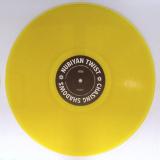
As the world sinks deeper into screens and algorithms blur the line between creation and imitation, Nubiyan Twist return with Chasing Shadows, a record that reclaims the pulse, warmth and spontaneity of human connection.
The band’s fifth studio album is a rich and restless blend of jazz, afrobeat, hip hop and electronic textures, exploring the space between the organic and the digital. It’s music that moves, sweats, and breathes, made by real people in real rooms with heavyweight features bringing together varied voices from the music community which they inhabit.
Bandleader and producer Tom Excel explains: “We wanted to make something that felt joyous and defiantly human — something that couldn’t exist without that connection between people. You can get an AI to write a fugue in seconds, but it can’t capture the chemistry and chaos that happens when musicians lock in together. Chasing Shadows is our way of holding onto that.”
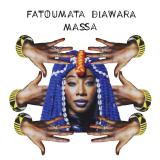
Folowing 2024’s acclaimed Find Your Flame, praised by Roling Stone, Jazzwise, NPR and more, Chasing Shadows pushes the band’s sound further into new soulful territory under Exce l’s expert guidance, featuring bright new vocalist Eniola and a glowing cast of icons and innovators. Malian star Fatoumata Diawara lights up the title track on a powerful slice of Afrobeat, Joe Armon Jones leads the dub workout ‘Rhythm Of You’ and the band take it back to their hip hop roots on great colabs with The Pharcyde’s Booty Brown, Ghanaian MC M.anifest and London dancehal favourite, Mr Wi liamz.
On Chasing Shadows, Nubiyan Twist continue to look outwards with their music but keep the focus firmly on humanity and positivity. It is an album which crosses continents and which shamelessly celebrates our co lective strength.
Fifth album from UK-based co lective Nubiyan Twist led by bandleader & producer Tom Excel (Africa Express, Onipa)
Featuring Booty Brown, Fatoumata Diawara, M.Anifest, Mr Wi liamz and Joe Armon Jones.
Pressed on Yelow Vinyl LP, or Green & Yelow splatter Vinyl LP (exclusively for UK indies).
Neba Solo, whose real name is Souleymane Traoré, is a true living legend of Malian music. His voice and balafon playing are unique, instantly recognizable, and deeply cherished throughout Mali.
He gained international recognition with his iconic track CAN 2002, composed for the famous African Cup of Nations. This success opened doors to global stages, leading to tours in the United States, Asia, and Europe. Prestigious labels such as Cobalt and Secousse supported this exceptional period in the artistic journey of this musical genius.
For many years, Neba Solo has closely collaborated with Yaya Diarra, the sound engineer of the legendary Bogolan studio in Bamako. Diarra played a key role in preserving and recording the works of the balafon master from Sikasso. He was also the one who invited Dom Peter to work on a bold and resolutely modern project: an album with more electronic sounds, enriched with drum machines, offering a new artistic direction to Neba Solo’s compositions.
Dom Peter and Yaya Diarra immersed themselves in the studio to conceive and produce this album, titled TUMA DUMA. The result is a perfect alchemy, where electronic rhythms blend seamlessly with traditional percussion, redefining the richness of Malian musical heritage.
These nine tracks explore classic themes of the Mandingue repertoire while showcasing Neba Solo’s unique way of narrating both everyday life and universal stories
Since the first release 5 years ago, Jazz Room Records has released an eclectic and interesting selection of releases.
From the Jazzy commercialism of the Take Vibe version of The Stranglers "Golden Brown" (5,000 vinyl single sales) to the 1960's Headshop Sounds of West Coast Fluteman Eric Ghost.
Other notable releases on Jazz Room include the critically lauded album by Vibraphonist Khan Jamal "Infinity", a compilation of Japanese tough funk fusionists indigo jam unit put together by DJ Colin Curtis, Nuyorican Latin House from Tata Vasquez, Jazz Dance Madchester Rave from Cruisic and some South African Holy Grail grooves from Abacothozi! The latest release is the Underground Latin J-Jazz of Copa Salvo, first introduced to London by DJ & Music Legend Jean-Claude.
Next up is an in demand Jazz Funk Obscurity from Educator and Trumpet Player John Lamkin whose self released album "Hot" saw the light of day in 1984 then disappeared into the Rare Jazz ether.
Currently changing hands for €300 and upwards it's again about to see the light of day in 2025!
This is an album that is aptly named with all the elements we love: Latin, Funk, Soul, Jazz and all round Double Hipness. What a Hot item it is too. From the Funky as it gets opening bars of "Ticket" through the Rio bound flight "722", taking in a visit to Wonderland with some Soul Jazz Vocal stylings on "Flower Power" and the Funkiest 17 minute Journey to Trumpet Enlightenment in the Title track "Hot" which is, true to its name, Scorching by the finish line is reached.
Already getting Big Ups on UK Jazz Funk Scene Founder Colin Curtis's Cult Radio Show "Jazz Dance Fusion" it's gonna be getting plenty of plays worldwide at the "Hottest" radio stations and funkiest jazz dance nights near you soon!
Ross Allen: It's brilliant!! Perry Louis: Massive! Dr Bob Jones:I Love Big Time!Colin Curtis: Killer!
The third internatonal release by the legendary Malian singer and guitarist is many fan's favourite. 'The Source' established Ali Farka Touré on the internatonal stage and paved the way for his legendary collaboraton with Ry Cooder on the GRAMMY award winning album 'Talking Timbuktu'.
Available for the frst tme on vinyl, the album has been re-mixed from the original master tapes and includes a previously unreleased track from the same sessions.
The album is presented in a gatefold sleeve containing double 180g vinyl and large format 28 page booklet with lyrics.
'The Source' features Farka Touré's frst recordings with his home town band Group Asco, with vocalist Afel Bocoum and percussionists Hamma Sankare (calabash) and Oumar Touré (congas). Touré's trademark acoustc and electric guitar (as well his njarka violin) playing are highlighted on some of his best loved and most sophistcated compositons.
The father of the desert blues unleashes a set of driving small group performances, intmate love songs, mesmerising guitar solos and two unique duets with the great American bluesman Taj Mahal.
‘Diré’, Idrissa Soumaoro new album, comes as a surprise to Malian and international audiences. Composer, singer, guitarist and master of the kamalen n’goni Idrissa Soumaoro presents here a beautiful collection of songs on his third album, Diré, named in honor of the town where he met his wife and where his first daughter, who is no longer with us, was born.
In 1971, after his studies at the INA in Bamako, Idrissa was transferred to Diré to teach music at the lPEG (Pedagogical Institute of General Education). He was 22 years old when he arrived in Diré. Idrissa has always been nostalgic for this beautiful place in the 333 Saints of Timbuktu region. As Idrissa sings in ‘Diré taga’ (Going to Diré), the track that opens the album, the city evokes deep emotions for the artist, as if it were a long-lost friend or lover. Celebrating the memory of the city of Diré leads the artist to retrace stories and lived situations that marked and animated him in years gone by: ‘I really miss the people, the colleagues, the friends and that period. Despite the time that has flown by, I would ardently wish to see Diré again’. Today, at the difficult time Mali is experiencing, remembering the city of Diré in the 1970s also means for the artist not giving up hope for peace: ‘The memory of Diré, a beautiful town in northern Mali, strengthens my hope for peace, union and real independence for the happiness of my people’; as he sings in ‘Sababou’, ‘Without hope, there is no life. Together we will succeed’.
The ten highly original compositions of the album are strongly based upon traditional music of Mali, but Idrissa’s life experiences, travels, education, collaborations and personal musical career have led him to compose and perform music with other influences. As Idrissa quotes: ‘My inspiration generally comes from the donso n'goni, a Bambara instrument played by and for hunters throughout Mali. This is a pentatonic instrument, similar to the blues exported to the USA by black African slaves. I've also spent so much time playing a variety of music that my music also reflects rumba, salsa (as well as Bamanan blues and a few derivatives: jazz, country, soul, rhythm and blues) etc. I have looked for and hope to have found my own form of expression from these influences’.
Throughout the album, his strong, clear voice sings in French, Bambara and English. It rides seamlessly upon a complex rhythmic sea of distinctly West African stringed instrumentation and percussion with accents of flute and balafon. There are keyboards in a few songs, but these, happily, do not dominate the music as we hear so often in today’s music. This album presents the music of a mature artist who has ‘been there, done that’ and returned to celebrate his country, his roots and his dreams in a flawlessly produced collection of songs of love, reassurance, fatherly advice and hope.
The album already has a long history: it was initiated in 2012 by Marc-Antoine ‘Marko’ Moreau, former producer and manager of Amadou and Mariam. Moreau had plans to produce the album and invited Idrissa Soumaoro to start recording in Manjul's studio in Bamako. When Moreau suddenly passed away, work on the album was still missing. The pandemic still added time for the production to continue. With the help of Climax Orchestra, arrangements and orchestrations were finalized in France. At the artist's behest, 'Diré' will finally be presented to the public by Mieruba, the independent label based in Ségou, the home of the blues in Mali. 'Let's stand together so that Mali can flourish': from conception to production and distribution, this is the message that 'Diré' carries.
A veteran of the great Malian orchestra, the Super Biton de Ségou, Mama Sissoko is an accomplished musician. His music traverses Mandingo, Bambara, Sarakolé, Songhai, Bobo, Peul, Malinke and Bozo traditions, all while flirting with jazz. On stage, Mama Sissoko is a purist who engages with the audience bringing his energy, urgent vocals and truly inspired guitar solos throughout the concert. ‘Live' brings together recordings from a concert given in Paris at La Villette in 1998 and takes us back to a high point in Mama Sissoko's career.
In ‘Live’, we find tracks from Mama Sissoko's second solo album 'Soleil de Minuit', which was released in 1999 by Buda Music. As on the album, the different guitars overlap without compromising the unity of the music, rendering an earthy atmosphere despite being very complex. The recording of this concert was superb. We can hear every note, every nuance, every instrument and voice in the many-layered compositions.
As on the album ‘Soleil de Minuit’, this live recording opens the session with ‘Diarabi’, followed by ‘Safiatou’. Both are up-tempo love songs in which Mama Sissoko's powerful voice sings with all of the passion that such love songs deserve over a clean rhythm driven by the percussion of several guitars. The heavy bassline of ‘Safiatou’ adds to the urgency of the song. After these two beautiful renditions, the energy continues with the guitar-driven ’Fisiriwale’ and then a surprisingly original version of Super Biton’s famous song, ‘Iri’. We are then treated to a lively version of his ‘Soleil de Minuit’, called out by the artist as a ‘salsa Africana’ with a shout out given to Cuban salsa mid-way through when he calls the song ‘El Sol de Medianoche’ in perfect Spanish.
Throughout this concert, Mama Sissoko’s deep and melodic voice seems to emanate effortlessly from his body and soul. Multiple guitars back up his signature solos adding depth to the music that harkens back to the traditional music of Mali. Perfect examples of this are given in the songs ‘Douga’, ‘Manssane’ and ‘Hommage a K’. The last song, before a rousing second version of ‘Soleil de Minuit’, is ‘Boma Ma’, a truly modern rendition of a traditional Malian hunters’ song with multiple guitars, shakers, lively djembe and an outstanding vocal duet with Toussaint Sainé, Mama Sissoko’s long time musical collaborator.
Accompanied by incredible musicians, including Toussaint Sainé, his partner in the Super Biton orchestra, "Live" plays in the timeless way of Malian music. What's more, it gives us the gift of its most direct and powerful dimension, that of live music, as if 20 years hadn't passed.
For 20 years the Tuareg culture and music has fascinated the world. Their quasi-sacred poetic songs inspire western songwriters like KURT VILE or JOSÉ GONZALEZ, while the virtuosity of their guitar playing fascinates guitar heroes like JIMMY PAGE, and finally the spirituality and meditative hypnotism impresses electronic music producers like FOUR TET.With two albums, IMARHAN has become an emblem of the new Tuareg generation, breathing new life into “Assouf”, the desert blues.
While most of current Tuareg productions are exiled to the United States, the group, led by Sadam, is part of their culture and their city, the capital of the Tuareg people, with an open door to the desert. By building their own studio in Tamanrasset Aboogi, Imarhan become the spokesmen of the young Tuareg lost generation (forgotten by Algerian, Nigerian and Malian governments).With their new album Aboogi, Imarhan manipulate the rights and ancestry of the Tuareg. By inviting the legendary Mohamed At Itlale aka Japonais (who has since, sadly, passed away) and the genius musician Abdallah Ag Alhousseyni, IMARHAN follows the heritage of TINARIWEN, the godfathers of Assouf. When they recorded with GRUFF RHYS of the SUPER FURRY ANIMALS, their brilliant and universal songwriting takes on every sense of the word. Finally, by inviting the Sudanese singer Sulafa Elyas, we understand that IMARHAN is open to all of Africa, defenders of the Tuaregs but above all spokesperson for the new African generation.
As the world sinks deeper into screens and algorithms blur the line between creation and imitation, Nubiyan Twist return with Chasing Shadows, a record that reclaims the pulse, warmth and spontaneity of human connection.
The band’s fifth studio album is a rich and restless blend of jazz, afrobeat, hip hop and electronic textures, exploring the space between the organic and the digital. It’s music that moves, sweats, and breathes, made by real people in real rooms with heavyweight features bringing together varied voices from the music community which they inhabit.
Bandleader and producer Tom Excel explains: “We wanted to make something that felt joyous and defiantly human — something that couldn’t exist without that connection between people. You can get an AI to write a fugue in seconds, but it can’t capture the chemistry and chaos that happens when musicians lock in together. Chasing Shadows is our way of holding onto that.”
Folowing 2024’s acclaimed Find Your Flame, praised by Roling Stone, Jazzwise, NPR and more, Chasing Shadows pushes the band’s sound further into new soulful territory under Exce l’s expert guidance, featuring bright new vocalist Eniola and a glowing cast of icons and innovators. Malian star Fatoumata Diawara lights up the title track on a powerful slice of Afrobeat, Joe Armon Jones leads the dub workout ‘Rhythm Of You’ and the band take it back to their hip hop roots on great colabs with The Pharcyde’s Booty Brown, Ghanaian MC M.anifest and London dancehal favourite, Mr Wi liamz.
On Chasing Shadows, Nubiyan Twist continue to look outwards with their music but keep the focus firmly on humanity and positivity. It is an album which crosses continents and which shamelessly celebrates our co lective strength.
Fifth album from UK-based co lective Nubiyan Twist led by bandleader & producer Tom Excel (Africa Express, Onipa)
Featuring Booty Brown, Fatoumata Diawara, M.Anifest, Mr Wi liamz and Joe Armon Jones.
Pressed on Yelow Vinyl LP, or Green & Yelow splatter Vinyl LP (exclusively for UK indies).
- A1: Robert Pico - Le Chien Fidèle
- A2: Annie Girardot - La Femme Faux Cils
- A3: Spauv Georges - Je Suis L'état
- A4: Zoé - Zoé
- A5: Jacques Da Sylva - Fou
- A6: Valentin - Je Suis Un Vagabond
- A7: Jacques Malia - Histoire De Gitan
- A8: Bernard Jamet - Raison Legale
- B1: Jean-Pierre Lebort - Barbara Au Chapeau Rose
- B2: Les Concentrés - Fils De Dégénérés
- B3: Les Missiles - Publicité
- B4: Hegessipe - Le Credi D'hegessipe
- B5: Marechalement Votre - Ethero Disco
- B6: Mamlouk - Decollez Les
- B7: Mozaique - L'amour Nu
- B8: Jean-Marc Garrigues - Je Dis Non
- B9: Penuel - Astronef 328
The journey through French-speaking pop archives continues with this fifth volume, packed with fuzz, gimmicks, and dissent. Far from the charts, the selected tracks display a great creative freedom, often backed by corrosive humor. Welcome to the surprising, kaleidoscopic, and colorful world of the late sixties and early seventies, Wizzz!
Born in Montauban, Robert Pico stumbled into music by chance when he met René Vaneste, then artistic director at Pathé-Marconi. René brought him to Paris to record his first 45 RPM EP in 1964. A year later, Pierre Perret introduced him to Vogue, where he recorded his second album with Claude Nougaro’s orchestra. Sylvie Vartan then introduced him to RCA, where he recorded four singles, including the astonishing "Chien Fidèle," a track backed by a hair-rising fuzz guitar. Alongside his solo career, he also composed for other artists like Alain Delon (the song was recorded but remains unreleased), Magali Noël, Bourvil, and Georges Guétary. In the Paris of the sixties, he mingled with Mireille Darc, Elsa Martinelli, Marie Laforêt, France Gall, Françoise Hardy, Petula Clark, Régine, Dani, Serge Gainsbourg, Joe Dassin, Franck Fernandel, Charles Level, and Roland Vincent. Despite his efforts and winning a Grand Prix Sacem for his final record, Robert Pico didn’t achieve the expected success in show business and decided to leave Paris and return to the Southwest, where he devoted himself to writing. He is the author of 23 books (including Delon et Compagnie, Jean-Marc Savary Editions 2025, a memoir about his youth and his many encounters). Today, he is relieved to never have become a celebrity and devotes himself to his work with passion.
In 1969, the Franco-Italian movie Erotissimo was released, directed by Gérard Pirès (who later directed Taxi in 1998, written and produced by Luc Besson). This pop comedy features Annie Girardot, Jean Yanne, Francis Blanche, Serge Gainsbourg, Nicole Croisille, Jacques Martin, and Patrick Topaloff. The soundtrack was written by Michel Polnareff and William Sheller, with lyrics by Jean-Lou Dabadie. "La Femme Faux-cils," performed by Annie Girardot. It recounts the feelings of a rich CEO's wife who seeks to develop her sex appeal under the influence of advertisement and magazines. Groovy, sparkling and light, this track, with ITS lush arrangements humorously critiques consumer society and feminine beauty standards.
“Je suis l’Etat” (1967) is the flagship track of the first EP by singer-songwriter Spauv Georges, aka Georges Larriaga, better known as Jim Larriaga (1941-2022). Born into a family of bakers, the young man was initially planning to become a hairdresser when he discovered English-speaking music through Elvis Presley and the Beatles. After this revelation, he decided he would become a songwriter and gave himself five years to succeed. He recorded his first two EP’s independently for RCA under the pseudonym Spauv Georges; meaning “that poor George”, a nickname given to him by the mother of her friend Jean-Pierre Prévotat (future drummer of the Players, Triangle, or Johnny Hallyday). Portraying a depressed and eccentric young man, Spauv Georges created corrosive and amusing songs that didn’t reach a wide audience, despite a TV appearance with Jean-Christophe Averty.
Supported by his loyal friend and fellow songwriter Jean-Max Rivière, Georges Larriaga met the future singer Carlos in the early '70s, then Sylvie Vartan’s assistant. He wrote songs for Carlos, including the popular "La vie est belle," "Y’a des indiens partout," and "La cantine", which went onto become a huge hit in 1972. He also composed for Claude François (“Anne-Marie”, 1971), Charlotte Julian (“Fleur de province”, 1972), helped launch child singer Roméo (who sold 4 million records), and later wrote the hit "Pas besoin d’éducation sexuelle" (1975) for the young Julie Bataille. In 1971, Jim recorded an album for Disc'Az: “L’univers étrange et fou de Jim Larriaga”, which featured pop gems like “La maison de mon père”.
The story of the song "Zoé" began when Pierre Dorsay, artistic director at Vogue Records, asked Swiss singer and musician Pierre Alain to write a song for a new female singer. The inspiration came when he realized that Zoé (the artist's name) was also the name of France's first atomic battery, created in 1948, which consisted of uranium oxide immersed in heavy water! The lyrics reflect a bubbling energy that must be handled with caution, while the instrumentation echoes this atomic theme, notably with the use of a theremin.
Zoé’s career lasted only as long as a single 45 RPM, but it seems Christine Fontane was the vocalist behind this pseudonym, who is known for several EPs, a good "popcorn" album in 1964, and a handful of children’s singles in the '70s. Regardless, the photograph on the cover is of a different girl entirely.
Later, Pierre Alain continued his career, writing songs for himself, Marie Laforêt, Danièle Licari, Alice Dona, Arlette Zola (3rd place in Eurovision 1982), and achieving multiple gold and platinum records in Canada. Also an inventor with several patents, president of the Romande Academy, and head of the French Alliance in Geneva, he now composes atonal music, books, and poetry. Moreover, he is also the host of "Les Mardis de Pierre Alain" at "Le P'tit Music'Hohl" in Geneva.
Filled with oriental choruses and fuzz guitar, "Fou" is from Jacques Da Sylva's only EP released by Vogue in 1967. Despite the quality of this recording, all traces of this singer disappear after this first effort.
Valentin is a baroque pop singer born in Belgium. He is the songwriter and composer of most of the tracks on his three singles released in the late 60s in Canada. A legend says that he reincarnated himself as Jacky Valentin during the 1970s for a rock'n'roll revival career in Belgium, but his older brother sadly debunked this story. Valentin's first two singles were arranged by Claude Rogen, a Parisian session pianist who had come to Canada to promote the song “Mister A Gogo”, a cover of David Bowie’s “Laughing Gnome”, adapted by singer Delphine, his wife at the time. Far from his usual network, Claude Rogen arranged music for Polydor, including the arrangements for “Je suis un vagabond” in 1969, a jerk tune with string arrangements and a furious optimism.
Jacques Malia wrote, composed, and recorded his only 45 EP for Festival in 1966. “Histoire de gitan” is an incredible beat track with bohemian scat that tells the story of a gypsy musician who came to Paris to make it in the Music-Hall, to no avail. The hero of the song and its author probably shared a similar fate, as Jacques Malia faded into anonymity after this remarkable attempt.
Bernard Jamet recorded two EPs for Barclay in the late sixties and co-wrote several songs with Christine Pilzer, Pascal Danel, and prolific songwriters Michel Delancray and Mya Simile. The track “Raison Légale” (1968), his masterpiece, immerses the listener in a courtroom right when a murderer is being judged, with jerk rhythm and free arrangements. A unique, paranoid, judicial, and psychedelic oddity.
Jean-Pierre Lebrot-Millers started his career in show business in 1967 as a singer and songwriter for the Philips label. After three singles, he wrote several songs of a new kind with his friend Pierre Halioche, in the midst of the sexual liberation movement and the democratization of drugs. With provocative lyrics, “Les filles du hasard” and “Barbara au Chapeau Rose” were released on a Philips singles in 1968. The character of Barbara was inspired by a queen of Parisian nightlife during the psychedelic years: model Charlotte Martin, who dated Eric Clapton from 1965 to 1968, then Jimmy Page from 1970 to 1983. Jean-Claude Petit’s arrangements, with a table-filled intro, soul brass, and Hendrixian guitar, emphasize the flamboyance of a hedonistic and sexy character, whose dog is named Junkie because “Junkie est un nom exquis”! The track was recorded live in three takes with a full orchestra.
Upon its release, the record was censored by Europe 1 and RTL due to its references to drug use. Jean-Pierre Lebrot was then banned from the airwaves and later dismissed by his record label. He changed his artist name to Jean-Pierre Millers, while his companion Pierre Halioche became D. Dolby for a new dreamy composition, “Chilla”, which Jean-Pierre produced himself with arrangements by Jean Musy. Once again, the song was immediately censored everywhere. After this setback, he decided to stop singing and started taking on odd jobs to support his Swedish wife and their son until the day he met Jean-Pierre Martin, then production manager at Decca, who had worked with Manu Dibango. Martin offered Jean-Pierre Lebrot-Millers, then employed at Rank Xerox, the position of artistic director at Decca. He accepted and became, a year later, promotion director (radio, press, TV). He worked on Julio Iglesias’s first album for Decca, which became a massive hit and allowed him to meet Claude Carrère. The latter asked him to write new songs and find their performers, much like a “talent scout.” It’s through him that Jean-Pierre discovered Julie Pietri and Corinne Hermès. He composed “Ma Pompadour” for Ringo, Sheila’s husband, and took the microphone again for the syncope hit “Rendez-Vous” in 1982.
That same year, Jean-Pierre Lebrot-Millers tried to release a track for which he had heavily gone into debt: “Si la vie est un cadeau”. Having recorded it in London, he presented it to numerous professionals, all of whom refused to get involved. The same thing happened with Antenne 2 and the Sacem when he proposed the song as France’s entry for Eurovision. He then met Haïm Saban, who was producing cartoon soundtracks and had just launched the Goldorak theme song. Saban, having listened to the song, declared it had the potential to become a hit. He sent Jean-Pierre and Corinne Hermès to meet the CEO of the Luxembourg radio and television network. The latter received them, asked to hear a verse and chorus a cappella in his office, and immediately hired them to represent Luxembourg at Eurovision 1983. They reworked the arrangements and recorded a new version with Haïm Saban as co-producer. The song ended up winning Eurovision 1983, a great comeback for our hero. He continued producing and hung out with the band Nacash in Belgium when a couple came to introduce their daughter for an impromptu audition in a hotel room. The girl sang “Les démons de minuit” while dancing to a radio cassette. Impressed, he had her take singing lessons for a year and composed a song for her (for which he had the melody and title, but no lyrics). This required him to go on the hunt for a lyricist, who ended up being Guy Carlier. They recorded the song, which was initially a ballad, at Bernard Estardy’s CBE studio, and gave the singer a new name: Melody. They showed the song around their industry network without success. Later, Estardy called Jean-Pierre to suggest changing the rhythm and making it pop-rock. Orlando, Dalida’s brother, liked the result and decided to co-produce the track. “Y’a pas que les grands qui rêvent » became a classic hit. The song has since been covered by Juliette Armanet (as a ballad, like the original) and Valentina.
Born into an aristocratic Breton family, Hervé Mettais-Cartier worked as a DJ at Queen Kiss, a nightclub in Poitiers, where he formed the band Les Concentrés with Michel (an actor) and Christian (a radio technician). Together, they created a repertoire of whimsical songs (“Ma bique est morte”, “J’suis un salaud”, “Fils de dégénéré”...) that they performed on stage dressed in white (in homage to “concentrated milk”). They performed at Bliboquet and Olympia in 1968 for the 10th edition of the “Relais de la chanson Française” organized by L’Humanité-Dimanche and Nous les Garçons et les Filles, sponsored by Pepsi Cola. Winners in the author-composer category, alongside Danish singer Dorte, their visibility allowed them to record a 45, and appear on television in Jean-Christophe Averty’s show. The A-side of the disc features Bruno le ravageur, a casatchok dedicated to Bruno Caquatrix, the director of Olympia, nicknamed in the song “Coq Atroce” or “croque-actrices”. The B-side is dedicated to “Fils de dégénéré”, a quirky tribute to Hervé's aristocratic roots, mixing absurdity with sophisticated vocal harmonies.
After Les Concentrés, Hervé Mettais-Cartier formed the duo La Paire et sa Bêtise with his friend Olivier Robert. They performed in Parisian cabarets and toured with Pierre Vassiliu. In the late 1970s, Hervé began a solo career. He recorded two albums for the Motors label in 1978 and 1979, which did not achieve their anticipated success due to lack of promotion. In 1980, he met Bernadette, with whom he started a family and created a “Chansons à voir” (songs to see) show that he performed until his death at the end of 2024.
Publicité comes from the final EP by the Missiles (Ducretet Thomson, 1966), a disc that also includes “La (nouvelle) guerre de cent ans”, featured on Volume 4 of our Wizzz! series. Please refer to the booklet for the story of the band.
“He’s 1.82 meters tall, 28 years old, weighs 135 kg, is black and Belgian”: this is the description of singer Hegesippe on the back of his sole single (Decca, 1967). He appears on the album cover wearing a Greek toga, like a hippie gag – we are at the end of the year 1967. In “Le crédo d’Hegesippe”, this former bodyguard of Antoine and the Charlots plays the delightful card of the thick brute converted to Flower-Power and non-violence, with arrangements by Jean-Daniel Mercier, aka Paul Mille.
“Ethéro-disco” was released on a promotional record for clients of the Maréchal company (Liège, Belgium) for the New Year 1979. Over a funky rhythm, celebrity impersonations (Brigitte Bardot, Jacques Dutronc, Fernandel…) deliver an enigmatic text about pharmaceutical products like ether, bismuth, and aspartate. The track was composed by Dan Sarravah (responsible for Joanna's “Hold-up inusité” featured on Wizzz! Volume 3) and Tony Talado, who was also a singer (one 45 in 1967), songwriter (with over a dozen credits between 1964 and 1985 in various styles from surf music to disco), author (Devenez Végétarien, Dricot Editions, 1985), ad designer, and psychologist.
Décollez-les is on the A-side of Mamlouk's only single, a pseudonym for Marsel Hurten, who is known for his work on several EPs in the late sixties, as well as composing music for Hervé Vilard’s “Capri, c’est fini”, Claude Channes' “La Haine”, Annie Philippe’s “On m’a toujours dit”, and Nancy Holloway’s “Panne de Cœur”.
This strange song, with Afrobeat horns and absurd dialogues between a chef and his kitchen staff, is the result of a collaboration between Marsel Hurten and one of his neighbors, a photographer from Pavillon-sous-Bois (93), where the musician settled after returning from the Algerian War. A music video was shot to promote the record.
Marsel Hurten was born in Tourcoing (59) into a musical family. At a young age, he joined the brass band founded by his grandfather, playing the piston before studying trumpet at the conservatory, as well as teaching himself how to play the guitar. As an orchestra musician, he toured in France, Belgium, Germany, and England. He released a series of solo 45’s between 1965 and 1968 for the DMF and Az labels before stopping recording to focus on working for other artists (Gilles Olivier, Noëlle Cordier…).
“L’amour nu” (Vogue, 1971) is the work of the short-lived Belgian band Mozaïque. The track, written by singer Jacques Albin, closely resembles another of his compositions, “Carré Blanc”, which he recorded in 1969 for Disc’AZ.
Represented by the Lumi Son micro-label based in Marignane (Côte d'Azur), Jean-Marc Garrigues released two 45 RPMs in the late sixties, defending the French jerk sound. The song “Je dis Non” is a short, joyful ode to youth, pop music, and rebellion.
Songwriter and performer Jacques Penuel released three singles. The first one, “Astronef 328” (Fontana, 1969), features a dizzying series of chords punctuated by sound effects, a sci-fi story, and arrangements by Jean-Claude Vannier.
We would like to sincerely thank Pierre Alain, Moon Blaha, Marsel Hurten, Bastien Larriaga, Jean-Pierre Lebrot-Millers, Bernadette Mettais-Cartier, Robert Pico, Olivier Robert, Claude Rogen, Micky Segura.
The roots of African music are always open to new possibilities. This is revealed in the music of this unprecedented quartet. Alongside the Malian singer Rokia Traore', Mamah Diabate, Malian griot and djeli ngoni player, has been playing for several years with Stefano Pilia (Afterhours, Massimo Volume). Now, their path intertwines with the artistic and human partnership between Jabel Kanuteh, Gambian griot and kora virtuoso, and percussionist Marco Zanotti(Classical Afrobeat Orchestra, Cucoma Combo). The union of these two pairs develops unusual geographies and architectures, where dual African and Italian identities merge into one universal sensibility. The predominant Malian and Gambian modes chase each other, but all is fused into a broader rhythm factory or embellished by more abstract and liquid experimental digressions. The curiosity and pliability of the individual musicians search for a language that is both current and contemporary, always poised between ancient and modern, landscape and narrative, with jazz, rock and folk influences.
- Keme Bourama
- Sozani
- Kasse Dya
- Kasse Moro
- Fognana Kouma
- Niagaleba
- Kaira
- Simbo
- Mande Djali
- Toumaro
Kasse Mady Diabate, a key figure in Malian music, left his mark on history with his gentle yet powerful voice, earning him the nickname "the golden voice of Mali". A respected Mandingo artist, he was known for his ability to touch souls with melodies and texts steeped in depth and tradition. As a griot, he carried the musical heritage of his people with dignity and talent. The album title song, Toumaro (A bientôt), written by his daughter Hawa Kasse Mady Diabate, is part of this heritage, celebrating love and gratitude. After Kasse Mady"s sudden death in 2018, Hawa continued the album her father had started, offering a poignant tribute to his legacy and a beautiful way to connect with him spiritually through music. Hawa herself is an iconic figure on the Malian music scene, particularly as a member of Trio Da Kali, the griot "super-group" whose album Ladilikan with the Kronos Quartet was a true masterpiece. Toumaro is a testament to the richness of the griot tradition, carried on by artists such as Hawa as well as Lassana Diabate and Madou Kouyate. Their collaboration on Toumaro with renowned musicians underlines the importance of passing on cultural and musical values, while renewing the genre through contemporary arrangements.
When the hypnotic groove of Berlin band Onom Agemo & The Disco Jumpers meets the pulsating riffs of Malian guitarist and singer Ahmed Ag Kaedy, new horizons open up.
At the centre of 'Common Stars' is Ahmed Ag Kaedy's distinctive vocals - always with poetic urgency. His lyrics, deeply rooted in the political and cultural realities of his homeland, deal with freedom, home and the search for identity. They deal with the ongoing conflict of the Tuareg in Mali, who are caught between the desire for cultural self-determination and political tensions with the central government. They also address the threat posed by Islamist groups, which have controlled parts of northern Mali and banned music since 2012. Ahmed Ag Kaedy had to flee his home country due to this repression. With his band Amanar, he shaped modern Tuareg rock and toured internationally. The collaboration with Onom Agemo began after he came to Berlin for the premiere of the film 'Mali Blues', in which he is one of the protagonists, and led to joint concerts throughout Europe.
'Common Stars' is a musical meeting of cultures that unites sounds from the Sahara to Berlin. Music that creates connections and makes different perspectives audible. The tracks are characterised by trance-like rhythms, hypnotic bass lines and shimmering saxophone and flute sounds. Pulsating synthesizers, dry-as-dust guitar riffs and improvisational outbursts interweave to create a soundscape that is sometimes driving, sometimes floating and creates a very unique, captivating atmosphere. Ahmed Ag Kaedy describes it aptly: 'Space jazz meets the rhythm of the camel.'
- 1: Savanne
- 2: Lobbo
- 3: Diarabi
- 4: Tongo Barra
- 5: Tamalla
- 6: Mahine Me
- 7: Ali Hala Abada
- 8: Alakarra
Ali Farka Touré trekked the world, bringing his beloved Malian music to the masses. Dubbed “the African John Lee Hooker,” one could hear strong connections between the two; both employed a bluesy style of play with gritty textures that elicit calm and fury in equal measure. While the influence of Black blues music prevailed, Touré created a West African blend of 'desert blues' that garnered Grammy awards and widespread reverence. Though he transcended in 2006, Ali’s musical legacy lives on through his son, Vieux aka “the Hendrix of the Sahara,” an accomplished guitarist and champion of Malian music in his own right. On Ali, his collaborative album with Khruangbin, Vieux pays homage to his father by recreating some of his most resonant work, putting new twists on it while maintaining the original’s integrity. The result is a rightful ode to a legend. Ali isn’t just a greatest hits compilation. It’s a lullaby, a remembrance of Ali's life through known highlights and B-sides from his catalog. It is a testament to what happens when creativity is approached through open arms and open hearts. “To me, music is magic, it is spontaneous, it is the energy between people,” Vieux says. “I think Khruangbin understands this very well.” The genesis of the album dates back to 2019, when Khruangbin, coming off their breakthrough album Con Todo el Mundo, was beginning to play to bigger crowds. The record was finished in 2021, as a global pandemic shuttered businesses and forced us to take stock of what Earth was becoming. Indirectly, Ali captures this as a moment of peace within a raging storm, a conversation between past and present without allegiance to suffering. Now, given Khruangbin’s reach as a unit with legions of fans (including the likes of Jay-Z and Paul McCartney), they’re poised to bring Malian music to broader groups of listeners. Ali is a masterful work in which the love surrounding it is just as vital as the music itself, driving it to unforeseen places; Vieux and Khruangbin are spreading the good word to a completely new generation. “I hope it takes them somewhere new, or puts them in a place they haven't felt or heard,” Lee says. “It is about the love of new friendship and making something beautiful together,” Vieux continues. “It is about pouring your love into something old to make it new again. In the end and in a word it is love, that's all.”
Koinè is the new album by Pellegrino & Zodyaco, a record that explores the desire to escape by interpreting it as an act of emancipation, an aimless journey in search of creative freedom. The demonstration that escapism, when it is conscious, can bring us back to the heart of things. Inspired by Éloge de la fuite by Henri Laborit, the album embarks on a journey to discover a “common language” (Koinè), blending Neapolitan roots with a global and contemporary musical vision. It blends melodic traditions with disco, funk, jazz fusion, and world music, experimenting with vintage instruments, ethnic percussion, and Mediterranean atmospheres. Pellegrino, a pioneer of the “new school” Neapolitan sound, after 4 years since his last LP “Morphé” (2020) continues the path started with Zodyaco I (2018), painting an authentic portrait of modern Naples and celebrating musical contamination as a form of creative euphoria.
“Trustworthy”. is the meaning of “danama”, this Bambara word from Mali. Believing in oneself, in others, in the word given, in desirable futures. Advocating optimism, momentum towards the future, collective strength and the wise magic of cultural blending… especially during these troubled times of endless wars, of nationalist withdrawals or the abundance of naturals disasters, all encouraged by a carnivorous capitalism?
So confidence, we need tons of it. Maintained by the flame, the phlegm and the stratagem of these afro-groove scientists, without ignoring their sorrows nor the scandals of History. This is the athletic art of Arat Kilo, who remain without question the best ethio-jazz orchestra in France, on the trail of this fifth album recorded in the Spring of 2024. Confidence was also needed to change the way things worked. For all the previous albums, the band came together in the studio to play each track together, all in the same room, in the romantic idea of a warm, lively, organic gesture, in the manner of the great Ethiopian masters of the 60s and 70s.
For Danama, the music was initially collected in tandem: guitar/bass, drums/percussion, saxophone/trumpet, and the two voices. A few new instruments were added along the way : dark synthesizers, a bass clarinet, a tiny guitalélé (similar to the ukulele) and a Malian n'goni (sometimes described as ‘the griot's lute’). Then, and above all, there was the question of experimenting with real sound production, using sound design, multi-track exploration and effects applied to the textures collected over eight days at the Gong studios in Montreuil and OneTwoPassIt in Bagnolet just outside Paris.
In this way the band, all growing up influenced by the hip French Radio Nova's ‘Grand Mix’, were completely free to express their natural taste for fusion between genres. Borrowing from the frantic rhythms of Newark's jersey club, English 2-step or New Orleans brass bands, grafted onto Arat Kilo's musical base: tezeta, the famous minor pentatonic scale typical of Ethiopian jazz, melancholic to perfection. The result is layers of sound, collages of emotions, like the album cover, created by artist Clément Laurentin from multicoloured fragments of posters torn up in the street.
So Arat Kilo are back: The same band, the same collective strength, the same fight for values, their new album “Danama” carries the demand for a better world even further, with words of hope from singer Mamani Keita and the social critique of American MC and poet Mike Ladd ! The result is this luminous voyage down the Danama canal. In all, eleven songs and an instrumental, mixed by Mathieu ‘Gib’ Gibert - one of French band La Fine Équipe's beatmakers - set to drive the crowds wild and remind us how to stick together again.
- Bagola
- Dadunkan
- Cela Sigui
- Tulunke
- Orpaillage
- Dissa
- Wara
- Nana Triban
- Fakoly
- Latege
- Deme
In their new album Bagola, Trio Da Kali present newly composed songs accompanied on balafon and ngoniba, that provide a rich accompaniment to the spectacular voice of Hawa Kasse Mady Diabaté. She inherits her singing style from her father, the late Kasse Mady Diabaté, who was widely recognized as one of Africa"s all-time greatest singers and won a Grammy nomination in 2004. Hawa"s voice has an exquisite purity and expressiveness, with a wide emotional range. She is equally at home in the lively, 9/8 rhythms of the title track Bagola, a light-hearted critique of men in Malian society, to the soulful Orpaillage, a song that laments the destruction of land from gold-panning. Orpaillage was in fact composed on the spot in the studio, reflecting the creative chemistry between these three musicians. The musical director of the trio is balafon (xylophone) player Lassana Diabaté, born in Guinea into a well-known family of balafon musicians. His remarkable dexterity on the balafon earned him a place in Toumani Diabaté"s Symmetric Orchestra, and later on in the group Afrocubism (featuring Eliades Ochoa). He has collaborated with many musicians, including bluesman Taj Mahal on the album Kulanjan. With two balafons of 22 rosewood keys each, tuned to play chromatic scales, Lassana Diabaté achieves a perfect balance of rhythm, melody, harmony and virtuosic embellishment. David Harrington, leader of Kronos Quartet, compares him to none other than JS Bach. Underpinning the balafon with compulsive groove, is the large ngoniba, played with brilliant musicality by Madou Kouyaté (son of Bassekou Kouyaté and member of his group Ngoniba). Madou, the youngest member of Trio Da Kali, also adds rich harmonies with his deep breathy voice to the songs. Trio Da Kali were founded in 2013 under the initiative of the Aga Khan Music Programme, with the help of three-times Grammy-nominated music producer Lucy Durán. The Trio first rose to international fame with their sublime album Ladilikan (World Circuit Records 2017), featuring an unprecedented and multi-award-winning collaboration with Kronos Quartet, the legendary classical string quartet from San Francisco. Bagola is a showcase of Trio Da Kali"s entrancing and unique sound, only equaled by their magical performances on stage.
- A1: Idrissa Soumaoro Et L'eclipse De L'ija — Nissodia (Joie De L'optimisme)
- A2: Rail Band — Mouodilo
- A3: Les Ambassadeurs Du Motel De Bamako — M'bouram-Mousso
- B1: Super Tentemba Jazz — Mangan
- B2: Sorry Bamba — Yayoroba
- B3: Super Djata Band — Worodara
- C1: Zani Diabaté Et Le Super Djata Band — Fadingna Kouma
- C2: Salif Keita — Mandjou
- C3: Alou Fané & Daouda Sangaré — Komagni Bèla
- D1: Super Djata Band De Bamako — Mali Ni Woula
- D2: Idrissa Soumaoro Et L'eclipse De L'ija — Fama Allah
Mr Bongo is proud to present 'The Original Sound of Mali', compiled by Vik Sohonie & David Buttle.
Malian music is arguably deeper, more sophisticated and lyrical than any other form of African music. Those of us deeply entranced by Malian culture, and, in particular, the immense hypnotic beauty of Malian music, have put together a
selection of songs from across the country.
Compiled by Vik Sohonie & Dave 'Mr Bongo' Buttle, the story of this release began in 2015 when Dave happened upon the Soul Bonanza blog. A treasure chest of rare finds from around the world! One mix in particular stood out and totally enthralled Dave - le monde à change: a tribute to mali 1970 - 1991. He
already knew of Malian legends such as the Rail Band, Salif Keita, & Les Ambassadeurs du Motel de Bamako, but this mix was something else! Deep & culled from the collections of some of the heaviest African music collectors in the world, legends like Vik Sohonie, Hidehito Morimoto, Philippe Noel, Gregoire
Villanova, and Rickard Masip. Dave immediately contacted Vik and a journey of discovery tracking down the rights-holders began. He also turned to the font of Malian music knowledge, Florent Mazzoleni. Florent has written the definitive book about Malian music - 'Musiques modernes et traditionnelles du Mali'. He
proposed some incredible tracks to include and provided the back bone of the sleeve notes and photos that are used in the album. No Malian album would be complete without a striking front cover photo, and ours is sourced from the late great Malian photographer Malick Sidibé.
On this album you will find well-known artists sitting next to rarer
discoveries. The Rail Band, who are one of the best known of all the big bands in Mali, gave us the stars Mory Kanté and Salif Keita. Les Amabassedeurs du Motel de Bamako were another big act that had Idrissa Soumaoro, Kanté Manfila, and for a while Salif Keita in their ranks. Sometimes Salif would play in both bands in one night, quite a feat considering the bands were fierce rivals. As an albino Salif has had to face considerable prejudice from society, focussing on his musical career to help overcome this.
A major discovery on the album has been Idrissa Soumaoro et L'Eclipse de L'Ija. L'Eclipse de l'Institut des Jeunes Aveugles was a Blind teenagers institute and their record was produced by the German association that took care of blind Malian teenagers in Bamako. It was never properly released commercially and was the first recordings by the legends of Malian music Idrissa Soumaoro, Amadou Bagayoko and Mariam Doumbia. Amadou & Mariam later got married and became household stars, including making an album with Manu Chao.
This album is a concerted global effort to showcase the most vital cornerstone of Malian culture in an attempt to preserve its reputation in the face of its current, grim reality. We hope our highlights of Mali's rich history of musical innovation will serve as a starting point for reclaiming an image tainted by unnecessary conflict. May peace and music return to Mali soon.
Dedicated to Malick Sidibé.
- One Half Of A Dream
- I Wanted To Belong
- If Nothing Is Real
- Mournful Moon
- Ninna Nanna
- Borne On The Wind
- Go Where Your Eyes
- Shadows Are
- North And South
- By Your Hand
The New Duo Album by Piers Faccini & Ballaké Sissoko: Our Calling Two decades after their very first collaboration, British-Italian folk songwriter Piers Faccini and Malian kora virtuoso, Ballaké Sissoko return with a mesmerizing album: Our Calling. Set for release in February 2025, this fascinating dialogue between a virtuoso instrumentalist at the peak of his powers and an inspired songwriter and wordsmith, succeeds in creating new song forms with a lightness of touch that bridges continents and plays with tradition.Through ten exquisitely crafted tracks, Our Calling is a sonic and narrative praise song for migration in all its forms. The two friends"s entirely acoustic dialogue was recorded in Paris side by side and live in the studio over five days. The album"s originality is that it feels deeply Malian at i s musical core, all the while being seamlessly infused with an essence of folk songwriting, sung in the English language. Recorded by Frédéric Soulard (Shapes of the Fall), the album unites an extraordinary cast of musicians, including Vincent Segal, Badjé Tounkara, and Malik Ziad.
Awesome Tapes From Africa the label began over 10 years ago with the reissue of Nahawa Doumbia’s Vol. 3. The recording kicked off a successful run of classic and new recordings from artists across Africa, being made available for the first time in the international marketplace. ATFA makes it possible for artists to expand their fanbases and revenues streams with legally licensed recordings and a 50/50 profit split. For its 50th release, ATFA presents iconic Malian singer Nahawa Doumbia’s beloved Vol. 2
"La Misma Fuente" is an album that could have only come from the mind of Yemanjo, and the music here reveals producer/musician Ben Harris in the full bloom of his artistic promise.
Translating as "The Same Source", the staggering variety of genre, sound design and featured artists here all relate to the concept that the world's diversity manifests out of an essential unity.
With guest singers and musicians from Mali, Colombia, Argentina, Hungary and beyond, "La Misma Fuente" pulsates with an irresistible combination of cracking electronic beats, hypnotic synths and bass, traditional acoustic instruments and vocals in many languages.
In the title track, Yemanjo's own harmonized Spanish vocals roil over a relentless dembow groove; elsewhere Malian vocalist Mariam Koné shines in both the mid-tempo house track "Juru Fô" and the Reggae-meets-Desert Blues anthem "Janfa". The instrumentals are no less captivating; "Bululú" is a combustible club banger with shades of kuduro, afrohouse and zouk rhythms, "Suena La Quena" is a bouyant uptempo house track with soaring Andean flute melodies, "Baobab" mesmerizes with interlocking ngoni licks, and "Bridge to Bamako" is a spacious trip-hop groove that finishes the record like a breath of fresh air.
Thematically diverse, melodically complex and rhythmically compelling, "La Misma Fuente" is a testament to the relentless wanderlust of its author, and a fine addition to the already legendary catalogue of Wonderwheel Recordings.
Ben Harris: sound design, arrangement, vocals, charango, trumpet, digital percussion
Mariam Koné: vocals on #2, #6
Fredy Velasquez: vocals on #5
Alex Nero: guitar, charango on #7, charango, quena, zampoña on #9
Onanya: ngoni on #2
Cosmic Nomad: ngoni on #4
Julia Gyulai: lead vocals on #8, back vocals on #5
Endre Molnar: guitar on #8, back vocals on #5
Mixed and mastered by Chris Cox at Veritas Mastering
Additional record engineering by Akos Varnai
All Black Everything, the debut EP by UK-based, Parisian bassist, vocalist and composer Amy Gadiaga, is an expansive, boundary-pushing 5-track collection showcasing prodigious bass playing and a voice brimming with power and emotion. It's a profound exploration of self-acceptance that presents both a celebration and acknowledgement of Gadiaga's deep-seated darkness.
Inspired by the 2020 Black Lives Matter movement All Black Everything confronts racial identity complexities and the challenges of being a societal 'black sheep' and sees Gadiaga courageously transform her insecurities into a narrative of self-empowerment.
Born to parents of Senegalese, Gambian, and Malian descent, and hailing from the outskirts of Paris, the multitalented Gadiaga has been making waves in the UK music industry since she moved to London aged 18. With a fresh and unique style that bridges the old school jazz tradition of musicians such as Betty Carter and Wayne Shorter with the raw, rootsy modern sound of artists such as D'Angelo, Stevie Wonder and Twinkie Clark, Gadiaga's breadth of ambition and revitalising approach have brought early critical acclaim and ardent fans.
Signalling the arrival of a significant new voice on the London music scene, All Black Everything communicates the liberating essence of embracing individuality and presents a journey through Gadiaga's personal struggles, standing as a testament to art's transformative power and encouraging listeners to find strength in their uniqueness. "All Black Everything is very much an exploration and embracing of one of my archetypes in life which is the black bird/black sheep" she explains. "That feeling of not thinking you belong anywhere, of being misunderstood and really tending to your own. No helping hand. But it's ok sometimes because you also feel like nobody can compete with you, you're one of a kind."
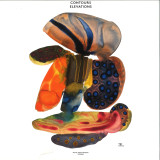
Music From Memory is delighted to present ‘Elevations’, a new album from Manchester based artist Tom Burford, aka Contours.
Drawing heavily on his background as a drummer and percussionist, ‘Elevations’ began as an exploration of the Balafon, a Malian tuned percussion instrument, before organically growing into its final form; a delicate suite of compositions centered around rhythmical interactions of percussion, synthesizer and strings.
Recorded during the pandemic and the period following, the album reflects a desire to lose oneself in the expanse of nature - the title ‘Elevations’ being a direct nod to the mountainous area of Cumbria where Tom grew up. The album also represents the joy of creating with friends; it features performances from several of his musical contemporaries, many of which were recorded at his home in Manchester. Slowly taking shape, the final result is a record that seamlessly blends electronic and acoustic, operating at the intersection of Minimalism, Jazz, Fourth World and Contemporary Classical music.
Is this the future sound of black American jazz - an inclusive yet rhythmically complex groove based music that owes as a much to black urban culture - predominantly hip hop and trap music rhythms - as it does to jazz improv techniques and rhythms? It's certainly interesting that similar elements swim through the music of Robert Glasper and Kamasi Washington, who along with Scott are currently big box office, pulling-in substantial new audiences for their music. Ruler Rebel is the first album of a trilogy celebrating 100 years of recorded jazz, and will be followed by Diaspora and Emancipation Procrastination later. At the heart of this music are polyrhythmic grooves that might come from jazz, New Orleans black Indian music, trap, Malian rhythm Kassa Soro and the interplay between an SPD drum machine and live drumming. Largely featuring Scott's trumpet, the record introduces his articulate and frequently eloquent voice as the narrator of Ruler Rebel, much like the Persian Princess Scheherazade narrating her tales of the mysterious east to Sultan Shahriar over one thousand and one nights. A key track is `Encryption', a summation of Scott's direction of travel on the album. Here the running rhythm is derived from the New Orleansian Afro-Indian culture married with Malian Kassa Soro. This is in turn is layered with SPD-SX electronic drum machine and sampling machine played by Joe Dyson and Cory Fonsville that introduce rhythmic elements from trap and hip hop. Sounds complex? Well it is, but it works. Other highlights include `New Orleansian Love Song' and `New Orleansian Love Song II' and a celebration of Afro-Indian culture on `The Coronation of K. Atunde Adjuah'.
Black[24,79 €]
Is this the future sound of black American jazz - an inclusive yet rhythmically complex groove based music that owes as a much to black urban culture - predominantly hip hop and trap music rhythms - as it does to jazz improv techniques and rhythms? It's certainly interesting that similar elements swim through the music of Robert Glasper and Kamasi Washington, who along with Scott are currently big box office, pulling-in substantial new audiences for their music. Ruler Rebel is the first album of a trilogy celebrating 100 years of recorded jazz, and will be followed by Diaspora and Emancipation Procrastination later. At the heart of this music are polyrhythmic grooves that might come from jazz, New Orleans black Indian music, trap, Malian rhythm Kassa Soro and the interplay between an SPD drum machine and live drumming. Largely featuring Scott's trumpet, the record introduces his articulate and frequently eloquent voice as the narrator of Ruler Rebel, much like the Persian Princess Scheherazade narrating her tales of the mysterious east to Sultan Shahriar over one thousand and one nights. A key track is `Encryption', a summation of Scott's direction of travel on the album. Here the running rhythm is derived from the New Orleansian Afro-Indian culture married with Malian Kassa Soro. This is in turn is layered with SPD-SX electronic drum machine and sampling machine played by Joe Dyson and Cory Fonsville that introduce rhythmic elements from trap and hip hop. Sounds complex? Well it is, but it works. Other highlights include `New Orleansian Love Song' and `New Orleansian Love Song II' and a celebration of Afro-Indian culture on `The Coronation of K. Atunde Adjuah'.
Poly Dance Theatre presents its new show: Warning: killer track! Let's start with side A: an international adventure. Backstage, we meet up with rico OBF, who has recorded MC Waraba, the Malian singer and pioneer of the "Balani show" for his forthcoming album on Blanc Manioc Records, at the dubquake studio. Still backstage, we come across androo, the little pictureditor hanging around, who offers to do a re-interpretation by re-creating a riddim from the vocal.
So here's poet rapper MC Waraba, singing in Bambara and French, telling us a story about a girl's difficult choices over a riddim made in androo.
The result is a strange, solid, bewitching and melancholy blend of dub, wave and drill trap music. The references are many and scattered, as always with androo (just take a look at his bedroom). After the pop-epic poem, dub mix versions unfold, from dub vocal, with reminiscence of the delay-cut poem, to deep, robust instrumental straight.
B side: Warning: killer track again! Warning: another kind of Wave-dub-trap. Warning: Identity is theft. Warning: Sound system style: 4 parts! Here, starting with a badly cut sample (against American transparency! long live Brecht!), we wander through a heavy chorus-stepper-weird-club-dub, ranging from the most pop to the most ruff, via the most experimental to the deepest. 4 episodes. One season. To see again and again. To play again and again (if need be).
4 episodes (Warning again: Sound system style: 4 parts!)
A series of versions in which the dub mix experiments and pushes the track to its limits.
Translated with deepl
One of the greatest, heaviest, and most sought-after guitar records from 1970s West Africa, available on vinyl for the first time in over a decade!!!
Bamako, Mali, 1973: Rail Band, the official orchestra of the Malian state railway, drops their self-titled LP. It’s a relentlessly soulful and hypnotic blend of American funk, jazz horns, and Afro-Cuban music, reflected through centuries-old Mandé tradition and blasted at top volume by some of the continent’s greatest artists.
Led by legendary trumpet and saxman Tidiani Koné and held aloft by the intricate web of Djelimady Tounkara’s rumbling, reverb-soaked guitar, Rail Band’s sprawling compositions embody West African storytelling traditions while exulting in the technology and modernity of a newly independent Mali. Vocalists Salif Keita and Mory Kanté, two heroes of African music who would achieve global fame as soloists, are endlessly emotive, oscillating between silky ballads and funk screams. The band’s sound is filled out by layers of percussion, rolling guitars, and melodic horns filtered through the Caribbean.
Starting in 1970, Rail Band played five nights a week, from 2 pm til the early hours, at the Buffet Hotel de la Gare. Their audience was an international array of businessmen, young partiers, and people of the Bamako night. The band was incredibly versatile, switching genres, rhythms, and styles to meet their crowd. It was a volatile mix, one that would fall apart soon after these recordings were made, with Salif Keita’s departure to start the rival Les Ambassadeurs. Though Rail Band continued in many distinguished forms, the eight songs on this album reveal one of the greatest bands to ever exist, at the height of their creative powers.
On “Duga”, a composition dating back to the 13th century and passed on through oral tradition by the jelis (griots), the Rail Band replace balafon with the interplay of Cheick Tidiane’s speaker-rattling bass and Alfred Coulibaly’s tasteful organ. “Marabayasa,” with its iconic sax intro and Mory Kanté channeling James Brown, is a deep-cut favorite of DJs around the world. Part of a long and regal lineage of Malian guitar orchestras initially tasked with translating the region’s traditional music to modern instrumentation, Rail Band morphed and reenvisioned those traditions with a style and energy that has never been matched.
New Ancient Strings is an album by world renowned Malian kora players Toumani Diabateand Ballake Sissoko. Originally released by record producer Joe Boyd's (Nick Drake, Richard Thompson, Pink Floyd) Hannibal Records in 1999. This newly remastered edition makes its vinyl debut. Inspired by a landmark 1970 album, Ancient Strings, recorded by their fathers,Sidiki Diabaté and Djelimadi Sissoko, Toumani and Ballake took to making their own updated version, whichmany of the songs come from the original repertoire, the music is all modern Mali and played beautifully making this a modern classic in it's field.
New Ancient Strings by Toumani Diabaté, released 15 February 2024, includes the following tracks: "Kita Kaira", "Cheikhna Demba", "Kadiatou" and more.
This version of New Ancient Strings comes as a 1xLP.
The vinyl is pressed as a opaque disc.
Obwohl sich Etran De L'Äir bereits 1995 gründeten und schon über 40 Songs selbst komponiert haben, hat es 23 Jahre gedauert, bis die Formation mit "No. 1" ihr Debüt vollbracht hat. Ausschlaggebend dafür waren weniger die künstlerischen Qualitäten als vielmehr die ökonomischen Verhältnisse, in denen das Familienkollektiv in Agadez im Nordosten von Niger lebt. Hier verdienen die Musiker bei Hochzeiten ihren Lebensunterhalt. Da sie jedoch aus einem sozial schwachen Milieu stammen, werden sie in der streng hierarchischen Tuareg-Gesellschaft nur von relativ armen Familien für die Feierlichkeiten gebucht. Entsprechend gering ist das Auskommen. Doch Etran De L'Äir haben aus der Not eine Tugend gemacht und mit baufälliger Instrumentierung - drei Gitarren plus Perkussion - und bewährten DIY-Tugenden einen vollkommen eigenen Sound entwickelt. Keine andere Gruppe spielt den Sahara-Rock der Region so unkonventionell, laut und rau wie Etran De L'Äir. Ihr hypnotisch groovendes, live in einem garagenähnlichen Vorortstudio von Agadez eingespieltes Album strotzt nur so vor Surf-Twang, brennenden Gitarrenmelodien und treibenden Beats.
Lyon-based David Kiledjian is the creator behind a number of projects such as Fowatile, HILA and Dowdelin. Beside that he is producer of albums by Armenian pianist Tigran Hamasyan and Malian band BKO, and collaborator with Talib Kweli, Piers Faccini, Miguel Atwood-Ferguson and Vaudou Game. David is now releasing 'The Otium Mixtape', his first opus under his own name. These ten tracks build bridges between languages and folklore from world, jazz, hip-hop and electronic avant-garde.
Malian Sound Rules here, featuring Sidiki, Roka maestro. . Double Gatefold Cut Vinyl with 10 inserts drawed by Emmanuel Prost and a free Mp3 download coupon.
- 1: Kwengface - Freedom - A Colors Show
- 2: Broder John - Wikiflow - A Colors Show
- 3: Og Keemo - Regen - A Colors Show
- 4: Jelani Blackman - Hello - A Colors Show
- 5: Nnavy - Come And Get It - A Colors Show
- 6: Fatoumata Diawara - Nterini - A Colors Show
- 7: Krisy - Bounce - A Colors Show
- 8: Bellah - Evil Eye - A Colors Show
- 9: Grace Weber - Intimate - A Colors Show
- 10: Yeиdry - Nena - A Colors Show
- 11: Boj - See Me - A Colors Show
- 12: Levin Liam - Uber X (Kathryn’s Song) - A Colors Show
- 13: Facesoul - Grow - A Colors Encore
- 14: Elmiene - Endless No Mores - A Colors Show
- 15: Lynn - J'aime Pas Le Goût - A Colors Show
- 16: Mỹ Anh - Mỗi Khi Anh Nhìn Em - A Colors Show
Renowned Berlin-based music discovery platform COLORSxSTUDIOS will release their new vinyl compilation album, ‘MOVE:FEEL1’, just in time for the holidays.
The limited-edition double disc gatefold vinyl will feature 16 beloved A COLORS SHOW tracks, both recent and from the archive, including London-based rapper Kwengface’s ‘Freedom’ that was released earlier this year, critically-acclaimed Malian artist Fatoumata Diawara’s ‘Nterini’ from 2019, and Dominican-Italian star YEИDRY’s breakout 2020 hit ‘Nena’.
The album is truly international—it will feature songs sung in six different languages (including English, Swedish, German, Bambara, French, Vietnamese, and Spanish) and represent artists from 15 different countries across the world.
‘MOVE:FEEL1’ reflects and celebrates the launch of COLORS’ new ‘MOVE’ and ‘FEEL’ playlists that are now available across all DSPs. Updated monthly, these playlists will curate COLORS’ genre fluid output into cohesive listening experiences that cater for varying emotional states.
The songs on the ‘MOVE’ playlist—and hence on the ‘MOVE’ sides of the vinyl—are uptempo, bold, sexy and energetic, and aim to set the tone for daring and unapologetic enjoyment. In contrast, the tracks on the ‘FEEL’ playlist and discs are downtempo and emotive. They are for relaxation, and to help listeners contemplate their internal and external environments
Designed by COLORS’ in-house creative team, the vinyl cover is mirrored, meaning its appearance adapts depending on the light and colors it reflects. This was an important decision to ensure the cover represents all of the featured artists, who all performed their A COLORS SHOWS against different colored backdrops. The mirrored material also enables the audience to literally (and hopefully metaphorically) see themselves in the album.
Each side of the mirrored cover is adorned differently: while the “MOVE” side features embossed lines, stripes and slashes indicative of motion, the more introverted “FEEL” side is debossed with goosebump-like grooves. Even with their eyes closed, people will be able to feel which side of the album is which, adding an extra sensory layer to the listening experience.
MOVE:FEEL1’s design also prioritizes sustainability, using no single-use plastics for its packaging.
Malian and French pairing Siraba return to Secret Teachings with a third superb single, ‘Nase’, from their forthcoming debut album, accompanied by US talent Joeski on remix duties.
Malian hunter Boubacar Samake and Damien Vandesande, one half of the French electronic band dOP, use their Siraba project to bring the traditional sound of the Wassoulou - a river valley of West Africa - to the electronic world. They have been friends for 20 years and look to fuse Mali’s rich musical traditions with cutting-edge electronic music, always with an underlying message of love and respect for all. Their stunning work has found a perfect home on Damian Lazarus’ Secret Teachings imprint, a left-of-centre and experimental alternative to his club-focussed Crosstown Rebels, and the pair return in excellent fashion once again to drop the penultimate single ahead of their debut album release.
Joining the package is US house legend Joeski, whose roots in the scene date back to the early 90s. A founding member of The Chocolate Factory DJ collective, he has been a vital part of the scene ever since with releases on Crosstown Rebels, Relief and an array of other heavyweight labels. His sympathetic remix elongates the groove into immersive, deep house sounds richly layered with elegant synths and soul-rousing chords that are delicate yet impactful.