Suche:philip corner

Styles
Alle
  • 1
Various - Straight Outta Tenggara: Southeast Asian Hip-Hop, 1990s-2000s MC (TAPE)
  • A | Side A
  • B | Side B

Another DINTE tape curated by cult WFMU show and blogger Bodega Pop; Gary Sullivan's long-running project rooted in a passion for digging for music in bodegas and cell-phone stores across NYC's boroughs. This edition focuses in on late 1990s and early 00s hip-hop & rnb from across Southeastern Asia.

"While on a work trip to Chicago in the mid-2000s, I was craving a bowl of pho. A bit of sleuthing led me to hop on the red line "L" up to Argyle Street, ground zero of Chicago's Little Saigon. In the 1960s, Chicago restaurateur Jimmy Wong invested in property on Argyle Street with a vision to build the city's new Chinatown, a kind of mall with pagodas, trees, and reflecting pools. In 1971, the Hip Sing Association, a labor/criminal organization, established itself in the area, and along with Wong, they bought up 80% of the buildings on a three-block stretch of the street. Wong reportedly broke both hips in an accident, leaving his dream to wither; in 1979, Charlie Soo of the Asian American Small Business Association brought it back to life.

Soo expanded the area into a vibrant mix of Chinese, Vietnamese, and other Southeast Asian businesses, pushing for renovations, including an Argyle station facelift and the Taste of Argyle festival. At the time I exited the station and crossed the street to get a better look at a shop with a poster for A Vertical Ray of the Sun in the window, the area was home to some 37,000 Vietnamese residents.

Opening the door, I was gobsmacked by a cavernous Southeast Asian media store, bigger than any I'd been to in Dallas, Montreal, New York, or Seattle. I spent some time at the bins, pulling out collections by some of my then-favorite singers — Giao Linh, Khánh Ly, Phương Dung — before approaching the register to ask the young woman behind the counter if the they carried any Vietnamese rap. It was a longshot, I knew, but if such a thing existed on physical media and anyone carried it, it would be this place.

'Have you heard Vietnamese rap?' she replied, her tone of voice and facial expression betraying a comically exaggerated level of distaste. I admitted my ignorance but assured her that I had long cultivated a high threshold for cheesy pop music of all kinds and genuinely tended to like hip hop from around the world.

She rolled her eyes and pointed to an area I had missed. I walked toward a far corner of the store and knelt over a small box on the floor sparsely populated with CDs, VCDs, and cassettes. I pulled out half a dozen Vietnamese hip hop compilations and a strange-looking CD with a cavalcade of odd typefaces in a queasy multitude of colors: THAILAND RAP HIT, it boasted, with 泰國 "燒香" 勁歌金曲 below it. The information on the back provided an address in Kuala Lumpur and the titles in Thai and English translation. The first track included three simplified Chinese characters after the English-language version of the title, "The Chinese Association": 自己人.

WTF was going on here? Walking back to the register, I waved the CD, asking "What's up with this one?" She gave me a look. I placed it on the counter so she could bask in the cover's full glory. She shrugged. "I'm guessing it's Thai rap?" She looked disappointed in me when I said I'd take it.

It turned out to be a Malaysian pressing of half-Chinese Thai hip hop artist Joey Boy's third album, Fun Fun Fun from 1996, and it completely changed my sense what the genre could sound like. The rapper's self-assured, effortless, silly-but-cool rapid-fire delivery weaved in and out of the most bizarre, antic beats I'd ever heard. The six Vietnamese hip hop CDs were a mixed bag, mostly "serious" sounding mimicry of US rapping over predictable production, but the highs were very high. When I got home and listened to it all, I made a point to find as much hip hop from this part of the world as I could.

The tracks collected here provide a limited but potent reflection of the two-decade ascendency
and ultimate world-takeover of hip hop, as it displaced rock and its endless variants for millions of listeners. This not a fair and balanced overview of regional production: I've only included tracks from Cambodia, Indonesia, Myanmar, Philippines, Thailand, and Vietnam. Nor is this a biggest or most important artists collection; instead, I've tried to recapture the pure visceral thrill of that first time I heard Joey Boy, choosing bangers that sound like nothing else, from nowhere else."

—Gary Sullivan

Auf Lager

Bei uns am Lager und sofort versandfertig

16,39
James Tenney - Postal Pieces

Since its founding back in 2014, Blume has carved a unique place in cultural landscape, issuing free-standing works, spanning the historical and contemporary, that represent singular gestures of creativity within the field of experimental sound. Joining their broad efforts in building networks of context and understanding that already includes the works by Werner Durand, Sarah Hennies, Bruce Nauman, John Butcher, Jocy de Oliveira, Mary Jane Leach, Valentina Magaletti, Alvin Curran, Julius Eastman, Alvin Lucier, and others, Blume return with the first ever vinyl release to attend to James Tenney’s legendary “Postal Pieces”, Marking the first ever appearance of five of the suite’s works - “Maximusic, for Max Neuhaus” (1965), “Having Never Written a Note for Percussion, for John Bergamo” (1971), “FFor Percussion Perhaps, or... Night, for Harold Budd” (1971), “Cellogram, for Joel Krosnick” (1971), and “Beast, for Buell Neidlinger” (1971) - on vinyl, drawing upon recordings made in 2003, by the Amsterdam based ensemble, The Barton Workshop, under the direction of James Fulkerson. Among the most important and highly regarded efforts in Tenney’s canon of compositions, as well as within the history of 20th Century music, these five pieces represent a crucial bridge between Fluxus-oriented conceptualism, minimalism, and the microtonal complexities that would emerge in their wakes. Issued in a highly limited vinyl edition of 300 copies, it includes exact replicas of the original postcard graphic scores, and features newly commissioned liner notes by Bradford Bailey, Blume’s brand new edition takes great steps to centring Tenney at the eye the storm during some of experimental music’s most important years.

A student of composition under Carl Ruggles, John Cage, Harry Partch, and Edgard Varèse - remaining close to all of them, and later performing in both Cage and Partch’s ensembles - as well as acoustics, information theory, and tape music composition under Lejaren Hiller, James Tenney carved a wide path within the contexts of experimental and avant-garde music during the second half of the 20th Century. Not only was he a tangible bridge between the generations of composer’s who laid much of the groundwork and the later movements of Fluxus, Minimalism, and the broader practices of experimental music, but Tenney is credited as having contributed one of the earliest applications of gestalt theory and cognitive science to music in 1961, before helping to pioneer the field of computer music at Bell Labs, during the following years.

Over the course of his career, Tenney produced music of such complexity and sophistication - paying little mind to the seductions of taste or dominant tropes of its own moment - that his work and legacy have largely remained under-recognised by the broader publics that have attended to most of his peers. Perhaps more pertinently, the body of work he produced can be perceived as too varied and complex to fit neatly within standard creative histories or critical frameworks, comprising harmonically complex works for acoustic instrumentation, musique concrète, the groundbreaking 1961 “plunderphonic” composition, “Collage No.1 (Blue Suede) (for tape)” - sampling and manipulating a recording of Elvis Presley - as well as algorithmic and computer synthesized music. Even here, within this single decade, a clear image of Tenney’s endeavours remains elusive. In addition to penning important theoretical texts, he collaborated and / or played with Max Neuhaus, La Monte Young, Steve Reich, Philip Glass, Michael Snow, Terry Riley, and numerous others; was an active member of Fluxus; starred in and composed music for Stan Brackage’s films; regularly worked with the Judson Dance Theater; co-founded and played in the ensemble, Tone Roads, with Malcolm Goldstein and Philip Corner; was a vocal advocate of the works of Conlon Nancarrow and Charles Ives, playing a significant part in the revival of both of their legacies; and regularly collaborated as a composer, musician, and actor with his then-partner, the artist Carolee Schneemann, notably co-starring in her film, “Fuses” (1965) and her legendary 1964 performance, “Meat Joy”, as well as creating sound collages for her films “Viet Flakes” (1965) and “Snows” (1970). Curiously, for a relatively absent figure in the historical and critical narratives, Tenney seems to have been the thread that bound multiple generations and disciplines of avant-garde practice in New York during this period.

Tenney was deeply invested in the quality and perception of sound. By 1970, this led him back to composing exclusively for acoustic instrumentation (though sometimes processed with tape delay) - in most cases utilising non-well tempered tuning systems to explore harmonic perception - a practice that he would remain steadfast to for the remainder of his life. This development roughly corresponded with his relocation to California, at the outset of the 1970s, following an invitation to teach at the newly founded music department at California Institute of the Arts (CalArts) in Valencia. Finding himself in regular contact with the harpist Susan Allen and the artist Allison Knowles, as well as at a great distance from many of his friends, in 1971 he completed (with the assistance of Knowles and Marie McRoy) “The Postal Pieces”, a project he had begun in 1965.

A suite of eleven compositions, “The Postal Pieces”, stands among Tenney’s well known and celebrated compositions, and illuminates the dualities embraced by the composer, notably his use of sound to develop consciousness in and of others, and his willingness to draw on elements and observations of everyday life; citing his strong dislike of writing letters as being the primary inspiration for their inception. In lieu, he conceived to send his friends - John Bergamo, Allison Knowles, Pauline Oliveros, La Monte Young, Harold Budd, Philip Corner, Joel Krosnick, Buell Neidlinger, Susan Allen, Max Neuhaus, and Malcolm Goldstein - short scores on the back of postcards. The suite is composed around three themes: Tenney’s concept of swell form (utilizing repetition and progressing through a structurally symmetrical arch), intonation, and the desire to produce “meditative perceptual states”.

A hugely important addition to Blume’s ever expanding efforts in context building and networks of creative practice, James Tenney’s “Post Pieces” is issued in a highly limited vinyl edition of 300 copies, which includes a exact replicas of the original postcard graphic scores, and features newly commissioned liner notes by Bradford Bailey.

Auf Lager

Bei uns am Lager und sofort versandfertig

25,42
Malcolm Jiyane Tree-O - True Story

"Described by Zimbabwean journalist Liam Brickhill as “a new star in the southern sky”, and by his legendary mentor, Bra Johnny Mekoa, as “the future Jonas Gwangwa”, Malcolm Jiyane is a cornerstone of the contemporary South African Jazz scene. From his teenage years, it was under Mekoa’s tutelage that Jiyane developed his prodigious talents into the multi-instrumentalist that he is today. What Theon Cross is to the tuba, Malcolm is to the trombone, although his ability to embody musical production extends far beyond one instrument. His work thus far constitutes, amongst other works, film score (which he composed as a teenager), and debut album UMDALI (meaning ‘creator’ in Zulu), which was received to universal acclaim, including a 5-star review (and Global Album Of The Month nod) from The Guardian. In 2024, Malcolm Jiyane Tree-O (Tree-O is the name of his band), returns with his sophomore album ‘TRUE STORY’, an exploration of the current state of the rainbow nation through a series of songs inspired by real people and their stories. TRUE STORY releases on 14 June, on digital, vinyl and CD. "

Auf Lager

Bei uns am Lager und sofort versandfertig

26,85
Various - Tokyo Riddim 1976-1985 LP

If there is a year zero for the introduction of reggae music to Japan, you’d be forgiven for thinking it was 1979 when Bob Marley and the Wailers toured the country, trailed by an entourage of journalists, photographers and fans ready to spread the message of the music into all corners of Japanese society.

But the story of Japanese reggae is not a linear one, and the music that is collected on Tokyo Riddim 1976-1985 captures the moment J-reggae entered the broader public consciousness, merging commercial city pop style with an infectious backbeat, that has drawn comparisons with the emergence of Lovers Rock in the UK.

Rather than look directly to Jamaica, many producers and artists in Japan were inspired instead by the more approachable sounds of The Police and UB40, their reggae fix arriving pre-filtered through the lens of new wave pop from the UK. Playful and groovy, these album deep cuts have been overlooked for too long.

Among them are Miki Hirayama, the idol singer who borrowed the bassline from Bob Marley’s Natural Mystic on ‘Denshi Lenzi’, Chu Kosaka, who headed to Hawaii to cut the Jimmy Cliff-inspired ‘Music’ and Marlene, the Philippine songstress whose cover of Roberta Flack’s ‘Hittin’ Me Wear It Hurts’ owed much to her producer’s obsession with Sly & Robbie’s Compass Point sound.

Then there was Izumi “Mimi” Kobayashi, who enlisted the Babylon Warriors to perform on a dubbed-out version of her own track ‘Lazy Love’, the city pop-meets-new wave reggae sound of Miharu Koshi’s ‘Coffee Break’, Junko Yagami’s anti-apartheid deep cut ‘Johannesburg’ and Lily, whose ‘Tenkini Naare’ was produced by Ryuichi Sakamoto and closes out the compilation with a flourish.

While these stories may not always conform to neat narratives, they do provide a more accurate reflection of the indirect ways in which styles infiltrate one another and, in their naivety, have the potential to create something beautifully strange and entirely new. Previously only available in Japan, the tracks on this compilation are a testament to that curious alchemy.

Tokyo Riddim 1976-1985 is released on vinyl and as a full album download (no streaming), featuring original artwork by Japanese Fukuoka-based artist Noncheleee, whose cover pays homage to the iconic dancehall album art of Wilfred Limonious.

Released on 1st September, Tokyo Riddim 1976-1985 is part of Time Capsule's Nippon Series, a loose series of compilations exploring different musical scenes from Japan between the 1960s and 2010s.

nicht am Lager

Bestelle jetzt und wir bestellen den Artikel für dich beim Lieferanten.

26,68

Last In: vor 42 Tagen
Any Young Mechanic - There's A New Place On The Market (7")
  • A1: There's A New Place On The Market
  • B1: Every Time You Put Me Up, I Get Down Some New Way

Having taken their name from a line in Hooray For Hollywood – inspired by the song’s jarring use in Robert Altman’s Philip Marlowe detective movie The Long Goodbye – there is an aptly cinematic quality to Any Young Mechanic’s music.
With intricate scenes, enthralling narratives and unique characters cropping up across the lyrics, and a kaleidoscopic yet coherently interwoven spectrum of moods and emotions stretching through the music, the Adelaide five-piece bring a fresh language to folk music’s natural propensity to spin a good yarn.
So rather than offering borrowed references illuminated by the cosy flickers of campfire flames, on their debut album The Modern Shoe Is Ruining The Foot, the Australian band’s urgent songs conjure up vivid, widescreen vistas that blend the genre’s enduring charms with a musical dexterity and sharp vision reaching beyond folk’s usual corners.
“We are trying to make folk music for now,” suggests frontman Sam Wilson. “Turning it on its head in a new, sometimes uncanny way, because we don't want to just do the old thing again. I don't think it’s interesting to make things again, so we’re searching for a contemporary edge.”
The roots of this original yet inclusive approach, in part, go back to the Adelaide music scene that helped to forge Any Young Mechanic.

vorbestellen30.01.2026

erscheint voraussichtlich am 30.01.2026

20,38

Last In: vor 2026 Jahren
Various - The Original Sound Of Mali

Mr Bongo is proud to present 'The Original Sound of Mali', compiled by Vik Sohonie & David Buttle.
Malian music is arguably deeper, more sophisticated and lyrical than any other form of African music. Those of us deeply entranced by Malian culture, and, in particular, the immense hypnotic beauty of Malian music, have put together a
selection of songs from across the country.
Compiled by Vik Sohonie & Dave 'Mr Bongo' Buttle, the story of this release began in 2015 when Dave happened upon the Soul Bonanza blog. A treasure chest of rare finds from around the world! One mix in particular stood out and totally enthralled Dave - le monde à change: a tribute to mali 1970 - 1991. He
already knew of Malian legends such as the Rail Band, Salif Keita, & Les Ambassadeurs du Motel de Bamako, but this mix was something else! Deep & culled from the collections of some of the heaviest African music collectors in the world, legends like Vik Sohonie, Hidehito Morimoto, Philippe Noel, Gregoire
Villanova, and Rickard Masip. Dave immediately contacted Vik and a journey of discovery tracking down the rights-holders began. He also turned to the font of Malian music knowledge, Florent Mazzoleni. Florent has written the definitive book about Malian music - 'Musiques modernes et traditionnelles du Mali'. He
proposed some incredible tracks to include and provided the back bone of the sleeve notes and photos that are used in the album. No Malian album would be complete without a striking front cover photo, and ours is sourced from the late great Malian photographer Malick Sidibé.
On this album you will find well-known artists sitting next to rarer
discoveries. The Rail Band, who are one of the best known of all the big bands in Mali, gave us the stars Mory Kanté and Salif Keita. Les Amabassedeurs du Motel de Bamako were another big act that had Idrissa Soumaoro, Kanté Manfila, and for a while Salif Keita in their ranks. Sometimes Salif would play in both bands in one night, quite a feat considering the bands were fierce rivals. As an albino Salif has had to face considerable prejudice from society, focussing on his musical career to help overcome this.

A major discovery on the album has been Idrissa Soumaoro et L'Eclipse de L'Ija. L'Eclipse de l'Institut des Jeunes Aveugles was a Blind teenagers institute and their record was produced by the German association that took care of blind Malian teenagers in Bamako. It was never properly released commercially and was the first recordings by the legends of Malian music Idrissa Soumaoro, Amadou Bagayoko and Mariam Doumbia. Amadou & Mariam later got married and became household stars, including making an album with Manu Chao.
This album is a concerted global effort to showcase the most vital cornerstone of Malian culture in an attempt to preserve its reputation in the face of its current, grim reality. We hope our highlights of Mali's rich history of musical innovation will serve as a starting point for reclaiming an image tainted by unnecessary conflict. May peace and music return to Mali soon.
Dedicated to Malick Sidibé.

nicht am Lager

Bestelle jetzt und wir bestellen den Artikel für dich beim Lieferanten.

24,79

Last In: vor 12 Monaten
Ash Ra Tempel - Starring Rosi  (50th Anniversary Edition) (LP)

We are thrilled to announce the highly anticipated re-issue of Ash Ra Tempel's legendary 5th Studio Album "Starring Rosi" in our "50th Anniversary Edition". Originally released in 1973, this seminal work remains a cornerstone of the Krautrock and "Kosmische" movement, blending psychedelic rock, ambient soundscapes, and early electronics into a transcendent auditory experience.
The Album has been recorded by Manuel Göttsching in it´s entity, with additional help to come from Producer Dieter Diercks playing bass, percussion, Drummer Harald Grosskopf and of course Rosemarie "Rosi" Müller.
"Starring Rosi" is an essential piece of their continuation of blending cosmic psychedelia, ambient textures, and avant-garde electronic experimentation. Originally released in 1973, this album marked a significant departure for the band, featuring Rosi Müller, who added a lyrical and vocal dimension to the band's typically instrumental soundscapes & Manuel Göttsching background singing.
To many technically Ash Ra Tempel last, yet most accessible, release, although there was the soundtrack to Philippe Garrel´s movie "Le Berceau de Cristal" and there might be some further previously unreleased, music to come out later.

Album Background:
*Starring Rosi* stands out in Ash Ra Tempel's discography for its lighter, more accessible sound, balancing the band's signature cosmic explorations with melodic structures and poetic lyrics.
It marks an unique chapter in Ash Ra Tempel's discography, featuring the ethereal vocals of Rosi Müller alongside Manuel Göttsching's visionary guitar work. The album is a sonic journey that takes listeners through seven distinct tracks, each showcasing Manuel Göttschings pioneering approach to music.
From the dreamy opening track "Laughter Loving" to the meditative "Day-Dream" and the atmospheric "Interplay of Forces," songs that illustrate the band's evolution from their earlier, more intense and improvisational albums, showcasing a more reflective and introspective side .
"The Fairy Dance" is delving into the mystical and meditative, transporting listeners to a dreamlike state.
While "Schizo" sounds like a continuation of the best moments of the previous Ash Ra Tempel records, is the last track "Bring Me Up" an Up-tempo Song that features Manuel as well on vocals.
"Starring Rosi" captivates with its blend of cosmic improvisation and melodic beauty.

Reissue Details:
This reissue of *Starring Rosi* has been introduced and overseen by Manuel Göttsching still, and finalised by his Family exactly to his standards, in which the meticulous approach to his work lives on.
An updated 2024 recut carefully commissioned by Schnittselle in Berlin (who also signs responsible for the previous ART Reissues, likewise, the 2016 E2 E4 Anniversary Edition ensure the warm depth sound while bringing out the rich textures and nuances, all of the original recordings. The reissue is available on 180-gram Black vinyl and a Limited Edition in transparent Pearl Sunrise Vinyl.
Both vinyl editions comes with a replica of the original Vinyl Artwork including it´s original Backside.
The Limited Edition also includes a Poster of the alternate Backside, used later on the CD Editions showing Rosi and Manuel improvising during studio sessions. Also included are prints of previously unreleased Original "The Fairy Dance" Music and "Schizo" Composition Sheets handwritten by Manuel

nicht am Lager

Bestelle jetzt und wir bestellen den Artikel für dich beim Lieferanten.

25,92

Last In: vor 10 Monaten
Ash Ra Tempel - Starring Rosi  (50th Anniversary Edition) (LP)

We are thrilled to announce the highly anticipated re-issue of Ash Ra Tempel's legendary 5th Studio Album "Starring Rosi" in our "50th Anniversary Edition". Originally released in 1973, this seminal work remains a cornerstone of the Krautrock and "Kosmische" movement, blending psychedelic rock, ambient soundscapes, and early electronics into a transcendent auditory experience.
The Album has been recorded by Manuel Göttsching in it´s entity, with additional help to come from Producer Dieter Diercks playing bass, percussion, Drummer Harald Grosskopf and of course Rosemarie "Rosi" Müller.
"Starring Rosi" is an essential piece of their continuation of blending cosmic psychedelia, ambient textures, and avant-garde electronic experimentation. Originally released in 1973, this album marked a significant departure for the band, featuring Rosi Müller, who added a lyrical and vocal dimension to the band's typically instrumental soundscapes & Manuel Göttsching background singing.
To many technically Ash Ra Tempel last, yet most accessible, release, although there was the soundtrack to Philippe Garrel´s movie "Le Berceau de Cristal" and there might be some further previously unreleased, music to come out later.

Album Background:
*Starring Rosi* stands out in Ash Ra Tempel's discography for its lighter, more accessible sound, balancing the band's signature cosmic explorations with melodic structures and poetic lyrics.
It marks an unique chapter in Ash Ra Tempel's discography, featuring the ethereal vocals of Rosi Müller alongside Manuel Göttsching's visionary guitar work. The album is a sonic journey that takes listeners through seven distinct tracks, each showcasing Manuel Göttschings pioneering approach to music.
From the dreamy opening track "Laughter Loving" to the meditative "Day-Dream" and the atmospheric "Interplay of Forces," songs that illustrate the band's evolution from their earlier, more intense and improvisational albums, showcasing a more reflective and introspective side .
"The Fairy Dance" is delving into the mystical and meditative, transporting listeners to a dreamlike state.
While "Schizo" sounds like a continuation of the best moments of the previous Ash Ra Tempel records, is the last track "Bring Me Up" an Up-tempo Song that features Manuel as well on vocals.
"Starring Rosi" captivates with its blend of cosmic improvisation and melodic beauty.

Reissue Details:
This reissue of *Starring Rosi* has been introduced and overseen by Manuel Göttsching still, and finalised by his Family exactly to his standards, in which the meticulous approach to his work lives on.
An updated 2024 recut carefully commissioned by Schnittselle in Berlin (who also signs responsible for the previous ART Reissues, likewise, the 2016 E2 E4 Anniversary Edition ensure the warm depth sound while bringing out the rich textures and nuances, all of the original recordings. The reissue is available on 180-gram Black vinyl and a Limited Edition in transparent Pearl Sunrise Vinyl.
Both vinyl editions comes with a replica of the original Vinyl Artwork including it´s original Backside.
The Limited Edition also includes a Poster of the alternate Backside, used later on the CD Editions showing Rosi and Manuel improvising during studio sessions. Also included are prints of previously unreleased Original "The Fairy Dance" Music and "Schizo" Composition Sheets handwritten by Manuel

nicht am Lager

Bestelle jetzt und wir bestellen den Artikel für dich beim Lieferanten.

23,49

Last In: vor 12 Monaten
Tony Roots x King Original - Mountain Top

Recorded in 1997, Mountain Top features the commanding vocals of Tony Roots, backed by the legendary Firehouse Crew and produced by the visionary Fada Waz (Clifton Carnegie). This record’s release was driven by the people, evidenced and encouraged by the countless wheel-ups and sing-alongs during King Original’s international tour dates over the last three years whenever this seminal recording was dropped in the set.

Tony Roots, known for his cultural and spiritual themes, delivers a powerful vocal performance, reminding us that life’s most important journey is overcoming obstacles to find ‘Jah Love on the Mountain Top.’ This message is as relevant in today’s fast-paced, easy-come-easy-go consumer culture as it was when recorded three decades ago.

The Firehouse Crew renowned for their work with iconic acts like Luciano and Sizzla—shine brightly on this riddim, with the MPC drum machine-centered sound of 90s Jamaican roots reggae. An up-tempo 4/4 steppers beat layered with rich analogue textures and soulful instrumentation defines this timeless recording.

The first of many collaborations between Studio 55, Before Zero Records, and Footsie, the King Original legacy continues into the future, honouring the enduring contributions of Fada Waz and his collaborators.

Clifton Carnegie aka Ras Wazair aka Fada Waz - Clifton Carnegie, known as Ras Wazair, founded King Original Sound System in 1973, establishing it as East London’s foremost reggae sound. Operating under his Studio 55 moniker, he collaborated with legends like Johnny Osbourne, Barry Brown, Michael Prophet, Cornell Campbell, and Frankie Paul through imprints such as Original Sounds, Studio 55, and Original International. A mentor to many of the UK’s top sound systems and a key figure in London’s RasTafari community, Ras Wazair’s connections with prominent Jamaican artists, bands, and producers like Fattis Burrell ensured that Jamaican music remained an influential force in the UK sound system scene.

King Original
Founded in 1973 by Fada Waz, King Original Sound System shaped East London’s reggae scene for over two decades. Fada Waz and his son Footsie—a UK Grime pioneer who in later years expanded the legacy through his KO LP series and sold-out King Original mixed-genre events at London’s top venues—worked together until Footsie assumed full control following Fada Waz’s passing in 2021. Having worked with artists such as Dizzee Rascal, Arctic Monkeys, The Prodigy, D-Double E, Wiley, and Skepta, Footsie’s dedication to King Original has reinvigorated the legacy that underpins all UK bass music—the reggae sound system. Joining Footsie is his brother, Wazair’s last born Ras D also Jah Model, and long-time collaborator Sir Spyro, producer of two UK number-one hits with Stormzy and son of UK reggae stalwart Nerious Joseph. Armed with cutting-edge QSS sound system technology, King Original continues to set trends, shaping the future of UK bass music.

Tony Roots
Hailing from Manchester, Jamaica, in the 1980s, Tony Roots emerged alongside iconic figures like Garnet Silk and Tony Rebel. While his peers remained in Jamaica, Tony moved to the UK, where he went on to release ten albums and numerous singles, including hits like Grow Your Natty Dread Locks and Hola Zion. A steadfast champion of Rastafari, Tony has collaborated with legends such as the Firehouse Crew, earning worldwide respect and a devoted following within both the reggae community and the UK sound system scene.

The Firehouse Crew
Formed in 1986, The Firehouse Crew became a cornerstone of the 1990s roots-reggae revival. Initially associated with King Tubby’s Firehouse label before establishing their own, the band rose to prominence through collaborations with producer Philip “Fattis” Burrell at Xterminator Records. Their contributions to timeless albums like Luciano’s Where There is Life highlight their extraordinary musicianship. Over the years, The Firehouse Crew has backed iconic artists such as Sizzla, Buju Banton, and Beres Hammond, cementing their legacy as masters of roots reggae.

nicht am Lager

Bestelle jetzt und wir bestellen den Artikel für dich beim Lieferanten.

15,34

Last In: vor 11 Monaten
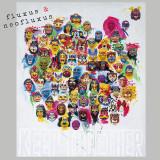
Various - Fluxus & Neofluxus: Keep Together LP 2x12"
 
30

In April 2023, there was released the first part of the Fluxus edition called Stolen Symphony. The year has come and gone and there is the second part of the Fluxus edition called Keep Together. At the centre of both parts of this edition was a broken piano, acquired by the Opening Performance Orchestra for the purpose of making live and studio recordings. During this time other new works for this broken piano were written by diverse Fluxus and non-Fluxus composers. In the spring of 2022, the Opening Performance Orchestra and broken piano participated in an event hosted by Mieko Shiomi. This was a new version of her early work Spatial Poem, documentation of which was presented at the 2022 Aichi Triennale in Tokyo. At present, broken piano lies in the open air in Prague and is subject to gradual decay.

These both parts of this edition contain 73 new and old pieces, live and studio recordings, finished pieces and scores to be performed, solos and pieces for ensemble, using classical and special instruments from 33 Fluxus artists, which have been played by 10 soloists and 4 ensembles. There are new essays and articles from 15 writers on the theme Fluxus, original photos and other documentation in the booklets.

vorbestellen27.09.2024

erscheint voraussichtlich am 27.09.2024

26,01

Last In: vor 2026 Jahren
MALPHINO - Visit Malphino

Malphino

Visit Malphino

12inchLEXLPB126
LEX RECORDS
05.07.2024

Malphino is a mysterious band from an imaginative tropical island of the same name that plays Cumbia and a heady mix of exotic sounds. The musicians of Malphino reinterpret the traditional banda, playing organ, accordion, tuba, and an array of percussion and rhythms from all corners of the world. Malphino has an unique style and is a gathering of nationalities, hailing from Japan, Malaysia, Colombia, France, UK and the Philippines. This central idea of multiculturalism is the foundation for Malphino’s conceptual music project.

vorbestellen05.07.2024

erscheint voraussichtlich am 05.07.2024

26,68

Last In: vor 2026 Jahren
Harvestman - Triptych : Part One LP

METAL HAMMER - 8/10 review. FOR FANS OF : Lustmord, Om, Sunn O))) . “An exercise in freeform ambience, ritualistic repetition and the rapturous, womb-like power of bass…strange and affecting. We remain lucky to share in the great man’s vision.”

It’s a dream diary narrating a passage through Summer Isle where Flying Saucer Attack are wafting out of a window, a distant Fairport Convention are being remixed by dub master Adrian Sherwood, celestial scanners Tangerine Dream are trying to drown out Bert Jansch and Hawkwind are playing Steeleye Span covers, all prised out of time yet bound to its singularity.

Released periodically on three of 2024’s full moons – April 23rd’s Pink Moon, July 21st’s Buck Moon and October 17th’s Hunter Moon – the three-album cycle, “Triptych”, is (Steve Von Till from Neurosis) Harvestman’s most ambitious undertaking yet.

Guest musicians including Al Cisneros of Sleep / OM who plays bass on one track for each LP, of which he will also mix a dub version on the B-Side of each LP. Dave French of Yob, Sanford Parker and Wayne from Petbrick all make appearances.


Released periodically on three of 2024’s full moons – April 23rd’s Pink Moon, July 21st’s Buck Moon and October 17th’s Hunter Moon – the three-album cycle, “Triptych”, is (Steve Von Till from Neurosis) Harvestman’s most ambitious undertaking yet.

Guest musicians including Al Cisneros of Sleep / OM who plays bass on one track for each LP, of which he will also mix a dub version on the B-Side of each LP. Dave French of Yob, Sanford Parker and Wayne from Petbrick all make appearances.

It’s a dream diary narrating a passage through Summer Isle where Flying Saucer Attack are wafting out of a window, a distant Fairport Convention are being remixed by dub master Adrian Sherwood, celestial scanners Tangerine Dream are trying to drown out Bert Jansch and Hawkwind are playing Steeleye Span covers, all prised out of time yet bound to its singularity.

Bone White opaque + Black Galaxy effect vinyl in dub style jacket (jacket sleeve with centre hole cut out so label shows throug
Drawn to the megaliths, ruins and ancient sites mapped out along the British and European mainland’s geographical and psychic landscapes, the folklore and apocrypha forever resurfacing as portals from a rational world, “Triptych” is a meditation forged from traces and residues, and an hallucinatory recollection of artists who have tapped into that enduring otherworldliness embedded within us all.

Woven together from home studio recordings that span two decades, this fifth outing as Harvestman finds parallels with nature’s cycles not just in its release dates but in the repeated structure that binds each album, like an imprint refracted though three separate strata. “Part One”, as with the forthcoming Parts Two and Three, starts on a collaboration with Om bassist and long-term friend of Steve’s, Al Cisneros, with a dub take opening the B-Side. Here, the opening track “Psilosynth" orbits a grandfather-clock mechanism passing through a nebula haze, all waved on by an acid-fried deity. From there on, “Part One” journeys through the elegiac “Give Your Heart To The Hawk”, with the sampled poetry like a documentary retrieved from a long-lost world, Philip Glass wistfully attending a rescue beacon from the far corner of the universe on Coma, as well as percussion recordings performed by Steve and friend Dave French (drummer of Yob) on a rusted torn open stock tank outside Steve’s barn, treated bagpipes and old reel-to-reel recordings, all reiterated across the next volumes in ever more out-there contexts.

If “Triptych” is a multi- and extra-sensory experience, it extends to the remarkable glyph-style artwork of Henry Hablak, a map of correspondences from a long-forgotten ancient and advanced civilization. As with “Triptych” itself, it’s an echo from another time, an act of binding, a guide to be endlessly reinterpreted, and a signpost to the sacred that might not indicate where to look, but how.

nicht am Lager

Bestelle jetzt und wir bestellen den Artikel für dich beim Lieferanten.

22,48

Last In: vor 20 Monaten
µ-Ziq - 1977 LP 2x12"

Μ-Ziq

1977 LP 2x12"

2x12inchBALMAT05Y
Balmat
08.02.2024

repress, yellow viny

When we established Balmat in 2021, neither of us could have imagined that within two years, we’d be putting out an album by one of our musical heroes: Mike Paradinas, aka µ-Ziq. The British producer has been an inspiration to label co-founders Albert Salinas and Philip Sherburne since the 1990s. In fact, his album-length remix project The Auteurs Vs µ-Ziq was one of the very first pieces of electronic music that Philip bought, way back in 1994. To have the opportunity to release his music now feels like a real full-circle moment.

Paradinas, of course, needs no introduction. Under a slew of aliases, chief among them µ-Ziq, the British artist revolutionized leftfield electronic music in the 1990s—coincidentally, this year marks the 30th anniversary of his debut album, Tango N’ Vectif, for his friend and sometime collaborator Aphex Twin’s Rephlex label—and his label Planet Mu has built up a formidable catalog of visionary, forwardlooking records, mapping virtually every corner of the electronic spectrum. With 1977, he turns the clock backward in a sense, and not just with the album’s title: Rooted in classic ambient and electronic sounds, these 15 tracks evoke the anything-goes spirit of the early ’90s, before the tools and tropes had calcified into cut-and-dried styles.

There’s no shortage of familiar sounds on 1977. There are echoes of raves and chillout rooms and transmissions from the fringes of techno; there are detuned synths and glistening reverb tails and, above all, gauzy vox pads, the eerie glue that holds it all together. The title, he says, is meant to invoke a general sense of nostalgia, bookmarking a year in his boyhood when he became more selfaware. More than anything, 1977 sounds like µ-Ziq distilled: Stripped of his signature breakbeats and customary chaos, Paradinas’ first-ever strictly (well, mostly) ambient album presents the essence of his music in a whole new light.

Along the way Paradinas touches on dark-ambient drones (“Marmite”), horror-film themes (“Belt & Carpet”), jungle breaks (“Mesolithic Jungle”), and even house music (“Houzz 13”), which marks the first bona fide dance-floor moment on Balmat to date). Yet the album never—to our ears, anyway— feels expressly retro. Rather, Paradinas plucks timeless sounds out of the ether and gives them a gentle tap, spinning them into unexpected new orbits. At times, 1977 feels like an experience of extended déjà vu: When we first listened to it, we had the sense that we already knew this music. It was as though we had heard it years ago, perhaps on a battered cassette tape lent to us by a friend, and been searching for it ever since. We hope you feel the same.

nicht am Lager

Bestelle jetzt und wir bestellen den Artikel für dich beim Lieferanten.

28,99

Last In: vor 21 Monaten
Kronos Quartet - Kronos Quartet Performs Philip Glass LP 2x12"
  • A1: String Quartet No. 5 I
  • A2: String Quartet No. 5 Ii
  • A3: String Quartet No. 5 Iii
  • A4: String Quartet No. 5 Iv
  • A5: String Quartet No. 5 V
  • B1: String Quartet No. 4 (Buczak) I
  • B2: String Quartet No. 4 (Buczak) Ii
  • B3: String Quartet No. 4 (Buczak) Iii
  • C1: String Quartet No. 2 (Company) I
  • C2: String Quartet No. 2 (Company) Ii
  • C3: String Quartet No. 2 (Company) Iii
  • C4: String Quartet No. 2 (Company) Iv
  • D1: String Quartet No. 3 (Mishima) 1957 – Award Montage
  • D2: String Quartet No. 3 (Mishima) November 25 – Ichigaya
  • D3: String Quartet No. 3 (Mishima) 1934 – Grandmother And Kimitake
  • D4: String Quartet No. 3 (Mishima) 1962 – Body Building
  • D5: String Quartet No. 3 (Mishima) Blood Oath
  • D6: String Quartet No. 3 (Mishima) Mishima/Closing

When Kronos plays a piece, they become fellow composers, true collaborators. Without them, we wouldn’t have the kind of string quartet playing that we find around us today. There are two kinds of string quartet playing: the ‘Before Kronos’ and the ‘After Kronos’.” – Philip Glass

‘Kronos Quartet has broken the boundaries of what string quartets can do.’ – New York Times

Nonesuch releases Kronos Quartet’s acclaimed album Kronos Quartet Performs Philip Glass on vinyl for the first time to coincide with Kronos Quartet: Five Decades, a year-long celebration marking the quartet’s 50th anniversary. Originally released in 1995, the album features David Harrington (violin), John Sherba, (violin), Hank Dutt (viola) and Joan Jeanrenaud (cello) performing Quartet No. 2 (Company) (1983), No. 3 (Mishima) (1985), No. 4 (Buczak) (1990), and No. 5 (1991), the first piece Glass wrote especially for Kronos. Recorded at Skywalker Sound in California, the album was produced by Judith Sherman, Kurt Munkacsi and Philip Glass. The cover art features Francesco Clemente’s painting The Four Corners (1985). At the time of the album’s release, the New York Times said, ‘It contains some of Glass's best music since Koyaanisqatsi. His ear for sumptuous string sonorities is undeniable,’ while the Washington Post called it ‘An ideal combination of composer and performers.’ It was a top 10 hit on Billboard’s Top Classical Albums, and spent 12 weeks on Billboard’s Classical chart.


In his original liner note, critic Mark Swed wrote, ‘Glass’ string quartets may contain his most intimate music. They are works through which a very public composer, perhaps the most important opera reformer of our age and a longstanding collaborator in large-scale music theater, holds up a mirror to himself and his way of composing. “In an odd way,” Glass explains, “string quartets have always functioned like that for composers. I don’t really know why, but it’s almost impossible to get away from it. It’s the way composers of the past have thought and that’s no less true for me. It’s almost as if we say we’re going to write a string quartet, we take a deep breath, and we wade in to try to write the most serious, significant piece that we can.” Glass says that as he sat down to write String Quartet No. 5, he had discovered that perhaps not taking a serious tone might be the most serious way to deal with it. “I was thinking that I had really gone beyond the need to write a serious string quartet and that I could write a quartet that is about musicality, which in a certain way is the most serious subject.”’


Glass’ first numbered quartet was written in 1966; however, he did not return to the string quartet medium until 1983, when he provided incidental music for a dramatization of Samuel Beckett’s prose poem, Company. During those 17 years, Glass had formed an ensemble and developed his style in a series of increasingly elaborate pieces for it. String Quartet No. 3 is also adapted to dramatic music, this time from his score to the 1985 Paul Schrader film, Mishima. It was with the music of Mishima that Kronos became associated with Glass, recording the string quartet sections of the soundtrack and subsequently working extensively with the composer on all five of his numbered quartets. Kronos also gave the first concert performances of Company and Mishima. String Quartet No. 4 was composed in remembrance of the artist Brian Buczak, who died of AIDS in 1988.


As Kronos’ anniversary season continues with further concerts around the world, Nonesuch will reissue Black Angels on vinyl on February 16. First released in 1990, the award-winning album includes George Crumb’s title piece, which inspired David Harrington to found the quartet. Called ‘an unusually elevated and searing Vietnam War protest’ by the New York Times, it sets a dark, powerful tone for this collection, which addresses the political/physical/spiritual consequences of war. Also featured are works by Charles Ives, István Márta, Thomas Tallis, and Dmitri Shostakovich. ‘Stylishly packaged, intelligently programmed, superbly recorded and brilliantly performed,’ proclaimed Gramophone. ‘In short, very much the sort of disc we’ve come to expect from the talented and imaginative Kronos Quartet.’ The Evening Standard included it among its ‘100 Definitive Classical Albums of the 20th Century’.


Born in Baltimore, Maryland, in 1937, Philip Glass is a graduate of the University of Chicago and the Juilliard School. By 1974, he had created a large collection of music for The Philip Glass Ensemble. The period culminated in the landmark opera, Einstein on the Beach. Since Einstein, Glass’s repertoire has grown to include music for opera, dance, theatre, orchestra, and film. His scores have received Academy Award nominations (including Kundun and The Hours, as well as Notes on a Scandal) and a Golden Globe (The Truman Show). Recent works include his memoir, Words Without Music, his first Piano Sonata, opera Circus Days and Nights, and Symphony No. 14. Glass received the Praemium Imperiale in 2012, the US National Medal of the Arts from President Barack Obama in 2016, and 41st Kennedy Center Honors in 2018.


Nonesuch’s relationship with Glass began in 1985, with the release of the score for Paul Schrader’s Mishima featuring Kronos Quartet. Over the years other Glass works on Nonesuch have included Einstein on the Beach (1993), Kronos Quartet Performs Philip Glass (1995), Music in Twelve Parts (1996), Glass Box (2008), as well as the soundtracks for Powaqqatsi (1988), Kundun (1997), Koyaanisqatsi (1998), and The Hours (2002), amongst others.


For 50 years, San Francisco’s Kronos Quartet – David Harrington (violin), John Sherba (violin), Hank Dutt (viola), and Paul Wiancko (cello) – has challenged and reimagined what a string quartet can be. Founded at a time when the form was largely centred on long-established, Western European traditions, Kronos has been at the forefront of revolutionizing the string quartet into a living art form that responds to the people and issues of our time. In the process, Kronos has become one of the most celebrated and influential groups of our era, performing thousands of concerts worldwide, releasing more than 70 recordings of extraordinary breadth and creativity, and collaborating with many of the world’s most accomplished composers and performers. Through its nonprofit organization, Kronos Performing Arts Association, Kronos has commissioned more than 1,000 works and arrangements for string quartet – including the Kronos Fifty for the Future library of free, educational repertoire. Kronos has received more than 40 awards, including three Grammy Awards and the Polar Music, Avery Fisher, and Edison Klassiek Oeuvre Prizes.


Kronos is prolific and wide-ranging on recordings. The ensemble’s expansive discography on Nonesuch includes three Grammy-winning albums: Terry Riley’s Sun Rings (2019), Landfall with Laurie Anderson (2018), and Alban Berg’s Lyric Suite featuring soprano Dawn Upshaw (2003); the 40th-anniversary boxed set Kronos Explorer Series; Nuevo (2002), a Grammy- and Latin Grammy–nominated celebration of Mexican culture; Pieces of Africa (1992), a showcase of African-born composers that simultaneously topped Billboard’s Classical and World Music charts; and Folk Songs (2017), Nonesuch’s 50th album with Kronos, which featured Sam Amidon, Olivia Chaney, Rhiannon Giddens, and Natalie Merchant singing traditional folk songs.

nicht am Lager

Bestelle jetzt und wir bestellen den Artikel für dich beim Lieferanten.

39,45

Last In: vor 2 Jahren
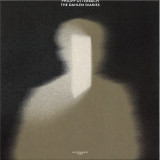
PHILIPP OTTERBACH - THE DAHLEM DIARIES LP

The new LP by Krefeld-born, Berlin-based artist Philipp Otterbach entitled 'The Dahlem Diaries'.

Recorded in a little-visited corner of the German capital, 'The Dahlem Diaries' is a convergence of ideas, sketches and tracks, both old and new, most of which were produced between 2020-2022. Whilst eerie atmospheres, electronics and drums have played a pivotal role in Philipp’s earlier releases, his latest is a rather more introspective affair, in which the guitar takes a leading role. A role Otterbach uses to quietly bring light and hope to his music.

Speaking about his writing process, Philipp explains that, based around his original compositions, “Friends were nice enough to contribute additional parts on their instruments which I then reworked, put together and re-contextualized. The recordings encapsulate a very specific moment in time, one that would have sounded perhaps very different the day before or after.”

Combined with a strong use of effects and field recordings, 'The Dahlem Diaries' feels somewhat like a scene or fragment from a story, in which the narrative remains undefined. It is a playful album that is something of a blurred underwater adventure, sounding as bright as it is hazy, even psychedelic at times, yet with an almost melancholic positivity. In Philipp’s own words: “It could be an album about friendship and being at one with myself, whilst at the same time bringing a certain seriousness to my music, but not necessarily to myself; there is also a playful humour hidden in there. ”

nicht am Lager

Bestelle jetzt und wir bestellen den Artikel für dich beim Lieferanten.

21,22

Last In: vor 2 Jahren
Mary Jane Leach - Woodwind Multiples

Mary Jane Leach is a composer focussed on the physicality of sound, its acoustic properties and how they interact with space. She has played an instrumental role in NYC’s pioneering Downtown scene alongside Arthur Russell, Ellen Fullman, Peter Zummo, Philip Corner and Arnold Dreyblatt, as well as devoting years to the preservation and reappraisal of Julius Eastman’s work since his death in 1990, compiling the »Unjust Malaise« 3CD set in 2005 and editing the 2015 book »Gay Guerrilla: Julius Eastman and His Music«. »Woodwind Multiples« is her second album for Modern Love, following »(f)lute songs« (2018).

»Woodwind Multiples« features four pieces for multiples of the same instrument: four bass flutes, nine oboes, nine clarinets, and seven bassoons. Each piece works closely with the unique sound of each instrument, combining pitches that create other, sometimes unexpected, tones, primarily combination and interference tones, as well as rhythmic patterns. What you hear is what happens naturally - there is no processing or manipulation.

»8B4 (1985/2022)«, played by Manuel Zurria, is for four bass flutes. It is a revision of 8x4, which was written in 1985 for the DownTown Ensemble and was only performed once, due to its unusual instrumentation: alto flute, English horn (originally bass oboe), clarinet, and voice.

»Xantippe’s Rebuke« (1993) was written for Libby Van Cleve, for eight taped oboes and one live, solo oboe. The eight taped parts are equal and dependent, while the solo part is meant to be a solo with the tape as accompaniment. The piece works with the unique sound of the oboe, starting with unison pitches that create the richest sound, building the piece from there. Pitches and rhythmic patterns that occur naturally are notated and then played later, which in turn create other pitches and rhythmic patterns. So, in effect, the nature of the oboe and its natural sound determine the direction of the piece.

»Charybdis« (2020), played by Sam Dunscombe, is for solo clarinet and eight taped clarinets. It combines a somewhat obscured reference to Weep You No More, a John Dowland piece, which combines with the sound phenomena created from the melody and supporting chords of the Dowland.

»Feu de Joie« (1992) was written for bassoonist Shannon Peet and is an homage to the bassoon and its wonderful sound. It is for seven parts—six taped and one »live.« The taped bassoons combine to create a bed of sound that exploits the unique qualities of the bassoon, creating combination and interference tones, starting off with unison pitches, creating a rich sound that builds from there. Most of the subsequent pitches and phrases occur naturally, and are then notated later on in the piece, which in turn creates other notes and phrases.

vorbestellen04.08.2023

erscheint voraussichtlich am 04.08.2023

30,04

Last In: vor 2026 Jahren
µ-Ziq - 1977 LP 2x12"

Μ-Ziq

1977 LP 2x12"

2x12inchBALMAT05
Balmat
13.04.2023

When we established Balmat in 2021, neither of us could have imagined that within two years, we’d be putting out an album by one of our musical heroes: Mike Paradinas, aka µ-Ziq. The British producer has been an inspiration to label co-founders Albert Salinas and Philip Sherburne since the 1990s. In fact, his album-length remix project The Auteurs Vs µ-Ziq was one of the very first pieces of electronic music that Philip bought, way back in 1994. To have the opportunity to release his music now feels like a real full-circle moment.

Paradinas, of course, needs no introduction. Under a slew of aliases, chief among them µ-Ziq, the British artist revolutionized leftfield electronic music in the 1990s—coincidentally, this year marks the 30th anniversary of his debut album, Tango N’ Vectif, for his friend and sometime collaborator Aphex Twin’s Rephlex label—and his label Planet Mu has built up a formidable catalog of visionary, forwardlooking records, mapping virtually every corner of the electronic spectrum. With 1977, he turns the clock backward in a sense, and not just with the album’s title: Rooted in classic ambient and electronic sounds, these 15 tracks evoke the anything-goes spirit of the early ’90s, before the tools and tropes had calcified into cut-and-dried styles.

There’s no shortage of familiar sounds on 1977. There are echoes of raves and chillout rooms and transmissions from the fringes of techno; there are detuned synths and glistening reverb tails and, above all, gauzy vox pads, the eerie glue that holds it all together. The title, he says, is meant to invoke a general sense of nostalgia, bookmarking a year in his boyhood when he became more selfaware. More than anything, 1977 sounds like µ-Ziq distilled: Stripped of his signature breakbeats and customary chaos, Paradinas’ first-ever strictly (well, mostly) ambient album presents the essence of his music in a whole new light.

Along the way Paradinas touches on dark-ambient drones (“Marmite”), horror-film themes (“Belt & Carpet”), jungle breaks (“Mesolithic Jungle”), and even house music (“Houzz 13”), which marks the first bona fide dance-floor moment on Balmat to date). Yet the album never—to our ears, anyway— feels expressly retro. Rather, Paradinas plucks timeless sounds out of the ether and gives them a gentle tap, spinning them into unexpected new orbits. At times, 1977 feels like an experience of extended déjà vu: When we first listened to it, we had the sense that we already knew this music. It was as though we had heard it years ago, perhaps on a battered cassette tape lent to us by a friend, and been searching for it ever since. We hope you feel the same.

nicht am Lager

Bestelle jetzt und wir bestellen den Artikel für dich beim Lieferanten.

24,33

Last In: vor 2 Jahren
Bladder Flask - One Day I Was So Sad That The Corners Of My Mouth Met & Everybody Thought I Was Whistling

Bladder Flask’s debut (in fact only) LP, originally issued by Orgel Fesper Music in 1981, is one of the most eclectic albums of the post-Industrial era. It is both challenging and perplexing… So, put down your puny instruments of normality and breathe in the frenzied fungal spores of Bladder Flask.

The fact that Steven Stapleton of Nurse With Wound is a big fan of this album is testament to its greatness: »I love Bladder Flask’s »One Day I Was So Sad That The Corners Of My Mouth Met & Everybody Thought I Was Whistling« and what a great title, perhaps my favourite ever. I must have listened to the album so much in the ’80s. I listened to it again recently and it was like welcoming an old friend.«

Personnel: Richard Rupenus, Philip Rupenus + Sean Breadin, John Mylotte, Nigel Jacklin Recorded at Wrongrong Studio and Spectro Arts Workshop 1980-1981 Audio Restoration & Mastering: Colin Potter @ IC Studio

vorbestellen03.03.2023

erscheint voraussichtlich am 03.03.2023

23,32

Last In: vor 2026 Jahren
Tülay German & François Rabbath - Homage To Nazim Hikmet

Following the reissue of the self-titled debut by Tülay German & François Rabbath in 2021, we're presenting the 2nd and final part of our Tülay German reissues: "Homage to Nazım Hikmet" (1982). Once again in a duo setting with François Rabbath, Tülay German pays tribute to one of Turkey's greatest poets of the 20th century: Nazım
Hikmet (1902-1963).

Recorded in the early 80s this two-album workcycle refers heavily on turkish poets and the tradition of aşıks (singer-poets and wandering bards) and consists of unique and modern interpretations of turkish folk songs unmatched to this day.

Back in the 60s Tülay German (*1935 in Istanbul, Turkey) shook the turkish music landscape with several 7" records. Most notably her first 7" record Burçak Tarlası (1964) is now considered
the cornerstone of what was to become the Anadolu Rock/ Pop movement and underlines her rebellious nature and sense of justice. But due to increasing repression Tülay German and her
lifelong partner and intellectual impetus Erdem Buri decided to leave Turkey a few years later.

In France Tülay German signs a major contract with Philips resulting in many 7" releases sung in french under her french moniker Toulaϊ. In the long run Tülay German doesn't feel quite comfortable with this major deal. And thus, despite the success and recognition she had gained, she decides to quit the contract with Philips!

Later on she signs to independent world-music label Arion to pursue her actual artistic goals more in line with her origin and temperament. Back to her mother tongue, Tülay German records above mentioned albums for Arion under full artistic freedom, the only full-lenghths in
her 20+ years career. Alongside with double-bass virtuoso and turkophil François Rabbath (*1931 in Aleppo, Syria) the albums consist of aşık traditionals and intonated poems mainly by
Nazım Hikmet. Her passionate voice and the restrained arrangements of François Rabbath turn these centuries old melodies and poems into glowing manifestos for love and justice. The fruitful collaboration of these artists-in-exile adds significantly to the rich heritage of turkish folk music.

Nazım Hikmet (1902-1963) is considered as one of Turkey's greatest poets of the 20th century, though during his lifetime his works were banned in Turkey for decades and he spent most of his life in prison or in exile. He is up to this day a huge reference for turkish writers,
musicians and intellectuals.

Tülay German ended her musical career in 1987. In 2021 Tülay German was awarded with the Lifetime Achievement Award by the Istanbul Foundation for Culture and Arts, Turkey.

nicht am Lager

Bestelle jetzt und wir bestellen den Artikel für dich beim Lieferanten.

24,33

Last In: vor 3 Jahren
Autumn Fair - Autumn Fair

Autumn Fair

Autumn Fair

12inchR100LP
Recital
28.10.2022

To celebrate the 10th anniversary of Recital, we present Autumn Fair: A group LP comprised of 44 guest players (full list below), curated and edited together by Sean McCann.

Autumn Fair aptly embodies the feeling of Recital as a record label; the infusion of abstract sound art and sentimental beauty – performed by both younger and older generations of artists.

Oren Ambarchi - guitar, Ed Atkins - paper shredder, Jason Bannon - family, Derek Baron - keyboard, Karla Borecky - upright piano, Andrew Chalk - guitar, crys cole - birds, Loren Connors - guitar, Philip Corner - grand piano, Maxwell August Croy - whistle, Sarah Davachi - electronics, Aaron Dilloway - SFX, Delphine Dora - voice, Giovanni Fontana - voice, Scott Foust - trumpet, Peter Friel - impression, Malcolm Green - camera, Judith Hamann - cello / voice, Mark Harwood - speech, Forest Juziuk - voice, Johnny Kay - tapping, Kajsa Lindgren - hydrophone, Rob Magill - guitar, Lia Mazzari - whip, Molly McCann - flute, Sean McCann - editing / voice, Nour Mobarak - voice sampler, Azikiwe Mohammed - interview, Charlie Morrow - MIDI piano, Kiera Mulhern - SFX, Zachary Paul - violin, claire rousay - SFX, Michel Samson - violin, Troy Schafer - strings, Eric Schmid - tone generator, Ben Schumacher - SFX, Tom James Scott - keyboard / SFX, Asha Sheshadri - reading, Patrick Shiroishi - winds, Sydney Spann - voice, Matthew Sullivan - instruments, Flora Sullivan-Kelly - percussion, Connor Tomaka - SFX / synth, Alex Twomey - upright piano.

I won't go into too much detail on the album itself, but after many twists and turns, the album concludes with “Recital Program,” an intense track that manically collages two-second excerpts from every Recital album to date.

I extend a sincere ‘thank you’ for all the incredible support for Recital over the past decade.

Ltd. LP Edition of 350 copies on 175gram black vinyl, gold foil printing, incl. program notes, comes with printed ticket, mechanically numbered.

vorbestellen28.10.2022

erscheint voraussichtlich am 28.10.2022

32,40

Last In: vor 2026 Jahren
Jean-Claude Vannie - La bête noire / Paris n’existe pas
 
27

With a discography held in such high esteem amongst fans of conceptual French pop and soundtrack composition, the likelihood of finding an unturned stone amongst maestro Jean-Claude Vannier’s fertile psychedelic rockery falls somewhere between slim and skeletal. Even the most intrepid explorers of the most fearless and fastidious nature should naturally expect to encounter one or two shadowy characters when braving the oblique corners of the Vannier vault, but few lost souls cast a darker silhouette than the cinematic obscurity known only as La Bête Noire (The Black Beast).

Lost and presumed missing for decades the soundtrack tapes to this lesser-known 1983 French thriller (featuring a cast culled from films such as Alphaville, The Modern Couple and Sweet Movie) captures the revered composer and arranger of Serge Gainsbourg’s Histoire De Melody Nelson embarking on a darker exploration of free jazz, frenzied batucadas and cyclic carousel psychedelia. Counting key players of the French jazz scene within its ranks, The Insolitudes group comprises a crack team of Palm/Futura/Actuel/Saravah regulars such as saxophonist Philippe Mate´ (Acting Trio/Mate´-Vallancien/Tacet) alongside drummer Bernard Labat (Mad Ducks) and legendary Arpadys/Voyage rhythm masters Marc Chantereau and Pierre-Alain Dahan (Brutus Drums) all of whom alongside Michel Zanlonghi (Ensemble De Percussion De Paris) make up this thunderous, tumultuous, four-headed rhythm machine bridging an authentic gap between The Jef Gilson Groups and France’s signature “cosmic” revolution. Naturally these previously unheard compositions are spearheaded by lead pianist and composer Vannier and for devotee’s of his 1972 concept album L’Enfant Assassin Des Mouche there is much to admire and cross-reference herein.

Having been the most loyal and long-running guardians of Jean-Claude’s monster archive over the past two decades Finders Keepers Records are proud to present this first catch of newfound vintage Vannier discoveries on this limited and unlikely free jazz 45 single (which should find a perfect home between coveted Euro jazz 7”s by Krzysztof Komeda, Franc¸ois Tusques and Brussels Art Quintet). Almost 15 years since Finders Keepers once liberated the

vorbestellen16.09.2022

erscheint voraussichtlich am 16.09.2022

12,73

Last In: vor 2026 Jahren
David Sylvian - Sleepwalkers LP (2x12")

REMASTERED

Grönland Records announce a revised, remastered reissue of “Sleepwalkers” by DAVID SYLVIAN. Available as a gatefold 2LP with exclusive art print and as a gatefold digipack CD, this new edition also features the previously unreleased track “Modern Interiors”.

in the 00s, DAVID SYLVIAN produced two of his strongest and most solitary statements, BLEMISH and MANAFON. but those records don’t tell the whole story. during that the same period, SYLVIAN created an alternate body of work: a series of collaborations and side projects with leading talents of pop and improv, electronic and contemporary classical music. the best of these recordings are gathered here on SLEEPWALKERS, meticulously sequenced and remixed: the fruits of one-off meetings and lifelong partnerships, they jump from bliss to intrigue, romance to sensuality, as arch experiments lead into the lushest pop.

the single ‘world citizen – i won’t be disappointed,’ written with RYUICHI SAKAMOTO, is a sublime example, with an impeccable melody and lyric warmed by SYLVIAN’S gorgeous tenor. SYLVIAN has worked with SAKAMOTO for close to three decades. by contrast, on ‘pure genius,’ a collaboration with CHRIS VRENNA aka tweaker, he sounds like he’s walked into a heist flick, singing the part of a delusional, dangerous bedroom genius. as sylvian explains, tracks like this ‘give me a chance to write in a way that’s completely non-personal, playful. it’s an exercise of some kind, working within the parameters of a given assignment.’

intrigue of a different kind drives ‘sugarfuel,’ with music by JEAN-PHILIPPE VERDIN, aka READYMADE FC. the lyrics offered ‘an opportunity to grapple with a more overt sexual theme than anything i’d previously attempted, as suggested by a vocal sample in the original track provided, a threateningly insistent ‘i’m on your side.’ so i took that as my point of entry and ran with it. i would love to write more on this subject should i find the right context. you’re always aware of walking a thin line exploring sexuality with language alone. the failings of the great and the good are strewn all around.’

NINE HORSES’ ‘wonderful world’ strolls in on a black tie bassline and the echoing coos of swedish chanteuse STINA NORDENSTAM, whose high chirps brush hands with SYLVIAN’S lead; there’s the blistering ‘money for all’ by FRIEDMAN and SYLVIAN, an oblique response to the fallout of 9/11 and the war on iraq. this is followed by the last known recording of SYLVIAN’S singing voice in over a decade, ‘do you know me now?’, a live studio recording later augmented by JAN BANG, EIVIND AARSET and ERIK HONORÉ. it’s certainly a title that’s become more relevant over time as SYLVIAN, in the latter stages of his career, repeatedly comes face to face with a new generation of admirers fixated on the life and times of the band formed by his younger self. SYLVIAN is one of only a handful of musicians to have successfully moved on from overt pop beginnings into a domain all his own but is consistently plagued by the misguided desires or expectations of some unfamiliar with his evolution to do a u-turn, pick up where he left off in the late 90s. although this compilation, as well as his writing for NINE HORSES, adequately shows SYLVIAN’S traditional love of melody is
intact, that it’s consistently remained part of his output, there’s no denying his focus has shifted, evolved.
the refusal to embrace complacency, the need to cover new ground ‘as older generations of popular musicians have a moral duty to explore despite, or because of, the greater possibility of failure’ will, i believe, lead to a reassessment of his later work that embraces a sightly more complex relationship with what we’re referring to as ‘melodic’, accompanied by an exploration of improvisation without dogma or beholden to any ‘givens’ for which he’s not infrequently been castigated. for SYLVIAN, there are no such boundaries. it’s obvious that different facets of his work co-exist without conflict but not necessarily for the majority of his audience. again, this places SYLVIAN in the odd, rare, unenviable(?) position of moving forwards leaving many in his devoted audience behind as, should he decide to return to music, it’s unlikely he’ll be aiming to placate an audience in love with work that preceded the 00s. in fact we’ve no idea where new work, should it surface, may lead.

SLEEPWALKERS also spotlights the innovators who contributed to MANAFON and BLEMISH. CHRISTIAN FENNESZ hangs a crackling, shimmering curtain behind the vocal on ‘transit,’ matching his signature mass of sui generis sounds to sylvian’s stately performance. and the title track began with an instrumental handed to SYLVIAN by MARTIN BRANDLMAYR of POLWECHSEL, soon after the first recording session for MANAFON. spite crackles in the gaps between the percussion, and onkyo artists TOSHIMARU NAKAMURA and SACHIKO M set the stage for the scathing lyrics in the chorus.

it cuts close to the bone and so do the two spoken word cuts, ‘angel’ and ‘thermal,’ produced by SAMADHISOUND recording artists JAN BANG and ERIK HONORÉ (and featuring ARVE HENRIKSEN on trumpet). SYLVIAN describes the latter work as a ‘love poem’ to his daughter. ‘‘thermal’ reflects on a period when our time in sonoma, ca was coming to an end. we’d stayed in temporary accommodation which had lulled us into a false sense of security. we had pear, apple, lemon, and figs trees growing in the yard. a small but exotic paradise. a cocoon. but the cracks were beginning to show in the relationship between ex-wife INGRID CHAVEZ and i which is where i think this underlying sense of anxiety, which runs throughout the poem, is derived from, coupled with the need to provide physical and spiritual stability to the children, the youngest of whom was just under two at the time. the poem is addressed to her. our world was dissipating, coming apart at the seams, but we were an island unto ourselves.’

‘five lines’ marked the start of a new partnership with acclaimed young composer DAI FUJIKURA, who at the time of recording was also working on remixes of MANAFON for what became DIED IN THE WOOL. the string quartet was performed by the celebrated ICE ENSEMBLE and written for SYLVIAN, who FUJIKURA cites as an early influence. says SYLVIAN, ‘the composition moves through numerous changes in time signature but as i had no knowledge of what these were i just relied on my gut instinct, and responded, as i always do, with what felt right to me, composing an entirely new melody in the process. some months later i was working in a studio in london and dai dropped by. i rather tentatively asked if he’d like to hear a rough mix of the song as it stood, painfully aware that my contribution might make no sense to him at all but, to my relief he loved the result.’

there’s one further new addition to this collection, the first official release of a track composed in response to the tsunami in fukushma, ‘modern interiors’, featuring SYLVIAN once again in collaboration with BANG and AARSET.

like 2000s EVERYTHING AND NOTHING, SLEEPWALKERS is a retrospective of a particular decade when SYLVIAN was free of major label interference and could follow his own instincts without having to explaining himself – but it’s also an eye-opening complement to his solo releases. as SYLVIAN explains, ‘some collaborations seem to be a one-off exchange but you can never be too certain of that fact. others have been long term. in this respect, RYUICHI comes to mind. there’s others with whom you hope to continue working as you feel you’ve barely scratched the surface. other times offers come out of the blue, welcome, inspired. regardless, it’s wonderfully explorative to have so many possibilities to juggle with. each collaboration seems timely. it’s as if there’s a rightness to the exchange at a given moment in time.’

in the meantime, we hope you enjoy the work presented here, personally selected, remixed and sequenced and entirely remastered. these are the orphans, abused, estranged, exotic, migrating from diverse corners of the globe, brought together under one roof which they're learning to share despite their differences.

‘as many of you will already be aware, despite relatively continuous work on solo albums, i’ve maintained strong ties with a number of musicians throughout my life in one context or another. on this new collection, let’s call it SLEEPWALKERS 2.0, a selection of collaborative work produced over the period encompassing blemish through to manafon, i’ve included compositions by nine horses as well as more fleeting flirtations and one-offs. neglected offspring. represented also is long term friend and writing partner, RYUICHI SAKAMOTO, as well as more recent but potentially equally productive partnerships such as CHRISTIAN FENNESZ, ARVE HENRIKSEN and contemporary classical composer DAI FUJIKURA.
i hope you enjoy the work presented here, personally selected, remixed and sequenced and entirely remastered. these are the orphans, abused, estranged, exotic, migrating from diverse corners of the globe, brought together under one roof which they're learning to share despite their differences.

we contain multitudes. we’re nothing if not contradictory.’

DAVID SYLVIAN, 2010

(consistency is contrary to nature, contrary to life: aldous huxley)

nicht am Lager

Bestelle jetzt und wir bestellen den Artikel für dich beim Lieferanten.

34,16

Last In: vor 3 Jahren
Tülay German & François Rabbath - S/T & Hommage to Nazım Hikmet LPs

Remastered vinyl reissues of the two essential albums by Turkish folk singer Tülay German, starting with the self-titled release (1980) and followed by "Hommage to Nazım Hikmet" (1982) in early 2022.

Referring heavily on turkish poets and the tradition of aşıks (singer-poets and wandering bards) these two albums represent unique and modern interpretations of turkish folk songs unmatched to this day. A matured artist with full conviction at the height of her powers!
Back in the 60s Tülay German (*1935 in Istanbul, Turkey) shook the turkish music landscape with several 7" records. Most notably her first 7" record "Burçak Tarlası" (1964) is now considered the cornerstone of what was to become the Anadolu Rock/ Pop movement and underlines her rebellious nature and sense of justice.
But due to the increasing repression Tülay German and her lifelong partner and intellectual impetus Erdem Buri decided to leave Turkey a few years later. In fact, an impending prison sentence for Erdem Buri for translating Hegel's "Dialectic and Science of Logic" and
Plekhanov's "Fundamental Problems of Marxism" led the couple to emigrate to France.

In France Tülay German signs a major contract with Philips resulting in many 7" releases sung in french under her french moniker Toulaϊ. In the long run Tülay German doesn't feel quite comfortable with this major deal. And thus, despite the success and recognition she had
gained, she decides to quit the contract with Philips!
Later on she signs to independent world-music label Arion to pursue her actual artistic goals more in line with her origin and temperament. Back to her mother tongue, Tülay German records above mentioned albums for Arion under full artistic freedom, the only full-lenghths
in her 20+ years career. Alongside with double-bass virtuoso and turkophil François Rabbath (*1931 in Aleppo, Syria) the albums consist of aşık traditionals and intonated poems mainly
by Nazım Hikmet. Her passionate voice and the restrained arrangements of François Rabbath turn these centuries old melodies and poems into glowing manifestos for love and
justice. The fruitful collaboration of these artists-in-exile adds significantly to the rich heritage of turkish folk music.

The self-titled debut, which was awarded with the prestigious "Grand Prix du Disque" of Académie Charles Cros in 1981, is now seeing a vinyl reissue after 40 years.
Tülay German ended her musical career in 1987 and after the death of Erdem Buri in 1993 she retired from public life completely, leading a quiet life in Paris where she still lives to this day. In 2021 Tülay German was awarded with the Lifetime Achievement Award by the Istanbul Foundation for Culture and Arts, Turkey.

nicht am Lager

Bestelle jetzt und wir bestellen den Artikel für dich beim Lieferanten.

20,13

Last In: vor 3 Jahren
Pye Corner Audio - Black Mill Tapes

*Text by Philip Sherburne: In the beginning, there was just a box of tapes and “Fate’s Gentle Hand.”

It was the autumn of 2010, and an anonymous figure known only as the Head Technician, an employee of Pye Corner Audio Transcription Services (“Magnetically aligning ferrous particles since 1970”), found himself at an auction in the village of Coldred, pop. 110. He was on the hunt for tobacco pipes when he chanced across a trio of boxes listed in the auction catalog, which described their contents only as “archived magnetic recordings.” The sole bidder, he won the lot, and upon receipt of his purchase took possession of an unspecified number of mouldering cassettes and ¼" reel-to-reel tapes. The collection contained no identifying information save for a single phrase scrawled on each box: “Black Mill Sessions.” And so, armed with razors, eyedroppers, and a bevy of solid-state circuitry, the Head Technician sat down at his machines and got to work

vorbestellen21.01.2022

erscheint voraussichtlich am 21.01.2022

117,61

Last In: vor 2026 Jahren
Rip Hayman - Waves: Real and Imagined

Captain Rip Hayman (b.1951, New Mexico) has come ashore again, bearing fresh cargo. A student of John Cage, Ravi Shankar, and Philip Corner, Rip was a founding editor of the notable Ear Magazine (1975-1991), and since 1977 he has run New York's oldest bar, the Ear Inn. The focused minimalism of his new LP Waves: Real and Imagined varies from the collaged spectacle of his first Recital LP, Dreams of India & China (2019).

This oceanic dish holds two side-long works: “Waves for Flutes,” a multi-tracked flute composition recorded by the artist in 1977. ‘Angelic’, ‘Grave’, and ‘Sad’ modes overlap an effect of medieval choral organum, as shifting patterns evoke water and wind variations of the shore and vast sea beyond. An enchanting and arresting piece.

The second side holds “Seascapes,” which was recorded on the Pacific ocean in February and March of 2020 – through calm seas and tempestuous storms. The ship as the instrument played by the sea. We feel both lost and saved when at sea, the landfall feared or longed for.

The album is dedicated to all those whose souls have been lost and found at sea amidst the waves, for each sea wave is a child of Oceanus & Tethys, Greek gods of the sea, every one sent on their way to play...

vorbestellen04.06.2021

erscheint voraussichtlich am 04.06.2021

25,00

Last In: vor 2026 Jahren
Various - THE ORIGINAL SOUND OF MALI

Various

THE ORIGINAL SOUND OF MALI

2x12inchMRBLP135B
Mr Bongo
04.02.2021

Malian music is arguably deeper, more sophisticated and lyrical than any other form of African music. Those of us deeply entranced by Malian culture, and, in particular, the immense hypnotic beauty of Malian music, have put together a selection of songs from across the country.

Compiled by Vik Sohonie & Dave 'Mr Bongo’ Buttle, the story of this release began in 2015 when Dave happened upon the Soul Bonanza blog. A treasure chest of rare finds from around the world! One mix in particular stood out and totally enthralled Dave - le monde à change: a tribute to mali 1970 - 1991. He already knew of Malian legends such as the Rail Band, Salif Keita, & Les Ambassadeurs du Motel de Bamako, but this mix was something else! Deep & culled from the collections of some of the heaviest African music collectors in the world; legends like Vik Sohonie, Hidehito Morimoto, Philippe Noel, Gregoire Villanova, and Rickard Masip. Dave immediately contacted Vik and a journey of discovery tracking down the rights-holders began. He also turned to the font of Malian music knowledge; Florent Mazzoleni. Florent has written the definitive book about Malian music – 'Musiques modernes et traditionnelles du Mali’. He proposed some incredible tracks to include and provided the back bone of the sleeve notes and photos that are used in the album. No Malian album would be complete without a striking front cover photo, and ours is sourced from the late great Malian photographer Malick Sidibé.

On this album you will find well-known artists sitting next to rarer discoveries. The Rail Band, who are one of the best known of all the big bands in Mali, gave us the stars Mory Kanté and Salif Keita. Les Amabassedeurs du Motel de Bamako were another big act that had Idrissa Soumaoro, Kanté Manfila, and for a while Salif Keita in their ranks. Sometimes Salif would play in both bands in one night, quite a feat considering the bands were fierce rivals. As an albino Salif has had to face considerable prejudice from society, focusing on his musical career to help overcome this.

A major discovery on the album has been Idrissa Soumaoro et L'Eclipse de L’Ija. L'Eclipse de l'Institut des Jeunes Aveugles was a Blind teenagers institute and their record was produced by the German association that took care of blind Malian teenagers in Bamako. It was never properly released commercially and was the first recordings by the legends of Malian music Idrissa Soumaoro, Amadou Bagayoko and Mariam Doumbia. Amadou & Mariam later got married and became household stars, including making an album with Manu Chao.

This album is a concerted global effort to showcase the most vital cornerstone of Malian culture in an attempt to preserve its reputation in the face of its current, grim reality. We hope our highlights of Mali's rich history of musical innovation will serve as a starting point for reclaiming an image tainted by unnecessary conflict. May peace and music return to Mali soon.

nicht am Lager

Bestelle jetzt und wir bestellen den Artikel für dich beim Lieferanten.

24,33

Last In: vor 5 Jahren
Ultramarine - Blackwaterside

In August 2016 Ultramarine created a photo film featuring photographs from Ian Cooper's Survey East website which focuses on a particular stretch of the Blackwater Estuary in Essex.

The film (and accompanying soundtrack) was screened on rotation at the Caught By The River Thames festival at Fulham Palace in London.

For this original Blackwaterside audio/print project, Ultramarine created two new pieces of music inspired by their time working close to the estuary. Glasgow based printmaker/sculptor Bronwen Sleigh visited this remote corner of Essex to sketch and draw, using these visual references to create a lithograph, printed in three colours, which features on the cover of the book accompanying the 7" single.

The book features a series of Ian Cooper's original photographs, alongside poetry by the writer Philip Terry, inspired by the Essex coast, taken from his book Quennets.

- Originally released by publishing imprint Random Spectacular

- Re-released by Blackford Hill with obi strip

- 7" vinyl single

- 28-page booklet of photographs and poetry

- Wraparound cover by printmaker Bronwen Sleigh

- Digital download card (including an extra 16 minutes of bonus audio)

- Limited edition of 350 copies

- Played by Nick Luscombe on BBC Radio 3 'Late Junction'

- Played by Gideon Coe on BBC Radio 6

nicht am Lager

Bestelle jetzt und wir bestellen den Artikel für dich beim Lieferanten.

12,61

Last In: vor 5 Jahren
Various - Gritty, Odd & Good

GRITTY, ODD & GOOD is a new weird, pseudo-music compilation curated by avant-garde experimental composer and audio artist Francisco López.

As far as creation itself is concerned, big cities do not manifest anymore as the catalytic cultural centers they used to be. Their iconic status as hip locations seems more symbolic than real. The combined mighty forces of neocapitalist gentrification and telecommunication / information decentralization might have generated a substantially different landscape of geographical cultural distribution. And so unlikely places are also sources of physically-isolated, but culturally-interconnected, new creation. This is just but one more example of the larger phenomenon of techno-cultural atomisation (not to be confused with the more restricted so-called “democratisation”) that allows millions of people to create and share, pre- and post-internet. The amateur is the new potential master; and that is decided by the crowd in the circus and the stadium, not at the academy. With all of this comes the potential for new aesthetics, or at least the open-ended evolution of the previous ones, –far better than the current confusion between ethics and aesthetics- from the uninformed and the unknown. Atomization of this kind also brings for some the desire and the right to anonymity. And so it is for the unknown obscure artists of this compilation of weird experimental music –“gritty, odd & good”, with drones, glitches, cut-ups and more- who won’t reveal anything beyond their unlikely locations: San Marino, French Guiana, Philippines, Lesotho, Oman, Faroe Islands, Tuvalu, Liechtenstein, Kyrgyzstan. An innovative compilation presenting a world of unusual experimental de-constructed and recombined music casting a strong and exciting light into the unusual corners of our world. Dive in.

Compiled and Mastered by Francisco López
Vinyl mastered by Rashad Becker

a 1 Ragazza Raddrizza (Live Excerpt) - Giuseppe Moretti San Marino 3:00
b 2 SCVB - Daryana Jean French Guiana 4:39
[c] 3 One One Six Bee - James Ocampo [Philippines] 5:37
[d] 4 Coogan Radio - Thabiso Makhetha [Lesotho] 3:18
[e] 5 micro-Sister (Al'ukht Alsaghira) - Rashid Al Balushi [Oman] 3:59
[f] 6 Mond - Lív Jacobsen [Faroe Islands] 3:10
[g] 7 Sansobavo Mix - Eteroa Apinelu [Tuvalu] 8:38
[h] 8 Sans Titre (Fumée v.3) - Zzodiakk [Liechtenstein] 6:38
[Kyrgyzstan] 1:17

nicht am Lager

Bestelle jetzt und wir bestellen den Artikel für dich beim Lieferanten.

14,50

Last In: vor 5 Jahren
Robert Millis - Related Ephemera

The globe-trotting Robert Millis returns to Helen Scarsdale for this beautifully fragile album of dissolved glass rendered as a collage of recontextualized minimalism. To astute listeners, Millis should be a household name due to his work in the unpredictably diverse Climax Golden Twins as well as his impeccable curations for Sublime Frequencies (collections include the Deben Bhattacharya: Men and Music on the Desert Road and Indian Talking Machine books). Hie previous solo work include Relief (released here on The Helen Scarsdale Agency in 2013) and The Lonesome High for the Sun City Girls’ Abduction Records in 2016. His scholarship into the hidden corners of music across the world has also earned him Guggenheim and Fulbright fellowships.

Related Ephemera is an album composed mostly from the hiss, the crackle, the surface noise of 78rpm shellacs and wax cylinders. “Horrifying,” Millis explains “is the concept to record collectors that vinyl degrades and can be easily damaged. however, initially records were considered ephemeral, especially 78rpm records. They were novelties. Fleeting. Entertainment.” Millis intends for the album to be a feedback loop whereby the patina of handling, playing, living with the record will circle back to the original source material. Furthering that metaphor, Millis amplifies and dilates feedback tones generated from his collection of vintage gramophones.

That said, Millis does cite the intrusion of exactly one field recording, a broken toy, and a few notes from a cello. But the construction of these rarified tones, crispy textures, ghostly rattles, and fluid resonance that ripples through all of Related Ephemera has its origins in the tactile nature of the vinyl medium. It’s hardly the stuff of sentimental nostalgia though. Related Ephemera is more an act of time travel, slipping backwards and forwards with the scratch of a needle (Watch out! What pre-recorded needle jump sound is not your turntable going haywire!). The emotional core to the album is that of a resigned melancholy, almost Bergman-esque in its starkness but not without a brief moment of dark humor.

Here is an album that aligns itself aesthetically with Nurse With Wound’s Soliloquy For Lilith, Philip Jeck’s more languid collages, and even some of Harry Bertoia’s sculptural atmospherics.

The vinyl was mastered and cut by Helmut Ehler at D&M Berlin, whose expertise was necessary given that part of the original compositions from Millis’ reworked surface noise were exceedingly problematic to cut. The D&M cut does temper the composition into a mysterious, diaphanous cloud; where the digital-only mastering provides a cascade of insects gnawing within your inner ear. Two facets. One piece of music.

nicht am Lager

Bestelle jetzt und wir bestellen den Artikel für dich beim Lieferanten.

17,61

Last In: vor 5 Jahren
Philippe Cam - Rotterdam

Philippe Cam

Rotterdam

2x12inchTRAUMV233
Traum Schallplatten
06.09.2019

Philippe Cam is the Thomas Pynchon of the electronic music world. Little is known about him and only a couple of pictures have been put online since he emerged on this planet to write his first and only album18 years ago. We know he worked as a sailor and that’s it. If you dig deeper you might find out that he worked as a DJ in the beginning of the 90ies in Brussels and began to study electronic music there and also began to write music for theaters and ballets.

The American distributor Forced Exposure once wrote that about him: „Philipe Cam is a star in his own field. He is among the few people who have succeeded to write hypnotic dance music without a conventional beat still conveying a thrilling, dramatic feel. Cam has developed an accurate, intense and complex formula of modulation-techno. Starting with music similar to Pan Sonic in 1996, his music turned towards a more elegant form of minimal music. Abstract soundtracks lead to an organic form of music, which was equally influenced by modern techno as Wolfgang Voigt's Studio 1/Gas or Basic Channel/Maurizio. Cam's music corresponds heavily to the Cologne scene, where his music is appreciated and played throughout the clubs by the likes of Michael Mayer, Tobias Thomas and various other DJs as well as experimental djs from the A-musik corner.“

So what’s new with his music? Basically the art of filtering is still his passion. Maybe he can be less associated with techno and the themes of his new tracks emerge in a more distinctive pattern? Well that’s hard to say, we would comment the energy of his early techno days in Brussels have returned here in a fierce way with some oft he tracks. The rhythmic movements are classy and stick with you. Whereas other tracks look for a distinctive relaxation of some kind.

We are releasing the album as a double clear vinyl with cover art by Yvette Klein who also designed the cover for his Philippe Cam’s album 18 years ago. Graphics for "Rotterdam" come from Cologne designer Daniela Thiel. We also would like to thank the cultural department of Cologne for supporting us to finance the album and to see the artistic value in this piece of minimalism.

The album kicks off with the mellow and soothing "Cocoa Beach". A Gentle beat that moves like bodies swaying in the hot summer sun. The clock moves a step forward and then a step backward as evolution takes a rest.

"Manga" feels like an acceleration to the moon, the contemplative moments come in spurts and hide in the intervals of the chords which are on the loose. Philippe Cam is the most energetic person in the world when it comes to core activity, this is head banging stuff for the ambient lounge.

"Short Summer" is a heavy and violent recognition. As intensive as it is it knows when to stop and disappear. In the ear and brain of the listeners it leaves an indisputable echo which lingers on for minutes. We suggest not to make a pause but jump directly into "Vermillions Sands".

What can be said about into "Vermillions Sands"? Be prepared some Terry Riley might lure around the corner to offer you some oranges on a silver plate, but don’t eat them. This is luring and beautiful at the same time. Maybe the best ambient track ever written and yet who can ever venture to say that without making a fool of himself. "Vermillions Sands" comes in waves and they could be longer we think.

"Rotterdam" the home of Philippe Cam for a long time but not anymore. He moved away. So that changes the perspective. But when was the track written? "Rotterdam" seems mechanical and rusty and spooky and divided. This arrangement is very different to all the other tracks so far and is almost dub in style but way more fractured. A steady stop and go emerges. But the longer it runs the better it gets. At minute 6 the brain resets itself and tries to grasp what has happened so far, reconstruction as a result of its own phantasmic imagination and hardly true at all, wonderful. Applause included!

Here comes "Bis", a short episode of a track and before we can comment on it, it is already over.

"The Game" is a mule of a track. It has a quiet stubborn sequence that bites and kicks you in the back without any change in near sight. We can hear a voice whispering, which sounds like a miniature vocoder featuring the voice of a child calling out - never stopping. This is treadmill to some extend but starts to breathe towards the middle of the track and slowly changes perspective. In fact there are some changes taking place here which go beyond a sound design that works heavily on the stereo image. Stick with it and the experience will be a great one.

"Ultimate Fly For Halloway" somehow orchestrates how you might feel after you climbed a 8000 meter high mountain and reached the top. A rejoicing off a special kind. Lava for the ears. No cheerleader murder plot sorry.

"Last Track" is a perfect example of a true minimalistic pice of music that manages to make contact with other genres and does this with elegance, determination and a lot of soul.

key selling points: The key selling point is the fact that Philippe Cam once was referred to as one of the main protagonists of the minimal music scene along with Wolfgang Voigt's Studio 1/Gas and Basic Channel/Maurizio. A true artist with a vision which is very rare.

Philippe Cam has picked up the sound he was famous for but has developed it further without selling out to any genre and expectation that rules our daily business.

Exactly this is the strength of the album to create a vivid world of impressions by using instruments in a whole different way than all software developers would suggest.

"Rotterdam" is a piece of art that can set off a firework when you listen to it and it owes nothing to anyone.

nicht am Lager

Bestelle jetzt und wir bestellen den Artikel für dich beim Lieferanten.

16,77

Last In: vor 6 Jahren
Various - STRAIN CRACK & BREAK: MUSIC FROM THE NURSE WITH WOUND LIST VOLUME 1

After years of mythology, misinterpretation and procrastination Nurse With Wound’s Steven Stapleton finally chooses Finders Keepers Records as the ideal collaborators to release “the right tracks” from his uber-legendary psych/prog/punk peculiarity shopping list known as The Nurse With Wound List, commencing with a French specific Volume One of this authentically titled Strain Crack Break series. Featuring some Finders Keepers’ regulars amongst galactic Gallic rarities (previously presumed to be imaginary red herrings) this deluxe double vinyl dossier demystifies some of the essential French feee jazz and Parisian prog inclusions from the alphabetical “dedication” inventory as printed the anti-bands 1979 industrial milestone debut.

When Steven Stapleton, Heman Pathak and John Fothergill’s anti-band Nurse With Wound decided to include an alphabetical dedication to all their favourite bands on the back of their inaugural LP the notion of creating a future record dealers’ trophy list couldn’t have been further from their minds. By adding a list of untravelled European mythical musicians and noise makers to their own debut release of unchartered industrial art rock they were merely providing a suggestive support system of existing potential likeminded bands, establishing safety in numbers should anyone require sonic subtitles for Nurse With Wound’s own mutant musical language. Luckily for them, the record landed in record shops in the midst of 1979’s memorable summer of abject apathy and its sound became a hit amongst disillusioned agit-pop pickers and artsy post-punks, thus playing a key role in the bourgeoning “Industrial” genre that ensued. On the most part, however, the list , like most instruction manuals, remained unreadable, syntactic and suspiciously sarcastic... As potential “real musicians” Nurse WIth Wound became an Industrial music fan’s household name, but in contrast many of the names on The Nurse With Wound List were considered to be imaginary musicians, made-up bands or booby traps for hacks and smart-arses. It took a while for the rest of the record collecting community to catch on or finally catch u

Since then, many of the rare, obscure and unpronounceable genre-free records on The Nurse With Wound List have slowly found their own feet and stumbled in to the homes of open-minded outernational vinyl junkies, D’s and sample hungry producers, self-propelled and judged on their own merit, mostly without consultation of the enigmatic NWW map. But, to the inspective competitive collector’s chagrin, one resounding fact recurs, NWW got there first! Via vinyl vacations, on cheap flights and Interrail tickets, buying bargain bin LPs on a shoestring while oblivious to the pending pension worthy price tags after their 40 year vintage, Stapleton and Fothergill, even if you’ve never heard of them, were at the bottom of the pit before “digging” became paydirt. And NOW at huge international record fairs that occur in massive exhibition halls (or within the confines of your one-touch palm pilot) amongst jive talk acronyms such as SS, PP, BIN, DNAP and BCWHES the coded letters NWW have begun to appear on stickers in the corner of original copies of the same premium progressive records accompanied by a customary 50% price hike to titillate/coerce the initiated as dealers extort the taught. Like “psych” “PINA” or “Krautrock” did before, “NWW” has become a buzzword and in the passed decades since its first publication The List has been mythologised, misunderstood and misconstrued. It’s also been overlooked, overestimated and under-appreciated in equal measures, but with a growing interest it has also come to represent a maligned genre in itself, something that all members of the original line-up would have deemed sacrilegious. Bolstered by the subtitle “Categories strain, crack and sometimes break, under their burden,” all bands on the inventory (many chosen on the strength of just one track alone) were chosen for their genre-defying qualities... A check-list for the unchart

Forty years after Nurse With Wound’s first record, Finders Keepers Records, in close collaboration with Steve Stapleton remind fans of THIS kind of “lost” music, that there once existed a feint path which was worn away decades before major label pop property developers built over this psychedelic underground. As long-running fans and liberators of some of the same records, arriving at the same axis from different-but-the-same planets, Finders Keepers and Nurse WIth Wound finally sing from the same hymn sheet resulting in a collaborative attempt to officially, authentically and legally compile the best tracks from the list, succeeding where many overzealous nerds have deferred (or simply, got the wrong end of the stick). Naturally our lavish metallic gatefold double vinyl compendium would only scratch the surface of this DIY dossier of elongated punk-prog peculiarities hence out decision to release volume one in a series which, in accordance with Steve’s wishes, focusses exclusively on individual tracks of French origin, the country that unsurprisingly hosted the highest content of bands on the list. Comprising of musique concrète, free jazz, Rock In Opposition, Zeuhl School space rock, macabre ballet music, lo-fi sci-fi, and classic horror literature inspired prog, this first volume of the series entitled Strain Crack And Break throws us in at the deep end, where the Seine meets the in-sane, introducing the space cadets that found Mars in Marseilles.

Like the Swedish flat-pack record shelves that attempt to house the vast amounts of vintage vinyl that goes into a multi-volume compilation like this, its time to prepare your own musical penchants and preconceived ideas about DIY music and hear them slowly strain, crack and b

nicht am Lager

Bestelle jetzt und wir bestellen den Artikel für dich beim Lieferanten.

24,16

Last In: vor 2 Jahren
Jean-Claude Vannier - La Bête Noire

With a discography held in such high esteem amongst fans of conceptual French pop and soundtrack composition, the likelihood of finding an unturned stone amongst maestro Jean-Claude Vannier’s fertile psychedelic rockery falls somewhere between slim and skeletal. Even the most intrepid explorers of the most fearless and fastidious nature should naturally expect to encounter one or two shadowy characters when braving the oblique corners of the Vannier vault, but few lost souls cast a darker silhouette than the cinematic obscurity known only as La Bête Noire (The Black Beast).

Lost and presumed missing for decades the soundtrack tapes to this lesser-known 1983 French thriller (featuring a cast culled from films such as Alphaville, The Modern Couple and Sweet Movie) captures the revered composer and arranger of Serge Gainsbourg’s Histoire De Melody Nelson embarking on a darker exploration of free jazz, frenzied batucadas and cyclic carousel psychedelia. Counting key players of the French jazz scene within its ranks, The Insolitudes group comprises a crack team of Palm/Futura/Actuel/Saravah regulars such as saxophonist Philippe Mate´ (Acting Trio/Mate´-Vallancien/Tacet) alongside drummer Bernard Labat (Mad Ducks) and legendary Arpadys/Voyage rhythm masters Marc Chantereau and Pierre-Alain Dahan (Brutus Drums) all of whom alongside Michel Zanlonghi (Ensemble De Percussion De Paris) make up this thunderous, tumultuous, four-headed rhythm machine bridging an authentic gap between The Jef Gilson Groups and France’s signature “cosmic” revolution. Naturally these previously unheard compositions are spearheaded by lead pianist and composer Vannier and for devotee’s of his 1972 concept album L’Enfant Assassin Des Mouche there is much to admire and cross-reference herein.

Having been the most loyal and long-running guardians of Jean-Claude’s monster archive over the past two decades Finders Keepers Records are proud to present this first catch of newfound vintage Vannier discoveries on this limited and unlikely free jazz 45 single (which should find a perfect home between coveted Euro jazz 7”s by Krzysztof Komeda, Franc¸ois Tusques and Brussels Art Quintet). Almost 15 years since Finders Keepers once liberated the Mouches it is now time to set free another Black Beast amongst discerning listeners.

nicht am Lager

Bestelle jetzt und wir bestellen den Artikel für dich beim Lieferanten.

11,30

Last In: vor 6 Jahren
Blood Orange - Negro Swan 2x12"

Producer, multi-instrumentalist, composer, songwriter and vocalist Devonté Hynes returns with his fourth album as Blood Orange, Negro Swan, released on Domino on August 24, 2018.

Raised in England, Hynes started out as a teenage punk in the UK band Test Icicles before releasing two orchestral acoustic pop records as Lightspeed Champion. In 2011, he released Coastal Grooves, the first of three solo albums under the moniker Blood Orange. His last album, Freetown Sound, was released to critical acclaim in 2016, and saw Hynes defined as one of the foremost musical voices of his time, receiving comparisons to the likes of Kendrick Lamar and D'Angelo for his own searing and soothing personal document of life as a black man in America. He has collaborated with Solange Knowles, Skepta, fka twigs, Carly Rae Jepsen, A$AP Rocky, Charlotte Gainsbourg, Blondie, and many other artists, and was recently one of four artists invited to the Kennedy Center to perform alongside Philip Glass. In addition to his production work, he scored the film Palo Alto, directed by Gia Coppola.

Negro Swan was written and produced by Hynes. Says Hynes:

'My newest album is an exploration into my own and many types of black depression, an honest look at the corners of black existence, and the ongoing anxieties of queer/people of color. A reach back into childhood and modern traumas, and the things we do to get through it all. The underlying thread through each piece on the album is the idea of HOPE, and the lights we can try to turn on within ourselves with a hopefully positive outcome of helping others out of their darkness.'

nicht am Lager

Bestelle jetzt und wir bestellen den Artikel für dich beim Lieferanten.

25,34

Last In: vor 5 Jahren
Essaie Pas - New Path

Essaie Pas

New Path

12inchDFA2567LP
DFA Records
27.03.2018

Montreal electronic duo Essaie Pas are back with their fifth album (their second on DFA Records).

Essaie pas always seek out fresh challenges. After all, there's a whole universe of sounds, sights, and new ideas to explore. Emerging from Montreal's sprawling electronic scene, the duo - Marie Davidson and Pierre Guerineau- feel completely free to express themselves, to sketch out hitherto unmapped musical regions.
Forthcoming album New Path takes this one step further. The duo's fifth album to date - and second on powerhouse label DFA Records -is loosely based on Philip K. Dick's A Scanner Darkly', a classic of dystopian science fiction.
I read the book a long time ago, maybe 15 years ago, and it had a strong impression on me,' explains Pierre. In our previous work we always looked to music as inspiration in our lives, but this time we felt the desire to try something different, that's not based on ourselves but on someone else's universe. It was going to be more conceptual, more political.'
New Path touches on personal ground, on addiction, loss, and the lingering strength of identity within late capitalism's mass media paranoia. It pins down the central character's destructive addiction, using this as a metaphor to explore the dichotomous rupture between our inner lives and our social environment, one that is often fed and soothed by drug abuse, social media, or any kind of dependence.
I think it touches us on many levels,' Pierre continues. We can talk about drug addiction issues, we can talk about the mass surveillance world we live in, but there's also the experience of loss, of grief. I was surprised by how the book felt so modern and accurate to the time we live in right now. Dick's visions of surveillance are the reality of social control today.'
It's a record that continually ties itself in knots, a puzzle that is outwardly beguiling while the solutions remain inherently allusive. As Pierre points out, it's even present in the title. I like the fact that it sounds optimistic, but in the book it's actually an illusion,' he explains.
But it's a challenge met with humour, picking up on the wry elements of Philip K. Dick's own writing - witness the subtle wit of songs such as 'Complet Brouillé', 'Les Agents Des Stups' or as in 'Futur Parlé's tripped-out lyrics, offsetting intense themes with something a little more playful.
The conceptual nature of New Path belies the subtle personal shifts within the band. A husband and wife duo, Essaie pas thrive on freedom, on parting to focus on outside projects in Montreal and Berlin before returning renewed, flushed with fresh inspiration.
Both personally and for Essaie pas it's good that both of us have separate projects,' he explains. Marie has been constantly touring solo for the last year. On my side I've been producing other people's music (Bernardino Femminielli, Pelada or Sleazy to name a few). Collaborating in the studio with talented people with unique aesthetics and different creative processes is really refreshing as an artist.'
The complexity of the project mirrors the complexities within Essaie pas' career to date - forever unpredictable, their wiry, individual sound offers a tangled vision of tomorrow's aesthetics. I think this was the main challenge,' muses Pierre. To adapt what we've been doing live, which before was always changing, and corner it, make it cohesive'.
Ultimately, what the duo want is a challenge, to be forced to raise their expectations again and again, to look continually to the future. This is cold music for cold times, yet beneath this lies a continual search for the humane.

nicht am Lager

Bestelle jetzt und wir bestellen den Artikel für dich beim Lieferanten.

26,01

Last In: vor 7 Jahren
  • 1
Artikel pro Seite:
N/ABPM
Vinyl