
out of Stock
Order now and we will order the item for you at our supplier.
8,82 €
Order now and we will order the item for you at our supplier.

Heavyweight psychedelic improvisers EarthBall are back with their third and most monstrous record to date: ‘Outside Over There’, released on Upset The Rhythm (Nov 7th). Born from the haunted basements of Nanaimo, Canada, the quintet thrives on spontaneity, shaping improvisation into jagged hallucinations and ecstatic eruptions.
Recorded live-off-the-floor in 2024 in Jeremy, Izzy, and Kellen’s basement, and mixed by drummer John Brennan, ‘Outside Over There’ is an album that feels both summoned and inevitable. Each track lands with uncanny purpose, as if uncovered rather than written.
The opener, 100%, features a cameo from comedian and English icon Stewart Lee, who lent his blessing for the band to use a fragment of his stand-up. The album was mastered by John Dieterich (Deerhoof), with liner text contributed by longtime comrade John Olson (Wolf Eyes). Olson describes the album in his unmistakable style:
“This eight-track odyssey unfolds like a dreamscape, where whispered incantations brush against the shadowy fringes of the cosmos, and wild, Cézanne-inspired rock anthems erupt like geysers of color in the midst of a western warm and wet rain storm… culminating in the sprawling eleven minute masterpiece, ‘And The Music Shall Untune The Sky,’ aptly dubbed the Earth Crusher. A creation so utterly deconstructed and intertwined with the pulse of nature itself that if AI was called upon to conceive ‘Outside Over There’ anew, it would just spit back, “F.U. in Tree Font”. An enchanting invitation for even the flat-earthers to join the circle, if only just a little.”
EarthBall’s trajectory has been relentless. Their 2024 album ‘It’s Yours’ was praised by The Quietus as “fully aggressive and fully life-affirming,” and by The Wire as "a boisterous mind-melting album”. The band’s live double set LP ‘Actual Earth Music Vol. 1 & 2’ (2025) captured blistering performances: a performance opening for Wolf Eyes at the Fox Cabaret, and a Café OTO improvised throw-down featuring Chris Corsano and Steve Beresford. These releases on their own confirm them as one of Canada’s most vital experimental exports, not to mention the impressive self-released discography on their Bandcamp. The band’s reach has stretched far beyond their west coast roots with a UK tour May 2024, plus this past June, EarthBall closed Montreal’s Suoni Per Il Popolo Festival alongside Pulitzer Prize-winning composer Raven Chacon. This November they will perform at Le Guess Who? Festival in Utrecht, with a European tour to follow (tour dates below). Outside of EarthBall, each member carries their own torch. Jeremy Van Wyck, founding member of the legendary Shearing Pinx, has toured extensively, released over 100 records, and has been a vital force in the Vancouver and West Coast underground for the past 25 years. He and Isabel Ford (Izzy) play together not only in EarthBall, but also in Psychedelic Dirt, Shearing Pinx, Behaviours, and Crotch.
John Brennan collaborates widely, including recently with Endlings (Raven Chacon and John Dieterich), Evichen (Victoria Shen), Francesco Fonassi, Plan Your Future (with Greg Saunier of Deerhoof), Brennan/Corsano duo and Physics with John Dieterich. Kellen Maclaughlin performs with KVMP and Ora Corgan, while saxophonist Liam Murphy is a west coast staple, playing with the best across Vancouver Island and the mainland. On three of the tracks of ‘Outside Over There’, the band is joined by their comrade Justin Patterson, who also plays with Brennan in the duo Modale. This cross-pollination fuels EarthBall’s sound - a collective improvisation, psychically overdriven, and grinding into bloom.
Outside Over There’ is more than an album though, it is a ritual, a gathering of sound at the forest’s edge; where feedback, saxophone screams, and ecstatic vocals dissolve the boundary between chaos and clarity. EarthBall invite you into their circle, to share in the joyful terror of spontaneous creation. ‘Outside Over There’ will be released on November 7th through Upset The Rhythm digitally and as a limited blue-in-black vinyl LP.
expected to be published on 09.10.2026
The title of Ghost Bridge, the East-Coast-spanning chamber ensemble Hour's fifth record, is less metaphorical than one might expect. Bandleader Michael Cormier- O'Leary repurposed it from an unrealized movie concept about a bridge that inexplicably starts disappearing. On the nearly-ten-minute title track of this richly imaginative suite of songs_written for a 13-piece ensemble that includes woodwinds, strings, and vibraphone as well as a rock rhythm section_Hour conjures up this central image with spectral string harmonics and free-time percussion gestures. While writing the keyboard pieces that became the takeoff point for the album, Cormier-O'Leary also found himself reflecting on the loss of loved ones or even his own mortality. The six kaleidoscopic instrumental pieces on Ghost Bridge, though, feel more cosmically inquisitive than straightforwardly elegiac, sketching a progression from existential doubt toward understanding and acceptance. Ghost Bridge forms a contrast with Hour's art-rock-informed, more improvisatory early releases, representing a step further into intricate chamber orchestration. Known for his work with Friendship, Wendy Eisenberg, and 2nd Grade, Phillybased multi-instrumentalist and Dear Life Records founder Cormier-O'Leary has made Hour a home for increasingly cinematic instrumental compositions since the mid-2010s. With dazzling production by Lucas Knapp, Ghost Bridge delivers plenty of the live ensemble's trademarks, especially cyclically developing guitar and keyboard melodies. However, even more than on Hour's last studio album, unconventional harmonies and sophisticated counterpoint take center stage here. These emotionally multifaceted compositions feel as rooted in contemporary classical and film soundtrack music as in indie rock. One of the most striking elements of Ghost Bridge is the more significant developmental role the orchestral instruments assume in each piece. Instead of underscoring Cormier-O'Leary's central hooks, there is a new mesmerizing level of detail to the group's conversational interactions and kinetic energy. "Centralia" is a stately and idiosyncratic fugue built from repeated and overlapping phrases, while Ghost Bridge's compositions are full of unexpected pivots in harmony that allow recurring melodic motifs to sound continually reshaded. On "Pearls," the chords modulate drastically around Cormier-O'Leary's inviting central melody in a way that emulates cuts in a film telling several parallel stories. There is an unsettled quality to the chords on Ghost Bridge, with Cormier- O'Leary's progressions avoiding firm grounding in either clearly sunny or melancholy tonalities. This mood is made more concrete by the record's sole vocal track, the jazz-inflected "Sky is Blue," featuring an uncannily gorgeous performance by Heeyoon Won. The song seems to be a communication from a person who has departed, offering consolation or perspective to someone left behind. Though its sonic palette is often tranquil, Ghost Bridge explores heartbreak, grief, anger, and helplessness in a distinct and pretense-free way. The project represents a bold step forward for Cormier-O'Leary as a composer and arranger, and on Ghost Bridge Hour reaches its most fully realized form to date, connecting soaring themes with an inventiveness that perfectly suits the searching nature of the subject matter.
expected to be published on 09.10.2026

While there have been countless performances, recordings and releases of Glass's works, this is the first time that an entire album is devoted to new studio recordings of his original film scores. Over the past decades Philip Glass has become a household name in contemporary music thanks to his prolific activity and output across many music genres, including operas, concertos, symphonies and music for theatre. He has also systematically sought out collaborations with musicians and artists from all over the world. Due to his highly idiosyncratic and distinctive style, the American composer has been considered one of the frontrunners of minimalism in music, even though he himself regards his work rather as music with repetitive structures, in a continual search to integrate harmony, melody and rhythm into a single musical expression. In 2025 he received the World Soundtrack Lifetime Achievement Award for his contribution to the art of film music.
expected to be published on 09.10.2026

Concrete Noir, the project of composer, sound designer, and educator Piero Fragola, returns with Blades of Grass, a new EP released on Italian label Deset, following the acclaimed Romance Ruins.
The record develops Concrete Noir’s atmospheric and cinematic approach to electronic music, combining dense textures, sustained rhythmic tension, and immersive sound design. Side A features “Density,” “Pure,” and “Sleepless Eyes,” while Side B presents two reinterpretations: Legowelt’s electro-driven remix of “Rain On Me,” which emphasizes its synthetic and nocturnal qualities, and Caruan’s dance-floor reworking of “Sleepless Eyes,” preserving its atmospheric character.
Conceptually, Blades of Grass shifts from the themes of transformation and decay explored on Romance Ruins toward resilience—the ability to bend under pressure without losing identity or coherence. The EP reflects Fragola’s broader artistic language, shaped by more than two decades of experience in electronic music, audiovisual arts, sound research, and modular synthesis, including his work as a designer for Tiptop Audio and previous releases on international labels.
expected to be published on 10.10.2026

Sonor Music Editions proudly presents "A TEMPO DI JAZZ" by Maestro Piero Umiliani. This lost gem captures the formative years of Modern Jazz in late 1950s Italy - alongside the legendary Basso-Valdambrini recordings in the early 1960s, as well as the early years of Piero Umiliani's long and prolific career as a composer with over 190 soundtracks, 40 library albums, and 35 TV title themes recorded.
A TEMPO DI JAZZ includes seven original compositions by Piero Umiliani recorded in 1959. Here, at the age of 33, he lays a perfect ground with himself as a pianist, accompanied by some of the best Italian soloists at the time: Marcello Boschi on alto saxophone and flute, Ivan Vandor on tenor saxophone, Peppe Carta on bass, and the American trombonist Bill Gilmore. With plenty of room for improvisation, the sextet fuses Big Band moods with West Coast experimentation of Latin American rhythms and Modern Jazz ballads that sit perfectly between his soundtracks for the films "I Soliti Ignoti" (Big Deal on Madonna Street) from the same year that attained him international recognition, and his masterpiece "Smog" (featuring Chet Baker and Helen Merrill) from 1962.
Five compositions are outtakes from Piero Umiliani's mega-rarity "Tempo Jazz", released on RCA Custom in 1960, while 'Tema In Blues' has been published on the two - impossible to obtain - 45 releases "Moderato Swing" (RCA Camden 45CP 112) and "Tema In Blues" (RCA Custom 45 R3) from 1960 as well as the previously unreleased track 'Mezza Cottura.'
The music has been transferred and remastered from the original master tapes and lacquer cut in MONO, preserving the original sound of the recordings.
expected to be published on 12.10.2026

Italian sound artist Giulio Aldinucci returns with his 5th album on Karlrecords: "Materia" is unsurprisingly a truly masterfully composed and sound-designed ambient masterpiece that adds perfectly to a series of critically acclaimed albums like “Disappearing In A Mirror” (2018) or “Shards Of Distant Times” – some of which made it onto several year’s best lists.
Giulio Aldinucci is an Italian composer and sound artist from Siena, Italy. His work focuses on ambient and experimental music, blending field recordings, electronic processing, and acoustic elements. Active since the early 2000s, he has released several solo albums on international labels including Karlrecords, Home Normal, and 99chants. His compositions often explore themes of memory, perception, and the relationship between sound and place.
Aldinucci's music is characterized by immersive, multilayered textures and meticulous attention to sonic detail. He constructs expansive soundscapes by integrating processed environmental recordings, choral elements, instrumental timbres, and subtle harmonic shifts. His style draws from both the aesthetics of contemporary ambient and the techniques of electroacoustic music, resulting in works that are at once atmospheric and conceptually grounded. The interplay between organic and synthetic sound sources is central to his approach, blurring the boundaries between the natural world and the constructed sonic environment.
His works have been presented at international festivals. He has also created art installations and multidisciplinary performances. In addition to his solo output, Aldinucci has collaborated with a wide range of musicians and artists, developing projects that intersect sound art, composition, and performance.
Aldinucci about "Materia": "Materia focuses on the idea of sound as a matter, which can be shaped into complex forms by removing excess material from the sound mass.The album originates from the dichotomy between accumulation and subtraction, creating compositions out of frequency-dense audio material in order to unearth what is “hidden” inside the raw sound mass. Unlike sculpture, in music time can be matter too by shattering sounds into milliseconds andrecompose them with a different fragments order, going beyond the traditional notions of rhythm and duration.“
On Stock and ready to ship

2026 Repress
What an unbelievable record. From the wild cover to the iconic breakbeats, Roots from Ian Carr’s Nucleus is one of the dopest albums we know. This is seriously thick, funky-prog jazz-rock heaven. Originally released on Vertigo in 1973, other than a couple of versions at the time for other territories, Roots was never re-pressed since so it’s gone on to become another one of those impossible to find records.
Maybe it was a little too out there for the time, but it’s aged very, very well indeed and this Be With re-issue, re-mastered from the original analogue tapes, shows off just why this deserves to be back in press.
Genius trumpeter and visionary composer Ian Carr was one of the most respected British musicians of his era. He was a true pioneer and saw the potential in fusing the worlds of jazz with rock, just as Miles Davis and The Tony Williams Lifetime did in the US. In late 1969, following the demise of the Rendell-Carr quintet, and tiring of British jazz, Carr assembled the legendary Nucleus. Regarding music as a continuous process, Nucleus refused to “recognise rigid boundaries” and worked on delivering what they saw as a “total musical experience”. We can get behind that.
Under bandleader Carr, Nucleus existed as a fluid line-up of inventive, skilled musicians. This constant evolution and revolution was all part of the continuous musical exploration and discovery that took jazz to new levels.
Working together with producer Fritz Fryer and engineer Roger Wake, the seven compositions by Carr, Brian Smith and Dave MacRae that make up Roots flirt with perfection, and Nucleus at that time made up of the cream of 1970s UK jazz with Brian Smith on tenor saxophones and flutes, Dave MacRae on piano and electric piano, Jocelyn Pitchen on guitar, Roger Sutton on bass, both Clive Thacker and Aureo De Souza on drums and percussion, Joy Yates delivering the vocals and of course Carr on trumpet.
The spellbinding title track immediately renders the album indispensable. Riding the illest of loping breakbeats, “Roots” is low-slung, doped-out heist-funk. An absolute monster. If it sounds familiar then that’s likely down to it being sampled by Madlib for Lootpack and Quasimoto’s “Loop Digga”, as well as by a whole host of beat manipulators. “Roots” conjures prime instrumental hip-hop / beat music, only 20 years ahead of its time. Truly, these are the roots. Through sinuous bass, twinkling keys and a hypnotic guitar riff, a smoky brass motif weaves its way into a gloriously deep haze around Carr’s solos. “Roots” is over 9 minutes long, but there’s not a single wasted second, not surprising given that this is a condensed version of an originally 40 minute long commissioned composition.
The soothing vocal fusion delight of “Images” follows. Meticulously constructed, with gorgeous flute work from Brian Smith, with Joy Yates’ silky vocals and Dave MacRae’s Rhodes never sounding better. The cool, driving “Caliban” closes out the first side. Originally the third movement in a four part commission to celebrate Shakespeare’s birthday it stands up on its own, all robust rhythms and blended brass. Keyboard colour and Carr’s trumpet are splashed across the funk drums and basslines (and there’s even some bamboo flute). This really is fusion: the elements of jazz and rock coming together in beautifully synthesis.
Side two opens in riotous fashion with the short, thrilling samba of “Wapatiti”. Next up, “Capricorn” forms a smoothed-out, jazzy constellation. Mellow and dreamy, its twinkling percussion and languid horns slowly build the vibe before head-nod drums and a killer bassline enter the fray. With a distinct heaviness that Black Sabbath would’ve envied, “Odokamona” is a venomous slice of riff-soaked jazz metal (yes, you read that right), elevated by Carr’s wah-wah horns.
The album closes with MacRae’s exceptionally cosmic “Southern Roots and Celebration”. Very much in conversation with Weather Report, it opens as a languorous, spiritual jazz of chiming keys and serene guitar that turns slowly, gorgeously into a mid-paced, brass-laced banger. It’s another sure-fire party starter and the sound of the band having a righteous blast, building an ecstatic chaos that ends with Yates screaming.
And of course we need to talk about Keith Davis’ cover for Roots. Perhaps the coolest record cover of all time? Certainly one of the most bonkers. Just your run-of-the-mill high-gloss, acid-tinged airbrush dystopian/utopian living-room party scene. Consider this your chemical flashback trigger warning.
Front-and-centre the hip-to-death green robot holds court with their giant ball of yellow barbwire wool, hooked up to… something(?) being teased out from under the stairs (probably best not to ask). A thoroughly zoned-out, long-legged Pop Art party-goer lounges half-plugged in to the painting behind her as a pair of legs flail into shot from the the top of the stairs opposite. We won’t even begin to guess what the chap’s up to in the middle, but the view out of the windows is rather nice, and someone’s already got the hoover out ready to tidy up. All of the Nucleus sleeves are something special, but this particular one? Crikey.
This Be With edition of Roots has been re-mastered from the original Vertigo master tapes, Simon Francis’ mastering working together with Pete Norman’s cut to weave their usual magic with these wonderful recordings. The crazy cover has been restored at Be With HQ as the finishing touch to this long overdue re-issue.
expected to be published on 16.10.2026

Sweet Apricots presents its first vinyl release: Daniel Masson – Baul Dimension EP.
In the early 2000s, French composer and producer Daniel Masson travelled to Dhaka to record musicians and singers from Bangladesh’s Baul tradition, a mystical musical culture centred on freedom, inner exploration and universal love.
Originally released as a 13-track album, Baul Dimension appears here on vinyl for the first time through a carefully selected four-track EP. The record brings together the original version, Daniel Masson’s hypnotic Anniversary Version, and two remixes by Lucas Desmottes, aka Roy Vision.
A regular guest at Sweet Apricots parties, Roy Vision translates the spirit of the dancefloor into two deep, percussive and jazz-informed versions: the uplifting Higher Self Mix and its spacious, powerful dub counterpart.
Between organic voices, traditional instrumentation, electronic textures and hypnotic rhythms, Baul Dimension EP is a journey made for attentive listening as much as for adventurous dancefloors.
Cut at The Carvery, London and pressed with particular care by Disques Garcia
expected to be published on 16.10.2026

A new producer-led project from musician and composer Nitzan Dana, Islands on Tape arrives with Dust Conspiracy, a cinematic and deeply textured three-track EP balancing vintage exotica, library music, psychedelic groove and modern beat culture.
Previously known for his work with psychedelic post-rock outfit Meuban, Dana created Islands on Tape as a separate artistic identity, a space to explore instrumental composition and studio experimentation through a more personal lens. Across the EP, he draws on a wide palette of influences, from Sven Wunder and Maston to exotica pioneer Les Baxter, alongside the sample-driven worlds of Madlib and MF DOOM. The result is a record that feels loose and organic in spirit while remaining intricately arranged and carefully constructed throughout.
Recorded across just three sessions with a close circle of collaborators, Dust Conspiracy draws together live drums, flute, percussion, surf guitars, Farfisa organs and atmospheric textures into a sound equally indebted to 1960s soundtrack music, dusty hip-hop production and classic exotica records.
Opening track “Dust Conspiracy” began with a bassline inspired by late-night listening sessions and crate-dug hip-hop production. Initially built around sampled drums, the piece evolved into a fully live recording featuring drummer Lotan Yaish (El Khat, Şatellites) and percussionist Ron Avidan. Swirling organs, creeping rhythms and heavy cymbal work give the track the feel of a lost 1970s espionage soundtrack, smoky, hypnotic and cinematic.
Blending cinematic soul, psychedelic groove, exotica and rhythm-heavy instrumental production, Dust Conspiracy introduces Islands on Tape as a richly detailed new studio project, equally suited to late-night headphone listening, imagined film sequences and dusty, atmospheric dancefloors.
expected to be published on 16.10.2026

Accomplished trumpeter, composer, bandleader and educator, Kamal Abdul-Alim has been actively involved in creative music for decades. He has toured Africa, Europe, the Caribbean and the United States. He has recorded with all kinds of bands, large and small, and performed in festivals all over the world. “He takes the postbop of the 50s and free-form jazz of the 60s and turns it into an even balance of fine textures. Alim, who is highly underrated, has one of the most beautiful tones and concepts of jazz. A master of improvisation, he knows the art of weaving different ideas, whether they stem from Manhattan’s lower East Side or Europe” (Hugh Wyatt, New York Daily News). “Dance” was recorded in 1983 but first released on vinyl in 1987. Rhythm section includes drummer Idris Muhammad. Original pressings are extremely rare and expensive. “Brotherhood” is a much sought after track on the jazz dance scene. There is a high demand for this title again on vinyl and pressings are limited to 1000 copies, all individually hand numbered.
expected to be published on 19.10.2026
Compiled onto one vinyl album for the first time, Landlocked (Numbers, 2026) presents Hallucinator’s 1999 debut album originally released under Mark Ernestus and Moritz von Oswald’s label Chain Reaction. Writing much surrounding the culture of what would be later considered ‘Dub Techno’ and its’ primary distribution center, Hard Wax, leads one down roads of shifting primary sources and decades old overheard smoke break recollections. Maybe brevity primes the listener to the paralinguistic to approach the sound on its terms; focusing on how things are uttered and not what.
This theory will remain unconfirmed. Hallucinator original press release left us with three or so gestures to consider over the years since:
“A new act on CHAIN REACTION”s distinct productional thesis. HALLUCINATOR are 3 people from he UK/London and this their first release ever- that’s all what the artists want to let us know…. This record is dedidacted to the memory of Stephen Lawrence!”
The first gesture is one of personnel. Since ’99, we’ve gotten to learn a bit more about the artists behind the Hallucinator project. All London-based, all writers, composers, and sound-designers— Anna Piva, Edward George, Trevor Mathison. These three seem to flow between parameters as aesthetic tactic and tacit structure to the work itself. For example, other collaborative shapes have come from this lineup including Flow Motion (Piva, George and Mathison) as well as the now defunct Black Audio Film Collective of which George and Mathison are founding members.
The second gesture is in the second line of the previous press release, “distinct productional thesis.” Much of Landlocked’s affect and sequencing seems to suggest an emotional study of entropy at the level of sediment. Rhythms play with space and capacity through polyvalence. The production chose subtractive vertigo, often switching and bringing back in elements that vanished from the track 6 minutes ago. Dubbing out so much of a track, one begins to associate sound akin to memories held in the experience of running your hand across a concrete block as a child. Felt (re)memberance in lieu of narrative tale. Using textures that flicker between colour and percussion, Hallucinator’s 12-tracker of loudspeaker perception music might be a mediation on the psychic wake of the Cold War. Intermittent strata of ambience and groove convects an active margin rifting event underneath a scorched geology of power in Western Europe. Again, this is all grapevine hearsay.
But it’s silence that voices the third gesture. The album’s sparse application of the written word touches on the ennui paradox of being landlocked on an island. Stuck. Trapped in the psychosis of occidental hypercentricism. A looping silence of Black British tragedy: “to the memory of Stephen Lawrence”. 18 year-old Lawrence was stabbed to death at a bus stop in southeast London by six white men in 1993. The rift of grief and implicit reiteration of modern subordination left by this hate act went legally silent for almost two decades until Lawrence’s killers were ultimately sentenced to virtually life in jail in 2012. Only six years removed at the time of Hallucinator’s initial invocation of rememory, the mind-numbing accretion of what Black Studies Professor Denise Ferreira da Silva might call “unpayable debt”, finds demonic ground across Landlocked, forming an aural sense of what continues to be refused.
The album ventures through spaces of overactive non-happenings: ‘Red Angel’’s factory floor dub flashes between smokestack and jungle visions, or the halfway mark’s stilted breath of ‘Dusk’ lending its mood to the sort of sedated dreams built from daily life under colony rule for instance. That linked rhythm links us back to our linked fates across Black and Brown folk is real, thus the syncopated signals through this work behave on the level of transnational radiotelegraphy, sounding out its windswept tension of a body negotiating a meat-grinder schema of linear production and wage for others to know that unspeakable thing can be broadcast in every drum tongue.
As the silence continues to reverb, we return to the sort of meaning-making that cannot be told but felt. Soothing to some, disturbing to others. Landlocked, a Rorschach test for a crumbled empire.
expected to be published on 19.10.2026
Underpinned by spoken folktales stretching from Indonesia to Poland, a new collaborative EP from Warszawa/Berlin-based Jerzy Mączyński and London-based Flora Yin-Wong arrives via Accidental Meetings. Demons rising from the wind, unknown beings lurking in the forest — the record conjures a landscape built from heady layers of saxophone and the tormented strings of zither, harp and kemence.
Recorded across two intense studio sessions, the EP also features idiosyncratic contributions from London-based guest vocalists and musicians Aga Ujma and Laila Sakini.
Flora Yin-Wong is a London-born experimental sound artist and writer of Chinese and Malaysian heritage, known for weaving field recordings and traditional instruments. Her album Holy Palm (Modern Love) and book Liturgy (PAN) cemented her as a singular voice in experimental music today.
Jerzy Mączyński is a Polish saxophonist, producer and composer whose jazz training feeds into genre-melting work spanning kosmische, prog, industrial techno and minimalism. One of his collaborations being a record of free jazz and rhythmic cubism with Chicago's Hieroglyphic Being.
On Stock and ready to ship

Rio de Janeiro producer, composer and multi-instrumentalist Fabio Santanna returns with Copa Astral, an eight-track journey through modern Brazilian boogie, disco and Balearic grooves. Released by Rio’s Onda Boa, a label founded by Joutro Mundo, the album captures the warmth of the city's sunlit days and the cinematic glow of its nights, blending lush synths, live horns, percussion and rich vocal arrangements into an unmistakably Brazilian sound.
Opening with the slow-burning title track, introduced by the unmistakable cry of a cuíca, Copa Astral sets the mood before unfolding into the rolling grooves of "Ponto de Areia" and the Afro-Brazilian pulse of "Odoya Beat". Elsewhere, "Nesse Tempo" drifts into dreamy nostalgia, while side B moves effortlessly through the carefree boogie of "Jabuticaba", inspired by Brazil's beloved fruit; the warm, enveloping feeling of longing in "Senti Saudade"; the seaside romance of "À Beira Mar"; before closing with "Cantagalo", a heartfelt tribute to the neighbourhoods, memories and spirit that continue to shape Santanna's music.
Inspired as much by Rio's beaches as its neon-lit avenues, Santanna draws from Brazilian boogie, 1980s cinema, vintage record sleeves and classics such as Junior Mendes' Copacabana Sadia, filtering those influences through the city's unique rhythm. Produced at his Copacabana studio with live brass, percussion and vocal harmonies, Copa Astral is both timeless and contemporary - an album equally at home on the dancefloor, by the ocean or during a late-night drive along the coast.
On Stock and ready to ship

Transparent Yellow Vinyl[26,26 €]
If the name The Midnight Hour isn't immediately familiar, the music almost certainly is. Ali Shaheed Muhammad is a founding member of A Tribe Called Quest, one of the most beloved groups in hip hop history. Adrian Younge is the Los Angeles-based composer, multi-instrumentalist, and producer who has shaped the sound of some of the most critically admired records of the past two decades. Together, they have been architects of the sound that serious listeners point to when they try to describe what great music feels like.
The music they had been making together had a life of its own. By 2018, it had become The Midnight Hour: their self-titled debut album, recorded to tape with a live rhythm section and a full orchestra, and released to widespread acclaim. In 2020, the duo were deep into sessions for a second album. But then the world shut down, the recordings were shelved. The album never came and remained unfinished and unheard. But now, via their Jazz Is Dead label, The Lost Tapes have been unearthed
expected to be published on 23.10.2026

If the name The Midnight Hour isn't immediately familiar, the music almost certainly is. Ali Shaheed Muhammad is a founding member of A Tribe Called Quest, one of the most beloved groups in hip hop history. Adrian Younge is the Los Angeles-based composer, multi-instrumentalist, and producer who has shaped the sound of some of the most critically admired records of the past two decades. Together, they have been architects of the sound that serious listeners point to when they try to describe what great music feels like.
The music they had been making together had a life of its own. By 2018, it had become The Midnight Hour: their self-titled debut album, recorded to tape with a live rhythm section and a full orchestra, and released to widespread acclaim. In 2020, the duo were deep into sessions for a second album. But then the world shut down, the recordings were shelved. The album never came and remained unfinished and unheard. But now, via their Jazz Is Dead label, The Lost Tapes have been unearthed
expected to be published on 23.10.2026
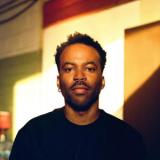
Animative is new work by composer, producer, saxophonist and synthesist Josh Johnson (SML, Jeff Parker ETA IVtet, Flea and The Honora Band), his third album under his own name, and his first for International Anthem/Nonesuch. The album further advances Johnson deep into a territory he has been exploring for years: live-processed electro-acoustic takes on deconstructed rhythmic jazz. The ten track album - co-produced by Johnson and Paul Bryan, featuring contributions from Meshell Ndegeocello, Macie Stewart, Marquis Hill, Ben Lumsdaine, and more - is a marvel of electro-acoustic innovation that combines compositional brilliance and technological ambition into a mesmerizing blend of skeletal soul-jazz, post-bop, electronic minimalism, and dreamy ambience.
expected to be published on 23.10.2026
BLUE COLORED Vinyl[25,63 €]
Animative is new work by composer, producer, saxophonist and synthesist Josh Johnson (SML, Jeff Parker ETA IVtet, Flea and The Honora Band), his third album under his own name, and his first for International Anthem/Nonesuch. The album further advances Johnson deep into a territory he has been exploring for years: live-processed electro-acoustic takes on deconstructed rhythmic jazz. The ten track album - co-produced by Johnson and Paul Bryan, featuring contributions from Meshell Ndegeocello, Macie Stewart, Marquis Hill, Ben Lumsdaine, and more - is a marvel of electro-acoustic innovation that combines compositional brilliance and technological ambition into a mesmerizing blend of skeletal soul-jazz, post-bop, electronic minimalism, and dreamy ambience.
expected to be published on 23.10.2026
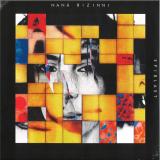
Naná Rizinni is a São Paulo-born drummer, producer, and composer whose work sits at the intersection of progressive electronics, jazz improvisation, and Brazilian rhythmic traditions. After relocating to London in 2020, Rizinni further expanded her distinctive sound, drawing on influences ranging from contemporary UK experimental jazz to forward-thinking electronic music. A respected collaborator and session musician in Brazil, she has performed with artists including Tiê, Johnny Hooker, Ana Cañas, and Thiago Pethit, and has appeared at major international festivals such as Lollapalooza, Rock in Rio, SXSW, and Primavera Sound.
Her new album,Epiblast, is a deeply personal and sonically adventurous statement. Written and co-produced with saxophonist and producer Mark Cake, the album explores themes of transformation, grief, new parenthood, and self-discovery through a rich blend of acoustic and electronic textures. Combining expansive sound design, intricate rhythmic interplay, modular synthesis, and Brazilian musical foundations, Epiblast draws comparisons to artists such as The Comet Is Coming, corto.alto, Mark Guiliana, and Richard Spaven while maintaining a unique voice of its own. Available on vinyl and digital formats, Epiblastshowcases Rizinni's most fully realized artistic vision to date and positions her as a compelling new voice within the global contemporary jazz and experimental music landscape.
On Stock and ready to ship

Music From Memory presents ‘Miraggi’, the debut release by Argento, a new project conceived by composer and producer David August. Written between Berlin and the Tuscan coast, the record unfolds as an imagined soundtrack to the Mediterranean, shaped by memory, longing and a profound connection to landscape.
The earliest sketches emerged during extended periods spent along Italy’s Tyrrhenian coast, where the shifting light, vegetation and ever-changing presence of the sea became lasting creative impulses. At the same time, an immersion in Italian library music of the 1970s and ‘80s quietly informed the project’s tonal language, while traces of jazz fusion and Balearic ambience surfaced not as direct references but as distant echoes.
Built around a dialogue between synthesizers, electronics, acoustic percussion and environmental recordings, ‘Miraggi’ balances rhythmic movement with spacious, cinematic composition. During the recording process, August was joined by drummer and percussionist Lorenzo Setti, whose performances and co-writing became an integral part of the album’s evolving rhythmic language. Across extended improvisations and recording sessions, August and Setti gradually shaped a musical language that feels both deeply personal and quietly transportive, allowing atmosphere and place to become as important as melody or rhythm.
The title ‘Miraggi’ (‘Mirages’) emerged organically, evoking a longing for something that remains just out of reach — something that cannot fully be grasped or lived. It suggests a suspended state between perception and imagination, akin to a hallucination or a dream. In this sense, ‘Miraggi’ reflects the project’s inner narrative: an imagined soundtrack shaped by desire, memory and the spiritual abundance of the Mediterranean Sea.
‘Miraggi’ will be released on vinyl and digitally via Music From Memory on September 10th 2026.
On Stock and ready to ship

Los Angeles-based producer, composer and multi-instrumentalist Dexter Story returns with his sixth album, T'som (pronounced sawm), a deeply personal work inspired by the spiritual practice of fasting. Meaning "fasting" in the Afro-Semitic languages Tigrinya and Amharic, as well as in Arabic, Tsom represents a time of prayer, reflection and discipline across northeast Africa. Guided by this tradition, Story draws on the musical heritage of the Horn of Africa and musical traditions of the Middle East to create a spiritual jazz album that reflects on devotion, transformation and the power of letting go. Working with frequent collaborators Carlos Nino, Sudan Archives, Kamasi Washington, Jimetta Rose and Kibrom Birhane, the album touches on themes of reflection, inner poise and a quest for deeper connections, bound by explorations of traditional rhythms from the Horn of Africa. Named after jazz saxophone legend Dexter Gordon, Los Angeles-based multi-instrumentalist, composer, arranger, music director and producer Dexter Story is one of the key figures in the city's vibrant creative music scene. Renowned for his genre-defying approach, he has collaborated with an extraordinary range of artists, including Carlos Nino, Madlib, Kamasi Washington, Build An Ark and Gaslamp Killer. His acclaimed solo albums Wondem and Bahir, released by Soundway, established him as a distinctive voice at the intersection of jazz, African music and contemporary production. Most recently, Story produced Mulatu Astatke's acclaimed studio album Mulatu Plays Mulatu, further cementing his reputation as one of today's most sought-after creative producers and musical collaborators.
expected to be published on 30.10.2026
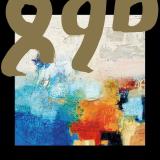
Los Angeles-based producer, composer and multi-instrumentalist Dexter Story returns with his sixth album, T'som (pronounced sawm), a deeply personal work inspired by the spiritual practice of fasting. Meaning "fasting" in the Afro-Semitic languages Tigrinya and Amharic, as well as in Arabic, Tsom represents a time of prayer, reflection and discipline across northeast Africa. Guided by this tradition, Story draws on the musical heritage of the Horn of Africa and musical traditions of the Middle East to create a spiritual jazz album that reflects on devotion, transformation and the power of letting go.
Working with frequent collaborators Carlos Niño, Sudan Archives, Kamasi Washington, Jimetta Rose and Kibrom Birhane, the album touches on themes of reflection, inner poise and a quest for deeper connections, bound by explorations of traditional rhythms from the Horn of Africa.
Named after jazz saxophone legend Dexter Gordon, Los Angeles-based multi-instrumentalist, composer, arranger, music director and producer Dexter Story is one of the key figures in the city's vibrant creative music scene. Renowned for his genre-defying approach, he has collaborated with an extraordinary range of artists, including Carlos Niño, Madlib, Kamasi Washington, Build An Ark and Gaslamp Killer. His acclaimed solo albums Wondem and Bahir, released by Soundway, established him as a distinctive voice at the intersection of jazz, African music and contemporary production. Most recently, Story produced Mulatu Astatke's acclaimed studio album Mulatu Plays Mulatu, further cementing his reputation as one of today's most sought-after creative producers and musical collaborators
expected to be published on 30.10.2026
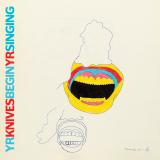
Yr Knives is a Chicago instrumental quartet built around two very different guitar voices. The band came together sideways: composer Paul Karner wanted guitarists Andrew Trim and Brian Sulpizio to play disparate parts on a recording of his own, and when the two finally rehearsed together, a band fell into focus. Trim leads the groups Hanami and Retroreflector; Sulpizio is the constant behind Health and Beauty. Anchoring them are two Chicago mainstays, bassist Douglas McCombs (Tortoise, Eleventh Dream Day) and drummer Quin Kirchner. Two of them come up as rock and roll players, two as jazz players, and the music lives in how closely they listen across those languages.
Their debut, Begin Yr Singing, centers on two overdriven guitars merging into something neither could produce alone, over a rhythm section that can lock a groove or let it drift. The result is exploratory but grounded, "a searching music," in Trim's words, that asks questions it doesn't always answer and shifts from one performance to the next. Recorded live in a single room at Chicago's Palisade studio with Nick Broste engineering and mixed by Cooper Crain with Sulpizio, the six tracks draw on Sonny Sharrock, Neil Young and Crazy Horse, Albert Ayler, Erik Satie, and Television. The band has toured supporting The Messthetics.
expected to be published on 30.10.2026

More than five decades into one of Brazilian music's most remarkable careers, Joyce Moreno returns with a new collection of songs that reflect the warmth, lyrical sophistication and innovation that have made her one of Brazil's most defining musical voices.
Produced by Joyce Moreno alongside her husband and longtime collaborator Tutty Moreno, the album finds the Rio-born singer, guitarist and composer at her most reflective. Across nine beautifully crafted songs, Joyce pairs intricate guitar work, lyrical intimacy and effortless swing with the musical curiosity that has defined her work for more than half a century.
Invited into the studio by Roberto Menescal at just sixteen years old, Joyce emerged during a transformative period for Brazilian music, releasing her self-titled debut in 1968. She soon established herself as one of Brazil's pioneering female songwriters, writing unapologetically from a woman's perspective at a time when few women were afforded that voice. Her song “Me Disseram” sparked national debate, while later works including “Feminina” cemented her reputation as an artist unafraid to challenge convention.
While some of her politically charged songs were censored during Brazil's military dictatorship, Joyce continued to write with honesty and independence. After studying journalism in the late 1960s, her gift for observation and storytelling became an even more defining feature of her songwriting. Over the following decades she released a succession of acclaimed albums, including the now-classic Feminina and Água e Luz, earning widespread recognition both in Brazil and internationally. Antônio Carlos Jobim would later describe her as "one of the greatest singers", while generations of musicians have drawn inspiration from her fearless artistry and enduring originality.
That same artistic fearlessness remains at the heart of her latest work. The album brings together an exceptional ensemble of Brazilian musicians. Tutty Moreno's expressive drumming underpins Joyce's vocals and guitar throughout, while Jorge Helder's bass, Lula Galvão's guitar and Marcos Nimrichter's warm Fender Rhodes create a sound that is both intimate and expansive. Contributions also come from the legendary Toninho Horta, alongside José Arimatéa, Teco Cardoso, Nailor Proveta, Josué dos Santos and Raphael Sampaio, whose additions add colour and texture without overshadowing Joyce's understated brilliance.
Throughout the album, Joyce balances quiet reflection with effortless rhythmic vitality. “Chovendo na Horta” serves as both a heartfelt dedication and a celebration of Joyce's enduring musical connections, featuring the unmistakable guitar of Toninho Horta. Elsewhere, “Aldeia de Ogum” receives a fresh new arrangement by Nailor Proveta, revisiting one of Joyce's most beloved compositions. Originally released in 1980, the track has enjoyed a remarkable resurgence in recent years, embraced by a new generation of listeners and became an underground favourite among DJs including Floating Points, Four Tet and Danilo Plessow. Now a staple of Joyce's live performances, this reimagined version brings renewed energy to a song that continues to transcend generations.
At seventy-eight, Joyce Moreno continues to write with the same curiosity, generosity and quiet innovation that have defined her career from the very beginning. "For me, it's never too soon to try something new, either in music or in life," she reflects - a philosophy that gives both the album and its title their enduring sense of optimism. This latest album is neither a retrospective nor a reinvention, but the work of an artist who continues to refine her voice with remarkable grace, proving that her most compelling music remains firmly rooted in the present.
Following the album's release, Joyce Moreno will embark on a European tour this November, bringing her celebrated live show to audiences across the UK and Europe. A rare opportunity to experience one of Brazil's most influential and enduring artists in concert, the tour showcases a songwriter whose voice, virtuosity and musical vision remain as compelling today as ever.
expected to be published on 30.10.2026

In C is a musical piece by the composer and performing musician Terry Riley. As one of the first minimalist compositions, it was a response to the modern music that dominated the scene in 1968. It is considered a masterpiece in the genre and served as an inspiration for many composers, classical and otherwise.
The pieces consist of repeating cells and different rhythms, loosely based on the musical structures he had heard and loved in north African music. In total, the compositions consist of 53 short musical phrases. The thing that makes In C so enduring, is that once all its conceptual ideas are stripped away, it's a seriously hypnotic piece of music, full of energy.
expected to be published on 30.10.2026

Available again for the first time since 1970, Lobo’s melancholy masterpiece epitomizes the experimental evolution of MPB. With new liner notes by Edu Lobo.
Released in 1970, Cantiga de Longe is a defining record in the career of Brazilian singer, composer, and guitarist Edu Lobo and a significant contribution to Música Popular Brasileira (MPB). Created during Brazil’s military dictatorship, the album reflects the subtle, poetic strategies that artists use to convey meaning while subject to censorship. Rather than overt protest, Lobo expresses longing and introspection through refined musical language and evocative lyrics.
Musically, the album captures the sophistication of MPB at the turn of the decade. A foundation of acoustic guitar blends with jazz-influenced harmonies and elegant arrangements. The sound is both intimate and expansive: delicate vocal lines unfold over complex progressions, supported by understated rhythms, rooted in Brazilian traditions. Lobo’s controlled yet expressive vocal delivery keeps the lyrical nuance at the forefront.
A key element of the album’s texture is the involvement of Hermeto Pascoal. His imaginative instrumental contributions add subtle harmonic color and atmospheric depth, enriching the refined arrangements and enhancing the sense of openness.
Thematically, the album explores memory, distance, solitude, and time—personal reflections that resonate with the broader climate of uncertainty that dominated Brazil in 1970. This remains one of Lobo’s most mature recordings, exemplifying the emotional depth and artistic subtlety of Brazilian popular music in a creatively fertile era.
On Stock and ready to ship
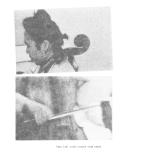
Faitiche presents the debut solo album by cellist, sound artist, and composer Topu Lyo: “quiet scenes from tokyo” brings together sixteen miniatures for solo cello and tape echo that oscillate between abstracts drones and rhythmic pizzicato sketches – all recorded at Topu’s Tokyo apartment. The constant traffic noise from a nearby highway has become an accompanying soundtrack for his compositions and can be heard on the recordings. Topu’s playing is marked by a distinctive idiom oriented more towards abstract electronic studio effects than classical technique.
The artist spoke to Jan Jelinek about his work:
JJ: A solo cello album may seem like an odd fit for a label that has to date released only music that is electronic in the broadest sense. But I think “quiet scenes from tokyo” complements the Faitiche repertoire exceptionally well. Its sixteen miniatures showcase the cello in all its complexity: the bowed passages sometimes recall a tape feedback drone; the pizzicato playing conjures up the percussion recordings of Moondog; and the abstract textures might be mistaken for the product of a granular sampler rather than rapid finger work on the cello. I’m constantly surprised by just how rich and varied this album is – without ever losing the charm of its sketch-like quality. Could you say a few words about the making of your album – first of all, from a rather technical perspective: what production tools did you use, and why?
TL: My production tools were very sparse. Just a solo cello and my Roland 301 Space Echo, which I only used at the end, running everything through it during mixing, tape only. After years of working with electronics, pedals, and synthesizers, moving to Tokyo pushed me toward minimizing my setup. But my aesthetics shifted too, toward simplicity. I wanted to strip everything back to just the acoustic cello and see how far I could push it — replicating some of my favorite electronic effects through extended technique: slow portamento, LFOs, filters, detune, noise. I’d also been listening to a cassette of ocean sounds for years. When I moved to Tokyo I was horrified to find myself living directly across from a freeway. Eventually the freeway started sounding almost identical to the ocean — and that ended up playing a prominent part in the recording.
JJ: That’s super interesting: mimicking electronic production as a compositional idea for the cello! You say the sound of the freeway is crucial to the album: I, too, tend to interpret steady traffic noise as a positive soundscape – do we hear the freeway on the album? I can also hear other field recordings, for example on “a street car with announcements”. Can you say a bit about how these field recordings influence your playing?
TL: Yes, you can hear the freeway on the album! The freeway is most prominent in “old trees in lonely spring”, “yuyake koyake”, and “the moon” (you can clearly hear individual cars). When I first began recording I had my balcony door shut tightly, but after a while I began leaning into the highway sound and slowly opening the door little by little to control the amount of noise. “streetcar with announcements” was a moment I was recording and a car passed by making announcements in the background. I loved how it sounded! Same thing with “yuyake koyake”, and later I realized that every day at 5pm the same song plays to mark sunset, telling children it’s time to go home. Having this bedrock of sound puts less pressure on me to put music on top or to play more notes.
JJ: It’s astonishing how much this differs from what I’d imagined: I’d been picturing peaceful landscape recordings, but had never thought of a freeway. Which goes to show how open to interpretation traffic noises are. So the room by the freeway had a major influence on the album – how are you going to perform it live?
TL: The contrast between the freeway and the beautiful landscape in my head couldn’t have been starker. I too was imagining a beautiful landscape in which to create the album, but somehow it still worked out. I've been going back and forth a lot on live shows and I think the most honest way is to have it the most stripped down. I was thinking of using traffic samples etc., but I think the duet really comes from the background sounds from every unique venue/environment. So as it stands, I’ll just be doing acoustic solo cello.
expected to be published on 06.11.2026
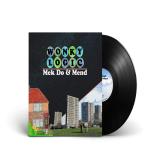
This November, Brownswood Recordings will release Mek Do & Mend, the debut album from self-taught producer, multi-instrumentalist, composer and artist Wonky Logic. Although his name may not yet be familiar to everyone, Wonky Logic (AKA Dwayne Kilvington) has spent the past two decades quietly becoming one of the UK's most respected musical collaborators. His career has moved comfortably between London's jazz, electronic and contemporary music scenes, performing and recording with artists including Nala Sinephro, Yussef Dayes, Nightmares On Wax, Shabaka Hutchings and Emma-Jean Thackray. Alongside his work as a producer and composer, he's been musical director for projects with Eddie Chacon, John Carroll Kirby and I.G Culture's LCSM, scored the feature documentary Zandra With A Zed, contributed music to A24's The Smashing Machine, and continues to lead music workshops with young people, refugees and people experiencing incarceration.
Far more than a collection of compositions, Mek Do & Mend is a deeply personal reflection on the people, places and experiences that have shaped Kilvington throughout his life. It's the story of growing up on a Leeds council estate, where music became both a creative outlet and a way of understanding the world. Making music often meant working with whatever was available: a second-hand keyboard, a makeshift studio desk or ageing equipment that simply had to last a little longer. The title itself came from a conversation with his mother, capturing the resourcefulness that defined his upbringing and continued into the making of the album itself, which was written and produced to a tight deadline around touring, family life and Kilvington's work as a musician and educator.
Built from material spanning more than fifteen years, Mek Do & Mend brings together some of Wonky Logic's earliest compositions alongside brand new pieces written during the making of the record itself. Childhood ideas sit alongside music conceived only months before recording, creating an album that draws together a lifetime of writing rather than documenting a single moment. Running throughout are voice notes from family members, teachers, friends, mentors and collaborators—not simply as interludes, but as a reminder that no creative life is ever self-made. Rather than telling his own story outright, Kilvington invites listeners to discover him through the people who've shaped him: an aunt remembering him playing in church as a child, lifelong friends recalling early experiments making beats together, fellow musicians from different stages of his career and his mother describing him in her own words. Together they reveal the invisible network of relationships, philosophies, communities and experiences behind the music. "The album exists somewhere between being a biography and an autobiography," says Dwayne. "The biography is in the voice notes and how other people see me. The autobiography is in the music."
That same philosophy extends to the musicians who appear on the record. Every contributor has played a meaningful role in Wonky Logic's life beyond the studio. Long-time collaborator Luke Wynter, Steam Down drummer Benji Appiah, partner Vanessa Rani, Jonathan Enser, Joe Bristow, Brother Portrait and Nubiya Imani all feature not simply because of their musicianship, but because they form part of the album's story.
Across its fourteen tracks, Mek Do & Mend moves effortlessly between dynamic jazz arrangements, pulsating broken rhythms, delicate, twinkling piano passages, interstellar synth textures and elegant brass lines. Album opener and first single 'Strange Attractor' begins with a shimmering introduction before unfolding into an exhilarating surge of rhythm and momentum. Named after the mathematical concept of the same name, it serves as the conceptual point of origin for the album. Written when Kilvington was just seventeen, the composition reflects the idea that even the most unpredictable lives are guided by hidden patterns that often only become visible with time. Second single 'A Thousand Hands' features the unmistakable vocal tones of Brother Portrait, whose cerebral lyricism drifts over a low-slung, constantly shifting groove as woozy synth lines ebb and flow overhead. At its heart, the track celebrates the family, friends, mentors and collaborators whose often unseen influence shapes who we become, echoing the album's belief that every achievement is, in some way, a collective one. LP focus track 'BAME (Beyond All Marginalised Expectations)' is a lush, spiralling composition, brimming with both emotion and resolve. Reclaiming an acronym long imposed on racialised communities in the UK, the piece transforms it into a statement of possibility rather than limitation: a defiant rejection of stereotypes and a refusal to let identity be defined by other people's expectations.
The album itself only exists because other people believed in it. Isabel Gracefield made the RAK sessions possible, Rick David brought the record together with his characteristically thoughtful mix, and Gilles Peterson committed to releasing it on Brownswood before hearing any of the music. Away from the stage, Kilvington works with the charity Finding Rhythms, writing and producing original records with people experiencing incarceration, while also leading workshops with Arts Train and Dovetail Orchestra.
Recorded live in a single day in Studio One at RAK, Mek Do & Mend was mixed by Rick David through an analogue Cadac console before being mastered by Stuart Hawkes at Metropolis. The aim wasn't nostalgia or audiophile perfection, but to create a record people could return to throughout their lives, discovering something new with each listen.
As Dwayne puts it: "I don't want this body of work to be reduced to a jazz record. It's more like a novel about life told through music."
expected to be published on 13.11.2026
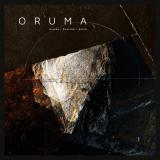
ORUMA is a trio formed by Ola Rzepka (drums, zither, percussion), Artur Rumiński (electric guitar) and Mat Barski (electric guitar). At its foundation is the musical dialogue previously developed by Rumiński and Barski as a guitar duo and documented on the albums “On the Margin” and “At the Junction”. Their encounter with Ola Rzepka during Kraków’s Kakofonie series opened this music to a new sense of dynamics, pulse and
collective form.
ORUMA’s music exists at the intersection of free improvisation, noise, experimental postrock and post-kraut repetition. It avoids the conventional division between soloist and accompaniment. Instead, two electric guitars and drums gradually abandon their individual roles to form a single, constantly shifting sound organism — moving from silence, open space and isolated gestures towards dense masses of sound.
The trio’s debut album consists of five pieces: “Satellites”, “Stranger”, “This Mountain Is Alive”, “A Rough Plan For Nostalgia” and “Hyperborea”. Together, they form a coherent journey: from distant signals and the first moment of contact, through friction and increasing physical intensity, to an expansive fourteen-minute finale.
Ola Rzepka
Drummer, pianist, composer and performer. She graduated from the Karol Szymanowski Academy of Music in Katowice, where she studied at the Faculty of Composition, Interpretation, Education and Jazz. She was also a scholarship student at the Rhythmic Music Conservatory in Copenhagen, studying piano and percussion. She teaches piano improvisation at the Wojciech Kilar State Music School Complex in Katowice and runs her own music lessons and workshops. As a composer, she collaborates with acclaimed theatre directors in Poland, Germany and Switzerland. Her musical collaborators have included Raphael Rogiński and Antoni “Ziut” Gralak. She has performed her original music at numerous avant-garde, popular, jazz, improvised and contemporary music festivals across Poland and Europe. In Jazz Forum magazine’s 2024 Jazz Top critics’ poll, she was named among Poland’s leading drummers.
Artur Rumiński
Guitarist and member of bands including Furia, Thaw and ARRM. He also composes and improvises under his own name and performs in the experimental duo Marmur, which he co-founded with Macio Moretti. He has released several solo albums on labels including Antenna Non Grata, Gusstaff Records, Zoharum and Szara Reneta.
Mat Barski
Guitarist associated with the Kraków and Tricity music scenes. His projects include the duo Ekotonika, the Rumiński / Barski duo. He has released albums through Gusstaff Records and Antenna Non Grata. Alongside music, he works in motion design and visual postproduction. He is a member of the Kraków-based Skład Solny Association, where he coorganises concerts and exhibitions.
expected to be published on 13.11.2026

Mohammad Syfkhan is back with his second album for Nyahh Records. This collection of new recordings marks a hug milestone in Mohammad’s career as it’s the first album that features all original compositions. And with a full band! We had the great help of Syrian Cellist and composer Naseem Alatrash to help with the string arrangements. The resulting record is a beautiful journey into a timeless Middle Eastern and North African sound akin to the likes of Fairuz or Umm Kulthum with a fast Kurdish Dabke tempo.
I Love You Ireland is an incredibly personal album for Mohammad. The title alone, much like his debut ‘I Am Kurdish’ is as personal as it it’s political. To express such love for a place in music is saying, thank you for making me and family feel safe. Thank you for taking us in. A stand out track titled ‘Ah Yu Donia’ is Mohammad’s first real public moment of grieving for the loss of his son at the murderous hands of Isis. In this song he asks God why he was taken. Trying to figure the sense in the actions of fundamentalists. The strings sections are sad, but not morbid. Acting like a release or companion to the horrific reality of losing a child.
‘Al Huriya’ is Mohammad’s first attempt at using an Irish rhythm known as a Reel, as appose to his usual Middle Eastern rhythms. Again, this is a beautiful way for Mohammad to give thanks to all the musicians and supportive people his has met in Ireland since 2011.
WHO IS MOHAMMAD SYFKHAN
Mohammad Syfkhan is a Kurdish/Syrian Singer and Bouzouki player. He began
playing music in 1980 while he was in college studying nursing. When he got
his degree in 1983, Mohammad moved to the city of Raqqa, Syria where he
began working as a professional singer and started his own band, The Al-Rabie
Band which played concerts, parties, weddings and festivals all over Syria. The
Al-Rabie Band were a much sought-after group. Their live sets included Kurdish, Arabic, Turkish and some Western songs as well as Mohammad’s own original material.
Mohammad continued to play with his band while also working as a surgical
nurse until the war broke out in 2011. This unfortunately brought tragedy to
Mohammad’s family when one of his sons was killed by Isis thus threatening
the lives of the rest of his family. His family had no choice but to leave their
home and seek safety in Europe. Three of Mohammad’s sons were resettled in
Germany while Mohammad, his young daughter and wife were taken in by
Ireland. Mohammad has spoken at length of his confusion and despair with
fundamentalists and how their message is a far cry from the teachings of love
and understanding that he considers the true message of Islam.
expected to be published on 13.11.2026
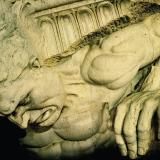
Portugal-based percussionist Gabriel Ferrandini spent years honing his skills in various free jazz ensembles, where he demonstrated his absorption of the styles of pioneering rhythm liberators like Sunny Murray and Milford Graves while forging his own energetic and agile sound. During this time, Ferrandini performed with everyone from Evan Parker and Alexander von Schlippenbach to Thurston Moore and Dirty Beaches' Alex Zhang Hungtai. At some point, the percussionist grew restless and began taking a more compositional approach, using his drums as primary sources from which to produce spectral tones and timbres via electronic manipulation.
In Ferrandini's hands, cymbals become generative instruments with endless reverb tails and choir samples are distilled into vapor. With its subtle evocations of light and color and meticulous editing, Romance suggests an almost cinematic scale. The strings and grainy synthesizer of "Crying Game" lend an air of giallo dread to the deep sub-bass rumbles; "Afters Lisboa" processes cymbal crashes through a Leslie speaker to create a siren-like Doppler effect; "Fallen Angels," one of the few tracks to feature Ferrandini's mostly untreated percussion work, stacks layers of reverb effects of varying lengths (an old Autechre trick) to add friction and give the spatialized sounds a dissociative quality. Album highlight "Cova da Vaporwave" utilizes creative sidechaining, warbly VHS-like tones and drums amplified through a Fender Twin to gather apocalyptic momentum.
Romance is a formidable artistic statement, establishing Ferrandini as one of the most vital composers on the contemporary avant-garde music scene. He is influenced by Renaissance composer Carlo Gesualdo, whose passionate yet dissonant chromatic approach can be detected throughout the album's seven uncanny tracks.
expected to be published on 13.11.2026

Siân Pottok is a citizen of the world.
Born in West Palm Beach, Florida, to a mother of Indian and Congolese heritage and a father of Slovak and Belgian descent, Siân grew up between Belgium and New York before finally letting her travelling wings come to rest in Paris. What could have become a story of fragmentation instead became a source of creative strength. Singer, songwriter, composer and photographer, Siân has always turned borders into bridges.
She first honed her voice in the jazz clubs of Paris and New York, performing alongside renowned artists such as Richard Bona, Jon Batiste and Mike Stern. Yet her path has always extended far beyond the stage. For nearly a decade, she led cultural initiatives with women and children living through exile, violence and poverty across India and Southern Africa, weaving together music, photography and artistic transmission as tools for dialogue and empowerment.
The true turning point came when she discovered the kamele ngoni, the West African harp whose ethereal sound seemed to echo something long buried within her. The instrument became her musical alter ego—the invisible thread binding together her many inheritances. Guided by Malian master Abou Diarra, Siân embarked on an inward journey towards her African roots. Yet this return to her origins was never an act of retreat into identity. Instead, it gave rise to a body of work that remains profoundly open to the world, where Africa enters into conversation with jazz, folk, soul, alternative pop and the rhythms of Brazil.
Along the way, she has crossed paths with remarkable artists including Rogê, Chico César, Fatoumata Diawara, Lokua Kanza, Flavia Coelho, Thomas de Pourquery and Philippe Baden Powell. On stage and in the studio, Siân continues to shape a musical universe that refuses labels. Like artists such as Björk, Joni Mitchell and Laura Mvula, she moves forward as an explorer, guided not by genre but by intuition.
Today, Siân stands as one of the most distinctive voices of the new Francophone music scene an artist capable of uniting musical sophistication with emotional power, introspection with collective celebration, depth with an irresistible urge to dance.
Animal — The New Album
With Animal, produced by British musician Tom Excell (Nubiyan Twist, Africa Express...), Siân delivers her most intimate and assured work to date. Every song feels like a shedding of skin, a quiet metamorphosis, exploring self-acceptance, femininity, the freedom to be oneself, cultural heritage, and the reconciliation of one's own imperfections.
From Stereotype, a fearless manifesto against the expectations imposed on women, to the title track Animal, an anthem celebrating the beauty of imperfection ("I've turned my cracks into a crown"), the album gives a voice to everyone who refuses to fit into predefined boxes. In Terre, je danse sur toi, featuring Fatoumata Diawara, Siân pays tribute to Mother Earth and to the roots that unite us all. Oh! Congo, recorded with Lokua Kanza, reconciles her cultural heritage with an ancestral homeland that feels both distant and intimately familiar. En équilibre, with Flavia Coelho, embraces the exhilaration of risk and the courage to leap, while Put a Mask and I Could Kill confront hidden wounds and the invisible violences that quietly shape who we become.
In ADé, Siân addresses Adenomyosis as though speaking to an unwanted housemate. "My body is your battlefield," she sings, giving voice to an intimate shadow lodged deep within herself. This bittersweet lullaby transforms a pain so often left unspoken into an act of profound tenderness towards oneself.
The album also holds a rare treasure: Reste tel(le), an unpublished text by Pierre Barouh, the founder of the Saravah label. Never before set to music or performed, this elusive poem of free love finds new life through Siân's voice, becoming a dialogue across time between two artists united by the same devotion to freedom, métissage and openness to the world.
Driven by Tom Excell's vibrant Afro-pop pulse, the spiritual breath of the kamele ngoni, organic arrangements and deeply personal songwriting, Animal is an album of liberation. It invites us to lay down our masks, embrace our contradictions and reconnect with the free, instinctive and powerful animal that lies dormant within us all. More than a collection of songs, it is a radiant manifesto for the richness of identity, the passing on of memory, and reconciliation with oneself.
Animal is not simply the title of an album, it is a declaration of independence. An invitation to live fully, unapologetically, and without instructions.
A citizen of the world, travelling freely between continents, languages and memories, Siân Pottok delivers with Animal her most personal, and perhaps her most universal work to date: an album that reminds us that our fragilities, our roots and our differences are, beyond doubt, our greatest strength.
— Christophe Tison
expected to be published on 13.11.2026
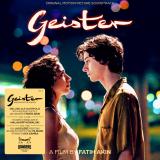
RADYO BOMBERO - ABOUT THE LABEL
Radyo Bombero is the record label founded by acclaimed filmmaker, author, DJ and record collector Fatih Akin. Born out of his personal passion for vinyl and film music, the label will initially focus on soundtracks from his films: previously unavailable works will be released on vinyl for the first time, while out-of-print titles will return as carefully produced reissues. Its inaugural release is the soundtrack to Akin's new film Geister, scheduled for release in November 2026. Further projects are already in development.
ABOUT THE RELEASE
MALAKOFF KOWALSKI - GEISTER
ORIGINAL MOTION PICTURE SOUNDTRACK
Composed by Malakoff Kowalski, the soundtrack to Fatih Akin's Geister is the inaugural release on Radyo Bombero.
Born in the United States, raised in Hamburg and now based in Berlin, Kowalski is a composer, pianist and multi-instrumentalist whose work moves between film music, contemporary classical composition, theatre and pop. He composed the music for eleven films by Klaus Lemke, as well as for productions including Schweigend steht der Wald and Stasikomödie. His solo work has been released by MPS and Sony Classical, and he has collaborated with artists including 2raumwohnung, Igor Levit, Chilly Gonzales and Nils Frahm. His sound combines elegiac melodies with a warm, cinematic atmosphere and a subtle sense of unrest beneath the surface.
For Geister, this distinctive musical language meets Fatih Akin's vision of a deliberately anachronistic and romantic score: a tribute to Ennio Morricone's great love themes that plays a defining role in the film's tragic love story and atmosphere.
LP 1 contains Kowalski's complete original film score.
LP by JUGGLERZ opens up a second musical world, bringing together four productions by the internationally successful Jugglerz on a four-track 12-inch disc at 45 RPM: the film's title song Ya Mami, performed by Aya Samra; Mood by Cloudee, Milaa and Jugglerz; Tip by Jugglerz, Limitlezz, Maureen and Demarco; and Beirut Nights Riddim. The four tracks bring Arabic tarab and contemporary Levantine pop together with hip-hop, urban beats and dancehall rhythms.
FATIH AKIN ON RADYO BOMBERO
"Radyo Bombero is on the air. Don't miss a tune!
"
Music is - alongside cinema and literature - a fundamental source of inspiration for me. Having grown up in the 1980s, the way I listen to music has hardly changed: I buy records, listen to them carefully and then copy them onto a portable device. It used to be a Walkman, then an iPod - today it is my smartphone with my playlists.
I do not use Spotify or any other streaming services. Why that is, I do not know. In most other areas, I try to keep up with technological developments. Not with music. I like unpacking a record, cleaning it before listening, holding the sleeve in my hands and reading who worked in the studio, who wrote the music and where the record was made. These things interest me. And they lower my cortisol levels.
Music plays a major role in my films. It is not that, as a director, I want to impose my favourite music on the audience. The music must always serve the story. In Head-On, for example, it tells us something about the characters and their biographies. Crossing the Bridge - The Sound of Istanbul is the musical portrait of a city. Its music tells us about the people who live there: where they come from, the cultures they brought with them and how those cultures have merged with local traditions. The Cut was conceived as a Western, and the music had to help reinforce that idea.
Geister tells a tragic love story. The music was meant to be gloriously anachronistic. And romantic. Just like the light and colours, it had to shape the atmosphere of the film. My films are often about cinema itself, and Geister is no exception. Its music is a tribute to Ennio Morricone's great love themes.
In Malakoff Kowalski, I found the perfect creative partner. He immediately understood my idea and realised it brilliantly. That made it all the more painful when I was told by the music industry that there could be no soundtrack release for Geister because soundtracks were too expensive to produce and would simply sit on the shelves.
It is not as though I am a spoiled child who absolutely has to have a lollipop. But this music is simply too good to withhold from the audience. The idea that there would be no soundtrack release felt like a great injustice.
Then several friends and collaborators advised me to release the record myself. No sooner said than done. But Radyo Bombero is not a one-off project. Geister is only the beginning.
Finally, I have the opportunity to gradually release all the soundtracks from my films that have remained unavailable. Soundtracks that were previously released but have since gone out of print will also return as reissues.
Hainbach's soundtrack to Amrum is already in development, as is a double album featuring the unforgettable German pop songs from The Golden Glove. And, finally, a vinyl soundtrack to Head-On.
Fatih Akin
expected to be published on 13.11.2026

DJ Support: Glenn Underground, Crazy P, Terry Farley, Aroop Roy, Chris Coco, Frank Tope, Greg Wilson, Dom Servini, Francois K, Max Essa, Oliver Dollar, Pete Herbert and many more
Danny Ward’s Balaphonic project, one of many the long-serving performer, producer, percussionist, drummer and DJ has utilised over a career spanning over three decades, has evolved considerably since his first release under the alias 11 years ago. Conceived as a platform to explore his love of Afro-Cuban and Brazilian musical culture, it gathered new impetus during lockdown and the recording of superb first album Resolution Revolutions, which fused these influences with nods to Balearica, dub, dancehall and deep house.
On the Organic Matters EP, Ward’s follow-up to that critically acclaimed set, the Balaphonic musical universe has expanded once more, with the Manchester native showcasing a wealth of eye-catching collaborations and an even more intricately layered and sonically detailed sound rich in live percussion and instrumentation. It’s an ambitious and widescreen musical vision wrapped in sun-soaked melodies, morning-fresh motifs and simmering, sunset-friendly soundscapes.
The dizzying new heights scaled by Ward on Organic Matters is evident from the opening bars of ‘Dew Drops’, a piece created in unison with internationally renowned composer and arranger Robin Dewhirst. Between them, the pair have conjured up a yearning, life-affirming samba shuffler where picturesque piano, xylophone and balafon melodies rise above Ward’s dense, layered Latin percussion and warming bass.
Next, Ward delivers a thrillingly different take on his 2005 composition ‘Switch’, featuring legendary Brazilian jazz vocalist Flora Purim and her equally talented daughter Diana Moreira Booker. Whereas that was a jazzy deep house workout, Ward’s Balaphonic re-make is a shuffling, gentle exploration in 7/4 time – a heartfelt tribute to the Brazilian records with which Purim first made her name in the 1960s and ‘70s.
‘Balaventurers’ sees Ward join forces with an old friend from the North-West scene, R.S.L founder Joe Botham AKA Baleardelica – a multi-instrumentalist and producer whose Flamenco-inspired acoustic guitar motifs provided the starting point for another vividly colourful exploration rich in layered vocalisations, twinkling keys and impeccably arranged percussion.
It’s followed by ‘Life of Strings’, a more up-tempo and dancefloor-leaning excursion written and recorded alongside Amsterdam-based violinist, and composer Katya Gabeli. While Ward’s percussion-rich groove provides propulsion and a rock-solid foundation, it’s Gabeli’s evocative string arrangement that provides the focal point and emotional resonance. It’s a genuinely brilliant collaboration.
To round off a second stunning Balaphonic release on NuNorthern Soul, Ward delivers two simmering, slow-motion delights: the Afro-Cuban rhythms, cascading melodies and melodic percussion motifs of ‘Boxfresh’, and stunning EP closer ‘Home’ – an almost overwhelmingly poignant and beautiful number that gently ebbs and flows on waves of tracked piano, dreamy chords and a comforting sense of closure. It’s a genuinely sublime conclusion to another wonderful Balaphonic release.
On Stock and ready to ship

Introspection is a 1972 cult-favorite solo guitar album by Brazilian composer and guitarist Luiz Bonfà. Unlike his more famous bossa nova recordings, this album presents Bonfá in a deeply personal, almost meditative setting. Recorded primarily as a set of intimate solo guitar pieces, Introspection showcases Bonfà’s signature combination of classical technique, Brazilian rhythm and emotive melodic phrasing. Initially overlooked, Introspection later gained recognition as one of Bonfà’s most admired and distinctive works outside the mainstream bossa nova canon. This reissue is the first ever on vinyl after 1972.
On Stock and ready to ship
'Church & Raves' is a great title for an EP given the strange relationship between the two. You're unlikely to get many people in the UK who go to both, but at the same time the communion of a good dance is often likened to the joys of collective experience that people feel in their chosen place of worship. Jazz pianist, organist, composer and bandleader Jonny Liebeck brings together a background in both here: 'Dancefloor Motive' and 'In My Feels' run jungle's rhythmic urgency through a jazz sensibility and breakbeats are given real harmonic depth rather than just serving as a backbone. 'Underground Soul' and 'Modal House' lean closer to classic house but with those Latin jazz touches from his debut still lingering in the margins. A thoughtful, well-crafted EP for anyone who wants their music with real substance.
expected to be published on 30.11.2026

Mario Batkovic’s music occupies a singular space between composition, performance and sonic experimentation.
Based in Bern, Switzerland, the composer, accordionist and multi-instrumentalist has developed an intensely personal musical language rooted in a radical interrogation of the accordion — its timbre, mechanics, physicality and rhythmic potential. In Batkovic’s hands, the instrument becomes something far beyond its conventional role: a source of intricate, evolving sound in which performer and machine appear to become one.
Batkovic received International critical acclaim when his eponymous debut album was released on Invada Records in 2017, with Rolling Stone listing it in the top 10 avant-garde albums of the year. ‘INTROSPECTIO’ followed, a self-questioning, self-examination of society which featured collaborations with Colin Stetson, James Holden and Clive Deamer (Radiohead / Portishead).
II sees Batkovic venture further into radical, uncompromising and experimental territory, both in the reduction and the expansion of sound. Voices overlap, rhythmic structures develop an almost mechanical force, and layers of sound evoke analogue synthesizers. Then everything falls away: near-total silence, the breath of the bellows, a single frequency. Sounds emerge that can barely be traced back to any particular instrument.
The album is built entirely around the physical relationship between one musician and one instrument. No loops, no electronic layers. Everything you hear comes from an uncompromising exploration of the instrument itself. A primal force of creation and destruction.
With credits that include music for the global hit game 'Red Dead Redemption II’, commissions for AMI Paris, Cartier Fondation, Hugo Boss, Chanel and film scores ‘Mad Heidi’ and ’Shame and Money’ his compositional work has extended into some of the most distinctive fields of contemporary culture.
expected to be published on 04.12.2026

Two years after Introducing, this 1977 release—the second installment in Toshiba EMI’s acclaimed “Pro Use Series”—returns on clear green vinyl.
Joining the returning rhythm section of Shuichi “Ponta” Murakami (drums) and Ray Ohara (bass), percussionist Nobu Saito and others further strengthen the album’s rhythmic foundation. Highlights include the classic “Left Handed Woman”, where Jun Fukamachi explores new possibilities for the analog synthesizer while engaging in electrifying solo exchanges with the song’s composer, Kenji Ohmura, as well as “Take It Easy Mr King Kong”, which makes inventive use of a talk box.
More accessible, more thrilling, and even more refined than its predecessor, this album stands as a superb showcase of Fukamachi’s evolving musical vision.
expected to be published on 11.12.2026

The free folk/jazz sound of modern Los Angeles. Featuring a heavy bunch of musicians and vocalists including Moor Mother.
"Fearlessly Accessing the Divine Spirit From Here on Out" is the vinyl debut from pianist, composer, and producer Diego Gaeta. He has previously released projects as Club Diego and with the trio Human Error Club (whose members Mekala Session and Jesse Justice helped produce this record). He has quickly become a fixture in a number of Los Angeles musical environments, working with Lionmilk, The Pan Afrikan Peoples Arkestra, Carlos Niño, Black Nile among others. This album is a synthesis of these many LA environments, and carries chamber, jazz, ambient, and folk influences, ultimately giving it an uncategorizable feel similar to works by Arthur Verocai or David Axelrod.
Gaeta recorded the initial ideas for the album by himself after experiencing a burst of creativity during the lockdown of 2020, in the aftermath of a season of protests in Los Angeles, on a piano at his home in El Sereno. "I was constantly not in tune with myself, always awaiting outrage and tragedy in a very unstable world. However, hitting the streets in support of various ongoing pandemic community actions felt necessary and it marked a point in time that ushered in large societal changes. The weight of that era made me feel allergic to making art at the time. All of these ideas came after that period, expressing my reflections subconsciously. I remember that the ideas came in a short amount of time, and then they developed."
Once he had created the tracks as Ableton sessions, he realized the gravity and context of how he was processing his ideas so he, as he puts it, "felt like taking them outside the hands of midi and into the hands of friends." Gaeta was able to assemble his dream band, which ended up being a 9-piece ensemble, or a nonet. "I felt that at some point I was channeling the geometrical balance of that nonet...it's almost as if I had a sextet and then the three of the sextet that's not the rhythm section were doubled. It's a really dense sextet, that's how I see it."
The recording process began the following summer in June 2021 as the musicians were all adjusting to the newfound dynamic of getting tested for COVID, waiting a few days, and then meeting up to record. "We were eating Indian food, some of us were smoking, it was a nice memory, but I felt a little stressed, because I was the bandleader, and I felt the emotional weight of my music."
The title track and single, featuring vocals by Jimetta Rose, begins with a speech by Gaeta delivered when playing with Black Nile in 2019 at the Levitt Amphitheatre in MacArthur park. Gaeta provides the following account: "Even though it was in 2019, socio-political tensions and issues were at the forefront for me at that time. I wrote a speech that was intended to be critical of the US but it ended up becoming a collage inspired by different women that had messages of freedom that spoke to me the most. I quoted Nina Simone and Georgia Anne Muldrow, it wasn't something that I read but something that she said "kicking it with consciousness and style" that phrase stuck with me, so I used it in that speech. Although critical, the speech had a positive feeling to it, and it was hopeful. I gave that speech while fireworks were going off."
Moor Mother & Zeroh are found on their respective tracks, Memory Screen & Eccolo - both delivering a distinct, commanding vocal performance. Low Leaf colors the track Soft Spot with harp, a beautiful ballad nestled in the center of the album. Other players include Gregory Uhlmann on guitar, Jon Kaye on violin, Devin Daniels on alto saxophone, Caleb Buchanan on bass, Dante Luna on vibraphone, Patrick Behnke on viola, Bryan Baker on tenor saxophone/flute, and Mekala Session on drums.
"I’d like for us tonight to embody a freedom oriented life. Freedom isn’t just a dream, it’s a place we must all arrive at together, as one by one the people of the Earth help each other to be Free of power, hate, and insecurities. Let’s kick it with consciousness and style. Can y’all dig that? YEAH. I can too. So now we’d like to present to you a spiritual transmission I like to call: 'Fearlessly Accessing the Divine Spirit of Freedom From Here On Out.' YEAH" - Diego Gaeta
On Stock and ready to ship

For their fourteenth installment, FELT look once again to their city of Copenhagen, specifically to more alumni of the Rytmisk Musik Konservatorium (Rhythmic Music Conservatory). Following soon after Ginte Preisaite’s debut for the label, this long player from Vincent Yuen Ruiz is a grand departure from Preisaite’s experimental electroacoustic pop compositions, instead offering an elegant and pensive suite of late-night, wide-eyed ambient jazz works centred on piano, double bass and percussion; “I seek a dramaturgy of restraint, where silence, space, and collective attention become structural elements of the music.” (Yuen Ruiz)
Originally forming in Copenhagen in 2019, the group's language sits at the crossroads of contemporary jazz, improvised music, and experimental sound practice and deploys a non-hierarchical collective approach. Taking harmonic cues from Bach and Ravel but expanded into a dialogue between players that is repetitive, spacious and informed by minimalism as much as ECM chamber styles, the resultant four pieces move between precise formal structural rules and spontaneous improvisation. Silence and restraint is as important a device as timbre and unity. The group are concerned with dispelling the traditional jazz trio model, e.g. three unique displays of virtuosity, instead exploring how each player may help add to the overall emotive atmosphere the use of ambient space provides. To borrow a quote regarding the hard to classify music of Czech duo Irena & Vojtěch Havlovi, this interplay strikes at times like the shadows contrasting with the light.
More intimate than Yuen Ruiz’s Le seul salut que je connaisse (2021), an album recorded with a 6-musicians ensemble, this latest album Trio continues the composer’s research and moves towards a more focused, condensed writing style and a clear statement of intent.
All music by Vincent Yuen Ruiz
On Stock and ready to ship