To mark the 50th Anniversary of Punk and The Sex Pistols we have relaunched one of the original books on The Sex Pistols. The book details the groups worldwide releases with over 200 colour and black and white illustrations. A detailed timeline of the bands history and list of gigs and appearances up to their initial demise in 1978. The story has not changed since this books first release. The Sex Pistols are the last great Rock `n’ Roll band that signified change. Never before or since has music, art, youth and social statement peaked at the same time. The Sex Pistols were very much a vinyl orientated phenomenon that consisted great artwork. So sit back and enjoy their story through their releases around the world. 96 pages Over 200 pictures of rare and deleted releases throughout the world Plus history of the band and list of gigs and appearances.
Buscar:sex pistols
”Live In The U.S.A. 1978” ist ein Dokument der letzten Tage der Band Sex Pistols, in Zeiten schlechter
Führung und wirtschaftlicher Turbulenzen, bis zu ihrer Rückkehr als Liveband im Jahr 1996. Diese fesselnden Live-Aufnahmen werden endlich zum ersten Mal vollständig und in der richtigen Reihenfolge veröffentlicht, ”Live In the USA 1978” zeigt uns führt uns zurück in den Moment, in dem die kreative Kraft der
Sex Pistols implodierte.
Ab dem 28. Februar 2025 sind die Atlanta Liveaufnahmen auf Vinyl erhältlich.
- 1: Pretty Vacant
- 2: Anarchy In The Uk
- 3: Submission
- 4: God Save The Queen
- 5: Bodies
- 6: No Fun
- 7: (I’m Not Your) Stepping Stone
- 8: No Feelings
- 9: Holidays In The Sun
- 10: I Wanna Be Me
- 11: C’mon Everybody
- 12: New York
- 13: Problems
- 14: Satellite
- 15: Lonely Boy
- 16: Did You No Wrong
- 17: Substitute
- 18: Silly Thing
- 19: Something
Am 27. Mai werden mit dem Album „The Original Recordings“ zum ersten Mal seit über 20 Jahren 20 Aufnahmen der Sex Pistols aus den Jahren 1976 bis 1978 gesammelt veröffentlicht, um die Geschichte
einer der einflussreichsten und außergewöhnlichsten Bands der Welt zu erzählen.
„The Original Recordings“ dokumentiert eine historische Periode, in der die Band kaum aus den Nachrichten oder den Charts wegzudenken war. Die Sammlung enthält die entscheidenden Singles ”Anarchy In The UK”, ”God Save The Queen”, ”Pretty Vacant” und ”Holidays In The Sun”, wichtige Titel von ”Never Mind The Bollocks”, weitere Originale und Covers vom Soundtrack-Album ”The Great Rock & Roll Swindle” sowie einige bedeutende B-Seiten wie ”I Wanna Be Me”, “Satellite” und ’Did You No Wrong’.
Bald erscheint auf Disney+, die Serie „Pistol“ über den legendären Sex Pistols Gitarristen Steve Jones unter der Regie von Academy Award Preisträger Danny Boyle. „The Original Recordings“ erscheint als 1CD und 2LP.
A4 paperback, 120 pages
The second in our series of book relaunches is one of the original books on The Jam ( the first being The Sex Pistols
Retrospective ).
The Jam one of the most important British groups of all time, crashed on the scene with the Punk Explosion, but soon found their own niche. Charting consistently from 1977’s `In The City’ debut to 1982’s `Beat Surrender’ single.
The book details the groups worldwide releases with over 200 colour and black and white illustrations, The Jam 7” worldide release chart and a detailed timeline of the bands history and list of gigs and appearances up to the bands split in 1982.
The Jam are one of the UK’s most loved bands and have been surely missed but more importantly not forgotten.
The Jam were very much a vinyl orientated phenomenon that consisted of great artwork. So sit back and enjoy their story through their releases around the world.
Over 200 pictures of rare and deleted releases throughout the world
Plus history of the band and list of gigs and appearances.
Author: Agent Provocateur
Weight: 550gm
Height: 297mm
Width: 210mm
Depth: 10mm
- A1: God Save Us All From Misery
- A2: Someone Dropped A Bomb In The U.k
- A3: God Save The King
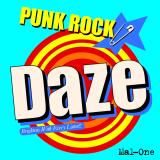
- B1: Mal-One’s Out To Lunch
- B2: Holiday In Someone Else’s Misery
Well here we are unbelievably 50 years on from year zero 1976, when the world stood still at the birth of Punk Rock. To celebrate this monumental occasion Mal-One has worked up a new song called God Save Us All From Misery and to accompany this fine effort he has also worked up alternative versions to what could be the best first 4 singles released by any band. The first four singles released by the Sex Pistols. He has produced his own takes on these classic singles with.. Someone Dropped a Bomb In The UK (Anarchy In U.K.), God Save The King (God Save The Queen), Mal-One’s Out To Lunch (Pretty Vacant) and Holiday In Someone Else’s Misery (Holidays In The Sun). So creating this rocking 5 track 12” E.P. Hope you enjoy the results and here’s to another 50 years… God save Us All…
Tapper Zukies 'Peace in the Ghetto' album would be the first release as part of his new deal with Virgin Records.This came about through a trip organised by the label to Jamaica in 1978 to sign up the cream of the crop of Reggae artists,for the new Virgin Front Line label.
Personnel on this trip included John Lydon (Rotten) of the Sex Pistols ,whose band had just split up.
The Peace in the Ghetto album deals with the political situation in at the time,the peace initiative between the gangs and Political Parties.
Paying tribute to some of the gang leaders Claudie Massop ,Buckie Thompson and Tony Welsh who helped make this process happen.
But whatever the subject matter Tapper Zukie chose to hang his songs on,you know he always does it in a fine style......Respect
- A1: Design - Premonition
- A2: Vision - Lucifer’s Friend
- A3: Richard Bone - Alien Girl
- A4: John Howard - I Tune Into You
- A5: Ian North - We’re Not Lonely
- A6: Selwin Image - The Unknown
- B1: Harry Kakoulli - I’m On A Rocket
- B2: Rich Wilde - The Lady Wants To Be Alone
- B3: Billy London - Woman
- B4: Alan Burnham - Science Fiction
- B5: The Microbes - Computer
- B6: The Goo-Q - I’m A Computer
- C1: Gerry & The Holograms - Gerry & The Holograms
- C2: The Warlord - The Ultimate Warlord
- C3: Die Marinas - Fred From Jupiter
- C4: Dee Jay Bert & Eagle - I Am Your Master
- C5: Peta Lily & Michael Process - I Am A Time Bomb
- C6: Sole Sister - It’s Not What You Are But How
- D1: Alasdair Riddell - Do You Read Me?
- D2: Karel Fialka - Armband (The Mystery Song)
- D3: John Springate - My Life
- D4: Idncandescent Luminaire - Famous Names
- D5: Disco Volante - No Motion
- D6: Dream Unit - A Drop In The Ocean
2025 REPRESS ON TRANSPARENT GREEN VINYL
Compiled by Philip King “And then came the rise of synth pop : blokes with dodgy haircuts hunched over keyboard-operated machines stuffed with wires and do-it-yourself tone oscillators making sounds like a brood of geese passing gas in a wind tunnel. Whoopee! This is the way the ‘70s ended : not with a blood-curdling bang bang but with a cheap, synthesized, emasculating whimper.” NICK KENT, NME. All The Young Droids: Junkshop Synth Pop 1978-1985 is a new compilation that charts the underbelly of the epoch-defining sound of the synthesiser in 80s popular music. Compiled by Philip King (previously seen compiling All The Young Droogs, Glitterbest and Boobs - The Junkshop Glam Discotheque), the music here connects the dots between DIY synth enthusiasts grappling with new, cheap synthesisers at the tail-end of punk and wannabe, jobbing songwriters enthral to the new music pioneered by Gary Numan, Depeche Mode and Daniel Miller’s Mute Records. Featuring rare tracks of auto-didactic progressive pop music, proto-techno punk, shoot-for-the-stars-land-in-the-gutter chart flops and heralded, underground synth classics, School Daze paints a picture of beautiful failure. Complete with extensive sleeve notes written by King and never before seen imagery, all 24 tracks were remastered by RPM in-house engineer Simon Murphy, many from vinyl copies due to lost master tapes. The story told on All The Young Droids is one of the dawning opportunity presented by both the emergence to the market of cheaper analog synthesisers and the distribution networks plus indie labels that exploded with the advent of punk music in 1976. While the music that sprouted out all over the globe in the wake of these factors was decried as fake, plastic, a refutation of punk’s guitar-led revolution, it’s telling that much of the music on All The Young Droids.. was created in bedrooms, ramshackle studios and home-made set ups with often borrowed equipment. In the era of record labels jumping to capitalise on the success of The Sex Pistols, The Clash (both on major labels, of course) these artists struggled to stand out from a new gold-rush with next to no budget or PR team. With radio and labels desperate for the new Yazoo, what resulted was a testament to necessity being the mother of invention. At the time, the synthesiser was the music of the future, a shiny new machine that could paint like an orchestra with a single finger and a 4-track. In the hands of Manchester avant-pranksters Gerry & The Holograms it’s a pulsing, sardonic weapon.. the only instrument on the Messthetics classic lampooning of New Wave fashion. In Hamburg, a 16 year old Andreas Dorau used it to write and record (with his female classmates on vocals) a global smash in Fred Vom Jupiter (later licensed to Mute Records). The hard-to-find English version (Fred From Jupiter, natch) is included here. Many artists with alreadystoried careers caught the bug and recorded synthesiser-fuelled peons to space, computers, the future and, of course, love-interests. Harry Kakoulli, late of Squeeze, recorded a solo album in 1979 that included the incredible power-synth-pop smash-that-never-smashed I’m On A Rocket. Similarly, Ian North of Neo and American Power Pop stalwarts Milk ’n’ Cookies bought a Korg MS20 and used a tape machine to record We’re Not Lonely, an absolute lost-classic of minimal synth pop. We’re Not Lonely also features on the Junkshop Synth Pop sampler 7” twinned with John Howard unreleased track You Will See, released April 12th 2025. There are plenty of compilation debuts in evidence. Sole Sister were a mysterious trio who were featured on the Scaling Triangles compilation of female-fronted, queer-adjacent post-punk / underground music that also featured The Petticoats. Selwin Image were from San Francisco and featured members of the recently defunct power pop/punk group The Pushups. Their stupidly catchy The Unknown fizzes with New Wave energy - think XTC to Sparks but remains unreleased until now. Dream Unit’s A Drop In The Ocean is an early synth wave cut, positively teaming with Joy Division instrumentation, previously only released on a long-forgotten and super rare, self-released EP. Incandescent Luminaire’s Famous Names belies an archetypal struggle of a small-town trying to make it in a cruel industry but is a thrilling New Romantic-Synth Wave cross over with a OMD gloominess that’s a joy to hear. Feminist Minimal Wave track I Am A Time Bomb by performance artist Peta Lilly and Michael Chance is a revelation destined for new found cult status. It was released on 7” and lost until now. The flipside to the subterranean, never-made-it synth pop mentioned above are the ambitious, even fruity attempts at success that have a perennial elegance to their confidence. New Jersey-ite Billy London (real name Ed Barth) tried to cash in on the synth boom with Woman, released by a major label, a lurching new wave track built on the Louie Louie rhythm and a wonderfully camp Lou Reedstyle sleazy vocal before exploding in the synthesised chorus. The song bombed but with a chorus like this, you have to wonder why? Ex-Glitter Band member John Springate’s My Life is truly epic, with doomed chord progressions and massive sounding drums turning into at least 3 different songs in the course of the track. Before you wonder what’s going on the song resolves with a glorious return to the main refrain. The dry-ice-dressed dance floor is well catered for too. Design’s Premonition and Vision’s Lucifer’s Friend are stone-cold minimal synth bangers, well loved but given a new lease of life here. The Warlord’s The Ultimate Warlord was released in 1978, a homespun proto Hi NRG banger that was later re-recorded by The Immortals in Canada who had a club hit with it. One-man- band Disco Volante’s No Motion was re-issued by Synth wave label Medical in 2012 but makes its first vinyl compilation appearance here. Close your eyes and you can imagine what Lawrence of Felt would have sounded like with some cheap Korgs a little earlier in his career. Gibraltar-based trio The Microbes imagined a computer programming people to dance - how prescient - and ended up with a propulsive, robo-funk track with splendid rubbery bass playing over a tectonic drum machine. Previously picked up by Belgian label Stroom TV, Dee Jay Bert & Eagle’s heavily Euro-accented I Am Your Master demands the listener to “come to paradise!” In a frankly terrifying manner. All The Young Droids is the first compilation to peel away from the narrative that dour, Minimal Synth and Cold Wave were the only musical children of the first rush of synth pop. Philip King and School Daze Records describe a much more complicated world: along with the austere, Brutalist children of Daniel Miller (who produced Alan Burnham’s Bowie-Low-influenced Science Fiction here) was a plethora of desperate cash-ins, accidental mainstream hits, ambitious pop dramas and major label punts that went nowhere. Crucially, the compilation blurs the line between junk and treasure. What if the two things are interchangeable. What if it’s all science fiction?
- A1: Hurts And Noises
- A2: Wake Up
- A3: I Don't Wanna Be A Rich
- A4: Terrorist Bad Heart
- A5: Provocate
- A6: Lucifer Sam (Pink Floyd)
- B1: Happy!?
- B2: So Lazy
- B3: I Feel Down
- B4: Stupido
- B5: Guilty
- B6: Caroline Says (Loo Reed)
UILTY RAZORS, BONA FIDE PUNKS.
Writings on the topic that go off in all directions, mind-numbing lectures given by academics, and testimonies, most of them heavily doctored, from those who “lived through that era”: so many people today fantasize about the early days of punk in our country… This blessed moment when no one had yet thought of flaunting a ridiculous green mohawk, taking Sid Vicious as a hero, or – even worse – making the so-called alternative scene both festive and boorish. There was no such thing in 1976 or 1977, when it wasn’t easy to get hold of the first 45s by the Pistols or the Clash. Few people were aware of what was happening on the fringes of the fringes at the time. Malcolm McLaren was virtually unknown, and having short hair made you seem strange. Who knew then that rock music, which had taken a very bad turn since the early 1970s, would once again become an essential element of liberation? That, thanks to short and fast songs, it would once again rediscover that primitive, social side that was so hated by older generations? Who knew that, besides a few loners who read the music press (it was even better if they read it in English) and frequented the right record stores? Many of these formed bands, because it was impossible to do otherwise. We quickly went from listening to the Velvet Underground to trying to play the Stooges’ intros. It’s a somewhat collective story, even though there weren’t many people to start it.
The Guilty Razors were among those who took part in this initial upheaval in Paris. They were far from being the worst. They had something special and even released a single that was well above the national average. They also had enough songs to fill an album, the one you’re holding. In everyone’s opinion, they were definitely not among the punk impostors that followed in their wake. They were, at least, genuine and credible.
Guilty Razors, Parisian punk band (1975-1978). To understand something about their somewhat linear but very energetic sound, we might need to talk about the context in which it was born and, more broadly, recall the boredom (a theme that would become capital in punk songs) coupled with the desire to blow everything off, which were the basis for the formation of bands playing a rejuvenated rock music ; about the passion for a few records by the Kinks or the early Who, by the Stooges, by the Velvet mostly, which set you apart from the crowd.
And of course, we should remember this new wave, which was promoted by a few articles in the specialized press and some cutting-edge record stores, coming from New York or London, whose small but powerful influence could be felt in Paris and in a handful of isolated places in the provinces, lulled to sleep by so many appalling things, from Tangerine Dream to President Giscard d’Estaing...
In 1975-76, French music was, as almost always, in a sorry state ; it was still dominated by Johnny Hallyday and Sylvie Vartan. Local rock music was also rather bleak, apart from Bijou and Little Bob who tried to revive this small scene with poorly sound-engineered gigs played to almost no one.
In the working class suburbs at the time, it was mainly hard rock music played to 11 that helped people forget about their gruelling shifts at the factory. Here and there, on the outskirts of major cities, you still could find a few rockers with sideburns wearing black armbands since the death of Gene Vincent, but it wasn’t a proper mass movement, just a source of real danger to anyone they came across who wasn't like them. In August 1976, a festival unlike any other took place in Mont-de-Marsan – the First European Punk Festival as the poster said – with almost as many people on stage as in the audience. Yet, on that day, a quasi historical event happened, when, under the blazing afternoon sun, a band of unknowns called The Damned made an unprecedented noise in the arena, reminiscent of the chaotic Stooges in their early adolescence. They were the first genuine punk band to perform in our country: from then on, anything was possible, almost anything seemed permissible.
It makes sense that the four+1 members of Guilty Razors, who initially amplified acoustic guitars with crappy tape recorder microphones, would adopt punk music (pronounced paink in French) naturally and instinctively, since it combines liberating noise with speed of execution and – crucially – a very healthy sense of rebellion (the protesters of May 1968 proclaimed, and it was even a slogan, that they weren’t against old people, but against what had made them grow old. In the mid-1970s, it seemed normal and obvious that old people should now ALSO be targeted!!!).
At the time, the desire to fight back, and break down authority and apathy, was either red or black, often taking the form of leafleting, tumultuous general assemblies in the schoolyard, and massive or shabby demonstrations, most of the time overflowing with an exciting vitality that sometimes turned into fights with the riot police. Indeed, soon after the end of the Vietnam War and following Pinochet’s coup in Chile, all over France, Trotskyist and anarcho-libertarian fervour was firmly entrenched among parts of the educated youth population, who were equally rebellious and troublemakers whenever they had the chance. It should also be noted that when the single "Anarchy in the UK" was first heard, even though not many of us had access to it, both the title and its explosive sound immediately resonated with some of those troublemakers crying out for ANARCHY!!! Meanwhile, the left-wing majority still equated punks with reckless young neo-Nazis. Of course, the widely circulated photos in the mainstream press of Siouxsie Sioux with her swastikas didn’t necessarily help to win over the theorists of the Great Revolution. It took Joe Strummer to introduce The Clash as an anti-racist, anti-fascist and anti-ignorance band for the rejection of old-school revolutionaries to fade a little.
The Lycée Jean-Baptiste Say at Porte d’Auteuil, despite being located in the very posh and very exclusive 16th arrondissement of Paris, didn’t escape these "committed" upheavals, which doubled as the perfect outlet for the less timid members of this generation.
“Back then, politics were fun,” says Tristam Nada, who studied there and went on to become Guilty Razors’ frontman. “Jean-Baptiste was the leftist high-school in the neighbourhood. When the far right guys from the GUD came down there, the Communist League guys from elsewhere helped us fight them off.”
Anything that could challenge authority was fair game and of course, strikes for just about any reason would lead to increasingly frequent truancy (with a definitive farewell to education that would soon follow). Tristam Nada spent his 10th and 11th unfinished grades with José Perez, who had come from Spain, where his father, a janitor, had been sentenced to death by Franco. “José steered my tastes towards solid acts such as The Who. Like most teenagers, I had previously absorbed just about everything that came my way, from Yes to Led Zeppelin to Genesis. I was exploring… And then one day, he told me that he and his brother Carlos wanted to start a rock band.” The Perez brothers already played guitar. “Of course, they were Spanish!”, jokes their singer. “Then, somewhat reluctantly, José took up the bass and we were soon joined by Jano – who called himself Jano Homicid – who took up the rhythm guitar.” Several drummers would later join this core of not easily intimidated young guys who didn’t let adversity get the better of them.
The first rehearsals of the newly named Guilty Razors took place in the bedroom of a Perez aunt. There, the three rookies tried to cover a few standards, songs that often were an integral part of their lives. During a first, short gig, in front of a bewildered audience of tough old-school rockers, they launched into a clunky version of the Velvet Underground's “Heroin”. Challenge or recklessness? A bit of both, probably… And then, step by step, their limited repertoire expanded as they decided to write their own songs, sung in a not always very accurate or academic English, but who cared about proper grammar or the right vocabulary, since what truly mattered was to make the words sound as good as possible while playing very, very fast music? And spitting out those words in a language that left no doubt as to what it conveyed mattered as well.
Trying their hand a the kind of rock music disliked by most of the neighbourhood, making noise, being fiercely provocative: they still belonged to a tiny clique who, at this very moment, had chosen to impose this difference. And there were very few places in France or elsewhere, where one could witness the first stirrings of something that wasn’t a trend yet, let alone a movement.
In the provinces, in late 1976 or early 1977, there couldn’t be more than thirty record stores that were a bit more discerning than average, where you could hear this new kind of short-haired rock music called “punk”. The old clientele, who previously had no problem coming in to buy the latest McCartney or Aerosmith LP, now felt a little less comfortable there…
In Paris, these enlightened places were quite rare and often located nex to what would become the Forum des Halles, a big shopping mall. Between three aging sex workers, a couple of second-hand clothes shops, sellers of hippie paraphernalia and small fashion designers, the good word was loudly spread in two pioneering places – propagators of what was still only a new underground movement. Historically, the first one was the Open Market, a kind of poorly, but tastefully stocked cave. Speakers blasted out the sound of sixties garage bands from the Nuggets compilation (a crucial reference for José Perez) or the badly dressed English kids of Eddie and the Hot Rods. This black-painted den was opened a few years earlier by Marc Zermati, a character who wasn’t always in a sunny disposition, but always quite radical in his (good) choices and his opinions. He founded the independent label Skydog and was one of the promoters of the Mont-de-Marsan punk festivals. Not far from there was Harry Cover, another store more in tune with the new New York scene, which was amply covered in the house fanzine, Rock News (even though it was in it that the photos of the Sex Pistols were first published in France).
It was a favorite hang-out of the Perez brothers and Tristam Nada, as the latter explained. “It’s at Harry Cover’s that we first heard the Pistols and Clash’s 45s, and after that, we decided to start writing our first songs. If they could do it, so could we!”
The sonic shocks that were “Anarchy in the UK”, “White Riot” or the Buzzcocks’s EP, “Spiral Scratch” – which Guilty Razors' sound is reminiscent of – were soon to be amplified by an unparalleled visual shock. In April 1977, right after the release of their first LP, The Clash performed at the Palais des Glaces in Paris, during a punk night organised by Marc Zermati. For many who were there, it was the gig of a lifetime…
Of course, Guilty Razors and Tristam were in the audience: “That concert was fabulous… We Parisian punks were almost all dressed in black and white, with white shirts, skinny leather ties, bikers jackets or light jackets, etc. The Clash, on the other hand, wore colourful clothes. Well, the next day, at the Gibus, you’d spot everyone who had been at this concert, but they weren’t wearing anything black, they were all wearing colours.”
It makes sense to mention the Gibus club, as Guilty Razors often played there (sometimes in front of a hostile audience). It was also the only place in Paris that regularly scheduled new Parisian or Anglo-Saxon acts, such as Generation X, Siouxsie and the Banshees, the Slits, and Johnny Thunders who would become a kind of messed-up mascot for the venue. A little later, in 1978, the Rose Bonbon – formerly the Nashville – also attracted nightly owls in search of electric thrills… In 1977, the iconic but not necessarily excellent Asphalt Jungle often played at the Gibus, sometimes sharing the bill with Metal Urbain, the only band whose aura would later transcend the French borders (“I saw them as the French Sex Pistols,” said Geoff Travis, head of their British label Rough Trade). Already established in this small scene, Metal Urbain helped the young and restless Guilty Razors who had just arrived. Guitarist for Metal Urbain Hermann Schwartz remembers it: “They were younger than us, we were a bit like their mentors even if it’s too strong a word… At least they were credible. We thought they were good, and they had good songs which reminded of the Buzzcocks that I liked a lot. But at some point, they started hanging out with the Hells Angels. That’s when we stopped following them.”
The break-up was mutual, since, Guilty Razors, for their part, were shocked when they saw a fringe element of the audience at Metal Urbain concerts who repeatedly shouted “Sieg Heil” and gave Nazi salutes. These provocations, even still minor (the bulk of the skinhead crowd would later make their presence felt during concerts), weren’t really to the liking of the Perez brothers, whose anti-fascist convictions were firmly rooted. Some things are non-negotiable.
A few months earlier (in July 1978), Guilty Razors had nevertheless opened very successfully for Metal Urbain at the Bus Palladium, a more traditonally old-school rock night-club. But, as was sometimes the case back then, the night turned into a mass brawl when suburban rockers came to “beat up punks”.
Back then, Parisian nights weren’t always sweet and serene.
So, after opening as best as they could for The Jam (their sound having been ruined by the PA system), our local heroes were – once again – met outside by a horde of greasers out to get them. “Thankfully,” says Tristam, “we were with our roadies, motorless bikers who acted as a protective barrier. We were chased in the neighbouring streets and the whole thing ended in front of a bar, with the owner coming out with a rifle…”
Although Tristam and the Perez brothers narrowly escaped various, potentially bloody, incidents, they weren’t completely innocent of wrongdoing either. They still find amusing their mugging of two strangers in the street for example (“We were broke and we simply wanted to buy tickets for the Heartbreakers concert that night,” says Tristam). It so happened that their victims were two key figures in the rock business at the time: radio presenter Alain Manneval and music publisher Philippe Constantin. They filed a complaint and sought monetary compensation, but somehow the band’s manager, the skilful but very controversial Alexis, managed to get the complaint withdrawn and Guilty Razors ended up signing with Constantin with a substantial advance.
They also signed with Polydor and the label released in 1978 their only three-track 45, featuring “I Don't Wanna be A Rich”, “Hurts and Noises” and “Provocate” (songs that exuded perpetual rebellion and an unquenchable desire for “class” confrontation). It was a very good record, but due to a lack of promotion (radio stations didn’t play French artists singing in English), it didn’t sell very well. Only 800 copies were allegedly sold and the rest of the stock was pulped… Initially, the three tracks were to be included on a LP that never came to be, since they were dropped by Polydor (“Let’s say we sometimes caused a ruckus in their offices!” laughs Tristam.) In order to perfect the long-awaited LP, the band recorded demos of other tracks. There was a cover of Pink Floyd's “Lucifer Sam” from the Syd Barrett era – proof of an enduring love for the sixties’ greats –, “Wake Up” a hangover tale and “Bad Heart” about the Baader-Meinhof gang, whose actions had a profound impact on the era and on a generation seeking extreme dissent... On the album you’re now discovering, you can also hear five previously unreleased tracks recorded a bit later during an extended and freezing stay in Madrid, in a makeshift studio with the invaluable help of a drummer also acting as sound engineer. He was both an enthusiastic old hippie and a proper whizz at sound engineering. Here too, certain influences from the fifties and sixties (Link Wray, the Troggs) are more than obvious in the band’s music.
Shortly after a final stormy and rather barbaric (on the audience’s side) “Punk night” at the Olympia in June 1978, Tristam left the band ; his bandmates continued without him for a short while.
But like most pioneering punk bands of the era, Guilty Razors eventually split up for good after three years (besides once in Spain, they’d only played in Paris). The reason for ceasing business activities were more or less the same for everyone: there were no venues outside one’s small circuit to play this kind of rock music, which was still frightening, unknown, or of little interest to most people. The chances of recording an LP were virtually null, since major labels were only signing unoriginal but reassuring sub-Téléphone clones, and the smaller ones were only interested in progressive rock or French chanson for youth clubs. And what about self-production? No one in our small safety-pinned world had thought about it yet. There wasn’t enough money to embark on that sort of venture anyway.
So yes, the early days of punk in France were truly No Future!
The Punky Rocking Christmas came over two different Xmas’s for the punk connoisseur. The first back in 1977 when the Sex Pistols took themselves up to Huddersfield to play a gig for the firemen but also as they arrived in the afternoon a gig for the local kids. After much cake throwing and high jinks and with the kids all cleared out the Pistols played the evening show for the adults. This it would turn out to be the Sex Pistols last show in England, as they went to America in January 1978 and imploded. That as they say is another story.
The second Christmas Punk bonanza took place in London’s Ladbroke Grove area when The Clash, possible inspired by the Sex Pistols previous Xmas gig, decided to play their own Xmas gig in 1979 on
Christmas Day at The Acklam Hall. The added bonus was they also played at the venue on Boxing Day. So there you have it the two biggest punk bands giving two xmas treats to their fans. To celebrate these festive treats Mal-One has written two songs to celebrate both events and dubbed up both versions for this Maxi-12” special. He has also provided two sleeves a Sex Pistols sleeve 250 copies and a Clash sleeve 250 copies plus a signed print in each. As they say what more could you want in your xmas stocking.
Ho Ho Ho and a punky rocking happy Xmas to you all.
- A1: Countrymusicdisco45 4 08
- A2: Sometimes Shooting Stars 2 57
- A3: Short Cut Home 3 25
- A4: Disappointment 3 00
- A5: Days Are Mighty 2 46
- B1: Don't Dance With Me Tonight 3 27
- B2: You Got It Wrong 2 39
- B3: Ring The Bells 3 57
- B4: Let's Make It Up 2 49
- B5: When Did You Stop Loving Me 3 54
- C1: Just Beginning 4 00
- C2: Wintering Of The Year 3 16
- C3: Let It Rain 3 04
- C4: We Tell Each Other Who We Are 3 27
- C5: Trip To You 4 06
- D1: Dirt 2 54
- D2: Heaven Right Here 3 38
- D3: If Later Ever Comes 3 03
- D4: Remember The Season 3 10
- D5: A Little Love 3 35
- D6: Weary Traveller 3 20
“The high priest of country cool” - Rolling Stone
“I like him very much. He’s very special. He’s singing with a voice I never heard before” - Townes Van Zandt
“A conscious, soulful brother” - Horace Andy
“He’s a brother to me - one of the best singer/songwriters I’ve ever met” - Adrian Sherwood
“Unearthed mine of gems from inner Wales - a songbook of ideas - that's Jeb!” - Gilles Peterson
Jeb Loy Nichols is a bonafide Country (Got) Soul legend. The Music Maker presents 21 incredibly deep, grooving and soulful songs from the cream of Jeb's catalogue; from its earliest days to his latest unreleased gems via countless rare and unbelievably good lost-classics. This 2LP set is presented in a gatefold sleeve complete with freshly commissioned artwork courtesy of Jeb himself.
In collecting these uncut, under-heard gems, we hope to do justice to Jeb's jaw-dropping artistic brilliance. A man who, in working with Adrian Sherwood, Dennis Bovell, Dan Penn, Larry Jon Wilson and countless other legendary characters, has crafted some of the most deeply affecting folk, country, soul, funk, blues, dub, reggae, gospel, rap and electronic music, ever heard.
The first music Jeb really felt a connection with was southern soul: "I used to listen to the radio at night and fell in love with Bobby Womack and Al Green, The Staple Singers and Joe Simon – that whole Nashville/Memphis/Muscle Shoals thing.” But Jeb was so much more than a soul boy, Indeed, he "went to bluegrass festivals with my dad and come home and listened to jazz records with my mother.” And, when he was fifteen, he heard his first punk record: "God Save The Queen" by The Sex Pistols. “That and The Ramones completely changed me.” In 1979 he got a scholarship to go to art school in New York: “A great time. Punk was over but hip-hop was starting and I got into that in an obsessive way.”
His first recording, in 1980, was an unreleased rap song called "I’m A Country Boy". If that isn't an insight enough into Jeb's kaleidoscopic path through music, in 1981 he visited friends in London and found himself living in a squat with Adrian Sherwood, Ari Up (from the Slits), and Neneh Cherry. “Adrian put me to work immediately, moving boxes of records all across London. It was Adrian that was and is my biggest influence – in his complete disregard for genre purity.” So, presumably you're getting the picture? A veritable musical magpie with a voracious appetite and unimpeachable taste.
"Mine has always been a meandering career. I've done what I've done, and made the music I've made, due to chance meetings. I'm not particularly ambitious; it's more important to me that I work with friends and like-minded people. I've been a big fan of Be With for years. Everything they release is essential. When they asked about rereleasing "Countrymusicdisco45" I was both pleased and flattered. We began talking about how we'd do it; two years and twenty-one tracks later, here we are. I've always thought of the music I make as Country Music. Music conceived in the country, written in the country, recorded in the country. I left London and moved back to the country so I could live among the trees, the grasses, the animals, those things that don't go to war and get greedy. This compilation is the story of that life. Hand made, lo-fi, ramshackle, stripped down, real deal music. Heartworn and funky. Music made in the kitchen, not in the studio. As the great Skip Mcdonald said, Perfect ain't perfect. It's great to see all these tracks gathered together. It feels like a family reunion. Some older members of the tribe, some newer arrivals."
Opener "countrymusicdisco45" is a song Jeb wrote about how his crew lives, tucked up blissfully in the hills: "House parties full of country folk dancing to disco, reggae, soul, country, hip-hop. All night. I recorded it at home under the influence of Stevie Wonder." It's one of the funkiest records you'll ever hear. "Sometimes Shooting Stars" was recorded in Nashville and mixed by the legendary Dennis Bovell. It's deep, dubby, majestic. A thing of fragile, melodic beauty. The party ramps back up again with the undeniable groove of "Short Cut Home" before the profoundly moving "Disappointment" arrives. One of many songs he's recorded with good buddy Benedic Lamdin (aka Nostalgia 77): "We were going for a Leon Thomas meets Richard Brautigan meets Alice Coltrane kind of thing". We think they nailed it. "Days Are Mighty", like a lot of the tracks on this collection, "started life as a demo, an attempt to get something down while it was fresh. No frills, nothing fancy, just feel." And what feels!
The irrepressibly funky "Don't Dance With Me Tonight" is a deeply moving, slow-mo organ-drenched head-nod-funky country-ballad. Next up, the breezy "You Got It Wrong" was recorded in Wales with some of Jeb's good friends and neighbours, The Westwood All Stars, featuring Clovis Phillips and Will Barnes. Skanking fiddle-flecked gem "Ring The Bells" was the first thing Jeb recorded when he moved to Wales. A combination of all his loves; country, reggae, soul. It's followed by "Let's Make It Up", a truly sumptuous string-drenched emotional groover. "When Did You Stop Loving Me" is another Nashville track, written and recorded during a time Jeb was spending a lot of time with the Muscle Shoals crew, Donnie Fritts, Spooner Oldham, George Soule and Dan Penn: "It shows, I'm sure, their influence." Oh, you bet it does!
The swaggering country-funk of "Just Beginning" should grace many groove-focused DJs' sets whilst "Wintering Of The Year", again made with Clovis, is pastoral, campfire soul. The glacial, gorgeous "Let It Rain" is from an unreleased record Jeb made with the great British jazz bass player Andy Hamill and "We Tell Each Other Who We Are" is freaky country-soul made by a man with a love for strutting, wonky hip-hop stylings. Rounding out the side, "Trip To You" is pure, uncut amphetamine-propelled drum-machine soul.
The spare, beautiful "Dirt" is from an EP Jeb made with Julian Moore in his house in South London: "All first takes, straight to tape." Swoon! "Heaven Right Here" was a very minor league hit in America: "It was produced by the brilliant and much missed Wayne Nunes. It was started in the countryside of Missouri, finished in the countryside of Wales, and recorded in the countryside of Sussex." Double swoon! "If Later Ever Comes" is electronica meets J.J. Cale business whilst "Remember The Season" is truly wonderful and breezy guitar soul. "A Little Love" was made with Wayne Nunes as well, after a night of listening to Studio One and Northern Soul. Bouncy dub closer "Weary Traveller" was written by Bill Monroe, the hero of Jeb's youth: "Monroe's music was heavily influenced by black southern churches; I've tried to keep some of that feral feel." This was the final recording by Jeb's 1990s Country-Dub band, Fellow Travellers.
The name of this compilation comes from a time when Jeb lived in Peckham, south London and he used to DJ and sometimes perform at a local bar: "The owner of the bar, a Jamaican named Count Percy, once asked me what I called my music. I told him I wasn't sure, I guess just pop music. He thought about it for a minute and then said, 'no, more like mom and pop music'. Rather than call me a country singer or a folk singer he always referred to me as The Music Maker."
With the long overdue deluxe overview of his beloved music, we hope to finally shine a light on the unheralded genius of Jeb Loy Nichols. RIYL Larry Jon Wilson, Townes Van Zandt, Bobby Charles, country got soul artists, dub, deep soul, disco, dancing, heartbreak. This deluxe collection, spellbinding from beginning to end, should hopefully go some way to ensuring Jeb reaches an ever bigger, ever more appreciative crowd of followers. Mastering for this special double vinyl edition was overseen by Be With regular Simon Francis and it was cut by the esteemed Cicely Balston at Abbey Road Studios to be pressed in the Netherlands by Record Industry. The artwork has been lovingly put together by The Music Maker, himself, Jeb Loy Nichols. "Be With is the perfect home for this mongrel music. I am forever in their debt." The pleasure is all ours, Jeb.
- A1: Design - Premonition
- A2: Vision - Lucifer’s Friend
- A3: Richard Bone - Alien Girl
- A4: John Howard - I Tune Into You
- A5: Ian North - We’re Not Lonely
- A6: Selwin Image - The Unknown
- B1: Harry Kakoulli - I’m On A Rocket
- B2: Rich Wilde - The Lady Wants To Be Alone
- B3: Billy London - Woman
- B4: Alan Burnham - Science Fiction
- B5: The Microbes - Computer
- B6: The Goo-Q - I’m A Computer
- C1: Gerry & The Holograms - Gerry & The Holograms
- C2: The Warlord - The Ultimate Warlord
- C3: Die Marinas - Fred From Jupiter
- C4: Dee Jay Bert & Eagle - I Am Your Master
- C5: Peta Lily & Michael Process - I Am A Time Bomb
- C6: Sole Sister - It’s Not What You Are But How
- D1: Alasdair Riddell - Do You Read Me?
- D2: Karel Fialka - Armband (The Mystery Song)
- D3: John Springate - My Life
- D4: Incandescent Luminaire - Famous Names
- D5: Disco Volante - No Motion
- D6: Dream Unit - A Drop In The Ocean
MB Crystal Vinyl[32,73 €]
LTD Trans Pink Vinyl[32,82 €]
LTD Trans Pink Vinyl[27,69 €]
Compiled by Philip King
“And then came the rise of synth pop : blokes with dodgy haircuts hunched over keyboard-operated
machines stuffed with wires and do-it-yourself tone oscillators making sounds like a brood of geese
passing gas in a wind tunnel. Whoopee! This is the way the ‘70s ended : not with a blood-curdling bang
bang but with a cheap, synthesized, emasculating whimper.”
NICK KENT, NME.
All The Young Droids: Junkshop Synth Pop 1978-1985 is a new compilation that charts the
underbelly of the epoch-defining sound of the synthesiser in 80s popular music. Compiled by Philip
King (previously seen compiling All The Young Droogs, Glitterbest and Boobs - The Junkshop
Glam Discotheque), the music here connects the dots between DIY synth enthusiasts grappling with
new, cheap synthesisers at the tail-end of punk and wannabe, jobbing songwriters enthral to the new
music pioneered by Gary Numan, Depeche Mode and Daniel Miller’s Mute Records. Featuring rare
tracks of auto-didactic progressive pop music, proto-techno punk, shoot-for-the-stars-land-in-the-gutter
chart flops and heralded, underground synth classics, School Daze paints a picture of beautiful failure.
Complete with extensive sleeve notes written by King and never before seen imagery, all 24 tracks
were remastered by RPM in-house engineer Simon Murphy, many from vinyl copies due to lost master
tapes. The story told on All The Young Droids is one of the dawning opportunity presented by both the
emergence to the market of cheaper analog synthesisers and the distribution networks plus indie labels
that exploded with the advent of punk music in 1976. While the music that sprouted out all over the
globe in the wake of these factors was decried as fake, plastic, a refutation of punk’s guitar-led
revolution, it’s telling that much of the music on All The Young Droids.. was created in bedrooms,
ramshackle studios and home-made set ups with often borrowed equipment. In the era of record labels
jumping to capitalise on the success of The Sex Pistols, The Clash (both on major labels, of course)
these artists struggled to stand out from a new gold-rush with next to no budget or PR team. With radio
and labels desperate for the new Yazoo, what resulted was a testament to necessity being the mother
of invention.
At the time, the synthesiser was the music of the future, a shiny new machine that could paint like an
orchestra with a single finger and a 4-track. In the hands of Manchester avant-pranksters Gerry & The
Holograms it’s a pulsing, sardonic weapon.. the only instrument on the Messthetics classic lampooning
of New Wave fashion. In Hamburg, a 16 year old Andreas Dorau used it to write and record (with his
female classmates on vocals) a global smash in Fred Vom Jupiter (later licensed to Mute Records).
The hard-to-find English version (Fred From Jupiter, natch) is included here. Many artists with alreadystoried careers caught the bug and recorded synthesiser-fuelled peons to space, computers, the future
and, of course, love-interests. Harry Kakoulli, late of Squeeze, recorded a solo album in 1979 that
included the incredible power-synth-pop smash-that-never-smashed I’m On A Rocket. Similarly, Ian
North of Neo and American Power Pop stalwarts Milk ’n’ Cookies bought a Korg MS20 and used a
tape machine to record We’re Not Lonely, an absolute lost-classic of minimal synth pop. We’re Not
Lonely also features on the Junkshop Synth Pop sampler 7” twinned with John Howard unreleased
track You Will See, released April 12th 2025.
There are plenty of compilation debuts in evidence. Sole Sister were a mysterious trio who were
featured on the Scaling Triangles compilation of female-fronted, queer-adjacent post-punk /
underground music that also featured The Petticoats. Selwin Image were from San Francisco and
featured members of the recently defunct power pop/punk group The Pushups. Their stupidly catchy
The Unknown fizzes with New Wave energy - think XTC to Sparks but remains unreleased until now.
Dream Unit’s A Drop In The Ocean is an early synth wave cut, positively teaming with Joy Division
instrumentation, previously only released on a long-forgotten and super rare, self-released EP.
Incandescent Luminaire’s Famous Names belies an archetypal struggle of a small-town trying to
make it in a cruel industry but is a thrilling New Romantic-Synth Wave cross over with a OMD
gloominess that’s a joy to hear. Feminist Minimal Wave track I Am A Time Bomb by performance artist
Peta Lilly and Michael Chance is a revelation destined for new found cult status. It was released on 7”
and lost until now.
The flipside to the subterranean, never-made-it synth pop mentioned above are the ambitious, even
fruity attempts at success that have a perennial elegance to their confidence. New Jersey-ite Billy
London (real name Ed Barth) tried to cash in on the synth boom with Woman, released by a major
label, a lurching new wave track built on the Louie Louie rhythm and a wonderfully camp Lou Reedstyle sleazy vocal before exploding in the synthesised chorus. The song bombed but with a chorus like
this, you have to wonder why? Ex-Glitter Band member John Springate’s My Life is truly epic, with
doomed chord progressions and massive sounding drums turning into at least 3 different songs in the
course of the track. Before you wonder what’s going on the song resolves with a glorious return to the
main refrain.
The dry-ice-dressed dance floor is well catered for too. Design’s Premonition and Vision’s Lucifer’s
Friend are stone-cold minimal synth bangers, well loved but given a new lease of life here. The
Warlord’s The Ultimate Warlord was released in 1978, a homespun proto Hi NRG banger that was
later re-recorded by The Immortals in Canada who had a club hit with it. One-man- band Disco
Volante’s No Motion was re-issued by Synth wave label Medical in 2012 but makes its first vinyl
compilation appearance here. Close your eyes and you can imagine what Lawrence of Felt would have
sounded like with some cheap Korgs a little earlier in his career. Gibraltar-based trio The Microbes
imagined a computer programming people to dance - how prescient - and ended up with a propulsive,
robo-funk track with splendid rubbery bass playing over a tectonic drum machine. Previously picked up
by Belgian label Stroom TV, Dee Jay Bert & Eagle’s heavily Euro-accented I Am Your Master
demands the listener to “come to paradise!” In a frankly terrifying manner.
All The Young Droids is the first compilation to peel away from the narrative that dour, Minimal Synth
and Cold Wave were the only musical children of the first rush of synth pop. Philip King and School
Daze Records describe a much more complicated world: along with the austere, Brutalist children of
Daniel Miller (who produced Alan Burnham’s Bowie-Low-influenced Science Fiction here) was a
plethora of desperate cash-ins, accidental mainstream hits, ambitious pop dramas and major label
punts that went nowhere. Crucially, the compilation blurs the line between junk and treasure. What if the
two things are interchangeable. What if it’s all science fiction?
Repress! on Red Coloured Vinyl
The interstellar cosmonauts of Staatseinde create a theatrical mix of pulsing electro with nostalgic hopeful synthlines, all performed live with synthesizers, a sequencer and tantalizing vocals. From Wave to EBM, from NDW to Punk and everything else in and out of the box. It is like walking into a club meeting Kraftwerk on speed and The Sex Pistols on acid.
Their new release “De Nieuwe Golf” is characterized by dystopian prospects and hopeful sounds, confirming Staatseinde’s name as the founder of the “Neue Niederländische Welle”, in other words the New Dutch Wave.
The uplifting italo rifs in opening track “Grauw” take you on a journey through a gray world in which color cannot be taken for granted. Minimal wave track “Einzelganger” makes you feel like an outsider who can’t keep up with society. “Geef Me De Tijd” sounds like a schizophrenic dreamer swinging casually, but ending as a hard hitting track. Dystopian doom and pessimism is captured in EBM/techno floor filler “Doembeelden”. The raw West Coast Sound of Holland infused “La Haya” is a tribute to the city of The Hague which calls out on everybody to get wasted. The epic ode to space travel “Ruimtevaart Vooruit (2022 Refix)” is back in a rendition inspired by Rude66’s 2010 remix version. “Isla Inutile” is a dark and tropical delirium. In the hopeful “Alles is Weg”, Staatseinde takes you from the downfall on the way to…?
Staatseinde’s “De Nieuwe Golf” holds up a mirror to humanity…progress has not helped us any further. There is hope…but will this new wave be on time? Or is it already too late?
The story of So-Do is both familiar and completely unique. A classically trained multi-instrumentalist with a poet’s sensibility and a passion for folk music meets a worldly bar owner with a love for psychedelia, post-punk and dub in the small town neither could bring themselves to leave. Over two years, they play dozens of shows in independent live houses across Japan, cut and self-release three singles – two 7”s and a 12” – and leave behind just eight tracks, all of which are set to be reissued for the first time forty years on.
So-Do’s Studio Works ’83-’85 collects the full output of this iconoclastic post-punk phenomenon, whose sparse, syncopated arrangements were infused with a dubbed-out flair that owed more to Dennis Bovell’s productions of Orange Juice, the Jah Wobble basslines of Public Image Limited or Adrian Sherwood’s live dubs of Mark Stewart than even they knew at the time.
Because for lead songwriter Hideshi Akuta, music offered an escape from the existential malaise of small-town life, folding a melancholy nihilism into tracks like ‘Kakashi’ and ‘Hashiru’ (which translates as ‘run’), or taking aim at the inequalities and creeping apathies of the middle classes, as he does on ‘Get Away’ and ‘Nothing’.
And if Talking Heads had CBGBs, Sex Pistols had the Roxy, then So-Do had Buddha. Influenced by Buddha venue owner and amateur producer Atsuo Takeuchi, Akuta turned So-Do’s sound towards dub, crafting playful, ironic and funky compositions that crackle with live energy at the vanguard of Japan’s nascent independent music scene.“So-Do is hard to explain,” Takeuchi says. “It’s been a struggle for years to try to find the words for our music.” The answer perhaps, is just to listen.
Both familiar and completely unique, So-Do extend Time Capsule’s genre-defining exposition of Japan’s reggae-inspired music of the ‘70s and ‘80s, as collected on the label’s two critically acclaimed Tokyo Riddim compilations, and London-based live outfit Tokyo Riddim Band.
Embracing the rip-it-up-and-start-again ethos of the early ‘80s, So-Do burned bright for a short time and then burned out. Their legacy is about to be reignited. Expect it to catch alight once more.
All songs are written & composed by Hideshi Akuta
Produced by Atsuo Takeuchi
Artwork by Ben Arfur
Liner Notes by Anton Spice, Ayana Honma, Kay Suzuki
Curated by Kay Suzuki
Licensed from Atsuo Takeuchi (Oregano Cafe)
Tape Restoration and Mastered by Mike Hillier at Metropolis Studios, London, UK
Time Capsule | TIME023 | 1983-1985 → 2025
The interstellar cosmonauts of Staatseinde create a theatrical mix of pulsing electro with nostalgic hopeful synthlines, all performed live with synthesizers, a sequencer and tantalizing vocals. From Wave to EBM, from NDW to Punk and everything else in and out of the box. It is like walking into a club meeting Kraftwerk on speed and The Sex Pistols on acid.
Their new release “De Nieuwe Golf” is characterized by dystopian prospects and hopeful sounds, confirming Staatseinde’s name as the founder of the “Neue Niederländische Welle”, in other words the New Dutch Wave.
The uplifting italo rifs in opening track “Grauw” take you on a journey through a gray world in which color cannot be taken for granted. Minimal wave track “Einzelganger” makes you feel like an outsider who can’t keep up with society. “Geef Me De Tijd” sounds like a schizophrenic dreamer swinging casually, but ending as a hard hitting track. Dystopian doom and pessimism is captured in EBM/techno floor filler “Doembeelden”. The raw West Coast Sound of Holland infused “La Haya” is a tribute to the city of The Hague which calls out on everybody to get wasted. The epic ode to space travel “Ruimtevaart Vooruit (2022 Refix)” is back in a rendition inspired by Rude66’s 2010 remix version. “Isla Inutile” is a dark and tropical delirium. In the hopeful “Alles is Weg”, Staatseinde takes you from the downfall on the way to…?
Staatseinde’s “De Nieuwe Golf” holds up a mirror to humanity…progress has not helped us any further. There is hope…but will this new wave be on time? Or is it already too late?
Mal-One was always fascinated by the story of the legendary Gibson Les Paul Custom guitar, that Steve Jones, the guitarist of the Sex Pistols came to use. It was like a talisman object that got handed down from Sylvain Sylvain, the guitarist of the New York Dolls to Mr Jones. The story goes that Malcolm McLaren, during his brief stint working with the New York Dolls, acquired the guitar and carried it back to England. For monies owned to him for his work and on a promise that Sylvain Sylvain, was to come over to England to work with his new prodigies, the Sex Pistols. The guitar would be waiting for him.
Well history tells us that Sylvain Sylvain, did not make that trip and Steve Jones’s temporary use, became permanent. The guitar looked great with it’s two girly stickers ( decals ) and became a signature look for Steve Jones. Adding to this the story that Steve Jones stole Mal-One’s bike when he was seven years old. That story had to be told. Punk Art Poetry, that turned into a song. Hope you enjoy the indulgence.
Great rhythms matched with magic from King Tubby’s studio at the hands of Prince Jammy.
- 1: Total Tantrum
- 2: An Eye For An Eye
- 3: Under My Skin
- 4: I Miss Me
- 5: Power Play
- 6: Bulls Eye
- 7: Kir
- 8: Stop It Now
- 9: Never Say Die
- 10: Frontline
- 11: Devils Twin
- 12: Up To You
- 13: Busy Making Difference
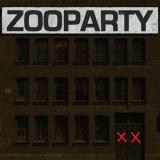
Zooparty sind international betrachtet so etwas wie Spätzünder, wenngleich sie in der skandinavischen Punkszene seit zwei Jahrzehnten eine high credibility genießen (Skrutt Magazine: "So damn good, I really love this group") und Kenner ihre Alben im Plattenschrank schon lange wie einen raren Schatz aufbewahren. Als die Band 2024 ihr Album "No matter what you say" veröffentlichte, bemerkte nicht nur das legendäre "Maximum RocknRoll" US-Magazine, dass "I am, in fact, late to the party with this band. Fortunately, they're still raging. They fucking rock Yay, I love this. Hats off " Die mitreißende Mixtur aus poppigem Punk, englischem 77er-Punkrock, Glam und ehrlichem Streetrock'n'Roll. (Ox-Fanzine) spricht eigentlich für sich selbst und obwohl Punk-Legenden wie Glen Matlock von den Sex Pistols, Brian James/ The Damned und sogar KISS-Gitarrist Bruce Kulick ihr Potential erkannten und Songs mit Zooparty aufnahmen, sind die Schweden einfach immer zu bescheiden gewesen, um sich groß ins Rampenlicht zu rücken. Eigentlich ist jedes ihrer Alben bisher ein Volltreffer gewesen oder wie schon Englands Mass Movement Fanzine 2018 schrieb: "If you like your punk with a pop edge and relish the classic Fat Wreck Chords period, then Zooparty may well have created your favourite album of the year! Pogo, pogo!" Ihr neues Album "XX" zum 20jährigen Jubiläum steht dem in nichts nach. Jede Band bezeichnet ihr neues Album als "Ihr Bestes". Zooparty darf man das aber getrost glauben: "XX" ist voller fesselnder Punkrock-Songs, die Aggression mit Wut, Verzweiflung und der klarer Message mit einem Sound verbinden. Mit Lieder wie "Stop it now" und "An eye for an eye" fassen sie alles zusammen, was Punk seit Jahrzehnten so faszinierend macht, bringen es in die Zukunft und machen daraus ihre eigene, "pogotastische Mischung" aus Tragik und Melodie. Mit dem Black Sabbath-Cover "Never say die" verabschieden sich Zooparty zusammen mit "Nomads"-Gitarrist Hans Östlund auf ihre Art von der Legende Ozzy Osbourne. Apropos Sound: Mastermind Chips Kiesbye (Sator, Nomads, The Hellacopters, etc) hat es sich auch diesmal nicht nehmen lassen, das Album zu produzieren.
- I Want Candy
- Go Wild In The Country
- Do You Wanna Hold Me?
- Cowboy
- Aphrodisiac
- Chihuahua
- Baby, Oh No
- The Man Mountain
- Lonesome Tonight
- Love, Peace And Harmony
- See Jungle! (Jungle Boy)
- Rikki Dee
- (I'm A) Tv Savage
- Elimination Dancing
- Mile High Club
- Prince Of Darkness (Sinner, Sinner)
"Love, Peace & Harmony - The Best of Bow Wow Wow is a compilation of the iconic new wave group Bow Wow Wow, released in 2008. The band was formed by Malcolm McLaren, the manager of the Sex Pistols. McLaren recruited members of Adam and the Ants to form the band, featuring 13-year-old Annabella Lwin on lead vocals. Over the next four years, the band dominated the British charts, with nine singles entering the UK Top 100. ""Go Wild in the Country"" and ""I Want Candy"" even made it into the top 10. Their success didn't stop in the UK; they also enjoyed success in Australia, the US and the rest of Europe. This version of the compilation includes the song “The Man Mountain”, which reached the top 10 in Belgium and the Netherlands. Love, Peace & Harmony - The Best of Bow Wow Wow is available as a limited edition of 1000 individually numbered copies on slightly gold coloured vinyl. "
1976 markiert das Erscheinungsjahr der ersten Punk-Singles - und 50 Jahre später feiern zwei Anthologien dieses Jubiläum mit einem einzigartigen Doppelblick auf die Geschichte des Genres. In Bored Teenagers und Angriff aufs Schlaraffenland wählen über 200 Musiker:innen, Autor:innen, Fanzine-Macher:innen, Journalist:innen, Punks, Ex- und Anti-Punks ihren persönlich wichtigsten Punk-Song. Sie fragen sich: Welcher Track hat mich geprägt? Welcher verkörpert Punk für mich am stärksten? Ob "Anarchy in the UK", "Nazis raus", "California über alles" oder "Für immer Punk" - über 400 sehr unterschiedliche Antworten zeigen, wie vielfältig Punk erlebt, erinnert und weitergeführt wird. Trotz aller Unterschiede verbindet die Beiträge eines: Punk ist für die Schreibenden auch nach fünf Jahrzehnten kein beliebiges Musikgenre. Die Texte erzählen von jugendlicher Aufbruchstimmung, radikalen Ideen und politischem Selbstverständnis, aber auch davon, wie lebendig Punk bis heute ist. Punk erscheint als musikalischer Aufruhr und ästhetischer Bruch, als DIY-Haltung, Hausbesetzung, Theorie und Praxis zugleich. Er kann feministisch, anarchistisch, widersprüchlich, laut, zärtlich oder rotzig sein - aber niemals langweilig. Während Angriff aufs Schlaraffenland die deutschsprachige Punkgeschichte beleuchtet, widmet sich Bored Teenagers zentralen Songs der internationalen Szene. Mit Beiträgen von u. a. Bela B, Simon Reynolds, Franz Dobler, Diedrich Diederichsen, Linus Volkmann, Hans Nieswandt, Bernd Begemann, Jim Avignon und vielen weiteren entsteht ein Panorama über Klassiker von Sex Pistols, X-Ray Spex, Mittagspause, Ramones, Clash und Slime, über Post-Punk von Wire, Gang of Four oder The Slits, über fast Vergessenes bis hin zu zeitgenössischen Acts wie Team Scheisse, Sleaford Mods oder Acht Eimer Hühnerherzen.
- A1: Monsters
- A2: Alien Point Of View
- A3: Cardinal Newman
- A4: Fat Cow
- A5: Nothing To Hide
- A6: People Like You
- A7: Regress For You
- A8: Christian Lovers
- A9: Exorcism
- B1: Bathroom Sluts
- B2: Pie On A Ledge
- B3: Push, Push, Push
- B4: Alice's Song
- B5: Praise The Lord
- B6: My Mommy's Chest
- B7: Slave
- B8: Poets (Early Version)
- B9: Pretty Vacant
- C1: Miscarriage
- C2: Scandinavian Dilemma
- C3: Poets
- C4: Confession
- C5: She Works For Safeway
- C6: Bible Stories
- D2: Green Tile Floor
- D3: Bathroom Sluts (Demo)
- D4: Waterpiss
- D5: Baby Face
- D6: Berlin Red Head
- C7: Dyptheria
- D1: Castration
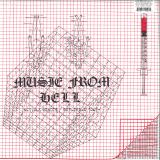
Nervous Gender’s legendary synthpunk LP Music From Hell burbles up from infernal depths to resurface on Dark Entries. Confrontational, unhinged, and unabashedly queer, Music from Hell is an unholy grail for fans of the strangest underbellies of post-punk, minimal synth, and early industrial music, and is presented here newly remastered and on expanded double LP.
Nervous Gender (de)formed in LA in 1978 at the hands of Phranc, Gerardo Velaquez, Edward Stapleton, and Michael Ochoa. Phranc, the androgynous embodiment of the band’s name, left in 1980. Following her departure, a wide cast of LA freaks would find themselves drawn into the band’s orbit, including Alice Bag of the Bags, Paul Roessler of the Screamers, the Germs’ Don Bolles, and an 8-year old drummer named Sven Pfeiffer. In 1980, Nervous Gender appeared on the seminal Live at Target compilation alongside Factrix, uns, and Flipper. With the band’s notoriety cemented, Music from Hell followed in 1981 on Subterranean Records (as no LA label would touch this material).
Side A, dubbed “Martyr Complex”, presents a more punk-forward sound with live drum salvos and slabs of aggressive synth. These twitchy, unsettling shockers ooze with the kind of snotty misanthropy that will endear them to fans of the Screamers or Crass.
Side B, known as “Beelzebub Youth”, is a live performance the band labeled "an electronic bruto-canto dissertation on the banality of spiritual transcendence." Mutant melodies cede way to synthesized clangs, whirs, bleeps, manipulated tapes, and howls of despair.
In addition to all the material from the original LP, we’re treated to a full disc of the band’s demos, the material from the Live at Target compilation, and early live recordings. Included are unrecognizable covers of Carly Simon and Lou Reed, and the Sex Pistols that are so despairingly skewed they fall into the void. This reissue of Music From Hell includes a 36 page lyric booklet, foldout poster, and gatefold sleeve with photos, flyers, and news-clippings designed by Eloise Leigh. Tackling taboo issues like sexual kinks, mental illness, drug use, and childhood molestation, Music From Hell is still surprising – even shocking - over 40 years after the album’s release. Nervous Gender stand as one of the most genuinely anti-establishment outfits in underground music, a colossal fuck you to social norms from religious strictures to gender essentialism.
EMSCHERKURVE 77 FEAT. REINHARD MEY
EINS IST GEBLIEBEN / ALCHEMIE
EK77 trifft auf MEY, REINHARD! Die unerwartete, aber umso kraftvollere Kollaboration zeigt, was passiert, wenn Punk und Liedermacher auf Augenhöhe zusammenkommen: Kein billiges Crossover, sondern gelebte Solidarität zwischen den Generationen und Genres. Ein Vierteljahrhundert Punkrock mit Ruhrpott-Attitüde, charismatischen Texten und ehrlicher Musik mit dem gewissem Charme - Emscherkurve 77 feiern 2025 ihr 25jähriges Bandjubiläum. Und wie! Denn zum Jubiläum haben sich die Jungs, beim neuen Song "Eins ist geblieben" einen ganz besonderen Gast (und sogar Fan) ins Boot geholt: Reinhard Mey. Ja, der Reinhard Mey! Reinhard Mey hat seine erste Single zwar schon vor exakt 60 Jahren veröffentlicht, da lagen die Sex Pistols und Die Toten Hosen noch in ihren Windeln und die Jungs von Emscherkurve 77 waren noch lange nicht einmal geboren, aber er war schon da und ebnete diesen Weg mit seiner freundlichen Radikalität: Niemands Herr und niemands Untertan! "Eins ist geblieben" von Emscherkurve 77 im Duett mit Reinhard Mey ist somit nicht nur nicht verwunderlich, sondern absolut naheliegend, ja sogar überfällig. Der Generationsunterschied ist irrelevant, die Geisteshaltung, die Freiheitsliebe, das Misstrauen gegen jede Machtfülle und die Demut vor dem Leben eint sie alle: "Dem Himmel sei Dank; für immer ein Punk!" Der zweite Song "Alchemie" ist ein klassischer Emscherkurve 77-Song, ein Lied über das Leben, das eine Brücke baut von der Kindheit bis ins "Jetzt", verbunden mit der klaren Botschaft, dass man jede Phase des Lebens genießen sollte, um möglichst zufrieden zu werden. Nach ausverkaufter Erstpressung (zu Halloween, drei unterschiedliche Farben, jeweils limitiert) erscheint die nachgepresste 2-Song-EP als 10" Vinyl zu Nikolaus in zwei neuen Farben (transparentes Rot oder transparentes Orange).
EMSCHERKURVE 77 FEAT. REINHARD MEY
EINS IST GEBLIEBEN / ALCHEMIE
EK77 trifft auf MEY, REINHARD! Die unerwartete, aber umso kraftvollere Kollaboration zeigt, was passiert, wenn Punk und Liedermacher auf Augenhöhe zusammenkommen: Kein billiges Crossover, sondern gelebte Solidarität zwischen den Generationen und Genres. Ein Vierteljahrhundert Punkrock mit Ruhrpott-Attitüde, charismatischen Texten und ehrlicher Musik mit dem gewissem Charme - Emscherkurve 77 feiern 2025 ihr 25jähriges Bandjubiläum. Und wie! Denn zum Jubiläum haben sich die Jungs, beim neuen Song "Eins ist geblieben" einen ganz besonderen Gast (und sogar Fan) ins Boot geholt: Reinhard Mey. Ja, der Reinhard Mey! Reinhard Mey hat seine erste Single zwar schon vor exakt 60 Jahren veröffentlicht, da lagen die Sex Pistols und Die Toten Hosen noch in ihren Windeln und die Jungs von Emscherkurve 77 waren noch lange nicht einmal geboren, aber er war schon da und ebnete diesen Weg mit seiner freundlichen Radikalität: Niemands Herr und niemands Untertan! "Eins ist geblieben" von Emscherkurve 77 im Duett mit Reinhard Mey ist somit nicht nur nicht verwunderlich, sondern absolut naheliegend, ja sogar überfällig. Der Generationsunterschied ist irrelevant, die Geisteshaltung, die Freiheitsliebe, das Misstrauen gegen jede Machtfülle und die Demut vor dem Leben eint sie alle: "Dem Himmel sei Dank; für immer ein Punk!" Der zweite Song "Alchemie" ist ein klassischer Emscherkurve 77-Song, ein Lied über das Leben, das eine Brücke baut von der Kindheit bis ins "Jetzt", verbunden mit der klaren Botschaft, dass man jede Phase des Lebens genießen sollte, um möglichst zufrieden zu werden. Nach ausverkaufter Erstpressung (zu Halloween, drei unterschiedliche Farben, jeweils limitiert) erscheint die nachgepresste 2-Song-EP als 10" Vinyl zu Nikolaus in zwei neuen Farben (transparentes Rot oder transparentes Orange).
- Search & Destroy (Sept. 28Th 1978)
- Chatterbox (Sept. 28Th 1978)
- I Wanna Be Your Dog (Sept. 28Th 1978)
- Something Else (Sept. 28Th 1978)
- Stepping Stone (Sept. 28Th 1978)
- Don't Gimme No Lip Child (Sept. 28Th 1978)
- Belsen Was A Gas (Sept. 28Th 1978)
- Take A Chance (Sept. 28Th 1978)
- Chinese Rocks (Sept. 28Th 1978)
- Search & Destroy (Sept. 28Th 1978)
- Chatterbox (Sept. 28Th 1978)
- I Wanna Be Your Dog (Sept. 28Th 1978)
- Something Else (Sept. 28Th 1978)
- Belsen Was A Gas (Sept. 28Th 1978)
- Stepping Stone (Sept. 28Th 1978)
- Chinese Rocks (Sept. 28Th 1978)
- Take A Chance (Sept. 28Th 1978)
- Don't Gimme No Lip Child (Sept. 28Th 1978)
- Something Else (Sept. 28Th 1978)
- Search And Destroy (Sept 30Th 1978)
- Chatterbox (Sept 30Th 1978)
- Something Else (Sept 30Th 1978)
- Belsen Was A Gas (Sept 30Th 1978)
- I Wanna Be Your Dog (Sept 30Th 1978)
- Stepping Stone (Sept 30Th 1978)
- Take A Chance (Sept 30Th 1978)
- Don't Gimme No Lip Child (Sept 30Th 1978)
- Chinese Rocks (Sept 30Th 1978)
- My Way (Sept 30Th 1978)
- Search And Destroy (Sept 30Th 1978)
- Chatterbox (Sept 30Th 1978)
- Something Else (Sept 30Th 1978)
- I Wanna Be Your Dog (Sept 30Th 1978)
- Belsen Was A Gas (Sept 30Th 1978)
- Stepping Stone (Sept 30Th 1978)
- Take A Chance (Sept 30Th 1978)
- Don't Gimme No Lip Child (Sept 30Th 1978)
- Chinese Rocks (Sept 30Th 1978)
- My Way (Sept 30Th 1978)
SEX PISTOL"s Sid Vicious has come to symbolise the band since his untimely death. Always courting controversy, he out-did his old college mate Johnny Rotten in the attitude stakes. With only 3 memorable solo singles to his name, this 2xLP blood-splattered vinyl in gatefold sleeve shows where his music may have gone, had Nancy not died 12 days later. Detailed 8,000-word articles tell the life-story of Sid, firstly in an eyewitness account by guitarist Steve Dior, and secondly in a SID, NANCY & SEX PISTOLS day-by-day timeline from Sid"s early days to his demise. Following media furore over Sid"s death and numerous films documenting his life and death, this is the definitive Sid Vicious release for all fans and students of Sex Pistols and the punk-rock scene.
- A1: Throwing Words
- A2: Admit Defeat
- A3: Daddy
- A4: Heaven Sold
- A5: 4/7, Hello?!
- A6: You Don't Know Your Name
- B1: They Stay
- B2: The Cake
- B3: Queens Of Lefty
- B4: Blanks
- B5: Boat Song
Mit ihrem Debütalbum »time will tell« setzen FALSE LEFTY den nächsten Meilenstein. Das Duo – Veva (AT) Stehend am minimalistischen Drumset und Tom (GB) an der drei-saitigen Gitarre – bleibt seinem Credo treu: Reduktion bis aufs Maximum. Bittersüße Melodien treffen auf rohe Energie und schaffen ein Soundgewitter zwischen Alternative Rock, Indie und Post-Punk. Kein Füllmaterial, keine Kompromisse, sondern ein eigener Sound, der nach internationalem Erfolg schreit. Man hört Einflüsse von Bands wie The Cure, Radiohead gewürzt mit einer Prise Sex Pistols, doch FALSE LEFTY verwandeln sie in ihr eigenes Gebräu – roh, direkt und voller Haltung. Mit stampfenden Rhythmen, gekonntem Songwriting und dieser besonderen Mischung aus Urgewalt und fragiler Melancholie. Immer kraftvoll, immer unverwechselbar.
- Eins Ist Geblieben (Feat. Reinhard Mey)
- Alchemie
Ein Vierteljahrhundert Punkrock mit Ruhrpott-Attitüde, charismatischen Texten und ehrlicher Musik mit dem gewissem Charme - Emscherkurve 77 feiern 2025 ihr 25-jähriges Bandjubiläum. Und wie! Am 30.Oktober erscheinen zwei brandneue Songs in der Königsklasse "10inch-Vinyl", die nicht nur musikalisch, sondern auch zeitlich ein echtes Highlight sind. Denn zum Jubiläum haben sich die Jungs, bei "Eins ist geblieben" eine ganz besonderen Gast (und sogar Fan) ins Boot geholt: Reinhard Mey. Ja, der Reinhard Mey! Die unerwartete, aber umso kraftvollere Kollaboration zeigt, was passiert, wenn Punk und Liedermacher auf Augenhöhe zusammenkommen: Kein billiger Crossover, sondern gelebte Solidarität zwischen Generationen und Genres, die verbindet. Reinhard Mey hat seine erste Single zwar schon vor exakt 60 Jahren veröffentlicht, da lagen die Sex Pistols und Die Toten Hosen noch in ihren Windeln und die Jungs von Emscherkurve 77 waren noch lange nicht einmal geboren, aber er war schon da und ebnete diesen Weg mit seiner freundlichen Radikalität: Niemands Herr und niemands Untertan! "Eins ist geblieben" von Emscherkurve 77 im Duett mit Reinhard Mey ist somit nicht nur nicht verwunderlich, sondern absolut naheliegend, ja sogar überfällig. Der Generationenunterschied ist irrelevant, die Geisteshaltung, die Freiheitsliebe, das Misstrauen gegen jede Machtfülle und die Demut vor dem Leben eint sie alle: "Dem Himmel sei Dank; für immer ein Punk!" Der zweite Song "Alchemie" ist ein klassischer Emscherkurve 77-Song im modernen Gewand. Ein Song über das Leben, der eine Brücke baut von der Kindheit bis ins "Jetzt" , verbunden mit der klaren Botschaft, dass man jede Phase des Lebens genießen sollte und zufrieden zu sein. Die EP erscheint als 10inch Vinyl auf 500 Exemplare streng limitiert, davon 100 black und je 200 colored (Swirl & Splatter) Feiern wir 25 Jahre Emscherkurve 77 - und eine der ungewöhnlichsten und spannendsten, musikalischen Allianzen des Jahres!
EMSCHERKURVE 77 FEAT. REINHARD MEY
EINS IST GEBLIEBEN / ALCHEMIE
Ein Vierteljahrhundert Punkrock mit Ruhrpott-Attitüde, charismatischen Texten und ehrlicher Musik mit dem gewissem Charme - Emscherkurve 77 feiern 2025 ihr 25-jähriges Bandjubiläum. Und wie! Am 30.Oktober erscheinen zwei brandneue Songs in der Königsklasse "10inch-Vinyl", die nicht nur musikalisch, sondern auch zeitlich ein echtes Highlight sind. Denn zum Jubiläum haben sich die Jungs, bei "Eins ist geblieben" eine ganz besonderen Gast (und sogar Fan) ins Boot geholt: Reinhard Mey. Ja, der Reinhard Mey! Die unerwartete, aber umso kraftvollere Kollaboration zeigt, was passiert, wenn Punk und Liedermacher auf Augenhöhe zusammenkommen: Kein billiger Crossover, sondern gelebte Solidarität zwischen Generationen und Genres, die verbindet. Reinhard Mey hat seine erste Single zwar schon vor exakt 60 Jahren veröffentlicht, da lagen die Sex Pistols und Die Toten Hosen noch in ihren Windeln und die Jungs von Emscherkurve 77 waren noch lange nicht einmal geboren, aber er war schon da und ebnete diesen Weg mit seiner freundlichen Radikalität: Niemands Herr und niemands Untertan! "Eins ist geblieben" von Emscherkurve 77 im Duett mit Reinhard Mey ist somit nicht nur nicht verwunderlich, sondern absolut naheliegend, ja sogar überfällig. Der Generationenunterschied ist irrelevant, die Geisteshaltung, die Freiheitsliebe, das Misstrauen gegen jede Machtfülle und die Demut vor dem Leben eint sie alle: "Dem Himmel sei Dank; für immer ein Punk!" Der zweite Song "Alchemie" ist ein klassischer Emscherkurve 77-Song im modernen Gewand. Ein Song über das Leben, der eine Brücke baut von der Kindheit bis ins "Jetzt" , verbunden mit der klaren Botschaft, dass man jede Phase des Lebens genießen sollte und zufrieden zu sein. Die EP erscheint als 10inch Vinyl auf 500 Exemplare streng limitiert, davon 100 black und je 200 colored (Swirl & Splatter) Feiern wir 25 Jahre Emscherkurve 77 - und eine der ungewöhnlichsten und spannendsten, musikalischen Allianzen des Jahres!
- 1: Shy Girl
- 2: Ooh Baby
- 3: Rockaway
- 4: Night Night
- 5: Holding On
- 6: In The Pictures
- 7: Frontline
- 8: Take Me In Your Arms
- 9: Crying Wolf
- 10: River Runs Deep
- 11: Hello Operator
- 12: We Share Love
Orange Vinyl[27,10 €]
Almost fifteen years since the release of her self-titled debut LP on Mr Bongo, reggae’s orator of love Hollie Cook is returning to the label for Shy Girl, her fifth studio album and her most authentic yet. Woven with tight grooves, beautiful vocals and catchy melodies, Shy Girl hears singer and songwriter Hollie Cook revel in her contemporary lovers rock sound, more confident and open to vulnerability than ever before.
A sun-drenched exploration of love in all its guises, Shy Girl tells stories of the magical and the melancholy, the heart-lifting and heart-breaking, across 12 luscious, analogue reggae compositions - the culmination of a soft-hued and instantly recognisable “tropical pop” sound that Cook has made her own.
Put together across three years and four cities – from LA and NYC, to Vejer de la Frontera in Spain and Cook’s hometown London – Shy Girl was written with long-time collaborators, The General Roots Band, and features a contribution from legendary dub MC Horseman, who lends his voice to the album’s first single ‘Night Night’.
The album opens with the title track ‘Shy Girl’, a buoyant and elastic slice of lovers rock that was written in a moment of spontaneous intuition, and bubbles with a charisma and positivity that Cook radiates. “I’m not a natural show-off,” Cook explains. “The Shy Girl theme is me. It’s just about being my most vulnerable self and being as true to the music that Iove as possible.” It is this honesty which shines throughout, from the chugging deep dub of ‘Frontline’, complete with raking electric guitar lines, to the bittersweet roots ballad ‘We Share Love’, which closes out the album.
It's clear to see that Cook’s songwriting draws on a lifetime of musical influences and inspirations. From her father, Sex Pistols drummer Paul Cook’s record collection and touring with post-punk icon Ari Up’s The Slits, to her love for strong female-led pop music and the bassweight of London’s sound system culture. Enamoured with the music of Janet Kay and Phyllis Dillon, Shy Girl represents a homecoming and a coming-of-age for Hollie Cook, distilling and refining a shimmering reggae sound that will capture your heart, as it first captured hers.
Almost fifteen years since the release of her self-titled debut LP on Mr Bongo, reggae’s orator of love Hollie Cook is returning to the label for Shy Girl, her fifth studio album and her most authentic yet. Woven with tight grooves, beautiful vocals and catchy melodies, Shy Girl hears singer and songwriter Hollie Cook revel in her contemporary lovers rock sound, more confident and open to vulnerability than ever before.
A sun-drenched exploration of love in all its guises, Shy Girl tells stories of the magical and the melancholy, the heart-lifting and heart-breaking, across 12 luscious, analogue reggae compositions - the culmination of a soft-hued and instantly recognisable “tropical pop” sound that Cook has made her own.
Put together across three years and four cities – from LA and NYC, to Vejer de la Frontera in Spain and Cook’s hometown London – Shy Girl was written with long-time collaborators, The General Roots Band, and features a contribution from legendary dub MC Horseman, who lends his voice to the album’s first single ‘Night Night’.
The album opens with the title track ‘Shy Girl’, a buoyant and elastic slice of lovers rock that was written in a moment of spontaneous intuition, and bubbles with a charisma and positivity that Cook radiates. “I’m not a natural show-off,” Cook explains. “The Shy Girl theme is me. It’s just about being my most vulnerable self and being as true to the music that Iove as possible.” It is this honesty which shines throughout, from the chugging deep dub of ‘Frontline’, complete with raking electric guitar lines, to the bittersweet roots ballad ‘We Share Love’, which closes out the album.
It's clear to see that Cook’s songwriting draws on a lifetime of musical influences and inspirations. From her father, Sex Pistols drummer Paul Cook’s record collection and touring with post-punk icon Ari Up’s The Slits, to her love for strong female-led pop music and the bassweight of London’s sound system culture. Enamoured with the music of Janet Kay and Phyllis Dillon, Shy Girl represents a homecoming and a coming-of-age for Hollie Cook, distilling and refining a shimmering reggae sound that will capture your heart, as it first captured hers.
- Killboy Powerhead
- Max Wedge
- Stingray
- Captain Ahab
- Plate In My Head
- Gold Eldorado
- Mama Had A Skull Baby
- Under The Christmas Fish
- Evel Knievel
- Fire In The Hole
- Who's Ready To Get High
- Jerry Lee
- Headless
- Top Fuel
- Pet Funeral
- Joliet
- Dad
- Que Sirhan Sirhan
Didjits verbanden ihre Liebe zu Hard Rock (AC/DC, Black Sabbath, Cheap Trick), Punk (Sex Pistols und vor allem die metallische Kunstshow von The Plasmatics) und Rock'n`Roll der 50er Jahre (insbesondere Jerry Lee Lewis und Little Richard) zu einer Marke, die, wie Dexter Holland von The Offspring treffend beschreibt, ,ein wackeliger Zug war, der kurz vor der Entgleisung stand". Bei chaotischen Live-Shows brachte Gitarrist und Sänger Rick Sims das Publikum gekonnt gegen sich auf und trug so zur Raserei des rasanten Rocks bei, den sie langsam perfektionierten. Jello Biafra, ein früher Unterstützer der Didjits, bewunderte ihre Fähigkeit, das Punk-Publikum zu vergraulen und es dennoch mit offenem Mund und Hörverlust zurückzulassen. Ab 1988 veröffentlichten die Didjits fünf Alben in voller Länge bei Touch and Go Records (darunter eine Neuauflage ihres 1986 selbst veröffentlichten Debütalbums Fizzjob) sowie zwei Singles und eine EP. Es folgten MTV-Videos, ausverkaufte Clubs, Tourneen durch Europa und Nordamerika - bis 1994 (ironischerweise das selbe Jahr, in dem The Offspring ihr Platin-Album "Smash" veröffentlichten, das ein Cover von ,Killboy Powerhead" aus Didjits 1990er Veröffentlichung "Hornet Pinata" enthielt). Diese LP, gepresst auf 180 Gramm schwerem, opakem lila Vinyl, ist ein Archivdokument der Band von ihren Anfängen im ländlichen Illinois bis zu ihrer Auflösung über ein Jahrzehnt später. Die ausgewählten Tracks vereinen 17 Fan-Favoriten aus Didjits' Touch and Go-Diskografie auf einer einzigen LP.
- Tired
- We Were Punk First
- Moving Day
- The Punchline
- Bad Indian
- The Art Of Savagery
- Rage
- Dreamcatcher
- World Up My Ass
- This Is Not A Political Song
- Doom Indian
- No One Owns Anything And Death Is Real
Crystal Clear Vinyl, limited to 1000 copies. Who were the first punks? Do The Damned have more of a shout than The Sex Pistols? The Stooges or Ramones? Gregg Deal, the acclaimed visual and performance artist behind his new project Dead Pioneers, is making a claim that Indigenous Americans were the first real punks. Deal suggests that the overarching theme of the album is "an introduction to the band itself". Created with a DIY disposition and the "love of a scene that saves lives", they reel off a roll call of marginalised groups and protected characteristics: "Indigenous rights, Black rights, Brown rights, Asian rights, Gay rights, Trans rights, Workers rights and beyond_". This is central to their identity and focus, saying that "with a North American Indigenous person as the vocalist, being unapologetically upfront on the social, political and cultural side of things doesn't seem necessary, but paramount to the overall tone of the band." This self-titled debut, coming in at a lithe 22 minutes with only one of the twelve tracks exceeding three minutes, is almost over before it begins, but covers a huge amount of ground in that time. Blistering opener 'Tired' sets out their stall; as with the whole album, it is passionate, but never preaching. Capitalised 'Political Music' can be hard to land without coming across as hectoring or earnest, but Deal's literary, humorous lyrics effortlessly cut through complex issues of marginalisation and colonialism.
Author: Mal-One & The Glam Collective
Title: ROXY MUSIC – Then Out Of The Blue – 1971-1976 A CHRONOLOGY
Format: A5 - 232 Page Hardback Book
Who? What? Why? Where? When?
Roxy Music - Then Out Of the Blue… tells the story of the bands career, giving dates and a timeline to their events. The birth of Roxy Music just before 1971 upto 1976 including Bryan Ferry's early solo career.
A Who? What? Why? Where? When? Chronology of all their dates, places and times.
“I’ve got a favourite songwriter and band in England called Roxy Music with a character called Bryan Ferry who I think is probably spearheading some of the best music that has come out of England in years.” David Bowie.
“That was a band that broke so many barriers. They were poncy, pontificating, absurd, over melodramatic and absolutely adorably excellent.” John Lydon - Sex Pistols / Public Image Limited.
- A1: Design - Premonition
- A2: Vision - Lucifer’s Friend
- A3: Richard Bone - Alien Girl
- A4: John Howard - I Tune Into You
- A5: Ian North - We’re Not Lonely
- A6: Selwin Image - The Unknown
- B1: Harry Kakoulli - I’m On A Rocket
- B2: Rich Wilde - The Lady Wants To Be Alone
- B3: Billy London - Woman
- B4: Alan Burnham - Science Fiction
- B5: The Microbes - Computer
- B6: The Goo-Q - I’m A Computer
- C1: Gerry & The Holograms - Gerry & The Holograms
- C2: The Warlord - The Ultimate Warlord
- C3: Die Marinas - Fred From Jupiter
- C4: Dee Jay Bert & Eagle - I Am Your Master
- C5: Peta Lily & Michael Process - I Am A Time Bomb
- C6: Sole Sister - It’s Not What You Are But How
- D1: Alasdair Riddell - Do You Read Me?
- D2: Karel Fialka - Armband (The Mystery Song)
- D3: John Springate - My Life
- D4: Idncandescent Luminaire - Famous Names
- D5: Disco Volante - No Motion
- D6: Dream Unit - A Drop In The Ocean
Compiled by Philip King
“And then came the rise of synth pop : blokes with dodgy haircuts hunched over keyboard-operated
machines stuffed with wires and do-it-yourself tone oscillators making sounds like a brood of geese
passing gas in a wind tunnel. Whoopee! This is the way the ‘70s ended : not with a blood-curdling bang
bang but with a cheap, synthesized, emasculating whimper.”
NICK KENT, NME.
All The Young Droids: Junkshop Synth Pop 1978-1985 is a new compilation that charts the
underbelly of the epoch-defining sound of the synthesiser in 80s popular music. Compiled by Philip
King (previously seen compiling All The Young Droogs, Glitterbest and Boobs - The Junkshop
Glam Discotheque), the music here connects the dots between DIY synth enthusiasts grappling with
new, cheap synthesisers at the tail-end of punk and wannabe, jobbing songwriters enthral to the new
music pioneered by Gary Numan, Depeche Mode and Daniel Miller’s Mute Records. Featuring rare
tracks of auto-didactic progressive pop music, proto-techno punk, shoot-for-the-stars-land-in-the-gutter
chart flops and heralded, underground synth classics, School Daze paints a picture of beautiful failure.
Complete with extensive sleeve notes written by King and never before seen imagery, all 24 tracks
were remastered by RPM in-house engineer Simon Murphy, many from vinyl copies due to lost master
tapes. The story told on All The Young Droids is one of the dawning opportunity presented by both the
emergence to the market of cheaper analog synthesisers and the distribution networks plus indie labels
that exploded with the advent of punk music in 1976. While the music that sprouted out all over the
globe in the wake of these factors was decried as fake, plastic, a refutation of punk’s guitar-led
revolution, it’s telling that much of the music on All The Young Droids.. was created in bedrooms,
ramshackle studios and home-made set ups with often borrowed equipment. In the era of record labels
jumping to capitalise on the success of The Sex Pistols, The Clash (both on major labels, of course)
these artists struggled to stand out from a new gold-rush with next to no budget or PR team. With radio
and labels desperate for the new Yazoo, what resulted was a testament to necessity being the mother
of invention.
At the time, the synthesiser was the music of the future, a shiny new machine that could paint like an
orchestra with a single finger and a 4-track. In the hands of Manchester avant-pranksters Gerry & The
Holograms it’s a pulsing, sardonic weapon.. the only instrument on the Messthetics classic lampooning
of New Wave fashion. In Hamburg, a 16 year old Andreas Dorau used it to write and record (with his
female classmates on vocals) a global smash in Fred Vom Jupiter (later licensed to Mute Records).
The hard-to-find English version (Fred From Jupiter, natch) is included here. Many artists with alreadystoried careers caught the bug and recorded synthesiser-fuelled peons to space, computers, the future
and, of course, love-interests. Harry Kakoulli, late of Squeeze, recorded a solo album in 1979 that
included the incredible power-synth-pop smash-that-never-smashed I’m On A Rocket. Similarly, Ian
North of Neo and American Power Pop stalwarts Milk ’n’ Cookies bought a Korg MS20 and used a
tape machine to record We’re Not Lonely, an absolute lost-classic of minimal synth pop. We’re Not
Lonely also features on the Junkshop Synth Pop sampler 7” twinned with John Howard unreleased
track You Will See, released April 12th 2025.
There are plenty of compilation debuts in evidence. Sole Sister were a mysterious trio who were
featured on the Scaling Triangles compilation of female-fronted, queer-adjacent post-punk /
underground music that also featured The Petticoats. Selwin Image were from San Francisco and
featured members of the recently defunct power pop/punk group The Pushups. Their stupidly catchy
The Unknown fizzes with New Wave energy - think XTC to Sparks but remains unreleased until now.
Dream Unit’s A Drop In The Ocean is an early synth wave cut, positively teaming with Joy Division
instrumentation, previously only released on a long-forgotten and super rare, self-released EP.
Incandescent Luminaire’s Famous Names belies an archetypal struggle of a small-town trying to
make it in a cruel industry but is a thrilling New Romantic-Synth Wave cross over with a OMD
gloominess that’s a joy to hear. Feminist Minimal Wave track I Am A Time Bomb by performance artist
Peta Lilly and Michael Chance is a revelation destined for new found cult status. It was released on 7”
and lost until now.
The flipside to the subterranean, never-made-it synth pop mentioned above are the ambitious, even
fruity attempts at success that have a perennial elegance to their confidence. New Jersey-ite Billy
London (real name Ed Barth) tried to cash in on the synth boom with Woman, released by a major
label, a lurching new wave track built on the Louie Louie rhythm and a wonderfully camp Lou Reedstyle sleazy vocal before exploding in the synthesised chorus. The song bombed but with a chorus like
this, you have to wonder why? Ex-Glitter Band member John Springate’s My Life is truly epic, with
doomed chord progressions and massive sounding drums turning into at least 3 different songs in the
course of the track. Before you wonder what’s going on the song resolves with a glorious return to the
main refrain.
The dry-ice-dressed dance floor is well catered for too. Design’s Premonition and Vision’s Lucifer’s
Friend are stone-cold minimal synth bangers, well loved but given a new lease of life here. The
Warlord’s The Ultimate Warlord was released in 1978, a homespun proto Hi NRG banger that was
later re-recorded by The Immortals in Canada who had a club hit with it. One-man- band Disco
Volante’s No Motion was re-issued by Synth wave label Medical in 2012 but makes its first vinyl
compilation appearance here. Close your eyes and you can imagine what Lawrence of Felt would have
sounded like with some cheap Korgs a little earlier in his career. Gibraltar-based trio The Microbes
imagined a computer programming people to dance - how prescient - and ended up with a propulsive,
robo-funk track with splendid rubbery bass playing over a tectonic drum machine. Previously picked up
by Belgian label Stroom TV, Dee Jay Bert & Eagle’s heavily Euro-accented I Am Your Master
demands the listener to “come to paradise!” In a frankly terrifying manner.
All The Young Droids is the first compilation to peel away from the narrative that dour, Minimal Synth
and Cold Wave were the only musical children of the first rush of synth pop. Philip King and School
Daze Records describe a much more complicated world: along with the austere, Brutalist children of
Daniel Miller (who produced Alan Burnham’s Bowie-Low-influenced Science Fiction here) was a
plethora of desperate cash-ins, accidental mainstream hits, ambitious pop dramas and major label
punts that went nowhere. Crucially, the compilation blurs the line between junk and treasure. What if the
two things are interchangeable. What if it’s all science fiction?
- A1: Design - Premonition
- A2: Vision - Lucifer’s Friend
- A3: Richard Bone - Alien Girl
- A4: John Howard - I Tune Into You
- A5: Ian North - We’re Not Lonely
- A6: Selwin | Image - The Unknown
- B1: Harry Kakoulli - I’m On A Rocket
- B2: Rich Wilde - The Lady Wants To Be Alone
- B3: Billy London - Woman
- B4: Alan Burnham - Science Fiction
- B5: The Microbes - Computer
- B6: The Goo-Q - I’m A Computer
- C1: Gerry & The Holograms - Gerry & The Holograms
- C2: The Warlord - The Ultimate Warlord
- C3: Die Marinas - Fred From Jupiter
- C4: Dee Jay Bert & Eagle - I Am Your Master
- C5: Peta Lily & Michael Process - I Am A Time Bomb
- C6: Sole Sister - It’s Not What You Are But How
- D1: Alasdair Riddell - Do You Read Me?
- D2: Karel Fialka - Armband (The Mystery Song)
- D3: John Springate - My Life
- D4: Incandescent Luminaire - Famous Names
- D5: Disco Volante - No Motion
- D6: Dream Unit - A Drop In The Ocean
Compiled by Philip King
“And then came the rise of synth pop : blokes with dodgy haircuts hunched over keyboard-operated
machines stuffed with wires and do-it-yourself tone oscillators making sounds like a brood of geese
passing gas in a wind tunnel. Whoopee! This is the way the ‘70s ended : not with a blood-curdling bang
bang but with a cheap, synthesized, emasculating whimper.”
NICK KENT, NME.
All The Young Droids: Junkshop Synth Pop 1978-1985 is a new compilation that charts the
underbelly of the epoch-defining sound of the synthesiser in 80s popular music. Compiled by Philip
King (previously seen compiling All The Young Droogs, Glitterbest and Boobs - The Junkshop
Glam Discotheque), the music here connects the dots between DIY synth enthusiasts grappling with
new, cheap synthesisers at the tail-end of punk and wannabe, jobbing songwriters enthral to the new
music pioneered by Gary Numan, Depeche Mode and Daniel Miller’s Mute Records. Featuring rare
tracks of auto-didactic progressive pop music, proto-techno punk, shoot-for-the-stars-land-in-the-gutter
chart flops and heralded, underground synth classics, School Daze paints a picture of beautiful failure.
Complete with extensive sleeve notes written by King and never before seen imagery, all 24 tracks
were remastered by RPM in-house engineer Simon Murphy, many from vinyl copies due to lost master
tapes. The story told on All The Young Droids is one of the dawning opportunity presented by both the
emergence to the market of cheaper analog synthesisers and the distribution networks plus indie labels
that exploded with the advent of punk music in 1976. While the music that sprouted out all over the
globe in the wake of these factors was decried as fake, plastic, a refutation of punk’s guitar-led
revolution, it’s telling that much of the music on All The Young Droids.. was created in bedrooms,
ramshackle studios and home-made set ups with often borrowed equipment. In the era of record labels
jumping to capitalise on the success of The Sex Pistols, The Clash (both on major labels, of course)
these artists struggled to stand out from a new gold-rush with next to no budget or PR team. With radio
and labels desperate for the new Yazoo, what resulted was a testament to necessity being the mother
of invention.
At the time, the synthesiser was the music of the future, a shiny new machine that could paint like an
orchestra with a single finger and a 4-track. In the hands of Manchester avant-pranksters Gerry & The
Holograms it’s a pulsing, sardonic weapon.. the only instrument on the Messthetics classic lampooning
of New Wave fashion. In Hamburg, a 16 year old Andreas Dorau used it to write and record (with his
female classmates on vocals) a global smash in Fred Vom Jupiter (later licensed to Mute Records).
The hard-to-find English version (Fred From Jupiter, natch) is included here. Many artists with alreadystoried careers caught the bug and recorded synthesiser-fuelled peons to space, computers, the future
and, of course, love-interests. Harry Kakoulli, late of Squeeze, recorded a solo album in 1979 that
included the incredible power-synth-pop smash-that-never-smashed I’m On A Rocket. Similarly, Ian
North of Neo and American Power Pop stalwarts Milk ’n’ Cookies bought a Korg MS20 and used a
tape machine to record We’re Not Lonely, an absolute lost-classic of minimal synth pop. We’re Not
Lonely also features on the Junkshop Synth Pop sampler 7” twinned with John Howard unreleased
track You Will See, released April 12th 2025.
There are plenty of compilation debuts in evidence. Sole Sister were a mysterious trio who were
featured on the Scaling Triangles compilation of female-fronted, queer-adjacent post-punk /
underground music that also featured The Petticoats. Selwin Image were from San Francisco and
featured members of the recently defunct power pop/punk group The Pushups. Their stupidly catchy
The Unknown fizzes with New Wave energy - think XTC to Sparks but remains unreleased until now.
Dream Unit’s A Drop In The Ocean is an early synth wave cut, positively teaming with Joy Division
instrumentation, previously only released on a long-forgotten and super rare, self-released EP.
Incandescent Luminaire’s Famous Names belies an archetypal struggle of a small-town trying to
make it in a cruel industry but is a thrilling New Romantic-Synth Wave cross over with a OMD
gloominess that’s a joy to hear. Feminist Minimal Wave track I Am A Time Bomb by performance artist
Peta Lilly and Michael Chance is a revelation destined for new found cult status. It was released on 7”
and lost until now.
The flipside to the subterranean, never-made-it synth pop mentioned above are the ambitious, even
fruity attempts at success that have a perennial elegance to their confidence. New Jersey-ite Billy
London (real name Ed Barth) tried to cash in on the synth boom with Woman, released by a major
label, a lurching new wave track built on the Louie Louie rhythm and a wonderfully camp Lou Reedstyle sleazy vocal before exploding in the synthesised chorus. The song bombed but with a chorus like
this, you have to wonder why? Ex-Glitter Band member John Springate’s My Life is truly epic, with
doomed chord progressions and massive sounding drums turning into at least 3 different songs in the
course of the track. Before you wonder what’s going on the song resolves with a glorious return to the
main refrain.
The dry-ice-dressed dance floor is well catered for too. Design’s Premonition and Vision’s Lucifer’s
Friend are stone-cold minimal synth bangers, well loved but given a new lease of life here. The
Warlord’s The Ultimate Warlord was released in 1978, a homespun proto Hi NRG banger that was
later re-recorded by The Immortals in Canada who had a club hit with it. One-man- band Disco
Volante’s No Motion was re-issued by Synth wave label Medical in 2012 but makes its first vinyl
compilation appearance here. Close your eyes and you can imagine what Lawrence of Felt would have
sounded like with some cheap Korgs a little earlier in his career. Gibraltar-based trio The Microbes
imagined a computer programming people to dance - how prescient - and ended up with a propulsive,
robo-funk track with splendid rubbery bass playing over a tectonic drum machine. Previously picked up
by Belgian label Stroom TV, Dee Jay Bert & Eagle’s heavily Euro-accented I Am Your Master
demands the listener to “come to paradise!” In a frankly terrifying manner.
All The Young Droids is the first compilation to peel away from the narrative that dour, Minimal Synth
and Cold Wave were the only musical children of the first rush of synth pop. Philip King and School
Daze Records describe a much more complicated world: along with the austere, Brutalist children of
Daniel Miller (who produced Alan Burnham’s Bowie-Low-influenced Science Fiction here) was a
plethora of desperate cash-ins, accidental mainstream hits, ambitious pop dramas and major label
punts that went nowhere. Crucially, the compilation blurs the line between junk and treasure. What if the
two things are interchangeable. What if it’s all science fiction?
- A1: Imagination (From Clé Ep - 1981 Last Movement Recorded At Pet Sound Studio)
- A2: When I See You (From Clé Ep - 1981 Last Movement Recorded At Pet Sound Studio)
- A3: Landslide (From Clé Ep - 1981 Last Movement Recorded At Pet Sound Studio)
- A4: Colourless Dream (From Colourless Dream 7" - 1981 Last Movement Recorded At Surrey Sound)
- A5: Things We Never Did (From Colourless Dream 7" - 1981 Last Movement Recorded At Surrey Sound)
- B1: Lost In A Moment (From 7" Lost In A Moment/The Tightrope Touch 1982 Midnight Music - Recorded At Silo Studios, London)
- B2: The Tightrope Touch (From 7" Lost In A Moment/The Tightrope Touch1982 Midnight Music - Recorded At Silo Studios, London)
- B3: Man Of Straw (From 12" Man Of Straw - 1983 Midnight Music Recorded At Spaceward Studios)
- B4: Cowboys (From 12" Man Of Straw - 1983 Midnight Music Recorded At Spaceward Studios)
- B5: Close To The Sea (From 12" Man Of Straw - 1983 Midnight Music Recorded At Spaceward Studios)
Exclusive vinyl with the singles released by the Watford post-punk band between 1981 and 1983.
"Before I began to write this piece I listened to some of the tracks and I admit there was a small tear or two as I remembered… Pet Sounds Studios, an 8 track reel to reel studio in a basement under a pet shop in Kennington, South London, our first studio experience as fresh faced 20 year olds. Surrey Sounds, a studio above a milk depot where Siouxsie and The Banshees had recorded singles, we got some studio time through the night when The Professionals (ex Sex Pistols) weren’t recording. Silo Studio in Hammersmith, the engineer was stoned, I smoked at least three packets of cigarettes during the session and having arrived at the studio with a song we believed in, we came out disillusioned and slightly underwhelmed; maybe greatness wasn’t destined to descend upon us at that stage of our career. Spaceward in Cambridgeshire, an old school building turned into a professional recording studio, where we recorded our first album Epic Garden Music over a weekend working through the night with about an hour of sleep. We returned there to record our second album, Feeding The Flame which took two months rather than two days. But my moist eyes are not for the broken dreams, the incredible highs or even the camaraderie with fellow band members, all of whom I may add we are still in touch with. My slight sadness is for my lost youth and the courageous optimism of those early days so viscerally evoked by this collection of songs. The glory of the world fades but in reality Sad Lovers & Giants goes from strength to strength, albeit in a very understated English way mainly because that’s the way we like it. So enjoy these songs which were created with passion and energy over forty years ago but still remain vivid and exciting to a new generation of listeners today." From Garce/Simon Allard's exclusive liner notes (October 2024)