
10
Malian Sound Rules here, featuring Sidiki, Roka maestro. . Double Gatefold Cut Vinyl with 10 inserts drawed by Emmanuel Prost and a free Mp3 download coupon.
Reservar12.01.2024
debe ser publicado en 12.01.2024
27,52 €
Malian Sound Rules here, featuring Sidiki, Roka maestro. . Double Gatefold Cut Vinyl with 10 inserts drawed by Emmanuel Prost and a free Mp3 download coupon.
debe ser publicado en 12.01.2024

Big one... offering a true big choice of vibes, with that Midnight Ravers from Anna... bringing a pure new House groove for the best surpise here... The Gulls remix is also a very nice easy listening house sound... A side opens with Dabora Hip Hop Techn oremix... full surprise ! Karoni Foli is probably the most modern track here, exploring the roots of bass Music in a very african sound design. This record is a pearl ! Don't miss!
Haga su pedido ahora y le encargaremos el artículo en nuestro proveedor.
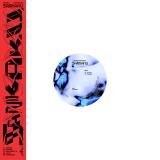
Hoshina Anniversary returns to MUSAR for his fourth appearance on the label with Sankaku, a five-track EP offering the latest snapshot of his ever-evolving ‘Watechno’ sound.
Taking its name from the Japanese word for ‘triangle’, Sankaku opens with a storming, floor-focused title track, pairing hypnotic techno rhythms with shifting textures and sharp acid drops. Tsuppari follows, named after the rapid hand thrusts used in sumo. Driving percussion, Japanese instrumentation and a raw techno pulse give the track a physical, forward-moving energy, making it a natural club cut.
Side B opens with Kono Kanjitte, where acidic tones meet jazzy elements and a playful sense of uncertainty. Slower and psychedelic, it unfolds as a track for restless minds and hazy nights. Ariake, named after the Ariake Sea, moves into more spacious territory, with Japanese instrumentation creating an atmosphere of mystery and anticipation, like looking towards an unknown horizon. Closing the EP, Itsukushimi brings a melancholic blend of melodic touches and darker cinematic tension, recalling the atmosphere of a Hitchcock soundtrack.
With ‘Sankaku’ EP, Hoshina Anniversary turns Japanese imagery, psychedelic textures and club-driven rhythms into a world that feels both familiar and otherworldly.
debe ser publicado en 09.10.2026
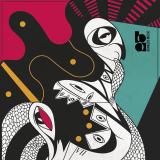
The annual Bonkers Music compilation is back with another dose of high-energy bangers. For its seventh anniversary, the series takes a fresh step forward, exploring a slightly evolved musical direction while keeping the distinctive sound that defines it. “Year VII” lands on 12” vinyl.
A1 David Meyer & Ludviq – Mandanga 2.0 (Feat Nick Hanzo)
The collaboration between Ludviq and David Meyer strikes a compelling balance between tension and movement. Drawing from underground electronic influences, Mandanga 2.0 evolves through hypnotic layers, acid-driven momentum, and a powerful groove, resulting in a distinctive cut that feels both immersive and uncompromising. Mandanga 2.0 is a dark, hypnotic electronic track built around squelching acid sequences, deep rolling grooves, and haunting vocal elements from Nick Hanzo. Atmospheric textures and a relentless rhythmic drive create a tense, immersive journey through shadowy soundscapes, blending raw energy with a refined sense of space.
A2 Neskeh – Liquid Sky
A raw trip built entirely around samples from Liquid Sky, Neskeh’s one of all-time favorite films. Crunchy saturated highs, basement-shaking low end, heroin-soaked wonky vocals, and freaky alien leads drifting through the mix. A warped tribute to an iconic soundtrack. Welcome to the space trippy club
A3 Your Reference – Afterparty
Julia Konor aka “Your Reference” one of the hidden gems of Barcelona’s underground scene, lands for the first time on the label with “Afterparty”
”Afterparty” draws inspiration from abandoned industrial spaces, empty warehouses, and nights where the only thing that mattered was the music. No rules, no expectations. Just raw energy, dusty air, concrete, and people completely immersed in the moment. The track is a personal postcard from that world.
B1 Lebollet & Mar Bravo – Aleta
“Aleta” is one of those Colombian words that somehow made its way into our shared language. We use it for raw, intense, dark tracks. Hard to translate. Makes sense when you feel it.
B2 Funboys – Skin In The Game
“Against the persistent ebb and flow of a breaking heart’s pulse, echoes of half-faded memories tease your attention… On the edge of forgetting, you can almost remember. And then it hits you – the coalescence of feeling into colour and form, warm in its familiarity, powerful in its simplicity. Uncanny, because it was right there all along. Don’t hold your breath… Listen!”
B3 Milla Campollo – Brote Psicodélico
“Brote Psicodélico” emerges from a hypnotic intersection of acid rhythms, psychedelic textures and raw downtempo energy. The track slowly unfolds through repetition and movement, creating a constantly evolving state between tension and release. Dark, trippy and physical, it is built around a groove that pulls you deeper with every layer. Distorted elements and acidic patterns weave in and out of the rhythm, giving the track an organic yet alien character. A journey designed for listening, less about following a linear narrative and more about entering a state of mind, where the boundaries between rhythm, body and psychedelia begin to blur.
debe ser publicado en 02.11.2026

With its second vinyl release, Phonoda Records continues the journey where the first chapter left off. Guided by the label's trusted artists, the needle descends into the deep and dub house underground, where echoing textures and hypnotic grooves blur the line between sound and thought. Lost in the endless universe of their own mind, the listener eventually finds their way back through the warmth of deep frequencies and pulsating basslines.
Released in collaboration with MixCult.
El artículo no se ha publicado. Tú puedes reservar ahora el artículo y después de ser pagado se te será enviado.

En el almacen y preparando para el envío
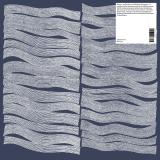
WRWTFWW Records is very happy to announce the release of Renga, the new collaborative album from Gak Sato and Tadahiko Yokogawa - available on limited edition LP (300 copies worldwide !) housed in a heavyweight sleeve with inside out print of a beautiful artwork by Aoi Huber Kono.
Renga (??, linked poem) is a genre of Japanese collaborative poetry in which alternating stanzas, or ku (?), of 5-7-5 and 7-7 morae (sound units or syllables per line) are linked in succession by multiple poets.
Inspired by the traditional Japanese poetic form of linked verses, Renga unfolds as a fluid 10-track journey spanning ambient, jazz, breakbeats, electronica, environmental music, techno, cinematic, library music, and musique concrète. Much like its literary namesake, the album is built on intuition and shared momentum, each piece emerging from what came before while opening new paths forward. Beats appear, disappear, then reassemble, while textures shift between organic warmth and electronic abstraction. The result is music that resists fixed categorization, existing somewhere between known subgenres and free-form exploration.
The album's visual counterpart, created by Aoi Huber Kono, mirrors the sensibility of the music. It's elegant, modern, and quietly expressive, extending the idea of linked forms from sound into image.
Points of interest
- For fans of ambient, experimental electronic music, jazz-inflected compositions, breakbeats, techno, cinematic soundtracks, library music, musique concrète, genre-blurring sonic exploration, linked verses, and dark blue.
- A unique collaboration between Gak Sato and Tadahiko Yokogawa, inspired by the Japanese poetic form of linked verses.
- Presented on limited edition LP housed in a heavyweight sleeve, edition of 300 copies.
- Artwork by acclaimed visual artist Aoi Huber Kono, extending the album's concept of interconnection across disciplines.
En el almacen y preparando para el envío

DJ Support: Adam Auburn, DJ Nova, Norm De Plume (Delusions Of Grandeur), Guy Perryman, Simon 'Palmskin' Richmond, Rocco Rodamaal, Damian Lazarus, Demarkus Lewis, Douglas Arellanes, Craig Smith (Yoruba Affil), Lay-Far, Dr. StrangeDub, Dennis Ruyer, Kono Vidovic, Roberto Rodriguez, Bill Brewster, Chris Read, Richard Earnshaw, Hot Toddy, Handson Family, Dj Pope, Robbie Akbal, Golf Clap, Marques Wyatt, Kiko Navarro, Mr Beatnick, Jamie Jones - Hot Creations, Marcia DaVinyl MC, Mikael Ikalainen/ Dj Lord Fatty, Ian Friday, Mr V, Mathieu Schreyer, Willie Graff, Makossa, Stuart Knight, Timo Maas, Bruce Tantum, Sean Brosnan (Futuredisco), DJ Harri, Vinny Da Vinci, Trevor McNamee, Roger Sanchez, and Dom Servini
PDD are excited to welcome the return of the legendary Winding Road Records. Originally launched in 2002 by Schmoov! and home to releases by cult artists such as Ron Basejam, Hot Toddy, both of Crazy P fame as well Vincenzo, Rhythm Plate, Spirit Catcher and not to mention Lovebirds and their monster hit, I Want You In My Soul. After a hiatus, the label is back with a bang and teaming up once again with Lovebirds for another classic EP.
En el almacen y preparando para el envío

2025 Repress
Sterns Edits returns after the sell-out success of its debut edition with another two catalogue reworks from Ben Gomori. This time he turns his attention to Burkina Faso's much-loved taxi-driver- turned-singer, Amadou Balake´.
Balake´ ('porcupine' in Mandinka) is Burkina Faso's proudest musical export, and in 2013 he recorded his final album before passing away: 'In Conclusion'. The record saw him revisit some of his most popular tracks from his remarkable 50-year career, backed by an eight-piece Burkinabe´ band who took the country's traditional sounds and brought them into a contemporary light.
Gomori retains the essence of the original recordings - which were mostly captured in one take - and marries them to vigorous afro-house stylings. 'Bar Konon Mousso (Musicien C'est Pas Quelqu'un)', in which Balake´ tells of a bar lady being unimpressed by his profession, gets a gentle push towards the modern dancefloor, its wonderful sax lines resplendent. 'Massa Kamba' is taken for a drive down the more traditional route, with commanding drums bolstering the original grooves and a marvelous triple harmony brass section at its core. Balake´'s freewheeling style suits the hypnotic feel of the edits to a tee.
Sterns Edits is an official collaboration between African music stalwarts Sterns Music and London's Ben Gomori.
En el almacen y preparando para el envío

Born in 1989 in Bamako, Mali, Nfaly Diakité is a member of the Donsow, Bambara animist hunters. Nfaly Diakité is named after his grandfather, the late Nfaly Diakité, one of Mali’s most respected donso chiefs. His grandfather did not play, but as a leading figure in the donso brotherhood, he was always accompanied by musician Yoro Sidibé. Nfaly grew up alongside Yoro Sidibé, who became his first master of the donso ngoni, a type of eight-stringed antelope skin harp. After leaving school to devote himself to his instrument, Nfaly continued his apprenticeship with Diakaria Diakité and Oumar Sidibé, two donso masters from the Wassolo region.
He quickly made a name for himself in the donso community and was much asked to play at the traditional ceremonies of his brotherhood. He then met percussionist Ibrahim Sarr and joined the BKO Quintet, with whom he recorded an album and toured Europe and the United States. His virtuosity on the donso ngoni soon attracted attention, and he took part in numerous music and dance festivals in Mali and abroad, with the aim of raising awareness of this little-known traditional instrument.
Nfaly Diakité is also a Kônô, meaning that he is responsible for passing on the history and culture of the Bambara people through music and song. He pursues his mission by combining tradition with more contemporary sounds and by collaborating with artists from a wide range of musical backgrounds. For him, music is a means of conveying messages of peace, love and harmony, and his compositions evoke the values of respect, tolerance and open-mindedness.
‘Tribute to Toumani Koné’ is Nfay Diakité’s first solo album, recorded in Bamako in June 2020. On the album, Nfaly is the only singer, providing backing vocals and playing the donso ngoni and keregne. The album is a tribute to the storyteller and poet Toumani Koné, the greatest donso ngoni player since N’gonifo Bourama. Nfaly Diakité is a representative of the new generation of donso ngoni players and he wishes to pay tribute to Toumani Koné, who throughout his long career has been a symbol of courage, daring, loyalty and honesty.
The nine-track of this solo album leaves no room for hesitation. Three instruments (donso ngoni, voice and keregne) manage to carry one into another dimension without ever tiring. The fitting and precise rhythm is a deep but melodious transe. Nfaly’s voice plays between expressive urgency and calm wisdom, and the choruses with his own voice multiply the planes of dimension of the music. The donso n’goni, of which Nfaly is an excellent player, sounds rough and earthy but always clear and sharp. All the strength of a music that does not belong to a single musician but to a long cultural tradition of which he is the spokesman is expressed here. The young Nfaly, thanks to his experience and sensitivity, succeeds on his own in pushing us into this world without feeling the weight of tradition but only the liberation of music that sounds all the more contemporary. This album is to be listened to in its entirety as one tight journey between repeated formulas, highlights and moments of rest within the same relentless rhythm. The densest moment is probably found in the heart of the album, between the tracks Nankama (the predestined one) and Mogote Diabeye (no one can please everyone). Here, the message, which can be deciphered from the translation of the lyrics, seems to transcend language barriers and intepret us directly about our human condition, urging us to move our bodies to the dense rhythm of life.
En el almacen y preparando para el envío

Active for 40 years, Nurse with wound is one of the projects of Steven Stapleton, materialized in a very wide range of hysterical noise over sound collages and cut ups, abstract music, soothing drones and surreal sound paintings, and more rhythmical and mechanical pieces, always inspired by Dadaism and Futurism, Krautrock, jazz improvisation, surrealism, never losing his main goal, that is having fun and enjoying himself.He has had many collaborators, a recurrent one in the 80s and 90’s being Current 93’s David Tibet, another noticeable one still at work with him is Andrew Liles.The main line of this unpredictable sound builder is hectic and uncompromised, his point of view is that everything is possible and applies it to himself. As a youngster he wanted to be an artist so decided he was one . He is not a musician, and says he has no interest in becoming one. Surprisingly, (or not!), the love of his life is building sculptures out of recycled and reclaimed materials, building things with anything, even junk. And sounds, we are a witness to it.With these very strange juxtapositions of styles and manners, female rap music and 50s and 60s lounge music having a special top priority in Steven’s tastes, and a creativity that has no bounds no taboos, with a taste of novelty every time, Nurse with wound will no doubt continue to surprise people listening to his works, and himself, as he wants to keep it fresh every time, mostly for him.
debe ser publicado en 06.02.2026

Cutting by Tohru Kotetsu — one of Japan’s leading mastering and cutting engineers!
To commemorate the 35th anniversary of ZARD’s debut, the best album Golden Best ~15th Anniversary~ is being released on analog vinyl!
The release is set for February 4, just before the 35th anniversary of their debut (February 10, 2026).
Originally released in 2006, Golden Best ~15th Anniversary~ is the ultimate ZARD best album, achieving million sales. It is also the final work
Izumi Sakai released during her lifetime before her passing in 2007.
For the vinyl release of such an important work, the cutting was entrusted to Tohru Kotetsu, one of Japan’s top mastering and cutting engineers and
a devoted fan of ZARD. The timeless ZARD classics engraved by Kotetsu have resulted in a truly exquisite finish. Please enjoy the warmth and depth
of sound that only analog vinyl can deliver.
debe ser publicado en 06.02.2026

A selection of the main sountracks of Naruto - one of the best known Anime in the world. Including the opening theme "Haruka Kanata".
In the village of Konoha lives Naruto, a young boy who is hated and feared by the villagers because he has Kyuubi (Nine-tailed fox demon) of incredible strength inside him, which has killed many people. The most powerful ninja of Konoha at that time, the fourth Hokage, Minato Namikaze, managed to seal this demon in Naruto's body.
Haga su pedido ahora y le encargaremos el artículo en nuestro proveedor.

A peerless debut album by Jacks, born during the dawn of Japanese rock, is reissued as a colored vinyl modeled after the original red disc released by
Toshiba Musical Industries on September 10, 1968.
Its dark and freaky lyrics and sound, as if gouging out the depths of the soul, had a profound impact on the music scene that followed.
In addition to the original 10 tracks from the album, this reissue includes the single A-side track "Kono Michi", which was released around the same time but not included in the original album.
debe ser publicado en 24.12.2025

'In collaboration with the children of Nico Kasanda, better known as Docteur Nico, Planet Ilunga proudly presents an anthology dedicated to African Fiesta Sukisa, available as a 3LP set and a digital release with bonus songs. This release is the result of many years of preparations and was realized in close partnership with Liliane Kasanda, Nico’s eldest daughter. Marking forty years since his passing, we felt that the year 2025 was the right time to honor Docteur Nico’s legacy with this original collection.
'Almost all of the African Fiesta Sukisa songs were released on Nico’s Sukisa label which translates in Lingala for “the final accomplishment”. The music on Sukisa, crafted by Nico and legendary vocalists such as Chantal, Sangana, Apôtre, Mizele, Lessa Lassan and Josky, embodies the essence of that powerful phrase with genius, class and depth. The label ran between 1966 and 1975 and released approximately 280 songs. Ngoma also issued the group between 1967 and 1971 and, in addition, reissued material from the Sukisa label. Many of these songs have become part of the collective memory of Congolese society and are still heard, discussed, and analyzed daily across digital platforms worldwide, as well as on numerous Congolese radio and TV stations.
'The album we put together features some of Nico’s signature songs alongside never before reissued tracks from the Sukisa catalog. It furthermore contains a large booklet with song commentary, testimonial interviews from well-known musicians, journalists, fans and Nico’s entourage, besides never before published photography about his personal and musical life.
'Alastair Johnston, author of the book ‘A Discography of Docteur Nico’ and longstanding Planet Ilunga collaborator, designed a stylish booklet and cover using all our collected material. Audifax Bemba, longtime admirer, compiler and connoisseur of Nico’s music, and the author of most of the song commentary in our accompanying booklet, offers his portrait of Docteur Nico:
“After displaying technical virtuosity with African Jazz, expert and accomplished guitar with African Fiesta, which musicologist Sylvain Bemba described as a dream guitar, Nico Kasanda was consecrated ‘dieu de la guitare’ by the public in the late sixties. With his band African Fiesta Sukisa, Docteur Nico displays his wide palette of unusual sounds. While exploring the Hawaiian guitar with its clear, airy, plangent, psychedelic effluvia, he continues to replicate the piano comping technique, and adds two missing strings to his bow: a simulation of the sanza (likembé or thumb piano), whose sounds he reproduces right down to the noisemakers of the tiny tin rings, on the one hand, and the sounds of the Luba balafon on the other. The right note, in the right place, at the right time, is the triptych on which Nico Kasanda’s playing is based, a note dressed in the perfect sound. A guitar of pure emotion. With African Fiesta Sukisa, his playing takes a ‘Chopin-esque’ turn, sending out more notes in a sublime adagio. The true artist is the one who simplifies everything. Docteur Nico is a genius of our time, whose style makes him the supreme exponent of the most important guitar school in Congolese music. He is recognized by his peers as the greatest African solo guitarist of all time. Sculpting sound in a tireless quest for beauty, Nico Kasanda has sublimated the guitar throughout his career.”
[xd] Kamulangu [Outro] (Dr. Kasanda – Sukisa 135) Folklore Baluba
debe ser publicado en 05.12.2025

"Three years ago, Jérôme Leclercq and I from Mediatoon Licensing came up with the idea of creating a cinema concert to celebrate the 20th anniversary of Naruto. Why a cinema concert? The music is part of the success of the licence and fans have a particular attachment to the credits and the original soundtracks. The originality of the music by Toshio Masuda, the composer of Naruto, comes from the clever mix of traditional Japanese instruments, such as the Shakuhachi or the Shamisen, with guitar and other pop/rock instruments. So we came up with the idea of bringing this music to the stage with a 50-strong orchestra, accompanied by an original montage of the best moments from the anime. This orchestra is made up of three parts: symphonic instruments, pop/rock instruments and traditional instruments.
To do this, we approached the ODINO orchestra and its conductor Sylvain Audinovski. The ODINO orchestra is one of those capable of mixing musical styles while maintaining a very high level of performance. We have also chosen traditional Japanese instrumentalists to complete the orchestra's core, especially for the show.
The arrangements and musical direction are the fruit of a collaboration between Quentin Benayoun, Sébastien Caviggia and myself. My two accomplices, with whom I formed the group P.U.S.S. in 2007, have a great mastery of rock and orchestral music writing. This mix is essential to keep the promise made to the fans of the series and required several months' work to select the music and write the scores for the whole orchestra.
How do you tell the story of Naruto to fans, but also to those who don't know the anime? That's the real challenge of this unique film-concert. How do you select the best moments in the story of this young ninja apprentice from the vastness of the first 220 episodes? Six months of selection and research enabled me to choose the key images in the narrative, while preserving certain dialectics to match the anime's incredible music.
This original film-concert, lasting almost 2? hours, is a real Rock-Symphonic show paying tribute to the work of Masashi Kashimoto and the music of Toshio Masuda."
Haga su pedido ahora y le encargaremos el artículo en nuestro proveedor.

The idea of an acoustic album had long been dismissed by the artist himself. "I"m not a guitarist; I use the guitar to compose", he used to say, reluctant to expose this level of vulnerability. However, in 2023, during the Kyotophonie Festival in Japan, organized by photographer Lucille Reyboz and encouraged by producer Laurent Bizot (No Format!), something changed. Surrounded by the spirituality of a Zen temple and supported by his loyal musicians - Badié Tounkara on ngoni and Mamadou Koné on percussion - Salif agreed to bare himself like never before. The title So Kono, meaning "in the room" in Mandinka, reflects both the simplicity and depth of this album. Recorded in the intimacy of his hotel room, So Kono captures the very essence of Salif Keita: a powerful voice, shaped by trials and travels, elevated by minimalist arrangements. Blending reimagined classics and new compositions, this album resonates as a sincere and timeless work, reaffirming why Salif Keita is considered one of the greatest living singers, across all cultures and continents.
debe ser publicado en 11.04.2025

2025 Repress
2019 is mule musiq’s 15 years anniversary. we’re going to release twelve 12inchs with our friend artists and stefan marx make the collectable artwork. last release of the series is swedish house maffia axel boman.
first track,”chestnut hearts” is super emotional no beat club banger,axel played at his latest boiler room,”slave to the vibe” is slow mo cosmic tune,”paid by the rhythm” is axel’s signature floating house,”copacabana dub” is epic brazilian affair deep house anthem, “don’t bug me” is dubby rasta tune,”konoba boba” reminds little bit early border community sound.
thank you so much for supporting us 15 years!
Haga su pedido ahora y le encargaremos el artículo en nuestro proveedor.

Son Goku is back to face a new threat that is descending upon Earth. Synopsis: Goku goes to train with Master Kaio, who informs him that a powerful enemy has awakened from a 39-year slumber: Beerus, God of Destruction. Beerus is searching for a warrior who appeared to him in a dream, the Super Saiyan God, whom he wishes to challenge. The vinyl includes numerous BGM from the Future Trunks and Universe Survival arcs. They range from dark to epic in a very orchestral style with the legendary Norihito Sumitomo composing (DBZ: Battle of Gods, the film, as well as video games like Gran Turismo). Some BGMs were created by Kazuya Yoshii and Takafumi Iwasaki, the latter having worked on musical projects for spin-offs of Digimon and Konosuba.
debe ser publicado en 20.09.2024

LTD Repress!
1982 Album from Japan's visionary saxophonist Yasuaki Shimizu, the man behind Mariah "Utakata Ho Hibi".
Through it's 8 suite like tracks, Kakashi transports the listener into Yasuaki's colourful sound-world, a fusion of outre jazz, new wave, ambient, and dub practices. Another high water mark in the 80's Japanese underground which has gathered cult status in recent years, and considered to be a highlight of Yasuaki's solo career.
Haga su pedido ahora y le encargaremos el artículo en nuestro proveedor.

Rare Groove Collection Explore the fusion of world music with soul, funk and disco through the Rare Groove Collection. With this new volume, discover unique groove tracks straight from Jamaica! Fully remastered original versions African RARE GROOVE A journey at the heart of Nigerian afrobeat from Orlando Julius to the ethnojazz of Alemayèhu Eshèté passing by the High-life of the Ghanaian Ebo Taylor...
debe ser publicado en 03.03.2023

Ukrainian blackened death/doom metal offensive 1914 continue to reflect the gruesome tales of World War I, its soldiers’ fate, their death, fear and feats to be never forgotten, and unleash their new opus, Where Fear and Weapons Meet, on October 22nd, via Napalm Records. Its eleven tracks of pure historic harshness follow up to the band’s sophomore full-length, The Blind Leading the Blilnd (2018), and debut, Eschatology of War (2014), both highly acclaimed amongst critics, and create a sophisticated variety of massively brutal blackened death metal accented by dramatic and realistic audio soundscapes and disquieting melodies spiced with the approach of sludge and doom! Blurb IG#1: "After their highly acclaimed previous records, blackened death/doom metal unit 1914 again faces the cruelty of World War I on its third opus Where Fear and Weapons Meet . The first single “...And a Cross Now Marks His Place” already marks an absolute highlight, as this massive outburst features none other than Paradise Lost icon Nick Holmes, whose pervasive delivery matches with 1914 ’s mastermind Hptm. Ditmar Kumarberg’s (9. Westpreußisches Infanterie-Regiment Nr. 176) vocal harshness." Blurb IG#2: Blackened death/doom metal frontrunners 1914 return with their third inexorable opus, the new studio album Where Fear and Weapons Meet. On this masterpiece of pure harshness, 1914 again reflects the gruesome tales of World War I without making any compromises. Second single “Pillars of fire”, that deals with The Battle of Messines in 1917, starts with an atmospheric introduction that draws the listener deep into the album theme and erupts into a massive blackened death/doom outburst shortly after. Blurb IG#3:Since 2014, Ukrainian blackened death/doom metal visionaries 1914 have told the gruesome tales of World War I and are now ready to face the fiery depths again on their third attack, Where Fear and Weapons Meet. Third single “FN .380 ACP#19074” breaks in with heavy guitar lines and thunderous black metal drumming like a blaze of gunfire and reflects the assassination of Austrian Archduke Franz Ferdinand and his wife 1914 in Sarejevo, an event that caused the outbreak of World War I.
Haga su pedido ahora y le encargaremos el artículo en nuestro proveedor.

Haga su pedido ahora y le encargaremos el artículo en nuestro proveedor.

Born Bangalter in 1947, Daniel Vangarde is a French songwriter and producer. In 1967, he met Jean Kluger who became his publisher. In the 1970s, their tandem stood out in those fields, for a plethora of popular French artists such as Petula Clark, Claude François, Joe Dassin, Dalida, Régine, Sheila and Ringo. 1975 saw the birth of Vangarde’s label, Zagora, and his first and only solo LP. Later on, Vangarde and Kluger were responsible for a number of hit songs by The Gibson Brothers, Ottawan and La Compagnie Créole. With or without Kluger, Vangarde also wrote and produced songs that remained underground, under several monikers (Starbow, Who’s Who, Soul Iberica Band, Yamasuki, Rocky & Vandella…) and for various artists. Let’s open these incredible cosmic disco funk vaults! Available on Double Vinyl (featuring 2 exclusive tracks) & CD .
debe ser publicado en 25.11.2022

Over the better half of a decade, Time is Away, the London-based duo of Jack Rollo and Elaine Tierney, have made tender and heartfelt transmissions through countless mixes, sound works and radio. Exploring deeply human themes of memory, persistence and resistance using an assemblage of source material, the duo's unique mode of storytelling culminates in Ballads, a new suite of songs and, significantly, their first officially licensed compilation.
From the opening notes of Horvitz Morris Previte Trio's jazz romanticism to Gilles Chabenat and Frédéric Paris's lively reimagined standard, the haunting vocal seance of Tanto Pressanto and the mesmerising swirls of The Unthanks, Yuko Kono and Rachel Bonch-Bruevich, the spirit of Ballads roams through generations of affectionate songwriting and conjures images both candid and surreal. The voice of poet and longtime collaborator Christina Petrie appears briefly and contemplates the "sighs and replies… the space between verses" of the Ballad, its beauty, its place in our lives. What is the Ballad but a reflection of our soul? "Perhaps I'll wander in search of it", she bittersweetly concedes.
At the suite's cusp is an alternate version of David Lang's 'Just (After Song of Songs)', a thirteen-minute meditation on devotion which featured in Paolo Sorrentino's Youth (2015). The track's universal themes of faith and desire radiate throughout and elucidate Time is Away's peerlessly precise yet gossamer touch.
Haga su pedido ahora y le encargaremos el artículo en nuestro proveedor.

In 2003, Pisco Crane assembled a six-piece band from motivated and talented like minds in the Kinshasa slums where he grew up. Pisco had been involved with a handful of local rap acts when he was younger, but after meeting legendary instrument builder Bebson De La Rue, he was inspired to follow a new path. He set about building instruments from the discarded trash that surrounded his city: bits of old computers or oil cans were fashioned into bass guitars and drums, and keyboards were bashed together using springs, metal pipes, and offcuts of tubing. If there was a core philosophy that guided Pisco at this stage in his journey, it was that everyone should have access to instruments, no matter where they come from or what their budget might be. And following in the footsteps of Bebson, Pisco locked into a Congolese tradition that touches on the eccentric genius of globally lauded artists like Konono Nº1 and Staff Benda Bilili. Over the years, Fulu Miziki's notoriety grew in the Kinshasa underground - their utopian vision of the future was infectious. Eventually, they were joined by performance artist, sculptor and fashion designer Lady Aisha, who offered the band unique colour and a soulful central focus. Influenced by Kinshasa's street performance scene, Aisha helped the band devise vivid masks and costumes that were as electric and singular as the instruments they played, and the scene was set. In 2020, as the world was plunged into lockdown, footage of Fulu Miziki went viral and their star began to grow exponentially, with a video of the band preforming the track 'Tikanga' racking up millions of views on Facebook. The band used this opportunity to work on documenting their sound, and shored up at the Nyege Nyege studios in Kampala for a year to assemble a definitive album. Recorded by HHY & The Macumbas' Jonathan Saldanha, this record captures the band's furiously innovative mixture of industrial sonics, spiritual jazz, punk, and Congolese soukous pressure. At their best, Fulu Miziki sound almost completely out of time, curving pounding rhythms around microtonal clanks, rousing chants and spiky sonics. On 'Mutangila', there's a hint of disco in the 4/4 stomp, but it's been shifted into a post-punk ritual, adorned with complex bell percussion and overlapping vocals. 'Congo' is even harder to define; electrified buzzes form a bassline, but it's the mindboggling rhythms that shuttle the track into psychedelic realms, led confidently by Lady Aisha's limber rhymes. Fulu positively slither on the sultry, industrial-influenced 'Sebe', while 'Tikanga' reminds of Congo's rumba-derived soukous traditions, materializing the sounds into the future with tight, pounding percussion and head-melting fx. The story of Fulu Miziki is sprawling and complex and constantly evolving, with various offshoots and band iterations. Two members left the band in 2016 to form KOKOKO! with French producer Débruit. Not long after they recorded this magnum opus album, several other original members left to form a similarly named outfit currently based in Europe. This other incarnation recently released an EP of electronic productions without the band founder Pisko Crane and lead vocalist Lady Aicha, on the UK based Moshi Moshi records. Pisco and Lady Aicha currently lead a different outfit in Kinshasa made up of completely new musicians. This full-length is the remaining proof of Fulu Mziki at their most vital and most complete - it won't be repeated - and can never be recreated. It's an essential portrait of one of the Democratic Republic of Congo's most innovative contemporary outfits, and some of the most surprising hybrid music you're likely to hear.
Haga su pedido ahora y le encargaremos el artículo en nuestro proveedor.

Following the »Minna Miteru« compilation, released in 2020, Morr Music announces a sequel, dedicated to Japanese indie music, overflowing with surprises and welcome discoveries. Like its predecessor, »Minna Miteru 2« is compiled by Saya of Tenniscoats, with the support of Markus Acher (The Notwist). It’s also another part of the Minna Miteru universe, alongside retrospective albums by The Andersens (»There Is A Sound«, 2020) and yumbo (»The Fruit Of Errata«, 2021). Taken together, these albums suggest a scene in rude health, sharing a unique vibration.
If its predecessor circled around Tenniscoats and their close friends, the second volume, though featuring a collaboration between Tenniscoats and Deerhoof as oneone, reaches far further afield, drawing from music old and new, far and wide. Consistent across »Minna Miteru 2« is a sense of wonder and a cheerful unpredictability: you never quite know what you’ll hear next. There are some gorgeous indie pop songs here, like Yuko Kono’s »Ginger« or HOSE’s »Baseball«, but there are other sounds too, like Kariu Kenji’s blue-hued electro-pop, or the wheezing pipe-organ ambient of FUJI||||||||||TA: »Minna Miteru 2« hints at new kinds of beauty.
Some of the more widely known names here contribute typically gorgeous melodies – Kama Aina’s »Wedding Song«, from 2005’s »Hawaii Hawaii« CD, is a reflective tune that combines a country-ish lilt with hints of slack-key guitar. Shugo Tokumaru’s »5 A.M.« is a delirious psychedelic pop mantra, drawn from his excellent 2005 album, »L.S.T.«. Many of the revelations, though, come from artists and groups relatively unknown outside Japan. The lovely, disorienting glitch-folk of Wasurerogusa features Aki Tsuyuko, perhaps best known for her albums on Thrill Jockey and Jim O’Rourke’s Moikai label, collaborating with psych-folk legends Eddie Marcon.
There’s also the delightful synth-pop of Jonathan Conditioner; the electronic dreamscape of Chaplin, whose opening »Out Cont« runs along several parallel paths at once; the twinkling, acoustic jangle at the heart of mmm’s luscious »Blue«; and a curious collection of miniatures, from acts like tenshinkun, Daisuke Tanabe and NNMIE, that embrace a childlike curiosity, essaying a kind of toytown pop-tronica.
The twenty-six songs on »Minna Miteru 2« repeatedly catch you unawares, upending your expectations and signaling both the breadth and depth of the Japanese indie underground. It’s a compilation of play and pleasure, but also of bold experiment smuggled into the everyday through pop music’s welcoming moods, magically creating a new world for the listener, spun out of the air and woven in between your ears.
debe ser publicado en 02.09.2022

A supergroup comprising Deerhoof + Juana Molina + Kasai Allstars + Konono No.1 + Skeletons + Wildbirds & Peacedrums. It all started when the music of Konono No.1 and Kasai Allstars was first released in the US and Europe, in the later part of the '00s. With its blend of ritual music, traditional percussion, thumb pianos, electric guitars, and makeshift instruments made from junkyard scrap, their out-of-this-world sound now also known as Congotronics, a word coined to title the series in which their albums appeared on Crammed Discs - deeply struck the imagination of musicians and fans worldwide. Leading rock media enthused about this newly rediscovered brand of "primal rock", while an impressive string of avant-rock, electronic & hip hop artists (from Dirty Projectors, Andrew Bird, Animal Collective and Deerhoof to Beck, Björk, Wilco, Radiohead, Saul Williams, Questlove and many more) repeatedly quoted the Congotronics bands as major sources of inspiration.
debe ser publicado en 29.04.2022

Founded in 2006 by Vincent Bertholet (Hyperculte), the Orchestre Tout Puissant Marcel Duchamp is a large-scale project. Designed as a real orchestra, the size of the ensemble has varied over time. Now with 12 members, 14 in the past or 6 at the beginning, the ensemble has scoured the stages of Europe todemonstrate that the formula "the more the merrier" has never been more true than on stage. Whether in prestigious festivals (Paléo Festival de Nyon, Fusion Festival, Incubate, Womad, Bad Bonn Kilbi, Jazz à la Vilette) or on the four albums released since its launch, the group shows an incredible fluidity. The Orchestre Tout Puissant Marcel Duchamp (a mischievous title in homage to traditional African groups -Orchestre Tout Puissant Konono nd1, Orchestre Tout Puissant Polyrytmo etc... -and to one of the greatest dynamizers of 20th century art) embraces the forms of its musicians while pushing them to their limits. The result is a powerful, experimental, unstable and terribly alive, organic sound.
debe ser publicado en 29.04.2022

Montparnasse Musique is a balance of two distinct sensibilities: Algerian-French producer Nadjib Ben Bella’s passion for raw organic beats, and South African DJ Aero Manyelo’s love of DIY synthesis in the digital realm. It’s a bold blend of fresh and processed flavours; the acoustic grit of traditional Africa combined with the pulse of modern Johannesburg — gqom, kwaito, techno, afrohouse. Together they produce an electro-acoustic sound, loaded with infectious hooks, uncompromising and authentic. For their self-titled debut EP, the cross-continental duo collaborates with Congolese bands Kasai Allstars, Konono Nº1, Mbongwana Star and Basokin on five audacious dance tracks forged from the tribal rhythms and mystic voices of the Kasai rainforests, amplified by the aggressive growl of hand-wrought instruments from Kinshasa’s urban wilderness, and augmented with the slick precision of an EDM toolkit. The end result is an inevitable evolution of Congotronics into a sharp-edged, club-ready sound. Nadjib Ben Bella is a DJ and producer who draws influences from the gnawa music of his North African roots and a diverse range of Sub-Saharan sounds from musicians he has worked with over the years. Most recently he has been touring Europe with West African band Les Amazones d’Afrique. Aero Manyelo, a name now synonymous with the burgeoning South African house scene, has honed a distinctive electronic sound that translates across the international club circuit and has attracted a broad range of collaborators — including Idris Elba and The Mahotella Queens on the opening track of an album inspired by the Nelson Mandela biopic Long Walk to Freedom. The EP was recorded and mixed by Kwezydoctor at Khaima Studio in Lille, France.
c 3 Bitumba (feat. Mbongwana Star) Extended
d 4 Sukuma (feat. Muambuyi) [Extended]
[Extended]
Haga su pedido ahora y le encargaremos el artículo en nuestro proveedor.

debe ser publicado en 18.03.2022

SNK composer Masahiko Hataya reprises his role in KOF '95 while being joined by composers Akihiro Uchida and Pearl Sibakiti.
As a Generation Series releases, the KOF95 soundtrack will feature newly remastered analog and digital tracks, as well as a booklet containing archival artwork and liner notes by former development team members.
debe ser publicado en 07.01.2022

This 4th full-length album by the legendary Congolese collective marks a new milestone in their already rich history, as the band have incorporated their own approach to electronic music into their new compositions. The album was produced by guitarist Mopero Mupemba, who also wrote about half of the songs. Mopero also took care of the often intricate programming, which is perfectly adapted to Kasai Allstars' peculiar rhythmic patterns drawn from traditional trance and ritual music. The album features Kasai Allstars mainstays such as vocalist Muambuyi (whose voice and personality inspired the making of multi-awarded feature film Félicité), vocalist and electric likembe player Kabongo, powerful singer Mi Amor, and instrumentalists Tandjolo and Bayila. Wonderful young vocalist Bijou makes a notable first appearance on several tracks. As is well-known by now, Kasai Allstars was born from the reunion of five bands, all from the Kasai region, but originating from five different ethnic groups whose diverse musical traditions were thought to be incompatible until these musicians decided to pool their resources and work together, an inspiring example of collaboration transcending ethnic and language barriers. Ever since the debut release in 2008, Kasai Allstars' music struck the imagination of music lovers and artists worldwide. They're particularly admired by avant-indie rock, electronic & hip hop musicians and media, who consider it as a kind of "primal rock", an accidental blend of trance and avant-garde. They're admired by artists such as Saul Williams, Questlove and Björk, have engaged in live collaborations with Deerhoof, Juana Molina and Konono Nd1, and have had their tracks remixed by the likes of Animal Collective, Deerhoof, Aksak Maboul, Jolie Holland, Shackleton and more.
debe ser publicado en 07.05.2021

About a hundred kilometers south-west of Bamako, on the left bank of the Niger River, the Malian village of Kela is known to be home to a large community of griot musicians (jeliw) mostly belonging to the Diabaté family. Their art is recognised throughout West Africa and many griots come from all over the world to stay there, sometimes for several years, in the hope of becoming immersed in it. The six pieces for voice accompanied by guitar or traditional koni lutes were recorded in 1978 (tracks 3 to 6) and in 2019 (tracks 1 to 3), in the same traditional dwelling, which still serves as a "studio". The accompanying booklet contains the testimonies of several important musicians who took part in the recording, and evoke key elements of their universe
Points of interests
- For the fans of the traditional repertoires of Mali's famous griot musicians.
- For music lovers who love the voices accompanied by the guitar and the traditional lutes of the griots.
- Recordings made 40 years apart in the same "studio": a dwelling located in the village of Kela (Mali), from where famous lineages of griots originate.
- Original sound archive on magnetic tapes, digitised and restored in 2019.
- Fourteen colour photographs, taken in 1978 and 2019 at the same time as the sound recordings.
debe ser publicado en 26.02.2021

Presented by Mitsuko & Svetlana Records, distributed by WRWTFWW Records.
A golden era gem from the master himself.
Archival reissue of long lost treasure from genius pianist and composer Masahiko Satoh whose resume includes hundreds of legendary albums and collaborations with Midori Takada (Lunar Cruise and Ton•Klami) among many others.
Very rare soundtrack of a 9-episode suspense drama that aired on TV in 1969 and 1970. Filled with exquisite jazz, soul-jazz, folk-jazz, and mystery-jazz, plus groovy affairs, classical moods, and 70s flair.
Highly recommended to Japanese jazz collectors, soundtrack collectors, Masahiko Sato collectors, lovers of rare gems and wearers of vintage trench coats.
All compositions and arrangements by Masahiko Sato
Masahiko Sato: piano, keyboard
Yoshiko Goto: vocal
Kiyoshi Sugimoto: guitar
Kunimitsu Inaba: bass
Yasuo Arakawa: bass
Akira Ishikawa: drums
Originally released in November 1970 as an LP on Toho Records (BL-1001)
Haga su pedido ahora y le encargaremos el artículo en nuestro proveedor.

Yokohama-based producer Foodman - aka 食品まつり or Shokuhin Matsuri - continues his expansive sonic voyage with his new EP Dokutsu, out on 6th March 2020. It follows his 2019 release ODOODO, which was issued on Diplo’s Mad Decent label. Dokutsu is the first release on Highball, a brand new label exporting forward-thinking music from Japan.
Foodman emerged from Japan’s nascent footwork scene, using the genre as a springboard for an escapist exploration into a dazzling array of sounds. He’s since earned the respect of influential fans including Diplo, Benny Blanco, Cashmere Cat and HOMESHAKE, while Pitchfork, Noisey, FACT and Tiny Mix Tapes have included his releases in various ‘best of the year’ lists since 2016.
Opening track Kazunoko sets the tone for what will follow. Its woozy rhythm is evocative of the off-kilter playfulness that’s become a hallmark of Foodman’s uncategorizable artistry. It’s also a sign of his inventiveness that he constantly adds fresh layers to the track without losing sight of its light-hearted, spacious feel.
Another of Foodman’s unorthodox traits is his ability to meld the frenetic with the soothing. Hirake Tobira is a case in point. Its production is hypnotic, while its central motif - endless twists and variations on a vocal sample - is sufficiently insistent to demand attention. Kachikachi reverses the trick with a thrilling rush, stuttering otherwise unobtrusive sounds.
Elsewhere the EP plays on sonics which have echoes of the familiar while remaining alien: the boss fight soundtrack of Oshiro, the clattering percussion that dominates Imo Hori, and the ambient psychedelia of Konomi.
Based in Yokohama, an hour south of Tokyo, Foodman’s multifaceted skills also encompass DJing and painting. His press image, shown above, is a self-portrait. From the stripped-back sketches of his 2012 set Shokuhin (released on Giant Claw’s Orange Milk label) to the richer textures of ODOODO, Foodman has subverted everything from Okinawan folk to J-Pop to D&B/classical fusion into his own otherworldly inventions.
Haga su pedido ahora y le encargaremos el artículo en nuestro proveedor.

Crammed Discs present the debut album by innovative, exciting French/ Chilean band Nova Materia. Avaialble as a CD and as a double LP version is housed in a gatefold jacket, plus colour innersleeves and includes a download card. Nova Materia's powerful, hypnotic music incorporates eerie sounds generated by raw and mineral materials (metal, rocks etc.) to create tracks that are in turn hyper-rhythmic and dreamy, poised between postpunk rock and electronic dance music. Nova Materia is a duet consisting of Caroline Chaspoul from France and Eduardo Henriquez from Chile. The band was born three years ago from the ashes of Panico, the Chilean alternative rock group with which Caroline and Eduardo toured around the globe and released several albums. After two Eps produced a.o. in collaboration with French producer Chloé and her Kill The
DJ label, Nova Materia now joins the likes of Acid Arab, Konono N°1, Juana Molina, Yasmine Hamdan and Matias Aguayo on the Crammed Discs roster.
Haga su pedido ahora y le encargaremos el artículo en nuestro proveedor.

Re-issued again, with new liner notes. A wonderful, rare record wrapped in a mysterious yet playful ambiance. Or maybe it's just the impression that the Japanese language often gives me. ''Suiren'' is an odd jazz-fusion-wave tune that sounds like its boiling, waiting to burst but somehow manages to stay in control. Like the nervous tick of a leg fidgeting under the table of a restaurant on a first date. Yasuaki Shimizu is a Japanese composer, producer and saxophone player born in 1954. He worked with Ryuchi Sakimoto on certain arrangements, with the South Korean artist Nam June Paik on art+sound installation pieces and even DJ Towa Tei (of Deee-Lite fame). ''Suiren'' was released in 1981 and is the opening title on the sought-after ''Kakashi'' album and is my personal favorite on this overall brilliant record. It weaves behind new wave, jazz, fusion, ambient and experimental music.Repetitive and hypnotizing, punctuated by exclamation marks on most first mesures, the muted triangle percussion hits me straight in the heart. About 90 seconds into the song, the saxophone makes its appearance and the song goes from ''this is cute'' to ''oh, this is some serious shit!''. Shimizu's saxophone frees the song from the rest of the elements which are more calculated and repetitive.A joyful, mysterious slow-moving train ride led by the artist's mellow voice that rocks us with this calming but funky lullaby. Every phrase is punctuated by the xylophone there to energize the piece, albeit very subtely.
Haga su pedido ahora y le encargaremos el artículo en nuestro proveedor.
