Legendary Italian label Palmares Records is back with two previously unreleased works from Stefano di Carlo directly from his archive of 90's productions plus two new remixes, one from label boss Alex Neri and the other from Andy Perfetti.....the perfect comeback for Palmares Records.
Suche:stefano di carlo
- 1
Double 12" release
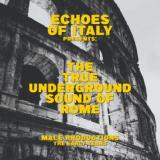
The Story — From the Streets of Rome to the Male Productions Label
In the early 1990s, Rome lived in a kind of suspended moment. The city was still tied to its historic clubs, yet in the outskirts—inside abandoned warehouses, quarries along the coastline, and the wooded parks north of the capital—something new was beginning to stir. A nocturnal, constantly shifting movement fuelled by a hunger for freedom and a sonic curiosity that reached far beyond the mainstream.
Moving through this ferment was Francesco “Chicco” Furlotti. First an organizer of unconventional parties and underground nights, he soon became one of the driving forces behind Rome’s itinerant rave scene. Furlotti sensed that a wave of change was about to sweep across the city. It wasn’t just about parties: it was the rise of a culture, a new way of thinking about music, community, and belonging.
It was within those nights—later held with official permits, properly built sound systems, and an ever-growing crowd—that Furlotti recognized the existence of a distinctly Roman sound, and the need to capture it, preserve it, and give it tangible form.
So, in 1991, he decided to take a bolder step: to found an independent record label—small, determined, and far removed from the commercial logic that dominated at the time.
That was the birth of Male Productions.
Male was not a label like any other: it was a workshop, a gathering point, a creative hub where DJs, producers, friends, and wanderers converged. Within that environment, an artistic core took shape—Stefano Di Carlo, Leo Young, and Mauro Tannino, along with other collaborators orbiting around Furlotti. From their synergy emerged a project whose very name declared its mission:
The True Underground Sound of Rome.
The collective did not simply aim to release music; it sought to tell a story of Rome through sounds that defied categorization: house, techno, ambient, electronic mysticism, psychedelic visions… a unique blend, instantly recognizable, emotional, and experimental. The sessions unfolded using essential yet razor-sharp gear: Roland drum machines, analogue synthesizers, Akai samplers, stripped-down mixers. Few tools, endless imagination.
The first result of this work was the 12” Secret Doctrine, released in 1991 in an extremely limited run—around 500 promotional copies, according to accounts. The record captured something that until then had floated only in the air of Roman raves: enveloping atmospheres, deep rhythms, melodies built to make the mind travel far beyond the dancefloor. A sound that did not imitate what was happening in Detroit, London, or Berlin, but absorbed those influences and re-sculpted them with a distinctly Roman sensibility.
Yet, precisely because it was independent and detached from commercial circuits, Male’s output remained sparse: few EPs, few copies, irregular distribution. Over time, those records became rare artifacts—almost mythical objects within the Italian electronic scene. The legacy of Male Productions seemed destined to survive only in the memories of those early years, in the stories told after raves, and in the private archives of a handful of collectors.
Many years later, thanks to the almost accidental rediscovery of a few original copies of the first two releases issued by Male Productions, it became possible to undertake a meticulous process of recovery and restoration of the audio etched into those grooves, with the aim of preserving as fully as possible the quality and character of that unrepeatable sound.
We are therefore able today to present — at last in a complete and faithful form — the first two mixes created for Male Productions, now released on a double vinyl that brings back into the present the exact moment when it all began: the nomadic nights of the raves, Furlotti’s vision, the creativity of Di Carlo, Young and Tannino, and the sonic identity of a Rome in the midst of transformation.
This is not merely a reissue.
It is a historical document.
A fragment of a culture that changed the city.
The authentic sound of the Roman underground, finally returned to the world.
- A1: Montego Bay - Everything (Paradise Mix) 04 59
- A2: Atelier - Got To Live Together (Club Mix) 06 06
- A3: Golem - Music Sensations 04 56
- B1: The True Underground Sound Of Rome Feat. Stefano Di Carlo - Gladiators 05 26
- B2: Eagle Parade - I Believe 04 26
- C1: Dj Le Roi - Bocachica (Detroit Version) 05 28
- C2: Green Baize - Synthetic Rhythm 01 41
- C3: M.c.j. Feat. Sima - Sexitivity (Deep Mix) 05 30
- D1: Kwanzaa Posse Feat. Funk Master Sweat - Wicked Funk (Afro Ambient Mix) 06 31
- D2: Progetto Tribale - The Bird Of Paradise 06 29
- D3: Mbg - The Quite 06 59
Vol 1[28,99 €]
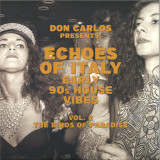
Googling “paradise house”, the first results to pop up are an endless list of European b&b’s with whitewashed lime façades, all of them promising “…an unmatched travel experience a few steps from the sea”. Next, a little further down, are the institutional websites of a few select semi-luxury retirement homes (no photos shown, but lots of stock images of smiling nurses with reassuring looks). To find the “paradise house” we’re after, we have to scroll even further down. Much further down.
It feels like yesterday, and at the same time it seems like a million years ago. The Eighties had just ended, and it was still unclear what to expect from the Nineties. Mobile phones that were not the size of a briefcase and did not cost as much as a car? A frightening economic crisis? The guitar-rock revival?! Certainly, the best place to observe that moment of transition was the dancefloor. Truly epochal transformations were happening there. From America, within a short distance one from the other, two revolutionary new musical styles had arrived: the first one sounded a bit like an “on a budget” version of the best Seventies disco-music – Philly sound made with a set of piano-bar keyboards! – the other was even more sparse, futuristic and extraterrestrial. It was a music with a quite distinct “physical” component, which at the same time, to be fully grasped, seemed to call for the knotty theories of certain French post-modern philosophers: Gilles Deleuze, Félix Guattari, Paul Virilio... Both those genres – we would learn shortly after – were born in the black communities of Chicago and Detroit, although listening to those vinyl 12” (often wrapped in generic white covers, and with little indication in the label) you could not easily guess whether behind them there was a black boy from somewhere in the Usa, or a girl from Berlin, or a pale kid from a Cornish coastal town.
Quickly, similar sounds began to show up from all corners of Europe. A thousand variations of the same intuition: leaner, less lean, happier, slightly less intoxicated, more broken, slower, faster, much faster... Boom! From the dancefloors – the London ones at least, whose chronicles we eagerly read every month in the pages of The Face and i-D – came tales of a new generation of clubbers who had completely stopped “dressing up” to go dancing; of hot tempered hooligans bursting into tears and hugging everyone under the strobe lights as the notes of Strings of Life rose up through the fumes of dry ice (certain “smiling” pills were also involved, sure). At this point, however, we must move on to Switzerland.
In Switzerland, in the quiet and diligent town of Lugano, between the 1980s and 1990s there was a club called “Morandi”. Its hot night was on Wednesdays, when the audience also came from Milan, Como, Varese and Zurich. Legend goes that, one night, none less than Prince and Sheila E were spotted hiding among the sofas, on a day-off of the Italian dates of the Nude Tour… The Wednesday resident and superstar was an Italian dj with an exotic name: Don Carlos. The soundtrack he devised was a mixture of Chicago, Detroit, the most progressive R&B and certain forgotten classics of old disco music: practically, what the Paradise Garage in New York might have sounded like had it not closed in 1987. In between, Don Carlos also managed to squeeze in some tracks he had worked on in his studio on Lago Maggiore. One in particular: a track that was rather slow compared to the BPM in fashion at the time, but which was a perfect bridge between house and R&B. The title was Alone: Don Carlos would explain years later that it had to be intended both in the English meaning of “by itself” and like the Italian word meaning “halo”. That wasn’t the only double entendre about the song, anyway. Its own very deep nature was, indeed, double. On the one hand, Alone was built around an angelic keyboard pattern and a romantic piano riff that took you straight to heaven; on the other, it showcased enough electronic squelches (plus a sax part that sounded like it had been dissolved by acid rain) to pigeonhole the tune into the “junk modernity” section, aka the hallmark of all the most innovative sounds of the time: music that sounded like it was hand-crafted from the scraps of glittering overground pop.
No one knows who was the first to call it “paradise house”, nor when it happened. Alternative definitions on the same topic one happened to hear included “ambient house”, “dream house”, “Mediterranean progressive”… but of course none were as good (and alluring) as “paradise house”. What is certain is that such inclination for sounds that were in equal measure angelic and neurotic, romantic and unaffective, quickly became the trademark of the second generation of Italian house. Music that seemed shyly equidistant from all the rhythmic and electronic revolutions that had happened up to that moment (“Music perfectly adept at going nowhere slowly” as noted by English journalist Craig McLean in a legendary field report for Blah Blah Blah magazine). Music that to a inattentive ear might have sounded as anonymous as a snapshot of a random group of passers-by at 10AM in the centre of any major city, but perfectly described the (slow) awakening in the real world after the universal love binge of the so-called Second Summer of Love.
For a brief but unforgettable season, in Italy “paradise house” was the official soundtrack of interminable weekends spent inside the car, darting from one club to another, cutting the peninsula from North to centre, from East to West coast in pursuit of the latest after-hours disco, trading kilometres per hour with beats per minute: practically, a new New Year’s Eve every Friday and Saturday night. This too was no small transformation, as well as a shock for an adult Italy that was encountering for the first time – thanks to its sons and daughters – the wild side of industrial modernity. The clubbers of the so-called “fuoriorario” scene were the balls gone mad in the pinball machine most feared by newspapers, magazines and TV pundits. What they did each and every weekend, apart from going crazy to the sound of the current white labels, was linking distant geographical points and non-places (thank you Marc Augé!) – old dance halls, farmhouses and business centres – transformed for one night into house music heaven. As Marco D’Eramo wrote in his 1995 essay on Chicago, Il maiale e il grattacielo: “Four-wheeled capitalism distorts our age-old image of the city, it allows the suburbs to be connected to each other, whereas before they were connected only by the centre (…) It makes possible a metropolitan area without a metropolis, without a city centre, without downtown. The periphery is no longer a periphery of any centre, but is self-centred”.
“Paradise house” perfectly understood all of this and turned it into a sort of cyber-blues that didn’t even need words, and unexpectedly brought back a drop of melancholic (post?)-humanity within a world that by then – as we would wholly realise in the decades to come – was fully inhuman and heartless. A world where we were all alone, and surrounded by a sinister yellowish halo, like a neon at the end of its life cycle. But, for one night at least, happy."
The absolute Don of Italo piano house, Don Carlos brings his legendary sound to RNT with an EP of classic floor fillers. Don (Carlo Troya) and S-Tone (Stefano Tirone) released two records on Bologna label Calypso in the early 90s under the artist name Montego Bay.
Incredibly, the four tracks on this EP were also produced 30 years ago, then shelved and forgotten about until recently when a connection with RNT inspired to Don dig up their rare vintage! From pumping melodic house jams like Music All Night and Waited So Long, to sampled disco house cuts Keep Dancing the Boogie and Gotta Keep Dancing, this EP is a veritable time capsule, dripping with the swag and sonics of the golden era of 90s club music.
Following the hugely popular Ciao Italia Generazioni Underground compilation, Rebirth let loose the first in a mini-series uncovering yet more hidden gems from deep within the vaults.
Pure Italo dream house gold, from The True Underground Sound Of Rome, High Tide, Keytronics and The Montego Bay Experience, that would set you back a pretty penny should you try and source the originals, reissued for your hedonistic pleasure.
Carlo Troja, aka Don Carlos, from the Italian province of Varese, has been active as a DJ since the late 1970s. He
debuted as a producer in the late 1980s with the single "Alone" on Calypso Records (IRMA), which immediately became a cult hit on the global Deep House scene. His productions have always fused house rhythms with the sounds of
African-American jazz, sometimes bordering on disco, progressive, and electronic soul.
In 1992, his first album, "Mediterraneo," was released in the United States on IRMA USA, followed in 1993 by his
second, "Aqua," and several hit singles with the Montego Bay project with Stefano Tirone (Stone Inc.), all on IRMA
Records.
He reached the UK charts with Byron Stingley's production of the hit "You Make Me Feel," a remake of the classic
Sylvester song. He has performed in various European and American countries, as well as at the Ministry of Sound
and Turnmills in London.
In 2001, he released his third album, "Music in My Mind," featuring Kim Mazelle, Michelle Weeks, Taka Boom, and
Kevin Bryant.
A new album of re-edits of '90s-style songs, titled Livin' a Dream, was released in 2020, along with two compilation
volumes of Paradise House, both on IRMA Records.
With this new single, he continues to showcase his distinctive Soulful Paradise House sound, rooted in the
Mediterranean sound, as specified in the title.
pictured cover sealed in shrink wrap (first time ever on Samosa)
Samosa Records comes back with a real summer bang in the form of the ‘Afro-Ritmo EP’ – a four-track journey into afro soaked vibes courtesy of Anura & Sr. Lobezno and featuring label boss De Gama!
First up on side A is the EP’s title track, the mesmerising ‘Afro Ritmo’. Anura & Sr. Lobezno announce their arrival on Samosa Records with this spicy West African rhythm bomb. Kakaki trumpet fanfares meld with intricate synth stabs and ethereal Oja flute, whilst the solid tribal beats and rolling bass dictate the dance moves. And dance you must…
Track 2 is the deliciously glitchy, conga bonanza ‘Sungu Sa’. Make no mistake, ‘Sunga Sa’ is out to get you from the very first beat – tempting you to go behind the curtain as the haunting guitar lures you ever closer to its secret door. Dark, uplifting and ritualistic, the chant of ‘Sunga Sa’ will live in your head rent free well after the sun has gone down. Don’t say you weren’t warned.
Over on Side B De Gama takes the title track ‘Afro-Ritmo’ and applies his unique sonic rubs, balms and enhancers to create a pulsating after hours jam full to the brim with Afrotropic sparkle and magic dust. Like an unstoppable chugging train steaming through a savanna, De Gama is the conductor supreme as the raspy synth, bluesy guitar riff and uplifting brass fanfares entwine around that pounding beat.
Finally, Track 4 gives us the seriously powerful Javier Morrilas remix of ‘Afro-Ritmo’. The original is stripped right down and given the Big Beat treatment for this insanely good take – a peak time switcheroo of a track that keeps you guessing as to where it’s taking you. As the flutey breakdowns and broken beat madness get you, you will fall in love with this one instantly.
The ‘Afro Ritmo’ EP is a powerful, masterful four tracker from Anura & Sr. Lobezno which is well at home in the Samosa Records cooking pot. Spread the word, buy the vinyl. You won’t be disappointed.
• Reviewed with love by The Black Light Disco
Written, Produced, Arranged and Mixed by Anura & Sr. Lobezno.
Keyboards & Percussions: Anura.
Trumpet: Jimmy Garcia
Sax & Flute: Carlos Ligero
Trombone: Prudencio Valdivieso
*Remix and Additional Productions by Stefano Gamma aka De Gama for De Gama Rec - Rome.
Jazz Guitar & Acoustic Bass by Pietro Nicosia.
** Remix and Additional Productions by Javier Morillas.
All tracks mastered by Francesco Pierguidi at L’n’P Studio – Rome.
Artwork and computer graphics by Nerina Fernandez.
SMS038
''Stop'' is the emblem of Italo-Disco par excellence even if in 1983 it was inserted by Carlo Favilli and Stefano Zito on the B-side of the 12''of the nascent label House of Music. However, the song, although recorded in a hurry and with evident sound defects, is the perfect example of the musical genre that was developing in Italy in those very early 80s. ''Stop 4 Remixes'' is long-awaited answer that followers have been waiting for over 4 decades and now it lives with its own light with 4 new versions that testify how the piece was a driving force for the entire Italo-Disco movement."Pushed Up'' is the remix by Woody Bianchi, who according to Claudio Casalini (who does not allow any discussion on this matter) is the best Italian disc-jockey for the technical quality of the mixes and the artistic choice of the pieces to play. It would take a book to retrace the stages of his prestigious career. So here just a bravo' to Gino (Woody Bianchi). Ditto with potatoes for Danilo Braca who works assiduously in the clubs of the Big Apple, spinning only tracks by Italian composers and arrangers. Once again this Italian DJ-producer (Danyb is his old nickname), author of two very pregnant extensive versions: ''The Remix'' and ''Re-Visited'', shows his ability as a 'remixer', known everywhere, but especially in Ibiza especially where the DJs ((DJ Harvey included) often use his ''edits' existing only on pen drive. Among those who have madly loved ''Stop'' near Florence there are certainly Luca Pardini (Dirtyelements), Guido Sonato and Edoardo Guccione (Drunkdrivers) who when they are together form the renowned they Tuscan trio of DJ-producers Dirtyelements & Drunkdrivers with very interesting and successful experiences on Pusic Records, Masterworks Music, Samosa Records and Lego Funk. The approach to sounds in their ''Acid Re-Solution Remix'' is absolutely decisive. Here too, skill and passion seasoned with a pinch of art and... why not?... madness !!!
Repress.
The Italo dance classic that Carl Craig sampled for the legendary 69 track 'Rushed'
Finally available again on Dark Entries
We are honored to announce the next 12 in Dark Entries Editions is one of the all time Italo Disco club classics: My Mine - 'Hypnotic Tango'. My Mine were the trio of Stefano Micheli (vocals, keyboards), Carlo Malatesta (vocals, keyboards), and Danilo Rosati (drums, keyboards) formed from the ashes of Italian New Wave group Ipnotico Tango in 1982. They shifted focus from the experimental post punk sounds towards something more commercial with which to try and enter the market, namely to make a record. At that time Carlo was studying in Bologna and he had heard about producer and arranger Mauro Malavasi famous at that time for the many hits produced for Macho, Peter Jacques Band, Change, Luther Vandross, Ritchie Family. The group handed Malavasi a demo tape and four days later they were invited to Fonoprint Studios to record their first single, 'Hypnotic Tango'.
Utilizing new electronic instruments like the now legendary Roland TB-303, Danilo improvised a simple but effective synthesizer bass line and passed it through the Roland Echo until something magical came out. 'Hypnotic Tango' was released on Progress Record in 1983 and became an international hit across Europe and US dance clubs in New York, Detroit and Chicago, capturing the imagination of House and Techno producers. In 1987 the legendary Frankie Knuckles remixed 'Hypnotic Tango' at Seagrape Studios in Chicago, with assistance from studio engineers Tommy White and Brett Wilcotts. Originally released on Danica Records as the 'Powerhouse Mix' paying tribute to the Windy City club atmosphere and adding his own "sighs" in the track as well. The Hypnotic Remix This reissue presents 4 mixes of 'Hypnotic Tango' including the 'Hypnotic Mix' only appearing together once before in 1990 on Rams Horn Records. All songs are remastered for vinyl by George Horn at Fantasy Studios in Berkeley. The vinyl comes housed in a jacket with original artwork and includes an insert with photos and liner notes by Stefano Micheli. 'Look on the floor and all is spinning round, Someone told me this was just a dance And take a chance I ain't met before..Do you think I really have a chance"
- A1: Ennio Morricone - Dance On (O S.t. »Così Come Sei«)
- A2: Toto Cutugno - Mi Dici Che Stai Bene Con Me
- A3: Puccio Roelens - Northern Lights
- A4: Toni Santagata - Ufo Sexo
- A5: Blue Marvin Orchestra - La Cortigiana (O S.t. »Codice D
- B1: Alessandro Alessandri - Manhattan Disco (O S.t. »Sangue
- B2: Stefano Torossi - Having Fun
- B3: Gianpaolo Chiti & Sergio Montori - Desperation And Mone
- B4: Ezy Minus - Contraband Love
- B5: Goblin - Tenebre (O S.t. Tenebre")
- C1: Sessomatto (Armando Trovajoli) - Sessomatto (O S.t. Se
- C2: Silvano D'auria - Porto Cammelli (O S.t. La Mano Lunga
- C3: Stelvio Cipriani - Mark Il Poliziotto - Originale (O S
- C4: Fred Bongusto - Le Tentazioni Di Giorgia (O S.t. Gli O
- C5: Pino Donaggio - Lady Fine (O S.t. Senza Buccia / Cosi
- C6: Eva Eva Eva - Donna Donna Donna
- D1: Franco Bixio, Fabio Frizzi & Vincenzo Tempera - Vai Gor
- D2: Riz Ortolani - La Ragazza Dal Pigiama Giallo (O S.t. L
- D3: Guido E Maurizio De Angelis - Ankara (O S.t. Afyon Opp
- D4: Piero Piccioni - Blue Rhythm Festival - New Edit (O S.t
- D5: Carlo Bixio & Marcello Gigante - Il Seme Di Caino (O S
- D6: Goblin - La Via Della Droga - Originale (O S.t. La Via
Explore the fusion of world music with soul, funk and disco through the Rare Groove Collection. With this new volume 100% italian, discover rare gems from soundtracks of erotic and detective movies as well as more confidential music libraries. With Ennio Morricone, Goblin, Piero Piccioni, Guido e Maurizio De Angelis, Armando Trovajoli, Alessandro Alessandri, Toto Cutugno...
- A1: Ennio Morricone - Mio Caro Assassino (From Mio Caro Assassino/My Dear Killer (1971)
- A2: Bruno Nicolai - La Notte Che Evelyn Uscì Dalla Tomba (Feat Edda Dell'orso - Long Version - From La Notte Che Evelyn Uscì Dalla Tomba/The Night Evelyn Came Out Of The Grave (1971)
- A3: Bruno Nicolai - La Dama Rossa Uccide Sette Volte (Edit - From La Dama Rossa Uccide Sette Volte/The Red Queen Kills Seven Times (1972)
- A4: Stelvio Cipriani - Tribal Shake (From Reazione A Catena/A Bay Of Blood (1971)
- A5: Stelvio Cipriani - Il Sesso Del Diavolo (Finale) (Finale)
- A6: Stelvio Cipriani - Deviation-M1 (From Deviation (1971)
- B1: Riz Ortolani - L'etrusco Uccide Ancora (Titoli) (Titoli)
- B2: Daniele Patucchi - Giallo In Tensione (From Frankenstein '80 (1972)
- B3: Ennio Morricone - Ansimando (Feat Edda Dell'orso - From Macchie Solari/Autopsy (1975)
- B4: Manuel De Sica - Black Dream (From Mystery Tour (1985)
- B5: Paolo Gatti & Alfonso Zenga - Cerro Torre (From Cesare Maestri: Il Ragno Delle Dolomiti (1980)
- B6: Berto Pisano - Greta (From La Morte Ha Sorriso All'assassino/Death Smiles On A Murderer (1973)
- B7: Sante Maria Romitelli - Bambola Sensuale (From La Rossa Dalla Pelle Che Scotta/The Sensuous Doll (1972)
- C1: Adolfo Waitzman - Languidamente (From Pensione Paura/Hotel Fear (1978)
- C2: Nico Fidenco - Il Demonio In Convento (From Immagini Di Un Convento/Images In A Convent (1979)
- C3: Ettore De Carolis - Flavour Of Death (From Il Cavaliere, La Morte E Il Diavolo (1983)
- C4: Marcello Giombini - Un Gioco Per Eveline-M11 (From Un Gioco Per Eveline (1971)
- C5: Carlo Maria Cordio - Absurd (From Rosso Sangue/Absurd (1981)
- C6: Stelvio Cipriani - Devil Dance (Performed By Goblin - From Un'ombra Nell'ombra/Ring Of Darkness (1979)
- C7: Daniele Patucchi - E Tanta Paura-M2 (From E Tanta Paura/Plot Of Fear (1976)
- C8: Marcello Giombini - Orinoco: Prigioniere Del Sesso-M19 (From Orinoco: Prigioniere Del Sesso (1980)
- D1: Franco Micalizzi - Bargain With The Devil #3 (From Chi Sei?/Beyond The Door (1974)
- D2: Stefano Liberati - The Prophecy (Version A - From I Pensieri Dell'occhio (1978)
- D3: Luigi Ceccarelli - Walking Through The Shadows (From Difendimi Dalla Notte (1981)
- D4: Daniele Patucchi - Minaccia Sulla Citta (From Belve Feroci/Wild Beasts (1984)
Red vinyl[28,53 €]
PAURA explores the horror repertoire from the precious CAM Sugar archives taking us on a hypnotic journey into the labyrinths of fear, through the different variations that Italian horror took on from the esoteric and supernatural to the slasher films of the early 1970s; to reinterpretations of Romantic literature and gothic fiction to the splatter films of the ‘80s; and from witchcraft to metropolitan horror. This is not a real “best of” but an eclectic menu full of mysterious voices, childlike lullabies, sweet melodies, obsessive music boxes, obstinate harpsichords, crazy distortions and threatening synthesizers, conceived as a succession of sequences, as if a film edit. The new collection includes some of the most creative music ever written and strives to do justice not only to some of the best known composers in this genre, but also to many great unsung composers: From celebrated composers like Ennio Morricone, Riz Ortolani & Stelvio Cipriani to long-forgotten personalities who fed the industrial backbone of Italian cinema such as Daniele Patucchi, Marcelo Giombini & Berto Pisano. The collection includes 6 previously unreleased tracks plus 3 tracks released on vinyl for the first time and 5 tracks available commercially for the first time (originally released only as a limited promo item).
An essential part of the European disco history... "Livin' Up" and "Stop" by B.W.H., these two tracks are true 'milestones' and Italo-Disco in the purest form. The sound that only the most virtuous and innovative young Italian DJs and arrangers were able to create in the early 80s. B.W.H is Stefano Zito (aka Black Way), Stefano Galante, and the late Carlo Favilli, "Stop" is dubbed "the best B-side ever!", but "Livin' Up" is also incredible, making this vinyl the hottest 12" ever assembled in the Italo Domain and for decades incredibly underrated.
It was I-f's Mixed Up The Hague mix that brought this to the attention of a wider audience and have been considered one of the holy grails of Italo ever since. Here the 2 original versions from 1983 remastered with care and passion by Dom Scuteri and Claudio Casalini (Best Record) in two different editions: the classic one in black vinyl and the strictly limited one in gray vinyl. Two essential tracks available in a high quality edition.
Fantastic masterpiece, considered one of the best Italo-Disco songs ever. A mega-classic produced by Stefano Zito and Carlo Favilli (the latter passed away too soon) characterized by a heartbreaking melody and lush strings that exemplify the mood and rhythm of the Italo-Disco style with the use of some sounds of pre-bleepy keyboard and siren that technically make it one of the very first rave songs ever, inspiring the style of many artists that came later, like Duft Punk. However, many of them don't even come close with their imaginative computers to that bassline and string sounds that melted the souls of many of us back in that distant April 1983, even if it seems that part of the melodic line has been copied not very subtly by Casco from that of El Deux's Computer-Madchen released in 1982 in Switzerland, where Salvatore Cusato was working as a club-DJ. On the flip another excellent remix version by Danilo Braca of the song revisited a few years later. The confirmation of the wisdom and foresight of its producers, aware that the BPM would soon be lowered by a lot. In the more than 8 minutes of "Cyberlover" the constant melancholy background together with the drum/bass/synth lines are preserved intact, giving us a complete reissued product.
- A1: Avant Garde - Pesadillas
- A2: Vandana - Cambios En El Tiempo
- A3: Syntoma - No Me Puedo Controlar
- A4: Artefacto - Mundo Sin Viento
- A5: Cou Cou Bazar - Cou Cou Bazar
- B1: Volti - Corazon
- B2: Nahtabisk - La Dama De Probeta
- B3: Escuadron Del Ritmo - Las Cucarachas
- B4: Decada 2 - Alfabeto (Cold Version)
- B5: Silueta Palida - El Paso Del Tiempo (Version Remezclada)
A fresh re-press of an Italo Disco club classic: My Mine - Hypnotic Tango. My Mine were the trio of Stefano Micheli (vocals, keyboards), Carlo Malatesta (vocals, keyboards), and Danilo Rosati (drums, keyboards) formed in 1982. Utilizing new electronic instruments like the now legendary Roland TB-303, Danilo improvised a simple but effective synthesizer bass line and passed it through the Roland Echo until something magical came out.
“Hypnotic Tango” was released on Progress Record in 1983 and became an international hit across Europe and US dance clubs in New York, Detroit and Chicago, capturing the imagination of House and Techno producers. In 1987 legendary DJ Frankie Knuckles remixed “Hypnotic Tango” at Seagrape Studios in Chicago, with assistance from studio engineers Tommy White and Brett Wilcotts. Originally released on Danica Records as the “Powerhouse Mix” named after Knuckles' club the Power House, the mix has added vocals by Frankie.
This reissue also includes the “Hypnotic Mix” released in 1990 on Rams Horn Records. All songs are remastered for vinyl by George Horn at Fantasy Studios in Berkeley. The vinyl comes housed in a jacket with original artwork and includes an insert with photos and liner notes by Stefano Micheli.
- A1: Ennio Morricone - Mio Caro Assassino (From Mio Caro Assassino/My Dear Killer (1971)
- A2: Bruno Nicolai - La Notte Che Evelyn Uscì Dalla Tomba (Feat Edda Dell'orso - Long Version - From La Notte Che Evelyn Uscì Dalla Tomba/The Night Evelyn Came Out Of The Grave (1971)
- A3: Bruno Nicolai - La Dama Rossa Uccide Sette Volte (Edit - From La Dama Rossa Uccide Sette Volte/The Red Queen Kills Seven Times (1972)
- A4: Stelvio Cipriani - Tribal Shake (From Reazione A Catena/A Bay Of Blood (1971)
- A5: Stelvio Cipriani - Il Sesso Del Diavolo (Finale) (Finale)
- A6: Stelvio Cipriani - Deviation-M1 (From Deviation (1971)
- B1: Riz Ortolani - L'etrusco Uccide Ancora (Titoli) (Titoli)
- B2: Daniele Patucchi - Giallo In Tensione (From Frankenstein '80 (1972)
- B3: Ennio Morricone - Ansimando (Feat Edda Dell'orso - From Macchie Solari/Autopsy (1975)
- B4: Manuel De Sica - Black Dream (From Mystery Tour (1985)
- B5: Paolo Gatti & Alfonso Zenga - Cerro Torre (From Cesare Maestri Il Ragno Delle Dolomiti (1980)
- B6: Berto Pisano - Greta (From La Morte Ha Sorriso All'assassino/Death Smiles On A Murderer (1973)
- B7: Sante Maria Romitelli - Bambola Sensuale (From La Rossa Dalla Pelle Che Scotta/The Sensuous Doll (1972)
- C1: Adolfo Waitzman - Languidamente (From Pensione Paura/Hotel Fear (1978)
- C2: Nico Fidenco - Il Demonio In Convento (From Immagini Di Un Convento/Images In A Convent (1979)
- C3: Ettore De Carolis - Flavour Of Death (From Il Cavaliere, La Morte E Il Diavolo (1983)
- C4: Marcello Giombini - Un Gioco Per Eveline-M11 (From Un Gioco Per Eveline (1971)
- C5: Carlo Maria Cordio - Absurd (From Rosso Sangue/Absurd (1981)
- C6: Stelvio Cipriani - Devil Dance (Performed By Goblin - From Un'ombra Nell'ombra/Ring Of Darkness (1979)
- C7: Daniele Patucchi - E Tanta Paura-M2 (From E Tanta Paura/Plot Of Fear (1976)
- C8: Marcello Giombini - Orinoco Prigioniere Del Sesso-M19 (From Orinoco: Prigioniere Del Sesso (1980)
- D1: Franco Micalizzi - Bargain With The Devil #3 (From Chi Sei?/Beyond The Door (1974)
- D2: Stefano Liberati - The Prophecy (Version A - From I Pensieri Dell'occhio (1978)
- D3: Luigi Ceccarelli - Walking Through The Shadows (From Difendimi Dalla Notte (1981)
- D4: Daniele Patucchi - Minaccia Sulla Citta (From Belve Feroci/Wild Beasts (1984)
Red vinyl[63,49 €]
PAURA explores the horror repertoire from the precious CAM Sugar archives taking us on a hypnotic journey into the labyrinths of fear, through the different variations that Italian horror took on from the esoteric and supernatural to the slasher films of the early 1970s; to reinterpretations of Romantic literature and gothic fiction to the splatter films of the ‘80s; and from witchcraft to metropolitan horror. This is not a real “best of” but an eclectic menu full of mysterious voices, childlike lullabies, sweet melodies, obsessive music boxes, obstinate harpsichords, crazy distortions and threatening synthesizers, conceived as a succession of sequences, as if a film edit. The new collection includes some of the most creative music ever written and strives to do justice not only to some of the best known composers in this genre, but also to many great unsung composers: From celebrated composers like Ennio Morricone, Riz Ortolani & Stelvio Cipriani to long-forgotten personalities who fed the industrial backbone of Italian cinema such as Daniele Patucchi, Marcelo Giombini & Berto Pisano. The collection includes 6 previously unreleased tracks plus 3 tracks released on vinyl for the first time and 5 tracks available commercially for the first time (originally released only as a limited promo item).
- 1