
nicht am Lager
Bestelle jetzt und wir bestellen den Artikel für dich beim Lieferanten.
7,44 €
Bestelle jetzt und wir bestellen den Artikel für dich beim Lieferanten.

erscheint voraussichtlich am 02.10.2026

erscheint voraussichtlich am 02.10.2026

Bei uns am Lager und sofort versandfertig
Bei uns am Lager und sofort versandfertig
Bei uns am Lager und sofort versandfertig

Bei uns am Lager und sofort versandfertig

Bei uns am Lager und sofort versandfertig

Peek of Normal is the new label from disco veteran Stevie Kotey, whose productions have graced the Bear Funk, Ambassador's Reception, Strut, Electric Minds and many more labels in the past. Pretty much its first move was to ink a deal with Dutch master Mark du Mosch, who'd been friends with Kotey since the latter moved to Rotterdam in 2005 and discovered his neighbour had similar tastes in disco. This new label's inaugural release, Sterling Melody, is quite the labour of love, and with eight tracks spread across a double vinyl pack collection lean more towards the coldwave, electro and synthpop of the early 80s rather than 70s disco. There are echoes of some pretty classic sounds here, from the Vince Clarke-esque throb of '77777st' and 'A5G Neowise' - not unlike the soundtrack work of mid period Tangerine Dream - to the slower motioning Italo-tinged shininess of 'Soluzio'. Our favourite is the title track itself, perky and full of sparkle, like the incidental music for a lost series about a mullet-clad, white linen suited detective who doesn't play by the rules, only much, much better. Definitely worth a Peek.
Bei uns am Lager und sofort versandfertig

Dexstar Recordings returns with its third release - a solid white vinyl featuring three tracks from the Acid Queen, Miss Djax. These tracks, licensed from the seminal label DJAX Upbeats, were previously only available in digital format. The record also includes a brand-new Acid techno remix of "Rave Nation 303" from label boss Sortek and legend Sterling Moss.
Bei uns am Lager und sofort versandfertig

In October 1987, four months after the release of their critically acclaimed Sister LP, Sonic Youth showcased their latest work in a blistering set at Cabaret Metro, Chicago. The concert was introduced by Big Black's Steve Albini (who at the time was banned from the venue) and subsequently released as a semi-official bootleg under the title Hold That Tiger on writer/provocateur Byron Coley's impishly Geffen-baiting label Goofin' (years later the band would use this nom de guerre for their own imprint).
Hold That Tiger's sterling reputation among the Sonic Youth faithful is well deserved. In fact, it isn't a stretch to suggest that the album is to the first handful of SY releases what It's Alive is to the first three Ramones LPs – a feral and liberatory public snapshot of a band's blossoming imperial phase. Indeed, HTT is the sound of a group at the peak of their powers, presenting new songs alongside a handful of older ones with the kind of wild, cathartic enthusiasm common to rock 'n' roll's most revered live albums.
Taking nothing away from Sister – inarguably one of indie rock's first true masterpieces – it is reasonable that many fans prefer the live versions heard on Hold That Tiger to their studio counterparts. On HTT, Sonic Youth is a spiky, pummeling and confident force, alternately mammoth and meditative. Sister and its predecessor EVOL notably added an airy, dreamlike reverie to the band's turbulent doom-lurch, a stylistic evolution that seems to crystallize on HTT. Throughout, Kim Gordon's sinewy, sumptuous bass and Steve Shelley's propulsive, tom-heavy percussion provide the bedrock groove for Thurston Moore and Lee Ranaldo's ferocious barrages of noise-guitar crunch.
By 1987, the band was confidently articulating their dual lexicon of punk-noir dissonance and supernal, psychedelic sonic calligraphy – bending their jagged, streetwise gnarl into balloon animals of dazzling and beautiful songs. This collision of splendor and chaos would become a hallmark of the group's singular alchemy as well as provide a blueprint for the post-SST American underground they would help invent and ultimately nurture.
Hold That Tiger's encore – four songs by the band's beloved Ramones, which Thurston would later astutely compare to "the perfect pudding after a hearty meal" – serves as a reminder that, like any true punks, Sonic Youth never could resist a good, rousing anthem to send the kids home with their ears ringing, their hearts hot-wired.
This first-time reissue with speed-corrected master comes in a gatefold tip-on jacket. Mastered by Bob Weston from the original tapes. Recorded by Aadam Jacobs. Audio repair/editing by Aaron Mullan.
Bei uns am Lager und sofort versandfertig

Bei uns am Lager und sofort versandfertig
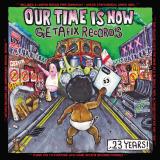
This is it ! GetAFix Records is 23 years!! Owner and wellknown artist: "Bad Boy Pete" (UK) wants to celebrate this with his fans & followers and has put together this amazing 2x12" vinyl with friends and fellow artists from the Acid Techno scene. The biggest names appear on this release! To make this complete: 1 vinyl has been added for FREE. So you pay for 1 vinyl instead of both! This is to thank you all!! Without you, we are nothing! Together with the support of Stay Up Forever & the Flatlife Records Labelgroup we are strong !
Bestelle jetzt und wir bestellen den Artikel für dich beim Lieferanten.

Reggae music in many ways reminds us of America’s Motown records. The music comes out of its stable fast and furious we tend to know the songs, the artists, the
studio but who? are the players. The unsung heroes that in many cases, cut most of our favourite tracks One such band this applies to in the Reggae field is the Soul Syndicate Band.
Each Jamaican record producer would have their favourite set of musicians they would use, availability permitting. Although several musicians crossed over into different named bands. For example, a set of players working with Producer Bunny 'Striker' Lee would go under the guise of The Aggrovators. The same group working with Producer Joe Gibbs would work under the name The Professionals. Soul Syndicate were the band of choice for Producer Niney the Observer, who used them for his own recordings and when you put that aside the other artists Niney produced, Dennis Brown, Max Romeo, Michael Rose, I Roy, The Ethiopians, Barry Brown, Gregory Issacs and Freddie McGregor. To name a few and not necessary all, you begin to see the amount of material this set of musicians played on.
Built around the rhythm section of Calton 'Santa' Davis and George 'Fully' Fullwood, drums and bass respectfully. They were usually accompanied by Earl 'Chinna' Smith, Tony Chin on guitars, Keith Sterling, Gladstone 'Gladdy' Anderstone, Bernard 'Touter' Harvey, organ/keyboards and Noel 'Skully' Simms, percussion. Niney's tracks tended to be rhythm heavy and thus Sound System favourites.But when brass was needed/called for ,this was provided by the likes of Tommy McCook, Bobby Ellis, Felix ' Deadley Headley' Bennett. Niney not having a studio of his own at the time used most of Kingston's studios, again availability and money providing. But most of these cuts
selected for this release were cut at Channel 1 and a few exceptions at Randy's Studio 17 and at Joe Gibbs studio at Burns Avenue.
Niney also worked closely with King Tubby on his dub plates, so tracks after the recording sessions were taken to King Tubbys for reconstruction and sometimes
re-voicing over an existing rhythm. These were then used as version sides to the vocal cuts, but most importantly used to nice up the dances, being played out on King Tubbys Hometown Hi-Fi Sound System. We have pulled together a selection of such dub plate specials cut by the Soul Syndicate band for this release. Dub sides that emphasise how well the band worked together, and with Niney at the reigns and the added bonus of some Tubby magic sprinkled on top. Please see our Niney the Observer at King Tubbys 1973-1975 (JRO11) for further examples of this work.
We at Jamaican Recordings hope we are not alone in saluting the musicians, that played such a big part in producing many of our favourite Reggae Sounds. Having released titles by The Revolutionaries (JR003), The Aggrovators (JR005), Sly and Robbie (JR006), we are now pleased to release a selection of rare Dub cuts by another one of Jamaica's finest, the Soul Syndicate band to our catalogue...
Respect Jah Floyd.
Bestelle jetzt und wir bestellen den Artikel für dich beim Lieferanten.

Chris Liberator & Sterling Moss have produced some classics of the Acid Techno genre and now hope to add to that roster with this their first LP 'Culture Of Acid' on the seminal Stay Up Forever label. 8 banging tracks covering a multitude of Acid Techno/Techno styles including their collaboration with punk performing arts legend Doghouse on 'The Freaks' which has already been causing havoc on underground dancefloors.
Bestelle jetzt und wir bestellen den Artikel für dich beim Lieferanten.

It's rare to hear a debut 12' single that really blows you away. That's hardly a controversial statement; in truth, most producers take time to find their feet, developing a distinct style over a period of years, rather than months.
Magnesii, then, is something special. Currently based in Amsterdam. The previously unheard of producer has delivered a stunning debut 12' for Tom Trago's Voyage
Direct label. R Raw, fuzzy and in turns melancholic, spellbinding and intense, its' three tracks bubble and hiss to the distinct sound of vintage analogue hardware.
You see, the young Dutch producer tends to avoid modern computers. 'I often feel like those screens suck my soul away,' he says. Instead, he jams out tunes on a tasteful selection of analogue gear, sequencing with either the Alesis MMT-8 or the Akai MPC2000 - a favourite toy of many of the Netherlands' best electronic producers - and adding basslines, beats, acid lines and melodies on obscure synths and drumcomputers'. His creations are then bounced down straight to 1/4" tape or cassette.
Some of these resultant jams, as showcased on this impressive debut, are nothing less than inspired. Acid lines rise and fall, machine drums rattle, and distinctive synth
lines weave in and out of the mix. These are raw tracks for the dancefloor blessed with all the colour and warmth associated with vintage hardware.
'RZTB Tantra' sets the tone, layering bubbling acid lines and dreamy chords over a relentlessly nagging bassline and punchy, scattergun drum machine percussion. 'Lava Jam' is decidedly deeper, with woozy, emotive melodies and alien electronics tumbling over a dusty rhythm pattern and tactile acid bass.
Magnesii completes a sterling debut with 'Van Dyke Island Jam', whose squidgy bassline and long, drawn-out M1 chords work in complete harmony with the crispy rhythm track and densely building percussion hits. Like its' predecessor, it too seems to be tinged with sadness, as if Magnesii's machines are shedding a tear for glories past.
Clearly, Magnesii is a name to look out for in future. For the time being, we'll have to make do with one of the most impressive debut 12' singles of 2014 to date.
Bestelle jetzt und wir bestellen den Artikel für dich beim Lieferanten.

Bestelle jetzt und wir bestellen den Artikel für dich beim Lieferanten.

Househead London launch their 2nd 12" release - a limited-edition Chicago Vs London sampler featuring Glenn Underground and Emmaculate Remixes.
Following a string of critically acclaimed events featuring Chi-Town royalty, Househead London further cement their relationship with Chicago on this vinyl release which features two of the city’s esteemed producers - Glenn Underground & Emmaculate - remixing two sterling new tracks from two of the UK’s most exciting producers - Prefix One and Wez Whynt.
Opening the EP is an artist who needs very little introduction, Glenn Underground. A leading international producer & DJ who seems to effortlessly slide between Deep, Soulful, Disco, Jazz and beyond, Glenn boasts an exceptional discography that very few could compete with. His Cosmic Disco Journey Mix here weaves its lo slung groove in a funky off-kilter disco style with piano ripples as Nambi’s voice shimmers on top. Nambi’s heartfelt soars across Glenn’s Cosmic Journey remix unfurling beautiful piano and taut Chi-town beats. Deep and vocal, it’s got that raw soul power that both Glenn and Chicago are known for.
Known for his exquisitely high attention to detail and quality, Emmaculate is one of the go-to producers and sound engineers in Chicago. Working closely with Terry Hunter on a multitude of projects and a shining light across the global soulful house scene, he’s regularly featured across impressive labels such as Dopewax, Yorubasoul, United Music, Soulstice Music and S&S Records. His lush, tough-edged Remix of ‘Feelin’, rolls on with melodic piano hooks to unlock the groove and boosted with extra keys and vocal refrains before the full vocal unfolds. Solid and deep, “Feelin’ is pure joy for the dance floor.
Bestelle jetzt und wir bestellen den Artikel für dich beim Lieferanten.

Get ready for Rizla Records - the bold new imprint from rising force The Rizla, supercharged by legendary London acid techno icon Sterling Moss. A fresh label with a fierce vision, built to ignite dancefloors worldwide. Straight from the heart of The Sound Lab, this label will be dropping blazing 303-infused cuts with every release. Get ready for pure fire from the underground ! Rizla Records is member of the Flatlife Records labelgroup.
Bestelle jetzt und wir bestellen den Artikel für dich beim Lieferanten.

DJ support: Michael Bibi, Solomun, ANOTR and more
Rising duo Moontalk step into the spotlight on Planet X with ‘Hot Line 84’, a track that channels tightly wound grooves, warped guitar licks and infectious vocal touches into a rolling dancefloor cut. Built with a sharp focus on rhythm and texture, the single captures the duo’s forward-thinking approach and delivers a fresh statement of intent on one of the underground’s most closely watched labels.
Planet X head Ben Sterling completes the release with his own reinterpretation, steering ‘Hot Line 84’ into darker, hypnotic territory. Crafted live using various guitars and analogue synths, Sterling’s remix brims with raw energy, tunnelling its way through Indie Dance textures while retaining the future-facing edge of the original. A track already championed by the likes of Michael Bibi, Solomun, ANOTR and more, it’s another bold showcase of Sterling’s versatility as both a producer and label curator — and a reminder of Planet X’s commitment to cutting-edge, cross-genre sound.
Together, the original and remix strike a balance between groove-driven immediacy and late-night depth, capturing two distinct yet complementary sides of the Planet X universe. ‘Hot Line 84’ stands as a compelling snapshot of where the label is heading next: innovative, immersive and firmly in tune with the dancefloor.
Bestelle jetzt und wir bestellen den Artikel für dich beim Lieferanten.

Bestelle jetzt und wir bestellen den Artikel für dich beim Lieferanten.

Bob Marley & The Wailers' Rastaman Vibration Analogue Productions' UHQR, the pinnacle of high-quality vinyl! 45 RPM 2LP Ultra High Quality Record release limited to 4,500 copies Mastered from the original tapes by Ryan K. Smith at Sterling Sound Pressed on 180-gram at Quality Record Pressings using Clarity Vinyl® Includes "12 x 12" 8-page booklet featuring new liner notes by musician and Marley biographer Leroy Jodie Pierson (APO Records Direct-To-Disc AAPO 005), plus exclusive photos by Kim-Gottlieb Walker Purest possible pressing and most visually stunning presentation and packaging!
When Rastaman Vibration was first released in America in 1976 it did what some in the music industry considered nearly impossible at the time. It took Bob Marley into the Top Ten alongside disco records and corporate rock, points out Rolling Stone, which rates the album 4 stars. Despite the good cheer of the title track and the upbeat "Roots, Rock, Reggae," Rastaman Vibration contains some of Marley's most intense images of oppression, paranoia and despair. Tracks such as "Who the Cap Fit," "Crazy Baldhead" and "War" are offered by the Wailers with dire urgency as Marley's brutal visions are echoed by his own church choir, the I-Threes.
More than four decades later, neither Marley's music nor his message has lost its sting. Now, Analogue Productions presents perfection — Rastaman Vibration cut at 45 RPM in UHQR format on 180-gram 2LP Clarity Vinyl. This Ultra High Quality Record release will be limited to 4,500 copies, with gold foil individually numbered jackets. For Bob Marley, 1975 was a triumphant year. The singer's Natty Dread album featured one of his strongest batches of original material (the first compiled after the departure of Peter Tosh and Bunny Wailer) and delivered Top 40 hit "No Woman No Cry." The follow-up Live set, a document of Marley's appearance at London's Lyceum, found the singer conquering England as well. Upon completing the tour, Marley and his band returned to Jamaica, laying down the tracks for Rastaman Vibration (1976) at legendary studios run by Harry Johnson and Joe Gibbs.
At the mixing board for the sessions were Sylvan Morris and Errol Thompson, Jamaican engineers of the highest caliber. Of the material on Rastaman Vibration, "War," for one, remains one of the most stunning statements of the singer's career. Though it is essentially a straight reading of one of Haile Selassie's speeches, Marley phrases the text exquisitely to fit a musical setting, a quiet intensity lying just below the surface. Equally strong are the likes of "Rat Race,""'Crazy Baldhead," and "Want More."
These songs are tempered by buoyant, lighthearted material like "Cry to Me," "Night Shift," and "Positive Vibration." Not quite as strong as some of the love songs Marley would score hits with on subsequent albums, "Cry to Me" seems like an obvious choice for a single and remains underrated. This UHQR is remastered at 45 RPM by Sterling Sound's Ryan K. Smith from the original analog master tapes. Each UHQR will be pressed at Acoustic Sounds' industry-leading pressing plant Quality Record Pressings (QRP) using hand-selected Clarity Vinyl® with attention paid to every single detail. These records will feature the same flat profile that helped to make the original UHQR so desirable. From the lead-in groove to the run-out groove, there is no pitch to the profile, allowing the customer's stylus to play truly perpendicular to the grooves from edge to center.
Clarity Vinyl allows for the purest possible pressing and the most visually stunning presentation. Every UHQR will be hand inspected upon pressing completion, and only the truly flawless will be allowed to go to market. Each UHQR will be packaged in a custom clamshell box and will include a booklet detailing the entire process of making a UHQR along with a hand-signed certificate of inspection. This will be a truly deluxe, collectible product. In addition to the UHQR booklet the package will contain a 8-page 12" x 12" booklet containing new liner notes by musican and Marley biographer Leroy Jodie Pierson as well as exclusive photos by Kim-Gottlieb Walker. Pierson is a past performer for Blues Masters at the Crossroads, the two-night historic blues festival at Blue Heaven Studios in Salina, Kansas. He's also recorded a Direct-To-Disc blues album for APO Records. (AAPO 005) Rastaman Vibration — now a landmark production on 180-gram 45 RPM Analogue Productions UHQR Clarity Vinyl!
erscheint voraussichtlich am 30.07.2025

Analogue Productions' UHQR, the pinnacle of high-quality vinyl! 45 RPM Ultra High Quality Record release limited to 5,000 copies Mastered from the original tapes by Ryan K. Smith at Sterling Sound Pressed at Quality Record Pressings using Clarity Vinyl® Purest possible pressing and most visually stunning presentation and packaging!
By the time Bob Marley died, he was one of the world's first global superstars, famous and lauded from Europe through Africa and the Americas. Some even saw him as not just a reggae singer but as a folk hero, a sort of freedom fighter, and to this day his enduring image feels greater than the music he made, writes Pitchfork. In the 21st century, Bob Marley is a global cultural icon and the first Jamaican inducted into the Rock & Roll Hall of Fame. 1977's Exodus — recorded in London exile after a failed attempt on his life — turned out to be Marley's biggest-selling studio album.
Time magazine named it the greatest LP of the 20th century. Other Marley discs had bigger hits and still others had better album tracks, but the balance Marley strikes between politics, religion, and romance on Exodus — compare and contrast the urgent title track and the laid-back "Jamming" — shows a pop star at the peak of his powers.
Now, Analogue Productions presents perfection — Exodus in UHQR 45 RPM format on Clarity Vinyl. This Ultra High Quality Record release will be limited to 4,500 copies, with gold foil individually numbered jackets. After the success of 1974's Natty Dread and 1976's Rastaman Vibration, Bob Marley was not only the most successful reggae musician in the world, he was one of the most powerful men in Jamaica. Powerful enough, in fact, that he was shot by gunmen who broke into his home in December 1976, days before he was to play a massive free concert intended to ease tensions days before a contentious election for Jamaican Prime Minister.
In the wake of the assassination attempt, Marley and his band left Jamaica and settled in London for two years, where he recorded Exodus. Exodus represented a subtle but significant shift for Marley; while he continued to speak out against political corruption and for freedom and equality for Third World people, his skill as a songwriter was as strong as ever, and Exodus boasted more than a few classics, "including the title song, 'Three Little Birds,' 'Waiting in Vain,' and 'Turn Your Lights Down Low,' tunes that defined Marley's gift for sounding laid-back and incisive at once," writes AllMusic. This UHQR is remastered at 45 RPM by Sterling Sound's Ryan K. Smith from the original analog master tapes. Each UHQR will be pressed on 180-gram vinyl at Acoustic Sounds' industry-leading pressing plant Quality Record Pressings (QRP) using hand-selected Clarity Vinyl® with attention paid to every single detail. These records will feature the same flat profile that helped to make the original UHQR so desirable. From the lead-in groove to the run-out groove, there is no pitch to the profile, allowing the customer's stylus to play truly perpendicular to the grooves from edge to center. Clarity Vinyl allows for the purest possible pressing and the most visually stunning presentation. Every UHQR will be hand inspected upon pressing completion, and only the truly flawless will be allowed to go to market. Each UHQR will be packaged in a custom clamshell box and will include a booklet detailing the entire process of making a UHQR along with a hand-signed certificate of inspection. This will be a truly deluxe, collectible product.
erscheint voraussichtlich am 30.07.2025

Ziúr lines up with The Tapeworm for an exclusive cassette-only release featuring Kenichi Iwasa, exploring the electroacoustic realms.
Invited to perform solo at Tarek Atoui's performance series at Kunsthaus Bregenz in October 2024, Ziúr decided to write a new piece for the occasion. This composition, 'Turn Liquid Into Dust', was then performed within the framework of Tarek Atoui's 'Waters' Witness' exhibition as an 8-channel spacial audio piece, transmitting sounds through the installation's structure – metal bars, stones, compost piles… Composed in London in autumn 2024, its principal source of sonic material is recordings of Atoui's instruments which Ziúr had recorded in his studio in Paris during the summer of 2024. In addition, she invited the Japanese woodwind player and virtuoso Kenichi Iwasa to join on all pieces, his contribution providing a binding element, tying the pieces together.
Opener 'A Cold Drip' consists solely of Iwasa's spectral squalls. The tense noir drone of 'Long Call' features a string instrument built by Atoui. For the airy yet dense title track, Ziúr recorded an organ named The Reed Box, with Iwasa floating atop its smoggy soundbed. Closer 'Chips 'n' Crumbles' echos and reverberates with the rattles of household items Ziúr found around her home.
Driven by a relentless appetite for boundless experimentation, Ziúr has been subverting expectations since she was a teenager, corkscrewing through hardcore, metal and punk before veering towards electronic music's turbulent fringes. She produces just like she DJs, gathering a wide variety of ingredients and figuring out the most intriguing, unexpected ways to simmer them into a coherent narrative that helps listeners synchronize the conflicting messages that surround them. Genre isn't a fixed point for Ziúr, but a colour in a vast palette that stretches across history and borders, helping illustrate music that's powerfully subversive. Her The Tapeworm edition follows acclaimed recordings for Planet Mu, PAN, Objects Limited and Hakuna Kulala.
Kenichi Iwasa is a London-based improviser and multidisciplinary artist from Japan, also known for his legendary Krautrock Karaoke night as well as collaborations with visual artists and musicians such as Beatrice Dillon, Maxwell Sterling and Linder Sterling. He currently performs with Naima Karlsson under the name Exotic Sin.
erscheint voraussichtlich am 02.05.2025

"The Millennium's Begin can truly be described as a bona fide lost classic. On Begin, hard rock, breezy ballads, and psychedelia all merge into an absolutely air-tight concept album, easily on the level of other, more widely popular albums from the era such as The Notorious Byrd Brothers. The songwriting, is sterling and innovative, never straying into the type of psychedelic overindulgence which marred so many records from this era. At the time the most expensive album Columbia ever produced (and it sounds like it), Begin is an absolute necessity for any fan of late-'60s psychedelia and a wonderful rediscovery that sounds as vital today as it did the day it was released. Begin is available as a limited edition of 1000 numbered copies on yellow & orange marbled vinyl and includes an insert."
erscheint voraussichtlich am 18.04.2025

GU are very proud to present a brand new City Series from Montreal. Joseph Capriati is one of the scene’s most in demand headliners and he delivers a masterclass in music with this journey through house and techno. Featuring tracks & remixes from Louie Vega, Solomun, Âme, Carl Cox, Deetron, Marc Romboy & Oliver Huntemann, Len Faki & more. "If you close your eyes you might find yourself in a loft party in ‘90s Montreal dancing while the sun rises" (ALICE AUSTIN)
Bestelle jetzt und wir bestellen den Artikel für dich beim Lieferanten.

Rediscovered and compiled for release shortly before her death in November 2023, Further Selections from the Electric Harpsichord presents a never-before-heard recording of composer and artist Catherine Christer Hennix's early magnum opus. Originally debuted in 1976 at the festival Brouwer's Lattice at Stockholm's Moderna Museet, The Electric Harpsichord has steadily mystified fans and students of Western minimalist music for its implacable, transformative qualities, and the long-held, relative obscurity of its creator. Like the work of Hennix's close friend La Monte Young, the piece is set in just intonation and focuses on the transcendental potentials of precise tuning, inspired by their studies with Pandit Pran Nath. Composed of bursts of oscillating, synthetic tones using a carefully retuned synthesizer and a tape-based system for feedback delay, the sounds swirl, twinkle, and appear to bend time, space, and perception. Additional, sustained chords on the sheng, most likely played by her Deontic Miracle bandmate Hans Isgren, are present at the opening of the piece and reemerge towards the end of the recording. The release of Further Selections constitutes the most comprehensive original recording of this foundational work to date. Originally billed as The Well-Tuned Organ during its debut in Sweden, The Electric Harpsichord has developed a legendary reputation, predicated on a twenty-six minute fragment salvaged and circulated by Hennix's friend Henry Flynt. Promoting its importance on multiple occasions, Flynt aired the work on WBAI radio, organized a pair of tape concerts at New York alternative arts spaces in 1970s, and later penned a 1998 essay which served as the liner notes to its eventual CD release in 2010. For him, this work not only represented a sterling milestone in minimal sonic aesthetics, but also spawned a new genre that he dubbed "hallucinogenic/ecstatic sound environments (HESE)," which in turn inspired his own drone-like compositions. Gradually, interest in the recording led to a spate of archival projects, public performances, and new compositions by Hennix in the 2010s, in turn drawing into focus her multifarious practice, which includes serious contributions towards mathematics, poetry, sculpture, Noh drama, philosophy, and light art. Since 2018, Blank Forms has spearheaded a comprehensive publication effort in support of her work, including the writing collection Poësy Matters and Other Matters (2018); archival recordings like Selected Early Keyboard Works (2018) and The Deontic Miracle's Selections from 100 Models of Hegikan Roku (2019); and recent compositions such as Blues Alif Lam Mim (2021) and Solo for Tamburium (2023).
erscheint voraussichtlich am 25.10.2024

Defected welcomes one of Chicago house’s founding fathers Marshall Jefferson into the illustrious list of House Masters with this exclusive wax release. An artist that has successfully navigated major cross-over success while retaining utmost respect from the inner circle of electronic music’s underground, Marshall has been behind countless seminal records over his five-decade career. Now a selection of the very best tracks from his new House Masters compilation appear together on vinyl for the very first time, showcasing the impressive output of this house pioneer from his most well-known solo records, to major production credits, key remixes and the underground gems still favoured by selectors today.
Cutting his teeth as a producer for Chicago’s Universal Recording Studios, Marshall was one of the most active DJ and producers on the Windy City’s music scene during the 1980’s house music boom. Working under a plethora of aliases such as Virgo, Jungle Wonz, Truth and On The House, as well as producing for names such as CeCe Rogers, Curtis McClain and Evelyn "Champagne" King, Marshall’s status as a bona fide house music luminary is well documented.
‘Defected presents House Masters - Marshall Jefferson’ is an all-encompassing guide to his tremendous career. A trailblazer and genre-defining artist, Defected is honoured to welcome Marshall into the House Masters Hall of Fame with this very special vinyl compilation.
Bestelle jetzt und wir bestellen den Artikel für dich beim Lieferanten.

Bestelle jetzt und wir bestellen den Artikel für dich beim Lieferanten.

Released in July 1994 by Atlantic Records, Cracked Rear View is Hootie & the Blowfish's most successful album, reaching No. 1 on the Billboard 200 five times during the course of 1995. It was also the best-selling album of 1995 in the United States, selling 7 million copies, and since then has gone on to sell more than 10.2 million copies, making it one of the best-selling albums of all time.
AllMusic's Stephen Thomas Erlewine says Hootie & the Blowfish, on Cracked Rear View, "...deliver the goods, turning out an album of solid, rootsy folk-rock songs that have simple, powerful hooks."
The album played a pivotal role in shaping the career of its lead vocalist, Darius Rucker, who transitioned to country music in the mid-2000s as a solo artist. Cracked Rear View was an instant sensation, with chart-topping hits such as "Hold My Hand," "Let Her Cry," and "Only Wanna Be with You." The album has a distinctive sound, blending rock, pop, and a hint of folk, using Rucker's soulful, raspy baritone as its emotional core, and his heartfelt delivery to win over audiences.
This Analogue Productions (Atlantic Series) reissue of Cracked Rear View has the essential elements that make it a standout for your collection. We turned to Ryan K. Smith at Sterling Sound in Nashville for an exemplary cut direct from the master tape. Pressing on 180-gram vinyl is by Quality Record Pressings, and the album is housed in tip-on old style gatefold double pocket jackets with film lamination by Stoughton Printing.
Cracked Rear View's emotional depth and Rucker's distinctive voice left an indelible mark on the music industry, making Hootie & the Blowfish's debut album a timeless piece of musical history.
erscheint voraussichtlich am 15.04.2024

Part 1[31,72 €]
repress !
The birth of rock steady portrayed in a consummate collection from the vaults of Federal Records
Most of them drawn directly from Ken Khouri's master tapes this miscellany of cool rock steady includes marvellous music from the originator of the genre, the one and only Lynn Taitt, alongside an array of Jamaica's greatest singers and vocal harmony group
American rhythm & blues fervour, boosted by a multitude of sound systems playing 78rpm records on increasingly larger sets, gripped Jamaica from the late forties onwards but, towards the end of the decade, the American audience began to move towards a somewhat softer sound. The driving rhythm & blues discs became increasingly hard to find and the more progressive Jamaican sound system operators, realising that they now needed to make their own music, turned to Kingston's jazz and big band musicians to record one off custom cut discs. These were not initially intended for commercial release but designed solely for sound system play on acetate or 'dub plates' as they would later be termed. These 'specials' soon began to eclipse the popularity of American rhythm & blues and the demand for their locally produced music proved so great that the sound system operators began to release their music commercially on vinyl and became record producers. Clement Coxsone' Dodd, Duke Reid 'The Trojan' and Prince Buster, who operated his Voice Of The People Sound System, were among the first to establish themselves in this new role and the nascent Jamaican recording industry now went into overdrive.
In 1954 Ken Khouri had numbered among the first far sighted entrepreneurs to produce mento records with local musicians (mento is Jamaica's original indigenous music) before progressing to opening Jamaica's first record manufacturing plant. Three years later he moved his operation to Foreshore Road (later renamed Marcus Garvey Drive) where, with the assistance of the inestimable Graeme Goodall, he updated and upgraded his recording studio. The importance of this enterprising move was critical to the development of Jamaican music and its influence both profound and far reaching.
"It was Ken Khouri's Federal Recording Studio, the womb that gave birth to the talented writers, artists and musicians that gave Jamaica its musical identity." Prince Buster
Federal Records was not only the place for the sound system men to record their music but it was also where they had their records manufactured and, consequently, the company enjoyed a near total monopoly on recording and record pressing in Kingston. In 1963 Ken Khouri sold his one track board to Clement 'Coxsone' Dodd, who established Studio One, and Ken imported the first stereo equipment to Jamaica and Federal began making stereo records. The following year WIRL (West Indies Records Limited) opened but the competition served to drive the company on to higher heights. Ken Khouri continued to work on his own productions and, in 1966, the seven inch release of Hopeton Lewis' 'Take It Easy', recorded under the guidance of Trinidadian guitarist Lynn Taitt, ushered in the rock steady era.
These two essential albums showcase a stunning selection of well known hits, and not so well known rarities, from the vast Federal catalogue. All tracks have been transferred direct from the master tapes and assembled with the invaluable assistance of Ken Khouri's son, Paul Khouri, who generously gave Dub Store unlimited access to the Federal tape vaults. The extensive liner notes feature extracts from extensive interviews with Paul Khouri whose knowledgeable recollections of working on Marcus Garvey Drive, not only as a producer but as an engineer and musician, are illuminating and educational. Both sets present an insight into the birth and growth of Federal Records and the Jamaican recording industry and are essential to an understanding of the real roots of reggae music.
Bestelle jetzt und wir bestellen den Artikel für dich beim Lieferanten.

"Back in the 1990s original Verve pressings of this record were hot items pushed into prominence in great part by write-ups in The Absolute Sound, particularly by my friend Frank Doris. I found a few, and even a few in pretty good condition, but none of them begin to compare to this double 45 RPM set that offers more of everything, particularly transparency and instrumental separation. ...Ella's on a microphone with a slightly rising high end but if it sounds icy, don't blame the recording or the mastering. It's your system. If it's well-balanced and your cartridge is a good tracker, the vocal transparency and clarity are spooky and the sibilant articulation is precise. These double LPs cut at Sterling Sound use the original tapes, not copies of the original tapes and the clarity and transparency coupled with QRP's drop-dead silent pressings are remarkable. The original pre-MGM buyout LP has a pleasingly nostalgic quality and the added warmth produces a bit more room sound, but in my opinion it can't compare to this reissue unless you like hearing things through rose-tinted loudspeakers. Elegantly produced, arranged and recorded and easy to recommend ..." Music = 9/11; Sound = 9/11 - Michael Fremer, February 15, 2013.
Fourteen numbers from the heyday of swing, composed sometime between 1930 and 1945 - played and sung time and time again in ballrooms, or on the radio to advertise biscuits or war bonds, were recorded by Ella in completely new and personal interpretations in 1961. No one should be put off by the rather unfortunate cover. Clap Hands... is absolutely top notch as regards musicality, perfect recording quality, superb accompaniment by a small ensemble, with room for improvisations; it offers a wonderful opportunity to discover something new in these evergreens, despite the occasionally banal lyrics. The songs of this recording conjure up bygone days, with listeners in the 21st century being offered a highly personal homage to one of the most successful periods in the 100-year history of jazz.
erscheint voraussichtlich am 01.04.2024

Cluster's little sister label CLUSTER X delivers another killer EP of banging warehouse techno from Poland's underground legend CHRIS DA BREAK. The A1 'Friend' kicks hard, but there are 2 more throbbing techno bangers from Chris, plus a slamming techno remix of 'Friend' from Chris Liberator & Sterling Moss to make this EP umissable if you llike your beats tough and pounding!
Bestelle jetzt und wir bestellen den Artikel für dich beim Lieferanten.

Released in 1960, Giant Steps was a watershed album for John Coltrane, solidifying the saxophone legend's reputation as one of the most influential and innovative musicians in jazz history, as well as delivering jazz to an increasingly mainstream audience, while garnering significant critical acclaim.
Although this was John Coltrane's debut for Atlantic, he was concurrently performing and recording with Miles Davis. Within the space of less than three weeks, Coltrane would complete his work with Davis and company on another genre-defining disc, Kind of Blue, before commencing his efforts on this one.
Coltrane (tenor sax) is flanked here by essentially two different trios. Recording commenced in early May of 1959 with a pair of sessions that featured Tommy Flanagan (piano) and Art Taylor (drums), as well as Paul Chambers — who was the only bandmember other than Coltrane to have performed on every date. When recording resumed in December of that year, Wynton Kelly (piano) and Jimmy Cobb (drums) were instated — replicating the alternate non-Bill Evans lineup featured on "Freddie the Freeloader" on Kind of Blue, sans Miles Davis of course. At the heart of these recordings, however, is the laser-beam focus of Coltrane's tenor solos.
All seven pieces issued on the original Giant Steps are Coltrane compositions. He was, in essence, beginning to rewrite the jazz canon with material that would be centered on solos — enabling the solo to become infinitely more compelling. This would culminate in a frenetic performance style using melodic phrasing that noted jazz journalist Ira Gitler accurately dubbed "sheets of sound."
The Giant Steps chord progression consists of a distinctive set of chords that create key centers a major third apart. Jazz musicians ever since have used it as a practice piece, its difficult chord changes presenting a "kind of ultimate harmonic challenge", and serving as a gateway into modern jazz improvisation. Several pieces on this album went on to become jazz standards, most prominently "Naima" and "Giant Steps."
The Penguin Guide to Jazz selected this album as part of its suggested "Core Collection" calling it "Trane's first genuinely iconic record." In 2003, the album was ranked No. 102 on Rolling Stone magazine's list of The 500 Greatest Albums of All Time, 103 in a 2012 revised list, and 232 in a 2020 revised list.
Undeniable music perfection deserves definitive sound and top-notch packaging. This reissue was mastered directly from the original master tape by Ryan K. Smith at Sterling Sound and cut at 45 RPM. Pressed on 180-gram vinyl at Quality Record Pressings, and housed in tip-on old style gatefold double pocket jackets with film lamination by Stoughton Printing.
Overall, Giant Steps is not only a critical triumph but also a defining moment in John Coltrane's career. Its innovative compositions, masterful performances, and profound influence on jazz make it an essential entry in Coltrane's discography and a timeless masterpiece in the history of the genre.
erscheint voraussichtlich am 29.02.2024

Soul Jazz Records’ 200% Dynamite! set the benchmark for reggae meets funk compilations that has never been bettered. Out of print for over 15 years this new 2023 edition with new tracks and is being released in a one-off limited-edition heavyweight special-edition coloured vinyl pressing + download code exclusively for Record Store Day 2023.
Jam-packed with reggae tunes that crossed-over to become dancefloor hits such as Tenor Saw’s sound boy anthem ‘Ring the Alarm,’ K.C. White’s classic cut of the seminal ‘No, No, No’ and Augustus Pablo’s ‘Rockers Rock’, 200% Dynamite explores the links between reggae, jazz, funk and soul.
Carrying on perfectly from 100% Dynamite, this second compilation continues to trace the history of Jamaican reggae and the influence of American styles such as funk and jazz had on this music.
Featured here are serious funk and rocksteady tunes from the likes of The Skatalites and Johnny Osbourne through to Jamaican jazz from masters such as Tommy McCook and Byron Lee, as well as some serious dub from the likes of Augustus Pablo, King Tubby and Jackie Mittoo.
New bonus tracks on this new 2023 edition include seminal dancehall party cuts Sister Nancy’s ‘One Two’ and Chaka Demus and Pliers’ ‘Murder She Wrote’, alongside classic soul to reggae covers including cuts of Marlena Shaw’s ‘Women of the Ghetto’ and Odyssey’s ‘Don’t Tell Me Tell Her’.
‘Once again, Soul Jazz goes digging through the reggae vaults and produces another sterling compilation. If you’re looking for a primer on the music of the island, you could do worse than buying every one of the records in this superb compilation series.’ All Music
‘In Soul Jazz’s outstanding Dynamite! series 200% is the head-turner. The label has its finger on the pulse of the now just as surely as it does on that of the past.’ Pitchfork
‘Soul Jazz Records ‘Dynamite’ series has quickly become a
rewarding guide to reggae’s most infectious back pages. Every home
needs some Dynamite.’ Irish Times
‘Soul Jazz Records’ long-running series
of highly-regarded reggae albums.’
Rough Trade
Bestelle jetzt und wir bestellen den Artikel für dich beim Lieferanten.

Cassete comes with 3 extra panels of artwork from Ciaran Birch
Outerwordly collaboration between two great artists at the forefront of their scene, a release that was sparked by a commission from the BBC!
Dali de Saint Paul is known for her vast amount of collaborations, most notably with Moor Mother & Valentina Magaletti.
Maxwell Sterling's previous work includes sublime & diverse albums on The Death Of Rave & AD93.
When they met to create an improvised session for the famous experimental music radio show Late Junction on BBC Radio 3. Their encounter was so prolific that day that a lot of their music was not played on the show, so they have decided to give their audience the chance to listen to the fragile, brilliant and dark composition they have produced together.
erscheint voraussichtlich am 26.02.2024

Bestelle jetzt und wir bestellen den Artikel für dich beim Lieferanten.

Studio One was founded by Clement "Coxsone" Dodd1 in 1954, and the first recordings were cut in 1963 on Brentford Road in Kingston.1[2] Amongst its earliest records were "Easy Snappin" by Theophilus Beckford, backed by Clue J & His Blues Blasters, and "This Man is Back" by trombonist Don Drummond. Dodd had previously issued music on a series of other labels, including World Disc, and had run Sir Coxsone the Downbeat, one of the largest and most reputable sound systems in the Kingston ghettos.
In the early 1960s, the house band providing backing for the vocalists were the Skatalites[3] (1964–65), whose members (including Roland Alphonso, Don Drummond, Tommy McCook, Jackie Mittoo, Lester Sterling and Lloyd Brevett) were recruited from the Kingston jazz scene by Dodd. The Skatalites split up in 1965 after Drummond was jailed for murder, and Dodd formed new house band the Soul Brothers (1965–66), later named the Soul Vendors (1967) and Sound Dimension (1967-). From 1965 to 1968 they played 9 a.m. to 5 p.m., 5 days a week, 12 rhythms a day (about 60 rhythms a week) with Jackie Mittoo as music director, Brian Atkinson (1965–1968) on bass, Hux Brown on guitar, Harry Haughton (guitar), Joe Isaacs on drums (1966–1968), Denzel Laing on percussion, and on horns (some initially and some throughout): Roland Alphonso, Dennis 'Ska' Campbell, Bobby Ellis, Lester Sterling, among others on horns during the era of Rock Steady. Headley Bennett, Ernest Ranglin, Vin Gordon and Leroy Sibbles were included among a fluid line-up, to record tracks directed by Jackie Mittoo at Studio One from 1966-1968.
During the night hours at Studio One from 1965-1968, singers like Bob Marley, Burning Spear, The Heptones, The Ethiopians, Ken Boothe, Rita Marley, Marcia Griffiths, Judy Mowatt, Alton Ellis, Delroy Wilson, Bunny Wailer[4] and Johnny Nash, among others, would put on headphones to sing lyrics to original tracks recorded by the Soul Brothers earlier each day. These seminal recordings included "Real Rock" (by Sound Dimension), "Heavy Rock", "Jamaica Underground", "Wakie Wakie", "Lemon Tree", "Hot Shot", "I'm Still In Love With You", "Dancing Mood", and "Creation Rebel".
Jackie Mittoo, Joe Isaacs, and Brian Atkinson left Studio One in 1968, recorded drums and bass for Desmond Dekker's and Toots' biggest hits at other Kingston studios, then moved to Canada. Hux Brown stayed in Jamaica to record on the soundtrack The Harder They Come, The Harder They Fall, and toured in Nigeria with Toots and the Maytals and Fela Kuti. The Soul Brothers (a.k.a. Sound Dimension) formed the basis of reggae music in the late 1960s, being versioned and re-versioned time after time over decades by musicians like Shaggy, Sean Paul, Snoop Lion, The Clash, String Cheese Incident, UB40, Sublime, and countless other Billboard originals and remakes trying to emulate their original Rock Steady sound at Coxsone's Studio One.
The label and studio were closed when Dodd relocated to New York City in the 1980s.
erscheint voraussichtlich am 26.01.2024

Studio One was founded by Clement "Coxsone" Dodd1 in 1954, and the first recordings were cut in 1963 on Brentford Road in Kingston.1[2] Amongst its earliest records were "Easy Snappin" by Theophilus Beckford, backed by Clue J & His Blues Blasters, and "This Man is Back" by trombonist Don Drummond. Dodd had previously issued music on a series of other labels, including World Disc, and had run Sir Coxsone the Downbeat, one of the largest and most reputable sound systems in the Kingston ghettos.
In the early 1960s, the house band providing backing for the vocalists were the Skatalites[3] (1964–65), whose members (including Roland Alphonso, Don Drummond, Tommy McCook, Jackie Mittoo, Lester Sterling and Lloyd Brevett) were recruited from the Kingston jazz scene by Dodd. The Skatalites split up in 1965 after Drummond was jailed for murder, and Dodd formed new house band the Soul Brothers (1965–66), later named the Soul Vendors (1967) and Sound Dimension (1967-). From 1965 to 1968 they played 9 a.m. to 5 p.m., 5 days a week, 12 rhythms a day (about 60 rhythms a week) with Jackie Mittoo as music director, Brian Atkinson (1965–1968) on bass, Hux Brown on guitar, Harry Haughton (guitar), Joe Isaacs on drums (1966–1968), Denzel Laing on percussion, and on horns (some initially and some throughout): Roland Alphonso, Dennis 'Ska' Campbell, Bobby Ellis, Lester Sterling, among others on horns during the era of Rock Steady. Headley Bennett, Ernest Ranglin, Vin Gordon and Leroy Sibbles were included among a fluid line-up, to record tracks directed by Jackie Mittoo at Studio One from 1966-1968.
During the night hours at Studio One from 1965-1968, singers like Bob Marley, Burning Spear, The Heptones, The Ethiopians, Ken Boothe, Rita Marley, Marcia Griffiths, Judy Mowatt, Alton Ellis, Delroy Wilson, Bunny Wailer[4] and Johnny Nash, among others, would put on headphones to sing lyrics to original tracks recorded by the Soul Brothers earlier each day. These seminal recordings included "Real Rock" (by Sound Dimension), "Heavy Rock", "Jamaica Underground", "Wakie Wakie", "Lemon Tree", "Hot Shot", "I'm Still In Love With You", "Dancing Mood", and "Creation Rebel".
Jackie Mittoo, Joe Isaacs, and Brian Atkinson left Studio One in 1968, recorded drums and bass for Desmond Dekker's and Toots' biggest hits at other Kingston studios, then moved to Canada. Hux Brown stayed in Jamaica to record on the soundtrack The Harder They Come, The Harder They Fall, and toured in Nigeria with Toots and the Maytals and Fela Kuti. The Soul Brothers (a.k.a. Sound Dimension) formed the basis of reggae music in the late 1960s, being versioned and re-versioned time after time over decades by musicians like Shaggy, Sean Paul, Snoop Lion, The Clash, String Cheese Incident, UB40, Sublime, and countless other Billboard originals and remakes trying to emulate their original Rock Steady sound at Coxsone's Studio One.
The label and studio were closed when Dodd relocated to New York City in the 1980s.
erscheint voraussichtlich am 26.01.2024

Foreigner's debut spawned massive FM hits "Feels Like the First Time," and "Cold as Ice"
180-gram 45 RPM double LP
Mastered directly from the original master tape by Ryan K. Smith at Sterling Sound
Pressed at Quality Record Pressings and RTI
Tip-on old style gatefold double pocket jackets with film lamination by Stoughton Printing
Arena rock heroes Foreigner crushed with their 1977 self-titled album debut, spawning some of the biggest FM hits of that year, including the anthemic "Feels Like the First Time" and "Cold as Ice," both of which were anchored — like most of Foreigner's songs — by the muscular but traditional riffing of guitarist Mick Jones, the soaring vocals of Lou Gramm, and the state-of-the-art rock production values of the day, which AllMusic reviewer Andy Hinds says allowed the band to sound hard but polished.
The architect behind Foreigner's extraordinary catalog, Mick Jones has crafted some of rock music's most enduring songs. Grammy and Golden Globe-nominated songwriter, performer and producer and winner of the prestigious Ivor Novello songwriter award in 1998, Jones first began playing guitar in his early teens.
After starting his own rock band and opening for the Rolling Stones in pubs across South London, Mick's first big break came in 1964 when he moved to Paris and was hired to play with French singer Sylvie Vartan.
After a brief stint in England to reform the band Spooky Tooth, Jones moved to New York City and formed Foreigner with Ian McDonald and Dennis Elliott and Americans Lou Gram, Alan Greenwood and Ed Gagliardi.
Foreigner defined a generation of rock music to people across the globe. From its iconic debut album, the band moved on to record-breaking hits including "I Want To Know What Love Is," "Waiting for a Girl Like You," "Double Vision," "Hot Blooded," "Juke Box Hero" and many more.
Now on 180-gram 45 RPM double LP you'll hear Foreigner in all its phenomenal glory. Mastered from the original tape by Ryan K. Smith at Sterling Sound, this reissue rocks. Double LP cut at 45 RPM, pressed at Quality Record Pressings and RTI, and housed in a Stoughton Printing tip-on old style gatefold jacket. That's how you upgrade a classic.
erscheint voraussichtlich am 30.12.2023
