dovrebbe essere pubblicato su 05.01.2024
Cerca:the english beat
Mysticisms’ Dubplate series reaches number 10 with the first in a series of specials, taking the genre blurring music of Persian and presenting updated remixes and versions by up-and-coming producers, as well as friends and family of the label.
Started as a sporadic offshoot of Mysticisms’ main releases, with the idea to highlight the wonderful sounds of dub influenced dance music, Dubplate has now become an integral part of the mission.
To start, South London’s Picasso joins the label, showcasing his declared abstract grooves and an EP of Dub and Tech House movers. While his productions aim for the dance floor, they are often characterized by complex rhythms and unconventional structures, prioritizing atmosphere and texture over traditional melodies.
Drawing inspiration from ambient, jazz, experimental influences and the heavy hand of dub, Sam “Andrews” McKay has crafted an EP of immersive “soundscapes”. Joining the legendary Persian (Peter Reilly) as co-selector, his retakes are all warped grooves, wide bass and dubby atmospherics.
Opening with Space Within Art, the street soul meets reggae rhythms are jettisoned, and a Dub House swing drives the track. The love, homage and vibration for Sound System culture remains, enchanting trippy reggae sampledelic vocals weaving in the brain.
Dunya 2 sees a shift, minds expanding. A jazz influenced breakbeat, harp, strings, building to a psychedelic swirl, driven by a dub bass in a clash, morph and glow.
The deep Digi Dub of D Dub Twist grows, warping the ‘JA riddim meets English hedonism’ in true Soundclash style. Touches of drone underlay, highlighting Sam’s experimental leaning, utilising Persian’s love of Eastern mystical samples to marry perfectly for a deep dub excursion.
The self-prescribed “odd-fellow” completes his versions, exploring his love of depth and abstract sound in closer, Jacob’s Dub. The warm roots vibrations in original form develop into a scatter gun House bumper. Dubwise, Lovers, Stepper, all merge around shuffling, trippy beats and skippy hats, Picasso’s groove is laid bare, driving the EP to finale.
Abstract the Mystery.
dovrebbe essere pubblicato su 11.05.2026
Last In: 33 days ago
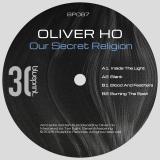
Continuing Blueprint's 30th anniversary celebrations, James Ruskin welcomes the return of Oliver Ho, whose relationship with the label is deep-rooted.
Oliver Ho has spent the last 30 years devoting his life to creating some of the most intense and compelling electronic music out there. Debuting his signature raw sound in 1996 on Blueprint Records, he cemented himself in the underground of the '90s UK techno scene. With a plethora of aliases, he has navigated his way through many different genres. From the frenetic tribal sounds of his own Meta imprint, the off the wall house music made as Birdland and Raudive, the grinding industrial of Broken English Club and the heavily textured ambient of his Slow White Fall and Zov Zov projects. While pushing and pulling at the fringes of electronic music, at the very centre has always been the beating heart of hypnotic techno, an art form that is both brutal and bewitching; techno as ritual magic. Oliver's live shows and DJ sets showcase this expression of music as shamanic experience, metallic and relentless, pure and direct.
An integral figure in shaping Blueprint's early sound, Oliver Ho returned in 2016 for their 20th anniversary with the "Burning Heretics EP", which was followed by a remastered reissue of 1999's "Awakening The Sentient". So it's fitting that he's now back for this latest milestone with a new EP, "Our Secret Religion" dropping in May.
Disponibile in Stock e pronto per la spedizione
- A1: Starbase 17
- A2: Hold It Tenderly (Feat Ernesto & The Basement Gospel)
- A3: L'arrivée (Feat Fred Everything)
- A4: Horizon (Feat Jorge Bezerra & Nathan Haines)
- B1: Enough .. (Feat. Sarai Jazz & Dwaine Hayden)
- B2: Tentative (Feat Sio)
- B3: Oceans Apart (Feat Audrey Powne & Karizma)
- B4: You've Got This (Feat Lyricl & Peacey)
- B5: Keep It Light (Feat Amalia)
- C1: Biome (Shwayvertath) (Feat Si Tew)
- C2: Can I? (Feat Pete Simpson)
- C3: Cardiac (Feat Oveous)
- C4: Falling Apart (Feat Charles Webster)
- D1: Change The Rules (Feat Kaidi Tatham)
- D2: English Gentleman (Feat Clyde Beats. Jorge Bezzera & Octavio N. Santos)
- D3: Honey Bee (Feat Natasha Watts, Omar, Jd73 & Octavio N. Santos)
- D4: Give Love (Feat Erin Buku)
- D5: Beginnings (Feat Aart Iveson & Rudi Iveson)
- E1: Grey (Feat Sarai Jazz)
- E2: Let's Talk (Feat Omar & Max Beesley)
- E3: Greed (Feat Clyde Beats)
- E4: Twin Flame (Feat Josh Milan)
- E5: Shine (Feat Rona Ray)
- F1: Soul To Soul (Feat Ziyon)
- F2: Youniversal Love (Feat Osunlade)
- F3: Endless (Feat Clara Hill)
- F4: World We Know (Feat Imaani)
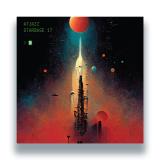
Atjazz presents his long-awaited 27-track long player "Starbase 17" — an epic odyssey through song and sound, offering a rich tapestry of styles that draws listeners into a wondrous sonic realm where rhythm, harmony, and imagination intertwine.
Taking inspiration from his extensive body of work, Martin "Atjazz" Iveson fuses his signature deep musicality with cutting-edge production to reach new creative heights. This time, he brings an exceptional ensemble of world-renowned collaborators aboard his cosmic vessel, each adding their own distinct brilliance to the voyage
Together, this stellar lineup consisting of Fred Everything, Nathan Haines, Sio, Karizma, LyricL, Peacey, Pete Simpson, OVEOUS, Charles Webster, Kaidi Tatham, Clyde Beats, Natasha Watts, Omar, Max Beesley, Josh Milan, Rona Ray, Osunlade, and Clara Hill joins Atjazz on a journey through sound, space, and emotion — where each track is a world of its own, yet all are united by a shared creative vision and boundless imagination.
Disponibile in Stock e pronto per la spedizione
Naya Beat is excited to announce 'PAWA!', a soaring disco-funk anthem celebrating feminism and the power (pawa) of togetherness. It is a mouthwatering collaboration between legendary jazz vocalist and disco pioneer Asha Puthli and NYC’s punk-chic, discodelic stars Say She She.
A fortuitous and fleeting window between touring schedules allowed Puthli and Say She She’s Nya Gazelle Brown, Sabrina Cunningham, and Piya Malik to write and record Pawa! with members of the cult funk band Orgone in the English countryside at Mike Oldfield’s (Tubular Bells) studio. Pawa! is a tribute to female fortitude and an anthemic call to action for unity and collective action. PAWA TO THE PEOPLE! Asha’s spoken word bursts into a soaring falsetto while Say She She’s celestial three-part harmonies make for a sublime call and response between the fabled mentor and her gifted disciples. Throw in a stellar bassline and one of tightest rhythm sections around, and you have an instant classic. And if that wasn’t enough, four remixes bring Pawa to the dancefloor! The UK’s legendary Crazy P deliver not one, but three future classics – an epic house take with a stomping bassline, a stripped-down vocal dub, and a sunshine-ready disco dub. Not to be outdone, Greece’s favourite dance duo Boys’ Shorts add magical disco touches and reimagine the original as an eight-minute balearic opus.
Featuring beautiful artwork and a premium poly-lined inner sleeve, the 12" has been cut to vinyl for the discerning DJ and listener by Grammy-nominated Frank Merritt from The Carvery, London.
Disponibile in Stock e pronto per la spedizione
On June 5th, Tectonic Recordings will release Beatrice M.’s debut LP, Sinking, on a vinyl triple pack and digital download. The vinyl edition will be split across 3 separate 12” vinyl releases, packed in matching printed disco bags. This is part 2 of 3.
Beatrice M. pushes the needle forward for a sound and scene that nestles among a niche that blends UK dubstep, techno, and the golden era of tech house. The Paris-born artist is in their mid-20s and has been building up a grassroots following and plenty of momentum over the last few years, through their Bait label and its output of sonically resonant artists, alongside numerous remixes and collaborative and solo releases for labels such as Tectonic, Tempa, and Rinse. There are plenty of accolades coming in for Beatrice's work too, with notable DJ mixes for respected heavyweights such as Mixmag as well as featuring in Resident Advisor’s best mixes of 2025.
Beatrice is known for making deep explorations into the history of the scenes that have interested them, tracking and highlighting connections between dubstep, tech house, jungle and beyond across various self-produced, one-off radio shows, often taking a journalistic approach to subjects of true passion. They travel across Europe on a packed-out DJing schedule, avoiding air travel, and doing it mainly by train. Many of the LP's tracks started life as sketches put together on these long journeys, as the sights of different countries rolled past the window.
Having taken inspiration from Tectonic artists such as 2562, the label – a home to music that was originally placed in the dubstep-techno crossover spectrum—feels like the perfect place to host Beatrice M.'s debut album Sinking, beginning a new chapter for this kind of sound.
The album's lead single and sole vocal track, ‘In Touch’, showcases Beatrice M.’s split UK-France upbringing. The track unites French MC Kaba and UK MC Jinnal for a bass-driven anthem that seamlessly trades French and English lyrics. Next up is a vinyl exclusive track: the ‘Remedy Mix’ VIP of ‘Poison’, a rolling, bass-driven tech house/techno crossover version of a track originally released on the Tectonic Sound collection from last year.
‘Here’ sees Beatrice M. collaborating with Jay Carder to create a soulful broken-beat flavoured track as ‘Years’ rounds off the journey with contemplative melancholy, providing a deep and dubby closer.
dovrebbe essere pubblicato su 05.06.2026
- A | Side A
- B | Side B
Another DINTE tape curated by cult WFMU show and blogger Bodega Pop; Gary Sullivan's long-running project rooted in a passion for digging for music in bodegas and cell-phone stores across NYC's boroughs. This edition focuses in on late 1990s and early 00s hip-hop & rnb from across Southeastern Asia.
"While on a work trip to Chicago in the mid-2000s, I was craving a bowl of pho. A bit of sleuthing led me to hop on the red line "L" up to Argyle Street, ground zero of Chicago's Little Saigon. In the 1960s, Chicago restaurateur Jimmy Wong invested in property on Argyle Street with a vision to build the city's new Chinatown, a kind of mall with pagodas, trees, and reflecting pools. In 1971, the Hip Sing Association, a labor/criminal organization, established itself in the area, and along with Wong, they bought up 80% of the buildings on a three-block stretch of the street. Wong reportedly broke both hips in an accident, leaving his dream to wither; in 1979, Charlie Soo of the Asian American Small Business Association brought it back to life.
Soo expanded the area into a vibrant mix of Chinese, Vietnamese, and other Southeast Asian businesses, pushing for renovations, including an Argyle station facelift and the Taste of Argyle festival. At the time I exited the station and crossed the street to get a better look at a shop with a poster for A Vertical Ray of the Sun in the window, the area was home to some 37,000 Vietnamese residents.
Opening the door, I was gobsmacked by a cavernous Southeast Asian media store, bigger than any I'd been to in Dallas, Montreal, New York, or Seattle. I spent some time at the bins, pulling out collections by some of my then-favorite singers — Giao Linh, Khánh Ly, Phương Dung — before approaching the register to ask the young woman behind the counter if the they carried any Vietnamese rap. It was a longshot, I knew, but if such a thing existed on physical media and anyone carried it, it would be this place.
'Have you heard Vietnamese rap?' she replied, her tone of voice and facial expression betraying a comically exaggerated level of distaste. I admitted my ignorance but assured her that I had long cultivated a high threshold for cheesy pop music of all kinds and genuinely tended to like hip hop from around the world.
She rolled her eyes and pointed to an area I had missed. I walked toward a far corner of the store and knelt over a small box on the floor sparsely populated with CDs, VCDs, and cassettes. I pulled out half a dozen Vietnamese hip hop compilations and a strange-looking CD with a cavalcade of odd typefaces in a queasy multitude of colors: THAILAND RAP HIT, it boasted, with 泰國 "燒香" 勁歌金曲 below it. The information on the back provided an address in Kuala Lumpur and the titles in Thai and English translation. The first track included three simplified Chinese characters after the English-language version of the title, "The Chinese Association": 自己人.
WTF was going on here? Walking back to the register, I waved the CD, asking "What's up with this one?" She gave me a look. I placed it on the counter so she could bask in the cover's full glory. She shrugged. "I'm guessing it's Thai rap?" She looked disappointed in me when I said I'd take it.
It turned out to be a Malaysian pressing of half-Chinese Thai hip hop artist Joey Boy's third album, Fun Fun Fun from 1996, and it completely changed my sense what the genre could sound like. The rapper's self-assured, effortless, silly-but-cool rapid-fire delivery weaved in and out of the most bizarre, antic beats I'd ever heard. The six Vietnamese hip hop CDs were a mixed bag, mostly "serious" sounding mimicry of US rapping over predictable production, but the highs were very high. When I got home and listened to it all, I made a point to find as much hip hop from this part of the world as I could.
The tracks collected here provide a limited but potent reflection of the two-decade ascendency
and ultimate world-takeover of hip hop, as it displaced rock and its endless variants for millions of listeners. This not a fair and balanced overview of regional production: I've only included tracks from Cambodia, Indonesia, Myanmar, Philippines, Thailand, and Vietnam. Nor is this a biggest or most important artists collection; instead, I've tried to recapture the pure visceral thrill of that first time I heard Joey Boy, choosing bangers that sound like nothing else, from nowhere else."
—Gary Sullivan
Disponibile in Stock e pronto per la spedizione
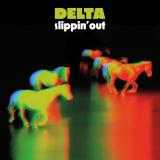
“From Birmingham and centred around the extraordinary songwriting talent of James and Patrick Roberts – initially as The Sea Urchins and since 1993 as Delta – they’ve only just got round to releasing their debut album, Slippin’ Out. It is a work of some beauty”. 9/10 NME ALBUM OF THE MONTH, 2000
“It’s classicist for sure, shot through with the influence of The Beatles, Byrds and Buffalo Springfield. In James’ downright beautiful closing ballad ‘I Want You’ one can also discern the school of ambitious English balladry that peaked in about 1968: The Casuals, Love Affair, Barry Ryan. The impression of accomplished old-schoolery is only furthered by the dizzying string arrangements penned by Louis Clark Jnr, son and namesake of the one-time orchestral chief of Electric Light Orchestra” – Mojo lead review, 2000
Having ended the 90s with the spirited ‘Laughing Mostly’ compilation of singles and demos (Guardian Album Of The Week) Delta finally released their debut studio album of twelve songs in the summer of 2000 on the Dishy Recordings label. Accepting that this might be their sole studio album the band threw everything at these recordings allowing it to exist in its own sphere, unbothered by their contemporary generation and disregarding the idea of even releasing a single.
Recorded at DEP International there was a notable difference to the scruffier, looser charm of their 1990s recordings, a tighter focus developed by having the experienced Lenny Franchi mixing the LP with them. Lenny had been working with a number of Island artists including My Bloody Valentine and Tricky so knew his way around a desk. There was also the question of budget (a few months passed between recording and mixing whilst funds were raised) so every day counted. Ultimately though you can hear the joy in the recordings, even amongst the melancholy and angst. As James recently recalled in an interview in Shindig! Magazine: “It was such a big deal for us. It’s one of my fondest memories doing that record. Everyone was happy. If there’s anything that I’d stand by, I think it would be that”
Louis Clark Jr joined the band towards the end of the ‘90s and brought a classically-trained element to the recordings particularly with his string arrangements. For ‘Cuckoo’, ‘I Want You’ and the prophetic ‘We Come Back’ Louis brought in eight players from the Birmingham Conservatoire; the baroque style is partly why the record often receives comparisons to Love’s ‘Forever Changes’.
On release ‘Slippin’ Out’ was a big favourite with writers at the NME, Mojo and The Guardian again and before long the band were signed to Mercury/Universal for their second studio album ‘Hard Light’, a far more expensive and expansive love affair. It was a temporary palatial home where things quietly fell apart again, but that’s another chapter.
“If long-term memory is nothing more than selective editing and only pop’s most weighty visceral works are built to last then it’s quite possible that in 50 years the Britpop era will be best recollected for the two bands it ostracised. Earlier this year we met Shack and thought their story of mercurial brilliance indicated the biggest music biz oversight of the 90s. We were wrong because we hadn’t met Delta yet. This is richer and more engrossing than anything by Shack”
Disponibile in Stock e pronto per la spedizione
- A6: Anthony Hamilton & Elayna Boynton– Freedom, Acoustic Guitar – Elayna Boynton, Co-Producer – Daniel Beard, Mixed By, Mastered By – Daniel Beard, Duane Allen (2), Piano, Electric Piano
- B7: Don Johnson And Christoph Waltz– Five-Thousand-Dollar Nigga's And Gummy-Mouth Bitches, Written-By
- B9: Don Straud– Sneaky Schultz And The Demise Of Sharp, Written-By
- B12: Rick Ross With Walton Goggins And Jamie Foxx– 100 Black Coffins, Engineer
- Recorded | By
- C14: Samuel L Jackson, Leonardo Dicaprio And Christoph Waltz– Hildi's Hot Box, Written-By
- C17: James Brown And 2Pac With James Russo (2), Christoph Waltz And Jamie Foxx– Unchained (The Payback / Untouchable), Mixed By
- D19: Brother Dege– Too Old To Die Young, Lyrics By, Music By – Dege Legg, Mastered By – Bruce Barielle, Mixed By – Dege Legg, Primo (9), Tony Daigle, Producer – Dege Legg, Primo (9), Tony Daigle, Recorded By – Dege Legg, Vocals, Resonator Guitar
- D20: Samuel L Jackson And Jamie Foxx– Stephen The Poker Player, Written-By
- D22: Samuel L Jackson And Jamie Foxx– Six Shots Two Guns, Written-By
- D23: Annibale E I Cantori Moderni*– Trinity Titoli, Composed By – Franco Micalizzi, L Stott*, Conductor
- A1: James Russo (2)– Winged, Written-By
- A4: Jamie Foxx And Christoph Waltz– "In That Case Django, After You ..", Written-By
- A2: Luis Bacalov, Rocky Roberts– Django Theme Song (English Version), Written-By – Luis Bacalov
- A3: Ennio Morricone– The Braying Mule, Written-By – Ennio Morricone
- A5: Luis Bacalov, Edda Dell'orso– Main Titles Theme Song (Lo Chiamavano King), Written-By – Luis Bacalov
- B8: Luis Bacalov– La Corsa (2Nd Version), Written-By – Luis Bacalov
- B10: Jim Croce– I Got A Name, Written-By – Charles Fox, Norman Gimbel
- B11: Riz Ortolani– I Giorni Dell'ira, Conductor – Riz Ortolani, Written-By – Riziero Ortolani*
- C13: Jerry Goldsmith Featuring Pat Metheny– Nicaragua, Soloist – Pat Metheny, Written-By – Jerry Goldsmith
- C15: Ennio Morricone– Sister Sara's Theme, Written-By – Ennio Morricone
- C16: Elisa– Ancora Qui, Written-By – Elisa Toffoli, Ennio Morricone
- D21: Ennio Morricone– Un Monumento, Written-By – Ennio Morricone
a A1 James Russo (2)– Winged, Written-By Dialogue – Quentin Tarantino
d A4 Jamie Foxx And Christoph Waltz– "In That Case Django, After You...", Written-By [Dialogue] – Quentin Tarantino
[f] A6 Anthony Hamilton & Elayna Boynton– Freedom, Acoustic Guitar – Elayna Boynton, Co-producer – Daniel Beard, Mixed By, Mastered By – Daniel Beard, Duane Allen (2), Piano, Electric Piano [Wurlitzer], Bass, Electric Guitar, Acoustic Guitar, Programmed By, Percussion – Kelvin Wootenm, Producer – Kelvin Wooten, Recorded By – Daniel Beard, Kelvin Wooten, Vocals, Backing Vocals – Anthony Hamilton, Elayna Boynton, Written-By – Anthony Hamilton, Elayna Boynton, Kelvin Wooten
[g] B7 Don Johnson And Christoph Waltz– Five-Thousand-Dollar Nigga's And Gummy-Mouth Bitches, Written-By [Dialogue] – Quentin Tarantino
[i] B9 Don Straud– Sneaky Schultz And The Demise Of Sharp, Written-By [Dialogue] – Quentin Tarantino
[l] B12 Rick Ross With Walton Goggins And Jamie Foxx– 100 Black Coffins, Engineer [Recording Engineer] – Isaiah Pryor, Phillip "Logann" Scott III*, Guitar – Charlie Burrel*, Lyrics By – Jamie Foxx, Rick Ross, Mixed By – Jaycen Joshua, Mixed By [Assisted] – Trehy Harris, Music By – Jamie Foxx, Producer – Ainz "Brainz" Dimilo*, Jamie Foxx
[m] Recorded By [Rick Ross's Vocals] – John Rivers*, Written-By [Dialogue] – Quentin Tarantino
[o] C14 Samuel L. Jackson, Leonardo DiCaprio And Christoph Waltz– Hildi's Hot Box, Written-By [Dialogue] – Quentin Tarantino
[r] C17 James Brown And 2Pac With James Russo (2), Christoph Waltz And Jamie Foxx– Unchained (The Payback / Untouchable), Mixed By [The Payback], Edited By [The Payback] – Claudio Cueni, Voice [As Ace Speck] – James Remar, Written-By [Dialogue] – Quentin Tarantino, Written-By [The Payback] – Fred Wesley, James Brown, John Starks*, Written-By [Untouchable (Swizz Beatz Remix)] – Anthony Henderson, Bruce Washington, Kasseem Dean*, Tupac Amaru Shakur*, Yafeu Fula, D18 John Legend– Who Did That To You?, Performer [Sample] – The Mighty Hannibal, Producer – Paul Epworth, Written-By – James T. Shaw (The Mighty Hannibal)*, John Stephens (3), Paul Epworth
[s] D19 Brother Dege– Too Old To Die Young, Lyrics By, Music By – Dege Legg, Mastered By – Bruce Barielle, Mixed By – Dege Legg, Primo (9), Tony Daigle, Producer – Dege Legg, Primo (9), Tony Daigle, Recorded By – Dege Legg, Vocals, Resonator Guitar [Slide/Dobro], Body Percussion [Stomps], Handclaps [Claps] – Dege Legg
[t] D20 Samuel L. Jackson And Jamie Foxx– Stephen The Poker Player, Written-By [Dialogue] – Quentin Tarantino
[v] D22 Samuel L. Jackson And Jamie Foxx– Six Shots Two Guns, Written-By [Dialogue] – Quentin Tarantino
[w] D23 Annibale E I Cantori Moderni*– Trinity: Titoli, Composed By – Franco Micalizzi, L. Stott*, Conductor [Orchestra Directed By] – M° Gianfranco Plenizio*
[a] A1 James Russo (2)– Winged, Written-By [Dialogue] – Quentin Tarantino
[d] A4 Jamie Foxx And Christoph Waltz– "In That Case Django, After You...", Written-By [Dialogue] – Quentin Tarantino
[f] A6 Anthony Hamilton & Elayna Boynton– Freedom, Acoustic Guitar – Elayna Boynton, Co-producer – Daniel Beard, Mixed By, Mastered By – Daniel Beard, Duane Allen (2), Piano, Electric Piano [Wurlitzer], Bass, Electric Guitar, Acoustic Guitar, Programmed By, Percussion – Kelvin Wootenm, Producer – Kelvin Wooten, Recorded By – Daniel Beard, Kelvin Wooten, Vocals, Backing Vocals – Anthony Hamilton, Elayna Boynton, Written-By – Anthony Hamilton, Elayna Boynton, Kelvin Wooten
[g] B7 Don Johnson And Christoph Waltz– Five-Thousand-Dollar Nigga's And Gummy-Mouth Bitches, Written-By [Dialogue] – Quentin Tarantino
[i] B9 Don Straud– Sneaky Schultz And The Demise Of Sharp, Written-By [Dialogue] – Quentin Tarantino
[l] B12 Rick Ross With Walton Goggins And Jamie Foxx– 100 Black Coffins, Engineer [Recording Engineer] – Isaiah Pryor, Phillip "Logann" Scott III*, Guitar – Charlie Burrel*, Lyrics By – Jamie Foxx, Rick Ross, Mixed By – Jaycen Joshua, Mixed By [Assisted] – Trehy Harris, Music By – Jamie Foxx, Producer – Ainz "Brainz" Dimilo*, Jamie Foxx
[m] Recorded By [Rick Ross's Vocals] – John Rivers*, Written-By [Dialogue] – Quentin Tarantino
[o] C14 Samuel L. Jackson, Leonardo DiCaprio And Christoph Waltz– Hildi's Hot Box, Written-By [Dialogue] – Quentin Tarantino
[r] C17 James Brown And 2Pac With James Russo (2), Christoph Waltz And Jamie Foxx– Unchained (The Payback / Untouchable), Mixed By [The Payback], Edited By [The Payback] – Claudio Cueni, Voice [As Ace Speck] – James Remar, Written-By [Dialogue] – Quentin Tarantino, Written-By [The Payback] – Fred Wesley, James Brown, John Starks*, Written-By [Untouchable (Swizz Beatz Remix)] – Anthony Henderson, Bruce Washington, Kasseem Dean*, Tupac Amaru Shakur*, Yafeu Fula, D18 John Legend– Who Did That To You?, Performer [Sample] – The Mighty Hannibal, Producer – Paul Epworth, Written-By – James T. Shaw (The Mighty Hannibal)*, John Stephens (3), Paul Epworth
[s] D19 Brother Dege– Too Old To Die Young, Lyrics By, Music By – Dege Legg, Mastered By – Bruce Barielle, Mixed By – Dege Legg, Primo (9), Tony Daigle, Producer – Dege Legg, Primo (9), Tony Daigle, Recorded By – Dege Legg, Vocals, Resonator Guitar [Slide/Dobro], Body Percussion [Stomps], Handclaps [Claps] – Dege Legg
[t] D20 Samuel L. Jackson And Jamie Foxx– Stephen The Poker Player, Written-By [Dialogue] – Quentin Tarantino
[v] D22 Samuel L. Jackson And Jamie Foxx– Six Shots Two Guns, Written-By [Dialogue] – Quentin Tarantino
[w] D23 Annibale E I Cantori Moderni*– Trinity: Titoli, Composed By – Franco Micalizzi, L. Stott*, Conductor [Orchestra Directed By] – M° Gianfranco Plenizio*
[a] A1 | James Russo (2)– Winged, Written-By [Dialogue] – Quentin Tarantino
[d] A4 | Jamie Foxx And Christoph Waltz– "In That Case Django, After You ..", Written-By [Dialogue] – Quentin Tarantino
[f] A6 | Anthony Hamilton & Elayna Boynton– Freedom, Acoustic Guitar – Elayna Boynton, Co-producer – Daniel Beard, Mixed By, Mastered By – Daniel Beard, Duane Allen (2), Piano, Electric Piano [Wurlitzer], Bass, Electric Guitar, Acoustic Guitar, Programmed By, Percussion – Kelvin Wootenm, Producer – Kelvin Wooten, Recorded By – Daniel Beard, Kelvin Wooten, Vocals, Backing Vocals – Anthony Hamilton, Elayna Boynton, Written-By – Anthony Hamilton, Elayna Boynton, Kelvin Wooten
[g] B7 | Don Johnson And Christoph Waltz– Five-Thousand-Dollar Nigga's And Gummy-Mouth Bitches, Written-By [Dialogue] – Quentin Tarantino
[i] B9 | Don Straud– Sneaky Schultz And The Demise Of Sharp, Written-By [Dialogue] – Quentin Tarantino
[l] B12 | Rick Ross With Walton Goggins And Jamie Foxx– 100 Black Coffins, Engineer [Recording Engineer] – Isaiah Pryor, Phillip "Logann" Scott III*, Guitar – Charlie Burrel*, Lyrics By – Jamie Foxx, Rick Ross, Mixed By – Jaycen Joshua, Mixed By [Assisted] – Trehy Harris, Music By – Jamie Foxx, Producer – Ainz "Brainz" Dimilo*, Jamie Foxx
[m] Recorded | By [Rick Ross's Vocals] – John Rivers*, Written-By [Dialogue] – Quentin Tarantino
[o] C14 | Samuel L Jackson, Leonardo DiCaprio And Christoph Waltz– Hildi's Hot Box, Written-By [Dialogue] – Quentin Tarantino
[r] C17 | James Brown And 2Pac With James Russo (2), Christoph Waltz And Jamie Foxx– Unchained (The Payback / Untouchable), Mixed By [The Payback], Edited By [The Payback] – Claudio Cueni, Voice [As Ace Speck] – James Remar, Written-By [Dialogue] – Quentin Tarantino, Written-By [The Payback] – Fred Wesley, James Brown, John Starks*, Written-By [Untouchable (Swizz Beatz Remix)] – Anthony Henderson, Bruce Washington, Kasseem Dean*, Tupac Amaru Shakur*, Yafeu Fula, D18 John Legend– Who Did That To You?, Performer [Sample] – The Mighty Hannibal, Producer – Paul Epworth, Written-By – James T Shaw (The Mighty Hannibal)*, John Stephens (3), Paul Epworth
[s] D19 | Brother Dege– Too Old To Die Young, Lyrics By, Music By – Dege Legg, Mastered By – Bruce Barielle, Mixed By – Dege Legg, Primo (9), Tony Daigle, Producer – Dege Legg, Primo (9), Tony Daigle, Recorded By – Dege Legg, Vocals, Resonator Guitar [Slide/Dobro], Body Percussion [Stomps], Handclaps [Claps] – Dege Legg
[t] D20 | Samuel L Jackson And Jamie Foxx– Stephen The Poker Player, Written-By [Dialogue] – Quentin Tarantino
[v] D22 | Samuel L Jackson And Jamie Foxx– Six Shots Two Guns, Written-By [Dialogue] – Quentin Tarantino
[w] D23 | Annibale E I Cantori Moderni*– Trinity Titoli, Composed By – Franco Micalizzi, L Stott*, Conductor [Orchestra Directed By] – M° Gianfranco Plenizio*
[a] A1 | James Russo (2)– Winged, Written-By [Dialogue] – Quentin Tarantino
[d] A4 | Jamie Foxx And Christoph Waltz– "In That Case Django, After You ..", Written-By [Dialogue] – Quentin Tarantino
[f] A6 | Anthony Hamilton & Elayna Boynton– Freedom, Acoustic Guitar – Elayna Boynton, Co-producer – Daniel Beard, Mixed By, Mastered By – Daniel Beard, Duane Allen (2), Piano, Electric Piano [Wurlitzer], Bass, Electric Guitar, Acoustic Guitar, Programmed By, Percussion – Kelvin Wootenm, Producer – Kelvin Wooten, Recorded By – Daniel Beard, Kelvin Wooten, Vocals, Backing Vocals – Anthony Hamilton, Elayna Boynton, Written-By – Anthony Hamilton, Elayna Boynton, Kelvin Wooten
[g] B7 | Don Johnson And Christoph Waltz– Five-Thousand-Dollar Nigga's And Gummy-Mouth Bitches, Written-By [Dialogue] – Quentin Tarantino
[i] B9 | Don Straud– Sneaky Schultz And The Demise Of Sharp, Written-By [Dialogue] – Quentin Tarantino
[l] B12 | Rick Ross With Walton Goggins And Jamie Foxx– 100 Black Coffins, Engineer [Recording Engineer] – Isaiah Pryor, Phillip "Logann" Scott III*, Guitar – Charlie Burrel*, Lyrics By – Jamie Foxx, Rick Ross, Mixed By – Jaycen Joshua, Mixed By [Assisted] – Trehy Harris, Music By – Jamie Foxx, Producer – Ainz "Brainz" Dimilo*, Jamie Foxx
[m] Recorded | By [Rick Ross's Vocals] – John Rivers*, Written-By [Dialogue] – Quentin Tarantino
[o] C14 | Samuel L Jackson, Leonardo DiCaprio And Christoph Waltz– Hildi's Hot Box, Written-By [Dialogue] – Quentin Tarantino
[r] C17 | James Brown And 2Pac With James Russo (2), Christoph Waltz And Jamie Foxx– Unchained (The Payback / Untouchable), Mixed By [The Payback], Edited By [The Payback] – Claudio Cueni, Voice [As Ace Speck] – James Remar, Written-By [Dialogue] – Quentin Tarantino, Written-By [The Payback] – Fred Wesley, James Brown, John Starks*, Written-By [Untouchable (Swizz Beatz Remix)] – Anthony Henderson, Bruce Washington, Kasseem Dean*, Tupac Amaru Shakur*, Yafeu Fula, D18 John Legend– Who Did That To You?, Performer [Sample] – The Mighty Hannibal, Producer – Paul Epworth, Written-By – James T Shaw (The Mighty Hannibal)*, John Stephens (3), Paul Epworth
[s] D19 | Brother Dege– Too Old To Die Young, Lyrics By, Music By – Dege Legg, Mastered By – Bruce Barielle, Mixed By – Dege Legg, Primo (9), Tony Daigle, Producer – Dege Legg, Primo (9), Tony Daigle, Recorded By – Dege Legg, Vocals, Resonator Guitar [Slide/Dobro], Body Percussion [Stomps], Handclaps [Claps] – Dege Legg
[t] D20 | Samuel L Jackson And Jamie Foxx– Stephen The Poker Player, Written-By [Dialogue] – Quentin Tarantino
[v] D22 | Samuel L Jackson And Jamie Foxx– Six Shots Two Guns, Written-By [Dialogue] – Quentin Tarantino
[w] D23 | Annibale E I Cantori Moderni*– Trinity Titoli, Composed By – Franco Micalizzi, L Stott*, Conductor [Orchestra Directed By] – M° Gianfranco Plenizio*
Disponibile in Stock e pronto per la spedizione
Two Drumcode mainstays, Layton Giordani & Bart Skils, join forces on rapturous but dark-edged techno thriller ‘Deadly Valentine’. Skils is globally renowned for his chart-invading take-no-prisoners techno. The Dutch producer’s last release on Beyer’s imprint was the 2024 ‘Sakura’ EP comprising collaborations with SUDO and Drunken Kong. Giordani, also a chart topper, at the forefront of an exciting new genre-bending sound, combines influences of melodic house, progressive, and indie dance with techno. His last DC outing was a recent rework of the seminal ‘Let’s Go Dancing’ from Tiga and Audion, and the otherworldly but peak time ‘Freaks At Night’ single last June.
The duo have a history of playing B2B at massive events like Drumcode, Loveland and Awakenings. This is their first collaborative standalone single (their ‘Midnight Magic’ was on Layton’s 2020 Drumcode LP). 'I was listening to Spotify and going through an indie dance rabbit hole’ Layton says. ‘I stumbled upon this track, was instantly hooked, and knew Bart was the right guy to collaborate with on this record.’ ‘Layton sent me the vocal idea and I turned it into an arrangement with a rolling groove’ Bart says. ‘After that the track was updated several times and mixed with a new vocalist for release.’ ‘Deadly Valentine’: complex, steady percussion with insistent techno beat gives a dark questioning edge to the high, sweet vocal, fast, echoing, often layered or harmonising with itself, singing the apparently romantic wedding ceremony lyrics in French & English.
Disponibile in Stock e pronto per la spedizione
180 G. BLACK VINYL WITH LINER NOTES IN CREOLE, FRENCH, ENGLISH
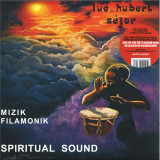
Originally released in 1979, "Spiritual Sound" lives up to its name, a soaring, triumphant album, six tracks of spirit magic from Guadeloupe.
Telluric, intense, terribly alive, the gwoka drums of Guadeloupe carry the identity of a painful and fervent island. Marked forever by the crime of slavery, Guadeloupe's créolité cherishes the ka drums and their natural environment: the low-pitched boula drum with male goatskin, the high-pitched soloist makè drum with female goatskin, the chacha, ti bwa, triangle, calabash and other percussion instruments that surround them, and the voices - the fiery, proud, timbred, urgent voices of the gwoka.
This album is also a legend for its voices: in his then dazzling youth, singer Lukuber Séjor was one of the first gwoka artists to largely feminize the chorus of répondè, who converse with his text delivered in a straight and powerful voice.
And everything here sets new standards. In 1979, Mizik Filamonik - Spiritual Sound proclaimed a spiritual patriotism of ferocious intensity. The album by Lukuber Séjor - whose spelling alone is a battle - sets out to give Guadeloupe the intangible weapons of self-respect and self-knowledge, through a singular practice of traditional music.
The genesis of gwoka music is less straightforward than one might imagine... The drums performed the servile task of accompanying the work of slaves in the fields and during the “corvées” imposed by the administration, before being freely practiced by the common people after the abolition of 1848. At the heart of the conviviality of the Guadeloupeans furthest from the cities - geographically and socially - the gwoka drums come out for carnival, funeral wakes and neighborhood celebrations, but also during strikes, fits of anger and armed vigils of the riots and revolts that have punctuated the island's history. For generations, governors of the colony and then the prefects of the overseas department of Guadeloupe have been viewing the gwoka as a potential for turbulence and a threat to public order.
But as the Beatlesmania, “chanson engagée” and rock revolutions unfolded in Europe, young people turned to the drums of mizik a vié nèg (“bad negro music”, in Creole), which Guadeloupeans had learned to despise by following the “assimilation” process advocated by the school system and most of the political class. At the end of the sixties, in a Guadeloupe mourning the deadly repression of the May 1967 social movement, they played traditional music, refusing to wrap it up in tourist prettiness and madras folk costumes. Instinctively, they played a rough and contemporary gwoka, led by the incendiary Guy Konkèt. This was the era of decisive 45 rpm records such as Robert Loyson's Kann a la richès, which brought to light the fieriest words of union rallies.
At his home in Sainte-Anne, Lukuber Séjor played with flautist Olivier Vamur and his brother Claude Vamur, who cobbled together a drum kit from tin crockery and became, a few years later, the most influential drummer in Kassav'.
These were the years of the Bumidom program, when young Guadeloupeans were encouraged to emigrate to mainland France. At the age of twenty, Lukuber Séjor embarked on the liner Irpinia, disembarking at Le Havre and taking the train to the Gare Saint-Lazare - the route taken by thousands of young West Indians who went on to study or looked for work, all the while trying to maintain a link with their homeland. In this case, it's at the Antony university residence, where Lukuber played the drum and participated in a thousand gwoka updates and aggiornamentos, while exile reinforced the need for a spiritual link with the native land.
In 1978, Guy Konkèt played at the Salle Wagram, a historic event for West Indian music. After serving as répondè - i.e. backing vocalist - on one of his home-recorded albums, Lukuber joined his live band. Little by little, he became one of the key artists on a circuit parallel to French show business. At a student party in Caen, he met a young woman from Martinique who, at the time, was more motivated by her ambitions as a visual artist than by her vocation as a musician. Her name was Jocelyne Béroard and, a few years before she plunged into the Kassav' adventure and became the greatest West Indian singer of her generation, she designed the cover of Lukuber Séjor's LP.
This ambition was obvious and imposed its will. A more or less regular band was formed, with Roger Raspail, Rudy Mompière and Éric Danquin on ka drums, Claude Vamur on ti bwa, Olivier Vamur and Françoise Lancréot on flutes and Annick Noël on keyboards. Lukuber Séjor is set on wanting to extend the gwoka palette to other instruments, as the jazz-rock revolution opens a thousand new doors. Annick Noël will play a wide range of timbres and textures on electric piano and synthesizer. Another novelty: the répondè are two men and two women, Roger Raspail, Olivier Vamur, Françoise Lancréot and Maryann Mathéus ...
Mizik Filamonik - Spiritual Sound is a self-production in which the singer and leader sank all his savings, allowing him no more than a single day in the studio. The first side is more of a musical manifesto, with the first two tracks, Éritage and Penn é plézi, being instrumentals. The third, Son, forcefully celebrates the need for Guadeloupeans to connect with the gwoka. In fact, Jocelyne Béroard's cover shows a tambouyé in the shadow of a cloudy sky, against which a radiant sun is rising and whose light will soon flood the entire landscape. The silhouette and face of this man strongly evoke the immense Vélo, master of the ka, rejected at the time on the fringes of society.
The second side of the LP is surprising. Formally, three tracks are explicitly linked like the three parts of a triptych. Primyé voyaj evokes the appalling tribulation of Africans deported as slaves to Guadeloupe; dézyèm voyaj speaks of the Bumidom program and the economic, political and social forces driving young Guadeloupeans towards the mirage of prosperity in France; twazyèm voyaj closes the cycle with the emigrants' return from Europe after years away from their island...
This gwoka, obsessed with the need to save Guadeloupe spiritually, appeals far beyond the politicized audience. Mizik Filamonik - Spiritual Sound instantly became a classic, although Lukuber Séjor never really made a career for himself as a musician.
After all, the album was released in 1980, with no promotional resources in France or Guadeloupe - and therefore no concerts. The thirty-two-year-old author, composer and performer made his own third trip back to Guadeloupe. He set up a small woodworking business, which he lost in Hurricane Hugo in 1989. His other activity, teaching in a medical-educational institute, became the core of his professional life. He continued to be an active campaigner - a campaigner for the Creole language, a campaigner for the reawakening of identity, a campaigner for special education, a campaigner for a thousand causes that he ignited with his generous and perceptive enthusiasm, such as the defense of breadfruit fries...
The echoes of his 1979 album have not died down. Of course, the use of Penn é plézi as the theme tune for Radio Guadeloupe's funeral notices from 1980 to 1992 kept him in the collective memory, but he continues to sing and compose sporadically, as with his all-female
vocal group Vwapoulouéka... Still convinced that music is a means of liberating the spirit, he continues the journey of a young man eager to deploy the power of Creole music and language.
Bertrand Dicale
Disponibile in Stock e pronto per la spedizione
Red Pig Flower brings you her sensational debut album Practice Love, available on Sound Of Vast from 10th April. Her unique sound sits upon the apex of a three-sided pyramid. With Berlin, Tokyo and Seoul as the base, Red is a third culture kid, greater than the sum of her parts. The centre is filled with her incredible appreciation and knowledge of house and electronic music from every pin drop through history.
So taken with Red Pig Flower’s sound, Honey Dijon invited Red to her Southbank Centre show to play alongside her. Moxie loves her that much, that she invited Red to record a mix and to guest on her NTS show. Alan Fitzpatrick, and Just Her are amongst Red’s growing posse of followers.
Practice Love is a culmination of all of Red Pig Flower’s life experiences, brimming with her positive energy and an outlook on life of pure love. Red has collaborated with like-minded artists at every level: the music, the cover art and video all produced with talented friends, who get Red as the wonderful person she is and understand her vision. Her label partner and good friend, Knock in particular helped make Practice Love the incredible album it is. So intuitive is their musical symbiosis, they made 20 tracks and carefully curated and ordered nine of these, making an album of tracks that stand out on their own, yet flow perfectly as an album. Practice Love will make you feel joyous when you play it. By the end, you will feel like you know Red like a friend.
Practice Love kicks off with I don’t care, it makes you feel good: a dreamy, tribal mantra of a track that does exactly what it says on the tin. Next up is I Love To Dance. Red’s beautiful soft vocal is sweet yet poignant, leaving you in no doubt of her sincerity. Thirdly comes Feel Good Music. Are you getting a feel from the track names yet that this is an album of warmth and positivity? You can imagine this one at a Café Del Mar sunset, where those who get the spirituality of Ibiza come together, in the moment to appreciate the beauty of a sunset and understand that no matter how many you see, each is magical and unique.
The three tracks so far have taken you to twilight. The titular Practice Love takes you by the hand onto the dancefloor. There is a double meaning to ‘Practice Love’- The first is to make love your practice. The second is that you need to practice love to be able to become a practitioner of love. The video, shot by her friend Jelly, features Red Pig Flower in Brick Lane, London, wearing a little piggy mask and offering free hugs. The first passersby ignore her sign, but Red isn’t disheartened, spreading the right message, dancing with joy. Her optimism is rewarded, making peoples day better on a cold English afternoon.
Fifth track Sax and Drugs takes things a little sleazier, the beat is filthy and the synths are sexy. Your body starts to move to this one before your brain even realises. The incredible Declan McDermott joins on saxophone, the funkiest synths and Red’s sultry vocal washing your soul with Laurent Garnier inspired sunlight. On Thisiz House Music, again featuring Declan, Red takes you even further back. About Frankie Knuckles O’Clock, with a portal straight to 2025.
By now, you will agree with me that Practice Love flows so, so well. I Wanna Meet Somebody follows incredibly, continuing the feeling that if you close your eyes, you’re dancing with David Mancuso at the Loft. No Money completes this EP-within-an-album. Perfect vocal samples, valve synth riff and 808 drum patterns showing that producers as good as Red Pig Flower make it sound effortless. The best albums finish memorably and No Genre is one of those perfect finishers. Think Andrew Wetherall’s production on Screamadelica. The lights are up in the club, nobody wants to go home, arms in the air wanting more.
Red Pig Flower explains: Practice Love resonates deeply with me because house music has always been a sanctuary—a place for unity, joy, and self-expression. As a nomad and outsider, club culture and house music became my shelter. The cities I’ve lived in—Seoul, Tokyo, Berlin, and London and more—nurtured me and shaped who I am today. That’s why the cover, by the incredible Carlos Sulpizio features their skylines, and the album is multilingual, representing the diverse influences in my life.
Practice Love is like a meal that has been prepared lovingly. They always taste better. And there’s plenty more to come from Red Pig Flower. How was your appetizer?
Disponibile in Stock e pronto per la spedizione
- A1: Montego Bay - Everything (Paradise Mix) 04 59
- A2: Atelier - Got To Live Together (Club Mix) 06 06
- A3: Golem - Music Sensations 04 56
- B1: The True Underground Sound Of Rome Feat. Stefano Di Carlo - Gladiators 05 26
- B2: Eagle Parade - I Believe 04 26
- C1: Dj Le Roi - Bocachica (Detroit Version) 05 28
- C2: Green Baize - Synthetic Rhythm 01 41
- C3: M.c.j. Feat. Sima - Sexitivity (Deep Mix) 05 30
- D1: Kwanzaa Posse Feat. Funk Master Sweat - Wicked Funk (Afro Ambient Mix) 06 31
- D2: Progetto Tribale - The Bird Of Paradise 06 29
- D3: Mbg - The Quite 06 59
Vol 1[28,99 €]
Googling “paradise house”, the first results to pop up are an endless list of European b&b’s with whitewashed lime façades, all of them promising “…an unmatched travel experience a few steps from the sea”. Next, a little further down, are the institutional websites of a few select semi-luxury retirement homes (no photos shown, but lots of stock images of smiling nurses with reassuring looks). To find the “paradise house” we’re after, we have to scroll even further down. Much further down.
It feels like yesterday, and at the same time it seems like a million years ago. The Eighties had just ended, and it was still unclear what to expect from the Nineties. Mobile phones that were not the size of a briefcase and did not cost as much as a car? A frightening economic crisis? The guitar-rock revival?! Certainly, the best place to observe that moment of transition was the dancefloor. Truly epochal transformations were happening there. From America, within a short distance one from the other, two revolutionary new musical styles had arrived: the first one sounded a bit like an “on a budget” version of the best Seventies disco-music – Philly sound made with a set of piano-bar keyboards! – the other was even more sparse, futuristic and extraterrestrial. It was a music with a quite distinct “physical” component, which at the same time, to be fully grasped, seemed to call for the knotty theories of certain French post-modern philosophers: Gilles Deleuze, Félix Guattari, Paul Virilio... Both those genres – we would learn shortly after – were born in the black communities of Chicago and Detroit, although listening to those vinyl 12” (often wrapped in generic white covers, and with little indication in the label) you could not easily guess whether behind them there was a black boy from somewhere in the Usa, or a girl from Berlin, or a pale kid from a Cornish coastal town.
Quickly, similar sounds began to show up from all corners of Europe. A thousand variations of the same intuition: leaner, less lean, happier, slightly less intoxicated, more broken, slower, faster, much faster... Boom! From the dancefloors – the London ones at least, whose chronicles we eagerly read every month in the pages of The Face and i-D – came tales of a new generation of clubbers who had completely stopped “dressing up” to go dancing; of hot tempered hooligans bursting into tears and hugging everyone under the strobe lights as the notes of Strings of Life rose up through the fumes of dry ice (certain “smiling” pills were also involved, sure). At this point, however, we must move on to Switzerland.
In Switzerland, in the quiet and diligent town of Lugano, between the 1980s and 1990s there was a club called “Morandi”. Its hot night was on Wednesdays, when the audience also came from Milan, Como, Varese and Zurich. Legend goes that, one night, none less than Prince and Sheila E were spotted hiding among the sofas, on a day-off of the Italian dates of the Nude Tour… The Wednesday resident and superstar was an Italian dj with an exotic name: Don Carlos. The soundtrack he devised was a mixture of Chicago, Detroit, the most progressive R&B and certain forgotten classics of old disco music: practically, what the Paradise Garage in New York might have sounded like had it not closed in 1987. In between, Don Carlos also managed to squeeze in some tracks he had worked on in his studio on Lago Maggiore. One in particular: a track that was rather slow compared to the BPM in fashion at the time, but which was a perfect bridge between house and R&B. The title was Alone: Don Carlos would explain years later that it had to be intended both in the English meaning of “by itself” and like the Italian word meaning “halo”. That wasn’t the only double entendre about the song, anyway. Its own very deep nature was, indeed, double. On the one hand, Alone was built around an angelic keyboard pattern and a romantic piano riff that took you straight to heaven; on the other, it showcased enough electronic squelches (plus a sax part that sounded like it had been dissolved by acid rain) to pigeonhole the tune into the “junk modernity” section, aka the hallmark of all the most innovative sounds of the time: music that sounded like it was hand-crafted from the scraps of glittering overground pop.
No one knows who was the first to call it “paradise house”, nor when it happened. Alternative definitions on the same topic one happened to hear included “ambient house”, “dream house”, “Mediterranean progressive”… but of course none were as good (and alluring) as “paradise house”. What is certain is that such inclination for sounds that were in equal measure angelic and neurotic, romantic and unaffective, quickly became the trademark of the second generation of Italian house. Music that seemed shyly equidistant from all the rhythmic and electronic revolutions that had happened up to that moment (“Music perfectly adept at going nowhere slowly” as noted by English journalist Craig McLean in a legendary field report for Blah Blah Blah magazine). Music that to a inattentive ear might have sounded as anonymous as a snapshot of a random group of passers-by at 10AM in the centre of any major city, but perfectly described the (slow) awakening in the real world after the universal love binge of the so-called Second Summer of Love.
For a brief but unforgettable season, in Italy “paradise house” was the official soundtrack of interminable weekends spent inside the car, darting from one club to another, cutting the peninsula from North to centre, from East to West coast in pursuit of the latest after-hours disco, trading kilometres per hour with beats per minute: practically, a new New Year’s Eve every Friday and Saturday night. This too was no small transformation, as well as a shock for an adult Italy that was encountering for the first time – thanks to its sons and daughters – the wild side of industrial modernity. The clubbers of the so-called “fuoriorario” scene were the balls gone mad in the pinball machine most feared by newspapers, magazines and TV pundits. What they did each and every weekend, apart from going crazy to the sound of the current white labels, was linking distant geographical points and non-places (thank you Marc Augé!) – old dance halls, farmhouses and business centres – transformed for one night into house music heaven. As Marco D’Eramo wrote in his 1995 essay on Chicago, Il maiale e il grattacielo: “Four-wheeled capitalism distorts our age-old image of the city, it allows the suburbs to be connected to each other, whereas before they were connected only by the centre (…) It makes possible a metropolitan area without a metropolis, without a city centre, without downtown. The periphery is no longer a periphery of any centre, but is self-centred”.
“Paradise house” perfectly understood all of this and turned it into a sort of cyber-blues that didn’t even need words, and unexpectedly brought back a drop of melancholic (post?)-humanity within a world that by then – as we would wholly realise in the decades to come – was fully inhuman and heartless. A world where we were all alone, and surrounded by a sinister yellowish halo, like a neon at the end of its life cycle. But, for one night at least, happy."
Disponibile in Stock e pronto per la spedizione
Jónbjörn's 'Gárur' reects the ebb and ow of life, and is a sonic exploration of the nether regions of atmospheric electronic music. Jónbjörn, an Icelandic producer and purveyor of organic textures and soundscapes has just released his debut full-length LP titled ‘Gárur’. Translated to ‘Ripples’ in English, the album is a colourful display of intricately woven electronic grooves and hypnotic atmospheres. The 10-track LP unfolds like a 1-hour mixtape, each song seamlessly blending from one to the next. ‘Þeytt smjör’ sets the scene with a sequence of generative ambience – lush pads and synthesizers atop a backdrop of found sound textures. The album pushes forward into many beat-centric tracks across various genres – everything from Downtempo, Deep House, Electronica, and Electro can be found throughout. While each track borrows inuences from across the dance music spectrum, the album is held together by Jónbjörn’s melodic and harmonic tendencies that encourage you to lose yourself in. Jónbjörn's process is heavily sample-based, often jamming carelessly to unearth new sonic possibilities. He records tracks live, triggering loops and effects spontaneously, and separates the creative process from mixing to maintain a sense of naivety. This approach allows him to capture the purity of initial demos, without falling into the temptation to overly polish the ¬nal product and lose that initial magic. Over the past three years, Jónbjörn has released a string of singles and his last full release on the Helsinki label ‘OO Recordings’, which featuredsix tracks on cassette. He has also been putting out music on his own label, Lagaffe Tales. In March 2020, he released his ¬rst full vinyl EP on his own label series, BROT, at a time when the global pandemic had closed almost all clubs worldwide. Additionally, he has released music on reputable labels such as D.KO Records, Neo Violence, Gestalt Records, Móatún 7, Bitterfeld Musik, Yellow Island Records, and FALK.
Disponibile in Stock e pronto per la spedizione
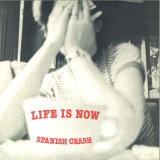
Playful Italo-Disco project by Florentine Marzio Benelli, originally released in 1984. "Life Is Now" delivers a number of what seem to be almost very important life-teachings over a rather sloppy beat. The hi hats, although very present also make it clear "Spanish Crash" is in no rush to get anywhere any time soon, sounding almost off beat. What strikes the listener even more than the smudges of highly valuable advice in some form of English language is the creative usage of what might have been some of the latest studio recording toys to reach Italy in 1984, an array of rather unorthodox synthy effects, vocoders, trippy delays all topped off with imposing guitar riffs for good measure. Very much sounding like what could be the soundtrack to a bootleg Disney comic strip on acid. Castro's "Paella Crash" shifts the original lazy gear into a dubbier, high BPM, striped down version of the original that is more club oriented.
Disponibile in Stock e pronto per la spedizione
An interesting insight into some of the diverse dancefloor oriented sounds going on in Canada during the 80s sitting somewhere between electro, italo disco and proto house. A-side starts off on a slow paced 80 bpm pop/rock italo-disco crossover track featuring lyrics in english with an unidentifiable accent, very much reminiscent of Italian local neighbourhood private press ventures featuring someone's sister on the vocal. 3 versions later, on the B side, things step up a notch coming in at 130 bpm with "Heat In Africa's" drum machine propelled rhythmic mayhem pulling out all the latest studio bells and whistles of the time. Big electric guitar solo build up on the "Dance Mix" and additional Bonus Beats mix by Castro. Remastered and officially re-released almost 4 decades later.
Disponibile in Stock e pronto per la spedizione
Mystic Transfers is a label focusing on experimental music and club cuts from around the world, taken from the suburbs. MYSTIC VALLEY - Mystic Valley is the new musical project by Andrea B, architect, collector and producer from Florence, Italy. His sound is best described as a melting pot of Italian psychedelic influences, from obscure downtempo to new beat, as well as English breakbeat and German EBM. After years of Tropical Animals he started with Felis Oxiana the project ‘’Galattica’’ and from 2021 is one of the founders of Mizuna. Heading coach of the post punk group Zona Utopica Garantita, he began to work with them since they started to play, and together they launched the label ‘’Mystic Transfers’’, focusing on experimental music and club cuts from around the world.
SPO - Drummer in the ’00 of the underground scene in Florence fond of the 70s Progressive Rock sounds and experimental, co-founder in 2006 of the DIY label La Statua Sommersa Produzioni.
Currently in Florence after the experiences in Rome and 5 years in Berlin with many gigs around Europe and albums with his solo project Die Lust! and the italo-german duo Bloodygrave & Die Lust! establishing itself as a producer and composer in the electronic european musical scene Minimal Wave e Synth Wave. From 2017 began a new solo project named SPO (Solo Per Oggi).
Disponibile in Stock e pronto per la spedizione
“Owelle”: frenchified word derived from the English expression “Oh well”. Repurposed by Valérie Siron as her pseudonym to reflect her work ethos: serious, but without making a fuss.
Surfacing from Geneva’s club culture with a graphic design background, Owelle’s drive to synergise the audio and the visual power her expression of creative identity. Her compositions are imagined and built without boundaries, albeit replete with nods to previous genres ranging from early 2000s breakbeat, braindance and broken beat techno.
Intrigued by sensory immersion, Owelle further laces her art with interactive tools including programming, sound spatialisation and installation. Diving into a spatiotemporal journey, subtly incorporating their uses into her musical works. By blending her passion for diligent sound designing, field recordings and psychedelic vocals is how Owelle presents her approach to experimental music. Owelle’s creativity offers an intrinsic connection of her tailored rhythms and melodies to birth an original hybrid of sound and visual art.
The music within this record questions the importance of sound in relation to the individual’s environment. To blur the border between noise and aesthetically pleasing. To ride the waves between discomfort and delight and to find the potentially hidden role of situational awareness and relating it to musical endeavours derived from the emotions within.
Disponibile in Stock e pronto per la spedizione
'Tema di Susie' is one of the main themes from the soundtrack composed by Alessandro Alessandroni for the 1976 Italian noir Sangue di sbirro, known in English as Blood and Bullets, as well as Knell, Bloody Avenger (the Susie in the original title refers to the female love interest of the film's hero, who is on a mission to seek revenge for the gangland murder of his policeman father).
At once sweet and sentimental, haunting and melancholic, 'Tema di Susie' stands out from the other tracks in the film, which are more action oriented. Like the rest of the score, however, it exemplifies the way in which, during the '70s, Italian film composers created their own version of the sound of American blaxploitation cinema, with its groovy blend of funk, jazz, and soul. It is no coincidence that the film's director, B-movie specialist Alfonso Brescia, specifically requested music in the style of Shaft, the iconic film that defined that sound in 1971.
Though seemingly simple, 'Tema di Susie' is a perfect example of Alessandroni's style – in particular his unique ability to effortlessly blend groove and melody, funk and feeling, into one musical piece. So, we invited different artists with different backgrounds, influences and approaches to bring their individual take on this elegant and now timeless tune.
Neapolitan duo Fratelli Malibu have taken Alessandroni's melodic theme and woven it into a mesmerizing tapestry of rhythmic beats, world percussion and ethereal atmospheres. Drawing inspiration from funk/Afrobeat, synth-pop and Italo-disco, they've conjured a psychedelic-tinged, afro-cosmic groove that's bound to transport you to another dimension.
As the music unfolds, you'll feel like you've stepped into a vibrant, fantasy world. The breaks, outro, and intro are woven with a psychedelic thread that leaves you yearning to return once the final note fades away. And that's not all – they've injected an irresistible pop sensibility into the track with the use of drum machines and synths. The result? A rework that not only amplifies the dreaminess of the original but also seamlessly marries the past with the future.
We love the track so much that we decided to double the fun with a vocal retouch version, courtesy of the Italian funk/soul collective Banda Maje. Their vocalists, Chiara Della Monica and Cristina Cafiero, elegantly infuse cinematic and Balearic vibes into the mix, paying a wonderful homage to Fratelli Malibu's exquisite arrangement.
Disponibile in Stock e pronto per la spedizione
Banana Club is without doubt one of the top new labels on the Breakbeat scene today. Led by the young and highly prolific Cadiz artist, FM-3, it was set up in 2020 with a strong identity and powerful, effective dancefloor grooves inspired by English bassline and 2step/garage and a touch of funk.
On this first vinyl release by the label, entitled Funky Beats, FM-3 kicks off his musical discourse with One for Me, a track which showcases the characteristic quality and forcefulness of his groove. This is followed by the album eponymous track Funky Beats, a collaboration with the multiple Spanish and World Scratching Champion, Jose Rodriguez, who dazzles with a number of superb passages in which improvisation and funk come to the fore.
The B-side opens with Panorama, featuring Orak. This fascinating, highly-experimental track offers a fusion of breaks and tech house and an elegant acid line which acts as a common thread and brings cohesion to the whole idea. The record closes, as you would expect, with a collaboration with Bowser, another of the label regular artists, entitled Bubbling.
A classic bassline dancefloor filler, it will take you back to the best tracks of the late nineties and early noughties. The classic black 12", mastered and cut by Simon, a veteran sound engineer at the Exchange Vinyl in London, has achieved a sound which is quite simply brutal.
Disponibile in Stock e pronto per la spedizione
KAU is an instrumental project based in Brussels consisting of André Breidlid (drums), Matteo Genovese (bass) & Jan Janzen (keys). Representing various European backgrounds, their coming-together is in the spirit of the city they grew up in.
Taking inspiration from jazz, they create a head-bobbing atmosphere using bassy beats and catchy melodies. By implementing acoustic instruments, the trio stays true to an organic and rich sound, granting themselves the liberty for improvisation & spontaneous happenings. Influenced by artists like BADBADNOTGOOD & Christian Scott, their music is contemporary, powerful, and audacious.
The EP "III" is the collaboration between the three core members of the band and Maxime Dereux, talented French saxophonist already guested on "II". Having built strong musical ties over the course of the last years, the idea to make more music together arose naturally without a shadow of a doubt.
The result is a 4 track EP with a high concentration of powerful riffs and sharp themes. The title song 'Mad Max' perfectly represents madness incarnated. On "Moonwalker" they go to new places with ever-changing melodies and sax lines. 4 minutes of holding on to your seat in anticipation of the next measure.
This EP also features Brussels born and bred rapper "Jay MNG" who has made a name for himself around many concert halls & festivals in Belgium. Having collaborated notably with Commander Spoon and Kuna Maze, the polylinguistic rhymes of Jay MNG left a mark on this emerging music scene. Enraged, banging in whatever language that may be, Dutch, French or English, he manages to make a massive impact on the atmosphere of the tracks and add his own flavour.
Disponibile in Stock e pronto per la spedizione
- A1: Kim English - Treat Me Right (David Morales Club Mix)
- A2: Sandy B - Feel Like Singing (Adelphi Music Factory Remix)
- B1: Byron Stingily - Get Up Everybody (Darius Syrossian Remix)
- B2: Byron Stingily - Get Up Everybody (Parade Mix)
- C1: Pj - Can Ya Tell Me (Gerd Janson Piano Megamix)
- C2: Pj - Can Ya Tell Me (Gerd Janson Bonus Beat)
- C3: Pj - Can Ya Tell Me (Pierre’s Phat Dub)
- D1: Wonderboy - Jerk It (Sorley Street Mix)
- D2: Wonderboy - Jerk It (Felix Da Housecat Original Nooworld Underground Mix)
- E1: Innervision Ft Melonie Daniels - Don’t You Ever Give Up (Ian Friday Libation Vox)
- E2: Innervision Ft Melonie Daniels - Don’t You Ever Give Up (Ricanstruction Vocal)
- F1: Kim English - Learn 2 Luv (Ralf Gum Remix)
- F2: Kim English - Learn 2 Luv (Mood Ii Swing Club Mix)
- G1: Deep Creed - The Anthem (Monki Remix)
- G2: Deep Creed - The Anthem (Armand Van Helden Original Circle Mix)
- H1: Kim English - It Makes A Difference (Danny Howard Remix)
- H2: Danny Krivit & Kyle Smith Present Kim English - It Makes A Difference (Dub)
Black Vinyl[33,57 €]
Nervous Records, the iconic label synonymous with the rise of house from the streets of New York City, will mark 30 years in the music industry by releasing the celebratory compilation LP ‘Nervous Records: 30 Years’ on October 1st (Part 1) and October 15th (Part 2).
Featuring original mixes of the label’s biggest tracks, plus remixes by some of its most celebrated acts, ‘Nervous Records: 30 Years’ is both a celebration of the past and of the future. Featuring a who’s who of electronic dance music, the long player sees names including Louie Vega, David Morales Darius Syrossian, Tensnake, Monki, Franky Rizardo, Danny Howard and more take on iconic Nervous cuts: ‘You Make Me Feel Mighty Real’, ‘Treat Me Right’, ‘Future Groove’, ‘Feel Like Singing’, ‘Get Up Everybody’, ‘Break You’, ‘Hot’, ‘End This Hate’, ‘Unspeakable Joy’, ‘Can Ya Tell Me’, ‘Jerk It’, ‘The Anthem’, ‘It Makes A Difference’, ‘Learn 2 Luv’ and ‘Don’t You Ever Give Up’.
The album marks one of the most enduring, extraordinary legacies to grace America’s illustrious music history, not just in electronica but far beyond. Founded in 1991 by Michael and his father Sam Weiss, and recognizable immediately by its distinctive character logo, the label grew rapidly, in no small part due to Michael Weiss’ practically unmatched passion for discovering new music.
“Louie Vega and Kenny Dope woke me at 4am on Tuesday night, Wednesday morning from their studio telling me they had something really different that I needed to hear,” Michael recollects. “I asked if they could play it over the phone. They said if I wanted to hear it I had to come to the studio. So of course I got myself up, got dressed and went there. That “really different track” ended up being ‘The Nervous Track’, a tune that became our signature release and was also highly instrumental in the emergency of London’s ‘Broken Beat’ movement.”
The label’s willingness to take chances on fresh sounds and innovative concepts rising up from the melting pot sidewalks of NYC ensured a body of work that has become a living musical history of the city. House cuts ‘Unspeakable Joy’ and ‘Nitelife’ (Kim English), ‘Get Up (Everybody)’ (Byron Stingily) and ‘Feel Like Singing’ (Sandy B) bump up against hip-hop anthems like ‘Who Got Da Props’ (Black Moon) and “Bucktown” (Smif-n-Wessun) and reggae cut ‘Take It Easy’ (Mad Lion); soulful flows from Mood II Swing (Kim English ‘Learn 2 Luv’, Loni Clark “Rushing”), Armand Van Helden (‘The Anthem’) and Nuyorican Soul (‘Mind Fluid’) sit alongside seminal techno singles like Winx’ ‘Don’t Laugh’. The young artists and producers who joined the Nervous Records’ family have gone on to become some of the most hallowed and celebrated dance acts of all time: Louie Vega, Kenny Dope, David Morales, Tony Humphries, Roger Sanchez, Armand Van Helden, Kerri Chandler, Kim English, Byron Stingily, Josh Wink, to name just a handful.
“We did a release with Josh Wink under his Winx alias entitled ‘Nervous Build-Up’,” Michael said. “It did well and it was obvious how talented Josh was. Subsequent to that release I was pretty persistent in asking him to continue to play me his new demos. During one phone conversation he said, “Mike I’m gonna play you something over the phone but don’t laugh when you hear it.” That demo ended up being ‘Don’t Laugh’, which became one of our biggest international hits and still to this day is one of America’s earliest and most impactful techno hits.”
As much a celebration of the label’s future as it is of their past, Nervous Records: 30 Years is but a marker in the imprints’ history, a clear sign of where they’ve been and also where they’re going. With 30 years behind them, the label’s determination to unearth new raw diamonds in the rough is as unwavering as ever.
“I’ve always been one to look at what others are doing (the industry at large) and think, “ok, are they doing this specific thing for a reason, or doing it because everyone else is doing the same thing” and make my decision based on that,” says Nervous Records’ General Manager Andrew Salsano. “In an age where data metrics and analytics reign supreme, I remain steadfast that they should be complementary to your decision and not the sole indicator to make one. So many songs today are written with 15 second hooks in mind for social media, and while there’s nothing wrong with that business model you will always be chasing the wave instead of carving out your own path and identity.
“My primary focus for the sound of the label has and will continue to revolve around signing good songs and music that has the ability to react at the street level first. The best results come from artists that are firstly given a bit of local love that grows into a global impact. Fresh ideas that express child-like curiosity and artists showing vulnerability in their music are also something I look for, artists and producers that are not making music with certain markets in mind, but rather their own style and signature that is unique but able to straddle the fine line of underground and overground.”
Still as raw, as underground and as finely tuned to the dance floor as they ever have been, perhaps the secret to the success - and the longevity - of Nervous Records has something to do with that hard, dogged, no-holds-barred NYC edge that runs through the veins of the label. With the next generation of producers rising from the clubs of New York, one thing is certain; Nervous Records will be there to find them, nurture them and bring them to the world at large, over the next decade and beyond.
Disponibile in Stock e pronto per la spedizione
Caiphus Semenya, AKA Mr Letta Mbulu, is a South African legend and Streams Today… Rivers Tomorrow, his second solo LP, is perfect. A ten out-of ten album if ever we heard one. It’s also incredibly rare, especially in good condition, so Be With is delighted to present this reissue.
Now a revered composer, musician, and arranger, Caiphus left apartheid South Africa in the 60s for self-imposed exile in Southern California together with his wife, Letta Mbulu. Settling in Los Angeles he started working with the likes of Hugh Masekela and Miriam Makeba and other exiled and semi-exiled South african artists, as well as, of course, his wife Letta.
Caiphus also found himself working with and composing for a broad range of jazz and pop artists, including Lou Rawls, Nina Simone and Cannonball Adderley. His facility with both jazz and African forms served him well. His LA stay also the beginning of an ongoing collaboration with Quincy Jones, the fruits of which can be tasted in Caiphus’s African compositions for the scores to Roots and Spielberg’s adaptation of The Color Purple.
Originally released in 1984, Streams Today… Rivers Tomorrow is not just a musical masterpiece, it is also the soundtrack to the life of many South Africans - both then and now. Fusing the US-heavy sounds of boogie, disco and funk with Afrobeat and traditional African elements, it’s truly a spectacular listen. Jabu Nkosi handles keyboards on the album, with synths by Caiphus and Craig Harris. Sipho Gumede is on bass and Condry Ziqubu is on guitars.
The Afro-Cuban grooves of “Mamase” open the record. Continuing where Listen To The Wind left off, this is another horn-heavy call-and-response ode to a positive life. Life as an invitation to party, to take part, to “get involved”. But only if you’re willing to let in the transcendent power of music. “There’s gonna be a Mardi Gras, there’s gonna be a carnival; there’s gonna be a jamboree, there’s gonna be a bacchanal”. Who can resist that? Vibrations everywhere.
It’s followed by the joy of “Aida”. Gleeful, dayglow keys and synths *just* on the right side of mid-80s sleaze are accompanied by a killer bassline, slick, skipping drums and proud horns. Infectious funk.
The tempo is taken down a few notches for the powerful “Nomalanga” and the lamentations of a heartbroken man who must leave his wife Nomalanga and their children to join the fight against apartheid. It’s an emotional song, no question, but it doesn’t bring you down. The uplifting music and optimistic vocal delivery from Caiphus and his backing singers in the second half offer hope.
Breezy drums and contemplative keys act as a backdrop for the stunning backing vocal harmonies in the intro of “Moshanyana”. This gives way to stuttering beats, a bassline to die for and Caiphus giving it his all, over guitars, marimba and synth strings. Another slo-mo winner.
Side two opens with “Dial Your Number”, an uptempo English-language boogie-funk workout, complete with mid-song cutaway to a random telephone call. Whether or not this propels the song into “key track” status, we’ll let you decide.
What’s not up for debate is the brilliance of “Matswale”. This was a hit in South Africa in the mid-80s and you can still hear why. It might just be our favourite Caiphus hit. Wow. This is some damn fine breezy, beautiful, emotional pop. The restrained playing, the guitar licks and the gentle keys are out of this world. The beats? Thundering, direct and slick. The singing? It’ll give you goosebumps. As for the sentiment? This is Caiphus singing to his in-laws about their daughter’s adultery, begging them to intervene and help him save his marriage. Not your typical pop single story-telling!
The ferocious “Ndi-Kulindile” closes the set with a nod to the coming sound of the States. The hard-edged, electro-influenced drum patterns and bouncing, elastic bassline are something of a departure from the album’s predominant sound, yet one wonderful constant, Caiphus’s exceptional delivery and his sparring with his backing vocalists, is satisfyingly present and warmly deployed.
With Simon Francis handling the mastering of this Be With edition, you know it sounds as fantastic as ever. The stunning sleeve has been restored, with its painting of a dream-like cosmic vista, as a lone figure takes in a scene that’s part distant planet, part urban sprawl. One listen and you’ll be transported.
Caiphus Semenya, AKA Mr Letta Mbulu, is a South African legend and Streams Today… Rivers Tomorrow, his second solo LP, is perfect. A ten out-of ten album if ever we heard one. It’s also incredibly rare, especially in good condition, so Be With is delighted to present this reissue.
Originally released in 1984, Streams Today… Rivers Tomorrow is not just a musical masterpiece, it is also the soundtrack to the life of many South Africans - both then and now. Fusing the US-heavy sounds of boogie, disco and funk with Afrobeat and traditional African elements, it’s truly a spectacular listen. Jabu Nkosi handles keyboards on the album, with synths by Caiphus and Craig Harris. Sipho Gumede is on bass and Condry Ziqubu is on guitars.
One listen and you’ll be transported.
Disponibile in Stock e pronto per la spedizione
The long-overdue recognition of a songwriting genius The lyrics of Dan Treacy"s band Television Personalities transport listeners to a parallel universe consisting of unique mixtures of euphoric Sixties references and harsh social realism: brightly coloured, psychedelic worlds in which Syd Barrett, Salvador Dalí, Andy Warhol and the young Woody Allen meet, or a dreariness of marital crises, unpaid bills, loneliness and depression. Nuances: rather rare, and when they do occur, so subtle that they take the listener"s breath away. Admired by Kurt Cobain and Pavement, praised by Alan McGee, covered by the Tindersticks and musically immortalised by MGMT ("Song for Dan Treacy"); the Television Personalities are one of, if not the reference band of indie pop, which - the world has never been fair - was denied major chart success. "If I Could Write Poetry" now brings together for the first time the lyrics of 100 of Dan Treacy"s most important songs. But this book is much more than a collection of lyrics; it also contains very personal impressions, anecdotes and tributes from around 50 musicians, friends and fans. Contributors from the German-speaking world include artists such as Carsten Friedrich (Superpunk, Die Liga der gewöhnlichen Gentlemen), Bachmann Prize winner Tex Rubinowitz, and musicians Phillip Boa and Klaus Cornfield (Throw that Beat in the Garbagecan). The book is published and edited by Gregor Kessler, who emphasises that he found it difficult to maintain his professional neutrality towards Dan Treacy, as he has been an avid listener of Television Personalities records for four decades now. An English-language publication
dovrebbe essere pubblicato su 08.05.2026
Kumachan Seal: solo project of Japanese vocalist / songwriter / producer Sairi Ojima, who has been playing in numerous indie bands, including Neco Nemuru, since her teens. She began her solo career in 2013, and released her first cassette in 2017. This EM Records release is her first CD/LP album, with all compositions by Ojima, who co-produced the album. Each of the eleven songs reveals beguiling layers of detailed and surprising sounds, with Ojima's DIY sonic core embroidered by vibrant and colorful beats and guitar from EM artist Le Makeup and the quintessential ambient-pop synths and keyboards of fellow EM-er Takao. Le Makeup mixed ten of the eleven songs, with Takao mixing "China Sandwich". The heart of Ojima's musical identity is her clear, aque- ous voice; apart from one instrumental, all the tracks here feature that mellifluous voice, but in an interesting twist, only half the songs have lyrics, with the remainder employing her wordless voice as melodic and textural elements. Although Kumachan Seal can be heard as a sort of bedroom pop filtered through ambient music and the new-age revival, listeners will note that the final two songs, "Atsumono" and "Tiny Cell", are respectively a slightly skewed four-on-the-floor track and a lightly skanking Doo-wop- flavored confection, slightly reminiscent of the UK's Brenda Ray. This album, full of Ojima's calm and cool observation of the world, is available on CD, LP and DL, and includes an English lyric sheet.
Ordina ora e ordineremo l'articolo per te presso il nostro fornitore.
Last In: 12 days ago
- Fokewulf 190 - Body Heat (Vocal)
- The Voyagers - Distant Planet (Vocal)
- Frank Tavaglione - Tumidanda (English Version)
- P. Lion - Dream (Vocal Version)
- A.g.f. - Loved By You (Vocal Version)
- Raggio Di Luna (Moon Ray) - Comanchero (Vocal Extended)
- Ranko - Happy World (Vocal Version)
- Clay Pedrini - New Dream (Vocal)
- Cyber People - Polaris
- Scotch - Disco Band (Remix By Mach 2 Vocal Version)
- Jaco - Spanish Run (Vocal)
- Valerie Dore - The Night (Original Mix)
- G.j. Lunghi - Acapulco Nights (Maxi Version)
- Raggio Di Luna (Moon Ray) - Megamix By Flemming Dalum(Comanchero)
- The Voyagers - Megamix By Flemming Dalum (Distant Planet)
- Fokewulf 190 - Megamix By Flemming Dalum (Body Heat)
- P. Lion - Megamix By Flemming Dalum (Dream)
- Valerie Dore - Megamix By Flemming Dalum (The Night)
- Scotch - Megamix By Flemming Dalum (Disco Band)
- G.j. Lunghi - Megamix By Flemming Dalum (Acapulco Nights)
- A.g.f. - Megamix By Flemming Dalum (Loved By You)
- Ranko - Megamix By Flemming Dalum (Happy World)
- Clay Pedrini - Megamix By Flemming Dalum (New Dream)
- Frank Tavaglione - Megamix By Flemming Dalum (Tumidanda)
- Cyber People - Megamix By Flemming Dalum (Polaris)
- Jaco - Megamix By Flemming Dalum (Spanish Run)
Erleben Sie das pulsierende Lebensgefühl der 80er Jahre mit der farbigen 2LP-Compilation „ZYX Italo Disco History 1984“. Diese exklusive Vinyl-Ausgabe entführt Sie direkt in das goldene Zeitalter der Italo Disco und vereint die größten Dancefloor-Hits eines unvergesslichen Jahres.
Freuen Sie sich auf ikonische Tracks von Künstlern wie P. Lion, Scotch und Valerie Dore – Namen, die für eingängige Melodien, treibende Beats und den unverwechselbaren Sound der Italo Disco stehen. Jeder Song dieser Sammlung spiegelt die Energie und den Glamour der internationalen Clubszene von 1984 wider. Ein besonderes Highlight ist der enthaltene 15-minütige Megamix der Italo-Disco-Legende Flemming Dalum. Mit seinem einzigartigen Gespür für Rhythmus und Atmosphäre verbindet er die größten Hits zu einem mitreißenden Mix, der nahtlos durch die Klangwelt der 80er führt. Die farbige Doppel-LP macht diese Compilation nicht nur musikalisch, sondern auch optisch zu einem echten Sammlerstück – perfekt für Vinyl-Liebhaber und Fans elektronischer Klassiker
dovrebbe essere pubblicato su 24.04.2026
- A1: Les Masques - Il Faut Tenir (1969)
- A2: Isabelle Aubret - Casa Forte (1971)
- A3: Christianne Legrand - Hlm Et Ciné Roman (1972)
- A4: Jean Constantin - Pas Tant D'chichi Ponpon (1972)
- A5: Billy Nencioli & Baden Powell - Si Rien Ne Va (1969)
- B1-: Marpessa Dawn - Le Petit Cuica (1963)
- B2: Jean-Pierre Sabar - Vai Vai (1974)
- B3: Sophia Loren - De Jour En Jour (1963)
- B4: Isabelle - Jusqu’à La Tombée Du Jour (1969)
- B5: Sylvia Fels - Corto Maltesse (1974)
- C1: Frank Gérard - Comme Une Samba (1972)
- C2: Ann Sorel - La Poupée Des Favellas (1971)
- C3: Charles Level - Un Enfant Café Au Lait (1971)
- C4: Andrea Parisy - Les Mains Qui Font Du Bien (1970)
- C5: Audrey Arno - Quand Jean-Paul Rentrera (1969)
- C6: Aldo Frank - T’as Vu Ce Printemps (1970)
- D1: Christianne Legrand - Cent Mille Poissons Dans Ton Filet (1972)
- D2: Clarinha - Lemenja (1970)
- D3: Hit Parade Des Enfants - Aquarela (1976)
- D4: Jean-Pierre Lang - Tendresse (1965)
- D5: Magalie Noël - Une Énorme Samba (1970)
- D6: Françoise Legrand - La Lune
Ever since the late 1950s bossa-nova revolution, Brazil’s influence on French music has been undeniable. Pierre Barouh, Georges Moustaki and a vast array of lesser known artists, all made the Musica Popular Brasileira (MPB) an axis of promotion at the service of a cool and metaphysical, modern and mixed Brazilian lifestyle. Some were seduced by the poetic languors of the bossa, some were looking for fun, and others just loved the American hybridization of jazz-bossa, jazz-samba.
What is bossa nova? One of its creators, Joao Gilberto said: "Its style, cadence, everything is samba. At the very start, we didn't call it bossa nova, we sang a little samba made up of a single note - Samba de uma nota so .... The discussion around the origins of bossa nova is therefore useless”. It is nevertheless useful to remember that these magnificent Brazilian songs, which the guitarist describes as samba, were shifted and balanced around improbable chords. "I like things that lean, the in-betweens that limp with grace," said Pierre Barrouh, quoting Jean Cocteau.
With emotion, arrangements for violin and supple guitar licks, bossa nova rapidly changed. A transformation that can be heard in the Tchic, tchic, French Bossa Nova 1963-1974 compilation, the result of a cultural reappropriation, which traveled through the United States and supplemented itself in France.
A musical revolution that has remained significant, bossa nova was born in Rio. From 1956 to 1961, Brazil lived through its golden years. In five years, the country had invented its modernist style. Elected president in 1956, Juscelino Kubitschek de Oliveira, an elegant man with a broad forehead, brandished a promising slogan: "Fifty years of progress in five years". He quickly got to work. Not worried about increasing debt, he launched the project for a new federal capital, Brasilia, designed by the communist architect Oscar Niemeyer. Volkswagen opened state-of-the-art factories and created the “fusquinha”, the Beetle. In Rio, the Vespa made its first appearance. The Arpoador Surf Club crew run into the “girl” from Ipanema, Helô Pinheiro - the tanned garota ("chick"), between a flower and mermaid, who at 17 walked by the Veloso bar, where the fiery author and composer, Tom Jobim and Vinicius de Moraes, were getting drunk on whiskey. From then on, bossa symbolized cool.
In 1958, Joao Gilberto recorded Chega de Saudade, which the directors of Philips denied, calling it "music for fagots". The marketing director, who believed in it, secretly pressed 3000 78-inch vinyls and distributed them at schools around Rio, creating a tidal wave.
American jazzmen then took over. In particular, trumpeter Dizzy Gillespie and guitarist Charlie Byrd. In November 1962, the Brazilian Ministry of Foreign Affairs funded a "Bossa-Nova" concert at Carnegie Hall in New York, inviting the genre’s pioneers. Unprepared, the show soon turned to disaster. But the troupe was invited to the White House by Jackie Kennedy. The first lady loved "the new beat" and in particular Maria Ninguem, a song by Carlos Lyra, later covered by Brigitte Bardot.
In Brazil, the 1964 military coup quickly ended this euphoria. The destructive atmosphere that ensued pushed many Brazilian musicians to leave, if not to exile. Thus, Tom Jobim, Sergio Mendes and Joao Gilberto arrived to the United States. In New York, Joao Gilberto met saxophonist Stan Getz. At the time, he was married to the Bahianese Astrud Weinert Gilberto, who had a German father. She had never sung before, but she knew how to speak English. Getz therefore asked her to replace her husband on The Girl From Ipanema. The Getz/Gilberto record with Tom Jobim on piano, was released in March 1964. Phil Ramone, the "pope of pop" was in charge of sound.
Bossa nova arrived in Paris through the classic “guitar-voice” channel (Pierre Barouh, Baden Powell, Moustaki…) But France loved jazz and Paris had already welcomed its American contributors. All these good people were to pass through Saint-Germain-des-Prés. The cabaret l'Escale became the Mecca of Latin American sound where one could find Pierre Barrouh and his friends, such as the Camara Trio, samba-jazz aces, whose only record was published by the Saravah label. With a band strangely called Les Masques (a band that included Nicole Croisille and Pierre Vassiliu, among others), the Camara Trio recorded an interesting Brazilian Sound, including the track Il faut tenir which is present on this tasty compilation of rarities.
Other enlightened musicians can also be found on the compilation, such as Jean-Pierre Sabar (songwriter for Hardy, Auffray, Leforestier ...) and the French pop rock organist Balthazar. In 1975, Sabar recorded Aurinkoinen Musiikkimatka on a Finnish label, which featured the crazy Vai, Vai, included on this record. We are now following the footsteps of Brazilian electronic musicians such as Sergio Mendes, Eumir Deodato or Marcos Valle who created funk and disco sounds on their keyboards and synthesizers. A style that influenced Véronique Sanson when she wrote Jusqu’à la Tombée de la nuit in 1969 for Isabelle de Funès, the niece of Louis and a great friend of Michel Berger - Sanson did end up singing this track on her 1992 Sans Regret record.
The pinnacle of exoticism and travel, Sylvia Fels’ Corto Maltese includes bongos, sea mist and ocean sounds. The title was taken from Jacky Chalard’s concept album written in 1974, Je suis vivant, mais j’ai peur (I am alive, but I am scared), based on Gilbert Deflez’s science fiction novel.
However, bossa nova extended the scope of popularity. "In the 1970s, I was a fan of Sergio Mendes, Getz / Gilberto. I fell in love with this music that I knew because I had been an orchestral singer, " explained Isabelle Aubret, who in 1971 delivered a composite record of covers by the very funky Jorge Ben, Orfeu Negro, Tom Jobim, Vinicius de Morais and Jean Ferrat. "I recorded this album for Meys Records in Paris, far from Brazil, with wonderful musicians, François Raubert, Roland Vincent, Alain Goraguer...". The latter wrote the arrangements for Casa Forte, a very percussive title borrowed from Edu Lobo, one of the initiators of the bossa who spent time in California. "Jazz and bossa came together and produced very rhythmic music. I love singing, it allows me to dream, to have fun, to feel a high on stage, and these songs brought me joy, made me swing, my singing felt like a dance.”
The world tours of French singers and their desire for the tropics, often brought them to Rio with its hills, forests, caipirinhas and tanned bodies. There are surprises though, like this Iemenja (Iemenja is the goddess of the sea in the Afro-Brazilian candomblé religion). Not unlike the composer and musician Jean-Pierre Lang, based in Sao Paulo, Claire Chevalier taught Brazil to Brazil. In 1970, the singer and painter published a 45-inch vinyl, Mon mari et mes amants (My husband and my lovers), under the improbable pseudonym of Clarinha (little Claire). She was then living in Rio, with her husband, Joël Leibovitz, who founded a band called Azimuth, and who owned a record label specialized in "sambas enredos" songs for samba school parades.
For its B side, she asked Pierre Perret to come up with lyrics for a song composed by Carlos Imperial: "Oh goddess of the sea, o goddess Iemenja, I bring a white rose to adorn your long hair ..." . "Perret came to see us, and we had fun, remembers Joël Leibovitz. We wrote Lemenja for fun, we recorded it at the Havaí studio, behind the Central do Brasil the central station. Erlon Chaves, the arranger who worked with Elis Regina, joined us" adding his share of Afro-Brazilian percussions and funky brass to the mix.
There is a common misunderstanding in Franco-Brazilian history: that bossa, admittedly hedonistic, is perceived as funny, even though the poets who wrote the texts are often philosophizing on the human condition. Its French interpreters pull it towards a carnival inspired universe, far removed from its fundamental essence. Thus, Jean Constantin covered the famous Samba da minha terra, an ode to the art of samba written by the classic Bahian composer Dorival Caymmi, renaming it with the enticing title of Pas tant de tchi tchi pompon: "On your pier there is no tchi tchi / when you arch your back, you know everything is alright ”(lyrics by Gérard Calvi). This expedited bossa aims for the absurd, but retains a certain elegance.
Indeed, Jean Constantin was not an idiot, the rather large man had a huge mustache and liked fantasy, (Les pantoufles à papa, Le pacha, inspired by cha-cha-cha-cha, salsa and jazz) but he was also the lyricist of Mon manège à moi interpreted by Edith Piaf, the composer of Mon Truc en plume by Zizi Jeanmaire and the soundtrack of François Truffaut’s 400 Blows. Le Poulpe, published in 1970, from which this bossa is extract, was arranged by Jean-Claude Vannier, an accomplice of Serge Gainsbourg’s Melody Nelson. In short: "There is enough of samba / By looking at the parasol / Because my poor cabeza / Is going to die in the sun".
Even the American actress Marpessa Down, who was at the heart of the bossa nova revolution with her role as Euridyce in Marcel Camus’ film Orfeu Negro, winner of the 1959 Cannes Palme d'or, fed the clichée with Je voudrais parler au petit cuica - "Tell me how you manage to always make people want to dance / It's true, I must admit that I cannot resist your magic" - in consequence, once can hear the cuica, a little drum inherited from the Bantu.
But bossa nova had many angles. Societal, of course, pushing actresses who were symbols of women's liberation like Brigitte Bardot, Jeanne Moreau, or Sophia Loren to engage in the exercise of accelerated bossa. In February of 1963, Sophia Loren made a record in French in Rome, Je ne t'aime plus, featuring the song De jour en jour, a bossa written by two Italians, Armando Trovajoli and Tino Fornai, which was released a little later by Barclay. Bossa accompanied the 1960s, a decade of moral liberation. Ann Sorel, who interpreted La Poupée des favellas, caused a sensation with L’amour à plusieurs, a provocative song written by Frédéric Bottom and Jean-Claude Vannier. As for the actress Andrea Parisy, she displayed her bourgeois cheekiness in Marcel Carné's Les Tricheurs before interpreting Les mains qui font du bien. And Magalie Noël, the friend of Boris Vian, who sung Johnny fais-moi mal, was hired to sing Une énorme Samba, composed by Alain Goraguer (arranger to Gainsbourg, Bobby Lapointe and Jean Ferrat) with lyrics by Frédéric Botton.
But in the end, of what wood is bossa nova made of? The answer is given by Christianne Legrand, daughter of Raymond the conductor, and sister to Michel the composer: "With me, with jà" - jà means "immediately" in Portuguese. In 1972, the singer, an expert in vocal jazz and a member of the Double Six, published Le Brésil de Christianne Legrand. Two songs included on the Tchic Tchic compilation that demonstrate how bossa, jazz, funk, rock, etc. work like a swiss army knife: the music is used to denounce broken systems, or miracles, HLM et ciné roman, Cent mille poissons dans ton filet, two songs from the O Cafona soundtrack, a successful telenovela broadcast, at the time in black and white, on TV Globo. The first was adapted in French by the fighter and friend of the Legrand tribe, Agnès Varda. The second is content with a play on words, jostling them into a summer fun.
Véronique Mortaigne
dovrebbe essere pubblicato su 17.04.2026
UILTY RAZORS, BONA FIDE PUNKS.
Writings on the topic that go off in all directions, mind-numbing lectures given by academics, and testimonies, most of them heavily doctored, from those who “lived through that era”: so many people today fantasize about the early days of punk in our country… This blessed moment when no one had yet thought of flaunting a ridiculous green mohawk, taking Sid Vicious as a hero, or – even worse – making the so-called alternative scene both festive and boorish. There was no such thing in 1976 or 1977, when it wasn’t easy to get hold of the first 45s by the Pistols or the Clash. Few people were aware of what was happening on the fringes of the fringes at the time. Malcolm McLaren was virtually unknown, and having short hair made you seem strange. Who knew then that rock music, which had taken a very bad turn since the early 1970s, would once again become an essential element of liberation? That, thanks to short and fast songs, it would once again rediscover that primitive, social side that was so hated by older generations? Who knew that, besides a few loners who read the music press (it was even better if they read it in English) and frequented the right record stores? Many of these formed bands, because it was impossible to do otherwise. We quickly went from listening to the Velvet Underground to trying to play the Stooges’ intros. It’s a somewhat collective story, even though there weren’t many people to start it.
The Guilty Razors were among those who took part in this initial upheaval in Paris. They were far from being the worst. They had something special and even released a single that was well above the national average. They also had enough songs to fill an album, the one you’re holding. In everyone’s opinion, they were definitely not among the punk impostors that followed in their wake. They were, at least, genuine and credible.
Guilty Razors, Parisian punk band (1975-1978). To understand something about their somewhat linear but very energetic sound, we might need to talk about the context in which it was born and, more broadly, recall the boredom (a theme that would become capital in punk songs) coupled with the desire to blow everything off, which were the basis for the formation of bands playing a rejuvenated rock music ; about the passion for a few records by the Kinks or the early Who, by the Stooges, by the Velvet mostly, which set you apart from the crowd.
And of course, we should remember this new wave, which was promoted by a few articles in the specialized press and some cutting-edge record stores, coming from New York or London, whose small but powerful influence could be felt in Paris and in a handful of isolated places in the provinces, lulled to sleep by so many appalling things, from Tangerine Dream to President Giscard d’Estaing...
In 1975-76, French music was, as almost always, in a sorry state ; it was still dominated by Johnny Hallyday and Sylvie Vartan. Local rock music was also rather bleak, apart from Bijou and Little Bob who tried to revive this small scene with poorly sound-engineered gigs played to almost no one.
In the working class suburbs at the time, it was mainly hard rock music played to 11 that helped people forget about their gruelling shifts at the factory. Here and there, on the outskirts of major cities, you still could find a few rockers with sideburns wearing black armbands since the death of Gene Vincent, but it wasn’t a proper mass movement, just a source of real danger to anyone they came across who wasn't like them. In August 1976, a festival unlike any other took place in Mont-de-Marsan – the First European Punk Festival as the poster said – with almost as many people on stage as in the audience. Yet, on that day, a quasi historical event happened, when, under the blazing afternoon sun, a band of unknowns called The Damned made an unprecedented noise in the arena, reminiscent of the chaotic Stooges in their early adolescence. They were the first genuine punk band to perform in our country: from then on, anything was possible, almost anything seemed permissible.
It makes sense that the four+1 members of Guilty Razors, who initially amplified acoustic guitars with crappy tape recorder microphones, would adopt punk music (pronounced paink in French) naturally and instinctively, since it combines liberating noise with speed of execution and – crucially – a very healthy sense of rebellion (the protesters of May 1968 proclaimed, and it was even a slogan, that they weren’t against old people, but against what had made them grow old. In the mid-1970s, it seemed normal and obvious that old people should now ALSO be targeted!!!).
At the time, the desire to fight back, and break down authority and apathy, was either red or black, often taking the form of leafleting, tumultuous general assemblies in the schoolyard, and massive or shabby demonstrations, most of the time overflowing with an exciting vitality that sometimes turned into fights with the riot police. Indeed, soon after the end of the Vietnam War and following Pinochet’s coup in Chile, all over France, Trotskyist and anarcho-libertarian fervour was firmly entrenched among parts of the educated youth population, who were equally rebellious and troublemakers whenever they had the chance. It should also be noted that when the single "Anarchy in the UK" was first heard, even though not many of us had access to it, both the title and its explosive sound immediately resonated with some of those troublemakers crying out for ANARCHY!!! Meanwhile, the left-wing majority still equated punks with reckless young neo-Nazis. Of course, the widely circulated photos in the mainstream press of Siouxsie Sioux with her swastikas didn’t necessarily help to win over the theorists of the Great Revolution. It took Joe Strummer to introduce The Clash as an anti-racist, anti-fascist and anti-ignorance band for the rejection of old-school revolutionaries to fade a little.
The Lycée Jean-Baptiste Say at Porte d’Auteuil, despite being located in the very posh and very exclusive 16th arrondissement of Paris, didn’t escape these "committed" upheavals, which doubled as the perfect outlet for the less timid members of this generation.
“Back then, politics were fun,” says Tristam Nada, who studied there and went on to become Guilty Razors’ frontman. “Jean-Baptiste was the leftist high-school in the neighbourhood. When the far right guys from the GUD came down there, the Communist League guys from elsewhere helped us fight them off.”
Anything that could challenge authority was fair game and of course, strikes for just about any reason would lead to increasingly frequent truancy (with a definitive farewell to education that would soon follow). Tristam Nada spent his 10th and 11th unfinished grades with José Perez, who had come from Spain, where his father, a janitor, had been sentenced to death by Franco. “José steered my tastes towards solid acts such as The Who. Like most teenagers, I had previously absorbed just about everything that came my way, from Yes to Led Zeppelin to Genesis. I was exploring… And then one day, he told me that he and his brother Carlos wanted to start a rock band.” The Perez brothers already played guitar. “Of course, they were Spanish!”, jokes their singer. “Then, somewhat reluctantly, José took up the bass and we were soon joined by Jano – who called himself Jano Homicid – who took up the rhythm guitar.” Several drummers would later join this core of not easily intimidated young guys who didn’t let adversity get the better of them.
The first rehearsals of the newly named Guilty Razors took place in the bedroom of a Perez aunt. There, the three rookies tried to cover a few standards, songs that often were an integral part of their lives. During a first, short gig, in front of a bewildered audience of tough old-school rockers, they launched into a clunky version of the Velvet Underground's “Heroin”. Challenge or recklessness? A bit of both, probably… And then, step by step, their limited repertoire expanded as they decided to write their own songs, sung in a not always very accurate or academic English, but who cared about proper grammar or the right vocabulary, since what truly mattered was to make the words sound as good as possible while playing very, very fast music? And spitting out those words in a language that left no doubt as to what it conveyed mattered as well.
Trying their hand a the kind of rock music disliked by most of the neighbourhood, making noise, being fiercely provocative: they still belonged to a tiny clique who, at this very moment, had chosen to impose this difference. And there were very few places in France or elsewhere, where one could witness the first stirrings of something that wasn’t a trend yet, let alone a movement.
In the provinces, in late 1976 or early 1977, there couldn’t be more than thirty record stores that were a bit more discerning than average, where you could hear this new kind of short-haired rock music called “punk”. The old clientele, who previously had no problem coming in to buy the latest McCartney or Aerosmith LP, now felt a little less comfortable there…
In Paris, these enlightened places were quite rare and often located nex to what would become the Forum des Halles, a big shopping mall. Between three aging sex workers, a couple of second-hand clothes shops, sellers of hippie paraphernalia and small fashion designers, the good word was loudly spread in two pioneering places – propagators of what was still only a new underground movement. Historically, the first one was the Open Market, a kind of poorly, but tastefully stocked cave. Speakers blasted out the sound of sixties garage bands from the Nuggets compilation (a crucial reference for José Perez) or the badly dressed English kids of Eddie and the Hot Rods. This black-painted den was opened a few years earlier by Marc Zermati, a character who wasn’t always in a sunny disposition, but always quite radical in his (good) choices and his opinions. He founded the independent label Skydog and was one of the promoters of the Mont-de-Marsan punk festivals. Not far from there was Harry Cover, another store more in tune with the new New York scene, which was amply covered in the house fanzine, Rock News (even though it was in it that the photos of the Sex Pistols were first published in France).
It was a favorite hang-out of the Perez brothers and Tristam Nada, as the latter explained. “It’s at Harry Cover’s that we first heard the Pistols and Clash’s 45s, and after that, we decided to start writing our first songs. If they could do it, so could we!”
The sonic shocks that were “Anarchy in the UK”, “White Riot” or the Buzzcocks’s EP, “Spiral Scratch” – which Guilty Razors' sound is reminiscent of – were soon to be amplified by an unparalleled visual shock. In April 1977, right after the release of their first LP, The Clash performed at the Palais des Glaces in Paris, during a punk night organised by Marc Zermati. For many who were there, it was the gig of a lifetime…
Of course, Guilty Razors and Tristam were in the audience: “That concert was fabulous… We Parisian punks were almost all dressed in black and white, with white shirts, skinny leather ties, bikers jackets or light jackets, etc. The Clash, on the other hand, wore colourful clothes. Well, the next day, at the Gibus, you’d spot everyone who had been at this concert, but they weren’t wearing anything black, they were all wearing colours.”
It makes sense to mention the Gibus club, as Guilty Razors often played there (sometimes in front of a hostile audience). It was also the only place in Paris that regularly scheduled new Parisian or Anglo-Saxon acts, such as Generation X, Siouxsie and the Banshees, the Slits, and Johnny Thunders who would become a kind of messed-up mascot for the venue. A little later, in 1978, the Rose Bonbon – formerly the Nashville – also attracted nightly owls in search of electric thrills… In 1977, the iconic but not necessarily excellent Asphalt Jungle often played at the Gibus, sometimes sharing the bill with Metal Urbain, the only band whose aura would later transcend the French borders (“I saw them as the French Sex Pistols,” said Geoff Travis, head of their British label Rough Trade). Already established in this small scene, Metal Urbain helped the young and restless Guilty Razors who had just arrived. Guitarist for Metal Urbain Hermann Schwartz remembers it: “They were younger than us, we were a bit like their mentors even if it’s too strong a word… At least they were credible. We thought they were good, and they had good songs which reminded of the Buzzcocks that I liked a lot. But at some point, they started hanging out with the Hells Angels. That’s when we stopped following them.”
The break-up was mutual, since, Guilty Razors, for their part, were shocked when they saw a fringe element of the audience at Metal Urbain concerts who repeatedly shouted “Sieg Heil” and gave Nazi salutes. These provocations, even still minor (the bulk of the skinhead crowd would later make their presence felt during concerts), weren’t really to the liking of the Perez brothers, whose anti-fascist convictions were firmly rooted. Some things are non-negotiable.
A few months earlier (in July 1978), Guilty Razors had nevertheless opened very successfully for Metal Urbain at the Bus Palladium, a more traditonally old-school rock night-club. But, as was sometimes the case back then, the night turned into a mass brawl when suburban rockers came to “beat up punks”.
Back then, Parisian nights weren’t always sweet and serene.
So, after opening as best as they could for The Jam (their sound having been ruined by the PA system), our local heroes were – once again – met outside by a horde of greasers out to get them. “Thankfully,” says Tristam, “we were with our roadies, motorless bikers who acted as a protective barrier. We were chased in the neighbouring streets and the whole thing ended in front of a bar, with the owner coming out with a rifle…”
Although Tristam and the Perez brothers narrowly escaped various, potentially bloody, incidents, they weren’t completely innocent of wrongdoing either. They still find amusing their mugging of two strangers in the street for example (“We were broke and we simply wanted to buy tickets for the Heartbreakers concert that night,” says Tristam). It so happened that their victims were two key figures in the rock business at the time: radio presenter Alain Manneval and music publisher Philippe Constantin. They filed a complaint and sought monetary compensation, but somehow the band’s manager, the skilful but very controversial Alexis, managed to get the complaint withdrawn and Guilty Razors ended up signing with Constantin with a substantial advance.
They also signed with Polydor and the label released in 1978 their only three-track 45, featuring “I Don't Wanna be A Rich”, “Hurts and Noises” and “Provocate” (songs that exuded perpetual rebellion and an unquenchable desire for “class” confrontation). It was a very good record, but due to a lack of promotion (radio stations didn’t play French artists singing in English), it didn’t sell very well. Only 800 copies were allegedly sold and the rest of the stock was pulped… Initially, the three tracks were to be included on a LP that never came to be, since they were dropped by Polydor (“Let’s say we sometimes caused a ruckus in their offices!” laughs Tristam.) In order to perfect the long-awaited LP, the band recorded demos of other tracks. There was a cover of Pink Floyd's “Lucifer Sam” from the Syd Barrett era – proof of an enduring love for the sixties’ greats –, “Wake Up” a hangover tale and “Bad Heart” about the Baader-Meinhof gang, whose actions had a profound impact on the era and on a generation seeking extreme dissent... On the album you’re now discovering, you can also hear five previously unreleased tracks recorded a bit later during an extended and freezing stay in Madrid, in a makeshift studio with the invaluable help of a drummer also acting as sound engineer. He was both an enthusiastic old hippie and a proper whizz at sound engineering. Here too, certain influences from the fifties and sixties (Link Wray, the Troggs) are more than obvious in the band’s music.
Shortly after a final stormy and rather barbaric (on the audience’s side) “Punk night” at the Olympia in June 1978, Tristam left the band ; his bandmates continued without him for a short while.
But like most pioneering punk bands of the era, Guilty Razors eventually split up for good after three years (besides once in Spain, they’d only played in Paris). The reason for ceasing business activities were more or less the same for everyone: there were no venues outside one’s small circuit to play this kind of rock music, which was still frightening, unknown, or of little interest to most people. The chances of recording an LP were virtually null, since major labels were only signing unoriginal but reassuring sub-Téléphone clones, and the smaller ones were only interested in progressive rock or French chanson for youth clubs. And what about self-production? No one in our small safety-pinned world had thought about it yet. There wasn’t enough money to embark on that sort of venture anyway.
So yes, the early days of punk in France were truly No Future!
Ordina ora e ordineremo l'articolo per te presso il nostro fornitore.
Last In: 30 days ago
- 1: Fuenarinu
- 2: Kaendaiko
- 3: Tsubakishishaku No Yuigon
- 4: Tengindoujiken
- 5: Kindaichikousuke Nishie Yuku
- 6: Ougonno Furuuto (Flute)
- 7: Yubi
- 8: A=X, B=X A=B
- 9: Chi To Suna
- 10: Tabiyukumonoyo
- 11: Akuma Fuewo Fukite Owaru
We've got a bit of an obsession with Hozan Yamamoto here at Mr Bongo! A legend of Japanese jazz, he is rightly regarded as a true master and was recognised as a "living national treasure" by the Japanese government in 2002. Over five decades he pushed the genre into new directions, absorbing fusion, funk, spiritual jazz and many other sounds, resulting in a discography studded with gems of rare beauty. Exploring his back catalogue has taken us on an engrossing journey that now sees us reissuing another work from this ground-breaking musician.
Though not translating perfectly into English 'Akuma Ga Kitarite Fue Wo Fuku', (kitarite has not been a modern expression in Japanese) roughly means 'The Devil Comes Playing The Flute' / 'The Devil Is Coming While Blowing The Whistle' or 'Devils Flute’. It is the original soundtrack to Kôsei Saitô’s 1979 mystery and suspense movie, ‘Devil’s Flute’. The film is based on a story by the famous author, Seishi Yokomizo, and is centred around a much-loved fictional Japanese detective, Kosuke Kindaichi. A Japanese Sherlock Holmes that has been popular for generations.
Hozan Yamamoto was invited to compose the soundtrack directly by the producer of the film, Haruki Kadokawa. Mr Kadokawa also hired keyboard player and producer Yu Imai as assistant producer on the project, resulting in a stunning cosmic, breaks and beats-laden, funk, disco soundtrack extravaganza.
When it comes to the soundtrack and the technology of the time, Hozan Yamamoto and Yu Imai got inventive, tripped out, funked up, and experimented, creating a quirky soundtrack masterpiece that needed to be heard more outside of Japan. Differing from the more traditional Japanese music orientation of some of his other albums such as 'Beautiful Bamboo-Flute' (also released on Mr Bongo) the album showcases a number of genres, from lush atmospheric incidental music to disco and funk grooves, experimental nuggets, drum and flute workouts, to neo-classical and more.
A special record that showcases the further depths of this wonderful musician's talents.
dovrebbe essere pubblicato su 09.04.2026
The album opens with the ominous guitar-driven Hollow Sky, accompanied by its haunting music video's verdant vistas. The song, with Iceglass ghostly vocals, shimmers with that sounds like an Omnichord flittering like sonic firefly lights and brooding bass. This perfectly scores the less traveled wanderings through the dark wooden path of Dante's perdition, leading to the titular well that graces the album cover. The Crater opens with an unsettling riff and bass, with low, repetitive frequencies on the synth create a sense of unease. Here, Iceglass recounts a fatalistic requiem for the king of romance that is cataclysmic and leaves a scar upon the earth. With Fall Industrial Wall, once again, Iceglass channels a silky and Nico-like emotive deadpan; against a dirgelike melody backed by minimal synth, bass, and drum. Almost medieval and plaintive, with its folk droning horns, deep and shallow in their resonance. This song is anachronistic, setting the scene of ruins centuries-old with crumbling edifices strewn about like memories lost in time. With the poetic lyrics of The Chamber do we find the eponymous abyss. Here, dualities are laid bare; besides love, there is heartbreak, and without this sorrow, what meaning would there be to love if one knows not what it is to lose? This song encapsulates the idea that love is heartbreak, and love lost is reaching the deepest chamber of the heart. This is carried through a sombre horn, minimalist drum machine, and deliberate bassline overlaid with Iceglass german and english lyrics. The Well is led in with a softly distorted bassline overlaid with eerie banshee howls give way to Iceglass otherworld vocal refrain, echoing through time as if emanating from a hole in the ground, and encircling that hole is a garden of woe and despair. The sinfully seductive song The Moor features a captivating SAX SOLO courtesy of Perseas; a welcome shift in tone, juxtaposed well with the intensity of Iceglass tenebrous vocal purr. This hitherto unexplored foray into dark sensuality takes the song into sordid mid 80s territory, bringing to mind a dusky drive along a serpentine road, with equally haunting instrumentations straddling time with icy fire. Broken Characters is an acoustic folk interlude featuring Selofan's Dimitris Pavlidis on guitar. Here we find a more gentle approach with its earnest and romantic lyrics. The song's melodic hook is a soft caress along with the forlorn horn elements highlighting Iceglass at her most Nico-sounding vocal yet, singing the sorrowful truth that most artists are indeed broken characters. Chimerical opens with dirgelike synth organs. The chill of winter has befallen the lamentations sung by Iceglass carried by haunting chord progressions and minimal percussion, plaintively beseeching the song's subject to remain elusive, idealistic, and a dreamer. After an album highlighting more Jill than Jack, our male protagonist finally makes his ascent in the sonorous and breathtaking Dark Hill, a masterful march of sweeping synth horns, and trepidatious drum machine with William Maybelline's bellowing voice cracking like thunder, rattling the atmosphere like his heart against his ribs. Spirals swirls in a cautionary knell of cathedral-esque droning synth dirge, with Icarian lyrics shining like a sombre ray of hope; like the sun's rays creeping into the darkest of places. The song, minimalist in its tight percussion, echoes with the solace of Larissa Iceglass vocal litany; invoking elements of the supernatural, almost like a Casio preset sequenced to the beating of an angel's wings.
dovrebbe essere pubblicato su 03.04.2026
- 1: Give Me A Reason
- 2: Billie Was A Vampire
- 3: Black Box
- 4: I'm Addicted
- 5: Ist Die Liebe Tot?
- 6: Un Amor Eterno
- 7: The Language Of Love
- 8: Living Scandal
- 9: Βιτριόλι - Vitrioli
- 10: Φούξια Χαμαιλέων - Fuchsia Chameleon
- 11: Η Μοναξιά Είναι Της Μόδας - Loneliness Is In Fashion
- 12: Υστερία - Hysteria
Black / White Splatter Vinyl[25,17 €]
As Selofan's fifth studio album, Vitrioli, from 2018, is a testament to the tragedy of life. The Greek duo, Joanna Pavlidou and Dimitris Pavlidis, who recorded the album in the Fabrika Records home studio, continue on in their poetic, but heartbreaking, music set to a dance beat. Between languages (Greek, English, German, and Spanish), Selofan feels on the brink of mania with Vitroli. However, the madness is controlled, the songs are restrained hysterics that culminate into the alchemic perfection of the band's specific moody sound.
From synthpop to synthpunk elements, the twelve-track LP leads listeners through dark corridors and into haunted, empty beds. There is a resignation to a doomed destiny with Vitroli—a trait that connects all Selofan releases—as a bitter pain and loneliness that cannot, or will not, subside.
The album begins with "Give Me a Reason" whose lyrics feel universal in this day and age: Give me a reason, to get out of bed / I could just watch the ceiling instead. Its heartbreak is profound as bells and voice pads echo under Joanna's voice. The adjacent music video for the song was directed by Dimitris Chaz Lee, and the band describes the video as "depicting the fragile nature, conflicts, emotional demands, and vulnerability of each person in a relationship."
"Billie Was a Vampire" is a story about an undead creature who works at a nightclub followed by the urgency of "Black Box." Brass sounds moan against the fast beat and suggest a frenzied need to escape.
"I'm Addicted" became the second single for the LP. I am addicted, you are mine, Joanna demands of the lover. The music video, also directed by Dimitris Chaz Lee, depicts a clean, white photoshoot primed for the most beautiful creatures of the Athenian wave scene. Alex Macharias, from the legendary Greek band In Trance 95, acts as the photographer for the session, as the models pose and flail under the bright bulbs. The director states: "Addiction is a mental state, something inside all of us. It altered our perception and created a parallel world of avant-garde beings and flashy lights making us part of this everlasting bond."
dovrebbe essere pubblicato su 27.03.2026
As Selofan's fifth studio album, Vitrioli, from 2018, is a testament to the tragedy of life. The Greek duo, Joanna Pavlidou and Dimitris Pavlidis, who recorded the album in the Fabrika Records home studio, continue on in their poetic, but heartbreaking, music set to a dance beat. Between languages (Greek, English, German, and Spanish), Selofan feels on the brink of mania with Vitroli. However, the madness is controlled, the songs are restrained hysterics that culminate into the alchemic perfection of the band's specific moody sound.
From synthpop to synthpunk elements, the twelve-track LP leads listeners through dark corridors and into haunted, empty beds. There is a resignation to a doomed destiny with Vitroli—a trait that connects all Selofan releases—as a bitter pain and loneliness that cannot, or will not, subside.
The album begins with "Give Me a Reason" whose lyrics feel universal in this day and age: Give me a reason, to get out of bed / I could just watch the ceiling instead. Its heartbreak is profound as bells and voice pads echo under Joanna's voice. The adjacent music video for the song was directed by Dimitris Chaz Lee, and the band describes the video as "depicting the fragile nature, conflicts, emotional demands, and vulnerability of each person in a relationship."
"Billie Was a Vampire" is a story about an undead creature who works at a nightclub followed by the urgency of "Black Box." Brass sounds moan against the fast beat and suggest a frenzied need to escape.
"I'm Addicted" became the second single for the LP. I am addicted, you are mine, Joanna demands of the lover. The music video, also directed by Dimitris Chaz Lee, depicts a clean, white photoshoot primed for the most beautiful creatures of the Athenian wave scene. Alex Macharias, from the legendary Greek band In Trance 95, acts as the photographer for the session, as the models pose and flail under the bright bulbs. The director states: "Addiction is a mental state, something inside all of us. It altered our perception and created a parallel world of avant-garde beings and flashy lights making us part of this everlasting bond."
dovrebbe essere pubblicato su 27.03.2026
“From Birmingham and centred around the extraordinary songwriting talent of James and Patrick Roberts – initially as The Sea Urchins and since 1993 as Delta – they’ve only just got round to releasing their debut album, Slippin’ Out. It is a work of some beauty”. 9/10 NME ALBUM OF THE MONTH, 2000
“It’s classicist for sure, shot through with the influence of The Beatles, Byrds and Buffalo Springfield. In James’ downright beautiful closing ballad ‘I Want You’ one can also discern the school of ambitious English balladry that peaked in about 1968: The Casuals, Love Affair, Barry Ryan. The impression of accomplished old-schoolery is only furthered by the dizzying string arrangements penned by Louis Clark Jnr, son and namesake of the one-time orchestral chief of Electric Light Orchestra” – Mojo lead review, 2000
Having ended the 90s with the spirited ‘Laughing Mostly’ compilation of singles and demos (Guardian Album Of The Week) Delta finally released their debut studio album of twelve songs in the summer of 2000 on the Dishy Recordings label. Accepting that this might be their sole studio album the band threw everything at these recordings allowing it to exist in its own sphere, unbothered by their contemporary generation and disregarding the idea of even releasing a single.
Recorded at DEP International there was a notable difference to the scruffier, looser charm of their 1990s recordings, a tighter focus developed by having the experienced Lenny Franchi mixing the LP with them. Lenny had been working with a number of Island artists including My Bloody Valentine and Tricky so knew his way around a desk. There was also the question of budget (a few months passed between recording and mixing whilst funds were raised) so every day counted. Ultimately though you can hear the joy in the recordings, even amongst the melancholy and angst. As James recently recalled in an interview in Shindig! Magazine: “It was such a big deal for us. It’s one of my fondest memories doing that record. Everyone was happy. If there’s anything that I’d stand by, I think it would be that”
Louis Clark Jr joined the band towards the end of the ‘90s and brought a classically-trained element to the recordings particularly with his string arrangements. For ‘Cuckoo’, ‘I Want You’ and the prophetic ‘We Come Back’ Louis brought in eight players from the Birmingham Conservatoire; the baroque style is partly why the record often receives comparisons to Love’s ‘Forever Changes’.
On release ‘Slippin’ Out’ was a big favourite with writers at the NME, Mojo and The Guardian again and before long the band were signed to Mercury/Universal for their second studio album ‘Hard Light’, a far more expensive and expansive love affair. It was a temporary palatial home where things quietly fell apart again, but that’s another chapter.
“If long-term memory is nothing more than selective editing and only pop’s most weighty visceral works are built to last then it’s quite possible that in 50 years the Britpop era will be best recollected for the two bands it ostracised. Earlier this year we met Shack and thought their story of mercurial brilliance indicated the biggest music biz oversight of the 90s. We were wrong because we hadn’t met Delta yet. This is richer and more engrossing than anything by Shack”
dovrebbe essere pubblicato su 27.02.2026
- A1: Robert Pico - Le Chien Fidèle
- A2: Annie Girardot - La Femme Faux Cils
- A3: Spauv Georges - Je Suis L'état
- A4: Zoé - Zoé
- A5: Jacques Da Sylva - Fou
- A6: Valentin - Je Suis Un Vagabond
- A7: Jacques Malia - Histoire De Gitan
- A8: Bernard Jamet - Raison Legale
- B1: Jean-Pierre Lebort - Barbara Au Chapeau Rose
- B2: Les Concentrés - Fils De Dégénérés
- B3: Les Missiles - Publicité
- B4: Hegessipe - Le Credi D'hegessipe
- B5: Marechalement Votre - Ethero Disco
- B6: Mamlouk - Decollez Les
- B7: Mozaique - L'amour Nu
- B8: Jean-Marc Garrigues - Je Dis Non
- B9: Penuel - Astronef 328
The journey through French-speaking pop archives continues with this fifth volume, packed with fuzz, gimmicks, and dissent. Far from the charts, the selected tracks display a great creative freedom, often backed by corrosive humor. Welcome to the surprising, kaleidoscopic, and colorful world of the late sixties and early seventies, Wizzz!
Born in Montauban, Robert Pico stumbled into music by chance when he met René Vaneste, then artistic director at Pathé-Marconi. René brought him to Paris to record his first 45 RPM EP in 1964. A year later, Pierre Perret introduced him to Vogue, where he recorded his second album with Claude Nougaro’s orchestra. Sylvie Vartan then introduced him to RCA, where he recorded four singles, including the astonishing "Chien Fidèle," a track backed by a hair-rising fuzz guitar. Alongside his solo career, he also composed for other artists like Alain Delon (the song was recorded but remains unreleased), Magali Noël, Bourvil, and Georges Guétary. In the Paris of the sixties, he mingled with Mireille Darc, Elsa Martinelli, Marie Laforêt, France Gall, Françoise Hardy, Petula Clark, Régine, Dani, Serge Gainsbourg, Joe Dassin, Franck Fernandel, Charles Level, and Roland Vincent. Despite his efforts and winning a Grand Prix Sacem for his final record, Robert Pico didn’t achieve the expected success in show business and decided to leave Paris and return to the Southwest, where he devoted himself to writing. He is the author of 23 books (including Delon et Compagnie, Jean-Marc Savary Editions 2025, a memoir about his youth and his many encounters). Today, he is relieved to never have become a celebrity and devotes himself to his work with passion.
In 1969, the Franco-Italian movie Erotissimo was released, directed by Gérard Pirès (who later directed Taxi in 1998, written and produced by Luc Besson). This pop comedy features Annie Girardot, Jean Yanne, Francis Blanche, Serge Gainsbourg, Nicole Croisille, Jacques Martin, and Patrick Topaloff. The soundtrack was written by Michel Polnareff and William Sheller, with lyrics by Jean-Lou Dabadie. "La Femme Faux-cils," performed by Annie Girardot. It recounts the feelings of a rich CEO's wife who seeks to develop her sex appeal under the influence of advertisement and magazines. Groovy, sparkling and light, this track, with ITS lush arrangements humorously critiques consumer society and feminine beauty standards.
“Je suis l’Etat” (1967) is the flagship track of the first EP by singer-songwriter Spauv Georges, aka Georges Larriaga, better known as Jim Larriaga (1941-2022). Born into a family of bakers, the young man was initially planning to become a hairdresser when he discovered English-speaking music through Elvis Presley and the Beatles. After this revelation, he decided he would become a songwriter and gave himself five years to succeed. He recorded his first two EP’s independently for RCA under the pseudonym Spauv Georges; meaning “that poor George”, a nickname given to him by the mother of her friend Jean-Pierre Prévotat (future drummer of the Players, Triangle, or Johnny Hallyday). Portraying a depressed and eccentric young man, Spauv Georges created corrosive and amusing songs that didn’t reach a wide audience, despite a TV appearance with Jean-Christophe Averty.
Supported by his loyal friend and fellow songwriter Jean-Max Rivière, Georges Larriaga met the future singer Carlos in the early '70s, then Sylvie Vartan’s assistant. He wrote songs for Carlos, including the popular "La vie est belle," "Y’a des indiens partout," and "La cantine", which went onto become a huge hit in 1972. He also composed for Claude François (“Anne-Marie”, 1971), Charlotte Julian (“Fleur de province”, 1972), helped launch child singer Roméo (who sold 4 million records), and later wrote the hit "Pas besoin d’éducation sexuelle" (1975) for the young Julie Bataille. In 1971, Jim recorded an album for Disc'Az: “L’univers étrange et fou de Jim Larriaga”, which featured pop gems like “La maison de mon père”.
The story of the song "Zoé" began when Pierre Dorsay, artistic director at Vogue Records, asked Swiss singer and musician Pierre Alain to write a song for a new female singer. The inspiration came when he realized that Zoé (the artist's name) was also the name of France's first atomic battery, created in 1948, which consisted of uranium oxide immersed in heavy water! The lyrics reflect a bubbling energy that must be handled with caution, while the instrumentation echoes this atomic theme, notably with the use of a theremin.
Zoé’s career lasted only as long as a single 45 RPM, but it seems Christine Fontane was the vocalist behind this pseudonym, who is known for several EPs, a good "popcorn" album in 1964, and a handful of children’s singles in the '70s. Regardless, the photograph on the cover is of a different girl entirely.
Later, Pierre Alain continued his career, writing songs for himself, Marie Laforêt, Danièle Licari, Alice Dona, Arlette Zola (3rd place in Eurovision 1982), and achieving multiple gold and platinum records in Canada. Also an inventor with several patents, president of the Romande Academy, and head of the French Alliance in Geneva, he now composes atonal music, books, and poetry. Moreover, he is also the host of "Les Mardis de Pierre Alain" at "Le P'tit Music'Hohl" in Geneva.
Filled with oriental choruses and fuzz guitar, "Fou" is from Jacques Da Sylva's only EP released by Vogue in 1967. Despite the quality of this recording, all traces of this singer disappear after this first effort.
Valentin is a baroque pop singer born in Belgium. He is the songwriter and composer of most of the tracks on his three singles released in the late 60s in Canada. A legend says that he reincarnated himself as Jacky Valentin during the 1970s for a rock'n'roll revival career in Belgium, but his older brother sadly debunked this story. Valentin's first two singles were arranged by Claude Rogen, a Parisian session pianist who had come to Canada to promote the song “Mister A Gogo”, a cover of David Bowie’s “Laughing Gnome”, adapted by singer Delphine, his wife at the time. Far from his usual network, Claude Rogen arranged music for Polydor, including the arrangements for “Je suis un vagabond” in 1969, a jerk tune with string arrangements and a furious optimism.
Jacques Malia wrote, composed, and recorded his only 45 EP for Festival in 1966. “Histoire de gitan” is an incredible beat track with bohemian scat that tells the story of a gypsy musician who came to Paris to make it in the Music-Hall, to no avail. The hero of the song and its author probably shared a similar fate, as Jacques Malia faded into anonymity after this remarkable attempt.
Bernard Jamet recorded two EPs for Barclay in the late sixties and co-wrote several songs with Christine Pilzer, Pascal Danel, and prolific songwriters Michel Delancray and Mya Simile. The track “Raison Légale” (1968), his masterpiece, immerses the listener in a courtroom right when a murderer is being judged, with jerk rhythm and free arrangements. A unique, paranoid, judicial, and psychedelic oddity.
Jean-Pierre Lebrot-Millers started his career in show business in 1967 as a singer and songwriter for the Philips label. After three singles, he wrote several songs of a new kind with his friend Pierre Halioche, in the midst of the sexual liberation movement and the democratization of drugs. With provocative lyrics, “Les filles du hasard” and “Barbara au Chapeau Rose” were released on a Philips singles in 1968. The character of Barbara was inspired by a queen of Parisian nightlife during the psychedelic years: model Charlotte Martin, who dated Eric Clapton from 1965 to 1968, then Jimmy Page from 1970 to 1983. Jean-Claude Petit’s arrangements, with a table-filled intro, soul brass, and Hendrixian guitar, emphasize the flamboyance of a hedonistic and sexy character, whose dog is named Junkie because “Junkie est un nom exquis”! The track was recorded live in three takes with a full orchestra.
Upon its release, the record was censored by Europe 1 and RTL due to its references to drug use. Jean-Pierre Lebrot was then banned from the airwaves and later dismissed by his record label. He changed his artist name to Jean-Pierre Millers, while his companion Pierre Halioche became D. Dolby for a new dreamy composition, “Chilla”, which Jean-Pierre produced himself with arrangements by Jean Musy. Once again, the song was immediately censored everywhere. After this setback, he decided to stop singing and started taking on odd jobs to support his Swedish wife and their son until the day he met Jean-Pierre Martin, then production manager at Decca, who had worked with Manu Dibango. Martin offered Jean-Pierre Lebrot-Millers, then employed at Rank Xerox, the position of artistic director at Decca. He accepted and became, a year later, promotion director (radio, press, TV). He worked on Julio Iglesias’s first album for Decca, which became a massive hit and allowed him to meet Claude Carrère. The latter asked him to write new songs and find their performers, much like a “talent scout.” It’s through him that Jean-Pierre discovered Julie Pietri and Corinne Hermès. He composed “Ma Pompadour” for Ringo, Sheila’s husband, and took the microphone again for the syncope hit “Rendez-Vous” in 1982.
That same year, Jean-Pierre Lebrot-Millers tried to release a track for which he had heavily gone into debt: “Si la vie est un cadeau”. Having recorded it in London, he presented it to numerous professionals, all of whom refused to get involved. The same thing happened with Antenne 2 and the Sacem when he proposed the song as France’s entry for Eurovision. He then met Haïm Saban, who was producing cartoon soundtracks and had just launched the Goldorak theme song. Saban, having listened to the song, declared it had the potential to become a hit. He sent Jean-Pierre and Corinne Hermès to meet the CEO of the Luxembourg radio and television network. The latter received them, asked to hear a verse and chorus a cappella in his office, and immediately hired them to represent Luxembourg at Eurovision 1983. They reworked the arrangements and recorded a new version with Haïm Saban as co-producer. The song ended up winning Eurovision 1983, a great comeback for our hero. He continued producing and hung out with the band Nacash in Belgium when a couple came to introduce their daughter for an impromptu audition in a hotel room. The girl sang “Les démons de minuit” while dancing to a radio cassette. Impressed, he had her take singing lessons for a year and composed a song for her (for which he had the melody and title, but no lyrics). This required him to go on the hunt for a lyricist, who ended up being Guy Carlier. They recorded the song, which was initially a ballad, at Bernard Estardy’s CBE studio, and gave the singer a new name: Melody. They showed the song around their industry network without success. Later, Estardy called Jean-Pierre to suggest changing the rhythm and making it pop-rock. Orlando, Dalida’s brother, liked the result and decided to co-produce the track. “Y’a pas que les grands qui rêvent » became a classic hit. The song has since been covered by Juliette Armanet (as a ballad, like the original) and Valentina.
Born into an aristocratic Breton family, Hervé Mettais-Cartier worked as a DJ at Queen Kiss, a nightclub in Poitiers, where he formed the band Les Concentrés with Michel (an actor) and Christian (a radio technician). Together, they created a repertoire of whimsical songs (“Ma bique est morte”, “J’suis un salaud”, “Fils de dégénéré”...) that they performed on stage dressed in white (in homage to “concentrated milk”). They performed at Bliboquet and Olympia in 1968 for the 10th edition of the “Relais de la chanson Française” organized by L’Humanité-Dimanche and Nous les Garçons et les Filles, sponsored by Pepsi Cola. Winners in the author-composer category, alongside Danish singer Dorte, their visibility allowed them to record a 45, and appear on television in Jean-Christophe Averty’s show. The A-side of the disc features Bruno le ravageur, a casatchok dedicated to Bruno Caquatrix, the director of Olympia, nicknamed in the song “Coq Atroce” or “croque-actrices”. The B-side is dedicated to “Fils de dégénéré”, a quirky tribute to Hervé's aristocratic roots, mixing absurdity with sophisticated vocal harmonies.
After Les Concentrés, Hervé Mettais-Cartier formed the duo La Paire et sa Bêtise with his friend Olivier Robert. They performed in Parisian cabarets and toured with Pierre Vassiliu. In the late 1970s, Hervé began a solo career. He recorded two albums for the Motors label in 1978 and 1979, which did not achieve their anticipated success due to lack of promotion. In 1980, he met Bernadette, with whom he started a family and created a “Chansons à voir” (songs to see) show that he performed until his death at the end of 2024.
Publicité comes from the final EP by the Missiles (Ducretet Thomson, 1966), a disc that also includes “La (nouvelle) guerre de cent ans”, featured on Volume 4 of our Wizzz! series. Please refer to the booklet for the story of the band.
“He’s 1.82 meters tall, 28 years old, weighs 135 kg, is black and Belgian”: this is the description of singer Hegesippe on the back of his sole single (Decca, 1967). He appears on the album cover wearing a Greek toga, like a hippie gag – we are at the end of the year 1967. In “Le crédo d’Hegesippe”, this former bodyguard of Antoine and the Charlots plays the delightful card of the thick brute converted to Flower-Power and non-violence, with arrangements by Jean-Daniel Mercier, aka Paul Mille.
“Ethéro-disco” was released on a promotional record for clients of the Maréchal company (Liège, Belgium) for the New Year 1979. Over a funky rhythm, celebrity impersonations (Brigitte Bardot, Jacques Dutronc, Fernandel…) deliver an enigmatic text about pharmaceutical products like ether, bismuth, and aspartate. The track was composed by Dan Sarravah (responsible for Joanna's “Hold-up inusité” featured on Wizzz! Volume 3) and Tony Talado, who was also a singer (one 45 in 1967), songwriter (with over a dozen credits between 1964 and 1985 in various styles from surf music to disco), author (Devenez Végétarien, Dricot Editions, 1985), ad designer, and psychologist.
Décollez-les is on the A-side of Mamlouk's only single, a pseudonym for Marsel Hurten, who is known for his work on several EPs in the late sixties, as well as composing music for Hervé Vilard’s “Capri, c’est fini”, Claude Channes' “La Haine”, Annie Philippe’s “On m’a toujours dit”, and Nancy Holloway’s “Panne de Cœur”.
This strange song, with Afrobeat horns and absurd dialogues between a chef and his kitchen staff, is the result of a collaboration between Marsel Hurten and one of his neighbors, a photographer from Pavillon-sous-Bois (93), where the musician settled after returning from the Algerian War. A music video was shot to promote the record.
Marsel Hurten was born in Tourcoing (59) into a musical family. At a young age, he joined the brass band founded by his grandfather, playing the piston before studying trumpet at the conservatory, as well as teaching himself how to play the guitar. As an orchestra musician, he toured in France, Belgium, Germany, and England. He released a series of solo 45’s between 1965 and 1968 for the DMF and Az labels before stopping recording to focus on working for other artists (Gilles Olivier, Noëlle Cordier…).
“L’amour nu” (Vogue, 1971) is the work of the short-lived Belgian band Mozaïque. The track, written by singer Jacques Albin, closely resembles another of his compositions, “Carré Blanc”, which he recorded in 1969 for Disc’AZ.
Represented by the Lumi Son micro-label based in Marignane (Côte d'Azur), Jean-Marc Garrigues released two 45 RPMs in the late sixties, defending the French jerk sound. The song “Je dis Non” is a short, joyful ode to youth, pop music, and rebellion.
Songwriter and performer Jacques Penuel released three singles. The first one, “Astronef 328” (Fontana, 1969), features a dizzying series of chords punctuated by sound effects, a sci-fi story, and arrangements by Jean-Claude Vannier.
We would like to sincerely thank Pierre Alain, Moon Blaha, Marsel Hurten, Bastien Larriaga, Jean-Pierre Lebrot-Millers, Bernadette Mettais-Cartier, Robert Pico, Olivier Robert, Claude Rogen, Micky Segura.
Ordina ora e ordineremo l'articolo per te presso il nostro fornitore.
Last In: 3 months ago
For the first time ever, the only full-length album by Spanish soul and garage legends Z-66 is being reissued. Z-66's signature blend of powerful soul, psychedelia, and pop-clearly influenced by bands like The Move, Stones, Vanilla Fudge, and Blood, Sweat & Tears delivers a bold, modern sound that remains fresh and compelling. Unlike other Spanish bands of the time, Los Z-66 enjoyed unique conditions that allowed their sound to stand out as one of the most advanced on the local scene in the late 1960s. As was the case with many other groups, their repertoire for entertaining discotheques had to include the hits of the moment and was not always open to the songs of the most daring international bands, which was the sound that most stimulated the musicians. In the case of Los Z-66, being based in Mallorca meant they had privileged access to hard to-find records, imported by foreign tourists, and to a much more modern atmosphere than in other parts of the country. Songs in Italian and French soon gave way to English hits by the Animals, the Stones, and the Beatles. But it was the offer received from Mike Jeffries, manager of Jimi Hendrix, the Animals, and others, to serve as the house band at the newly opened club Sgt. Pepper's that allowed the group to raise their live performances to a level rarely seen in these parts... They even soon incorporated the distorted sound of fuzz into their guitar when they received a fuzz face pedal as a gift from Jimi Hendrix himself, who was invited to play at the club's opening! Their excellent blend of stunning soul, psychedelia, and pop became their hallmark, not only in the band's concerts but also in the handful of singles and EPs they released on the Regal label. We are now re-releasing for the first time their only full-length album, originally published in 1969, which is actually a compilation of songs previously released in 45 rpm format, complete with two bonus tracks not included on the original LP plus a booklet with liner notes and rare photos.
dovrebbe essere pubblicato su 07.11.2025
The word "amateur" originates from the Latin word "amator," meaning "lover" or "admirer". This Latin term is derived from "amare," which means "to love". The French adopted "amateur" from Latin, and the English then borrowed it from French, initially retaining the sense of someone who loves or is devoted to something. Over time, the English usage of "amateur" also developed a meaning related to a lack of professional skill or experience. How did a word derived from love become a slur? Is love really so defenseless? They say love conquers all, but in reality isn’t love quite ridiculous? It has no intention, no motive, no agenda. How could it possibly prevail? It can’t be bought or sold, or so they say.Its mere existence can't be proven or even measured. What an impossible thing. Trying and failing, time and time again, no wonder cynicism always seems to win. I see “amateurism” as a delighted, even foolish, protest. Protest against everything. Of what’s expected of someone, or expected of someone to desire or strive for. To be elite, to be expert, to be professional, to be a master, to excel and succeed. Where’s the joy in that? I just want to have fun. I want to want. I want to love. And keep doing it, forever. I want to have fun, even when it’s tiring and sometimes even heaven is boring as hell. I want to be bad. I want to do my own thing. “I vant to be alone”. I want to be someone so dedicated to their passion that it starts to seem like there’s something wrong with them. All the way. We can take it all the way, and never get it back. ” - Molly Nilsson Amateur is the 12th studio album by Molly Nilsson. Deep in the teeth of a career that threatens to tip into something resembling a “legacy,” Molly Nilsson celebrates with an album recorded instinctively, quickly and bursting with so many moments of emotional brilliance and clarity it may be her greatest yet. Hers has been a career spent reaching out, perennially powerful in her earnestness, a warrior ridiculously defenceless and armed with a glittering sincerity. Shearing herself of the machinations of the music industry, recording at home, writing direct to the heart. Amateur is a jubilee for losers. A treatise in 13 songs, Amateur states clearly that we should live our life with eternal curiosity, offers us an open hand of comradeship out of the rat race. The songs on the album are both some of the most personal of Nilsson’s career and the most anthemic. First single How Much Is The World asks us to re-evaluate value in the face of a Neo-liberal system squeezing the life out of our loves. Pulsing opener Die Cry Lie satirises the commercialisation of emotion in the form of a shout-along diss-track. With a pounding rhythm track held down by gorgeous chord changes, heartbreaker Valhalla carries the torch for the main themes of the album: never growing up, making mistakes with kindness, moving on. When the drums crash in on the line “It’s going to get better now, you’ll see, going to be much better off without me” there is a world of feeling swirling about in the vocal delivery. One reading of the track might be that it’s a break up song but the subtext is classic Molly Nilsson: by living truthfully, making mistakes, we’re active agents against the myriad oppressions of the world. All The Way takes the theme for a run into the eternal sunset. It’s a manifesto for living fully. “Take it all the way, and never get it back” - it’s the process that’s the important point. The journey not the destination. Big Life, follows on like a part 2: An ode not only to Molly Nilsson’s career of endless gigs, endless connections with people, it’s a massive ode for following your dreams, doing it yourself. Closer The Bitter End is a powerful anthem for friendship, another definition of love infused in Nilsson’s work, A beautifully poignant ode to comradeship til the end, it seems to be the songwriter approaching aging, approaching life’s inevitability with the same vigour and earnestness, the same love of life she enjoyed at the onset of her career. There are moments on Amateur shrouded in reverb, slightly out of focus, forcing the listener to step deeper into the Mollyverse.. Nilsson’s open-armed beseeching to the world permeates every beat, every chord. These are songs exploding with life: the chunky, aggressive bassline on the punker Get A Life can’t hide its massive, catchy chorus. The sweeping Swedish Nightmare might be a tongue-in-cheek self-reference, but at its heart it’s a song about the duality of living life large, what is a dream, what is a nightmare? Molly Nilsson says you can’t have one without the other, and why would you want to? Here’s to making mistakes.
Ordina ora e ordineremo l'articolo per te presso il nostro fornitore.
Last In: 6 months ago
Los Angeles-based duo LUCKYANDLOVE are back with their third album, evoking a new sense of art school originality, following their critically acclaimed “Transitions” album. The duo defines 'Humaura' as the atmosphere that emanates from the feelings of the human spirit void of technological control.
Blending raw analog synth sounds with driving punctuated percussion and punchy analogue bass, LUCKYANDLOVE’s music is shaped by the embers of Siouxsie and The Banshees and Bauhaus, resonant spectres carry over from synth-laden galaxies, where the needle hits the vinyl groove and Doc Martens marched to basement dance floors.
LUCKYANDLOVE is the raw sonic experiment of Loren Luck and April Love, whose music transcends genres. Their live analogue synth beats, Moog instrumentation and beautiful, harmonic vocals trigger an immediate download of fuzzy sunset synthgaze, blue-black neon darkwave, and tigerprint electro punk.
“‘Humaura’ is an action-packed, cinematic, entertaining and soulful electro-dance record full of fresh air and wide-open roads where there is more freedom to party, to be in nature, and to be our wild selves,” says April Love.
Fusing together pulsating molten kicks, abrasive fuzz-laden analog synths and sensual vocals, the anti-tech angst anthem ‘I Am Human’ is a call to take back our lives, underlining the need to reconnect with being Human before it’s too late. ‘Lonely at Night’ is a "last call" bar track about the desperate, frantic desire for human connection, building from a haunting sense of isolation to a fast-paced, climactic reunion with a crush. Elsewhere, this album features enchanting lyrics rooted in emotions from melancholy and sorrowful glom to a state of blissful trance.
This album was recorded, mixed and mastered for digital release by Grammy award-winning engineer Be Hussey (Modern English, Twin Tribes, Boy Harsher) at Balboa Studio and Catwater for the digital music, and mastered for vinyl and lathe-cut by Grammy-nominated engineer Nicholas Townsend (Weezer, Grimes) at Townsend Mastering.
Their 'Lucky + Love' and 'Transitions' albums having earning them a global fan following, US and UK tours, multiple tracks featured in the indie hit film 'Tiger Within' (Ed Asner's final performance), and wide acclaim, noting their “soulful, synthesized sound" (LA Weekly), “spectral synths and dazed-dreamy feeling” (Big Takeover Magazine), not to mention their "uncompromising and inventive sonic experiment” (The Spill Magazine) and sound that “oscillates between the asphalt synth streets & interstellar outer realms” (Impose Magazine).
LUCKYANDLOVE’s visceral, dark electro-pop appeal continues to stretch through time and space. Praise for the album’s lead track ‘I am Human’ have poured in from over a dozen countries. ‘Humaura’ promises to cement the duo’s reputation as one of America’s most vivacious electronic / synthwave acts, positioning them firmly within the lineage of artists like Phantogram, Ladytron, The Soft Moon, Twin Tribes and ACTORS.
‘Humaura’ Press:
“...In contrast to its synth-laden darkwave and electropunk sound, the song presents lyrical themes of championing the human spirit and emotions over the technological void" ~ Regen Magazine
“Moog textures and distorted synth tones weaving together like electric currents. An industrial edge that carries a dreamy undercurrent, nodding to darkwave, punk rock and post-punk influences without sounding dated" ~ Myth of Rock
"Every second and note is a meld of lava-esque incitement and beguiling melodic fixation and a breath to unpredictability and stirring fuzz hued uniqueness… a thrilling encounter" ~ The Ringmaster Review
"Layers fall into place and give rise to soaring vocals. The beautiful timbre of her voice sits over the landscapes of sound and reveal poignant lines that hit home." ~ Sound Read Six
dovrebbe essere pubblicato su 24.10.2025
- A1: Hey Bony - Malingan
- A2: Soumaé - Konemafa
- A3: Oogo & Akselaksel - Le Délire Bass
- A4: Kaval - Wussup
- A5: Dogzout - Dança Do Sol
- B1: Oogo & Blanka - Phô Real
- B2: R1D1 - Marsupilami
- B3: Mira Ló - Don't Lie
- B4: Yambow - Tracksuit & Loafers
- B5: Laaanky - Bloom
For over 11 years, Nowadays Records has been shaping the French electronic music scene with boundless energy and total artistic freedom. Much more than a label, Nowadays is a big musical family where every release, meeting and event becomes a real celebration. With over a hundred albums and nearly a thousand titles to its credit, Nowadays Records embodies musical diversity across a variety of genres: abstract hip-hop, house, electronica and alternative pop.
It's in this festive spirit that the Club Nowadays project is born, a true embodiment of the collective's vision. Through its club compilations and evenings featuring label artists and outside guests.
Today, the label continues to chart its course with the release of Club Nowadays Vol. 6, a new opus in its series of compilations, which fully embodies its vision of club music. This sixth volume brings together emblematic figures of the label and emerging artists around the following dance tracks.
Don't Lie, the first single from the compilation, is a heartfelt track born of a broken heart, but turned towards the light. Mira Ló composed this track as an act of resilience, following a break-up in love. She transforms her pain into positive energy, hoping that everyone can recognize themselves in it and find a little sweetness to soothe their own grief.
R1D1 brings together his groovy house and garage influences to create the track Marsupilami around a hand-crafted synth, sharp drums and deep bass. Influenced by hip-hop beatmaking, he incorporates vocals from radio and interviews, transformed into rhythmic elements. The name, a nod to the famous character, comes naturally through the sampled “houba houba”. Between offbeat textures and assertive groove, the track embodies R1D1's singular, hybrid universe.
OOGO & Blanka, two pioneers of the label, offer us Phô Real, a hybrid track between soulful deep house and hip-hop groove, mixing organic and digital textures. A track to get the dancefloor moving, with a delicious nod to La Fine Équipe's culinary universe.
With Tracksuit & Loafers, Yambow creates a bridge between groovy French Touch elegance and the effervescent energy of UK house, in the tradition of producers like Salute and Oppidan. The track is conceived like an acid cocktail: funky, euphoric and dancefloor-friendly. The title is a nod to cultural contrasts - between English tracksuits and French loafers - which translate into a musical interplay between sophistication and fervor.
Finally, Laaanky, the Parisian producer, breaks codes and gives free rein to his passion for raw sound, efficiency and groove on the track Bloom. Between textured house, dub echoes and Afro-tinged post-dubstep rhythms, he explores a danceable, minimalist and percussive electronica. Less is more.
dovrebbe essere pubblicato su 17.10.2025
Young Gun Silver Fox are the captains of AM Waves, setting sail towards an isle where melodies soak the shoreline and grooves sway like palm trees. Their route traces a natural progression fromWest End Coast, an album that cast Andy Platts (Young Gun) and Shawn Lee (Silver Fox) as musical virtuosos of SoCal-infused pop. AM Waves does more than duplicate the perfection of West End Coast. It improves it.
Recorded at The Shop in London and Roffey Hall in the English countryside, AM Waves burnishes the blend between the duo's modern aesthetic and their sumptuously crafted homage to '70s-styled pop, rock, and soul. "This music hits a certain spot for me personally that nothing else quite does," says Shawn, who produced the album amidst his projects for Saint Etienne, Shawn Lee's Ping Pong Orchestra, and several other acts. "It's real high-caliber music. It's easy and breezy to listen to but it's really hard to make. Every aspect is A game."
The A game behind AM Waves fuels 43 minutes of Young Gun Silver Fox in peak form. "AM Waves is much more instinctive," says Andy, whose penchant for writing irresistible hooks and melodies also shapes his role as lead singer and lyricist/composer for the band Mamas Gun. "It's more vivid. You can see the clarity to the colors of AM Waves whereas West End Coast is slightly more impressionist, as it were."
Originally issued as a single in September 2017, "Midnight in Richmond" is the anchor of AM Waves. "I hit one chord, which I'd never played before, and the song sort of wrote itself," notes Shawn. "It was intuitive. In many ways, the primary function of what I'm doing is trying to find that chord that opens a door and takes you someplace else. Those chords have magic." Andy embellishes the song's appeal by nimbly juxtaposing wistful emotions with a sun-kissed melody, his voice evoking richly drawn memories. The qualities that make "Midnight in Richmond" an instant classic abound throughout the album.
"Lenny" and "Take It or Leave It" spotlight Andy's versatility as a songwriter. The former was inspired by a dream he had where Lenny Kravitz owned a bar. "It was surreal," he says. "He was polishing the glasses and just serving me hit after hit." Like swimming through moonshine, Andy languorously savors every syllable in the song. "Take It or Leave It" is pure pop bliss. "That was one of those songs that fell out in half an hour," he says. "I had everything and it was done." Shawn adds, "It's such a perfect song in itself. When I listen to it, it's like you've created a record that already existed."
Young Gun Silver Fox introduce a five-piece horn section on "Underdog" that literally trumpets the song's protagonist. Shawn affectionately dubbed them the "Seaweed Horns" in honor of the Seawind Horns, an LA-based unit that recorded with powerhouses like Michael Jackson,Rufus & Chaka Khan,and Earth, Wind & Fire during the late-'70s. Andy explains, "The horns grab another hue of the west coast sound, which is the starting point, but it's also maybe the point where we're injecting a little bit more of ourselves and some outside colors into the familiar west coast palette."
A bounty of treasures course through AM Waves' ebb and flow. "Mojo Rising," which the duo penned with Rob Johnson, is a veritable retreat to paradise. "Sky-bound, heaven sent / Way above the clouds watching shootingstars descend," Andy sings, mirroring the music's celestial undertones. Sensuality contours the notes on "Just a Man," a song that basks in the allure of a woman who leaves "footprints on the water" while "Love Guarantee" is festooned with the Seaweed Horns. "I wanted to bring more of that R&B slickness into the mix," Shawn notes about the latter track. "We hadn't done a tune with that sort of groove." Similar to his work on "Underdog," Nichol Thomson's intricate horn arrangement on "LoveGuarantee"exemplifies another distinction between AM Waves and its predecessor.
"Caroline" occupies a special place on AM Waves, beyond spawning the album title. It tells the story of Radio Caroline, a pirate radio station that broadcast from an offshore vessel during the '60s and '70s. "They played the music that kids wanted to hear, whether it was the old stuff or cutting edge stuff," says Andy. "'Caroline' is about Radio Caroline's eventual capture." Complementing Andy Platts' deft wordplay, which draws parallels between radio airwaves and the station's literal home on the ocean, Shawn Lee layers nearly a dozen different parts on "Caroline," showcasing the vastness of his musicality. "I loved that track as soon as I heard it," Andy continues. "It's a beautiful fusion of me and Shawn."
The Seaweed Horns joinYoung Gun Silver Foxas they detour to the dance floor on "Kingston Boogie." Shawn explains the track's genesis, "I was thinking, what have we not done yet We definitely should get an AOR disco thing happening. I quite like disco. The beat is so metronomic that it allows you to be really sophisticated on top. 'Kingston Boogie' just laid itself out. I call it 'midnight disco.'" With a nod to "Lenny," Andy Platts sets "Kingston Boogie" back at Lenny's Bar, this time revealing a detail or two about its mysterious proprietor as he pours sweet wine and moonshine.
In a sense, AM Waves ends with the beginning. Even before there was Young Gun Silver Fox, there was "Lolita," the first song Andy Platts and Shawn Lee wrote together and a crowd-pleasing staple of the duo's live sets. The tale of a femme fatale who harbors a secret was recorded for West End Coast but instead furnished the B-side to "Long Way Back" as well as a bonus track on the North American edition of the album. Despite the song's checkered trajectory, its infectious chorus sparked the brighter, more buoyant orientation of AM Waves.
Like the moon pulling the tide, Young Gun Silver Fox are a magnet for good songs. "We're both so obsessed and constantly interested in music-making," says Andy. "We're both thinking about it all the time. When you know you have an accomplice with you that's the same as you, it's very liberating. Suddenly, worlds of color start to appear." Indeed, AM Waves is elemental in its power to induce pleasure. Dive right in.
Christian John Wikane
(New York City / February 2018)
Ordina ora e ordineremo l'articolo per te presso il nostro fornitore.
Last In: 6 months ago
Black Vinyl LP with insert (including the story behind the album and lyrics with English translation)
After their first LP, in 1987, Pedro gathered his usual band, Carlos Sousa on keyboard, Bulimundo on drums, Nuno Santos and Zézé on lead and rhythm guitars, Augusto Rasta on bass, Daló on sax and finally Dalú on percussions, for yet another project, one that carried both their names: Jacinta Sanches - Pedro Ramos. Eight days, no more, that’s all Pedro Ramos and Jacinta Sanches needed inside the Estúdios Musicorde. The process was natural, as with all their music, memories recollected and arranged by Pedro on café napkins, rehearsed and perfected at home with Jacinta. Together they imagined music where Cape Verdean saudade could dance together with Kingston’s skank, two island hearts beating inside European concrete.
His name is Pedro Correia Ramos Varela, born in Praia, Santiago, Cabo Verde on April 6th 1954; her name is Jacinta Lopes Veiga Varela, born in Cidade Velha, Santiago, Cabo Verde on January 22nd 1959. The two met in Praia, where a few exchanged words turned into long evening conversations; conversations into friendship; friendship into love; and love into six wonderful children. After the independence of Cabo Verde, they got married in 1978 and moved to Portugal, where Pedro started working as a welder for Lisnave and playing the guitar in a band in Ramada. Trading shipyard sparks by day for the after-hours pulse of Cova da Moura, his love for music proved harder than steel. And in 1982, after seeing Bob Marley and Peter Tosh in Rotterdam, he opened his own Dancing Bar just below their house, a pioneering space for the promotion of reggae music in Portugal.
Their Dancing Bar kept its doors open from 1982 to 1994, seeing the release of two albums and more singles. To this day, Pedro and Jacinta are still making music, one the inspiration of the other. They define themselves as simple people, living happy without prejudice, friends with the world.
dovrebbe essere pubblicato su 29.08.2025
- A1: Any Other Grey
- A2: Der Brandtaucher (Stringed Version)
- A3: Der Erscheinungen Flucht (Stringed Version - Edit)
- A4: Feral Agents (Feat. King Dude)
- A5: Mar'yana (Ballad Version)
- A6: Blighter (Eumesville Session)
- A7: The Ballad Of Mariupol (Defiance Version)
- B1: Mourir À Madrid (Extract)
- B2: Reversion (Edit)
- B3: Aphrodite
- B4: Das Feuerordal (Live In Kyiv, 2023)
- B5: Anderswo
- B6: Hawker (Edit)
- B7: The Secret Germany (Eumesville Session)
- B8: Mauserballett (Edit)
- C1: Perpetua
- C2: Le Vertige Du Vide (Jr Version)
- C3: Body English
- C4: To Teach Obedience (Live In Jerusalem, 2015)
- C5: The Beast Pain
- C6: This Surrender
- C7: The Spanish Drummer (Eumesville Session)
- C8: Maschera E Volto (Edit)
- D1: Generation Zeitsturm (Live Intro)
- D4: One Flesh
- D5: Uropia O Morte (Solo Version - Live In Dublin, 2023)
- D6: My Traitor's Heart
- D7: Die Geiselfrage (Edit)
- D2: Skirmishes For Diotima (Alt. Take)
- D3: The Death Of Longing (Live In Berkeley, 2012)
Wer ROME seit der 20-jährigen Bandgeschichte verfolgt, wird nicht bestreiten können: Jerome Reuter ist immer für eine Überraschung gut. Sicher ist der Folk Noir, die düstere Liedermacherkunst mit Akustikgitarre und melancholischen Vocals, seine kreative Basis und Kontinuität. Doch immer wieder finden sich auf seinen Alben atmosphärische Ambienttracks – filmmusikartige Collage und Vertonungen der Konzeptthemen, die ROMEs Ursprung in der Post-Industrial-Culture belegen. Und immer wieder überschreitet er souverän die Grenze zu anderen Genres wie dem Post Punk und dem dunklen Elektropop. Statt luziden Akustikakkorden treten dann noisige, kalte Elemente ins Zentrum, martialische Samples, analoge Synthieklänge und programmierte Beats, die auch auf dem Szenedancefloor nicht stören würden.
„Terres de Sang“ ist nun anlässlich des 20-jährigen Bandjubiläums eine Kollektion von Songs und Instrumentals, die in diesen Versionen noch nicht erhältlich sind, sei es live oder in Remixen. Dazu kommen jene typischen ROME-Klangkollagen, die man von den Intros der Livekonzerte kennt. „Terres de Sang“ ist ein Füllhorn der unterschiedlichen Stile, Themen und Stimmungen, die ROME seit zwei Dekaden kennzeichnen. Daraus ergibt sich kein eigenständiges neues Album, aber ein ebenso spannendes wie unterhaltsames Kaleidoskop der unerschöpflichen Kreativität Jerome Reuters, das dem ROME-Sammler aus dem Herzen spricht. Darunter finden sich auch alternative Liveversionen von beliebten ROME-Hits wie „Das Feuerordal“, „Blighter“ und „Secret Germany“.
Erhältlich als:
- 2CD Digipak
- Schwarzes, 180 Gramm schweres 12“ Doppel-Vinyl, Extra audiophiler Tonträger von hoher Qualität - deutsche Pressung, Gatefold-Klappverpackung, Mehrfarbig bedruckte Innenhüllen, Limitiert auf 500 Exemplare
dovrebbe essere pubblicato su 01.08.2025
Dirty Dynamite is the seventeenth studio album from Swiss melodic hard rock/heavy metal band Krokus.
Well received by critics, partly due to the surprising element of their Beatles cover of “Help”.
The band origins from the seventies, and have since sold over 15 million records, toured the world and received gold and platinum discs in the US and Canada. The legendary English journalist Malcolm Dome quite rightly said:
“If you look at the long-term output of this band, Krokus is clearly one of the best hard rock bands of the last 40 years”.
Dirty Dynamite is available as a limited edition of 666 numbered copies on silver coloured vinyl and includes an insert with lyrics
dovrebbe essere pubblicato su 18.07.2025
Mexican enfant extraordinaire Iñigo Vontier is rolling in with his debut EP for Feines Tier and it’s a match made in heaven. Just judging on the name alone, as he seems to be from some kind of royal Tier family descent. But enough with the mind-numbingly bad puns and on to some brain-meltingly good music.
Rolling. Everything’s rolling. Zongato is rolling. We don’t know who or what a Zongato is (a Google search just led to a Twitch streamer with that name and 0 followers), but they are definitely rolling. It’s got this special combination of straight and uncompromising beat and bass paired with psychedelic synth sirens floating around your head that somehow only the Mexicans really know how to nail.
Astrolo is rolling. Like a well-oiled machine. Well, maybe like a not so well-oiled machine, one that’s shrieking and creaking, but has been running since forever and reliably will do so until we’re all gone from this Earth.
If you ask Google Translate, Mucha Onda means „very cool“ in English, „molto bello“ in Italian or „valde frigidus“ in Latin and there is nothing more to add to that.
The psychedelics are back (were they ever gone?) and kick in in full swing on Hedonist Lizard. A dangerous cocktail of high-proof alcoholic drum and bass patterns paired with some sugary spicy herbals of unknown origin, better not down it in one go. You were warned.
On The Sounds Are Good, the sounds are good indeed! And rolling.
Ordina ora e ordineremo l'articolo per te presso il nostro fornitore.
Last In: 8 months ago
REPRESS
New Delhi-based Peter Cat Recording Co. will release their debut album, ‘Bismillah’ on June 14, 2019 via French independent label Panache Records. Debut UK live shows are soon also to be announced by the band.
Peter Cat Recording Co. could almost have a question mark on the end of its name. Not least as founder & frontman Suryakant Sawhney refuses to explain where that name really comes from or what it means (perhaps a reference to the Tokyo jazz club owned by Haruki Murakami), but also since the very existence of the band itself raises a raft of questions. When was the last time we fell for an indie rock band for the right reasons? Not because the band in question nostalgically imitate a perceived ‘golden age’ but because they innately embody the fundamentals of such music: fantasy, sincerity and the freedom to make music without rules or career aspi- rations. And when was the last time this kind of band sounded like Sinatra, Barry White, the sweetest doo-wop, humid fanfares and a psychedelic wedding band, all at once? And all of this coming from India?
In truth, the story of Peter Cat Recording Co. was written within the triangle of San Francisco, Delhi and Paris.
In the first of these cities, Sawhney (a native of Delhi) pitched up to study film-making. More distracted by the city’s peaking live scene of the early noughties, this is where he started to make music and to sketch out an idea for the band.“
The people I lived with supported my idea of writing music, they introduced me to great mu-
sic. There used to be a great garage scene in San Francisco, like The Oh Sees also Ty Seagall, Mikal Conin, all those bands. This is a world I had never seen in my entire life. A big inspiration from San Francisco was that you could record yourself. You don’t need to be in a studio and spend a lot of money to make an album. You can do it”.
At the end of the 2000s, Suryakant returned home to New Delhi, and started his band for real, more or less the same band that plays today. “I wasn’t so concerned about will we be performing, will we be the greatest band, will we be trendy. I just wanted to make something that was consequential and important for us, I think. Something which would last, something people could listen to and be like « this is life changing ». It was for the sake of beauty”.
For the first few years and in India alone, this is exactly what Peter Cat Recording Co. did, in total indifference to the rest of the world. This was until young Parisian label Panache stumbled across the band online via Vice’s THUMP subsidiary, stupefied by the band’s cosmic video for seven-minutes-and-counting track, ‘Love De- mons’. And so in spring of 2018, ‘Portrait Of A Time: 2010-2016’ was released on Panache - making the first international release from Peter Cat Recording Co., bizarrely enough, an anthology of re-mastered, hidden gems from the band’s ramshackle back catalogue, previously recorded in Suryakant’s own living room. With Peter Cat’s off-kilter charm hitherto unheard of beyond the fringes of India, the release provided a gateway op-
Whilst the title track found its way onto Tracks Of The Year lists at the Guardian & NME, it was tricky for new PCRC enthusiasts to get a firm grip on the startling push/pull between the immediate, uncanny music this release gathered, and the cultural backdrop of New Delhi at which it was so startlingly at odds.
Opportunity for a wider fanbase to fall in love with their cloud-like, drunken songs for the first time.
If discovering your favourite new band via a ‘Best Of’ feels a curious premise, then ‘Bismillah’ does more than hint towards the promise of Peter Cat Recording Co’s future. Blending gypsy jazz, psychedelic cabaret, space disco, bossa supernova, Bollywood and uneasy listening with kaleidoscopic ease, in many senses, the band’s knack hasn’t altered. Always different, paradoxical, unpredictable yet somehow familiar. The new album opens to the strains of bird chatter, the whisper of a city’s soundscape and the first few notes from an instrument which seem to be calling us to the departure lounge, a fore-shadow of the flight ‘Bismillah’ launches its listener
on. Suryakant sings with the detached, rueful elegance of Sinatra marooned on a desert island, whilst his band create small space-time capsules which navigate their way through genres and eras – including the future – and between nostalgia and eccentricity.
Peter Cat recently trailed ‘Bismillah’ with the release of ‘Floated By’, an appositely titled musing on failure & missed opportunities, punctuated by the fulsome brass section which weaves through so much of the album.
The languid, blue quality to the track is offset by the attendant music video, created with footage shot, implau- sibly enough, at Suryakant’s own marriage ceremony (needless to say, the wedding band hired for the day was of course, Peter Cat Recording Co.) Sawhney dryly notes; “Hopefully it’s not a many-a-times-in-a-lifetime event. You can’t fake that set, those people actually having a good time, being really emotional and intense.” ‘Bismillah’’s colour-drenched album cover also captures Suryakant’s father-in-law making his wedding toast on that same day - a nod back towards the cover of ‘Portrait Of A Time’, itself a black & white image taken at the wedding ceremony of Suryakant’s own father.
A stumbling but gracious collection of songs rooted in a kind of drunken soul music, the melancholy nature of some of the songs on ‘Bismillah’ renders them almost liquid, before they develop into more dance-like shapes. Suryakant’s rangy voice swoops from the falsetto glide of ‘I’m This’ to the beat-up baritone blown along by the warm breeze of ‘Soulless Friends’. The elliptical structure of album opener ‘Where The Money Flows’ also al-
lows for the use of brief bursts of autotune effect on his vocal without feeling incongruous, whilst the desultory lyrics of ‘Heera’ (a Hindi word for diamond) - sharing something with the Morricone school of grand storytelling - have an emotional weight that would impress even coming from a native English speaker. Perhaps the most gleefully unpredictable moment on ‘Bismillah’ comes with the illusory, vocal loops on the intro to ‘Memory Box’, errupting into 8 exhilarating minutes worth of unbridled, string-backed disco joy. A cat might have nine lives, but on ‘Bismillah’ and beyond, Peter Cat Recording Co. are hinting towards an un- knowable multitude of dimensions. Throw them all together, and it equates less to a listening experience and more to an out-of-body experience.
Peter Cat Recording Co. are: Suryakant Sawhney (vocals/guitar/organ), Dhruv Bhola (bass), Kartik S Pillai (organ/guitar/electronics), Rohit Gupta (horns), Karan Singh (drums)
Ordina ora e ordineremo l'articolo per te presso il nostro fornitore.
Last In: 48 days ago
- A1: Mal De Mer
- A2: Surely You Rally
- A3: Not For Us
- A4: In The Dark
- 5: The Hook Stuck
- B1: Lord Marchpane
- B2: Effective Forthwith
- B3: Achilles Past
- B4: Fainting
- B5: There's A Place
- C1: Much More
- C2: Maybe Tomorrow Then
- C3: Madcap Girl
- C4: The Knife Cliche
- C5: Hope Davis' Face
- D1: Listen You Wait
- D2: Bright Blue Sun, Gold Sky
- D3: The Tents Around The Lake
- D4: Spanish Vamp
- D5: If Only 6. Early Departure
For All The World, the black watch's twenty-fifth (and first double) album is a darkly poppy, brightly moody, many-splendored take on a number of the great themes: Death and Sex, Memory and Lament and Hope and Love. And it is, arguably, this heralded Los Angeles band's most sonically ambitious and moving record yet, since front man/novelist/ex-English professor John Andrew Fredrick formed the group in 1988 in Santa Barbara after he'd seen a London-by-way-of-Canada band called The Lucy Show play to twelve-or-so people in his hometown.
Having recorded 2024's Weird Rooms with producer Misha Bullock and Fredrick's son Chandler at Bullock's studio in Austin, TX, the TBW founder was keen to repeat the experience with, he says, more straightforward, classic psych/jangle/shoegaze songs. The result, though artistically satisfying, spurred a yen in John to write more songs as a sort of reaction against the batch he'd carried with him from LA to Texas. "We had such a productive time recording ‘Weird Rooms’ that I wanted to repeat the experience... without repeating the experience. And once it was over and I left Misha to do what he pleased with respect to mixing and overdubbing, all I could think was 'I need to write another album now.'" So Fredrick brought longstanding producer/engineer and TBW-associate Scott Campbell (Stevie Nicks, Acetone) along this time to help out with engineering and good cheer.
Fredrick, who has been "accused" of being "astonishingly prolific," learned that bandmate Andy Creighton had recently become unemployed, seized the opportunity to have yet another multi-instrumentalist flesh out the new songs he quickly wrote after he came back from Austin. “Achilles Past,” the first single, is in fact a song that John wrote when the production team thought the album was done—and the front man avers that it’s often the case that a very strong song comes to him, as it were, in the eleventh hour. The same could be said for “Listen You Wait”—another number that came late to the Austin sessions.
Nevertheless, the recording of the first half of For All The World has Creighton's signature indelibly stamped on it - especially on such tracks as “Fainting” and “Surely You Rally”- just as the latter half highlights Bullock's formidable talents. "They're both not just brilliant musicians and they understand my aesthetic and bring their own sensibilities to bear on my stuff. Our respective tastes meet in, you guessed it, The Beatles' realm - the great shadow that hangs over all I do, at least."
"There's A Place," the final song on side two, serves in fact as a distinct homage that's been a long time coming for a band that included a cover of "It's All Too Much" as a bonus track and that release a quite punkish, uptempo version of "Eleanor Rigby" on a 7".
dovrebbe essere pubblicato su 20.06.2025
- A1: Doors Of Your Heart
- A2: All Out To Get You
- A3: Monkey Murders
- A4: I Am Your Flag
- A5: French Toast (Soleil Trop Chaud)
- A6: Drowning
- B1: Dream Home In Nz
- B2: Walk Away
- B3: Over And Over
- B4: Cheated
- B5: Get-A-Job
- B6: The Limits We Set
- C1: Too Nice To Talk To
- C2: Psychedelic Rockers
- C3: Hit It
- C4: Which Side Of The Bed?
- C5: Drowning (Dub)
- D1: Too Nice To Talk To (Dubweiser)
- D2: Psychedelic Rockers (Dubweiser)
- D3: Doors Of Your Heart (Extended)
- D4: Hit It (Extended)
dovrebbe essere pubblicato su 20.06.2025
L.A. Witch haben schon immer eine Aura müheloser Coolness ausgestrahlt, sei es in Form des Americana Noir und des lakonischen Back-to-Basics-Rock'n'Roll ihres selbstbetitelten Debüts oder des glühend strengen Abenteurertums ihres zweiten Albums "Play With Fire". Die Band - bestehend aus Sade Sanchez (Gitarre/Gesang), Irita Pai (Bass) und Ellie English (Schlagzeug) - begann als informelle Angelegenheit, aber die schwülen und betörenden, von Hall umhüllten Songs, die sie schufen, fanden beim Publikum Anklang und brachten das Projekt über den isolierten Raum von Freunden und Gleichgesinnten in Südkalifornien hinaus in die weite Welt. Auf ihrem neuesten Album "DOGGOD" geht das Trio über die bisherigen kreativen und geografischen Grenzen hinaus - das Material wurde in Paris produziert und die Tracks im Motorbass Studio in der Rue de Martyrs aufgenommen. "DOGGOD" erkundet ein breiteres klangliches Terrain, setzt ein größeres Arsenal an Sounds ein und erforscht größere existenzielle und kosmische Themen, ohne dabei den für die Band typischen Sinn für das Verbotene, das Verlassene und die Vorahnung zu verlieren. "DOGGOD" ist ein Weg, das universelle Rätsel der spirituellen Natur von Liebe und Hingabe anzugehen. "Ich habe das Gefühl, eine Art Dienerin oder Sklavin der Liebe zu sein", sagt Sanchez. "Ich bin bereit, für die Liebe zu sterben, indem ich ihr diene, für sie leide oder nach ihr suche - so wie ein treuer, ergebener Diensthund es tun würde." Der Titel des Albums ist ein Palindrom, das DOG und GOD zusammenfasst - eine Verherrlichung des Unterwürfigen und eine Subversion des Göttlichen. Es ist eine Anspielung auf die Reinheit von Hunden und eine Anerkennung ihrer bedingungslosen Liebe und ihres beschützenden Wesens, die im Widerspruch zu den verschiedenen abwertenden Assoziationen stehen, die mit dieser Spezies verbunden werden. "Es gibt diese symbolische Verbindung zwischen Frauen und Hunden, die die untergeordnete Stellung der Frau in der Gesellschaft zum Ausdruck bringt", erklärt Sanchez. "Und alles, was solche göttlichen Eigenschaften verkörpert, hat es nicht verdient, als Schimpfwort benutzt zu werden." Diese widersprüchlichen Erkundungen von Liebe und Unterwerfung manifestieren sich in der sanften und rauchigen Garagerock-Alchemie der Band, mit einer neu entdeckten Nutzung der disziplinierten Zurückhaltung und eisigen Instrumentierung des Post-Punk. Der Album-Opener "Icicle" zeigt, wie L.A. Witch aus dem Proto-Punk, der Psychedelia und den düsteren Riffs der 70er Jahre in die von Refrains durchtränkten Gitarren und den verlorenen Minimalismus von Joy Division und den frühen The Cure reist. Es wird eine Parallele zwischen romantischem Selbstmord und Märtyrertum gezogen, die sich im zweiten Song, "Kiss Me Deep", fortsetzt. Hier beschreibt Sanchez eine Liebe, die so rein ist, dass sie die Zeit übersteigt und sich über mehrere Leben erstreckt. Es ist ein Lied über Leidenschaft, vorgetragen mit dem weltlichen und verletzten Stoizismus der frühen Goth-Pioniere. Von dort aus geht die Band zur Leadsingle "777" über, einem Song über Hingabe bis hin zum Tod. Ein treibender Beat, ein treibendes, verzerrtes Riff und Sanchez' ätherischer Gesang vereinen sich zu einem Song, der sowohl düster in seinem Fatalismus als auch sinnlich in seiner treuen Leidenschaft ist. Auf dem gesamten Album "DOGGOD" weichen L.A. Witch nie von ihrer Muse ab. In "I Hunt You Pray" legt Pai einen hypnotischen Basslauf hin, während English einen zyklischen Krautrock-Groove einsetzt und Sanchez das Bild eines verlassenen Hundes am Straßenrand malt, der allein in der Nacht ist und sowohl als Jäger als auch als Gejagter lebt. Auf "Eyes of Love" macht sich die Band die meditativen Mid-Tempo-Wiederholungen, dekonstruierten Akkorde und esoterischen Betrachtungen über Liebe, Tod und Spiritualität zunutze, die Lungfish zu einer so beliebten Band gemacht haben. Es unterstreicht die Parallele zwischen der unerschütterlichen Liebe in den Augen eines Hundes und der Selbstaufopferung eines Erlösers. Auf "The Lines" nimmt die Band den treibenden Puls des Post-Punk und fügt dem Mix eine Extraportion Chorus hinzu. "Chorus ist ein moderner Effekt, der auf der Idee beruht, die leichten Tonhöhenunterschiede eines Chors nachzubilden. Es gibt eine schimmernde Qualität, die uns zurück zu diesem spirituellen, göttlichen Gefühl bringt", erklärt Sanchez. Gepaart mit dem Einsatz von Orgel und einer grüblerischen Moll-Melodie, beschwört der Song gleichzeitig das Heilige und das Sakrileg. Der Titeltrack "DOGGOD" hat vielleicht die größte Ähnlichkeit mit dem Material des Vorgängeralbums "Play With Fire", in den schlanken und gemeinen Gitarren auf eine raue Rhythmusgruppe und verträumten Gesang treffen. Aber während ihr vorheriges Album ein Aufruf war, seinen eigenen Weg zu gehen, bleibt "DOGGOD" dem "Bis dass der Tod uns scheidet"-Thema des Albums treu und geht sogar so weit, ein Maß an Unterwerfung zu beschreiben, das in gefährliche und ungesunde Gefilde übergeht, wobei Sanchez singt "hang me on a leash / `til I wait for my release". Letztendlich ist "DOGGOD" eine perfekte Verkörperung des Ansatzes von L.A. Witch. Es ist gleichzeitig romantisch und bedrohlich, ehrfürchtig und profan, eine Feier und ein Klagelied. Es spannt den Bogen zwischen Vergangenheit und Gegenwart, indem es vertraute Klänge aufgreift und sie für die Jetztzeit aufbereitet. Aber es läutet auch eine neue Ära für die Band ein, die über die Kodachrome-Erinnerungen an das Amerika der Jahrhundertmitte hinausgeht und tiefer in den mittelalterlichen und gotischen Energien von Paris und darüber hinaus gräbt, während sie gleichzeitig ein besudeltes Herz erforscht.
dovrebbe essere pubblicato su 16.06.2025
- Stone
- La Pelea Del Gobernador
- Pobre Gato
- Nunca Cambias
- Nada De Nada
- Algun Dia
- Swarlb
- Sookie Sookie
- Coge Mi Mano / Gimme Little Sign
- No Time
Discover the groundbreaking sound of Los Texao, a legendary Peruvian rock band that helped shape the music scene in the 1970s. Born in the culturally rich city of Arequipa, Los Texao's journey to stardom was paved with innovation, passion, and an undeniable connection to their roots. Their music fused the energy of psychedelic rock with Latin American influences, captivating audiences across their native Peru, Los Texao's psychedelic phase was marked by experimentation with new sounds and instruments. This release comprises their complete recordings, including all their singles and also covers of some of the most influential rock bands of the era, most of them previously unavailable on vinyl. Formed in 1969, the band took their name from Arequipa's emblematic flower, the nasturtium, and made an immediate impact with their debut at a local band contest. Soon after, they recorded their first 45 RPM single, which included covers of tracks by Chilean group Los Beat 4. But it was in the early 70s when Los Texao truly found their voice. With a dynamic lineup, including the talented Fernando "Feño" Humbser and Juan Núñez on guitar, Víctor Dibán on vocals and bass, and Edgar "Chito" Manrique on drums, their musical evolution began to take shape. The addition of Julio Torres, a keyboardist and guitarist from the iconic bands Los Beatniks and Los Dig It, further elevated their sound. Los Texao's psychedelic phase was marked by experimentation with new sounds and instruments. They embraced the emerging trend of playing rock in English, despite the language barrier, and incorporated cutting-edge gear. With the help of the legendary Peruvian jazz musician Jaime Delgado Aparicio, they created hypnotic tracks like 'Algún día' and 'Nunca cambias,' capturing the essence of 70s rock with swirling textures and atmospheric vibes. But it wasn't just the melodies that set them apart - their electrifying rhythms and powerful arrangements, like those heard in 'Stone' and 'La pelea del gobernador,' showcased their refined musicianship and intense dedication. Los Texao quickly became a sensation in Peru, performing in cities like Puno, Moquegua, and Arica (Chile), and sharing stages with iconic bands like Los Shain's, Traffic Sound, and Telegraph Avenue. Their infamous hit 'La pelea del gobernador' tells a tale of generational conflict and rebellious youth, captured in a live performance that still resonates with audiences today. The band's wild live shows became the stuff of legend, with fans packing into intimate venues to experience the raw energy of their loud, unapologetic rock. In addition to their 45s, Los Texao also recorded covers of some of the most influential rock bands of the era, including Cream, Steppenwolf, and The Guess Who, showcasing their versatility and love for classic rock. Unfortunately, this session remained lost for years and some of these covers have never been available on vinyl before. Despite their growing success, Los Texao eventually disbanded in 1975 due to personal and professional challenges. But their legacy never faded.
dovrebbe essere pubblicato su 02.05.2025
- A1: Walk Like A Panther
- A2: No Return
- A3: Beat Goes On
- B1: Sweet Music
- B2: Mary
- B3: 1St Man In Space
- C1: Drive Safely Darling
- C2: Stars On Sunday
- C3: Big Pecker
- C4: I Peggio
- D1: I Walk
- D2: Happy Birthday Nicola
- D3: Plastic Diamond
" Pickled Eggs and Sherbet is the sole album by English electronic group All Seeing I - the production trio of Dean Honer, Jason Buckle and Richard Barrett (aka DJ Parrot).
" Part of the late nineties big beat / trip hop scene, it brought together many disparate threads of the Sheffield's music scene past (and then) present including contributions from the likes of cabaret crooner Tony Christie, Human League frontman Phil Oakey and Pulp's Jarvis Cocker.
" Lead single "The Beat Goes On" which had a huge viral moment on TikTok and social media in 2022, becoming one of the most widely used 'Sounds' in recent years accruing 2.4 billion views and 162k creations.
" The follow up 'Walk Like A Panther' peaked at #10 in the UK Singles Chart. Featuring vocals from Tony Christie, it became his first hit single in 25 years.
" London Records have remastered & re-issued the cult-classic album :
1. for the very first time on vinyl ! As collector Red & Yellow Double LP.
2. with an expanded and remastered 2CD edition to boot, including rare b-sides from lost CD singles, new mixes from DJ Parrot and more.
dovrebbe essere pubblicato su 25.04.2025
- A1: Blake Baxter - Sexuality
- A2: Suburban Knight - The Worlds
- B1: E-Dancer - Feel The Mood (N.y. Groove Mix)
- B2: Yvette - Pump Me (Mayday Mix)
- A1: Qx-1 - I Won't Hurt You (I Swear)
- A2: Fred Brown - Roman Days
- B1: Mr. Fingers - I'm Strong (Instrumental)
- B2: Laurent X - Machines (Apocalypse Mix)
- A1: Revelation - First Power (Original Mix)
- A2: Egotrip - Dreamworld (World Of Dreams Mix)
- B1: 33 1/3 Queen - Searchin
- B2: Bobby Konders - Let There Be House
- A1: Steve Poindexter - Computer Madness
- A2: Age Of Chance - Time's Up (Timeless)
- B1: Lfo - Lfo (Leeds Warehouse Mix)
- B2: Alice D In Wonderland - Time Problem (Techno Speed Work)
- A1: Joeski - My English Lover (Acid Mix)
- A2: Pleasure Zone - Fantasy
- B1: Mellow Man Ace - Rhyme Fighter (House Dub)
- B2: The Gherkin Jerks - Strange Creatures
- A1: The D.o.c. - Portrait Of A Masterpiece (Cj's Ed-Did-It-Mix)
- A2: Robert Armani - Circus Bells (Full Length Original Mix)
- B1: Todd Terry Presents Cls - Can You Feel It (In House Dub)
- B2: Virgo - Free Yourself
- B1: A Homeboy, A Hippie & A Funki Dredd - Total Confusion (Heavenly Mix)
- B2: 2 Men From Jersey - Track Werk (After Dark Mix)
- A1: Human Resource - Dominator (Frank De Wulf Remix)
- A2: Frankie Knuckles - Your Love
- B1: Simon Sed - Criminal
- B2: Tyree - Hardcore Hip House (Joe Smooths Too Deep Mix)
- A1: Frankie Bones - Call It Techno (House Mix)
- A2: Frank De Wulf - The Tape (Remix)
- B1: A Guy Called Gerald - Automanikk (Derrick May The Force Be With You Mix)
- B2: Sheer Taft - Cascades (Hypnotone Mix)
- A1: Tronikhouse - The Savage & Beyond (Savage Reese Mix)
- A2: The Orb - A Huge Evergrowing Pulsating Brain That Rules From The Centre Of The Ultraworld (Orbital Dance Mix)
- B1: Mental Mayhem - Where Are They Hiding
- B2: Edwards & Armani - Acid Drill
- A1: Njoi - Jupiter Re-Dawn
- A2: Basex - U-R-Self-Go (All Night Mix)
(10x12" box set, limited to 1000 copies, with premium finishing, uniquely numbered, incl. 10 records in individually printed sleeves, a booklet detailing the club's history & exclusive stickers) Boccaccio has secured its place among legendary venueslike Paradise Garage in New York and The Hacçinda in Manchester. Its bold fusion of emerging electronic genres such as New Beat, Acid, House, and Techno was way ahead of its time, drawing music lovers and clubbers from across Belgium and beyond.
Belgian label Music Man Records presents Boccaccio Life 1987-1993, a new compilation offering a fresh perspective on the legacy of the iconic Belgian club Boccaccio - often associated with the short-lived New Beat movement. The 40-track compilation highlights the raw and futuristic early house and techno sounds that were heard in the pioneering club.
Located in rural Destelbergen (Belgium), just a stone's throw from Ghent, Boccaccio has secured its place among legendary venues like Paradise Garage in New York and The Hacçinda in Manchester. Its bold fusion of emerging electronic genres such as New Beat, Acid, House, and Techno was way ahead of its time, drawing music lovers and clubbers from across Belgium and beyond. Sundays at Boccaccio were unlike anywhere else-offering sounds you couldn't hear anywhere else.
Boccaccio Life 1987-1993 is carefully curated by resident DJ Olivier Pieters and club regular Stefaan Vandenberghe, standing as the ultimate testament to a club that was more than just a venue. For those who experienced it, it was a community - a way of life. Hence the club's full name: Boccaccio Life.
This compilation stands as a testament to an innovative time in electronic music, capturing the raw, futuristic sounds of early house and techno. It sheds light on another side of Boccaccio, one that goes far beyond the short-lived New Beat scene. A carefully curated selection of 40 tracks, resonating with those who were there by offering familiar classics, while also reaching a new generation-those who never experienced it firsthand.
With tracks from Blake Baxter, Virgo, Frankie Knuckles, Tyree, and A Guy Called Gerald, the unmistakable influence of black American pioneers is clear-the originators of the firstanalog house and techno sounds. On the other hand, UK sound innovators such as The Orb and LFO bring both sharp textures and rough breakbeats to the table.
Club staple tracks include dreamy excursions from Roger Sanchez under his Egotrip moniker, the relentless basement house of Circus Bells by Robert Armani on Dance Mania, an uplifting take on a hip-house cut from The D.O.C. (Portrait of A Masterpiece in the CJ Ed-Did-It Mix), a timeless remix of UK Formation's Age of Chance from 1994, and an alternate take on The Tape by Boccaccio club regular and Belgian producer Frank De Wulf, taken from his B-Sides project.
While not always the obvious hits, these tracks have gracefully withstood the test of time, and were exclusive to Sundays at Boccaccio. Now, they are finally available to experience together in one collection, offering a timeless snapshot of a unique era.
Ordina ora e ordineremo l'articolo per te presso il nostro fornitore.
Last In: 9 months ago
“Trustworthy”. is the meaning of “danama”, this Bambara word from Mali. Believing in oneself, in others, in the word given, in desirable futures. Advocating optimism, momentum towards the future, collective strength and the wise magic of cultural blending… especially during these troubled times of endless wars, of nationalist withdrawals or the abundance of naturals disasters, all encouraged by a carnivorous capitalism?
So confidence, we need tons of it. Maintained by the flame, the phlegm and the stratagem of these afro-groove scientists, without ignoring their sorrows nor the scandals of History. This is the athletic art of Arat Kilo, who remain without question the best ethio-jazz orchestra in France, on the trail of this fifth album recorded in the Spring of 2024. Confidence was also needed to change the way things worked. For all the previous albums, the band came together in the studio to play each track together, all in the same room, in the romantic idea of a warm, lively, organic gesture, in the manner of the great Ethiopian masters of the 60s and 70s.
For Danama, the music was initially collected in tandem: guitar/bass, drums/percussion, saxophone/trumpet, and the two voices. A few new instruments were added along the way : dark synthesizers, a bass clarinet, a tiny guitalélé (similar to the ukulele) and a Malian n'goni (sometimes described as ‘the griot's lute’). Then, and above all, there was the question of experimenting with real sound production, using sound design, multi-track exploration and effects applied to the textures collected over eight days at the Gong studios in Montreuil and OneTwoPassIt in Bagnolet just outside Paris.
In this way the band, all growing up influenced by the hip French Radio Nova's ‘Grand Mix’, were completely free to express their natural taste for fusion between genres. Borrowing from the frantic rhythms of Newark's jersey club, English 2-step or New Orleans brass bands, grafted onto Arat Kilo's musical base: tezeta, the famous minor pentatonic scale typical of Ethiopian jazz, melancholic to perfection. The result is layers of sound, collages of emotions, like the album cover, created by artist Clément Laurentin from multicoloured fragments of posters torn up in the street.
So Arat Kilo are back: The same band, the same collective strength, the same fight for values, their new album “Danama” carries the demand for a better world even further, with words of hope from singer Mamani Keita and the social critique of American MC and poet Mike Ladd ! The result is this luminous voyage down the Danama canal. In all, eleven songs and an instrumental, mixed by Mathieu ‘Gib’ Gibert - one of French band La Fine Équipe's beatmakers - set to drive the crowds wild and remind us how to stick together again.
dovrebbe essere pubblicato su 21.04.2025
L.A. Witch haben schon immer eine Aura müheloser Coolness ausgestrahlt, sei es in Form des Americana Noir und des lakonischen Back-to-Basics-Rock'n'Roll ihres selbstbetitelten Debüts oder des glühend strengen Abenteurertums ihres zweiten Albums "Play With Fire". Die Band - bestehend aus Sade Sanchez (Gitarre/Gesang), Irita Pai (Bass) und Ellie English (Schlagzeug) - begann als informelle Angelegenheit, aber die schwülen und betörenden, von Hall umhüllten Songs, die sie schufen, fanden beim Publikum Anklang und brachten das Projekt über den isolierten Raum von Freunden und Gleichgesinnten in Südkalifornien hinaus in die weite Welt. Auf ihrem neuesten Album "DOGGOD" geht das Trio über die bisherigen kreativen und geografischen Grenzen hinaus - das Material wurde in Paris produziert und die Tracks im Motorbass Studio in der Rue de Martyrs aufgenommen. "DOGGOD" erkundet ein breiteres klangliches Terrain, setzt ein größeres Arsenal an Sounds ein und erforscht größere existenzielle und kosmische Themen, ohne dabei den für die Band typischen Sinn für das Verbotene, das Verlassene und die Vorahnung zu verlieren. "DOGGOD" ist ein Weg, das universelle Rätsel der spirituellen Natur von Liebe und Hingabe anzugehen. "Ich habe das Gefühl, eine Art Dienerin oder Sklavin der Liebe zu sein", sagt Sanchez. "Ich bin bereit, für die Liebe zu sterben, indem ich ihr diene, für sie leide oder nach ihr suche - so wie ein treuer, ergebener Diensthund es tun würde." Der Titel des Albums ist ein Palindrom, das DOG und GOD zusammenfasst - eine Verherrlichung des Unterwürfigen und eine Subversion des Göttlichen. Es ist eine Anspielung auf die Reinheit von Hunden und eine Anerkennung ihrer bedingungslosen Liebe und ihres beschützenden Wesens, die im Widerspruch zu den verschiedenen abwertenden Assoziationen stehen, die mit dieser Spezies verbunden werden. "Es gibt diese symbolische Verbindung zwischen Frauen und Hunden, die die untergeordnete Stellung der Frau in der Gesellschaft zum Ausdruck bringt", erklärt Sanchez. "Und alles, was solche göttlichen Eigenschaften verkörpert, hat es nicht verdient, als Schimpfwort benutzt zu werden." Diese widersprüchlichen Erkundungen von Liebe und Unterwerfung manifestieren sich in der sanften und rauchigen Garagerock-Alchemie der Band, mit einer neu entdeckten Nutzung der disziplinierten Zurückhaltung und eisigen Instrumentierung des Post-Punk. Der Album-Opener "Icicle" zeigt, wie L.A. Witch aus dem Proto-Punk, der Psychedelia und den düsteren Riffs der 70er Jahre in die von Refrains durchtränkten Gitarren und den verlorenen Minimalismus von Joy Division und den frühen The Cure reist. Es wird eine Parallele zwischen romantischem Selbstmord und Märtyrertum gezogen, die sich im zweiten Song, "Kiss Me Deep", fortsetzt. Hier beschreibt Sanchez eine Liebe, die so rein ist, dass sie die Zeit übersteigt und sich über mehrere Leben erstreckt. Es ist ein Lied über Leidenschaft, vorgetragen mit dem weltlichen und verletzten Stoizismus der frühen Goth-Pioniere. Von dort aus geht die Band zur Leadsingle "777" über, einem Song über Hingabe bis hin zum Tod. Ein treibender Beat, ein treibendes, verzerrtes Riff und Sanchez' ätherischer Gesang vereinen sich zu einem Song, der sowohl düster in seinem Fatalismus als auch sinnlich in seiner treuen Leidenschaft ist. Auf dem gesamten Album "DOGGOD" weichen L.A. Witch nie von ihrer Muse ab. In "I Hunt You Pray" legt Pai einen hypnotischen Basslauf hin, während English einen zyklischen Krautrock-Groove einsetzt und Sanchez das Bild eines verlassenen Hundes am Straßenrand malt, der allein in der Nacht ist und sowohl als Jäger als auch als Gejagter lebt. Auf "Eyes of Love" macht sich die Band die meditativen Mid-Tempo-Wiederholungen, dekonstruierten Akkorde und esoterischen Betrachtungen über Liebe, Tod und Spiritualität zunutze, die Lungfish zu einer so beliebten Band gemacht haben. Es unterstreicht die Parallele zwischen der unerschütterlichen Liebe in den Augen eines Hundes und der Selbstaufopferung eines Erlösers. Auf "The Lines" nimmt die Band den treibenden Puls des Post-Punk und fügt dem Mix eine Extraportion Chorus hinzu. "Chorus ist ein moderner Effekt, der auf der Idee beruht, die leichten Tonhöhenunterschiede eines Chors nachzubilden. Es gibt eine schimmernde Qualität, die uns zurück zu diesem spirituellen, göttlichen Gefühl bringt", erklärt Sanchez. Gepaart mit dem Einsatz von Orgel und einer grüblerischen Moll-Melodie, beschwört der Song gleichzeitig das Heilige und das Sakrileg. Der Titeltrack "DOGGOD" hat vielleicht die größte Ähnlichkeit mit dem Material des Vorgängeralbums "Play With Fire", in den schlanken und gemeinen Gitarren auf eine raue Rhythmusgruppe und verträumten Gesang treffen. Aber während ihr vorheriges Album ein Aufruf war, seinen eigenen Weg zu gehen, bleibt "DOGGOD" dem "Bis dass der Tod uns scheidet"-Thema des Albums treu und geht sogar so weit, ein Maß an Unterwerfung zu beschreiben, das in gefährliche und ungesunde Gefilde übergeht, wobei Sanchez singt "hang me on a leash / `til I wait for my release". Letztendlich ist "DOGGOD" eine perfekte Verkörperung des Ansatzes von L.A. Witch. Es ist gleichzeitig romantisch und bedrohlich, ehrfürchtig und profan, eine Feier und ein Klagelied. Es spannt den Bogen zwischen Vergangenheit und Gegenwart, indem es vertraute Klänge aufgreift und sie für die Jetztzeit aufbereitet. Aber es läutet auch eine neue Ära für die Band ein, die über die Kodachrome-Erinnerungen an das Amerika der Jahrhundertmitte hinausgeht und tiefer in den mittelalterlichen und gotischen Energien von Paris und darüber hinaus gräbt, während sie gleichzeitig ein besudeltes Herz erforscht.
Ordina ora e ordineremo l'articolo per te presso il nostro fornitore.
Last In: 12 months ago
The Crystal Hum is the debut vinyl release by Taiwan-based artist Yuching Huang and her first release for Night School.
A beguiling dreamscape of crackles, spluttering, love-struck Casios presided over by the the spectral vocal and guitar work of Huang, Yuching sings love songs at the end of this world and the beginning of the next. Recorded during a hiatus from her group Aemong (a duo with artist Henrique Uba) in Berlin, these songs elevate Huang’s unique vocal style and grasp of atmospherics. The Crystal Hum deconstructs balladry, Garage, guitar music and reforms it into a
unified ghostly otherworld version of these languages.
The Crystal Hum thrums with buried desire, trails of nocturnal reverb seeping out of apartment windows, diaristic vocal performances and deeply emotive, evocative Western-style strings. Formulated by Yuching Huang after periods of frustration and experimentation, the album is an exercise in minimalism and paring back, with some tracks like JohnJohn featuring little else than an elastic bass, spring reverb trails, an interjecting vocal and swelling, dislocated synths. The effect is spellbinding, the soundtrack to getting lost in the labyrinthine, closed streets of Venice, Taipei, Hong Kong, or mirror versions of them in the imagination.
On opener Fly! Little Black Thing, a subterranean funk bassline roots Huang’s singing, a rudimentary, unreliable beat floundering in whimsy underneath. Demure, dream Dance music, Huang references classic lo fi experimenters Suicide and Arthur Russell as well as Night School label mates The Space Lady and Ela Orleans. In fact, after the release of Aemong’s third album Crimson, Huang credits the direction of The Crystal Hum to being enchanted by The Space Lady’s Greatest Hits,
the landmark lo-fi recording made by Susan Dietrich Schneider in 1990. The new, minimalist approach to her sound world reveals and shrouds in equal measure. On the heart-melter Love, a sultry mid-tempo Casio + bass backing drops into the ether with Huang’s vocal swimming in preternatural void before emerging anew, in awe at the world. Every chord change heralds new perspectives, every guitar flurry swells and drips emotion, nothing is wasted and space billows out from between the grooves.
Huang never reveals more than necessary, making this an in-between love album: the right amount of mystery and darkened mirror shines wanely on The Crystal Hum while remaining fragile and vulnerable in the sweet spots. Turning over in pillowing smoke and night in the dark corners, Huang sings in both Mandarin and English. The songs speak of earthly matters seemingly at the edge of dissipating into nothing. Distorted, beguiling Sambas warble like sweating dancehalls in an imagined Lynchian 60s, as on Thoughts. Closer You, An Illusion warps a classic 60s Girlgroup bassline beloved of the likes of Les Rallizes
Denudes into a slight ballad on the edge of the void, held back by the teary-eyed, wistful and enveloping vocal cooed by Huang. Each song feels like a love song dedicated to the bits between worlds, between beats, the negative space between people where desires, feelings and loss hangs in the air, resolute and unresolved.
Ordina ora e ordineremo l'articolo per te presso il nostro fornitore.
Last In: 2 years ago
A new artist appears on the streets of City HC Records, he is Andrey Orenstein
multidisciplinary artist, part of the alternative Rock band ‘Tequilajazz’, with several solo musical incarnations such as: Amor Entrave, for electronic Indie beats with tocuhes of IDM of broken beats, Do you like trains? for Acid House, and 50DIX, dedicated to street beats such as jungle, drum n bass, ghetto house, Juke and Footwork, and the pseudonym he uses for Go Ahead! EP, the new and multifaceted 22nd release from the Valencian label.
IF U WANT 2 is the elegant track that takes us into the bustling avenues of the 2st century megapolis, where the urban rhythms of the dance battles in Chicago, Footwork and Juke, along with brief Jungle passages alternate in a brilliant composition with funk and jazz nuances accompanying tight percussion and distorted kicks at 160 BPM.
Tough and Ghetto House and rugged acid define FOOLZ, second track of the A-side in which the demonic power of the 303 sounds embrace the thick and husky voice that together with infectious laughter set a rhythm as pugnacious as it is playful.
FETTA DI LIMONE, Juke, Footwork and Jungle, a perfect combination of American influences, legacy of Dj Rashad together with the English tradition around bass music, are fused by 50DIX with the unexpected and playful Italian lyrics of Tomasso Girardi, in perfect conjunction with the pianos, ethereal pads and mutant synths, that forge the development of the track. Already anthemic before the first beat sounds.
Juke, IDM, Halftime and abstract broken beats combine for the ultimate dance elixir, in the last track of the vinyl titled ICE FEELS KEEN, reaching 170 BPM in a catharsis of braindance, soul and acid exaltation in a dreamy harmony, where the syncopated notes of Oleg Egorov's bass and the velvety voice of Julia Garnits (Ice Hokku) commune.
Bonus digital track - 50Dix ICE FEELS KEEN (DZA REFLIP). Hypnotic, sharp and minimalistic, DZA's remix transforms the original track into an intimate and evocative experience, in which every sonic element acquires more prominence and presence.
Bonus digital track 2 - Fetta di limone (Kaxtelian remix) Inspired by the classic hardtrance sounds of the 90s, from Valencian dance temples such as Chocolate, Kaxtelian reinterprets the track with distorted drums, catchy melodies and Rave spirit at 165 bpm.
Mastering by Steve Voidloss at Black Monolith Studios in London (UK), except for the Bonus track 2 mastered by Raszia.
Once again, artwork and design by Dani Requeni, giving artistic coherence to the label's aesthetic.
Ordina ora e ordineremo l'articolo per te presso il nostro fornitore.
Last In: 13 months ago
Cape Verdean singer Mayra Andrade's multi-layered music embraces a blend of radiant, dancing colors, velvet beats and spicy melodies. Her voice is subtly seasoned with pepper, as if the Europe of pop had always been atropical archipelago. Andrade is arguably the front-runner of the many talents that have emerged from Cape Verde over the years.
Her vividly-hued music which is full of energy and a warm, adventurous upredictability is sung in Cape Verdean creole, English and Portuguese. Mayra’s pop spans the world’s entire vast sweep from Western romanticism, Southern sensuality, domestic reggae and African. It is topical, tropical, traveling pop that, in the words of Mayra, is “music that reflected my life”.
On this live album recorded at Union Chapel Mayra Andrade presents her new guitar and vocal collaboration ‘reEncanto’. The Cape Verdean singer performs her repertoire alongside musician Djodje Almeida, inviting us to discover the source and the essence of her songs which she was the author all along her discography – since Navega (2006), to Manga (2019).
Mayra Andrade se revisite en duo voix et guitare dans une ambiance intimiste appelée reEncanto. La chanteuse capverdienne accompagnée uniquement de son collègue musicien Djodje Almeida, nous invite à redécouvrir l’origine et l’essence de certaines de ses chansons dont elle a été l’auteur et compositrice tout au long de sa discographie – de ‘Navega’ (2006), à ‘Manga’ (2019). Cet album a été enregistré live en novembre 2023 à Union Chapel à Londres durant la tournée du même nom.
Ordina ora e ordineremo l'articolo per te presso il nostro fornitore.
Last In: 14 months ago
- A1: Progetto Tribale - The Sweep
- A2: Onirico - Echo Giomini
- A3: Open Spaces - Artist In Wonderland
- B1: Alex Neri – The Wizard (Hot Funky Version)
- B2: M C.j. Feat. Sima - To Yourself Be Free - Instrumental Mix Energy Prod
- B3: Mato Grosso - Titanic Expande
- C1: Dreamatic - I Can Feel It (Part 1)
- C2: Carol Bailey - Understand Me Free Your Mind (Dream Piano Remix)
- C3: The True Underground Sound Of Rome - Secret Doctrine
- D1: Don Carlos - Boy
- D2: Lazy Bird – Jazzy Doll (Odyssey Dub)
Vol 2[28,99 €]
Volume 1 of this expertly curated project of 90s Italian House - put together by Don Carlos.
If Paradise was half as nice… by Fabio De Luca.
Googling “paradise house”, the first results to pop up are an endless list of European b&b’s with whitewashed lime façades, all of them promising “…an unmatched travel experience a few steps from the sea”. Next, a little further down, are the institutional websites of a few select semi-luxury retirement homes (no photos shown, but lots of stock images of smiling nurses with reassuring looks). To find the “paradise house” we’re after, we have to scroll even further down. Much further down.
It feels like yesterday, and at the same time it seems like a million years ago. The Eighties had just ended, and it was still unclear what to expect from the Nineties. Mobile phones that were not the size of a briefcase and did not cost as much as a car? A frightening economic crisis? The guitar-rock revival?! Certainly, the best place to observe that moment of transition was the dancefloor. Truly epochal transformations were happening there. From America, within a short distance one from the other, two revolutionary new musical styles had arrived: the first one sounded a bit like an “on a budget” version of the best Seventies disco-music – Philly sound made with a set of piano-bar keyboards! – the other was even more sparse, futuristic and extraterrestrial. It was a music with a quite distinct “physical” component, which at the same time, to be fully grasped, seemed to call for the knotty theories of certain French post-modern philosophers: Gilles Deleuze, Félix Guattari, Paul Virilio... Both those genres – we would learn shortly after – were born in the black communities of Chicago and Detroit, although listening to those vinyl 12” (often wrapped in generic white covers, and with little indication in the label) you could not easily guess whether behind them there was a black boy from somewhere in the Usa, or a girl from Berlin, or a pale kid from a Cornish coastal town.
Quickly, similar sounds began to show up from all corners of Europe. A thousand variations of the same intuition: leaner, less lean, happier, slightly less intoxicated, more broken, slower, faster, much faster... Boom! From the dancefloors – the London ones at least, whose chronicles we eagerly read every month in the pages of The Face and i-D – came tales of a new generation of clubbers who had completely stopped “dressing up” to go dancing; of hot tempered hooligans bursting into tears and hugging everyone under the strobe lights as the notes of Strings of Life rose up through the fumes of dry ice (certain “smiling” pills were also involved, sure). At this point, however, we must move on to Switzerland.
In Switzerland, in the quiet and diligent town of Lugano, between the 1980s and 1990s there was a club called “Morandi”. Its hot night was on Wednesdays, when the audience also came from Milan, Como, Varese and Zurich. Legend goes that, one night, none less than Prince and Sheila E were spotted hiding among the sofas, on a day-off of the Italian dates of the Nude Tour… The Wednesday resident and superstar was an Italian dj with an exotic name: Don Carlos. The soundtrack he devised was a mixture of Chicago, Detroit, the most progressive R&B and certain forgotten classics of old disco music: practically, what the Paradise Garage in New York might have sounded like had it not closed in 1987. In between, Don Carlos also managed to squeeze in some tracks he had worked on in his studio on Lago Maggiore. One in particular: a track that was rather slow compared to the BPM in fashion at the time, but which was a perfect bridge between house and R&B. The title was Alone: Don Carlos would explain years later that it had to be intended both in the English meaning of “by itself” and like the Italian word meaning “halo”. That wasn’t the only double entendre about the song, anyway. Its own very deep nature was, indeed, double. On the one hand, Alone was built around an angelic keyboard pattern and a romantic piano riff that took you straight to heaven; on the other, it showcased enough electronic squelches (plus a sax part that sounded like it had been dissolved by acid rain) to pigeonhole the tune into the “junk modernity” section, aka the hallmark of all the most innovative sounds of the time: music that sounded like it was hand-crafted from the scraps of glittering overground pop.
No one knows who was the first to call it “paradise house”, nor when it happened. Alternative definitions on the same topic one happened to hear included “ambient house”, “dream house”, “Mediterranean progressive”… but of course none were as good (and alluring) as “paradise house”. What is certain is that such inclination for sounds that were in equal measure angelic and neurotic, romantic and unaffective, quickly became the trademark of the second generation of Italian house. Music that seemed shyly equidistant from all the rhythmic and electronic revolutions that had happened up to that moment (“Music perfectly adept at going nowhere slowly” as noted by English journalist Craig McLean in a legendary field report for Blah Blah Blah magazine). Music that to a inattentive ear might have sounded as anonymous as a snapshot of a random group of passers-by at 10AM in the centre of any major city, but perfectly described the (slow) awakening in the real world after the universal love binge of the so-called Second Summer of Love.
For a brief but unforgettable season, in Italy “paradise house” was the official soundtrack of interminable weekends spent inside the car, darting from one club to another, cutting the peninsula from North to centre, from East to West coast in pursuit of the latest after-hours disco, trading kilometres per hour with beats per minute: practically, a new New Year’s Eve every Friday and Saturday night. This too was no small transformation, as well as a shock for an adult Italy that was encountering for the first time – thanks to its sons and daughters – the wild side of industrial modernity. The clubbers of the so-called “fuoriorario” scene were the balls gone mad in the pinball machine most feared by newspapers, magazines and TV pundits. What they did each and every weekend, apart from going crazy to the sound of the current white labels, was linking distant geographical points and non-places (thank you Marc Augé!) – old dance halls, farmhouses and business centres – transformed for one night into house music heaven. As Marco D’Eramo wrote in his 1995 essay on Chicago, Il maiale e il grattacielo: “Four-wheeled capitalism distorts our age-old image of the city, it allows the suburbs to be connected to each other, whereas before they were connected only by the centre (…) It makes possible a metropolitan area without a metropolis, without a city centre, without downtown. The periphery is no longer a periphery of any centre, but is self-centred”.
“Paradise house” perfectly understood all of this and turned it into a sort of cyber-blues that didn’t even need words, and unexpectedly brought back a drop of melancholic (post?)-humanity within a world that by then – as we would wholly realise in the decades to come – was fully inhuman and heartless. A world where we were all alone, and surrounded by a sinister yellowish halo, like a neon at the end of its life cycle. But, for one night at least, happy.
Ordina ora e ordineremo l'articolo per te presso il nostro fornitore.
Last In: 5 days ago
Welcome into the world of scarse music for the ultimate connoisseurs, fine taste beatmakers and holy grails collectors.
You made a step close to The Edge.
From cult Italian soundtrack and 80's iconic anime, English and French library music, to tunes that made Hip Hop iconic anthem, Medline picked 10 compositions to cover, among his favorite crate diggers treasures.
With a 30 years Dj's culture, he unite on vinyl a collection of underground classics.
When other musicians sample, as former beatmaker, he found his fulfillment by playing the entire tracks, as homage to these composers.
In 2018 Solstice has set the corner stone of this unique artwork at the cross road of Jazz, Funk, Soul and Hip Hop worldwide culture.
With The Edge, the out of boundaries producer, placed the level even more higher.
The whole work is incredible, for a man alone, without music theory knowledge but playing flutes, horns, keyboard, guitar and many more instruments... creating in his little home studio the sound of a 70's orchestra.
Challenging and epic:
Epic for covers like A Day In The Life, Beatles cover by Les Demerle, took by Buck Wild for O.C. Time's Up and of course the eponym David Axelrod's The Edge on David McCallum album.
Challenging, for library anthem like Hot Dog, Ghetto or Keep Quiet by Jacky Giordano, sharp and definitely audacious.
Despite the variety of the ten themes, the man's touch is present each time, into the texture, sound taste and balance. Like a chef bringing up to date magical recipes.
The archetypal type of records My Bags loves to release, "The Edge" is built as a crate digger paradise, a timeless record linking past and present into a highly concentrate of divine grooves.
Ordina ora e ordineremo l'articolo per te presso il nostro fornitore.
Last In: 14 months ago
Though 潘PAN is an entirely new artist - new outlook, new message, new material and name - you may have met the woman herself before. Back in the mid-‘10s, the Taipei-born rapper went by the moniker Aristophanes. After performing a career-changing feature on ‘SCREAM’, taken from Grimes’ celebrated NME Album of 2015 ‘Art Angels’, Aristophanes went on to build a cult fanbase, releasing her debut mixtape ‘Humans Become Machines’ two years later and then her distributor went bust during covid. Signed to Transgressive she re-released her mixtape followed by Reborn and Ghosts EPs earlier this year.
Across a constantly morphing sound palette that moves from metallic, apocalyptic beats to delicate nods to the traditional music of her Asian heritage, via heavy, industrial moments, spacious soundscapes and much more, the thread is Pan’s utterly mesmeric vocal. Performing in a mix of Mandarin and English, she explains that having the two languages to play with is “like featuring another artist who has a different way of describing things”.
Across the releases, confident sexual expression mixes with tenderness, empathy and a particularly feminine sort of strength to create a world that Pan hopes will transcend language and connect her audience via something more innate. “The music is a place to feel safe,” she says. “The message that I want to carry through these two EPs and the album is to demonstrate the strength of accepting your own situations. When you can’t make things right but you’ve done your best, sometimes it’s really hard to admit that to yourself. It takes strength to do that. I use lots of sexual metaphors, but I feel like it’s more about the female need to be seen and heard. I want to build something more delicate and layered and connected to our life experience - to the trauma and the pleasure and the growth.”
In the time since she last stepped into the spotlight, the musician has experienced her fair share of all these things. Now, it’s as an entirely evolved artist that she returns with a new collection of music that revels in it all: the trauma, the pleasure, the growth and the long-awaited rebirth of 潘PAN
Ordina ora e ordineremo l'articolo per te presso il nostro fornitore.
Last In: 15 months ago
- 1: Alan Vega, Bobby Gillespie, Andy Mackay - Blood On The Moon (Mekon Rebuild)
- 2: Renegade Soundwave - A.d.i.d.a.s
- 3: Bobby Gillespie - I Put A Spell On You
- 4: Robert Ames & Ben Corrigan - Chrome Ocean (Mekon Mix)
- 5: Rema-Rema - Rema-Rema (Mekon Mix)
- 6: Leslie Winer - When I Was Walt Whitman (Mekon Remix)
- 7: Hbar - Hendy
- 8: Mekon & Schooly D - Saturday Night (Hit By A Rock - Fucked Up Mix)
- 9: Mona Mur - Tied (Mekon Vs Hit By A Rock Mix)
- 10: Jiz - I Am The Moon
- 11: Zos Kia & Isabelle De Jour - May Day
John Gosling (aka Mekon) the English big beat/industrial musician and electronica producer, is set to launch his new label Hua Hua (pronounced wah wah) with an 11-track compilation album this July. A quick scan at some of the featured artists showcases a line up of legends - eighties rap sensation Schooly D sitting alongside Primal Scream mainstay Bobby Gillespie and John’s recently departed punk hero Alan Vega - even Roxy Music’s saxophonist and founder member Andy Mackay makes an appearance. And while John’s electronic alter ego Mekon is always on hand to remix and arrange, he’s far from the only producer behind the proverbial wheel.
“It’s stuff I had lying around and now I am finding ways to get it out of my system,” he says. “It’s all been brought to the world with brilliant new artwork by Isabelle de Jour, who also features on various tracks.”
Gosling is well known as a member of both Psychic TV and Coil (for the album Transparent). Gosling founded the groups Zos Kia with John Balance and Bass-o-Matic with William Orbit before recording as Mekon. He has also remixed under the name Sugar J. And that’s before we get to the fact that he has soundtracked some of the most forward-thinking fashion shows in the world - crafting the soundscapes for Alexander McQueen shows since the show Dante in 1996. Firstly working hand in hand with the late great Lee “Alexander” McQueen, then with his successor Sarah Burton. In the mid-to-late-nineties he was a core member of the group Agent Provocateur along with Matthew Ashman (originally of Bow Wow Wow), Dan Peppe, Danny Saber (of Black Grape) and Cleo Torez. He has also worked with artists such as Roxanne Shanté ('Yes Yes Y'All'), Marc Almond ('Delirious'), and Afrika Bambaataa. His third album “Something Came Up” featured artwork by Alexander McQueen.
John is as passionate about Suicide and Alan Vega and what he describes as “the new stuff”. Besides, he says, “that’s how people listen to music now. I think kids – my kids anyway – listen right across the board. People don’t see genres anymore. So it’s my definition of good music.” It’s safe to say that this is very much Volume 1. “Yes, it doesn’t cover everything and Volume 2 will be completely different.”
dovrebbe essere pubblicato su 20.01.2025
Wilurarrakutu is the brilliant debut from Papunya-based artist Keanu Nelson, an intimate exercise in musical storytelling and reflection. The album's eight tracks, sung in both Papunya Luritja and English, are verses of prose and poetry pulled directly from Nelson's notebooks and set to minimalist, DIY electronic arrangements.The evocative musical backdrops_featuring Casio keyboards, drum machines, and subtle synth flourishes_were created in collaborative sessions between Nelson and Sydney producer Yuta Matsumura. The two met by chance on Matsumura's visit to Papunya last year. Their impromptu jam sessions form the foundation for Wilurarrakutu's low-key sonic palette, influenced in parts by Papunya's strong local gospel music scene as well as the reggae beats often passed around the remote community via USB sticks and mobile phone transfers.Over these soundscapes, Nelson sings of family, friends, heritage, and culture, with a tone that balances joy and melancholy. They're themes and emotions that also echo through his work as a painter at the Papunya Tjupi Arts Centre. In this way, Wilurarrakutu becomes an extension of his art practice - a graceful audio portrait of a place that evokes the resonance of home.
Ordina ora e ordineremo l'articolo per te presso il nostro fornitore.
Last In: 16 months ago
Music To Varnish Owls By. Does Geoff Bastow have a claim for the best album title of all time? It's certainly up there. It's also one of the hardest to find library funk records. But don't let the eye-catching name fool you into thinking this isn't serious business.
As a key member of Giorgio Moroder's team, the legendary Geoff Bastow shouldn't need any introduction. You'll be familiar with his singular brilliance as the brains behind the much-sampled boogie/disco classics "You Don't Like My Music (Hupendi Muziki Wangu?!)" and "Don't Stop", released by his group, K.I.D.
But 1975's Music To Varnish Owls By is where it all began for our hero.
It's packed with incredibly soulful, soothing music that - despite being utilised a few times by Knxwledge - remains still largely un-mined. So, beat-makers, get cracking. And instead of that hyper-rare original, spend that £300 on something else.
Born in 1949, Bastow was a Munich-based English songwriter and record producer. Originally working as a guitarist and pianist in dance bands around his home county of Yorkshire, he moved to London in the early 1970s and then Munich in around 1976. He was one of the main architects of the Munich disco sound of electronic innovator Giorgio Moroder and also released heaps of killer library records for legendary labels like Bruton (with brother Trevor), Impress, JW Music Library and the Munich-based Sonoton between the 1970s-2000s. Bastow died tragically young, in Berlin, Germany on 16 March 2007, at the age of just 57. But he left behind a truly incredible electronic music legacy. He deserves to be much better known and this reissue should bring him to a fair few more ears. Let's see why...
Light-hearted opener "The Rough With The Smooth" contains a killer open drum break and is basically guitar-drenched flute-laced piano-funk. However, the first genuine highlight, "Beautiful People", is just majestic. Reflective, pastoral and silky smooth - as the title suggests, it's just straight beautiful; a chiming, deeply soulful instrumental that has to be heard to be believed. Sampled by Knxwledge but nobody else of note, which is crazy. Slo-mo soul beat "Tumbleweed" is another stone cold track just desperate to be laced by a skilled MC. Laconic, lysergic funk with nostalgic overtones, the guitar is prominent but the flute and glock really elevate it to perfection.
"Bits And Bats" is clav-enhanced Blaxploitation-esque street-funk with tough bass and crunchy drums that, despite its hardness, manages to flirt with breeziness. All in all, sumptuous, pounding wah-wah brilliance. Another huge one, up next. The insistent piano-funk head-nodder "A Change Of Pace" is a total sleuth-funk jammer, with a wonderfully soft snare and more hypnotic, melancholic flute lines. Man, we'd love to hear Alchemist chop this up. It even sounds a bit like Bastow was keeping things thoro with this one. Closing out Side A, the bright and breezy Bossa of "Janelle" makes it a perfect run of six untouchable gems. As elegant as it is sleazy, it sounds like it could've been on the classic KPM greensleeve, Piano Viberations.
Side B opens with the Ramsey Lewis-inspired "Time And A Half", a deceptively simple bass, drums and piano workout, decorated with stylish percussion with some great chord changes and hints of drama via a great bass solo. The heavy "Supersplash" is a doped-out drama suite with fuzzy wah-wah guitars, electric piano and glock. "Fillet Of Soul" is a catchy wah-wah propelled shuffle with piano and vibes, super dynamic but also incredibly chill.
"Well Above Average" is exactly that, a funky instrumental that serves as a straight ahead guitar-soul workout. Oozing bass-driven class, it gets better with every listen. Some open drums for your delectation, too. The fuzzy clav-and-vibes funk of "The Clan" - also understandably sampled by Knxwledge - is a monster head-nod slow jam whilst, seeing us out, the uber-relaxed "Sing Song" rounds things off in bright fashion with its slow but insistent clav, electric piano and glock greatness. Swoon.
As ever, the audio for Music To Varnish Owls By has been carefully remastered by Be With regular Simon Francis, ensuring it sounds better than ever. Cicely Balston's expert skills have made sure nothing is lost in the cut whilst the records have been pressed to the highest possible standard at Record Industry in Holland. The original, iconic sleeve has been restored here at Be With HQ as the finishing touch to this long overdue re-issue.
Ordina ora e ordineremo l'articolo per te presso il nostro fornitore.
Last In: 13 months ago
Who is Isabelle Lewis, anyway?
What kind of music does she make? Is she an opera singer? Does she write pop songs? Does she compose ethereal ambient soundscapes? Does she play chamber music on the violin? Is she producing dark, electronic beats?
Well… yes. But Isabelle Lewis is not so much a person as a project. Isabelle’s debut album, Greetings, credits a trio of composer–performers at its heart: producer Valgeir Sigurðsson, vocalist Benjamin Abel Meirhaeghe, and violinist Elisabeth Klinck. The sound of the elusive Isabelle Lewis is heard most clearly in the push and pull between them, the three-way tension that gives the album its musical and emotional drive.
Each of the three brings more to the collaboration than those epithets might imply. Elisabeth’s solo performance practice incorporates composition, improvisation, live electronics, and a close command of bowing and fingering techniques that make her fiddle sing, whisper or whistle as required. Benjamin is a self-taught countertenor - keening, crooning, and swelling to a voluptuous sensuality—but also an interdisciplinary stage director and performer. Well known for his work as a producer and studio collaborator, and as a composer of scores for film and stage, Valgeir’s solo discography interweaves meticulously crafted electronics, drones, noise, and other digital elements with acoustic instruments and vocals recorded with naked, unflinching clarity.
But the extravagant theatricality Benjamin brings to the aptly titled “Drama”—also featuring a heroic violin solo from Elisabeth—grapples against the thudding bass of the implacable digital backdrop. On “Mother, Shelter Me” Valgeir’s austere and detailed production throws the hushed violin and vocals into stark relief. The result is an exquisitely uncanny juxtaposition of past and present, human and mechanical, like a Rococo treasure viewed under cold fluorescent lights, or an 18th-century automaton slowly opening its clockwork eyes.
Even the lyrics seem somehow out of time. On “O Solitude,” Benjamin goes so far as to quote an entire song by the first great English opera composer, Henry Purcell, verbatim. No stranger to Purcell’s music, which has made its way into Benjamin’s theatrical productions as well, here Isabelle Lewis removes Purcell’s melodies and harmonies and sets the text, Katherine Phillips’s 17th century translation of a poem by Antoine Girard de Saint-Amant, to new music whose heightened, archaic character nevertheless seems haunted by Baroque ghosts.
Throughout the album, the outsized emotions and timeless archetypes of Benjamin’s lyrics feel like relics from some half-forgotten past—from the neatly rhymed couplets of “Fisherman,” a seemingly straightforward (but still somewhat askew) character study, to the abstraction of “Moonshell,” whose words seem like the fragments of some ancient, lost lament. It is just another of many ways in which Isabelle Lewis carefully distorts the listener’s notions of time. On a more micro level, time can stop for a moment of weightless, drifting ambience, and then plunge forward as the cloud of harmonies suddenly lock into tempo with the drop of the bass or the change of a chord. Or else that weightless moment is allowed to be, as in the aptly named prologue and epilogue to these Greetings (“Voicemail”/“…and farewell”), or in the interstitial tracks that bind the album together, connecting its dramatic peaks with expanses of meditative stasis.
The album as a whole is elegantly shaped, swelling from an intimate, interpersonal statement into something deeper and more spacious. The first half of the album leans slightly towards self-contained pop songcraft and ticking beats, while side B jumps off from “O Solitude” into the almost symphonic grandeur of songs like “Moonshell” or the instrumental “Not the water, air, or the dirt.”
But as it progresses, the contrasts only grow more sublime: antique and postmodern, human and machinelike. The ominous weight of the droning sub-bass and trombone (guest player Helgi Hrafn Jónsson) only makes the interplay between vocals and violins (guest player Daniel Pioro joining Elisabeth) seem more delicate and vulnerable. The ethereal string tremolos of “Moonshell” seem to pull against the heavy, shuddering electronics and layers of crooning vocals.
And that, in short, is where you will find Isabelle Lewis. Like an ancient stone archway, or a delicate house of cards, the architecture of Greetings is held together by the tension between opposing forces. Not just in Elisabeth’s playing, Benjamin’s singing, or Valgeir’s arrangements and production but in the conflict and contrast that generates the synergy between them.
Oh—Isabelle says hi, by the way. She’s looking forward to meeting you.
Ordina ora e ordineremo l'articolo per te presso il nostro fornitore.
Last In: 17 months ago
The short but intense initial phase of Jumbo’s career, marked by the release of three albums in 1972/1973, revealed their distinctive approach to Italian progressive rock and rapid artistic growth.
“Vietato ai minori di 18 anni?”, released in 1973, represents the peak of this era, showing the band’s evolution from an English beat-related beginning to a more mature and meaningful work for Italian prog fans.
On the occasion of the 50th anniversary of this masterpiece’s release, Jumbo were invited to the prestigious Prog and Frogs festival, where they performed the entire album live, enriching the experience with interesting explanatory introductions for each track. During the show, Jumbo amazed the audience, displaying the same drive and passion as they used to fifty years ago.
Simply put, a must-have for lovers of Italian progressive rock music! Clear orange vinyl edition with gatefold cover.
dovrebbe essere pubblicato su 29.11.2024
Celebrating dance music's roots in Africa, global music superstars SOWETO GOSPEL CHOIR and renowned Australian DJ GROOVE TERMINATOR team up with Grammy- winning producer LATROIT to present 'History of House', an expertly crafted re-imagination of the iconic dance music classics that defined the genre at its inception and continue to influence it today.
Featuring vocal performances in Zulu and English, collaborations with Southern Africa's top emerging music producers, and live musical performances throughout, History of House is a cultural and musical celebration, authentically and effortlessly blending global beats, Afro house, Amapiano, and house music into a sublime listening experience that elevates any environment. This is a special project, and we are proud to share it with you. FEATURING: World Hold On, Good Life, You Got The Love, Everybody's Free, and More
Ordina ora e ordineremo l'articolo per te presso il nostro fornitore.
Last In: 13 months ago
Indignation Meeting are punky rail fans from Leeds. 15-year-old Peter is the driver - he's the drummer and lead singer, writes most of the songs, and also plays bass and trumpet on the album. The rest of the crew is his dad Michael on guitar, Hugo on bass, and with Keith, Heather and Sally often along for the ride when they play out. Here at DGHQ we loved listening to their self-released debut album Trouble In The Shed so much we eventually released it on vinyl for the first time. They now have a second album! Vocalist/drummer Peter very kindly talks us through the (train) tracks_ * "The Trainspotting Song" - Now, as a train geek, I go out filming trains an awful lot, and one thing you can't help noticing whilst out in the wilds of Staffordshire or the moors of Lancashire are a whole load of unnecessary 'Private Land' signs. This song is my response_ * "The Talyllyn Railway" - The history of the Talyllyn Railway is a fascinating one that I've long since wanted to explore, due to its unique nature as the first railway to ever be taken over by volunteers. This is the result! * "The Middleton Railway" - As a volunteer at the Middleton Railway, I had felt that a song needed to be written for quite a while. However, our guitarist Michael, ended up beating me to it! * "A Model World" - It was late one night, and I was lying on my sofa, trying my hardest to gain an ounce of enjoyment from 'Hornby; A Model World.' It was proving quite hard, due to the alarming lack of substance in the programme, so instead I decided that its name was rather good, and could be the basis of a song explaining my 'model world.' And, well, here it is! * "The Fifth Black Five" - This song is dedicated to the railway preservationists of old, who spent countless hours in cold, damp, dreary sidings, all to make sure us future generations would be able to enjoy the smell of a steam train. Thanks guys! * "Case Study" - This song is a commentary on the sensationalisation of disasters, when there's a massive tragedy and people at home just sit in their comfy sofas, watching the news and drinking tea. We know what's going on, but we can just choose to turn off the TV and forget it ever happened and continue with our lives. It also relates to the dehumanisation of those disasters you experience in school, where you have to write essays on someone who's just become homeless. It seems quite heartless sometimes_ * "Loco Motives" - This song is a fictional story of a man's personal struggle with a railway company, and the drastic measures he took to fix them_ * "That Would Never Suit His Grace" - With model railways, you always seem to get a few people who can never be satisfied with a layout or a model - no matter how hard someone's tried, there's always something to improve on, and they're never nice about it either. This song is a reality check for them_ * "Small Black Shunter" - This is our second homage to Zounds - Electrification would never be truly complete without its B-side. And this B-side is the story of a little loco who wanted to see the world. * "Rhydyronen" - Slowly but surely, we're going to pick off all of the stations on the Talyllyn Railway. Starting where Abergynolwyn left off, this is the story of our second favourite station on the TR. * "Typically English Day" - This is an homage to Mark Astronaut, a true punk genius who was gone before his time. Although there were many songs we could've picked to cover, it only seemed right to punk up one of his most popular tracks, and one of the main ones that got me into the Astronauts in the first place - Typically English Day, a heart-wrenching tale of an elderly couple trapped in the middle of a nuclear war, following their last moments before their inevitable demise. * "Just For The Record" - There is too much misinformation in the media these days, and one case I found particularly egregious was the gross misrepresentation of the strikers, who aren't so evil as the media want you to believe_
dovrebbe essere pubblicato su 15.11.2024
The beats on Capital Punishment, from RZA, Rockwilder, Domingo, and other A-list maestros, are grimy, radio- friendly, yet low-ley cutting-edge, affirming its status as an undisputed classic. Big Pun was as much a visionary — conceptualizing every song — as a consummate pro in the booth. Citing Picasso and Baby Jesus while purporting to “twist your temples into pretzels,” Pun made Minute Rice out of multi-syllables. There’s no way to describe Pun’s febrile liberties with the king’s English. He doesn’t really breathe; when he does, it’s a sharp gasp for air that almost mimics his Ginsu-like wordplay. Pun’s habit of sucking wind before spitting an ill verse mimics the effect of a lit grenade about to land and decimate entire sections of the population. If Pun’s dense rhymes invoke mixed metaphors, that’s likely because he’s an impossible amalgam of wanton wooer and lyrical hitman, an overweight lover with a murderous mouthpiece.
dovrebbe essere pubblicato su 08.11.2024
Now on our sixth release & going strong, Brooklyn Sway returns with a heady combination of local producers, further-afield figures and scene-setting interludes to get that real Bucktown mood, accompanied by bold new artwork from NYC "Grafstract" muralist Fumero.
After words of wisdom from originator David Morales, St. Xose, patron saint of afterhours, re-rubs his own entry from BKS-01 into an electro flip with a forceful but smooth strut, Nathan Nothing's ephemeral vocals vanishing in spaces between steady bass pulses and broken beats. Those looking for late-night addresses check Noha's 'Madison Street 932', where the PanickPanick! label head proves his local cred with a funky, vocal sample-driven house jam equally at home on its eponymous street corner or somewhere later, darker, and preferably inside.
Label regulars DeWinter & Emma return with 'Unity', the spoken word Spanish vocals interweaving with choppy snare patterns and a room-filling reverberating bass roar that hits paydirt when English vox and a kick hit late in its second half. C&K are local legends Connie & Karina, and while that may not be some punters' first guess for their moniker's meaning, the track is an exercise in restraint and class, jaunty house swathed in dub echoes and hand drums that positively sways when the trombone lead swings in to carry the tune.
Ordina ora e ordineremo l'articolo per te presso il nostro fornitore.
Last In: 9 months ago
"Ukraine's most beloved and enduring band Okean Elzy will release their first-ever English-language studio album, Lighthouse, on October 11 via Elektra. The group herald the record’s announcement with the title track and new single ‘Lighthouse’ featuring John Rzeznik of Goo Goo Dolls. Produced by John Feldmann (Blink 182, Avril Lavigne, 5 Seconds of Summer), and co-written by Slava, Feldmann and Eva Arnby Busacker (5 Seconds of Summer, Landon Barker), the track also features Travis Barker on drums. A portion of the proceeds from the song will be donated to United24, an initiative launched by the president of Ukraine in support of the country during the ongoing war. The song is accompanied by a cinematic music video – available to stream on the band’s You Tube Channel
Okean Elzy’s lead vocalist Sviastoslav ‘Slava’ Vakarchuk says, ""The creative process was a unique experience for me. Working alongside Feldy and Evey was both fun and inspirational. The song came together in a matter of minutes. Having Travis on drums took the vibe up to a whole other level, and is yet another example of how special the human camaraderie and support is on this track.""
""Lighthouse is a very powerful metaphor for me,"" Slava continues. ""As a Ukrainian I couldn't think of a better metaphor to express our hope for the future, which is part of why the song and album bear that name.""
Okean Elzy radiate luminous energy through ‘Lighthouse’. Anchored to a steady beat, warm guitars ebb and flow beneath a heartfelt promise, “Take my hand, I’ll get you through the storm.” The momentum builds as the song climaxes on an uplifting chorus, “Tonight, I’ll be your lighthouse, shining on.” Meanwhile, Vakarchuk and Rzeznik lock into a bold and bright back-and-forth. The music video seamlessly translates this energy to the screen, capturing the chemistry between the frontmen.
With their upcoming album, Okean Elzy aims to transcend borders and share the rich tapestry of Ukrainian culture with audiences around the world. The album will include collaborations from Travis Barker (Blink-182), Paul O'Duffy and Diane Warren.
In support of Lighthouse, a portion of their North American tour’s proceeds will be donated to Open Eyes Fund, specifically supporting their Drive For Life initiative, whose goal is to deliver 30 ambulances, along with essential medical equipment to the frontlines where urgent medical assistance is required. These efforts will be in addition to the 242 ambulances already delivered to Ukraine and 36,000 lives saved previously by Open Eyes. Following their North American tour, Okean Elzy are set to headline the O2 Academy Brixton in London on December 4. Check out the full confirmed itinerary below. General on-sale begins today at 10am local time.
Consistently selling-out stadium shows, winning multiple YUNA Awards (the nation’s equivalent to the Grammys or the BRITs), and topping airplay charts, Okean Elzy are undoubtedly Ukraine’s biggest band."
dovrebbe essere pubblicato su 25.10.2024
The title alone sums up perfectly the 8th album of French artist My Jazzy Child. Inspired by Noam Chosmky's "universal grammar", it refers to man's innate ability to develop language. It is that English, Occitan, French patois, Hindi, Pygmy or French cohabit on this record, juxtaposing on rhythms and beats that appear as a fantasized primordial tradition.
If My Jazzy Child aka Damien Mingus, questions languages about Innéisme, he also questions musical languages, mixing Asian rites and free jazz, electronic wanderings and traditional percussions. A virtuoso and experimental collage that nevertheless knows how to remain melodic and, in the end, strangely pop.
dovrebbe essere pubblicato su 20.10.2024
The 1-LP version of The English Beat's most fusion-oriented records. Wha’ppen reflects the band’s signature melange of musical styles and influences, shifting from a heavy reggae/ska/punk sound to a more eclectic sound that included African, steel drum, and dub influences for a wholly original sound. Their socially conscious and politically-oriented lyrics remain as relevant today as in the context of the album’s original release during the 1981 riots in England.
dovrebbe essere pubblicato su 04.10.2024
Mr Bongo’s Brazil 45’s series serves up another pair of Brazilian classics in the form of Rita Lee & Tutti Frutti ‘Agora É Moda’ and Pete Dunaway ‘Supermarket’.
'Agora É Moda' is a psychedelic, disco-boogie-groove monster brought to our attention by Greg Caz and Sean Marquand aka Brazilian Beats Brooklyn. Originally released on Rita Lee’s 1978 album Babilônia LP on Som Livre, this sublime track is drenched in squelching guitar licks, funk drums and sensuous cosmic vocal flavours.
Lee was the lead singer of Brazilian psychedelic rock band Os Mutantes and a hugely important figure in the Tropicalia movement. She sadly passed away in 2023 but her legacy well and truly lives on, loved both in and out of the music world.
On the flip side, Pete Dunaway’s ‘Supermarket’ is a rare groove/AOR masterpiece with a killer bassline, swaggering guitar and luscious string section layered with a perfectly delivered English vocal.
Pete Dunaway, real name Otavio Cardosa was a singer, composer, arranger and multi-instrumentalist from Sao Paulo, who spent the majority of his time composing for TV themes and library instrumentals.
Remastered with refreshed artwork.
Ordina ora e ordineremo l'articolo per te presso il nostro fornitore.
Last In: 15 months ago
Darren Hayman New Starts are a spikey, fresh sounding band recalling the poppier ends of new wave and angular guitar rock. Their influences include The Cars, Breeders, Bay City Rollers, The Velvet Underground and ZZ Top. Lead singer Darren Hayman has his own long career running from the late 90s with John Peel faves Hefner to his more recent thematic and historical albums dealing with the English Civil War, William Morris and forgotten rural idylls. “I wanted a band again,” says Hayman, “and not a band that just backed me up and played my old songs. When we form our first bands in our teens we just find some friends and work through the musical differences. I usually look for players who play in a way I’m used to. This time I looked for variance and was led by people’s personality.” Guitarist Joely Smith of South London’s noise-pop adults and recently DIY-punks Fresh was recommended by a mutual friend who said, ‘She makes everything better’. Hayman and Smith shared a coffee and agreed on the correct number of guitar pedals and decided to proceed without an audition. “There is a tendency for me to make my chords too pretty. Joely cuts against that and plays in the opposite direction.” Hayman is a fan of rules and constraints and employed a new, oblique strategy on this record. “Even though I wrote all the songs, I wanted the songs to belong to everyone during arrangement. I decided that I would say ‘yes’ to every suggestion from the band, regardless of my instinct.” This made the songs warp and bend into new shapes and ensured that the record was the product of four individuals. Bassist Giles Barrett and drummer Will Connor come from funky afro beat influenced band Tigercats. “Pretty much the only rhythm I use, left to my own devices, is the ‘road runner’ rhythm. Will takes to care to find where the drum beat can be and we always end up somewhere I didn’t expect.” More Break Up Songs is a collection of 12 Break Up songs because Darren broke up with someone. Again. “I suck’, he says, “But it’s never anyone’s fault. It makes me very sad but I do have to work through these things in song and there’s always something to learn. I try to make songs about breakups that could be understood by both parties. I’m not interested in nasty songs.” Opening song ‘Little Stone in my Heart’ blisters along with Joely’s wildest guitars. The protagonist will do anything to make things right, but nothing ever is. ‘Under the Striplights’ has driving, choppy, incessant riffs, and is about the need to be anywhere but somewhere other than here. We could be under the moon or under the strip lights as long as we have each other. Another barely kept rule that Darren instigated on this album was that each song would be a tonal equivalent to one from The Velvet Underground’s third album. To that end ‘Don’t Need Persuading’ is this record’s ‘Pale Blue Eyes’ with the narrator being unable to break free of a vortex, knowing they will stay the night against all better judgment. ‘I’ve had a long standing distrust of the guitar,’ says Darren, ‘despite it being my primary instrument for twenty years. I thought it was time I made a record with two guitars and drums and bass. I wanted it to be bright, immediate and young sounding, despite the fact I’m old. We recorded it in four days and I think this might be the record a lot of my audience has wanted me to make for a long time.’ “bold and unique" The Sunday Times. // “Hayman has hit a creative purple patch… a treat” Mojo // “uniquely intimate and very satisfying”
dovrebbe essere pubblicato su 22.08.2024
Ordina ora e ordineremo l'articolo per te presso il nostro fornitore.
Last In: 12 months ago
Outsider ambient soundscape by two musicians from the Paris alternative : Désiré Bonaventure & Zach.
An enchanted yet psychedelic dream-like ballad recorded in one take in an ephemeral delirium; borrowing from dub, drone, IDM & techno, reflecting singular inter-worlds and inviting us to join them.
--
Rue des Garderies is a distillate produced by the spontaneous collaboration of Désiré Bonaventure and Zach, two musicians evolving in the Parisian alternative scenes and so named in homage to a former local hotspot of other-music Rue des Gardes - now bygone - where this improvisation took place. Accustomed to exorcising time and space with the multidisciplinary collective †een▲ge g:-)d, Zach has also been evolving in various frequencies - beatmaking, mastering - for over 15 years. Désiré Bonaventure, on the other hand, is a member of the duo Euphonic Alliances Ltd. and R.A.F. Soundsystem.
Rue des Garderies was recorded in one take, using samplers and effects, amidst a tangle of cables, with eyes closed, as dawn approached, in anticipation for another moment of the present. Here, Désiré and Zach delve into the in-between worlds (musical, but not limited to), immersing themselves in their cracks, folds and emanations, attempting to narrate them to us.
From this material they shape a new alchemy lasting over 1h30, akin to a prolonged journey into psychedelia, drawing from various currents (such as ambient, drone, IDM, dub techno, and the English electronic scene of the 1990s), rich in organic and analogue textures that overlap, stretch, fold and expand.
The result is a grand and ethereal fresco, with shifting colours and textures, evoking astral projections and sporadic rhythms; a whole other world, populated by shapes, hues and new lives, forming a complex but enchanting sound essay.
Born of a fragile chaos, Rue des Garderies is an ephemeral harmony that accompanies moments of existence; a dance without tangible movement.
Ordina ora e ordineremo l'articolo per te presso il nostro fornitore.
Last In: 21 months ago
After remaining unavailable for years, here's the long-awaited vinyl reissue of the debut album (originally released in 1972) by one of the epoch-making groups in the history of Peruvian rock: We All Together. Their original compositions -all sung in English- betray their passion for McCartney, taking Beatle centrism to new heights in South America. While the Uruguayan Los Shakers could remind us of the first phase of the Fab 4, We All Together is like their '70s version. Amazing compositions, with nods to prog rock and the twilight imprint of singer-songwriters living the end of the hippy dream, that show both diversity and a defined identity. A must for any '70s rock collector. DESCRIPTION Between 1967 and 1974 Saúl and Manuel Cornejo led a series of epoch-making groups on the MAG label (New Juggler Sound, Laghonia and We All Together) in the history of Peruvian rock. All these bands were directly influenced by the British invasion and used new sounds from Hammond, phase shifters, synthesizers and tapes played backwards, which stimulated rivalry with other groups. Another hallmark of the brothers was the technical quality of their records, thanks to Saul's supervision of all MAG recordings between 1972 and 1974. At the end of 1971, when Laghonia was working on the last tracks of "Etcétera", they met Manuel Antonio Guerrero's (MAG) son, Carlos, who had just got back from the USA, and gladly joined in the choruses of the last songs Laghonia was recording. They met up again soon after to rehearse some of Paul McCartney's songs. As soon as he heard them play, Guerrero Senior urged them to form a group focused on cover versions of foreign hits not yet known in Peru. Initially, the Cornejo brothers weren't enthused by a project so different from Laghonia, but ended up accepting as it gave them the opportunity to spend time in the studio. Carlos' melodic voice was another incentive, although they made it clear that the new group, We All Together (WAT), would stick to the mixing desk: "The group isn't into presentations or shows, we're about recording music and purifying it to the max," stated Saúl at that time. Their first album included four covers of Paul McCartney and Badfinger, several compositions by Carlos Guerrero -appealing Beatles-style melodies- and two songs from Saúl and Manuel's archives. 'Children', by keyboardist Carlos Salom, opens the LP: a nostalgic description of childhood, with the distinctive piano sound (achieved through mixing) that permeates the record. Although WAT sang and composed in English, they had no intention of undermining or alienating national culture. Their aim was much more innocent: they simply wanted to make it in the English-speaking world. 'It's a Sin to Go Away' was composed during Laghonía's lifetime as a band and it features guitars played backwards and a psychedelic-progressive style closely attuned to the era. After being included on several compilations, praise for the song has flowed from Europe and the United States in recent years. The album was released in July 1972 and became one of the best-selling Peruvian rock LPs.
dovrebbe essere pubblicato su 12.07.2024
2025 Repress
Operation Sole like the summer, hopefully, imminent; “Operazione Sole” like the 1967 song by Peppino Di Capri, considered, perhaps wrongly, the first ska in Italy, but certainly the first to talk about Jamaica and upbeat rhythms.
The record you have in your hand is intended to be a testimony to how much the sounds born in Kingston between the '60s and '70s had a significant influence on local pop.
With the first explosion of reggae in England between 1968 and 1970, as well as with the rise of Bob Marley to a worldwide cult phenomenon, parallel to the all-English phenomenon of Two Tone and the ska revival, Italy, always attracted by the new trends not only English, he certainly couldn't stay on the sidelines.
Therefore these innovative and unknown upbeat sounds, derived from the blues of the 1950s and mixed with a Caribbean sauce, have also taken hold in the Bel Paese.
It began as early as 1959 with the song “Nessuno” by Mina, considered to all intents and purposes a Jamaican shuffle, to arrive in a few years at blue-beat (I4 di Lucca, Claudio Casavecchi) and ska (Margherita, Peppino Di Capri , Silvano Silvi, Renzo and Virginia) and be exposed to the first reggae (for example Jo Fedeli and his Italian version of “Israelites” by Desmond Dekker). Thus, we quickly reach the end of the decade of the economic boom and the culture, styles, references change: everything becomes more busy (on a cultural, artistic and political level).
After a stalemate phase that lasted more than five years, Bob Marley's reggae (considered a sort of new Messiah) conquers the planet, including Italy: the producers and artists, even at a high level, for a few years do not remain at all indifferent to this novelty and decide to introduce the "upbeat", primarily reggae, into the various pop repertoires: well-known names such as
Loredana Bertè, Mario Lavezzi, Rino Gaetano, Ivano Fossati, Ilona Staller, Adriano Celentano, Edoardo Bennato throw themselves headlong into new sonic adventures, in a pioneering way, but often with excellent results.
The "Operazione Sole" collection wants to take the credit, instead, of proposing and discovering lesser-known artists (with the exception of Gino Santercole, former associate and relative of Il Molleggiato), often real meteors in the Italian musical panorama, who have tried to achieve (or achieve again) success by adapting the pop that was so popular in those years to the new black sounds prevailing in the West.
We are in the early 80s and we range from the most classic reggae, to Italo-disco contaminated by dub up to the true Neapolitan style which, on more than one occasion, in its being endemically "black" and full of groove, has wrung out the watch out for agreements made in Kingston and London.
“Operation Sun”: a pleasant philological work, but surrounded by an equally pleasant aura of disengagement.
Ordina ora e ordineremo l'articolo per te presso il nostro fornitore.
Last In: 15 months ago
Rare debut LP by the eccentric Peruvian singer Jean Paul "El Troglodita", known for his wild performances and extreme way of life. Enrique Roberto Tellería made his Peruvian television debut in 1965 under the stage name Jean Paul El Troglodita and wearing an imitation leopard skin suit. He would switch from melodic calm to shouting wildly or suddenly drop to the floor on his knees and smash the furniture like crazy. At the age of 19, DisPerú signed him to the label on the strength of these early performances. His first single included a freely translated version of 'Secret Agent Man' in Spanish. He began to work on the eleven cover versions that would feature on his first LP immediately, writing all his own lyrics and accompanied by the beat band Los Steivos. Despite the predominance of English beat music in Peru, the album only included three songs directly related to the British invasion: 'Bus Stop' by The Hollies, also played in raga rock style; 'Paint it Black' by The Rolling Stones; and 'The House of the Rising Sun', which follows the arrangement recorded by The Animals. So most songs come the American songbook. Apart from 'Tema de El Troglodita' (a versión of 'Secret Agent' by The Challengers), we find the bluesy 'Mustang Sally' (Sir Mack Rice). Two other US numbers, originally performed with orchestral accompaniment, were adapted to fit the rock band format: 'Poor Side of Town' (Johnny Rivers) and 'Take Me to the Moon' (Kaye Ballard). 'El verdadero amor' ('True Love'), an uncredited version is in a similar vein. The Spanish song 'Negro es negro' (Los Bravos) and the Brazilian track 'Que todo se vaya al infierno' (Roberto Carlos) also feature on the LP. El Troglodita's association with the so-called nueva ola, indicated on the back cover, needs clarification. In Peru, nueva ola was a mixed bag rather than a specific musical style and encompassed slow rock, twist, bossa nova and all the styles that the record industry produced to tame the wild rock 'n' roll impulses of teenagers in the early sixties. The Peruvian artists that performed these inoffensive Spanish adaptations of Paul Anka, Neil Sedaka or Frankie Avalon, were presented as successful models of youth culture. This was until 1964, when the Beatles with their mop-top haircuts hit the charts, vindicating rock 'n' roll and imposing the group format over the soloist model. Meanwhile the press continued to call any youth music recorded during the rest of the decade nueva ola. Jean Paul noted these distinctions early on and distanced himself from it in several statements. He saw his performance more in a style as a solo artist as following in the footsteps of e.g. Los Saicos. His 'hippie' lifestyle got him arrested by the new de facto military government in 1968, who accused him of promoting drug consumption and corrupting the Peruvian youth. The charges were soon dropped but his reputation was tarnished, and he ended up emigrating to Central America. The album includes Spanish sung versions of British beat songs and covers of the American songbook as well as various international hits.
dovrebbe essere pubblicato su 21.06.2024
Sounds as diverse as Tropical Disco, Afro Funk, Highlife, Juju, Disco, Soukous & more combine effortlessly on the Debut full LP from Bosq & Kaleta. Brilliant songwriter and former member of legendary African groups like Fela Kuti’s Egypt 80 & King Sunny Ade’s African Beats, Kaleta helms the vocal duties with his signature chants in a mixture of Yoruba, Goun, French, English & Fon.
Bosq brings his renowned balance of organic & electronic production to give the album a current but timeless feel. A fantastic cast of guest musicians from as far and wide as Colombias Choco region on the Pacific Coast, to Brooklyn, to Port Novo, Benin & Lagos Nigeria bring a depth of musicianship & musical histories to the beautiful group of tracks.
Ordina ora e ordineremo l'articolo per te presso il nostro fornitore.
Last In: 22 months ago
Tangential Music is pleased to present the new album from veteran Spanish DJ and producer, Dj Toner (aka Antonio Herrera). Alongside his co-writer/arranger Daniel Molina and with guests that include the legendary Blue Note Records innovator Erik Truffaz and Grammy winning flautist and saxophonist Jorge Pardo, he has created a 10 track collection of slow-burning instrumentals that straddle the worlds of hip hop, jazz and electronica.
With a personal, precision tooled approach to his craft, the Andalusian has offered up an album of finely modelled downbeat moods.
At first glance, ‘Out Side’ is made up of recognisably superior hip hop instrumentals but if you listen carefully, and with patience, one can hear a craftsman at work. A wooden box is just a box until you look closer. The hidden joints, the perfect lining up of the grain, the years of artisanal graft and laser-focussed attention to detail that go into making something that has nothing present, that doesn’t deserve to be there. This is how Dj Toner operates.
The two singles that preempt the album’s release reveal different sides of his craft. ‘Camina’ struts with tough intentions. Soundtrack-y in an exploitation police drama manner, the get-out-of-my-way drum break and tension-filled chords suggest the bad cop, Erik Truffaz’s piercing lyrical trumpet lines, the good. The Afro-jazz horns led second release ‘Surprise’ is an altogether more playful, sunbaked affair. Sensual and slow-burning, there’s still an edge but it’s too hot to quarrel.
Dj Toner’s minimalist attitude to creation is shared with his co-composer Molina - an individual’s contribution may be cut to the bone, leaving just its aura or tone. The echo of a piano, a single blast of tuneful wind from a flute, a perfectly positioned drum hit.
Since the Wu-Tang Clan’s RZA began applying his beatmaking prowess to movie soundtracks, the hip hop instrumental has been acknowledged as something to listen to, as much as being used as a DJ tool or backing for an MC. Dj Toner’s instrumentals can, therefore, be seen as soundtracks. Soundtracks to his life and craft, vignettes of his environment in both the urban sprawl and the wider and slower spaces of “el campo”.
The sweet-tempered jazz-blues of ‘La Rimosa’ is a gentle welcome to the album. A simple, laid back groove with the most romantic of piano hooks that one could imagine Common dropping rhymes on. You’re kept on your toes with the odd purposeful moment of discordant interruption but the tender heart of the composition is never far away.
‘O’Beat’ hints at John Coltrane with the sparse but full-sounding upright bass before a head-snap break leads into a curious piano groove, a vintage organ swirls into a psychedelic fractal, whilst the bluesy female vocal snippets add the spice, that zing in the Granadan gazpacho.
The flamenco guitar driven ‘Flama’ is an excellent example of intricate sample placement and musicality. Old school (school yard) scratch interludes, sweet piano hooks, a minimalist but knife sharp flute contribution from Jorge Pardo, and the crunchiest of drums taking us for an intriguing walk round the corner.
We’ve mentioned them before but it’s on ‘Sweetband’ that we can feel that Wu-Tang dread hanging off its shoulders. A brooding orchestral number with powerful horns and a cavernous piano hit. The title of the piece is in stark contrast to the dark shadows of the tune.
Erik Truffaz returns in fine form on the super lethargic jazz-funk-hop of ‘The Day’. His instantly identifiable muted trumpet sound paints dazzling colours over the more earthy tones of the filtered down keys as a rubbery upright bass keeps the forward momentum. Dj Toner’s ‘Blessed Are The Weird People’ album, was rated in Jazz Magazine as one of the 20 jazz albums of 2021, so he isn’t some dilettante when it comes to playing with the complex hues of jazz but he does like to strip it to its bare essentials.
‘Fanega’ sees a gorgeous flute contribution from Jorge Pardo. An eerie boom-bap groove with sprinkles of electronic pulses and washed out chords is the canvas on which the award-winning multi-instrumentalist evokes the heat shimmer of the savannah.
‘Esperanza’ translates as ‘hope’ in English and this lovely slow, swinging jazzy groove really does provoke feelings of positivity and belief. Sublime vibraphone and another stunning trumpet offering from Erik Truffaz, take us on a journey of warm days and possibilities, the shuffling drums and sweet chord patterns are nicely finished off by a tranquil horn chorus towards its unhurried end.
‘Under Beat’ ends on a beefy boom-bap groove with a liquid funk bassline, elegant synth strings and old school scratching. Again, there’s that undisputable soundtrack edge, action and motion, the smell of the city.
There you have it, 10 tracks that go beyond the surface, deep into the dedicated craft of Dj Toner. Decades of experience and collaboration purified and refined into beat-heavy emotions, listen closely or crank it up, it’s down to you!
dovrebbe essere pubblicato su 05.06.2024
- A1: Pioggia Sul Tuo Viso
- A2: La Diva
- A3: La Donna Gattina
- A4: La Donna Romantica
- A5: Pizzicato
- A6: Pioggia Sul Tuo Viso (#2)
- A7: La Duchessa
- B1: Pioggia Sul Tuo Viso (#3 - Titoli Di Testa)
- B2: Alta Moda
- B3: Alla Corte Di Re Luigi Xvi
- B4: Pioggia Sul Tuo Viso
- B5: Pizzicato #2
- B6: Pioggia Sul Tuo Viso (#5 - Finale)
1966 soundtrack from Ennio Morricone Pressed on Transparent Green Vinyl & includes a 30x30cm insert First ever release of four tracks on vinyl! “Come imparai ad amare le donne” (How I learned to love women) is a 1966 romantic comedy directed by Luciano Salce; the cast includes internationally renowned actors such as Anita Ekberg, Michèle Mercier and Robert Hoffman, as well as a very young Romina Power who was only 14 years old at the time. The beginning of the artistic collaboration between Ennio Morricone and Salce dates back to 1961, with one of the Maestro’s very first soundtracks, “Il federale” (The Fascist); the partnership then continued with “La voglia matta” (Crazy Desire), “La cuccagna” (A Girl… and a Million), “Le monachine” (The Little Nuns), “Slalom”, “El Greco” and, finally, “Come imparai ad amare le donne”.
For this film, Ennio Morricone composed a soundtrack that is a true hymn to love, with an elegant and refined atmosphere led by the beat ballad “Pioggia sul tuo viso” performed by the English group The Sorrows, and by various romantic themes such as “La diva”, “La donna gattina” and “La donna romantica” that alternate with classical compositions such as “Alta moda” and “Alla corte di Luigi Xvi”. The love theme returns in a danceable version in the opening credits.
Originally released in 1966 and reissued in 1985, this soundtrack is finally reissued on clear green vinyl LP with a new artwork and a 30x30cm insert. In addition, four tracks are here released on vinyl for the first time. Liner notes and audio remastered by Claudio Fuiano.
dovrebbe essere pubblicato su 31.05.2024
REISSUE OF THEE HEADCOATS' FINAL ALBUM IN THEIR ORIGINAL INCARNATION! Originally released by Friends Of The Buff Medway Fanciers Association Records in 2000! The final studio release by Thee Headcoats (until last year's Irregularis: The Great Hiatus) gets a long-awaited vinyl reissue! Includes eleven Billy Childish originals plus a cover of Bo Diddley's 'Great Grandfather'! Recorded at May Road & Red Studios. Engineered by Graham Semark. "Thee Headcoats, who put out their first album in 1989, have recorded raw, primordial romps that seem inspired by American Delta blues musicians like Sonny Boy Williamson or the Southern swamp rock of Hasil Adkins, while maintaining a decidedly English sound. They've recorded under a slew of monikers, and issued an amazing discography of full-lengths, EPs, 7"s, and what-have-you for virtually every cool indie label since they formed (including US-based labels like Sub Pop, Get Hip, Sympathy for the Record Industry, and K, among others). Whether he's covering songs with a Bo Diddley beat, garage rock chug, or playing one of his angry young man/dysfunctional family rantings ('The Day I Beat My Father Up', for example), Billy Childish has built up a solid and somewhat rabid fanbase by releasing songs that you wouldn't normally think would attract a huge audience to begin with. However, I Am the Object of Your Desire has the distinction of being the last album by this band, as their prolific leader Billy Childish moved on to a new band; they're called the Buff Medways, which is apparently an ancient and now extinct breed of chicken which had feathered legs. It's also the name of the UK imprint this record was released on. This collection kicks right off with the album-titled track reveling in pure Headcoats fashion: that warm, fuzzy vibrato guitar with Childish's fuzzy, electronically distorted voice (an effect repeated throughout the album); Johnny Johnson's soft, flowing bassline; and Bruce Brand's primeval drums. The group keeps this sort of mid-tempo riffage going for the next couple of tracks. Johnson plays a mean harp on 'Hurt Me (Slight Return)', but things don't really take off until 'In a Dead Man's Suit' and the swaggering, Texas blues 'Chatham Town Welcomes Desperate Men'. The band's punk roots show up in songs like 'An Image of You' and 'Your Crying Means Nothing to Me' while 'Come into My Mind' has a definite Kinks influence. All in all, an excellent album from this soon to be sadly missed band." - Review from 2000 by Bryan Thomas (All Music Guide)
dovrebbe essere pubblicato su 19.04.2024
The latest in a prolific string of solo and collaborative releases by James Rushford, Turzets collects a pair of new works primarily created and recorded last year while the Australian composer-performer was in residence at La Becque, an art center on Lake Geneva in Switzerland. The side-length piece "Fallaway Whisk" explores hesitation in its many forms_reticence of speech, sonic restraint_using live, abstracted translations of text from English to German against a lush and swelling soundscape. On the flip side, "Quire" is a work in ten movements influenced by the composer's study of late medieval repertoire on portative organ, weaving the instrument's woodsy interlocking melodies with angelic Yamaha CS-80 synth sweeps and stuttering glitches. The combined effort is somewhat a departure for Rushford, working in traces of Klaus Schulze, concrete poetry, and ars subtilior into a precise and ever-unfolding tapestry. Rushford's work draws from a wide range of collagist and improvisatory musical languages, staking out an idiosyncratic stylistic space that has been variously described as "electro-acoustic experimentation with a beating heart" (Boomkat) and "haunted Jacobean ASMR" (The Wire). Investigating the creases, cracks, and folds in traditions ranging from early music to New Age, Rushford's work subtly exaggerates seemingly liminal aspects such as atmosphere and the bodily presence of the performer until these take on a weight equal to musical elements such as pitch, rhythm, and timbre. In recent years, Rushford's solo work has been guided by his theorization of sonic images, particularly the shadow, which has inspired pieces as diverse as an hour-long companion to Federico Mompou's 1959-67 piano cycle Música Callada (2016) and a sumptuous translation of the play of light across flat surfaces into synthetic sound (The Lake from the Louvers, Shelter Press, 2021). His long-standing performance practice for piano, portative organ, synthesizers, and electroacoustic devices, is constantly infused with a delicacy of touch and a harmonic sensibility in which unorthodox tunings coexist with influences from fin de siècle Impressionism, the twentieth century avant-garde, and popular musical structures. He has worked with a vast range artists including Klaus Lang, Annea Lockwood, David Behrman, Tashi Wada, Haroon Mirza, Dennis Cooper, Ora Clementi, crys cole, Oren Ambarchi, Kassel Jaeger, Will Guthrie, and Graham Lambkin. He has performed as Golden Fur (with Sam Dunscombe and Judith Hamann) and Food Court (with Joe Talia and Francis Plagne).
dovrebbe essere pubblicato su 05.04.2024
- A1: I Am Missing You
- A2: Kahān Gayelavā Shyām Saloné
- A3: Supané Mé Āyé Preetam Sainyā
- A4: I Am Missing You (Reprise)
- A5: Jaya Jagadish Haré
- B1: Overture
- B2: Festivity & Joy
- B3: Love - Dance Ecstasy
- B4: Lust (Rāga Chandrakauns)
- B5: Dispute & Violence
- B6: Disillusionment & Frustration
- B7: Despair & Sorrow (Rāga Marwā)
- B8: Awakening
- B9: Peace & Hope (Rāga Bhatiyār)
Purple Vinyl[27,52 €]
Out of print as a stand-alone release for decades since its original 1974 issue. Produced by George Harrison, Shankar Family & Friends is an almost-forgotten masterwork – an emotional and sonic pact between two like-minded souls to both advance their spiritually minded bond and unite musical styles, cultures, and sounds in wondrous fashion Contributions from Ringo Starr, David Bromberg, Billy Preston, Nicky Hopkins, Jim Keltner, Klaus Voorman, and a host of virtuosic Indian musicians add to a diverse album that melds Eastern and Western traditions; encompasses jazz, funk, bhajan, Indian, and pop; and represents the spirit and breadth of Harrison's Dark Horse Records imprint.
Memorable contributions from an A-list of American and English musicians — Ringo Starr (drums), David Bromberg (electric guitar), Billy Preston (organ), Nicky Hopkins (piano), Jim Keltner (drums), Klaus Voorman (bass), Robert Margouleff (Moog), Malcolm Cecil (Moog), Tom Scott (saxophone) included — add to the richness of a set that melds Eastern and Western traditions. These “names” mesh with a host of Indian virtuosos — Alla Rakha, Ashish Khan, Kamala Chakravarty, Hariprasad Chaurasia included — who turn Shankar Family & Friends into a journey laced with percussive, string, and vocal components that aren’t soon forgotten.
Throughout, Shankar Family & Friends remains true to its title — a mesmerizing record named to reflect the group participation approach of its creators. The idea started when Shankar told Harrison about a ballet he wrote. The Beatle, who first met Shankar in June 1966 — roughly a year after Harrison became interested in Indian music after overhearing it in a restaurant while filming Help! — immediately was convinced they needed to record it. Harrison’s staunch admiration of Shankar and serious approach to Eastern styles are reflected throughout the album.
Indeed, for Harrison, Shankar Family & Friends marks the culmination of a years-long effort to master the sitar, study Hinduism, and incorporate elements such as drones, unusual chords, and expressive picking into his own songs. The seeds of this unique collaboration can be heard in Beatles works such as “Norwegian Wood,” “Love to You,” and “Within You Without You.” Both musicians were also fresh from performing at the 1971 Concert for Bangladesh shows. Yet Shankar Family & Friends remains entirely unique in each visionary artist’s history — and ultimately, led to a collaborative tour Harrison and Shankar staged across North America.
Encompassing jazz, funk, bhajan, Indian, and pop, Shankar Family & Friends is thematically split into halves. Side One reveals Shankar’s uncanny ear for melody — even when applied to Western forms. The lead-off “I Am Missing You,” the first single ever released by Dark Horse Records and reportedly the first pop composition Shankar completed, underscores his skills as a composer and global ambassador. Beautifully sung across three octaves by his sister-in-law, Lakshmi Shankar, the devotional song features multiple drummers and production that mirrors Phil Spector’s Wall of Sound approach. Harrison plays autoharp and guitar; Starr sits in on drums; Scott handles flute and soprano saxophone. It’s the inviting start of a musical adventure teeming with color, majesty, and mysticism.
A second version of the track — designated with a “(Reprise)” tag — appears minutes later. Unfolding in different ways, it follows a folk ballad structure stitched together with Indian instrumentation. Here, according to Shankar, the musicians “attempted to convey the sounds and atmosphere of Vrindavan, the ancient holy place where Krishna grew up.” Both renditions speak to the cross-continental fusion that came so naturally to Harrison and Shankar, whose oversight on the side’s other vocal tracks ensures listeners familiar with Western methods gain easy access to the hypnotic allure of his native country’s music.
Nowhere is this more evident than on Dream, Nightmare & Dawn (Music for a Ballet), the side-long piece that served as the genesis for Shankar Family & Friends. Launched with an airy overture and unfolding across three movements, the mostly wordless suite features everything from call-and-response interplay and classical lyricism to uptempo dance figures, stacked rhythms, and intoxicating grooves. Blurring the lines between contemporary and traditional, and Western and Eastern, the inspirational work is the exclamation point on a record that defined “world music” well before the term became co-opted as a catch-all genre.
dovrebbe essere pubblicato su 31.03.2024
"Humble Pie was formed by ex- band member of the Small Faces' Steve Marriott, former Spooky Tooth's Greg Ridley, Peter Frampton, and Jerry Shirley. The supergroup recorded eleven studio albums in total, including the 1970 self-titled album. They recorded it with producer Glyn Johns, who worked with many of the most famous rock artists including the Rolling Stones, the Beatles, Led Zeppelin, the Who and many more. The material was darker than their previous two albums and includes Peter Frampton's gentle ""Earth and Water Song"", a cover of ""I'm Ready"" originally by Willie Dixon, and ""One Eyed Trouser-Snake Rumba"". The front cover features artwork by English illustrator-author Aubrey Beardsley, who is known for his Japanese woodblock influenced grotesque and erotic illustrations. Humble Pie is available in its original gatefold sleeve. "
Humble Pie by Humble Pie, released 29 March 2024, includes the following tracks: "One Eyed Trouser-Snake Rumba", "I'm Ready", "Red Light Mamma, Red Hot!" and more.
This version of Humble Pie comes as a 1xLP in a(n) Gatefold Sleeve packaging.
dovrebbe essere pubblicato su 29.03.2024
FRN Dancehall might have emerged in Jamaica, but over the last few decades the popular genre's tendrils have stretched out across the globe. In Kampala, Ratigan Era is adding a distinct Ugandan twist to dancehall, fusing it with East African humor and hyper-melodic afrobeats elements imported from Ghana and Nigeria. The versatile MC grew up listening to Jamaican music like Vybz Kartel, Busy Signal and Mavado - in his hometown of Kawempe there was almost no way to avoid it - and it blurred into the background, blending with local church music, US hip-hop and radio pop. He developed this diverse range of influences into a completely unique Afro-dancehall flow that simmers between Luganda, patois, Spanish and English, reflecting the melting pot of cultures and dialects that characterizes contemporary Africa. Ratigan broke out with a memorable feature on Pallaso's Ugandan hit 'Nsaba', a track that echoed throughout the country booming from nightclubs, motorcycle loudspeakers or from convenience stores. Now he's assembled his first album "Era", a furiously inventive interweaving of rubbery vocals and memorable chants backed by futuristic beats from Hakuna Kulala's most boundary-pushing producers. Congolese producer Chrisman takes the reins on 'Gorilla Attack', providing a downtempo groove that echoes recent Jamaican chop deployments from breakthrough artists like Skillibeng and Skeng. For his part, Ratigan ducks and dives between Chrisman's gqom-inspired low end womps and corrosive synths, commanding attention with his smart, dextrous flow and tongue-twisting lyrics.The Modern Institute and Golden Teacher's Richard McMaster handles 'Top Strike Force' leaving space in his wiry, minimal beats for Ratigan to flit between anthemic repetitions and ice-cold AutoTuned wails. On stand-out track 'Badman Style', Ratigan's guttural patois is measured against a dizzy trap-dancehall hybrid beat from HHY & The Kampala Unit's Jonathan Uliel Saldanha, aka Lithium Beats, while on the surreal 'Drop it Down', Japanese mad scientist Scotch Rolex brings out Ratigan's cheeky sense of humor with toytown bleeps and laser zaps. MC Yallah collaborator Debmaster appears on 'Gan Dem', meeting Ratigan's double-time raps with soundsystem destroying rolling subs, and veteran US noisemaker Kush Aurora sprinkles magic dust on 'Cool and Deadly', galvanizing the link between global bass mutations, Jamaica and East Africa.And despite the grab-bag of producers and inspirations, "Ratigan" is a strikingly coherent listening experience that accurately snapshots Kampala's colorful froth of sounds and phrases. Ratigan's outsized personality is welcoming and captivating, providing the sights, sounds and smells of the city with a frenetic rhythm that's as intimate and local as it is far-reaching. It might just be the future we so desperately need.
Ordina ora e ordineremo l'articolo per te presso il nostro fornitore.
Last In: 15 months ago
»Sound of Matter« is the debut album by Romanian sound artist and composer Simina Oprescu. The two pieces draw on research conducted with 15 historical church bells at the Märkisches Museum and the Stadtmuseum Berlin. After the artist had presented the results of her studies of the connection between matter and harmony in the form of a multi-channel installation, she has translated the underlying approach of this site-specific work into an album that unfolds slowly, consistently setting in motion subtle tonal changes that continuously change the mood of the two pieces. »Sound of Matter« is both minimalist and maximalist, creating an infinitely rich and multi-layered dronescape that modestly invites its audience to get lost in the sonic experience.
Oprescu has been fascinated by church bells since her childhood spent in Transilvania since the instruments were shrouded in mystery, as she explains in an in-depth essay that accompanies the album. Having received a Bachelor’s degree at UNArte in Bucharest and after studying at the Royal Conservatory of Mons in Belgium, Oprescu enrolled at Berlin’s Universität der Künste for an M.A. in Sound Studies and Sonic Arts. She started working with the archive of the Märkisches Museum, which included 15 historical church bells that were built between the 15th and the early 19th century.
Since every bell sounds different according to its shape, material, and density, Oprescu abstracted these qualities in the formula f = K1t/d^2√E/s(1-m^2). This enabled her to recreate the harmonic tone of the individual bells with Max/MSP. She then composed a piece with semi-overlayed tones, i.e. overlapping frequencies. Naturally, this resulted in a beating effect that provided the music with a sense of urgency, though the five second-long natural reverb of the Märkisches Museum’s Große Halle turned it into a »warm blanket of sound,« as the artist herself puts it. This is perfectly recreated on »Sound of Matter« due to the music being presented in mono, bringing out the intrinsic movement of the beatings with more nuance than a stereo version would.
»Sound of Matter« feels warm and welcoming even when different frequencies seem to create friction between each other or when the subtle beating effects turn into throbbing rhythms, like at the end of the record. It manages to explore both Oprescu’s personal fascination with church bells and psychological and psychoacoustic questions relating to them as well as philosophical issues connected with them. This music is profoundly physical, but also intellectually stimulating—perfectly at home in the catalog of the Swiss Hallow Ground label between records by Kali Malone, Lawrence English, or Siavash Amini.
The booklet features an in-depth essay on church bells by Simina Oprescu.
Ordina ora e ordineremo l'articolo per te presso il nostro fornitore.
Last In: 2 years ago
Standard black vinyl is limited to 500 copies. Digipack CD. It’s two years since CONNECTIVITY (2021) smashed into the top 40 and debuted at #1 in the UK download chart, propelling the fiercely independent voice of GRACE PETRIE from critics’ choice to the main stages of major festivals across The UK and Ireland, Australia and Canada. For a seasoned road dog who spent almost 15 years clocking up tours with the likes of Billy Bragg, Frank Turner and Hannah Gadsby, the COVID lockdowns were like a cage for Petrie and when restrictions lifted, she hit the road harder than ever, armed with her most searing and successful record to date, and determined to make up for lost time. Sell-out headline tours across the UK, Australia, Canada and New Zealand followed, with audiences from Melbourne to Toronto mesmerised by the ferocity of her socially urgent lyricism and the barnstorming power of her live show. But travelling the globe hasn’t diminished her laser focus on the political issues plaguing the UK, with two more Prime Ministers, endless blunders and evermore division seen since she last swapped microphone for pen and paper. Now the songwriter is back - stronger, older and a whole lot angrier than ever before. As right wing ideologues trade in suspicion and cynicism, tearing communities apart against a backdrop of crumbling public services, the ordinary folk of Britain continue to suffer the consequences of corruption and individualism. From within this maelstrom of despair comes BUILD SOMETHING BETTER - the new, uncontainable album from Grace Petrie. Recorded raw and unflinchingly with folk-punk legend Frank Turner in the producer’s seat, BUILD SOMETHING BETTER is a return to blistering protest form for Britain’s most relevant political songwriter, a decade after being hailed as “a powerful new voice”, (The Guardian) and “a millennial’s Billy Bragg” (Huffington Post). In a world that seems to make less sense than ever, these are songs made to both holler along to from the crowd barrier and to tear up with on a lonely late night train. A record for everyone whose broken heart beats for, and whose boots stomp in time with, the hope a brighter tomorrow. “An effervescent charm-bomb of a performer” - The New Yorker. Headline Tour: 21st Feb Belfast - Oh Yeah Centre 22nd Dublin - Whelan’s, 24th Manchester - Academy 2, 28th Kendal - Brewery Arts 29th Edinburgh – Summerhall 1st March Gateshead – Glasshouse 6th Birmingham - Glee Club 7th Leeds - Brudenell Social Club 8th Nottingham - Rescue Rooms 9th Liverpool – Philharmonic 13th Oxford - The Bullingdon 14th London - Islington Assembly Hall 15th Brighton - Concorde 2 16th Norwich - Norwich Arts Centre 20th Cambridge - The Junction 21st Portsmouth - Wedgewood Rooms 22nd Exeter – Phoenix 23rd Bristol - Trinity Centre
dovrebbe essere pubblicato su 08.03.2024
Standard black vinyl is limited to 500 copies. Digipack CD. It’s two years since CONNECTIVITY (2021) smashed into the top 40 and debuted at #1 in the UK download chart, propelling the fiercely independent voice of GRACE PETRIE from critics’ choice to the main stages of major festivals across The UK and Ireland, Australia and Canada. For a seasoned road dog who spent almost 15 years clocking up tours with the likes of Billy Bragg, Frank Turner and Hannah Gadsby, the COVID lockdowns were like a cage for Petrie and when restrictions lifted, she hit the road harder than ever, armed with her most searing and successful record to date, and determined to make up for lost time. Sell-out headline tours across the UK, Australia, Canada and New Zealand followed, with audiences from Melbourne to Toronto mesmerised by the ferocity of her socially urgent lyricism and the barnstorming power of her live show. But travelling the globe hasn’t diminished her laser focus on the political issues plaguing the UK, with two more Prime Ministers, endless blunders and evermore division seen since she last swapped microphone for pen and paper. Now the songwriter is back - stronger, older and a whole lot angrier than ever before. As right wing ideologues trade in suspicion and cynicism, tearing communities apart against a backdrop of crumbling public services, the ordinary folk of Britain continue to suffer the consequences of corruption and individualism. From within this maelstrom of despair comes BUILD SOMETHING BETTER - the new, uncontainable album from Grace Petrie. Recorded raw and unflinchingly with folk-punk legend Frank Turner in the producer’s seat, BUILD SOMETHING BETTER is a return to blistering protest form for Britain’s most relevant political songwriter, a decade after being hailed as “a powerful new voice”, (The Guardian) and “a millennial’s Billy Bragg” (Huffington Post). In a world that seems to make less sense than ever, these are songs made to both holler along to from the crowd barrier and to tear up with on a lonely late night train. A record for everyone whose broken heart beats for, and whose boots stomp in time with, the hope a brighter tomorrow. “An effervescent charm-bomb of a performer” - The New Yorker. Headline Tour: 21st Feb Belfast - Oh Yeah Centre 22nd Dublin - Whelan’s, 24th Manchester - Academy 2, 28th Kendal - Brewery Arts 29th Edinburgh – Summerhall 1st March Gateshead – Glasshouse 6th Birmingham - Glee Club 7th Leeds - Brudenell Social Club 8th Nottingham - Rescue Rooms 9th Liverpool – Philharmonic 13th Oxford - The Bullingdon 14th London - Islington Assembly Hall 15th Brighton - Concorde 2 16th Norwich - Norwich Arts Centre 20th Cambridge - The Junction 21st Portsmouth - Wedgewood Rooms 22nd Exeter – Phoenix 23rd Bristol - Trinity Centre
dovrebbe essere pubblicato su 08.03.2024
- A1: Maydie Myles - You Got Me Forever (Klp Jam)
- A2: K London Posse Featuring Maydie Myles - I Believe (Master Drum Mix Act 1)
- B1: K London Posse - Night Life (K.y.d. Get Down Mix)
- B2: K London Posse Featuring Gina Bright - Who’s Gonna Love Me (Hitting Chord Mix)
- C1: Maydie Myles - Keep On Luvin (Deep Luv Mix)
- C2: K London Posse Featuring Maydie Myles - I’ve Been Waiting (The Back Door Rub Dub)
- D1: K London Posse Featuring Dawn Tallman - You Must Change (Dirty Beat Mix)
- D2: K London Posse Featuring Sharita - Rise Above (Orchestra Mix)
2LP Repress!
Despite being one of the best kept secrets in house music, K4B Records is one of the most influential labels of the 90’s. Now the impressive discography is available digitally for the first time, with each record written and produced by Kingsley O. An Englishman of West-African heritage, Kingsley had moved to the states to pursue his musical aspirations of working with the finest soul vocalists, and his productions went on to inspire dancefloors both sides of the pond. Kingsley wrote some of the most loved songs of the 90’s underground, and by bringing emotive vocals to the dancefloor he defined the K4B sound. The sharp and rugged drums, rolling bass and melodic keys paired with the dynamite punchy vocals of amazing vocalists, such as Maydie Myles and Dawn Tallman, found success on the US Garage scene as well as being hugely influential as UKG began to explode, cementing K4B’s musical legacy in the house music hall of fame.
This special 2 x 12” vinyl package offers a consolidated dose of some of the standout records released by K4B from two of their most prominent artists, Maydie Myles and K London Posse. Whether this is a revisit to K4B’s catalogue or an introduction to new listeners, this first edition of a series of vinyl releases is the perfect way to dip your toes into the illustrious back-catalogue of this legendary label.
Ordina ora e ordineremo l'articolo per te presso il nostro fornitore.
Last In: 6 years ago
Idriss D welcomes to Memento Records UK electronic mavericks Dark Globe. The famed duo consisting of Pete Diggens and Matt Frost has been releasing influential music for the last 30 years, starting off with industrial noise inspired tunes and later developing their sound into an experimental blend of breakbeats and twisted melodies, in what they call “epic pop”, taking in influences from classical English composers to hip hop grooves. Collaborations with Television’s Tom Verlaine and Boy George add to the magic of their artistic journey.
For this special EP, Idriss D has acquired the licensing rights to Dark Globe’s own Take Me To The Sound: along with the original track, two exclusive remixes are included, one from Howie B. and one by Pete and Matt themselves.
The original version, although hailing directly from the early 90s, boasts timeless vibes and flavours: marching beats, drum rolls and analog squelching synth tones make it as relevant as ever, a sophisticated Electronica piece that would fit perfectly in every club compilation these days.
Howie B’s masterful version flows with a syncopated rhythm and trippy vibe, a stripped down rendition designed for an afterhour party in a dark basement. Dark Globe’s own remix features quieter vocals with reverb splashed over the 303.
Ordina ora e ordineremo l'articolo per te presso il nostro fornitore.
Last In: 23 months ago
Big Crown Records is proud to present Zero Grace, Liam Bailey's sophomore album on the label. Following the success of 2020's Ekundayo album, the tried and true chemistry of Bailey and producer Leon Michels (El Michels Affair) is on full display again as they take the sound they established and push it further. On Zero Grace they lean more into the bleeding heart singer-songwriter side of Liam. The result, much like Bailey himself, is impulsively honest without reserve. Born and raised in Nottingham, England, the son of an English mother and 2nd generation Jamaican English father, Liam will admit his early childhood was fairly chaotic and filled with "all the cliche racism that happens when people started mixing up in the '80s in England." Liam got his early influences from his mom's record collection. Bob Marley and Dillinger, Stevie Wonder and The Supremes, The Beatles and Jimi Hendrix would eventually shape the singer/songwriter we know today. Fast-forward to 2005, Liam is in London performing at every open mic and acoustic night he could, hustling with hopes of landing a record deal. It was through this time that Liam first teamed up with Michels, musician/producer luminary, and the co-founder of Brooklyn's own Big Crown Records. Liam flew out to New York and those first sessions together produced the now classic tunes "When Will They Learn" and "I'm Gonna Miss You" which still gets spins at Reggae spots around the globe and were co-signed by heavy hitters like David Rodigan & Don Letts. That first trip to NYC brought a lot of industry attention to Liam, including being noticed by a just-famous Amy Winehouse who heard one of Liam's apartment-made, lo- recordings, and liked what she heard. Regardless of the audio quality, Liam's particular sound shone through - all guitar, warm-rough and genuine soul. Eventually Liam signed to Polydor and wound up bumping against the typical major label industry obstacles. They already had an idea of the Liam they wanted to make, promote, and push With the typical large advance enticement, Liam did his best to trust that path. "Maybe I can make it work,' that's what you're thinking," Liam remembers, "but, you quickly find out that you can't." Zero Grace is full of freedom and love, in fact, working with Leon Michels and Big Crown Records has encouraged Liam to be himself. On album opener "Holding On '' Bailey speaks to his observations & fears when looking out at the world in front of him and also to the dedication it has taken to get on the other side of his personal trials & tribulations. "Dance With Me" is an instantly infectious two-stepper that nods to those incredible soul records that were coming out of Jamaica during the early Reggae days. Bailey steps into the dance with hopes of finding a new love and pulls us all out on the dance oor with him. "Disorder Starts At Home" is another close to the chest tune that addresses the difficulties he struggles with from his early chaotic childhood and his progress in getting past them. "Mercy Tree" is a powerhouse of Reggae Rebel Music. Bailey addresses the racial tensions that plague humanity and encourages everyone to step up and do their part to help foster equality. What starts out as a declaration of injustice turns into a call for action and an inspiration for hope.
Ordina ora e ordineremo l'articolo per te presso il nostro fornitore.
Last In: 2 years ago
Big Crown Records is proud to present Zero Grace, Liam Bailey's sophomore album on the label. Following the success of 2020's Ekundayo album, the tried and true chemistry of Bailey and producer Leon Michels (El Michels Affair) is on full display again as they take the sound they established and push it further. On Zero Grace they lean more into the bleeding heart singer-songwriter side of Liam. The result, much like Bailey himself, is impulsively honest without reserve. Born and raised in Nottingham, England, the son of an English mother and 2nd generation Jamaican English father, Liam will admit his early childhood was fairly chaotic and filled with "all the cliche racism that happens when people started mixing up in the '80s in England." Liam got his early influences from his mom's record collection. Bob Marley and Dillinger, Stevie Wonder and The Supremes, The Beatles and Jimi Hendrix would eventually shape the singer/songwriter we know today. Fast-forward to 2005, Liam is in London performing at every open mic and acoustic night he could, hustling with hopes of landing a record deal. It was through this time that Liam first teamed up with Michels, musician/producer luminary, and the co-founder of Brooklyn's own Big Crown Records. Liam flew out to New York and those first sessions together produced the now classic tunes "When Will They Learn" and "I'm Gonna Miss You" which still gets spins at Reggae spots around the globe and were co-signed by heavy hitters like David Rodigan & Don Letts. That first trip to NYC brought a lot of industry attention to Liam, including being noticed by a just-famous Amy Winehouse who heard one of Liam's apartment-made, lo- recordings, and liked what she heard. Regardless of the audio quality, Liam's particular sound shone through - all guitar, warm-rough and genuine soul. Eventually Liam signed to Polydor and wound up bumping against the typical major label industry obstacles. They already had an idea of the Liam they wanted to make, promote, and push With the typical large advance enticement, Liam did his best to trust that path. "Maybe I can make it work,' that's what you're thinking," Liam remembers, "but, you quickly find out that you can't." Zero Grace is full of freedom and love, in fact, working with Leon Michels and Big Crown Records has encouraged Liam to be himself. On album opener "Holding On '' Bailey speaks to his observations & fears when looking out at the world in front of him and also to the dedication it has taken to get on the other side of his personal trials & tribulations. "Dance With Me" is an instantly infectious two-stepper that nods to those incredible soul records that were coming out of Jamaica during the early Reggae days. Bailey steps into the dance with hopes of finding a new love and pulls us all out on the dance oor with him. "Disorder Starts At Home" is another close to the chest tune that addresses the difficulties he struggles with from his early chaotic childhood and his progress in getting past them. "Mercy Tree" is a powerhouse of Reggae Rebel Music. Bailey addresses the racial tensions that plague humanity and encourages everyone to step up and do their part to help foster equality. What starts out as a declaration of injustice turns into a call for action and an inspiration for hope.
Ordina ora e ordineremo l'articolo per te presso il nostro fornitore.
Last In: 2 years ago
- Chance Is Her Opera
- Heatwave Pavement
- Green Ray
- Orange Zero
- Late July
- Darkness-Blue Glow
- Mono Valley
- Coastal Lagoon
- Alkaline Eye
- 3: Am Walking Smoking Talking
- Three Fires
- Disc 2
- She Smiled Mandarine Like
- Under The 3000 Foot Red Ceiling
- Orange Zero (Single)
- Chance Is Her Opera (Demo)
- Late July (Demo)
- Alkaline Eyed (Demo)
- She Smiled Mandarine Like (Demo)
World Of Echo are proud to announce the long-awaited reissue, on 17th February, of the self-titled debut album by Bristol’s Movietone. Originally released in 1995 by Planet Records and reissued on CD in 2003 by The Pastels’ Geographic Music imprint, this is the first time Movietone has been reissued on vinyl. An expanded double-LP edition, it includes the extra tracks from the 2003 CD (their first two singles, and an unreleased demo of “Chance Is Her Opera”), and adds three more unearthed gems: demos of “Alkaline Eye” and “She Smiled Mandarine Like”, and an early take of “Late July”, recorded in a garden by Dave Pearce (Flying Saucer Attack) in 1993. Taken together, this is the definitive collection of music from the first phase of one of Bristol’s most remarkable groups.
Movietone was the cumulation of a series of events, explorations, and discoveries, starting at secondary school – the group’s core membership of Kate Wright, Rachel Brook, Matt Elliott and Matt Jones met at Cotham School in Bristol. As for many other groups, their early years were all about experimenting, and finding ways to ‘make do’, a DIY sensibility that would inform Movietone through their decade-long lifespan. From formative rehearsals in a shed in the garden of Brook’s family home, to recording early material to four-track in Redland Library, and on into the Whitehouse and Mr Grin’s studio sessions for their debut album, Movietone’s music fell together in a creatively unpredictable, yet conceptually rigorous manner.
By the time they released Movietone, they’d found a home with Bristol’s Planet, run by author Richard King and James Webster, who had both released their first two singles, “She Smiled Mandarine Like” and “Mono Valley”. There was other music happening around them in Bristol, too, from the Jones brothers’ avant-rock outfit Crescent (who were Movietone’s closest conspirators), through Elliott’s jungle/electronica project Third Eye Foundation, and Brook and Elliott’s membership of Flying Saucer Attack. A closely knit community, Movietone are the centre of this nestling architecture of groups.
The vision in the music, mostly, belongs to Wright, but Movietone ran in democratic creative consort. Listening back to Movietone, you can hear this democracy in action through the wildness of the music, which is balanced by the poetics of Wright’s lyrics and melodies. Full of half-captured memories and entangled abstractions, there’s an elliptical, ruminative quality to much of the writing here that shows the deep influence of the Beat Generation writers, along with a twilight environment captured in the songs that’s pure third-album Velvets, Galaxie 500, early Tindersticks, Codeine. Unpredictable interventions – the crashing glass in “Mono Valley”, the sudden explosions of “Orange Zero” – point towards the noise blowouts of My Bloody Valentine, the unpredictability of Sonic Youth; Wright’s understated vocal cadence suggest a deep, embodied understanding of John Cage’s Indeterminacy.
Movietone would go on to make three fantastic albums for Domino – Night & Day (1997), The Blossom Filled Streets (2000) and The Sand & The Stars (2003) – and their Peel Sessions were released early in 2022 by Textile. Still held in high regard by artists like Steven R. Smith, and The Pastels, whose Stephen McRobbie once described them as “one of the great unknown English groups,” it’s an absolute thrill to listen to Movietone anew – still inspired, still seductive, still magic, still mysterious.
dovrebbe essere pubblicato su 20.02.2024
“I wrote these six new pieces with simple French words that a student learning French can understand. It is always intended for fanciful dances and musical fantasies” - Bernard Fevre
Legendary Parisian disco pioneer and producer, Black Devil Disco Club is back and has announced the release of a new album via UK independent imprint Lo Recordings on the 1st December.
‘Etincelles’, which translates as ‘sparks’ in English, is the follow up to 2020’s ‘Lucifer Is A Flower’ and will be digitally available and released on limited edition coloured vinyl wrapped in screen printed sleeves with lazer cut triangles designed by the award winning Non Format team. A truly future perfect and infectious collection of electronic sounds and beats, the new album features six brand new tracks including the lead single ‘L Mer Sur L’enfer’ which was inspired by Salvador Dali and will be available from the 3rd of November.
With a story as deep and strange as the music itself, Black Devil is the alter ego of Bernard Fevre, a French composer of electronic library music with a highly sought after back catalogue that includes the magnificent ‘Strange World Of Bernard Fevre’.
Having grown up and worked in Paris, it was the African clubs and rhythms in the city that inspired him to make his celebrated debut album ‘Black Devil Disco Club’ with only a small arsenal of electronic keyboards, a vocoder and looped conga drums. One of the most enigmatic electronic masterpieces ever made, the record was so ahead of it’s time that no one could believe it was made in 1977 on it’s release in ‘78. When it was re- issued in 2004 on the Rephlex label many thought it was a hoax and that the music was made by Aphex Twin or Luke Vibert but when Lo Recordings put out the ‘28 After’ album in 2006, the truth was finally revealed.
Ordina ora e ordineremo l'articolo per te presso il nostro fornitore.
Last In: 2 years ago
The second incarnation of the mythical band of the eighties mod revival, active since 2013 under the leadership of Chris Pope. The English band offers us 4 tracks full of power-pop, punk 77 rage and classic melodies. The Chords UK are back in action with a new EP that keeps the bar high when it comes to punk-influenced power pop. The title track of the EP was originally composed and worked on in 1985 for the Arista label, with the collaboration in production of Tony James (Generation X, Chelsea...). It finally remained unreleased and is now, at last, seeing the light of day once re-imagined, re-arranged and re-recorded in April 2023. It's a fearsome shock of rock'n'roll rhythm and sharp, angular guitars with more than a nod to late 70's The Clash, all wrapped up in infectious vocal harmonies and anthemic choruses. "Veronica Jones" is a new mix of the celebrated cut from the band's 2022 album "Big City Dreams". This track was born as a punchy modern folk song, as it tells the story of a girl who is clearly out to have a good time, but this version is elevated with a garage rock approach, ably assisted by the keyboard talents of Mick Talbot, formerly of The Style Council and Merton Parkas. "Before Elvis" has its origins in a 2014 demo that eventually remained unreleased and is a raging rock track with a Stones-style beat and amps pushed to the limit. The EP closes with "All I Want is Everything" a high-tempo rock'n'roll reworking of the song that previously appeared on their 2018 album "Nowhere Land", with the bass-driven beat rising several notches as the guitar screams and wails.
dovrebbe essere pubblicato su 29.12.2023
Those familiar with the sound and style of the DIY scene in Chicago's Logan Square may be surprised to find out that it was the birthplace of psych pop quintet Lucille Furs. They are a little surprised themselves.
At the time it wasn't exactly the place to hear harmonies and harpsichords so much as songs about sniffing glue. This isn't to say they didn't like the raucous power of Magik Milk, on the contrary. But, as the people who would come to make up the band began to talk, it became clear that they wanted to make something different entirely. They wanted to make something with the heartbeat of sweaty city basement shows but with the unrestrained imagination of places and times where they had never been.
Bassist Patrick Tsotsos will tell you about the music of post-war Greece where his grandparents grew up. Guitarist Nick Dehmlow will tell you about the garage bands of LA. Drummer Brendan Peleo-Lazar can fill you in on a late 60s London studio session as though he was running the tape machine. Mellotron/organ player Constantine Hastalis can show you a record by some long-forgotten folk singer who writes so earnestly you won't forgive the world for forgetting it. Singer Trevor Newton Pritchett is unapologetic about what they borrow. "You might hear the Zombies for their kind of haunting and contemplative quality, the Kinks kind-of casual criticism, the West Coast Pop Art Experimental Band for their distant romantic quality, Temples, Love, Diane Coffee, Charles Bradley or our Chicago people Post Animal, Jude Shuma and Whitney." Now that half of the band is located in Los Angeles you'll be likely to hear those influences, too.
And that's what becomes crystal clear when listening to the upcoming album Another Land. It's an immersive listen, the kind of record you can get lost in on a cross-country drive from the midwest to the west coast. A record with warm blood running through its veins. Music where thought can be abandoned.
The whole record is dressed up in surreal and esoteric terms, in exchange for being topical. Think Dylan lyrics from the late 60s. "Paint Euphrosyne Blue" is kind of a meta-level example of that. The song is a reference to the goddess of mirth, about the human need to adapt to the point of becoming unoriginal. It's about chasing Van Gogh's depression because it makes you feel like a better painter.
The album was written through September 2017 and was recorded following the release of the self-titled Lucille Furs album later that year. It was recorded direct to tape before being completed at Treehouse Records in Chicago.
For fans of: The Kinks, The Zombies, Love, West Coast Pop Art Experimental Band, The Byrds, The Beatles, Foxygen, Triptides, Temples, Mystic Braves, Levitation Room
dovrebbe essere pubblicato su 08.12.2023
Those familiar with the sound and style of the DIY scene in Chicago's Logan Square may be surprised to find out that it was the birthplace of psych pop quintet Lucille Furs. They are a little surprised themselves.
At the time it wasn't exactly the place to hear harmonies and harpsichords so much as songs about sniffing glue. This isn't to say they didn't like the raucous power of Magik Milk, on the contrary. But, as the people who would come to make up the band began to talk, it became clear that they wanted to make something different entirely. They wanted to make something with the heartbeat of sweaty city basement shows but with the unrestrained imagination of places and times where they had never been.
Bassist Patrick Tsotsos will tell you about the music of post-war Greece where his grandparents grew up. Guitarist Nick Dehmlow will tell you about the garage bands of LA. Drummer Brendan Peleo-Lazar can fill you in on a late 60s London studio session as though he was running the tape machine. Mellotron/organ player Constantine Hastalis can show you a record by some long-forgotten folk singer who writes so earnestly you won't forgive the world for forgetting it. Singer Trevor Newton Pritchett is unapologetic about what they borrow. "You might hear the Zombies for their kind of haunting and contemplative quality, the Kinks kind-of casual criticism, the West Coast Pop Art Experimental Band for their distant romantic quality, Temples, Love, Diane Coffee, Charles Bradley or our Chicago people Post Animal, Jude Shuma and Whitney." Now that half of the band is located in Los Angeles you'll be likely to hear those influences, too.
And that's what becomes crystal clear when listening to the upcoming album Another Land. It's an immersive listen, the kind of record you can get lost in on a cross-country drive from the midwest to the west coast. A record with warm blood running through its veins. Music where thought can be abandoned.
The whole record is dressed up in surreal and esoteric terms, in exchange for being topical. Think Dylan lyrics from the late 60s. "Paint Euphrosyne Blue" is kind of a meta-level example of that. The song is a reference to the goddess of mirth, about the human need to adapt to the point of becoming unoriginal. It's about chasing Van Gogh's depression because it makes you feel like a better painter.
The album was written through September 2017 and was recorded following the release of the self-titled Lucille Furs album later that year. It was recorded direct to tape before being completed at Treehouse Records in Chicago.
For fans of: The Kinks, The Zombies, Love, West Coast Pop Art Experimental Band, The Byrds, The Beatles, Foxygen, Triptides, Temples, Mystic Braves, Levitation Room
dovrebbe essere pubblicato su 08.12.2023
Skemer is a brand new cooperation between singer Kim Peers, who’s also a model for Vogue, Steven Meisel, Prada and guitarist Mathieu Vandekerckhove of post-metal band Amenra and his personal project Syndrome. Two very different worlds collide and lead to minimalist dark wave deconstructions that are equal parts brutal and erotic. This duality is reflected in the name Skemer, which next to its obvious English meaning of ‘intriguer’ also stands for ‘dusk’ in Mathieu’s native tongue West-Flemish, as well as in their debut album. Recorded just a few months after meeting, a sense of urgency shines through in the tracks that build Benevolence. The winding sensuality of Sunseeker juxtaposed with the pounding harshness of Best, the faint twirl of Call Me versus the solemn gait of Heartbreak. Just like with their effervescent live performances where Peers seductive vocals coalesce with Vandekerckhove’s austere beats to meld into a transcendent fury. Everything has a double nature in the hands of Skemer. Vinyl LP limited to 500. Comes in UV Glossy Varnish picture sleeve.
Ordina ora e ordineremo l'articolo per te presso il nostro fornitore.
Last In: 2 years ago
- Mendocino (2:47)
- 96: Tears (2:28)
- Rains Came (2:25)
- Down On The Border (3:30)
- It Was Fun While It Lasted (2:46)
- I Keep Wishing For You (3:27)
- Groover's Paradise (3:13)
- Goin' Down To Mexico (2:49)
- Who Were You Thinkin' Of? (2:21)
- Who'll Be The Next In Line? (3:01)
- Tonite, Tonite (2:04)
- Old Habits Die Hard (2:42)
- At The Crossroads (3:12)
- (Is Anybody Goin' To) San Antone (5:15)
- Ya No Llores / Chicano (4:24)
- You're Gonna Miss Me (3:55)
- She's About A Mover (3:02)
The first color pressing of this title. We’re talkin’ TEX-MEX ROCK ‘N’ ROLL! In this show from January 21, 1981, Doug Sahm (AKA Sir Doug) reunites with original band members Augie Meyers and Johnny Perez, along with the legendary Alvin Crow on guitar and Speedy Sparks on bass for a no-holds-barred, rip-snortin’ Texas rock ‘n’ roll revival. Back in the day, the SIR DOUGLAS QUINTET was Texas’s answer to the British Invasion. With the arrival of the Beatles, Sir Doug & Co. saw their chance to break out the rough, Chicano-influenced rock they had been playing in the joints around San Antonio. They donned English-looking suits and hit the charts with “She’s About A Mover” in 1965. Nobody was quite sure where they came from, but they rode the English-pop wave to fame. There’s something contagious about Augie’s cheesy, pumping Vox organ chords and Sir Doug’s chang-a-chang rhythm guitar over Johnny’s Mexican drumming style, drenched in psychedelia, that stood out from everything else at the time. And it still does today. You may not be able to sit down through “She’s About A Mover” or “Mendocino,” but that’s OK. Doug is no longer with us, but you can be sure that somewhere he’s still kickin’ out the jams. - Terry Lickona (Producer Austin City Limits®)
dovrebbe essere pubblicato su 17.11.2023
- (Is Anybody Goin' To) San Antone (3:32)
- Cotton Eyed Joe (1:41)
- Rains Came (3:49)
- Papa Ain't Salty (4:01)
- Stormy Monday (5:37)
- At The Crossroads (6:11)
- Nuevo Laredo (3:18)
- Dynamite Woman (3:40)
- Crazy Baby (1:30)
- One Night (1:24)
- Sometimes (0:22)
- Wasted Days & Wasted Nights (0:55)
- Mendocino (5:06)
- It's Gonna Be Easy (3:40)
- She's About A Mover (6:21)
This is the first color pressing of this performance. Doug Sahm AKA Sir Doug was both a Texas rock & roll legend and pioneer. True, there were others before him (Buddy Holly and Roy Orbison come to mind), but the Sir Douglas Quintet counterattacked the British invasion of the mid 1960’s with their own brand of Chicano-influenced rock that they had been playing around their hometown of San Antonio. Wearing their tight-fitting, English-looking suits, they hit the charts with “She’s About A Mover” in ’65, riding the waves with Doug’s incessant guitar twangs and Augie Meyer’s much-imitated, two-to-a-beat Vox electric organ chords. This performance, recorded October 14, 1975, came after Doug had temporarily retired the Sir Douglas name, but features original member Meyer along with musical compadres Martin Steitle, John Barber, Steve McDaniels and Harry Hess. All the Sir Douglas Quintet classics are here, including “She’s About a Mover,” “Mendocino,” and “Rains Came,” and Doug ventures into other musical territory ranging from T-Bone Walker to Bob Wills. Long before the Quintet, Doug had been making music since even before the birth of rock & roll. He began his career as “Little Doug,” a guitar-playing prodigy who was invited to join the Grand Ole Opry when he was only 13. Over time, with the help of his irrepressible personality, he became a voice for Texas music, the original “cosmic cowboy” back in the heyday of the Armadillo World Headquarters in Austin. But his influence went beyond Texas; in 1973 he even lured Bob Dylan out of hermitage to record with him, and Bob in turn invited him to join his legendary Rolling Thunder Review Tour. Doug left us suddenly in 1999, but he left behind a unique legacy, a “Groover’s Paradise” indeed. - Terry Lickona (Producer Austin City Limits®)
dovrebbe essere pubblicato su 17.11.2023
Yearly compilation album RADAR by KEROXEN returns with its fourth volume in the ongoing series of themed based albums showcasing the talents and misfortunes of carefully selected musical projects based or connected with the Canary Islands.
With its first volume released in 2020 aiming to promote and divulge adventurous Island based music, the Keroxen imprint now presents Vol.4 with another showcase of the various insular musical scenes made in the outermost regions – in this case, a very rare incursion outside the Canary Archipelago by way of handpicking friends and colleagues working in the further most regions we can think of. A very special showcase then, featuring the Azores Islands, Reunion Island, Canary Islands and French Guiana - a true connection of likeminded minds whom demonstrate once again that you do not need to be in an western hipster mecca to make interesting work.
The presentation format sticks to its breakable rules, with each artist offering one track per side and the full thing of course wrapped up in Pura Marquez dizzying post-tropical art.
The album opens with the Julee Cruise inspired project Akane by Tenerife’s Carolina Machado where synth arpeggios intertwine organically with her soothing voice, setting the tone for Reunion Island’s Jako Maron and his unique take on local Maloya music by way of electrifying it into a trance like looping beat. Enter French Guyana’s Daryanna Jean unique sound artistry with sampling, cutting and pasting local(?) sounds into a disorientating needle jump glitch fest. Side A eventually closes with a very Azorean take on the very English hauntological sound by borrowing those pastoral melodies and synth riffs of yesterday and transposing it to the remote Sub-Tropical fields of São Miguel island, in the Azores, courtesy of Flipping Candy.
Side B emphatically reinforces the compilation’s original concept that no matter where you are, in this post internet, post everything world, outsider music thrives and keeps raising the invisible bar, true that!
dovrebbe essere pubblicato su 10.11.2023
'Tema di Susie' is one of the main themes from the soundtrack composed by Alessandro Alessandroni for the 1976 Italian noir Sangue di sbirro, known in English as Blood and Bullets, as well as Knell, Bloody Avenger (the Susie in the original title refers to the female love interest of the film's hero, who is on a mission to seek revenge for the gangland murder of his policeman father).
At once sweet and sentimental, haunting and melancholic, 'Tema di Susie' stands out from the other tracks in the film, which are more action oriented. Like the rest of the score, however, it exemplifies the way in which, during the '70s, Italian film composers created their own version of the sound of American blaxploitation cinema, with its groovy blend of funk, jazz, and soul. It is no coincidence that the film's director, B-movie specialist Alfonso Brescia, specifically requested music in the style of Shaft, the iconic film that defined that sound in 1971.
Though seemingly simple, 'Tema di Susie' is a perfect example of Alessandroni's style – in particular his unique ability to effortlessly blend groove and melody, funk and feeling, into one musical piece. So, we invited different artists with different backgrounds, influences and approaches to bring their individual take on this elegant and now timeless tune.
Neapolitan duo Fratelli Malibu have taken Alessandroni's melodic theme and woven it into a mesmerizing tapestry of rhythmic beats, world percussion and ethereal atmospheres. Drawing inspiration from funk/Afrobeat, synth-pop and Italo-disco, they've conjured a psychedelic-tinged, afro-cosmic groove that's bound to transport you to another dimension.
As the music unfolds, you'll feel like you've stepped into a vibrant, fantasy world. The breaks, outro, and intro are woven with a psychedelic thread that leaves you yearning to return once the final note fades away. And that's not all – they've injected an irresistible pop sensibility into the track with the use of drum machines and synths. The result? A rework that not only amplifies the dreaminess of the original but also seamlessly marries the past with the future.
We love the track so much that we decided to double the fun with a vocal retouch version, courtesy of the Italian funk/soul collective Banda Maje. Their vocalists, Chiara Della Monica and Cristina Cafiero, elegantly infuse cinematic and Balearic vibes into the mix, paying a wonderful homage to Fratelli Malibu's exquisite arrangement.
Ordina ora e ordineremo l'articolo per te presso il nostro fornitore.
Last In: 2 years ago
There’s a connection between the musical history of the Mediterranean that can’t be explained through academia alone. It’s an expression of simultaneous grief and celebration that trespasses cultures and generations; and demands to be felt, or even better, danced, to be understood. The same spirit weaves Rebetiko from the ashes of the Ottoman empire to the heavy Hafla soundtracks on the Koliphone label in ‘70s Jaffa, or rebellious Turkish psychedelic music to the first generation of surf guitarist migrants in America. It's an infectious feeling that travelled and evolved wherever it was called, and that passion is embodied in “Back to the Taverna”, the new album by Berlin based bouzouki quintet, Cherry Bandora.
On the milestone of their third release, original members Liad Vanounou (Bouzouki) and Lorena Atrakci (Vocals) have bolstered their sound with longtime friends and collaborators Moshe ‘Moosh’ Lahav on Keyboards and flute, Tamir ‘Hassan’ Chen on Bass and Nimrod Lieberman on Drums to create an album celebrating the ecstasy of being able to drink and perform together again, freed from the anathema of the last years. The band has evolved considerably since their beginnings ten years ago as an Agean-influenced part of the local Balkan Swing scene; the most significant addition being the deployment of “The Hardest Working Man in Tropical Music” Alex Figueira as musical director for this album. His scorched fingerprints are unmissable throughout the extended psychedelic breakdowns and percussive overdubs that make “Back to the Taverna” such a dynamic offering.
Cherry Bandora have always been a very personal band; collecting songs from nearby cultures and history and blending them into their own experience by developing new arrangements or lyrics, just as musicians from those times would have. Lorena delights in expressing herself away from her mother tongue or providing modern lyrics for an updated feeling, as she does to the beloved Turkish standard, “Rampi Rampi”. In this interpretation she uses her native Hebrew in a saucy lockdown-delivery-guy romance... This track also features Baris Öner from local Turkish rock band Kara Delik on his signature flanging Saz.
Singing in Greek, English, Turkish and Hebrew was also a natural choice on the album, representing the “multikulti” area of Berlin that the band lives and records in. These languages would all be heard on the street as they walked to record in the analog Studio Wong in Kreuzberg.
“As descendants of Mizrahi Jews (Jewish migrants from non-European countries), growing up listening both to Beatles and Umm Kulthum, playing in jazz music departments in high school, and now living in Kruezkölln, we basically pay tribute and revive this shared heritage in the context of the global music scene of today” says Lorena.
The opening track, The Sound Of Baglama, is an interpretation of the anthemic Tsitsanis homage to the tavernas and sweethearts of Thessaloniki. It lays the ground for what to expect from Cherry Bandora’s exceptional live performances, featuring effortless switch-ups between surf rock choruses and laid-back verses dipping into Persian disco funk. This song will be accompanied by a tour-collage “found footage” style film clip in production at this
time.
Cherry Bandoras show their dedication to the bit with a rousing English version of the canonical rembetiko tune Dimitroula Mou. This amour song, popular with generations of female singers, is accompanied by real studio plate smashing, a ritual which sealed their final session for the album. 2 bonus tracks are included on the digital release, both a little more raw from the band’s home studio: the reeling dervish Rubi Rubi (which will be released as a second single with a video clip) and the emotionally dense and hypnotic slow burner Esý.
The album will be released digitally and on vinyl as a collaboration between Rebel Up Records (Belgium) and Rumi Sounds (Berlin) on Friday 3 november 2023 and is a prime example of what a raunchy, open minded and tireless bouzouki band can do as they hit their prime.
An extensive highlighted review will appear in Songlines magazine #135 December issue and the track ‘Benimde Canim Var’ will be featured on their free compilation. Also radioplay on Radio Campus France playlist (allover) during November and December.
dovrebbe essere pubblicato su 03.11.2023
A warm, loving collection of electropop, ‘I Made an Album’ was recorded and produced entirely by Daði Freyr: every programmed note, every melody, every harmony and every beat has come from him alone in his small studio. “I basically wanted this to be a very true record, to my sound and to what I've been working towards for the past four years”. With themes of reflection and appreciation for both fans and loved ones, the songs in this collection are defined by an innate sense of niceness: there are no tricks or twists, no snark, just genuine good energy. A debut English language record that gives Daði’s dedicated fan base everything they know and love, whilst proving that he's an artist with plenty more to offer. He made an album and it’s going to get you dancing all night.
dovrebbe essere pubblicato su 06.10.2023
With his surprising first solo album Edmund November, Edmund Lauret (Nordmann, Kosmo Sound, The Milk Factory) returns to his British roots and the music he grew up with. He also debuts as a singer. "I had been making solo songs for a while, but that process was accelerated during the corona period," he says. "I think there has always been a singer inside of me and now it has come out."
The idyllic setting of the southern English countryside where Edmund and his band recorded the album undoubtedly had an impact on the organic, vintage British character of the music.
The songs are open and expansive like the landscapes around the recording studio. The titles and lyrics also have an elusive character; Lauret prefers to leave them to the imagination of the listener.
What is also striking is that Edmund November is clearly influenced by music from the sixties and seventies, the songs Edmund grew up with. As a young guitarist, Edmund was enthralled by Jimi Hendrix, Donovan, early Pink Floyd and The Beatles.
His influences showed him how to master the balance between harmony and melody. This is how Lauret has always worked with his bands for the past fifteen years, and in that sense his solo work is no different.
Edmund November floats between psychedelic folk and melancholy pop. The songs were recorded live with minimal editing, which only adds to the liveliness of the record. Ten songs take the listener on a dreamy musical trip that showcases Edmund's singer-songwriter qualities.
dovrebbe essere pubblicato su 29.09.2023
- A1: Already Yours
- A2: Horror Head
- A3: Wish You Dead
- A4: Doppelgänger
- A5: Lillies Dying
- B1: Ice That Melts The Tips
- B2: Split Into Fractions
- B3: Think And Act
- B4: Faît Accompli
- B5: Sandpit
Black Vinyl[27,52 €]
Curve were an English alternative rock and electronic music duo from London, formed in 1990 and split in 2005. The band consisted of Toni Halliday (vocals, occasionally guitar) and Dean Garcia (bass, guitar, drums, programming). Halliday wrote the lyrics of their songs and they both contributed to songwriting. Producer Alan Moulder was a prominent collaborator who helped shape their blend of heavy beats and densely layered guitar tracks set against Halliday's vocals.
Doppelgänger is their debut studio album from 1992 and is a continuation of the musical idiom established by the group on its three earlier EPs. Doppelgänger combines elements of dance music and alternative rock with the reverb-laden and distortion-heavy stylings of shoegaze. The album reached No. 11 in the UK Albums Chart and spawned the two singles "Faît Accompli" and "Horror Head".
Doppelgänger is available as a limited edition of 2500 individually numbered copies on translucent orange marbled vinyl and includes an insert.
dovrebbe essere pubblicato su 29.09.2023
Helium Robots aka Ewan Willmott comes up with new exciting music for the first release of new label Unsure. On “Miniatures” the Robots offer deep rich House Music in the tradition of their releases for Running Back and Misfit Melodies, with huge bass lines (“Flam”) and synths that are as uplifting as melancholic (“Pure Lost”). But they also explore new horizons: “Sweetie” touches the glorious days of English IDM, its abstract slow motion beats and meandering percussive patterns are sparse and stripped down, yet there’s the lush harmonies that make Sweetie strangely sweet indeed. And “Rouse” is the most beautiful electronica: hypnotic grooves and shimmering melodies, tender and full of light.
Ordina ora e ordineremo l'articolo per te presso il nostro fornitore.
Last In: 2 years ago
Punk pioneers Crass continue their vinyl reissue series, repressing their limited releases by adjacent artists through Crass Records, in association with One Little Independent. The series, including over twenty bands and solo artists recorded at the legendary Southern Studios and produced by Penny Rimbaud, continues with two more historic pieces from the Crass Records catalogue; ‘Farce’ by Rudimentary Peni and ‘Can’t Cheat Karma’ by Zounds.
Zounds are an English post-punk band from Reading, Berkshire, formed in 1977. Originally, they were part of the cassette culture movement, releasing material on the Fuck Off Records label, and were also involved in the squatting and free festival scene. The name of the band is derived from the old English ‘zounds’, a contraction of ‘God’s wounds’, referring to the crucifixion wounds of Jesus Christ, formerly used as a mildly blasphemous oath.
The band met up with fellow anarchists Crass when, legend has it, their van broke down on the road. They made their way to nearby Dial House, where Crass were based, who helped them with repairs. The two bands became friends, and although musically very divergent, they shared many common political views. Zounds shortly afterwards released their first EP, ‘Can't Cheat Karma’, on the Crass Records label in 1980. The EP featured possibly their most well-known track ‘Subvert’, a call to arms against the grind of daily life. The release of this EP and association with Crass led to an increase in the band's profile in the embryonic anarcho-punk scene, touring with both Crass and Poison Girls. They split in 1982 but reformed in 2007, and remain active today.
Penny continues; “Zounds could have made a fine pop group, but they were far too socially sassy to fall for that one. No, their commitment to radical political change, so abundantly clear in their lyrics, set them apart from the commercialism that had so blighted the likes of The Clash and other punkish pretenders. Having been drawn from the ranks of hippy bands like Here and Now, Zounds encouraged dissent and personal change, and, at their own cost, to pursue and promote them as ideologies. Can't cheat karma? No, nor ever beat it. Zounds were hip to this fine point. Want a better life?
Then make it for yourself. Ain't no one gonna help you out on that one. Find your own way, it's the only way there is.”
First released on 7” vinyl, limiting the sound, the new series has been remastered for 12” by Alex Gordon at Abbey Road Studios, allowing them to be heard as never before. This, plus enlarged replicas of the original covers, brings new gusto to their already radical sound.
dovrebbe essere pubblicato su 22.09.2023
English: Melodies that stay in the ear, with at the same time merciless speed and brutality and always a clear political message – this is what the modern death metal band NECROTTED from Southern Germany stands for now more than 15 years! Founded back in 2008, the band from Abtsgmünd (Baden-Wuerttemberg) has since grown to become a notable force in the scene, constantly thrilling their growing fan base and the music press with both their musical releases and their energetic live shows. In the time of their existence, NECROTTED have already released four albums with ‘Anchors Apart’ (2012), ‘Utopia 2.0’ (2014), ‘Worldwide Warfare’ (2017) and ‘Operation: Mental Castration’ (2021) and two EPs with ‘Kingdom Of Hades’ (2010) and ‘Die For Something Worthwhile’ (2019). In addition, the quintet has played hundreds of live concerts over the years on smaller and bigger stages in various countries. Now, the new album ‘Imperium’ marks another milestone in the band’s history. The LP is once again designed as a concept album and consistently develops the elaborate storyline of its predecessor in a substantial as well as in a visual way. Also, NECROTTED continue to tread experimental parts in a musical way. Their proven recipe of melodic guitar riffs, thundering blast beats and oppressive slams is joined by more and more black metal elements. In the lyrics, which are basically written in English, there are also more and more text passages in the German native language, which are performed as usual in banefully deep growls and strident screams. ‘Imperium’ will be released in September 2023 via the label Reaper Entertainment Europe and will almost certainly leave a resounding echo in the field of contemporary, diversified death metal.
dovrebbe essere pubblicato su 22.09.2023
It contains all the signatures of her best lyricism: delicate and precise phrasings, moments that flicker between beauty and banality, meaning that forms through the accretion of observations, memories, and unexpected adages. This is an album that is at once post-theistic and devoted to a relationship with the divine, each song blinking in and out of "the fragile plane," a place Krieger describes as "a middle ground in the universe," both abstract and peaceful, where time, bodies, and names don't exist.
Krieger initially collaborated with Luke Temple and Jeremy Harris to record her vocals and guitar to tape at Panoramic Studios in West Marin, CA. As the album continued to form, Krieger envisioned instruments - like the French and English horn (Nancy Ranger and Priscilla Reinhart), electric guitar (Jacob Drab), and pedal steel (Kevin Copeland) - as characters which would walk in and out of the soundscape. What emerged from conversations with composer Sammy Weissberg, are brass parts that have a dark, almost surreal logic: horns arise to emphasize a word or phrase, fall out completely, only to rush back with dissonant orchestrations that gesture simultaneously toward deterioration and generation.
While Krieger takes inspiration from Elliot Smith's honesty, Judee Sill's cosmic reaching, and Joni Mitchell's sharp noticing, the dream-like association, harmonic dissonance, and angular melodic ascensions in each song are singularly and delightfully Krieger's.
"I Keep My Feet on the Fragile Plane" is a daring collection of songs by an artist who scries with both the cold glass eye of truth and the beating heart of empathy; who portrays life in all its twisted complexities.
dovrebbe essere pubblicato su 08.09.2023
In 1972, a foursome of design students set out to make a record. This was, in many ways, a strictly creative endeavor. The quartet — composed of Dave Pescod, Alan Lewis, Phil Rawle, and Ted Rockley — were all trained, not as musicians, but as creatives. Art school heavyweights, the four were well-versed in the methodology of intentional experimentation, in the delicate balance of pushing the limits without completely unmooring oneself from a guiding creative intention. Emboldened by a high-brow familiarity with thoughtful experimentation and all the non-conviction of non-musicians, Bowes Road Band’s stint in the world of popular music yielded a record that is as much mind-melting as it is a direct product of its time. Their sprawling LP “Back in the HCA” embodies the exigence “art for art’s sake,” but it is for art’s sake that this record, however off the deep end it seems to travel (hear: “Doctor, Doctor”), remains a unified, and stunning, body of work. The LP’s do-ityourself garage rock noisemaking meets highfalutin creative processes. “Back in the HCA” is warbling psychedelic freakout (“Two Fingers,” “Doctor, Doctor”), Donovan-esque English countryside folk stylings (“Inside My Head,” “Goodbye to Rosie”), and avant-garde jazz improvisions (“Grass is Grass,” “Tomorrow’s Truth”) in one luminous release.
Originally an 9-track LP, Jakarta, Uno Loop, and Bowes Road Band decided to mine the six most cohesive tracks for the reissue, though the extras may be released somewhere down the line. Cohesion efforts aside, “Back in the HCA” stands alone in its singular conception of a genre-bending continuum — it evades definition. That said, the LP can easily be situated in the sonic environment in which it was conceived. By the end of the 60s, England was crawling with blues-based rock outfits that were starting to venture into prog rock territory. You can hear this popular dint cast over the folkier side of the LP. But Bowes Road Band was armed with their non-musicianship: they existed completely liberated from the motivating yet ultimately paralyzing lust for stardom. Enjoying this liberation, Bowes Road Band was utterly free to make noise. This freedom meant drawn out sax interludes amidst sweetly folk stylings (“Grass is Grass”) and Shaggs-like fuzzed-out freakouts that spiral into a void (Doctor, Doctor). This freedom also meant straight-forward tuneful cuts like “Goodbye Rosie” that conspicuously introduce heavily distorted auto-organ accompaniment mid-track amidst poignant lyricism. Bowes Road Band crafts a unified sound and then cracks it open.
With a completely off-the-radar status, Bowes Road Band could only press 50 copies of the record — 10 for each of them and 10 for the school. The band’s lifespan was to end there, or so they thought. “Back in the HCA” was the accidental fruit of a Berlin flea market treasure hunt by Jannis Stürtz, DJ and co-founder of Habibi Funk and Jakarta Records. After finding and sharing the LP with a few colleagues, Stürtz managed to get in touch with the band, get ahold of the master tapes collecting dust in Ted Rockley’s attic, and start the reissuing process. The record is still adorned with its original cover art designed by Alan Pescod, both reminiscent of bygone school days and the Zoom calls of yesterday — in short, reunion. Its re-discovery was happenstance and ought to be listened to as such. That is, “Back in the HCA” was not made to be listened to on a broad scale, or, at least, was not made with this goal in mind; it is neither in its time nor of its time. Of course, the group explicitly cites the folk tunes of the English countryside, the distorted rock groups that reigned during the record’s conception, and the fringes of psychedelic music that only the uber-underground might recognize (e.g., “Dreaming of Alice”). Yet still with these obvious influences, “Back in the HCA” always existed beyond the domain of both traditional musicianship and conventional commodification. Bowes Road Band’s DIY musicality beams through in technicolor across “Back in the HCA.” The vinyl includes an 8-page booklet detailing the albums creation and interviews with the band.
Lead single “Grass is Grass,” out July 14 along with album pre-order, encapsulates the record’s range: the track unfurls into a sprawling sax-driven trip following a sundrenched, Donovan-esque intro w/ lyrics “naively about parks and gardens, not marijuana!” The keyed-down folk cut “Goodbye to Rosie” is single 2 and elevates stripped-down acoustics with golden tinges, out August 4th. Focus track “Tomorrow’s Truth” constructs the fuzzed-out underbelly of acid folk. Listen for echoes of late Beatles, Mark Fry, and Donovan (if they were armed by an unshakabele willful naiveté). Like Sgt. Pepper’s on a shoestring budget—take a trip to the underground with LP “Back in the HCA,” available everywhere physically and digitally on September 1st via Jakarta Records and Uno Loop.
Besides online promotion from label profiles, the album will be further promoted by external agencies within the UK and US.
dovrebbe essere pubblicato su 01.09.2023
- 1: Summertime In London
- 2: I've Been Watching You / You've Been Watching Me
- 3: Jim
- 4: Like A Face That's Been Starved Of A Kiss
- 5: It's A Brand New Morning
- 6: Me & My Old Guitar
- 7: A Town Called Home
- 8: Bob & Veronica's Big Move
- 9: It Isn't Easy Being An Angel
- 10: If I Make It Back To Mary's House
- 11: Together Through The Rain
They drift with phantom ease from spare, intimate, literate alt-country to a nuanced, weighted music bearing the marks of rock'n'roll history..." Classic Rock 8/10 // ”...slow burning, emotional intensity" Mojo **** // ”Alluring and seductive." Uncut **** // Morton Valence’s eighth, and eponymously titled album, comes to you, courtesy of Cow Pie Recordings, featuring 11 new songs, produced by the legendary BJ Cole. Robert ‘Hacker’ Jessett and Anne Gilpin, who form the nucleus of Morton Valence, effortlessly take the country music genre, which is generally considered a uniquely American musical form, and create something uniquely English, without ever compromising their authenticity. The atmosphere that BJ Cole brings to the album is palpable, in both production values, and his unmistakable pedal steel guitar performances, on songs such as the plaintive ‘Together Through the Rain’, where an estranged Anne and Hacker reunite under the shelter of an umbrella, walking through the rain and trading verses along the way. Or the more upbeat country rock of ‘I’ve Been Watching You/You’ve Been Watching Me’, which is almost as if Richard and Linda Thompson had touched down in some Nashville backbar before heading for the bright lights. And of course, the scintillatingly down-beat opener, and instant urban-country classic; ‘Summertime in London’, where Hacker reflects on his home city from afar, through simultaneously tear-stained and rose-tinted glasses. What gives the album its country hallmark, are the narratives in the songs. However, they forego the typical Americana for an altogether more kitchen-sink aesthetic. We see the return of MV alter egos Bob and Veronica in ‘Bob and Veronica’s Big Move’, as they make their way from the big city to what could only be the arcadian blue-collar tranquillity of Hastings, or Skegness perhaps? There’s the bewildered small-town homecoming of a wannabe prodigal son in ‘A Town Called Home’. And a conversation with ‘Jim’, a seemingly old-school kind of bloke, with a penchant for midday drinking and late-night city shenanigans. As well as BJ Cole’s steel guitar, there are other collaborations too. ‘Like a Face that’s Been Starved of a Kiss’, co-written with Band of Holy Joy front man, and lyrical visionary Johny Brown. Flamenco guitar genius, Amir John Haddad, sits in on the urban-cowboy ballad, ‘Me & My Old Guitar’, the skewed violin of Dylan Bates brings something of the vaudeville to songs such as ‘It Isn’t Easy Being an Angel’, Guy Jackson adds his sublime keyboards throughout, and the whole thing is held together by unsung rhythm section heroes Jamie Shaw on drums and Josh De Mita on bass. As with all Morton Valence albums, along with the shade, there is always some light, in particular the escapist cosmic romp of ‘It’s a Brand-New Morning’, or the wryly observant, ‘It Isn’t Easy Being an Angel’, where the protagonist discovers that he’s living in some weird kind of purgatory where even the late Johnny Thunders has quit smoking. This is an ambitious album, formed through a unique symbiosis of musical characters, which is ready to redefine UK country music, put ‘urban country’ centre-stage, and should be heard by everyone
dovrebbe essere pubblicato su 22.08.2023
Formed in Rochester, NY in 1976, New Math opened for the likes of the
Ramones, Pretenders, The Cramps, The Psychedelic Furs, The Damned,
and The Gun Club at now-extinct local clubs - Offering up an endless
supply of ascending guitar lines and catchy hooks of amphetaminefueled power pop
With ease, the band produced charming, should've- been hits like the adrenaline
rush of "The Restless Kind," the two- tone English Beat- inspired "Older Women,"
and of course the hyper-melodic anthem "Die Trying." The latter was produced by
Howard Thompson, who was known for working with John Cale and the
Psychedelic Furs. It was first released on Reliable Records in 1979 and then rereleased on CBS in England with the same B- side "Angela," a take on '60s girl
groups that juxtaposed its innocent pop leaning with a tragic story. "Die Trying"
did receive some airplay on John Peel's radio show and landed somewhere near
the bottom of the British Charts.
With a 7" on CBS in the UK (which now goes for a strong price on Discogs) and a
debut EP on US indie label 415 Records, the band rode the new wave. This
collection of out- of- print early singles and unreleased demos showcases why
they made fans both in the US and UK.
dovrebbe essere pubblicato su 04.08.2023
Formed in Rochester, NY in 1976, New Math opened for the likes of the
Ramones, Pretenders, The Cramps, The Psychedelic Furs, The Damned,
and The Gun Club at now-extinct local clubs - Offering up an endless
supply of ascending guitar lines and catchy hooks of amphetaminefueled power pop
With ease, the band produced charming, should've- been hits like the adrenaline
rush of "The Restless Kind," the two- tone English Beat- inspired "Older Women,"
and of course the hyper-melodic anthem "Die Trying." The latter was produced by
Howard Thompson, who was known for working with John Cale and the
Psychedelic Furs. It was first released on Reliable Records in 1979 and then rereleased on CBS in England with the same B- side "Angela," a take on '60s girl
groups that juxtaposed its innocent pop leaning with a tragic story. "Die Trying"
did receive some airplay on John Peel's radio show and landed somewhere near
the bottom of the British Charts.
With a 7" on CBS in the UK (which now goes for a strong price on Discogs) and a
debut EP on US indie label 415 Records, the band rode the new wave. This
collection of out- of- print early singles and unreleased demos showcases why
they made fans both in the US and UK.
dovrebbe essere pubblicato su 04.08.2023
- A1: Portrait Robot D'une Poupée Gonflée (2'00)
- A2: Kim, Programmée Pour Le Désir, Équipée Pour Le Plaisir (1'59)
- A3: Le Programme Mateur Dans L'amatrice (2'21)
- A4: Les Bacchanales Horizontales De Marie-Chantal (1'39)
- A5: Rodéo Romantique Pour Angélique (1'55)
- A6: Eros, Thanatos Et Mykonos (2'14)
- A7: Olga Et L'attachée De Fesses (4'15)
- A8: Kim Et Olga Dézipent Les Gigabits (4'40)
- A9: Energie Cinetique Pour Surtension Erotique (1'31)
- A10: Kim, Prise Femelle Pour Mâle En Panne (3'19)
- B1: Rencontre Du Troisième Sexe (4'03)
- B2: Laura, La Dernière Mise À Jouir (7'06)
- B3: Supernaturiste (3'55)
- B4: Robot À Tout Faire Pour Parties De Jambes En L'air (2'23)
- B5: Amour Mélancolique Et Plaisirs Mécaniques (1'56)
- IB6: Nterlude Interlope (0'48)
- B7: Lucille Préfère Les Disques Durs (1'32)
- B8: Sécrétaire Intérimaire (5'50)
- B9: Olga, Lucille, Kim Et Les Autres (2'05)
2023 Repress
Les Disques de culte are back with a new exploration of the original soundtracks of the golden age of French X-rated films, the cult movie La Femme-objet, which has never been released before (neither on LP or any other format). A tribute to pleasure, composed by Jean-Claude Nachon, who at the dawn of the eighties was using without any restrains all the arsenal of the pioneers of the "electro-porn" to enhance the prodigious performance of Marilyn Jess. Languorous and effective beats, between psychedelic reggae, synth-pop and electro-orgasmics take-offs, gathered in this intimate selection to listen alone or accompanied…
Fully restored the audio tracks from original material. Inside, in a gatefold, you'll find a copy of a rare vintage italian X-rated comics (translated in english) starring Marilyn Jess and la Cicciolina, so that you can get busy with your hands while listening to your LP.
Ordina ora e ordineremo l'articolo per te presso il nostro fornitore.
Last In: 20 months ago
A kind of hush pervades throughout Standards Vol VI, the latest release by The National Jazz Trio of Scotland, the ironically named project helmed by Falkirk’s musical polymath, Bill Wells, that is neither a trio, nor a jazz band. If this collection of ten covers probably comes closest to the latter in its late night renditions of actual standards, the presence of long-term NJToS member and collaborator Aby Vulliamy as the record’s lone vocalist adds to its solitary air. This follows Standards Vol IV (2018), which featured fellow NJToS co-founder Kate Sugden as primary vocalist, while Gerard Black, a member of the group since 2016, took centre stage in similar fashion on Standards Vol V (2019). Wells has long been a fan of Vulliamy, both of her work as a viola player with numerous collaborators, and as a singer.
Vulliamy played viola on Everything’s Getting Older, Wells’ 2011 collaboration with Arab Strap vocalist Aidan Moffat. Wells went on to play melodica on Vulliamy’s solo record, Spin Cycle, released on Karaoke Kalk in 2018. With the intent of producing the saddest heartbreak record ever made, Wells sourced a back catalogue of miniature epics, reinterpreting each tale of everyday yearning to make a canon of melancholy loungecore designed for nights in alone, if not always lonely. Beyond the concept of isolation behind Standards Vol VI, practical concerns added to the affair, with Wells recording backing tracks at home in Glasgow, while Vulliamy added her voice from her home in Yorkshire. The result on Standards Vol VI is a thing of quiet beauty that sees Wells and Vulliamy reimagine a panoply of pop classics in their own aloof sounding image.
Shades of Margo Guryan and Claudine Longet abound in Vulliamy’s delivery over Wells’ woozy, low-slung guitar and piano, with samples culled from a session with Teenage Fanclub’s Norman Blake. Little electronic percussive clicks and hisses lend things an even more otherworldly air on a record bookended by opener, Donovan’s proto hippy classic, Catch the Wind, and Dixieland miniature, Careless Love. The eight points in between take in a first half led by The Beatles’ normally jaunty We Can Work it Out, flipping the loveable mop-tops’ perky optimism for something more soul searching. This is followed by I Wish You Love, Albert Beach’s English language version of French songwriter Charles Trenet’s evergreen, Que reste-t-il de nos amours. The Bee Gees lost classic, To Love Somebody, is up next, with more impossible to answer questions coming in Why Can’t I?
The latter is a Rodgers and Hart composition that first appeared in the duo’s 1930 Broadway musical, Spring is Here, in which the show’s two heroines commiserate each other over their shared loneliness. Wells stumbled on the song in a tatty Rodgers and Hart songbook, which, like its subjects, had been left on the shelf before he and Vulliamy brought it in from the cold. The second half of Standards Vol VI leads with Matchmaker, Matchmaker, Jerry Bock and Sheldon Harnick’s much covered evocation of a pre dating app era from their 1964 hit musical, Fiddler on the Roof. This is followed by Billy Rose and Dave Dreyer’s showbiz staple (with Al Jolson also taking a credit), Me and My Shadow. While made famous by showbiz double acts ranging from Frank and Sammy to Robbie and Jonathan, here it flies decidedly solo. Johnny Mercer and Hoagy Carmichael’s Skylark comes next, a song inspired by Mercer’s yearning for Judy Garland. We hear ya, bub. The most downbeat take on Bacharach and David’s The Look of Love you’re ever likely to hear comes next, ushering in the short farewell of Careless Love, before the lights are turned out forever. Yeah, well. Whatever gets you through the night…
dovrebbe essere pubblicato su 30.06.2023
- A1: Daytime Tv (Rainy Miller Remix)
- A2: It’s Hard To Get To Know You (Space Afrika Ambiv)
- B1: Pigeon Flesh (Mobbs' Butcher Mix)
- B2: Love Like An Abscess (Aho Ssan Remix)
- C1: Nervous Energy (Teresa Winter Remix)
- C2: I Was Born By The Sea (Morgane Polanski Remix)
- D1: I Was Born By The Sea (Fila Brazillia Remix)
- D2: Dream About Yourself (Bonus)
Richie Culver had been waiting his whole life to record I was born by the sea. His debut album immediately and messily inscribed the artist into the canon of outsider music and experimental electronics, serving both as an arresting statement of intent and a painful reckoning with the difficult path that lead up to it, stealing one last glance back at a place he always knew he had to escape. Between grim lamentations, faded memories and anxiety attacks, all told with searing honesty and disarming openness, I was born by the sea excavates a space for hope, finding Culver digging through Humberside silt to find a world weary optimism, the raw material from which his visual and sound art is shaped. For this collection of expansions and inversions, Culver invites a collection of kindred spirits, contemporary inspirations and old heroes to wade into the salt water of his formative years spent living for impromptu raves and afterparties, connecting vivid memories of his birth place of Withernsea to artists hailing from as nearby as Preston and Bridlington, further afield, from Manchester and London, Berlin and Paris, before returning back to Hull, to where it all began.
For some, responding to I was born by the sea means diving even deeper into the record’s furthest reaches. Space Afrika clear away the pummelling loops of noise from ‘It’s hard to get to know you,’ revealing a cool and cavernous expanse in its wake. Distant chatter, previously heard as though through thin, plasterboard walls, now echoes from outside the maddening claustrophobia of the original’s Sisyphean sonics, illuminated as a dense storm cloud suspended amidst a more open scene, washed clean by a lighter rain, allowing the tender heart of the track to beat clear. London producer MOBBS stretches out ‘Pigeon Flesh’ into an epic, 10-minute, cold-sweat spiral, strung-out tension wrung from disconnected phone tones twisted in unexpected directions, snatches of Culver’s voice turned inside-out and deep fried bass threatening to tip the track over into oblivion, the build-and-release of a nervous breakdown experienced in real time. In an act of subversive self-reflection, Morgane Polanski switches one kind of ennui for another in her adaption of ‘I was born by the sea,’ swapping the sea for the city, English seaside towns in January for summer evenings in Paris and flashing lighthouses and sparkling oil rigs for the Eiffel Tower and the traffic around L’Arc de Triomphe. Even Culver finds time to revisit ‘Dream About Yourself,’ a track taken from his EP Post Traumatic Fantasy, breathing new words into its glacial drift, the half-remembered testimony of a shut-in: Woke up in the evening / Pray for me / Don’t trust anyone / Pray for algorithm. Reframed in a more melancholy light, the track’s reverberant keys even more clearly evoke a mournful nostalgia, fresh pain felt in old wounds.
Others find a parallel universe in Culver’s visceral world building. Rainy Miller flips the script with a scorched, avant-drill rework of ‘Daytime TV’, threading puncturing hi-hats and queasy low-end surge through the track’s steady ambient cascade, invoking the irresistible Preston beat magic of Miller’s own essential debut album, Desquamation. Aho Ssan melts away the crystalline textures of ‘Love Like an Abscess’ with the ominous crackle of a nascent fire, building through swathes of organic Max/MSP squelch and brittle, nails-down-chalkboard scrape, swelling and metastasising the original to spill over Culver’s desperate hymn to corporeal desire, at once flesh and not. Teresa Winter transports us an hour up the coast from Withernsea to her native Bridlington, replacing the sea wall of synthesis on ‘Nervous Energy’ with muffled ASMR murk and fever dream whispers, transforming Culver’s unflinching observations into a haunting call-and-response, filling in the blanks with her own eerie utterances, a fleeting conversation with a ghost. In a touching victory lap, Fila Brazillia, eccentric stalwarts of beloved ‘90s trip hop imprint Pork Recordings, whose performances at Hull institution The Lamp convinced a young Culver of the necessity to make his mark on club culture, resurface for their first remix in 20 years. Steve Cobby and David McSherry lead a low-slung, heartfelt stroll back through a suite of tracks from I was born by the sea, tracing a full circle saunter from Culver’s origins to his current musical practice, the sounds of his present repurposed by the sound of his youth. In a gesture that reflects the emotional complexity of the project, Fila Brazillia find joy at the end of Culver’s troubled reflection, picking out an undeniable groove in the stasis of feeling trapped in your hometown. Underlining Hull’s vital musical legacy, from Baby Mammoth to Throbbing Gristle, Cobby and McSherry demonstrate that, though there are certainly storms, by the sea there is also sun and through the fog, if you listen, you can hear a singular sound, a sound now carried by Richie Culver.
Participant is a record label and creative studio run by William Markarian-Martin and Richie Culver
Ordina ora e ordineremo l'articolo per te presso il nostro fornitore.
Last In: 2 years ago
Ravanelli Disco Club is a disco house label based in Marseille that was established 2019. Over its three short years they have worked with key artists including Ron Basejam, Jimpster, JKriv, Cody Currie, Retromigration, Joe Corti, and Scruscru, with releases in the wings by Prins Thomas and Pete Herbert.
Next up on Ravanelli Disco Club comes slick French duo Palavas who hail from the sun-drenched coast of the South of France, somewhere between Montpellier and Marseille. Named after the Pavalas resort - that was once the splendid queen of Mediterranean sandy beaches - the AZZUR Records founders are the epitome of the French dolce vita! With previous releases on Toucan Sound and Future Disco, their music is an intoxicating blend of nostalgia and cosmic futurism that dazzles discerning dancefloors every weekend with their shimmering solar odyssey.
On ‘Déesse D’été’ – which poetically translates to Summer Goddess - Palavas pay homage to the vibrant and infectious sound of the 80s, blending disco, funk, and new wave with a contemporary twist. This full-length journey provides us with a perfect summer soundtrack for the sunshine season, with upbeat rhythms and warm catchy melodies designed to get sun drenched bodies moving and grooving. Composed and sung in both French and English, the duo show case their tasteful aesthetic, versatility, and artistic flair effortlessly blending their musical influences resulting in a sound that is totally unique.
From the infectious beats of ‘We Are Strong Enough’ to the soulful ballad ‘One Night is Not Enough featuring Ryan Konline' or the new wave tribute ‘You Can't Get Away’, each cut is a beauty in its own right. Guaranteed to make you feel the warmth of the sun on your face and to lift your winter spirits.
Ordina ora e ordineremo l'articolo per te presso il nostro fornitore.
Last In: 8 months ago
- 1: Big Hair (Live)
- 1: 2 Through The Night (Live)
- 1: 3 Nothing (Live)
- 1: 4 Give You What You Came For (Live)
- 1: 5 Attack (Live)
- 1: 6 Fire (Live)
- 1: 7 Heart Strings (Live)
- 2: 1 Trapped Inside (Live)
- 2: Right About You (Live)
- 2: 3 Driver (Live)
- 2: 4 Shake It (Live)
- 2: 5 Anyway I Find You (Live)
- 2: 6 River Flows (Live)
- 2: 7 Sacred Ground (Live)
180g double LPs, 45 RPM. Hot off the back of this year's critically-acclaimed new album 'New York City', Brooklyn punk institution The Men are back already with a Fuzz Club Session album due out digitally and on limited double LP vinyl June 23rd. Recorded live to tape at Brooklyn's Serious Business Studio by Travis Harrison, the live session sees the Men storm through three tracks from 'New York City', one from 'Devil Music', a cover of English punk band Blitz and nine-brand new tracks that have never seen the light of the day until now, ranging from blistering noise-rock and cathartic rock'n'roll to lo-fi country-rock and hypnotising drones. This is the 20th release in the Fuzz Club Session series from London-based label Fuzz Club, which has previously hosted the likes of A Place To Bury Strangers, Night Beats, Holy Wave, The Entrance Band and more.
dovrebbe essere pubblicato su 23.06.2023
The Craft Music label is back after a one year break with some fresh new cuts by resident Marco Lazovic. It's an EP inspired by the sound of the English club scene in the nineties and noughties, labels like Good Looking Records and artists such as Mike Millrain. Opener 'Losin Control' sure is a compelling mix of electro and breaks that soars on cosmic lines with euphoric vocals in the distance. 'Come To London' has a distinctly garage feel to it with its crisp broken beats and there is more high energy but melody-rich breakbeat action in 'Dark Gravity' while 'Space Jazzy' is s super sweet and deep jungle cruiser.
Ordina ora e ordineremo l'articolo per te presso il nostro fornitore.
Last In: 17 months ago