Поиск:the english concert

Стили
Все
The English Concert, Trevor Pinnock - Bach: Ouvertüren BWV 1066, 1068 (Original Source Series #9)

Bachs Ouvertüren, auch Orchestersuiten genannt, sind eine Abfolge von Tanzsätzen oft fröhlichen und überschwänglichen Charakters. Die beiden hier eingespielten, Nr. 1 C-Dur & Nr. 3 D-Dur, sind mitreißende
Werke barocker Pracht, enthalten aber auch das berühmte „Air“, ein friedliches Stück voll in sich ruhender
Gelassenheit.
Kaum ein Ensemble hat unsere Hörgewohnheiten in Bezug auf ”Alte Musik” so stark beeinflusst wie ”The
English Concert”. Der Gründer und langjährige Dirigent, Trevor Pinnock, leitete die Musiker mit lebendiger
Artikulation vom Cembalo aus und formte so den Klang aus der Mitte des Ensembles.
Die audiophile Vinyl-Serie The Original Source präsentiert herausragende Aufnahmen der 1970er Jahre
in ganz neuer Klangqualität. Dafür haben die renommierten Emil Berliner Studios die originalen Vier- und
Achtspur-Bänder mit eigens für die Produktion der Serie entwickelten Technologien in 100% analoger Qualität (AAA) neu gemastert und geschnitten. Die klanglichen Unterschiede zu den Originalveröffentlichungen sind beträchtlich: Größere Klarheit, mehr Feinheiten und Verbesserungen im Frequenzgang, zugleich
weniger Nebengeräusche, Verzerrungen und Komprimierungen ermöglichen ein audiophiles Hörerlebnis wie
nie zuvor.
Auf 180g Vinylplatten und in einer Deluxe-Gatefold Edition mit Originalcovers und -texten werden die
Exemplare dieser Serie limitiert und nummeriert veröffentlicht, begleitet von zusätzlichen Fotos und Faksimiles der Aufnahmeprotokolle und Bandkartons.

Сделать предзаказ10.10.2025

он должен быть опубликован на 10.10.2025

48,70

Последний логин: 2026 г. назад
Sofie Birch & Antonina Nowacka - Hiraeth

There’s no direct English translation for the word “hiraeth”. In the Welsh language, it describes a form of longing for an intangible something, somewhere or someone that no longer exists. Sofie Birch and Antonina Nowacka draw on the concept to guide their second collaborative album, a suite of vulnerable, open-hearted improvisations and reflections that attempt to grasp an image of the past that’s chimeric, dissolving almost as soon as it materializes. The duo’s process follows the same distant beacon; unlike Languoria, their critically acclaimed debut, Hiraeth is, at heart, an acoustic record, informed by in-person improvisations with voices and string instruments that gesture to an era before computers, AI and DAWs. It’s just as lush, but Hiraeth is warmer and more muted than its predecessor.
Nowacka and Birch conceived the album in the wake of a slew of collaborative live concerts, spurred on by serendipitous improvisations and an interest in paring down their setup. Unsound arranged a retreat in Sokołowsko, an idyllic village nestled in the verdant hills of Southern Poland, close to the Czech border. Sokołowsko surrounds a large ruined sanatorium that’s rumored to have inspired Thomas Mann’s 1924 novel The Magic Mountain, and has long been a magnet for artists. The two took the opportunity to rethink their approach completely, arriving with just a guitar, a zither and a portable Nagra reel-to-reel machine. Recording directly to tape, they sketched out ideas with just their voices and instruments, reflecting their surroundings without being distracted or mediated by modern technology.
“We wanted to get away from screens as much as possible,” says Birch, “to bring to the world something vulnerable and honest. Without advance preparation, every day we went out into the open air, finding places to sit, during sunset or the midday sun. We discovered new tunings on our instruments, picked up a melody, and started the machine, playing over
and over till we got a take.” In the autumn, they met again in a Copenhagen studio, sparingly and carefully layering old synths and organs to add more depth without muddying the mix.
Both Nowacka and Birch sing throughout, their voices threading the acoustic instruments and tangling with each other, almost becoming one. But it’s the environment of Sokołowsko, “the birds and the light, even the wind playing against the harps,” that’s woven into the music’s lining. Affected by time spent meditating and in nature, as well as the fact that Birch was pregnant whilst recording, the album feels alive and remarkably present. Even the sound quality of the tape machine gives Hiraeth a tactile, organic quality, as Nowacka puts it, “like being in a warm bath.”

They still have the raw recordings from Sokołowsko on old reels, physical souvenirs of their time spent making music in a “habitat for intuitive songs, a little ecosystem, alive and spirited.” The outmoded gear and remote setting helped the duo disengage from the modern world for a few moments and imagine an existence that’s been lost to time and nominal progress. With digital technology receding into the background, Nowacka and Birch had space to make “intuitive connections with frequencies and people,” as Birch explains. Hiraeth is a testament not to nostalgia, but to the power of kinship.

Сделать предзаказ27.03.2026

он должен быть опубликован на 27.03.2026

27,31

Последний логин: 2026 г. назад
Various - Tchic Tchic: French Bossa Nova 1963-1974  Colored Edition LP 2x12"
  • A1: Les Masques - Il Faut Tenir (1969)
  • A2: Isabelle Aubret - Casa Forte (1971)
  • A3: Christianne Legrand - Hlm Et Ciné Roman (1972)
  • A4: Jean Constantin - Pas Tant D'chichi Ponpon (1972)
  • A5: Billy Nencioli & Baden Powell - Si Rien Ne Va (1969)
  • B1-: Marpessa Dawn - Le Petit Cuica (1963)
  • B2: Jean-Pierre Sabar - Vai Vai (1974)
  • B3: Sophia Loren - De Jour En Jour (1963)
  • B4: Isabelle - Jusqu’à La Tombée Du Jour (1969)
  • B5: Sylvia Fels - Corto Maltesse (1974)
  • C1: Frank Gérard - Comme Une Samba (1972)
  • C2: Ann Sorel - La Poupée Des Favellas (1971)
  • C3: Charles Level - Un Enfant Café Au Lait (1971)
  • C4: Andrea Parisy - Les Mains Qui Font Du Bien (1970)
  • C5: Audrey Arno - Quand Jean-Paul Rentrera (1969)
  • C6: Aldo Frank - T’as Vu Ce Printemps (1970)
  • D1: Christianne Legrand - Cent Mille Poissons Dans Ton Filet (1972)
  • D2: Clarinha - Lemenja (1970)
  • D3: Hit Parade Des Enfants - Aquarela (1976)
  • D4: Jean-Pierre Lang - Tendresse (1965)
  • D5: Magalie Noël - Une Énorme Samba (1970)
  • D6: Françoise Legrand - La Lune

Ever since the late 1950s bossa-nova revolution, Brazil’s influence on French music has been undeniable. Pierre Barouh, Georges Moustaki and a vast array of lesser known artists, all made the Musica Popular Brasileira (MPB) an axis of promotion at the service of a cool and metaphysical, modern and mixed Brazilian lifestyle. Some were seduced by the poetic languors of the bossa, some were looking for fun, and others just loved the American hybridization of jazz-bossa, jazz-samba.


What is bossa nova? One of its creators, Joao Gilberto said: "Its style, cadence, everything is samba. At the very start, we didn't call it bossa nova, we sang a little samba made up of a single note - Samba de uma nota so .... The discussion around the origins of bossa nova is therefore useless”. It is nevertheless useful to remember that these magnificent Brazilian songs, which the guitarist describes as samba, were shifted and balanced around improbable chords. "I like things that lean, the in-betweens that limp with grace," said Pierre Barrouh, quoting Jean Cocteau.


With emotion, arrangements for violin and supple guitar licks, bossa nova rapidly changed. A transformation that can be heard in the Tchic, tchic, French Bossa Nova 1963-1974 compilation, the result of a cultural reappropriation, which traveled through the United States and supplemented itself in France.

A musical revolution that has remained significant, bossa nova was born in Rio. From 1956 to 1961, Brazil lived through its golden years. In five years, the country had invented its modernist style. Elected president in 1956, Juscelino Kubitschek de Oliveira, an elegant man with a broad forehead, brandished a promising slogan: "Fifty years of progress in five years". He quickly got to work. Not worried about increasing debt, he launched the project for a new federal capital, Brasilia, designed by the communist architect Oscar Niemeyer. Volkswagen opened state-of-the-art factories and created the “fusquinha”, the Beetle. In Rio, the Vespa made its first appearance. The Arpoador Surf Club crew run into the “girl” from Ipanema, Helô Pinheiro - the tanned garota ("chick"), between a flower and mermaid, who at 17 walked by the Veloso bar, where the fiery author and composer, Tom Jobim and Vinicius de Moraes, were getting drunk on whiskey. From then on, bossa symbolized cool.

In 1958, Joao Gilberto recorded Chega de Saudade, which the directors of Philips denied, calling it "music for fagots". The marketing director, who believed in it, secretly pressed 3000 78-inch vinyls and distributed them at schools around Rio, creating a tidal wave.

American jazzmen then took over. In particular, trumpeter Dizzy Gillespie and guitarist Charlie Byrd. In November 1962, the Brazilian Ministry of Foreign Affairs funded a "Bossa-Nova" concert at Carnegie Hall in New York, inviting the genre’s pioneers. Unprepared, the show soon turned to disaster. But the troupe was invited to the White House by Jackie Kennedy. The first lady loved "the new beat" and in particular Maria Ninguem, a song by Carlos Lyra, later covered by Brigitte Bardot.

In Brazil, the 1964 military coup quickly ended this euphoria. The destructive atmosphere that ensued pushed many Brazilian musicians to leave, if not to exile. Thus, Tom Jobim, Sergio Mendes and Joao Gilberto arrived to the United States. In New York, Joao Gilberto met saxophonist Stan Getz. At the time, he was married to the Bahianese Astrud Weinert Gilberto, who had a German father. She had never sung before, but she knew how to speak English. Getz therefore asked her to replace her husband on The Girl From Ipanema. The Getz/Gilberto record with Tom Jobim on piano, was released in March 1964. Phil Ramone, the "pope of pop" was in charge of sound.

Bossa nova arrived in Paris through the classic “guitar-voice” channel (Pierre Barouh, Baden Powell, Moustaki…) But France loved jazz and Paris had already welcomed its American contributors. All these good people were to pass through Saint-Germain-des-Prés. The cabaret l'Escale became the Mecca of Latin American sound where one could find Pierre Barrouh and his friends, such as the Camara Trio, samba-jazz aces, whose only record was published by the Saravah label. With a band strangely called Les Masques (a band that included Nicole Croisille and Pierre Vassiliu, among others), the Camara Trio recorded an interesting Brazilian Sound, including the track Il faut tenir which is present on this tasty compilation of rarities.

Other enlightened musicians can also be found on the compilation, such as Jean-Pierre Sabar (songwriter for Hardy, Auffray, Leforestier ...) and the French pop rock organist Balthazar. In 1975, Sabar recorded Aurinkoinen Musiikkimatka on a Finnish label, which featured the crazy Vai, Vai, included on this record. We are now following the footsteps of Brazilian electronic musicians such as Sergio Mendes, Eumir Deodato or Marcos Valle who created funk and disco sounds on their keyboards and synthesizers. A style that influenced Véronique Sanson when she wrote Jusqu’à la Tombée de la nuit in 1969 for Isabelle de Funès, the niece of Louis and a great friend of Michel Berger - Sanson did end up singing this track on her 1992 Sans Regret record.


The pinnacle of exoticism and travel, Sylvia Fels’ Corto Maltese includes bongos, sea mist and ocean sounds. The title was taken from Jacky Chalard’s concept album written in 1974, Je suis vivant, mais j’ai peur (I am alive, but I am scared), based on Gilbert Deflez’s science fiction novel.


However, bossa nova extended the scope of popularity. "In the 1970s, I was a fan of Sergio Mendes, Getz / Gilberto. I fell in love with this music that I knew because I had been an orchestral singer, " explained Isabelle Aubret, who in 1971 delivered a composite record of covers by the very funky Jorge Ben, Orfeu Negro, Tom Jobim, Vinicius de Morais and Jean Ferrat. "I recorded this album for Meys Records in Paris, far from Brazil, with wonderful musicians, François Raubert, Roland Vincent, Alain Goraguer...". The latter wrote the arrangements for Casa Forte, a very percussive title borrowed from Edu Lobo, one of the initiators of the bossa who spent time in California. "Jazz and bossa came together and produced very rhythmic music. I love singing, it allows me to dream, to have fun, to feel a high on stage, and these songs brought me joy, made me swing, my singing felt like a dance.”


The world tours of French singers and their desire for the tropics, often brought them to Rio with its hills, forests, caipirinhas and tanned bodies. There are surprises though, like this Iemenja (Iemenja is the goddess of the sea in the Afro-Brazilian candomblé religion). Not unlike the composer and musician Jean-Pierre Lang, based in Sao Paulo, Claire Chevalier taught Brazil to Brazil. In 1970, the singer and painter published a 45-inch vinyl, Mon mari et mes amants (My husband and my lovers), under the improbable pseudonym of Clarinha (little Claire). She was then living in Rio, with her husband, Joël Leibovitz, who founded a band called Azimuth, and who owned a record label specialized in "sambas enredos" songs for samba school parades.


For its B side, she asked Pierre Perret to come up with lyrics for a song composed by Carlos Imperial: "Oh goddess of the sea, o goddess Iemenja, I bring a white rose to adorn your long hair ..." . "Perret came to see us, and we had fun, remembers Joël Leibovitz. We wrote Lemenja for fun, we recorded it at the Havaí studio, behind the Central do Brasil the central station. Erlon Chaves, the arranger who worked with Elis Regina, joined us" adding his share of Afro-Brazilian percussions and funky brass to the mix.

There is a common misunderstanding in Franco-Brazilian history: that bossa, admittedly hedonistic, is perceived as funny, even though the poets who wrote the texts are often philosophizing on the human condition. Its French interpreters pull it towards a carnival inspired universe, far removed from its fundamental essence. Thus, Jean Constantin covered the famous Samba da minha terra, an ode to the art of samba written by the classic Bahian composer Dorival Caymmi, renaming it with the enticing title of Pas tant de tchi tchi pompon: "On your pier there is no tchi tchi / when you arch your back, you know everything is alright ”(lyrics by Gérard Calvi). This expedited bossa aims for the absurd, but retains a certain elegance.

Indeed, Jean Constantin was not an idiot, the rather large man had a huge mustache and liked fantasy, (Les pantoufles à papa, Le pacha, inspired by cha-cha-cha-cha, salsa and jazz) but he was also the lyricist of Mon manège à moi interpreted by Edith Piaf, the composer of Mon Truc en plume by Zizi Jeanmaire and the soundtrack of François Truffaut’s 400 Blows. Le Poulpe, published in 1970, from which this bossa is extract, was arranged by Jean-Claude Vannier, an accomplice of Serge Gainsbourg’s Melody Nelson. In short: "There is enough of samba / By looking at the parasol / Because my poor cabeza / Is going to die in the sun".

Even the American actress Marpessa Down, who was at the heart of the bossa nova revolution with her role as Euridyce in Marcel Camus’ film Orfeu Negro, winner of the 1959 Cannes Palme d'or, fed the clichée with Je voudrais parler au petit cuica - "Tell me how you manage to always make people want to dance / It's true, I must admit that I cannot resist your magic" - in consequence, once can hear the cuica, a little drum inherited from the Bantu.


But bossa nova had many angles. Societal, of course, pushing actresses who were symbols of women's liberation like Brigitte Bardot, Jeanne Moreau, or Sophia Loren to engage in the exercise of accelerated bossa. In February of 1963, Sophia Loren made a record in French in Rome, Je ne t'aime plus, featuring the song De jour en jour, a bossa written by two Italians, Armando Trovajoli and Tino Fornai, which was released a little later by Barclay. Bossa accompanied the 1960s, a decade of moral liberation. Ann Sorel, who interpreted La Poupée des favellas, caused a sensation with L’amour à plusieurs, a provocative song written by Frédéric Bottom and Jean-Claude Vannier. As for the actress Andrea Parisy, she displayed her bourgeois cheekiness in Marcel Carné's Les Tricheurs before interpreting Les mains qui font du bien. And Magalie Noël, the friend of Boris Vian, who sung Johnny fais-moi mal, was hired to sing Une énorme Samba, composed by Alain Goraguer (arranger to Gainsbourg, Bobby Lapointe and Jean Ferrat) with lyrics by Frédéric Botton.

But in the end, of what wood is bossa nova made of? The answer is given by Christianne Legrand, daughter of Raymond the conductor, and sister to Michel the composer: "With me, with jà" - jà means "immediately" in Portuguese. In 1972, the singer, an expert in vocal jazz and a member of the Double Six, published Le Brésil de Christianne Legrand. Two songs included on the Tchic Tchic compilation that demonstrate how bossa, jazz, funk, rock, etc. work like a swiss army knife: the music is used to denounce broken systems, or miracles, HLM et ciné roman, Cent mille poissons dans ton filet, two songs from the O Cafona soundtrack, a successful telenovela broadcast, at the time in black and white, on TV Globo. The first was adapted in French by the fighter and friend of the Legrand tribe, Agnès Varda. The second is content with a play on words, jostling them into a summer fun.


Véronique Mortaigne

Сделать предзаказ17.04.2026

он должен быть опубликован на 17.04.2026

27,31

Последний логин: 2026 г. назад
Guilty Razors - Complete Recordings 1977 - 1978
  • A1: Hurts And Noises
  • A2: Wake Up
  • A3: I Don't Wanna Be A Rich
  • A4: Terrorist Bad Heart
  • A5: Provocate
  • A6: Lucifer Sam (Pink Floyd)
  • B1: Happy!?
  • B2: So Lazy
  • B3: I Feel Down
  • B4: Stupido
  • B5: Guilty
  • B6: Caroline Says (Loo Reed)

UILTY RAZORS, BONA FIDE PUNKS.


Writings on the topic that go off in all directions, mind-numbing lectures given by academics, and testimonies, most of them heavily doctored, from those who “lived through that era”: so many people today fantasize about the early days of punk in our country… This blessed moment when no one had yet thought of flaunting a ridiculous green mohawk, taking Sid Vicious as a hero, or – even worse – making the so-called alternative scene both festive and boorish. There was no such thing in 1976 or 1977, when it wasn’t easy to get hold of the first 45s by the Pistols or the Clash. Few people were aware of what was happening on the fringes of the fringes at the time. Malcolm McLaren was virtually unknown, and having short hair made you seem strange. Who knew then that rock music, which had taken a very bad turn since the early 1970s, would once again become an essential element of liberation? That, thanks to short and fast songs, it would once again rediscover that primitive, social side that was so hated by older generations? Who knew that, besides a few loners who read the music press (it was even better if they read it in English) and frequented the right record stores? Many of these formed bands, because it was impossible to do otherwise. We quickly went from listening to the Velvet Underground to trying to play the Stooges’ intros. It’s a somewhat collective story, even though there weren’t many people to start it.
The Guilty Razors were among those who took part in this initial upheaval in Paris. They were far from being the worst. They had something special and even released a single that was well above the national average. They also had enough songs to fill an album, the one you’re holding. In everyone’s opinion, they were definitely not among the punk impostors that followed in their wake. They were, at least, genuine and credible.

Guilty Razors, Parisian punk band (1975-1978). To understand something about their somewhat linear but very energetic sound, we might need to talk about the context in which it was born and, more broadly, recall the boredom (a theme that would become capital in punk songs) coupled with the desire to blow everything off, which were the basis for the formation of bands playing a rejuvenated rock music ; about the passion for a few records by the Kinks or the early Who, by the Stooges, by the Velvet mostly, which set you apart from the crowd.
And of course, we should remember this new wave, which was promoted by a few articles in the specialized press and some cutting-edge record stores, coming from New York or London, whose small but powerful influence could be felt in Paris and in a handful of isolated places in the provinces, lulled to sleep by so many appalling things, from Tangerine Dream to President Giscard d’Estaing...
In 1975-76, French music was, as almost always, in a sorry state ; it was still dominated by Johnny Hallyday and Sylvie Vartan. Local rock music was also rather bleak, apart from Bijou and Little Bob who tried to revive this small scene with poorly sound-engineered gigs played to almost no one.
In the working class suburbs at the time, it was mainly hard rock music played to 11 that helped people forget about their gruelling shifts at the factory. Here and there, on the outskirts of major cities, you still could find a few rockers with sideburns wearing black armbands since the death of Gene Vincent, but it wasn’t a proper mass movement, just a source of real danger to anyone they came across who wasn't like them. In August 1976, a festival unlike any other took place in Mont-de-Marsan – the First European Punk Festival as the poster said – with almost as many people on stage as in the audience. Yet, on that day, a quasi historical event happened, when, under the blazing afternoon sun, a band of unknowns called The Damned made an unprecedented noise in the arena, reminiscent of the chaotic Stooges in their early adolescence. They were the first genuine punk band to perform in our country: from then on, anything was possible, almost anything seemed permissible.

It makes sense that the four+1 members of Guilty Razors, who initially amplified acoustic guitars with crappy tape recorder microphones, would adopt punk music (pronounced paink in French) naturally and instinctively, since it combines liberating noise with speed of execution and – crucially – a very healthy sense of rebellion (the protesters of May 1968 proclaimed, and it was even a slogan, that they weren’t against old people, but against what had made them grow old. In the mid-1970s, it seemed normal and obvious that old people should now ALSO be targeted!!!).
At the time, the desire to fight back, and break down authority and apathy, was either red or black, often taking the form of leafleting, tumultuous general assemblies in the schoolyard, and massive or shabby demonstrations, most of the time overflowing with an exciting vitality that sometimes turned into fights with the riot police. Indeed, soon after the end of the Vietnam War and following Pinochet’s coup in Chile, all over France, Trotskyist and anarcho-libertarian fervour was firmly entrenched among parts of the educated youth population, who were equally rebellious and troublemakers whenever they had the chance. It should also be noted that when the single "Anarchy in the UK" was first heard, even though not many of us had access to it, both the title and its explosive sound immediately resonated with some of those troublemakers crying out for ANARCHY!!! Meanwhile, the left-wing majority still equated punks with reckless young neo-Nazis. Of course, the widely circulated photos in the mainstream press of Siouxsie Sioux with her swastikas didn’t necessarily help to win over the theorists of the Great Revolution. It took Joe Strummer to introduce The Clash as an anti-racist, anti-fascist and anti-ignorance band for the rejection of old-school revolutionaries to fade a little.

The Lycée Jean-Baptiste Say at Porte d’Auteuil, despite being located in the very posh and very exclusive 16th arrondissement of Paris, didn’t escape these "committed" upheavals, which doubled as the perfect outlet for the less timid members of this generation.
“Back then, politics were fun,” says Tristam Nada, who studied there and went on to become Guilty Razors’ frontman. “Jean-Baptiste was the leftist high-school in the neighbourhood. When the far right guys from the GUD came down there, the Communist League guys from elsewhere helped us fight them off.”
Anything that could challenge authority was fair game and of course, strikes for just about any reason would lead to increasingly frequent truancy (with a definitive farewell to education that would soon follow). Tristam Nada spent his 10th and 11th unfinished grades with José Perez, who had come from Spain, where his father, a janitor, had been sentenced to death by Franco. “José steered my tastes towards solid acts such as The Who. Like most teenagers, I had previously absorbed just about everything that came my way, from Yes to Led Zeppelin to Genesis. I was exploring… And then one day, he told me that he and his brother Carlos wanted to start a rock band.” The Perez brothers already played guitar. “Of course, they were Spanish!”, jokes their singer. “Then, somewhat reluctantly, José took up the bass and we were soon joined by Jano – who called himself Jano Homicid – who took up the rhythm guitar.” Several drummers would later join this core of not easily intimidated young guys who didn’t let adversity get the better of them.

The first rehearsals of the newly named Guilty Razors took place in the bedroom of a Perez aunt. There, the three rookies tried to cover a few standards, songs that often were an integral part of their lives. During a first, short gig, in front of a bewildered audience of tough old-school rockers, they launched into a clunky version of the Velvet Underground's “Heroin”. Challenge or recklessness? A bit of both, probably… And then, step by step, their limited repertoire expanded as they decided to write their own songs, sung in a not always very accurate or academic English, but who cared about proper grammar or the right vocabulary, since what truly mattered was to make the words sound as good as possible while playing very, very fast music? And spitting out those words in a language that left no doubt as to what it conveyed mattered as well.
Trying their hand a the kind of rock music disliked by most of the neighbourhood, making noise, being fiercely provocative: they still belonged to a tiny clique who, at this very moment, had chosen to impose this difference. And there were very few places in France or elsewhere, where one could witness the first stirrings of something that wasn’t a trend yet, let alone a movement.

In the provinces, in late 1976 or early 1977, there couldn’t be more than thirty record stores that were a bit more discerning than average, where you could hear this new kind of short-haired rock music called “punk”. The old clientele, who previously had no problem coming in to buy the latest McCartney or Aerosmith LP, now felt a little less comfortable there…
In Paris, these enlightened places were quite rare and often located nex to what would become the Forum des Halles, a big shopping mall. Between three aging sex workers, a couple of second-hand clothes shops, sellers of hippie paraphernalia and small fashion designers, the good word was loudly spread in two pioneering places – propagators of what was still only a new underground movement. Historically, the first one was the Open Market, a kind of poorly, but tastefully stocked cave. Speakers blasted out the sound of sixties garage bands from the Nuggets compilation (a crucial reference for José Perez) or the badly dressed English kids of Eddie and the Hot Rods. This black-painted den was opened a few years earlier by Marc Zermati, a character who wasn’t always in a sunny disposition, but always quite radical in his (good) choices and his opinions. He founded the independent label Skydog and was one of the promoters of the Mont-de-Marsan punk festivals. Not far from there was Harry Cover, another store more in tune with the new New York scene, which was amply covered in the house fanzine, Rock News (even though it was in it that the photos of the Sex Pistols were first published in France).
It was a favorite hang-out of the Perez brothers and Tristam Nada, as the latter explained. “It’s at Harry Cover’s that we first heard the Pistols and Clash’s 45s, and after that, we decided to start writing our first songs. If they could do it, so could we!”
The sonic shocks that were “Anarchy in the UK”, “White Riot” or the Buzzcocks’s EP, “Spiral Scratch” – which Guilty Razors' sound is reminiscent of – were soon to be amplified by an unparalleled visual shock. In April 1977, right after the release of their first LP, The Clash performed at the Palais des Glaces in Paris, during a punk night organised by Marc Zermati. For many who were there, it was the gig of a lifetime…
Of course, Guilty Razors and Tristam were in the audience: “That concert was fabulous… We Parisian punks were almost all dressed in black and white, with white shirts, skinny leather ties, bikers jackets or light jackets, etc. The Clash, on the other hand, wore colourful clothes. Well, the next day, at the Gibus, you’d spot everyone who had been at this concert, but they weren’t wearing anything black, they were all wearing colours.”

It makes sense to mention the Gibus club, as Guilty Razors often played there (sometimes in front of a hostile audience). It was also the only place in Paris that regularly scheduled new Parisian or Anglo-Saxon acts, such as Generation X, Siouxsie and the Banshees, the Slits, and Johnny Thunders who would become a kind of messed-up mascot for the venue. A little later, in 1978, the Rose Bonbon – formerly the Nashville – also attracted nightly owls in search of electric thrills… In 1977, the iconic but not necessarily excellent Asphalt Jungle often played at the Gibus, sometimes sharing the bill with Metal Urbain, the only band whose aura would later transcend the French borders (“I saw them as the French Sex Pistols,” said Geoff Travis, head of their British label Rough Trade). Already established in this small scene, Metal Urbain helped the young and restless Guilty Razors who had just arrived. Guitarist for Metal Urbain Hermann Schwartz remembers it: “They were younger than us, we were a bit like their mentors even if it’s too strong a word… At least they were credible. We thought they were good, and they had good songs which reminded of the Buzzcocks that I liked a lot. But at some point, they started hanging out with the Hells Angels. That’s when we stopped following them.”

The break-up was mutual, since, Guilty Razors, for their part, were shocked when they saw a fringe element of the audience at Metal Urbain concerts who repeatedly shouted “Sieg Heil” and gave Nazi salutes. These provocations, even still minor (the bulk of the skinhead crowd would later make their presence felt during concerts), weren’t really to the liking of the Perez brothers, whose anti-fascist convictions were firmly rooted. Some things are non-negotiable.
A few months earlier (in July 1978), Guilty Razors had nevertheless opened very successfully for Metal Urbain at the Bus Palladium, a more traditonally old-school rock night-club. But, as was sometimes the case back then, the night turned into a mass brawl when suburban rockers came to “beat up punks”.

Back then, Parisian nights weren’t always sweet and serene.

So, after opening as best as they could for The Jam (their sound having been ruined by the PA system), our local heroes were – once again – met outside by a horde of greasers out to get them. “Thankfully,” says Tristam, “we were with our roadies, motorless bikers who acted as a protective barrier. We were chased in the neighbouring streets and the whole thing ended in front of a bar, with the owner coming out with a rifle…”
Although Tristam and the Perez brothers narrowly escaped various, potentially bloody, incidents, they weren’t completely innocent of wrongdoing either. They still find amusing their mugging of two strangers in the street for example (“We were broke and we simply wanted to buy tickets for the Heartbreakers concert that night,” says Tristam). It so happened that their victims were two key figures in the rock business at the time: radio presenter Alain Manneval and music publisher Philippe Constantin. They filed a complaint and sought monetary compensation, but somehow the band’s manager, the skilful but very controversial Alexis, managed to get the complaint withdrawn and Guilty Razors ended up signing with Constantin with a substantial advance.

They also signed with Polydor and the label released in 1978 their only three-track 45, featuring “I Don't Wanna be A Rich”, “Hurts and Noises” and “Provocate” (songs that exuded perpetual rebellion and an unquenchable desire for “class” confrontation). It was a very good record, but due to a lack of promotion (radio stations didn’t play French artists singing in English), it didn’t sell very well. Only 800 copies were allegedly sold and the rest of the stock was pulped… Initially, the three tracks were to be included on a LP that never came to be, since they were dropped by Polydor (“Let’s say we sometimes caused a ruckus in their offices!” laughs Tristam.) In order to perfect the long-awaited LP, the band recorded demos of other tracks. There was a cover of Pink Floyd's “Lucifer Sam” from the Syd Barrett era – proof of an enduring love for the sixties’ greats –, “Wake Up” a hangover tale and “Bad Heart” about the Baader-Meinhof gang, whose actions had a profound impact on the era and on a generation seeking extreme dissent... On the album you’re now discovering, you can also hear five previously unreleased tracks recorded a bit later during an extended and freezing stay in Madrid, in a makeshift studio with the invaluable help of a drummer also acting as sound engineer. He was both an enthusiastic old hippie and a proper whizz at sound engineering. Here too, certain influences from the fifties and sixties (Link Wray, the Troggs) are more than obvious in the band’s music.

Shortly after a final stormy and rather barbaric (on the audience’s side) “Punk night” at the Olympia in June 1978, Tristam left the band ; his bandmates continued without him for a short while.

But like most pioneering punk bands of the era, Guilty Razors eventually split up for good after three years (besides once in Spain, they’d only played in Paris). The reason for ceasing business activities were more or less the same for everyone: there were no venues outside one’s small circuit to play this kind of rock music, which was still frightening, unknown, or of little interest to most people. The chances of recording an LP were virtually null, since major labels were only signing unoriginal but reassuring sub-Téléphone clones, and the smaller ones were only interested in progressive rock or French chanson for youth clubs. And what about self-production? No one in our small safety-pinned world had thought about it yet. There wasn’t enough money to embark on that sort of venture anyway.

So yes, the early days of punk in France were truly No Future!

Сделать предзаказ22.05.2026

он должен быть опубликован на 22.05.2026

21,43

Последний логин: 2026 г. назад
LUC-HUBERT SEJOR - MIZIK FILAMONIK: SPIRITUAL SOUND

180 G. BLACK VINYL WITH LINER NOTES IN CREOLE, FRENCH, ENGLISH

Originally released in 1979, "Spiritual Sound" lives up to its name, a soaring, triumphant album, six tracks of spirit magic from Guadeloupe.

Telluric, intense, terribly alive, the gwoka drums of Guadeloupe carry the identity of a painful and fervent island. Marked forever by the crime of slavery, Guadeloupe's créolité cherishes the ka drums and their natural environment: the low-pitched boula drum with male goatskin, the high-pitched soloist makè drum with female goatskin, the chacha, ti bwa, triangle, calabash and other percussion instruments that surround them, and the voices - the fiery, proud, timbred, urgent voices of the gwoka.


This album is also a legend for its voices: in his then dazzling youth, singer Lukuber Séjor was one of the first gwoka artists to largely feminize the chorus of répondè, who converse with his text delivered in a straight and powerful voice.

And everything here sets new standards. In 1979, Mizik Filamonik - Spiritual Sound proclaimed a spiritual patriotism of ferocious intensity. The album by Lukuber Séjor - whose spelling alone is a battle - sets out to give Guadeloupe the intangible weapons of self-respect and self-knowledge, through a singular practice of traditional music.

The genesis of gwoka music is less straightforward than one might imagine... The drums performed the servile task of accompanying the work of slaves in the fields and during the “corvées” imposed by the administration, before being freely practiced by the common people after the abolition of 1848. At the heart of the conviviality of the Guadeloupeans furthest from the cities - geographically and socially - the gwoka drums come out for carnival, funeral wakes and neighborhood celebrations, but also during strikes, fits of anger and armed vigils of the riots and revolts that have punctuated the island's history. For generations, governors of the colony and then the prefects of the overseas department of Guadeloupe have been viewing the gwoka as a potential for turbulence and a threat to public order.

But as the Beatlesmania, “chanson engagée” and rock revolutions unfolded in Europe, young people turned to the drums of mizik a vié nèg (“bad negro music”, in Creole), which Guadeloupeans had learned to despise by following the “assimilation” process advocated by the school system and most of the political class. At the end of the sixties, in a Guadeloupe mourning the deadly repression of the May 1967 social movement, they played traditional music, refusing to wrap it up in tourist prettiness and madras folk costumes. Instinctively, they played a rough and contemporary gwoka, led by the incendiary Guy Konkèt. This was the era of decisive 45 rpm records such as Robert Loyson's Kann a la richès, which brought to light the fieriest words of union rallies.

At his home in Sainte-Anne, Lukuber Séjor played with flautist Olivier Vamur and his brother Claude Vamur, who cobbled together a drum kit from tin crockery and became, a few years later, the most influential drummer in Kassav'.

These were the years of the Bumidom program, when young Guadeloupeans were encouraged to emigrate to mainland France. At the age of twenty, Lukuber Séjor embarked on the liner Irpinia, disembarking at Le Havre and taking the train to the Gare Saint-Lazare - the route taken by thousands of young West Indians who went on to study or looked for work, all the while trying to maintain a link with their homeland. In this case, it's at the Antony university residence, where Lukuber played the drum and participated in a thousand gwoka updates and aggiornamentos, while exile reinforced the need for a spiritual link with the native land.

In 1978, Guy Konkèt played at the Salle Wagram, a historic event for West Indian music. After serving as répondè - i.e. backing vocalist - on one of his home-recorded albums, Lukuber joined his live band. Little by little, he became one of the key artists on a circuit parallel to French show business. At a student party in Caen, he met a young woman from Martinique who, at the time, was more motivated by her ambitions as a visual artist than by her vocation as a musician. Her name was Jocelyne Béroard and, a few years before she plunged into the Kassav' adventure and became the greatest West Indian singer of her generation, she designed the cover of Lukuber Séjor's LP.

This ambition was obvious and imposed its will. A more or less regular band was formed, with Roger Raspail, Rudy Mompière and Éric Danquin on ka drums, Claude Vamur on ti bwa, Olivier Vamur and Françoise Lancréot on flutes and Annick Noël on keyboards. Lukuber Séjor is set on wanting to extend the gwoka palette to other instruments, as the jazz-rock revolution opens a thousand new doors. Annick Noël will play a wide range of timbres and textures on electric piano and synthesizer. Another novelty: the répondè are two men and two women, Roger Raspail, Olivier Vamur, Françoise Lancréot and Maryann Mathéus ...

Mizik Filamonik - Spiritual Sound is a self-production in which the singer and leader sank all his savings, allowing him no more than a single day in the studio. The first side is more of a musical manifesto, with the first two tracks, Éritage and Penn é plézi, being instrumentals. The third, Son, forcefully celebrates the need for Guadeloupeans to connect with the gwoka. In fact, Jocelyne Béroard's cover shows a tambouyé in the shadow of a cloudy sky, against which a radiant sun is rising and whose light will soon flood the entire landscape. The silhouette and face of this man strongly evoke the immense Vélo, master of the ka, rejected at the time on the fringes of society.

The second side of the LP is surprising. Formally, three tracks are explicitly linked like the three parts of a triptych. Primyé voyaj evokes the appalling tribulation of Africans deported as slaves to Guadeloupe; dézyèm voyaj speaks of the Bumidom program and the economic, political and social forces driving young Guadeloupeans towards the mirage of prosperity in France; twazyèm voyaj closes the cycle with the emigrants' return from Europe after years away from their island...

This gwoka, obsessed with the need to save Guadeloupe spiritually, appeals far beyond the politicized audience. Mizik Filamonik - Spiritual Sound instantly became a classic, although Lukuber Séjor never really made a career for himself as a musician.

After all, the album was released in 1980, with no promotional resources in France or Guadeloupe - and therefore no concerts. The thirty-two-year-old author, composer and performer made his own third trip back to Guadeloupe. He set up a small woodworking business, which he lost in Hurricane Hugo in 1989. His other activity, teaching in a medical-educational institute, became the core of his professional life. He continued to be an active campaigner - a campaigner for the Creole language, a campaigner for the reawakening of identity, a campaigner for special education, a campaigner for a thousand causes that he ignited with his generous and perceptive enthusiasm, such as the defense of breadfruit fries...

The echoes of his 1979 album have not died down. Of course, the use of Penn é plézi as the theme tune for Radio Guadeloupe's funeral notices from 1980 to 1992 kept him in the collective memory, but he continues to sing and compose sporadically, as with his all-female

vocal group Vwapoulouéka... Still convinced that music is a means of liberating the spirit, he continues the journey of a young man eager to deploy the power of Creole music and language.

Bertrand Dicale

В наличии на складе

Есть у нас в наличии и готов к отправке

19,75
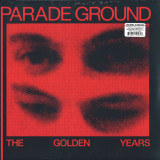
Parade Ground - The Golden Years (2025 Remaster)

Parade Ground has always been the duo of brothers Jean-Marc and Pierre Pauly from Brussels, Belgium formed in 1981. Taking cues from Post-Punk, Coldwave, Dada and Surrealism, Parade Ground channeled suffering, tension and rage through pulsing synthesizers, skeletal guitar, severe bass and Jean-Marc’s expressive vocals as the most melodic and emotional instrument. The Golden Years is an 11-song, career-spanning collection of Parade Ground’s long out-of-print 7” and 12” singles as well as rare compilation tracks from the pioneers of electronic body music created during 1982-1988.

Parade Ground first appeared on the Nationale Rockmeeting LP in 1982, striking straight to the heart with the passionate plea “I Shut My Eyes.” Later that year the brothers met Daniel B. and Patrick Codenys of Front 242 beginning a collaborative partnership that continues to present day. In 1983 they released their debut 3-song 7” EP Moan On The Sly on the New Dance label, musically a hybrid of Joy Division and Fad Gadget. 1984 brought further explorations into the world of electronic body music with the 3-song Man In A Trance EP and 2 tracks on the live concert compilation Mask Promotion both records released on Front 242's Mask Music label. The following year the single Took Advantage/Moral Support 12” was released incorporating then, state-of-the-art modular synthesizers programmed by Daniel B. and back-up vocals from Flo Sullivan (A Formal Sigh, Shiny Two Shiny). Then in 1987 the brothers collaborated with Colin Newman of British post-punk band Wire, who produced and lent his vocals, guitars and keyboards to two songs ("Moans"/"Action Replay") while Daniel B. produced flipside "Gold Rush" on the Dual Perspective EP that stands alongside 80s anthems from Tears for Fears, Modern English, Echo & The Bunnymen. Finally in 1988 their debut album Cut Up was released on Play It Again Sam Records and featured the singles Strange World and Hollywood. In 1993 the brothers wrote and composed the vocals on two Front 242 albums Up Evil and Off. After 15 years of silence the boys released their second album Rosary in 2007 and continue to write new material and tour with their extensive catalog of dark dance classics. Each LP includes a 6-page press kit with lyrics, discography, photos and liner notes by Daniel B. of Front 242. The history of Belgian electronic music would not be complete without a trip through “The Golden Years” of Parade Ground.

В наличии на складе

Есть у нас в наличии и готов к отправке

20,59
KAU - III (RSD RELEASE)

Kau

III (RSD RELEASE)

10inchSDBANU1009
SDBAN ULTRA
21.04.2023

KAU is an instrumental project based in Brussels consisting of André Breidlid (drums), Matteo Genovese (bass) & Jan Janzen (keys). Representing various European backgrounds, their coming-together is in the spirit of the city they grew up in.

Taking inspiration from jazz, they create a head-bobbing atmosphere using bassy beats and catchy melodies. By implementing acoustic instruments, the trio stays true to an organic and rich sound, granting themselves the liberty for improvisation & spontaneous happenings. Influenced by artists like BADBADNOTGOOD & Christian Scott, their music is contemporary, powerful, and audacious.

The EP "III" is the collaboration between the three core members of the band and Maxime Dereux, talented French saxophonist already guested on "II". Having built strong musical ties over the course of the last years, the idea to make more music together arose naturally without a shadow of a doubt.

The result is a 4 track EP with a high concentration of powerful riffs and sharp themes. The title song 'Mad Max' perfectly represents madness incarnated. On "Moonwalker" they go to new places with ever-changing melodies and sax lines. 4 minutes of holding on to your seat in anticipation of the next measure.

This EP also features Brussels born and bred rapper "Jay MNG" who has made a name for himself around many concert halls & festivals in Belgium. Having collaborated notably with Commander Spoon and Kuna Maze, the polylinguistic rhymes of Jay MNG left a mark on this emerging music scene. Enraged, banging in whatever language that may be, Dutch, French or English, he manages to make a massive impact on the atmosphere of the tracks and add his own flavour.

В наличии на складе

Есть у нас в наличии и готов к отправке

13,87
Hassan Ideddir - Atfalouna EP

Hassan Ideddir’s 1989 single “Atfalouna” sees an expanded repress courtesy of Dark Entries. Born to Berber parents in Morocco, Ideddir began making music at the age of 10 after being discovered singing in the stairwell by his school’s headmaster. Encouraged by his peers, he began playing concerts, and his status grew. In 1987, he played a string of sold-out concerts in Casablanca, Rabat, and Marrakesh, in support of a children’s charity. The success of these concerts secured him a record deal, and he went to Paris to record his debut single “Atfalouna” in 1988.

Released in 1989 on WEA, “Atfalouna” is a dense slab of multi-genre pop. An opening wash of digital synths and reverberant vocals quickly falls away to a cascade of orchestra hits and pulsing electronic drums; the monotone chant-rap of a female chorus collides with Ideddir’s soaring melismatic vocals, pleading against the injustice and hunger in the world. While Hip-Hop and New Beat borrowed tropes from Arabic music, “Atfalouna” inverts the gesture, resituating orchestra hits and sampling techniques within a Moroccan music framework. A shorter instrumental version follows, which preserves the female vocals. Also included are two tracks not on the original 12”. “Ibina” is a moody, downtempo instrumental that sounds like a cult Italo B-side. The record closes with “Ydouchababe”, an electro number driven by funky guitars, electronic claps, huge horn riff. Here, Ideddir sings of a youth festival honoring Hassan II, former king of Morocco.

All songs were remastered by George Horn. The sleeve is a replica of the original 12” cover art, featuring Ideddir set in a cheeky collage of clocks, columns, and camels. Also included is a postcard with a photo of Hassan, as well as lyrics in both Arabic and English. We will be donating 100% of proceeds from this release to Sphere who provide support to the young queer community across Ukraine and the Palestine Children's Relief Fund who help provide urgent humanitarian care for Gaza's children.

В наличии на складе

Есть у нас в наличии и готов к отправке

12,56
Lawrence English - Observation of Breath

Do you remember the last time you were breathing consciously? Either way, you are likely doing it now. On his new album Observation of Breath« for the Swiss-based Hallow Ground label, Lawrence English worked exclusively with an organ for four compositions that are exercises in »maximal minimalism,« as their creator himself notes in a nod to Charlemagne Palestine, who coined this term. While it seems somewhat fitting that those four pieces based on a steady flow of air were conceived and recorded in a situation of accelerated standstill caused by a respiratory disease, the Room40 founder is not so much concerned with capturing the zeitgeist than rather incorporating the spirit of time itself. »It is a record about presence and patience,« he explains. Exploring the unique sonic affordances of a singular instrument, »Observation of Breath« is not only devoted to the durability of sound but also to its density. That it marks his debut on Hallow Ground after having shaped its sound by mastering most of the label’s releases in recent years is just as fitting then as its release following albums by Kali Malone and FUJI|||||||||||TA, whose innovative work with organ instruments have facilitated a rediscovery of their possibilities.English’s compositions however are neither directly indebted nor responding to these musicians. His exploration of the organ’s many facets started a decade ago when the composer was given access to an instrument built in 1889 that is presently housed at The Old Museum in Brisbane. After it had already played a crucial role on his seminal albums »Wilderness Of Mirrors« and »Cruel Optimism,« last year’s self-released »Lassitude« was the first record that English entirely composed and recorded with that instrument. »During the soft lockdowns, I spent many days playing to an empty concert hall, recording the pieces that became ›Lassitude‹ and then, this album,« says English in regards to an unfortunate situation that fortunately provided him with time and space—two major themes but also key qualities of the four new compositions. In this sense, he goes on, »Observation of Breath« resolves a number of the questions originally raised by »Lassitude.

нет на складе

Закажите сейчас, и мы закажем товар для вас у нашего поставщика.

24,16

Последний логин: 58 дн. назад
Hughes De Courson - Mozart L'Égyptien
 
9

Halfway between the West and the East, Mozart l'Égyptien was born from the idea of producer Hugues de Courson and Ahmed El Magghrabi to create a dialogue between Mozart's work and the richness of Egyptian music. Released in 1997, this album became an essential reference in the history of musical fusion, enjoying worldwide success. It is now available for the first time on double vinyl, accompanied by a 4-page bilingual booklet (English/French) recounting the genesis and history of this unique project.

AVAILABLE FOR THE FIRST TIME ON VINYL ● 4-PAGE BOOKLETAVAILABLE FOR THE FIRST TIME ON VINYL ● 4-PAGE BOOKLETAVAILABLE FOR THE FIRST TIME ON VINYL ● 4-PAGE BOOKLET

AVAILABLE FOR THE FIRST TIME ON VINYL ● 4-PAGE BOOKLET


j 10. Ouazat al Kahira – " L'Oie du Caire " [Mozart]
[k] 11. Symphonie égyptienne [Mozart]
[Mozart / Traditionnel]

Сделать предзаказ05.12.2025

он должен быть опубликован на 05.12.2025

43,66

Последний логин: 2026 г. назад
LOS Z-66 - LOS Z-66

LOS Z-66

LOS Z-66

12inchMR488
MUNSTER
07.11.2025

For the first time ever, the only full-length album by Spanish soul and garage legends Z-66 is being reissued. Z-66's signature blend of powerful soul, psychedelia, and pop-clearly influenced by bands like The Move, Stones, Vanilla Fudge, and Blood, Sweat & Tears delivers a bold, modern sound that remains fresh and compelling. Unlike other Spanish bands of the time, Los Z-66 enjoyed unique conditions that allowed their sound to stand out as one of the most advanced on the local scene in the late 1960s. As was the case with many other groups, their repertoire for entertaining discotheques had to include the hits of the moment and was not always open to the songs of the most daring international bands, which was the sound that most stimulated the musicians. In the case of Los Z-66, being based in Mallorca meant they had privileged access to hard to-find records, imported by foreign tourists, and to a much more modern atmosphere than in other parts of the country. Songs in Italian and French soon gave way to English hits by the Animals, the Stones, and the Beatles. But it was the offer received from Mike Jeffries, manager of Jimi Hendrix, the Animals, and others, to serve as the house band at the newly opened club Sgt. Pepper's that allowed the group to raise their live performances to a level rarely seen in these parts... They even soon incorporated the distorted sound of fuzz into their guitar when they received a fuzz face pedal as a gift from Jimi Hendrix himself, who was invited to play at the club's opening! Their excellent blend of stunning soul, psychedelia, and pop became their hallmark, not only in the band's concerts but also in the handful of singles and EPs they released on the Regal label. We are now re-releasing for the first time their only full-length album, originally published in 1969, which is actually a compilation of songs previously released in 45 rpm format, complete with two bonus tracks not included on the original LP plus a booklet with liner notes and rare photos.

Сделать предзаказ07.11.2025

он должен быть опубликован на 07.11.2025

22,27

Последний логин: 2026 г. назад
O.N.E. - WELL ACTUALLY...

O.n.e.

WELL ACTUALLY...

12inchAPRLP153
APRIL RECORDS
17.10.2025
  • Robespierre?
  • Berio
  • Kaldur Vindur
  • Cipher
  • Well, Actually
  • Oslo
  • Fount
  • Ry
  • Sneaking Around

Leading Danish contemporary jazz label April Records is proud to present Well, actually..., the third album from Polish acoustic jazz quartet O.N.E. Grounded in the spirit of democracy andcollective improvisation, the album offers a tightly woven set of original compositions that blur the lines between modal jazz lyricism and the raw energy of free improvisation.The band name O.N.E. is a clever double entendre: in Polish, "one" (pronounced oh-neh) means "they" in the feminine plural - an apt nod to the all-female lineup. In English, of course, it signifies unity. Both meanings reflect the band"s egalitarian, leaderless approach and cohesive group sound.Almost three years after the recording of their previous release Entoloma(Audio Cave), the group reunited in December 2024 at Studio S4 in Warsaw to record a fresh set of ten compositions. Spread over two sides, the album captures the continued evolution of a band that thrives on interaction, trust, and shared purpose - even in a society fractured by post-pandemic socio-economic uncertainty and political ambiguity. Featuring contributions from all four members - pianist Kateryna Ziabliuk, saxophonist Monia Muc, bassist Kamila Drabek, and drummer Patrycja Wybranczyk - the recordreflects their commitment to artistic democracy. Each voice is given space, yet the music always feels greater than the sum of its parts. Even on the miniature solo track solo form, the other three players remain present, supportive, and responsive. From Ziabliuk"s percussive piano textures and dreamlike voicings on tracks like Osloand Berio, to Muc"s expressive, woody tone on alto and baritone sax, each piece explores dynamic interplay and shifting emotional landscapes. Drabek"s resonant, grounded bass - by turns lyrical and propulsive - provides a central thread, while Wybranczyk"s drumming fizzes with precision and imagination, as heard on Cipherand the angular closer Sneaking Around.Together, these four distinctive creative forces have developed a shared language built on mutual respect, long-term collaboration, and deep listening. Their concerts across Europe (including Jazzahead, B-Jazz, Umea, and the Edinburgh Jazz & Blues Festival) haveaffirmed their standing as a boundary-pushing group with something new to say.


[f] [SOLO FORM]

Сделать предзаказ17.10.2025

он должен быть опубликован на 17.10.2025

23,11

Последний логин: 2026 г. назад
DIANE DENOIR & EDUARDO MATEO - INEDITAS
  • Je Suis Sans Toi
  • Rendez-Vous D'automne
  • La Dernière Valse
  • Le Lendemain
  • Un Amour, Un Sourire, Une Fleur
  • Corcovado
  • Gua De Beber
  • Berimbau
  • Vivo Sonhando
  • Fever
  • Garota De Ipanema
  • So Nice
  • Las Flores Nuevas
  • Y Hoy Te Vi
  • Esa Tristeza
  • Mejor Me Voy

Born as Diana Reches, Diane Denoir made her debut as a singer in 1966, backed by Eduardo Mateo on guitar. Influenced by Françoise Hardy and Astrud Gilberto, along with her own unique style, she performed a special blend of chanson française, bossa nova (sung in Portuguese, English, and French), and jazz. By then, Mateo was already a well-known guitarist in the Uruguayan music scene and a sought-after arranger. He was also beginning to establish himself as an incredible songwriter, connecting different musical universes in unique ways. The two formed a fruitful artistic partnership that lasted until the early seventies. This album, originally released in 1998 on CD, is a compilation of various unreleased recordings from different sources (concerts, radio and TV recordings, homemade tapes) made between 1966 and 1968. It is a unique document that showcases their incredible musicianship and creativity in their early years. The duo swings from bossa nova classics like "The Girl from Ipanema" to the rhythm and blues of "Fever," including chanson française standards like "Le lendemain" and "La Dernière Valse." The album also features earlier versions of the three best-known Mateo songs performed by Diane: "Y hoy te vi," "Esa tristeza," and "Mejor me voy," all of which were inspired by Diane. Inéditas unveils a new dimension of South American music from an unforgettable era.

Сделать предзаказ05.09.2025

он должен быть опубликован на 05.09.2025

35,50

Последний логин: 2026 г. назад
Wishbone Ash - Argus LP 2x12"
  • A1: Time Was
  • B1: Sometime World
  • B2: Blowin' Free
  • C1: The King Will Come
  • C2: Leaf And Stream
  • D1: Warrior
  • D2: Throw Down The Sword

Wishbone Ash reigned supreme through the 1970s — centered on inspired musicianship, joyful spirit and inventive songs. Their concerts were uplifting and their recorded work sublime. Argus remains a stunning high point in the band's startling repertoire. Argus was a 1972 tour de force, a hard-rocking masterpiece that has gone on to have a huge impact on rock bands moving forward. If you've never heard Argus, you've surely heard music that it inspired.

The British quartet's trademark harmony guitars became a touchstone for many: Thin Lizzy, Iron Maiden, Opeth, and Lynyrd Skynyrd have all acknowledged an Ash influence, and tracks such as Lizzy's "The Boys Are Back in Town," Maiden's "The Trooper," and even Steely Dan's "Reeling in the Years" all have twin-guitar moments that hark back to Argus. But Wishbone Ash were different from the start. They were never strictly a hard rock band; their soaring vocal harmonies and musical grandeur placed them close to progressive rock.

But they weren't strictly prog either: They had no keyboards, no real classical influence and weren't into side-long suites. Their roots were in the blues, and their calling card was twin lead guitars in harmony (played in the original lineup by Ted Turner and Andy Powell). Even the hardest Ash rockers — like "Blowin' Free," the most famous track from Argus — had an ethereal touch. They could rock the big stages, but they did it with subtlety and grace. This is reflected perfectly in the classic album sleeve by prog-associated designers Hipgnosis: The front cover shows a Greek sentry — the "argus" of the title — staring off into the distance. It's a mythic, old-world kind of image until you look closely at the back cover, and see that he's heralding the arrival (or perhaps watching the departure) of a spaceship.

Two worlds colliding. Exactly what the band and album were all about. By the time of Argus, Wishbone Ash were stars in England and cult heroes among Anglophiles in the US. What made Argus a step forward was its flow of moods. The songs don't run together, but there's an emotional connecting thread from the album's somber beginning to its heroic end. The band insisted at the time that lyrics were something of an afterthought: Shortly after its release, main lyricist Martin Turner told NME that he wrote them mainly to fit the mood of the music: "The music that was coming out was very English, very medieval, and the lyrics had to reflect that." Added Powell at the time, "The expression comes out in the guitars. We wouldn't play it if it didn't express something." Now, Analogue Productions has applied all of its vaunted craft and technical expertise to make this epic album shine! Two 45 RPM LPs pressed on virtually silent 180-gram vinyl at Quality Record Pressings make the remastered audio sparkle. Quieter lyrical sentiments and softer musical passages are rendered precisely, while majestic riffs and fist-waving anthems fully reveal the energy of the music! Argus isn't just another rock record — it's a journey through a sonic landscape rich with depth, emotion and technical prowess. It's the album that solidified Wishbone Ash as masters of twin guitar harmony. Discerning audiophiles will find Argus an essential addition to their record collection. It's a masterclass in sound engineering that fully captures the intricate interplay of dual guitars with pristine clarity and a warmth that only analog recordings can provide.

Сделать предзаказ31.08.2025

он должен быть опубликован на 31.08.2025

88,19

Последний логин: 2026 г. назад
YU HAYAMI - Tokeruyouni Kiss Me / Boogie Woogie Love Train
  • A1: Tokeruyouni Kiss Me
  • B1: Boogie Boogie Love Train (English Version)

Selected songs from Yu Hayami's album "Delicacy of Love" released in 2016, are now available on vinyl from SLENDERIE RECORD, a music label
led by Takashi Fujii!

Contains two songs "" Tokeruyouni kiss me"" a masterpiece with lyrics by Yu Hayami, music by Takashi Fujii, and arrangement by Ken Tomita, and "Boogie
Boogie Love Train (English Version)" an English cover of Anne Lewis' "Koi no Boogie Woogie Train" which was not included on the album.
Experience the charm of the songs anew with the sound that only an analog record can provide. Limited quantities available, so don't miss out.

Yu Hayami Profile
Made her debut as a singer in 1982 with "Isoide! Hatsukoi".
Has had many hits, including "Natsuiro no Nancy" and "Passion"
Yu Hayami spent her childhood in Guam and Hawaii, and is bilingual, fluent in both English and Japanese.
Graduated from the Department of Japanese Culture, Faculty of Comparative Culture, Sophia University. In 1992, she participated in the Earth Summit held in
Rio de Janeiro, Brazil, and is active on a global scale.
She is also a certified wine expert and dance fitness ZUMBA® instructor. She has a diverse range of charms not only in music but also in lifestyle.
In 2022, she will celebrate her 40th anniversary since her debut and release her best album, "Affection ~Yu Hayami 40th Anniversary Collection~".
In the summer of 2024, she released a new song, "DISCO de DISCO" (composition: DJ Night Tempo), which she wrote the lyrics for.
She currently appears regularly on NHK Radio's "Midnight Flight NEXT" and NHK World's "Dining with the Chef". She also hosts BS-TBS's "MUSIC X".
Her annual summer solo concert, "Natsuiro no Nancy Festival 2025" is scheduled to take place at Otemachi Mitsui Hall on July 13th.
In recent years, she has also been working on jazz, pursuing new musical possibilities through the fusion of pop and jazz.

Сделать предзаказ08.08.2025

он должен быть опубликован на 08.08.2025

29,37

Последний логин: 2026 г. назад
Various - Jeymes Samuel’s Spaghetti Western Collection 2x12"

"CAM Sugar is thrilled to present Jeymes Samuel’s Spaghetti Western Collection, a selection of rare cuts from Italian Western film soundtracks (1963–1972), curated by the acclaimed father of the contemporary Spaghetti Western genre, BAFTA-winner director (The Harder They Fall, The Book of Clarence) and singer-songwriter Jeymes Samuel (The Bullits, Executive Music Consultant for The Great Gatsby alongside Jay-Z and Baz Luhrmann, as well as collaborator of Gorillaz and Talib Kweli, Jay Electronica). The English artist has also supervised the art direction of the products – painting the cover artwork by hand – compiled the music selection and produced two new original tracks. 2-LP DELUXE VERSION 2LP, a 20-track deep dive into the CAM Sugar catalogue casting a light on the trademark Italian sound that shaped Spaghetti Western, the legendary film genre birthed 60 years ago from the brainchild of Sergio Leone A Western Saloon Inspired Box Set with additional artwork for the box set. Exclusive 7” featuring an original song written and composed by Jeymes Samuel and an instrumental version of the song. Exclusive 10” featuring an original song written and composed by Jeymes Samuel with a CAM Sugar Sample and an unreleased poem by Regina King. Exclusive Official and unreleased story board from The Harder They Fall by Dwayne Turner Exclusive Interviews by Jeymes Samuel with The Harder They Fall protagonists Regina King and David Oleyowo, included in a booklet that will also feature content from the CAM Sugar Archives: Original Scores and Movie Posters One Dollar mini poster customized with Jeymes Samuel’s portrait in pure Spaghetti Western style THE STANDARD 2LP and CD versions:Featuring the 20 tracks selected by Jeymes Samuel and the exclusive booklet, including interviews By Jeymes Samuel to The Harder They Fall protagonists Regina King and David Oleyowo as well as content from the CAM Sugar Archives: Original Scores and Movie Posters.
"

Сделать предзаказ20.06.2025

он должен быть опубликован на 20.06.2025

115,92

Последний логин: 2026 г. назад
JESS SAH BI - JESUS - CHRIST NE DECOIT PAS (TAPE)
  • A1: Ile De Gorée
  • A2: Il Veut Marcher Avec Toi
  • A3: Y Vou Balé Va
  • B1: Séhé Voulé
  • B2: Fortifie-Toi
  • B3: Il Veut Marcher Avec Toi (Remix)
  • B4: Loué

Jess Sah Bi is well-known as half of the legendary duo Jess Sah Bi & Peter One who brought homegrown Country-Americana to the West African masses with their smash debut Our Garden Needs Its Flowers in the mid-1980s. Touring stadiums and reaching listeners worldwide, their music has racked up millions of spins on YouTube and remains imprinted in the hearts of Ivorians of a certain age. ATFA reissued their album in 2018, garnering critical acclaim from publications including Pitchfork and Rolling Stone and reaching a new generation of listeners outside Ivory Coast (Cote d'Ivoire). Sometime in the early 90s, Die Sahbi - or Jesse, as he known to friends-became gravely ill with an unknown ailment and almost died. He visited various doctors and all kinds of religious healers and nothing helped. One day he went down to an Evangelical Christian revival in his neighborhood. They prayed over him and he was delivered. He says, "Their prayers helped chase out whatever demons and unhealthy spirits were inside me. After that my illness went away. When I went to the United States a few months later on an exchange program I wanted to make music to thank God because I was saved." He recorded an album of music praising God in order to honor a promise he made to himself at the depths of his desperation in the hospital. The album Jesus-Christ Ne Deçoit Pas Jesus Christ Does Not Let Us Down came out in 1991 and sold around 3000 cassettes in Ivory Coast. The master tape was lost along the way so the recording has never been on digital platforms until now. Jesse didn't have much time to record while visiting South Carolina, hence the relatively short album, 6 songs including two reprises for filler. A local pastor connected him with a studio and some American musicians (Robert Fortner and Gary Davis) to help. They added acoustic guitar, percussion and keyboard accompaniment to Jesse's soaring French and Gouro vocals, harmonica and finger-picked acoustic. The resulting recording is deeply soothing and contemplative music that perfectly compliments the songs already embraced by millions. But he had to find the rest of the studio expenses-$600 total-which he secured drawing cartoons for UNICEF. Jesse is Ivory Coast's first political cartoonist, a vocation for which he was widely celebrated at the time. It also made him a few enemies which lead to him leaving the country permanently a few years later. Jesus-Christ Ne Deçoit Pas is Jess Sah Bi's first and only gospel album. Fortunately, fans responded with enthusiasm: widespread radio airplay and concerts followed, along with a growing solo profile in the country. The first big gospel artists in Ivory Coast were the duo Mathieu et Constance, who emerged in 1989. There was a bigger gospel music movement in English-speaking counties like Ghana and Nigeria (Christians make up roughly 40% of the population in Ivory Coast, slightly less than Muslims). Jesse didn't have any intention of working in Christian music but he realized, "You don't make music to make money-you want to send a message." In the years since Jesus-Christ's release, gospel music in Ivory Coast has grown to become a key part of music culture in the country. Spiritual music appears in community actives across the public and private spectrum from religious gatherings and parties to television broadcasts and music festivals. And, as it has evolved and indigenized locally, gospel music has picked up elements of traditional Ivorian music, reggae and soul. The album ultimately precipitated the demise of the duo, who were soon separated geographically as Peter One relocated to Nashville. He went on to become a nurse and release a successful solo album on Verve following the ATFA collaboration. Nowadays Jesse lives in the Bay Area and continues to record and perform music wherever and whenever he has the chance. He is publishing a new book of humorous cartoons in 2025 and his most recent album Never Give Up came out in 2020

нет на складе

Закажите сейчас, и мы закажем товар для вас у нашего поставщика.

14,08

Последний логин: 11 мес. назад
Dalton - Alech 7"

Dalton

Alech 7"

7"-VinylHABIBI001
HABIBI FUNK RECORDS
29.11.2024

Dalton was a band from Tunis, the capital of Tunisia. They came together as a band around 1968 when most of the members studied together at the University of Tunis. The band had five members. Faouzi Chekili on guitar, piano and vocals, Ridha Kouhen on bass guitar, Mustapha Rehouma and sax and percussion, Sadok Gharbi on trumpet and vocals and Skaner Alim on drums and vocals. They were active in the local scene, playing music that was heavily influenced by American soul and funk and at the same time regional musical traditions. In the early 70s the band got a regular gig at a beach hotel called Sahara Beach Resort on the coastline of Tunisia. They had six month contracts for a couple of years in the early 70s and during that time they would play every single night of the tourist season. While the hotel gig required the band to play sets leaning towards tourist entertainment, the regular work helped put some money into the band's accounts. Using those funds the band was able to travel to Rome to record their one and only 7' single release "Alech" around 1971/1972. The band eventually dismantled in the mid 70s and returned briefly as a new group with new members in the late 1970s under the name Carthago but that is a different story.
"That "Soul Brother" is my jam.... !!!!" Lefto
The single itself impressed us heavily when we first stumbled upon it through French collector Victor Kiswell. While the b-side "Soul Brother' sounds like a Tunisian version of modern soul / AOR with it's English lyrics and lush arrangements, the title track "Alech' is the one that will get every party started. An infectious 3/4 rhythm, a great horn arrangement and brillantly layered vocals that made us think of Brazillian music or the Georgian groove band Gaya. Luckily Faouzi Chekili, the former band leader and composer uses social media communication so he was easy to track down. He is still active as a renowned musician in the Tunisian jazz scene and remains active recording and playing concerts both in Tunisia and internationally.

нет на складе

Закажите сейчас, и мы закажем товар для вас у нашего поставщика.

12,40

Последний логин: 15 мес. назад
Kyle Shepherd Trio - A Dance More Sweetly Played
  • Liberation Movements
  • Teardrop
  • A Dance More Sweetly Played
  • For Oumou Sangaré
  • Shozi
  • Neo Marabi
  • Amada Part 1
  • Amada Part 2

"Join the Kyle Shepherd Trio on 'A Song More Sweetly Played' as they explore, collaborate and improvise on the ‘songs we like to play’. The album’s title is a dedication to the celebrated South African artist William Kentridge, with whom Shepherd collaborated on a joint-work “Waiting for Sybil” that has toured world-wide. In addition to ten Shepherd originals, perhaps most unexpected is the inclusion of an exquisite reading of Massive Attack’s ‘Teardrop’ and a deconstructed take of Journey’s ‘Don’t Stop Believing’, a favourite rock anthem that Shepherd describes as a ‘guilty pleasure’.

‘The inclusion of the Massive Attack and Journey tunes – that’s something out of character to me,’
observes Shepherd. The selection rests well within the grand jazz tradition of repurposing popular songs as vehicles for improvisation, thought, and pleasure. ‘It just came down to playing some tunes that we like and we can flow with, so that we can be inspired and express ourselves in a very natural organic way,’ he says. ‘We walked away from the from the studio feeling like – you know, we actually really enjoyed playing this record! I felt less attached to any sort of predetermined concepts except that we would play some music that I wrote that we like – a selection of things that we like to play. It felt like a bit of a tonic – every musician gets a chance to breathe through the music, and the music just flows and moves as organically as we could make it.’

To hear one of South Africa’s foremost pianists play with intention, freedom and enjoyment, in the tradition and beyond it, is above all a gift to the listener, and Matsuli Music is proud to be able to share the Trio’s first album in a decade, A Dance More Sweetly Played.

Kyle Shepherd is one of South Africa’s leading jazz, film and theatre music composers and pianists of his generation, internationally recognised for his distinctive compositional style and performances. He was the Standard Bank Young Artist of the Year for Jazz in 2014 and the UNISA piano competition winner in 2019, and has performed in 28 countries around the world, including 11 concert tours to Japan."

The Kyle Shepherd Trio: Kyle Shepherd (Piano), Shane Cooper (Double Bass) and Jonno Sweetman (Drums).
All Compositions by Kyle Shepherd except “Teardrop” by Massive Attack and “Don’t Stop Believing” by Journey.
Recorded May 2024 at Sunset Studios, Cape Town
Recording Engineer - Jürgen von Wechmar
Mixed by Martin Ruch.
Mastering by Frank Merritt.
Artwork and Design by English Designed and produced with support from the Baxter Theatre, Cape Town.

Сделать предзаказ15.11.2024

он должен быть опубликован на 15.11.2024

28,53

Последний логин: 2026 г. назад
Various - Someone Like Me LP 2x12"

A humanity-reminding suite of miracle moments, Someone Like Me unites a geographically unbound cast of real people in pursuit of a meaningful connection. Taping their lived experience in economic studios in quiet English counties, Pacific Northwest woodland retreats and the big city bustle of Sydney and Los Angeles, these kindred spirits rendered sheer beauty in the process. Custom pressed folk songs of love, loss and the lord saviour.

Illuminating minor works from seasoned players such as former Syndicate Of Sound chart-topper Sharkey and late-era Canned Heat lynchpin James Thornbury, the collection simultaneously honours the fleeting amateurism of hobby musicians. With their one shot at tangible vinyl, freshman Lynne Ann Kingan realised her loose bubblegum rocker on campus time, while U.S. Navy recruit Fred Potts cut his unconditionally serene ballad remotely stationed on a Spanish naval base. Spartan production continues to reign with Jon Betmead’s hair-raising gospel, howling into infinite space, and Goldrust’s stripped back garden hymn.

Throughout the hour-long reflection, faith has an intermittent yet revelatory presence, most overtly with the divine choral soul of Seventh-day Adventist quartet Remnant. More subtly, Gary Ramey and Jim Kennedy both turned to song in their spiritual quests, offering their all to a universal power. An irrefutable compilation cornerstone, the National Office For Black Catholics showcased Charles Murphy’s lionhearted account of the Black experience at a 1971 concert. Five years earlier, high school seniors The Superwomen would use their hauntingly angelic harmonies to address racial inequity with a breathless take on ‘Lowlands’.

Reaching the furthest corners, Someone Like Me secures the inaugural licence of three homespun masterpieces. Discovered by fluke in the digital haystacks of Youtube and Soundcloud, Jim Huxley’s bedroom pop earworm melds peacefully into Charlie Webster’s synthesized reverie. Meanwhile, Hollywood’s John Agostino introduces us to the bizarre world of tax scam records, with the artist only now learning that his tender psych-folk demos were leaked via a 1977 bootleg.

Compiled and lovingly restored by armchair digger Mikey Young (Eddy Current Suppression Ring/The Green Child), Someone Like Me pays due service to seventeen rarefied journals of truth and devotion. Adorned with visual artist Chris Fallon’s figure and flora dream extractions, the uniting songbook is further detailed by expansive track-by-track liner notes and a forward from San Franciscan poet Rod Roland.

нет на складе

Закажите сейчас, и мы закажем товар для вас у нашего поставщика.

22,65

Последний логин: 69 дн. назад
Ravi Shankar - Shankar Family and Friends LP

Out of print as a stand-alone release for decades since its original 1974 issue. Produced by George Harrison, Shankar Family & Friends is an almost-forgotten masterwork – an emotional and sonic pact between two like-minded souls to both advance their spiritually minded bond and unite musical styles, cultures, and sounds in wondrous fashion Contributions from Ringo Starr, David Bromberg, Billy Preston, Nicky Hopkins, Jim Keltner, Klaus Voorman, and a host of virtuosic Indian musicians add to a diverse album that melds Eastern and Western traditions; encompasses jazz, funk, bhajan, Indian, and pop; and represents the spirit and breadth of Harrison's Dark Horse Records imprint.

Memorable contributions from an A-list of American and English musicians — Ringo Starr (drums), David Bromberg (electric guitar), Billy Preston (organ), Nicky Hopkins (piano), Jim Keltner (drums), Klaus Voorman (bass), Robert Margouleff (Moog), Malcolm Cecil (Moog), Tom Scott (saxophone) included — add to the richness of a set that melds Eastern and Western traditions. These “names” mesh with a host of Indian virtuosos — Alla Rakha, Ashish Khan, Kamala Chakravarty, Hariprasad Chaurasia included — who turn Shankar Family & Friends into a journey laced with percussive, string, and vocal components that aren’t soon forgotten.

Throughout, Shankar Family & Friends remains true to its title — a mesmerizing record named to reflect the group participation approach of its creators. The idea started when Shankar told Harrison about a ballet he wrote. The Beatle, who first met Shankar in June 1966 — roughly a year after Harrison became interested in Indian music after overhearing it in a restaurant while filming Help! — immediately was convinced they needed to record it. Harrison’s staunch admiration of Shankar and serious approach to Eastern styles are reflected throughout the album.

Indeed, for Harrison, Shankar Family & Friends marks the culmination of a years-long effort to master the sitar, study Hinduism, and incorporate elements such as drones, unusual chords, and expressive picking into his own songs. The seeds of this unique collaboration can be heard in Beatles works such as “Norwegian Wood,” “Love to You,” and “Within You Without You.” Both musicians were also fresh from performing at the 1971 Concert for Bangladesh shows. Yet Shankar Family & Friends remains entirely unique in each visionary artist’s history — and ultimately, led to a collaborative tour Harrison and Shankar staged across North America.

Encompassing jazz, funk, bhajan, Indian, and pop, Shankar Family & Friends is thematically split into halves. Side One reveals Shankar’s uncanny ear for melody — even when applied to Western forms. The lead-off “I Am Missing You,” the first single ever released by Dark Horse Records and reportedly the first pop composition Shankar completed, underscores his skills as a composer and global ambassador. Beautifully sung across three octaves by his sister-in-law, Lakshmi Shankar, the devotional song features multiple drummers and production that mirrors Phil Spector’s Wall of Sound approach. Harrison plays autoharp and guitar; Starr sits in on drums; Scott handles flute and soprano saxophone. It’s the inviting start of a musical adventure teeming with color, majesty, and mysticism.

A second version of the track — designated with a “(Reprise)” tag — appears minutes later. Unfolding in different ways, it follows a folk ballad structure stitched together with Indian instrumentation. Here, according to Shankar, the musicians “attempted to convey the sounds and atmosphere of Vrindavan, the ancient holy place where Krishna grew up.” Both renditions speak to the cross-continental fusion that came so naturally to Harrison and Shankar, whose oversight on the side’s other vocal tracks ensures listeners familiar with Western methods gain easy access to the hypnotic allure of his native country’s music.

Nowhere is this more evident than on Dream, Nightmare & Dawn (Music for a Ballet), the side-long piece that served as the genesis for Shankar Family & Friends. Launched with an airy overture and unfolding across three movements, the mostly wordless suite features everything from call-and-response interplay and classical lyricism to uptempo dance figures, stacked rhythms, and intoxicating grooves. Blurring the lines between contemporary and traditional, and Western and Eastern, the inspirational work is the exclamation point on a record that defined “world music” well before the term became co-opted as a catch-all genre.

Сделать предзаказ31.03.2024

он должен быть опубликован на 31.03.2024

61,77

Последний логин: 2026 г. назад
VARIOUS - KIOSQUE D'ORPHEE - UNE EPOPEE DE L'AUTOPRODUCTION EN FRANCE - 1973/1991 LP 3x12"

"For a long time, I'd come across these discs without really understanding what connected them, apart from a button and that famous logo designed by René Dessirier. Then, with a little more digging, I discovered the "self-production" link. For choirs, schools, folk singers, young pop groups, popular homes and even great composers who engraved unique copies of certain recording sessions...

The French equivalent of the English "Derby Service", the Kiosque d'Orphée, formerly at 7 Rue Grégoire de Tours in the 6th arrondissement, was taken over by Georges Batard in 1967 and moved to 20 Rue des Tournelles in the 4th arrondissement of Paris. The adventure lasted until 1991. Georges Batard was a sound engineer who used a Neumann tube engraver to engrave acetates from the tapes he received, before printing the precious vinyls in the press factories of the day, where he was able to produce very small runs of between 50 and 500 copies.

Of course, there were other structures for releasing his records, such as Voxigrave or, later, FLVM, but none of them had so many records in their catalog. Le Kiosque d'Orphée was neither a label nor a publisher, but a structure that allowed you to press your own vinyl, at a time when it was quite an adventure to get your first 45 rpm or 33 rpm album released!

Georges Batard was described as passionate and conscientious. His son, bassist Didier Batard, wrote of him:
"Georges was passionate about recording and reproducing the stereo sound of his great passion, music. He paid close attention to distortion rates, signal-to-noise ratios, response curves, rise times and other damping factors in audio equipment. He was looking for the exact reproduction of concert hall sound in his living room (with the same sound level, if possible...). In the late '50s/early '60s, he found other sound enthusiasts in AFDERS (Association Française pour le Développement de l'Enregistrement et de la Reproduction Sonores). He became its honorary president. Every Saturday afternoon, its members met to test au- dio equipment. Their opinions were published in the monthly Revue du Son.

All you had to do was send in your tapes and choose the number of record copies you'd like to take home with you, so you could finally share your creations and, in a way, exist. You could opt for a generic sleeve, available in several colors, directly customizable with your name and credits, or you could design your dream sleeve yourself in your living room or at a printer's.

This "Do It Yourself" temple gave birth to some superb pouches. Stencilled, hand-written, illustrated with paintings, drawings, illustrations by friends or girlfriends of the time, photo prints hastily stuck in the middle of a blank, white sleeve, on which the traces of time would leave their imprints, so that collectors and the curious would come and buy them decades later, with the promise of a musical discovery, unfortunately not always fulfilled...

What most of these records have in common is the youth of their songwriters, whether or not they've had a career. Stories of buddies, of getting by and dreams of glory made up this catalog. Most of them were amateur productions, both in terms of the level of the musicians and the quality of the recordings, made on a two-track or, the ultimate luxury, a 4-track in a teenager's bedroom or parents' living room.

It was the beginning of the home studio, thanks to the advent of the Revox portable tape recorder. A bit of a shaky DIY system, but, in return, the luxury of setting no limits: one-sided tracks, no outside censorship, no artistic director, no manager, no Barclay or EMI/Pathé Marconi logos...

When you finally had your own record, you could give it away or sell it to friends, family or after concerts. You could also drop it off at the nearest record shop, with undisguised pride.

It was also a calling card that could be sent to radio stations or music labels, in the hope of launching a career...

Many of the protagonists in this story tried to sign with labels, but in those days, bridges were not so easy to build between one's hometown, or even one's village, and the major or more specialized label that might have released these records. At the time, the advertisements published in the press by the Kiosque d'Orphée opened up the field of possibilities for provincial composers. It was now possible to make their own record, without having to go through the process of signing with a label.

Some of the composers who have gone on to make a career have used this channel to release their first record or parallel projects (Claude Engel, Dominique A, Andy Emler, Michel Deneuve, Claude Mairet, Mick Piellard, Tristan Mu- rail...) and sometimes even single or very limited pressings of work or promotional copies (Bernard Parmegiani, Jef Gilson...).

This album is the conclusion of a long investigation, begun six years ago. It took a long time to find the records, scattered all over the place, in the homes of collectors and sometimes the musicians themselves, and then to listen to them, sometimes painstakingly, to unearth these moments of grace.

From this work, 23 tracks remain, but there are dozens of others that could have been included, so we had to choose, and the choice had to be as universal as possible. This selection is obviously not objective, but I hope you'll like it.

Today's music is raw, touching and powerful. "

Jean-Baptiste Guillot - Born Bad Records

Сделать предзаказ15.03.2024

он должен быть опубликован на 15.03.2024

35,50

Последний логин: 2026 г. назад
Astral Bakers - The Whole Story

The story of Astral Bakers is an obvious one. Four experienced musicians get together in the same room, and make music as if it were the first time. Some say acoustic rock, others say soft grunge. Songs in English, halfway between Big Thief, Supertramp and an unplugged Nirvana concert. Initially, Sage (formerly of Revolver), Theodora, Nico Lockhart and Zoé Hochberg know each other from having collaborated together on other tours and records. All have worked with artists as varied as Clara Luciani, November Ultra, Woodkid, Pomme and Revolver. Together, they crave something different: epiphanies and presence, friendship and purity. No demos, no re-recording: just circular listening, between two guitars (Sage and Nicolas) that converse with each other, a bass (Theodora) that holds time, and soft drums (Zoé)thatenfoldthewhole.Selected by Spotify for their RADAR program, and already acclaimed by critics,this10-trackdebutalbum,writteninalivesetting,isalreadymakingitsmarkonthe 2024 indie landscape.

Сделать предзаказ09.02.2024

он должен быть опубликован на 09.02.2024

31,89

Последний логин: 2026 г. назад
Svaneborg Kardyb - At Home (An NPR Tiny Desk Concert)

Svaneborg Kardyb are Nikolaj Svaneborg – Wurlitzer, Juno, piano and Jonas Kardyb – drums, percussion a multi award winning duo from Denmark, with a fast-rising international reputation and with an NPR Tiny Desk concert – number one on many artist’s wish lists - in the bag before even the release of their Gondwana Records debut album Over Tage last November.


Their beautiful, exquisite compositions draw on Danish folk music and Scandinavian jazz influences, resulting in a joyful melding of beautiful melodies, delicate minimalism, catchy grooves, subtle electronica vibes, Nordic atmospheres and organic interplay. All of this and more shines through on their NPR session, first broadcast in May 2022 on YouTube. But of course, not everyone watches YouTube and so here, remastered for vinyl and download, is a strictly limited to 1500 vinyl, four tracker - At Home (An NPR Tiny Desk Concert) featuring bespoke artwork from Gondwana Records’ Daniel Halsall.


Here is what Kara Frame had to say for NPR, “Svaneborg Kardyb's Tiny Desk (home) concert was recorded in the countryside of Djursland, Denmark. "You have to drive for a while on a gravel road, and then you come to a lovely old house surrounded by hills and a stream on one side and a very flat landscape on the other, where you can see 10 miles away," the band wrote to us, describing the location of the shoot. It's this place that inspired Svaneborg Kardyb's second album, Haven (or "garden" in English). "Haven celebrates places we like to be," the duo said.


The Danish jazz duo is composed of Nikolaj Svaneborg on the Wurlitzer, synthesizer and piano, and Jonas Kardyb on drums and percussion. Their instrumentation set-up is untraditional, with the drums and keys facing each other, a position that they play in on stage just as they do in Kardyb's kitchen and living room here. They open up their set with the title track from Haven, which begins with a quiet melody over an effervescent loop. The sound mimics the shimmy of leaves in the breeze.”

Сделать предзаказ26.01.2024

он должен быть опубликован на 26.01.2024

25,17

Последний логин: 2026 г. назад
TEHO TEARDO & BLIXA BARGELD - LIVE IN BERLIN 2x12"

The concert at Sonic Morgue (Berlin), opened by the song Nerissimo, was part of a series of European dates, culminating in the Berlin gig. A sort of homecoming for the duo that has made the Rome/Berlin axis a membrane continuously crossed by sounds and words in Italian, German and English. The reception given everywhere to songs like Mi Scusi, despite being sung in Italian, continues to excite. A Quiet Life, originally written for the film "A Quiet Life" directed by Claudio Cupellini, has severed some of the connection it had with the film because many now associate it with the final episode of Dark, the highly successful Netflix series. For many years Teho and Blixa have been playing live with Laura Bisceglia on cello and bells, Gabriele Coen on bass clarinet and, for the Berlin concert, the Oriel Quartett string quartet with Anna Eichholz and Kundri Schafer on violin, Robin Hong, viola, Alice Dixon, cello. The album cover image is a mixed media piece by Blixa Bargeld entitled "Aldebaran". Currently, Teho Teardo is busy on a long theatrical tour with famous Italian actor Elio Germano with two live performances of words and music: "Il Sogno di una cosa", freely inspired by Pier Paolo Pasolini"s novel of the same name, and "Il Paradiso di Dante", an original performance of acting, music and multimedia installations inspired by the XXXIII canto of the "Divine Comedy".

нет на складе

Закажите сейчас, и мы закажем товар для вас у нашего поставщика.

30,04

Последний логин: 22 мес. назад
Chas & Dave - Mustn't Grumble

Chas&Dave

Mustn't Grumble

12inchDEMREC1155
Demon Records
03.11.2023
  • A1: Poor Old Mr Woogie
  • A2: Bored Stiff
  • A3: Don’t Anyone Speak English?
  • A4: Turn That Noise Down
  • A5: Beer Belly
  • A6: Behave Yourself
  • B1: Ain’t No Pleasing You
  • B2: I Miss Ya Girl
  • B3: Lonnie D
  • B4: Wallop
  • B5: Rabbit

The whole of the UK mourned when Chas Hodges passed away in September 2018, and the parade of stars (including Eric Clapton, Joe Brown, Gary Brooker, Ralph McTell and Albert Lee) who performed at the tribute concert in December that year is testament to the regard in which Chas and his musical partner Dave Peacock are held.

Originally released on the duo’s Rockney record label in 1981, the “Mustn’t Grumble” album includes their two biggest hit singles – “Ain’t No Pleasing You” (# 2) and “Rabbit” (# 8) – as well as “I Miss Ya
Girl” and “Turn That Noise Down”.

This special edition has been mastered from the recently-found original ¼” production masters, and now also contains a newly-created inner sleeve. This features all the lyrics, photos, singles packshots and a brand new note by Dave Peacock himself about the writing and recording of the album.

Сделать предзаказ03.11.2023

он должен быть опубликован на 03.11.2023

27,69

Последний логин: 2026 г. назад
Stephan Meidell & Bergen Barokk - Temporal Gardening

Aurora Records proudly presents Temporal Gardening, featuring
composer and performer Stephan Meidell and the baroque ensemble
Bergen Barokk
The new album will be available on vinyl and digital platforms on15th of
September 2023.
Temporal Gardening was originally a commission written in 2020 for Bergen
Barokk. The idea was to explore using early music instrumentation in dialogue
with new electro-acoustic technology. The unique and remarkable ecology grew
from pseudo- baroque music playfully reimagined, reinterpreted, disassembled,
remixed, and resampled.
The trio has been expanded with drums, functioning as speakers for the
electronic manipulations of the ensemble. A double-bass recorder vibrates a subwoofer speaker mounted inside a bass drum, and a live sampled harpsichord
sounds through cymbals, gongs, and a snare drum. Meidell himself part takes as
a musician in the performance, doing live sampling and electronic contributions.
Musician-composer Stephan Meidell is a musical adventurer who, in a nomadic
fashion, improvises his way through a plentitude of styles. Meidell's music exists
where genres dissolve into fragments that canbe picked apartand combined in
new ways. He frequently combines sounds from electronic, acoustic, and
electromechanical instruments and machines and then recontextualises them
with his finely tuned intuition and sense of detail. Meidell has a plentitude of
releases and commissions, including with Erlend Apneseth Trio, Strings &
Timpani, Cakewalk, and TRIGGER on labels such as Hubro, Clean Feed, Playdate,
and Ideophone.
Bergen Barokk was established in 1994 and is today one of Norway's leading
early- music ensembles. The group has concertized and appeared in radio
broadcasts in Europe, Russia and USA. Their recordings on Simax Classics, BIS,
Bergen Digital Studio and Toccata Classics include German, English, Italian and
French repertoire. Bergen Barokk has collaborated with several ensembles
through the recent years, some of them are Pratum Integrum (Moscow),
Norwegian Soloists' Choir and Barokksolistene (Norway). Bergen Barokk has
performed in festivals like Festspillene i Bergen, Bach Festival of Philadelphia,
Moscow Early Music Festival and Janacek International Music Festival (Czech
Republic).

Сделать предзаказ30.09.2023

он должен быть опубликован на 30.09.2023

19,75

Последний логин: 2026 г. назад
Necrotted - Imperium LP

Necrotted

Imperium LP

12inch4255698500080
ADA
22.09.2023

English: Melodies that stay in the ear, with at the same time merciless speed and brutality and always a clear political message – this is what the modern death metal band NECROTTED from Southern Germany stands for now more than 15 years! Founded back in 2008, the band from Abtsgmünd (Baden-Wuerttemberg) has since grown to become a notable force in the scene, constantly thrilling their growing fan base and the music press with both their musical releases and their energetic live shows. In the time of their existence, NECROTTED have already released four albums with ‘Anchors Apart’ (2012), ‘Utopia 2.0’ (2014), ‘Worldwide Warfare’ (2017) and ‘Operation: Mental Castration’ (2021) and two EPs with ‘Kingdom Of Hades’ (2010) and ‘Die For Something Worthwhile’ (2019). In addition, the quintet has played hundreds of live concerts over the years on smaller and bigger stages in various countries. Now, the new album ‘Imperium’ marks another milestone in the band’s history. The LP is once again designed as a concept album and consistently develops the elaborate storyline of its predecessor in a substantial as well as in a visual way. Also, NECROTTED continue to tread experimental parts in a musical way. Their proven recipe of melodic guitar riffs, thundering blast beats and oppressive slams is joined by more and more black metal elements. In the lyrics, which are basically written in English, there are also more and more text passages in the German native language, which are performed as usual in banefully deep growls and strident screams. ‘Imperium’ will be released in September 2023 via the label Reaper Entertainment Europe and will almost certainly leave a resounding echo in the field of contemporary, diversified death metal.

Сделать предзаказ22.09.2023

он должен быть опубликован на 22.09.2023

28,99

Последний логин: 2026 г. назад
Bjarte Eike & Barokksolistene - The Playhouse Sessions LP 2x12"

From Alehouse to Playhouse Bjarte Eike and his barnstorming Barokksolistene capture the vital spark of Restoration London’s entertainment scene with a captivating new recording for Rubicon Classics! The Playhouse Sessions will be released on 23 September 2022 to coincide with Barokksolistene’s concert double-bill at London’s Southbank Centre.

‘A smattering of Purcell, dances from Playford’s Dancing Master, shanties, reels and ballads succumb to a nine-piece ensemble drawing on Baroque, jazz and folk styles for a no holds barred hooley of riotous improvisatory give and take,’ (BBC Music Magazine review of The Alehouse Sessions, August 2019)

London’s musicians, pushed in the 1650s, to the margins of society by order of Oliver Cromwell, found room for new forms of entertainment in city-centre taverns and alehouses. They remained there long after the restoration of the monarchy, performing sets of dances, theatre songs and bawdy ballads to audiences glad to be free from Puritan constraints on pleasure.

Norwegian violinist Bjarte Eike and his Barokksolistene have restored the spirit and substance of those long-forgotten performances with their Alehouse Sessions, hailed by The Times as ‘irresistible’ and ‘fabulously unrestrained’ by The Guardian. Five years ago the Norwegian violinist and his band scored a best-selling album with The Alehouse Sessions on Rubicon Classics. They return to the label with another compelling collection of music and words of the kind on offer more than three centuries ago at Henry Purcell’s favourite Westminster watering holes. The Playhouse Sessions, set for release on Rubicon Classics on 23 September 2022, reflects the uplifting energy and engaging emotional contrasts of Barokksolistene’s Alehouse performances.

“The album contains a sort of inner narrative that runs through the recording,” says Bjarte Eike. “It has become like a play in its own right, with each track being a small tale within a larger story.” The recording’s tracklist includes Eike’s beguiling arrangements of music from Purcell’s semi-opera The Fairy Queen and his own original compositions on words from the play on which it is based, Shakespeare’s A Midsummer Night’s Dream; popular songs and ballads such as ‘The Irish Washerwoman’, ‘I often for my Jenny strove’ and ‘The Three Ravens’; tunes from Purcell’s welcome odes and stage shows, Come ye sons of art and Dido and Aeneas among them; the ‘Willow Song’ from Shakespeare’s Othello; Eike’s own voice in Puck’s monologue from Act 5 of A Midsummer Night’s Dream; and John Dowland’s sublime air ‘Can she excuse my wrongs’.

London’s theatres were closed at the start of the English Civil War in 1642 and remained shut until the Restoration. Alehouses offered redundant musicians, actors and dancers a place to scrape a precarious living and soon became their creative refuge. “Although a few surviving theatres reopened in 1660 with the return of Charles II, there was little money around to rebuild those that had been demolished,” observes Bjarte Eike. “And a generation of musicians had already found an audience in places like the Black Horse in Aldersgate Street. So popular were their alehouse sessions that Cromwell tried to abolish them! But they outlived him and became part of Restoration musical life.” The form of a Barokksolistene Alehouse, he adds, is like a creative room. “Within its framework I can frequently refurbish the show with new contents. The Playhouse project is likewise an extension of the ever-evolving Alehouse Sessions. Together they tell the story of music and theatre in London during Cromwell’s time and after the Restoration. Of course there’s an historical context to what we do. But there’s also the practical context – which is even more important to me – of connecting with a contemporary twenty-first century audience. An Alehouse / Playhouse performance is not something for the museum; it's about music made in the present moment, just as it was in the London alehouses of Purcell’s day -- with their playhouses annexed to the rear of the beer-drinking saloons. The encounter of musicians onstage and the audience in the hall is the real magic of it. We have to fuse the audience into the action of our performance!”

The Playhouse Sessions will be launched on Friday 23 September with a late-night concert at the Purcell Room and a post-concert Alehouse Session in the foyer of the Queen Elizabeth Hall. Soprano Mary Bevan is set to join Eike and his Alehouse Boys for the first half of their Southbank Centre double-bill, offering unique interpretations of songs from Purcell shows and other hits from the late seventeenth-century London stage. “The Southbank Centre is a direct descendant of concerts given in the 1650s in the alehouses of London,” notes Eike. “These alehouses after all staged some of the world’s first public concerts. Later, after the Restoration, it became common for promoters to advertise alehouse concerts in the press and offer subscription tickets. Purcell and his fellow musicians were thus just as at home performing there as they were in the chambers of the royal court or in London’s new theatres.”

Bjarte Eike launched his Alehouse Sessions in company with like-minded musicians 15 years ago. The ensemble comprises a core of regular performers, all of whom have committed to memory a huge setlist of up to four hours of music. Typically they meet a day or so before a concert tour to share a meal and make music together; then next day, re-grouping thirty minutes before the show, they discover Eike’s select-menu for the evening. “That ensures that every show is fresh,” he notes. “I make sure we never repeat the same programme twice. It’s therefore essential to work with people who share my outlook and dare to adventure. We’re into a high-risk sport, with lots of traps and places where the unexpected appears - for good or for ill. And so the audience knows we’re vulnerable. But our skill is seen in how we re-act on the hoof to the unpredictable. That’s authenticity and honesty - and above all it’s a performance that’s genuine.”

Armed with a classical training and a background in folk music and improvisation, Bjarte Eike was drawn naturally to Early Music in all its stylistic variety. “I never really felt at home with only one genre,” he recalls. “Early Music allowed me to study profound, complicated compositions, but performing it has also opened up the chance of rebellion and uproar! Early music offers wide, multi-faceted areas of musical exploration for me. You find, for instance, links to different types of music wherever you look in seventeenth-century English repertoire. And I am fascinated by all these connections. They offer a foundation for the Alehouse Sessions and for all Barokksolistene performance more generally. Every member of the group plays, sings, dances and improvises without limitation. We’re all interested in the many different fields of being a stage performer and pushing hard at the ‘normal’ boundaries of what it means to be a classical musician.”

Сделать предзаказ30.06.2023

он должен быть опубликован на 30.06.2023

32,98

Последний логин: 2026 г. назад
MD Pallavi & Andi Otto - Songs For Broken Ships

MD Pallavi & Andi Otto first crossed paths on a theatre stage in India ten years ago. They started collaborating instantly and in 2016 MD Pallavi's mesmerizing vocals for the downtempo raga Bangalore Whispers warmed hearts and ears. Their musical relationship flourished with artistic residencies in Bangalore and Hamburg, their respective hometowns, and a concert tour in Japan. The collaborative track Six made ears turn again on Andi’s album Bow Wave (Multi Culti 2019). And now, years later, the fruits of this artistic endeavour are fully formed here on Songs for Broken Ships - the debut album of the duo.

The album presents an interwoven pop-aesthetic vision of the two artists with their contrasting musical backgrounds. It ranges from organically woven folktronica to cut-up disco tracks and acoustic ballads. Reminiscent of, but not akin to Nicola Cruz, Beach House or Four Tet’s early productions the music is experimental but focused on the listener and their experience.

MD Pallavi is a singer, actress, filmmaker and performer from Bangalore, South-India, where she trained in Hindustani music and poetry since childhood. On Songs for Broken Ships, poems in her native tongue Kannada*, one of India's many languages, are performed over Andi’s alluring production, translating the stories into musical narratives. The poems address topics that are as timeless as the music itself. Social equality is touched upon in Bayalu (written by Bontadevi in the 12th century). Artistic struggles - communicated on An Unwritten Word (Gangadhar Chittala, 1865) - are almost prophetic and the surreal, dreamlike scenario of Clockshop (KS Narasimhaswamy,1958) brings you further inside the sonic journey.

Andi Otto is a composer, cellist and DJ based in Hamburg, Germany, He is known for his idiosyncratic and unconventional dance music productions on labels such as Multi Culti, Shika Shika and Pingipung (which he co-runs and curates). For this collaborative experience his dubbed out basslines gently interlock with the 7/4 and 5/4 beats to create a backbone for the instrumentation and expressive vocal timbres of MD Pallavi. His sound design combines graceful acoustic recordings, juxtaposed against modern drum machines, computer generated noise and vintage synthesizers.

*The LP comes with a text sheet containing all Kannada lyrics - which have their own vocabulary and script - together with the phonetic transcription and English translation.

нет на складе

Закажите сейчас, и мы закажем товар для вас у нашего поставщика.

27,69

Последний логин: 2 г. назад
Jacques Bekaert - Jacques Bekaert

Jacques Bekaert

Jacques Bekaert

12inchMETAPHON015
Metaphon
24.03.2023

A Late Lunch’ is the soundtrack to Akiko Iimura’s eponymous movie realized in 1978. It is based on acoustic instruments and field recordings, brilliantly reconfigured and mixed by Bekaert to create a surreal, immersive soundscape. The technique used includes superposition and speed change of recordings, radical sound effects and juxtapositions of sounds. The players were prominent musicians of the 1970’s, including Maggi Payne, George Lewis, David Rosenboom and Blue Gene Tyranny.

‘A Summer Day at Stony Point’ was composed in 1969, with participation of David Behrman, Shigeko Kubota and Charlotte Warren. The piece was commissioned by English composer Hugh Davies who presented it at the Harrogate festival the same year. Stony Point is a small village in New York State where John Cage co-owned a small pseudo-commune art resort where like-minded artists gathered. ‘A Summer Day at Stony Point’ is nothing more than a page of a journal, a fragment of a notebook that utilizes a series of sound sources recorded at Stony Point on one beautiful day in the summer of 1968. Other electronic sound sources were recorded at the Brandeis University where Alvin Lucier was professor. The final realization of the piece was done at Henri Pousseur’s APELAC Studio in Brussels, 1969.

The soundtrack for Akiko Iimura’s ‘Mon Petit Album’ was composed on the basis of a simple description of the technique of the film and its time span. It includes David Behrman on alto, from an outdoor recording at Stony Point, plus excerpts from a Transition concert in London, the band Bekaert formed in 1971 with Michel Herr, Takehisa Kosugi and Ryo Koike, both members of the Taj Mahal Travelers. The atmosphere is quiet and pastoral throughout with a very dreamlike flavour.

Jacques Bekaert (1940-2020) was a man of many gifts: author, journalist, composer, photographer, visual artist, wine connoisseur, radio talk show host, diplomat and expert in Southeast Asian affairs. His whole life Bekaert has been actively involved in music but not much of his work got recorded or published. In the early 60’s Bekaert studied with Pousseur and through his frequent visits to the US he became friends with artists like John Cage, David Tudor, Charlotte Moorman and most of all David Behrman with whom he had a close friendship ever since. Bekaert helped organize the first European tour of The Sonic Arts Union (David Behrman, Robert Ashley, Gordon Mumma, Alvin Lucier) and in the early 70’s he formed the group Transition (with Belgian jazz pianist Michel Herr, Takehisa Kosugi and Ryo Koike, both members of the Taj Mahal Travelers). His meeting with Japanese experimental film-maker Akiko Iimura resulted in two film soundtracks featured on this one of a kind discreet avant garde album.

When asked in a 1979 interview about his double life as a musician and a journalist, Bekaert replied, “I suppose they’re both unsafe, unstable, questioning jobs—composing and reporting. Journalism takes me to places, shows me the world as it is. My music is my wish for the kind of world I’d want to live in. The little peaceful state I dream for everyone, where you can be yourself, and happy, and as collective as possible without giving up total privacy.”

Originally released in 1981 on the Belgian Igloo label this reissue comes with the same sleeve as originally designed by Alain Géronnez.

Сделать предзаказ24.03.2023

он должен быть опубликован на 24.03.2023

28,36

Последний логин: 2026 г. назад
Aboriginal Voices - Instant Music

For a quarter of an hour, Zürich was the navel of the world. Let's look back: at New York's CBGB's, pre-punks were shredding away, Malcolm McLaren, as a man with a fine-tuned taste for the hip, imported the sound to London, where his sweetheart Vivienne Westwood dressed the test-tube band The Sex Pistols. A few pop magazines later (we are in an analog world!) punk bands sprouted everywhere, like shiny pimples on poorly fed teenagers. Contrary to legend, even back then, it was often those with a musical background who were the most successful. One such example, Henrich "Wüste" Zwahlen, who had learned the violin, attended a jazz school and went into prog-rock before joining the Nasal Boys, one of the first punk bands in Zürich. The scene included the female band Kleenex (cover: Fischli of art heroes Fischli/Weiss), whose minimalism was praised by the London music press, while the world's most important rock theorist, Greil Marcus, wrote an ode highlighting Zürich's role as the birthplace of Dadaism. A fertile ground for the militant youth movement that exploded in 1980 and stirred up the city of banks, protestantism and boredom with raw wit and expressive violence. Gathering at concerts of local bands and fueled by endogenous and artificial substances - they paid homage to exuberance and self-indulgence.
The mantra of "everything-is-possible" was driven forward on the musical front by progress in terms of means of production: analog electronic instruments were no longer reserved for hippie nerds, who sat in front of large plug-in boards like autistic-psychedelic switchboard operators connecting cables for their sound carpets. Now snazzy stage personnel elicited fast-paced sounds from handy devices often made in Japan. Kraftwerk was fashionable, the Zurich duo Yello experimented with new synthetic sounds, and the groundbreaking album "Alles Ist Gut" by the Düsseldorf based duo D.A.F. (Deutsch Amerikanische Freundschaft) was released, which chanted its program of provocation times danceability with lines such as "Tanz den Jesus Christus, tanz the Mussolini, tanz the Adolf Hitler." In England meanwhile, electronically backed New Romantic bands were replacing New Wave. The Human League, Heaven 17, Duran Duran, OMD, Depeche Mode or Visage stormed the charts.
In Zürich's underground, the duo Aboriginal Voices caused a stir at that time. A couple, good-looking, styled, looking cool into the cold neon light, with a danceable beat and sequenced electro sounds, to which Micheline gave a very unique touch when she sang in French and English. Micheline had a classical piano education, had left home early, worked as a lighting technician in a strip joint and at Booster, the hottest boutique in town (one of the relicts that still exists). Voilà: a musician who was as stylish as she was tough. She was already playing with Wüste in the band "Doobie Doos", a band where everyone played an instrument they didn't master. In 1980 the Aboriginal Voices were formed, initially with vocalist Magda Vogel (of later UnknownmiX fame), who was trained as a classical singer.

Frustrated by organizational friction and constant hassles with band lineups, Wüste and Misch decided to do everything as a twosome: self-mixed, self-styled, self-produced. With the top-of-the-line Linn drum machine clocking the beat, Wüste's guitar and Micheline on the Yamaha synthesizer created a unique sound of danceable electronic music. Whereby the Aboriginal Voices acted as a kind of proto-influencer, receiving the latest equipment to try out, especially since they made it a point not to work with tapes, but to design everything for live shows. They had an interface built for the legendary Roland MC-4B, who sequenced the modular Roland System 100M but where one output controlled a light show synchronized with the sound. A pioneering act that fit well into the DIY spirit of punk, with its self-distributed tapes and fuck-you attitude towards the cretins of the music industry. Consequently only two cassettes and an EP were released. There was something futuristic about the sound, the vestiary style and the electronics, while the attitude remained rebellious. Of course something so deeped in the Zeitgeist wasn't meant to last. Wüste moved to New York, Micheline stayed in Zurich, both still active in the music scene to this day.

Sven Regener, head of the band Element of Crime and one of Germany's most successful pop writer said a few years ago when asked if he knew of any Swiss music: "Of course! In 1983, a Swiss band called Aboriginal Voices played with us at a festival in Zurich. Great, avant-garde electro-pop. That was my first encounter."

If you ever saw them live, you never forgot them, and so over the years you belonged to a teeny-tiny circle of insiders, happy to be joined after all these years by new aficionados who appreciate the sound of that quarter-hour, when Zurich was ravishing, creative and exciting.

- Thomas Haemmerli

нет на складе

Закажите сейчас, и мы закажем товар для вас у нашего поставщика.

21,47

Последний логин: 3 г. назад
Dur-Dur Band Int. - The Berlin Session

Tears are in the eyes of Xabiib Sharaabi, nicknamed the Somali King of Pop when he entered the stage of Berlin’s HKW. It is a mix of nostalghia, pain and joy. Like many Somalis he had been deprived overnight of both glamour and friends, the war in his homeland had sent him into exile. The glamorous discos and beachfront stages Mogadishu had once been famous for, had disappeared as the city was bombed to the ground. The King of Somali pop found himself stranded in Sweden, others like the members of Dur-Dur Band Int. ended up in London which until today has the largest Somali diaspora in Europe.

In the last decade many early recordings of Somalia’s funk, soul and disco era have been reissued. This record is not a reissue. The Berlin Session – is the first studio album of its kind since the golden days of Mogadishu came to a halt three decades ago. It is the living proof that Somali music is hot, funky and (!) well alive.

The record captures a historic reunion which took place in 2019 in Germany’s capital Berlin. London-based Dur-Dur Band Int. an eight-piece powerhouse of Somali live- music unites with three legendary Somali singers: Xabiib Sharaabi, Faduumina Hilowle and Cabdinur Allaale for a concert at Berlin’s HKW. Fueled with a restored sense of pride, the freshly reunited musicians decided to get together in a Neukölln studio for two amazing days of recording.

Female vocalist Faduumina Hilowle opens the album with an invitation to kickass: “Let’s shake off the dust, boys!” (Inta ka hurguf). Grooving with such a strong accent on the off-beat, any non-Somali listener may think of Reggae. But when you ask the musicians, they tell you: “They took it from us! It’s Dhaanto! It’s our rhythm”. Originating from the Ogaden region (now in neighbouring Ethiopia’s borders), Dhaanto dates back to the era of “clap & chant”. Some say it is an imitation of the camel’s bounce. Xabiib Sharaabi was once nick-named Somalia’s King of Pop for the body language and magnetising voice with which he incorporated the latest global musical trends - even recording two disco albums entirely in English. On the album Xabiib chooses to sing his Somali adaptation of “Lady” originally by Afrobeat pioneer Fela Kuti. Not unlike the Motown Sound of Detroit and Kingston’s Studio One: a small scene of musicians were fueling that new Somali Disco scene in Mogadishu. Cabdinur Allaale, the third vocalist on the album comes from neighbouring Djibouti. In the heydays the leader of then famous Sharaf Band was a frequent visitor, flying back and forth between Mogadishu, Hargeisa, Kismayo & Djibouti entertaining his fans on the Horn of Africa.

Dur-Dur Band Int. ‚The Berlin Session‘ brings the spirit, joy and hope of this era back: In the last decades Somalis stars have lived among us, spread all over the world, it is time to see them step into the limelight again.

Nicolas Sheikholeslami:
In 2015 Berlin-based Nicolas Sheikholeslami became fascinated by Somali music and ended up compiling a mixtape to share his passion. He did not know that his tape Au Revoir, Mogadishu Vol. 1 - Songs From Before The War would spark a massive international interest for Somali music. Soon later Nicolas co-compiled Sweet As Broken Dates: Lost Somali Tapes from the Horn of Africa for Ostinato records which got a Grammy-nomination in 2017. Berlin’s venue HKW took notice and asked him to set up a show with a selection of Somali artists from the golden era. This lead to this remarkable reunion. A studio was booked and within 2 days this album was recorded. The Berlin Session captures this emotional moment. In 2021/22 Nicolas Sheikholeslami finally sat down and mixed the recorded material. This record is the living proof that Somali music is hot, funky and well alive.

Сделать предзаказ03.03.2023

он должен быть опубликован на 03.03.2023

19,79

Последний логин: 2026 г. назад
The Courettes - Daydream

The Courettes

Daydream

7"-VinylDAMGOOD593
DAMAGED Goods
27.01.2023

Konnichiwa! The Courettes go to the land of the rising sun – and they sing in Japanese! The “hardest working band in showbiz” took another step closer to world domination traveling around the globe and landing in Japan in October for a successful tour full of packed concerts, sushi and Japanese rock ‘n’ roll! Their new upcoming 7” single is an outstanding version in Japanese of ‘Daydream’. The English version, from their latest album Back in Mono B-sides & Outtakes, is also included on the flipside. On beautiful white vinyl with red labels (just like the Japanese flag) the record is due out on January 27th on Damaged Goods Records, shipping from the UK to all corners of the western world and beyond. The original release on Japanese label Target Earth / Naris Records sold out by the third day of the Japanese tour. The mix is of course by Japanese Spector aficionado Seiki Sato, who was responsible for the Back in Mono album’s Wall of Sound extravaganza. So, ladies and gentlemen, get ready for one more spit ‘n’ snarl wall-of-sound garage gem with Martin blending class and wildness on the drums and Flavia bursting out on top - in Japanese! Kampai!

Сделать предзаказ27.01.2023

он должен быть опубликован на 27.01.2023

10,04

Последний логин: 2026 г. назад
222 - Song For Joni

222

Song For Joni

12inchSTUDIOMULE43
Studio Mule
20.01.2023

A pure journey inward into the headspace of an artist, that reveals his gaze at the earth-ly zones he walks in: “Song for Joni”, the new album by Japanese musician Shunji Mori, brings pure natural music full of artificial nuances who create in conversation with ana-logue tones a new kind of musical nature, loaded with vibrant seasons, unknown to us, the unwise humans. moreover, the album is a fine continuation of Japan’s rich ambient leaning music traditions, carrying them into Lorren Connor’s like pending guitar galaxies.

In the 1990s Tokyo based Mori was part of the trip hop, nu-jazz, deep house, and down-tempo duo natural calamity, releasing a string of albums and EP’s on labels like legend-ary London based imprint Nuphonic, Japanese Idyllic Records or Down 2 Earth Record-ings.

In 2003 he launched the instrumental guitar duo Gabby & Lopez with his buddy Masayuki Ishii. Together they created three albums and performed live. Additionally, Mori plays improvisational concerts with Japanese musician, multi-instrumentalist, and stage direc-tor Daiho Soga and finds time to invent his very own, charismatic guitar music.

His solo work now finally gets introduced with a full-length album for Studio Mule, con-sisting of recent and a decade ago compositions, all merely recorded with the electric guitar, pedals, and field recordings.

In the center of “Song for Joni” is the guitar, spreading longing, drifting melodies. Free floating, yet deeply felt compositions, performed in an accurate journey music style. around the string notes, ambient landscapes soar and vanish.

In some moments, the guitar works like a slow-mo yacht rock lead, flying speed less over and under imaginative sonic clouds. Then, Mori’s music distributes psychedelic ef-fects in the tradition of krautrock legends like Günter Schickert, just without the echo fuzz.

Additionally, in warm vibrating seconds, his creations remind on the calm flashes in the musical work of English photographer, musician, and artist designer Steve Hiett, while Mori’s ambient spheres come close to the magic vibe of records like “Pier & Loft” by his fellow countryman Hiroshi Yoshimura.

A mixture, that transports considerate listeners into the meditative world of Shunji Mori, a calm island of bliss, made for all those that follow the heedful path of life.

нет на складе

Закажите сейчас, и мы закажем товар для вас у нашего поставщика.

20,97

Последний логин: 3 г. назад
Keiji Haino / Jim O'Rourke / Oren Ambarchi - Caught in the dilemma of being made to choose” This makes the modesty which should never been closed

The renowned trio of Keiji Haino, Jim O’Rourke and Oren Ambarchi return to Black Truffle with their 11th release, “Caught in the dilemma of being made to choose” This makes the modesty which should never been closed off itself Continue to ask itself: “Ready or not?” Demonstrating once again their commitment to continual experimentation in instrumentation and approach, the record begins with a long-distance collaboration made in response to a commission from New York’s Issue Project Room in 2021 during widespread lockdowns and travel limitations. A unique piece in the trio’s extensive body of work, this side-long epic finds Haino performing on metal percussion, O’Rourke on electronics and Ambarchi on gongs and bells. Initially dominated by rapid patterns on resonant, high-pitched tuned percussion, the piece sets Haino’s dynamic and dramatic performance against a calm backdrop of cycling electronics, thrumming gong strikes and hanging bell tones. The performance develops a heightened, intensely concentrated atmosphere reminiscent of Haino’s classic Tenshi No Ginjinka or his Nijiumu project; when Haino moves to clashing hand cymbals in its second half, the piece’s ritualistic energy suggests aspects of the music of Tibetan Buddhism.

The remainder of the double LP documents the trio live at Tokyo’s SuperDeluxe (the location of all but their very first recording) in a wide-ranging set recorded in December 2017. The concert opens, in another first for the trio, with Haino on drums, O’Rourke on Hammond organ and Ambarchi on his signature Leslie cabinet guitar tones. Haino’s explosively untutored approach to the drumkit will be familiar to some listeners from the radical duo iteration of Fushitsusha heard on Origin’s Hesitation. Setting flurries of rapid activity against moments of silence, his drumming here at times suggests Milford Graves in its tumbling toms and thudding kick-drum propulsion. Accompanied by O’Rourke’s organ and Ambarchi’s guitar, which in their shared use of long tones and shifting modulation speeds almost blend into a single voice, the opening sections of this performance are some of the most magical music the trio has committed to tape thus far.

After an interlude of spoken vocals in both Japanese and English, Haino makes a dramatic entrance on guitar. Against O’Rourke and Ambarchi’s increasingly intense electronic backdrop, Haino unleashes a stunning passage of slowly moving chromatic melodies and sudden shrieking explosions bathed in distortion and reverb. By the time we reach the third side, the guitar/bass/drums power trio is established and lurches into a passage of massive, lumbering rock that threatens to fall apart at every beat, O’Rourke’s strummed chordal work on six string bass creating a harmonic density equivalent to a second guitar. An abrupt edit throws the listener in media res into a frantic locked groove grounded by fuzzed out bass patterns and caveman drums. As Haino moves through a variety of approaches, from massive edifices of stuttering fuzz to ominous swarms of feedback, the trio eventually stumble into a kind of Harmolodic military tattoo, Haino’s guitar weaving and slashing across the rhythm section’s irregular accents. Moving through an epic opening duet for O’Rourke on Hammond and Haino’s wailing guitar, the fourth side eventually ramps up into a frenetic finale of mad bass riffing, crackling snare hits and guitar squall.“Caught in the dilemma of being made to choose” This makes the modesty which should never been closed off itself Continue to ask itself: “Ready or not?” is a testament to the continuing power and invention of this trio, who continue to seek out new terrain after over a decade working together. 2LP set presented in a lavish gatefold sleeve on heavy stock along with inner sleeves containing live pics by Tsuyoshi Kamaike. Photography by Jim O’Rourke, design by Lasse Marhaug and translation by Alan Cummings.

Сделать предзаказ28.10.2022

он должен быть опубликован на 28.10.2022

28,53

Последний логин: 2026 г. назад
MARIO ALLISON Y SU COMBO - THE BOOGASHAKE / DESCARGANDO

Two insanely funky dancefloor bangers recorded in the late '60s in Peru by the long time Coco Lagos associate and top percussionist Mario Allison. Astonishingly hard-to-find boogaloo and descarga tunes from the vaults of MAG records. First time reissue on 7" vinyl. Peruvian artist Mario Allison was born into a family of musicians. One of his brothers was part of groups like Los Golden Boys, others were percussionists and singers. His North American ancestry familiarized him with the use of English from an early age. He met Coco Lagos through a mutual friend, César González, and the three of them soon became regulars at the recording sessions taking place at MAG studios. The connection between them was formidable to the point of coordinating without the need for prior rehearsals. Mario Allison was a self-taught timbalero and his performances are said to have been full of energy and passion. At concerts it was not uncommon for female audiences to react by screaming and freaking out every time Allison performed a solo. After years working at MAG's studio as session player, in the late '60s he was offered the opportunity of recording his own stuff under his name. Mario Allison then worked on a repertoire focused on boogaloo, descarga and, mainly, pompo. This single comprises two insanely funky dancefloor bangers recorded in that period; hard-to-find boogaloo and descarga tunes from the vaults of MAG records. First time reissue on 7" vinyl.

нет на складе

Закажите сейчас, и мы закажем товар для вас у нашего поставщика.

13,24

Последний логин: 3 г. назад
LOS DEMENTES - MANICOMIO A LOCHA LP

This album marks the debut recording for Venezuela's Velvet label by pianist Ray Pérez and his trombone-led salsa band Los Dementes. Heavy dance numbers and the distinctive vocals of Perucho Torcat make this historic 1967 rarity a sought-after collector's item. Now the LP has been lovingly restored, mastered from the original tapes, with its original artwork intact, preserving the legacy of Los Dementes for today's generation of salsa lovers everywhere. First time reissue. Salsa pianist, vocalist, composer and arranger Ray Pérez, acquired his nickname "Loco" by being a free, independent spirit, an innovator and iconoclast who was initially branded as "crazy" for the freshness and audacity of his sound. Amazingly, he is not that well known in the US, where he spent some time in the late 1960s and salsa was king during the 1970s. Yet he was quite popular in his home country from the beginning, especially amongst the working class of Caracas and Maracaibo, who adopted Cuban music played by New York Puerto Ricans as their own and called it "salsa" years before the term was employed by US labels like Fania as a marketing tool. Pérez is revered in Venezuela, as well as in Mexico and Colombia, and his storied career, which spans seven decades and thousands of concerts, has yielded more than 35 albums recorded by his various bands, including Los Dementes, Los Kenya, and Los Calvos, all of which are collector's items today. At the start of 1967 Pérez debuted Los Dementes, with vocalists Claudio Zerpa and Perucho Torcat backed by an ace band featuring only trombones in the brass section. Titled "¡Alerta mundo! Llegaron los 'The Crazy Men'" the record was released on the small Venezuelan label Prodansa. Soon after, Prodansa folded and Los Dementes were left without representation or much compensation for their efforts, being paid only in records. In the end of February of that year, Pérez returned to Caracas from a stint in Maracaibo in order to finish his first LP with the well-established and larger Velvet label, entitled "Manicomio a locha". In the first quarter of 1967, Velvet unleashed a trilogy of salsa records in order to compete with rival label Palacio and their recent success with Federico y su Combo Latino: "Porfi '67 Salsa & Boogaloo" by Porfi Jiménez y su Orquesta, "Guasancó" by Sexteto Juventud and lastly "Manicomio a locha". The LP begins appropriately with the boisterous title track, written by the band's conguero Carlos "Nené" Quintero, who would become a legend in coming years. Torcat describes a jam session in mental institution and introduces the band, with tasty solos by trombonist Rufo García followed by Ray on piano. Already you can hear something was different about Ray and his "Crazy Men"-a sound as wild and innovative as what was happening in New York with Eddie Palmieri, but with a more unhinged, raw feeling in line with Willie Colón and other younger Nuyorican bands. Next up is an intriguing track sung in a mix of Italian, English, Spanish and Papiamento by Pérez himself, performed in the complicated rhythm of the mozambique, an Afro-Cuban carnival beat developed in the early 1960s. This is followed by the heavy dancer 'Rico guaguancó', penned by Angelito Pérez, which changes from the guaguancó to the mozambique rhythm mid-way through, proving that Los Dementes were "different from the rest" as the lyrics say. 'Puerto Libre', sung by Torcat, is dedicated to the Venezuelan island of Margarita in the Oriente region, and the independent spirit of its working people. The rhythm changes from guaguancó to guajira and back again but remains danceable all the way through. The side closes out with a "3 in 1" medley inspired by the popular formula of the mosaicos of Billo's Caracas Boys, seamlessly knitting together several different tempos, rhythms, moods and compositions. Side two starts strong with the fierce yet satirical 'Corte e' patas', then 'Alma Cumanesa', a typical folk song refashioned as a guaguancó. This is followed by the funky 'Guajira con Boogaloo'. The tune echoes the sound of young Latin New York, pointing out the connection between Cuban and African American soul music. The pace picks up again with 'Fiesta de trombones', a hot descarga and then the album closes with another medley. Though this marks the end of a rather short album, it also signaled the emerging success of Los Dementes and their involvement with the salsa boom in Venezuela, quickly selling out of its initial run of 1000 records and making for a memorable debut on the Velvet label. Now this rare and sought-after LP has been lovingly restored, mastered from the original tapes, with its original artwork intact, preserving the legacy of Los Dementes for today's generation of salsa lovers everywhere.

нет на складе

Закажите сейчас, и мы закажем товар для вас у нашего поставщика.

24,58

Последний логин: 3 г. назад
Jura - Formality Jerne-Site LP 2x12"

Following the precursor singles of 2021, Formality Jerne-Site’s unveiling is finally cast upon her already-growing fanbase. Trained classically as a composer and completing a masters at the Royal Danish Academy of Fine Arts, Jura introduces a highly-anticipated playground of carefully sculpted characters, plots and lessons - sometimes charming, sometimes nefarious, always absolute and sincere. A fictional land opens its doors and roof to us. A trio of trans kids run amok in rural suburbia. Various sorcerers of the wild future enter the scene on some songs; on others, the mind is cast to sun-drenched drives and journeys of yesteryear. At the heart is a pop sensibility: yearning, reflections, vanity, guesswork, hope. Jura is adamant about practice and precision. Dead seriously she offers, about making music: ‘Nothing should be half-hearted or an accident.’ There’s a maturity and elegance to her compositions, arrangements that - although at first sound seem abstract - lean away from experimental, somehow. She sing-speaks in English, and somehow not typically theatrically for such a play of a record. The theatrics are all real. It’s a fantasy land for sure, but it's based on hard facts. Like academia subdivided into poetry. It’s that weird-ass specificity she mentioned. Opener ‘Someone’s Lifework’ introduces less a choir of voices, than a choir of personalities. The art of storytelling is at the center of the musical expression. A protagonist relinquishes control of chaos that’s bigger than them on a perilous journey on some vessel: they comfort their co-passengers. There’s a sense that the hero - or anti-hero - might be more canny and cunning than the sweetness they first sell to fellow players. 'Is this our getaway chance?’ sings fellow Copenhagener Ydegirl amongst swelling synths and reverb that become so definitely Jerne-Site as the quest continues. The search? For intimacy, perhaps. ‘Same late Age (dIcK bIfFeReNcE)’ imbibes at once, some further disorientation, perhaps a little hallucinatory feeling which may come over the listener. Through a synthesizing of political themes that work across time ‘Same Late Age (dIcK bIfFeReNcE)’ bears reminiscences of the musical expressions of anti-capitalism in the 1980es, although in a new body and context. “I have a feeling that music reconjures societal morals and ideas from the time in which it was written when we press play or hear a live performance. From the moment at a concert when the symphonic orchestra starts tuning in, the time traveling begins. So I imagined how it would be to be trans sitting there playing the first violin, having the job of producing that first tone that all the other musicians around me tune in ona, ” Jura explains. The listener yearns for more; and subsequent tracks deliver. On ‘How Intimate It Gets,’ Jura meditates on the futility of closeness, begging the audience to enter the blood and guts of their own entanglements, the blueprints of focusing entering. Jura sings richly about fingers being lines, pointing or bending, and we’re reminded of their own wicked ways we can’t control. A history of singing in choirs informs the harmony of myriad inner voices heard across the album. At once prophetic and enigmatic, some of the songs rearrange historical events out of pop musical language. The enormously entertaining ‘Pinot-Botticelli Toast to European Users’ conjures scenes of Cold-War world leaders stuck on a cruise in the Transatlantic vacuum, and the protagonist watches a devastating heartbreaker careen on into the picture, led by his own hips on ‘The Lasceaux Associate’. Finally, on title track ‘Formality Jerne-Site’, American English rises to the occasion like a verdict around the narrative of three trans teenagers in rural Colorado: language turns into something sensual and haptic, playing with the snare and sizzle of syllables. The words twist and bend, while the music follows its own synaesthetic logic: “around us pop culture made a vow to a normative desire, drawing in like water color percussion”. Anyines is a site of play and documentation, with a canon so far quite nice. Their future is one that envisions supporting the galaxies their dear friends embody, be it music, performance, video games or beyond. Highlights from their discerning back catalogue include myriad formats: live and digital, plus releases binded to physical artefacts that enhance the live experience such as sculptures and scents. Their history also includes disappearing time-sensitive shadow-tracked material and cross-disciplinary opportunities that reflect deep professionalism and a totally non-schooled semblance of sound and drama. Recent releases include a dance-theatre soundtrack, a traditional shiny pop record, and the acclaimed ML Buch sophomore, Skinned.

Сделать предзаказ08.07.2022

он должен быть опубликован на 08.07.2022

13,99

Последний логин: 2026 г. назад
YES - 9012 LIVE - THE SOLOS  LP

9012Live: The Solos is the third live album by English rock band Yes, originally released in 1985 as a mini-album. The album features live recordings of their 1984 world tour in support of their studio album 90125.

9012Live: The Solos includes a selection of solo tracks, performed by each of the five band members (Jon Anderson, Trevor Rabin, Chris Squire, Tony Kaye and Alan White), plus live versions of two songs from 90125, “Hold On” and “Changes”. The album was an accompany release to the band’s concert film 9012Live.

9012Live: The Solos is available as a limited edition of 1500 individually numbered copies on silver coloured vinyl.

Сделать предзаказ31.05.2022

он должен быть опубликован на 31.05.2022

30,46

Последний логин: 2026 г. назад
Продуктов на странице:
N/ABPM
Vinyl