Was als Lockdown Homerecording Projekt von Lars Schmidt Subterfuge begann, ist mittlerweile zu einer passablen Band aus alten Bekannten herangewachsen durch Christoph Schneider Klee, Clayton Farlow, Soccer, Philipp Breuer [Pale] und Mark Specht [ehem. Subterfuge]). Mit Don'ts and Dos liegt nun das Debut-Album vor, welches am 25. August digital sowie als CD und Anfang Oktober auf Vinyl über Subjangle und Less Records erscheint und über Cargo vertrieben wird. Nach der hochgelobten Simple EP im letzten Jahr (drei dieser Tracks sind als neue Versionen auf diesem Album zu finden) ist The Radio Field zurück, um uns mit ihrem Debüt "Don'ts and Dos" eine Art musikalische Archäologie des Jangle-& Twee-Pop der 80er und 90er Jahre zu liefern, mit herrlich knackigen, klaren, hochmelidiösen Riffs plus des den einehmenden Vibes des College-Rocks, welcher nie weit entfernt anklingt. "Die Songs von The Radio Field bohren sich wie ein kleiner fieser Alien-Wurm durch meinen Gehörgang direkt in das Wohlfühlzentrum meines Gehirns - und bleiben dort für immer! Schon das Debüt 'Simple EP', die Lars (man kennt ihn von der institutionellen Düsseldorfer Band Subterfuge) noch ganz alleine eingespielt hat, war grandios, jetzt kommt endlich das erste Album. Die zehn im Domblick Studio von Bassist Christoph in Köln eingespielten und mit einigen prominenten Gästen (Robert Stadtlober, Stefanie Schrank, Phantom Handshakes, Bukahara) veredelten Stücke sind durch die Bank weg Hits! Und Ohrwürmer! Und Meilensteine! Oder wie nennt Ihr denn Songs, die ihr sofort mitsingen und niemals vergessen könnt?" MARK KOWARSCH (ANTIKÖRPER AUF BYTE FM, SHARON STONED)
Suche:the radio field
- A1: Dornen - Decay 3:08
- A2: Lomi / Dornen - Black Ice 5:03
- A3: Lomi - Pulsar Flow 4:50
- A4: Dornen - Primary Mirror 3:28
- A5: Dornen - Signal 1:56
- A6: Lomi - Change Of Horizon 4:03
- B1: Lomi / Dornen - Interlude 3:44
- B2: Lomi - Étude 4:38
- B3: Dornen - Azimuth Descent- 2:58
- B4: Lomi - Pederzani Structure- 3:46
- B5: Dornen - Axis 2:54
- B6: Dornen - Radiation 4:43
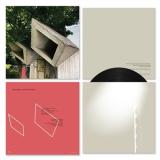
A Sudden Burst of Noise is a study in equivalence between rotational frequency, material structure and sonic form. The album is based on sonified pulsar data and field recordings captured at a concrete radiotelescope located in the Eifel region of West Germany.
Following the core concept of BRUTALISM, architecture and infrastructure are not treated as backdrop but as structural agents. The radiotelescope – its reinforced concrete body, rotational mechanics and scientific function – serves as compositional framework. Rotational movement becomes rhythm. Structural tension becomes texture.
Measured cosmic data becomes sound.
The source material consists of astronomical measurement data translated into sound, combined with field recordings from the site itself: interacting with exposed concrete, mechanical resonance and electromagnetic presence. Dornen and Lomi process these elements into compositions that oscillate between abstraction and physical density.
The result is not a documentary representation of the site but a sonic architecture derived from it. Each track reflects a structural component: axis, mirror, descent, radiation. The record unfolds as a sequence of material states – from reduction and
erosion to rotation and amplification.
With A Sudden Burst of Noise, BRUTALISM continues its transformation of material, texture and structure into sonic forms. The vinyl format captures our site-specific research process as a physical object.
An assorted mixtape-style collection of recordings from Constantin Brăiloiu's World Collection of Folk Music archive, originally broadcast on NTS Radio in July 2017, issued as part of DINTE's 10th anniversary series.
Comprising field recordings made by the pioneering Romanian ethnomusicologist of English, Irish, Gaelic, Norwegian, Breton, Japanese, Italian, Swiss, Basque, Fulah, Sardinian, Estonian, Georgian, Greek, Turkish, Judaeo-Spanish, Portuguese, French, Chinese, Russian, Hausa, Tuareg, Indian, Corsican, Ethiopian, Romanian, Walloon, Flemish, German, Kabyle, Bulgarian, Macedonian, Bosnian and Caribou Eskimo folk songs & dances.
- 01: Goin&Apos; Away
- 02: Sister Jane
- 03: Crest
- 04: For Years And Years (Cathy)
- 05: Fields Of Gold
- 06: Out Of The Night
Taï Phong is a French progressive rock band formed by two Vietnamese brothers, Khanh Maï (guitar, voice) and Taï Sinh (bass, guitar, voice, keyboards), in 1975.1 They were joined by Jean-Alain Gardet (keyboards), Stephan Caussarieu (drums, percussion), and Jean-Jacques Goldman (guitar, voice, violin). They released three albums between 1975 and 1979: Taï Phong (1975), Windows (1976), and Last Flight (1979). "Sister Jane" (1975), the first single from their first album, was a radio hit.
Mean Field Mutation is a thermodynamic phenomenon occurring just below the vaporization point of voracious growth. It relies on the debris of false and almost forgotten narratives. Astral residue of consumer angst, echoes of obsolete newspeak and oscillations of promotional imbecilities collide with free floating particles hovering under the radar of the megamachine. In steady intervals, this results in a meltdown producing random waves of reconfigurations driven by cryptic but sanguine naivety.
Released on Lustpoderosa, Mean Field Mutation is the first musical output by Des Coda. Written and produced by Piero Scherer during the pandemic winter of 2021 in his bedroom studio in Zurich. Moving between playful
serenity and feral distortion, it was produced by layering sounds from field recordings, radio and TV clips, as wellas sequences from drum machines and analogue synthesizers. Taking a stance against commercial copyright, all stems of this production are available for download free of charge and ready to be reappropriated.
Des Coda is an open field for collaborative, cultural experiments beyond the conventional understanding of authorship and representation. It engages with an artistic position that defines the creative process as an interplay between context and concept. The resulting work is not a rigid product of authoritarian ingenuity, but a sensitive, living organism guided by the tensions between society and individual. Des Coda is the zestful curiosity rummaging through the rubble of the present in search of future aesthetics.
WRWTFWW Records is pleased to announce its fifth collaboration with NY-LA ambient / jazz / downtempo musician Danny Scott Lane with the first ever vinyl release of his 2022 full-length album Holy Goodnight, available on limited edition LP (500 copies worldwide) housed in a heavyweight sleeve.
After Home Decor, Shower, Caput, and Songs For Sex, here’s another Danny Scott Lane classic. On Holy Goodnight, he handles synths, keyboards, bass, guitar, percussion, and field recordings for a smooth nightride through city pop, contemplative jazz, vaporwave, slow funk, cozy ambient, library music vibes, and relaxed moods.
Holy Goodnight feels like cruising through a half-asleep city with the windows down and the radio low—lush harmonies and soft grooves guiding the way. It’s warm and hazy music for late hours and early mornings, introspective, comforting, cinematic, intimate…
Following the release of chillout staples on WRWTFWW, Danny Scott Lane further cements his unmistakable sonic universe. Complete the collection and sink deeper into the night.
Points of interest
For fans of ambient jazz, city pop, downtempo, smooth funk, vaporwave, library music, night drives, neon lights, quiet introspection, cozy late hours, and peaceful goodnights.
Super limited edition vinyl (500 copies worldwide) of Danny Scott Lane’s Holy Goodnight, available on vinyl for the first time ever.
Following her debut album, I’ll Look for You in Others (Past Inside the Present), earlier this year, Patricia Wolf joins Spain’s Balmat label with See-Through, her second album. See Through finds the Portland, Oregon musician and field recordist continuing to develop her signature style of ambient, balancing radiant soundscaping with a carefully expressive sensibility. But the new album is also marked by an important difference. Where I’ll Look for You in Others was largely written in response to the death of a loved one, See-Through represents a kind of rebirth.
“After a long period of grief, I had been hoping to find my way to a place of lightness, peace, playfulness, curiosity, and sensuality again,” Wolf says. “What I was surprised and pleased to find is that for the most part, I had.”
She wrote and recorded many of the album’s songs quickly, in preparation for an August 2021 broadcast on the online radio platform 9128 Live. Excited for the opportunity to play live after more than a year of the pandemic, Wolf decided to write all new material for the event, working with a lean setup of Octatrack, Roland Synth Plus 10, Make Noise 0-Coast, and Novation Summit. (In fact, Wolf was the first sound designer invited to create patches for the Summit.) She also picked up an acoustic guitar that her brother had loaned her. “I decided to take the surrealist approach of ‘pure psychic automatism’ to see what poured out of me,” she recalls. “Woodland Encounter,” “Under a Glass Bell,” “The Grotto,” “The Mechanical Age,” “The Flaneur,” and “Psychic Sweeping” are all products of those sessions; the through line holding them together is their exploratory spirit and clarity
of vision.
Other songs, like “A Conversation With My Innocence,” “Recalibration,” and “Psychic Sweeping,” wrestle with the traumas of the preceding year. Though they may linger on the heaviness of loss, Wolf says, “What I discovered is that a stronger archetype had grown inside me to steer my emotions and thoughts to a better place.” Likewise, “Wistfulness” and “Upward Swimming Fish”—her first experiments with VST synthesizers—balance the bittersweet embrace of melancholy with the freedom to choose happiness.
“Pacific Coast Highway,” the album’s lone song with drums, might at first seem like an outlier. But it also signals Wolf’s interest in finding a fusion between the introspection of ambient and the togetherness of beat-oriented music. “Experiencing loss and isolation is what drove me into gentler territories of sound,” she says, “but I want to start making more beat-oriented music. After an extended period of loss and isolation, I’m ready to experience more joyous and social things.”
Listeners with keen ears might recognize the album’s closing song, “Springtime in Croatia”: A different mix of the song originally appeared on the 2021 digital compilation secondnature & friends Vol. II, from the Seattle label secondnature. This marks its first appearance on vinyl, however, and its spiritual home is undoubtedly here, at the close of See-Through. As the bookending answer to the opening “Woodland Encounter”—another song in which field recordings play a crucial role—it closes the circle of an album that is itself keyed to the steadily turning cycles of life.
- A1: Scratch Pad 1
- A2: Messij Received
- A3: God's Gift
- A4: Tentative
- B1: Canada 2048
- B2: Wiped Out
- B3: Body In Motion (Body Plus Mix)
- B4: Onyx (Dark Side Of The Moon)
- C1: Messij Received (Wstwgbe Mix)
- C2: Canada (Drunken Auslander Mix)
- C3: Tentative (Woffenfum Mix)
- D1: Messij (Bobbing Boat Mix)
- D2: Body In Motion (Timeless Techno Mix)
- D3: Doh-T (Am / Fm Mix)
- E1: 95 Future Echoes
- E2: Turbine
- E3: Pencil Neck
- E4: Messij 2005 (New Science Mix)
- F1: Canada (Tim Reaper Remix)
- F2: Messij (Sherelle's Messij In A Bottle Hardcore Remix)
- F3: Doh-T (Mantra Remix)
- F4: Canada (Niknak Remix)
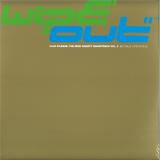
The legacy of wipE′out′′ has transcended time and cemented itself as a true transgenerational phenomenon. Launched in 1995, it didn’t just revolutionise the gaming industry, it created a bridge between the gaming ecosystem and the raver community. Its futuristic aesthetics and forward-thinking sound left a mark not only on mainstream audiences but also on the most demanding corners of the underground.
Decades later, the game’s impact is still alive. The release in 2023 of The Zero Gravity Soundtrack on Lapsus Records proved once again that wipE′out′′’s accompanying audio will go down in history as much more than just an anti-gravity racing game soundtrack.
This is why we decided to go deeper into the slipstream and build the second volume you’re now holding in your hands. Drawn from the original archives of Tim Wright, aka CoLD SToRAGE, this new collection surfaces unreleased cuts, pieces that couldn’t fit on the first edition, and a suite of self-authored ambient reworks that translate pure velocity into wide-screen atmospherics engineered for the long straights, the drone of airbrakes, the blue hour between checkpoints. It also reconnects the circuit, gathering selections and variants tied to later chapters of the saga — wipE′out′′ HD and wipE′out′′ Pure — plus alternative mixes that, until now, only existed in the Sega Saturn dimension of the franchise.
Finally, the material takes a leap into the future in the hands of four remixers especially chosen for this release: Tim Reaper, SHERELLE, Mantra, and NikNak, who collectively forge links between CoLD SToRAGE’s pioneering musical vision, the sound world of the game, and the contemporary breakbeats and drum & bass vanguard.
Expect the DNA you remember — accelerated breaks, trance-vector synths, jungle influences, sub-bass rumbling neatly beneath the craft’s hull, and at times even echoes of classic hardstyle — now revealed with new angles and air. The previously unheard material carries the same aerodynamic design sense that made these tracks feel faster than the track map itself, while the ambient versions open the field of view with melodies hovering at the lip of overdrive. Without a doubt, here you’ll find a strong sense of nostalgia. But this isn’t just nostalgia; it’s also proof that this sound world continues to evolve when you ease off the throttle.
For the faithful — crate-digging ravers, speed-run obsessives, and design nerds — this is an essential expansion pack: compiling rarities, restoring context, and reframing the emotional core of wipE′out′′ for late nights and early mornings alike. Bridging memory and momentum, club and console, rush and afterglow. Strap in.
Detailed tracklist, with annotations by Tim Wright aka CoLD SToRAGE
· Scratch Pad 1: “This track was composed using incomplete tracks that were developed around the time of the first wipE′out′′. It’s so long because it was used for a marathon-length Psygnosis promotional video.”
· Messij Received: “Messij was a firm favourite with wipE′out′′ fans, so it made sense that there’d be more where that came from — this was one of those re-workings.”
· God’s Gift: “I was always very fond of Erasure’s track Love to Hate You with the canned crowd FX sounds. God’s Gift was a tongue-in-cheek reference to how some musicians think they are just that. This was way before I even played live as CoLD SToRAGE.”
· Tentative: “I wasn’t sure about introducing some wacky beats and distorted sounds into one of the tracks, because it was kinda heading away from the other tracks, hence Tentative — but it turned out OK.”
· Canada 2048: “When wipE′out′′ 2048 was launched I decided to re-make Canada as a kind of tribute, but in a slightly new-tech, laid-back way, using Propellerhead Reason and all software synths.”
· Wiped Out: “Based on a few riffs from a MIDI file unused at the time of the original wipE′out′′ game compositions, this featured on my debut album MELT.”
· Body in Motion (Body Plus Mix): “A more trippy interpretation of Body in Motion that featured on non PlayStation versions of the game e.g. Sega Saturn.”
· Onyx (“Dark Side of the Moon”): “Onyx was my sole contribution to wipE′out′′ Pure on the Sony PSP handheld gaming console. This version was something I developed in a darker style, that eventually erupts into a crescendo.”
· Messij Received (WSTWGBE Mix): “Like I say, Messij was a hit with most wipE′out′′ fans, so when I was asked to compose more music for non-PlayStation versions, I adapted this tune into a parallel-universe version for PC and Sega Saturn. By the way, WSTWGBE refers to Who Said This Was Going To Be Easy?”
· Canada (Drunken Ausländer Mix): “In early 2018 I released a fresh album called Ch'illout′′, a re-working of many of my wipE′out′′ tracks in an ambient, Sunday-morning vibe style — it was a few years’ work, here and there.”
· Tentative (Woffenfum Mix): “Another chilled re-working of one of my wipE′out′′ tracks, the mix named with a nod to a good friend of mine, Carl Woffenden — someone who I've worked with for many years in the games industry.”
· Messij (Bobbing Boat Mix): “A nice cheesy computer blip-blop start belies its deep and upbeat chilled-out melodic finale.”
· Body in Motion (Timeless Techno Mix): “Another classic track given the chilled-out vibe mix, as featured originally on my Ch'illout′′ album. This one’s a really trippy, deep-space take on the original.”
· DOH-T (AM / FM Mix): “The idea with this chilled-out mix was to imagine all the melodic parts of this varied track being broadcast on terrestrial radio, so each theme drifts in and out through the radio static.”
· ’95 Future Echoes: “Originally developed as a companion album for wipE′out′′ HD, this track actually has its roots in a tiny loop of a song that never progressed to anything special back in the mid-’90s when I was composing for the original game.”
· Turbine: “Also from my wipE′out′′ HD album, it leans heavily into the upbeat, uplifting tunes from the original game, but also steals a bit of vibe and energy from The Prodigy, with those distorted flute sounds.”
· Pencil Neck: “This excerpt from my wipE′out′′ HD album features lots of sounds centre-stage and forward from Propellerhead Reason’s Subtractor virtual synth. I learned to love this more than my JD-800!”
· Messij 2005 (New Science Mix): “Yet another take on the track that still raises a smile, this time through a mix of samples from the original and Propellerhead Reason — the ‘new science’ when compared to an Amiga 1200 running Bars and Pipes.”
Limited Algae Sea Vinyl. CocoRosie is Bianca and Sierra Casady. Sierra sings and plays guitar and flute. Bianca sings and does percussion (rattles things, makes things squeak, shakes a gold chain belt). They write all the music together. La Maison de Mon Réve was written and recorded in a tiny apartment in the 18th district of Paris during the spring of 2003. La Maison de Mon Réve was released by Touch and Go Records in March 2004. La Maison de Mon Réve is deceptively innocent; enchanting and sweet yet eerie and twisted. An acoustic guitar paints melody through a haze of cryptic sounds and perversely angelic voices. A broken radio transmits a music box orchestra. Tiny field mice sing opera. This 20th anniversary edition of CocoRosie's debut album La Maison de Mon Réve is pressed on transparent algae sea vinyl and limited to 1500 copies worldwide. Packaged in a gatefold jacket with neverbefore-seen photos, the vinyl includes the full album along with a previously unreleased bonus track, "Hairnet Paradise."
Updated remixes of two big Balearic classics on Best Record! "Describing Linda Di Franco is no easy task: a reserved, sometimes elusive artist with a career that is difficult to define. From an early age she was interested in various artistic fields. Working as a DJ in clubs, then on the radio, she took the opportunity to record her first musical demo, Stage, obtaining international recognition which quickly took her to England and to the States, where she recorded her first compositions, My Boss and T.V. Scene. The songs are of great value and achieve unexpected success, also included in The Rise Of The Heart, a milestone in the nascent revolution of club culture, a Balearic classic supported by DJs in love with the indefinable sound of Ibiza. But Linda is extraordinarily ahead of her time and despite the enormous fame has gained with her songs she is already oriented towards a career as a music video director. For this reason the Turin singer-songwriter turns out to be one of the least fruitful artists of her time, while her CV in Hollywood is impressive in various roles which she holds, in addition to that of actress and director, that of impeccable sound technique. Intelligent artist, full of good and positive feelings and certainly also ambitious, but extremely scrupulous by subjecting sounds in cinema to careful review. Yes! The "sound" is an investigative tool for her, a way of understanding art. Linda Di Franco is - willy-nilly - still the undisputed queen of the Balearic sound today. So, she decided to produce Redux, a limited edition album published by Best Record, in which her most intrepid and famous songs are re-proposed in the jazz versions edited by her friends from Turin and Los Angeles. Then she had to give in to the boundless passion of Danilo Braca, the Italian DJ based in New York, who deserves credit for the successful combination of refined and ethereal songs with the disco genre. TV. Scene - Epic Remix, TV. Scene - Costa del Sol Mix and My Boss - Remix are Danilo's pearls, created with the help of excellent international musicians who with more defined and current sounds have added their art to that of Linda."
Perhaps you've chanced upon a Number Station, unwittingly as you scour the shortwave bands, and heard a cold, disconnected voice repeating simple commands endlessly into the ether. Or maybe you've scanned past a series of bleeps and pips, or pockets of noise, thinking nothing of them, as you seek a favoured music station. These are messages, to those who know how to receive them, and are able decode them in their various forms and configurations.
Shropshire Number Stations - Recordings of Covert Shortwave Radio Stations charts the covert shortwave radio stations broadcasting silently through the air around us, to aspirant agents in the fields of Shropshire, UK and the counties which surround it. These two continuous sides include recordings of 19 such lay-stations, captured by Eric Loveland Heath at various points over the last few years. The true nature of these amateur networks may never be known, nor might their cyphers ever be revealed. These are recordings of their activities, made conceivably for the sake of posterity alone, offering a glimpse into clandestine worlds otherwise obscured from view.
180 G. BLACK VINYL WITH LINER NOTES IN CREOLE, FRENCH, ENGLISH
Originally released in 1979, "Spiritual Sound" lives up to its name, a soaring, triumphant album, six tracks of spirit magic from Guadeloupe.
Telluric, intense, terribly alive, the gwoka drums of Guadeloupe carry the identity of a painful and fervent island. Marked forever by the crime of slavery, Guadeloupe's créolité cherishes the ka drums and their natural environment: the low-pitched boula drum with male goatskin, the high-pitched soloist makè drum with female goatskin, the chacha, ti bwa, triangle, calabash and other percussion instruments that surround them, and the voices - the fiery, proud, timbred, urgent voices of the gwoka.
This album is also a legend for its voices: in his then dazzling youth, singer Lukuber Séjor was one of the first gwoka artists to largely feminize the chorus of répondè, who converse with his text delivered in a straight and powerful voice.
And everything here sets new standards. In 1979, Mizik Filamonik - Spiritual Sound proclaimed a spiritual patriotism of ferocious intensity. The album by Lukuber Séjor - whose spelling alone is a battle - sets out to give Guadeloupe the intangible weapons of self-respect and self-knowledge, through a singular practice of traditional music.
The genesis of gwoka music is less straightforward than one might imagine... The drums performed the servile task of accompanying the work of slaves in the fields and during the “corvées” imposed by the administration, before being freely practiced by the common people after the abolition of 1848. At the heart of the conviviality of the Guadeloupeans furthest from the cities - geographically and socially - the gwoka drums come out for carnival, funeral wakes and neighborhood celebrations, but also during strikes, fits of anger and armed vigils of the riots and revolts that have punctuated the island's history. For generations, governors of the colony and then the prefects of the overseas department of Guadeloupe have been viewing the gwoka as a potential for turbulence and a threat to public order.
But as the Beatlesmania, “chanson engagée” and rock revolutions unfolded in Europe, young people turned to the drums of mizik a vié nèg (“bad negro music”, in Creole), which Guadeloupeans had learned to despise by following the “assimilation” process advocated by the school system and most of the political class. At the end of the sixties, in a Guadeloupe mourning the deadly repression of the May 1967 social movement, they played traditional music, refusing to wrap it up in tourist prettiness and madras folk costumes. Instinctively, they played a rough and contemporary gwoka, led by the incendiary Guy Konkèt. This was the era of decisive 45 rpm records such as Robert Loyson's Kann a la richès, which brought to light the fieriest words of union rallies.
At his home in Sainte-Anne, Lukuber Séjor played with flautist Olivier Vamur and his brother Claude Vamur, who cobbled together a drum kit from tin crockery and became, a few years later, the most influential drummer in Kassav'.
These were the years of the Bumidom program, when young Guadeloupeans were encouraged to emigrate to mainland France. At the age of twenty, Lukuber Séjor embarked on the liner Irpinia, disembarking at Le Havre and taking the train to the Gare Saint-Lazare - the route taken by thousands of young West Indians who went on to study or looked for work, all the while trying to maintain a link with their homeland. In this case, it's at the Antony university residence, where Lukuber played the drum and participated in a thousand gwoka updates and aggiornamentos, while exile reinforced the need for a spiritual link with the native land.
In 1978, Guy Konkèt played at the Salle Wagram, a historic event for West Indian music. After serving as répondè - i.e. backing vocalist - on one of his home-recorded albums, Lukuber joined his live band. Little by little, he became one of the key artists on a circuit parallel to French show business. At a student party in Caen, he met a young woman from Martinique who, at the time, was more motivated by her ambitions as a visual artist than by her vocation as a musician. Her name was Jocelyne Béroard and, a few years before she plunged into the Kassav' adventure and became the greatest West Indian singer of her generation, she designed the cover of Lukuber Séjor's LP.
This ambition was obvious and imposed its will. A more or less regular band was formed, with Roger Raspail, Rudy Mompière and Éric Danquin on ka drums, Claude Vamur on ti bwa, Olivier Vamur and Françoise Lancréot on flutes and Annick Noël on keyboards. Lukuber Séjor is set on wanting to extend the gwoka palette to other instruments, as the jazz-rock revolution opens a thousand new doors. Annick Noël will play a wide range of timbres and textures on electric piano and synthesizer. Another novelty: the répondè are two men and two women, Roger Raspail, Olivier Vamur, Françoise Lancréot and Maryann Mathéus ...
Mizik Filamonik - Spiritual Sound is a self-production in which the singer and leader sank all his savings, allowing him no more than a single day in the studio. The first side is more of a musical manifesto, with the first two tracks, Éritage and Penn é plézi, being instrumentals. The third, Son, forcefully celebrates the need for Guadeloupeans to connect with the gwoka. In fact, Jocelyne Béroard's cover shows a tambouyé in the shadow of a cloudy sky, against which a radiant sun is rising and whose light will soon flood the entire landscape. The silhouette and face of this man strongly evoke the immense Vélo, master of the ka, rejected at the time on the fringes of society.
The second side of the LP is surprising. Formally, three tracks are explicitly linked like the three parts of a triptych. Primyé voyaj evokes the appalling tribulation of Africans deported as slaves to Guadeloupe; dézyèm voyaj speaks of the Bumidom program and the economic, political and social forces driving young Guadeloupeans towards the mirage of prosperity in France; twazyèm voyaj closes the cycle with the emigrants' return from Europe after years away from their island...
This gwoka, obsessed with the need to save Guadeloupe spiritually, appeals far beyond the politicized audience. Mizik Filamonik - Spiritual Sound instantly became a classic, although Lukuber Séjor never really made a career for himself as a musician.
After all, the album was released in 1980, with no promotional resources in France or Guadeloupe - and therefore no concerts. The thirty-two-year-old author, composer and performer made his own third trip back to Guadeloupe. He set up a small woodworking business, which he lost in Hurricane Hugo in 1989. His other activity, teaching in a medical-educational institute, became the core of his professional life. He continued to be an active campaigner - a campaigner for the Creole language, a campaigner for the reawakening of identity, a campaigner for special education, a campaigner for a thousand causes that he ignited with his generous and perceptive enthusiasm, such as the defense of breadfruit fries...
The echoes of his 1979 album have not died down. Of course, the use of Penn é plézi as the theme tune for Radio Guadeloupe's funeral notices from 1980 to 1992 kept him in the collective memory, but he continues to sing and compose sporadically, as with his all-female
vocal group Vwapoulouéka... Still convinced that music is a means of liberating the spirit, he continues the journey of a young man eager to deploy the power of Creole music and language.
Bertrand Dicale
Founded by Robbie Redway and psychedelic researchers Mathieu Seynaeve and WaiFung Tsang, UK-based 'United Freedom Collective' has grown into a network of artists including Jordan Stephens, Falle Nioke, Eliza Shaddad, Labdi, William Rees and Facesoul. Originally conceived around psychedelic therapy sessions, online yoga and breathwork channels, the musical scope has expanded on each of the four EPs released on Maribou State's 'Dama Dama' label, and here continues with their debut on Multi Culti. This time Robbie takes the lead on production and sole vocal duties on all five tracks, presenting a range of influences and style. Lead single 'Between Memories' blends tropes of ecstatic dance with uplifting vocal piano house, somehow making flutes fit in with Detroit strings to epic, hands-in-the-air effect.' Title track ‘Bright Patterns’ bridges the gap between Jungle, Jai Paul, and Jamiroquai, a fusion of funky filtered disco-house and electroclash with side-chained pop vocal hooks. ’El Yo’ smooths things out, a dope, laid back groove with a measured reflection on psychedelic healing and the perils of spiritual bypassing. ‘Higher Drums’ warms things back up for the dancefloor with trumpet, afro-latin percussion, and flute flourishes. Finally, ‘Moonshine’ is a soaring, Amapiano-inflected post-desert-house ballad. Influenced, in their words, 'by birds, trees, Buddhism, yoga, headless way meditations, Jungian analysis, Zen Taoism, Chinese plant medicines, indigeneity, Amazonian and psychedelic cultures, icaros and world healing traditions,' the music is eclectic, ranging from afro-inspired jazz to Chinese folk, psych-rock to dub and dance music, an ambitious and inclusive range, collabs that extend well beyond the borders of western musical traditions. Their sound was described by Clash Magazine as an 'aural mosaic that glitters with colour and potential,' and while the sheen of the production and precision of the arrangements might seem a departure from Multi Culti's left-field endeavours, the psychedelic idealism and global connectivity make it a natural fit with the open-ended ethos of the label. Having already had radio support from KEXP, BBC6 Music (Laverne, Ravenscroft, Charles, Nemone, Letts), Jazz FM and Worldwide FM (Gilles Peterson), with a live show that sold out Dalston Curve Garde and The Waiting Room as well as supporting Maribou State for their recent comeback show at Islington Assembly Hall in London the collective's future is looking exceptionally bright.
Roberto Musci, born in Milan in 1956, studied guitar, music and electronic instruments. From 1974 to 1985 he traveled the world studying African, Indian, Arabic and Oriental music, recording ethnic music “in the field,” studying and collecting ethnic musical instruments from all over the world. His self-produced debut album, “The Loa of Music,” is a seminal work of staggering originality and extraordinary beauty in which field recordings, musique concrète, electronics, synthesis and instrumentation are interwoven, drawing on the countless musics from around the world that he has recorded. The subsequent “Water messages on desert sand,” composed with Giovanni Venosta, was nominated for a Grammy in the UK in 1987. In the 1980s and 1990s he broadcast ethnic and electronic-experimental music from Rai and Radio Popolare radio stations. He has also composed and played music for videos, commercials, dance, poetry, theater, composed soundtracks and accompanied silent films live. From 1980 to the present, he has played with many Italian and European musicians: Giovanni Venosta, Claudio Gabbiani, Walter Prati, Giorgio Magnanensi, Massimo Cavallaro, Massimo Mariani, Moni Ovadia, Roberto Zorzi, Chris Cutler, Jon Rose David Moss, Steve Piccolo, Elliott Sharp, Keith Tippett and the Third Ear Band.
The theme of travel, ethnicities and mysticism are a pivotal point in this new album of his as well, demonstrating once again how music needs absolutely no sharp lines of demarcation. The music is one.
It goes from the search for deep meanings in a time spent in a Hindu monastery (Ashram) listening to mantras and studying Buddhist philosophy (The Principle Of Things) to space explorations and human settlements on the Moon or Mars wondering how man will live and what he will bring to the new worlds imagining that Sufism, an Islamic mystical religion, will accompany him in the discovery of new worlds (Derviches On Mars). In Goodbye Monsters, harmony and peace are sought. Memories Of A Piano Player is a tribute to Keith Tippett, a great pianist (King Crimson , Centipede, Mujician) with whom he played in several concerts and with whom I spent evenings talking about music, food and Italian wine. Quantum State focuses on how quantum mechanics is creating a revolution in the way of thinking and dividing reality into infinite Parallel Worlds. Panthalassa is the vast ocean that surrounded Pangea and blends South American marimba music and traditional Chinese music. Burn The Shadows is a tribute to the fascinating Indonesian shadow theater, from the stories told and the atmosphere created during the long plays told in the sacred Indian texts of Ramayana or Mahabharata. Shadows are also more or less pleasant memories to which one is attached, and to burn them is still to move on with one's life.
Torajan Funeral Chant: The Toraja are a people living in Sulawesi (Indonesia) who have a special worship of the dead. Funerals are festivals that last several days, the corpses are protected by Tau-Tau (small dolls that watch over cemeteries), and over the years, they exhume the corpses of their relatives and keep them in their homes with them for a time to remember them.
The experimentation goes all the way to modern Artificial Intelligence that 'interrogated' to create something new by inserting conflicting inputs joins them together but nonsensically creating interesting insights; hence A.I. In Confusion. Pangea, named after the continent that contained all the land that emerged between 540 and 200 million years ago, in the Paleozoic and Mesozoic periods, imagined as inhabited by man without divisions created by borders, wars, religions or ethnic groups, is also a tribute to Steve Reich, one of the fathers and a great musician of minimal music. Prophecies, a reading of sacred texts and religious songs from evangelical sects in the United States filtered into granular synthesis with percussion music from South India, closes.
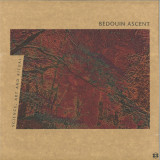
'Science, Art And Ritual' is a story of ‘process'. Growing up in Harrow (a then quiet suburb of London) in the 70’s and 80’s from the age of about 10, Kingsuk Biswas aka Bedouin Ascent's ears opened up to sound as he scanned the airwaves. The undeniable righteousness of 80’s dub via David Rodigan’s Roots Rockers shows was the first prominent influence he received, and with punk roots —and his burgeoning record collection— became exposed to the breathless post punk experimentation that followed in the early 80’s sweeping up free jazz, noise, dub and much more. Throughout though, he maintained his fascination with Indian Classical music which was a mainstay in his parent’s house and spoke with the same infinite space as Joy Division's 'Unknown Pleasures', and King Tubby’s Studio dispatches. Through those teens he assembled and de-assembled, knocking about with fellow travellers —punk bands, garage, space rock, noise. Something was happening. On-U Sound, ECM, Factory Records kept him plugged in and sane.
At that time Kingsuk's core studio setup revolved around his vintage Gretsch, Fender Jazz, Moog, TR-606 and rudimentary FX. He added congas, folk instruments, pipes, hand percussion, gongs, and jammed out shards of funk, noise, jazz fusion, electro and ambience into his hungry Tascam Portastudio. By 1987 these had morphed into what we’d now refer to broadly as techno, but the genre didn't exist beyond the reverberating walls of his bedsit, and he hadn’t yet plugged into the global conversation.
'Science, Art And Ritual' was released in 1994 by Rising High Records and was presented as Bedouin Ascent's debut album, although 'Music for Particles' (released in 1995, again on Rising High) was recorded even before —'SAR' sessions span from 1992-1993, whereas 'Music for Particles' were earlier from 1989-1992, with some older 4-track references from about 1986 too.
Weaved in throughout the album are subconscious references to music that Kingsuk heard in the past that still remained within sight as companions. The opening track "Ancient Ocean III", referencing the extinct ocean Tethis, unapologetically channels Tackhead, Colourbox, Mantronix and Lee Perry. The style was also deliberately juxtaposed to the prevailing sound in techno at the time, which had locked onto a rigid form of symmetrical kicks and light snare drums. Elsewhere 80’s soul and funk are frozen and captured in fragile glass lattices. Electric pianos resound throughout, such as in "He Is She", probably a half-memory of 70’s MOR radio from childhood sleepy night drives. A duel between kick drums from three generations of Roland drum machines —TR-808, TR-707 and R-8— is a central theme in "Transition-R", all in conversation, calling and responding. These were not just machines to Bedouin Ascent, but part of an extended family, with heart and soul.
Three decades after seeing the light, Lapsus is proud to present a special 30th anniversary reissue of this
left-field techno gem in a repackaged and redesigned edition. All pressed on a deluxe 3LP marbled vinyl and including a limited lithographic insert print of the original album cover. All tracks have been restored and remastered directly from the original DAT tapes, and the album also features previously unreleased tracks such as "In the Clouds" and "Thru Water" —regularly performed live at that time and produced in the same period as the album sessions in 1993.
'Science, Art And Ritual’ may refer to esoteric traditions in Indian philosophy, but equally embodies the collision of the science, the art and the ritual that is at the core of being immersed in a deep musical journey.
Anadol and Marie Klock have teamed up for a joint album, La Grande Accumulation. They met two years ago at a festival in England crowded with violent seagulls and outsider musicians. Klock being prone to barking on stage and Anadol not laughing at jokes she doesn’t find funny, they straight away had the intuition that they would meet again. And so they did, a few months later, at Anadol’s studio in Istanbul.
Today, the two Pingipung artists present the fruit of this musical friendship. La Grande Accumulation was born out of the peculiar atmosphere of the studio neighbourhood in Büyükada, an island where thousands of cats run free and humans randomly destroy things during apocalyptic times when parts of Turkey had just been turned into dust by terrible earthquakes. The French lyrics are inspired by hours of conversations, the music is consequently drenched in absurdity, overflowing with a strong urge to live and enjoy. According to the LP sticker, this album has been certified “Best handshake of 2024”, and stickers never lie.
La Grande Accumulation brings together Marie Klock's mysterious metaphors and Anadol's intriguing radiophonic psych-pop. Stretching forms beyond common sense to see how long they can resist is probably their favourite game. The result are six highly imaginative tracks that challenge the sub-3-minutes standards of Spotify pop.
Gözen Atila aka Anadol is well known to the Pingipung audience, with three solo LPs on the label. Her music follows a kind of collage logic, she interweaves countless styles, combining field and studio recordings with obscure quotation marks here and there. "I hope no one will come and explain this music to me, because it's the most beautiful music there is", says Kristoffer Cornils about her solo album Felicita.
Marie Klock is a French writer and musician who produces songs oscillating between synthpop and neo-folk, full of anarchic humour and existential dread. Her recent solo LP on Pingipung was a captivating tribute to the recently deceased poet Damien Schultz entitled Damien est vivant.
Marie Klock delivers her lyrics in song or spoken word, stream-of-consciousness musings on strange human adventures, and her rich keyboard melodies culminate in a nonchalant dialogue with the bass trombone (La Reine des Bordels). In the opulent opening piece (La Grande Accumulation), a woman is cursed to take home everything she kicks in the street; a bit later, we stumble upon a ghoul hiding in the gutter (Sirop amer), Mona Lisa loses her teeth (Sonate au Jambon) and a warthog struggles to climb the stairs of a silver tower (Sabots triviaux).
La Grande Accumulation was mixed and mastered by Jonas Romann at Chaos Compressor Club in Hamburg and cut to vinyl by Kassian Troyer at D&M in Berlin. It's an audiophile LP that invites to focus on every detail in this heap of musical ideas.
"LATZFONSER KREUZ / FELTUNER HÜTTE scheduled for release on September 20th 2024 is the third single to be lifted from Ulrich Troyer's TRANSIT TRIBE due later this year.
Mamadou Diabate, originally from Burkina-Faso and now resident in Vienna, who is also a world-famous virtuoso balaphon player, collaborates on "Latzfonser Kreuz" with fellow countryman Hamidou Koita to produce a remarkable percussion track, both singing and employing talking drum and djembe to come up with a sound that can only be described as dubbed-out Nyahbinghi-style electro-beats! The track references the little church at Latzfonser Kreuz, which is the highest pilgrimage spot in South Tyrol, one of the highest in Europe; every year in June, the Black Lord, a black carved Gothic wooden cross, is brought from the village church in Latzfons to thepilgrimage church, where it remains throughout the summer.
On the flip for "Feltuner Hütte" Ulrich Troyer is joined by co-producer Osman Murat Ertel, founding member of the electro-psych-folk group Baba Zula from Istanbul, who has worked internationally for many years collaborating with the likes of Jaki Liebezeit, Fred Frith and Mad Professor. But here Murat takes us on a dub psych-out trip with his favoured electric saz, with wha wha FX, delay and echo, like Link Wray meeting King Tubby on the old streets of Istanbul."
Steve Barker (DJ, Radio Presenter - On the Wire, BBC 1984 – 2023, now Slack City Radio & reggae/dub columnist and contributor to The Wire)
Credits:
Mamadou Diabate: vocals (A) & talking drum (A)
Osman Murat Ertel: electric saz (B)
Hamidou Koita: vocals (A), djembe (A)
Didi Kern: percussion (A), drums (B)
Flip Philipp: percussion (B)
Ulrich Troyer: analog synthesizers & drum-machines, sampler, field recordings, dub effects (A+B)
A written by Mamadou Diabate, Hamidou Koita & Ulrich Troyer
B written by Osman Murat Ertel & Ulrich Troyer
Recorded by Ulrich Troyer at 4Bit Studio & 4Bit Bungalow, Vienna - except electro saz on track B recorded by Osman Murat Ertel at Saniki Studio, Istanbul
Mixed & arranged by Ulrich Troyer at 4Bit Bungalow, Vienna
Produced by Osman Murat Ertel & Ulrich Troyer
Mastering & Lacquer Cut by Kassian Troyer at Dubplates & Mastering, Berlin
Cover Drawing by Ulrich Troyer
Special thanks to Steve Barker, Mamadou Diabate, Osman Murat Ertel, Diggory Kenrick, Eva Kelety, Didi Kern, Hamidou Koita and Flip Philipp
Kindly supported by the City of Vienna (MA7 - Kultur), Federal Ministry Republic of Austria (Arts, Culture, Civil Service & Sport), SKE-FONDS (AT) & Amt für Kultur, Bozen (IT
DJ support: Tim Sweeney, Make A Dance, Parris, Pleasure Voyage, Camillo Miranda
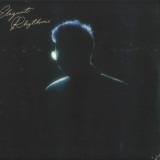
Back yard - Back yard is the first single from the new Teen Daze album, Elegant rhythms, and features singer-songwriter Andy Shauf on drums, and LA jazz staple, Sam Wilkes, on bass. This is a stark change in sound for Teen Daze, who’s last album Interior was an exploration of neon-lit House music. Back yard is a mellow groover, conjuring up images of Laurel Canyon in the 70s, yet still with its flourishes of contemporary sounds.
We’re out of phase again - We’re out of phase again is another vulnerable glimpse into the inner world of Teen Daze, and marks the release of his most personal album to date, Elegant rhythms. In contrast to the synthesized, digital world of his prior album, Interior, here we’ve been brought into a lush, organic arrangement, brought to you in large part to the stunning bass playing by Sam Wilkes. While the verses pulse forward, the chorus slows things down, and evokes the sophisti-pop sounds of The Blue Nile. This track is a stunning showcase of the world of Elegant rhythms.
Nothing’s gonna change my love - Teen Daze returns with his second single of the year, Nothing’s gonna change my love. The stark change in sound, as heard on previous single Back yard, is on display here again: a smouldering, 2 and a half minutes of slow jazz-pop, indebted to the great Sade, or perhaps the feeling of leaving downtown LA at 2 AM. Lyrically, we hear a story of a love, challenged by the unpredictable nature of our lives. This may be Teen Daze’s smoothest song to date.
Neighbourhood - Neighbourhood is the third single from the recently announced LP from Teen Daze, Elegant Rhythms. Along with Andy Shauf on the drums, and Sam Wilkes on the bass, Teen Daze gives us a languid tour of his quiet neighbourhood. The sun has set on the pleasant, tree-lined streets, and a stranger, more surreal environment presents itself. The song plods forward at an extremely comfortable pace, held down by the paradoxically loose-yet-tight rhythm section. Lyrically, we walk around the Neighbourhood at night, and while the chorus reveals a type of sobriety, the vibe of the song makes it easy to feel a little…effected.
Fade away - Fade away sets the tone for Elegant Rhythm’s side B: a deeply personal, though somewhat veiled, confession of loss. How does it feel to grieve something that was never really here? A smouldering, slowly progressing first half erupts in synthetic noise, and then fades into the ether with it’s repeating refrain, “I can feel you / feel you fade away / when there’s nothing / nothing left to say”.
Fall ahead - A sweet piano tune which serves as a quiet break in the record, intended to help the listener reflect and take a moment of pause before we reach the final two songs on the album.
HST underwater - The penultimate track on the record tells a story where the narrator finds themself in an alien, yet oddly familiar place. Arpeggios soaked in crystal blue water flow through the stereo field, while the narrator, vocoded and drenched in autotune, searches for meaning and purpose in a confusing world. This is one of Teen Daze’s most cinematic, emotional songs yet.
In the rain - It’s never really made explicitly clear on this record, but a lot of these songs find Teen Daze wrestling with life as a new father, and this song, the final on the album, expresses the fears of generational trauma. A touching, tender ode to his children, we hear Teen Daze at his most personal and vulnerable. The falling rain surrounds some absolutely breathtaking bass playing from Sam Wilkes, and Teen Daze’s signature ambient keyboard sounds.
Radio Support: Ruf Dug (Soup To Nuts on NTS)
From Pasha With Love (love in times of war)
Pasha is a soldier on the front line, fighting those who till the day before were friends from the town next door, probably fighting his
own brothers-in-law, Natasha’s brothers, his great love, mother of his children in a senseless war if only wars had a meaning …
In the evening when the madness slows down.. Pasha takes his cell phone and talks about the horrors and the desperation but also the
infinite gratitude he feels for having had her as a gift in his life. His texts always end with "From Pasha with Love"
The atrocities, pain and the inhumanity he experiences every day, every hour, are alleviated in the pauses between one explosion and
another by his most intimate memories... Natasha's laughter as they chased each other in the sunflower fields in their first summer
together, his Yes! to her at the altar, her kisses first thing every morning.
While he runs surrounded by the screaming of the wounded and the whistling of bullets in the woods, in every moment that could be
the last, he searches for that tree where at their first date they carved that little heart with the words ..
Pasha & Nasha-Timele.
- A1: The Second Dreams (Theme From House On The Sand)
- A2: The Torture (Theme From Time Of Heroes)
- A3: Motorcycle (Theme From The Exile)
- A4: The Opening Night (Theme From Ljuba Par Lui Meme)
- A5: In The Beaubourg Gallery (Theme From Ljuba Par Lui Meme)
- A6: All And Nothing At All (Main Theme From All And Nothing At All)
- A7: All And Nothing At All (Unused Theme From All And Nothing At All)
- A8: Jere And Marija In The Room (Theme From Marjuca Or Death)
- A9: The Bitter Tears Of Petra Von Kant I (Theme From The Bitter Tears Of Petra Von Kant)
- A10: The Bitter Tears Of Petra Von Kant Ii (Theme From The Bitter Tears Of Petra Von Kant)
- B1: Cassandra (Theme From The Trojan War Will Not Take Place)
- B2: Peace (Theme From The Trojan War Will Not Take Place)
- B3: Fourth Choir - Sun Ray (Theme From Biedermann Und Die Brandstifter)
- B4: Second Choir - Marching Step (Theme From Biedermann Und Die Brandstifter)
- B5: The Beginning Before The Beginning (Theme From Fool For Love - Savage Love)
- B6: She Runs Away (Theme From Fool For Love - Savage Love)
- B7: Eddie Enters (Theme From Fool For Love - Savage Love)
- B8: A Jerk (Theme From Fear And Hope Of The German Federal Republic)
- B9: Song 3 (Theme From Fear And Hope Of The German Federal Republic)
- B10: Chernobyl (Theme From Fear And Hope Of The German Federal Republic
A collection of music for the various films and theatre plays by Mirko Krsticevic, Croatian and Yugoslavian composer and musician active since 1970s. All and Nothing at All (Film and Theatre Music 1978 - 1988) focuses on his work for the underground and avantgarde cinema from the era: directors Ivan Martinac, Svemir Pavic, Lordan Zafranovic, Aleksandar F. Stasenko and Vanca Kljakovic are all part of the Split Cinema Club association; their work explores art, death, sexuality and eroticism. Pavic's portrait of surrealist painter Ljuba Popovic, made in the same year as its counterpart by Walerian Borowczyk, features scenes form Beaubourg Gallery in Paris and Udo Kier as a guest. Side B of the record is all about theatre: plays by Sam Shepard, Rainer Werner Fassbinder and Jean Giraudoux were all produced in Sarajevo and Split in the 1980s, with the rare electronic takes by Mirko Krsticevic and his subtle minimalist soundings of the themes from the Cold War era. This unique and diverse compositions by founder of the rock band Metak and sound studio Tetrapak from Split, are document of the time that is, especially in the closing Chernobyl theme, relevant again. Composer, musician and musical arranger Mirko Krsticevic was born in 1948 in Sibenik. He graduated in music theory at the Pedagogical Academy in Split and then at the Music Academy in Sarajevo. He studied composition with Josip Magdic, Mladen Pozajic and Miroslav Spiler. He is the co-founder of the Tetrapak music studio in Split, where numerous performers and musicians have recorded (Animatori, D'Boys, Haustor, Oliver Mandic, Gibonni, Srdjan Marjanovic, Stil, Trotakt Projekt and others). The first group he founded was the rock group Che, which performed his own songs, in which he played bass guitar. It was founded in the summer of 1969. Together with Ranko Boban and Momcilo Popadic, he founded the Metak group in the spring of 1978 in Prigradica on Korcula. In the group, he is the author of songs and lyrics, and he also plays the bass guitar. "Da mi je biti morski pas" is the group's most successful single, which in 1980 became one of the most played songs on radio and television. Metak performed in Belgrade in front of 70,000 people, and the media declared them the best group along with Macedonian Leb i sol. In compositional work and arrangements for other pop and rock artists, Krsticevic had high commercial success with Tutti Frutti Balkan Band, Biljana Petrovic, Seid Memic Vajta, Pepel in kri, Osmi putnik, Oliver Dragojevic , Djordji Peruzovic, Henda and others. Parallel to his pop and rock career, Krsticevic composed stage and film music for 45 films, mostly collaborating with the circle of experimental and amateur directors of the Split Cinema Club (Kino klub Split) as well as the rest of the local underground scene. He is the author of stage music for 130 theatre plays, and also records his own compositions in the field of contemporary music. He wrote over 30 works for solo instruments, chamber and symphonic music. At the end of 2007, he founded the Split society for contemporary music and the contemporary music ensemble Splithesis. In 2015, he founded his own orchestra The Highway to Well Family, composed of fourteen musicians and three singers. In 2021, he founded Arthesis, an artistic organization for contemporary music and visual arts. He is the author of four operas: "Krvava svadba" (1997), "Halugica" (1999), "Atlantida - Legenda o Dan'zoru" (2018) i "Atlantida II - Lu'blis Kaoamos" (2020). He is the winner of numerous awards, lives and works in Split. Gatefold LP with extensive liner notes, Direct Metal Mastering (DMM) from original tapes, pressed at Record Industry. File under: Soundtrack, Stage, Electronica
Dutch synth-wizard Nadia Struiwigh brings her eclectic live approach to Blueprint Records.á On the "Voxis Ohlun EP", Struiwigh reflects her profound command over synthesis and sequencing, crafting upfront techno with a vigorous, nostalgic feel.
Nadia Struiwigh, the Dutch artist rooted in Rotterdam and currently based in Berlin, has carved a unique niche in the electronic music scene.á Her genre-defying compositions, blending ambient, techno and electro, exhibit her signature ethereal and melodious production style, with a discography gracing acclaimed labels like Central Processing Unit, Nous'klaer, Dekmantel, Clone and InFinÒ.á Inspired by the Warp school of electronica, her live performances (ranging from immersive ambient to kinetic techno) are a testament to her technical prowess and emotional connection with her audience.á A versatile DJ and live act, she graces both concert halls and strobe-lit club sessions, curating sets that span from driving techno to deeper, emotive realms, earning her residencies at venues like Tresor.á Her versatile expertise extends beyond music; she collaborates with pioneering music brands such as Roland, Korg, Teenage Engineering, Arturia and others, embodying her reputation as a leading tech enthusiast within the industry.á Her contributions to esteemed platforms like Resident Advisor, Phantasy, Bleep, Slam Radio and Red Light Radio underscore her adaptability and prowess across a wide spectrum of electronic music, further solidifying her multifaceted presence in the field.
"Voxis Ohlun" invites you into a mesmerizing journey through the enchanting landscapes of the '90s, blending diverse musical influences seamlessly.á The focus here is on 4x4 dancefloor music, adorned with a tantalizing hint of breaks and pulsating rhythms, and a sprinkle of fairyland allure.á Crafted using only hardware, predominantly the beloved Korg Electribe MX, the sounds resonate with the essence of that era.á Each track unfolds like a chapter in a wondrous tale, interweaving nostalgia with a contemporary energy, ensuring an immersive experience.
Tiella Sound is a project born in 2019 from the mind of Italian DJ Luca Bigote that started as a radio show currently airing on French LYL Radio, and now debuting in the record label ecosystem with its first official release, pressed in a limited edition of only 200 copies.
The vision and mission of the entire project are quite clear and based on the principle of musical eclecticism. Luca Bigote, in fact, from the very beginning has never wanted to set boundaries to his creature, which, following an open-minded approach, flirts with the most disparate sounds, not exclusively club-oriented ones, focusing on the quality and research that have always distinguished his path.
For its first release, Tiella Sound has chosen Perugia-born DJ and producer Daniele Tomassini, already known for his records under the Feel Fly moniker, who presents us with the first LP from his alter ego VAISA.
This work consists of unreleased tracks composed between 2014 and 2016, during the intense creative period that saw him involved in more experimental and alternative projects such as Palenque Pacal trio and Wunder Camera duo. This material finally sees the light, a few years after the inspiring live performance during the second edition of Esperimenti (January 2017), the music festival curated by Luca himself together with his friend and colleague Matteo Lieto in Gaeta, Italy.
“VAISA is a dense, raw, evocative project. A lo-fi maelstrom of field recordings, sound collage, mysterious vocal samples from ancient cultures, obscure rhythms and layered tribal percussions, ambient clouds, dub echoes, with the martial tolling of the kick drum beating out the slow electronic ritual” (Caveargento): a deep and timeless journey, ready to drive all the lovers of the most abstract and primitive sounds into ecstasy.
The Udacha label might have been away for a while but is now back with a vengeance. First up for this return is a new long player by the mighty fine Kurvenschreiber quarter, which is made up of Sergey Komarov, Vlad Dobrovolski, Ilya Sadovski and Alexey Grachev. These sound artists have been excelling in their field for some 10 years now and use synths as well as found sound objects to create their work. Magnetic tape loops, various instruments, pre-recorded loops, shortwave radios, transformers and much more give rise to this unique record which mixes up Boolean jazz, kurventronika and post-rock.
- A1: Ekonda Musicians - Généalogie De La Walé (Rumba Rules Edit)
- A2: Brigade Sarbati - Rando
- A3: Lumumba Ya Muana - Tozozela Ba Ancêtres
- A4: Brigade Sarbati - Edenda
- A5: Église La Résurrection - Nzambi Ya Babo
- A6: Werrason - Block Cadenas
- B1: Brigade Sarbati (Choeur) - Ma Descendance
- B2: Brigade Sarbati - Tshouna Baby
- B3: Papa Wemba - Excuse Me (Live Au New Morning, 2006, Rumba Rules Edit)
- B4: Franco Et Le Tout Puissant O K. Jazz - Kinshasa Makambo (Live From Télé Zaïre, 1982, 2022 Remaster)
- B5: Lumumba Ya Muana - La Vie Est Belle
The official soundtrack of the 2021 'Rumba Rules, New genealogies' documentary movie by Congolese artist Sammy Baloji and Quebec filmmaker David Nadeau-Bernatchez. A deep dive into Kinshasa’s vibrant Rumba scene, including remastered classics by Brigade Sarbati, Werrason, Papa Wemba, Franco & le Tout Puissant O.K. Jazz
Rumba Rules, New genealogies is about contemporary rumba in Kinshasa, but this music has deep historical roots nevertheless. Born in the interstices of the colonial world and thriving during the three decades of the Mobutu era in Zaïre, Congolese rumba has been iconic and popular all over Africa for decades. The roots of Rumba are even deeper, and the many paths it evokes trigger the imagination. The story goes that this music came with the migration of the ‘Kumba’ drum and dance in previous centuries, African slaves having carried it all around the Americas and giving birth to Cuban ’Rumba’, Colombian ‘Kumbia’ and many others. With its varied rhythms, guitars and horns, through LPs and radio stations, Rumba came back to (re)conquer Africa throughout the 20th century, paving the way for new practices. One could say this music is a sort of palimpsest, a memory in itself of Atlantic migrations and histories.
Rumba is nowadays discussed all around the world, igniting many debates among the Congolese diaspora. Being the constant talk of the town sometimes overloads public debate, and many people get tired of this broken record. Thus, over the last decade, enterprising producers have worked hard to promote Kinshasa’s musical diversity and tried to emulate new sounds to reach worldwide attention. But Kin’ locals and urban dwellers will not be fooled : new shoots cannot hide the forest. Despite some difficulties to innovate, despite the pastoralist sermons and the diaspora fighters pushing for concert cancelations, rumba is still at the core of the Congo today. Talented artists such as Fally Ipupa, Ferré Gola, Brigade Sarbati and others are leading the fifth generation, and the religious world has also proven to be a nurturing environment for the cultural and economic dynamism of this music.
Focusing on the music of Brigade Sarbati and his Orchestra, this record offers a deep dive into Kinshasa’s rumba scene. Halfway between professional studios and Zoom H4 field recordings, the rumba herein is about today’s youth: dense, full of energy and breakdowns, insights and name-dropping. The cavacha rhythm, the solo and bass guitar’s playing style, the singing style and numerous dedications all resonate with the history of Rumba. In an era where digital sound is taking over, it is interesting to highlight the instrumental and live performance compositions of this music. Digital technology is indeed used during the recording and mixing phases, but Congolese rumba still relies strongly on instrumental playing. There is all that but also, many other things to hear on this record… It’s time to let it be. A big thanks to Étienne Tron for making it possible: it is on his initiative and through his patience that this album is in your hands today. (David Nadeau-Bernatchez, december 2021)
"I am sitting in a garden, I haven't left the property in weeks, someone is dropping off food once a week. I haven't seen a human being in ages, I feel like a reverse Schroedinger cat - do I exist when nobody sees me? I must be somewhere in France but I don't remember. I have lost my consciousness again. When I wake up I hear a broken record looping somewhere in the mansion. A washed-out opera. Behind the trees I see the dilapidated hermaphrodite sculpture in a field of verdant nettles and fern. I hear gunshots far afield, aeroplanes in the sky, sirens on the main road.
When unconscious I dreamt of sitting on the Concorde observing the scarab blue ocean and iridescent clouds from above, an erstwhile receding memory. Sometimes I hear the organ of the nearby Renaissance Cathedral merging with the Russian Church bells.
I am hallucinating again. Someone's humming in the kitchen? Singing? A Radio? I overhear two young women talking about art galleries in the neighbour's garden. Bees attack, again…..again and again. The hairspray finally intoxicates them. An amphoric japanese voice is whispering in my head saying I will die soon. Someone (something?) bangs on the vases. The fountain's water turns dark red.
Fleur calls and says mum died. The funeral will be televised on tuesday. We opt for the synthetic choir for the service. The call is suddenly interrupted. Mold is slowly taking over the house.
I go back inside."
Une Fille Pétrifiée is the debut album of new Black To Comm related entity Mouchoir Ètanche (after one recent 12" on Richter's own Dekorder label). Combining real and fake acoustic instrumentation, sampling, field recordings and excessive yet inaudible post production this is another sublime and ethereal statement. Influences are ranging from (French) Classical & Opera to the anecdotical compositions of Luc Ferrari, Chinese Opera, Chanson, Sacred Music / Church Music, JG Ballard and Surrealism.
Marc Richter records as Black To Comm for Thrill Jockey, Type and Dekorder and as Jemh Circs for his own Cellule 75 imprint. He also produces soundtracks and acousmatic multichannel installations for institutions such as INA GRM Paris, ZKM Karlsruhe and Kunstverein Hamburg.
This is a special work by acclaimed composer and musician Adriaan de Roover, who has released records on Dauw, VIERNULVIER, PIAS, and Consouling Sounds. Chansons de trottoir / Stoepliedjes documents his relationship to sampling in the form of a radio play.
Originally created as a radio piece for Resonance FM in Manchester, the album is a sonic portrait of a walk through Brussels. It is constructed from two field recordings: one made during a walk from Metro Midi towards Adriaan’s home, and another recorded on a walk towards Flagey. Rather than foregrounding recognizable landmarks, the piece focuses on the pavement underfoot: the steady, repetitive rhythm of footsteps on sidewalk tiles.
The recordings are mixed with samples from the music of the Brussels hip-hop group STIKSTOF. Their music became the soundtrack to a period in which Adriaan’s desire to move from Antwerp to Brussels began to take shape. Through repeated listening, the city of Brussels gradually revealed itself to him. This experience echoes that of countless music fans who, while listening to The Beatles, imagine what Liverpool might be like: a city revealed through sound and myth, often crystallized in lukewarm Hard Rock Café–style projections.
Chansons de trottoir / Stoepliedjes is an exercise in sampling and an exploration of how one might find a personal place within the music of others. It frames appropriation as an attentive and considered act. Suspended between memory and imagination, the piece exists closer to a dream state than to reportage.
»Low Tide, Hi Grypus!« is the new live-iteration of JC Leisure as JC Leisure Group. Documenting an encounter and a communication between human improvisers and atlantic grey seals. The record presents responsive improvisation as a form of cross-species collaboration.
The project began on Porthdinllaen, Wales, where Leisure recorded seal vocalisations from a local colony at low tide. Back in their Liverpool studio, Leisure developed a performance system that translates human musical gestures – pitch, timbre, rhythm, density, presence - into triggers for these seal expressions. The resulting system is dual-active, as in it simultaneously acts and is acted upon in the horizontal instance. It creates a new-music non-linear threshold that cannot be replicated.
»Low Tide, Hi Grypus!« was recorded live at 1210 Berlin and captures one instance of this concept. Local improvisers were invited to encounter the performance system. Recorded in one take, pedal-steel, woodwinds, strings, piano, organ, and electronics gradually learn to listen and respond to the marine voices. This interspecific group moves from intimate duets (that's human, seal) into full ensemble works (humans, seals) over the course of one night.
Rather than treating field recordings as static material, the extensive seal archive functions as an active collaborator: shaping form, pacing, and interaction in real-time. Now that’s marine biology meets human communication!
JC Leisure has previously released work on Sun Ark, Warm Winters Ltd, Not Not Fun and collaboratively with Dialect as Raft of Trash. He has composed a radio play commissioned and broadcast by BBC Radio.
- 1: Skull Chamber
- 2: The Venus And The Sorcerer
- 3: Panel Of The Lions
- 4: Hillaire Chamber
- 5: Candle Gallery
- 6: Chamber Of The Bear Hollows (North)
- 7: Chamber Of The Bear Hollows (South) & Brunel Chamber
- 8: Entrance Chamber
Demetrio Castellucci and Massimo Pupillo present the music of Sleep Technique, a performance by Dewey Dell inspired by the Chauvet cave and its ancient cave paintings.
The music comes to life anew on record, an immersion into the depths of sonic particles, moist electroacoustic rhythms, the repeated forms of speleothems, and the electric bass that scrapes the walls, shaping them into concave or convex surfaces. A voice that moves incredibly slowly, yet is in constant motion, like the millennia-old, unceasing erosion of water.
The album’s journey follows the geography of the cave in reverse, moving from its deepest chamber back to the entrance.
Demetrio Castellucci is a composer and sound designer who has been involved in theater productions, choreography, and film since 2004. Around the same time, he began performing as a DJ, favoring an omnitemporal approach geared toward dance that transcends musical genres. Since 2006, he has been a member of the dance company Dewey Dell, and since 2007, he has been active as Black Fanfare, a maximalist electroacoustic project. He has collaborated on performances by Andreco and Enrico Ticconi/Ginevra Panzetti, as well as on films by Ahmed Ben Nessib, Beatrice Pucci, and Ilaria di Carlo. After living in London and Berlin, he settled in Vilnius, where in 2018 he founded Unarcheology, a digital platform that publishes music and radio programs. He is also active as Airport Gad, an ambient project which, together with Unarcheology, launched its own “Airline Company”: concerts in a flight simulator built from cardboard, where the pilots are also the musicians.
Massimo Pupillo is best known as a founding member of the band Zu, with whom he has released 18 albums and performed over 2,000 live shows worldwide. He has maintained a highly open and multidisciplinary approach that has led him to work with some of the most acclaimed figures in the contemporary art world: South African photographer Roger Ballen, actors Malcolm McDowell and Marton Csokas, Romeo Castellucci and Chiara Guidi of Societas Raffaello Sanzio, American choreographer Meg Stuart, poet Anne Waldman, and Italian poet Gabriele Tinti, among others. He has collaborated live and in the studio with avant-garde musicians and composers such as Alvin Curran, piano duo Katia & Marielle Labèque, and classical virtuosos like Viktoria Mullova and Giovanni Sollima. He has also worked with some of the most influential names in the international rock scene, including Mike Patton, Thurston Moore, Jim O’Rourke (Sonic Youth), Guy Picciotto & Joe Lally (Fugazi), Buzz Osborne (Melvins), and Damo Suzuki (CAN).
In the field of improvised music, he has collaborated with Peter Brötzmann, Toshinori Kondo, Mats Gustafsson, Ken Vandermark, and Tony Buck, among others. Within the experimental music scene, his collaborations include Oren Ambarchi, David Tibet (Current 93), Thighpaulsandra (Coil), Stephen O’Malley (Sunn O))), Abul Mogard, Mick Harris (Scorn), Gordon Sharp (This Mortal Coil), FM Einheit (Einstürzende Neubauten), and many more. In cinema, he composed the score for Kirill Serebrennikov’s film LIMONOV, presented at Festival de Cannes in 2024.
- 1: Running
- 2: Soul Woman
- 3: Golden Sun
- 4: You’ll Never Know
- 5: Flow
- 6: Speak To Me
- 7: Pick Up The Pieces
- 8: When All Is Said And Done
- 9: Seasons
- 10: I Thank You
Clear Vinyl in limitierter Auflage von 1500 Stück. Die renommierte US-niederländische Gospel-Soul-Künstlerin Michelle David & The True-tones läuten mit ihrem neuen Album ,Soul Woman", das am 27. Februar 2026 bei Record Kicks erscheint, ein neues Kapitel ein. Aufbauend auf dem von Kritikern gefeierten Album ,Brothers & Sisters" aus dem Jahr 2024, das die Komplexität der Welt widerspiegelte, wendet sich die neue LP ,Soul Woman" nach innen - eine zutiefst persönliche Auseinandersetzung mit Identität, Heilung und spiritueller Widerstandsfähigkeit. ,Wie kann ich andere bitten, sich Zeit zu nehmen, um über ihr Leben nachzudenken, wenn ich das selbst nicht tue?", fragt Michelle David. Dieser Geist der Selbstreflexion und Erneuerung steht im Mittelpunkt von ,Soul Woman" - einem Album, das Verletzlichkeit zulässt und gleichzeitig Stärke ausstrahlt. Musikalisch verfeinert ,Soul Woman" die charakteristische Mischung der Band aus Gospel, Soul und Vintage-Rhythm & Blues und schöpft dabei aus einer breiteren Palette von Einflüssen. Anklänge an Curtis Mayfield, Bobby Womack und The Four Seasons pulsieren durch die Grooves, während das Gospel-Feuer der Blind Boys of Alabama und die fröhliche Ausstrahlung von Diana Ross & The Supremes dem Album sowohl Schwere als auch Glanz verleihen. Im Mittelpunkt steht Michelle Davids unverwechselbare Stimme - rau, warm und voller Entschlossenheit -, umhüllt von reichhaltigen, analog geprägten Arrangements ihrer langjährigen Mitstreiter Paul Willemsen (Gitarre, Bassgitarre), Onno Smit (Gitarre, Bassgitarre) und Bas Bouma (Schlagzeug). Gemeinsam stehen Michelle David & The True-tones an der Spitze der Retro-Soul-Szene - sie verbinden zeitlose Grooves mit moderner Dringlichkeit, unerschütterlicher Authentizität und herzlicher Leidenschaft. Eine Stimme, geboren in der Kirche, geschliffen auf der Straße. Michelle David wurde in New York geboren und wuchs in der Kirche auf. Mit nur vier Jahren begann sie zu singen und trat mit fünf Jahren ihrer ersten Gruppe, The Mission of Love, bei. Ihre kraftvolle Stimme führte sie um die ganze Welt, wo sie in gefeierten Broadway-Produktionen wie Mama, The Sound of Motown, Glory of Gospel und Mahalia mitwirkte und mit Legenden wie Diana Ross und Michael Bolton Aufnahmen machte - alles bevor sie ihre gefeierte Reise mit The True-tones begann. Gemeinsam haben Michelle David & The True-tones sieben von der Kritik gefeierte Alben veröffentlicht und die Bühnen Europas erobert, von Pinkpop über North Sea Jazz bis hin zum London Jazz Festival. Die Band ist bekannt für ihre mitreißenden Live-Auftritte, hat von Spanien bis Skandinavien Standing Ovations erhalten, ist in großen Fernseh- und Radiosendungen aufgetreten und hat sogar bei den Olympischen Winterspielen 2022 gespielt. Ihre Aufnahmen wurden ebenso gelobt: The Gospel Sessions wurde für einen Edison Award (das niederländische Pendant zum Grammy) nominiert, während Truth & Soul aus dem Jahr 2020 von Craig Charles' BBC Radio 6 Music zum Album des Jahres und von FIP (Radio France) zum Album des Monats gekürt wurde. Ihr jüngstes Album, Brothers & Sisters (2024), markierte ihr Debüt bei Record Kicks und wurde zu einem Durchbruch - gefeiert von Rolling Stone France, KEXP, Jazzthing Magazine (Deutschland), De Volkskrant (Niederlande) und BBC 6 Music. Ein Zeugnis der zeitlosen Kraft des Soul: Mit ,Soul Woman" bieten Michelle David & The True-tones mehr als nur eine neue Platte - es ist ein musikalisches Zeugnis der Widerstandsfähigkeit, eine Feier des spirituellen Wachstums und eine Bekräftigung der Fähigkeit der Soulmusik, zu heilen, zu verbinden und zu inspirieren. Gleichzeitig in klassischen Traditionen verwurzelt und neue Wege beschreitend, ist dies zeitgenössischer Soul vom Feinsten. Für Fans von Durand Jones & The Indications, Thee Sacred Souls, Jalen Ngonda, Sharon Jones & The Dap-Kings, Lee Fields, Mavis Staples.
- 1: Intro
- 2: I Wanna Be With You (Feat. Marina B)
- 3: Sungalz (Feat. Marina B)
- 4: Rest Easy
- 5: Easy, Easy
- 6: Wake Up (Feat. Marina B)
- 7: When Will I See U (Feat. Kim Foxen)
- 8: It's Not Over (Feat. Shoshy)
- 9: Ah Ha
- 10: The Deep
Brooklyn duo The Still Brothers is a musical project of childhood friends Evan Heinze (The Shacks/Big Crown) and Andrew LeCoche (Ula Ruth). Heinze has toured with the likes of Khraungbin, Lee Fields and Cut Chemist, while LeCoche’s old band once opened for Paul Simon and Edie Brickell. A former student of Madlib’s uncle Jon Faddis, LeCoche has scored music for Netflix and Patagonia and sound design for Twitter, Patron, and Marvel. Signing to Lewis Recordings in 2020 the band’s first single ‘The Deep’ was instantly picked up by Steve Lamacq on BBC 6 Music who regularly plays it to this day. ‘Wake Up’ featuring the vocals of Marina B. spent six weeks on the BBC 6 Music playlist gaining support from Lauren Laverne, Gilles Peterson, Mary Anne Hobbs, Craig Charles, Huey Morgan, Cerys Matthews, Don Letts, Tom Ravenscroft and Guy Garvey. Lockdown didn’t slow down the band’s creativity with many tracks on their self-titled debut EP recorded remotely. Two such tracks were the collaborations with London based singer/songwriter Shauna Kelly aka Shoshy. ‘It’s Not Over’ and ‘Crazy’ were released on 7” and both received BBC radio support. Marina B stepped back on the mic with the upbeat hit ‘I Wanna Be With You’, a dancefloor filler mixed by St. Frances Hotel (producer for Michael Kiwanuka). The b-side ‘Sungalz’ is a hazy dream pop number that started life as an instrumental jam
- A1: Des Plumes Dans La Tête (Variation 1) 1:15
- A2: Situation Initiale 1:20
- A3: Pour Les Oiseaux 1:16
- A4: Feu 0:24
- A5: Le Brasier De Tristesse 3:36
- A6: Ferme Les Yeux 1:08
- A7: Des Plumes Dans La Tête (Variation 2) 1:15
- A8: Les Débutants 1 1:50
- A9: Pour Les Oiseaux (Variation 1) 1:17
- B1: Anthracite 1:28
- B2: Nocturne Urbain 2 0:59
- B3: Pour Les Oiseaux (Variation 2) 0:39
- B4: Sinon Le Vent Qui Passe 0:41
- B5: Noir 1:19
- B6: Ferme Les Yeux (Variation) 0:42
- B7: Les Débutants 2 1:16
- B8: Pour Les Oiseaux (Variation 3) 0:36
- B9: Blanche Comme L'infini 1:58
- B10: Situation Finale 2:02
- B11: Des Plumes Dans La Tête 1:20

- Un Autre Décembre Lp
- C1: Minéral 3:28
- C2: Sous Tes Yeux Probablement 1:16
- C3: Granulation 1 1:38
- C4: Neuf Cents Lunes 3:56
- C5: Alors La Lumière Vacille 1:07
- C6: Granulation 2 0:56
- D1: Il Fait Nuit Noire À Berlin 2:12
- D2: La Lettre Qu'il N'envoya Jamais 2:00
- D3: Granulation 3 1:35
- D4: Un Autre Décembre 2:24
- D5: Granulation 4 1:26
- D6: Du Rève Dans Les Yeux 1:30
- Nocturne Impalpable Lp
- E1: Blanc 2:23
- E2: Cet Enfer Miraculeux 2:59
- E3: Radiophonie N°1 2:54
- E4: Doucement, Le Grain De Sa Peau 3:41
- E5: 0:36
- E6: Ocre 2:47
- E7: 0:35
- E8: Radiophonie N°2 3:15
- E9: Adieu Miséricorde 1:14
- E10: 0:31
- E11: Léger 2:25
- E12: 0:40
- F1: Le Monde Intérieur 4:01
- F2: Arachnéenne Encore 1:29
- F3: 0:27
- F4: Je Me Suis Bâti Sur Une Colonne Absente 4:04
- F5: 0:33
- F6: Radiophonie N°3 2:07
- F7: Nocturne Urbain 4:56
Minority Records is releasing a unique boxset Politique du silence with three early albums from Sylvain Chauveau, French composer of minimalist neoclassical music.
“When I made my first albums as a composer, I was obsessed with minimalism, and this quote from the film director Robert Bresson summed up my state of mind. I set myself three principles: 1) Use silence as a starting point, 2) Only add sound when it's absolutely essential, 3) Don't imitate the Anglo-Saxon musicians I admired, but draw on the musical culture of my country, France which lead me to listen intensively to Satie, Debussy and Ravel.” Chauveau explains the background to his work.
The collection Politique du silence contains the recordings of Des plumes dans la tête (2004), Un autre Décembre (2003) and Nocturne impalpable (2001) on coloured 180 gram vinyls. The cover features artwork by French photographer Valéry Lorenzo.
“When I discovered the simple and powerful black and white pictures by Valéry Lorenzo, in the 90s, I immediately fell in love with them. We became good friends and since then I ask him to let me use one of his photos for most of my album covers, or to make my portrait for press shots. It has become a real collaboration, music and images, for more than 25 years. It was then logical to ask him again for the cover of this boxset, like a gentle reflection on my piano and strings era. It's a true honour for me to see my early music recollected, repackaged, remastered after all this time. Which gives me hope that this music, in which I've put all my soul and heart during the years 2001 to 2003, is maybe not forgotten yet.” Chauveau himself adds of his collaboration with Valéry Lorenzo.
Nocturne impalpable and Un autre Décembre were re-issued by Minority Records in 2014 and 2015 and both titles completely sold out. This year’s release also includes the album Des plumes dans la tête in its world premiere on vinyl.
Nocturne Impalpable is a world of minimalism, abstraction, and contemporary rendition of classical music with variations for the piano, clarinet, strings, and accordion which are often compared to the compositions of composers Harold Budd and Claude Debussy. Here, Chauveau partially reveals his versatility as a composer by connecting electronic elements, noises, and ambient planes with monumental strings and piano preludes. The
album of piano variations Un autre Décembre is interspersed with field recordings and electronic noises. The inspiration for the recording of the album and for its name was the song Jaurès by the Belgian singer and composer Jacques Brel. This song tells the story of the grandparents’ generation who toiled in the mines. “Comfort and health won’t protect our generation from sadness and discontent. We also live through winter times, even if these are slightly warmer due to the current climate.” An album of 20 short instrumental sketches with several delicate intermezzos for the piano, string quartet, and the clarinet, Des plumes dans la tête, was composed for the eponymous film by director Thomas de Thier.
Sylvain Chauveau was born in 1971 in the French town of Bayonne and currently lives in Barcelona. His extensive discography of mainly meditative neo-classical recordings for the music labels FatCat, Sub Rosa, Sonic Pieces, and Flau is enriched by several collaborations and his participation in the Ensemble 0, Arca, and On projects. Chauveau has also composed many film soundtracks as well as music for the theatre. He has presented his works in Prague several times, most recently in the spring of 2024 at the Spectaculare festival. His compositions get tens of millions of streams on streaming services, and he’s been called the French king of minimalism.
In his own time, in his own tone and in his own company.
‘Win and lose without losing oneself’’ This line from French rapper Oxmo Puccino greatly accompanied David Walters while composing his fourth studio album. Over the eleven tracks on ‘Ti Love’, David took his time to find the right tone and in turn, tell his truth.
‘Ti Love’, is a French-Creole abbreviation for “petite love”, meaning ‘little love’, evoking that sweet fondness found in those small gestures and little acts of kindness.
Think of things like young kids' brotherly love or a stranger lending you a helping hand, while expecting nothing in return. It’s these motions that allow this album to feel full of real life, carried by beating drums that also pull at our heart strings.
Basing himself in a small village in Martinique, where David had not long since scattered the ashes of his late mother, the multi-instrumentalist decided to remain there and let the writing of Ti Love pour out from deep inside him. Taking influence from around the island, the energy from his makeshift studio set up in Fort de France, allowing a resilient yet grieving man to recount, let go and come to terms with his recent loss.
So embracing these new circumstances, on the rugged coastal Caribbean island of Martinique, David took up an artist’s residency in the island’s capital Fort de France, located near the town’s port is the ‘Manoir des Artistes’, a bustling recording studio space. A place where the walls shake as the latest sounds being created are blasted by locals and visitors alike. Most studio doors are wide open; as music here is a huge part of everyday life, feedback from encouraging neighbouring musicians is on hand and welcomed. A contrast to the isolation often assumed with working in more traditional music studios.
It was here in this stimulating environment that David recorded Ti Love’s initial demos.
With his first collaborator onboard, Neeweed, a 25-year-old producer and gospel expert who David met at the Martinique Jazz Festival.
Of the album’s initial versions of the record David recollects: ‘It took me three years to write it, then I rewrote it, reworked it. In the end I'm really glad I stepped back and listened to myself.’ I found a great ally in GUTS, who ended up being the artistic director of the record”
David surrounded himself with the right people who helped him express himself in the best possible way. He called on other friends and musical comrades; album opener and title track, ‘Ti Love’ features the incomparable Fatoumata Diawara (World Circuit Records / Africa Express) and further along additional production came in from; Izem, Art Of Tones, and GUTS himself, who all added just the right amount of ‘little love’ to this
project. Further helping hands came from Californian producer and DJ Captain Planet, who David was introduced to a few years ago. Closer to home, here in Europe, the German producer Bluestaeb appears on two tracks: the very catchy disco funk ‘Mr Maraboo’ and ‘Kite Koule’, the latter being the first single lifted from the album, where David invited Nigerian guitarist Keziah Jones.
Elsewhere on the album, fellow Heavenly Sweetness recording artist Blundetto contributed two tracks; the reggae ‘Voodoo Love’, which is David's tribute to Studio One, and the very sweet and resilient ‘Bon Voyage’, which closes the album... "It's gold, it doesn't need anything changing.” remarked David - ‘Bon Voyage’ is a goodbye to his mother, whose voice called him from the bottom of the sea one night while he was surfing during the full Moon.
Released almost 20 years after his debut album ‘AWA’ released on French imprint Ya Basta, home to Gotan Project and many others, David boasts a long list of radio supporters including; Gilles Peterson, Cerys Matthews and Don Letts at the BBC, while further field Cosmo Radio in Germany, and KCRW in Los Angeles.
On this new record, David has shown sincerity and vulnerability, while still honouring the infectious groove that he is known for the world over. Despite the upsets, a little love can indeed go a long way.
CREDITS:
Produced by Bluestaeb / Blundetto / Captain Planet / Izem / Art of Tones
A&R : Guts
Mixed by Mr Gib @ Onetwopassit
Except "Bon Voyage” and "Voodoo Love" mixed by Jerome “Blackjoy” Carron
Mastered by Benjamin Joubert @ Biduloscope
Art by Elliott Walters
*Cover Picture: Pauline Oliveros
Practitioner, educator, DJ, and researcher, Femke Dekker (also known as Loma Doom) has long been immersed in both sound and education. Across lecture halls, archives, festivals, art galleries, independent radio stations, and dance floors, she orbits a central question: What if listening itself were an artistic practice? What might unfold when listening becomes method, medium, and material?
Open Field Listening takes shape around these ideas. Presented as a collaboration between Page Not Found—an artist-run platform dedicated to publishing and experimental practices—and the record label Osàre! Editions, the text originates from Dekker’s graduation thesis for the Master Education in Arts at the Piet Zwart Institute, Rotterdam.
There, she honed her skills as a pedagogue, inviting students into improvisational jam sessions, radio-making, and exercises that activate new modes of attention and a heightened sense of sonic curiosity.
Drawing on the work of scholars and artists—most notably Pauline Oliveros—Dekker approaches listening as a call to action: a way of tuning into one’s surroundings, one’s body, and the urgencies that contour our political and social worlds. She emphasizes the radical potential of reorienting knowledge toward collective attunement: the we rather than the I (or the eye). Inspired by Oliveros’s concept of Deep Listening—a way of expanding awareness through focused, embodied perception—Dekker acknowledges the composer as a foundational feminist figure whose insights continue to reverberate through the classroom, the studio, and beyond.
~~~
Page Not Found kindly thanks Mondriaan Fonds and the Municipality of The Hague for their generous support. Page Not Found is a centre for artistic and independent publishing, approaching these practices as vital, collaborative forms of cultural exchange.
Osàre! Editions is a music label founded by Elena Colombi. With a passion for diverse and experimental sounds, Osàre! Editions showcases unique artists and performers from around the world.
- You And Me
- You Are Giving Me Some Other Love
Transparent Purple vinyl. Sometime in 2005, a lone box of master tapes escaped an estate sale and made its way through a network of collectors, record dealers, and "junkers" into the hands of leading Ohio soul expert Dante Carfagna, who linked them to Columbus, Ohio's mysterious Prix label (See: Eccentric Soul: The Prix Label). A bit of research turned up Prix proprietor George Beter, who identified most of the unlabeled material. All it took was an endless series of phone calls and letters and two fields trips in Columbus. But one complete mystery wended its way onto our final Prix compilation. "You and Me," a simple but irrepressible demo credited only to Penny & the Quarters, was found tacked onto a mixed studio reel. Our survey of every willing lifer left on the Columbus soul scene, including retired DJs, producers, and important local artists, produced not so much as a glimmer of recognition at the name Penny & the Quarters. Though we loved the song from the first play, it may've ended up a bit buried on our original compilation, as #18 of 19 tracks.Four years later, Eccentric Soul: The Prix Label hadn't exactly become a huge seller, although listeners had repeatedly told us that the unfiltered studio demos that fill out the record's back half were true diamonds in the rough. But neither Penny nor her Quarters had appeared to claim credit for their efforts. Then, completely out of left field, we heard from respected screen actor and avowed Numero fan Ryan Gosling that Penny's piercing bit of stripped down doo-wop was being considered for inclusion in Derek Cianfrance's indie-weeper film Blue Valentine. What we didn't know was that "You and Me" had won a major role in what became an indie circuit hit, and that Penny & the Quarters would instantly assume the role of world's most famous unknown doo-wop group.Every week is a slow news week in Columbus, Ohio, and early January 2011 found the city recovering from the thrill of elevating Ted Williams_the formerly homeless guy with the awesome voice for radio_into a national news sensation. But both major daily newspapers in town, as well as the city's alternative weekly, also ran stories about how a lost and unknown Columbus soul group had become the musical centerpiece of a film already garnering Oscar buzz. That mainstream spotlight aimed at Blue Valentine and Penny & the Quarters did the trick: we finally made contact with the widow of Jay Robinson, lead Quarters' singer and songwriter. Robinson, it turned out, had also been the leader of Columbus doo-wop pioneers The Supremes (later known as "The Columbus Supremes," for reasons which should be obvious). Jay Robinson never did give up on the dream of writing a hit record; even so, the posthumous realization of his dream is cold comfort for his widow and daughter. With their blessings, we returned to those estate sale masters and pulled down another neglected track ("You Are Giving Me Some Other Love") from the still-unknown Penny and her now-partly-known Quarters. "You and Me" is a song that could not be suppressed: not when Prix failed to release it; not when Penny & the Quarters were forgotten; not when Numero stuck it at the bitter end of a much overlooked compilation. Its evolution from estate sale trash to silver-screen gold has finally returned it to big-hole 45, where it probably should have lived all along.
- 01: Insects Are Next
- 02: Cloud Burrito Pt. 1
- 03: Don't Drill
- 04: Draught
- 05: Cloud Burrito Pt. 2
- 06: Kerngut
- 07: Magnetic Rebounds
- 08: Pass It Sideways
- 09: Radiogram Kreativ
- 10: Resin Dripper
Markus Mattern, a.k.a. Kapillarkraft, lands on Slow Process with ‘Transdermal Patches’, a left-field exploration of vintage electronica.
Mattern, a Bavarian experimental electronic musician and professional drummer, builds this album around a plethora of interesting rhythmic elements. Aquatic timbres ebb and flow around almost-beats from analog drum boxes and Moog synthesizers.
Channeling inspiration from the likes of Kraftwerk, Brian Eno, Morton Subotnik and even early hip hop and electro-funk, some of it could be described as left-field electro, while some is just outright off the wall. An ever-present Roland Space Echo assists in the creation of rattling rhythm patterns and pitch dives, two of the album’s prominent sonic signatures. Atonal droplets and washes of simulated industrial noise yield an abiding sense of foreboding and tension, sitting in contrast to a few brief harmonious moments.
It may not be one for the clubs exactly, but it’s a deftly shaped piece of work, brimming with inventive sounds.
Released November 28th on limited edition “pharmaceutical” boxed cassette and digital formats.
Interstitial Spaces is Martin Brandlmayr’s debut release on Faitiche. In this award-winning radio collage, the well-known drummer and composer (Radian, Polwechsel) explores the quiet moments in music and film recordings.
The last notes of a piece of music fade out in the space. The pianist and the violinist remain frozen in place, holding their breath. The sound engineer sits silently at the desk. Once he has switched off his tape machine, the dull drone of a ship’s horn is heard in the distance. Otherwise, not a sound. Or was there something else hidden in the white noise?
Interstitial Spaces is based on short excerpts from music recordings, films, TV adverts and field recordings. Brandlmayr takes these quiet scenes, intervals in which nothing seems to happen, and brings them into the foreground, subjecting them to a microscopic spotlight. Moments in which one hears only the space itself, or the subtle presence of someone in the space: faint breathing, footsteps and the soft creak of a chair. We also hear preparations for an orchestra rehearsal: the musicians are all busy tuning their instruments, talking to each other, the concert has not yet begun.
This leads to a shift in perception: incidental details hidden in the hubbub of voices or in the silence suddenly take on a leading role. In the empty spaces, we discover various shades of noise, sharpening our awareness of sonic peculiarities. In a gentle rhythm, Brandlmayr’s radio collage offers a sequence of strange, not immediately identifiable sounds that are woven in the second part into a dense structure. At the end, the carefully captured sounds are released back into the empty space. Interstitial Spaces is a bold spectacle that celebrates the eventful uneventfulness.
- Giovanni Lami - A La Noche : A La Selva : En La Sombre
- Giovanni Lami - A La Lluvia
- Hannibal Chew Ii - La Guagua Transamazónica
- Hannibal Chew Ii - Dos Leyendas De Una Fauna Perdida
- Bardo Todol Radios Húmedas
- Bardo Todol - Mercados De Insectos Vibrantes
Three part journey into an imaginary Amazon from three artists working on the fringes of field recording.
Stories del Tiburón Llorón del Amazonas picks up where the previous, Stories of the Indian Dotted Whale trilogy left us. This time, the same three artists, Giovanni Lami, Hannibal Chew II aka Gonçalo F Cardoso and Bardo Todol aka Pablo Picco return to riff on an imaginary crying shark, known to swim in the amazon river. The sad and melancholic shark has never been seen but its weep and sob can be heard all over the region. Here are three works of sympathetic howls for a lonely and misunderstood creature.
First part from Giovanni Lami is made of ghost recordings made during 2020 in Iquitos, Perú, in the amazon forest during the film shoot of “Tras el Barco de Fitzcarraldo”. Second part from Hannibal Chew II is a collection of re-assembled recordings and jams gathered from a trip through the Amazon in late 2017 to early 2018. Later assembled during various improvised recording sessions during the long hot summer of 2023 in Tenerife, Canary Islands. The third and final part comes from Bardo Todol and features abrasive tape and digital field recordings manipulation made by Picco in Iquitos in 2020 during the shooting of “Tras el barco de Fitzcaraldo”.
All three feature sounds of: people talking, static radios, saturday night churches, river people, shawi people, dolphin people, shark people, market people, vibrating insects, zombie insects, giant insects, giant motors and of course various weeps of a crying shark.
- 01: Two Former Friends (Original)
- 02: Dance Of The Silver Beetles (Original)
- 03: Miniature White Deer (Original)
- 04: All The Goodbyes (You Tried To Defer)
- 05: Regretful Polar Bear (Original)
- 06: Anxious Shadow Puppets (Original)
- 07: Failed Space Walk (Original)
- 08: Devils (Original)
- 09: A Leopard With No Spots (Original)
- 10: Abandoned Boy (Left In Charge Of The Family Business)
- 11: Metal Mosquitos (Original)
- 12: A Cat Left To His Own Devices (Original)
- 13: Well-Heeled Human Driftwood (Original)
- 14: Flamingo With Bandaged Neck (Original)
Chris Menist pares his sound right back for A book of imaginary beings, his fourth Awkward Corners outing with a project of electronic and abstracted global grooves. Experimenting with simple melodies and uncluttered arrangements, as well as taking inspiration from the Borges' short stories alluded to in the title, the project took shape in the early part of 2025, in the shorter days and dark evenings of January.
The initial challenge was to knock a basic track into shape each evening after work, then refine it later. There's a melancholy in the air in late winter, compounded by the creeping threat of national and geopolitical instability. Ulla, Natural Information Society, Jabu, Torso and Dawuna formed some of the background soundtrack as each tune took shape.
The track titles came after sitting with the sounds for a while, giving shape to images of people, creatures and their stories for a book that is yet to be written.
Two former friends sets the tone for the album perfectly as a minimal electronic piece with a slowly simmering synth bassline underpinning the groove whilst the trademark Awkward sound of the Shahi Baaja enters drenched in effects. It's the first demonstration of Chris' unique ability to create a world from apparently very little.
Dance of the silver beetles is completely unique in that we can hear chopped up Illimba samples seemingly playing backwards and forewords sometimes alone, sometimes together in duet with Chris' conga rhythms. Add to that a more conventional Illimba melody and added shaker percussion and you have one of A book of imaginary beings most curious chapters.
Anxious shadow puppets is closer to the Awkward Corners sound from previous albums as electronic pulses move around the arrangement with the urgency that the track title suggests. Chris' percussive roots move to the fore with the congas that tie down the Paradise Bangkok Molam International Band's sound. Here, the bassline is more playful and works together with one of Chris' many African Illimbas.
Fans of Chris' adventures on his Roland 808 will dig A leopard with no spots, although the minimal mood continues to flow through on this track. The lolloping, but hard-hitting rhythm track provides the grounding for strange and twisting feedback-sounding tones to work the soundscape.
Abandoned boy (left in charge of the family business) is Awkward Corners at his atmospheric best. Drift off to the sublime sounds of Chris exploring the Shahi Baaja, whilst a soft, repetitive synth line and abstracted pads give the listener that feeling of meditation and peace.
Flamingo with bandaged neck is A book of imaginary beings' perfect coda and is exclusively Shahi Baaja draped in reverbs and delays. It feels like the resolution and the closing of a book that – as of yet – remains unwritten.
Awkward Corners is Chris Menist, a musician, DJ and writer. It started life as a small project in Islamabad, where Chris was living at the time. Initial recordings were made with local musicians in Pakistan and then subsequently in Thailand. This culminated in the Sweet Decay LP that came out on Finders Keepers' Disposable Music in 2014, and in turn led to a limited tape release on Boomkat/Reel Torque of original compositions and re-edits of Thai 45s the same year. Chris released – Dislocation Songs – his second LP proper with Shapes of Rhythm in May 2020, collaborating on many of the tracks with award-winning performer Sarathy Korwar. The LP was picked up by many radio stations including NTS, Resonance FM, BBC 6 Music, Balamii and many more. It made Tom Ravenscroft's LPs of 2020. Amateur Dramatics, Chris' second LP arrived just a year later in 2021 and was a more ambitious project featuring more jazz-focussed compositions and featuring Tamar Osborn and Kitty Whitelaw. Shortly after that came another pivot with the heavier, dancefloor-friendly EP Somebody Somewhere. Somebody Somewhere is Dancing in a Field brought the House (yes House!) vibes, whilst Hector Plimmer turned in a remix of No Words in the same club mood.
As one of NTS Radio's longest-standing presenters, Chris continues to hold down the Paradise Bangkok show. Playing drums and percussion since he was a kid, Chris is the percussionist for The Paradise Bangkok Molam International Band as well as co-founding the record label of the same name. Chris has curated compilations for labels such as Finders Keepers, Soundway and Dust-To-Digital. He has been featured on the Boiler Room, Vinyl Factory Collections, played at the Four Tet curated Nuits Sonores festival, and has put together an edition of Volumes which featured unreleased Awkward Corners compositions.
[d] 04: All the Goodbyes (You Tried to Defer) [Original]
[j] 10: Abandoned Boy (Left in Charge of the Family Business) [Original]
- A1: Signal And Sign
- A2: Apply Some Pressure
- A3: Graffiti
- A4: Postcard Of A Painting
- A5: Going Missing
- A6: I Want You To Stay
- B7: Laimassol
- B1: The Coast Is Always Changing
- B2: The Night I Lost My Head
- B3: Once, A Glimpse
- B4: Now I'm All Over The Shop
- B5: Acrobat
- B6: Kiss You Better
- C1: A19
- C2: Isolation
- C3: My Life In Reverse
- C4: Fear Of Falling
- C5: I Want You To Leave
- C6: A Year Of Doubt
- C7: Trial And Error
- D1: Stray Talk
- D2: Hammer Horror
- D3 0: Apply Some Pressure (Original Demo Version)
- D4 1: Graffiti (Original Demo Version)
- D5: Once, A Glimpse (Original Demo Version)
- E1: Wasteland
- E2: Limassol (First Avenue Demo)
- E3: The Coast Is Always Changing (Dilston Road Demo)
- E4: Signal And Sign (Gravity Shack Session)
- E5: Apply Some Pressure (Gravity Shack Session)
- E6: Going Missing (Gravity Shack Session)
- F1: Surrender (Bbc 6 Music Tom Robinson Session)
- F2: Postcard Of A Painting (Dilston Road Demo)
- F3: The Night I Lost My Head (Dilston Road Demo)
- F4: Now I'm All Over The Shop (John Marley Centre Demo)
- F5: Kiss You Better (Bbc Radio 2 Janice Long Session)
- F6: I Want You To Stay (Field Music/J Xaverre Mix)
Zum 20-jährigen Jubiläum erscheint A Certain Trigger gemeinsam mit der 2006er B-Sides- und Demo-Compilation Missing Songs als hochwertige 2LP auf schwarzem Vinyl im Gatefold-Cover. Die Zusammenstellung enthält seltene B-Seiten und Demo-Aufnahmen aus den UK-Singles dieser Ära und wird ergänzt durch ein beidseitig bedrucktes, farbiges 60 × 90 cm Poster auf luxuriösem Kunstdruckpapier. Ein Sammlerstück für alle Fans des energiegeladenen Indie-Rock-Sounds von Maxïmo Park.
Format: 2LP schwarzes Vinyl, Gatefold, inkl. beidseitigem Farbposter (60 × 90 cm)
- 1: Cities Of The Plain (4:25)
- 2: Loss & The Hand Lense (4:)
- 3: The Falls (4:17)
- 4: The Torture Garden (:01)
- 5: The Fatal Muse (6:26)
- 6: Reign Of Ashes (3:04)
- 7: Dead Roads (3:20)
- 8: The Pressure Of The Text (3:15)
- 9: Trance Militant (2:14)
- 10: The Tears Of Eros (6:25)
- 11: Cities Of The Red Night (4:44)
"Originally released in 1990 on the legendary Australian label Extreme, The Annihilating Angel stands as one of Paul Schütze’s most visionary and cinematic works — a dark ambient masterpiece rooted in mystery, decay, and metaphysical beauty. Blending slow-burning soundscapes, processed field recordings, and abstract industrial textures, this album explores the sonic equivalent of sacred ruins and distant, imagined geographies.
Now officially reissued by Everland Music, this long out-of-print classic returns on vinyl with restored audio and updated packaging. The new brilliant remaster was handled by Miroslav Piškulić, a radio sound maestro renowned for his subtle approach to psychedelic electronic music. The result received praise from Paul Schütze himself — who called it the most faithful reproduction of his original vision to date."