Kampana’s essential 7” series continues with another unmissable EP, featuring mysterious jazz and soul groove-magician Vanilla. The UK producer brings his beat-making skills to the disco format with stunning results.
'Turn Me Loose' blends an early 80s jazz funk groove, vocal chops and modern synths, creating an infectious mid-tempo disco number.
'Into My Eyes' - remastered for 2021 - features a percussive slap bass, with catchy vocals and classic filters for another timeless, uplifting anthem.
out of Stock
Last delivered 44 days ago available to reorder, subject to availability
Limited Edition 12" of the classic balearic disco burner : Turn Me Loose originally produced in 1983 by Peter Micioni (Traks, Mike Francis, Amii Stewart). Containing here the full extended version of 14 minutes on the side A plus the SIRS CUT on the flip side !
Being one of the main players of the german dance scene Daniel Klein became the 1st German Resident DJ in Ibiza at the famous Space Club, and supported by DJ Harvey who named SIRS as one of the most promising Producers, and so he is featuring mostly all releases from SIRS since the very beginning.
out of Stock
Last delivered 11 months ago available to reorder, subject to availability
Nick Pride & The Pimptones from Newcastle/UK are back with "Don't Turn Me Loose", a Northern Soul stomper and the first single from their new album "Ideology" coming out in September 2020.
The song captures classic soul vibes while driving home heavy beats, anthemic horn arrangements, screaming Hammond organ and a full-throttle gang vocal chorus. Nick Pride says "I had fun with the lyrics of this one. It's that moment in a relationship when you realise what an idiot you're being. The message is: 'Please bear with me, I'll be myself again soon'!" A tender love song of apology and reconciliation, wrapped up in three minutes.
In "Four Leaf Clover"the Pimptones showcase their pop sensibilities with a punchy slice of disco soul. This Chic inspired cut is made for the dancefloor, harmonically sophisticated without straying too far from the familiar.
Nick Pride explains the story told in the song: "The lyrics are inspired by how the overly filtered world of social media effects our expectations of love. We're chasing a dream, believing it's real, hoping we'll find someone measuring up to ideal. This time though the story has a happy ending, our hero finds her four leaf clover!"
out of Stock
Last delivered 6 years ago available to reorder, subject to availability
After nearly seven years absent, FIRM returns with a new LP, cat. no 034.
Eric D. Clark with FIRM's founder Thomas Schaeben, of Kompakt's first hour duo Schaeben&Voss, regularly met in the Cologne based FIRM studio to create and build.
The ensuing result are seven smashing bangers between LoFi-discofunpunk and Hi NRG-hothouse gospel trancefunk without anything scrupulous in their way, no thinking, rethinking or calculating the ideas they put together: hence the moniker FREE RADICALS!
A result of numerous crazy live recording sessions with like minded artists: David Boswell, Dirk Leyers, Anita Davis and Heiko Voss!
'LoFi Hi-NRG' is supposed to be played loud and vinylized, we suggest... The Direction
fter 25 years of exploring music from different angles, Chillum Trio lands on Faith In Truth with his third EP on vinyl. Driftlines is a cinematic, multicultural trip through the deeper and dubbier corners of house music, moving freely between hazy atmospheres, broken rhythms, acid lines and warm instrumentation. Across four tracks, eclectic influences blur together and settle into a club-oriented frame.
The EP opens with Dustfire, a deep night-drive cut that slowly draws its scenery around a low-slung beat. A cinematic breakdown gives way to a restless yet understated percussive acid groove, before a Rhodes hook emerges through the dust, carrying a touch of desert heat into the night.
Keeping things mellow and midtempo, Deepskin heads somewhere warmer: a humid tropical beach after midnight, all body heat and salt in the air. What begins loose and sensual gradually turns into ass-shaking garage house, surrounded by cosmic layers, drifting pads and spacious atmospheres.
On the flipside, the tempo picks up while the story continues with Thin Air. A long, lush, phase-soaked horn intro settles into a melancholic dream state, slowly pulling you under. The slow-burning build eventually breaks into a memorable piano line and fractured drums. After a trippy bridge, gentle acid lines lock into place and hold the dancefloor until the wistful finale.
Closing the record, Serotone slips back into downtempo territory with a jazzy, trip-hop-infused groove. Soft vocal fragments, piano and rising arpeggios keep the tension suspended through the middle, before the track mutates into something reminiscent of early-2000s dubby, acid-tinged future jazz and Latin fusion.
Like patterns drawn by wind across desert sand, Driftlines traces the points where different currents meet, overlap and interfere. Rhythms, places and memories crossing paths, briefly forming shapes before drifting somewhere else.
Demilitarize follows Nazar’s remarkable 2020 debut Guerrilla, which reprocessed Angolan kuduro music with rough textures, field recordings and media clips, telling a personal story of the civil war that exiled his family to Europe, while his father, a rebel General, fought a losing battle in the jungle back home. After Guerrilla, and an extended period of serious illness, now Demilitarize is motivated by a reckoning with mortality and the flowering of new love, turning the ‘rough kuduro’ of Guerrilla inside out.This is a deep sound world, genuinely dreamy, the arc of the album describing shedding the armour of trauma and surrendering to this new situation. A constant and unexpected aspect of Demilitarize is Nazar's gentle, submerged vocal. Insistent and mantra-like, it’s like a cross between Elisabeth Frazer, Arthur Russell and Frank Ocean, and the music is fragile and opaque in response. The rhythms of kuduro are still here,but move around his voice like fish around a swimmer, while precise sound design illuminates from different angles. Chords spiral, ripple and shoot through the beats giving tracks the loosest of settings; songs disassemble; vocals float off-centre.
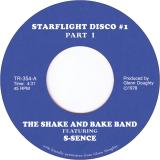
Tramp Records International proudly presents: The 1975 Baltimore Colts Glenn Doughty and his All-Pro Shake & Bake Band! In 1975 Glenn "Shake & Bake" Doughty Wide Receiver for the Baltimore Colts formed the Shake & Bake Band. Glenn Doughty and his Baltimore Colts Shake and Bake Band of the 70's is the first musical group consisting of former NFL All-Pro players that Tramp Records has partnered with in its history!
Doughty is a Detroit 'Motown' native and All-American from the University of Michigan, that was recently crowned national champion and the winningest college football program in NCAA History. Doughty and his four world-class athletic teammates formed the heart of the band. The Shake & Bake Band in the mid 70s played live at Baltimore's hottest Clubs with teammates in attendance on Monday nights after Shakin' & Bakin' their opponents on Sunday at Memorial Stadium. Doughty's sports hero was Muhammad Ali. He originated the popular Shake & Bake athletic movement scoring touchdowns. He recited Shake & Bake poetry like Ali to make predictions after games on local and national TV to celebrate Colts victories. His lyrics in his music were used to fire up thousands of his Colts fans and his teammates. Many fans felt the group sounded like WAR the popular funk group from California. Members of the Shake & Bake Band were: Glenn "Dr. Shake" Doughty #7, All-Time Colts leading Wide Receiver, producer, lead singer, congas and lyrics, Ray "RC Cola" Chester, All-Pro Tight End, Super Bowl Champion, Bass, Baltimore, Maryland, David "DT" White, Wide Receiver Lead Guitar, producer, sound technician. Buffalo N.Y., Lloyd "The Bullet" Mumford, Defensive Back Harmonica, Miami Florida, Freddie "Bones" Scott, All-Pro Wide Receiver on percussion, Grady Arkansas, and Bruce "Turn it Loose" Barnett, Drummer and shoe salesman. Randallstown, Maryland. This group of talented stars lead the Colts to its first ever three consecutive Eastern Division Championships.
Additionally to this 45 RPM single release, "Starflight Disco #1 Pt.1&2" has been featured on the "Can You Feel It Vol.5" compilation album.
Following her foundational role in the early years of The Fall, and then the searing post punk of The Blue Orchids, as well as several tours serving as a backing group for Velvet Underground chanteuse Nico, Una Baines found herself starting 1985 without a band. Drafting together members of the all-female Beyond The Glass, and compatriots associated with her past projects, she entered the studio with a clutch of songs and a willingness to experiment. Separating the sides into “waxing”, for the more traditional songs, and “waning”, where the structures become looser and varied, the resulting album was the sole release on her Taboo Records and seemed quickly lost to time, but feels shockingly current in both feminist content, and freak folk execution.
It is a collection of influences that would emerge decades later in the wyrd folk movement, and Furia is not out of place at an intersection of Devendra Banhart and Meg Baird, but there was absolutely nothing like it in 1986. Upon release, Mark E. Smith famously likened it to Third Ear Band, having to dip back to 1970 for a touchstone. Songs like “Bridget of Ireland” could be traditional ballads from decades past, while “No Romance” is a lo-fi new wave hit waiting to happen. “Sheila/Beats My Heart” fashions The Velvet Underground as a feminist protest band, and “Ritual” plays out like all of the Motown girl groups banding together to tell the world that they don’t need a boyfriend to solve all of their problems. It all draws on sources that are so familiar, yet turns them upside down in a celebratory fashion. Is it freak folk? Pagan punk? Pastoral drone? It is all of that and so much more. It is the sound of a woman, and an artist, truly finding her voice, and it is both magical and compelling.
“Remarkably prescient and weirdly beautiful record. A creative, challenging and memorable companion, with a distinct voice and identity of its own: in turn playful, political and experimental. It's highly recommended.” – The Quietus
"Surface Noise Isn’t A Crime" continues NOREPRESS’ exploration of texture, pressure, and imperfect sound as core elements of underground electronic music. Across four tracks, the release moves through Deep Tech House, Dub Techno, Electro, and Breakbeat without settling into fixed genre boundaries, balancing functionality with experimentation throughout.
A1. Tvardovsky feat. Andrey Zverev – Flute Meditation opens the record with a dense, slowly unfolding trip built on dub space, electro tension, and hypnotic Tech House movement. Organic flute phrases drift through layered percussion, evolving bass pressure, and spacious analog textures, creating a strange collision of futurism and nostalgia. The track resists obvious peak-time formulas, choosing gradual transformation over immediate impact and rewarding deeper immersion with every transition.
A2. Osman Öz – Regrets moves into softer territory without losing rhythmic weight. Warm breakbeat structures, airy melodic fragments, and fluid low-end movement give the track a calm but persistent momentum. Osman Öz keeps the arrangement restrained and precise, allowing groove and atmosphere to carry the emotional core of the composition naturally.
On the B-side, Kirill Matveev appears under his Natural Piece Of Aloe alias with two contrasting interpretations of the project’s dub-informed language.
B1. Salto Mortale is playful, unstable, and constantly mutating. Rhythms stretch and reorganize themselves around shifting tonal fragments, while the arrangement moves with the loose unpredictability of an improvisation session. Despite its complexity, the track never loses control, maintaining a strong forward pull through every unexpected turn.
Closing the record, B2. Columbo Beat, Kirill Matveev - Sundub pushes deeper into darker territory. Acid sequences slice through heavy dub atmospheres while rugged drums and saturated low-end pressure drive the track forward with raw physical energy. Distortion, space, and movement interact continuously, turning the track into a hypnotic late-night tool designed for more adventurous dancefloors.
"Surface Noise Isn’t A Crime" captures NOREPRESS at its most confident: raw textures, deep space, broken edges, and timeless club influences reconstructed into a modern dub-driven framework.
Rocco Universal presents four cuts of cosmic machine funk on Cosmic Tiger.
Lovingly recorded using analogue synthesis, the floor-focused music favours feeling over control, with saturated drums, thick bass notes and slow-burning melodies loosely entwined over intuitive arrangements. Shaped patiently amid Rocco’s long-running residency at Potato Head Bali, the tracks meander through cosmic disco, proto-house, electro-funk and psychedelic chug, each finding its place beneath evolving twilight skies.
Rocco Universal is the alter-ego of Patrizio Cavaliere — DJ, producer and journalist serving the roots of music from the space in between. His cultured turntable curation alongside years in conversation with some of the scene’s architects and ambassadors inform freeform productions that have previously arrived on labels including Leng, Soul Clap and Adeen Detroit.
Originally launched as a blog, Cosmic Tiger now surfaces only occasionally through interviews and original releases, operating as a slow-moving but trusted archive of influences, conversations and dancefloor oddities.
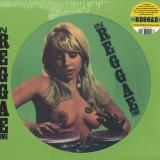
1st repress of the rare UK compilation “In Reggae Time”.
Originally released in 1970, it brings together a series of very rare tracks issued only on 7" singles around 1967 by Ember Records and its sub-labels.
The sound is not just Reggae—it’s only marginally so—offering a vibrant mix of 1960s UK mod, R&B, Ska, and Northern soul.
The Doobie Brothers faced a serious predicament as they prepared to record Takin’ It to the Streets. That the group navigated a potentially serious personnel problem that would’ve tanked lesser bands and scored its fourth straight Top 10 album — while again expanding its range — speaks to the collective’s chemistry, broad-mindedness, and songwriting abilities. Known as the effort on which vocalist-keyboardist Michael McDonald makes his debut, the 1976 set stands as an all-encompassing representation of the various styles the Doobie Brothers explored during their heyday.
Sourced from the original analog master tapes, mastered by engineer Krieg Wunderlich, pressed at Fidelity Record Pressing in California, and housed in a Stoughton gatefold jacket, Mobile Fidelity’s numbered-edition 180g 45RPM 2LP presents Takin’ It to the Streets in definitive sound. Given the luxurious room of a 45RPM version for the first time and benefiting from the wider grooves, the music unfolds amid large soundstages replete with ultra-quiet backgrounds, big dynamics, and accurate imaging. By then a key component of the Doobie Brothers' success, Ted Templeman’s production is brought to light with stellar clarity and definition.
As is the case on Mobile Fidelity's four other acclaimed Doobie Brothers 45RPM reissues, myriad facets that help make Takin’ It to the Streets timeless, natural, and organic — minimal overdubs, voices that realistically rise and fall, notes that properly carry and decay, warm tones, bass lines that pop with color, well-placed percussive accents, defined separation between the players — emerge with incredible presence, openness, and fullness. Nothing is overdone or out of place. No small feat given Templeman and company didn't know how everything would unfold when they first met up in Southern California.
Confronted with a change in plans by co-founder Tom Johnston, whose contributions to the band up to that point in its career identified him as an indispensable member, the Doobie Brothers were thrown for a loop when he curtailed pre-planning work and retreated home to deal with ongoing health problems. Thankfully, Jeff "Skunk" Baxter, the group's newest full-time recruit, had a possible solution in his former fellow Steely Dan colleague McDonald. The singer-keyboardist had already sat in with the Doobie Brothers on their recent tour. So, why not give it a shot?
McDonald's prodigious talents notwithstanding, he couldn't technically replace Johnston. For starters: McDonald's soulful timbre bore little resemblance to Johnston's grittier voice. And McDonald played keyboards, not guitar. No wonder Templeman initially expressed reservations. He also knew the Doobie Brothers needed additional material before they could consider wrapping the record. Yet the skepticism began to dissipate on the first day of the sessions. Still waiting for second drummer Keith Knudsen, the band gathered in the studio with former roadie Bobby LaKind on congas and Little Feat drummer Richie Hayward for a live run through "Wheels of Fortune." The instrumental parts of that take landed on the record. Johnston would even return to share the lead vocal duties with Patrick Simmons.
Those magical results, and the experience of hearing McDonald woodshed the title track at the piano, turned Templeman into a believer and cheerleader. Spurred by their veteran producer's encouragement and McDonald's ideas for songs, the Doobie Brothers embraced new directions just as they did after their debut LP and on subsequent efforts with orchestral and horn treatments. The latter return on Takin’ It to the Streets courtesy of the five-piece Memphis Horns. Yet outside of viola accompaniment on "Losin' End," string elements step aside in favor of McDonald's pianos, synthesizers, and clavinet. And, on five cuts, lead singing.
As the new face of the band, McDonald ended up crafting all or portions of four tunes. His fingerprints are all over two of the singles, including the jazzy, blue-eyed-soul delight “It Keeps You Runnin’” and irresistibly melodic title track, which cracked the Top 15 and became one of the Doobie Brothers’ signature numbers. He and Baxter’s penchant for smoothness, and a precursor to the band’s coming transition into rhythmically oriented yacht rock, informs the brassy sway of “Carry Me Away.”
Further enriched by Tiran Porter’s gorgeous, time-signature-shifting ballad “For Someone Special,” Simmons’ peppy, spring-loaded “8th Avenue Shuffle,” and Johnston’s “Turn It Loose” — the move-your-feet boogie serving as kind of apt farewell to the band’s prior rock ‘n’ roll sound — Takin’ It to the Streets spun uncertainty into gold. Altered yet unbowed, the Doobie Brothers once again offered countless listeners “the best kind of remedy” with feel-good music that holds up amid any era.
Released in Nottingham at the turn of the millennium, when the city was at the heart of an exciting underground scene, Lounging sits between trip-hop's slowed breaks and deep house's low-end drive. Drum programming is loose but controlled, with swung rhythms underpinning warm basslines and restrained chord patterns. Tracks alternate between vocal cuts featuring Gea Russell and Isi Samuel, and instrumental pieces built on short sampled phrases and repeating hooks. It's a perfect record for either pre-club or post-rave, especially on warmer days, and this anniversary edition has been remastered by Shawn Joseph. A welcome return for a low key classic.
Peach Discs celebrates peak western-hemisphere summer with the perfectly-timed-and-titled "Soft Serve Summer" EP from I. JORDAN. We were delighted when they sent us these tunes, which represent a brighter, housier and more personal side to their sound than many have seen before. Inspired by their recent tour of Australia, the EP (named after the title track that got the ball rolling on the other side of the planet) bottles a loose, sun-kissed feeling across all five tracks that's keen to be unleashed at festivals, beaches and dancefloors worldwide.
Opener "Your Love" boots things off in style, sitting somewhere between Power House and French Touch as layers of oscillating synths, percolating drums and vocal chops take turns in the spotlight – but when all's said and done it's the bassline that gets the flowers, duh.
Things turn a little more introspective on "Little Tinker", as the titular bells sprinkled throughout summon up something…else? Whatever you think that is, the muscular bassline once again keeps us grounded, as washes of dreamy synths lap at the shore and everything is in its right place, before the urgent organ stabs and diva moans of "Soft Serve Summer" pull us straight back to the middle of the floor.
Turn On The Sunlight is the long-running project of Texas-born, Maui-based musician and producer Jesse Peterson.
Originally formed in New York in the late 2000s, Turn On The Sunlight has evolved into a fluid, location-spanning practice rooted in collaboration, intuition and process. Now based on Maui, Peterson’s work draws together a wide network of musicians and environments, with recordings taking shape across Los Angeles, Tokyo, London, San Miguel de Allende and Haʻikū.
Loosely situated within a framework of organic, ambient-leaning jazz, 'Iseo' unfolds as a series of open, exploratory pieces, with electronics sitting subtly beneath acoustic and environmental elements. Built from layered instrumentation including synthesizers, guitar, zither, flutes, voice and field recordings, Peterson moves between grounded, tactile detail and more expansive, immersive states. A sense of warmth and permeability runs throughout: organic percussion, environmental textures and drifting rhythmic elements lend the record a gently saturated humidity, reflecting Peterson’s base in Hawaii, where the presence of nature is felt as much as it is heard.
Underlying the project is a way of working rooted in gathering, listening and tending. Instruments, ensemble sessions, field recordings and everyday environments are approached with attentiveness, shaped through collecting, refining and allowing things to settle. Relationships, landscape and lived experience shape the sound, giving 'Iseo' a tactile, almost hand-made quality.
Rather than fixed arrangements, the album feels as if it has been organically and lovingly assembled through a process of listening and response, each element finding its place within a wider, evolving whole. This approach reaches a natural centre point in the 15-minute piece 'Medianoche En La Calle Aurora', which unfolds patiently, bending through shifting environments as motifs and textures emerge and dissolve with quiet continuity.
Peterson’s role as both instigator and facilitator is central to the project. Bringing together a diverse group of collaborators including Carlos Niño, Mia Doi Todd, Laraaji, Ko Ishikawa, Luis Pérez Ixoneztli and Miles Spilsbury, he creates space for individual voices to emerge within a shared language. The result is a music defined by openness and generosity.
'Iseo' takes its title from Peterson’s son’s middle name, a word that can be understood to mean ‘one-world life’. The piece itself takes the form of a gentle lullaby, its melody loosely shaped around the syllables of his name and sung to Peterson’s son by Luis Pérez Ixoneztli, a close collaborator whose presence across the record reflects a long-standing relationship that extends beyond the music itself.
Sleeve art and design by Michael Willis.
Following their 2023 LP Presents, Nathan Nelson's American Cream Band bring the Twin City heat back to Quindi with an album rooted in duality. From the yin and yang party-starting A side and meditative B side to the dual-attack boy-girl vocals, the nature of opposites and equals steer the expansive, artful strain of rock n' roll that spill out of this wholly unique Minnesotan export. For the ever intriguing Quindi, it's a strident step into Spring after the frosty introspection of Roudi Vagou & Läuten der Seele's Taghelle Nacht. While the world burns and injustice prevails, Twin is a celebration of unity and radical expression-all the more urgent against the backdrop of authoritarian overreach and righteous protest that has whipped through Minneapolis in recent times.
Twin continues Nelson's drive at the helm of American Cream Band to draw in a colourful cast of players to feed into his orgiastic sound, meshing the trance-induction of krautrock with the irrepressible funk of the post-punk-new-wave explosion. But principal among the cast of characters and forming a central tenet to the identity of this album is Liz Buhmann, lead vocalist and a formidable, playful foil to Nelson's own Midwestern twang. Around the electric spark between Buhmann and Nelson, a heavy duty ensemble wrangle guitar, bass, sax, a cornucopia of synths and a battery of percussion into all manner of sonic forms.
The double-sided concept manifests throughout Twin. On 'Call Me' Buhmann sings in French to contrast Nelson's English, while the strident strut of the NYC disco groove is offset by an inherent dreaminess that turns the track into a more cosmic kind of dancefloor workout. 'Ethical Vampire' is a spiky cut with a garage rock patina that spirals into a psychedelic, synth-soaked get-down. 'Don't Burn The House Down' is a loose and limber roller that captures Can at their funkiest along with the hypnotic vibe of other such esteemed long format jammers, but American Cream Band boils that energy into a hook-laden art pop sensibility before a gentle, drawn out landing.
Even the more pensive moments on Twin find space for friction. For all its tender, smoky temperament, 'Leda and the Swan' lets the electric piano and guitar fray at the edges and bleed into the red while Mat Heinrich's tumbling drums lurch with pent-up intensity on the one. 'No Funeral Necessary' skirts around the mellow pools of new age but prefers to let liberally doused Tape Echo tweak out Alex Meffert's honeyed sax inflections and Buhmann and Nelson's disparate sermons.
Nelson describes Twin as "an oppositorum coincidentia" - a reference to the mystical Latin concept of the coincidence of opposites that suggests contradictory ideas 'fall together' in a higher reality. Beyond the sound of the album, this idea also manifests in the cover photography by Sho Nikado and the swans on the LP labels by Autumn Garrington. As freewheeling and wide-open as American Cream Band feels, nothing appears by accident. The end result feels like a nourishing whole - rich with substance and nuance, deep enough to be explored and absorbed yet also so brazen and immediate you can't help but feel its surface charms from the first thrusts of 'The Hive Is Pissed' to the last ripples of 'We're Not So Sinister'.
F
ourth record already here, new Triptych being scooped out of the drawers. This one is heavily video game inspired and marks a turning point for me. I’ve somehow been very much drawn to what I call “boss fight techno”, this is the result of this cogitation.
Total Debauchery kicks off the record with truculence. The title says it all, we’re very far away from warm up time, all hell let loose, big energy discharge, weird stereo bassline, pure madness. Gate Middletone certainly is wonky. It sounds like an anesthetized telephone call. I don’t know if we can refer to this as techno, but who cares, groove is spotless. Absolute Buffoonery started off as a joke with hoover sounds in mind. Turns out it is very danceable and weird enough to be on the record. It still is a foolery.
The B side starts with Demonic Shine. This one is purely dedicated to zombie games. I’ve been thinking about how techno could be interpreted for this kind of stuff. Turns out you can shoot dead people and dance at the same time. Good time. Zany Ditherings is a hard drive that keeps crashing. It disrupts the track, making it spasmodic. You are in a convulsive loop of data being thrown out the window. dc11 accepted this remix operation. His work acts as counterpoint to the record, bringing flawless techno tunneling. Buckle up mate.
KIZZY is the breakthrough EP from rising East London artist Bel Cobain, one of the most distinctive new voices emerging from the UK alternative R&B and soul landscape. Written across 18 months of late-night ideas, scattered sessions, and quiet breakthroughs, the project captures an artist in motion. Following a string of singles that introduced her raw lyricism, KIZZY marks a confident step forward with intimate, sharp, and melodically rich songs that sit in the space between endings and new beginnings.
Across these six tracks, Bel moves with striking emotional honesty through a rich palette that encompasses rock’s bite, jazz’s looseness, R&B warmth, hip hop rhythm, folk intimacy, and fractured breaks. She blends conversational storytelling with her distinct smoky vocals, reflecting on change, learning to let go, and finding light in the aftermath. The EP invites the listener to listen closely to the cracks, the softness, and the pulse of the beauty that still rises when a chapter turns.
Bel Cobain is fast becoming known for her ability to connect deeply with audiences, pairing classic songwriting instincts with a contemporary sonic edge. Early support has come from tastemaker radio and press, with momentum building across streaming platforms as listeners discover her unique perspective on vulnerability and self-awareness. Released as Brownswood Recordings celebrates its 20th year, KIZZY continues the label’s tradition of championing the most singular artists.
Marking a significant milestone in her career, this release is Bel Cobain's first-ever record. It is presented as a Collector's Edition Limited Edition 1xLP gatefold vinyl, pressed on Terracotta colored wax. With short-form video campaigns, targeted digital marketing, radio support, and a growing live presence, this release positions Bel Cobain as one of the UK’s most compelling new artists for 2026.
Once I Was Young and The Airplane Album find the producer taking yet another sonic right turn. "These records were made in the same year with a very similar creative process. I moved almost completely away from sampling, experimented more than ever with ambient and techno elements and used the album format as a way to tell a story about moments in my life." Once I Was Young is a storytelling work that journeys through analogue synth-pop, modulated techno and raw, dusty drums with otherworldly melodies. Moments of beauty come through escapist, naturalistic ambient tracks and fusions of Kraftwerkian sequencing with more classical piano, while stark, clubready grooves keep things moving. Airplane contrasts similar shades of light and dark, synthetic and organic, rough and smooth. Glitchy, imperfect analogue sounds, knackered drum machine grooves and eerie synth phrasing evoke a post-human world with icy atmospheres. Elsewhere, warmth comes from bittersweet melodies and loose, funky drums that ooze retro-future charm.
Once I Was Young and The Airplane Album show a diff erent side to Escobar, one that embraces introspection and experimentation while exploring a whole other world of meaningful machine soul
Hailing from the city of Brotherly Love, Terri Wells first came to prominence as a session singer for Philadelphia International Records in the mid 1970’s following the breakup of her group City Limits. Wells soon began recording and touring as a featured vocalist with artists such as Lou Rawl, M.F.S.B., Leon Huff, Jean Carne and Dexter Wansel. In 1979, she joined the band of Roy Ayres and eventually sang on “Turn Me Loose” and co-wrote the track “Let’s Stay Together” from his 1982 album “Feeling Good”. Recruited by staff producer Nick Martinelli, Terri signed as a solo act with the Philly World Records in 1983 and released her one and only full length offering “Just Like Dreamin’” The album features the singles “You Make It Heaven” and “I’llll Be Around” which both charted in the United Kingdom. To this day her sensational debut remains a classic example of the soulful Philly sound of the the early 1980’s.
- Features the hit singles “You Make It Heaven” and “I’ll Be Around”
- Produced by Nick Martinelli (Diana Ross, Chaka Khan, Regina Belle, Phyllis Hyman, Stephanie Wells)
- Backing and arrangement fine the cream of the crop Philly Soul session aces
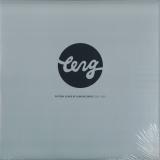
When Leng Records founders Paul ‘Mudd’ Murphy and Simon Purnell marked the imprint’s 10th birthday, they did so via a celebratory compilation that mixed classic catalogue cuts, remixes and exclusives. Five years on, and with the label’s 15th birthday upon us, they’ve decided to look to the future via a compilation made up entirely of fresh productions from Leng’s roster of current and new artists. Presented on limited-edition gatefold double vinyl with a bonus 10” single, the collection offers an updated showcase of Leng’s much-loved trademark sound, a distinctive fusion of mid-tempo sleazy-disco, Balearica and chugging house interspersed with elements of electronic psychedelia and synth-powered space disco. Fittingly for a compilation that wholeheartedly looks to the future, you’ll find first contributions from a handful of label newcomers.
Fast-rising duo Flying Mojito Bros give their spin on ‘Smoke Signals’ by label debutants Joe HarveyWhyte and Bobby Lee, turning in a heady and inspired revision that sits somewhere between dusk-ready cosmic disco and flash-fried desert blues. There’s also an appearance from Swedish producer Bo Wosticz with the dreamy and ultra-deep nu-jazz of ‘Bs As’. Naturally, you’ll also find plenty of heat from those who have already proved their mettle through prior releases on Leng. Danish duo Liminal, who made their debut earlier this year with the much-played ‘Keep Coming Back To Me’, open proceedings with the tactile, slow-disco flex of ‘Tzatziki Bay’ where sweet synth melodies and a heady electric piano riff ride a warming groove.
Roberto Intrallazzi and Dario Piana from Italy’s original Afro-cosmic movement return with ‘Plutos’, a typically deep dubbed-out cosmic chugger. Then there’s Rose Robinson AKA Tigerbalm, whose ‘Mexicana’ featuring singer Joi N’Juno is presented across the package in two different forms. Pete Herbert, who contributed to some of the earliest Leng releases, drops a driving dub disco take on the main compilation, while Robinson’s original mix – a more organic, percussive and horn-heavy affair blessed with plenty of hallucinatory intent – opens the bonus 10”.
There’s a welcome return to Leng for the brilliant Payfone, whose ‘Dime Algo’ is a typically classy, analogue-rich affair in which attractive Rhodes riffs, atmospheric female vocals and pitched-down house pianos rise above shuffling drum machine beats and a slow-motion bassline. Long-serving label contributor Lex (Athens) delivers the loose-limbed nu-disco breeze of ‘Stolen Dance’, while the imprint’s San Francisco connection – the ever-brilliant 40 Thieves collective – drop the dubbed-out Bay Area brilliance of ‘Such A Great Trip’.
Then there are the contributions of the label’s most storied artist, Andrew Meecham AKA Emperor Machine with ‘Eumig’, a deliciously slow, synth-rich chugger full of colourful chords, bubbly electronic melodies and jaunty electronic bass. Then, to round off the bonus 10” single, Meecham joins forces with Paul Murphy (as Mudd) on ‘Road To Nikko’, an extended, Japanese musical culture-influenced slab of pitched-down alien-funk packed to the rafters with squelchy synth sounds, effects-laden percussion, chiming melodies and rubbery bass guitar.
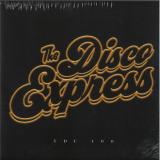
Regarded as one of London's "leading disco labels" The Disco Express is one of the most consistent and influential forces in the modern nu-disco scene.
A record label, international event series and DJ collective, TDE is dedicated to original, soul-infused house and disco music. With a global family of artists, the label blends vintage warmth with modern energy to honour the past whilst envisioning the future.
TDE100 is a 15 track compilation that distills the label's essence. Packed with fresh originals and hand-picked gems, the compilation blends funk, soul, nu-disco, house, and electronica. Crafted to move seamlessly from peak-time dance floors to laid-back Sunday listening, it's both timeless and forward-thinking.
Pressed across 2 X LP’s in a Gatefold Sleeve featuring John Morales / Derrick Carter & Inaya day.
This is original house & disco for 21st century dance floors and this train ain't slowing down anytime soon…
Hard Times and DJ Spen go back decades. The Baltimore house veteran has long been a fixture at the label’s parties, on the remixes, and now under his Muthafunkaz alias he cements the bond with a set that’s as much a time capsule as it is a renewal. The Muthafunking Hard Times EP revisits a clutch of Spen’s early-to-mid-2000s jams that, till now, have never been committed to wax. True to form, Spen hasn’t simply dusted them off: he’s remastered, refreshed, and imbued them with a 2025 gleam, bridging past and present in one irresistible sweep.
The A-side opens with the Funkee Kole Cappin’ Mix of 2008’s “(You Make Me Say) Woah!”, a gospel-fired stormer whose call-and-response vocals climb skyward while a cheeky Fab Four nod keeps things buoyant. “Holy Ghost” follows in its Holy Spirit incarnation, wringing church-floor catharsis from tribal percussion and sanctified chants - a blast of kinetic, almost Faya Combo-like fervor.
Flip the record and you’re hit with the swing and strut of 2010’s “Gotta Hold On Me,” Spen’s Vocal Mix turning horns and jazzy drums into a pure adrenaline surge. The closer, “Doin’ The Best I Can,” is a tonal shift: harmonica and guitar sketches circling loose-limbed beats, equal parts after-hours reverie and Sunday-morning balm.
Too vibrant, too joyous, too Spen not to press - The Muthafunking Hard Times EP isn’t just archival housekeeping. It’s an affirmation of what house music does best: uplift, electrify, and remind you that, even decades on, the spirit still moves.
The record captures an expansive performance in Poitiers, France in November 2023. First working together in an unpredictable trio with minimalist legend and eccentric extraordinaire Charlemagne Palestine, Ambarchi and Thielemans quickly established a remarkable musical chemistry that led to an ongoing series of duo concerts, including the performance documented on their LP Double Consciousness (Matière Mémorie, 2023).
Kind Regards finds the duo refining their shared language while continuing to take risks, allowing the music’s gravitational pull to lead them from meditative calm to unexpectedly expressive passages of melodic invention and rhythmic drive.
Recorded in sparkling fidelity and carefully mixed by Ambarchi’s longtime collaborator Joe Talia, the LP contains a single unbroken performance, stretching out for over 45 minutes. Guitar and drums weave together into a symbiotic whole that nevertheless affords us ample opportunity to marvel at the highly personal approaches these two musicians have developed to their chosen instruments through decades of diverse collaboration and prolific performance. The set begins with Thielemans’ hypnotic tom patterns, around which Ambarchi’s wavering, shimmering guitar tones—achieved with the help of the rotating speaker of a Leslie cabinet—flurry and swirl. Thielemans’ drums play subtle tricks with time and perception, adding and dropping beats within repeated patterns to create an effect at once rhythmically insistent and liquified. Growing at first into a rapidly pulsing texture of brushed drums and flickering harmonics, the music builds momentum into an irregular groove over which Ambarchi’s guitar is transformed into haunting, monumental electric organ chords, strikingly recalling the Wurlitzer work of Alice Coltrane, before settling into a section of gentle portamento melody embedded into the tactile clicks and clangs of Thielemans’ percussion.
When Thielemans adopts a more traditional jazz approach to the kit in some of the set’s second half, the results are stunning, demonstrating a feel for shifting accents and sensibility to the touch of the stick on the drum or cymbal that recalls greats like Jack DeJohnette or Billy Hart (one of Thielemans’ mentors). And when Ambarchi turns up the heat, he does so in an unexpected and delightful way, letting loose a swarm of jittering delayed tones straight out of Henry Kaiser’s classic It’s a Wonderful Life, with a more active use of the guitar’s fretboard than his usual approach to the instrument allows. As the performance draws to a close after a climactic episode of distorted harmonic groans and crashing cymbals that manages to be at once thunderous and carefully attuned to detail, it is clearer than ever that, for these two serial collaborators, this is a very special pairing.
Kind Regards shows us the kind of magic that can happen when two masters who have dedicated decades to reimagining their instruments simply begin to play, following the music wherever it goes.
1. Watermelon Man
This track version actually came from an improvisation that Allesandro IIona (Keys) made on a live show at RonnieScott's at the start of the year. I think we were were having some issues with one of the monitors on stage and it juststarted making this beeping sound. Then I remember Alleh just came in with that piano riffat the start and the rest was history. This one of thefirst tracks we recorded for the EP and I'm super pleased with how this one turned out. Afterseeing Herbie Hancock live for thefirst time the year before, this felt like the perfect tribute to him!
2. Mandible
The majority of the writing on this album was done at my studio space in Hither Green, where I am every tuesday! I usethis space to record but mainly a space to develop my art. So this EP all came from a few sessions there. We all haveour own creative things going on so it was really great to collaborate as a band and trash out some ideas we had.Mandible is one of my favourite tracks on the EP. It's very simple but leaves us a lot of space to explore some more freeimprovisation. I think in some of my previous recorded music I was more focused on creating well crafted music withgreat melodies and harmony. Whereas here there's a bit more focus on playing as a group and being more explorative inimprovisation. We also didn't have a melody for this track until a week before the recording! Sometimes it just takes awhile tofind that melody or it might just pop into your head one day.
3. Slum
This is a tune that was actually written by myself in 2017/18. Round about that time, I had been playing at a jam night ata warehouse unit in Limehouse called Unit 31. The night was ran by Pianist Raffy Bushman and Drummer Sam Michnikand was focused on hiphop and Jazz fusion. We would usually play a set of instrumental music before it opened up forvocalists and other instrumentalists to come and jam. It was a great place to try out new ideas, so I wrote this tune for itbut we never recorded it. It was really nice to revisit this tune and get it recorded properly at 'That SoundStudios' (Seven Sisters). This track is all about dynamics and a slow build throughout. Descending to more chaos at theend!
4. Red Pistachio
For thefirst two sessions we wrote with a different bass player to Edmondo Cicchetti who is on the recordings. A greatbass player and friend of mine Tom Driessler. This track started kinda exactly how it starts on the record, with that basshook. I'm very influenced by Christian Scott Atunde Adjuah and his melodic writing. Particularly on his album 'StretchMusic'. So this felt really inspired by that album. The chords don't really move around too much until the solo sectionwhere it becomes more like a blues. Then Allesandro get's a bit more loose at the end with the descending sequence.
5. Jerome arrived Late
Quite simply we started writing this tune before Jerome (Drums) arrived late. In the recording session we were a bitundecided about what to do in the solo section. We tried out a few different options before we eventually landed onfeaturing Gabriele Pribetti on Sax. I'm really into his solo on this as it's rhythmically and dynamically really exciting. As Imixed the record it was also a great solo to mess with and run through lots of different plug-ins. There's some weirddelays and phasing going on that and I added some octaves too in places.
Commissioned and curated by Flora Yin Wong for her label and publishing house Doyenne, ‘Venus Rising From The Sea’ is a collection of love-themed cover versions featuring Teresa Winter, Susu Laroche, Alex Zhang Hungtai, aya, Maria Minerva, Christina Vantzou, Spivak, Salamanda, clare rousay, Wild Terrier Orchestra, Dania and Flora Yin Wong herself covering songs by The Cure, Robert Wyatt, Mariah Carey, The Cranberries, Pentangle, The Carter Family, Spiritualized, Debussy and more.
‘Venus Rising From The Sea’ takes its cues from the classical deity Aphrodite - whose name literally means “sea foam” - for an ever necessary expression of love in the modern age. The label asked friends and collaborators to interpret “love” in whichever way they saw fit, be it obsession, self-love, unrequited, unconditional, whatever. But despite the open brief, and the vastly different modes of execution, all the artists involved somehow ended up linking hands with a shared determination to smudge the original songs into bleary-eyed, uncanny traces of the originals.
To open, Pentangle's jaunty 'No Love is Sorrow' is puffed into stormy clouds by Teresa Winter, who retains the original’s unmistakable bass twang and teases Jacqui McShee's siren song into a saturated buzz of layered, obfuscated words. Verses twist into verses, lines into echoed-out lines, capturing the song’s boundless yearning, rather than tracing its exact contours. Next, Susu Laroche yields one of the set’s highlights on a brilliantly nuanced, highly impactful version of Nina Simone’s take on folk standard ‘Black is the Colour of My True Love’s Hair’, turning the original’s multi-faceted Appalachian/Scottish routes into a heart-stopping, Nico-esque fuzz we haven’t stopped playing for weeks. Christina Vantzou (the CV ov CV & JAB) is joined by pianist Ezra Fieremans in the absorbingly filmic scenes of ‘Hot Springs’, while Maria Spivak's interpretation of Robert Wyatt's 'Just as You Are' finds her singing Brazilian vocalist Mônica Vasconcelos' words with reverence, smearing them into a hypnagogic fantasy.
Flora Yin Wong takes an inconspicuous approach on her love-letter to Mariah Carey's 'The Roof (Back in Time)', itself a melodramatic interpolation of Mobb Deep's Herbie Hancock-sampling 'Shook Ones, Part II'. The unmistakable piano line is frayed into a granulated gurgle, fleshed out by gauzy cries; Mariah's ecstatic diva logic haunts the edges like a furtive glance, hanging beautifully behind Wong's dense soundscapes. Alex Zhang Hungtai's take on the 1927 standard 'Me and My Shadow' is even more atomised, reduced to a disembodied vocal that oozes around a clattering woodblock.
Always a standout, aya's tribute to The Cure's 'Lovesong' infuses the 1989 classic with the same self-investigatory charm she exhibited on 'im hole', slowing it down to a giddy, infatuated lurch, and replacing the guitars with eerily-tuned oscillations and drums with hollowed-out, electrically charged thuds. "I will always love you," she moans through a wall of static, like some lost “Pop Artificielle” addendum. The album’s biggest surprise is saved for last, however, a cover of The Cranberries' 'No Need To Argue' from Paralaxe Editions boss Dania Shihab. Already a poignant memory of a faded romance, Dania's version is even more glacial, her tender voice gusting over inverted guitars and looping, wordless moans, guiding us ever so gracefully into the nether-world.
‘Venus Rising From The Sea’ is a gooey, emotionally raw set of recollections and affirmations from some of the scene's most open-hearted operatives. In the end, the love that's most evident is the love each of the artists has for their source material, somehow binding loose threads into a rich tapestry that will leave you gasping, perhaps a little tearful too.
Office 04 circles in memories: The record is about Johannes 'Iron Curtis' Paluka's time at Karl-Marx-Straße Berlin where he used to live next door to label head Baaz and graphic designer Chris Fladung.
A1 track 'Magnet' is an ecstatic piece of house music holding all elements IC's production is esteemed and loved for : Heavy, unrelenting kicks, rolling bass lines, shimmering pads, topped with searing hot yet gamelan-like synts and an icing of slightly loose, detuned organ stabs predesting grand emotions on any dance floor. 'What happened happened' surely marks up as another proof of Curtis' fearless takes on house music: distorted field recordings and blurred spoken words, a web of gossamer melodies and subtle clicks and cuts, all cohered by the louche bassline and the reshuffled groove in a true dilla-ish vein.
Adapting elements to their own agenda, clandestine groove explorers Berg turn 'What happened' into a true midnight roller: razor-sharp hihitas join forces with a steam-maschine like percussion, whipping relentlessly in-between kick drum and kick drum. Berg cools off their take with prancing melody motifs and strung out pads of the original track, though never loosing focus of the 'reductions' aim: keep the dancer dancing.
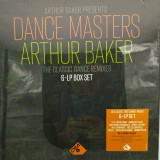
This latest instalment of ARTHUR BAKER Presents DANCE MASTERS finds the production/ song-writing/ remixing maestro taking the spotlight for a long overdue snapshot of his own classic 12” mixes during a crucial evolution of dance music, club
and pop culture.
“I’ve always felt like I was on a mission to make music from the time I heard Motown, Philly and Sly and the Family Stone. My mission started as a hobby and still feels like one now. You’ve got to keep on pushing and hustling. It can be a drag sometimes but
if you really love what you’re doing, it’s worth the work. I still really love what I do.”
Arthur Baker helped codify the remixer as artist. His genre-fluid approach to projects
has resulted in a joyous myriad of classics that spans many decades. This ’80’s focused DANCE MASTERS collection offers a welcome glimpse at Baker’s illustrious career and many long out-of-print 12” versions and previously unavailable mixes.
This 35-track, six LP expanded edition includes a wide array of selections from the likes of Robbie Nevil’s “C’est La Vie,” Fleetwood Mac’s “Big Love,” Neneh Cherry’s “Buffalo Stance”, Jeffrey Osborne “Soweto”, Freeez “I.O.U”, Rockers Revenge “Walking On Sunshine” and of course the juggernaut “Planet Rock” with Afrika Bambaataa & Soulsonic Force.
Complete with in-depth liner notes by Bill Coleman, track by track notes written by Arthur Baker himself, previously unseen session photos from Arthur’s personal archives and a signed insert.
All tracks remastered by Nick Robbins at Sound Mastering
Heels & Souls Recordings’ fifth reissue sees them reach across the Atlantic to Vancouver, pressing up Pilgrims Of The Mind’s 'What’s Your Shrine?' for the first time ever on vinyl, 25 years since its CD-only release on Map Music. A departure from the label’s previous releases, the LP is a beautiful smorgasbord of styles - progressive house, downtempo, ambient, tech house and trance all nestle together, a wiggling journey of sonic delight from the mind of Stéphane Novak.
Turn the dial back to ‘97 and Vancouver's underground had a distinctive buzz to its rumblings, an amalgamation of scenes and styles gave rise to a cohort of producers that were unconstrained by genre, offering up a heady mix of sounds to expand the mind. ‘Welcome To Lotus Land’ the key 1996 compilation on Robert Shea’s seminal Map Music, championed much of this output including two cuts from POTM. Stéphane then released his first and only full-length album, ‘What’s Your Shrine?’ on the same label the following year.
Picking out choice moments from an album as considered and complete as this is tough. Those horizontally inclined will be drawn to the ambient dwellings of ‘Sandcastle’ & ‘Following the Sofuto Kuriimo’, tracks like ‘Nothing Can Pull Us Apart’ and ‘L’Amour? Encore?!’ are perfectly suited to warming up limbs on the dancefloor, ‘My Baby Likes Rum’ and ‘Loosejaw’ prime for one in full swing. Yet to pick individual tracks misses the stunning sum of its parts that this 70+ minute cruise is, surely one of the finest albums from the American West Coast during its halcyon days of the ‘90s.
Digging deep in his vaults, Stéphane managed to uncover the original unmastered DATs that have been given a fresh mastering by Justin Drake at the Bakehouse Studios. This beautiful, double-disc gatefold comes complete with liner notes from Ciel, words from Stéphane himself, plus never-before-seen photography - the complete package this music always deserved.
Hot on the heels of this year’s ‘Dyslexia Sound System’ album, Touch Sensitive is thrilled to share a three-track companion piece from Autumns - 'DSS Dubplate'. Autumns is the solo project of Derry’s Christian Donaghey. With a relentless release rate that mirrors the energy and intensity of his live shows, Donaghey has submitted a selection of skewed star turns for the likes of iDEAL, Death & Leisure, and Opal Tapes since his debut on Regis' Downwards label in 2014. Much like it's companion LP, 'DSS Dubplate' is heavily inspired by the On-U Sound label, the productions of Adrian Sherwood, and that cultural and musical sweet spot when the rockers met the post-punk crowd. Donaghey’s whip-crack beats, heavily effected vocals, shredded no-wave guitar, and clarinet squalls are shaped and shifted further into the endless expanse by his dubwise techniques on the board. As always with Donaghey's productions - these rhythms grip tight and don't let loose until the needle is on the run-out groove. Full-throttle! Autumns non-stop!
AVNU (UK) follows up his fantastic recent single on Ellum Audio with a long-awaited and hugely adventurous new album, ‘Tough To Love But Worth The Effort’.
AVNU (UK) is based on the East Coast of Scotland and has been deeply immersed in music for twenty plus years. He has a love of everything from rock, soul and blues to disco, electro, techno, trance and rave. All of that comes out in his innovative sounds, which range from sweat-inducing club tracks to hooky and feel-good grooves. This album finds him working his magic across 15 tracks that bring plenty of fresh perspective to house, electro, synth, techno and pop. They add up to a storytelling record filled with left turns and tracks that work in a range of different contexts.
'Surprise!' opens with a glossy electro beat and shimmering 80s synths that set the tone for the whole record. 'I Love You' brings a French touch influence with plenty of filtered synth loops and crisp drums under a soulful vocal, then 'Supaflake' cuts loose on an old-school funk vibe with nods to early Daft Punk. This most colourful of records plays out through the likes of sombre cosmic techno offering 'Bad Karma,' the longing chords and heavy-hearted electronica of 'Odyssey Jam' feat Mariel Ito and distorted bass of 'Phlegm In The Street' which comes with laser-like synths and menacing vocals.
The future styles continue on 'Yo E, Check This Out' which collides jungle breakbeats with brain-melting sine waves, while 'Wilkie' is a moment to catch your breath amongst bright and shiny synths and deeper drums that suspend you in a celestial sky. 'Proud You’re Mine' is a perfect electro-dance-pop gem that has potential to be a summer festival anthem and the title track closes down with six minutes of enchanting and mystical synth lines and hypnotic drums.
‘Tough To Love But Worth The Effort’ is a spectacularly broad and accomplished album that lives in a world of its own.
The Minneapolis-raised DJ/Producer’s second album following 2014’s ‘Monoliths’ lands on Radio Slave’s Rekids imprint in November.
Although based in Berlin for several years, Dustin Zahn has continued to exert influence over the fertile but steadfastly underground Minneapolis techno scene as part of the Intellephunk collective whilst cultivating a worldwide rep via releases for Blueprint, Token and his own Enemy Records. The ‘Gain of Function’ LP sees Zahn channelling the groove-fuelled techno of the late ’90s and early ’00s and shaping eight powerful but funky contemporary techno tracks that display the decades of experience under his belt.
Forged from a series of live jams with two drum machines and two synths, the album is a refined collection of raw, purist techno brilliance. Across the A-side ‘Tell Me About Paradise’ brings shimmering staccato chops under bright and airy percussion before ‘Tangie Groove’ picks up the pace with floating pads, vocal slices, and a rumbling bassline. On ‘Lucid Dreams’, scattered percussion plays with hypnotic synth licks, while ‘Smoking in Silence’ sees off-kilter leads dancing between emotive vocals and evolving drum loops.
Opening the second disc is the deep and shuffling ‘Crimson Cheeks’, with trance-inducing samples nestled between sharp drum hits and rolling synthesis, and ‘Days Like These’ takes a darker turn as twinkling arps and droning pads carry the track. ‘Shark Rodeo’ featuring Jeremy Black mangles samples into a dense rolling affair, before closing number ‘Next Level Looseness’ drops the 4/4 pattern for a raucous club track, combining oddball sound sources and unruly production techniques for a trippy finish to the album.
Since the late ’90s, Zahn’s hypnotic and driving techno has consistently caught the ears of top DJs and labels worldwide, with anyone catching his marathon sets at the likes of Berghain exposed to expansive sets. In addition to his techno-heavy catalogue and DJing prowess, Zahn has lent production and engineering skills to bands and singers, recently working with Poliça and on Carm’s Pitchfork approved eponymous album. Beyond this, his vital work with Intellephunk includes the nearly two decades long running Communion after-hours events, cementing his invaluable contributions to the scene.
"Do you feel what I feel too?" Brijean Murphy floats the question at the start of Feelings, the full-length Ghostly International debut from Brijean, her collaborative project with Doug Stuart. Guided by a lush mix of charismatic keyboard chords, grooving bass lines, and radiant bongo-driven rhythms, the "Day Dreaming" lyric doubles as an invitation and a statement of intention. Brijean want you to move, physically, mentally, dimensionally; this is dance music for the mind, body, and soul. With Feelings, they've manifested a gentle collective space for respite, for self-reflection, for self-care, for uninhibited imagination and new possibilities. The album cultivates a specific vibe, a softness Murphy has come to call "romancing the psyche." Growing up in a family immersed in jazz, Latin and soul music, Murphy would become an accomplished DJ, session and live player in Oakland's diverse music scene and one of indie's most in-demand percussionists (Poolside, Toro Y Moi, U.S. Girls). In 2018, she began recording songs with multi-instrumentalist and producer Doug Stuart, who shares a background in jazz and pop in bands such as Bells Atlas, Meernaa, and Luke Temple. Following their first sessions, which resulted in the mini-album Walkie Talkie (released in 2019 on Native Cat Recordings), the duo continued freeform hangs in Oakland, inviting friends Chaz Bear, Tony Peppers, and Hamir Atwal. "We improvised on different feels for hours," says Murphy. "Nothing quite developed at first but we had seeds. We re-opened the sessions a couple months later, after returning from tours, and spent a month developing the songs in a little 400 square foot cottage." Aforementioned album opener "Day Dreaming" is a dynamic celebration of newness: the excitement in finding deeper understandings of yourself as you get to know someone, something, or somewhere new. "Wifi Beach" drops a pin in pure psych-pop exotica. With Atwal on drums, Stuart on bass, Peppers on keys, and Bear engineering, the group improvised the track's intro sequence based on the vision of a lavish 1970s pool party. Establishing the scene is a mid-frequency drum kit disco shuffle augmented by tight congas and timbale effect, as Murphy sings in spurts: "I want to be / Deep in love / I want to be / Say you love me too / I want to be / Honey." The stanzas cut between "reflective moments of wants and being overwhelmed by feelings of the present," she explains. "A lot of the `love songs' I write are to my psyche, self-reflections on how to encourage tender perspectives and make more time for the sweet stuff." Though there is a loose, dance-oriented motif throughout, the material gives way to somnolent turns. On "Ocean," Brijean's anodyne lyrics, reminiscent of Astrud Gilberto's airy croon, float atop a brushed drum pattern, sparkling rhodes lines, and pittering and softly funky woodblock bops. The opening line sets up the rest, "In this gentle space we lay" _ among the album's propensity for movement, tracks like "Ocean" stand out by leaning back for momentary sways of blissful introspection. Murphy calls the charming "Hey Boy" a "psychedelic guide _ the exploration of finding what feels good _ through sorrow, anxiety, apathy." This mentality applies to Feelings on the whole: in these nebulous and verdant worlds of hazy melodies, feathery hooks, and percussive details, the songs simply want us to feel alive. They radiate in wonderful abandon and with a sense of devotion to the self. RIYL: Stereolab, Astrud Gilberto, Air, Little Dragon, Broadcast, Khruangbin, Poolside.
The fifth album from Saint Abdullah & Eomac began as a poem and became a record that refuses to stay in one place. The title arrived in a cab in Paris. Mohammad Mehrabani read it aloud from a list of options. Ian McDonnell said: that's interesting, what does that mean? The answer, it turned out, was the album. Their fifth album When The Sandbox Has No Edge is rooted in hip hop, but its cast tells you how far it travels. Abbas Zahedi, Richie Culver, and Armand Hammer contribute vocals and poetry. Lester St. Louis brings cello. Che Chen of 75 Dollar Bill brings guitar. The producer and sound designer Seraphim contributed textures and sound designs throughout. Samples run deep, from records pulled from charity shops to market stalls on road trips across the UK. Raw fragments were shaped into fully formed compositions, structuring the chaos without flattening it. The sandbox, rendered without an edge.
After decades contributing to records where a single riff could transform a dancefloor, Charlie May turns that instinct inward on Trusted Farms.
For over thirty years, Charlie has occupied a position that seems increasingly rare in electronic music: the musician’s musician, the person behind the machines, the extra pair of hands in the studio, and quite often, the person responsible for the melody you end up carrying around in your head for weeks on end.
Alongside Duncan Forbes as Spooky, Charlie helped shape some of the most important electronic music to emerge from the UK in the early ’90s. That partnership would also sow the seeds for one of Sasha’s defining records: the central riff behind Xpander began life in Spooky’s live material, before Charlie brought the idea into the studio with Sasha and helped transform it into one of electronic music’s most enduring anthems.
Listen closely to Charlie’s work and there’s a particular instinct that keeps returning: knowing when a simple synth line is enough. Knowing which note needs to change. Knowing when repetition stops being repetition and starts becoming the entire reason a track works. More recently, as one-third of Quiet Places on ASIP, he’s taken those same instincts somewhere looser — beatless, gridless and led by improvisation.
Trusted Farms puts those instincts front and centre.
Tiny melodic phrases appear and refuse to leave. Synth lines repeat just long enough to become lodged in your head. Parts rub against each other without being tidied into submission. There’s a sharpness and directness to it all amongst the purposeful analogue warmth.
Some of these tracks feel almost ridiculously simple at first. But simplicity is difficult when you’ve spent decades learning every possible way to complicate something. Many of the parts on Trusted Farms were performed live with minimal editing. A synth line might be doubled, distorted, re-recorded and pushed back through another piece of equipment, but it remains the same idea. Instead of filling the gaps, Charlie works on the weight and character of what is already there. The melodies become physical; slightly worn around the edges.
For someone whose fingerprints can be found across some genuinely monumental moments in electronic music, Charlie has spent decades knowing what to add.
Trusted Farms is about knowing exactly what to leave alone.
Available on black 12”, mastered by Andreas Lupo LOOP-O Lubich and featuring artwork by Peter Skwiot Smith,
„Öd“ marks the long-awaited return of Institut für Feinmotorik - the Black Forest collective known for using eight prepared turntables to investigate acoustic micro-phenomena generated by everyday objects - with a new album and their first full-length release on Faitiche. It is also the return of their almost comical understatement as personal artistic principle: „making almost nothing out of almost nothing,“ compressed into the dots on an umlaut.
The Öd-nis, the wasteland, is a field that the collective has been ploughing in sound since their first release in 1997. Eight prepared turntables, four mixers, no records, six hands (give or take) merge into what they call the „Octogrammoticum“. A rotating organism of surfaces in friction, fed with the clutter from a drawer: rubber bands or tin foil, CDs, a discarded socket board. Under IFF's scrutinizing stylus, mundane almost-nothings get scratched open to reveal the acoustic density of negative space itself.
Last year’s „Adhesive Tape“ drew IFF closer together after an almost ten-year hiatus. An eponymous event series at Berlin's silent green set in motion what would become their most twistedly funky release since „Penetrans“ on Staubgold in 2002.
The only thing öd about „Öd" (meaning „barren" or „boring“ in German) may well be its title: layers of improvised play and randomized loops convolve around porous, dubby groove locks, tugging at each other in a call-and-response with howling static that cuts through bulbous ambient techno into a scrap-metal Dixieland phantasm. Stratified yet spacious, these sonic double exposures always hover on the verge of collapsing. What you think you hear might not be what you actually hear.
The album’s track titles resemble Conceptual Poetry, extending this psycho-phenomenological gesture into the realm of spoken language. Conceived by renowned poet Dagmara Kraus, they become word molecules - „stern,” „dies,” „lose“ - tilting delicately between German and English, constantly changing depending on the ear’s perspective and pointing back to the deeply unstable fabric connecting meaning and sound. Which also makes „Öd“ an unusual cross-disciplinary collaboration - at least in the field of electronic music.
PS: Since its beginnings in Bad Säckingen, IFF has always been more than the sum of its rotating parts, moving tirelessly between multimedia art, theory, solo projects and collaborations. With IFF Expanded, the collective now opens its eight-doored apparatus, inviting artists working with CDJs or samplers to join - an ambitious live format that loosens its former purity law while carrying forward a long-standing curatorial practice. The same thread also runs into the related event series Acephalic Headspace.
Institut für Feinmotorik (*1997), artist-group originating from Black Forest working in various fields. In musical context known for transforming turntables into instruments by removing the records and instead applying rubber bands, paper scraps, household materials – resulting in a vivid laboratory for the productive misuse of everyday objects. This approach is documented in record releases and performed live.