Buscar:a d angeli

Estilos
Todo
Patrick Conway - Loss / Silencio

Patrick Conway crossed the threshold to find a new hope. This is his third offering for the ESP Institute. On side A, 'Loss' sets an overall melancholic tone for the record. A single repeating high note on the piano establishes a guiding element, which is eventually supported by a tear-jerking yet resolving chord progression, a trailing choir of angelic voices, and a filter-modulating synth that pads the widest zones of the mix with the occasional counter-melody. Robust in and of itself, Patrick’s melodic arrangement floats gracefully over an otherwise antagonistic rhythm section built from his signature corroded dancehall arsenal. This hornets nest of boxed live kick drums, piccolo snares, and high-pitched toms is held together by a dry veneer of saturation, sitting at safe distance from but in natural harmony with the bulbous low-frequency atmospherics. On the flip, 'Silencio' employs a similar statement at the top of each measure, this time an anthemic polyphonic synth stab as opposed to the singular piano note, however, unlike the layered melodies throughout 'Lost', here Patrick explores the narrative possibility of negative space—call and response, rhythmic dialogue, and the implied notes that leave the listener’s or dancer’s intuition to complete a phrase. In the game “musical chairs,” children run around manically until signaled to find a chair, at which point their diverse personalties must urgently synchronize, until set free to run again and repeat the process. Patrick's approach for 'Silencio' conjures said metaphor—his melody and rhythm are unleashed to meander and spasm within the confines of each respective bar, until that anticipated synth stab unifies everything “on the one”—controlling the chaos, calling on muscle memory and affirming logic. These two songs will be with you always as they always have been.

No en stock

Haga su pedido ahora y le encargaremos el artículo en nuestro proveedor.

14,08

Ültimo hace: 12 Meses
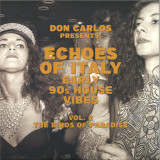
Various - ECHOES OF ITALY – THE BIRDS OF PARADISE – EARLY 90S HOUSE VIBES VOL.2 (2x12")

Googling “paradise house”, the first results to pop up are an endless list of European b&b’s with whitewashed lime façades, all of them promising “…an unmatched travel experience a few steps from the sea”. Next, a little further down, are the institutional websites of a few select semi-luxury retirement homes (no photos shown, but lots of stock images of smiling nurses with reassuring looks). To find the “paradise house” we’re after, we have to scroll even further down. Much further down.

It feels like yesterday, and at the same time it seems like a million years ago. The Eighties had just ended, and it was still unclear what to expect from the Nineties. Mobile phones that were not the size of a briefcase and did not cost as much as a car? A frightening economic crisis? The guitar-rock revival?! Certainly, the best place to observe that moment of transition was the dancefloor. Truly epochal transformations were happening there. From America, within a short distance one from the other, two revolutionary new musical styles had arrived: the first one sounded a bit like an “on a budget” version of the best Seventies disco-music – Philly sound made with a set of piano-bar keyboards! – the other was even more sparse, futuristic and extraterrestrial. It was a music with a quite distinct “physical” component, which at the same time, to be fully grasped, seemed to call for the knotty theories of certain French post-modern philosophers: Gilles Deleuze, Félix Guattari, Paul Virilio... Both those genres – we would learn shortly after – were born in the black communities of Chicago and Detroit, although listening to those vinyl 12” (often wrapped in generic white covers, and with little indication in the label) you could not easily guess whether behind them there was a black boy from somewhere in the Usa, or a girl from Berlin, or a pale kid from a Cornish coastal town.

Quickly, similar sounds began to show up from all corners of Europe. A thousand variations of the same intuition: leaner, less lean, happier, slightly less intoxicated, more broken, slower, faster, much faster... Boom! From the dancefloors – the London ones at least, whose chronicles we eagerly read every month in the pages of The Face and i-D – came tales of a new generation of clubbers who had completely stopped “dressing up” to go dancing; of hot tempered hooligans bursting into tears and hugging everyone under the strobe lights as the notes of Strings of Life rose up through the fumes of dry ice (certain “smiling” pills were also involved, sure). At this point, however, we must move on to Switzerland.

In Switzerland, in the quiet and diligent town of Lugano, between the 1980s and 1990s there was a club called “Morandi”. Its hot night was on Wednesdays, when the audience also came from Milan, Como, Varese and Zurich. Legend goes that, one night, none less than Prince and Sheila E were spotted hiding among the sofas, on a day-off of the Italian dates of the Nude Tour… The Wednesday resident and superstar was an Italian dj with an exotic name: Don Carlos. The soundtrack he devised was a mixture of Chicago, Detroit, the most progressive R&B and certain forgotten classics of old disco music: practically, what the Paradise Garage in New York might have sounded like had it not closed in 1987. In between, Don Carlos also managed to squeeze in some tracks he had worked on in his studio on Lago Maggiore. One in particular: a track that was rather slow compared to the BPM in fashion at the time, but which was a perfect bridge between house and R&B. The title was Alone: Don Carlos would explain years later that it had to be intended both in the English meaning of “by itself” and like the Italian word meaning “halo”. That wasn’t the only double entendre about the song, anyway. Its own very deep nature was, indeed, double. On the one hand, Alone was built around an angelic keyboard pattern and a romantic piano riff that took you straight to heaven; on the other, it showcased enough electronic squelches (plus a sax part that sounded like it had been dissolved by acid rain) to pigeonhole the tune into the “junk modernity” section, aka the hallmark of all the most innovative sounds of the time: music that sounded like it was hand-crafted from the scraps of glittering overground pop.

No one knows who was the first to call it “paradise house”, nor when it happened. Alternative definitions on the same topic one happened to hear included “ambient house”, “dream house”, “Mediterranean progressive”… but of course none were as good (and alluring) as “paradise house”. What is certain is that such inclination for sounds that were in equal measure angelic and neurotic, romantic and unaffective, quickly became the trademark of the second generation of Italian house. Music that seemed shyly equidistant from all the rhythmic and electronic revolutions that had happened up to that moment (“Music perfectly adept at going nowhere slowly” as noted by English journalist Craig McLean in a legendary field report for Blah Blah Blah magazine). Music that to a inattentive ear might have sounded as anonymous as a snapshot of a random group of passers-by at 10AM in the centre of any major city, but perfectly described the (slow) awakening in the real world after the universal love binge of the so-called Second Summer of Love.

For a brief but unforgettable season, in Italy “paradise house” was the official soundtrack of interminable weekends spent inside the car, darting from one club to another, cutting the peninsula from North to centre, from East to West coast in pursuit of the latest after-hours disco, trading kilometres per hour with beats per minute: practically, a new New Year’s Eve every Friday and Saturday night. This too was no small transformation, as well as a shock for an adult Italy that was encountering for the first time – thanks to its sons and daughters – the wild side of industrial modernity. The clubbers of the so-called “fuoriorario” scene were the balls gone mad in the pinball machine most feared by newspapers, magazines and TV pundits. What they did each and every weekend, apart from going crazy to the sound of the current white labels, was linking distant geographical points and non-places (thank you Marc Augé!) – old dance halls, farmhouses and business centres – transformed for one night into house music heaven. As Marco D’Eramo wrote in his 1995 essay on Chicago, Il maiale e il grattacielo: “Four-wheeled capitalism distorts our age-old image of the city, it allows the suburbs to be connected to each other, whereas before they were connected only by the centre (…) It makes possible a metropolitan area without a metropolis, without a city centre, without downtown. The periphery is no longer a periphery of any centre, but is self-centred”.

“Paradise house” perfectly understood all of this and turned it into a sort of cyber-blues that didn’t even need words, and unexpectedly brought back a drop of melancholic (post?)-humanity within a world that by then – as we would wholly realise in the decades to come – was fully inhuman and heartless. A world where we were all alone, and surrounded by a sinister yellowish halo, like a neon at the end of its life cycle. But, for one night at least, happy."

No en stock

Haga su pedido ahora y le encargaremos el artículo en nuestro proveedor.

28,99

Ültimo hace: 6 Meses
Various - Eccentric Soul: The Dynamic Label 2x12"
  • A1: Commands – Hey It's Love
  • A2: Little Jr. Jesse & The Tear Drops – Give Your Love To Me
  • A3: Tonettes – I Gotta Know
  • A4: Doc & Sal – Can't Get You Offa My Mind
  • A5: Commands – I've Got Love For My Baby
  • A6: Willie Cooper & The Webs – You Don't Love Nobody
  • A7: Little Jr. Jesse & The Tear Drops – Ain't No Big Thing
  • B1: Commands – No Time For You
  • B2: Webs – Little Girl Blue
  • B3: Tonettes – My Heart Can Feel The Pain
  • B4: Doc & Sal – Cry & Wonder Why
  • B5: Commands – Don't Be Afraid To Love Me
  • B6: Willie Cooper & The Webs – I Can't Take No More
  • B7: Don & The Doves – Together
  • C1: Webs – Don't Ever Hurt Me
  • C2: Commands – Must Be Alright
  • C3: Bobby Blackmon & The Soul Express – She's Gotta Have Soul
  • C4: Doc & Sal – Laughing To Keep From Crying
  • C5: Webs – Try Loving Me
  • C6: Commands – Too Late To Cry
  • C7: Doc & Sal – My Dream
  • D1: Little Jr. Jesse & The Tear Drops – If You Don't Love Me
  • D2: Webs – Can't Let You Go
  • D3: Commands – A Way To Love Me
  • D4: Little Jr. Jesse & The Tear Drops – It Keeps Rainin
  • D5: Don & The Doves – I Need You
  • D6: Bobby Blackmon & The Soul Express – You'll Find Another
  • D7: Commands – Around The Go-Go

Whipped up in the dust of Rene & Rene’s Tejano tornado “Angelito,” the Dynamic label was just one among San Antonio record and real estate mogul Abe Epstein’s enterprises. Dynamic’s flagship outfit, the Commands, marched “No Time For You” up to the middle of the charts in 1966 with performance chops honed jet-sharp by the demanding Air Force Base circuit. That take off paved a runway for 20 more soulful Dynamic singles over an impressive 30-month campaign. Epstein’s open-door policy brought a diverse cross-section of Texas talent into convergence within his General McMullan Drive studio, as whites, blacks, and Latinos alike suited up for service in whichever new group the call of duty called for. Epstein’s Alamo City melting pot is ladled out here in 21 (28 on the 2LP) of Dynamic’s most intriguing dishes by the Tonettes, Little Jr. Jesse & the Tear Drops, Don & the Doves, Willie Cooper & the Webs, Bobby Blackmon & His Soul Express, and Doc & Sal. Lone Star pic sleeves, full-color dancehall photography, and rich ephemera plant a new flag for soul in soil that’s seen its share of hoisted banners.

Reservar28.03.2025

debe ser publicado en 28.03.2025

35,92
Sasha & Artche - Hold On

Sasha & Artche

Hold On

12inchLNOE169
LAST NIGHT ON EARTH
14.03.2025

Electronic pioneer Sasha links up with Artche for dramatic new single 'Hold On', Artche also provides his own version of the track.

Last Night on Earth founder Sasha sits in his own world after more than 30 years of innovation as a DJ and producer. His meticulously crafted sounds have constantly redefined the underground, and with this label, he has spearheaded the melodic movement with his own music and careful A&R of exceptional contemporary talents. This latest release finds him working again with Newcastle-based producer and vocalist Artche, who has already collaborated to great effect with the likes of Franky Wah and Cristoph on Eric Prydz's Pryda Presents and also released solo on SHÈN Recordings. His mix of deep house and techno has won fans like Pete Tong and Lane B, and he asserts his skills once more here. Says Artche of his return to LNOE.

The fantastic 'Hold On' is a dramatic ride lit up with sweeping, spine-tingling synths. It has a grand architecture and widescreen atmosphere with profound melodies and moody bass rolling down below. Angelic vocal sounds shimmer amongst the epic chords and the whole sophisticated track makes an inescapably emotional impact. The Artche Mix works the drums into airy, dusty broken beats that bring a different vibe while the original vocals and lush synths remain in place and tugging at the heartstrings.

No en stock

Haga su pedido ahora y le encargaremos el artículo en nuestro proveedor.

14,24

Ültimo hace: 9 Meses
The Seldom Scene - Remains to be Scene
  • Last Of The Steam-Powered Trains
  • Crossroads
  • A Good Time Man Like Me Ain't Got No Business (Singin' The Blues)
  • Hard Travelin
  • Farewell, Angelina
  • Walking Down The Line
  • Lonesome Day
  • I Could Cry
  • White Line
  • Show Me The Way
  • To Go Home
  • The Story Of My Life

Since 1972, the group has remained quintessential bearers of the tradition, releasing
nearly two dozen albums that cast a wide net for inspiration and repertoire. Remains
to Be Scene is no exception, delivering stirring takes on bluegrass standards and
providing their signature interpretations on deep cuts from the likes of The Kinks, Bob
Dylan, and Jim Croce. The album is the first to be released since the passing of
founding member and trailblazing banjo player Ben Eldridge, who contributes
impassioned liner notes to the release. Beneath the album's title lies a plain truth:
more than fifty years in, The Seldom Scene are looking ever forward.
Original Seldom Scene are Bluegrass Hall of Fame inductees
"It goes without saying (but I'll say it anyway), the Seldom Scene is one of the most
influential and durable bands in modern bluegrass history." - Bluegrass Unlimited

Reservar14.03.2025

debe ser publicado en 14.03.2025

25,63
VIOLETA PARRA - LAS ULTIMAS COMPOSICIONES DE VIOLETA PARRA
  • Gracias A La Vida
  • El Albertio
  • Cantores Que Reflexionan
  • Pupila De Aguila
  • Run Run Se Fue Pa'l Norte
  • Maldigo Del Alto Cielo
  • La Cueca De Los Poetas
  • Mazurquica Modernica
  • Volver A Los 17
  • Rin Del Angelito
  • Una Copla Me Ha Cantado
  • El Gillatun
  • Pastelero A Tus Pasteles
  • De Cuerpo Entero

"Las últimas composiciones de Violeta Parra" as originally released in 1966, with remastered sound from the original tapes artwork. This is the best Chilean album of all time according to Rolling Stone magazine. It contains the latest compositions by Violeta Parra, including her global hit 'Gracias a la vida'. It was recorded for RCA Víctor at the end of 1966, despite the artist had signed a deal with EMI Odeon and released her previous albums on this label. After spending some time in Europe, Violeta Parra was back in Chile and wanted to record her most recent songs, filled with lyrics inspired by personal life's disappointments and social topics. The album contains great songs such as 'Run Run se fue pa'l Norte', 'Maldigo del alto cielo', 'Rin del angelito' and the global hit 'Gracias a la vida'. This is the very last album released while Violeta Parra was still alive as she would kill herself only four months later, in February 1967. In 1974 a new version of the album was released featuring string arrangements by Chilean composer Nino García and new artwork, a full-color illustration based on the black and white photo of the original album cover. This became the most popular version of the album available in decades. The ownership of the original master tapes has been the subject of judicial disputes since the late 1990s and until very recent times, which explains the difficulty in having access to the original work, as originally conceived, throughout this period.

Reservar28.02.2025

debe ser publicado en 28.02.2025

22,27
HEKLA - TURNAR LP

Hekla

TURNAR LP

12inchPHNTM42
Phantom Limb
28.02.2025
  • A1: Inni
  • A2: Kyrrð
  • A3: Ókyrrð
  • A4: Var
  • B1: Í Ösku Og Eldi
  • B2: Ólga
  • B3: Gráminn
  • B4: Flækjur

“Eerie, wailing sounds over distorted feedback drones… Vibrato-heavy harmonies chirrup and throb in agonisingly slow motion.”
The Guardian, Album of the Month

“Cinematic...carefully orchestrated...delicately explores unfamiliar territory with uncanny finesse.”
The Wire

Acclaimed Icelandic theremin musician Hekla returns with Turnar, her third album of devastatingly heavy, spectral soundscape-songwriting, entering a sublime paranormal plane of haunting dread.

Now augmenting her virtuosic solo theremin work with cello, voice, and the sacred church organ of Icelandic master Kristján Hrannar, the evolution of Hekla’s unique magic summons new worlds with Turnar. The album was recorded partly in (and named after) a medieval castle tower in rural France, its ruinous black broken in spare beams of angelic stained-glass light. But, writes Hekla, “the sound of theremin kind of opens up a portal into a new realm that both looks into a dark old world and to the future.” The record is an alternately beautiful and crushing space voyage into a glacial underworld cascading with phosphorescence and cave drip, conjuring ancient choral ritual just as readily as redolent sci-fi gloam.

Opener “Inni” begins with swooning and shimmering lines of theremin that shiver with electrified energy before subfrequency bass elevates them into a glowing plasma, hovering above a crystallised surf. Key moment “Gráminn” wails with ghostly harmonics while distorted drones crash together in a stormy and blackened netherworld sea. It traces a neat progression from Hekla’s last album - the acclaimed Xiuxiuejar - while also welcoming an expanded timbral palette and flourishing compositional confidence. At the end of side A, “Var” delicately places sonic artefacts about a desolate negative space, creating a dense inverse gravity. As with the rest of the record, a claustrophobic gauze hangs over music that could otherwise be called subverted songwriting, aligning Hekla’s sonics with avant-garde, musique concréte and sound-art.

Reservar28.02.2025

debe ser publicado en 28.02.2025

28,53
VARIOUS - ECCENTRIC SOUL: THE DYNAMIC LABEL LP 2x12"
  • Don't Be Afraid To Love Me
  • I Can't Take It No More
  • Together
  • Don't Ever Hurt Me
  • Must Be Alright
  • She's Gotta Have Soul
  • Laughing To Keep From Crying
  • Try Loving Me
  • Too Late To Cry
  • My Dream
  • If You Don't Love Me
  • Can't Let You Go
  • A Way To Love Me
  • It Keeps Rainin
  • I Need You
  • You'll Find Another
  • Around The Go-Go
  • Hey It's Love
  • Give Your Love To Me
  • I Gotta Know
  • Can't Get You Offa My Mind
  • I've Got Love For My Baby
  • You Don't Love Nobody
  • Ain't No Big Thing
  • No Time For You
  • Little Girl Blue
  • My Heart Can Feel The Pain
  • Cry & Wonder Why

Whipped up in the dust of Rene & Rene's Tejano tornado "Angelito," the Dynamic label was just one among San Antonio record and real estate mogul Abe Epstein's enterprises. Dynamic's flagship outfit, the Commands, marched "No Time For You" up to the middle of the charts in 1966 with performance chops honed jet-sharp by the demanding Air Force Base circuit. That takeoff paved a runway for 20 more soulful Dynamic singles over an impressive 30-month campaign. Epstein's open-door policy brought a diverse cross-section of Texas talent into convergence within his General McMullan Drive studio, as whites, blacks, and Latinos alike suited up for service in whichever new group the call of duty called for. Epstein's Alamo City melting pot is ladled out here in 21 (28 on the 2LP) of Dynamic's most intriguing dishes by the Tonettes, Little Jr. Jesse & the Tear Drops, Don & the Doves, Willie Cooper & the Webs, Bobby Blackmon & His Soul Express, and Doc & Sal. Lone Star pic sleeves, full-color dancehall photography, and rich ephemera plant a new flag for soul in soil that's seen its share of hoisted banners.

Reservar28.02.2025

debe ser publicado en 28.02.2025

28,78
Kyle Falconer - The One I Love The Most (LP)
  • Angelina
  • Grace
  • Dixie
  • Rebecca
  • Gem
  • Blondie
  • Lilly Anne
  • Penny
  • Laura
  • Lucy Featuring Prose
  • Claudia
  • Kelly
  • Madonna
También disponible

Powder Blue Vinyl[31,89 €]


Kyle Falconer, prämierter Songwriter und Kopf der schottischen Indieband The View, bringt auf "The One I Love The Most" neue Acoustic-Versionen von Songs aus dem umfangreichen The View- und Solokatalog aus fast zwei Jahrzehnten (vom No.1 Debütalbum "Hats Off To The Buskers" (2007) bis zum Top-10-Comebackalbum "Exorcism Of Youth" (2023)), die alle nach Frauen benannt sind. Immer schon von der weiblichen Muse inspiriert, erzählt Kyle von guten Zeiten der Liebe und Lust, von schlechten Zeiten der Reue und des Kummers, von überlebensgrossen Charakteren ("Madonna") und fiktiver Verspieltheit. Bei dem ansonsten reduzierten "Lucy" fügt Rapper PROSE aus Manchester seine messerscharfen Reime hinzu.

Reservar21.02.2025

debe ser publicado en 21.02.2025

30,04
øjeRum - Langt Fra Jorden

Øjerum

Langt Fra Jorden

12inchIIKKI026LP
IIKKI
12.02.2025

"Langt Fra Jorden" ("Lejos De La Tierra", in Spanish, for the book) is the result of the dialogue between the Spanish photographer and artist Irene Zottola and the Danish musician and artist øjeRum initiated by IIKKI, between June 2024 and November 2024.

øjeRum is Copenhagen based musician and collage artist Paw Grabowski. In his øjeRum guise, he plucks and strums his treated acoustic instruments, sounding at times like church bells, at times like angelic harp, at time like drones, and suspends the listener in the magic of his melodies.
With a deep back-catalogue of releases since 2014 - spanning labels such as eilean rec., Room40, Line, Opal Tapes and many more - he continues exploring his minimal, textural and deeply personal style of ambient music.

Irene Zottola is a Spanish photographer and artist who explores the limits of analog photography to generate a world of dreamlike and poetic character, often accompanying her images with text.
She has been self-taught in Madrid in the laboratory of the Slow Photo collective since 2016. In 2017 she is a finalist in the Rfotofolio Grant.
Her work has been exhibited in Spain, Italy and Morocco. She has published with editorials such as La Bella Varsovia and Lumen (Spain) and magazines such as She shoots film (Australia), Fisheyemagazine (France) and Vostmagazine (Korea).
In 2021 she received one of the Grants to Creation granted by VEGAP with which she began a new project in Paris and was part of the artistic residence ART(e)gileak of the BBK with a participatory photography project. She is one of the 33 authors of the Mission Region project organized by the Community of Madrid and is part of the platform of the National Image Centre in Spain. Winner in 2020 of the V Edition of the Photochannel Contest, she has published with Ediciones Anómalas her first photobook, "Icarus", which has been a finalist in PhotoEspaña and in Les Photobook Awards of Les Rencontres d'Arles 2022.
"Lejos De La Tierra’’ is her second book.

Fine Art Book, Ltd. to 500 copies:
Hardcover book printed on Munken Print Cream 115g/m2 // 80 pages, 17cm x 23cm, 42 photos // Logo and slot embossed // Hot gold stamping // Visible seam and cutting cover pages // Hand-numbered, hand-stamped.

No en stock

Haga su pedido ahora y le encargaremos el artículo en nuestro proveedor.

23,74

Ültimo hace: 14 Meses
Various - ECHOES OF ITALY - ARTISTS IN WONDERLAND – EARLY 90S HOUSE VIBES VOL.1 LP 2x12"

Volume 1 of this expertly curated project of 90s Italian House - put together by Don Carlos.

If Paradise was half as nice… by Fabio De Luca.

Googling “paradise house”, the first results to pop up are an endless list of European b&b’s with whitewashed lime façades, all of them promising “…an unmatched travel experience a few steps from the sea”. Next, a little further down, are the institutional websites of a few select semi-luxury retirement homes (no photos shown, but lots of stock images of smiling nurses with reassuring looks). To find the “paradise house” we’re after, we have to scroll even further down. Much further down.

It feels like yesterday, and at the same time it seems like a million years ago. The Eighties had just ended, and it was still unclear what to expect from the Nineties. Mobile phones that were not the size of a briefcase and did not cost as much as a car? A frightening economic crisis? The guitar-rock revival?! Certainly, the best place to observe that moment of transition was the dancefloor. Truly epochal transformations were happening there. From America, within a short distance one from the other, two revolutionary new musical styles had arrived: the first one sounded a bit like an “on a budget” version of the best Seventies disco-music – Philly sound made with a set of piano-bar keyboards! – the other was even more sparse, futuristic and extraterrestrial. It was a music with a quite distinct “physical” component, which at the same time, to be fully grasped, seemed to call for the knotty theories of certain French post-modern philosophers: Gilles Deleuze, Félix Guattari, Paul Virilio... Both those genres – we would learn shortly after – were born in the black communities of Chicago and Detroit, although listening to those vinyl 12” (often wrapped in generic white covers, and with little indication in the label) you could not easily guess whether behind them there was a black boy from somewhere in the Usa, or a girl from Berlin, or a pale kid from a Cornish coastal town.

Quickly, similar sounds began to show up from all corners of Europe. A thousand variations of the same intuition: leaner, less lean, happier, slightly less intoxicated, more broken, slower, faster, much faster... Boom! From the dancefloors – the London ones at least, whose chronicles we eagerly read every month in the pages of The Face and i-D – came tales of a new generation of clubbers who had completely stopped “dressing up” to go dancing; of hot tempered hooligans bursting into tears and hugging everyone under the strobe lights as the notes of Strings of Life rose up through the fumes of dry ice (certain “smiling” pills were also involved, sure). At this point, however, we must move on to Switzerland.

In Switzerland, in the quiet and diligent town of Lugano, between the 1980s and 1990s there was a club called “Morandi”. Its hot night was on Wednesdays, when the audience also came from Milan, Como, Varese and Zurich. Legend goes that, one night, none less than Prince and Sheila E were spotted hiding among the sofas, on a day-off of the Italian dates of the Nude Tour… The Wednesday resident and superstar was an Italian dj with an exotic name: Don Carlos. The soundtrack he devised was a mixture of Chicago, Detroit, the most progressive R&B and certain forgotten classics of old disco music: practically, what the Paradise Garage in New York might have sounded like had it not closed in 1987. In between, Don Carlos also managed to squeeze in some tracks he had worked on in his studio on Lago Maggiore. One in particular: a track that was rather slow compared to the BPM in fashion at the time, but which was a perfect bridge between house and R&B. The title was Alone: Don Carlos would explain years later that it had to be intended both in the English meaning of “by itself” and like the Italian word meaning “halo”. That wasn’t the only double entendre about the song, anyway. Its own very deep nature was, indeed, double. On the one hand, Alone was built around an angelic keyboard pattern and a romantic piano riff that took you straight to heaven; on the other, it showcased enough electronic squelches (plus a sax part that sounded like it had been dissolved by acid rain) to pigeonhole the tune into the “junk modernity” section, aka the hallmark of all the most innovative sounds of the time: music that sounded like it was hand-crafted from the scraps of glittering overground pop.

No one knows who was the first to call it “paradise house”, nor when it happened. Alternative definitions on the same topic one happened to hear included “ambient house”, “dream house”, “Mediterranean progressive”… but of course none were as good (and alluring) as “paradise house”. What is certain is that such inclination for sounds that were in equal measure angelic and neurotic, romantic and unaffective, quickly became the trademark of the second generation of Italian house. Music that seemed shyly equidistant from all the rhythmic and electronic revolutions that had happened up to that moment (“Music perfectly adept at going nowhere slowly” as noted by English journalist Craig McLean in a legendary field report for Blah Blah Blah magazine). Music that to a inattentive ear might have sounded as anonymous as a snapshot of a random group of passers-by at 10AM in the centre of any major city, but perfectly described the (slow) awakening in the real world after the universal love binge of the so-called Second Summer of Love.

For a brief but unforgettable season, in Italy “paradise house” was the official soundtrack of interminable weekends spent inside the car, darting from one club to another, cutting the peninsula from North to centre, from East to West coast in pursuit of the latest after-hours disco, trading kilometres per hour with beats per minute: practically, a new New Year’s Eve every Friday and Saturday night. This too was no small transformation, as well as a shock for an adult Italy that was encountering for the first time – thanks to its sons and daughters – the wild side of industrial modernity. The clubbers of the so-called “fuoriorario” scene were the balls gone mad in the pinball machine most feared by newspapers, magazines and TV pundits. What they did each and every weekend, apart from going crazy to the sound of the current white labels, was linking distant geographical points and non-places (thank you Marc Augé!) – old dance halls, farmhouses and business centres – transformed for one night into house music heaven. As Marco D’Eramo wrote in his 1995 essay on Chicago, Il maiale e il grattacielo: “Four-wheeled capitalism distorts our age-old image of the city, it allows the suburbs to be connected to each other, whereas before they were connected only by the centre (…) It makes possible a metropolitan area without a metropolis, without a city centre, without downtown. The periphery is no longer a periphery of any centre, but is self-centred”.

“Paradise house” perfectly understood all of this and turned it into a sort of cyber-blues that didn’t even need words, and unexpectedly brought back a drop of melancholic (post?)-humanity within a world that by then – as we would wholly realise in the decades to come – was fully inhuman and heartless. A world where we were all alone, and surrounded by a sinister yellowish halo, like a neon at the end of its life cycle. But, for one night at least, happy.

No en stock

Haga su pedido ahora y le encargaremos el artículo en nuestro proveedor.

28,99

Ültimo hace: 7 Meses
Kyle Falconer - The One I Love The Most (LP)
  • Angelina
  • Grace
  • Dixie
  • Rebecca
  • Gem
  • Blondie
  • Lilly Anne
  • Penny
  • Laura
  • Lucy Featuring Prose
  • Claudia
  • Kelly
  • Madonna
También disponible

Black Vinyl[30,04 €]


Kyle Falconer, prämierter Songwriter und Kopf der schottischen Indieband The View, bringt auf "The One I Love The Most" neue Acoustic-Versionen von Songs aus dem umfangreichen The View- und Solokatalog aus fast zwei Jahrzehnten (vom No.1 Debütalbum "Hats Off To The Buskers" (2007) bis zum Top-10-Comebackalbum "Exorcism Of Youth" (2023)), die alle nach Frauen benannt sind. Immer schon von der weiblichen Muse inspiriert, erzählt Kyle von guten Zeiten der Liebe und Lust, von schlechten Zeiten der Reue und des Kummers, von überlebensgrossen Charakteren ("Madonna") und fiktiver Verspieltheit. Bei dem ansonsten reduzierten "Lucy" fügt Rapper PROSE aus Manchester seine messerscharfen Reime hinzu.

Reservar31.01.2025

debe ser publicado en 31.01.2025

31,89
øjeRum - Langt Fra Jorden

øjeRum

Langt Fra Jorden

BooksIIKKI026BK
IIKKI
10.01.2025

"Langt Fra Jorden" ("Lejos De La Tierra", in Spanish, for the book) is the result of the dialogue between the Spanish photographer and artist Irene Zottola and the Danish musician and artist øjeRum initiated by IIKKI, between June 2024 and November 2024.

øjeRum is Copenhagen based musician and collage artist Paw Grabowski. In his øjeRum guise, he plucks and strums his treated acoustic instruments, sounding at times like church bells, at times like angelic harp, at time like drones, and suspends the listener in the magic of his melodies.
With a deep back-catalogue of releases since 2014 - spanning labels such as eilean rec., Room40, Line, Opal Tapes and many more - he continues exploring his minimal, textural and deeply personal style of ambient music.

Irene Zottola is a Spanish photographer and artist who explores the limits of analog photography to generate a world of dreamlike and poetic character, often accompanying her images with text.
She has been self-taught in Madrid in the laboratory of the Slow Photo collective since 2016. In 2017 she is a finalist in the Rfotofolio Grant.
Her work has been exhibited in Spain, Italy and Morocco. She has published with editorials such as La Bella Varsovia and Lumen (Spain) and magazines such as She shoots film (Australia), Fisheyemagazine (France) and Vostmagazine (Korea).
In 2021 she received one of the Grants to Creation granted by VEGAP with which she began a new project in Paris and was part of the artistic residence ART(e)gileak of the BBK with a participatory photography project. She is one of the 33 authors of the Mission Region project organized by the Community of Madrid and is part of the platform of the National Image Centre in Spain. Winner in 2020 of the V Edition of the Photochannel Contest, she has published with Ediciones Anómalas her first photobook, "Icarus", which has been a finalist in PhotoEspaña and in Les Photobook Awards of Les Rencontres d'Arles 2022.
"Lejos De La Tierra’’ is her second book.

Fine Art Book, Ltd. to 500 copies:
Hardcover book printed on Munken Print Cream 115g/m2 // 80 pages, 17cm x 23cm, 42 photos // Logo and slot embossed // Hot gold stamping // Visible seam and cutting cover pages // Hand-numbered, hand-stamped.

Reservar10.01.2025

debe ser publicado en 10.01.2025

47,27
Violet - Mysteria
  • A1: Sex In Harmony
  • A2: Angelina (Talk To Me)
  • A3: Bad Dream
  • A4: That Night
  • A5: Only You
  • B6: Arms Around
  • B7: I Don't Want To Fall In Lov
  • B8: Mysteria
  • B9: Eighteen In Love
  • B10: If I Had You

FÜR FANS VON: TOTO, HEART, STARSHIP, ROXETTE, SURVIVOR, LITA FORD, VIXEN
Gegründet 2019 auf einer Party in der legendären Rockfabrik in Ludwigsburg, schicken sich VIOLET an, die bunten extravaganten Achtziger, ein
Jahrzehnt voller großen Melodien und Hits, im hier und heute wiederzubeleben. Bereits mit ihrem ersten Album „Illusions“ von 2022, von Fans und
Presse zur Nummer #1 Zeitmaschine zurück in die Achtziger gekürt, spielte sich die junge Formation direkt ins Rampenlicht. Auch ihre Liveshows
wurden schnell zu äußerst beliebten Events für AOR Fans. Und nicht nur für die. Kein Wunder, denn die leidenschaftliche Performance von Sängerin
Jamie Beckham, das virtuose Gitarrenspiel von Gitarrist/Sänger und Songwriter Manuel Heller, die filigranen Keyboardmelodien von Filip Kuzanski
sowie der unwiderstehliche Groove der Rhythmusfraktion mit Eric Hart am Bass und Maurice Probst am Schlagzeug lässt niemanden still stehen.
Ende 2024, zwei Jahre nach dem Debütalbum, erscheint nun „Mysteria“. Für den sehnlichst erwarteten „Illusions“ Nachfolger gab es für VIOLET
keinerlei Grenzen. So brilliert auf einmal ein feines Saxofon oder überraschen plötzliche und unwiderstehliche Gang-Shouts den Hörer unerwartet. Es
sind mehr Gitarren zu hören, hier und da nimmt es einen leichten progressiven Schlenker, aber alles immer im Sinne des Songs. Dazu mit einer
unglaublichen Authentizität für eine Zeit, in der alle Bandmitglieder noch nicht einmal geboren waren. Wer authentischen Achtziger Sound mag und
Bands wie Starship, Heart, Toto oder Roxette zu seinen Lieblingen zählt, sollte sich VIOLET auf keinen Fall entgehen lassen!

Reservar13.12.2024

debe ser publicado en 13.12.2024

25,17
Las Palabras - Fe LP

Las Palabras

Fe LP

12inchLC102LP
La Castanya
13.12.2024
  • A1: Escudo Y Espada
  • A2: La Misma Luna (Feat. Angélica Garcia)
  • A3: De Nuevo Otra Vez
  • A4: El Año Del Dragón (Feat. Σtella)
  • A5: No Se Puede
  • B1: La Catarata
  • B2: También
  • B3: Espejismo
  • B4: Por Qué
  • B5: Fe
También disponible

White Vinyl[21,81 €]


Rafael Cohen’s Spanish-language solo project Las Palabras gives the D.C. punk scene veteran and member of dance-rock group !!! (Chk Chk Chk), the words to reveal himself as a Latin alternative artist and what he calls “a cautious believer”. Fe, Faith his second Las Palabras album, and first on the Barcelona label La Castanya, “deals with what it means to have faith, what it means to have doubts, and what it means to stay open to the idea that something untouchable and unknowable may exist”.
Written and produced by Cohen in his home studio in Brooklyn and mixed by Black Pumas guitarist Adrian Quesada, Fe builds on nylon-string guitar and electric bass with live drums and synthesizers in songs that embrace elements of 70s Brazilian funk and an amalgam of beats from hip hop to bachata, interspersed with contemplative ballads on which Cohen’s voice and guitar can be quiet enough to hear the rumble of a bus going by in the background.
“Fe” is colored by musical influences that include those Brazilian grooves, but also shades of Sade, Sounds of Blackness and eighties electro funk group Zapp. The arrangements spotlight the rhythm section, with drums played by Chris Egan (!!!, Solange, Blood Orange) and featuring Alberto Lopez (LCD Soundsystem, Stanley Clarke) on percussion. Cohen credits Adrian Quesada for the album’s warm, worn-in tone: “He made the beats sound a lot bigger and gave it an ’80s hip hop feel. He really understood the references and brought his background in Latin music to it”

Reservar13.12.2024

debe ser publicado en 13.12.2024

19,75
Las Palabras - Fe LP

Las Palabras

Fe LP

12inchLC102LPW
La Castanya
13.12.2024

Rafael Cohen’s Spanish-language solo project Las Palabras gives the D.C. punk scene veteran and member of dance-rock group !!! (Chk Chk Chk), the words to reveal himself as a Latin alternative artist and what he calls “a cautious believer”. Fe, Faith his second Las Palabras album, and first on the Barcelona label La Castanya, “deals with what it means to have faith, what it means to have doubts, and what it means to stay open to the idea that something untouchable and unknowable may exist”.
Written and produced by Cohen in his home studio in Brooklyn and mixed by Black Pumas guitarist Adrian Quesada, Fe builds on nylon-string guitar and electric bass with live drums and synthesizers in songs that embrace elements of 70s Brazilian funk and an amalgam of beats from hip hop to bachata, interspersed with contemplative ballads on which Cohen’s voice and guitar can be quiet enough to hear the rumble of a bus going by in the background.
“Fe” is colored by musical influences that include those Brazilian grooves, but also shades of Sade, Sounds of Blackness and eighties electro funk group Zapp. The arrangements spotlight the rhythm section, with drums played by Chris Egan (!!!, Solange, Blood Orange) and featuring Alberto Lopez (LCD Soundsystem, Stanley Clarke) on percussion. Cohen credits Adrian Quesada for the album’s warm, worn-in tone: “He made the beats sound a lot bigger and gave it an ’80s hip hop feel. He really understood the references and brought his background in Latin music to it”

Reservar13.12.2024

debe ser publicado en 13.12.2024

21,81
Il Bosco - Please, No More Edits From The Manctalo Disco!

Before we pack away the poppers for another year, let Red Laser take you for one last spin on the waltzers.
Tried and tested at our recent road block parties in Manchester, these edits shine a light on four primo-grade Italo face melters. Fervently excavated by Bosco over countless visits to Bel Paese and streamlined for the hydrofoil, with some extra added calories for the club.

Opener 'Destiny' tweaks and shudders under analogue arpeggios, dazzling Strat chops and cosmic bass interplay before dropping into a simply glorious female vocal that, thankfully, gets plenty of airtime before Bosco calls close. A track so close to perfection we had to make it longer.
'Flavio', up next - and half sung in Italian so we only know a bit of what she's on about - is another supreme slice of Italo disco from the upper echelons that Bosco snaffled between glugs of Barolo and a face full of worm cheese. Sure to instigate group hugs, 4AM declarations of love, tears of happiness and huge pelvic thrusts dependant on environment and inebriation.

The tingles continue on side B with another supernova burning bright across the stars. 'Newsin' introduces itself with a joyous marriage of marimba and synth before yet another vocal proves Italians really do, do it better when it comes to writing some of the catchiest hooks and choruses in the universe.
'Lace', featuring the record's only male vocal appearance, has a romantic, proto-goth-new-wave vibe; like if Robert Smith and Richard Butler had a chem-sex love child after a wild night in Baia Degli Angeli.

Not sure who the woman in lace is, but we'd defo like to see her down The White Hotel one night...

No en stock

Haga su pedido ahora y le encargaremos el artículo en nuestro proveedor.

15,34

Ültimo hace: 68 Días
Dennis Bovell - Sufferer Sounds (Rare Dubs, Roots & Lovers Rock) (LP 2x12")

Dennis Bovells produktive und vielseitige Karriere umfasst ein riesiges Spektrum an Musik: von Dub Poetry über Lovers Rock und Post-Punk bis hin zu Disco, Pop und mehr. Seine Produktionsarbeit umfasst so unterschiedliche Persönlichkeiten wie The Slits, I Roy, Maximum Joy, Fela Kuti, The Pop Group, Janet Kay, Saada Bonaire, Orange Juice, Golden Teacher, Steel Pulse und mehr.

Diese Zusammenstellung konzentriert sich auf die Zeit während und unmittelbar nach Bovells Engagement beim Jah Sufferer Sound System und gräbt tief, um deepe Cuts und weniger bekannte Versions zu finden, hauptsächlich aus den Jahren 1976-1980, samt eines umwerfenden und weniger bekannten Dub des ikonischen Tracks "Silly Games". Sorgfältig restauriert und remastered bei Dubplates & Mastering in Berlin, sodass diese Jahrzehnte alten Tracks makellos und dynamisch klingen und so angeordnet sind, dass sie den Hörer auf eine Reise durch Bovells Produktions- und Arrangement-Genie mitnehmen.

Die beiliegenden Sleevenotes sind das Ergebnis eines langen Gesprächs mit Dennis über diese Zeit seines Lebens, mit Erinnerungen an jeden einzelnen Track und faszinierenden biografischen Anmerkungen. Die Vinyl- und CD-Versionen weisen unterschiedliche Cover auf, wobei jedes Format ein einzigartiges Foto von Syd Shelton verwendet.

No en stock

Haga su pedido ahora y le encargaremos el artículo en nuestro proveedor.

31,89

Ültimo hace: 12 Meses
Alberta Balsam - One Way Trip to Gaia

One Way Trip to Gaia, Alberta Balsam's debut album, propels listeners into uncharted territory, delivering a futuristic fairytale--a utopian world that serves as a sonic refuge from reality. Building on the electro-IDM foundations of her earlier releases , this record evolves into an odyssey of bass-driven beats, breakbeat rhythms, and dub-infused atmospheres. As her most vocal project to date, the album showcases her ability to merge pop sensibility with otherworldly sound design, all while maintaining that club-ready energy. Limited edition: pressed on a black and silver marbled vinyl. Sleeve design by Timaeus

Reservar08.11.2024

debe ser publicado en 08.11.2024

19,29
Artículos por página
N/ABPM
Vinyl

