Interdance returns in 2026 with its fourth vinyl release, continuing a journey that began in 2023 and further strengthening a distinct sonic identity rooted in hypnotic club experimentation and meticulous sound design. This time, the spotlight falls on Dani Labb, a true architect of sound, delivering four original tracks, including one reimagined by Z@p. The EP is deeply focused on repetition as a language of its own, building groove through carefully layered textures and surgical precision. Music designed to be fully experienced on sound systems capable of embracing the entire frequency spectrum, where every detail reveals its purpose.
The journey begins with Phase Two, a restrained yet immersive acid cut that slowly draws the listener into Dani Labb’s universe. Its progressive structure unfolds gradually, revealing tranceinfused nuances and vocal passages that feel like moving through levels inside a parallel dimension. A2 brings Nordark, following the narrative established by the opening track. Heavy low-end pressure, resonant highs, and a sonic architecture where drums retreat into the background, sketching rhythmic contours while the synth work takes full command. The B-side opens with Enbad, where tension rises and the energy becomes more forceful. The drums gain weight and the sound leans further into techno territory, while acid remains the guiding thread throughout. Closing the record, Z@p reshapes Enbad with his unmistakable signature of mystery, tension, and hypnotic arpeggios that push the experience to the edge. A producer who needs no introduction.
out of Stock
Last delivered 14 days ago available to reorder, subject to availability
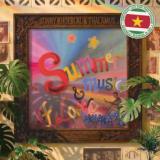
Previously unreleased jazz funk from Suriname, recorded in 1981 by keyboardist Sonny Khoeblal and his band Thalamus.
The music of Thalamus is a time capsule and the best kept secret of post-independent Suriname. During this turbulent time, the band used the language of jazz to express their desire for unity and freedom.
The generation of Thalamus envisioned a future beyond the ethnic divide their parents knew as social barriers. After independence, young people met at work or in universities and shared principles of unity and international solidarity. Jazz played an important role in translating tensions and experimenting with a sound of the future.
The band members of Thalamus shared interests in jazz-fusion from Weather Report, Chick Corea, Bob James and Carlos Santana. Compared to contemporaries with more pop appeal, their sound remained obscure in Suriname. Still, people listened to them bending conventional rules of jazz, pop, latin, rock and funk. This fusion reflected the band, its diverse members and their country: Suriname is a multi-ethnic country by colonial force. If diamonds are formed under pressure, love and solidarity emerge under oppression.
Thalamus is a unique recording of this revolutionary period, with new people finding each other based on a universal language: jazz-fusion. It culminated in six songs, two of which are 'Summer of Love and Music' and 'Lady Amazone'. This 7" vinyl brings you their story, their experimentation with jazz-fusion and tells the parallel history of Suriname.
Side A opens with "Volle Vahrt Voraus" – a full throttle, driving Tekno track by VaZdaZ. It originates from a heavy distorted drum machine session. Followed by the slovenian duo Stagnat with "Rehabilitation Of Ratlike People" – a groovy and complex tune, that maybe lets you question your sanity a bit and puts you either out or back in rehab.
Side B continues with "Forever" by Keinponny. With its hard kicks and driving force, it’s designed to mix seamlessly with whatever comes next… so it never truly ends. Finally, TakaTuka wraps things up with "Distbits". A hard hitting finale. Sigmund Freud’s opening sample quickly gets hammered away by a brutal kick & bass combo. Suddenly your oedipus complex is the last thing on your mind.
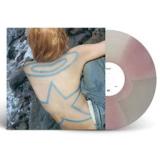
1982 4-Piece Demo' is the first official, fully-licensed and unreleased material to be released under the name Strawberry Switchblade in 30 years. Since disbanding amid major record label acrimony and personal differences in 1986, the already-cult band have since grown in stature and legend. Trailblazers in many ways, the band's mythology justifiably centers around the charismatic duo of Jill Bryson and Rose McDowall, but that isn't a complete picture. Bryson and McDowall's growing friendship, having met some years earlier on the punk scene, became a creative partnership: Bryson's art school background and McDowall's history in avant-punk group The Poets meant Strawberry Switchblade was a band pitted against many established norms. The band's very first incarnation, an all-female 4 piece, recorded one demo at Glasgow's Hellfire Club and played a handful of gigs. Friends Janice Goodlett and Carole McGowan completed the line up on bass and drums respectively. Strawberry Switchblade would eventually pair down to a duo and go on to chart success but it's in these raw, passionate recordings that the songwriting and vocal elements were being hammered out and explored in real time.
Spanish Song' is a previously unreleased song. With Rose McDowall's instantly recognizable lead vocal dovetailing with Bryson's harmonies and lead guitar, it's the first glimpse at an alternative history of Strawberry Switchblade. This incarnation could easily have been featured on a Nuggets compilation or a precursor to the indie-pop revolution that would take over British bedrooms a couple of years later. "Trees & Flowers" is instantly recognizable, a bona fide classic that would earn the band its first record deal. Here it's given a more forceful rhythm section: Goodlett and McGowan's playing is in fact accomplished and doesn't hint at the bands' youth. "Go Away" would also surface later on the band's debut LP but here it is a moody-garage stomper with a psychedelic, haunting refrain. These 3 songs point to a tantalizing future of the band that was never realized.
Remastered and restored by Sean Pennycook from the original cassette, with artwork based on a single photographic contact sheet (the only visual evidence of the band in this form) and with a booklet of photographs and new text. Pa
out of Stock
Last delivered 14 days ago available to reorder, subject to availability
Following the success of Denshi Ongaku No Bigaku Vol. 1 and Vol. 2, Cosmocities returns with the third instalment of its celebrated compilation series dedicated to the rich and ever-evolving world of Japanese electronic music. Compiled by label owner Matt Soulie, Denshi Ongaku No Bigaku Vol. 3 continues the journey through Japan’s diverse sonic landscape, bringing together pioneering artists, cult favourites and contemporary innovators across ambient, house, jazz-infused electronics and experimental sound design.
A carefully curated snapshot of Japanese electronic music past and present, Denshi Ongaku No Bigaku Vol. 3 showcases the depth, innovation and enduring influence of one of the world’s most inspiring musical cultures.
Since its inception, the Denshi Ongaku No Bigaku project has paid tribute to a musical culture that has profoundly influenced the Cosmocities vision. Where the first volume explored dreamy ambient textures and deep electronic moods, and the second shifted focus towards boogie-laden rhythms and jazz-fuelled dancefloor excursions, Volume 3 finds a natural balance between introspection and movement.
The compilation opens with Yosi Horikawa’s sublime “Bubbles”, an ambient masterpiece whose delicate organic textures gently set the tone. Chari Chari’s “Luna de Ritmos” follows with deep, ethereal house atmospherics before Force Of Nature’s hypnotic “Skyy High” guides listeners further into immersive territory.
The journey continues through the experimental electronics of XTAL’s “Skygazer” and the analogue warmth of Takuya Matsumoto’s “Jump Rope Music”, while regular Cosmocities contributor Yuu Udagawa delivers the sophisticated high-tech jazz house groove of “Little Secrets”.
On the second half of the collection, Kuniyuki’s remix of Slow Didi’s “Follow Me” brings rich jazz-inflected elegance, leading seamlessly into the futuristic techno-swing fusion of DJ Eiji Takehana featuring Yusuke Nakamura’s “Deep Track Jazz”. Tominori Hosoya’s “Summer Dreamers” adds a deeply emotional and dreamlike house moment before Azzurro’s “Just A Touch Of Love” shifts the focus firmly towards the dancefloor with a hypnotic late-night thumper.
Closing the compilation is AcidGelge’s “Fatality 4”, a beautifully spacey and atmospheric finale that leaves the listener suspended somewhere between the club, the cosmos and the imagination.
out of Stock
Last delivered 15 days ago available to reorder, subject to availability
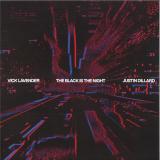
Forbidden Dance Records returns with its 13th release to the city where the label's journey first began: Chicago.
For The Black Is The Night EP, longtime Chicago house figure Vick Lavender joins forces with multi-instrumentalist Justin Dillard for three deeply musical downtempo cuts, bringing together the language of Chicago house with jazz, soul and live instrumentation.
Born and raised on Chicago's West Side, Dillard is a pianist, Hammond organist, percussionist, composer and arranger whose musical path has crossed with figures such as Branford Marsalis, Ornette Coleman, Roscoe Mitchell and the late Von Freeman. His musicianship has also become an integral part of Lavender's richly organic productions over the years.
Across three tracks, Lavender and Dillard slow down the tempo without losing the pulse. Warm keys, live instrumentation and loose percussion unfolding through the kind of deep, soulful arrangements that have long defined their work together.
A return to Chicago, but from a different angle.
out of Stock
Last delivered 15 days ago available to reorder, subject to availability
likethis have been doing fine work reissuing Eddie Richards gems from his peerless vaults and he often gives them a fresh lick of paint for the occasion, as he did with these two tunes, which came out back in January but soon disappeared. Thankfully, we're treated to a repress on 180 gram vinyl. 'Be Still' (revisit) is first and is one of those grooves you lean back for - the drums are seductive and persuasive rather than overly forceful and are laced with pads that only heighten the breezy effect. 'AbsurED' is tougher, with swinging 909s that are deep but jacked and brought to life with spoken words and blasts of bold bass.
The Yummy Fur’s first album of new material in over 25 years is seductive and ambiguous; a fast-paced flip through scenes from art, myth, life and fantasy; a witty whole made from glittering scraps. The band’s original incarnation – fronted by singer, songwriter and guitarist John McKeown from 1992 to 1999 – morphed from making quick-hit cartoon-art songs to Eno and Cale-influenced creepers, populated by characters from McKeown’s life in Glasgow and the films, books and poetry that he lived a parallel life through. Everybody Talks About The Weather delights in using every past iteration of the band as potent collage material: a melee of sounds and ideas existing at once, revealing themselves then dipping back into hiding.
Recorded by the original core trio of McKeown, Brian MacDougall (guitar) and Paul Thomson (drums), Everybody Talks About The Weather comes 17 years after the band reformed for sporadic live shows, and seven years after the release of their sorta-greatest hits compilation Piggy Wings (Rock Action). Ten tracks long with nothing to spare, it is as condensed and vital as their best songs, with a new clarity of sound that allows their ambiguities to come into the light.
The album begins with “Cogs”, a taunting inquisition from within. As McKeown stages a fight between his id and ego, the tension heats up between conversational guitar lines and minimalist repetition; threatening sing-song melody and real, palpable menace. The band members are forced in tandem only to break apart, sustaining a genuine sense of just-hidden danger throughout the whole record – except, arguably, “Headphones”, a looser moment which sees McKeown make an existential something out of nothing while waiting for someone in the car (“I should have brought a book.../My ears are bleeding from the compression on your album”)
The songs are riots of reference: “Unity Over Europe” is a slyly complex two act play about the Mitford sisters – Diana, Unity, and Nancy, in a wink to the YF canon – smashing tragic biographical detail together with allusions to Thomas Pynchon and Francis Bacon. Pynchon is also lifted to serve “Blue Sunshine”, a collision of school shooters, serial killers and fictional fuck-ups (“Fast forward to Compton/Fast forward to Pynchon/Fast forward to Columbine'”) whose buzzy guitar lines are taunting and confrontational like a smarmy teenager. The innocuous title of “My Lasagne” belies a song that exists in several time periods at once: a visit to see Guernica, 50 people with their backs to the portrait of Dora Maar; the time that Picasso painted from; the Reina Sofia and the dirty streets of the Malasaña; myth-making musicians and the myths they’re riffing off overlapping and leering at each other.
All this could be laboured in lesser hands, but cultural verbosity is second nature to The Yummy Fur, who transform all this source material into songs that are weird, sexy, funny and absurd. Meaning is not happily understood or flattened. Susan Sontag's essay Against Interpretation accompanied McKeown as he wrote this album, and she’s paraphrased in “Semolina Ballerina”, the album’s justification of artistic ambiguity. Thomson’s motorik beat leads a gathering of back-and-forth instrumental phrases – including a wiry contribution on saxophone – embodying the futility of trying to parse something definitive from repeated action. “Listen to the very first thing that’s in your head,” Sontag-via-McKeown commands directly, then slinks sideways: “Interpretation is a conversation in an unmade bed”
The album features two more focused portraits, or at least The Yummy Fur’s version of such a thing. “Wanda” merges the life of filmmaker Barbara Loden and the title character of her semi-autobiographical 1970 feature film, with Loden’s then-husband Elia Kazan joining the fray of no-good men in her film. It’s a mix of adaptation and avant-criticism, with McKeown’s wordplay and mannered pronunciation mirroring the way that non-fiction and fiction twist around each other in the song. The title track is a series of vignettes and impressions from the lives of the band’s ‘90s inner circle, positing painter Mac McNaughton as a kind of Falstaffian ringleader. As with Piggy Wings and the recent single “New T-Shirt”, McNaughton painted the cover of Everybody Talks About The Weather – like the album’s music, the image of a coy girl in a white dress is an uncanny amalgamation of styles, suggestions and references just out of reach, as though seen in an art museum in a dream.
The album ends with two reads of the same frustration. “King of Nothing” is the closest The Yummy Fur will ever get to sludge-rock: the band melts together into a dusty, dreary haze as McKeown drowns in a drudgery of personal struggle (“Two jumpers on in Babylon/And only cats to talk to”) and the rhythmic toppling of heroes (Rowlands, Duvall, Munro). The majority of visible dirt is cleaned off for “Say Hello”, an uncharacteristic depiction of throwing the windows open after a dark night of the soul. Here, the situation is still cold and hard (“When the sun burns gold, but the heat never reaches your fingertips”) but it feels surmountable. Everybody Talks About The Weather is an unpredictable album from an unpredictable group, but ending on a moment of almost uncomplicated light is maybe its biggest surprise. - Claire Biddles (2026)
The Yummy Fur’s first album of new material in over 25 years is seductive and ambiguous; a fast-paced flip through scenes from art, myth, life and fantasy; a witty whole made from glittering scraps. The band’s original incarnation – fronted by singer, songwriter and guitarist John McKeown from 1992 to 1999 – morphed from making quick-hit cartoon-art songs to Eno and Cale-influenced creepers, populated by characters from McKeown’s life in Glasgow and the films, books and poetry that he lived a parallel life through. Everybody Talks About The Weather delights in using every past iteration of the band as potent collage material: a melee of sounds and ideas existing at once, revealing themselves then dipping back into hiding.
Recorded by the original core trio of McKeown, Brian MacDougall (guitar) and Paul Thomson (drums), Everybody Talks About The Weather comes 17 years after the band reformed for sporadic live shows, and seven years after the release of their sorta-greatest hits compilation Piggy Wings (Rock Action). Ten tracks long with nothing to spare, it is as condensed and vital as their best songs, with a new clarity of sound that allows their ambiguities to come into the light.
The album begins with “Cogs”, a taunting inquisition from within. As McKeown stages a fight between his id and ego, the tension heats up between conversational guitar lines and minimalist repetition; threatening sing-song melody and real, palpable menace. The band members are forced in tandem only to break apart, sustaining a genuine sense of just-hidden danger throughout the whole record – except, arguably, “Headphones”, a looser moment which sees McKeown make an existential something out of nothing while waiting for someone in the car (“I should have brought a book.../My ears are bleeding from the compression on your album”)
The songs are riots of reference: “Unity Over Europe” is a slyly complex two act play about the Mitford sisters – Diana, Unity, and Nancy, in a wink to the YF canon – smashing tragic biographical detail together with allusions to Thomas Pynchon and Francis Bacon. Pynchon is also lifted to serve “Blue Sunshine”, a collision of school shooters, serial killers and fictional fuck-ups (“Fast forward to Compton/Fast forward to Pynchon/Fast forward to Columbine'”) whose buzzy guitar lines are taunting and confrontational like a smarmy teenager. The innocuous title of “My Lasagne” belies a song that exists in several time periods at once: a visit to see Guernica, 50 people with their backs to the portrait of Dora Maar; the time that Picasso painted from; the Reina Sofia and the dirty streets of the Malasaña; myth-making musicians and the myths they’re riffing off overlapping and leering at each other.
All this could be laboured in lesser hands, but cultural verbosity is second nature to The Yummy Fur, who transform all this source material into songs that are weird, sexy, funny and absurd. Meaning is not happily understood or flattened. Susan Sontag's essay Against Interpretation accompanied McKeown as he wrote this album, and she’s paraphrased in “Semolina Ballerina”, the album’s justification of artistic ambiguity. Thomson’s motorik beat leads a gathering of back-and-forth instrumental phrases – including a wiry contribution on saxophone – embodying the futility of trying to parse something definitive from repeated action. “Listen to the very first thing that’s in your head,” Sontag-via-McKeown commands directly, then slinks sideways: “Interpretation is a conversation in an unmade bed”
The album features two more focused portraits, or at least The Yummy Fur’s version of such a thing. “Wanda” merges the life of filmmaker Barbara Loden and the title character of her semi-autobiographical 1970 feature film, with Loden’s then-husband Elia Kazan joining the fray of no-good men in her film. It’s a mix of adaptation and avant-criticism, with McKeown’s wordplay and mannered pronunciation mirroring the way that non-fiction and fiction twist around each other in the song. The title track is a series of vignettes and impressions from the lives of the band’s ‘90s inner circle, positing painter Mac McNaughton as a kind of Falstaffian ringleader. As with Piggy Wings and the recent single “New T-Shirt”, McNaughton painted the cover of Everybody Talks About The Weather – like the album’s music, the image of a coy girl in a white dress is an uncanny amalgamation of styles, suggestions and references just out of reach, as though seen in an art museum in a dream.
The album ends with two reads of the same frustration. “King of Nothing” is the closest The Yummy Fur will ever get to sludge-rock: the band melts together into a dusty, dreary haze as McKeown drowns in a drudgery of personal struggle (“Two jumpers on in Babylon/And only cats to talk to”) and the rhythmic toppling of heroes (Rowlands, Duvall, Munro). The majority of visible dirt is cleaned off for “Say Hello”, an uncharacteristic depiction of throwing the windows open after a dark night of the soul. Here, the situation is still cold and hard (“When the sun burns gold, but the heat never reaches your fingertips”) but it feels surmountable. Everybody Talks About The Weather is an unpredictable album from an unpredictable group, but ending on a moment of almost uncomplicated light is maybe its biggest surprise. - Claire Biddles (2026)
Pressure is the medium of wind players. Wind instruments all sound thanks to pressure differentials, whether that’s the rush of wind over a lip plate or a steady, buzzing exhalation through pursed lips. Ka Baird and Chris Ryan Williams (HxH) are wind players well- schooled in the power of using pressure and movement to amplify the mystery of an invisible force animating a metal tube. They augment their instruments, flute and trumpet respectively, with electronics, sometimes obscuring the acoustic sound source, sometimes making it hyperreal. Flutters of lip and tongue slither over the listener’s ear, and sustained tones become a dense fog, pushing on other kinds of visceral, emotional pressure points.
On Enthalpy, Baird and Williams’ first album as a duo, the energy they conjure feels barely contained, the pressure built up to a breaking point before spilling out in multiple directions at various speeds. They borrow the title from thermodynamics, referring to the total energy of a system based on its pressure and volume. The music flies out in bursts; it seeps and oozes, flows with intention. It is an incredibly rhythmic work without any hint of meter, full of sounds that punctuate with the thud of a dart hitting a bullseye. Williams’ capability to conjure swirling atmospherics, as well as his remarkable ability to pull fragments of melody from the haze, fit puzzle-like into Baird’s exclamations and the eruption of electronics that often dovetail them. The duo draws on tones from nearly the entire range of human hearing, from nimble but bulbous throbs of sub-bass to pinprick flickers of ultra-high end.
The sessions that produced Enthalpy were completely improvised, showcasing a degree of mind-meld that belies each participant’s thrill at approaching the unknown. This isn’t a casual conversation, but an omnidirectional tangle that ties and reties itself into new knots as the album progresses. Williams and Baird have both become ubiquitous presences throughout the New York City experimental music communities, collaborating with innumerable others and learning how their unique approaches work in tandem with similarly expansive thinkers and players. Even in the album’s most spacious moments, there’s a tension between the feeling of being unmoored and yet completely locked in, like the abyss is just one more river to cross. They ford it together before moving on to the next idea in lock step.
For the listener, Enthalpy is often felt in the body as much as it reverberates within the ears. We’re tossed from side to side, made to shoulder the impact of detonating electronics, absorbing these sounds with the feet, gut, and crown. Baird reaches into the back of their throat for guttural growls, and we can almost feel the scratch. As we tread the border of the synthesthetic, it's a reminder of the physical nature of sound, that the space between our ears and the speakers is its own enthalpic system of energy conduction. Move with it, let it move you, and see how it feels.
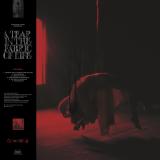
Surprise EP drop from Knocked Loose ahead of their upcoming tour. EP will be accompanied by a full 16min animated video that takes you through each song.
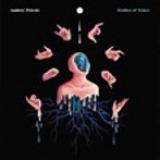
In 2024, Audrey Powne emerged as a compelling new voice in contemporary jazz with the release of her acclaimed debut album From the Fire; a self-produced and self-composed work celebrated for its lush string arrangements, soaring trumpet performances, and emotionally rich songwriting. Now, two years later, Powne returns with Bodies of Water, a bold and deeply introspective follow-up that continues her elemental exploration: from fire to water. An exploration of what it means to exist alongside others in an increasingly unstable world, Bodies of Water reflects on vulnerability, responsibility, and human interconnectedness. The album’s title and conceptual foundation were inspired by a passage from Caleb Azumah Nelson’s novel Small Worlds: “...to make himself a body, like water, a still surface, but beneath this, a ripple, and beneath this, an ebbing tide, and beneath that, a violent, constant tow…” Throughout the record, lyrics ruminate on the idea that like all bodies of water, we are vulnerable to disruption and catastrophe. Unlike inanimate bodies of water, however, we are conscious participants in both the damage and the repair. That tension between what we are made of and what we are responsible for became a grounding and harmonious thought. This album is a meditation on that idea, both in my personal life and in a broader, collective sense. Swollen, Broken Record, and Karma, reflect on moments of cruelty and error including her own that felt unbearable. Viewing them instead as forces moving through the landscape of a life, violent but temporary to survive their immediate impact. More socially conscious tracks Stay Awake, Creeds, RYV, and Two Sides confront frustration with political polarisation and the emptiness of language unaccompanied by action. The title and final track Bodies of Water brings these ideas together, reimagining both personal and societal upheaval as events shaped by bodies of water moving through the world destructive at times, transformative at others, and always in motion. Blending traditional jazz with Afrobeat rhythms, Dilla-inspired grooves, ambient textures, and expansive arrangements, Bodies of Water reveals the breadth of Powne’s artistic vision. The record moves fluidly between spiritual jazz, warped soul and rhythm-driven experimentation, while layered interludes and meticulous production thread its disparate influences into a unified and immersive sonic world.
Gi Gi describes his process as “dubwise sampledelia.” It begins with fragments and ends somewhere else entirely, destabilizing its source material until it stops pointing backward. A borrowed sound, looped and bent, eventually forgets where it came from; it stops referencing anything but itself.
This liquid sensibility shaped his earlier work, music that hovered between drift and propulsion, suggesting the dance floor without fully stepping onto it. Presence was implied, edges stayed soft. The center was always there, but diffused like mist on a screen.
With In Lieu, that center comes into focus. Half written in Texas, half in Australia, the shift isn’t simply geographic, but internal. The record moves with a coiled, anticipatory energy; the drums arrive with more force and the bass organizes the room instead of melting into it. It's dense with the feeling of more bodies in the frame. Textures still smear and refract, but they move around a clearer axis.
Where past records circled their core, these inhabit it, pulling closer to the body. “Some Of” and “Arque” lean into low-end pressure without abandoning his instinct for drift. "Pink Dirt" circles around mechanical drums and dizzying vocal chops, head-down and visceral. Elsewhere, voices gain newfound contour, materializing in “Downswept” with intimate musings and nearly forming a lead vocal on the title track before dissolving again.
In Lieu moves with a newfound confidence, compressing inward, sounding closer to the source of its own pulse.
RAWAX joined forces with the great dutch SlapFunk label!
The result is a fantastic v.a. ep called "Slap Wax 1" with track by Samuel Deep, Locklead, William Caycedo and Julian Alexander!
It’s been a while! Six years after their last release on the best seller' Good Plus label, Les Yeux Orange return in full force with four tasty edits drawn from their ever-expanding record crates. A selection of obscure and rare French gems you’d never expect to find brought together on a single release. Expect some funky Balearic vibes, sleazy Italo, infectious disco, and lustful boogie… Each track has been carefully readjusted for the aural pleasure of devoted crate diggers and discerning collectors. Sacrebleu !
Curses' dark, romantic take on electronic music is often linked to EBM, new beat, synth-pop, and the offshoots in between - but, as the artist states, it's feelings, not genres, that motivate his music. Especially the underground and its niche sounds, brimming with collective energy, drive and passion, make for a major impetus. It's no coincidence that he's drawn to the era when man turned to the machine, as a collaborative force, and a new kind of liveliness, timelessness, emerged. In Curses' practice, this synergy translates into an enticing mix of synthesisers and voices, electronic drums and guitars. Nostalgia operates as an influence rather than a motive, though: despite its affinities with the past, his music is stridently contemporary and idiosyncratic. On the "Perfect High" EP, this approach is rendered in a resolutely dancefloor-oriented selection. It's rich in detail and constantly evolving; each time a new element appears, it's treated with such delight and care that you could imagine the track to flit off and turn it into the main theme. This doesn't happen, however, as the sense of cohesion and momentum is paramount: there's a relentless forward drive that keeps engagement tight from start to finish. The detuned, chorus-heavy leads of title track "Perfect High" and the clockwork-tinged percussion of "Weapon Of Time" jell with lustrous hooks. The ominous choirs on "Dare To Dream" and the proto rolling-and-scratching squelches of "Killer Instinct" similarly fall into place. Bravado never stands in the way of flow. Everything is kept in check by gated R-50 rhythms, and in the vocal department, Curses finds the sweet spot between his own voice and a slew of off-kilter samples. On closer "Blasted" NYC royalty Andi joins for a slab of synth-driven groove. It's shiny and sensuous, like patent leather - a perfect distillation of club music channeled through pop aesthetics, and thus a right coda for ALT028.
out of Stock
Last delivered 22 days ago available to reorder, subject to availability
Tucked in the heart of Koreatown, Los Angeles, lies The Libra Hotel—the titular architecture of Nick Malkin's new album and site of his musical and psychogeographic exploration. Unlike most musical "site-specific" studies, Malkin remains wholly ambivalent to the documentarian approach, instead sharpening an auteur-like focus on the site as a conceptual and highly expressive backdrop. The Libra is musically explored as a space that houses a noir fragmentation of identity—the exhausted trope of a complicated protagonist walking through rain-soaked street corners and fumy neon lights—where an inner monologue is rendered in both miniature and at a cosmic scale. Casting aside stifling tropes around field recording, ambient, and improvised music, Malkin's work finds its own unique fidelity and emotional core through the assembly and reassembly of memory. Nearly every sound on the album—from frayed saxophones, lambent pianos, and dissected jazz drum kits—are multiplied, shattered, and reconstituted into shapes that adorn The Libra in a motion-blurred fog. The narrative of the Hotel suddenly appears as if out of the mist, with intersecting characters interacting within its walls by happenstance. Adminst the languid set pieces, wraith-like sonic grains gravitate around wide subbass beams that give structural form to The Libra, a narrative tension like when a scene is shot from hundreds of different perspectives: an image both luminous and veiled.
Much like Frank Sinatra's own spatial residency immortalized on "Live at The Sands," "At The Libra Hotel" showcases an exuberant view of entertainment, hospitality, and a form of masculinity, one that can quickly detourn into darkness. Knowing this, Malkin extracts a melancholic core out of The Libra locale. The flickering shadows of American decadence are shown in their ephemeral honesty, lines that trace how even in everyday life virtue is tested, sanity is tested, even reality is tested within the confines of desire, within the night. The album is draped in fleeting textures, carefully arranged with a trance-like microtonality, the faint inflections and articulations of a jazz band cascading into dissipated stillness. Voicemails about changed locations and covert eavesdropping on guests' whispered conversations provide an atmosphere of missed connection and voyeurism—a purloined letter of desire receding into a vanishing point. Like the music itself, The Hotel, a chapel perilous at the intersection of desolation row, the center of it all, yet simultaneously at the edge of town, becomes a structure between libidinous virtuality and actuality—our inevitable half-light.
Ultimately, the pensive atmosphere of "At The Libra Hotel," powerfully asserts a plea for the kinds of intimacy only possible in transient spaces. Here, memory cascades into a force that feels like something supernatural, perhaps even religious, yet always subject to the infidelity of our imagination. Here, the album opens into its primary psychodrama, the transient nature of subjectivity itself and how this becomes fractured in the tumult between our commitments and desires. Within this nocturnal space, to quote Louise Bourgeois, "you pile up associations the way you pile up bricks. Memory itself is a form of architecture."
Houston’s premier street griot is stepping into his most profound chapter yet with his highly anticipated upcoming album, O.Y.N. Throughout a decorated career that spans over 1.2 billion global streams and a fiercely loyal fanbase, Maxo Kream—born Emekwane Ogugua Biosah, Jr.—has established himself as one of rap’s most authentic, uncompromising storytellers. From the raw trenches of Alief to the critically acclaimed triumphs of Punken, Brandon Banks, Weight of the World, and his triumphant 2024 independent pivot Personification, Maxo has long been celebrated by Pitchfork, NPR, and Complex for his cinematic, hyper-detailed world-building. Now, O.Y.N. finds the Houston icon turning his gaze inward, pairing his signature Texas grit with an expansive, global perspective that redefines his artistic boundaries.
If his previous work was about Maxo taking full creative control as an independent force, O.Y.N. is about him uncovering who he is at his core. Following the passing of his father, Maxo found himself searching deeper for his family origins, leading to a pivotal moment of artistic and personal rebirth. For the first time in his life, Maxo traveled to Lagos, Nigeria, anchoring his new music in a profound celebration of his Nigerian heritage. The emotional centerpiece of this journey is the JPEGMAFIA-produced single “Time Out,” an introspective track that moves away from the frantic energy of his past releases to offer a stripped-back look at love, loss, and legacy. Featuring a heavy, resonant drum presence on the outro, the song’s accompanying music video was filmed on location in Lagos, capturing Maxo navigating his ancestral roots in real-time.
While O.Y.N. reaches new emotional depths, it doesn't sacrifice the hard-hitting, volatile street persona that made Maxo a star. The album expertly balances soul-baring vulnerability with cutting-edge hip-hop experimentation, showcasing elite chemistry with some of the genre's most forward-thinking visionaries. Look no further than “Fake Jeezy,” a collaborative explosion featuring Denzel Curry and masterminded by JPEGMAFIA. The track is a masterclass in industrial chaos, combining sharp lyricism and early-2000s trap imagery with cold, surreal visual aesthetics. This duality highlights Maxo's unique positioning in the culture as a trusted street general who can effortlessly trade bars with rap's avant-garde elite.
From his early days flipping Kendrick Lamar's “Rigamortis” to sharing marquee tracks with the likes of A$AP Rocky, Travis Scott, and Tyler, The Creator on hits like “Big Persona,” “Cracc Era,” and “Cracc At 15,” Maxo Kream has always been a rapper's rapper. O.Y.N. represents the ultimate synthesis of this incredible journey. It is an album born from the soil of Alief but elevated by the spirit of Lagos—a raw, beautiful, and heavy-hitting testament to an artist who has survived his past, honored his losses, and fully embraced his destiny.
Clear vinyl. Originally released in 1999, The Sacred Talisman is the highly-acclaimed third studio album from Swedish power metal stalwarts Nocturnal Rites.
Tiffany Day has quickly emerged as one of the most compelling voices in hyper-digital pop, blending emotional chaos, internet-born edge, and forward-thinking production into a sound entirely her own. Born in Toronto and raised in Kansas, Tiffany first broke through with a viral cover of “Hallelujah,” building a YouTube audience of over 500,000 subscribers before graduating high school. She began releasing original music in college, quickly developing a devoted fanbase drawn to her wit, vulnerability, and genre-fluid instincts.
A self-directed creative force, Tiffany has made her live show a defining pillar of her artistry, fusing choreography, visuals, and electronic-driven transitions that push her beyond traditional pop performance. In 2024, she independently funded and sold out several headline shows across a North American tour. She later expanded into the DJ scene, launching BASSFLUFF, a series of standalone events that generated viral moments DJing everywhere from gyms to nail salons.
Her 2025 releases marked a sharp sonic evolution, leaning into electroclash and hyperpop textures. Singles like “BREAKUP,” “TELL ME WHAT I DID,” and “START OVER” generated millions of views across platforms and earned coverage from NME, Ones to Watch, On The Radar, and beyond, positioning her at the forefront of a new wave of digital-native pop artists.
That momentum culminates in her album HALO, released April 3, 2026 via Broke Records. The project debuted at #1 on the Apple Music Electronic chart and #25 on the Billboard Electronic/Dance Albums Chart, drawing early co-signs from artists like Laufey and Yunjin (LE SSERAFIM) alongside coverage from Pitchfork, The FADER, NYLON, LA Times, and more. To mark the release, Tiffany staged three headline shows—each of which sold out in under five minutes. With her production across nearly every track, HALO marks Tiffany's most cohesive and ambitious work to date, solidifying her not just as an artist to watch, but as a defining voice in the next era of hyperpop.
Tiffany Day has quickly emerged as one of the most compelling voices in hyper-digital pop, blending emotional chaos, internet-born edge, and forward-thinking production into a sound entirely her own. Born in Toronto and raised in Kansas, Tiffany first broke through with a viral cover of “Hallelujah,” building a YouTube audience of over 500,000 subscribers before graduating high school. She began releasing original music in college, quickly developing a devoted fanbase drawn to her wit, vulnerability, and genre-fluid instincts.
A self-directed creative force, Tiffany has made her live show a defining pillar of her artistry, fusing choreography, visuals, and electronic-driven transitions that push her beyond traditional pop performance. In 2024, she independently funded and sold out several headline shows across a North American tour. She later expanded into the DJ scene, launching BASSFLUFF, a series of standalone events that generated viral moments DJing everywhere from gyms to nail salons.
Her 2025 releases marked a sharp sonic evolution, leaning into electroclash and hyperpop textures. Singles like “BREAKUP,” “TELL ME WHAT I DID,” and “START OVER” generated millions of views across platforms and earned coverage from NME, Ones to Watch, On The Radar, and beyond, positioning her at the forefront of a new wave of digital-native pop artists.
That momentum culminates in her album HALO, released April 3, 2026 via Broke Records. The project debuted at #1 on the Apple Music Electronic chart and #25 on the Billboard Electronic/Dance Albums Chart, drawing early co-signs from artists like Laufey and Yunjin (LE SSERAFIM) alongside coverage from Pitchfork, The FADER, NYLON, LA Times, and more. To mark the release, Tiffany staged three headline shows—each of which sold out in under five minutes. With her production across nearly every track, HALO marks Tiffany's most cohesive and ambitious work to date, solidifying her not just as an artist to watch, but as a defining voice in the next era of hyperpop.
Lummer is the Swedish name for the now protected family of vascular plants (Clubmoss/Lycopodiaceae). Lummer grows slowly and the spores with which it reproduces can take 12—20 years to develop. These spores, known as Nikt in Swedish, were once ground into an extremely flammable light yellow “old woman’s gunpowder” that was used for early theatrical pyrotechnics. Volatile and explosive, Lummernikt requires careful handling.
There is something of the small scale dangerous in Finn Loxbo’s Lummernikt, too. A not-at-all-risk-free traversal at the limits of technique: building, blowing up and working through a band’s worth of harmonic scaffolding. Eight songs on a stage. Dramatic, breath-taking. At the same time the wild, flickering rush of tones spins up a centrifugal force that suspends a certain calm or sitting still at the music’s core.
On Lummernikt, Loxbo’s guitar often sounds more like a concert harp or the West African kora as he shifts a set of melodic fragments and extended lines through rapid-fire arpeggiated permutations with a spontaneous energy that is countered only by his extraordinary touch on the instrument and an undeniable sensitivity to his material’s dynamic potential.
It’s a glorious extension of the chiming chords and experimental preparations heard in his contributions to Magnus Granberg's Skogen (Another Timbre) or via his own ensemble Kommun (Fönstret, Thanatosis) and in striking contrast to the distorted wail he contributes to Anna Högberg Attack’s Ensamseglaren (Fönstret) or his all-in-the-red trio Kyosaku (Corbett vs Dempsey).
It’s now several years ago that Finn sent me the first recording of his new band Kommun and asked if I had suggestions for a label that might want to release it. I played that recording on repeat until I couldn’t shake the idea that I needed to start a label to put it out myself. Lummernikt is the spark that keeps that fire alive.
"JPEGMAFIA, a trailblazing force in experimental hip hop, releases his latest solo project, I LAY DOWN MY LIFE FOR YOU. This album, his first since 2021, is a complex and innovative work that showcases his meticulous production skills. Featuring collaborations with Denzel Curry, Vince Staples, and Buzzy Lee, the album explores themes like capitalism, conscription, and propaganda through some of JPEGMAFIA’s most anarchic raps to date. The release is accompanied by an extensive global tour, reinforcing his status as one of the genre’s most incendiary talents. Since his last solo release, JPEGMAFIA has continued to push boundaries in the music industry, most notably with his 2023 collaboration with Danny Brown on Scaring the Hoes, which garnered critical acclaim and chart success. With I Lay Down My Life for You, JPEGMAFIA cements his reputation as a visionary artist, delivering a powerful commentary on the world through his unique lens. The album’s release is set to make a significant impact, both in stores and on stages worldwide."
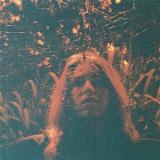
Celebrate a decade of Turnover's iconic sophomore album Peripheral Vision with this 10 Year Anniversary Edition. Retaining the album's iconic cover art, the packaging has been completely overhauled to include a new lyric poster & printed photo inner sleeve. This special limited edition is pressed on limited edition color vinyl also includes two bonus tracks from the era - "Humblest Pleasures" and "Change Irreversible." Released on May 4th, 2015 via Run For Cover Records, Turnover's second album Peripheral Vision is widely regarded as an essential body of the work in the band's discography, maturing its sound into a shoegaze-inflected post-punk direction following the band's 2013 debut record Magnolia. Described as "a tour de force" by Kerrang!, the album set the stage for an extensive and prolific touring history over the past decade and three subsequent albums, including their most recent LP, 2022's Myself in the Way.
Pressure Chords is the first joint album by composer-performer John McCowen, trombonist Weston Olencki and cellist Lucy Railton. McCowen’s composition is based on the spectral analysis of contrabass clarinet multiphonics, and the tuning system corresponds with the overtone spectrum of McCowen’s instrument. The trio adaptation of Pressure Chords presents itself as an exercise in both patience and intensity, slowly building towards an expressive finale. Across its 34-minute runtime, restrained minimalism slowly gives way to maximally affective sonic force.McCowen, Olencki and Railton first shared the stage for an improvised session at Berlin’s KM28. McCowen realised that he found two capable partners for creating orchestrations of his works for the contrabass clarinet. Olencki, who also contributes field recordings to the album, has worked across different genres and traditions, while Railton has made a name for herself as a composer and improviser as well as a performer of Just Intonation music. Weston and Lucy both have immense experience performing and composing music outside of equal temperament, so it seemed like a perfect situation, McCowen says. The trio first presented Pressure Chords live at Berlin’s Morphine Raum in 2023 before recording a studio version with Adam Asnan in the following year. The recording—mixed and mastered by Albert Finnbogasson in Reykjavík—elegantly captures the multi-layered tonal and sonic qualities that the musicians so carefully explore. As a result, their performance doesn’t so much invite but necessitate deep listening—time passes differently on and with Pressure Chords.
Pioneering Ghanaian musician King Ayisobareturns September 4, 2026 with his forthcoming seventh album Pure Confusion, recorded and produced by On-U-Sound’s Adrian Sherwood.
Ayisoba is one of Ghana’s most distinctive musical voices. The world’s foremost player of the kologo - a homemade two-string lute fashioned from a calabash and covered in goatskin - he delivers fiercely political and socially observant songs using three different voices, including the voice of his grandfather that possessed him as a child. Sherwood meanwhile is the pioneering British producer and founder of On-U Sound whose hugely influential career has connected dub, post-punk, industrial, hip hop and experimental music through collaborations with artists including Lee “Scratch” Perry, Mark Stewart, Horace Andy, Sinéad O’Connor, Nine Inch Nails and Depeche Mode.
Ayisoba and Sherwood first collaborated during a BBC Radio 3 Late Junction session at Maida Vale in 2017, organised by Ayisoba’s long-time collaborator Arnold de Boer/Zea of The Ex. The pair immediately connected, and during the pandemic, when Adrian’s long-time African Head Charge collaborator Bonjo Iyabinghi Noah was in Ghana looking for musicians to collaborate with Sherwood suggested Ayisoba, who eventually featured on two tracks on African Head Charge’s 2023 album A Trip To Bolgatanga (Bolgantanga is the region Ayisoba is from). Ayisoba then returned to the UK in late 2024 and travelled to Sherwood’s Ramsgate studio where the pair laid down the songs that would become Pure Confusion: “All the songs were already in my head,” says Ayisoba. “This album is all recorded live, over one afternoon. Adrian only plays live, and I like that. And he works hard - he doesn’t sleep. I woke up in the night and he was still working.”
“In my role producing it, I just let it roll to make a good vibe,” says Sherwood. “We recorded it completely live, did some programming and processing on some tracks, using dub techniques live on the mixing desk and adding some slick touches. We wanted the colours on the album to swing off what Ayisoba was doing, so we invited some friends to participate. Doug Wimbish (Sugar Hill Gang) arrived from America and lent his services playing bass on a couple of tracks; the wonderful Ivan Hussey (Celloman) played bass, keyboards and cello - cello is not really featured on African recordings so we thought it would be really cool to try it. I'd been working with Alex White (Fat White Family/Primal Scream) on my album (The Collapse of Everything) and so he added sax to a few tracks and I brought Alan Glenn down especially - Alan was in Little Axe but also Nine Below Zero and played in the Yardbirds – to add some mouth organ; Mark Bandola added a bit of flavour with his Juno, Ayisoba’s long-time Ghanian collaborator Ayuune Sule added some percussion and vocals and Matt Smith did some programming.”
“King Ayisoba is quite amazing, so unique,” Sherwood continues. “He’s got his own handmade instrument and three different voices - when you’re listening you think it’s three different people. He’s a breath of fresh air, full of love for the music which he wants to share with everybody. Some tracks we kept very straight and others we experimented with - adding dubby psychedelic little touches to trip you out a bit. The added production we did at On-U has given it a shine while still keeping it vibrant, live and spontaneous. I’m really proud of this record”.
On Pure Confusion, Ayisoba documents the anxieties, contradictions and changing social realities of contemporary Ghana. “Land is a problem for everyone,” says Ayisoba of the opening track “Property”. “If you don’t build on your land they will take it away. Plenty corruption in Ghana, plenty confusion. They sell the land to two, three, four people and then everybody fights.”
Elsewhere Ayisoba explores illness, spirituality and social stigma on “Bemba”, warning against hiding sickness out of shame or fear of “bad juju”: “People hide their sickness and the sickness kills them.” “Tewigiloge” reflects on cultural difference and open-mindedness encountered through world travel: “We will tour the whole world and we will see many things we may not like or understand… your eyes will see, but don’t talk - you have to be open-minded.”
Spirituality runs deeply throughout the album. Ayisoba’s grandfather was a respected spiritual healer whose presence the musician says still guides him today. “The grandparents’ spirits are the ones you can contact,” he explains of the spiritual chant “Nkaase”. “This song talks about the forefathers.” The closing track “Leeda-Mampanga (It’s Not My Strength)” acts as a statement of humility and gratitude: “You have to be humble, even if you have talent. God gives you the power.”
For more than two decades, King Ayisoba has been one of Africa’s most distinctive musical innovators, transforming northern Ghanaian kologo traditions into a bold contemporary sound rooted in hypnotic rhythms, social commentary and spiritual intensity. Since the breakthrough success of 2006’s Modern Ghanaians, Ayisoba has built an international following through acclaimed albums, relentless touring and collaborations with artists including Lee “Scratch” Perry, Orlando Julius and African Head Charge. Performances at Roskilde, WOMAD, Le Guess Who? and the Barbican have further cemented his reputation as a singular live performer and cultural force.
The follow up to her UK number 1 album This Is How Tomorrow Moves, the stark and striking fourth album by beabadoobee is named for the electricity towers that dot every major artery in the world—the strong, spindly structures that reminded Beatrice Laus of her connection to friends and family at home while she was staring down extreme disconnection and isolation on tour over the past few years.
The title can also be read as an allusion to Laus’ spiky, forceful new sound—the waves of distortion that crash and shatter across this record’s 14 songs mirroring the intense crackle you hear when walking under power lines. The pylon is also a fitting symbol for an album that reckons with the repetitive anxieties of your mid-twenties: What if I’m always going to be this way? What if life is just pylon after pylon on the road?
The album’s first single is available to stream and buy from today: “Sun Has Set” introduces Pylon as, in essence, a set of songs that began as diary entries, words that Laus thought she’d never be able to say out loud. “A lot of the songs on this record are things I wish I could have said to someone,” she says. “This song has this petty tunnel vision—it’s like, I hate you. You’re gonna stay here and listen to how much I hate you. Because I never got to say that.” The single comes accompanied by a striking first person video directed by Bea’s partner and longtime visual collaborator Jake Erland.
Ever a devotee of pure rock music—both as something to be cherished and something to be played with—Laus casts these feelings in songs that touch on classic grunge, midwest emo and ‘90s radio rock, zeroing in on a sound that is both harsher and more direct than any of her previous records. She says the music she’s loved has “always been an influence” on her music, and so for B4 she went straight to the source. A fair few of Beabadoobee’s composite influences contributed to Pylon, a fact that speaks to the goodwill and respect Laus has amassed over the course of her relatively brief career.
Hayley Williams sings on “Nothing to Prove,” a deeply anthemic indie-rock song about getting your power back from fairweather friends who just want a bit of your success. The moody “Powerlines” features a verse from Turnstile singer Brendan Yates, a master of matching vocal force with emotional nuance. Elsewhere, you’ll find contributions from Pinegrove’s Evan Stephens Hall, Deftones’ Chino Moreno, and Title Fight’s Shane Moran, as well as, on “Write Me A Letter”, production work from Laus’ longtime friends and collaborators Matty Healy and George Daniel of The 1975.
Beabadoobee will debut songs from the record on the Powerlines Tour, her first ever arena shows and biggest tour to date, taking in shows across North America, the UK and Europe this autumn-winter. The Powerlines Tour kicks off 1 October and includes stops at Madison Square Garden, The Kia Forum, The O2 and more (full routing below). Support comes from Wisp in the US, Canada and UK and Violet Grohl in France, The Netherlands, Belgium and Germany.
Born in the Philippines and raised in London, Beatrice Laus emerged as a British alternative music icon across three acclaimed albums and five EPs. She has garnered multiple BRIT Award and BBC Sound Of nominations, and won NME’s Radar award, whilst amassing over 10 billion streams worldwide and more than 12 million followers across her social channels.
This Is How Tomorrow Moves became her first record to reach number 1 on the UK Official Album Chart in 2024, following her Top 10 albums Fake It Flowers (which reached number 8) in 2020 and 2022’s Beatopia (#4). Earlier this year, beabadoobee released the one-off single ‘‘All I Did Was Dream Of You,” teaming up with Grammy-nominated best New Artist The Marías, the result of a longtime mutual creative admiration between María Zardoya and Bea.
out of Stock
Last delivered 30 days ago available to reorder, subject to availability
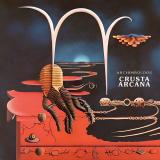
Archimboldos have clawed their way out of the starcaves of their primordial past and into the tranquil light of a coral garden on their third full length album, Crusta Arcana, a gumbo stewpot of transcendent electronica suffused with tribal rhythms and liquid ambience. Across a stereo field smeared with tolling bells, post-industrial folk percussion, and tinkling keys, Archimboldos soundtrack a science fictional journey, not into the depths of space, but deep beneath the waves.
In the past the Chilean duo of Nicolás Carcavilla and Felipe Crocco have described their music as “liminal shrimp folk.” Here they continue this strange exploration when they visit the court of the prawns, producing stately electronic chamber orchestrations. Perhaps these are the frequencies used for ritual dream initiation into the mystery schools of drowned Atlantis. Weaving an ancient sacred science, Archimboldos take listeners on a mystic vovage into their singular crustacean mythology, the crusta of their hidden arcana.
Archimbolodos are masters of conjoining cyclonic and centrifugal lines of electricity into spellbinding incantations. These deep-sea transmissions envelope the listener into aquamarine forcefields that are as hallucinatory as they are hypnotic. Navigating these strange fantasias could lead one to getting lost at sea, but the work is buoyed by the somnolent melodies of lonely harpsichords and swelling synth pads whose sustained tones reach towards distant shores. Sailing across a vast expanse of oceanic harmonies and percolating percussion, these pieces are as precise as the hand of a sailor on the rudder, moving with the tide.
Casting their net wide across eight pieces, Archimboldos have made a big catch. From the emotive electronic counterpoint found on “Bursting Armor” to the blocks of seaweed tangled sonic sculpture trawled up from the ocean floor on “Aphelion IX.” Other songs are like samples of biological ambience collected from luminous tide pools: resplendent tones placed into a Petri dish of sound, swirled, cultured and fermented until it undulates with the rhythmic movement of microscopic lifeforms. Alternating between rippling minimalist sonority and pounding, progressive, synth-heavy entrancement, Crusta Arcana charts its own idiosyncratic itinerary of instrumental invention.
All the while light is down streaming from the heavens to pierce the waters, here calm, there choppy. The intrepid musical captains commanding Archimboldos have laid a course for new archipelagos of the imagination, guided by heavenly constellations.
-Justin Patrick Moore, author of The Radio Phonics Laboratory, Telecommunications, Speech Synthesis and the Birth of Electronic Music
Deadbeat & Tikiman's occasional collaborative performances have since blown the minds of many audiences
Deadbeat. Tikiman. Infinity. Dub. A quadrangle of such obvious statement and perfect musical inference may very well never have been uttered for those of the wholly weeded out persuasion. Indeed, when the great book of Dub music is written the names Scott Monteith and Paul St Hilaire will undoubtedly figure highly in its chapters devoted to recent years. Monteith, the last great prodigal son of the doctrine handed down from the Blue Mount of Lord Scratch and King Tubby, St Hilaire the undisputed voice of a generation, those fanatical warrior monks, followers of the most Holy House of Ernestus and Von Oswald incarnate.
Having developed a fast friendship from their very first meeting in Montreal at the premier Micro Mutek event a decade ago, Deadbeat and Tikiman's occasional collaborative performances have since blown the minds of audiences from Berlin to Tokyo and many points in between. No great surprise then that their first album length venture is a Tour de Force of Dub music of the highest order.
Nearly a year in the making, the genetic code of Deadbeat's Infinity Dubs series gets shot through with a Dreader than Dread Kingstonian logic, hi hats dropping back from the three to the one, Tikiman at his most militant, poetic, fierce, and flowing. These are the recordings of two lions uncaged, and none who bare witness shall escape their fiery judgement.
If music is truly eternal, here be two voices which shall echo in infinity with all the weight, reverence, and dire power unleashed with every tectonic bass hit, and every whimsical turn of phrase. And if these eight burnt offerings are any indication of what happens when these two sit down for a session of smoke and reasoning, here's hoping they choose to do it frequently. Dub without end. Ad Infinitum.
out of Stock
Last delivered 27 days ago available to reorder, subject to availability
Almost Starlight is the extraordinary new album by Jem Finer (hurdy-gurdy) and John Matthias (violin). Produced by Jay Auborn and recorded in a Medieval Church, deep in the Devon countryside, in the Summer of 2025, the music is suffused with light, heat and the natural acoustics of the space.
The album defies categorisation; forced to pigeon hole it the nearest approximation would be ‘modern-classical’ but this ignores its myriad influences and explorations which encompass inspiration from Arvo Pärt through Terry Riley to Can via Delius, Alice Coltrane and a subtle reimagining of electronic music played purely with acoustic instruments, bending and shaping their possibilities in surprising and unexpected directions.
Jay Auborn plays cello on a number of the compositions and his production opens up and expands the music through a skilled and imaginative use of space, paying homage to the atmosphere of the church; ‘the sound evolved… chasing the imagined acoustics of that church in my mind; a place for worshipping light with sound.’
Almost Starlight will be released on the 4th September by Touch, available as CD, vinyl, cassette and on streaming platforms.
BIOS OF THE ARTISTS
Jem Finer
Since studying computer science in the 1970s, Jem Finer has worked in various fields, including photography, film, experimental and popular music, sound recording, sculpture and installation.
Much of his work relates to systems, extended processes and extremes of scale and includes Longplayer, a musical composition repeating once every 1000 years, and the Gurdy and Hurdy stones, ancient rocks set upright in fields in East Sussex and Gloucestershire with Jimmy Cauty. Their work together includes a band, The Standing Stones, whose most recent release is Twa Sisters, featuring Iona Zajac and Daragh Lynch.
He was a founder member of The Pogues, with whom he has played, written and recorded since 1981.
Recent music revolves around a fascination with the hurdy-gurdy and includes hrdy-grdy, a cassette released by Benedict Drew’s Thanet Tape Centre. His latest collaboration, with John Matthias, Almost Starlight, will be released by Touch in September 2026.
John Matthias
Since studying Theoretical Physics in the late 1980s and 1990s, John has created music and sound in many forms, including for installation, popular music, music for film, for dance and orchestra.
Much of John’s work plays with the physics of complex systems but he is also greatly influenced by stories and song. John has collaborated with Matthew Herbert, Stanley Donwood, Jay Auborn, Radiohead, Thom Yorke, Nick Ryan and many others to create music with a variety of textures and sonorities. He is particularly interested in simplicity and form and how context informs the way music sounds.
His latest collaboration, with Jem Finer, Almost Starlight, will be released by Touch in September 2026.
out of Stock
Last delivered 29 days ago available to reorder, subject to availability
Emerging from the Hungarian underground, POST ANALOG DISORDER inhabits the fractured space where EBM, hard-beat techno and post-punk converge. Cold, spectral melodies collide with relentless machine rhythms, dissolving the boundaries between body music, industrial tension and guitar-driven darkness into a singular, uncompromising language.
Driven by heavy analogue basslines, razor-sharp sequencers, haunting female vocals and hypnotic guitar motifs, the duo shapes a sound that is both mechanical and deeply human. Each composition unfolds through constant friction, balancing disciplined repetition with emotional instability, where raw physical force meets moments of haunting introspection.
Rather than revisiting the vocabulary of classic EBM, POST ANALOG DISORDER deconstructs and reconfigures it through a contemporary, forward-looking perspective. The result is an immersive work of hypnotic intensity, suspended between industrial ritual, post-punk melancholy and uncompromising electronic experimentation—a record conceived not only for the darkest dancefloors, but for those drawn to the outer edges of underground electronic music.
Silver Vinyl
Simon Popp is back on Squama with his fourth album Trio.
At its heart, Trio is a work about collaboration, playfulness and unification. It is music as a means of coming together, a sonic equivalent to the Japanese philosophy of Kintsugi, in which broken ceramics are repaired with a visible golden lacquer. Rather than hiding the breaks, Kintsugi embraces them, making them part of the story, a form of delicate transformation. Popp and his collaborators Flurin Mück and Sebastian Wolfgruber take a similar approach: three distinct drummers, three different temperaments, three personal styles. Fused together into a single expressive instrument.
The album is a celebration of timbre, texture, and touch, its sound palette drawn from across continents and traditions. Human beings at all points of time, across all cultures and continents have used music to celebrate, mourn, worship and bond. Along with our voices, creating rhythm with our bodies. Clapping, stomping, hitting with sticks. A celebration of rhythm as both a shared human memory and an audible expression of close bonds.
Trio is a reflection of the beauty of imperfection and the timeless pull of rhythm as a shared human force. The cracks are not hidden. They are filled with gold.
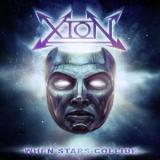
Swedish speed/thrash metal newcomers XION are set to release their second album, *When Stars Collide*, on 11 September via Fireflash Records. XION’s fresh blend of speed and thrash metal sounds unique, and you can clearly sense the power, dedication, boundless energy and ambition of this young band.
The quintet was formed in 2022, when some of the members were still under 18, yet they were already playing with the same precision and energy as more established metal bands. Since then, the band from Falun – the hometown of acts such as SABATON, BROTHERS OF METAL, TWILIGHT FORCE and others – has taken the world by storm. The combination of the members’ young age and their extremely precise and virtuosic musical skills has made XION one of the most interesting and promising newcomers on the Swedish metal scene in many years.
Mighty Music is proud to announce the release of "Electrifyed", the brand-new studio album from NWOBHM pioneers TYGERS OF PAN TANG. The album finds the legendary British metal act returning to a heavier and more aggressive sound while retaining the melodic identity that has defined the band throughout its celebrated career. ""The heavier, the better" that was our mantra throughout the writing and recording of "Electrifyed"", singer Jack Meille comments about the writing process of the record. "We wanted to rediscover the pleasure of being driven by the powerful force of a heavy riff without losing that melodic touch all great Tygers songs have". Written with a clear artistic vision from the outset, "Electrifyed" draws inspiration from the raw energy of the band's early years, particularly their landmark debut album "Wild Cat", while showcasing the chemistry and creativity of the current line-up. The result is a collection of songs built around powerful riffs, memorable melodies and a renewed commitment to the heavy metal traditions the band helped establish. The album also introduces guitarist John Footitt on record for the first time. Joining founding member Robb Weir, Jack Meille, drummer Craig Ellis and bassist Huw Holding, Footitts guitar skills fit the album's muscular and contemporary sound. To achieve the sonic impact envisioned by the band, Tygers of Pan Tang worked closely with producer and musician Marco Angioni, a longtime friend and collaborator who helped translate the group's ambitions into a cohesive and powerful final product. The album artwork was once again entrusted to Andy Pilkington of Very Metal Art, whose striking cover concept perfectly captures the spirit and energy of "Electrifyed".
Transparent Orange w/ blue splatter vinyl. Mighty Music is proud to announce the release of "Electrifyed", the brand-new studio album from NWOBHM pioneers TYGERS OF PAN TANG. The album finds the legendary British metal act returning to a heavier and more aggressive sound while retaining the melodic identity that has defined the band throughout its celebrated career. ""The heavier, the better" that was our mantra throughout the writing and recording of "Electrifyed"", singer Jack Meille comments about the writing process of the record. "We wanted to rediscover the pleasure of being driven by the powerful force of a heavy riff without losing that melodic touch all great Tygers songs have". Written with a clear artistic vision from the outset, "Electrifyed" draws inspiration from the raw energy of the band's early years, particularly their landmark debut album "Wild Cat", while showcasing the chemistry and creativity of the current line-up. The result is a collection of songs built around powerful riffs, memorable melodies and a renewed commitment to the heavy metal traditions the band helped establish. The album also introduces guitarist John Footitt on record for the first time. Joining founding member Robb Weir, Jack Meille, drummer Craig Ellis and bassist Huw Holding, Footitts guitar skills fit the album's muscular and contemporary sound. To achieve the sonic impact envisioned by the band, Tygers of Pan Tang worked closely with producer and musician Marco Angioni, a longtime friend and collaborator who helped translate the group's ambitions into a cohesive and powerful final product. The album artwork was once again entrusted to Andy Pilkington of Very Metal Art, whose striking cover concept perfectly captures the spirit and energy of "Electrifyed".
There is a pivotal scene in “August in the Water” (dir. Sōgo Ishii, 1995) where the surface of a pool turns into a stone wall. The water that gave the protagonist's life its meaning becomes a threat. As you fall through this stone wall, you appear in a set of underwater coral-reef corridors, and one of the most beautiful musical themes begins to play: Aquatic Ambience, composed by David Wise for Donkey Kong Country (1994). It's a theme that represents the weightless vibe of your new deep-sea life, where you go about your mundane errands, collecting bananas while driving on a swordfish, or, as HerzMayhem put it: "Poor monkey... always swimming, never going anywhere..."
Synthetic Water Music is the second of three compilations, following Synthetic Bird Music and timed to mappa's 10th anniversary. As with the birds, it gathers friends of the label, artists who have released with mappa or played our shows. Most of the music is new, made to measure for this compilation, much of it from Central and Eastern European hands. Birds and water mix well, so please feel invited to play them together, creating your own environments.
Where the birds were in one flock, water is dispersed across four chapters. You live your life as a droppity drop: vapour in the heavens, condensing in clouds, falling into a swamp, trickling into the deepest sea.
Tlālōcān (Cassette 1, Side A)
A place of eternal spring, of aquatic energy that nourishes everything and allows all things to bloom. Bubbly and splishy-sploshy, it is full of dripping sounds and moist caverns (“Emerald Pool” by Pauline Anna Strom), a landscape filled with living fountains (“Oh, to be a Fountain” by Eva Sajanová) and winding streams that flow through the area, forming part of its organic architecture. It is also a paradise reserved for those whose deaths were water-related, where the aquatic and terrestrial beings live in symbiosis and perspectives shift rapidly, from observing a single droplet (Shakali, Lau Nau) to dew (Feronia Wennborg & Lucy Duncombe) and on to flowing currents (Visible Cloaks) that gradually transform into river music (Ursula K. Le Guin & Todd Barton).
Nephelora (Cassette 1, Side B)
A celestial anti-gravity sound world made of evaporation, steam and the formation of clouds, as if looking at “The Sky At The Bottom of the Well” (by Natalia Beylis) or at “The Cloud That Never Rains” (by Henrique Vaz).
If a cloud never rains,
it is not a cloud at all, but a veil that parches the earth with its gaze.
It generates only its own shadow —
a looming mass of suspended longing,
a sky that hoards but never yields,
a reservoir that swallows every river and returns nothing but echoes.
The water in this world is often invisible but sometimes all the more present, as Bint Mbareh describes it: “Recently been obsessed with invisible waters because I come from a place where you have to imagine the water is there even though you cannot see a river, a sea, usually no rain, so water is in the air, the voice and the imaginal realm, drought is imagined to be negotiable.”
Žaboglach Zha-bo-glahch (Cassette 2, Side A)
A fusion of Scottish lochs and Slovak ponds: a misty, foul-smelling, swampy realm, the kind of place that swallowed Artax from The NeverEnding Story. Stagnant waters full of decay become a blooming habitat for sirens (“thereby losing the weightless delight of being swept along with it” by Adam Badí Donoval) and beings straddling the line between fauna and flora, inventing their own communication systems (“Water-lily phase” by Action Pyramid).
R'lyeh (Cassette 2, Side B)
A brooding sunken city at the bottom of the ocean. It’s a journey to get there. Let this chapter guide you, from the shore down to the depths, to the gates of an unexplored world that is inherently dark, unfathomable, and beyond the limits of human perception: starting with seasickness ("Seasick" by Nikolaienko), passing through a classic Poe-esque maelstrom ("Flurry at the Whirl-pull" by Atte Elias Kantonen), a gateway into the darkness and emptiness of the ocean floor, and finally traversing the city itself (“last waves of 2025” by Jules Reidy).
But what is pulling you to a place like this that only a few explore and even fewer leave? Maybe “the darkness that water can contain, the expanse of things we don't know and that can trigger fear instincts even as we try to rationalise them and think we are in control of the rest of nature” (“supercritical fluids” by Diane Barbé).
Dive in and surface wherever you like. Always swimming, never going anywhere. Just don’t forget to take water breaks.
P.S. Birds, then water, can you guess what comes next? Synthetic Soil Music, an elegy for insects and worms? Synthetic Glaciers, or maybe Pollinators? Which sounds would you miss the most if they disappeared? Or what if the third one never comes at all, and somebody, or something, makes Synthetic mappa Music instead. Don't you worry, with the right training data, it can all be replicated, better than the real thing.
Faith and Fate, Destiny and Devotion, Dark Nights and Dazed Illuminations. Josephine raises a stained-glass lamp and shepherds us spelunking the depths of spirit in this four-part double album. Following the fame of her voice are choruses of winged entities (and a space shuttle) that ascend and descend a maze of spirituals: ritual prayers, blues laments, vestal hymns and jubilant benedictions. The edges of the natural world are revolving backdrops from which our narrator perches upon symbolic precipice or saunters desolate snow-blanched forest, exploring eternal themes of mortality and morality, beneath the moon and in occasional dialogue with a mysterious lord of love, an ambiguous mystical figure. Accompanying herself on guitar, piano, organ, harp & autoharp, this cycle of 18 new songs hearken back to various facets of Foster's anachronic oeuvre (the esoteric balladry of This Coming Gladness, native rhythms of Blood Rushing, somnambulist waltzes of I'm a Dreamer, the Shaker primitivism of Hazel Eyes, I Will Lead you). Celestial humor and devastating innocence are delivered with contributions from Victor Herrero (lead guitars), Gyða Valtýsdóttir (cello), Chris Scruggs (pedal steel), Jon Estes (bass), as well as cameos by members of The Cherry Blossoms and others. Recorded, engineered and mixed by Andrija Tokic at his Nashville Bomb Shelter Studio, mastered by John Baldwin, and produced by Josephine herself.
Faith and Fate, Destiny and Devotion, Dark Nights and Dazed Illuminations. Josephine raises a stained-glass lamp and shepherds us spelunking the depths of spirit in this four-part double album. Following the fame of her voice are choruses of winged entities (and a space shuttle) that ascend and descend a maze of spirituals: ritual prayers, blues laments, vestal hymns and jubilant benedictions. The edges of the natural world are revolving backdrops from which our narrator perches upon symbolic precipice or saunters desolate snow-blanched forest, exploring eternal themes of mortality and morality, beneath the moon and in occasional dialogue with a mysterious lord of love, an ambiguous mystical figure. Accompanying herself on guitar, piano, organ, harp & autoharp, this cycle of 18 new songs hearken back to various facets of Foster's anachronic oeuvre (the esoteric balladry of This Coming Gladness, native rhythms of Blood Rushing, somnambulist waltzes of I'm a Dreamer, the Shaker primitivism of Hazel Eyes, I Will Lead you). Celestial humor and devastating innocence are delivered with contributions from Victor Herrero (lead guitars), Gyða Valtýsdóttir (cello), Chris Scruggs (pedal steel), Jon Estes (bass), as well as cameos by members of The Cherry Blossoms and others. Recorded, engineered and mixed by Andrija Tokic at his Nashville Bomb Shelter Studio, mastered by John Baldwin, and produced by Josephine herself.
The bleak, hard-driven third LP by the Wipers (originally released in 1983) offers Greg Sage at his most chased and breathless, lashing out with sharp staccato notes as if melody were his only defense. The 3rd LP from the PDX punks finds them tightening up their sound to create what is arguably the Wipers' definitive album statement. Kurt Cobain listed it in his top 50 albums of all time. A distant cousin of the preceding Youth of America but undoubtedly no less excellent and no less venomous, Over the Edge is a return to the easily digestible song lengths of Is This Real?; however, it all but leaves that debut in its wake. On the strength of some brave/smart radio stations that decided to play this album's "Romeo" (a propulsive horn-flecked slammer in the vein of "Youth of America"), Wipers solidified their status as a certifiable force in the American underground of the early '80s. Songs like "Messenger" and "What Is" show Greg Sage's increasing skill as a pop songwriter. Despite the fusion of punk and pop, the record hardly mirrors the bands that would later be called punk-pop. In fact, this collision of the two elements makes what followed decades later seem twee.
Prunk is taking a journey back to where it all began with 'Footprints'. Over the years, he has become known for many things: the driving force behind PIV, a tastemaker with an ear for exceptional new talent, and a respected figure shaping the future of house music. However, beyond the label, showcases, and the artist development lies the foundation of it all, which is Prunk, the artist. This album is a deeply personal statement and a return to his roots. Stripping away expectations and industry roles, 'Footprints' focuses on what has always been at the heart of his career, which is creating authentic house music driven by soul, groove, and emotion. Across the album, Prunk brings together a unique blend of established legends and the next generation of artists, bridging the past, present, and future of house music. The result is a body of work that honors the sounds and influences that shaped him while continuing to push the genre forward with a fresh perspective. 'Footprints' is a tribute to artistic identity. It reflects the path Prunk has traveled, the people who inspired him along the way, and the musical values that remain unchanged. Every track leaves a mark of who he was, who he is, and where he's headed next.