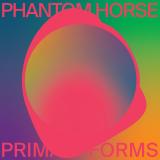
This debut 12" is a real statement of intent from The Aries Project, aka the ongoing creative collaboration of Collin Suttles and moe.BPM. The sound is rooted in house music's classical values of inviting groove, heartfelt warmth and a sense of patience, but all shot through with a modern and cosmically minded confidence. The Jules.NYC dub of 'You Need A Rock' is pure peak-time persuasion, all forward momentum and locked-in swing, while 'Someone Who Dances' keeps things closer to the body, riding a supple rhythm with soulful ease. Flip it over and 'Keep Me' (Lucky.Moe dub) strips the palette back to let deep chords and spacious keys stretch out hypnotically. 'When I See You' with Toni's Son closes on a celebratory note and Latin disco energy in a deep house framework.
Buscar:a state of mind
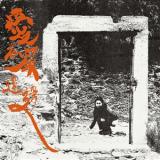
Audio taken from a live performance by Anar Band (Jorge Lima Barreto and Rui Reininho) with E.M. de Melo e Castro in November of 1978 at Cooperativa Árvore, Porto. The performance was filmed. A segment was included in »Obrigatório Não Ver«, a weekly programme presented by Ana Hatherly on Public Television’s Second Channel. It was not possible to determine the exact date of the event, and no documentation seems to be available in the relevant archives.
»Encontro que Tenho« and »Profissões«: these titles are specific to this release. Having failed to locate the respective poems after a thorough search in E.M. de Melo e Castro’s body of work, it was deduced both texts were created for the occasion.
Even without a full contextualisation, the sound transmits the spirit of cultural agitation proper to these sessions. When this show happened, Anar Band were Jorge Lima Barreto (ARP Odyssey synthesizer) and Rui Reininho (Ibanez double-neck guitar), with the addition of E.M. de Melo e Castro, whom we shall call a poet but whose creative intervention was far reaching. Besides poetry, also continued his efforts in linking up diverse artistic areas (painting, drawing, collage, performance, video) and his official training in textile engineering. He was one of the artists featured in Henri Chopin's »OU Revue« in 1966, establishing his natural connection to the European concrete/visual/sound-poetry avant-garde. Melo e Castro was also proficient in the agitation of minds and political awareness. A good example in »Profissões«, where initially separate professionals (an intellectual, a fisherman, a soldier, a factory worker) are gradually mixed in a show of interdependency. Symbolically, through his words one listens to a transformation of society, although the same conclusion arises twice: surplus always finds its way to the hands of the capitalists.
That was the state of affairs many were looking to change, an economic and social malaise that the 1974 Revolution in Portugal fully uncovered, when dissident voices could finally be heard in public. Each in his own way, all three participants in this recording were non-believers in the structure of society such as it was presented. Through his books and press writings, mainly concerned with Jazz, Jorge Lima Barreto pushed his way into Portuguese artistic and critical circles since the late 1960s. Consciously and unwittingly, he collected enemies and pointed them by name, people he labelled as reactionary, people who delayed progress, social and cultural mixes, the avant-garde; they even delayed the chaos from which new forms and attitudes arise.
Rui Reininho, a non-conformist by heart, experienced incomprehension from an early age. His anarchic ways, a tendency to baffle others, were revealed through the choice of clothes and accessories, public behaviour, and »real life« performances. Just as Lima Barreto, and even together with him, he enjoyed provoking the extremes: Maoists on one side, right-wing conservatives on the other. He translated leftist books and joined Anar Band precisely on the day a duck or swan or goose (one of them) was thrown on stage in Porto, 1976.
This record documents a concrete action, a snapshot of the agitation, something we have no problem calling punk activism, something which allowed two people with little to no musical training to play and record music. By then, Anar Band had managed to release their only LP in 1977. It’s this performance, however, that reveals the naked rawness of the music: improvisation, mutual listening, and choice of intervention between both musicians and Melo e Castro, clearly sensing when the synth has to change tone, the voice has to make pauses, the guitar punctuates both and finds the space to… scream. The sound was captured by the film crew, adding to the rawness: the instruments are palpable, the voice often too close to the mic. Everything was preserved. First time on disc.
AboutBlank produces here 3 majestic tunes...
Super positive state of mind style, not too happy through but really sunny and full of energy, with a repetitive serial music acid melody on the Cosmicology A side 45 RPM killer 180BPM hardfloor track.
The flip open on a regular 160 BPM heavy kicker, trippy mental acid-pikes-of-ice more classic but bloody efficient...
Last track (same speed as A1) is a serious hard-kicker too... at the hardcore frontier with a crazy melody coming in, reminding the old school 90's transecore best-of...
This record was produced both by Brain Bending and Acid Night.
Visual by X.G.
- 1: Mox Nix
- 2: Fair Weather
- 3: Darn That Dream
- 4: The Touch Of Your Lips
- 5: The End Of A Love Affair
- 6: Jubilation
- 7: Like Someone In Love
- 8: I Love You
- 9: Cold Breeze
- 10: It Never Entered My Mind
Coming of age at the dawn of the bebop era, Art Farmer rejected the mechanical playing that much of bebop seemed to encourage. Instead, Farmer became known for his warm, fluid tone, and his ability to make the trumpet sing like a tender yet stately baritone voice. On Modern Art (his last small group collaboration with Bill Evans, with whom he had first recorded in 1956), Art Farmer emphasises style over technique. The group swings with both authority and subtlety on all eight tracks, making this album one of the best records of this period.
Sour Soul is the collaborative album from Toronto jazz/hip-hop band BADBADNOTGOOD and Staten Island rap champ Ghostface Killah. Inspired by 1960s and 70s music - taking inspiration from the recording techniques and production of that era, and eschewing sampling in favour of live instrumentation, BBNG with producer Frank Dukes have created a dramatic, cinematic musical staging for Ghostface’s vivid storytelling. Sour Soul also features guest spots from MF DOOM, Elzhi (Slum Village / J Dilla), Danny Brown and prodigal new rapper Tree (Project Mayhem).
PRESTO (MUKATSUKU, GROOVIA, CONCRETE GROOVES, is back from the (beat) lab with this new 10 track instrumental album. This beat tape was mixed while living in NYC and is a tribute to 90s hip hop with a blend of jazz and soul. 2 tracks were previously released on a 7" from MUKATSUKU. For fans of “MUSHROOM JAZZâ€-styled downtempo. These are some serious head nodders, ‘nuff said. Pressed on limited edition blue vinyl. Full pic sleeve.
- A1: My Life Is Real (4 21)
- A2: Git Ready (4 21)
- A3: Ny State Of Mind (Part 3) (4 21)
- A4: Welcome To The Underground (4 21)
- A5: Madman (4 21)
- A6: Pause Tapes (4 21)
- A7: Writers (4 21)
- A8: Sons (Young Kings) (4 21)
- B1: It's Time (5 14)
- B2: Nasty Esco Nasir (5 14)
- B3: My Story Your Story (Feat Az) (5 14)
- B4: Bouquet (To The Ladies) (5 14)
- B5: Junkie (5 14)
- B6: Shine Together (5 14)
- B7: 3Rd Childhood (5 14)
- 1: The Last Race - Jack Nitzsche
- 2: Trash - Duane Eddy & The Rebels
- 3: Boo Boo Stick Beat - Chet Atkins
- 4: Comanche - Link Wray & The Wraymen
- 5: Jungle Fever - Dick Dale & The Del-Tones
- 6: Mumblin' Guitar - Bo Diddley
- 7: Put The Blame On Me - Elvis Presley With The Jordanaires
- 8: Baby I Go For You - The Blue Rondos
- 9: Parchment Farm - Billy Lee Riley
- 10: I'm Not Your Stepping Stone - The Flies
- 11: Mountain - Sunshine Theatre
- 12: Gotta Find A New Love - The Yo Yo's
- 13: Man From Nowhere - Jet Harris
- 14: Watermelon - Frank Minion
- 15: I'm Out - The Surf Riders
- 16: Fuzzy And Wild - The Ventures
- 17: Baby - Tracy Rogers
- 18: Mail Train - Billy Joe Tucker
- 19: The Day The World Turned Blue - Gene Vincent
- 20: Listen To The Drums - Richard Caiton Gnp
- 21: Tracks To Your Mind - The Sounds Of Lane
- 22: My Baby - The Girls
- 23: I'm A Nothing - The Magic Plants
- 24: Little Joe - The Sounds
- 27: Sleepy Hollow - The Last Word
- 28: Cycle-Delic - The Arrows Featuring Davie Allan
- 25: Pink Cadillac - Johnny Todd
- 26: Fast Freight - Arvee Allens
In 2023 Ace Records released the album “28 Little Bangers From Richard Hawley’s Jukebox” where the acclaimed Sheffield musician, singer and songwriter compiled together some of his favourite records. These were instrumentals and vocals records that he had collected over the years and found musically addictive. The album received fantastic reviews and allowed his
extensive fanbase to discover and enjoy tracks like Ronny Kae’s ‘Swinging Drums’ and King Curtis’ ‘Hot-Rod’ that were on the juke box in his home.
Now, three years later, Richard has lifted the lid, taken those 7” out and replaced them with another favoured selection. One again, this second version of “Little Bangers” is full of cracking records such as Chet Atkins ‘Boo Boo Stick Beat’, Frank Minion’s ‘Watermelon’, Johnny Todd’s ‘Pink Cadillac’, Sunshine Theatre’s ‘Mountain’, Jet Harris’ ‘Man From Nowhere’, Tracy Rogers ‘Baby’ and the Ventures ‘Fuzzy And Wild’.
A with the first album there are 28 tracks spread across two albums or shoehorned onto one CD. The extensive liner notes see Richard discussing each and every track and what the record or artist meant to him. As he states himself in the introduction, “the record you hold in your hand is the result of a lifetime obsession.”
Listen for yourself and you will discover that this was time well spent.
- Doing My Best
- Business Merger
- Show Me The Way
- Mick & Cooley (Feat. Conway The Machine)
- Ask For Me
- Ricky
- Groupie Love
- Celebration Moments (Feat. Havoc)
- Home Improvement
- Recent Memory
- Walk In Faith
- Not Much (Feat. Boldy James)
- Drawing Bridges (Feat. Johnathan Hulett)
- All Gas No Breaks (Feat. Jay Worthy & Big Hit)
- God Is Great
The highly anticipated collaborative album, GOLDFISH, sees two of contemporary hip-hop's most revered and distinct production minds, Hit-Boy and The Alchemist, finally join forces for a full-length statement. Far from a simple beat-swap, this project is a masterclass in sonic cohesion, blurring the lines between their signature sounds to forge a new, golden-hued identity. Beyond production, the duo step from behind the boards to behind the mic to trade verses throughout the project, adding a personal layer to their creative vision.
GOLDFISH is a deeply immersive listen, perfectly balancing the West Coast muscle and polished, anthemic quality of Hit-Boy's work with the dusty, abstract texture and cinematic suspense that defines The Alchemist's aesthetic.
The result is a sound that feels both street-tested and museum-worthy. A collaborative manifesto, showcasing the infinite possibilities when two generational talents decide to link up, creating an instant classic in the canon of producer/MC albums.
- A1: Young Love And Laughter
- A2: Stop Using My Love
- A3: If You Want You Can Be My Girl
- A4: Do You Remember When
- A5: Your Picture
- A6: Catch You On The Rebound
- B1: Some Kind Of Magic
- B2: In My Dreams
- B3: Magic Mary
- B4: Made Me Change My Mind
- B5: Six Eighths Of Your Time
- B6: Gonna Catch You
The Sha La Das are Bill Schalda and his talented sons Paul, Will and Carmine, originating from Staten Island, NY.
Your Picture, the Sha La Das’ second album and the first release on producer Tom Brenneck's own label, Diamond West Records, is yet another singular testament to the stirring power of blood harmony and a celebration of the enduring love story between Bill and the family matriarch, Linda.
Traces of old memories flicker through Your Picture. Bill’s classic songwriting and lush vocal arrangements get whirled into new territory, updating doo-wop with the bottom-heavy groove and swirling pop of Brenneck’s lean, spacious production. “We brought in some psychedelic sounds and drew inspiration from deep soul records to the Beatles and Beach Boys alike,” Brenneck says.
Love radiates throughout Your Picture, flowing out from the shimmering melodies Bill and his sons produce. Bill Schalda and sons are living their musical dream—Your Picture is the proof.
- A1: Verflossen Ist Das Gold Der Tage
- A2: Staub Und Sterne
- A3: Hinter Uns Die Wirklichkeit
- B1: Bedingungslos
- B2: Die Nächte Sind Erfüllt Von Maskenfesten
- B3: Umschlungen Von Milliarden
- C1: Sanft Verblassen Die Geschichten
- C2: Es Ist Alles Schon Gesagt
- C3: Schwarzer Regen Fällt
- D1: Jeder Gedanke Umsonst Gedacht
- D2: Welche Welt
- D3: Ist Es Das, Was Du Willst
II[29,37 €]
Reissue of the 3rd full length by Thomas Bücker aka Bersarin Quartett.
Melancholia. Longing. It is difficult to speak about these moods or states of the mind without invoking stereotypes. In ancient medicine, melancholia was considered to be one of the four temperaments, matching the four humours. In fact, melancholia, meaning "black bile" in Ancient Greek, was thought to be caused by an excess of this very body substance. By contrast, in more modern interpretations, literates and Freudians relate many variations of longing to the one primordial longing, the desire to return to one's mother's womb. In this context, the womb is considered to be the place of absolute comfort and cosiness, of total bliss. Thus it should not be surprising that to many of us melancholia is a mood which we like to invoke and to maintain, we like to envelop ourselves in it like in a warm blanket. Our brain and our sensory systems appear to be made for perceiving and emotionally responding to music in a very immediate fashion. Consequently music is the obvious drug for all of us melancholia-addicts. However, there is a thin line between melancholia and sadness, and music which is meant to be melancholic too often crosses this line by far. Only very few artists succeed in avoiding this crossing, and in creating music which is melancholia in its most pure form. It is safe to say that BERSARIN QUARTETT - the electronic music project of Thomas Bücker - is one of them.
After his debut in 2008 and the sophomore "II" in 2012 - album of the month in many magazines and in numerous "Best of the year" lists - Bücker in 2015 returned with his third BERSARIN QUARTETT album "III". Much like his two predecessors, III is a pure paradox. It is the creation of a perfectionist, an adamant control freak. Every element, be it a note, an ambience layer, a string arrangement, a field recording, a baseline, a vocal (Clara Hill on Track 11) or a beat, is meticulously modified and then assigned its place in Bücker's vast but still minimalistic arrangements. Thus, superficially Bücker's pieces seem to radiate a certain mechanical bleakness. However, there is a unique reduced warmth and liveliness emerging from these stainless compositions and transcending them. This transcendence is precisely the point where Bücker ironically looses control over his creations. In contrast to the first two BERSARIN QUARTETT albums, III offers a few darker shades and succeeds even further in narrowing down the arrangements to the absolute essentials without loosing the characteristic grandeur of Bücker's sound. Whereas BERSARIN QUARTETT's debut was merely a description of melancholia in its most pure form, III maybe even goes as far a defining what melancholia really is. It is the only emotion in the vast spectrum of human states of mind which one can bear forever.
Peter Rehberg is known for his pioneering electronic work with computer software which over time evolved into a modular set up alongside running MEGO and then Editions Mego labels.
Rehberg was a prolific collaborator, with other musicians and with contemporary dance and theatre productions, most notably with French artist and choreographer, Gisèle Vienne with whom he created a series of soundtracks from Showroomdummies, released under the name DACM in 2002 (Showroomdummies MEGO 056), to Crowd in 2017. A collection of Rehberg’s solo works for Vienne was released in 2008 (Work for GV 2004-2008 EMEGO 092). The outfit KTL, with Stephen O’Malley, was initiated by Gisèle Vienne for her work Kindertotenlieder and subsequently made a series of soundtracks for Vienne’s works branching off into a prolific series of live shows. The work Rehberg did for theatre and performance teased out aspects of his practice one may not have encountered in his own solo work as PITA or that of collaborations with other musicians.
Editions Mego is proud to present a previously unreleased theatre soundtrack made for Icelandic choreographer Margrét Sara Guðjónsdóttir, whom Rehberg had a decade long collaboration with until his untimely passing in 2021. The original composition for Liminal States was created by Rehberg for the performance Pervasive Magnetic Stimuli in 2018 and then revisited as a catalyst for the concepts behind Liminal States. This work is based on an ongoing artistic research conducted by the choreographer into altered states of perception through phenomenological embodiment. It is the last in a trilogy dealing with the notion of larger forces that act on us beyond our conscious mind. The trilogy consists of Pervasive Magnetic Stimuli (2018), Boundless Ominous Fields (2024) and now Liminal States (2024).
Rehberg's score for Liminal States is a vast canvas of spectral ambience at once tangible and unfathomable in its constantly shapeshifting lysergic dread. The results are a psychological journey through the mental effects of sound on space and subsequently the mind. The first part presents cascading waves of shimmering electronics laying the groundwork for the second part where the psychological illusion splinters into all manner of sonic effects taking the listener on a deep mental voyage. If references are witnessed the late period long form hallucinatory works of Coil, such as Time Machines and Constant shallowness leads to evil, are amongst a similar mind message delivered here. Unlike any other release in Rehberg’s output Liminal States is a single long form work which, despite the form, retains Rehberg’s idiosyncratic sound vision.
Guðjónsdóttir and Rehberg’s collaboration blurs that relationship into a greater force which truly enables the theme of liminal states to unfold in a brave new fashion. Rich in timbre and sonic invention this is powerful work easily holding its own outside of the intended performance whilst still complimenting the missions statement entirely. This profound collaboration has the cumulative effect where the concept and soundtrack are one and may be one of the strongest works in the entire Rehberg canon.
Kulture Galerie releases its 3rd Digital Artefacts cassette tape: "Mediterranean Blue" by NYC's own Alien D. Alien D is back on Kulture Galerie. Prior to this, Daniel Creahan has been featured on labels such as Lillerne Tapes, Banlieue Records, and Theory Therapy, and now shares a 6 track EP called Mediterranean Blue that lands on Filippo MSM's tapes series Digital Artefacts, the label's more experimental output.
The work is something of a companion piece to his recent release on Theory Therapy, “For the Early Hours of the World in Bloom,” exploring similar states with a more hazy, fluid sensibility. The compositions here trace back to a week spent several years prior on the Puglia coastline, where, in the midst of a read through of Helene Cixious’s Tomb(e), he began compiling a series of works drawing the gleaming sun, swirling waves and jagged, rocky coastline of the region, mixing in fragments of slow, pulsing low end, wafting synth elements and a range of processed samples dwelling on states of transition, life and love. Waves and dripping water swirl around lilting saxophone, kick drums drown the mix in heavily side-chained throbs of bass, and breaks rush in and out of the mix, making for a series of recordings that seem to view the dancefloor as a dream, always front of mind but hazily remembered.
“I was obsessed with these balances between the light-washed, dusty landscape and these quiet modest homes dotting the hills, and all I could think about was the passage of time, falling in and out and back in love, and the slow drift of memory,” he says. “It was like waking up with a new thought.”
Shadows Lifted from Invisible Hands is an autobiographical record, comprised of four songs that Hoff refers to as ambient media. Each track is composed from sources drawn from his own involuntary aural landscape, specifically musical earworms and tinnitus frequencies.
Neither sound nor a daydream, the earworm (or stuck song) emblematizes music as a commercial form—immediate, ubiquitous, and persistent. Likewise, tinnitus is inaudible and unscrupulous, manifesting across a spectrum of frequencies at will. The cognitive swirling of these phenomena provides an ambivalent, internal soundtrack that scores a person’s movement through the world.
Those suffering from tinnitus or those who have grown accustomed to the “Tinnitus Effect” in movies will likely recognize the buzzing pitches on the record, but will likely not recognize the songs. Distorted and distilled, Shadows Lifted from Invisible Hands features altered versions of four commercial pop songs: Blondie’s “Heart of Glass,” David Bowie’s “Space Oddity,” Madonna’s “Into the Groove,” and Lou Reed’s “Perfect Day.”
Having been haunted by these songs on and off for years, Hoff tweaks the tracks, transposing and recomposing them for orchestral instrumentation. Speaking back to these involuntary echoes, these tracks go to great lengths to obfuscate their sources; to be sure not to simply re-introduce each earworm, as though they were samples. Otherwise, what’s the point? No one needs another stream.
Besides, earworms are not music, although we perceive them as such. They are non-cochlear and exist as an affective force that is neither subjective nor objective, which is to say they are an invasive—and alien—phenomenon. Like tinnitus, they are aggravated by economic, social, and environmental forces as well as emotional states, mental health, and aging. Hoff doesn’t underplay his own struggles with mental health in discussing the record—noting a long history of depression and its acuteness over the last few years, which serve as the backdrop to the composition of this record.
Scratch any pop song hard enough and you’ll find sadness underneath it. Subdermal, the songs on this record evoke a type of ephemeral weariness and despair. By recasting the original songs through their shadowy doubles, Hoff provides a window into the dark core of pop music. At the center of which lies capitalism’s desperate attempt to replicate itself through a cheap high built on echoing refrains. Just below the surface the listener finds a hangover of shadows dancing through the mind.
- 1: The Barbarian
- 2: Take A Pebble
- 3: Knife-Edge
- 4: The Three Fates A. Clotho B. Lachesis C. Atropos
- 5: Tank
- 6: Lucky Man
Supergroups existed before Emerson, Lake & Palmer formed in 1970. And, as we all know well, many came after. But few, if any, matched the English trio’s chemistry and its elevated combination of virtuosity, vision, and verve. Having influenced a multitude of followers, ELP’s prowess was obvious from the start. The band’s self-titled debut stands as a towering statement of creative imagination, execution, and discipline more than five decades after its original release.
Mastered at MoFi’s California studio, housed in a Stoughton jacket, and pressed at Fidelity Record Pressing, Mobile Fidelity’s numbered-edition 180g 33RPM LP of Emerson, Lake & Palmer presents the benchmark album in audiophile sound. Clear, dynamic, and balanced, this collectible edition honors the perfectionist approaches that both informed the playing and recording of the record.
Distinguished with black backgrounds, this reissue brings to light the epic scope, tonal depth, and mind-bending degrees of musicianship on display. Aspects — textures, nuances, effects, melodies, tempo changes — that go hand-in-hand with the trio’s compositions and interplay are rendered amid broad soundstages and delivered with pinpoint detail. Whether you’ve owned multiple copies of this touchstone or seeking out your first version, you’ll relish the presence, separation, imaging, and crispness that help make every song come across as if the group has set up shop in your listening space.
Opening the door to the seemingly infinite possibilities of progressive rock while steering clear of excess, Emerson, Lake & Palmer achieved a rare feat in that its complex, cerebral music didn’t prevent it from attaining mainstream success. The gold-certified effort launched the career of a band that would sell tens of millions of records. It also landed a Top 50 single in the form of the ballad “Lucky Man,” whose vocal harmonies, folksy strumming, multi-tracked instrumentation, and breakthrough Moog solo almost feel quaint in the face of the other fare on the album.
Comprised of genre-defying originals and hybrid arrangements of two classical pieces, the album Rolling Stone originally and rightly said is “best heard as a whole” matches outrageous ambition with the otherworldly skills of three musicians who remain among the finest to ever pick up their respective instruments. While Emerson soon drew the lion’s share of headlines for his ability on keys — clavinet, Moog, piano, Hammond organ, and pipe organ included — Greg Lake’s aptitude on guitar and bass, along with well as Carl Palmer’s monster talents behind the kit, created a three-headed hydra that devoured everything in front of it.
That extends to the radical reinterpretation of Bela Bartok’s “The Barbarian” that begins the LP, a performance that in less than four-and-a-half minutes runs the gamut from distorted to churchy to angular and blustery. More classical flourishes, keyboard wizardry, hard-rock heaviness, and gothic signatures emerge throughout “Knife-Edge,” which reimagines music by Leos Janacek and J.S. Bach — and ultimately invites you to explore a cathedral of sound teeming with separate bursts of keys and percussion.
And did someone say “drumming”? Check out Palmer’s monster salvo on “Tank,” a rhythmic showcase that marches out with knee-bent notes and mirror-reflected passages. Or dive into the mythological suite “The Three Fates.” Replete with three parts and Emerson playing the pipe organ at Royal Festival Hall, it shoots off sonic fireworks via sophisticated arpeggios, jazz improvisations, dancing counter-meters, sizzling chords, and a few explosions. Please don’t hold anyone at MoFi responsible if your system cannot handle it; this is heady stuff.
Indeed, everything on Emerson, Lake & Palmer is there for a purpose. Whether you aim to attempt to dissect all of the notes, shifts, and polyrhythmic bluster or just want to absorb this album as one living, breathing organism, this version invites you to do both as many times as you desire.
“OTHERWORLDS” is a fantasy / sci-fi book presenting collaborators from the past and future through their otherworldly visions. Each artist offers an intimate glimpse into their own abstractions. The A3 spreads reveal visions, fragments of alternative realities, strange and mysterious flora and fauna, fantastic creatures and altered states of perception.
The book takes you on a curious journey through the minds of many, connected by shared inspirations and their collective contribution to building the Childhood Intelligence universe over the past eight years.
The 12-track record is the first album on SHDW's influential label and explores the past, present, and future of techno.
Planet X label head and 20-year scene veteran Exos, hailing from Iceland, draws on his native country's influences in his work, which explores the interplay between light and dark, warmth and cold. His high-octane sounds over the last 20 years have appeared on vital imprints like Tresor, X/OZ, and, of course, Mutual Rytm, with his releases for
the label having been extremely well received, garnering support from the scene's key DJs. Whether dubby or hard, his techno is always authentic and channels the purity of the 90s style. This new album follows Exos's inaugural X-Release, the Infrared 10", the Icebreaker 12" from last year, and his track on the latest Federation of Rytm IV compilation. It's a real journey through all facets of his sound, including a trip back to his dub techno roots, ambient
explorations, and emotional vocal pieces with lifelong memories fused into sounds that reflect the artist's decades spent in Iceland.
'Sweet Dreams' opens with an atmospheric intro in the form of a 28-year-old collaboration with his father. This full-bodied analogue ambient piece is rich with the mysterious tones of the Nord Modular and was recorded during their shared studio days at D17 in Reykjavik. The title track is a hypnotic, linear groove with icy synth modulations and glistening melodies. 'Hinn Vioforli' then brings dub warmth while 'State of Mind' recalls the spirit of the legendary Reykjavik club 'Thomsen', a cornerstone of Iceland's late 90s underground scene. 'Glaour Og Reifur' and
'Fogur Er Hlioin'pay homage to the echoes of ancient Viking heritage, 'North of January' conveys the cold of Exos's homeland, and 'Hvarvetna' brings textured percussion and darker undertones before '101 After Dark' slows to a bass-heavy broken beat exploration of texture and post-dubstep pressure.
After the heady and atmospheric sound of 'The Dolphin Oracle', another key collaboration comes with 'Freefall', an emotional breakbeat piece featuring vocalist Amelia Rodriguez,' who also lends her voice to 'Shock', a magnificent track that channels Exos's modern techno energy. The album closes with a haunting paradox, 'Paradise Lost,' questioning whether our sweet dreams are truly moments of bliss or simply reflections of what we've already left behind. The three bonus digital cuts offer sleek minimalism, punchy deep techno, and suspenseful ambient.
- 1: Santa Monica
- 2: Robert Redford
- 3: Tidal Wave
- 4: A Little Mark
- 5: Laugh At Death
- 6: Kids
- 7: Vampire Weekend
- 8: For The Roses
- 9: Sapphire Days
- 10: Some Boys
- 11: Barbara?S Ocean
Kurt Vile once sang that he had a freeway in mind, but Matt Kivel (Vile’s former Woodsist labelmate) literally has a freeway mind. Kivel grew up in Santa Monica, California, getting shuttled up and down the 10, the 101, PCH, and all the other freeways Angelenos lovingly affix definite articles to. He started out in music as part of the buzzy, Eagle Rock-based indie band Princeton, toured the country relentlessly, burned out, and then resurfaced with a series of bleak, hauntingly spare solo albums that garnered widespread critical acclaim.
Over the ensuing decade, Kivel collaborated closely with a growing set of brilliant, and varied musicians from across the globe, including Bonnie “Prince” Billy, Alasdair Roberts, Madi Diaz, Robin Pecknold of Fleet Foxes, Jana Horn, and Satomimagae. He moved to Austin, Texas then left for New York City for a spell and then returned to Austin where he settled down. In 2017, he started writing the songs for what would become his eighth solo album, Escape From L.A. Escape From L.A. is an autobiographical song cycle that chronicles the first thirty-three years of Kivel’s life in the City of Angels. The material was labored over, rewritten, rearranged, and rerecorded numerous times, between LA, New York, and Austin. Kivel self-effacingly refers to it as his “bootleg as hell Blood On The Tracks” with myriad alternate sequences, tempos and arrangements that will never see the light of day. It involved over twenty collaborators, a string section, pedal steel guitars, and a renewed lyrical and vocal clarity that allows the narrative vignettes to unspool in vivid detail. It’s a beautiful, grounded statement and one of Kivel’s best.
- A1: The Windmills Of Your Mind / Vivian Buczek
- A2: A Cottage For Sale / Moon Haewon With Tsuyoshi Yamamoto
- A3: Embraceable You / Caity Gyorgy
- A4: The Look Of Love / Denise Donatelli
- A5: April In Paris / April Varner
- A6: Blame It On My Youth / Cajsa Zerhouni
- B1: The Thrill Is Gone / Carme Canela & Joan Monné
- B2: (Sittin' On) The Dock Of The Bay / Inger Marie
- B3: They Long To Be Close To You / Diana Panton
- B4: From This Moment On / Naama Gheber
- B5: Fragile / Sacha
- B6: I Get Along Without You Very Well / Clare Tea
Vocals are the starting point of all music and the source of connection with listeners.
This exquisite female vocal compilation features a lineup exclusive to Terashima Records, from hidden gems to promising young vocalists.
"Jazz is about enjoying the music, not the improvisation," and "buying for the beautiful album cover is recommended," Terashima has long advocated.
Enjoy a moment of enchantment with his unique vocal style. Yasukuni Terashima has carefully selected great voices, great sounds, and great songs, providing a l
uxurious listening experience. Enjoy this vocal compilation while driving, relaxing, or enjoying a drink. It's also recommended as a way to learn about the current
state of contemporary jazz vocals. The "For Jazz Vocal Fans Only" series, featuring carefully selected female vocalists from a lineup exclusive to Terashima Records,
from hidden gems to promising young singers, has received such positive feedback that the eighth installment is now available on limited-edition vinyl!
It also includes tracks by MOON, who recently made waves with Tsuyoshi Yamamoto, as well as Katie George and Diana Panton, who are popular in Japan.
- Helpful Monkey Wallpapers Entire Home
- Texas Man Abducted By Aliens For Outer Space Joy Ride
- National Sports Association Hires Retired English Professor To
- Name New Wrestling Holds
- Dedicated Thespian Has Teeth Pulled To Play Newborn Baby In
- High School Play
- Three-Year-Old Genius Graduates High School At Top Of Her Class
- Embarrassed Teen Accidentally Uses Valuable Rare Postage Stamp
- Principal Punishes Students With Bad Impressions And Tired Jokes
- Retired Grocer Constructs Tiny Mount Rushmore Entirely Of
- Cheese
- X-Ray Reveals Doctor Left Wristwatch Inside Patient
- Clumsy Grandmother Serves Delicious Dessert By Mistake #2
- Retired Woman Starts New Career In Monkey Fashions
- Circus Strongman Runs For Pta President
- High School Shop Class Constructs Bicycle Built For 26
- Clumsy Grandmother Serves Delicious Dessert By Mistake #1
- Ohio Town Saved From Killer Bees By Hungry Vampire Bats
- Nevada Man Invents Piano With 21 Extra Keys
- Clever Chemist Makes Chewing Gum From Soap
- Minnesota Man Claims Monkey Bowled Perfect Game
- Ingenious Scientist Invents Car Of The Future
- Car Gears Stick In Reverse, Daring Driver Crosses Town Backwards
- Shocking Fashion Statement Terrorizes Town
- Feisty Millionaire Fills Potholes With Hundred-Dollar Bills
In den 90ern hatte Jad Fair fünf Lieblingsbands und Songwriter: Daniel Johnston, The Pastels, Sonic Youth, Teenage Fanclub und Yo La Tengo. Das ist echt eine coole Liste, aber das Besondere daran ist, dass Fair im Laufe von etwa zwölf Jahren mit allen in irgendeiner Form Musik gemacht hat. Jad Fair ist seit einem halben Jahrhundert produktiv, lange bevor das Internet ein simultanes und scheinbar ewiges Archiv von allem schaffen konnte, was jemand mit seinen Vorlieben gemacht hat. Er war an mindestens mehreren hundert Titeln beteiligt, von denen viele bei kleinen Labels erschienen, die es heute nicht mehr gibt, und die vergriffen sind. Tatsächlich ist eine dieser Kollaborationen, die Fair in den 90er Jahren gemacht hat - Strange But True mit Yo La Tengo - schwer zu finden, obwohl sie am 20. Oktober 1998 in den USA bei Matador Records erschienen ist. Jetzt wird das Album zum ersten Mal von Joyful Noise und Bar/None auf Vinyl neu aufgelegt. Als Fair Mitte der 90er Jahre mit Yo La Tengo auf einer Party spielte, waren sie alle Freunde, Fans und Kollaborateure, die gemeinsam an Platten gearbeitet oder diese veröffentlicht hatten. Als Fair vorschlug, gemeinsam ins Studio zu gehen, war das Trio sofort dabei. Das Ergebnis, ,Strange But True", ist so wunderbar, abwechslungsreich und wild wie eine riesige Wiese mit einheimischen Gräsern. Dieses Kollaborationsalbum zeigt die unglaubliche Bandbreite der Künstler und versetzt uns zurück in eine Zeit, in der Indie-Rock noch so seltsam und widerspenstig sein durfte, wie seine Schöpfer es wollten.
When the ghost in the machine meets the breath in the reed, expect sparks. Electronic sound artist Robin Rimbaud – Scanner joins forces with acclaimed British bass clarinetist Gareth Davis to create an album where circuitry hums, wood vibrates, and the air between notes crackles with possibility.
This is no polite meeting of minds — it’s an elegant collision. Scanner’s intricate electronic textures weave around Davis’s deep, resonant tones, blurring the boundary between acoustic breath and digital pulse. The result is a sound world that’s at once intimate and expansive, familiar yet thrillingly unpredictable.
Think late-night conversations in abandoned buildings. Think fog rolling over neon. Think sound that slips through your fingers even as it takes hold of you.
The songlines in question , memories and distorted images of travels across various continents, form an imagined biography of places that might or might not have been but somehow seem to exist . Landscapes of blurred statements , lost words and echoes of meandering structures.
"If Miles Davis had been raised on shortwave radio static and midnight phone calls, it might have sounded like this."
SPFDJ steps up for her long-awaited debut EP, Heel Thyself, out Friday 7th November on Intrepid Skin.
A core figure in grassroots techno circuits, and an internationally lauded DJ, SPFDJ's ascent reflects a passion for music governed by love and grit in equal measure. At once providing a gleefully chaotic two-fingers to dance music's self-serious establishment, whilst also flexing an ever-expanding knowledge of its roots and potentials, her musical armoury is renowned the world over for inspiring debauchery and sweat-soaked hedonism.
As an artist whose journey has been defined by challenging the norms of electronic music, SPFDJ's rebel spirit is recognised locally and globally, but guiding this attitude is a vulnerability to the realities of the music industry, and the rise of conservatism that permeates every aspect of life. And whilst sensitive to the use of buzzwords like community, it's ultimately a respect for the people who keep these scenes alive that motivates her artistry.
In releasing this EP, she taps into a more vulnerable side. The title - a nod to internal healing processes, and a play on words to motivate queers and women to 'boot up for battle' against increasingly oppressive structures - shines a light on some of the values she holds up to electronic music culture. At once playfully chaotic and deeply energising, Heel Thyself spins us through a cyclone of kicks, punches, and noise.
Opener 'Cluster B Intro' is a tempo-twisting barrage of gabber led by a robotic vocal command, setting the scene for pretty much anything to happen. 'That Stiletto Track' kicks in like a tweaked out distortion of 90s trance before spiralling upwards into a storm of heavy breaks. 'F*ckboi' is hot n heavy electro - classic in its structure, but with the added industrial touch of hammerdrill synths and razor sharp percussion. Swinging into a bouncier state, 'The Hot in Psychotic' flings ricocheting rhythms through frantic claps, with a donk to keep things moving. Rounding things off, 'Mindless Counting' flies higher with pummeling drums lifted by a touch of euphoria.
A debut laced with both defiance and self-reckoning, Heel Thyself finds the rebel looking inwards - vulnerable, but sharpened and ready.
US Black Friday 2025 Release. There are very few albums in the psych/punk/hard rock/private presses strata that garner the sort of universal awe and accolades that Fraction’s almighty Moonblood LP does, and even fewer records in the world that could be dubbed ‘Christian Rock’ incur such fierce devotion. Indeed some records just meteorically lift themselves out any genre tag with brilliance and sheer defiance--and Moonblood is surely one of them. Based in LA, Fraction was a ragged collection of working-class musicians--the line-up was ringleader Jim Beach--vocals; Don Swanson--lead guitar, Curt Swanson--drums, Victor Hemme--bass, and Robert Meinel--rhythm guitar. Beach himself describes those early days: “The guys met through various acquaintances that we had in LA. All of us had been in bands before, but were seeking something with more teeth. We had a small studio in an industrial complex in North Hollywood and started practicing sometimes as early as 4:30 AM. We all had day jobs, so we did what we could.”
Amazingly the recording sessions for the album were recorded similarly on the fly, as Beach further states: “The Moonblood recording took place at Whitney’s Studio in Glendale, CA, early in 1971. On a strict budget, these songs were recorded in less than three hours—all of them “one takes.” We played, all 5 of us, simultaneously-- there were no studio effects, no overdubbing or any additional sound effects added. Basically what you hear is considered ‘old school’ recording.”
This workmanlike description in no way prepares one for the pure tortured genius the session wrought. Particularly noteworthy is Beach’s vocals—as commonly stated, the spirit of Jim Morrison is conjured in his deep baritone, which gives way to unparalleled pained howls, at times bathed in delay which trails into the abyss. Fascinatingly enough, Beach cites the much punker Love as his fave LA band over the Doors, and also gives influence-nods to proto-everything rockers The Yardbirds and to Dylan, whose dark word tapestries surely inspired Beach’s lyrics (though lines from The Doors’ “L’America” pop up on the LP) Whatever the case, the man clearly has a vision, as even the stark sleeve concept is Beach’s own. Equally as integral to the Fraction sound is lead guitarist Don Swanson—his blown-out fuzz riffs set a template for what is now commonly known as “stoner rock” or “acid punk,” and his solos consist of jagged, wah-wah-ed shards of notes, with his amplifier clearly pushed to the limit.
Beach says: “Don’s guitar was always my driving force and he did everything he could to keep it over the top. You’d never know that (his sound) was coming from an old, broken down Esquire. Don kept it alive!” The other members contributions shouldn’t be underappreciated though-- drummer Curt Swanson keeps things at a constant simmer, and then boils over when the whole band launches into snarling glory. The band and LP as a whole equals something indescribably intense from start to finish—comparisons to the Detroit late 60s high-energy bands like The Stooges and MC5 abound, as well as the sort of late 60s damaged spirit lurking in biker clubs and disgruntled Vietnam vets. The song cycle on side 1 of the LP in particular cuts to the emotional core, with severely charged dark lyrics like “Extend your thumbs and burn the darkness out of her.” Which brings us to the Christian aspect--it often can confuse listeners. The Fraction/Beach world of religion is complex and perhaps a bit pagan/sinister than most---fire and brimstone, temptation, and the truth-seeker being burned by this hell on earth—or perhaps as Beach himself best put it: “Speaking for myself, as a believer, it’s been a progressive experience since my childhood.
I think we’re all basically driven to live more than religion.” The album was pressed in a run of but a few hundred to little attention in the day, but now inferior bootlegs flood the marketplace, and originals of Moonblood command thousands of dollars. So enjoy this all-inclusive reissue, which also features for the first time on vinyl, 3 lost tracks-- like the more acoustic-minded “prisms” and “dawning light,” as well as the proto-metal choogle of “Intercessor’s Blues.”
- Young Love And Laughter
- Stop Using My Love
- If You Want You Can Be My Girl
- Do You Remember When
- Your Picture
- Catch You On The Rebound
- Some Kind Of Magic
- In My Dreams
- Magic Mary
- Made Me Change My Mind
- Mix Eighths Of Your Time
- Gonna Catch You
The Sha La Das sind Bill Schalda und seine talentierten Söhne Paul, Will und Carmine, die aus Staten Island, New York, stammen. "Your Picture", das zweite Album der Sha La Das und ihre erste Veröffentlichung auf dem Label Diamond West Records des Produzenten Tom Brenneck (Charles Bradley, Menahan Street Band, Lady Wray), ist ein weiteres einzigartiges Zeugnis der mitreißenden Kraft der Harmonie zwischen Blutsverwandten und eine Hommage an die dauerhafte Liebesgeschichte zwischen Bill und der Matriarchin der Familie, Linda. Spuren alter Erinnerungen flimmern durch "Your Picture". Bills klassisches Songwriting und üppige Gesangsarrangements werden in neues Territorium katapultiert und aktualisieren den Doo-Wop mit dem basslastigen Groove und dem wirbelnden Pop von Brennecks schlanker, räumlicher Produktion. "Wir haben einige psychedelische Klänge eingebracht und uns von Deep-Soul-Platten bis hin zu den Beatles und den Beach Boys inspirieren lassen", sagt Brenneck. Liebe strahlt aus "Your Picture" heraus und fließt aus den schimmernden Melodien, die Bill und seine Söhne produzieren, während sie ihren musikalischen Traum leben.
- A1: Night Whisper (Trance - 1992)
- A2: Eliana (Totem - 1985)
- A3: Nomad (Trance - 1992)
- B1: Stefania’s Song (Still Chillin’ - 2005)
- B2: Seducing Hades (Luna - 1994)
- C1: Zone Unknown (Zone Unknown - 1997)
- C2: Silver Desert Cafe (Tongues - 1995)
- C3: Totem (Totem - 1985)
- D1: Dancing Path Chaos (Initiation - 1988)
- D2: Labyrinth (Luna - 1994)
- D3: Shavasana (Still Chillin’ - 2005)
Ground-breaking percussive ambient recordings from Gabrielle Roth & The Mirrors, inducing altered states of consciousness through ecstatic dance. "Selected Works from 1985 to 2005" finally available on Time Capsule
Despite featuring an extraordinary cast of musicians (with credits including Pharoah Sanders, Miles Davis, Sun Ra, Santana and Milton
Nascimento) and selling hundreds of thousands of albums, the music of Gabrielle Roth & The Mirrors remains largely unheard beyond their sphere. Conceived as live, improvised soundtracks to Roth’s transcendental dance workshops, musical acclaim was never on the agenda.Instead, for a passionate dancer and spiritual polyglot like Gabrielle Roth, movement was a means through which to channel a wide spectrum of teaching, from experimental psychology to psychedelic counter-culture. It was from this heady mix that she devised a movement meditation known as 5Rhtyhms, which came to define her life’s work.
As “guide and catalyst”, Roth would dance to inspire the percussion-led instrumentals that would in turn fuel her 5Rhythms workshops, stimulating a secular form of ecstatic dance with roots in Native American shamanic traditions, Afro-Brazilian Candomblé and Yoruba drumming. Using anything from a Sioux pony drum to East African kihembe and Japanese Kabuki drums, Gabrielle’s lawyer-turned-drummer husband Robert Ansell set the foundational rhythms for The Mirrors’ recordings, each of which would then feature a rotating cast of friends and professional musicians.
“The secret of everything we’ve done is that we never told anybody what to play,” Robert shares. “Instead of our albums being a musical vision of one person like me or Gabrielle, they were the musical vision of a whole bunch of people.”At times the recordings have a Middle Eastern flair, at others, West African and spiritual jazz modes come to the fore. Hints of kosmische musik, proto-house and electronic ambience are laced like LSD through the organic rhythmic structures. This was kaleidoscopic ambient music to stir the body and free the mind.
In practice, the task of synthesising these different elements fell to Scott Ansell, Robert’s son and a recording engineer whose credits now include Nile Rogers, Duran Duran, Grace Jones. With meticulous attention to detail he captured and translated the dynamic energy of each drum onto record. Their sessions became legendary, and with access to the best studios in the NYC, The Mirrors sparkled.
Despite being initially overlooked by the burgeoning ‘80s New Age market, which preferred pipes and gongs to The Mirrors’ heavy-grooving drums, Robert Ansell set up Raven Recording to self-release the music, creating a vast sonic archive of sixteen albums over almost forty years. The breadth of Raven’s catalogue is such that curator Pol Valls had to cut an initial selection of sixty-six tracks down to the eleven featured here. What crystallises is a stunning, mind-altering collection which spans, in Pol’s words, “a variety of genres, styles, and vibes within their catalogue, whether it is emotional, esoteric, spiritual, melancholic, hypnotic, dark, or at times a combination of these elements together.”Music for immersive and intimate environments, Gabrielle Roth & The Mirrors were born from the dance. In the hands of the right DJ, at the right time, in the right place, they might just return there.
- The House With The Red Door
- Enthralled
- The Chamber Of Breathtaking Delights
- Consorting With The Devil
- What Once Was Shall Be Again And What Is Shall Be No More
- Apocrypha Through The Keyhole
- Hell On Earth New Eden
- Behind The Green Door
The story of Suffering began in the UK's West Midlands in 2012 and since those nascent days they have released a nefarious collection of occult black metal offerings, beginning with their debut album, 11, in 2018 and most recently the Symphonies: Diabolis EP in 2024. They have also built a reputation for intense, diabolical live performances, appearing alongside the likes of Esoteric, Ghost Bath, and Mol. The band recently signed with infamous label, Apocalyptic Witchcraft, with label founder Conor Droney describing Suffering's music as "dark, unflinching, and deeply atmospheric, exactly what we stand for." And now the first fruits of that new alliance are about to be unveiled, in the shadowed form of Things Seen But Always Hidden. Things Seen But Always Hidden is an enveloping nightmarish journey through temptation and spiritual destruction, an immersion in contrasting states of terror and ecstasy - it bewilders, consumes and possesses the power to change and scar. Each song seeps into the next, binding them into a grimoire of dehumanising ritual, yet they exist as powerful individual entities. There is 'Enthralled', constructed from classic black metal riffs and raw vocal exhortations_and something more, something imperceptible but profoundly affecting; 'What Once Was Shall Be Again And What Is Shall Be No More', a glimpse beyond the veil, a fall down the endless paths of inherited memory that binds you to this album, this place constructed from arcane sound; the fear filled and imperious 'Hell On Earth New Eden', driven by a ravenous, unholy hunger_each chapter in this tome of unmaking and desecration will burn itself into your mind. A fusion of blackest metal, ritualistic doom and unsettling, distressing atmosphere Things Seen But Always Hidden will never leave you, no matter where you run. The way to Things Seen But Always Hidden will be revealed by Apocalyptic Witchcraft on November 28th. But remember, once you have set foot on this path there is no way back_
- I Coldly Stare Out
- After All
- Walking On Both Sides
- State Of Mind
- When It Rains
- If Two Worlds Kiss
- That Was You
- Missing You
- A Moment Sometimes
- When The Hammer Comes Down
Founded in Cologne, Germany in 1985, Pink Turns Blue's blend of atmospheric pop informed by European post-punk contemporaries and buzzing punk dissonance of Hüsker Dü (the band is named after the Zen Arcade song) immediately tapped into a new canon of sound that was foundational to the emergence of darkwave. Released in 1987 and now remastered by Josh Bonati for vinyl release through Dais, If Two Worlds Kiss is a seminal offering to the canon of dark wave's DNA - a liquid lesson in melody, mood, and pacing - each track continuously adding to the journey like a unique push pin on a map of melancholy. Defined by their dynamic song-writing, their debut added a new urgency and depth to guitar-driven gothic rock by allowing fast songs such as the lead single "Walking on Both Sides" to possess the same sullen punch and melancholy as slower anthems like "When the Hammer Comes Down", which derives its power on the downbeat. More rhythmic variety is added through beat-driven dancefloor tracks with triumphant singalong choruses like "That Was You", showing they could swing hard - as well as swirl_
- A1: Potent Product
- A2: Guilty As Charged
- A3: Angelic
- A4: Paid In Full (Feat. Rocxnoir)
- A5: Don't Be Long
- A6: Kitchen Counter (Feat. Rome Streetz)
- A7: Soirée
- B1: Favorite Episode (Feat. Daniel Son)
- B2: Stonecold
- B3: Powder2Cream
- B4: Things Change
- B5: Walking Dead
- B6: Pyrrhic Victory
A glimpse through the window into the mind of Ox Omni, No Prayers to the Devil is a declaration of war against all things ungodly—an unflinching, uncompromising statement from an artist who refuses to bow. Fully produced by 94Maax and mixed/mastered by Shiggy, the album weaves razor-sharp lyricism through haunting samples, crisp drumwork, and cinematic textures. Ox Omni blends street wisdom with introspective storytelling, delivering a project that is both raw and thought-provoking.
The album features carefully curated guest appearances that enhance its immersive atmosphere. RocxNoir joins on “Paid in Full,” Rome Streetz lends his presence to “Kitchen Counter,” and Daniel Son adds his touch to *“Favorite Episode.” Each collaboration amplifies the album’s dynamic range, seamlessly shifting between moments of darkness and revelation.
The striking album artwork, created by Stab Master Arson, reinterprets Friedrich August Moritz Retzsch’s classic painting Checkmate, reinforcing the album’s core themes of power struggles, fate, and the fight for one’s soul. Just as the painting portrays a man locked in a high-stakes chess match against the devil, No Prayers to the Devil finds Ox Omni navigating the trials of life with unwavering conviction.
With its eerie production, calculated lyricism, and masterful sequencing, No Prayers to the Devil is a gripping body of work that cements Ox Omni’s place in the modern underground scene.
- A1: Fantasmi
- A2: Irreversible
- A3: Three Steps (Feat. Anti Lilly)
- A4: Eclissi (Feat. Phlocalyst)
- A5: She's Lonely
- A6: Mind States (Feat. Physical Graffiti)
- A7: Shangri-La (Feat. Lorenzo Morresi)
- B1: Piramide
- B2: Moonlit
- B3: Until We Lift It (Feat. Tiff The Gift)
- B4: Nuwa (Feat. Saib)
- B5: Lift
- B6: Everything Is Floating
Italian jazz beat maestros Koralle & Yawuh team up for their first collab album, 'Primo Quarto'.
'Primo Quarto' is a record full of late-night tales about beats and jazz (you guessed it) and a musical friendship that manifested itself in an apartment building in Bologna after dark. Thirteen tracks were produced and mixed on the first floor (where Yawuh lives) and on the fourth floor (where Koralle’s studio is located). With the help of an A-list of local musicians (Matteo Magnaterra, Piergiorgio Perrella, Giovanni Tamburini, Gianluca Arcesilai), three MCs from the US (Anti Lilly, Tiff The Gift, Physical Graffiti), and producer friends Saib (Berlin), Phlocalyst (Luz), and Lorenzo Morresi (Milan).
“'Primo Quarto' is an Italian expression that refers to the first quarter of the moon,” Koralle and Yawuh explain. “The lunar phase when the moon is half illuminated and half in shadow. For us, this moment captures the emotional core of the album: a balance between light and dark, the seen and the hidden, clarity and mystery.”
Artwork by Japanese illustrator Tomo Oriyama.
For his last solo record ‘Through a Room’, Bill Nace shifted his usual saturated guitar sound and added tapes, hurdy gurdy, doughnut pipe, bird calls and the mysterious Japanese taishōgoto. Setting up for the final night of his three day residency at OTO with only the taishōgoto soundchecked, Nace hoped that Parker would arrive with his small soprano as its opposite. “I’ve been interested in state change, you know, playing until there’s a shift in time.” Known for his development of multiphonics to produce a constantly shifting pattern, Evan Parker has evolved an instantly recognizable sound - his work the soprano most distinct. Happily, it was the soprano Evan brought with him and as soon as the two start to play they entwine - taking off in a double helix of keys and reed primed for endless reconfiguration. Space warps under the velocity of playing, the pitch rising unrelentingly. It felt like unending lift off in the room, sheer energy until the last note makes remember your feet have been on the floor the whole time. Total time bending shredding.
–
"They had never played together before. They had never even met each other before this springtime 2024 concert at London’s Café Oto.
Evan Parker, circular breathing maestro of the saxophone, a legend in the universe that is Free Improvisation since the late 1960s and Bill Nace, one of the most intriguing experimental “noise” guitarists of the 1990s/2000s underground scene.
For those of us who have been enamored by the live and documented work of both these gents, this Café Oto duo was a must-hear event. It could have gone anywhere musically and that would have been totally fine. Particularly with Evan having a history of being thrown into a variety of challenging collaborations throughout his career, employing the learned elegance of trust in his own sensitivity to listening, responding, leading, following, sparring, intertwining, dialoguing, creating in the instant and, essentially, dignifying the non-hierarchical grace of chance.
The aesthetics of socialist consideration in Evan Parker’s playing, in his community of expanded and personal technique, for a younger player such as Bill Nace, strikes an exemplary model. This notion of respect would be entirely the reason Nace, when offered a residency at the most critical “new music” room in England, would request to play in duo with Parker.
Bill Nace came to prominence mostly during the apex of experimental music activity in and around Western Massachusetts in the early days of the aughts, with a focus on visual art and free improvisation guitar action. He could be found in the daytime hours, his head hanging down over a notepad, penning fine-tuned illustrations and abstract line drawings, while in the evenings he’d be attending any number of basement noise gigs, many of which he’d be participating in. His guitar style came across as being informed as much as by the physicality of his writing utensils in friction to the page as it was to his hearing and redefining of radical recordings ranging anywhere from the Black Unity Group to Black Flag.
Utilizing various metal files and other small cylindrical objects Bill would allow his guitar and amplifier to be in tandem with the improvisatory movements of his body as the instrument balanced, intentionally and, at times, precariously, upon his lap. The performances came across thrilling and daring and they would be mostly in the context of venues nothing more than a low-ceilinged damp and dank New England basement, a clutch of people hanging onto rusty pipes or sitting up on dilapidated washer/dryer machines, the shards of Bill’s “file guitar” sounds ringing out like the most alive music on Earth.
By the time Bill reached Café Oto in early 2024 he had relocated to Philadelphia all the while releasing a succession of collaborative LPs on his Open Mouth label to present his developing progression of solo and collaborative work. He also would find himself considerably engaged with playing the electric taishōgoto, a keyboard-activated string instrument from Japan which can exist as a one, two, four, five, or six string oblong sound object. Bill’s approach to the taishōgoto would not be too unlike his approach to the traditional electric guitar, though no outboard implements such as files, sticks, and rocks are utilized. The similarity would lie wholly with Bill’s full immersion of high velocity action-playing where, with the taishōgoto, an electric drone beauty occurs. The flurry of sonics and resultant harmonics emanating from the amplifier (which Bill opts to dial into with borderline loud-as fuck volume settings) furthers the meta-mantra properties of the instrument in an astounding display of drone dynamism.
This sound world of Bill’s two-stringed taishōgoto on this Café Oto night worked beautifully with Evan Parker’s improvisatory saxophone conceptions. The duology achieved instant lift off at ground zero only to find it’s eventual finale as if it were organically ordained. Time seemingly morphed from its ancient human construct of control, rendered inconsequential to the torrential transcendence of the room wildly activated by the magic resonance of the multi-directional pan-spatial sonance of the music as if it were some beatific blessing. It was one of those nights where art as a liberating force of spirit gifted the listeners with an offering of exaltation and joy. It was entirely mystical and mind blowing. A night of Total Music."
Thurston Moore, London, 2025
'Songs and Bodies' is best described as hypnagogic post-rock, an impressionistic blur of dissociated riffs, jazzy rhythms and half-heard voices that casts a beguiling digital silhouette of '90s indie music. The album began as a personal experiment, a question that emerged as Piotr Kurek cast his mind back to the era that birthed bands like Gastr del Sol, Bark Psychosis, Labradford and The Sea and Cake. Curious how this music might sound in today’s cultural climate, he started recording sketches at home on guitar and keyboard, applying the same advanced processing, editing and manipulation techniques that had nourished his last run of albums. Early on, he brought in drummer Mateusz Rychlicki and bassist Wojciech Traczyk, layering their performances into the evolving material. These ideas might have remained in that unvarnished state had Unsound not suggested a live performance of the work in October 2024. Spurred by the invitation, Kurek hardened his resolve, finishing a crumpled, uncanny set of half-songs that extend the chimerical sonic universe of the jazz-inspired 'Smartwoods' and its baroque predecessor 'Peach Blossom'.
Not an exercise in nostalgia, 'Songs and Bodies' is an examination of the '90s and '00s experimental rock canon that isolates its humanity as the world stares down a new technological dawn. At a glance, Kurek's songs are remarkably organic, diaphanous guitar-led meditations embellished with era-specific organ and electric piano vamps, cryptic vocal utterances and dusty drums, but it's all an illusion. Listen a little closer and the wrinkles appear—the robotic, garbled articulations, awkward tempo fluctuations and charming hiccups.
Kurek distills these vulnerabilities and blemishes to present a deeply personal but relatable abstraction of familiar sounds and gestures. It's the closest the composer has come to old-fashioned songwriting, but the end result is the same: an invitation to look beyond the frosted glass of an increasingly digital existence.
From the depths of Greyscale’s acclaimed Mood Series, a new chapter rises to the surface: Deemkeyne – Ending Dynasty.
Across four immersive cuts, Deemkeyne sculpts a sound world rooted in the foundations of dub techno yet unafraid to push into fresh territories. Each track is built with raw textures and spatial awareness, weaving hypnotic patterns that echo through space like sonic architecture. Sub-bass pulses anchor the body while hazy chords and shifting atmospheres guide the mind into a deeper state.
This is dub techno and house at its most essential- music for true heads who understand the beauty in restraint, the subtle power of repetition, and the art of detail. Whether in the intimacy of a late-night set or the solitude of a headphone journey, Ending Dynasty unfolds with timeless weight and precision.
Pressed with care and presented on vinyl for the first time, this release is not just another record, it’s an invitation to step inside Deemkeyne’s world of shadows, echoes, and infinite space. A must-have addition to the shelves of anyone dedicated to the underground continuum.
Old-time and traditional music stay exciting for their contrasts. Exacting instrumentation honed through mentorships and late-night jams at fiddler's conventions tangles with a community-sourced inventiveness that influences variants and new sounds. Joseph Decosimo is a master of this genre for this very reason, blending deep technique with an openness and curiosity that keep his music crackling with life. A "marvelous fiddler" (No Depression) and banjo player who braids "exultation and veneration" (INDY Week) into his music, on his third solo album Fiery Gizzard Decosimo gathers a close-knit ensemble of friends from his musical career to infuse his interpretations of fiddle and banjo pieces with a contagious communal joy. As an artist working with traditional music from the South and Appalachia, Decosimo chooses songs based not only on historical significance and lineage but also his own sensory approach. For Fiery Gizzard, his ear was tuned to otherworldly tones and mystery, sourcing from field recordings such as Virginia fiddler Luther Davis' hypnotic version of "Shady Grove" while amping up the music's psychedelic potential. On the middle Tennessee banjo composition "Flowery Girls," a VHS of bluesman Abner Jay inspired Decosimo to rig up a pickup inside a fretless banjo and play it thr ough a tube amp to capture some of Jay's edge and funkiness. But to round out the sound and keep it kinetic meant galvanizing a genre-eschewing crew to jam out - and not in a "spaced-out drooly" kind of way, he laughs, but as a sort of "responsive conversation." Decosimo has always been a community-minded artist. He began playing as a seventh graderin Tennessee, fostering relationships with older players at jams and in homes, a learning mode natural to his inquisitive nature and desire for musical connection. A folklorist by intuition, he later became one by profession, studying with old-time legend Clyde Davenport, teaching in East Tennessee State University's renowned bluegrass program, and receiving his PhD at the University of North Carolina with a dissertation titled "Catching the `Wild Note': Listening, Learning, and Connoisseurship in Old-Time Music." In North Carolina, Decosimo kicked about in the verdant environment of Durham and Chapel Hill's folk and indie scenes, collaborating with artists including Alice Gerrard, Hiss Golden Messenger, and Jake Xerxes Fussell. This community has influenced his own music, including his "sublime and strangely heartening" (Bandcamp Daily) 2022 release While You Were Slumbering and Beehive Cathedral, Decosimo's 2024 "Appalachian mountain music treasury" (New Commute) trio album with Luke Richardson and Cleek Schrey for Dear Life Records. Continuing on this path, Fiery Gizzard is home base for a loose outfit of mostly Tarheel-based musicians from within and beyond traditional music. Inspired by a tour with fiddler Stephanie Coleman (Nora Brown), guitarist Jay Hammond, and synth builder and multi-instrumentalist Matthew O'Connell, Decosimo assembled studiomates based on close friendships and comfort. Coleman, O'Connell, and Hammond contribute to Fiery Gizzard, along with bassist and producer Andy Stack (Helado Negro, Wye Oak), horn player Kelly Pratt (Beirut, David Byrne), Mipso and Fust's Libby Rodenbough, Joseph O'Connell (Elephant Micah), and trad/experimental artist Cleek Schrey. Decosimo's fiddle and banjo work is virtuosic, intricate and simple simultaneously, a testament to his many years of study. On some tracks, his playing or lovely, plain-hearted singing is the centerpiece, such as on his interpretations of Texan street preacher Washington Phillips' 1929 recording "I Had a Good Father and Mother" or the Eastern Kentucky fiddle barn-burner "Glory in the Meetinghouse," famously played by Luther Strong for Alan Lomax. But there's also a trusting open-door policy, like where Southern Appalachian tune "Ida Red" relaxes into Coleman's sweet, confident fiddling and Hammond's loping guitar. As a bandleader, Decosimo's confidence and enthusiasm for the music reveal the heart of traditional music and how it can come to life through community. Fiery Gizzard is Joseph Decosimo as a powerful champion of traditional music - a sponge who soaks up as much as he squeezes out, a responsive artist who makes his genre accessible, and a magnet who can bring musicians of all sorts into his orbit with his same passion.
- 1: Intro For A Major Motion Picture
- 2: Our Singer
- 3: Joe Keery Screen Test
- 4: Angel Carver Blues/Mellow Jazz Docent
- 5: You're Killing Me/My Radio/Nothing Ever Happens
- 6: Spizzle Trunk
- 7: It's What I Want
- 8: In The Mouth A Desert
- 9: Priceless Art
- 10: Fame Throwa
- 11: Song Is Sacred
- 12: Here
- 13: Zürich Is Stained
- 14: When Songs Are Bought
- 15: Witchitai-To
- 16: Don't Fuck With My Rolls Man
- 17: Two States
- 18: I Can't Play Billy Joel/"Range Life" Theme
- 19: Joe Keery Sings Range Life At Fake Lollapalooza
- 20: Serpentine Pad
- 21: Stairwell Scene
- 22: Fillmore Jive
- 23: Circa 1762
- 1: We Dance
- 2: Unfair
- 3: Harness Your Hopes
- 4: Still Waiting On That Gold Record
- 5: Shoot The Singer
- 6: Endless Loop Of Songs
- 7: No More Absolutes/So Mind Blowing
- 8: Grounded
- 9: Fight This Generation
- 10: The Band That Ruined Lollapalooza
- 11: The Infrastructure Rots
- 12: Type Slowly
- 13: Slanted! Enchanted! Tryouts!
- 14: Grave Architecture
- 15: I Heard Pavement For The First Time Six Weeks Ago
- 16: Give It A Day
- 17: I Just Saw A Ghost
- 18: Slanted! Enchanted! Finale!
Valby Vokalgruppe was initiated in 2008 by Anja Jacobsen, the Danish collective’s current line-cup is completed by Lil Lacy, Sonja LaBianca, Cæcilie Trier and Laura Marie Madsen. The group has written and performed a large number of cross-aesthetic pieces over the years, including an album Bah New Era released in 2012 on Eget Værelse.
Sharpened to its core, the group dives deep into rhythmical architectures built almost solely from the voice - think Platonic solids reimagined as sound objects. Think trance without electronics. These new compositions are compressed, sparkling forms — vocal geometries that spin, collide, and dissolve through repetition. From inside the circle: radical precision, soft dissonance, and playful intuition guide the way. The group explores the voice not as melody alone, but as material — vibrating, modulating, refracting.
Solids For Voices transcends into deep concentration calling for a clear state of mind, in recognition of an increasingly fragmented and incoherent reality. Valby Vokalgruppe endeavours a total absorption into the voice, the rhythm and the trance.
- A1: Intro For A Major Motion Picture
- A2: Our Singer (La Rehearsal Session)
- A3: Joe Keery Screen Test (Movie Clip)
- A4: Angel Carver Blues/Mellow Jazz Docent (Live At Cirkus
- A5: You're Killing Me/My Radio/Nothing Ever Happens (Jukebo
- A6: Spizzle Truck (Portland Rehearsal Session)
- A7: It's What I Want (Movie Clip)
- A8: In The Mouth Of The Desert (Live At Le Grand Rex, Paris
- A9: Priceless Art (Movie Clip)
- A10: Fame Throwa (La Rehearsal Session)
- A11: Song Is Sacred (Movie Clip)
- A12: Here (Jukebox Musical Versions)
- A13: Zurich Is Stained (Live At Cirkus, Stockholm)
- B1: When Songs Are Bought (Movie Clip)
- B2: Witchi Tai-To (La Rehearsal Session)
- B3: Don't Fuck With My Rolls Man (Movie Clip)
- B4: Two States (Live At Cirkus, Stockholm)
- B5: I Can't Play Billie Joel/"Range Life" Theme (Movie Clip
- B6: Joe Keery Sings Range Life At Fake Lollapalooza (Delete
- B7: Serpentine Pad (La Rehearsal Session)
- B8: Stairwell Scene (Movie Clip)
- B9: Filmore Jive (Portland Rehearsal Session)
- B10: Circa (John Peel Session)
- C1: We Dance (Jukebox Musical Versions)
- C2: Unfair (Live At Cirkus, Stockholm)
- C3: Harness Your Hopes (Live At Cirkus, Stockholm)
- C4: Still Waiting On That Gold Record (Spiral Interview)
- C5: Snail Mail - Shoot The Singer (Live From The Pavement M
- C6: Endless Loop Of Songs (Deleted Scene)
- C7: No More Absolutes/So Mind Blowing (Movie Clips)
- C8: Grounded (Live At The Fonda Theatre, Los Angeles)
- C9: Fight This Generation (Mud Throwa Musical - Live Mix)
- C10: The Band That Ruined Lollapalooza (Movie Clip)
- D1: The Infrastructure Rots (Movie Clip/Jukebox Musical Ver
- D2: Type Slowly (Live At Cirkus, Stockholm)
- D3: Slanted! Enchanted! Tryouts! (Movie Clip)
- D4: Grave Architecture (Portland Rehearsal Session)
- D5: I Heard Pavement For The First Time Six Weeks Ago (Movi
- D6: Give It A Day (Jukebox Musical Versions)
- D7: I Just Saw A Ghost (Movie Clip)
- D8: Slanted! Enchanted! Finale! (Jukebox Musical Versions)
Der Erfolg von Pavement mit ihrer ausverkauften Reunion-Tour, den goldenen Schallplatten oder jüngst dem von der Kritik gefeierten "Pavements"-Film ist ein Beweis für ihr großes Erbe, welches bis heute junge Newcomer-Bands beeinflusst. Obwohl sie in ihrer ursprünglichen Zeit von 1989 bis 1999 zu einer der einflussreichsten amerikanischen Indie-Rock-Bands wurden, erreichten sie nie den Mainstream-Erfolg anderer Kollegen dieser Zeit. Ihr Lo-Fi-Stil und die oft ironischen, abstrakten Texte haben allerdings eine treue Fangemeinde aufgebaut. Wie seltsam bahnbrechend diese wunderbar verspulte wie verspielte Band ist, wurde einem gerade erst jüngst wieder im Kino durch den Film "Pavements" bewusst, dessen Soundtrack jetzt auf Vinyl und CD erscheinen wird. Der Soundtrack, zusammengestellt vom Pavement-Produzenten/Cutter Robert Greene und der Band selbst, vereint disparate Elemente des Films. Dazu gehören Dialog-Ausschnitte, Szenen aus dem fiktiven Oscar-Köder-Biopic "Range Life", sowie Aufnahmen der Besetzung aus dem Jukebox-Musical "Slanted! Enchanted!". Ergänzt wird das Ganze durch Live- und Probe-Aufnahmen der Reunion-Tour der Gruppe im Jahr 2021. Die Aufnahmen der kompletten Band wurden von Bryce Goggin abgemischt, der bereits an den Pavement-Klassikern "Crooked Rain Crooked Rain", "Wowee Zowee" und "Brighten the Corners" mitgewirkt hat.
- Sunrise, Sunset
- I'll Drive
- Half Of Me
- Vincent
- Half Moon Eyes (Feat. Bonnie Raitt)
- Tumbling Wild
- Dog Ear
- Knuckles (Feat. Bonnie Raitt)
- Let Me Down Easy
- Wide Awake And Dreaming
- Strange Dear (Feat. Begonia)
Die Grammy-gekrönten Songwriter The Bros. Landreth kehren mit ihrem vierten Studioalbum ,Dog Ear" zurück. Die mehrfach mit dem JUNO Award ausgezeichneten liefern ein herzliches und energiegeladenes Album, das die unbestreitbare Energie dieser Band einfängt. Inspiriert von der Freude und Kameradschaft, die sie während zweier lebhafter Jahre auf Tournee nach der Pandemie erlebt haben, begaben sich die Brüder Joey und Dave Landreth zusammen mit ihren engen Mitarbeitern Roman Clarke, Murray Pulver und Ian Phillips ins Studio. ,Dog Ear" wurde in einer inspirierten fünftägigen Session aufgenommen und ist das bisher fröhlichste und hoffnungsvollste Album der Band, das die Melancholie der Vergangenheit hinter sich lässt und Themen wie Familie, Optimismus und emotionale Resilienz erkundet. Das Album enthält elf emotional bewegende Tracks, darunter Beiträge von Bonnie Raitt, die dem fesselnden ,Half Moon Eyes" ihre ikonische Stimme leiht und ,Knuckles" in ein tiefgründiges Duett verwandelt. Die ebenfalls aus Winnipeg stammende Powerfrau Begonia liefert eine faszinierende Performance zum Albumabschluss ,Strange Dear" und verleiht der Erzählung des Albums zusätzliche Tiefe. Im Kern ist Dog Ear eine ehrliche Auseinandersetzung mit der Frage, was es bedeutet, für die Menschen, die man liebt, immer da zu sein - insbesondere aus der Perspektive der Elternschaft. Songs wie das beschwingte ,I'll Drive", geschrieben zusammen mit Jonathan Singleton aus Nashville, verkörpern unbeschwerte Flucht aus dem Alltag, während das zarte ,Half of Me" die tiefen Verbindungen unterstreicht, die Beziehungen ausmachen. Die herausragenden Songs ,Dog Ear" und ,Vincent" bieten fesselnde Betrachtungen über Stabilität, Freundschaft und persönliches Wachstum, präsentiert mit der für die Bros. typischen geschickten Gitarrenarbeit, melodischen Wärme und lyrischen Aufrichtigkeit. Mit internationaler Anerkennung, JUNO Awards, einem Grammy Award (als Songwriter für Bonnie Raitts Grammy-prämierte Americana-Performance von ,Made Up Mind" aus dem Jahr 2023) und Lob von Kritikern wie Rolling Stone, NPR, American Songwriter und vielen anderen festigen The Bros. Landreth ihren Ruf als Meister ihres Fachs. Ihre energiegeladenen Live-Auftritte begeistern das Publikum weltweit, und mit Dog Ear liefern sie ihr bisher stimmigstes und mitreißendstes Statement.