ECHT! is an instrumental, futuristic four-piece inspired by the concepts absorbed in electronic music and musical production. Unquestionably the place where ECHT! really stand out, is on stage. Their live performance is a fusion between inventiveness and efficiency. Their setlist gathers original tracks but also covers that have always been part of the band's DNA.
Following on their debut album 'INWANE' released in 2021, ECHT! are now revealing two covers from producers they particularly love, 'MSMSMSM' by Sophie and 'The Goose That Got Away' by Objekt. ECHT! pay homage to the club culture with their own interpretation. While being faithful to the atmosphere and the sounds of the two original tracks, they add the organic energy that is typical of live music. Moreover, the live recording of the performances gives depth to the record. These two interpretations are the perfect representation of the band's broad influences from drum 'n' bass, trap, hip-hop, electronic music & jazz where energy and creativity are perfectly merged together.
out of Stock
Last delivered 4 years ago available to reorder, subject to availability
HIGHLIGHTS! Acting as an artistic ambassador for Cuba, the Orquesta Revé made several tours abroad, traveling to Peru in 1971. This extremely scarce LP was recorded for MAG in Lima and comprises mostly Cuban songs -like the outstanding Vicente Rojas' original 'Mi Son Combinado'- and also a rare cover of Jorge Ben's 'Domingas'. Quite an invisible record even for hardcore collectors, and almost impossible to find in any condition, "De Habana a Lima" is now reissued for the first time. More: In 1956, the percussionist and composer from Guantanamo, Elio Revé, founded the orchestra popularly known as La Revé, which in the space of a few years became the Cuban music group par excellence for foreign audiences. Elio, dubbed the father of changüí for his seminal work on this genre, is also considered one of the forerunners of salsa music and his orchestra included musicians of the stature of vocalist Ibrahim Ferrer; pianists Chucho Valdés, César Pedroso and Juan Carlos Alfonso; and bass guitarist Juan Formell, who left the group in 1969 to form Los Van Van. Acting as an artistic ambassador for Cuba, the Orquesta Revé made several tours abroad in the seventies, traveling to countries such as Spain, Belgium and the People's Republic of Angola, and these journeys are well documented on the internet. However, little is known about their trip to Peru in 1971_ The local record label MAG quickly signed the Cuban groups that arrived in the Peruvian capital and that the head of the label, Manuel Guerrero, agreed to record. The La Revé LP was followed by a Los Compadres album the following year. "De Habana a Lima..." comprises a dozen songs labeled changüis, mostly written by Cuban composers, the exception being the closing track: 'Domingas', an original song by Brazilian artist Jorge Ben. In contrast, the album opens with the distinctly Cuban song 'Guajira guantanamera'.
out of Stock
Last delivered 3 years ago available to reorder, subject to availability
Born in Marseille, Bonnie Li grew up in Hong Kong, began her adult life in
Paris and is now based in Berlin
She writes, composes and sings her melancholic and touching ‘Trip Pop’ in three
languages (English, French & Chinese Mandarin), giving her music a multi-lingual
cinematic experience.Described as "smoky Portishead-esque glittery Trip Hop" by
The Line of Best Fits and “Dark and Fascinating” by Rolling Stone Magazine.
OFFICIAL RE-ISSUE, DONE IN COOPERATION WITH THE FAMILY OF BOBBY COLE !!!
If you lived in New York during the 1950s through the 1990s and liked jazz, you knew about Bobby Cole. He played piano, sang, composed, arranged and, in 1967, released an album of original compositions titled "A Point of View" (Concentric Records). He had fans but avoided becoming mainstream. He stayed contemporary without becoming current. Jazz, folk, rock, modern dance scores…he wrote and performed them all. He smoked too much, drugged too much, drank too much. He was also cerebral, curious, a prodigious reader of poetry, philosophy, theology, and an uncommonly intelligent and literate lyricist.
On a December night in 1996, he had a heart attack while walking to work. An ambulance brought him to New York Hospital where, a few hours later, he died. Bobby Cole performed throughout Manhattan for forty years, but he spent most of the 1960s headlining at Jilly's, the midtown bistro owned by Frank Sinatra and his friend Jilly Rizzo. Sinatra called Bobby "my favorite saloon singer."
Bobby Cole caught the attention of Judy Garland, who visited Jilly's one night in 1964. She was hosting a weekly television show, and in the midst of a feud with her special materials arranger, Mel Torme. Three weeks later, Mel was out, and Bobby was in. He performed on Judy's show with his Trio. Bobby was scarcely 30 years old and it was his first time on television, but he was unruffled, sophisticated, and so damn cool. After Judy's show ended, Bobby occasionally arranged and conducted for her until she died.
Today, Jilly's is called the Russian Samovar and the piano is in the same spot. My husband and I ate there a few years ago. As we enjoyed our meal, I talked about Jilly's in the Sinatra era. Jilly had an apartment on the upper floor. I pointed up to the apartment and the balcony, where Jilly and Frank would sometimes drop water-balloons on unsuspecting pedestrians below. Another story described Jilly's as "tough, and you had to be tough to work there. Bobby Cole was tough. Frank and Jilly used to throw firecrackers at him to see if they could rattle him, but nothing rattled Bobby Cole. He ignored them and kept on playing." In the 1980s, Bobby headlined at a club called the Café Versailles. His daughter sometimes visited with her friends. She recalled that when she and her father would exit the club after work, a panhandler would be waiting for him. Bobby, who fought his own losing battle with the bottle, would slip the guy twenty dollars and wryly admonish him, "Be sure not to spend it on food." The night my husband and I visited the Russian Samovar there was a guy playing piano there, very young, and trying hard. I talked to him a little bit between his numbers about Bobby and the history of Jilly's and he was sweet, but I could tell he didn't care. I felt like one of those old people who bore young people to death with stories about things that happened before they were born – which, let's face it, is what I was. Nonetheless, when we were ready to leave, I put twenty dollars in his tip jar and said, "This is with compliments from Bobby Cole." After we left my husband said I should have added, "Be sure not to spend it on food."
LowEnd 001 - Existense Is Absurd is the first chapter in the collaborative effort between JohannesK and Duncan Macdonald. With a focus on hypnotic but driving techno, the release features two tracks each from the label founders. Respectively the 2 artists have released on labels such as Key Vinyl, Hayes, ARTS, Krill and more. The focus is an overall aesthetic product that is in balance with sound and art design, with the design again focusing on artists and friends.
Existense is Absurd (a reference to the building Johannes and Duncan live in) is made up of 4 tracks of varying characteristics. The trippy and hypnotic grooves of Time and Cyclopes, with bubbling textures and cinematic ambience, contrast the more pumping Applied Force and Consciousness.
out of Stock
Last delivered 4 years ago available to reorder, subject to availability
"Big Time" entstand mit einem Peitschenhieb in den seltenen, fruchtbaren Momenten, in denen sowohl frische Trauer als auch frische Liebe gleichzeitig auftreten, in denen sich Kummer und Verliebtheit gegenseitig verstärken, verkomplizieren und erklären. Verlust ist schon immer ein Thema in Olsens Songs gewesen, aber nur wenige können Elegien mit einer derart rücksichtslosen Energie schreiben, wie sie. Wenn diese aus allen Nähten platzende, bergab rasende Energie für ihre Arbeit unüberwindbar schien, beweist "Big Time", dass Olsen jetzt von einem verwurzelteren Ort der Klarheit aus schreibt. Dabei arbeitet sie mit einer elastischen Beherrschung ihrer Stimme - sowohl klanglich als auch künstlerisch. In diesen Liedern geht es nicht nur um die Transformation von Trauer, sondern auch darum, Freiheit und Freude in den Entbehrungen zu finden, die diese mit sich bringen. "Big Time" ist ein Album über die expansive Kraft der neuen Liebe, geschrieben in der Zeit, als Angel Olsen sich als queer outete und ihre ersten Erfahrungen mit queerer Liebe und Herzschmerz machte. Aber dieser Glanz und Optimismus wird durch ein tiefes und vielschichtiges Gefühl von Verlust gemildert. Während Olsens Prozess der Auseinandersetzung mit ihrem Queer-Sein und der Konfrontation mit den Traumata, die sie davon abgehalten hatten, sich selbst voll und ganz zu akzeptieren, fühlte sie, dass es an der Zeit war, sich ihren Eltern gegenüber zu outen - eine Hürde, die sie eine Zeit lang vermieden hatte. "Some experiences just make you feel as though you're five years old, no matter how wise or adult you think you are", schreibt sie über diese Zeit. Nach diesem tränenreichen, aber erleichternden Gespräch feierte sie mit ihrem/ihrer Partner*in, ihren Freund*innen, mit Austern und Wein. "Finally, at the ripe age of 34, I was free to be me." Drei Tage später starb ihr Vater, dessen Beerdigung Olsen zum Anlass nahm, den/die Partner*in ihrer Familie vorzustellen. Nur zwei Wochen später erhielt Olsen den Anruf, dass ihre Mutter in der Notaufnahme lag. Eine Zeit im Hospiz kam bald darauf, und eine zweite Beerdigung folgte kurz nach der ersten. Eine weitere Reise zurück nach St. Louis, eine weitere Trauerbewältigung, eine weitere Vertiefung und Intensivierung dieser noch jungen Liebe. Drei Wochen nach der Beerdigung ihrer Mutter war Olsen im Studio, um dieses unglaublich weise und zärtliche neue Album "Big Time" aufzunehmen. Ausgelassene Anspielungen an Tammy Wynette und Kitty Wells tauchen auf "Big Time" ebenso auf wie die komplexen Orchestrationen ihres genreübergreifenden 2019er Albums "All Mirrors". Während jenes Album voller dramatischer Veränderungen und Wendungen war, liegen die Überraschungen hier in ihrer Einfachheit - ein langsames Anschwellen der Streicher, eine Instrumentierung, die wie ein Sturm zyklisch ist, oder funkelnde Hörner in einer lichtdurchfluteten Break-up-Ballade, während kaum ein Synthesizer in Sicht ist. "Big Time" wurde zusammen mit dem Co-Produzenten Jonathan Wilson in seinen Fivestar Studios in Topanga, Kalifornien, aufgenommen und gemischt. Drew Erickson spielte Klavier, Orgel und kümmerte sich um die Streicherarrangements. Olsens langjährige Bandkollegin Emily Elhaj spielte durchgehend den Bass.
"Big Time" entstand mit einem Peitschenhieb in den seltenen, fruchtbaren Momenten, in denen sowohl frische Trauer als auch frische Liebe gleichzeitig auftreten, in denen sich Kummer und Verliebtheit gegenseitig verstärken, verkomplizieren und erklären. Verlust ist schon immer ein Thema in Olsens Songs gewesen, aber nur wenige können Elegien mit einer derart rücksichtslosen Energie schreiben, wie sie. Wenn diese aus allen Nähten platzende, bergab rasende Energie für ihre Arbeit unüberwindbar schien, beweist "Big Time", dass Olsen jetzt von einem verwurzelteren Ort der Klarheit aus schreibt. Dabei arbeitet sie mit einer elastischen Beherrschung ihrer Stimme - sowohl klanglich als auch künstlerisch. In diesen Liedern geht es nicht nur um die Transformation von Trauer, sondern auch darum, Freiheit und Freude in den Entbehrungen zu finden, die diese mit sich bringen. "Big Time" ist ein Album über die expansive Kraft der neuen Liebe, geschrieben in der Zeit, als Angel Olsen sich als queer outete und ihre ersten Erfahrungen mit queerer Liebe und Herzschmerz machte. Aber dieser Glanz und Optimismus wird durch ein tiefes und vielschichtiges Gefühl von Verlust gemildert. Während Olsens Prozess der Auseinandersetzung mit ihrem Queer-Sein und der Konfrontation mit den Traumata, die sie davon abgehalten hatten, sich selbst voll und ganz zu akzeptieren, fühlte sie, dass es an der Zeit war, sich ihren Eltern gegenüber zu outen - eine Hürde, die sie eine Zeit lang vermieden hatte. "Some experiences just make you feel as though you're five years old, no matter how wise or adult you think you are", schreibt sie über diese Zeit. Nach diesem tränenreichen, aber erleichternden Gespräch feierte sie mit ihrem/ihrer Partner*in, ihren Freund*innen, mit Austern und Wein. "Finally, at the ripe age of 34, I was free to be me." Drei Tage später starb ihr Vater, dessen Beerdigung Olsen zum Anlass nahm, den/die Partner*in ihrer Familie vorzustellen. Nur zwei Wochen später erhielt Olsen den Anruf, dass ihre Mutter in der Notaufnahme lag. Eine Zeit im Hospiz kam bald darauf, und eine zweite Beerdigung folgte kurz nach der ersten. Eine weitere Reise zurück nach St. Louis, eine weitere Trauerbewältigung, eine weitere Vertiefung und Intensivierung dieser noch jungen Liebe. Drei Wochen nach der Beerdigung ihrer Mutter war Olsen im Studio, um dieses unglaublich weise und zärtliche neue Album "Big Time" aufzunehmen. Ausgelassene Anspielungen an Tammy Wynette und Kitty Wells tauchen auf "Big Time" ebenso auf wie die komplexen Orchestrationen ihres genreübergreifenden 2019er Albums "All Mirrors". Während jenes Album voller dramatischer Veränderungen und Wendungen war, liegen die Überraschungen hier in ihrer Einfachheit - ein langsames Anschwellen der Streicher, eine Instrumentierung, die wie ein Sturm zyklisch ist, oder funkelnde Hörner in einer lichtdurchfluteten Break-up-Ballade, während kaum ein Synthesizer in Sicht ist. "Big Time" wurde zusammen mit dem Co-Produzenten Jonathan Wilson in seinen Fivestar Studios in Topanga, Kalifornien, aufgenommen und gemischt. Drew Erickson spielte Klavier, Orgel und kümmerte sich um die Streicherarrangements. Olsens langjährige Bandkollegin Emily Elhaj spielte durchgehend den Bass.
"Big Time" entstand mit einem Peitschenhieb in den seltenen, fruchtbaren Momenten, in denen sowohl frische Trauer als auch frische Liebe gleichzeitig auftreten, in denen sich Kummer und Verliebtheit gegenseitig verstärken, verkomplizieren und erklären. Verlust ist schon immer ein Thema in Olsens Songs gewesen, aber nur wenige können Elegien mit einer derart rücksichtslosen Energie schreiben, wie sie. Wenn diese aus allen Nähten platzende, bergab rasende Energie für ihre Arbeit unüberwindbar schien, beweist "Big Time", dass Olsen jetzt von einem verwurzelteren Ort der Klarheit aus schreibt. Dabei arbeitet sie mit einer elastischen Beherrschung ihrer Stimme - sowohl klanglich als auch künstlerisch. In diesen Liedern geht es nicht nur um die Transformation von Trauer, sondern auch darum, Freiheit und Freude in den Entbehrungen zu finden, die diese mit sich bringen. "Big Time" ist ein Album über die expansive Kraft der neuen Liebe, geschrieben in der Zeit, als Angel Olsen sich als queer outete und ihre ersten Erfahrungen mit queerer Liebe und Herzschmerz machte. Aber dieser Glanz und Optimismus wird durch ein tiefes und vielschichtiges Gefühl von Verlust gemildert. Während Olsens Prozess der Auseinandersetzung mit ihrem Queer-Sein und der Konfrontation mit den Traumata, die sie davon abgehalten hatten, sich selbst voll und ganz zu akzeptieren, fühlte sie, dass es an der Zeit war, sich ihren Eltern gegenüber zu outen - eine Hürde, die sie eine Zeit lang vermieden hatte. "Some experiences just make you feel as though you're five years old, no matter how wise or adult you think you are", schreibt sie über diese Zeit. Nach diesem tränenreichen, aber erleichternden Gespräch feierte sie mit ihrem/ihrer Partner*in, ihren Freund*innen, mit Austern und Wein. "Finally, at the ripe age of 34, I was free to be me." Drei Tage später starb ihr Vater, dessen Beerdigung Olsen zum Anlass nahm, den/die Partner*in ihrer Familie vorzustellen. Nur zwei Wochen später erhielt Olsen den Anruf, dass ihre Mutter in der Notaufnahme lag. Eine Zeit im Hospiz kam bald darauf, und eine zweite Beerdigung folgte kurz nach der ersten. Eine weitere Reise zurück nach St. Louis, eine weitere Trauerbewältigung, eine weitere Vertiefung und Intensivierung dieser noch jungen Liebe. Drei Wochen nach der Beerdigung ihrer Mutter war Olsen im Studio, um dieses unglaublich weise und zärtliche neue Album "Big Time" aufzunehmen. Ausgelassene Anspielungen an Tammy Wynette und Kitty Wells tauchen auf "Big Time" ebenso auf wie die komplexen Orchestrationen ihres genreübergreifenden 2019er Albums "All Mirrors". Während jenes Album voller dramatischer Veränderungen und Wendungen war, liegen die Überraschungen hier in ihrer Einfachheit - ein langsames Anschwellen der Streicher, eine Instrumentierung, die wie ein Sturm zyklisch ist, oder funkelnde Hörner in einer lichtdurchfluteten Break-up-Ballade, während kaum ein Synthesizer in Sicht ist. "Big Time" wurde zusammen mit dem Co-Produzenten Jonathan Wilson in seinen Fivestar Studios in Topanga, Kalifornien, aufgenommen und gemischt. Drew Erickson spielte Klavier, Orgel und kümmerte sich um die Streicherarrangements. Olsens langjährige Bandkollegin Emily Elhaj spielte durchgehend den Bass.
Over the course of eight studio albums, Mary Gauthier has firmly planted herself as a truth teller, a songwriter unafraid to dive into the emotional core of her chosen subject. Her poignant songs move people deeply and often evoke an emotive response. It is one of the many things that connect her so deeply to her fans, and why they love her. On Dark Enough To See The Stars, she mourns the loss of dear friends that include John Prine, Nancy Griffith and David Olney, but Gauthier takes a slightly different course by offering an optimistic side of herself with songs that celebrate the joy of new love and personal contentment. With The Band-inspired opening track “Fall Apart World”, the tender and thoughtful “About Time” and the eternally grateful “Thank God For You”, it’s evident that with Gauthier’s life experience she takes nothing for granted. She also looks at love from a different perspective in remembrance of her departed colleagues and mentors with songs such as “How Could You Be Gone” and “’Til I See You Again”. The title track, co-written with Beth Nielsen Chapman, is a realization that through loss and darkness there can be a beautiful sense of clarity and an understanding about what truly matters.
The Mankunku Quartet's 1968 album 'Yakhal' Inkomo’ clocks in at just over 30 minutes of jazz perfection. This compact, and to-the-point, album would sit comfortably in amongst some of the best works in the catalogues of any of the quintessential jazz labels such as Blue Note, Prestige and Impulse. 'Yakhal' Inkomo’, however, was originally released on the South African record label World Record Co., which resulted in it becoming an elusive and sought-after piece for jazz collectors. First press copies sometimes fetch as much as £1,000 on the collectors' market. It has been long regarded as one of the finest South African jazz albums and DJ / broadcaster Gilles Peterson cemented this when he included it in his "best of genre" focussed radio show, 'The 20 - South African Jazz'.
Tenor saxophonist Winston "Mankunku" Ngozi recorded the session on 23rd July 1968 at the Manley van Niekerk Studios, in Johannesburg. It was recorded by Dave Challen and produced by Ray Nkwe. The session is built up of two original works by Mankunku on the A-side, 'Yakhal' Inkomo' & 'Dedication (To Daddy Trane and Brother Shorter)', and on the B-side, the Horace Silver composition 'Doodlin', and a John Coltrane number 'Bessie's Blues'. What is striking is how the Mankunku-penned compositions not only hold their own next to Silver and Coltrane but they are, arguably, the better tracks on the record - a testament to the beautiful writing and playing of Mankunku.
'Yakhal' Inkomo' features the great musicians; Agrippa Magwaza on bass, drummer Early Mabuza, and pianist Lionel Pillay. Pillay was of Indian descent, making this a mixed-race group, thus the very recording of the album was an act of resistance as it broke the apartheid restrictions of the time. The title of 'Yakhal’ Inkomo' means “the bellow of the bull”, the Black audience would have understood this as coded community symbolism and an act of protest but it escaped the attention of the white government.
For this edition, we have enlisted the services of Abbey Road Studios mastering, and lacquer-cutting engineer Miles Showell to cut a special half-speed master from the audio taken off the original master tapes. Miles has previously worked on our Arthur Verocai, Marcos Valle and Ian Carr re-issues, and once again we are blown away by the richness and clarity of Miles' work. We have also presented it as a replica copy using the cover artwork and labels from the primary World Record Co. original version.
On the sleeve notes, Ray Nkwe the producer and the President of the Jazz Appreciation Society of South Africa writes "This is the LP that every jazz fan has been waiting for" and Ray was not wrong, it's a stone-cold timeless jazz classic.
• Half-speed mastering at Abbey Road Studios
• Repressed with an OBI strip as well as a deluxe tip-on sleeve
• One of the finest South African jazz albums
• "This is the LP that every jazz fan has been waiting for" Ray Nkwe
On textstar+ Jan Jelinek brings together the material from the CMYK series, four EPs he released between 1999 and 2002 under the pseudonym farben (the German word for both colours and paints), on a vinyl double LP for the first time. The selection of tracks has been remastered from the original tapes, joined by two additional pieces that appeared on compilations during the same period.
A Polaroid. Still life with tangled leads and consumer electronics, late twentieth century. Black and various shades of dirty white are the dominant non-colours. The image’s spatial depth remains diffuse, the links between its elements speculative. A note stuck to the wall (a legend, perhaps, or an all-explaining blueprint in text form?) is impossible to decipher. You can’t see what connects the picture’s signs. You have to hear it.
farben says: Every sound is a text. A bearer of meaning in search of a reader. Hoping the ideas inscribed in its autonomous existence will be understood as intended. While its beauty lies precisely in misunderstanding, in reading the coded message a new way every time. A thousand colours of sound, a thousand different ways to hear, to see, to understand.
On textstar+ Jan Jelinek brings together the material from the CMYK series, four EPs he released between 1999 and 2002 under the pseudonym farben (the German word for both colours and paints), on a vinyl double LP for the first time. The selection of tracks has been remastered from the original tapes, joined by two additional pieces that appeared on compilations during the same period. Another new element is the Polaroid, showing the origins of a world: Jelinek’s home studio in Berlin at the time.
farben says: Move your body! The project has its roots in Jelinek’s love of house as a reductionist vision of soul. Of four to the floor as a proposition that can be accessed anywhere. Of electronic dance music as a realm of possibility that can be continually expanded. farben was written as contemporary house music. As a text about excitement and euphoria. The arrangements were made directly while recording to DAT, on a twelve-channel mixing desk. Several track titles suggest a link to live concerts, coupled with the context of machine music and bedroom recording. Others affirm pop music’s most extravagant stock phrases about various states of love.
Jelinek produced the tracks with the aim of making music for dancefloors. An idea that failed very productively. In the locations to which it was originally addressed, the project barely figured. But people did listen, and they listened all the more closely to this music that opened up new acoustic and associative scope for house. farben is the opposite of genre: a music spawning new terms (clicks & cuts, micro-house) that never manage to fully capture it.
farben says: Signifiers. The four CMYK EPs are designed as a network of references that cannot be missed but that can also never be precisely deciphered. The vectors of sound, word and image point to Isaac Hayes and Ornette Coleman, to Detroit and the first generation of the Red Army Faction, to Karl Marx and Friedrich Engels. So multifarious that they are distorted to the point of recognition. Overall we hear sonic docufictions whose appealing vagueness derives precisely from this oscillation between clarity and ambiguity, which is also the source of their poetry: the lyricism of the pure circulation of signs.
The artwork is based on photographs of former Red Army Faction members, broken down into the four colours of the CMYK model. The motifs dissolve into individual dots of a single colour, so close to the faces that their expressions are only hinted at. Taken together, the individual colours compose a new whole out of fragmentary material, defying definition and thus maintaining their vibrancy. The same occurs on the level of sound. The sampler Jelinek used for these tracks had to be fed with floppy disks, imposing a memory limit of 1.44 megabytes per audio quotation from soul or jazz records. As a necessary consequence of this, the individual references, like the dots of colour, are dissolved into details and abstractions. They appear as splinters that recombine in new ways to create new meanings. The joy of collapsing metaphors.
farben says: New departures. Even two decades after its original release, textstar+ does not come across as an epitaph to the modern era. Instead, it appears as a euphoric affirmation of the utopias of the twentieth century, translated into new sound texts via the aesthetic strategies of abstraction, collage, networking and speculation. 1.44 megabytes of history, one thousand signifiers, one album. From “Live ...” to “... Love”.
Arno Raffeiner, 2021
out of Stock
Last delivered 12 months ago available to reorder, subject to availability
"Ihr brüllt von Liebe in engen Gewändern / Doch einer wie ich will die Welt noch verändern", singt Andreas Dorau im, zusammen mit Sven Regener verfassten, Hit "Kein Liebeslied". Statt von Liebe, wollte er lieber von anderen Dingen singen, von Wildschweinen ("Schwarze Furchen"), Prozessionen ("40 Frauen") und vom Hinterhaus, aus dem die Leute vorne rauskommen ("Hinterhaus"). Und so geschah es. Acht lange Jahre tüftelte der Maestro an der sogenannten "Wildschwein-Platte". Ihm zur Seite standen dabei Wolfgang Müller, Justus Köhncke, Carsten "Erobique" Meyer, Paul Kominek sowie Andreas und Dorau. So nämlich das Konzept des Albums, die Trennung von Andreas und Dorau. Auf dem Papier ein interessantes Konzept - hier der zarte Songs schreibende Künstler Andreas, dort das Partyanimal Dorau mit der fetten Bassdrum. "IbdEvuB" sollte ein Trennungsalbum der besonderen Art werden. Wie gesagt, auf dem Papier ganz gut, in der Praxis... na ja, ich sag nur "acht Jahre", aber acht Jahre nervenzerfetzende Tüftelei, die sich gelohnt haben. House, Softrock, Disco, Glampop, zusammengefügt zu einem schillernden Ganzen von Andreas und Dorau. Zum Teil in der Garage, zum Teil in den legendären Can-Studios in Weilerswist aufgenommen und produziert. Haben Andreas und Dorau mit "Ich bin der Eine von uns Beiden" die Welt verändert? Vermutlich nicht, aber sie haben ein großartiges, zeitloses, elektronisches Pop-Album erschaffen, welches sich lohnt wiederentdeckt zu werden. Ist doch auch was! Erschien erstmals 2005 auf Mute Enthält Klassiker wie "Kein Liebeslied", "40 Frauen" und "Im September" Endlich als re-mastertes Reissue wieder überall verfügbar
Acclaimed Australian singer-songwriter WILLIAM CRIGHTON is set to release his third studio album titled 'Water & Dust'. Water and Dust is the 3rd studio album from the Riverina in Wiradjuri Country-based Alternative-Rock artist William Crighton. Crighton's previous releases have received praise from praise of Rolling Stone, who celebrated Crighton’s “uniquely penetrating storytelling”, Sydney Morning Herald who said “Crighton is a continuation of an Australian songwriting lineage that takes in Slim Dusty and Cold Chisel's Don Walker”. His 2018 album Empire was also named Album Of The Year by Hoodoo Gurus’ Dave Faulkner in the Saturday Paper. Released by ABC Music
Inspiration can strike anyone at any time, and more often than not from somewhat peculiar quarters. Rarely more so than when Sam Grant - thus far best known as guitarist and producer of Pigs Pigs Pigs Pigs Pigs Pigs Pigs - finally set about work on a solo project that had been pursuing him for some years. “I want people to imagine that feeling of rubber - its physical memory, the unnatural vibe of it. It’s so tactile but alien. It’s an odd analogy, but that’s what this music is for me.”A specific gravity is one more property that rubber has going for it, and that much is certainly true of Rubber Oh’s debut album ‘Strange Craft’, the result of his elasticated fixation, and his debut album of deliriously tuneful sci-fi tinged psychpop. It’s a unique soundworld in which an emphasis on beguiling melody marries a kaleidoscopic grandeur. Widescreen gems like the warped interstellar voyage that is Children Of Alchemy and the unshakeable earworm Hyperdrive Fantasyare all vibrant colour and celestial energy, setting their psychic stall out somewhere between the incandescent headspace of a ‘70s sci-fi TV show and the red-light-fever of the overheated ampstacks Grant has been historically more familiar with.Ultimately, for Grant as well as everyone else, Rubber Oh amounts to one strange trip - “Many of the lyrics are about alchemy, journeying and vessels, as interchangeable metaphors for knowledge and wisdom” he says. “I wanted to mesh the land and sea, the cosmos and the psyche across the tracks as one single plane” Mission accomplished, in short. This Strange Craft is fuelled up and ready to accept all comers on a ride into extensions through dimensions01
Emotional Rescue celebrates a decade of reissues by again pulling deep from the well with the first of several French avant albums over the coming year. The self-styled "Ethno-Industrial" Vox Populi! present their 1989 Aither album, remastered and repackaged with love nearly 30 years later.
Initiated by artist Axel Kyrou in 1982, Vox Populi! was soon joined by long term collaborator Pacific 231 on a series of coldwave/industrial cassette only recordings. Things changed considerably, however, with the meeting of the siblings, Mitra and Arach in 1984.
The consequential use of "traditional" instruments and, especially, his wife Mitra's Persian folklore vocals gave a specific tonality, incorporating the band's expanding passion for oriental sounds, electronics and psychedelic music.
Involving numerous musicians and friends in often-spontaneous studio sessions, the melting pot of varied cultural backgrounds added ethnic, electronic, concrete music, funk, dub and experimental flavours.
This feeling of the subjective absence of the artist was achieved via a communal way for making music, but still with an aim to entertain while leading the listener to experience something unique - mind elevating, non-egotistical, ethereal music - all pushing the intellect towards a more artistic transparency.
Welcome to Aither.
out of Stock
Last delivered 4 years ago available to reorder, subject to availability
Satiric glam band Steel Panther are known for their ridiculous concepts and hilarious lyrics, in combination with skilful musicianship. Their dedication to the concept caught on quickly and resulted in endless sold-out shows and commercial success. In 2011 they released their second studio album Balls Out, which features guest appearances by Chad Kroeger, Nuno Bettencourt and Dane Cook. Subtlety is not what this album is about, with titles such as “Supersonic Sex Machine”, “It Won’t Suck Itself” and “Let Me Cum In”. The album was even indexed in Germany and is only allowed to be sold to adults after request.
London-based composer/bassist, Daniel Casimir returns with his solo debut album Boxed In, a dynamic collision of pulsing modern jazz and orchestral instrumentation.
Featuring Casimir's quintet of fellow British jazz luminaries, including Nubya Garcia, Moses Boyd, Al MacSween and James Copus, the album astutely bridges traditional and contemporary jazz forms enveloping strings, woodwind & brass arrangements.
Boxed In represents Casimir's debut set of compositions written for orchestra. Despite his interest in writing for orchestra while studying jazz and classical music, attending conservatoires and completing a masters degree at Trinity Laban, he was never given the opportunity or choice to fulfil his aspiration. Casimir notes that as only one of two black musicians in his study cohort the normalisation of the situation made it almost easy to miss its inherent injustice.
Coming up through the essential development foundation Tomorrow's Warriors, Casimir has gone on to feature on all of Nubya Garcia's recorded output to date as well as projects by Makaya McCraven and Ashley Henry and has performed with Lonnie Liston Smith and Jason Rebello amongst others.
This album reflects the experiences of navigating prescribed labels traditionally placed on black musicians. As well as being inspired by Wayne Shorter's hybrid orchestral jazz projects, Boxed In was also influenced by a conversation Casimir had in 2018 with legendary composer and producer Quincy Jones who talked a lot about classical music orchestration.
The album is also inspired by Derek Owusu's book Safe which reflects on the Black British male experience and becomes the broad thematic skeleton of Boxed In with the track Safe split into three parts across the album, the first of which opens proceedings in a purposeful up-tempo style with stylistic touches of Roni Size-esque drum & bass (in part courtesy of producer/polymath Moses Boyd). The album's title track follows, with Garcia's soaring tenor taking lead, followed by New Waters and the introduction of vocalist Ria Moran.
Flute, woodwind and brass melodies envelop Casimir's charming string arrangments on Your Side and Safe Part 2, showing off Casimir's command and ease in an orchestral setting. Get Even and Rewind The Time confirm Casimir's penchant for weaving brooding pop vocals with jazz composition while the fanfaric Into The Truth leads literally into The Truth where Copus and MacSween engage throughout to the track's triumphant close.
The closing track Outro is a lively Afrobeat-tipping style with Casimir's deft bass manoeuverings and large ensemble arrangement on full show.
out of Stock
Last delivered 4 years ago available to reorder, subject to availability
"This fabled 11 minute+ version of Brazilian icon Joyce's groundbreaking "Feminina" was recorded at Columbia Studios, New York in 1977, for the as yet unreleased Natureza album. Produced, arranged and conducted by the great Claus Ogerman (Frank Sinatra, Antonio Carlos Jobim, Billie Holiday... the list goes on), Natureza would have ostensibly been Joyce's big break to international stardom, but mysteriously it was never released. With Joyce came fellow Brazilian icons Mauricio Maestro, Nana Vasconcelos and Tutty Moreno, and Ogerman employed North American jazz legends Joe Farrell, Michael Brecker, Buster Williams and Mike Manieri. In anticipation of the monumental forthcoming Natureza album release via Far Out Recordings, this astonishing version of a true classic gets it's first proper 12" release for Record Store Day 2022. In the spirit of making the release special for RSD, rather than make it a single sided 12", Far Out boss called up Joyce to talk about the recording, recorded the conversation, and pressed it to vinyl on the B side."
out of Stock
Last delivered 4 years ago available to reorder, subject to availability
"Zuversicht, Vertrauen, das ist das Thema meiner Platte und ich glaube, jeder kann damit etwas anfangen", sagt die preisgekrönte nigerianisch-deutsche Künstlerin NNEKA über ihr neues Album "Love Supreme", das am 11. Februar 2022 erscheinen wird. Die von der Sunday Times als die neue Lauryn Hill gefeierte Sängerin veröffentlicht ihren ersten Longplayer seit dem vor sechs Jahren auf gleichem Label erschienenem Mini-Album "My Fairy Tales".
Die dreizehn Songs auf "Love Supreme" präsentieren Fortsetzung und Aufbruch zugleich. Während "This Life", die einzige Uptempo-Single des Albums, "About Guilt", "Walk Away" und einige andere mit dem langjährigen Partner Farhot geschrieben und produziert wurden, oder "With You" mit Mounir Maarouf entstand, der für den Großteil von "My Fairy Tales" verantwortlich war, arbeitete sie auch mit dem Berliner Produzenten/Autor Unik ("Tea?") und Klimperboy ("Love Supreme") und BASS-Produktionen ("Maya", "Yahweh") aus Hamburg zusammen. Es wird Zeit für "Love Supreme", denn diese einzigartige Künstlerin war ihrer Zeit immer voraus. Seit 2011, als sie ihr letztes richtiges Album "Soul Is Heavy" veröffentlichte, entstand eine neue Generation afroamerikanischer und afroeuropäischer Künstler, die nach dem Festival mit dem gleichen Namen "Afro-Punk" bezeichnet wurden. Musikalisch eklektisch präsentieren sie sich lässiger und alternativer, nicht nur was Kleidung und Frisuren angeht, sondern auch was Überzeugungen und allgemeines Interesse angeht. Etwas, das Nneka von Anfang an getan hat!
Nneka hat drei vorherige Alben veröffentlicht. Ihre Single Heartbeat aus 2009 brachte ihr einen UK-Top-20-Hit ein und wurde auch von Rita Ora für ihren #1 UK-Hit R.I.P. gesampelt. Sie gewann 2009 einen MOBO für den besten afrikanischen Act und trat in der David Letterman Show und in BETs 106 & Park auf. 2014 trat Nneka der Jury der 4. Staffel von "Nigerian Idol" bei. Nneka hat fast 300 Shows in Europa und über 100 Shows in den USA und Kanada vor über 1.000.000 Zuschauern in über 35 Ländern gespielt.
Die Doppel-LP kommt inkl. Etching und Poster!
Oh my days, what can we say about this amazing EP that hasn’t been said before? Originally released on Remix Records in the mid 90’s, this EP has been lovingly remastered! No matter what way you look at it Rush Hour is an absolute anthem that has torn up dance floors for over 25 years now, with this new remaster, it will continue to do so for many years to come. Then on the other side is probably one of the most under played flip sides of all time, which is just criminal! Take Me Away is a great track that shows that not all happy hardcore was flying at warp factor cheese!
out of Stock
Last delivered 4 years ago available to reorder, subject to availability
For the label’s next release, the team at Leng Records has decided to offer-up something a little bit different: a 12” compilation of little-known and hard-to-find Balearic gems selected by friend of the label Paul Beckett.
Plucked from the dusty corners of his collection, the five tracks on show are quietly colourful, tactile and musically rich excursions that effortlessly blur the boundaries between genres and sound terrific blasting from speakers on a humid Mediterranean or Adriatic afternoon.
First up is Ray & John’s languid, subtly disco-tinged ‘Day By Day (Instrumental)’, which originally featured on the flipside of the Italian duo’s sole single from 1984. Rich in rubbery bass guitar, sequenced synth-bass, sharp disco guitar licks, Fairlight stabs, dreamy chords and occasional chanted vocals, it sounds like Please-era Pet Shop Boys reclining at a Rimini pool party after copious amounts of happy pills.
It’s followed by Angel’o’s ‘Angelo’, a turn-of-the-80s gem picked from the band’s long-forgotten album, Dream Machine. Marked out by warming electric piano motifs, squelchy synth-bass and hazy lead vocals, the track successfully mixes krautrock and space rock sounds with the then fresh sound of synth-pop.
Next up is All Trouvee’s ‘Darling’, a thoroughly overlooked 1987 single whose minimalistic sleeve artwork lists each of the now-classic – and then cutting edge – synthesizers used to make the sun-soaked blend of mid-80s synth disco, AOR pop and sunset-ready jazz-funk piano solos.
Equally as impactful is Angel’s ‘Tomorrow Night’, a classic – if little-known – chunk of glossy, laidback synth-pop from 1980 that sounds like something you’d hear on AM radio stations in the early hours of the morning. Its’ sound – all delay-laden Linn drums, synth-horns, Nile Rodgers style guitar licks and echoing lead lines – was actually far sighted for the time but would become more familiar to listeners as synth-pop boomed in the mid 1980s. Those who buy the digital version of the EP will also have access to a longer, club-style mix as well as the short version featured on the 12”.
Rounding off a fine package is ‘Feeling Action’ by Eggs Time, a deliciously warm and woozy chunk of fretless bass-sporting Italian pop/West Coast jazz-rock fusion plucked from a real since of buried treasure: an Italian compilation called – for reasons that aren’t clear – Moby Dick. There’s certainly a tinge of both yacht rock and blue-eyed soul about the track’s gorgeous blend of FM synth sounds, eyes-closed jazz guitar solos, unfussy beats and sweet female lead vocals. It provides a fittingly horizontal finish to a collection packed to the rafters with long-overlooked, sun-baked treats.
out of Stock
Last delivered 2 years ago available to reorder, subject to availability
Das vierzehnte Studioalbum der Alternative Country/Southern Rock Band aus Athens, GA zollt jener gleichnamigen Honky-Tonk Bar in Muscle Shoals, AL Tribut, in der Gründungsmitglieder Patterson Hood und Mike Cooley ihre Anfänge hatten und markiert eine deutliche Abkehr von den pointierten Kommentaren von The Unraveling und The New OK (beide 2020 veröffentlicht). Produziert von Langzeit-Kollaborateur David Barbe und live aufgenommen im Sommer 2021 in seinem Studio in Athens, GA, war Welcome 2 Club XIII nach nur drei Tagen auch schon eingespielt. Umso bemerkenswerter, hatte die Band doch eigentlich gar nicht die Absicht, ein neues Album zu machen. Gäste wie Margo Price, Mike Mills von R.E.M. und die in Mississippi aufgewachsene Singer/Songwriterin Schaefer Llana steuerten Background Vocals bei.
Es gibt eine Dub-Serie die seit Jahren für Furore sorgt, und das seit der VÖ der "KING SIZE DUB 1" (damals in Zusammenarbeit mit dem Kult-Magazin SPEX) im Jahre 1994! In der Serie gab es immer wieder Ausflüge zu obskursen Zählweisen (Vol.69) und Specials über bestimmte Regionen (Dub In Germany), Labels (ON-U Sound Records aus London) oder Bands (Dubmatix aus Toronto)! Wunderbar, dass nun mit KSD 25 eine weitere Compilation der Reihe Dub als vielschichtige Kunst des Klangmischens darstellt. Im Rahmen dieser Ausgabe dubben sich alte und neue Freunde des Hauses Echo Beach gegenseitig oder präsentieren eigene Versionen von Pop- und Reggae-Hits von u.a. Ramones, Bob Marley, Blondie, Robert Palmer und David Bowie. Die Musik suggeriert Sonnenschein und Sound Systems, heissen Sand und coole Drinks, der Bass schlurft gelassen aber auch aufreizend rebellisch. Dub ist die Kunst des Disk Jockeys, den sie zunächst in Jamaika zum Star erhoben haben. In den Fünfzigern waren dort Musikmobile, die "Sound Systems", der Ersatz für fehlende Radiosender. Die auf Exklusivität bedachten DJs nahmen ihre Hitsingles bald selbst auf, mit instrumentalen Rückseiten für Ulk und Ansagen. Ende der Sechziger verselbständigte sich dieser Dub durch den technischen Fortschritt. King Tubby und Lee "Scratch" Perry spielten mit Hall, Echo und rückläufigen Bändern. Dub löste sich von Jamaika, ging nach New York oder London, wo er in seiner Militanz gut zum Punk passte.
"Escapism" is the second album produced by Piotr Rajski also known as Pepe.. Once again, he offered us music that is hard to close in one genre and is best described by the artist himself:
At the time of creating this album, the world was absolutely dominated by the pandemic turning our lives upside down. Writing new music has became a way to escape from disturbing reality.
According to Paweł Bartnik who also mixed and mastered my first album "Afterimages", the second one is more colourful and vivid. I think he described well the idea I had in mind while recording the new tracks. I wanted them to stay in that dreamy tone which can't be referred to only one genre.
The record was pressed on 180g vinyl.
Limited version was made in 100 copies - each vinyl record has a different splatter color! "Very Limited Surprise Edition"
I found "Escapism" a great opportunity to combine my UK inspirations ("Vanity Fair", "WQRWY") and rap fascinations from Money Sex Records or Tartelet Records ("Realizm Magiczny"). While working on the album my biggest inspirations were i.a. Madlib, D'Angelo, Samiyam, Ras G, Jai Paul and Overmono.
I'm extremely happy I could create some of the songs with such talented people as Moo Latte, Kasia Siepka from Byty, Paulina Przybysz, Immortal Onion, Baasch and Wuja HZG. Everyone's unique personality enriched the sound and compositions on the album.
The cover was designed by Beata Śliwińska "Barrakuz" and it's based on the summer photo taken by Kuba Olachowski. It's worth mentioning that it was created using analog collage technique.
And where did the title come from?
The songs on the album are for me the way to escape from the pandemic and explore new musical areas. I just wanted to forget about all the laws, quarantines and restrictions. Imagination turned out to be the perfect cure for this.
Souverän gemastert und grafisch neu aufgebrezelt, ist 'The Schlechtst Of' als erste von 10 Vinyl-Leckerlies für die ganze Welt verfügbar!
Knorkator 1997. Die Herren Alf Ator, Stumpen und Buzz Dee haben einige Konzerte gespielt und wollen nun ihre erste Platte machen. Alle Majors wenden sich ab, weil sie mit 'so etwas' nichts zu tun haben wollen. Kurz darauf winkt Herr Rodrigo Gonzales die Drei in sein Studio und schwuppdiwupp sind ungeschliffene Punk-Perlen, faszinierende Klassikwerke, oder technoide Industrialkracher auf CD gebannt. Sympathische Anarchie als Debut.
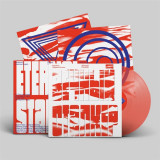
On their first official collaboration, Japanese noise pioneer Masami Akita aka Merzbow and Australian sound sculptor Lawrence English present a harrowing, surrealist portrait of nocturnal industrial activity, spawned by field recordings made in a sprawling factory complex seven hours north of English's home in Brisbane. He characterizes the area as "uneasy and unsettling," awash in the sickly glow of smelters and refinement machinery, somehow not of this world - a liminal quality vividly captured in Andrei Tarkovsky's sprawling purgatorial opus, Stalker, to which the title alludes. Akita, too, described early drafts of Eternal Stalker as feeling "like the soundtrack to a dystopian science fiction opera." A mood of mechanical dread and ruined futures permeates each of the album's seven potent compositions. Opener "The Long Dream" sets the stage with steady rain on sheet metal, punctured by thunder and metallic echoes, reverberating to the rafters in a collapsing warehouse. Quickly the tempest rises. "A Gate Of Light" and "Magnetic Traps" both convulse in churning furies of electric demolition and rattling chains, roaring and relentless. "The Visit" and "Black Thicket" operate more at a distance, surveying the topography of steam, rust, and liquid metal from above, their flickers of violence swallowed by blankets of darkness. This is noise at its most elemental and unknowable: brooding, bristling, and opaque, stalking forbidden peripheries of chaos and creation. Discussing Akita's music, English refers to its "intense substrata that is purely psychedelic; it consumes and confounds." The seasick swells of friction and fracture subsume the listener, forcing an auditory surrender: "this saturation of the senses can be a euphoria." Proof comes halfway through "The Golden Sphere," when the howling mayhem subtly recedes, revealing an eerie siren drone hovering in the void, like the resonance of a dead star galaxies away. Slowly a seething, venomous wall of volume returns, shredding the signal until its frequencies fray, whipping away into the eye of the storm. The combined effect merges obliteration and liberation, rapture and ravagement; it's the sound of dissolution as resolution, uprooted and unmoored, finally freed from form.
On their first official collaboration, Japanese noise pioneer Masami Akita aka Merzbow and Australian sound sculptor Lawrence English present a harrowing, surrealist portrait of nocturnal industrial activity, spawned by field recordings made in a sprawling factory complex seven hours north of English's home in Brisbane. He characterizes the area as "uneasy and unsettling," awash in the sickly glow of smelters and refinement machinery, somehow not of this world - a liminal quality vividly captured in Andrei Tarkovsky's sprawling purgatorial opus, Stalker, to which the title alludes. Akita, too, described early drafts of Eternal Stalker as feeling "like the soundtrack to a dystopian science fiction opera." A mood of mechanical dread and ruined futures permeates each of the album's seven potent compositions. Opener "The Long Dream" sets the stage with steady rain on sheet metal, punctured by thunder and metallic echoes, reverberating to the rafters in a collapsing warehouse. Quickly the tempest rises. "A Gate Of Light" and "Magnetic Traps" both convulse in churning furies of electric demolition and rattling chains, roaring and relentless. "The Visit" and "Black Thicket" operate more at a distance, surveying the topography of steam, rust, and liquid metal from above, their flickers of violence swallowed by blankets of darkness. This is noise at its most elemental and unknowable: brooding, bristling, and opaque, stalking forbidden peripheries of chaos and creation. Discussing Akita's music, English refers to its "intense substrata that is purely psychedelic; it consumes and confounds." The seasick swells of friction and fracture subsume the listener, forcing an auditory surrender: "this saturation of the senses can be a euphoria." Proof comes halfway through "The Golden Sphere," when the howling mayhem subtly recedes, revealing an eerie siren drone hovering in the void, like the resonance of a dead star galaxies away. Slowly a seething, venomous wall of volume returns, shredding the signal until its frequencies fray, whipping away into the eye of the storm. The combined effect merges obliteration and liberation, rapture and ravagement; it's the sound of dissolution as resolution, uprooted and unmoored, finally freed from form.
Orange Goblin formierte sich 1995 und spielte auf den ersten Veröffentlichungen hauptsächlich Stoner Rock mit stark psychedelischem Einschlag. Seit dem vierten Album 'Coup de Grace' tendiert die Band mehr in Richtung schnörkellosen Hard Rocks.
Sie spielten Live-Auftritte u. a. mit Unida, Queens of the Stone Age, Nebula, Monster Magnet und Cathedral und sowie als Vorgruppe von Alice Cooper. Die ersten fünf Alben erschienen beim renommierten Indie-Label Rise Above Records.
Die erstmalig als im LP-Format erscheinende Live-Aufnahme enthält 13 Tracks, darunter der Bonustrack 'Blue Snow', der auf bei der Digital Only-Version 2020 nicht enthalten war. Limited 2LP in Orange Splatter-Vinyl!
Benefits are an issues-based music collective from Teesside in the
North East of England. They write songs about the urgencies that
concern them, and they play them loud.
Forming in 2019 and consisting of Kingsley Hall on vocals, Robbie
Major and Hugh Major on synths and noise, and Jonny Snowball
on drums, they quickly evolved from a standard shouty punk rock
outfit into a minimalist, overtly political band that merges noise,
hip-hop and industrial rock, creating an effect that feels urgent,
darkly hilarious and unsettling all at once.
Thus far, Benefits have been completely DIY yet, via a succession
of digital singles and accompanying videos through 2021, they
built a following that enabled them to complete a sold-out headline
UK tour in March 2022. They also gained fans in high places,
including Sleaford Mods, Black Francis, Garbage and Elijah Wood
and Steve Albini.
James and Ryan of Yard Act were also instant admirers and that’s
where their label Zen F.C. comes in. Using their ill-gotten major
label gains Zen F.C. are pressing Benefit’s single ‘Flag’ (backed
with ‘Empire’) on vinyl.
On working with Yard Act, Kingsley comments: “I think Benefits
come at some of the same subject matter that they talk about but
from a slightly different angle (and by ‘slightly different’ I really
mean ‘more frequent swearing’, though we've never said the C
word in a song unlike...ahem). We appreciate every bit of help
we’ve had off them, we just wish we could somehow repay that
kindness (not monetarily mind, we're totally skint).”
Yard Act’s James Smith says of the release: “Lots of bands are
saying all this stuff so what makes Benefits so special? Why do I
need to be told what I already know over and over again by a
shouty man from Teesside? Well, because no one else is saying it
with such physicality they sound like their voice box is about to
leap from their throat and eat your eyeballs. With that little bit of
influence we’ve garnered and the small fortune of money we now
have kicking about, I’m so glad we can play a part in spreading the
word on Benefits, because I think they’re well on their way to a
classic debut album, and I’m going to fucking love being able to
brag about how important I was in making it all happen.”
Mondo, in conjunction with Hollywood Records and Marvel Music, is proud to present the premiere physical release of Joel P West’s original score for Marvel Studios’ SHANG-CHI AND THE LEGEND OF THE TEN RINGS.
Joel P West uses a delicate and inventive mix of Chinese instruments like Tanggu drums and Ehru, mixed with Western symphonic instruments, to symbolically build on the themes and conflicts of the film. Beautifully bridging Shang-Chi’s epic journey from San Francisco to Ta Lo, the score is absolutely gorgeous from beginning to end.
Composed by Joel P West
Artwork by Dani Pendergast
Manufactured in Czech Republic
KU is paying tribute to one of the most acclaimed and iconic records in the NMS catalogue, with a 2LP vinyl release, with brand new artwork & a bonus remix. The re-release is an opportunity for new fans to be exposed to this masterpiece LP, old fans to explore a NMS classic through fresh ears, and for the band to reflect back on the record they made nearly 15 years ago.
As far as recording the record, there was nothing new about the approach. By this time the band had found a formula for making records that they found to make most sense and suit their chemistry well. Richard Formby was their goto engineer and Hall Place Studios in Leeds, was the space that breeds the desired sounds. This process would remain the same until the band started making records in the United States a few years later.
The KU ‘Plug & Play' Reissue is snapshot in time of a band that was around the 10 year mark of their career. There’s an undeniable chemistry and energy captured in the recordings that could only come from musicians who were tapped in and listening to one another's ideas and playing. With each track leaving you wondering how they were able to find that much pocket, and how much deeper could it possibly go!
Das wirklich großartige zweite Album von Paul Konopacka, Klaus Hoffmann, Kristian Kühl, König Wilhelmsburg und Jörkk Mechenbier aka Trixsi erscheint am 3. Juni auf Glitterhouse Records und hört auf den bescheidenen Namen:'And You Will Know Us By The Grateful Dead'. It's not a trick. It's just TRIXSI. Wie meinte unser erstes Bandinfo noch gleich? "Der Moment, wenn der Pantomime ein Bein gestellt bekommt und mit dem Gesicht in der Torte des Clowns landet, noch ehe dieser sie werfen kann, dann ist TRIXSI." Irgendwie so ähnlich jedenfalls. Stimmt auch eigentlich, bis auf die Sache mit dem Pantomimen. Dafür sind TRIXSI zu laut. Und die Sache mit dem Clown passt ehrlicherweise auch nur auf diesen Mechenbier, diesen Frontkasper, diese brüllende Bühnenbulette. TRIXSI sind schwer in Worte, aber ansonsten leicht zu fassen. Hier happened nicht mehr und nicht weniger, als der ganz normale Magic, den man mit einer handvoll Freunde in einem Topf namens "Band" eben so anrühren kann. Hier verdichtet sich ein wenig Erfindergeist und viel Auge für das, was bereits vollbracht wurde und Sinn ergab mit einem hohen Maß an Kreativität. Hier werden Reifen plattgestochen, statt den Versuch zu unternehmen, Räder neu zu erfinden. Angst oder Stress hat hier keiner mehr. Bock umso mehr. Freude trieft aus jeder Pore und tropft zu Boden, während die Bandmitglieder synchron den Kopf schütteln: Über den Zustand dieser Welt, das menschliche Miteinander im Allgemeinen und die Musikbranche im Speziellen. Die Band aus Hamburg spielt sowohl mit den funktionalen, antrainierten Momenten ihrer vorherigen, musikalischen Leben, als auch mit der Freiheit, die das Wegfallen von klanglichen und thematischen Konzepten wie HERRENMAGAZIN, FINDUS und LOVE A nun eben möglich macht. Da darf man beim Hören dann plötzlich an WEEZER und die EAGLES denken, während im Proberaum noch immer irgendwelche Punkrockplakate an der Wand hängen. Erlaubt ist, was gefällt. Und hier gefällt man sich untereinander gegenseitig. Einer ruft Prost, alle anderen nicken. Who the fuck is niezuvordagewesen? Wo bei deutschsprachiger Rockmusik der Spaß aufhört, fangen TRIXSI erst an. Und es steht zu befürchten, dass sie noch lange nicht fertig sind. - Jörkk Mechenbier (also ich selber) für die Band.
2022 wird ein Jahr voller Erwartungen und Hoffnungen. Immerhin auch ein Jahr mit neuem SDP-Album! „Ein Gutes Schlechtes Vorbild“ ist das 10. (!) Studioalbum der Kult-Band aus Westberlin. Voller Brüche, aber wie aus einem Guss. Vincent und Dag bleiben sich treu und liefern ein „großes“ Album ab: vollgepackt mit lauten und leiseren Tönen, zwischen Ballade und Punk-Attitüde, selbstironisch, abwechslungsreich und nach wie vor absolut Detailverliebt.
Dabei bleiben SDP gewohnt gesellschaftskritisch und gehen in mehreren Songs auf den aktuellen Zeitgeist ein. Dass sich die beiden in den etwas mehr als zwei Jahren deutlich weiterentwickelt haben, ist nicht zu überhören.
Kurz: Mit hyperaktivem Finger am Puls der Zeit, liefern SDP ein Album, das mehr ist als die berühmte Summe seiner Teile und sich durchhören lässt, wie die besten selbstgemachten Hit-Compilations. Zu ihrer letzten Tour pilgerten insgesamt mehr als 150.000 Fans, und die Jubiläums-Show in der Berliner Wuhlheide im August 2019 war nach nur 20 Tagen mit 17.000 Besuchern restlos ausverkauft. Ihre Musikvideos zählen über 600 Millionen Views auf YouTube, sie spielen unzählige Headliner-Slots auf allen großen Festivals und halten den Status, als eine der erfolgreichsten deutschen Bands im Streaming-Bereich. Die letzten Alben sind bereits vergoldet und mehrere Singles haben Gold- und Platin-Status erreicht.
„Watertown“ - das vergessene Sinatra-Meisterwerk!
Auf seinem mutigen Album aus dem Jahr 1970 war Frank Sinatra einmal nicht mit Swing oder Balladen aus dem American Songbook zu hören. Stattdessen schlüpfte er mit zehn Pop-Songs in die ungewöhnliche Rolle eines einfachen Mannes mit Kindern, dessen Frau ihn und die Kleinstadt Watertown verlassen hat.
Als „Watertown“ veröffentlicht wurde, waren weder die Fans noch die Kritiker auf diesen Richtungswechsel vorbereitet, das Album ging unter. Aber mit der Zeit hat es einen immer besseren Ruf gewonnen. 2007 beschrieb The Guardian es als „eines von seinen größten Meisterwerken“. Auf „Watertown“ bewegt sich Sinatra im Pop-Territorium von Kollegen wie Glen Campell oder Neil Diamond. Geschrieben und produziert wurde das Album von Bob Gaudio, einem der vier Mitglieder der legendären Pop-Band The Four Seasons.
Jetzt erscheint „Watertown“ als neu gemischte und remasterte Ausgabe, auf Vinyl in der Original-Albumsequenz und auf CD & digital mit fünf Bonustracks aus der Albumsession, zwei Radiospots sowie dem Titel „Lady Day“, der ursprünglich nicht Teil des „Watertown“-Konzepts war. Ein ausführliches Booklet mit Erinnerungen vieler Beteiligter und seltenen Fotos rundet die Veröffentlichung ab.
Cave dwellers TEMPLE OF VOID finally return from the inky abyss on their highly anticipated new album, Summoning the Slayer. The critically acclaimed, Michigan-based quintet—featuring Alex Awn (guitars), Don Durr (guitars), Mike Erdody (vocals), Jason Pearce (drums), and Brent Satterly (bass)—hunkered down during the last two years, expanding upon their brand of fusty, artfully brutish death-doom with equal parts process and imagination. The outcome is an album that feels massive yet sepulchral, exploratory yet distinguishable—as if crafted deep below and inspired by all the things (mentally and physically) that come with their subterranean endeavor. Summoning the Slayer creepily evolves TEMPLE OF VOID. Produced, mixed, and mastered by Arthur Rizk (Power Trip, Sumerlands, Candy, and more,) Summoning the Slayer pairs long-time influences and a bevy of non-metal vectors into hulking columns of heavy and desolation. Focus tracks “Deathtouch,” “Hex Curse,” and “The Transcending Horror” showcases TEMPLE OF VOID’s death-doom at its heights and their massive, crushing lows. But the group’s fourth album is more than that. The album’s capper, “Dissolution,” is one example of the Detroiters stretching out, the song’s ‘70s rock/singer-songwriter motifs hitting The Moody Blues and Nick Drake hard. Lyrically, Summoning the Slayer eschews commonplace horror tropes with a deeper, broader psychological discussion of the self. TEMPLE OF VOID’s ultimate death-doom metal journey is now complete.
“Radiant Bloom“ is the third full-length album from New England rock outfit, ASTRONOID. Often hard to categorize, the band has been dubbed "shoegaze black metal" due to their unique ability to weave together songs containing soaring, lush guitars over classic blast-beats. Coming in over the top are singer / guitarist Brett Boland's Mew-like vocals, a band he openly cites as a major influence. The band's last two albums, 2016's “Air“ and 2019's “Self-Titled“ follow up, have cemented ASTRONOID as trailblazers in the hard music genre with tons of support coming from the music press and some high profile tours under their belts with the likes of Periphery, Animals As Leaders, Between the Buried and Me, Coheed and Cambria and many more. While “Radiant Bloom“ is still squarely "Astronoid" and their sound is still remarkably obvious to those who know them, the album is focused more on song structure and arrangements, as they explored a more "pop" approach to writing. The combination of classic ASTRONOID songs written in that style leads to what is easily the band's most complete work to date, “Radiant Bloom“ is available as Ltd. CD Edition, Gatefold colored LP and Digital Album
Mint Green is releasing their debut album on Pure Noise Records. “All Girls Go To Heaven” plays with the idea of paradise and perfection, but not in a traditional sense. Rather, it’s about discovering what “paradise” or “heaven” means to the individual. How freedom and peace can be found through introspection. The journey of self-discovery and self-acceptance. How someones idea of safety and wellness can be totally different from your own. In a more literal sense, “All Girls Go To Heaven” means that anyone can achieve this so-called “sacred” destination by simply believing that they belong there. Or rather, creating their own definition of what “heaven” is. The album touches subjects like homophobia, depression, anxiety, isolation, love, heartbreak, family, and religion.“ Expands across genres pop, rock, punk, singer-songwriter, indie, dreamy, 90s alt, funk, electro, dance.
A question popular among followers of Thrash Metal is undeniably this, “Which is considered the fastest Thrash Metal album of all time?”. There would be a high percentage of answers supporting “Reign In Blood”, Darkness Descends” or “Pleasure To Kill”. Now here’s a startling reality. Wehrmacht’s debut album makes those albums sound as if they were meant to be listed under progressive Metal. The sheer ferocity of these guys is enough to convince you why they were considered the fastest Heavy Metal band in the underground. So what is it that makes this record worthy of being called an underground classic? Right from production to musicianship, the concoction of several different ideas results into one colossal and inevitably unique style of their own. Many of you would probably wonder that there might just be a natural leaning towards sloppy playing especially considering my description of their astoundingly fast nature earlier. But the major surprise here is that all the musicians are extremely tight and precise with no single riff, solo or beat falling out of place. Tito Matos is one of the most versatile Thrash singers one has ever heard till date. His clarity of words and ability to keep up with the rest of the band with his lightning fast singing is simply commendable. The songs in here are all ridiculously speedy pieces of Thrash Metal with practically little or no remorse for the listener. The title track with that brilliant rendition of the famously eerie “Jaws” theme kicks off the onslaught with a tearing main riff that shreds away with speed and precision. Teutonic, Bay Area and a few east coast Thrash Metal bands have been instrumental in forging the whole genre altogether but taking the intensity a couple of notches higher was undoubtedly achieved by bands like Cryptic Slaughter, Soothsayer and finally Wehrmacht. For a year that was 1987, “Shark Attack” was way ahead of its time and has been highly regarded as the release that influenced many a band in the Grindcore and Black Metal genres. To testify this statement of mine, U.K Grindcore pioneers Napalm Death have covered Wehrmacht on one of their studio compilations, thus proving the exemplary effect this band had in the years to come. Yet the irony still stands out as to why only the most devoted of Thrash Metal/Crossover freaks know about this band. As for some of you guys, quit wasting your time listening to the senseless offshoots of Grindcore and shitty Black Metal and get a hold of this classic instead.
Am 3. Juni erscheint das 3LP Album ”The Matrix (The Complete Score)” mit der gesamten Musik aus dem Original-Blockbuster-Film.
Mit insgesamt 44 neu gemasterte Tracks und ein exklusives Interview mit Komponist Don Davis! Die Matrix gilt seit langem als einer der einflussreichsten Filme aller Zeiten und läutete bei seiner Veröffentlichung 1999 eine neue Ära des Kinos ein. Unter der Regie der damals noch relativ unbekannten Wachowski-Geschwister schildert der Oscar-prämierte Film eine futuristische, dystopische Gesellschaft, in der die Menschen unwissentlich in einer simulierten Realität leben. Mit Keanu Reeves, Laurence Fishburne und Carrie-Anne Moss in den Hauptrollen verbindet The Matrix philosophische Grundsätze, CyberpunkKriegsführung und ausgefeilte Kampfsporttechniken mit bahnbrechenden Spezialeffekten. Der geschickt komponierte Soundtrack von Davis ist das Bindeglied zwischen der atemberaubenden Optik und der verblüffenden Handlung des Films.
Wie der Filmmusikjournalist Kaya Savas in seinem Interview mit Davis im Jahr 2020 feststellt, war die Filmmusik ”anders als alles, was man bis dahin in einem Action- oder Science-Fiction-Film gehört hatte.
Das gilt auch heute noch. Abgesehen von den Fortsetzungen gibt es keinen anderen Stil und keine andere Herangehensweise an die Vertonung von Science-Fiction- und Actionfilmen als die von The Matrix.”
“Radiant Bloom“ is the third full-length album from New England rock outfit, ASTRONOID. Often hard to categorize, the band has been dubbed "shoegaze black metal" due to their unique ability to weave together songs containing soaring, lush guitars over classic blast-beats. Coming in over the top are singer / guitarist Brett Boland's Mew-like vocals, a band he openly cites as a major influence. The band's last two albums, 2016's “Air“ and 2019's “Self-Titled“ follow up, have cemented ASTRONOID as trailblazers in the hard music genre with tons of support coming from the music press and some high profile tours under their belts with the likes of Periphery, Animals As Leaders, Between the Buried and Me, Coheed and Cambria and many more. While “Radiant Bloom“ is still squarely "Astronoid" and their sound is still remarkably obvious to those who know them, the album is focused more on song structure and arrangements, as they explored a more "pop" approach to writing. The combination of classic ASTRONOID songs written in that style leads to what is easily the band's most complete work to date, “Radiant Bloom“ is available as Ltd. CD Edition, Gatefold colored LP and Digital Album