Water Machine is an office romance between Hando Morice (they/them), Flore de Hoog (she/her), Jimmy Gage (he/him) and Goda Ilgauskaitė (she/her). An unassuming supergroup formed out of Glasgow institutions including Goth GF, Passion Pusher, Brenda and Soursob, their sound careens between punk, country and alt-rock underpinned by the unique quality they call “Raw Liquid Power”.
Following last year’s self-titled demo tape on Gold Mold Records, and fresh off of shows with the likes of Holiday Ghosts, The Cool Greenhouse and The Orielles, as well as a rollicking Viagra Boys afterparty, the four-piece will release their highly-anticipated first studio effort ‘Raw Liquid Power’ on Upset The Rhythm on August 4th.
The EP opens with a menacing, modulating synth melody. Gage’s guitar enters with a mighty bend before breaking into the chugging rhythm of ‘Water Machine Pt. 2’. This timely reminder to refill your water bottle - “don’t be late, hydrate!” less a wellness mantra than a threat - builds to a spacey outro with flashes of the art-punk weirdness of Suburban Lawns. ‘Stilettos’ marches on indignantly with a spiky riff punctuated by Ilgauskaitė’s cowbells. Staccato talk-singing tells a playful tale of stray cats following you home, but belies a darker subtext as the breakdown gives way to paranoid duelling guitars evoking The Fire Engines.
The anti-anthem ‘At the Drive In’ skewers joyless DIY crowds, reminiscent of much-missed Glasgow punks Breakfast Muff. Water Machine’s irrepressible sincerity can’t help but shine through in the final moments though, as jibes about “late night trade potential” give way to plaintive vocal harmonies. Morice tears public transport a new one on closer ‘Bussy’, a First Bus diss track bemoaning precarious employment amidst crumbling infrastructure. “That’s why I’m not on time!” they roar over de Hoog’s frantic, pounding bass, bringing the record to a skidding, screeching halt.
You know Krash Slaughta right? The man behind the recent wildly successful DOOM/Sugacubes mash-up LP Sugar-Coated DOOM, not to mention his unofficial remixes of the Wu’s K.R.E.A.M. and P.L.O. Style and collab. 45 with Phill Most Chill, Rebel Base? ‘Is he at it again?’ the monkey hears you ask. Yes, he is at it again, though the closest of the the three aforementioned releases to what he’s about to drop is the Wu remix 45. And what he’s about to drop is Diggin Deeper, not a single this time but a whole remix album of one of his (and the monkey’s!) all-time favourite hip-hop LPs – to wit, Niggamortis – more usually known as Six Feet Deep (especially in the U.S., though minus the best track under that name) by hip-hop supergroup Gravediggaz.
As many will know, this LP with its horror-movie fixated lyrics gave birth to a whole hip-hop sub-genre – that of ‘horrorcore.’ However, none of those who came after seemed to manage the lyrical humour of The RZArector, The Grym Reaper and The Gatekeeper (a.k.a. RZA, Poetic and Frukwan) and the only bit of production by The Undertaker (a.k.a. Prince Paul) that they seemed interested in was the sub-metal rap sludge of the shouty Bang Your Head – i.e. the LP’s one weak spot. But don’t worry, Krash isn’t interested in that sort of thing. Not only does he avoid rap-metal beats for Bang Your Head, he doesn’t use any on the LP at all – hurrah! What he does do is employ, arguably, as eclectic an array of sample sources as Prince Paul on the original – though with an entirely different end result. Bang Your Head with its apparently sixties garage band-derived beat for example is one of the standouts. The skeletal piano skank of 6 Feet Deep is another, while a beat featuring spaced-out eighties synths forms the new musical backdrop to Constant Elevation. Two more of the monkey’s favourites on this one are Here Comes The Gravediggaz, now underpinned by double-bass-led funk and the glorious inappropriately joyous bounce of Blood Brothers. The result? Your favourite cuts on this one might not be the same as your favourite cuts on the original. Two different versions of a much-loved LP, then; it’s why people remix hip-hop. All the vocal stems were created by Krash and the ultimate intention is to do a limited vinyl release. Cover art is by the Dead Residents’ Junior Disprol.
'Seven Years Of Love' is our second label compilation with nine original tracks by resident artists and friends from around the world. The versatile vibe spreads across two parts, each dedicated to a certain dancefloor mood: System 108 and RadugaDiscoClub. Outstanding artwork has been created by Uno Moralez.
Part 2 is an ode to the colorful and diverse world of RadugaDiscoClub. Freaks, artists, dancers, bears, ladies and all the sexy people! On Side A it is 'Heavenly Grace' by Lipelis that seduces us first, followed by 'Angelic', a big summer track by the stalwarts from Cream Soda. With side B it goes down down down down! Simple Symmetry brothers appear for the first time on the label with 'Elephant On Speed', a fantastic story about an elephant who is feeling great. Closing the compilation is '2061' by Matias Aguayo, Comeme founder and legendary music-maker. The laid back rhythm euphoria reminds us of his earlier productions, somewhere around the era of 'Are You Really Lost' LP on KOMPAKT, but '2061' is the future.
Back in 2011 when I was tentatively looking for a second release for my fledging record label Clay Pipe Music, I stumbled upon a mysterious MySpace page by a group called ‘Tyneham House’, the page was decorated with artwork by Rena Gardiner (who was unknown to me at that time) and the music was an otherworldly mix of field recordings, Mellotron and acoustic guitar. It turned out that Tyneham was promised to Glen Johnson’s Second Language label, so I offered to do the artwork, and in January 2012 the two labels co-released it on tape and CD in a cardboard box with a handmade booklet of my illustrations.
In 2016 Clay Pipe reissued it on 10” vinyl, in an edition of just 300, which has since become sort after. The new 2023 pressing is on blue and transparent marbled vinyl, with a reverse board cover and inner sleeve, and the booklet of illustrations has been given a complete redesign. Frances Castle 2023
The pastoral, wistful yet ineffably disquieting music of Tyneham House is made by artists who wish to remain anonymous here, save for their eponymous title. The musicians are happy, however, to let it be known that these recordings have been around for some years (many of them complied from old cassettes) and that they take inspiration from the 1960s/’70s/’80s work of the Children’s Film Foundation – a body who really ought to have made a film about this mysterious West Country curio. At least now we have its endlessly poignant soundtrack.
The small village of Tyneham, on the beautiful Isle of Purbeck, in Dorset, was once a thriving little community – that is until the British Government requisitioned it for training manoeuvres and other ‘strategic purposes’ in the run up to WWII. This was supposed to be a temporary measure, but the area remained in military possession long after hostilities had ceased, causing distress among former inhabitants, many of whom were farmed out to prefabs in nearby Wareham and Swanage.
Tyneham was characterised by its red telephone box, a tiny parade of shops – Post Office Row – and a grand country pile which stood about half a mile away from the village: Tyneham House. The army removed the building’s oak panelling and ornate decorative details and promptly set about using it for target practice. So great was the shame expressed locally about the damage inflicted upon one of Dorset’s grandest houses that the powers that be decided to grow a copse around the remains of the structure to give the impression that it was no longer there. Despite this, a substantial part of the structure remains intact, including its Saxon hall.
Land access around Tyneham was opened up in the 1970s, but admission to the house remains strictly verboten. Those who’ve been found around the premises, especially anyone wielding a camera, have felt the full weight of military trespass law. Tyneham today is regarded as a nature reserve by some – as a national embarrassment by others. It’s still a political hot potato, in Dorset at least.
Acclaimed Stirling-based group Constant Follower, led by Stephen McAll, and renowned folk guitarist Scott William Urquhart have today announced their forthcoming collaborative album, ‘Even Days Dissolve’, which will be released on 14 April 2023.
The album follows on from Constant Follower’s lauded debut long-player ‘Neither Is, Nor Ever Was’, which was released in 2021 and nominated for the 2022 Scottish Album of the Year (SAY) Award.
‘Even Days Dissolve’ is an enchanting, deeply absorbing, and meditative album, the product of a musical affinity between two thoughtful and uniquely talented Scottish songwriters and musicians.
The songs that make up ‘‘Even Days Dissolve’ were inspired by ‘the grand old man of Scottish poetry’, Norman MacCaig (1910-1996), whose work is characterised by its gentle humour, precise observation and love for the natural world, which forms another key theme for the album.
MacCaig’s poetry holds great significance to McAll, as it formed a major source of comfort and support to him during a long period of recovery following a violent and unprovoked attack that left him with catastrophic head injuries, partially paralysed and unable to write or play guitar.
‘Even Days Dissolve’ is McAll’s nod of respect to McCaig, and the great man’s unmistakable words and inimitable voice feature on two of the tracks - single ‘Wildlife Cameraman’, and ‘Comes A Silence (Basking Shark)’ – sensitively set over the backdrop of beautiful and exquisitely crafted songs.
Scott William Urquhart’s masterful acoustic guitar playing is a stunning centrepiece of the album, imbuing the songs with a moving sense of atmosphere, and sounding at once both elegant and robust. Urquhart’s unassuming yet compelling vocals also feature throughout ‘Even Days Dissolve’.
Speaking about ‘‘Even Days Dissolve’, Stephen McAll said: “The magic in music for me is all about collaboration. Finding people who inspire me to make better music, then working with them and creating something between us that’s better than what either of us could have made alone. It’s been an honour to work so closely with Scott William Urquhart on this album. He’s someone whom I’ve admired for some time - unquestionably up there with the best acoustic guitarists at the moment in Scotland, and such a beautiful writer of songs.
“Bringing two of these songs together with the voice of our beloved Norman MacCaig has been a real highlight of this project. His poetry was introduced to me by my high school teacher Mrs Tatarkowski, and it was the first prose I was able to read and understand when I was recovering from a traumatic head injury. So his work holds a deep space in my heart. I don’t think any poet or songwriter has matched his ability to capture the space and wonder of the natural beauty of Scotland.”
The Belgian vibraphonist Guy Cabay has played with Toots Thielemans, Philip Caherine or Raoul Faisant. Composer, arranger, musicologist and singer, he also wrote and recorded two extraordinary albums in Liege Walloon. Tricatel is happy to make them available at last, 46 years after their publication.
"Gravity kills us. Perhaps that is the meaning of Adam's Fall. We are condemned to be Newton's apple, not the balloon carried away by the wind. But it happens nevertheless that, by the grace of music in particular, we escape gravity, that time escapes time, that another breath inflates our lungs, so much lighter than the one that usually suffocates us.
We don't take light music seriously, and that's good. Only serious music deserves to be treated so badly. Guy Cabay's music flows from a purer source and speaks to us in a more tender voice. One can obviously describe it as one labels export product. Origin: Belgium. Ingredients: jazz, bossa nova, tropicalism, song - proportions may vary. Calorific value: none.
Non-perishable product. But this would say as much about what this music really is as if, in. order to evoke what the foggy blue of a Norman sky inspires, one were to take note of the variations in the percentage of humidity in the atmosphere at Etretat and make a learned presentation on the laws of refraction.
Guy Cabay did pass through Brazil and still lives there a little, a Brazil that is not the one ofcartographers or travel agencies, a Brazil that is as real as the Far West in which Fenimore Cooper's child readers lived, as blurred and limpid as a dream. It is not the Amazon thatflows through this Brazil, but the Ourthe, a tributary of the Meuse, which makes it morefamiliar, stranger and even more poetic.
To let oneself be bathed in this melancholichappiness, to let oneself be carried by this river is sweet, as sweet as the fluid consonants of the Walloon language, this 'd' which becomes 'dj' in his mouth, as in Portuguese, by the way. To know how to create melodies that hold on a note like Jobim's samba, like a fildeferist above a waterfall of chords, is not given to everyone. It is a gift. Knowing how to lace others on dozens of points, as on Tot a-fet rote cou d'zeur cou d'zos, a poignant encounter between Randy Newman and Robert Wyatt, is another. These are not the only ones that the fairies offered to Guy Cabay and that, by an almost miracle, he offers us again today. Hearts up."
"We entered the shadowy mouth of a new space, descending into a realm that precedes the underworld, the arcane, far from our time. We met beasts that gave us lessons about their language which we started learning without grammar."
'The animal world is a constant in the work of Milan improvisational duo Rosso Polare. If Cani Lenti was guided by the diaphanous birdsong integrated into their sparkling mix of folklore, ambiences and occasional humming, on Bocca D’ombra the themes go darker, textures are harder to pin down and the animal presence takes on new connotations.
Instead of an anonymous, patchworked outdoors we enter a cavernous space that invokes the collective unconscious with bestial and funereal undertones, as the animals take on the role of the psychopomps, ancient guides through the shadow realm.
The album is influenced by Timothy Morton’s Dark Ecology, a thinker who sees the constant exchange between the human and natural world as an ongoing dialogue, the two influencing each other, in a series of reverberating loops. This looping is also reflected in their compositions, where improvisations with traditional instruments like electric and acoustic guitars, monophonic synths, horns or flutes meet natural noise-making tools like branches, rocks or nuts that amount to lugubrious, often dissonant textures. Bocca D’ombra is built on a series of whispers, breaths, panting and rustling, creating a feeling of closeness sometimes verging on the claustrophobic, ingeniously set against sounds evoking space – fireworks crackling, crows echoing, church bells reverberating, indistinct cries from a children’s playground.
Distance and repetition are deeply ingrained in their own understanding of sound and their surroundings, becoming the building blocks of their practice. Just like Gregory Bateson in the ‘70s, the duo believes in a more romantic approach to ecology, seeking a porous border between self and environment, human and animal, internal monologue and external ambient hum.
If earlier releases were noisier and denser, Bocca D’ombra is tight and focused - every sound and melody is given room to breathe and develop on its own, enhancing the haunting, otherworldly aspect of the music. The result is heady, intoxicating mix which sublimates chaos into sparkling compositions of contemporary animism.'
8 years almost to the day after releasing his unique re-interpretation album of his field recordings made in the late 90's in Tanzania, Kink Gong is back with another volume of bushmen madness. Here’s what Kink Gong aka Laurent Jean-neau has to say about his end of millennium trip:
‘’My experience in Tanzania is now over 20 years and most of the so called remix was started in Tanzania and left un-finished, then eventually retouched in Vienna, Paris, Shanghai, Kunming, Dali or Vientiane. 20 years later I searched my Tanzanian files and rediscovered unfinished tracks which are being now refreshed on this new record.
Back to the early days of the XXI century, when I lost my health trying to survive with the HADZAs, the last bushmen in northern Tanzania. In 1999 James Stephenson from NYC invited me to join his Hadzas friends. I would leave the bush to rest in a place with enough food and electricity and start to edit, loop and work on the original recordings, to trans-form them into organic abstract compositions, the only instrument I had recorded a lot with the Hadzas was the malimba and I bought different malimbas in Arusha to take back with me to Europe, I used either the original record-ings or me playing malimbas on some tracks and applied some electronic treatment to it, at that time I used Roland synths for some tracks.
The original recordings are related to scenes at night by the fire with the Hadzas, but also 3 different types of celebra-tions, Epeme Men was recorded on a moonless night with men and women singing and dancing in complete dark-ness in Mangola, an Hadza camp. Irawk Drum Under the Rain was recorded during daytime at a Multi ethnic gathering at the Franciscan Spanish catholic mission with a crowd dancing and singing under heavy rain while an IRAWK large (and wet) drum was being played, Northern Tanzania. Makonde Island was recorded in southern Tanzania at the boarder with Mozambique and is a pure scene of trance taking place on an island where the MAKONDE fishermen off the coast of Mtwara, get wild, hitting plastic containers for the sound, drunk and stoned men and women are hysterical-ly jumping and falling on each other, ending up with a few wounded.
Once again I'm responsible for this act of multicultural sabotage, but don’t forget that you can always listen to the origi-nal recordings on the Kink Gong recs collection. ‘’
Laurent Jeanneau, Berlin 2023
DONNA SUMMER gained prominence during the 1970s disco
era, propelled by her incessant and creative driving force
behind the genre’s global popularity, rightly earning the title
“Queen Of Disco” and becoming one of the most
successful recording artists of the entire decade, now
having sold more than 130 Million records worldwide
Donna’s ‘80s close-out album was 1989’s ‘ANOTHER PLACE AND TIME’, which paired her with multi-hit making,
multi-million-selling UK producers Stock Aitken Waterman. The album is widely regarded as the best album they
produced, and which was heavily featured in the recent two-part TV documentary Stock Aitken Waterman:
Legends of Pop.
• The album’s lead single ‘This Time I Know It’s For Real’ was an uplifting, club floorfiller and radio-friendly hit,
peaking at #3 in the UK (#7 on the US Billboard Hot 100), giving Donna her highest charting solo single for more
than a decade.
• Four further singles were released from the album including the two Top 20 hits, ‘I Don’t Wanna Get Hurt’ and
‘Love’s About To Change My Heart’, giving Donna back-to-back UK Top 10 hits for the first time since 1977, as
well as remixed versions of ‘When Love Takes Over You’ and ‘Breakaway’.
• This special Picture Disc edition has a zoetrope effect on Side 2 that incorporates elements from the ‘This Time I
Know It’s For Real’ promo video and which gives a continuous dancing effect. It is best experienced using a
smartphone running a third party stroboscope app.
**Debut album from former 'Eighties Matchbox B Line Disaster' front man Guy McKnight's new band.** **ORANGE MARBLE COLOURED VINYL - VERY LIMITED!!** The DSM IV’s debut album, “NEW AGE PARANOIA,” is an impressive collection of stories, beats, guitars, and noise. The album seamlessly weaves together sobering but dream-filled songs that explore the ways in which our collective minds are influenced by mass media, entertainment industries, and social media. Formed by Guy McKnight of critically acclaimed and cult favourite The Eighties Matchbox B-Line Disaster. The DSM IV has a dark sound that blends noise-rock, synth-pop and industrial, that delivers a unique musical experience. Their music is cacophonous and epic, featuring rich textures and melodic hooks that keep listeners captivated. The band’s powerful soundscapes, combined with their thought-provoking lyrics, create a mesmerizing atmosphere that both entertains and encourages introspection. The album prompts important questions about our society, such as what’s driving the normalization of a narcissistic culture that prioritizes personal desires over altruism. It delves into the ways in which technology, social media, and mass media shape our collective psyche and affect our relationships with ourselves and each other. The DSM IV’s music offers a timely and compelling commentary on these issues. The DSM IV is a band that creates music with a powerful message that resonates with people who feel that a kinder world is possible. Their songs are both nasty and nice, reflective and entertaining. With “NEW AGE PARANOIA,” The DSM IV has crafted an album that will captivate and inspire listeners, while also prompting deeper reflection on our society’s values and priorities.
TAKAHIRO MUKAI is a Japanese electronic music composer who has about 60 official releases to his name. This is 8 pieces of brooding, modular electronic, rhythmic hypnosis from a contemporary maestro of the experimental electronics tape circuit underground.
We’re honored to publish another chapter of his ever-evolving communique with machines. Early DJ support by DJ Voices. Inorganically mesmerizing, full of shadows, plumbing the depths of modular telekinesis…perhaps “Out Of Place” for some, right in time for the deep listeners….
Limited edition of 100 professionally dubbed and manufactured C50 cassettes.
Mastered by Dietrich Schoenemann.
Design by Nick Owen.
Distributed by One Eye Witness.
Josh Milan has been recording music professionally for over 30 years.He's played every role from artist to engineer in the studio.This project, Honeysweet, focuses on his production and musicianship.Utilizing only one musician on sax, Josh plays every instrument and sings every note on this project. His songs are packed with soulful dance floor grooves inspired by iconic, soulful groups like Brian Auger, Cymande, Pleasure, Africano, Santana and others.
"I wanted to do music that made me and my family feel good when I was growing up. It's the kind of music that families dance to at gatherings with a record player and no DJ”, says Josh. “Intros, Accents, Breakdowns, Bridges, and endings were all part of the music.” This music will transport Josh's audience to a place of musical freedom. This is music with, seemingly, no rules.
Josh Milan describes each track on the Honeysweet EP “Exodus” in his own words :
"Last Night Changed It All featuring Lawrence Clark on sax is the kind of groove that keeps its dance floor value while holding up the banner of true musicianship. This song was written after hearing a DJ set,where the DJ didn’t seem to be concern about staying within a musical box. He played all sorts of music in one set. I knew then that I’d branch out musically when recording.Rhodes, picked bass guitar, rhythm guitar and drum kit is all that's needed on this one.”
"Exodus the manipulation of major and minor chords in this groove make it complex and interesting. The listener is lead by the organ solo featured here. The song is a mental escape. A mental exodus complete with bongo section.”"Being Free is a message that captures the point of this entire project. Musical freedom and expression is where this project gets its
fuel. Horns, are included on this production. A true expression of soulful music. Being free should be all the time I'm your mind all the time.”
“Cranberries and Cream is my tribute to funk grooves as they were featured on records in 70’s. I’m a fan of that sound and I like to play by own funk grooves when I’m alone. This is one of the tracks on the ep I prefer to rock.”
“And So She Waits has eerie sounding pads in the background. They linger throughout the track. Popping in and out, as though they’re waiting for something. You will hear the change in mood once she is no longer waiting. The groove returns to it’s original state. Only she is no longer waiting, he is.”
“Crazy is me bringing the funk to dirty house music. Complete with house piano in the mix. The chords are unsettling. They are, in fact,Crazy. I though adding a horn arrangement to a house track like this would sound interesting and different.”Honeysweet “Exodus” out at all digital outlets and double pack vinyl set.
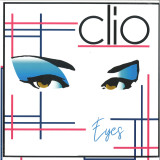
The decade of the 80s is revived through recordings like "Eyes" that allow you to travel through the music and trigger those old emotions of innocence, joy and adventure. It's possible you don't understand a word of what they're singing in the chorus, but the song is very catchy! Maybe not even Maria Chiara Perugini knows what she sings about, but she makes you hang on to every word of her like a nursery rhyme of synths, beach and bubblegum. "Eyes" is so amazing, so mesmerizing and more and more people are discovering this italo-disco masterpiece that usually satisfies and makes fun of you at the same time. If you try playing it at 75% speed gives a hypnotic vapor wave vibe! And even more, the song would have fit well in the dance club scenes from Scarface. Beyond the words - difficult to find a text that makes sense, sometimes out of context, unundestandable even for a French listener - the piece is so surprisingly likeable for the unique tone of Clio's voice, a strange cross between teenager and adult, and the part where she spoke another language, with some really cool synthesizers, are people's favorite parts. 0:31 "Je suis bien heureuse" , 0:47 "La nuit a ses merveilles", 0:57 "Il y a de quoi y perdre la tete, pour toi, sha, pour toi", 1:36 "Je n'ai plus de bulles", 1:52 "Je vous prie applaudissement". "Eyes" by Clio contains all the emotions that a dance-pop song should contain plus the essential element of mystery, a kind of magic that takes place between the chorus and the bass line, a shot in the dark drizzly night of the Italo-Disco. made by Roberto Ferrante, a guarantee for the perfect productions of the 80s, when he was only 20 years old.
Let the celebrations begin, 10 Years of a vision Anané created and called Nulu, her independent label letting the world know about a genre we now know as Afro House, today after many years of dedicated work you'll find it as main stream.
Nulu means 'Nothing Ultimately Leaves Us' and just in time for Winter Music Conference in Miami Nulu presents a special vinyl sampler including 4 tracks representing 'Past, Present & Future' of the labels sound.
Side A includes an elegant and melodic remix of 'Ubatuba (Roots Mix)' by Grammy Award winner Louie Vega & Agev Mungsen feat. Anane, originally produced by Brazilian Soul Crew, where the fusion of Afro House and Soul help to soothe the spirit, followed by the African duo AMRoots aka Filipe Narciso and Fresh Nunas who deliver a fantastic combination of melodies and sounds ready to make dreamers dream with a fresh remix of their original release back in 2009 'Old Times At Barracuda (Cielo Roots 09 Remix)' and was also the first release for Nulu.
Side B includes a superb beat and unmistakable touch of Dj Angelo, bringing you straight to dance floor on a journey you'll wish to never leave and finish this 4 track sampler is the incredible talent of Manoo always setting the contemporary route of Afro House music with his modern style, creativity and authentic sound. The special vinyl sampler will be available exclusively at Winter Music Conference 2019 in Miami, and later for all Nulu followers. Take your time to know the Past, experience the Present and understand the Future of Nulu, a pioneering label of Afro House Music.tti
Tapping into the seductive unease of the unexplained, Modula lands on Tartelet Archives with Paranormal Phenomena – The Icelandic Expedition, a nine-track album that evokes alien synth- electro and New Age soundscapes.
During a trip to Iceland in February 2020, Naples native Filippo Colonna Romano (Modula) experienced the raw power of the island’s otherworldly natural forces. Inspired by his field recordings and a rekindled interest in sci-fi, Paranormal Phenomena – The Icelandic Expedition was born. Steeped in haunting LA synthesis and cinematic tension, the album is an imagined soundtrack to a supernatural thriller, cast in the icy tones of the Roland JD-800.
“When I went to Iceland I was so excited about the ambience and sounds,” says Modula. “I felt everything was stronger than normal; the wind was brutal, the waves fast and noisy. I came to the conclusion that what I had captured all sounded strangely eerie and otherworldly. I decided to compose music that had the same vibe as the field recordings – cold and strange, mysterious and alien.”
The album includes nine tracks each representing a scene in the “movie” ranging from alien synth-electro to New Age ambient moods and soundscapes, inviting the listener on a journey through cold landscapes and into dark caves where unknown creatures lurk in the shadows. Paranormal Phenomena leads logically on from Modula’s previous work for Bordello A Parigi and Firecracker, not to mention his Alba – Tempesta – Notturno EP on Tartelet Records which drew on field recordings from the jungles of South America. Merging extreme environments with a rich palette of classic outboard gear, Modula’s music transports listeners through space and time. Given the heavy motion-picture theme present in Paranormal Phenomena – The Icelandic Expedition, the album is a fitting release to inaugurate Tartelet Archives, a new sub-label to Tartelet Records focusing on electronic obscurities and sounds from the past.
Speicher 125 is a most auspicious collaboration between two great, inimitable voices in techno: Kompakt co-founder Michael Mayer, and Magazine’s own Barnt. They’ve both been productive of late, Mayer with his “Brainwave Technology” EP in 2021, Barnt with his first release on Kompakt, "ProMetal Fan Decor Only Product" in 2022. Of course, they’re also busy with their respective record labels, and international DJing schedules.
You may already have heard their first track, which appeared on Michael’s "&" album from 2014, the psychedelic “Und Da Stehen Fremde Menschen”. For Speicher, though, they set their sights firmly on the peak time dance floor – the result is two stunning cuts of techno euphoria.
On “Teller” Barnt and Mayer unleash a synth storm, tense and thrilling. Percussion piles up against the incessant buzz, but before too long we’re submerged in waves of dense texturology, making the track an object lesson in tension and release. “Duration” is a bittersweet anthem about "life long love". A moving voice tells us about "faith in life" while gleaming, synths, choral swarms and snares shower down from above to form an epic tale about duration and devotion.
Weirding the groove and updating the emotions, Speicher 125 is a monster.
Speicher 125 ist die Zusammenarbeit zwischen zwei unnachahmlichen Stimmen des Techno: Michael Mayer, Mitbegründer von Kompakt, und Barnt von Magazine. Beide waren in letzter Zeit nicht unproduktiv, Mayer mit seiner "Brainwave Technology" EP, Barnt mit seiner ersten Veröffentlichung auf Kompakt, "ProMetal Fan Decor Only Product". Natürlich sind sie auch mit ihren jeweiligen Plattenlabels und internationalem DJing beschäftigt.
Vielleicht hast Du schon ihre erste Kollaboration gehört, die auf Michaels "&"-Album von 2014 erschienen ist, das psychedelische "Und Da Stehen Fremde Menschen". Für "Speicher" haben sie den Peak-Time-Dancefloor ins Visier genommen - das Ergebnis sind zwei atemberaubende Stücke voller Techno-Euphorie.
Auf "Teller" entfesseln Barnt und Mayer ein Synthie-Gewitter, spannend und mitreißend. Die Percussion türmt sich gegen das unaufhörliche Summen auf, aber schon bald tauchen wir in Wellen dichter Texturen ein, was den Track zu einer Lehrstunde in Sachen Spannung und Entspannung macht. "Duration" ist eine bittersüße Hymne über "lebenslange Liebe". Eine bewegte Stimme erzählt uns vom "Glauben an das Leben", während schimmernde Synthies, Chorschwärme und Snares von oben herab eine epische Geschichte über Ausdauer und Hingabe prasseln.
Speicher 125 ist ein Monster, das den Groove neu erkundet und die Emotionen auffrischt.
the EP FACE I is an evolution from the previously released album JAHRE. it fits into the narrative of urban life and our own personal development. both chronology and emotions are explored here and adapted with lyricism and atmospheric digital and analog sound.
it starts with 1984, beginning of our emotional journey and also literary (GEORGE ORWELL) fixpoint of the electronic adaptation. we feel a kind of lightness in our society, upswing and freedom determine everyday life for a large part of germany. we are free, everything seems possible! almost we move through an utopia. new prosperity and contentment let us blossom, no digital friends and in-between worlds alienate our seemingly naive and peaceful being.
in TMV a first individual emotional world comes to the fore, the mood is mixed and seems fragile. euphoria and melancholy mix to an undefined state of emotional and musical confusion. LYRIK gets a first big space here and carries from the part of confusion into a part of detachment. despite the ambivalence of the first moment, the scene ends in a transcendental, positively driving state of letting go and rest ...
the next part takes us away from the familiar and seemingly peaceful MOMENTS. we jump into the year 2184! 200 years later we are sitting here now, society has turned into an emotional desert like in ORWELLS fiction. a lonely CYBORG sits in the ruins of our once joyful cathedrals and sings about his tearing apart. he can't be without, but also can't be with his own anymore. like a cursed of two worlds he sits stranded in space and time.
the conclusion is made by TMVA, here we get into a very intimate emotional farewell to a lost and unfulfilled love. the calm tempo lets everything flow out that has confused and driven us for years. who or what do we want to become emotionally? are we even capable of letting ourselves fall after decades of searching and disruption? are we already dying? in the end only art and the love of it remains to save us.
„There are imaginary signs or signals that make your arm twitch mutely.
In such cases, you may have to interpret the meaning of such a "message".
If you ignore it, it's almost certain that nothing will happen, but you may also miss the chance to change your life because you passed a potential turning point and didn't notice.”
There were once many worlds on this Earth. Each had its own land, language, population, borders and history. There were people and societies.
They already looked alike, but they didn't realise it.
When the borders disappeared, the looked at each other, but by this time suddenly, the languages and the histories also disappeared.
The present worlds do not have any Earthly home, they have moved to the kingdom come of the collective subliminal sociostasis.
There they are still living for a while, exactly so long as humans have human form and the time for transhuman cultures arrives.
To fumble about in this gap of time bubble, that has been opened for a short time between the collapse and the vanishing of the borders of cultures: this is the science of Ishin-denshin burdened with Heisenberg’s paradox.
After the enormous support received in previous releases, we believe that the time has come to give our music a bit of color and this time we have opted for green, the color of our natural habitat ... "La Jungla de Andalucía"
Sekret Chadow surprises us again and shows us the most sentimental side of him with his "I Love You Mommy" We can already imagine what this artist would be thinking about when creating this beautiful musical composition, a true tribute to one of the most important people in our life, without a doubt a track created with a lot of love, loaded with arpeggiated melodies, vocals, basses. and powerful breaks that create perfect harmony. Close your eyes and let yourself be hypnotized by the magic of his music.
Baymont Bross joins our family and we could not start in a better way than presenting this beautiful version of one of his greatest hits throughout his career "Enjoy Yourself" Do you remember those infinite closings at Carpas Yerbabuena? Are you one of those who danced in Mangueta Beach until dawn? Surely you once danced to this track and now we can relive those wonderful moments with this vocal version created on the occasion of the 10th anniversary and extended for this occasion. Welcome to the monkey family.
Adam Vyt brings us his track "Don´t Give Up" a message of strength and encouragement for the times. A track with piano melodies followed by an elegant line of atmospheres and basses, vocals and a powerful base with airs of Uk Garage, a mixture of styles that already define this artist. This track was previously released in digital version by the "Distorsion Records" label, making it one of the best tracks in Beatport's Top100. Never give up...!!!!
Case82 is back with us and this time with another of his most powerful tracks "Pump This Party" and that's how it is ... the party's pump .... !!!
Once again this Dutch artist shows us that his strength is pure Old School, a mixture of powerful bases, vocals, stabs and wonderful melodies with violins and piano to which he is already accustomed. This is "Lost in The Jungle"
MOOD CHILD is the new artistic platform of DJ/Producers, SIRUS HOOD & MANDA MOOR.
Evolving from a collective idea during our difficult pandemic period, MOOD CHILD is, at its centre, about community, collaboration, friends and family. Working together, feeding each others creativity and forging fresh and exciting new sounds and projects.
MOOD CHILD is an invitation to a journey that blends different feelings, emotions and desires. To activate your inner child. Reinvigorate the wild, primitive and unfiltered state of being and create an almost divine sense of unity. All through the power of music and art.
Their collective sensibility is nurtured upon the dancefloor and last summer they were blessed to have presented a first MOOD CHILD experience in collaboration with Hï and Café Mambo in Ibiza. The mood then took them to Bagatelle in Zürich and Lovefest in Serbia and they now prepare to launch their 2023 campaign alongside the elrow family for a sold out event in Andorra 1st of April.
However, what is a party without its soundtrack? Their first release, as its title suggests, brilliantly displays the labels primal perception… ‘Homo Sapiens’ is the mood child of Sirus Hood and Malikk. Four carnal creations, all guaranteed to ignite a rabid dancefloor response.
‘Booty Side’ uses its compass to expertly navigate its way through bubbling acid and rolling snares as we go in search of Jack, while the title track will have us going ape to its chest-beating bump and knuckle-dragging groove.
Silverback beats swing low on the flip too as ‘King MTF Kong’ bites hard with its heavy Chicago hustle and detuned synth, while the feral Juke-infused finale, ‘Gorilla Walk’, is a break-neck bass-driven and bruising encounter that is more Jersey club than Empire State building.
The ‘Home Sapiens’ EP is released on the 14th April and will be available on vinyl and digital formats, alongside a series of exclusive NFTs.
MOOD CHILD’s official online store will launch soon and feature not only the music and digital art projects, but also an official clothing brand, sample packs and exclusive content from their artists.
Free-roaming French techno talent Angioma lands on Lady Tazz's Mind Medizin with a new single that comes remixed by the legendary Kaiser, Fixon and Toru Ikemoto.
Angioma does it all from peak time and hypnotic techno to jacking house, all with his own signature exotic twist. He is currently Berlin-based and has released on Made of Concrete, but also co-runs with BLANKA the Room Trax label and Room Lab, contemporary local art and networking space. With increasingly high-profile sets in clubs like Egg London and Anomalie Berlin, Angioma is an ever more crucial part of the modern techno landscape.
The brilliant 'Unusual Suspect' is darkly seductive with its high-pressure techno rhythms and silky synth lines. Pulsing keys bring late-night hypnosis, and the icy hi-hats draw you in further to this shadowy and tunnelling groove. It's a warm, Mills-inspired sound that is stylish and dynamic.
The A Side also features a heart stopping Detroit infused remix courtesy of Mexican based Fixon (part of the Illegal Alien crew). On the flip and Gianluca Caiati aka Kaiser has been tearing up the techno scene for 15 years. His superb remix pairs things back but the pummeling, rubbery drums remain the focal point as whip-snapping snares lash about up top, incendiary hi-hat pressure grows, and the sleek synths intensify the trip. Finally, Japanese Techno hero Toru Ikemeto delivers an off-kilter slice of driving take on the original.
»Love As Projection« is the new album by Frankie Rose, her fifth studio LP and second for Night School following the reissue of her interpretation of The Cure’s »Seventeen Seconds«. Frankie Rose has forged an enviable musical legacy, from playing with bands like Crystal Stilts and The Vivian Girls but on »Love As Projection« she takes a bold step into electronic pop production. A sumptuous recorded statement, it dances in ecstasy and broods on the tumult of the western world’s decay in equal proportion. At the heart of the album is glowing, confident songwriting, resplendent in hooks and choruses but still touched with an optimism undimmed.
After spending nearly two decades establishing herself across New York and Los Angeles independent music circles, Rose re-emerges after six years with a fresh form, aesthetic, and ethos. Celebrated over the years for her expansive approach to songwriting, lush atmospherics, and transcendent vocal melodies and harmonies, »Love As Projection« is a reintroduction of her established style through the lens of contemporary electronic pop. Recorded with producer Brandt Gassman and mixed with long-term collaborator Jorge Elbrecht this is the album Frankie Rose has been building up to her entire career.
More than a rebirth, a refinement, a resurgence, »Love As Projection« boasts a widescreen scope: a long- form project heavily considered for half of a decade, culminating in the most personal and accessible collection of art-pop that Frankie has ever written. When Rose aims for the pop jugular as in first lead track »Anything«, the result is unstoppable. A majestic pop song built for radio, it erupts into an irresistible chorus that marries classic epic 80s American pop with the cult effervescence of Strawberry Switchblade »It’s like a prom scene in a John Hughes movie. It’s a hopeful song about abandoning fear even if the world is quite literally on fire.. In the end, at least we have each other,« says Rose. »Sixteen Ways« further boasts a propulsive, massive chorus, though tempered by a cynicism built in global post-truth, global malaise. »It’s about getting your hopes up, but simultaneously making lists in your head about how it will never work out in your favour.«
The big anthems don’t let up there. On »DOA« some massive, rolling drums lathered in big mid-80s gated reverb dovetail with a syncopated baseline for the ages as Rose’s vocal sails effortlessly above. The effect isn’t unlike ethereal vocalists Clannad circa Howard’s Way or Enya jamming with Simple Minds in their stadium-conquering heyday. Rose tempers the adrenalin with heart-tugging bittersweet tones and there are plenty of them. »Sleeping Night And Day« takes its time with an off-the-cuff chorus, swirling around in harmony and chorus-bass. »Saltwater Girl« picks up the balladeering baton with another nod to album track-mode Switchblade, deep space opening up in the mid-tempo drum track and soupy, digital atmospherics. Album closer »Song For A Horse«, reimagines modern Pop production a-la-PC Music but shorn of the meta-atmosphere. Pianos, swelling synths, minor keys cut through with major. These moments, also seen in Feel Light offer ballast to the soaring pop choruses. Moments like these are big oceans of emotion to fall into before being led out by Rose into a bright new day.
»Love As Projection« is released in the USA by Slumberland.
Metro is one of the most recognized underground rap producers. He has already collaborated with Guilty Simpson, Wildchild, MED, Oh No, Rakaa, DJ Babu and Percee P to name just a few.
The album "Blunted Fusion" 2LP is his most refined album. This time without guests - only sophisticated samples, cuts and fat beats.
Plus amazing graphics designed by SewerX. This is the most beautifully released album in the 21-year history of JuNouMi Records.
'The album is composed by Cerys Matthews with Hidden Orchestra and features 10 UK poets: MA.MOYO, Raymond Antrobus, Lemn Sissay, Liz Berry, Anthony Anaxagorou, Adam Horovitz, Cia Mangat, Imtiaz Dharker, Kim Moore and Kayo Chingonyi “We are living in extraordinary times, I wanted to respond but had the urge to offer more than one voice, more than one perspective. Not an echo chamber” – Cerys Matthews. In February 2020 Abbey Road studios welcomed each of the 10 poets to record pieces from their collections. Then lock down hit…. But remotely and with the additional help of field recordists and musicians around the world, Cerys and Joe Acheson (Hidden Orchestra) created a sound journey for these poems with the theme of: Genesis: Birth, heritage, a journey about to begin.
You Can Can is an echoed affirmation, an album which traces song forms around silence, field recordings, and degraded analog memories. This is folk music transmogrified and mutated, as if recorded and reconstructed in Pierre Schaffer’s GRM studio.
Not your typical Mariposa folk duo, the group is comprised of Toronto avant-music scene stalwarts, vocalist Felicity Williams (Bernice, Bahamas) and bricolage artist and synthesist Andrew Zukerman (Fleshtone Aura, Badge Epoch). The album feels like a somnambulant conversation, fragmented and half-remembered with Williams’ vocals traveling through a landscape of field recordings and Zukerman’s saturated concrète topographies. It is an electro-acoustic assemblage, both analog and digital, comprised of air, electricity, minerals, wood, and water. Although the album nods towards traditional forms of folk and musique concrète (if at this point it can be called a traditional form), it is outwardly and inwardly contemporary; non-linear, citational, opaque, and sui generis. In a way it feels like a sonic index of the narrative experiments found on the infamous Language school-related publisher The Figures, in the work of Lyn Hejinian, Clark Coolidge, and Lydia Davis. In the musical continuum, the album picks up where Linda Perhacs left off in the early 70’s—explored by Gastr Del Sol in the ‘90s—a convergence of rural acoustic idioms and urban avant-electronics. This is country music for the discerning cosmopolitan citizen of the 21st Century.
RIYL: Luc Ferrari, Brannten Schnüre, William Basinski, Oval, Eric Chenaux, Emmanuelle Parrenin About Everything In Time and Failure Figures, Felicity Williams says:
Everything In Time is indebted to the language of Brazilian author Clarice Lispector (as translated by Alison Entrekin). Drawing on insights from psychoanalysis, we trace the roots of melancholy to render them available to consciousness; words from the ghostly realm of the transpersonal filter through dreams and shine a beam of light onto a lone trillium in a forest at night. Other influences include the experience of not knowing, of being subject to a gestation outside of one’s control. This is an ode to the power of naming to obliterate, to set free.
Failure Figures is a meditation on the radical contingency of reality and the vicissitudes of the will. With Slavoj Zizek as my guide (think: “Hegel for dummies” - I’m the dummy in this scenario), I wander through the valley of the shadow of death, and take heart. The last verse refers to an experience I had recording at a studio in Brussels. I was singing in French, with which I have some fluency, and the producer was complaining to the artist whose song it was that my delivery was not convincing. Thinking I was out of ear shot, he said in French, “c’est comme elle n'est pas là”; I was pronouncing the words correctly, but I failed to express anything. So what or whom is responsible for conveying meaning, if not the form of the word itself? And if the connection between meaning and form is broken, how do we fix it?
Gratitude to Thom Gill (guitar) and Daniel Fortin (bass) who joined us on the recording of Failure Figures. Thanks as well to my old roommate Christopher Willes, who unwittingly left behind his hand bells deep in the hall closet. We unearthed them by accident, and the bells became an important sound element. Thanks to other past roomies Robin Dann and Claire Harvie, whose childhood piano and guitar respectively still reside with us, and were used in the recording. Field recordings were made in Toronto, Canada and Celestún, Mexico in 2020.
ENARCHY is the debut album by Leipzig-based producer and singer Maria die Ruhe. It is the result of a deep and thorough look the
artist took into both her own inner workings and the world around her. In 14 tracks, she explores different types of energy,
oscillating between head and heart. Final destination of this sometimes painful process of self- exploration is the embodiment of
her own power and creativity; the realization, that she manifests her role as catalyst, healer, and fighter for freedom and equality
by reporting on her experiences. These songs are about nothing less than that. And you can also dance to them.
In a musical sense, Maria surpasses herself compared to previous releases. She is bolder, more explorative and dissolves genre
boundaries. Acoustic instruments like the cello and the piano unite playfully with electronic beats. Her expressive voice speaks and
sings from the lowest lows to the loftiest heights. Her self-disclosing lyrics communicate the deepest messages of the soul. One can
tell right away: something is at stake here, this is about a real human living through something real, and now reporting from the
front lines of the human experience.
With lines like „Things are changing all the fucking time“ (ENARCHY) she posts a reminder for the current zeitgeist and the resulting
global uncertainty. „Some things need to be destroyed before they can heal“ is a demand for openness towards change, even if it is
challenging, requires energy, and leaves behind some scars.
In ART IS THE ONLY REAL TRANSLATION OF LIVING FOR ME, Maria uses sentences like „I’ve been trying to please you, I got headaches
and I still don’t fit“ to express her desperation with existing structures of injustice and the lack of livability of the artist lifestyle.
„Ah, you’re an artist - and what do you do professionally?“ Everyone loves music and art! When, o when, will the understanding
follow that there need to be people who make this art as a central part of their lives?
Frustration takes turns with hope and a growing acceptance of the self. In EQUALISTA, Maria discusses antiquated conditions like the
inequality between the sexes in a kind of manifesto, with a simple proposal for solution: „Let’s both be selfish and raise our
energies, to create a whole world with all the things we need.“
In WE BELONG TO NEVER, Maria sings about the everyday horror of toxic relationships. Lines like „Disengagement and rage, I’ve become such a slave.“ express the despair of the emptiness that results from a lack of affection. She also describes treacherous
narcissistic manipulation: „You cut me small just to feel tall.“
In SKIN, she confesses: „I’m not as enough as everyone else.“ and describes the long and painful way from rejecting her own body
to loving herself unconditionally. „I hate what I feel, while I pretend to be free“ means she doesn’t want to be reduced down to
her body, doesn’t want to be seen as an instagrammable, thoroughly designed product; she wants to be acknowledged as an
individual.
In LOST, she poses a question that many are currently forced to ask themselves: „What do we do with all this solitude?“ Maybe
making use of the reclusion by exploring the shadow self. „Can you cope with the truth?“
The conclusion: energy is being freed up through the means of self-experience and living through the personal darkness -
ENARCHY. The realization: every human being is self-determined and should simply do what they feel. It is everyone’s right to
choose their own life’s path. Here, intuition serves as a signpost. This is both feminine and strong.
ENARCHY celebrates an embodied anarchy by working through the personal shadow and the genuine, healthy integration of the
struggle survived - not as a destructive rebellion, but as a testament of shameless, joyful self-empowerment.
„In the end, I want to be alive, because in reality, I’m free.“
No Rush second release is a split EP that includes Arapu and Simone Adinolfi, each of them expressing a personal feeling about the antithesis of time, seen like infinite as much as just a moment.
While Arapu is showing elegance in Morning Clue with its deep and airy melodies and a more decisive and funky touch in End Of That using his special bassline blended with outstanding scratchy sounds, Simone Adinolfi gives a more melodic and warm imprint in Levantyne, where hypnotic pads are permeated by dreamy piano chords, and then gets more gloomy and raw in Relapse, showing his introspective side.
Wow, I thank you all from the bottom of my heart for the support with Dynamite Cuts since 2017 when I opened a Pandora’s box of 7” gems. When I thought about starting DC, I had a list of around 100 album tracks I wished I had as a 7” 45. Now 5 years (2022) later my list of 7” delights have become true. In the late 80s, I picked up the Frank Strazzeri “After the Rain” LP, which totally blew me away. Now, all these years later, these three magical choons have the honour of being my 100th release.
These titles are first time on 7” vinyl and all cut @ 45 rpm. An unmissable, perfect Jazz funk release
Utter presents the extraordinary audio-visual project 'SuperEverything*' by multi-media artists The Light Surgeons.
'SuperEverything*' is a live cinema performance piece that explores identity, ritual and place in relation to Malaysia’s past, present and future. Commissioned by The British Council in 2011, it was created in collaboration with a group of Malaysian audio and visual artists. Over the past decade, the project has toured to various film and new media arts festivals internationally.
'SuperEverything*' is a fusion of music, field recordings, documentary filmmaking and real-time moving image manipulation that together transports its audiences through a series of universal narratives; exploring themes of tradition and modernity, globalisation and development, race and national identity, to consumer culture and belief.
'SuperEverything*' surveys our human condition to reveal what unites and divides us. It weaves together a rich kaleidoscope of stories, sounds, images and smells live on stage. It is a truly immersive, cross disciplinary performative artwork that reflects on how our complex identities are formed through ritual in relation to our rapidly evolving physical and psychological environments.
'SuperEverything*' poses many questions about how people form a sense of identity in a world increasingly dominated by information networks and fast changing social and economic landscapes.
This limited edition vinyl and digital album features the nine original tracks that make up the musical score to this groundbreaking live cinema project, fusing traditional South East Asian instruments with field recordings, electronica and western classical string instruments.
Accompanying the record is a 24 page full colour booklet and double-sided poster, housed in a gatefold sleeve. The booklet contains quotes from the narrative interviewees whose voices are interwoven throughout the performance. These quotes accompany images from the production and performances to help illustrate the musical journey and allow you to contemplate the themes and ideas explored in this work. The poster design features a collection of filmstrips taken from the video material in the show with a single striking album image photo on the reverse.
The release is also accompanied by a previously unavailable film of the full live cinema performance recorded at Hackney Empire in collaboration with The Barbican in 2013.
For this uniquely personal retrospective spread over twelve vinyl discs, Sven Väth takes us back to the early days of his DJ career. On What I Used To Play we meet great pioneers of electronic music, gifted percussionists, obscure wave bands, and innovative producers of a bygone 'new electronic' era. Rough beats and irresistible grooves from the identification stage of house, techno, and acid remind us not just how far electronic music has evolved over the past four decades, but how great it was to dance to EBM, techno, and house for the very first time.
If there is one protagonist of the electronic music scene who has remained curious, innovative and at the very cutting edge of music for over four decades, it's Sven Väth. His multi-layered artist albums and Sound of the Season mix compilations have been defining the genre for over two decades, and even today, he is constantly on the lookout for the next top tune to add to the highlights of his next set. At least, that's the case when he's not producing them himself as an artist or remixer. "Actually, it's always been part of my DNA to think ahead," and nothing had been further from his mind than looking back at his past, but when in spring of 2020 the international DJ circuit had to be scaled down to virtually zero, the 'restless traveler' suddenly had time. Time to stop and reflect on "how it actually was back then, at the very beginning of my career..."
"It was a great trip and with every track, beautiful memories came flooding back".
In the London apartment, he had just moved into, Sven has set up a "little music room", where he cocooned himself for several days, "to look way back for the first time and review my musical journey through the eighties, so to speak."
The interim result was six thematically oriented playlists with a grand total of 120 tracks from 'early 80s' to 'Balearic late 80s', together with excursions into afrobeat, European new wave, and EBM sounds and a few epochal techno/house tracks from the USA in between. From these 'Best of Sven Väth's favorites', the project What I Used To Play crystallized. Sven remembers how the Cocoon team reacted to his proposal: "They found the idea of making a compilation out of it MEGA from the beginning and everyone said 'Sven, go for it', but then, of course, the work really started, namely, to clear the rights and to get clean sounding masters of the up to 40-year-old tracks. There was also disappointment, of course. We couldn't clear certain titles because the rights holders in the USA had fallen out with each other or simply disappeared from the scene. In short, it wasn't easy, but now I can safely say we got the most important tracks."
Finally, after two years of research, curation, design, and administrative fine-tuning, the "little retrospective" from 1981 to 1990 is available. The exquisitely packaged, and three-kilo heavy box set is not only physically impressive, WIUTP is also the definitive record of Sven Väth's musical development. On each of the twenty-four sides of vinyl, you can trace track by track, what influenced him during which phase, and how he took off as a DJ from his parents' Queen's Pub straight into the spotlight at Dorian Gray. There and at Vogue (later OMEN), Sven became the style-defining player in the DJ booth that he still is today.
1981 - 1990: Future Sounds of Now
In the early eighties, the crowd in clubs like Vogue and Dorian Gray danced to what nowadays we call 'dance classics' - mainly disco, funk, soul, and chart pop. It was up to a new generation of DJs, including Sven Väth, the youngest protagonist in the Rhine-Main area at the time, to create their own club-ready music mix. Good new tracks and potential floor-fillers were rarities that had to be sought out and found, in order to prove oneself worthy.
Without MP3s, internet streaming, or other digital download possibilities, music didn't just gravitate to the DJ, instead, it had to be tracked down. In well-stocked record stores in Frankfurt and Wiesbaden or even in Amsterdam, London, or New York, Sven and friends sourced the material for countless magical nights. On WIUTP we can follow Sven's very personal journey through this wild, innovative era in which synth-pop, funk, hip-hop, and disco were successively replaced as 'club music' by house, techno, acid, and breakbeat. By the end of the decade, it was clear to see that these once exotic 'fringe' phenomena would soon become 'mass' phenomena.
Early 80s
Dirty Talk by the Italian-American duo Klein & M.B.O. represents the most innovative phase of the Italo-disco genre in the early eighties like no other track. Mario Boncaldo (I) and Tony Carrasco relied entirely on the original synthetic drum and percussion sounds of the Roland TR-808, coupled with the raunchy vocals of Rossana Casale and guitar accents of Davide Piatto. Of course, other tracks from this period were also influential in style, most notably Unit by Logic System, which worked as the perfect soundtrack to the laser lighting system at the legendary Dorian Gray club. With stomping beats and robotic rap interludes, Bostich by Yello also belongs on Sven's eternal playlist - after all, it caught the attention of Afrikaa Bambaataa, who invited the Swiss duo to perform at the Roxy in New York in 1983.
EBM Wave - Mid 80s
From today's point of view, the almost ten-minute-long, downtempo track Giant by Matt Johnson's band project The The, would probably not be considered an obvious club classic. However, a closer (re)listen reveals the rhythmic intricacies of the percussion overdubs by JG Thirlwell (aka Foetus) on Johnson's composition, and it becomes clear why this exceptional piece of music is one of Sven's absolute favorites. Other classics from this phase include Kaw-Liga by the mysterious The Residents, the hypnotic-synthetic Our Darkness by Anne Clark (and David Harrow), and last but not least, the somber, monotonous anthem Where Are You? by 16Bit, one of Sven Väth's projects together with Michael Münzing, Luca Anzilotti from 1986.
US House - Late 80s
You certainly can't talk about Chicago house without mentioning Frankie Knuckles. The resident DJ at the Warehouse not only gave the name to an entire genre, but also produced epochal floor fillers on the Trax label like the timeless Your Love, sung (and moaned) by Jamie Principle. Acid house protagonists Phuture also hail from Chicago, and on We Are Phuture (also released on Trax) we hear the chirping acid sounds of the legendary Roland TB-303 in full effect. Another featured classic is No UFO's by Detroit's Model 500 aka Juan Atkins, who is rightly considered the 'Godfather of Techno' even if the genre-defining track from 1985 still breathes with the spirit of hip-hop and electro from the first breakdance era.
Afrobeat
Le Serpent, by Algerian-born Abdelmadjid Guemguem, is a track that sounds completely different from everything else on WIUTP. Made in 1978, it's a monumental, rousing groove created without bass or synths, just with five congas! Even though Guem sadly passed away in 2021, his immortal, acoustic beats are understood all over the world and will continue to enrich many thousands of DJ sets for years to come. Another classic that not only Sven appreciates beyond measure is Hugh Masekela's Don't Go Lose it, Baby. In addition to being one of the most important jazz pioneers, the trumpeter and freedom fighter from Johannesburg was very experimental, integrating electronic sounds into his music in later years, in a similar vein to Miles Davis and Herbie Hancock. Dutch jazz pianist Jasper van't Hof's afrobeat project Pili Pili has also aged well. The trance-like, almost sixteen-minute-long track of the same name, manages to fill a whole side on the seventh of twelve vinyl discs in the WIUTP box.
UK-US-Euro - Late 80s
Time for a change of scene, in the truest sense of the word, and from a musical perspective, this section is like landing on another planet. First up is Andrew Weatherall's classic remix of Primal Scream's Loaded, featuring the iconic Peter Fonda sample (lifted from the 1966 biker film Wild Angels) that came to personify the mood triggered by the British Second Summer of Love in the late eighties: "We wanna be free to do what we wanna do, and we wanna get loaded...". This period also saw the emergence of M/A/R/R/S whose only single, 1987's Pump Up The Volume, became a club classic with support from DJ legend CJ Mackintosh. In this most eclectic of sections, we also encounter New York house and reggae producer Bobby Konders and his seminal Nervous Acid.
Balearic - Late 80s
Those who know him, know that Sven had already lost his heart to the 'magic island' of Ibiza as a teenager, so with that in mind, the WIUTP project couldn't end without a Balearic chapter. Inspired by Manuel Göttsching's E2-E4, the immortal, eponymously titled Sueño Latino belongs in there without question. Equally popular on the island was, and still is Break 4 Love by Raze, which thinking about it, would also fit perfectly into the house chapter. Last, but not least, there's an overdue reunion with Sven Väth himself, in his role as frontman of the successful Frankfurt trio OFF. Together with Michael Münzing and Luca Anzilotti (later of Snap!) this 'Organization For Fun' created the off-the-wall club hit Electric Salsa in 1986 which incidentally turned into an international chart smash, putting Sven in the enviable position of having to decide between pop stardom and a DJ career. Well, we all know how that decision turned out and the rest, as they say, is history. A not insignificant part of his story is What I Used To Play. Enjoy!
Tod Dockstader's Aerial series, an electronic/drone masterpiece, is cherished among fans of the artist's work and this second volume is available in an audiophile quality double LP edition.
Tod Dockstader's Aerial series is sourced from his life long passion for shortwave radio. Dockstader collected over 90 hours of recordings, made at night, and comprised of cross signals and fragments plucked from the atmosphere.
Opening with airwave drones, Dockstader gradually allows elements to slowly come and go, summoning an ominous atmosphere of ethereal cloud clouds. Malignant placidity continues, giving the feeling of eavesdropping upon late-night audio activity not unlike discovering number stations while sweeping the dials. These sounds pull you in as their density and rhythms come and go.
Backward voices, deep echoing choruses of conversations flowing under the surface, ocean sounds, pulsing electro-rhythms, all seem to be created via the collaging of many hours of source recordings. A masterwork of collage and juxtaposition by an overlooked pioneer of American electronic music.
Artwork by John Brien (Imprec) is inspired by the propagation of shortwave radio signals throughout the earth's atmosphere.
"This return of Dockstader is something to cherish, not just because his output has been so limited and scarce but because what we do have is so intriguing, persuasive and cliche-free; the music of an inspired explorer who trails in nobody's slipstream." The Wire
"One of the great figures of musique concrete composition." Dusted
The Aerial project
I've written before of my interest in shortwave radio, in the notes to the Quatermass CD. Also, in the notes to the Omniphony CD (which has my first "Aerial" mix, "Past Prelude," in it), I mentioned "The Aerial Etudes," which was my working title for what became the three CDs you have. And, at the end of an interview with Chris Cutler (which can be found in the "Unofficial TD Website"), the piece I mentioned I was starting to work on at the time became Aerial.) When I was very young, people got most of their entertainment from radio. They called it "playing the radio," as if it were a musical instrument. That's what I've tried to do in this piece. About this time, a few people encouraged me to look into using a computer for this work.
I'd never used one, but I saw it would allow me to keep my mixes digital - no more transfer losses. So, at the end of 2001, I got a computer and an editing program for it, and spent what seemed a long time learning it. I began selecting mixes and loading them into the computer in late March, 2002. Out of the 580, I selected 90 "best" mixes - eventually reduced to 59, the ones on the CDs. Finally, in assembling the CDs, I followed David Myers' suggestion to allow each piece to flow into the next - making a continuous journey to the end. Tod Dockstader, 14 september 2003
About Tod Dockstader: Dockstader moved to New York in 1958 and became a self-taught sound engineer and sound effects specialist and apprenticed as a recording engineer at Gotham Recording Studios. It was around this time that he started to use his off-work hours to experiment with mixing and manipulating sounds on magnetic tape (musique concrète). By 1960 he had amassed enough material to assemble his first record Eight Electronic Pieces which was released on the Folkways label in 1961 (this would later be used in the soundtrack of Fellini’s Satyricon). The last of the eight pieces was later re-worked into his first stereo piece. In 1961 he applied to use the facilities at the Columbia-Princeton Electronic Music Center and was denied access by Vladimir Ussachevsky. Ussachevsky’s official reason was the “overstrained” scheduling of the studios, although many suspect that Dockstader’s lack of academic training was a factor in the decision. He continued to create music throughout the first half of the 60s, working principally with tape manipulation effects. His last piece at Gotham was Four Telemetry Tapes in 1965, after which he left to work as an audio-visual designer on the Air Canada Pavillion at Montreal’s Expo ‘67. It was around this time in 1966 that some of Dockstader’s pieces were released on three Owl L.P.s, and his work became known to a larger audience. He achieved modest recognition and radio play alongside the likes of Karlheinz Stockhausen, Edgard Varèse, and John Cage.
After we have been rolling out three singles and two remixes, it’s time to present to you the full album by the Belgium duo Pelace, titled ‘Echoes’. The digital version drops October 7 and to make it even better, the album will appear on vinyl too at end the of 2022, which will be the first ever vinyl release on Infinite Depth.
The album represents the energetic sound of Pelace (Jordy Cosemans & Janick Warnier), hailing from Hasselt. Besides being Pelace they are very good friends in life, which is playing big part in their tracks. They dug deep into their own experiences and emotions that have been influencing their lives and this resulted in the album. The careful composed collection of tracks forms a 10-track story of uncompromising breaks, deep and compelling melodies and beautiful repetitive vocals.
The album starts off with ‘Trapped Forever’. An ambient intro to immediately show their characteristic raw and uplifting synthwork. When it stops it makes sure you want to carry on listening. After the intro, ‘Deep Sea Dreaming’ follows, through which they bring forward their strong breakbeats and firm basslines. Where ‘Deep Sea Dreaming’ is pretty low-key, the next one titled ‘Patterns’ is one of the more compelling tracks on the album. Long-stretched bass lines are forming a solid base, on top of which uplifting arps and pads are making this track very lively.
The fourth track ‘Kali’ goes a bit deeper. The track was written and produced when there was the news that clubs were allowed to open in Belgium again. A hard 4×4 kick, raw percussion elements and a driven bass are the key elements. After this it goes through to ‘Forever Together’. This one is about always being Pelace together. It’s a break track with a suppressed, but also very special energy.
‘Break Ups’ represents the more calm and dreamy side of the album. The regular beat gets broken up by a breakbeat, after which it continues in its lo-fi focused four-the-floor pattern. Throughout the track harmonious pads are melting together with high pitched synths, giving you a hopeful and warm feeling. The main song ‘Echoes From The Past’ defines the signature sound of Pelace, a blend of all kinds of electronica. Broken beats, intertwining synths, an appealing repetitive vocal and a reese bass, combined to evoke intense moments on the dancefloor.
The eighth track is called ‘Floating’ and refers to old-school no-nonsense electronica. A pulsing and stabby synth, a powerful jungle kick and the up-tempo rhythm are providing a powerful energy. ‘Pushing You Away’ brings us back to the duo’s characteristic drum parts and vocal use, but with a deeper lower part and a somewhat trancey and ravey higher part. Then the cooling-down begins in the form of the outro ‘I Won’t Hesitate’. A very hopeful end to this story told by Pelace
Mal-One’s seventh single sets out to tell the listener in 3 minutes and 21 seconds, everything that it is not. But in doing so by default or design, becomes everything it says it is not!!!
So here it is for your listening pleasure. The non-Punk, Punk single. As Mal-One is asked at the end of the song what this song is all about…seems he runs out of time….
Hope you enjoy the illusion…..
Let me tell you what these songs all about…
This is not a song about Young Parisians
This is not a song about an Outside View
Ripping Her to Shreds, Hong Kong Garden
One Chord Wonders or a Freak Show
This is not a song about Complete Control
This is not a song about Less Than Zero
New Rose, Defiant Pose
Sex & Drugs & Rock & Roll
This is not a song about the Blitzkrieg Bop
This not a song about Top of the Pops
God Save the Queen, Something Better Change
I’ve Got a Right or Life’s A Gamble
This is not a song about London Girls
This not a song about Identity
An Alternative Ulster, Baby Does Good Sculptures
Or Everybody being Happy NowaDays
Hey Mal-One…..Yeah
So what’s this song about ?
Do you really want to know ?
Yeah well let me tell ya
On behalf of re:discovery records, it is with great excitement that we announce the release of Stryke – The Introspection Trilogy (1994-2022). rd011 features a track that is very close to my heart. My senior year in high school. I was heavily into chill-out music at the time. Labels like FAX, Instinct Ambient, Reflective, Astralwerks, em:t, Silent, Moonshine, Rising High, Warp, Exist Dance, Visible, Eye Q and others were giving me such a wide array of beautiful sounds of more subdued techno and rhythmic ambient music. I was buying every compilation I could at the time that looked remotely different based on the artwork, the unusual artist names or the tracks. I was soaking in everything I could under the chill-out style. That year 1994 I picked up the 2nd edition of Moonshine's 'United State of Ambience 2'.
It has so many good tracks on it. One track that always held a special place in my heart was Stryke's 'Introspection pt.1'. The simple but catchy melody layering. The easy atmosphere made me feel like I was floating in the ocean. The deep 808 bass notes (I hope one day you and I will hear this on an amazing sound system). The amazing strings reach a crescendo nearing the end. This track has so many simple but beautiful sounds on it. It's a great example of what I call sequencer-styled electronic music. At a time when producers layered tracks in more of a sequence then building or placing sounds. In 2021 I was able to get a hold of Greg Chin to see if he was interested in putting the track on my label and letting it breathe freely on its own side alone as the highlight of an EP. Greg was enthusiastic about the opportunity and told me that he always wanted to complete the trilogy he had in mind of a part 2 and 3. The ominous and eerie part 2 adds a terrific tension to the finale of part 3. The last being almost an updated part 1 really concluded the trilogy for me. Both parts melded together on side B pushing near 17 minutes. I want to thank Greg for letting us be a home to complete his journey.
Nous'klaer audio presents Oceanic's debut album Choral Feeling. A rhythmically diverse electronic album full of sonic explorations and beautiful moments, all bound together by a sense of colour. The album touches on the core of what music can be for: a sense of togetherness, finding meaning in moments, a way to cope with loss and soundtracking dreams about a different future. The music on this album reflects that in the most personal way. Each track consists almost entirely of his friends' voices, recorded and transformed into the sounds you'll hear. No, you can But how Just think of anything How can it just be anything Why does it need to be more Because they're afraid of it. They're not afraid of the words Then what are they afraid of The power behind the words How can words have power If you say something, only you, maybe I can hear it. Perhaps someone sitting over near that tree can hear it too. If we say it together, maybe we can reach past that tree and reach that rock. But if us and a million others say them same thing, all at the same time. Then every tree and every rock everywhere will hear us. Trees and rocks don't have ears. No they don't but they do. Why don't they just cover their ears Because then they need to do that every time we use our voice. And use them we did and use them again we shall. They got tired of covering their ears, so they decided to cover our mouths. Won't they hear us now? We're safe here. For how long will we be safe? For now. Perhaps until later. Just try. Read the words like I've written, but do so like the birds in the trees. You are my sunshine A little louder You are my sunshine, my only sunshine, you make me happy When skies are grey You'll never know dear How much I love you Please don't take my sunshine away Beautiful. Shall we go teach the others When will we have enough to free ourselves We'll always have more than they do. We only need to not forget I'll never forget Sing it again. Artwork by Bob Verhoeven. Text by Gregory Markus.
''Fact & Fiction" The second Tranquil Eyes album delivers poignant & exciting synthwave songs. Drenched in an eternal 80s feel, well crafted & complete.Tranquil Eyes is a Dutch minimal synth band formed in 1982. Lex Grauwen and Paul Oosterbaan had worked together for about 8 years before they formed the band. They decided to turn their back to stage performances and started experimenting with home-taping. Using an array of electronics, they recorded a great amount of songs and made a fine selection on Walks. Their first and only release. Today, after digging into the archives, a lot of restoring, recording & re-mastering, there�s Fact & Fiction. The album is an extension to the Walks album both in genre and in spirit. Comprising a selection of lost tracks, compilation only releases, unreleased songs and even two newly recorded songs, Fact & Fiction gives a great view on the bands musical abilities & influences over the years.
Time for another chapter in the ever expanding Yellow Jackets series from Mother Tongue!
On the A side we have a real definition of a Banger….Marcellus Pittman’s rework of the Belgian 1983 cult track ‘Death Disco’ by Arbeid Adelt! Not much to say about this one, it's simply a nasty piece of industrial acid disco!
On the flipside Chicago’s modern answer to Sun RA , Jamal Moss, brings the listener to an astral ceremony with ‘An Astronomical Object’. Another crucial moment in Hieroglyphic Being’s breathtaking discography.
11 track album by Patrick Cowley. Perhaps one of the most revolutionary and influential people in the cannon of disco music, Cowley created his own brand of Hi-NRG dance music coined 'The San Francisco Sound.' By the mid-70ies, Patrick's synthesizer skills landed him a job composing and producing songs for disco superstar Sylvester such as 'You Make Me Feel (Mighty Real)', 'Dance Disco Heat' and 'Stars.' This helped Patrick obtain more work as a remixer and producer. Of particular note was his 18-minute long remix of Donna Summer's 'I Feel Love'. By 1981 Patrick released a string of dance 12inch singles, like 'Menergy' and 'Megatron Man', creating the soundtrack for a generation. Prior to his passing on November 12, 1982, he recorded two more Hi-NRG hits, 'Do You Wanna Funk' for Sylvester and 'Right On Target' for Paul Parker. In 1981 Patrick was contacted by John Coletti, owner of famed gay porn company Fox Studio in Los Angeles. John had heard about Patrick's music from the legendary Sylvester and proposed he write music for his films. Patrick jumped on this offer and sent reels of his college compositions from the 70s to John in LA. Coletti then used a variable speed oscillator to adjust the pitch and speed of Patrick's songs in-sync with the film scene. 'School Daze' is a collection of Cowley's instrumental songs recorded between 1973 and 1981 found in the Fox Studio vaults. Influenced by Tomita, Wendy Carlos and Giorgio Moroder, Patrick forged an electronic sound from his collection of synthesizers, modified guitars and self-constructed equipment. The listener enters a world of dark forbidden vices, introspective and reflective of Patrick's time spent in the bathhouses of San Francisco. The songs on 'School Daze' range from sparse prototechno to high octane funk to somber post-punk to musique concrete, revealing the depth of Cowley's unique talent.
(Produced, Arranged and Conducted by Claus Ogerman)
Not long after the dawn of her career, as a teenager in Rio de Janeiro, Joyce was declared “one of the greatest singers” by Antonio Carlos Jobim. Yet despite reputable accolades and the fact that she has since recorded over thirty acclaimed albums, Joyce never quite achieved the international recognition of the likes of Jobim, João Gilberto and Sergio Mendes, all of whom became global stars after releasing with major labels in the US.
There was a moment when it seemed she might be on the cusp of an international breakthrough. While living in New York, Joyce was approached by the great German producer Claus Ogerman. Ogerman had already played a pivotal role in the development and popularisation of Brazilian music in the 1960s, recording with some of the all-time greats like Jobim and João Gilberto, as well as North American idols like Frank Sinatra, Billie Holiday and Bill Evans.
"I met him in New York City, in 1977”, recalls Joyce. “I was living and playing there, and João Palma, Brazilian drummer who used to play with Jobim, introduced me to Claus. We had an audition, he liked what we were doing and decided to produce an album with us.”
Featuring fellow Brazilian musicians Mauricio Maestro (who wrote/co-wrote four of the songs), Nana Vasconcelos and Tutty Moreno, and some of the most in-demand stateside players including Michael Brecker, Joe Farrell and Buster Williams, the recordings for Natureza took place at Columbia Studios and Ogerman produced the album, provided the arrangements and conducted the orchestra.
But mysteriously, Natureza was never released, and what should have been Joyce’s big moment never happened. As Joyce remembers, “I returned home, but Claus and I remained in contact, by letters and phone calls. He was very enthusiastic about the album and tried to hook me up with Michael Franks. He wanted me to go back to NYC in order to re-record the vocals in English with new lyrics, which I actually wasn’t too happy about. But then I got pregnant with my third child and could not leave Brazil. And little by little our contact became rare, until I lost track of him completely. And that was it. I never heard from him again."
While Claus was known to be something of an elusive character, the album’s disappearance might also have been a result of timing. The Brazilian craze was coming to an end, making way for disco and new wave at the end of the seventies, and Ogerman struggled to find a major label interested in a new Brazilian sensation. Additionally, as Joyce mentions, it wasn’t quite finished. Ogerman wanted to add finishing touches to the mix and to record alternative English lyrics for the US and international markets - a critical artistic difference between Joyce and Ogerman.
As the military dictatorship’s grip on Brazil began to subside in the 1980s, Joyce had a handful of hits in her home county, including a tribute to her daughters ‘Clareana’, and the iconic ‘Feminina’ - an intergenerational conversation between mother and daughter about what it means to be a woman. But already a feminist pioneer, these successes were hard fought. Joyce had caused controversy as a nineteen-year-old when she became the first in Brazil to sing from the first-person feminine perspective, and the institutional sexism she faced was worsened by the dictatorship who would often censor her music. Even once the Junta was out of the way, Joyce found herself up against the male-dominated major record companies in Brazil, who sought to dictate her career and sexualise her image, before dropping her for refusing to play along.
A few years after the success of her albums Feminina and Agua E Luz in Brazil, Joyce’s music began to find its way to the UK, Europe and Japan, and “Feminina” and “Aldeia de Ogum” became classics on the underground jazz-dance scenes of the mid to late-eighties and early-nineties.
The full-length version of “Feminina” from the Natureza sessions was first heard on a Brazilian Jazz compilation in 1999 and “Descompassadamente” was licensed for a CD compiling the work of Claus Ogerman in 2002. Following these, word began to get out about an unreleased Joyce album with Claus Ogerman and the legend of Natureza grew.
Forty-five years since it was recorded, Natureza finally sees the light of day, as Joyce intended: with her own Portuguese lyrics and vocals. Featuring the fabled 11-minute version of ‘Feminina’, as well as the never before heard ‘Coração Sonhador’ composed and performed by Mauricio Maestro, Natureza’s release is a landmark in Brazilian music history and represents a triumphant, if overdue victory for Joyce as an outspoken female artist who has consistently refused to bow to patriarchal pressure.
***Disclaimer! While “Feminina” and “Descompassadamente'' were mixed by legendary engineer Al Schmitt and mastered from the original master tapes, the remaining five tracks are unmixed. Due to significant deterioration of the master-tapes, the best audio source for these tracks was an unmixed tape copy Joyce had kept of the recordings. The best care has been taken in the restoration and mastering of this release, but the sound quality may differ from other releases on Far Out Recordings. We advise listening to sound clips before buying where possible.
There was a time when a person would pick up an instrument to compose yet another song for a loved one. A sad figure humming into a microphone, pronouncing the most basic words and forms to convey quantity, quality, fact, statistics and similar sounds describing pain, loss and sorrow. The human brain would perceive the melody sad and perhaps within herself feel a sense of melancholia.
In another parallel world a new composition would then appear. But not one composed on a wooden built instrument, no, sounds made into structures and tables that would assists the listener into providing an additional context and meaning through digital synthesis and quantised harmonies. But who could really tell if these sounds were real? Or where they just sounds impersonating an idea of something?
Rhyme nor reason is as abstract in its shapes and ideas as it is concrete and elegant in its narratives. A carefully crafted wooden cabinet with an over-whelming amount of different drawers and hidden compartments. Each box storing blissful arrangement; a fluorescent stone, a paper note saying something about lunch, some collectible objects, a forgotten token or perhaps an autograph, all so very vibrant and joyful for its possessor.
Deleted files stored on rapidly rotating platters coated with magnetic material. Small, easy to loose SSD memory cards of recorded corrupt files and digital artefacts. Software engineered compositions trying to grasp the shared belief of an upcoming future, vivid and uncertain; birds, waters and long lost recollections. A release unconcerned with the literal depiction of things from the visible world. At least not for now.