For its new release, the Parisian crew Discomatin picked a lesser known banger of the boogie era, Maudit DJ by Clara Capri. Produced in Belgium by Jay Alansky with lyrics
written by his sidekick Jacques Duvall, this EP brings together an Italo discoesque bassline surrounded by shiny synths and irresistible guitar licks. On top of that, Clara Capri sings
with a high-pitched voice. Maudit DJ is a real celebration of the nightlife. Fortunately, it’s brought here with all 3 versions transferred from the original tape masters: the extended “Version Longue” with its great introduction sounding like strong early house, the shorter “Version 45 Tours” if you’re in a hurry and, last but not least, the instrumental version for those too shy to play the vocals. But let’s head back to the 80’s: Jay Alansky
and Jacques Duvall are having a real success. They just produced famous Belgium female artist Lio’s first hits and have access to Dan Lacksman’s studio in Brussels - member of Telex with Marc Moulin. During this euphoric period, they met Clara Capri, a young Italian girl really crazy about Disco, swearing only by Giorgio Moroder or Chic. Her two buddies decide to concoct her a real hymn to the dancefloor. For them it sounds like the perfect
time, considering the duo always dreamed of being like a shadow production team, just like Motown’s very own Holland-Dozier-Holland. With a great care to the production and the
sound and with the best technologies from the era, they managed to create this French dance music attempt, at a moment when nobody was speaking about French Touch.
Thanks to Discomatin, it’s now available to the real connoisseurs with an exclusive insert which contains lyrics, again with fantastic illustrations from french artist Camille de Cussac.
After the creation of his own label and four EPs (Intuitive, Blend, Exil, Singles), here is Thylacine with a first album called Transsiberian, named after a recent trip to the other side of the world.
In the spring of 2015, William left for Russia with a video crew. The goal: to get carried away by the famous Trans-Siberian, which connects Moscow to Vladivostok, and stop at the option of fixed and impromptu meetings with local personalities. Time is divided between intense encounters and long train journeys where William locks himself in his cabin to compose. At the option of these stops which, over the days, nourish William's inspiration, he has the right to a concert offered as a welcome by the old ladies of the native village of the graffiti artist Artemiy, polyphonies in Irkutsk, a bell ringer of bells, a traditional musical trio in Kazan, surfers in Vladivostok. A shaman welcomes him in his yurt on the shores of Lake Baikal, with his two little daughters, Aikhai and Mandukhaï. All can be found on Transsiberian, a concept album that places the taste for travel and his curiosity about others at the heart of his contemplative songs. Evolving in the world of contemporary art, for which he composes regularly, William sees an album as a work where performance counts but also emotion and, above all, manner of doing things. "The process of creation matters as much as the end," he says.
Endlessly sampled across the board, for those dreamy guitar licks, killer Rhodes keys and luscious strings, Goody Goody ‘It Looks Like Love / Super Jock’ is a 1978 masterpiece of disco gold. Original copies of the Atlantic Promo 12” sell for upwards of £65 so it’s about time a remastered, officially reissue landed.
Produced by Vince Montana of MFSB and The Salsoul Orchestra fame, ‘It Looks Like Love’ was a Larry Levan / Paradise Garage classic and still commands dancefloors the world over. Flowing flutes, sultry vocals and xylophone twinkles open up proceedings, as those iconic, funk-flavoured staccato guitars and rising strings step up to the plate. Combined they produce a glistening groove that captures the feel-good factor of NYC’s disco apogee.
Delectable disco, fuelled by an undeniable funk that continues to be harnessed, chopped and sampled by some of house music’s biggest players from Nick Holder and Armando, to Tom Trago and Glenn Underground.
On the B side, soul-searching cosmic fluctuations via ‘Super Jock’, with interplanetary vocal refrains stretching out above a full-bodied bass, tight drumming and spacey Rhodes. Montana’s world class arrangement sees bongo-led percussive interludes and dancing keys solos take listeners to a mesmerising galaxy, far far away.
BOSS AXIS - GOLIATH EP - BlackFoxMusic 029 The ministers
of melody are back! Good things sometimes need their time.
And if you count the gap since boss axis' last release one thing
is immediately clear: when its about years, this is not just
"good" - its awesome! The titletrack "goliath" on the A side isn't
just named like a giant - with the huge break of 2mins in the
middle and the catchy melodic bassline it's a perfect peaktimemonster to burn down nearly every danceoor. "Goliath" also
gets a new dress by northern germanys Rauschhaus who
already releases on Traum Schallplatten or Paul Hazendonk´s
Manual Music. And this dress seems to be a short and breezy
summer-wear with openair-character. On the B side you'll nd
the dreamy "lost bridge" wich don't has to hide from the A side.
We don't know wich bridge they mean, but if everything what
they lose sounds like this techhouse-styled and groovy
dancetrack, we hope they lose some more... Last but not least
"the secret": with a classic sample wich is already used in a
classic early 90s ravetrack from suspicious the massive break
climbs to the top to explode with a stompy kickdrum and let
move every feet around the globe.
The sixth release of Form and Function, is the second one of the Function series. This time it's Qindek who provides his debut EP on the label. 'Reach For The Cosmica' is a lovely journey through Qindek's world. It's the perfect combination of both abstract and functional. The weird meets the wonderful. The package is topped of by Setaoc Mass who does an incredible job remixing Takes A pad.
On the A-side, the first track is 'Climate Shift'. A track that tells a story through dubby elements and chords, backed by a powerful and thumping low end. A movement of continuous energy and subtle but noticeable changes which have an impact on the track as a whole can be seen as the precursor for cosmic endeavors.
Next up is 'Reach For The Cosmica', the second track of this release. It's an epitome of the soundtrack of traveling through space. The minimalist build up tells us about how the journey just started outside of the atmosphere, transitioning into more depth that has been inaugurated by a sound that is the sonic equal of the rocket engine. As the beginning journey develops, there are few sudden bursts of power, together with the presence of the perpetual powers that cause the final move to outer space.
The arrival in outer space brings us to the 3rd part of the release and the first track of the B-side. Setaoc Mass gives the EP it's the concluding boost that gives us that last drop of power before the arrival. Elements of the original are still to be found, whilst given a little twist and a lot more of dancefloor energy. All while keeping the pace up to enter the final chapter of the journey.
'Take A Pad' exactly asks us what we need to do. Finding the ultimate balance between speed while preserving the right amount of power, is how sub-bass is working in harmony with the percussive elements.
Space is calling upon us with delicate voices. A beautiful ending of a classy and well crafted EP by Qindek.
From playing chaotic house parties in their home city of Oxford to becoming major festival headliners across Europe, Foals' trajectory has been remarkable. They've earned critical acclaim (NME and Q Award wins, plus Mercury Prize, Ivor Novello and BRIT Award nominations) and fan devotion (1.7 million sales of their four Gold-certified albums) in equal measure. And while the majority of contemporaries have fallen by the wayside, Foals continue to hit new peaks.
After more than a decade in the game, Foals again embrace that love for the unconventional with the bravest and most ambitious project of their career: not one, but two astonishing new albums: 'Everything Not Saved Will Be Lost'. A pair of releases, separate but related, they share a title, themes and artwork. 'Part 1' will be released on March 8th, with 'Part 2' following later in the year.
'They're two halves of the same locket,' frontman Yannis Philippakis explains. 'They can be listened to and appreciated individually, but fundamentally, they are companion pieces.
Fundamentally tethered but possessing their own personalities, the two bodies capture the most compelling, ambitious and cohesive creations they've ever produced. Eager to break the traditional pop song structure which they felt they were becoming increasingly tapered to, the 20 tracks defy expectation. There are exploratory, progressive-tinged tracks alongside atmospheric segues which make the music an experience rather than a mere collection of songs. Yet the band's renowned ability to wield relentless grooves with striking power and skyscraper hooks also reaches new heights.
The album's lead single 'Exits' is a case in point, featuring Philippakis conjuring the image of a disorienting world via a contagious vocal melody. It's a fresh anthem for Foals' formidable arsenal, but also an ominous forecast.
'There's a definite idea about the world being no longer habitable in the way that it was,' says Yannis. 'A kind of perilousness lack of predictability and a feeling of being overwhelmed by the magnitudes of the problems we face. What's the response And what's the purpose of any response that one individual can have'
'Exits' signposts what to expect thematically from both instalments of 'Everything Not Saved Will Be Lost'. The title is a warning that anything - from the tiniest fleeting moment of inspiration through to the planet's own biological diversity - can be under threat of being irrevocably erased.
It's a theme that permeates throughout the album's material, as Foal mirror the public neuroses that have been provoked by our current cultural climate. Paranoia of state surveillance Fear of environmental collapse Anxiety over Trump's next potentially cataclysmic move It's all there in these apocalyptic songs.
'Lyrically, there are resonances with what's going on in the world at the moment,' summarises Yannis. 'I just feel like, what's the utility of being a musician these days, if you can't engage with at least some of this stuff These songs are white flags, or they're SOSs, or they're cries for help... each in a different way.'
The new albums' journeys began as the 'What Went Down' era ended. Founding bassist Walter Gervers departed on amicable terms after playing the Festival Paredes de Coura in Portugal in August 2017. Foals felt that he couldn't be replaced - a decision that ushered in a period of recalibration, reorganisation and, ultimately, rejuvenation.
After taking a little time out, Foals - completed by Jimmy Smith (guitar), Jack Bevan (drums) and Edwin Congreave (keys) reconvened - with Yannis on production duties, who, together with Edwin, also covered the bass parts. They began by writing in a rehearsal space before exporting those sketches into the recording phase at 123 Studios, Peckham, with the assistance of engineer Brett Shaw. They'd repeat the cycle between the two spaces, effectively creating an ongoing feedback loop as they sought to push every new idea to the finish line.
1 x 12" black vinyl 180gsm
- label 4/c
- discobag on reverse board with matt varnish
- gatefold on reverse board with matt varnish
- shrinkwrap
And now for something completely different ! - The second vocal lead EP on FireScope - This time introducing KineStatics ... A collaboration between Steven Rutter and Karla Hajman/Stereochemistry.
Downtempo techno and quirky vocals are what this EP is about, covering challenging topics such as labyrinths and obstacles we place in our own heads ; war ; destruction ; and the end of the the world.
Labyrinth a lush techno vibe with a marching drum; a song about the twists and turns of our own minds; leading into Grmi Seva where a balkan vibe built around a conflict themed remake of a Yugoslavian children's song continues our journey. The last track on Side A 'Till The End Of The World is a very downtempo affair where a baseline provides the underpinning for Karla to tell her tale of a world on its way to its own demise.
The B Side provides the beats and baselines of Grmi Seva followed by a dubby alternate rendering of Labyrinth
Finished in Clear with Blue splatter vinyl with exclusive artwork by Mass Roman.
(en) Good things take time - ideally, including a great deal of oomph. At least when it concerns new tracks from within Monkey Maffia's inner circle. It has been four whole years since we received the momentary last piece of the 'Monkey Maffia Music Club', 12 inches full of funky nasty beasts dedicated to the best dancefloors of this world. In the meantime, a remix was released here and a track was presented there, but now we may once again enjoy a full load of Monkey Maffia. And on top of that the now 75th release of Freude am Tanzen!
Monkey Maffia is personally providing the soundtrack for this ceremonial occasion. His tracks continually supply tremendous amounts of oomph to parties as well as loads of gravity and funk. After all, as an experienced DJ he simply knows what an awesome night looks like - a straight bass drum fractured while simultaneously amplified with infinitely warm synths. On one track, bass and percussion are throwing all our worries overboard, on the next one pads and vocals are shimmering to the bet. Whatever may happen, it can be said with utmost certainty that it will never become boring on either secular flat earth.
A1 - Bad Or Good
A total brain and leg screw, that spins and spins and spins. Any DJ willing to test how much funk a dancefloor can bear up to the third decimal place, will be perfectly served with this track as proof.
A2 - Fake Heroes
Short reminder, but detailed clattering minimal with soul does still exist. At first, 'Fake Heroes' frostily shines through aerial heights; however, then submerges all the more into unforeseen depths.
B1 - MiniMi
Somehow jazzy, but was meant as house. Similarly hypnotic, equally free. Common thread is the bass drum, along which anything is possible. File under: secret weapon for truly late hours and DJs with guts.
B2 - Schörless
This is a track that sends Larry Heard on an Orient trip and thereby extends over a much longer period than its brief four-and-a-half-minute length. For all those who are still serious about 'deep' in house.
(de) Gut Ding will Weile haben - und reichlich Wumms am besten gleich noch mit dazu. Zumindest dann, wenn es sich mal wieder um neue Tracks aus dem engsten Kreis der Monkey Maffia handelt. Ganze vier Jahre ist es inzwischen her, dass uns von dort aus der vorerst letzte Teil des - Monkey Maffia Music Club' erreichte, eine 12-Inch voll funky-garstiger Biester für die besten Dancefloors dieser Welt. Zwischendurch erschien ein Remix hier und ein Track dort, doch nun gibt's endlich wieder Monkey Maffia satt. Und das nunmehr 75. Release auf Freude Am Tanzen gleich noch mit dazu!
Der Soundtrack zu diesem feierlichen Anlass kommt von Monkey Maffia höchstselbst. Stichwort Wumms: den bringen seine Tracks stets genauso mit zur Party wie massig Tiefe und Funk. Denn als routinierter DJ weiß der Mann einfach, was eine lange Nacht alles braucht - hier wird die gerade Bassdrum gebrochen, dort mit endlos warmen Synths unterfüttert. In einem Track klappern uns Bass und Percussion die Sorgen aus dem Leib, im nächsten flirren die Pads und Vocals sehnsüchtig um die Wette. Was auch immer passiert, langweilig wird's auf dieser wie jener weltlichen Erdscheibe mit Sicherheit nicht.
A1 - Bad Or Good
Totale Hirn- und Beinschraube, die dreht und dreht und dreht. Wer als DJ testen will, wieviel Funk bis auf die dritte Kommastelle genau so ein Dancefloor eigentlich aushält, ist mit diesem Track als Messgerät bestens bedient.
A2 - Fake Heroes
Kleiner Reminder, aber kleinteilig-klappernder Minimal mit Seele, das gibt's noch immer. - Fake Heroes' schimmert zunächst kalt durch die luftigen Höhen, taucht dann aber umso weiter vor in ungeahnte Tiefen.
B1 - MiniMi
Irgendwie Jazz, aber als House gedacht. Ähnlich hypnothisch, genauso frei. Als roter Faden dient die Bassdrum, entlang dieser geht aber eigentlich alles. File under: Secret Weapon für die ganz späten Stunden und DJs mit Mumm.
B2 - Schörless
Ein Track der Larry Heard auf Orient-Reise schickt und dabei viel weiter trägt als seine knapp viereinhalb Minuten Spielzeit. Für alle, die das - Deep' im House noch ernst meinen.
Castanea Records returns with its seventh release, we are talking again about an LP this time signed by Paradroid. The artist is the new entry in the label and returns after a long time with an album that draws a definitely microhouse sound which characterizes him being a pioneer of this genre.
An old school sound unique and characteristic perhaps missing in the market since long. 8 tracks cared in minimum and the high quality details mixed and registered 100% in analog tape.
This icing cannot miss in the disk bag of any connoisseur in gender or non. There will be a novelty even on artwork level, this time we have decided to adapt to release a beautiful gatefold rough collectible cover.
One of the world's most in demand DJs and producers, Noir has been responsible for some of the most poignant - as well as explosive moments in clubland's recent history. Arguably best known for his huge dancefloor bomb 'Around', Noir now drops his debut studio album, a project that has been nearly half a decade in the making.'Around', a sexy, synthesizer-tinted groove featuring vocalist Hayze dominated dancefloors across the world for close to two years, making Noir a household name across clubland. And it's still as popular as ever - the Solomon Vox remix of 'Around' has amassed more than 12 million views on YouTube.
As well as 'Around', Noir includes further club hits 'Around feat. Hayze', 'My Fault feat. HRRSN' and current single 'Black feat. Caitlin', evidencing Noir's desire to work with a variety of vocalists to create something far 7 weightier than simply a collection of club tracks. Noir is about telling stories, boating 12 completely unique productions that chart the artist's evolution over the course of his expansive career. With many of its cuts moving away from the strict four-to-the-floor parameters of house music production, the horizons of Noir stretch way beyond the dancefloor. Taking cues from a range of artists from Depeche Mode to Kraftwerk, and Massive Attack to Timbaland - all of whom have heavily influenced Noir's aesthetic - Noir is an emotionally charged and
utterly engrossing body of work. Says Noir of working on the album: 'The album has been in the making since I started working on 'Around' back in 2010, so for me it's a body of work that spans nearly 5 years, with changes to productions, melodies and moods before I was happy with the final tracks. 'What you hear on the album is the culmination of all the music and influences I grew up and have lived with over the years: it is absolutely my identity and honestly represents my musical passions. Unlike many 'dance' albums that are little more than a collection of thrown-together club tracks, Noir combines tirelessly creative songwriting with multi-faceted production that reveals fresh delights with every listen: a timeless release from a truly singular artist.
2x180g vinyl plus download code!
We are very happy to present our first album on Ilian Tape. At the beginning of 2014 we moved our two separate bedroom studios into one and soon after started working on the album. All the tracks were made in about 6 months in our new Ilian Tape Space Studio in Munich. The time felt right to focus on this adventure, but without any pressure. Therefore the process became very natural and we felt free to go wherever the vibe led us. Our intention was to create a very personal and honest sound without any limitations or guidelines. It's a reflection of all the years we've been growing up, working, traveling and playing together and it means a lot to us. But enough said music is not supposed to be described with words, so sit back, close your eyes, light one up and turn up the speakers!
Sometimes, there is a certain attention for a new artist and you can actually feel that this one is about to go through the roof. This is exactly the feeling we have with Few Nolder right now. With releases and tracks on Boso, Suol, Cloud Vision and not to forget his little summer hit - IF' on Connaisseur in late August, the Vilnius resident has caught quite some attention over the last months. Now, he completes this successful and busy year with his frst full EP on Connaisseur called - Moli', featuring three new lovely tracks. One of Few Nolder's talents is to compose state-of-the-art music which also has a timeless approach. The a-side - Twin' is one of those tracks. Sounds and melodies which stick in your mind straight away and an on point buildup make - Twin' one of those universal tunes which can be played in every moment. - Sonar' on b1 is a bit more reduced and raw. Played at the right moment it is a heavy hitter, with its memorable break and the big synth theme. On b2 you will fnd the title track and maybe also the hidden hit of the release. The bittersweet - Moli" is a delicate extravaganza with big melodies and emotions.
The artwork is as always by Danish artist Sjulle
Having been a fan of Reelow for, well, as long as we care to remember, we are really proud to present you his new outstanding EP on Cellaa Music. Now residing on Ibiza, Reelow has enjoyed yet another successful year. With the talent taking a back seat, its the music hogging the spotlight and rightly so. Two new Tracks and two massive Remixes that look to the past whilst sitting firmly in the present.
- Leave Me Alone' riding on massive percussion and a tough house beat, with this tough Drums and drunken, wubby Sounds it is running right through its core. Plenty of sonic details flesh out the languorous but slightly groove and you'd imagine this Track is to be the sort of many Artits will love.
- Your Crowd' is again about little tiny details and how they evolve with time. This one take you on a voyage of natural rhythms and big Drums. Developing from harmonic FX Sounds and a infectious groove, the track is full of surprises as it twists and turns into different sounds that come and go to take it further than the dancefloor.
The first of the remixes comes from the in form, Massimo Cassini. He team up with a hypnotic rework of - Leave Me Alone' that demonstrates just why he is one to keep a close eye on as he gears up on the production front. Massimo is delivering a muscular house bomb, carefully placed FXs and a nice and catchy line to make this a dancefloor mover.
Next we have Cellaa Music Co Founder Martin Heyder providing a soulful tech house surrogate to the original of - Your Crowd'. His remix has a deeper houseier twist with a smooth 303 pad sound and a concrete percussive arrangement to convey a fantastic production.
After their stunning 2012 debut single "Wish" (FM X / Wish 001) and last year's "Diggin' On You" (D.O.C. 001), the incredibly gifted ELEKFANTZ return to the fore with what can only called a brilliant full-length premiere. The duo of Daniel and Leo first met 20 years ago, when they played together in a blues band. Leo continued his carreer as a professional musician while Daniel started to discover a new musical path.
The latter was born and bred at the electronic music temple in South America, later becoming a resident DJ and local hero, known as the right guy to prepare the dance floor and set up the right mood. He's one of the finest DJs of the Brazilian new wave of electronic aficionados. Leo is a professional drummer, singer and composer since the age of 15. He played and recorded with some of the greatest artists in Brazil.
Their debut album DARK TALES AND LOVE SONGS sports all the intimate melodies, lush harmonies and organic undertones that the duo has become know for and then some: from pop-infused songwriter house to highly emotive prime time anthems, you'll find lots to love about this expertly crafted collection of melodic gems. Engineered to perfection by label head GUI BORATTO, it's an exciting step for the imprint and the project alike - we can't wait hearing where they'll go next.
If you are into techno, Svreca needs no introduction. This Spanish DJ and producer has been travelling around the world for a while and his label Semantica has earned its place amongst the best cult labels thanks to their support of the vinyl format and investment on incredible artworks. They also have one of the best artists rosters.
Oscar Mulero has released some tracks on Semantica and now it's time for Semantica's boss to release in Warm up... So we are really excited about this!
This release comes in two versions: a four-track EP and a six-track digital release with two
bonus edits by Oscar Mulero.
'Disorder' opens side A. A bleepy, repetitive exercise, with a solid kick and extra high-
frequency analogue percussions and sweeps.
Oscar Mulero's version follows as track A2, adding more pressure to the rhythm, more
atmospheres and some FM synth details, while preserving the original bleep.
The B side starts with 'Overgang'. Once again, an obsessing high-pitched sequence as the
absolute star, plus Svreca's traditionally insane high frequency noises, a concrete kick and
repetition as a formula.
OM's version of 'Overgang': more complex than the original, with 909 hats, more synth lines,
extra bleeps and a dynamic and constantly changing arrangement.
Closing the vinyl release is OM's version of 'Overgang': more complex than the original, with 909 hats, more synth lines, extra bleeps and a dynamic and constantly changing arrangement.
The digital version is completed with two extra versions of 'Overgang': by Oscar Mulero. The
first one, on a more straight techno vibe and trademark sound. The second one has a more
mental approach.
Familiar. Usually reserved for things we think we know. A face, a place, a feeling, a record perhaps. Until, of course, they aren’t quite the same anymore. Or maybe you aren’t.
Jennifer’s debut album lives somewhere around there.
It’s a record about time, which is already a fairly ambitious subject considering nobody seems to have figured that one out yet. More specifically, it’s about what
time does to a person. The old versions, the new versions, and all the ones in between that you only notice when something suddenly brings them back. Someone you
haven’t seen in years. A room you used to know. A certain way the light falls. That sort of thing.
There’s a bit of a doppelgänger situation going on, too. Finding something completely new and somehow recognising it. Meeting yourself again without immediately realising who you’re talking to.
Which can be nice. Or strange. Usually both. The songs on Familiar sit comfortably with that contradiction. Looking backwards without wanting to go back. Missing things without necessarily wanting them
returned. Realising that people who once occupied most of your waking hours can become people whose address you don’t know. Meanwhile, some tiny, seemingly irrelevant detail from fifteen years ago remains perfectly intact.
Memory has its own filing system. Not a particularly sensible one.
Jennifer wrote a series of poems alongside the album. In them, familiarity appears in melting snow, rough coastlines, a kitchen already warm in the morning, somebody’s hands fitting into yours. Elsewhere she wonders about someone she
once knew everything about and now knows nothing about. They could live around the corner. They could live on another continent. They could, technically, be dead. Probably not. But that’s time for you.
Maybe Familiar is less about remembering who you were than realising you never entirely stopped being them. Things get added. Things disappear. Things come back looking slightly different.
And somehow, you recognise them.
out of Stock
Last delivered 3 days ago available to reorder, subject to availability
Teen of Denial: Joe’s Story is a freshly reimagined take on Car Seat Headrest’s beloved breakout, Teens of Denial, now celebrating its 10th anniversary.
On the original album, Toledo often used the name “Joe” as a pseudonym – a sly homage to Daniel Johnston. Revisiting Teens in the run-up to its 10th birthday, he felt called to give Joe a unique backstory and began tweaking the album to tell that tale. The group returned to the studio with Teens producer Steve Fisk to update accordingly – tweaking lyrics, revising arrangements, and recording new songs in the “Denial-style,” including ‘Optimistic Son” and the anthemic ‘Joe Drives Again’. The result retains Teens’ dark edge and youthful cynicism, but allows a bit of hard-won compassion into the mix.
From Will Toledo:
Sometime last year, it was suggested to me that we do something for the ten-year anniversary of ‘Teens of Denial,’ so I started looking back on the album to see what we might do. In spite of some of its songs being a regular part of my life for the past decade, it wasn’t a record I’d thought much about as a whole since it came out. Most of the songs I’d come up with over a two-year period at the end of my college days, when I was struggling a lot with cynicism and misplaced aggression. But by the time the songs were done, I was living in Washington, Car Seat Headrest was a full band with a record label, and in spite of the turmoil of the writing process, the final album was pretty enjoyable for everyone to work on.
This time, looking back at the songs, I started to feel like there was a story being told through the album, though I’d never imagined it as being a narrative work. On ‘Hi, How Are You?’ Daniel Johnston had used the name “Joe” in the titles of a few tracks –“No More Pushing Joe Around,” “Keep Punching Joe” – as a sort of joke, a stand-in for himself. I borrowed the idea, and the name, for titling songs on ‘Denial.’ This time, I started thinking - who is Joe? And how do the songs, in the way they’re sequenced on the album, reflect what he’s going through? As I started asking this question, a story emerged with startling wholeness and clarity, like finding the foundations of an ancient city while digging in my backyard. As I kept digging, certain songs from the original album fell by the wayside, as they seemed misplaced in this new context; others asked for new lyrics, to fully give birth to the story contained in the music.
The resulting work feels more like the album ‘Teens of Denial’ was meant to be. When you’re writing from a dark space, it’s hard to have perspective on where you’re at. This time, I could pull from memories of that darkness, and use the distance and additional perspective of ten years of life to shed a fuller light on the experience. Joe is a character going through some of what I experienced, and some of his own problems. Telling his story, and not just my own impressions of life at the end of the teen years, brought a new level of compassion and wholeness to the album. It gave us the opportunity to write new material in “Denial style”, embracing a snappy and simple(ish) rock aesthetic, and in an additional blessing, we were able to team up once with Steve Fisk, a joy and inspiration to get back into the studio with after ten years. We mixed the material at his house in Tacoma, and were constantly amazed at the lack of divide between past and present, as we’d punch in vocal overdubs ten years later into the same gear, hearing my voice now running alongside a 2015 Will. For someone coming across this album or this band for the first time, this is how they’d hear the record, not as a relic of the past but as a new piece. It was immensely rewarding to experience that on our side.
For anyone familiar with ‘Teens,’ comparisons with the original will be inevitable, but I do hope that as much as possible, people can come to this album on its own terms, approaching it as a teen, hearing the music and story for the first time. I believe music is an ongoing story, and albums don’t always do justice to its dynamic, ongoing nature. What gives it life is the new ears that hear it, and the new hearts that engage with it. I’m so grateful that this is a work that people have kept coming to, and I hope that this presentation does them honor with a fresh offering to the conversation. We’ve known that “it doesn’t have to be like this”; now we can wonder - “what it if were like this?”
Tiki for the Atomic Age feels like a mid-century transmission intercepted from a parallel timeline—one where hi-fi futurism, Polynesian fantasy, and postwar optimism never lost their sense of wonder. Kava Kon isn’t recreating exotica so much as reviving its original promise: escape, elegance, and possibility, rendered in warm, widescreen stereo.
Built on shimmering vibraphones, reverb-drenched guitars, analog organs, and ritual-leaning percussion, these tracks move at an unhurried pace. This is oceanic music—designed for dim lights, glowing glassware, and time stretched just enough to breathe. The lineage is clear: lounge exotica, bachelor-pad modernism, space-age pop. But this isn’t pastiche or museum work. It’s retro-futurism with intention, imagined from the future looking back.
The “Atomic Age” isn’t just aesthetic shorthand. It speaks to contrast—leisure in the shadow of anxiety, beauty alongside uncertainty, fantasy as a necessary technology. Kava Kon understands that tiki was never about geography; it was about psychology. A constructed elsewhere. A permission slip to slow down.
Pressed on vinyl, Tiki for the Atomic Age comes fully alive: tactile, immersive, and meant to be lived with. For listeners drawn to mid-century dreamscapes and modern exotica that honors the past without freezing it, this is an invitation—step sideways out of the present and into something more elegant.
It's hard to explain an album when one listen is enough. All the more so with MaMaMa: there's no room to stay passive. Listening to his new album, EST, means immersing yourself in an atmosphere that's softly psychedelic, comforting and organic all at once. A dreamy, electronic pop that proves this Strasbourg-at-heart, Paris-by-adoption musician, arranger, singer, songwriter and producer never stops reinventing himself. After changing his name — formerly Petit Prince — and delivering two critically acclaimed albums ("MaMaMa-gnificent." / "Hooks you carry in your head for a long time" / "sumptuous arrangements"), Elliott Diener now offers an even more sincere record. Real songs in French, after two albums where production sometimes took up all the space: "when you make heavily produced music, once you strip away the layers of sound, there's no fruit left underneath. On EST, I don't need makeup for the songs to work," he admits.
That's what this new album is about: the song and the French language first, then the pleasure of sound. An album less concerned with talking about its own making, more inhabited, more embodied, within a contemporary folklore. With this new album, don't expect to be bored: EST is his best record yet.
No pretense
Entirely conceived in his studio in Pantin — a room of his own, at last — imagined as a space free of any daydream, open to every sonic landscape, MaMaMa offers a record that's both hazy and downy soft. Often composed very early in the morning, it has become nostalgic without being dark, melancholic without being sad, with a few lineages showing through: Flavien Berger, Moodoïd, Feu! Chatterton for the taste for words and unease, Mount Kimbie for the approach to sound and rhythm. Unsurprising, given that EST was finalized with the British duo's producer. Live, MaMaMa is preparing a show in the style of Nicolas Jaar or UTO. Hypnotic and immersive.
The most liberating thing is that EST is an album without pretense. With it, we move through perseverance (in Aussi loin qu'il tiendra debout), the small arrangements we make to avoid facing reality (Tout sauf la vérité), and the fragility of bonds we thought were solid (Si bien ensemble). We also touch on lasting conflicts with the people we love (Anywhere You Are, There You Are), misunderstanding (Elle me parle une langue), and the erosion of friendships (S'envoler). EST draws an intimate and redemptive map of human relationships, in a body of work that's both lucid and sensitive — like when he also addresses social masks such as filial love (in Beau garçon, dedicated to his son) or relationships that have become impossible.
"It's really the album that sounds most like me, in terms of sonic landscape," Elliott points out. A record that rises above the noise of an imperfect, shifting world — like us — joyful in its words, liberating in its production. A true gem.
Love or its absence dominates the intimate songs on the new album from ARBORIST – the musical outlet of Mark McCambridge. Looking For Love, Arborist’s fourth album of exquisitely inventive Americana, places us firmly in his hometown of Belfast, allowing it to act as a microcosm of the wider-world, with all its foibles and charms. We find fictional protagonists scouring the dark corners of the city, wiling-away afternoons in strip clubs, wandering the streets in all weather and reflecting on the harsh reality of modern society, all in search of an elusive love – emphasising our need for it now more than ever.
Looking for Love is ARBORIST’s first album to be self-produced by McCambridge, largely from his home studio in Belfast – and at times it feels like we are in the room with him. It’s a different kind of record for him as previously he has always sought collaboration; whether it be with Kim Deal who chose to sing intertwined harmony on his debut single “Twisted Arrow”, or recording in The Curfew Tower owned by The KLF’s Bill Drummond who described Mark’s songwriting as being “riven with more loss than any record since Leonard Cohen quit this world”, and who Matthew E White and his Spacebomb band collaborated with to such astonishing effect on the previous Arborist LP, 2023’s An Endless Sequence of Dead Zeros, winner of the prestigious Northern Ireland Music Prize. This time, with no outside producer steering the way, McCambridge found that the quiet hours were where he felt most at ease, despite periods of trial and error, and, by his own admission, moments of feeling genuinely lost in it all.
Despite playing many of the parts himself, McCambridge still called upon old friends from the community around him; Spacebomb’s resident bassist Cameron Ralston (Bonnie Light Horseman, Hiss Golden Messenger) again features throughout the record, alongside Eamon Ferris (The Waterboys) on drums, with the great and the good from Belfast’s vibrant music scene. Grainne Meyer plays concert harp and Aga Olek plays violin for the quasi-title track “Looking 4 Love” – an off-kilter love-letter to Belfast. Meilana Gillard provides a sleazy saxophone on “Bye Bye Johnny Cash” – a seedy tale of a man obsessively visiting a dancer in a club, and The Larne Community Youth Choir provide backing vocals for “Go Kill The Fatted Calf” – a song Mark wrote about his son growing up, a take on the parable of the prodigal son, with Jonny Ashe’s blistering guitar solo adding an album highlight. The Errigal Ensemble String Quartet and Aisling Agnew’s breathtaking flute solo feature on “What Is It You’re Asking” – a song about love, or its absence, both personally and universally in these times.
McCambridge was recently honoured with a “Fellowship” by the Seamus Heaney Centre at Queen's University Belfast where he collaborated with such illustrious names from the literary world as Nick Laird, Caoilinn Hughes and Conor McPherson. Through the University he was given access to the music department's Steinways and pipe organs, and decided to try one out for the album’s centrepiece “I’ve Been A Flaneur”. As Mark explains, "The drone on the pipe organ — and the sound of it starting and stopping — was so visceral that I decided to try a half-written song against it right there and then, and this came out in one take… The song was a breakthrough artistically - I don't think I'll ever record in the same way again after this."
The album was engineered by longtime collaborator Ben McAuley (Van Morrison) and mixed by Jimmy Robertson (Anna Calvi, Beth Gibbons, Fat Dog). The results are staggering, devastating and uplifting in equal measure, calling to mind albums such as Songs Ohia’s Magnolia Electric Co., The Divine Comedy’s Regeneration, The Blue Nile’s Hats and Wilco’s Ode to Joy, as well as early-70s records from John Cale, John Lennon and Bill Fay.
Belfast native Mark McCambridge played his first show as Arborist supporting James Yorkston. A solo tour followed, and impressive performances led to notable support slots alongside Low, Cat Power, Echo & The Bunnymen and Guy Garvey. Arborist's debut single, the Americana-tinged "Twisted Arrow," caught the attention of the critics with an astonishing duet with Kim Deal of The Breeders. The debut album Home Burial (2016) and its follow-up, A Northern View, both received glowing praise, from The Guardian ("instant classic" ----) to MOJO ("devastatingly bleak… upliftingly beautiful" ----) to Uncut (8/10), with BBC 6 Music play from Cerys Matthews, Cillian Murphy, Lauren Laverne, Radcliffe and Maconie and Gideon Coe — and Steve Lamacq calling single "Taxi" "one of those records that makes you immediately stop what you're doing." He went on to even greater success with the 2023 Northern Irish Music Prize winning third LP, An Endless Sequence of Dead Zeroes, which was recorded at SpaceBomb Studios in Virginia with musician and producer Matthew E White. For his fourth LP, Looking For Love, he has signed with Fika Recordings and with a tour approaching in November, 2026 looks set to be a seminal year for the Irish artist.
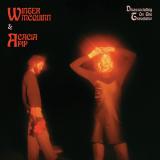
Long-time collaborators Winter McQuinn (Sunfruits, Beefheart & McQuinn, jade imagine) and Acacia Pip (PINCH POINTS, Slush) return with Disassociating On The Travelator, the beautifully understated second EP from one of Melbourne/Naarm's most compelling songwriting partnerships. Released by Australia's Third Eye Stimuli Records, the vinyl edition arrives as a special double EP alongside the duo's 2024 debut EP, Recently I've Been Missing The Colour Green—bringing both releases together on vinyl for the very first time. Recorded at the legendary Bakehouse Studios with acclaimed songwriter and producer Liam "Snowy" Halliwell, the four-track collection expands on the warm indie folk, jangling guitar pop and folk-emo leanings of the duo's acclaimed 2024 debut, Recently I've Been Missing The Colour Green. Recorded live, the EP captures the pair's instinctive chemistry while embracing a richer, more spacious studio sound. Across four intimate songs, McQuinn and Pip reflect on the quiet complexities of contemporary life—trying to make sense of changing relationships, the passing of time, self-doubt and finding happiness in everyday moments. Built around shimmering guitars, warm acoustic textures and effortlessly melodic songwriting, Disassociating On The Travelator recalls artists such as Andy Shauf, Courtney Barnett, Elliott Smith, Kurt Vile and Bonny Doon, while retaining a voice that feels entirely their own. Featuring the lead single "Exactly The Same", a bittersweet Melbourne winter anthem about embracing the path that has brought you to where you are today, the EP further cements the duo's gift for pairing emotionally resonant lyrics with quietly irresistible melodies. It's a thoughtful, timeless collection that rewards repeated listening, revealing new emotional depth with every spin.
Long-time collaborators Winter McQuinn (Sunfruits, Beefheart & McQuinn, jade imagine) and Acacia Pip (PINCH POINTS, Slush) return with Disassociating On The Travelator, the beautifully understated second EP from one of Melbourne/Naarm's most compelling songwriting partnerships. Released by Australia's Third Eye Stimuli Records, the vinyl edition arrives as a special double EP alongside the duo's 2024 debut EP, Recently I've Been Missing The Colour Green—bringing both releases together on vinyl for the very first time. Recorded at the legendary Bakehouse Studios with acclaimed songwriter and producer Liam "Snowy" Halliwell, the four-track collection expands on the warm indie folk, jangling guitar pop and folk-emo leanings of the duo's acclaimed 2024 debut, Recently I've Been Missing The Colour Green. Recorded live, the EP captures the pair's instinctive chemistry while embracing a richer, more spacious studio sound. Across four intimate songs, McQuinn and Pip reflect on the quiet complexities of contemporary life—trying to make sense of changing relationships, the passing of time, self-doubt and finding happiness in everyday moments. Built around shimmering guitars, warm acoustic textures and effortlessly melodic songwriting, Disassociating On The Travelator recalls artists such as Andy Shauf, Courtney Barnett, Elliott Smith, Kurt Vile and Bonny Doon, while retaining a voice that feels entirely their own. Featuring the lead single "Exactly The Same", a bittersweet Melbourne winter anthem about embracing the path that has brought you to where you are today, the EP further cements the duo's gift for pairing emotionally resonant lyrics with quietly irresistible melodies. It's a thoughtful, timeless collection that rewards repeated listening, revealing new emotional depth with every spin.
Back from ‘96 — Abacus’ legendary The Abacus EP returns, now reissued as Erotic Illusions. Deep, soulful and hypnotic house at its finest, straight from the Guidance era. Pure timeless heat — grab it before it vanishes again.
DJ Feedbacks :
Laurent Garnier : Classic <3 <3
Nick Hoppner : OOOOOH YES
Dan Beaumont (Chapter 10 / NTS) : Decadent dub for me! lovely
Louise Chen (NTS) : Huge fan, this is a wonderfully sexy reissue!
Joel Martin (Quiet Village) : Timeless Classic from one of the masters - Essential!
Kölsch (IPSO / Kompakt) : Still sounds so fresh
Sven von Thuelen (SVT / Work Them) : Sublime!
Josh Wink (Ovum) : Sounds just as great as when it first came out!
Satoshi Tomiie (Abstract Architecture) : Soooo good! Every details tuned precisely
Carista : sickkkk
Crackazat (Freerange / Local Talk) : yes. of course
Anthony Collins (Frank & Tony / Scissor & Thread) : fantastic record
Hunee (Rush Hour) : classic!
Call Super (Houndstooth) : lovely thxxx
Erol Alkan (Phantasy Sound) : Downloading Thanks!
Radio Slave (Rekids) : Such a big fan !!! Full support and congrats on the re-release. Peeps need to know about "Abacus".
Ben Sims : Now downloading... will check asap!
nd_baumecker (Ostgut Ton) : YAAAAAS! Finally I have this in a better quality than my vinyl rip from the original 12". Vinyl is preordered. Thanks!
Jonnie Wilkes (Optimo) : SEMINAL.
Lawrence (Dial) : OMG Fave Classic!
Fouk (House of Disco / Razor N Tape / Room With A View / Heist) : Ooooh yes! <3
Hector Romero (Def Mix) : Love it. H
Aleqs Notal : Lovely repress
Alinka (Twirl / Classic / Crosstown Rebels / Batty Bass) : Beautiful tracks
Terry Farley : fantastic reissue for those that missed the golden era
Ian Pooley (Pooledmusic) : Sooooooooo good !
Marcia Carr : The Dub without a lot less of the sleazy vocal is cool.
Nick Holder : FIRE
DJ Bone (FURTHER) : Poetic Illusions and Decadent Dub both work for me.
Nat Wendell (Depth of My Soul / Courtesy of Balance / Love & Loops) : classy!!
Luke Solomon (Classic / Freaks / Music For Freaks) : absolute classic Kenny Hawkes special xxx
ROD / Benny Rodrigues : !!!!
Domenic Cappello (Subclub) : still sounds fresh
Alexkid (Rawax / FUSE / NG Trax) : Total Dopeness
Jimpster (Freerange) : An absolute classic from the golden era! Got the vinyl but I'm sure these new masters will sound better than my well worn vinyl rip! Will keep on banging this beauty.
Bake (All Caps / Rinse FM) : the best! thank you for reissuing :)
Dj Deep (Deeply Rooted) : Nice to see this beautiful release available again
Kai Alce (Real Soon) : CLASSIK!!
Mr. V (Sole Channel / Strictly Rhythm / Salter / Defected) : Solid work on this classic Thanks
Baby Rollen (Holding Hands / Slump / Futureboogie) : timeless
DJ Gregory (Point G / Faya Combo) : Alwayes loved that classic
Tom Esselle (YAM / Rhythm Section / WOLF Music) : Killer reissue!
Harri (Sub Club) : nice, will play and support
Hifi Sean (Defected / Plastique) : Diggin' this dub big time
Jenifa Mayanja (Bumako Recordings) : This reissue sounds just as good second time around. Straight dance floor magic. Moody and dubby perfect to zone out to in a dark corner somewhere.
Demuja (MUJA / Let's Play House / Madhouse / Freerange) : nice!!
Marcel Dettmann : thx
Kosh (Syncrophone) : doesnt get any better than this
Dj Hutch (Ambers / Rinse FM) : Lovely deep business! Thank you!
Geir Aspenes (G-Ha / Sunkissed) : Kool, thanks
D'Julz (Bass Culture) : classic alert!
Superfan is the songwriting veil of Kali Priya Flanagan, the Brooklyn-based multi-instrumentalist and producer. While initially imagined as a solo act, ambitious string arrangements crafted in collaboration with cellist Omeed Almassi have come to define Superfan’s noisy and magnetic pop soundscape.
Today, Superfan announces their forthcoming album ‘My Piledriver Heart’ (MPDH), out October 16 via new label home AD 93 (Joanne Robertson, Dagmar Zuniga, YHWH Nailgun). Along with the announcement, Superfan presents his new single “In the Gold Room” paired with the live version filmed by Garrett Winston inside Agger Fish Building in the Brooklyn Navy Yard.
MPDH marks the first release outside of the record deal Flanagan signed at age 14. The album finds Flanagan embracing a more expansive, experimental vision of indie rock - melding deeply tuned acoustic guitar, cello, and Eastern musical influences into what he calls his “Acousticello” sound. Recorded largely live with cellist Omeed Almassi and producer Hudson Pollock, the record explores heartbreak, independence, and hopeful melancholia. Kali says “This time around it was about being (myself) versus becoming myself. This album was made to acknowledge the ebbs and flows in chugging along with life and love, from a place of comfort within the self that opens you up to the beauty in everyday life.” He does so through intimate performances that blur the line between folk, chamber music, pop-rock ballads, and alternative rock. Last year, he released the singles “Apeiron (Fantasy Football)” and “Miss W Jones” and earlier this year he released “Picture of Return.”
Following his acclaimed debut Tow Truck Jesus, Flanagan opened for The Strokes at Red Rocks, and has quietly become a fixture of New York’s DIY scene, performing alongside artists like Horsegirl, Knifeplay, and Quiet Light, while also playing support shows with King Woman and Victoryland this summer. He is also in the rising emo band Holidays in United States.
Before Superfan, Flanagan found success during the pandemic under his first moniker, “KALI.” His initial releases garnered millions of streams and led to collaborations with seasoned high-profile producers and industry teams. Despite his budding career as an indie-pop star, Flanagan was dissatisfied with the conditions of his artistic output and community as he reached adulthood. His coming-of-age years in Los Angeles were marked by an ever-present new-wave pop music oblivion: “hits” made in 5-hour sessions with strangers, a social life suffocated by others’ aspirations for fame, and an absent audience for live music that pushed past the prescriptions of recorded music. On MPDH, Kali says “I can’t help my urge to write these pop-rock ballads, but we really wanted to push the boundary of genre and expressing the sentiments of the songs through experimentation.”
Verdad Y Error (2026) resides in the tension between the thrashing of external noise and beating centred internal calm. Gibrana Cervantes is known for her work across experimental music and contemporary performance, a practice with focussed intensity and surging physicality, often pushing the limits of endurance, presence, and embodiment. A central axis of her performance practice is her ongoing collaboration with acclaimed choreographer Florentina Holzinger, including composing the music for SEA WORLD (2026), Florentina Holzinger’s critically acclaimed installation for the Austrian Pavilion at the Venice Biennale. Alongside this, she is a core member of the experimental ensemble Amor Muere (Mabe Fratti, Concepción Huerta, and Camille Mandoki). Cervantes maintains an active recording practice that directly informs her live output including her collaboration Memoria (2025), with Colombian Drone Mafia (Nyksan) for Ambie-Tón (Tratratrax),
Verdad y Error is a record of her artistic approach which expands her body and the violin’s horizon of possibility to near breaking point. Cervantes uses a register closely associated with Metal, yet buried deep in the alchemy of these pieces are motifs which hark back to her classical background. Across these pieces the violin is used as an instrument with a fragmented and shifting voice — blurred, repeated, and reshaped through distortion. “Many of these pieces come from images, memories, and sensations that have stayed with me for years. I'm interested in the blurring of what actually happened and what time transforms.” The recordings are built with layers of violin tones which oscillate between recognisable, processed, stretched and shifted, and lay embedded in a frequency stratum of volatile static and noise. “The violin on this album doesn't appear as a clean instrument. I process it, repeat it, distort it, and multiply it until it begins to feel more like memory than melody. Something blurry, shifting, difficult to grasp.” The origins of the album were born at a time when Cervantes was seeking inner calm amidst a relentless external noise, questioning the validity or possibility of memory and its radically changing perception in relation to experience. Subsequent reflection on this contemplative moment allowed her to develop a relational music which moves through memory, erosion, repetition, and emotional ambiguity. Creating a space that feels both intimate and unstable, mercurial with the patina of lived imperfection.
Akin to the unreliable narrator and linguistic instability, each piece functions as an emotional landscape suspended between clarity and confusion. An album which balances melody, brutality, fragility and noise
throughout its sprawling recordings and artwork, which operates as an analogue to the music. The visual world of the album developed in collaboration with Mauro Ventura was compiled across various media with a mix of handwritten texts, burned typography, metallic textures, and fragile physical materials. “I wanted the record to feel tactile and imperfect — something emotionally direct but physically worn.” says Cervantes. More than offering explanations, verdad y error exists as a conversation between memory and disappearance, noise and stillness, truth and error.
The track titles on Post Dub Cities – the new album by Adriano Zanni, photographer, sound artist, and field recordist – evoke the aftermath, that moment when a place continues to exist and live on, but no longer serves anyone. The human element has vanished, whether it happened overnight or through a slow abandonment that lasted for years. The perspective shifts: buildings, homes and palaces reveal a dimension of reality all their own, in which even the ruins give shape to this landscape that endures, transforming into pure presence.
This, after all, is our fate. The fate of us human beings, of our civilisation, of every civilisation: to pass away, to be forgotten, to erect monuments whose significance no one will remember once we are gone.
The opening track Crisopoli transforms the sonic dimension of a city into an echo chamber: a dark, urban dub built from delays and resonances, holding the imprint of what is no longer there — like a bassline that keeps vibrating even after its source has gone silent. What we see is not the presence, but its reverb.
Available from September 11, second excerpt Warosha gives us a minimalist, enveloping, solemn beat, like the symbols on a map that no one can read anymore. Warosha was the district of luxury hotels overlooking the sea in the city of Famagusta. After the island of Cyprus was invaded by the Turkish army, the entire area, emptied of its inhabitants, who had fled south, was fenced off and surrounded by barbed wire. No one has been allowed to enter it since 1974. Now, on these unspoilt beaches, sea turtles have found the perfect place to breed.
Fordlândia, on the other hand, is the symbol of Henry Ford’s failed dream of conquest. An industrial settlement built deep within the Amazon rainforest, several hours’ boat journey from the nearest towns, to gain access to natural rubber for the tyres of his mass-produced cars in Michigan. An extremely costly project, it quickly became a ruinous pipe dream: a town that has been uninhabited for almost a century and has since been reclaimed by nature.
For a long time now, Adriano Zanni has been exploring, through music and photography, the landscape that unfolds before our eyes, as attentive yet silent observers. As if we were absent, a civilisation that has long since vanished: human presence has dissolved, preparing to fade into oblivion. The precise depiction of places through field recordings, and the black-and-white imagery, give rise to apparitions, hallucinations, and memories. The less present we are, the more we seek meaning. We resist abandonment and the indifference of time.
In the ten tracks (plus three bonus tracks) of Post Dub Cities the echoes and reverberations of dub grant us access to an unknown future, as yet untold – in which we are nothing more than a vague memory. The deep sound guides us through a landscape that is familiar yet unknown, unrecognisable. The cold, distant, industrial rhythm resonates within us as if we were the last, all too aware, inhabitant of a now-deserted village.
Every place – be it an abandoned mining settlement on an island in Svalbard, or a ghost town in Pennsylvania evacuated following an underground fire that has been burning for sixty years at a depth of one hundred metres – leaves questions unanswered, shrouds itself in mystery, and makes us wonder, ceaselessly: what happened here?
In the end, we realise that we don’t really care that much about knowing the details of the disappearance. We can guess them, we’ve seen it happen a thousand times before. Just like in the photos accompanying the album, portraits of ghostly, deserted cities: Belgrade, like Venice, Dublin, Sarajevo, Lisbon, Kraków, Sofia, Naples, Hanoi, Lampedusa, Tehran. Unexpectedly, pleasantly emptied of people, and of their obsessions, struggles, illusions.
Then, suddenly, the crowd returns. Busy, feverish, hardworking. The record ends, the spell is broken. We feel a sense of longing for a future that has not yet come to pass, for a place we were only able to observe because we were not there.
The premise of this compilation is simple: music we’d like to hear at the airport.
The idea came after learning that Honolulu’s international airport has been playing AI-generated music over its speakers since November 2025. First reported by Civil Beat, the news has caused frustration and disappointment among residents and visitors, as well as within the local music community.
Everyone knows Hawaii is one of the most musically rich regions in the world — why then is the airport using AI music? 'Music For The Airport' is our response.
Located in the middle of the Pacific at the outskirts of one the most remote cities on the planet, Honolulu’s Daniel K. Inouye International Airport (HNL) is for most people the first place they encounter when they arrive in Hawaii. Warm sun, tropical tradewinds, playful palm trees and majestic mountains welcome every traveler, as do the sounds of birds, familiar music from Hawaiian artists like Aunty Genoa Keawe and Israel Kamakawiwo’ole, and—at least for now—seventeen “island-themed” AI-generated songs.
In late 1977, while sitting in Germany’s Cologne Bonn Airport on a Sunday morning, Brian Eno noticed how terribly uncomfortable he felt hearing the airport’s “muzak” overhead. For a harried, hurried place like the airport where travelers scramble to their gates, stand in long border control lines, and wait impatiently for their luggage at the carousels, music can create more anxiety than calm. Asking himself, "What should we be hearing here?", Eno soon created ‘Ambient 1: Music For Airports’, a sonic remedy aimed at reducing nervousness in public spaces.
When we heard the news that HNL airport is playing AI-generated “muzak”, we were immediately reminded of Eno’s genre-defying 1978 album. And we were similarly inspired to react. But how? Recreating an ambient masterpiece wasn’t in our wheelhouse. We started digging through our catalog of licensed music which we haven’t yet re-released. We quickly realized this was our chance to highlight some of favorite songs from the so-called CD era: the 1990s and 2000s (with a few exceptions). In less than 20 minutes, we pulled 17 original songs recorded by local artists between 1984 and 2017.
The speed at which this project came together surprised us; reactionary gut instinct often produces swift and lasting results. Ironically, our new compilation likely took less time than it did for the state Department of Transportation to commission its AI songs in question. But even though ‘Music for the Airport’ came together in less than one week, the truth is that this collection of 17 songs is the result of years of hard work, trust, sacrifice, patience, and understanding. Building relationships with and licensing music from artists doesn’t happen overnight, but more importantly: these songs are the result of people pouring their hearts and souls into something they believe in. This music wouldn’t exist today without the artists and their loved ones who supported them along the way.
As of this writing, the DOT states its intention in creating AI-generated songs is to “highlight different aspects of the islands, aviation and the airport” and that “no state funds were used to produce them”. Okay, but at what cost? Technology disrupting the music industry isn’t news to anyone. AI music in public spaces are cost-saving measures, since its users (airports, for example) don’t have to pay the licensing fees typically required, which can be a worthwhile source of revenue for artists. But what happens when a place like HNL airport, which hosts more than 21 million passengers annually, uses music created by machines instead of people to represent Hawaii? The identity of a place beings to erode, diluted by a language learning model’s conceptual summary of what a people and its culture sounds like. To echo Brian Eno: what should we be hearing here? In other words: what should the music of Hawaii sound like?
We believe in the power of music, especially when it comes from the soul. We believe in supporting artists, especially as AI disrupts our lives. We believe that Hawaii must be represented authentically, especially when it comes to song. And of course we believe in vinyl, especially since it was a record from 1978 (Mackey Feary Band’s debut LP) that inspired Aloha Got Soul’s origins in 2010.
We hope you find as much joy in this compilation as we have. Perhaps it’ll soundtrack your next journey to Hawaii. At the very least, we hope some people take a moment to hear these sounds: in your headphones for now‚ maybe someday overhead at the airport in Honolulu.
Singer-songwriter Willis Alan Ramsey was 20 years old when he became the third signing to Leon Russell and Denny Cordell's Shelter Records – after Russell himself and the legendary J.J. Cale. The result was Ramsey's 1972 eponymous debut, a masterpiece of laid-back Texas country-rock, blues-inflected folk and outlaw ballads.
As a child, Ramsey was an obsessive radio listener – from Elvis and the Beatles to Delta blues, country and even classical music. By middle school, he had formed his first garage band and started writing songs. After a brief stint at the University of Texas, he took to the burgeoning coffeehouse circuit where he toured alongside folks like Townes Van Zandt, Jerry Jeff Walker and Keith Sykes. It was during these shows that Ramsey developed much of the material for his LP, a diverse yet coherent mix that revealed his varied influences.
Recorded in Memphis, Nashville and at Russell's home studio in the Hollywood Hills, the album features some of the era's greatest session musicians: Eddie Hinton on guitar, Red Rhodes on pedal steel and the rhythm section of Leland Sklar and Jim Keltner. A true songwriter's songwriter album, its tunes have been covered by Waylon Jennings ("Satin Sheets"), Jimmy Buffett ("The Ballad of Spider John") and, most famously, Captain & Tennille ("Muskrat Love"), but no cover can beat the originals from the wise-beyond-his-years Ramsey.
Though Willis Alan Ramsey has continued to perform regularly and write new songs, a second album is yet to be released. For years, whenever someone asked about it, Ramsey was known to answer "What's wrong with the first one?" The answer is, of course, absolutely nothing. In fact, it's perfect.
This first-time vinyl reissue reproduces the original lyric sheet. Includes new interview with Ramsey and liner notes by author Richie Unterberger.
Fontaines D.C. announce their fifth studio album, Dopamine Chamber, released on 16th October via XL Recordings. Produced by James Ford, it is the follow-up to 2024’s UK platinum-certified Romance – and the sound of a band moving decisively away from the guitar language of their early records into something colder, stranger and more synthetic. It arrives today alongside lead single “Marianne” and its accompanying video, directed by Dave Meyers.
Dopamine Chamber arrives like a constellation behind undulating sighs of smog: potent balladry, anthemic melodies glinting through the murk. In a world tipping towards collapse, it asks how pleasure mutates amid peril—and what our pursuit of it reveals about us. Across the album, Fontaines D.C. – Grian Chatten, Carlos O’Connell, Conor Curley, Conor Deegan and Tom Coll – move between gratification and dread until the two meld together, reflecting the overwhelm of artificial intelligence, environmental collapse and political violence all riding the same algorithms as memes, jokes and celebrity culture. “The album itself is a dopamine chamber,” says Chatten. “You step inside and we test these different mind- or mood-altering pieces of music on you.”
Where Romance held its tension in balance, this record tips it. “I think Romance was maybe 60 per cent human and 40 per cent corrupted by automation, and a loss of feeling,” says Chatten, who spent time among the faded grandeur of Venice, Vienna and Sicily in search of lyrical inspiration. “This one feels more like 60 per cent corrupted — the mask is wearing the face a little more.” He resisted any pull towards easy optimism: “I felt it would be more powerful to leave the hope out and reflect the ugliness honestly. This one needed to feel more like a catastrophic warning.”
“Our albums have always questioned a sense of place,” says bassist Conor Deegan. “First Dublin, then being away from Dublin, and then trying to find the romance elsewhere. On this record, the question became: where do you escape to?” Into the self, perhaps – or hedonism, fantasy, cosmetic perfection, eternal youth or the endless refresh of a screen.
Fontaines D.C. have spent five albums refusing to repeat themselves – from Dogrel (2019) through A Hero’s Death (2020), the No. 1 Skinty Fia (2022) and the anarchic, kaleidoscopic Romance (2024). Dopamine Chamber is their most radical turn yet: cold synthesiser tones, marching drums, samples and triggers, several songs with no guitars at all, and the swooning strings of 1960s Italian pop pulled into something synthetic. For guitarist Conor Curley, the aim was to break from the band’s own reference points: “I was trying to find stuff that pointed into the future.” It was made with James Ford between London, the English countryside and Palermo, where Chatten recorded vocals in a makeshift booth built from mattresses and cushions.
“There’s a poignant sense of us being on the brink of some other kind of form of humanity, or non-humanity,” says Chatten. For their fifth album, Fontaines D.C. have built the chamber. What happens to the listener inside it will be the experiment.
Fontaines D.C. announce their fifth studio album, Dopamine Chamber, released on 16th October via XL Recordings. Produced by James Ford, it is the follow-up to 2024’s UK platinum-certified Romance – and the sound of a band moving decisively away from the guitar language of their early records into something colder, stranger and more synthetic. It arrives today alongside lead single “Marianne” and its accompanying video, directed by Dave Meyers.
Dopamine Chamber arrives like a constellation behind undulating sighs of smog: potent balladry, anthemic melodies glinting through the murk. In a world tipping towards collapse, it asks how pleasure mutates amid peril—and what our pursuit of it reveals about us. Across the album, Fontaines D.C. – Grian Chatten, Carlos O’Connell, Conor Curley, Conor Deegan and Tom Coll – move between gratification and dread until the two meld together, reflecting the overwhelm of artificial intelligence, environmental collapse and political violence all riding the same algorithms as memes, jokes and celebrity culture. “The album itself is a dopamine chamber,” says Chatten. “You step inside and we test these different mind- or mood-altering pieces of music on you.”
Where Romance held its tension in balance, this record tips it. “I think Romance was maybe 60 per cent human and 40 per cent corrupted by automation, and a loss of feeling,” says Chatten, who spent time among the faded grandeur of Venice, Vienna and Sicily in search of lyrical inspiration. “This one feels more like 60 per cent corrupted — the mask is wearing the face a little more.” He resisted any pull towards easy optimism: “I felt it would be more powerful to leave the hope out and reflect the ugliness honestly. This one needed to feel more like a catastrophic warning.”
“Our albums have always questioned a sense of place,” says bassist Conor Deegan. “First Dublin, then being away from Dublin, and then trying to find the romance elsewhere. On this record, the question became: where do you escape to?” Into the self, perhaps – or hedonism, fantasy, cosmetic perfection, eternal youth or the endless refresh of a screen.
Fontaines D.C. have spent five albums refusing to repeat themselves – from Dogrel (2019) through A Hero’s Death (2020), the No. 1 Skinty Fia (2022) and the anarchic, kaleidoscopic Romance (2024). Dopamine Chamber is their most radical turn yet: cold synthesiser tones, marching drums, samples and triggers, several songs with no guitars at all, and the swooning strings of 1960s Italian pop pulled into something synthetic. For guitarist Conor Curley, the aim was to break from the band’s own reference points: “I was trying to find stuff that pointed into the future.” It was made with James Ford between London, the English countryside and Palermo, where Chatten recorded vocals in a makeshift booth built from mattresses and cushions.
“There’s a poignant sense of us being on the brink of some other kind of form of humanity, or non-humanity,” says Chatten. For their fifth album, Fontaines D.C. have built the chamber. What happens to the listener inside it will be the experiment.
Overleaf is the new album by Paris-based musician Théo Martin, following Anti Atlas, released on LAAPS two years ago.
Overleaf was recorded over the course of a few intense months in 2026. Every recording made during this period eventually found its place within the album, transformed, fragmented and reassembled, sometimes far removed from its original form. The process gradually became a kind of puzzle, built from accumulated sounds, accidents and imperfections.
Tape remains at the heart of the album, but this time it is intertwined with a more extensive use of digital tools, opening new paths for transformation and layering.
Overleaf is about carrying what remains into what is yet to come.
Richly progressive folk-informed heavy post-rock and a sick burn to boot. - The Obelisk Rebecca Vernon (SubRosa), the driving creative force behind THE KEENING returns with her second album, Devotion. The new album sees Vernon and company releasing one of the year's most evocative albums; a truly compelling mix of slow burning, ethereal post-rock, folk, goth, and soaring doom. For Vernon, the writing process for Devotion took place in two starkly different environments. It ranged from the contemplative solitude of a friend’s cabin in a deserted Idaho ski resort, to the hectic reality of a 55+ senior living community in Spokane, Washington, where she was staying with her father. This shift resulted in an explosive album with a subtle duality that resonates throughout its most poignant moments. Take the lead single, "A Little Bit of Blood," for example. Quiet, acoustic guitar strums give way for Vernon's haunting vocals, before the backing instrumentation explodes into a soaring chorus reminding the listener that sometimes the best paths taken are the most difficult. "You drew a little bit of blood to show me Just a little bit of blood to make me see It took a little bit of blood to wake me Just a little wound in the night to free me" In a 2024 interview with Decibel Magazine, Vernon discussed the drastic shift in heavy music's themes in recent years, highlighting a willingness to convey raw emotion: "Metal is beginning to share more vulnerable things, more confessional things. Metal has almost become a safe place to talk about those things. People are being open with their struggles. Twenty years ago, they wouldn't have." Devotion lays these emotional confessions bare and showcases a truly bright burn. Devotion was recorded in April 2022, again at Hallowed Halls in Portland, with Billy Anderson and Nathan Carson featured in their same roles as heard on Little Bird. Once again, Vernon showcases her writing prowess, having a heavy hand on all the instrumentation for Devotion; Vernon played drums, guitar, piano, organ, and hammered dulcimer, and provided most of the vocals on both albums, with a few guest vocalists added to the mix.
Tropical Fu*k Storm revisit the live album concept on ‘Inflatable Graveyard Vol. 2’, their second live album and the follow-up to the critically acclaimed ‘Fairyland Codex’. Recorded over three nights during a sold-out residency at New York venue TV Eye, the album finds the band at the height of their incendiary powers, turning already combustible songs into something even more ferocious and unpredictable.
Fine-tuned and road-tested through heavy touring, songs from ‘Fairyland Codex’ are stretched into new forms. Ballad “Stepping on a Rake” takes on heavier undertones, “Irukandji Syndrome” becomes a launchpad for a guitar solo worthy of the Velvets’ “I Heard Her Call My Name” and “Moscovium” sounds more urgent than ever.
The band also revisit back catalogue favourites including “Who’s My Eugene” and “You Let My Tyres Down”, alongside a cover of Australian punk heroes The Saints’ “This Perfect Day”.
Tropical Fu*k Storm have built a catalogue worth obsessing over, but their live show is where the band’s brilliance really breaks open, and ‘Inflatable Graveyard Vol. 2’ catches that chaos in the act.
Key Quotes:
“Tropical Fuck Storm are masters of tension and release.” The Guardian.
“If anyone's qualified to make music about all-encompassing terror, it ought to be Tropical Fuck Storm.” Pitchfork.
“Thrilling noise-rock pranksters” Uncut.
“End times chaos… A gloriously imperfect storm” MOJO.
“A galvanising opus of incredible political bite” The Line Of Best Fit.
“One of the most rewarding listens in rock music” Consequence Of Sound.
And they can't. Tiny things are important - This house could be anywhere, These things could happen to anyone." With this reflection, Charlie Parr introduces the characters of Rooming House, a conceptual folk opera that chronicles the lives of Upper Midwesterners through his quietly raucous, deeply rooted, and empathetic blues. These are songs of lost memories and hardship, but also of the improvised acts of kindness that help neighbors make do. Joined by celebrated drummer and fellow Minnesotan Dave King (The Bad Plus, Happy Apple), Parr cements his role as one of the great troubadours of our time with an album that becomes its own small yet profound offering of care. * "A gritty blend of Delta blues and Depression- era roots music soaked in his hardscrabble voice. It's a sacred realm of folk wisdom and sorrowful vulnerability." - Rolling Stone * "Expertly-picked resonator guitar and lyrics that puncture the soul" - NPR * "Arguably America's finest living troubadour." - Songlines (UK) * Compelling character-driven portraits on a folk opera concept album that chronicles the lives of Upper Midwesterners through his quietly raucous, deeply rooted, and empathetic blues. Driving, groove- driven resonator guitar pulls you in. Working through the material realities of our contemporary moment but also weaving that narrative with his hypnotic sound reveals the near-mythic scale importance of these stories
Tropical Fu*k Storm revisit the live album concept on ‘Inflatable Graveyard Vol. 2’, their second live album and the follow-up to the critically acclaimed ‘Fairyland Codex’. Recorded over three nights during a sold-out residency at New York venue TV Eye, the album finds the band at the height of their incendiary powers, turning already combustible songs into something even more ferocious and unpredictable.
Fine-tuned and road-tested through heavy touring, songs from ‘Fairyland Codex’ are stretched into new forms. Ballad “Stepping on a Rake” takes on heavier undertones, “Irukandji Syndrome” becomes a launchpad for a guitar solo worthy of the Velvets’ “I Heard Her Call My Name” and “Moscovium” sounds more urgent than ever.
The band also revisit back catalogue favourites including “Who’s My Eugene” and “You Let My Tyres Down”, alongside a cover of Australian punk heroes The Saints’ “This Perfect Day”.
Tropical Fu*k Storm have built a catalogue worth obsessing over, but their live show is where the band’s brilliance really breaks open, and ‘Inflatable Graveyard Vol. 2’ catches that chaos in the act.
Key Quotes:
“Tropical Fuck Storm are masters of tension and release.” The Guardian.
“If anyone's qualified to make music about all-encompassing terror, it ought to be Tropical Fuck Storm.” Pitchfork.
“Thrilling noise-rock pranksters” Uncut.
“End times chaos… A gloriously imperfect storm” MOJO.
“A galvanising opus of incredible political bite” The Line Of Best Fit.
“One of the most rewarding listens in rock music” Consequence Of Sound.
The sun sat high above the desert outside Joshua Tree on October 17, 2024, baking the rocks and shrubbery outside the Farrington Observatory as a small group of invited guests ventured up a steep path towards the telescope. Kyle Simon, the artist and printmaker who founded the Observatory, was standing outside the print studio sat below the towering cylindrical building, greeting friends alongside his wife Sarah and lifelong friend Brian Weitz, the musician widely known as Geologist of Animal Collective. Simon and Weitz had spent the previous day testing and retesting a system that would transform the light of the oncoming full moon captured by the gigantic telescope into a signal that would modulate the control voltage of Weitz’s modular synthesizer. As the sun dipped below the horizon line, the audience gathered on a small wooden patio surrounded by speakers while Weitz readied himself behind the array of patches and knobs. Simon addressed the group, presenting the history of The Sirens, the sonic exploration of the night sky’s mystical and scientific significance about to unfold.
The music conjured under the Hunter’s Moon that night is now documented on this first official release of The Sirens, which was conceived by Simon and Weitz as a recurring performance piece and sound installation. Over a decade ago, Simon began immersing himself in literature on humanity’s sonic relationship to the celestial realm, including Homer’s Odyssey, Plato’s “Spindle of Necessity, ” Kepler’s Harmonices Mundi, and the field of astroseismology. He fitted homemade telescopes with photodiodes and optical sensors to make the images audible, finding latent patterns in the noisy sonic signals he began receiving from the stars. With Weitz, the process expanded as the signal was routed through an analog amplifier and set to modulate the pitch, filter, and other elements of his synthesizer. Together they developed a system of improvisation, with Simon adjusting the telescope to change the intensity of the light based on its relationship with the moon’s position (imagine a theremin player moving their hands in subtle, meaningful motion), and Weitz responding to that input in real time: bending it, amplifying it, or letting it stand on its own. The duo debuted the piece at the Integretron in Joshua Tree in 2018, providing a crucial proof of concept for the performance at Farrington featured here.
The first thing the listener hears on The Sirens is the opening of Farrington Observatory, the cranking of motor and metal. As the lens of the telescope is exposed to the evening air, a wavering drone emerges from the synthesizer, flickering at the margins, the tuning of the oscillators adjusting to the rapidly cooling desert air. The piece progresses and the drone becomes a luminous, spherical constant, bathing the listener in pure tone as Weitz draws out harmonically ambiguous melodies that spiral upwards. Electronics crackle and convulse, coalescing into dense dissonance before widening out into an open octave. Just as the moon orbits the Earth and the stars shift as the planet rotates, so each sonic element appears in flux, interrelationships slowly forming and falling away. Divided into two parts, The Sirens flows as a continuous conversation between the artists and the starlight completing its thousand-year journey across the galaxy.
The Sirens belongs primarily to a lineage beyond music: of sea captains navigating by looking skyward, of astrophysicists studying the formation of the Milky Way, of the modern myths of werewolves, of the stories embedded in constellations. As Simon writes in the album’s extensive liner notes, “These stories and explorations reveal a collective yearning to become conscious of our connection to the universe, our deep-seated desire to understand how we fit into it all.” This music underscores the history of the night sky as the place where poetry and science find common ground, where exploration hinges on the imagination. Driven by curiosity and ingenuity, Weitz and Simon look up and wonder.
4/5 REVIEW IN MOJO: “HEARTBEAT TONES DISSOLVE INTO BEAUTEOUS SHIMMER AND STELLAR SYNTH MEDITATIONS GIVE WAY TO CAREFULLY ORCHESTRATED ELECTRONICA.”
4/5 REVIEW IN UNCUT: “IT'S MASTERFUL, THOUGH IT WILL LEAVE YOU FEELING LIKE A SPECK OF GRAVEL IN A SELF-DESTRUCTING WORLD.”
NME - 8/10 review (w/c 14 October) "He’s mastered this stylistic skittishness and you’ll do well to find much dispute about his talent."
NARC - 5/5 review (October issue) "An immersive soundtrack to your own personal psychodrama."
WIRE - ONE PAGE REVIEW (October issue) "The sentiments it stirs to life are shadowed and ambiguous, simultaneously personal and impersonal. It is also fantastically immersive, dragging the listener into its turbulent undertows, then washing them back on dry land, intact but changed.’’
Virgins was recorded during three periods in 2012, mostly in Reykjavik, Montreal and Seattle, using ensembles in live performance.
While this album remains committed to a painterly form of musical abstraction, it is also a record of restrained composition recorded live primarily in intimate studio rooms. This record employs woodwinds, piano and synthesizers towards an effort at doing what digital music does not do naturally—making music that is out of time, out of tune and out of phase.
Some pieces go off the rails before forming into anything, others eschew crescendo
compositional structures or bombastic density while going sideways instead. It points to the ongoing development of Hecker's work. It suggests illusory memories of drug- hazed jams or communal music performance that may have never been performed or been heard.
It is an offering of music into the void, a gift of digital filler between distractions. Yet hopefully it also stands as a document of the enduring faith in the narcotic, enigmatic function of music as long-form expression.
Mixed by Valgeir Sigurðsson and Tim Hecker. Additional assistance by Randall Dunn and Ben Frost. Mastered by Mandy Parnell at Black Saloon Studios in London, UK.
Sorry We Play Vinyl makes no bones about their love of wax, and when they serve up music as worthy as this, then who can fault them? It's another anonymous offering with three cuts that traverse a wide world of sound. 'EDIT16' starts with an elephantine swagger and cow bells adoring a deep minimal sound next to woozy, aloof vocal musings. 'EDIT17' has a more ethnic groove that's clean and fresh, and this time the foreign-tongued vocal brings an exotic and eventually hypnotic charge that is sure to make this one a summer anthem with the heads. 'EDIT18' closes down with a psychotic melange of trippy vocals that are layered up in ghostly, spectral waves over a paddy rhythm. Brilliantly unusual.
out of Stock
Last delivered 4 days ago available to reorder, subject to availability
The UK Players & Friends Hills and Valleys, Rivers and Streams (A Tribute to Idren Natural) 9 brand new tracks by The UK Players. Voiced by Singers and Poets who knew Idren Natural personally. Recorded and Mixed by Supa Yout’ at Earth Works Studio, Amsterdam. Sleeve artwork and written testimonials from close friends and associates. Idren Natural aka Ras Natural aka InI Oneness, DJ, Singer, Chanter, Musician, was a pivotal player and pillar of UK/European Roots, Reggae, Dub, Sound System Culture. A humble Rastaman who did so much for so many, inasmuch as inspiring, encouraging, and connecting. He selflessly helped those less fortunate than himself. A strong advocate of the culture and philosophy of Rastafari. He was a commanding presence who lit up the stage, giving JAH all the glory. His passing was a great loss to the community. The UK Players Dub Band formed in 1996. They teamed up with Ras Natural/InI Oneness to record their debut 7” single ‘Further’ for Jah Works with Producer Jah Rej. This single gained exposure via Jah Shaka, Abashanti, and King Shiloh Sound Systems, even the famous Radio 1 DJ ‘John Peel’ played it. More recordings with Jah Rej at Seventh Sense Studio led to the debut album ‘Take Heed’. During the halcyon days of InI Oneness & The UK Players (1997-2004) they toured the UK and Europe, clocking up over 250 gigs in that time. Amongst brethren within the Rastafari community, the band became affectionately known as Ras Naturals band. Friends of Natural like Ras Iyah, Tony Roots, Sister Aisha, Wayne McArthur, and Barry Isaacs (among others) performed with them during this time. Members of InI Oneness & The UK Players never split up, throughout the years they branched out into other projects, reconvening for specials and one offs. Following Idren Naturals passing in 2022, the band stepped up to play his memorial show, where the idea formulated of making a tribute album to him. Ben King offered the use of Earth Works studio to help realise the vision. Work began with longtime live sound engineer Supa Yout’ in March 2024. Jah Rej assisted production on a number of these recordings, and sadly passed during the making of it, the last album he worked on. Various vocalists who were close to Natural, submitted vocals across the following year. The album was mixed and dubbed in March ‘25 at Earth Works by Soupa Yout' & Kingsway. Artwork and written memories/testimonials were then assembled. Everyone involved in the creation of this album knew Idren Natural personally. This album shines a spotlight on his spirit. Carrying songs of tribute, and messages for the times. ALPHA DUB: Every time the band played a gig, Natural would insist on starting with a dub. In that tradition, this album is no different. ‘Mandlion’ passing through the studio, headtopped a Melodica cut on it. Dubbed to the max by Supa Yout! NATURAL VIBE: The ‘Forward Fever’ crew from Belgium were one of the first collectives that Natural affiliated with in Europe. Here, Ras Cloud cleverly weaves all of Naturals song titles into the lyrics, creating a song in itself. WORD & FLESH: Fellowdread was born and raised in Kingston, Jamaica. Now living in Bristol, England, residing with Natural in his last days. His Poetry is rich in inflection, knowledge and wisdom, teachings that spark up the divine. ALL ABOUT LOVE: A pause for contemplation, this one stills the listener. Rootsman Rak’s words warn against complacency, and encourages action. A completely (natural) acoustic track featuring the skilled percussionist Jonah Dan. REMEMBER HIM: Inna Dubplate style, Barry Isaacs toasts to Idren in personal remembrance, reminding us all of the man he was. The track also features snippets of a phone call from Naturals oldest friend ‘Fergie Greenspears’ recounting memories. RISE UP RASTA CHILDREN: The legendary Tony Roots, graces the album with his unique delivery. Natural, The Players, and Tony go back a long way. A song of strength to affirm the soul, and rally against Babylon. Livicated to the one (Natural) SONG FOR THE RIVER MAN: During those halcyon days, many stages were shared with Albaroot, whom the band met whilst on tour in Scotland. Clark Innes (lead singer/songwriter) reminisces about the force of nature that was Natural, times shared, and that knowing, to never meet again. ONE STEP AHEAD: An interpretation of the ‘Look Inside’ riddim by Reuben Addis. Built for Sound System, it is the only track on the album that rolls into a dub. Lyrical Benjie literally entered the studio, rode the riddim without hearing it first, cutting his vocal in one take! A message for the times that sends shivers up your spine. THE PRAYER: Iman Onedub AKA Iman Gebre Iyesus, member of the Ethiopian Orthodox Tewahedo Church, met Idren Natural at Fairfield House in Bath. Here he seals the album with a recital of the Lord's Prayer in English, with Amharic. His rich textural tones elevated with a one away riddim to carry the listener home.