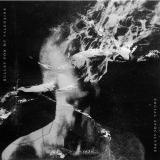
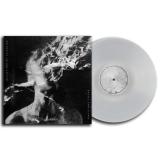
Absence Seizure Is a new Limited Edition vinyl NYC imprint. Brought to you by NYC's own Matuss and Abe Duque.
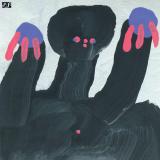
Proper summer grooves on this one, funky and percussive. Musical art combined with one of a kind Rorschach artwork by Anastastia Podolskaya. Deep Techno, Soulful Minimal, Shallow House, Mesmerizing Music,
Absence Seizure!
Absence Seizure Is a new Limited Edition vinyl NYC imprint. Brought to you by DJ Matuss and NYC's own Abe Duque.
Focused on late night dance music. Deep Techno, Soulful Minimal, Shallow House, Mesmerizing Music,
Absence Seizure!
Continuing the label's fast-paced release schedule, Raíz cooperate with social observer Permanent Hearbreak on the label's 4th vinyl release. The collaboration delves deep into human emotion over three movements, developing around the concept of personal absence. Side A1, With Out You, stretches a somber beat over 6 minutes with graceful overtones and powerful rhythm. Permanent Heartbreak speaks the message of With Out You over wet/dry percussion and heartsick chords. The energy and attitude turn up considerably on the flip side. With Me is a quick jaunt through semi-distorted clap and kick combinations of the jacking variety. Evolving analog style synth work builds the song until its climactic end. Wont Change Me takes cues from the darker Detroit / Kalamazoo sounds with Permanent Heartbreak's cold premonitions laid out over a driving sequence.
Serenace, a mysterious duo based in Chicago and Berlin joins the Shaw Cuts squad with 'The Flying Guillotine' - a weapon shaped like a hat with a blade rim and chain attached.
The weapon serves to brutally quash any defiance against the ironfisted Emperor Yung and his regime. The enforcers are twelve specially trained fighters, The Flying Guillotine squadron. 'Sheltered In Absence', its pushing drums and energetic synth elements, chimes to the cruel deeds of the squadron.
The guard Ma Teng flees when he witnesses the brutality unleashed by the men and the lethal weapon. The raging emperor commands his fighters to capture him, but Ma has disappeared into thin air. - Vitrine', a diverse groove combining swinging percussions and warm melodies circles over head, helping Ma to stay undercover.
The slaughter continues as the squadron relentlessly search for Ma. Ma turns back and confronts the army. Equipped with his own deadly weapon, he joins forces with Kreggo and his - 2in1' remix version, wiping out the squadron one by one.
- Spun Coral' sweeps in, drowning out the sound of guillotines gliding through the air until the last member falls. Silence reigns over the battlefield. But the myth of the fatal weapon remains.
All things come from and return to the same source - such is the theory of Monism; an ancient philosophy, but also accounting for the music of Jeroen Search. Dictated by an ethos of exclusively recording live takes and the only ever editing happening while a tune is being created, each finished track is imbued with that unique magic of the moment. Such too is the nature of Monism, Search's first LP in over two decades of electronic explorations and personal as well as artistic growth. As with any of his music that has been released so far, the tracks on here hold a timeless quality, existing within their own frame of reference than - that is their immediate experience. Across a carefully arranged course, the album naturally unravels its many ideas, ranging from moments of pensive ambient pieces to thick washes of dub echo and layers of modulated synths, all while providing an endless array of hypnotizing bare-bone grooves in the process. A true Figure mainstay, Jeroen Search upholds his artistic relevancy without any reinventing or switching up the formula - rather by simply keeping true to his accomplished craft.
out of Stock
Last delivered 5 years ago available to reorder, subject to availability
The latest release on Arma comes from Dutch legend and devoutly deviant underground operator Ruud Lekx, aka Rude 66. With a legacy that reaches back to the early 90s and the rough and ready Dutch electro sound of Bunker Records and The Hague, he's maintained a distinctly non-conformist approach that touches on acid, Italo, techno and more besides, all finished with the punky attitude that sets him and peers like Unit Moebius and I-F apart.
The tracks gathered together on The Witch Trials EP come from throughout Lekx's career. As the artist himself says, 'tracks from wildly different eras and sessions suddenly can combine to form one coherent EP. It's almost like the A-side tracks were waiting for 20 years to be combined with the B-side tracks.'
The overriding theme that binds together these timeless machine excursions is that of medieval witch trials - a global phenomenon that peaked in the 15-1600's. Considering the suspicion, propaganda and mass moral panic involved in this strange curio of distant history, Lekx points to the parallels with the current age, 'of political polarization and fake news accusations flying all over.' The EP title is also a tribute to two records close to his heart: The Fall's Live At The Witch Trials, and the one-off Witch Trials project by members of the Dead Kennedys, Adrian Borland and Christian Lunch.
'Werewolves & Poisoners' and 'The Crusade Against Idolatry' are both archive tracks from the 1994-5 period when Lekx made his first albums for Bunker Records. The first track's charging arps, rugged kicks, nagging acid lines and discordant paranoia all speak to that trailblazing period, while 'The Crusade...' revels in canny programming of interwoven synth lines feeding into an unhinged, psychedelic rampage that reflects the righteous fervour and spiritual confusion of the EP concept.
'The Absence Of Diabolism' opens up the B-side with a different tone, having been produced in 2016 and demonstrating the deeper acid undulations Lekx has become known for in more recent years. Still delivered via the same trusted tools he was using in the 90s, the sound feels like an extension of the Rude 66 vision rather than a separate entity. 'Envious Are All The People, Witches Watch At Every Gate,' a cut from the late 90s, closes the EP out in a spacious, snarling exploration of broken acid electro laden with cinematic sweeps of synthesizer and a constant sense of unresolved tension.
Across these four tracks, Lekx displays the scope of his craft as Rude 66 while also proving that timeless music can make sense in any context, and that the threads of inspiration in an artist's journey can be followed, explored and even resolved 20 years later, when you least expect it
By now, the story of how Jlin went from working in a steel factory in Gary, Indiana to being one of the most widely appreciated electronic musicians is well known. 'Black Origami' was one of the most reviewed and lauded albums last year. Seriously prolific and seriously hard-working, she has toured constantly since its May 2017 release and despite being involved in a wide range of projects, still manages to find a balance and 'do some personal healing and growing.'
Here we are over a year later with 'Autobiography,' the score for her collaboration with renowned British choreographer Wayne McGregor arranged by Unsound. This isn't technically her third album (that's due to arrive in 2019 or 2020), but the soundtrack stands up on its own with all the emotional peaks and troughs of a well-sequenced longplayer.
For Jlin, making music for dance is the fulfillment of one of her lifelong dreams - and remarkably, Company Wayne McGregor's performance was the first show she'd ever seen. She describes the process of working with Wayne: 'We first met face to face in October 2016 in a downtown Chicago hotel, talking for about a solid two hours. Immediately, I saw Wayne was very friendly and energetic. He's brilliant, witty, and knows exactly what he wants; an absolute gem to work with. Before I even started composing for Autobiography, Wayne told me so gently that he trusts me completely with my direction of creating the score. That was the best feeling in the world. I would wake up at two in the morning and work until six in the evening until I completed all the pieces. We were both very happy with the outcome. Creating the score for an impeccable piece of work such as Autobiography changed my life as an artist.'
'Autobiography' is a highlight in an evolving and growing career. During the last year, Jlin has also become an in-demand remixer, securing her place among a roster of music heavyweights. Unsurprisingly, given her positive and outgoing nature, she also developed friendships with the artists she has remixed such as Björk, Max Richter and Ben Frost.
Jlin will be touring with Company Wayne McGregor performing 'Autobiography' this year in addition to completing a commission for the Kronos Quartet titled 'Little Black Book.' She still approaches every performance 'with the same attitude of doing my best to execute a good show, no more, no less. Doing my best is what's most important to me.' She also still lives in Gary, Indiana, which keeps her grounded. She notes with her typical humility, 'The local community is a little more knowledgeable of me now. But I don't mind my community taking its time.'
As The Title Suggests, Joakim Recorded This New Album Last Year At Studio Venezia, The Installation/sculptural Ensemble/recording Studio Created By Xavier Veilhan For The Prestigious 2017 Venice Art Biennale. Built Inside The French Pavilion & Inspired By The Grotto-like Merzbau By Kurt Schwitters, Studio Venezia Had Dozens Of Artists Create And Record There Over The 6 Months Of The Biennale (from Chassol To Brian Eno, From Joakim To Sebastien Tellier), Invited By Xavier Veilhan Himself With The Help Of Co-curator Christian Marclay.
With An Impressive Collection Of Rare Instruments From Medieval Horns To Rare Modular Synths (baschet Crystals And Percussions, A Buchla, A Clavinet...), Studio Venezia Was An Amazing Creative Playground For The Adventurous Musician. Those Instruments Were Captured By A Team Of Sound Engineers In The Best Possible Way Thanks To Nigel Godrich's (beck, Radiohead...) Mobile Studio Loaded With State Of The Art Vintage Recording Gear.
Before Going There In May 2017, Joakim Examined The Instrument List And The Specific Context Of A Studio Open To The Public Within An International Contemporary Art Exhibition To Anticipate His Creative Process. Instead Of Drafting Compositions And Demos Ahead Of The Recording Session, He Decided To Have An in-situ' Approach By Creating A System Involving The Visitors Of The Studio In The Composition Phase. Joakim Asked Random Visitors Of The Pavilion To Pick A Word, A Letter (between A And G), Tap A Tempo And Sometimes Choose The Instruments That He Would Play For Each Piece. The Word Was Translated Into A Chord Using A Transcription Table Joakim Invented. Hence The Song Titles Made Of The Given Word Plus The Name And Origin Of The Contributor. The Music Was Then Mostly Improvised, Based On Those Chords, Scales And Tempi. The Recordings Were Then Taken Back To New York Where Joakim Made Some Light Editing And Mixed The Pieces.
In Terms Of Influences, Joakim Tried To Channel The Spirit Of Proto-ambient German Heroes Cluster, 60s And 70s Modal Jazz, Japanese Evocative Minimalism And Drone Composers' Hypnotic Transcendence.
One Can Hear The Studio Through These Recordings, Which Was The Point, To Use The Studio As An Instrument, Like The Kraut Rock Pioneers Did. You May Hear The Floor Cracking, People Talking Or Coughing, And The Peculiar Quality Of Music Recorded In A Large Space With Its Acoustic Properties, A Rare Occurrence When Everyone Is Now Working From Small Home Studios And Major Large Studios Are Closing Down. This Album Also Marks A Return For Joakim To His Musical Education As A Classically Trained Pianist As You Can Hear Him Improvise On The Piano ( arms', air', dream'), Fender Rhodes ( trust') Or Harpsichord ( absense').
Following The Release Of The Studio Venezia Sessions, Joakim Will Create A Live Performance Based On His Experience In Venice. The Premiere Of This New Solo Performance Is Commissioned By The Villa Medicis In Rome For Their Villa Aperta Festival Early June. More Shows Will Follow.
Killekill catalogue number 025 is a jubilee release:
It's KILLEKILL MEGAHITS II !!
But it's not only a jubilee release. It's also milestone and turning point in the Killekill history, because with this release Killekill closes one chapter, and opens up another.
We are constantly getting too many demos full with good music in way too many different styles to squeeze them onto one label. So finally we have come to the point where we will start a line of new labels with different profiles to give ourselves the opportunity to feature even more daring artists and release whatever we like in the most suitable outfit for it.
So far, there is this compilation, which has been carefully compiled for your pleasure. Label regulars such as Cassegrain & Tin Man, Furfriend, Alex Cortex or Eomac have delivered high quality stuff of all kinds, but we are also introducing a lot of artists who will feature on the coming labels:
Umwelt with his epic and dramatic electro, who will release an album with us later in 2016, Dez Williams with his genre-crossing sound which works on every dance floor plus Power Vacuum's Bintus who delivers his portion of electro/acid madness on Record 1.
Record 2 features the legendary Detroit Grand Pubahs, who present their electro outfit Techmarine Bottom Feeders, The Fool's Stone, which is a new project by Hard Ton, electro legend Adriano Canzian and italian queer artist Brigida plus London's underground hero Jerome Hill, who lets it jack and roll with his Memory Machine.
On Record 3 Kamikaze Space Programme surprises with some bell-driven percussive techno and what can we say It is with great pride that we include the acid techno epos by none other than the legendary 'Prince of Techno' Blake Baxter.
This compilation is a trip through a big musical universe. Enjoy!
out of Stock
Last delivered 3 years ago available to reorder, subject to availability
“Negative Music / The Poorest! If they still know silence at all, then only as holes in the continuum of noise…” — Günther Anders, 1965
Editions Mego presents GETGETGET, a new release by Thomas Brinkmann which serves as an inquiry into silence, code, and the limits of perception.
The title GETGETGET references the trilogy of ‘Get’ lp’s made by Rehberg under his PITA moniker; Get Out, Get In and Get On. The music is based on material by Rehberg and Brinkmann morphing these two identities into a third colour, a disappearing color.
Emerging from a live performance at the label’s 30th anniversary in Berlin, the work unfolds as both sonic artifact and conceptual system: a study in what remains when sound is reduced, extracted, and reconstituted.
Taking inspiration from Günther Anders’ notion of “negative music”—composition through absence—Brinkmann’s approach aligns with Heinrich Böll’s idea of “collected silence”: silence not as void, but as a material framed against the constant pressure of noise. In GETGETGET, pauses are not gaps but structural elements, cut from a continuum and reinserted as signals.
The two side long tracks weave a dark abstract and ‘twisted’ presence where the ghosts of the machines and their operators fuse into a fantastical whole. One can hear traces of both Brinkmann and Rehberg logic which seems to fuse in a hallucinatory manner.
Brinkmann’s work reflects a broader condition: the translation of material processes into informational ones. As images detach from bodies and code separates from matter, sound too loses its fixed resonance. What remains is circulation—of signals, of data, of meaning—within systems that increasingly define perception itself.
GETGETGET is an album where absence is equal to presence, a metaphor with suggestive tones of the influence Rehberg had and continues to have in the world of the radical experimental electronic avant garde. The “zero” is not empty; it is what makes everything else work.
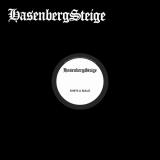
The single was released in Italy in 1984 as a 12-inch vinyl. What immediately stands out about the pressing is the complete absence of a record label; it was released as “Not On Label” with the catalog number HAS 1958. We are reissuing the original and also including a few unique interpretations/remixes by A.P. Mono and O.C. Lee. Once again, a true collector’s item! Limited edition pressing of 200 copies.
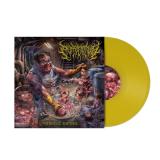
Brutal, uncompromising Slam from Greece. Years of obsession, ignorance, and absolute contempt spent keeping slam locked in its lowest, most primitive caveman state. Through collapse, and complete disregard for ourselves, we persevere. The "Embryectomy" project clawed its way from a deranged slam duo into a fully armed three-body beatdown slam monstrosity through uncompromised fury alone. No trends. No mercy. No concern for acceptance. Anyone who stood in the wreckage with us knows what it took to get here. We are now signing with Unique Leader Records. What you will endure in our next release is not meant to inspire or connect. It was composed in a chaotic state of antipathy, and absolute emotional absence. This is the most brutal material we have ever created—not for everyone, not for growth, but for those who understand that misanthropy is the only constant. We thank Unique Leader Records, who pushed us beyond what we thought possible: brutality to its limit while stripping away anything human. No benevolence. No empathy. No relief. Only violence, executed with intent.
Time to turn on and turn it up, theres a brand new Carlton Melton in the offing… its been a good couple of years since the West Coast space/sike travellers have dropped new music.
‘Phantomize beyond the window, into the portal, the panes of eternal returns, wooden spirals, roots into the realms of everything and nothing, the reason beings’
With Anthony Taibi fully ensconsed in the metaphorical Melton Dome, this four piece is ready to soar, go deeper and wider into the sike psyche than on previous recordings, now fully recording live with drums, bass, guitars and keys...recorded at 3D Light in Freshwater, CA by Anthony Tiabi in 2025, and mastered by the inimitable John Mcbain in 2026.
We have a single LP of 40+ minutes spanning 4 tracks, that have textures, and waves and patterns to lull you into some fever dream of motorik psych! Touchstones like Träd, Gräs Och Stenar / Kandodo / Guru Guru / Eno & Fripp / Birds of Maya / Parson Sound come into view.
There are moments of gentle ambience bordered by speaker shredding guitar soloing, whole passages of Krautrock inspired jams that have form and focus.. you blink and your live flashes before you, the record ends, you want more..
There are moments of gentle ambience bordered by speaker shredding guitar soloing, whole passages of Krautrock inspired jams that have form and focus.. you blink and your live flashes before you, the record ends, you want more.. Carlton Melton masterfully blend hypnotic, long-form psychedelic jams with drone and Krautrock influences.
Band:
Rich Millman
Andy Duvall
Clint Golden
Anthony Taibi
Announced to celebrate summers solstice.. released on the Autumn equinox.. with a full UK tour to boot..
Aaron Dilloway kehrt mit ,No Skill Comedy Mind Reading" zu Dais Records zurück - seinem ersten echten Album in voller Länge seit 2017, einer Sammlung von typisch verstörendem, absurdem Material. Geprägt von seinen typischen Verzerrungen und Verformungen - von Feedback umhüllte Fundstücke, Feldaufnahmen und Gesangsimprovisationen - versammelt ,No Skill" fast ein Jahrzehnt ausgewählter Soloarbeiten und wirkt dennoch ganz und gar zeitgemäß: ein sprunghaftes Produkt der Unbeständigkeit, zugleich hart und humorvoll. Nur wenige zeitgenössische Experimental-Künstler des letzten Vierteljahrhunderts sind so produktiv und verehrt wie Dilloway, ein Pionier der amerikanischen Noise-Szene im Mittleren Westen, ehemaliges Mitglied von Wolf Eyes und Gründer des in Oberlin ansässigen Labels und Plattenladens Hanson Records. Doch trotz seines immensen Gesamtwerks hat er nur zwei richtige Solo-LPs veröffentlicht, neben einer regelmäßigeren Produktion von Kassettenveröffentlichungen und Kollaborationsprojekten. Mit ,No Skill" vollendet er nun eine vieldeutige Albumtrilogie, die mit seinem wegweisenden Werk ,Modern Jester" aus dem Jahr 2012 begann. ,Ich habe fast das Gefühl, dass sie irgendwie Teil eines Ganzen sind. Alle drei Alben versuchen, in den schlimmstmöglichen Situationen Humor zu finden. Je nachdem, wer zuhört und wie die jeweilige Einstellung ist, könnten sie als lustig oder einfach nur als grauenhafte, schreckliche Alben empfunden werden." Halb im Ernst fährt Dilloway fort: ,Für mich ist dieses hier das Ergebnis von, na ja, verkorksten Sachen: psychische Erkrankungen, Medikamente, Scheidung, komischer Scheiß. Das Eintauchen in seltsame Dinge fasziniert mich immer auf die eine oder andere Weise." Neben den bereits erwähnten Einflüssen aus der menschlichen Erfahrung greift ,No Skill" auf verschiedene technische und ästhetische Kuriositäten zurück: das methodische Sounddesign von Alvin Lucier, Andy Milligans Low-Budget-Kult-Horrorfilm ,The Weirdo" aus dem Jahr 1989 und die pop-exzentrische Art des Filmkomponisten Hugo Montenegro. Dilloway stieß bei einer Lagerraumversteigerung auf dessen skurrile Habseligkeiten, darunter Notizen zu den frühen elektronischen Experimenten des Komponisten. Einige der beunruhigendsten Momente des Albums, wie das Lachen, das ,Bring Me The Head Of The Unknown Comic" heimsucht - klanglich eine Anspielung auf die Avantgarde-Größen Nurse with Wound und thematisch auf den Komiker aus den 1970er Jahren mit der Papiertüte über dem Kopf -, lassen sich auf den Einfluss dieses wahrhaft ungewöhnlichen Fundes zurückführen. ,No Skill" knüpft zudem an Dilloways jüngste künstlerische Ausflüge an: seine Umsetzung von John Cages 88-Band-Loop ,Rozart Mix"; die Originalmusik für ,The Absence of Milk In The Mouths of the Lost"; Gemeinschaftsalben mit Lucrecia Dalt (Lucy & Aaron) sowie Kim Gordon & Bill Nace (Body/Dilloway/Head). Während er an diesen und anderen Projekten arbeitete, legte er in Gedanken einen Ordner für sein nächstes Dais-Album an und sammelte Aufnahmen, die zu einer ziemlich vagen Vision passten. ,Dieses Album hat mich irgendwie völlig in Beschlag genommen, seit ich ,The Gag File` 2017 fertiggestellt habe. Zuerst dachte ich, es würde eher ein Pop-Album werden, aber dann hat mir das Lucrecia-Projekt diese Idee irgendwie aus dem Kopf getrieben. Es begann, eher wie meine Live-Sets zu fließen." Er entschied sich für eine Abfolge, die den Hörer ein wenig im Ungewissen lässt - ob erschrocken, amüsiert oder verwirrt; der Effekt soll absichtlich den Eindruck erwecken, dass etwas kaputt ist. Das Album beginnt mit schrillen Kreischen, bevor es in Drone-Passagen eintaucht, die durch zwei aneinander geriebene nepalesische Sarangi-Bögen entstehen, begleitet vom ersten Auftauchen seiner ogerartigen stimmlichen Präsenz. Anschließend werden mehrere Minuten von weißem Rauschen verschluckt (,Forced Auctioneer"). Dilloway verweist auf The Weirdos seltsamen Einsatz ausgedehnter Übergänge mit schwarzem Raum und seine lebenslange Liebe zum Bandrauschen. Er bekam Kassetten von älteren Kindern und hörte diese Geräusche als Teil der Songs, nur um später zu erfahren, dass es sich um klangliche Artefakte handelte, die von Generationen des Kopierens auf Kassette übrig geblieben waren. ,Ich stehe total auf die Idee, all diese Schichten aufzubauen und sie in etwas anderes zu verwandeln. Wenn ich zum Beispiel live spiele, kann es rauer zugehen als bei meiner aufgenommenen Musik, und dafür wollte ich genau dieses Gefühl einfangen - dass diese Ausbrüche laut sind, aber ein bisschen gedämpfter. Dieser totale Rauschklang, fast so, als wärst du unter Wasser." Dilloway sammelt Tonpoesie-Platten, und obwohl er seine eigene Arbeit nicht gerne in dieses Genre einordnet, spricht die Absurdität dieses Handwerks - die Verwendung von phonetischen Lauten und nonverbalen Geräuschen als Ersatz für traditionelle semantische Bedeutung - durch sein Werk. Auf ,Possession Audition Tape" liest er verschiedene Passagen aus einem Buch vor, das von einer französischen religiösen Gruppe aus dem 18. Jahrhundert handelt, die zu öffentlichen Unruhen neigte, und schneidet diese digital auseinander, wodurch er im Mix seine eigenen, echoartigen Stotterausbrüche erzeugt. ,No Skill Comedy Mind Reading" endet mit einem Stück aus Synthesizer und Orgel-Rhythmusmaschine, das auf Musik basiert, die er für den Film ,Supporting Actor" von Pieter Schoolwerth und Phil Vanderhyden komponiert hat - in dem ein Avatar von Dilloway in ein Portal gezogen wird. Dort trifft er in einem fantastischen Club auf posthumane Wesen. Die Szene, die sich irgendwie auf Audio übertragen lässt, versetzt das Set in einen passend verwirrenden Traumzustand. Ein Star der Noise-Musik, ein moderner Hofnarr, der aus dem Unbekannten berichtet.
For Luca, Cuylan’s new album of elegant modern classical, globally informed folk and gentle electronic music, is in part a tribute to his dearly departed dog. Luca came into Cuylan’s life like a key unlocking a door, leading to experiences and experiments simultaneously new and familiar. Back then the Turkish-born musician was living in LA with his wife, leading a busy creative life, writing and recording scores for films and Netflix series, and suddenly with the adoption of Luca here’s this bouncy, furry being demanding constant attention. Cuylan accepted the responsibility like a father welcoming a child. He grew closer to his wife. He started psychoanalysis. He returned to acoustic guitar, his original instrument, waylaid for 20 years in favor of synthesizers and electronics, pulsing post-rock and skittering jazz. Luca was there in the studio when Cuylan recorded his first solo album, 2021’s No Such Thing As Free Will, which The Guardian said “seems to invent new languages for the guitar.” Without a doubt, Luca the dog made Deniz the musician more expressive and more vulnerable. Better at his craft. Better at his humanity. Luca was just five years old when bone cancer struck. He exited far too quickly, a comet of joy passing into the dark, unfathomable universe. Cuylan found his absence very hard to process–he was just right here! It took a couple years, but inevitably Luca, the catalyst for Cuylan’s current chapter, inspired new artistry after his death–from Cuylan, and from a host of collaborators from around the world who contributed to For Luca. All of them share an abiding compassion for the more-than-human creatures with whom we share this planet–dogs, cats, whales, ants, trees. The entire menagerie, humankind’s kindred. The album is a collective meditation on–and celebration of–their immeasurable essence. It was born not from despair but from a transcendent love that burns all the brighter for its brevity.
Deluxe LP features 140g virgin vinyl; heavy-duty board jacket, artwork by Art Rosenbaum + DL. RIYL: Bob Dylan, John Prine, Townes Van Zandt, Ry Cooder, Michael Chapman, Michael Hurley, The Youngbloods & Bonnie “Prince” Billy. Jake Xerxes Fussell’s 4th album finds the acclaimed folksong interpreter, guitarist, and singer navigating fresh sonic and compositional landscapes on the most conceptually focused, breathtakingly rendered, and enigmatically poignant record of his wondrous catalog. Produced by James Elkington and featuring formidable players both familiar (Casey Toll, Libby Rodenbough) and new (Joe Westerlund, Bonnie “Prince” Billy), it includes Jake’s first original compositions; atmospheric arrangements with pedal steel, horns, and strings. One of the most striking and strangely moving moments on Jake Xerxes Fussell’s gorgeous Good and Green Again an album, his fourth and most recent, replete with such dazzling moments arrives at its very end, with the brief words to the final song “Washington.” “General Washington/Noblest of men/His house, his horse, his cherry tree, and him,” Fussell sings, after a hushed introductory passage in which his trademark percussively fingerpicked Telecaster converses lacily with James Elkington’s parlor piano. That’s the entire lyrical content of the song, which proceeds to float away on orchestral clouds of French horn, trumpet, and strings, until it simply stops, suddenly evaporating, vanishing with no fade or trace, no resolution to its sorrowful minor-key chord progression, just silence and stillness and stark presidential absence. It feels like the end of a film, or the cold departure of a ghost, and is unlike anything else Jake has recorded. In all his work Jake humanizes his material with his own profound curatorial and interpretive gifts, unmooring stories and melodies from their specific eras and origins and setting them adrift in our own waterways. The robust burr of his voice, which periodically melts and catches at a particularly tender turn of phrase, and the swung rhythmic undertow of exquisite, seemingly effortless guitar-playing here he plays more acoustic than ever before pull new valences of meaning from ostensibly antique songs and subjects. On Good and Green Again, Jake not only ventures beyond his established mastery of songcatching and songmaking into songwriting, but likewise navigates fresh sonic and compositional landscapes, going green with lusher, more atmospheric and ambitious arrangements. The result is the most conceptually focused, breathtakingly rendered, and enigmatically poignant record of his wondrous catalog. It’s also his most deliberately premeditated album, representing his fruitful return to a producer partnership after two self-produced projects, What in the Natural World (2017) and Out of Sight (2019) (William Tyler produced his friend’s self-titled 2015 debut.) This time James Elkington produced and played a panoply of instruments, bringing to Jake’s arcane song choices his own peerless sense of harmony and orchestration, balance and dramatic tension. The pair enlisted a group of formidable players including regular bandmembers Casey Toll (Mt. Moriah, Nathan Bowles) on upright bass, Libby Rodenbough (Mipso) on strings, and Nathan Golub on pedal steel. They were joined by welcome newcomers Joe Westerlund (Megafaun, Califone) on drums, Joseph Decosimo on fiddle, Anna Jacobson on brass, and veteran collaborator and avowed Fussell fan Bonnie “Prince” Billy, who contributes additional vocals. Album opener “Love Farewell” (featuring some beautiful singing by Bonnie “Prince” Billy), an elliptical tale of the folly of war, set to the world’s most heartbreaking goodbye march for a lover left behind. “Carriebelle” and “Breast of Glass” each similarly concerns, in its own way, romantic love and leavings. All three songs highlight Jacobson’s diaphanous, understated brass parts, tying them together in a true lover’s knot. “Rolling Mills Are Burning Down,” with its distant keening strings and capacious sense of space, observes and mourns the loss of work and community in the wake of elemental disaster. Nine-minute tour de force “The Golden Willow Tree,” the sole explicitly narrative song herein, is a hypnotic, minimalist rendering of a tragic maritime ballad about scuttling an enemy ship in exchange for wealth and glory and a captain’s inevitable betrayal. “Fussell is creating his own legacy within the long lineage of traditional folk musicians and storytellers that have come before him.” The New York Times // “So elegant … It’s relaxing in the way that pondering a Zen koan is relaxing, and sweet in the way that the wounded, honey-voiced blues of Mississippi John Hurt are sweet.” Pitchfork // “Music that resides at the seams of Appalachia and the cosmos.”
byt’ continues its eclectic journey with the third release in its catalogue. This chapter sees the return of Telva, shifting into a new frequency with a story born between 11.11 and a full Taurus moon back in 2024 in Berlin. The composition recorded in a single take, is articulated through a dreamy, electronic, minimal house, and vocal infusion. Left as romantic and unrestrained as the artist’s reverie, it is preserved in its raw form to protect its intimacy.
“Every record I make is a guide towards a better understanding of all that I can be. 11:11 is a fragment of a special spark I experienced, which peeled back another layer of myself enriched by the lessons along the way, until finally holding it in my hands today. What started as an epiphany on Heideglühen’s dance-floor unfolded into a kiss of destiny, a fleeting delirious love affair, and a quest of passion that hugged my memory, compelling me to revisit my early days. An endeavor of surrender, no matter how unknown, unconventional or uncertain it all may feel. To finally have the courage to let it be messy, raw and true, so that I stand naked once again, while daring to honor the absence of order as part of the magic and mystery of life.” - Telva
The eye of the storm: welcome to Tornado Wallace's debut album! The accumulation of about four years of work, with tracks written in Berlin and Melbourne, 'Lonely Planet' is nothing like you may have expected from the Australian expat. No stranger to fans and followers of ESP Institute, Beats in Space and Music From Memory's sister Label Second Circle, Tornado Wallace's strain of releases so far merged functionality with a musical playfulness that led him to find himself as one of the producer's behind José Padilla's International Feel album. Here, he leaves the needs of the dance floor behind in order to create a magical mystery tour de trance into his and our inner jungle. How about some references New Age sounds meet new wave melodies, Grace Jones runs into the Dire Straits at Compass Point, while a Korg Mini Pops and a Roland CR78 make amends for Sly & Robbie's absence, Michael Mann pictures Joseph Conrad's 'Heart of Darkness', Robert Rauschenberg tries his luck at naturalism and an imagined Wally Badarou echoes through all of it. Sandwiched between the title track and the yearning beauty of the album's final point 'Healing Feeling', you get all of that as well as collaborations with and contributions of NO ZU, David Hischfelder and the voice of Sui Zhen on 'Today', who would easily make Anna Domino take her proverbial hat off. Tornado Wallace created an album that supersedes the requirements and expectations of a debut. Like a lost Island Records or a never released Made to Measure album, 'Lonely Planet' soundtracks notions and ideas that recall the nostalgic future in the past as much as it looks ahead.
Matu Miranda has grown up in a state of constant movement. Changing homes, cities, schools, and horizons has shaped his worldview and fueled a body of work deeply informed by themes of displacement, transformation, and belonging. With APUAMA, his second album, the Brazilian singer, songwriter, and guitarist delivers his most personal work to date:a collection of songs exploring how we each construct our own sense of home through the encounters, departures, and returns that mark our lives. Driven by sensitive songwriting and organic production, APUAMA navigates a landscape of contemporary MPB, tropical folk, popular poetry, and Brazilian acoustic influences. From one song to the next, Matu charts an intimate journey where saudade is never synonymous with stagnation; instead,it becomes a driving forcethat compels him to move forward, discover, and forge connections. From the radiant landscapes of "E Bom Voltar" to the existential inquiries of "O Que Sera de Nos"-and the poetic manifesto of the title track, "Apuama"-the album tells the story of an artist learning to turn every place he visits into a form of home. The album also features notable collaborations with two of the most distinctive voices on the new Brazilian music scene.Singer-songwriter Josyaralends her sensitivity to "Ceu Azulzin," while Chico Chico joins Matu on "Estetica da Fome," a track inspired by major Brazilian cultural and social reflections. These collaborations extend the collective spirit that runs through the entire record and highlight Matu Miranda's ongoing dialogue with his artistic generation. The sound production was helmed by Leo Marques-a producer, sound engineer, and musician recognized as a key figure in Brazil's independent music scene. Marques notably won a Latin Grammy Award for his work on the album Sim Sim Sim by the group Bala Desejo, one of the most significant Brazilian records of recent years. This approach gives APUAMA a warm, vibrant, and timeless sound, allowing the songs to breathe and highlighting the richness of the acoustic arrangements. More than just a collection of songs, APUAMA is a journal of an inner journey. It is an album that speaks of movement, memory, nature, and the passing on of things-reminding us that, beyond borders, distances, and absences, there is always a place where one can feel at home.
Be chosen is back! After 8 years of creative absence, the label is ready for new adventures!
The upcoming release comes from Cesare vs. Disorder who teamed up on various tracks with Matheiu and Andre Buljat.
Highly recommeded!
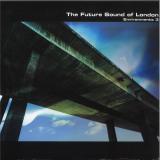
“Environments 3” is one of ‘the great lost albums’ by The Future Sound Of London and these sessions have taken on almost mythical status with the group’s fan base. It was initially due for release after the 1993 release of the UK Top 10 album hit “Lifeforms”, but that didn’t happen. Instead, much later in 2010, it came on CD and download. Only now is it being released on vinyl for the first time..
This release also comes after the success of the first two installments which have sold steadily across the different volumes over the years and still climbing. This third volume is a sparse, highly minimal, and vivid departure from their dense 1990s period, and cited as one of the standout ambient releases of its time with FSOL in fine creative form. Reviewers at the time noted he complete absence of the heavy, spacey atmospheres of Lifeforms or the dark chaos of Dead Cities with delicate textures and moody variety throughout. While mostly calm and meditative, certain cuts evoke a desolate, lonely, or gently industrial feel.
The tracks on the upcoming Boysonic release are a snapshot of a period largely absent from the discussion around Romanian electronic dance music: the first half of the 1990s.
Boysonic’s music was made in the face of considerable adversity, in a Romania still reeling from the aftermath of the 1989 revolution, spiralling inflation of over 200%, and the violence of the early-1990s Mineriads. In the gatefold photos, one of the band’s members can be seen performing live wearing a miner’s safety helmet, a piece of stagewear, but also a charged symbol of the period.
The original music on Madhouse was made in Bra?ov during 1993–1994. Situated away from Bucharest’s political and cultural centre, Bra?ov gave the project its own slightly detached rhythm. Classically trained in piano and active in local radio, Mihai Barb developed Boysonic as a largely one-man act, often joined live by a changing cast of dancers and vocalists. In the absence of a developed club circuit, early performances took place in pre-1989 concert halls, seaside resorts and local entertainment circuits organised around regional radio stations.
Agnostic in genre and unusually fluid in approach, Madhouse moves through downtempo pop burners, KLF-type UK house, boomy breakbeat, new beat and acid-leaning experiments. The material reflects a short-lived moment before the Romanian mainstream/underground divide had fully taken shape, when electronic music lacked infrastructure but not imagination.
Sampling was used generously, with drum loops, vocal fragments and preset banks repurposed through software such as ProTracker and further processed outboard.
The release comes as a 2xLP gatefold.
Remixes are from Benedikt Frey, Boysonic, Cosmin TRG, Flore of Khidja, Romansoff, and Tankwart.
Soak’s fourth album, decembers, was born in literal silence. Contending with an autoimmune disease that prevented them from singing, it was the absence of sound that birthed the Derry artist’s most sonically and lyrically remarkable album to date.
The space that expanded from that enforced quiet, and the life lived within it - transitionary, liminal, escaping in search of connection - cracked something open. What floods in, is an album of stunning tenderness, honesty, and astonishing storytelling from an artist discovering the revelations at the end of the line.
In decembers, we travel on the road through America, walk the frost-glistened paths of Dublin at night, search for a meteor in Portugal, and return home to Derry. Everywhere, here is an artist evolving, exploring, releasing themselves, coming undone, and eventually, becoming.
At the core of the album is this lyrical statement: “Getting lost is getting free.” How brave it is to face the unknown. Because when you really go there, that’s where discovery lies. That discovery in decembers is a creative one, but it’s also about connection to people and place, to forgiveness, and ultimately to prioritising honesty. “A consistent theme is struggling for direction, battling the urge to run,” Soak says, “and instead, planting my feet.”
Soak’s fourth album, decembers, was born in literal silence. Contending with an autoimmune disease that prevented them from singing, it was the absence of sound that birthed the Derry artist’s most sonically and lyrically remarkable album to date.
The space that expanded from that enforced quiet, and the life lived within it - transitionary, liminal, escaping in search of connection - cracked something open. What floods in, is an album of stunning tenderness, honesty, and astonishing storytelling from an artist discovering the revelations at the end of the line.
In decembers, we travel on the road through America, walk the frost-glistened paths of Dublin at night, search for a meteor in Portugal, and return home to Derry. Everywhere, here is an artist evolving, exploring, releasing themselves, coming undone, and eventually, becoming.
At the core of the album is this lyrical statement: “Getting lost is getting free.” How brave it is to face the unknown. Because when you really go there, that’s where discovery lies. That discovery in decembers is a creative one, but it’s also about connection to people and place, to forgiveness, and ultimately to prioritising honesty. “A consistent theme is struggling for direction, battling the urge to run,” Soak says, “and instead, planting my feet.”
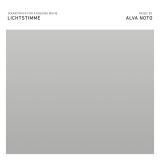
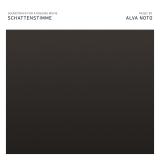
NOTON is pleased to announce the release of LICHTSTIMME and SCHATTENSTIMME by Alva Noto: two soundtracks for a film that never existed.
The starting point is E. T. A. Hoffmann's The Sandman: a world where perception and reality drift apart, and the question of identity remains unresolved. Recognition, in Hoffmann, is never quite secure. The doppelgänger is less a figure than a condition, the point at which the self can no longer vouch for itself.
The first record, LICHTSTIMME begins in an open, almost weightless sonic world. Something still appears untouched. The music carries a sense of proximity, clarity and trust. But this sense of certainty does not remain. Gradually, the proportions begin to shift. Sounds lose their definitiveness; familiar structures become strange. The music begins to question its own surface. What initially appears as light already contains the possibility of its shadow.
With the second record, SCHATTENSTIMME, the instrument enters the sonic space. The pieces were recorded together with percussionist Rainer Römer and the Ensemble Modern. A central role is given to the Sixxen, the extraordinary metallic percussion instrument originally developed by Iannis Xenakis together with Les Percussions de Strasbourg and instrument maker Robert Hébrard for Pléiades. Its resonances, unusual microtonal structure and distinctive timbre make it an instrument that resists being placed within a familiar musical context. Complete Sixxen sets are extremely rare and require highly specialised construction.
The instrument appears only on the second record. Its absence from LICHTSTIMME and its arrival on SCHATTENSTIMME are structural. It behaves like a shadow: present only when something else has already changed. With its appearance, it is not only the sound that changes. The entire musical space seems to shift its character. The Sixxen's metallic sound becomes the unfamiliar. The unfamiliar becomes a counterpart.
The two records follow an inner movement: from light to shadow, from trust to doubt, from identity to doppelgänger, and back to a harmony that is no longer quite the same. What emerges as an independent, personal sonic language has been transformed by the journey. The unfamiliar has not disappeared. It has become part of the self.
LICHTSTIMME and SCHATTENSTIMME are records about the instability of the familiar. Something is always almost recognisable and never quite confirmed, in the story, and in the sound.
Album art designed by Carsten Nicolai & Nibo.
NOTON is pleased to announce the release of LICHTSTIMME and SCHATTENSTIMME by Alva Noto: two soundtracks for a film that never existed.
The starting point is E. T. A. Hoffmann's The Sandman: a world where perception and reality drift apart, and the question of identity remains unresolved. Recognition, in Hoffmann, is never quite secure. The doppelgänger is less a figure than a condition, the point at which the self can no longer vouch for itself.
The first record, LICHTSTIMME begins in an open, almost weightless sonic world. Something still appears untouched. The music carries a sense of proximity, clarity and trust. But this sense of certainty does not remain. Gradually, the proportions begin to shift. Sounds lose their definitiveness; familiar structures become strange. The music begins to question its own surface. What initially appears as light already contains the possibility of its shadow.
With the second record, SCHATTENSTIMME, the instrument enters the sonic space. The pieces were recorded together with percussionist Rainer Römer and the Ensemble Modern. A central role is given to the Sixxen, the extraordinary metallic percussion instrument originally developed by Iannis Xenakis together with Les Percussions de Strasbourg and instrument maker Robert Hébrard for Pléiades. Its resonances, unusual microtonal structure and distinctive timbre make it an instrument that resists being placed within a familiar musical context. Complete Sixxen sets are extremely rare and require highly specialised construction.
The instrument appears only on the second record. Its absence from LICHTSTIMME and its arrival on SCHATTENSTIMME are structural. It behaves like a shadow: present only when something else has already changed. With its appearance, it is not only the sound that changes. The entire musical space seems to shift its character. The Sixxen's metallic sound becomes the unfamiliar. The unfamiliar becomes a counterpart.
The two records follow an inner movement: from light to shadow, from trust to doubt, from identity to doppelgänger, and back to a harmony that is no longer quite the same. What emerges as an independent, personal sonic language has been transformed by the journey. The unfamiliar has not disappeared. It has become part of the self.
LICHTSTIMME and SCHATTENSTIMME are records about the instability of the familiar. Something is always almost recognisable and never quite confirmed, in the story, and in the sound.
Album art designed by Carsten Nicolai & Nibo.
Berlin's Hypersoft crew launch their new vinyl label with Clínica Electrónica by Italian DJ, producer and Evasione Digitale co-founder Andrea Dama. Following the start of their new residency at Panorama Bar, the label opens its catalogue with a strictly limited five-track EP recorded at Buenos Aires' legendary La Siesta del Fauno, bringing Dama's Berlin dancefloor sensibility together with the peculiar chemistry of one of the world's most extraordinary electronic music studios. Forged through extended jam sessions on an array of vintage analogue instruments, including the original Korg PS-3300, Moog modular and Yamaha CS-80, the spontaneity of the sessions translates directly into the finished tracks, where ideas mutate, collide and develop into unexpected forms. Switching gears between hypnotic, mechanical, groove-driven house, and stuttering, furious, off-kilter techno, Dama moves deep into more atmospheric territory, conjuring worlds that are at once lush, organic, paranoid and extraterrestrial. An analogue vision of a future past, built by machines that were already imagining it decades ago.
There are records that do not so much belong to an era as they pass through it, leaving traces rather than statements, circulating in the margins where function outweighs discourse. World Cup, written at the end of the 1990s by Kiko, emerged in precisely that way — as a techno track whose presence was felt less through promotion than through repetition, carried from booth to booth, absorbed into the working vocabulary of DJs who recognized in it something immediate and self-evident. Its architecture is minimal yet insistent, driven by tension and release, a form of clarity that resists ornament and instead privileges duration, pressure, and movement.
When it resurfaced in 2006, it did not return as a revision but as a continuation, reaffirming its role within the ecology of the dancefloor. The same internal logic remained intact, allowing it to re-enter circulation without friction, as though it had simply been waiting to be picked up again. In both instances, the track operates less as a fixed object than as a tool — something to be used, extended, and recontextualized in real time.
Bringing together these two versions alongside Tainted Life, the release traces a subtle but telling trajectory. If World Cupdefines a certain techno functionalism, Tainted Life reveals another dimension: a proto-Italo sensibility that gestures toward what would later coalesce as electroclash, not through stylistic declaration but through texture, tone, and attitude. Long absent from digital circulation and largely confined to obscurity, it appears here not as a rediscovery, but as a piece whose relevance has simply remained latent.
Nothing has been added, nothing has been altered beyond what was necessary to restore presence. The recordings are allowed to exist in their own continuity, detached from the temporal markers that might otherwise confine them.
The artwork, conceived by H5, extends this approach into the visual field. Its restraint is not aesthetic minimalism for its own sake, but a form of structural clarity, where composition and absence articulate a space in which the record can be encountered without interference, as if resurfacing from a parallel timeline that never fully closed.
Mr Bongo are thrilled to have one of the leading lights in contemporary soul joining the label. Melbourne-based vocalist, musician, and songwriter Ella Thompson is an artist whose name is being championed by some of the best in the business. She’s been building a reputation as one to watch, with two standout releases on Hopestreet Recordings, Domino EP in 2023 and Ripple On The Wing LP in 2024, alongside a heavy touring schedule and a stacked list of support slots and collaborations.
For this new 7” single, Ella collaborates with a selection of artists at the forefront of Naarm/Melbourne’s soulful DIY community. Featuring members of Surprise Chef and Karate Boogaloo, Liam McGorry from Temporary Blessings (College Of Knowledge) joins Ella as co-writer and co-producer, with go-to Melbourne engineer Henry Jenkins also producing and recording the track.
Bridging the worlds of classic and contemporary soul, Ella’s songwriting is drenched in emotion and personal experience. With a timeless feel that is hard to tie to any particular period, she has crafted a sound that instantly hits deep. It’s warm, tasteful and distinctly Ella. That talent has also seen her tour with Mark Ronson, and support other contemporary greats like Jalen Ngonda, Lee Fields, and Thee Sacred Souls.
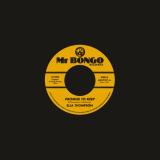
‘Promise To Keep’ is the first taste of Ella’s new material on this 7” single. An irrepressible upbeat groover that echoes mid-to-late-sixties vocal groups. That influence though never overpowers Ella’s own unique creative voice or distinct sense of self. She draws from it, but the colour is all her own. The song tells a story of being carried by the current that keeps us moving, giving us courage. A commitment to oneself that speaks to action shaped by vision, and the pull of following what feels correct even when the distance is far.
The flip side finds Ella in a different mood. ‘Change Of Heart’ is a heavy sweet-soul ballad. Rich in drama, Ella’s falsetto vocals build to a stunning climax in the final section, with triumphant horns that signal the release of letting go. The lyrics reflect on temporality and impermanence, and the way moments can be missed or arrive with synchronicity. It’s that bittersweet paradox of triumph and sadness, where everything contains its opposite: absence and presence, innocence and experience. The song is underpinned by a brooding production quality and atmospheric, beat-heavy flavour that Surprise Chef and cinematic soul fans will relish.
Mixed by Wayne Gordon (Daptone, Womack Sisters), ‘Promise to Keep’ and ‘Change of Heart’ are a glimpse of things to come from Ella. Keep an eye open for more new music incoming from this phenomenal artist at the top of her game.
Felipe Gordon is back on Shall Not Fade with his new album Tezeta and f*ck is it special.
Felipe Gordon is SNF label mainstay... (we released his triple repressed debut album "A Landscape Onomatopeya" in 2022 as well as 7 x 12" EPs on SNF over the years plus an extra 12" on Lost Palms)... so given his consistent and exceptional output on our record label you'd probably forgive some complacency with this write up, you might even afford us license to assume we're preaching to the choir and allow us to rest easy knowing that at this stage Felipe Gordon's records sell themselves.... Well none of those things are happening here because when an artist makes a record this complete, this good, you have to try to find the words. You use words like "timeless", "complete and "special". Words that can carry the weight. Because when you've listened to an album dozens of times, and not once, in any part, on any listen in any way has it fatigued you, you need to say. When a record felt so wonderfully familiar from the first listen and just kept on giving you the same feels ever since, you need to say. When a record makes you think about you how you feel about certain Air & St Germain albums (even when you know what it means to put that in a press release), you need to say. So here we are, saying these things.. Tezeta is a special record, one that exists in the rarefied air. A proper album. A record that every time you press play you will immediately remember why you own it and why you love it. A record that your subconscious will know so well that if shuffle is on you will know in an instant. An album that when it's in your collection and the first track starts you get a twinge of annoyance because you didn't listen again sooner and when the final track stops you stop too.
Given paint and a canvas we can most of us paint a picture, but only those that are gifted can paint something that makes us feel. Tezeta makes you feel. Feel familiarity when it's playing, yearning when its not, and absence when it ends. This alone would be enough to make the argument as to why this album is special and justify the gushing opening paragraph of this press release. But we're not done yet.
We don't really have a word in english for what Felipe Gordon has created with this album and how it makes you feel. "Tezeta" that word.
Tezeta is a one of four musical modes within the traditional Ethiopian modal music system known as Qiñit. Mulatu Astatke, the father of Ethio-jazz, frequently uses this mode, often translating it as "nostalgia" or "longing". Gordon says Mulatu's own tezeta recordings convey to him "feelings of melancholy and longing from a point of affection". This is exactly the feeling Gordon has captured. It is what he has woven through every recording on this album. Tezeta is the prime ingredient. It's the base note in recipe, it's sprinkled over the signature jazz-sampled house tracks. It powers the vast array of synthesizers Gordon deploys. It underpins the explorations into trip-hop. It's present in Gordon's varied vocal deliveries and it tunes his guitar. It's in the running order. It's the flow. Tezeta is tezeta in electronic music form, with 4/4, breakbeats, samples and synths.
Gordon says a big part of what differentiates this album from from his previous albums is that is was recorded in a period where he allowed himself to create music without the constraints of time or self-pressure which coincided with a moment of heavy personal growth which allowed him to reflect deeply on his work.
There is a word in Portuguese "Saudade" that Gordon says has a similar meaning to Tezeta - Saudade is defined as a deep, sometimes bittersweet, longing or nostalgia for someone or something that is absent or lost. But here at SNF we think that in Tezeta nothing has been lost. Quite the opposite. Through Felipe Gordon's artistic explorations we have all gained something very special indeed.
‘Future Quiet’ signals a striking new chapter for one of electronic music’s most enduring and visionary artists. Across fourteen tracks that encompass modern piano minimalism, immersive ambient soundscapes and a smattering of vocal collaborations, the album finds Moby reflecting on the tension between hyper-connected modern life and the deep human need for stillness.
LOS ANGELES—To celebrate the 40th anniversary of the celebrated Talking Heads and Jonathan Demme’s concert film Stop Making Sense, the set will be re-released as a 2LP and 2CD/Blu-ray set this summer.
Released last year, the sold-out Deluxe Edition of the soundtrack will return as a 2-LP black vinyl on Rhino and 2-LP crystal clear vinyl at retail. Both variants feature a 12-page booklet with liner notes from all four band members –Tina Weymouth, David Byrne, Chris Frantz, and Jerry Harrison—and band photos. The 2CD/Blu-ray version includes the entire 28-page booklet from last year’s Deluxe Edition and a Dolby Atmos mix of the complete concert, mixed by Jerry Harrison and E.T. Thorngren, who also mixed the original release. Both will be available on July 26. Pre-order now.
The band appeared together for a sold-out screening and Q&A last night at the Pantages Theater, the same theater at which Stop Making Sense was recorded. They were joined by Blondshell, who performed “Thank You For Sending Me an Angel.” Another special screening with the band will occur in Brooklyn at the King’s Theater on June 13, with the Q&A hosted by Questlove and The Linda Linda’s performing “Found a Job.” The two events cap off a banner year of celebrations for what many consider to be the best concert film of all time.
The inspiration for Stop Making Sense came when director Jonathan Demme saw Talking Heads perform during the band’s 1983 tour for Speaking in Tongues. Afterward, he approached them with the idea of making the show into a concert film. They agreed and worked together over the next few months to finalize the details. Ultimately, Demme filmed three shows at Hollywood’s Pantages Theater in December 1983 to create Stop Making Sense.
The concert film presents a retrospective of the band up to that point, with a performance that weaves together songs from all six of its studio albums. The show progresses methodically, opening with Byrne onstage performing “Psycho Killer” alone with a drum machine. After each song, he’s joined by a new band member until Weymouth, Frantz, and Harrison are all on stage with him. The group continues to grow throughout the concert as members of the stellar touring band are added: keyboardist Bernie Worrell, percussionist Steve Scales, guitarist Alex Weir, and backup singers Lynn Mabry and Ednah Holt.
The band performs 18 songs in Stop Making Sense, including its recent single at the time, “Burning Down The House.” That summer, the song was in heavy rotation on radio and MTV, helping the song become the band’s first top 10 hit in America. It was, however, a different song from Speaking in Tongues that was destined to deliver one of the film’s signature moments. Talking Heads would perform “Girlfriend Is Better” wearing the now iconic, oversized suit inspired by costumes worn in traditional Japanese theater. For good measure, a picture of David Byrne in the suit also graces the album cover.
Stop Making Sense focuses mainly on music by Talking Heads but does include a few songs recorded outside the band: “Genius Of Love” by Tom Tom Club, “What A Day That Was” and “Big Business” from Byrne’s 1981 album, The Catherine Wheel. Limited edition vinyl versions of both of these albums, along with Harrison’s The Red And The Black, were released for this year’s Record Store Day.
When it arrived in September 1984, Stop Making Sense was an artistic and commercial triumph. The film had people dancing in theatre aisles, and the soundtrack sold over two million copies. Just last year, the Library of Congress added Stop Making Sense to the National Film Registry in recognition of its cultural, historical, and aesthetic significance.
Weymouth praises Demme as a collaborator: “…Jonathan was a very enthusiastic, highly adaptive, and imaginative guy who was just as good a listener as he was a talker and collaborator. From the get-go you just got the impression he was as flexible as he was disciplined. Being team players, that boded well for a great relationship and a great film!”
Harrison says the film still holds up today: “To me, Stop Making Sense has remained relevant because the staging and lighting techniques could have been created in a much earlier time period. For example, Vari-Lights, lights with motors to re-aim them, had just come into vogue. Had we used them, there would have been a timestamp on the film, and it eventually would have felt dated...The absence of interviews, combined with the elegant and timeless lighting, created a film that can be watched over and over.”
Byrne says it’s interesting that this album was – for many people – an introduction to Talking Heads. “We had done a live album before this, but coupled with the film, and with the improved mixes and sound quality, this record reached a whole new audience. As often happens, the songs got an added energy when we performed them live and were inspired by having an audience. In many ways, these versions are more exciting than the studio recordings, so maybe that’s why a lot of folks discovered us via this record.”
Frantz recalls the sheer joy surrounding the entire Stop Making Sense experience. “I’m talking about real, conscious, transcendent joy… I’m talking about what the Southern gospel people call ‘getting happy,’ which means ‘to be filled with the Spirit.’ That is what happened to us onstage every night, and from my seat behind the drums, I recognized that this was happening to the audience too. Joy was visible in front of me and all around me every night.”
Made up of Matt Tuck, Michael ‘Padge’ Paget, Jamie Mathias, and Jason Bowld, Bullet For My Valentine return with their 8th album ‘Social Apocalypse’. The band have accrued multimillion album sales, multibillion streaming numbers, multiple Gold certifications at home and abroad, plus three UK Album Chart and Billboard 200 Top 10 placement.
Thematically, ‘Social Apocalypse’ combines the bare-faced lyrical introspection of people weathered and worn by the modern world. Working once more with producer Carl Bown – a veteran of four Bullet albums, alongside work with Sleep Token, While She Sleeps,
Malevolence and more – the idea for each track was diligently scrutinized, constructed and polished to its immaculate final form.
The track ‘Social Apocalypse’, rages against the end of the world as we know it, ‘I Don’t Trust Tomorrow’ is a reflection on the fear of the unknown labelled as the heaviest Bullet song ever complete with a hair-raising vocal turn from Lorna Shore’s Will Ramos. The second collaboration features Against The Current vocalist Chrissy Costanza also stepping in to duet on the exceptional ‘In The Absence Of You’.
Reminiscent of the band’s storied past without ever being repetitive of it, it’s with a steelyeyed determination to break new ground that the beloved hallmarks of Bullet For My Valentine past and present – Acid Rain and Fragile’s rapid-fire riffage, the melodic sensibility of Masquerade and Never Enough, and the anthemic balladry of Read Between The Lines and Here Without You – are refocused and re-energized for the future.
Bullet For My Valentine have established themselves as one of Britain’s all-time most celebrated rock and metal exports and now enter the dawning of a new era with the same burning drive and vision as ever.
Made up of Matt Tuck, Michael ‘Padge’ Paget, Jamie Mathias, and Jason Bowld, Bullet For My Valentine return with their 8th album ‘Social Apocalypse’. The band have accrued multimillion album sales, multibillion streaming numbers, multiple Gold certifications at home and abroad, plus three UK Album Chart and Billboard 200 Top 10 placement.
Thematically, ‘Social Apocalypse’ combines the bare-faced lyrical introspection of people weathered and worn by the modern world. Working once more with producer Carl Bown – a veteran of four Bullet albums, alongside work with Sleep Token, While She Sleeps,
Malevolence and more – the idea for each track was diligently scrutinized, constructed and polished to its immaculate final form.
The track ‘Social Apocalypse’, rages against the end of the world as we know it, ‘I Don’t Trust Tomorrow’ is a reflection on the fear of the unknown labelled as the heaviest Bullet song ever complete with a hair-raising vocal turn from Lorna Shore’s Will Ramos. The second collaboration features Against The Current vocalist Chrissy Costanza also stepping in to duet on the exceptional ‘In The Absence Of You’.
Reminiscent of the band’s storied past without ever being repetitive of it, it’s with a steelyeyed determination to break new ground that the beloved hallmarks of Bullet For My Valentine past and present – Acid Rain and Fragile’s rapid-fire riffage, the melodic sensibility of Masquerade and Never Enough, and the anthemic balladry of Read Between The Lines and Here Without You – are refocused and re-energized for the future.
Bullet For My Valentine have established themselves as one of Britain’s all-time most celebrated rock and metal exports and now enter the dawning of a new era with the same burning drive and vision as ever.
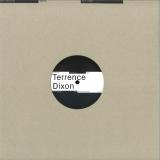
Detroit original, Terrence Dixon, returns to Tresor Records to kick off 2026 with ‘When Stars Remember’. Despite his thirty-year career, Terrence has always managed to keep a lower profile than his peers; he has given few interviews, preferring instead to speak through his music, with cryptic song titles hinting at the thoughts swirling around their creation.
However, ‘When Stars Remember’ finds him stepping forward. “I wanted to get closer to the dancefloor. I consciously made this one feel louder…made with Tresor specifically in mind.” And the EP does just that: whilst many of the hall marks of a Terrence Dixon production are present, the drums are more forward; the synth arpeggios so bold that ‘monumental’ seems a better descriptor than ‘minimal’.
“I put three or four sounds together on the same track, layering to make something bigger”, he says of opening track ‘Mono Collapse’, though the statement could apply to any of the music appearing on the release as all four pieces fold in sonics to create something hypnotic; more than the individual parts: “If you stick with the same layered tones, and repeat it over, after a while your brain changes it on its own; you hear a lot of things: things that you didn’t notice at first, things that maybe aren’t even there.”
The absence of things is another main theme of the EP, especially what Dixon sees as ‘The Forgotten’, a group of fundamental principles like common sense, trust, loyalty, honesty and respect that are missing from modern life. “This world is different…the love is gone. But I love everybody, man. I think, secretly, everybody love everybody, but they just don’t know it.”
Our friend DJ Asparagus (aka Coral) returns to GAMM after a few years of absence with two killer Drum 'n Bass reworks that are destined to raise some eyebrows.
On '500' the WT Killa Beez join forces with that infamous Nautilus bassline for supa-funky mash up of D & B, Hip Hop and R & B (check the drop!!).
On the B side we're going deeper with a classy D & B re-rub of Mischief's classic.
Hip Hop and D & B truly works...proper mash up business!!