Recorded as part of the same daydreaming puzzle as Unwishing Well, Still Clouds at Noon brings out the slowcore/sadcore elements that drift through The Reds, Pinks & Purples' melancholy catalog. Donaldson names '90s hometown San Francisco acts such as American Music Club and the more obscure Timco as pivotal to his guitar playing and development as a songwriter, both of which shine bright here. The slower tempo ballads on Still Clouds_ often culminate in heavy fuzz drenched codas and showcase the more abstract poetic side of Donaldson's lyricism. There's an inherent pop-sensibility always at work though, with ear-worm melodies appearing over intoxicating circular riffs. Formerly a Bandcamp only digital release, this white vinyl version is remastered and adds two unreleased tracks, one featuring Mark Monnone from Australian pop-legends The Lucksmiths on bass. Strictly limited edition of 500 ww.
Itara is the debut solo album by Paul Pèrrim—guitarist, composer, and anthropologist—featuring a set of guitar-driven compositions that blend hallucinatory acid folk, abstract blues, mutant Eastern jazz, surreal ambient, and free improvi-sation into a vivid and distinctive sonic tapestry.
With a background in ethnomusicology and a degree in Music Education, Pèrrim’s work bridges popular and experi-mental music. He contrasts the acoustic guitar’s austerity with the expansive possibilities of the electric guitar, drawing from late ’60s folk traditions, contemporary fingerstyle, sound collage, drone, psychedelia, and improvisation.
A key figure in the Canary Islands’ experimental scene, he released two albums in the 2010s under The Transistor Arkestra, a Catalan collective merging free jazz and psychedelia. As Transistor Eye, his solo project, he merges ana-log electronics with guitar, using vintage synths and effects.
In 2022, Pèrrim gained wider recognition through his appearance on Manos Ocultas (Philatelia Records) and the in-ternational tribute Solstice: A Tribute to Steffen Basho-Junghans (Obsolete Recordings). That same year, he founded GUITARRACO, a contemporary guitar festival in Tarragona, where he has shared the stage with Joseba Irazoki, Buck Curran, and Raphael Roginski.
Itara will be released in July 2025 via Keroxen. Recorded and produced by Pèrrim, the album features liner notes by critic Bill Meyer, who writes:
“While it’s common to call music cinematic these days, Pèrrim goes split-screen. One might say he composes econo, jamming scenes and sounds to psychedelic effect. But economy does not equate with poverty. Pèrrim draws upon a rich bank of musical notions, all of which he makes his own through the alchemy of recombination and transmutation.”
out of Stock
Last delivered 13 months ago available to reorder, subject to availability
* 140gm vinyl in charcoal black reverse-board disco bag, with red/ hot pink/ blue/ off-white patterned wraparound sticker, and embossed play:musik icon on front sleeve.
* Kuttin Edge arrives on p:m with (115), a musically adventurous set that draws from a range of influences - West African funk, UK and US electronics, Autonomic moods, minimal techno, and Brutalism; while a focus on analogue feel, overdubbing, and textural detail processes tie it together. An interesting, experimental, yet firmly dancefloor friendly EP.
* Tracklist:
A1. Onyeabor: a unique track full of vintage-sound synths, bright melodic lines, Moog-style arpeggios, and rhythms built on a CR78, layered with live drums, tambourines, and bass guitar. Disco funk samples and fx add texture, alongside heavy overdubbing. Inspired by early William Onyeabor aesthetics.
A2. Dark Horse: Dark Horse: an atmospheric arrangement of phase-y pads reminiscent of the peak Autonomic era, filtered through the abstract lens of artists like Actress or King Britt. The pacing and negative space give the tune a weighty but airy feel, punctuated by heavy toms and documentary-style foley. Soulfully cosmic.
B1. Loop Me: polyrhythmic arpeggios, swirling delays, unstable harmonic structure, and chromatic movement form a tense, shifting progression. Built around a single bell sample, the track is reshaped through layering, modulation, subtle changes in texture, and filtered transitions. A techno stepper.
B2. Geiger Scale: experiments with playful but controlled randomness, minimal structure and off-grid sequencing. The idea centres on a toy synth with loose notes and laidback groove formed of irregular, rhythmic patterns. Geiger Scale perfects restraint as the arrangement bubbles along with sparse melodies. Smokey and potent.
out of Stock
Last delivered 30 days ago available to reorder, subject to availability
ULTRA LIMITED EDITION - Cassette/Tape - Consits of 4 DIFFERENT ARTWORKS (BUY, OBEY, WATCH TV, SLEEP) - NO REPRESS!
FULL soundtrack of John Carpenter's cult sci-fi/action/horror cult film They Live (1988) in never released on vinyl before expanded edition from legendary composer Alan Howarth.
Blues riffs surf on ambient synth, saxophone and harmonica mingle with sparse alien electronics and abstract soundscapes - Alan Howarth's score perfectly matches the eerie paranoid urban Western meets corporate sci fi vibe of John Carpenter's iconic movie.
This version, officially licensed from Alan Howarth, includes all 29 tracks from the soundtrack - the true complete music scores of They Live!
Points of interests
- For fans of soundtracks, horror, cult, sci fi, synth, Western, VHS, John Carpenter, bubble gum, conspiracies, cowboy boots, sunglasses, very rare editions of vinyl records.
- Full EXPANDED version of the They Live soundtrack on vinyl for the first time!
out of Stock
Last delivered 13 months ago available to reorder, subject to availability
More than a decade after his last full album, Kim Hiorthøy returns with Ghost Note, released by the Belgian label Blickwinkel. Though his music has quietly existed in the background—shaping contemporary dance, film, and theatre—this album brings it into focus once more. Ghost Note is an exploration of sound on the edge of presence and absence, a fictional world that is both constructed and organic.
Using mostly digital technology, Hiorthøy created a set of instruments that are real—you can hear them, they have tone, timbre, and resonance—but also not. The percussion, for instance, sounds like cheap scrap metal drums. But are they real? Do they exist? Hiorthøy plays with perception, challenging what feels real and what feels like a memory. In doing so, Ghost Note becomes an invitation to embrace uncertainty and indefinability.
“It's a kind of foggy area between theatre and daily life. Ghost notes. I wanted to try to make music that existed in this in-between space. Electronic music that is acoustic, a kind of emotional music that also hides in abstraction (or the other way around), and to try to make tracks that were sort of falling apart as I was making them.” - Kim Hiorthøy
out of Stock
Last delivered 13 months ago available to reorder, subject to availability
‘Absurd Matter’ is a labyrinthine sonic conundrum that spirals around the two poles of extreme noise and hiphop. It's Berlin-based Italian producer Shapednoise's first album in four years and confidently advances his narrative into the next chapter, building on the groundwork of his prior abstractions to emerge with a coherent genre-warped fusion of urgent rap, crushing bass weight and idiosyncratic sound design. After spending years scrupulously deconstructing club music, Nino Pedone has rebuilt it brick by brick in his image.
The album is the first release on Pedone's brand new imprint WEIGHT LOOMING, a multidisciplinary label platform that's set to explore the depths of bass music, textured noise and abrasive transcendence. It follows a slew of acclaimed releases for Numbers,
Opal Tapes, Type and his own Cosmo Rhythmatic label, and forward thinking collaborations with Kenyan beat alchemist Slikback and Hyperdub-signed Angolan producer Nazar. Pedone's most ambitious project to date, ‘Absurd Matter’ taps into kinetic energy from a hand-picked selection of collaborators, including New York rap duo Armand
Hammer, French DJ/producer Brodinski, Bruiser Brigade's ZelooperZ and vanguard Philly poet, musician, and activist Moor Mother.
On ‘Family’, Billy Woods and Elucid weave a dismal, apocalyptic landscape with their razor-sharp anecdotes. The duo’s macabre imagery is given artificial life by Pedone's industrial scrapes and rattles that curl around their worlds like thick smoke. It's still rap, just about, but lodges itself in the back room of a factory, machines running themselves to an early death. Pairing with techno-rap trailblazer Brodinski, Pedone edges further towards the sound system, spatializing rhythms in four dimensions around Detroit rapper
ZelooperZ's playful expressions. This is the Italian producer's sci-fi tinged liquefaction of radio echoes, a way to fire familiarity into the void and sublime the human voice into weightless mist. When Moor Mother arrives shouting "me me me" on the aptly-titled 'Poetry', it sounds as if all of Pedone's loose threads are being tightened into a knot. His misshapen neo-grime beats sound like a broken jet engine, but smartly cede power to Moor Mother's resonant rhymes. "You can't cancel me" she assures. ‘Absurd Matter’ is a defining personal development for Pedone that not only appraises his career so far, but diverts its logic into frighteningly new sonic territory. From great loss, the producer has determined his work's cardinal themes, and sounds more strident and far heavier than ever before.
out of Stock
Last delivered 14 months ago available to reorder, subject to availability
For five decades, Harold Budd stood on the forefront of the West Coast avant-garde. Born in Los Angeles, he studied with Schoenberg-pupil Gerald Strang and began teaching at CalArts in 1970. While searching for his own voice, he was influenced as much by abstract expressionist painters as by John Cage and Morton Feldman. In his work, Budd brought delicate, slowing-moving melodies to the foreground – creating a new musical language based on “eternally pretty music” and smooth surfaces.
In the early ’70s, Budd started an extended cycle of compositions that would comprise The Pavilion Of Dreams. For Budd, the album was a signpost for a new direction in thinking about music: “The Pavilion Of Dreams erased my past. I consider that to be the birth of myself as a serious artist. It was like my Magna Carta.”
Produced by Brian Eno in 1978, The Pavilion Of Dreams stands toe-to-toe with another minimalist masterpiece also released that year, Steve Reich’s Music For 18 Musicians. Budd’s gorgeous pieces reveal a lightness of touch that draws the listener in, while sublime voices float in and out as if in a recurring dream. Featuring saxophonist Marion Brown and multi-instrumentalists Gavin Bryars and Michael Nyman, The Pavilion Of Dreams remains a master class in exquisite timbre and shimmering texture.
The Pavilion Of Dreams was both the final release on Eno’s Obscure imprint and a transition point towards his seminal ambient series. This first-time reissue is recommended for fans of Ryuichi Sakamoto, Jon Hassell and Mark Hollis.
out of Stock
Last delivered 11 months ago available to reorder, subject to availability
The line between art and entertainment has always been fuzzy. Certainly, there’s plenty of overlap between the two, but lately it feels like there’s a growing divide, an ever-widening chasm separating our fundamental need for creative expression and our insatiable appetite for disposable content. That’s where T. Hardy Morris comes in.
“I’ve spent a lot of time parsing the difference between the two,” he explains, “not just for myself, but for society at large. What does it mean to be an artist? How do we measure creative success? Where are the boundaries between audience and performer when everyone’s broadcasting their lives 24/7?”
Morris dives into those questions headfirst on his riveting new album, Artificial Tears, and while the answers don’t come easily, the search yields plenty of reward. Recorded in Nashville with My Morning Jacket’s Carl Broemel at the helm, the collection is an electrifying work of existential exploration, a raw, rock and roll reflection on meaning and identity in a modern world that’s simultaneously more connected and isolated than ever before. Despite the weighty ruminations at its core, the result is a remarkably grounded, down to earth album that’s at once honest and abstract, a poignant, clear-eyed look in the mirror from a master craftsman committed to his work for nothing more—and nothing less—than its own intrinsic value.
Hamburg-born composer, pianist and producer Niklas Paschburg announces his latest project, 'Mexican Alps' EP due for release on July 11th. 'La Hormiga' is a rhythmic exploration of life in motion. Pulsing beats and textured synths create forward momentum, echoing the journey through the winding paths of Oaxaca's mountainous surroundings, where tradition and nature intertwine. 'Mexican Alps' combines inspirations gathered from the picturesque mountains of southern Mexico and the majestic peaks of the Swiss Alps. The EP is a mesmerizing journey through those landscapes; drawing inspiration from nature's grandeur and the vibrancy of Día de los Muertos, Niklas blends electronic textures, atmospheric samples, and innovative instrumentation to create a soundscape that is both grounding and transcendent. Without relying on his signature piano, this EP explores new creative territories, evoking deep emotional resonance and moments of introspection. -- If his first album, 'Oceanic '(2018), was conceived as an ode to the Baltic Sea, for his next release, 'Svalbard' (2020), produced with Andy Barlow of Lamb, the Hamburg-born musician, now a Berliner by adoption, sought refuge on an island in the Arctic Ocean, surrounded by snow, ice, darkness and breathtaking landscapes. This time, however, the setting is completely different. "It all started with an invitation to play at a festival in Oaxaca," Niklas says. "Since I had never been to Latin America, I began considering how to take advantage of the opportunity to stay for a while and write something there. I started looking for houses, but I quickly realized it was almost impossible to find one with a piano—it's not a common instrument in Mexican culture. I thought, why not try immersing myself in a writing process that doesn't involve one? I was so excited about the idea that I jumped in." 'Mexican Alps' is the result of a challenge in which Paschburg harnessed his collection of synths and effects to create an ambient-electronic record. On the one hand, an evolution of the work primarily carried out in 'Svalbard' and 'Panta Rhei'; on the other hand, an episode in its own right, distinct from its predecessors due to the absence of the piano and the greater role played by improvisation, by coincidence, it became his first work created without his signature instrument. "Not having the opportunity to write chords, harmonies, and everything else on the piano, I improvised more, focusing on the sound. This was the approach I used to record demos in Mexico, which I then brought with me to Switzerland, where I carried on working on the EP. In addition to my usual setup (the OB-6 by Dave Smith and Tom Oberheim and the OP-1 by Teenage Engineering, plus my ever-beloved Hohner accordion, inherited from my grandfather), I was also guided by the purchase of a new Moog Matriarch with a unique delay. All this helped me build the sound I had in mind: a spacious, abstract, 3D sound that is definitely immersive." He expands. It is an emotional landscape that translates into music. In some of the tracks, Paschburg has also included field recordings collected during the Día de los Muertos, a deeply felt Mexican holiday: "A great celebration, a colorful parade of skeletons, skulls, flowers, and decorated altars, so engaging and intoxicating that I felt compelled to use its sounds in my music." It was precisely from this blend of influences that the fourth track, "Oaxaca de Juárez", emerged—a single characterized by a catchy funk procession and enhanced by the guitar work of Tal Arditi, a rising European jazz artist and singer-songwriter based between Basel and Berlin. 'Mexican Alps' is his new calling card, featuring an enveloping sound crafted by Paschburg in collaboration with Gijs van Klooster, who mixed the EP in a studio specifically designed for Atmos music. Mastering was handled by Bo Kondren at Calyx Studio in Berlin.
out of Stock
Last delivered 14 months ago available to reorder, subject to availability
Stephen James Buckley, aka Polypores, releases his brand new studio album on June 6th.‘Cosmically A Shambles’ sees a slight shift in direction from his signature sound, with stronger elements of rhythm and melody than his more abstract back catalogue though still remaining unmistakably Polypores. Highly textural, intricately woven modular synth tapestries, through to whirling psychedelic freak-outs with hypnotic polyrhythms and fuzzed-up drum machines.Still creating in the same method, using modular synths and ‘playing’, rather than the use of samples or studio or synthesiser pre sets, this album features more beats and textures, seeing a shift towards almost psyc or krautrock. Preceded by his first ever 7” lathe cut single ‘Whorl’, the album is released by Crackedankles Records from Stephen’s homewtown of Preston.
WRWTFWW Records is very excited to announce its third release from visionary Japanese ambient/experimental/environmental composer/producer Yutaka Hirose, this time with brand new album Voices, available on limited edition heavyweight-sleeved double LP as well as double CD, both with liner notes from the artist.
Voices finds Yutaka Hirose expanding his signature spatial layering into a three-dimensional videography of sound, blending field recordings, electronic manipulations, and abstract narratives. The 12-track album is a journey through a crumbling library where books whisper, history collides, and sonic textures weave new realities. Chaos, memory, and transformation – Hirose’s voices echo throughout the space, creating a fully immersive sonic experience.
The pioneering experimental and abstract electronic piece with deep hints of ambient and IDM is beautifully represented by the original artwork by Koji Shiroshita and Mifuku gracing the double LP and double digipack CD sleeves.
Voices marks Yutaka Hirose’s third full-length release on WRWTFWW Records, following his kankyõ ongaku classics Nova + 4 (an expanded version of his genre defining Soundscape 2: Nova album) and archival compilation TRACE: Sound Design Works 1986-1989, both available in vinyl, CD, and digital formats.
out of Stock
Last delivered 14 months ago available to reorder, subject to availability
Salamanda is the collaborative alias of South Korean producer/DJ duo, and close friends, Uman Therma (Sala) and Yetsuby (Manda). Together they create avant-garde electronic music inspired by minimalist concepts, harmonious rhythms and the work of American composer Steve Reich.
Across the eight tracks of Sphere, their debut for Small Méasures, the pair conjure spherical worlds inspired by bubbles, refracting light and planet earth. Soundscapes laden with percussive elements ebb and flow as arpeggiated stanzas cede to misty synths and shimmering plates, conjuring images of solitary temples sat in vast open plateaus.
“For Sphere, we came up with an abstract concept and image to explore more diversity and encourage imagination. Each track is related to different kinds of sphere we found or imagined. From the big round planet embracing every creature to dancing little bubbles underwater, fragments of ideas floating around, exploding tomatoes, and movement of lights flashing and tickling the eyes…
Or the tracks can be about completely different types of spheres in other people's perspective. We hope Sphere can unleash the imagination and take you on a delightful journey of music.’’
out of Stock
Last delivered 14 months ago available to reorder, subject to availability
The discovery of Doris Dennison's score represents a genuine musicological breakthrough—what once would have been "a tree falling in the woods" thirty years ago now holds the potential to render "a thunderous clap in our minds." While researching Anna Halprin's lesser-known collaborators, scholar Tom Welsh uncovered the archives of AA Leath, one of Halprin's principal dancers. Buried within these materials was Dennison's handwritten score for Earth Interval, dated May 1956. Born in Saskatchewan, Canada, in 1908, and raised near Seattle, Dennison (1908-2009) encountered John Cage while teaching Dalcroze eurythmics at the Cornish College of the Arts. She joined Cage's earliest percussion quartet—alongside Margaret Jansen, the composer and his wife Xenia—in the group widely regarded as having performed the first complete concert of percussion music in the United States. This historic December 1938 concert was followed by tours and the landmark May 1941 performance at the California Club, comprising Cage and Lou Harrison's Double Music, the premiere of Cage's Third Construction, and Harrison's 13th Simfony.
As Bradford Bailey observes in his extensive liner notes, Earth Interval demonstrates "an extraordinary balance of elements that imbues the piece with a sense of clarity, directness, and constraint that is both distinct and ahead of its time." The work's most remarkable innovation lies in its approach to extended techniques, particularly Dennison's notation for the central movement: "In 2nd movement, 1st player lowers + raises a gong into a tub of water while beating." This technique, absorbed from Cage's experimental vocabulary, generates what Bailey describes as "fields of acoustic abstraction that bend and warp time through sustained resonances, beat, and space." The temporal sophistication of these manipulations anticipated Karlheinz Stockhausen's Mikrophonie I (1964) and Annea Lockwood's water-based sound investigations by over a decade. After joining Mills College as dance accompanist, Dennison maintained crucial connections to the Bay Area's experimental scene, collaborating with figures like Merce Cunningham and programming Cage's music throughout the 1950s.
Comprising three movements—Land Form, Air Tide, and Earth Play—Earth Interval is scored for recorder, drums, gongs, maracas, muted gongs, and bowl gongs. In total, the piece is just under eight minutes: "a fleeting glimmer of moment in time, a life spent at the cutting edge, and a singular creative vision that packs a powerful punch." When viewed in historical context, placed in contrast to roughly contemporaneous avant-garde percussion works by Cage, Harrison, Louis Thomas Hardin (Moondog), and Harry Partch, or important precursors like Edgard Varèse's Ionisation (1931) and Henry Cowell's Ostinato Pianissimo (1934), it's clear that Dennison was following her own path. Earth Interval is not derivative. It is a precursor to what was yet to come, alluding to developments of avant-garde and experimental music that wouldn't begin to appear on the cultural landscape until the 1970s and '80s, with the emergence of Post-Minimalism and more idiosyncratic artists and ensembles like Midori Takada, Ros Bandt, Peter Giger, Frank Perry, Christopher Tree, Michael Ranta, Gamelan Son of Lion, and Niagara.
This recording by Chicago's Third Coast Percussion, captured in March 2022, represents the first complete documentation of this pioneering work. The ensemble's interpretation reveals the piece's remarkable contemporaneity while maintaining its historical specificity. Where Cage, Harrison, and Partch employed "self-consciously off-kilter polyrhythms," Dennison's rhythmic sensibility anticipates minimalist developments by nearly a decade, yet integrates "forceful rests, as well as sharp shifts in sonic character, tempo, and meter, that break the momentum and breathe a sense of life into the piece's structure." This positions her work closer to Post-Minimalism decades before its emergence. The architectural approach demonstrates Dennison's understanding that "the composer almost entirely disappears" in favor of phenomenological listening experience, creating what might be called an egoless music that places its realities and meaning entirely in the ear of the beholder. The present recording, realized by Chicago's distinguished Third Coast Percussion ensemble, represents a significant achievement in experimental music scholarship and performance practice. As specialists in the Cage tradition and contemporary percussion repertoire, Third Coast Percussion approached Earth Interval with the historical sensitivity and technical precision required to illuminate Dennison's subtle compositional innovations. The March 2022 recording sessions, engineered by Colin Campbell, capture both the work's intimate chamber music qualities and its bold exploration of extended techniques. The ensemble's interpretation reveals the piece's remarkable contemporaneity—its ability to speak directly to current musical concerns while maintaining its historical specificity.
This recording serves multiple scholarly functions: it provides the first complete documentation of Dennison's compositional voice, offers insight into the broader network of experimental music practitioners surrounding Cage and Harrison, and demonstrates the sophisticated level of compositional thinking that was occurring within the Bay Area's dance-music collaborations of the 1950s. The work's emphasis on phenomenological listening—what might be called an "egoless" approach to musical experience—places it within a lineage of American experimental music that prioritizes perceptual process over compositional personality. The work's original obscurity—limited to AA Leath's performances at venues like the 1957 Pacific Coast Arts Festival at Reed College—paradoxically allowed it to remain "entirely on its own terms," free from the constraints of historical categorization. Drawing on Jacques Derrida's Archive Fever, the argument emerges that "the archive can acknowledge, celebrate, and resurrect" overlooked voices, transforming our understanding of experimental music history. The present Blume edition, featuring Third Coast Percussion's authoritative interpretation, includes a lavishly illustrated 16-page booklet designed by Bruno Stucchi / dinamomilano, containing complete scholarly apparatus, historical photographs, and detailed production notes. This recording enables "cross-temporal intersectionality," allowing Dennison to "belong to a newly formed and more dynamic understanding of the present and past," demonstrating how forgotten voices can reshape entire historical narratives when given proper scholarly attention and performance advocacy.
Since its founding back in 2014, Blume has carved a unique place in cultural landscape, issuing free-standing works, spanning the historical and contemporary, that represent singular gestures of creativity within the field of experimental sound. Joining their broad efforts in building networks of context and understanding that already includes the works by Werner Durand, Sarah Hennies, Bruce Nauman, John Butcher, Jocy de Oliveira, Mary Jane Leach, Valentina Magaletti, Alvin Curran, Julius Eastman, Alvin Lucier, and following the first ever vinyl release to attend to James Tenney's legendary Postal Pieces, the label now presents the first LP published by the visionary Swiss composer Jürg Frey. Drawing from the transformative power of breath and resonance, this release represents one of the most profound explorations of musical metamorphosis to emerge from the contemporary experimental landscape.
The completed work represents a "conjunction of these two artists" that has "activated a transformative form of experimentalism." These renderings "dance with an airy lightness, humour, and play, imbuing them with a beauty and emotiveness that can be rare within experimental music." They exist as "breaths, carrying the curiosities of life, belonging to no time and all time, to no one and everyone: a human music to be inhaled and pondered, for which the outcome remains unknown." In this liminal space between composition and interpretation, between breath and resonance, Zurria and Frey have created something that transcends the boundaries of experimental music itself, offering what might be called a metaphysical cartography of sound in its most essential form. As Bradford Bailey observes in his penetrating liner notes, "music is rarely a fixed entity," existing instead in a state of perpetual flux, "taking on the influences of its interpreters and performers." This fundamental truth finds its most eloquent expression in the transformative collaboration between Italian flutist Manuel Zurria and Frey, longtime member of the Wandelweiser Group. Where conventional recordings might preserve a definitive version, this release activates what Bailey calls "states of unknowing and continued experimentation," allowing Frey's compositions to evolve into entirely new dimensional territories. The original string quartet and piano works dissolve into breath-carried architectures of sound, where "the original remains in a constant dialogue with its transformation." This is not mere arrangement but ontological metamorphosis - an alchemical process through which crystalline harmonies are reborn as atmospheric phenomena.
The metaphysical dimensions of this transformation become clear through detailed analysis of the musical result. Where Frey's original compositions operate through what he calls "basic confidence in the clear and restricted material," Zurria's interpretation activates entirely new perceptual territories. Space holds almost atomic sense of weight against the airy punctuations of timbres, textures, and tones, creating "suspensions of time within which questions and identities posed by instrumentation fade." The Extended Circular Music pieces - each comprising "a small number of bars to be repeated an undetermined number of times" - become organizations of sound that defy being definitive or fixed. Originally scored for different combinations of violin, viola, cello, and piano, these works now exist as pure phenomena of breath and resonance, where "hanging, breath-length utterances dance and intertwine amongst complex harmonic clusters and conjunctions."
The philosophical implications of this transformation illuminate a lineage of composers who have moved "away from abstraction and responding to the need to create" something beyond mere technique. Drawing parallels to Morton Feldman's understanding of non-functional harmony, Zurria's approach represents "a transformative form of experimentalism" that activates what Frey calls the "thaumaturgic power" of music - its capacity to heal and transform consciousness itself. The result is "a radical reimagining of ambience: sprawling sonorities and resonances adrift in space, carrying the liberated traces of the work's former incarnations and their truths." In Zurria's interpretation, Frey's String Quartet n.3 becomes something approaching "an organ played in slow motion, its seals leaking," while the Extended Circular Music pieces transform into "glacial chords from a diverse palette of voicings, harmonies, timbres, and tones."
Performed by Manuel Zurria. Recorded and mixed by Zurria at BigCardo, Catania between 2022-2024, with mastering by Bruno Germano at Vacuumstudio, Bologna, this Blume release represents a profound exploration of musical transformation.
Mobile Fidelity's UltraDisc One-Step 180g 45RPM 2LP Set Plays with Authoritative Tonality, Airiness, and Clarity:
Pressed on MoFi SuperVinyl and Strictly Limited to
3,000 Numbered Copies
1/4” / 15 IPS Dolby A analogue master to DSD 256 to analogue console to lathe
Joni Mitchell is the only artist who could’ve made Hejira. The legendary singer-songwriter said as much when discussing the album decades after its release. Yet that fact seemed obvious from the moment the gold-certified effort streeted in fall 1976. An adventurous travelogue, probing narrative, and offbeat homage to freedom, Hejira remains an inimitable entry in the catalog of recorded music — a spare, gorgeous, meditative series of sonic vignettes comprised of floating harmonic pop, cool jazz, soft rock, and sensitive vocal elements that beckon feelings of motion, discovery, and self-examination.
Sourced from the original analog master tapes, pressed at Fidelity Record Pressing on MoFi SuperVinyl, and strictly limited to 3,000 numbered copies, Mobile Fidelity's UltraDisc One-Step 180g 45RPM 2LP set presents the record ranked the 133rd Greatest of All Time by Rolling Stone with definitive detail, richness, accuracy, and directness. Marking the first time the revered LP has received audiophile treatment, it's one of six iconic 1970s Mitchell records Mobile Fidelity is reissuing on vinyl and SACD.
Playing with a virtually nonexistent noise floor, dead-quiet surfaces, and superior groove definition, this collectible reissue reproduces in enveloping fashion the tones, textures, and craftsmanship that help Hejira function as the equivalent of a liberating trip down an open road with nothing but blue sky, natural landscape, and fresh air in the immediate vicinity. Passages bloom, carry, decay as they do amid an acoustically optimized environment. Soundstages extend far, wide, and deep, with black backgrounds and pinpoint images adding to the realism.
The reference-grade immediacy, airiness, and presence put in transparent perspective Mitchell’s dense strings of words, stream-of-conscious-like phrasing, and unhurried albeit forward momentum. Likewise, the instrumental contributions of her A-list support musicians — a cast that includes L.A. Express members John Guerin, Max Bennett and Tom Scott, plus Neil Young, Victor Feldman, and Abe Most — emerges with breathtaking clarity and dimensionality.
While Mitchell, whose intimate vocals and abstract guitar parts center everything, Mobile Fidelity's restoration of Hejira further reveals the visionary breadth of guitarist Larry Carlton and bassist Jaco Pastorius. Though heard on only four tracks, Pastorius' fretless bass epitomizes the fluid, subtle, flexible, roomy, and shape-shifting characteristics of songs that often appear to transpire out of nowhere akin to the formation of a puffy cumulus cloud overhead. In sync with Mitchell’s voice, Pastorius’ fusion hovers and floats, suspended in a fog you want to deeply inhale. The "grace notes" Mitchell desired on Hejira can now be heard in full. Ditto the luxurious tapestries of alinear lines, fills, and supplements unreeled on Carlton’s six-string.
Visually, the packaging of this UD1S set complements its identity as the copy to own. Housed in a deluxe slipcase, the LPs come in foil-stamped jackets with faithful-to-the-original graphics. This version is for listeners who desire to become immersed in everything about Hejira, including the unforgettable album cover — a pastiche of 14 different photos Mitchell used a Camera Lucida to assemble into one image that’s anchored by a portrait of her in a stoic pose — and the interior shots of Mitchell skating on a frozen Wisconsin lake wearing a pair of black skates, black shirt, and fur cape.
The notion of skating, feeling an awakening wind whipping against your face, and losing yourself to the surroundings are extremely apt for Hejira, which Mitchell wrote after a sequence of trips and relationships prompted her to reflect on the complicated conflicts between independence and marriage, success and satisfaction, duty and desire — and, more specifically, “the cost of being a woman.” The Canadian native delved into such themes before. But never as she does on Hejira, whose liberating, running-away aura doubles as another of Mitchell’s rejections of tradition as well as a suggestion of a better alternative.
At once observational and personal, expansive and insular, cheerful and poignant, Hejira spans a sea of human conditions, emotions, and circumstances. It addresses drifting, isolation, pleasure, place, time, and surroundings with strikingly poetic discourse matched with music that, save for the crooned ballad “Blue Motel Room,” forgoes conventional structures and choruses.
The jazz-based arrangements, marked by scaled-down percussion and all manner of bent, rounded, and unsettled notes, hint that Mitchell has no exact destination in mind. Excursions such as the moody “Furry Sings the Blues,” funky “Coyote” and edgy “Black Crow” throw open previously locked doors to possibility and journey. They signal it’s time for a welcome departure from norms and the past, one that leads to a heightened sense of clarity and perspective. Or, as Mitchell said upon choosing the album title, it’s time for “leaving the dream, no blame.”
Relay For Death is the noise project of the twin sisters Roxann and Rachal Spikula. Their hermetic works consistently reflect a bleak nihilism, all the while carving an autonomous space for survival as the rest of the existence crumbles. Previous works have been published by Hanson, No Rent, Total Black, and RRRecords.
The twins offered the consideration that "Mutual Consuming comes from a concept in the philosophies that underpin traditional Chinese medicine theory, where the two opposing states (yin and yang) are 2 states on a continuum and their interactions produce an infinite possible number of states of aggregation. Within this interplay, there is a dynamic balance that is maintained by a constant adjustment of their relative levels. So an excess of yin consumes yang and vice versa." We asked if this has anything to do with the concept of the Ouroboros, to which they responded, "we hadn't thought about Ouroboros, but the eternal cycle of things makes sense too. The gorge fest of existence." Does this relate to previous works? The twins concisely respond to that question in a rare interview in Untitled, "No."
Mutual Consuming is a dire piece of isolationist thrum, spectral caterwaul, and heavy gloom through an oblique and abstracted coupling of electronics, noise, and ominous field recordings. As immersive as Thomas Köner’s haunting ambience but fully entrenched in the industrial meditations of MB. Originally published as part of the instantly out of print boxset, On Corrosion - a 10 cassette anthology from 2019 that was housed in a handcrafted wooden box and featuring full albums from Kleistwahr, Neutral, Pinkcourtesyphone, Alice Kemp, She Spread Sorrow, G*Park, Relay For Death, Francisco Meirino, Fossil Aerosol Mining Project, and Himukalt. The collection stood as the 50th release for The Helen Scarsdale Agency.
No names, no faces-just sound and vision, stripped of ego, free from expectation. Concept Werkstatt is not an identity but an experiment. A space where music exists for itself, where art breathes without explanation. This first transmission unfolds in raw textures and hypnotic movement-an EP crafted for those who listen beyond the surface. A dialogue between sound and silence, between rhythm and abstraction. No fame, no persona-only what remains when everything else is removed.
Welcome to Concept Werkstatt.
out of Stock
Last delivered 14 months ago available to reorder, subject to availability
Vinyl reissue of the legendary soundtrack to Forbidden Planet by Bebe and Louis Barron, an absolute milestone for Electronic Music. Recorded in 1956 by Bebe and Louis Barron, the soundtrack to the cult film Forbidden Planet is without a doubt one of the most suggestive and astounding examples of early Electronica, bringing the extraterrestrial experience of the movie to new levels with the help of the stunning sounds created by the couple through of a myriad of vintage artifacts, including loop FX and amazing modular synths. An absolute masterpiece of the genre, bringing proto electronica, sci-fi and abstract music together for an unforgettable aural experience. Includes a foldout insert with a Bebe Barron interview.
There’s a reason they call it deep House. On 'The New Jersey' EP, DJ Romain doesn’t just nod to his roots, he digs into them, scooping out a warm, rhythmic core that pulses with sweat, memory, and reverence. This is not a revival or a pastiche; it’s a love letter etched in drum machines and delay, from a producer who’s lived the lineage.
A fixture of late-’90s NYC dance floors, Romain cut his teeth in the city’s thumping underbelly, learning from the likes of Todd Terry and later carving his own signature into the genre’s sidewalk. Across these four freshly cut tracks, Romain channels the same urgency that once drove dance crews, celebrities, and nightlifers alike into motion, and still does.
Lead track “Hello New York” is a no-nonsense DJ tool, a serrated slice of big room energy built around snapping snares, a jackhammer kick, and a spoken word vocal that bristles with pride and uplift. “Put more cut in your strut… pride in your stride” - it’s part mantra, part mission statement. “But It’s Alright” flips the vibe, conjuring up basement jazz sessions through dusky chords and a muted, plucked bassline that slinks like a late-night subway ride.
On “Check Your Pockets,” the energy turns inward and abstract, a woozy, psychedelic House jam that feels like dancing through a heatwave haze. He wraps the record with “Deep Inferno,” a peak-time burner full of sticky Afro-funk polyrhythms, clashing vocal chops, and steam-pressure percussion. It’s unhinged, hypnotic, and gloriously raw.
Having revisited his archive with ‘The Lost D.A.T.S.' series, Romain returns to Hard Times not as a nostalgia act but as a flamekeeper - still innovating, still sweating, still firmly on the floor. The New Jersey EP is a love letter, yes, but it’s also a reminder: House never left. It just got deeper.
out of Stock
Last delivered 2 days ago available to reorder, subject to availability
Cosey Fanni Tutti has announced details of a new album, 2t2, set for release on the artist’s own imprint, Conspiracy International, on 13 June 2025 on vinyl & CD. Composed, performed and produced by Cosey Fanni Tutti, the 9-track album moves between propulsive beat constructions and expansive electronic explorations, continuing themes from 2019’s acclaimed album TUTTI. It is a personal reflection; a sonic realisation of her life, drawing on her powerful inner resolve and expressing it through music. The album finds Cosey making sense of some very tough years, dealing with personal bereavements alongside swingeing world events that have impacted us all. Centring on her own strength and self will, the album’s two distinct sides – one rhythmic, one more meditative – are connected by an overwhelmingly positive mood. She explains, “My overtone chanting on the track ‘Stound’ was part of that, tapping into the inner self, to the core of your being, emotionally, physically, allowing the sounds to permeate and soothe as well as create a sense of power, resistance and resilience to what we face.” Even in the more melancholic moments, there’s a lightness that she explains is an “acknowledgement that it’s alright to be sad, that’s part of life, but there is so much joy too in our memories of people we lose and in the moments we share with each other. Joy is our resistance.” There are also threads from her most recent projects running through 2t2. Her latest book RE-SISTERS and the score she wrote for Caroline Catz’s film Delia Derbyshire: The Myths and Legendary Tapes are acknowledged, most directly on ‘Threnody’ which is dedicated to Delia Derbyshire and Andy Christian, an artist friend of Delia’s. He sent Cosey an abstract drawing of the same name, created one night from an improvised evening where he drew while Derbyshire intoned and sang softly as she looked at the drawings, as if reading a score expressing how they made her feel. Cosey’s process and the different strands that make up her work form a totality of vision. She goes on to say, “Once you get creating and listening, weaving, collaging sound it’s a wonderfully fulfilling feeling that takes you both out of yourself at the same time as essentially deep within.”
The artwork reflects this idea that the album is a “sound cameo”, reflecting the light within the music, and the buzz of life that exists within all of Cosey’s work. Musician, artist and author Cosey Fanni Tutti has continually challenged boundaries and conventions through her work. As a founding member of the hugely influential avant-garde band Throbbing Gristle, one half of electronic pioneers Chris and Cosey, and as an artist channelling her experience in pornographic modelling and striptease, her work on the margins has reshaped the mainstream. Her first solo album, Time To Tell (1983) was followed by 2019’s Tutti and 2022’s Delia Derbyshire: The Myths and the Legendary Tapes. Her debut book, the Penderyn Music Book Prize shortlisted Art Sex Music, was published in 2017, followed by RE-SISTERS in 2022 (both Faber), which will soon get a Spanish edition.
out of Stock
Last delivered 14 months ago available to reorder, subject to availability
"Kamino blends deep basslines, melodic textures, and experimental electronics into a personal sonic journey. RH1 crafts immersive tracks that drift between emotion and abstraction, offering a sound that's intimate, cinematic, and infused with a sense of upward-looking hopefulness."
out of Stock
Last delivered 11 months ago available to reorder, subject to availability
Five tracks of future electro-funk from Spanish DJ and producer Lefrenk, who makes his Gated debut.
Across five expertly warped tracks, the EP pulls from 80s Balearic sunsets, fried breakbeats, warehouse-scented house music, and electro that’s been lightly basted in funk and grilled over a lovely DAW.
‘Brainstorm’ kicks off with pummelling beats then goes widescreen, like a sci-fi epic barging into your set uninvited but winning you over immediately. It’s bold, abstractly beautiful, and absolutely means business.
‘Clocks’ loops squelchy bass and a twinkling melody that develops masterfully, intent on living in your head proudly — like a tenant who pays rent on time and doesn’t play the saxophone.
‘Funk Awake’ could soundtrack a very stylish chase scene between two people in vintage tracksuits.
‘Ocaso’ slows it down a little — warm and woozy, but with snappy, electrified beats holding it up like a drunk at a bar vying for the bartender’s attention.
Rounding things off, ‘Relative Point’ floats somewhere between VHS nostalgia and late-night contemplation, where the insistent beat and bass hold steady and the synths do the wandering.
out of Stock
Last delivered 11 months ago available to reorder, subject to availability
Der Bandname hat sich geändert, von easy zu hart, doch die Musik bleibt genauso mitreißend, beats-lastig,
ironisch und auf die Zwölf wie bereits in den vergangenen Jahren.
Nach einem Rechtsstreit mit dem Großkonzern easyJet (2023) musste die Band rund um Frontman Murray
Matravers ihren Namen von easy life zu hard life umändern.
Nun melden sich die britischen Durchstarter zurück und veröffentlichen am 18. Juli ihr neues Album
„onion“.
Besonders in Großbritanien feiert die Band bereits große Erfolge: Mit 2 Alben, die beide auf #2 der UKCharts landen, 3 NME-Nominierungen bis hin zu Auftritten auf dem Glastonbury-Festival, ausverkaufte
Headline-Shows im Londoner Alexandra Palace und Kollaborationen mit Arlo Parks, Kevin Abstract und
FINNEAS.
Als Nachfolger von „MAYBE IN ANOTHER LIFE…“ (2022) befasst sich das neue Album „onion“ mit
Themen wie Trennungen, persönlichem Wachstum, sowie dem Mut, sich wieder selbstzufinden.
FOLLOW UP TO THE CRITICALLY ACCLAIMED 2023 ALBUM ‘RPB’ (UTR151):
- #4 MOJO FOLK ALBUMS OF THE YEAR+ FOLK ALBUM OF THE MONTH:
“ IT MELTS TRAD TECHNIQUES AND MINECRAFT BURBLE INTO ‘A MASSIVE, MULTI-PLAYER ONLINE DREAM’ . INCOMPREHENSIBLE/IRRESISTIBLE’
‘ME LOST ME’S RPG (UPSET THE RHYTHM) IS AN EXCITING, IMAGINATIVE ALBUM EXPLORING THE LINKS BETWEEN TRADITIONAL INFLUENCES AND ELECTRONICS IN FERTILE WAYS.’ THE GUARDIAN - FOLK ALBUMS OF THE MONTH.
'FROM NEWCASTLE, VIA UPSET THE RHYTHM, JAYNE DENT EXPLORES FOLK ART AND FUTURISM TO SPELLBINDING EFFECT' THE QUIETUS
FULL PAGE REVIEW IN WIRE MAGAZINE:"ME LOST ME'S NEW ALBUM RPG IS FILLED WITH STORIES OF ADVENTURE AND SELF-DISCOVERY IN VERDANT NATURAL LANDSCAPES, SUNG WITH FEELING AND CLARITY"
Me Lost Me - the project of Newcastle-based artist Jayne Dent - delights in experimenting with songwriting, creating a beguiling mix of soaring vocals and atmospheric electronics that playfully push the boundaries of genre.
On Me Lost Me’s fourth full-length, This Material Moment - arriving on Upset the Rhythm on 27th June - she has created an “emotionally raw” album, her most honest and vulnerable yet.
Concerned with physicality, interpretations, and, yes, materiality, This Material Moment is an album akin to rummaging through a box of long-forgotten trinkets. With each song, Me Lost Me extracts something from the box and asks us to consider it from every angle. "This is an album which uses words as a material, a playful tool for experimentation, full of metaphor, abstraction and analogies.” Jayne says, “it has softness and anger, humour, hope and despair, intensity of feeling in all directions expressed as textures, objects, places."
With the release of This Material Moment Me Lost Me puts into practice the automatic writing techniques she developed during a workshop with Julia Holter, and in the process has spun her music in different directions that draws on poetry, psalms and using mesostic poems and phonetic translations to generate words. “Despite the chance-based writing strategies throughout, it feels like the most emotionally raw album I've ever made,” she says, likening the process to a Rorschah test which revealed things to her she wasn’t expecting to express. “I wanted to hide in stories, but I saw things plainly when I tried to write.” Having finished the writing process, Jayne realised that she had an unexpectedly personal album on her hands, into which her feelings of burnout and overwhelm had crept unconsciously. “Several of the songs for me express a kind of inner conflict, where you’re trying to keep hope and desire and beauty and art near to your heart, to live a meaningful life, but finding that increasingly hard to hold onto in a world that’s so fucked up.”
Whilst Jayne Dent’s music as Me Lost Me has previously presented time stretching back and forwards in opposition (noticeably on 2023’s album RPG), on This Material Moment she does away with linearity altogether, evoking rather than narrating, and presenting feelings, happenings and moods with no clear beginning or end point - “like experiencing a vista, trying to capture a moment that is unfolding all at once”. Instead, each track on This Material Moment exists entirely in media res, adjacent to past and future, and instead sprawling across the endless now.
This Material Moment was written and arranged solo, but played with a core band of John Pope on electric/double bass, Faye MacCalman on clarinet, and now with the addition of Ewan Mackenzie (Dextro/Pigs x7) on drums - bringing in live drums and electric bass for the first time. The album was recorded by Sam Grant at Blank Studios in Newcastle, who also worked on RPG.
out of Stock
Last delivered 15 months ago available to reorder, subject to availability
Pioneering British electronic musician Mark Van Hoen is set to release his latest solo album, The Eternal Present, on 23 May 2025 via Dell'Orso, a remarkable collection of tracks spanning nearly three decades of recordings from 1998 to 2024.
The Eternal Present embodies its philosophical title, inspired by Joseph Campbell's concept that "Eternity isn't some later time... Eternity is that dimension of here and now that all thinking in temporal terms cuts off." The album explores music as the ultimate expression of existing in the present moment, transcending time and creating a sonic experience that is simultaneously "spectral, ghostly, melodic, harmonic, and decayed."
An influential contemporary of Aphex Twin, Autechre, LFO and Boards of Canada, Van Hoen is best known for his solo work as Locust in the mid-'90s, which helped push post-rave electronic music into newly challenging realms. His extensive discography spans releases on influential labels including R&S, Touch, and Editions Mego. Van Hoen has worked on numerous collaborations throughout his career, including with Nick Holton and Neil Halstead of Slowdive under the moniker Black Hearted Brother—their album Stars Are Our Home was released in 2013.
The Eternal Present continues the lineage of Van Hoen's most significant works, with artwork by Ian Anderson (Designers Republic) reflecting the album's "eternal present" concept with a mysterious visual approach, allowing listeners to form their own imaginary landscapes. The mastering by Stefan Betke (Pole) enhances this document of the evolution of the artist over the years as he continues to hone his signature sound. Using a host of instruments including analogue synthesisers and employing various recording approaches, Van Hoen's equipment changed dramatically over the years—from early DSP processing used on his first solo record on Apollo ‘Playing With Time’ to various synthesisers, modular systems, tape machines, and digital workstations—contributing to the album's rich sonic diversity.
Throughout The Eternal Present, ideas are woven together through spoken word quotations and abstract vocals featuring notable collaborations from Rachel Goswell on the Slowdive cover "Shine" (from 1998), Megan Mitchell (Cruel Diagonals) on "Somewhere", and session vocalists Clare Dove and Dorothy Takev on "No-One Leave" and "It's Not You (In A Way)" respectively. The use of cleverly assembled vocal samples from an "undisclosed but very famous female vocalist" on "Multiplex" (2016) and the indistinct vocalisations on the Cabaret Voltaire-influenced "Only Me" (2017), constantly challenges and disorientates the listener through fluctuating, ever-changing musical elements.
The album was recorded across multiple locations including Somerset, London, Los Angeles, and New York—even beginning compositions during flights and in airport lounges—reflecting Van Hoen's changing personal circumstances, environments, and situations throughout the years.
Of Indian-Jamaican descent, Van Hoen was born and raised in England, absorbing diverse musical influences from his neighbors—African-Jamaican on one side and Punjabi Indian on the other. "Each family played their own music frequently, and I absorbed it." His musical foundations include Brian Eno, Kraftwerk, OMD, Tangerine Dream, Japan, Cabaret Voltaire, and Cocteau Twins, later finding inspiration in My Bloody Valentine, LFO, and '90s producers Robert Leiner and CJ Bolland.
These eclectic influences are evident on The Eternal Present, which contains snapshots of different periods in his life, with changing circumstances across decades creating a variety of textures and sounds. As Mark explains: "It holds the same sonic signature as many of my solo releases and early Locust albums. It's a natural development that has taken place in the last few decades. It's even related to the earliest music I made as a teenager, although perhaps more sophisticated."
“What a remarkably affecting, majestically broad and captivating work it is..what strikes you most is the album’s myriad diversity. Outstanding” (Electronic Sound)
“Whether channelling mid- 70’s Eno, early Aphex Twin or Neu! his vivid sounds shimmer with emotional weight” (Mojo 4*)
"Musically, Van Hoen belongs to a distinguished family tree. Originally influenced by the likes of Brian Eno and Tangerine Dream, and later presaging both Autechre's glitch and Boards of Canada's pastoral IDM." (Pitchfork)
out of Stock
Last delivered 12 months ago available to reorder, subject to availability
"I Became Birds feels like emo once again flipping the switch on its eternal energy source." - PITCHFORK // "One of the most arresting and interesting rock albums in recent memory." - SPIN // "Composed of self-deprecating wails, crashing guitar riffs, and a flicker of lyrical hope that almost feels naive _ in other words, the perfect foundation for classic emo catharsis." - STEREOGUM //// With I Became Birds, Florida's Home Is Where push their unique blend of whirlwind hardcore aggression and warm, open-hearted folksy melancholy to even further heights. Frontperson Brandon MacDonald's Dylan-esque eccentricities are on full display here, from the occasional blast of harmonica (like on early standout "Long Distance Conjoined Twins" or the disaffected, despondency-soaked closer "The Old Country") to their knack for abstractly evocative neurosis-as-poetry. But far from being a copycat act, Home Is Where's wearily raw-throated aesthetic and dynamically vivid compositions feel idiosyncratic and vital. The bittersweet folk melodies seep deeply into the band's DNA, adding an element of accessibility and immediate nostalgia to otherwise churning and angular song structures and sonic assaults. Vocals range from an intimate, gentle, and disarming croon to a full-bodied expectoration of the soul, oftentimes in the same song (like "Sewn Together from the Membrane of the Great Sea Cucumber," which splits the difference between mournful, gothic post-punk and staccato-heeled screamo with aplomb). A devastating rhythm section and nimble, versatile, yet powerful guitar work assist with the record's genre-bending, which ranges from maniacal chemical mixtures to gymnastic flips, twists, and turns. And yet, even amid the din, Home Is Where find ample time for hooks-- the oddball effervescence of lead single "Scientific Classification of Stingrays" and the shimmering, propulsive, delightfully off-kilter late-album stunner "Assisted Harakiri" are more than proof of that. Ultimately, I Became Birds shows Home Is Where hitting an early high-water mark. A brisk record-- six songs in roughly 17 minutes-- it never takes a dip in enthusiasm and inventiveness. Home Is Where's inexhaustible creativity and restless energy is bound to serve them well, and I Became Birds is all the proof anyone needs.
With two solo CDs and another three with Cahalen Morrison behind him, today he's become the master folk troubadour he was destined to be, and we're all the richer for it. The Pacific Northwest singer- songwriter met his wife, his beloved father has passed away, and his two children now shape his world around him. With age comes wisdom and, for master musicians, clairvoyance. His third album, The Shape of a Sway, reflects just that: A master telling tales of life lived honestly, amid paradox and reason, injected with change and growth, bruises and enlightenment: Life not just worth living, but worth lifting up in song. Gifted as a writer, singer, and instrumentalist (guitar, mandolin, banjo, pedal steel), West gets support from his equally stellar regulars, fiddler Patrick M'Gonigle and bassist Forest Marowitz. All three share intertwining harmony vocals. The Shape of a Sway, he says, "is an honest inventory of my life, possibly all of our lives, presented possibly with enough abstraction that listeners will see something of themselves, of their lives."
On the latest instalment of his VALA series, Finnish techno explorer Kaspiann tunnels into heads-down, mind-warping rhythm tracks of the highest order. Alongside his appearance on respected platforms such as Delsin Mantis and Optic Portal (alongside Spekki Webu), VALA affords Kaspiann the space to explore the depth and breadth of his sound with steely focus. The four tracks on VALA 4 are teeming with tactile textures and intricate detail that feel familiar and abstract all at once, perhaps best described by the titles that indulge in a little Finnish word play. ‘Sammalkämmen’, literally translated as ‘moss palm’, feels like a fitting reflection of the spongy mid-range matter on the opening track, while the humid, dense atmosphere of B1 cut ‘Suohunaja’ could indeed conjure a sense of ‘swamp honey’. From ‘Sienikieli’s tunnelling rhythmic intrigue to the intricately arranged, expressive percussion of ‘Niin Vain’, Kaspiann continues to broaden his vocabulary within the language of deep techno, triggering ineffable sensations from carefully sculpted sonic forms and strapping them to incisive rhythms.
out of Stock
Last delivered 13 months ago available to reorder, subject to availability
Composed, performed and produced by Cosey Fanni Tutti, the 9-track album moves between propulsive beat constructions and expansive electronic explorations, continuing themes from 2019’s acclaimed album TUTTI. It is a personal reflection; a sonic realisation of her life, drawing on her powerful inner resolve and expressing it through music. The album finds Cosey making sense of some very tough years, dealing with personal bereavements alongside swingeing world events that have impacted us all. Centring on her own strength and self will, the album’s two distinct sides – one rhythmic, one more meditative – are connected by an overwhelmingly positive mood.
She explains, “My overtone chanting on the track ‘Stound’ was part of that, tapping into the inner self, to the core of your being, emotionally, physically, allowing the sounds to permeate and soothe as well as create a sense of power, resistance and resilience to what we face.” Even in the more melancholic moments, there’s a lightness that she explains is an “acknowledgement that it’s alright to be sad, that’s part of life, but there is so much joy too in our memories of people we lose and in the moments we share with each other. Joy is our resistance.”
There are also threads from her most recent projects running through 2t2. Her latest book RE-SISTERS and the score she wrote for Caroline Catz’s film Delia Derbyshire: The Myths and Legendary Tapes are acknowledged, most directly on ‘Threnody’ which is dedicated to Delia Derbyshire and Andy Christian, an artist friend of Delia’s. He sent Cosey an abstract drawing of the same name, created one night from an improvised evening where he drew while Derbyshire intoned and sang softly as she looked at the drawings, as if reading a score expressing how they made her feel. Cosey’s process and the different strands that make up her work form a totality of vision.
She goes on to say, “Once you get creating and listening, weaving, collaging sound it’s a wonderfully fulfilling feeling that takes you both out of yourself at the same time as essentially deep within.” The artwork reflects this idea that the album is a “sound cameo”, reflecting the light within the music, and the buzz of life that exists within all of Cosey’s work. Musician, artist and author Cosey Fanni Tutti has continually challenged boundaries and conventions through her work. As a founding member of the hugely influential avant-garde band Throbbing Gristle, one half of electronic pioneers Chris and Cosey, and as an artist channelling her experience in pornographic modelling and striptease, her work on the margins has reshaped the mainstream. Her first solo album, Time To Tell (1983) was followed by 2019’s Tutti and 2022’s Delia Derbyshire: The Myths and the Legendary Tapes. Her debut book, the Penderyn Music Book Prize shortlisted Art Sex Music, was published in 2017, followed by RE-SISTERS in 2022 (both Faber), which will soon get a Spanish edition.
out of Stock
Last delivered 14 months ago available to reorder, subject to availability
Gilles Peterson presents International Anthem is a compilation chronicling the legendary London-based radio host, DJ, label head, curator and cultural impresario"s long-standing affinity for and interaction with artists and music from the Chicago-born record label International Anthem. The tracks on this compilation were chosen by Peterson via an extensive review of track lists from his broadcasts on BBC Radio 6 Music, Worldwide FM, and various syndicated radio programs. The compilation also includes a previously unreleased track recorded live on the Peterson-founded online radio station Worldwide FM. This album is released via International Anthem as part of their "IA11" series of releases and events - where the label celebrates their eleventh year of existence by looking back on their first ten years while establishing new standards for the next ten years.
out of Stock
Last delivered 3 months ago available to reorder, subject to availability
Max Schreiber is the more introspective guise of Mule Driver, reserved for drifting into fragile and haunted sonic territories. Variations on Memory Vol.2 deepens Schreiber’s exploration of collective sound and personal distortion.
This time, fragments of lullabies and children’s songs resurface along side memorial songs—distorted by time, memory, and a quiet sense of unease. Schreiber treats these melodies not as sacred relics, but as raw material: vulnerable to noise, decay, and reinterpretation.
Recorded in intuitive, often single-take sessions, the album challenges the listener’s sense of nostalgia. Sentimentality collapses into abstraction, and familiar tunes unravel into drifting soundscapes—like half-remembered scenes from a film that never existed.
Variations on Memory Vol. 2 is less about what these songs once meant, and more about what they might conceal.
The Isle Of Lewis is the largest such of the Outer Hebrides archipelago, and a place where myth and folklore are abundant, The Callanish Stones, a cruciform circle reckoned by tradition to be the forms of petrified giants who would not convert to Christianity, once prompted notable chronicler of the ancient Julian Cope to pronounce himself “Lashed by wind and rain but surrounded by vibe”.
This was where Holy Scum decided to take a pilgrimage for the recording of their second album proper for Rocket Recordings, All We Have Is Never. Frustrated by the physical and logistical challenges keeping the band members from collaborating, they decided the best way forward was at the residential Black Bay Studios on Great Bernera, a two hour plus ferry ride from anywhere. “The isolation of Black Bay was our salvation, a much-needed cleanse after a year of relentless misfortune” reckons the band’s Peter Taylor. Taylor describes the Holy Scum approach jokingly as ‘No riffs’ yet this belies an ability to carve abstraction and minimalism into monolithic and ominous shapes. Whilst the band are as handy as ever with excoriating and ear-splitting experimentation - as on the feverish guitar scree that underpins the taut‘Thieves’ - they also excel in a grittily vital charge as analogous to the ballsy kinetics of Fugazi and The Ex (the primal ‘I Am The Land’) as the overcast catharsis of Killing Joke and Voivod (the infectious ‘Witches’). “The title is a nod to the fact that everything ends - good, bad, ugly, beautiful “ reflects vocalist Mike Mare (Dälek) of their most focused work to date. “That is not a bad thing - it is a rebirth every time. We can spend a lifetime 24/7 together having shared experiences but living separate realities”. “I don’t think it is nihilistic,” he adds. “The despair turns into hope for sure”.
Senselessness 1/2 is the very first solo issue of the Swiss electronic composer Robin Félix, on his own label De l’Aube (Of Dawn), the occasion for him to prove that field recordings can be (or should be?) an integral part of the global matter, when so often they are just something hovering in the background because it’s “nice” or reminds the artist of a place he loves.
Throughout the length of these four tracks, they are litterally central; moreover, they are electronically transformed, manipulated, skewed and twisted in order to form some sort of framework, a backbone on to which sounds and genres intertwine. On Cluster, violins and cellos (recorded in the gardens of the Venice Biennale) are soon transmuted into the abrasions of the electroacoustic realm, until the pulse of a relentless bass introduces a pure and pristine electronic music that knows and uses the roots of dub, drum’n’bass and the meticulousness of Jan Jelinek’s Glitch aesthetics. A tad “housy”, Chi comes as a second pulse where a modified didgeridoo and African percussions (recorded in a Swiss forest) lead the listener to a sort of tribal mode, as suited to dancers than to those who prefer inner journeys; here, the spatial dub of King Tubby moves from background to foreground.
The more abstract Boiler verges on the IDM and the heady, elegant and spartan Detroit techno – headphones reveal its numerous minute and delicate details. Based on the recording of insects, of which one can hear the actual rubbing of elytras, the closing Swarm ends the record with and intricate blend of ambient, which in some way winks to the Aphex Twin and The Future Sound Of London. Overall Senselessness 1/2 is a mesmerising and concise update of the famous Deutsche elektronische musik of old, that gathered on its way the other genres that made Robin Félix tick. Since field recordings have hardly been that meaningful, one wonders where Senselessness 2/2 will lead us to
out of Stock
Last delivered 15 months ago available to reorder, subject to availability
When the trio of Sontag Shogun gathered at Laura Naukkarinen's home on the Finnish island of Kimitoön in the summer of 2019, they had not the slightest inkling that the world was about to change irretrievably with the onset of a long-predicted pandemic the following year. By the time their collaborative album, Valo Siroutuu ("The Light Scatters"), was released nearly two years later, the intimate and reflective nature of the work they had created together had taken on new meaning, resonating powerfully (and quietly) with a world in which the proverbial cracks in the wall only seem to be widening.
Päiväkahvit completes the story that began with Valo Siroutuu, featuring 9 songs from the original sessions as well as 4 interpretive reworks courtesy of Amulets, Fadi Tabbal, Post-Dukes, and Jeremy Young. Available digitally and in a one-time vinyl pressing of 300 copies, the album flows seamlessly from beginning to end, incorporating field recordings, tape, sublime vocal melodies, and a host of acoustic and electronic instruments. Richly textured and immersive, Päiväkahvit positively crackles with warmth and a sense of creative embrace.
"We invite the listener into the sauna, out to the garden and onto the trampoline, to sit by the water’s edge and to take a coffee in the waning afternoon light, and to stay as long as they like." – Jesse Perlstein
Lau Nau, aka Laura Naukkarinen, is a Finnish composer whose music is imbued with an idiosyncratic, finely honed sound world. Her palette consists of acoustic instruments, singing voice, modular synthesisers, reel-to-reel tape recorders and field recordings. To date Lau Nau has released ten albums on record labels in Europe, the USA and Japan and a large number of collaborative releases. Lau Nau is known for her music to films and multi channel sound installations. She was awarded the Finnish State Prize for the Performing Arts 2021 as a sound designer. She has toured abroad for over 20 years, playing in venues such as Super Deluxe in Tokyo, the Lab & Castro Theatre in San Francisco and Blank Forms & Issue Project Room in New York.
Sontag Shogun is a collaborative trio that makes use of analog sound treatments and nostalgic solo piano compositions in harmony to depict abstract places in our memory. Textures built from organic materials such as sand, slate, boiling water, brush and dried leaves, both produced live in performance and recorded to weathered 1/4" tape warm up the space between lush piano themes. All of which is abstracted coolly in the reflective digital space of treated vocals and a live-processed feed from the piano. Bringing us back, like a faded passing scent or any natural emotive trigger, but to where? The wordless journey there will inevitably be more revealing than the destination itself.
This is a new project for Spooky’s Duncan Forbes on 49North.
Together with internationally acclaimed violinist Jonathan Hill, the duo have produced a ten track album that is a blend of beautiful atmospheric electronica combined with analogue sonics, treated piano and live strings.
Each track is accompanied by an abstract film created by Matthew Le Maistre Smith alongside Duncan.
This is one for fans of Erased Tapes, Nils Frahm, Brian Eno and Hania Rani.
Editions Mego reissue the 2001 release Asuma by Finnish artist Ilpo Väisänen. Originally released on CD this is the first ever vinyl issue, remastered by Rashad Becker. 2001 is a landmark year for the artist following a wave of success from the notable outfit Väisänen formed alongside Mika Vanio, Pan Sonic (as they were now known then). Following a string of highly acclaimed and influential releases such as “Vakio”, “Kulma”, “A’ and “Aaltopiiri” Pan Sonic had toured the globe extensively leaving a trail of blown expectations and rumours of all manner of objects in venues cracking or falling apart due to the immense sound the duo concocted with their unique instruments.
Taking a break from the ecstatic cacophony of Pan Sonic, Väisänen retreated to work on a solo release which conjured the spirits of the former outfit whilst simultaneously carving out a more personal take on these new electronic forms.
Asuma is a precise study of drones, rhythms, clicks, ambience and gentle confusion. Whilst inhabiting a zone of abstraction the results also move in a natural field as Väisänen’s native Finland permeates these recordings as much as the idea of experimentation itself.
Autioitu 1 opens the album as delicate pinball rhythms bounce across the spectrum as a hairy drone hovers underneath. The mood is both intriguing and unsettling. Tukahduttaja is a delightfully disorientating sound sculpture that is hard to pinpoint what it actually is. Klikki is comparable to a microscopic version of Pink Floyd’s “Several Species Of Small Furry Animals Gathered Together In A Cave And Grooving With A Pict”. Asumaton is a foreboding miniature acting like a segway to Vallitseva which embraces the icy clicks that punctuates much of the Pan Sonic output. Arvioimaton Ongelma is an audio riddle whilst Jaettu jitters around a dancefloor crawl. Autioitu closes proceedings as a gentle ambient thumper. Asuma is awash with contradiction and mystery. This is time wrapped in twisted turns and rewards a neat payoff for those interested in the absolute fringes of electronic ‘dance’ music.
out of Stock
Last delivered 16 months ago available to reorder, subject to availability
The hypnagogic haze of purling, refractive dub is strong on Sleepdial’s debut for West Mineral, introducing a crafty new name to the scene after a teasing preview on that Peak Oil x NWAQ radio show, delivering a heavy-lidded dose of tattered ambient dub inversions.
Sleepdial chases a frayed thread of thought thru the fractal echo chambers of ‘RV Lights’, only their 2nd full-length under this alias, and first on vinyl. The 9-part album is optimised for getting smudged on sunny daze with its pursuit of elusive dub sprites that connote subaquatic or vaporous etheric themes in their elemental diffusions and world-building ecologies.
In equilibrium of ambient and dub-as-method, they tenderly tease the senses with a fine grasp of deferred gratification, oscillating abstract spatial navigations and ephemeral moments of heart-in-mouth euphoria. Where sometimes this stuff can err to a pleasant mess, the dub ballast here anchors proceedings in a rugged groove that really pushes the right buttons and elevates the whole thing in its own air.
Blessed with a compelling sensuality, tracks follow a course from the compressed contrails of ‘Purview’ to the helical shapes of ‘Dovetailing’ and thru beautifully pill-bellied sensations on ‘Icarus Rising’, into ruggeder, insectoid dub in ‘Blue August’ to short circuit agitated and soothing feels. That fractured sort of duality manifests at its most anxious yet enchanted in the unpicked strings and astral scree of ‘Lightplay’, and in the title and feel of ‘Lean Angst’, gently keeping heads on toes into the swirling pressure system of album sign-off ‘Airtank’.
out of Stock
Last delivered 9 months ago available to reorder, subject to availability
This is what you get when an emcee/producer is fed on a diet of abstract hip-hop, Southeast Asian samples, and Taoist folklore. Together with the Clementi Sound Appreciation Club (a five-piece band of up-and-coming musicians schooled in jazz from the local scene in Singapore), Mary Sue melts samples with live instrumentation on 'Porcelain Shield, Paper Sword.' At the core of the album is the tale of a time-traveling oracle, struggling to find meaning in the modern world-where ancient wisdom feels fragile, and truth is ever-shifting. A reinterpretation of idioms shapes its journey, where spiritual pursuits feel performative, and where the weight of the past clashes with an uncertain future. The music mirrors this tension: phrases of Gamelan music dissolve into smoky brass, spectral melodies unravel over off-kilter drums, and time bends through layered textures. 'Porcelain Shield, Paper Sword' is both a reckoning and a dream, where echoes of the past find new life in the chaos of now. A porcelain shield shatters on impact; a paper sword folds before it cuts. It's about the constant, fragile push-and-pull between aesthetics and money, tradition and progress, meaning and spectacle. "Like the oracle, we're all stuck in a world where spiritual longing gets tangled up with consumerism, where authenticity is blurred by performance, and where finding real meaning feels shakier than ever," rapper and producer Mary Sue explains. "'Porcelain Shield, Paper Sword' lives in that field of tension. The album drifts between beauty and collapse, truth and illusion, and past and present, without ever landing on solid ground."
“Splitter Archive” is a debut release by p4rticl3, a duo consisting of Berlin-based Gerriet Krishna Sharma, co-founder of spæs lab Berlin, and Glasgow-based TRSSX. Presented and recorded entirely live at EXIT Glasgow in November 2024, “Splitter Archive” was a 4-channel abstract electronics performance presented as part of a larger collaboration between EXIT and spæs lab. This particular ‘archive’ catalogues intricate granularity and looped swells of low frequencies generating a multitude of vertiginous spatio-temporal planes. Abstract, experimental techno-esque structures.
Ting was released in 1992. The band decided to record the songs with mainly piano and percussion accompaniment. Hofstede put his guitar aside, Stips did not touch his extensive library of sounds and samples and Kloet did not played the drum-set, but played orchestral percussion instruments. Guest musicians were invited for most songs (mainly bass and cello) and on some songs 'Klangsteine' (musical stones), works of art by the Swiss sculptor Arthur Schneiter, were used. These stones could be played with mallets, which explains the title of the album. They could also be rubbed by hand to create a buzzing sound. On the album the entire band plays the stones, together with Schneiter and friend Swiss percussionist Fritz Hauser. The music is often quiet and melancholic, but also contains some strong pop songs, including the cheerful "Soap Bubble Box", the lyrics of which were inspired by the artist Joseph Cornell and the Nits classic "Cars And Cars". The lyrics are often introverted and/or abstract, even poetic and much less immediately understandable than on previous albums. Ting is available as a limited edition of 500 copies on silver coloured vinyl and includes an insert with additional pictures provided by the band.


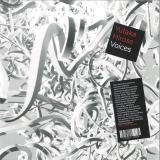












![Ilpo Väisänen - Asuma [2025 Remaster]](https://www.deejay.de/images/l/3/8/1144938.jpg)


