Riviera Records is a brand new label that kicks off with ‘Move’ - a statement of intent from founder X-Coast. Continuing to perform across the USA, Canada, Europe and Asia, X-Coast is an unconventional character and little is known about the mysterious Serbian other than the concept for the alias is that it exists “somewhere in the deep blue Caribbean Sea, between your imagination and what’s real.” Having released on labels like Hot Haus, Lost Palms and Steel City Dance Discs, X-Coast now launches Riviera Records with a promise to be an uncompromising clash of sounds” and the label stays true to that from the get-go.
There is no mucking about here as X-Coasts demonstrates his versatility as a producer with three varying mixes of ‘Move’ making up the bulk of the package. First up is the Trans Mix: an arms-in-the-air, throwback trance track with euphoric vocal stabs all primed to inject real energy into any set. House Mix then bounces and bumps with a refracted garage vox and endless old school dynamism, before the twisting and turning Breaks Mix follows with its thumping drums, hits and rattling dub sounds that all explode to life. Finally, ‘Naos’ totally flips the script with a slow, deep, cosmic workout build on a rugged bassline. A breathy voice, warm chords and balmy pads all wash over you like a Balearic breeze and take you to hedonistic dance floor somewhere in 80s Ibiza.
Baba Stiltz continues to showcase his songwriting capabilities with Relief.
Backed by Ilari Larjosto on drums, Relief sees Stiltz delving deeper into the slacker-country territory explored on his last album, Paid Testimony, though here the sound is more refifined and hi-fifi. The track hints at the indie apathy of decades past while maintaining a distinctly contemporary sensibility.
A dubby yet fractured-sounding bassline and sparse three- chord verse structure intertwine with Theo Stocks’ beautiful lap steel arrangement, while Larjosto’s steady, Moe Tucker- esque drumming keeps the song moving forward.
Lyrically, Stiltz navigates pop songwriting tropes with restraint and precision. The repeated refrain of “congratulations” feels both strung-out and melodic, while fragmented, Garielle Lutz- like imagery — “tick tock, wrist watch, clif bar, trunk car, its cargo” — quietly sets the scene. Somehow, the juxtaposition resolves elegantly.
When asked about the theme of the song, Stiltz simply responded: “There is relief in acceptance.”
With Relief, Stiltz offers another compelling glimpse into his evolving songwriting practice, and perhaps an indication of what is still to come. The release follows a prolifific start
to the year for Stiltz, including Blurb 2 with Okay Kaya, co- production, writing and mixing work on Ana Roxanne’s Poem 1, and co-production and mixing on the SY3 EP for Music From Memory.
Life In Patterns welcomes Amsterdam-based live act and producer VNTM for his debut appearance on the label with “Ostbahn”, a five-track EP arriving on vinyl and digital formats on 24 July 2026. For VNTM, Ostbahn marks a departure from his usual creative process. While most of his productions are conceived and developed within the familiarity of his studio, every track on this release originated elsewhere — each one tied to a specific place, encounter, or moment beyond its walls. These external sparks became the foundation for a collection that feels both deeply personal and unmistakably geared towards the dance floor. Across the EP, VNTM explores the intersection of emotional depth and physical intensity. Dark, immersive pads and melancholic atmospheres are woven into powerful techno frameworks, driven by heavy low frequencies, tightly locked grooves, and a precise sense of movement. The result is a body of work that balances introspection with impact, equally suited to peak-time systems and solitary listening. Based in Amsterdam, VNTM has established himself as one of techno's most distinctive live performers, appearing at major festivals and clubs worldwide with a hardware-focused setup dedicated entirely to his own productions. His sound combines harmonic exploration and narrative-driven composition with distorted percussion, futuristic sound design, and a constant embrace of emerging synthesizer technologies. Beyond his performances, VNTM is the driving force behind the acclaimed Mindscape events at Amsterdam's Lofi, where he has hosted artists including Len Faki, Kangding Ray, Sterac, Âme, Recondite, Polygonia, Luigi Tozzi, Vril, and JakoJako. Recent highlights include his debut on the Awakenings Festival Mainstage, an all-night-long live set at Lofi Amsterdam, and a sold-out debut performance at Refuge in New York City. With “Ostbahn”, VNTM delivers a compelling first chapter on Life In Patterns — a release shaped by experiences beyond the studio, translated into hypnotic, emotionally charged techno built for deep immersion and maximum physicality.
Fuzzy Blanket Recordings drops their third vinyl release, Form Is Emptiness, a four-track Various Artists EP that navigates a shift into darker, more melancholic territory.
Rooted in the label's signature warmth, the collection further expands the fusion of deep house with shoegaze and dream pop. Twilight atmospheres and a hypnotic, ambient house pulse unfold across the release, creating a record equally at home in the collective haze of a late-night dance floor or the solace of a tea house.
The master of ambient soundscapes, intertwining authentic old school breakbeats with his inimitable style returns with a fresh album of choice cuts for the Spatial crew. A1 - Form of Defraction Opening the LP in his gloriously unique style, Aural Imbalance sets the tone with a powerfully ambient intro of padwork and delicately filtered breaks before dense, analogue old school breakbeats roar to life sending the track skyward. The sublime 808 bassline simmers beneath an ever-evolving soundscape of twinkling melodies and strings, the very essence of serenity captured in just under 7 minutes of audio bliss. A2 - Discreet Function Enveloping the listener with a warm blanket of silky ambience, Discreet Function soon jolts to life with a crunchy breakbeat that counteracts yet compliments the pads and myriad of delicious micro melodies so well, you wonder how it’s possible to take such extremes and mix them down so expertly that our ears accept it as one. After a relatively brief breakdown the track rolls out before the breaks are snatched away at the death - capping off a quite unique composition. B1 - Softlight Light cymbals and delicate textures introduce us to Softlight, a track which sees Aural Imbalance guiding the listener through the clouds to a haven of gentle serenity where your troubles simply fade away, punctuated by a stunningly programmed and memorable Hot Pants break pattern, timid classic basslines and an overall plethora of sun-baked energy - perfect for the headphones and the record box - as always. B2 - Airwave Immensely old school vibes are immediately present in Airwave, with analogue breaks and succinct female vocal samples that mingle with echoing melodies and synthwork to create a beautifully flowing and unique slice of atmospheric gold. Additional breaks are fused into the mix as the track progresses, elevating the piece to the heights we have come to expect from Aural Imbalance, yet never cease to amaze. C1 - Speed of Light Gentle cymbals and filtered breaks open Speed of Light, before a crisp barrage of amen goodness descends and dominates proceedings - just as a good amen should! Programmed to perfection with an immensely danceable rolling pattern, the amens lead us through a sea of washing synths and delicate melodies, intertwining and frolicking in the mix, completing a charming and memorable piece. C2 - Fading Star Playful strings and a luscious 808 bassline play with sumptuous padwork in the intro to Fading Star, a track which sees Aural Imbalance capture the essence of 90’s jungle and it’s symbiotic relationship with atmospheric drum & bass perfectly. Developing throughout with an array of unassuming effects and a quietly moving vibe, Fading Star is the perfect addition to sets spanning the entire history of this music. D1 - Drifting Under Bright Skies Aural Imbalance resurrects the excellent break last featured on Spatial in his sublime track Surface Area, this time chopped and sliced to a different vibe, with kickdrums at the forefront and that fantastically crunchy snare deployed more sparingly. Shimmering padwork and light melodies dance across the mix throughout to leave us with a refreshingly unique and memorable track you won’t be able to get enough of. D2 - Violet Completing this fine LP of old school ambient breakbeat mastery, Aural Imbalance deploys Violet to see us out - a climactic-feeling romp that opens with quiet intent before launching the listener through cheery melodic tones and bustling soundscapes, sprinkled liberally with airy pads and fluttering micro melodies that zip and whoosh around thick analogue breakbeats. A fitting end to a thoroughly enjoyable album. Words by Chris Hayes (Spatial / Red Mist) credits
Eric Cloutier's career has always been defined by a certain kind of relentless, monastic discipline. With My Friend The Abyss (PALINOIALP01), Cloutier continues to bridge the gap between the selector and the creator. The album title itself suggests a reckoning with the internal-a realization that time is the only distance between an artist and their masterpiece-resulting in a body of work that feels less like a collection of tracks and more like a hard-won transmission from the deep.
Forged in a crucible of stress, chaos, and loss, the LP eschews the easy loops of his earlier output for a far more complex architecture. While Cloutier's signature hypnotic pulse remains the bedrock, the record expands into a startlingly broad lexicon: the dub-wise weight of "Havittaa" and the tribal intensity of "Desassossego" sit alongside moments of fragile ambient beauty. Perhaps most surprising is the inclusion of "Ligrothism," where Cloutier explores the broken rhythms of drum and bass, proving that his obsession with "Palinoia"-the Greek term for perfecting an act through obsessive repetition-has led him to a place of total creative fluidity. This isn't just club music; it's a masterclass in atmospheric tension.
Fantastic Friends Recordings proudly presents a new vinyl journey through deep, minimal and underground electronic sounds, bringing together four distinctive artists from across the scene.
A1 – Nicolas Duvoisin & Kim Kemi
Swiss underground veteran Nicolas Duvoisin joins forces with Danish selector and producer Kim Kemi, known for his close connection with intimate dancefloors and hypnotic grooves. Their collaboration delivers a refined blend of driving rhythms and atmospheric textures, perfectly setting the tone for the record.
A2 – Mike D.
Hailing from Chihuahua, Mexico, Mike D. is part of the new generation of minimal and underground house producers. Recognized for his sophisticated productions and support from respected international DJs, he brings a groove-focused and highly effective club cut to the release.
B1 – Guedes & Kid Moss
Longtime collaborators and regular contributors to the Fantastic Friends universe, Guedes & Kid Mosscombine infectious basslines, rolling percussion and playful melodic elements. Their productions are known for balancing dancefloor energy with a distinctive underground character.
B2 – Isaac Elejalde
From the Berlin scene, Isaac Elejalde delivers a deep and elegant interpretation of the label's signature sound, blending precision, groove and subtle emotional depth into a timeless late-night track.
A carefully curated four-track vinyl release designed for selectors, collectors and dancefloor explorers alike, continuing Fantastic Friends Recordings' commitment to forward-thinking underground electronic music.
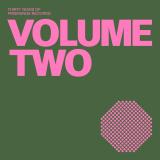
We’re thrilled to present Volume 2 of ‘30 Years Of Freerange’. Six more, brand-new and exclusive tracks from a variety of label regulars including Fouk, Aroop Roy, Coflo, Fred Everything, Matt Masters & Radic The Myth
Three decades in, Freerange doesn’t look back - it expands. 30 Years Of Freerange - 30 tracks from 30 artists across Five EPs. A slow-burn rollout culminating in a beautiful boxset meticulously assembled to outlast trends, algorithms, and short attention spans. A handpicked cross-section of the Freerange continuum from artists who’ve shaped the sound alongside up and coming voices pushing it somewhere new.
KinAhau returns to Crosstown Rebels with his introspective three-tracker, ‘Cicek’ EP.
Out on 3rd July 2026, the young producer delivers a deeply personal excursion, featuring Mahmut Orhan, exploring themes of identity, independence, and creative freedom.
Few artists have arrived on the electronic scene quite like KinAhau. First entering the spotlight through a chance encounter that led to his breakout collaboration with Solid Grooves founder Michael Bibi, the exciting DJ/producer quickly found himself moving through some of the world's most respected clubs and festivals. Yet while early attention centred on an unlikely origin story, the years since have revealed a more nuanced artistic voice, one increasingly focused on reflection rather than reaction, and expression rather than expectation. That perspective sits at the heart of his return to Damian Lazarus’ Crosstown Rebels imprint as he lands on the label with his latest EP, ‘Cicek’.
Opening title track ‘Cicek’, created alongside Mahmut Orhan, unfolds through emotive melodies, organic textures, and a sense of quiet tension that feels deliberately removed from conventional club formulas. It's a record that prioritises atmosphere and feeling over immediacy, setting the tone for the wider release.
Across the EP, that idea takes different forms, shapes and directions. ‘Plane Jane leans’ is a stripped-back, hazy journey through vibrant keys and woozy textures, while ‘Danza De La Pau’ flips the script and tunnels into trippy, ping-pong synths, cascading tones and off -kilter pockets of sound. Together, the three tracks feel less like individual records and more like snapshots from a broader creative conversation, one shaped by a growing distance from formula and a desire to explore something more personal and unique.
Second album of french incendiary fake big band Parasite Jazz. A krautrock, jazz-non-jazz, experimental album recorded along four seasons by three musicians (Alex Larsen, Tamara Goukassova & Théo Delaunay) from the french fringes ; members of Succhiamo, Diagonale des Yeux, Simple Music Experience, Violent Quand on Aime ... featuring Radio Hito, Kyle Knapp (Deliluh) & Hochiwah.
—
After its first release in 2023, the tiny big band Parasite Jazz brings its public iterations to fruition with “♫”, a testament to an alternate reality, matured voyaging across France over the span of four seasons.
It sees the music flee through exuberant forests and steep troglodytes ; a parallel genre movie with a soundtrack of diluvian rhythms, mocking chants, jazz noir and voodoo accidents. In this shifting, autonomous world, the elastic orchestra—whose members Radio Hito, Valentin Noiret, Kyle Knapp, and Hochiwah keep on appearing and disappearing—plays for nocturnal secrets and feverish cavalcades.
Bernardo Pinheiro and Joutro Mundo seek to make a connection between house music and their native Brazilian traditions on this new EP for Banana Gold. Pinheiro brings over two decades of experience and Mundo is the founder of Onda Boa, so these two have serious chops and it shows. 'Viva Liberdade' is a hands-in-the-air piano house tune with Portuguese vocals but a sense of nagging melancholy that adds a distinct edge. 'Salve Salve' is chunky, bubbly and bass house with a lively vibe and 'Eu Amo A Vida' closes with some soft acid and a playful touch of Euro energy. A fine cross-pollination of styles.
Following a nine-year hiatus, Willie Burns' WT Records imprint is back in business. To kick off a new era, the New York producer has chosen to reissue sometime L.I.E.S man Entro Senestre's hard-to-find 2016 EP 'ES'. It remains one of the producer's greatest moments. For proof, check deep, emotive opener 'Rosegold', where cascading pianos and melancholic chords ride tough house drums and a moody bassline, and the techno-tempo deep acid shuffler 'DOHC'. 'TriState' sees him go deeper still on a hybrid ambient/deep breaks flex, while 'Sb Dauntless' fixes similar ambient sonics to an experimental, oddly swung, lightly UKG-influenced beat.
Returning to Samurai Music following last year's Between Veils, Sciama opens up a new portal of exacting sonic exploration with Wave Interaction. Moving through dense drone shrouds, steely sound design and tense, taut rhythms, Michael Watters lays out a manifesto for waveform resonance within the half-time D&B tempo range. Wave Interaction is the precursor to a forthcoming album that will lay out a purposeful study of the interaction between machine-made sound waves and human perception, inspired by the teachings of early electronic music pioneer Daphne Oram. As an opening statement, 'Cele' maximises on a patient, spacious arrangement that allows the carefully sculpted layers of waveforms to resonate with minimal distractions. Far from minimal, it's a dense and evocative sound world Watters builds up. 'Excitation' brings more detailed percussive sequencing into the mix, teasing pin-prick snatches of breakbeats and designer ripples that dart around the psychoactive tonal elements in the mix. 'Intermodulaton I' opens the second half of Wave Interaction on a crisp, stepping beat more than ready for the club. As ever, functionality is only one part of the picture as further uncanny sheets of ambiguously tuned synth work unfurl across the austere framework. 'Shifting Formants' has a knottier, tunnelling quality that joins the dots with techno hypnotism, made all the more immersive by the harmonic overtones radiating off the vibrant lead lines that give the track its distinctive character. Guided by a clear intention and a finely honed studio practice, the return of Sciama hails an impactful addition to his considerable catalogue and tees up further compelling exploration on the impending long player.
Fausto returns to the Carpet family, this time with three tweaked out jams perfect for the Circuits series. Spread across the A-side, the 9-minute ‘Moonland’ evokes its title with driving acid and cosmic Detroit atmospherics. On the B, ‘Nacho’ is a classic mood builder, tempering its own acid lead with expansive bass and a rolling groove. The EP closes with the stepping ‘Nirvana’, perfect for closed-eyes reverie at the afters.
Constantly pushing his studio craft into unexplored realms, Pugilist returns to Samurai with a fresh clutch of innovative hybridised meditations transmitting from upper tempos. The versatility in Alex Dickson's approach is proven by the broad spectrum of labels he releases on — as comfortable shelling down for Shall Not Fade as he is tearing out on Rupture London. As the Melbourne / Naarm-based producer opens up the Triads EP with 'Rune', he hones in on a dynamic fusion of insistent technoid propulsion and brooding bass snarls with a mysterious portent. 'Pyre' swiftly turns up the percussive intensity with bludgeoning kicks and whipcrack snares that evoke classic electronica as much as D&B. For all the sharp attack of the drums, though, Dickson manages his ingredients with ruthless restraint, creating a fierce kind of meditation in the process. 'Woven' allows a rich variety of snaking synth lines to take centre stage as we tunnel into the second half of the EP, relishing the space for dynamic modulation and slowly evolving, cinematic pads that offer a glacial foil to the twitchy pace of the snappier elements in the mix. 'Machiavellian' plays the consummate closer in its lead in, playing a patient game in ritualistic drums before the herald of rave tropes rear up in some pronounced, choppy snare science. Yet again, Dickson opts for a softer approach where you might be expecting an explosive drop, allowing the skittering drums to roll on until they become a mesmerising texture in the track. In the end, it's an expert flourish demonstrating the energetic possibilities that lie in the spaces beyond more obvious peaks and troughs. Across four brilliantly original, highly advanced rollers, Pugilist nails the balance between subtlety and impact and proves himself a worthy advocate for the path less travelled.
Vertice Di Convergenza explores the intersection between two rhythmicarchitectures. The sub-driven asymmetry of UK bass and dubstep blends thehypnotic cyclic motion of Dutch psy–IDM trance. Both share a focus on low-end design: basslines as structural anchors, kicks tuned to harmonic tension andpercussive spaces engineered for negative pressure. The result is a sonic plane where mechanical precision meets psychoacoustic flow.
Bristol's Sam Binga & Addison Groove have been friends and collaborators since their 2013 'BS3' EP, released on Modeselektor's '50 Weapons' imprint. This project, the third full-length on Binga’s Pineapple Records, is born from an intense 72-hour session at the legendary Devon Analogue Studios, where the pair were able to explore their mutual love of uptempo machine funk - whether that be Detroit Jit, Chicago
Boxjams or Turbo Electro.
Three days of intense creativity across classic drum machines, vintage analogue synths and rare hardware effects resulted in a collection of raw but powerful audio building blocks - and over the past two years, the pair have been gradually shaping them into what is now a complete project - the BAGS INC album. Across 12 tracks, Binga & Addison explore that exciting space between 140 and 150 bpm - but while it's fast, it's not 'hard'; as you'd expect from the creators, it's still got that wiggle, and the all-important cheekiness for which they're known.
Mastered by Bob Macc @ SC Mastering and cut at the Sony plant in Europe,, the album has immersive and musical detail to warrant deep listening, while maintaining that essential club energy.
Christian Prommer – producer, drummer, DJ and multi?instrumentalist best known for his work with Trüby Trio, Fauna Flash, Drumlesson, Voom:Voom (with Peter Kruder), Prommer & Barck (with Alex Barck), and as the producer of DJ Hell’s Teufelswerk – presents his new album Rhythmic Nocturne, spanning spiritual deep house, jazz, balearic trip?hop and hypnotic rhythm explorations. A must for fans of St. Germain, Floating Points and refined grooves at all speeds.
This album distills ten years of Berlin into a twilight drift between order and abandon. Daytime studio sketches are pulled apart at night, reshaped by shifting perspectives that swing between jazz harmony, textural experimentation, and the heavy gravity of techno basslines and analog drums. Intimately close-mic’d piano, drums, percussion, cello, and strings are constantly recontextualized—dropped into new rooms, resonances, and imagined spaces—so their meaning keeps mutating. Room noise, human breath, and accidental sounds are folded into the pulse, turning spill and imperfection into rhythm. Even a piano lid thudding shut on “Dark Matter” is claimed as part of the beat, underscoring an album that embraces freedom, spontaneity, and the beautiful lack of accountability that defines this city at night.
Two rare recordings from the archives of legendary producer Richard Hewson.
Rising Star (Cosmix) began life in 1984 as a vocal single performed by Debbie Sharp. Hewson reworked the original track into a percussive cosmic disco interpretation, aptly titled the “Cosmix”, experimenting with his newly acquired Bel Delay effects unit, which became central to his studio explorations at the time.
Deep Song dates back even further, to the late-70s Richard Hewson Orchestra period - the creative blueprint that would later evolve into Hewson’s cult studio project, The RAH Band. Written, produced and assembled by Hewson in his home studio before additional strings and vocals were layered in, the track was inspired by his deep admiration for Miles Davis, particularly the landmark album Kind of Blue. Deep Song was originally released as a B-side under a mysterious alias in 1979.
Featuring rare- and first-on-vinyl tracks from beloved producers such as 2000 And One, Stasis, and CiM. Remastered by DMX Krew and with an accompanying online essay by Oli Warwick.
Across eight carefully selected slices of starry-eyed machine soul, Cold Blow presents an exquisite tour through backroom techno and downtempo electro. With a focus on thematic flow and an immersive listening experience, the London-based label explores works from leading lights of the 1990s and previously unreleased cuts that celebrate the human heart that can be discovered in synthetic sound practices. The development of techno in the 1990s saw the music evolve in different directions across the world. From the expressive blueprint laid out by the Detroit pioneers, a wide range of tempos and energies emerged. Techno's evocative synthesis and intricate drum machine programming was especially potent for deeper explorations away from the dancefloor. Documents Of A Different Reality casts back to when technology was steering quantum leaps in communication and creativity and the future was shot through with naive optimism. It was also a time when the media and industry hadn't caught up with the music to box it into distinct categories. As such, there's a sense of creative freedom that informs the older tracks on the album, from 2000 And One and Sandy Huner's sparkling example of early Dutch techno to London-based LA Synthesis' detailed take on braindance and the majestic night sky vision of cult legend Stasis. There's also space for rare, late 90s machine funk from Icelandic outlier Thor alongside Connective Zone's charmingly fractured bleep dream and a more contemporary offering from Barcelona-based duo Permutation. Meanwhile Mind Control and CiM both capture the spirit of stylistic fusion with twitchier rhythms that take influence from hardcore and jungle as much as techno. With an atmospheric through-line of melancholic pads and harmonious leads, this small but perfectly formed collection naturally follows on from previous, equally thought-out compilations on Cold Blow, and adds a distinct perspective on the history and continuing legacy of pioneering early ambient techno.
Rain Dance is the debut album from Bristol-based producer Arcane, released on Over/Shadow. Across eight tracks the record explores atmospheric jungle, drum & bass and breakbeat influences, combining deep bass pressure with rich melodic detail and immersive sound design. The album moves between expansive, journey-like pieces such as “Nebula” and “Metropolis”, heavier dancefloor cuts like “Underground” and “Fear", resulting in a spacious but rhythmically detailed LP that balances classic junglist energy with a cinematic sense of atmosphere.
Inweys is the new project from Scottish musicians Conal Blake (Feedback Moves, Domestic Exile, Infant Tree) and Murray Collier (Dip Friso, Grim Lusk, Real Landscape). Their debut self-titled 12’ was recorded in the summer of 2024 at La Chunky Studios in Glasgow.
They asked Fielding Hope of Counterflows Festival to write a short summary of the record:
“Inweys debut release arrives as four pieces of broken body music. Lurking, barely human fragments brought into the present. Using a short drum-machine improvisation as core material, the pieces are formed from a processes of mining and re-mining for small details, with each fragment zoomed in on and turned into new pieces. There’s a transformation taking place, but one that doesn’t obscure the materiality of the recording tapes as sticky, corrosive matter. On skewed and stretched fabric they enact their palimpsestic play, sketching and altering the grid with itchy technologies. What their edits and improvisations don’t say they let space say the rest, with vacuum aerated frames for bass to diffuse and beats to wriggle. More King Tubby than Cage, more Mantronix than Reich: minimalism with molten tips.
Both Conal and Murray’s past work has embraced malleable and iterative technologies; music whose feeliness figures itself out in space in a messy precomposed/improvised dialectic. This is the sort of thing most “new music” experimentalists (or anyone who spends most of their time obsessively manipulating tapes in expensive studios) often can’t achieve; a liveness, birthed from learning in situated play. Like the lore of Phuture’s Acid Trax, a poverty of material is at the heart of this, rendering the work with an abortive conviction: a corpse waking to consciousness becomes amphibious. Instead of the composer we have a relation, two people navigating the awkward spooling between the two reels of tape. Inweys is scots for “inwards”, and in their working process this is what they do. But the result is circular motion. Until the tape runs out, all in ways move out.”
The incredible story that began with The Most Mysterious Song on the Internet (TMMS) now enters an exciting new chapter: Skyscraper, the debut album by FEX.
Skyscraper features ten original tracks recorded in the early to mid-1980s-carefully re-transferred, remastered, and brought back to life. The album cover, designed by Darius S., brings the story full circle. Darius is the very person who preserved the now-iconic track Subways of Your Mind by recording it from NDR radio in the mid-80s. Without him, FEX may never have been discovered.
FEX's debut opens with its namesake, Skyscraper-a brooding, previously unreleased track the band once described as part of their "psychedelic phase." With haunting synth-helicopter textures and deep guitar riffs, it immediately sets the tone and raises tension.
The release flows naturally into the energetic and fully remastered studio version of Subways of Your Mind. This version of the TMMS - re-discovered on the "yellow label tape" by Reddit user Marijn-was long believed to be from a smaller home studio, but was actually recorded in November 1984 at Hawkeye Studios in Ganderkesee, near Hamburg.
Goldrush, first teased in raw form on FEX's YouTube channel, bends toward mechanical rhythm and shimmering synths, a snapshot of the band's experiments with programmed drum machine sound. Rückwardt's lyrics point to greed and criticizes materialism, and while the music leans toward pop sensibilities, it carries a raw, fractured edge.
Heart in Danger and I've Got My Eyes On You offer contrasting experiences-one rooted in classic post-punk tension, the other floating in melodic synth layers. The latter in particular feels like a fragment from a parallel radio history: a precise and one of a kind synth pop love song with a progressive touch.
From a rehearsal tape comes Dirty Slapstick, its urgency intact. Missing keyboard parts were later reconstructed by Michael Hädrich using his original DX7 synthesizer-recovering lost elements without rewriting the past. The lyrics take a wry look at forced optimism. Also included are the songs Talking Hands, Jenny and Strange Feeling, the latter being a slower blues-tinged cut, revealing yet another facet of the band's reach and Rückwardt's songwriting diversity.
The album closes where the legend began-with the original radio recording of Subways of Your Mind from Darius' cassette. This version of The Most Mysterious Song features alternate vocal effects, contributing to the track's enigmatic aura. Digitally transferred using a high-end Revox machine and carefully remastered, it now has its long-deserved official release.
The cover features a photo of the Eichenberg Bunker in Kiel-one of FEX's original rehearsal spaces and a symbolic monument to their sonic legacy.
Featuring Sarathy Korwar, Dudú Kouate, Marysia Osu and more
French-born, London-based composer and musician Pascal Bideau aka Akusmi announces his second full-length Terra Incognita, an album of intrepid sonic exploration that delights in the sensation of being somewhere you've never been before. The listener is invited to experience seven faraway sonic imaginariums, as global and spiritual jazz are fused with modern electronics and life affirming minimalism into a hypnotic, polyrhythmic odyssey.
The album's rich multilayered sound world features contributions from tabla virtuoso Sarathy Korwar, Senegalese musician Dudú Kouate adds an array of percussions, ngoni and flutes and Levitation Orchesta's Marysia Osu brings harp and flutes. Following Akusmi's widely acclaimed debut album Fleeting Future (2022) which was supported by The Guardian, The Quietus, MOJO , Gilles Peterson, Mary Anne Hobbs etc, this time, the sound palette for Terra Incognita is more vibrant, earthy and abundant, drawing inspiration from the radiating optimism and high-energy sources heard in Afrobeat, Highlife and Electronic Afro-pop music, sounding looser, free and primarily interested in raw sensations
Return to Sky is the follow-up to the band's classic Euporie Tide, which consolidated the band as a crucial underground force in the European psych scene and spread their unique brand of warm-toned stoner rock to a wider audience. The album is a condensed piece of acutely experimental, yet immensely engaging, instrumental rock. Each of the album’s five epics unfolds as a microcosm of the band’s genre-transcending psychedelia at large, yet adds something different to the whole.
The tracks on Return To Sky travel far and wide: heavy, detuned riffs are transformed into wide, pastoral soundscapes, and fluid minimalism warped into swirling crescendos and back again. Occasionally the band even manages to sound turbulent, fuzzed-out yet strangely peaceful at the very same time. Whereas so much of today’s psychedelic scene comes off as merely a tribute to a certain period of the past, Causa Sui has always been on a different mission. More than any other record in their catalog Return To Sky declares their roots in the avant rock of the late 1990s - where different eras and genres merged into something that resonated as much with the present as it celebrated the past. It also reveals the fact that members of the band has had their hands in many different projects since the band’s debut album in 2005: solo excursions into synthesizer music, collaborations with members of Sunburned Hand Of The Man and Tortoise as well as film soundtracks and improv sessions with krautrock legends Faust and Damo Suzuki. It has all worked a subtle influence on the kind of band they have become. On Return To Sky their sound is more earthy and heavy than other Causa Sui record, but it’s also a record that has absorbed everything from shoegaze and vintage Italian film music to spiritual jazz and afrobeat into its fabric. Causa Sui has never sounded deeper or more mesmerizing than on this set.
Applying the solid structures of floor-focused Berlin techno to the expressive space of introspective electronica, Answer Code Request returns to Delsin with his first album in eight years. Halo finds Patrick Gr?ser broadening his sound palette more than ever before, matching atmospheric synthesis with dynamic beat constructions true to his impressive legacy while breaking new ground. Across Halo, smoky clouds of pads and chords lend the album an introspective quality in the grand tradition of ambient techno. In front of these haunting melodic forms, Gr?ser is free to explore all manner of rhythmic directions. There are fractured, downtempo micro beats and angular fractals on the likes of 'Fading Shadows' and 'Refraction' that take their cues from breakbeat -- finely detailed drum sequences constantly evolving into new arrangements. A pointed nod to D&B rears its head on the aptly named, hard-edged 'Fracture' and you might hear a firmly submerged hint of ravey acid coursing under 'Sublith'. Elsewhere, the firmer kick-anchored pulse of the classic Answer Code Request sound manifests for more forthright techno excursions such as 'Halo' and 'Bliphar'. In the context of the album, though, these tougher tropes are channeled into mesmerising soundscapes that soften the attack without diminishing the potential for club impact. In this era of his craft, Gr?ser moves instinctively through the sounds and approaches that inspire him, and the end result is an album that feels natural and open, all the while steadily progressing the ongoing evolution of Answer Code Request.
Originally Self-produced in 150 copies (1977), MAR-VISTA’s only album is one of France’s most strange and radical records. Psychedelic electronic music, experimental, and acid folk A collector’s holy grail for fans of Klaus Schulze, Terry Riley, Neu, and Silver Apples. Includes a previously unreleased second record (1973)
Grammy-nominated Malian singer, songwriter and guitarist Fatoumata Diawara returns in 2026 with MASSA, her most personal work to date. Introspective and powerful, the album explores motherhood, faith, memory, and resilience, transforming intimate reflection into universal storytelling. Through these songs, Fatoumata invites listeners, of all backgrounds, to embrace gratitude and accept that destiny is an inevitable part of the human journey. The album also carries a moving tribute to her late father, whose love continues to guide her beyond his passing. Musically, MASSA sees Fatoumata Diawara expand her sonic universe, blending her Malian musical heritage with pop textures, under the artistic direction of pop icon -M-, creating a sound that is both rooted and forward-looking. With MASSA, she reaffirms her place as one of the most vital voices in African music, transforming personal truth into universal resonance.
Mr Bongo are thrilled to have one of the leading lights in contemporary soul joining the label. Melbourne-based vocalist, musician, and songwriter Ella Thompson is an artist whose name is being championed by some of the best in the business. She’s been building a reputation as one to watch, with two standout releases on Hopestreet Recordings, Domino EP in 2023 and Ripple On The Wing LP in 2024, alongside a heavy touring schedule and a stacked list of support slots and collaborations.
For this new 7” single, Ella collaborates with a selection of artists at the forefront of Naarm/Melbourne’s soulful DIY community. Featuring members of Surprise Chef and Karate Boogaloo, Liam McGorry from Temporary Blessings (College Of Knowledge) joins Ella as co-writer and co-producer, with go-to Melbourne engineer Henry Jenkins also producing and recording the track.
Bridging the worlds of classic and contemporary soul, Ella’s songwriting is drenched in emotion and personal experience. With a timeless feel that is hard to tie to any particular period, she has crafted a sound that instantly hits deep. It’s warm, tasteful and distinctly Ella. That talent has also seen her tour with Mark Ronson, and support other contemporary greats like Jalen Ngonda, Lee Fields, and Thee Sacred Souls.
‘Promise To Keep’ is the first taste of Ella’s new material on this 7” single. An irrepressible upbeat groover that echoes mid-to-late-sixties vocal groups. That influence though never overpowers Ella’s own unique creative voice or distinct sense of self. She draws from it, but the colour is all her own. The song tells a story of being carried by the current that keeps us moving, giving us courage. A commitment to oneself that speaks to action shaped by vision, and the pull of following what feels correct even when the distance is far.
The flip side finds Ella in a different mood. ‘Change Of Heart’ is a heavy sweet-soul ballad. Rich in drama, Ella’s falsetto vocals build to a stunning climax in the final section, with triumphant horns that signal the release of letting go. The lyrics reflect on temporality and impermanence, and the way moments can be missed or arrive with synchronicity. It’s that bittersweet paradox of triumph and sadness, where everything contains its opposite: absence and presence, innocence and experience. The song is underpinned by a brooding production quality and atmospheric, beat-heavy flavour that Surprise Chef and cinematic soul fans will relish.
Mixed by Wayne Gordon (Daptone, Womack Sisters), ‘Promise to Keep’ and ‘Change of Heart’ are a glimpse of things to come from Ella. Keep an eye open for more new music incoming from this phenomenal artist at the top of her game.
Double vinyl reissue of Skullflower’s epochal “IIRD GATEKEEPER” album - the first time that this album has been available on vinyl for 30 years. In addition to the original LP this definitive and expanded edition includes extra and unreleased tracks taken from the recording sessions. For the first time all the tracks recorded by the band during this period can be heard together giving fans unprecedented access to material previously only available in the bands’ archives. Recorded in London in 1991 and released in 1992 on Justin “Godflesh” Broadrick’s HeadDirt label in 1992, IIRD GATEKEEPER established a worldwide reputation and following for Skullflower and convinced many who heard it that they had encountered nothing less than the best band on the planet. Arriving at the height of the “grunge” and the expansion of underground guitar “rock” into corporate America, IIRD GATEKEEPER had its roots deep in the UK noise and power-electronics scene. Guitarist Matthew Bower and bassist Anthony Di Franco were both graduates of the Broken Flag school of British noise making with their respective projects PURE, TOTAL and JFK. IIRD GATEKEEPER was Skullflower’s third album and was the first of the band’s albums to feature a consistent line-up throughout its production: Matthew Bower (guitar), Anthony Di Franco on (bass) and Stuart Dennison (drums). Recorded and mixed in four sessions between January and June 1991the tracks on this edition of IIRD GATEKEEPER shows the band’s new line up developing their sound, warping and evolving in real time. As such this edition of IIRD GATEKEEPER provides a unique document of the band in a state of transition, with the chemistry of the individual playing combusting in the studio to create a wave of astonishing creativity. IIRD GATEKEEPER is perhaps the definitive British underground rock album of the 1990’s – unique and never equalled. With this new edition Dirter Promotions allows Skullflower fans old and new to listen to this classic album as it was intended: spark up, crank it up and prepare to have your ears and mind blown
A fragile sense of time and memory runs through 'Thrill', the third collaborative album from Yana Pavlova and Pavel Milyakov. Recorded across four years and completed shortly before Pavlova's passing in February 2025, the collection expands the delicate language they introduced on Blue. The 14 scratchy, diaristic pieces move between ambient drift, field recordings and loose jazz inflections where haunted vocals, blurred guitars and faded textures surface then dissolve again. Rather than settling into fixed forms, the music unfolds patiently, revealing quiet emotional weight and space. It makes for a fitting closing chapter and a great document of Pavlova's singular, ethereal voice.
Leopard DaVinci is the official keyboardist of Dabeull's Band.
“Casual Conversation” pairs Leopard DaVinci’s high-gloss funk production with Moniquea’s signature vocal charisma for an instantly addictive modern funk single. Flirty, confident and groove-heavy, the track balances retro-inspired synth textures with a contemporary boogie pulse, making it a strong fit for editorial playlists centered around funk-forward, danceable and soulful music.
Moniquea already holds a respected position in the global modern funk community, and this release delivers exactly what that audience wants: attitude, melody, replay value and undeniable groove. “Casual Conversation” has crossover potential between dedicated funk listeners, nu-disco audiences and feel-good R&B selectors.
“Flaws” pairs Leopard DaVinci’s signature synth-led funk production with Helena’s fresh and expressive vocal presence for a release that feels both timeless and relevant. Built around a message of self-acceptance and inner strength, the track transforms vulnerability into groove, offering a refined mix of modern funk, boogie and soulful pop energy.
Its lyrical theme makes it especially effective beyond niche funk circles, opening space for playlisting tied not only to groove and retro-funk aesthetics, but also to confidence, empowerment and uplifting mood. “Flaws” is melodic, elegant and emotionally direct — a strong crossover track with both artistic identity and listener accessibility.
Melody As Truth and Future Days Radio present ‘At the Emerald Pool’, an album by Tomo Katsurada and Jonny Nash.
Netherlands-based artists Tomo Katsurada (Ex-Kikagaku Moyo / Future Days Radio) and Jonny Nash (Melody As Truth) combine forces for an exploration into the sonic potential of the guitar duo, rooted in their experiences performing together over the last 12 months.
Friends and admirers of each other’s work for a decade, their musical collaboration began in 2024 with Katsurada asking Nash to contribute guitar to his debut EP ‘Dream Of The Egg’. Sensing the need to explore this further, they spent the following year performing together in different configurations, with Nash joining Katsurada’s trio and Katsurada in turn playing with Nash as a duo, across a wide spectrum of spaces, from churches and temples to concert halls, theatres and outdoor festivals. With new ideas developing organically out of these performances, recording new material became the next logical step. A short period of three days was set aside with a clear goal: to capture the essence of their fluid, intertwining melodies and guitar playing in a way that felt as direct and unfiltered as possible. Working from a handful of pre-existing sketches, they left ample room for experimentation to unfold within the process.
The results are presented on ‘At The Emerald Pool’, a collection of ten pieces that offer the listener a full immersion into the pair’s sound. With guitar as the primary instrument for both artists, it is no surprise that the core of the album lies here, specifically in the fluid interplay between the two players. Layers of gentle, delay-soaked fingerpicking often make it almost impossible to distinguish where one player ends and the other begins. As soloists, both Katsurada and Nash have a gift for crafting melodic lines that feel open and ascending, expressive and hopeful without becoming saccharine. Longer, more abstract pieces are counterbalanced by a series of shorter songs, with five vocal tracks appearing across the album. The decision to share vocal duties lends the record a unique quality and a strong sense of variation, bringing a wide expressive range out of a deliberately focused musical framework.
‘At The Emerald Pool’ represents the first chapter in an ongoing musical dialogue, an attempt to capture a moment of connection, openness and discovery, laying the foundation for what continues to unfold.
Turn On The Sunlight is the long-running project of Texas-born, Maui-based musician and producer Jesse Peterson.
Originally formed in New York in the late 2000s, Turn On The Sunlight has evolved into a fluid, location-spanning practice rooted in collaboration, intuition and process. Now based on Maui, Peterson’s work draws together a wide network of musicians and environments, with recordings taking shape across Los Angeles, Tokyo, London, San Miguel de Allende and Haʻikū.
Loosely situated within a framework of organic, ambient-leaning jazz, 'Iseo' unfolds as a series of open, exploratory pieces, with electronics sitting subtly beneath acoustic and environmental elements. Built from layered instrumentation including synthesizers, guitar, zither, flutes, voice and field recordings, Peterson moves between grounded, tactile detail and more expansive, immersive states. A sense of warmth and permeability runs throughout: organic percussion, environmental textures and drifting rhythmic elements lend the record a gently saturated humidity, reflecting Peterson’s base in Hawaii, where the presence of nature is felt as much as it is heard.
Underlying the project is a way of working rooted in gathering, listening and tending. Instruments, ensemble sessions, field recordings and everyday environments are approached with attentiveness, shaped through collecting, refining and allowing things to settle. Relationships, landscape and lived experience shape the sound, giving 'Iseo' a tactile, almost hand-made quality.
Rather than fixed arrangements, the album feels as if it has been organically and lovingly assembled through a process of listening and response, each element finding its place within a wider, evolving whole. This approach reaches a natural centre point in the 15-minute piece 'Medianoche En La Calle Aurora', which unfolds patiently, bending through shifting environments as motifs and textures emerge and dissolve with quiet continuity.
Peterson’s role as both instigator and facilitator is central to the project. Bringing together a diverse group of collaborators including Carlos Niño, Mia Doi Todd, Laraaji, Ko Ishikawa, Luis Pérez Ixoneztli and Miles Spilsbury, he creates space for individual voices to emerge within a shared language. The result is a music defined by openness and generosity.
'Iseo' takes its title from Peterson’s son’s middle name, a word that can be understood to mean ‘one-world life’. The piece itself takes the form of a gentle lullaby, its melody loosely shaped around the syllables of his name and sung to Peterson’s son by Luis Pérez Ixoneztli, a close collaborator whose presence across the record reflects a long-standing relationship that extends beyond the music itself.
Sleeve art and design by Michael Willis.
'Electronic lullabies and folk songs from Ethiopia! A landmark recording from Ethiopia’s vibrant cassette era of the 1980s, Resonance of Time features pioneering composer Wesenyeleh Mebreku reimagining Ethiopian folk melodies through the humble circuitry of an early Casiotone keyboard.
'Historically, the works featured on Resonance of Time (የጊዜ ቃና Yegizie Kana) stand as quiet documents of Ethiopian musical memory. Many of the original songs included in this release emerged during important moments in Ethiopian history when music carried the collective emotion of the nation - love, loss, resistance, dignity, and hope. By arranging these pieces from Ethiopia’s musical heritage instrumentally, Wesenyeleh Mebreku aimed to preserve their essence while protecting them from being confined to a single era or performance style. In doing so, his preservation of Ethiopia’s musical heritage became a contribution to his country’s musical legacy itself, as Resonance of Time serves as an important musical milestone of this composer’s innovative recordings and musical developments in the prolific era of Ethiopia’s 1980s cassette tape culture.
'On Resonance of Time, Wesenyeleh made use of the first Casio electronic keyboard - the Casiotone CT-201 - to arrange and perform Ethiopian folk songs in his own unique style. Implementing the soulful, lo-fi character of the keyboard, Wesenyeleh’s interpretations of these works take on a life of their own. Charming analog tones interpret swirling sounds of organ and piano in kignit modality to the beat of a nostalgic rhythm machine while twinkling synthesizer sounds carry the melodies drifting out of time. The recordings reflect a watershed moment in Ethiopian musical history - when traditional melodies started being interpreted on electronic keyboards, and the advent of cassette tape recording allowed for music to be transmitted more accessibly than centuries-old oral traditions. During this time, Ethiopian musical modes were syncretized with new technology and budding musical experimentation, and Wesenyeleh’s interpretations on Resonance of Time are a landmark recording of this era, following in the tradition of reflecting upon and re-interpreting historical Ethiopian music for a new generation.
'Featured on the release are timeless Amharic folk songs and lullabies, Tigrinya love songs, Gurage and Oromifa popular songs, and even works closely associated with performers from Ethiopia’s 1970s popular music era such as Tiz Alegne Yetintu (ትዝ አለኝ የጥንቱ) which was famously performed by Tilahun Gessesse. Each piece, thoughtfully chosen by Wesenyeleh, is beautifully transformed into instrumental music of his own style - allowing these worlds of song to echo into the future while they are synthesized with the electronic innovations of the 1980s and Wesenyeleh’s own musical history.
'Wesenyeleh says this about his musical approach - ”Instrumental music, for me, is a space of reflection. Without words, the listener is invited to remember, imagine, and feel freely. In Resonance of Time, I hear my own musical philosophy: respect for Ethiopian kignit, careful dialogue with Western harmony, and a deep trust in melody as a storyteller.”
'Each piece performed on Resonance of Time speaks to a time when Ethiopian music was shaped by oral transmission through live performance and communal listening. In today’s fast-moving musical environment, revisiting these works is an act of cultural responsibility. These works remind us that melody once traveled slowly, settling deeply in the listener’s heart. The instrumental format allows these works to cross linguistic and generational boundaries, making them accessible to audiences who may not know the original lyrics but can still feel their spirit.
'Resonance of Time also reflects a broader historical dialogue: the meeting of tradition and adaptation. Ethiopian music has always evolved while holding onto its core identity. These arrangements affirm that evolution does not mean abandonment. Instead, it can be a form of safeguarding - ensuring that the musical wisdom of the past continues to resonate in the present and inspire the future.
'In this sense, the album is both personal and collective. It carries Wesenyeleh Mebreku’s own musical fingerprint, shaped by decades of practice, but it ultimately belongs to a wider cultural continuum. It is the artist’s contribution to keeping time audible so that memory, history, and sound may continue to speak to one another.'
SUPREME STRIKER returns with its second release following the breakthrough success of Quasar — Ritmo Love, widely supported on dancefloors and notably played by James Zabiela, igniting crowds and confirming the label’s direction: uncompromising underground music built on culture, not trends.
The new chapter comes from Italian producer John De La Noise, delivering a powerful and deeply authentic EP entirely co-produced by Michele Lamacchia, the mind behind Rhythm Of Paradise (ROP), Love Island, 34th Floor Experience, Nu-Cleo, Qubrique, Soulvibe Inc. and many other essential projects tied to the extended SKYLAX universe. A true architect of sound, Lamacchia brings his unmistakable analog finesse and musical intelligence into every detail of this record. From the opening track, A1 — Just With U (Special Skylax Edit) sets the tone with a refined filtered house approach — balancing French touch heritage with modern underground precision. Warmth, control, and elegance without excess. A2 — Tributo Al Maestro operates as a direct transmission — a respectful and elevated nod to the legacy of Soichi Terada and Larry Levan, where rhythm becomes language and space becomes emotion. A3 — 1986 (Special Skylax Edit) pushes deeper into the source code — merging old school Italo disco, proto-Chicago house and early European electronics. With strong melodic identity and raw analog textures, the track echoes the spirit of Klein & MBO while feeling immediate and alive.
On the B side, the journey expands with Piacere D’Estate, a fluid and luminous house track built for open air systems and extended sets, followed by Città Di Frontiera, where darker tones and hypnotic structures meet urban tension. Vecchio Ritmo Italiano closes the record as a statement — rhythm as memory, rhythm as identity, reprojected forward. Across the entire EP, the production carries the aura of early ‘90s Italian and New York house — not as a reference, but as a living system. Every element is intentional. Every frequency serves a purpose. SUPREME STRIKER continues to define its path: records made for the dancefloor, for DJs, for those who understand that music is not content, but structure.
LP,180, 2018 REISSUE - REMASTERED FROM ORIGINAL TAPES, CAREFULLY REPRODUCED ORIGINAL ART
The two sides of 1973's Big Business / Wind of Change are mainly the work of thegreat Keith Mansfeld but there's a killer cameo each from Alan Hawkshaw and David Snell to help deliver a thematic suite, diverse in mood, applicable to dramatic and environmental situations'. A Be With favourite and truly one for the heads.
The Big Business of side A is all the work of Keith Mansfeld. It's heavy on the suspense and features the vital Hot Property', an insistent groove so good that Madlib sampled it to lace the ace Long Awaited' by Lootpack with Dilated Peoples.
Sleeping Giant 1' is a more feshed out version of the equally-dazzling Fatal Error', evoking the orchestral magic of David Axelrod. Indeed, it conjures images of Diamond D falling over himself in the early-to-mid 90s to loop its intoxicatingly
eerie soundscape. Complete with guitar flls that recall Paris, Texas-era Ry Cooder, you need this record for this piece alone.
The horn-and-fute-led "Tycoon" is a head-nodder and "Power Complex" has some fantastic percussion. Other highlights include the breezy glide of Whistle Stop Tour' and its sister groove Clean Air.'
Over on Side B is the more expansive Wind Of Change, which includes the David Snell and the Alan Hawkshaw contributions. But these ain't no fller. Snell's shufing International Flight' sounds like a smooth Dorothy Ashby track tossed from the heavens. Hawkshaw's Road And Rail' is about as luxurious and strung-
out as the great man gets and it might just be the highlight of this whole set.
Not to be outdone, if Mansfeld's Balance Of Power' doesn't make you feel like king of the world then you must be playing it wrong. Oh, and did we mention World In Action'!
As with all ten re-issues, the audio for Big Business / Wind of Change comes from the original analogue tapes and has been remastered for vinyl by Be With regularSimon Francis. We've taken the same care with the sleeves, handing the reproduction duties over to Richard Robinson, the current custodian of KPM's
brand identity.
Be With have raided the KPM archives to re-issue another of our favourites from the KPM 1000 series. They Say: Underscore moods and links—contemporary beat music idiom. We say: Includes some of the most sublime, sub-ten second,
B8 : Keith Mansfield - Teenage Suspense
| B9 : Keith Mansfield - Teenage Narrative
[] B10 : Keith Mansfield - Teenage Seadiver
[~] B11 : Keith Mansfield - Teenage Link 1
[] B12 : Keith Mansfield - Teenage Link 2
[] B13 : Keith Mansfield - Teenage Link 3
[] B8 : Keith Mansfield - Teenage Suspense
[|] B9 : Keith Mansfield - Teenage Narrative
[] B10 : Keith Mansfield - Teenage Seadiver
[~] B11 : Keith Mansfield - Teenage Link 1
[] B12 : Keith Mansfield - Teenage Link 2
[] B13 : Keith Mansfield - Teenage Link 3
[{] B8 : Keith Mansfield - Teenage Suspense
[|] B9 : Keith Mansfield - Teenage Narrative
[}] B10 : Keith Mansfield - Teenage Seadiver
[~] B11 : Keith Mansfield - Teenage Link 1
[] B12 : Keith Mansfield - Teenage Link 2
[] B13 : Keith Mansfield - Teenage Link 3
[{] B8 : Keith Mansfield - Teenage Suspense
[|] B9 : Keith Mansfield - Teenage Narrative
[}] B10 : Keith Mansfield - Teenage Seadiver
[~] B11 : Keith Mansfield - Teenage Link 1
[] B12 : Keith Mansfield - Teenage Link 2
[] B13 : Keith Mansfield - Teenage Link 3
[{] B8 : Keith Mansfield - Teenage Suspense
[|] B9 : Keith Mansfield - Teenage Narrative
[}] B10 : Keith Mansfield - Teenage Seadiver
[~] B11 : Keith Mansfield - Teenage Link 1
[] B12 : Keith Mansfield - Teenage Link 2
[] B13 : Keith Mansfield - Teenage Link 3
[{] B8 : Keith Mansfield - Teenage Suspense
[|] B9 : Keith Mansfield - Teenage Narrative
[}] B10 : Keith Mansfield - Teenage Seadiver
[~] B11 : Keith Mansfield - Teenage Link 1
[] B12 : Keith Mansfield - Teenage Link 2
[] B13 : Keith Mansfield - Teenage Link 3
With Panorama, Frank Maston pays homage to the classic era of library records and Italian soundtracks of the 70s. A blissed-out, grooving collection of filmic cues, it continues the unique brilliance of Tulips and Darkland. Elegant and easy, subtle and stylish, breezy and beautiful; this is his Maston-piece. Commissioned by legendary label KPM, Panorama cements Maston as a master of modern classics and the most mesmeric of contemporary composers.
In early 2020, Be With suggested to Frank that he should make a KPM record. He wasn't aware that they were still putting out new library records - but he was super keen: "It was completely surreal and it still hasn't fully sank in that I have a record in that catalog, sitting alongside those incredible albums that were so influential to me."
Frank was visiting family in his hometown of LA in March 2020 when the world ground to a halt so the KPM project arrived at a fortuitous moment. Having fantasised about committing to a record with no distractions, with a proper budget, access to his gear and space to work in - to really dig in and try to write and arrange the best work he could possibly make - it was a real "be careful what you wish for" moment. But, as Frank explained, "it completely saved my year and sanity to have something to focus on and get excited about. It was my lifeline." He spent seven months on it, working almost every day.
Maston had already been making library-influenced music so when KPM outlined the criteria for the tracks it was exactly what he had been doing all along. He thought the best approach would be to make a follow-up to Tulips that had a parallel life as a KPM record. Enjoying complete creative freedom, “gave me the drive to power through and dig in deep. I'm not sure if I could have kept myself on such a rigorous recording schedule under my own steam, and I think the momentum I had writing and recording it is part of the strength of this record."
Maston’s sleek retro-groove instrumentals emulate the classic KPM “Greensleeve” reel-to-reel recordings that provided mood-setting music for mid-century cinema, television, and radio programs. Apparently in close conversation with the John Cameron-Keith Mansfield KPM pastoral masterclass Voices In Harmony, Maston's Panorama could be heard as that record's funky follow-up. Yes, it's *that good*. Another reference point from the hallowed library would be Francis Coppieter's wonderful Piano Viberations.
Opener "First Class" is a blissed-out groove, featuring the soothing vocals of Molly Lewis and a glistening harp over drums, a two-note bass motif (from Eli Ghersinu of L'Eclair) and an assemblage of guitars, synths, French horn and glowing vibraphone. Acid Lounge, anyone? The irresistibly funky "Easy Money" is a gorgeous cut led by more of Molly's vocals, pastoral flute and Rhodes, underpinned by drums and percussion, grooving bass, chilled guitars and synth strings. Kicking the tempo up, the percussive "Storm" is a vibin' filmic-fusion jam where psychedelic guitars (courtesy of Pedrum of Allah Las/Paint) organ, jazzy flute, Rhodes and vibes all compete for a place in the sun, over drums and walking bassline.
The heavenly "You Shouldn't Have" is a delicate, melancholic wonder; a dreamy instrumental where the melody is shared by a whistle, harpsichord and celeste, over a cyclical piano chord sequence and bass, synths, guitars, organ and distant French horn. The tempo rises again with the passionate, sticky "Fling", a summery, nostalgic groove with skipping drums and percussion, warm bass and electric guitar, yearning flute and synth strings. The brilliantly titled "Fool Moon" has that Voices In Harmony sound down pat. A romantic slow-mo dreamscape of Rhodes and harpsichord, piano, light drums and softly strummed acoustic guitar.
Side B opens with "Medusa", a hopeful, mellowed-out track with shuffling drums, feel-good flute, muted horns, glowing Rhodes and synth strings. The soft and gentle "Morning Paper" is an elegant way to start the day; a beatless blend of flute, guitar, percussion, ambient synths and vibes. The upbeat head-nod jam "Scenic" has that widescreen car-chase feel, uptempo drums and percussion, grooving bass, piano, synths and ambient electric guitar. "Adieu" is a smooth summer vibe, relaxing with brushed drums, Rhodes, flutes and horns. Molly Lewis's gorgeous vocals steal the show, alongside vibes, jamming organ and synth strings.
"Hydra" is another laid-back 70s-sounding retro cinema cue with light drums and percussion, walking bass, spacey synths, clavinet, glowing vibraphone, vintage organ and electric guitar. Closer "Jet Lag" is a laconic bow out; bass-driven drum machine soul, featuring hand percussion, Rhodes, vibes, synths and organ.
Multi-instrumentalist Frank played a bit of everything across Panorama. Yet, humble as ever, he believes the time, energy, and enthusiasm of all of the musicians invited to the sessions helped him realise his vision: "There were two Italian flautists who really understood what I was going for. Two french horn players, cor anglais, a vibraphonist and a flügel horn player. I've never involved this many people in my projects before, and yet the result is the most "me" record I've ever made."
Musically, a strong Italian theme runs through the record. Frank is fascinated by ancient Rome and both his parents are Italian (Maston was originally Mastrantonio before anglicisation). So, it felt natural to fully embrace these strands and tie everything together with the striking artwork. The Romans were influenced by Greek culture, emulating their art and architecture, which, in turn, influenced Renaissance era artists. Frank acknowledged this tradition when reflecting on his place in the lineage of library and soundtrack composers. He then asked his friend Mattea Perrotta, a painter and sculptor, for some sketches. What he received was exactly what he had in mind: "Especially the theater mask, which really captures the range of moods on the album". Frank arranged them as per the cover and it soon felt right: "I wanted to make a cover that was reminiscent of the classic KPM albums without making it too pastiche - so it has its own identity and looks at home alongside other library records, while still fitting in nicely in the KPM catalogue." The last step was for us to introduce Frank to Be With-KPM’s Rich Robinson, who helped put together the back and centre labels and align it all within the KPM standard.
Panorama is a perfect title for the album. With no opportunity to travel for tours or recording projects, Frank arranged postcards from his collection on his desk with beautiful views of the mediterranean coast, the Roman Colosseum and Cinque Terre. These also served as visual prompts: "That was part of the sonic concept - imagining myself driving down the mediterranean coast with this music on, with the top down." Additionally, the range of moods and vibes - "I tried to make each song very different from the previous one in terms of tempo and arrangement and feeling" - speaks to the idea of a Panorama of music and sounds and emotions. The last track was originally called Panorama, but KPM already had that title in their catalogue so it was changed to "Jet Lag", which, as Frank notes, "is perhaps even more fitting, since the trip is over".
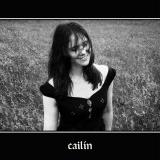
Eleven years in the making, Kate Nash’s sixth studio album Cailín is a love letter to her Irish heritage. Produced by KoOoLkOjAk and recorded on the west coast of Ireland at Stiúideo Cuan, under the watchful eye of pioneering trad musician Charlie Lennon, Cailín is a raw, raucous album combining traditional Irish sounds with punk energy, nods to hip hop production and Nash’s knack for a killer hook.
“This was my first music,” says Nash, who grew up in an Irish community in North Harrow, where she attended a Catholic school. When visiting her mother’s “loving, vibrant Irish family” in Ireland every summer, she found that music infused the fabric of life in a way that felt natural and instinctive. “All my earliest musical memories were in Ireland: live music in the pub, going to Sharon Shannon gigs, seeing the best accordion player you’ve ever seen and it’s a bored-looking eight-year-old boy in a puffer jacket. There’s a real respect for musicians.”
Marrying punk protest songs with a joyful celebration of trad music, Cailín explores themes of colonialism, inequality, religion, internalised shame and forgiveness and family, drawing on the rich texture of Irish folklore and mythology. The tradition of strong Irish women is at the heart of the record, from the young girls celebrated on the “90s grunge eyeroll” of title track ‘Cailín’, to the resourceful single mother navigating the housing crisis in ‘Póg Mo Thóin’ (“There’s all these politicians arguing with each other on news programmes, then you cut to people’s real life and it’s like, can’t you just fucking help them?”), to Nash’s grandmother, memorialised in the poignant yet joyful ‘Irish Saints’.
Eleven years in the making, Kate Nash’s sixth studio album Cailín is a love letter to her Irish heritage. Produced by KoOoLkOjAk and recorded on the west coast of Ireland at Stiúideo Cuan, under the watchful eye of pioneering trad musician Charlie Lennon, Cailín is a raw, raucous album combining traditional Irish sounds with punk energy, nods to hip hop production and Nash’s knack for a killer hook.
“This was my first music,” says Nash, who grew up in an Irish community in North Harrow, where she attended a Catholic school. When visiting her mother’s “loving, vibrant Irish family” in Ireland every summer, she found that music infused the fabric of life in a way that felt natural and instinctive. “All my earliest musical memories were in Ireland: live music in the pub, going to Sharon Shannon gigs, seeing the best accordion player you’ve ever seen and it’s a bored-looking eight-year-old boy in a puffer jacket. There’s a real respect for musicians.”
Marrying punk protest songs with a joyful celebration of trad music, Cailín explores themes of colonialism, inequality, religion, internalised shame and forgiveness and family, drawing on the rich texture of Irish folklore and mythology. The tradition of strong Irish women is at the heart of the record, from the young girls celebrated on the “90s grunge eyeroll” of title track ‘Cailín’, to the resourceful single mother navigating the housing crisis in ‘Póg Mo Thóin’ (“There’s all these politicians arguing with each other on news programmes, then you cut to people’s real life and it’s like, can’t you just fucking help them?”), to Nash’s grandmother, memorialised in the poignant yet joyful ‘Irish Saints’.
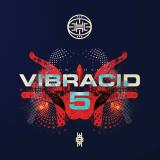
In a dystopian universe where elites manipulate memory to control the population. Vibracid emerges as a technique of liberation through sound: a method for erasing induced memory.
THE RHYME marks the counterattack phase. The insurgents infect the system used by the elites for control and reprogram it from within: patterns, voices and sequences as active code.
Contemporary bass, electro, breaks, acid and rave converge as transmission vectors. Each track operates as a unit of intervention within this science fiction scenario.
At this stage, new signals are incorporated. Power, with a solid trajectory within the underground circuit, opens the EP in a forceful way, with an acid, surprising and spectacular impact. Exieve, a young producer from Chernihiv, continues the attack with a raw tension where vocals cut through the signal like sharp fragments. Alongside them, Lups Digga, Atix, Parand and Calagad 13 continue expanding the system’s reach.
Bosconi Records is thrilled to announce a distinctive vinyl release that harks back to berlin 2000’s good old days
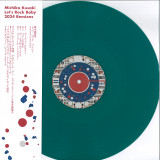
The featured track of this release unveils Console’s , known and active as Acid Pauli, reinterpretation of a track that gained fabio’s attention during his stay in Berlin in 2000. Fabio Della Torre, the owner and A&R of Bosconi Records, stumbled upon this hidden gem during his year in Berlin as many djs in the city were spinning it. Finally his quest to uncover the origins of this track led him to a CD release on the label of Angelika Köhlermann. The track in question is Console’s reimagining of “Let’s Rock Baby” a composition by the independent musician and video artist Anne Laplantine, who adopted the Japanese-sounding alias Michiko Kusaki. This version was originally released alongside a series of remixes by artists such as Dmx krew, Felix Kubin, and Adult, all featured on Angelika Köhlermann’s label.
Today, Bosconi Records is thrilled to bring this iconic track to light again on vinyl, accompanied by fresh interpretations. It’s important to note that these reinterpretations breathe life into Console’s work, not Laplantine’s original track, making Console’s version the centerpiece of this release. We have a banger version from German electro luminary The Exaltics which his typilcal electro techno trademark sound. The Exaltics had just released his new album on Clone and has been featured by Helena hauff in her Fabric Mix compilation. Italian producers Voodoos & Taboos, known for their homonymous label and with an recent “banger” on Bordello a Parigi with an electro playful version. The vibrant Queen of Coins have breathed new life into Console’s track, delivering a fresh new-beat acid ebm burner, giving the track a new and personal perspective.
This project mirrors Bosconi Records’ commitment to exploring diverse dimensions of electronic music and featuring compelling compositions. The release looks to resonate with DJs and electronic music enthusiasts, offering a contemporary perspective on a timeless track.
Music springs eternal. Recognising the enduring power of timeless albums to guide us through life, Forever Records is a reissue series dedicated to rediscovering lost musical treasures from across the spectrum of head-feeding, heart-rending electronic music.
Established by Rush Hour co-founder Christiaan Macdonald and Delsin founder Marsel van der Wielen, Forever Records places heartfelt faith in a carefully curated sequence of seminal, largely forgotten records from disparate eras, scenes and spaces within electronic music history. Tipped towards the mellow and introspective, these are albums that stop time when the needle hits the groove, stirring only when it's time to flip over before you sink back into the experience. That's what albums were always meant to be about, back then, right now, always and forever.
The Release:
Striking the sweet spot between sampledelic downtempo and earth-rooted deep house, Fila Brazillia's Old Codes New Chaos is a maverick patchwork of grooves and soundscapes. Crafted in North East England in the vibrant period before chill-out was co-opted by advertising, Steve Cobby and Dave McSherry's sharp-eared funk formula remains a cult classic suite of exquisite productions spanning deep house, broken beat and ambient shot through with wry humour.
Last physically released in limited quantities in 2002, Forever Records are revisiting this 1994 gem with an extensive reissue led by a triple vinyl pressing. As well as a new LP edition of the album, there will also be a uniquely numbered, limited edition housed in a gatefold sleeve that comes with a bonus 10" featuring two previously unreleased tracks.
'Chemistry' and 'Rankine', plus an exclusive print of Catherine Brennand's watercolour painting that graces the front of the album. All editions also features liner notes by veteran music journalist John McCready.
Press response to Old Codes New Chaos:
"The album that made the world finally sit up and take notice of the avant funk grooves coming from Hull's immaculately stoned tech funk magicians." Frank Tope, Mixmag, UK 1994.
"This album… stands out a mile from most of its peers as a work of untouchable genius." Bill Brewster, DJ Mag UK 1994.
"Fila works because they fit into that no man’s land, the space in your record collection where ambient seems too much like wallpaper and house seems just too braindead for your bedroom " Frank Tope, Mixmag, UK 1994.
"Having already created the perfect desert island disc, "Mermaids" and explored the darker side of sub bass on the 17-minute extravaganza "Fila Funk", Fila Brazillia have just unleashed their moving debut LP, "Old Codes New Chaos", and to be quite honest, you'd be fool to miss out this time around." Mandi James, Melody Maker, UK 1994.
“Where Cobby and Man rip up the rulebook on the four to the floor and probably make the greatest afterhours house album in the word”. Tony Marcus, Mixmag, 1996.
For thirty years, Alden Tyrell has been at the forefront of electronic music. This analogue alchemist has concocted heady grooves that transmute genres: acid, disco, electro, house, italo and techno; no style left unturned. Under his Tyrell Corporation moniker, he returns to the Bordello with a sound forged for dancefloors. Midnight Machines is a warm embrace that melts electro‑disco with star‑gazing synthlines. “Midnight Machines Pt. 1” balances robust melodies and incising snares with soulful undercurrents and joyous breaks. Past energies are re‑channelled. Arpeggiators rumble as beats throb. Beneath it all, there is a greater consideration of the interplay of elements.
This focus pulsates through speaker cones on the needle‑drop of “Love in Decay.” Elated key changes and bright shifts are tempered by bittersweet moments, early‑morning light piercing fresh mists of grey. Tempos rise on the flip with “Midnight Machines Pt. 2.” Sci‑fi‑scored disco lifts ever higher as scaling notes untether themselves from the floor and soar above vibrant rhythms. Coy and alluring, the bright “Romance Obscura” closes the record. Cowbells and bending wavelengths open into an expansive, intoxicating melody where keys search the horizon as arms fold around celestial bodies.
One of the UK’s best loved and most respected dance music producers, Michael Gray, unveils his exciting third artist album, ‘You & Me’, on his own ever vibrant Sultra Records. Featuring a superb array of both fresh and regular vocal and musical collaborators, Michael delivers another superb helping of lovingly crafted discofied, boogie and soulful dance treats, where meaningful songwriting, passionate vocal performances and impeccable musicianship combine to create one of Michael’s best bodies of studio work to date!
“I’m really excited about this album. I enjoyed making ‘Optimism’ 2 years ago, but I feel like my sound and creativity have developed further during the production of my third album ‘You & Me’. I think there will be a few tracks that people are not expecting from me… and that’s the joy of making an album! You can really get creative”. – Michael Gray
Across the album, Michael brings together an impressive array of world class talent. Rising 29 year old vocalist Bran Mazz features prominently, delivering fresh performances on the standout cover of Maxwell’s ‘Ascension (Don’t Ever Wonder)’, as well as on ‘I Like The Way’, ‘Medicine’ and ‘Breaking Away’. Chi town house legend Mike Dunn joins Michael on the title track ‘You & Me’, built around a clever sample of Freeez’s ‘Flying High’. Vocal powerhouse Tania Foster turns up the heat on the Latin disco flavoured ‘Shake’. New York singer Kelli Sae lends her unmistakable soul to ‘Give It To Me’ and ‘Detonate’, the latter also featuring singer/songwriter Errol Reid (China Black / Axwell). Jamiroquai’s Derrick McKenzie adds his signature live drums to ‘Detonate’ and ‘I Like The Way’. Sian Lee appears on the current single ‘Gravity’, which is sitting at the top of the Traxsource chart. ‘Universe’ sees Michael deliver an instrumental jackin’ house twist, set for a full single release on Toolroom in June. Adding further depth to the album, superstar diva Phebe Edwards brings her impeccable soulful tone to a cover of Cleo Sol’s ‘Life Will Be’, Brit soul favourite Dyanna Fearon shines on ‘I’m Falling For You’, and Audrey Martells lifts ‘Beautiful’ with her stunning, uplifting vocal.
Terrestrial Funk presents a piece of Detroit history. Born and raised in Motor City, Karl Fultz knew at the age of twelve that he wanted to be the most talented and successful DJ in the world. In 1999 he released on Juan Atkins’ Metroplex under the alias People Mover and in 2000 he released as Black Electric on Puzzlebox. Inspired by British synth-pop duo Eurythmics, Fultz says Black Electric was a way to get more women involved in the techno movement. Together alongside vocalists Tiffany Elliott, Kim Glover & Talena Fultz, Black Electric brought sex appeal to the scene. Their first and only release stays in demand and has become inaccessible until now. Terrestrial Funk’s reissue provides two fresh cuts on the new 12”; ‘Purple’ a chugging Detroit acid track describing soul modification to enhance intimacy and a proper bassed out club mix of the nasty electro sex song ‘Work That’, which was only featured as an acapella on the original release. The release also features updated mixes of both the title track and the half-time anthem 'Come To Me' alongside the original y2k mix of 'Colors'. Black Electric stands as a testament to turn of the millennia Detroit and the city’s undying devotion to expand our connection to music.
JKS is back on his own imprint with Temples, opening a different chapter of his sound. Across three original tracks, he explores a more melodic and expansive direction, while keeping the raw rhythmic energy and distinctive percussion that have always defined his productions. Processed instruments, playful synth lines and organic textures come together with a sense of openness and curiosity, always anchored in movement and groove. Alongside the originals, three remixes by Aloka, A Strange Wedding and Olympe4000 extend the scope of the release. Each artist brings their own sensibility to the project, reinterpreting the material in their own language and broadening the spectrum of both the record and the imprint. Together, they highlight different facets of JKS’s influences while keeping a shared sense of drive and tension. The result is a collection that balances movement and emotion, precision and spontaneity. Deeply rooted in the dancefloor, yet unafraid to venture beyond familiar boundaries, the release captures an artist and a label continuing to evolve while staying true to their core.
A deliberate sonic and emotional architecture that doubles down on intensity to shatter and rebuild the listener in one unrelenting wave.
Third album from System Olympia, following acclaimed releases like New Erotica Collection LP (2023) and Delta Of Venus LP (2020), solidifying her as a bold, self-produced voice in electronic and italo-disco-inspired music.
Releases on Okay Nature Records (her own independent label), with digital out now (March 6, 2026) via Bandcamp/Spotify and limited-edition black vinyl 12" LP shipping from April 6, 2026-fully written, recorded, produced, and mastered by System Olympia herself.
Extended tour in the months ahead, kicking off with confirmed live events including a Double Climax Listening Party, plus performances at The Cause (60 Dock Road, Outside) in London on April 3, 2026, and Burgess Park in London on August 2, 2026-expect further dates to build momentum through spring/summer 2026.
Digi Dub re-enter the vinyl world with a handful of archival 10” releases, the first collating tracks harvested from four releases which originally came out in the early 90s.
The Aliens EP provides a perfect showcase of the adventurous and experimental approach that the label took at a time when breakbeat hardcore was starting to fragment. Taking none of the paths that their peers took, the artists in the Digi Dub stable infused their breakbeat science with a playful dubwise methodology to create idiosyncratic dance music operating at the interstice between modern dub mechanics and rave dynamics that was a premonition of much of the experimental bass music that the UK has become known for.
The first track comes from the trio L.S. Diezel whose Alien In The Woods marries cosmic interference with a steppers reinforced breakbeat and a tough digital bassline. The Diezel boys are joined by label owner Lee Berwick under his Launch DAT pseudonym for the second track Rougher Than A Lion. Beginning with what sounds like a sort of distorted tribal ritual, the track erupts into a symphony of skittering breakbeats, processed jazz lines, bursts of acid and discombobulated ragga chat.
On the second side the collaboration between Diezel and DAT continues with Poor Mans Glory that sees a weighty sped-up funk break allied with a suitably robust dub bassline overlaid with bursts of rasta invocation rattling around in the echo chamber. L.S. Diezel’s Get Your Spear Out rounds out the package with a clangorous proto-dubstep breaker forging the link between a Jah Shaka dance and Horsepower Productions.
With the original 12s now rare as rocking horse shit, grab yourself a 10” and make your bass bins smile.
Sound Therapy is the culmination of over ten years of sonic experimentation, developed across the past three years between Sicily, the United Kingdom, and Brooklyn. It builds on the foundation of the 2021 Dub-Stuy single Pon Pause featuring Al Campbell, whose success became the catalyst for the album’s eight tracks.
Conceived across two distinct halves, the album reflects the dual nature of D-Operation Drop’s sound, moving from one drop and roots/steppers traditions into more modern, forward-leaning bass music. The whole is intended to move the listener between foundation and progression, day and night, light and dark, a dynamic reflected in both the music and album artwork.
Sound Therapy also reflects the collaborative nature of sound system culture, featuring vocalists Blakkamoore and JonnyGo Figure (US), Galas and Marina P (Italy), and Rider Shafique (UK), alongside instrumental contributions from Brooklyn-based saxophonist Troy Mobius. The album was collaboratively mixed in person with McPullish (US) and mastered at Star Delta (UK), with a focus on depth, weight, and sound system translation.
Sound Therapy stands as a complete body of work while establishing a broader musical direction for D-Operation Drop, with further singles, mixes, and related projects to follow.
Samosa Records swings back into action for the summer months with Afrikano Vol. 1 - a scintillating four tracker EP from Various Artists which you will fall in love with on the first listen.
On the A-side, the always impressive Vagabundo Club Social kick things off with the enigmatically titled ‘Mr. Mista’ - a hypnotic, (almost calypso inspired) rhythmic explosion of Mibra guitar, whirling organ, horns and a wicked high end laser sweep. This is a pure chugger, folks. At a deceptive 120bpm it will have you dancing til dusk.
A2 brings us ‘Sweet Dance’ where C. Da Afro met De Gama: after a brief shuffle beat start (liberally peppered with rhythm guitar and organ stabs), the unusual duo make sure it’s all about the beat and horn breakdowns. Pre-drinks in Lagos, people watching and waiting for the night to start is the order of the day here. Cut this in half and it has ‘summer’ stamped right through it. Gloriously sweet.
On the B-Side, Atchoum & Grincheux take centre stage with ‘Demokoussé’. Les Inferno applies the special retouch here, and straight away we’re treated to a gloriously produced trip through breakbeat inspired beats, deep, throaty horns and an outrageously soaring sax. Oh you want more? Well try the addition of the gorgeous spiritual vocals that put the bow nicely on this African sizzler.
Finishing the EP on B.2 is Lego Edit and the aptly titled ‘Afromaniaco’. A pulsating, horn inspired shaker, this track grabs you right by the beat bone from the off and won’t let go. Lego Edit’s trademark deft touches and attention to detail is all on display here - sweet sounding African vocals weave in and out of the almost melancholy horn stabs and washboard beats. A soundtrack for one of those incredible sunsets, ‘Afromaniaco’ is the missing piece of this diverse jigsaw.
With Afrikano Vol. 1, Samosa Records has found the perfect accompaniment to what is hopefully a long, hot summer. So Samosa, so brilliant.
Chami and DHAEUR step up for the first release on DIG Curated, the sub label of Dust in Grooves (DIG), a pioneering force in the world of vinyl techno, born in Berlin. This passion project, launched by Olivia Mendez and Chami, spotlights emerging artists who embody the essence of the imprint's signature style--sophisticated, timeless, and groovy. With each release, a new talent is endorsed by a seasoned digger from the scene, aiming to push forward undiscovered sounds and empower the community.
After years of refining his palette as a dedicated DJ and acoustics master, the Italian-born, Berlin-based DHAEUR
has developed his distinct creative vision rooted in sound quality and stylistic research. At the time of crossing
paths with Chami, DHAEUR had already produced a handful of immersive tracks, exploring unknown territories
while keeping things minimalistic, giving DJs the freedom to construct their preferred sonic environments. Four of these tracks are pressed on DIG Curated 001, marking the beginning of a chapter for the sub-label that brings forth the future sound of techno.
The opening track of the release SUBJECT ZERO is a cinematic, mental, elegant journey, playing with the
perception of built up anticipation. This boundless, loopy soundscape is designed to induce inner quests on the
dancefloor and is a grand point of departure to unknown adventures ahead. This interlude of primordial grooves sets the scene for a voyage through a not-so-distant world where dystopian visions and technology merge with hypnotic synths. Evoking human emotions and desires is the hot and groovy track MIN(E)D, with vocals that could be from a female replicant building her own sonic web3 through the soundsystem of a steamy dancefloor.
On the B side, things quickly gain power and intensity, with STEPS racing through pounding beats, enigmatic
pads, and unpredictable claps, only tamed by DHAEUR's impeccable acoustic design. The EP closes with the cryptic, mechanical sounds of HEX 1904d1, deconstructing old patterns and programming a new form of evolved consciousness--inspired by precision and a reverence for organic movements.
After their recent LP Mirages (Kraak Records, 2025) with French turntablist Guilhem’All, the group continues to explore collaborations with artists and instruments from diverse musical traditions. Building on decades of uncompromising acoustic exploration, Razen delves deeper into their practice with five improvisational pieces that unfold slowly in time and space. The duo’s radical core - Brecht Ameel and Kim Delcour - finds in Van der Harst a longtime kindred spirit, united by the impact of sound, intonation, and the sheer joy of playing.
To be released on April 24 via VIERNULVIER Records, the artwork for Stained Glass Starling was created by American visual artist Robert Beatty (Oneohtrix Point Never, Christina Vantzou, The Weeknd, Tame Impala). The physical release comes with a 16-page booklet including artwork and an interview.
A long-standing artistic kinship lies at the heart of this project, with first encounters dating back to the early 2000s in Belgian musical improv theatre. Van der Harst’s lifelong experience in improvised music and music theatre, spanning back to the 1980s, combined with a vast arsenal of rare and historical instruments, opens new tonal territories within the Razen universe.
These explorations are not incidental: his family roots in the former Dutch East Indies — through his great-grandfather — provide a quiet backdrop to his enduring affinity for Asian musical traditions. Instruments such as erhu, Javanese kacapi, and others introduce timbres
that bring the music its most pronounced Asian inflections to date.
Yet despite this shift in colour, the underlying ethos remains unmistakably Razen. Working from sound rather than form, the ensemble approaches music as painters approach a canvas: adding layers, contrasts and shades with care. There is no soloist’s ego here; all voices are equal, echoing principles found in gamelan traditions.
Over the decades, Razen and Dick Van der Harst have crossed paths repeatedly, notably through cult theatre productions by Belgian theatre maker Eric De Volder, including Zwarte vogels in de bomen (2002) and Huis der Verborgen Muziekjes I–II (2000–2006). Recording an albumtogether had long been a shared aspiration — a wish that crystallised after a 2024 concert at Concertzaal Miry in Ghent, part of the Ruiskamer series by VIERNULVIER Art Centre.
Who, or, what, exactly is a Matured Sinner? In this case it's the result of a meeting of both minds and bodies between Swedish producer Johan Blende, freshly relocated to Athens, and fellow Eskimo artist and native Athenian NTEIBINT. Between the decidedly weak minds of succumbing to night time activities and day time regret an idea was born to create the best Greco-Norse creation since ABBA stole a bouzouki and used it shamefully for the best part of Mamma Mia (OST ?).
"I took one of my half-baked beats to George (aka NTEIBINT) to see what he could add to it and voilà - Mist 9000 was born!" explained Johan. Now complete with pulsating analogue arpeggios, a throbbing bass line and increasinglydistressed synths all writhing together in composed ecstasy that dance floors are made for, the track that emerged from George's studio left them hungry for more.
Returning to the studio, it isn't long before the song that would give this new project its name emerged. Created with the help of a friend Olga on backing vocals and an unnamed, equally sinning, young lad, Matured Sinner paired hypnotic disco beats, sinuous synths, squawking sine waves and almost queasily blissful sighs with a cautionary tale of drugs, flying saucer cults and a spiral deeper and deeper into sin and moral ruin.
Was it enough? It was. But then the third one came around, mainly by sheer want to continue, lingering like the third child of a marriage running out of ideas. Shall we keep going? "Of course we shall, this is our gift to the world!" Like a modern day cult, Bright Bum was conceived in a non-sexual context from leftover sounds after a nightof confusing creations and not necessarily tender compliments in an equal manner, chugging synths squelching their way over a mesmerising guitar loop as bright stabs cut through the humid funk of the track's insistent rhythm which, like all good nights out, increasingly fray at the edges as it rolls towards oblivion. Nobody requested it but like the nature of humanity itself, it must keep going.
Phone Me Tonight was recorded in 1981 at Studio Maïa in Bondy, just outside Paris - a creative hub where many artists of the African diaspora shaped their sound. On this track, Eko Roosevelt collaborates with producer Gabriel Nahas, known for his work with artists such as Pasteur Lappe, Marthe Zambo, Toto Guillaume, and Manu Dibango. The result is a shimmering blend of synth-driven groove and Eko’s signature ‘Funky Disco Music’ sound, capturing a moment where analogue warmth met futuristic ambition.
For this 2026 reissue, Phone Me Tonight has been carefully restored and remastered, breathing new life into Eko’s iconic Yamaha DX7 synth lines. The track has been subtly tightened to the grid, making it perfectly suited for contemporary dancefloors & dj’s while preserving its original spirit and charm.
This EP also offers a glimpse into Eko’s creative world: rare photographs of his home studio in Lobé, featuring the very DX7 synth used during the original recording. In addition, you’ll discover exclusive footage from the Phone Me Tonight video shoot, filmed at the breath-taking Lobé Waterfalls, documented together with Lobé’s community throughout 2025 and 2026.
ABOUT LOBE MON AMI
Lobé Mon Ami was written by Eko Roosevelt in 1981 as a heartfelt tribute to his home community of Lobé in Cameroon. Two versions of the song exist; this EP presents the rare and original version, restored and remastered here for the very first time. Using the download code, listeners can also access an exclusive alternate version of Lobé Mon Ami and the full EP in digital formats.
The song weaves together multiple languages, including Batanga and French, reflecting the rich cultural fabric of the region. Through its lyrics, Eko tells the story of his life - born and raised in Lobé, venturing abroad in pursuit of music, yet always drawn back home. Each return rekindles his deep connection to Lobé. In a poetic gesture, he names surrounding villages in various languages such as Batanga throughout the song, turning it into both a personal memoir and a cultural map.
ABOUT EKO ROOSEVELT
Born on November 13, 1946, to princess Kethy Mbenyo and William Roosevelt, Eko Roosevelt has led a life filled with mythical appeal and musical excellence. Local lore recalls how, at the age of ten, he bravely fought off and killed a serpent near the waterfalls of Lobé. An event that became part of his local legend prior to his enduring legacy as a musician and traditional chief.
Eko Roosevelt discovered his passion for music in church before furthering his studies in Dakar, where he met his wife, Nicole. Together they moved to France, where Eko launched his recording career - first with the Dikalo Group, and later as a solo artist. His discography includes standout releases such as Kilimandjaro My Home, Funky Disco Music, and the hit single Nalandi. In 2020 he renewed his status as hitmaker through his work with Disclosure on the revised version of his single ‘Tondoho Mba’, originally released in 1982. His enduring legacy and pioneership within Makossa and Funky Disco music helped shape the sound of many DJ’s and producers such as Gilles Peterson, Disclosure, Folamour, Diplo, ANOTR, Jax Jones, Sonny Fodera and Daphni.
Over the years, he shared stages and collaborations with renowned artists including Claude François, Nino Ferrer, Manu Dibango, and Miriam Makeba. As a producer and arranger, he became a respected figure across the African diaspora, working with talents such as Toto Guillaume, Marthe Zambo, M'Pongo Love, and experimenting in the studio with visionary artist Francis Bebey.
In 1998, Eko returned to Kribi, where he continues to live, create, and perform. Alongside his musical career, he has composed three albums of Catholic music, still awaiting release, and is currently working on new material. Today, he remains a beloved figure both locally and internationally.
Since 1996, he formally assumed his role as traditional chief of Lobé (usually reffered to as 'Chef Traditionnel'), following in the footsteps of his grandfather; his majesty ‘Bevigna Eko Louis’ - an enduring source of inspiration throughout Eko Roosevelt’s life. Despite his royal duties, he continues to perform regularly across Cameroon. When he takes the stage, entire crowds sing along to Lobé Mon Ami and classics like Nalandi and Attend-Moi, celebrating a legacy that bridges generations.
Balancing tradition and music, his majesty Eko Roosevelt Louis remains deeply committed to both his community and his art. This reissue of Phone Me Tonight / Lobé Mon Ami marks a renewed chapter in sharing his rich musical legacy, and his musical future with the world.
Anthoney J Hart continues to leave an indelible impression on the underground with his latest album as Basic Rhythm, returning to Sneaker Social Club after a string of incendiary EPs to deliver his definitive statement on 8 Bar Techno. The clue's in the name — a deadly fusion of grime sonics strapped to the pummelling locomotion of peak-time techno.
Hart's roots in pirate radio reach back to the 90s, forming a bedrock of uncompromising attitude that has permeated his work ever since. Between his work as Basic Rhythm, East Man and Imaginary Forces he's split the difference between incisive UK club sounds and experimental intention, applying artistic thinking to the physical impulses of grime, techno, D&B, drill and more. It's no wonder his work has been held aloft by labels as respected as Planet Mu, Metalheadz, Future Retro and The Trilogy Tapes.
On 8 Bar Grime Hart stretches out with a potent statement on his vision for club music in 2026. The thrust of the title track's opening 4/4 stomp is quickly interrupted by a none-grimier gun lock and load — an unambiguous thesis for the direction the album is heading in. The pressure stays high for the duration, barrelling through the distorted kicks and rabid wobble breakdowns of 'Weed Killer' before bringing the flawless flow of NyNy into the mix for half step sheller 'Vibez'. Elsewhere Lyrical Strally brings savage bars to 'Clutch' and Eklipse takes it deep and moody on 'Who, You'
In between the vocal spots, Hart maintains the flexibility to bend between styles with poise, edging a touch of UK funky's staggered groove to 'Teutonic' and wreaking havoc with a Drexcyian sound palette on 'More Pricks Than Kicks'. 12 tracks deep and without a moment of respite among them, the first Basic Rhythm album in five years finds Hart operating a peak strength, firing off neck-snapping payloads of ferociously infectious club gear for the more advanced kind of dance.
BAILE & Nuage land on Shall Not Fade with their ‘Back 2 Earth’ EP
Four deeeep timeless tracks on this 12 inch. Sleek, progressive, acidy house & trancey ethereal breaks ‘Back 2 Earth’ is full of that headsy 90’s energy à la Underworld and Orbital…..we’ve been getting very lost in these ones!
Written remotely between Brooklyn, New York (BAILE) and Yerevan, Armenia (Nuage) both producers are more than a decade deep in their craft and it shows. They say “this all began with Nuage sending over a few short demos. BAILE took those pieces and constructed them into more fleshed out tracks, after which the two passed the songs back and forth slowly filling in the blanks.” …and that's the key here - no rush, no agenda just the realest takes expertly hewn.
Same Beat on the A1 is just that.. breakbeats, spoken word vocal chops and repetitive synth lines, but less is more. The percussion, bassline and programming do the work. Sometimes it's more about what you leave out than what you put in.
On ‘TSP’ you Nuage’s signature metallic synths. It’s a definite eyes closed/hands in the air weapon. Hypnotic flow building and ratcheting up the energy.
Flip over to title track’ Back 2 Earth’ and we get a trancey, garage and house blend. Sleek synths & arpeggios and minimal chops that seem to whisper ‘heaven…earth’.. BAILE utilized the Prophet Rev2 for pads and synths and a Moog Little Phatty and Minitaur for the bass but we want to know can a breakbeat soothe?
'Catch Yourself' closes out the EP.. More breaks and arpeggios but this time with an acid lead from the TB-03, grungy bass and warm gated synths underneath. Sample spotters you aren’t scoring any points here, the “I know that sample” vocal here come from Felicia Douglass (a frequent collaborator of BAILE’s who is in The Dirty Projectors and Ava Luna) and makes double the point that this EP is one of those ones that even on first listen you already know it. ‘Back 2 Earth’ has been on the SNF schedule for a minute so big up BAILE & Nuage for the patience but what that extra private time has meant, is that we can say with certainty that this EP keeps sounding better & better & better..
First Word Records proudly present ‘One 4 Detroit’; the third single from Above The Clouds (aka kidkanevil & Magic Manfred), complete with a remix by 14KT.
This 7" vinyl release follows on from last Summer's MF DOOM cover 'Arrow Root', which received strong support from the likes of Japan's DJ Koco and Philadelphia's DJ Jazzy Jeff, and their recent cover of ‘Change’ which was originally by Shadez of Brooklyn, most notably appearing on DJ Premier's 1997 mix album 'New York Reality Check 101.
One of the original First Word roster, UK Producer/DJ and all-round laptop music geek kidkanevil has developed a distinctive and progressive sound over the years, gleefully exploring the beats and bleeps of the electronic music universe to international recognition. Leeds born, sound system bred and raised on a (un)healthy diet of video games and anime, his solo work inhabits the curious space between bass frequencies and otaku culture. But as a devoted teenage backpack rap nerd, somewhere in the back of kid's mind was a lingering desire to reconnect with his first love, hip hop.
Not long after moving to Berlin he joined a studio space in graffiti plastered Kreuzberg, where he met multi instrumentalist wizard Magic Manfred; a disciple of all things boogie, disco, funk and soul. Born and raised in Berlin, and currently a touring musician for many an act, Manfred's musical map joins the dots from piano lessons at four, to starting a band with his teenage friends, leading him to his true calling - the bass - via the club vibrations of his hometown, which introduced him to the world of DJing and production, and a stint studying in the explosive London jazz scene to finalise his Jedi training.
Bonding over their mutual love of '90s hip hop, a friendship and musical kinship developed, coupled with a desire to honour past eras but push things forward, Above The Clouds was born; named after their joint favourite Primo beat, with a touch of irony regarding their basement based studio of a windowless variety.
kidkanevil explains that “after we made a bunch of piano joints it felt like time for a switch up, I had these raw drums looped and Manfred started playing this simple synth line on the Prophet - it kind of happened in an instant. This one was really a case of capture a moment and let it be. It had this cold, industrial bounce to it that really felt ‘Detroit’ somehow, so it became something of a tribute to that sound. Obviously there’s a rich musical history there that’s beyond anything we could encapsulate, but I hope the respect comes across. From Berlin to the D with love!
We felt pretty strongly that if we’re gonna nod to Detroit, we needed a remix from someone who reps there directly. I’ve been a fan of 14KT since the early 2000s beat scene, and as he’d previously released music on First Word, it made perfect sense to approach him. We asked and did he oblige!! I’m very comfortable saying we got schooled! He really blessed us with an amazing remix that brought a life and soul to what was originally a pretty stark beat, we’re super honoured to have this as our first ever remix.
‘U3P1’ (named after a synth preset so we didn’t forget!) is on the flip - this also came about pretty fast. I was thinking Ummah-era Tribe with the drums, and Manfred once again put down this super nice riff and it grew from there. It kinda felt like it needed some trumpet and it's always nice to highlight some of the amazing musicianship lurking beyond the club systems here in Berlin, so we called up Berlin based trumpeter and composer Paolo de Jesus, who blessed us with a beautiful performance and arrangement. And that was that; we hope you enjoy!”
‘One 4 Detroit / U3P1’ is released on limited 7" vinyl & digital platforms, June 12th 2026.
In the beginning of the 1970’s, Guinea-Bissau was a country broken up into many ethnic groups and at the heart of a war for independence. By reviving traditional musical genres as Gumbé and singing in guinean Kriol, José Carlos Schwarz & Cobiana Djazz established an immediate affective bond with their audiences. Through its music and politically engaged spirit of the lyrics, the band played a significant role in shaping the social and political consciousness of the masses. As well as influencing local bands like Super Mama Djombo and giving back a deep sense of cultural identity to bissau-guineans.
The explosive birth of Cobiana Djazz brought about other kinds of detonation. Schwarz became involved in urban guerilla activities which resulted in several bombings in the centre of Bissau, leading to his imprisonment and torture. He remained in lockup for a total period of about 2 years, between 1972 and 1974.
The process of decolonisation, in the wake of the Portuguese revolution of 25 April 1974, led to the recognition, during the same year, of the sovereign nation of Guinea-Bissau.
Schwarz, a key figure in the fight for independence, played an important part in the transition to the democratic regime, profiting from his popularity as an artist. Soon, his criticism (underscoring opportunism and irresponsibility in high places) became a thorn in the side of the political elite. Uneasy with the disquieting effects of his work, government officials effectively separated the author from the masses by assigning him to the embassy in Havana.
José Carlos Schwarz met a tragic and untimely death at the age of 27, when his plane crashed on arrival at Cuba's José Martí International Airport, on May 271th 1977.
Hailed by african giants like Orchestra Baobab, Letta Mbulu or Miriam Makeba (with whom he recorded his first and only solo album), “Zé Carlos” and his poetry won a lasting position in the annals of Guinea-Bissau. However, this collection of songs remains relatively unknown outside the country and its diasporas.
We are proud to offer, in close collaboration with the Schwarz family, this first official reissue on vinyl. Remastered and pressed on heavyweight vinyl.
Five Special were a five-man harmony vocal group all from Detroit, formed during 1975. Founding members Mike Pattillo of ‘The Explosions’ and Steve Harris of the group ‘Trouble’ both unhappy with their then situations decided to unite to form their own group. They were soon to be joined by Zeke Stanley of “Deep Velvet”. As a threesome, the sound they created was fantastic but they all agreed a five-man group with five potential lead singers was the way forward.
It was around this time that Mike Pattillo’s lifelong neighbour Ron Banks (of The Dramatics’) introduced the guys to Charles “Chuck” Underwood. Chuck had been involved in the music business from the early 60’s as a show promotor, one of many acts he promoted was The Dramatics. Chuck had known the group from their earliest days and later became their road manager. After a failed attempt to buy the Dramatics contracts from Groovesville Music, Chuck pressed ahead with his plans to form T.E.A.I Record Corporation (T.E.A.I being an abbreviation for “Tellin’ Everybody About It”) with Ron Banks joining the label in an executive role only. This young and aspiring record company sprung into production during 1974 with initial releases on a local artist’s Renee Williams “Special To Me/Are You My Brother”, followed by ‘The Gaslight’ “Just Because Of You/It’s Just Like Magic” in 1975.
Now under the auspice of Chuck, Mike, Steve and Zeke were introduced to Greg Finley formerly of the ‘Innovations’. Now four, the quest for a fifth member continued. After months of disappointing auditions, Ron Banks decide it was time for his younger brother Bryan to embark on a professional career after initially resisting due to him being a 16-year-old school boy. After many daily rehearsals in each other’s respective basements until Bryan’s graduation the full and dynamic sound of these five young men was finally honed. Still nameless, it was Steve Harris that came up with the group’s name ‘Five Special’ stating that these five young men were “very special and unique entertainers, with each member being a complete show in himself” with Bryan on lead they sometimes sounded like “The Dramatics” with Mike they sometimes sounded like “The Temptations” high comparisons indeed.
Five Special’s first recording for T.E.A.I was the 1976 joyously uplifting dancer “The More I Get To Know You” a Jimmy Roach and Marcella Henderson composition featuring Bryan on lead, released as a part I and part II deemed to be a more disc-jockey friendly practice at the time. The record was popular with radio stations throughout the Detroit metropolis and Chuck went on to precure a deal with Polygram which resulted in a release on their nationally distributed Mercury label. A second Five Special release followed in 1977, the Jimmy Roach penned mellifluous “(Let’s Stop Making) Small Talk” backed with the Ron Banks/Paul Clark penned psychedelic soul styled “Oh, Oh (Look What We’ve Done)” with Greg Finley and Zeke Stanley exchanging tenor and baritone parts throughout.
Through our ongoing working relationship with T.E.A.I we have gained access to some previously unissued material on Five Special. From the tapes we have taken “The More I Get To Know You” in its 5:50 minutes entirety backed with the previously unissued mid-tempo delight “You Got To Be The One That I Love” with interchanging leads from Bryan and Steve. The second b-side track is the psychedelic soul “Oh, Oh (Look What We’ve Done)” with interchanging leads between Greg and Zeke. Three songs, three different styles all of the highest quality, with more to come from Five Special, so watch this space!
Curated by Brian d'Souza (aka Auntie Flo), Plants Can Dance is a forthcoming new compilation bringing together a global community of artists, exploring the creative possibilities of biosonification - transforming signals from plants, ecosystems and the natural world into sound. Out June 26th, the project marks the culmination of several years of d'Souza’s work across music, ecology and technology.
The album arrives at a time when more artists are turning toward nature as both subject and collaborator, such as Brian Eno’s Earth Percent, which formally recognises “Nature” as an artist. Plants Can Dance sits within a wider cultural shift, which is redefining the relationship between sound and the living world.
The project builds on several years of work by d'Souza, whose Plants Can Dance events have taken place across the UK, Europe, India and Africa, appearing in institutions including the V&A, Tate and the Design Museum. What began as a series of intimate gatherings has since evolved into a global platform, reflecting a growing appetite for work that reconnects music with the natural world.
The compilation features contributions from leading practitioners including Modern Biology (Tarun Nayar) in collaboration with saxophonist Zekarias Musele Thompson, OMMA (Olga Maximovam founder of Playtronica), Jason Singh, Dr Helen Anahita Wilson, Justin Wiggan in collaboration with celebrated Norwegian jazz musician Arve Henriksen, Lamine Touré, Bit Marten and Balam, alongside new work from d'Souza himself. Using a range of tools - from commercially available devices to bespoke modular systems - artists translate electrical activity, environmental data and organic processes into musical material.
The processes behind each piece differ - from interpreting plant biodata to translating wind patterns into compositional structures - and the results are as varied as they are compelling. The record spans ambient, jazz, electronica and modern classical, yet all pieces are unified by a shared intent: to reimagine music as a space of collaboration between human and more-than-human worlds.
At the core of Plants Can Dance is a question about how we define music, and how we choose to listen. Traditional musical forms, with their fixed tempos and predictable structures, give way here to something more fluid and less easily controlled. The listener is invited to surrender expectation and engage with sound as an evolving environment rather than a linear narrative. In this context, the compositions function as what d'Souza describes as “acoustic ecologies” - sonic systems shaped by biological, environmental and elemental forces unfolding in real time.
Accompanying the release is a printed zine offering reflections from each artist, and deeper insight into the ideas and debates surrounding this practice. Rather than presenting definitive answers, Plants Can Dance positions itself as an artistic exploration grounded in curiosity, experimentation and critical thought.
Ultimately, Plants Can Dance is less concerned with proving whether plants “make music” than with changing how we listen. By inviting audiences to engage with sound shaped by non-humans, it opens up new ways of perceiving the environments we inhabit - not as passive backdrops, but as active, dynamic participants in a shared ecological network. In doing so, it offers a quietly radical proposition: that by listening differently, we might begin to relate to the natural world differently too.
Olindo Records is proud to present the physical edition of Venezuelan drummer, producer and artist Orestes Gómez 2nd solo LP: No Me Fui Porque Quise.
This album is a deeply personal and rhythm-driven project where Orestes explores themes of migration, identity, and emotional resilience. Through a fusion of Afro-Caribbean percussion, jazz, hip-hop, and electronic textures, the album tells the story of leaving home not by choice, but by circumstance.
Featuring a host of exciting guests from his home country and beyond, each track blends organic drums with modern production, creating a sound that is both rooted in tradition and forward-thinking. The music moves between introspective moments and powerful rhythmic expressions, reflecting the complexity of displacement, memory, and cultural identity.
Orestes Gómez is much more than a percussionist; he is an architect of rhythm and a visionary of hybrid production. Originally from Venezuela, he has established himself as a leading Latin American voice by fusing the heritage of Afro-Caribbean drums with the avant-garde of electronic music, jazz, and hip-hop.
The Diary by Scarface returns to vinyl for the first time since 2014, now expanded to a 2xLP and featuring the never-before-released bonus track “Ease Up Now.” Newly remastered, this definitive edition includes the original 1994 artwork, carefully restored for vinyl by acclaimed designer Mr. Krum. Featuring fan favorites like “No Tears” and “I Seen a Man Die,” this platinum-certified classic is presented with upgraded audio and an expanded format, making it the most comprehensive edition to date.
The Diary by Scarface returns to vinyl for the first time since 2014, now expanded to a 2xLP for the very first time, including a previously unreleased B-Side!
Newly remastered, this definitive edition features the original 1994 artwork, carefully restored for vinyl by acclaimed designer Mr. Krum
Originally released October 18, 1994, The Diary debuted at No. 2 on the Billboard 200 albums chart, marking one of Scarface’s most commercially successful releases.
Indie Exclusive 2xLP on Opaque Red Vinyl with 8x10 Glossy Insert. Contains Bonus Track "Ease Up Now"
A cult electronic artefact from 1999 resurfaces here as DHS's 'From Outer Space' lands once more on wax. Ben Stokes' project has always thrived on the fringes of breakbeat and acid experimentation. Stretching across 12 minutes, 'From Outerspace' is a patiently unfurling trip built on hypnotic loops, eerie atmospherics and a restless low end that never quite settles. Fairground oddities, UFO signals and disembodied shrieks drift in and out of focus to tease the floor before locking into a rugged, heads-down stride. On the flip, 'DHS Theme 2014' and 'Voodoo Breaks' extend the sampledelic ritual with squelch and understated menace.
On this recording, one can hear both resolve and farewell. Just before departing for the United States, Masabumi Kikuchi pours himself into these now-legendary compositions.
Gifted with a singular artistic voice and a keen sense of his time, Masabumi Kikuchi established himself as a pianist of international stature. In 1973, he relocated his base of operations to New York. Recorded immediately before that move, End For The Beginning captures a studio live performance held in front of invited fans, documenting a pivotal moment in his career.
During this period, Kikuchi was exploring innovative sounds through the use of electric instruments and unconventional ensembles. Yet on this album, he returned to a more traditional format: a two-horn frontline backed by a piano trio. The program consists entirely of five original compositions by Kikuchi himself.
The determination surrounding his imminent departure fuels the music's intensity, while the sense of farewell evokes a distinctly Japanese emotional depth. Masterpieces such as “Shuuu”, “GinKai”, and “Green Dance” emerge like waves from beyond an atmosphere charged with tension and anticipation. Each performance unfolds with remarkable focus, lyricism, and power.
A work of striking conviction and emotional resonance, End For The Beginning stands as one of the defining achievements of Kikuchi's career and a fitting summation of his artistic vision.
In the evolving landscape of modern Southern hip-hop, the pairing of Starlito and Bandplay stands out as a unique bridge between street-level authenticity and refined, calculated musicality. Their collaborative project, Not The Country You Know, functions less like a standard release and more as a manifesto—a masterclass in the chemistry between a seasoned, introspective lyricist and a producer who possesses an intuitive grasp of the region's pulse. It is an exploration of legacy and adaptation, capturing the tension between where they came from and where the culture is currently headed.
Bandplay, long recognized for sculpting the sonic identity of Memphis icons, brings his signature, trunk-rattling 808s to the project, yet he manages to pivot here. The production feels remarkably expansive, masterfully blending the raw, stripped-back aesthetics of classic Tennessee rap with forward-thinking textures that refuse to be confined to a single sub-genre. Complementing this, Starlito operates with his trademark mix of cynical observation and genuine vulnerability. He navigates these beats with the weary grace of an artist who has weathered the music industry's relentless cycles, treating every bar like a necessary piece of a larger, ongoing story.
The album’s title serves as a direct commentary on these shifting tides. Across the tracklist, the duo investigates the growing disparity between the romanticized South and the cold realities of the streets, alongside the inevitable evolution of the music business itself. There is no frantic chasing of streaming-era trends or algorithmic bait here; instead, the project remains a stubborn, confident assertion of artistic identity. By weaving together Starlito’s "voice-of-reason" flow and Bandplay’s evolving, genre-bending sound, Not The Country You Know challenges the listener to abandon their preconceived notions of the region, offering instead a complex, urgent vision of a South that is as haunting as it is vibrant.
Rebecca Goldberg presents the release of her debut full-length album, Night City, a deeply personal and expansive body of work that reflects a decade of artistic growth, exploration, and connection. Produced and arranged by Goldberg, this album captures the evolution of her sound through years of practice, travel, collaboration and mentorship.
Including 12 tracks across a 2x LP, Night City draws from the rich lineage of Detroit electronic music. Goldberg cites influences from dystopian cityscapes and futurism to space exploration and the possibilities of technology. The result is a forward-thinking genre-spanning collection.
The album features two notable collaborations: “444,” created with Jnn Aprl and recorded in her studio in Seoul, South Korea, and “Tunnel,” featuring Detroit techno artist Tiptonaires. Each collaboration adds a distinct voice and texture to the record’s immersive sonic world.
Night City was mixed and mastered by Andy Toth, with album artwork illustrated by Mark Sarmel. A limited run of vinyl is available for preorder now, pressed at Archer Record Pressing Co. in Detroit. The album will be released on Detroit Underground.
At its core, Night City is an offering shaped by experience and guided by curiosity, marking a significant milestone in Rebecca Goldberg’s musical journey.
Gorizont Sobytiy (Event Horizon), the duo of veteran electronic musician Nocow and his wife, DJ Designer, mark the project's debut with an album worth of material of 'frogg-step' / Pankratov Step. It's safe to say this is an intriguing proposition for even those well-initiated into the world of the contemporary Russian underground. What is perhaps most immediately obvious across the 11 tracks is a clear appreciation for golden-era Rephlex records, as if the duo are reflecting on how the iconic label was perceived in the Eastern bloc at the time. There's a nostalgic touch tugging at the heart strings with the warm ambient tones of 'Bananoivy Twist' or even the ballroom-esque organ melodies of follow up 'Chacha', both swiftly followed by a switch back into frantic gabber style kicks that recur across the album.
To give a little more away in terms of a background story, Nocow and DJ Designer draw influence from a film called Winter Evening in Gagra, a somewhat distant feeling artefact of late-Soviet cinema about a tap dancing champion's late nights spent gallivanting across the glitz of Moscow's pop music scene in the 1980s. Maximalist in its sound design, Pankratov Step draws its name from actor-protagonist Pankratov, not quite an out-of-time soundtrack as such but at the least a wry nod to the former world in which the film takes place. The cascading, brittle synthesis of 'Cemetry's Boss' forms an icy cinematic fusion again with a gabber influence at play whilst a fierce acid line works alongside myriad glitch rhythms and repeating keys on 'Octopus Werk'. Influenced by the local humour and sentimentality surrounding the film, a melodrama with themes of lost art and a kind of old-world transcendence the young circus performer yearns for, the duo use it as a vessel to describe the projects sound - a coalescing of vintage Soviet soundtracks, early IDM, Jake Slazenger and Expert Knob Twiddlers album. 'Pankratov-Step' becoming their own fictional genre. The LP marks another avant-garde chapter in Nocow's long back catalogue, as well as a fully formed collaborative debut for the currently enigmatic DJ Designer. Pankratov Step is the second release on GOST ZVUK sub-label MEMONT, curated by Kuzma Palkin.
For the 62nd release on Memoria Recordings, Romanian producer Plusculaar delivers a hypnotic collection of deep, groove-driven electronic cuts that move far beyond simple club conventions. Known for a sound shaped by minimal grooves, shuffled rhythms, and immersive atmospheres, Plusculaar builds sonic journeys that reward patient listening and intuitive mixing.
Across this EP, he bridges subtle breaks, micro-textural interplay, and low-end propulsion to craft tracks that are equally at home in intimate underground settings as they are in late-night room explorations. Each piece unfolds with surgical precision, unhurried, detailed, and rich in rhythmic nuance.
MEM062 is for selectors who appreciate depth and restraint, where every beat and silence matters. A refined toolset for DJs and listeners alike who chase emotion through movement and groove.
Veinyl returns with Decant Vol 1, the fourth release and the label's first Various Artists compilation. Rooted in the label’s philosophy of connecting sound, atmosphere, and the social ritual surrounding a good bottle of wine, this record unites producers from the deeper edges of house and tech-house. Much like wine, which brings people together and reveals different notes with every sip, Veinyl seeks to curate music that encourages listeners to savour the moment and discover new layers with each play.
Diego Krause opens the bottle with “Currents,” setting the tone with controlled momentum. Punchy kick and bass sync with swinging hats and airy pads as crystalline synths gradually expand in colour, culminating in sparse, darker echoes and an understated atmosphere in its final moments. Lescano’s “Illusion” uses a stripped-back tech-house palette of resonant dubby chords, vocal echoes, and funky bass stabs, all thrown into motion, ready for the dancefloor. On the flip, NVNDO & Until6’s “Donkey Long” brings a playful shift: bongo-driven percussion, rubbery grooves, and 90s-tinted house basslines and synthwork give it a hint of Balearic flavour without losing club weight. Skotsch closes with “Blood,” a dark, jacking tune where acidic basslines, razor-sharp drum programming, and teasing vocal fragments close the V.A. out with punch and style.
With Decant Vol. I, Veinyl distils its approach into four tracks that move between minimal house atmosphere and tech-house mechanics without losing focus on groove. It’s a compilation that highlights the label’s ear for subtle detail and functional design, pointing toward a catalogue shaped less by trends than by carefully curated underground talent and special dancefloor moments.
The 41st release on TECHNO Records marks a defining milestone: the first full- scale solo record by the label’s founder, Nastia, in her music career. It opens up a new depth of detail within the character and identity of both the artist and the catalogue.
Rather than making a loud statement, Nastia focuses on a restrained and functional approach to techno, shaped through subtle shifts in tension, texture, and rhythm. The tracks move with intention, avoiding obvious peaks in favour of gradual development and controlled energy—a familiar methodology and a direct analogy to the evolution of the label itself. Crafted with dancefloor energy in mind but not bound by it, the release offers a fresh perspective on the author’s persona, stripping away excess and overexplanation. It leaves ample room for the listener’s imagination and a versatile, expert application within a DJ set.
The trajectory of ascents and shifting attention in an artist’s career is the only honest path, providing material for reflection and the anchoring of values. This depth of experience cannot be replicated by overnight success or short-lived peaks—only decades of exploration, trial, and error can forge a work built to endure. Studio work becomes a new instrument for Nastia to build value capital, while her debut solo EP stands as an artefact marking a historic point for the author and the label.
TECH041
A1 “Indoctrinated” — a masterclass in rhythmic interplay used as a narrative device. It functions as a sonic manifesto: universally accessible yet distinctly individual. A process-driven track, its strength lies in its ability to repeatedly shift the listener’s focus. It serves as an ideal transitional tool, offering a calculated awakening from a hypnotic state.
A2 “Ignorance Is Keelleeng” — a structured dancefloor powerhouse built on a precise understanding of peak-time energy. Functioning as a set-defining anchor, it allows the DJ to pivot the mix in any direction without losing momentum. A true catalyst track that opens up new sonic horizons.
B1 “True Majority” — the most forward-thinking cut on the record, providing a definitive blueprint for the hypnotic techno sound of summer 2026. It presents a multi-layered, all-encompassing sonic tapestry that interacts with the listener while maintaining a strictly restrained narrative. A motif-driven track that subtly exposes an underlying tension.
B2 “Additive Integration” — best conceptualised within an extended set where the goal is to gradually establish the atmosphere and dictate the rules of the journey. A track built on anticipation, it conserves energy and conceals its inner mechanics until the final acts. It compels the listener to decode its sonic language for full comprehension.
Narthex means railed-off western portico or ante-nave in earty Christian churches for women, penitents and catechumens.
Narthex is also a trio featuring (at the beginning) Daniel Denis (Universe Zero, Art Zoyd), Alain Neffe (Pseudocode, Human Flesh, Bene Gesserit) and Nicolas de Villemarqué (Nuwage Music). They had a very different musical background, mostly electric-electronic rock, and decided to work in the field of acoustic music recorded live (two microphones + portable DAT) in churches of their area. After several recording sessions, Nicolas de Villemarqué decides to leave the group. ln order to complete the trio, Daniel Denis and Alain Neffe ask the participation of some of their friends. Anna Homler, Michel Berckmans and Daniel Malempré have accepted the challenge and succeed to fit into their musical universe.
The instruments Church organ, harmonium, sitar, saxophone, oboe, bassoon, zither, valiha, senzas, tarang, voice, percussions, metal clarinet, classical guitar, mew's harp, ongolok, violin, dulcimer, mouth organ, etc.
The music Often dark, sometimes repetitive or experimental, sometimes rhythmical and exotic, always based on emotion inducted by the sound. One could define it as dark age music (as opposite to new age music), a sort of minimal come back to the roots and purity of acoustic sound without the cultural background linked to the 'academic' use of some instruments (for example African senzas are transformed and tuned to sound like Indonesian instruments, sitar or harmonium are used as rhythmical instruments, vahilla is played with a bow).
The places Churches located in an area of 20 kms in the region where Daniel Denis and Alain Neffe live for years and where they feel at home (and feel the vibrations. Every church, place emotionally loaded, has its own specific resonance and sound structure. Every church gave to the musicians a particular inspiration and fill the sound of the instruments with a natural reverberation/echo. The place but also the moment is important. They had the privilege to be allowed to record in the Ecaussines church at night lightened only by candles. lt was one of their most productive recording sessions.
Bella Boo lands on Aus Music with a mix of party-starting and heart-racing house jams
Swedish artist KURT. brings her characterful style to the title cut
Bella Boo has lit up the house world since breaking through in 2018. She has become a Studio Barnhus mainstay with a sound that is both emotional and energetic in the way it contrasts light and dark. It's built on solid grooves with fresh sound designs and has taken her to dj everywhere from Panorama Bar to Printworks. Her debut LP, as well as follow-up EPs, have seen her nominated for several Swedish Grammys and seen her profile grow around the world. KURT. is a rising star from Stockholm with an electric sound that blends club, r&b, pop and soul. It's high on attitude and laced with her own provocative vocals. She guests on opener 'Shake Down', which is a chunky, bass-first rhythm packed with character: hints of jungle breaks, heat-damaged synths and blasts of gloopy bass all bring the fun before KURT.'s vocal motifs - which are variously sultry, whispered and visceral - inject even more heat. The Regrette Rien Mix takes on a late-night feel with sustained chords and a silky smooth vocal from KURT. that turns you inwards. Bella Boo then goes solo for the super vibey 'Atlas', a deep, cruising house cut with catchy percussion and lush, layered bells. The golden chords and shimmering pads are immersive and expansive as the bass powered on. Lastly, '8Ball' quickens your step with bumpy kicks and increasingly detuned, wonky synths that bring a future feel to a punchy yet cuddly and feel-good groove.
To mark 25 years of Tsunami Records, Wunsch delivers a landmark release that celebrates the label's legacy while looking firmly toward the future.
For this special anniversary project, Wunsch brings together a powerful lineup of artists who embody the spirit and evolution of the sound: Black Forests (Arcanoid and Wunsch), The Rare Breed (Regis and Wunsch), Broken English Club, Giving Ground (Function and Wunsch), Microcorps, Rumenige, and Sabotak. Each contribution reflects a distinct voice, yet together they form a cohesive statement - raw, uncompromising, and deeply rooted in the underground.
This release is more than a milestone; it's a testament to 25 years of dedication, vision, and sonic exploration. From driving, industrial textures to immersive and atmospheric moments, the record captures the essence of Tsunami's identity across decades.
A celebration of past, present, and future - this is Tsunami at full force.
Berlin-based producer ZentaSkai returns with ‘Analog Assets Vol. 04’, a four-track vinyl-only EP focused on analog texture, dub-inflected atmospherics, and disciplined techno structure. Active since 1997 and operating Mask Records and its parent label, Zaijenroots, from his Berlin studio, he continues to refine a sound shaped by spatial control and steady, architectural pacing. Tracks unfold patiently, elements are introduced with intent, and nothing feels excessive.
Setting the tone with Cuddling Monsters’ partner, Laura Merino Allue, A1 features phased melodic textures and crisp percussion that gradually lock in the rhythm. A2 develops a filtered synth motif over a steady four-to-the-floor rhythm, revealing its full weight before pulling back. B1 is the most direct cut, driven by a firm, punchy beat and sharp rhythmic detailing built for peak-time focus, while B2 closes with rising string layers over a dub framework, balancing warmth and precision in a clean, measured finish.
With releases on Jerome Sydenham’s Ibadan Records and upcoming collaborations including Cuddling Monsters with Laura Merino Allue and a joint project with Thomas Grun for Rhythm Trax Austria, ZentaSkai’s work sits comfortably between minimal experimentation and functional dancefloor design.
Supported by artists such as Richie Hawtin, Joseph Capriati, Marcel Dettmann, Luke Slater, Laurent Garnier, and DVS1, he maintains a consistent presence within the underground without chasing trends.
Turkey’s first stereo LP. A foundational recording of Anatolian psychedelia. Audio transferred from the original analog master tapes, mastered and lacquer cut by Frank Merritt at The Carvery, London, and pressed on 180g heavyweight black vinyl at Record Industry in the Netherlands.
Released by the legendary Yonca Müzik label in 1973 as Turkey’s first stereo LP, Türküz Türkü Çağırırız! now returns as the first official reissue. The album captures Mazhar Alanson and Fuat Güner at a pivotal moment before their later success with MFÖ, one of Turkish pop-rock’s most influential and enduring groups.
Mazhar and Fuat first met in 1966 through a shared love of The Beatles’ Rubber Soul. Inspired by the close vocal harmonies of The Beatles and Crosby, Stills & Nash, they initially believed this music could only work in English. Producer Ergin Bener encouraged them to develop their own musical language in Turkish.
Previously members of Kaygısızlar, the pioneering group that accompanied Barış Manço, Mazhar and Fuat explored a more intimate Turkish folk-rock sound on this album. Zafer Dilek’s arrangements bring his distinctive guitar and keyboard work to a recording in which acoustic guitars, organ and electric guitar touches frame Anatolian melodies. Country-rock influences and the English-language “Upside Down” add to its range.
The title roughly translates as “We are Turks, and we sing Turkish folk songs” — reflecting a search for a new, distinctly Turkish musical identity. The album draws on works by Âşık Veysel, a defining voice of Turkish folk poetry, and Yunus Emre, the great Anatolian Sufi poet.
“Adımız Miskindir Bizim” was sampled on Action Bronson’s “Easy Rider,” while Stones Throw producer Oh No sampled “Sür Efem Atını.”
Originally released by Time Capsule in 2021 and long out of print, Stories From Another Time 1982-1988 returns in an upgraded edition following years of demand and rising collector prices on the secondhand market. Widely regarded as a modern cult classic, Mário Rui Silva’s visionary recordings blend acoustic folk, cinematic soul, spiritual jazz and saudade-filled Lusophone rhythm into a deeply timeless and universal work that transcends genre and geography.
This new edition features half-speed mastering cut at Metropolis alongside an expanded 4-page insert with a tribute essay and unseen photographs following Silva’s passing in 2024.
The roots of Angolan popular music explored in the meticulous guitar studies of Mário Rui Silva. For fans of Naná Vasconcelos, John Hassell’s Fourth World ambient, Eduardo Mateo’s psychedelic folk and Cameroonian electronic music visionary Francis Bebey.
Whether on mesmerising acoustic ballads or hypnotic groove-led tracks, the music of Angolan guitarist, researcher and intellectual Mário Rui Silva has a beguiling, melancholy quality, woven into the dynamics of his deft guitar playing.Rhythmically complex yet supremely effortless, the music collected here stems from three albums Mário released in Luanda in the 1980s that reflect his diverse range of influences, from traditional Angolan and West African rhythms to European jazz and classical instrumentation. It is united by a sense of low-key beauty, whether on the chugging opener ‘Kazum-zum-zum’, the jazz-funk keys of ‘Lembrança Dum Velho’, or the twinkling, late-night poly-rhythms of ‘Kizomba Kya Kisanji’.
Born in Luanda, Angola in 1953, Mário dedicated his life to Angolan popular music. His fifty-year career has seen him live between Angola and Europe, rub shoulders with Cameroonian musicians Francis Bebey and Ewanjé, record the seminal album Angola ’72 with fellow Angolan musician Bonga, and draw influence from Brazilian guitarist Baden Powell.
It was the teaching of Angolan legend and Ngola Ritmos co-founder Liceu Vieira Dias that Mário gained a technical, political and spiritual understanding of Angolan musical culture. In the hands of Liceu, the traditional Angolan semba and kazukuta rhythms of the 1940s and ‘50s helped create an emancipatory sense of national pride and collective agency that awakened its listeners to the racism and tyranny of colonial rule, underpinning the country’s push for independence in the process.
What might sound like the intonations of Brazilian influence are what Mário attributes to the “African rhythms taken by the slaves which gave rise to other musical cultures” around the globe. Instead, this music emerged from a collective instinct to assert a cosmopolitan Angolan identity free from the patronising falsehoods of Lusotropicalism.
“There was a need within me to contribute in doing new things,” Mário describes. “In the sense of solidifying the music of Angola that was the result of the meeting of two cultures, and wanting to value the Angolan part whenever possible.”A selection from Mário’s three 1980s albums, Sung’Ali (1982), Tunapenda Afrika (1985) and Koizas dum Outru Tempu (1988) have been compiled here as a 2xLP release by Time Capsule’s Sam Jacob and Kay Suzuki. Together, they provide a snapshot of one man’s journey to the core of his nation’s music, charged with the search for a culture uprooted by colonialism