Originally released as a digital single only available through Jungle Fire's Bandcamp page in the summer of 2020, their version of the Ray Barretto Latin Funk classic "Together" was put out in support of Black Lives Matter and acknowledgment that African culture has been the backbone, soul and spirit of societal fabric since the dawn of humanity. A song whose message and spirit always united and ignited the audience, it was a much-needed offering to fans at a time of escalated urgency in the sociopolitical climate. Now in 2023, F-Spot Records is proud to announce its official vinyl release alongside a previously unreleased track, "Movin' On" (originally recorded by Ray Camacho), on the flip. Often performing "Together" during their live shows as an instrumental interlude, it was only right to do the song justice by inviting long-time collaborator and frequent F-Spot featured singer Jamie Allensworth to join on lead vocals. Performing as a guest with the band numerous times and being a part of So-Cal's funk and soul community ranging from Orgone, Night Owls, and Mestizo Beat, Allensworth delivers a high-energy performance that keeps up with Jungle Fire's signature sound of blazing percussion, heavy beats, and fuzzed out guitars. On side B Allensworth is featured again, stepping up the energy even more into the full-on Latin Funk party, "Movin' On." Cut at a faster tempo and more drive than the original, Jungle Fire is the only group we can think of that can deliver this kind of performance, matched with Allensworth's gritty yet soulful lead, to bring you two sides of serious heat that the band has consistently brought over the past decade.
Suche:ack ack
Following their much loved NTS radio shows and parties of the same name, the highly rated DJ/producers re:ni and Laksa have announced a brand new label, also called RE:LAX.
On ‘Body Score’ Laksa continues to traverse the same 150bpm territory as his releases for Hessle Audio and Timedance, but here we also find influences from his job as a social worker.
Chiseling bass weight, swung beats/loops and FX into new shapes with confident hands, ‘Body Score’ conjures mental images that’re equal parts wild humid rainforest and dystopian industrial complex.
‘Soulz’ sets the agenda from the outset; Featuring pumelling gut-punch bass and frenetic percussion, this tightly-wound ball of energy takes you deep into a dank cerebral vortex.
Acknowledging the darkside of life – 'Bodies' samples the psychiatrist Bessel van der Kolk.
Like an ancient ritual, ‘Mind’ evokes scenes of drummers whipping dancers up into a frenzied higher spiritual state, and with its huge snare adding head-cracking accents, the unstoppable momentum thunders along ‘til the very last bar.
Early support from the likes of Pearson Sound, Zenker Brothers, Darwin and Om Unit.
For all Italo Disco and Spacesynth fans the album „FROM THE
DAWN OF TIME“ by KOTO is an absolute MUST HAVE!
This re-release of the original album from 1992 will bring great
joy not only to the sworn fan community. Also for all those
who feel like cranking up their disco laser system in the party
cellar, this album offers the perfect sound to do so
Of all the things that can and should and will be said of Sam Wilkes’ & Jacob Mann’s Perform the Compositions of Sam Wilkes & Jacob Mann, let’s begin at the beginning and acknowledge that it is an aptly named record indeed. An ideal collaborative effort (which is to say, greater than the sum of its parts), here we have two longtime friends, two luminaries of the New Weird Los Angeles — the experimental, genre-encompassing underground—who have, at last, devoted a full-length record to their signature musical admixture.
Since their meeting as USC music students (Wilkes studied bass, and Mann, jazz/piano), the two have, with a kind of ceaseless abandon, chased the music to the ends the earth — oftentimes quite literally; travel is a recurrent theme in Compositions’ track titles (Pre-board, Soft Landing, and Around the Horn), and the record’s second track, Jakarta, was sketched out in a hotel room in the city of the same name, where Wilkes and Mann were performing at a jazz festival in 2019. Having initially bonded over a mutual and abiding appreciation for the Soulquarians, the two have spent over a decade playing and traveling, together and separately, their styles coevolving all the while.
Across its thirteen tracks, Compositions captures the relaxed creative flow of two consummate musicians. Most of the record’s sessions (“four-to-five-day summits” in an apartment studio, occasioned by “blasts of inspiration”) began with casual improvisation, and, indeed, roughly half of the final material was composed in this manner: Wilkes and Mann squaring off, a Yamaha DX7 facing a Roland Juno 106, alternating leads, two co-pilots with no set course. And though the songs are polished to a shine, there are artifacts of the intimacy of these sessions. Yes It Is concludes with a snippet of just-intelligible studio chatter: “…A flat minor, then A major.” A figuring-it-out-as-we-go moment that briefly renders explicit the warmth, friendship, and creative freedom that is the album’s heart.
Alternative Hip Hop Artist Rebel ACA Channels his Pain in "Migraine" ft. Spragga Benz, Rodney P
LONDON - The word "migraine" can make you twinge, especially if you experience the pounding head, vertigo, and tinnitus associated with migraines. Imagine if you put all those feelings into music - that is what Rebel ACA did with his latest single, "Migraine."
Rebel ACA's new single flows through his twenty-year journey of advising on international tax by day and rapping and producing by night. Perhaps, the ACA stands for his accounting qualification.
Dropping in April, there will be two versions, an original version and a DJ Phantasy Remix of "Migraine" on streaming platforms. Depending on the version, "Migraine" is a musical representation of a severe headache. The drum and bass mix features a funky, constant drone throughout the track, while the original version is a funk-latent hip-hop song.
"I suffer very badly from migraines every week," said Rebel ACA. "To me, it was logical to write a song about migraines. The lyrics talk about what it feels like by using synthesizers to bring out the feeling of a migraine."
Joining Rebel ACA on the single is Spragga Benz and Rodney P. The duo shares their thoughts on using marijuana to cure a migraine. While Rebel ACA acknowledges he is not a medical doctor, studies have shown that smoking weed can reduce migraine pain.
"We talk about smoking weed to fight the migraine," he said. "The lyrics revolve around what it feels like to have one in your head. Doctors have told me that migraines are caused by triggers like alcohol and getting f*cked up. Then you get a migraine and now you get more f*cked up on pills or weed to feel better." This revolving cycle spirals throughout the single.
Born and raised in the UK, Rebel ACA experienced London's musical melting pot from birth. Hailing from northwest London, he was exposed to the rich Caribbean influence and massive underground music scene.
From squat parties to illegal raves, London's music was all mashed up, and Rebel ACA soaked up every genre and cultural influence. As a result, he is a successful singer/songwriter/producer who fuses hip hop, reggae, and indie sounds to create his unique style.
"Where I come from, the UK hip hop is like the 90s hip hop in America," he stated. "There is a hip hop scene that talks about poetry. I'm trying to keep it real with my lyrics and talk about things that are important other than guns, money, and bitches."
Rebel ACA's music is versatile but uniquely his own by utilizing numerous live instruments and coming in hard with a big boom-bap sound. The Rebel ACA sound is born by adding a funk influence on his tracks aligned with funky bass. On "Migraine," he uses some vintage 70s French influence vibes to give the single a flavor of its own. There is nothing out there like "Migraine."
Rebel ACA records under Buttercuts Records, a company he owns and operates. The London-based production company has been "bashing out buttery beats" since 2000. Buttercuts Records is the go-to place for releasing hip hop, reggae, breaks, funk, soul, and folk records with a tongue-in-cheek attitude and marketing that surpasses witty wordplay.
As "Migraine" gains international attention, it is easy to understand how Rebel ACA combines old and new hip hop with effortless flows and brilliant lyrics. Maybe the world is ready for an international tax advisor who drops bars and vibes out to some wicked rhymes.
Make sure to stay connected to Rebel ACA on all platforms for new music, videos, and social posts.
a A1. DJ PHANTASY VOCAL MIXfeat. Rebel ACA
b A2. DJ PHANTASY DUB MIXfeat. Rebel ACA
[c] A3. DJ PHANTASY INSTRUMENTAL MIX [feat. Rebel ACA]
[d] B1. OLD KOOL F U NKY MIX [feat. Rebel ACA]
[e] B2. OLD KOOL F U NKY INSTRUMENTAL [feat. Rebel ACA]
[feat. Rebel ACA]
Everything eventually turns to dust. Everyone knows this, but few want to acknowledge that our time on this mortal coil is fleeting, preferring to remain in stasis, in hopes that "the end" will pass them by. Chicago trio FACS (guitarist Brian Case, bassist Alianna Kalaba & drummer Noah Leger) have been perfecting their brand of intense, cathartic post-punk over the course of four ever-evolving albums, beginning with 2017's "Negative Houses" thru 2021's landmark "Present Tense', which saw the trio dig deep into the gaping maw of a black hole & pulling back whatever debris they could grasp onto. Their newest "Still Life In Decay" comes as an addendum to the last album - a "post-event review" if you will. "Still Life In Decay" starts with a squall of white noise before collapsing into the band already locked into "Constellation"s lumbering groove, with Case's guitar a ghostly presence, appearing & disappearing in washes of gauzy feedback throughout the track. FACS have never been more locked in as a unit, and "Still Life In Decay" is a decidedly more focused effort. The apocalyptic chaos that defined their previous album "Present Tense" is waved away in favor of an examination of events with cumbrous clarity. FACS are a heavy band, but they don't necessarily FEEL like one (see side two's "Still Life", where Case's fluttering, melodic guitar lines are buoyed by the insistent, underlying pulse of the bass & drums). As a rhythm section, Kalaba & Leger dance & twist around each other like a double helix, forming the DNA of what makes FACS special. Collectively they approach rhythm from outside the groove as opposed to inside it, creating a lattice where Case weaves guitar lines like creeping vines, which makes the moments on "Still Life In Decay" where the band DOES lock in even more powerful. When the guitar punctures the lock-step swing of "When You Say", it hits like a hammer. Case utilizes his lyrics like a person suffering from anterograde amnesia; repeating phrases & holding onto old memories in a desperate attempt to avoid the slide into oblivion. Freeform poetic missives touching on themes of resignation, cynicism, class warfare, and a search for identity & meaning in a crumbling society; A primal desire to hold onto anything in a post-pandemic barrage of sensory overload. The album is a decidedly local affair; recorded once again at Chicago's famed Electrical Audio by renowned engineer Sanford Parker & mixed at his Hypercube Studio in Chicago's Ravenswood neighborhood & mastered by Matthew Barnhart at Chicago Mastering Service.
After almost two years of work, we're glad to invite you to a new journey through the fog of time and enjoy the upcoming reissue of the great Ambient/Folk record from 1984. A well-known to collectors but extremely rare record by Jon Iverson a multi-instrumentalist from Palo Alto and his college friend, mandolinist Tom Walters. They shared a love for singer/songwriter fare and gigged around campus playing covers of Neil Young, CSN, and Loggins/Messina in the late '70s.
"First Collection" was recorded during the Spring of 1984 in a small garage that had been converted to a one-room apartment in the seaside community of Los Osos, California.
With an instrumentation of 12-string guitar, piano, mandolin, analog synthesizers, and sampler, the duo has recorded nine bright, weightless, and diverse compositions where electronic experiments mix with ethnic rhythms, sweeping through inspired folk reminiscent of the work of William Ackerman, John Fahey, Master Wilburn Burchette, and Robbie Basho, to homemade pastoral space folk exuding sophisticated, pale, lunar sonic moods that somehow might remind of the work of Roedelius from the early 80s.
Equipment used for tracking included a rented 1/2" 8-track Otari MX5050 analog tape machine and assorted mics. With only a few thousand albums pressed, First Collection has become a collectable in some circles.
Now, almost forty years later, First Collection has been remixed and remastered from the original 1/2" tapes for this release.
Revered composer, pianist, DJ and acknowledged bridge between jazz, dance and hip-hop, Mark de Clive-Lowe (MdCL), links up with jazz vocalist/flautist Melanie Charles and Detroit drummer/producer & DJ, Shigeto on Hotel San Claudio, a collaborative LP of spiritual jazz and live deconstructed beats. Following Melanie Charles" formidable Verve album Y"all Don"t (Really) Care About Black Women and MdCL"s lauded 2022 Soul Bank album, Freedom - Celebrating the Music of Pharoah Sanders, the three forward-thinking musicians unite for a sonic exploration across jazz, hip-hop and soulful house.
Stratus were a cross-genre rock band formed around 1974 in Rhinelander, Wisconsin, led by Robert Ackley. Originally recorded in 1976 at Wildwood Recording Studios, an embellished description of a basement in Rhinelander, Wisconsin. This release was funded by a local dentist and promoted by ‘Cathy’, Ackley’s muse and inspiration for the release and the track ‘Girl’ in particular. Only 1000 copies were ever pressed, the majority of which were subsequently distributed by the band at shows as pseudo-business cards, with many pristine original copies as a result becoming lost to time. The tracks have since resurfaced in Europe many years later, much to the surprise and joy of Ackley himself. Remastered from one of the last remaining mint condition original presses, this release is a must for all collectors of blue eyed soul and AOR rarities. This reissue marks the first release in 7” format since its 1976 debut.
- A1: Atta Frimpong - Bepo So Dua
- A2: Alan Cosmos & His Bam-Baara Soundz - Soca For Your Pleasure
- A3: Ab Crentsil - Mama Dwen Meho
- B1: Dj Lawyer Okyere - Ohia Kannye Ya (Medley)
- B2: Alan Cosmos & His Bam-Baara Soundz - Onua Gyae
- B3: Pope Flyne Ackah - I Think You Are Right (Jepense Que Tu A Raison) (Jepense Que Tu A Raison)
- C1: Atta Frimpong - Yaako
- C2: Pat Thomas - Obae
- C3: Mawuli Decker - Mawu Nafako Nam
- D1: Nana Aboagye Da-Costa - Sikyi (Medley)
- D2: Alan Cosmos & His Bam-Baara Soundz - Yebi/Fontonfrom
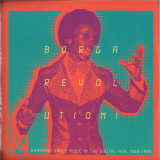
Kalita are proud to unveil the second volume in their "Borga Revolution!" compilation series, focussing on the phenomenon of "Burger Highlife", a crossover of West African melodies with synthesizers, disco and boogie that took over Ghanaian airwaves during the 1980"s and beyond. Featuring both highly sought-after recordings by artists including Atta Frimpong and D.J. Lawyer Okyere, as well as seminal performances by greats such as Pat Thomas, A.B. Crentsil and Alan Cosmos, Kalita once again come to the rescue of audiophiles, DJs and music-lovers alike with "Borga Revolution! - Volume 2". Spread over a double-LP housed in a gatefold sleeve. Accompanied by a 12-page booklet featuring extensive interview-based liner notes on each artist and never-before-seen archival photos.
THE SUBWAYS remain one of the most exciting live bands on the current touring circuit, thrilling crowds with their explosive rock sound and wild stage performances.
Back in 2005, with an average age of just 18, Billy, Charlotte and Josh crashed onto the international music scene with their debut album ‘YOUNG FOR ETERNITY’, and their rock-club floor-filling single ‘ROCK & ROLL QUEEN’. The NME proclaimed them “The sexiest thing to sweep rock n roll off its feet in years!”. An appearance on American smash teen drama THE OC and in Guy Ritchie’s London Gangster flick ‘RocknRolla’ has helped make the track a Spotify Rock Playlist mainstay.
The band have released four albums to date. Their sophomore, ‘ALL OR NOTHING’ (2008), was recorded in LA with heavyweight producer Butch Vig and, is “Buoyed with emotional heft and supernova guitar riffs, wired around a maturing song craft” (MOJO). The tracks were written at a time when Billy was battling to save his voice following surgery to remove nodules from his vocal cords. ‘MONEY AND CELEBRITY’ followed in 2011, filled with “brilliantly anarchic punk-pop vignettes; each being a big musical finger that sticks it to financial greed, the mediocre mainstream and the fame fetishists” (ROCKSOUND) and included the Radio 1 A-listed single ‘WE DON’T NEED MONEY TO HAVE A GOOD TIME’. Their self-titled 4th album saw the emergence of singer and songwriter Billy Lunn as a producer, as he took control of engineering and mixing duties and is "On Par with the best things they have ever written... and finds the band energized, focused and battle-ready" Q Magazine.
The global pandemic, though cutting short their 40+ date international ‘Young For Eternity Anniversary Tour’, has kept Billy busy in his newly-established Hertfordshire studio, with Charlotte and Josh in their respective homes focused on remotely recording Album 5. Makeshift under-stair vocal booths were constructed, and the album is now ready for a summer, 2022 release alongside a full European Tour
In April 2021 the band signed to ‘Alcopop’ and released the politically-charged, Black-Lives-Matter-inspired single “Fight”, which they describe as “a letter in two parts: a gesture of solidarity with the Black community and communities of colour as they face their daily oppression at the hands of systemic racism, and a wake-up-call to the white community that such oppressions do in fact exist, and that we must acknowledge these oppressions and fight alongside marginalised communities as allies.”
Scottish composer and multi-instrumentalist Bill Wells and virtuoso tuba player Danielle Price once more team up for Karaoke Kalk under the name The Sensory Illusions. The two further explore the affinities between their idiosyncratic musical approaches across a variety of styles and genres while also expanding their sound palette. After its predecessor saw Wells working strictly with his electric guitar, on the »Sensory Illusions II« the piano enters the mix on two of the eleven pieces. Much like his brass-heavy collaboration album »Osaka Bridge« with Japanese collective Maher Shalal Hash Baz—made available again on vinyl by the German label Karaoke Kalk in February 2023—this album injects melancholic atmospheres with a sense of playfulness. Picking up on elements from jazz, pop, blues, and classic songwriting while acknowledging their debt to techniques from the worlds of avant-garde and improv music, The Sensory Illusions weave together disparate elements into a colourful, imaginative suite of songs.
Starting with the folky chords of opener »Four Chord Dream,« the track titles spell out Wells’ characteristic use of ideas that literally come to him in his sleep (the project was even named after a record he found while browsing a store in a dream). The National Jazz Trio Of Scotland leader then fleshes them out together with Price, who again serves as a one-woman rhythm section, as she does throughout most of the album. When Wells enters 1960s spy movie territory with a swirling rendition of John Barry’s »Theme from Vendetta« and picks up on those dynamics with a rolling riff in the next song, her versatile playing provides the backdrop for that. Once Wells sits down at the piano for the tender »Flotsam Bodes,« however, their roles are being reversed and Price—a seasoned and multifaceted musician who was one of only six applicants chosen to attend Chilly Gonzales' Gonzervatory in 2019 and who is currently working with acclaimed London-based trumpet player and composer Laura Jurd—takes the lead. »I’m the Urban Spaceman« makes it even more apparent how seamlessly these two experienced players leave each other space to showcase their respective talent and expand on their individual ideas: Marked by Wells’ soloing and exploring different sonic possibilities of the guitar, it also sees Price showcasing her reduced yet agile solos before they both return to the idea at the heart of the song.
It is precisely those ideas that guide the duo’s way through the individual pieces, but their sometimes widely different approaches yield very distinct results. While working with the piano once more on »Mr. Sophie« results in a fuller and more anthemic sound, they opt for a more restrained, melancholic one the album closer »Desk Aunt«. It is precisely these kinds of variations in mood and tone that underscore how these two musicians are perfectly attuned to each other. As the second duo record in their six years of working together, »The Sensory Illusions II« proves once more how much musical ground they are able to cover with their instruments and open minds alone.
Fazerdaze, aka Auckland-based singer / producer / multi
nstrumentalist Amelia Murray, is back with new music after a
very intentional five year pause.
Fazerdaze returns with ‘Break!’, an air-punch purge in musical
form, marking an important reintroduction to an essential artist
of our times.
In a society where being strong and resilient is often held up like
a badge of honour, it’s much, much harder to acknowledge
when enough is enough - to accept when it’s time to let go. It’s
a truth that Murray has spent years wrangling with, but one
whose story thankfully comes with an empowering punchline of
personal reclamation. Rewind back half a decade and,
objectively, things for Fazerdaze were hitting their stride. Then
residing in Auckland, an early determination to graft hard and
“put herself in the right places” had led to working for and then
signing with legendary New Zealand label Flying Nun. A debut
LP - 2017’s ‘Morningside’ - followed, full of gauzy melodies and
nfluenced by Frankie Cosmos, Japanese Breakfast, and the
dream-pop landscape of the time.
Finishing up touring for the record at the end of 2018, Amelia
speaks of a deep sense of burn out and, more than that, of
feeling the “wheels starting to come off” in her general life. “No
longer being stoic and strong was the best thing I ever did for
myself. Giving up on the people and things that weren’t working
in my life was this big release where I could finally put down this
weight that I was carrying, and ever since then everything has
been better in my life overall,” she continues with an audible
sense of relief. “I can hear my intuition and write songs and be
creative; I signed a record deal, I moved into my own place. It’s
like the floodgates opened for good stuff coming into my life.”
Black vinyl in a single sleeve jacket and printed inner sleeve.
Design by Joey Clough.
Press - Reviews & features in The Guardian, The FADER, Brooklyn Vegan,
Complex, Consequence, DIY, Narc Magazine, Pigeons and Planes.
Radio - BBC 6 Music A-List.
Online - Support from both fans & fellow musicians, including posts shouting
out ‘Break!’ from King Krule & Lorde.
- 1: A Letter To Dub
- 2: Champian Dub
- 3: Up And Down Dub
- 4: A Spliffing Dub
- 5: Crucial Dub
- 6: Dance Inna Dub Style
- 7: Aarafat Version
- 8: No Funny Dub
- 9: Next To Version
- 10: Live Good Dub
At the beginning of the eighties reggae music became increasingly in tune with what was happening in Kingston’s dance halls… probably more so than at any time since the sound system operators had started to make their own shuffle and boogie recordings in the late fifties. The international audience and the critics were too busy looking for a new Bob Marley to appreciate what was happening downtown and failed to acknowledge that this was a return to the real, raw roots of the music. Brash, confident, young record producers who were totally in tune with the youth audience stepped forward and seized the moment…
Oswald ‘Ossie’ Thomas began his apprenticeship in the music business at the age of
fourteen and served his time as a record salesman for Bunny ‘Striker’ Lee and Winston ‘Niney The Observer’ Holness before moving on to Miss Sonia Pottinger’s Tip Top Records.
“I ended up working in three record stores on Orange Street from 1976 to 1981… Yeah man! Me deh ‘pon me bicycle till I buy my motorcycle! Them days records were coming out left, right and centre… every day!” Ossie Thomas.
It was during his time with Miss Pottinger that Ossie began to produce records for
himself and in 1979 Ossie and Phillip Morgan began the Black Solidarity label based deep in the Kingston ghetto on Delamere Avenue. Phillip initially inspired Ossie to start the label and soon Triston Palma, Phillip Frazer and “a youth named Gary Robertson” joined in although Gary later left for Canada.
The Soul Syndicate rehearsed in the Delamere Avenue area and Tony Chin gave Ossie a cut of a rhythm that he used for Triston Palma’s ‘A Class Girl’… the label’s inaugural release. The record was a sizeable success and paved the way for hit after hit after hit on Black Solidarity. Ossie worked with just about everybody who was anybody during this critical period of the music’s development including vocalists Robert Ffrench, Little John, Sugar Minott, Frankie Paul and most notably Triston Palma.
For this release we have compiled some of the version sides to those releases. Dub still being an integral part of the Reggae Sound System Sound. So sit back and listen to what Black Solidarity, one of the most important and often overlooked labels were bringing to the dance, dubwise, back in those heady 1980’s times.
With grateful thanks to: Paul Coote, Nick Hodgson & Hasse Huss
On June 30, 1986, the same day that Diamanda Galás"s The Divine Punishment was released, the Supreme Court upheld the constitutionality of Georgia"s so-called sodomy law in Bowers v. Hardwick, criminalizing consensual sex between men. At the time, about 15,000 people were known to have died of AIDS in the U.S. alone, with little government acknowledgement besides suggestions to quarantine homosexuals on island colonies. By the end of 2021, the number of AIDS deaths globally would exceed 36 million. The first album in her Masque of the Red Death trilogy, The Divine Punishment is one of the most jarring works of art produced in response to the AIDS epidemic, and a milestone in Diamanda Galás"s artistry and activism. Galás uses her famous voice both as an orational instrument and as well as a physical representation of AIDS and those it afflicts.
Bassist/composer Christian McBride's 'The Movement Revisited: A
Musical Portrait of Four Icons' is the culminating documentation of a
richly inspired piece lauding four key figures of the Civil Rights
Movement: Rev
Dr. Martin Luther King, Jr., Malcolm X, Rosa Parks and Muhammad Ali.
Marshalling his ever- sharpening skills as a composer, arranger, conductor,
musician and lyricist, McBride has created a historically and culturally
illuminating five- part suite for an 18- piece big band, chorus and narrators that
places the motivating forces as well as the goals of the Civil Rights Movement
within a powerfully relevant artistic context. It is a one- from- the- heart project
McBride was, apparently, destined to undertake.
This recording of The Movement Revisited marks the addition of a fifth
movement, Apotheosis, which acknowledges the election of Barack Obama as
the first African American President of the United States.
2-LP regular weight black vinyl gatefold jacket.
Repress due in soon, this one on red vinyl, note new price. For fans of Jesus Lizard, Melvins, Korn, Nick Cave, and, The Flenser. Must anticipated debut full-length from Oklahoma-based noise rock band. Multiple vinyl pressing of the band’s EPs on cult noise rock label Reptilian Records have quickly sold out. There’s a sick irony to how a country that extols rhetoric of individual freedom, in the same gasp, has no problem commodifying human life as if it were meat to feed the insatiable hunger of capitalism. If this is American nihilism taken to its absolute zenith, then God’s Country, the first full length record from Oklahoma City noise rock quartet Chat Pile is the aural embodiment of such a concept. Having lived alongside the heaps of toxic refuse that the band derives its name from, the fatalism of daily life in the American Midwest permeates throughout the works of Chat Pile, and especially so on its debut album. Exasperated by the pandemic, the hopelessness of climate change, the cattle shoot of global capitalism, and fueled by “...lots and lots and lots and lots and lots and lots of THC,” God’s Country is as much of an acknowledgement of the Earth’s most assured demise as it is a snarling violent act of defiance against it. Within its over forty minute runtime, the album displays both Chat Pile’s most aggressively unhinged and contemplatively nuanced moments to date, drawing from its preceding two EPs and its score for the 2021 film, Tenkiller. In the band’s own words, the album is, at its heart, “Oklahoma’s specific brand of misery.” A misery intent on taking all down with it and its cacophonous chaos on its own terms as opposed to idly accepting its otherwise assured fall. This is what the end of the world sounds like.
repress !
Wax’o Paradiso Recordings presents its debut outing on vinyl, OK EG’s Intertidal Zone EP. The new label from the long standing Naarm (Melbourne) party is set to explore hi-fidelity, landscape-driven and cerebral music from the antipodes and beyond.
After sold out pressings on local imprints Animalia and Steeplejack, this EP explores a more contemplative side of OK EG, suitable for discerning dancefloors and meditative home listening alike.
Conceived in 2019 and completed in 2020, Intertidal Zone was recorded in collaboration with percussionist Phil Stroud. The rhythm tracks are a fusion of drum machines and hand drums, loose percussion, human voices and tuned percussion immersed in water. Joined by analog synthesisers, layered vocals, processed guitar and field recordings, the music evokes solastalgia and a reverence for nature.
The final track, Golden Hour, came from an improvisation with multi-instrumentalist Adam Halliwell on flute and jazz musician Jack Doepel on Korg bass, later transposed to modular synthesiser.
Wax’o Paradiso and OK EG acknowledge the traditional owners of the land on which this music was recorded, the Wurundjeri people of the Kulin nation, and pay their respects to elders past, present and emerging.
Strut present 3 separate reissues of the 1970s album trilogy from Idris Ackamoor & The Pyramids. As students at Antioch college, Ohio, alto saxophonist Idris Ackamoor, flautist Margaux Simmons and bass player Kimathi Asante created three lasting monuments in sound — Lalibela, King of Kings, and Birth / Speed / Merging, a trio of albums produced without any label backing or distribution between 1972 and 1976. Their music is unique among the varied canon of avant-garde and experimental music of 1970s America: high intensity African-styled percussion topped with songs, chants, and horns, laced with African instruments and arranged into long, flowing suites that surge and roll.
The debut album by the Pyramids was inspired by the group's visit to the Lalibela monastery in Egypt, and was recorded in Yellow Springs Ohio in early 1973. Drawing on the teachings of Cecil Taylor and the influence of John Coltrane, combined with a barrage of intense percussion, the album evolves over several long-form pieces, Initially only 500 copies were pressed and sold to friends and followers in the local area.
To listen to Sarah Mary Chadwick's music is to be a quiet observer to her
thoughts on love, death and mental health - Sometimes anguish bears
itself in sullen, dreamy vs dreary moments, but more often torment
manifests at the break of Chadwick's voice as she sings painfully
vulnerable, self-aware lyrics
Chadwick is a singer/ songwriter and visual artist, based in Melbourne. After
moving to Australia from New Zealand to pursue a career in music, Chadwick
spent a decade fronting the grunge band Batrider. In 2012 she shifted focus to
her now prolific solo career. Essentially Chadwick's work is basic reportage of
events and observations from her own life, creating something exactly realised
yet completely relateable. Chadwick's performance remains singular and complex
as she simultaneously savors and is repelled by the podium that her creativity
affords her, acknowledging that it's a position of power being on a microphone
and how ..it's a desperate demand to be seen. It's funny and really sad. These
days, I just want to be an entertainer.''
I always write a lot so I love it when songs can find homes in the outside world.
Track one 'Flipped It' was recorded in the "Me and Ennui" session, and I couldn't
find a comfortable place for it on that record. Track Two 'All the things...' was
recorded during the "Please Daddy" sessions, earlier that same year in 2019.
Pressed on 7" White Color vinyl.
- A1: Breathe (Feat Lily James)
- A2: Coconut Grove (Feat Homeboy Sandman)
- A3: Don't Even Try It (Feat Liam Bailey)
- A4: Lesson 1956 (Feat Jamie Cullum & Dj Woody)
- A5: My Energy (Feat Eva Lazarus)
- B1: Feel Like Home (Feat The House Gospel Choir)
- B2: Airplane Mode (Feat Lily James & Choosey)
- B3: Harder I Rock (Feat Choosey)
- B4: Way Home (Feat O Love)
- B5: Don't Mean A Thing (Feat Beardyman)
Dressed in a powder blue suit with the frilly shirt to match, DJ Yoda invites you to be his +1 for ‘Prom Nite’, his new album promising retro Americana full of daydreaming reverie, international megastar guests, trip hop acknowledging the likes of Morcheeba and Nightmares on Wax, and the turntable extraordinaire’s bread and butter of cuts, beats and rhymes.
Certainly no stranger to retro sounds having famously peppered his DJ and AV sets with the unexpected the world over, and his ‘How to Cut n Paste’ mix series going all the way back to the 30s, Yoda’s harp-laden puppy love vibe spreads from the sweet and mellow sound of 2019’s ‘Home Cooking’, an album described as ‘boundary-breaking’ by Mojo upon slotting nicely into the UK’s blooming jazz canon. Think deliciously harmonised doo-wop murmuring ‘Goodnight Sweetheart’ with an eye for dreamboats en route to Makeout Point – on ‘My Energy’, Eva Lazarus takes the form of an earth angel, with Yoda on jukebox cut-ups, taking it back to starry-eyed, clean cut days of wonder (or more recently, Little Mix’s ‘Love Me Like You’).
Beginning enigmatically with the assistance of Hollywood A-lister (and former next-door neighbour) Lily James, ‘Breathe’ demonstrate Yoda’s continued evolution as a musician (not to mention shrewd decision maker), with James’ vocal confidence - a little Lana del Rey to her breathiness - returning on the velvet-smooth ‘Airplane Mode’. It’s a smartly executed soundclash accentuated by LA rapper Choosey, the star of the album’s straightest hip-hop shooter ‘Harder I Rock’. Homeboy Sandman adds some kick to the prom punch with typical wordplay sent down ‘Coconut Grove’, and Liam Bailey is perfectly cast for the darkly cinematic sway of ‘Don’t Even Try It’.
On an album of many talking points, the LP’s crowning glory is opening single ‘Feel Like Home’: featuring the vocal comforts of the House Gospel Choir, it’s your go–to pick-me-up when the chips are down, targeting the hairs on the backs of necks like a softer focus version of Jamie xx’s ‘Loud Places’. Extended into an alternative, equally uplifting form by Beardyman’s ‘Don’t Mean Thing’, summer festival season already has its homecoming anthem.
With tongues wagging, the twists and turns step away from Heartbreak Ridge when O Love tucks into the mouthwatering shopping list funk of ‘Way Home’; and ‘Lesson 1956’, featuring Jamie Cullum and DJ Woody, jauntily pays homage to classic Cut Chemist alchemy, Yoda’s celebrated turntable tomfoolery back in full effect and extending the flavours found in ‘Home Cooking’.
Again maximising the experience and enjoyment gained from recording live instruments and prioritising songs over beats, Yoda continues to progress with a mixture of risk-taking, elite musicianship, nostalgia brought bang up to date, and ultimately, good clean fun capable of stirring your soul, making ‘Prom Nite’ a date to remember.
Magpie artwork supplied by London’s ENDLESS, whose signature style has tagged Liberty and Lagerfeld as but two high profile clients, Yoda again maximises the experience and enjoyment gained from recording live instruments and prioritising songs over beats. His continued progress mixes risk-taking, elite musicianship, nostalgia brought bang up to date, and ultimately, good clean fun capable of stirring your soul, making ‘Prom Nite’ a date to remember.
Featured 7” Vinyl singles:
Feel Like Home (feat. The House Gospel Choir)/ Don’t Mean A Thing (feat. Beardyman)
My Energy (feat. Eva Lazarus)/Lesson 1956 (feat. Jamie Cullum & DJ Woody)
MONO’s first-ever feature-length motion picture soundtrack. My Story, The Buraku Story is a new feature-length documentary film that explores the discrimination against a group of people – commonly called “the burakumin” who were classed into lowly groups and segregated from the rest of Japanese society. This discrimination is not by race or ethnicity, but rather by place of residence and bloodline, and has existed for centuries – albeit very rarely acknowledged or discussed in Japan. When director Yusaku Mitsuwaka imagined the exemplary score for such a culturally sensitive and significant subject, he idealized MONO to help tell this story through their legendarily cinematic music. Following their recent experiments with electronic textures infused into their trademark dynamic rock compositions, My Story, The Buraku Story finds MONO at their most understated and elegiac. The songs that make up My Story, The Buraku Story are largely built around piano, strings, synths, and choral vocal loops. As one might expect from MONO, the arrangements are masterworks of understated execution with oversized emotional resonance. By far MONO’s most delicate album, it is a fitting document of the band’s first-ever full-length film soundtrack.
dreamcastmoe is the recording project of singer, songwriter, producer, and DJ Davon Bryant, a lifelong resident of Washington, DC. His music moves freely between moods and modes, hypnotic, romantic, traversing electronic, R&B, funk, soul, and hip-hop... Resident Advisor dubs it "soulful, cross-genre dance music." This ability to adapt and finesse, to twist in different directions while staying true and coherent in vision, can be traced to his home city and its complex cultural history. "Most Black kids in DC don't ever get to this point," he says. "This is what I am making this music for, in the DC tradition of soul and empathy and love that is rooted in this city. My music is for real people dealing with shit every day." A versatile, modern artist and collaborator, dreamcastmoe has thrived in the underground since his first uploads to Soundcloud and Bandcamp in 2017 and subsequent releases with labels like People's Potential Unlimited, Trading Places, and In Real Life Music. Bryant's laid-back personality, emotional honesty, and infectious energy shine through his work and how he talks about it, as Crack Magazine notes in their 2021 Rising feature: "a steady combination of confidence, creativity, and calmness." He grew up playing drums in church; he's worked dead-end jobs, had ups and downs, even sold off all his gear one time, but never stopped reinvesting in himself. He is quick to praise his co-producers, rattle off influences _ the visual feel of NBA 2K, the comedic timing of Bernie Mac, the savvy legacy of Duke Ellington, for starters _ and credit resourceful DC breakouts like Ankhlejohn that showed him the roadmap. His voice, a steady instrument, seemingly connects it all, capable of slow falsetto flow, swaggering talk-rap, and outright croon. His storytelling style is choppy yet fluid, like a mixtape, which is how Bryant sees Sound Is Like Water, his debut on Ghostly's International's freeform label, Spectral Sound. The two-part project culminates as a full-length LP release in November 2022. The first side, released as Part I, opens on the blurred beats of "El Dorado," which dreamcastmoe dedicates to his journey. It's a head-nodder, an off-kilter earworm co-produced by Max D (Future Times, RVNG Intl, etc.), with Bryant harmonizing hooks with synth jabs and a pitched-down presence. "Complicated" is the slow jam, delivered smoothly from a Saturday night crossroads. dreamcastmoe is contemplative and committed... gliding and locking ad-libs into skittering rhythms courtesy of co-producer Zackary Dawson _ but also willing to let something go, "acknowledging that everything in life IS NOT easy." "RU Ready" takes off from the jump as a tribute, challenge, and promise to his partner and his city ("The times you sat with me when I needed you the most / Told me the things that I needed to see / Young black man, really trying to be what I can be / And I'm really from DC). In its potent two-plus minutes, the sonics (co-produced by ZDBT) press the message, all cymbal crashes, breakbeats, and serrated synth lines. "Cloudy Weather, Wear Boots" is a blitzing dance-punk track made in collaboration with Jordan GCZ on Bryant's first trip to Amsterdam. The album's flipside opens on "Much More," the first of two synth-and-beat ballads co-produced by ZDBT. Later on "Long Songz," he claims, "I'm not writing love songs no more," prioritizing the vibe with "all my day ones." He calls it "a cry for more normal moments. Everything doesn't have to be a fantasy love story, more time spent getting to the money, growing, and making a way." He saves two of his most propulsive cuts for the finale, co-produced by Sami, co-founder of DC dance label 1432 R. As their titles suggest, "Take A Moment" and "Make Ya Mind" operate as anthems for movement, with Bryant free-flowing commands above wildly-styled percussion. Per Bryant, the latter is both "wake & bake jam" and a "dance floor bomb." His parting line: "Action / You got to show me action / Reaction." The world of dreamcastmoe straddles virtual reality and the realness of DC, images both imagined and lived-in. Bryant has a knack for unexpected melodies but what makes his music so exciting is his capacity to defy the expectations of genre and image. A fluid ingenuity and vulnerability bottled by Sound Is Like Water, and this is just the beginning.
Strut continue their work from the archives of Idris Ackamoor & The Pyramids with a first ever vinyl release of Ackamoor's debut avant-garde / Afro-jazz recordings from 1971 with The Collective, based out of Yellow Springs, Ohio.
The group was formed after Ackamoor had returned to Antioch from a spell in L.A. under the wing of influential saxophonist Charles Tyler. Pianist Lester Knibbs had been appointed to the Antioch college music department as an assistant professor and had followed a similar path to avant-garde pioneer, Cecil Taylor. "They both came from the classical tradition," explains Ackamoor, "but also understood jazz and avant-garde improvisation." Ackamoor and Knibbs started as a duet before Ackamoor met three musicians from Wright-Patterson Air Force base near Dayton. Ackamoor continues, "They would come to Yellow Springs because they could find marijuana there. They were called 'the three Steves': Steve Maniscoso, an Italian, Steve Rumboat, a white American and Oakland Steve, a black musician playing flute. Oakland Steve left the air force and then Margaux Simmons arrived - that is the quintet featured on these recordings. You also hear a vocalist called Peggy Pettitt, another Antioch student who became quite famous in movies; she starred in the film Black Girl soon afterwards in 1972.
This concert is the only professional recording of The Collective from a performance at Kelly Hall in August 1971. "After this, I think the Steves went back to Wright-Patterson," continues Ackamoor, "and The Collective just naturally evolved and transitioned
Strut present 3 separate reissues of the 1970s album trilogy from Idris Ackamoor & The Pyramids. As students at Antioch ollege, Ohio, alto saxophonist Idris Ackamoor, flautist Margaux Simmons and bass player Kimathi Asante created three lasting monuments in sound — Lalibela, King of Kings, and Birth / Speed / Merging, a trio of albums produced without any label backing or distribution between 1972 and 1976. Their music is unique among the varied canon of avant-garde and experimental music of 1970s America: high intensity African-styled percussion topped with songs, chants, and horns, laced with African instruments and arranged into long, flowing suites that surge and roll.
King Of Kings was recorded in 1974 and features a wider array of instruments including Ugandan Harp and Balafon. Perhaps best known for the expansive "Nsorama (The Stars)" a seminal work of Spiritual Jazz.
- 1: Aomawa
- 2: Birth / Speed / Merging - Part 1
- 3: Birth / Speed / Merging - Part 2
- 4: Birth / Speed / Merging - Part 3
- 5: Birth / Speed / Merging - Part 4
- 6: Reaffirmation - Part 1
- 7: Reaffirmation - Part 2
- 8: Reaffirmation - Part 3
- 9: Reaffirmation - Part 4
- 10: Jamaican Carnival - Part 1
- 11: Jamaican Carnival — Part 2
- 12: Black Man And Woman Of The Nile
Strut present 3 separate reissues of the 1970s album trilogy from Idris Ackamoor & The Pyramids. As students at Antioch ollege, Ohio, alto saxophonist Idris Ackamoor, flautist Margaux Simmons and bass player Kimathi Asante created three lasting monuments in sound — Lalibela, King of Kings, and Birth / Speed / Merging, a trio of albums produced without any label backing or distribution between 1972 and 1976. Their music is unique among the varied canon of avant-garde and experimental music of 1970s America: high intensity African-styled percussion topped with songs, chants, and horns, laced with African instruments and arranged into long, flowing suites that surge and roll.
Birth/Speed/Merging was recorded in 1976 after the band's move to San Francisco. The album closes the Pyramids' 70s trilogy and makes more use of studio technology: adding overdubs and other effects, a marked departure from the previous two releases, though at no cost to the urgent message and energy of their earlier works.
Transversales Disques proudly presents Ahmad Jamal Trio, Live in Paris 1971. Never heard before ORTF recordings performed live at studio 104, Maison de la Radio, Paris. This is the first official release with the full permission and cooperation of the National Audiovisual Institute (INA) coming in a Deluxe Edition - Classic Tip-On Jacket. Including exclusive pictures. Mastered from the original master tapes.
« While be-bop musicians practise one-upmanship in terms of speed, Ahmad Jamal develops a crystal-clear touch and praises silence: "I was an angel among devils! The boppers made notes explode. I let them resonate until the end of their lives".
A reputation as an artist on the fringes perhaps explains this lack of fame he suffered at one time. But despite the great whirlwind that is his life, Ahmad Jamal declares that he is searching for peace: "The quest is that of musical and internal peace. I cannot acknowledge that I am at peace, it would be dangerous to show it. A man at peace with himself doesn't say so".
If you cannot say it, you can hear it, especially during his first concert in Paris in a trio. Here we are transported to the upper echelons of the art of the trio: the master of the piano, in studio 104 of Broadcasting House, is surrounded by brilliant accomplices, Jamil Nasser on double bass and Frank Gant on drums... » (Jérôme Badini, France Musique).
It is said, study, work hard and life shall reward.
Be good unto others and life will be kind to you.
The question is, can you break free from the external constraints of control or do you negotiate your release.
Should one endure the seemingly eternal struggle, wielding equality as a spearhead of revolution ?
Or do you count your loses and move on to a new world where the lessons of the past are acknowledged ?
A fresh start without the weight of having to shield your liberty.
A place where all past wrongs can be made right and the tentacles of evil can not reach.
A world where legacy can be held in esteem.
- A1: It Is Nothing (2022 Remaster)
- A2: In Your Heart (2022 Remaster)
- A3: Lost Feeling (2022 Remaster)
- A4: Deadbeat (2022 Remaster)
- A5: Keep Sipping Away (2022 Remaster)
- B1: Ego Death (2022 Remaster)
- B2: Smile When You Smile (2022 Remaster)
- B3: Everything Always Goes Wrong (2022 Remaster)
- B4: Exploding Head (2022 Remaster)
- B5: I Lived By Life To Stand In The Shadow Of Your Heart (2022 Remaster)
Following their eponymous debut in 2007, Exploding Head is A Place To Bury Strangers’ most notable record, garnering the New York noise rock outfit critical praise and a cult fanbase. Lead by Oliver Ackermann, the band had a simple goal for ‘their first proper studio album’; “to create the craziest, most fucked-up recording ever."
Recorded at their Death By Audio studios in New York and released on Mute Records, the album was critically praised for its explorative sound, taking inspiration from shoegaze icons such as Jesus & Mary Chain and My Bloody Valentine. Pitchfork described the album as “frustrated aggression, lacerating feedback… saturated with slender indie-pop melody."
The album has now been digitally remastered by Oliver Ackermann and is presented in three formats; Deluxe 2LP (Band Website & Tour D2C Exclusive), 2CD Deluxe & 1LP Standard. This 1LP 140g Transparent Red Vinyl is housed in Standard Sleeve and features exclusive sleeve notes by music journalist Tris McCall.
- A1: Rock This Mother
- A2: Talk To Me Girl
- A3: You Can Find Me
- A4: Check This Out
- A5: Jesus Going To Clean House
- A6: Hope You Understood
- A7: Is It What You Want
- A8: Love Is Everlasting
- A9: This Is Hip-Hop Art
- A10: Opposite Of Love
- A11: Do You Know What I Mean
- B1: Saving All My Love For You
- B2: Look Out Here I Come
- B3: Girl You Always Talking
- B4: Have A Great Day
- B5: Take My Hand
- B6: I Need Your Love
- B7: Your Town
- B8: Talk Around Town
- B9: Booty Head/Take A Little Walk
- B10: I Love My Mama
- B11: I Never Found Anyone Like You
Vinyl LP[23,49 €]
As the sun sets on a quaint East Nashville house, a young man bares a piece of his soul. Facing the camera, sporting a silky suit jacket/shirt/slacks/fingerless gloves ensemble that announces "singer" before he's even opened his mouth, Lee Tracy Johnson settles onto his stage, the front yard. He sways to the dirge-like drum machine pulse of a synth-soaked slow jam, extends his arms as if gaining his balance, and croons in affecting, fragile earnest, "I need your love… oh baby…"
Dogs in the yard next door begin barking. A mysterious cardboard robot figure, beamed in from galaxies unknown and affixed to a tree, is less vocal. Lee doesn't acknowledge either's presence. He's busy feeling it, arms and hands gesticulating. His voice rises in falsetto over the now-quiet dogs, over the ambient noise from the street that seeps into the handheld camcorder's microphone, over the recording of his own voice played back from a boombox off-camera. After six minutes the single, continuous shot ends. In this intimate creative universe there are no re-takes. There are many more music videos to shoot, and as Lee later puts it, "The first time you do it is actually the best. Because you can never get that again. You expressing yourself from within."
"I Need Your Love" dates from a lost heyday. From some time in the '80s or early '90s, when Lee Tracy (as he was known in performance) and his music partner/producer/manager Isaac Manning committed hours upon hours of their sonic and visual ideas to tape. Embracing drum machines and synthesizers – electronics that made their personal futurism palpable – they recorded exclusively at home, live in a room into a simple cassette deck. Soul, funk, electro and new wave informed their songs, yet Lee and Isaac eschewed the confinement of conventional categories and genres, preferring to let experimentation guide them.
"Anytime somebody put out a new record they had the same instruments or the same sound," explains Isaac. "So I basically wanted to find something that's really gonna stand out away from all of the rest of 'em." Their ethos meant that every idea they came up with was at least worth trying: echoed out half-rapped exhortations over frantic techno-style beats, gospel synth soul, modal electro-funk, oddball pop reinterpretations, emo AOR balladry, nods to Prince and the Fat Boys, or arrangements that might collapse mid-song into a mess of arcade game-ish blips before rallying to reach the finish line. All of it conjoined by consistent tape hiss, and most vitally, Lee's chameleonic voice, which managed to wildly shape shift and still evoke something sincere – whether toggling between falsetto and tenor exalting Jesus's return, or punctuating a melismatic romantic adlib with a succinct, "We all know how it feels to be alone."
"People think we went to a studio," says Isaac derisively. "We never went to no studio. We didn't have the money to go to no studio! We did this stuff at home. I shot videos in my front yard with whatever we could to get things together." Sometimes Isaac would just put on an instrumental record, be it "Planet Rock" or "Don't Cry For Me Argentina" (from Evita), press "record," and let Lee improvise over it, yielding peculiar love songs, would-be patriotic anthems, or Elvis Presley or Marilyn Monroe tributes. Technical limitations and a lack of professional polish never dissuaded them. They believed they were onto something.
"That struggle," Isaac says, "made that sound sound good to me."
In the parlance of modern music criticism Lee and Isaac's dizzying DIY efforts would inevitably be described as "outsider." But "outsider" carries the burden of untold additional layers of meaning if you're Black and from the South, creating on a budget, and trying to get someone, anyone within the country music capital of the world to take your vision seriously. "What category should we put it in?" Isaac asks rhetorically. "I don't know. All I know is feeling. I ain't gonna name it nothing. It's music. If it grabs your soul and touch your heart that's what it basically is supposed to do."
=
Born in 1963, the baby boy of nine siblings, Lee Tracy spent his earliest years living amidst the shotgun houses on Nashville's south side. "We was poor, man!" he says, recalling the outhouse his family used for a bathroom and the blocks of ice they kept in the kitchen to chill perishables. "But I actually don't think I really realized I was in poverty until I got grown and started thinking about it." Lee's mom worked at the Holiday Inn; his dad did whatever he had to do, from selling fruit from a horse drawn cart to bootlegging. "We didn't have much," Lee continues, "but my mother and my father got us the things we needed, the clothes on our back." By the end of the decade with the city's urban renewal programs razing entire neighborhoods to accommodate construction of the Interstate, the family moved to Edgehill Projects. Lee remembers music and art as a constant source of inspiration for he and his brothers and sisters – especially after seeing the Jackson 5 perform on Ed Sullivan. "As a small child I just knew that was what I wanted to do."
His older brother Don began musically mentoring him, introducing Lee to a variety of instruments and sounds. "He would never play one particular type of music, like R&B," says Lee. "I was surrounded by jazz, hard rock and roll, easy listening, gospel, reggae, country music; I mean I was a sponge absorbing all of that." Lee taught himself to play drums by beating on cardboard boxes, gaining a rep around the way for his timekeeping, and his singing voice. Emulating his favorites, Earth Wind & Fire and Cameo, he formed groups with other kids with era-evocative band names like Concept and TNT Connection, and emerged as the leader of disciplined rehearsals. "I made them practice," says Lee. "We practiced and practiced and practiced. Because I wanted that perfection." By high school the most accomplished of these bands would take top prize in a prominent local talent show. It was a big moment for Lee, and he felt ready to take things to the next level. But his band-mates had other ideas.
"I don't know what happened," he says, still miffed at the memory. "It must have blew they mind after we won and people started showing notice, because it's like everybody quit! I was like, where the hell did everybody go?" Lee had always made a point of interrogating prospective musicians about their intentions before joining his groups: were they really serious or just looking for a way to pick up girls? Now he understood even more the importance of finding a collaborator just as committed to the music as he was.
=
Isaac Manning had spent much of his life immersed in music and the arts – singing in the church choir with his family on Nashville's north side, writing, painting, dancing, and working various gigs within the entertainment industry. After serving in the armed forces, in the early '70s he ran The Teenage Place, a music and performance venue that catered to the local youth. But he was forced out of town when word of one of his recreational routines created a stir beyond the safe haven of his bohemian circles.
"I was growing marijuana," Isaac explains. "It wasn't no business, I was smoking it myself… I would put marijuana in scrambled eggs, cornbread and stuff." His weed use originated as a form of self-medication to combat severe tooth pain. But when he began sharing it with some of the other young people he hung out with, some of who just so happened to be the kids of Nashville politicians, the cops came calling. "When I got busted," he remembers, "they were talking about how they were gonna get rid of me because they didn't want me saying nothing about they children because of the politics and stuff. So I got my family, took two raggedy cars, and left Nashville and went to Vegas."
Out in the desert, Isaac happened to meet Chubby Checker of "The Twist" fame while the singer was gigging at The Flamingo. Impressed by Isaac's zeal, Checker invited him to go on the road with him as his tour manager/roadie/valet. The experience gave Isaac a window into a part of the entertainment world he'd never encountered – a glimpse of what a true pop act's audience looked like. "Chubby Checker, none of his shows were played for Black folks," he remembers. "All his gigs were done at high-class white people areas." Returning home after a few years with Chubby, Isaac was properly motivated to make it in Music City. He began writing songs and scouting around Nashville for local talent anywhere he could find it with an expressed goal: "Find someone who can deliver your songs the way you want 'em delivered and make people feel what you want them to feel."
One day while walking through Edgehill Projects Isaac heard someone playing the drums in a way that made him stop and take notice. "The music was so tight, just the drums made me feel like, oh I'm-a find this person," he recalls. "So I circled through the projects until I found who it was.
"That's how I met him – Lee Tracy. When I found him and he started singing and stuff, I said, ohhh, this is somebody different."
=
Theirs was a true complementary partnership: young Lee possessed the raw talent, the older Isaac the belief. "He's really the only one besides my brother and my family that really seen the potential in me," says Lee. "He made me see that I could do it."
Isaac long being a night owl, his house also made for a fertile collaborative environment – a space where there always seemed to be a new piece of his visual art on display: paintings, illustrations, and dolls and figures (including an enigmatic cardboard robot). Lee and Issac would hang out together and talk, listen to music, conjure ideas, and smoke the herb Isaac had resumed growing in his yard. "It got to where I could trust him, he could trust me," Isaac says of their bond. They also worked together for hours on drawings, spreading larges rolls of paper on the walls and sketching faces with abstract patterns and imagery: alien-like beings, tri-horned horse heads, inverted Janus-like characters where one visage blurred into the other.
Soon it became apparent that they didn't need other collaborators; self-sufficiency was the natural way forward. At Isaac's behest Lee, already fed up with dealing with band musicians, began playing around with a poly-sonic Yamaha keyboard at the local music store. "It had everything on it – trumpet, bass, drums, organ," remembers Lee. "And that's when I started recording my own stuff."
The technology afforded Lee the flexibility and independence he craved, setting him on a path other bedroom musicians and producers around the world were simultaneously following through the '80s into the early '90s. Saving up money from day jobs, he eventually supplemented the Yamaha Isaac had gotten him with Roland and Casio drum machines and a Moog. Lee was living in an apartment in Hillside at that point caring for his dad, who'd been partially paralyzed since early in life. In the evenings up in his second floor room, the music put him in a zone where he could tune out everything and lose himself in his ideas.
"Oh I loved it," he recalls. "I would really experiment with the instruments and use a lot of different sound effects. I was looking for something nobody else had. I wanted something totally different. And once I found the sound I was looking for, I would just smoke me a good joint and just let it go, hit the record button." More potent a creative stimulant than even Isaac's weed was the holistic flow and spontaneity of recording. Between sessions at Isaac's place and Lee's apartment, their volume of output quickly ballooned.
"We was always recording," says Lee. "That's why we have so much music. Even when I went to Isaac's and we start creating, I get home, my mind is racing, I gotta start creating, creating, creating. I remember there were times when I took a 90-minute tape from front to back and just filled it up."
"We never practiced," says Isaac. "See, that was just so odd about the whole thing. I could relate to him, and tell him about the songs I had ideas for and everything and stuff. And then he would bring it back or whatever, and we'd get together and put it down." Once the taskmaster hell bent on rehearsing, Lee had flipped a full 180. Perfection was no longer an aspiration, but the enemy of inspiration.
"I seen where practicing and practicing got me," says Lee. "A lot of musicians you get to playing and they gotta stop, they have to analyze the music. But while you analyzing you losing a lot of the greatness of what you creating. Stop analyzing what you play, just play! And it'll all take shape."
=
"I hope you understood the beginning of the record because this was invented from a dream I had today… (You tell me, I'll tell you, we'll figure it out together)" – Lee Tracy and Isaac Manning, "Hope You Understand"
Lee lets loose a maniacal cackle when he acknowledges that the material that he and Isaac recorded was by anyone's estimation pretty out there. It's the same laugh that commences "Hope You Understand" – a chaotic transmission that encapsulates the duality at the heart of their music: a stated desire to reach people and a compulsion to go as leftfield as they saw fit.
"We just did it," says Lee. "We cut the music on and cut loose. I don't sit around and write. I do it by listening, get a feeling, play the music, and the lyrics and stuff just come out of me."
The approach proved adaptable to interpreting other artists' material. While recording a cover of Whitney Houston's pop ballad "Saving All My Love For You," Lee played Whitney's version in his headphones as he laid down his own vocals – partially following the lyrics, partially using them as a departure point. The end result is barely recognizable compared with the original, Lee and Isaac having switched up the time signature and reinvented the melody along the way towards morphing a slick mainstream radio standard into something that sounds solely their own.
"I really used that song to get me started," says Lee. "Then I said, well I need something else, something is missing. Something just came over me. That's when I came up with 'Is It What You Want.'"
The song would become the centerpiece of Lee and Isaac's repertoire. Pushed along by a percolating metronomic Rhythm King style beat somewhere between a military march and a samba, "Is It What You Want" finds Lee pleading the sincerity of his commitment to a potential love interest embellished by vocal tics and hiccups subtlely reminiscent of his childhood hero MJ. Absent chord changes, only synth riffs gliding in and out like apparitions, the song achieves a lingering lo-fi power that leaves you feeling like it's still playing, somewhere, even after the fade out.
"I don't know, it's like a real spiritual song," Lee reflects. "But it's not just spiritual. To me the more I listen to it it's like about everything that you do in your everyday life, period. Is it what you want? Do you want a car or you don't want a car? Do you want Jesus or do you want the Devil? It's basically asking you the question. Can't nobody answer the question but you yourself."
In 1989 Lee won a lawsuit stemming from injuries sustained from a fight he'd gotten into. He took part of the settlement money and with Isaac pressed up "Saving All My Love For You" b/w "Is It What You Want" as a 45 single. Isaac christened the label One Chance Records. "Because that's all we wanted," he says with a laugh, "one chance."
Isaac sent the record out to radio stations and major labels, hoping for it to make enough noise to get picked up nationally. But the response he and Lee were hoping for never materialized. According to Isaac the closest the single got to getting played on the radio is when a disk jock from a local station made a highly unusual announcement on air: "The dude said on the radio, 107.5 – 'We are not gonna play 'Is It What You Want.' We cracked up! Wow, that's deep.
"It was a whole racist thing that was going on," he reflects. "So we just looked over and kept on going. That was it. That was about the way it goes… If you were Black and you were living in Nashville and stuff, that's the way you got treated." Isaac already knew as much from all the times he'd brought he and Lee's tapes (even their cache of country music tunes) over to Music Row to try to drum up interest to no avail.
"Isaac, he really worked his ass off," says Lee. "He probably been to every record place down on Music Row." Nashville's famed recording and music business corridor wasn't but a few blocks from where Lee grew up. Close enough, he remembers, for him to ride his bike along its back alleys and stumble upon the occasional random treasure, like a discarded box of harmonicas. Getting in through the front door, however, still felt a world away.
"I just don't think at the time our music fell into a category for them," he concedes. "It was before its time."
=
Lee stopped making music some time in the latter part of the '90s, around the time his mom passed away and life became increasingly tough to manage. "When my mother died I had a nervous breakdown," he says, "So I shut down for a long time. I was in such a sadness frame of mind. That's why nobody seen me. I had just disappeared off the map." He fell out of touch with Isaac, and in an indication of just how bad things had gotten for him, lost track of all the recordings they'd made together. Music became a distant memory.
Fortunately, Isaac kept the faith. In a self-published collection of his poetry – paeans to some of his favorite entertainment and public figures entitled Friends and Dick Clark – he'd written that he believed "music has a life of its own." But his prescience and presence of mind were truly manifested in the fact that he kept an archive of he and Lee's work. As perfectly imperfect as "Is It What You Want" now sounds in a post-Personal Space world, Lee and Isaac's lone official release was in fact just a taste. The bulk of the Is It What You Want album is culled from the pair's essentially unheard home recordings – complete songs, half-realized experiments, Isaac's blue monologues and pronouncements et al – compiled, mixed and programmed in the loose and impulsive creative spirit of their regular get-togethers from decades ago. The rest of us, it seems, may have finally caught up to them.
On the prospect of at long last reaching a wider audience, Isaac says simply, "I been trying for a long time, it feels good." Ever the survivor, he adds, "The only way I know how to make it to the top is to keep climbing. If one leg break on the ladder, hey, you gotta fix it and keep on going… That's where I be at. I'll kill death to make it out there."
For Lee it all feels akin to a personal resurrection: "It's like I was in a tomb and the tomb was opened and I'm back… Man, it feels so great. I feel like I'm gonna jump out of my skin." Success at this stage of his life, he realizes, probably means something different than what it did back when he was singing and dancing in Isaac's front yard. "What I really mean by 'making it,'" he explains isn't just the music being heard but, "the story being told."
Occasionally Lee will pull up "Is It What You Want" on YouTube on his phone, put on his headphones, and listen. He remembers the first time he heard his recorded voice. How surreal it was, how he thought to himself, "Is that really me?" What would he say to that younger version of himself now?
"I would probably tell myself, hang in there, don't give up. Keep striving for the goal. And everything will work out."
Despite what's printed on the record label, sometimes you do get more than one chance.
In August she is releasing her solo debut "Changes Like the Weather in the
Mountain", consisting of her songs wrapped in electric guitar, wurlitzer, fiddles
and some high- pitched choir voices. Selma's music reveals an admiration for
Norwegian and English folk music, as well as containing an airy energy from
somewhere unknown – moving from an open space like big mountain into the
hidden rooms in one's heart.Selma is already known in the folk-scene in Norway
as a member of bands such as Norwegian Grammy nominated Masava and
Norwegian Grammy winner Morgonrode. She has toured and worked with artists
like Frokedal & Familien, Kristian Kristensen, Siv Jakobsen and the Switch. Her
musical work has been acknowledged by many, lastly featured as the theme song
in the Viaplay series Furia.
Growing up in the suburban university town of As, Selma French was exposed to
folk music from an early age, playing violin and Hardanger fiddle all her life, as
well as making songs on guitar. The list of musical inspirations is long, from
Linda Perhacs, Nick Drake, Fairport Convention and Judee Sill, to Frokedal,
Susanne Sundfor, Sandy Denn and The Roches.
Artists:
Selma French: vocals, acoustic guitar
Anja Lauvdal: synths, wurlitzer
Christian Winther: el-guitar
Andreas Winther: drums
Re-release of the 2008 critically acclaimed record from Brian Blade & The
Fellowship Band
"Season of Changes" finds the dynamic performer and composer reunited with
his writing partner and muse, Jon Cowherd (Lizz Wright's Salt) and the critically
acclaimed guitarist Kurt Rosenwinkel.
Brian Blade is universally acknowledged as one of the finest drummers and
musicians in all of popular music. His resume is as diverse as it is impressive
having recorded and or/ performed with Bob Dylan, Daniel Lanois, Bill Frisell,
Emmylou Harris, Joni Mitchell, Joshua Redman, Seal, Wayne Shorter and more. 9
tracks.
Walter Smith III and Matthew Stevens are two musicians at the forefront
of developments in jazz and improvised music, listing the likes of
Terence Blanchard, Ambrose Akinmusire, Esperanza Spalding and
Christian Scott as collaborators
The pair started working together in 2017, and four years later, they're back for
the third iteration of their highly commended In Common project. Previous guests
include Nate Smith, Linda May Han Oh and Marcus Gilmore; on 'In Common 3',
Kris Davis takes the piano chair vacated by Micah Thomas, and completing the
lineup are two legends of the game - Dave Holland and Terri Lyne
Carrington.What's new, third time around? "It's longer, freer, and yet more
spontaneous," says Smith. The successful In Common formula - inventive 'onepage songs' written with specific musicians in mind - disguises the through-line
that uniquely shapes this record: "The spotlight is on the community of musicians
as a whole," Smith comments. "The general vibe is sculpted by the musicians'
interpretations of what we bring in." Davis' influential presence means the project
leans into the aesthetics of free improvisation for the first time; the resulting
soundworld lends itself to electronic manipulation, another first for the series.
The span of fifteen tracks showcases the duo's knack for reinvention, slipping
into unfamiliar contexts without losing sight of the album's focused essence.
Smith is keen to emphasise the standalone nature of the divergent In Common
recordings. Some aspects carry through though, like their commitment to
remembering lost influences - opener 'Shine' serves as both a thank you and an
acknowledgement to McCoy Tyner, Wallace Roney, Chick Corea, Jimmy Health
and Ellis Marsalis. That introduces the remaining fourteen tracks, that divide
nearly exactly into spontaneously constructed ideas that introduce fully
composed tracks.
* = Vinyl only track
Washington DC resident Bartees Leon Cox Jr. aka Bartees
Strange, announces his new album and 4AD debut, ‘Farm To
Table’, which also includes recent single ‘Heavy Heart’. Where
his 2020 debut record, ‘Live Forever’, introduced the
experiences and places that shaped Bartees (Flagey Brussels,
Mustang Oklahoma), ‘Farm To Table’ zeros in on the people -
specifically his family - and those closest to him on his journey
so far.
With his career firmly on the ascent, ‘Farm To Table’ examines
Bartees’ constantly shapeshifting relationship with life post-‘Live
Forever’. It also speaks to a deeper lore that says, don’t forget
where you came from, and this album is why. Always
remembering where he came from, across 10 songs Bartees is
celebrating the past, moving towards the future, and fully
appreciating the present.
An unapologetic and braggadocious indie-trap banger, new
single ‘Cosigns’ celebrates Bartees’ peers, collaborators and
friends; name-checking the likes of Bon Iver, Phoebe Bridgers,
Courtney Barnett and Lucy Dacus, through a genre-defying
outpouring somewhere between swaggering hip-hop and
euphoric alt rock. The song ends on a poem he wrote in his
early 20s, “I don’t know how to be full, it’s the hardest to know, I
keep consuming I can’t give it up, It’s never enough.” ‘Cosigns’
is also a moment for Bartees to acknowledge himself, giving
himself credence and unashamedly basking in that glow. Its
accompanying official video was directed by Pooneh Ghana.
Born in Ipswich, England, to a military father and opera-singer
mother, Bartees had a peripatetic early childhood before
eventually settling in Mustang, Oklahoma. Later, Bartees cut his
teeth playing in hardcore bands in Washington DC and Brooklyn
whilst working in the Barack Obama administration and
(eventually) the environmental movement. Since charting a path
as a solo artist, Bartees Strange has released two records in
quick succession: an EP reimagining songs by The National
(‘Say Goodbye To Pretty Boy’, 2020) and his debut album
proper, ‘Live Forever’.
“There are no rules to art,” says a definitive Tommy Genesis. “There are no rules to creation, and there are so many exemptions to every rule. I feel so confident about this project that it could literally drop at any time.”
While this assertion accurately describes her own creations, and flexes to the undeniable strength of her upcoming album, Goldilocks X, it’s also an apt assessment of Tommy’s overall identity. Tommy is the exemption to the rule. She is the epitome of standing out by not fitting in. A DIY Superwoman delivered from the millennial heavens and justly labeled Genesis. An army knife of man artist, producing across a spectrum of modalities. Genesis’ inaugural offering, World Vision, arrived to mostly cult (and some critical) acclaim. mComplex acknowledged how “effortless” and “vicious” she came across on tracks like “Angelina”, and the self-produced, ABRA featuring, “Hair Like Water Wavy Like the Sea” showcased a raw, trance-like poetic prowess. As Tommy stated plain and simple, she was just trying to execute her vision. She shot into the music sphere claiming to make songs about “pussy and darkness”, and listeners were ready. It’s not so much that Genesis created the “fetish rap” moniker or genre, moreso she
acknowledged and diagnosed it. “At the time when I called it fetish rap, I didn’t take credit for it because I kind of liked that it was on some subtle shit,” she admits.
With Panorama, Frank Maston pays homage to the classic era of library records and Italian soundtracks of the 70s. A blissed-out, grooving collection of filmic cues, it continues the unique brilliance of Tulips and Darkland. Elegant and easy, subtle and stylish, breezy and beautiful; this is his Maston-piece. Commissioned by legendary label KPM, Panorama cements Maston as a master of modern classics and the most mesmeric of contemporary composers.
In early 2020, Be With suggested to Frank that he should make a KPM record. He wasn't aware that they were still putting out new library records - but he was super keen: "It was completely surreal and it still hasn't fully sank in that I have a record in that catalog, sitting alongside those incredible albums that were so influential to me."
Frank was visiting family in his hometown of LA in March 2020 when the world ground to a halt so the KPM project arrived at a fortuitous moment. Having fantasised about committing to a record with no distractions, with a proper budget, access to his gear and space to work in - to really dig in and try to write and arrange the best work he could possibly make - it was a real "be careful what you wish for" moment. But, as Frank explained, "it completely saved my year and sanity to have something to focus on and get excited about. It was my lifeline." He spent seven months on it, working almost every day.
Maston had already been making library-influenced music so when KPM outlined the criteria for the tracks it was exactly what he had been doing all along. He thought the best approach would be to make a follow-up to Tulips that had a parallel life as a KPM record. Enjoying complete creative freedom, “gave me the drive to power through and dig in deep. I'm not sure if I could have kept myself on such a rigorous recording schedule under my own steam, and I think the momentum I had writing and recording it is part of the strength of this record."
Maston’s sleek retro-groove instrumentals emulate the classic KPM “Greensleeve” reel-to-reel recordings that provided mood-setting music for mid-century cinema, television, and radio programs. Apparently in close conversation with the John Cameron-Keith Mansfield KPM pastoral masterclass Voices In Harmony, Maston's Panorama could be heard as that record's funky follow-up. Yes, it's *that good*. Another reference point from the hallowed library would be Francis Coppieter's wonderful Piano Viberations.
Opener "First Class" is a blissed-out groove, featuring the soothing vocals of Molly Lewis and a glistening harp over drums, a two-note bass motif (from Eli Ghersinu of L'Eclair) and an assemblage of guitars, synths, French horn and glowing vibraphone. Acid Lounge, anyone? The irresistibly funky "Easy Money" is a gorgeous cut led by more of Molly's vocals, pastoral flute and Rhodes, underpinned by drums and percussion, grooving bass, chilled guitars and synth strings. Kicking the tempo up, the percussive "Storm" is a vibin' filmic-fusion jam where psychedelic guitars (courtesy of Pedrum of Allah Las/Paint) organ, jazzy flute, Rhodes and vibes all compete for a place in the sun, over drums and walking bassline.
The heavenly "You Shouldn't Have" is a delicate, melancholic wonder; a dreamy instrumental where the melody is shared by a whistle, harpsichord and celeste, over a cyclical piano chord sequence and bass, synths, guitars, organ and distant French horn. The tempo rises again with the passionate, sticky "Fling", a summery, nostalgic groove with skipping drums and percussion, warm bass and electric guitar, yearning flute and synth strings. The brilliantly titled "Fool Moon" has that Voices In Harmony sound down pat. A romantic slow-mo dreamscape of Rhodes and harpsichord, piano, light drums and softly strummed acoustic guitar.
Side B opens with "Medusa", a hopeful, mellowed-out track with shuffling drums, feel-good flute, muted horns, glowing Rhodes and synth strings. The soft and gentle "Morning Paper" is an elegant way to start the day; a beatless blend of flute, guitar, percussion, ambient synths and vibes. The upbeat head-nod jam "Scenic" has that widescreen car-chase feel, uptempo drums and percussion, grooving bass, piano, synths and ambient electric guitar. "Adieu" is a smooth summer vibe, relaxing with brushed drums, Rhodes, flutes and horns. Molly Lewis's gorgeous vocals steal the show, alongside vibes, jamming organ and synth strings.
"Hydra" is another laid-back 70s-sounding retro cinema cue with light drums and percussion, walking bass, spacey synths, clavinet, glowing vibraphone, vintage organ and electric guitar. Closer "Jet Lag" is a laconic bow out; bass-driven drum machine soul, featuring hand percussion, Rhodes, vibes, synths and organ.
Multi-instrumentalist Frank played a bit of everything across Panorama. Yet, humble as ever, he believes the time, energy, and enthusiasm of all of the musicians invited to the sessions helped him realise his vision: "There were two Italian flautists who really understood what I was going for. Two french horn players, cor anglais, a vibraphonist and a flügel horn player. I've never involved this many people in my projects before, and yet the result is the most "me" record I've ever made."
Musically, a strong Italian theme runs through the record. Frank is fascinated by ancient Rome and both his parents are Italian (Maston was originally Mastrantonio before anglicisation). So, it felt natural to fully embrace these strands and tie everything together with the striking artwork. The Romans were influenced by Greek culture, emulating their art and architecture, which, in turn, influenced Renaissance era artists. Frank acknowledged this tradition when reflecting on his place in the lineage of library and soundtrack composers. He then asked his friend Mattea Perrotta, a painter and sculptor, for some sketches. What he received was exactly what he had in mind: "Especially the theater mask, which really captures the range of moods on the album". Frank arranged them as per the cover and it soon felt right: "I wanted to make a cover that was reminiscent of the classic KPM albums without making it too pastiche - so it has its own identity and looks at home alongside other library records, while still fitting in nicely in the KPM catalogue." The last step was for us to introduce Frank to Be With-KPM’s Rich Robinson, who helped put together the back and centre labels and align it all within the KPM standard.
Panorama is a perfect title for the album. With no opportunity to travel for tours or recording projects, Frank arranged postcards from his collection on his desk with beautiful views of the mediterranean coast, the Roman Colosseum and Cinque Terre. These also served as visual prompts: "That was part of the sonic concept - imagining myself driving down the mediterranean coast with this music on, with the top down." Additionally, the range of moods and vibes - "I tried to make each song very different from the previous one in terms of tempo and arrangement and feeling" - speaks to the idea of a Panorama of music and sounds and emotions. The last track was originally called Panorama, but KPM already had that title in their catalogue so it was changed to "Jet Lag", which, as Frank notes, "is perhaps even more fitting, since the trip is over".