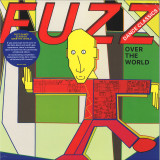
“A Dream In A Dream” is the debut LP by DJ Piper, also known as Felix Wagner of techno superstar duo FJAAK.
One might be surprised about this all hip-hop instrumental album looking at Felix’ all dance music focussed musical resumé. Nevertheless, he has been crafting rap beats ever since he started producing as a teen, but had his childhood friends freestyle over the tracks solely. It took until 2020 when he teamed up with Lukas and
Jonathan Nixdorff of Kommerz Records to release his first solo track “Iluminay”, which was part of “Kommerz Season 1: Anti-Virus” compilation and shared by B-Real of Cypress Hill right away.
Now, 2022, marks the right moment to share his debut album, a waltzing ode to hip-hop’s golden era. The Berlin- Spandau original merges the legacies of both Pete Rock and Dr. Dre, while funky breakbeats meet laid back SoCal “Chronic” vibes. 12 instrumental tracks and 2 skits strong, his album tells the story of a young man, who lives up to his wildest teenage dreams. Most of the track ideas came up while being on tour with FJAAK. Between international transit areas, making inspirational new friends and bizarre encounters all over the world, beat making became DJ Piper’s safe space to process all the positive madness around him. As a result, “A Dream In A Dream” breathes that raw, untamable creative energy around Felix’ extraordinary day-to-day life, while being heavily influenced by the sound of his childhood, 90s and 2000s rap.
To visualize “A Dream In A Dream” DJ Piper and Kommerz Records joined forces with Raman Djafari, a childhood friend of the artist, who illustrated music videos for Dua Lipa and Elton John (no joke!) and worked for New Release Information Adult Swim. Raman’s supernaturalistic aesthetics bring life to DJ Piper’s somewhat psychedelic, somewhat nostalgic fantasy, locating the album in an otherworldly version of Spandau, hometown to both of the artists.
As one half of FJAAK Felix became an icon of Berlin techno conquering major festival stages and mainstream audiences while heavily representing underground D.I.Y. mentality up to this very day. As an initiator of Spandau20 label and collective, Felix pushes his creative family and day 1’s regardless of commercial potentials.
The same ethos and love for culture fuels the DJ Piper project. No matter if it’s FJAAK or DJ Piper, techno or hiphop… Integrity is key!
out of Stock
Last delivered 3 years ago available to reorder, subject to availability
True concept albums are actually few and far between. While it can be said that The Who’s Tommy and Quadrophenia, or Pink Floyd’s The Wall were designed from the ground up, that’s not necessarily the case for equally mythical, yet composite, albums such as Bowie’s The Rise And Fall of Ziggy Stardust…, or Lou Reed’s Berlin. In France, the genre established its pedigree in the 1970s with Serge Gainsbourg, then in the early 1980s with Léo Ferré. Cri d'amour by Mélanie Chédeville adds to this list of albums that tell a story through characters.
Cri d'amour was produced in a seaside setting, which may explain its flowing, organic character. It is all by herself that the violinist-by-training composed, wrote and arranged this collection of string-drenched songs that recall Jean-Claude Vannier’s work for Serge Gainsbourg. The latter would undoubtedly have been impressed by Mélanie’s fine-cut lyrics and melodies that are as raw as they are sophisticated, vocalized in a sprechgesang recalling his own. The deliberately retro palette, up to the bass sound so typical of 1960s English rock, betrays an artist indebted to the creator of Bonnie & Clyde and Initials B.B. through a sensual, clear tonality. Yet, polyrhythms borrowed from the late afro-beat legend Tony Allen, and the touches of guitar, piano, percussion and synthesizers distilled here and there by Éric and Mélanie, end up giving the whole affair a resolutely atemporal color.
Mélanie was sixteen with a head full of Beethoven and Brahms when she succumbed to an unexpected fascination for the world of Éric, a pianist, composer and sound engineer, who regularly delivered scores for Marc Dorcel’s X-rated films. She evokes him in L'Alpha-bêta and Le Pornographe, through whispered choruses that would suit the late Julee Cruise or Vanessa Daou to a tee, and explicit allusions to a “sword of Damocles” of “XXL” dimensions.
These are not the only texts on this album that remind us of the Franco-American author Anaïn Nin’s erotic poems, a model that Mélanie willingly takes on, adding to the list of her literary influences alongside Apollinaire and his Debauched Hospodar:
Some may find this album old-fashioned, which, far from being a flaw, is a credit to the fine musician that Mélanie is. Others will call it a charming album, which is not a bad way to describe it, provided that it is a powerfully relentless charm.
out of Stock
Last delivered 3 years ago available to reorder, subject to availability
Limited edition white vinyl w/pink haze + download card.
n5MD and Gimmik team up yet again! This time, to bring you an updated and remastered version of Gimmik's digitally reclaimed and once previously unreleased cuts compilation News From The Past for the first time on vinyl.
The original compilation was released digitally by Gimmik's Toytronic imprint in 2005, originally comprised of six tracks recorded between 1994 and 2000. The reimagined vinyl collection combines ten tracks–plus an additional five included on the download card–spanning 1994 to 2021.
News From The Past is an excellent snapshot of Gimmik's musical output thus far and a testament to Martin Haidinger's winding path as one of experimental electronica's most unparalleled producers.
out of Stock
Last delivered 3 years ago available to reorder, subject to availability
Föllakzoid are nearly unparalleled in the hypnotic lysergic drenched neo-psychedelic experience. On their debut it is mostly a rather bulky one, determined by the downright dirty, distorted electric guitar, which is also usually accompanied by a spacey, howling and herbaceous howling one. In addition, there is fat bass and powerful drums. During the prolific post-napster musical era dominated by myspace, the Chilean musical field opened up so that many bands could broaden their creative spectrum by taking global and timeless references as an aesthetic holy grail. This experimentation had the internet and specialized forums as a search engine, which not only provided the world parameters in trends, but also allowed to find true hidden gems, bands that were adored by a few connoisseurs of the real quality left behind by the record labels. In this context, a group of university students who have known each other from school began to rehearse in the Caracol Vip underground (Santiago, Chile), in a room owned by a local heavy-metal legend, Juanzer. Equipped with tube amplifiers, Marshall and other custom made, the members of that time: Gonzalo Laguna on vocals, Juan Pablo Rodriguez on bass, Domingo García-Huidobro on guitar, Diego Lorca on drums and Francisco Zenteno on second guitar, they began to play endless jams without a strict sense of songs or directed compositional notion. The rule was to follow the noise in a journey through valleys and peaks that allowed the spontaneous appearance of textures, lyrics, phrases and some invented chords that did not resemble anything that had been heard at that time. The rehearsals were transformed into true live performances without an audience, which were only seen by a few curious, among alcohol, smoke and deafening noise, which could only end when the owner of the room (Juanzer) entered to turn off the equipment. Over time he himself stayed as an auditor, witnessing how the musicians stripped themselves in their rehearsals. Considered at that time as play or fun, the idea of forming a band with a name came with the real live performances to which they were invited, without yet having songs made, at the end of 2006. The myth of their first live performance alludes to a numerical superstition, on July 7, 2007, in a small bar in Providencia (Santiago), which also provided the band with an upward recognition for the psychedelic-punk music they were doing, with a voracious vocalist who destroyed everything on stage and a band that stood firm on the endless songs they built. The name that was invented for that occasion was the result of a nonsense about the German word feuerzeug brought to the group by their close friend Alfredo Thiermann (who would later make the cover of the first album and become keyboardist), which the members of that time took and Spanishized at will. This neologism represents the second founding myth of the band since the interest in bands like Can, Neu! and AMON DUUL II and the characteristic motorik rhythm would soon arrive, in the form of kosmische musik. By 2008 the band had already added several live performances and some songs appeared, among which were Directo al Sol and Loop (nod to the English band), which allowed a greater deployment of ambient-noise resources, almost close to the 'concrete' music. The deconstructed rock of Spacemen 3 was also present in the form of repeated sequences on the bass and drums, as the layers of shrill guitars formed the foam of the tide bursting in the darkness of space. With the ideas and general feeling of the sound that they already had, the band made the decision to record their first album with the sound engineer and Juan Pablo's brother, Ignacio 'Nes' Rodríguez, who later together with JP would form the BYM label to make the first CDs of the forthcoming debut of Föllakzoid and other bands that Nes was recording. Sheltered that winter in the studio that Nes had built in an old house in Recoleta, the band recorded the bulk of the songs on the album with a new jam that emerged in that room composed of 1 note and moments of rising intensity: Sky Input I and II appeared to complete a set of songs that came from rock but were slowly passing to a level of trance and cacophony typical of orchestrated and atonal music. With three takes per song but only one take of the jam, the album was finished with a few extra takes and overdubs, some made in the house of Nes himself, who contributed a guitar to Loop, although it does not appear in the credits, and additional takes of "Pelao" Zenteno with delay and reverse for almost all songs. The names of the songs came from the lyrics that Laguna had worked from the live versions to the studio finals, except for Loop, Sky Input and El Humo. The cover of the album, which as mentioned was made by Thiermann, represents well the spirit of those days, when creative magma looked for an outlet through the instruments without any restriction or explicit direction from any of the members of the group. The image of the tree towards the sky speaks of the roots that rise towards the immensity, the nature projected towards the stratosphere. Ideas that the neo-psychedelia of those years seemed to capture well, echoing in the Chilean bands that at that time were gathering around the BYM label. Both the creative fluency and the lack of a musical director ensured that Föllakzoid was an original band that did not impose themselves a way of doing things or sounding, collective music took shape in the most wonderful way, without characters, without a record name, without faces. Just an instant in space. 2022 GALAXY GREEN coloured vinyl
out of Stock
Last delivered 3 years ago available to reorder, subject to availability
Wau Wau Collectif's second album, Mariage, is instilled with a newfound sense of purpose. Expanding upon the inspirational themes of their acclaimed 2021 debut, Yaral Sa Doom (Educate The Young), this long distance collaboration from musicians in Senegal and Sweden's Karl Jonas Winqvist is an even more stylistically expansive affair. Joyful children's songs collide with fuzzy guitar solos and thumping hip-hop beats. Shimmering synths lift off from the plunky percussion of the balafon and versatile sounds of the 22-string kora. Familiar voices from the first album return with more explicitly political lyrics, while the music feels both rhythmically dense and sonically weightless, flowing from one spellbinding moment to the next. For Mariage, band members from each country were inspired to include a wider array of instrumental flourishes unique to their cross-continental collaboration. "Yay Balma" revolves around the cycling riffs of Jango Diabaté's xalam guitar, as this song's fuzzy tones and soaring sax solos open side two with a bang. "Pitchi Goubidi" provides a stark contrast, with the kora played like a harp and Gilbert Badji's gravelly lyrics about "the bird of the night" disappearing into dubbed-out chamber pop. Winqvist's omnichord hovers back into focus on "Yonou Natangue," a free-floating jam that maintains the messages of Wau Wau Collectif's debut, promoting youth education to address the social issues facing contemporary Senegal: "Peace is the better wealth / The way to wander."
out of Stock
Last delivered 3 years ago available to reorder, subject to availability
LAVENDER Coloured Vinyl. Recommended If You Like: Cocteau Twins, Julee Cruise, Antena, Young Marble Giants, The Pastels, Mazzy Star, Norma Tanega. A cinematic ocean of sound. EERIE WANDA's Marina Tadic draws you into her inner worlds on these 11 new songs produced by Kramer (Galaxie 500, Unrest, Ween, Daniel Johnston.). On Internal Radio, the new album by Eerie Wanda, visual artist and musician Marina Tadic welcomes you to her inner world. Guided by intuition, Tadic's songs use haunting, ethereal space, growing whole universes from the seeds of ideas. Internal Radio documents Tadic becoming the artist she wants to be, working through some things, and even exorcizing a few demons. The result is the most realized Eerie Wanda album yet, building on the project's guitar pop past for a more experimental, other worldly, serious grown-up affair that ventures into sensitive, motional territory. "Pet Town is delightfully airy; a set of songs that have drifted in on a breeze from some strange and foreign landscape you won't find on any map.” Gold Flake Paint // “Tadic’s melody here is part of that Brian Wilson lineage … she sets those notes adrift with a casually graceful minimalism… It evokes a pleasant stroll through a city at the moment when night begins to fall on a daydream.” Stereogum // Tracks: 1 Sail To The Silver Sun 2 NOWx1000 3 Long Time 4 On Heaven 5 Confess 6 Nightwalk 7 Someone's In My House 8 Sister Take My Hand 9 Birds Aren't Real 10 Puzzled 11 Bon Voyage
In what's been a stand out year for the Berlin based, London born, DJ & producer, Amy Dabbs has dropped releases on Lobster Theremin, launched her own label 'Dabbs Traxx' and collaborated with junglist Coco Bryce on new label project 'LT CODA'. With a distinguished sound and undeniable flair, both behind the booth and in the studio, Amy's brand of classic house and radiant jungle now comes to Low Battery with her 'Baddest Gal' EP.
'Don't Go' opens the EP with shimmering synths and lighter than air percussion. The mood is light and understated, conjuring warm and affectionate emotions without the need for amplified design. 'No You' then welcomes us with mid-summer melodies and sprawling pads; vocal loops adding to that feeling of fuzziness and warmth.
The B side opens with title track 'Baddest Gal' an emotional percussive workout that combines thoughtful arrangement with euphoric and dreamy notes. It's one of those tracks that could work just as well in a DJ set or cloud watching as the world slowly drifts by. 'Your Move', The record's finale shows a different side to Amy's dynamic productions; the track ebbs and flows and could be likened to the mixed emotions of meeting an old friend: Excited but nervous, happy but always with a heartheavy goodbye.
out of Stock
Last delivered 3 years ago available to reorder, subject to availability
Technological agitation. Narcissism fatigue. A galaxy of isolation. These are the new norms keeping Weyes Blood (aka Natalie Mering) up at night and the themes at the heart of her latest release, And in the Darkness, Hearts Aglow. The celestial-influenced folk album is her follow-up to the acclaimed Titanic Rising. (Pitchfork, NPR, and The Guardian admiringly named it one of 2019's best.) While Titanic Rising was an observation of doom to come, And in the Darkness, Hearts Aglow is about being in the thick of it: a search for an escape hatch to liberate us from algorithms and ideological chaos. "We're in a fully functional shit show," Mering says. "My heart is a glow stick that's been cracked, lighting up my chest in an explosion of earnestness." And in the Darkness, Hearts Aglow opens with the wistful, winsome "It's Not Just Me, It's Everybody," a song about the interconnectivity of all beings, despite the fraying of society around us. "I was asking a lot of questions while writing these songs. Hyper-isolation kept coming up," Mering says. "Our culture relies less and less on people. Something is off, and even though the feeling appears differently for each individual, it is universal." Other tracks follow in kind. The lullaby-like "Grapevine" chronicles the splintering of a human connection. The otherworldly dirge "God Turn Me into a Flower" serves as allegory about our collective hubris. "The Worst Is Done" is an ominous warning, set against a deceivingly breezy pop melody. "Chaos is natural. But so is negentropy, or the tendency for things to fall into order," she says. "These songs may not be manifestos or solutions, but I know they shed light on the meaning of our contemporary disillusionment."
out of Stock
Last delivered 3 years ago available to reorder, subject to availability
Technological agitation. Narcissism fatigue. A galaxy of isolation. These are the new norms keeping Weyes Blood (aka Natalie Mering) up at night and the themes at the heart of her latest release, And in the Darkness, Hearts Aglow. The celestial-influenced folk album is her follow-up to the acclaimed Titanic Rising. (Pitchfork, NPR, and The Guardian admiringly named it one of 2019's best.) While Titanic Rising was an observation of doom to come, And in the Darkness, Hearts Aglow is about being in the thick of it: a search for an escape hatch to liberate us from algorithms and ideological chaos. "We're in a fully functional shit show," Mering says. "My heart is a glow stick that's been cracked, lighting up my chest in an explosion of earnestness." And in the Darkness, Hearts Aglow opens with the wistful, winsome "It's Not Just Me, It's Everybody," a song about the interconnectivity of all beings, despite the fraying of society around us. "I was asking a lot of questions while writing these songs. Hyper-isolation kept coming up," Mering says. "Our culture relies less and less on people. Something is off, and even though the feeling appears differently for each individual, it is universal." Other tracks follow in kind. The lullaby-like "Grapevine" chronicles the splintering of a human connection. The otherworldly dirge "God Turn Me into a Flower" serves as allegory about our collective hubris. "The Worst Is Done" is an ominous warning, set against a deceivingly breezy pop melody. "Chaos is natural. But so is negentropy, or the tendency for things to fall into order," she says. "These songs may not be manifestos or solutions, but I know they shed light on the meaning of our contemporary disillusionment."
"Hey, there's this new guy around that plays like Herbie Hancock!!". When Chilean pianist Matías Pizarro arrived in Argentina fleeing Pinochet's dictatorship, word spread like wildfire in the local jazz scene.
In the two short years that Pizarro spent in Buenos Aires, he became one third of the Viejas Raíces project alongside local jazz heroes Jorge López Ruiz and Pocho Lapouble, recorded with famed Italian trumpeter Enrico Rava and released his own solo album, Pelo de Rata ("Rat's hair").
Pizarro was no beginner though. Whilst in Chile he had already participated in several music projects and worked as a producer and arranger for the IRT label, and was connected to influential bands such as Los Jaivas and Blops. He had also studied in the Berklee School of Music where he not only met and lived with the cream of an emerging new wave of musicians, but he also had the chance to attend live performances of giants such as Miles Davis or Thelonious Monk.
In the recording of Pelo de Rata Pizarro is joined by fellow Chilean Alejandro Rivera (Sacros, Grupo Sol) on quena and charango, Swedish bassist Bo Gathu on bass, Uruguayan saxophonist Finito Bingert and an impressive percussion team featuring Pocho Lapouble, "El Zurdo" Roizner and the mighty Domingo Cura. The album draws from the US jazz fusion currents of the time (think Chick Corea and Miles Davies), adding an undeniable Latin American character, all projected through Pizarro's own musical prism which displays his acute sense of harmony and a musical intimacy that reminds of those sincere, dreamy moments in Viejas Raíces.
The 8-page booklet that accompanies the vinyl edition will give you a deeper insight into the story of Matías Pizarro, with previously unseen pictures and liner notes by Argentinean journalist Humphrey Hinzillo (La Nación , Rolling Stone Argentina).
With the eight release (ZC-ELEC008) of our Electro Acid Series Zodiak Commune Record delivers four talented electro-acid producers who are taking you on a diversity of adventurous musical journeys. Grab your copy!
out of Stock
Last delivered 2 years ago available to reorder, subject to availability
Bari-based producer Frhanks visits Bucharest via Chicago on this organic and entirely distinctive EP for Lisbon label Welt Discos. ‘Bonus Beat’ is a raw blend of jazz and jack trax that leaps straight out of the Music Box to slap you round the face. The extended meditation of ‘Spring’ adorns a minimal groove with delicately plucked improvisation, striking a pastoral mood for the first glimmers of daylight. On the flip, ‘When Is Time To Go Home’ trips along like a late morning walk back to the tent, caught somewhere reassuring between reverence and whimsy.
out of Stock
Last delivered 2 years ago available to reorder, subject to availability
Pioneers, that’s what we call them. Not properly a giant team, but a bunch of forward thinking producers. In the heyday of the italo disco there was some forward thinking, a new way to address the club scene. 1985 is the golden year and if you want to get to the core of the synth-pop experience look no further ! This previously unreleased compilation collects a series of unbelievable tracks. An outstanding vision featuring la crème de la crème of the early 80s scene. All the way from electro wizard Alexander Robotnick to the astonishing performance of vocalist Mya Fracassini, through the French connection of Bigazzi brothers of Mon Bijou.
out of Stock
Last delivered 3 years ago available to reorder, subject to availability
Following the release of Barbie Bertisch’s debut album Prelude in June 2022, Love Injection is thrilled to announce Prelude Remixes via Love Injection Records, which features six artists new to the label, kicking off with a two-track 12” single followed by a full digital release. Love Injection is the label and fanzine Bertisch runs with her partner, Paul Raffaele. The duo are romantic about remixes as an artform and always intended to have reinterpretations be the next phase after Prelude. Often reduced to ways to extend a hype cycle, or disjointed add-ons, Love injection’s remixes exist in dialogue with the artist’s songs.
The 12 inch single will inaugurate the project, with Montreal’s Gene Tellem on the A side, and Panorama Bar residents Lakuti and Tama Sumo on the flipside. On the “GT Remix”, Bertisch gushes that “Gene is very good at creating and sculpting atmospherics in her productions. She really grabbed the song and took it to a different place.” Tellem's version of “After The Storm” is faster, elastic and pulsing with an almost primordial intensity.
Creative and life partners Lakuti and Tama Sumo take on “Fertile Garden (Emerge)”. Lakuti, originally from South Africa, got her start DJing in the Johannesburg house scene of the ‘90s. She is now based in Berlin and often DJs with Tama Sumo, who grew up in Bavaria and moved to Berlin in 199x and has been a staple in the scene there since. The duo, both residents of Berlin's Panorama Bar, turn “Fertile Garden” into an ecstatic, unrelenting beat-down, best fit for peak time.
out of Stock
Last delivered 3 years ago available to reorder, subject to availability
Felix Laband’s The Soft White Hand is the masterwork of an artist who expresses himself through musical and artistic collage acting together to reinterpret his sources and to express significant elements of his own personal story.
Released by Munich-based Compost Records, the 14-track album is Laband’s first full-length offering since the critically acclaimed Deaf Safari in 2015. It is heralded by the single “Derek and Me”, and is being pressed on vinyl for distribution globally.
In The Soft White Hand Laband works with source materials that will be familiar to those who know his previous four records – Thin Shoes in June (2001), 4/4 Down the Stairs (2002), Dark Days Exit (2005) and especially Deaf Safari which reached deep into the South Africa scene and its political culture to inspire its vocal and music sampling. However, the disengagement he felt from his homeland during his latest album’s creation – an abiding sense of untethered-ness to place and space, exquisitely rendered in tracks like “Death of a Migrant” – is perceptible in Laband’s desire to illuminate instead aspects of his own life.
“For this album, my source material became almost autobiographical as opposed to African statements I’ve worked with previously,” says the artist. “I have sampled a lot from documentaries from the 80s crack epidemic in impoverished African American communities and believe my work speaks unapologetically for the lost and marginalised, for those who are the forgotten casualties of the war on drugs. In the past, I have had my issues with substance abuse, and I know first-hand about the nightmares and fears, what it feels like to be isolated and abandoned.”
Few artists have managed to air these intimate aspects of their life so luminously as Laband does in tracks like “5 Seconds Ago”, “They Call Me Shorty” and in the strange and meditative “Dreams of Loneliness”. “I’ve been building this weird, autobiographical story using other people talking. It’s kind of humorous but it is also sad and beautiful,” says Laband.
Yet, as in all of Laband’s recorded output, the delineations between emotions are never starkly drawn and The Soft White Hand is also shot through with beauty. Nature appears in recordings made in his garden in the intimate early morning hours, whether as in the calls of the Hadada Ibis and other birdsong in “Prelude” or of the vertical-tail-cocking bird in “Derek and Me”. The last is a wonderful track with Derek Gripper, the South African experimental classical guitarist of international renown, whose 2020 song “Fanta and Felix” imagines a meeting between Fanta Sacko and Laband.
Laband’s eloquence in reinterpreting classical composers such as Beethoven in “We Know Major Tom’s a Junkie” is another thrilling aspect of the new record. “I’ve been properly exploring classical music on this album,” explains Laband, “taking melodies from classical compositions and reinterpreting them”. A fresh quality comes to his work through this sonic adventuring: the tender manipulation of the mundaneness of the computer’s AI voice to reimagine and reinvent iconic lyrics and melodies in strange and unexpected configurations.
The Soft White Hand is Laband’s most cohesive body of work to date. Yet it remains, in its sheer artistic scope, impossible to describe fully. Darkness abuts the gossamer light. A song that summons the sunrise and all the hope of a new day could also be about the final dipping down of the sun that portends a troubled night ahead. Interludes are invitations to expand outwards or shift inwards. Mistakes and “weird fuckups” in the sound are cherished as convincing statements against what Laband calls the “grossness” of perfect sound in modern music.
For this world-leading electronic artist, the boundaries are unfixed. He is inspired by the German Dada artist, Hannah Höch, who memorably declared: “I wish to blur the firm boundaries which we self-certain people tend to delineate around all we can achieve.” His music consequently reflects a primal artistic impulse that is also visible in Laband’s considerable visual art output as seen recently in several solo exhibitions such as that held in the No End Gallery in Johannesburg in 2019 and in the works he produced during his 2018 Nirox Foundation Artists Residency. “My music is always about collage, as is my art,’’ he affirms. “Everything I do is collage. It is a medium I find very interesting because you are taking history and distorting it and changing its meaning and turning it upside down and back to front.” In her book Recollections of My Non-Existence, Rebecca Solnit calls collage “literally a border art”; it is “an art of what happens when two things confront each other or spill onto each other”.
With The Soft White Hand, Laband is confirming his singular ability to achieve this in both art and music, melting the divisions between the two creative disciplines until they become one. He is also affirming his belief that an album of music should be more than a collection of unrelated tracks, but should unfold a fully integrated, cohesive story as in the song cycles of the great classical composers. In doing so, he claims his position as one of the most significant artists working today.
Artist Statement – Felix Laband – August 2022
When the Khmer Rouge took their captives for processing, they identified their class enemies by looking at their hands. If they were sunburned, rough and calloused, they were those of a peasant, a proletarian to be spared. But if they were soft and white, then they were those of a city-dweller, an intellectual or bourgeois, an adversary to be liquidated.
In calling this album The Soft White Hand, I was reflecting on the Cambodian genocide and how it resonates in contemporary South Africa. The apartheid era is over, and gone with it is white political domination. Yet economic and social privilege is still held in soft white hands. But those who grasp it know just how tenuous is their hold, how it singles them out, and my music reflects their subconscious fears, the stress and guilt of clinging on to what others envy and desire.
The soft white hand of the title suggests to me a further image, one that relates to all of postcolonial Africa. In my mind’s eye, I see the soft, duplicitous handshake of the smooth representatives of the superpowers making deals and promising gifts that benefit only them, and not their African dupes.
Yet, soaring above the wailing of sirens sampled from the first day of the invasion of Ukraine, my music is also about love gained and passion lost. It is about the tender caress of a soft white hand that conducts you into a place of dreams to be enfolded by nocturnal melodies.
out of Stock
Last delivered 3 years ago available to reorder, subject to availability
Berlin electronic duo Donna Regina recorded two songs for the 10th edition of the Snowflakes Christmas Singles Club. In ‘Weihnachten Woanders’ (‘Christmas Somewhere Else’), singer Regina Janssen reflects on how it feels to spend Christmas away from home. Somewhere else, in a strange town where nobody knows your name and no one is waiting for you. You miss the familiar sounds of Christmas, like the child that sings ‘Stille Nacht’ and you dream of being home again. It’s a feeling many people can relate to. Especially this year, a year in which so many people were forced to flee from their homes. Günter Janssen, the other half of Donna Regina and Regina’s husband, lays down a minimalistic tapestry of synths and drum rolls. A loop of street sounds, a sample taken from sound artist Paula Schopf’s 2021 album ‘Especios En Soledad’, forces its way into the song, and in the end overpowers voice and other instruments. ‘Weihnachten Woanders’ very much captures the year 2022 and the worrying times we are living in, in both lyrics and music.
‘Christmas With You’, the B-side of the single, was originally written and recorded by Polish indie band Old Time Radio for their 2009 Christmas album 'Sketches For Another Christmas Songbook'. Donna Regina again goes for a minimalistic electronic sound, but also adds a certain melancholy to the song. Partly due to the synths that in places resemble the sound of an organ, an instrument that appeared on so many Christmas recordings from the 1950s and early 1960s. The love-hate relationship many people have with Christmas is perfectly laid down in the lyrics: “We watch the cartoons / We sing out of tune / Kiss by the fireplace / Listen to those horrible songs / Do we know / It’s Christmas time at all?”.
Regina and Donna Janssen debuted as Donna Regina in 1990 with the single 'Avec Le Temps' and released their debut album 'Lazing Away' in 1992 on Our Choice, a German sublabel of Rough Trade. In 1999, after four albums on Strange Ways Records, they signed to their current label Karaoke Kalk. Since then, they have released eight albums for the label. In 2015, Karaoke Kalk also released 'Dis Cover', a compilation of Donna Regina songs recorded by other artists like Dean & Britta, Bernard Burgalat, Mouse On Mars and many others. Donna Regina’s songs have been featured on compilations of labels like Rough Trade, Sonar Kollektiv, Klant Elektronik, Milan and Rolling Stone. Donna Regina was not Günther’s first band. In the early 1980s he was part of a Neue Deutsche Welle act with a very Christmas-related name: Heilige 3 Köninge ('Holy 3 Kings'). Their sole album, 1982's 'Zum Teufel Met Dem Kamel' has become very collectable. Günther was also featured as songwriter and musician on German singer Romie Singh's 1986 CBS album 'Masters' and later ventured into writing music for television and film. Regina Janssen also recorded as a vocalist with French musician Bertrand Burgalat, and sang several songs on his 2005 album ‘Portrait-Robot”.
Dickie Landry & Lawrence Weiner's Having Been Built on Sand was conceived as a vinyl edition and released by the Rüdiger Schöttle gallery in Munich with sleeve design by Weiner. The piece consists of eight untitled tracks. Lawrence Weiner, Tina Girouard, and Britta Le Va recite text with Dickie Landry’s woodwinds, all recorded in the natural reverb of Robert Rauschenberg’s studio, a former mission and chapel in Lower Manhattan. Layering Girouard in English, Le Va in German, and Weiner in English and German blocks of related or physically proximal texts repeat, invert, and intersect with Landry’s music as a constant. The layers of text and sound have meanings that fluctuate in complexity and scope, and like much of Weiner’s work, beyond mere facts.
The first piece is a trio for Landry’s keening tenor, repeating winnowed but breathy lines that contrast with and buoy Le Va’s clear, husky phrases, building in intensity as Weiner, in English, offers statements that are caught just off mic. The third cut adds Girouard, and one can hear woven parallels in the two women’s voices, cadences, and pitches, with Weiner’s cutting inflection dancing amid them. Landry’s bass clarinet is rich in its warble, full and gentle with woody footfalls that demarcate shapes through the chorus. Vocal rhythmic cycles, wordless in nature, are the energy that courses through the fourth song, urgent and sweaty as Weiner recites statements of political position in the Middle Ages, Le Va declaiming alongside in German. On soprano saxophone for the fifth tune, Landry pierces and darts in a bright manner in a private dialogue with himself, echoing Steve Lacy as female voices nearly bury one
Broadway in Soho to perform a wholly improvised concert. This ensemble’s solos spring from collective improvisations and a tumultuous backbeat, loosely inspired by the creations of Coltrane, Coleman, Albert Ayler, and their brethren. The de facto leader was Richard “Dickie” Landry, a saxophonist and keyboardist who joined composer Philip Glass’s group in 1969. Landry had become a fixture in downtown New York’s loft and art scenes at the close of the 1960s, after he high-tailed it by car from Louisiana to the Lower East Side and auspiciously encountered Ornette Coleman at the Village Gate the night of his arrival.
For this concert, fellow Glass reedists Jon Smith and Richard Peck joined in, alongside Rusty Gilder and Robert Prado, both doubling on bass (upright and electric) and trumpet. The drum chair was occupied by New Orleans firecracker David Lee, Jr., who brought alto saxophonist Alan Braufman along for the session (Braufman was the only non-Louisiana player in the band). The ensemble stretched
out in the gallery for several hours in a configuration reflecting those that took place at Landry’s Chinatown loft, documented in photos by artists Tina Girouard and Suzanne Harris that adorn the inside of the original gatefold album jacket. Recorded live by Glass’ sound engineer Kurt Munkacsi, the album was released as a double LP on Chatham Square, the small imprint Landry and Glass co-ran, in a stark greyscale cover and simply titled Solos. The order of the players’ improvisations was laid out on the album inner labels, though unsurprisingly there’s a fair amount of blend. At the end of the day Solos is beyond category, a rousing exploration of instrumentation, rhythm, and life.
Shannen Moser wants to have a conversation: with their past selves, their present self, their undesignated, unfurling future selves; with the trees that adorn their old street, and the door they used to call home; with the shadows of lovers-turned-to- friends and the overwhelming cacophony of abrupt change. They’re drawing a map but the port of call is cloudy and indistinct. It’s while traveling along these nebulous contours that their latest album The Sun Still Seems To Move forms a kind of physicality, of outstretched giving hands, that offers a guide through the fog. Here, Moser examines the disorien- tating, challenging task of trying to hold onto ourselves––and everything else––all at once. But this isn’t a fatalistic journey of melancholy or apprehension. Instead, Moser celebrates the small steps and the unwavering perseverance that makes it all worthwhile.
Moser’s previous albums Oh, My Heart (2017) and I’ll Sing (2018) were praised for their careful, intimate arrangements that showcased their sharp, interpersonal narration and time- less lush vocals. On The Sun Still Seems To Move
RIGHTFUL RULER returns the legendary Jamaican vocalist Earl 16 to the center stage of international roots reggae music. This four song showcase style ep demonstrates that matching an A-class veteran singer/ songwriter with the sounds of the Zion I Kings (ZIK) production team serves to revitalize the musical forces long associated with the classic reggae tradition- roots, reality, and culture!
Earl 16's career now spans five decades and is marked by hits and highlights throughout. HIs Jamaican recordings from the cornerstone studios (Studio One, Black Ark, Channel One) are still sought after gems from the golden age. But, unlike many of his peers, Earl 16 successfully adopted the changing sounds and styles of reggae in the U.K.(where he resides) and collaborated with top producers like Mad Professor and Nick Mannaseh. He has remained current into the new millennium with "Release The Pressure", a notable vocal to LeftField's breakthrough drum & bass hit.
The all star lineup of musicians on RIGHTFUL RULER is anchored by drums provided by ace producer and multi-instrumentalist Roberto Sanchez (A-Lone Productions). Keyboards by Pau "Nattykeyz" Dangla Valls and trumpet by Patrick "Aba Ariginal" Tenyue complement the rhythmic foundations set by ZIK core players David "JAH David" Goldfine (bass) and Laurent "Tippy I" Alfred (rhythm guitar, piano, organ). Sheldon Bernard's flute and Errol "Blacksteel" Nicholson's background vocals are heard on the title track and lead guitars by David Prout and Andrew "Moon" Bain appear on "Find A Way", a feature with the dynamic toasting of Mr. Williamz. All dub mixes are done by JAH David with cover art by Ato K.D. Roberts .
16 years on from its deliverance, Killing Joke release the deluxe version of arguably one of their darkest albums to date, ‘Hosannas From The Basements of Hell’. In addition to the 9 bludgeoning tracks featured on the original incarnation of ‘Hosannas…’ the deluxe version has three deep cuts - ‘Afterburner’, ‘Afterburner (alternative version)’ and ‘Universe B’ - all regarded as some of the best and most powerful Killing Joke songs ever.
Sunking is the experimental sights and sounds of Seattle natives Bobby Granfelt & Antoine Martel, an outlet for the duo whose music is "steeped in funk, fusion, and the dreamier end of the rock spectrum," said Seattle"s The Stranger. The Stranger also went on to say that "this city needs more groups like sunking, who flit among genres such as hip-hop, jazz, and shoegaze rock while messing with the DNAs of each style they address." Both Granfelt and Martel are also members of High Pulp, a jazz collective that draws influences from punk rock, shoegaze, hip-hop, and electronic music. Also signed to ANTI-, their album "Pursuit of Ends" came out in April of this year. "High Pulp blend old-school bebop with contemporary soul and electronica vibes, as though someone convinced the ghost of Duke Ellington to reinterpret a Chemical Brothers album," said the A.V. Club.
In four short years of existence, Green Lung have risen from the murk of the UK heavy underground to become a true cult band with a devoted following. Debut album Woodland Rites, released independently in early 2019, quickly garnered attention, resulting in a single being named ‘Track of the Week’ in the Guardian, plays on Daniel P. Carter’s Radio One Rock Show, a tour with fellow UK heavies Puppy and festival appearances across Europe. This brought the band to the attention of the wider music industry, and after multiple offers (including one from a major label) the band decided to stay true to their roots and sign with the Finnish audio wizards at Svart Records, home to several of their doomy inspirations including Reverend Bizarre and Warning. Svart’s deluxe reissue of the album, and the preceding EP Free the Witch,sold out several runs. Two years later, the folk horror-obsessed fivesome have re-emerged from their mulchy catacombs armed with dozens of freshly-whittled riffs. Black Harvest, the sequel to Woodland Rites, is a more colourful, widescreen reimagining of the band’s sound - Dawn of the Dead to its predecessor’s Night of the Living. Recorded at Giant Wafer Studios in rural mid-Wales over the course of two weeks with longtime producer Wayne Adams (Petbrick, Big Lad), it’s a more expansive and textured record than anything the band have done before, boasting a cinematic quality and more attention to detail.
Drummer and composer Edward Vesala, the most internationally renowned jazz musician from Finland, was very keen on percussion instruments. Oddly enough, this broad and enduring interest is hardly evident on his albums. Whether playing on his own albums or contributing to other musicians’ work, Vesala played a standard drum kit most of the time. He hardly used external percussionists on his own albums either. And most of all: his music was almost never percussive, at least in the traditional manner. Perhaps even stranger is the fact that he barely played any drum solos on his own albums. That’s why I’m Here (Blue Master Special, SPEL 311, 1974), recorded in Helsinki in 1973, is such a rarity. Of course, being a limited release has also made it an expensive treasure among collectors. Additionally, I’m Here is Vesala’s only solo album and only percussive album, and one of the few where he can be said to play drum solos, albeit in his own idiosyncratic way..
"Ramblin' Soul was inspired by the new appreciation I had for the freedom to travel around the country and perform," explains lifelong wanderer Melissa Carper of her forthcoming album. Carper was relieved and energized to be back on the road, on a familiar pilgrimage from Texas to Arkansas and back to meet and collaborate with musician friends. "I had taken for granted the ability to interact with audiences and friends and how much it feeds my soul and my creative process," she adds. Feeling inspired by time on the road and time with other creative minds, she penned the title track on the way back home, and the Ramblin' Soul seeds were planted. From its conception and throughout the recording process, Ramblin' Soul seemed to take on a life of its own. "It wasn't what I had first planned," Carper recalls. "A couple of the songs we recorded I'm now saving for a future album, and there are some brand new songs I decided to add, including one that was written during the week of recording. Thematically, I had a handful of songs about rambling around and living a free life that I wanted to weave through the album. I also knew I wanted Ramblin' Soul to have a different feel than my previous release, Daddy's Country Gold, with more upbeat and diverse styles and grooves," she says. Ramblin' Soul features a co-write with friend Gina Gallina, a song penned by friend and frequent collaborator Brennen Leigh, a reimagined classic from folk pioneer Odetta and 10 Carper originals--venturing into her blues, early rock 'n roll, and soul influences, blended with her signature flavors of country, western swing, and jazz. There is something for everyone on Ramblin' Soul.
Minas-cover Minas is a world music duet comprised of Orlando Haddad and Patricia King. Minas reflects a perfect musical marriage with a stage presence and chemistry that only a lifetime can produce. Drawing on the passionate styles of Brazilian and American roots music, the two create a fresh and innovative sound. With a catalog of 8 recordings released on their label Bluezul and a collection of over 100 songs, they have been building their reputation. Multi-talented as composers, vocalists, and instrumentalists, and equally comfortable in Brazilian jazz, folk, and classical genres, Minas is now bringing their world music approach to the Beatles with their latest album titled Beatles in Bossa. This re-imagination of fourteen Beatles' songs is infused with American Jazz and Brazilian styles of Bossa Nova, Samba, Choro, Partido Alto, Afoxé, Marcha Rancho, and Frevo. "Blackbird" has a nylon-strung guitar and vocal intro that sets the tone for this Brazilian-themed arrangement. Minasminas-1 transforms the melody to something new while still keeping the theme recognizable. The male and female vocals of Haddad and King blend beautifully as the band builds a relaxed Brazilian feel. John Swana plays an expressive Evi solo, adding a modern color while still being vivid. Haddad wrote this creative arrangement with a fresh approach to this classic Beatles melody. "With A Little Help From My Friends" is another Brazilian arrangement that is all Minas. The concept came from Haddad and King with the horn arrangement provided by Andrew Neu. Haddad's nylon-strung guitar keeps a Latin pattern as the horns accent the two vocalists trading phrases of the melody. Neu plays an exciting solo. The arrangement is rewarding, enabling us to hear the melodic lines, harmony, and orchestration from a different perspective.minas-2Minas' Beatles in Bossa impresses with its natural, vibrant, and heartfelt presence, allowing us to hear and appreciate the colors and textures of the exceptional music of the Beatles through a Brazilian perspective and thoughtful performances.
GREY & BLACK SWIRL VINYL
Public Memory is a blend of damaged and dubbed out percussion, unfurling synths and sparse sampling all strung together by producer Robert Toher's spectral tenor. The project's sophomore LP, Demolition follows 2017's Veil of Counsel EP and 2016's Wuthering Drum LP with cinematic fortitude. While Public Memory's prominent krautrock and triphop rhythms are represented here, Demolition explores a greater range of tempos and an expanse of alien emotions with layers of electronic drums, live drums, Korg synths and samples from nature. Themes of rebirth and reflection imbue the album's atmosphere, rich in tape delay, spring reverb, and textures that conjure a sci fi and supernatural narrative. Toher's adept use of space and tension articulates the world of Demolition as eerie, emotive, and above all, narcotic. Each track is an existential procession. "Turning out the lights on your illusion," Toher sings to close the album, accepting that change is an inescapable condition of being.
TELE MUSIC is a label of Éditions Musicales Sforzando now owned by BMG Production Music. It is entirely devoted to the music library, that is to say, music for sound illustration used in audiovisual productions. Created in 1966 by Roger Tokarz,
just before advertising was allowed on French television, Editions Sforzando specialized from the outset in sound illustration for radio and television.
This collection, soberly entitled “Volume 2”, is the sequel to “Volume 1”, produced with equal care, passion and fervour by Lord Funk & DJ L.C. In the mid-90s, Tele Music vinyl was sold at ridiculously low prices. Often disparaged by collectors and record shops, considered by some as lift music or vulgarly called “music by the meter”, the music store was only of interest to fans of instrumental music! But in the 2000's, it had a second life and saw its prices soar on Discogs, thanks to sampling and digging in Hip-Hop mainly. This advent of the library is an era that Lord Funk, curator of this compilation, experienced when he brought several music library collections to New York City (NYC) to his A1 Records stronghold in 1997.
In this 2nd volume, Lord Funk & DJ L.C. have chosen a range of music from 1969 to 1983, from psychedelic jazz to electro funk via rnb, soul and jazz-funk. Most of the titles in this collection were recorded in the magic place that was the famous CBE recording studio set up by Georges Chatelain, Janine Bisson and Bernard Estardy. Bernard, nicknamed the giant, was a sound genius and a mixing perfectionist. Georges Chatelain was an electronic engineer. Together, they brought a sound,
a colour, a trademark. Bernard Estardy was also considered as one of the greatest French sound engineers and an energetic organist for Nino Ferrer or Nancy Holloway. We warmly thank Julie Estardy for her total and unreserved involvement in these reissue and compilation projects.
The combination of all these prodigies has given TELE MUSIC a phenomenal and unique sound colour in the service of a sound repertoire that is now part of the French heritage.
It’s almost four years since their last opus - two years since the most-recent run
of live shows. Now, Bitchin Bajas return from whatever kind of rare ether they
occupy when they’re at home, bearing the riches of the whole cosmos in their
hands. And strictly OG as well - on cassette only.
‘Switched On Ra’ is the outcome of a typical Bajas exercise: pouring some out
for the pioneers that came before (as they’ve done with Bitchitronics and their
participation in the annual Chicago performance of ‘In C’ over the years). It’s a
nice way to get a flow - they play a little of themselves, then some for the
pioneers, then a little more for the band. Before long, they’re playing with the
inspirations twined, as they can only come from within.
For ‘Switched On Ra’, this meant a deep delve into the song-book of one of their
soul-predecessors, Sun Ra, whose music is literally written in the Bajas DNA.
Digging into this music sounded wild on paper: the drone synth group taking on
the Arkestra harmonies and Ra’s loose grooves? The trick was to get that sense
of rhythm to translate across the spectrum from Ra to Bajas, in a way that
worked for them both.
Their rearrangements of the tunes went good - up and down the EQ band, they
were finding the round sounds and jagged edges that brought Ra’s music into
their own thing. Then at the last minute, there was another twist - why not pay
tribute to the Queen herself, and think of the arrangements with a Wendy Carlos
vibe? A little side homage? After all, ‘Switched on Bach’ was visionary, bringing
analogue synths from the outside all the way into the mainstream in the late 60s -
and this take on Ra is meant to take him to new ears everywhere.
Sun Ra of course was his own kind of original keyboard visionary, using electric
keyboards in the late 40s and 50s to fill a role in jazz that had traditionally been
played on acoustic piano only. Once he’d done so, he took his writing in
directions inspired by the electricity, places no one had thought to go before
then.
Bitchin Bajas have been content to dominate in a microtonal world, usually
without a single chord to be found anywhere. But here, they step up righteously,
their vibe triangulated as they bring Ra’s music forward with some Wendy C
style, making an unexpected space for all to thrive. There’s a real feeling of joy
as these collected signals bounce off the tape and through the speakers into
your space.
To get this unique colloid exactly right, Bitchin Bajas used nineteen different
keyboards. They abstained from deploying their arsenal of reed and woodwind
instruments: everything had to be on the keys. This meant Yamahas, Rolands,
Korgs, Casios, a MicroMoog and of course their trusty Ace Tone organ. They
even broke out the Crumar DS-2, to have some of Ra’s chosen tone in the mix.
Then Jayve Montgomery added an EWI as a solo voice on a few tunes, just to
get some air-blown signal (and a natural shout out to EWI master Marshall Allen)
in there, after all. It felt like somewhere in the universe, Ra was decreeing it.
Limited Clear Vinyl edition, 500 copies! Originally released in 1961 by Prestige/New Jazz label, “Straight Ahead” marks the last Dolphy’s appearance
within a series of fortunate collaborations with saxophonist Oliver Nelson. This is a great modern jazz album taking shape from a quintet studio
session (all first takes) engineered and supervised by master Rudy Van Gelder and featuring: Oliver Nelson - alto and tenor saxes, clarinet - Eric
Dolphy - alto sax, bass clarinet, flute - Richard Wyands – piano - George Duvivier - double bass and Roy Haynes on drums. A serious bunch of jazz
stylists all caught in fine form and concentration. Needless to add that the Nelson-Dolphy sax tandem shines throughout the whole album while
Duvivier and Haynes inject their angular yet hard swinging groove. The track list consists of five Nelson’s originals plus Milt Jackson’s “Ralph’s new
blues”
Vielen erscheint Istanbul als ein von Mythen und Traditionen umrankter Sehnsuchtsort, andere betrachten es als Symbol für wirtschaftlichen Fortschritt. Seit den Gezi Park-Protesten 2013 sieht Westeuropa in der pittoresken Metropole am Bosporus mehr als die Hagia Sofia und andere Kulturdenkmäler. Der Gitarrist Erkin Cavus verbrachte viele Jahre seines Lebens in der riesigen, hochverdichteten und oft hektischen Stadt. Hier hat er Karriere gemacht, an der Seite berühmter Künstler gespielt, ehe er vor rund vier Jahren nach Deutschland zog. Nun setzt Cavus, zusammen mit Reentko Dirks, dem historischen Istanbul ein klingendes Denkmal. Inspiriert von Bildern des berühmten Fotografen Ara Güler (1928-2018), der als einfühlsamer und detailverliebter Beobachter zum Chronisten des Lebens seiner Heimatstadt wurde. Seine Aufnahmen des mittlerweile verblassten, teils unwiederbringlich zerstörten Istanbul und der ehedem höchst unterschiedlichen Stadtteile hängen längst in Museen. Bei der Entwicklung des Repertoires für Istanbul 1900 hat sich das Duo bewusst Zeit genommen. Der stärkste kompositorische "Flow" entwickelte sich in den Wochen vor dem Studiotermin. Die individuelle Form der Stücke, die absichtsvoll konkrete Jazz- wie traditionellen Bezüge vermeidet, "hat sich ungeplant entwickelt", so Istanbul 1900 ist eine atmosphärische Hommage, die mitunter nachdenklich klingt, dann wieder zarte Leichtigkeit suggeriert. Angesichts des Themas Vergänglichkeit und des Umstands, dass Erkin Cavus seiner Heimatstadt nicht ganz freiwillig Adieu sagen musste, ist ein Hauch Melancholie sicher keine Überraschung. Gleichwohl vermeiden die beiden Musiker jedes dramatische Pathos. Ihre Töne zeichnen, ganz im Geist der Schwarzweißa-Fotos Ara Gülers, feine Schattierungen. Selbst wenn sie in "Moda" schwungvoll das Nachtleben der großstädtischen Bohème oder in "Pera" die Dynamik in Straßencafés und -kneipen nach Feierabend imaginieren. Insgesamt entwickelt Istanbul 1900 einen sehr eigenen, subtilen Zauber, den man so nur selten erlebt. Ganz wie die Stadt, die an der Schnittstelle von Orient und Okzident Welten verbindet.
"M4 is a tune that I wrote back in 2017 when I was living in Bristol. At the time I was really into writing melodic pieces and messing around with as many synths as possible. I decided to add some heavy bass to this one cinematic organ progression and laid down some basic drums over the top and called it a day really. I think I sent it out to a couple people (one being Mala) and forgot about it.
Another few years went by and the tune has changed a bit to stay in line with my current production style arriving at the version that's set to be released. Abacus was just an all out bass experiment that I never thought would see the light of day and Dusty really shows off the more melodic style of my productions. After hearing these tunes played on big systems for so long I'm really happy that everyone can now finally get their hands on a copy."
ALXZNDR 2022
Order MEDI124 now
unsubscribe from this list update subscription preferences distribution.triplevision.nl
Triple Vision Record Distribution BV · Achterhaven 160 · Rotterdam, Zuid-Holland 3024 RC · Netherlands
out of Stock
Last delivered 3 years ago available to reorder, subject to availability
Re-mastered from the original master tapes.
180 gr vinyl pressed by Optimal in Germany using the Metal Mothers from Pallas.
Facsimile reissue using the original photo by Jean-Pierre Leloir.
Double insert using an original color photo by JP Leloir.
Each record has been visually checked to prevent defects.
Recorded October 22, 1958, Olympia hall, Paris.
Original LP issue: Brunswick 87 903.
“They’d been living in Europe for months. They’d appeared in Cannes and at Knokke (…) yet the only thing missing was the consecration that a great concert in Paris would bring. They won that last battle with astounding brio, in front of an audience of connoisseurs. There were many there who thought modern jazz had never been so well- served in Paris.” (Jazz Magazine). Hard bop had arrived! Hallelujah! On its first French appearance, in July ‘58 at the Cannes Festival – the first and only Cannes jazz festival – the Donald Byrd Quintet had brought the house down. Yet four of its five members were relatively unknown in France… The French knew that the leader had replaced Kenny Dorham in the Jazz Messengers, that Doug Watkins was the Messengers’ bassist, and that pianist Walter Davis Jr. was still only 18 when he’d played with Charlie Parker. As for Art Taylor, even if his name meant something to fans, it was still difficult for people to have a more precise idea of his musical qualities. Only Bobby Jaspar was well-known to Paris audiences, and the tour marked the return of the prodigal son, the musician who’d decided, after setting the Club St. Germain on fire, to try his luck in the States early in 1956 – J.J. Johnson had hired him, and then Miles Davis (for a short spell) before Donald Byrd brought him into the group he was taking to Europe. This new tour would climax at the Olympia theatre during one of the “Jazz Wednesdays” that were organised there, ever since the Jazz At Carnegie Hall” tour – Zoot Sims, JJ. Johnson, Lee Konitz, Phineas Newborn – had inaugurated the series a little earlier. Byrd and his band took pains not to disappoint a Paris audience they knew to be particularly fickle, and they astutely varied the public’s pleasures throughout the evening. The complicity that united the rhythm section – Walter Davis Jr., Doug Watkins and Art Taylor – was much in evidence on Ray’s Idea; mistrusting the traps of the spectacular at all costs, Donald Byrd, producing brilliant inventions on the trumpet, took the lion’s share of the honours on a theme that was then much in fashion, Dear Old Stockholm, adapted from a Swedish traditional song; on Flute Blues, Bobby Jaspar proved he was still a specialist on that instrument, and Paul’s Pal showed that, on tenor, the playing of Sonny Rollins hadn’t gone unnoticed. It must be said that it didn’t have much effect on the discreet lyricism underlying the choruses he played during his “St. Germain” period. The Olympia spectators weren’t sparing in their applause for the five musicians. How else could they have reacted, faced with the fire the band showed during a tune like The Blues Walk? It wouldn’t take much for us to applaud, too, even if it is fifty-five years later…
Text – Alain Tercinet
It's been 5 years since Nicolas Cubillos started his musical odyssey with his band Lachinos. In 2020 they released their first EP America Lachina with the label Goutte d'Or Records. Through these four songs full of lysergic magic, they offer an ode to Latin American music that was danced at home.
In the fall of 2022, Lachinos will release his second EP entitled Costa Brava, still on Goutte d'Or Records. This record, which mixes surf rock, merengue, cha cha cha and cumbia with Japanese tints, is a sincere exploration through their colorful and festive universe.
With the added bonus of two brilliant remixes by Voilaaa and Matias Aguayo Currently, the group is composed of important actors of the avant-garde music scene in Peru and Colombia: Ernesto Velarde
(Moldes, Juan Wauters) on drums, Santiago Jimenez (Mamíferos, Las Migrañas) on keyboards and vocals, John Socha (Romperayo, Nkumba System, the Caribbean Makina) on bass.
out of Stock
Last delivered 3 years ago available to reorder, subject to availability
The ECM New Series debut of Evgueni Galperin is one of the most
strikingly original and evocative albums of the year
A composer of Russian and Ukrainian heritage, currently based in France,
Galperin is working with sound, texture and dynamics in new and powerfully
expressive ways. As he explains, the sound world of Theory of Becoming
represents an "augmented reality of acoustic instruments, created from
recordings made with real and virtual instruments. The numerous
transformations the instruments undergo allow me to capture their acoustic
nature while also adding techniques and colours impossible to produce in
reality..."
Galperin's compositions address wide ranging subjects: from the resilience of
hope in the face of destruction to meditations on the journey of the soul, as well
as travels through space and through the magical forests of Max Ernst's
paintings.
Theory of Becoming was recorded and mixed 2020-21 in Paris, at Studio EPG and
Studios de la Seine and was produced by Manfred Eicher.
Evgueni Galperine: composition
Maria Vasyukova: voice
Sergei Nakariakov: trumpet
Sebastien Hurtaud: cello
Originally released in 2006 as a mini-CDr in a limited edition of 300
signed and numbered copies, this immersive selection of solo recordings
by Savage Republic, Scenic and Independent Project Records founder
Bruce Licher finally gets the expanded reissue treatment
Newly packaged in oversized die cut pocket folders complete with various inserts
to give a more complete artistic presence to the unique and special music that is
being shared. CD packaging is designed by world-renowned graphic design artist
Bruce Licher.
The three original tracks "recorded in the summer of '97 on a cassette 4-track" are
now accompanied by a fourth instrumental that ventures into atmospheric
electronic territory. The bonus track was composed on an old Roland SH-2000
synthesizer Licher found while living in Arizona; it is, rather fittingly, named
"Number 09" "an homage to the Beatles' most adventurous piece of
experimentation. 'Exploratorium' reclaims equal fondness for the natural and the
industrial. This inquisitive approach is made clearer "and intriguing" by the
unexpected pairing of the original three tracks with "Number 09". Whereas "Peak",
"Going Home" and "The Penstemon Field" eagerly play with stretching the role of
guitars and bass, "Number 09" takes its cue from the hypnotic synths of the
Human League's 12" from 1979 'The Dignity of Labour' and sets off for an
unconstrained sonic trip that goes from the jarring to the meditative. It's a
mesmerizing blend of ambient and post- rock, noisy shoegaze and pastoral
melodic structures, droning avant-garde and soundtracks at their most.
Miet, the solo project of musician Suzy LeVoid, was born out of a form of absolute urgency, to make music at all costs Self- taught, when she started playing bass in 2013, the desire to compose and perform on stage quickly led her to create this one-woman band, where the bass
and the voice are the foundations of a raw, sincere, skin-deep music.Only backed
by a looper, she writes and performs alone, and quickly made her way onto the
French stages, appearing alongside Jeanne Added or Shannon Wright.
Although she's always alone on stage or in the studio, Miet expresses how much
the discovery of otherness nourishes her creation, to the point of having chosen
for this second album, still in English, a title in German 'Auslander'. For the
Nantes-based singer, this term means the magic of an unexplained but familiar
word. This "foreigner", or more exactly this "other", seems to take on the
appearance of a character that we learn to discover throughout the ten tracks of
the album.
Suzy LeVoid's newest offering is full of her unique signature sound : abrasive
rock, a deeply personal blend of sound loops, hypnotic rhythms and powerful
distorted bass lines. Strongly inspired by the work of Walt Whitman, Miet, like the
American poet, subtly uses repetition to give a hypnotic character to her lyrics.
This feeling of hypnosis is largely accentuated by the sequence of sound loops,
creating a perception of an infinite cycle and thus giving birth to an almost
mystical atmosphere.
Having first met in 1991, music photographer STEVE GULLICK and JAMES JOHNSTON, founder of Gallon Drunk, began blurring the boundaries between audio and visual in 2004 when they formed their own band, '...bender'. They’ve maintained the habit ever since, with Gullick subsequently founding Tenebrous Liar and Johnston pursuing a career, alongside his work with PJ Harvey and a tenure in Nick Cave & The Bad Seeds, as an acclaimed visual artist and painter.After working together on an art show in late 2019, the idea of making music again immediately resurfaced. Without any firm strategy, Johnston and Gullick began recording, unprompted, drawing upon a shared love of noise, folk, and classical. This became the album ‘We Travel Time’, a compelling and mysterious record that bravely embraced beautiful piano, voice, violin, and guitar to create a drifting haze, forging an imagined soundtrack which offers echoes of Big Star, Nico, Lee Hazlewood and Palace Brothers alongside the haunting influence of contemporary minimal classical. Due for release this coming November 18th via God Unknown Records, Johnston and Gullick have returned to their craft to create a stunning new selection of songs and moods, brought together for the album ‘Everybody’s Sunset’. Recorded at their homes throughout 2021 and 2022, the ten songs on this new album take the fragile intimacy and agenda-free approach of its predecessor and go out even further into the fringes of tone and feeling. Utilising a vast selection of instruments between them (violin, organ, guitar, banjo, autoharp, harmonica, piano, synthesisers….), ‘Everybody’s Sunset’ ebbs and flows, bringing different instruments and signals to the fore as the album progresses. a bold, adventurous musical trip that finds Johnston and Gullick’s musical bond grow ever deeper and closer. Tune in and watch the Sunset glow. All songs written, arranged and recorded by James Johnston and Steve Gullick James Johnston: Violin, voice, organ, piano, guitar, banjo, autoharp. Steve Gullick: Voice, guitar, piano, organ, harmonica, harmonium. 1. The Moon & The Stars 2. Shimmer 3. Fear of Everything 4. Save Our Souls 5. Ice Moon 6. The Town That Couldn't Sleep 7. Medieval Death Song 8. Greater Silence 9. Who I Who 10. Everybody's Sunset
Sixteen years on from its deliverance, Killing Joke release the deluxe version of arguably their darkest album to date, "Hosannas From The Basements of Hell". In addition to the nine bludgeoning tracks featured on the original incarnation of "Hosannas..." the deluxe version has three deep cuts - "Afterburner", "Afterburner (alternative version)" and "Universe B" - all regarded as some of the best and most powerful Killing Joke songs ever.