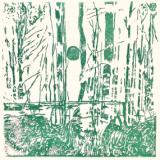
Exactly four years and one day after ''All That Has Never Been True'' Ultha releases their fifth full-length studio album entitled ''A LIGHT SO DIM''.
It features 10 original new songs at a combined length of 74 minutes, with guest appearances by Pieter Uyttenhoven & Annelies van Dinter (TAKH), Pardis Latifi (DAEVAR), Danni Kann and the ''Chor Der Damen Ohne Namen'', a 40-women choir from Cologne.
Recorded, engineered and mastered at GOBLIN SOUND STUDIOS (Cologne) by ANDY ROSCZYK, who also contributed guitars and keys to various tracks. Artwork was done by TOBIAS HAHN, featuring photography by MAX HECKMANN.
After the conclusion of the trilogy consisting of Converging Sins, The Inextricable Wandering & All That Has Never Been True, the question was: where do you go when you've lost everything? You either accept defeat and die - or you start fighting. This is an album about hope in the darkest of times. It's a call to arms for the inner self, to find a rope of light in a world of mist. ''A Light So Dim'' is another concept album, with a narrative spinning from beginning to end. The unnamed narrator wakes up and tries to make sense of a world gone absolutely mad, where truth is nothing more than an empty shell of its once great self.
''IT'S THE STRUGGLE FOR AMBITION IN AN OCEAN OF DEFEAT. LIKE A FOREST FOR A GARDEN IN A WORLD YOU'LL NEVER SEE''.
This is for all of you!
Viva reason, viva love.
The new recordings from The Dengie Hundred unfurl on Tain Records after a busy year releasing a solo tape on Sagome and a collaborative LP and tape with Japan Blues on Demdike Stare's DDS imprint.
Lammas Land is an album which meditates on the Walthamstow Marshes, an ever-changing watery landscape, rich with history and wildlife. The Dengie Hundred writes:
"I am sitting at my table overlooking the marshes listening to Lammas Land in November 2023, watching crows fight a never-ending aerial battle with the gulls. In summer, you can see bats from here every evening, fluttering around the windows as the light begins to fade, but today it is colder so there is smoke rising from the boats on the River Lea and the dog walkers are wrapped up tight against the wind.
Most of Lammas Land was made sitting right here, playing guitar and recording the sounds passing by. I would hang a microphone out of the window to capture the ‘putput’ boat which delivers provisions, or the trains that rattle along the tracks that cut across the marshes and up to Stanstead, carrying passengers to the airport and away.
I wonder what tourists make of the marshes as they cross them, the landscape opening up for a moment between the urban sprawl of the East End and the rampant development of Tottenham. They offer a jarring pause of green and sky. I feel very lucky to be living in that pause, a resident, for now…
The album contains a whole year of found sounds recorded from the window and while out walking. It is full of bird song and radio sounds, singing, life.
Many others have been inspired by this space, this pause. The author Esther Kinsky who wrote River, published by Fitzcarraldo Editions, captures this area so perfectly. I borrowed the two track names for this album from her book. I hope she doesn’t mind.
Also, the photographer Paul Fuller whose work reflects the atmosphere I feel here precisely. On hearing the music he wanted to collaborate on the Lammas Land project, He spent a year filming the marsh through the seasons. Some of his images are included with the vinyl release, and there is an accompanying film close to completion. I am so pleased this project is continuing in new forms.
The vinyl also contains a piece of writing, ‘Sound Fishing’, by Gemma Blackshaw, an author, art historian and curator who in a twist of fate also found herself spending time on the marshes, but that is her story, for another day."
The Dengie Hundred
Lammas Land
LP, with essay insert + five photographic prints
Cat No: TAIN02
Price: £14.49
Due next week
A: A hand full of ever thickening twilight
(Sample clips 1 / 2 / 3)
B: A string of pearls pulling
the night away
(Sample clips 1 / 2 / 3)
For its 9th release after its relaunch, Apnea Records proudly presents another ERP record, this time in the form of a 2x12" Album "Faded Caprice" is a mesmerizing journey into the heart of summer's fading glow. Crafted with meticulous attention to detail, each track is a sonic tableau, capturing the essence of hot afternoons and wistful sunsets. E.R.P.'s signature blend of deep, cosmic funky electro gems resonates with emotional depth, inviting listeners to lose themselves in its hypnotic embrace. From the pulsating rhythms of "Miami Nice" to the introspective melodies of "Cape Earl "Faded Caprice" is a testament to E.R.P.'s artistry and vision. A testament to Gerard Hanson's music landscape, offering audiences a glimpse into the boundless possibilities of sound and emotion.
out of Stock
Last delivered 84 days ago available to reorder, subject to availability
These days – on the new, ninth Fink album – Greenall is operating within a lineage of authentic, quietly revolutionary artists from England’s verdant southwestern toe. Artists like Michael Chapman. In 1970, the elusive acoustic guitar wizard released an album called Fully Qualified Survivor. The cult-classic served as a lodestar for Greenall – along with bandmates Tim Thornton and Guy Whittaker – as he began jigsawing together The City Is Coming to Erase it All, the follow-up to 2024’s Beauty In Your Wake. He even considered covering a song from it, but in the process, inadvertently stumbled into what became the album’s opener. ‘Wishing For Blue Sky’ circles a universal teenage ache: waiting for life to start. “No point dying of patience” goes the first lyric as crunching footsteps cue a resonant, open-tuned acoustic swaying into view. By 18, Greenall was fed up with waiting, so he left suburban Bristol and saw the world, sending postcards from the edge, waiting tables, squirreling away tips for the next flight. Thornton had similar experiences when the guitarist/drummer busked across Eur
This is nowstalgia more than nostalgia, though; there’s a parallel between these 18-year-olds and Fink’s autumn-aged family men. “You’re expected to be boring and settling down at this age,” Thornton says. “But we’ve still got this tremendous wanderlust. We want to go and discover, and also achieve things. It’s a nice life – home and family – but fuck, I can’t wait to get back out there.” City is a product of this hunger for discovery, and idolatry of the album as a form – like we had in 1974. City’s cover mirrors its interior, the first song is the greeting, the instrumental closer the conclusion. It’s a story. It’s a record for people who, like its creators, are curious. People who happily face a little cold for music, who light a crackling fire back home, who sit with these songs until they’re ready to chase after their own blue sky
Budapest based concept label Blue Sun welcomes formerly independent local afrobeat-jazz ensemble to its catalogue with a nuanced 4 tracker EP. The release not only marks the beginning of the collaboration, but a definite new musical direction in the band’s life.
Written in a one week jam session retreat in the Hungarian countryside, and recorded at one of the highest peaks of Hungary after a year of global touring, The Garden becomes an amalgamation of the band's personal and artistic experiences. The material conveys a more jazzier approach, with complex harmonies, and an almost cinematic, dreamlike atmosphere, somewhat distancing from (but not completely forgetting) the previously emphasized, dance-oriented Afro- and Latino roots. Song for Ramon serves as the EP’s emotional climax inspired by the passing of a close friend and local underground chef pioneer.
Formed in 2019 in Budapest, Hakumba is a staple of the Hungarian festival circuit, with a growing international presence (SXSW London, SHIP, PIN Music Showcase). They’ve recently finished a tour in Australia this January.
The groove-driven ensemble blends afrobeat, jazz, and various strands of world music into a sound that is both rhythmically powerful and harmonically adventurous. With an eleven-piece lineup featuring an expansive horn section, multiple vocalists, percussion, and keys, the band moves effortlessly between dancefloor energy and more intricate, jazz-influenced musical ideas.
Like the band’s previous album, the EP was again recorded, mixed, and mastered by András Weil, the producer behind The Qualitons, the only hungarian band ever performed Live at KEXP. This continuity preserves Hakumba’s recognizable sonic identity while giving space for new colors and more complex musical ideas to emerge.
Written & performed by:
Soma Számel – drums
Endre Szép – bass
Imre Hegedűs – guitar
Zalán Bendegúz Huff – guitar, vocals
Csongor Mari – keys
Noel Nagy – percussion, vocals
Dorka Foster – flute, vocals
Kristóf Szabó – alto sax
Alpár Sikó – tenor sax
Gáspár Simon – trumpet
András Téglásy – baritone sax
Produced, recorded, mixed and mastered by Andras Weil
Artwork by Eszter Lukács
Graphic design by Péter Tóth
Manufactured by AD Records
Distributed by Rush Hour
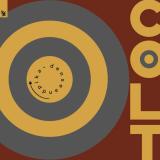
All scene-shaking releases deserve their own vinyl pressing, and Dense & Pika's 'Colt EP' is getting it well over a decade after its 2012 release. Containing all of the EP's tracks, from namesake 'Colt' to 'Black Deep', 'Vomee' and 'Airless', this re-release carves the legacy of the U.K. into a must-have vinyl.
out of Stock
Last delivered 68 days ago available to reorder, subject to availability
"Nusa" is the last part of a trilogy started in 2020 with Masao Yamamoto and Akira Uchida. A project that began with light (“Sasanami”, 2020), moved through darkness (“Kurayami”, 2023), and returned to the ambivalence of the two (“Nusa”, 2026), which ultimately sustain and complement one another in all their variations and complementarities. Both in terms of tones and in the humanity that runs through us in these times of such stark contrast.
For this last part of the trilogy, Masao Yamamoto and Akira Uchida travelled to the island of Hokkaido at the beginning of 2026 to supplement the project with photographs and audio recordings of the ice and the surrounding landscapes.
Graduated in saxophone from Senzoku Gakuen College of Music, Akira Uchida explores sound through tuning, medieval music, and acoustics, supporting jazz pianists as a piano tuner. After training under instrument maker Masahiro Adachi, he became an independent clavichord builder. In 2020, he created an instrument for Ryuichi Sakamoto. In 2021, he crafted one using reclaimed wood from Kiyomizu-dera Temple (FEEL KIYOMIZUDERA). His work focuses on making, tuning, and performing instruments.
On her new album, Neon Summer Skin, Bedouine, the project of Azniv Korkejian, explores this feeling of safety long before one can fully understand the concept. Written with vivid, honest and intimate imagery after visiting her family in Saudi Arabia, it tells the story of family and upbringing, and mourns the end of her childhood. There is a singular resonance and newfound heft in this music previously unheard in Bedouine’s discography. Bedouine is known for making gentle, lilting folk songs that build fingerpicked guitar melodies into tsunamis of emotion. Her masterful songwriting and timeless melodies have earned her praise from publications like Pitchfork, who said her music “boasts a surreal calm and lived in glow,” and Rolling Stone, who lauded her “humble folk-pop brilliance,” plus an NPR Tiny Desk Concert, and tours with the likes of Fleet Foxes and Father John Misty. While working on the record, Bedouine realized the pain of displacement, of searching for home, has been a throughline in her family history. Other relatives have also experienced this sense of loss as they’ve migrated between Armenia, Syria, and Saudi Arabia. “I felt so frustrated about the places that I'm from becoming war torn or difficult to return to,” she says. “My family has been split apart time and time again.” This realization prompted her to document and honor her parents’ lives and stories. On a family trip to Houston, Bedouine recorded a conversation with her mother and sampled the introduction to “Canopies.” The song tells the story of her mother’s time in an orphanage. She was put there by her own mother as a way of escaping her abusive father. Nearby, her mother would sing about feeling her daughter’s essence in the air: "The waves of Beirut's beaches flutter, and how sweetly they blow my darling's air." It’s a story of profound yearning told with the quiet profundity of a flower blossoming.
After six years, Seahaven return with their long-awaited self-titled album, their first new full-length since 2020's Halo of Hurt. Formed in Torrance, CA in 2009, the band built a dedicated following with releases like Winter Forever, blending emotional songwriting with expansive alternative and indie-leaning rock. Their self-titled album marks the next chapter for the band, delivering a focused collection of songs that reflects their continued evolution.
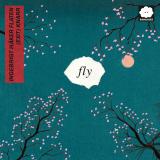
Ingebrigt Håker Flaten's mind boggling band (Exit) Knarr is back with their new album "fly"! After touring supporting their albums "drops" and "breezy" they landed at Ingebrigt's home base in Oslo, Victoria, were they recorded an insane concert with new material and interpretations - now mixed down as a full blown new album. Recorded live, but as solid and unique as any studio album from the band. Amalie Dahl – alto and baritone saxophone Karl Hjalmar Nygren – tenor saxophone and electronics Marta Warelis – piano Jonathan F. Horne – guitar Ingebrigt Håker Flaten – double bass Olaf Olsen – drums
Heartbreak Station, released in 1990, is the third studio album by American rock band Cinderella. The record climbed to No. 19 on the Billboard 200 and earned platinum certification the following year. VH1 described the album’s shift in direction as “bluesy and brawny,” a fitting summary for a project that produced three Billboard Hot 100 singles; “Shelter Me,” “Heartbreak Station,” and “The More Things Change.”
The album marked a deliberate move away from the glam‑metal sound that defined Night Songs and Long Cold Winter. Instead, Cinderella embraced a rawer, more stripped‑down blues approach. Speaking to the Los Angeles Daily News shortly before release, frontman Tom Keifer explained the evolution: the band aimed for a “rawer, simpler approach,” reducing reverb and overdubs to let the songs breathe. Keifer also noted that blues played a major role in shaping his songwriting during this period.
Adding to the album’s depth, former Led Zeppelin bassist John Paul Jones arranged the string sections for two tracks. The band sought him out after being impressed by his orchestral work for artists like The Rolling Stones and Donovan.
Heartbreak Station includes an insert with lyrics and is available on black vinyl.
The Flat Earth is the second studio album by English new wave and synth-pop musician Thomas Dolby, it was released on 10 February 1984 and peaked at No. 14 on the UK Albums Chart. The first single from the album was "Hyperactive!", which peaked at No. 17 in the UK Singles Chart, and was a minor hit in the Netherlands too.
The album has held up very well 40 years after its release; a crisp production, brilliant songwriting by Thomas Dolby and a fantastic ensemble of supporting players makes this record a classic in its own kind.
The Flat Earth is available as a limited edition of 750 individually numbered copies on silver vinyl, and contains an insert.
Swedish rockers The Wannadies reached internationally stardom in 1994, when they released their third album Be A Girl.
The single "You and Me Song" became the group's biggest hit, peaking at number eighteen in the United Kingdom, after being featured on the soundtrack of Baz Luhrmann's film Romeo + Juliet (starring Claire Danes and Leonardo DiCaprio).
But the magic of the album goes further, “Might Be Stars" became another UK hit, and sounds exactly like the Britpop from that time. The sound of summer is what makes this record so wonderful, from the start to the end.
Be A Girl is available as a limited edition of 1000 individually numbered copies on white vinyl and includes an insert.
In 1979, the Soviet label Melodiya released a record that immediately stood apart from most Soviet jazz of its time and perhaps for that very reason never became widely known. Oriental Suite by Oleg Gotskosik Quintet is a rare example of jazz, Eastern musical tradition, and compositional thinking coming together not as an exotic stylization but as a fully formed artistic statement.
This is not “Oriental colour” used as decoration, nor folklore treated as an ornament. Oriental Suite grows from within another musical tradition, with its monody, modal logic, slow unfolding of form, and focus on inner states rather than outward effect. The music is calm and concentrated. It does not try to impress, but gradually draws the listener into its own space.
Oleg Gotskozik was born in Tashkent in 1951, a city where Eastern music was part of everyday life rather than something distant or exotic. That may explain why his engagement with traditional material sounds so natural. He does not quote or stylize; he thinks in the same musical categories. By temperament, he was closer to a composer than to a jazz musician in the conventional sense. For him, jazz was not a style but a way of working with form and improvisation.There is no standard “theme and solos” logic in Oriental Suite. Improvisation is woven into the fabric of the music itself and unfolds in the same way as in oral traditions, gradually, with rising tension and a clear sense of arrival. Individual sections refer to traditional Uzbek genres such as lullabies, lyrical songs, and funeral laments, but these are not genre sketches. They are states of being. The music unfolds slowly, avoiding familiar harmonic drama and relying instead on modal scales and subtle internal movement.
A special role is played by trumpeter Yuri Parfyonov. His approach, with delayed vibrato, micro-glissandi, and melismatic phrasing, sounded unexpected at the end of the 1970s and still feels remarkably fresh today. This is not expressive jazz virtuosity but a focused, almost meditative voice, where improvisation becomes a form of inner speech.
It is also important to note that the original recording was not without technical flaws. Like many Soviet jazz releases of the time, Oriental Suite was captured under far from ideal conditions, and the master contained audible imperfections that were never part of the music itself. For this edition, the restoration was approached with great care and respect, working through the recording moment by moment to remove unwanted artifacts while preserving the character and atmosphere of the original. The aim was simple: to make sure nothing stands in the way of fully experiencing the music.
In the early 1980s, Oleg Gotskozik left the Soviet Union, and after that his name virtually disappeared from Soviet music journalism and literature. There were no official bans or public statements. He was simply no longer mentioned. Oriental Suite continued to exist on its own, without an author and without context. The record never entered the canon, received no continuation, and was never officially reissued. It seemed to fall out of time.
The original vinyl pressing was released in a run of around 32,000 copies, but most of them remained within the republic and never reached wide circulation. Today, original copies are hard to find and have long become objects of interest for collectors. There have been no official reissues, only attempts that never went beyond test pressings.
Today, Oriental Suite sounds surprisingly contemporary. It is music that can be described as deep ethno-jazz and even, in a certain sense, spiritual jazz. There is no exoticism here, no decorative borrowing, only a complete immersion in another musical way of thinking. It does not require explanations and does not need to be justified by its time.
This is not a forgotten curiosity revived for collectors’ sake. It is music that simply waited for the moment when it could be heard without ideological filters or genre expectations. Now it is returning quietly, without noise or hype, but with the clear sense that this is not an artifact of an era, but a living and genuinely rare artistic statement.
Debut vinyl release from San Francisco indie pop trio The Kitchenettes. After a quietly beloved 2024 demos tape, The Kitchenettes return with their first vinyl release: a sparkling three-song 7" that updates the timeless indie pop template of Marine Girls, The Cat's Miaow, and Lois for 2026. Across the three tracks, the band moves gracefully between tender, jangling pop and brighter, upbeat moments, revealing an impressive range of mood, tempo, and texture. Formed by Morgan (The Umbrellas, Telephone Numbers) with Emily and Sequoia (The Snogs),writing collaboratively and trading vocal duties, the band crafts effortlessly charming indie pop built on jangly guitars, loose harmonies, and a homespun DIY spirit. Short, sweet, and full of heart, it's a perfect introduction to one of San Francisco's most charming new indie pop groups.
"I decided to just let myself go," Zzzahara says of their new record, 'Spiral Your Way Out' "I think I finally came to this acceptance that I don't have to be perfect. I want to be a good role model to my fans and stuff like that, but I also don't want to hide who I am." Zzzahara's music wades into the deep waters of love, lust, and self-discovery in a part of the world where artifice and authenticity co-exist. Emerging from the heart of LA's alternative music scene, their sound is raw in feeling and rebellious by nature.
Their 2022 debut album, Liminal Spaces, chronicles a coming- of- age in Highland Park, following painful childhood memories through to late- night, live- fast coping mechanisms, and the changes the neighbourhood has endured over the same period of time. Their 2023 follow- up, Tender, marked a period of slowing down, looking inward, and embracing a softer side of being. 'Spiral Your Way Out' sees Zzzahara evolve again. Emotionally, its foundations are built on scorched earth.
The album finds Zzzahara in the aftermath of a relationship spent trying to fit someone else's mould, being jerked around by indecision, and then hitting "emotional rock bottom." Made in a three-month burst that let all their pent-up frustrations loose, 'Spiral Your Way Out' is in part a work of self-reclamation, swapping there 2nd album Tender's meditative state for something fiery and more assertive. The new album marks another sonic evolution as much as an emotional one. Zzzahara's songs have always come wrapped in a warm glow that reflects how they were written -namely at home in their bedroom.
That glow remains on 'Spiral Your Way Out', but it also packs an ambitious streak and a gutsy punch. Taking a more collaborative approach than usual, Zzzahara worked with a range of producers including Jorge Elbrecht (Japanese Breakfast, No Joy, Sky Ferreira), Sarah Tudzin (boygenius / Cloud Nothings / The Armed), former Ducktails guitarist Alex Craig (Jelani Aryeh / re6ce) and Halsey tour drummer Franco Reid, who helped harness their intimate style of writing and blow it up into something more panoptic. After a year of upheaval, Zzzahara finally feels "calm." The musical equivalent to going several rounds on a punching bag, 'Spiral Your Way Out' finds solace between extremes. It licks its wounds in a place where pain and love, healing and abandon, sit side-by-side. If it has a message, it's one of standing tall in your own shoes - scuffs and all.
Instead of looking back with longing, Futurebirds uses the past as fuel - after more than 15 years together, the band has channeled everything they've lived and learned into their best project yet, one that elevates and adds new dimension to their signature cosmic Americana, psychedelic country-rock sound Self-reflective lyricism explores themes of isolation, release, love lost and found again, and ultimately, embracing life in all its chaos.
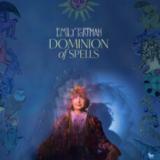
The album is a powerful reaffirmation of human creativity: "My music has always been about connection, bringing enduring old stories into conversation with contemporary life," Portman says. "This album is a collective, entirely human-made effort, and it's richer because of it." Renowned for her luminous songwriting and distinctive voice in contemporary folk, Portman steps into bold new territory with an album that charts a heroine's midlife journey through dark woods in search of wonder. Drawing on ballads and folktales, Dominion of Spells explores themes of burnout, misogyny, motherhood, miscarriage and personal transformation, weaving lived experience with mythic imagery and traditional folk narratives. The title track, Dominion of Spells , reclaims a 17th- century phrase once used to diagnose women as "disordered", drawing on the myth of the wandering womb and the long history of medical misogyny. Portman transforms these ideas into a vision of a freer, fairer realm where women's bodies are understood rather than feared. The first single, Turn Again , is a tender meditation on parenthood, inspired by her young son's imaginative shapeshifting games and echoing the Tam Lin ballad, where steadfast love breaks a powerful spell. Elsewhere, the album explores women's right to move safely after dark, genderswapped retellings of heroic quests, miscarriage, phone addiction and the restorative power of creative practice.
Pianist and bandleader Linus Rebmann, together with Gabriel Widmaier on double bass and Johnny Walker on drums, shapes a transparent and powerful sound characterized by great joy in playing and a palpable sense of familiarity. The album's ten original compositions tell of observations, inner movements, and moments whose depth is better expressed through music than words. The three young musicians met in the Baden- Wurttemberg Landesjugendjazzorchester, and after winning the "Jugend jazzt south- west" competition in 2024, the trio was awarded the prestigious Deutschlandfunk Studiopreis at the national meeting. This made it possible to produce the album in the legendary Kammermusiksaal of Deutschlandfunk in Cologne - a space that has been among the country's finest recording venues for decades. The band members deliberately chose an intimate setting for the recordings. Everything was played through a single main microphone, without subsequent corrections to individual instruments. A working method that demands absolute presence and mutual trust. It is precisely this immediacy that shapes the sound of "Listen To The River": the album is transparent, organic, flowing, almost breathing.
* A highly influential and sought-after benchmark dub LP, originally released on the Jah Works label in 1995.
* Produced by the late Rej Forte AKA Jah Rej, who was one of the most creative minds from the UK reggae and dub scene from the last 40 years.
* The album features recognisable tracks from the Jah Works cannon, but dubbed into oblivion with special effects galore. All tracks played by humans, with the exception of a drum machine.
* Dub Crusaders feature members of Revolutionary Dub Warriors (On-U Sound, Ariwa), and Radical Dance Faction.
* Recorded at Channel One under the supervision of Martin Campbell, whose vocals feature twice on this set.
out of Stock
Last delivered 4 days ago available to reorder, subject to availability
1. numbered 100 copies of limited black 180g vinyl made in collaboration with U JAZZ ME Records
2. transparent orange 180g vinyl
LINER NOTES:
" When AJ Lee stepped back into the ring in September 2025 - after a ten-year break - she introduced herself to a new generation of fans with the words: 'If you haven't heard of me, I am your favorite wrestler’s favorite wrestler.' That is exactly what came to my mind as a lead for this blurb when Pokusa asked me to write it. Because that’s what they are: your favorite indie darlings' favorite indie darlings (even though no one uses that term anymore, let alone identifies as such). They are your favorite cool jazzcats’ favorite jazzcats. And they are probably your favorite young jazz act - if you don’t usually (or ever) listen to jazz.
This, I always thought, is their greatest strength. Half the battle (in my eyes) is recording a sick jazz album - one that a jazz magazine would fawn over. The real win is getting someone wearing a heavy metal T-shirt into it; someone who’s never listened to jazz and has never stepped foot in a place like Pardon, To Tu, but heard Pokusa and decided to change that. I am such a person. I didn't learn about jazz because of them, but they’re definitely the reason I started rating it.
Głowy (Heads) is, in a way, a classic album. If someone played it for me and - relying on my lack of knowledge and gullibility - tried to convince me that it was recorded in the Polish Radio Studios in 1975, at Akwarium Club in Warsaw in 1985, at Club Rura in 1989, somewhere in Tri-City in '94, or at Mózg in Bydgoszcz, I would probably believe it. Its 'classicness' goes hand in hand with its timelessness. I could write about how the album fits into the catalogs of Lado ABC, GOWI, or Biodro Records. I could dig for connections to Yass, Tzadik, or a number of other things.
But what Teo, Natan, and Tymek create here is as important in its experience as it is in its music. For me - an artist active in a similar time - each Pokusa album, including this newest release, is a record of a period of time and the experiences hidden between the notes. The Indian spices in food served before a show in Mózg. A headache from all the cigarettes smoked listening to tapes in Eufemia. Marveling at the graffiti over the sink in Młodsza Siostra. The narrow steps at Chłodna 25. The wider but slippery steps to Pogłos. The quirky and uncomfortable steps in Ziemia. The mosquitoes at Ladomek. The dilemma of whether to wear a nice polo instead of a T-shirt to SPATiF. The wonder of turning off Monciak into Dwie Zmiany. Why is a club like this on such a strip? Why is Pokusa playing here? And why do they sound so good?
On one hand, you can find journalists writing that Pokusa grew out of the classic free jazz of the 1960s; some might mention Albert Ayler. On the other hand, there’s Unsound Festival and young critics writing about 'post-jazz.' All of them are correct. This is universalism. This is that timelessness. Whether you pick up this album the day it comes out or in the year 2046, it will be good. In twenty years, people will still reach for it. Of that, I am certain."
Michał Turowski
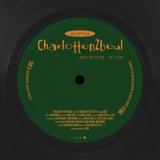
Summer is around the corner and what a perfect timing to introduce you to Admo’s latest musical project - Charlottenzbeul Science Club. After three years since his last solo EP, many live acts around the globe and releases on Limousine Dream, Haws and Ordinateuf, the mad bassist is back at it again with his first release on his new label - Two-Headed Fish Records - which he co-runs with his wife. Definitely an EP that stays in the family.
It’s another four-tracker - you know the kind of vinyl that keeps on giving. A celebration of his time in the vibrant German capital, Berlin (West is the best). A1 opens the ball : bassy, catchy and this infectious chromatic melodic line. The recipe for a summer hit. Now onto A2 (and we’re not talking about his German language skills here): a regular laidback approach where acid sounds mesh together with this high-energy baseline. A classic in the making. If you’ve seen him live, you must’ve recognised B1 as it used to be his closing. A dreamy touch, where storytelling is the key word. You will have your head bopping from the first minute - mellow moment guaranteed. And B2 wraps it up - it takes you by the hand, you hop onto the next U-bahn and straight to the dance floor. The analogic bass keeps on bringing the track higher, progressively transforming into this groover that gets your feet stomping. It’s a proper farewell and a perfect conclusion to this beautifully crafted record.
out of Stock
Last delivered 4 months ago available to reorder, subject to availability
Edwin Starr and JJ Barnes were two of the main stars at Ric-Tic, the legendary 1960s Detroit Soul label that ended up being purchased by Motown to take out the competition.
JJ Barnes REAL HUMDINGER Ric-Tic 45 is a standout gem from the Motor City’s Soul heyday years and an all time Northern Soul classic. Edwin’s Ric-Tic 45s and subsequent gems for Motown made him such a Northern Soul icon that he moved to live in England.
What Anglophile Edwin never revealed is that he actually recorded the first version of REAL HUMDINGER for Ric-Tic. It never got released and its’ very existence was unknown. After painstaking detective work WEST GRAND found about the recording and have now managed to licence it from Universal Music / Motown for its debut worldwide release News of the discovery has created huge interest amongst Soul fans globally, As a bonus the flip side is another “wow find” that had been stuck, also unknown and unloved, in the tape vaults for nearly 60 years. It is a preciously unused alternative take on SCOTT’S ON SWINGERS.
The track is in effect an extended jingle for Detroit back in the day star radio DJ Scott Regan based on Edwin’s smash S.O.S (Stop Her On Sight). The released take came out on a limited edition RIC-Tic giveaway single that now commands a £400 price tag.
out of Stock
Last delivered 4 months ago available to reorder, subject to availability
OM2 is a unit formed by beatmaker DJ Monchan and guitarist Aota.
Their story goes back to 1990s New York, when Aota found a roommate-wanted flyer posted in a vintage clothing store in the East Village where Monchan was working. After becoming roommates, the two grew close and were deeply influenced by downtown New York culture at the time.
Later, Aota returned to Japan, formed a rock band, and made his major-label debut. Meanwhile, Monchan stayed in New York, worked at A1 Record Shop, started his own label Dailysession, and became deeply involved in the city’s dance music scene. After following different paths and maturing in their own ways, the two reunited after 30 years to form OM2
out of Stock
Last delivered 4 months ago available to reorder, subject to availability
Death Cab for Cutie is one of the definitive indie-rock bands of the century. After twenty-odd years in the major label system, the band returned to their indie roots and signed with ANTI- Records and they"re back with a brand-new eleventh album titled, I Built You A Tower out June 5th. I Built You A Tower is the sound of loss, compartmentalization, and then grief bursting out from the seams. It"s also the sound of the growth that comes after falling apart, of acknowledging pain without letting it destroy you. "I see the tower existing on your emotional horizon," Ben Gibbard states. "You don"t always have to look at what"s inside it, but it"s a reminder that it happened. You know it"s there. You have to face it." The band is set to hit the road in the US this summer, kicking off on July 10 and includes a two-night run at The Greek in Los Angeles. This comes on the heels of a historic, sold-out global tour marking the 20th anniversary of the album Transatlanticism, and the release of their universally acclaimed, 2022"s Asphalt Meadow.
out of Stock
Last delivered 4 months ago available to reorder, subject to availability
Ian F. Svenonius and the philosopher of fuzz, black-jacket beat-bopper, bandstand bolshevik, single note savant, tear-stained tape deck, last refuge of ineptitude, sin is in group, ESCAPE-ISM stopped by our Detroit location one spring afternoon and recorded this pan-sonic polymorphously perverse plastic platter live on the Blue Stage. TOP SECRET. DO NOT BUY.
Per Hammar joins Craigie Knowes for his label debut ‘Sidewinder’ EP. 4 rolling tracks built to maintain and elevate dancefloor momentum. Per Hammar’s production mastery is distilled into these monstrous club jams with every element tailored to serve the rhythm and keep you moving. This record is varied yet coherent package of house, tech-house and minimal flavour; from the rolling bassline on Sidewinder, the minimal chug of Viper, the euphoric uplift of Afterglow, to the thump and swing of Mono Boy. A record for the DJs and listeners alike.
out of Stock
Last delivered 3 months ago available to reorder, subject to availability
Thirteen years after their landmark debut, Italian duo Voices From The Lake (Donato Dozzy & Neel) return with their much-anticipated second album, 'II' (two) on their own Spazio Disponibile.The record marks a new chapter in one of electronic music's most revered projects. Born from a friendship and a singular musical vision, Voices From The Lake first emerged as a one-off live performance in the Japanese Alps, later distilled into their self-titled 2012 album. That record has since become a touchstone in ambient techno, reshaping the global landscape of hypnotic and atmospheric electronic music. In the years since, the duo have performed worldwide, released a handful of EPs, worked on installations, and founded record labels, all while continuing to refine the project's unique identity. Yet the core of Voices From The Lake has always been its deep, aqueous approach to sound, a sensibility that returns in full force on II. "The project was never meant to become what it did," the duo reflect. "At one point, we even paused it. Only to later embrace it in all its forms. II is both a continuation and a reinvention." True to that spirit, Voices From The Lake have explored extremes in recent years, from high-tempo live sets to seated listening concerts, while remaining anchored in the meditative pulse of ambient techno. II extends this lineage, carrying forward the immersive sound design and boundary-pushing vision that has defined their work from the beginning.
out of Stock
Last delivered 3 months ago available to reorder, subject to availability
On the 2024 Altered Circuits release Tropicana Tracks Rotterdam-based artist Betonkust paid tribute to the former subtropical pool (now a circular entrepreneurship hub) Tropicana of his hometown. ALT025 is the follow-up: the fallen-from-grace swimming paradise again fuels a club-oriented selection, inspired by, in the artist's words, "the electronic music from 1988 up until now", more specifically "the Benelux-sound". Tropicana Tracks Two kicks off in full gear with the zero swing drums and lately bass rhythms of Don't Think I'll Be Here Too Long setting the stage for intense synth stabs. Its counterpart comes by way of Realxing, which nonetheless uses similar patches. If the A1 is the thrill of the slides, this one feels like blissfully floating in the geothermally heated waters afterwards. Will Support on the reverse side takes on Detroit techno. Minimal in its composition, it is carried by tough, loopy minor fifth synth sections and prominently mixed rides. TV For Lonely People features more big bass catchiness and melancholic, silky melodies, glued together by vintage flanger treatment and chlorine-damp reverb. The production revels in what feels like the quintessential Betonkust sound. Innershades then joins for the encore, and, characteristically, the mood turns a bit darker. Letting Go Of The Dream is an emotional New Beat update, fully equipped with thudding drum works, haunting lo-fi vocals and pivotal 303 programming - a fitting reaffirmation of the long-standing ties between two of Low Countries Electronics's finest ambassadors.
out of Stock
Last delivered 84 days ago available to reorder, subject to availability
Eight years after his last solo EP on NORD LTD, Shkedul makes a formidable return with four absolute dancefloor killers. This release does more than just fill a silence; it reasserts his position as a producer with a fiercely distinctive character and an unmistakable sonic signature.
out of Stock
Last delivered 4 months ago available to reorder, subject to availability
The 1970s were Marion Brown’s most searching decade, a period during which he sought to move beyond the free jazz of the previous era and find more personal approaches to structuring improvisation and composition. After leaving New York for Europe in 1967, Brown began reshaping his music into what he described as “a more deliberate kind of music that had more structure to it,” pacing it so that moods and modes could develop over time. Albums such as In Sommerhausen, Afternoon of a Georgia Faun, Geechee Recollections, and Sweet Earth Flying trace this evolution: rhythmic structures moved to the foreground, harmony receded, and composition became a matter of orchestrating interlocking rhythmic parts as one would polyphonic lines.
Released in 1976, Awofofora is an overlooked but crucial entry in that sequence. At the time, its use of funk and reggae beats, electric guitars, and grooves drawn from contemporary Black popular music led some to misread it as a jazz-rock detour. In retrospect, it is entirely consistent with Brown’s methodology. As he admired in the Art Ensemble of Chicago, the stimulus comes from within the community. Here Brown filters Afro-Caribbean rhythms and funk through his own sensibility, abstracting their structural qualities rather than adopting surface style.
“La Placita,” making its first recorded appearance, layers distinct rhythmic phrases in a manner reminiscent of African drum ensembles, over which Brown and trumpeter Ambrose Jackson spin extended improvisations. The standard “Flamingo” is reshaped through diasporic rhythm and lyrical soloing, while “Pepi’s Tempo” and “Mangoes” harness crisp funk and reggae grooves to generate what Brown called a “manifestation of community” through collective improvisation. Even the overdubbed solo feature “And Then They Danced” reflects his structural thinking, ingeniously re-voicing a duet composition for two alto saxophones performed by one player.
This was the only recording by a short-lived band that briefly polarized audiences during festival appearances in 1976. Yet Brown consistently sought unity across change: different sounds, same principles — rhythm as structure, melody as architecture, collective improvisation, and above all, the primacy of tone. Awofofora stands not as a departure, but as a vivid synthesis of the elements he had been refining since the late 1960s, its grooves and golden alto lines conveying a sound drawn, in his words, “from life and from the world of experience.”
out of Stock
Last delivered 4 months ago available to reorder, subject to availability
For Metro Beirut’s latest release, Cem Mo steps forward with his debut vinyl EP, a record that bridges the roots of Chicago and Detroit house with his own deep and textured approach to groove.
Born in Ankara and having taken piano lessons at an early age, Cem drifted from classical into jazz, re-teaching himself harmony and improvisation before finding his way into production. After moving to Amsterdam in 2016, the city’s community and music scene expanded his horizon, shaping a sound that treats producing like improvising, with curiosity for grain, color, and repetition, where subtle shifts make all the difference. Along the way, Cem has released on Handy Records and Rhythm Section, while his project Nowhere People has appeared on Artisjok Records.
This EP brings together a tight circle of artists who deepen its character. Saxophonist Moritz Schuster, known for his work across electronic music and past work with Cem and Malik Kassim, formerly known as Retromigration, delivers a striking, free-flowing performance charged with raw intensity. On “The Hard Way”, Franco Corica joins Cem for a deep, soulful, jazz-leaning moment that feels both reflective and quietly defiant. Finally, longtime friend Malik pulls up with a dancefloor remix that preserves Cem’s melodic sensibility while adding his own loose, resulting in a circular dialogue between two artists who’ve grown side by side.
Artwork: Shahd Issa
out of Stock
Last delivered 4 months ago available to reorder, subject to availability
After the success of their first collaborative album Blue House Rockin’, Soul Sugar and Dub Shepherds reunited at the Blue House Studio for a new analog-heavy recording session.
Super Freak is the first single from these sessions: a fiery 70s-style reggae reinterpretation of Rick James’ classic. Led by Jolly Joseph’s signature falsetto, it rides a heavyweight bass line, playful reggae groove, and warm layers of organ, piano, guitar, and Mini Moog, all recorded live on vintage gear.
The journey continues at Bat Records Studio, where Dub Shepherds apply their trademark “hard mix” on 24-track tape,
bending sound, space, and rhythm into a deep dub sorcery.
This 7-inch 45 rpm single features both vocal and dub versions and paves the way for the forthcoming album Blue House Rockin’ Vol. 2.
out of Stock
Last delivered 3 months ago available to reorder, subject to availability
This songs were recorded years ago and were sleeping in the computer for some reasons...
After the Dezzi D tune was released last year on an LP on Chouette Records, All Nations puts out this 12" with the song from Afrikan Simba on the same riddim, plus an extra cut from Puppa Djoul, talented multi instrumentist from France.
out of Stock
Last delivered 4 months ago available to reorder, subject to availability
For the first time in its 27-year history, Defected compile its greatest hits, underground anthems and bonafide house music classics into a five volume triple vinyl collectors series.
Volume One collects twelve of Defected’s most established and sought after releases.
Featuring arguably ‘the' Defected anthem; Kings of Tomorrow ‘Finally’ alongside Solomon’s huge Noir & Haze remix, Ibiza anthems ‘Guitarra G’, ‘At Night’ and ‘Coma Cat’ plus productions and remixes from Louie Vega, Dennis Ferrer and Dimitri From Paris.
An essential addition to your record collection.
out of Stock
Last delivered 11 days ago available to reorder, subject to availability
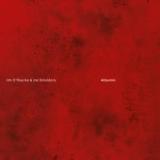
Jim O'Rourke and Jos Smolders teamed up again after their first collaboration, Additive Inverse from 2021. Over a period of three years, both artists worked in sessions of a day, each in their own studio.
The result is sometimes like a warm cloud of sounds, suddenly breaking up into a rhythmic, irregular pattern, after which it dives into introverted mindsets. The music is in constant flux
The project followed the same workflow, but this time Jim took the lead and kicked off with a salvo of sounds that he extracted from his Kyma System. Both Jos and Jim were quite interested in the spectral character of sounds. Jim applied Kyma algorithms while Jos granulated his basic recordings. That way, textures are built, quite slowly moving from warm to gritty, from hard surfaces to deep sonic wells.
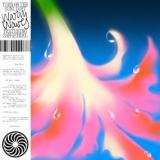
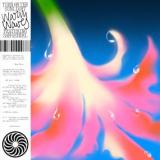
‘Warm Waves’ first appeared in 2020, ten years after Turn On The Sunlight’s debut self-titled album was first released in Japan. During that decade, Turn On The Sunlight’s Jesse Peterson and Mia Doi Todd welcomed their first child and co-founded a music venue in Los Angeles. When performance spaces were required to close at the start of the pandemic, Jesse’s focus shifted back towards home recording. Since ‘Warm Waves,’ five more Turn On The Sunlight albums have followed (including ‘Drives To The Beach,’ also on Tokonoma Records), all of which can be seen as an expansion of the musical direction set forth on this album.
The group heard on ‘Warm Waves’ consists of musicians who Mia and Jesse were regularly playing with at the time - Sam Gendel, Mitchell Brown, Andres Renteria & Gabe Noel - joined by Laraaji, Arji & Luis Pérez Ixoneztli, making their first recordings together.
The group’s blended signal was routed through Mitchell’s tape loops and modular synthesizer, which contributed to the unique communal sound of these recordings. Further extending this approach, Carlos Niño then reprocessed and reimagined ‘Passing Rain’ with Jamael Dean for his Elemental Beat Mix.
Originally released one week into the official lockdown period, some listeners found the warm, collective sound well-suited for the time of introspection and shifting priorities that followed. Now, in 2026, ‘Warm Waves’ returns on vinyl to once again encourage peaceful contemplation and open-hearted togetherness, in echo of the spirit of its creation.
Credits
Sam Gendel: Saxophone & Electronics on A1, A2, A3, B1, B2, B3
Laraaji: Voice & Zither on A3
Luis Pérez Ixoneztli: Bird Sounds on A1, Aerophones & Water Drums on B2
Mia Doi Todd: Voice on A1, A2, B2, B3; Piano on A3
Jesse Peterson: Guitar, Bass, Organ & Bird Sounds on A1; Organ on A2; Guitar & Bass on A3; Wooden Whistles, Guitar, Ukulele & Piano on B1; Ice Breaking on B3
Andres Renteria: Percussion on A1, A2, B1, B2, B3; Marimba & Percussion on A3
Mitchell Brown: Synthesizers & Magnetic Tape on A1, A2, A3, B2, B4
Gabe Noel: Bass on A2, A3, B1
Arji: Bells & Shells on A3
Carlos Niño: Production / Remix on B4
Jamael Dean: Additional Keyboards on B4
Produced, mixed & recorded by Jesse Peterson
Except B4, produced by Carlos Niño