Futura Resistenza is pleased to present the latest release from the prolific, restlessly creative composer-performer Anthony Pateras, two side-long pieces - one performed by Callum G'Froerer on double-bell trumpet, the other sung by Clara La Licata - in which soloists are accompanied by numerous pre-recorded tracks of their own instrument or voice, creating acoustic halls of mirrors where the distinction between live performer and recorded accompaniment becomes difficult to perceive. Palimpsest Geometry (2020) for double-bell trumpet & tape works with rapidly pulsed single trumpet notes, at brisk tempos that hover at the perceptual threshold between rhythm and tremolo. The interaction between different rates of pulse produces skittering echoes, as if G'Froerer's layers of trumpets were really a single sound bouncing around the sonic space. There Is A Danger Only Our Mistakes Are New (2021) for voice & tape goes to work on a see-sawing two-note melodic cell, insistently transposed and transposed again, hummed or sung with open vowels, contracting to a semitone and expanding to a minor third. More than anything in the canon of Western art music, the piece calls up the criss-crossing repeated figures of Inuit vocal games or the interlocking repetitions of Banda-Linda music, where rhythmic and harmonic displacements of repeated motifs fuse together individual parts into the illusion of an impossibly rich and multi-faceted unitary sonic organism. Essentially homogeneous in texture yet built up from constantly changing details, broadly static yet always moving and shifting, these pieces exemplify Pateras' recent work while also pushing it into a new, strikingly immediate direction. Here, form grows organically out of the material itself; the results are sparkling, immersive, and quietly uncompromising. (Francis Plagne)
out of Stock
Last delivered 8 months ago available to reorder, subject to availability
Mister Bear Records follows up Vick Lavender & Justin Dillard's acclaimed BEYOND LP with a heavyweight double-vinyl remix package. Legends and innovators reimagine the originals for the floor: Jimpster brings deep rolling warmth on Time and Time Again, Sean McCabe adds soulful polish to Experimental, and Kai Alcé injects Detroit-rooted swing into The Midnight Hour. Lavender himself drops a boogie-infused mix of Sunset BLVD, while Coflo, Shaka, and Eric D. Clark delivers unique, floor-ready takes on Grace and Get Here. From deep to soulful, boogie to jazz-inflected grooves, BEYOND - The Remixes extends the album's life with a diverse and powerful set of reworks.
out of Stock
Last delivered 8 months ago available to reorder, subject to availability
Attention Italo-disco junkies: Disco Segreta is back, and we’re kicking off our 10th-anniversary celebration in style with a release you simply can’t miss. We’re beyond excited to present the official reissue of Cecilia Rizzoli’s iconic single, “Così non va”—a tearjerker Italo-disco masterpiece that has haunted the dreams of collectors for decades.
Originally released in 1985 in an ultra-limited run of just 500 copies split on two cult labels, Scarabes Sound and Discokkio, this gem became a mythical treasure for those dedicated diggers uncovering the rarest Italo disco tracks. “Così non va” blends hypnotic Juno synth lines, punchy Linndrum beats and airy arpeggios with Cecilia’s emotionally charged vocals, creating a soundscape that’s pure melanchol-Italo perfection—ideal for winter nights and nostalgic dance floors.
For this reissue, we’ve painstakingly tracked down the original analog master, that we’ve lovingly restored and remastered to deliver the kind of pristine sound quality this track deserves. The release features the remastered original and a fresh, contemporary edit by Latino-Swedish Italo-disco legend Claudio Burgos, aka Mr. Fantasy. Secure your copy now before it disappears into collector heaven—again!
out of Stock
Last delivered 9 months ago available to reorder, subject to availability
Mit Framing Reality veröffentlichen The Livelines aus Osnabrück ihre neue EP - ein musikalisches Coming-of-Age-Tagebuch zwischen Selbstzweifel, Selbstbehauptung und dem Versuch, Kontrolle in einer sich ständig verändernden Welt zu finden. Die sechs Songs zeigen eine junge Band, die ihre Realität selbst in die Hand nimmt: ehrlich, direkt und mit einem Sound, der Pop-Melancholie mit tanzbarer Rock-Energie verbindet.
Nach über 60 Shows, zahlreichen Festivalauftritten, Supporttouren für Acts wie KAFFKIEZ, DAMONA und Hi! Spencer sowie ausverkauften Headline-Shows machen The Livelines klar, dass sie gekommen sind, um gehört zu werden. Framing Reality steht für den Versuch, das eigene Leben zu rahmen - zu entscheiden, wie man gesehen wird, wie man sich selbst sieht und was man aus den Dingen macht, die man nicht ändern kann.
These four, rather different tracks have very distinct personalities but all exist ina similar mood. Surviving amidst the chaos and dread. Tribal decay steeped inrebellion. Inciting passion in the face of all of their efforts to thwart it. Trudgingthrough days and dancing through nights, all of one's own accord. Blending inand striking out. Waiting for the right moment. Ceasing to be and then comingback to life again. Ebb and Flow.
a A1 Mutiny 153
b A2 Ebb and Flow 160
c B1 Konstrucht [147]
[127]
out of Stock
Last delivered 9 months ago available to reorder, subject to availability
Commemorate's self-titled debut album blends swirling guitars and dreamy vocals to create a hypnotic yet weightless sound, a longing that swells and fades gently. Emerging from Kuala Lumpur's hazy musical depths, Commemorate is a 5-piece ensemble creating their own ethereal soundscapes, while taking heavy influences from shoegaze titans and infusing modern dreampop with post-rock sensibilities. Available in clear and black vinyl.
"“Back of My Mind” represents a bold, inward journey—a turning point in his evolving artistry. Gone is any trace of uncertainty: instead, Drew channels a quiet confidence, and understated shift in his music style while sharpening his sense of self and sound with remarkable clarity. As a testament to his growing talent, Drew played almost every instrument on the album, giving each track a deeply personal and authentic feel.
With a debut for the ages, Drew Pulliam is about to make his mark on the music scene as a triple threat – singer, songwriter and instrumentalist. Pulliam said, “I feel like this album is finally approaching what I hear as my sound. I just hope I’m on the right path
because it’s the only one I know.”"
Zeitkratzer director Reinhold Friedl and his ensemble present new compositions, grounded on Domenico Scarlatti's piano sonata F-minor K.466. Commissioned by the dance company Rubato and dedicated to Mario Bertoncini (1932-2019).
Little is known about Domenico Scarlatti (1685-1757). His music is, so to speak, left to its own devices: free, cheeky, playful, sonorous, surprising. Harmonically strolling again and again into unforeseen regions, the ear leads, not the theory; and also the fingers get their right: playful and haptic it goes. Scarlatti explained, "since nature has given me ten fingers and my instrument provides employment for all, I see no reason why I should not use all ten of them."
Freedom, friction and listening pleasure instead of convention: "He knew quite well that he had disregarded all the rules of composition in his piano pieces, but asked whether his deviation from the rules offended the ear? He believes there is almost no other rule than that of not offending the only sense whose object is music - the ear."
Reinhold Friedl applied this principle and composed the music for a choreography by dance company Rubato. Dance music drawn from Scarlatti, who was so inspired by dance music. The material of the piano sonata F-minor K.466 is twisted anew in all its richness, shifted back and forth, declined, frozen, noisified, sound structures extracted, floating. Those who know the sonata, will more than smell it’s shadows. Dedicated to Mario Bertoncini (Gruppo di Improvvisazione Nuova Consonanza) who was particularly fond of K.466, on which all the music presented here is grounded.
"Wild flowers", Barbara Zubers had once called Scarlatti's music. Let them bloom.
out of Stock
Last delivered 9 months ago available to reorder, subject to availability
Gonzen, uminari or retumbos. Perhaps you've heard these sounds? They're known to occur all over the world and, as one might expect, humans have strained to offer various explanations for these unsettling emissions that materialise unbidden from the sky.
We like to say that we've understood what's happening so that we can move on. Tidy up the loose ends and don't scare the horses. Nothing wrong with that in good measure, but there's something to be said for the Haudenosaunee peoples' explanation. They pointed out that the Great Spirit hasn't finished their work of shaping the earth and is making a fair bit of noise while they're at it.
If you accept that many questions never truly get answered, in fact can or should never truly be answered, you may be able to tune your mind to this collection of lingering sonic detonations. If you accept that the work is ongoing, our labours seldom done, that there's not much point talking about the end of anything, you may be ready to join us. It's not our task to finish it, nor are we free to desist.
out of Stock
Last delivered 9 months ago available to reorder, subject to availability
In spring 2022, Sankt Otten released their album “Symmetrie und Wahnsinn”, and now the next record is ready to enlighten our maltreated minds. “Tote Winkel” (Blind spots) is once again part of an album series with a geometric context, both creatively and musically.
Stephan Otten and Oliver Klemm made productive use of 2021, which has been decelerated to the maximum by Corona. For the first time, an external studio was booked (Mühle der Freundschaft, Bad Iburg) and the pool of analog synthesizers and other sound generators there was dusted off. Sankt Otten came up with the master plan to first free the spirit of 50 years of German electronic music trapped in the antiquated keyboards and oscillator housings, then to dismantle it, turn it inside out and reinterpret it. Echoes of music from Düssel- dorf are joined by sounds familiar from the Weserbergland, or mystical, sublime arcs of sound and, of course, the sequences typical of the Berlin School - whether side by side or interwoven. In a departure from the usual way of working, the majority of the tracks were created in the studio and in part from improvisations, which makes “Tote Winkel “ the most organic material we have heard from Sankt Otten to date.
New York-based Rafael Anton Irisarri mastered “Tote Winkel”, as he has done on productions by Biosphere, Ryuichi Sakamoto, Tycho, Terry Riley, Fennesz and many more. As part of the series of graphic covers, this extraordinary die-cut artwork was also designed by Daniel Castrejon. The vinyl version comes in a die-cut cover and colored vinyl, the CD in an elegant cardboard slipcase.
The Osnabrück duo Sankt Otten, founded in 1999, have been releasing on DENOVALI since 2009. “Tote Winkel” is their 14th album of timeless (instrumental) music. The band has dedicated itself to the holy trinity of Krautrock, Ambient and contemporary Elecronics.
out of Stock
Last delivered 9 months ago available to reorder, subject to availability
GAMM is proud to welcome New Zealand born, but these days based in Berlin, Philippa to our camp.
Over the last years, Philippa has been releasing amazing, warm, soulful, and highly distinctive dance music on labels like Slothboogie and Freerange as well as building her DJ roster. For her premier GAMM release,'Cloud Walking EP', Philippa has three amazing tracks that all mix up samples, live musicality, and vocals. If you put Moodymann and Henrik Schwarz in a blender somewhere in the Balearic Islands, you're kinda close. Either way, it's deep, organic, and almost kinda orchestral at some points. If you ask us, we would simply call it dance MUSIC.
Opening the EP is the title track 'Cloud Walking' which is a deep Fender Rhodes affair with vocals inspired by Aretha's Day Dreaming classic. Moving on, on 'Hear Me' Philippa shows off her musical piano skills with a lush and atmospheric deep house jam. On 'Return To The Red Kite' we follow a similar theme but with big warm orchestral strings, spoken words, and live guitars. Again, very Balearic yet very soulful and incredibly pleasant to your ears :)
out of Stock
Last delivered 57 days ago available to reorder, subject to availability
The vinyl LP at the heart of this éthiopiques 31 tracks 2 to 11 was one of the very last vinyl records ever released in Ethiopia. But above all it represents, we felt, the absolute masterpiece of the Ethiopian Groove – the Swan Song of Swinging Addis. The album leaves a clear idea for posterity of the level of sophistication and mastery that modern Ethiopian music had achieved, before being crushed under the Stalino-military heel of the Derg – as the bloody revolution that was unfolding came to be called.
Ethiopia1976.
The Revolution that broke out in February 1974 rolled on in a ruthless march. The whole of Ethiopian society was utterly stunned. The bouquets of flowers handed joyfully to the first tanks of the coup d'état were to wilt very rapidly. From September 1976 to February 1978, 18 months of Red Terror (the name given by the junta itself) spilled blood throughout the country. This fratricidal conflict took its heaviest toll among students and youth. The shift from feudalism to a cruel and primitive Stalinism left the country's citizens deeply traumatised, and snuffed out any pretence of activism, whatever the sector of society. This ice age was to last for seventeen long years.
ሙሉቀን፡መለሰ Mulukèn Mellèssè Muluqän Mälläsä
It was three tracks by Muluken that served as the opener for éthiopiques-1 more than 25 years ago. Seven more tracks appeared on éthiopiques-3 and 13, all accompanied by The Equators, which was soon to become the Dahlak Band.
The first track, Hédètch alu, also the very first piece that Muluken ever recorded, left audiences both unsettled and amazed. Reflecting the singer's extremely young age (he was just 17 at the time), this angelic voice mystified many, who thought they were in fact listening to a feminine voice. He was not yet 22 when he released his last vinyl record in 1976 with Kaifa Records (KF 39LP), one of the very last to be issued in Ethiopia, before the cassette tape became the dominant medium for music distribution – and before the new revolutionary regime put a stop to all independent musical life, via an unspeakable barrage of prohibitions and other persecutions.
Mulu qèn, literally, “A well filled day”. This tender maternal intention wasn't enough to ward off the cruelty of fate. His mother's premature death drove Muluken to leave his native Godjam, in northeast Ethiopia, to live with an uncle in Addis Ababa. Born Muluken Tamer, he took his uncle's last name – Mèllèssè.
The spelling Muluken appeared in his administrative records. Transcription of Amharic to the Latin alphabet, both in Ethiopia and for scholars, gives rise to controversies and quibbles that can never be neatly settled. French allows for a closer approximation of the original pronunciation, thanks to its battery of accent marks, confusing as they may be to anglophones.
Between rather accommodating administrative record-keepers and the various versions that pop up in interviews given by the artist, Muluken's year of birth oscillates between 1953 and 1955…
1954? One thing is certain: the artist's talent made itself known very early indeed, because he got his start in 1966-67, at the age of 13 or 14. Photos from the period attest to his extreme youth. It's a strange sort of initiation for a very young teenager to become a sensation in the heart of Addis's nightlife at the time, Woubé Bèrèha – the Wilds of Woubé. And what's more, in the club of the Queen of the Night, the Godjamé Assègèdètch Alamrèw herself, the very same that was portrayed by Sebhat Guèbrè-Egziabhér in his novel-memoir Les Nuits d’Addis Abeba2… The legendary female club owner who is remembered to this day by the capital's ageing boomers.
Muluken first tried his hand at the drums, before he grabbed the microphone. He emigrated briefly to the Zula Club, across the street from the old Addis Post Office, one of the ground-breaking bars of the burgeoning musical scene, before joining the Second Police Band in 1968, for around three years. He spent a few months with the short-lived Blue Nile Band founded by saxophonist Besrat Tammènè. As the musical scene grew increasingly successful, and pulled slowly but decisively away from its institutional ties, Muluken released his first 45rpm single in February 1972 (Amha Records AE 440). It was included in two LP Ethiopian Hit Parade compilation albums in September of the same year. All in all, Muluken released eight two-track 45s and the same number of original cassette tapes between February 1972 and 1984, the year that he departed for permanent exile in the USA. After converting to Pentecostalism in 1980, Muluken gradually abandoned all secular musical activity. In 1985, at the end of a concert in Philadelphia, he decided to quit concerts and recording for good. Mèlakè Gèbré, the historic bass player from the Walias band who was playing with him that night, recalls that everything appeared so irredeemably diabolical in Muluken's eyes, that it was to be the end of his contribution to Ethiopian Groove.
The end of the story, the beginning of a legend.
Dahlak Band, forgotten by History
Aside from his personal history and vocal talents, it must be remembered that Muluken Mèllèssè was one of the biggest names in the musical innovations that marked the end of the imperial period. These éthiopiques aim to convince those who are just discovering this hidden gem... As for Ethiopians themselves, they are to this day captivated by this singular and atypical figure in the Abyssinian pop landscape – even though he withdrew from public life some 40 years ago. Incorrigible devotees of poetic twists, of more or less hidden meanings, Ethiopians appreciate above all the care Muluken took in choosing his lyrics and the writers who penned them, such as Feqerte Haylou, Alemtsehay Wodajo and, here, Shewalul Mengistu (1944-1977). Love songs, written by women, a far cry from the conventional drivel that pleases sappy sentimentalists.
Muluken is equally acclaimed for his perfectionism when it came to music, the opposite of the overly casual approach that is all too common. He remained a faithful partner of musicians who came from a lineage that borrowed from several inventive and pioneering bands (Venus, Equators, Dahlak). Amongst them were certain artists who began their musical lives with Nersès Nalbandian at the Haile Sellassie Theatre and who come of age in around 1973 – at just the wrong time, you might say. Among them were the pillars Shimèlis Bèyènè (trumpet), Dawit Yifru (keyboards) and Tilayé Gèbrè (sax & flute). Most notably Tilayé Gèbrè, certainly one of the most important musicians, composers and arrangers of his generation, of the end of the imperial era, and of the early years of the Derg.
It was only in 1981 that a miraculous opportunity arose for Tilayé to escape the Stalinist paradise of the dictator Menguistou Haylè-Maryam. Once again it was Amha Eshèté (1946-2021) who provided a solution. The spirited and courageous producer, who had been in exile in Washington since 1975, succeeded, thanks to his incredible perseverence, in bringing the Walias Band to the USA. It was, in fact an extended Walias Band comprising ten musicians3, six of whom chose to slip away after a few concerts and the recording of an LP (The Best of Walias, WRS 100). Tilayé Gèbrè was one of these. He has been living in the USA ever since. There he joined the then-nascent Ethiopian diaspora, which lived largely unto itself, and was making only very modest headway in the American musical market. It seems unfair that Tilayé Gèbrè and the Dahlak Band were not able to benefit earlier from the public recognition that they do deserve.
A similar draining away of the top-rate talents would lead to the reorganization of the major groups of the “Derg Time”. The remaining artists spread themselves around between Ibex Band (renamed Roha Band), Ethio Star Band and a remodeled Walias Band. That spelled the end of the Dahlak Band.
With this record, produced by the essential Ali Abdella Kaifa a.k.a. Ali Tango, we can appreciate everything that the Derg not only destroyed, but also prevented from flourishing. This gem of Ethiopian-style afrobeat came out in 1976 (and, by way of a parenthesis, before the FESTAC 1977 in Lagos, which was attended by an impressive delegation of Ethiopian musicians — although Fela was already personna non grata in his own country). Despite everything that might distinguish this ethio-groove from Fela’s music – no colonial axe to grind, no question of political confrontation with the authorities, no claims to negritude or Africanism for the Ethiopian musicians, and less extrovertion! –, this LP fits beautifully into the saga of intense and electrified soul of the new “African” groove that Fela and Manu Dibango embodied so well from that point onwards.
In restoring this record to its place in the afrobeat epic, it can be seen that, if nothing else, the timeline bestows a legitimate pedigree and a historical primacy to works that had no international impact when they were originally released.
Warning! Masterpiece!
out of Stock
Last delivered 3 months ago available to reorder, subject to availability
»Hug of Gravity« is the second solo album by Raphael Loher and his first for Hallow Ground. The Swiss pianist and composer uses piano preparations, tape machines, and digital means to forge an aesthetic of playful reduction and rhythmic abstraction. The source material for these four sprawling pieces was culled from recordings of the artist performing the album’s predecessor, 2022’s »Keemuun.« Loher used them in a painstaking two-part working process to create an album that is both a product of and an ode to transformation, exploring themes of alternative temporalities and spatialities. »Hug of Gravity« oscillates between experimental electronic music, ambient, and minimal music and calls to mind the work of artists like William Basinski, Linda Catlin Smith, or label mate Andrius Arutiunian.
Loher laid the foundation for »Hug of Gravity« in 2020 with ten solo performances at his studio, during which he presented the pieces from his debut album. For these intimate concerts, he prepared the piano with modelling clay in order to move beyond the well-tempered tuning that dominates most of Western music. He then used a consecutive three-month residency in the Blenio Valley to refine the recordings. »I cut up and rearranged the material, then transferred the results—around 30 pieces—to a varispeed tape machine and then back to the computer. After that was done, I cut them up and rearranged them again,« he laughs. By radically reworking the material, he created an album that eschews traditional notions of time and space.
Loher points out the influence that his surroundings had on him. »The process created the music—and the place was essential to the process.« he says. He wandered through the mountains for up to nine or ten hours a day, which gave him a sense of what he calls expanded temporality. »Time just felt longer, my experiences seemed more diverse and nuanced, and it was as if I perceived my environment more clearly,« he explains. This shift in Loher’s perception of time and space—the latter also expressed in the album’s title—influenced his work with the varispeed tape machine. It allowed him to change the pitch of different recordings while layering them to let interference patterns emerge and emphasise the emotional qualities of the unconventional tunings he had used.
In this way, Loher constructed numerous interlocking narrative arcs throughout »Hug of Gravity,« an album that is ever-changing; an exercise in calm ecstasy that provides its audience with the feeling of being removed from conventional time and space. This approach is also reflected in the artwork for »Hug of Gravity,« which is based on drawings Loher made during his residency at Blenio Valley. Their fine hand-drawn lines run in parallel and let incidental patterns emerge, an effect that is only multiplied when the six different drawings that accompany each vinyl copy of the album are overlapping, forming ever-new visual constellations.
out of Stock
Last delivered 9 months ago available to reorder, subject to availability
From the heart of his own Safe Space imprint, Ackermann returns with a powerful new statement that traces a high-voltage line between techno and house. Known for his raw yet precision-tooled club cuts and a sound that moves from warehouse grit to late-night euphoria, the Stuttgart-based producer once again delivers tracks that are direct, functional and full of character, built for DJs who like it tight, driving and emotional at the same time.
On remix duties, Berlin icon Anja Schneider flips Ackermanns ideas into elegant, rolling peak-time material, balancing subtle tension with her trademark sense of groove and warmth. Rising force Confidential Recipe pushes things further into raw, percussive territory, upping the pressure with jacking drums and rave-soaked energy made for smoke-filled rooms and redlined sound systems.
True to the Safe Space motto, this release is all about the dancefloor: no filler, just stripped-back, high-impact tracks that lock you in and don’t let go.
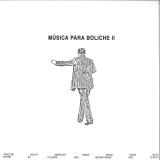
Our journey through “Música Para Boliche” literally “music for the club” from Argentina’s underground scene doesn’t stop. We dug even deeper, right into the ’90s.
Four tracks plus one, all visionary even at the time of their release. Once again, you can feel the magical touch of the Italian and Argentine DJs who worked on it.
Jack Bulgaro did his part, bringing home an instrumental unreleased version of Podés Seguir Sin Arriesgarte, taken from the album Undermalabia, produced by El Signo, pioneers of electronic music in Latin America.
The version will be officially released for the first time, vinyl only, by Maledetta Discoteca Records.
out of Stock
Last delivered 7 months ago available to reorder, subject to availability
The Godfather Of Salsa - HAVANNA & NYC RECORDINGS 1946-1962! Grosso! again presents this compilation from "El Ciego Maravilloso", the authentic godfather of salsa. His early Havana & NYC recordings. The tracks have been remastered and restored and some are available on vinyl after many years. Format and selection designed for DJs, collectors and latin lovers. Ignacio de Loyola Rodríguez Scull aka Arsenio Rodríguez (30 August, 1911, Güira de Macurijes, Matanzas, Cuba - 30 December, 1970, Los Angeles, CA, USA) was a Cuban musician, bandleader and prolific composer who developed the son montuno and other Afro-Cuban-based rhythms. Today he is seen as one of the most important figures in Latin music, with his influence reaching beyond the Spanish speaking world to also include African popular music of the 20th Century, though when he died he was not widely known by the public for his contributions and influence. He is also recognized (along with Israel 'Cachao' López and Dámaso Pérez Prado) as one of the creators of mambo, what Rodríguez himself often referred to as "ritmo diablo". Some of his best-known, and most-often covered recordings from the 1950s and early 1960s are included here, among them "Dame un cachito pa' huele'," "Dundunbanza," "El reloj de pastora," "Cambia El Paso," and "Hay Fuego En El 23."
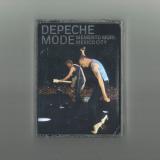
»Memento Mori: Mexico City« ist eine über zweistündige Liveaufnahme von Depeche Modes drei ausverkauften Konzerten im legendären Foro Sol Stadion in Mexiko-Stadt aus dem September 2023 und wird durch vier bisher unveröffentlichte Studioaufnahmen von den »Memento Mori«-Sessions ergänzt.
Die CD-Konfiguration enthält das Livealbum und Bonustracks auf zwei CDs sowie ein 16-seitiges Booklet mit Livefotos von den Shows.
Dieses Livealbum erscheint parallel zu Depeche Modes neuem Film »Depeche Mode: M«, der während der Shows in Mexiko-Stadt aufgenommen wurde. Der Film wurde konzipiert und umgesetzt vom vielfach ausgezeichneten mexikanischen Filmemacher und Regisseur Fernando Frías. Während »Depeche Mode: M« packende Konzertmitschnitte mit stimmungsvollen Nebeneindrücken und ausgesuchtem Archivmaterial vereint, wird gleichzeitig die tiefgreifende Verbindung zwischen Musik und Vergänglichkeit innerhalb der mexikanischen Tradition veranschaulicht. Die Blu-ray- und DVD-Konfiguration von »Depeche Mode: M« enthält zusätzlich das schon erwähnte Livealbum »Memento Mori: Mexico City« sowie einen abendfüllenden Konzertfilm.
out of Stock
Last delivered 8 months ago available to reorder, subject to availability
KEG announce new EP Girders set for release September 2nd on Alcopop! Records/BMG. The band also share the frenzied and whip-smart new single Kids. The band, who have been hotly tipped across the board for 2022, will also play their debut UK headline tour plus festivals which include Green Man, End Of The Road, Latitude and more. Kids strides into the deep lineage of British art-punk songwriting that is both self-referencing and outward-facing - while being consistently innovative. Few singles manage to take aim at both the restaurant chain Itsu and the comedian Michael McIntyre, but KEG somehow pull it off.
Following a widely successful debut single release Heyshaw in the summer of 2021, KEG saw major support from publications such as NME, DIY, Dork, So Young, Clash etc. Leading into their debut EP Assembly, released October 2021, KEG toured with contemporaries such as Squid and Talk Show.
KEG are a seven piece. Albert (vocals), Joel (bass) & Will (synth) grew up together around the seaside Yorkshire town of Bridlington; and like many artists growing up in removed quarters of the country, they shared a yearning to leave. Spreading to different parts of the country after leaving school, they found their bandmates in their respective cities and found one another once again on the southern shores of Brighton.
Frank (guitar), whose background resides mostly in hip-hop, afforded a unique pulse with a guitar sound which is manic, discordant but firm. Jules (guitar) whose songwriting sensibilities come from a love of cadence and craft of beautiful soul ballads, imbued the band with his structured sense of composition. Both Charlie (trombone & shell) and Johnny (drums) come from classically trained Jazz backgrounds.
The announcement will receive digital marketing support and will launch with new tour dates announced (below) with pre-order for presale access available.
2LP, 180gm vinyl, “Impex Style” Heavy Duty Outer Sleeve w/Flap, Sealed with Analogue October Records Sticker, Hype Sticker
Abbey Road Half speed master from the original tapes
380 gsm Invercote G Sleeve 300 gsm 12 page insert
4.5/5 RECOMMENDED / Editors Choice in Jazzwise magazine
‘And much as audiophiles will savour the tech achievement of this re-issue, the point is the Kaleidoscope of Rainbows
remains joyous, optimistic music that embraces difference and divergence. It needs celebrating not as a revived fossil but as a timeless artwork. Enjoy. And enjoy again’
RIYL Ian Carr / Nucleus / Weather Report / Clips and Art: https://we.tl/t-PfY9QXSjlt
NEIL ARDLEY – KALEIDOSCOPE OF RAINBOWS The Definitive 2LP Reissue of a Landmark in British Jazz Fusion
Analogue October Records proudly presents the long-awaited reissue of Kaleidoscope of Rainbows, Neil Ardley’s 1976 masterpiece, originally released on Gull Records. Produced by Neil Ardley and recorded at London’s famed Morgan Studios, the sessions were engineered and mixed by Martin Levan, capturing one of the most ambitious and beloved works in British jazz. Following the acclaimed reissues of Courtney Pine’s Journey to the Urge Within (AOR-001-ST) and Neil Ardley’s Harmony of the Spheres (AOR-002-ST)—both praised by the audiophile press including The Tracking Angle—this third release confirms Analogue October as one of today’s most meticulous and exciting reissue labels.
A Suite of Sound and Colour
Commissioned for the 1975 Camden Jazz Festival, Kaleidoscope of Rainbows is structured as a seven-part suite, each movement reflecting a colour of the spectrum. Ardley’s composition weaves together jazz improvisation, progressive rock energy, and orchestral elegance in one of the most imaginative British jazz recordings of the era. Featuring Ian Carr, Barbara Thompson, Tony Coe, Trevor Tomkins, and Geoff Castle, the album is a who’s who of the UK’s vibrant 1970s jazz scene.
Cut at Abbey Road, Pressed at Record Industry
For this definitive edition, Analogue October worked directly from the original Gull master tapes. Mastering was entrusted to Miles Showell at Abbey Road Studios, using his renowned half-speed process to extract every detail and dynamic from Ardley’s score. To give the music the headroom it deserves, the reissue has been expanded to a deluxe 2LP set, pressed on the highest-quality vinyl at Record Industry in Haarlem, Netherlands. The result is a presentation that finally does justice to the scope and brilliance of Ardley’s vision.
Deluxe Package – Restored from the Source
The artwork has been meticulously restored from the original film elements, ensuring a sleeve of unmatched vibrancy and fidelity. Inside, a 12-page booklet printed on heavyweight card features an in-depth essay on Neil Ardley and the making of Kaleidoscope of Rainbows, written by Jazzwise magazine editor Mike Flynn, alongside rare photographs from the period.
Curated and Produced by Craig Crane
As with every Analogue October release, Kaleidoscope of Rainbows has been curated and produced by label founder Craig Crane with a collector’s eye for detail and a deep respect for the music’s legacy. This reissue is not only the definitive vinyl edition of one of the great British jazz fusion albums—it also continues the label’s mission to restore and celebrate the most vital recordings of the era.
Neil Ardley’s Kaleidoscope of Rainbows—vivid, expansive, and timeless—returns as the essential edition for audiophiles and jazz lovers alike.
Retail-ready product description (short form):
Produced by Neil Ardley and recorded in 1976 at London’s Morgan Studios, engineered and mixed by Martin Levan, Kaleidoscope of Rainbows is a cornerstone of British jazz fusion. This definitive 2LP reissue, mastered at Abbey Road by Miles Showell from the original Gull master tapes and pressed at Record Industry (NL), finally gives the music the dynamic headroom it deserves. The deluxe edition includes restored artwork and a 12-page booklet featuring an in-depth essay by Jazzwise editor Mike Flynn.
Das Cover von ,Liquorice", dem dritten Album der australischen Indie-Pop-Künstlerin Hatchie, zeigt ein Nahporträt von Harriette Pilbeam, die lächelt, wobei ihr verschmierter roter Lippenstift auf die glorreiche Folge eines Kusses hindeutet. Das Bild wurde während eines spontanen Fotoshootings im Hinterhof mit einer einfachen Digitalkamera aufgenommen und fängt eine Erinnerung ein, die etwas unvollkommen ist und von Sehnsucht, Begierde und Bedauern geprägt ist Das Bild wurde während eines spontanen Fotoshootings im Hinterhof mit einer kleinen Digitalkamera aufgenommen und verkörpert ein Album, das rau und voller Freude ist und sich mit Themen wie Sehnsucht, Begierde und Reue befasst. Pilbeam begann ernsthaft mit dem Schreiben von ,Liquorice", während sie von 2022 bis 2023 in Brisbane lebte, und später in einem gemeinsamen Haus mit Agius in Melbourne, wo sie die Demos schließlich Mitte 2024 fertigstellte. Als Musikerin, die ihre Einflüsse bisher offen zur Schau gestellt hat, bemühte sich Pilbeam, von Grund auf neu zu schreiben, ohne bestimmte musikalische Einflüsse im Hinterkopf zu haben. Pilbeam begann ernsthaft mit dem Schreiben von ,Liquorice", während sie von 2022 bis 2023 in Brisbane lebte, und später in einem gemeinsamen Haus mit Agius in Melbourne, wo sie die Demos schließlich , und stellte die Demos schließlich Mitte 2024 fertig. Als Musikerin, die ihre Einflüsse bisher offen zur Schau gestellt hatte, bemühte sich Pilbeam, ganz von vorne anzufangen, ohne bestimmte musikalische Einflüsse im Hinterkopf zu haben, und ließ den Songs wochenlang Zeit zum Atmen, anstatt Ideen zu überstürzen. Sie fühlte sich von der melodischen Einfachheit ihrer frühen Songs angezogen und akzeptierte ihre musikalischen Unsicherheiten: ,Ich wollte meine Grenzen als Stärken betrachten, die meinen Stil prägen." Nachdem sie mit den Produzenten Jorge Elbrecht (Caroline Polachek, Japanese Breakfast, Sky Ferreira) und Dan Nigro (Olivia Rodrigo, Chappell Roan) an ,Giving the World Away" gearbeitet hatte, wollte Pilbeam ,Liquorice" mit einem einzigen Kollaborateur fertigstellen, idealerweise einem nicht-männlichen Produzenten, der auch sein eigenes Musikprojekt vorantreibt. Im September 2024 kehrten Pilbeam und Agius nach Los Angeles zurück, um mit Melina Duterte zusammenzuarbeiten, die unter dem Namen Jay Som Indie-Rock aufnimmt und an einer Reihe von Projekten mitgewirkt hat, darunter das mit einem Grammy ausgezeichnete Album ,The Record" von boygenius. ,Mein letztes Album ist sehr düster und introspektiv geworden, und das ist zwar ein Teil von mir, aber es gab noch eine ganz andere Seite, die ich nicht zum Ausdruck gebracht habe", sagt Pilbeam. ,Ich bin eine hoffnungslose Romantikerin und eine sehr alberne Person, manchmal sogar bis zum Äußersten." Die heute 32-jährige, verheiratete Pilbeam stellte fest, dass ,ewige Gefühle" der Sehnsucht und des Herzschmerzes schnell zurückkehrten, als sie über ihre Erfahrungen als jüngere Frau nachdachte. Gleichzeitig ließ sie ihre Vorliebe für tragische Liebesfilme einfließen, in denen die Figuren nicht unbedingt ein gemeinsames Happy End finden. Liquorice beschäftigt sich mit der Endlichkeit des Ewigen. Diese Songs fangen die überwältigenden, berauschenden und transformierenden Nebenwirkungen der Verliebtheit ein, auch wenn die gesamte Liebesgeschichte nur eine einzige magische Nacht dauert. Wie die reichhaltigen Aromen der gewundenen, titelgebenden Süßigkeit - süß, salzig und bitter in einem Bissen - bestätigt Liquorice, wie Sehnsucht und Besessenheit in der Selbstfindung einer jungen Frau miteinander verflochten sind.
out of Stock
Last delivered 9 months ago available to reorder, subject to availability
The Swedish band Bullet got together in autumn 2001, with the aim of playing traditional heavy metal inspired by the late 1970s and early 1980s: solid, authentic and classic, with a contemporary and timeless touch. Seven years after their latest studio album, ‘Dust To Gold’ (2018), the musicians Dag “Hell” Hofer (vocals), Hampus Klang (guitar), Gustav Hector (bass), Gustav Hjortsjö (drums) and latest addition Freddie Johansson (guitar) are now back with a new album: ‘Kickstarter’ is scheduled for release on Steamhammer/SPV on 09 January 2026 and is set to prove that Bullet are determined to continue their almost 25-year career with the very kickstart referenced to by the album title. This of course also includes Bullet’s iconic tour bus, whose engine exploded after one of their most recent shows, forcing the musicians to embark on their return journey without their rolling accommodation. Naturally, this was the end neither of Bullet nor their battered vehicle – to the contrary: The group’s classic heavy metal spirit and their unwavering DIY mindset have proved stronger than ever. Having repaired the ageing bus with unwavering determination, oil-smeared hands and sweaty brows. Bullet are now ready to hit the road again, with ‘Kickstarter’ and the three lead singles/videos ‘Kickstarter’ (17 October 2025), ‘Keep Rolling’ (21 November 2025) and ‘Chained By Metal’ (19 December 2025) on board.
HOUSE BY THE CEMETARY, the 'supergroup' led by former MONSTROSITY and VILE frontman and current artwork artist Mike Hrubovcak and Rogga Johansson from PAGANIZER and RIBSPREADER are releasing their third full-length, "Disturbing The Cenotaph". Since the duo, completed by former THE PROJECT HATE drummer Thomas Ohlsson, originally picked up their moniker as an homage to the 1981 cult horror flick of the same name, it shouldn't come as a surprise they've once again paying tribute to director Lucio Fulci (1927-1996) in one of this album most lethal salvo, 'New York Ripper'. Elsewhere on this third album, other tracks like 'Undead Apocalypse' or 'Burial Disturbance' were inspired by other famous horror classics like "Night Of The Living Dead" and "The Texas Chainsaw Massacre", Hrubovcak has come up in his lyrics with his own tales of terror. Some are totally fictional like, 'Coffin Colony' about a "diseased homeless living in underground coffins who gets infected with rabies after eating sewer rats". Others, like 'Lunatic Butcher' are inspired by real-life events or, in that case, by the antics and vicious killings of Paul John Knowles, dubbed 'the Casanova killer'. Musically speaking, Johansson jokes about "every band saying that their new album is their best but that's actually true here eh eh! This album is HOUSE BY THE CEMETARY on steroids. The sound is broad and impious, the vocals are awesome and the heavy riffing interlaced with occasional melody makes an overall varied, fun and GORY listen!" Completed, like on 2024's "The Mortuary Hauntings", by a gruesome artwork courtesy Felipe Mora (whose nightmarish visions can already be seen on albums by CONSUMPTION, ACHERON or WOMBBATH) and mixed by Håkan Stuvemark from WOMBBATH, Disturbing The Cenotaph is one raw, in-your-face and eight songs packed death-metal-to-the-core album ready to chill you to the bone!
The Ruins Of Beverast narrate fables of the darkest secrets in human history and present. ‘Tempelschlaf’ is The Ruins Of Beverast’s seventh full-length output and sees the band continue with their sonic morbidity, noises and melodies of a human habitat in its sunset era, while maintaining and refining the widescreen low end that has been sustaining their sound from the beginning. On the instrumental side, ‘Tempelschlaf’ is stripped of some fat, forging the songs with a reduction in length and layers, cautiously leaning towards the stage part of things. While synths and samples have always played an adamant role in The Ruins Of Beverast’s sound, they reach yet another level of psychedelia and insanity on ‘Tempelschlaf’. The Ruins Of Beverast were formed in early 2003 and named after the most bloodcurdling occasion of the collapse of the giant bridge Bifröst. This incident bears analogy to the musical aura of The Ruins Of Beverast, which builds a sonic landscape of massive, surreal, barren mountain formations. Seven full-length albums and several EPs, splits and compilation releases have been published through Ván Records so far. As a live act, The Ruins Of Beverast became a strong force after Roadburn 2013, a festival the band have played again since with exclusive shows. The Ruins Of Beverast have embarked on several European tours with acts like 1349, Grave Miasma and King Dude, as well as a highly acclaimed US tour that eventually concluded with an iconic show at Fire In The Mountains festival. The band have played such well-established club shows and festivals as Hellfest, Inferno, Incubate, Party.San Open Air and Beyond The Gates, to name just a few.
love is everyday magic. That's the impression you get listening to Water, the new album by Chicago trio Dehd. Veterans of Chicago's increasingly fruitful DIY scene Jason Balla ( Ne-Hi and Earring) Emily Kempf (Vail and formerly with Lala Lala) and drummer Eric McGrady share a strange and inexplicable chemistry. The music is hazy and reverb-drenched, a scuzzy and hyped-up take on surf rock that could only come from the Third Coast. It's all animated by the red-lining feel-good spirit of the Velvet Underground's Loaded and the breezy melodicism of C86-era indie rock, with a dash of the Cramps' spooky-hop bop courtesy of McGrady's locomotive drumming.It's a clear-eyed look at the wild nature of everyday life that's been spun up in sugary sweet melodies and scratched-crystal sounds. More than anything, it's the embodiment of Dehd's m.o. from the start: As Kempf puts it, "Work with what you have and make it magical."
The capstone of Miles Davis’ electric period, Agharta reigns as a funk-rock fireball — a blazing comet streaked energy and elan, a fearless organism feasting on adventure and freedom, a seven-headed Godzilla stomping its way through Osaka, Japan. Recorded on February 1, 1975 at Osaka Festival Hall at the first of a two-show stand, the double album offers an endless abundance of surprises and shifts — as well as a road-proven ensemble whose chemistry and abilities equal that of any of Davis’ celebrated bands. If the true measure of jazz is the capacity to adapt to the moment and challenge perception, Agharta is consummate.
Sourced from the original master tapes, housed in a Stoughton gatefold jacket, and pressed at Fidelity Record Pressing in California, Mobile Fidelity’s numbered-edition 180g 33RPM 2LP set of this epic live release presents it in audiophile sound on a domestic pressing for the first time. Offering greater degrees of separation, detail, and richness than the compressed CD editions and more clarity, openness, and presence than older vinyl copies, this version of the 1975 release helps bring the concert stage to your home. Just make sure your turntable and speakers are up to the challenge of Davis and Co.’s explosive performances — and producing the decibels they demand.
Teeming with vibrant colors, tones, and pace, Mobile Fidelity’s reissue captures the hear-it-to-believe-it flow, sweep, and moodiness of the music. Though the group honors looseness and freedom with religious verve, the specificity and scale rendered by this remaster allows you to detect methods behind the alleged madness that are often otherwise harder to discern. This insight extends to the understated changes in volume, harmonics, and phrasings. In many ways, you can listen as Davis himself did that early February evening as he helped coordinate the overall direction and decided on whether to blow his wah-wah-wired trumpet or take a turn on the organ.
Tellingly, Agharta would likely never have been made if not for Davis’ ventures overseas and, specifically, to the Land of the Rising Sun. Having for years faced a backlash on his native soil for his choices to experiment and blow past all known borders, Davis was welcomed with open arms in Japan. The concert documented on Agharta — as well as the day’s later show, captured on the equally exciting Pangea — stemmed from a sold-out three-week tour that would ultimately mark Davis’ final public appearances for years, as he soon settled into semi-retirement and nursed the wounds connected to an unprecedented stretch of restless and relentless output.
For all the band-fueled merit of Agharta — and there’s plenty, given the cast of saxophonist Sonny Fortune, bassist Michael Henderson, drummer Al Foster, percussionist James Mtume, and guitarists Reggie Lucas and Pete Cosey seemingly blasts off to outer space and travels distant galaxies by the time this minimally edited record runs its course — Davis’ own playing often remains overlooked. As critics Richard Cook and Brian Morton observed, it is “often fantastically subtle, creating surges and ebbs in a harmonically static line, allowing him to build huge melismatic variations on a single note.” He attacks like a man on a mission, out to prove naysayers wrong and bent on trailblazing another new path forward. Convention and skeptics be damned.
Noisy and furious, dark and discordant, abstract and off-balance, radical and intense, abrasive and atmospheric, strangely beautiful and hypnotically eccentric: Agharta evades simple description, and refuses to be pinned down in any established category — rock, jazz, punk, ambient, prog, avante-garde, or otherwise. Shot through with trench-deep grooves, screaming riffs, scalding solos, and free-improv leads, its cosmic thrust comes on as the equivalent of an animated pointillist painting comprised of millions of textured dots, dashes, and dabs that hold your attention so raptly you want to revisit the ideas again and again.
Always steps ahead of everyone else, Davis knew what he was doing even when Agharta debuted in Japan before later hitting U.S. markets. Though “Maiysha” and “Theme from Jack Johnson” are identified in the track listing, the record contains a number of uncredited references to other Davis works, including a nod to “So What.” This decision to bypass labels only adds to the art of the reveal — the rare black magic in which Agharta expertly deals.
A rhythmic minimal ambient piece played with organic electronic sounds. Elements of electronic, psychedelic, and ethnic music are interwoven. The vinyl debut of Japanese composer / electronic musician NAT000. Mastered by ISAO KUMANO of Phonon, a Japanese audio equipment manufacturer. NAT000 : After performing live as a one-man drone under the name sonic mainly at 20000v in Koenji Tokyo and DOM in Nishi-Shinjuku (now EARTHDOM in Shin-Okubo), he became a band member of the hardcore bands BUTTHEAD SUNGLASS and ABRAHAM CROSS, which gained popularity in the underground scene in Tokyo in the 2000s.The Band has been performing in parks, abandoned buildings, and campgrounds. Since turning solo again, he has been producing electronic music and performing live using analog synths, samplers, drum machines, software, and effectors, and has privately released a CD of self-produced recordings. This album is a compilation of past works from those CDs and newly produced works for the album.
The complete album - limited edition pressing on 180g crystal clear vinyl
Although both Ella Fitzgerald and Louis Armstrong had met and performed and recorded a number of singles together during 1940s for Decca, they wouldn't be heard on LP together until 1956 when producer Norman Granz paired the two for this first album session, Ella & Louis, which became an immediate hit. Two further sessions under Granz, followed, Ella & Louis Again, and Porgy & Bess. All three albumswere both critically acclaimed and commercial successes - appealing to audiences in and beyond the confines of jazz per se. Ella & Louis features the incredible Oscar Peterson Trio plus legendary drummer Buddy Rich. As one of the most iconic and fascinating jazz albums ever produced, its appeal and commercial sales haven't waned during the sixty-nine years since its first release. "Ella & Louis is one of the very, very few albums to have been issued in this era of the LP flood that is sure to endure for decades." - ***** Nat Hentoff, DownBeat
James Brown wants to know one thing before he and his band begin Sex Machine. “Can I get into the thing, really?,” he asks. His cohorts enthusiastically respond in the affirmative. And for the next hour and change, Mr. Dynamite gets into it and more, turning in a sweat-soaked, feet-moving, hip-swiveling, emotion-purging, in-the-red, drop-everything-you’re-doing-and-dance performance for the ages. Ranked by Rolling Stone among the 500 Greatest Albums of All Time, the sweeping 1970 effort towers as a testament to Brown’s inimitable legacy as well as the peak powers of his voice, vibrancy, and bands.
Sourced from the original master tapes, pressed at Fidelity Record Pressing, and housed in a Stoughton gatefold jacket, Mobile Fidelity’s numbered-edition 180g 33RPM 2LP set presents Sex Machine in audiophile sound for the first time. It explodes with the energy the lightning-strike music demands. Dynamic, immediate, present, airy: Everything from the brassiness and fluidity of the horns to the snap and decay of the snare to the swell and carry of the organ comes across in full-range perspective.
Then there’s Brown’s superhuman singing, which here emerges with a purity, naturalism, and transparency that ensure you feel everything. Screeching, shouting, pleading, moaning, preaching, stinging, commanding, testifying, crooning, humming: The Godfather of Soul contributes one of the finest vocal performances known to man. This definitive 55th anniversary reissue of Brown’s monster funk statement further exhibits a combination of clarity, solidity, separation, and imaging that helps bring to light what he and his crack ensembles committed to tape. Both in the studio and on the stage.
Just how lifelike does this reissue sound? Senior Mobile Fidelity Sound Lab engineer Krieg Wunderlich, who handled the remaster, notes: “There were some artifacts that sounded a bit like mistracking. But they turned out to be breath blasts on the vocal microphone. That is part of history. JB was workin' hard, and breathin' hard. And there was an edit the timing of that was truly strange. Again, a part of history.”
Originally marketed as a live album, Sex Machine contains six songs recorded in the studio and later overdubbed with canned crowd noise and reverberation. Save for “Low Down Popcorn,” the tracks on the latter half stem from a phenomenal performance captured in October 1969 at Bell Auditorium in Brown’s adopted hometown of Augusta, GA. The special relationship between the singer, the audience, and the location is palpable.
As the 1960s gave way to a new decade, Brown experienced immense success and dealt with unexpected change. Soul Brother Number One soon expanded his idea for an official live album captured in Augusta when the ensemble that backed him on that date morphed into the original version of the world-famous J.B.’s just months after the show. The virtuosic abilities, sticky chemistry, and rhythm-forward nature of the J.B.’s prompted him to book a one-off session in Cincinnati, OH, on a late July night.
Anchored by brothers William “Bootsy” Collins and Phelps “Catfish” Collins, the group — as well as two different drummers — laid down a nearly 11-minute rendition of “Get Up I Feel Like Being Like a Sex Machine” and a thrilling medley of “Bewildered,” “I Got the Feeling,” and “Give It Up or Turnit a Loose.” A pair of then-recent studio singles cut in separate locations in 1969, “Brother Rapp” and “Low Down Popcorn,” each featuring his prior group, took care of the second LP worth of material that complements the originally planned live set.
Complicated? Somewhat. Unusual? Definitely. But just as he elevated the expectations for all present and future R&B artists, Brown not only makes it all work. He makes it positively electrifying.
“Get Up I Feel Like Being Like a Sex Machine” is alone deserving of a dissertation on the art of funk music, seeing it moves up and down akin to an oil derrick, witnesses Brown unleashing a trademark series of grunts, squeaks, and “good god” asides, and glides to a hypnotic groove that won’t quit. Or look to the syncopated rhythms of “Brother Rapp (Part I and Part II),” one of multiple pieces here that signify the point where Brown began viewing every instrument as a percussive tool. Brown closes the three-song medley with his new band with a skedaddling “Give It Up or Turnit a Loose,” which provides jolts on the order of sticking your finger into a socket.
Not that the actual live material falls short in any way. Setting an insistent tempo for the vitality that follows, “I Don’t Want Nobody to Give Me Nothing” positions Brown as a role model, leader, and self-sufficient entrepreneur. All simmer and boil, the short and sweet “Licking Stick” dares you to keep pace. The floating, almost comforting “Spinning Wheel” spotlights the instrumental prowess of Maceo Parker and company, and functions as a seamless segue into the tender, horn-saluted “If I Ruled the World.”
And Brown and his mates still aren’t done. Just try to resist the one-two closing punch of “I Can’t Stand Myself (When You Touch Me)” and “Mother Popcorn.” Mercy.
Ain’t it funky? Sure ‘nuff.
out of Stock
Last delivered 9 months ago available to reorder, subject to availability
American Nightmare's "Year One" collection on 180 gram vinyl for its 25th anniversary. Available again for the first time in decades. Originally released in 2001, the Boston hardcore band’s 25th anniversary release of "Year One" pays tribute to their formative years. This collection unites their first two 7”s, originally released by Bridge 9 Records founder and then-roommate Chris Wrenn, on a 180-gram LP, with all tracks recorded by Kurt Ballou at God City. Originally designed by Jake Bannon (Converge), this edition has been reimagined by Del Jae (Futurismo Records) and singer Wesley Eisold, and comes packaged in a gatefold with an insert of handwritten lyrics and collaged images. "Year One" doesn’t just celebrate a milestone; it reaffirms American Nightmare’s enduring legacy. Their music raised the bar for emotional depth in hardcore, adding a distinctly poetic and existential lyrical approach that set them apart and changed the rules of the scene, paving the way for countless bands that followed
Classic Latin Tunes Became Sals Hits! Pablo Yglesias -aka DJ Bongohead- compiles Grosso Recordings an amazing serie with classics tunes from Caribbean music that became great successes of "Salsa". Some tracks have been remastered and restored, others are presented on vinyl again after many many years. "This is the four volume in our series on the Roots of Salsa...The main criterion was to pick tracks that sounded adequate for today's DJs to play at a gig or were sufficiently interesting (or enough of a surprise to fans of the later version) to merit inclusion. The other measuring stick was that they needed to come from the old-school, before the more modern era (from 1962 on) and all of its recording innovations and marketing strategies...for now, listen to these dozen gems and then go back to their more familiar cousins from recent times and compare and contrast, and we're sure you'll be enlightened and entertained." Liner notes by Pablo "Bongohead" Yglesias. Format and selection designed for DJs, collectors and general public.
Our Autumn/Winter ‘25/’26 issue includes huge deep dive cover features on 90s legends The KLF, Belgium’s most famous rock/rave DJ/producer duo/band SOULWAX and the relentlessly creative HAAi.
Plus 1-800 GIRLS, WAH WAH 45s, Ghost Assembly, Electroclash, Daniel Vangarde, Happy Mondays, Japanese Ambient/Environmental Music, Wu-Tang Clan, Saint Etienne, Carl Craig, Colleen Murphy, Basement Jaxx, Crooked Man and Luke Una, Jesus Loves The Acid, Shanti Celeste, Arthur Baker and much more.
204 pages (yes we’ve increased the pagination again) of quality music journalism by the world’s best music writers plus beautiful photography and design in a glossy print magazine.
Hercules & Love Affair music has always been about folding past, present and future together – and never more so than in the latest phase, encapsulated by the track that launches things, “Someone Else is Calling.”
If the song-first, ultra-gothic mind-movie of the last H&LA album In Amber was partly motivated by Andy Butler falling out of love with dance culture, this new body of work – an EP titled Someone Else Is Calling – is an unabashed resurgence of the love affair. A co-production with London underground veteran and inspiration to Butler, Quinn Whalley of Paranoid London and Decius, the lead single is a surging, tactile acid track woven around the vocal of Icelandic icon Hips & Lips aka Elín Ey – who hits that new wave disco sweet spot between Grace Jones and Yazoo era Alison Moyet.
Elín’s lyrics work perfectly with the bodily momentum of the sounds, circling around themes of self-possession and the urge to move on to the next experience, the next sensation: hunger for reality. And this taps into Andy’s feelings on escaping New York and moving to Belgium, discovering that dance culture was anything but the hollowed-out, identikit-festival-lineup conveyor belt he’d feared, and still had plenty of outposts where it was still – as he’d first experience it as a teen – about the hot, sweaty reality of diverse people seeking communion, communication and heightened ways of being in the here and now.
The video, filmed by Tatsumi Milori couldn’t be a better expression of exactly this. A love letter to the strange and glorious party scene of Mexico City, it captures people who are both tapping into the eternal verities of those magical dancefloor communions, and thrilling – against all the odds of oppressive forces – at the sense of possibility in the flow of gender and sexuality in the present moment. It’s powered by innocence and experience as intertwined forces, and it amplifies the heartbeat of the song a thousandfold. There will be more, much more, to follow from the partnership of Andy, Elín and Quinn. It digs deeper still into the decades of dance and other underground cultures that feed into this modern moment – but this shining beacon should give you a pretty good hint.
Someone Else Is Calling will arrive on one of Los Angeles’s most exciting new independent labels and creative hubs, StrataSonic, on December 14. The lead single of the same name, along with the music video directed by Tatsumi Milori, is out now. This marks the first collaboration between Hercules & Love Affair and Stratasonic.
out of Stock
Last delivered 8 months ago available to reorder, subject to availability
Next up on Fluid Electronics, Irish producer Derek Carr joins up the fold with his “Harvest Time EP”, featuring Dutch techno staple Deniro on remix duty. Carr’s style, stretching from low-slung techno to squelchy electro, via breaks and chiselled IDM, teleports us to a zero-G headspace where shape and substance merge into an effervescing and highly stimulating maelstrom of sound. The very idea of self-reflexive dance music.
Fusing sino-flavoured harmonics with a straight out hi-tech edge, the lead single “Harvest Time” is the perfect balance between body and soul music, as it elegantly bridges the gap between that sense of weightless vaporousness and a more tactile punch. Pace itself feels relative. In the hands of Deniro, the track hatches into an eerily haunting piece of cinematic electronics, stressing further on the contrasting batucada-esque rhythms and slo-scudding synth tapestry.
The Italo-indebted “Dust Yourself Down” takes Moroder on a ride by the seashore, all arps and heavily processed keys blazing. Dipped in acid, “Rhea” pulls out a cascade of pretty aggro snares, prismatic bleeps, bloops, and a healthy dose of post-trancey waves crashing against a glassy sound design.
out of Stock
Last delivered 16 days ago available to reorder, subject to availability