Dutton Ranch is a Paramount+ series set in the world of the Dutton family, expanding the story and legacy of the family-owned ranch first introduced in Yellowstone. The series takes viewers back to Montana, where the Duttons face new challenges as they fight to protect their land and their way of life. The first season introduces a new chapter in the Dutton story, bringing together a new generation of characters and further exploring the world of the Yellowstone universe.
The original score is composed by Brian Tyler and Breton Vivian. Tyler is a well-renowned Hollywood composer, known for blockbuster scores including Iron Man 3, Avengers: Age of Ultron, The Mummy and several films in the Fast & Furious franchise. Together with Vivian, he also created the music for Yellowstone, 1883 and 1923. Vivian has become closely associated with the Yellowstone universe, having co-composed the scores for the series.
The soundtrack of Dutton Ranch is available as a limited edition on brown vinyl and includes an insert with liner notes by the composers.
Immersive, roots-infused dub-reggae power from Jamaica meets heavyweight instrumentation from Denmark on a landmark collaborative album out now via Recall Reality.
Rooted in the rich traditions of classic Jamaican sound yet pulsing with a hypnotic, contemporary organic weight, Signs of the Time brings together the evocative vocal artistry of rising roots talent Azizzi Romeo and the master craftsmanship of Denmark's formidable instrumental 11 piece band Guiding Star Orchestra. Built for sound systems and vinyl purists alike, featuring lush tape saturation, spring reverbs, and spacious dub mixes.
Released on Recall Reality, the album is a masterclass in modern roots reggae and deep dub dynamics. Rather than relying on rigid digital presets, Signs of the Time champions warm analogue textures, sprawling horn arrangements, and rolling basslines that echo the golden age of Studio One, Joe Gibbs, Bunny Lee and Channel One while carving out an entirely fresh, meditative space for the listener.
Azizzi Romeo carries forward a legendary musical lineage as the son of the late roots icon Max Romeo, bringing a captivating blend of spiritual urgency, conscious lyricism, and soulful conviction to the microphone. His delivery cuts straight through the mix, offering profound reflections on modern society, unity, and resilience in a changing world.
Backing him are the Guiding Star Orchestra, renowned for their authentic analog production ethos, deep-crate sensibilities, and musicianship that treats the mixing board as an instrument in its own right. The result is a seamless symbiotic project where every bubbling organ skank, hypnotic drum drop, and reverberating tape delay serves the song's core message.
To bring the record home, producer CHLLNGR spent a week in the spring working alongside UK dub maestro in his London studio - Prince Fatty, who mixed the entire album. Fatty invited legendary drummer Winston "Horseman” Williams into the sessions, and Horseman percussion added the final glue to the record.
Track highlights:
"Signs of the Time": Azizzi is joined by his late father, the legendary Max Romeo, on a prophetic warning of what awaits the world if we don't soon unite in peace and love.
"Thanks and Praises": An anthem of gratitude for everything life brings, and of rising up even when others want to see us fail.
"Jah Jah Disciples": A meditation on following Jah, and the strength that faith gives in the midst of adversity.
Signs of the Time is available now on Vinyl LP and Digital streaming platforms via Recall Reality.
Scott Fagan’s new album Soon, 55 years in the making, revives songs from his lost 1971 Broadway rock opera.
Alongside songwriting partner Joe Kookoolis, Fagan conceived and wrote the rock opera, an age-old story of an artist forced to make a devil’s bargain between their principles and success, intending it to be the follow-up to his classic 1968 debut, South Atlantic Blues. But fate intervened. The production (which starred Fagan and a young Richard Gere) closed early, the album was shelved, never to be recorded or heard. Until now.
Recorded over seven days in July 2025 at the hallowed Sam Phillips Recording Service in Memphis with a crack rhythm section, the thirteen songs on Soon illustrate Fagan’s extraordinary facility and range as a singer and songwriter of great sensitivity, passion, and humour.
From its rousing gospel opener (“Let The World Begin Again”), through fiery, protest songs (“Faces Names and Places”, “Straight”), and tender-hearted ballads (“Child of Sympathy”, “To Touch the Sky”), the album is by turns, uplifting, mournful, righteous, giddy, soulful (title track, “Soon), and anthemic (closer, “Please Be Well”). This feels like an album of lost classics waiting to be rediscovered.
Scott Fagan has been waiting a long time for the world to hear these songs. The long, long wait is over, Soon.
We love a concept. So for our 15 year anniversary, we added another layer.
one(15) celebrates 15 years of the label with one simple rule: every track had to clock in at one(15)BPM and under.
The result is 13 tracks ranging from 71 to 115BPM, a collection of slo-mo 303, horizontal acid and assorted low-tempo excursions.
15 Years | 3 LPs | 13 tracks | 71 to one(15)BPM | Still 303
Mit dieser sorgfältig kuratierten Doppel-LP taucht der Hörer in die musikalische Welt des Frankreichs der frühen 1960er-Jahre ein. "The Sound Of Nouvelle Vague" versammelt die Klänge einer Epoche, in der Kino, Popkultur, Mode und Gesellschaft im Aufbruch waren. Zwischen Jazz, Ye-Ye, Chanson, Filmmusik und Bossa Nova entstand ein neues Lebensgefühl, das bis heute mit der Nouvelle-Vague-Ära verbunden wird. Künstlerinnen und Künstler wie Francoise Hardy, Serge Gainsbourg, Jeanne Moreau, Anna Karina, Brigitte Bardot und Jacques Dutronc stehen für eine Generation, die mit Konventionen brach und Frankreich kulturell neu definierte. Die ausgewählten Aufnahmen zeichnen das Klangbild einer Zeit nach, in der Jugendkultur, künstlerische Freiheit und ein modernes Frauenbild die Gesellschaft prägten. Das Ergebnis ist weit mehr als eine klassische Chanson-Compilation: eine musikalische Reise durch das Frankreich des Aufbruchs und den Soundtrack einer außergewöhnlichen kulturellen Bewegung.
Italian-Iranian DJ/producer Sciahri lays down a deeply hypnotic seven- track EP on return to Mutual Rytm. Heading up the agenda-setting Sublunar label, which is one of Mutual Rytm boss SHDW's personal favourites, Sciahri has been deep in the scene for more than a decade ever since he turned heads with a debut on Ilian Tape in 2014. Well respected for his carefully balanced love of the classic sound with new school influences, always delivering cuts with a refined and personal touch, highlighted and showcased via his widely-loved ‘Pareidolia’ release series. Returning on the label following his appearance on the ‘Federation of Rytm IV’ compilation, he lands with a freshly evolved EP that kicks off with the much hyped ID, ‘Moonwake’. That cut is built on robust, rumbling drums and layered up with flashy synths that bring stark futurism to the dance floor. ‘Liminal’ follows a similar linear path with musical drums and synths that twist and twitch, firing your synapses while your body is locked to the rhythm, before ‘Night Sentinel’ transports you to a more eerie world of anxiousness and tension - the synths are spooky, and the sonar pulses keep you on edge as immersive drums race nonstop. ‘Unmoved’ lands heavy, the bulky kick drums coming on like a storm with howling synth winds adding to the all-consuming atmosphere. ‘Too Much Time’ closes out with a wall-rattling groove and subtle synth motifs that creep in the shadows. As always with the label, digital cuts ‘Silent Frontier’ - which gets dancers on their toes with a backlit synth glow - and ‘Louisiana’ - which brings a more psychedelic energy and hard, hammering groove, rounding out a stylish, meticulously produced offering.
Space Afrika, das in Manchester und Berlin ansässige Duo aus Joshua Tarelle Reid und Joshua Inyang, schafft rohe, detailreiche und eindringliche Musik mit Anklängen an Ambient, Trip-Hop, Techno und moderne Klassik, wobei es aus den Konturen seiner Stadt weitläufige urbane Dub-Landschaften entwirft. ,Quiet Storm" erweitert ihren Klang und ihre Bandbreite zu einer weitläufigen, kollaborativen Vision, die mit tiefer Geduld und Absicht geformt wurde und ihre eigene Coming-of-Age-Geschichte in eine bewegende Suite kathartischer Abstraktion einbettet. Die Songs spielen auf Spiritualität und die conditio humana an, auf die Spannung zwischen Kühnheit und Sanftheit, Ehrgeiz und hartnäckigen inneren Dämonen. ,Quiet Storm" ist eine Antwort auf den Werdegang des Duos seit der Veröffentlichung von ,Honest Labour" im Jahr 2021. ,Wir haben uns selbst und unsere eigenen Vorstellungen von Identität herausgefordert, insbesondere in Bezug auf Klasse und Diaspora, und wie dies in verschiedenen Musikgenres dargestellt wird. Wir wollten die Charakteristika unseres Projekts durch die Menschen zeigen, mit denen wir zusammenarbeiten wollten", sagt Reid. Inyang merkt an: ,Bei der Entstehung dieses Albums haben wir keine Kompromisse gemacht. Die Idee begann als eine Hommage an die Kunst der Schwarzen. Unsere Kooperationen waren sehr bewusst gewählt, als wir die Grundpfeiler der Geschichte entdeckten." Von der multidisziplinären Natur des Projekts zeugt die Beteiligung des gefeierten Künstlers Glenn Ligon, dessen Werk sich mit schwarzer Identität und Queerness befasst. Ligon, der zu Beginn der Aufnahmen eine zentrale Inspirationsquelle darstellte, stellte sein Werk ,Figure #30" (2009) für das Cover-Artwork zur Verfügung und erklärte sich nach Abschluss der Aufnahmen bereit, dem Projekt seinen Namen zu geben - eine beispiellose Geste dieses wegweisenden Künstlers. Beim Anhören der endgültigen Fassung dachte Ligon an ,Quiet Storm", das Radioformat der 1970er Jahre, das für seine sanfte Late-Night-Programmgestaltung mit Themen rund um Leben und Liebe bekannt war. ,Quiet Storm" führt den Hörer durch verschiedene Szenen, Zwischenspiele und Handlungsbögen, geprägt von dem Gefühl, dass seine Bewegung fließend und seine Figuren flüchtig sind. Monologe vor dem Spiegel setzen sich mit dem Existentiellen und dem Unmittelbaren auseinander: Überleben, Autonomie, Sinn. Das Album beginnt mit dem explosiven, von Streichern begleiteten ,Vanity", bei dem die Grammy-Preisträgerin Axelle Fanyo zu hören ist. Zunächst auf die Spalten eines stillen Raumes fixiert, entfaltet sich ,Vanity" unter Fanyos ausdrucksstarkem Sopran und durchläuft ein breites emotionales Spektrum von erhabener Kontemplation bis hin zu ergreifendem, herzzerreißendem Schmerz. Auf dem gesamten Album werden gesprochene und gesungene Worte sparsam eingesetzt, um eine kraftvolle Wirkung zu erzielen. Die Schönheit und Katharsis von ,MLN" ist ein kollektiver, langsamer Marsch, bei dem der britisch-nigerianische Künstler Tony Njoku mitwirkt, begleitet von Gabriel Evans an Gitarre und Lead-Bass, PIKE aus London am Schlagzeug und GB aus Kopenhagen an Keyboards und Streichern. Der letzte Satz verleiht ,Quiet Storm" seinen krönenden Höhepunkt. ,If This Is Hell" ist in einem einzigen Take als Bewusstseinsstrom des New Yorkers Deuén aufgenommen, dessen nachvollziehbare Spirale geistiger Aktivität von jazzigen, frenetischen Percussion-Klängen begleitet wird. Das Druckventil öffnet sich, als die phasenverschobenen Drums und die scharf beobachtenden, dialogartigen Phrasen abrupt nach der Zeile ,I wonder if that's what heaven's like?" abbrechen. Wir bleiben in der Behaglichkeit des Album-Closers ,Regards" zurück. Regentropfen treffen auf Orgel, Drone, Streicher und Keyboards, während das Nachladen von Waffen dem ruhigen Summen gegenübergestellt wird. Schwer und doch hoffnungsvoll erinnern Joshua Tarelle Reid und Joshua Inyang an ihre bisherige Reise. Als passend geheimnisvolles und mitreißendes Outro für ihr offenes Opus ist ,Quiet Storm" ein Meilenstein: selbst produziert, selbst finanziert und aus purer Tatkraft und Überzeugung entstanden. Durch verzerrte Zeit und schummrigen Dunst ist Space Afrika zweifellos angekommen
Neil McDonald's love of the outdoors is a constant feature in his music, hence his Lord Of The Isles moniker, a direct reference to the Highlands and islands of his native Scotland.
His vivid, effervescent and blissfully cinematic sound paints a soundtrack to unmade films, building imaginary worlds inspired by his childhood passion for science fiction. It is therefore no coincidence that the closing track 'Subtle Thoughts' samples the inimitable voice of Carl Sagan and is also the name of his forthcoming album on Lapsus Records.
Subtle Thoughts' is an album of sumptuous melancholic electronica that, like all his previous works, avoids being pigeonholed. In it we find ambient and IDM, but also breaks and down-tempo 4x4 beats with deep ruminations, and even passages akin to new age and Balearic. In Neil's own words, the real concept behind 'Subtle
Thoughts' is "The spaces in between. Listening to the quiet voices. Freedom of expression and being open. It also contains my hopes and fears for the future of our world, but mainly hope and love".
Subtle Thoughts' will be released on 8 December with two advance singles: 'Open Mode' accompanying the album launch on 7 October; followed by 'Return to Yourself' on 4 November.
We know there are copious amounts of PFAS in the water supply of Rotterdam, but there must be more! What else could explain the amount of talent this city provides? Foobar is yet another prime example of this phenomenon. coming of age in Burgundian Brabant and cultivated in the grimy streets of our beautiful harbour city, Foobar just has a way of looking beyond its imperfections and translating the warmer hidden sides of the city whilst still tapping into its more rugged edges in this 4 track EP, for his debut release "Shifting Phases" on WAXRDM. The title track Shifting Phases just eases you into the whole, getting you ready to face another day on the grind, that's Rotterdam baby! We work hard and we play hard, and when we play, these are the sounds we wanna play too. Proper House Music. Some serious anger management issues on Parallel Motion, hitting hard from the get go, starting off with some intimidating drums, in your face bass lines, enticing melodies & alluring vocals. All of a sudden you're 3 minutes in, and you can't even remember what got you so upset in the first place. Who said you needed to be loud to be powerful? Not us, that's for sure, and definitely not Foobar. Quiet Strength proves that point yet again, laced with the sultry vocals by ES-V, this jam just takes you even further into your own headspace, drums that keep you in motion, melodies that keep you grounded but bass lines that let you float off into the atmosphere. It's Monday again, another day at the office, cleaning apartments, trading cryptocurrencies or whatever the hell you do to make ends meet. Ahh damn, and now you remember what irritated you. Colleagues, employers, pay or the lack of it. It is a good thing you have Back on the grind to make it all sound relative, helping you forget and looking ahead at the weekend. The perfect come down track that moves forward.
Some records refuse to stay buried. For two to three years, Kasra V has been sitting on three remixes, each one pushed back, shelved or cancelled along the way, each one quietly refusing to disappear. They lived on USBs and in DJ sets, passed between friends and played in rooms where the reaction never lagged. The result is a three-track EP of previously unreleased remixes, arriving at the end of a year that has already been remarkable for the Iranian-born, London-based artist. Two of the three reworks lean into house, the third reaches towards techno and trance. Together they trace a wide arc of influences. The pulse of New York house sits alongside the melancholy synth romance of Depeche Mode, the drifting, immersive textures of Future Sound of London and the euphoric, rave-born propulsion of Orbital. It's club music with a long memory: patient, physical, and unafraid of a melody that lingers. Because these were never made to a trend, they have not aged. They were made to be played loud, late, and in the company of people who care, which is exactly where they have been proving themselves.
Agents Of Time return to Afterlife with two heartrending audio expeditions.
Italian act Agents Of Time have established a sterling reputation over the years. Their mesmerising approach to club music blends emotive melodies and transcendent rhythms, with dance floor-centred beats.
The Mirage EP begins with its title cut; enveloping the listener is a swathe of atmospheric synth and pad work from the off. Oscillating frequencies complement the sultry rhythms while a life-affirming riff forms the stirring centrepiece. On the flip ‘Northern Lights’ is a sensitive, emotive composition which gradually increases its emotional impact as it builds and evolves.
When Network Records originally issued “Innovator” in 1991 we knew that the music contained within was timeless. At that time, of course, we had no grasp of how well Derrick’s epic soundscapes would time travel. We christened the collection - “Soundtrack For The Tenth Planet” - because it seemed like the music (and Derrick) had indeed arrived from another world.
The release has been acclaimed as iconic because Derrick, the madcap and maverick philosopher of Detroit Techno, introduced the concept of dance music with a musical and emotional agenda way beyond anything that had come before. Beats with beauty. Literally the strings of life. Where fellow musical geniuses Chic had previously urged everybody to simply "Dance, Dance, Dance" mood alchemist Mayday merged simple yet cerebral dreamscapes with strange and urgent complex dance rhythms and invited us all to Dance And Dream. And in a strange juxtaposed way helped birth the hedonistic Acid House scene with classics “Nude Photo” and “Strings Of Life”
The energy is frenetic, but merged with a new age ambience. The gems collected on this offering were iconic in 1991, now they cause mass hysteria when Derrick turns his one time musical experiments, created in a tiny room in Detroit, and turns them into epic concerts with orchestras and musicians across the globe. “Hand In Hand” existed in 1991 and we wanted to release it then, but it’s taken until now for the complete 13 minute recording to finally meet the world.
It will be revered, because like all of Derrick May’s music it is life affirming. Emotions Electric indeed.
The original “Innovator” release was housed on one single slab of wax. This time around we have expanded it to two discs to make space for “Hand Over Hand” and also so everything elsewhere - masterpieces remastered - can be presented in a complete and superior fashion. Whatever the tweaks, changes and updates etc all these years on, this music still sounds gloriously alien and groundbreaking. But there’s still no Tenth Planet.
"Innovator" remastered by Curvepusher, London 2019. Re-presented by Network Records in conjunction with Derrick May.
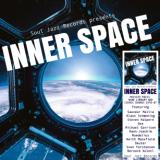
Soul Jazz Records’ new ‘Inner Space’ collection is a mixture of Cosmic electronic music and proto-New Age sounds. The album features a wide range of European, British and American auteur electronic artists, including Hans-Joachim Roedelius, Steven Halpern, Michael Garrison, Ose, Klaus Schønning, Bernard Xolotl and others.
Their cosmic, exploratory music sits somewhere between the worlds of personal, inner space and galactic outer space. All of the music featured here was recorded in the 1970s and 1980s, much of it released on small bespoke private-press record labels, often owned by the artists themselves.
The album also features rare tracks from a number of Library Music artists, all of whom used electronic music to explore a variety of common celestial or Gaian themes – cosmology, spirituality, science, mother earth, wellness, technology, consciousness, exploration, healing and harmony – in their work. These include pieces by Sauveur Mallia, Keith Mansfield and Sven Torstenson.
Here on this album you will find the Sun Ra’s of New Age, the Picassos of Library Music and the Burroughs of space-related electronic music. Away from contemporary music fashions, these unique and highly individual artists remained free in their music to explore new ideas of sound and technological experimentation – together with the larger concepts of time, space and matter – a freedom rarely granted, and one that we celebrate here.
Dutch-born and Singapore-based, Mike Risk has spent more than three decades immersed in house music. As a DJ, producer, promoter and agent, he has experienced the culture from multiple angles, building relationships and sharing dancefloors across Amsterdam, London, Ibiza, New York, Chicago, Singapore and beyond.
Now Is Forever is a full-circle moment. A statement. A celebration of a lifelong relationship with house music.
Mike first made his mark in the Dutch underground through Club Risk and later RiskSoundSystem, two platforms that helped shape nightlife culture in the Netherlands throughout the 1990s and 2000s. After decades spent championing the music of others, Now Is Forever is Mike adding his own chapter to the culture that shaped his life.
Created with longtime collaborator Greg van Bueren (Hardsoul) between Amsterdam and Singapore, the album is a deeply personal tribute to the music, people and places that shaped him. From the clubs of Amsterdam and London to the sounds of Chicago, New York and Detroit, it distils decades of dancefloors, record stores, studios and late-night conversations into one body of work.
From deep and soulful grooves to raw house cuts and acid-tinged late-night moments, Now Is Forever explores house music in its full spectrum. It reflects the way Mike has always approached a dancefloor as a DJ: not as a collection of tracks, but as a journey through the many moods and moments that make a greatnight unforgettable.
Featuring Mike Dunn, Bluey Robinson, Marc Evans and John Agesilas, the album brings together years of experience, inspiration and dedication. Crafted not out of commercial pressure but out of creative necessity, it is the product of pure love-for the culture, for the craft, for the music.
Now Is Forever is a past-forward record: rooted in the music, dancefloors and relationships that shaped Mike, while carrying their spirit firmly into the present. At its heart, it is about honouring the kid who first fell in love with house music-and never let go.
Because when you are truly lost in music, there is no past and no future. There is only now.
Hier ist das definitive Beat Konducta-Box-Set: 7 LPs, die alle sechs Teile von Madlibs legendärer Instrumental-Serie vereint - erstmals gemeinsam erhältlich in einem hochwertigen, schweren Deluxe-Schuber. Zusätzlich enthalten ist Vol. 0, eine zuvor offiziell unveröffentlichte Promo-LP mit weiteren Tracks. Das 7-LP-Box-Set umfasst alle sieben Teile von Madlibs "Beat Konducta"-Reihe aus den Jahren 1994 bis 2008. Die Volumes 1-2, 3-4 und 5-6, die lange vergriffen waren, erscheinen hier erstmals als Doppel-LPs im klassischen schwarzen Vinyl und im aufklappbaren Gatefold-Cover. Exklusiv in diesem Set enthalten ist zudem Vol. 0: Earth Sounds, gepresst auf grünem "Northern Lights"-Vinyl. Die Tracks auf Vol. 0 entstanden im Zeitraum von 1994 bis 1996 und wurden dann ursprünglich 2001 als streng limitierte Promo-LP veröffentlicht. Die musikalischen Einflüsse reichen von Library-Musik aus TV und Film der 70er Jahre bis hin zu Bollywood-Soundtracks und weiteren Produktionen aus Indien (aus den 60er bis 80er Jahren) und gipfeln in einer Hommage an seinen verstorbenen, großartigen Freund und musikalischen Weggefährten J Dilla. Essentiell, keine Frage.
Madlib ist der Beat Konducta - oft kopiert, doch nie erreicht. Neuauflage der essenziellen Beat-Konducta-Reihe, hier die Volumes 1 und 2 als Siren Split Edition Beat Konducta Vol. 1-2: Movie Scenes & Movie Scenes, the Sequel waren die ersten offiziellen Veröffentlichungen in Madlibs Beat-Konducta-Reihe (Vol. 1 Ende 2005, Vol. 2 im Jahr 2006). Bei beiden handelt es sich um Instrumental-Hip-Hop-Produktionen von Madlib, die im Stil von TV- und Film-Library-Platten der 70er Jahre gehalten sind und zusammen eine Stunde voller instrumentaler Klanglandschaften bilden. Nachdem sie lange vergriffen waren, erscheinen diese beiden Volumes von Madlibs legendärer Instrumental-Reihe nun erstmals als farbige Doppel-LP auf Vinyl, welches zur Hälfte rot und zur Hälfte blau gefärbt ist (50/50 Split Vinyl), und verpackt in einem aufklappbaren Gatefold-Cover.
With »The Future Is Futuristic«, the fifth album for Haleiwa (and third with Morr Music), Stockholm’s Mikko Singh draws from a deep well of nostalgic feeling, while making music that feels razor-sharp, on point, and full of hazy dream-pop pleasure. After 2019’s »Cloud Formations« and 2022’s »Hallway Waverider«, which imagined psychedelic post-shoegaze and mantric pop songs into being, »The Future Is Futuristic« feels like both consolidation and magnification; the noise-drenched songs feel thicker, heftier; the electronic interludes playful and kinetic; the rhythms boundless. It’s as though Singh has truly found his metier, his voice, a place from which he’s comfortable to indulge in the kind of home-recorded worldmaking that has always marked Haleiwa out as something special.
»The Future Is Futuristic« passes by in a rush of whiteout tones and scurrilous energy; the whole thing is over within half an hour, Singh ensuring his songs say exactly what they need to say – no more, no less – before bustling through into the next ecstatic pop moment, pushing the music further into the zone. While his music often has a similar, drenched quality to shoegaze, on »The Future Is Futuristic«, Singh seems to be settling in alongside other spirits – there are touches of the experimentation of both A.R. Kane and Flying Saucer Attack here; the more motoric tunes recall New Zealand’s Snapper; the glitchtronics have a City Centre Offices sensibility, while the sparkling folksiness of the melodies can recall Bristol bands like Light or AMP.
But it’s ultimately not about influence, beyond perhaps Haleiwa nestling alongside some like-minded souls in perceptive listeners’ minds. Instead, thrill to the rush of rhythms that float between jungle and punk on »Flourishing« and »96«, the latter a reference, from Singh, to moments of early revelation – »it’s about being thankful for having found punk rock and skateboarding at a young age, in 1996.« There’s also the hypnotic dream-rush of the opening »Smoke Will Rise«, the beautiful Cure-esque guitars swimming through »Sunset Street« and »Strange Notes«, the tumbling rhythms and heady, elated chord changes that grant lift-off to »Wave Chaos«… A real panoply of pleasures, in fact.
»The Future Is Futuristic« was recorded solely by Singh on four- and eight-track in his home studio, with a quick trip to Telefonstudion to record drums. Recording at home grants a certain intimacy to »The Future Is Futuristic«, even as the songs, at times, bliss their way off into the skies; there’s something both expansive and intimate about the music here, as though Singh is grappling immensities into intimacies. It also feels deeply personal for Singh, a summation of much of what he’s done over the years; as he says, simply and clearly, »The album is in my interpretation a mix between punk, electronic music, and dream pop.« The threads that connect these creative phenomena? Energy, texture, melody, tone, sensuality; pure pop pleasure.
Metabolising 20-plus years gorging on the hardcore continuum, Luke J Murray returns to Sneaker Social Club with the first album under his Liquid DnB-Like Ambient Grime 2 alias. As the first self-titled EP in 2024 demonstrated, with this project Murray applies a hauntological supplement to his life-long diet of rave's codes and signals. These 11 tracks could be embraced as dank bangers in their own right, but the ghostly shroud that lingers is no accident. It's an evocative expression of the hinterland places that frame the pursuit of the dance as much as the energy spikes in front of the bass bins — a diaristic reflection on trudging puddle-peppered streets to find little black doors or staggering home, ears ringing, as dawn comes to chase down the street lights.
Haunted House, Garage & Grime walks the line between atmospheric scene building and straight-up beatdowns with a relaxed swagger. 'The Ginnel In SK4' paints a vivid picture of urban malaise with its bleak synth warps and punk-dub splashes, not a drum sequence in earshot. It's flanked by the Caustic Window-meets-Mark One 'The Flats On Belmont Way' on one side, and low-slung electro-creeper 'Hollywood Park' on the other. As the titles hint, this is music tangibly attached to very specific places locked in Murray's memory — unmistakably UK locations that reflect back the half-hollowed out echoes of late night soundtracks, glancing off red brick and pebble dash concrete at odd angles.
There is space on the album for full-chested amen tear-outs like 'Pete's Gone Mad With The Axe' , but for the most part the mood remains downcast and pensive. The sparse approach affords you space to tangibly hear the (not-so-silent) name-checked rain pattering in the background of 'The Crown Under The Viaduct, While Rainfalls Silently Into The River Mersey' , or imagine the crunch of litter and dead leaves underfoot that snakes its way through minimalist stepper 'Bowerfield Lane, After Dark'.
Murray's vision is sharply realised, and his stated inspirations slot logically into his shelves of ordered ideas drawn from disorderly memories. From Mark Leckey's O' Magic Power Of Bleakness to the Ghost Box records alumni, Hatcha's seminal Dubstep Allstars Vol. 1 and Laura Grace Ford's Savage Messiah book, Haunted House, Garage & Grime is the logical product of a deep thinker making tracks with decades of rave in his bones and the sense that it all means something, even if it's not always clear what.
This November, Brownswood Recordings will release Mek Do & Mend, the debut album from self-taught producer, multi-instrumentalist, composer and artist Wonky Logic. Although his name may not yet be familiar to everyone, Wonky Logic (AKA Dwayne Kilvington) has spent the past two decades quietly becoming one of the UK's most respected musical collaborators. His career has moved comfortably between London's jazz, electronic and contemporary music scenes, performing and recording with artists including Nala Sinephro, Yussef Dayes, Nightmares On Wax, Shabaka Hutchings and Emma-Jean Thackray. Alongside his work as a producer and composer, he's been musical director for projects with Eddie Chacon, John Carroll Kirby and I.G Culture's LCSM, scored the feature documentary Zandra With A Zed, contributed music to A24's The Smashing Machine, and continues to lead music workshops with young people, refugees and people experiencing incarceration.
Far more than a collection of compositions, Mek Do & Mend is a deeply personal reflection on the people, places and experiences that have shaped Kilvington throughout his life. It's the story of growing up on a Leeds council estate, where music became both a creative outlet and a way of understanding the world. Making music often meant working with whatever was available: a second-hand keyboard, a makeshift studio desk or ageing equipment that simply had to last a little longer. The title itself came from a conversation with his mother, capturing the resourcefulness that defined his upbringing and continued into the making of the album itself, which was written and produced to a tight deadline around touring, family life and Kilvington's work as a musician and educator.
Built from material spanning more than fifteen years, Mek Do & Mend brings together some of Wonky Logic's earliest compositions alongside brand new pieces written during the making of the record itself. Childhood ideas sit alongside music conceived only months before recording, creating an album that draws together a lifetime of writing rather than documenting a single moment. Running throughout are voice notes from family members, teachers, friends, mentors and collaborators—not simply as interludes, but as a reminder that no creative life is ever self-made. Rather than telling his own story outright, Kilvington invites listeners to discover him through the people who've shaped him: an aunt remembering him playing in church as a child, lifelong friends recalling early experiments making beats together, fellow musicians from different stages of his career and his mother describing him in her own words. Together they reveal the invisible network of relationships, philosophies, communities and experiences behind the music. "The album exists somewhere between being a biography and an autobiography," says Dwayne. "The biography is in the voice notes and how other people see me. The autobiography is in the music."
That same philosophy extends to the musicians who appear on the record. Every contributor has played a meaningful role in Wonky Logic's life beyond the studio. Long-time collaborator Luke Wynter, Steam Down drummer Benji Appiah, partner Vanessa Rani, Jonathan Enser, Joe Bristow, Brother Portrait and Nubiya Imani all feature not simply because of their musicianship, but because they form part of the album's story.
Across its fourteen tracks, Mek Do & Mend moves effortlessly between dynamic jazz arrangements, pulsating broken rhythms, delicate, twinkling piano passages, interstellar synth textures and elegant brass lines. Album opener and first single 'Strange Attractor' begins with a shimmering introduction before unfolding into an exhilarating surge of rhythm and momentum. Named after the mathematical concept of the same name, it serves as the conceptual point of origin for the album. Written when Kilvington was just seventeen, the composition reflects the idea that even the most unpredictable lives are guided by hidden patterns that often only become visible with time. Second single 'A Thousand Hands' features the unmistakable vocal tones of Brother Portrait, whose cerebral lyricism drifts over a low-slung, constantly shifting groove as woozy synth lines ebb and flow overhead. At its heart, the track celebrates the family, friends, mentors and collaborators whose often unseen influence shapes who we become, echoing the album's belief that every achievement is, in some way, a collective one. LP focus track 'BAME (Beyond All Marginalised Expectations)' is a lush, spiralling composition, brimming with both emotion and resolve. Reclaiming an acronym long imposed on racialised communities in the UK, the piece transforms it into a statement of possibility rather than limitation: a defiant rejection of stereotypes and a refusal to let identity be defined by other people's expectations.
The album itself only exists because other people believed in it. Isabel Gracefield made the RAK sessions possible, Rick David brought the record together with his characteristically thoughtful mix, and Gilles Peterson committed to releasing it on Brownswood before hearing any of the music. Away from the stage, Kilvington works with the charity Finding Rhythms, writing and producing original records with people experiencing incarceration, while also leading workshops with Arts Train and Dovetail Orchestra.
Recorded live in a single day in Studio One at RAK, Mek Do & Mend was mixed by Rick David through an analogue Cadac console before being mastered by Stuart Hawkes at Metropolis. The aim wasn't nostalgia or audiophile perfection, but to create a record people could return to throughout their lives, discovering something new with each listen.
As Dwayne puts it: "I don't want this body of work to be reduced to a jazz record. It's more like a novel about life told through music."
YES is a genre-blurring blend of punk, electronic and rap from South Africa, released on limited edition White Vinyl
South African alt-rap trio Internet Girl have officially announced their debut album, YES, arriving November 13 via PACK. Records. Alongside the announcement, the group has released their new single “DA BUSINESS” featuring Kenny Mason.
A high-energy party anthem, “DA BUSINESS” opens with distorted guitar before chopped vocals briefly pull things back, only for an abrupt beat drop and howling synth to send the track into overdrive. As another synth melody sweeps in, TK cuts through the chaos with an introspective opening verse before Kenny Mason crashes in with a gritty guest verse. Live drums, distorted guitars, and surging synths continue to build around them, turning their vocals into something closer to rage-filled battle chants than traditional rap verses.
Partially written on tour last year, “DA BUSINESS” is the oldest song on YES and one of the album’s few guitar-led tracks. Kenny connected with the trio over DMs months earlier before joining them on the track, bringing Atlanta and South Africa together for one of the album’s most charged moments. “DA BUSINESS” follows the trio’s recent single “ALL THE SAME,” a swagger-heavy track built around a hypnotic Spanish-language vocal sample and live drums before a heavily distorted bass synth takes over in its final stretch, drawing inspiration from South Africa’s booming taxi rave scene. Together, the two singles offer an early look at the range of YES, moving between the rock, rap, and electronic sounds Internet Girl have made entirely their own.
Written largely during a week-long trip to South Africa’s Karoo region at the beginning of 2026, YES captures Internet Girl at a turning point. What began as an ad-lib TK would throw into his verses gradually became the philosophy behind the record: saying yes to an idea and committing to it completely, even before there’s any proof it will work. Across the album, that once-delusional confidence begins to feel real as the trio reflect on coming of age, growing more comfortable with themselves, and becoming increasingly assured in the music they make.
The new release arrives on the heels of a big year for the South African trio, who have brought their high-energy live show to stages around the world, including Pitchfork Music Festival Paris and Boiler Room Soweto, while co-headlining Kiss Kiss Festival in South Africa alongside Basement Jaxx.
Tony Reed is undoubtedly one of those artists whom fans of “heavy music” have, at least unknowingly, encountered on stage or on their turntables at some point. Bands like Pentagram, Mos Generator, Hot Spring Water, and the so-called supergroup Big Scenic Nowhere are just a small part of his discography, which he continues to expand as a producer and mixer.
CONSTANCE TOMB was Tony Reed’s first band, which he founded at age 19 and which was heavily influenced by the gothic movement of the early ’80s. There are recordings online from when they made “boombox recordings” or, later, when he recorded everything “hi-fi” on his own in the garage with just a microphone, preserving it all for posterity on cassettes. You can also find several solo cover versions released under the band’s name. It was a labor of love that Tony Reed never let go of, but there was never a real band that toured or released an album—until now!
Now Tony has breathed new life into his childhood love, CONSTANCE TOMB, and fused his fondness for dark ’80s bands with his heavy metal past. Bands like Southern Cult, Bauhaus, The Cure, Bowie, as well as Black Sabbath and Thin Lizzy have shaped his musical tastes. Now, a mix of old and new songs is being infused with fresh energy, reviving a solo project that had taken on a slightly artificial feel.
With Bo McConaghie on bass and Christian Roney on drums, the band has already played its first concerts in the northwestern United States to find their sound as a group. Joint rehe
Space Afrika, das in Manchester und Berlin ansässige Duo aus Joshua Tarelle Reid und Joshua Inyang, schafft rohe, detailreiche und eindringliche Musik mit Anklängen an Ambient, Trip-Hop, Techno und moderne Klassik, wobei es aus den Konturen seiner Stadt weitläufige urbane Dub-Landschaften entwirft. ,Quiet Storm" erweitert ihren Klang und ihre Bandbreite zu einer weitläufigen, kollaborativen Vision, die mit tiefer Geduld und Absicht geformt wurde und ihre eigene Coming-of-Age-Geschichte in eine bewegende Suite kathartischer Abstraktion einbettet. Die Songs spielen auf Spiritualität und die conditio humana an, auf die Spannung zwischen Kühnheit und Sanftheit, Ehrgeiz und hartnäckigen inneren Dämonen. ,Quiet Storm" ist eine Antwort auf den Werdegang des Duos seit der Veröffentlichung von ,Honest Labour" im Jahr 2021. ,Wir haben uns selbst und unsere eigenen Vorstellungen von Identität herausgefordert, insbesondere in Bezug auf Klasse und Diaspora, und wie dies in verschiedenen Musikgenres dargestellt wird. Wir wollten die Charakteristika unseres Projekts durch die Menschen zeigen, mit denen wir zusammenarbeiten wollten", sagt Reid. Inyang merkt an: ,Bei der Entstehung dieses Albums haben wir keine Kompromisse gemacht. Die Idee begann als eine Hommage an die Kunst der Schwarzen. Unsere Kooperationen waren sehr bewusst gewählt, als wir die Grundpfeiler der Geschichte entdeckten." Von der multidisziplinären Natur des Projekts zeugt die Beteiligung des gefeierten Künstlers Glenn Ligon, dessen Werk sich mit schwarzer Identität und Queerness befasst. Ligon, der zu Beginn der Aufnahmen eine zentrale Inspirationsquelle darstellte, stellte sein Werk ,Figure #30" (2009) für das Cover-Artwork zur Verfügung und erklärte sich nach Abschluss der Aufnahmen bereit, dem Projekt seinen Namen zu geben - eine beispiellose Geste dieses wegweisenden Künstlers. Beim Anhören der endgültigen Fassung dachte Ligon an ,Quiet Storm", das Radioformat der 1970er Jahre, das für seine sanfte Late-Night-Programmgestaltung mit Themen rund um Leben und Liebe bekannt war. ,Quiet Storm" führt den Hörer durch verschiedene Szenen, Zwischenspiele und Handlungsbögen, geprägt von dem Gefühl, dass seine Bewegung fließend und seine Figuren flüchtig sind. Monologe vor dem Spiegel setzen sich mit dem Existentiellen und dem Unmittelbaren auseinander: Überleben, Autonomie, Sinn. Das Album beginnt mit dem explosiven, von Streichern begleiteten ,Vanity", bei dem die Grammy-Preisträgerin Axelle Fanyo zu hören ist. Zunächst auf die Spalten eines stillen Raumes fixiert, entfaltet sich ,Vanity" unter Fanyos ausdrucksstarkem Sopran und durchläuft ein breites emotionales Spektrum von erhabener Kontemplation bis hin zu ergreifendem, herzzerreißendem Schmerz. Auf dem gesamten Album werden gesprochene und gesungene Worte sparsam eingesetzt, um eine kraftvolle Wirkung zu erzielen. Die Schönheit und Katharsis von ,MLN" ist ein kollektiver, langsamer Marsch, bei dem der britisch-nigerianische Künstler Tony Njoku mitwirkt, begleitet von Gabriel Evans an Gitarre und Lead-Bass, PIKE aus London am Schlagzeug und GB aus Kopenhagen an Keyboards und Streichern. Der letzte Satz verleiht ,Quiet Storm" seinen krönenden Höhepunkt. ,If This Is Hell" ist in einem einzigen Take als Bewusstseinsstrom des New Yorkers Deuén aufgenommen, dessen nachvollziehbare Spirale geistiger Aktivität von jazzigen, frenetischen Percussion-Klängen begleitet wird. Das Druckventil öffnet sich, als die phasenverschobenen Drums und die scharf beobachtenden, dialogartigen Phrasen abrupt nach der Zeile ,I wonder if that's what heaven's like?" abbrechen. Wir bleiben in der Behaglichkeit des Album-Closers ,Regards" zurück. Regentropfen treffen auf Orgel, Drone, Streicher und Keyboards, während das Nachladen von Waffen dem ruhigen Summen gegenübergestellt wird. Schwer und doch hoffnungsvoll erinnern Joshua Tarelle Reid und Joshua Inyang an ihre bisherige Reise. Als passend geheimnisvolles und mitreißendes Outro für ihr offenes Opus ist ,Quiet Storm" ein Meilenstein: selbst produziert, selbst finanziert und aus purer Tatkraft und Überzeugung entstanden. Durch verzerrte Zeit und schummrigen Dunst ist Space Afrika zweifellos angekommen
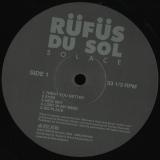
Grammy Award Nominated 'Solace' LP pressed on 180gram vinyl with a gatefold jacket.
It is through this seamless transcendence of styles that their own sonic realm has unfolded; a landscape painted with the club culture of yesteryear and a poignant yet infectious ability to be ever in the moment.
The Age newspaper called Solace "a triumphant record", writing that "Electronic music is often thought of as harsh and unlistenable, but Solace is delicate and incredibly sophisticated in its production. The lyrics hinge on one central theme of yearning, whether that be for change, company or space."
Reissue of this italo classic with Flemming Dalum remix!
‘Some records are simply timeless. Some are pure magic. And some represent the very essence of what makes Italo Disco so extraordinary. Originally released in 1983, Harry ‘O by Noa-Noa is one of those truly unique Italo treasures. Written by Guido Ranzani and Luigi Piergiovanni, this outstanding production combines a hauntingly beautiful melody with exceptional electronic arrangements, capturing the unmistakable spirit of the golden age of Italian electronic dance music. It is both a huge honour and a personal pleasure for me to present my own interpretation of this extraordinary masterpiece. The Flemming Dalum Remix stays faithful to the original vintage Italo atmosphere, while injecting fresh energy, more power and a contemporary electronic edge – without losing the magic that made the original so special. And then there’s the Flemming Dalum Dub Version – taking things even deeper into Flemming’s dark signature underground sound. A powerful journey into hypnotic sequences, driving electronics and pure ELECTRO ITALO territory! This release is something truly special to me. Not simply another remix, but a celebration of the incredible creativity and musical vision that defined the original Italo Disco era. And above all, a heartfelt tribute to the late Luigi Piergiovanni, whose musical legacy will continue to inspire generations of Italo Disco lovers. Respect to the original. Passion for the sound. Keeping the Italo spirit alive. Extremely proud and honoured to be part of this extraordinary release. ITALO FOREVER!’
Continuing the Hyperspace instrumental ambient series tradition are two ensembles: Mindstreams, and the duet Squash and Biscuit. This LP features a full side for each artist and is pressed in lavender vinyl. Mindstreams is a vocalized ambient bed of sound by JP Berreondo and Stefanie Naifeh. From opera to avant-garde, neo-cabaret to singing world music in 15 languages, Naifeh journeys through a colorful mosaic of music. She began her classical training at the age of 8, performed with the San Francisco Opera in the children's choir in Carmen, and majored in opera at UCLA. She later formed the avant-garde, neo-cabaret band, The Underthings in 1987. Squash and Biscuit is a Los Angeles based husband/wife team featuring composers Shuwen Zhao and Brian Griffith. Recorded live from 2020-2021, each piece serves as a short investigation into the world between sound and music using found sounds, musical samples, instrument recordings, and voice manipulation. Limited to 300 copies
What's Left is the new album by Tom Henry, releasing November 20th, 2026 on Royal Oakie Records. Where his debut album Songs to Sing and Dance To leaned into big dreams, What's Left is a record about what remains once the dust settles, delivered with the wit and charm of a young rocker in his prime. The familiar influences are still there — Paul McCartney and Big Star loom large (though there's a little more Third/Sister Lovers this time around), but now the songs are lush and polished, with new sounds creeping in around Henry’s trademark power pop hooks. On a handful of tracks you can even hear strains of Syd Barrett influenced acid-folk alongside psychedelic rock that recalls The Brian Jonestown Massacre or The Beatles at their most lysergic.
Produced in collaboration with David Glasebrook (Patti Smith, Peter Case, Sugar Candy Mountain), and engineered by Glasebrook and Stephen Shirk, the album was tracked across two cities at Shirk Studios in Chicago, IL and The Garden Shed in Oakland, CA, where Glasebrook also handled mixing and mastering. The record's cross-continental origins reflect the movements of Tom’s own life over the past half decade, which found him departing his native Chicago for Los Angeles before returning home four years later, and lend the album its distinctive sound of Midwestern grit mixed with California sunshine across all twelve tracks.
Opener "Someone I Need" sets the tone: an old-fashioned, up-beat rocker built for a roadside diner jukebox somewhere out along the backroads of your mind — it's crunchy tape tones and horn arrangement lending warmth to the song as the narrator asks for a dance and beckons the listener along for the ride. By "It's Not Meant to Be," the record turns inward, wrestling with the exhaustion of trying to find love in the modern age — especially for someone who wears their heart on their sleeve and often comes to find their suitor's wardrobe doesn't have room. "Silverlake Song," reminiscent of early Donovan, kicks off with otherworldly sitar — a wry postcard from the west, tracing how the shimmering promise of L.A.'s Silver Lake enchants, bargains with, and ultimately tries to ruin the starry-eyed dreamer — and very nearly succeeds.
In addition to Tom–who sang and played guitar, bass, and keys–the album features musical contributions from co-producer David Glasebrook, Brian Daley, Joe Daley, Finn Swingley, Lewis Patzner, and labelmates Graham Patzner, Charles Lloyd, and Simon Beins. Liner notes come courtesy of Ian F. Svenonius, who — in the guise of one Johnny Sincere of Integrated Star Management Ltd. — recounts his company's failed attempt to sell Tom Henry a gimmick: a space suit, a coal miner's neckerchief, a lounge pianist's dead-eyed shades. Tom turned them all down. As Svenonius tells it, when reminded that every story's been told and every gimmick's been used, that all that's left is to admire the photographs of what's gone before, Tom simply shrugged: rock 'n' roll is an eternal spring, and if this is what's left, that's just fine with him — it's what he likes to do.
Balaise was the original title of Vers le Nord’s debut album. In French slang, balaise means something in between badass and flamboyant. The word keeps popping up throughout the record, like a teenager’s graffiti scrawled on a bus shelter after a few drinks. Balaise robots. Balaise ghosts lurking in the shadows. Balaise is the barfly who fantasies about becoming a street vigilante. In many ways, Matthieu Pellerin's new solo project is entirely contained within that word: a gigantic piece one man against the world cobbled together, a monument shaped by hand using layers of synthesizers sounding like cathedral organs cast in concrete.
Stitching this type of freak together took time. Five years, or what sounds like forever in an age obsessed with career trajectories and content strategies. But for Matthieu Pellerin, it was never about career plans or taking the easy road. Or he would have dug up the rotting corpse of Oi Boys, his now-defunct band, whose brief existence and explosive popularity once united sullen skinheads, gothic street punks, and old school punks alike. Or he would have fully embraced the Metz scene, now that the Great International Triple Alliance of the East (Noir Boy George, The Dreams, The Feeling Of Love...) and rising solo acts like Tune Zitoune, Josy Bazar, Fantôme Josepha, and Tony Gerrano have somehow transformed this sprawling open-air heroin camp into an unlikely capital of cool. But Vers le Nord doesn't point East, and it is as a lone rider that Matthieu Pellerin can fully reveal his songwriting scope.
With Le Seul Élément, his first solo project, the Lorraine native had already shown a rare gift for crafting worlds. Picture vast sonic masses stretching like industrial zones, noise-filled fog pierced by pale neon lights and landscapes caught somewhere between the gnarliest dive bar and a doomsday bunker. And slipping through the soul-crushing slowness and fractured blackened atmospheres, one could perceive a throwback to his years plotting in black metal-tinged Loth and Bishop.
Vers le Nord populates those landscapes that once were rough sketches. Damaged characters reign supreme, with a plethora of exquisite mutts brought to life, rather than outcasts committed to the cause. Where Nuits Blanches —his new supergroup featuring members of Rixe, Lion's Law, Headbussa and La Femme— pulls no punches with raw confessions, Pellerin switches gear for tales of robot apocalypses, vagrants and fam-seeking school shooters, delivered with William Sheller-esque rhymes and striking images. Yet even within fiction, he manages to create something deeply intimate, almost defining, showing very little effort: he is a natural. All in all, à l’aise (at ease). Songs resonate deeply with the listener, perhaps because of Pellerin’s odd way or always addressing someone without ever really naming them, a floating, obsessive and inescapable “you” calling us out.
Despite all of the darkness, Vers le Nord stirs deep emotions. There is something of Type O Negative or Anna von Hausswolff in its constant collision of the ludicrous and the epic gothic, its bleak romanticism that never tells a sordid tale. While the vocals remain rooted in a distinctly French punk lineage—think No Class, La Souris Déglinguée and OG Bérurier Noir—the reactor core is hidden somewhere else. Oneohtrix Point Never feels like a closer relative with his ultra-emotional music made of cold synths and disembodied anthems, swallowing and regurgitating forty years of icy, contemplative new wave across ten songs. It comes as no surprise that Lila Ehjä and Aimable, two rising specialists in lowering the temperature below seasonal norms, appear on “Enterrez-moi bordel” (“Bury Me, for fuck's sake”), a grandiose, spectral and magnificently arrogant finale. And in the end, Vers le Nord starts where the original idea was hiding all along: somewhere amid the ruins, definitely balaise and yet somehow, completely à l'aise.
Raw and unfinished. Never released, for various reasons. DAT and compact cassette tapes forgotten in home studio drawers, then boxed away in the basement for decades. After modern mastering, sounding solid and fresh — so why not release them after all?
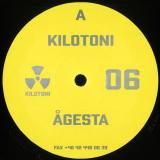
Kilotoni drops its sixth vinyl-only round of radioactive techno findings. Be prepared for the meltdown and fallout.
A1 Banging acid techno in the Public Energy vein, mixed with the minimal Landstrumm-style funkiness of the 1990s. Raw and minimal, but dialed in just right.
A2 Simple acid house with shuffling beats and romantic chords. Perfect for setting the mood at a club night or an outdoor sunrise.
B1 Tech house from the 90s — or perhaps from outer space. A bouncing bassline and funky drum machine programming are joined by unidentified bleeps.
B2 Wild but unconventional acid techno with shuffling beats and throbbing basslines. Midwest acid and ghetto techno shake hands on a nuclear wasteland.
Finnish-American producer Tin Man aka Johannes Auvinen has spent much of his career updating 80s Chicago acid house for a new era and on 2006's now reissued 'Love Sex Acid', the three 303-driven cuts recall the acid work of Laurent Garnier and Ludovic Navarre. 'Falling Acid' opens with a gloomy intro before building into clattering snares and a slowly intensifying 303 wig out. 'Let's Do It Acid' writhes hypnotically with a snake-like bassline and a haunting whispered sample, while 'Love And Sex Acid' leans into deep house, with tasty electric piano licks over acid textures. A still well-crafted new take on acid's roots that hasn't aged in the 20 years since the revered Finnish label Sahko first issued it.
Scott Pilgrim EX, the newest video game from the Scott Pilgrim franchise developed by Tribute Games, is out now with an all new original soundtrack from Anamanaguchi. The sprawling soundtrack, which accompanies a brand-new storyline co-written by series creator Bryan Lee O’Malley, perfectly connects the band's legendary electronic past with their fuzzed out garage rock present while maintaining their unmistakable punchy style. Known for resonant world building across past projects, the depth of emotion and the range of styles displayed on Scott Pilgrim EX are uniquely Anamanaguchi while delivering a host of melodically anthemic and new energetic hooks that are sure to pack a punch for both newcomers and old school fans of the band alike.
Anamanaguchi's collaborative relationship with the Scott Pilgrim universe goes back to the early days of the band. After cutting their teeth programming music with playable Nintendo cartridges and helping to bring a wider audience to a largely internet based 8-bit chiptune scene, the band was brought in to score the fan-favorite soundtrack for Scott Pilgrim vs. the World: The Game. The success of this game soundtrack would help them to launch an early crowdfunding success story with their campaign for their debut album, 2013's Endless Fantasy. From there the band would go on to collaborate with virtual pop star Hatsune Miku (resulting in the perpetually viral, Fortnite featured hit, “Miku”), and later develop the intricately soundscaped compositions displayed across their second album, USA, but throughout it all the connection between the band and the Scott Pilgrim universe would remain a pivotal source of inspiration.
After being brought in to score the animated Netflix series, Scott Pilgrim Takes Off, in 2023, band members Peter Berkman and Luke Silas would credit the live kinetic energy they channeled when writing songs for the in-universe garage band Sex Bob-Omb with helping them get back in touch with the roots of how they learned to play music even before Anamanaguchi's earliest releases. This process would eventually lead to Peter and Luke alongside the remaining two band members — Ary Warnaar and James DeVito — flipping their typically meticulous digital writing process for the more collaborative, straight to tape, distorted angst that can be found on 2025's Anyway, marking another significant evolutionary turn for the band to come out of their relationship with Scott Pilgrim.
Now fresh off the heels of a nationwide tour in support of Anyway, Anamanaguchi have returned to the 8-bit beat em up world of Scott Pilgrim with a relentlessly high energy and genre defying original soundtrack for Scott Pilgrim EX. A return to form that comes with a depth of knowledge and innovative skills that have allowed the band to continue to evolve and grow alongside the characters in the Scott Pilgrim universe and the multi-generational fanbase that continues to follow along with them.
The new soundtrack for the latest installment in the Scott Pilgrim franchise, Scott Pilgrim EX
Teemon and Poomba go looking for light in the darkness on their new EP “Hopeless.” The Madrid duo have a knack for dragging nostalgic sounds into the present, and this release is no exception. With equal parts Hi-NRG euphoria and dark disco dread, the four tracks feel like a glitchy transmission beamed in from another decade, or perhaps another galaxy…
The title track, “Hopeless,” sends us hurtling down a wormhole. Powered by a cavernous bass, we are propelled through kick drums, warp effects and sparkly synths, while a distant voice calls at us through the darkness.
Iranian producer Amirali takes “Hopeless” somewhere a little lighter with his remix, easing the intensity down before letting it slowly climb again. His version foregrounds the track’s earworm synth line and builds on it, layering and expanding on the vocal line until it sounds celestial. Amirali’s skills as a classically trained pianist feel reflective here in his compositional approach.
If “Hopeless” is the wormhole down, then “Moon Connections” is what’s waiting on the other side. The track leans heavily into sharp, percussive sounds that form a grounding contrast to the high synths that glitter above. With a spoken word line that sounds like it’s being transmitted through a space-age radio and enough deep warp effects to get lost in, this B side sends us to the stars.
Closing things out, the Eagles & Butterflies remix of Moon Connections brings us down to earth. Chill, deep-house adjacent and with a hint of Daft Punk in its DNA, it wraps a heavily filtered guitar line around a softened groove built for the comedown – the sound of the sun coming up on the last people left on the floor.
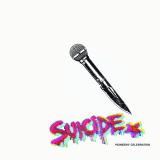
Oráculo Records joins forces once again with Unknown Pleasures Records under the banner of “The Black Alliance” to celebrate one of electronic music’s most influential acts: SUICIDE. Widely regarded as pioneers whose radical approach helped lay the foundations of minimal synth and darkwave, Alan Vega and Martin Rev receive a tribute from artists who carried their influence into new territories. Absolute Body Control, Gabi Delgado of DAF, Patrick Codenys and Richard 23 of Front 242, and Dirk Da Davo of The Neon Judgement appear alongside some of the most compelling contemporary projects in the international dark music underground. Spread across two records, this collection of cover versions also features SUICIDE songs revisited by Alan Vega himself with Marc Hurtado, presented on vinyl for the first time. Their presence creates a direct connection between the original voice of SUICIDE and the generations shaped by the duo’s uncompromising vision. An instant classic in spirit and scope, “SUICIDE Pioneers’ Celebration” honours a legacy that continues to resonate across the underground. Produced in a one-off pressing of just 500 copies, this is a collector’s edition to discover, play and treasure for years to come.
FatCat was recorded in a single session-live, with all four musicians together in the same place. What you hear on the record isn't a polished production, but a one-of-a-kind recording of four people playing at the same time in the same room.
This is not a nostalgic gesture. It's a stance. As music is increasingly understood as the output of a prompt, the question of what actually makes music becomes urgent again. Not flawless, efficient production, but the imperfect moment and its context. Not the result, but the process in which four people listen to each other, react to each other, misjudge, and find one another. This fallibility - the hesitation before an entrance, the slight pull in the timing, the glance between musicians that signals a turn - is not a weakness but the substance itself. It cannot be synthesized, because it isn't a data point but a lived relationship: between the instruments, between the people, between their shared history and what emerges new in this one take. The album is thus also a statement on the question of where, in the age of generative music, authorship and art can still be located: not in the result alone, but in the shared risk taken in creating it.
"The question was always: how do I bring my work as a producer and beatmaker onto the stage? How can something that usually happens alone behind closed studio doors become a live experience?" With the album FatCat, Sepalot pursues this question to its logical conclusion: what began as a live performance now becomes the recording itself - the studio becomes a stage for a day, and the stage becomes the definitive version of the album.
The love for electronic music remains, the raw pressure of hip hop is still palpable - and yet everything on FatCat sounds like a fresh start, captured in the very breath in which it was played.
On stage as in the studio, the four characters fit together like a puzzle. Sepalot's signature as producer and mastermind is unmistakable. On drums, Fabian Füss, longtime partner behind the kit and the voice that makes Sepalot's radio hit "Rainbows" so unforgettable. On bass, Robin Jermer. On trumpet, Matthias Lindermayr, multiple award-winning jazz virtuoso with his own albums on Enja Records. And then there's Sepalot himself, who turns it all into more than just the sum of its parts.
The eclectic beats, the pulsing bass, Sepalot's passion for atmospheric sound design - all of it remains, now joined by an element of jazz and captured in its most immediate, unpolished form. The album shows what four people in one room are capable of: a sound born of shared experience, and precisely for that reason, unique.
Francesco Messina is perhaps best known for his split album with fellow composer Raul Lovisoni, Prati Bagnati del Monte Analogo, originally released on the seminal Italian label Cramps in 1979. Along with contemporaries Franco Battiato, Juri Camisasca and Giusto Pio, Messina helped reshape the world of modern composition with an organic rawness and haunting beauty.
In November 2023, Messina performed Prati Bagnati live for the first time in Milan, Italy – along with pianist Michele Fedrigotti, who appeared on the original LP. The concert was a tremendous success and led the composer to further reflect upon the music he made over 40 years ago. From his home piano – a hundred-year-old Schimmel with magnificent resonance – new pieces began to emerge out of these meditative sessions.
As Messina says in the liner notes, "The idea of making a new album wasn't the driving force at all; what mattered was trying to reconnect with the 'freedom' I had experienced back then while creating that music. I started over without haste or deadlines, simply trying to find a deeper, inner connection."
W.25TH / Superior Viaduct is honored to present Le api dell'invisibile. From the hazy drone of "For Florian" and the title track to the gentle swells of "Letter for an Absent Friend," the album is a lush amalgam of new age and ambient minimalism that is vividly reminiscent of Messina's earlier work.
The title draws inspiration from a famous reflection by Austrian poet Rainer Maria Rilke: "We are the bees of the invisible. We ceaselessly gather the honey of the visible, to store it in the great golden hive of the Invisible." It is a phrase that has long shaped the way Messina looks at his music – transforming lived experience into sound, making audible what normally eludes the eye.
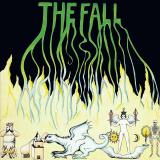
7–Early Years–79 was The Fall's first comp ever. Originally released on Step-Forward in 1981, the LP compiles the group's first four singles recorded for the label between 1977 and 1979 – Bingo-Master's Break-Out, It's The New Thing, Rowche Rumble and Fiery Jack – none of which appeared on any of the band's studio albums. (Also included is "Dice Man" from 1979's Dragnet.) Taken together, these 7-inches are The Fall as they initially emerged from the primordial soup of '77 Manchester, pushing out from founder Mark E. Smith's poetry-collective origins into the early punk scene.
Right from the first track, "Repetition," Smith and crew's working-class art punk is in full effect. His obtuse lyrical brilliance and inimitable vocal delivery ride atop the band's ringing atonal guitar, looping basslines and propulsive drumming – complemented by wheezy combo organ tones. The tracks from each 7-inch are presented here in reverse chronological order. The Fall's fierce contrarianism defines the early UK punk sound and, at the same time, sounds nothing like any of their contemporaries.
The revolving cast of band members includes Martin Bramah, Una Baines and Karl Burns as well as Marc Riley, Craig Scanlon and Stephen Hanley who would remain in The Fall's classic '80s lineups. Many of their best-known songs are featured here – from "Psycho Mafia" and "Rowche Rumble" to the Mayo Thompson-produced "Fiery Jack."
Superior Viaduct's edition is the first time that 77–Early Years–79 has been reissued on vinyl. Includes liner notes by Stephen Malkmus.
Kisah Pasar Baru: The Modern Sound of 1950s Indonesia
When Indonesia gained its independence from the Dutch colonial government in 1945, politicians and soldiers weren’t the only ones playing a major role in building the sense of national identity.
Also working on the nationalist front were merchants and traders of phonograph records, who prior to the country’s independence served as local agents for foreign labels like Odeon and Beka. In Batavia, one of these traders were Tio Tek Hong, distributor of the international label Odeon and the other figure was Soejoso Soekarso, who also served in the Indonesian Military as an Air Force Marshall.
Irama Records, the music label he founded in 1951, was first attempt to “nationalize” the means of production of “indigenous music” from both foreign labels and intermediaries like Tio.
Soejoso stood at the intersection of music, business, and nationalism. He was the vanguard in the process of popularizing of a new breed of “national” music, especially the type he showcased in the compilation Kisah Pasar Baru: The Modern Sound of 1950s Indonesia, released in 1958.
Yet, the idea of an indigenous music championed by Soejoso was in fact the amalgamation of a myriad of cosmopolitan strands. As an air force officer, Soejoso spent some of his time playing in the Hawaiian band Lieve Souvenier in Semarang before relocating to Jakarta and started jamming with the band Elshinta Hawaiian Senior.
In addition to Hawaiian music, Soejoso was a versatile musician who also had the chops for jazz, a musical genre wildly popular in the 1940s and early 1950s Indonesia. And it was jazz that he first recorded for his Irama Records label.
One night in 1951, he squeezed pianist Nick Mamahit, bassist Max van Dalm, drummer Dirk van der Capellen, and guitarist Dick Abel into a 2×3-meter studio on Jl. H. Agus Salim, Central Jakarta, to record the first local jazz album of the post-independence era.
Kisah Pasar Baru is a compilation of hybrid music that Soejoso and his coterie of musicians championed in the early 1950s, a mix of Hawaiian, Keroncong and Jazz and it became a hit soon after being release.
One of the best compositions on this album, “Pajung Fantasi,” composed by the legendary composer Ismail Marzuki, is essentially built from Bing Slamet’s baritone—Indonesia’s equivalent of Bing Crosby--and the distinctive Hawaiian-styled steel guitar. The most famous song on the album, “Sabda Alam,” also written by Ismail Marzuki, follows the same pattern, its steel-guitar works now backing Theresa Zen’s hauntingly ethereal vocals.
Kisah Pasar Baru was never designed to be a long-playing record, and its presence on the market was to capitalize on a new trend in the recording industry. The album is a greatest-hits compilation, with songs in this album previously circulating individually on 78-rpm discs—a format that was gradually abandoned following the invention of the 7-inch single and the 12-inch long-play vinyl.
This is the first time this monumental record is being reissued for the international market outside of Indonesia.
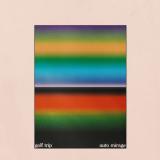
Auto-Mirage is the result of an artistic exploration built around the idea of escape.
Many different settings could be associated with this album, without ever having to choose just one. It can feel like a carefree van trip with no particular destination, the start of a relaxed summer evening with friends or even a sleepless night filled with introspection.
Its alternative identity flows between indie and surf pop, with touches of jazz and soul influences. The arrangements are meticulously crafted, adding depth to the compositions as well as authenticity to the voice.
Auto-Mirage brings together recognized talents such as Olefonken (Hubbabubbaklubb) for the mixing part, Brian “Big Bass” Gardner for the mastering, the captivating voice of Swiss singer Sreya and the striking flights of UK harpist Rachel Kitchlew. This album blends visions and influences to create a project that can accompany anyone, in any situation, as long as it brings that sense of escape.
The highly acclaimed U.K post- punk band Joy Division was originally called Warsaw . Formed in Manchester, England in the late 1970s, the group consisted of Ian Curtis on vocals, Bernard Albrecht (aka Sumner, aka Dicken) on guitar, Peter Hook on bass and Stephen Morris on drums. Hook, Albrecht and Curtis hooked up at a local concert and later formed the group Warsaw. The band's name was taken from a David Bowie- Brian Eno composition, "Warszawa". The 5 bonus tracks on this album are demos cut by the group at Pennine Studios in Manchester on July 18, 1977 with Steve Brotherdale on drums. The first eleven tracks presented here were the result of a recording session for that album that took place in early May of 1978. Rehearsals leading up to the session resulted in two new songs being added to the group's existing repertoire: "Interzone" and "Transmission." "Interzone" was based on the backing track of the song "Keep On Keepin' On," to which the band added their own lyrics. The result was a song distinctively their own. "Transmission" was written by the band during the final week of rehearsals. The first verse contains a quotation from Alistair Crowley's The Book Of Thoth. The two recordings are interesting renditions of songs which would later became famous.
Timeless is a brand-new 10-track compilation featuring rare and unreleased studio recordings from Prince’s legendary vault. This unprecedented album encompasses tracks spanning every phase of Prince’s illustrious career, from 1977 to 2016. The project has been meticulously mastered by Grammy-nominated engineer and producer Chris James, a former Prince engineer whose notable credits include HITnRUN Phase Two, Art Official Age, and Plectrumelectrum. Timeless will be available on CD & black vinyl, providing profound insights into Prince’s creative process and musical evolution.
Bobby Rush (born Emmett Ellis Jr. in Homer, Louisiana on November 10th, 1933) is an American blues musician, composer, record producer, and singer. His style incorporates elements of blues, rap, funk, as well as a comic sense about blues tropes.
Rush has won twelve Blues Music Awards and in 2017, at the age of 83, he won his first Grammy Award for the album Porcupine Meat. He is inducted into the Blues Hall of Fame, Mississippi Hall of Fame, and Rhythm & Blues Music Hall of Fame.
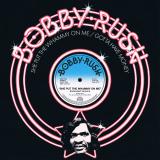
Earth Libraries is proud to share a glance back in Bobby Rush's incredible career with a track that shows off his funky side to the utmost degree. "She Put The Whammy On Me b/w Gotta Have Money", originally recorded in the 80s to be marketed towards DJs, are funky, disco inspired tracks you can't help but dance to.