Supermercado: a mosaic, tangible, colourful to the point of saturaton, anchored in a very real present.
Behind the metaphor that gives the new album its ttle, Corridor examines modernity, takes on this transitonal transiton by looking at where it went wrong: pushed around by big data, apathy induced by oversaturaton, the speeding up of cycles, efort stripped to its bare minimum, physical detachment.
Afer giving the art-rock and jangle-pop treatment to their frst two eforts Un Magicien en toi and Le Voyage Éternel, Corridor stcks to its signature sound: upfront, dissonant guitars upheld by minimal beats and syncopated bass lines, yet also marks a new directon. Supermercado leans on repeated strong melodies, slow progressions, bolstered by two distnct voices, yielding a more hypnotc, sharper, and strangely, poppier result. Corridor recorded this new record in the hallowed halls of Montreal's Breakglass Studios, with Emmanuel Ethier (Chocolat, Bernhari, Peter Peter) assuming producton dutes.
It's the quiet ones we should watch, they always say. Which is particularly astute advice right now, when loud, constant self-declaration and saturated 'brand' visibility have become the norm. But above the babble and brightness, some voices will always speak quiet volumes - with calm eloquence and the kind of certitude that comes from valuing the playing out, not just the prize.
Sweden's José González is just such a voice. He first charmed his way into the UK's earshot via the murmurous and elegant, classically finger-picked folk pop of his 2005 album, Veneer, which has since sold over a staggering 430, 000 copies in UK alone. Two years later came In Our Nature, a further exploration of José's influences (Argentinian Folklore, the '60s US folk tradition and the British pastoral folk-pop style of the same era), on which he resisted the temptation to beef up his alluringly introvert aesthetic. The albums made the UK Top 10 and Top 20 respectively.
Conceived as the natural third part in an acoustic trilogy, Vestiges & Claws is a(nother) hushed and delicate solo set that forefronts the artist and guitarist's compellingly intimate vocal style and intricate playing technique, but it's often strikingly rhythmic in nature and cohere's perfectly, with hand claps and taps on the body of his instrument underlining the songs' mantric rise-and-fall pattern, while elsewhere, over-dubbed guitar parts and multi-tracked vocal harmonies entwine to sweetly immersive effect.
The title refers to both cultural practices and biological features that survive despite having lost their original function, and to currently useful tools, ie the 'claws' of modern life.
Vestiges & Claws was recorded almost entirely by José and self-produced, mostly in his Gothenburg home, using computer plug-ins to achieve a warm, analogue sound. He prefers working alone, mainly for artistic reasons. 'There were a couple of things that enabled me to complete this record: one was curiosity, to be able to play percussion and do a lot of harmonies and also to produce and mix the album; the other was aesthetics. I love to listen to Arthur Russell and Shuggie Otis, to music that has been done mostly by one person in their solitary state.'
As José sees it, the record is his personal, 'zoomed-out eye on humanity on a small, pale blue dot in a cold, sparse and unfriendly space. The amazing fact that we are all here, an attempt at encouraging us to understand ourselves and to make the best of the one life we know we have - after birth and before death.
Post-punk milestone, back in print on vinyl and CD in its original form. Many fans consider it their finest hour. Vinyl includes a digital download card and Sonic Youth poster!! Daydream Nation was Sonic Youth's sixth full-length, their first double-LP, and their last for an indie label before signing with Geffen. Widely considered to be their watershed moment, the album catapulted them into the mainstream and proved that indie bands could enjoy wide commercial success without compromising their artistic vision. More recently, Daydream Nation has been recognized as a classic of its time: Pitchfork ranked it #1 on their '100 Greatest Albums of the 1980s'; Spin listed it at #13 on their '125 Best Albums of 1985-2010'; Rolling Stone put it at #45 on their '100 Best Albums of the Eighties' list and #328 on their '500 Greatest Albums of All Time.' It was one of 50 recordings chosen by the Library of Congress to be added to the National Recording Registry in 2006. 2007 saw the release of an expanded four-disc vinyl box set, but now the album is back in its original form after years of being out of print and highly sought after. As a special 21st century bonus, the vinyl now includes a digital download card—radical adults rejoice!
out of Stock
Last delivered 3 years ago available to reorder, subject to availability
On the 11th May 2018 USM will release a vinyl (180 gram) and CD reissue of the Jay-Z's In My Lifetime, Vol. 1' and Vol. 2...Hard Knock Life' on 2LP.
- In My Lifetime, Vol. 1 is the second studio album by American rapper Jay-Z, released on November 4, 1997, by Roc-A-Fella Records and Def Jam Recordings. The majority of the production is handled by Puff Daddy's production team The Hitmen from the Bad Boy label, giving the album a generally glossier sound than its predecessor.
- Vol. 2... Hard Knock Life is the third studio album by American rapper Jay-Z. It went on to become his most commercially successful album, selling over 5 million copies in the United States. Vol. 2... became Jay-Z's first album to debut at #1 on the Billboard 200. The album won Grammy Award for Best Rap Album at the 41st Annual Grammy Awards.
out of Stock
Last delivered 5 years ago available to reorder, subject to availability
Cocteau Twins were a Scottish rock band active from 1979 to 1997. The original members were singer Elizabeth Fraser, guitarist Robin Guthrie, and bassist Will Heggie, who was replaced by multi-instrumentalist Simon Raymonde in 1983. The group has earned much critical praise for its innovative, ethereal sound and the distinctive soprano vocals of Fraser.
Four-Calendar Café is the seventh album by Scottish band Cocteau Twins. It was originally released on 18 October 1993 on Fontana. The album distinguished itself from the rest of the Twins' catalogue in two major areas: The sound was much more pop-oriented and less ambient than previous works, and Liz Fraser's lyrics were much more intelligible than usual.
Milk & Kisses is the eighth and final studio album by Cocteau Twins, issued by Fontana Records in March 1996. It proved to be their last
The song ''Rilkean Heart'' was a homage to Jeff Buckley, who was a lifelong lover of the work of poet Rainer Maria Rilke.
Rockets Audio starts the saga with 4 finest minimal house trackers by Matheiu, Denis Kaznacheev and the master trio Wareika. A rocket (from Italian rocchetto "bobbin" is a missile, spacecraft, aircraft or other vehicle that obtains thrust from a rocket engine. Rocket engine exhaust is formed entirely from propellant carried within the rocket before use. Rocket engines work by action and reaction and push rockets forward simply by expelling their exhaust in the opposite direction at high speed, and can therefore work in the vacuum of space.
In fact, rockets work more efficiently in space than in an atmosphere. Multistage rockets are capable of attaining escape velocity from Earth and therefore can achieve unlimited maximum altitude. Compared with airbreathing engines, rockets are lightweight and powerful and capable of generating large accelerations. To control their flight,
rockets rely on momentum, airfoils, auxiliary reaction engines, gimballed thrust, momentum wheels, deflection of the exhaust stream, propellant flow, spin, and/or gravity.
Rockets for military and recreational uses date back to at least 13th century China. Significant scientific, interplanetary and industrial use did not occur until the 20th century, when rocketry was the enabling technology for the Space Age, including setting foot on the Earth's moon. Rockets are now used for fireworks, weaponry, ejection seats, launch vehicles for artificial satellites, human spaceflight, and space exploration.
SOUND rockets are the most common type of high power rocket, typically creating a high speed pitch by the wave of rythm with an oxilator. The stored delay can be a simple pressurized detune or a single filter delay that disassociates in the presence of a curve (EQ + FILTER ), two hats that spontaneously react on contact (RANDOMIZER), two snares that must be ignited to react, a solid combination of effects with oxidizer (solid GROOVE), or solid fuel with liquid oxidizer (hybrid FILTER BAND DELAY). Chemical rockets store a large amount of energy in an easily released form, and can be very dangerous. However, careful design, testing, construction and use minimizes risks.
Cologne is Danny Lane and Vasilios Manoudakis - a photographer and a ship captain who make songs together. Vasilios works as a boats captain in New York while Danny stays landlocked, producing tracks and hustling work as a photographer/actor in Los Angeles.
The two communicate with one another through music, sending loops and snippets from wherever they happen to be, independently writing pieces of songs that smoothly snap into
place. Throughout this, the two share a thing for synths and classic pop, creating songs that are warm, relaxed, and inescapably catchy. Though their influences range from 80s dance music to minimal house and ambient music, they see Cologne as something new and have a very pure idea of success: If people like it, we are happy. Vinyl tastes better...
Top-debütalbum Der International Teachers Of Pop, Bestehend Aus Den Moonlandingz-gründern Adrian Flanagan (eccentronic Reaserch Council) Und Dean Honer (all Seeing I/i Monster) Sowie Sängerin Leonore Wheatley (the Soundcarriers). Itop Erzeugen Begnadeten Electro-pop Aus Analogen, Pre-1980er Us- Und Sowjet-synthesizern Und Einflüssen Aus Disco Und Pop Von Giorgio Moroder, Martin Rushent Und Bobby Orlando Bis Kraftwerk, The Human League Und Broadcast. Ihre Sheffielder Kollegen Jarvis Cocker Und Roisin Murphy Sind Itop Fans Der Ersten Stunde Und Luden Die Band Bereits Zu Supportgigs Ein.
Drama were the Canadian duo of Eric Simpson (Vocals, Bass Guitar, Guitar) and Don Stagg (Keyboards). Formed in in Mississauga, Ontario in 1978, the pair had previously played together in progressive psych bands Majik and VIIth Temple. Almost every Saturday, Eric and Don would record one song on a TEAC 4 track tape recorder after a couple of takes with very little over dubbing. The pair were influenced by what was playing on the radio during the recording sessions. Everyone else at that time was in a rock or pop band yet Drama were making electronic music. The pair released their debut LP 'Loneliness' on Psycho Records in 1979. There were 500 albums made and about 200 ended up in the garbage as band members shuffled from apartment to apartment. This was followed by a 4-track 7' later that year featuring live drums and additional guitar.
Seance Centre says it best, 'On Loneliness, the pair traded in their velvet and chord charts for thin ties and a cheap drum-machine. The LP still carries a whiff of patchouli, but the sound stings of solder and electricity, and inhabits a nascent zone somewhere between krautrock and new-wave. The vocal cuts are all clustered on the A-side, starting with an ode to the inefficiency of the Toronto Transit Commission - some things never change! The dystopian sci-fi themes are par for the League, and highlights are the love ballad 'Anna King' and the charming 'Feable'. The instrumentals on the B-side feel decidedly more Teutonic, and have a certain CBC charm that sounds like JP Decerf recording for Parry Music. It even opens with a slinky stoned Pink Panther.' For this first time vinyl reissue we've expanded to a double LP with a bonus album of the 4 songs from Old Hollywood 7' and 9 previously unreleased tracks and demo versions. All songs are remastered for vinyl by George Horn at Fantasy Studios in Berkeley. The vinyl comes housed in a jacket with original photo by Don Stagg taken from his apartment rooftop overlooking Toronto of a young teenager sniffing glue and includes an insert with photos and liner notes by Drama.
Tumultus Cras - Oder Wie Der Anarchismus Das Shaken Zur Marschmusik Lernte.
Bevor Die Ohren Und Beine Mit Warp-geschwindigkeit Durch Ein Knallbuntes Und Mit Allen Wassern Gewaschenes Soundgroovefourtotheflooroderauchnicht-universum Geschossen Werden, Wird Im Intro Gleich Mal Der Zünder Eingestellt, Der Dieser Neuesten Konkord-release Den Fetten Boost Mit Auf Die Reise Gibt.
Das Dynamit Heißt Schlicht ... Spielen, Ausprobieren, Experimentieren, Regeln Kennen, Regeln Brechen, Neue Regeln Aufstellen, Langeweile Abstellen, Neue Situationen Aufploppen Lassen. Spielen Heißt Performen, Die Crowd Zum Shaken, Instrumente Zum Tanzen Bringen. Kinder Können Am Besten Spielen, Und The Kinder Können Es Am Allerbesten.
Der Sound Von The Kinder Bei Einem Live Konzert Versprüht Einen Charme, Der Sich Genau So Schwer Ohne Kompromisse Auf Studioaufnahmen Bändigen Lässt, Wie Die Improvisationen Einer Frühchristlichen Garagenband, Die Beim Pilzepflücken Im Wald Das Tamburin Gegen Ein Casio-keyboard Tauscht.
tim jones, also known as Preacherman and recorded under midi man, ironing Board Band and t.j. hustler. he made one very rare lp, and two even rarer cD's. these tracks are from the cD's. he was a salesman for iBm in Las Vegas, where he sold selectric t ypewriters and then word processors during the day and at night he would perform in the Las Vegas lounges. he was somewhat of an engineer and adapted a hammond B3 organ to play a moog synth with some of the organ keys, (some still played the organ),
and he adapted the organ's foot controlled bass levers to play two moog synth bass pedals (a failed item moog made for a few years.) thinking he wasn't much of a live performer he had a wooden puppet made that he named t.j hustler, and together with the puppet, he would engage in long philosophical soliloquies, (some of which are featured on this album).if you meet tim, he is not someone who stops talking. in fact he even created a little book called universal Philosophy. he has a lot to say about everything. currently he lives with his 103 year old mother in
Oakland. there he infrequently plays shows on his casio where he fashions himself a live Karaoke performer, who comes complete with 5 wireless mics and P.a. and a list of about a 100 songs he can play. his invented organ contraption and puppet are in storage in Las Vegas, and he seems intensely
uninterested in getting them out, as 'the kids these days want to hear the sounds the casio makes.'
From the inheritor of John Coltrane's mouthpiece a re-integration of deep South African jazz roots with the Black Atlantic spiritual jazz continuum.
Celebration's release trumpeted the emerging dawn of South Africa's epochal changes. Sainted and blessed, Bheki Mseleku appeared as the herald of a new era, a prophet of rebirth and reconnection. This is a work signalling transition and change, and a sign of a South African music that was properly reconnected with global currents - a music that could journey far beyond the stifling combination of exile and oppression in which it had been bound.
Recognising Bheki as a kindred spirit to her late husband, Alice gave him the saxophone mouthpiece that John Coltrane had used during the recording of A Love Supreme. Coltrane was a permanent touchstone for the pianist, one of the few who Bheki felt had the same esoteric and spiritual focus as himself: 'the only musicians I know of who were deeply into this were Coltrane, and Pharoah and Sun Ra', he told an interviewer in 1992.
While the idioms of post-Coltrane spirit jazz are certainly to the fore on Celebration, they are energised by a swift and original musical vision, quite specific to Bheki's music, in which whole musical systems - the marabi and mbhaqanga jazz of the townships, American jazz, European classical, and more - are seamlessly mended together by the pianist's quicksilver musical sensibility and legendary technical ability.
Celebration was originally released on compact disc and cassette in the middle of 1992 by World Circuit. It was Bheki's first statement under his own name, and the first recorded presentation of his personal musical vision. This vision had been tempered across two decades which had combined intense professional playing with profound personal trials in both the spiritual and earthly domains, all set against the greater backdrop of South African political turmoil and exile in Europe.
The band brought together musicians hailing from three signally important points within the interconnected, communicating spaces of the Black Atlantic continuum - North America, post-colonial Britain, and southern Africa. With them, Mseleku created the first major South African-led musical statement to be produced after the sufferance of exile was ended. The ultimate and most egregious remnant of the centuries-long colonial era, apartheid, was finally being dismantled as they played. At this critical point, Mseleku's musical spirit work, channelled from a higher source, spoke of a time to come where all divisions might be transcended by a greater unity.
Chicago's Justin Aulis Long And Ken Zawacki Return To L.i.e.s. With Their Second Ep Under Their Circling Vultures Moniker. On This Offering We Get Four Tracks Of Tough Yet Psychedelic Machine Music. From Slow Bpm Beaters To Metal On Metal Floor Cuts, These Are Executed With Precision To Do Maximum Damage Whenever Played. Sinking Their Teeth In And Never Letting Go, Looming Over And Waiting For The Right Moment To Strike...tense Music For The End Times! Another Killer From These Seasoned Club Vets.
Das Duo The Beat Escape nahm die neun Tracks in dessen Heimatstadt Montreal auf, bevor sich DJ/Produzent Jori Hulkkonen ans Mixing setzte. Das Ergebnis erscheint nun wie ein diffuser, fast schon psychedelischer Traum aus hypnotischen Beats, melancholischen Harmonien und hymnischen Gesängen, Electronic-Pop im Stile obskurer Minimal-Wave-Platten der 80er Jahre. Fans von John Maus, Cigarettes After Sex, Joy Division, The xx aufgepasst!
* Released for the first time on vinyl
* The ultimate collection of rare early materials by this electronic music pioneer
* Comes as a deluxe double LP set with insert and extensive liner notes . Limited black vinyl pressing (700 copies) with obi strip.
Klaus Schulze is a German electronic music pioneer, composer and musician that needs very little introduction. In the late sixties & early seventies he was a member of several iconic bands such as 'Tangerine Dream', 'The Cosmic Jokers' & 'Ash Ra Tempel' before launching a solo career consisting of more than 60 albums released across five decades. Collaborations were numerous and highlights include working with Steve Winwood, Brian Eno & Alphaville... just to name a few.
Klaus Schulze's proto moog-synthesizer work is regarded as a milestone in electronic music & during the decades he released landmark albums in genres catalogued as 'Ambient', 'Electronic', 'New Age', 'Berlin School', 'Experimental', 'Kosmische Musik' & 'Krautrock'. Mr. Schulze had a more organic sound than most electronic artists of the time, often he would throw in decidedly non-electronic sounds such as acoustic guitar and a male operatic voice. Schulze is also known for developing a Minimoog technique that sounds uncannily like an electric guitar, which is quite impressive in concert.
On occasions he would also compose film scores such as Body Love (1977), Barracuda (1978), Next of Kin (1982), & Angst (1983). His best known song 'Freeze' has been used in films like Manhunter (1986) and more recently in Sofia Coppola's 'The Bling Ring' from 2013.
In 2009, producer Klaus D. Mueller and Schulze began releasing La Vie Electronique ( The Electronic Life'), a series of sets that collected rare sought-after early works & unreleased tracks put in chronological sequence. These sets contain some of the best music Klaus ever created and are early 70's masterworks that will appeal to both fans and collectors.
Now available for the first time on vinyl, One Way Static Records presents the first volume in our new archival series 'La Vie Electronique'. This volume (1.0) focuses on the years 1968-1971 and is spread over two glorious LP's containing +78 minutes of Klaus Shulze rarities. This deluxe vinyl set also comes with an insert containing extensive liner notes.
Some gigs are simply meant to be out there - even if they take decades to actually make it into our hands. This is without doubt one of those concerts, recorded at the Philips Halle, D sselsdorf on the 28th March 1979
during the Live Herald Tour. Includes the only known live recording of Talking to the Sun' Released following the AIM-nominated deluxe box set from Hillage, 'Searching for the Spark', this new 'Dusselsdorf' double CD showcases the Steve Hillage Band's prowess with excellent sound quality - a quality so high that you'll forget that it's a live recording until the applause. This is a band at the height of its powers, with Steve in great voice throughout, and most obviously utterly
enjoying themselves. The vibe is completely infectious and doesn't let up throughout the entire gig. Featuring Steve's own adventurous compositions and covers of Beatles and Donovan classics, all are approached with a joie-de-vivre and high sensibility. The trademark heady combination of vibrant psychedelic rock interwoven with an irresistible full blooded groove, interspersed with the smoothest of deepspace synth/guitar trips gathers all before it in a tsunami of up-lifting music.
With the benefit of hindsight, Steve's musical trajectory from the creative space riffs of Gong to the trance and techno of System 7 is made instantly clear. This version of 'Dusseldorf' will be released as a double CD presented in
mediabook packaging complete with a 24-page booklet and 3LP gatefold pressed on to 180g heavyweight vinyl.
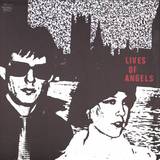
Dark Entires is honored to reissue the long out of print debut album Elevator to Eden by LIVES OF ANGELS. Lives of Angels was the brainchild of GERALD O'CONNELL from London, England. In 1974 he worked at CBS studios mastering recordings from tape to disc. By 1977 he joined his first band MYSTERY PLANE, led by school mate Mark Harvey and later joined by his soon-to-be wife Catherine. Gerald branched off in 1980 forming Lives of Angels as an outlet for his own compositions. He recorded, produced and played all of the instruments on Elevator to Eden' between 1981 and 1983, using a primitive set up of drum machines, one keyboard, guitar and a tape echo. Influenced by the Krautrock sounds of Neu! and Amon Duul II as well as US psychedelic rock, Lives of Angles crafted their own unique post-punk sound. Elevator to Eden was originally released in 1983 on cassette by Color Tape Records, the label started by Gary Ramon of Modern Art. Then in 1986 Fire Records remixed and re-released the album on vinyl but the band was not happy with the mixes. This reissue features the original 4-track cassette mixes of Elevator To Eden on vinyl for the first time ever. The LP includes 9 songs featured on the original Color Tapes release. All songs have been remastered for vinyl by GEORGE HORN at Fantasy Studios in Berkeley directly from the original master tapes. Each LP comes with unreleased photos, original artwork and a lyrics for all songs.
Oni-ki is the new studio adventure of old friends Onirik & Minoki, bridging genres, travelling through house, techno, electro, dub & ambient with their own touch, this is only the beginning. Onirik also provides his solo rework of the title track.
out of Stock
Last delivered 3 years ago available to reorder, subject to availability
The fifth release on Renate Schallplatten comes from Dimitri Veimar from Moscow, a good friend and regular guest behind the decks at Renate. Hot on the the heels of his fantastic Time EP on Omnidisc, he delivers four tracks of modern acid flavoured goodness. The icing on the cake is a superb remix by Renate all time favourite Lauer from the Robert Johnson crew.
out of Stock
Last delivered 6 years ago available to reorder, subject to availability
This is France in the Mitterrand years: fashions fleet as fast as governments. In the early eighties, the happy-go-lucky gather the nectar of each and every new release.
Believing in a bright future for videotex, and loosened up by the sexy talks broadcasted on the budding pirate radios, the new generation dreams of dance floors and holiday clubs. French Boogie, which preserves the spirit of these years of boodle and bunkum, is the ideal soundtrack to their dreams.
What the web now refers to as French Boogie is some synthetic funk reflecting the spirit of those days when nothing was impossible, or so it seemed. Its syncopated flow heralded the dawning of French rap. Often considered as some kind of post-disco, inspired as much by black music as by new wave, this carefree pop music with bawdy lyrics indulged in simple pleasures: holidays, swank and sun were recurrent themes. Totally in tune with its time, it incidentally glorified luxury, success, and a certain consumerism embodied, for instance, in Bernard Tapie.
In popular clubs such as La Main Bleue in Montreuil, or L'Echappatoire in Clichy-sous-Bois - where Micky Milan could be seen behind the decks - an enthusiastic audience discovered this new sonic wave, influenced as much by French pop as by Sugar Hill Gang or Kurtis Blow. The artists who first launched the movement engaged in it wholeheartedly, but as often the case with new music trends in France, humour and casualness quickly became a decoy to impose a new style. This explosive mixture, in which startling and typically Frenchy French lyrics go along New-York-style tunes, is sometimes reminiscent of the kinky comedies directed by Max Pécas or Claude Zidi. On this prolific scene, partly originating from the Jewish community, everybody was looking for success, trying to hit the jackpot with what was to hand. Famous media personalities, one-hit wonders or John Does in quest of fame, all had a go at French Boogie - more or less successfully. Apart from « Vacances j'oublie tout » by Elégance, « Un fait divers et rien de plus » by Le Club, or « Chacun fait ce qui lui plaît » by Chagrin d'amour (produced by Patrick Bruel), very few songs became hits: the story of funk in France is that of a half-baked robbery.
In this myriad of new musicians, the very young François Feldman and Phil Barney pioneered a fresh and hybrid style. Other well-known artists like Gérard Blanc from Martin Circus (Attaché Case), Richard de Bordeaux (Ich), or Jean-Pierre Massiera (Anisette, Pirate Scratch Band, Mandrake, Scratch Man...) added an eccentric touch to this sound-wave, making it often entertaining, and sometimes showy.
Capture d'écran 2015-10-26 à 12.55.43Singers like Agathe (the author of 'La Fourmi' and of the hit song 'Je ne veux pas rentrer chez moi seule') were far more than just window dressing. They even tried to give an ironic and subversive twist to this rather harmless genre. The very vindictive rebel Gérard Vincent shared in this spirit, but as a whole, French Boogie became associated with nonchalance and sauciness. Thus, Stéphane Collaro, Gérard Jugnot, Alain Gillot Pétré and other TV clowns would clumsily contribute to this French variation on funky sounds. In a few but intense years, French Boogie gave all the tips to party with style.
If some hits made it possible for the happy few to get a real house under truly exotic palm trees, the wave actually ebbed away very quickly, leaving quite a few musicians stranded on the shore. Whether they were sincerely motivated, or simply opportunistic, they had failed. In 1984, French Boogie was already breathless, and got merged with other genres: on the one hand, rap and breakdance adapted its flow to a more urban world, especially with Sydney's show, H.I.P.H.O.P, and Dee Nasty's broadcasts on Radio Nova; on the other, italo, new beat and house began to rule over dance floors, even more strongly asserting the will to develop music for clubs.
Squeezed in between the age of disco and that of modern electronic music, French Boogie was a transitional phase, but it remains an amazingly refreshing testimony to the intermingling of pop and underground cultures. The genre was hastily categorized as anecdotal in spite of its pioneering synthetic groove and matchless bass lines. An attentive ear will discover the poetry of the ephemeral beyond the eccentricities of the genre, as well as a certain unexpected avant-gardism. At the origin of major music trends, always cheerful and catchy, French Boogie is what you need to party.
Dennis Busch is an artist who is well-known to all Pingipung fans for his 'James Din A4' contributions to our catalogue. This man of many faces has also developed a reputation as visual artist. Therefore he decides to present his music under the same name: Dennis Busch - which we think might be his real one.
KYSH returns to wax with its third vinyl release — another milestone in the label’s steadily growing catalogue. More than a year and a half into the journey, KYSH feels more in its element than ever, bringing together five names that represent both the label’s own extended family and fresh acts joining the ranks. All well-established and highly respected figures in the modern techno landscape, they deliver a sharp selection of contemporary club weapons. Kashpitzky opens with “Blush”, a raw, boomy cut where rough-edged rhythmics meet crisp modern production, channeling the spirit of industrial techno at its best. “Tarmac” by Regent follows with a dense, restless groove, while Chontane’s “Gyuto” dives into hypnotic territory, layering rhythmic elements around subtle dissonant melodies. On the flipside, Temudo & Pierce join forces for the threatening, aggressively contemporary “Highest Clarity Grade”, balancing intricate sound design between rhythm and atmosphere. Closing comes GCOD with “Sleeper Agent” — dancing sub bass, a striking hook and a relentless hi-hat groove keeping the weight firmly down low. Another strong statement on wax, KYSH-003 confirms the label’s vinyl output as a mark of quality, with five floor-tested cuts drawing from a fresh, current take on the industrial influences that shaped techno a decade ago. A new lineup, a distinct direction, and five tracks ready to speak for themselves on a proper soundsystem.
What an unbelievable record. From the wild cover to the iconic breakbeats, Roots from Ian Carr’s Nucleus is one of the dopest albums we know. This is seriously thick, funky-prog jazz-rock heaven. Originally released on Vertigo in 1973, other than a couple of versions at the time for other territories, Roots was never re-pressed since so it’s gone on to become another one of those impossible to find records.
Maybe it was a little too out there for the time, but it’s aged very, very well indeed and this Be With re-issue, re-mastered from the original analogue tapes, shows off just why this deserves to be back in press.
Genius trumpeter and visionary composer Ian Carr was one of the most respected British musicians of his era. He was a true pioneer and saw the potential in fusing the worlds of jazz with rock, just as Miles Davis and The Tony Williams Lifetime did in the US. In late 1969, following the demise of the Rendell-Carr quintet, and tiring of British jazz, Carr assembled the legendary Nucleus. Regarding music as a continuous process, Nucleus refused to “recognise rigid boundaries” and worked on delivering what they saw as a “total musical experience”. We can get behind that.
Under bandleader Carr, Nucleus existed as a fluid line-up of inventive, skilled musicians. This constant evolution and revolution was all part of the continuous musical exploration and discovery that took jazz to new levels.
Working together with producer Fritz Fryer and engineer Roger Wake, the seven compositions by Carr, Brian Smith and Dave MacRae that make up Roots flirt with perfection, and Nucleus at that time made up of the cream of 1970s UK jazz with Brian Smith on tenor saxophones and flutes, Dave MacRae on piano and electric piano, Jocelyn Pitchen on guitar, Roger Sutton on bass, both Clive Thacker and Aureo De Souza on drums and percussion, Joy Yates delivering the vocals and of course Carr on trumpet.
The spellbinding title track immediately renders the album indispensable. Riding the illest of loping breakbeats, “Roots” is low-slung, doped-out heist-funk. An absolute monster. If it sounds familiar then that’s likely down to it being sampled by Madlib for Lootpack and Quasimoto’s “Loop Digga”, as well as by a whole host of beat manipulators. “Roots” conjures prime instrumental hip-hop / beat music, only 20 years ahead of its time. Truly, these are the roots. Through sinuous bass, twinkling keys and a hypnotic guitar riff, a smoky brass motif weaves its way into a gloriously deep haze around Carr’s solos. “Roots” is over 9 minutes long, but there’s not a single wasted second, not surprising given that this is a condensed version of an originally 40 minute long commissioned composition.
The soothing vocal fusion delight of “Images” follows. Meticulously constructed, with gorgeous flute work from Brian Smith, with Joy Yates’ silky vocals and Dave MacRae’s Rhodes never sounding better. The cool, driving “Caliban” closes out the first side. Originally the third movement in a four part commission to celebrate Shakespeare’s birthday it stands up on its own, all robust rhythms and blended brass. Keyboard colour and Carr’s trumpet are splashed across the funk drums and basslines (and there’s even some bamboo flute). This really is fusion: the elements of jazz and rock coming together in beautifully synthesis.
Side two opens in riotous fashion with the short, thrilling samba of “Wapatiti”. Next up, “Capricorn” forms a smoothed-out, jazzy constellation. Mellow and dreamy, its twinkling percussion and languid horns slowly build the vibe before head-nod drums and a killer bassline enter the fray. With a distinct heaviness that Black Sabbath would’ve envied, “Odokamona” is a venomous slice of riff-soaked jazz metal (yes, you read that right), elevated by Carr’s wah-wah horns.
The album closes with MacRae’s exceptionally cosmic “Southern Roots and Celebration”. Very much in conversation with Weather Report, it opens as a languorous, spiritual jazz of chiming keys and serene guitar that turns slowly, gorgeously into a mid-paced, brass-laced banger. It’s another sure-fire party starter and the sound of the band having a righteous blast, building an ecstatic chaos that ends with Yates screaming.
And of course we need to talk about Keith Davis’ cover for Roots. Perhaps the coolest record cover of all time? Certainly one of the most bonkers. Just your run-of-the-mill high-gloss, acid-tinged airbrush dystopian/utopian living-room party scene. Consider this your chemical flashback trigger warning.
Front-and-centre the hip-to-death green robot holds court with their giant ball of yellow barbwire wool, hooked up to… something(?) being teased out from under the stairs (probably best not to ask). A thoroughly zoned-out, long-legged Pop Art party-goer lounges half-plugged in to the painting behind her as a pair of legs flail into shot from the the top of the stairs opposite. We won’t even begin to guess what the chap’s up to in the middle, but the view out of the windows is rather nice, and someone’s already got the hoover out ready to tidy up. All of the Nucleus sleeves are something special, but this particular one? Crikey.
This Be With edition of Roots has been re-mastered from the original Vertigo master tapes, Simon Francis’ mastering working together with Pete Norman’s cut to weave their usual magic with these wonderful recordings. The crazy cover has been restored at Be With HQ as the finishing touch to this long overdue re-issue.
Over the last decade and a half, Rotation Sound System’s annual gathering in the Staffordshire countryside has become one of underground dance music culture’s true success stories – an intimate gathering of like-minded friends and partygoers, powered by a custom-built six-way sound system, with music provided by a carefully curated line-up of dusty-fingered diggers, selectors and hand-picked live performers.
At the heart of the collective’s unique and much-loved approach lies a dedication to finding and sharing lesser-known gems and audio obscurities – fantastic records whose charm and quality has long been overlooked.
Last year, the core members of the crew – founders Dean Meredith and Ben Shenton (renowned for their productions as Mind Fair), and Wrekin’ Havoc trio Rob J, Stuart Robinson and Rich Hall – offered a snapshot of their unique musical approach via debut compilation Everything You Are About To Hear Is True, Volume 1, in the process introducing a global audience to some of the countless unknown mid-tempo classics nestled in their collections.
Fresh from another sold out edition of their acclaimed micro-festival, they’re back with volume two, another must-have collection of slept-on classics, loved-up shufflers and wide-eyed Balearic beats, all of which have played a part in Rotation’s story over the last 13 years.
Appearing on gatefold double vinyl with extensive liner notes telling the stories behind the tracks, Everything You’re About To Hear Is True, Volume 2 is full to bursting with music that sounds mind-blowing on the crew’s high-end sound system.
For proof, check the analogue-rich intergalactic shuffle of Paul Atreides’ 2015 jam ‘Arrakis Walk’, the relaxed boogie-soul of Rocky Winters’ Chaz Jankel produced ‘Vicious Circle’, the easy-listening-jazz-rock bliss of Vincent Maclin’s ‘Should’ve Took a Chance’, the 80s soul squelch of ‘Ecstasy (Centurion Mix)’ by Endgames and the immersive British dub drift of Sigma’s ‘Remember (Dub Style)’.
Everywhere you look, you’ll find eye-opening and ear-pleasing delights. There’s Pinky’s lightly acid-flecked, breakbeat-fuelled, acid house-era street soul classic ‘I Wanna Be The One (Instrumental Groove)’, the 1992 new age downtempo seduction of Linda Myers (‘Shine On Me’), the Clavinet-and-synth sporting jazz-rock/space-rock fusion of Wolfhound (1984 gem ‘Another Moon Song’), the Gallic colour of Buzy’s ‘Keep Cool (Version Maxi)’ and the guitar solo-laden electrofunk explorations of mid-80s UK act Lifesighs (‘Get Serious’, here presented in its extended instrumental form).
Manchester-based producer Lily Mumby, the creative force behind Lapalace, has chosen Lavender as her botanical muse for this sixth instalment. Like the aromatic herb that grows from tiny seeds to fragrant purple stalks, her compositions unfold with a similar patience and elegance. Her synthesisers breathe with a natural rhythm, creating textures that emerge and recede like morning dew on lavender buds waiting to bloom.
The standout track ‘new age night’ – a stunning love child of William Basinski's decaying tape loops and Aphex Twin's intricate programming—carries subtle lavender-inspired tones, balancing the plant's calming essence with hypnotic rhythms. Just as lavender requires thoughtful tending before rewarding the gardener with its distinctive aroma, Lapalace's landscapes reveal deeper complexities with each listen.
Much like gardening itself, Mumby demonstrates an innate understanding of when to intervene and when to allow natural development. This approach echoes throughout her career, from her debut EP "Ephemera" which caught the attention of Insult to Injury Records' Timothy Clerkin, through to her contributions to Chez De Milo's "So It Goes" Remix EP and Manchester label Skiptrace's various artists compilation.
Her work across BBC Introducing and fossil.radio reflects this same philosophy – creating environments where sound, space, and organic movement find their natural harmony. But this composition really feels that Mumby has come of age. "Music To Watch Seeds Grow By Vol. 6" represents the continued cultivation of Lapalace's distinctive sound and demonstrates the maturity of an artist way beyond her years. This music stands as a lighthouse through a thick fog of nostalgia, much like lavender standing tall amidst an English cottage garden.
Early DJ support including - Auntie Flo, Ruf Dug, Courtesy, Vladimir Ivkovic.
Vinyl Packaging: Gatefold LP + download card. Indie Exclusive Transparent Orange vinyl in gatefold jacket Limited to 1000. CD 6 panel Digipak. Gnosis is the highly anticipated 8th full length from Russian Circles. Across the span of their previous seven studio albums, Chicago-based instrumental trio Russian Circles traversed a diverse topography of sounds, moods, and approaches with their limited armory of drums, bass, and guitar. It’s difficult to chart an evolution in their sound when their records have always felt like well-curated playlists. It wasn’t uncommon to hear drone-heavy meditations, dazzling prog exercises, knuckle-dragging riff-fests, haunting folk ballads, and tension-baiting noise rock all within the span of one album. Still, it’s difficult to ignore the progression from the pensive and intricate melodies of Enter (2006) to the layered distorted dirges of Blood Year (2019). It’s been a gradual sonic shift owing to the band’s rigorous tour schedule and a predilection towards playing their more authoritative material on stage. But with their latest album, Gnosis, Russian Circles eschew the varied terrain of their past work and bulldoze a path through the most tumultuous and harrowing territory of their sound. As was the case for so many artists in the age of COVID, the obstacles of geography and isolation forced Russian Circles to reevaluate their writing process. Rather than crafting songs out of fragmented ideas in the practice room, full songs were written and recorded independently before being shared with other members, so that their initial vision was retained. While these demos spanned the full breadth of the band’s varied styles, the more cinematic compositions were ultimately excised in favor of the physically cathartic pieces. Gnosis was engineered and mixed by Kurt Ballou. Drums and bass were tracked at Electrical Audio in Chicago to maximize the natural room sounds of the rhythm section. Guitar and synth overdubs were conducted at God City in Salem, MA to take advantage of Ballou’s vast inventory of amps and effects pedals. Despite the entirety of the album being written remotely, the songs were recorded with the full band playing together to retain the live feel of the material. Owing to the climate of the times and a new writing method, Russian Circles created their most fuming and focused work to date—an album that favors the exorcism of two years’ worth of tension over the melancholy and restraint that often colored their past endeavors. European Co-Headline tour with Cult of Luna slated for Marc 2023 (Dates TBA). Russian Circles have received coverage from most notable press including Pitchfork, Rolling Stone, Stereogum, FADER, AV Club, Consequence, Decibel, Revolver and much more.
The Nu’rons were a family group consisting of two sets of brothers and cousins, the four young men in question being brothers Daryl Howard and Raymond Gibson (Daryl’s mother registered him under his father’s surname of Howard and Raymond under her maiden name of Gibson) together with Otho Bateman and Charles Bateman. They were all born and raised in Salem, New Jersey and from the age of ten and eleven began singing with a fifth member and Gibson brother Rudolph as a group called The Gospel 5. They eventually decided to crossover to secular music and as a group known for their energetic dance routines they came up with the new performing name of ‘The Nu’rons’ (taken from the word ‘Neuron’ which is a cell that transmits nerve impulses). However Rudolph was soon to leave the group due to physical illness. Also Daryl Howard and Charles Bateman had also been part of a working group known as The Devotions prior to becoming The Nu-Ron’s.Following hours of practice The Nu’rons eventually felt confident enough to put their own shows together and began to perform at local dances and parties around New Jersey and Philadelphia, often being used as a non-paid warm up act for bigger named artists. They moved between several different managers including Jimmy Bishop (Duo Dynamic Productions) until they came under the tutelage of WDAS radio DJ Georgie Woods (his wife Gilda, being the owner of the Philadelphia Gil, Dion and Top & Bottom record Labels). It was Georgie who introduced them to Manny Campbell who in turn invited them to an audition at his and partner Charles Bowen’s Emandolynn Music studio in Chester P.A. The song The Nu’rons chose to audition with was the self penned “I’m A Loner”, the audition went well, as during late January/early February of 1970 Manny and Charles took The Nu’rons into the Sigma Sound Studio’s with Tom Bell and the TSOP musicians to record “I’m A Loner” and “All My Life” which was released on the Nu-Ron label in April of the same year. The two studio takes presente don this release came short after the band moved on from the collaboration with producer Emanuel Campbell to take music matters in their own hands. Beside recording "Disco Hustle" to be part of the disco boom in Philly of the times, they recorded also “You Came Thru”, a rough yet beautiful heavy bassline driven soul funk recording, and the just amazing “Hurry Up Tomorrow”, here presented in one of the original Studio takes.
“Danny Elfman’s musical score was to die for, and
it was incorporated into ‘Wednesday’’s joyfully
bleak coming-of-age story so brilliantly.” -
Double LP on Purple Goth with Smoky Shadow
vinyl, with full colour gatefold sleeve and inner
sleeves.
Composed by four-time Oscar nominee, two-time
Emmy winner Danny Elfman (‘Milk’, ‘Big Fish’,
‘Men in Black’, ‘Good Will Hunting’, ‘Live from
Lincoln Center’, ‘Desperate Housewives’, ‘The
Simpsons’) and three-time Emmy nominee Chris
Bacon (‘The Tick’, ‘Bates Motel’, ‘Smash’,
‘Gnomeo & Juliet’, ‘Sherlock Gnomes’,
‘Immanence’).
Elfman also composed music for Tim Burton’s
‘Beetlejuice’, ‘Batman and Batman Returns’, ‘The
Nightmare Before Christmas’, ‘Mars Attacks!’, ‘Big
Fish’ (for which Elfman earned one of his four
career Oscar nods) and ‘Alice in Wonderland’,
among others.
Chris Bacon is a protege of the great James
Newton Howard, and won an HMMA for ‘Gnomeo
& Juliet’, which he shared with James and Bernie
Taupin (Elton John).
Online - Promoted through all Lakeshore Records social
media.