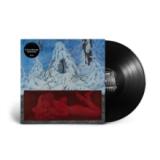
With Le Tact, Joseph Schiano di Lombo delivers a work of rare finesse, conceived as a posthumous conversation with photographer Henri Cartier-Bresson. Through seven meditative pieces - whose evocative titles echo the photographer's words when describing the art of creating an image - this album explores the instinctive and delicate relationship that connects music and photography to our everyday lives.
Presented for the first time on stage during the 20th anniversary of the Henri Cartier-Bresson Foundation, Le Tact draws its inspiration from the photographer’s art: a sensitive and respectful approach, capturing the essence of things without altering them. This spirit of discretion and precision is distilled by Joseph into his music, blending composition and improvisation with intuitive elegance. While Joseph composed and performed the piano, organ, synthesizer, clarinet, and guitar himself, he opened his arrangements for the first time to other musicians. Agnes Wasniewska (oboe), Barbara Misiewicz (cello), and Tomasz Baye Zietek (trumpet) bring their sonic textures, enriching this work, which is both intimate and collaborative. The album was recorded between Paris and Sopot (Poland) during a residency organized by the CNM.
The album’s title perfectly encapsulates its essence: Le Tact. This simple word, evoking both the sense of touch and artistic intuition, reflects the way Joseph composes—with respect, humility, and attention to detail. Each note seems to float lightly, as if to preserve the serenity of the moment. Le Tact transcends genre boundaries. Between ambient music and contemporary art, this album invites listeners to slow down and truly listen. It is a tribute to the beauty of the world, captured with the subtlety of a photographer and the sensitivity of a musician.
6 places. 6 artists.
The first compilation by Stima Records is a trip to La Réunion island.
Music & Poetry.
Unusual electronic sounds & rhythms, pulling their roots in local tradition and global bass music.
Switch on the GPS et let yourself go...
After 3 LP (MEUH! à la petite cuiller and VU A LA TÉLÉ), INTERIM comes back with TRASH, a 4th beautiful blue vinyl LP with electro pop and dub dancing sounds. Electronics and weirdness of all kinds are once again the signature of the duo.
Agnès Rougier (bass, melodica, electronics, lyrics) and Michel Bazieu (electronics, lyrics) hijack words to play with reality and have fun making the machines sing. Lizard men and climate change (Lizard Man), the French state and chlordecone (CLD Banana Dub), the Trump’s space force (Space force Dub), the Chinese social tyranny (Social Control) or Facebook (Up Sugar Mountain): the 9 tracks of TRASH humorously describe the social and political tragedies and excesses of today’s world.
Recorded and mixed by INTERIM. Mastering by Pete Maher. On the cover, an original drawing by Arthur Junier. TRASH is produced by the label MEUH! Productions.
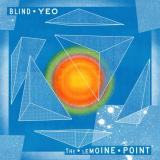
Based in Cornwall, Blind Yeo emerged from the isolation of lockdown. Built as an open collective, the project brings together musicians, visual artists and performers, developing a practice rooted in improvisation, live energy and shared creation.
The Lemoine Point, their debut album, was recorded on a disused airfield near St Agnes. The title refers to a hidden geometric centre where lines converge, a metaphor that runs through the record as past, present and future meet within a single moment.
Much of the album was captured live by a core ensemble including Sam Pert, Phil Self, Henry Greenham, Philippa Blum, Jake Sheridan, Will Greenham and Anousk Helm. These recordings are balanced by more intimate sessions, shaping a sound that moves between reworked folk traditions, electronic textures and raw, organic energy. Across the album, fragments of stories and emotions intertwine, exploring themes of love, duality and disorientation in time. Rooted in the Cornish landscape yet open in form, The Lemoine Point unfolds as a space where place, people and memory converge into a fluid and immersive whole.
Mit seiner außergewöhnlichen Virtuosität und poetischen Klangsprache gehört Bruce Liu, Gewinner des
Internationalen Chopin-Klavierwettbewerbs 2021, zu den faszinierendsten Pianisten seiner Generation. Auf
seinem neuen Album „Lunaris“ präsentiert Liu ein Programm, das ihn von seiner intimsten, visionärsten
und atmosphärischsten Seite zeigt:
Im Zentrum von „Lunaris“ stehen Beethovens legendäre Sonaten „Mondschein“ und „Waldstein“. Rund um
diese Meisterwerke entfaltet sich ein Programm voller atmosphärischer Dichte und emotionaler Tiefe, das
ikonische Klavierwerke mit verborgenen Schätzen verbindet. Chopins geliebtes Nocturne, Debussys schimmernde „Rêverie“ und Bachs zeitlose Klangsprache treffen auf selten eingespielte Werke von Mompou,
die ekstatische Intensität Skrjabins und die hypnotische Schönheit von Cages „Dream“. Zeitgenössische
Klangfarben von Agnes Obel und Ligeti verleihen dieser musikalischen Reise eine frische und überraschende
Dimension.
Mehr als ein klassisches Recital-Album ist „Lunaris“ ein immersives Hörerlebnis, cineastisch, nächtlich
und zutiefst persönlich. Inspiriert von Poesie, Malerei und dem Geheimnis der Nacht erschafft Bruce Liu
mit jedem Werk einen Raum voller schwebender Zeit, Licht und Fantasie.
„Es ist nicht nur eine Auswahl von Werken, die ich liebe, sondern auch mein Versuch, eine neue Art des
Hörens und Erlebens von Klang zu erschaffen, die in mir gewachsen ist. Diese Atmosphäre der schwebenden
Zeit sowie das Nebeneinander von Intimität und Distanz sind Dinge, die ich in meiner täglichen Beziehung
zum Instrument wiedererkenne.“ – Bruce Liu
Gelobt für seine „elfengleiche Virtuosität“ (Le Monde) und seine „Eleganz und Leichtigkeit des Anschlags“
(The Guardian), entführt Liu sein Publikum in eine faszinierende Welt aus mondlichtdurchfluteter Reflexion,
Fantasie und Transzendenz.
Brannten Schnüre is an experimental dark folk group out of Würzburg, Germany. Christian Schoppik composed and played all the music, Katie Rich whispers, recites and sings. Together they make astoundingly beautiful folk with a rich instrumentation leaning towards the atonal spectrum. Instrumental wanderings stand alongside Nico-esque poetry tales. Christian plays the accordeon and in some songs guitar and flute. Inspired by hierophants like Nový Svet and David Jackman, solemn song fragments (a lot of old greek rembetiko-recordings) are modified and looped, with additional instruments and voices being integrated later on. Their music has been described as 'surreal folkcollage' and 'german hauntology'.
With the emergence of Schoppik's second project, a dada cabaret called Agnes Beil in 2010, Brannten Schnüre moved closer to the song structures of its frivolous sibling. The songs of Schoppik's latest creation Sommer im Pfirsichhain are further accompanied by a female singing voice, lending the pieces the voluptuous quality of a stickily tense midsummer. Sommer Im Pfirsichhain (Summer In The Peachgrove) is the second part of a quartet of releases. The first being Aprilnacht which got released on Sic Sic Tapes last year. Part three Geträumt hab' ich vom Martinszug and part four will follow later.
Reference points are bands like Winter Family and Twinsistermoon. Music etched on folkloric, ritual elements transferred into the 21th century. Also worth mentioning is the hand-drawn artwork which is made by artist Gwénola Carrère.
Ever since the late 1950s bossa-nova revolution, Brazil’s influence on French music has been undeniable. Pierre Barouh, Georges Moustaki and a vast array of lesser known artists, all made the Musica Popular Brasileira (MPB) an axis of promotion at the service of a cool and metaphysical, modern and mixed Brazilian lifestyle. Some were seduced by the poetic languors of the bossa, some were looking for fun, and others just loved the American hybridization of jazz-bossa, jazz-samba.
What is bossa nova? One of its creators, Joao Gilberto said: "Its style, cadence, everything is samba. At the very start, we didn't call it bossa nova, we sang a little samba made up of a single note - Samba de uma nota so .... The discussion around the origins of bossa nova is therefore useless”. It is nevertheless useful to remember that these magnificent Brazilian songs, which the guitarist describes as samba, were shifted and balanced around improbable chords. "I like things that lean, the in-betweens that limp with grace," said Pierre Barrouh, quoting Jean Cocteau.
With emotion, arrangements for violin and supple guitar licks, bossa nova rapidly changed. A transformation that can be heard in the Tchic, tchic, French Bossa Nova 1963-1974 compilation, the result of a cultural reappropriation, which traveled through the United States and supplemented itself in France.
A musical revolution that has remained significant, bossa nova was born in Rio. From 1956 to 1961, Brazil lived through its golden years. In five years, the country had invented its modernist style. Elected president in 1956, Juscelino Kubitschek de Oliveira, an elegant man with a broad forehead, brandished a promising slogan: "Fifty years of progress in five years". He quickly got to work. Not worried about increasing debt, he launched the project for a new federal capital, Brasilia, designed by the communist architect Oscar Niemeyer. Volkswagen opened state-of-the-art factories and created the “fusquinha”, the Beetle. In Rio, the Vespa made its first appearance. The Arpoador Surf Club crew run into the “girl” from Ipanema, Helô Pinheiro - the tanned garota ("chick"), between a flower and mermaid, who at 17 walked by the Veloso bar, where the fiery author and composer, Tom Jobim and Vinicius de Moraes, were getting drunk on whiskey. From then on, bossa symbolized cool.
In 1958, Joao Gilberto recorded Chega de Saudade, which the directors of Philips denied, calling it "music for fagots". The marketing director, who believed in it, secretly pressed 3000 78-inch vinyls and distributed them at schools around Rio, creating a tidal wave.
American jazzmen then took over. In particular, trumpeter Dizzy Gillespie and guitarist Charlie Byrd. In November 1962, the Brazilian Ministry of Foreign Affairs funded a "Bossa-Nova" concert at Carnegie Hall in New York, inviting the genre’s pioneers. Unprepared, the show soon turned to disaster. But the troupe was invited to the White House by Jackie Kennedy. The first lady loved "the new beat" and in particular Maria Ninguem, a song by Carlos Lyra, later covered by Brigitte Bardot.
In Brazil, the 1964 military coup quickly ended this euphoria. The destructive atmosphere that ensued pushed many Brazilian musicians to leave, if not to exile. Thus, Tom Jobim, Sergio Mendes and Joao Gilberto arrived to the United States. In New York, Joao Gilberto met saxophonist Stan Getz. At the time, he was married to the Bahianese Astrud Weinert Gilberto, who had a German father. She had never sung before, but she knew how to speak English. Getz therefore asked her to replace her husband on The Girl From Ipanema. The Getz/Gilberto record with Tom Jobim on piano, was released in March 1964. Phil Ramone, the "pope of pop" was in charge of sound.
Bossa nova arrived in Paris through the classic “guitar-voice” channel (Pierre Barouh, Baden Powell, Moustaki…) But France loved jazz and Paris had already welcomed its American contributors. All these good people were to pass through Saint-Germain-des-Prés. The cabaret l'Escale became the Mecca of Latin American sound where one could find Pierre Barrouh and his friends, such as the Camara Trio, samba-jazz aces, whose only record was published by the Saravah label. With a band strangely called Les Masques (a band that included Nicole Croisille and Pierre Vassiliu, among others), the Camara Trio recorded an interesting Brazilian Sound, including the track Il faut tenir which is present on this tasty compilation of rarities.
Other enlightened musicians can also be found on the compilation, such as Jean-Pierre Sabar (songwriter for Hardy, Auffray, Leforestier ...) and the French pop rock organist Balthazar. In 1975, Sabar recorded Aurinkoinen Musiikkimatka on a Finnish label, which featured the crazy Vai, Vai, included on this record. We are now following the footsteps of Brazilian electronic musicians such as Sergio Mendes, Eumir Deodato or Marcos Valle who created funk and disco sounds on their keyboards and synthesizers. A style that influenced Véronique Sanson when she wrote Jusqu’à la Tombée de la nuit in 1969 for Isabelle de Funès, the niece of Louis and a great friend of Michel Berger - Sanson did end up singing this track on her 1992 Sans Regret record.
The pinnacle of exoticism and travel, Sylvia Fels’ Corto Maltese includes bongos, sea mist and ocean sounds. The title was taken from Jacky Chalard’s concept album written in 1974, Je suis vivant, mais j’ai peur (I am alive, but I am scared), based on Gilbert Deflez’s science fiction novel.
However, bossa nova extended the scope of popularity. "In the 1970s, I was a fan of Sergio Mendes, Getz / Gilberto. I fell in love with this music that I knew because I had been an orchestral singer, " explained Isabelle Aubret, who in 1971 delivered a composite record of covers by the very funky Jorge Ben, Orfeu Negro, Tom Jobim, Vinicius de Morais and Jean Ferrat. "I recorded this album for Meys Records in Paris, far from Brazil, with wonderful musicians, François Raubert, Roland Vincent, Alain Goraguer...". The latter wrote the arrangements for Casa Forte, a very percussive title borrowed from Edu Lobo, one of the initiators of the bossa who spent time in California. "Jazz and bossa came together and produced very rhythmic music. I love singing, it allows me to dream, to have fun, to feel a high on stage, and these songs brought me joy, made me swing, my singing felt like a dance.”
The world tours of French singers and their desire for the tropics, often brought them to Rio with its hills, forests, caipirinhas and tanned bodies. There are surprises though, like this Iemenja (Iemenja is the goddess of the sea in the Afro-Brazilian candomblé religion). Not unlike the composer and musician Jean-Pierre Lang, based in Sao Paulo, Claire Chevalier taught Brazil to Brazil. In 1970, the singer and painter published a 45-inch vinyl, Mon mari et mes amants (My husband and my lovers), under the improbable pseudonym of Clarinha (little Claire). She was then living in Rio, with her husband, Joël Leibovitz, who founded a band called Azimuth, and who owned a record label specialized in "sambas enredos" songs for samba school parades.
For its B side, she asked Pierre Perret to come up with lyrics for a song composed by Carlos Imperial: "Oh goddess of the sea, o goddess Iemenja, I bring a white rose to adorn your long hair ..." . "Perret came to see us, and we had fun, remembers Joël Leibovitz. We wrote Lemenja for fun, we recorded it at the Havaí studio, behind the Central do Brasil the central station. Erlon Chaves, the arranger who worked with Elis Regina, joined us" adding his share of Afro-Brazilian percussions and funky brass to the mix.
There is a common misunderstanding in Franco-Brazilian history: that bossa, admittedly hedonistic, is perceived as funny, even though the poets who wrote the texts are often philosophizing on the human condition. Its French interpreters pull it towards a carnival inspired universe, far removed from its fundamental essence. Thus, Jean Constantin covered the famous Samba da minha terra, an ode to the art of samba written by the classic Bahian composer Dorival Caymmi, renaming it with the enticing title of Pas tant de tchi tchi pompon: "On your pier there is no tchi tchi / when you arch your back, you know everything is alright ”(lyrics by Gérard Calvi). This expedited bossa aims for the absurd, but retains a certain elegance.
Indeed, Jean Constantin was not an idiot, the rather large man had a huge mustache and liked fantasy, (Les pantoufles à papa, Le pacha, inspired by cha-cha-cha-cha, salsa and jazz) but he was also the lyricist of Mon manège à moi interpreted by Edith Piaf, the composer of Mon Truc en plume by Zizi Jeanmaire and the soundtrack of François Truffaut’s 400 Blows. Le Poulpe, published in 1970, from which this bossa is extract, was arranged by Jean-Claude Vannier, an accomplice of Serge Gainsbourg’s Melody Nelson. In short: "There is enough of samba / By looking at the parasol / Because my poor cabeza / Is going to die in the sun".
Even the American actress Marpessa Down, who was at the heart of the bossa nova revolution with her role as Euridyce in Marcel Camus’ film Orfeu Negro, winner of the 1959 Cannes Palme d'or, fed the clichée with Je voudrais parler au petit cuica - "Tell me how you manage to always make people want to dance / It's true, I must admit that I cannot resist your magic" - in consequence, once can hear the cuica, a little drum inherited from the Bantu.
But bossa nova had many angles. Societal, of course, pushing actresses who were symbols of women's liberation like Brigitte Bardot, Jeanne Moreau, or Sophia Loren to engage in the exercise of accelerated bossa. In February of 1963, Sophia Loren made a record in French in Rome, Je ne t'aime plus, featuring the song De jour en jour, a bossa written by two Italians, Armando Trovajoli and Tino Fornai, which was released a little later by Barclay. Bossa accompanied the 1960s, a decade of moral liberation. Ann Sorel, who interpreted La Poupée des favellas, caused a sensation with L’amour à plusieurs, a provocative song written by Frédéric Bottom and Jean-Claude Vannier. As for the actress Andrea Parisy, she displayed her bourgeois cheekiness in Marcel Carné's Les Tricheurs before interpreting Les mains qui font du bien. And Magalie Noël, the friend of Boris Vian, who sung Johnny fais-moi mal, was hired to sing Une énorme Samba, composed by Alain Goraguer (arranger to Gainsbourg, Bobby Lapointe and Jean Ferrat) with lyrics by Frédéric Botton.
But in the end, of what wood is bossa nova made of? The answer is given by Christianne Legrand, daughter of Raymond the conductor, and sister to Michel the composer: "With me, with jà" - jà means "immediately" in Portuguese. In 1972, the singer, an expert in vocal jazz and a member of the Double Six, published Le Brésil de Christianne Legrand. Two songs included on the Tchic Tchic compilation that demonstrate how bossa, jazz, funk, rock, etc. work like a swiss army knife: the music is used to denounce broken systems, or miracles, HLM et ciné roman, Cent mille poissons dans ton filet, two songs from the O Cafona soundtrack, a successful telenovela broadcast, at the time in black and white, on TV Globo. The first was adapted in French by the fighter and friend of the Legrand tribe, Agnès Varda. The second is content with a play on words, jostling them into a summer fun.
Véronique Mortaigne
out of Stock
Last delivered 3 months ago available to reorder, subject to availability
PNØ is the duo project of experimental vocalist Agnes Hvizdalek and techno innovator Jakob Schneidewind on electronics. They combine minimalistic musical structures with organic improvisations, pure vocal sounds with drum machines, synthesizers and effects
that trigger and manipulate each other’s output. Their vision for the future of music makes them explore crossing points between experimental and electronic dance music. Their first album, «Zakeri», was released in 2015. Since then, they have performed, among others, at ORF Musikprotokoll, Wiener Festwochen, Jazzwerkstatt Wien, Ottosonics, and de/semble.
The album «Hypatia» will be released on June 26th by Palazzo Recordings.
A mix of metallic doomgaze, epic gothic soundscapes and post punk attitude. Loud and crushing, yet sharp enough to stick in your head for days. There are two kinds of heavy bands: the ones that make a lot of noise and the ones that drag you somewhere you didn't know you needed to go. Cwfen (pronounced 'Coven') are the latter, and Sorrows is a record that doesn't just crush - it haunts long after the final note. The allure of Cwfen's sound lies in contrasts: the glacial ferocity of Amenra, with the velvet-and-razor vocals of King Woman, and the rotting grandeur of Type O Negative. It's as hypnotic as it is harrowing, but somehow even better than the sum of those parts. Since emerging from Glasgow's underground just 18 months ago, Cwfen's reputation is growing, selling out shows and pulling growing audiences into their doom-laden fever dream. Released in October, the band's debut single 'Reliks' was a hit with fans and critics, landing a spot on Kerrang!'s release of the week playlist. And rightly so. Their sound devours and delights in equal measure. "Cwfen have emerged from the darkest depths of the Caledonian underground with a beguiling blend of doom metal and gothic post-punk for those who like to live deliciously." Kerrang! Sorrows lives in the space around doom where the weight of the riffs is matched by the weight in your chest, where the lyrics and the songwriting are as important as the music itself. Loud and crushing, yet sharp enough to stick in your head for days. It builds, burns, collapses, resurrects. Big on riffs, bigger on feeling. The kind of songs you carry with you. Singer and rhythm guitarist Agnes Alder bears her claws one minute, then whispers the next, as the band follows like a storm front, rising, breaking, drowning you in the weight of it. From the guttural Penance to the lush Whispers, to the feral Wolfsbane and the insurrectionist Rite. It includes a long reworking of Embers and Bodies, the two self-recorded demos that launched them into the scene with a bang and their growing legion of fans already adore. Intricate vocal arrangements, heavy and harsh guitars, a mix of atmosphere and heft, it undoubtedly punches above its weight for a debut. As Agnes says: "When we stopped trying to fit into any one space, what came out was this beautiful mix of dark and light. Something visceral and cathartic." This is a band that sits right in the boundaries between the heavy genres, pulling in everyone from the young goths and to the die-hard metalheads alike and 'Sorrows' truly does deliver in spades. Make no mistake, Cwfen are set to be one of the names to watch in 2025. FFO: Chelsea Wolfe, Zetra, King Woman, Type O Negative, Alcest, Faetooth, Liturgy. Limited vinyl pressing, 500 copies in transparent red vinyl. Full colour Gatefold outer sleeve, with a full colour printed inner sleeve, Full download included as well.
The second release from the legendary Celluloid label since its rebirth after 35 years of silence, Honk Gong is a brand-new trip-hop / no wave duo built around the wild, dreamlike sampling of Paul Ramon(Pleasure Principle, Bryan"s Magic Tears) and the contagiously laid-back flow of the San Francisco"s MC & Producer,Robin Jiro Margerin (Salopecia, There"s Ifs, Marginal Tow). Conceived as the diary of a chemical wreck, Dissociate drifts somewhere between the intelligence of an A Tribe Called Quest track and a YouTubecollage. Recorded by Paul Rannaud (Fat White Family, Insecure Men)and mixed by Maxime Maurel (Departure Kids,Ventre de Biche), this debut track kicks off a series of concerts and showcases ahead of the release of a first album, "Eau de Low", due in spring 2026. "Dissociate" is released in partnership with agnès b.
ounded in 1992 by the larger than life, Scottish punk-rock poet laureate, Mr Paul McKenzie, this merry band of miscreants has spent more than three decades circumnavigating the globe to bring the McKenzies gospel to an ever-expanding throng of rebels, scallywags and ne'er do wells. There's not many bands that can boast of a 30+ year career as staggeringly adventurous, wildly tempestuous and utterly death-defying as The Real McKenzies. It would be a serious mistake to write them off as just another Celtic punk band (they’ve been around longer than the Dropkick Murphys after all). They are an unstoppable juggernaut of touring mayhem. A ferocious troupe of insanely talented minstrels, storytellers and entertainers melding traditional acoustic and electric instruments to create a sound like no other. Their list of accolades is long. From sharing the stage with the likes of NOFX, Rancid, Flogging Molly, Metallica and Shane McGowan to appearing in film, books and video games to early releases with the almighty Fat Wreck Chords, their legendary status only continues to grow. On Yer Bike is an absolute beast of an album. A newly revitalized and laser-focused Paul McKenzie has never sounded better and his longtime bandmates have never been tighter. Boasting thirteen epic tracks, including the Sawney Bean trilogy (a trio of songs about Scotland's most infamous cannibal highwayman), the songs rage across topics including but not limited to love, literacy, historical sagas, eating sardines with your mother and, of course, cannibalism. Soaring bagpipes, heart pounding percussion and ultra melodic shoutalong Celtic punk rock are the orders of the day and are delivered piping hot from one of the most respected and adored pioneers of the genre.
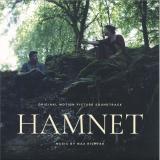
Recorded between the iconic Abbey Road and Polish Radio studios, Hania Rani"s original music for Joachim Trier"s Cannes and Golden Globe winning, Oscar and Bafta nominated "Sentimental Value" is a deeply intuitive collaboration, composed before a single frame was edited. For Hania Rani composing for the most recent film by Joachim Trier was nothing less than a true joy and a real artistic adventure. As she explains: "It doesn"t happen often that I"m asked to work on a film by a director whose work I know so well and which resonates with me so naturally. What I understood while working with such an intriguing mind and intelligent artist as Joachim is that the role of a film composer is to wander along with the director, hand in hand, rather than follow one another. The collaboration should be a partnership - evenly balanced and able to invigorate people on both ends - otherwise it will always feel superficial, imposed, and timid".
out of Stock
Last delivered 83 days ago available to reorder, subject to availability
Latin Grammy-Winning Producer Pupillo Unites Global
Artists on his new album
Co-produced by Mario Caldato Jr. (Beastie Boys), featuring collaborations with Rodrigo
Amarante, Carminho, Adrian Younge, Gaslamp Killer, Cut Chemist, Hervé Salters, and more
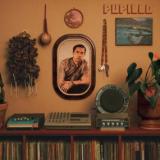
Drummer, percussionist and producer Pupillo, one of the most influential figures in Brazilian
music and a four-time Latin Grammy winner, releases his first original album through the Los
Angeles–based label Amor in Sound. The record brings together an impressive and diverse
group of collaborators from Brazil and abroad. Amor in Sound is run by Samantha Caldato,
the project’s executive producer and creative director, and Mario Caldato Jr. (Beastie Boys),
who co-produced the album alongside Pupillo. The project was developed in a free,
experimental environment, allowing the artist to explore the many rhythmic and sonic
territories that have shaped his career — from Northeastern Brazilian traditions to jazz, hip
hop, and cinematic soundscapes. Listen here.
The album features special appearances by Brazilian artists such as Céu, Rodrigo Amarante,
Agnes Nunes, Amaro Freitas, Davi Moraes, Alberto Continentino and Pedro Martins,
alongside a strong roster of international collaborators, including Carminho, Gaslamp Killer,
Loren Oden, Adrian Younge, Cut Chemist and Hervé Salters (known for his work with
General Elektriks). The album’s 12 tracks were further enriched by contributions from
Jeremy Gustin, Roberto Schilling, and other musicians who make Amor in Sound Studios in
Los Angeles a place of creative exchange.
Beyond his work as the drummer of Nação Zumbi, Pupillo has built a prolific career as a
producer and collaborator with some of the most important names in Brazilian music,
including Gal Costa, Nando Reis, Erasmo Carlos, Céu, and Otto, helping to shape the sound
of multiple generations. This trajectory has earned him four Latin Grammy Awards.
From Pernambuco, Pupillo is also an acclaimed composer for cinema, having written
soundtracks for films such as Arido Movie and Blue Blood (directed by Lirio Ferreira), The
Assailant (directed by João Daniel Tikhomiroff), among others. This cinematic sensibility
permeates the album, which unfolds like a film, moving through richly textured soundscapes
that cross continents and musical traditions.
out of Stock
Last delivered 56 days ago available to reorder, subject to availability
1. Special remarks: 116 pages A5 format, risograph printing with thread binding, exposed spine
2. GENRE/S: Poetry/Art/Photography
3. SHORT INFO:
Period Music is a research process involving Susanna Gonzo, Merma Suelo, Tuce Alba, Elizabeth Gallon Droste, Agnese Menguzzato, and Farah Hazim. The six artists aim to attune to the different temporalities experienced through our bodies, drawing from multiple meanings of period – from the menstrual cycle to musical repetitions and astronomical revolutions.
r'tu
A central meaning of the Sanskrit word for ritual, r'tu, is menstruation, the original ritual. The root of r'tu is in arithmetic and rhythm1.
1Judy Grahn, Blood, Bread, and Roses: How Menstruation Created the World (Boston: Beacon Press, 1993), 45.Period Music has been staying with essential matters on how we listen to time and rhythms in our bodies and in the world. Questioning the tempo of everyday life in an accelerated system like that of modern society, the group has opened up co-creation spaces to listen to embodied memories.
Through dialogue, improvisation and jam sessions, the six artists attuned to each other’s processes, composing music, word scores and drawings – ultimately sounding together.
This work embodies other notions of community through archetypes, embracing the impermanence that reveals the countless rhythms of life. Period Music speaks of friendship and connection, and invites you to take on a journey of interconnectedness between our rhythms and the broader social structures influencing our lives.
The project emerges from conversations that began in Berlin in the fall of 2023, including a one-week residency at Atelier Josepha in Ahrenshoop by the Baltic Sea in April 2024. The first physical iteration of this project will consist of a book and a vinyl. The album features looping improvisational compositions encoded with messages about multiple temporalities. The accompanying book gathers poetic memories, letters, photographs, symbols, and drawings that emerged during the process
A mix of metallic doomgaze, epic gothic soundscapes and post punk attitude. Loud and crushing, yet sharp enough to stick in your head for days. There are two kinds of heavy bands: the ones that make a lot of noise and the ones that drag you somewhere you didn't know you needed to go. Cwfen (pronounced 'Coven') are the latter, and Sorrows is a record that doesn't just crush - it haunts long after the final note. The allure of Cwfen's sound lies in contrasts: the glacial ferocity of Amenra, with the velvet-and-razor vocals of King Woman, and the rotting grandeur of Type O Negative. It's as hypnotic as it is harrowing, but somehow even better than the sum of those parts. Since emerging from Glasgow's underground just 18 months ago, Cwfen's reputation is growing, selling out shows and pulling growing audiences into their doom-laden fever dream. Released in October, the band's debut single 'Reliks' was a hit with fans and critics, landing a spot on Kerrang!'s release of the week playlist. And rightly so. Their sound devours and delights in equal measure. "Cwfen have emerged from the darkest depths of the Caledonian underground with a beguiling blend of doom metal and gothic post-punk for those who like to live deliciously." Kerrang! Sorrows lives in the space around doom where the weight of the riffs is matched by the weight in your chest, where the lyrics and the songwriting are as important as the music itself. Loud and crushing, yet sharp enough to stick in your head for days. It builds, burns, collapses, resurrects. Big on riffs, bigger on feeling. The kind of songs you carry with you. Singer and rhythm guitarist Agnes Alder bears her claws one minute, then whispers the next, as the band follows like a storm front, rising, breaking, drowning you in the weight of it. From the guttural Penance to the lush Whispers, to the feral Wolfsbane and the insurrectionist Rite. It includes a long reworking of Embers and Bodies, the two self-recorded demos that launched them into the scene with a bang and their growing legion of fans already adore. Intricate vocal arrangements, heavy and harsh guitars, a mix of atmosphere and heft, it undoubtedly punches above its weight for a debut. As Agnes says: "When we stopped trying to fit into any one space, what came out was this beautiful mix of dark and light. Something visceral and cathartic." This is a band that sits right in the boundaries between the heavy genres, pulling in everyone from the young goths and to the die-hard metalheads alike and 'Sorrows' truly does deliver in spades. Make no mistake, Cwfen are set to be one of the names to watch in 2025. FFO: Chelsea Wolfe, Zetra, King Woman, Type O Negative, Alcest, Faetooth, Liturgy. Limited vinyl pressing, 500 copies in transparent red vinyl. Full colour Gatefold outer sleeve, with a full colour printed inner sleeve, Full download included as well.
Period Music is a research process involving Susanna Gonzo, Merma Suelo, Tuce Alba, Elizabeth
Gallon Droste, Agnese Menguzzato, and Farah Hazim. The six artists aim to attune to the different
temporalities experienced through our bodies, drawing from multiple meanings of period – from the
menstrual cycle to musical repetitions and astronomical revolutions.
r'tu
A central meaning of the Sanskrit word for ritual, r'tu, is menstruation, the original ritual. The root of
r'tu is in arithmetic and rhythm/.
Period Music has been staying with essential matters on how we listen to time and rhythms in our
bodies and in the world. Questioning the tempo of everyday life in an accelerated system like that of
modern society, the group has opened up co-creation spaces to listen to embodied memories.
Through dialogue, improvisation and jam sessions, the six artists attuned to e ach other’s processes,
composing music, word scores and drawings – ultimately sounding together.
This work embodies other notions of community through archetypes, embracing the impermanence
that reveals the countless rhythms of life. Period Music speaks of friendship and connection, and
invites you to take on a journey of interconnectedness between our rhythms and the broader social
structures influencing our lives.
The project emerges from conversations that began in Berlin in the fall of 2023, including a one-week
residency at Atelier Josepha in Ahrenshoop by the Baltic Sea in April 2024. The first physical iteration
of this project will consist of a book and a vinyl. The album features looping improvisational compositions encoded with messages about multiple temporalities. The accompanying book gathers poetic memories, letters, photographs, symbols, and drawings that emerged during the process
Today Cork's acclaimed Cardinals announce their much-anticipated debut album 'Masquerade'. Set to land February 13th on tastemaker label So Young Records, the ten song album was recorded with producer Shrink at RAK Studios, London across the summer. It's a record that is at once grand and intimate, awash with romance and flickers of holy imagery, and most of all, it's an undeniable fulfilment of the innate promise the band have shown since their earliest beginnings. These are emotionally expansive songs, some simmering with an undercurrent of violence, cynicism or fervent discontent (Anhedonia, The Burning of Cork, Barbed Wire) and others gleaming with a bright-eyed vulnerability. A vivid first half contrasts a darker second and crafts a record with a clear A-side and B-side. A nod to the band’s collective love of vinyl, that tonal shift takes its cue from a variety of expected and unexpected influences - from the brittle honesty of folk to the theatrical melodrama of goth-rock. Formats and Quantities
Swiss artist Lukas Traxel releases his powerful debut album One-Eyed Daruma on We Jazz Records, March 10. The trio features Traxel on double bass, Otis Sandsjö on sax and Moritz Baumgärtner on drums. Compact, deep, and organic to the bone, Traxel & co's sound echoes the innovations of rhythmically driven avantgarde jazz while keeping things moving at all times. There's both drive and freedom to this sound.
ONe-Eyed Daruma features eight new compositions by Traxel, who crafted the outline for the album while dealing with the loss of his father. The group came together after an open invitation from the Zurich jazz club Moods to present a new group. The trio of Traxel, Sandsjö and Baumgärtner creates a full, symphonic, and powerful body of sound despite the instrumentation without a harmony instrument. The trio functions as a collective where the boundaries between composition, melody, and accompaniment are in flux, while keeping the common goal of creating new music together in sight at all times. Traxel reports that after playing bass in various groups with guitar and/or piano, he wanted to create a counterpoint of sorts with his new group and specifically go about it with a more sparse setup. As One-Eyed Drama proves, the idea behind the trio dynamic is a strong one and the unit makes use of their extra space in creating evocative, moody, swinging creative jazz with a distinguishable fingerprint of its own.
Lukas Traxel says:
"The process of composing this music while dealing with the loss of a loved one resulted in a writer's block at first. The notes would just not flow out of my pen until I noticed a mysterious-looking figure in the right upper corner of my piano. It was a daruma, an eyeless figure that in the Japanese tradition brings luck and prosperity. According to the myth, the first eye must be drawn onto the figure while expressing a wish. The second eye can be added only if the wish comes true. My daruma is meant to stay one-eyed as my wish, strongly connected and intertwined with my now gone father, is not meant to be fulfilled. The feeling of unfulfillment and imperfection of life serves as a common thread throughout this album, right down to its title. In a similar fashion, a composition remains incomplete until it is interpreted by musicians, and given form as music. That being said, for me playing together with this trio symbolises the upside: the sense of fulfillment in music and life.
Our musical influences include the American composer and singer Caroline Shaw, Swiss pianist Colin Vallon's trio, and composer/singer-songwriter Gabriel Kahane. In addition, I have listened a lot to the trio albums of Jimmy Guiffre and Sonny Rollins. Besides that, my musical heroes like Charlie Haden, John Coltrane, and Keith Jarrett always flow into the music. Another very important influence in the music is the work of American visual artist Agnes Martin, in whose works the imperfection of a multiplicity of repetitions results in a lively big whole in the end. (See "Wild Flower")
Live, the trio takes a lot of freedom in interpreting this music, yet we have a deeper, almost pop-like attitude towards the live performance as an experience. For me it's always important to build a strong narrative with the band while on stage."
One-Eyed Daruma by Lukas Traxel is released on 10 March 2023 by We Jazz Records on LP/CD/digitally. The LP edition is shelved in an inside-out sleeve and pressed on white vinyl. The CD is housed in a cardboard digisleeve with UV lacquer finish.
out of Stock
Last delivered 3 years ago available to reorder, subject to availability