Hiriketiya is a small, enclosed bay on Sri Lanka's southern coast, where jungle leans toward the water and the days unfold without urgency.
Passing through in early 2025 on the way to Europe, Alex Albrecht spent a week here at MOND's artist residency, allowing the rhythms of the place to quietly shape the work that followed.
During the residency, Albrecht recorded and exchanged ideas with Sri Lankan musicians Dhyan Basho on sitar, Dinelka Liyanage on electronics, Uvindu Perera on double bass and Pasindu Herath on saxophone.
Their performances appear throughout the album, sampled and re-contextualised, influencing its melodic language, pacing and emotional tone.
Much of the music was shaped directly by its surroundings. Field recordings were gathered across Hiriketiya, and instruments were played wherever it felt necessary. This included rocks beside the ocean where waves set irregular rhythms, tall grasslands where wind and insects blend into the recordings, and open decks overlooking the sea. 'Round Table' captures this approach most clearly. Recorded while sitting together overlooking the ocean, a large steel table in front of the group gradually became part of the composition, used instinctively as an unplanned percussive element.
Not everything could be captured. Some of the most meaningful moments occurred before recording was possible. Those sounds exist only in memory, and the album is shaped in part by an attempt to hold onto their feelings.
Rather than documenting the residency in a linear way, the album gathers fragments, recordings, electronic sketches and field sounds, assembling them into a continuous listening experience shaped by place and recollection. MOND owners Jess and Renato foster an environment that supports artists without directing them, creating space for focus, trust and connection.
The result is a record shaped by Hiriketiya's enclosed bay, dense vegetation, heat and night air. Music formed through listening, restraint, missed recordings and the sensation of being temporarily held by a place.
Search:alex rath
- 1
- 1: Amidst Things Uncontrolled (2026 Remaster) 05:00
- 2: Pigeon Hurt (06 Remaster) 03:3
- 3: Roots Growing (2026 Remaster) 04:42
- 4: From Verse To Verse (2026 Remaster) 03:9
- 5: Refrain From (2026 Remaster) 01:13
- 6: Tentative Growth (202 Remaster) 04:28
- 7: Across From Golden (Remix) (2026 Remaster) 05:08
- 8: Standing On A Hummingbird (2026 Remaster) 04:54
- 9: Pattern For A Pillow (2026 Remaster) 07:14
- 10: Difficult To Light (2026 Remaster) 05:00
Originally released on Ezekiel Honig's Anticipate label in 2007, Standing on a Hummingbird is the debut album by Canadian sound artist Mark Templeton, now appearing for the first time on vinyl, newly remastered by Giuseppe Ielasi and cut by LUPO. Working at the intersection of post-glitch, electroacoustic ambient, and textural minimalism, Templeton composes through restraint and erosion, building patient and richly tactile pieces primarily from acoustic sources - fingerpicked guitar, plaintive banjo, muted accordion tones - subjected to careful processes of granulation, filtering, and environmental masking. These gestures never overwhelm the source material; instead, they wonderfully destabilize it. Melodies appear briefly, only to dissolve into dense atmospheres of field recordings: distant streets, birds, water, air. Sounds hover, vibrate, and vanish, much like the wing beating latent in the album’s title.
Tracks such as “Pattern For a Pillow” and “Amidst Things Uncontrolled” articulate this approach with particular clarity, setting languid acoustic figures against churning granular backdrops that feel at once sheltering and unstable. Elsewhere, moments of fragile clarity - fluttering guitar lines, reedy accordion tones - briefly break the surface before being absorbed back into the field.
Heard today, the record offers a clarion, almost spartan strain of textural ambient music: intricate yet unforced, shaped by human touch rather than automated excess. Its refusal of spectacle feels especially vital in a landscape saturated with maximalist digitalia - a reminder that electronic music’s most enduring gestures often occur where sound is allowed to tremble and hold itself just long enough to be felt before disappearing once again. (Alex Cobb, 2026)
Strut proudly presents the debut album from producer, songwriter and multiinstrumentalist, Momoko Gill. Fresh from her critically acclaimed collaboration Clay recorded with cult electronic artist Matthew Herbert, Momoko steps forward in her own right for the first time with her remarkable debut solo album. Momoko has long been one of the UK electronic and jazz scene’s best-kept secrets.
A self-taught drummer, producer, songwriter, and vocalist, she has brought her unique touch to collaborations with Alabaster DePlume, Matthew Herbert, Coby Sey, Tirzah, and Nadeem Din-Gabisi (her musical foil in An Alien Called Harmony). Extensive touring behind the drum kit, at the keys and in front of the mic have honed her compositional and production instincts. With Momoko, Gill emerges into the spotlight with an album that is entirely her own. Throughout, you can hear the stylistic flavours of jazz musicians as much as singer-songwriters, experimental artists and electronic producers. Though Gill rejects imitation, sculpting her sound through feel and expression rather than tradition. Based in London and having grown up in Japan and the US, Gill channels her breadth of perspective through her musical ideas and storytelling, with a unique voice developed through instinct, collaboration and solitary study.
The album’s eleven tracks take in a wide spectrum with the jazz-infused groove of ‘No Others’ and harmony-drenched, reflective ‘Heavy’ contrasting with the dark, confrontational sound of 'Shadowboxing' leading into an eerie left-field instrumental beat, ‘Test A Small Area' and the impressive 50-person choir on ‘When Palestine Is Free’ (which includes heavyweights Shabaka Hutchings, Soweto Kinch, Alabaster DePlume, Coby Sey, Marysia Osu and more). It is a deeply personal and poetic recording and showcases the full uncompromising range of Momoko’s vison, presented in her own voice. Momoko was produced by Momoko Gill, recorded at Total Refreshment Centre, mixed by Matthew Herbert and mastered by Alex Gordon at Abbey Road Studios.
Utter presents Marshall Jefferson's previously unreleased meditation opus 'Yellow Meditation For The Dance Generation' alongside two remixes from French production maestro Joakim.
Marshall Jefferson: Chicago House music pioneer, creator of the anthemic ‘Move My Body’, an original collaborator of Adonis, Ce Ce Rogers and Roy Davis Jr., production mastermind of countless dancefloor classics such as Phuture’s ‘Acid Tracks’, Sterling Void’s ’It’s All Right’, Hercules’ ‘7 Ways’… and the soothing voice behind a 36 minute healing meditation guide. Yes, really.
But let’s rewind, slightly.
In 2017, Marshall was approached and encouraged by Ian ‘Snowy’ Snowball to write his autobiography and the pair set about putting Marshall’s account of the history of House music together. The book, ‘Marshall Jefferson: Diary of a DJ’ was published in 2019.
Following the book’s release, Ian and Marshall's collaboration continued and during the pandemic an outlandish idea arose to create a piece of music combining Ian's interest in meditation (he runs Club Chi specialising in Shibashi Qigong - a form of Tai Chi Qigong - which is a gentle form of movement therapy/exercise) and Marshall's willingness to experiment musically to see what might be possible.
The result is ‘Yellow Meditation For The Dance Generation’, where Marshall vocalises Ian’s lyrics in his instantly recognisable voice. The keen-eared out there may also recognise aspects of the music itself as a stripped back, lengthened and far mellower version of Marshall’s 1985 obscurity ‘Vibe’:
“I would take tapes to the Music Box and Ron Hardy would play my music. ‘Vibe’ was one of those tracks. I recorded ‘Vibe’ in 1985, but it became one of my tracks that I just forgot about until some guy on Facebook sent me a recording of it that was taken from a club. The only person who I ever gave a recording of ‘Vibe’ to was Ron Hardy. The other people I know who had copies of the track were Gene Hunt and Emanuel Pippin (DJ Spookie).
"The original version of ‘Vibe’ was made using a Roland 707, Roland JX-8P keyboard and a Roland 727 drum machine. I was still working at the Post Office at the time, and this was pre-‘Move Your Body (The House Music Anthem)’. ‘Vibe’ has the building blocks for ‘Move Your Body’ because it was using the instruments on the track that I discovered what I could do with the bass sound, to make a track like ‘Move Your Body’.”
Still, Ian’s initial intention for ‘Yellow Meditation’ was function and it was designed to be a ‘Sequential Relaxation Exercise’ focusing on the Solar Plexus. Bearing this in mind, Marshall took a bare-bones and hypnotic approach to this particular re-recording of ‘Vibe’ so that the voice takes centre stage and listeners (hopefully) find themselves on a meditative journey. In fact, this long-form track was always intended as a private tool purely for meditation at Club Chi rather than released to the public - after all, Marshall had also created and released a more drum heavy, ’traditional’ club-focused 'Vibe Three' instrumental version for that very purpose - but a chance airing of the full 36 minute version changed its path.
Much like those 1985 ‘Vibe’ cassettes, Marshall had sent the track to a few close contacts, one of whom was Kieran at Phonica Records who aired it over the shop’s basement soundsystem. Its unorthodox nature caught the ear of colleague Alex (of Utter) and the seeds of a physical release were planted.
Eventually, with the full-version carefully whittled down to a vinyl friendly length of 24 minutes, full track parts in hand and a b-side to fill, Alex sought out one of his favourite producers to take up the remix reigns: Joakim. The Tigersushi co-founder and Crowdspacer boss has a long history of boundary-pushing remixes that straddle both dancefloor functionality and experimentation. This time the original material resulted in Joakim coming up with a number of ideas and he finally delivered two versions - one club focused (‘Vertical’), the other more introspective and meditative (‘Horizontal’), both of which appear on the final 12”.
The limited edition 12” also includes a download code giving buyers access to all of the vinyl tracks plus an 18 minute extended version of Joakim’s ‘Horizontal’ remix, its instrumental counterpart (for those who can live without Marshall's voice) and full 12 minute acapella (for those who can't!)
Alex
a A1. Yellow Meditation For The Dance Generation (Edit) 24:00
b B1. Yellow Meditation For The Dance Generation (Joakim's Vertical Remix) 9:09
9:05
"Bassland Prophecy" was a collection of Southern California musicians, including Alex Xenophon (Deep Squared), Stuart Breidenstein (formerly of Skylab 2000), Alissa Kueker (vocals), and Maxx Vaxx (Euterpre, Butterfly Garden).
The act nourished and grew the emerging LA scene and was a renegade force in live electronic improvisation. Rather than composing full tracks, Breidenstein stated over email that they built musical "ingredients" on the fly, syncing DOS and hardware sequencers mid-performance. Their unpredictable sets, from illegal raves to makeshift desert parties, resulted in electrifying, unforgettable sonic trips.
Recalling 90s LA, Breidenstein said: “Before the internet, finding a rave was an adventure. You’d get a flyer with a phone number, call it the night of the event, then drive—sometimes 100 miles or more from a map point to the actual party. The scene was raw and underground, built by music obsessives hunting for the freshest sounds.”
Two standout tracks from 1996—“Nine / Deeper” and “Blue and Purple Starship of Trust”—perfectly represent their unique genre-bending concoctions. Against all odds, the recordings survived and have been given new life, remastered and reissued on Bristol-based *Sex Tapes From Mars*. To produce the wizardry, their setup included a Juno 106, Yamaha FB-01, a Roland S330 sampler, and a Sequential Circuits Pro-One mono synth with external MIDI, and some guitar effects pedals.
“Nine / Deeper,” born from one of their many spontaneous studio sessions, became eerily intertwined with recurring appearances of the number 9 and black cats. So much was the frequency of apophenia episodes that paranoia began to take over the artists. Recorded in a makeshift living room studio, the 14-minute excursion traverses genres and tempos, beginning quick and hypnotic, and climaxing chuggy and drenched in adlibbed acid lines, culminating in a surreal and legendary live performance in Hollywood. The piece captures the raw spontaneity of their sets, crafted with vintage gear, cassette tape recordings, and, as always, a DIY ethos. Breidenstein states, “While improvised sessions often failed, when it succeeded, it was definitely a kind of infectious magic the listener would recognize.”
“The Blue and Purple Starship of Trust” is a deeply personal piece, named after when Breidenstein saw a heavenly blue morning glory on a walk around his neighborhood, and emerged from heartbreak and the following deep depression entrenching his life at the time. Recorded in a single take onto cassette tape, blending piano, guitar, and heart-rending vocals into an emotional, dreamlike journey. The track starts with a lush, cascading synth sound, bolstered up by rolling, reverbing downtempo drums. Using Sequential Circuits Pro-One throughout, the rippling synths and off-key piano licks act like pipetted droplets of water, all elements bleeding into each other in some kind of hallucinogenic swelling, reflecting Breidenstein’s fading relationship. The guitar part is a nod to Bill Withers’ “Ain’t No Sunshine,” and Breidenstein recalls just “bawling as the guitar line was recorded.”
Created in a time of artistic struggle, living in an old school bus, surviving on instant noodles while hauling their gear from venue to venue, and scraping by on gig money, these recordings act as rare artifacts of a movement that thrived on passion and perseverance, standing as a poignant testament to resilience. Though they released a handful of tracks, ranging from deep house to ambient to techno, their true legacy lay in their high-energy, genre-blurring live shows, which are powerfully encapsulated within these recordings and leave a lasting impact on underground electronic music today.
- A1: Teresa Winter - No Love Is Sorrow
- A2: Susu Laroche - Black Is The Colour Of My True Love S Hair
- A3: Alex Zhang Hungtai - Me And My Shadow
- A4: Aya - Lovesong
- A5: Maria Minerva - The Storms Are On The Ocean
- A6: Christina Vantzou - Hot Springs (Feat Ezra Fieremans)
- B1: Spivak - Just As You Are
- B2: Flora Yin Wong - The Roof
- B3: Salamanda - La Fille Aux Yeuh De Lin
- B4: Claire Rousay - Breakfast In Bed
- B5: Wild Terrier Orchestra - Cool Waves
- B6: Dania - No Need To Argue
Commissioned and curated by Flora Yin Wong for her label and publishing house Doyenne, ‘Venus Rising From The Sea’ is a collection of love-themed cover versions featuring Teresa Winter, Susu Laroche, Alex Zhang Hungtai, aya, Maria Minerva, Christina Vantzou, Spivak, Salamanda, clare rousay, Wild Terrier Orchestra, Dania and Flora Yin Wong herself covering songs by The Cure, Robert Wyatt, Mariah Carey, The Cranberries, Pentangle, The Carter Family, Spiritualized, Debussy and more.
‘Venus Rising From The Sea’ takes its cues from the classical deity Aphrodite - whose name literally means “sea foam” - for an ever necessary expression of love in the modern age. The label asked friends and collaborators to interpret “love” in whichever way they saw fit, be it obsession, self-love, unrequited, unconditional, whatever. But despite the open brief, and the vastly different modes of execution, all the artists involved somehow ended up linking hands with a shared determination to smudge the original songs into bleary-eyed, uncanny traces of the originals.
To open, Pentangle's jaunty 'No Love is Sorrow' is puffed into stormy clouds by Teresa Winter, who retains the original’s unmistakable bass twang and teases Jacqui McShee's siren song into a saturated buzz of layered, obfuscated words. Verses twist into verses, lines into echoed-out lines, capturing the song’s boundless yearning, rather than tracing its exact contours. Next, Susu Laroche yields one of the set’s highlights on a brilliantly nuanced, highly impactful version of Nina Simone’s take on folk standard ‘Black is the Colour of My True Love’s Hair’, turning the original’s multi-faceted Appalachian/Scottish routes into a heart-stopping, Nico-esque fuzz we haven’t stopped playing for weeks. Christina Vantzou (the CV ov CV & JAB) is joined by pianist Ezra Fieremans in the absorbingly filmic scenes of ‘Hot Springs’, while Maria Spivak's interpretation of Robert Wyatt's 'Just as You Are' finds her singing Brazilian vocalist Mônica Vasconcelos' words with reverence, smearing them into a hypnagogic fantasy.
Flora Yin Wong takes an inconspicuous approach on her love-letter to Mariah Carey's 'The Roof (Back in Time)', itself a melodramatic interpolation of Mobb Deep's Herbie Hancock-sampling 'Shook Ones, Part II'. The unmistakable piano line is frayed into a granulated gurgle, fleshed out by gauzy cries; Mariah's ecstatic diva logic haunts the edges like a furtive glance, hanging beautifully behind Wong's dense soundscapes. Alex Zhang Hungtai's take on the 1927 standard 'Me and My Shadow' is even more atomised, reduced to a disembodied vocal that oozes around a clattering woodblock.
Always a standout, aya's tribute to The Cure's 'Lovesong' infuses the 1989 classic with the same self-investigatory charm she exhibited on 'im hole', slowing it down to a giddy, infatuated lurch, and replacing the guitars with eerily-tuned oscillations and drums with hollowed-out, electrically charged thuds. "I will always love you," she moans through a wall of static, like some lost “Pop Artificielle” addendum. The album’s biggest surprise is saved for last, however, a cover of The Cranberries' 'No Need To Argue' from Paralaxe Editions boss Dania Shihab. Already a poignant memory of a faded romance, Dania's version is even more glacial, her tender voice gusting over inverted guitars and looping, wordless moans, guiding us ever so gracefully into the nether-world.
‘Venus Rising From The Sea’ is a gooey, emotionally raw set of recollections and affirmations from some of the scene's most open-hearted operatives. In the end, the love that's most evident is the love each of the artists has for their source material, somehow binding loose threads into a rich tapestry that will leave you gasping, perhaps a little tearful too.
It's been 40 years since Michal Turtle released his seminal, ground-breaking album "Music From The Living Room" into the world and promptly disappeared back into the aether.
An extremely obscure cult classic known only to deep diggers and aficionados of the finest order, it wasn't until Music From Memory reissued some of the tracks from it via retrospective compilations of Turtle's unreleased music almost 30 years later that his name become more widely known and a new generation were able to discover the artist's unique and pioneering style of experimental electronic music production, the majority of it very much ahead of its time, and to this day, still timeless.
Invisible Inc contacted Turtle in the summer of 2023 about releasing something else by him and it was during this exchange of emails that ideas were expressed about releasing not simply a straightforward reissue of "Music From The Living Room" to mark its 40th anniversary (the album has never been reissued in full) but rather a re-imagined/re-constructed take on the album bringing contemporary techniques, styles and newly recorded vocal and instrument parts into the mix and breathing new life into these wonderful compositions.
Collaborators old and new were brought into the studio and the songs re-created from the ground up. Familiar songs like "Are You Psychic?" and "Village Voice" get overhauled and echo remnants of their original counterparts but simultaneously sound like completely new tracks. The always mesmerising "Phantoms of Dreamland" is represented through a live recording at Café Oto featuring original album vocalist Lucianne Lasalle and regular collaborator HOVE on electronics. The remaining tracks, however, will be completely new to the ears of most people, never having been reissued or heard in these new forms ever before.
Regardless, whether in some way familiar or not, these hypnotic and repetitive pieces of beautiful sound art, all very different in style from one another, have an entirely new identity that even diehard devotees of the originals will fall in love with.
“Holy shit. This record is amazing. 'Are You Psychic?' is really something” dj_2button Dummy Hand / Weirdos Inc.
“What a record!” Cosmo Vitelli I'm A Cliché
“Amazing release. Probably your best release yet! Does everything an amazing record should and more...” Alexis Le-Tan Oddity Radio / Full Circle / Offen Music
Four years on since the landing of his immersive debut full-length "Marianne Brandt", Noorden main operator Alex Ketzer returns with his second studio album, "OTC"!
Perpetuating the non-linear narrative arc initiated by its forerunner, all the while establishing further club-functional bridges over the course of its eleven tracks, "OTC" weaves a fine tissue of lushly textured electronica, downtempo elegies and spacious tech-mospheres and old-school rave motifs through intricate combinations of sorts, marrying the entrancing primal power of the beat with a pastel-coloured palette of Rephlex-nostalgic electronics.
True to his genre-busting, non-formulaic standards of composition, Ketzer once again opted for the fragmentary rather than the straightforward, putting on a collection of variedly contemplative, dark, energetic and motion-inducing cuts in exploded-view.
One of the most fervent producers in the West Coast dance
community is musician and DJ Alexandre Mouracade - but
you might rather know him as one half of tag team Split
Secs or purveyor of fine underground tunes SONNS.
Following up his 2013 solo debut "On My Mind" on Machine
Limited - an imprint owned and operated by himself and
Split Secs partner in crime TK Disko aka Travis
Kirschbaum -, he went on to remix The Field's "Cupid's
Head" in 2014, besides releasing material and remixes on
labels like MERC, Clouded Vision, DFA, Future Classic,
Gomma Records, Wolf & Lamb and more. It's a particularly
prolific trajectory leading up to his latest offering TEACHER
- which turns out to be a more than fitting addition to
SONNS' versatile back catalogue, thanks to its skillful
amalgamation of electronic songwriting and floor-oriented
beat design.
VERSION
DJ 3000 BRIDGES CONTINENTS WITH "SO SHEIK": A CINEMATIC MIRAGE ON MOTECH #178
DETROIT / GLOBAL — Motech Records founder DJ 3000 returns with "So Sheik," a release that operates in the shadows between the Motor City and the Mediterranean. Having carved out a unique sonic identity among Detroit’s elite producers, DJ 3000 moves away from standard tropes to craft a cinematic mirage that blends the mechanical pulse of Detroit with a haunting, orchestral depth.
The production is anchored by the rhythmic drive of the shekere and deep percussion, layered with a haunting fusion of analog strings and horns. Rather than traditional brass, the horns blend seamlessly with the strings to create a lush, otherworldly atmosphere—making "So Sheik" a masterclass in global techno mystery.
True to the label’s roots, Motech #178 is a limited vinyl-focused release, continuing the label's unwavering commitment to the wax tradition in a digital age.
UILTY RAZORS, BONA FIDE PUNKS.
Writings on the topic that go off in all directions, mind-numbing lectures given by academics, and testimonies, most of them heavily doctored, from those who “lived through that era”: so many people today fantasize about the early days of punk in our country… This blessed moment when no one had yet thought of flaunting a ridiculous green mohawk, taking Sid Vicious as a hero, or – even worse – making the so-called alternative scene both festive and boorish. There was no such thing in 1976 or 1977, when it wasn’t easy to get hold of the first 45s by the Pistols or the Clash. Few people were aware of what was happening on the fringes of the fringes at the time. Malcolm McLaren was virtually unknown, and having short hair made you seem strange. Who knew then that rock music, which had taken a very bad turn since the early 1970s, would once again become an essential element of liberation? That, thanks to short and fast songs, it would once again rediscover that primitive, social side that was so hated by older generations? Who knew that, besides a few loners who read the music press (it was even better if they read it in English) and frequented the right record stores? Many of these formed bands, because it was impossible to do otherwise. We quickly went from listening to the Velvet Underground to trying to play the Stooges’ intros. It’s a somewhat collective story, even though there weren’t many people to start it.
The Guilty Razors were among those who took part in this initial upheaval in Paris. They were far from being the worst. They had something special and even released a single that was well above the national average. They also had enough songs to fill an album, the one you’re holding. In everyone’s opinion, they were definitely not among the punk impostors that followed in their wake. They were, at least, genuine and credible.
Guilty Razors, Parisian punk band (1975-1978). To understand something about their somewhat linear but very energetic sound, we might need to talk about the context in which it was born and, more broadly, recall the boredom (a theme that would become capital in punk songs) coupled with the desire to blow everything off, which were the basis for the formation of bands playing a rejuvenated rock music ; about the passion for a few records by the Kinks or the early Who, by the Stooges, by the Velvet mostly, which set you apart from the crowd.
And of course, we should remember this new wave, which was promoted by a few articles in the specialized press and some cutting-edge record stores, coming from New York or London, whose small but powerful influence could be felt in Paris and in a handful of isolated places in the provinces, lulled to sleep by so many appalling things, from Tangerine Dream to President Giscard d’Estaing...
In 1975-76, French music was, as almost always, in a sorry state ; it was still dominated by Johnny Hallyday and Sylvie Vartan. Local rock music was also rather bleak, apart from Bijou and Little Bob who tried to revive this small scene with poorly sound-engineered gigs played to almost no one.
In the working class suburbs at the time, it was mainly hard rock music played to 11 that helped people forget about their gruelling shifts at the factory. Here and there, on the outskirts of major cities, you still could find a few rockers with sideburns wearing black armbands since the death of Gene Vincent, but it wasn’t a proper mass movement, just a source of real danger to anyone they came across who wasn't like them. In August 1976, a festival unlike any other took place in Mont-de-Marsan – the First European Punk Festival as the poster said – with almost as many people on stage as in the audience. Yet, on that day, a quasi historical event happened, when, under the blazing afternoon sun, a band of unknowns called The Damned made an unprecedented noise in the arena, reminiscent of the chaotic Stooges in their early adolescence. They were the first genuine punk band to perform in our country: from then on, anything was possible, almost anything seemed permissible.
It makes sense that the four+1 members of Guilty Razors, who initially amplified acoustic guitars with crappy tape recorder microphones, would adopt punk music (pronounced paink in French) naturally and instinctively, since it combines liberating noise with speed of execution and – crucially – a very healthy sense of rebellion (the protesters of May 1968 proclaimed, and it was even a slogan, that they weren’t against old people, but against what had made them grow old. In the mid-1970s, it seemed normal and obvious that old people should now ALSO be targeted!!!).
At the time, the desire to fight back, and break down authority and apathy, was either red or black, often taking the form of leafleting, tumultuous general assemblies in the schoolyard, and massive or shabby demonstrations, most of the time overflowing with an exciting vitality that sometimes turned into fights with the riot police. Indeed, soon after the end of the Vietnam War and following Pinochet’s coup in Chile, all over France, Trotskyist and anarcho-libertarian fervour was firmly entrenched among parts of the educated youth population, who were equally rebellious and troublemakers whenever they had the chance. It should also be noted that when the single "Anarchy in the UK" was first heard, even though not many of us had access to it, both the title and its explosive sound immediately resonated with some of those troublemakers crying out for ANARCHY!!! Meanwhile, the left-wing majority still equated punks with reckless young neo-Nazis. Of course, the widely circulated photos in the mainstream press of Siouxsie Sioux with her swastikas didn’t necessarily help to win over the theorists of the Great Revolution. It took Joe Strummer to introduce The Clash as an anti-racist, anti-fascist and anti-ignorance band for the rejection of old-school revolutionaries to fade a little.
The Lycée Jean-Baptiste Say at Porte d’Auteuil, despite being located in the very posh and very exclusive 16th arrondissement of Paris, didn’t escape these "committed" upheavals, which doubled as the perfect outlet for the less timid members of this generation.
“Back then, politics were fun,” says Tristam Nada, who studied there and went on to become Guilty Razors’ frontman. “Jean-Baptiste was the leftist high-school in the neighbourhood. When the far right guys from the GUD came down there, the Communist League guys from elsewhere helped us fight them off.”
Anything that could challenge authority was fair game and of course, strikes for just about any reason would lead to increasingly frequent truancy (with a definitive farewell to education that would soon follow). Tristam Nada spent his 10th and 11th unfinished grades with José Perez, who had come from Spain, where his father, a janitor, had been sentenced to death by Franco. “José steered my tastes towards solid acts such as The Who. Like most teenagers, I had previously absorbed just about everything that came my way, from Yes to Led Zeppelin to Genesis. I was exploring… And then one day, he told me that he and his brother Carlos wanted to start a rock band.” The Perez brothers already played guitar. “Of course, they were Spanish!”, jokes their singer. “Then, somewhat reluctantly, José took up the bass and we were soon joined by Jano – who called himself Jano Homicid – who took up the rhythm guitar.” Several drummers would later join this core of not easily intimidated young guys who didn’t let adversity get the better of them.
The first rehearsals of the newly named Guilty Razors took place in the bedroom of a Perez aunt. There, the three rookies tried to cover a few standards, songs that often were an integral part of their lives. During a first, short gig, in front of a bewildered audience of tough old-school rockers, they launched into a clunky version of the Velvet Underground's “Heroin”. Challenge or recklessness? A bit of both, probably… And then, step by step, their limited repertoire expanded as they decided to write their own songs, sung in a not always very accurate or academic English, but who cared about proper grammar or the right vocabulary, since what truly mattered was to make the words sound as good as possible while playing very, very fast music? And spitting out those words in a language that left no doubt as to what it conveyed mattered as well.
Trying their hand a the kind of rock music disliked by most of the neighbourhood, making noise, being fiercely provocative: they still belonged to a tiny clique who, at this very moment, had chosen to impose this difference. And there were very few places in France or elsewhere, where one could witness the first stirrings of something that wasn’t a trend yet, let alone a movement.
In the provinces, in late 1976 or early 1977, there couldn’t be more than thirty record stores that were a bit more discerning than average, where you could hear this new kind of short-haired rock music called “punk”. The old clientele, who previously had no problem coming in to buy the latest McCartney or Aerosmith LP, now felt a little less comfortable there…
In Paris, these enlightened places were quite rare and often located nex to what would become the Forum des Halles, a big shopping mall. Between three aging sex workers, a couple of second-hand clothes shops, sellers of hippie paraphernalia and small fashion designers, the good word was loudly spread in two pioneering places – propagators of what was still only a new underground movement. Historically, the first one was the Open Market, a kind of poorly, but tastefully stocked cave. Speakers blasted out the sound of sixties garage bands from the Nuggets compilation (a crucial reference for José Perez) or the badly dressed English kids of Eddie and the Hot Rods. This black-painted den was opened a few years earlier by Marc Zermati, a character who wasn’t always in a sunny disposition, but always quite radical in his (good) choices and his opinions. He founded the independent label Skydog and was one of the promoters of the Mont-de-Marsan punk festivals. Not far from there was Harry Cover, another store more in tune with the new New York scene, which was amply covered in the house fanzine, Rock News (even though it was in it that the photos of the Sex Pistols were first published in France).
It was a favorite hang-out of the Perez brothers and Tristam Nada, as the latter explained. “It’s at Harry Cover’s that we first heard the Pistols and Clash’s 45s, and after that, we decided to start writing our first songs. If they could do it, so could we!”
The sonic shocks that were “Anarchy in the UK”, “White Riot” or the Buzzcocks’s EP, “Spiral Scratch” – which Guilty Razors' sound is reminiscent of – were soon to be amplified by an unparalleled visual shock. In April 1977, right after the release of their first LP, The Clash performed at the Palais des Glaces in Paris, during a punk night organised by Marc Zermati. For many who were there, it was the gig of a lifetime…
Of course, Guilty Razors and Tristam were in the audience: “That concert was fabulous… We Parisian punks were almost all dressed in black and white, with white shirts, skinny leather ties, bikers jackets or light jackets, etc. The Clash, on the other hand, wore colourful clothes. Well, the next day, at the Gibus, you’d spot everyone who had been at this concert, but they weren’t wearing anything black, they were all wearing colours.”
It makes sense to mention the Gibus club, as Guilty Razors often played there (sometimes in front of a hostile audience). It was also the only place in Paris that regularly scheduled new Parisian or Anglo-Saxon acts, such as Generation X, Siouxsie and the Banshees, the Slits, and Johnny Thunders who would become a kind of messed-up mascot for the venue. A little later, in 1978, the Rose Bonbon – formerly the Nashville – also attracted nightly owls in search of electric thrills… In 1977, the iconic but not necessarily excellent Asphalt Jungle often played at the Gibus, sometimes sharing the bill with Metal Urbain, the only band whose aura would later transcend the French borders (“I saw them as the French Sex Pistols,” said Geoff Travis, head of their British label Rough Trade). Already established in this small scene, Metal Urbain helped the young and restless Guilty Razors who had just arrived. Guitarist for Metal Urbain Hermann Schwartz remembers it: “They were younger than us, we were a bit like their mentors even if it’s too strong a word… At least they were credible. We thought they were good, and they had good songs which reminded of the Buzzcocks that I liked a lot. But at some point, they started hanging out with the Hells Angels. That’s when we stopped following them.”
The break-up was mutual, since, Guilty Razors, for their part, were shocked when they saw a fringe element of the audience at Metal Urbain concerts who repeatedly shouted “Sieg Heil” and gave Nazi salutes. These provocations, even still minor (the bulk of the skinhead crowd would later make their presence felt during concerts), weren’t really to the liking of the Perez brothers, whose anti-fascist convictions were firmly rooted. Some things are non-negotiable.
A few months earlier (in July 1978), Guilty Razors had nevertheless opened very successfully for Metal Urbain at the Bus Palladium, a more traditonally old-school rock night-club. But, as was sometimes the case back then, the night turned into a mass brawl when suburban rockers came to “beat up punks”.
Back then, Parisian nights weren’t always sweet and serene.
So, after opening as best as they could for The Jam (their sound having been ruined by the PA system), our local heroes were – once again – met outside by a horde of greasers out to get them. “Thankfully,” says Tristam, “we were with our roadies, motorless bikers who acted as a protective barrier. We were chased in the neighbouring streets and the whole thing ended in front of a bar, with the owner coming out with a rifle…”
Although Tristam and the Perez brothers narrowly escaped various, potentially bloody, incidents, they weren’t completely innocent of wrongdoing either. They still find amusing their mugging of two strangers in the street for example (“We were broke and we simply wanted to buy tickets for the Heartbreakers concert that night,” says Tristam). It so happened that their victims were two key figures in the rock business at the time: radio presenter Alain Manneval and music publisher Philippe Constantin. They filed a complaint and sought monetary compensation, but somehow the band’s manager, the skilful but very controversial Alexis, managed to get the complaint withdrawn and Guilty Razors ended up signing with Constantin with a substantial advance.
They also signed with Polydor and the label released in 1978 their only three-track 45, featuring “I Don't Wanna be A Rich”, “Hurts and Noises” and “Provocate” (songs that exuded perpetual rebellion and an unquenchable desire for “class” confrontation). It was a very good record, but due to a lack of promotion (radio stations didn’t play French artists singing in English), it didn’t sell very well. Only 800 copies were allegedly sold and the rest of the stock was pulped… Initially, the three tracks were to be included on a LP that never came to be, since they were dropped by Polydor (“Let’s say we sometimes caused a ruckus in their offices!” laughs Tristam.) In order to perfect the long-awaited LP, the band recorded demos of other tracks. There was a cover of Pink Floyd's “Lucifer Sam” from the Syd Barrett era – proof of an enduring love for the sixties’ greats –, “Wake Up” a hangover tale and “Bad Heart” about the Baader-Meinhof gang, whose actions had a profound impact on the era and on a generation seeking extreme dissent... On the album you’re now discovering, you can also hear five previously unreleased tracks recorded a bit later during an extended and freezing stay in Madrid, in a makeshift studio with the invaluable help of a drummer also acting as sound engineer. He was both an enthusiastic old hippie and a proper whizz at sound engineering. Here too, certain influences from the fifties and sixties (Link Wray, the Troggs) are more than obvious in the band’s music.
Shortly after a final stormy and rather barbaric (on the audience’s side) “Punk night” at the Olympia in June 1978, Tristam left the band ; his bandmates continued without him for a short while.
But like most pioneering punk bands of the era, Guilty Razors eventually split up for good after three years (besides once in Spain, they’d only played in Paris). The reason for ceasing business activities were more or less the same for everyone: there were no venues outside one’s small circuit to play this kind of rock music, which was still frightening, unknown, or of little interest to most people. The chances of recording an LP were virtually null, since major labels were only signing unoriginal but reassuring sub-Téléphone clones, and the smaller ones were only interested in progressive rock or French chanson for youth clubs. And what about self-production? No one in our small safety-pinned world had thought about it yet. There wasn’t enough money to embark on that sort of venture anyway.
So yes, the early days of punk in France were truly No Future!
From his roots in House, Alex Finkin is a renowned producer and creative director. Working in his Paris studio he has developed numerous projects, notably his own (Roseaux), as well as commissions for radio and television. Meanwhile, with 30 years of production and DJing under his belt, Rocco Rodamaal belongs to the elite circle of House innovators who continue to influence the scene. He's played alongside some of the best in the industry showcasing his versatility and deep understanding of the genre, and remixed artists including Marshall Jefferson, Kerri Chandler, Louie Vega & Moodymann, Todd Terry, Barbara Tucker and Robert Owens to name just a few. Alex Finkin befriended Rocco Rodamaal, who he met via the soulful Parisian club Djoon, where Alex was resident from 2006 to 2014. They have since collaborated on a number of projects together, including "In Da Hood" released on COD3 QR in 2023. Kenny Dope's "O'Gutta" remixes are a series of house and club-focused reworks characterized by raw, gritty and often stripped-back percussion, which he now brings to "In Da Hood".
Ross McMillan, known professionally as Carlos Nilmmns, is a Scottish electronic music producer, DJ and composer originally from Glasgow. Over the years he has collaborated with a range of notable artists, including Grammy-nominated and Grammy-winning figures, including Kenny Dope, Carl Craig, Kevin Saunderson and Davina Bussey, plus respected artists like Niko Marks, Rolando, Laurent Garnier, Santiago Salazar, Hardrock Striker, Karl The Voice, Zadig, Ben Sims, Andrés (who worked with Jay Dilla and Moodymann), and YouANDme. His music has been released on Planet E, Trax, Cocoon, Ornaments, Circus, Virgin, Skylax/Universal Music France and more. His style draws from house, techno and jazz influences, often combining analogue and digital production methods. A returning regular and COD3 QR favourite, he's back with another stunner in "Latin Quarter".
K' Alexi Shelby is a prominent figure in electronic music and with a career spanning decades, he's established a significant influence on House and Techno. Throughout his career he's worked with many well-known artists and remixed tracks that are now key pieces. The cultivation of his massive musical catalogue has overflowed into albums and the three labels he heads. It's also led to legendary collaborations with artists such as The Pet Shop Boys, Robert Owens, Kenny Dixon, Roy Davis Jr., Maurice Joshua, Terry Hunter, Joe Smooth, Steve Silke Hurley, Tyree Cooper, Ron Trent, Glenn Underground, Larry Heard, DJ Pierre, Carl Craig, Felix da Housecat, Marshall Jefferson, Will Smith and countless others. Already respected around the world as a true underground House legend, he delivered "Flame" in 2025 for COD3 QR. Now he's back with "When I", another deep and sexy cut.
Benny Rodrigues a.k.a. ROD unveiled his new moniker, The Lost Souldancer when he dropped "No More Voices" for COD3 QR last year. In his own words, Benny says: "The Lost Souldancer is about coping with the loss of what once was. Finding comfort in the invisible rather than what can be seen. Disconnect to connect in order to be loved rather than liked." He continues this ethos with the delicate and melodic closing track "Life and Death".
- 1: Aries
- 2: B E Elzebub S Tales R E Vise D
- 3: The Forge: Rebellowed
- 4: Analog Ue: Sc A L E D
- 5: Resurrection Of Yarak
- 1: K.k. Maximus
- 2: Yarak: R Eforged
- 3: Elster W E Rda N O Cturno
- 4: Sun Lick Revisited
- 5: Bovist
- 6: Fux
Here comes the first appearance on vinyl of Elf Bagatellen, a 1990 FMP classic from the legendary Schlippenbach Trio where the group achieved fever-dream beauty through self-imposed temporal limitations. The trio deliberately shaped the music, opting for more concise pieces rather than concert-length performances that had become standard practice. Those durational limitations clearly inspired them, bringing a jewel-like, compositional flow to many of the works, although even when the trio seems to be playing a tune in a piece like "Analogue: Scaled" the performance moves so rapidly into the next event any such notion is banished. And yet some of Schlippenbach's older themes resurface in abstracted ways, whether it's Pakistani Pomade's "Sun-Luck Night-Rain" appearing as quicksilver line in "Sun-Luck: Revisited" or Globe Unity's "The Forge" sneaking into "The Forge: Rebellowed." The concision of shorter pieces, including several solo works, arrive as a kind of fever dream in the usual context of free jazz. Schlippenbach Trio soon snapped back into its working methodology on its follow up album, Physics, in 1993, which further elevates the singularity of Elf Bagatellen. The album captured a different side of the trio and helped inform the modern classical tilt in European improvised music. Cien Fuegos is delighted to reissue this undeniable classic, making it available on vinyl for the first time ever, freshly remastered by Martin Siewert. Evan Parker - soprano & tenor saxophone - Alexander von Schlippenbach - piano - Paul Lovens - selected drums and cymbals This album was released as a cd on FMP 1990, remastering for vinyl by Martin Siewert 2025
- 1: Poison Icon
- 2: Godless Cynic
- 3: The Crawl
- 4: A Dead Issue
- 5: Thy Mountain Eternal
- 6: Soulburn
- 7: The Twin Stranger
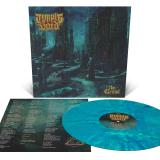
Critically acclaimed Death Metal force TEMPLE OF VOID return with their new album, The Crawl. The caveman brawn of previous albums, namely Summoning the Slayer (2022), remains, but there’s a wider dynamic on the group’s fifth full-length album at play. Now a quartet—featuring guitarist Alex Awn, drummer Jason Pearce, vocalist/guitarist Mike Erdody, and bassist Justin Malek—the Michiganders aren’t shying away from their non-metal influences, seeking greater integration of grunge and post-punk with their brutish signature. Singles “The Crawl” and “Soulburn” demonstrate the proficiency of TEMPLE OF VOID's death-cloaked, spearheaded attack. From the high intensity of opener “Poison Icon” to the granite wall of “The Twin Stranger,” The Crawl isn’t just TEMPLE OF VOID evolved, it’s a harbinger of death metal to come. “The biggest shift for me on this record was not feeling like we had to fly the ‘death-doom banner’ as part of our identity,” says Alex Awn. “Death-doom, as a genre, gave us something to anchor our sound around when we started. It was always a reference and touchstone. At the same time, we always wanted to make sure we had our own spin on it. We’ve always been adding to the conversation, adding to the genre, giving our point of view. A huge part of what makes a Temple of Void record is the non-death-doom influences that make up our DNA. And on album five we never once asked ourselves, ‘Do we have enough death metal? Do we have enough doom metal?’ We simply wrote a heavy-ass record—let the chips fall where they may.” For lyrics, Erdody built on the psychology and fear themes of Summoning the Slayer. The overarching theme of The Crawl is, put rather simply, an “allegory about life, choices, and consequences.” It’s a qualitative view on the horrors of the human condition and the contemplation of our monstrous capabilities. “The Twin Stranger,” for example, is about being stalked by a person’s doppelganger; “Godless Cynic” draws on a short story by sci-fi author Harlan Ellison; and “Poison Icon” tackles the crushing effects of mankind’s intrinsic nature to deceive and control.
Waiting is the essence of travel. Patience is its own reward.
Two people. A Telecaster guitar with a few effect pedals. A drum machine. An audio interface is connected to a laptop. The ingredients are simple yet effective.
But any suggestion of four-track cassette machines and vintage bedsit productions is quickly dispelled by digital dubbiness and refined arrangements. A tail of reversed echos. The crystalline flourish of octave-pitched delays. Riddled hi-hats tickle and taunt. A bass drum asserts its space.
Winkler's guitar patterns have a fragmented, almost haphazard connotation. Searching in a shimmer of reverb. Until the beat, the framework, sets in to reveal structure. Intentionality. Reihse's programmed rhythms go just to the point of a groove, holding the moment of tension, knowingly delaying the gratification. Beats that have scratchy patina anda subtly playful edge; their crispness stands in contrast to the contemplative drift of the guitar. Is it a trance? Or a dance? Yes.
There are some apparent references here: a good portion of Les Disques du Crépuscule, some kraut-esque electronica, even a smidgen of Morricone / Spaghetti Western, blending into a kind of Musique Noir – yet these serve as a set of orientational coordinates, rather than quotations.
This is so far the most assured release by Periode, perhaps eschewing some of the naiveté that was wilfully cultivated in earlier output – there is no cheeky cover version this time. And no singing either. The nine pieces have the quality of a series, a variation on a mood, or a subset of moods. What emerges is an inviting swagger in the face of bleakness. There is a profound melancholy, but it is not the darker kind, and does not exclude humour.
First impressions may suggest that this is purely nocturnal music. Yet it equally evokes the harsh sunlight and baking summer heat. Or a rainy day. And transportation: the music suggests the motion of travel, even if that travel only happens within the mind. And waiting. Waiting while doing nothing much. Because that's all you can do. (Alexander Paulick)
Have you noticed how the flood of daily news numbs your senses, dulling the ability to feel anything good? As if the world is slowly turning into a place meant for someone else - strangers whose faces you’d rather not see, whose voices you’d rather not hear. Perhaps it’s only a passing distortion
on the path to a better future - a glitch in the grand narrative of human progress. When the world above burns with confusion, we descend deeper underground - to outlast the chaos. Let the blood cleanse the word’s body; let the beat be our sanctuary. Welcome to Bunker No. 999. But even in exile, we need supplies. From the cold circuitry of soulless digital boxes - forced through the jaws of filters, resonators, and endlessly decaying reverberations - emerges a collection of DJ tools built to endure what unfolds above. Sounds to make you last, to make you tremble, to send shivers through the black box we call the dance floor. The rise of 999 Goosebumps begins - a Barcelona-born label debuting with Alex Pletnev’s transcendent first release, featuring Trancesetters of Westphalia on the remix.
- A1: That Musician Thats Dead
- A2: Preference Is A Good Friend, Mind
- A3: No One Can Sing That Well
- B1: Last Herald
- B2: Mo**Real
- B3: Things Keep Happening
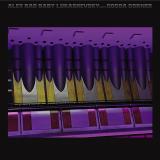
OOOOH! by Alex Bad Baby Lukashevsky with Cocoa Corner (2025)
Celebrated veteran of Toronto’s music scene, known for his boundary-pushing approach to folk and avant-garde music, twists rock music into strange and brilliant new shapes with the help of young jazz players, U.S. Girls, and his own immensely talented son.
OOOOH! is hard on the outside and soft on the inside. Made in the spirit of unity,
humanity, and poetry — disobediently renouncing the glory of personal triumph for the
generosity of an honest experiment. On the last track of the album you’ll hear “Or do you only ever never want to make a single enemy? / That’s not freedom or humility / It’s nothing, honestly.” Oooh, that's a bad baby!
A celebrated Toronto songwriter and performer, Alex Lukashevsky has always been disobedient. Which simply means, nothing is off the table when he’s looking for his
poetic voice; when trying to find the realest I of the teller. As he sings on the lead track “that musician that’s dead” The musician is radical/ it’s the world that’s demented/ listening with their eyes, the music looks dented/ they’re over-represented.
OOOOH! was recorded in January 2024 at Sound Department in Toronto, engineered by Patrick Lefler (ROY), mixed by Grammy-nominated producer Matt Smith. All the songs were tracked live off the floor in two days, with one extra day for recording vocals, to keep the recording fully alive and breathing. As leader of Deep Dark United, as a solo performer, and a sideman in Brodie Wests’ Eucalyptus and Luka Kuplowsky’s Ryokan Band, Alex has been an outsized influence on the Toronto music scene that spawned acts like Broken Social Scene and Owen Pallett. (Pallett, who has toured with Lukashevsky, went so far as to record an entire album’s worth of Alex’s songs, backed
by a full orchestra.)
Lukashevsky has approached each of his albums and projects as something completely new, using only the musical boundaries he creates with each song. Even when he
has recorded songs with nothing but his voice and his own acoustic guitar accompaniment, the results are never “stripped down” or “back to basics,”
Gong! How do you get to heaven / have fun! have fun!
It’s cool to approach music as a game of “spot the influence”; Burt Bacharach-meets-Black Flag; Lana Del Rey-meets-LCD Soundsystem etc. Glorified mash-ups are promising because of their conversational nature. But they can turn us into hyperboreans; blowing cold air beyond ourselves while doing what we can to remain warm. To devise a game or a narrative is to have a winner and a loser, but we all know that just as you win/ so you lose. And does anything really change? Alex Lukashevsky and Cocoa Corner are more at ease drawing blind contours or playing an old game like consequences. They let things add up without knowing particularly how. Cognition is recognition.
Lukashevsky, in addition to writing all the songs, plays guitar and sings on OOOOH!, doing both in ways that are soulful and spikey at the same time. Joining him on guitar and vocals is his oldest child, Charlie Lukashevsky, who, at 23, is already a talented performer and songwriter in his own right. Cocoa Corner also includes Aidan McConnell, an in-demand drummer and composer, Jack Johnston, a jazz bassist and Barry Harris acolyte, and percussionist Evan Cartwright (The Weather Station, U.S. Girls, Cola, Tasseomancy), who plays steel pan and marching drum.
Working with his son and with other younger musicians is central to the album’s
unpredictable aesthetic. It reinvigorated the sound in unexpected ways. Lukashevsky says, “I had to reconsider my own instincts. I had to deal with being 99 years old.”
In addition to these performers, the album includes a tasty contribution from Meg
Remy, the visionary musician and producer who is the leader of the critically acclaimed
project U.S. Girls. Remy duets with Lukashevsky on the imagistic and sprawling album
closer “things keep happening.”
About that album title: OOOOH! is taken straight from “that musician that’s dead” an
arch and unhinged comment on the exertion required to navigate a lifetime of music making.
Lukashevsky’s delivery of that one emotive word is a kind of cultural posture, but also a
hundred percent primitive expression. The impact is never less than visceral. His vocal
delivery ranges through rich baritone blues to keening falsettos to a kind of sprechstimme that periodically steps out from the music to grab the listener’s shirt. He
doesn’t sound too nice, but he is sincere. When life gives you lemons lament.
For OOOOH! his first official full-length album since 2012’s Too Late Blues, (a collection of knotty-yet-effervescent tunes built upon the enchantingly serpentine harmonies of Lukashevsky and his vocal collaborators, Felicity Williams (Bahamas, Bernice) and Daniela Gesundheit (Snowblink, HYDRA)), Alex has once again broken apart and rebuilt his own approach to music. Or rather (because that sounds too over-determined), he
has allowed his music to build itself into strange new shapes that only fleetingly and
coincidentally, but happily, resemble anything that might be called rock and roll. There is some editorializing within the song’s lyrics— Lukashevsky even cheekily contributes to the “spot the influence” game with the line “Muddy Waters, Rite of Spring!” a funny preemptive strike against anyone already reaching for some variation of avant-blues to describe what the song is up to here. In fact there are many names checked on this record (literally and in spirit); they are the lily pads that trace the path of this expression! Palestrina, Peter Pears and Benjamin Brittain, Andrés Segovia, Stravinsky, Lotte Lenya, Alice Coltrane, Skip James, Chuck Berry, D’Gary, Betty Carter, Mukhtiyar Ali, Chuck D, Yoko Ono, Hailu Mergia, David Bowie, Jane Siberry. rhythm is a skeleton mansion / haunted by melody / feckless prodigy / the world is under a spell / cast by some demon angel / Practice day and night / Try as hard as hell / no one can sing that well Musicians are often worried by the way in which they are prepared to fail rather
than how they would like to succeed; it’s such a deep concern that it tempers their creativity and shackles their process. Current cultural proclivities, tend to comfort a certain kind of artistic failure and abnegate another kind. How many testimonials, full of heartfelt care and investment, have you heard for Taylor Swift, and yet a craftsman like Chris Weisman is often dismissed easily as though he’s doing something anti-social. what’s throwing itself in my ears and my eyes / arrogant devil ad hominem christ.
The music you will hear on this recording veers off in multiple directions at once,
and features a rock and roll spirit with a divergent heart. This is no sclerotic clomp of the Average Rock Song, but in fact a flood of humanity in all its darkness and moodiness and unpredictability. If most performers make songs that are like sports cars or pickup trucks to drive around, Lukashevsky has built something more akin to a rowboat in a tree: it’s weird and beautiful.
“The hand knows best,” the painter Margaux Williamson says. “A shape produces itself, where I go toward what is intuitive, rather than logical.” The shapely, intuitive songs that comprise Ada Lea's third album, when i paint my masterpiece, are surprising, imagistic, tactile. They stand before us and we feel their brushstrokes. Alexandra Levy holds her guitar against the backdrop of a sea of her paintings on the album cover and it’s tempting to ask: is painting a metaphor here, for music or life? No! As ever, she resists tidy metaphors. She’s a master of this kind of thorny lowercase title that germinates and grows with time. In a real, profound way, music and painting go hand-in-hand as she unveils a new style of subversion and surrealism inspired by her transdisciplinarity.
Levy is a Renaissance woman, and Ada Lea’s albums have been swelling in scope alongside the evolution of her artistic life. Her recent turn toward pedagogy—teaching a songwriting course at Concordia University and co-facilitating a community-based group called The Songwriting Method—weaves another vivid thread into her multifaceted practice. Her debut LP, what we say in private, blurred the lines between interior and performative worlds. Her sophomore record, one hand on the steering wheel the other sewing a garden, featured vignettes centered on Montreal. On this sprawling and ambitious album, written over three years and whittled down from over 200 songs, she asks: what happens when you… pause? How can a life be held suspended in song? The album is a kaleidoscopic exploration of the transformations art can bring: the vision of an uncompromising artist dancing bravely and freely between registers and across mediums.
The album marks a reset—a quiet revolution. After years of relentless international touring, Levy felt an urgent need for community and renewal. Gruelling road schedules with very little support left her wondering: who am I really doing all this for? The system was uncaring and broken, and so it was that she came to envision a new healthy and healing mode of musical genesis. “For me, that looked like resting, extending my creative reach, going back to school, studying painting and poetry,” she explains. “Taking a step away from music as guided by industry expectations. Simplifying things. Getting a job, starting to teach. Engaging with the process rather than the product.” This need for a more deliberate creative renewal was rejected by her existing systems of support, so she began the search for an alternative.
- A1: We Are The Espionnage Sound System - Dj Mehdi & Feadz
- A2: Ulysse - Dj Mehdi & The Cambridge Circus
- A3: On S'habitue - Dj Mehdi & Rocé
- A4: Pop Song I - Dj Mehdi & Dany Dan
- A5: Naja - Dj Mehdi & Zdar
- A6: T'inquiète - Dj Mehdi & Karlito
- B1: Camille Groult Starr (Boombass Remix) - Dj Mehdi , 113 & Boombass
- B2: Si Tu Savais (Dj Mehdi Remix) - Dj Mehdi & Manu Key
- B3: Pop Song Ii - Dj Mehdi & Dany Dan
- B4: Spanish Harlem - Dj Mehdi & The Cambridge Circus
- B5: Despee '98 - Dj Mehdi & Rohff
KEY POINTS
• Collector Crystal Clear LP deluxe packaged – the very First reissue of the cult 11 track EP – Street Album from year 2000 by DJ Mehdi collecting his Espionnage adventures
• “DJ MEHDI : Made in France” : an Arte 6 episode exclusive serie about DJ Mehdi from September 12th ! DJ Mehdi was the one building bridges between french hip hop and electro, and becoming a key composer,producer and DJ. He was a game changer in himself, helping both french rap & electro scenes to rise in the late 90’s & early 200’s . 13 years after DJ Mehdi’s sudden death, his long-time friend and Director Thibaut de Longeville imagined & directed the serie, with archives materials & exclusive interviews and words from big names from Rap & Electro about their collaborations & relationships with DJ Mehdi.
SHORT BIOG
“Rather than a compilation, this record is a summary of what Espionnage has done in the past two years, from the rap 12”s, the instrumental 12”s to the remixes I was given the opportunity to do. The members of The Espionnage Sound System, Yvan from Double Pact included (even if he only appears here on the interlude betweeen “Camille Groult Starr (rmx)” and “Si Tu Savais (rmx)”), have been essential to the label’s development as a whole. The Chronowax Distribution staff has been equally vital to a structure primarily dedicated to independent vinyl production. By the way, I have to thank Ulysse Genet who, on top of lending his name to a track title, suggested the name “Espionnage” instead of “Le Cirque Disques” (which was my initial idea) and drew the first logo. Many thanks to my team : Olivier Rosset, Charlotte Dutoit, Thibaut de Longeville, Alexander Wise, the 360 Creative & Marketing teams, as well as X2N, Tom Kan, DJ Gilb’R, Roulé, Crydamoure, Benoît Blue Boy and his daughters Ludella and Amadine ; who have all contributed on one level or another to what this record is. Of course I can’t forget my family: the Essadis, Faveris, Gassamas, Majira (and their many relations) as well as my other family, the 113 Clan and the whole African Mafia and most particularly my group, Idéal J, for the respect and freedom with which they’ve let me express the somewhat unusual ideas I had about all of this”.
Peace, DJ Mehdi, NYC, March 29th 2000.
- A1: Ça, C'est Paris ! Générique Long
- A2: Souvenirs Souvenirs
- A3: Paris 2000
- A4: Grande Épicerie
- A5: Cœur À Cœur
- A6: Pompier Ou Serveur ?
- A7: Les Jeux Sont Faits
- A8: Nuit Bleue
- A9: Paris-Joigny
- A10: Rêverie
- B1: Audition
- B2: Patience…
- B3: Un Ado Complexé
- B4: Allô Agnieszka
- B5: Golden Boys
- B6: C'était Perdu D'avance
- B7: Preshow
- B8: Vue De Dos
- B9: Rer A Station La Défense
- B10: La Femme-Bijou
Tricatel is releasing on gatefold vinyl a selection of tracks composed by Bertrand Burgalat for Ça, c'est Paris! the series directed by Marc Fitoussi, starring Alex Lutz, Nicolas Maury and Monica Bellucci.
Marc Fitoussi - extract from the sleeve notes
After collaborating on my film "Les Apparences", I knew he'd be the ideal man for this series. Someone who could make real revue music, like you'd hear at the Paradis Latin or the Alcazar, and who could also be resolutely contemporary, like when the troupe relaxes and dances in a bar to a hit of the moment.
Stéphane Lerouge - extract from the sleeve notes
It's a genre that dates back to the thirties, that of the backstage musical, a genre with well-defined codes: the struggle of a collective, a troupe of singers and dancers, to put on a show that, despite a tsunami of obstacles, will end in triumph and reveal a new star. A broad spectrum of films can be linked to this, from "Quarante-deuxième rue" to "Tous en scène", from "Chorus line" to "Trois places pour le vingt-six". And today, the original link in this long chain is the series "Ça, c'est Paris!", in which Marc Fitoussi strips away this tradition, reenchanting it, making it crackle with new energy. In the end, his mission is almost the same as that of his main character, Gaspard Berthille (Alex Lutz), heir to a cabaret, the Tout-Paris, for whom he must invent a present, or rather, a future. To carry out this delicate task, Gaspard Berthille needed an accomplice, invisible on screen: Bertrand Burgalat. His freedom, the way he juggles harmony and tonality, shines through in every measure, as if Marc Fitoussi's subject had triggered something decisive and essential in him.
- A1: Progetto Tribale - The Sweep
- A2: Onirico - Echo Giomini
- A3: Open Spaces - Artist In Wonderland
- B1: Alex Neri – The Wizard (Hot Funky Version)
- B2: M C.j. Feat. Sima - To Yourself Be Free - Instrumental Mix Energy Prod
- B3: Mato Grosso - Titanic Expande
- C1: Dreamatic - I Can Feel It (Part 1)
- C2: Carol Bailey - Understand Me Free Your Mind (Dream Piano Remix)
- C3: The True Underground Sound Of Rome - Secret Doctrine
- D1: Don Carlos - Boy
- D2: Lazy Bird – Jazzy Doll (Odyssey Dub)
Vol 2[28,99 €]
Volume 1 of this expertly curated project of 90s Italian House - put together by Don Carlos.
If Paradise was half as nice… by Fabio De Luca.
Googling “paradise house”, the first results to pop up are an endless list of European b&b’s with whitewashed lime façades, all of them promising “…an unmatched travel experience a few steps from the sea”. Next, a little further down, are the institutional websites of a few select semi-luxury retirement homes (no photos shown, but lots of stock images of smiling nurses with reassuring looks). To find the “paradise house” we’re after, we have to scroll even further down. Much further down.
It feels like yesterday, and at the same time it seems like a million years ago. The Eighties had just ended, and it was still unclear what to expect from the Nineties. Mobile phones that were not the size of a briefcase and did not cost as much as a car? A frightening economic crisis? The guitar-rock revival?! Certainly, the best place to observe that moment of transition was the dancefloor. Truly epochal transformations were happening there. From America, within a short distance one from the other, two revolutionary new musical styles had arrived: the first one sounded a bit like an “on a budget” version of the best Seventies disco-music – Philly sound made with a set of piano-bar keyboards! – the other was even more sparse, futuristic and extraterrestrial. It was a music with a quite distinct “physical” component, which at the same time, to be fully grasped, seemed to call for the knotty theories of certain French post-modern philosophers: Gilles Deleuze, Félix Guattari, Paul Virilio... Both those genres – we would learn shortly after – were born in the black communities of Chicago and Detroit, although listening to those vinyl 12” (often wrapped in generic white covers, and with little indication in the label) you could not easily guess whether behind them there was a black boy from somewhere in the Usa, or a girl from Berlin, or a pale kid from a Cornish coastal town.
Quickly, similar sounds began to show up from all corners of Europe. A thousand variations of the same intuition: leaner, less lean, happier, slightly less intoxicated, more broken, slower, faster, much faster... Boom! From the dancefloors – the London ones at least, whose chronicles we eagerly read every month in the pages of The Face and i-D – came tales of a new generation of clubbers who had completely stopped “dressing up” to go dancing; of hot tempered hooligans bursting into tears and hugging everyone under the strobe lights as the notes of Strings of Life rose up through the fumes of dry ice (certain “smiling” pills were also involved, sure). At this point, however, we must move on to Switzerland.
In Switzerland, in the quiet and diligent town of Lugano, between the 1980s and 1990s there was a club called “Morandi”. Its hot night was on Wednesdays, when the audience also came from Milan, Como, Varese and Zurich. Legend goes that, one night, none less than Prince and Sheila E were spotted hiding among the sofas, on a day-off of the Italian dates of the Nude Tour… The Wednesday resident and superstar was an Italian dj with an exotic name: Don Carlos. The soundtrack he devised was a mixture of Chicago, Detroit, the most progressive R&B and certain forgotten classics of old disco music: practically, what the Paradise Garage in New York might have sounded like had it not closed in 1987. In between, Don Carlos also managed to squeeze in some tracks he had worked on in his studio on Lago Maggiore. One in particular: a track that was rather slow compared to the BPM in fashion at the time, but which was a perfect bridge between house and R&B. The title was Alone: Don Carlos would explain years later that it had to be intended both in the English meaning of “by itself” and like the Italian word meaning “halo”. That wasn’t the only double entendre about the song, anyway. Its own very deep nature was, indeed, double. On the one hand, Alone was built around an angelic keyboard pattern and a romantic piano riff that took you straight to heaven; on the other, it showcased enough electronic squelches (plus a sax part that sounded like it had been dissolved by acid rain) to pigeonhole the tune into the “junk modernity” section, aka the hallmark of all the most innovative sounds of the time: music that sounded like it was hand-crafted from the scraps of glittering overground pop.
No one knows who was the first to call it “paradise house”, nor when it happened. Alternative definitions on the same topic one happened to hear included “ambient house”, “dream house”, “Mediterranean progressive”… but of course none were as good (and alluring) as “paradise house”. What is certain is that such inclination for sounds that were in equal measure angelic and neurotic, romantic and unaffective, quickly became the trademark of the second generation of Italian house. Music that seemed shyly equidistant from all the rhythmic and electronic revolutions that had happened up to that moment (“Music perfectly adept at going nowhere slowly” as noted by English journalist Craig McLean in a legendary field report for Blah Blah Blah magazine). Music that to a inattentive ear might have sounded as anonymous as a snapshot of a random group of passers-by at 10AM in the centre of any major city, but perfectly described the (slow) awakening in the real world after the universal love binge of the so-called Second Summer of Love.
For a brief but unforgettable season, in Italy “paradise house” was the official soundtrack of interminable weekends spent inside the car, darting from one club to another, cutting the peninsula from North to centre, from East to West coast in pursuit of the latest after-hours disco, trading kilometres per hour with beats per minute: practically, a new New Year’s Eve every Friday and Saturday night. This too was no small transformation, as well as a shock for an adult Italy that was encountering for the first time – thanks to its sons and daughters – the wild side of industrial modernity. The clubbers of the so-called “fuoriorario” scene were the balls gone mad in the pinball machine most feared by newspapers, magazines and TV pundits. What they did each and every weekend, apart from going crazy to the sound of the current white labels, was linking distant geographical points and non-places (thank you Marc Augé!) – old dance halls, farmhouses and business centres – transformed for one night into house music heaven. As Marco D’Eramo wrote in his 1995 essay on Chicago, Il maiale e il grattacielo: “Four-wheeled capitalism distorts our age-old image of the city, it allows the suburbs to be connected to each other, whereas before they were connected only by the centre (…) It makes possible a metropolitan area without a metropolis, without a city centre, without downtown. The periphery is no longer a periphery of any centre, but is self-centred”.
“Paradise house” perfectly understood all of this and turned it into a sort of cyber-blues that didn’t even need words, and unexpectedly brought back a drop of melancholic (post?)-humanity within a world that by then – as we would wholly realise in the decades to come – was fully inhuman and heartless. A world where we were all alone, and surrounded by a sinister yellowish halo, like a neon at the end of its life cycle. But, for one night at least, happy.
2025 Cream VINYL REPRESS.
When Alex Stephens (A.K.A. Strawberry Guy) self-released his debut single last year, he was merely doing it out of a love for songwriting. What he wasn't expecting was a million Youtube streams and an avid fanbase. Now, the South-Wales born, Liverpool-based songwriter is ready to release a full EP of his compelling, lushly produced dream-pop.
Born outside Cardiff, Strawberry Guy moved to Liverpool to study music and grow as a writer. 'I knew that it was a very artistic city with all it’s creative history, it seemed like the perfect place to move to.' he says. Whether it's playing keyboards in The Orielles or just being part of the city's growing musical scene, Alex plays music for the love of music, something that heavily translates into his adept songwriting.
The intense emotional feel of the tracks he writes is down to Alex's songwriting process, recording the entire EP in his bedroom & producing it himself. 'I feel that it’s important to me to only write/record when you’re channeling some kind of emotion, so I would only work on it when I was in the right mood to do so.' He answers when asked about the isolated environment into which he put himself for the recording process.
Much of the inspiration for Alex's work comes from experience rather than other artists. 'When something significant happens to me, all I want to do is make music.' In terms of musical touchstones however, there's the obvious dream-pop contemporaries such as Beach House and Weyes Blood, coupled with great songwriters of old like Nat King Cole or Harry Nillson. Sonically, a blend of orchestral & synthesized melodies layer together to act as a platform for his heartfelt lyrics.
Opener 'Without You' is a fine example of this, a break-up song of sorts, with an infectious keyboard melody and swirling synths over which Alex contemplates whether it's even possible to find lasting love. The lyrics 'Do you really have to talk about the things you do with him? Do you really have to talk about your love?' hit particularly heavily.
Contrast this with the final track, the titular 'Taking My Time To Be', a powerful song of self-discovery. Beginning with downtempo piano and drums, the song breaks out into a saxophone and synth solo that wouldn't go amiss on a Badalamenti soundtrack. 'The song is about me learning to be comfortable with myself, but then wondering if I'll be accepted for being myself' Alex imparts. It's a fitting closer to a EP driven by emotion and experience.
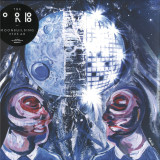
The long-awaited new full-length from legendary electronic pioneers THE ORB with cover design from iconic graphic wizards THE DESIGNERS REPUBLIC • A fascinating sonic journey over four epic tracks, constantly switching between psychedelic flourishes and beat-driven focus
Veritable pioneers of electronic music, iconic act THE ORB returns to Kompakt with the new full-length MOONBUILDING 2703 AD - another major slice of psychedelic synth bliss, obscure loops and deep ambient textures tossed in swinging breakbeats and powerful basslines. Installing a forward momentum rather unusual for a genre-defying project like this, the latest effort from masterminds Alex Paterson and Thomas Fehlmann follows their 2005 album success on Kompakt, the cheekily named "Okie Dokie It's The Orb On Kompakt" (KOMPAKT CD 45), as well as several contributions to our Speicher and Pop Ambient series - but more importantly, it finds the legendary duo at the peak of its creativity, ringing in another essential phase in what can only be called a ground-breaking career.
True to form, the new offering MOONBUILDING 2703 AD features a small track list, but turns each one of its four cuts into a mini epic in its own right. Opener GOD'S MIRRORBALL hits the ground floating, employing a handful of cozy statics to great effect before finally discharging into an intricate mosaic of atmospheric melodic sketches and gripping rhythms. With a hypnotic runtime of more than 14 minutes, it immediately establishes a blueprint for the other album tracks to follow, perfectly illustrating the vast extent of the artists' vision and their impressive skills in luring in listeners - welcome to THE ORB's sonic labyrinth, where nothing is what it seems and the unexpected waits just around the corner.
Likewise, follow-up track MOONSCAPES 2703 BC presents itself as a uniquely versatile affair sitting comfortably between ambient flourishes and beat-driven focus, holding as many twists and turns as a caper movie, but carefully grounding every single one of its cliffhangers in its impeccable flow. With a runtime of approximately 9 minutes, LUNAR CAVES is the shortest jam of the bunch - and also the most ethereal, keeping its rhythmic content to a bare, pulse-like minimum and opting for enticing, freewheeling synth textures instead. Album closer and title cut MOONBUILDING 2703 AD introduces a surprisingly jazzy vibe mingling rather well with the wealth of electronic tricks up its sleeve - even indulging in abrasive bass sweeps and a breathtaking multitude of different rhythm sections constantly switching places. It's a fitting closing act for a full-length as multifaceted as this, as idiosyncratic as possible and as muscling as needed.
• Das langerwartete neue Album der legendären Elektronikpioniere THE ORB mit einem Coverdesign der gefeierten Graphikschmiede THE DESIGNERS REBUBLIC • Eine faszinierende Klangreise über vier epische Tracks hinweg, permanent zwischen psychedelischen Schlüsselreizen und beatgetriebenem Fokus changierend
Mit THE ORB kehren echte Pioniere der elektronischen Musik zu Kompakt zurück - der Langspieler MOONBUILDING 2703 AD präsentiert erneut einen grossen Wurf in Richtung psychedelischen Synthie-Segens, obskurer Loops und porentiefer Ambient-Texturen, geschwenkt in schwungvollen Breakbeats und wirkmächtigen Basslines. Mit einem für genresprengende Projekte wie diesem hier eher unüblichen Vorwärtsdrang beerbt das neue Album von den Großmeistern Alex Paterson und Thomas Fehlmann ihren 2005er Erfolg auf Kompakt, das augenzwinkernd benannte "Okie Dokie It's The Orb On Kompakt" (KOMPAKT CD 45), sowie einige Beiträge zu unseren Speicher- und Pop-Ambient-Serien - viel wichtiger allerdings, daß wir das legendäre Duo auf der Höhe ihrer Schaffenskraft antreffen, eine neue wesentliche Phase einläutend in einer Laufbahn, die nur als bahnbrechend bezeichnet werden kann.
In bekannter Manier hat das neue Werk MOONBUILDING 2703 AD eine eher kleine Tracklist vorzuweisen, baut dafür aber jeden seiner vier Tracks zu Mini-Epen von eigenem Recht um. Der Eröffnungsakt GOD'S MIRRORBALL schwebt einem da vor Ohren, zuerst nur mit einer Handvoll gemütlichen Rauschens bewaffnet, später dann in ein feingliedriges Mosaik von atmosphärischen Melodieskizzen und mitreissenden Rhythmen explodierend. Mit einer hypnotisierenden Lauflänge von über 14 Minuten etabliert das Stück die Blaupause für die folgenden Ereignisse, perfekt die enorme Reichweite der künstlerischen Vision und ihre Fähigkeit zur massenhaften Verführung nichtsahnender Tänzer illustrierend - willkommen in THE ORB's Klanglabyrinth, wo nichts ist wie es scheint und das Unerwartete um jede Ecke lauert.
Ähnlich präsentiert sich der Folgetrack MOONSCAPES 2703 BC als einzigartig vielseitige Angelegenheit, bequem zwischen ambienten Ornamenten und beatgetriebenem Fokus sitzend und mit sovielen Drehungen und Wendungen wie ein Gaunerfilm - doch stets seine Cliffhanger im makellosen Flow erdend. Ein wenig über 9 Minuten lang, ist LUNAR CAVES der kürzeste Entwurf in der Gruppe - und auch der ätherischste, hält er doch die Rhythmusanteile auf einem puls-ähnlichem Minimum und optiert stattdessen für freilaufende Synthie-Texturen. Das letzte Kapitel des Albums schließlich ist auch der Titeltrack: MOONBUILDING 2703 AD besitzt eine überraschend jazzige Note, die sich ziemlich gut in den Reichtum an elektronischen Tricks einfügt, welche hier aus dem Ärmel geschüttelt werden - sogar in rauem Bass schwelgend und eine atemberaubende Vielfalt an Rhythmussektionen aufrufend, die ständig die Plätze tauschen. Es ist ein passender Abschluss für ein derart facettenreiches Album, so idiosynkratisch wie möglich und so anschiebend wie nötig.
Indian born, UK artist Michael Diamond, co-founder of Vasuki Sound label and club night, announces new EP Placid Wakefulness, featuring single ‘Reverse Entropy’. available on all platforms 5th December via Vasuki Sound.
A uniquely multifaceted talent, Michael Diamond’s unforgettable ‘jazzed electronic’ sound is informed by a spectrum of influences, not least by intersection of the scientific and practical worlds of electronic music. From the music scholarship he won to read Medicine at Oxford where he quickly discovered new ways in which the two worlds can co-exist, his days were spent immersed in academic studies of music perception and cognition, while his nights were spent alongside the likes of Ben UFO, Batu & Ross From Friends, playing at one of UK’s most long-established nights ‘Simple’. A chance encounter there also led him to connect with musical collaborator Alex Wilson – the BBC Young Jazz Musician of the Year semi-finalist and then musical director of Oxford’s Jazz Orchestra – who appears frequently across Diamond’s compositions and on Placid Wakefulness.
No stranger to a concept piece, Diamond’s previous project, the highly personal and critically acclaimed exploration of culture and identity, Third Culture (album of the month/year acknowledgments from Stamp The Wax, Juno and Phonica Records, also earning him a DJ Mag ‘One To Watch’, a Youth Music Awards ‘Rising Star’ nomination and a Gilles Peterson’s ‘Future Bubbler’ accolade) explored the experience of being a ‘third culture kid’ born in Kerala, India and growing up in the UK with a sense of fractured identity.
On Placid Wakefulness, Diamond honours his academic research working alongside world-renowned musicologist Professor Eric Clarke. Specifically how music may affect our sleepfulness and wakefulness, how instinctively we are soothed by some sounds and energised by others - ‘what it is about dance music that makes people go hard all night long?’ and ‘what is it about ambient music that makes people feel the opposite way - to lull them into this sense of calmness or rest?’, mindful of the unconscious ways his findings were already manifesting in his work as an artist. And while his research provides a framework for some of the ideas within the piece, Placid Wakefulness can be viewed as more of an unintentional byproduct, or case-in-point of his findings, rather than a piece consciously constructed in their image.
Across Placid Wakefulness’s four tracks we find the artist unpacking a range of sonic ideas on this theme, from ambient calm to club-adjacent rhythms. The EP opens with hypnotic lullaby of ‘A Way of Listening’ complete with transcendent flutes provided by Alex Wilson, cello by George Lloyd-Own and a mellow groove. On the more energised ‘Reverse Entropy’, rhythmic ambiguity moves to rhythmic disambiguation with a four-to-the-floor beat as the track progresses, releasing tension and inviting an urge to dance as a jazz sax moment transmutes into glorious techno percussiveness.
On ‘Turning and Turning’ the bpm shifts down a gear, a sonic dreamstate where tough textural rhythms create a kind of liminal state tension. Closing out the EP we return to a sense of restfulness with the EP’s title track, where a gorgeous picked guitar loop interplays with vibrating ambient pads and a slow and steady beat. The Placid Wakefulness EP is a captivating testament to Diamond’s singular artistic talent and the fascinating interplay of neuroscience and how we experience and enjoy music.
"Five years since her debut album Delivery, Mikaela Davis has moved away from her hometown of Rochester, shared the stage with the likes of Bob Weir, Phil Lesh, Christian McBride, Bon Iver, Lake Street Dive and Circles Around the Sun and entered a new decade. But it’s the ever-evolving relationships between her closest friends and bandmates that has propelled the Hudson Valley-based artist onto her latest album And Southern Star––a truly collaborative effort that ruminates on the choices we make, and the people we always come back to.
The band, made up of Davis (harp/vocals), Alex Coté (drums), Cian McCarthy (guitars/vocals), Shane McCarthy (bass/vocals) and Kurt Johnson (steel guitar), have been playing together for over a decade and it’s the first time they’ve appeared on a full length record together. Weaving 60s pop-soaked melodies, psychedelia and driving folk rock, And Southern Star picks apart the reflection we used to recognise, while trying to build a new one. It navigates the periphery of past selves, the coexistence of isolation and excitement in a new environment and the tension of growing away from what we thought we wanted, tackling it with a luscious, kaleidoscopic grace. “I finally feel like this album is more me than anything else that’s been released,” Davis says, adding that producing the album along with her four bandmates allowed them to carve out their own ideas, rather than someone else’s. It’s the band’s collective step into adulthood that has informed much of And Southern Star’s thematic landscape."
Alternative Jazz. This is a 5 track EP of brand new, previously unreleased material from The Near Jazz Experience (Terry Edwards, Mark Bedford and Simon Charterton). Whilst recording the new album Terry asked pianist Mike Garson (best known for his work with David Bowie, Nine Inch Nails, Smashing Pumpkins) - whom Terry has toured with if he'd like to play on a track. Mike said yes, recorded a stupendous solo for Character Actor at his home studio and sent it over. All in the space of 24 hours! On hearing the piano part NJE bassist Mark Bedford came up with the idea of having the piano mixed with the original track (as intended) but also using it as the basis for a completely new recording with the piano leading rather than complementing the band. Side 1 of the EP has these two very different versions from the same seed. Unidentical twins indeed. Side 2 of the EP contains 4 outliers from the album sessions. These aren't out-takes or unfinished pieces. They simply couldn't find a place for themselves within the album - along the lines of the tunes Tom Waits put together for his Orphans compilation of 2006. They are standalone tunes which have found a home together on this EP because in some way they all have filmic qualities. Side 1 contains 2 takes on Character Actor (the title being a nod to Cracked Actor, a tune on Aladdin Sane, the album that introduced Bowie fans to Mike Garson), and Side 2 has The Loping Four; Projector; MacGuffin and Lockstep, all titles which contain strong cinematic elements, MacGuffin in particular. It was Alfred Hitchcock's favourite word for a red herring in the plot. The musical cast on this release has a remarkable pedigree. The NJE consists of Terry Edwards (solo artist and session player with PJ Harvey, Franz Ferdinand, Siouxsie, Jimi Tenor, Piroshka, Tindersticks etc); Mark Bedford (Madness, Robert Wyatt, Robyn Hitchcock, Nightingales etc); Simon Charterton (The Higsons, Alex Harvey, Zook, Serious Drinking etc). Alongside featured guest Mike Garson there is an appearance by Oliver Cherer (Aircooled, Miki Berenyi Band) on keys and synth. This is an RSD exclusive, 500 copies on black vinyl in full colour sleeve which reflects the filmic quality of the recorded material. No download. The title track will appear on the next Near Jazz Experience studio album. The 4 additional tracks, however, will remain exclusive to Record Store Day.
A new piece by minimalist / experimental composer PHILL NIBLOCK (1933 - 2024), co-composed and performed by ANNA CLEMENTI & THOMAS STERN. Intense, menacing layers of thick drones and alien sounds.
In summer 2022, within just a few weeks and by pure coincidence, 2 proposals regarding PHILL NIBLOCK albums arrived: one suggesting an overdue vinyl reissue of a CD release (more on that when the time has come for it), the other email was from ANNA CLEMENTI saying she and THOMAS STERN were working on new pieces that PHILL NIBLOCK has written for her … when "Zound Delta 2" was complete, PHILL sent photographs for the two artworks, we met twice to discuss details, but unfortunately he died unexpectedly early january this year so the album now is, sad as it is, a posthumous release … an intense goodbye from one of 20thcentury most iconic composers.
Phill Niblock
Phill Niblock (1933-2024, USA) was an artist whose fifty-year career spans minimalist and experimental music, film and photography. Since 1985, he has served as director of Experimental Intermedia, a foundation for avant-garde music based in New York with a branch in Ghent, and curator of the foundation's record label XI. Known for his thick, loud drones of music, Niblock's signature sound is filled with microtones of instrumental timbres that generate many other tones in the performance space. In 2013, his diverse artistic career was the subject of a retrospective realised in partnership between Circuit (Contemporary Art Centre Lausanne) and Musée de l'Elysée. The following year Niblock was honoured with the prestigious Foundation for Contemporary Arts John Cage Award.
Anna Clementi
Italian-Swedish singer Anna Clementi grew up in Rome, where she first studied the flute and completed acting training before moving to Berlin and studying experimental vocal music and experimental music theater with the composer Dieter Schnebel at Hochschule der Künste (now UdK Berlin). Anna Clementi sees herself as an "actress of the voice" rather than exclusively as a singer. In this way she also articulates the diversity of her artistic expression, with which she is always searching for new connections between voice, gesture, language, dance and theater.
During her decades spanning career, Anna Clementi has performed at the most important festivals, has premiered numerous works, many of which have been composed especially for her, and worked with Fast Forward, Michael Hirsch, Rupert Huber, Christian Kesten, Alexander Kolkowski, Olga Neuwirth, Josef Anton Riedl, Iris ter Schiphorst, Dieter Schnebel, Laurie Schwartz, Elliott Sharp, and many others.
A special focus of hers is the work of John Cage, whose pieces she has performed worldwide.
Thomas Stern
Born in Bremen, Thomas Stern moved to Berlin in 1984 where he joined Mona Mur with Alex Hacke and F. M. Einheit (both from Einstürzende Neubauten, with which Stern also worked as live sound engineer for many years). Around 1987 he co-founded the Berlin set up of Crime And The City Solution (Mick Harvey, Alex Hacke a.o.). Over the years, he has has collaborated with artists like Ulrike Haage, Phew, Nick Cave, Ton Steine Scherben, Meret Becker, Nina Hagen, Jaki Liebezeit, Ben Becker, N.U. Unruh, Gry, Iris ter Schiphorst, Automat, Swans, Hans Joacxhim Irmler and many more, on the road or in his own Sternstaubstudio.
credits:
Anna Clementi: voice
Thomas Stern: slide guitar, bass and soundprocessing
Composition by Phill Niblock, Anna Clementi and Thomas Stern
Recorded and mixed by Thomas Stern at Sternstaubstudio, Berlin
Mastering and lacquer cut: Kassian Troyer at D&M, Berlin
Cover photography by Phill Niblock
Layout and design by kaidoh
Limited edition "Coke Bottle Cloud" color vinyl with etched b-side. Australian duo Armlock make music for having your head in the clouds. On new album Seashell Angel Lucky Charm, Simon Lam and Hamish Mitchell bring you on a steady ascension through compressed and heavenly sonic realms. The band's second proper release, and first for Run For Cover Records, showcases the songwriters' experimental electronic roots through an indie rock lens. Free from distortion or overindulgence, Seashell Angel Lucky Charm is a collection of consistent rhythms decorated with clean guitar tones and eccentricities. Through playful layers of vocal harmony and minimal arrangements, Armlock capture the inventive and uncomplicated essence of Pinback or Alex G. Self-described as "indie rock with a touch of spirituality and emo", Armlock's journey into a higher realm is seeped with the looming confusion that comes with exploring the unknown. With an introverted demeanor, Armlock explores the human desire to find guidance in a world much bigger than its people. Every sound on Seashell Angel Lucky Charm feels precise and intentional, making the anthemic choruses on tracks like "Fear" and "El Oh Ve Ee'' feel expertly placed and pop-oriented. These two songs show Armlock's savvy with harmony as they use octaves of angelic sounds to stretch a simple one-word chorus until it soars with meaning. Unlike most indie rockers, Armlock use guitar as a tool in their belt rather than a vessel for songwriting. Where their 2021 EP Trust set foundations in downtempo acoustic guitar, Lam and Mitchell's evolved songwriting is a testament to where an electric guitar can amplify a song's groove, or usher in sonic space.
DJ Support: Danny Howard, Annie Mac, Mistajam, Pete Tong, Charlie Hedges, Kraak & Smaak, Maxinne, Todd Terry, Alex Preston, Full Intention, GW Harrison, DJ Rae, Rudimental, Alaia & Gallo, Illyus & Barrientos, Johan S, David Penn, Sam Divine, Riva Starr, Claptone, Nice7, Dario D’Attis, Mousse T, S-Man, Huxley, KC Lights, Friend Within, Dombresky, Gorgon City, Chris Lake, Format:B, Pirupa, TCTS, Alan Fitzpatrick, Low Steppa, Mat.Joe, Raumakustik, Eskuche
Kicking things off on our next 4-track vinyl sampler series is Toolroom's very own Martin Ikin who returns to the label with ‘Make U Sweat’! He was the Best-selling Tech House artist on Beatport in 2020 and 2021 and has over 1m monthly listeners across streaming platforms. Recent studio collabs have included Noizu and Joshwa and tours have seen him travel far and wide to the US, Brazil, Bali, Ibiza, Italy, Croatia and of course, his hometown of London. This new record is the follow up to 'Oscill8' that dropped in March 2023 and sits in a similar lane, in that it's pure, unadulterated club weaponry! Next up is Italian house legend Flashmob with the frenetic, high-energy club vibe of new cut ‘My Body’. Flashmob's sound, production and go-for-broke DJ sets have changed with the game, embracing the vitality of new house music rather than hankering after sentimental sunsets. His ethic and aesthetic move relentlessly forward, using the old and new to craft unique sonic alchemy from big festivals like Tomorrowland to the intimacy of small clubs on the international circuit. ‘My Body’ is typical of Flashmob's current sound, combining solid drums and some insane synths and fx, alongside an earworm vocal sample that results in yet another memorable club cut from an established master. Canadian Tech House maestro Nathan Barato debuts on Toolroom kicking off the B-side to the vinyl alongside studio partner, Matheo Velez with 'Weapon'. A record that has already caught the attention of the underground elite with Michael Bibi premiering the track at his first appearance back at DC-10 in Ibiza last Summer. Both artists are enjoying great success across key labels such as Viva, Circus, Snatch and RAWthentic. This is an addictive, bumpy club track
that packs a huge punch on the dance floor and actually features Nathan's very own 'Move me… Rock me' vocals! Rounding things off is UK DJ/producer duo, Jenn Getz & Alfie who are residents at Dubai's #1 nightlife destination, Soho Garden, where they warm up for legends such as Sonny Fodera, MK, Claptone, Solardo & Fisher on a weekly basis. In their relatively short 3 year career they have already released on Solotoko, Abode and Toolroom Trax and now debut on Toolroom with 'Vibration'. Both girls are incredibly passionate about house music and are also big advocates for a life centered around well-being and meditation, and the idea of this record was to combine their 2 passions in life, so they proceeded to co-write these original lyrics to accompany the track, which in itself is very inspiring! This is a super cool club record that will excite fans and DJ's alike, welcome to the Toolroom Family, Jenn Getz & Alfie!
Countless radio plays on Radio 1 from Danny Howard, Sarah Storie, Pete Tong Other notable radio plays – Kiss FM, Toolroom Radio, Sirius XM, Data Transmission Radio, Radio 1 Dance Anthems, Radio 1 Party Anthems, Rinse FM, Select Radio, Tomorrowland Radio
We're old and familiar friends. These compositions represent the thing that happens when we get together. They aren't representative of one individual, one moment in time, or one chain of decisions. Some are ancient refrains, beginning life as habits and warm-ups, in-jokes; others are distilled jams; more still are refined from MIDI sketches and ideas whistled into voice notes. On whatever terms these elements become something we're happy to stand in front of you and play, to put on record, so be it.” So ANTA describe the process behind 2024's Organesson. Characteristic of the Bristolian Sci-Prog quartet, the record weaves together mesmerising, muscular riffs in insanely loud compositions that extend well into excess. Less typical is the polarisation at play, where granular polymeters will yield in an instant to passages of one or two-note simplicity. The record strides from one raging refrain to the next, lurching between devastation, joy, chaos, and stirring the themes accumulated along the way in exposition. “It comes down to those precious sweaty hours” the group suggest, “in which we get to vibrate these sounds into your face and chest, and you can dance and laugh with us. This is the stuff we remember and plan for, the moments we talk about the most when writing these songs.” ANTA's live shows, ceaseless onslaughts of deafening riffs, have been notable for maintaining the same intense energy among festival crowds or to three people in a basement. Walls of amps going full-pelt. Pounding, ornate drums and metals, wherein drummer James King is relentless in discovering strange and mighty rhythms. Full-drawbar organs, electric pianos, piercing synths from keys-man Alex Bertram-Powell. Joe Garcia's growling bass that strides rather than walks. Ben Harris' all-encompassing, dizzying guitars. Hypnotic, communal, compelling, indefinite energy. Organesson is the latest effort to put this feeling on record.
- A1: You Don't Have To Wait W/Cubicolour
- A2: Revision Ft. Giovanni
- A3: Go Back Ft. Desire
- B1: Wervik
- B2: Hooligan Plex
- C1: All Night (Garage Verson) Ft. Oscar And The Wolf
- C2: You're My Desire Ft. Mystic Bill
- D1: Serpent Jazz W/ Avnu
- D2: Get Out Of Here Ft. Perry Farrell
- D3: Just You And I
- E1: Clickbait (This Ain't Hollywood) W/ Avnu
- E2: Shine On & On (Orbital Tribute)
- F1: Nasty W/ Tyler Hill
- F2: Stop That
- F3: Moon Sky (House Version) Ft. Ishi
Renowned US producer Maceo Plex releases his highly anticipated third album, ‘’93', a homage to his three-decade journey through the realms of electronic music. Marking both a passion and a prolific career, the maestro presents a tantalising body of work that masterfully blends House, Hip Hop, Global Bass, Techno, Breaks, and Electronica. This audacious fusion delves into historic and modern influences, crafting an audio journey that transcends time, rich in history yet boldly future-facing.
‘’93' is a cross-genre exploration, seamlessly balancing emotion with hard-hitting beats. Maceo Plex collaborates with a stellar lineup of artists, including Diplo for his contribution on ‘You Don’t Have To Wait’ with Cubicolor, Oscar and the Wolf, Perry Farrell (Jane’s Addiction), Johnny Jewel and Desire, Kirsty Hawkshaw, Mystic Bill, AVNU, Giovanni, Ishi, and Tyler Hill, resulting in a diverse and dynamic musical affair.
This album narrates the story of a highly esteemed artist at a pivotal juncture in his career, consistently evolving towards new directions. Departing from the early deeper house sound that initially defined him, Maceo Plex intentionally ventures into new territory, steering away from his famed melodic and techno direction in recent years. Nevertheless, '93' retains the essence of Maceo Plex's signature style, transcending various sounds and genres in a manner reminiscent of his electrifying DJ sets, meticulously curated for the dancefloor and the crowds.
‘93’ vinyl LP by Maceo Plex is available on Lone Romantic from 17th May 2024.
Key Feedback Quotes:
Pete Tong - Maceo is such a talented producer. A sonic juganaut. An inspiration to so many aspiring music makers. He's a master of analogue and digital in the studio. He's a total 'one of'.
Kolsch - Incredible album!!!!
Artbat - “Very cooooool album!
Gregor Tresher - Wow, now this is what I call an album! Extraordinary stuff, I love it! Big up, Eric!
Hot Since 82 - Nothing short of sensational. My fav producer and DJ who consistantly sets the bar far too high and we all play catch up. Love it.
Rodriguez Jr - Awesome album. LOVE IT. Such a wide spectrum of influences here. Respect!
Laurent Garnier - Very cool. Will play these
Hernan Cattaneo - This is a really good album!
Wehbba - happy to finally see the album coming out, lots of gems, Nasty, Just You and I, Get out Of Here and You're My Desire are my main picks.
Eelke Kleijn - Already listened to the whole album on Spotify. Fantastic. Miles ahead of everyone else. Thanks for sending this, will play many of these for sure.
AFFKT - all tracks are amazing
Ida Engberg - Loooove this release! Stop that and Serpent jazz for me, can't wait to play them. Lone Romantic killing it!
Victor Ruiz - Honestly, you’re a genius! 10/10 productions always.
Pig&Dan - Great to hear new tunes from one of my favorite producers out there
Oliver Huntemann - some real gems on here
Fideles - wow, love it all
Peter Kruder - Love 'em all! Thanks for sending my way!
Yotto - Sick Sick Sick work!
Jody Wisternoff - Insane tracks from Maceo!!!
Terr - Amazing music as always, thx!
Nicolas Masseyeff - Solid release! Full Support!
Paige - Nasty is an absolutely mind-blowing track!!
Braxton - Incredible Album. .
Dense & Pika - Wicked stuff from Maceo.
Eli Brown - Always great music from Maceo Plex.
Anden - Congrats on the album! Love it!
Sergio Muñoz / Fur Coat - Great work from Eric! Congratulations.
La Fleur - So many gems in there, looking forward to having a proper listen from start to end! Thx
Captain Mustache - Big work here from Maceo, congratz!
Alex Kennon - This is a masterpiece!
Timo Maas - Clickbait is a cool track, I like the deep funk.
Martin Eyerer - This is a great album!! I love nasty most, but all great.
Nick Warren - This is such a great album.
Laurent Garnier - Very cool EP. Will play these.
Jonas Rathsman - Stop That sounds interesting
DJ Support: Danny Howard, Annie Mac, Mistajam, Pete Tong, Charlie Hedges, Kraak & Smaak, Maxinne, Todd Terry, Alex Preston, Full Intention, GW Harrison, DJ Rae, Rudimental, Alaia & Gallo, Illyus & Barrientos, Johan S, David Penn, Sam Divine, Riva Starr, Claptone, Nice7, Dario D’Attis, Mousse T, S-Man, Huxley, KC Lights, Friend Within, Dombresky, Gorgon City, Chris Lake, Format:B, Pirupa, TCTS, Alan Fitzpatrick, Low Steppa, Mat.Joe, Raumakustik, Eskuche
Kicking things off on our next 4-track vinyl sampler series is Toolroom's very own Martin Ikin who returns to the label with ‘Make U Sweat’! He was the Best-selling Tech House artist on Beatport in 2020 and 2021 and has over 1m monthly listeners across streaming platforms. Recent studio collabs have included Noizu and Joshwa and tours have seen him travel far and wide to the US, Brazil, Bali, Ibiza, Italy, Croatia and of course, his hometown of London. This new record is the follow up to 'Oscill8' that dropped in March 2023 and sits in a similar lane, in that it's pure, unadulterated club weaponry! Next up is Italian house legend Flashmob with the frenetic, high-energy club vibe of new cut ‘My Body’. Flashmob's sound, production and go-for-broke DJ sets have changed with the game, embracing the vitality of new house music rather than hankering after sentimental sunsets. His ethic and aesthetic move relentlessly forward, using the old and new to craft unique sonic alchemy from big festivals like Tomorrowland to the intimacy of small clubs on the international circuit. ‘My Body’ is typical of Flashmob's current sound, combining solid drums and some insane synths and fx, alongside an earworm vocal sample that results in yet another memorable club cut from an established master. Canadian Tech House maestro Nathan Barato debuts on Toolroom kicking off the B-side to the vinyl alongside studio partner, Matheo Velez with 'Weapon'. A record that has already caught the attention of the underground elite with Michael Bibi premiering the track at his first appearance back at DC-10 in Ibiza last Summer. Both artists are enjoying great success across key labels such as Viva, Circus, Snatch and RAWthentic. This is an addictive, bumpy club track
that packs a huge punch on the dance floor and actually features Nathan's very own 'Move me… Rock me' vocals! Rounding things off is UK DJ/producer duo, Jenn Getz & Alfie who are residents at Dubai's #1 nightlife destination, Soho Garden, where they warm up for legends such as Sonny Fodera, MK, Claptone, Solardo & Fisher on a weekly basis. In their relatively short 3 year career they have already released on Solotoko, Abode and Toolroom Trax and now debut on Toolroom with 'Vibration'. Both girls are incredibly passionate about house music and are also big advocates for a life centered around well-being and meditation, and the idea of this record was to combine their 2 passions in life, so they proceeded to co-write these original lyrics to accompany the track, which in itself is very inspiring! This is a super cool club record that will excite fans and DJ's alike, welcome to the Toolroom Family, Jenn Getz & Alfie!
Countless radio plays on Radio 1 from Danny Howard, Sarah Storie, Pete Tong Other notable radio plays – Kiss FM, Toolroom Radio, Sirius XM, Data Transmission Radio, Radio 1 Dance Anthems, Radio 1 Party Anthems, Rinse FM, Select Radio, Tomorrowland Radio
- Little Women
- Plumfield
- The Beach
- Christmas Morning
- Dance On The Porch
- Ice Skating
- The Book
- Father Comes Home
- Christmas Breakfast
- Amy
- Friedrich Dances With Jo
- Telegram
- Theatre In The Attic
- Laurie Kisses Amy
- Friedrich
- Laurie And Jo On The Hill
- Young Love
- Meg's Dress
- Carriage Ride
- Laurie
- The Letter
- Snow In The Garden
- Jo Writes
- Amy, Fred, Meg & John
- Dr March's Daughters
- It's Romance
"Little Women explores the lives of the March sisters in 1860s New England in the aftermath of the American Civil War. The prolific composer Alexandre Desplat, who has an incredible number of high-profile projects under his belt, composed the music for the movie. Overall, Desplat currently has ten Oscar nominations in his career, with two wins (The Shape Of Water and The Grand Budapest Hotel). As some has stated his musical score for Little Women was undoubtedly one of the best compositions of the year. According to one of its producers, the new adaptation of Little Women focuses more on the sisters' young adult lives, particularly after Meg, Jo, and Amy leave their family home. The film jumps back and forth in time and focuses more on themes rather than narrative. Little Women stars Timothée Chalamet, Saoirse Ronan, Emma Watson, and Meryl Streep amongst others.
Little Women is available as a limited edition of 1500 individually numbered copies on lavender coloured vinyl. This 2LP is housed in a heavyweight gatefold sleeve and includes a 32-page booklet with exclusive pictures, liner notes, and sheet music."
Little Women by Alexandre Desplat, released 16 May 2024, includes the following tracks: "The Beach ", "Dance On The Porch ", "The Book ", "Christmas Breakfast " and more.
This version of Little Women comes as a 2xLP in a(n) Gatefold Sleeve
London-based four-piece Adult Jazz announce their first full-length album in a decade, So Sorry So Slow, out 26 April 2024 via Spare Thought. Alongside the announcement comes lovesick new single ‘Suffer One’ featuring Owen Pallett, a cautious excavation of self and sexuality, clambering across a gorgeously shapeshifting, filmic five-minutes.
Containing some of the band’s most abrasive but gentle, beautiful and melismatic work to date, So Sorry So Slow has many defining characteristics: romance, panic, devotion and remorse, threaded together by an intentionally laser-focused love. It’s deeply personal, bruised and candid in its expressions of tenderness, and deeply pained in its concurrent reflections of ecological regret. Across its hour-long runtime, a delicate, frenetic energy and glacial heaviness coexist, the band pitting those paces against one another. In their richly experimental timbre, dancing strings and fluttering falsettos prang against a bed of brass drones like a wounded bird.
“We started writing in 2017 and began recording in 2018,” says vocalist Harry Burgess. “We genuinely thought it might be finished in 2018! But things kept developing and, having resolutely not struck while the iron was hot, there was no real external push to rush things after that, so we just kept letting things shift and unfold until it felt right. Listening back to my voice notes it’s nice to notice that there are fragments of ideas from the whole period 2017-2023 which have shaped the record.”
Recorded in bursts at studios across London and in the band members’ flats, at Konk, on the Isle of Wight and in Sussex, So Sorry is unambiguous in its evolution. Sonically, there are sparks of the arrhythmic brightness that afforded the band’s critically acclaimed debut album Gist Is its cult adoration, for fans of Arthur Russell and Meredith Monk, but with a blossoming, melancholic darkness often overhead. Piano sprees and luscious string sections appear like low-hanging stars on a night-time drive, whilst plunging vocal distortions and humming brass loops resurrect heavy limbs in a bad dream.
“I usually have objects as kind of totems for ideas,” explains Burgess. “The album initially started out to do with performance… the totem was a head mic, one of the subtle skin-tone ones, discreet on the forehead of a West End star. A number of the first songs in their original forms were almost musical theatre piano ballads. I think that was really a device to write about my life as the ‘main character’ (pre internet-speak reframing): regrets about romance, relationships - unsustainable relationships with the self and others.”
“However, once we started writing, the ideas about unsustainable personal relationships, loving unevenly and heartbreak conflated with a more expressly ecological regret. Like contending with big feelings of loss, endings, beauty, desolation, and with how much joy the earth contains in it. Feeling so much gratitude bound up in waves of sadness. Maybe witnessing a slow-motion goodbye to all that, or its last gasps. I love the earth and the life it supports so much. I love how ecosystems fit together - even the brutal stuff. It may be basic to say, but now is the time to be laser focused on that love. I was thinking about human centrality on earth, us as the ‘main character’, the way that is served by faith and romanticism, and the subsequent disingenuous understandings of our position in the ecosystem, as only stewards somehow, rather than subjects. The totems at this point: a herald’s horn, lorry inner tubes, archaeological tools. I guess from doom, industry, history respectively.”
“Now I would say the record is about gripping. Totems being: crampons, rope, drips, desalination equipment, accruing various survival tech. I think gripping sums up both of the threads. There’s the emotionally correct clinging to the earth that is the substrate of everything we value, or the delusional clinging to our imagined dominant position. But also the practical, technological aspects of creating a sustainable relationship, of remaining here. Then I think of romance again.”
So Sorry So Slow comes out 26th April 2024 on Spare Thought, mixed by Fabian Prynn at 4AD Studios and mastered by Alex Wharton at Abbey Road.
Adult Jazz is Harry Burgess, Tim Slater, Steven Wells and Tom Howe.
In Season 5, the long-awaited fifth full-length by beach-pop project The Tyde, frontman Darren Rademaker unveils his vision of an ’80s-inspired Suave Nouveau, with a clutch of sweet, melancholic love songs evoking lush mustaches, mellow macho, the ghost of Jimmy Buffett, white sand beaches, flamingos swooping across a cerulean sky, speedboats cutting through the bay and pastel linen suits billowing in the breeze as the sun dips beneath the horizon. “Spanish conquistador Juan Ponce de León ‘discovered’ Florida in 1513, naming the peninsula La Florida, the flowering land. In Season 5, Rademaker reflects on his own return to the flowering land, and the artistic diaspora that caused him to quit California in 2020 in search of a New World of his own. ‘I lived in Florida from the ages of ten to twenty-five, but never really got to explore it,’ he says. ‘When I came back, I decided to really embrace the whole Florida aesthetic. I moved into an art deco home in Sarasota with pink seashell lamps. I visited Key West, like seven times. I also quit smoking weed and cigarettes, and stopped saying shit like LOL and amazeballs. It felt different. It felt good.’ “The record features the talents of many good friends, including Dan Horne, Colby Buddelmeyer, Matt Correia (Allah-Las), Clay Finch (Mapache), Albert Hickman, Derek James (The Entrance Band), Alex Knost (Tomorrow’s Tulips) and Adam MacDougall (Circles Around The Sun / Black Crowes), with artist / musician Matt Fishbeck (Holy Shit) designing the deco-inspired album artwork. “And as much as they are inspired by the past, these songs are keenly aware of an uncertain future—because there is no such thing as a time machine, and there is no going back. Ultimately, Season 5 asks the question—where do we go after the sun sets on our dreams? Where the fuck is the New New World? In Rademaker’s eyes, it no longer exists in any specific American geography—rather, all hope remains in the timeless, unending power of music, and its power to take us to the places we wish we could be. Even if they don’t exist anymore.” — Caroline Ryder
With time, we come to understand the way the joy of connection is mirrored by the void of loss, how the constancy of love is matched only by the impermanence of life, the simple idea that we could not create light if we did not risk the dark - we'd never need to. So it is with METZ, a band once known for blowing out eardrums with songs of joyous rage who have, over their past few records, begun exploring ways to turn abrasiveness into atmospherics, the evolution of their sound not only a reflection of the maturing of the band themselves but also of a changed world that demands nuance and compassion to comprehend and to survive. It was a journey already underway on 2020's Atlas Vending, but one that reaches new heights on Up On Gravity Hill, where the Canadian trio creates a kaleidoscopic sonic world as tender as it is dark, aided once again by engineer Seth Manchester (Mdou Moctar, Lingua Ignota, Battles, The Body). Deep, detailed, and unyieldingly personal, it is not only METZ's most powerful record to date but also their most beautiful. Still three punks from Ontario at heart, guitarist and vocalist Alex Edkins, drummer Hayden Menzies, and bassist Chris Slorach waste no time as opener "No Reservation/Love Comes Crashing" sweeps in like a wave, sonically and thematically setting the scene for the record to come. A dynamic song about feeling suspended in stasis, layers of dissonance melt into a restlessly heady outro marked by escalating crescendos of shimmering noise that reach for the stars - and is that a violin quivering brightly beneath those elegant swells of guitar, those charging drum fills, those intricate bass lines? It is indeed, courtesy of composer Owen Pallett; his presence an immediate indicator that METZ are thinking more cinematically than ever before. The change is partially inspired by Edkins' work as a scorer for film and television and his pop-leaning solo project, Weird Nightmare, where, he says, he learned to write more intuitively, letting his emotions lead the way. But make no mistake: Up On Gravity Hill is a total band effort, the work of three musicians who have been playing together for over a decade, with all the trust that entails. For those who believe in the power of the rock band to exemplify the highest resonance of human connection, there is much on Up On Gravity Hill to lift the spirit, a puzzle worth repeated listening to unlock or just to get lost in again and again. Rather than the music being flattened into a single plane, the band explores "the space above the cymbals," resulting in some of the most spacious, sympathetic, and accessible songs - could we call them pop? - of their career. If this seems contradictory, well, METZ has always been something of a contradiction. "We've never been heavy enough for metal or hardcore purists, but we're way too heavy for indie rock. We just don't have a lane - and that's okay. We exist outside the lines of delineation. I think this record is even more like that," says Edkins.
Returning from a period of intense and concentrated seclusion in its purest form, WRISTMEETRAZOR make their return in 2024 with their upcoming third album, Degeneration. The US metalcore outfit’s latest full length will be released via Prosthetic Records on March 29. Following the release of their 2021 sophomore effort, Replica of a Strange Love, the WRISTMEETRAZOR’s line-up went through of metamorphosis with Justin Fornhof abdicating his role on bass in favour of lead vocals - bringing Elaine Dalton (bass) and Nate Billmyer (guitar) to the fold in the process. Extensive North American touring soon followed with stints on the road among the likes of Seeyouspacecowboy, Traitors, Eighteen Visions and festival appearances at Furnace Fest and Code Orange’s Code World, respectively. Having solidified and fine-tuned the strengths of their latest incarnation onstage, the newly upgraded quintet found themselves with a renewed focus leading into Degeneration’s gestation period. During this moment of rare quiet for the group, WRISTMEETRAZOR sought the production skills of Randy Lebeouf (The Acacia Strain, Dying Wish, Kublai Khan). Ushering themselves into near total isolation in the woods of New Jersey, the writing and recording process for Degeneration was one of acute solitude, only leaving the studio’s cabin three times during the 30 day lock-in between almost non-stop 12 hour recording sessions. Degeneration’s backdrop of self-imposed seclusion bore fruit as the album’s lyrical focus began to develop. Whilst there are still traces of WRISTMEETRAZOR’s established world of Nietzchian philosophy and twisted romanticism, Fornhof found himself gravitating towards themes of misanthropy, apoplexy, and moral, political and religious hypocrisy within society. With WRISTMEETRAZOR’s ire pointed outwards rather than inwards, societal degeneration is explored through allegorical tales of mechanical decline and system failure that pull together to reveal a larger picture of the band’s disdain for humankind’s more repulsive traits. Songs such as Turn On, Tune In, Drop Dead, DogdayGod and The Greatest Love Offering in the History of the World reference intentional exits from society and sordid real life stories of assassination, against deftly woven industrial and EBM influences with groove based nu-metal flourishes at the fore. Degeneration’s post-apocalyptic production values lend a cold and methodically calculated quality to WRISTMEETRAZOR’s new skin, without losing the visceral core of their identity. Seeking to ensure a fully realised aesthetic to represent the absurdity of seeking justice in an unjust world, the cover was put together by Philadelphia, PA visual artist Alex Eckman-Lawn (END, Dim Mak, Woe).
Musique Infinie is the collaborative project of Manuel Oberholzer a.k.a. Feldermelder and Noémi Büchi.Their album »Earth«, released through the Hallow Ground label, is based on a spontaneously composed live score for Alexander Dovzhenko’s groundbreaking 1930 silent movie »Zemlya« (»Earth«) created for the 24th edition of the VIDEOEX festival for experimental film.
Frequently cited as a masterpiece of early 20th century filmmaking, the movie deals with the collectivisation of Ukraine’s agriculture. The Swiss duo complemented it with atmospherically rich electronic soundscapes that are both deeply immersive and highly evocative. As a stand-alone music release, the two-piece »Earth« album captures the essence of Büchi and Oberholzer’s collaboration that is marked by mutual trust and musical versatility that puts them in a state of »togetherness trance,« as they call it.
Oberholzer has been highly productive as a composer, musician, sound designer, and installation artist in recent years, releasing a slew of solo albums as well as a variety of collaboration records with artists such as Sara Oswald and Julian Sartorius. Büchi has recently debuted as a solo composer and sound artist working with electroacoustic techniques to create a »symphonic maximalism for the end of the world,« as she dubs it.
Both are prolific and versatile artists with a penchant for working conceptually, however their collaboration as Musique Infinie is an improvisational and thus by design an intuitive one.
Their sessions start with an exchange on emotions and thoughts rather than theoretical questions or aesthetic debates. When they get to work—often for several hours—they rarely talk.
They approached »Earth« the same way, improvising freely together and using only a few select samples from the film’s original score in the process. Their open-ended approach is marked by an aesthetic ambivalence that perfectly corresponds with the movie’s own inherent contradictions.
Dovzhenko approached his socio-political subject with poetic imagery and philosophical rigour, juxtaposing notions of traditionality with the depiction of modernity.
Büchi and Oberholzer accordingly work with motives that at o ce seem anthemic and elegiac, working with sounds and musical motives that evoke a sense of familiarity in one moment before transforming into something futuristic and uncanny in the next. Their score for »Zemlya« is not to be understood as a mere interpretation of the movie, but rather a re-narration or even re-negotiation of its aesthetic and emotional qualities under their very own terms. »Earth« is an album that concisely depicts what is at the core of the duo’s musical partnership
KID FRANCESCOLI, leader of the French Riviera Touch is back with the stellar album SUNSET BLUE out Sept 22nd 2023.
After a first sold-out world tour (over 200 concerts in Europe, USA, Asia...), and successful hits such as Nopalitos, Blow Up or Moon (now certified diamond, with more than 200 millions streams), the Marseille-based producer, crooner and multi-instrumentalist, Mathieu Hocine, is eager to share his most accomplished LP ever. This fine collection of soulful songs honor his Mediterranean roots, with elegant and pop melodies. His most recent success and the creation of his first original soundtrack with AZURO, installed him as one of the best French songwriters of his generation, with a unique signature sound.
"I live in Marseille, I spent my childhood in Corsica, I have Algerian origins, my first vacations with friends were in Barcelona, vacations with my first girlfriend in Roma,... Then, I had the chance to perform in Morocco, Greece, Turkey and Egypt: each time I spent time in the Mediterranean region, the people I met there made me feel like I was part of the same country. This shared multiculturalism is really comforting, it has its own poetry and strength, bringing uniqueness and empathy to the people. It is essential for me. I love my city: it’s the perfect place to feel good with sun, sea, family, friendships, love... It gets me emotional, bringing tears with a smile".
With his new musical gem, Mathieu Hocine unveils 11 elegant tunes of his finest craft: sunbathed French Touch (Run Run, 1986), romantic chillwave (Corsica), uplifting synthpop (You Are Everywhere, Like Magic), electronic-soul (Casino Soul), cinematic disco (Solaris), cosmic R&B (Sweet and Sour, Take Time), … Everything is in this record.
For the first time ever, Kid Francescoli paid tribute to his mixed origins with his collaboration with world-renowned lute and mandolin player Hakim Hamadouche (Rachid Taha, Patti Smith, Brian Eno, Tricky...), whom added Algerian patterns to the introspectives songs Drift in Blue and The Morning After.
"My ambition is to create pictures in people's heads with music, to transport them instantly into a movie"
SUNSET BLUE is an instant-crush album: crystal-clear, strong, personal but universal at the same time.
It's an ecstatic soundtrack for this moment when time is suspended, the golden hour when everything seems possible. It feels like Love is in the air, you're living your best life and you're at the right place at the right time. This album embodies this magic moment where we would like to last forever… Like an epiphany, Kid Francescoli's new album is a moment of pure pleasure, a soothing way to escape reality.
"I see myself as a melodist.I would like my music to feel like velvet. There's something cinematic, classy about it, and yet comforting. It's very simple, popular and synonym of love and passion"
His friend French 79 co-produced the album, while the american rapper Bamby H2O brought his NYC swag (on Sweet & Sour), Stan Neff (Polo & Pan, Kungs, Christine and the Queens...) took care of the mix and Alex Gopher (Daft Punk, The Blaze, Bon Entendeur...) added a final touch of magic when mastering. Nicolas Despis (known for his work with Etienne Daho, Hoshi, Juliette Armanet... and many famous French rappers) later joined this dream-team to craft custom-made artworks. SUNSET BLUE is a deeply personal quest, a human adventure for Mathieu Hocine (whom explores his maghrebian origins, his feminine side, his subconscious space, ...). It's a male's work, but don't get it wrong, this LP would be nothing without women’s touch : Julietta (on Run Run and Take Time), Sarah Gaugler from Turbo Goth (on You Are Everywhere and Like Magic), and iOni (on Drift in Blue).
“Music has this magical power to broaden your vision of the world. It's fascinating because, like dreams, it's the kind of irrational things science can't explain and that makes life exciting."
Planets aligned perfectly on this project and thanks to this five-star cast of collaborators, Kid Francescoli achieved his personal holy grail : he orchestrated a great 21st century pop-music album.SUNSET BLUE is a new turning point between organic and electronic, both a mediterranean travel and a Californian dream, a bridge between Ennio Morriconne and modern electronic music.
Also, while it might be called SUNSET BLUE in honor of the sea and the Portuguese / Brazilian concept called “saudade”, but it is a really optimistic album, whose true colors would rather be "yellow-orange-red" in nod to the sun.
Created in the midst of the world tour, SUNSET BLUE is a direct result of the lives’ energy and fans’ joyful vibes: going back in the studio after smiling, singing and dancing with people all around the world inevitably gave Kid Francescoli the desire to retranscribe this ecstatic feeling in music. This album is a sensitive experience, from sunrise to sunset, from first track to last one. It’s an exploration of an everlasting summer, reaching its climax in the very final seconds of the track Corsica, making us want to press play and dive into this jewel all over again.
A beautiful cosmic trip, whether you like to stay in bed cocooning, to travel far, far away or to dance ‘till dawn, to catch the first rays of light.
Make sure to catch Kid Francescoli on his next world tour to have a good time.
Javier Jiménez Rolo surprises with Saint Malo, a project that explores the intersections of neoclassicism, folk, ambient and electronic textures.
That Saint-Malo is a town in Brittany is the least of it. Even the fact that it exists is unimportant. Javier has never been there. Similarly, his album takes us to remote or not so remote places without moving from where we are. Javier composed these twelve songs between 2019 and 2021 from his room: "One of the problems with recording at home rather than in a studio is that when you move, your recording space changes too. In the case of this album, I was involved in three moves during its whole process. Trying to see the positive side of this situation, I realised that, as well as a collection of songs, it was a testimonial to the different places where I had lived during those years and their respective views: 'Promenade' is an imagined walk from an interior flat; 'Picture In A Frame' is a sunny afternoon in a park in Ciudad Lineal, Madrid, and 'Bells Of Nowhere' is a stroll through the neighbourhood that was once my grandparents' and is now mine."
It's an eminently evocative album but also powerfully narrative, which moves through different emotional states. Along the way, references as heterogeneous as Javier's own tastes come up. From the inevitable Arvo Pärt, Max Richter and Steve Reich to the more unsuspected Thom Yorke, Burial, Caribou, Vulfpeck or even Dua Lipa. Stéphane Grappelli, Andrew Bird, Nils Frahm, Olafur Arnalds or Rene Aubry are other names Javier mentions when he talks about something similar to influences.
The journey, during which the songs miraculously fit with magical precision to the landscapes we are travelling through, begins with the promising 'Beware Of The Dogs' and 'Maltravieso'. It is followed by the obsessive arpeggios of 'Le Havre' that give way to the luminous 'Fields Of Gold', the emotion of 'Cais do Sodré' and the passionate 'Le pont roulant', reminiscent of a restrained Alexandre Desplat. Along the way, dogs will bark, rain will fall on the 'Promenade' and the sun will come out with the perfectly playful 'Dolce Far Niente' ("a mix between elevator music and a song announcing the arrival of summer" according to Javier) in which echoes of Isao Tomita and Raymond Scott resound.
The result of this captivating, unexpected and suggestive mixture is Saint Malo, Javier Jiménez's first album and the empirical demonstration that he does not have, despite his classical training, any red lines. "I've always flirted with jazz, with swing... Then I moved on to messing around with loops, to doing more ambient and experimental things. I also had my folkie phase with the klezmer group Barrunto Bellota Band..."
In Saint Malo the melodies grow, become small, return and intertwine with loops and improbable aromas, to form an album that describes a journey through emotions. From melancholy to joy and the surprise of first discoveries.
Javier Jiménez Rolo surprises with Saint Malo, a project that explores the intersections of neoclassicism, folk, ambient and electronic textures.
That Saint-Malo is a town in Brittany is the least of it. Even the fact that it exists is unimportant. Javier has never been there. Similarly, his album takes us to remote or not so remote places without moving from where we are. Javier composed these twelve songs between 2019 and 2021 from his room: "One of the problems with recording at home rather than in a studio is that when you move, your recording space changes too. In the case of this album, I was involved in three moves during its whole process. Trying to see the positive side of this situation, I realised that, as well as a collection of songs, it was a testimonial to the different places where I had lived during those years and their respective views: 'Promenade' is an imagined walk from an interior flat; 'Picture In A Frame' is a sunny afternoon in a park in Ciudad Lineal, Madrid, and 'Bells Of Nowhere' is a stroll through the neighbourhood that was once my grandparents' and is now mine."
It's an eminently evocative album but also powerfully narrative, which moves through different emotional states. Along the way, references as heterogeneous as Javier's own tastes come up. From the inevitable Arvo Pärt, Max Richter and Steve Reich to the more unsuspected Thom Yorke, Burial, Caribou, Vulfpeck or even Dua Lipa. Stéphane Grappelli, Andrew Bird, Nils Frahm, Olafur Arnalds or Rene Aubry are other names Javier mentions when he talks about something similar to influences.
The journey, during which the songs miraculously fit with magical precision to the landscapes we are travelling through, begins with the promising 'Beware Of The Dogs' and 'Maltravieso'. It is followed by the obsessive arpeggios of 'Le Havre' that give way to the luminous 'Fields Of Gold', the emotion of 'Cais do Sodré' and the passionate 'Le pont roulant', reminiscent of a restrained Alexandre Desplat. Along the way, dogs will bark, rain will fall on the 'Promenade' and the sun will come out with the perfectly playful 'Dolce Far Niente' ("a mix between elevator music and a song announcing the arrival of summer" according to Javier) in which echoes of Isao Tomita and Raymond Scott resound.
The result of this captivating, unexpected and suggestive mixture is Saint Malo, Javier Jiménez's first album and the empirical demonstration that he does not have, despite his classical training, any red lines. "I've always flirted with jazz, with swing... Then I moved on to messing around with loops, to doing more ambient and experimental things. I also had my folkie phase with the klezmer group Barrunto Bellota Band..."
In Saint Malo the melodies grow, become small, return and intertwine with loops and improbable aromas, to form an album that describes a journey through emotions. From melancholy to joy and the surprise of first discoveries.
Guitar Legend! Songwriting Legend! Producer Legend! Blues Brother & Stax Legend!
Like the first words of a book, the opening notes of an album can make you lean in. Sometimes it’s like meeting a stranger who later becomes a lifelong friend, or on rare occasions, a spouse. Please drop your stylus on this record and say hello to your new best friend. Hear the confidence, hear the tone, feel the vibe.
—Robert Gordon (from his liner notes)
As a founding member of Stax house band Booker T. & The M.G.’s, Steve Cropper was involved in some of the most important music of the 1960s as a player, songwriter, and producer. The following decade introduced him to a new group of fans as guitarist for The Blues Brothers, appearing on both their records and film. A two-time Grammy® winner and Rock and Roll Hall of Fame inductee, Cropper has been an integral thread in the cloth of American music, writing, playing and producing into the 21st century to this very day.
In 1969, Cropper released his first solo album, producing and arranging its eleven tracks himself. His backing band? While there is no actual record of who played on the album itself, Grammy® winner Robert Gordon’s liner notes point to his fellow M.G.’s, Buddy Miles, Jim Keltner, the Bar-Kay’s James Alexander, and more as candidates. From original tracks to its well-known covers (including The Beatles classic the release shares its name with), it is a tour de force of pure Memphis rock and soul.
The core eleven tracks now appear again on an all-analog cut, new pressing of the LP as With A Little Help From My Friends returns for a new generation to experience. The CD version contains a whopping eight bonus tracks, including four tracks not included on the original release and alternate versions of four that do. Add in Robert Gordon’s notes and this release is as much a history lesson as it is a timepiece of pure musical magic.
KID FRANCESCOLI, leader of the French Riviera Touch is back with the stellar album SUNSET BLUE out Sept 22nd 2023.
After a first sold-out world tour (over 200 concerts in Europe, USA, Asia...), and successful hits such as Nopalitos, Blow Up or Moon (now certified diamond, with more than 200 millions streams), the Marseille-based producer, crooner and multi-instrumentalist, Mathieu Hocine, is eager to share his most accomplished LP ever. This fine collection of soulful songs honor his Mediterranean roots, with elegant and pop melodies. His most recent success and the creation of his first original soundtrack with AZURO, installed him as one of the best French songwriters of his generation, with a unique signature sound.
"I live in Marseille, I spent my childhood in Corsica, I have Algerian origins, my first vacations with friends were in Barcelona, vacations with my first girlfriend in Roma,... Then, I had the chance to perform in Morocco, Greece, Turkey and Egypt: each time I spent time in the Mediterranean region, the people I met there made me feel like I was part of the same country. This shared multiculturalism is really comforting, it has its own poetry and strength, bringing uniqueness and empathy to the people. It is essential for me. I love my city: it’s the perfect place to feel good with sun, sea, family, friendships, love... It gets me emotional, bringing tears with a smile".
With his new musical gem, Mathieu Hocine unveils 11 elegant tunes of his finest craft: sunbathed French Touch (Run Run, 1986), romantic chillwave (Corsica), uplifting synthpop (You Are Everywhere, Like Magic), electronic-soul (Casino Soul), cinematic disco (Solaris), cosmic R&B (Sweet and Sour, Take Time), … Everything is in this record.
For the first time ever, Kid Francescoli paid tribute to his mixed origins with his collaboration with world-renowned lute and mandolin player Hakim Hamadouche (Rachid Taha, Patti Smith, Brian Eno, Tricky...), whom added Algerian patterns to the introspectives songs Drift in Blue and The Morning After.
"My ambition is to create pictures in people's heads with music, to transport them instantly into a movie"
SUNSET BLUE is an instant-crush album: crystal-clear, strong, personal but universal at the same time.
It's an ecstatic soundtrack for this moment when time is suspended, the golden hour when everything seems possible. It feels like Love is in the air, you're living your best life and you're at the right place at the right time. This album embodies this magic moment where we would like to last forever… Like an epiphany, Kid Francescoli's new album is a moment of pure pleasure, a soothing way to escape reality.
"I see myself as a melodist.I would like my music to feel like velvet. There's something cinematic, classy about it, and yet comforting. It's very simple, popular and synonym of love and passion"
His friend French 79 co-produced the album, while the american rapper Bamby H2O brought his NYC swag (on Sweet & Sour), Stan Neff (Polo & Pan, Kungs, Christine and the Queens...) took care of the mix and Alex Gopher (Daft Punk, The Blaze, Bon Entendeur...) added a final touch of magic when mastering. Nicolas Despis (known for his work with Etienne Daho, Hoshi, Juliette Armanet... and many famous French rappers) later joined this dream-team to craft custom-made artworks. SUNSET BLUE is a deeply personal quest, a human adventure for Mathieu Hocine (whom explores his maghrebian origins, his feminine side, his subconscious space, ...). It's a male's work, but don't get it wrong, this LP would be nothing without women’s touch : Julietta (on Run Run and Take Time), Sarah Gaugler from Turbo Goth (on You Are Everywhere and Like Magic), and iOni (on Drift in Blue).
“Music has this magical power to broaden your vision of the world. It's fascinating because, like dreams, it's the kind of irrational things science can't explain and that makes life exciting."
Planets aligned perfectly on this project and thanks to this five-star cast of collaborators, Kid Francescoli achieved his personal holy grail : he orchestrated a great 21st century pop-music album.SUNSET BLUE is a new turning point between organic and electronic, both a mediterranean travel and a Californian dream, a bridge between Ennio Morriconne and modern electronic music.
Also, while it might be called SUNSET BLUE in honor of the sea and the Portuguese / Brazilian concept called “saudade”, but it is a really optimistic album, whose true colors would rather be "yellow-orange-red" in nod to the sun.
Created in the midst of the world tour, SUNSET BLUE is a direct result of the lives’ energy and fans’ joyful vibes: going back in the studio after smiling, singing and dancing with people all around the world inevitably gave Kid Francescoli the desire to retranscribe this ecstatic feeling in music. This album is a sensitive experience, from sunrise to sunset, from first track to last one. It’s an exploration of an everlasting summer, reaching its climax in the very final seconds of the track Corsica, making us want to press play and dive into this jewel all over again.
A beautiful cosmic trip, whether you like to stay in bed cocooning, to travel far, far away or to dance ‘till dawn, to catch the first rays of light.
Make sure to catch Kid Francescoli on his next world tour to have a good time.
Fiddlehead's third album Death is Nothing to Us is a defiant, new chapter for the band. Since 2014, the Boston-based group have been honing their unique sound, bringing together the energy of hardcore, the anthemic melodies of `90s alternative, and the unbridled passion of Revolution Summer era emo. Their previous albums, 2018's Springtime and Blind and 2021's Between The Richness, dealt heavily with grief from different perspectives, and now their latest feels like a de facto culmination, drawing together many of the catalog's through-lines sonically and lyrically. The band again teamed with producer Chris Teti for their third record, and his punchy production captures Fiddlehead's live energy while showcasing the massive guitars and undeniable catchiness that makes their music so immensely satisfying. The album's concise 27 minutes sound like a natural extension of all of the band's strengths, but is glued together by vocalist Pat Flynn's singular tuneful roar. Flynn, since his time as the vocalist of Have Heart and now as Fiddlehead's frontman, has earned a reputation as one of hardcore's most thoughtful lyricists. He interweaves his ruminations on life, death, and all the joy and tragedy in between with references to Roman philosopher Lucretius; the author Jean Améry; other musicians like Bad Brains, Alex G, or Wire, and even references to the band's own back catalog. The humanity across Death Is Nothing To Us is palpable in every note. It's the kind of art that observes pain with real honesty rather than prescribing a solution for it-and in doing so, inadvertently offers some sense of hopefulness. The album finds Fiddlehead so deeply delving into the pain, confusion, nuances, and contradictions of sadness-so willingly wrapping their arms around a concept as existentially baffling as death itself-that they've created an album that is truly life-affirming. Death is Nothing to Us exemplifies so much of what makes Fiddlehead a special band: taking these heady, unanswerable questions and wrestling with them in a very earthbound way, all wrapped up in the urgent power of a three minute punk song.
Neue Auflage auf weißem Vinyl des 2013er Albums des englischen Ambient-Folk-Künstlers Jerome Alexander (aka Message To Bears, HIN, J.R. Alexander), das nach 3 Alben bei Dead Pilot Records in limitierte Auflage im Eigenvertrieb erschien. Mit seiner eigenwilligen und bezaubernden Mischung aus Folk, Ambient-Electronica und ätherischen Vocals teilt sich Jerome Alexander bereits mit Neoklassik-Größen wie Nils Frahm und Ólafur Arnalds.
Celebrating the debut release of a talented musician Super JV on the new record label DISCO.VERY. Four dreamy balearic dance floor heaters are perfect for your summer parties.
"Secret Dream" is a groovy track that combines Chicago house vibes with dreamy piano riffs. The killer bass line and the rhythm pays tribute to 80s music culture. Opening chords evoke love and good vibes, the piano chords and melodic lines on flute and vibraphone infuse the track with captivating shades of that era.
“Caribbean queen” emerged spontaneously blending 707 rhythm and DX7's kalimbas and JX-3P’s violin added the necessary lightness to the track. A story of love for nature, or rather its melodic image. Lipelis’s «Dance in your dream» remix of the first track is a stunning sunrise banger made in collaboration with James Isaacs from Donald’s House duo.
"Eastward" embraces the roots of late 80s dance music and captures the warmth and vibrant aesthetics of dream house.
Support from
Alex Egan, Kiko Navarro, Red Rack’em, Alex Barck (Jazzanova), Nascii, Pete Herbert, Hunee, Felix Dickinson, Severino, JKriv, Hunee, Aroop Roy, Luke Bestrom and others.
- A1: Aos & Tom Bugs - Time Mo 1 (Norman Talley Mix)
- A2: On Your Way (Divinity Vocals)
- B1: Chama Piru's
- C1: Seen Was Set (Norm Talley Mix - Big Strick Vocal)
- C2: Smash (Kyle Hall Keys - Ignit-Linn Drums)
- D1: Buggin Out
- E1: You Silk Suit Wearin Mulafuk'ka
- E2: Take Ya Pik, Nik!!!!!
- F1: Ah'revolution (Poli Grip For Partials Mix'nik - Amp Fidder Vocals)
- G1: Bitch,,,,I'll Buy You Another One!!!
- H1: Heard'chew Single (John Fm Vocals)
Alex "Omar" Smith has never been one for modesty, so we shouldn't be too surprised that he's called his latest full-length - his fifth in total - The Best. To be fair, he is rather good at producing high-grade deep house, and here unveils another eleven gems. Interestingly, he's recruited an impressive cast-list of collaborators and guests, including Norman Talley, Kyle Hall, OB Ignitt and, most surprisingly of all, Bristol-based Tom Bug. Highlights are plentiful, from the dusty afro and blues influences of the tribal "Chama Piru's", and hazy, Rhodes-heavy vocal cut "AhRevolution", to the hip-wigglin' disco-house influences of "Seen Was Set", and retro-futurist, Inner City style Divinity hook-up "On Your Way".
White Vinyl
300 copies, red cardboard folder, foil embossed, incl. 6 prints & 17-minute digital bonus track
arbitrary presents »Delirious Cartographies« by composer, improviser and synthesist Richard Scott. Part of the Danish imprint’s Framework editions, this release includes three pieces on 12” vinyl and 6 printed drawings – as well as a text by Scott – published as a limited edition portfolio folder.
"These compositions capture aspects of my personal sonic experience of specific times and places. Extending beyond my usual work with analogue synthesizer, these pieces open the doors and windows to the outside world, incorporating field and live recordings made in various locations and situations. Rather than intending any clear sense of narrative, these are molecular dialogues between elements and geographies which do not necessarily share organic points of connection, other than my own incomplete experience and memory of them."
The final piece »6 Graphic Etudes« (included as digital prints) is intended as a set of visual / sonic sketches, each of which describes a discrete kind of movement or texture. These may have a variety of uses; as musical exercises, as scores, combined as parts of scores, or simply as stand-alone visual propositions / artworks.
The pieces were composed between 2017 and 2021 at Sound Anatomy, Berlin, Spektrum Berlin, EMS Stockholm, NOVARS, University of Manchester University, Boliqueime, Portugal and the Electronic Music Studios University of Huddersfield.
As well as various microphones, hydrophones and recorders, the instruments used on this recording are mostly analogue and modular synthesisers: Hordijk Modular, Serge Modular, EMS Synthi A, various Eurorack modules, Buchla Thunder midi controller, Oberheim Xpander, Clavia Nord Micro Modular, CataRT and maxMSP, Rob Hordijk Blippoo box. On “Thunder, actually bicycles...” Axel Dörner plays a Holton Firebird trumpet with additional live-sampling via maxMSP and a controller interface developed by Sukandar Kartadinata.
Written & produced by Richard Scott. Drawings by Richard Scott. Graphic design by Mads Emil Nielsen. Mastered & cut by Kassian Troyer at D&M, Berlin.
Thanks to Axel Dörner, Rob Hordijk, Beatriz Ferreyra, Ricardo Climent, David Berezan, Joseph Hyde, Richard Whalley, Pierre Alexandre Tremblay, Tim Scott, Andy Adkins, Electric Spring Festival, Sines & Squares Festival, Basic Electricity and Sound Anatomy.
As soon as the pilots of the Space Oddities endeavour decided to tackle Yan Tregger's oeuvre, a major problem surfaced: where to begin? And where to end? Upon which side should one launch into the ascension of this body of work? It will have taken Alexis Le-Tan and Jess years to put up this selection, capturing the profusion and eclecticism of Tregger who, at 81 years old, has yet to lay down the arms and still defines himself as a "jack of all trades". Symphonies, library music, movie soundtracks, TV credits, advertisement, French variété, pop, disco, electronic, experimental or relaxation music, Yan Tregger (born Edouard Scotto di Suoccio) took up all genres, styles and formats through a career spanning from the end of the 50s to this day. How the Stakhanovist successfully went down so many different routes can be explained by his innate talent for composing melodies; they are the very basis on which his iconoclastic production was built. Ten years ago already, Yan Tregger had welcomed us in the studio of his Parisian suburb pavilion. There, sat in front of his machines and albums framed on the wall, he had delved into the midst of a life writing itself like would a rather unusual musical score.
Nirvana's third LP is a masterpiece of late UK sixties popsike turning into symphonic pop, but not having received proper promotion despite being equally good as, if not better than their previous releases, it also marked the end of the collaborations between Patrick Campbel-Lyons and Alex Spyropoulos back in 1969.
Nirvana presented it to Island boss Chris Blackwell under the title of Black Flower. Blackwell, however, decided to turn it down for release, but gave the masters to Campbell-Lyons and Spyropoulos so they could find a new label to release the album. That was to happen in the USA through Metromedia Records in 1969. At that time, the label's owner went through a scandal due to the payola days, which left Nirvana's third offering without any promotion - as a result of that, very few copies were pressed. There was also a UK release on PYE and it was even released by Metromedia in Japan. However, for years it remained as "the lost" Nirvana release, with the added fact that none of the released editions launched the album under its original title of Black Flower but under the rather cryptic Dedicated To Markos II (read why in the liner notes!).
Musically, this is Nirvana at their best. The tune that should have been the title track, Black Flower, is an incredible piece of symphonic psychedelia and probably the best produced Nirvana track ever. Campbell-Lyons and Spyropoulos were backed for the occasion by Spooky Tooth, who played on many tracks of the album, and big orchestral arrangements mesmerize the listener in one of the duo's darkest offerings. This song aside, the rest of the album was deemed as sounding too much like a French soundtrack by Island, which may do at some points –without that being a bad thing,– but there is a lot more to it, since Nirvana have not lost that popsike edge that characterised their sound in their two previous outings.
This is also a record that was widely acclaimed in the hip hop scene. And samplers of it have been used by several artists, most notably DJ Shadow used Love Suite in his 1996 debut album Endtroducing.
The Wah Wah edition has been remastered from the original tapes by Roger Prades @ Prades Mastering and comes with a bonus 7" EP and a four page colour insert with liner notes by Malcom Dome, plus a sheet with the lyrics of the songs. First ever official vinyl reissue since 1970 in a limited edition of 500 copies only!
Punk pioneers Crass continue their vinyl reissue series, re-pressing their limited releases by adjacent artists through Crass Records, in association with One Little Independent. The series, including over twenty bands and solo artists recorded at the legendary Southern Studios and produced by Penny Rimbaud, continues with two more historic pieces from the Crass Records catalogue; The "Grey" EP by North London post-punks Lack of Knowledge, and "Beware" by US anarchists Sleeping Dogs. Sleeping Dogs were one of only two American bands to release on Crass Records and in 1982 their sardonic and sludgy, but politically sharp, hardcore made up the "Beware" EP. They were first formed under the moniker Arsenal by the late artist, and designer of the iconic Crass logo, David King. "Beware" showed the originality and potential of Sleeping Dogs, even as Rimbaud and Crass guitarist Phil Free augmented the band"s sound for the studio session. The front cover of the single featured its own striking image, courtesy of King. Sleeping Dogs disbanded shortly after, re-emerging briefly under the new guise of Brain Rust a few years later. Distorted, biting, and beat-driven, the collection is a well-researched and poignant expose of Western imperialism. First released on 7" vinyl, limiting the sound, the new series has been remastered for 12" by Alex Gordon at Abbey Road Studios, allowing them to be heard as never before. This, plus enlarged replicas of the original covers, brings new gusto to their already radical sound. Penny Rimbaud notes that "Our (Crass") interest was never in personalities, profits or power, and neither did we have time for reformist liberals. Our position was solidly revolutionary; we took no prisoners. Talking the talk was never enough for us, no, we demanded that we also walk the walk. Ours wasn"t a show, it was a battle, not a living, but a lifestyle, a lifestyle with a difference - rather than looking only to ourselves, we sought to share our gains. I feel that this willingness added great strength to the form of anarchism that we practiced both on stage and out on the street."
Expanded Edition[176,43 €]
Double LP[41,13 €]
Black Vinyl[9,12 €]
Black Vinyl[34,24 €]
Translucent Blue vinyl[35,92 €]
With both sides as vibrant and colourful as a hot and sweaty street party, this latest 45 is the perfect afrobeat soundtrack to end your summer.
A side, Blue G. opens explosively and delivers all that it promises in the opening bars: beautifully orchestrated twists and turn that chug along instrumentally for half the track. South African singer Nongoma unexpectedly adds a vocal spin in English and Xhosa, and with the catchy lyrics of "all the children need love, peace and harmony", it's a delight to be swept up in this swirling, festive, solar energy.
The B side, That Good Thing, follows on at exactly the same tempo, weaving horns, guitars, keys and numerous percussions in and out of an equally infectious groove. A highly polished track, full of rises and falls in all the right places.
The Konkolo Orchestra is, for now, a Zürich studio project led by multi-instrumentalist Alexis Malefakis, but let's hope that changes soon because it feels rather criminal not to have these rich sounds live and in your face. Dexterous musicianship meets fine production and execution.
Expanded Edition[176,43 €]
Double LP[41,13 €]
Blue Vinyl[10,29 €]
Black Vinyl[34,24 €]
Translucent Blue vinyl[35,92 €]
With both sides as vibrant and colourful as a hot and sweaty street party, this latest 45 is the perfect afrobeat soundtrack to end your summer.
A side, Blue G. opens explosively and delivers all that it promises in the opening bars: beautifully orchestrated twists and turn that chug along instrumentally for half the track. South African singer Nongoma unexpectedly adds a vocal spin in English and Xhosa, and with the catchy lyrics of "all the children need love, peace and harmony", it's a delight to be swept up in this swirling, festive, solar energy.
The B side, That Good Thing, follows on at exactly the same tempo, weaving horns, guitars, keys and numerous percussions in and out of an equally infectious groove. A highly polished track, full of rises and falls in all the right places.
The Konkolo Orchestra is, for now, a Zürich studio project led by multi-instrumentalist Alexis Malefakis, but let's hope that changes soon because it feels rather criminal not to have these rich sounds live and in your face. Dexterous musicianship meets fine production and execution.
- A1: Quad
- A2: Don't Know Yet
- A3: Chipped
- A4: Slow Down
- A5: U33
- B1: Television
- B2: Woke Up
- B3: Widowmaker
- B4: Taken Too Much
- B5: Coogan's Bluff
- C1: Chipped (Peel Session, Maida Vale 10/11/95)
- C2: Widowmaker (Peel Session, Maida Vale 10/11/95)
- C3: Theme (Peel Session, Maida Vale 10/11/95)
- C4: Woke Up (Peel Session, Maida Vale 10/11/95)
- C5: Spliff Riff (Peel Session, Maida Vale 10/11/95)#
- D1: Quad (Live Bbc Radio 1 Rock Show, Glasgow 31/03/96)
- D2: U33 (Live Mark Radcliffe Bbc Radio 1, Manchester 02/05/96)
- D3: Television (Live Mark Radcliffe Bbc Radio 1, Manchester 02/05/96)
- D4: Jellystoned Park ( B-Side Of Television 7")
BLACK VINYL REPRESS
ITS 25 YEARS Since the first Heads album was released.. .so.. for 2021..Rooster has decided to get the album back in print on vinyl.. but changing the artwork. With some silver foiling and bordering, the single sleeve has been boosted to a sweet gatefold, Rooster also got the Radio 1 sessions from the time remastered, and re-cut along with the huge b-side to their Television 7” “Jellystoned Park”.
So there you have it, a double vinyl silver jubilee reissue of a fantastic debut album!
From the original reissue sales notes:
“The Heads had self-released a couple of 7"', and then Cargo Uk's inhouse label Headhunter UK got to release a further 7", and then the Debut album in 1996. Amidst a world suffocating in Britpop smarm, the Heads cut a timely swathe with their unkempt rock psychedelique. The album contained 10 tracks of guitar driven, amp destroying rock, with cues taken straight from the US underground, Stooges, MC5, Mudhoney, Pussy Galore, early Monster Magnet too but with a disitinctly British stamp, some of the drone and fuzz from Loop / Spacemen 3, some of the attitude of the Fall, Pink Fairies and Walking Seeds and overlaid with the spaced rock of early Hawkwind. It was obvious that the four members of the Heads were music obsessives. The debut album was recorded at Foel studios (owned by Dave Anderson from Hawkwind) and engineered by Corin Dingley, it was mastered by John Dent at LOUD.”
We’ve asked for some new appraisal of the Heads for the Silver Jubilee edition from good friends....
Stewart Lee February 2021
“The Halley's Comet victory orbits of historic heavy artefacts from Detroit, like The Stooges or The MC5, leave grateful onlookers aghast. But, hidden away in Bristol, The Heads are still with us now, our homegrown acid-garage godfathers, an ongoing thirty-two year old concern with a back catalogue arguably more consistent than the super-dense psyche-rock groups that inspired them. The Heads arrived fully formed and have spent three decades becoming more like themselves, a musical black hole that sucks in all surrounding matter. I love The Heads “
Phil Alexander February 2021
“The Heads make music for freaks in the know. If you were there in 1996, you’ll know just what that means…
Back then, they were gloriously out of step with the pop-cheese of the time and geezerly lumpiness of Britpop. Theirs was an altogether different take on music – a take inspired by the glorious burn-out of the ‘60s, the sonic overdrive of the ‘70s and the axis of joy created by the combination of excess volume and repetition.
We could name-check some inspirations and kindred spirits: The Stooges, Hawkwind, Floyd, Loop, Sabbath, Amon Düül II, Spacemen 3, Walking Seeds, Mudhoney, Monster Magnet among them... But in all honesty, The Heads have always existed in a world of their own, surfacing as and when the mood takes them, before returning to their subterranean rehearsal room to jam their way through yet more mind-altering riffs and mood-altering rhythms.
Relaxing With The Heads is their first defining statement. It is also possibly their most straight-forward release, the sound of a band attempting to find structure in their playing rather than abandoning themselves to their wildest impulses. That would come later…
And yet, 25 years on, this album blasts forth like few records from that time, its slacker charm welded to super-fuzzed riffs that propel its 10 tracks ever onwards. Righteous is probably the only word for it…”
- A1: Cool Water Feat. Ivan Conti (Azymuth) And Lars Bartkuhn
- A2: Cycle Of Many
- A3: Admira Feat. Gigi Masin
- A4: Flowers Feat. Venecia
- A5: Melt Into You Feat. Alex Malheiros (Azymuth)
- B1: Flos Potentia (Sugar, Cotton, Tabacco) Feat. Khruangbin
- B2: Sphere Feat. Jean-Luc Ponty
- B3: Warm
- B4: On My Way Home
- B5: What Do The Stars Say To You
Black Vinyl[24,79 €]
In 1990 Ronald Lee Trent Jr. was the teenage creator of Altered States – a raw, futuristic techno-not-techno anthem, which in retrospect was something of a stylistic anomaly for the young artist. Across subsequent years, with time spent in Chicago, New York and Detroit, came the development of his signature sound, and renown as a world class purveyor of deep, soul infused house/garage. This story has already been told, and on casual inspection, the well-worn platitude ‘house music legend’ is an old shoe that still fits. However, in fact, he’s actually so much more, and has been for quite a while. A genuine musician, songwriter, and ‘producer’ in the proper, old-school sense, the artist today has more in common with Quincy Jones than he does your average journeyman DJ track-hack.
To those in the know, these broader skills haven’t gone unnoticed, which is why on the highly collaborative, career-topping new LP ‘What Do The Stars Say To You’, it took little persuasion to recruit serious star power. Brazilian royalty Ivan Conti and Alex Malheriros from Azymuth, violin maestro Jean Luc Ponty, ambient hero Gigi Masin, hype band Khruangbin and more performed, whilst NY cornerstone François K provided mastering duties. At various points Ron himself played drums, percussion, keys, synths, piano, guitar and electronics.
Harking back to the 70s and 80s boom in adventurous, luxurious albums, WDTSSTY is a love letter to the longplayer, where rich musicality and a liquid smooth, silky flow make seemingly odd genre bedfellows acquiesce harmoniously. Each song its own high-fidelity odyssey, Trent incorporated a broad range of live instruments and electronics into a sophisticated, euphonic whole. Described by him as being “designed for harmonising with spirit, urban life and nature”, this is aural soul food, gently easing you into balmy nights, where everything is alright.
Originally wanting to be an architect, Trent’s views his approach to collaboration and music in general as having the same principles. A firm believer in the nourishing qualities of sound, he sees direct parallels between the two disciplines, being as the purpose of good architecture is to improve quality of life. “With WARM, through sound design, I built frameworks for the musicians, who furnished and occupied these structures beautifully, which was a big compliment for me”, he comments.
The conditions required for a good collab are more than simply structural though, as Trent expounds, “I’m a huge fan of everyone on the record, especially Jean Luc and Azymuth, who’re part of my DNA. Each track was made with that guest in mind – for example, when I started writing ‘Sphere’, I immediately thought ‘this IS Ponty’. I played the keys in his style, and did a guide violin solo using a synth, which he then re-did, amazingly. ‘Cool Water’ is based around Azymuth themes, so when I sent it to Ivan, he could immediately see himself in the piece; He got what I was going for straight away. For ‘Melt Into You’ I hit up Alex on Instagram, sent him the track, he liked it, and within 24 hours he’d sent back six different bass passes!”
“Conversely, Admira began with a sketch sent by Gigi and became something combining Jon Hassell-esque chords and the feel of ‘Aquamarine’ by Carlos Santana, which links back to Masin’s recurrent nautical theme”, he adds.
With community, history and the need for racial equality never far from Ron’s mind, ‘Flos Potentia’ translates from Spanish as flower power, but rather than promoting some hippy idyll, instead it refers to plants which drove the slave trade: tobacco, sugar and cotton. Joined by Khruangbin, together they propel Dinosaur L, Hi-Tension and afrobeat into an ethereal, clear-skyed stratosphere.
Aside from these esteemed guests, other key influences cited by Trent include ‘Gigolos Get Lonely Too’ by Prince, ‘Beyond’ by Herb Alpert, David Mancuso, Jan Hammer, Tangerine Dream, The Cars, Trevor Horn, Alan Parsons Project and pre-Kraftwerk incarnation Organization. A multitude of others are audible too, including George Bension, Vangelis, Loose Ends, Maze, Flora Purim, Weather Report, Atmosphere, Grace Jones, James Mason and Brass Construction.
On the subject of influences, although opposed to the fences erected by genre tags, to understand where Ron is coming from, and where he’s at, it’s important to acknowledge just how big the palette is from which he paints. Traversing jazz funk, quiet storm, sophisti-pop, new age, new wave, kosmische, Balearic, samba, afrobeat, Latin rock, soft rock and yacht rock, his deeply entrenched digger’s knowledge pays off in dividends.
- A1: Cool Water (Feat Ivan Conti (Azymuth)
- A2: Cycle Of Many
- A3: Admira (Feat Gigi Masin)
- A4: Flowers (Feat Venecia)
- A5: Melt Into You (Feat Alex Malheiros (Azymuth)
- B1: Flos Potentia (Sugar, Cotton, Tabacco) (Sugar, Cotton, Tabacco)
- B2: Sphere (Feat Jean-Luc Ponty)
- B3: Warm
- B4: On My Way Home
- B5: What Do The Stars Say To You
White Vinyl[31,51 €]
In 1990 Ronald Lee Trent Jr. was the teenage creator of Altered States – a raw, futuristic techno-not-techno anthem, which in retrospect was something of a stylistic anomaly for the young artist. Across subsequent years, with time spent in Chicago, New York and Detroit, came the development of his signature sound, and renown as a world class purveyor of deep, soul infused house/garage. This story has already been told, and on casual inspection, the well-worn platitude ‘house music legend’ is an old shoe that still fits. However, in fact, he’s actually so much more, and has been for quite a while. A genuine musician, songwriter, and ‘producer’ in the proper, old-school sense, the artist today has more in common with Quincy Jones than he does your average journeyman DJ track-hack.
To those in the know, these broader skills haven’t gone unnoticed, which is why on the highly collaborative, career-topping new LP ‘What Do The Stars Say To You’, it took little persuasion to recruit serious star power. Brazilian royalty Ivan Conti and Alex Malheriros from Azymuth, violin maestro Jean Luc Ponty, ambient hero Gigi Masin, hype band Khruangbin and more performed, whilst NY cornerstone François K provided mastering duties. At various points Ron himself played drums, percussion, keys, synths, piano, guitar and electronics.
Harking back to the 70s and 80s boom in adventurous, luxurious albums, WDTSSTY is a love letter to the longplayer, where rich musicality and a liquid smooth, silky flow make seemingly odd genre bedfellows acquiesce harmoniously. Each song its own high-fidelity odyssey, Trent incorporated a broad range of live instruments and electronics into a sophisticated, euphonic whole. Described by him as being “designed for harmonising with spirit, urban life and nature”, this is aural soul food, gently easing you into balmy nights, where everything is alright.
Originally wanting to be an architect, Trent’s views his approach to collaboration and music in general as having the same principles. A firm believer in the nourishing qualities of sound, he sees direct parallels between the two disciplines, being as the purpose of good architecture is to improve quality of life. “With WARM, through sound design, I built frameworks for the musicians, who furnished and occupied these structures beautifully, which was a big compliment for me”, he comments.
The conditions required for a good collab are more than simply structural though, as Trent expounds, “I’m a huge fan of everyone on the record, especially Jean Luc and Azymuth, who’re part of my DNA. Each track was made with that guest in mind – for example, when I started writing ‘Sphere’, I immediately thought ‘this IS Ponty’. I played the keys in his style, and did a guide violin solo using a synth, which he then re-did, amazingly. ‘Cool Water’ is based around Azymuth themes, so when I sent it to Ivan, he could immediately see himself in the piece; He got what I was going for straight away. For ‘Melt Into You’ I hit up Alex on Instagram, sent him the track, he liked it, and within 24 hours he’d sent back six different bass passes!”
“Conversely, Admira began with a sketch sent by Gigi and became something combining Jon Hassell-esque chords and the feel of ‘Aquamarine’ by Carlos Santana, which links back to Masin’s recurrent nautical theme”, he adds.
With community, history and the need for racial equality never far from Ron’s mind, ‘Flos Potentia’ translates from Spanish as flower power, but rather than promoting some hippy idyll, instead it refers to plants which drove the slave trade: tobacco, sugar and cotton. Joined by Khruangbin, together they propel Dinosaur L, Hi-Tension and afrobeat into an ethereal, clear-skyed stratosphere.
Aside from these esteemed guests, other key influences cited by Trent include ‘Gigolos Get Lonely Too’ by Prince, ‘Beyond’ by Herb Alpert, David Mancuso, Jan Hammer, Tangerine Dream, The Cars, Trevor Horn, Alan Parsons Project and pre-Kraftwerk incarnation Organization. A multitude of others are audible too, including George Bension, Vangelis, Loose Ends, Maze, Flora Purim, Weather Report, Atmosphere, Grace Jones, James Mason and Brass Construction.
On the subject of influences, although opposed to the fences erected by genre tags, to understand where Ron is coming from, and where he’s at, it’s important to acknowledge just how big the palette is from which he paints. Traversing jazz funk, quiet storm, sophisti-pop, new age, new wave, kosmische, Balearic, samba, afrobeat, Latin rock, soft rock and yacht rock, his deeply entrenched digger’s knowledge pays off in dividends.
- A1: Downhearted Blues
- A2: After You've Gone
- A3: I Need A Little Sugar In My Bowl
- A4: St Louis Blues
- A5: Hard Driving Papa
- A6: I'd Rather Be Dead & Buried In My Grave
- B1: Gulf Coast Blues
- B2: T'ain't Nobody's Business If I Do
- B3: Backwater Blues
- B4: A Good Man Is Hard To Find
- B5: Gimme A Pigfoot (& A Bottle Of Beer) (& A Bottle Of Beer)
- B6: Any Woman's Blues
- C1: Careless Love Blues
- C2: I Ain't Gonna Play No Second Fiddle
- C3: Gin House Blues
- C4: Aggravatin' Papa (Don't You Two-Time Me) (Don't You Two-Time Me)
- C5: Preachin' The Blues
- C6: What's The Matter Now?
- D1: Baby, Won't You Please Come Home
- D2: Chicago Bound Blues
- D3: Alexander's Ragtime Band
- D4: Send Me To The 'Lectric Chair
- D5: Black Mountain Blues
- D6: Nobody Knows You When You're Down & Out
Best known as Hot Chip's clear-voiced frontman, Alexis Taylor also pursues a solo career as an introspective singer/songwriter, exploring distinct themes and ideas with each record. Today Alexis announces the release of his sixth and strongest solo album to date, Silence,
Partly about silence - and how we intersect with it, observe it, try to record it, and how we feel about it when it’s gone, as we remember it - the record is also about religion, transcendence, giving oneself over to something bigger than you, or beyond this world. “I’m not religious myself,” adds Alexis, “but the songs which deal with the idea of gospel music or religion, look at it from a distance (rather like the shaky hand-held lens through which we follow the action in Pasolini’s ‘Gospel According To Matthew’) and try to uncover its influence on music and on people in desperate circumstances.”
The genesis behind Silence started a few years ago with Alexis ruminating on silence as a subject and making plans to make a record of the sounds you hear in public spaces as people observe moments of silence. He then lost his own personal access to silence as tinnitus began in his right ear in 2019 at a Hot Chip show. As Alexis explains, “I started to think about what it meant to me to lose quietness, solitude, meditative head space - as that was no longer available to me.”
Mostly composed in enforced isolation, Silence is a beautifully rich and unexpected conceptual album that is also Alexis’ most accomplished solo record and one that has seen early comparisons with a notably eclectic range of artists including Mark Hollis, George Michael, Big Star, Epic Soundtracks and Maher Shalal Hash Baz. This record sees the first time Alexis has collaborated with Sam Becker (double bass), Kenichi Iwasa (horn, trumpet) and Rachel Horton-Kitchlew (harp), who due to lockdown had to work in isolation from Alexis. In one case Kenichi recorded musical passages which were then superimposed on songs he had never heard - in effect keeping the songs themselves silent from the playing until the mixes were played to him.
This year Music On Vinyl in cooperation with Sony Music and Alex Callier are releasing 4 Hooverphonic remix Eps. Each EP represents a Hooverphonic album; A New Stereophonic Sound Spectacular, Blue Wonder Power Milk, The Magnificent Tree and Presents Jackie Cane. Alex Callier selected the best remixes of their songs for each remix EP. All 4 remix EP’s are scheduled for release in 2021 and are cut on 45 RPM and pressed on 180 gram audiophile vinyl.
Hooverphonic are a Belgian band that formed in October 1995. Though originally categorized as a trip hop group, they quickly expanded their sound to the point where they could no longer be described as a lone genre, but rather encompass alternative, electronica, electropop, rock, and a mixture of others. The band originally called themselves Hoover, but later changed their name to Hooverphonic after discovering other groups were already using the Hoover name and to avoid any legal issues with the vacuum cleaner company.
Since their formation, Hooverphonic’s lineup consisted of bassist Alex Callier, guitarist Raymond Geerts, and various lead singers. Geike Arnaert (1997–2008, 2020-present) has recently re-joined the band. Hooverphonic represented Belgium in the Eurovision Song Contest 2021.
The band achieved international recognition through the inclusion of the Stereophonic track “2Wicky” on the 2000 individually numbered copies of Blue Wonder Power Milk remixes are available on on solid blue vinyl.
Muse celebrate the twentieth anniversary of ‘Origin Of Symmetry’ by releasing ‘Origin Of Symmetry: XX Anniversary RemiXX’ on Warner Records. The new edition features remixed and remastered audio plus re-imagined artwork and will be released on digital formats on June 18th before two vinyl packages follow on July 9th.
As the album’s anniversary approached, Muse asked the Grammy-winning producer Rich Costey, who has produced or mixed material on almost every subsequent record, to revisit the original recordings. Whereas most remix albums aim to radically rework the material, or to switch to an entirely different genre, the band and Costey wanted to provide a renewed clarity with a more open, dynamic and less crushed sound. This highlights parts and ideas previously buried or muted on the original mixes, like a harpsichord on ‘Micro Cuts’ and Abbey Road recorded strings on ‘Citizen Erased’, ‘Megalomania’ and ’Space Dementia’.
And that’s precisely what has been achieved. From the visceral opening riff of ‘New Born’ to the cinematic melancholy of the closing ‘Megalomania’ via the staggering scope of fan favourite ‘Citizen Erased’, the remix unveils every facet of the album’s intricate production alongside a new-found warmth. It further benefits from mastering courtesy of Alex Wharton at Abbey Road Studios.
Matt Bellamy said:
"In revisiting the album what we found was the original mixes on the singles, like ‘Plug In Baby’ and ‘Bliss’, were pretty good so they were the hardest ones to improve. It was the deeper album tracks like ‘Micro Cuts’ where we were able to make massive breakthroughs."
The ‘XX Anniversary RemiXX’ also adds ‘Futurism’ to the tracklist. Originally a bonus track on the album’s Japanese edition and subsequently tagged to the end of the album on streaming services, ‘Futurism’ now adds a burst of energy to bridge the gap between ‘Feeling Good’ and ‘Megalomania’. This reflects its placing on the 2019 box set ‘Origin of Muse’.
‘Origin of Symmetry: XX Anniversary RemiXX’ is completed with a modernised reimagination of the album’s cover art courtesy of Sujin Kim. The visual artist has created a hyper-realistic 3D rendering of William Eager’s original cover image.
‘Origin of Symmetry: XX Anniversary RemiXX’ is now available to pre-order, with ‘Citizen Erased’ provided as an instant download. A limited edition exclusive 140 gram coloured double-vinyl set is available from the band’s official store. A striking package and a must-have item for collectors, it features LP1 on translucent sun yellow vinyl and LP2 on translucent orange vinyl. It will also be released on double black vinyl and digital formats. Both versions of the vinyl feature an unorthodox detail: the sides are marked M, U, S and E rather than the standard format
- 1: Jfet
- 2: Dor
- 3: Xem W/ Gazelle Twin
- 4: Oct W/ Simon Fisher Turner
- 5: Uvu
- 6: Iln W/ Nik Void
- 7: Abii W/ Astrud Steehouder
- 8: Veq
Coloured[19,54 €]
MICROCORPS is the new project by artist and musician Alex Tucker (Grumbling Fur, Alexander Tucker, Imbogodom) exploring electronics, cello and voice. The debut release XMIT, an eight-track album featuring collaborations with Gazelle Twin, Nik Void, Simon Fisher Turner and Astrud Steehouder, is out on 16 April 2021. Tucker's ever-evolving soundworld continues to unfold with this collection of harsh realms centred around processed electronic systems, strings and vocal manipulations. On the new album, MICROCORPS employs altered voices, sound synthesis and atomised beat constructions. In a move away from previous projects XMIT investigates erasing the self, removing obvious traits of the hand and voice, and allowing a focus on the humanoid rather than the human. Instead of recognisable lyrics and coherent imagery, MICROCORPS evolved synthesised voices to generate alternate characters. He expands, "I was investigating how language brings our world into being and how manipulating the actual grain of the voice could open up momentary shifts in perception." Each track is born from a balance between composition and improvisation within set parameters. At each stage audio is heavily processed and then reconfigured. Setting up systems that are non-repeatable, where decisions can be premeditated and intuitive but never the same with each performance, using hardware and instruments outside of the computer to make live stereo takes that have limited room for editing and mixing. "I'd been looking into combining dream music with machine rhythms, but there are so many great examples out there of both music forms, so I started to cut up the drones and really filter the drum patterns to create a hybrid space." The album artwork features manipulated ink drawings by Tucker that originally featured in his recent comic ENTITY REUNION 2. XMIT refers to a time in which information both physical and nonphysical transfers at an alarming rate beyond human comprehension into an age which is at once banal and terrifyingly alien.
Two leaders from very different musical worlds, the innovative pianist Bruce Brubaker and scientist-now-electronic-artist Max Cooper collaborate to create this latest expression of music by Philip Glass and tell a story of diversity and vulnerability.
Commissioned by and introduced at the Paris Philharmonie in 2019, Glassforms melds the acoustic concert grand piano with synths and cutting-edge electronic production techniques to create a compelling album and a dynamic live experience.
Rather than just reworking or augmenting via traditional means, Max Cooper and Bruce Brubaker fundamentally rewire Glass’ forms in a manner that’s not possible with human composition tools. Max built a new system for musical expression through coding with software developer Alexander Randon, creating a tool for taking live data from the piano and transforming it into new but intimately related forms which drive his synths on stage.
The result is that each of the pieces by Glass becomes its own electronic “instrument,” an instrument Bruce plays in addition to, and simultaneously with the original piece. As Bruce plays the piano and controls synths with his playing, Max modulates and augments, sometimes adding his own melodies to form hybrid variants.
AKMÊ is now called RODMIN, nothing else is changing.
We’re delighted to present the first full artist-ep release of our resident. With good reason, of course, it could be asserted that this is a great, deep and timeless techno record, which never loses sight of the dancefloor but still is sophisticated enough to listen it outside the clubs.
The first track love has a good acid drive, which—because of it’s echo chamber—will feel more at home at larger floors. The second track of the A-side reflect is a rather introvert and very hypnotic one and according to really lives to its name.
Coins opens the B-side with a heavy peak time breaker, which gives and demands everything! With his riot version, ALEX.DO puts the pressure even higher.
Rave on, ravers!
Visions Recordings is back with the second volume of their compilation 'The chromatic Universe' presented by Alex and Stephane Attias. This second opus is full of exclusives tracks mixing styles and genres with a colourful palette of grooves from Paris to New York, from Detroit to London, from Italy to Switzerland and beyond. This compilation is international as you can see and Visions is very happy to release 3 vinyl singles as the compilation to have a collection and a better sound quality rather than squeezing all the tracks on an album. We will also have the digital release and an exclusive very limited CD.
Those three Ep are holding 4 tracks of pure gems. This SECOND part is again pure bliss and fire from the likes of Alex Attias with dope vocal delivery by the unique Georgia Ann Muldrow, a killer acid boogie dancefloor tune by the one and only New York City Star Dj Spinna, the soulful boogie groove of Stephane Attias team up with London vocalist Xantoné Blacq plus a dope house broken tune by our brother Philippe Quenum the nicest man on planet earth. There aren't words to describe perfectly those jams but you know those producers deliver always the goods.
Visions Recordings is back with the second volume of their compilation 'the chromatic Universe' presented by Alex and Stephane Attias. This second opus is full of exclusives tracks mixing styles and genres with a colourful palette of grooves from Paris to New York, from Detroit to London, from Italy to Switzerland and beyond. This compilation is international as you can see and Visions is very happy to release 3 vinyls singles as the compilation to have a collection and a better sound quality rather than squeezing all the tracks on an album. We will also have the digital release and an exclusive and very limited CD.
Those three Ep are holding 4 tracks of pure fire. This FIRST part is offering you a new version of Just One 'stay my way remixed by Detroit/Atlanta star Kai Alçé on a house journey with a killer bass groove and keys. We got on the same side a deep experimental groovy number by Daniel Maunick aka Dokta Venom taking us on a spacey journey with fat beats and unique shuffle. On the B side Hugo LX Parisian rising Star is providing a deep jazz house special jam with Florian Pellissier on keys and the last track is an intense electronic future jazz fusion jam produced by Alex Attias. There is music for everybody who love jazz, soul, house, fusion and broken rhythms.
Visions Recordings is back with the second volume of their compilation 'The chromatic Universe 'presented by Alex and Stephane Attias. This second opus is full of exclusives tracks mixing styles and genres with a colourful palette of grooves from Paris to New York, from Detroit to London, from Italy to Switzerland and beyond. This compilation is international as you can see and Visions is very happy to release 3 vinyl singles as the compilation to have a collection and a better sound quality rather than squeezing all the tracks on an album. We will also have later the digital release and an exclusive very limited CD.
Those three Ep are holding 4 tracks of pure fire. This THIRD and last part of this compilation is just what we do love, a mix of styles in the groovy genre of electronic music, Alex Attias teaming up for the first time with Sassy J for their collaboration that sees the day of a groovy monster mixing elements of afro, deep Detroit house, jazz and latinesque vibrations followed by Detroit kid Javonntte with a jazzy bossa track re edited by Alex. On the flipside, we got a new version of Alex Attias and Luman Child disco track ' Cookie Monster ' from last year here taken to a housey journey by the two Italian heroes Patrick Gibin and Volcov. Last but not least, a newcomer from Switzerland under the name of Sebastien Loopes, a talented young producer mixing various styles, release here for the first time a heavy afro electronic massive clubby jam that will make you move on the dancefloor.
The second of March's PY LPs is one the label has been eager to unleash for what seems an age. The killer new full length from ace experimental electronic musician Bernard Grancher. Coming to the attention of the label via his last record on ERR.REC; PY is mining much of this current wave of incredible French electronic music (as previous releases by Dialectric, Alexandre Bazin, (Arc en) Ogive and the mighty Cite Lumiere attest to) and is in hindsight, somewhat an extension of label head Dom's own record buying and digging habits just now (70s French synth LPs featuring heavily in his Utrecht fair baggage twice yearly!)
Grancher himself began his 'career' as a somewhat under the radar, host / director of 'mostly forbidden' radio programmes, where in Bernard's own words, he created 'incongruous sound collages, that gradually slip towards noisy or disturbing sounds intended to replace the music of others', within its broadcasts'. Then, armed with a large accumulation of 'machines I found at low prices, with an unknowing of quite how they function' he sought the help of friends Yan Hart-Lemonnier and Eric Lumbleau (from the hugely respected 'Mutant Sounds' blog, and his project Vas Deferens Organazation).
Then, having released what he describes as two 'rather talkative' LPs by taking again 'the concept of it's emissions: Hallucinatory slogans and Electro punk', Grancher, then released with ERR.REC, leading in turn to the PY full length here.
A fabulous LP hugely recommended to all kraut heads, experimental electronic sound collages, motorik grooves and minimal synth all figure strongly. To use one final quote from Grancher; 'Abandon any idea of listening comfort; this record leads you into a dangerous race that will be impossible to jump on'.
300 copies on vinyl only, released 2nd week of March.
Kalita Records are proud and honoured to announce the first
ever and official reissue of Kallaloo's sought-after 1982
disco single 'Star Child', accompanied by interview-based
liner notes. Originally released on Jeffrey Turpin's
Trinidadian record label IDA, 'Star Child' has since become
highly sought-after by both DJs and collectors alike as an
invisible, yet astonishing piece of Caribbean disco. Unable
at the time to gain the traction and success that it deserved,
we hope that this re-release provides an opportunity to bring
such a great record to a much wider audience.
Kallaloo consisted of various Trinidadian musicians including
Keith Alexander and Peter Wayne Barkley. Keith had been
well-respected as a member of the Trinidadian group Impact, and
was later to become an in-demand producer and composer under
the name of Keith Diamond, responsible for various hits by Billy
Ocean, Donna Summer, Starpoint and Melba Moore. In contrast,
Peter was a well-known recording session drummer, but after
'Star Child's' release he moved to North Carolina to pursue other
interests and 'was never heard from again'.
'Star Child' was recorded at Right Track Recording, in mid-town
Manhattan, New York. As Jeffrey recalls, the atmosphere in the
studio was 'great', with 'everyone upbeat, the cream of the crop
just looking for that break... everyone was talented and just
wanted the chance to express their own ideas'. Five hundred
copies of the record were released on IDA with a white label
design, and they were sold both in Brooklyn, New York and Port
of Spain, Trinidad. It was also released on a red label, however
this was not to Jeffrey's knowledge at the time.
Jeffrey explains that the reason why the record didn't fare well at
the time was because of the difficulty in getting the song played
on the radio. As he recalls, radio stations were much more likely
to play 'radio versions' of songs which lasted for a couple of
minutes, rather than five or seven minute 'extended' versions
such as 'Star Child', which were more suitable to a club
environment. In addition, as Jeffrey explains, radio airplay is a
'political business', and also within a short while band members
such as Keith got their own breaks, and the Kallaloo era was over
as quickly as it had started.
* Belia Winnewisser is returning to Präsens Editionen with Radikale Akzeptanz. The record is her debut album as a solo artist and it marks her second release on 'the curious label arm of Lucerne's zweikommasieben magazine.'
* Radikale Akzeptanz, a furious amalgamation of (synth-)pop references and more abstract sounds, combines long running traits from Winnewisser's practice in various band projects with rather new interests from her studies in sound art. Thus, bittersweet off-pop-hymns with bubble-y melodies can be found next to austere examinations. Add a good amount of time spent in clubs and you get a Skull Disco-esque banger at the end of this gutsy album.
The title Radikale Akzeptanz—or radical acceptance—stems from a concept in evidence-based psychotherapy. Even more than the concept as such that is about accepting uncompromisingly your situation, however, it is the expression's mere sound that is of interest to Winnewisser. Homey and adventurous, gentle and challenging, at ease with itself and full of tension(s).
Edition of 300copies, artwork (incl. booklet) by Vinzenz Meyner.
Quotes:
'Interesting stuff! It has a surprising bit of post-rock language in it to my ears, just executed with electronics.' - Byron Westbrook (Hands In The Dark, Umor Rex)
'A pleasant listen! Especially 'III,' 'Trapped In My Mind,' 'The View' and 'Albasty.' Also, found that the idea behind the title is weighty to the extent it can be related to relevant issues of today's ways of interaction!' - Arcagelo de Castris (Macao, Dance Affliction)
'Sounds like John T Gast, Caterina Barbieri and Klara Lewis making tunes on a space ship!' - James Marrs of Laura Lies In
'This is really good.' - Hypermedium's Timos Alexandropoulos
Press / Promotion*Airplays on NTS Radio by Flora Yin-Wong, Hypermedium and more, airplay on Radio Raheem by Arcagelo, feature on Noods RadioVarious (release) events upcoming, incl. a show at London's Café Oto, an exhibition in Lucerne and gigs next to Lorenzo Senni, Puce Mary and more.
Premiere of 'WAHDWTH' on Bizaarbazaar.PE / zweikommasieben mailing list = 2000 subscribers
Social NetworkingPräsens Editionen - Facebook = 550 likes / Insta = 500 / Spotify = 350 subscriberszweikommasieben - Facebook = 5200 likes / Insta = 2000 / Twitter: = 680 followers
- A1: Henry Mancini - The Evil Theme
- A2: Roger Webb - Moonbird
- A3: Eden Ahbez - Eden's Island
- A4: Lee Hazelwood - The Nights
- A5: Nora Dean - Ay Ay Ay Ay (Angle-Lala)
- B1: Yello - Great Mission
- B2: Quarteto Em Cy With Tamba Trio - Aleluia
- B3: Lena Platonos - Bloody Shadows From A Distance
- B4: Ray Davies - I Go To Sleep
- B5: Alfred Schnittke - Piano Quintet, V
- C1: Agnes Obel - Stretch Your Eyes (Ambient Acapella)
- C2: The Bulgarian State Radio & Television Female Choir - Pilentze Pee (Pilentze Sings)
- C3: Agnes Obel - Glemmer Du
- C4: Agnes Obel - Bee Dance
- C5: Sibylle Baier - The End
- D1: Michelle Gurevich - Party Girl
- D2: Can - Oscura Primavera
- D3: David Lang - I Lie
- D4: Nina Simone - Images (Live In New York 1964)
- D5: Agnes Obel - Poem About Death
to Me, Sounds Have Always Been More Interesting Than Words,' Says Agnes Obel. i Love It When The Voice Becomes An Instrument And You Almost Forget It's A Human Voice.' Never Is This More Apt Than On This Beautifully Programmed And Bewitching Selection Of Music.
Agnes' 2010 Debut Album Philharmonics Went Platinum In France And Belgium And, Unsurprisingly, Quintuple Platinum In Her Native Denmark, Where She Also Won Five Danish Music Awards (equivalent To The Brits) In 2011. The Follow-up Aventine, Released In Late 2013, Was Imbued With The Same Measured Calmness As Her Debut. It Went Platinum In Belgium And Gold In Denmark And France.
For The Mix You Have In Your Hands It Feels Almost As If Agnes Has Scoured The World Looking For Kindred Spirits - Or Kindred Songs. There's A Quietude About It All, The Antithesis Of A Rush Hour, Like A Frozen Lake On A Sunday Morning. This Is Aided By A Veritable Cornucopia Of New Obel Material, Including A Haunting Reading Of Danish Song 'glemmer Du', Inger Christensen's 'poem About Death' Set To Original Music, And An Agnes Original, 'bee Dance'.
Among Them, There's The Enigmatic Jamaican Singer Nora Dean Who Weighs In With The Hypnotic And Slinky Duke Reid Production, 'ay Ay Ay Ay (angie-lala)' And The Sparse, Sardonic 'party Girl' By Michelle Gurevich, So Good It Inspired The Eponymous French Movie. There Are The Plangent Voices, The Bulgarian Folklore Choir, Nina Simone, Ray Davies And Agnes Herself, Ringing True. Somehow, Ms Obel Makes Even Makes The Electronic Tracks Bow To Her Needs As With Yello Whose 'great Mission' Is More Martin Denny Than Underworld And Cult Greek Composer Lena Platonos' 'bloody Shadows From A Distance' Pulses Gently Rather Than Throbs And Can's Recently Rediscovered 'obscura Primavera', Unusually Hushed.
"i Was Surprised At How Much Time I Ended Up Spending On This. I Collected All The Songs Together With My Partner Alex And We Just Spent Time Listening To Records, Trying To See What Would Fit Together. Some Of The Music I've Included Here Is On Mixtapes We Made When We Were Just Friends As Teenagers. Each One Of The Tracks Produces Stories In My Head." - Agnes Obel, February 2018
Two of Russian electronic music's rising stars, Phil Gerus and Alexander Lay-Far, invite you to join them at the Solitary High Social Club. While table service is provided, they'd much rather you throw caution to the wind and head to the dancefoor.
Before joining forces in the studio, both Moscow-based musicians have delivered a string of memorable solo productions. Lay-Far has previously released a wealth of material on such labels as Local Talk, City Fly, Lazy Days and 4Lux Black, while synthesizer fetishist Gerus has showcased his electrofunk and disco-fred cuts on Futureboogie Recordings, Sonar Kollektiv, Public Release
and Superior Elevation Records.
The fve tracks that make up Solitary High Social Club deliver a perfect marriage of the two producers' distinctive solo styles, combining the rich musicality of Lay-Far's house productions with the spacey, intergalactic electronics of Gerus's discoid adventures. In many ways, it's a marriage made in heaven - or in Lay-Far's celebrated In-Beat-Ween Studio, at least.
The duo's spacey and melodious musical fusion is arguably best exemplifed by lead cut City 2 City, Star 2 Star', a widescreen, mid-tempo disco epic rich in tactile Rhodes riffs, supernova synth solos, delay-laden drum beats, tumbling melody lines and heavy analogue bass. Fittingly, the track returns in Reprise' form - think sweeping, weightless ambient bliss - to round off the EP.
Elsewhere, the duo provides further proof of their combined musical talents.
Check, for example, the gentle drum machine electro beats, cascading new age melodies and sparkling, stretched-out synthesizer chords of the impeccably beautiful Am I Tripping', or the devilishly percussive, mind-altering brilliance of Love Life', where mutant electro bass, wide-eyed chords and alien melodies rise above a heavy, Afro-infuenced groove. As for Snowfakes On Her Lips', you'll struggle to fnd a more confdent and positive dancefoor workout all year. Blessed with killer piano parts, darting analogue synth-bass and a range of disco-tinged musical fourishes, it's by far and away the most celebratory moment on an already happy-go-lucky EP. It confrms, too, our initial hunch: at the Solitary High Social Club, life is always good.
(en) Constantly on the move, never standing still. Always looking ahead and never back. Everything sooner rather than later. This is what our modern lifestyles feel like, keeping us prisoners in the wake of time while everything around us is in a permanent state of change. It seems as though Andrei Anto- nets, aka OID, could sing a song, or at least produce a track about it. But rather than the soundtrack to our hurriedness, the Russian musician has seemingly created the opposite with his new track - Perma- nent Departure'. He achieves this by letting various sounds meander alongside a bass drum for about eleven minutes. Guitars, pads, Hi-Hats, everything comes and goes, arranged with tremendous flair. Antonets has already proven his capability to do exactly this with his project Alexandroid or with his work on labels like Pampa and Sealt Records.
The French Band dOP's remix on the B-side is much shorter but sends us on the same trip as the ori- ginal. Shortened to just eight minutes with a slightly new route, the dOP remix takes us directly to the club and peak time for the advanced. If we have to have a departure, then this is the way.
Also available as a digital mini album together with the MMR 28 and four other tracks by OID.
(de) Stets auf Achse, immer unterwegs. Den Blick geradeaus, nie zuru¨ck. Und alles lieber heute als morgen. So fu¨hlt es sich an, das moderne Leben, das uns gefangen im Sog der Zeit und alles um uns herum im permanenten Aufbruch ha¨lt. Es scheint so, als ko¨nnte Andrei Antonets alias OID ein Lied davon singen - oder zumindest einen Track dazu produzieren. Doch statt den Soundtrack zur Hast, erschafft der Russe mit - Permanent Departure' lieber einen kontemplativen Gegenentwurf dazu. Knapp elf Minuten lang la¨sst er dafu¨r weitla¨ufige Sounds entlang der Bassdrum ma¨andern. Gitarren, Pads, Hi-Hats, alles kommt und geht, arrangiert mit massig Gespu¨r statt purem Geto¨se. Dass Antonets genau das kann, hat er bereits zuvor mit seinem Projekt Alexandroid oder auf Labels wie Pampa und Sealt Records bewiesen.
Fu¨r die Ru¨ckseite lo¨sen die drei Franzosen von dOP mit ihrem Remix von - Permanent Departure' hin- gegen nur ein Kurzstrecken-Ticket - das uns aber genauso auf einen Trip wie das Original schickt. Auf acht Minuten und eine neue Route verku¨rzt, steuert der dOP-Remix ohne große Umwege geradeaus gen Club und die Peaktime fu¨r Fortgeschrittene. Wenn schon Abfahrt, dann bitte so. Auch als digitales Mini-Album zusammen mit der MMR 28 und vier weiteren Tracks von OID erha¨ltlich.
- A1: Parallel Lines Meet Infnity (08:57Min)
- A2: The Life & Death Of Italian Man Trance (05:52Min)
- B1: The Yearning (08:12Min)
- B2: The Soothing (06:40Min)
- B3: Favourite Mistake (Feat. Linnea Dale) (06:14Min)
- C1: Boötes Void (06:10Min)
- C2: The Loneliest Man In Space (02:46Min)
- C3: Separation Failure (06:01Min)
- D1: Yksm (07:12Min)
- D2: Don't Break The Silence (06:10Min)
We were very happy to be asked by Connaisseur
Recordings if they could put out another album with our
music! Now it's all come together and they've asked us to
do our own press release for it and quite like the album,
we want to do it in our own way, personal and from the
heart. It's been a few years since our last Connaisseur album, and
a lot has happened since. We've built a new studio,
matured musically, acquired new gear, sold old gear, done a
lot of gigs, lost faith in music and regained it again.
The process of making The Loneliest Man In Space (this
album) was a genuinely pleasant experience, as we never
really set out to make an album at all. We didn't
conceptualize or have any grandiose plans, we simply
enjoyed ourselves in the studio.
Inspiration was running high, so we focused on making a lot
of music uninterrupted, rather than signing tracks, which
left us with quite a bulk of unsigned material. The idea to
release these tracks as an album came from our friend
Alex, at Connaisseur. We instantly jumped on the idea,
listened through the material, taking some tracks out and
composing a few new ones, to make it sit more together as
a whole. We tried to come up with a title that would ft
the feeling of the sum of tracks and settled on The
Loneliest Man In Space. As the album, to our ears, sounds a
little melancholic and a little spacey.
We sincerely hope that you enjoy the album either as a
listening experience, a dance experience or something in
between!
Thank you, and much love!
Vegard & Chris // Of Norway
“A Typical Night in the Pit” is a collection of new music by Los Angeles’ Nick Malkin. It is an album that finds the artist absorbed in the density and chaos of the urban complex. It is unquestionably an “LA album”, but not the LA of hi-fi listening bars and twinkling, Instagram-ready New Age. Rather, Malkin navigates something more akin to the LA found in the films of Robert Altman or Alan Rudolph — overheated, tense, hazy, frayed — with blue-lit, nocturnal compositions that at times recall Mark Isham’s noirish scores for those subversive (anti-)Hollywood pictures. Enlisting a revolving cast of LA experimentalists, Malkin has assembled a record that is as chameleonic as it is cohesive, offering up vignettes ranging from the skewed MIDI-jazz of “Sixth Street Conversation” to the skulking menace of “Estacionamiento Privado,” before giving way to the wide-eyed, cloudy closer “View From Two Perspectives.” C’mon, let’s go in here and get outta this heat.
Mastered by Kassian Troyer at D&M, Artwork by Alex McCullough and Niall Wynne Lewis.
- 1


![VARIOUS - [QR]V.093.STTP!.26](https://www.deejay.de/images/l/8/2/1218782.jpg)