Breakout electronic dance sensation Jazzy officially announces her long-awaited debut studio album, Peace & Patience out October 23rd via Chaos Records. Rooted in her Dublin origins and elevated by a global perspective, the 13-track record marks the definitive arrival of an artist who has already captured the clubs and the charts.
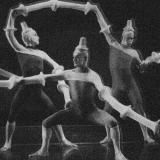
Often credited as the father of multi-media theatre, Alwin Nikolais (1910-1993) took complete creative control over his productions - including cutting-edge approaches to lighting and costume that transformed human bodies into shifting sculptural shapes, while also composing wildly innovative electro-acoustic and synth-based audio as accompaniment.
After initially experimenting with musique concrète and tape manipulation (as demonstrated on the 1959 LP Choreosonic Music of the New Dance Theatre of Alwin Nikolais) Nikolais became the first owner of Robert Moog's synthesizer at the Audio Engineering Society convention in New York in late 1964. Relying heavily on the Moog and later the Synclavier synth/sampler, these 21 tracks document Nikolais' highly-prescient compositions across the mid 1960s through to the late 1980s - existing not only as extensions of his other-worldly choreographic productions, but standalone pieces of foundational mid-century American electronic and experimental music.
"Born in Southington, Connecticut in 1910, Nikolais’s early years and early career were in acting, music and puppetry. It was not until the late 1930s that he began his work as dancer/choreographer in Hartford, Connecticut, where he was commissioned by the Avery Memorial Theatre, a part of the Wadsworth Atheneum, to create an evening-length work to the music of Ernst Krenek. Previously his work and study as a pianist-organist found him accompanying silent films. This sort of accompaniment required from the musician not only a playing skill but also a versatility in improvisation, matching movement to sound, and evoking mood to situation.
Nik was drawn initially to dance by his involvement with the percussion scores used by the illustrious early twentieth century German dancer Mary Wigman. In trying to learn more about percussion, he was lured into dance class and thus his career began. His development of music and dance occurred simultaneously. His introduction to the twelve-tone technique opened his mind to the expanding areas of atonal music, and his dealing with music as sound per se. In 1948, after being appointed director of the Henry Street Playhouse in New York, Nikolais formed the Playhouse Dance Company, later known as the Nikolais Dance Theater, and began his aesthetic orientation toward dance as a study of motion. By the 1950s, he had ceased creating literal dances and began his explorations and eventual milieu as an abstractionist.
Sound became an important part of his abstract theatre. For his first dances, which involved his new thinking of dance as both a visual and kinetic art, he used live percussion scores in which he directed his dancers to play instruments of all nature. There was a combination of children’s toy instruments as well as harsh and resonant automobile brake drums, and other pitched auto parts which he also used to accompany classes. Once he installed his own tape recording machines, he quickly used the limited range these instruments provided in a new way, slowing and increasing speed and reversing sound. He also made the sounds adhere to the choreographic structure (not the other way around), thereby giving the dance its independence from the musical phrasing. But the real need remained: the search for new sound. Nik made a sound library, recording noises and percussion and vocal sounds, which the French aptly called musique concrète. Needless to say, he became a master at splicing bits and pieces.
From 1956 to 1962 Nikolais composed eleven major scores for his theatre pieces using such techniques. In 1963, James Seawright, who at the time was assisting Nik in his productions and also working at the Columbia-Princeton Center for Electronic Music, recorded a sound bank for the production Imago (1963). With this material, Nikolais created his first synthesizer score. Imago won the Paris Grand Prix in 1968 and launched the Nikolais Dance Theatre towards its national and primarily international acclaim.
During the same period, Seawright came to Nik and told him of a young man who had invented and constructed a simplified synthesizer and insisted that Nik visit the electronic fair currently being held in New York. Nik did so and met Robert Moog. He was completely taken by the new machine and after making some suggestions to Moog, (which Moog made), Nik bought the inventor’s first machine with the aid of a Guggenheim Fellowship. Moog himself was astonished by what his machine could produce for Nik. This machine was later acquired by the Museum of Musical Instruments at the University of Michigan at Ann Arbor as the first Moog synthesizer. The Synclavier was Nik’s next source of sound and since the mid-1970s remained the major instrument in the Nikolais soundroom.
Alwin Nikolais has been honored and awarded throughout the world. He has received the French Legion of Honor, the Kennedy Center Honors, National Medal of the Arts, two Guggenheim Fellowships, as well as Mellon, Ford, and Rockefeller grants. He has been a recipient of NEA grants since 1966, been awarded five honorary doctorates, all for his remarkable achievements in Dance Theater. His genius has influenced several generations of artists."
—Murray Louis
Paraiso has been doing vital work in Portugal - documenting the underground dance scene's history and pioneers in various mediums while also showcasing equally brilliant artists from newer generations. And they've been doing it for a decade now: we all know that a label dedicated to its local scene through and through is something rare and should be celebrated. This compilation 'X - 10 Years of Underground House Music from a Paradise Called Portugal' is a manifestation of that cross-generational spirit, with ten never-before-heard pieces of music by initiators and legends like The Advent alongside more recent veterans like Roundhouse Kick and Vil or younger talent like Phoebe or Van Der. Things start off with Salbany's 'Trax 10', oozing a techno elegance and irrefutable groove that wonderfully portrays the spirit of the Lisbon sound: raw yet ethereal, disarming in its simplicity while containing rave, romance and rhythmic complexities. Label founders Maria Amor & Shcuro firmly carry on the torch with 'Intracellular', gelled by dubby washes, syncopated drums, infectious rhythmic sense and layered with a melodic vocal motif. Vil's 'Cave' brings in stone-cold tight percussion offset by rich, evocative pads and technoid know-how for days. The Advent steps in with an ode to acid-minimalism, raw and slow-burning, with curious and twisted moments peppered with the skill of an expert. Van Der storms in with a piece of hybrid qualities, impeccably blending a swing onto industrial territories for a hypnotic-yet-banging hands in the air dancefloor moment. Scam Dust (the duo of Tiago and Shcuro, from adjacent generations) picks up on the industrial flavours, adds furious jacking rhythmics and live sonic experimentation that takes us to peak-quality effect and noise manipulation. 'Subvert' follows and goes deeper, as if into the depths of the ocean, with aquatic arpeggios and sparse drums that morph into an 303-driven state of mysterious oceanfloor mania - Roundhouse Kick sending us messages from the South. Violet and her 'Dream Machine' emerge with its mutant noisy motif, delay-drenched percussion and steady beat interrupted by keys, drum variations - and a u-turn to its paranoid loopy beginnings. Phoebe enters the chat and brings sonic sun rays in 'Galaxia 2000', a wide-eyed moment lead by colourful, open synthesisers with gates and filters taking us on a beautiful ride on tense, swingy drum patterns. The tenth track comes from Lisbon's rkeat and is full of closing act ear-candy with its beautifully chiseled, groovy as hell percussion, organic sonics and metallic instruments that seem to announce that the next decade is about to be just as good, if not better than this lovely 2016-2026 stint of boundary and scene-pushing.
Compiled onto one vinyl album for the first time, Landlocked (Numbers, 2026) presents Hallucinator’s 1999 debut album originally released under Mark Ernestus and Moritz von Oswald’s label Chain Reaction. Writing much surrounding the culture of what would be later considered ‘Dub Techno’ and its’ primary distribution center, Hard Wax, leads one down roads of shifting primary sources and decades old overheard smoke break recollections. Maybe brevity primes the listener to the paralinguistic to approach the sound on its terms; focusing on how things are uttered and not what.
This theory will remain unconfirmed. Hallucinator original press release left us with three or so gestures to consider over the years since:
“A new act on CHAIN REACTION”s distinct productional thesis. HALLUCINATOR are 3 people from he UK/London and this their first release ever- that’s all what the artists want to let us know…. This record is dedidacted to the memory of Stephen Lawrence!”
The first gesture is one of personnel. Since ’99, we’ve gotten to learn a bit more about the artists behind the Hallucinator project. All London-based, all writers, composers, and sound-designers— Anna Piva, Edward George, Trevor Mathison. These three seem to flow between parameters as aesthetic tactic and tacit structure to the work itself. For example, other collaborative shapes have come from this lineup including Flow Motion (Piva, George and Mathison) as well as the now defunct Black Audio Film Collective of which George and Mathison are founding members.
The second gesture is in the second line of the previous press release, “distinct productional thesis.” Much of Landlocked’s affect and sequencing seems to suggest an emotional study of entropy at the level of sediment. Rhythms play with space and capacity through polyvalence. The production chose subtractive vertigo, often switching and bringing back in elements that vanished from the track 6 minutes ago. Dubbing out so much of a track, one begins to associate sound akin to memories held in the experience of running your hand across a concrete block as a child. Felt (re)memberance in lieu of narrative tale. Using textures that flicker between colour and percussion, Hallucinator’s 12-tracker of loudspeaker perception music might be a mediation on the psychic wake of the Cold War. Intermittent strata of ambience and groove convects an active margin rifting event underneath a scorched geology of power in Western Europe. Again, this is all grapevine hearsay.
But it’s silence that voices the third gesture. The album’s sparse application of the written word touches on the ennui paradox of being landlocked on an island. Stuck. Trapped in the psychosis of occidental hypercentricism. A looping silence of Black British tragedy: “to the memory of Stephen Lawrence”. 18 year-old Lawrence was stabbed to death at a bus stop in southeast London by six white men in 1993. The rift of grief and implicit reiteration of modern subordination left by this hate act went legally silent for almost two decades until Lawrence’s killers were ultimately sentenced to virtually life in jail in 2012. Only six years removed at the time of Hallucinator’s initial invocation of rememory, the mind-numbing accretion of what Black Studies Professor Denise Ferreira da Silva might call “unpayable debt”, finds demonic ground across Landlocked, forming an aural sense of what continues to be refused.
The album ventures through spaces of overactive non-happenings: ‘Red Angel’’s factory floor dub flashes between smokestack and jungle visions, or the halfway mark’s stilted breath of ‘Dusk’ lending its mood to the sort of sedated dreams built from daily life under colony rule for instance. That linked rhythm links us back to our linked fates across Black and Brown folk is real, thus the syncopated signals through this work behave on the level of transnational radiotelegraphy, sounding out its windswept tension of a body negotiating a meat-grinder schema of linear production and wage for others to know that unspeakable thing can be broadcast in every drum tongue.
As the silence continues to reverb, we return to the sort of meaning-making that cannot be told but felt. Soothing to some, disturbing to others. Landlocked, a Rorschach test for a crumbled empire.
out of Stock
Last delivered 33 days ago available to reorder, subject to availability
Over the last decade and a half, Rotation Sound System’s annual gathering in the Staffordshire countryside has become one of underground dance music culture’s true success stories – an intimate gathering of like-minded friends and partygoers, powered by a custom-built six-way sound system, with music provided by a carefully curated line-up of dusty-fingered diggers, selectors and hand-picked live performers.
At the heart of the collective’s unique and much-loved approach lies a dedication to finding and sharing lesser-known gems and audio obscurities – fantastic records whose charm and quality has long been overlooked.
Last year, the core members of the crew – founders Dean Meredith and Ben Shenton (renowned for their productions as Mind Fair), and Wrekin’ Havoc trio Rob J, Stuart Robinson and Rich Hall – offered a snapshot of their unique musical approach via debut compilation Everything You Are About To Hear Is True, Volume 1, in the process introducing a global audience to some of the countless unknown mid-tempo classics nestled in their collections.
Fresh from another sold out edition of their acclaimed micro-festival, they’re back with volume two, another must-have collection of slept-on classics, loved-up shufflers and wide-eyed Balearic beats, all of which have played a part in Rotation’s story over the last 13 years.
Appearing on gatefold double vinyl with extensive liner notes telling the stories behind the tracks, Everything You’re About To Hear Is True, Volume 2 is full to bursting with music that sounds mind-blowing on the crew’s high-end sound system.
For proof, check the analogue-rich intergalactic shuffle of Paul Atreides’ 2015 jam ‘Arrakis Walk’, the relaxed boogie-soul of Rocky Winters’ Chaz Jankel produced ‘Vicious Circle’, the easy-listening-jazz-rock bliss of Vincent Maclin’s ‘Should’ve Took a Chance’, the 80s soul squelch of ‘Ecstasy (Centurion Mix)’ by Endgames and the immersive British dub drift of Sigma’s ‘Remember (Dub Style)’.
Everywhere you look, you’ll find eye-opening and ear-pleasing delights. There’s Pinky’s lightly acid-flecked, breakbeat-fuelled, acid house-era street soul classic ‘I Wanna Be The One (Instrumental Groove)’, the 1992 new age downtempo seduction of Linda Myers (‘Shine On Me’), the Clavinet-and-synth sporting jazz-rock/space-rock fusion of Wolfhound (1984 gem ‘Another Moon Song’), the Gallic colour of Buzy’s ‘Keep Cool (Version Maxi)’ and the guitar solo-laden electrofunk explorations of mid-80s UK act Lifesighs (‘Get Serious’, here presented in its extended instrumental form).
Celebrating the 30th anniversary of its original release, Night Song returns in a special edition on rose leaf green coloured vinyl. A Grammy Award nominee, the album captures the extraordinary meeting of the legendary Nusrat Fateh Ali Khan and Canadian guitarist, producer and composer Michael Brook, whose atmospheric soundscapes provide the perfect setting for Nusrat’s ecstatic, transcendent vocals.
With Nusrat’s legacy continuing to reach new audiences following the landmark 2024 release of the unearthed archive recording Chain of Light, Night Song remains one of the defining cross-cultural collaborations of its era. This anniversary edition includes a printed inner sleeve with updated liner notes and photographs.
Back to Pennsylvania, started (as so much great art does) in the beginning stages of a breakup in Brooklyn. Anna was weighted down by a sense of stagnation that required the kind of restart only returning home—to your childhood bed and bedroom, your parents backyard—can provide. So she went back to Pennsylvania. She sat at her hometown bar with her dad and his friends. She walked the sidewalks of her childhood. She spent time with her friends whose paths never quite diverged from that traditional, tale-as-old-as-time children’s chant—love, marriage, babies in a baby carriage. Despite all the shakeups of her life—no more New York, no more boyfriend, an impending nationwide tour with Joe P, frequent writing trips to L.A.—Anna still felt static. But it was on one of those fateful writing trips to L.A. that she regained a sense of motion, writing the record’s titular single. And what was supposed to be a single songwriting session with producer Gab Strum spun itself into 10 tracks reckoning with her new phase of life.
After 10 years of Andy Shauf"s The Party... it"s time for the afterparty. The Party (10th Anniversary Edition) adds nine never-before-released tracks to the original studio version of this essential indie album of the last decade, including two brand new songs plus alternate cuts and demo recordings. With The Party, Shauf masterfully creates a cast of memorable and unique characters. They show up "Early to the Party," reveal secrets ("To You") or try to reveal nothing ("The Magician"). In "a city the size of a dinner plate," everyone knew the guy who keeled over after smoking what he promised would be his last pack of cigarettes ("Alexander All Alone"). There"s the girl dancing by herself in the middle of the room, with the "Eyes of Them All" upon her. One moment you"re dancing with someone who bears an uncanny resemblance to your ex ("Martha Sways") and later slagging your best friend as way of endearing yourself to his recently dumped ex ("Quite Like You"). All of this is set to ornate arrangements of fuzzed-out guitars, string sections, clarinets and dreamy synths, all draped over delicate piano, acoustic guitars and rainy-day drums.
Legendary Gabber/Hardcore dj & producer Rob GEE is famous in New York as “the hardest DJ to ever play the Limelight.” In the early 90’s, GEE kept delirious audiences going – spinning at Limelight’s “Future Shock” dance/techno nights and performing with his live band and spinning at the club’s “Rock And Roll Church” metal/rock/industrial nights.
Rob GEE is the only artist of his kind to collaborate and create with members of respected rock, metal, hardcore and hip-hop acts such as Slipknot, Hatebreed, Biohazard, Wu-Tang Clan, Cypress Hill, & System Of A Down, creating a unification of electronic, metal, hardcore, hip-hop, and any other style for that matter known as gabber music. GEE is writing history launching gabber onto the world scene.
To celebrate its 30th anniversary, Rob GEE's legendary 1996 hardcore masterpiece Punk, Funk & Live is now officially available on vinyl again. For several years, this EP has become a highly sought-after holy grail, for both old-school gabbers and new harddance, hardtechno and hardstyle collectors.
Punk, Funk & Live features the classic anthems "Ecstasy, You Got What I Need", "Gabberslam", "Son Of Rob GEE" and exclusive bonustrack "Rob GEE Megamix", mixed by Bass-D & King Matthew.
This limited 30th anniversary edition of Punk, Funk & Live is available on purple vinyl.
Teen of Denial: Joe’s Story is a freshly reimagined take on Car Seat Headrest’s beloved breakout, Teens of Denial, now celebrating its 10th anniversary.
On the original album, Toledo often used the name “Joe” as a pseudonym – a sly homage to Daniel Johnston. Revisiting Teens in the run-up to its 10th birthday, he felt called to give Joe a unique backstory and began tweaking the album to tell that tale. The group returned to the studio with Teens producer Steve Fisk to update accordingly – tweaking lyrics, revising arrangements, and recording new songs in the “Denial-style,” including ‘Optimistic Son” and the anthemic ‘Joe Drives Again’. The result retains Teens’ dark edge and youthful cynicism, but allows a bit of hard-won compassion into the mix.
From Will Toledo:
Sometime last year, it was suggested to me that we do something for the ten-year anniversary of ‘Teens of Denial,’ so I started looking back on the album to see what we might do. In spite of some of its songs being a regular part of my life for the past decade, it wasn’t a record I’d thought much about as a whole since it came out. Most of the songs I’d come up with over a two-year period at the end of my college days, when I was struggling a lot with cynicism and misplaced aggression. But by the time the songs were done, I was living in Washington, Car Seat Headrest was a full band with a record label, and in spite of the turmoil of the writing process, the final album was pretty enjoyable for everyone to work on.
This time, looking back at the songs, I started to feel like there was a story being told through the album, though I’d never imagined it as being a narrative work. On ‘Hi, How Are You?’ Daniel Johnston had used the name “Joe” in the titles of a few tracks –“No More Pushing Joe Around,” “Keep Punching Joe” – as a sort of joke, a stand-in for himself. I borrowed the idea, and the name, for titling songs on ‘Denial.’ This time, I started thinking - who is Joe? And how do the songs, in the way they’re sequenced on the album, reflect what he’s going through? As I started asking this question, a story emerged with startling wholeness and clarity, like finding the foundations of an ancient city while digging in my backyard. As I kept digging, certain songs from the original album fell by the wayside, as they seemed misplaced in this new context; others asked for new lyrics, to fully give birth to the story contained in the music.
The resulting work feels more like the album ‘Teens of Denial’ was meant to be. When you’re writing from a dark space, it’s hard to have perspective on where you’re at. This time, I could pull from memories of that darkness, and use the distance and additional perspective of ten years of life to shed a fuller light on the experience. Joe is a character going through some of what I experienced, and some of his own problems. Telling his story, and not just my own impressions of life at the end of the teen years, brought a new level of compassion and wholeness to the album. It gave us the opportunity to write new material in “Denial style”, embracing a snappy and simple(ish) rock aesthetic, and in an additional blessing, we were able to team up once with Steve Fisk, a joy and inspiration to get back into the studio with after ten years. We mixed the material at his house in Tacoma, and were constantly amazed at the lack of divide between past and present, as we’d punch in vocal overdubs ten years later into the same gear, hearing my voice now running alongside a 2015 Will. For someone coming across this album or this band for the first time, this is how they’d hear the record, not as a relic of the past but as a new piece. It was immensely rewarding to experience that on our side.
For anyone familiar with ‘Teens,’ comparisons with the original will be inevitable, but I do hope that as much as possible, people can come to this album on its own terms, approaching it as a teen, hearing the music and story for the first time. I believe music is an ongoing story, and albums don’t always do justice to its dynamic, ongoing nature. What gives it life is the new ears that hear it, and the new hearts that engage with it. I’m so grateful that this is a work that people have kept coming to, and I hope that this presentation does them honor with a fresh offering to the conversation. We’ve known that “it doesn’t have to be like this”; now we can wonder - “what it if were like this?”
Einige Alben schlagen ein wie ein Blitz, andere entfalten ihre Wirkung über Jahrzehnte hinweg. Robert Lester Folsoms Kultalbum Music and Dreams, ursprünglich 1976 im Eigenverlag erschienen, feiert sein 50-jähriges Jubiläum mit einer besonderen Neuauflage.
Die 50th Anniversary Edition präsentiert das remasterte Originalalbum erstmals zusammen mit den bislang unveröffentlichten Reel-to-Reel-Demos auf einem Doppelvinyl. Geprägt von Folsoms Liebe zu den Beatles sowie Songwriter-Größen wie Neil Young, Joni Mitchell und Crosby, Stills & Nash, verbindet Music and Dreams zeitlosen Folk-Pop mit jugendlicher Sehnsucht, Melancholie und großer musikalischer Vision.
Ohm & Octal Industries made their mark on this label with their Northwest Passages album back in 2023, and now they return with more heavy but equally serene dub tech excursions. 'Blizzard' has none of the frenzy of that weather type but does have gentle synth winds swirling around the rooted drums. 'Fly Boy' is a delicate dub with the most subtle pads and effects marbling the airwaves, while 'Goodbye Sunshine' has more forward intent and beautifully hits that glide over the minimal drums. 'Jah Rule' then dials into a heads-down and more warehouse-ready dub techno sound built from the sort of perfect loops that could play for days and never get annoying.
Waage has long been an established force in the dub techno community, and he is no stranger to working with Quantal. This outing on the don of dub techno labels features four tracks that strike the signature mix of meditation and dancefloor tool. 'WM13' is a wide-open underwater dub with a slow-motion rhythm, 'W14' has more hunched over drums and plenty of open space littered with delicate FX and textures, then 'W15' glides on silky drum loops that could play for days and never get annoying. The closer is the most serene and sublime of the lot, with lovely smeared chords drawn out across the frictionless drums.
* 2026 REPRESS *
Ashanti Selah – Musician & Dub Producer hailing from the UK, is the eldest son of the world-renowned soundman, Aba Shanti-I. Ashanti's musical journey began at a tender young age, during his formative years of soundsystem exposure through his father's musical infrastructure he learned the art of the Dub. His education continued as he attended his father’s long-standing annual sessions at the Notting Hill Carnival and traveled the globe as a crew member and diligent student. Via his Steppas Records imprint, Alpha Steppa, son and nephew of pioneering dub-duo Alpha & Omega presents a unique collaboration between two second generation Dub / Reggae producers. 'Ashanti Selah Meets Alpha Steppa' is a testament to their teachers and the product of a life spent in dub. Steppas Records delivers four unique cuts of the long-time Aba Shanti-I exclusive 'Violin Step', featuring the uplifting and transcendental strings of Ras Divarius. New generation soundsystem music with a deep roots foundation.
out of Stock
Last delivered 5 years ago available to reorder, subject to availability
Up In Her Room are delighted to announce their first release of 2025, and a return to the label from Oli Heffernan, aka Ivan the Tolerable!
10 new chunks of lo-fi instrumental library-hop - recorded in 2 days in Summer 2024, ‘Nocturnes’ is the first ITT album of 2025, and the first one made solo by Heffernan since ‘Wild Nature’ in 2019.
Known for his genre-defying and boundary-pushing approach to music, Heffernan – who has spent years experimenting with various styles, instruments and production techniques has crafted a collection of tracks that defy categorization. The new album is a sonic tapestry of atmospheric library music, dusty hip-hop beats, and the organic, unfiltered essence of field recordings, all neatly packaged up into a format that allows each element space to breathe.
‘Nocturnes’ weaves intricate layers of samples, loops, and live instrumentation, combining elements of hip-hop, dub, jazz, and electronic music, all while maintaining a sense of urban cinematic flair.
The album is released by Up In Her Room on limited edition black heavyweight vinyl
SECOND REISSUE ON THIS HEAT’s OWN NEW IMPRINT FOLLOWING ‘THIS HEAT’ (TH01LP) WHICH WAS UNCUT ‘REISSUE OF THE MONTH’ RECENTLY WITH 9/10 REVIEW + 4-PAGE FEATURE WITH Q+A.
*24 bit/96 kHz re-master from original analog tapes.
*Heavyweight 180gm vinyl and heavyweight sleeve with pantone printing to match original 1979 release.
Simon Reynolds on Health and Efficiency:
“For some fans, Health and Efficiency is This Heat’s peak achievement – their most concentrated blast of visceral intensity and wayward experimentalism….Lead track “Health & Efficiency” combines fierce angular rock that fully lives up to Cunningham’s belief that This Heat could become a postpunk King Crimson, with a multi-part babble of vocals, clattering percussive timbres, and found sounds.’’
Flipside “Graphic/Varispeed” is more subdued and hypnotic: a wavering tonescape whose duration depends on whether you play it at 45 rpm or 33 rpm. This reissue reproduces the original release’s striking cover image of a human figure painted in blue by Pete Cobb, along with the cryptic flipside of text in many different languages.
Although widely considered to be Post-Punk’s finest, This Heat actually began performing and recording their music in 1976, the early days of London’s punk era. Within their two albums and an EP they perfected a strange and volatile new strain of avant-garde rock that time has proved to be massively influential, a blueprint for much that would follow: post-rock, math rock, homemade musique concrète, experimental electronica. Numerous critics have recognised the band's influence on the music of Sonic Youth, Glenn Branca, Steven Wilson, Public Image Ltd., Radiohead, Swans, Shellac, Young Knives, Black Dice, Lightning Bolt and numerous other experimental and post-rock bands.
Disbanding in 1982 they have left an undeniable legacy that has only continued to grow in stature and relevance.Having recently passed the 50 year anniversary of their first gig, and the recording of material that appears on their debut album, the group’s surviving members Charles Bullen and Charles Hayward, true to their DIY roots, have set up an imprint to release their recordings for their growing fan base that is increasingly recognising their influential place in music history.
‘They went beyond punk before punk had properly started…the entire album is a controlled explosion of ideas. Nearly fifty years on, This Heat’s debut is something the world has still not completely caught up with.’ - Simon Reynolds
‘Over the years, there have been bands to play as aggressively, or even as strangely, but very few have been able to rise from their collective influences and histories to create music so singularly distinctive and inspiring.’ – Pitchfork 9/10
‘This Heat sounded like the future then ... and still do now.’ - Dan Snaith (Caribou)
‘This Heat had a certain kind of force the post-punk bands were unable to adequately control without falling foul of rawk excess, and which the punk bands—albeit blitzing and rowdy—were too basic in form to build.’ – John Calvert , The Quietus
The premise of this compilation is simple: music we’d like to hear at the airport.
The idea came after learning that Honolulu’s international airport has been playing AI-generated music over its speakers since November 2025. First reported by Civil Beat, the news has caused frustration and disappointment among residents and visitors, as well as within the local music community.
Everyone knows Hawaii is one of the most musically rich regions in the world — why then is the airport using AI music? 'Music For The Airport' is our response.
Located in the middle of the Pacific at the outskirts of one the most remote cities on the planet, Honolulu’s Daniel K. Inouye International Airport (HNL) is for most people the first place they encounter when they arrive in Hawaii. Warm sun, tropical tradewinds, playful palm trees and majestic mountains welcome every traveler, as do the sounds of birds, familiar music from Hawaiian artists like Aunty Genoa Keawe and Israel Kamakawiwo’ole, and—at least for now—seventeen “island-themed” AI-generated songs.
In late 1977, while sitting in Germany’s Cologne Bonn Airport on a Sunday morning, Brian Eno noticed how terribly uncomfortable he felt hearing the airport’s “muzak” overhead. For a harried, hurried place like the airport where travelers scramble to their gates, stand in long border control lines, and wait impatiently for their luggage at the carousels, music can create more anxiety than calm. Asking himself, "What should we be hearing here?", Eno soon created ‘Ambient 1: Music For Airports’, a sonic remedy aimed at reducing nervousness in public spaces.
When we heard the news that HNL airport is playing AI-generated “muzak”, we were immediately reminded of Eno’s genre-defying 1978 album. And we were similarly inspired to react. But how? Recreating an ambient masterpiece wasn’t in our wheelhouse. We started digging through our catalog of licensed music which we haven’t yet re-released. We quickly realized this was our chance to highlight some of favorite songs from the so-called CD era: the 1990s and 2000s (with a few exceptions). In less than 20 minutes, we pulled 17 original songs recorded by local artists between 1984 and 2017.
The speed at which this project came together surprised us; reactionary gut instinct often produces swift and lasting results. Ironically, our new compilation likely took less time than it did for the state Department of Transportation to commission its AI songs in question. But even though ‘Music for the Airport’ came together in less than one week, the truth is that this collection of 17 songs is the result of years of hard work, trust, sacrifice, patience, and understanding. Building relationships with and licensing music from artists doesn’t happen overnight, but more importantly: these songs are the result of people pouring their hearts and souls into something they believe in. This music wouldn’t exist today without the artists and their loved ones who supported them along the way.
As of this writing, the DOT states its intention in creating AI-generated songs is to “highlight different aspects of the islands, aviation and the airport” and that “no state funds were used to produce them”. Okay, but at what cost? Technology disrupting the music industry isn’t news to anyone. AI music in public spaces are cost-saving measures, since its users (airports, for example) don’t have to pay the licensing fees typically required, which can be a worthwhile source of revenue for artists. But what happens when a place like HNL airport, which hosts more than 21 million passengers annually, uses music created by machines instead of people to represent Hawaii? The identity of a place beings to erode, diluted by a language learning model’s conceptual summary of what a people and its culture sounds like. To echo Brian Eno: what should we be hearing here? In other words: what should the music of Hawaii sound like?
We believe in the power of music, especially when it comes from the soul. We believe in supporting artists, especially as AI disrupts our lives. We believe that Hawaii must be represented authentically, especially when it comes to song. And of course we believe in vinyl, especially since it was a record from 1978 (Mackey Feary Band’s debut LP) that inspired Aloha Got Soul’s origins in 2010.
We hope you find as much joy in this compilation as we have. Perhaps it’ll soundtrack your next journey to Hawaii. At the very least, we hope some people take a moment to hear these sounds: in your headphones for now‚ maybe someday overhead at the airport in Honolulu.
Superfan is the songwriting veil of Kali Priya Flanagan, the Brooklyn-based multi-instrumentalist and producer. While initially imagined as a solo act, ambitious string arrangements crafted in collaboration with cellist Omeed Almassi have come to define Superfan’s noisy and magnetic pop soundscape.
Today, Superfan announces their forthcoming album ‘My Piledriver Heart’ (MPDH), out October 16 via new label home AD 93 (Joanne Robertson, Dagmar Zuniga, YHWH Nailgun). Along with the announcement, Superfan presents his new single “In the Gold Room” paired with the live version filmed by Garrett Winston inside Agger Fish Building in the Brooklyn Navy Yard.
MPDH marks the first release outside of the record deal Flanagan signed at age 14. The album finds Flanagan embracing a more expansive, experimental vision of indie rock - melding deeply tuned acoustic guitar, cello, and Eastern musical influences into what he calls his “Acousticello” sound. Recorded largely live with cellist Omeed Almassi and producer Hudson Pollock, the record explores heartbreak, independence, and hopeful melancholia. Kali says “This time around it was about being (myself) versus becoming myself. This album was made to acknowledge the ebbs and flows in chugging along with life and love, from a place of comfort within the self that opens you up to the beauty in everyday life.” He does so through intimate performances that blur the line between folk, chamber music, pop-rock ballads, and alternative rock. Last year, he released the singles “Apeiron (Fantasy Football)” and “Miss W Jones” and earlier this year he released “Picture of Return.”
Following his acclaimed debut Tow Truck Jesus, Flanagan opened for The Strokes at Red Rocks, and has quietly become a fixture of New York’s DIY scene, performing alongside artists like Horsegirl, Knifeplay, and Quiet Light, while also playing support shows with King Woman and Victoryland this summer. He is also in the rising emo band Holidays in United States.
Before Superfan, Flanagan found success during the pandemic under his first moniker, “KALI.” His initial releases garnered millions of streams and led to collaborations with seasoned high-profile producers and industry teams. Despite his budding career as an indie-pop star, Flanagan was dissatisfied with the conditions of his artistic output and community as he reached adulthood. His coming-of-age years in Los Angeles were marked by an ever-present new-wave pop music oblivion: “hits” made in 5-hour sessions with strangers, a social life suffocated by others’ aspirations for fame, and an absent audience for live music that pushed past the prescriptions of recorded music. On MPDH, Kali says “I can’t help my urge to write these pop-rock ballads, but we really wanted to push the boundary of genre and expressing the sentiments of the songs through experimentation.”
The Rio-based project Pra Gira Girar presents a new interpretation of the song Atabaque Chora, originally made famous by the trio Os Tincoãs. Written by Dadinho and Mateus Aleluia, the piece opens the group’s iconic 1977 album Os Tincoãs —and has now been chosen to mark the beginning of Pra Gira Girar’s own recording journey.
Formed by Alvaro Lancellotti, Michele Leal, and Alan de Deus on vocals, Pedro Costa on guitar, Kassin on bass, Zé Manoel on piano and vocals, Zero Telles (in memoriam) and Anna Magalhães on percussion, and Diogo Gomes on trumpet, the project was born from Alvaro Lancellotti’s long-standing admiration for the work of Os Tincoãs and his wish to create a live show celebrating the legendary trio.
For a year, Alvaro, Michele, Alan, and Pedro made up the core of the group, meeting weekly for rehearsals that became a deep dive into Os Tincoãs’ intricate vocal arrangements. These sessions were essential to recreating the grandeur and complexity of the Bahian trio’s music. Pedro Costa transcribed the vocal lines and, together with Michele Leal — a singer-songwriter with a background in choral singing — adapted the arrangements for a formation that, unlike Os Tincoãs, features a female voice.
"Here is a tender journey through loss and rebirth — a raw exploration of grief, heartbreak, and the emptiness that follows. It unfolds the fragile moments after losing a beloved friend, the fragile attempts to mend a fractured love, and the sudden rupture that shakes the soul to its core. Amidst the turmoil, anxiety pulses and the body aches with memories too heavy to hold. Yet, slowly, the darkness gives way to light. Breath returns. Support is found in unexpected places. Memories surface through hypnotic whispers, guiding the way back to softness and hope. This is not a story of instant healing, but a delicate awakening — a reckoning with old patterns, a reclaiming of the self, a learning to love differently.
Intimate and universal, fragile yet fiercely alive."
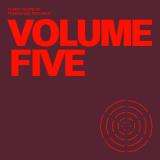
The final chapter of Freerange’s 30th anniversary series arrives with Volume 5, bringing together six brand new and exclusive tracks from across the Freerange family, and beyond. As with the previous four volumes, it’s a snapshot of the label’s enduring musical DNA — deep, soulful, underground, and resolutely dancefloor-focussed.
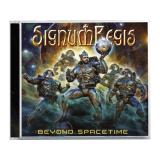
SIGNUM REGIS was founded in 2007 and stands for finest melodic Power Metal with both progressive and symphonic elements. Their upcoming new and eighth studio album „Beyond Spacetime“ will be released on October 9th through Fireflash Records and will feature different vocalists. Among them their current singer Mayo Petranen, who just returned to the band, his successor Jota Fortinho as well as top class names, such as Ripper Owens (ex-JUDAS PRIEST), Matt Smith (THEOCRACY), Ralf Scheepers (PRIMAL FEAR), Johnny Gioeli (HARDLINE, AXEL RUDI PELL), Tasos Lazaris (STEEL ARCTUS, WHITE WIZZARD), David Åkesson (SYMPHONITY; QUANTICE), but also Victor Smolski (ALMANAC, ex-RAGE), with a guitar solo on the first single-release „Throne Of Gold“.
„We are so satisfied and proud of it! Even though the last 3 years were not easy for the band, this is definitely not just a ""next"" Signum Regis"" album, we are a band, we are always aiming to create something special - for us and for fans“, comments guitarist Filip Koluš, who also mixed and produced the album.
„Beyond Spacetime“ is rounded up by an excellent artwork from Uwe Jarling, known for his work for acts like HEAVEN’S GATE, GRAVE DIGGER or recently FRONT ROW WARRIORS. „The result is awesome! We are definitely a band that considers the artwork a very important part of our artistic vision. Over the years this approach has only grown stronger, so having a real cover artist has become an absolute must for us“, comments Tommy.
SIGNUM REGIS will celebrate their 20th anniversary next year. „Beyond Spacetime“ already feels like kind of a best-of journey through their past, present and future. „We grew up on the values of traditional melodic metal - this focus will most probably never change“, says Filip Koluš and explains: „At the same time, we are also a group of great friends, who have a common goal - to make the best quality metal music together.“
Produced by François Tétaz and Luke Howard and recorded primarily at Melbourne's Synth Temple, Tina Arena's Way Of The World reimagines “True Faith” (New Order), “Way of the World” (Max Q / Michael Hutchence), “Enjoy the Silence” (Depeche Mode), “Ordinary World” (Duran Duran), “Torno Bambina” (Ada Mori) and “Cayendo” (Frank Ocean) through stunning orchestral arrangements, prepared piano, analogue synthesis and electronic textures.
Rather than traditional cover versions, these are complete artistic reimaginings that reaffirm Tina Arena as one of Australia's most expressive and enduring vocalists. Of first single “True Faith”, Tina says: “Making the deliberate choice to focus on the lyric of true faith was musically revelatory for me. It presented a blank musical canvas with endless vulnerability and space for me to explore.”
François Tétaz, a Grammy and ARIA-winning producer known for his work with Gotye, Kimbra and Architecture in Helsinki, contributes synthesisers, Rhodes, prepared piano and drum machines throughout, while pianist and composer Luke Howard shapes the EP's restrained, cinematic language. The pair are joined by an ensemble including the Budapest Art Orchestra, Peter Knight, James Rushford, Mindy Meng Wang and orchestrator Felix Watson, giving the collection its rich, orchestral backbone.
The EP announcement lands amid a landmark 50-year career anniversary for Tina — one of Australia's highest-selling artists of all time, having sold more than 10 million albums worldwide.
Fontaines D.C. announce their fifth studio album, Dopamine Chamber, released on 16th October via XL Recordings. Produced by James Ford, it is the follow-up to 2024’s UK platinum-certified Romance – and the sound of a band moving decisively away from the guitar language of their early records into something colder, stranger and more synthetic. It arrives today alongside lead single “Marianne” and its accompanying video, directed by Dave Meyers.
Dopamine Chamber arrives like a constellation behind undulating sighs of smog: potent balladry, anthemic melodies glinting through the murk. In a world tipping towards collapse, it asks how pleasure mutates amid peril—and what our pursuit of it reveals about us. Across the album, Fontaines D.C. – Grian Chatten, Carlos O’Connell, Conor Curley, Conor Deegan and Tom Coll – move between gratification and dread until the two meld together, reflecting the overwhelm of artificial intelligence, environmental collapse and political violence all riding the same algorithms as memes, jokes and celebrity culture. “The album itself is a dopamine chamber,” says Chatten. “You step inside and we test these different mind- or mood-altering pieces of music on you.”
Where Romance held its tension in balance, this record tips it. “I think Romance was maybe 60 per cent human and 40 per cent corrupted by automation, and a loss of feeling,” says Chatten, who spent time among the faded grandeur of Venice, Vienna and Sicily in search of lyrical inspiration. “This one feels more like 60 per cent corrupted — the mask is wearing the face a little more.” He resisted any pull towards easy optimism: “I felt it would be more powerful to leave the hope out and reflect the ugliness honestly. This one needed to feel more like a catastrophic warning.”
“Our albums have always questioned a sense of place,” says bassist Conor Deegan. “First Dublin, then being away from Dublin, and then trying to find the romance elsewhere. On this record, the question became: where do you escape to?” Into the self, perhaps – or hedonism, fantasy, cosmetic perfection, eternal youth or the endless refresh of a screen.
Fontaines D.C. have spent five albums refusing to repeat themselves – from Dogrel (2019) through A Hero’s Death (2020), the No. 1 Skinty Fia (2022) and the anarchic, kaleidoscopic Romance (2024). Dopamine Chamber is their most radical turn yet: cold synthesiser tones, marching drums, samples and triggers, several songs with no guitars at all, and the swooning strings of 1960s Italian pop pulled into something synthetic. For guitarist Conor Curley, the aim was to break from the band’s own reference points: “I was trying to find stuff that pointed into the future.” It was made with James Ford between London, the English countryside and Palermo, where Chatten recorded vocals in a makeshift booth built from mattresses and cushions.
“There’s a poignant sense of us being on the brink of some other kind of form of humanity, or non-humanity,” says Chatten. For their fifth album, Fontaines D.C. have built the chamber. What happens to the listener inside it will be the experiment.
Fila Brazillia is the name of the decidedly singular collaboration between Steve Cobby and David McSherry, born in the coastal town of Hull in the UK. Bending—and often outright breaking—more or less every rule in the book, they've been effortlessly blending deep house, downtempo, breaks, ambient, and wry humour, sampling anything they can get their hands on. Their first outing was the 1990 single-sided white label 12" Mermaids, an airy deep house tune featuring a cheeky sample taken from the theme from Robison Crusoe. Since then, they've released a boat load of singles, seven highly regarded full-lengths, and more than 60 remixes for artists such as Radiohead, Busta Rhymes, and Lamb.
Black Market Gardening is their third full-length and marks a creative high-point for the duo. Over nine tracks, Fila Brazillia guides you through hazy, bass-heavy trip hop, cosmic synth lines, brisk breakbeats, funky guitar riffs, and even touch of drum 'n bass (it's the mid-1990s after all...). There's just so much to take in, leaving the listener wondering where the samples end and the live instrumentation begins. Yes, Fila Brazillia's output fits squarely within the chill-out tradition prevalent in the UK at that point in time, but their unmatched creativity and boundless approach to the studio process makes their music truly timeless.
Black Market Gardening is available as a 30th anniversary edition for the first time since 2001.
Richly progressive folk-informed heavy post-rock and a sick burn to boot. - The Obelisk Rebecca Vernon (SubRosa), the driving creative force behind THE KEENING returns with her second album, Devotion. The new album sees Vernon and company releasing one of the year's most evocative albums; a truly compelling mix of slow burning, ethereal post-rock, folk, goth, and soaring doom. For Vernon, the writing process for Devotion took place in two starkly different environments. It ranged from the contemplative solitude of a friend’s cabin in a deserted Idaho ski resort, to the hectic reality of a 55+ senior living community in Spokane, Washington, where she was staying with her father. This shift resulted in an explosive album with a subtle duality that resonates throughout its most poignant moments. Take the lead single, "A Little Bit of Blood," for example. Quiet, acoustic guitar strums give way for Vernon's haunting vocals, before the backing instrumentation explodes into a soaring chorus reminding the listener that sometimes the best paths taken are the most difficult. "You drew a little bit of blood to show me Just a little bit of blood to make me see It took a little bit of blood to wake me Just a little wound in the night to free me" In a 2024 interview with Decibel Magazine, Vernon discussed the drastic shift in heavy music's themes in recent years, highlighting a willingness to convey raw emotion: "Metal is beginning to share more vulnerable things, more confessional things. Metal has almost become a safe place to talk about those things. People are being open with their struggles. Twenty years ago, they wouldn't have." Devotion lays these emotional confessions bare and showcases a truly bright burn. Devotion was recorded in April 2022, again at Hallowed Halls in Portland, with Billy Anderson and Nathan Carson featured in their same roles as heard on Little Bird. Once again, Vernon showcases her writing prowess, having a heavy hand on all the instrumentation for Devotion; Vernon played drums, guitar, piano, organ, and hammered dulcimer, and provided most of the vocals on both albums, with a few guest vocalists added to the mix.
Celebrating Rekids’ 300th release and 20th anniversary, Detroit legend Robert Hood and Rekids boss Matt Edwards aka Radio Slave collaborate for the first time on the double-A side ‘Radio Hood’.
First appearing on Rekids with iconic remixes of Radio Slave’s ‘Don’t Stop No Sleep’ in 2015, followed by Floorplan remixes of ‘Feel The Same’ in 2017, Hood went on to drop two EPs and the critically acclaimed ‘Mirror Man’ LP between 2020 and 2021. Now, a long-gestated collaboration between the two producers arrives as ‘Radio Hood’ complete with an alternative ‘Version’ mix.
While Radio Slave and Robert Hood are best known for a minimalist approach, ‘Radio Hood’ and ‘Radio Hood’ (Version) flip the script with rich, maximalist textures and sweeping synths. The lead track is spacious, with unmistakable and persistent stabs pulsing from start to finish, whilst Version is an indulgent, nine-minute-fifty-two stunner with sweeping, emotive strings, a subtly growling Reece bassline and serious emotional impact.
Das 1996 erstmals erschienene Debütalbum „1977“ erreichte Platz 1 der Charts und erreichte Platinstatus. Es katapultierte Ash vom Teenager-Newcomer zum Indie-Rock-Pionier. Drei Jahrzehnte später feiert
diese Jubiläumsausgabe das Album, das mit seiner mitreißenden Energie, den eingängigen Melodien und
unvergesslichen Hymnen wie „Girl From Mars“, „Goldfinger“, „Kung Fu“ und „Oh Yeah“ eine ganze Generation prägte. Die Jubiläumsausgabe erscheint als Doppel-LP (EcoRecord InkPlosion) im Gatefold-Cover,
als Doppel-CD im Digisleeve mit Booklet.
Vor 30 Jahren, im Jahr 1996, kamen Paul, Gene, Ace und Peter wieder zusammen – um diesen bedeutsamen
Anlass zu feiern, wurden Auszüge aus „Alive!“ und „Alive II“ zusammengestellt und unter dem Titel
„You Wanted The Best, You Got The Best“ veröffentlicht. Diese Sammlung, die nun erstmals aus dem
KISSTERIA-Vinyl-Boxset herausgelöst wurde, erscheint auf 180-Gramm-Schwarzvinyl in einer erstmals
erhältlichen Gatefold-Hülle mit erweiterten Fotos.
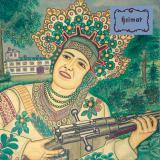
Those albums that never age, that never cease to surprise with their innovative freshness_listen after listen_defying the years that go by. Released in 2016, Heimat's debut album is one of those records you love knowing is there on the shelf or on the turntable, like a reassuring talisman. To mark its 10th anniversary, and such an awaited repress, we decided to honor this landmark album as it deserves: with a powerful remaster by Tioma Tchoulanov (UVB76, NzeNze) featuring enhanced dynamics, and an ultra-limited edition on blue splatter vinyl. What a beautiful object this is, celebrating_alongside Armelle and Olivier Demeaux_ten years spent exploring the outer limits of music, in France and abroad, from SMAC venues to squats and other joyful initiatives. Their deeply sincere music loses none of its naive tension; the emphasis is there, yet it remains restrained, contained, almost nervous, without any show of. Here, then, is something to make this fantastic album, a subtle milestone in a teeming musical landscape. A fine achievement indeed!
out of Stock
Last delivered 5 months ago available to reorder, subject to availability
Rich Oddie (Orphx) and Dave Foster (Huren/Teste) reunite for their electronic-industrial punk project, O/H.
NO CONTACT LP - is a live compilation that captures the raw energy of their performances between 2011 and 2019. This intense anthology distills the essence of their sound: noise driven electronic power, relentless rhythms, and obsessive vocals. For the first time, this fury is preserved on a double vinyl with a special edition.
Fosters gritty vocals clash with Oddies dark sound
manipulations, reflecting a world on the edge of collapse a bleak view of modern civilization embodied in their
uncompromising music.
Let's dive into the third act of the KR3 Fifth Anniversary
celebration
Love or its absence dominates the intimate songs on the new album from ARBORIST – the musical outlet of Mark McCambridge. Looking For Love, Arborist’s fourth album of exquisitely inventive Americana, places us firmly in his hometown of Belfast, allowing it to act as a microcosm of the wider-world, with all its foibles and charms. We find fictional protagonists scouring the dark corners of the city, wiling-away afternoons in strip clubs, wandering the streets in all weather and reflecting on the harsh reality of modern society, all in search of an elusive love – emphasising our need for it now more than ever.
Looking for Love is ARBORIST’s first album to be self-produced by McCambridge, largely from his home studio in Belfast – and at times it feels like we are in the room with him. It’s a different kind of record for him as previously he has always sought collaboration; whether it be with Kim Deal who chose to sing intertwined harmony on his debut single “Twisted Arrow”, or recording in The Curfew Tower owned by The KLF’s Bill Drummond who described Mark’s songwriting as being “riven with more loss than any record since Leonard Cohen quit this world”, and who Matthew E White and his Spacebomb band collaborated with to such astonishing effect on the previous Arborist LP, 2023’s An Endless Sequence of Dead Zeros, winner of the prestigious Northern Ireland Music Prize. This time, with no outside producer steering the way, McCambridge found that the quiet hours were where he felt most at ease, despite periods of trial and error, and, by his own admission, moments of feeling genuinely lost in it all.
Despite playing many of the parts himself, McCambridge still called upon old friends from the community around him; Spacebomb’s resident bassist Cameron Ralston (Bonnie Light Horseman, Hiss Golden Messenger) again features throughout the record, alongside Eamon Ferris (The Waterboys) on drums, with the great and the good from Belfast’s vibrant music scene. Grainne Meyer plays concert harp and Aga Olek plays violin for the quasi-title track “Looking 4 Love” – an off-kilter love-letter to Belfast. Meilana Gillard provides a sleazy saxophone on “Bye Bye Johnny Cash” – a seedy tale of a man obsessively visiting a dancer in a club, and The Larne Community Youth Choir provide backing vocals for “Go Kill The Fatted Calf” – a song Mark wrote about his son growing up, a take on the parable of the prodigal son, with Jonny Ashe’s blistering guitar solo adding an album highlight. The Errigal Ensemble String Quartet and Aisling Agnew’s breathtaking flute solo feature on “What Is It You’re Asking” – a song about love, or its absence, both personally and universally in these times.
McCambridge was recently honoured with a “Fellowship” by the Seamus Heaney Centre at Queen's University Belfast where he collaborated with such illustrious names from the literary world as Nick Laird, Caoilinn Hughes and Conor McPherson. Through the University he was given access to the music department's Steinways and pipe organs, and decided to try one out for the album’s centrepiece “I’ve Been A Flaneur”. As Mark explains, "The drone on the pipe organ — and the sound of it starting and stopping — was so visceral that I decided to try a half-written song against it right there and then, and this came out in one take… The song was a breakthrough artistically - I don't think I'll ever record in the same way again after this."
The album was engineered by longtime collaborator Ben McAuley (Van Morrison) and mixed by Jimmy Robertson (Anna Calvi, Beth Gibbons, Fat Dog). The results are staggering, devastating and uplifting in equal measure, calling to mind albums such as Songs Ohia’s Magnolia Electric Co., The Divine Comedy’s Regeneration, The Blue Nile’s Hats and Wilco’s Ode to Joy, as well as early-70s records from John Cale, John Lennon and Bill Fay.
Belfast native Mark McCambridge played his first show as Arborist supporting James Yorkston. A solo tour followed, and impressive performances led to notable support slots alongside Low, Cat Power, Echo & The Bunnymen and Guy Garvey. Arborist's debut single, the Americana-tinged "Twisted Arrow," caught the attention of the critics with an astonishing duet with Kim Deal of The Breeders. The debut album Home Burial (2016) and its follow-up, A Northern View, both received glowing praise, from The Guardian ("instant classic" ----) to MOJO ("devastatingly bleak… upliftingly beautiful" ----) to Uncut (8/10), with BBC 6 Music play from Cerys Matthews, Cillian Murphy, Lauren Laverne, Radcliffe and Maconie and Gideon Coe — and Steve Lamacq calling single "Taxi" "one of those records that makes you immediately stop what you're doing." He went on to even greater success with the 2023 Northern Irish Music Prize winning third LP, An Endless Sequence of Dead Zeroes, which was recorded at SpaceBomb Studios in Virginia with musician and producer Matthew E White. For his fourth LP, Looking For Love, he has signed with Fika Recordings and with a tour approaching in November, 2026 looks set to be a seminal year for the Irish artist.
Wewantsounds it delighted to announce a deluxe reissue of Frank Foster's 'The Loud Minority' LP. Released on Bob Shad's Mainstream Records in 1972, it's a landmark album and one of the key political works of the 70s. Featuring an all-star cast of superb musicians including Elvin Jones, Stanley Clarke, Airto, Cecil Bridgewater and Marvin 'Hannibal' Peterson, it is also Dee Dee Bridgewater's earliest full recordings. This special edition includes a 20-page booklet featuring amazing unseen session photos recently unearthed, an introduction by Judd and Mia Apatow (Shad's grandchildren), an essay by British journalist Kevin Le Gendre and an exclusive interview of Cecil and Dee Dee Bridgewater by Paul Bowler. The album's original artwork as been recreated with original photos and the audio newly remastered from the original tapes.
When he recorded "The Loud Minority" in 1972 for Bob Shad's Mainstream Records, Frank Foster had been a solid sax player for nearly twenty years, playing with the likes of Donald Byrd, Thelonious Monk and The Count Basie Orchestra. For this special session, he gathered a stellar line up of old fellow musicians like Elvin Jones and Harold Mabern and young turks including Stanley Clarke, 'Hannibal' Marvin Peterson, Cecil and Dee Dee Bridgewater. Cecil Bridgewater remembers: "Frank, his thing was, any group that he had he wanted to give young musicians a chance." As usual for Mainstream sessions, the studio was booked for two days and the record was cut live, supervised by Bob Shad's trusted men, arranger Ernie Wilkins and engineer Carmine Rubino.
What came out of these two days is now the stuff of legend, four long funky jams fuelled by two distinct line ups playing simultaneously augmented with a powerful 6-piece brass section led by Foster. The album kicks off with the anthemic "The Loud Minority" (sampled by United Future Organization and DJ Shadow) with its long brass introduction followed by Dee Dee Bridgewater fiery poem, a politically charged statement expressing the fight for civil rights, before the whole group comes together for a funky explosion clocking at 14 minutes. "That was a period where we were really into our African consciousness" reminisces Dee Dee in the interview.
The album continues with the funky uptempo "Requiem for Dusty" while "J.P.'s Thing" adopts a slightly more spiritual feel, with a beautiful Fender Rhodes solo and Foster's soprano sax improvisation. The album ends with "E.W. Beautiful People", a long dreamy improvisation climaxing with Dee Dee Bridgewater's poignant vocals.
The Loud Minority is a key militant jazz manifesto and one of the landmark jazz funk albums of the 20th Century. The album was recorded in two days but its legacy lives on and still resonates loudly in the BLM days. Wewantsounds is delighted to reissue this major works with newly remastered audio and a deluxe 20-page booklet full of breathtaking unseen session photos and insightful texts telling the whole story of this superb album.
A stylish selection of city pop, funk and modern soul from Japanese label Nippon Columbia, selected by DJ Notoya and featuring cult classics and rarities by Hiroshi Sato, Hatsumi Shibata, Hitomi 'Penny' Tohyama & many more.
Annotated by Notoya with journalist Nick Luscombe and artwork by Optigram.
Newly remastered audio.
The selection on ‘Tokyo Glow’ starts with 'Kimugare' a relaxed mid-tempo track by Kumi Nakamura, actually a famous actress who only recorded one album in 1980 for Columbia.
The set continues and flows effortlessly with the sunshine grooves of Miyuki Maki, Hatsumi Shibata and cult keyboard player Hiroshi Sato before the pace starts going faster and funkier with New Generation Company, Kengo Kurozumi - with his superb boogie, 'Juggler'
- and one of the queens of the genre, Hitomi 'Penny' Tohyama with 'Tuxedo Connection'.
Another fine example on the set is the mid-tempo groove of "I Wander All Alone Part III" by New Generation Company, an aggregate group of some of the best Japanese session musicians led by arranger Katz Hoshi and including Hiroyuki Namba (key), Kazuo Shiina (gtr) and Yutaka Uehara (ds) who all played with Tatsuro Yamashita among many others.
There are many other excellent examples in 'Tokyo Glow', showcasing the diversity and specificity of Japanese City Pop during the late 70s and 80s.
Nippon Columbia opened their much-guarded vaults to curator DJ Natoya. Tracks were remastered in Tokyo and the result, ‘Tokyo Glow’, is a unique insight into a most creative period in Japanese music.
out of Stock
Last delivered 2 years ago available to reorder, subject to availability
The Dutch composer and conductor, born in 1993, has assembled a powerful collective with his "hugely inventive and fast- thinking" (UK Jazz News) Brainteaser Orchestra, uniting the vanguard of the current Amsterdam scene - including guitarist Teis Semey , saxophonist Kika Sprangers , drummer Jamie Peet , violinists George Dimitriu and Yanna Pelser , trombonist Nabou Claerhout , clarinetist Federico Calcagno, and bassist Alessandro Fongaro. This lineup has been making international waves, highlighted by invitations to major European festivals and a recent performance alongside Pat Metheny at the North Sea Jazz Festival. Now comes Tonepool Paradox, the orchestra's second album, commissioned to celebrate the 50th anniversary of Amsterdam's legendary BIMHUIS. Wybenga's compositional approach radically breaks with big band conventions. His process mirrors that of a hip- hop producer: he records solo improvisations by his musicians, chops the material into pieces, and uses these fragments as samples to build entirely new tracks. Wybenga layers jazz, electronics, and contemporary classical music without ever sounding academic or overintellectualized. For Tonepool Paradox , he expanded this concept internationally, bringing in guests such as Berlin-based saxophonist Otis Sandjo, Parisian violinist Theo Ceccaldi, singer Lizz Wright , and hip- hop vocalist Pink Oculus . Mixed by Grammy winner Nic Hard (Snarky Puppy), the sound brings together the diverse musical styles of everyone involved, juxtaposing the angular lines of the horns with sweeping, melodic string passages.