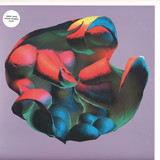
with »redsuperstructure«, robert lippok created a new foundation for his musical endeavors. now - 7 years later - this system properly comes to life on »applied autonomy«. the title of the new album is a clear indicator as to what the berlin-based producer has been up to during the last couple of years, both on a conceptual level as well as how he molds his ideas into tracks.
»applied autonomy« orchestrates a certain state of frantic standstill, which occurs once a structure is set. has this state been reached, the artist is free to focus on other equally important aspects, balancing the various shades, pushing ideas even further to really make them shine and blossom in their self-declared autonomy. the more light one lets in, the more layers become visible.
layers are key when it comes to understanding »applied autonomy«. big chunks of the material with which the album has been produced derive from sketches specifically made for a club performance. rather than meticulously devising each and every detail, lippok focussed instead on recording as many fragments as possible in a short period of time, elements which he could later combine and layer on stage. based on this material and his experience experimenting with it in a live environment, the album slowly began to shape. an album culminating in a collaboration with klara lewis, with whom lippok spent 2 days at the EMS studios in stockholm, approaching the idea of autonomy from yet another angle. during the session, both musicians played and performed simultaneously, yet not explicitly together, lost in their own thoughts and ideas, only subconsciously taking in what the other one was coming up with. the result is »samtal«, 14 minutes of a constantly evolving state of poise, magically connecting all the dots Lippok had already defined as »applied autonomy«.
South African Mbaqanga And Bubblegum Instrumentals For The Dance-floor. First Time Available Outside South Africa. Cult Favorite Among Collectors. Follows The Successful Reissue Of bafana Bafana' Last Year. Professor Rhythm's 1991 Recording Professor 3 Is A Vivid Reflection Of Urban South Africa As Apartheid Was Ending. Thami Mdluli's Production Project Had Young And Old Dancing To A Sound That Sought To Unite Blacks Within Southern Africa. our Music Gave Hope To The Hopeless,' He Says. Mdluli's Third Instrumental Album (which Contains Some Background Vocals, To Be Exact), Portrays The Moment When The Dominant Mbaqanga And American R&b-based Bubblegum Sounds Being Produced In Johannesburg And Other Urban Centers Were Transforming Into House And Hip-hop-inspired Kwaito. The Pop Of The 80's And All That Went With It—from The Models Of Synths And Drum Machines To The Lyrical Style—gave Way To A Changing Melodic Emphasis And New, Much Slower Tempi Using A Completely Different Rhythmic Skeleton. Upbeat, Chipper Bubblegum, Often With Double-time Breakdowns And Upstroke Syncopations, Faded And The Sounds Began To More Closely Resemble Those Of Contemporary Black America—where Hip-hop Was Slowing Down And The Bass-lines And Melodies Were Getting Moodier, Darker In General. At The Same Time House Music Had Briefly Reached Mainstream Acceptance In The States And That Popularity Continued To Feed Into Awareness Overseas. These Two Influences Blended With The Burgeoning House Music Scenes In Johannesburg And Pretoria As Professor Rhythm 3 Was Being Produced In March 1991 (the Same Year Apartheid Ended). Mdluli Explains, we Were Influenced By Foreign Bands And So People Updated Their Sound.' According To Mdluli, The Evolving Sound Was Bolstered By Widening Availability Of House And Rap Records From Abroad While, Most Importantly, An Increasing Sense That Apartheid Might Soon Be Finished Was Met With A New Positivity Vibe Society. 1991, '92, '93... Mandela Was Released. People Were Upbeat, They Were Happy, The Music Was Good.' Professor 3 Came Out On Vinyl As The Lp Business Was Dying In South Africa And Sold Around 20,000 Copies. It Was Mainly Distributed On Tape, Which Sold Closer To 100,000. With The Help Of Engineer Fab Rosso, The Recording Features Backing Vocalists From Mango Groove. After Making A Half-dozen Records As Professor Rhythm, Mdluli Once Again Shifted His Focus Musically. By The Mid-90's He Had Veered Off Gospel Music— And Left Playing In Bands And Started Making His Own Solo Recordings. His Enormous Success In The Gospel Realm In The Years Since Is A Remarkable Story In Its Own Right, But For Now We Are Only Dancing.
Prairie is the project of multi-instrumentalist and producer Marc Jacobs, hailing from Brussels with roots in The Netherlands. He previously released an EP (I'm so in love I almost forgot I survived a Disaster - 2013) and an LP (Like a Pack of Hounds - 2015) on the Berlin imprint Shitkatapult. On stage, Prairie plays with two or three musicians and together they re-create a free association of musical ideas and atmospheres. Prairie has played in selected venues and festivals across Europe and toured with Apparat in 2016.If the apocalypse was painted in several layers of pastel gouache, its soundtrack might be PRAIRIE's Flash Flood. Listening to the album, we drift through a series of frozen landscapes that gesture at a post-apocalyptic ambience. This is a kind of blackened music that has been left to sediment, excavated from traces in ice core samples. Flash Flood showcases a deep sensitivity to narrative and rich cinematic textures as Marc Jacobs returns with palimpsestic sonic layers. It has been three years since PRAIRIE's last release—the 2015 Cormac McCarthy-inspired Like a Pack of Hounds—and it is clear that it has been several years of pensive reflection. Now, PRAIRIE takes the sentiment of his 2012 debut, I'm So In Love I Almost Forgot I Survived A Disaster, several steps further: it is after the apocalypse, and no one has survived. And yet with Flash Flood, we can hear the hum of this impossible future.
'After the Flash Flood' introduces the sonic ruins of distorted guitars, field recordings, drum programming and synths that create the textures of the entire album. The melancholic and subdued black metal churn of 'Raindeath' becomes the cold backdrop for unnerving, paranoiac speech. The third track, 'Sisters', foregrounds this coldness while slowly moving away toward alternate vistas where the acoustic timbres of the saz-driven 'A Permanent War Economy' take over. 'Underwater Body Hunting' and 'Rabid Ibrahim' are hard hitting beat-oriented tracks that insist on burning slow. There is a patience with PRAIRIE's FLASH FLOOD that is difficult to deny. The lamentation of 'Elephants Will Rise Again' perhaps signals that it is not only the human that is lost after catastrophe. The album closes with 'Hard Water: Cracked Ice' and 'Hayashi Clock'. The former is a beautiful coalescence of clean harmonious tones and softly overdriven drums, while the latter brings us back to a meditative state, drifting through the final pastel tapestry.
"... his cosmos is located somewhere between Bohren & der Club of Gore and Sunn O))), ambient is as familiar to him as brachial sounds, and he is as much acquainted with guitars as with synths and modern technology" (GROOVE)
"... Like Ben Frost, (Prairie) exudes a certain harshness while tempering his work with moments of sublime beauty. This isn't club material, it's music for the hammer in one's hand, the confrontation of the demon, the soul-shattering revelation." (A Closer Listen)
Multi-instrumentalist, composer and producer Adam Gibbons (aka Lack of Afro) is back in some style with 'Back To The Day', a beautifully produced summer sizzler crammed full of infectious hooks, top musicianship and most importantly, vibe by the bucketload! Taking a nod from classic material by artists such as The Jackson 5, Earth Wind & Fire (and more recently Vulfpeck), 'Back To The Day' is Lack of Afro doing what he does best and then some - blending the old and new with big drums and heavy percussion to come up with a crossover classic that's entirely his own, whilst all the while developing his abilities as a songwriter.
Providing a dynamite vocal once again is regular collaborator Elliott Cole. Not just the voice of the track, he also plays guitars and bass, whilst ably backed up by some stellar musicians including George Cooper (Haggis Horns) on keys, Rory Simmons (Blur, Jamie Cullum) on trumpet, string and horn arrangements and Harry Harding (Yola Carter) holding down the backbeat on drums.
Keeping the dancefloor packed and turning the party vibes right up to 11, 'Take It Up A Notch' (featuring the brilliant Wax & Herbal T and taken from the critically acclaimed 'Back In Business EP') completes what is arguably one of the strongest single packages of the year!
Lack of Afro continues to go from strength to strength. 2016's 'Hello Baby' (released on his own label LOA Records) picked up a BBC 6 Music 'Album Of The Year' nomination & appeared in the Top 10 of the iTunes R&B / Soul chart in 21 countries worldwide. More recently, Adam's music continues to be used across all aspects of film & TV by networks such as ABC, Fox, NBC, Sony Pictures & the BBC whilst he also has released music on Universal & Warner Brothers Records.
Both tracks are taken from the new album 'Jack Of All Trades', released on LOA Records in May 2018 and supported by a live band UK tour in May & throughout various festivals throughout the summer.
Zia Mohiuddin Dagar : rudra veena
Annie Penta : tanpura
Concert recorded at the home of Shantha and Niranjan B. Benegal, Seattle, Washington 9 March 1986.
Recorded by Niranjan Benegal. Files obtained from Jeff Lewis.
Mastered & Cut by Rashad Becker at Dubplates & Mastering 1117 & 0318.
Liner notes by Renaud Brizard, edited by Stephen O'Malley & Ian Christe.
Front and back cover photos by unknown.
Interior photography by Niranjan B. Benegal, Dan Neuman & unknown, Seattle 1978-1980. .
Around ten years ago, deep into a cozy and hazy night following a concert with my sound brothers Daniel O'Sullivan and Kristoffer Rygg in London (as Æthenor), they graciously introduced me to a recording of rudra veena (a kind of noble deeper bass relative to the sitar, in a way) as performed by dhrupad master Zia Mohiuddin Dagar.
Dhrupad, for those who do not know, is a branch of Hindustani classical music said to "show the raga in its clearest and purest form". It's pacing concentrates heavily on the slow, contemplative alap section and works with specific microtonal gestures and deep characteristics of resonance ... in short I was hooked on this new (to me) and ancient form of music from the first listen, and feel that a more or less continual listening & reviewing of Zia Mohiuddin Dagar's recordings in the years that followed have influenced my own approach to music quite heavily (if, albeit, indirectly).
In early 2015 I was able to make contact with Zia Mohiuddin Dagar's son Bahauddin and some of his American students/disciples, primarily Jeff Lewis. Over time we developed a friendly and educational exchange, access a massive archive of recordings and developed these two paired titles for my label. It's been a long path to arrive at actually releasing them but also probably in many ways one of the most significant releases I've worked on. And I'm proud to be able to reveal these to date unreleased archival recordings of one of the masters of dhrupad, Z. M. Dagar, to the public for the first time.
Zia Mohiuddin Dagar was the nineteenth generation in a family tradition known as Dagar gharana, a rich lineage which continued and performed the musical form of dhrupad (Bahauddin Dagar continues the lineage as a master rudra veena dhrupad player of note today). Initially, dhrupad was a rigorous, austere, devotional genre that was sung in Hindu temples. But between the 16th and the 18th centuries, it became the preeminent genre in royal courts in North and Central India, and the Dagar gharana developed and continued publicly following the eventual loss of court patronage for dhrupad in the 19th century. The French ethnomusicologist Renaud Brizard covers the story of Zia Mohiuddin Dagar's life and teaching (a long story also in Seattle, my hometown!), the Dagar family and gharana, the rudra veena and more topics in an extensive set of liner notes in this release.
Ragas Abhogi & Vardhani were recorded in a private house concert in Seattle at the home of the Benegals in March 1986 (the week before the accompanying release SOMA029 Raga Yaman was recorded). The Benegals were friends (& Shantha Benegal was also a student) of Dagarsahib who sometimes hosted Hindustani music concerts in their home. It's a rare glimpse of a more intimate, personal and perhaps different kind of performance considering the form of dhrupad.
-Stephen O'Malley, March 2018, Paris, France
Stephen O'Malley would like to especially thank Bahauddin Dagar, Jeff Lewis & Jody Stecher for their enthusiasm, cooperation, patience, insight & advice toward developing these editions. Thank you also to Laurel Sercombe & John Vallier from the University of Washington Ethnomusicology Archives, Shantha Benegal, Philippe Bruguière, Dan Neuman, Ira Landgarten, Renaud Brizard, Ian Christe, Peter Rehberg, Rashad Becker, Daniel O'Sullivan & Kristoffer Rygg, all for their direct or indirect cooperation, assistance & patience.
Recorded by unknown at the University of Washington, HUB Auditorium, Seattle, Washington 15 March 1986 , concert co-sponsored by the UW Ethnomusicology Division and Ragamala.
Original digitally processed audio recording made with Panasonic PV-9000 VCR, Sony PCM-F1, PZM mics. Mastered & Cut by Rashad Becker at Dubplates & Mastering 1117 & 0318.
Liner notes by Renaud Brizard, Stephen O'Malley & Ian Christe.
Front and back cover photos by Niranjan B. Benegal, Seattle Center Folklife Festival 1979. Elizabeth Reeke & Annie Penta on tanpuras.
Inner gatefold photography by Niranjan B. Benegal & Ira Landgarten.
Around ten years ago, deep into a cozy and hazy night following a concert with my sound brothers Daniel O'Sullivan and Kristoffer Rygg in London (as Æthenor), they graciously introduced me to a recording of rudra veena (a kind of noble deeper bass relative to the sitar, in a way) as performed by dhrupad master Zia Mohiuddin Dagar.
Dhrupad, for those who do not know, is a branch of Hindustani classical music said to "show the raga in its clearest and purest form". It's pacing concentrates heavily on the slow, contemplative alap section and works with specific microtonal gestures and deep characteristics of resonance ... in short I was hooked on this new (to me) and ancient form of music from the first listen, and feel that a more or less continual listening & reviewing of Zia Mohiuddin Dagar's recordings in the years that followed have influenced my own approach to music quite heavily (if, albeit, indirectly).
In early 2015 I was able to make contact with Zia Mohiuddin Dagar's son Bahauddin and some of his American students/disciples, primarily Jeff Lewis. Over time we developed a friendly and educational exchange, access a massive archive of recordings and developed these two paired titles for my label. It's been a long path to arrive at actually releasing them but also probably in many ways one of the most significant releases I've worked on. And I'm proud to be able to reveal these to date unreleased archival recordings of one of the masters of dhrupad, Z. M. Dagar, to the public for the first time.
Zia Mohiuddin Dagar was the nineteenth generation in a family tradition known as Dagar gharana, a rich lineage which continued and performed the musical form of dhrupad (Bahauddin Dagar continues the lineage as a master rudra veena dhrupad player of note today). Initially, dhrupad was a rigorous, austere, devotional genre that was sung in Hindu temples. But between the 16th and the 18th centuries, it became the preeminent genre in royal courts in North and Central India, and the Dagar gharana developed and continued publicly following the eventual loss of court patronage for dhrupad in the 19th century. The French ethnomusicologist Renaud Brizard covers the story of Zia Mohiuddin Dagar's life and teaching (a long story also in Seattle, my hometown!), the Dagar family and gharana, the rudra veena and more topics in an extensive set of liner notes in this release.
Raga Yaman was recorded at a public concert in Seattle at the HUB Ballroom at the University of Washington in March 1986 (the week after the accompanying release SOMA028 Ragas Abhogi & Vardhani was recorded) at the end of his last tour of the United States. Yaman was a special raga for Zia Mohiuddin Dagar, one of his signature raags. For centuries, Yaman has been considered as one of the most fundamental ragas in Hindustani music and is one of the first ragas which is taught to students. A deep knowledge of Yaman gives a key for understanding many other ragas. It's filled with tranquility, contemplation, pathos and spiritual yearning. .
Mgun, Or Manuel Gonzales To His Friends, Has Long Been A Fixture Artist For Dba. Since Making His Uk Debut On The Label In 2012, Having Already Featured On Detroit's Celebrated Wild Oats Imprint, He Has Smoothly Yet Slowly Progressed Through The Presses Of Fellow Dance Music Tastemakers Third Ear Recordings And Kiev's Wicked Bass. Following 2016's Warmly Received 'gentium', 'axiom' Finds Manuel Gonzales Back On Dba With An Index Of Offbeat Jams That Couldn't Have Emerged From The Mind Or Studio Of Any Other Producer.
Once More Envisioned And Engineered In His Native City Of Detroit, The Record Finds Mgun In More Auspicious And Domestic Circumstances. Now Firmly A Father And A Homeowner, 'axiom' Allows Gonzales To Flex His Party Muscle, While Further Pushing The Elastic Boundaries Of His Notoriously Unpredictable And Brilliantly Raw Production Style. Across Twelve Tracks, Listeners Are Offered An Unpredictable Trip Into The Restlessly Experimental Snatches Of Studio Time Gonzales Is Afforded Away From His Day Job At The Legendary People's Records Store. It's Here That Gonzales Absorbs Endless Releases And Rediscoveries Passing Through The Stock, Trading The Occasional Tip With Some Of Detroit's Best Known Producers.
Beginning With The Off-kilter Funk Of 'you Inside Me', 'axiom' Expertly Toes The Line Between Full-bodied, Soulful Club Weapons ('you're Never Home', 'nichrome'), And The Sort Of Lo-fi Tinged Jams That Enable Gonzales's Unusual Weirder Hooks And Rhythms To Extend Into Something Altogether More Hypnotic And Psychedelic ('kartwheel', 'sil').
There Are New Sounds And Approaches Throughout. Centrepiece Track 'see It For Myself' Finds Gonzales On Vocal Duties For The First Time, And The Dystopian Tinted 'vap' Finds His Sound Expanding Into Weightless, Dreamlike Electro. And While Certain Tracks Date Back Years, Having Slowly Matured To Full Funk, Others, Such As The Gloriously Unhinged '359' Were Rapidly Produced To Capture The Inspiring Energy Of A Late-night Glaswegian Rave.
Simply Put, 'axiom' Does The Work Of Representing Mgun At His Musical Best, An Analogue Celebration Of Pure Party Potential.
For the last decade, Argentina has become the epicenter of a musical explosion that characteristically blends folk music from the surrounding Andes and electronic beats. The artist arguably responsible for its emergence on a global platform is one named Chancha Via Circuito- a Buenos Aires native named Pedro Canale whose first album Rodante (2008) opened the floodgates by pushing the borders of Cumbia listeners weren't even aware existed. He's gone on to release other highly acclaimed albums such as Rio Arriba (2010), which Resident Advisor described as 'aural magical realism', and Amansara (2014), which catapulted him onto acclaimed international stages and received praises from Pitchfork to the New York Times.
Four years later, in the midst of some very notable global turbulence, Chancha Via Circuito brings us his highly anticipated new album Bienaventuranza- a word that essentially means bliss. Replete with his signature touches of Andean instruments (think lots of flute and charango), the folkloric elements on this album blend fluidly with danceable and digestible electronic beats. He's been cooking this record slowly, with unprecedented amounts of care and in a much more collaborative manner than his past albums.
Appearing on the album are heavy hitters in the digital cumbia scene, including Mateo Kingman, Kaleema, and Lido Pimienta, all of whom contribute their highly distinguishable sounds to the natural flow of the album. Most of these collaborations came about almost effortlessly. La Victoria is a track that blends cumbia, dancehall, and a bit of mysticism- carried by Lido Pimienta's luminous voice, Colombian Dancehall wizard Manu Ranks happened to be in town and slipped into the song naturally. Kawa Kawa came from an improv jam during rehearsal one day with Kaleema (Heidi Lewandowski) and Federico Estevez (percussionist in Chancha Via Circuito). Niño Hermoso, which is lyrically a fable, sounds the way it does because Pedro saw a video of Gianluz (Gianluca Zonzini), who he knows from dance classes, singing a Pocahontas song on Youtube.
As dancefloor-friendly as it is mystical, Bienaventuranza is as Chancha as it gets- with elements from Cumbia to Dancehall to Andean Folk to Global house, crystal clear production, and collaborations that are evidently natural and genuine, the record holds true to the sound that Canale has played such a huge part in creating. Since the release of his last album, the digital folk scene has also grown exponentially. From a new generation of producers to more listeners in unassuming parts of the globe, Pedro has been humbled to see the sound develop- and proves with this album that he's grown swiftly alongside it.
out of Stock
Last delivered 14 months ago available to reorder, subject to availability
Following two previous excursions into degraded tape loops, fuzzed-out ambience and bittersweet moments of tenderness, O$VMV$M return to Idle Hands to complete a trilogy of LPs with 12 vignettes from the underbelly of the Bristol scene.
Bound to Young Echo's ever-swelling cult of wayward sonics, individually Amos 'Jabu' Childs and Sam 'Neek' Barrett have plenty of irons in the fire. Childs deals in forlorn, vocal-led introspection alongside Alex Rendall and Jasmine Butt as Jabu, while Barrett can be found laying down punishing modern grime variations alongside Kahn, or delving into more traditional soundsystem sonics in Gorgon Sound. Meanwhile the pair were clearly heard laying down some of the tones that seep out of the uncredited Young Echo collective LP from earlier this year. Their production work behind Rider Shafique's killerLion7" on Lavalava was unmissable, and their blunted beats behind Manonmars' debut LP are awaited with anticipation.
As O$VMV$M, the pair enter a particular sound world that mixes cosy nostalgia with creeping dread. Even at its most mellow, a sense of unease hovers beneath the surface, and that's what makes their approach so compelling. The sound palette is broad, from pitch-shifted RnB vocal licks to foggy trumpets crawling at half speed, but over it all a dense blanket of dust gives the sensation of peering back through time.
Putting paid to the idea that immersive music needs to be long and drawn out, the dose response on these condensed mood capsules is quick and strong. In a little over 20 minutes O$VMV$M take you far and wide. The trip over the past three LPs has been an adventure for both label and artists - Sam and Amos have shaped out a style that now feels like a fully formed entity independent of their other ventures. We look forward to seeing where O$VMV$M heads from here.
A near-perfect record, White Magic was the lauded CD-only debut album by Sorcerer (Californian native Dan Judd, one half of Windsurf with Hatchback). Just in time for Spring/Summer, we present the first ever vinyl issue, released as a deluxe double LP.
Back in summer 2007, this majestic set gently nestled itself into the Balearic soundtrack-to-summer slot for many, making him a household name for Cosmic Disco heads alongside the likes of Lindstrom, Metro Area, Todd Terje, Mudd, Studio and Quiet Village. In the intervening years, exceptional producers have created vibrant variations on the dreamy, dubby, melodic nu-disco theme. Happily, the emergence of such luminaries as Jex Opolis, Harvey Sutherland, Suzanne Kraft, Tornado Wallace et al has only served to make the master - Sorcerer - sound ever more brilliant and vital.
Utilising his array of guitars, drum machines, synths, and trusty MPC, the loved-up Sorcerer sound inspires halcyon memories of warm days, endless sunsets and pure youthful abandon. Influenced by surf, 80s dance pop, acid-R&B, space jazz, krautrock, disco, dub, and am radio gold, his music maps a tour through a uniquely Californian lifestyle. Yet when music so vividly captures a vibe and a feeling, it can make writing about it appear almost redundant. Instead, to glean the full colour of what your turntable will soon gratefully radiate, we prescribe the generous soundclips presented here.
And, for a unique insight into the process behind the wonderful sounds conjured up, here's Sorcerer himself:
"White Magic is a reflection of personal freedom and discovery. Having been in bands for years, this was a chance to develop music that stood alone and for me to be in full control.
I was living alone and worked on jams whenever I could. I was highly inspired by a new openness to music as a pure inspiration, not being part of any scene. I tapped into the mixes I was hearing coming out the UK where deejays were playing "cosmic" sounds that were so strangely familiar.
I was picking up all kinds of $1 vinyl and throwing bits of it into my sampler almost randomly to see what would come out.
In my mind, I was making music to be played at my friend's Broker/Dealer Pop nights where they fused golden German techno sounds with the new disco emerging at the time. Also, I took vacations and reconnected with the Pacific Ocean where I spent so much time as a kid: it spilled out into the sounds.
Lastly, I forged a partnership with Hatchback (Sam Grawe) who was working on music in the same way. I learned so much about arrangement and the colors of music. We began recording together as Windsurf and released our own stuff. It all seems like a small glorious moment in time, so I am so excited to keep the legacy alive and I continue to work on my music with these spirits inside of me."
Lovingly remastered by the esteemed Simon Francis, cut reassuringly loud on to heavyweight double vinyl and presented in a deluxe gatefold jacket with freshly commissioned artwork throughout from original designer Rich Robinson, this limited edition of 500 copies is sure to fly.
out of Stock
Last delivered 3 years ago available to reorder, subject to availability
A continuation of his kaleidoscopic sun-dappled cosmic-disco, Neon Leon was the much-loved CD-only sophomore album by Sorcerer. Just in time for Spring/Summer, we present the first ever vinyl issue, released as a deluxe double LP.
A perfectly formed suite of ten tracks featuring soft guitars, subtle synths and lightly grooving percussion, Neon Leon magically evokes that elusive summer feeling throughout. The guitar-driven "Algorhythm" serves as the album opener, blasting bold, sun-drenched jazz chords atop bright synths and groove-based drum programming. "Ride The Serpent" and "Distort Yourself" are guided by a more sultry, slo-mo disco impulse whilst the staggering "Chemise" and strident "Face It" merge 80s West Coast production sheen with Sorcerer's trademark laid back, gentle disco. "Raydio"'s undeniable head-nod groove adds a rare vocal to the proceedings, joyously combining with the bubbling cosmic funk.
Since its initial release in 2009, exceptional producers have created vibrant variations on the dreamy, dubby, melodic nu-disco theme. Happily, the emergence of such luminaries as Jex Opolis, Harvey Sutherland, Suzanne Kraft, Tornado Wallace et al has only served to make the master - Sorcerer - sound ever more brilliant and vital.
Utilising his array of guitars, drum machines, synths, and trusty MPC, the loved-up Sorcerer sound inspires halcyon memories of warm days, endless sunsets and pure youthful abandon. Influenced by surf, 80s dance pop, acid-R&B, space jazz, krautrock, disco, dub, and am radio gold, his music maps a tour through a uniquely Californian lifestyle. Yet when music so vividly captures a vibe and a feeling, it can make writing about it appear almost redundant. Instead, to glean the full colour of what your turntable will soon gratefully radiate, we prescribe the generous soundclips presented here.
And, for a unique insight into the process behind the wonderful sounds conjured up, here's Sorcerer himself:
"Neon Leon's is the name of a bar in a Elmore Leonard book I was reading on a vacation to Belize with my future wife. I was soaking up his brand of noir during the making of the songs on this record, along with another favorite Ross Macdonald. We were living in a small apartment in the Mission District of San Francisco where i had my own room to jam. It was painted Orange and Turquoise and was a very inspiring place to create and focus. I could walk out of my house to any number of hole in the wall bars where people were deejaying, hanging-out, and knew about me and my music.
After White Magic I developed more confidence in my style and process so I stuck with it and I believe it shows in the tunes I selected for the record. The sounds are rich and I dug deeper into sampling from obscure dollar records and getting looser musically. I made a handful of collage videos for the tracks at this time as well, which represent where my mind was at visually. In my mind it's Cosmic Funk that rules the day and I am thankful to have the opportunity to share it with the world again."
Lovingly remastered by the esteemed Simon Francis, cut reassuringly loud on to heavyweight double vinyl and presented in a deluxe gatefold jacket with freshly commissioned artwork throughout from original designer Rich Robinson, this limited edition of 500 copies is sure to fly.
WHEN YOU'VE FINISHED LOOKING AROUND THE WEBSITE, YOU CAN FIND US ON THESE SOCIAL CHANNELS
Forgot 002 is the second release from London based record label Forgot. The compilation is comprised of four tracks by four different artists: Forgot residents Hoffy and Joe S both return, while newcomers Lavan and Cass Brooker also contribute.
Since its release campaign launched earlier this year, the Forgot 002 compilation has received a wealth of positive feedback from a number of revered and respected DJs such as Dom Servini, Asian Hawk, Jason Pulaski and Dr. Best.
Plug in and dream .... Lullabies for Robots continues the run of fine EPs on Verdant Recordings exploring the melodic, deeper side of techno. This release a split shared by Vancouver's ESB known for his meandering soulful analogue jams. Verdant Recordings has been lucky to sign two exquisite tracks. 'Subliminal Wave' is R2D2 getting off to an acid groove whilst 'Phayse Distance' holds a more relaxed droid after party vibe. On the other side Mihail P is back for Verdant after his debut appearance on Emerald City. Memory Upgrades features warm bumping percussion underneath a joyful hook. Memory Upgrades is a masterful piece of delicate electronica with references back to Warp's seminal Artificial Intelligence series. Another beautifully presented EP on heavy vinyl and printed sleeve with artwork by Sophie O'Leary: perhaps the best cover of the series to date
Apollo proudly presents the return of SW, joined by partner SVN for a sublime 6 track EP. SW's lush sound design and hypnotic arrangements of 2017's 'The Album' had hearts and minds swooning following it's license from SUED to Apollo.
It's balmy glory won over Pitchfork ('deeply expressive debut album' 8/10), Rolling Stone (best electronic albums 2017) and XLR8R (Best releases 2017) amongst many others.
One year later, SW and SVN have gone into the studio, together; 'to make some original music specifically for Apollo. The results are the 6 tracks on this EP,' they share in a typically taciturn statement.Taking inspiration from the iconic house and techno of the mid / late 90s - SW and SVN combine dreamy melodies and mesmeric grooves with unfussy, focussed minimalism, their beguiling, modern take on classic sounds and rhythms remains thrillingly unique and elusive. While SW and SVN are more comfortable out of the limelight, this 6 track EP for Apollo once again proves that they are rightly worthy of the hype that swirls around them.
Suns out, guns out: Darkroom Dubs ease into 2018 slowly with a new addition to their limited vinyl series courtesy of Madrid analogue scientist Eduardo De La Calle.
Last spotted on Planet E and boasting a 15 year back-cat on the likes of Cadenza, Biologic, Just This, Hivern Discs and Mule Muziq, Eduardo is a man you're already well acquainted with. And you're going to want to get even closer once you've digested these four straight-to-business stripped-back traxx. Each cut designed for deep mix tailoring that you can really bend minds with.
'It's Me... The Apple Knocker' ignites the fire with a flash as we're hurled into a hypnotic frenzy from the first loop. A whirlwind comprised of so few parts yet causing a riot in your senses, this stutters and slurs with a precision sense of unease. The troubled ebb and flow of 'Opsimath' follow suit with a twinkling feeling of unknown. An extensive groove weighing in at nearly nine minutes, its unhurried nature alludes to its title; the longer you leave it sizzle, the more enriching it gets.
Flip for 'Breatharian'. The deepest, most disarming cut of the collection laced with yearning strings and poignant chords, it's a solar-inspired sunset piece that gradually morphs into something much darker and serious as the track progresses. Finally we conclude with 'Cybersquatting', a timeless mildly dubbed-out darkroom groove that flows with liquid insistency. Subtly mutating and rotating, forever pumping, it's a true calm before the storm piece, tailored for those moments when you need a little suspense and space in your set.
Four crystal jams. Endless variations. Infinite mixes: Darkroom Dubs have delivered once again. And there's more en route... Watch out for a new Deadstock 33s release and a new compilation 'Darkroom Dubs Presents Summer Love'. Both due before the summer is out. Don't put those guns away anytime soon...
"Up next on 20/20 Vision we welcome Nathan Jonson back for his second outing on the label, and this time it's rounded off with a big remix from his brother Mathew Jonson. Business EP finds Nathan back in familiar musical territory. Serving up genre bending tracks which fuse electro, techno, house and old school rave into a melting pot of electronica which is not easy to define. 'Business' & 'Let Your Body' are unconventional, unique and original, with off kilter basslines and rave stabs reminiscent of a Luke Vibert and Carl Finlow hybrid. The release also see's the first appearance on 20/20 Vision from none other than Mathew Jonson, who turns in a killer remix of title track 'Business'. Since 2001 Mathew has constantly evolved, with a back catalogue of scene defining tracks and one of the most electric live shows in the business. It's a honour to finally have him feature on the label.
Spell PETS backwards to get STEP. Spell STEP forwards and you get PETS going back to basics. STEP is the new vinyl-only label from the founders of PETS - Catz n Dogz - with a focus on the rawest forms and root functions of dance music. STEP searches for the fundamentals with under-the-radar house and techno that's not afraid to be rough around the edges. It's all about the music.
Record Kicks Celebrates 15 Years In The Business With A Collection Full Of Exclusive New Singles. Available In Ltd Edition Double Clear Vinyl Lp, Cd And Digital Download. Side By Side With Similar Outfits Like Daptone, Truth And Soul, Freestyle Or Timmion, Under Its Motto "the Explosive Sound From Today's Scene" Milan-based Independent Label Record Kicks Has Been Pitching The Contemporary Funk & Soul Scene Since Day One.
With Over 200 Releases Under The Belt, Rk Has Released Bands From All Over The Globe And Earnedthe Support Of Vip Fans Such As Kenny Dope, Jamie Cullum, Craig Charles And Not Least Jay-z, Thanks To Which The Label Has Recently Received A Grammy Nomination For Hov's Use Of Hannah Williams' "late Nights And Heartbreak" As Backdrop For His "4:44". The New Instalment "record Kicks 15th" Coming Out Next May 18th On Double Clear Lp, Cd And Digital Download, Celebrates 15 Years In The Business With A Collection Full Of Exclusive New Tracks And The Very Best Of It's Roster.
The Album Kicks Off With Rk's Latest And Youngest Signing:
From Chicago, Heavily Inspired By The Impressions And Leroy Hutson, We Are Proud To Present You "the Devonns" With Their Super Soulful Debut Single "come Back", An Appetizer Of Their Debut Full Length Expected To Land On Rk Next Autumn. Another New Signing To The Label Is Men Of North Country's (acid Jazz Records) Side Project "the Faithful Brothers", Here With Their New Single "one More Time".
Other Exclusive Tracks Of The Comp Are "this Strange Effect", A Coverup Of The Hooverphonic's Single From 1998 Brought To You By Dutch Northern Soul Disciples The Tibbs, "love You Back" From Detroit Deep Funk Outfit Third Coast Kings, "the Sort" By The Buenos Aires Mod Reggae Kings The Crabs Corporation, "top Dog" By British Funk Combo The Hook & Slingers And Straight From Down Under "you Don't Know Me" By The Always Great Dojo Cuts.
Along With These New Exclusive Cuts, Dig On Some Label's News Singles And Heavyweight Classics Such As Dj Shadow's "this Time" Taken From Baby Charles Debut Lp, "don't Throw Your Love In The Garbage Can" By James Brown's Original Funk Diva Martha High Feat Japanese Funk Ambassadors Osaka Monaurail, "psycheground" The Brand New Afro-funk Single By Calibro 35 And Then Portuguese Tnt Dynamite Marta Ren & The Groovelvets, Toronto Soul Queen Tanika Charles, Uk Funk Ambassadors The New Mastersounds, The Diplomats Of Solid Sound And The Already Mentioned "late Nights & Heartbreak" By Hannah Williams & The Affirmations.
Lord Tusk has associated with acts like Klein, John T. Gast, Dean Blunt, Yasiin Bey AKA Mos Def, and released on Jon Rust's Levels, Funkineven's Apron, Soul Jazz Records and Low Income $quad.
Communiqué is made of breathy, glossy Sci-Fi electro, bitcrushed drum samples and Minneapolitan funk feng shui, the hits and stabs of new jack swing and FM boogie, all pieced together with a one-take energy but a meticulous attention to detail. It's songwriting for a miscellaneous kind of soundsystem music, body music, flamboyant across tempo, from the yearning thump of Shyne Eyed Gal to the puffed-up strut of Champion Lovers (sounding like a home-taped Electrifying Mojo opener), the staggered slink of Beyond Limitation's unfiltered tones to the 4x4 uptempo skid of Don't Be Shy or the veering slap-bass groove of Elevation. It's a record that shoots around corners, conjuring lazy romances and smokey vistas, lit by the nocturnal shimmer of an electrified city, streaked with gargantuan, shrill, birdlike call-and-response riffs and visited by the astral bodies of Teddy Riley, Gerald Donald, Prince.
Lithuanian based label Sodai started its journey in 2016, making it a label still in it's infancy but making a big impression. Owned by artist Gardens Of God, who started the label to create his own 'no limits' platform for his experimental sounds and projects. While at the same time a platform to give other artists the chance to also have freedom with art and music.
With releases from Raxon, Few Nolder and Alex Krell under their belt, they can announce the exciting debut from UK producer Third Son this April. 'I've been an admirer of Gardens Of Gods' music for a long time, when he asked me if I could do something for his imprint, I was more than thrilled!' adds Joseph.
'Syncope's' synths spread far and wide, making this a journey of a track, modulating and panning in and out, pushing and pulling along a percussive drive. His broad musical range can be felt in this mix, with its slightly hypnotic tones.
'Irony' has a punctuated low end, which creates a deep and dark groove. The synthetic elements in this track gain in attitude, on top of ambient pads, leading nicely into 'Bach' to close out the release. It's driving and determined bass makes the backbone of the track, with a modulating hook line, along building and expanding frequency ranges.
The whole package makes for a very strong first release from Third Son, and Sodai are excited to be welcoming him to the family.
Recorded in Philadelphia in 1969, The Deirdre Wilson Tabac's sole album is a beautiful blend of funk, jazz and soulful pop. Possessing the complex grooves, thrilling breaks and ethereal weirdness that The Rotary Connection pedalled so brilliantly, the LP failed to connect with audiences upon its original release.
In the decades since, it has deservedly attracted a considerable cult following. However, almost inevitably, it has become increasingly tricky to pick up a copy in good condition for anything less than eye-watering sums. As such, we're delighted to present the first officially licensed vinyl reissue of this undoubted masterpiece of freaky funk-rock, limited to just 500 copies.
The Tabac were, in fact, a trio. Discovered, managed and produced by Svengali Sonny Casella (who'd earlier managed garage band The Magic Mushrooms), they comprised Deirdre Wilson, Stu Freeman (formerly of said Mushrooms) and Barbara Payne (formerly with the James Brown Revue). They were backed by session players including jazz guitarist Chuck Anderson, bassist Hugh McDonald and keyboardist Roy Bittan (who went on to be a long-term Bruce Springsteen sideman).
Their first single coupled two fine Casella compositions, each featuring powerhouse vocal workouts, the supremely funk-fuelled blues beat of "The Other Side Of Life" and the psychedelic-flavoured "Look In My Face" - both of which are featured here. This 7" picked enough up airplay to merit an album, which duly appeared early the following year, but, as is often the way with these lost classics, it received barely any press. Correspondingly, sales where low and the trio didn't last long.
And herein lies the real tragedy. The rest of the LP deserves to be heard from start-to-finish - it's that good. A beguiling mix of funky folk and rocky jazz tracks, with some deep, string-drenched harmony soul ballads and a handful of remarkable covers elegantly presented througout. Indeed, they put some sauntered head-nod funk into The Beatles' "Get Back" whilst tearing through a version of "Sittin' On The Dock Of The Bay" which gives Otis' original a real run for its money.
But the real standout cut for most - with its soulful, haunting vocals, swinging hammond organ and stabbing horns, is the incredible 6/8 time jazz dancer "I Can't Keep From Cryin' Sometimes." Staggering.
Since his 2015 Night School debut E.P. Nouveauree, James Donadio - aka Prostitutes - has been traveling stages and rigs from Los Angeles to Berlin, from prestigious festival slots to slimy Glasgow basements, burning his own path through the modern techno and electronic scenes. On Aluminum Garage, Donadio is at his most playful, laying down unmistakably mid-tempo BPM early-electro jams indebted to early sampling before crashing the soundsystem with frantic, detourned Gabber. Unlike his previous LP for Spectrum Spools or indeed his Night School debut which rankled with austerity and minimalism, here Prostitutes is instinctive, multi-layered and unashamedly, brilliantly borrowing from myriad genres.
In past 3 years, Donadio has racked up critically praised releases on labels like Diagonal and CGI, refining his wares into a precise, bludgeoning toolkit that surprises and develops with each release. Aluminum Garage creeps into life with Born Wanderer, before a sub-heavy kick and bongo pattern blasts into a heavy break that feels like the earth moving from under your feet. With the utmost clarity, the track builds disparate layers - a white noise solo, warped sample piano chords straight from 1986 - into a Rave-o-matic climax, holding steady with the BPMs and immeasurably funky. Jah Elegant further blows apart any image we have of Prostitutes' music as austere' with a loping intro based on teased drum samples and a ghost MC. The Jungle break comes in by stealth before the heavy drop blasts the music into Drum + Bass momentum. It's both blistering fun and undeniably cheeky, a driving track that cuts up Remarc on a dimly lit table in suburban Ohio.
On Side 2, Errant Seagull takes the genre mess into techno territory though put through a heavily distorted grinder. Built around a skeleton of sampled bass guitar and thumping kick, the track layers drums upon drums, building in saturation until a searing synth strafes the criss-crossing rhythms. The effect is dizzying, insuring both a propellant, heavy forward motion and a grimey, angst-ridden climax. Before we're at the end of the track, the stereo field is so filthy with distortion and analogue muck the listener is desperate for a palette cleanser. Final track Shroud of Cellophane however, doesn't let up. With a ramped up BPM we're in a Cyberpunk Gabber club, nothing but 160 beats per minute, layers of frequency-tweaked noise and the light at the end of the tunnel racing towards us. It's sweet oblivion and we've earned it.
Only six months after his sophomore album, Hentschel returns with a two-piece EP showcasing yet another aspect of his musical spectrum. While the first two albums featured only instrumental tracks, "Facades" are the first two pieces in which Orson Hentschel works with text as a main musical element for his composition, although he approaches vocals from a rather particular perspective. For Hentschel, the spoken word is always music and thus not di erent than any other instrumental input or sound layer. Consequently, he is only interested in the sound of the spoken words on Facades, but not in any content they convey
From his Saint Denis apartment, and with the help of his machines, Labelle has laid the foundations of an electronic maloya, modern and deeply rooted in its home territory: La Réunion. On 'univers-île' his latest album released in September 2017, the sound of the Creole Reunionese language played a key role. On 'Post-Maloya", Labelle release a fascinating EP of introspective trance music. Post-Maloya EP is characterized by vivid dream-like journey through which traces a path of exploration. Here you will find the maloya stamp, which is Reunionese traditional music, both in the rhythms and the instruments used, like the valiha. This traditional tubular harp from Madagascar is played by Vola on the track 'Jaojoby'. Vola was taught by Rajery himself, who is widely considered as master of this instrument. This track is an homage to Jaojoby, king of Salegy, a popular musician in Madagascar. The hypnotic sounds evoke distant dimensions and resonate like shamanic incantations whose aim is to gently lead us towards the trance. As the title suggests - 'Post-maloya' is the exploration of new musical processes mixed with the use of traditional maloya instrumentation. This is an appropriate name for this new opus, which is more electronic and percussive; carving an experimental path between electronic and traditional music. In parallel with the creation this EP, the Regional Conservatory of Réunion Island has given free reign to Labelle to create a series of live performances which he played all around the island last month, including an original creation linked to his expression of 'Post-maloya' supported by an ensemble of eleven musicians from Réunion Island's regional orchestra.
Losoul's Another Picture label follows on from EPs in 2017 by Honesty and the label boss himself with a new two tracker by Japanese artist Sasaki Hiroaki. The Yotsume label owner is based in Tokyo and his sleek sounds take cues from 80s new wave and look for a soulful vibe in electronic music. 2018 has already seen him release on Open Recordings and now he offers up some warm house rollers for Another Picture. 'EO1' is eight minutes of rubbery drums and loose, scattered percussion, tumbling toms and clicks. Dreamy chords light up the background and the whole thing drives ever deeper into the night, always evolving as it goes. On the flip, 'Plain Song' is just as heartfelt, but icy hi hats and metal stabs are more upright, getting you on your toes and keeping you there for another eight minutes of organic, authentic deep house bliss.
LYBES DIMEM is a project by visual artist and musician Lukas Rehm. With a focus on digital sound-de- sign, elaborate beat structures and the use of error, the music plays with cognitive phenomena and abstraction while maintaining an emotional refuge. LYBES DIMEM is presented in formats ranging from spatial sound experiences to sy- nesthetic shows complementing the auditive layers with visualiza- tions of real-time data, computer graphics and moving image. Lukas Rehms installative art, and compo- sitions have been internationally presented and awarded with multi- ple emerging arts prices.
SYNCLEFT CHRONEM is the first album released by LYBES DIMEM in both digital and vinyl format and accompanied by a moving image artwork. The title reflects the pro- jects interest in the potential of difference, cognitive frictions and exertion: sync = variability in the processing of auditive and visual signals, syncleft = the synaptic cleft, which is a crucial empty spa- ce in biological neural networks, chronem = the chroneme as a the- oretical unit to measure the time of
an articulated sound. Mathemati- cally clean sounds juxtapose pat- terns and transitions familiar from the realm of organic acoustics. Multi-layered noise textures ex- plore the simulated space. A tem- porary continuity is provided by percussive and melodic elements, right until the next escalation, eventually awaiting a concluding resolution.
The visual language explores dif- ferent phenomena and techniques of cognition inspired by the rhe- torics of big science (computer graphics, discontinuity of materi- al, pop cultural references). Both the moving image artwork and the graphic design of the release pay tribute to the multi-layered appro- ach of the music. The design of the vinyl cover by studio BNAG.cc uses subtractive colour synthesis to interchange between abstract for- mality and representationalism.
SYNCLEFT CHRONEM is the first release by LYBES DIMEM on SVS Records following a first encounter at the SVS residency at the 4D Spa- tial Sound Institute in Budapest.
Soma Are Proud To Present The Debut Album From One Of Techno's Most Prolific And Renowned Producers, Tensal. As One Half Of The Duo Exium, Hector Sandoval Has Already Carved Out A Career In Techno Spanning Over 20 Years, With Countless Release On Their Self-run Nheoma, Warm Up Recordings & Pole Group, To Name But A Few. In 2014, He Started The Tensal Project As An Outlet For His Own Productions Which Allowed Him The Scope Of Pursuing The More Direct And Minimalistic Approach With His Music And Also His Dj'ing. After Hooking Up With The Soma Camp In Early 2017 And Releasing A Collection Of Well-refined Singles, Tensal Delivers His Debut Album, Graphical. Searching To Go Beyond The Realm Of Standard Techno, Tensal Lends His Considerable Production Experience To This Project And Creates A Sophisticated And Immersive Album Experience That Flows Gracefully Between Idm And Techno.
With The More Stripped Back Approach At The Forefront Of The Project, Belga Gives Us An Insight Of What To Expect From The Album; A Refined Sequence And Melodic Element Build Gracefully And Hypnotically, Ending Abruptly To Leave You Wanting More. Santolaya Picks Things Up And Brings With It A More Pensive And Exploratory View Before The Droning And Atmospheric Roj0 Leans On A Decidedly More Experimental Side. Aimed At Bringing Tension To The Project, Convulsa's Waves Of Sub Bass And Syncopated Percussion Set The Tone For A Pulsing And Edgy Affair. Tensal Brings 4x4 Into Play With Polariex. Slow Paced Yet Staunch In It's Approach, A Gritty Synth Hook Stands As The Backbone. A More Hypnotic Approach On Egoaio Looks To Bring In The Standard Tensal Sound But As Always, New And Experimental Sounds Are At The Forefront. Closing Out The Album, The Focus Begins To Shift To A More Dance Floor Orientated Attitude. Zomb Is A Quintessential Dj Tool, Drawing On The Power Of Restraint, As Its Gradual Swells Create Perfect Cohesion Throughout. P R U V I 4 Continues The Ongoing Theme Of Tension As Multi Layered Hooks Surge Forth Against A Backdrop Of Forceful Drums And Undulating Noise. Tensal Ends His Debut Lp On A High With The Punishing Mimix. Pounding Kicks And Twisted, Tripped Out Synths Are Driven In Intensity With Chopping High Hats That Slice Through With Vigour.
With Graphical, Tensal Has Constructed A Body Of Work That Is More Than The Sum Of Its Parts; Easily And Intelligently Displaying His Production Prowess By Crafting A Sonically Accomplished Album.
Various Artists including Buttechno, Broshuda, Garrett David, Steven Warwick and more... Each track was composed with the theme of Apophenia in mind (the tendency to perceive connections and meaning between unrelated things), keeping a foot between club and experimental material. This record is a complement to a contemporary exhibition in Berlin and a 122 pages book.
It's A Funny Old World, And Yet Again, The Black Dog Have Provided The Soundtrack. Our Fast-approaching Dystopia Has Been Envisioned And Documented By The Band For Decades. Now, The Black Dog's Two New Albums, Post -truth And Black Daisy Wheel, Translate Their Growing Horror Into Some Of Their Most Accessible And Impactful Music, Translating Our Manufactured Reality Into High Energy Dancefloor Constructions On Post -truth, And Reflective Ambient Excursions On Black Daisy Wheel.
Long Familiar With The Tropes And Pitfalls Of Esoteric Undergrounds, In Both The Pre- And Post Internet Eras, The Black Dog Have Ventured Deep Into Contemporary Conspiratorial Cultures With A Trenchantly Critical Eye. In The 80s, Conspiracy Theories Were A Tonic For A Sceptical Mind, A Stimulant To Agile Thinking. Today, They Have Become The Stock In Trade Of Mainstream Political Influence. The Scene Has Morphed Into A Rabbit Hole Where Nothing Is 'really' Real, Everything Is A Hoax, And Everyone Is Out To Get You. The Mindset Is Beyond Paranoid, The Discourse So Far Post-fact That Only Opinion And Assumed Identity Matter. Arguing Against Proven Science Is A Part Of The Entry Criteria, And Wilful Pedantry Its Standard Currency. The Impact On Mental Health Is Corrosive: Fear, Uncertainty And Doubt Multiply And Replicate Until The Most Ridiculous Theories Are Invented To Explain The Most Basic Things: Tarmac, Banana Skins, Duvets. Auto-suggestion Is Rife, Where Willing Victims Drink Bleach (mms) At The Behest Of Youtube Videos, Flat-earthers Are Taken Seriously, And The Manufactured Fearful Believe They Are Being Gang-stalked For Finding Monsters On Pixelated Screens. The Distinction Between The Real World And The World Of An Auto-hoaxer Is So Blurred That Reality Melts Away; You're Only Ever One Personal Detail Away From Being Doxxed, At Which Point Reality Bites Back, Hard.
You Couldn't Make It Up, Even Though That Is Exactly What The Conspiratorial Fringe (now One Sharp Corner From The Mainstream) Always Do. The Fact That There Are Real People Involved In This Scene Creates A Real Sense Of Pathos And Anger Which Is Deeply Embedded In The Music On These Two Albums. As Soon As You Start Engaging With People In The So-called 'truth Movement', One Minute It's Painful, But The Next Can Be Genuinely Funny; These Are People Who Are Both On Edge And Upon The Edge Of A Larger Social And Political Reality That, For Worse And For (even) Worse, Defines Our Times. Hence These Two Very Different Albums. Black Daisy Wheel Is Reflective, Often Intense, Frequently Compassionate; While Post -truth Was Written While The Black Dog Was Fully Engaged With People Whose Paranoia Was In Full Swing.
It's A Funny Old World, And Yet Again, The Black Dog Have Provided The Soundtrack. Our Fast-approaching Dystopia Has Been Envisioned And Documented By The Band For Decades. Now, The Black Dog's Two New Albums, Post -truth And Black Daisy Wheel, Translate Their Growing Horror Into Some Of Their Most Accessible And Impactful Music, Translating Our Manufactured Reality Into High Energy Dancefloor Constructions On Post -truth, And Reflective Ambient Excursions On Black Daisy Wheel. Long Familiar With The Tropes And Pitfalls Of Esoteric Undergrounds, In Both The Pre- And Post Internet Eras, The Black Dog Have Ventured Deep Into Contemporary Conspiratorial Cultures With A Trenchantly Critical Eye. In The 80s, Conspiracy Theories Were A Tonic For A Sceptical Mind, A Stimulant To Agile Thinking. Today, They Have Become The Stock In Trade Of Mainstream Political Influence. The Scene Has Morphed Into A Rabbit Hole Where Nothing Is 'really' Real, Everything Is A Hoax, And Everyone Is Out To Get You. The Mindset Is Beyond Paranoid, The Discourse So Far Post-fact That Only Opinion And Assumed Identity Matter. Arguing Against Proven Science Is A Part Of The Entry Criteria, And Wilful Pedantry Its Standard Currency. The Impact On Mental Health Is Corrosive: Fear, Uncertainty And Doubt Multiply And Replicate Until The Most Ridiculous Theories Are Invented To Explain The Most Basic Things: Tarmac, Banana Skins, Duvets. Auto-suggestion Is Rife, Where Willing Victims Drink Bleach (mms) At The Behest Of Youtube Videos, Flat-earthers Are Taken Seriously, And The Manufactured Fearful Believe They Are Being Gang-stalked For Finding Monsters On Pixelated Screens. The Distinction Between The Real World And The World Of An Auto-hoaxer Is So Blurred That Reality Melts Away; You're Only Ever One Personal Detail Away From Being Doxxed, At Which Point Reality Bites Back, Hard. You Couldn't Make It Up, Even Though That Is Exactly What The Conspiratorial Fringe (now One Sharp Corner From The Mainstream) Always Do. The Fact That There Are Real People Involved In This Scene Creates A Real Sense Of Pathos And Anger Which Is Deeply Embedded In The Music On These Two Albums. As Soon As You Start Engaging With People In The So-called 'truth Movement', One Minute It's Painful, But The Next Can Be Genuinely Funny; These Are People Who Are Both On Edge And Upon The Edge Of A Larger Social And Political Reality That, For Worse And For (even) Worse, Defines Our Times. Hence These Two Very Different Albums. Black Daisy Wheel Is Reflective, Often Intense, Frequently Compassionate; While Post -truth Was Written While The Black Dog Was Fully Engaged With People Whose Paranoia Was In Full Swing. Welcome To Our Disinformation.
Tony Clarke is from Waterhouse, St. Andrew Jamaica. At the tender age of 10 he started following sound systems like Sir Mike The Musical Dragon with the great toaster Prince Ruff at the controls, and King Tubby's with the legendary U-Roy. Tony Clarke did his first recording in New York in 1971 at Hugh Hendricks recording studio called "Righteous Man" of which he played both bass and lead guitar. The band was later managed by the legendary band leader/trombonist Carlos Malcolm.
Tony Clarke decided to write the song 'Going Home' to reference the roots of his music. In those days and even now good reggae music that was being recorded in the United States was not receiving the approbation from home because, in Jamaica they felt that the best reggae music could only come from and be created in Jamaica to substantiate the true feeling of the genre. So he decided to go back to Jamaica and record 'Going Home' at Harry J Studio with Sylvan Morris as engineer. The rhythm track was played by Lloyd Parks (Bass), Devon Richardson (Drum), Andy Bassford (Lead Guitar), Winston "Bo-Pee" Bowen (Rhythm Guitar), Franklyn "Bubbler" Waul (Keyboard), David Madden & Junior "Chico" Chin (Horns). He also recorded the cover version to 'Hey Little Girl' originally done by Dee Clark. For this 12'' vinyl edition, the artwork was done with a vintage photo of Tony Clarke in front of his house at Waterhouse and extended liner notes on the back cover.
Italian club staple and producer Kaiser turns to MOC for his Debris EP, showcasing three agile Techno slices and a remix from Exploration Records chief Johannes Volk.
'Parachute' opens up the release in a spellbinding, energy-heavy manner, with its whirlwind groove and lead taking no prisoners. Next up is 'Debris', showing off an equally energetic prowess channeling zig zagging synths and a more melodic, yet still heavy strung bassline. 'Esplosione Di Colori', translated as 'color explosion' aptly translates into sound what is usually only possible for a paint canvas. A lighthearted, arpegio-ridden track in original, Johannes Volk works his magic, turning it into a versatile piece of raw, dubby Techno.
Tune after tune, Coops consistently delivers truly original and unique music, his newest single 'Jetpack' taken from
the recently announced 'No Brainer' project is no exception. Twist up a paper plane and take ight with Coops as he transports us out of the mundane into completely uncharted territory with this perfectly executed audio/visual experience. At High Focus Records, we are rm believers in artistic freedom, so when an artist as versatile as Coops delivered this 14 track project, it was a 'No Brainer' to share these highly innovative creations with the
world. 'Jetpack', alongside previous singles 'That Jazz', 'Bob Dylan' & 'What You Want' can all be found on Coops'
forthcoming 'No Brainer' project which is now available to pre order on limited edition splatter vinyl, CD, cassette tape and on all digital platforms. This forthcoming record showcases Coops' versatility and creative approach to his craft displaying a broad palette of sounds and moods. The cosmic cover art shows the two sides of the brain, representing the different approaches Coops has taken when crafting this project, ranging from experimental modern soundscapes to that classic Hip Hop sound. 'No Brainer' isn't really a album but more an experiment... I made most of these tracks alongside music I'd been making for an album... People have always tried to categorise me as a "Boom-Bap artist" but that I have never been. I am constantly making music of different styles and never work on one project at a time. Sadly some of these tracks never see the light of day, even though they are still of high quality and sick, so this time it was a 'No Brainer' that I put some of these tracks out.' - Coops
Coops - 'No Brainer' is offcially released on the 27th of April 2018 on High Focus Records.
With the Split EP, the fourth release of their own label Rapid Eye Movement, Memorial Home and VII Circle head the way with two original cuts both and sign another stunning dark and hypnotic techno odyssey with a strong emotional pattern.
The opening track 'Metaphysical Functions', starting with a slow building atmospheric overture, encompasses much of what the VII Circle's sophisticated sound is about. A combination of compelling and dark pulsing kick drums with deep and melodic synth lines and dramatic ethereal breakdowns.
'Dogma' is stamped by a strait cavernous and rugged beat, powerful and catchy basses as well as propelled by uplifting and immersive melodic motifs that have a fierce cosmic appeal.
Following the path, Memorial Home delivers with 'Second Floor' an intense ambient-driven piece, harnessing haunting and misty cinematic textures with a tension-building repetitive bassline which provides a rising magnetic and powerful effect.
Closing the journey or rather keeping the flame high and firm till the deep end, 'Ampere' evinces a more pin-sharp and frantic percussive techno approach overlaid with highly suggestive atmospheric swirling synth effects.
Four captivating weapons which display an aesthetic quest focused and driven both by dancefloor-orientated climax and underground-rooted emotive escapism.
Belgian DJ & producer Mugwump performs an about-face with a new sound and live show and unveils the first extract of his second album 'Drape' and it's first extract,'No Trepidation', a fast-paced postpunk/electronic hybrid and a punch in the face of conformity, formatting and self-censorship.
Borrowing his name from a character from William Burroughs' famed novel Naked Lunch, Mugwump is an elusive presence, a reputation preceded by infamous DJ residencies at Belgian clubs and a longstanding recording relation with Cologne's Kompakt records, ongoing DJ support from Andrew Weatherall as well as a large catalogue of electronic 'disco-techno' records, released on leading labels R&S, Gigolo, Cocoon, Endless Flight, Eskimo, Permanent Vacation or International Feel. Mugwump is also well known for running the Leftorium clubnight in Brussels where like-minded DJ guests such as Ivan Smagghe, Andrew Weatherall, Superpitcher, Matias Aguayo, Optimo, Prins Thomas, Sascha Funke, Gerd Janson, Ata or Roman Flügel share decks leftorium
'Drape' is the follow-up to 2015's debut studio album 'Unspell', which boasted many guest vocalists, garnered media plaudits across the board internationally and was supported with live appearances at Benelux, French, UK and Dutch festivals & venues.Taking it further and morphing into a full live band with new members, Mugwump released the 'Metempsycho EP' in November 2016 on which Geoffroy made his singing debut. Driven by this live band experience, Mugwump's new album 'Drape' will release May 4th 2018
eturning with renewed force after Henning Baer's unbreakable debut LP, MANHIGH's sixth release comes from a name already well-known in techno circles. Sciahri is the Italian producer whose luminous 2014 debut on the celebrated Ilian Tape's ITX experimental series immediately announced his presence, followed by another on the label and two EPs for the highly-rated Black Opal offshoot of Opal Tapes by 2016. He was simultaneously occupied with his ambient-leaning UNKNOT duo with Emanuele Porcinai, better known as WSR on Samuel Kerridge's Contort label. 2017 saw the launch of his Sublunar imprint and a tripartite release from him featuring a more streamlined sound than the craggy broken-beat style familiar from Ilian Tape. Sciahri's MANHIGH EP opens with 'Demur', showcasing his most dour, industrial sounds, scraping metallic highs against the unrelenting impacts of reverberating kicks and subbass drone. 'Forbidden' holds its forces more in reserve, the cycling, mechanical soundscape maintaining a spacious, ambient aspect, worked against a broken rhythm more implied than explicitly stated. Returning to full intensity for 'Reliance', he tightly coils the core elements around deftly-deployed percussion and a militaristic, pounding rhythm in the bass and kicks. Henning Baer's reinterpretation of 'Demur' saves little from the original apart from its overriding tension, instead adding a layer of nearly-tonal pads and an unremitting acidic bass throb pushing forwards inexorably.
out of Stock
Last delivered 3 years ago available to reorder, subject to availability
'It is now clear that humans are no longer the most important things in the universe, that their knowledge, creativity and intelligence are ultimately limited.'
The Posthuman realises that the ultimate questions about existence and being do not require answers and accepts that humans have a finite capacity to understand and control nature. Even just to know the ultimate nature of the universe would require knowing everything about the universe, everything that has happened and everything that will happen. If one thing were not known it would imply that all knowledge of the universe is partial, potentially incomplete and, therefore, not ultimate.
Humans privilege to order over disorder on the assumption that the essential laws of nature are gradually being discovered. This is a fundamental error; nature is neither essentially ordered or disordered. What we perceive as regular, patterned information we classify as order; what we perceive as irregular, unpatterned information we classify as disorder. The appearance of order and disorder implies more about the way in which we process information than the intrinsic presence of order or disorder in nature.
The humanist era was characterized by certainty about the operation of the universe and the place of humans within it. The Posthuman era is characterized by uncertainty about the operation of the universe and about what it is to be human.
What is a human Is there such a thing
No finite division can be drawn between the environment, the body and the brain. The human is identifiable, but not definable.
Consciousness, (the interaction body-brain) and the environment (reality) cannot be separated; they are continuous that defines the being.
All technological progress of human society is geared towards the transformation of the human species as we currently know it; the posthumans regard their own being as embodied in an extended technological world. In such 'synthetik' reality power no longer needs to impose physical regulations, as it is able to manipulate and shape up the minds directly, becoming part of it.
There won't be any resistance from the individual, as he will have embodied the needs of the system in his own being, and their ambition will serve the economy.
Currently the output of machines is predictable; the Posthuman era fully starts when the output of machines becomes unpredictable, so that complex machines, apparatus whose workings we do not fully understand or control, become an emerging form of life.
In the Posthuman era, the future never arrives.
..from ´The Posthuman Manifesto´, Robert Pepperel, 1995
It's time for a fresh new release from the Apollonia stable, and this time around we unveil four groovy gems from Shonky and Tolga Fidan working together for the first time, giving us a winning combination and one which is sure to satisfy fans of both artists. The first track 'Dynamo' sets the tone for the EP; the bassline has a deadly groove, while playful effects dance around at the top end creating an immersive atmosphere. Intergalactic vibes. After that comes 'Bastille', which features a similarly jaunty rhythm with a variety of bleeps, chirps and twangs layered on top on each other to give the track its depth and character, while a menacing b-line does its dirty work in the low end.On the flip we get 'Micro-Ondes', a mysterious into the undiscovered lands of planet funk. You feel as though you've been transported to another world, where warped creatures lurk, calling out for your attention. As for the bass, its rhythm is utterly contagious. Finally 'Americana' completes the collection, maintaining the unusual use of sound prevalent throughout the EP it utilises a myriad distorted instruments. Support in the low end comes via a tough, punchy bass riff.
Re-mastering by: Ray Staff at Air Mastering, Lyndhurst Hall, London
For a label that wasn't around long, Strata East achieved the same sort of label recognition that Impulse! or Blue Note managed to build. In other words, you knew what you were getting when you bought a record on the label, even if you didn't know the names on the outside of the cover.
"Don't Look Back" is an album led by American saxophonist Harold Vick recorded in 1974 and released in the wake of Harold Vick's recovery from a heart attack, which may partially explain the passion with which he approaches his playing throughout.
One of the best-ever Strata East sessions! The album's a masterfully conceived session by reed player Harold Vick - best known to the world as the funky tenorist from albums by John Patton and Jack McDuff in the 60s, but emerging here as an incredibly sensitive soul jazz player, capable of turning out some incredibly sophisticated and emotional compositions. Vick produced and wrote all the material on the album. A treasure all the way through. (Dusty Groove, Inc.)
Memories — places, vacancies, allusions — are fundamental characters in Mary Lattimore's evocative craft. Inside her music, wordless narratives, indenite travelogues, and braided events skew into something enchantingly new. The Los Angeles-based harpist recorded her breakout 2016 album, At The Dam, during stops along a road trip across America, letting the serene landscapes of Joshua Tree and Marfa, Texas color her compositions. In 2017, she presented Collected Pieces, a tape compiling sounds from her past life in Philadelphia: odes to the east coast, burning motels, and beach town convenience stores. In 2018, from a restorative station — a redwood barn, nestled in the hills above San Francisco's Golden Gate Bridge — emanates Hundreds of Days, her second full-length LP with Ghostly International. The record sojourns between silences and speech, between microcosmic daily scenes and macrocosmic universal understandings, between being alien in promising new places and feeling torn from old native havens. It's an expansive new chapter in Lattimore's story, and an expression of mystied gratitude. A study in how ordinary components helix together to create an extraordinary world.
Awarded a residency at the Headlands Center for the Arts, Lattimore spent two summer months living with 15 fellow artists — writers, playwrights, musicians, poets, painters, activists, curators — in a cluster of old Victorian military buildings on the Northern Pacic Coast. Days offered solitude, Lattimore set up in a spacious barn, able to arrange her instruments at will. Nights welcomed new perspectives. "Hanging out with a lot of accomplished artists with poetic ways of looking at the world was really inspiring. My heart was in a bit of a tangle after leaving Philadelphia. I was holding onto things instead of moving forward. My time there was a nostalgia detox, a way to press reset in a healthy way. Also breathing in the freshest air in America, straight off of the ocean, felt good."
Throughout the shifting locales there is one consistent companion Lattimore engages: a 47-string Lyon and Healy harp. The instrument wires directly into her psyche. Pitchfork's Marc Masters posits, "she can practically talk through it at this point, she's created a language." The space and stillness of the Headlands afforded Lattimore freedom to her expand her vocabulary, to stretch out and experiment with layers of keyboard, guitar, theremin, and grand piano. Lattimore's voice sweeps beneath the plucks and washes of opener It Feels Like Floating,' enraptured by the winding current, and reappearing in the second minute of the immense "Never Saw Him Again." The track elevates towards a shimmering apex of static and percussion before organ drone yields to signature halcyon utters. As with much of Lattimore's work, the track titles are telling, "Baltic Birch" is a somber windswept march that sways gracefully out of step, a remembrance of a recent trip to Latvia where she was struck by the abandoned resort towns along the Baltic Sea. Hello From The Edge of The Earth' is an earnest reection of Lattimore's love of the natural world, recognizing the thresholds of varying terrains.
The album's fth track borrows its name from Lattimore's favorite line in Denis Johnson's short story Emergency' from Jesus' Son. A character, lost in a blizzard, reassesses a disjointed universe, a clash between curtains of snow and angels descending out of a brilliant blue summer: it isn't an apocalypse, it is a drive-in movie, with stars hovering above the lot, off the screen, in the throes of the Midwestern storm. This mix-up is disorienting and existentially tragic, Lattimore's darkly strummed piece is a melancholic parallel, mimicking Johnson's elegant suture attaching two remarkably discontinuous spaces.
Micro-revelations, not quite as bright as torn skies but nonetheless enlightening, were everyday occurrences during Lattimore's residency. Living small days with small tasks — feeling little dramas within the arcadian universe of a national park — rendered her the sense that disjointed spaces can be interconnected no matter the enormity that divides them. It's in this elastic scale of perception that something as simultaneously simple and intricate as Hundreds of Days can ourish.
- Second solo album for Ghostly, past releases on Thrill Jockey
- Recently toured w/ Sharon Van Etten, Jarvis Cocker, Kurt Vile, Steve Gunn, Julia Holter, Iceage
- Mary Lattimore has been featured on Pitchfork, NPR, The Wire Magazine, and more