The Fuse album was remastered at Abbey Road in 2023. The album includes an extra unheard track from the period called New Liberty. Artwork is by Chris Bigg of V23.
The second in a series of archive releases by Cranes, Fuse was recorded in Portsmouth, their home town by siblings Alison and Jim Shaw. It originally appeared as a cassette album in 1986 on the Bite Back! label. With an initial run of only 200 copies, over the years this album, with its distinctive purple cover has been highly sought after amongst fans, often exchanging hands for more than £100.
FUSE showcases a sparser, darker and more industrial, post punk sound. From the hypnotic allure and rhythmic intensity of the title track to the ferocious and challenging beats of Wrench, the songs are just as mesmerising as Cranes' later, critically acclaimed releases.
Recorded in a garage on a 4 track porta-studio, the band spent many months experimenting and became obsessed with the recording process. Jim Shaw used a very early sampling pedal to create the drum sounds, which were all individually triggered. The only and first ‘industry’ person to hear anything by Cranes at this time was Martin Hannett (legendary producer of Joy Division and New Order). He was looking for unsigned bands to appear on a new music TV show in Manchester and so Ian Binnington from Biteback! sent him a compilation tape of many Portsmouth bands. Hannett picked out ‘Fuse - original version” by Cranes and told Ian that the track was ‘fucking great’.
Following their sold out gigs in October 2023 in London and Portsmouth, Cranes will be playing the following shows in May, supported by deary*: Tue 30th April BRUSSELS, Botanique, L’orangerie (Sold-Out) Thu 9th May LEEDS, Brudenell Social Club* Sat 11th May LONDON, Islington Assembly Hall* Mon 27th May BARCELONA, Primavera @Apolo.
Поиск:ar at
Все
Recorded and mixed at Duke Reid's storied Treasure Isle studio by Duke's nephew, young engineer Errol Brown, Dub Expression collects dubbed up treatments of seminal rockers rhythms crafted for Marcia Griffiths, John Holt, Dennis Brown and more.
Propelled by the drums of Lowell "Sly" Dunbar, the appropriately named Revolutionaries (with their tough and radical sound) were the ideal group to reflect a turbulent period in Jamaican politics. While the band's personnel remained fluid – depending on which players were available and frequently overlapping with other seminal sessions bands such as Joe Gibbs' The Professionals and Bunny "Striker" Lee's The Aggrovators – The Revolutionaries were most known as Channel One's house band in the mid to late '70s.
The decision to top-bill The Revolutionaries, rather than feature an individual artist as was customary at the time, was made by Kingston's most celebrated female producer, Sonia Pottinger who shrewdly determined that The Revolutionaries' name alone would be a can't miss selling point. One only needs to spend a minute with Dub Expression to hear why.
Originally released in 1978 on Pottinger's High Note label, Dub Expression represents the essence of dub in its purest form. An absolute classic. Liner notes by JR Gonne.
- A1: Strut Hear
- A2: Nerdball
- A3: Fender Bender
- A4: Drunk Trumpet
- A5: Roboshuffle
- A6: Barhopper 1
- A7: Music For Morning People
- A8: Naptime
- B1: A Night At The Nufonia
- B2: Temple Of Gloom
- B3: Scurvy
- B4: Like Irregular Chickens
- B5: Barhopper 2
- B6: Roll Credits
- Flexidisc A1. Chaos At The Chicken Factory
- Flexidisc B1. Bonus Chicken + Saxophone
Gold-braunes Farbvinyl (140g) mit zusätzlicher schwarzer Flexidisc mit zwei neuen Tracks in braunem Sleeve.
Carpal Tunnel Syndrome - die verrückte Soundcollage / 2000er Skratch-Odyssee des Musikgenies Kid Koala - wird zum 25-jährigen Jubiläum von Ninja Tune neu aufgelegt. Als wahrer musikalischer Visionär kombinierte Eric San alias Kid Koala eine sinnliche Herangehensweise an sein Handwerk mit wildem Humor und verlieh seiner Kunst damit eine völlig unnachahmliche Qualität. Als leidenschaftlicher Turntablist (Turntablism": die Kunst, Plattenspieler als Musikinstrument zu benutzen, um originelle Sounds, Mischungen und Rhythmen zu kreieren) nahm San Carpal Tunnel Syndrome ausschließlich mit Plattenspielern auf, indem er Vinylplatten von Hand auf einen Achtspurrekorder aufspielte. Das Ergebnis ist ein exzentrischer, fröhlicher Streifzug durch seinen einzigartig verdrehten und brillanten Verstand. Die neue Auflage ist erstmal auf Single LP mit umgedrehtem Artwork erhältlich inklusive einer Flexidisc mit zwei neuen Songs.
2025 Repress
Ash Ra Tempel is the eponymous debut studio album by the Krautrock band Ash Ra Tempel. It features guitarist Manuel Göttsching with drummer Klaus Schulze and bassist Hartmut Enke.
Engineered by Conny Plank it was recorded in March 1971 and released in June 1971 on Ohr Records.
This 50Th Anniversary Album will be Released in Memoriam of all the Musical Contributors to this Release and on Manuel Göttsching´s MG.ART label. It´s the fourth and headlining edition in this series and was finalised, carefully overseen by Manuel Göttsching himself in the late Autumn of 2022.
Much has been written about the record and band.
Having finished a first musical chapter with their Steeple Chase Bluesband and still at very young age of only 17 and 18 years old Manuel Göttsching and Hartmut Enke met Klaus Schulze. Together they started to write and and compose what, to many, became one the holy grails of Psychedelic Rock and early Electronic Music -
the German variant which was later also named "Krautrock":
Ash Ra Tempel´s self-titled first album "Ash Ra Tempel".
"The trio of Klaus Schulze, Manuel Göttsching and Hartmut Enke decided to abandon conventional composition and song writing, in favour of free-form improvising and developing a new musical language. As such, they became notorious for jams that could exceed 30 minutes." Says Discogs. "Some of these recordings can be found on Manuel Göttsching´s "The Private Tapes" releases", which will be re-released on MG.ART as well, following this edition.
"Krautrocksampler" author Julian Cope mentioned it to be "… one of the greatest rock 'n' roll LPs ever made." (Julian Cope Presents Head Heritage | Unsung | Reviews | Ash Ra Tempel - Ash Ra Tempel". 15 March 2000.)
AllMusic called the album "both astonishingly prescient and just flat out good, a logical extension of the space-jam-freakout ethos into rarified realms."
Here we would like the Band to be heard, for what can easily be said as the first time in 50+ years, with the exception of some early Journalists for whom the young Manuel Göttsching wrote a statement of intent (the original text can be found inside this edition) as following:
"Our musical concept is based on a combination of blues rock and delicate collages of electronic sound. These two elements should remain inseparable. And in their complex unity, the different musical philosophies of each musician find a common sweet spot. Our music is a permanently impulsive experience left to develop as it will, starting from a common fixed point of departure. This is where the difficulty of the music begins: No standardized formulation of our music can and should be possible. Only the constant reaction within the band can determine the musical result. And this requires constant listening with full concentration on the part of the creators. The idea of a particular musician will be - if flexible enough - absorbed by the others, transposed to their own instrument, and reflected back into the music as an individual contribution. This reciprocity within the band is then transferred over to the audience. And this process means that their reaction is not only a contribution to the end result; it actually makes them jointly responsible for the creation of the final musical product.
…
On our album, the track "Amboss" represents the first layer. Conventional instruments communicate familiar music which is in part expanded through electronic means. In the second track of the album - "Traummaschine" - the actual basic sound approach is dissolved into an electronic Nirvana which no longer allows the concrete identification of actual instruments. Innocent, virgin listening, free from any and every association, can finally begin - and the music can be absorbed and processed free from the limitations of categorization. That is the purpose of our music: To convey freedom without any predetermined criteria or traditions.
Thank you for your attention."
(Taken from the original A-R-T Bio 1970)
Hartmut Enke, Manuel Göttsching and Klaus Schulze aka. Ash Ra Tempel travelled to Hamburg in March 1971 to record their debut, with assistance of another Icon, legendary engineer Conny Plank.
The rest is history.
2025 Repress
Ash Ra Tempel is the eponymous debut studio album by the Krautrock band Ash Ra Tempel. It features guitarist Manuel Göttsching with drummer Klaus Schulze and bassist Hartmut Enke.
Engineered by Conny Plank it was recorded in March 1971 and released in June 1971 on Ohr Records.
This 50Th Anniversary Album will be Released in Memoriam of all the Musical Contributors to this Release and on Manuel Göttsching´s MG.ART label. It´s the fourth and headlining edition in this series and was finalised, carefully overseen by Manuel Göttsching himself in the late Autumn of 2022.
Much has been written about the record and band.
Having finished a first musical chapter with their Steeple Chase Bluesband and still at very young age of only 17 and 18 years old Manuel Göttsching and Hartmut Enke met Klaus Schulze. Together they started to write and and compose what, to many, became one the holy grails of Psychedelic Rock and early Electronic Music -
the German variant which was later also named "Krautrock":
Ash Ra Tempel´s self-titled first album "Ash Ra Tempel".
"The trio of Klaus Schulze, Manuel Göttsching and Hartmut Enke decided to abandon conventional composition and song writing, in favour of free-form improvising and developing a new musical language. As such, they became notorious for jams that could exceed 30 minutes." Says Discogs. "Some of these recordings can be found on Manuel Göttsching´s "The Private Tapes" releases", which will be re-released on MG.ART as well, following this edition.
"Krautrocksampler" author Julian Cope mentioned it to be "… one of the greatest rock 'n' roll LPs ever made." (Julian Cope Presents Head Heritage | Unsung | Reviews | Ash Ra Tempel - Ash Ra Tempel". 15 March 2000.)
AllMusic called the album "both astonishingly prescient and just flat out good, a logical extension of the space-jam-freakout ethos into rarified realms."
Here we would like the Band to be heard, for what can easily be said as the first time in 50+ years, with the exception of some early Journalists for whom the young Manuel Göttsching wrote a statement of intent (the original text can be found inside this edition) as following:
"Our musical concept is based on a combination of blues rock and delicate collages of electronic sound. These two elements should remain inseparable. And in their complex unity, the different musical philosophies of each musician find a common sweet spot. Our music is a permanently impulsive experience left to develop as it will, starting from a common fixed point of departure. This is where the difficulty of the music begins: No standardized formulation of our music can and should be possible. Only the constant reaction within the band can determine the musical result. And this requires constant listening with full concentration on the part of the creators. The idea of a particular musician will be - if flexible enough - absorbed by the others, transposed to their own instrument, and reflected back into the music as an individual contribution. This reciprocity within the band is then transferred over to the audience. And this process means that their reaction is not only a contribution to the end result; it actually makes them jointly responsible for the creation of the final musical product.
…
On our album, the track "Amboss" represents the first layer. Conventional instruments communicate familiar music which is in part expanded through electronic means. In the second track of the album - "Traummaschine" - the actual basic sound approach is dissolved into an electronic Nirvana which no longer allows the concrete identification of actual instruments. Innocent, virgin listening, free from any and every association, can finally begin - and the music can be absorbed and processed free from the limitations of categorization. That is the purpose of our music: To convey freedom without any predetermined criteria or traditions.
Thank you for your attention."
(Taken from the original A-R-T Bio 1970)
Hartmut Enke, Manuel Göttsching and Klaus Schulze aka. Ash Ra Tempel travelled to Hamburg in March 1971 to record their debut, with assistance of another Icon, legendary engineer Conny Plank.
The rest is history.
A1 FORWARD
Was inspired by the revolution of the year of 1988 also referred to as the 2nd summer of love. Revolutions great and small are happening all around us all the time, and they take place in the minds of individuals.
A2 CHARANJIT DRIVE
Describes the revolution i 've got in mind, angelic bass-string harmonic notes flying left and right, Indian-vocals, sudden sped-up dancehall baselines and breaks. Imagine a hippie a homeboy and a funky dread, hugging and dancing and telling their mates how much they love each other in a nice green field while this plays.
B1 HONDA WANDERER
A man in a blue honda civic is traveling through a misty world at a high velocity. Seeking that which is just hiding behind the next bend. I made this after a beautiful misty, raining/sunshine rainbow ride on the autobahn. I had just picked up a cheap mutron bi-phase which was sitting beside me in the passenger seat. It was amazing.
B2 MISTY VALLEY
It's time to get a little bit serious, this one feels like the place where i made all of this music, the village of Ruigoord, covered in a thick winter fog. The remnants of a possible previous reincarnation of myself as an 80s new-beat producer are haunting this music.
all music & artwork by Mozes Meijer, mastering: Wouter Brandenburg, cut: Dubplates & Mastering a&r: Arne Cinema Royale Visser.
"Astral Americana hymns hovering somewhere between the dirt and the stars" Pitchfork
"Mood music for moments of solitude, best experienced without distraction" The Times
"Overwhelmingly effective and ravishingly beautiful" The Wire
American Dust is an ode to the beauty of the American Southwest, where vast desert landscapes hold stories both stark and tender. Eve Adams’ characteristic folk noir weaves a vivid tapestry of love, sacrifice and quiet revelation, conjuring images of dust storms, stray dogs and far off trains.
The high desert of California is a vast and confounding place. Equally inspiring as it is punishing, it’s a landscape that carries magic in its deep dark nights, holding stories both tender and stark in the coarse layer of dust that settles upon everything. It’s long been a source of inspiration for musicians, writers, and painters, each of them adding to the same current, carried forward over time, through hope and hardship and the passing years.
Somewhere out there in that broad and boundless landscape, Eve Adams has been living her own desert life, quietly writing the follow-up to 2021’s Metal Bird LP. Where that album sang of liminal space, the dream-like turbulence of Hollywood’s golden age, American Dust is far more rooted in traditional storytelling; a eulogy for the American Dream channeled through that sweeping part of the country that holds such power and mystery. Slipping into different and varied costumes throughout its ten songs, it finds Eve not just observing the people around her but stepping into their shoes and peeling back the layers of their quiet lives.
Adams writes from within. A few years ago she moved out there, to “the middle of nowhere”, finding a slowness that didn’t exist in the city, and she knows only too well about the mystical nature of the land and those who live within it. Weaving together themes of grit and romance, American Dust holds its focus on the bittersweet poetry of lives lived in solitude, most notably the women who sustain life at the center of it all. “There’s something very radical about domestic life,” Adams says of this thread. “So many women live their entire lives behind closed doors, completely in the shadows. Within those lives is such sacrifice, devotion, and love. I wanted to honor that: the poetry in the mundane, the longing in the repetition. The way love survives boredom and dust and time.”
Eve is joined on American Dust by Canadian musician Bryce Cloghesy, aka Military Genius of Crack Cloud, who plays throughout and also helped produce the album. Musically bold and vivid, it’s an ambitious and detailed stride forward from what’s come before, the scope of the LP’s narrative reflected in the radiant sweep of the playing. On top of gentle piano and guitar, gorgeous strings drift through the album, lending the songs a woozy sense of romanticism; a collaboration with Gamaliel Traynor (Cello) and Caroline’s Oliver Hamilton (Violin).
For all the drama that’s coiled around these songs, it’s the recurring notion of love and hope fighting against everything that holds true throughout American Dust. Musically it’s lush and vibrant, intimate and cinematic side by side, and always bursting with warmth. But it’s what it holds in its weary bones that elevates it to something truly special, something more than just a collection of songs penned in the heart of the desert. The characters it speaks of, and from, feel shadowed but wholly real, like they’re bursting to share their stories that have remained hidden for years and years and they allow Eve Adams to grow as a songwriter right in front of our eyes.
“The same swirling dust that clung to the covered wagons of my ancestors as they crossed the Great American Desert is the same dust my great-great-grandmother swept off her porch during the Dust Bowl of 1936 in Oklahoma, is the same dust that blows in through the cracks in my windows here in the desert, carrying stories from a time long gone,” Eve says, reflecting on the personal narrative that runs through her new album.
“It’s not just dust—it’s American Dust, the kind that settles into the bones of a family and never leaves. I think about that dust as a symbol of the passage of time. I hope this album will be part of that same current, carrying forward for the next generations of my family to find. I’ve been lucky enough to have journals and poetry from my ancestors that documents their lives during times of pure hope and pure hardship. I’d like to think of this album as a contribution to that family history.”
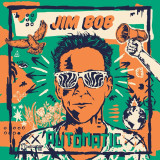
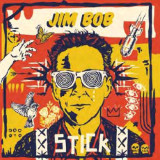
Cherry Red Records is double delighted to present not one, but TWO brilliant brand-new albums from Jim Bob this summer! • Following his sold-out show at London’s O2 Shepherd’s Bush Empire in April, Jim Bob (Carter USM, Jamie Wednesday) returns with two new solo records (his 13th and 14th), released on the same day – Friday 22nd August 2025.
One album is ‘AUTOMATIC’ and one album is ‘STICK’. This is NOT a double album, double albums allow filler in and there is NO filler on ‘Automatic’ or ‘Stick’. You won’t find any skippable Instrumentals or reprised versions on these beauties, just wall-to-wall, floor-toceiling bangers - 22 of them – 11 songs on each excellent record. ‘Automatic’ features the full band from the last three Jim Bob albums (‘Pop Up Jim Bob’, ‘Who Do We Hate Today’ and ‘Thanks For Reaching Out’ - also available on Cherry Red Records) and includes the opening sing-a-long ‘Victoria Knits The Wars’ which features on the first 7” single. ‘Stick’ is a punkier, dirty power-trio, guitar record and features the poppin’ punky ‘S’ side of the 7” ‘Every Day’s a Discotheque’. Both albums are also available in colour gatefold vinyl and digital formats. ‘Automatic’ and ‘Stick’ are both the greatest album Jim Bob has ever made
Cherry Red Records is double delighted to present not one, but TWO brilliant brand-new albums from Jim Bob this summer! • Following his sold-out show at London’s O2 Shepherd’s Bush Empire in April, Jim Bob (Carter USM, Jamie Wednesday) returns with two new solo records (his 13th and 14th), released on the same day – Friday 22nd August 2025. • One album is ‘AUTOMATIC’ and one album is ‘STICK’. This is NOT a double album, double albums allow filler in and there is NO filler on ‘Automatic’ or ‘Stick’. You won’t find any skippable Instrumentals or reprised versions on these beauties, just wall-to-wall, floor-toceiling bangers - 22 of them – 11 songs on each excellent record. ‘Automatic’ features the full band from the last three Jim Bob albums (‘Pop Up Jim Bob’, ‘Who Do We Hate Today’ and ‘Thanks For Reaching Out’ - also available on Cherry Red Records) and includes the opening sing-a-long ‘Victoria Knits The Wars’ which features on the first 7” single. ‘Stick’ is a punkier, dirty power-trio, guitar record and features the poppin’ punky ‘S’ side of the 7” ‘Every Day’s a Discotheque’. Both albums are also available in colour gatefold vinyl and digital formats. ‘Automatic’ and ‘Stick’ are both the greatest album Jim Bob has ever made.
Chickasha, Oklahoma is not a place known for producing a lot of original proto-punk bands. In fact, there is, to our knowledge, only one: Debris'. Formed in 1975 by bassist Chuck Ivey, guitarist Oliver "Rectomo" Powers and drummer Johnny Gregg, the trio created some of the most art-damaged outsider rock 'n' roll this side of MX-80 Sound.
When a local studio offered the package deal of ten hours for recording and mixing as well as pressing 1,000 LPs and two-color jackets, Debris' came in well-rehearsed – nailing all eleven of their songs in just one take. In April 1976, the same month as Ramones' debut album, Debris' would release their lone record onto the world.
Opener "One Way Spit" could easily be mistaken for a lost KBD single – from Chuck's bizarre count-in to the band's trashy start-stop rhythms, unfurling a Dadaist flag around Johnny's visceral vocals. On "Tricia," a reference to the then-current Patty Hearst trial, Oliver's gruesome groans are sardonically juxtaposed with an electric saw. These LSD-tinged tunes are a potent mix of Beefheart-ian controlled chaos and the genuinely weird avant-rock associated with the mid-'70s Cleveland scene.
Enhanced by analog synthesizers and electronic effects, the album sounds like Eno-era Roxy Music or Stooges' Fun House buried deep in the red Oklahoma dirt. While punk would spark a handful of bands who boldly straddled the line between the primal and the experimental, the relatively unsung Debris' were one of the first to do so.
Debris' had a standing invitation to play New York at Max's Kansas City and CBGB in 1976, although they never made it out of Oklahoma. The private-press edition of their self-titled album (also known as Static Disposal, which was actually the label name printed on the original front cover) has since become a collector's item and is even namechecked on the infamous NWW list.
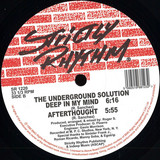
Absolutely ESSENTIAL record right here - The Underground Solution aka The 'S' Man aka the legendary Roger Sanchez is a name that you should all be familiar with by now, and his 1990 ANTHEM 'Luv Dancin' is an NYC deep house benchmark. That's right, this originally came out in 1990. That's a heck of a long time ago. Thing is, this record, when played at the right time will still cause maximum damage in the club. Riffing on disco classic 'Is it all over my face' and with elements of 'The bottle' interspersed with a deep, rolling garage bassline and dreamy keys and pads Sanchez crafted a solid gold cut, a timeless piece of dance music that still inspires today and is often imitated yet obviously never bettered! The flipside cuts 'Deep in my mind' and 'Afterthought' are also sublime exercises in the deepness, The 'S' Man's trademark eerie pads, bleeps and dope drum programming evident throughout, making these tracks huge hits from NYC to Sheffield and beyond! This whole EP is flawless and if you dig the deeper side of this stuff then you're in for a treat - Now's your chance to bag a bonafide, hands down classic record!
'Luv Dancin' has been skilfully remastered from all original master sources and fully licensed and reissued officially for 2017.
- Understatement
- Cozy
- Wait No
- Dirty Tv
- Long Time Coming
- Can't Stand U
- Plaster
- I've Been Delayed
"We are Honeypuppy. Your worst nightmare. Sleep tight." Born from the liminal space between the head and pillow of Songwriter Josie Callahan, Athens Georgia's Honeypuppy interrupts your regularly scheduled programming with an exciting and fresh one-time TV offer: a sparkly new album for your listening pleasure. Experience the bliss and despair, anxiety and indifference, and present yet absent-minded glee of this episodic saga in Honeypuppy's glowing new sonic collection, DIRTY TV. A nostalgic and poppy delight complete with twists, turns, and plenty of surprises, don't miss a second of DIRTY TV. Honeypuppy formed in 2020 as Callahan (lead vocals, guitar) recruited friends and roommates Adam Wayton (bass, vocals), and Will Wise (lead guitar) to help bring her songs to life. The group released "Nymphet", their soft and brutal debut EP, in January of 2024.
From their 2024 tour, this live bootleg captures King Gizzards full Houston set at White Oak Music Hall. With 15 tracks spread across three color vinyl LPs, and comes in a deluxe tri-gatefold with hypnotic op-art labels and custom photo sleeves for each record. Limited to 500 vinyl 3xLP Tri-Gatefolds
- 1: I’ll Be With You 3:00
- 2: Left :0
- 3: Carmen Electra 2:45
- 4: Idr 1:3
- 5: Fumbled 1:46
- 6: “Affirmatively.” Pt 1 1:59
- 7: Honey I 2:10
- 8: Could You 3:31
- 9: Recognize Me 2:11
- 10: “Affirmatively.” Pt Ii 3:19
- 11: And 4:16
Blaney describes A Room With A Door That Closes as “a love letter to her blue,” an emotional state that she defines as “a kinetic, intense, and dark energy that needs to be expressed as soon as it is felt.” The eleven songs on the album span radioactive kiss offs, sorrowful meditations on yearning, and gossamer reveries about self image.
The music has a fittingly tumultuous, intricate sound: 1960s soul samples melt into warm drum n bass percussion, blips of glitch ping pong against grating synth, and Blaney’s vocals range from searing punk exclamations to gentle, exploratory croons. It’s the sound of a singer peering deeply within herself and presenting the world with everything she finds, unadulterated, in real time. Blaney produced the new project along with a tight team of three producers: Emerson Fossett, Harlan Steed (Show Me The Body), and Alex Farrar (MJ Lenderman, Wednesday, Squirrel Flower, Snail Mail).
Blaney had just started playing guitar and producing around the time she began writing the songs that would become the album. Being new to both producing and guitar playing opened up a sense of exploration and freedom for her. She felt emboldened to employ more adventurous riffs and unconventional song arrangements when she was writing. A Room With A Door That Closes is a collection of songs that rigorously pursue honesty, that present feelings as they arise without rushing to categorise them or explain them away. In the process of understanding her rage or discomfort, Blaney often lands on a sense of pride and assurance, but that’s never the ultimate goal. She eschews the easy comfort of neat resolution for the excitement of ongoing discovery. The album is an exercise in unfiltered self-expression, and a celebration of life at its messiest.
* 140gm vinyl in charcoal black reverse-board disco bag, with red/ hot pink/ blue/ off-white patterned wraparound sticker, and embossed play:musik icon on front sleeve.
* Kuttin Edge arrives on p:m with (115), a musically adventurous set that draws from a range of influences - West African funk, UK and US electronics, Autonomic moods, minimal techno, and Brutalism; while a focus on analogue feel, overdubbing, and textural detail processes tie it together. An interesting, experimental, yet firmly dancefloor friendly EP.
* Tracklist:
A1. Onyeabor: a unique track full of vintage-sound synths, bright melodic lines, Moog-style arpeggios, and rhythms built on a CR78, layered with live drums, tambourines, and bass guitar. Disco funk samples and fx add texture, alongside heavy overdubbing. Inspired by early William Onyeabor aesthetics.
A2. Dark Horse: Dark Horse: an atmospheric arrangement of phase-y pads reminiscent of the peak Autonomic era, filtered through the abstract lens of artists like Actress or King Britt. The pacing and negative space give the tune a weighty but airy feel, punctuated by heavy toms and documentary-style foley. Soulfully cosmic.
B1. Loop Me: polyrhythmic arpeggios, swirling delays, unstable harmonic structure, and chromatic movement form a tense, shifting progression. Built around a single bell sample, the track is reshaped through layering, modulation, subtle changes in texture, and filtered transitions. A techno stepper.
B2. Geiger Scale: experiments with playful but controlled randomness, minimal structure and off-grid sequencing. The idea centres on a toy synth with loose notes and laidback groove formed of irregular, rhythmic patterns. Geiger Scale perfects restraint as the arrangement bubbles along with sparse melodies. Smokey and potent.
- A1: Fascination / Grey October Sound & Zaqlo
- A2: Moonlit Fish / Grey October Sound & Tsubaki Sounds
- A3: Ronin Vibes / Grey October Sound & Don C
- A4: Tokyo Dream - Cloudy Memories / Grey October Sound & Sand Land Studio
- A5: Yoru No Ame / Grey October Sound & Matcha One
- B1: Late Night / Grey October Sound &Adon
- B2: Room 503 / Grey October Sound & Orilo
- B3: Night In The Rain / Grey October Sound & Rensui
- B4: Black Butterfly / Grey October Sound & Léa Fontenay
- B5: Night Walker / Grey October Sound & Route
Grey October Sound has gained widespread popularity not only in Japan but also around the world through their series of cover albums, including Lo-fi Ghibli,
a collection of Ghibli film music covers; Lo-fi City Pop, featuring covers of classic and beloved City Pop songs; and Lo-fi Anime, which reimagines popular anime
theme songs in their signature style.
Amid the success of their original compilation series Timeless Lo-fi, they are now launching a brand-new series titled Late Night Lo-fi.
This new album, composed entirely of newly recorded tracks, continues to reflect Grey October Sound’s distinctive style while offering mellow and chill tunes that
evoke the atmosphere of late-night hours, just as the title suggests.
- Watch The Water
- The Way Of The World
- Coombe House
- Wash What You Eat
- Like When
- Basic Everyday Life
- Hold Onto I.d
Recorded from late 1996 through early 1997, Hold Onto I.D., The Shadow Ring's fourth album, marks the apogee of the trio's experimental rock epoch - their last record clinging to their factitious bandness before they let all song and structure go awash in sonic malaise for their final run of releases on Swill Radio. The surrealist dreams of City Lights and Put the Music in Its Coffin give way to pseudo-expressionistic lyrics mired in the banality and bleakness of the everyday, set against the backdrop of the Coombe House (as pictured on the album's cover). While Hold Onto I.D. is the group's most overtly autobiographical release to date, Lambkin's lyrics obfuscate his expressionist tendencies filtering them through the codes and languages of officialdom, linking the "inner self" with documents of the state_identification cards, National Insurance numbers, and British passport numbers. Having moved out of their parents' homes and into the top floor of the famed Coombe House, Graham Lambkin and Darren Harris set out to rework material drafted over the previous year, aided by Tim Goss, still safely in residence at the "Valebrook Inn." While the familiar sounds of Harris's deadpan recitation and Lambkin's electric guitar, amateurishly strummed, dominate the album, the emotive interludes of Goss's keyboards populate the record along with of home-cooked tape experiments and dime-store concrète. Originally released on CD and supported by a US tour with friends Scott Foust and Karla Borecky's Idea Fire Company, Hold Onto I.D. is perhaps the band's best-known and most accessible album. (The Shadow Ring's sole representative on a streaming platform, it was once acknowledged by the Guardian as one of "the 101 strangest records on Spotify.") Offered here for the first time on vinyl, Hold Onto I.D. is an essential album for both completists and the uninitiated alike. Throughout their legendary, decade-long run, the Shadow Ring were an enigmatic force on the international musical sub-underground. Before their disbandment in 2002, this shambolic rock outfit, formed by a group of rowdy teenagers in southeast England, left behind a mighty run of eight LPs, a handful of 7"s, and a spate of raucous live shows and cryptic zine appearances on both sides of the Atlantic, all which have bolstered their enduring word-of-mouth mystique. Beginning in 2023 with the first-ever vinyl pressing of the self-released pre-Shadow Ring tape The Cat & Bells Club (1992), Blank Forms Editions has been conducting a systematic retrospective of the storied group. Wax-Work Echoes and Hold Onto I.D. are the latest releases in a multiyear reissue effort that includes several LPs, a comprehensive CD box set, and a nearly five-hundred-page book.
Originally conceived as a compilation of outtakes and live recordings from The Shadow Ring's 1995 stateside tour, Wax-Work Echoes takes its name from the first line of "Put the Music in Its Coffin," the title track of the group's breakthrough release. Lambkin abandons the bitsand- bobs approach, advancing the Shadow Ring concept with entirely original material that builds on the unit's self-mythologizing lyrics, celebrates the clicking of horse hooves, ponders on the sociability of rats and mice, and warns of the dangers of poultry. The first Shadow Ring album to officially include Tim Goss in the main lineup, Wax- Work Echoes reveals the group in its final and lasting form, awash in the outer bounds of atmospheric exploration, with Lambkin's familiar wry and morbid lyricism and the stripped-down angularity of amateurishly detuned guitars fully intact. While Klaus Canterbury and Tony Clark seem all but forgotten, and the shrugged off S. Fritz is listed on the liner notes as performing only "when required," Lambkin did solicit contributions from outside the inner circle. A bit of "Mambo Twist," lifted from a tape of unreleased Vitamin B12 material sent to Lambkin by Alasdair Willis, found its way into "V.E.R.M.I.N.," while an extended epistle contribution from Richard Youngs (and, technically, Brian Lavelle) would be employed in the second half of "Catching Sight/Of Passing Things." Released on CD in 1996 for Bruce Russell's newly minted Corpus Hermeticum, Wax-Work Echoes was recorded concurrently with intense rehearsal periods, in anticipation of the forthcoming "Rose Watson Tour," and was supported by a celebratory fanzine media blitz. The album seemingly absorbs the frenetic excess of the band's transatlantic travels; Wax-Work Echoes channels the trio's wilder instincts into an unresolved catharsis, not yet free of frustration or restlessness. Out of print for almost three decades and available here for the first time ever on long-playing disc, Wax-Work Echoes is a classic from the outer eddies of The Shadow Ring's sound, a must-have for any aficionado's collection: "A window slides, glass slips from frame / And canvas carcass breathes again." Throughout their legendary, decade-long run, the Shadow Ring were an enigmatic force on the international musical sub-underground. Before their disbandment in 2002, this shambolic rock outfit, formed by a group of rowdy teenagers in southeast England, left behind a mighty run of eight LPs, a handful of 7"s, and a spate of raucous live shows and cryptic zine appearances on both sides of the Atlantic, all which have bolstered their enduring word-of-mouth mystique. Beginning in 2023 with the first-ever vinyl pressing of the self-released pre-Shadow Ring tape The Cat & Bells Club (1992), Blank Forms Editions has been conducting a systematic retrospective of the storied group. Wax-Work Echoes and Hold Onto I.D. are the latest releases in a multiyear reissue effort that includes several LPs, a comprehensive CD box set, and a nearly five-hundred-page book.
- In The Beginning
- Demolition
- Reality Of Living In A Construction Site
- Water Song
- Steel I-Beams
- Taking Out The Trash
- The First Dinner
- The New Neighbors
- House For Sale
- And Now The Memory
LP comes with 24 page 8.5x11 full color booklet. In the blurred and memorial hallways of bygone time, to remember is to wander between the rooms of our own experiences, to appear and disappear, like a play of overlapping shadows. In music set drifting through the architecture of his own memories, Moses Brown weaves a story that oscillates between the past and the present, like a mason turning over stones to reconstruct his childhood home in this beautiful and disquieting soundtrack to growing up. On Stone Upon Stone, Moses' first solo LP attributed to his given name after several releases under the brilliant and despondent "Peace de Resistance" moniker, he moves sidelong into the realm of soundtracks with this score to the construction of his childhood home in a story spanning 1993-2023. Laid out in lush and provocative minimalist instrumentals, the album unfolds a story about the planning, partial construction, and dissolution of a home in constant state of becoming through the lens of its only child, coming of age under flux. Influenced by the approach of friends and collaborators Straw Man Army's OST to Charles Darwin's Voyage of the Beagle, Stone Upon Stone was originally intended as a soundtrack to a novel of the same name by Wieslaw Mysliwski, an epic set in Poland about a family's construction of a mausoleum. Struck by the story's parallels with his own family's project, he got the idea to complete the work as a personal narrative. Created from layers of different mellotron voices then separated, re-amplified, and recorded as if they were a sitting chamber orchestra, the music eerily blurs the line between human and synthetic, giving way to something akin to a memory with it's blurriness of fact and fiction. In the same spirit of association, this record is certainly influenced by other minimalists working within the confines of "soundtrack", like Philip Glass' North Star and the film work of Michael Nyman. But Brown's soundtrack works within its own peculiar depth of field, living in the listener's imagination, thriving in its own sense of loneliness, aspiration, and confusion that only childhood can evoke. Listeners will feel the entropy of aging in Stone Upon Stone, like a memoir in cascading tones, that sets it apart from so much else in DIY music, and rewards with repeated listens. For Fans of Philip Glass, Kali Malone, Julius Eastman, Mica Levi, Roedelius.
White LP. Born out of the early 1980's Austin noise punk scene, Scratch Acid deliberately eschewed the loud, fast rules of hardcore as everything they didn't want to be and embraced a weirder, artier sound. Prior to the release of their 1984 debut S/T EP, someone gave Touch and Go Records owner Corey Rusk a cassette of the recording, and he was instantly a huge fan. Rusk was immediately interested in releasing the EP and contacted the band to express his admiration. At the time, Scratch Acid had already committed to working with Rabid Cat Records, who released the band's debut release S/T EP (1984) and their only full-length album, Just Keep Eating (1986). The group quickly developed a riveting performance aesthetic, and, as the debut S/T EP made its way around the country via fanzines, college radio, and word-of-mouth, the band mounted short tours to the Midwest and the East Coast. After playing a total of 146 shows, Scratch Acid broke up after the long tour that followed the release of the Berserker EP (Touch and Go Records, 1987). Since that time, the band have had many imitators, and many alternative bands have cited Scratch Acid as one of their influences.