The space between every love is filled with vigilance in preparation for future threat. This threat is not so much pain as failure and, above all, fatigue. Even the beginnings, when love seems at its most accessible, are disturbing. In spite of this we advance into the turmoil because we are inebriated with love.
Dominik Suchy's third album admits all this as a quality of love. Disembodied and denied to be gloom or bliss, love is revealed to be a raw process at full length. This makes for emotionally hypercharged music that is more inevitable than tense. The record unfolds, for all its ruptures and weight, as familiar. It is a music of pathos, because it benefits from the emotional knowledge that already resides in you.
The universality of this angle allows for compositions that are less than opulent. A focus on the mass of sound // verticality leads to a bareness that sets "Every Love..." apart from Suchy's previous works. At times sonically overwhelming and rhythmically ambiguous, it should be approached as free jazz rather than post-club.
Every Love Is an Exercise in Depersonalisation on a Body Without Organs Yet to Be Formed does not submit to the weariness of love // Weltschmerzen does not submit to the weariness of the world.
“In places harrowing and emotionally charged, in other places quite inconspicuous, you feel that you are standing in front of something big, transcending everything, which you observe with sacred reverence. Maybe it's the eye of the storm or that love which is the origin of everything.”
Peter Dolnik, 34.sk —
“One of the most distinct electronic artists in our geographical area.'”
Roberta Tothova, Pravda.sk —
“Everything happens with deep apprehension, the atmosphere and its variations are executed on a masterly level””
Richard Kutej, Fullmoon Zine —
“An album full of incessant soundscapes, undulations and sound-design based portrayals of magnificence.”
Mikulas Hamerla, Alterecho.cz —
Suche:area music
Cool Rasta is an album by The Heptones, which consisted of Earl Morgan, Barry Llewellyn, and Leroy Sibbles. Brought up in the Trench Town area of Kingston, their first successful record was “Fatty Fatty”, first released in 1966. Since then, they have had several hits including “Country Boy”, “Mama Say” and “Book Of Rules”. At the guiding hand of top producer, Harry Johnson they recorded Cool Rasta, which came out in 1976.
The title track of the album is a typical example of The
Heptones at their brilliant best.
Cool Rasta is available as a limited edition of 750 individually numbered copies on orange coloured vinyl.
Recorded by award-winning mastering engineer Kevin Gray's record label, Anthony Wilson's Hackensack West is Cohearent Records' follow-up to Kirsten Edkins' Shapes & Sound album. Produced by Joe Harley and recorded all-analogue/all-tube at Gray's studio, Cohearent Recording, the AAA vinyl release is pressed on 180-gram vinyl at RTI and housed in a deluxe tip-on gatefold jacket.
From the liner notes:
The week before these sessions in the summer of 2023, I sat down each morning with the goal of composing one new song by day's end. I knew I'd soon be in the room with my dear friends Gerald Clayton, John Clayton, and Jeff Hamilton, three musicians whom I trust the most, and with whom I've played the most over the last couple of decades. I tried to imagine themes that would feel natural to us, the kinds of songs we could simply dive into without much thinking. When we headed to Kevin Gray's studio to record, I brought seven new songs along with me. Five are included on this album.
"Daido" is dedicated to Japanese photographer Daido Moriyama, who became known in the late 1960s for his grainy, sometimes blurry, high-contrast black and white images made throughout Japan. I love his pictures taken on the streets of various Tokyo neighbourhoods such as Shinjuku. His portrait of a menacing stray dong, from his series "A Hunter," is the kind of picture that, seen just once, is unforgettable. These days Daido is still out on the street making pictures, at the ripe young age of 85.
"Verdesse" has a sinuous, chorinho-like melody and rhythmic feel. The tune seems to weave and bob playfully in a space of brightness the way a grapevine seems to curl towards the sunlight. So I named it after a wine grape native to the pre-Alpine region of Isère, near Grenoble in eastern France, that makes a particularly delicious and drinkable white wine.
I wrote "Sunday," well...on Sunday. It unfolds slowly, like a good Sunday does when there's nothing to do, you can sleep in, you've got your person beside you, and you just relax into the day.
"The Lands" is dedicated to a family very dear to my heart: that of tenor saxophonist Harold Land. My mother met Harold when they were both teenagers growing up in San Diego, California. The two of them became lifelong friends, and a little later, Harold enjoyed a fruitful musical association and close friendship with my father, Gerald Wilson. Harold, his lovely wife Lydia, and their son Harold Jr. were extended family for us; they looked after me with love and care. Some of my first gigs ever as a young guitarist were with Harold's incredible band that included Oscar Brashear, Billy Higgins, Richard Reid, and Harold Land Jr.
I've loved Todd Rundgren's "Marlene" since I first heard it on his epic double-album Something/Anything. With its tender, well-contoured melody buoyed by a few special harmonic surprises, it almost seems like something from the pen of Burt Bacharach. It tells such a complete musical story. Rundgren's recorded version has a beautiful endlessly repeating tag. So we played the melody simply, and used the tag as a small staging area for a bit of improvising.
Hackensack West is our alias for engineer Kevin Gray's studio Cohearent Recording, a place inspired by Rudy Van Gelder's first studio in Hackensack, New Jersey. Located inside Van Gelder's parents' home, the musicians played in the living room! It was there, in 1954, that Thelonious Monk recorded his classic tune "Hackensack," a "contrafact" melody over the chord changes to the Gershwins' "Oh, Lady Be Good!" In contrafact-like fashion, my own bebop-spirited melody "Hackensack West" seems to nod toward the changes of a few recognizable standards, without corresponding to any particular one.
Les yeux grands fermés is a spontaneous new EP that is an ode to freedom, both in the creative process and in everyday life. This opus depicts the rather raw feelings of a young artist who had a tough time of it when he was starting out, and who is now finally experiencing the success he had been hoping for. More liberated, the protagonist is now enjoying a new life: a more freestyle lifestyle full of surprises and lightness, with days governed by studio sessions, parties and carnal relations... all the while keeping his feet firmly on the ground and his goals firmly in mind! In terms of songwriting and production, Les yeux grands fermés is an improved blend of ABSOLEM's last two projects, Leur dire and Balle d'Argent, featuring both their introspective songwriting, here even more touching, and their arrogant, second-rate side. ABSOLEM continues the journey begun on Balle d'Argent, a project in which the rapper discovered himself to be more than ever in harmony with his music (spontaneity, introspection, fluidity of text) and less concerned by all the external factors (industry, the race for numbers, social networks, pressure, etc.), social networks, pressure, etc.).
Produced in a very short space of time, Les yeux grands fermés is a highly intuitive and spontaneous project with some tracks created from scratch in just a few hours.
Entirely produced, recorded and mixed by Dee Eye in their cellar-home studio, the project retains the 'live' touch. studio, the project retains the 'home-made' touch that characterises the duo and which they are constantly perfecting. The featuring with JeanJass, who is very close to the duo, was just as natural, having worked with with Dee Eye and advises them on the creation of their projects. projects. The result is a track with a very intimate theme (esotericism and introspection), which takes the form of an astral journey.
Project after project, the chemistry between ABSOLEM and Dee Eye grew stronger and stronger and the main objective remains the same: to break new ground in every area production, writing, interpretation, mixing and mastering). Continuing to continue to work on a number of projects on their own, Dee Eye continues to progress experience and a keen eye in the artistic direction of ABSOLEM's projects. projects. With quality, consistency and efficiency always in mind and efficiency, ABSOLEM and Dee Eye are increasingly asserting their desire to create their own musical colour, a sort of hybrid between Slowthai and Asap Rocky with and Asap Rocky, with innovative production and flows, featuring rap lyrics.
Halle Weissensee (or Weißensee if you wish) starts where Sascha Funke’s last Ep for Running Back stopped. Mesmerizing house and techno music that interweaves classic forms with modern means and looks through the lenses of nostalgia with an open mind.
The Halle was a former engine plant in Berlin that got converted into a rave areal for the now legendary Mayday raves and one of the birthplaces and leading spots of the nineties. Coincidentally and unknowingly, 1993’s winter edition was attended by Funke and Gerd Janson and a conversation about it spawned this record. Don’t be mislead: this is not a retro rave fest, but an ode to the esprit of the times, the possibilities if an envisioned future and maybe most of all an afterglow. While Reality (sounding like a Relief record if the label would have been a topic at Bauhaus university) and the warped bleepiness of Halle Weissensee itself come closest to the actual sound aesthetic of that very night, Fantasy invokes the language of contemplative deep house from vintage New York, while Puzzle evokes a notion of what the same thing could be with the prefix progressive instead. Reality often falls short behind fantasy, but once in a while both complement each other very well.
Gary Clark Jr. releases his new studio album JPEG RAW on 22nd March 2024.
This new body of work signals a brave new world for Clark’s ever-expanding creative palette. The new music is dense and adventurous with a more cohesive synthesis of his eclectic musical universe. His samples, Thelonious Monk and Sonny Boy Williamson, decorate flourishes of African, World Music, and even Jazz while merging with rock, R&B, hip-hop and blues; familiar areas he has ventured before, this time with more unity forging a fresh new style.
Clark’s lyrics are pointed, deeply personal, outspoken and socially conscious with occasional forays into rap and spoken word from Clark himself. The sonics are immersive, verging on modern groove-oriented psychedelia with hip-hop driven beats in verses giving way to anthemic choruses, rich with power-chording and wide fuzz riffage.
JPEG RAW is Clark's first album since 2019’s critically lauded This Land, which became his third consecutive top 10 on the Billboard 200 chart and garnered three Grammy Awards, including Best Rock Song and Best Rock Performance (“This Land”) and Best Contemporary Blues Album (This Land). Clark’s first Grammy win was awarded in 2014 for Best Traditional R&B Performance (“Please Come Home”).
Stolen Goods Records announce Pergola's cinematic techno 'Zed' EP, featuring a remix from indie-dance legend CURSES.
Exploring hypnotic, emotionally charged melodies and vast techno breakdowns, the title track opens up the EP with a strong sense of mystery. Suspenseful strings build in anticipation as the bassline filters in intensity, this deep space offenng is the perfect example of a tune fit for the club as well as headphone-listening.
'Freak' is a beautifully intense piece featuring soft synths marked by subtle scratches, a feel-good vocal and the catchy strum of a quitar. '"Zed' is then given the CURSES treatment, the Optimo Music, Bordello a Parigi and Correspondant artist amplifies its retro feel resulting in nine minutes of pure dark disco hedonism. Closing out the release is an ambient collaboration between Pergola and Luigi Sambuy, 'Tunnel' is an ode to the early days of IDM through to the '70s.
*"Zed' marks the third release on Lele Sacchi & Asian Fake's Stolen Goods Records and follows up their widely acclaimed 'Volume 0' compilation as well as the recent collaborative EP between Black Loops & Innocent Soul. Since its launch last summer, the label has seen the support of artists like Dixon, Sasha, DJ Seinfeld and DJ Sneak and has garnered plays on prestigious stations like NTS and BBC Radio 1. The imprint continues its strong start to the year with three new tracks from the hyper-talented Pergola: a newcomer to the scene whos aready listed on labels such as Multinotes, Sementa ano Adriatiques Siamese, the latter which saw/ him reach number one on Beatport's Electronica chart.
After winning three leading Belgian music awards with Humo's Rock Rally, De Nieuwe Lichting and Sound Track, girl band BLUAI is expanding its horizons. On their debut album Save It For Later, the trio leaves for a road trip through the sonorous areas populated by the likes of Big Thief, Pinegrove, Haim, and Alabama Shakes.
Save It For Later is a record not unlike a Polaroid picture. Belgian songwriter Catherine Smet captures the memories of her youth in lyrics with a perfume of Americana, country pop, and indie folk. The stories areset in her native Flanders, but close your eyes, and galloping horses on a ranch in Mississippi form the backdrop of BLUAI's debut album.
Catherine Smet (vocals, guitar), Mo Govaerts (drums), and Caitlin Talbut (bass) joined forces with producer Willem Ardui (blackwave.) for this record. BLUAI's instrumentation was expanded with banjo, twelve-string guitar, and lap steel. Engineer Tobie Speleman received 'Nashville tuning' as a briefing. BLUAI thus shifts the focus from indie rock to Americana and breaks open the band's frame of reference, with influences ranging from Maggie Rogers to Alabama Shakes to The Japanese House.
Save It For Later is the creation of a group that came together two years after the formation of BLUAI, found a common drive, and is now cruising at full speed. BLUAI is here to stay.
Nach ihrer Tournee zu dem von Kritikern hoch gelobten „Luck of the Draw“- Album legt die ELLIS MANO BAND ihren ersten Konzert-Mitschnitt vor.
„Live: Access All Areas“ enthält 15 Songs, aufgenommen 2023 bei Gastspielen in Deutschland und der Schweiz ist über eineinhalb Stunden lang das
faszinierende Dokument einer direkten Momentaufnahme. Es macht Lust darauf, die 2017 gegründete, multinationale Gruppe mit Mitgliedern aus
Kroatien, Deutschland, Schweiz auf der Bühne zu erleben. Die Ellis Mano Band ist auf der Bühne eine Macht und agiert auf internationalem Level!
Virtuos, die Musiker - dicht, ihr Zusammenspiel - intelligent, die Improvisationen - druckvoll und transparent. Eigenständiger, postmoderner Bluesrock
voller Soul.
Zitat Great Music Stories - UK: „Joe Cocker, Dire Straits, Van Morrison, Toto und Chris Rea bei einer improvisierten Late-Night-Jam-Session“.
Miles away from the current UK jazz scene, a mysterious composer from the Nottingham area cooks raw and noisy library music with groovy jazz fusion and beat-heavy funk breaks tackling themes of satanism and witchcraft.
Having previously released music with Jazzman Records, Stones Throw subsidiary Now-Again and French label BMM Records, The Natural Yogurt Band presents the 7th album of his discography that marks an experimental turn.
Spores takes us on an obscure sci-fi journey into extra-terrestrial territories where tropical flutes, pianos, guitars and organs melt under corrosive electronic sounds, modular bird chirps and vintage drum machines sounds. This unsettling and immersive library album will be released on March 1st with a limited pressing of 300 green marbled records.
WAO (Waltaa And Onra) is an ephemeral project, a musical experiment between two friends that happened during a rainy afternoon in the Parisian suburban area in 2014.
After years of knowing each other, Waltaa and Onra finally decided to make music together in the same room for once, and this double-sided 10” single is the product of this collaboration between the two underground French producers.
With “Sexy Robot”, a (then) retro-futuristic ballad for a talkbox duet, and “All Night Long”, a New Jack Swing floor-filler instrumental cut, the release emcompasses many different influences that the two producers share, but the use of the talkbox on both tracks suggest a direct inspiration from legendary 90’s R&B producers, Devante Swing and Teddy Riley respectively.
Deer Jade – Jukurpa
Tired of grey skies and long faces? We’ve got a serious dose of musical vitamin D for you! Deer Jade is hailing from the picturesque Lake of Geneva, an area about which the late Jean Paul Belmondo had to say a thing or two. Her infectious smile and uplifting energy behind the decks already made her a household name in clubs and festivals around the globe. This solo debut is an expression of her strong self confidence and in-syncness with the world surrounding her. “Jukurpa” might be just one of the most flamboyant house tunes you’ll come across this year, readymade for swaying to on an early summer morning dancefloor. “Cosmic Dream” is of a more introspective nature, putting gentle psychedelic synth movements to good use. There’s a lot of heart in Deer Jade’s music. We’re happy to give it a home.
David Hasert & Niconé – Wasting My Time With You
Tired of grey skies and long faces? We’ve got a serious dose of musical vitamin D for you! ?This Cologne – Berlin joint venture is shedding rays of sun galore with this lost in reverie deep house jam. Built around a catchy as hell soul vocal and occasional piano outbursts “Wasting My Time With You” will certainly be one of our favorite tunes to waste our time to in 2024.
Deer Jade – Jukurpa
Hast Du genug von grauem Himmel und langen Gesichtern? Wir haben eine ordentliche Dosis musikalisches Vitamin D für Dich! Deer Jade stammt vom pittoresken Genfer See, einer Gegend, über die der unvergessliche Jean Paul Belmondo so einiges zu sagen hatte. Ihr ansteckendes Lächeln und ihre mitreissende Energie hinter den Decks haben sie bereits zum gerne gesehenen Gast in Clubs und auf Festivals rund um den Globus gemacht. Dieses Solo-Debüt ist Ausdruck ihres starken Selbstbewusstseins und ihrer Verbundenheit mit der Welt, die sie umgibt. “Jukurpa” ist vielleicht einer der extravagantesten House-Tunes, die man in diesem Jahr zu hören bekommt, wie geschaffen zum Mitschunkeln an einem frühen Sommermorgen. “Cosmic Dream” ist von eher introspektiver Natur und holt uns mit sanften psychedelischen Synthesizer-Bewegungen ab. In der Musik von Deer Jade steckt eine Menge Herzblut. Wir freuen uns, dass sie es bei uns verschüttet.
David Hasert & Niconé – Wasting My Time With You
Hast Du genug von grauem Himmel und langen Gesichtern? Wir haben eine ordentliche Dosis musikalisches Vitamin D für Dich! Das Köln-Berliner Joint Venture versprüht mit diesem verträumten Deep-House-Jam jede Menge Sonnenstrahlen. ?”Wasting My Time With You” ist mit seinen ?catchy Soul-? Vocals und gelegentlichen Klavier?-?Kaskaden sicherlich einer unserer Lieblingssongs, mit dem wir im Jahr 2024 unsere Zeit verschwenden werden.
Most audiophiles know Alan Parsons Project's I Robot by heart. Engineered by Parsons after he performed the same duties on Pink Floyd's Dark Side of the Moon, the 1977 record reigns as a disc whose taut bass, crisp highs, clean production, and seemingly limitless dynamic range are matched only by the sensational prog-rock fare helmed by the keyboardist and his creative partner, Eric Woolfson. Not surprisingly, it's been issued myriad times. Can it be improved? Relish Mobile Fidelity's stupendous UltraDisc One-Step 180g 33RPM box set and the question becomes moot.
Mastered from the original master tapes and pressed at RTI on MoFi SuperVinyl, I Robot comes to life with reference-setting realism on this numbered, limited-edition reissue. Boasting immaculate highs and lows, generous spaciousness, and see-through transparency that takes you into the studio with Parsons and Woolfson at Abbey Road, this definitive edition is designed to demonstrate the full-range capabilities of the world's best stereo systems while offering listeners the convenience of having all the music on one LP.
Featuring a nearly inaudible noise floor, this transcendent UD1S edition functions as a repeat invitation to savor reference-grade soundstages, immersive smoothness, sought-after instrumental separation, three-dimensional imaging, and consummate tonal balances. Able to be played back at high volumes without compromise or fatigue, it is a demonstration record for the ages – the likes of which are no longer being made. This is the very reason you own and invest in high-end audio gear.
The special characteristics of this UD1S version extend to the premium packaging. Housed in an elegant slipcase, the reissue features special foil-stamped jackets and faithful-to-the-original graphics. Aurally and visually, it is made for discerning listeners who prize sound quality and production, and who desire to fully immerse themselves in everything about this conceptual landmark. The Alan Parsons Project's most famous record deserves nothing less.
Inspired by and loosely based around the Isaac Asimov stories of the same name, I Robot delves into themes of artificial intelligence and technological dominance that make the record extremely relevant in the 21st century. Indeed, Parsons and Woolfson's pinnacle creation dovetailed with the ascendency of Star Wars, which itself is experiencing a rebirth in an age of self-driving cars, smart devices, and mindless automation. Lyrically, songs such as "The Voice" call into question human behavior – and their relationship to increasing robotic supremacy – in everyday life. Parsons and Woolfson reflect the associated paranoia, dichotomy, and transformation via shifting sci-fi arrangements steeped in drama and moodiness.
The absorbing tunes on I Robot also continue to fascinate due to their perfectionism and innovation. Borrowing from Pink Floyd's strategies, Parsons and Woolfson utilize a looped sequence on the title track to create new downbeats. "Some Other Time" employs two different lead vocalists and yet gives the illusion that only one is involved. Captivating strings, a piccolo trumpet, and bona fide pipe organ grace "Don't Let It Show." The origins of "Nucleus" stem from a unique analog keyboard concoction dubbed "the Projectron," devised by Parsons and electronic engineer Keith Johnson. Andrew Powell's orchestral and choral arrangements top it all off, with "Total Eclipse" arriving as a frightening track that presages the climactic "Genesis Ch. 1 V. 32."
Does man or machine win in the end? Decide as you get lost in Mobile Fidelity's UltraDisc 180g 33RPM LP pressing. Secure your numbered copy today!
More About Mobile Fidelity UltraDisc One-Step and Why It Is Superior
Mobile Fidelity Sound Lab's UltraDisc One-Step (UD1S) technique bypasses generational losses inherent to the traditional three-step plating process by removing two steps: the production of father and mother plates, which are created to yield numerous stampers from each lacquer that is cut. For UD1S plating, stampers (also called "converts") are made directly from the lacquers. Since each lacquer yields only one stamper, multiple lacquers need to be cut. Mobile Fidelity's UD1S process produces a final LP with the lowest-possible noise floor. The removal of two steps of the plating process also reveals musical details and dynamics that would otherwise be lost due to the standard multi-step process. With UD1S, every aspect of vinyl production is optimized to produce the best-sounding vinyl album available today.
MoFi SuperVinyl
Developed by NEOTECH and RTI, MoFi SuperVinyl is the most exacting-to-specification vinyl compound ever devised. Analogue lovers have never seen (or heard) anything like it. Extraordinarily expensive and extremely painstaking to produce, the special proprietary compound addresses two specific areas of improvement: noise floor reduction and enhanced groove definition. The vinyl composition features a new carbonless dye (hold the disc up to the light and see) and produces the world's quietest surfaces. This high-definition formula also allows for the creation of cleaner grooves that are indistinguishable from the original lacquer. MoFi SuperVinyl provides the closest approximation of what the label's engineers hear in the mastering lab.
Delicate and beautiful music from the combined forced of the recently ubiquitous East-Coast psychedelic combo Elkhorn and Pelt’s Mike Gangloff, laying down two epic raga-like performances captured on a 2022 collaborative tour. Gangloff—fresh from the triumph of his VHF solo fiddle album Evening Measures—has found a distinct instrumental voice, blending drone music and trad influences in way that really advances the tradition into new areas. “East Dauphin Suite” builds patiently on the interlocking acoustic guitars of the Elkhorn duo, with Gangloff’s hardanger fiddle carrying the melody over the top. The sound is a neat riff on American primitive, with just enough Appalachian-style touches via Gangloff’s careful glissandos cutting through the Vuh-type chords and patterns to create a unique and supremely melodic hybrid. “Summerfield Raga” takes things further out, with more microtonal variation in the embroidery, with assertive bowing and an increased energy level. Pressed in Chicago and housed in an amazing jacket by Jake Blanchard.
The newly reborn Danish label, tech-nology, is reintroducing its first two releases.
The second release on tech-nology back in 2003 by El Far, alsoknown as Bjorn Svin, stands as a true techno masterpiece andis now rereleased as the label has been relaunched in 2023. Bjorn Svin has taken the lead again, contributing a remix that kick-starts the label in 2023 with TN EDITS 02 Lotte kaersa:"Prov og gor li'som jeg" - played by Luca Bacchetti at Burning Man 2023.
Additionally, the track gained attention on the latest Michael Meyer podcast,
But this is all about the beginning of the label and the beginningon the dancefloor Bjorn Svin was one of the first electronic musician in Denmark spearheaded an uprising Scandinavian rave scene, developinga unique, recognizable sound inspired by Detroit techno and British early IDM pioneers: playful and melodic but simultaneously groovy and entrancing.
In 1997, April Records released Bjorn Svin's debut full-lengthalbum Mer Strom; the opening single became an unofficialanthem for the entire generation of Scandinavian ravers.
Tech-nology captured a mature Bjorn Svin in 2003 and releasedwhat is arguably his best techno track ever produced, featured on this EP that highlights his techno skills under the moniker El Far. This authentic techno experience transports you back to theorigins of electronic dance music, going back to the old abandoned warehouses where social and casual dancing defined the essence of the scene.
Yet, the record captures what it is still all about, the love to themusic, the love on the dancefloor, this is him, her and wet area.
- A1: Prologue
- A2: Unexpected Error
- A3: Sprint In Danger
- A4: Reality
- A5: Joyful Trotting
- A6: Inorganic Creature
- A7: New World
- A8: Despair
- A9: Encounter
- B1: Dropping
- B2: Cruel Reality
- B3: Escape
- B4: Brave Determination
- B5: Another Planet
- B6: Dark Spacecraft
- B7: Growth Alone
- B8: Enigmatic Trouble
- B9: Dark Tunnel
- C1: Nightmare
- C2: Sudden Attack
- C3: Glorious Appearance
- C4: Philosophy Of Eden
- C5: Beginning
- C6: Nostalgia
- D1: Soul Of The Earth
- D2: Peaceful Air
- D3: Rescue
- D4: Lost Future
- D5: Greedy
- D6: Contrary
- D7: Battle
- D8: Beautiful Land
- C7: Destroying Future
- C8: Devastated Illusion
STUDIO4℃×Osamu Tezuka
A story of the love and adventure of a woman who lived for 1300 years.
``Phoenix'' Nostalgia Arc has been made into two animated works with different endings!
Theatrical release of the movie “Firebird Eden no Hana” / Disney Plus “Firebird Eden no Sora” world exclusive distribution
Master Osamu Tezuka is hailed as the "God of Manga" and is still revered all over the world. Of the 12 stories in the timeless masterpiece "The Phoenix," which became his masterpiece and life's work, the "Nostalgia Chapter," which depicts the future of the earth and the universe in which we live, will finally be made into an animated film for the first time. STUDIO4°C, which continues to create artistic video works, was the one who completed the spectacular spectacle, which took seven years to create. The voice actors include Rie Miyazawa, who plays the main characters Romi, Yosuke Kubozuka, Issey Ogata, Honoka Yoshida, Shintaro Asanuma, and Ryohei Kimura. A gorgeous voice actor team gathers to make a timeless masterpiece into a movie. The person in charge of the music is Takatsugu Muramatsu, who is active in a wide range of areas including film music and providing music for numerous artists. The music, which has both a grand scale and a poetic feel, gently envelops the story.
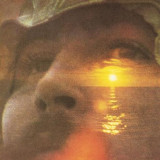
If I Could Only Remember My Name was the debut solo record from David Crosby. Recorded in 1970 after the passing of his girlfriend Christine and released in February of 1971, the album explores themes including loss and disorientation. The album features a who's who of contributors from the San Francisco Bay area including Paul Kantner and Grace Slick of Jefferson Airplane, Jerry Garcia of the Grateful Dead, and Santana, and his cohort from Los Angeles including Graham Nash, Neil Young, and Joni Mitchell.
The album has attained a cult status throughout the last 50 years, hailed for its spooky, psychedelic, and truly unique sounds.
AllMusic gave the album 4.5 stars, with reviewer Stanton Swihart writing: "With his ringing, velvety voice — the epitome of hippie crooning — and inspired songwriting, he turns If I Could Only Remember My Name into a one-shot wonder of dreamy but ominous California ambience."
All the hallmarks of a top-notch Analogue Productions reissue are here for you to savor: Mastered directly from the original master tape by Bernie Grundman and cut at 45 RPM. Pressed on 180-gram vinyl at Quality Record Pressings, and housed in tip-on old style gatefold double pocket jackets with film lamination by Stoughton Printing.
Repress.
Studio One's music in the 1970's took the label to new heights. The new style of Disco Mix brought many areas of Reggae together Roots, Lovers, Disco and Dub all came together in extended form, re-versioning classic hits, experimenting with new studio technology, over-dubbing, syn-drums and more producing what many fans describe as the most creative and innovative phase in the history of the legendary Studio One Records.
This Studio One Disco Mix album includes many sought after classic tunes only ever released in very small quantities (on Studio One's very first 12" records as well as it's infamous Music Lab 10"s out of New York) and consequently many of these track s have been unavailable since their day of release. Studio One Disco Mix features many of the classic Studio One artists such as Alton Ellis, Sugar Minott, Jackie Mittoo and Willie Williams (with his classic re-versioning of his own "Armigideon Time") alongside less well artists such as Doreen Schaeffer, Judah Eskender Tafari and George Dudley and many more.
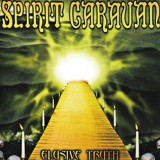
‘Elusive Truth’ was the second full-length record by D.C.-area doom rock Spirit Caravan led by the all time heavy lifer Scott ‘Wino’ Weinrich (The Obsessed, St. Vitus, Shrinebuilder, Probot). Originally released in 2001 and now remastered. “On this, Spirit Caravan's second foray into the long-player format, the band has collectively slowed down the tempo, and dropped the mood into even more contemplative territory. As the grandfather of modern stoner rock, Wino has certainly dipped his guitar picks in LSD this time around. Even though the engineering and production is bone dry and bottom heavy, Wino's psychedelic guitar work -- especially his stinging, busy leads -- has been ratcheted up a few clicks, even if the overall aesthetic is darker, and the superb musicianship from the trio simplified. The listener may be reminded of Hawkwind powered by an enormous diesel engine. As a title, Elusive Truth may indicate Wino's searching nature as a musician, and his attempt to continue down the sonic path through darkness, and through light. With this album, the listener is most certainly in darker territory.”
- A1: Opening (Destruction Of The Space Colony)
- A2: Theme Of Super Metroid
- A3: Spaceship (No Sfx)
- A4: Boss Confrontation 1
- A5: To Planet Zebes
- A6: Planet Zebes (Arrival On Crateria)
- A7: Crateria (The Space Pirates Appear)
- A8: Item Acquisition Fanfare (No Sfx)
- A9: Item Room
- B1: Chozo Statue Awakens
- B2: Brinstar Overgrown With Vegetation Area
- B3: Mini Boss Confrontation
- B4: Brinstar Red Soil Swampy Area
- B5: Norfair Hot Lava Area
- B6: Tension
- B7: Boss Confrontation 2
- C1: Theme Of Samus
- C2: Wrecked Ship
- C3: Maridia Rocky Underwater Area
- C4: Maridia Drifting Sandy Underwater Area
- D1: Norfair Ancient Ruins
- D2: Mysterious Statue Chamber
- D3: Tourian
- D4: Continue
- D6: Mother Brain
- D7: Ending
- D5: Samus Aran's Appearance Fanfare
WRWTFWW Records is happy to announce the first-ever physical release of Louisiana-based composer and producer Jammin’ Sam Miller’s full HD re-creation/restoration of the beloved Super Metroid video game soundtrack. The limited biovinyl double LP is packed with 27 tracks and features an exclusive artwork by French illustrator Pierre Thyss, as well as an obi strip.
Composed by Kenji Yamamoto and Minako Hamano, the soundtrack for 1994 SNES exploration / action-adventure / sci-fi / alien video game Super Metroid has always been a fan-favorite. A true masterclass in music storytelling, it beautifully evokes the epic and eerie adventure of the game’s protagonist Samus Aran with superb use of atmospheric sounds, space-operatic arrangements, rumbling bass, oppressive techno-futurist moods, tribal drums, and airy synth themes, admirably balancing the ominous feel of a dark menace and contemplative, even soothing, ambient soundscapes.
Jammin' Sam Miller assiduously recreated the soundtrack note by note, by finding the original equipment used to create it, translating the MIDI into a modern studio context, adding in keyboard samples, and re-mixing and re-mastering the whole score. He explains: "This was made possible by locating the original instrument samples from workstation keyboards and drum machines before they were put into the game and rebuilding the soundtrack from the ground up, applying some modern mixing techniques along the way to lift the veil of 16bit compression and create an updated listening experience."
Super Metroid is pressed on biovinyl, a sustainable alternative to traditional vinyl. Biovinyl replaces petroleum in S-PVC by recycling used cooking oil or industrial waste gases, resulting in 100% CO2 savings in bio-based S-PVC production. Furthermore, it is 100% recyclable and reusable, embracing the circular economy ideology.
This freakbeat jelly belly delight showcases the Bandits’ vaudeville humor, garage rock & catchy psychedelic pop! Considered a cult classic, this mixed bag of candy-coated fuzz is sure to satisfy your sweet tooth! Our favored stereo mix, pressed on yellow vinyl! Newburgh, New York psych-punks the Jelly Bean Bandits formed in 1966. Originally known as “The Mirror,” the band regularly packed area nightspots like the local Trade Winds, Poughkeepsie's Buccaneer Nightclub, and Burlington, Vermont's Red Dog.
In due time, they recorded a three-song demo reel that resulted in a three-album recording contract with Mainstream Records – however, unknown to Mainstream, these three songs represented the sum total of the Jelly Bean Bandits' repertoire, forcing the band to write enough additional material to flesh out a full-length LP in the course of a week. Amazingly, their eponymous 1967 debut is excellent, a freakbeat cult classic distinguished by emotive guitar and some innovative production techniques – all the more impressive, the album was recorded in a single 12-hour stretch. Mainstream hated the end result, however, and dropped the Jelly Bean Bandits just as they were commencing work on the follow-up – only one song was completed before the sessions were aborted, leaving just one ‘60s studio album from these confectionary con-artists. – Jason Ankeny
"The Jelly Bean Bandits" includes the following tracks: "Poor Precious Dreams", "Going Nowhere", "Goodtime Feeling", "Neon River" and more.
This version of the album comes as a 1xLP pressed on yellow vinyl.
- 01: The Hitman (Intro)
- 02: New Day Feat. Irene And Bnc
- 03: Sharpshooters Feat. Moka Only
- 04: License To Kill (Interlude)
- 05: Wasteland Feat. Jean Clow
- 06: Lost In The Arkyve (Remix) Feat. Arkyve, Ellay Khule, Acid Reign
- 07: No Frame
- 08: Invasion (Area 52)
- 09: Rise Feat. Silvandgold
- 10: King Of The Kings (Remix) Feat. Blu
- 11: Hartro Feat. Speach Impediments
Sharpshooters is the long-awaited collaborative album from Destruct & DJ Zole. The two Natives from Southern California who have been true contributors to the Los Angeles Hip-Hop scene for over a decade now. Sharpshooters showcases a vast arrangement of styles blended into one solid LP with a hint of nostalgia hence the title of the project.
Sharpshooters while paying homage to the golden era of Hip-Hop also has a fresh perspective on how the culture sounds today and at the same time inspired one of the greatest wrestlers, Bret Hart.
In a refreshing way it all culminates into a unique experience for the listener with amazing guest features to back it, at the end of the day Sharpshooters represents two genuine and diverse artists entering their prime and creating a timeless piece of art appropriately named after a legend’s finishing move.
Sharpshooters is released on vinyl by the label Mind The Wax as of March 8th, 2024 and includes 11 tracks.
Destruct has been in the music scene and has released over 30 studio albums including two with his live band "Inner City Soul". He has been blessed as well to run his own studio "Area 52" where he provides recording and executive producer services. He also has a film production company now called “The Resident People” where he has directed and filmed several music videos and short films with much more to come.
By today, Destruct has rocked hundreds of shows with legends like KRS-One, Slum Village, Dilated Peoples, Rakim, Psycho Realm, Method Man from Wu-Tang & more. He has also collaborated with artists such as Grammy award-winning Sirah, Sean Price, Kev Brown, Blu and Exile to just name a few.
All and all Destruct is here to be much more than your everyday Hip Hop artist, but a true contributor to the culture and lifestyle, progressing the movement forward. Destruct is here for a legacy, not a trend.
DJ Zole is a DJ/Producer from Southern California. He gained his experience coming up as a touring HipHop DJ and Producer/ Turntablist who has been a DJ for major acts ranging from Sage Francis (Strange Famous Records), Atmosphere, Abstract Rude, Project Blowed, 2Mex, and many others.
Since 2004, DJ Zole has travelled the globe performing and creating. He's a highly decorated engineer and producer with his degree in Audio Engineering Mixing and Mastering Certified through Musicians Institute Hollywood.
- A1: The Look Of Destiny - Crêpesuzette (1982)
- A2: The Speechless Man - Physique Du Rôle (1983)
- A3: The Doll - Polarphoto (1982)
- A4: Make Up - Démodé (1980)
- A5: All The Fancies - Weltanschauung (1984)
- A6: My Only Fight - Ici On Va Faire (1985)
- B1: La Porta - Rosadelleceneri (1985)
- B2: Darkest Before Dawn - Vapore 36 (1987)
- B3: Domani - Anonimia (1989)
- B4: Io Trasformo - Agorà (1989)
- B5: Raving Mad - Autosuggestion (1988)
- B6: Sogni - Quartz (1987)
- B7: Attonito - Maniumane (1989)
“The Missing Boys” is a film born from the need to tell the story of the emergence and affirmation of a forgotten music scene, like much of the youth movement that spread in metropolitan areas as well as in the provinces more than forty years ago, dealing with the same critical issues of everywhere. It’s a story of mostly unknown bands, who from Sardinia, especially from Cagliari and Sassari, interrupt the blissful isolation of an island, only apparently distant from that revolution that ignited wherever there was a stage and a power socket. The birth of a path that began with punk and quickly transformed into a magmatic picture where research, experimentation, sound subversions and slivers of darkness, shape a multifaceted and unique scene in balance between affinities and divergences with its whole surroundings. The examined period between 1979 and 1989 marks a seminal decade, a ten years time-frame linked to an indelible generational transition, like an imaginary journey “from the ants to the clouds”, an invisible thread suspended between those kids and their great dream. This album contains music from a vibrant and uncompromising season, just like all that cannot be recognized as industrial product and maintains an independent spirit. (Davide Catinari)
Following the success of Eric B & Rakim covers on 45, touching Hip Hop and rare groove fans, Medline explores new horizons. Well known to be free from styles boundaries, the French Chilean multi - instrumentalist unveil a two side Afro Funk killer.
Marked with the "universal power" title on the label, third 7 inch on My Bags catalog, this new 45 shows Medline's abilities to produce high quality music in a wide range of styles. The compositions are produced with a brilliant contrast. The uptempo "Run For Cover" is a huge Afro beat runner with a hardcore feeling while "Azul", is a heavy downtempo soul funk anthem, and shines like a massive solar energy boost.
Medline brings back the 70's West African sound signature, carried by a hot drum and bass couple, leaded by the Farfisa organ and harmonized with a powerful brass section. The rhythm is wild, mastered by dynamical arrangements when the breaks are hitting loudly around. And yes as always Medline is the ONE playing all.
The artistic fate offered beautiful colors and forms to the music. Clément Laurentin's elegant painting "Run For Cover" reminding Bob Marley and Lee Perry's records, baptized the first composition which includes a "Jamaican" surprise. "Azul" (Blue in Spanish) is the main color of Clément's creation which remind the look of the famous azulejos. The link happens without any previous consultation, all was here to be done this way, connecting cultural areas and eras. To end, the acrylic painting on linen canvas is the perfect organic mirror to this new 7 inch.
My Bags is happy to offer this "tratra" (Ivorian pancake), designed with all the elements of a ready to dig holy grail, Soul inspired, Afro beat to the core.
Child of the Universe is the fourth studio album by Australian singer-songwriter Delta Goodrem. It includes the three singles “Sitting on Top of the World”, “Dancing with a Broken Heart” and “Wish You Were Here". The former achieved three times Platinum Certification in Australia. The album peaked at #2 on the Australian Albums Chart and at #1 on the Australian Artist Albums Chart. It went on to become Gold Certified. For this album, Goodrem explains that she experimented with different chord changes and different areas of music: "I feel I can do anything on this album, I'm relishing that. I feel like the sky's the limit but at the same time it's very raw." Child of the Universe is available on vinyl for the first time as a limited edition of 1500 individually numbered copies on silver coloured vinyl and includes an 8-page booklet with photos and lyrics.
Child Of The Universe by Delta Goodrem, released 25 January 2024, includes the following tracks: " Wish You Were Here", " Sitting on Top of the World", " Hunters and the Wolves" and more.
This version of Child Of The Universe comes as a 2xLP. This release comes with (a) Booklet.
The vinyl is pressed as a silver disc. Another vinyl is pressed as a silver disc.
“Musica da Discoteca Vol.3” is l’oggetto’s last of three 12” EPs exploring the musical cross-pollination between NY, Chicago, Detroit, and the Italian Riviera. Percussive grooves, ethereal pads, bouncy basslines, sharp stabs, and digital flutes interweave in these 4 new tracks, creating a oneiric trip in the deepest areas of underground house music.
- A1: Hot With Fleas
- A2: Nation
- A3: Unleash Your Sword
- A4: Jetlag
- A5: Contempt
- B1: Bad Mood Guy
- B2: Dressed In Air
- B3: Rabbi Nardoo Flagoon
- B4: Heaven Is What Heaven Eats
- B5: Mad Dad Mangles A Strad
- C1: Bad Mood Guy (Day 1)
- C2: Unleash Your Sword (Day 1)
- C3: Canine (Day 1)
- C4: Nature 10 (Terse)
- C5: Contempt (Day 1)
- C6: I've Always Hated Severed Heads (Live)
- D1: Hot With Fleas (12" Remix)
- D2: Nation (Nyc Mix)
- D3: Canine (12" Remix)
Futurismo present a deluxe vinyl package of the never before reissued 1987 avant industrial album: Bad Mood Guy by Severed Heads.
With an oeuvre of electronic experimentation that dates back to 1979, Australia’s Severed Heads rawly garnered everything from the sources around them: the sounds of the city, tape loops, old machines, distortion.
Although essentially one man, chief noisemaker Tom Ellard, he was joined here by film maker/homebrew video synthesizer operator Stephen Jones, and effects producer Robert Racic: who had worked with New Order. The result is a punishing view of pop, all crunching rhythms and electronic juxtapose. By incorporating popular tropes such as consistent rhythms, melodic vocal lines and drum machines this was perhaps as near to alittle “boogie-oogie-oogie” as Severed Heads were likely to get, but the outcome is a striking hybrid of the avant-garde, EBM and Synth-pop, an industrial vortex in which the sounds of the 20th century are sucked in and spat out around a monstrous dance beat.
Never pandering to expectations, Ellard saw dance music as a benchmark area where exploration was still possible. Big ideas and big sounds, notto mention big headaches when the original CBS mixes were left in a taxi cab. Whilst many of their contemporaries persisted without dignity, Bad Mood Guy’s cool melancholy assured a fanbase in America and dance floor loyalty with ‘Hot With Fleas’, which dares to sit alongside classics like ‘Dead Eyes Opened’. The unique inventiveness inherent in Severed Heads work makes this release essential for fans of Throbbing Gristle, Kraftwerk, Skinny Puppy and Cabaret Voltaire.
This remastered version of the original CD contains lost original versions and remixes and comes with a fold-out artzine booklet with liners by Ellard.
EP compilation of essential UK house cuts recorded between 1987 - 1990. TIP!
Before British house and techno found its’ distinctive groove at the turn of the 1990s, one act led the way: Bang The Party, a trio who emerged from London’s vibrant underground party scene in the mid 1980s and proved, beyond any doubt, that UK producers could make music every bit as magical as the pioneering productions put forward by their counterparts in Chicago, Detroit and New York.
By the time long-running DJs and party promoters Kid Batchelor and Leslie Lawrence joined forces with trained engineer Keith Franklin at legendary North-West London reggae studio Addis Ababa in 1987, they’d spent years as DIY dance music activists in Britain’s capital city. They channelled these experiences and their love of imported house and techno sounds into a new project, Bang The Party, in the process becoming the first British act to appear on Transmat, a reflection of the quality and authenticity of their music.
The latest Rush Hour Reissue Series release offers a snapshot of some of the numerous gems nestled in the Bang The Party catalogue, delivering a much-deserved celebration of one of Britain’s most significant early acid house collectives. It features four fully remastered cuts recorded and released between 1987 and 1990 – on-point and far-sighted club workouts that sound as fresh and timeless now as they did when Britain was sweltering under its infamous ‘second summer of love’.
Fittingly, the EP begins with ‘I Feel Good All Over’, the group’s ground-breaking debut single. Dedicated to their home city and one of the earliest UK interpretations of house music, the track exists in the grey area between Chicago house and New York ‘garage house’ – all jaunty organ stabs, jacking Windy City beats, restless bass and soulful vocalizations. ‘Jacques Theme’, which follows, originally nestled on the B-side of that single release. An early, acid-flecked expression of hip-house with a British twist, breakdance-friendly bongo patterns and a dose of Larry Heard-inspired deep house dreaminess, the track remains an under-appreciated classic whose rap verses reflect the popularity of hip-hop in London at the time.
1988’s ‘Release Your Body’, Bang The Party’s most celebrated early release, was reissued in the United States by Transmat, reflecting the strong working relationship between Derrick May and Kool Kat Records’ Neil Rushton. A hypnotising affair propelled forwards by sweat-soaked drum machine beats, jacking fills and an addictive bassline, the track offers another near perfect distillation of the band’s Black American musical influences while delivering something genuinely new and fresh.
Rounding off the EP is a choice cut from Bang The Party’s sought after 1990 album Back To Prison. Doused in the star-lit synth sounds of the Motor City with jaunty organ stabs inspired by the kind of New Jersey jams championed at East Orange institution Club Zanzibar, ‘Let It Rip’ is a superb slice of deep house soul featuring a lead vocal every bit as emotive as anything laid down by Robert Owens. Like the rest of Bang The Party’s output, it has stood the time better than anything laid down by their London contemporaries.
Celebrating a year of Hagan’s critically acclaimed debut, Python Syndicate releases a limited double vinyl edition of Textures - Textures is an homage to global sounds and influences, an expression of his journey of self-discovery and reflection on his British-Ghanaian heritage, and showcases his keen love for collaboration. Recorded between London and Accra, the project draws out a range of Afro-influenced sounds while listing the collaboration of emerging talents across the vibrant landscape of contemporary African music, Aymos, Bryte, Meron T, Ayeisha Raquel, Griffit Vigo and more. Speaking on the album, Hagan says, “Making this album has taken me on a journey of mixed feelings. I’ve spotted areas of development in my production process but also fine-tuned my strengths to produce a well-rounded Hagan sound. The development of the album opened my mind to previously untapped styles and pushed me out of my comfort zones. At its core, the ‘Textures’ LP is about being proud of retaining heritage and culture through music but also exploring dual identities through fusing sounds. Embracing the power of rhythm and collaboration, ‘Textures’ is a fine benchmark for the next.” With support from DJ Mag, Crack, TRENCH, Trippin, Mixmag, GRM Daily, Pan African Music, Rinse FM, BBC 6Music and around previous singles ‘My Love’, ‘Pray For Me’ and ‘Sise Ntweni’, Textures demonstrates exactly why Hagan is widely celebrated and renowned as a fusionist - perfectly blending elements of Amapiano, Afro-house, UK Funky, Jazz, Neo-Soul, Broken beat and all that's in between with ease on the record.
Van Halen did more than announce to the world the earthshaking arrival of a revolutionary guitarist. Performed by an enterprising California quartet that took its name from two of its principal members, the 1978 debut ripped headlines away from punk, injected fresh energy into a then-moribund rock 'n' roll scene, reimagined how heavy music and throwback pop could coexist, and invited everyone to experience the top-down pleasures of a beach-front Saturday night every day of the week no matter where they lived. Painstakingly restored by Mobile Fidelity Sound Lab, and the first of a multi-album series in an exciting partnership between the famous reissue label and Van Halen, Van Halen delivers feel-good thrills and hormonally charged desires like never before.
Limited to 12,000 numbered copies, pressed on dead-quiet MoFi SuperVinyl at RTI, and mastered from the original analogue master tapes, Mobile Fidelity's ultra-hi-fi UltraDisc One-Step 180g 45RPM 2LP collector's edition pays tribute to the record's merit and allows fans to experience Van Halen's original blend of raw power, Hollywood flair, and vaudeville fun for generations to come. Playing with reference-setting sonics that elevate a 10-times-platinum landmark whose importance cannot be quantitatively measured, this definitive version provides a clear, clean, transparent, balanced, and turn-the-volume-up-to-11 view of an album that birthed entirely new styles. Since MoFi's unique SuperVinyl compound allows you to crank the decibels to your wildest desires without risking noise-floor interference, prepare to not only hear but feel Van Halen in your chest, no fifth-row concert seat necessary.
The premium packaging and gorgeous presentation of the UD1S Van Halen pressing befit its extremely select status. Housed in a deluxe box, it features special foil-stamped jackets and faithful-to-the-original graphics that illuminate the splendor of the recording. No expense has been spared. Aurally and visually, this UD1S reissue exists as a curatorial artefact meant to be preserved, touched, and examined. It is made for discerning listeners that prize sound quality and production, and who desire to fully immerse themselves in the art – and everything involved with the album, from the iconic cover art to the meticulous finishes and, yes, of course, Eddie Van Halen's pioneering fretwork and his brother Alex's double-bass percussion.
Indeed, could a piece of music that transformed how countless guitarists approached their instrument be more fittingly named than "Eruption"? Likely not, and in just 102 seconds, Eddie Van Halen rewrote, reimagined, and reconfigured a vocabulary last significantly updated a decade earlier by fellow six-string wizard Jimi Hendrix. Akin to the Washington State legend, Eddie Van Halen developed his own techniques and tones all the while making his seismic accomplishments seem effortless. Devoid of the pretence, ego, and showiness that infected many of his imitators, the Dutch native sticks to a straightforward approach that underlines the authority, prowess, and visionary scope of his playing and then-unheard-of finger-tapping skills. Throughout Van Halen, he establishes himself as an instant idol – a savant whose otherworldly combination of breadth, poise, feel, speed, force, and melody seems beamed in from another galaxy.
As does nearly every song on the record, whose cohesiveness and dynamic put into perspective the advanced chemistry and one-for-all spirit the youthful band had out of the gates. Having paid its dues for years in bars and clubs – going as far as recording a 24-track demo for Kiss bassist Gene Simmons at Village Recorders only to be spurned by management companies that felt its music wouldn't go anywhere – Van Halen finally got a deserved break when Warner Bros. executives signed the group in 1977. The subsequent recording sessions further testify on behalf of the band's synergy and alignment. Completed in just a few weeks with producer Ted Templeman, Van Halen was primarily cut live in the studio with minimal overdubs and edits. The explosiveness, energy, and electricity remain definitive, and as heard on this UD1S set, put the group on a private stage – humming amplifiers, Frankenstrat guitar, bright spotlights, sweaty headbands, and then some.
Van Halen yielded just one hit in the form of a Top 40 single (a breathless cover of the Kinks' "You Really Got Me") but practically every song on the revered LP has become a staple. Named the 202nd Greatest Album of All Time by Rolling Stone and considered by countless experts as one of the best debuts in history, the record displays what can happen with four distinct talents gel and strive for the same purposes. In Van Halen's case, the latter almost always involved partying, freedom, sex, and, in the immortal words of singer David Lee Roth, living "life like there's no tomorrow." The celebration manifests from the opening notes of the strutting "Runnin' with the Devil" – announced with the blare of droning car horns, Michael Anthony's robust bass line, and Alex Van Halen's thumping drumming – and continues through the conclusion of the white-hot "On Fire," goosed by Eddie Van Halen's race-track-ready lines, Roth's flamboyant deliveries, and the rhythm section's cat-like pounce.
Picking out individual highlights on Van Halen is akin to trying to count all the stars in a clear nighttime desert sky: There are far too many to identify, once you see one you notice another dozen you didn't spot before, and the cluster is best enjoyed as a whole. What's evident over repeat listens is the sheer diversity, a fact that's often overlooked: The high harmonies and background funk of "Jamie's Cryin'"; the insistent cane-and-a-tophat shuffle and doo-wop shoo-bop vocal break on "I'm the One"; the throwback acoustic blues that spreads into fast-paced, single-entendre wildfire on the Roth-led standout interpretation of John Brim's "Ice Cream Man." Like the man says, on Van Halen, all the flavours are guaranteed to satisfy.
More About Mobile Fidelity UltraDisc One-Step and Why It Is Superior
Instead of utilizing the industry-standard three-step lacquer process, Mobile Fidelity Sound Lab's new UltraDisc One-Step (UD1S) uses only one step, bypassing two processes of generational loss. While three-step processing is designed for optimum yield and efficiency, UD1S is created for the ultimate in sound quality. Just as Mobile Fidelity pioneered the UHQR (Ultra High-Quality Record) with JVC in the 1980s, UD1S again represents another state-of-the-art advance in the record-manufacturing process. MFSL engineers begin with the original master recordings, painstakingly transfer them to DSD 256, and meticulously cut a set of lacquers. These lacquers are used to create a very fragile, pristine UD1S stamper called a "convert." Delicate "converts" are then formed into the actual record stampers, producing a final product that literally and figuratively brings you closer to the music. By skipping the additional steps of pulling another positive and an additional negative, as done in the three-step process used in standard pressings, UD1S produces a final LP with the lowest noise floor possible today. The removal of the additional two steps of generational loss in the plating process reveals tremendous amounts of extra musical detail and dynamics, which are otherwise lost due to the standard copying process. Every conceivable aspect of vinyl production is optimized to produce the most perfect record album available today.
MoFi SuperVinyl
Developed by NEOTECH and RTI, MoFi SuperVinyl is the most exacting-to-specification vinyl compound ever devised. Analogue lovers have never seen (or heard) anything like it. Extraordinarily expensive and extremely painstaking to produce, the special proprietary compound addresses two specific areas of improvement: noise floor reduction and enhanced groove definition. The vinyl composition features a new carbonless dye (hold the disc up to the light and see) and produces the world's quietest surfaces. This high-definition formula also allows for the creation of cleaner grooves that are indistinguishable from the original lacquer. MoFi SuperVinyl provides the closest approximation of what the label's engineers hear in the mastering lab.
A collaboration between two prestigious Italian bands, the wizards of dub and the masters of big-band ska-jazz, in perfect symbiosis. An album full of dub atmospheres mixed with orchestral patterns; compelling rhythms of the ska and reggae traditions together with dilated and hypnotic electronic sounds. A recording fruit of a challenge and a celebration of music, something that is undoubtedly reflected in the spectacular outcome. 22 musicians locked in a large studio to rediscover the beauty of sharing after months away from the stage due to the pandemic, without even being able to rehearse.
The decision to record a live album was instantaneous, it was just about enjoying the energy of the moment. All tracks were recorded strictly live in the studio, without overdubs, with the aim of apprehending something unrepeatable.
The electronics, the melodies of the wind section and the vocal power come together in this work, recorded live at Deep Studio in Treviso (Italy) and mastered by Ibon Larruzea (Bilbao), full of dub atmospheres mixed with orchestral patterns.
All this merges into a unique and explosive sound in which the strength of the big band meets the deep and hypnotic beats of dub music. The instrumental "Cascade Dub" opens the album with a rootsy, majestic brass-led track.
From there on, Michela Grena, Rosa Mussin and Freddy Frenzy jump into their vocal games, inducing a trance-like state from which you can't (don’t want to) get out. A succession of untamed riddims and expansive sounds in which, in many cases, the wind section remains crouched in the background leaving the creative element in the hands of the dubmaster unit. As small depth charges "You Can Fly", "Lion", "Moon", "Beating Heart", generate submission to the beat and texture. "Mama", the successful first collaboration between the two bands, celebrates the bright sounds and colours of mother earth, a glorious song to our home. In the face of inequality, the senselessness of war, injustice, it becomes necessary to "Shine a Light" that offers hope and, at the same time, to "Give Thanks" for what we are fortunate enough to enjoy. The power of the big band merges with the heavy and deep step of the dub.
A progression of organic, pressing cadences, as in the solidest of the ska and reggae traditions and, at the same time, electronic resonances, dilated and deep. "Sinking Sand" closes the album in a sort of sonorous fencing of styles that makes us guess (as well as the title of the album itself) that WDD and NESJO still have a lot to debate. WDD began their journey as a quartet in 2014 and prior to Studio Session #1 they had already released two albums and several singles. NESJO formed in 2012 and have previously released two albums (both available on Brixton Records) and are working on what will be the recording of their next full-length.
Northeast Italy is a border area and it's easy to connect with each other in those territories made of enchanted landscapes. That energy, that desire to experiment and get involved, have made possible this ambitious project in which a ska-jazz orchestra and a dub band, each with its own language, are assembled in an amazing sonority
Tired Girls is the third full-length studio album by Bay Area singer-songwriter and multi-instrumentalist Anna Hillburg. Co-produced and recorded with Jason Quever of the Papercuts, the pair created an album for lovers of finely crafted and supremely catchy chamber pop. As always, Hillburg’s voice takes center stage, but for Tired Girls she made a conscious choice to dig deeper into her trumpet skills and make more elaborate horn arrangements than her previous records. Lyrically, Hillburg dives into what it is to be a contemporary woman, and how one perseveres, finds inspiration, creates, loves, and lives. Recorded throughout 2022 at Quever’s studio, the two built dreamy soundscapes with long-time collaborators Logan Kroeber on drums (The Dodos), Josh Miller on bass (Chime School, Extra Classic), and Yea Ming Chen on keys. The entire record has a real “Ladies, trust your gut” feeling, unsurprisingly, as Hillburg says she tends to write songs about “the reality of womanhood and feminism but ya know, why not make that a little ‘dancey’?” As a collection, Tired Girls marks her arrival as an artist who has hit their stride. Each track shows her talent and progression as a songwriter and performer. As a multi-instrumentalist and classically trained trumpet player, Hillburg is a sought-after session and live musician in the vibrant Bay Area music scene, performing regularly with Shannon And The Clams, The Dodos, The Moore Brothers, The Once And Future Band, Will Sprott, Dream Date, Greg Ashley, Shannon Shaw and her All-Star Buddy Band, and more. After writing and recording with her first band, SF power-pop darlings Dream Date, Hillburg set off on her own to record and release her first album, the self-titled 2013 release, Anna Hillburg. Described as “a romantic mix of lounge-inspired rock and avant-folk melodies,” here were the foundations of Hillburg’s signature songwriting style, with elements of baroque pop, catchy hooks, trumpet lines, and whimsical humor that garnered the attention of critics and fans alike. Her second studio album, Really Real, came out in 2018, recorded with Greg Ashley (Gris Gris) and Alicia Vanden Heuvel (The Aislers Set), this pop gem gained even more praise, with writers saying “Hillburg’s writing brings heartfelt lyrics to elegant pop.”
Marbled[27,69 €]
House of Harm are proud to announce the forthcoming release of their new album Playground, out December 1st, 2023. The new record builds and expands upon the three-piece’s enthralling shadow-pop sound, a mix of midnight atmospherics, 90s era jangle pop, and contagious synth drenched hooks that further elevate the transcendent vocals of lead singer Michael Rocheford. Rounded out by Cooper Leardi (guitar / synths) and Tyler Kershaw (guitar / synth), House of Harm have amassed an impressive following as something of a best kept secret among their growing fanbase, leading to sold out shows on both coasts by the power of word of mouth alone. The band members have been drawn to music for as long as any of them can remember, and the drive to be around like-minded artists and make their own noise drew them all to Boston after high school. There they all quickly enmeshed themselves, playing in other bands before meeting each other. Ever since, House of Harm have been quietly making a name for themselves among music fans with darker pop persuasions via a steady stream of releases in single, ep and album form. That attention to detail and workmanlike approach at the expense of chasing instant gratification seems to be paying dividends after years of steady effort. The journey of their new album Playground saw House of Harm stay true to that ethos. The band painstakingly narrowed the record down to an efficient 10 tracks that they felt made the most sense, both standing on their own as well as fitting into an LP that built a cohesive world for the listener to get lost in. The album’s name also reflects the experimentation and happy accidents that came about during the writing and recording process. On “The Face of Grace” they set out to explore different dynamics by writing a song entirely without drums, but couldn't help themselves from putting emphasis on the song’s 6/8 waltz time signature. “Two Kinds” is another first for House Of Harm in that it’s predominantly driven by acoustic guitar. That aforementioned vulnerability shows up in other areas of the songwriting process as well with “Two Kinds”, one of their most revealing songs to date from a lyrical standpoint, written from a place of reflection and weakness and tackling feelings uneasy to be put on display for public consumption. Taken as a whole, the end result is an album representing a collection of the band’s most raw and expressive songs yet.
"Night Swim" is the debut LP from Bellofatto & Gentile, a collaboration that was founded on the soccer fields of Austin, Texas during the spring of 2019. The duo of Giovanni Bellofatto (an alias of Jesse Edwards) ) & Dan Gentile initially started exploring the melodies and textures of Italian dream house, but those experiments soon evolved to include modular synthesizers, breakbeats, and left-field samples.
Bellofatto's work dates back to the 90's and has credits on albums by Jessica Bailiff (Kranky), Odd Nosdam (Anticon), and His Name Is Alive. In the early 00's, he pioneered acoustic / electronic territories with his psychedelic project Red Morning Chorus. His forthcoming solo LP "The Otherworld" is due for release on Vancouver's Pacific Rhythm under the moniker C Thru. With 20 years of DJing under his belt, Gentile released his first house music productions as Time Zones in 2019 on Mystery Zone Records, with subsequent singles on Bay Area Disco and Moiss Music. He now lives in San Francisco, where he works as a journalist and creates visual art using a modular video synthesizer.
The legend John Beltran provides mixing treatments on half of "Night Swim" that will be released on Prins Thomas's balearic imprint Horisontal Mambo in 2023.
Trym Søvdsnes is a relative newcomer to the scene, but he’s been putting in work in and around Bergen for years, scoring a residency at the infamous Café Opera, where he snagged the attention of local house legend Bjørn Torske. Soon, the duo were DJing, producing and performing together, eventually running the monthly radio show Pigs in Space where they would go head-to-head for six hours at a time, plumbing the depths of their immense record collections.
It’s this lust for bottom-of-the-crate oddities that guides Søvdsnes’ self-titled debut album, a concoction of dub techno, hard-swung house and percussive club music that positions itself a few paces away from any conventional modes. Basically, a perfect fit for Le Jazz Non.
‘Gølles Dans’ opens with a filtered acid bassline and bone dry kick that’s like some psychedelic, slower variant of Basic Channel’s ‘Enforcement’, slicing into the groove with gristly acoustic percussion that drags it up from the basement. The producer leans into asymmetry on ‘Døgnrytmen’, wrangling 303 squelches with booming Berghain kicks and tight snares, enhancing the psychedelic potential by layering ticking percussion into loopy spirals. If you’ve ever caught an extended Dozzy set, this is the kind of ruff-edged gear he would likely play an hour before sunrise. ‘Ordnings Mix’ is weirder still, slopping chirpy bleep/rave stabs into a jazzy hybrid that sounds like a bossa meltdown.
Søvdsnes saves his most cosmic mettle for last, on ‘Cowboy Acid (Solstikk Dub)’ he strips the kickdrum to a faint knock, before building up into a sort of screwed Metro Area mirrorball that sounds brilliantly out of time.
The new recordings from The Dengie Hundred unfurl on Tain Records after a busy year releasing a solo tape on Sagome and a collaborative LP and tape with Japan Blues on Demdike Stare's DDS imprint.
Lammas Land is an album which meditates on the Walthamstow Marshes, an ever-changing watery landscape, rich with history and wildlife. The Dengie Hundred writes:
"I am sitting at my table overlooking the marshes listening to Lammas Land in November 2023, watching crows fight a never-ending aerial battle with the gulls. In summer, you can see bats from here every evening, fluttering around the windows as the light begins to fade, but today it is colder so there is smoke rising from the boats on the River Lea and the dog walkers are wrapped up tight against the wind.
Most of Lammas Land was made sitting right here, playing guitar and recording the sounds passing by. I would hang a microphone out of the window to capture the ‘putput’ boat which delivers provisions, or the trains that rattle along the tracks that cut across the marshes and up to Stanstead, carrying passengers to the airport and away.
I wonder what tourists make of the marshes as they cross them, the landscape opening up for a moment between the urban sprawl of the East End and the rampant development of Tottenham. They offer a jarring pause of green and sky. I feel very lucky to be living in that pause, a resident, for now…
The album contains a whole year of found sounds recorded from the window and while out walking. It is full of bird song and radio sounds, singing, life.
Many others have been inspired by this space, this pause. The author Esther Kinsky who wrote River, published by Fitzcarraldo Editions, captures this area so perfectly. I borrowed the two track names for this album from her book. I hope she doesn’t mind.
Also, the photographer Paul Fuller whose work reflects the atmosphere I feel here precisely. On hearing the music he wanted to collaborate on the Lammas Land project, He spent a year filming the marsh through the seasons. Some of his images are included with the vinyl release, and there is an accompanying film close to completion. I am so pleased this project is continuing in new forms.
The vinyl also contains a piece of writing, ‘Sound Fishing’, by Gemma Blackshaw, an author, art historian and curator who in a twist of fate also found herself spending time on the marshes, but that is her story, for another day."
The Dengie Hundred
Lammas Land
LP, with essay insert + five photographic prints
Cat No: TAIN02
Price: £14.49
Due next week
A: A hand full of ever thickening twilight
(Sample clips 1 / 2 / 3)
B: A string of pearls pulling
the night away
(Sample clips 1 / 2 / 3)
- A1: That’s All Right
- A2: Good Rockin’ Tonight
- A3: Milkcow Blues Boogie
- A4: I’m Left, You’re Right, She’s Gone
- A5: Mystery Train
- A6: I Love You Because
- A7: Just Because
- B1: Blue Moon Of Kentucky
- B2: I Don’t Care If The Sun Don’t Shine
- B3: You’re A Heartbreaker
- B4: Baby, Let’s Play House
- B5: I Forgot To Remember To Forget
- B6: That’s When Your Heartaches Begin
- B7: The Truth About Me (Teen Parade Interview
The story of Elvis Presley’s ‘discovery’ has passed into showbiz legend and his recordings at Sun Studios have gone down in history. Between 1953 and 1954 That’s When Your Heartaches Begin, That’s All Right, Blue Moon Of Kentucky and Milkcow Blues Boogie were cut. By chance, two covers stood out; Arthur Crudup’s That’s All Right and Bill Monroe’s Blue Moon Of Kentucky which were adapted into high-energy mixes of Blues, Country and Rockabilly. Reaction in the Memphis area was enthusiastic and the Band continued to perform their weekly slot on the Louisiana Hayride Radio Show and bonus tracks from the Hayride Radio Show have been included on this LP. Elvis was the first and greatest star of the Rock ‘n’ Roll era and his early recordings will always retain their appeal.
Michael Chapman (1941-2021) released his debut album Rainmaker in 1969 on Harvest. He went on to release over fifty albums and influence many with his evocative songwriting and guitar prowess. From heady jams to expressive ballads to experimental noise, Chapman’s work continues to inspire. Tompkins Square recruited Henry Parker to curate a collection of covers by working musicians from Chapman’s home turf in Northern England. With stunning artwork by local artist Bunty Marshall mapping the important places in Michael’s life, this 12th volume of Tompkins Square’s Imaginational Anthem series is the ultimate tribute to a very dearly missed artist. Notes from Henry Parker: Tompkins Square approached me in Autumn 2022 about putting together a tribute album to Michael Chapman who had passed away one year ago, on my birthday, in 2021. I remember it well; Michael Chapman had always been a huge inspiration to me since starting out on the acoustic guitar and was the first artist I had heard who played the instrument with that heavy thumb, drop tuned sound. I first got the chance to see him live at the Bradford experimental music festival Threadfest in 2015 and then went on to watch him play many more times, in the northern towns of Halifax, Hebden Bridge and Preston, also getting the chance to support him on a couple of his Yorkshire dates in 2018, in Saltaire and his hometown of Leeds. With both Michael Chapman and myself proudly coming from the county of Yorkshire in northern England, Tomkins Square and I decided to make this compilation decidedly Yorkshire focused, bringing together seven other artists from the county who have drawn influence from the profound music of this man.For those who don’t know, Yorkshire is an area that spans much of northern England, with its people taking great pride in the county, never too seriously, and poking fun at the “soft south” or it’s near neighbour Lancashire. Michael’s sound always spanned from introspective folk songwriting to more experimental forms and naturally so does this album, created for Tompkins Square. When it came to choosing musicians to contribute to the record, I was grateful for the Yorkshire limitation on who I could draw from, as the resulting album is comprised of eight artists, who have all shared stages with each other across the folk and experimental scenes in the area. The lack of “bigger” names on the record feels natural, there’s no ego about this project as there never was with Michael, who always seemed content touring the smaller clubs and making records for anyone who was interested. The artwork for the project came together organically, and firmly within the Yorkshire cottage industry. Two months before I was asked to put this album together, I had played a show in Leeds for the launch of a new zine, centred on folklore and mythology. The artist and founder of the zine Bunty has an exceptional eye for detail and a profound love of Yorkshire landscape and culture. Her intricate maps and illustrations created for ‘Hwaet’ zine were the perfect starting point the for this record, and the cover art and inner sleeve is an ocean of detail for Michael Chapman’s incredible life, music and his connection to Yorkshire
‘Demos/sketches/interludes from the hinterland between records. Drum machines and single take vocal sketches tied together with downtime synth experiments and recordings of local disappearing areas.’ True as it is, Jabu’s strap-line is a somewhat understated take on what also proved to be a transformative experience for them. The follow-up record to their 2020 sophomore LP ‘Sweet Company’ (and the ensuing ‘Versions’), ‘Boiling Wells’ weaves a smudged, group -mind spell. Originally released earlier this year without fanfare as a digital-only release, it now receives the proper release attention it deserves, issued in a neatly packaged vinyl edition of 300 copies. Dreamlike, woozy, raw and in dub, the album documents a blossoming process, and encapsulates a fragment in time - holed up in the country, soaking up the atmosphere in collective isolation, creatively embracing the limitations of a small recording set-up, and finding a new way to work as a band. “My mum had gone away so we’d decided to take the mixing desk and a couple of drum machines out to her house and set it up in the front room. We did it a couple of times to get the bulk of the tunes on 'Boiling Wells' done, one in summer and one boozy one around Christmas. I think we all immediately enjoyed working that way, sat around all together, more of an immediate thing. Jas started to play a lot more guitar, her and Al would write lyrics on the fly or be programming a drum beat in or something. We were all switching around and getting ideas down really quickly, not worrying too much if they were good or not. The music was limited by the stuff we had there, I didn’t bring a big desk so we only had six channels or so, and everything was basically just recorded in as a stereo take so we were more or less stuck with it after we’d laid it down - which was nice too. I don’t think we would’ve changed them anyway; it was the sound of the room and of us doing it together in the moment that was really important.” There has always been a collaborative heart to Jabu, though its nature has shifted and morphed over time. In their earliest incarnation, in after-school jams, Alex Rendall would rap over Amos Childs’ beats, but by the time they began releasing music in 2012, Al had found his singing voice – a sweet, soulful counterpoint to Amos’ increasingly dub-wise, experimental backing. Both are founder members of Bristol’s Young Echo, a collective of friends and musicians first operating loosely together on radio shows, artistic collaborations and events, and later on, running a record label. As expansive as their original remit was, Young Echo has steadily evolved since featuring in The Wire’s 2013 cover feature on Bristol’s new school of post-dubstep bass music. Of late, Seb (aka Vessel) has been working with violinist Rakhi Singh on string arrangements for Jabu, and the upcoming residency at Bermondsey’s MOT will showcase relative newcomers Birthmark and Intel Mercenary alongside the regular crew. Jabu’s debut album proper, ‘Sleep Heavy’, arrived in 2017 courtesy of Blackest Ever Black. A sublime, focused meditation on grief and loss written largely by Amos and Al, it marked the debut of Jasmine Butt (aka Guest), adding a further layer of vocal texture to their palette. ‘Sweet Company’, their first album written as a trio (released via their own do you have peace? label), drifted into lighter, more ethereal introspection. Featuring guest appearances by Sunun and Daniela Dyson, remixes by Equiknoxx’s Time Cow and Young Echo ‘s Ossia teased out the inherent pop and dub sensibilities respectively. Recent times have also seen remixes by kindred spirits Seekers International and Jay Glass Dubs, and a collaboration with the renowned T.S. Eliot Prize-winning dub Poet and musician Roger Robinson on a pair of plaintive, aching 7” singles. Jabu’s broad raft of inspirations can be experienced first -hand on their monthly NTS Radio show ‘Music 4 Lovers’, co -hosted by long-time friend and soul afficionado Andy Payback. A celebration of the endless tapestry of interrelated musical connections, it runs parallel to Jabu’s own reinterpretation of their influences. For ‘Boiling Wells’, Amos remembers a diet of “A.R. Kane, Cocteau Twins, DJ Screw, Southern/Memphis rap mixtapes, early 90’s jungle, Karen Dalton, Sybille Baier, Vashti Bunyan, Svitlana Nianio, a lot of soul, Armand Hammer & Alchemist, Grouper, Bobby Caldwell. Jazz was a constant, Japanese, Polish, Latin, American…”. And from those diverse strands, something new and singular has formed, to line up alongside them. ‘Boiling Wells (Demos ‘19-’22)’ is released by UK newcomer Six of Swords in a limited vinyl edition of 300 copies, pressed on black vinyl housed in full colour 270 gsm matt varnish sleeve and black paper inner, with full download coupon
Mostly known for his work as founder, vocalist and main songwriter for The Legendary Pink Dots, Edward Ka- Spel has long forged an equally prolific career as a solo artist given to sometimes exploring similar sonic realms as his group but clearly working at such a pace the need to channel ideas and songs in this capacity must be enforced. And just as well too, because Edward Ka-Spel is one of those rare and exceptional artists whose high workrate doesn’t betray a keen sense of quality control. Long known as somebody unafraid to venture wherever he pleases, his work has for a few decades now long traversed the more outward-bound or so-called ‘fringe’ areas of electronic music, psychedelia, hypnotic rock, kosmische sounds and the avant-garde. Heartily sewn into all of this is Edward’s fantastic grasp of spinning a twilight tale or spiralling deep into the mind’s recesses to craft a song from comparatively nimble melodies and words of Kafka-esque proportions. It’s a strikingly rich blend that’s always deserved far more attention than the cult audience it thankfully at least has.'Tales from the Trenches' is the second release by Edward for Lumberton Trading Company. Following on from the abstract-flavoured ‘Permission to Leave the Temple’ 10” released at the start of 2023, this LP collects eight tracks of a personal nature mostly pinned into place by some refined electro rhythms, molten cosmic textures, plaintive strings, introspective keys and a late night hue that sways effortlessly between the beautiful, haunted and even, a couple of times, a steam-pumped and sweat-ravaged dancefloor. Limited to 500 only, 'Tales from the Trenches' delivers exactly as the title indicates. Everything may at first feel ominous or sombre in tone, but there’s also a glimmer of hope laid bare in all its sun-drenched glory poking between the cracks.
Since their formation in 1977 Mark Perry’s group Alternative TV have moved far away from their more direct punk rock beginnings into all manner of other areas of music that have sometimes themselves drawn from improvisation, free jazz, industrial and electronic music. On Direct Action, Alternative TV’s first studio album since Opposing Forces in 2015, we are presented with six instrumental tracks which steadily rip apart all expectations as they shed all allusions to rock music in favour of the kinda sonic mutilations that once helped 1979’s classic (and Nurse With Wound list endorsed) Vibing Up the Senile Man (Part One) stumble into weird and wonderful shapes. Direct Action marries guttural electronics to sounds most artists would consign to the bin and through Perry’s long perfected mastery of pulling together disparate strands to create something entirely alchemical and invigorating delivers a unique stamp to the ATV story. With the help of longtime collaborator Dave Morgan alongside the input of Gareth Matthews, Ruth Tidmarsh and Cos Chapman, abstract patterns of dishevelled sound rub alongside occasional percussion, disembodied plasma guitar strums and even what seems like an oboe groaning in a murky corner. Similar to its distant cousin of Vibing…, everything adds up to a whole that’s demanding yet completely rewarding as every listen prises open the dark scab of contemporary malaise to reveal something fresh. The front cover’s homage to an incredible album by a pioneering electronic group we are not going to name should in itself point to the unpredictable nature of the music here. If you are savvy enough to get that reference, then you’re on the right path to understanding where Direct Action resides. Easy listening this ain’t. Limited to 600
Repress!
Veteran Drum & Bass producer Zero T returns to The North Quarter as he teams up with blind jazz pianist Andre Louis (PKA Onj) on their conceptual album Kilburn.
Having fortuitously discovered that they are neighbours in autumn 2021, Zero T & Onj began writing music together almost immediately. The duo's chemistry was undeniable as Kilburn was written over the course of just three months. With Kilburn being historically known for its large Caribbean and Irish communities, and Zero T being Irish and Onj of Caribbean heritage, it felt undeniable to dedicate the album after the London area it was written in.
The result is a rich, versatile collection of tracks, showing off intricate rhythms along with smooth chord progressions, perfectly marrying the worlds of both artists and their Jazz, R&B and Jungle influences. The darker, heavy side of Zero T’s sound is present on 'Some Type of Way' and 'We Juggle Different', both featuring Neo Soul singer Terrell King. More delicate, soulful tracks include “Everyday Struggles” featuring Jordan Max, “Rodeo Drive” featuring Mercy's Cartel and “Darkness” featuring Steo. Other featured vocalists are the iconic Ursula Rucker, Manchester's T-Man and Ms Nayé. The album also includes a collaboration with Nu Jazz duo Unitsouled, who previously appeared on Zero T’s debut release on The North Quarter Baby Grand.
Desroi and Robin Tasi, techno enthusiasts from the Ruhr area, connected through a chat group where they shared 90s and early 2000s music. This led to the creation of the "Furious Funk" label. The record includes Robin Tasi's rhythmic and tribal A1,Desroi's energetic galloping baseline A2, the nostalgic and engaging vocal dialogue in B1 "Bird Saliva" by Desroi, and Robin Tasi's ambient and gritty B2 track, "Atmo."
Second chances are rare in rock 'n' roll. Most bands only get one shot at the brass ring, and once the opportunity passes by, it's gone forever. Maybe that's why Uncle Lucius sounds like a band reborn on Like It's The Last One Left, a cathartic comeback album that reunites the platinum-selling group — and pumps new blood into its roster — after a five-year hiatus. Written and recorded in the band's hometown of Austin, Texas, Like It's The Last One Left isn't just a return to form; it's an expansion, bolstering Uncle Lucius' mix of amped-up Americana and greasy roots-rock with string arrangements, adventurous production, and the sharpest songwriting of the group's career. "There are no limitations this time around," says frontman Kevin Galloway. "We're exploring different areas of American roots music, and we're doing it our own way. There's a new perspective that comes with stepping away from something for a while, then coming back to it. You can see it with new eyes." Rooted in lyrics about resolve and resilience, Like It's The Last One Left blurs the boundaries between genre and generation. It's a battle cry from a band that's rededicated itself to fighting the good fight, trading the breakneck pace of the group's past for something a little more swaggering, stabilizing, and singular. "Remember to breathe," Galloway sings during the album's final moments, delivering those lines like a veteran road warrior who's seen his share of exhaustion. That's good advice. After spending a decade in the trenches, Uncle Lucius has caught its breath, seized the moment, and enjoyed a much-deserved victory lap. Like It's The Last One Left is the soundtrack to the next leg of the journey.
A thrilling immersion into FM synthesis and a puzzle of MIDI data, the Los Angeles based multi-instrumentalist Gregg Kowalsky returns to Mexican Summer with Eso Es, his sophomore outing for the label and first new music since 2017’s L'Orange L'Orange. Representing a significant creative leap for the veteran composer, Eso Es unfolds as a hypnotic journey into Kowalsky’s inner world, laced with a depth of emotiveness and vulnerability that’s rarely encountered in the electronic music realm. Raised in South Florida and trained at Mills College under Fred Frith and Pauline Oliveros, Kowalsky first came to prominence during the mid-2000s as a member of the thriving experimental music scene in the Bay Area, issuing a series of stunning albums on imprints like Kranky and Root Strata and contributing to a reinvigoration of American made Minimalist and electroacoustic music. In an addition to composing solo works, pieces for large ensembles, film soundtracks, dance performances, and site-specific installations over the past twenty years, during the 2010s Kowalsky concentrated his energies as one half of the critically acclaimed duo Date Palms, performing extensively and releasing three hypnotic albums, including 2011’s Honey Devash on Mexican Summer.
Blackfoxy is a jazz-funk group originating from Villeneuve La Garenne in the Parisian region. The group was formed in 2011 at the initiative of Kalid Bazi and Klaus Blasquiz (the singer of the legendary group Magma with Christian Vander, Jannick Top, etc.). They are notably known for the hits "Talk About Peace" (featuring Nina Attal, MB14, and Princess Erika), dedicated to the victims of the Bataclan attacks in 2015, as well as their performance on France 4 with 50 drummers on the Michael Jackson song "Don"t Stop" & "Til You Get Enough" One of their most notable features is their ability to innovate by skillfully and uniquely incorporating elements from "Blaxploitation" film music and African, Cuban, and Caribbean musical traditions into their funk, characterized by a high-quality brass section and arrangements borrowed from both 70s and 80s Funk. Blackfoxy"s music also stands out due to the complementarity of its two singers, Klaus Blasquiz (baritone and tenor, he sings over 5 octaves!) and Sista Wyndyz. Lastly, since the attacks of 2015, Blackfoxy has been involved in the movement (sponsored, among others, by Manu Katché) to promote the values of peace through music in popular neighborhoods and rural areas in France and elsewhere.
What are the differences and similarities between human and artificial sound, between oscillations generated by vocal cords and synthesizer voices, voltage amplified by speakers? On Silencio, his latest album for Tresor Records, Moritz von Oswald works with a 16-voice choir to explore this concept.
Drawing from the ensemble works of long-standing inspirations Edgard Varèse, György Ligeti and Iannis Xenakis, von Oswald and Vocalconsort Berlin delve into the space between sounds, creating a deeply textured collection that shifts between light & ethereal and
dark & dissonant.
As masterfully demonstrated in the early work of von Oswald and Mark Ernestus’ influential Basic Channel project, repetition and reduction are key elements here, much in the tradition of techno and minimalism. The vast dynamism of the human voice adds to the
profound weight of electronics while offering up a rhythmic source and sonic noise palette unexplored in von Oswald’s repertoire. In Silencio, von Oswald dredges a dank murk, pulling clouds over a distant pulse. It hangs, ready to take on new forms.
The compositions were written in von Oswald’s Berlin studio on classic synthesizers, such as the EMS VCS3 & AKS, Prophet V, Oberheim 4-Voice and the Moog Model 15. These abstract recordings were transcribed to sheet music for choir by Berlin-based Finnish composer and pianist, Jarkko Riihimäki and performed by Vocalconsort Berlin in Ölberg church in the city’s Kreuzberg district, only few metres down the road from where Dubplates & Mastering and Hard Wax opened their doors for music enthusiasts for many years so long. The recordings of the choral versions were then incorporated into the synthesized parts of the album and brought into anew electronic context; in Silencio, the focus is not on using one means to imitate the other, but to sonically discuss the tensions and harmonies between the two worlds and create a dialogue between them.
The relationship between von Oswald and Tresor Records goes back thirty years, all the way to Blake Baxter’s Dream Sequence in 1991 - which von Oswald engineered alongside Thomas Fehlmann. The collaboration with Fehlmann lived on, seeing the duo team up as 3MB with Eddie Fowlkes or Juan Atkins. More recently, the Detroit-Berlin connection continued as Juan Atkins & Moritz von Oswald present Borderland.
For von Oswald, Tresor Records and also the participating guest musicians of the choir, this release brings together audiences from other musical areas, cross-pollinating; Silencio is an album that stands for itself beyond the musical genre boundaries.
Introducing the 2nd Volume of Super Biton of Segou’s Afro.Jazz.Folk collection, led by Malian conductor Amadou Bah, also known as “The Armstrong Malian”.
Deviation Records is thrilled to present this collaboration with The Mieruba Label Team, showcasing the diverse musical roots of 1970s Mali, combining Afro-Latin percussion, Mandingo songs, jazzy brass, and funky guitar. The album also features the captivating ArtCollage of Emma Margo incorporating visuals of Segou, Mieruba Art Center, and Françoise Huguier.
The graphic design is conceived by Les Mouches Graphic Design, with a selective varnish made from traditional Bogolan fabric of the Segou area. The audio was remastered by Raphael Jonin and cut by MB Mastering Studio in Aubervilliers.
Get ready for a full sensory experience!
There’s a connection between the musical history of the Mediterranean that can’t be explained through academia alone. It’s an expression of simultaneous grief and celebration that trespasses cultures and generations; and demands to be felt, or even better, danced, to be understood. The same spirit weaves Rebetiko from the ashes of the Ottoman empire to the heavy Hafla soundtracks on the Koliphone label in ‘70s Jaffa, or rebellious Turkish psychedelic music to the first generation of surf guitarist migrants in America. It's an infectious feeling that travelled and evolved wherever it was called, and that passion is embodied in “Back to the Taverna”, the new album by Berlin based bouzouki quintet, Cherry Bandora.
On the milestone of their third release, original members Liad Vanounou (Bouzouki) and Lorena Atrakci (Vocals) have bolstered their sound with longtime friends and collaborators Moshe ‘Moosh’ Lahav on Keyboards and flute, Tamir ‘Hassan’ Chen on Bass and Nimrod Lieberman on Drums to create an album celebrating the ecstasy of being able to drink and perform together again, freed from the anathema of the last years. The band has evolved considerably since their beginnings ten years ago as an Agean-influenced part of the local Balkan Swing scene; the most significant addition being the deployment of “The Hardest Working Man in Tropical Music” Alex Figueira as musical director for this album. His scorched fingerprints are unmissable throughout the extended psychedelic breakdowns and percussive overdubs that make “Back to the Taverna” such a dynamic offering.
Cherry Bandora have always been a very personal band; collecting songs from nearby cultures and history and blending them into their own experience by developing new arrangements or lyrics, just as musicians from those times would have. Lorena delights in expressing herself away from her mother tongue or providing modern lyrics for an updated feeling, as she does to the beloved Turkish standard, “Rampi Rampi”. In this interpretation she uses her native Hebrew in a saucy lockdown-delivery-guy romance... This track also features Baris Öner from local Turkish rock band Kara Delik on his signature flanging Saz.
Singing in Greek, English, Turkish and Hebrew was also a natural choice on the album, representing the “multikulti” area of Berlin that the band lives and records in. These languages would all be heard on the street as they walked to record in the analog Studio Wong in Kreuzberg.
“As descendants of Mizrahi Jews (Jewish migrants from non-European countries), growing up listening both to Beatles and Umm Kulthum, playing in jazz music departments in high school, and now living in Kruezkölln, we basically pay tribute and revive this shared heritage in the context of the global music scene of today” says Lorena.
The opening track, The Sound Of Baglama, is an interpretation of the anthemic Tsitsanis homage to the tavernas and sweethearts of Thessaloniki. It lays the ground for what to expect from Cherry Bandora’s exceptional live performances, featuring effortless switch-ups between surf rock choruses and laid-back verses dipping into Persian disco funk. This song will be accompanied by a tour-collage “found footage” style film clip in production at this
time.
Cherry Bandoras show their dedication to the bit with a rousing English version of the canonical rembetiko tune Dimitroula Mou. This amour song, popular with generations of female singers, is accompanied by real studio plate smashing, a ritual which sealed their final session for the album. 2 bonus tracks are included on the digital release, both a little more raw from the band’s home studio: the reeling dervish Rubi Rubi (which will be released as a second single with a video clip) and the emotionally dense and hypnotic slow burner Esý.
The album will be released digitally and on vinyl as a collaboration between Rebel Up Records (Belgium) and Rumi Sounds (Berlin) on Friday 3 november 2023 and is a prime example of what a raunchy, open minded and tireless bouzouki band can do as they hit their prime.
An extensive highlighted review will appear in Songlines magazine #135 December issue and the track ‘Benimde Canim Var’ will be featured on their free compilation. Also radioplay on Radio Campus France playlist (allover) during November and December.
In the 1950s and 60s, the blues was the dominant form of Black vernacular music throughout Texas and the surrounding areas In segregated neighborhoods, community members gathered in saloons, dancehalls, and each other's homes to hear their neighbors sing their stories of sorrow, heartbreak, jubilation, and triumph. Robert "Mack" McCormick, an academically untrained but fanatical devotee of the blues, stepped into this world and became one of its most devout advocates and documentarians. By photographing Black and Latino Texans and their neighborhoods, as well as recording and interviewing musicians, many of whom never stepped foot into a proper recording studio, McCormick endeared and eventually embedded himself into these communities. By the time he died in 2015, McCormick had amassed a collection of 590 reels of sound recordings and 165 boxes of manuscripts, original interviews and research notes, thousands of photographs and negatives, playbills, and posters. Because McCormick never published or released most of these materials, his collection became a thing of legend and intense speculation among scholars, blues aficionados, and musicians alike. 'Playing for the Man at the Door..' is the first compilation of music drawn from this fabled collection, which indelibly documents a pivotal moment in African American history. It features never- before- heard performances not only from musicians who became icons in their own right, including Lightnin' Hopkins and Mance Lipscomb, but also, crucially, performers whose names may be unfamiliar to even the most devoted blues fans and scholars. Newly mastered recordings and accompanying photographs bring to life many of these forgotten figures: offering insight into their lives and illuminating in new, enlightening ways their joys and anguish, deep social connections, distinctive voices, and cultural networks. The collection spans gospel, ragtime, country blues dirges, the unclassifiable music of George "Bongo Joe" Coleman, and more, showing that no community, no matter how tight knit, is monolithic. Accompanying the music is a 128- page book, which contains breathtaking photographs by McCormick and his associates, as well as contextual essays by producers Jeff Place and John Troutman on McCormick's life, and by musicians Mark Puryear and Dom Flemons on some of the marginalized communities throughout "Greater Texas" to which McCormick devoted his life's work.
White Vinyl[30,04 €]
It's been 40 years since these tracks were recorded, but all the original studio and live recordings by Times Beach are finally available on CD & LP Times Beach came together in 1983 with a core of active members from San Francisco's vibrant theatre community. That background propelled the band to a kind of stage glamour that wasn't much seen during the era of post- punk, industrial, and goth music. They were striking to see and hear, with the songs to match. But, like so many excellent bands of the era, they suffered from the "home town curse" since they were not from New York or Los Angeles – but San Francisco. Over the course of two years, Times Beach performed throughout the Bay Area, playing most of the major (and minor) clubs such as The Stone, Baybrick Inn, Cotati Cabaret, Berkeley Square, Sound Of Music, Trocadero Transfer, Ashkenaz, Ruthie's Inn, Sleeping Lady Café, and the beloved Chi Chi Club. They had a legion of dedicated supporters, and many of their shows were real party events. When it came time to record, they accepted an invitation from the illustrious Snakefinger (aka Philip Lithman) and Eric Drew Feldman to produce them at Russian Hill Studio. The first part of their story ends just about there, as they never made enough money to actually produce the album from the recordings. And the various members started drifting off. The final public gig was like their first, at the Mabuhay Gardens, in November 1984. Side One of this LP is comprised of those glorious Snakefinger sessions. Side Two presents just a few of the other great songs they wrote and performed live – never captured in any other form. For fans of Jefferson Airplane, Mutants, Nuns.
Black Vinyl[26,47 €]
It's been 40 years since these tracks were recorded, but all the original studio and live recordings by Times Beach are finally available on CD & LP Times Beach came together in 1983 with a core of active members from San Francisco's vibrant theatre community. That background propelled the band to a kind of stage glamour that wasn't much seen during the era of post- punk, industrial, and goth music. They were striking to see and hear, with the songs to match. But, like so many excellent bands of the era, they suffered from the "home town curse" since they were not from New York or Los Angeles – but San Francisco. Over the course of two years, Times Beach performed throughout the Bay Area, playing most of the major (and minor) clubs such as The Stone, Baybrick Inn, Cotati Cabaret, Berkeley Square, Sound Of Music, Trocadero Transfer, Ashkenaz, Ruthie's Inn, Sleeping Lady Café, and the beloved Chi Chi Club. They had a legion of dedicated supporters, and many of their shows were real party events. When it came time to record, they accepted an invitation from the illustrious Snakefinger (aka Philip Lithman) and Eric Drew Feldman to produce them at Russian Hill Studio. The first part of their story ends just about there, as they never made enough money to actually produce the album from the recordings. And the various members started drifting off. The final public gig was like their first, at the Mabuhay Gardens, in November 1984. Side One of this LP is comprised of those glorious Snakefinger sessions. Side Two presents just a few of the other great songs they wrote and performed live – never captured in any other form. For fans of Jefferson Airplane, Mutants, Nuns.
Run-D.M.C.'s Raising Hell remains the turning point at which hip-hop crashed through mainstream barriers and never left. Anchored by the crossover smash "Walk This Way," the 1986 blockbuster still sounds like a revolution unfolding in real time. It has everything – hard-rock riffs, turntable scratching, itchy rhythms, hit singles – not the least of which are the trio's invigorating raps and inseparable chemistry. And now it's the first rap record afforded audiophile treatment, courtesy of Mobile Fidelity.
Sourced from the original master tapes and pressed on MoFi SuperVinyl, the reissue label's numbered-edition 180g 33RPM SuperVinyl LP elevates Raising Hell to sonic heights on par with its musical and cultural significance. Ranked the 123rd Greatest Album of All Time by Rolling Stone, 43rd on Pitchfork's Greatest Albums of the 1980s, one of the Top 100 Albums of All Time by TIME – and included on "Best of" lists by Spin, Paste, XXL, Entertainment Weekly, and basically every other significant media outlet – the triple-platinum effort rocks the house.
Benefitting from the ultra-low noise floor and groove definition of SuperVinyl, Raising Hell unleashes a torrent of massive dynamics and tsunami of frequency-plumbing details underlined by Rick Rubin's taut, crisp, albeit raw and streetwise production. Just as the Queens-based group both defined what hip-hop could represent – and displayed just how big it could get – Rubin's work melded ear-worm hooks, savvy drum loops, metal-leaning guitars, and, of course, Run and D.M.C.'s cross-fire lyrical interplay into watertight frameworks bursting with ideas, tones, samples, and beats. Heard anew on Mobile Fidelity vinyl, Raising Hell is in every regard the aural equivalent of a direct-to-console 1970s classic. And it sounds as fresh as hell.
As for the music, it ranks among the most influential, inventive, and invigorating ever released – rap or otherwise. Vanguard artists such as Ice-T, Eminem, Jay-Z, and Public Enemy's Chuck D – who declared it his all-time favorite and "the first record that made me realize this was an album-oriented genre" – have testified on behalf of its brilliance. And never mind the presence of the Top 5 single "Walk This Way," whose power helped make Aerosmith's Steven Tyler and Joe Perry relevant for the first time in nearly a decade – and literally put Run-D.M.C. in bedrooms ranging from the Bronx to Bartlett to Bad Axe.
Look instead to the rest of the entirely filler-free set, be it the corkscrew turns, slippery wordplay, and "My Sharona"-meets-"Mickey" mixology of the boisterous "It's Tricky," the fat-but-minimized bass grooves and warped turntable wobble of the hysterical "You Be Illin'," chimes-accented inertia and boombox-on- shoulder thunder of the now-iconic "Peter Piper," or voice-as-percussion attack of the funky "Is It Live." With Raising Hell, the answer to the question is always affirmative – a sensation bolstered by the fact the group always had something to say.
The definition of Golden Age Hip-Hop in every way, Run-D.M.C. avoids the negativity and misogyny that later plagued the style, spinning assertive tales about identity (the biographical and culture-changing "My Adidas"), work ethics ("Perfection"), and, most notably, pride (the Harriet Tubman- and Malcom X.-referencing "Proud to Be Black"). Pavement-packed inner cities, tree-lined suburbs, and cornfield-rimmed rural areas would never again be the same. And rocking a rhyme that's right on time would become trickier than ever.
On "Tambor De Cura", producer Daniel David (The Pendletons) and Bay Area staples Jazz Mafia team up with Rio De Janeiro artist Guinu to cook up a genre defying dancefloor hitter that blends dirty analog Brazilian funk, sci-fi synth sounds and raw horn lines with an unstoppable bass hook. Midway, the song transitions into a Samba break with a beautiful trumpet solo, while seamlessly returning to its infectious house tempo. Guinu's passionate vocals highlight the healing power of the music.
On "Devotion", producer/singer and multi-instrumentalist Daniel David (The Pendletons) teams up with Jazz Mafia to bring a rich up-tempo offering. Building off of a hypnotic jazzy house piano and tapestry of congas and live percussion, Daniel soulfully paints a picture of connecting to spirit through one's inner world. Jazz Mafia's driving horns build throughout, propelling the track, with relief by an energetic drum breakdown and conga solo.
Breaking Teeth (3rd Single / Will have a music video & Reddit AMA) Breaking Teeth is the 3rd of 4 singles from their new album The Fear Of Letting Go. Tyler Tate (vox) describes this track as the heaviest song on the record and sounds simply - "pissed off". "When I wrote the lyrics I was so fed up with the world & my life in general. Set back after set back, problems around every corner. Living should be simpler but the society we live in prevents that. We should all be pissed about it.” Band will do Reddit AMA & MV Visualizer We're All Left Suffereing (2nd Single / With Album announce) 'We're All Left Suffering' is the second of four singles from Michigan based metalcore band Hollow Front's upcoming album 'The Fear Of Letting Go'. The release follows their 2022 album ‘The Price Of Dreaming’ (#9 Current Hard Music Albums, #35 Current Digital Albums, #42 Independent, # 48 Current Rock Albums) which received praise from New Noise “a blistering and bruising experience, evoking myriad emotions and conveying a heady and moving blend of euphoria and despair.” and RockNLoad “Hollow Front has dropped nothing short of a phenomenal album with The Price of Dreaming. While the release doesn’t do anything new, it takes an already established formula and polishes it into a perfect shine. If you’re a fan of any of the modern Metalcore titans, you’ll love this release, hopefully as much as I do. Utterly brilliant.” 'We're All Left Suffering' is the first song the band has released since the announce of Dakota Alvarez's departure (former guitarist/singer) and marks the next chapter in the bands journey. The song will be accompanied by a music video and lined up with the announce of their forthcoming record "The Fear Of Letting Go" (Out October 27th). Lead vocalist states “This track is an anthem for the broken spirited. We live in a world riddled with heartache and constant struggle. Whether mentally, physically, or financially; we area collective of human beings doing our best to survive. I think with everything that’s happened in the world over these last three years, things might seem hopeless. It feels like the whole world has gone mad, and we’re all just here suffering along for the ride. It can be incredibly discouraging being a human in today’s social and economic climate. So I think this song is for those people who are sick of dealing with the bullshit life is throwing at them, and just want to truly breathe for once.”
Kaipa is a Swedish band from the Uppsala area, which moves in symphonic rock with influences from folk music. The band is mainly influenced by Yes.
The result is as colourful musically and lyrically as Kaipa devotees will expect from the band’s rich discography dating back to the debut opus released in 1975. Formed in 1973, KAIPA never shied away from experimentation, embracing fresh elements and sounds manifesting especially on the albums released in the 2000’s. ‘
"Vittjar" is Kaipa's 11th studio album. The addition of the eminent guest-musicians Fredrik Lindqvist (recorders & whistles) and Elin Rubinsztein (violin) further underlines the folk influences in the music. Now available on vinyl in a new colour!
Kaipa is a Swedish band from the Uppsala area, which moves in symphonic rock with influences from folk music. The band is mainly influenced by Yes.
The result is as colourful musically and lyrically as Kaipa devotees will expect from the band’s rich discography dating back to the debut opus released in 1975. Formed in 1973, KAIPA never shied away from experimentation, embracing fresh elements and sounds manifesting especially on the albums released in the 2000’s. ‘
"Vittjar" is Kaipa's 11th studio album. The addition of the eminent guest-musicians Fredrik Lindqvist (recorders & whistles) and Elin Rubinsztein (violin) further underlines the folk influences in the music. Now available on vinyl in a new colour!
With a timeless sound that blends heavy soul and psych-rock, Monophonics have built a reputation over the past decade as one of the best live bands in the country. Led by singer Kelly Finnigan, the band of has drawn on their colorful history _ both their experiences as veteran touring performers and as individuals growing up in the Bay Area _ to create "It's Only Us," their fourth release since 2012.A reflection of what they see as the current state of the world, the record touches on difficult subjects such as broken relationships, mental health issues, gun violence and power struggles, all with an underlying message of unity, resilience and acceptance. The band's signature style of arrangement has been expanded with top-notch production and creative instrumentation to round out the Monophonics' trademark soul sound, while Finnigan's vocals are more powerful than ever. At times these tracks can feel classic, as familiar as an old song you grew up with, while simultaneously raising questions about the state of music in 2020 and what the future might hold."It's Only Us" is the sound of a group continuing to grow as songwriters, musicians, performers and people _ reflecting on where they've been, and pushing the boundaries of what's possible in the years to come.
Mr. K’s series of edits on Most Excellent Unlimited is nothing if not eclectic, and utilitarian — as befits a veteran DJ of Danny Krivit’s stature. For our latest, Krivit pulls two disparate gems out of his bag of tricks and fits them neatly on a single 7-inch piece of vinyl.
In 1972 Ralph Bakshi’s landmark underground animated film Fritz the Cat was released, featuring a soundtrack performed by an all-star cast of San Francisco area musicians associated with the Berkeley-based Fantasy label. Perhaps Fantasy’s biggest artist was the vibes player Cal Tjader, who debuted in 1955 and was still going strong when songs were gathered for the movie’s soundtrack nearly twenty years later. Rather than simply using one of his older, already-recorded tunes, Tjader laid down a completely new version of his earlier hit record “Mamblues.” This time however, he swapped his standard latin percussion accompaniment for a can’t-miss rhythm section of Bernard Purdie, Chuck Rainey, and Arthur Adams. The result was a searing funk workout that took the latin jazz classic to new heights. Mr. K subtly warms this one up by adding a hint of reverb and bringing the tempo down a notch, pushing things from frenetic to funky, and firmly into friendly mixing territory for the DJs.
For our flip side, we turn to an unsung jewel amongst Philadelphia’s many contributions to disco music. Executive Suite released a series of singles in ’74 and ’75 that were recorded at the famed Sigma Sound Studios and had ties to a number of better known disco luminaries, among them the holy trinity of Baker-Harris-Young and, on “You Believed In Me,” the mighty Patrick Adams. Along with his longtime associate Stan Lucas, Adams garnished the vocal quartet’s composition with a driving arrangement and epic, soaring strings. The combined effect produced a vibrant, uplifting club cut that echoes the positive spirit of Curtis Mayfield’s “Move On Up” while being altogether its own thing. For our latest release Mr. K focuses solely on Adams’s instrumental section, returning repeatedly to that addictive string riff and creating a propulsive rhythm track that just doesn’t quit. And we don’t want it to!
As always, these connoisseur’s choice cuts have been remastered and pressed to Most Excellent Unlimited’s standards, and are primed and ready on 7-inch for DJs and home listeners alike.
“Pumping, vibrant, and packed with energy”: Iconic duo Dam Swindle deliver once again with their ‘Minor fools’ EP.
Last year, Dam Swindle celebrated their 10 year anniversary with the ‘Keep on Swindling’ series. The hard-hitters ‘All I want’, ‘Good woman’, and ‘You’ showed various sides of that much loved Swindle sound as well as some steps into a more leftfield electronic area. Now, they’re back on Heist with a 3-track club EP full of that recognizable upbeat energy.
‘That’s Right’ has Dam Swindle in full live mode, not unlike their timeless classic “Call of the Wild feat. Jungle by Night”. Live keys, bass, percussion, and horns (the latter by the Jungle by Night’s trumpet guru Bo Floor) give you the feeling like you’re on stage with a full band, hearing them give their all to record this heartwarming piece of music. Over the course of its 7 minutes, the duo takes you on an electrifying feel-good trip through the Swindle sonic universe.
On The EP title track ‘Minor fools’, Dam Swindle go into classic US house mode. Shuffling hats, a bouncy bass and male vocal chops lay the foundation for some crunchy jazz chords (think Underground Resistance with a Swindle touch). The track builds tension with haunting organs, looped vocals and smart modulation in the keys. Add to that the bouncy synth section at the heart of the track and you’ve got a jam that slaps hard in the best way imaginable.
The EP ends with the dreamy & contemplative ‘Soul’s lament’; A slow burner that builds and builds on a relentless rhythm of bells and skipping hi-hats. Slowly, a massive string section takes control of the track, after which, an acid line takes over that gives the track its driving electronic touch. It’s a welcome deep note to an EP that shows you exactly why Dam Swindle are such well respected and versatile producers.
Grab this record while you can and dance, dance, dance!
Limited Loser Edition on Mustard Yellow vinyl. In 1988 Mudhoney released their debut 7" single, "Touch Me I'm Sick," and it rapidly became the defining anthem of the Seattle scene that, shortly thereafter, took the world by storm. Punk? Garage? G****e? Who cares when it rips this much! The B side, "Sweet Young Thing Ain't Sweet No More," ain't no slouch, either. Later in 1988, the band followed up with Superfuzz Bigmuff, a six-song EP so overflowing with chaotic rock energy it warped thousands of minds, and inspired countless guitarists to immediately search for the titular fuzz pedals. In the words of Dynamite Hemmorage's Jay Hinman: "My feeling - and I know I'm not alone in this one - is that for all the play and worldwide attention several Seattle-area bands got during the 1988-92 period, at the end of the day (and even at the time), there was Mudhoney - and then there was everybody else. To me, you, and most everyone who was paying close attention to underground rock music during those years, Mudhoney still sound like the undisputed kingpins of roaring, surging, fuzzed-out, punk rock music. These first recordings were so life-affirming upon their release, connecting everything great about the sixties (biker movies, fuzzboxes, old guitars, three-minute songs) with the frothing, punk rock of the early 80s, that a whole new style of music was born. They called it grunge, but to me it was amped-up, clear-the-room, ramalama rock that exploded like Nagasaki live, and it was about as joyous and as fun a noise as anyone'd heard in years." These 2023 colored-vinyl editions of the two releases celebrate the 35th anniversary of Mudhoney's opening salvos, and we couldn't be more excited to have them back in print.
Social Resilience’ is the first release on !mage Recordings. A brand new label from the UK with 4 fresh tracks from techno producer ‘Other’.
The idea comes from looking at the state of society at this current time and how everyone is dealing with social pressures. The tracks have a more tribal, hypnotic vibe to them, taking you away from all the madness going on around us. The more you move into the jungle, the more you get away from the stresses of life..
I was always someone that loved getting lost in the music on the dance floor… The darker the better… Sweat dripping off the ceiling, smoke blurring your vision, no lights apart from one strobe occasionally flashing in the dance….This is not a photo opportunity so just let the music take you away to areas of your mind you don’t usually visit..
This Vinyl Release is limited to 200 only so grab a copy before they’re all gone!
Bay Area technical death metal entity FABRICANT leverages any musical
tool for their riff and song fabrication
Speed, stillness, technicality, simplicity, consonance, dissonance... are all at play
for the express purpose of telling the stories of humanity's hubris, madness, and
frailty. FABRICANT glimpsed into this black vortex, extracted the raw materials of
inspiration, and refined the chaos into the ten fully actualized, death metal songs
on their debut album "Drudge to the Thicket".
This album was FABRICANT's obsession: a forbidden riddle to solve. From its
beginnings stretching as far back as their 2010 demo and to its ultimate end, this
album inhabited the deepest recesses of their minds as an omnipresent
consumer of thought. With the arrival of this debut, FABRICANT frees themselves
of this thicket. The battle was hard-won, but the next ones inexorably begin. From
new obsessions to delirium to the mundane, consciousness marches onwards,
screaming out at all of existence for answers, only to feebly fall on deaf ears.
Descend into the chaos with FABRICANT.
FABRICANT's debut album "Drudge To The Thicket" is unlike anything you'll hear
in the technical death metal genre all year, truly a unique and singular album of its
own kind. One that has been in the works for over a decade.
FABRICANT features members of celebrated technical death/ black metal outfit
Mefitis.
For fans of Necrophagist, early Pestilence, early Atheist, Defeated Sanity, and
Gorguts
Blues Lawyer is back on Dark Entries with a new 7” EP of summery alt-pop. Fresh off the heels of their critically acclaimed Dark Entries debut, Sight Gags On The Radio expands the Blues Lawyer universe, one where lovelorn millennials struggle to find their place. The four songs were recorded one afternoon by Rob I. Miller, Blues Lawyer co-founder and chief songwriter, in the band’s Oakland rehearsal space. It was recorded just days before Elyse Schrock (singer, songwriter, drummer, and music video creator) would be leaving the Bay Area – her home for the past decade – due to the soaring cost of living. The first single, “Have Nots,” shows the band moving away from the rapid chord changes that characterized their earlier work towards hazy guitar textures. It is accompanied by a tender music video portrait of the band reuniting in Portland, where Schrock now resides. The video documents the band’s touring life: playing pizza parlors and billiard clubs, sleeping on floors, and killing time between gigs. These touching images are elevated by Schrock’s trademark animations and editing style. Blues Lawyer also experiment with new songwriting configurations on this EP. “True Love’s Only Name,” was musically developed by Blues Lawyer guitarist, Ellen Matthews, lyrically by Miller, and sung by Schrock. Sight Gags On The Radio captures the essence of the band's sound but also reflects their development as songwriters. The outcome is Blues Lawyer’s most compelling artistic proclamation to date. Each 7” is housed in a warm orange toned jacket designed by Eloise Leigh featuring lyrics on the back. Blues Lawyer - Sight Gags On The Radio 7” EP releases Friday, September 29th via Dark Entries days before the band embarks on their first tour of Europe and the United Kingdom.
A Grey Area is the brand new album from GRAMMY nominated Canadian singer-songwriter JP Saxe, featuring singles I Don't Miss You, Everything Ends (feat. Lizzy McAlpine & Tiny Habits) and Moderación (Con Camilo) via Arista Records/Sony Music. A Grey Area follows up on JP's hit 2021 album, Dangerous Levels of Introspection.
Void Terra Firma was Defiance’s second studio album and first album with new singer Steev Esquivel. Defiance belonged to the San Francisco Bay Area thrash scene that gave us bands such as Testament, Exodus, Forbidden, and Death Angel.
This is Bay Area thrash at its finest, listen to standouts tracks like the title track, “Skitz-Illusions,” and “Last Resort (Welcome to Poverty)” for some mighty fine examples of that sound. The record also contains a cover of Iron Maiden’s “Killers”.
The seemingly telepathic connection between the rhythm and lead guitarists sounds phenomenal and newcomer Esquivel also steps up to the plate on this one.
Void Terra Firma is available as a limited edition of 1000 individually numbered copies on red & black marbled vinyl and includes an insert with lyrics.
Brand new album from GRAMMY-nominated, critically acclaimed singer/songwriter Brent Cobb. The American south isn't just Brent Cobb's home. It's his muse, too. A Georgia native, he fills his Grammy-nominated songwriting with the sounds and stories of an area that's been home to southern rockers, soul singers, country legends, and bluesmen. Cobb has a name for that rich tapestry of music — "southern eclectic" — and he offers up his own version of it with his newest album, Southern Star. "Down here, there's a lot going on and there's nothing going on at the same time," he says. "You've got all these different cultures in the south, and everything is mixed in together. Otis Redding and Little Richard were from the same town in Georgia. So were the Allman Brothers. James Brown and Ray Charles grew up right down the road. All these sounds reflect the South itself, and that music has influenced the whole world. It's definitely influenced mine." Filled with country-soul songwriting, laid back grooves, and classic storytelling, Southern Star distills the best parts of southern culture into 10 of the strongest songs in Cobb's catalog.
Lost in time yet always in season, here’s a blast of that old perennial, the punk rock, representative of the swiftly changing times around Bailey’s Crossroads, just outside Washington DC, in the early 80s. Skam recorded this stuff in 1982-1983, then broke up, leaving these songs to be released… maybe never? Or more preferably, now, to race into the bloodstream of jaded, faded today with all the vigour and rigour of Skam’s eternal youth.
Though they didn’t release any records during their three years of existence, it’d be wrong to call Skam ‘never-was’ - in addition to these recordings, there’s a trail of flyers for shows with Scream, No Trend, United Mutations and Media Disease, as well as the memories of the student alumni from Bishop O’Connell High, class of ‘83 or so.
The conglomeration of scenes around the greater DC area at that time produced a variety of bands, but the prevailing recollection of the era is of the incendiary hardcore punk and subsequent straight edge values of the Dischord bands. The band that became Skam was a world apart; they were posited for the first time by 8th graders Vince Forcier and Jack Anderson at a Jackson Browne concert, and their initial rehearsals in their parents’ basement were highlighted by covers of Beatles, Stones, Who and Led Zeppelin songs. Bad covers.
It wasn’t until they’d been playing a bit that they discovered The Ramones, and it was then that the die was cast and pedal pressed to the metal for another frantic couple of years.
The Skam recordings from 1982 have an undeniably Clash-like countenance that sets them definitively apart from the ‘First Four’ of Dischord - in some ways, prefiguring the pop-punk sound of Green Day at the dawn of the 1990s instead - but subsequent recordings found them quickly evolving - or devolving - into a personal mastery of savage riffs and tempos, as well as post-punk conceptions.
But even as they were verging into this new territory, their three years together had frayed their alliance and they soon broke up. Jack joined No Trend, Vince played in Racer X and then Second Wind. And life went on. However, the rediscovered Skam tapes make for an incredible addendum to the more well-known music of that incredible time and place
Hammered Hulls' debut LP, Careening, may very well be the last record to be recorded and mixed at the famed Washington, D.C. area recording studio, Inner Ear. Engineered by studio owner Don Zientara and produced by Ian MacKaye, Careening was started right before the pandemic lockdown and completed in summer/fall of 2021.
A new band of long-time players, Hammered Hulls' music hews close to some of their early influences. Alec MacKaye is the voice, Mark Cisneros is the guitarist, Mary Timony takes a nimble and rarely-heard turn as bassist, and Chris Wilson commands the drums. Each of them bring their individual imprint to the total sound. This concussion of strength upon strength, unified by vulnerable songs, only barely contained, is the signature sound of Hammered Hulls.
It’s been nearly eight years since the last Mondo Drag album came out. In that time, the Bay Area psych-prog band toured the US and Europe, performed at major festivals and—once again—reformed their rhythm section. But in the context of the band’s nearly two-decade existence, this period may have been the most fraught. Vocalist and keyboardist John Gamiño lost friends and family members. Meanwhile, humanity suffered the throes of a global pandemic. “It was a dark chapter,” he recalls. “I was going through a lot of stuff personally—there’s been a lot of death, loss of family members, and grief. Plus, the band was inactive. It felt like time was slipping away from me. I felt like I was wasting my opportunities. I felt like I wasn’t participating in my story as much as I could have.” This feeling of time slipping away is the prevailing theme on Mondo Drag’s new album, Through the Hourglass. “For me, Through the Hourglass really encompasses the quarantine/pandemic years,” Gamiño says. “But in a way that includes a couple of years before that for us, because the band was stagnant during that time. Living with that was really impactful on our daily lives. So, the album is reflective. It’s looking at time—past, present, future.” Luckily, Mondo Drag emerged from this dour period reborn. Freshly energized by bassist Conor Riley (formerly of San Diego psych squad Astra, currently of Birth), who joined in 2018, and drummer Jimmy Perez, who joined in 2022, Gamiño and guitarists Jake Sheley and Nolan Girard have triumphed over the seemingly inexorable pull of time’s passage. “Astra was the one contemporary band that we felt was on the same tip as us,” Gamiño says. “We saw the similarities and felt the same vibe. Conor moved to San Francisco in 2018 and heard we were looking for a bassist, so we got in touch. For us, it was like, ‘The synth player from Astra wants to play bass for us?’ We couldn’t think of anybody more perfect.” Perez, meanwhile, brings deep psych-prog knowledge and impeccable skill. “He’s an amazing drummer, and he allowed us to do what we’ve been trying to do,” Gamiño says. “Before he came along, it was like, ‘Where are the drummers who like psych and prog and can play dynamically?’ We ended up trying out metal drummers, but they couldn’t swing. Jimmy was the final piece of the puzzle.” The result is a dazzling and often plaintive rumination on the hours, days, and years—not to mention experiences—that comprise a lifetime. Two-part opener “Burning Daylight” smolders with melancholy, offering a whirl of multi-colored and hallucinatory imagery. “It’s about the California wildfires and a feeling of helplessness,” Gamiño explains. “There’s a juxtaposition between the dark lyricism and upbeat music which is meant to imply a sort of delusional state—and choosing our own delusion to overcome the crushing despair of reality.” Eleven-minute centerpiece “Passages” is a sprawling prog-rock adventure, festooned with lofty guitar melodies, sweeping organ flourishes and a delicately finger-picked outro. But the heaviest song, thematically speaking, might be the mournful and hypnotic “Death in Spring,” which borrows its title from the like-named Catalan novel. “In the novel, people are placed inside opened trees and their mouths filled with cement before they die to prevent their souls from escaping,” Gamiño explains. “The song is about three people I knew who lost their lives to gun violence, addiction, and mental health. It’s my way of cementing their souls in song form.” Mondo Drag fans might be surprised by this blend of hard reality with literary surrealism, but it’s a perfect example of how the last several years have impacted Mondo Drag—and Gamiño in particular. “On all of our previous albums, the lyrical content is more psychedelic and out there,” he acknowledges. “This is the most personal stuff I’ve ever done, so I’m definitely feeling vulnerable on this one.” The title Through the Hourglass comes from the opening of the long-running soap opera Days of Our Lives. It’s less inspired by a predilection for daytime TV than Gamiño’s connection with his late mother, who passed during the time since the last album. “I used to watch Days of Our Lives with her everyday growing up,” he explains. “The song is kind of a reinterpretation of the theme song, although it’s different enough that probably no one will catch it. Now that I’m getting older, I like to put these little Easter eggs in the songs for myself and for archival purposes—for memories.” Through the Hourglass was tracked at El Studio in San Francisco, with an additional ten days of recording at the band’s rehearsal space, which doubles as a hybrid analog-digital recording studio. The album was engineered and mixed by Phil Becker, drummer of space-punk mainstays Pins Of Light. “We’re still here,” Gamiño says. “We’ve been in the studio working on our craft and honing our skills. Now we’re re-emerging for the next stage of our life cycle.”
Ole Kirkeng is finally ready to drop his highly anticipated debut album. On Still Not Lost, the listener is treated to an artist bursting with talent and creativity. The young singer-songwriter impressed on the 2021 EP Rocking Chair – a release that landed him a deserved Spellemann award (the Norwegian “Grammy”) on his first try. So, this time around, the expectations are high. Not only for the songs that make up Kirkeng’s first album, but also for the artist he is becoming. Looking back at the searching musician who arrived back in Norway after years abroad, we now see an entirely different artist unfolding. The confidence he exudes on stage, the wittiness and wordings of his lyrics, and – last but definitely not least – the songs! If he isn’t already a star, he is fast becoming one. Still Not Lost was recorded and produced along with Norwegian guitar legend and studio wizard Geir Sundstøl, and the result is just top class craftsmanship in all areas. Ole Kirkeng is a songwriter of the old school, who can stand comparisons to names such as Nick Lowe, Randy Newman, Jackson Brown and Father John Misty. He puts a lot of time and effort into the songwriting trade, and that’s obvious when listening to this collection of tunes. From the immediately catchy “Stupid Questions” via the cute and humorous “I Fell in Love WIth You (at IKEA)” to the epic Dylanesque title track, Still Not Lost contains eight songs, flowing freely between americana, folk and indie – all killer, no filler. Still Not Lost is Ole Kirkeng’s debut album and is released on Die With Your Boots On Records on September 8, 2023. After touring both US and Eu with the likes of Courtney Marie Andrews and Molly Tuttle, he has a lot of experience as a touring musician, but as a solo artist this is still a new life for Ole Kirkeng. «Still Not Lost» is Ole's debut album, and will be released on September 8th. It's a beautiful collection of songs, which makes a perfect follow up to his first EP, «Rocking Chair».
- 1: Hello
- 2: A Love From Outer Space
- 3: Crack Up
- 4: Timewind
- 5: What's All This Then?
- 6: Snow Joke
- 7: Off Into Space
- 8: And I Say
- 9: Yeti
- 10: Conundrum
- 11: Honeysuckleswallow
- 12: Long Body
- 13: In A Circle
- 14: Fast Ka
- 15: Miles Apart
- 16: Pop
- 17: Mars
- 18: Spook
- 19: Sugarwings
- 20: Back Home
- 21: Down
- 22: Supervixens
- 23: Insect Love
- 24: Sorry
- 25: Catch My Drift
- 26: Challenge
A.R. Kive collates the three most astonishing works from that most miraculous of duos - A.R. Kane - comprising the ‘Up Home’ EP from 1988 that signified the band’s dawning realisation of their own powers and possibilities, their legendary debut LP ‘sixty nine’ (1988) and its kaleidoscopic, prophetic double-LP follow up ‘i’ (1989).
In founder-member Rudy Tambala’s new remastering, the music on these pivotal transmissions from the birth of dream pop, have been reinvigorated and re-infused with a new power, a new depth and intimacy, a new height and immensity. Vivid, timeless and yet always timely whenever they’re recalled, these records still force any listener to realise that despite the habits of retrospective myth-making and the
safe neutering effects of ‘genre’, thirty years have in no way dimmed how resistant and dissident to critical habits of categorisation A.R. Kane always were. Never quite ‘avant-pop’ or ‘shoegaze’ or ‘post-rock’ or any of those sobriquets designed to file and categorise, A.R. Kive is a reminder that those genres had to be coined, had to be invented precisely to contain the astonishing sound of A.R. Kane, because
previous formulations couldn’t come close to their sui generis sound and suggestiveness. This is music that pointed towards futures which a whole generation of artists and sonic explorers would map out. Now beautifully repackaged, remastered and fleshed out with extensive sleeve notes and accompanying materials, ‘A.R. Kive’ reveals that 35 years on it’s still a struggle to defuse the revolutionary and inspirational possibility of A.R. Kane’s music.
A.R. Kane were formed in 1986 by Rudy Tambala and Alex Ayuli, two second-generation immigrants who grew up together in Stratford, East London. From the off the pair were outsiders in the culturally mixed (cockney/Irish/West Indian/Asian) milieu of the East End, with Alex and Rudy’s folks first generation immigrants from Nigeria and Malawi, respectively. The two of them quickly developed and fostered an innate and near-telepathic mutual understanding forged in musical, literary and artistic exploration. Like a lot of second-generation immigrants, they were ferocious autodidacts in all kinds of areas, especially around music and literature. Diving deep into the music of afro-futurist luminaries such as Sun Ra, Miles Davis, Lee Perry and
Hendrix, as well as devouring the explorations of lysergic noise and feedback from contemporaries like Sonic Youth and Butthole Surfers, they also thoroughly immersed themselves in the alternate literary realities of sci-fi and ancient history (the fascination with the arcane that gave the band their name), all to feed their voracious cultural thirsts and intellectual curiosity.
It was seeing the Cocteau Twins performing on Channel 4 show the Tube that spurred A.R. Kane into being - “They had no drummer. They used tapes and technology and Liz Fraser looked completely otherworldly with those big eyes. And the noise coming out of Robin’s guitar! That was the ‘Fuck! We could do that! We could express ourselves like that!’ moment”, recalls Tambala - and through a mix of
confidence, chutzpah, ad hoc almost-mythical live shows and sheer innocent will the duo debuted with the astonishing ‘When You’re Sad’ single for One Little Indian in 1986. Immediately dubbed a ‘black Jesus & Mary Chain’ by a press unsure of WHERE to put a black band clearly immersed in feedback and noise, what was immediately apparent for listeners was just how much more was going on here - a
tapping of dub’s stealth and guile, a resonant umbilicus back to fusion and jazz, the music less a conjuration of past highs than a re-summoning of lost spirits.
The run of singles and EPs that followed picked up increasingly rapt reviews in the press, but it was the ‘Up Home EP’ released in 1988 on their new home, Rough Trade that really suggested something immense was about to break. Simon Reynolds noted the EP was: Their most concentrated slab of iridescent awesomeness and a true pinnacle of an era that abounded with astounding landmarks of guitar-reinvention, A.R. Kane at their most elixir-like.
If anything, the remastered ‘Up Home’ that forms the first part of ‘A.R. Kive’ is even more dazzling, even more startling than it was when it first emerged, and listening now you again wonder not just about how many bands christened ‘shoegaze’ tried to emulate it, but how all of them fell so far short of its lambent, pellucid wonder. This remains intrinsically experimental music but with none of the frowning orthodoxy those words imply. A.R. Kane, thanks to that second generation auto-didacticism were always supremely aware about the interstices of music and magic, but at the same time gloriously free in the way they explored that connection within their own sound, fascinated always with the creation of ‘perfect mistakes’ and the possibilities inherent in informed play.
‘sixty nine’ the group’s debut LP that emerged in 1988 had
critics and listeners struggling to fit language around A.R. Kane’s sound. As a title it was telling - the year of ‘Bitches Brew’, the year of ‘In A Silent Way’, the erotic möbius between two lovers - and as originally coined by the band themselves, ‘dream pop’ (before it became a free-floating signifier of vague import) was entirely apposite for the music A.R. Kane were making. Crafted in a dark small basement studio in which Tambala recalls the duo had “complete freedom - We wanted to go as far out as we could, and in doing so we discovered the point where it stops being music”. There was an irresistibly dreamy, somnambulant, sensual and almost surreal flow to ‘sixty nine’s sound, but also real darkness/dankness, the ruptures of the primordial and the reverberations of the subconscious, within the grooves of remarkable songs like ‘Dizzy’ and ‘Crazy Blue’. Alex’s plangent vocals floated and surged amidst exquisite peals of refracted feedback but crucially there was BASS here, lugubrious and funky and full of dread, sonic pleasure and sonic disturbance crushed together to make music with a center so deep it felt subcutaneous, music constructed from both the accidental and the deliberate, generous enough to dance with both serendipity and chaos. ‘sixty nine’ remains - especially in this remastered iteration - ravishing, revolutionary.
The final part of this ‘A.R. Kive’ contains 1989’s astonishing double-LP ‘i’ which followed up on ‘sixty nine’s promise and saw the duo fully unleash their experimental pop sensibilities over 26 tracks, plunging the A.R. Kane sound into a dazzlingly kaleidoscopic vision of pop experiment and play. Suffused with new digital technologies and combining searingly sweet and danceable pop with perhaps the duo’s strangest and boundary-pushing compositions, the album did exactly what a great double-set should do - indulge the artists sprawling pursuit of their own imaginations but always with a concision and an ear for those moments where pop both transcends and toys with the listeners expectations. Jason Ankeny has noted that “In retrospect, ‘i’ now seems like a crystal ball prophesying virtually every major musical development of the 1990s; from the shimmering techno of ‘A Love from Outer Space’ to the liquid dub of ‘What’s All This Then?’, from the alien drone-pop of ‘Conundrum’ to the sinister shoegazer miasma of ‘Supervixens’ — it’s all here, an underground road map for countless bands to follow.” Perhaps the most overwhelmingly all-encompassing transmission from A.R. Kane, ‘i’ bookended a three year period in which the duo had made some of the most prophetic and revelatory music of the entire decade.
After ‘i’ the duo’s output became more sporadic with Tambala and Ayuli moving in different directions both geographically and musically, with only 1994’s ‘New Clear Child’ a crystalline re-fraction of future and past echoes of jazz, folk and soul, before the duo went their separate ways. Since then, A.R. Kane’s music has endured, not thanks to the usual sepia’d false memories that seem to maintain interest in so much of the musical past, but because those who hear A.R. Kane music and are changed irrevocably, have to share that universe which A.R. Kane opened up, with anyone else who will listen. Far more than other lauded documents of the late 80s it still sounds astonishingly fresh, astonishingly livid and vivid and necessary and NOW.
This release heralds the launch of a new 7” series from Mr Bongo. In partnership with London-based DJ and digger, Miche, the series will feature his latest discoveries, as well as choice cuts, taken from his 'With Love' compilations. For the inaugural offering, we take a trip to hazy San Francisco, California, in 1977. Smoke, Inc. were an emerging band in the Greater San Francisco Bay area and a regular fixture in the buzzing live music scene. They had a strong following and were in rotation in most of the Bay area clubs, as well as opening for numerous prestigious acts such as Sly & The Family Stone, Taj Mahal, The Pointer Sisters and Toots and The Maytals. Members of the group worked with Jimi Hendrix, Stevie Wonder, Frank Zappa, Martha Reeves & The Vandellas, and many others considered the cream of the crop of the music world.
Smoke, Inc. featured Roy Schmall on keyboards and vocals, Stan Terry on lead vocals and harmonica, Michael 'Ollie' Schotka, on bass and vocals, Keith Stafford on drums and vocals, and Archie Williams Jr on guitar. They went on to release one 12" EP and two 7" singles. One of those 7’s included 'Waitin' For Love’. It was first released in 1977 and came out on the band's own self-titled imprint. It has gone on to become their rarest and most sought-after recording, now fetching up to an astonishing £2,500 on Discogs. It is a breezy, feel-good, modern/crossover soul beauty, with an infectious sing-along chorus, floaty flute solo, and packed with pure, uplifting dancefloor energy. The B-side features a cover version of the Holland Dozier & Holland-penned classic 'It's the Same Old Song’, made famous by the Four Tops.
Miche enthuses, “I included this gem on my first ‘With Love’ compilation and knew that it deserved its own dedicated reissue complete with original artwork. I’m delighted to get the chance to make that happen for this incredible, soulful AOR glide from a band that is well due another round of appreciation. It’s very rare, and consequently very expensive, so here it is for you all to spin and add to your record collections.”
46 years since its original release, it is our privilege to help Roy and the gang’s light shine once again and let a whole new audience relish the beautiful sounds of 'Waitin' For Love'.
"Featuring Nate Morgan on piano, Jesse Sharps on reeds, Danny Cortez on trumpet, Rickey Kelly on vibes, Joel Ector on bass and Derek Roberts on drums. This music was recorded in Santa Barbara in July of 1987. Since the passing of the great pianist /composer / bandleader Horace Tapscott, the Nimbus West label has continued to document the underground L.A. jazz scene that Mr. Tapscott was once at the center of. A number of great musicians who once collaborated
with Tapscott, like Jesse Sharps & Nate Morgan, have recorded albums as leaders on Nimbus West. The short liner notes state that "trying to play serious music in an area as shallow & fad-driven as Los Angeles, were too much for this band to deal with..." so they didn't last too long. No doubt. This LP is proof that this collective's music was strong, spirited, original and had a great deal to offer. I
can't say that I've heard of any of the rhythm section players but all six members of the collective are excellent musicians nonetheless.
Nate Morgan's "Retribution, Reparation" is first and it has one of those McCoy Tyner-like 70's ensemble vibes with spirited piano and Trane-ish tenor sax sailing on top. The entire sextet is in great form with impressive solos from trumpeter Danny Cortez, vibist Rickey Kelly and pianist Nate Morgan. How musicians as incredible as this escaped notice, I will never understand. The sextet is ultra-tight and swings furiously throughout. Bassist John Ector's "Big Spliff" has a most memorable theme that had me smiling all the way through. The long & inspired soprano solo by Jesse Sharps and that great piano interplay & solo makes this piece even more special. The only cover on this LP is Monk's "Well You Needn't" and it too is done exuberantly. There are over 100 minutes of outstanding music on this wonderful release. Another buried treasure to add to your collection of great gifts from the gods." - Bruce Lee Gallanter, Downtown Music Gallery
- A1: Earthen Sea - Gleaming Beach
- A2: John Beltran – Elevate It
- A3: Jeremy Wentworth – Relaxed
- B1: Arthur Robert – Remember Me
- B2: Kmru - In A Distance
- C1: The Album Leaf - Md 10
- C2: Len Faki – Flew Away
- D1: Wata Igarashi – Our Place
- D2: Laraaji – Beloved
- E1: Can Love Be Synth – Marzipan
- E2: Biri - Neverending Celestial Dance
- F1: Exos - Shifting In The East
- F2: Future Beat Alliance – Memory Sketch
- F3: Max Cooper – Contour
A year after its first edition, the Open Space series returns in order to keep exploring what ambient music might mean nowadays.
A breadth of fresh artists, some new to the label and others renowned for their more dance-centric works, the compilation aims to give each individual artist their creative freedom to explore the space.
Techno producers such as Arthur Robert or label head Len Faki himself keep the beats present but this time focus on evoking states of introspection rather than the shuffle of dancefloors.
On the other end of the spectrum, we find seasoned multi-instrumentalist Laraaji, who has been crafting deeply meditative soundscapes since the 80’s. Using the special opportunity, the label reaches outside its usual sphere, inviting artists like the modular synth expert Jeremy Wentorth or Jimmy LaValle’s band project The Album Leaf. All while still featuring some well known veteran producers the likes of John Beltran or Exos.
No matter their respective scene or background, all artists are using their unique approach to display something deeply emotive. Be it the warm, expansive electro of Future Beat Alliance or a bubbly cosmic arpride by Hamburg Duo Can Love Be Synth.
Truly living up to its name, the Open Space series aims to open up possibilities for artists to freely pursue their creativity in a completely undefined area, a space for exploration and connection.
- 1: Frownland
- 2: The Dust Blows Forward 'N The Dust Blows Back
- 3: Dachau Blues
- 4: Ella Guru
- 5: Hair Pie: Bake 1
- 6: Moonlight On Vermont
- 7: Pachuco Cadaver
- 8: Bills Corpse
- 9: Sweet Sweet Bulbs
- 10: Neon Meate Dream Of A Octafish
- 11: China Pig
- 12: My Human Gets Me Blues
- 13: Dali's Car
- 14: Hair Pie: Bake 2
- 15: Pena
- 16: Well
- 17: When Big Joan Sets Up
- 18: Fallin' Ditch
- 19: Sugar 'N Spikes
- 20: Ant Man Bee
- 21: Orange Claw Hammer
- 22: Wild Life
- 23: She's Too Much For My Mirror
- 24: Hobo Chang Ba
- 25: The Blimp (Mousetrapreplica)
- 26: Steal Softly Thru Snow
- 27: Old Fart At Play
- 28: Veteran's Day Poppy
Trout Mask Replica is a touchstone in the history of recorded music. The mix of dada absurdist blues and previously unexplored experimental avenues has long been praised as one of the greatest albums of all time. As so eloquently put by John Peel, "If there has been anything in the history of popular music which could be described as a work of art in a way that people who are involved in other areas of art would understand, then Trout Mask Replica is probably that work.” In full partnership with the Zappa Family Trust and to celebrate the relaunch of the seminal Bizarre label imprint, Third Man Records is proud to announce Captain Beefheart and the Magic Band's Trout Mask Replica. Out of print on vinyl for nearly ten years, this remaster was helmed by industry legend Bob Ludwig and cut by the estimable Chris Bellman at Bernie Grundman Mastering. Utilizing crystalline-quality safety masters kept in the Zappa family vault for decades by the trustworthy Joe Travers, the audio here is positively glorious. Every last skronk breathes full life into the room. Every twisted guitar figure uncurls onto paths previously unpaved. Every last bark and howl shines resolute through the vast emptiness of your mind. Previous countless Trout Mask Replica repressings used scans of scans of scans of the cover image, but the original Cal Schenkel cover photo has been tracked down and reproduced here at its clearest — its resolution from the original release in 1969. If you’ve only ever seen a jpg online or fuzzy, smeared-looking CD issues from the 90’s, be prepared to be wowed by the fully engaging spectrum this iconic image casts. This 2xLP is pressed on heavyweight 180-gram black vinyl for that full-on frenetic feeling.
A little more than two years after the reunion album ‚The Art of Navigating by the Stars‘, which was received fantastically by the press, SIEGES EVEN released the follow-up ‚Paramount‘ in autumn 2007. The songwriting had started directly after concerts in Russia (Moscow), Greece (Larissa and Athens) and a double headlining tour with DEADSOUL TRIBE.
It was clear from the beginning that this album - the second with the new singer Arno Menses - would not be a concept album. Rather, the band put more emphasis on writing autonomous, partly shorter songs, which were not connected by any concept in terms of content.
For the production they decided this time to work with Kristian ‚Kohle‘
Kohlmannslehner, who had rather made his mark in the field of harder music. The production style was quite different from the work of Uwe Lulis on ‚The Art of Navigating by the Stars‘: There, a lot of the material was recorded live and without clicktrack, whereas Kristian Kohlmannslehner focused more on precision and modern editing techniques. Without judging which approach is the better one, one can say that ‚Paramount‘ sounds perhaps a bit punchier, more conducive to the somewhat altered songwriting and extremely transparent.
The lyrical spectrum ranges from experiences on the mountain Corcovado in the urban area of Rio de Janeiro (‚Iconic‘), human hubris (‚Paramount‘), the dropping of the first atomic bomb on Hiroshima (‚Bridge to the Divine‘) to personal narratives (‚Tidal‘ or ‚Leftovers‘).
‚Paramount‘, like its predecessor, was very well received by the press. The band embarked on a European tour immediately following the release of the album in the fall of 2007 and played at the renowned ‚ProgPowerEurope‘ festival in the Netherlands, among other venues. In 2008 followed a show at the ‚Rock Hard‘-Festival as well as three concerts in the support of the American AOR legend JOURNEY. The live album ‚Playgrounds‘, released in spring 2008, documents the concerts of this tour. The stars were actually aligned favorably for SIEGES EVEN, so it was all the more surprising that the band‘s journey finally came to an end at the last of the three support shows for JOURNEY in Bamberg in the summer of 2008.
„Paramount“ was not available for many years and was only released on CD in 2007.
"Hi there, I'm really happy to present my new EP "Kernel Panic" released on one of my favorite labels "Yuku". I've been discovering a lot of great music and new artists thanks to Yuku and I'm really happy to join the family.
My first release ever was a footwork release 8 years ago, and I wanted to experiment with this 160 bpm vibe again and merge it with a lot of different personal influences. I've been experimenting a lot with crazy polyrhythm sequencers and Euclidean algorithms for this EP. It was a lot of fun but my laptop didn't like it at all. During the whole process, I experimented a huge amount and experienced loads of bugs and laptop freezes, so I decided to dedicate this EP to "Kernel Panics".
It might be the most hybrid EP I've done. You can hear breaks, electro, footwork, grime, percussive, and dub ingredient within. I also had the pleasure to collaborate with the very talented Kenyan rapper, Nah Eeto, for Piga Makofi, and I can't wait to play this one live with her.
I asked my friend Vica Pacheco to create the artwork and she built this psychedelic 3d world based on "the hypnotic and dynamic energy" of the EP.
Big thanks to Yuku for following me into these new areas of experimentation."
- Le Motel
A fascinating blend of jazz and contemporary classical influences, How Time Passes is the debut album from the envelope pushing trumpeter and composer Don Ellis Known for his extensive musical experimentation, particularly in the area of time
signatures, Ellis began his long career in the New York City's post bop and avantgarde jazz scenes of late 1950s. Most notably he appeared on Charles Mingus'
Mingus Dynasty, and albums by George Russell and Maynard Feguson. But he
also worked with, among others, the Glenn Miller Orchestra, Lionel Hampton, and
Woody Herman. On subsequent albums, Ellis would take an even wilder direction.
Here, on his first recoding date as a band leader, the experimentation begins. Ellis
stretches the boundaries of bop-based jazz playing with time, tempo and meter. It
is the start of his exploration of Third Stream - a fusion of jazz and contemporary
classical music. The album title itself - How Time Passes - was taken from an
article written by the controversial German composer Karlheinz Stockhausen on
the "function of time." The exceptional section features Ron Carter on bass, the
underrated Jaki Byard on piano and saxophone, and Charlie Persip on drums. The
LP includes extraordinary liner notes by Candid A&R man and producer Nat
Hentoff, and noted musician, historian and writer Gunther Schuller - the originator
of the term "Third Stream" - giving a context and insight that adds to the
experience of hearing these extraordinary performances.
Icelandic composer Högni"s score for the much-acclaimed Netflix"s series Katla will see its full release on July 28. The series takes place in Iceland, after the subglacial volcano Katla has been erupting constantly for a whole year, Gríma is still looking for her missing sister who disappeared the day the eruption started. As her hope of ever finding her body is fading, the residents of the surrounding area start to have visits from unexpected guests. There might be something hidden under the glacier no one could ever have foreseen. Speaking about the score, Högni says: "when I was asked by Baltasar Kormákur - the director and show creator - I started writing so when the filming was finished, I had already written a number of pieces for the show. As relatively in-experienced in the field I imagined that my work was finished and the rest was a matter of post-production and music editing. However it immediately became clear that my ambitions and the nature of the project called for second, third and fourth wind in order to fulfil the auditory architecture that needed to be built". Realising it was a monumental task, Högni kept a strict schedule every day, starting by writing and arranging in the morning, recording and mixing in the afternoon and presenting to the producer each evening. The score was recorded in Högni"s own studio, where him and his collaborators consisting of Tóti Gudnason, Inga Magnes, Petter Ekman, _órunn Osk and Sigurgeir found themselves working in a completely different way than they"ve done before, due to the nature of the project - "we worked the music out of my studio in Reykjavik, where a healthy number of musicians rotated through at the pace of an average ice cream parlour on a long summers evening in Reykjavik. The urgency of delivering cues and material left one in the state of instinctual execution at all hours without hesitation".
On The Deep and the Dirty, Eric Johanson is a roots-rock innovator and
modern-day guitar hero who uses blues as a springboard for an edgier,
broader sound
The Louisiana native teams up with Producer Jesse Dayton (Rob Zombie,
Supersuckers) and a taut power trio, firing twin barrels of sharp songwriting and
fiery fretwork along the way. The album arrives on the heels of four solo records
that all reached the Top 10 on the Billboard blues chart. Johanson fills The Deep
and the Dirty with revelatory anthems about embracing the modern moment and
the raw, honest sounds of a band performing together live. Offering everything
from roadhouse roots-rock to dark, bluesy Americana, it's a diverse album glued
together by a musician who's never been afraid of the grey area between
traditional genres.
Pinchy & friends is delighted to present the latest offering from Kaifeng-born and raised, Vancouver-based musician Yu Su.
In her first major release of original music since 2021’s acclaimed “Yellow River Blue” LP, Yu Su says elements for the EP began to form during time spent in the deserts of Ojai, California and the fertile coastal areas around her home in British Columbia. Of the new release, Yu Su says the ideas are thanks to “the objects around (colors, reflections of light, wood burning in the fireplace, and material rhyme with the sounds in the room) the desert and valley plants, the ground where citrus grows, and the flood a rainstorm created.” She notes that “the golden earth is the changing point of the matter, earth centers, stabilizes, and conserves, nurtures, and seeks to draw all things together with itself.”
Likewise, the four varied pieces of the EP match four very different landscapes: Earth-of-water (Wet/Cold Earth) Earth-of-Fire (Arid/Hot Earth) Earth-of-Metal (Dry/Hard Earth) Earth-of-Wood (Loose-Fertile/Warm Earth).
Additional guitar and bass were provided by Scott Johnson Gailey and Aiden Ayers - who also play in Yu Su’s live band.
The vinyl release comes on 180g vinyl in a full-colour sleeve by Seoul based Lobde Kim, with OBI STRIP.
The 1974 debut album Ojinga’s Own and single Basa Bongo/Black Pepper by Guyanese Afro-Folk band The Yoruba Singers has been remastered for vinyl and digital.
The Yoruba Singers formed in Georgetown, Guyana in 1971. Despite their name they were not from Nigeria, but identified strongly with the area from which so many of the African diaspora in Guyana and neighbouring regions were originally descended.
The group started adapting Guyanese traditional folk music as well as writing their own - blending a mixture of protest, social commentary, blues, and genres inspired by the times. Beginning with about 12 people sharing vocal duties, most of the early repertoire was inspired
by folk songs that started life on plantations or in religious settings accompanied by a few sparse musical instruments.
Integral to the Yoruba Singers’ sound are echoes of Obeah traditions which are very closely related to the Santería religion of Cuba and the Orisha and Shango traditions of Trinidad and Tobago. Calypso and steel band culture from nearby Trinidad and Tobago was to some extent part of the musical DNA of the group, but they were naturally also influenced by the massive volume of rocksteady and roots-reggae coming from Jamaica.
Sometime in 1984, San Diego native Anthony "Antone" Williams found himself sitting alone at Pure Sound Studios, tinkering around with a drum machine. Eventually he landed on a "sinister groove" which would lay the propulsive foundation for his hauntingly melodic tour de force, "Windows of My Mind." Released the following year as a seven-inch single on his own Unity Records label, the song features Antone's otherworldly production. Some have referred to the result as "post punk soul," but we'll let you be the judge.
Coming up in San Diego in the Seventies, part of an extensive musical family, Antone's creative fuse was lit by the sounds of Stevie Wonder, Earth Wind & Fire, and the Jackson 5.. At the age of 13, he was performing in area clubs, making a name for himself. By age 22, he had opened his own recording studio, Pure Sound. The influence of Sly and the Family Stone was decisive for Antone, who took to wearing a star-shaped gold necklace, not unlike the one famously worn by Stone on his epochal 1975 LP High on You.
"Windows of My Mind" was Antone & The Underworld's sole release. Limited to 500 copies and handed out as a promotional tool for a purported album of the same name, the single didn't get much traction. (A story as old as time.) Perhaps the music was ahead of its time and Antone's visionary message will finally sink in 2023. "I didn't want to make a song like Shake Your Booty", he says now. And yet we think that this long-lost record with its "sinister groove" is eminently danceable, almost 40 years later. We challenge you to take a listen to this home-grown 1985 7", remastered directly from the original tape, and make an assessment of your own.
S Transporter is Izaak S and Ryan Spencer, a pan-American duo of exact origins unknown. With roots spanning from Detroit to San Francisco, the project is somewhere around four years old, though no one remembers exactly when it started. The songs were initially demoed in Ryan's bedroom and promptly forgotten about in the chaotic whirl of both members’ efforts in other music projects, DJing, and party-throwing ventures until Ryan played them at his weekly, Monday Is The New Monday (co-founded with PGS' Ben & Zach). Immediately, the songs burst with new life into our ears, and we excitedly requested to hear more. In a tale every creative can relate to, Ryan simply didn't know if they were any good. We found them extraordinary.
What followed were several months of additional recording sessions in a collective effort to finalize the tracks, done at Ryan's apartment in Southwest Detroit, Izaak's in SF, and the Portage Garage in Hamtramck. Bay area DIY underground luminary Anya Ghiorzi joined the group and contributed her vocal talents to the songs, which began to exhibit a sound representative of the genre-collisions featured at MITNM– from krautrock and boogie to trance, acid, and house– in a way other PGS releases have hinted at, but have not fully expressed until now.
S Transporter is the name of the EP, the project, and all four songs. A maximalist sound with a minimalist presentation, naming the songs - so many years after their inception - would, perhaps, take away from the feeling that struck all three of us the first time we heard them on a club-grade sound system.
Izaak S and Anya Ghiorzi are San Francisco residents, musicians, and DJs in the Loveshadow dance collective.
Ryan Spencer is a Detroit resident, DJ, co-founder of Monday Is The New Monday, and is a member of Freakish Pleasures.
"S Transporter 1"
Uptempo, backspin-laden electro/acid with a winding 303 bassline that reveals itself slowly over the pulsing breakbeat backbone. Immersive, haunting and enchanting.
"S Transporter 2"
Downtempo electro. Slap bass. Heavy boogie. Sensual vocals reminiscent of early Chris N Cosey carry you through this industrial funk heater. Heavy synth lines and rhythmic grooving guitar that is club-ready for dance floors of all kinds.
"S Transporter 3"
A fast paced, percussion forward adventure with balaphone melodies and bending synth pads. Spoken words guide the journey, arriving at a movement inducing Juno ascension that dances into a calm end.
"S Transporter 4"
Encompassing the seemingly disjointed, individualistic styles of S Transporter 1-3, ‘4’ combines elements of the entire release into one final gesture. ‘4’ could be Byrne/Eno ("Regiment"), but it's something else - the product of decades of dance music history, distilled by two musicians & DJs into one song.
credits
releases July 19, 2019
PGS 010
S Transporter
"S Transporter"
EP
2015-2019
Written, Mixed and Produced by Izaak S & Ryan Spencer
Vocals by Anya
Bass on “2” by Lucas De Leon Turner
Percussion & additional production on "3" by Shigeto
Percussion on “3” by Julian Spradlin
Mastered by Josh Bonati at Bonati Mastering
Recorded at Izaak's apartment in San Francisco, Ryan's apartment in Southwest Detroit and the Portage Garage
Records Pressed at Archer Record Pressing, Detroit, MI
Design by Will
MMXVIX
Long time Leng recording artists 40 Thieves are back with one of their most notable singles to date – a surprise collaboration with two NYC disco originals, storied vocalist Cinnamon Jones and multiinstrumentalist/producer Gary Davis.
San Francisco outfit 40 Thieves has been serving up cosmic, dubbed-out and otherworldly contemporary disco treats since the mid 2000s, and have been part of the Leng family since 2011. The crew, headed up by Layne Fox, Jay Williams and Corey Black, have released countless killer cuts on the label, as well as an expansive
debut album, 2014’s The Sky Is Yours.
They’ve worked with other artists before, but nobody at the same legendary level as Cinnamon Jones and Gary
Davis. The latter cut his teeth as a musician working with iconic disco producers Patrick Adams and Peter Brown at their P&P Records stable, before becoming a producer and artist in his own right writing and arranging the disco classic ‘Got To Get Your Love’ performed by Clyde Alexander & Sanction.
Jones, meanwhile, has enjoyed a hugely successful career both in her native New York (as Joyce Jones, an original member of First Choice) and on the West Coast, where she not only became an in-demand performer, but also snagged a role in the Supremes biopic Dream Girls.
‘The Gift’ is one of Jones’ most cherished solo songs – a joyful celebration of a new day dawning that has long been popular in her live sets. With input and instrumentation from Davis and a fantastic delivery of her own lyrics by Jones, 40 Thieves has successfully re-framed the track as a sunrise-ready future Bay Area free party
favourite; a dubbed-out, suitably cosmic creation that’s presented in three potent versions.
Leading the charge, and stretched across side A of the vinyl version is the band’s ’Disco Mix’ which boasts a fully realised instrumental arrangement and extensive use of passages from Jones’ vocals. Not all the lyrics are present as the Bay Area band has chosen to focus on selected lines that most neatly fit their musical vision and
celebrate the joys of dancing at sunrise. There are more spaced-out keyboard solos, sharper guitars (smothered in effects in true 40 Thieves fashion) and sound design that’s as immersive as it is heady and intoxicated.
On the flip is the ‘Disco Dub’. A bona-fide dub disco chugger rich in relentless synth-bass, addictive guitar licks, echo-laden vocal snippets, sparkling nu-disco electronics, tactile, deep house style electric piano stabs and cosmic effects aplenty, it’s a track tailor-made for slowly shuffling while the sun peeps over the horizon.
To complete an inspired package, 40 Thieves have also included a killer DJ tool: a ‘Beats’ take that wraps energy packed percussion hits, trippy electronic noises, trailing dub delays and sparse melodies around a metronomic drum machine beat. It’s a wavy, groovy and pleasingly mind-altering way to conclude one of 40 Thieves’ most magical EPs to date.
- A1: Sly And The Family Stone - I Can’t Turn You Loose
- A2: Sly - For Real
- A3: Freddie And The Stone Souls – Lsd
- A4: Sly And The Family Stone - Life Of Fortune And Fame
- A5: Sly, Freddie & Rose - You Really Got Me
- A6: Freddie And The Stone Souls - Something About You
- A7: The Heavenly Tones - He’s Alright
- B1: Sly And The Family Stone - Man Does Not Live
- B2: Sly And The Family Stone - I Ain’t Got Nobody (For Real)
- B3: Freddie And The Stone Souls – Superfunk
- B4: Sly And The Family Stone - Take My Advice
- B5: Rose - These Boots Are Made For Walkin’
- B6: Freddie And The Stone Souls - Ain’t Too Proud To Beg
- B7: The Heavenly Tones - Lord Do Something For Me
orange vinyl edition[32,35 €]
SLY & THE FAMILY STONE: One of the most innovative groups popular music has ever known, the band that instigated a musical revolution! Black and white, male, and female, SLY & THE FAMILY STONE were the first- and still the most significant - integrated combo in the history of popular music.
Founded in November 1966 by Sly Stone by merging The Stoners with his brother Freddie’s Stone Souls, this new sound was a unique and unprecedented fusion of Soul, Funk, Rock, R&B and Psychedelia. Sly himself was a master musician who wrote, arranged, and produced all the group’s material, fashioning ingenious musical arrangements with a blend of syncopated rhythm, pop melody, lowdown funk and unorthodox harmony.
And he chose the best players in the San Francisco Bay Area to implement this outrageous musical vision. With the compilation STONE SOUL we are focusing upon their rarely heard roots and the earliest examples of the style that would take the music world by storm. This fascinating set includes the complete recordings of FREDDIE AND THE STONE SOULS, early solo experiments by SLY and ROSE STONE, the very first SLY AND THE FAMILY STONE studio session that predates their signing with Epic Records, and the tremendous 1968 demo ‘Man Does Not Live’. Also featured are the gospel sounds of THE HEAVENLY TONES, whose members would provide vocal backgrounds on multiple Family Stone albums and later become known as Little Sister.
So Ride the Rhythm and let the music take your mind
- A1: Sly And The Family Stone - I Can’t Turn You Loose
- A2: Sly - For Real
- A3: Freddie And The Stone Souls – Lsd
- A4: Sly And The Family Stone - Life Of Fortune And Fame
- A5: Sly, Freddie & Rose - You Really Got Me
- A6: Freddie And The Stone Souls - Something About You
- A7: The Heavenly Tones - He’s Alright
- B1: Sly And The Family Stone - Man Does Not Live
- B2: Sly And The Family Stone - I Ain’t Got Nobody (For Real)
- B3: Freddie And The Stone Souls – Superfunk
- B4: Sly And The Family Stone - Take My Advice
- B5: Rose - These Boots Are Made For Walkin’
- B6: Freddie And The Stone Souls - Ain’t Too Proud To Beg
- B7: The Heavenly Tones - Lord Do Something For Me
black vinyl edition[28,15 €]
SLY & THE FAMILY STONE: One of the most innovative groups popular music has ever known, the band that instigated a musical revolution! Black and white, male, and female, SLY & THE FAMILY STONE were the first- and still the most significant - integrated combo in the history of popular music.
Founded in November 1966 by Sly Stone by merging The Stoners with his brother Freddie’s Stone Souls, this new sound was a unique and unprecedented fusion of Soul, Funk, Rock, R&B and Psychedelia. Sly himself was a master musician who wrote, arranged, and produced all the group’s material, fashioning ingenious musical arrangements with a blend of syncopated rhythm, pop melody, lowdown funk and unorthodox harmony.
And he chose the best players in the San Francisco Bay Area to implement this outrageous musical vision. With the compilation STONE SOUL we are focusing upon their rarely heard roots and the earliest examples of the style that would take the music world by storm. This fascinating set includes the complete recordings of FREDDIE AND THE STONE SOULS, early solo experiments by SLY and ROSE STONE, the very first SLY AND THE FAMILY STONE studio session that predates their signing with Epic Records, and the tremendous 1968 demo ‘Man Does Not Live’. Also featured are the gospel sounds of THE HEAVENLY TONES, whose members would provide vocal backgrounds on multiple Family Stone albums and later become known as Little Sister.
So Ride the Rhythm and let the music take your mind
From the trademark melancholy tone of Scandinavian Jazz, to cinematic synth textures and propulsive programmed drum machines, Danish quintet "Andorra" embodies the melting-pot spirit of jazz. Their sophomore album "Current", set to release March 23rd on April Records, brings a hard-hitting indie-rock-esque attitude to a sound which is bold, fresh, and full of twists. Jazz"s ability to evolve, grow, and remain relevant over the past century is arguably due to its capacity to transcend genre and classification. Andorra"s 2021 debut (conceived and recorded during covid) re-united five musicians who met at the Funen Music Conservatory in Denmark and work in a range of areas, from film music and orchestral, to large ensembles and chamber jazz. With their long-held desire to explore their creative potential together finally launched, "Currents" shows them diving deeper into their self described "modern vintage" sound. Distorted guitar riffs, modern effects processing, warm soaring trumpet melodies and deep grooves carry the listener through an exciting journey that pays homage to their roots whilst pushing confidently into the future. With a focus on lyrical melodies, the record features intricate compositions, open passages of ethereal texture, and virtuosic, interactive improvisations from all corners of the ensemble. Each member of the quintet is a highly active member of Denmark"s vibrant music scene; Mads La Cour is an award-winning horn player who runs his own band Almugi and plays in the DR Big Band; Morten Jorgensen plays with The White Album and Soren Huss; Nikolaj Bundvig has played for Alex Canasta and Blue Foundation; Simon Krebs has recorded with the likes of Tomasz Dabrowski; and Peter Kohlmetz Moller"s diverse back catalogue includes compositions for Den-mark Radio"s documentary department, and multiple theatre productions.
West Seattle Soul is an oozing collaboration of 13-15 Seattle hot shots crammed into a raw, close quarters performance that is blatant and obscure. It's an accidentally defying, thoroughly enjoyable, relapse of Seattle funk. The group has spent the last two years honing their chops at a residency at West Seattle’s Parliament Tavern.
When writing original music, this outfit goes by the name "The Pulsations" as presented on the B-Side of this Juicy slice of Seattle Side A: "Soul Makossa" West Seattle Soul put an afro-soul twist on Manu Dibango’s pioneering afro-disco hit “Soul Makossa.”
Their arrangement boasts bubbling clavinet, a tenacious horn section, and energetic vocal chants reminiscent of the original with a modern, underground dance music twist.
Side B: "Black River Crisis" Forming an Artist for all original music The Pulsations summon the deep pocket in “Black River Crisis.” Spurred from a group writing session, the drum and bass groove pave the way for interlocking guitar parts and a topsy-turvy horn line. The group found inspiration in the cataclysmic nature of the Black River that fed Lake Washington in the Seattle area.
The river was inadvertently drained when a canal was constructed from the Puget Sound to Lake Washington. The dried-up river caused a catastrophic loss of a resource that affected local farmers, the salmon population, and Native tribes who still lived alongside the river. It beckons the reality of the inevitable briefness in all facets of life and thusly, “you gotta dig it while it’s happening.”
Somewhere in the Lower-Franconian vineyards lies a hidden and mostly unknown canyon, a place that often returns to the thoughts and dreams of Läuten der Seele’s Christian Schoppik. Though a much rarer occurrence now as a consequence of environmental change, chance encounters upon the area in the past would sometimes reveal small ponds amongst the reeds, teeming with life and populated by colonies of newts and the now endangered yellow bellied toad. The transience of the water and the wildlife it hosts, dependent on season or climate, lends the area an almost fantastical, dream-like quality. Was it ever even there at all? A secret place that may or may not be present holds vast appeal to some enquiring minds… Ertrunken Im Seichtesten Gewässer, the third Läuten der Seele album in two years, is inspired directly by these experiences. Translating as ‘drowned in the shallowest stretch of water’, a title as pregnant with dread as it is wonder, the themes present speak both to personal memories and a wider understanding of place and time, and how we might interpret our own position within an ever-changing, sometimes disappearing world.
The record is presented as two long-form pieces divided into four separate movements, each titled so as to reflect this natural environment and its intersection with imagination, relying on processes of collage that draw from myriad indeterminable samples, field recordings and various recorded instruments. Those familiar with Schoppik’s work, both as Läuten der Seele and with Brannten Schnüre, will find present many of his signature tropes - the way deeply layered collages render abstracted visions of the past alive in the present - though what is always significant about his approach is not so much aesthetic as the wider concepts it attempts to express and emote. Indeed, emotional response is key to the Läuten der Seele sound, how overlapping notions of nostalgia, memory and identity calibrate experience and understanding of who we are and the world around us, whether it’s a world that’s gone or another imagined into being. If you observe the artwork closely enough, you may find a clue as to the canyon’s location, though such specifics are besides the point. The music itself infers a wider sense of the impermanence that characterises hidden worlds, wherever they might be or whoever they might belong to.
Phi-Psonics is a meditative, deeply soulful immersive jazz group from
Los Angeles, led by bassist Seth Ford-Young and featuring Sylvain
Carton on woodwinds, Mitchell Yoshida on electric piano, and Josh
Collazo on drums. Their deeply soulful music draws on jazz and
classical influences together with Ford-Young’s own musical
experiences, relationships, and his introduction to spirituality, yoga and philosophy at a young age, along the way they create something
uniquely their own, beautiful landscapes for your thoughts to roam
within.
Octava is their second album and like the Cradle before it’s emotional,
introspective, and unusual approach to spiritual jazz offers us a
beautiful space for uplifting contemplation and wields a quiet power to create a spiritually inspiring world of timeless, warm melodies and
instrumental exploration for the deep listener. Originally from
Washington DC area, Ford-Young moved to California in the early 90s
and fell in love with the deep sounds of the upright bass and the music of Charles Mingus, John and Alice Coltrane, and Duke Ellington along with Bach, Chopin, Pärt, and Satie. He immersed himself deeply in music and keen to learn combined intense personal study with
collaborations, tours, and recordings with artists such as Tom Waits,
Beats Antique, and John Vanderslice. In 2010 he moved from the SanFrancisco Bay area to the Los Angeles hills and continued his
explorations and although Phi-Psonics music has been described as
spiritual jazz, or deep immersive listening music but this is music for
fans of Radiohead and The Invisible as well as fans of Alice Coltrane
and Pharaoh Sanders.
The album opens with Invocation as we embark on our journey. The
repeated melody at the end feels ancient but also contains an energy
that is driving forward. An Offering is a humble but beautiful tune full of texture and colour. We Walk in the Gardens of Our Ancestors shows clear eyed reverence for those who came before us as we walk through their gardens. Green Dreams is a tender, gentle love song to Seth’s wife.Where We've Been Is a group improvisation centered around the drums. Lunar Reflections is a romantic ode to nature that draws inspiration from where Seth lives a green oasis within the sprawling cityscapes of LA. Becoming draws on memories of the dark days of 2020 but this was a period that was also full of beauty and light and this song elevates and uplifts us. Finally New You offers hope of change
Phi-Psonics is a meditative, deeply soulful immersive jazz group from
Los Angeles, led by bassist Seth Ford-Young and featuring Sylvain
Carton on woodwinds, Mitchell Yoshida on electric piano, and Josh
Collazo on drums. Their deeply soulful music draws on jazz and
classical influences together with Ford-Young’s own musical
experiences, relationships, and his introduction to spirituality, yoga and philosophy at a young age, along the way they create something
uniquely their own, beautiful landscapes for your thoughts to roam
within.
Octava is their second album and like the Cradle before it’s emotional,
introspective, and unusual approach to spiritual jazz offers us a
beautiful space for uplifting contemplation and wields a quiet power to create a spiritually inspiring world of timeless, warm melodies and
instrumental exploration for the deep listener. Originally from
Washington DC area, Ford-Young moved to California in the early 90s
and fell in love with the deep sounds of the upright bass and the music of Charles Mingus, John and Alice Coltrane, and Duke Ellington along with Bach, Chopin, Pärt, and Satie. He immersed himself deeply in music and keen to learn combined intense personal study with
collaborations, tours, and recordings with artists such as Tom Waits,
Beats Antique, and John Vanderslice. In 2010 he moved from the SanFrancisco Bay area to the Los Angeles hills and continued his
explorations and although Phi-Psonics music has been described as
spiritual jazz, or deep immersive listening music but this is music for
fans of Radiohead and The Invisible as well as fans of Alice Coltrane
and Pharaoh Sanders.
The album opens with Invocation as we embark on our journey. The
repeated melody at the end feels ancient but also contains an energy
that is driving forward. An Offering is a humble but beautiful tune full of texture and colour. We Walk in the Gardens of Our Ancestors shows clear eyed reverence for those who came before us as we walk through their gardens. Green Dreams is a tender, gentle love song to Seth’s wife.Where We've Been Is a group improvisation centered around the drums. Lunar Reflections is a romantic ode to nature that draws inspiration from where Seth lives a green oasis within the sprawling cityscapes of LA. Becoming draws on memories of the dark days of 2020 but this was a period that was also full of beauty and light and this song elevates and uplifts us. Finally New You offers hope of change
From Alehouse to Playhouse Bjarte Eike and his barnstorming Barokksolistene capture the vital spark of Restoration London’s entertainment scene with a captivating new recording for Rubicon Classics! The Playhouse Sessions will be released on 23 September 2022 to coincide with Barokksolistene’s concert double-bill at London’s Southbank Centre.
‘A smattering of Purcell, dances from Playford’s Dancing Master, shanties, reels and ballads succumb to a nine-piece ensemble drawing on Baroque, jazz and folk styles for a no holds barred hooley of riotous improvisatory give and take,’ (BBC Music Magazine review of The Alehouse Sessions, August 2019)
London’s musicians, pushed in the 1650s, to the margins of society by order of Oliver Cromwell, found room for new forms of entertainment in city-centre taverns and alehouses. They remained there long after the restoration of the monarchy, performing sets of dances, theatre songs and bawdy ballads to audiences glad to be free from Puritan constraints on pleasure.
Norwegian violinist Bjarte Eike and his Barokksolistene have restored the spirit and substance of those long-forgotten performances with their Alehouse Sessions, hailed by The Times as ‘irresistible’ and ‘fabulously unrestrained’ by The Guardian. Five years ago the Norwegian violinist and his band scored a best-selling album with The Alehouse Sessions on Rubicon Classics. They return to the label with another compelling collection of music and words of the kind on offer more than three centuries ago at Henry Purcell’s favourite Westminster watering holes. The Playhouse Sessions, set for release on Rubicon Classics on 23 September 2022, reflects the uplifting energy and engaging emotional contrasts of Barokksolistene’s Alehouse performances.
“The album contains a sort of inner narrative that runs through the recording,” says Bjarte Eike. “It has become like a play in its own right, with each track being a small tale within a larger story.” The recording’s tracklist includes Eike’s beguiling arrangements of music from Purcell’s semi-opera The Fairy Queen and his own original compositions on words from the play on which it is based, Shakespeare’s A Midsummer Night’s Dream; popular songs and ballads such as ‘The Irish Washerwoman’, ‘I often for my Jenny strove’ and ‘The Three Ravens’; tunes from Purcell’s welcome odes and stage shows, Come ye sons of art and Dido and Aeneas among them; the ‘Willow Song’ from Shakespeare’s Othello; Eike’s own voice in Puck’s monologue from Act 5 of A Midsummer Night’s Dream; and John Dowland’s sublime air ‘Can she excuse my wrongs’.
London’s theatres were closed at the start of the English Civil War in 1642 and remained shut until the Restoration. Alehouses offered redundant musicians, actors and dancers a place to scrape a precarious living and soon became their creative refuge. “Although a few surviving theatres reopened in 1660 with the return of Charles II, there was little money around to rebuild those that had been demolished,” observes Bjarte Eike. “And a generation of musicians had already found an audience in places like the Black Horse in Aldersgate Street. So popular were their alehouse sessions that Cromwell tried to abolish them! But they outlived him and became part of Restoration musical life.” The form of a Barokksolistene Alehouse, he adds, is like a creative room. “Within its framework I can frequently refurbish the show with new contents. The Playhouse project is likewise an extension of the ever-evolving Alehouse Sessions. Together they tell the story of music and theatre in London during Cromwell’s time and after the Restoration. Of course there’s an historical context to what we do. But there’s also the practical context – which is even more important to me – of connecting with a contemporary twenty-first century audience. An Alehouse / Playhouse performance is not something for the museum; it's about music made in the present moment, just as it was in the London alehouses of Purcell’s day -- with their playhouses annexed to the rear of the beer-drinking saloons. The encounter of musicians onstage and the audience in the hall is the real magic of it. We have to fuse the audience into the action of our performance!”
The Playhouse Sessions will be launched on Friday 23 September with a late-night concert at the Purcell Room and a post-concert Alehouse Session in the foyer of the Queen Elizabeth Hall. Soprano Mary Bevan is set to join Eike and his Alehouse Boys for the first half of their Southbank Centre double-bill, offering unique interpretations of songs from Purcell shows and other hits from the late seventeenth-century London stage. “The Southbank Centre is a direct descendant of concerts given in the 1650s in the alehouses of London,” notes Eike. “These alehouses after all staged some of the world’s first public concerts. Later, after the Restoration, it became common for promoters to advertise alehouse concerts in the press and offer subscription tickets. Purcell and his fellow musicians were thus just as at home performing there as they were in the chambers of the royal court or in London’s new theatres.”
Bjarte Eike launched his Alehouse Sessions in company with like-minded musicians 15 years ago. The ensemble comprises a core of regular performers, all of whom have committed to memory a huge setlist of up to four hours of music. Typically they meet a day or so before a concert tour to share a meal and make music together; then next day, re-grouping thirty minutes before the show, they discover Eike’s select-menu for the evening. “That ensures that every show is fresh,” he notes. “I make sure we never repeat the same programme twice. It’s therefore essential to work with people who share my outlook and dare to adventure. We’re into a high-risk sport, with lots of traps and places where the unexpected appears - for good or for ill. And so the audience knows we’re vulnerable. But our skill is seen in how we re-act on the hoof to the unpredictable. That’s authenticity and honesty - and above all it’s a performance that’s genuine.”
Armed with a classical training and a background in folk music and improvisation, Bjarte Eike was drawn naturally to Early Music in all its stylistic variety. “I never really felt at home with only one genre,” he recalls. “Early Music allowed me to study profound, complicated compositions, but performing it has also opened up the chance of rebellion and uproar! Early music offers wide, multi-faceted areas of musical exploration for me. You find, for instance, links to different types of music wherever you look in seventeenth-century English repertoire. And I am fascinated by all these connections. They offer a foundation for the Alehouse Sessions and for all Barokksolistene performance more generally. Every member of the group plays, sings, dances and improvises without limitation. We’re all interested in the many different fields of being a stage performer and pushing hard at the ‘normal’ boundaries of what it means to be a classical musician.”
When Belgian Adolphe Sax invented the saxophone in the mid-19th century, he could not have imagined what he had set in motion with his invention. Neither in classical music nor in military music did his new woodwind instrument find much appreciation. It was only long after his death that it became the most important instrument in jazz music via swinging big bands. It would probably have amazed Mr. Sax if he had been able to witness a young trio from Germany playing loudly against climate change and the lack of political consequences with two noisy saxophones and a drum set on a stage in front of the Reichstag in Berlin in front of more than 50,000 people jumping up and down during the climate strike in September 2021: BRASS RIOT.
The trio around Constantin von Estorff (Sax), Simon Sasse (Drums) and Carl Weiß (Sax) have been a band since their school days in Lüneburg. What started there as street music became a permanent and sought-after formation through the proximity to political initiatives, above all the Fridays-For-Future movement, and appearances at countless demonstrations. The band's name is slightly misleading, as "brass" in music refers to brass instruments such as the trumpet or tuba, even though most brass bands always include a saxophone. Moreover, the word "brass" means something in the German language, which in turn fits perfectly with this young, energetic trio: Fury.
On the heels of their debut album "Matschsafari" (2018), their second studio album "The Never Acting Story" is now released on Fun In The Church. The album title, in critical allusion to the world-famous fantasy book by Michael Ende, sums up well what the music of BRASS RIOT is about at its core: the possibility to get a noisy outlet for all the fury about the failed politics of the last decades and the frustrations and fears that go with it, and to free oneself from it for a moment. That this path has produced the wildest live music on this crisis-ridden planet is an irony of history - and certainly not the first time it has happened. It's no different in the jazz of Charlie Parker than in the songs of Patti Smith, the raps of Little Simz or the Afro-beat of Fela Kuti.
Musically, BRASS RIOT move more in the area of the melodic ska-pop of Madness, the fake jazz of the Lounge Lizards and contemporary rave brass ensembles like MEUTE between house music and electro beats. The fact that they have managed to politicize their sound so strongly over the years, despite all the party that goes with it, and without any song lyrics at all, is truly phenomenal.
First time on vinyl! Formed from the ashes of the psych/sludge band Cruevo, and preceding guitar player Paul Kott’s work in Matt Pike-fronted Bay Area metal "supergroup" Kalas, High Tone Son Of A Bitch is an innovative, psychedellic stoner/doom band that pulls together a number of influential musicians from bands like Noothgrush, Kalas, Hammers of Misfortune, Men of Porn, Melvins, Hawkwind, Neurosis, High on Fire, Sleep, Witch Mountain, Saviours, Necrot, The Skull, Worshipper and more. This limited release is a vinyl version of the compilation that collects the group’s four EPs from 2003-2020 together.
De La Soul is never far away from the conversation about great music but as of late, they have been back in the headlines more than ever as their music finally got added to digital streaming sites. Buhloone Mindstate is a lesser-known but just as good album as the most famous Three Feet High and Rising and was a critical success at the time. The lead single has samples of Michael Jackson's 'I Can't Help It' and Smokey Robinson's 'Quiet Storm', there is a collab with Biz Markie on 'Stone Age' and MC Shortie No Mas appears on many tracks including the particularly standout 'In The Woods'.
The first ever release of electronic Jaglara, an obscure dance music being innovated in an area near the Sudan, Ethiopia, and Eritrea border called Fashaga.
Among the most raucous, hypnotic, addictive, and celestial dance styles being made anywhere in Africa, this heavy, mysterious sound is being led by one man: Jantra, which translates as "craziness," a moniker bestowed to celebrate both his personality and sound. Jantra is a rather unknown quantity even in Sudan, outside of the circles which have granted him cult status to perform at their humble gatherings or at street parties far from the gaze of the cities.
Jaglara, which roughly translates as improvisation, has no songs. Jantra simply freestyles a combination of his melodies incessantly for hours on end, acting as a live producer and DJ for emphatic crowds, where the energy of his 155 - 168 BPM music is known to inspire the odd gunslinger to raise and fire his pistol in the middle of the dance floor. His music is hopeful in a hopeless world, uplifting in spirit, ancient and new, childish and mature, familiar yet refreshingly obscure, fueled by the hypnotic Sera rhythm. His Yamaha keyboard is specially tweaked to achieve what you're hearing — the perfect, sweet key tone, literally universal in its appeal.
A hybrid reissue-contemporary album, Ostinato combined extracted individual melodic patterns, rhythms, and MIDI data from Jantra's Yamaha keyboard with his older cassette and digital recordings to recreate his lengthy sessions into individual dance tracks for a worldwide audience to reach the enviable frenzy of Sudanese crowds. This promising new dance music emerging from the deepest reaches of Sudan has never made its way outside of Jantra's parties, let alone outside of the country.
This record is confirmation that the many electronic styles being exported from Africa have a worthy sibling and rival—Jantra's signature electronic Jaglara from the Fashaga underground. It is a privilege of the highest order to be exposed to this unheralded, incredibly well kept rural Sudanese secret.
Über Iris aus dem Raum Stuttgart/Esslingen ist nicht viel bekannt. 1981 hat die siebenköpfige Band ihr einziges Album für das kleine Label PEAK aufgenommen, die natürlich nicht die finanziellen Mittel hatten, Iris zu etablieren. Zudem klang das anspruchsvolle und dennoch teils hart rockende Material nach dem, was man allgemein als Krautrock bezeichnet, oder bezeichnen kann. Somit war ein Drängen in die damals angesagte NDW-Richtung absolut ausgeschlossen.
Der Übergang von den späten Siebzigern zu den frühen Achtzigern war musikalisch auch in Deutschland extrem spannend. Iris hielten stilistisch eher an den Siebzigern fest, was ihnen heute mit dieser Wiederveröffentlichung posthum neue Fans bringen wird. Auch in der Hardrock- und Heavy Metal-Szene gibt es immer mehr junge Bands, die mit der Klangästhetik spielen, die auch auf „Iris“ zu hören ist. Ein
„veralteter Sound“ wird wieder modern.
Die CD und LP kommt mit Liner Notes von Fachmann Michael Lörber. Ausserdem wurden alle Komponenten des Albums, also auch das Textblatt, gescannt und hinzugefügt. Den Audiotransfer hat Patrick Engel (Sony Music, High Roller, etc.) vorgenommen, das Remastering erfolgte durch Neudi.
Ein in Zukunft nicht mehr vergessenes Stück deutscher Rockgeschichte!
Not much is known about Iris from the Stuttgart / Esslingen area.
In 1981, the seven-member band recorded their only album for the small label PEAK, which of course did not have the financial means to mainstream Iris. In addition, the sophisticated yet sometimes hard rocking stuff sounded like what is generally called, or can be called, Krautrock. Thus, a push towards the NDW style that was in vogue at the time was absolutely out of the question.
The transition from the late seventies to the early eighties was musically extremely exciting, even in Germany. Iris stuck stylistically more to the seventies, which will bring them new fans posthumously today with this re-release. Also in the hard rock and heavy metal scene there are more and more young bands playing with the sound aesthetics that can also be heard on „Iris“. An „outdated sound“ is becoming modern again.
The CD and LP comes with liner notes by expert Michael Lörber. In addition, all components of the album, including the lyric sheet, were scanned and added. The audio transfer was done by Patrick Engel (Sony Music, High Roller, etc.), the remastering was done by Neudi.
A piece of German rock history that will not be forgotten in the future!
- A1: Aqua Contact - La Sirena (Yves Deruyter Remix)
- A2: Techno Junkies - Entropy Step (Remastered Original Mix)
- B1: 3Xxx - Disable (Remastered Original Mix)
- B2: Dialectrum - Pitchfall (Remastered Hard Trance Mix)
- B3: Jones & Stephenson - The Second Rebirth (Remastered Original Mix)
- C1: Airplay - Arctic Trance (Remastered Original Mix)
- C2: B.w.p. Experiments - Triad (Remastered Original Mix)
- D1: Techno Junkies - Trip To E-Land (Remastered Fly Out Mix)
- D2: Dj Jones & Dj Bountyhunter - Speed Area (Remastered Megarave Mix)
- D3: Yves Deruyter - Trance City (Remastered Original Mix)
Red vinyl[30,67 €]
We continue to dig into the archives to unleash the Bonzai sound on to a new generation of fans and stir up cherished memories for those that know. Bonzai Compilation III – Rave Nation first saw the light of day in 1994 on CD and showcased the talents of a fine roster of in-house artists who were churning out hit after hit. Despite only being two years old at the time, Bonzai Records had already taken the electronic dance music world by storm with previous comps proving hugely popular across Europe and continues to do so with enthusiasm to this day. For the vinyl collectors, we’ve selected and remastered 9 tracks off the original release from Aqua Contact, Techno Junkies, 3XXX, Dialectrum, Jones & Stephenson, Airplay, Bountyhunter, Yves Deruyter and B.W.P. Experiments along with a first-time-on-vinyl appearance for Yves Deruyter’s remix of La Sirena by Aqua Contact. This limited 2x12” presented in a gatefold sleeve with original artwork is the perfect curation, providing you with a mighty arsenal of weapons to unleash on the dance floor.
- A1: Aqua Contact - La Sirena (Yves Deruyter Remix)
- A2: Techno Junkies - Entropy Step (Remastered Original Mix)
- B1: 3Xxx - Disable (Remastered Original Mix)
- B2: Dialectrum - Pitchfall (Remastered Hard Trance Mix)
- B3: Jones & Stephenson - The Second Rebirth (Remastered Original Mix)
- C1: Airplay - Arctic Trance (Remastered Original Mix)
- C2: B.w.p. Experiments - Triad (Remastered Original Mix)
- D1: Techno Junkies - Trip To E-Land (Remastered Fly Out Mix)
- D2: Dj Jones & Dj Bountyhunter - Speed Area (Remastered Megarave Mix)
- D3: Yves Deruyter - Trance City (Remastered Original Mix)
blue vinyl[30,67 €]
We continue to dig into the archives to unleash the Bonzai sound on to a new generation of fans and stir up cherished memories for those that know. Bonzai Compilation III – Rave Nation first saw the light of day in 1994 on CD and showcased the talents of a fine roster of in-house artists who were churning out hit after hit. Despite only being two years old at the time, Bonzai Records had already taken the electronic dance music world by storm with previous comps proving hugely popular across Europe and continues to do so with enthusiasm to this day. For the vinyl collectors, we’ve selected and remastered 9 tracks off the original release from Aqua Contact, Techno Junkies, 3XXX, Dialectrum, Jones & Stephenson, Airplay, Bountyhunter, Yves Deruyter and B.W.P. Experiments along with a first-time-on-vinyl appearance for Yves Deruyter’s remix of La Sirena by Aqua Contact. This limited 2x12” presented in a gatefold sleeve with original artwork is the perfect curation, providing you with a mighty arsenal of weapons to unleash on the dance floor.
The album Symposium Musicum is developed from field recordings, interviews, and observations collected in the villages of Podolínec, Lomnička, Levočské Vrchy, and Kolačkov - all areas of the eastern and north-eastern Slovakia with significant Romani enclaves. The pieces resulting from these interactions encourage the listener to tune in for a delicate negotiation of language, (audible) gesture, and storytelling.
The collaboration with the local participants appears lighthearted and whimsical on the records, but this seeming easiness is clearly a result of devoted fieldwork planning and committed post-production. The curated compositions represent and emphasize not only performative aspects of the acoustic activities but also point attention to seemingly non-productive aspects of creation, such as silence, hesitation, observation, perception, or waiting.
Sound experiment and preservation is not the only goal of the project. Some of the records capturing acoustic activities in peculiar places but also carry an element of social novelty that accompanied their making - according to the locals in Lomnička, the recording visitors were the first non-Romani persons who spent the night in the village.
In many instances, these recordings explore liminal spaces that have lost their original function (a church ruin or an out-of-business grocery store) and became a lively territory for acoustic exploration and playful reciprocity. For instance, in track 7, "Kavka", local children used crackling leaves as percussion devices.
Such moments betray a high level of engagement in the subtle details of the recorded spaces and their social ecologies. According to the creators, their creative processes involve "a social sound practice" as an attitude towards exploring sound in its social setting.
Symposium Musicum leaves behind many aesthetic conventions of sound capture and what is considered "musical", including the usual notions of a linguistic unit, narrative, memoir, and play. Instead, it engages in a self-reflective questioning of the way we listen to the world around us.
This project invites us to experience places outside the divided sociolinguistic provinces, resulting from multigenerational displacement and neglect of the Romani communities from the explored areas. The result is in many ways revelatory and poetically impactful.
Jay - Jay Johanson 's 14th album is one of the most refreshing of his discography. After an introspective and intimate trilogy (“Bury the hatchet” (2017), “Kings Cross” (2019) “Rorschach Test” (2021), FETISH open a new era for the iconic Swedish artist. With this new album Jay - Jay Johanson explore the melancholic, aerial atmosphere that makes the DNA of his music with a cinematographic view. On the other side he offers songs made for the most elegant dancefloors with "Stars Aligns" and "Jeopardize" with their electronic hypnotic melodies. The new Album will drive you from intimate and lounge atmosphere to the dancefloor. An epic journey on the line of the most popular album of the artist. The opening track "Seine" is inspired by the one who disappeared in the water of the Seine in Paris in the 19th Century. It opens with all the romantism of Jay - Jay. "Finally“ sounds like a new classic, sampling the famous 3rd Symphony by Brahms, it reminds all the movies of the 50's calling the phantom of Chet Baker, one of his inspirations. The First part of the album is based on quartet of modern Jazz mixed with Jay - jay's Touch like in Puppet on a String. With the Uptempos "Jeopardize", "The Stars Align", "Summer Night of Love", he brings us from the NY voguing scene to the decadent Berlin clubs. Flesh For Frankenstein offers a rendition of the piano melody by Andy Wharol. One of the icon of the artist. The Album close on Happy Birthday, a smooth and shiny song, with his crooner and lovely voice that will ravish all the lovers. After 27 years of career, the prolific artist continue to deliver an ambitious and marvellous album that would be appreciate by the fans of the first area and the new ones who discovers him this last decade and with his live performances
- A1: Lynyrd Skynyrd – The Seasons (4.09)
- A2: Barefoot Jerry – Smokies (2.14)
- A3: Joe South – Hush (3.47)
- A4: Bobbie Gentry – Papa, Won’t You Let Me Go To Town With You (2.34)
- A5: Area Code 615 – Stone Fox Chase (3.17)
- A6: Cher – I Walk On Guilded Splinters (2.32)
- B1: Cowboy – Please Be With Me (3.48)
- B2: The Allman Brothers – Ain’t Wastin’ Time No More (3.40)
- B3: Link Wray – Be What You Want To (4.29)
- B4: Boz Scaggs – I’ll Be Long Gone (4.08)
- B5: Lynyrd Skynyrd – Comin’ Home (5.29)
- C1: Bobbie Gentry – Seasons Come, Seasons Go (2.52)
- C2: Leon Russell – Out In The Woods (3.37)
- C3: Tony Joe White – Polk Salad Annie (3.42)
- C4: Barefoot Jerry – Come To Me Tonight (4.43)
- C5: Dan Penn – If Love Was Money (3.29)
- C6: Linda Ronstadt – I Won’t Be Hangin’ ‘Round (2.59)
- D1: Waylon Jennings – Big D (2.30)
- D2: Big Star – Thirteen (2.37)
- D3: Bobbie Gentry – Mississippi Delta (3.06)
- D4: Travis Wammack – I Forgot To Remember To Forget (2.54)
- D5: Johnny Cash & June Carter – If I Were A Carpenter (3.01)
- D6: Billy Vera – I’m Leavin’ Here Tomorrow, Mama (4.13)
Black Vinyl[29,62 €]
Long out of print (10 years!), this new edition of Soul Jazz Records' classic Delta Swamp Rock, features a killer all-star line-up of seminal artists who all first blended rock, soul and country together to create a stunning new sound of southern American music in the 1970s.
Featuring the Allman Brothers, Dan Penn, Leon Russell, Tony Joe White, Johnny Cash, Bobbie Gentry, Big Star, Link Wray, Area Code 615 and loads more!
This album comes as a superb limited-edition gold vinyl double vinyl release complete with extensive original sleevenotes, interviews and exclusive photography, all spread over a 12-page full-size magazine and two bespoke inner sleeves. The works!
Delta Swamp Rock is an interstate southern road-trip through the United States of America where country, rock and soul met at the crossroads - an exploration of the musical and cultural links between the cities of Memphis, Muscle Shoals and Nashville in the 1960s and 70s.
At the start of the 1970s, a new type of music emerged out of the southern states of Alabama, Tennessee, Georgia, Mississippi and Florida. Southern rock, the creation of young blue-collar white Americans, blended rock, soul, country and blues music together to present a new vision of the south – a post-civil rights southern identity complete with a celebration of the regions natural landscape and its way of life.
The Allman Brothers and Lynyrd Skynyrd epitomised the definitive southern rock groups – a mixture of blues-rock and country with a southern rebelliousness and attitude. Unfortunately both The Allman Brothers and Lynyrd Skynyrd were to be struck by tragedy, which would affect the movement’s rise and fall.
The backstory to southern rock is the fact that a number of the people involved in its creation had been central to the production of southern soul music in the 1960s mainly in Memphis, Tennessee, and the small town of Muscle Shoals (population around 10,000) deep within the bible-belt, liquor-free, deeply segregated state of Alabama, creating 100s of R&B hits on an almost daily basis.
Here in Muscle Shoals, with its proximity to Memphis and Nashville, an all-white group of in-house musicians, (famously referred to by Lynyrd Skynyrd in the song ‘Sweet Home Alabama’ as the ‘Swampers’), created countless classic soul records for the likes of Aretha Franklin, Wilson Pickett, Etta James, Clarence Carter and more during the 1960s.
This album charts the rise and fall of southern rock from its funky swamp roots in southern soul to its phenomenal success in the first-half of the 1970s, including its influence on Nashville’s ‘outlaw’ country and tracing it right back to the arrival of rock and roll in the 1950s - the first meeting of black and white American music at the crossroads.
De La Soul is never far away from the conversation about great music but as of late, they have been back in the headlines more than ever as their music finally got added to digital streaming sites. Buhloone Mindstate is a lesser-known but just as good album as the most famous Three Feet High and Rising and was a critical success at the time. The lead single has samples of Michael Jackson's 'I Can't Help It' and Smokey Robinson's 'Quiet Storm', there is a collab with Biz Markie on 'Stone Age' and MC Shortie No Mas appears on many tracks including the particularly standout 'In The Woods'.
The legendary 1964 rehearsal collaboration receives its first official issue Restoration and Mastering by Grammy®-winning engineer Michael Graves Packaging contains rare photos plus liner notes from Jorma Kaukonen Jorma Kaukonen (later of Jefferson Airplane and Hot Tuna) met a singer named Janis Joplin at a hootenanny in San Jose, California, in the fall of 1962. Over the following years, Janis would call on Jorma to accompany her at gigs. As they continued to play together, the Bay Area was changing musically and developing into the legendary San Francisco scene to which both Janis and Jorma would be integral. During a rehearsal for a show in North Beach, Jorma started his reel-to-reel machine to capture what they were working on. For decades, this recording was the stuff of legend, with inferior, multi-generational transfers making their way through select collector’s circles. Now, for the very first time, it is available officially, with the blessing and cooperation of both the Janis Joplin Estate and Jorma Kaukonen. The Legendary Typewriter Tape: 6/25/64 Jorma’s House contains this legendary recording, featuring Restoration and Mastering from acclaimed, Grammy®-winner Michael Graves. The tracks include Joplin on vocals, Kaukonen on guitar, and Jorma’s wife Margareta typing away intermittently in the background. This may have just been a rehearsal, but it is so much more. Featuring Joplin originals, as well as blues classics, The Legendary Typewriter Tape is an intimate glimpse into two major artists at the beginnings of what would become highly influential careers. As Jorma says in his liner notes: “This is indeed a window into a simpler time when the music truly was everything.” Available on CD and Digital December 2, 2022, the release will also be available on vinyl exclusively for Record Store Day Black Friday, November 25, 2022 Enjoy being a fly on the wall and revel in the magic of The Legendary Typewriter Tape.
repress !
After Space Ghost’s first album Endless Light took to international airwaves and echoed out of cities from London to Los Angeles, his forthcoming release Aquarium Nightclub brings back his signature lo-fi aesthetics with a fresh hit of inspiration from the natural world.
Melding irresistible vintage synths with a meditative groove, Aquarium Nightclub is a journey of sorts. Taking listeners on a tropical tour through 80s house drums, lush synth landscapes, and deep bass melodies, the thirteen-track LP is as adventurous as it is restrained.
Growing up in a small town a few hours from California’s East Bay area, Space Ghost (Sudi Wachspress) moved to Oakland ten years ago to study at the California College of the Arts. In a city known for its vibrant cultural fabric and its experimental music scene, Space Ghost represents a new generation of young artists. His DJ collective Late Feelings, launched in 2013, has allowed him to find his own groove amongst monthly all-vinyl dance parties, where he plucks influences from various corners of the world.
More complex than last year’s release, Aquarium Nightclub shows off Space Ghost’s artistic hunger and unique sonic signature.
Kicking off with “Sea Snake Island,” a track that is best described as late 80s house melancholia is a beautiful dance of shimmering keys, drum machines, and sounds of the jungle. The single “Sim City” ft. Morgan is a classic Chicago house beast; dark but uplifting with heavy bass undertones, fuzzy drum pulse, and plenty of mysterious synth melodies. Other tracks like “Ocean Odyssey,” “Night Dive” and “Aquarium Nightclub” plunge into an ambient world of slow 80s funk, though always rooted in the Bay Area sound.
A product of record-collecting and dance party hosting, Aquarium Nightclub is a glittering postcard from Atlantis. Profound yet undeniably groovy, its mesmerizing tropical undertones promise a safe journey back to the endless days of summer.
It's a cohesive song cycle purpose-built for pit stops at points beyond along the California country corridor. Sonically, Stay In It feels equally at home in 2022 as it might in 1972, evidenced by nods to "After The Gold Rush"- era Neil Young, Jonathan Wilson,and The War on Drugs.
The singer-songwriter trucked Jerry Garcia's old console to the desert to embrace the analog. The kind where if you want to rip a guitar solo at 3am with the windows open, you go for it, cowboy. A flurry of calls reverberated back and forth until Eric and his producer Damien Lewis (Kevin Parker, JamesBay), crash-landed in the tiny high desert outpost of Landers, California...in August.
"Stay In It" is a way of saying be present, it's "Be Here Now" says Silverman, an accomplished veteran of the Bay Area live music scene (with appearances at festivals such as Outside Lands and Noise Pop under his belt). "So the record is really about just finding that moment where it all locks in and flows. Get there and stay there."
This is music that picks up influences and imagery and shapes and colors as it encounters them on Interstate 62, before dropping them off as they turn into specks of dust on the horizon. There's the two-step lilt of "Better Days", where we start awash in melancholy synths but end up hopeful for possibility. There's the synthesizer summoning courtesy of first- call session keyboardist Adam MacDougall (Black Crowes, Circles Around The Sun) on "All In My Head" where
things get fully cosmic.
But no matter the track, there's something bigger happening here.
This album is a soundtrack for an unfinished science fiction film made in the Fylde coast area some time ago. The music is a behind the scenes journey exploring the movie and the central character Phocus, each track an exposition into the duality of actions, on and off screen.
Warped and detached audio set to atomic shot on video era visuals represents the atmosphere to this low budget thriller’s vivid running commentary.
The album arrives on heavy weight vinyl with screen shot artwork from the film. Audio mastering by Bola.
After her debut on Mannequin in 2019, Dissemblance now arrives on L.I.E.S. with her second full length of sombre, cold wave and emotional bedroom pop infused songs. This time around we hear the Parisen artist add a new arsenal of instrumentation to her repertoire, incorporating live drumming and a wide array of synthetic instrumentation on top of her drum computers providing a backdrop to showcase her stark vocal performances throughout the album.
Meticulously constructed, this record displays the full range of Dissemblance's musical dynamics as she pulls the listener into her universe where dreams and reality tread a thin line, one blurring into the next with no beginning nor end. From the plodding opener "Mercure" where tortured voices rise from a bed of pulsing synth tones, to the tribal drumming dreamscape conjuring rhythms of "Centauresse" or heart wrenching album closer "Bon Voyage" with its ghostly 1950s oldies arrangement and pop feel, Dissemblance expertly brings together a diverse group of styles and sounds from different areas of the electronic spectrum making them her own.
An extremely unique and strong display of modern minimal synth pop that pulls equally from the past whilst propelling towards the future. Limited to 300 copies worldwide.
A dynamic configuration of rhythms plus melodies, overlaid with musings on repetitive neverlands: R.i.O. welcomes KXB, aka Sam Gill and Wes Holland, a duo that, as they put it, “was born and baptised on the balcony at Robert Johnson in 2019, while Wes lived in London and Sam in Melbourne.” “Areas of Uncertainty” is their first musical outcome. It carries a rhythmic show bag, that circumnavigates streamlined track architecture. From Can-ish live drumming submitted by guest rhythmist Graeme Pogson to sequenced synth spheres, the three multilayered groove landscapes of the Australian duo punch severely arcane. Sometimes techno frankness messes with the big bad dub universe. Or Hacienda- Breakbeats cut tellingly through looped vocal waters, sanctified sung in by “Thrush”, one third of the Melbourne based Aussie/Deutsch swamp beat trio Concentration. Additionally, their buddy Richard Fearless added a remix for the premiere, fishing in dark dub zones, bringing in anxious cosmic tones. All recorded in a deeper shade of space somewhere in Melbourne, Berlin, and Fearless’ Metal Box studio in London, while diving into an avalanche of infinitely hyperlinked cadences.
This is Parand Haghi’s debut project for Specimen, and here we indulge the concept of events based around Area 51. This has always created controversy and conspiracy as a covert space for experimenting on extraterrestrial aliens. We can only imagine the horrors of human endeavour to probe the inner bodies as a means of developing advanced interstellar technology. Albeit, driven by fear and paranoia as a means of conquering outer space the alien species remain a puzzle, but they are here among us have no doubt.
An alien organism reaches planet earth it is sent in the form of a superior female whose dark, passionate embrace allures us to the magical and mystical bewilderment of sonic worlds. Parand is the future of Specimen with PATIENT-X. This is a taste of things to come, after probing into the future with a dark remix of Arsonist Recorder’s "Vaxxer", she is proving to be a formidable force in the realms of electro.
PARAND is Berlin-based producer
At an early age, she developed her passion and taste for music. While her musical roots are grounded in classical piano training, her broad influences and obsession with electronic beats led her to experimenting with DJing and producing what could be considered a unique style of electro with experimental sound shapes, infused with dark bass-lines and beats.
Hania Rani announces "On Giacometti" a tender meditation on the life and art of Alberto Giacometti and family. "On Giacometti" is a collection of beautiful recordings inspired by the renowned artist and family and features some of Rani's most profoundly delicate compositions to date. Invited by film director Susanna Fanzun, to score her forthcoming documentary on the legendary artist Alberto Giacometti, Hania Rani took herself to the Swiss mountains to compose in blissful isolation. As Rani explains eloquently below the compositions are based on improvised melodies, simple harmonies and structures and inspired by the silence of the mountains as Rani returns to her main instrument, the piano. The results are beguilingly reminiscent of her beloved debut album Esja, but with subtle extra layers of synthesiser, and on two tracks cello from friend and long-running collaborator Dobrawa Czocher.
'On Giacometti' is presented as a limited edition LP with bespoke packaging featuring Les Naturals - Chocolat (Gmund) sustainable recycled paperboard made from 100 % recovered paper with Foil Artwork by Łukasz Pałczyński. Plus Double sided printed insert and download code inside.
Hania Rani "On Giacometti":
‘When I was asked to compose a soundtrack for a movie about the family of Giacometti I didn't think twice.
Alberto Giacometti, a Swiss artist, who worked mainly as painter and sculptor has been one of my favourite artists for a long time. His individual style, aesthetics and the character of his creative process is still fascinating to me on many levels, so being able to dive even deeper into his universe, getting to know not only him but also his family was an opportunity that I couldn't miss. Little did I know how far this "yes" will take me - not only mentally and on a creative level but also physically. Thanks to the director of the documentary - Susanna Fanzun and by a stroke of luck and a couple of extra questions I decided to move for a couple of months to the Swiss mountains, not far away from the place where Giacometti was born and where the place he called home was, although he didn't live there. Susanna showed me a place close to her hometown where I could rent a studio and work on the soundtrack but also for my other projects. It was the middle of a winter, the area was full of ice and snow, just like only it can happen still in the mountains. The residency house was located in a valley surrounded by high mountains and the sun in the winter season was not coming up for too long during the day. I remember she told me about it and added "that not everyone is feeling well there, but I hope you will". I did.
Being almost separated from reality, the city and its entertainments, people rushing and everything that usually takes my attention I could fully concentrate on the music and soundtrack, spending most of the day with my own thoughts and having enough space to experiment and be free in a creative process. This soundtrack would probably be a very different thing if composed in a place that I am usually living in. I took this a chance to explore something new about myself as a composer and human being, taking the opposite direction that I would usually choose for myself.
The album "On Giacometti" includes the excerpts from the soundtrack, the most representative tracks and those which became a strong voice itself. Based a lot on improvised melodies, simple harmonies, structures and silence it reminds me of my debut album "Esja" which was partly composed and recorded in another chilly place - Iceland. All these components, both mental and physical, guided me back to my main instrument - piano, which I tried to redefine again with a language of the space that I was working in. The space is usually the key element that gives me the answer about the arrangement or character of the project. Space seems to be the first to appear and music is the invisible power which is changing its angels.’ Living surrounded by mountains makes you change the perspective and understanding of scale as Alberto Giacometti once famously wrote in a letter: It gives an impression that things that are actually far away, like mountains, are close and the other ones that are not so far away, like people, seem small, watched from a distance. You feel like touching the mountain top with your finger could be as easy as touching the tip of your nose. The snow additionally protects the whole area from the noise, each sound lands softly on the ground accompanied by echoes of immeasurable space. Each scratch or whisper is becoming an autonomic entity, opening the gate to the world of ghosts and lost spirits. It's easy to think that time stands still there, while nothing is moving and changing at the first sight. But the ubiquitous ice and snow reveal the passage of time, transforming frozen paysage into the wild stream of water - each day, hour and second. Melting and vanishing, clearing the space from white powder and noise consuming surface. Invisible process for a one night traveller, becomes painfully real for longer time settlers. Time flows with each new wave of sound coming through the river, reminding us that we are part of the cycle, which endlessly repeats itself.
Four Flies' new imprint Edizioni della Notte is back with a 12-inch maxi single of infectious remixes of Francesco Fisotti's boogie funk track "La Tartana" by eclectic Neapolitan DJ/producer Whodamanny.
The original track, which comes from the 2021 album Lido Sirena (named after a beach resort in the Salento area of Apulia, where Fisotti used to spend his summers as a child), blends funky disco, synths, drum-machine beats and improvisation into an exciting new sound that Fisotti calls "Adriatic funk".
Inspired by slow-tempo but irresistible Italo and cosmic disco tunes, in particular Tonino Balsamo's 1983 "Sta Guagliona Mo Ddà" (one of the rarest Neapolitan grooves ever, recently reissued by Periodica Records), Whodamanny's two remixes amplify the original's dancefloor potential by adding a nocturnal vibe and elements such as synths and electronic drums, as well as a short vocal line ("Don't stop till the music stops") to create a catchy call-and-response effect.
Whodamanny himself explains that he produced not one, but two remixes due to his love of extended dub versions. "It's sort of a professional quirk," - he says - "but you know, it's inevitable. You're sitting at the mixer, listening over and over to a track… Of course you'll find bits you can stretch out to create a fantastic flow! And my approach is always the approach of a DJ. I want whatever I produce to work well in my DJ sets, so these remixes too were bound to be club-oriented."
The Ironsides have arrived. Changing Light is the first full-length effort from this masterful group of Bay Area musicians. It melds classic psych-soul sounds with sweeping orchestral arrangements - reminiscent of a cinematic soundtrack from a 60s European film. The Changing Light evokes strong imagery of an open road, a breathtaking view, and scenes of a vast landscape begging to be explored. Cruise up the coast, where sweeping orchestral arrangements rise and fall with the tide. As you head North, the countryside opens to an undeniable groove. Tremolo-soaked guitar tones grow on the vines, and timeless, soulful bass lines flow like wine. In higher altitudes, French horns and trumpets soar like eagles. A river below carries bellowing cello tones through a mountain pass into an expansive canyon. Down in the desert, fuzzed-out electric guitar cuts through the dry heat and leaves the listener thirsty for more. Plot a course, or just turn on the car and drive. Max recommends the latter. "The songs are inspired by landscapes - Each one could mean something to someone and create a completely different meaning for someone else." At the end of a long road, The Ironsides have found the perfect place to begin.
- A1: Bir Bisiklet Gezintisi
- A2: Hareket Etmeliyim
- A3: Kendi Biraktigim Izlerde
- A4: Bir Bulutun Ardindan
- B1: Bitmeyen
- B2: Çook Alametler Belirdi
- B3: Gitmeliydik
- B4: Sappho Ile Konusma
- C1: Emekli Albay Hilmi Ertunç
- C2: Kör Uçus
- C3: Oniki Adim
- C4: Bir Adam Öldü
- D1: Bindokuzyüzseksenbir
- D2: Müsaadenizle
- D3: Plastik Ask
MOZA?K began its journey under the oppressive aura of the 1980 coup in Turkey, singing songs of freedom from all around the world, eventually stepping into the more controversial areas of jazz, progressive rock and fusion with their own compositions.
Whilst the post-coup music scene was dominated by apolitical pop music, Mozaik produced sophisticated lyrics and composed songs in unusual structures.
With a dynamic crew and a rotating list of songwriters in the band, Mozaik maintained its unique sound and poetic narrative throughout the years.
In your hands right now is the first vinyl compilation available outside of Turkey including songs from their entire Archive, first published in 2014 in 6 CDs.
250 Copies limited edition coloured double LP in gatefold sleeve with original and English lyrics.
Superjock Records presents Volume 13 in the ever evolving “NOLA Breaks” series! This time around, Los Angeles producer Dan Ubick partners up with Detroit native and longtime J Dilla and Madlib collaborator, Guilty Simpson (Stones Throw). Simpson spins a cautionary tale of how limited opportunity and having to hustle to make ends meet can have dire consequences on our communities. With a lush string arrangement and a funky backbone, Connie Price & The Keystones provide the perfect soundtrack to the subject at hand. “Everybody Pays” also features the sympathetic and haunting voice of Bay Area soul chanteuse Destani Wolf (The Pharcyde, Matisyahu, Night Owls) and emotional cello stylings of Breakestra and Funky Sole grand puba “Music Man” Miles Tackett. To top it off, Professor Shorthair lays down the perfect cuts to bring the message home. On the flip-side, Professor Shorthair provides an epic remix of “Everybody Pays” with a harder edge while maintaining the emotional feel of the original. - Volume 13 in the “NOLA Breaks” series is a must for Funk and Hip-Hop fans alike. Produced, recorded and mixed by Dan Ubick for DanUbe Productions at Lions Den Studios, Topanga, CA
In the Detmold area (Westphalia, Germany), there wasn‘t much going on for metal fans in the first half of the eighties. Fortunately, the members of two bands met in 1982 in a chip shop and recognized their common preference for hard music by their long hair, leather jackets and moustaches, which were good manners at that time. In this moment SACRAFICE were born, who subsequently became local heroes - of course influenced by the NWOBHM that was just spilling over into Germany, but also by the usual suspects like Black Sabbath, Deep Purple, Rainbow or Kiss, as well as Judas Priest and the early Accept.
Two unusual choices were made at once: In the spirit of Def Leppard or Led Zeppelin, the band name was deliberately changed - i.e. NOT Sacrifice, but Sacrafice. And they decided not to make the typical demo tape, but a 12“ EP on their own. This one is called „The First Experience WIth The Unknown“ and can be bought here and now on Discogs for 120 Euro and more used.... But already the book „Heavy Metal Made In Germany“, which was published in the nineties via Iron Pages, lists the record as „Top German Metal Rarity“.
No wonder, because the quite aggressive heavy rock and metal knows how to please even today - or maybe especially today - and reminds us of the upbeat mood of the German metal scene in the first
half of the eighties. This is also true for the three live tracks, which have been elaborately restored in days of work.
Another house number are the tracks of the follow-up band TranQuilL
(that‘s right, that‘s the correct spelling). The mostly overlong songs can be classified as heavy prog. Due to various circumstances these pearls remained (as good as) unreleased. Again, a lot of time and work was invested in restoring and mastering these private studio recordings (there are six long TranQuill songs on the CD version, while there was only room for two tracks on the LP, without losing sound quality).
As always, the printed inlay contains liner notes (actual interview with a former band member). Photos and other illustrations.
The CD version of the Golden Core re-release has already received very good reviews in Rock Hard and Good Times, among others!
repressed !
A lot can happen in 15 years. Few things manage to thrive for a decade and a half, especially in music. But a scrappy, left of center, Bay Area house music label, Dirtybird, has managed to do just that. Claude VonStroke, Dirtybird’s founder, is marking this 15-year milestone the only way he knows how… working. This year, VonStroke will throw two dozen-plus parties, three festivals (including the famous Dirtybird Campout), host his traveling Dirtybird BBQ series in major cities across the US, publish a coffee table book, release a seasonal clothing line, stage art shows, produce a fly on the wall docu series...and kick it all off by releasing a new album, out February 21st.
What began as a free party, turned basement record label, has morphed into a truly thriving community whose familial, fun and welcoming vibe has won over hearts and minds across the world. And while Dirtybird has grown and evolved, VonStroke’s core focus on music remains unwavering. The new album ‘Freaks & Beaks’ is a celebration of quirky innovation and a relentless pursuit of something new and fresh, while hearkening back to the freewheeling spirit that inspired the launch of his label. This is a project that draws upon the inspirations of family, old friends, new fans and proper dancefloors.
Claude will let his flock wet their beaks while they wait in anticipation of the new album with two new singles demonstrating the breadth of the dance music landscape explored on the record. Youngblood touches on the deeper sides of Claude VonStroke, a throwback to the label’s early days, featuring local LA music house talent Wyatt Marshall, while All My People in the House is a dancefloor heater that is sure to unite new and old Dirtybird fans together.
Today, Claude also delivers fans part one of an intimate video series, shot by his sister Emily (an accomplished filmmaker), documenting the creation of ‘Freaks and Beaks’, celebrating this historic milestone and taking a deeper dive into the day to day life of Claude VonStroke on the road.
‘Freaks and Beaks’ is the fourth artist album and sixth full-length project from Claude VonStroke. He approached the album with a new process, including committing to daily creative time, experimenting with a lot of new hardware and having fun creating a huge amount of sketches. He made music on many levels of gear all the way from complex modular synths to simple drum apps on his iPad. Keeping it all DIY, he sampled his own voice and his two children on several tracks as well. He allowed himself to breathe while creating over 130 ideas, which were whittled down to the finished 11 album tracks.
Freaks & Beaks nods at the inspirations that underpin VonStroke’s world, inside jokes between him and Justin Martin (FlubbleBuddy), unused experimental live sessions (Session A), playful noodling on synths (Alpine Arpline), obscure French producers (Frankie Goes To Bollywood), championing new talent (Youngblood), irreverent self-aware humor (Birthday Messages) and genre inspirations that range from ghetto tech and drum n bass to hip-hop and breaks. This is VonStroke’s love letter to the vibrancy and genre diversity that have made Dirtybird such a singular label.
- A1: Erstes Kapitel (Verschliffen)
- A2: Zweites Kapitel (Ruckartig)
- A3: Drittes Kapitel (Ungesagt, Dann Vergessen)
- A4: Viertes Kapitel (Bewusstseinsfrei)
- B1: Fünftes Kapitel (Kreuzweis)
- B2: Sechstes Kapitel (Herausgewunden)
- B3: Siebentes Kapitel (Verflochten)
- B4: Letztes Kapitel (Halb Vermutet, Halb Gesehen)
11th album by the one-of-a-kind collective: psychedelia and free form jazz (not jazz) trigger a sophisticated excursion into weird textures with drastic turns. Dislocated dense music full of secret connections!
Kammerflimmer Kollektief – "Schemen"
Before reason prevails, invoked by those who want everything to remain as it is, Kammerflimmer Kollektief disrupts the established supply chains of sound. It seeks more interesting ways to assemble them. Trusting in this, because of the fact that every sound that still comes out of a guitar, a bass, a harmonium, drums and electronic devices has already been taken into the common mangle of meaning anyway. Enough of all that. Here, nothing is explained. Here we speak in schemes. Polished and jerky.
The images that Kammerflimmer Kollektief conjures up therefore happen not in the focus of consciousness, but rather in its outer realms. In those to which one does not give one's full attention at the moment, but which are nevertheless perceived. For example, when a leaf falls from the ground back up to the tree in the corner of your eye, and for an instant you think this is possible, before you realize it was a small bird flying into the tree; it is in just such irritating moments between perception and realization that the art of the Kollektief also unfolds. On "Schemen", familiar fragments float gently around their core – a Fender Rhodes tone, a bass figure, a guitar motif, a masterful drum shuffle, a moment of icy stasis borrowed from the harmonium playing of Christa 'Nico' Päffgen. Triggering brief associations, they slowly rush off in other directions through free jazz-informed editing work, whereupon such zones can also arise in which perception has a few tricks ready and earlier experience suddenly breaks into the now in a completely different way. Half suspected, half seen.
Half-music like Can from Cologne – also masters of improvised editing – sometimes produced a few decades ago in their in-between moments. The first minutes of "Future Days" for example, which fade in gently, sketch a barely graspable figure emerging from all directions of the room. Kammerflimmer Kollektief also engages in similarly open moments of development. Loosely, it eludes the first formative impressions, keeping itself ready for moments that do not follow any logic of appointment. This looseness in handling makes Kammerflimmer Kollektief so fluidly audible, even when dissonant peaks and free playing arise. What Karlheinz Stockhausen is to Can's understanding of composition, the recordings of The Cocoon are to Kammerflimmer Kollektief. The Cocoon, a meeting of garage psychedelics from the Hannover area with free jazzers from the Galaxie Dream Band, whose album "While The Recording Engineer Sleeps", recorded in 1985 in unguarded moments, operates in a very similar way with decentralized perceptual ambivalences and only appeared more or less secretly four years later on Wilhelm Reich Schallspeicher. Other traces of "Schemen" lead to the debut album of Quicksilver Messenger Service. The guitars of Gary Duncan and John Cipollina, which refer to themselves in an unforced manner, are instructions to let go. They don't want to be traced in every note as a solo, but they give their music a sense that the essential takes place off center, in the mutual and intuitive gift of loving attentions. Consciousness-free.
Loving turns like the little guitar phrase that, like a kind of leitmotif, is repeatedly ghosting more or less unchanged through all of the Kammerflimmer Kollektief albums. A Coricidin induced, very catchy slide idea filtered out of ancient Æther, which – who knows – maybe even centuries ago found its way from somewhere to America – the old, the eerie – and from there wafted on through the ages to southern Germany, to a smoky studio in the Upper Rhine lowlands. A memory of which even the memory no longer knows what it once reminded. Unsaid, then forgotten.
In Kammerflimmer Kollektief you will also find a friend of slowly building, unhurried music, which probably would have been appreciated by the old Franz Mesmer, who 200 years ago, after tranquilizing treatments, sometimes used to play for his patients ambient melodies on the enormous glass harmonica. However, in order not to surrender completely to the flow of one's own life energy, as Mesmer had in mind with his therapies, Kammerflimmer Kollektief occasionally adds hectic tensions, gently embraced by the droning of a sine wave generator, as if a trance could briefly refesh. This old analog sine wave generator is new in the Kammerflimmer assortment of sounds. So, the art of the Kollektief likes to dock occasionally in modern times, yet with the past in mind. Mental states begin to flicker between imagination and certainty, between culture-bound art expression and coincidences: A cawing and scraping can always just be a cawing and scraping with Kammerflimmer Kollektief, the way Andy Warhol's mushroom eater just eats a mushroom.
Heike Aumüller's cover works, which illustrate all the Kammerflimmer Kollektief albums, additionally act as amplifiers of unexplained refractions. Her style consists of eye-corner art that remains so, even when looked at directly. Her shots remain disquieting because they do not jolt themselves into a reassuring order, even in retrospect. Rather than evading the fear that arises when looking at them by trying to impose some irrational rhyme or reason, that fear must simply be endured. This strategy of endurance is equally applicable to the music. The trick is to let parts be parts without compulsively seeking delusional patterns that lull us into a false sense of security and in doing so, possibly delude ourselves. In this context, freedom means not having to anxiously attach a fantasized superior meaning to everything. "Schemen" has an conspiracy disintegrating effect.
b A2 Zweites Kapitel (ruckartig) [feat. Heike Aumüller]
Black Truffle is pleased to announce Down On Darkened Meetings, the first solo release on the label from the quietly prolific Giuseppe Ielasi. Recorded at Ielasi’s studio in Monza outside of Milan over two days in February 2022, the seven pieces presented here continue the renewed exploration of the guitar that marks much of his solo work over the last few years. Emerging in the late 1990s as an improviser working primarily with prepared acoustic and electric guitars, the instrument became less prominent in his work over the next decade, ceding to loop-based constructs that would eventually split into abstracted takes on club music and hip-hop (including his work as Inventing Masks), on the one hand, and spectral electroacoustic explorations (such as the stunning triple disc 3 pauses), on the other. Returning to the guitar in recent years, he has approached the instrument as a source of shimmering metallic glissandi (Five Wooden Frames) or as the vehicle of elegiac double-tracked lines that feel almost like Frisell playing Feldman (The Return). Here the focus is on electric guitar filtered, looped, and splayed out into fields of irregular echoes through a bank of pedals. Like many of Ielasi’s releases, Down On Darkened Meetings is structured as a set of short untitled pieces (here ranging between two and six minutes in length) that single-mindedly explore a single instrument or source throughout. The opening track immediately introduced the distinctive timbral world of fizzing, heavily filtered tones, chiming harmonics, and woozy looping bass figures inhabited throughout. At points it becomes near impossible to trace these sounds to the strings of an electric guitar; at others, as on the final two pieces, the instrument is unmistakable, as Ielasi builds up his shifting loops from snatches of almost unintentional sounding half-playing that give these closing tracks a hushed, private atmosphere reminiscent of Tolerance’s Anonym. While the repeating chords and hanging melodic figures present on many tracks call to mind earlier Ielasi classics like Gesine and Untitled, here the music feels less meticulously constructed than played: Ielasi’s lyrical guitar lines obscured by a battery of effects at times come across like a dilated take on the outer-fringe fretwork of improvisers like Henry Kaiser and Raymond Boni, and the muddy, asynchronous fields of pops and hiss at times wander into areas reminiscent of the hand-played dub techno of Vladislav Delay’s Multila. Like much of Ielasi’s work in recent years, these seven pieces perform a delicate balancing act: between abstraction and immediacy, austerity and abundance. Imbued with Ielasi’s distinctive lightness of touch, considered approach to pacing, and subtly psychedelic approach to the stereo field, Down on Darkened Meetings is a major new work from a quiet master of contemporary experimental music.
Ace Records is proud to announce the purchase of the Shrine label and Eddie Singleton’s independent productions.
To celebrate we have compiled an album of the very best dance recordings the label made in 1965 and 1966, primarily in Washington DC.
The business’s failure made this music incredibly hard to find for record collectors and Shrine is rightly known as the rarest soul label.
It is much more than that though. The music was made by some one of the original founders of Motown, Raynoma Liles Gordy and her Motown-schooled cousin Mike Ossman, New York music business luminaries Eddie Singleton and Harry Bass and the up-and-coming talents of Washington’s Keni St Lewis and Maxx Kidd. The acts included the hugely respected Ray Pollard and fellow New Yorker J.D. Bryant, talented and established Washington and Baltimore acts Eddie Daye & The 4 Bars, Bobby Reed and the Enjoyables. Importantly, they discovered and developed the local talent of the area in the shape of the Cautions, Les Chansonettes, the Prophets and Shirley Edwards.
It took decades for UK Northern Soul fans to realise the significance of the label. It finally clicked for Stafford’s Top Of The World all-nighter DJs who searched out the incredibly hard to find later releases and played them to the cult-following of the rare soul scene. The scarcity was caused by Shrine pressing up a batch of fourteen future singles but only getting a handful released before they folded. The vast majority of the later releases were destroyed in a warehouse fire or simply binned as stillborn commercial failures.
Such was the scarcity that when the first Shrine compilations were issued in 1990, the Prophets tracks from Eddie Singleton’s master tapes were assumed to be unreleased - until Shrine sleuth Andy Rix later obtained one from a group member.
This album is a soundtrack for an unfinished science fiction film made in the Fylde coast area some time ago. The music is a behind the scenes journey exploring the movie and the central character Phocus, each track an exposition into the duality of actions, on and off screen.
Warped and detached audio set to atomic shot on video era visuals represents the atmosphere to this low budget thriller’s vivid running commentary.
The album arrives on heavy weight vinyl with screen shot artwork from the film. Audio mastering by Bola.
Since the beginning, space and the sound of it has been one of the cornerstones of Tapani Rinne and Teho Majamäki's music. The two previous albums contain meditative music recorded in acoustically interesting and atmospheric locations - temples and caves in India, as well as deep underground in the railway tunnels of Helsinki's metropolitan area.
With the new album, the musicians wanted to keep outside factors to a minimum and record compositions in controlled studio conditions. In this way, different spaces can be created electronically afterwards into the works. Aleksi Myllykoski and Mika Kalmi are responsible for mixing and post-production. The tracks are based on Teho's metal percussion instruments and Tapani's woodwinds.
In the finished pieces, the duo went towards free musical dialogue, in which the boundaries between improvisation and composed music become blurred and insignificant. Instead of listening to the sound of the space itself, musicians tuned in to listen to the vibration of the metal and wooden instruments. ”We focused on sensing the mutual resonance of the instruments and the sensitivity of the improvisation. A presence on the border of familiar and unknown.” Says Tapani and Teho. The recordings took place in Kitee, Eastern Finland, near the Russian border. The location and way of working gave birth to the name of the record - On The Border.
Pink Blue Marbled Vinyl
Angelo is an EP, named after a car, featuring nine songs Brijean have crafted and carried with them through a period of profound change, loss, and relocation. It finds percussionist and singer Brijean Murphy and multi-instrumentalist/producer Doug Stuart processing the impossible the only way they know how: through rhythm and movement. The months surrounding the acclaimed release of Feelings, their full-length Ghostly International debut in 2021 which celebrated tender self-reflection and new possibilities, rang bittersweet with the absence of touring and the sudden passing of Murphy's father and both of Stuart's parents. In a haze of heartache, the duo left the Bay Area to be near family, resetting in four cities in under two years. Their to-go rig became their traveling studio and these tracks, along with Angelo, became their few constants. Whereas Feelings formed over collaborative jams with friends, Angelo's sessions presented Murphy and Stuart a chance to record at their most intimate, "to get us out of our grief and into our bodies," says Murphy. They explored new moods and styles, reaching for effervescent dance tempos and technicolor backdrops, vibrant hues in contrast to their more somber human experiences. Angelo beams with positivity and creative renewal _ a resourceful, collective answer to "what happens now?". Angelo the car is a 1981 Toyota Celica they got off Craigslist during their first stint in Los Angeles, where Murphy and Stuart have since settled. "Such a bro-y, `80s dude car, it's been super fun to drive around in a new town," Murphy says. "He's older than us, he's a classic, he's got a story." It is a spiritual vehicle with a cinematic appeal, first dropping them off in an alleyway for the scene-setting intro, "Which Way To The Club." The question is quickly resolved by "Take A Trip" as a cruising bassline mingles with crowd sounds, hand-claps, cuíca hiccups, whip-cracks, even a horse neigh. Brijean have found some club on this cross-dimensional trip - the kind of imagined space or chamber within one's self capable of "shifting a fraction of who you are," says Murphy. They wrote the track with the simple intention to be "as free as we could be," adds Stuart, likening the flip on the B section to a realm unlocked: "What if the world changed completely? You open the door to a new room." Next is "Shy Guy," a motivational anthem for the wallflowers among us. Murphy sets up the daydream: "We are in junior high, we're on the dance floor, what's going down, who is dancing, who is not, how are we gonna make them dance?" The narrator, the MC, hypes up the room as conga-driven rhythms bounce between languid synth and guitar lines. "Show me how to move...I feel something...I know you feel it too," Murphy sings sweetly, calling back to the opening lines of Feelings, and this time the audience chants it back. It is easy to picture Brijean performing this one - something they only got to do a handful of times until more recently, opening shows for Khruangbin and Washed Out, an experience they found informative. Murphy explains, "It was inspiring to be out there and let loose more. To see how people can expand their expression on stage gave me more liberty with how I viewed my musicianship. My role for so long was to be a backup percussionist, so why would I ever leave the drums, you know? But then after playing all these runs, you see these artists and realize you can, you have permission." "Angelo" and "Ooo La La" deliver the danciest stretch in Brijean's catalog to date. The title track adopts a deep house pulse replete with strings, hi-hats, and kicks. The latter opts for a funkier groove that foregoes verses in favor of warbled hums and extended breakdowns. What follows is perhaps the duo's dreamiest run, a comedown initiated with the honey-hued interlude "Colors" drifting into "Where Do We Go?", a tropicália reverie where Murphy contemplates the passage of time and space. It all culminates in "Caldwell's Way," a fond farewell to their Bay Area community - "a part of my life that I knew couldn't come back," says Murphy. Above shimmering organ sounds, lush strings, and the birdcall of their former neighborhood, she wistfully articulates the uncertainty of moving on by remembering the characters dear to them. There's the wisdom of their neighbor, Santos, who refused payment when helping them move out: "I'd rather have 100 friends than 100 dollars." And the song's namesake, Benjamin Caldwell Brown, a friend and club night cohort for many years. "I'm only miles away, maybe I'm just feeling lonely," the line resigns to warm nostalgia, and "Nostalgia" runs the closing credits to this healing and transportive collection.
‘’Ace Todmorden label makes a significant discovery on its own doorstep: a superb cache of ‘loner folk’ songs recorded in the early-70s by Hebden Bridge’s answer to Nick Drake’’ UNCUT PLAYLIST
"This is music that can confidently hold its own with pioneers such as Davey Graham, Michael Chapman, Bert Jansch and Jackson C Frank, as influenced by jazz, blues and steel guitar as any of the old songbook classics from ancient Albion.” Benjamin Myers
"Defiantly Northern and out of this world" Folk Radio
Anti-counter culture loner folk from a teenage attic in the heart of rural Northern hippiedom.
Today the valley town of Hebden Bridge in West Yorkshire is world-renowned as something of a bohemian backwater. It wasn’t like this back in the late 1960s and the early 1970s, when a disparate selection of radicals, drop-outs, heads, musicians, artists and writers started to be attracted to the Calder Valley. Local lad and future poet laureate Ted Hughes called the area “the fouled nest of industrialisation”.
Over time, those seeds of radicalism and collectivism ensured Hebden Bridge evolved into a place where people could be themselves and all shades of individual oddness not only tolerated but actively encouraged. But back at the turn of the dreary 1970s it remained a monochrome world defined by its unforgiving surrounding landscapes, where the old gritstone over-dwellings were stained with soot and rain lashed down for weeks.
It was here that Trevor Beales, who was born in 1953, grew up, and from where he drew musical and lyrical inspiration.
Perhaps it was this dual nationality heritage, unusual in the valley’s largely white working class population at the time, that gave the teenager Trevor Beale’s music an outsider’s perspective. The discovery of Bob Dylan, Django Reinhardt, The Byrds and James Taylor at a young age, lead to him picking up a guitar at the age of ten, and he was soon writing his own originals and performing them at local (though often remote) folk clubs and pubs.
Recorded in the attic of the family home at Ivy Bank in Charlestown on the verdant wooded slopes at the edge of Hebden Bridge between 1971 and 1974, these early recordings are collected here for the first time and mark Trevor Beales long-overdue solo debut.
In these songs is a suffer-no-fools sense of realism that is defiantly Northern, yet also expresses a worldliness that belies Beales’ young years, whilst also showcasing an inherent storyteller’s ear for narrative. Here is a postcard from the past at that crucial musical period of transition, when the idealistic exponents of the 1960s emerged into an austere new decade that was to be shaped by strikes, rising unemployment and economic upheaval.
Two aspects of this music make it remarkable: Beales’ natural ability showcases a sophisticated guitar-picking style that was leagues ahead of many of his (older, more recognised) contemporaries. This is music that can confidently hold its own with pioneers such as Davey Graham, Michael Chapman, Dave Evans, Bert Jansch and Jackson C Frank, as influenced by jazz, blues and steel guitar as any of the old songbook classics from ancient Albion.
Secondly, his lyrics are a far cry from either the naïve bedroom scribblings of a teenager who has barely left his upland home, nor do they fall foul of the type of lazy cliches and sub-Tolkien imagery that was still in abundance in the early 1970s. Most remarkably the earliest songs here were laid down less than a year after he left school (an unearthed report written by his headteacher on July 3rd 1970 noted he had “a considerable ability and interest in music”, though his education ended abruptly when he simply walked out of a science lesson one sunny day while at sixth form, never to return).
Trevor’s music is grounded in reality – his reality. ‘Then I’ll Take You Home’, for example, considers the Guru Marajai, who encouraged his acolytes to give over their worldly possessions, yet who drove a Rolls Royce and lived like a playboy. Unsurprisingly, this latest in a long line of spiritual charlatans found several followers in Hebden Bridge, and Beales casts a disdainful eye over the growing popularity for such false prophets.
With its ancient narratives and propensity for myth-making, folk has certainly produced it’s fair share of cult figures who have enjoyed rediscovery or career resurgence and with this debut compilation of home recordings, rescued from cassette tapes, Trevor Beales might just be the latest addition. Certainly he was the real deal.
Crucially, Beales' music is never jaded or cynical, but instead possesses a poet’s ear, a strong sense of self and some sound critical faculties. And much of it recorded at an age when he could neither vote nor order a pint of heavy.
Trevor Beales died suddenly and unexpectedly on March 29th 1987, aged 33. He left behind Christine and their young child Lydia.
New Born is a group of four Italian immigrants who all lived in the area around Ulm/Bavaria.
Primarily they sang more Italian songs and were more on the traditional side of Italian music.
This record is a perfect example of what can happen when the drummer says “Let´s jam” to the musicians. The outstanding track “Galaxy” came out, the vibe of it is like an early piano house track and a hybrid of cosmic and disco.
The original copy of the record is nowadays a highly requested collector´s item, that skyrocketed in terms of prices. Originally released as a 45 single in 1981 the record was pressed in a very small run. Try to find a unicorn it’s easier.
We decided not to do only a simple reissue of it, we asked the creme de la creme of cosmic disco to make us a new born version of the track “Galaxy”. Camp Cosmic aficionados “Albion” & “Spacelexx” are responsible for two mesmerizing versions of this song. On top, we pressed the whole record as a 12″ from the original master tapes.
marbled vinyl in 3 different colours
Four years on from the release of Astral Projection, ASC's last LP for Horo, a re-listen reveals a body of work that still sounds prescient and current, mapping out a simmering landscape that stood proudly on it's own in the crowded world of electronica.
Hiding in Plain Sight takes the musical baton left by Astral Projection and expands the environment. The two opening tracks (No Mask, A Whisper In Your Ghost) are sumptuous palette cleansers that paint the walls with bliss. As we continue on, mesmerising waves of melancholy wash over Grey Area themed constructions, sometimes jagged (No Mask, Dying Star, Centrifuge, Galaxies), other times propulsive (Dreadnought, Surface Encounters). Pensive, frozen constructions that come off as soundtracks to movies only James has seen pepper the LP (Overscan, Dying Star, Mirrored Sequence) while the centrepiece of the LP soars unbound over stuttered, sculpted breaks (Orbiting Neptune).
ASC's great gift is his ability to create worlds of music that are densely layered and complex and yet project a sense of perfect effortlessness while they assimilate into your psyche.
Hiding In Plain Sight is not so much a journey, as a destination. A rich, full bodied alien planet intricately designed to envelop your senses.
The 1st volume of »San Francisco Moog: 1968-72« introduced the world to a trove of recordings from a little-known hinge point in electronic-music history. Vol. 2 brings to light the rest of tapes—and the rest of the story. In 1968, Bay Area native Doug McKechnie got hold of one the very first modular Moog synthesizers ever made and began finding his own way to play it. Soon, he was hauling the finicky instrument around to perform improvised concerts at colleges and psychedelic ballrooms, as well as an ill-fated appearance on the bill at Altamont. Some of the performances were recorded, and the surviving tapes—never before released—capture a free-flowing, transportive sound that fills in the gap between the austere mid-century academic avant-garde and the expansive cosmic suites of Tangerine Dream and the rest of the Berlin School in the ’70s.
Vol. 2 captures a wider range of sounds and moods, encompassing austere sonic experiments, early sequenced pulses, and melodic etudes.
“These pieces represent amazingly fully formed early approaches to the very idea of musical synthesis...arresting even to modern ears.” — Goldmine
“Presages both Tangerine Dream’s soundtracks and, in its most grimy moments, Acid Tracks.” — The Wire
In early 2022 bandleaders Eric Owusu and Yannick Nolting went to Ghana to work on the first tracks of the upcoming sophomore EP.
Down in Accra they joined forces with Eric's former bandmates from the Kwashibu Area Band.
In the well known Kwashiman area, Jembaa Groove teamed up with legendary producer and multi-instrumentalist Kwame Yeboahs at his Kwashibu Music Studio. The rhythm section was completed by iconic drummer Francis Osei and US-based Paa Kow.
The track features rising Sheffield - based Ghanian Singer K.O.G, who has become a household name in the UK Afro-Jazz Scene and who's raw and powerful singing style Yannick and Eric thought would be the perfect match for this tune.
"Sweet My Ear" is about a new day breaking in. A new dawn. A new vibe and energy coming up. A hymne to sweetness. Received thru all the senses. The smelling, the tasting, the hearing, the feeling.
Symbolized thru the imaginary female energy/character, Yemanja, also known as the goddess of the sea.
Third Pressing of Gilroy Mere's Adlestrop on blue vinyl with a blue cover.
Adlestrop is inspired by the remains of the rural railway stations, that were closed in the wake of the 1963 Beeching Report.
“This record started with Edward Thomas’s poem Adlestrop and a chance visit to the village that it takes its title from. I wanted to see the station, but found it was no longer there, all that remains is the old platform sign Adlestrop, now part of a local bus shelter. However as I walked around the village I was struck that; “all the birds of Oxfordshire and Gloucestershire” were still singing away - like ghosts from Thomas’ verse.
Visiting Adlestrop spurred me to get hold of a copy of the Beeching Report which, in Appendix 2, lists all the services and stations recommended for closure in the 1960s. The names read like an epic British poem, from halts to branch-line stops and stations and singular terminals for public schools, mines, ferries and even an asylum. There’s Ravenscar where a resort was planned but got no further in its construction than the station, and a hotel - the grid marked out for the roads never laid. Bethesda, a short branch line from Bangor up towards Snowdonia, was used for slate and passengers and is now just a quiet green valley, Christ’s Hospital on the old Cranleigh Line, opened with seven platforms to cope with the daily flood of pupils attending the famous school nearby which never came as it was a boarding school. Many of the stations have vanished, with just fields and car parks left in their place, some are repurposed as houses, or shops, or abandoned as artefacts of a lone-gone industrial past.
Armed with a digital recorder, and with a copy of Beechings Report as my guidebook I made notes and recordings on my travels around the country, and used them as the starting point for a set of pieces that try to capture the fading layers of history, in the areas where the stations had once stood making sure each track retains something of the real place within them. Back in my studio I reacted, improvised, and crafted musical responses to each station, trying to capture the ghosts and former lives of the stations and their imprint on the present.”
Gilroy Mere is Oliver Cherer who trading as Dollboy, Rhododendron, and Australian Testing Labs as well as his own name has meandered his way through the backwaters of left of centre English folk, ambient and electronic music, issuing numerous albums of original music to much critical acclaim via highly regarded boutique labels such as Static Caravan, Second Language, Deep Distance, Polytechnic Youth, and Awkward Formats.
Le Motel and Bruce Wijn met at school, during a school art trip to Munich. They went separate ways for a long time.
Hailing from Brussels, Le Motel's world is a vortex of sight and sound that takes in the many and varied corners of the planet. As a music producer and film composer his versatility has taken him to festivals and clubs in every direction as naturally as he has ventured out to the less accessible areas of the globe as a field recordist. It's somewhere in between these spaces that Le Motel operates, gathering unique experiences and sounds to channel through his studio.
Bruce Wijn is a Brussels-based guitarist who played in several postrock kind projects such as Sound Film, 52 Commercial Road, or more shoegaze Lazy Sin. These collaborations gave him the opportunity to perform in various locations in Belgium, France, England, and the USA. As a musician, his focus has always been attracted by progressively built rhythmic melodies, which would eventually turn into long reverberated or distorted swells, or the otherway round.
All these experiences brought them both to the idea of scoring movies with different yet similar approaches.
That's how their first collaboration happened as Le Motel was working on the soundtrack of the movie Binti, and invited Bruce Wijn for the track Exode, in 2018. Since then, they've been working on other scoring projects, such as the feature film 'Aller Retour' more recently.
Alongside the movie scoring activities another audiovisual live project was born, in collaboration with Antoine de Schuyter and his mesmerizing images.
This one is more focusing on tape textures, field recordings and glitchy effects in order to build atmospheric tracks that they decided to bring together in a first E.P. 'MAAR'.
'MAAR' is elaborated as a soundtrack for an imaginary journey between cold seas and volcanoes explorations.
From the first echoing sounds of playing kids on the shoreside in the opening track 'La Perche' Le Motel & Bruce Wijn let you slide in a technicolor dreamworld, reverbing slowly innocent childhood memories into a chilled, out of range, future.
'MAAR' dives deep into a kaleidoscopic microcosmos watching Nautilus playing hide and seek with 'Captain Ahab' floating on sonic breaking waves, while seagulls gently spread their wings flying through the breezy and misty clouds of Blankenberge.
Lava vulcanica slowly melts in the sad euphorica of the cold North Sea, crystallizing sounds only Le Motel and Bruce Wijn can deliver.
“Pour les gens supercool.” This slick tagline caused a commotion among Belgian electronic music fans in 1985 as a jingle in Liaisons Dangereuses, the infamous radio show on local station S.I.S. Antwerpen. Hosted by Paul Ward and DJ Sven Van Hees and playing an exhilarating mix of EBM, house, new beat, acid house, Detroit techno, synthpop and more, the transmit was without a doubt trendsetting, presenting music on the radio that before was only to be witnessed in dark clubs or underground record stores. Listeners needed to make an effort though, since the S.I.S. waves only reached about 10km out of the city center. But a network of copied tape recordings and a fast growing bunch of fans - some of which even driving their cars to parking lots inside the broadcast area to hear the show - created a buzz that would easily exceed the limits of the transmission signal.
In 1989 Ward and Van Hees formed their own band named after the radio show, but to avoid confusion with the eponymous German new wave band, they signed their records with Liaison D or Liaisons D. Assisted by Jan Van Den Bergh (Mappa Mundi, Kumulus, Buzz), Marcos Salon (Outlander), Frank De Wulf (B-Sides, World Party II) and J.P. Ruelle, Liaisons D released a solid string of EP’s and the album “Submerged In Sound” on USA Import Records between 1989 and 1992. We are extremely proud to present four tracks from the album here as a brand new EP, a must-have for fans of their unapologetically rough and ravy sound, testimony of a unique era in Belgium’s electronic music history.
The roots of JuJu started in San Francisco after Plunky had met his musical mentor, Zulu musician Ndikho Xaba, helping to form his band Ndikho and The Natives. Three members of The Natives (Plunky, bassist Ken Shabala and vibes / flute player Lon Moshe) then joined Marvin X’s theatrical production The Resurrection Of The Dead, joining local musicians Al-Hammel Rasul (keyboards), Babatunde Lea (percussion) and Jalango Ngoma (timbales).
When the production ended, the six musicians formed Juju. “We had high-energy rehearsals that lasted for hours and, as a band, we became powerful and began gigging around the Bay Area,” remembers Plunky. Although orientated towards Black Nationalism, the
band fed off the Bay Area’s culturally diverse communities as Plunky shaped an inclusive worldview based on collective political, social and artistic activities. During this time, the Soledad Brothers case and Angela Davis were prominent and the band supported Professor Davis and the cause. Juju’s music matched the fire of their activism. “As a band, we blew, pounded and stroked our instruments like there was no tomorrow, like our life’s work was wrapped up in each session. We approached our performances like religious rites and the music mesmerised, informed and awakened people.” The band’s first album, a Message from Mozambique, was intentionally political. While the anti-war movement focused on Vietnam, Juju looked towards wars being waged in South Africa, Angola and Mozambique over issues of white supremacy and control of natural resources. A second album, ‘Chapter Two: Nia’ would follow before the birth of Oneness Of Juju during the mid-‘70s. This definitive reissue is fully remastered by The Carvery from the original tapes and features original artwork and a new interview with Juju bandleader James “Plunky” Branch.
- A1: Diamond Door Feat. Princess Shaw
- A2: I’m The Best Rapper In The World
- A3: Choosy Choosy (Feat. Yunoka Berry)
- A4: My Favorite Ghost (Phantom Pains) (Feat. Anjelika “Jelly” Joseph And Nigel Hall)
- B1: Bang Bang Bang
- B2: Who’s The Best? (Dear Young Lb)
- B3: Go Ape Shit (Feat. L-Deez & Cut Chemist)
- B4: Alligator Boots (Feat. Say Sway)
- B5: Greatness On Repeat (Go Me!) (Feat. D Sharp)
“This is me at my most imaginative, freakiest, and yet still most grounded and introspective,” says Japanese American rapper/actor Lyrics Born not only about his new album Vision Board, but also his “self” and his existence. “I feel like a new man! I’m healthier physically, spiritually, mentally, and emotionally.” The lead single and video “Diamond Door” is a pop/rap banger that lands you with an infectious barb and keeps you hooked for days, and is a thinly-veiled tribute to a particular style of female appreciation, but it can also be taken as a welcome mat to the new era of Lyrics Born. The accompanying video which shows Lyrics Born in his current physical form - svelte, stylish and with a confident swagger - reinforces this next chapter in his life. 60 pounds lighter, he lost the weight during the pandemic when he knew he needed to make a change. “Touring was becoming harder, and I was having all these weird health problems, but nothing that anybody could put their finger on,” he explains “My anxiety was high. I was not sleeping well. I was on the verge of really bad health.” And this improvement brought more confidence which shows in his new album. Vision Board is a focused affair that found him stretching his creativity farther and challenging himself to write in a way he’s never written before. Recorded primarily in New Orleans and produced by Rob Mercurio of Galactic (who also produced 2015’s Real People and 2018’s Quite a Life), it posited him in a new environment that helped his creative juices flow even more fluidly. “There’s nothing like recording in the Crescent City. It just gets in your blood, and the results are always funky and wild.” “This is about as psychedelic as I’ve ever been,” LB says. “I’m so proud of this album. I’m in a different space. The world is in a different space, and I wanted to celebrate that, loosen up and really create some imagery and share some emotion that I never have. I was listening to a lot of Shuggie Otis; a lot of obscure psychedelic soul and later Temptations,” he explained. “This is like if Alice in Wonderland was Japanese.” Vision Board was also inspired by another Bay Area rap luminary, although one who’s no longer with us - Gift of Gab. The dexterous Blackalicious MC and fellow Quannum Projects alum had a profound effect on Lyrics Born’s life, both creatively and philosophically. “I asked myself on some of these songs: ‘How would Gab approach them?’” he said. “I’d play with certain cadences, certain styles; I tried to stretch stylistically, lyrically and vocally on every single song. None of the patterns are the same.” Lyrics Born’s vulnerability shines through on the nine-track effort, something he’s not ashamed to admit (nor should he be). At one point during the pandemic, he was losing one friend, peer or family member every other week - from Zumbi of Zion I to Gift of Gab to Digital Underground’s Shock G. While many of the songs are deeply introspective, he had to “write some fun shit,” too. Celebratory horns, uptempo rhythms and fiery bars pepper the project from start to finish, and truly encapsulate Lyrics Born’s evolution of not just a groundbreaking Asian-American MC but also a human being. As the only Asian-American MC to release 10 studio albums, the first Asian-American to play major music festivals like Coachella and Lollapalooza and the first Asian-American to release a greatest hits compilation, Lyrics Born has been breaking barriers his entire life - and he’s not going to stop anytime soon. From the bombastic and tribal “I’m the Best Rapper in the World” with its self-winking boastfulness to the playful scat of “Bang Bang Bang” that slinks like an outtake from West Side Story, to the smooth and seductive “Who's The Best? (Dear Young LB)," to the psychedelic and swoony ”Alligator Boots” with it dreamy “Walk on the Wildside”-esque reverby sway, Vision Board sees Lyrics Born tackling different tones, textures and genres without fear and making them completely his own. It's an eclectic body of work that boasts more synths, more psychedelia and is generally more abstract.
It is with a singular pleasure that we welcome Marc Romboy to the ever growing stable of live artists at ASW!
Marc Romboy is an artist renowned within the electronic scene for his eclectic, boundary-pushing approach and decades worth of experience working both behind the scenes and behind the decks.
In recent years he has embraced performing live as another creative outlet and, indeed, creative challenge. As an artist and performer, Marc has always pushed the boundaries of his creativity and this, Marc’s first studio album in 6 years is a true masterwork of techno from one of the masters of the genre.
Growing up in the West of Germany close to the borders of both The Netherlands and Belgium, Marc was always instinctively drawn to music. He would attend the acid house parties prevalent in the area, with an epiphany of sorts on the dancefloor of Front club in Hamburg in 1987. An avid record collector, he would listen to Krautrock, breaks, Italo disco, Chicago house and more, and experienced some of the first all house and techno clubs in Europe; the legendary Roxy club in Amsterdam and Dorian Grey in Frankfurt. Learning to DJ, and later on produce, was a natural step.
He founded the ’Le Petit Prince’ imprint in 1993 as a platform for the music of friends he was playing out, which went on to be named Label Of The Year by various German electronic music publications the following year. Its reputation led Marc into collaborating with other DJs to manage their labels too.
Meanwhile, Marc went on to notch up an impressive discography of EPs, tracks and collaborations, carving his own sound; emotive, versatile, and featuring distinctive basslines.
2004 was a landmark year for the artist, with the beginning of his own, completely self-run label Systematic. Since It's birth, the label has provided a home for productions from the likes of Robert Hood, Kenny Larkin, Omar-S, Terrence Parker, Timo Maas, kINK and many more. It also provided the platform for Marc’s first album, ‘Gemini’ in 2005, followed by four further LPs; 2008’s ‘Contrast’, 2009’s ‘6 Monde’ with Stephan Bodzin (which birthed the pair’s now-legendary track ‘Atlas’), 2013’s ‘Taiyo’ with Ken Ishii, and 2014’s three-disc retrospective compilation ‘Shades’. And his collaborative orchestral LP ‘Voyage de la Planète’, Marc’s forward-thinking last album. Pushing the boundaries between classical and electronic music, it makes for a moving , atmospheric outing for the producer - “I feel like there are still a couple of beautiful sounds to create”.
Marc’s output has been exemplary and with his inspiration rising for performing live he now brings us the wonderful “Music Made for Aliens”. A work of true electronic inspiration. Marc will be performing live at ASW events coming up soon.
- A1: Toasty - The Knowledge
- A2: Dense & Pika - Colt
- B1: Mount Kimbie - Maybes (James Blake Remix)
- B2: Sepalcure - Pencil Pimp
- B3: Or La - Uk Lonely
- C1: Search & Destroy - Candyfloss (Loefah Remix)
- C2: Scuba - Ruptured (Surgeon Remix)
- D1: Paul Woolford - Mdma
- D2: Closet Yi - Heavy
- D3: George Fitzgerald - Thinking Of You
- E1: Scuba - Three Sided Shape
- E2: Recondite - Caldera
- F1: Jimmy Edgar - Sex Drive (Scuba's Dub Of Doom)
- F2: Lawrence Hart & Casually Here - Wanderlust
- F3: Kiimi - Breaking My Mind (Jacques Greene Remix)
Hotflush Recordings celebrates 20 years in the game this year, with a triple pack vinyl compilation featuring some of the key musical events in the label’s catalogue.
Born in 2003, Hotflush stands as one of electronic music’s most influential labels. A multi-dimensional imprint that helped define the development of bass music throughout the mid-2000s, in the last decade it would evolve towards the liminal spaces between house, techno, and beyond - a journey which has given the dancefloor some of its true underground classics.
This celebratory release covers every era and stylistic area of the Hotflush output. 2005’s proto-dubstep face melter ‘The Knowledge’ by Toasty kicks off Side A, with the key sides of bass music development all covered with tracks from James Blake, Loefah, Sepalcure, and Scuba.
UK techno legend Surgeon appears with his seminal remix of Scuba’s ‘Ruptured’ (2008), while the early Paul Woolford classic ‘MDMA’ reminds us of how ended up working with Diplo.
George FitzGerald and Recondite reprise some of their key formative material, while newer names Lawrence Hart, OR:LA and breakout Seoul artist Closet Yi also make appearances.
Canadian mastermind Jacques Greene rounds off the release with his slamming remix of Kiimi’s Breaking My Mind.
This is a compilation 20 years in the making, containing some of the key tracks from the electronic underground - curated and compiled by label boss Scuba.
With his new album, Gecko Turner confirms that he is a standout artist in the global groove scene, a must for the outernational sounds aficionados.
Somebody From Badajoz is the fifth studio album in his much lauded discography and his first in seven years, eagerly anticipated by both his fans and himself: "this business of dedicating yourself to music and making songs... it's a long game."
With the release of his first two, remarkable, albums, Guapapasea! (2003) and Chandalismo Ilustrado (2006), Gecko started cultivating what one astute journalist defined as Afro-maduran soul—the "maduran" bit referencing Extremadura, a region in central-western Spain.
Badajoz, Gecko's birthplace, is the biggest city in the area, on the border with Portugal, by the Guadiana River. It is a place that oozes history, where there is constant movement at the border, and people's character is friendly and open-minded with foreign habits.
Gecko's Afro-maduran soul isbuilt on Afro-American music and drenched in Brazilian, African, Latin American and Jamaican sounds. There are also echoes of a youth marked in equal parts by our man's admiration for the Beatles and the flamenco that could be heard everywhere in Badajoz in the seventies. It makes for a singular sound and a musical language of its own—spicy, succulent, full of nuances, but with a very personal flavour.
The album opens with the Nigerian talking drums of Twenty-twenty Vision, (neo) soul in a magical falsetto, carried by a sumptuous orchestral arrangement with a cinematic flavour: "I'd been thinking about doing something called 'Twenty-twenty Vision' for some time, making a play on words with the vision we have of the world after the year 2020 and the medical expression, which, in ophthalmological terms, means 'normal or complete vision.' Beyond that particular song, I think that's the mood of the album: a look at society in the twenties of the 21st century and the feelings and demons it produces."
It's followed by De Balde, a very special song born from a posthumously discovered lyric by the great writer Carlos Lencero, a regular collaborator of Camarón, Pata Negra, and Remedios Amaya, and also from Badajoz. While conceived as a fandango, Gecko has moulded it into his sound in such a seamless way it now seems as if the words could only have been written to be embraced by the percussion, brass, and backing vocals heard on the album. It's the only lyric on Somebody From Badajoz not written by Turner, still it sits rather comfortably with the rest, sharing the same emotivity and sensitivity, as well as the trademark humour and irony.
Other tracks see more protagonism for the rhythm.The beat-driven Ain't No Fun Preachin' to the Choir features Gecko's vocals walking the thin line between singing and talking over a phenomenal afro-disco-funk-infused trailblazer. In Am I Sad? it's impossible to not bob your head to the queen of Papatosina's mongrel rhythm, as close to the banks of the Guadiana river as it is to the shores of the Mississippi. Qué Siesta Tan Buena, He Babeao Y To! is an ode to the snooze in true Afro-Maduran fashion. And in Come And Try, the Caribbean influence is evident—lovers' rock that invites you to dance in good company.
In these songs, and throughout the album, for that matter, the musicians accompanying Gecko, who himself plays many of the instruments as well, shine brightly. All hailing from Extremadura, Javi Mojave (percussion), Álvaro Fdez 'Dr. Robelto' (bass), and Rafa Prieto (guitar) have been carrying him with delicate forcefulness since he started out as a solo artist. At the same time, the wonderful and essential voices of Deborah Ayo, Astrid Jones, Fani Ela Nsue, and Miriam Solís give the album a sunny variety of colours. And there are many more—a sensational group of musicians contributes dazzling harmonic bursts to many of the songs. The palette of sounds is very diverse and rich in textures and nuances, including, for example, the ngoni, bells, and various repurposed kitchen utensils.
The groove is always around, moving between the magical border sound of Everybody Knows Somebody From Badajoz and Little Dose, the silky soul of The Sibariteo Appreciation Society, and the exultant celebration of End Of The World (which surprisingly sees Gecko turning to the occasional use of autotune), a piece that could be used for the final credits of a Monty Python film and, in fact, closes the album.
Gecko Turner has done it again with Somebody From Badajoz, looking to the future without losing sight of the roots. In times of upheaval all over the globe, when people are looking for purity, he delivers a formidable piece of work: risky, optimistic in spite of everything, and with a decidedly bastard sound. Let's rejoice.
When the pandemic hit, Hannah van Loon adopted a dog named Gizmo, who became a much-needed companion while the Bay Area musician wrote her second album as Tanukichan. Aptly Named after her new four-legged friend, GIZMO is an exercise in release, whether from situational hindrances—a forced lockdown, for one—or from self-imposed hedonistic coping mechanisms.“ A theme I always had floating around was escape,” van Loon explains of her follow-up to 2018’s Sundays. “Escaping from myself, my problems, sadness and cycles.”
To channel the more uplifting spirit she wanted for GIZMO, van Loon turned to the radio pop-rock of her childhood: “I was struck by the in-your-face positivity of the lyrics,” she adds,referencing artists like 311, The Cranberries, and Tom Petty. “I wanted to bring that positivity while writing about the sad and helpless emotions I’d been grappling with.” But GIZMO’s lightheartedness doesn’t make it shallow: “I think that I could let it go, as beautiful as snow,” she murmurs on “Don’t Give Up,” a nu metal-meets-Cocteau Twins groove about the sudden awareness that all the relationships you depend on could vanish instantaneously. Van Loon’s main collaborator on GIZMO was Toro y Moi’s Chaz Bear, and the jangly pop earworm “Take Care” showcases the heavily distorted, in-your-face guitar work reminiscent of Bear’s own psych joints What For? And Mahal. On the hypnotic, wall-of-sound-rocker “Thin Air” featuring Enumclaw, van Loon channels the triumphant grit of The Smashing Pumpkins as she ponders the impermanence of even the most impactful relationships: “I’ll always have the memories/Of how you used to make me see/Until they fell in the ocean/They’re not swimming/They’re not floating.”
Existentialism aside, GIZMO also sees van Loon break out of her sonic comfort zone. “One ofthe main changes of how I’m approaching music now is that I want to have more fun in the process,” she says, and she walks the line between melodrama and whimsy gracefully: “I can learn something because I’ve been here before,” she sings on the soaring, bittersweet “Been Here Before.” Deftones-inspired thrash drums and screeching electric guitars are gracefully contrasted with van Loon’s hypnotic, almost deadpan vocal style and a crystal clear acoustic guitar she describes as “cute.” Gizmo the dog suddenly passed away right as van Loon finished the album, but he’s immortalised with his photo on the cover—a fitting emblem of this new era of Tanukichan.
- 1: A Letter To Dub
- 2: Champian Dub
- 3: Up And Down Dub
- 4: A Spliffing Dub
- 5: Crucial Dub
- 6: Dance Inna Dub Style
- 7: Aarafat Version
- 8: No Funny Dub
- 9: Next To Version
- 10: Live Good Dub
At the beginning of the eighties reggae music became increasingly in tune with what was happening in Kingston’s dance halls… probably more so than at any time since the sound system operators had started to make their own shuffle and boogie recordings in the late fifties. The international audience and the critics were too busy looking for a new Bob Marley to appreciate what was happening downtown and failed to acknowledge that this was a return to the real, raw roots of the music. Brash, confident, young record producers who were totally in tune with the youth audience stepped forward and seized the moment…
Oswald ‘Ossie’ Thomas began his apprenticeship in the music business at the age of
fourteen and served his time as a record salesman for Bunny ‘Striker’ Lee and Winston ‘Niney The Observer’ Holness before moving on to Miss Sonia Pottinger’s Tip Top Records.
“I ended up working in three record stores on Orange Street from 1976 to 1981… Yeah man! Me deh ‘pon me bicycle till I buy my motorcycle! Them days records were coming out left, right and centre… every day!” Ossie Thomas.
It was during his time with Miss Pottinger that Ossie began to produce records for
himself and in 1979 Ossie and Phillip Morgan began the Black Solidarity label based deep in the Kingston ghetto on Delamere Avenue. Phillip initially inspired Ossie to start the label and soon Triston Palma, Phillip Frazer and “a youth named Gary Robertson” joined in although Gary later left for Canada.
The Soul Syndicate rehearsed in the Delamere Avenue area and Tony Chin gave Ossie a cut of a rhythm that he used for Triston Palma’s ‘A Class Girl’… the label’s inaugural release. The record was a sizeable success and paved the way for hit after hit after hit on Black Solidarity. Ossie worked with just about everybody who was anybody during this critical period of the music’s development including vocalists Robert Ffrench, Little John, Sugar Minott, Frankie Paul and most notably Triston Palma.
For this release we have compiled some of the version sides to those releases. Dub still being an integral part of the Reggae Sound System Sound. So sit back and listen to what Black Solidarity, one of the most important and often overlooked labels were bringing to the dance, dubwise, back in those heady 1980’s times.
With grateful thanks to: Paul Coote, Nick Hodgson & Hasse Huss
Kouslin returns to Livity Sound with a second collection of slippery club tracks after the 2020 Vision E.P. With an emphasis on head-twisting sound design and a detailed line in percussive programming, the London-based producer continues to reach into intriguing new areas without forsaking soundsystem-ready physicality.
The tracks which make up the Patterns E.P. stemmed from a period of personal experimentation, where Kouslin returned to making music for its therapeutic benefits rather than a fixed purpose. The loops and sketches he returned to and expanded upon for this EP bristle with originality at every turn.
There is a continued exploration of dancehall rhythms on ‘King’, while ‘Five Four’ toys with time signatures for a jagged, fast-paced abstraction of techno. ‘Why Don’t You Don’t’ is harder to pin down thanks to its knotty beat and mutant synthesis, and ‘Michael’ flips the script further with an unexpected swerve into pearlescent melodic lead lines – the perfect demonstration of the honest and instinctive approach Kouslin took when making these tracks.
Livity Sound is a label set up by Peverelist in 2011 as a vehicle for a raw and exploratory strain of UK techno, rooted in the heritage of UK dance music and sound system culture. It has since become one of the UK's foremost protagonists for cutting edge underground electronic music.
With his new album, Gecko Turner confirms that he is a standout artist in the global groove scene, a must for the outernational sounds aficionados.
Somebody From Badajoz is the fifth studio album in his much lauded discography and his first in seven years, eagerly anticipated by both his fans and himself: "this business of dedicating yourself to music and making songs... it's a long game."
With the release of his first two, remarkable, albums, Guapapasea! (2003) and Chandalismo Ilustrado (2006), Gecko started cultivating what one astute journalist defined as Afro-maduran soul—the "maduran" bit referencing Extremadura, a region in central-western Spain.
Badajoz, Gecko's birthplace, is the biggest city in the area, on the border with Portugal, by the Guadiana River. It is a place that oozes history, where there is constant movement at the border, and people's character is friendly and open-minded with foreign habits.
Gecko's Afro-maduran soul isbuilt on Afro-American music and drenched in Brazilian, African, Latin American and Jamaican sounds. There are also echoes of a youth marked in equal parts by our man's admiration for the Beatles and the flamenco that could be heard everywhere in Badajoz in the seventies. It makes for a singular sound and a musical language of its own—spicy, succulent, full of nuances, but with a very personal flavour.
The album opens with the Nigerian talking drums of Twenty-twenty Vision, (neo) soul in a magical falsetto, carried by a sumptuous orchestral arrangement with a cinematic flavour: "I'd been thinking about doing something called 'Twenty-twenty Vision' for some time, making a play on words with the vision we have of the world after the year 2020 and the medical expression, which, in ophthalmological terms, means 'normal or complete vision.' Beyond that particular song, I think that's the mood of the album: a look at society in the twenties of the 21st century and the feelings and demons it produces."
It's followed by De Balde, a very special song born from a posthumously discovered lyric by the great writer Carlos Lencero, a regular collaborator of Camarón, Pata Negra, and Remedios Amaya, and also from Badajoz. While conceived as a fandango, Gecko has moulded it into his sound in such a seamless way it now seems as if the words could only have been written to be embraced by the percussion, brass, and backing vocals heard on the album. It's the only lyric on Somebody From Badajoz not written by Turner, still it sits rather comfortably with the rest, sharing the same emotivity and sensitivity, as well as the trademark humour and irony.
Other tracks see more protagonism for the rhythm.The beat-driven Ain't No Fun Preachin' to the Choir features Gecko's vocals walking the thin line between singing and talking over a phenomenal afro-disco-funk-infused trailblazer. In Am I Sad? it's impossible to not bob your head to the queen of Papatosina's mongrel rhythm, as close to the banks of the Guadiana river as it is to the shores of the Mississippi. Qué Siesta Tan Buena, He Babeao Y To! is an ode to the snooze in true Afro-Maduran fashion. And in Come And Try, the Caribbean influence is evident—lovers' rock that invites you to dance in good company.
In these songs, and throughout the album, for that matter, the musicians accompanying Gecko, who himself plays many of the instruments as well, shine brightly. All hailing from Extremadura, Javi Mojave (percussion), Álvaro Fdez 'Dr. Robelto' (bass), and Rafa Prieto (guitar) have been carrying him with delicate forcefulness since he started out as a solo artist. At the same time, the wonderful and essential voices of Deborah Ayo, Astrid Jones, Fani Ela Nsue, and Miriam Solís give the album a sunny variety of colours. And there are many more—a sensational group of musicians contributes dazzling harmonic bursts to many of the songs. The palette of sounds is very diverse and rich in textures and nuances, including, for example, the ngoni, bells, and various repurposed kitchen utensils.
The groove is always around, moving between the magical border sound of Everybody Knows Somebody From Badajoz and Little Dose, the silky soul of The Sibariteo Appreciation Society, and the exultant celebration of End Of The World (which surprisingly sees Gecko turning to the occasional use of autotune), a piece that could be used for the final credits of a Monty Python film and, in fact, closes the album.
Gecko Turner has done it again with Somebody From Badajoz, looking to the future without losing sight of the roots. In times of upheaval all over the globe, when people are looking for purity, he delivers a formidable piece of work: risky, optimistic in spite of everything, and with a decidedly bastard sound. Let's rejoice.
Electric Light Orchestra leader Jeff Lynne did more than figuratively reach for the sky on Eldorado. Daring to be bold, and creating imaginative worlds that invite the listener to escape the mundane, the visionary composer-musician achieved a multidisciplinary fantasia and, in the process, a prog-rock landmark. Nearly 50 years later, the concept album's brilliance can be experienced like never before in cinematic, IMAX-worthy fashion.
Sourced from the original analogue master tapes, pressed on MoFi SuperVinyl vinyl at RTI, housed in a keepsake box, and limited to 10,000 numbered copies, Mobile Fidelity's UltraDisc One-Step 180g 45RPM 2LP set of Eldorado allows the long-time audiophile staple to resonate with reference-setting dynamics, tones, and colours. Conjuring the feeling of journeying to different horizons, the record's songs teem with layer upon layer of details, which can now be heard as the producers intended. This very special release both pays tribute to the record's merit and enhances the spectacular program for generations to come.
Presenting the album with breathtaking clarity yet retaining the warmth, texture, and emotion that differentiate live music from reproduced sounds, the collectible reissue features beguiling levels of in-the-moment presence, grand-scale sound-staging, and instrumental balance. Bursting with a veritable cornucopia of stimuli, MoFi's Eldorado package also benefits from superb separation and immersive atmospherics that stem from the meticulous remastering process – as well as an ultra-low noise floor, industry-leading groove definition, and dead-quiet surfaces courtesy of the MoFi SuperVinyl properties.
The premium packaging and gorgeous presentation of the UD1S Eldorado pressing befit its extremely select status. Housed in a deluxe box, it features special foil-stamped jackets and faithful-to-the-original graphics that illuminate the splendour of the recording. No expense has been spared. Aurally and visually, the reissue exists as a curatorial artefact meant to be preserved, touched, and examined. It is made for discerning listeners that prize sound quality and production, and who desire to fully immerse themselves in everything involved with the album.
An artistic breakthrough that established Electric Light Orchestra as a pioneering band (and confirmed Lynne as the leading practising Beatles disciple), the 1974 effort remains notable for its involvement of a full orchestra and choral section, the range of which are captured with exquisite results on this LP. Eldorado distinguished itself from the band's first two works not only via Lynne's sharpened songwriting but due to the hiring of an orchestra that augmented the group's three string players. Co-arranged by Lynne and conductor Louis Clark, the symphonic movements bolster the contagious fare without ever drowning it. The accents also act as transports into the varied narrative universes.
Finished as a story before Lynne put notes down on paper, Eldorado ironically owes its inspiration to Lynne's father. In response to his dad's criticisms about the band, Lynne conceived a melodic tour de force that, like The Wizard of Oz, which informs the cover art, emphasizes the power of everyday dreams and everyman heroism. It's no coincidence that the sonic journey begins with an overture punctuated by the words of a cynic who condemns "the dreamer, the un-woken fool."
Beautiful yet fun, ambitious yet consistent, Eldorado proceeds to celebrate such romantics and escapists. A Technicolour escapade marked by lush melodies, fluid crescendos, and an intoxicating blend of energetic rock and sweeping orchestral elements, the album weds rich imagery and sweeping sounds in manners that make the two inseparable. In Lynne and company's hands, reality and fantasy collide, and dissolve any dividing lines. The proof is not just in the epic production, but in the timeless (and catchy) nature of songs such as the balladic "Boy Blue," power-pop packed "Illusions in G Major," and, of course, the aptly titled hit, "Can't Get It Out of My Head."
Decades later, Eldorado doubles as an invitation to break away from monotony whether you're listening to your Mobile Fidelity reissue on a large system or an excellent pair of headphones.
MoFi SuperVinyl
Developed by NEOTECH and RTI, MoFi SuperVinyl is the most exacting-to-specification vinyl compound ever devised. Analogue lovers have never seen (or heard) anything like it. Extraordinarily expensive and extremely painstaking to produce, the special proprietary compound addresses two specific areas of improvement: noise floor reduction and enhanced groove definition. The vinyl composition features a new carbonless dye (hold the disc up to the light and see) and produces the world's quietest surfaces. This high-definition formula also allows for the creation of cleaner grooves that are indistinguishable from the original lacquer. MoFi SuperVinyl provides the closest approximation of what the label's engineers hear in the mastering lab.
More About Mobile Fidelity UltraDisc One-Step and Why It Is Superior
Mobile Fidelity Sound Lab's UltraDisc One-Step (UD1S) technique bypasses generational losses inherent to the traditional three-step plating process by removing two steps: the production of father and mother plates, which are created to yield numerous stampers from each lacquer that is cut. For UD1S plating, stampers (also called "converts") are made directly from the lacquers. Since each lacquer yields only one stamper, multiple lacquers need to be cut. Mobile Fidelity's UD1S process produces a final LP with the lowest-possible noise floor. The removal of two steps of the plating process also reveals musical details and dynamics that would otherwise be lost due to the standard multi-step process. With UD1S, every aspect of vinyl production is optimized to produce the best-sounding vinyl album available today.
- A1: Kmru - Temporal Frame
- A2: Aşa - Su
- A3: Delawhere - Ufo Perspective
- B1: Liila - (Co)Becom(Ing)
- B2: Dave Saved - Present Tense
- B3: Kareem Lotfy - Nano Voodoo
- C1: Sara Berts - Echoes From Planet New
- C2: Yu Su - Oltre
- C3: Hadj Sameer - Jeunegueule
- C4: Rehab Hazgui - Homeomorphy
- D1: Biophony - Waldhorn Choir
- D2: Madrā - Asarīri அசரீரி
- D3: Aria Rostami - Monochrome
chant#11 is the first VA compilation by David August's imprint featuring KMRU, Yu Su, Kareem Lotfy, Hadj Sameer, Sara Berts and more. Including also two new projects by August himself, Aşa (with jazz-noise vocalist Cansu Tanrikulu) and Madrā (with Carnatic vocalist Sushma Soma).
Observing how the world is continuously transforming, an idea of motion comes to mind. Inspired by Plato's concept of movement ("Nothing ever is, everything is becoming"), 99CHANTS has invited artists to create an "imaginary landscape." What does tomorrow sound like?
With creativity an increasing part of our daily lives, we must consider how we navigate the changes this contemporary environment brings. This means thinking through our responsibilities as a label, but also the role of music at this particular moment in time. We believe creativity and looking within our interior worlds can set hope and action in motion. We are curious to further explore music's ability to create gateways to such inspiration. With humility and gratitude, we hope this compilation can be a small contribution to a larger picture.
Since we started 99C in 2018, the safeguarding of the environment has been paramount to our existence. Considering the possibilities of tangible impact, we thoughtfully considered the act of compensation and decided that all proceeds will go directly to the non-profit organisation ONETREEPLANTED. Founded in 2014, OTP works with partners around the globe to plant trees in areas affected by deforestation. With 10 million trees planted as of 2020, biodiversity has been stimulated, jobs have been created, and while multinational conglomerates and energy companies produce the vast majority of global CO2 emissions, areas destroyed in the name of profit can once again flourish with life.
Anna B Savage has always asked questions in her music, but on new album in|FLUX answers are no longer her quest. Vulnerability and curiosity have consistently been operative words to describe her work and on her second album she ruminates on the complexities and variables of humanity, the pain or pleasure of love, loss and earthly connection, capturing it all in devasta- ting, elating and powerful ways. The key difference between this and previous releases: she’s not anxious about what’s on the other side. She’s come to appreciate staying afloat - basking even - in the open ended, uncertainty of the grey area.
Anna B Savage‘s new album features the singles „The Ghost“ & in|FLUX“ and will be released on 17th February on City Slang.
Ian Haywood aka Ian Sweetness was born in Kingston, Jamaica. Gifted with talent, this versatile singer of culture Reggae music and Lover’s Rock, started at the age of nine with the church choirs. Bob Marley, Dennis Brown, Beres Hammond, Frankie Paul and the old school Reggae foundation artists are his greatest inspiration. His first recording was at the age of nineteen at the Creative Sounds Studio in Kingston. The tune’s title was “Rude Bwoy” feat. Simpleton. After that, he started to work with sound systems in his area, and from there he began to spend time in studios around Jamaica, such as Arrows Studio, King Tubby’s, King Jammy’s, Penthouse, Bobby Digital, and more.
Ian recorded tunes with different producers and labels, for example, Jah Life, and Bobby Digital, and was based at Arrows Studios, but still working with producers in Jamaica & overseas.
Gotts Street Park are a proud bunch of throwbacks. The Leeds-based trio - Josh Crocker (bass, production), Tom Henry (keys) and Joe Harris (guitar) - met through various music studies and friendship networks. Individually their tastes are diverse: from North Indian classical to experimental jazz, soul to alternative hip hop but their vision is united: “The idea of doing things live in one room has always been important,” remarks Josh. “That’s how they used to do it. Our identity evolved from that.”
The inception of the collective goes back to around 2012. There have been minor line up tweaks - they currently record with a rotating list of drummers - but the philosophy has stayed the same: an ongoing pursuit to capture the raw, unparalleled vibe that comes from recording music together, usually as one take, sometimes to analogue tape.
That approach is a deliberate call back to the methods made famous by legendary studios like Sun and Stax in Memphis, or FAME and Muscle Shoals in Alabama and their in-house bands. That’s why for years, GSP set up their own studio in a shared house in a tough (but, crucially, affordable) corner of west Leeds, Armley. Gotts Park (historically the home of industrialist Benjamin Gott) was close by - the group’s name was a nod to their local geography but also the fact it sounded like an area plucked straight out of some of their favourite East Coast hip hop releases.
Their work was quickly noticed, and it was from that base where they began working with an eye catching list of collaborators: Rejjie Snow, Kali Uchis, Cosima, Yellow Days, Chester Watson, Greentea Peng and Benny Mails. Tom also played keys in Mabel’s band. Early on, while performing as a band for hire for those artists, they were simultaneously honing their own sound; a deliberately retro “heavy, saturated” atmosphere that married the languid vibe of traditional soul with the pin sharp clarity of contemporary hip hop. Old leanings, sure, but upcycled with their own modern twist. “We’re constantly trying to build a catalogue,” says Tom. “Writing new stuff and sending it out to people.” That’s why after the release of their debut EP, ‘Volume One’, in 2017 the invitations kept coming; most notably from Brits Rising Star award winner Celeste, with whom they recorded two tracks on her debut EP ‘Lately’.
‘Volume Two’ once again features an impressive raft of vocalists - all female - from established names to fresh talent. This time, musically, the overall tone is lighter; less gritty, more optimistic. “It’s definitely not as gloomy,” says Josh. “Still though, there is this kind of dark, mysterious thing that we do a lot that works,” he continues. “Like the song we’ve done with Grand Pax, for example - it’s got that kind of witchy darkness to it. I think if you do a really straight male soul voice, it can be a bit cheesy and sound like you’ve heard it a million times before.”
Their collaborations might be some of the freshest of 2020 but make no mistake: Gotts Street Park are out there looking to create something timeless.
Repress!
Tarenah was one of only two singles pressed under the nom de plume of Psychedelic Research Lab - a collaboration between Scott Richmond and John Selway which began while the pair were attending music conservatory at SUNY Purchase College, in upstate New York. Scott produced the first version of the track for a modern dance performance in 1993. A mix of electronics and room full of live musicians, the session featured an afro-cuban percussionist, a Bangladeshi vocalist / tabla player, a classical flautist, and a reggae guitarist, with Scott on keys and engineering, and John on multiple TB-303s. The duo played the piece to a pal, who said, “Listening to your music is like being in a psychedelic research lab” and the moniker was born. DJ Jonathan Kadish, the chill out resident at pioneering NYC rave, NASA, championed the track and subsequently commissioned four remixes for his label, Gyroscopic Recordings.
The tune has been elevated to legendary status in certain circles - due to it being a firm favourite of “The Godfather Of Chill-out”, the late DJ Jose Padilla. Jose at this time had a penchant for “ambient breaks / breakbeats” - seminal stuff like the work of San Francisco's Hardkiss crew and other Bay Area artists. According to close friend Phil Mison, drawn to the Chill Mix, Jose Padilla played and played Tarenah at Ibiza`s Cafe del Mar. It was a daily constant in Jose`s sets for several seasons, and he eventually included the track on the second volume of his essential compilation series honouring said White Isle shrine - put together in the mid-90s for the label React. Sealing the tune`s fate and making Tarenah forever synonymous with Jose and the golden, halcyon, San Antonio, Cala Des Moro, sunsets he soundtracked.
The 3rd Floor Mix, named after the location of the SUNY Purchase studio, is tribally-tinged uplifting progressive house - taking its cues from the contemporary Dutch imprints, Fresh Fruit and Touche. John Selway’s Remix (titled “Spy’s Sub Mix” on the original pressing) strips the track back to a cool, more minimal, jack - heavily influenced by the “bleep” sound of Sheffield`s Warp Records. The Sleepwalker Mix is beatless. Tailored from twisting, intertwining, 303 drones.
Following Tarenah, Scott and John continued devoting their life to dance music. Scott went behind the scenes, founding - alongside Jonathan Kadish - the famous Satellite Records dance music record store chain. He also ran the house and trance labels, Central Park and Pitch Black. In recent years, Scott has worked in artist management, and within the global music festival scene, primarily with Vh1 Supersonic and Ticket Fairy India, which has taken him to Mumbai, Goa, and Pune. John has had an amazingly prolific electronic music career, building a vast, and varied catalogue of productions - both solo, and through collaboration. From Disintegrator and working on Deep Dish`s debut single, to Smith & Selway and The Rancho Relaxo Allstars. Along the way finding the time to run labels such as Serotonin and CSM. Currently John is teaching and mentoring the next generation of electronic music artists at 343 Labs music school, while still producing forward-thinking techno and electro.
This is the first time Tarenah has been reissued in full on vinyl, and Midnight Drive are very proud to present this sublime underground classic once more. Reissued in full conjunction with John Selway and Scott Richmond, remastered by Curvepusher, London and distributed worldwide by Above Board distribution 2022.
Killer shit from Flore - Tip for fans of Simo Cell, Ploy, Metrist and Batu
After the widely acclaimed "Rituals" album released in April 2020, Flore is now back to the cherished area of banger engineering with a four packer of original compositions to be unleashed this spring 2022 on her own POLAAR imprint.
The project’s title itself shows clearly what her program is all about : "Legacy & Broken Pieces" has to be seen as a cruise into the anterior future rather than a trip down memory lane. Following this mantra, it’s more than clear that her music does not constitute a tribute to any previous club music history, but has to be seen as a true proposition of sonic innovation and moving paradigms.
"I'm tired of the nostalgia that can be found in electronic music nowadays. With everything that is going on right now, the world will never be the same. Then why should music has to be so ?" says Flore.
Thus, she offers to rework this legacy with her very own vision of sound wizardry, providing a wide range of sonic textures to fulfill this forward goal of breaking patterns within the electronic continuum. Yet another proof of Flore’s skills for always trying to innovate and never repeat herself.
“Disruption” echoes an aerial jungle of the former century while “Fiery Principle” rides Jamaican waves of bass soon dynamited by minced voice samples evoking a soul goddess from the 90’s. The upbeat intro of “The Switcher” leads us towards a choir of drums navigating various black rooted rhythm traditions, but tripping into a very refined and spatial production effort. The records ends with “Primary Mineral”. Its rough and matte sound seems to drill into a wall of fragmented beats racing towards an elusive end, suggesting another musical adventures to be revisited soon…
- A1: Logic System - Unit
- A2: Kraftwerk - Computerwelt (2009 Remastered
- B1: Whodini - Magic's Wand
- B2: Rocker's Revenger - Walking On Sunshine (Feat Donnie Calvin
- C1: Klein & Mbo - Dirty Talk (European Connection
- D1: Liaisons Dangereuses - Los Niños Del Parque
- D2: Yello - Bostich
- E1: The The - Giant
- F1: The Residents - Kaw-Liga
- G1: Clan Of Xymox - Stranger
- G2: A Split - Second - Flesh
- H1: Severed Heads - Dead Eyes Opened
- H2: The Weathermen - Poison!
- I1: New Order - Blue Monday
- J1: Anne Clark - Our Darkness
- J2: 16 Bit - Where Are You?
- K1: Phuture - We Are Phuture
- K2: Model 500 - No Ufo's (Vocal
- L1: Frankie Knuckles Feat Jamie Principle - Your Love
- L2: Quest - Mind Games (Street Mix
- M1: Jasper Van't Hof - Pili Pili
- N1: Guem Et Zaka Percussion - Le Serpent
- N2: Hugh Masekela - Don't Go Lose It Baby
- O1: Sly & Robbie - Make 'Em Move
- Q1: The Ecstasy Club - Jesus Loves The Acid
- R1: Foremost Poets - Reason To Be Dismal?
- S1: Lhasa - The Attic
- S2: A Guy Called Gerald - Voodoo Ray
- T1: M/A/R/R/S - Pump Up The Volume - Usa 12" Mix
- T2: Bobby Konders - Nervous Acid
- U1: Meat Beat Manifesto - Helter Skelter
- V1: Raze - Break 4 Love
- W1: Sueño Latino With Manuel Goettsching Performing E2-E4 - Sueño Latino (Paradise Version
- X1: Off - Electrica Salsa
- O2: Brian Eno - David Byrne - Help Me Somebody
- P1: Primal Scream - Loaded (Andy Weatherall Mix
For this uniquely personal retrospective spread over twelve vinyl discs, Sven Väth takes us back to the early days of his DJ career. On What I Used To Play we meet great pioneers of electronic music, gifted percussionists, obscure wave bands, and innovative producers of a bygone 'new electronic' era. Rough beats and irresistible grooves from the identification stage of house, techno, and acid remind us not just how far electronic music has evolved over the past four decades, but how great it was to dance to EBM, techno, and house for the very first time.
If there is one protagonist of the electronic music scene who has remained curious, innovative and at the very cutting edge of music for over four decades, it's Sven Väth. His multi-layered artist albums and Sound of the Season mix compilations have been defining the genre for over two decades, and even today, he is constantly on the lookout for the next top tune to add to the highlights of his next set. At least, that's the case when he's not producing them himself as an artist or remixer. "Actually, it's always been part of my DNA to think ahead," and nothing had been further from his mind than looking back at his past, but when in spring of 2020 the international DJ circuit had to be scaled down to virtually zero, the 'restless traveler' suddenly had time. Time to stop and reflect on "how it actually was back then, at the very beginning of my career..."
"It was a great trip and with every track, beautiful memories came flooding back".
In the London apartment, he had just moved into, Sven has set up a "little music room", where he cocooned himself for several days, "to look way back for the first time and review my musical journey through the eighties, so to speak."
The interim result was six thematically oriented playlists with a grand total of 120 tracks from 'early 80s' to 'Balearic late 80s', together with excursions into afrobeat, European new wave, and EBM sounds and a few epochal techno/house tracks from the USA in between. From these 'Best of Sven Väth's favorites', the project What I Used To Play crystallized. Sven remembers how the Cocoon team reacted to his proposal: "They found the idea of making a compilation out of it MEGA from the beginning and everyone said 'Sven, go for it', but then, of course, the work really started, namely, to clear the rights and to get clean sounding masters of the up to 40-year-old tracks. There was also disappointment, of course. We couldn't clear certain titles because the rights holders in the USA had fallen out with each other or simply disappeared from the scene. In short, it wasn't easy, but now I can safely say we got the most important tracks."
Finally, after two years of research, curation, design, and administrative fine-tuning, the "little retrospective" from 1981 to 1990 is available. The exquisitely packaged, and three-kilo heavy box set is not only physically impressive, WIUTP is also the definitive record of Sven Väth's musical development. On each of the twenty-four sides of vinyl, you can trace track by track, what influenced him during which phase, and how he took off as a DJ from his parents' Queen's Pub straight into the spotlight at Dorian Gray. There and at Vogue (later OMEN), Sven became the style-defining player in the DJ booth that he still is today.
1981 - 1990: Future Sounds of Now
In the early eighties, the crowd in clubs like Vogue and Dorian Gray danced to what nowadays we call 'dance classics' - mainly disco, funk, soul, and chart pop. It was up to a new generation of DJs, including Sven Väth, the youngest protagonist in the Rhine-Main area at the time, to create their own club-ready music mix. Good new tracks and potential floor-fillers were rarities that had to be sought out and found, in order to prove oneself worthy.
Without MP3s, internet streaming, or other digital download possibilities, music didn't just gravitate to the DJ, instead, it had to be tracked down. In well-stocked record stores in Frankfurt and Wiesbaden or even in Amsterdam, London, or New York, Sven and friends sourced the material for countless magical nights. On WIUTP we can follow Sven's very personal journey through this wild, innovative era in which synth-pop, funk, hip-hop, and disco were successively replaced as 'club music' by house, techno, acid, and breakbeat. By the end of the decade, it was clear to see that these once exotic 'fringe' phenomena would soon become 'mass' phenomena.
Early 80s
Dirty Talk by the Italian-American duo Klein & M.B.O. represents the most innovative phase of the Italo-disco genre in the early eighties like no other track. Mario Boncaldo (I) and Tony Carrasco relied entirely on the original synthetic drum and percussion sounds of the Roland TR-808, coupled with the raunchy vocals of Rossana Casale and guitar accents of Davide Piatto. Of course, other tracks from this period were also influential in style, most notably Unit by Logic System, which worked as the perfect soundtrack to the laser lighting system at the legendary Dorian Gray club. With stomping beats and robotic rap interludes, Bostich by Yello also belongs on Sven's eternal playlist - after all, it caught the attention of Afrikaa Bambaataa, who invited the Swiss duo to perform at the Roxy in New York in 1983.
EBM Wave - Mid 80s
From today's point of view, the almost ten-minute-long, downtempo track Giant by Matt Johnson's band project The The, would probably not be considered an obvious club classic. However, a closer (re)listen reveals the rhythmic intricacies of the percussion overdubs by JG Thirlwell (aka Foetus) on Johnson's composition, and it becomes clear why this exceptional piece of music is one of Sven's absolute favorites. Other classics from this phase include Kaw-Liga by the mysterious The Residents, the hypnotic-synthetic Our Darkness by Anne Clark (and David Harrow), and last but not least, the somber, monotonous anthem Where Are You? by 16Bit, one of Sven Väth's projects together with Michael Münzing, Luca Anzilotti from 1986.
US House - Late 80s
You certainly can't talk about Chicago house without mentioning Frankie Knuckles. The resident DJ at the Warehouse not only gave the name to an entire genre, but also produced epochal floor fillers on the Trax label like the timeless Your Love, sung (and moaned) by Jamie Principle. Acid house protagonists Phuture also hail from Chicago, and on We Are Phuture (also released on Trax) we hear the chirping acid sounds of the legendary Roland TB-303 in full effect. Another featured classic is No UFO's by Detroit's Model 500 aka Juan Atkins, who is rightly considered the 'Godfather of Techno' even if the genre-defining track from 1985 still breathes with the spirit of hip-hop and electro from the first breakdance era.
Afrobeat
Le Serpent, by Algerian-born Abdelmadjid Guemguem, is a track that sounds completely different from everything else on WIUTP. Made in 1978, it's a monumental, rousing groove created without bass or synths, just with five congas! Even though Guem sadly passed away in 2021, his immortal, acoustic beats are understood all over the world and will continue to enrich many thousands of DJ sets for years to come. Another classic that not only Sven appreciates beyond measure is Hugh Masekela's Don't Go Lose it, Baby. In addition to being one of the most important jazz pioneers, the trumpeter and freedom fighter from Johannesburg was very experimental, integrating electronic sounds into his music in later years, in a similar vein to Miles Davis and Herbie Hancock. Dutch jazz pianist Jasper van't Hof's afrobeat project Pili Pili has also aged well. The trance-like, almost sixteen-minute-long track of the same name, manages to fill a whole side on the seventh of twelve vinyl discs in the WIUTP box.
UK-US-Euro - Late 80s
Time for a change of scene, in the truest sense of the word, and from a musical perspective, this section is like landing on another planet. First up is Andrew Weatherall's classic remix of Primal Scream's Loaded, featuring the iconic Peter Fonda sample (lifted from the 1966 biker film Wild Angels) that came to personify the mood triggered by the British Second Summer of Love in the late eighties: "We wanna be free to do what we wanna do, and we wanna get loaded...". This period also saw the emergence of M/A/R/R/S whose only single, 1987's Pump Up The Volume, became a club classic with support from DJ legend CJ Mackintosh. In this most eclectic of sections, we also encounter New York house and reggae producer Bobby Konders and his seminal Nervous Acid.
Balearic - Late 80s
Those who know him, know that Sven had already lost his heart to the 'magic island' of Ibiza as a teenager, so with that in mind, the WIUTP project couldn't end without a Balearic chapter. Inspired by Manuel Göttsching's E2-E4, the immortal, eponymously titled Sueño Latino belongs in there without question. Equally popular on the island was, and still is Break 4 Love by Raze, which thinking about it, would also fit perfectly into the house chapter. Last, but not least, there's an overdue reunion with Sven Väth himself, in his role as frontman of the successful Frankfurt trio OFF. Together with Michael Münzing and Luca Anzilotti (later of Snap!) this 'Organization For Fun' created the off-the-wall club hit Electric Salsa in 1986 which incidentally turned into an international chart smash, putting Sven in the enviable position of having to decide between pop stardom and a DJ career. Well, we all know how that decision turned out and the rest, as they say, is history. A not insignificant part of his story is What I Used To Play. Enjoy!
‘Energy MC2’ began as an energetic bunch of 10 and 11year old neighborhood kids, who initially formed a band under the name of ‘Congressional Funk’. The founding members were Vincent Bonham, Opelton Parker (the brother of Ray Parker Jr) and brothers Ufuoma and Eric Wallace, with the later addition of Fred Gordon. Later becoming the backing band for local Detroit act Mad Dog & The Pups. Featuring on some of the ‘Pups’ earliest Magic City releases “Hep Squeeze” (MC-007) and the follow up release “Funky Monkey” (MC-009). A name-change to ‘The Soulful Hounds’ followed which they are credited as on the instrumental flipside of Mad Dog & The Pups vocal version of “Why Did You Leave Me Girl” Magic City (MC-012).
After leaving Magic City, the band went through several changes in both name and personnel, upon hiring bass player Ben "Rat Bass" Adkins, they adopted the name of his former band, ‘Energy’ to which they added Albert Einstein’s formula for special relativity (E=MC2) to finally became ‘Energy MC2’. As Energy MC2” they soon began seriously recording their own original material which included the two previously unissued 70’’s tracks “If You Break It” and “Other Side Of The Mirror” first released on Soul Junction in 2016. The group’s line up on these songs included Vincent Bonham, Ufuoma Akill-Wallace, Arnell Carmichael, Ernestro Wilson, Opelton Parker, Gordon Carlton, Eric Wallace, Leon Lopez, Marvin Carlton and Marlene Rice. A further unissued song the mellifluous ballad “Juliane” also the gained release on the ‘We Got A Sweet Thing Going On’ volume 2 SJCD 5011 cd compilation album.
During 1974 several members of the group boarded a Greyhound bus for Los Angeles. During their week long stay there under the supervision of Ray Parker Jr they recorded the two featured songs the mellifluous “You And Only You” and “Love To Make Love To You” featuring Arnell Carmichael on lead vocals with the session remaining unissued Energy MC2 returned to Detroit. Vincent Bonham and Arnell Carmichael in 1977 returned to L.A. to join
Ray Parker Jr and Jerry Knight to form the band ‘Raydio” later becoming Ray Parker Jr & Raydio when Jerry Knight left to go solo. Ray Parker later too chose to persue a solo career leading to him recording the title track of the box office hit movie “Ghostbusters” a song he will forever be remember for. During 2014 Arnell Carmichael, Vincent Bonham, James Carmichael and Giovanni Rogers revived ‘Raydio’ but only as a touring band. The remaining members of Energy MC2 all enjoyed successful careers as session and backing musicians with many major artists, The Four Tops, The Temptations, Areatha and Carolyn Franklyn, Michael Henderson, Cheryl Lynn, Bettye Lavette, and Parlet’ (part of the P-Funk family) that help George Clinton Land the Mothership!
Repress !
Sudi Wachspress returns to Tartelet Records with Dance Planet, a third LP of emotionally-charged house music to welcome us back to the dancefloor. The spirit of true house runs deep in the sound of Space Ghost. Oakland native Sudi Wachspress is intuitively plugged into the romantic, mystical energy of 4/4 club music as a unifying force of empowerment and liberation, carrying the torch from vital forebears like Larry Heard, Alton Miller, and Blaze.
His new album, Dance Planet, carries a greater responsibility to spread spiritual affirmations. As the global dancefloor community emerges from a mentally-taxing recess and confronts their social self like it’s the first day of school, Space Ghost’s message couldn’t be more supportive.
“Don’t be afraid to be yourself, don’t be afraid to let go,” he intones on “Be Yourself.” More than just a beat and a hook, his music is pointedly created to heal and energize. “I’m a big fan of old-school house vocals that have a positive message,” says Space Ghost, “tracks that can perhaps enhance your mood or strengthen your confidence in yourself.”
Wachspress has always represented a beacon of musical uplift, both on his previous Endless Light and Aquarium Nightclub LPs for Tartelet and on his swathes of self-released music and last year’s Free 2 B on Apron. Compared to most house-oriented artists, he places emphasis on the long-player format to create an encircling experience for the listener, smoothing out psychic wrinkles and massaging areas of tension for a fully holistic hit.
- A1: Adiel - Adihell
- A2: Ahmet Sisman & Vnnn - Inorganic Transformation
- B1: Ben Sims - Stone Cold
- B2: D Dan - Nightshade
- C1: James Ruskin - Hanging Wall
- C2: Julia Govor - Standing Alone
- D1: Kink - Pots And Pans
- D2: Lady Starlight - 1X1
- E1: Lokier - Surface
- E2: Luke Slater - Grooving In A Cave
- F1: Megan Leber - Luster
- F2: Out Of Place Artefacts - Staublunge
- G1: Perc - Metamorphic
- G2: Setaoc Mass - Survival
- H1: Sterac - Noise Mechanics
- H2: Tommy Four Seven - Quarz
box-set clear / vinyl / 180 gr
The Stone Techno Series returns with another exciting compilation. This time alongside a new festival that celebrates forward thinking artists from 9th to 10th of July at Europe's biggest coal mine complex under the UNESCO World Heritage Zollverein. The project is exceptional at its core, bringing back excitement and inventiveness to the genre.
The project functions as a multidisciplinary ever-evolving experiment that brings different aspects together. Sampling, creating and releasing music made out of million years old inorganic materials which shaped and defined the Ruhr Area like nothing else. "Auf Kohle geboren - born on coal" stands for this region and the so-called "German Wirtschaftswunder".
The Stone Techno project wants to embrace the history of "the Ruhrpott" while looking into the future as well. Techno Music stands for upheaval and modernity, while coal is the symbol of the Ruhr Area. This unique project will lend audibility to the ongoing process of transformation in the cultural and natural history of this region. Science and museums crossing paths with contemporary electronic music culture.
The Stone Techno project is not shy of its obvious significance. World-famous Ruhr Museum and The Third Room collective mark a first of its kind of long-lasting collaborations between a techno brand and a cultural institution.
This time the project is conceptually going one step further: Before the final backfilling of the mine at Zeche Zollverein, the acoustic atmos
- A1: Where Were You? – The Mekons
- A2: Violence Grows – Fatal Microbes
- A3: The Terraplane Fixation – Animals & Men
- A4: Work – Blue Orchids
- A5: Small Hours – Karl’s Empty Body
- A6: Somebody – Frankie’s Crew
- B1: Confidence – Scritti Politti
- B2: Drink Problem – Thin Yoghurts
- B3: Low Flying Aircraft – Anne Bean & Paul Burwell
- B4: Brow Beaten – Performing Ferret Band
- B5: No Forgetting – The Manchester Mekon
- B6: Fairytale In The Supermarket – The Raincoats
- C1: Can’t Cheat Karma – Zounds
- C2: Bored Housewives – Androids Of Mu
- C3: In My Area (Take 2) – The Fall
- C4: The Sideways Man – The Digital Dinosaurs
- C5: Attitudes – The Good Missionaries
- C6: The Window’s Broken – Human Cabbages
- D1: King And Country – Television Personalities
- D2: In The Night – Exhibit ‘A’
- D3: Nudes - Performing Ferret Band
- D4: Different Story – Tarzan 5
- D5: The Red Pullover – The Gynaecologists
- D6: Production Line – The Door And The Window
• There was plenty of genuine discontent in Britain at the tail end of the 1970s, and it had little to do with bin strikes or dark rumours about overflowing morgues. In the world of popular music, the most liberating after-effect of the Sex Pistols was that anyone with something to say now felt they could make a 7” single. “Winter Of Discontent” is the sound of truly DIY music, made by people who maybe hadn’t written a song until a day or two before they went into the studio. It’s spontaneous and genuinely free in a way the British music scene has rarely been before or since.
• “Winter of Discontent” has been compiled by Saint Etienne’s Bob Stanley and Pete Wiggs, the latest in their highly acclaimed series of albums that includes “The Daisy Age”, “Fell From The Sun” and “English Weather” ("really compelling and immersive: it’s a pleasure to lose yourself in it" - Alexis Petridis, the Guardian). The era's bigger DIY names (Scritti Politti, TV Personalities, the Fall) and the lesser-known (Exhibit A, Digital Dinosaurs, Frankie’s Crew) are side by side on “Winter Of Discontent”. Mark Perry’s Sniffin’ Glue command – “Here’s one chord, here’s another, now start a band” – was amplified by the Mekons and the Raincoats, whose music shared a little of punk’s volume, speed and distortion, but all of its obliqueness and irreverence.
• The discontent was with society as a whole. No subject matter was taboo: oppressive maleness (Scritti Politti); deluded Britishness (TV Personalities); gender stereotypes (Raincoats, Androids of Mu); nihilistic youth (Fatal Microbes); alcoholism (Thin Yoghurts); self-doubt and pacifism (Zounds). The band names (Thin Yoghurts!) and those of individual members (Andrew Lunchbox!) had enough daftness to avoid any accusations of solemnity.
• “Winter Of Discontent” is the definitive compilation of the UK DIY scene, and a beacon in grim times.
BBE Music announces the first-ever re-issue of this sun baked folk/jazz hybrid 45 by Louisiana brothers Will & James Ragar. First released in 1981, this private press 7" showcases Will & James' songwriting skills, refined performance and sophisticated compositions. Remastered by Frank Merritt the re-issue has an analogue warmth that the brothers say sounds even more pleasing than the original. Will & James Ragar began as the Will James Band performing on the popular 'Crawfish Circuit' of Southern Louisiana - this circuit included New Orleans, Thibodaux and Baton Rouge. They played blues, rock and jazz combos, covering everything from James Taylor to Jimi Hendrix. Eventually evolving into an acoustic folk-rock duo by the time they entered the studio in 1980. Both tracks on the 45 were recorded at River City studios in Baton Rouge in 1980. The engineer had the Allman Brothers on his list of recording credits, so they felt they were in excellent company. "Bayou Paradise" was an ode to the beauty of Southern Louisiana. The famous Sunshine bridge over wetlands as the sounds of migrating geese echo overhead on their journey down the Mississippi River flyway. The Atchafalaya river basin flows into the Gulf of Mexico near Lafayette creating a large wetland area and lush lakes connected by endless bayous. Miles and miles of lush swamps with many uninhabited areas just waiting to be explored. "Forever" captures the exhilaration of new love, focusing on its intoxication and ecstasy without looking ahead to the reality of a life on the road. The soulful chorus inspires motion and enthusiasm. The shadow of Woodstock had a defining role against tradition. Things were changing socially. Loving someone forever was always part of the dream but seemingly broken in an age of break-ups and divorce. The optimistic hope that "love will survive" was half dream and half pessimistic glance forward at the social trends of relationships that were to follow. The studio band included Will & James. John Smart on keyboards, he's solo on "Forever" was achieved with the Legendary Analog Prophet synth and saturated the studio with rich layers of its distinctive sound, driving the up-tempo chorus. Dave D'Aubin, a versatile bass player whose resonant tone is very present on both songs. Tommy Jefferson is on drums, an alumnus of the Southern University jazz program, the same place Randy Jackson and Billy Cobham studied. Tommy used a tight higher pitch snare drum on the recording, a sound that would soon become very popular, but at that time was a little ahead of the curve. The session was recorded on analogue tape using the 24-track MCI recorder and mixed down to analogue tape for the single. Will & James added vocal harmonies and soaked up the fidelity during mix-down. The release coincides with the long-awaited re-issue of the brothers' album 'Will & James Ragar One'. This much sort after private press long-player was originally released in 1980 and sold locally in a limited run has now been fully remastered by Frank Merritt. BBE Music presents the album in a glorious gatefold with extensive sleeve notes. This time the vinyl will be pressed over 2 discs to produce the best sound possible.
Turbo Recordings is proud to present a 12”-inch vinyl release of Tiga’s trance pilgrimage to the centre of your personal space, “There Is No Distance Between Us.”
Co-produced by Tiga and on-again/off-again musical life partner Jesper Dahlback, the track was originally released digitally as a b-side to the Tiga mega-hit “Easy” earlier this year, and is now available in its glorious physical manifestation with an insane after-hours techno remix from Paris producer u.r. trax, perhaps the first Turbo
artist with a Master’s Degree in something other than Comparative Tiga Studies.
“Yeah, I’m back up in your area,” says Tiga from atop the rock-climbing wall inside his virtual panic room. “Something just didn’t sit right with me about this track not existing on the material plane. Here I am singing about human connection and not giving you something you can hold in your filthy hands? Anyone who knows me knows I
hate hypocrisy, so I had to make things right, vinyl-style. If I could make the world’s problems go away by pressing records, I would. And I can, so I will. This is only the beginning."
The album’s seemingly brief tracklisting belies a work of great beauty and depth, and one which turned into a one-man crusade for singer/guitarist Lars Andersson, intertwining deeply personal stories with his love for the era of Romanticism. “Every time I go to a museum and I’m about to pass through the era of Romanticism I stop in awe,” says Lars of the enduring appeal of the 18th century artistic movement. “Whatever it is – stories, paintings, music – it triggers something deep within me, something profoundly human. It really hits a nerve, and it utterly immerses me to a point where I can’t move.” The album replicates this feeling; a gloriously over-the-top blend of Slowdive and Sigur Rós, mixed with the single-mindedness of Daniel Johnston and the noisiness of Nirvana, it’s as bold and beautiful and every bit as ornate as the art that inspired it. Unlike their acclaimed debut, 2019’s All That Ever Could Have Been, which gradually came into focus with a 15-minute opening track, Picturesque hits home from the very first note of the short and sweet opener, ‘Ballerina’. That’s not to say there aren’t epics here – ‘Metamorphosis’ is essentially a 12-minute suite of three movements; blistering closer ‘The Lot’ is 11 minutes of Swans-inspired heaviness – but everything is much more direct and focused. This isn’t an album to lose yourself in, it’s one to get swept away by. “‘More is more’ was definitely the credo when making this record,” agrees Lars. “A big inspiration were bands like Pond and the way they manage to fill their songs up with stuff to the absolute maximum. While I definitely tried to give the listener some room to breathe at certain points and while, in good old post-rock fashion, it still builds up and breaks down, it relies much more on simple melody and harmony as opposed to noisy experimentation to transport feeling.” Never more so than on the first single, ‘The Golden Age’, which is the album’s centrepiece; a soaring slice of über-shoegaze that is so stunning you can’t take your eyes or ears off it. Like all the songs on the album, it’s based around a fairy-tale from the Romantic era. In this case, it’s Heinrich von Ofterdingen by the German poet, author and philosopher Novalis (other influences are: The Steadfast Tin Soldier by Hans Christian Andersen; The Seven Ravens and Hans in Luck by the Brothers Grimm; Undine by Friedrich de la Motte Fouqué and The Golden Pot by E.T.A. Hoffmann), with Lars drawing parallels between the titular character’s mystical and romantic searchings and his own personal quest. This is apt as the album has been an overriding obsession for Lars for the past two-and-a-half years; as well as writing and recording the songs (bandmate Phillip Dornauer played drums), he also mixed and mastered them at his Alpine Audio studio and Picturesque is very much his Brian Wilson or Kevin Shields moment. MOLLY were in the middle of their European tour when Covid hit in early 2020, forcing Lars to retreat back to his home outside Innsbruck and giving him time and space to think about every detail of the record. “Well, I was on a quest I guess,” he admits. “Like everyone, I was stranded at home and at some point I just said to myself, ‘If not now, then when?’ It was an intense process. I’ve worked on music from other bands and artists before but producing and mixing your own music is an utterly different animal. It was probably the most intense thing I’ve ever done, but it was also incredibly rewarding and the feeling of it all coming together piece by piece is incomparable.” The artwork is just as effective. “I think of Radiohead’s OK Computer – what you hear on the record is what you see on the cover,” explains Lars. “We were inspired by what we call ‘wimmelbilder’ hidden pictures in German, a very specific style in art where there are a lot of little things happening. When you see it from further away, it looks organic like a lost painting from the area of Romanticism, but the closer you look the more digital it gets. It’s a nice analogy.” He’s right, it perfectly sums up the conflict between Romanticism and 21st century life. “Romanticism was basically an answer to the Industrial Revolution as well as the social and political norms of the Age Of Enlightenment,” concludes Lars. “Now, we all live in a much more industrialised, materialistic, individualistic and sterile society than any early Romanticist could have ever possibly imagined. Over 200 years later the Romanticists have lost the battle.” With the divine and downright pulchritudinous Picturesque, MOLLY begin the fightback.1.Ballerina 2.Metamorphosis 3.The Golden Age 4.Sunday Kid 5.So To Speak 6.The Lot
- A1: Introvert
- A2: Woman (Feat Cleo Sol)
- A3: Two Worlds Apart
- A4: I Love You I Hate You
- B1: Little Q (Part 1 - Interlude)
- B2: Little Q (Part 2)
- B3: Gems (Interlude)
- B4: Speed
- B5: Standing Ovation
- C1: I See You
- C2: The Rapper That Came To Tea (Interlude)
- C3: Rollin Stone
- C4: Protect My Energy
- C5: Never Make Promises (Interlude)
- D1: Point & Kill (Feat Obongjayar)
- D2: Fear No Man
- D3: The Garden (Interlude)
- D4: How Did You Get Here
- D5: Miss Understood
Back in stock soon !
Over the course of her lush, expansive, defiantly sprawling new album, “Sometimes I Might Be Introvert”, released on Age 101, the
Ivor Novelloaward-winning, Mercury nominated Little Simzdelivers an
undeniable modern classic, effortlessly condensing any number of
disparate styles and genres into music which thrillingly broaches the gap between urgent modern treatise and hip hop.
A bold, quantum leap forward from the critically beloved “Grey Area”, this is hardly music aiming simply for the pop charts; rather, it is turbo charged with the kind of fury and potency, confusion and anxiety that make up the modern experience of being Black, British and female at this particular point in time.
This is no mere philosophical exercise, however - the result is her most ambitious and soaring body of work to date, one which operates at the very heights of what rap can be.
Red Vinyl
It has been exactly ten years since Finders Keepers first intrepidly entered Andrzej Korzyński’s cavernous musical vault, but it is only today that we are able to proudly announce the safe retrieval on what we consider the true heavy psych holy grail of the Polish composer’s mind-bending oeuvre. By cruel coincidence this welcome event has sadly come during the same year as the composer’s tragic passing. However, in true Korzyński style, alongside his previous Finders Keepers releases, the legacy he has left behind in this one final lost soundtrack project alone has come with musical riches beyond anyone’s wildest expectations.
The comprehensive elusive archive of the deeply psychedelic soundtrack to Andrzej Żuławski’s forbidden film Diabeł (The Devil) is perhaps the most detailed dossier one could wish to find – including audio sketches, rejected proposals and pre-butchered variations that play out like an intense and veritable creative conversation between the director and the maestro, both of whom are widely recognised as true mavericks of socialist-era Poland’s fertile artistic landscape. Never intended for anything as conventional as a straightforward movie tie-in promotional disc (state owned Eastern European record labels rarely did this), the music in this archive has required special forensic inspection. Let’s say the devil is in the detail. The 7” record you are now holding is more than just a companion piece, and it is far from a selection of the (non-existent) poppy title themes to promote a full feature-length album. This standalone release is wholly unique in its own right, giving Finders Keepers listeners a final access all areas snoop into the mind of one of the pillars of our alternative musical community.
As those familiar with Żuławski and Korzyński’s long-running relationship will understand (a methodology best exemplified in the schizoid soundtrack to the film Possession), their exchanges were deeply nuanced and often complicated, with lots of artistic “tennis” thrown into the mix. The key plot in this behind-the-scene fable is that after delivering his original off-kilter psychedelic score to the director, maestro Korzyński was asked to make the music “totally unique, like something from another planet”, to which Korzyński took his tapes, pulled down the vari-speed to a guttural grind and continued to recompose over the top using avant-garde electro-acoustic techniques while deploying psychedelic skills of guitarist Winicjusz Chróst. This limited record release proudly boasts Korzyński’s original uptempo awkward psychedelic pop music prior to the doom laden growls that make the official films soundtrack a true Goliath of Eastern European soundtrack composition. Which, when recontextualised, will stand as a veritable face-melter for stoner rock fans. As one of Finders Keepers deepest conquests, we are delighted to share The Devil Tapes… What is a grail without the wine.