Shaped by the pair’s long-running chemistry, November Snowflakes moves with a sense of wonder, unfolding with gentle percussion, absorbent melodies, and airy textures that are simultaneously familiar and refreshing. Each track carries its own reflective mood, yet the EP flows with the warmth and cohesion that embody Lee and Lost Desert’s creative partnership.
Cerca:ash carr
- A1: Yede Aba
- A2: Mene Menua Mienu
- A3: Sabarima
- A4: Ebia Nie
- A5: Amintiminim
- A6: Siakwaa
- A7: Nana Agyei
- B1: Efie Ne Fie
- B2: Nyankonton Nko Nyaa
- B3: Kwankwaasem Nti
- B4: Egya Ananse Yi Wonan Baako
- B5: Kwaadede Meyare Merewu
- B6: Eda A Mewu
Strut proudly presents the first-ever reissue of a landmark 1974 Ghanaian highlife classic Sikyi Highlife by Dr K. Gyasi & His Noble Kings, originally released on Essiebons.
A defining recording of the era, Sikyi Highlife bridges tradition and innovation at a pivotal moment in Ghanaian music. Deeply rooted in the classic 1950s–’60s highlife sound, K. Gyasi drew inspiration from the ancient sikyi drum-dance of the Akan people of southern Ghana, shaping the album’s rhythms around its distinctive pulse.
The vocal arrangements echo the traditional Akan modal style, grounding the music firmly in Ghana’s cultural heritage. Yet Sikyi Highlife is equally forward-thinking. As electric guitars became standard in highlife during the 1960s, the 1970s ushered in further experimentation. The Noble Kings broke new ground as the first highlife guitar band to incorporate keyboards and a full horn section into their sound, expanding the genre’s sonic possibilities while retaining its rootsy spirit.
Gyasi’s approach was part of a broader indigenisation movement among Ghana’s electric highlife bands in the post-independence era. Inspired by the nation’s ‘African Personality’ ethos and reinforced by Afrocentric messages arriving from American soul and funk, artists began reclaiming traditional forms within modern arrangements. Contemporaries included Koo Nimo, who revived the older palmwine style, and drummer Nii Ashitey, whose Wulomei band pioneered a folklorised Ga highlife sound from 1973.
Like many musicians of his generation, Gyasi was a passionate supporter of Ghana’s independence movement. In 1963, he travelled as a musical ambassador alongside Ghana’s first president, Kwame Nkrumah, performing across North Africa and the USSR and carrying Ghanaian culture onto the world stage.
The Noble Kings’ mid-’70s line-up featured some of the country’s finest musicians, including guitarist Eric Agyeman (who led the band at the time), Thomas Frimpong on drums and vocals, Ernest Honny on organ, and bassist Ralph Karikari - who was renowned for his innovative technique of translating the rhythms and tonal language of the traditional talking drum onto electric bass.
Upon its original release, Sikyi Highlife became one of the biggest-selling albums of the 1970s for Essiebons, earning Gyasi the affectionate honorary title of “Dr” from his devoted fans. Today, the album remains an evergreen classic, still cherished across Ghana and beyond.
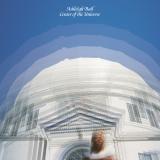
Spiritual World presents: Ashleigh Ball — Center of the Universe, a transcendental flute journey from the singer and flutist of Teal. Center of the Universe is a 32-minute improvisational odyssey recorded inside the Dominion Astrophysical Observatory (DAO), a National Historic Site on Vancouver Island, in British Columbia Canada..
Inspired by the pioneering work of Paul Horn and his Inside series, the recording channels a similar spirit of reverent exploration within a space rich in history and resonance. Completed in 1918, the observatory is home to the Plaskett Telescope - once among the largest and most powerful in the world - playing a key role in mapping the Milky Way.
Following months of coordination, three hours of private access were granted on the morning of August 25, 2025. Beneath the observatory’s towering telescope, Ball performed a wordless meditation, moving between alto flute and soprano concert flute, allowing each note to merge with the chamber’s vast natural reverb. Tones bloom, linger, and return, carried along the massive curved steel walls.
Captured using a minimalist recording approach, Center of the Universe preserves the purity of the moment—its warmth, stillness, and the architecture’s subtle mechanical resonance. Here, the observatory itself becomes an instrument, shaping the sound into something elemental, timeless, and deeply human. Center of the Universe will be released as a limited-edition vinyl LP (300 copies) with a printed insert on May 15, 2026, via Rubadub, Forced Exposure, and HiFi in Sheep’s Clothing.
Details marks SCHiLLiNG's return after years of research, above all on himself. It brings together the practices that have become essential to him: composition, sampling, sonic patchworks, and a palette that mirrors the full spectrum of his musical identity, from Rock'n'Roll to Trip-Hop and Ambient. Details is rich in small edits, hidden layers, fragile textures, and fragments that reveal themselves slowly. Yet the word carries a deeper meaning: what truly matters is often the smallest element, what doesn't appear clearly at first glance or on first listen, yet quietly holds the core of everything. The detail as the very pulse of one's inner world. Across 14 tracks, the album unfolds as a diverse journey, carefully shaped yet open enough to allow unexpected elements and subtle imperfections to remain part of its flow. The structure is not binding, you can begin from any track and embark on your own path through it. Each piece contributes to a wider arc without overpowering the others. The album includes collaborations with several artists who lent their talent to the project; their names appear in the credits of the physical release. In many ways, they embody the very idea behind the title: individual presences, each bringing their own nuance, forming a whole together. After all, fragments, in their union, shape the larger totality. Details doesn't ask to be consumed in a specific way, fast or slow, close or distant. It simply is what it is
For this Voices edition we unite producers across the techno panorama with different backgrounds in producing and playing music.
The theme of this series is to find your voice, to express your voice as well as listening to others.
Menous opening track "Meguri" carries an atmospheric, floating feeling, followed by an joyful and playful approach by Mary Yuzovskaya with "Late AM". Then there is the spoken words (vinyl only), in the mothertongue of each Artist, on the A and B side to be explored.
The B side opens with "Oya", a track by Sarah Wreath exploring soundscapes and hypnotizing elements. The final track "Ash" by Laima Adelaide unfolds a colder atmosphere and groove.
The artwork by Yeliz Kilicaslan encapsulates this vinyl in a textured envelope.
- 01: Carrying You (Castle In The Sky)
- 02: A Town With An Ocean View (Kiki's Delivery Service)
- 03: Nausicaä Of The Valley Of The Wind (Nausicaä Of The Valley Of The Wind)
- 04: Nausicaä Requiem (Nausicaä Of The Valley Of The Wind)
- 05: Legend Of The Wind (Nausicaä Of The Valley Of The Wind)
- 06: The Path Of Wind (My Neighbor Totoro)
- 07: My Neighbor Totoro (My Neighbor Totoro)
- 08: The Legend Of Ashitaka (The Princess Mononoke)
- 09: The Princess Mononoke (The Princess Mononoke)
- 10: One Summer's Day (Spirited Away)
- 11: County Road (Whisper Of The Heart)
- 12: The Promise Of The World: The Merry-Go-Round Of Life (Howl's Moving Castle)
Esteemed soul man of Panama Mr. Ralph Weeks has in recent years been enjoying a much overdue retrospective of his remarkable six decades-long musical journey with the help of Names You Can Trust. Now onto their fifth record release together since 2019, the label has covered both Weeks' original holy grail material as well as re-cuts and reimagining of some of his rarefied and unreleased songs.
One of Mr. Weeks' two iconic 45 releases on Panamanian label Sally Ruth was a funky soul side called "Let Me Do My Thing," originally recorded in 1971 as Weeks' answer to Charles Wright's big tune "Express Yourself," which had just hit the airwaves in 1970. Weeks' musical response would help define his legacy. He was gonna express himself, he was gonna Do His Thing. This golden age ultimatum recorded with the Dynamic Exciters of Panama as the backing band was a simple, straight ahead number with a defining message that would be carried on throughout Weeks' independent career. The funkified air and creative freedom of the original tune is a prime example of the crossover Combos Nationales sound that flourished in the prolific Panama recording industry of the era, and in the ensuing decades Weeks' tune would live on as a cherished rare groove for souleros, funk fans, and bootleggers alike.
Fast forward to 2023, when Ralph Weeks and Names You Can Trust prepared for a Bay Area appearance at the wonderful Latinos Con Soul weekender put on by San Francisco's Discodelic record shop, the groundwork was laid in the studio for a revival, a reawakening of Weeks' funky fan favorite. A spectacular ensemble of NYCT's All-Star artists and alumni was convened in the studio, including Caito Sánchez on drums, Victor Axelrod (Daptone Records) on clavinet and Sam Day Harmet (La Banda Chuska) on guitar. Anant Pradhan (The Skatalites), Eric Biondo (The Budos Band) and Alex Asher (Los Cumpleaños) occupied the brass section, and Ralph Weeks even lent his still formidable chops on electric bass and keyboards, a little OG flare to back up his silky voice with a deft musical touch. What came out of the sessions was a chance for NYCT to pay homage to Weeks' iconic original, without replacing it, and build a brand new version from the ground up with the maestro and composer himself!
- A1: Will Thomson / Paul Mottram — Electrospheres / Incandescence (2025 Medley)
- A2: Paul Lewis — Hello Spring
- A3: Douglas Wood — Making Parts
- A4: Paul Lewis — Goodbye Autumn
- A5: Paul Lewis — Colourful Life Suite Flowers
- A6: Peter Nicholas — Pastoral Reflections
- A7: Vince Cross — One Summer’s Night
- A8: James Harpham — Slow Motion
- A9: James Harpham — Candle Flute / Mexican Motel (2025 Medley)
- A10: Cliff Johns — Man O’vibes
- A11: James Harpham — Asian Dolls
- A12: James Harpham — Pastoral
- A13: James Harpham — Flower Garden
- A14: Liane Carroll — Sweet Dreams
- A15: Bob Cort — Humming Song
- B1: James Harpham — Flight Landing
- B2: John Hyde, Andrew Procter — Promise Of Beauty
- B3: Trevor Nightingale — On The Wing
- B4: James Asher / Pete Willsher, Tony Kelly — Extra Silky / Funk Fobia (2025 Medley)
- B5: Trevor Nightingale — Wastelands
- B6: Stan Medcalf / Pete Giles, Sean Houchin — Computer Games / Night Trawler (2025 Medley)
- B7: James Asher — Asian Workload
- B8: John Brown — Slope Soaring
- B9: James Harpham — Star Blossom
- B12: John Hyde, Andrew Procter — Private Thoughts
- B10: Harry Wild — Barcarolle Blues
- B11: David Stoll — Tight Corner
Since the 1940s, Library Music has lurked in the shadows, peripherally touching our lives through TV and film. Among the stalwarts of the industry was UK's Studio G, with cues heard on Doctor Who, and sampled by the likes of The Chemical Brothers, and Tyler, the Creator. Jazz Dispensary's Dream a Dream with Studio G: Cratedigger's Archive (1970–2009) culls some of their most sought-after cuts, with liner note commentary from Saint Etienne’s Bob Stanley, and illustrations by Ivan Minsloff.
Veteran Japanese electronic music producer, AKIO NAGASE, a leading player in the Kansai underground music scene since the late 1990s teams up with Yukino Inamine, a gifted and young female singer from Okinawa who magically mixes traditional Ryukyu (Okinawa) folk songs with her sanshin (Okinawan Shamisen) playing into the modern age, to create this wonderful collaborative album, Yugafu ai KAJI. This album is set to be released on GLOCAL RECORDS, a record store/ record label run by Genta Minowa, an ex-staff at the record store, Disc Shop Zero in Shimokitazawa, Tokyo and who still continues to introduce a great selection of dubby, club music from his HQ in Harajuku.
AKIO NAGASE regularly organised parties at his own venue, as well as ran a record store of the same name while actively being part of the Kansai scene at legendary clubs such as Tsuru no Ma, Sound Channel, etc., the best of what was offered in the Kansai underground dance scene in the 2000s.
As an artist, he released his own productions out of labels such as Sound Channel and RUDIMENTS run by Minowa. His album, Make Dub was released in 2003 out of the label, Sound Channel featured an innovative, techno meets dancehall track, Dance Hall King which connected techno, acid house with reggae and dub. This album is an undiscovered gem whose sound still emulates freshness and originality today (my wish is for it to be reissued on vinyl!) After a brief hiatus of releasing music, he released the EP, Delusion out of Chillmountain Records, a label run by his friend, Ground in 2018 and at his own leisurely pace, he has been slowly but surely releasing material that oozes originality, expressed through a robust acid sound and a variety of elements such as afro and Ryukyu folk music that is then incorporated into the medium of dub. Recently, he has also started to gain international attention by releasing original material and remixes out of labels such as the UK label, Emotional Especial, etc.
For this album, NAGASE teams up with Yukino Inamine who brings her own distinctive singing and sanshin playing magic into this collaboration and they fuse electronic music sounds with Ryukyu folk songs to create this wonderfully imaginative album that has no precedence or equal. Apart from the song, Ishikawa Koiuta, all other songs are covers of Ryukyu folk standards that were handpicked by NAGASE from the repertoire of songs that Inamine regularly performs live. They met up when NAGASE was commissioned to remix one of her original compositions, Miyagi Kaigan that was released in 2023 and that evolved into a collaboration with a concept that mixed Inamine singing Ryukyu folk standards with a backing tracks produced by NAGASE. Whenever she went to the the Kansai area, she would work on the basic track material created by NAGASE at the dub master of Osaka, Soulfire’s studio, HAV who would then additionally edit her takes to create the finishing tracks.
This album, Yugafu ai KAJI opens with Shirahamabushi, a track that slowly builds with an interesting mix of slow acid techno and sanshin and then moves onto the easy-going electro dub of Tinsagu nu hana (it is actually a cover of the track of the same title that first appeared in the label sampler, Comuni ó n Especial that was released on Emotional Especial. NAGASE initially wanted to feature Inamine on vocals for this track but due to scheduling issues, it did not happen but with good fortune, the new version of this track is now included in this album). A side closes with the optimistic Balearic sounds of Tsuki nu Kaisha that converges immaculately with slow-mo steppers. It is also worth noting that the person who introduced NAGASE to Inamine was the Okinawa dub master, HARIKUYAMAKU. They met at a concert held by both him & Yukino Inamine hosted by BUN BUN THE MC at the venue, RAGGA CHANNEL. From this encounter, this album came into fruition and they also asked HARIKUYAMAKU to produce an earthy, traditional rootsy, dub version of Tsuki nu Kaisha that is included as the 3rd track on the B Side.
Ashimizubushi, the track that magically blends old school Chicago house ala TRAX with Ryukyu folk music starts off the B side and it carries on to an uplifting track with a Skaouse (ska + house) feel, Hounen Ondo. Inserted after HARIKUYAMAKU’s dub of Tsuki nu Kaisha, this album closes out with the song, ‘Ishikawa Koi Uta’, the only song written by Inamine who said that she wrote it after falling in love with chill-out music. It is an ambient dub track with a collage like flavour, reminiscent of early The Orb (remixed by Mad Professor) and the latter half of the track finishes off with a message presented by Masao Itokazu (her uncle) who received tutelage from the prior owner of her sanshin that Inamine plays, Moritomo Inamine (her grandfather).
Incidentally, the album title, YUGAFU ai Kaji is derived from an auspicious word from Okinawa, Yugafu which means fruitful year, happiness, prosperity and ai (indigo) is a word that Yukino found inspiration few years ago (she wears a Okinawan indigo clothing called kinonuno in the front cover of this album).
The unique indigo colouring produced by nature overlaps with the unique charm of the human personality, and she wanted to present that current along with the music so the name was integrated to ‘indigo wind’, and the two were connected to form the album title, ‘YUGAFU ai Kaji’.
The photo of the front cover was taken by a young, Uchinaanunishie—- (meaning a boy from Okinawa) 17 year old photographer named Ratio and the designer of this album is Anmonaito who is a childhood friend of Inamine who also did the artwork for her album, Miyagi Kaigan. And the mastering and cutting of this album was done by Rei Taguchi.
The cosmology existing in Yukino Inamine’s singing is fully amplified by AKIO NAGASE’s spacey, abundant with many ideas, dance machine beat~ambient music and all of these elements are organically linked by the adhesive effect of dub.
Rob Mello and Lil’ Mark return as the Detox Twins after a twenty something year hiatus since their legendary ‘Love Shared’ was released on Music For Freaks in 2000.
Rob carries out his classic 'No Ears' duties with 2 tracks on the A side and Lil' Mark takes up the other 2 on the B side with his familiar stripped mixes. The original ‘In My Soul’ will be released separately on the label very soon.
Promo support from Mark Farina, Ashley Beedle, DJ Heather, Groove Armada, James Zabiela, Matthians Tanzmann, Horse Meat Disco, Roy Davis Jnr, Gene Farris, Harri, Justin Harris, Raoul Swirl People, Oliver Dollar, DJ Jes, Wade Teo, Jovonn, Karlos Sense, Michael Serafini (Gramaphone), Country Gents, Bart Ricardo and Jason Hodges.
When Cicadas appear in the area they cause a huge uproar. It’s hard to escape the distinctive noise these critters make, reaching up to 120 decibels. The hypnotic, trance-inducing sound disappears with the insects. A few months after Cykada's explosive debut, the world was hit by turbulence and from Cykada there was silence - fortunately only seemingly, because the next cycle began underground, in the privacy of the studio. It was there that the cicadas matured, waiting for a metamorphosis.
The year 2019 was very successful for Cykada, with a brilliantly received debut album, concerts at numerous festivals in the UK and Europe such as Glastonbury, Wilderness, London Jazz Festival, BAM Festival, La Defense Jazz Festival or Love Supreme Festival, along with constantly composing and preparing material for the second album. As the musicians entered the studio, the coronavirus pandemic was already in full swing across the globe. It was clear then that the world would never be the same. With increasing restrictions Cykada went underground, waiting for changes to surface again. Unfortunately the expected change that was happening seemed only for the worse - Brexit and its socio-economic consequences, worldwide disinformation, accelerating climate catastrophe and Russian invasion of Ukraine. The collapse of the old world order is the perfect moment for metamorphosis and with this message Cykada steps out again into broad daylight, matured and carrying a message with their long-awaited second album “Metamorphosis”.
The meaning behind the title is multifaceted. It refers both to changes taking place in our society and changes to our world as nature defends itself from human stupidity and greed. It is also a reference to the personal and musical development of the band members in that difficult period. It all became a foundation to bravely attempt to make new beginnings.
The metamorphosis is also clear in the musical aspect of Cykada. Their debut album was already difficult to shoehorn into specific genres with their sound that balanced jazz, electronics and elements of global music styles. With the second album their eclectic style has evolved into something distinct and innovative, combining folk/jazz song form and improvisation with heavier sounds inspired by sound system culture and rock. The band grew into a septet thanks to multi-instrumentalist Rob Milne, expanding the horn section to 3 instruments and galvanising its sound. But the biggest change that happened compared to the first album is the singing of Cykada leader Jamie Benzies in singles “So Divided” and “The Crack in the Bricks”. Both songs carry an important message, showing us that the changes in the world are already happening and that only we can make it head in the right direction. This unique sonic mix along with the message unleashes a powerful energy that the musicians want to send to and infect every listener.
This is the second time out for the Wormholes on AllChival following on from their You Never See the Stars When it Rains anthology release. This one is a previously unreleased album recorded in a concise burst of seven nights in Dublin’s Sun Studios in the spring of 1996. It was originally envisaged as being The Wormholes’ second album, the follow up to their 1994 debut Chicks Dig Scars. Unfortunately the end result of the sessions - Parijuana - would not only be ignored by their label of the time (Roadrunner Records) - but would also just as quickly be dismissed by the band themselves.
Eamonn Crudden, the manager of the band, had manged to extract some money from Roadrunner to record demos of new tracks as soon as the release cycle for their debut was over. The budget was so tight that it covered studio time but was not even enough to buy the master tapes. With things going south with the label – a classic 90’s tale of the A&R man who championed their cause heading off elsewhere the minute they signed - the intention was to go in and aim to record an album rather than demos - with the intention of releasing it on another independent label to keep the momentum around the band going.
However by this stage the Wormholes were totally wrapped up in listening to Can, Faust and generally exploring music based on casual recording, improvisations and extemporization. For them the album was too ‘rock’ and – having been dropped by Roadrunner - they no longer felt under any obligation to release it. To them it was time for a fresh start. Their next recordings would not be ‘for’ anyone but themselves. Today bassist Anto Carroll admits that “at times we were our own worst enemies” and with the benefit of hindsight both he and guitarist Graham Blackmore wish they had gone ahead and released this album at the time. However, back then, they thought they could do better and they did go on to make inventive and unique sounding versions of some of these songs with Stan Erraught producing just a short time later. These recordings were eventually released by Dead Elvis in 1999 - along with a couple of ‘adjusted’ tracks from the Sun Studios sessions - on Parijuana: 4 Years in Captivity.
It’s highly unlikely that listeners today will share the band’s view that the abum was too ‘clean’. This version of Parijuana is dirty, raw, messy with plenty of experimentation and extemporisation. The songwriting is as strong as that on their Chicks Dig Scars debut. The music is played with a new confidence and swagger, very much the sound of a band rooted in a wave of US ‘lo-fi’ finding their own sound. It’s the missing link between their conventional Pavement/Sebadoh influenced debut to the more drawn out, free roaming and extemporised second album proper Scorpio The Album.
- A1: ) Colour Chant
- A2: ) Still & Moving
- A3: ) The Reader’s Lamp
- A4: ) Sun In My Room
- A5: ) Carry A River In Your Mouth
- B1: ) Catch Up, Isobel
- B2: ) A Ship In The Sky
- B3: ) Some Circling
- B4: ) There Was Always A Golden Age
London quartet The Leaf Library return with their bold new album After The Rain, Strange Seeds. A luminous collection of pastoral indiepop, drawing inspiration from suburban isolation, unreliable memories and the surreality of the weather. Their most immediate and melodic work to date, the richly evocative songs brim with chiming guitars, buzzing organs and warm, dulcet strings, evoking Yo La Tengo’s more contemplative moments, The Clientele’s autumnal jangle pop and early Stereolab’s motorik melodicism. The sound of the album is defined by mixer John McEntire, whose work with Stereolab and Yo La Tengo (as well as a member of Tortoise/The Sea And Cake) have been major inspirations to the band.
The album explores themes of memory and place, albeit through an abstract haze – returning again and again to specific moments frozen in time: midsummer bright hot days in the Chilterns (“Sun In My Room”), meteorology and the strange movement of the weather (“Colour Chant”), red kites circling over suburban motorways (“Some Circling”), and the uncanny feeling of dusk and nighttime creatures on “The Reader’s Lamp” (titled by celebrated film director Peter Strickland). The lyrics are vivid yet elliptical, strung with abstract ideas and imagery, conjuring a gently unsettling, though never unwelcoming atmosphere. Not quite trusting your own recollection of things, while marvelling at the oddness of the natural world, the album’s title a good summation of the mix of strangeness and hope contained within.
As on past albums the band - founded by singer Kate Gibson and ex-Saloon guitarist Matt Ashton in the mid 2000s, and now completed by drummer Lewis Young and bassist Gareth Jones - have involved their extended musical family, including guitarist Mike Cranny (of fellow drone pop travellers Firestations) and keyboardist Irina Shtreis, both members of the Leaf Library live band. The album also sees the return of James Underwood’s Iskra Strings, a quartet that features on 4 tracks, with sumptuous arrangements by Daniel Fordham, as well as regular contributor Melinda Bronstein on vocals and Will Twynham (Dimorphodons) on harpsichord. They also welcomed Paddy Milner (on Hammond organ) and Scott McKeon (guitar) – both current members of Tom Jones’ band – for a startlingly delicate rolling crescendo to closing track “There Was Always A Golden Age”.
After The Rain, Strange Seeds is their 4th studio album. The result is The Leaf Library’s most accomplished and affecting work, John McEntire’s mix bringing a bold clarity to the band’s meticulous arrangements – closer to how they sound live than anything they’ve done before.
Here we have two luminaries of contemporary music, vocalist Audrey Chen and iconoclast guitar player Tashi Dorji, who both have proven themselves as key representatives of idiosyncratic music for the past 20 plus years.
Audrey, born into a family of material scientists, doctors and engineers, channeled those family genes through un-processed hyperextended voice, consequently transmutating her family's DNA into her very own sonic language of equal precision, discipline and creative power as her kins' professions.
Tashi, on the other hand, carries the mountains in his spirit: born in Bhutan, Southeast Asia, now residing in Ashville, North Carolina, close to the Appalachians. That earthly power is unmistakably present in his energetic guitar playing, which also incorporates folkloric elements of both his native country, and his homeland since 2000.
Those two strong musical personalities met on stage in the late summer of 2023 at Morphine Raum, Berlin. The fact that it took place in one of the birthplaces of techno music, seems to have pushed their performance towards an industrial, repetitive aesthetic of, at times, almost dancelike quality. However, as the track titles suggest, that classic forward pulsating rhythm, associated with electronic dance music, is bent at their heart's content, as are its appertaining clean melodies gnashed to smithereens.
Alex Rex, the project of acclaimed musician and former Trembling Bells bandleader Alex Neilson, is set to release his fourth and final studio album, The National Trust, on March 28th. Written in the wake of the sudden death of his younger brother, Alastair, the album is a poignant reflection on loss, love, and renewal, deeply rooted in the landscape of Carbeth—a cabin community in the Scottish countryside that Alastair called home. For Neilson, the cabin became both a physical and emotional project, a symbol of restoration and reconnection.
"For the first four years after Alastair died, his cabin lay empty and exposed to the remorseless Scottish weather. It came to look like a rotten tooth in a beautiful mouth. Cladding was dropping off its veneer, the ashen baubles of dead wasps nests clung to the rafters, all his possessions were just as he'd left them but eaten by mice, moths and time. Ashtrays still carried the crushed centimetres of his old tab ends. The cabins are so joyfully animated by their host's specific personality and this one looked like a haunted house. Guilt, unrealised hopes and encroaching nature yoked together in a wandering sadness. Combined with the fact that I didn't know the right way round to hold a hammer made the project of its restoration seem hopeless.”
Neilson, however, gradually began chipping away at the task, determined to transform the cabin into something he hoped would resemble “a National Trust site occupied by a psychopath,” with a little help from some friends, including Lavinia Blackwall and Marco Rea.
“They poured love into the cabin and helped restore Alastair's original vision. The project also helped restore my relationship with Lavinia which had fractured after Trembling Bells broke up in 2017. Alongside long-term Rex lieutenant Rory Haye, we applied the same intensity of dedication that we did in renovating the cabin, into creating The National Trust.”
As with Neilson’s previous albums, the recording process was intentionally unpolished, with songs presented in the studio with no rehearsals and captured in just a few takes. This raw, immediate approach amplifies the emotional weight of the album, which Neilson describes as being at a “personal apex of sour self-reflection, mock misanthropy, and self-exposure.” Longtime collaborators Lavinia Blackwall, Marco Rea, and Rory Haye return, alongside guest musicians like Jill O’Sullivan (Jill Lorean) and Trembling Bells guitarist Mike Hastings, to bring Neilson’s vision to life. The result is a deeply personal and multifaceted work, blending acid wit with haunting introspection.
The songs on The National Trust traverse a wide emotional and thematic range. The title track opens the album with a sharp and confessional edge, exploring love, loathing, and cultural critique with Neilson’s signature wit. “Boss Morris” pays tribute to the all-female Morris dancing troupe that reinvents British folk with vibrant energy, while “Two Kinds of Song” turns self-referential humour into an avalanche of remorse, culminating in the unforgettable chorus: “I’ve got two kinds of song. Which one will it be; one where I hate myself or one where you hate me?” Elsewhere, tracks like “Psychic Rome” draw from the decadence and hysteria of ancient Rome, while “The Coward in the Tower” breaks new ground as the only song Neilson has composed on an instrument before recording.
Throughout the album, Neilson’s lyricism is as vivid as ever, transforming personal tragedy into poignant and often darkly humorous art. Yet, there is a sense of finality to this work. "Songwriting has encouraged me to see the whole world as a resource. The things people say and throw away can be chiselled and polished and plopped into a lyric. It’s the same with building the cabin- scouring the edges of society for pallets, discarded wood, ornaments for the garden. But while song writing brings to life orphaned parts of my personality, the cabin is a synthesis of all my interests – nurturing my emotional health instead of exploiting it. With that in mind, I think this will be my last album as Alex Rex.”
With The National Trust, Neilson closes a significant chapter of his career, blending masterful musicianship with deeply personal storytelling. Known for his collaborations with artists such as Bonnie "Prince" Billy, Shirley Collins, and Current 93, as well as his decade-long tenure leading the psych-folk outfit Trembling Bells, Neilson has long been celebrated for his eclectic and uncompromising vision. This final album serves as a fitting culmination of his journey as Alex Rex, capturing the essence of his artistry while offering a profound exploration of loss, renewal, and the enduring power of love.
In his own time, in his own tone and in his own company.
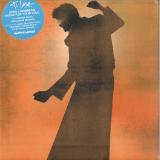
‘Win and lose without losing oneself’’ This line from French rapper Oxmo Puccino greatly accompanied David Walters while composing his fourth studio album. Over the eleven tracks on ‘Ti Love’, David took his time to find the right tone and in turn, tell his truth.
‘Ti Love’, is a French-Creole abbreviation for “petite love”, meaning ‘little love’, evoking that sweet fondness found in those small gestures and little acts of kindness.
Think of things like young kids' brotherly love or a stranger lending you a helping hand, while expecting nothing in return. It’s these motions that allow this album to feel full of real life, carried by beating drums that also pull at our heart strings.
Basing himself in a small village in Martinique, where David had not long since scattered the ashes of his late mother, the multi-instrumentalist decided to remain there and let the writing of Ti Love pour out from deep inside him. Taking influence from around the island, the energy from his makeshift studio set up in Fort de France, allowing a resilient yet grieving man to recount, let go and come to terms with his recent loss.
So embracing these new circumstances, on the rugged coastal Caribbean island of Martinique, David took up an artist’s residency in the island’s capital Fort de France, located near the town’s port is the ‘Manoir des Artistes’, a bustling recording studio space. A place where the walls shake as the latest sounds being created are blasted by locals and visitors alike. Most studio doors are wide open; as music here is a huge part of everyday life, feedback from encouraging neighbouring musicians is on hand and welcomed. A contrast to the isolation often assumed with working in more traditional music studios.
It was here in this stimulating environment that David recorded Ti Love’s initial demos.
With his first collaborator onboard, Neeweed, a 25-year-old producer and gospel expert who David met at the Martinique Jazz Festival.
Of the album’s initial versions of the record David recollects: ‘It took me three years to write it, then I rewrote it, reworked it. In the end I'm really glad I stepped back and listened to myself.’ I found a great ally in GUTS, who ended up being the artistic director of the record”
David surrounded himself with the right people who helped him express himself in the best possible way. He called on other friends and musical comrades; album opener and title track, ‘Ti Love’ features the incomparable Fatoumata Diawara (World Circuit Records / Africa Express) and further along additional production came in from; Izem, Art Of Tones, and GUTS himself, who all added just the right amount of ‘little love’ to this
project. Further helping hands came from Californian producer and DJ Captain Planet, who David was introduced to a few years ago. Closer to home, here in Europe, the German producer Bluestaeb appears on two tracks: the very catchy disco funk ‘Mr Maraboo’ and ‘Kite Koule’, the latter being the first single lifted from the album, where David invited Nigerian guitarist Keziah Jones.
Elsewhere on the album, fellow Heavenly Sweetness recording artist Blundetto contributed two tracks; the reggae ‘Voodoo Love’, which is David's tribute to Studio One, and the very sweet and resilient ‘Bon Voyage’, which closes the album... "It's gold, it doesn't need anything changing.” remarked David - ‘Bon Voyage’ is a goodbye to his mother, whose voice called him from the bottom of the sea one night while he was surfing during the full Moon.
Released almost 20 years after his debut album ‘AWA’ released on French imprint Ya Basta, home to Gotan Project and many others, David boasts a long list of radio supporters including; Gilles Peterson, Cerys Matthews and Don Letts at the BBC, while further field Cosmo Radio in Germany, and KCRW in Los Angeles.
On this new record, David has shown sincerity and vulnerability, while still honouring the infectious groove that he is known for the world over. Despite the upsets, a little love can indeed go a long way.
CREDITS:
Produced by Bluestaeb / Blundetto / Captain Planet / Izem / Art of Tones
A&R : Guts
Mixed by Mr Gib @ Onetwopassit
Except "Bon Voyage” and "Voodoo Love" mixed by Jerome “Blackjoy” Carron
Mastered by Benjamin Joubert @ Biduloscope
Art by Elliott Walters
- A1: Ashley Mcbryde - Your Cheatin’ Heart (Live On The Grand Ole Opry, September 7Th, 2024)
- A2: Marty Robbins & Marty Stuart - El Paso (Full Circle Mix)
- A3: Patsy Cline - Crazy (Live On The Grand Ole Opry, February 7Th, 1962)
- A4: Johnny Cash - Ring Of Fire (Live On The Grand Ole Opry, August 30Th, 1968)
- A5: Loretta Lynn - Coal Miner's Daughter (Live On The Grand Ole Opry, October 19Th, 1985)
- A6: Darius Rucker - Kiss An Angel Good Mornin' (Live On The Grand Ole Opry, February 14Th, 2021)
- B1: Dolly Parton Feat. Patty Loveless, Marty Stuart - I Will Always Love You (Live On The Grand Ole Opry, May 19Th, 2007)
- B2: Don Schlitz Feat. Vince Gill - The Gambler (Live On The Grand Ole Opry, March 29Th, 2025)
- B3: The Charlie Daniels Band - The Devil Went Down To Georgia (Live On The Grand Ole Opry, March 21St, 2014)
- B4: The Oak Ridge Boys - Elvira (Live On The Grand Ole Opry, February 20Th, 1981)
- B5: Luke Combs - Tennessee Whiskey (Live On The Grand Ole Opry, October 29Th, 2016)
- C1: George Jones & Alan Jackson - He Stopped Loving Her Today (Full Circle Mix)
- C2: Kelsea Ballerini - I Was Country When Country Wasn’t Cool (Live On The Grand Ole Opry, March 19Th, 2025)
- C3: Randy Travis - Forever And Ever, Amen (Live On The Grand Ole Opry, October 4Th, 2011)
- C4: Keith Whitley - Don't Close Your Eyes (Live On The Grand Ole Opry, March 19Th, 1988)
- C5: Reba Mcentire - Fancy (Live On The Grand Ole Opry, September 22Nd, 2017)
- D1: Alan Jackson - Chattahoochee (Live At The Grand Ole Opry's Carnegie Hall Performance, November 14Th, 2005)
- D2: Vince Gill & Patty Loveless - Go Rest High On That Mountain (Live On The Grand Ole Opry, March 14Th, 2015)
- D3: Carrie Underwood - Jesus, Take The Wheel (Live On The Grand Ole Opry, August 10Th, 2018)
- D4: Old Crow Medicine Show, Dom Flemons, Billy Strings, Molly Tuttle - Mama Don’t Allow It / Will The Circle Be Unbroken? (Live On The Grand Ole Opry, August 8Th, 2020)
- A 1: Woman Of The Ghetto
- A 2: Call It Stormy Monday
- A 3: Where Can I Go
- A4: I'm Satisfied
- A5: I Wish I Knew (How It Would Feel To Be Free)
- B1: Liberation Conversation
- B2: California Soul
- B3: Go Away Little Boy
- B4: Looking Thru The Eyes Of Love
- B 5: Anyone Can Move A Mountain
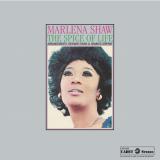
The Spice of Life, released in November 1969, stands as Marlena Shaw's second--and final--studio album for Cadet Records, produced and arranged by the renowned Richard Evans and Charles Stepney. From the opening, Shaw's voice--both playful and powerful--cuts through the lush yet tight-knit arrangements, weaving together a vibrant tapestry of soul, proto-funk, jazz, gospel, and blues. The album features two defining classics: her deeply resonant original of 'Woman of the Ghetto' and a signature take on Ashford & Simpson's 'California Soul', both staples in sampling culture (you'll probably find that you're more familiar with Shaw's material than you thought.) Evans and Stepney's arrangements are far from mere support--they're panoramic and inventive. You'll hear kalimba flourishes, psych-tinged guitar accents, and bongo-fueled organ textures that elevate each track, keeping the atmosphere rich but never overwhelming. Moments like the Bacharach-styled 'Looking Through the Eyes of Love' or the dramatic flair of 'Stormy Monday' showcase their widescreen sensibility and Shaw's versatility. Beneath its musical elegance, "The Spice of Life" carries a weighty current of social commentary. Tracks such as 'Woman of the Ghetto' and the succinct, fierce 'Liberation Conversation' bring political and feminist themes into a soulful, expressive framework--adding unexpected depth to the sophisticated sonic palette. This album offers an immersive journey through soul-jazz mastery, one that rewarded listeners with sampling gold for decades to come. Reissue on 180g vinyl.
For many bands, having all their gear stolen would be catastrophic. For Third Ear Band, this unfortunate 1968 incident opened a portal to beneficial change. Leader/percussionist Glen Sweeney viewed the heist as a sign to alter Third Ear Band's approach, and they switched to exclusively using acoustic instruments. With electrified psychedelia in full bloom, Sweeney, Paul Minns (oboe, recorder, whistles, flutes) and Richard Coff (violin, viola) struck out on an individualistic path, blending Indian raga with chamber music – without plugging in.
Third Ear Band's 1969 debut album, Alchemy, established them as a solemn, powerful force in the global underground. On Alchemy, Sweeney laid down a steady pulse on hand drums, while Minns and Coff wove in melismatic patterns on oboe, recorder, violin and viola. This approach carried over to Third Ear Band's self-titled sophomore album, often called Elements due to its track titles being named after the four basic components of medieval European alchemists' doctrines.
On this 1970 LP, Third Ear Band sounded at once ancient and contemporary, yet they turned on the hippies with their epic, trance-inducing jams that suggested secret knowledge of infinity. Although Third Ear Band flourished during the West's countercultural zenith, they were peculiarly estranged from it on a sonic level. Even outré contemporaries such as Comus and Jan Dukes De Grey sounded like pop groups compared to TEB. Having no traditional front person or electric instruments, Third Ear Band forged a singular path that flowered most vividly on Elements.
The long songs here stream forth from their skilled hands, evoking a communal transcendence in sound – a hypnotic swirl that doesn't swing, but rather wafts and undulates with cloistered beauty. TEB's music exists in an eternal now, a perpetual wow. It is an ouroboros of organic textures, seemingly magicked into the air spontaneously, yet possessing a rigor that suggests long hours in the lab. Without electricity, it somehow burrowed deeper into your consciousness.
– Dave Segal (excerpt from the liner notes)
Teal’s debut LP, Original Watercolour, is an album that feels like a canvas come to life. A sonic blend of street-soul, digi-dub, and downtempo. Original Watercolour explores the complexities of love, oneness, and intuition — themes that resonate deeply within the context of the history women have shared with what was once known as the “ladies’ medium.”
The bi-coastal family trio—Ashleigh and Melissa Ball, better known as the Ball Sisters, alongside producer N1_SOUND—bring a fresh, genre-defying sound to the table with their latest 6-track album. Running just under 30 minutes, this immersive collection weaves together skipping beats, addictive bass lines, three-dimensional flute textures & emotional vocal melodies. This musical portrait is as ethereal as it is powerful, inviting the listener to get lost in its depths while celebrating the beauty of self-expression.
The opening track, “Original Watercolour,” takes you on a psychedelic trip-hop journey. From the first reverberous snare hit, you’re whisked away to a sonic wetland — lush and euphoric. The soft yet poignant soundscapes set the tone for the album, inviting us into a world where the boundaries between earth and music, reality and imagination, automatically seem to blur.
“Locked In 2 Love” offers a boogie-fueled bassline that pushes Teal into dance-floor territory with soaring flutes and rhythmic intricacies that make it impossible not to move — it’s a track that exemplifies the magic of Teal’s ability to craft both intimate and expansive musical landscapes. And then, there’s the hypnotic flow of “One In The Same,” where stacked vocal harmonies and mantra-esque lyrics transport you to a place that could easily be mistaken for a lost Soulquarians demo. It’s gentle yet unrelenting in its depth.
The second side of the album opens with “Sleep on It,” a track that immediately grabs attention with its dancehall-driven rhythm. Ashleigh Ball's vocals set the stage for a song that’s both introspective and emotionally charged, yet unmistakably rooted in groove. The phased-out bassline creates an almost hypnotic atmosphere. Pulling the listener into a mood of contemplation—matching the restless, sleepless night that Ball describes. As the song progresses, this groove builds in intensity, culminating in an explosive ending that mirrors the emotional release of a long-held frustration.
Original Watercolour is more than just an album — it’s a meditation on the interconnectedness of life and art. “Frog Kingdom,” the longest and only instrumental track creates a contemplative space that builds upon the themes introduced earlier. It feels like a sequel to their earlier work, Frog Legacy from their debut Bluish Green 2024 12”, expanding on the familiar sound with even more complex layers.
Yet the real emotional power of the record lies in its closing track, “Can’t Shake the Feeling.” Simple in structure but profound in impact, this song captures a deep yearning and understanding — that everything, from the ecosystems we inhabit to the relationships we nurture and the art we create, is fundamentally interconnected. As the track crescendos in a falsetto peak, it becomes clear that the album is a reflection of both the world around us and the personal journey each member of the band has embarked upon to get to this point.
Just as the medium of watercolor has been traditionally linked to women artists, Teal carries this legacy into the modern musical landscape, blending the richness of history with a unique forward-thinking perspective. The album feels like both a celebration of the past and a bold declaration of a path forward — one that welcomes anyone ready to join in and shape the future of the art form.
The beauty of Teal’s work is that it feels familiar, while simultaneously offering something new and refreshing. Original Watercolour doesn’t just push musical boundaries; it redefines them, offering a lush and textured soundtrack for those willing to listen closely.
In a world that often feels over-saturated, Original Watercolour stands as a reminder of the power of simplicity, intuition, and connection. Teal’s debut album invites you to experience something both deeply personal and universally understood. The landscapes they create are vivid, yet soft, grounding yet expansive. With each track, Teal’s music reflects the interconnectedness of all things — a truly unique piece of work in the world of experimental soul and dub adjacent electronic music.
Rising and falling. We all live in the same pond. Peace to all.