"Incident at Cima" is the debut album from SCENIC, the group formed by SAVAGE REPUBLIC and IPR founder Bruce Licher Conceived of as an allinstrumental soundtrack for the East Mojave Desert, Licher is joined by former SHIVA BURLESQUE bassist James Brenner and drummer Brock Wirtz, with guest musicians Jeffrey Clark (SHIVA BURLESQUE vocalist), Robert Loveless (former SAVAGE REPUBLIC and 17 PYGMIES member), Chris Manecke (from the ABECEDARIANS) and John Ganem Together, they have created an aural masterpiece which has received serious critical acclaim. David Fricke in ROLLING STONE magazine writes that SCENIC's music "suggests Ennio Morricone dune- surfing in Death Valley." SCENIC's music is like nothing else on the landscape, and while there is definitely a relation to some of the sounds explored by SAVAGE REPUBLIC during their eight- year existence, SCENIC have created a mature and focused album which is a great leap forward. "Incident at Cima" is an evocative aural journey, a quite listenable and incredibly honest piece of music, and as such it has the potential to be appreciated by a wide range of listeners. Four of the songs from "Incident At Cima" were used to great effect in Stuart Swezey's feature documentary film "Desolation Center," including the track "Carrying On To Cadiz" which underscores the opening title sequence of the film. This expanded release comes with a bonus CD featuring 11 previously unreleased early demo recordings by Scenic and band leader Bruce Licher. Packaging for this expanded release of "Incident at Cima" features letterpress printed packaging created at Independent Project Press, a newly- designed oversized CD pocket folder with 24-page booklet for the CD edition, featuring a series of photographs Licher has taken in the East Mojave which relate to the various pieces of music on the album, creating a complete audio/ visual experience.
Africa Corps Live at The Whisky A Go Go 30th
December 1981
Ever wondered about what seeing a blossoming Savage Republic,
formally known as Africa Corps, up close must have felt like? 'Africa
Corps Live at The Whisky A Go Go 30th December 1981', is here to take
us right there, fiercely catapulting listeners in front of one of Los Angeles'
most iconic stages, back when a young band of UCLA students (Bruce
Licher, Mark Erskine, Philip Drucker and Jeff Long), was starting to make
its way in the punk underground
Their extraordinary first time at the Whisky was recorded on cassette, direct from
the sound board, on December 30th, 1981. We're lucky enough to witness most of
the future 'Tragic Figures' tracks in a process of highly creative gesta- tion, in the
middle of being developed. The original tape has now been remastered by Warren
DeFever (His Name Is Alive) and unearths a most cathartic performance. It's hard
to fathom, but the four musicians had only been playing together for about eight
months at that point, mostly rehearsing in the concrete parking garages at UCLA.
Those formative experiences are brilliantly re- flected in the sound of 'Africa
Corps Live at The Whisky A Go Go 30th December 1981', with its hypnotic blend
of industrial and piercing post punk.
Africa Corps Live at The Whisky A Go Go 30th
December 1981
Ever wondered about what seeing a blossoming Savage Republic,
formally known as Africa Corps, up close must have felt like? 'Africa
Corps Live at The Whisky A Go Go 30th December 1981', is here to take
us right there, fiercely catapulting listeners in front of one of Los Angeles'
most iconic stages, back when a young band of UCLA students (Bruce
Licher, Mark Erskine, Philip Drucker and Jeff Long), was starting to make
its way in the punk underground
Their extraordinary first time at the Whisky was recorded on cassette, direct from
the sound board, on December 30th, 1981. We're lucky enough to witness most of
the future 'Tragic Figures' tracks in a process of highly creative gesta- tion, in the
middle of being developed. The original tape has now been remastered by Warren
DeFever (His Name Is Alive) and unearths a most cathartic performance. It's hard
to fathom, but the four musicians had only been playing together for about eight
months at that point, mostly rehearsing in the concrete parking garages at UCLA.
Those formative experiences are brilliantly re- flected in the sound of 'Africa
Corps Live at The Whisky A Go Go 30th December 1981', with its hypnotic blend
of industrial and piercing post punk.
8* Following recent excursions channeling the big room sound, Project Pablo returns with a sleeker, more refined EP for Technicolour.The resulting five tracks span upbeat opener 'Napoletana' - a rough and ready duet between a MFB 522 drum machine and Juno 106', through the swirling improvised piano loops of 'Last Day' - recorded in an hour just before he packed up his gear at the studio of fellow Montreal residents Braids and moved it all home, to the bumpy 2-step of 'Less and Less'. The Canadian producer has had a stream of quality releases via labels such as Clone's Royal Oak imprint, Spring Theory, Lone's Magicwire and most recently Ninja Tune's Technicolour imprint.
Midnight In Tokyo 2, the second installment to the compilation series that rounds up hidden gems by Japanese artists that's perfect for listening at night in Tokyo, is here. This time the collection brings together some tasty electric jazz fusion from the '80s , compiled by Dubby, the man behind the online record store Ondas.
The compilation begins with "Hikobae," a dark and slow cosmic jazz by saxophonist Genji Sawai, followed by "Danza Lucumi," an odd Caribbean-style jam by Today's Latin Project, a band fronted by Tadaaki Misago of Tokyo Cuban Boys, with arrangements by Yasuaki Shimizu. "On The Coast" is a soulful and mellow vocal track arranged by Ryuichi Sakamoto, from guitarist Shigeru Suzuki's album White Heat, and fusion boogie cut "In The Hot City" is by Mr. Theodore, which was a one-off project by a mysterious artist.
The melancholic soul jazz number "So Long America" is the title track from the album Yasunori Soryo released in '82, following a stint in America with the band Brown Rice. "Twisty" is a tropical reggae tune from the album Samba Kathy, an underrated classic by Jugando which was released on Trash, a sublabel of one of Japan's finest jazz labels, Trio. "Samarkand" is an electric Latin jazz jam that sounds like something Miles Davis and Santana could have played on, performed by a Latin funk band from Fussa. "Imagery" is a primal African fusion track by Katsutoshi Morizono, a member of the prog rock band Yoninbayashi.
"Windmill" is the most acoustic sounding tune on this compilation, a breezy Brazilian affair with a Hermeto Pascoal feel. "Mystery Of Asian Port" is by the band Parachute, which consisted of Japa-nese fusion giants like Akira Inoue, Tatsuo Hayashi and Masaki Matsubara. The cosmic jazz record sounds like something Daniele Baldelli would play in his sets. "Bay Sky Provincetown 1977" is a classic Japanese fusion tune by guitarist Yuji Toriyama.
The set also features the mellow but danceable "Heatwave" by keyboardist Keiichi Oku, featuring a female vocalist (which some have identified as Rie Ida), and last but not least, closing out the 13 track compilation is "Day Dream At The Bob's Beach," a wonderful urban fusion with a beautiful vibraphone melody, from the Japanese fusion classic album that was a one-off project by studio musicians
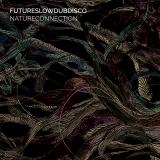
Nearly two years after "Superpaesaggio," Futureslowdubdisco rematerializes with a new album rooted in deconstructed rhythms, suspended atmospheres, minimalism, emotional tension, and ethnic echoes. Simone Ticconi and Francesco Colagrande, true explorers of sound, first delve into dark and shadowy ravines ("Shaman"), then descend into ocean depths ("Wendigo"), and make their way through impenetrable forests ("Natureconnection"), finally reaching the slopes of an active volcano ("Manitou").
The adventurous journey is rounded out with two more danceable remixes by Virtual Reality and Adelmo.
The crowning achievement is the artwork created by Awer, which pairs with the previous work by Flavia Mastrella.
Postmodern library music of great pathos. Giosue' Impellizzeri.
FUTURESLOWDUBDISCO is a project born from the meeting of producers Simone Ticconi and Francesco Colagrande. The duo explores sonic territories that combine downtempo, minimal techno, and dub. A blend of deep and hypnotic atmospheres, capable of moving between the contemplative dimension of listening and the pulsating energy of club culture, for an unforgettable rhythmic, ethereal, and psychedelic journey.
Dina Summer is the Berlin-based collaborative project of Greek-German dark-disco couple Local Suicide and Bavarian electronic producer Kalipo. The supergroup began working together in 2019 and have since been refining their combined sound. It is a unique blend of their influences, drawing from 80s italo disco, new wave, EBM and early 00s electroclash for a dark retro-futuristic synth/wave pop sound that stands out with club-ready basslines, epic melodic hooks, and lyrics ranging from dadaist abstractions to empowering, thought-provoking themes.
The trio will return with their new mini album, “Children Of The Night”, bringing together all the elements that have defined their sound so far. From the disco infused synth pop of “Burning Heart” and “Bats In Paris,” recalling their debut album Rimini (2022), to the dark club driven tracks “Fuel”, “Komodo 3000”. and the title track “Children Of The Night,” which echo the atmosphere of Hide & Seek (2024), and the dark wave influenced indie songs “Rat Race” and “On The Road”, which would have felt right at home on “Girls Gang” (2025), the release showcases the full spectrum of the band's musical identity. The nine track record takes its title from and pays homage to Bela Lugosi's iconic line in Dracula (1931): “Listen to them. Children of the night… what music they make”.
Format: Ltd transparent clear vinyl
Dina Summer ist das in Berlin ansässige Gemeinschaftsprojekt des griechisch deutschen Dark Disco Duos Local Suicide und des bayerischen Elektronikproduzenten Kalipo. Die Supergroup begann 2019 gemeinsam zu arbeiten und hat seitdem ihren gemeinsamen Sound kontinuierlich weiterentwickelt. Dieser verbindet auf einzigartige Weise ihre Einflüsse und schöpft aus Italo Disco der 1980er Jahre, New Wave, EBM und Electroclash der frühen 2000er. Das Ergebnis ist ein dunkler, retro futuristischer Synth Wave Pop Sound, der sich durch clubtaugliche Basslines, epische melodische Hooks und Texte auszeichnet, die von dadaistischen Abstraktionen bis hin zu empowernden und zum Nachdenken anregenden Themen reichen.
Das Trio kehrt nun mit seinem neuen Mini Album „Children Of The Night“ zurück, das alle Elemente vereint, die ihren Sound bisher geprägt haben. Von dem Disco geprägten Synth Pop von „Burning Heart“ und „Bats In Paris“, der an ihr Debütalbum „Rimini“ (2022) erinnert, über die düsteren, cluborientierten Tracks „Fuel“, „Komodo 3000“ und den Titelsong „Children Of The Night“, die die Atmosphäre von „Hide & Seek“ (2024) aufgreifen, bis hin zu den von Dark Wave beeinflussten Indie Songs „Rat Race“ und „On The Road“, die ebenso gut auf „Girls Gang“ (2025) hätten erscheinen können, zeigt die Veröffentlichung die gesamte Bandbreite der musikalischen Identität der Band.
Das Album mit seinen neun Tracks trägt seinen Titel in Hommage an Bela Lugosis ikonische Zeile aus dem Film Dracula (1931): „Listen to them. Children of the night… what music they make.“
Our debut vinyl EP unites Strange Glide, Kamatchi, and Moxi in a project built around a deliberate progression. The tracklist was crafted to move from bright, solar energy toward darker, more introspective moods. Blending eclectic styles, we focused less on genre and more on emotion—shaping each track to express a distinct atmosphere while contributing to a coherent journey in tone and frequency. This EP is a shared narrative where each artist brings their own identity to a fluid, evolving sound.
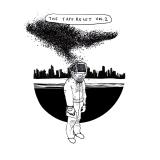
Woxow's The Tape Reset Vol. 2 is out now on Little Beat More!
Composed during the same sessions that gave life to The Tape Reset Vol. 1 in 2021, Woxow’s The Tape Reset Vol. 2 emerges only now, five years later. A second chapter that remained quietly on the shelf, completing the sonic path opened by the first volume and revealing another side of the same creative moment.
The EP is largely built around organic samples, arranged with a restrained and precise approach. Subtle instrumental appearances shape the atmosphere along the way. A vibraphone introduces the opening moments, setting a cinematic tone that gradually unfolds through layered textures and steady beats, while the record closes with a clarinet solo, a final gesture that echoes the instrumental heard in the intro of the first volume, subtly bringing the journey full circle.
Essential and evocative, The Tape Reset Vol. 2 expands the universe of the project while preserving its core language: beats, samples, and carefully placed instrumental voices moving together in a quiet, cinematic flow.
Woxow's The Tape Reset Vol. 2 is out now on Little Beat More!
Composed during the same sessions that gave life to The Tape Reset Vol. 1 in 2021, Woxow’s The Tape Reset Vol. 2 emerges only now, five years later. A second chapter that remained quietly on the shelf, completing the sonic path opened by the first volume and revealing another side of the same creative moment.
The EP is largely built around organic samples, arranged with a restrained and precise approach. Subtle instrumental appearances shape the atmosphere along the way. A vibraphone introduces the opening moments, setting a cinematic tone that gradually unfolds through layered textures and steady beats, while the record closes with a clarinet solo, a final gesture that echoes the instrumental heard in the intro of the first volume, subtly bringing the journey full circle.
Essential and evocative, The Tape Reset Vol. 2 expands the universe of the project while preserving its core language: beats, samples, and carefully placed instrumental voices moving together in a quiet, cinematic flow.
A collection of vinyl and limited digital releases, curated by Millsart, an alias of Jeff Mills, of his most eclectic and transcendent compositions that derive from his Every Dog Has Its Day project as well as new unreleased works. Vernacular creations that fall off from the "other side" of the Electronic Music tree, this project is designed for the experienced Techno music listeners, and its goal is to reflect upon the pure artistry of the craft of storytelling. A realization between music and life. Whereas "dancing" is the goal of Dance Music, the goal of this music is about "reflecting on the complexity and simplification of life".Soundtracks for people in their evolutionary process.
This release 'Drifter' is about 'Hype'.
Hype
An animal that prowls on the vulnerable - it excites those who might be looking the other way or with their eyes and minds wide shut.
What is life without hype?
As a transitional tool, hype can be most effective especially when impulse reactions are at play. Something of a psychological currency, there is a lot to gain by giving people what they want - the rush that comes with taking part in a process of making something bigger, more successful and more preferred. Even if there is nothing there.
What's wrong with getting exciting about something?
There are only a few rare masterclass cases that have lasted a lifetime.
As Andy Warhol proclaimed that "everyone will be World famous for 15 minutes" rings darkly true in an era when each one of us can be the talent scout, artist, critic, audience.......and then a revisionist, hoping to bring hype back again by reminding people how great the first round felt.
We are all free to use our attention and time anyway we please. This is the freedom we have, right?
In most cases, we wake up and at some point, the question of justification becomes a debate between those who found unconditional solace and those who re-discovered the subject of substance and "kicked the tires".
Should I care if others like or dislike something?
For some, the hype of something never ends. It hardens and becomes part of a foundation like a cement podium. Something to be stood on to speak over all dissenting voices.
The premise of this compilation is simple: music we’d like to hear at the airport.
The idea came after learning that Honolulu’s international airport has been playing AI-generated music over its speakers since November 2025. First reported by Civil Beat, the news has caused frustration and disappointment among residents and visitors, as well as within the local music community.
Everyone knows Hawaii is one of the most musically rich regions in the world — why then is the airport using AI music? 'Music For The Airport' is our response.
Located in the middle of the Pacific at the outskirts of one the most remote cities on the planet, Honolulu’s Daniel K. Inouye International Airport (HNL) is for most people the first place they encounter when they arrive in Hawaii. Warm sun, tropical tradewinds, playful palm trees and majestic mountains welcome every traveler, as do the sounds of birds, familiar music from Hawaiian artists like Aunty Genoa Keawe and Israel Kamakawiwo’ole, and—at least for now—seventeen “island-themed” AI-generated songs.
In late 1977, while sitting in Germany’s Cologne Bonn Airport on a Sunday morning, Brian Eno noticed how terribly uncomfortable he felt hearing the airport’s “muzak” overhead. For a harried, hurried place like the airport where travelers scramble to their gates, stand in long border control lines, and wait impatiently for their luggage at the carousels, music can create more anxiety than calm. Asking himself, "What should we be hearing here?", Eno soon created ‘Ambient 1: Music For Airports’, a sonic remedy aimed at reducing nervousness in public spaces.
When we heard the news that HNL airport is playing AI-generated “muzak”, we were immediately reminded of Eno’s genre-defying 1978 album. And we were similarly inspired to react. But how? Recreating an ambient masterpiece wasn’t in our wheelhouse. We started digging through our catalog of licensed music which we haven’t yet re-released. We quickly realized this was our chance to highlight some of favorite songs from the so-called CD era: the 1990s and 2000s (with a few exceptions). In less than 20 minutes, we pulled 17 original songs recorded by local artists between 1984 and 2017.
The speed at which this project came together surprised us; reactionary gut instinct often produces swift and lasting results. Ironically, our new compilation likely took less time than it did for the state Department of Transportation to commission its AI songs in question. But even though ‘Music for the Airport’ came together in less than one week, the truth is that this collection of 17 songs is the result of years of hard work, trust, sacrifice, patience, and understanding. Building relationships with and licensing music from artists doesn’t happen overnight, but more importantly: these songs are the result of people pouring their hearts and souls into something they believe in. This music wouldn’t exist today without the artists and their loved ones who supported them along the way.
As of this writing, the DOT states its intention in creating AI-generated songs is to “highlight different aspects of the islands, aviation and the airport” and that “no state funds were used to produce them”. Okay, but at what cost? Technology disrupting the music industry isn’t news to anyone. AI music in public spaces are cost-saving measures, since its users (airports, for example) don’t have to pay the licensing fees typically required, which can be a worthwhile source of revenue for artists. But what happens when a place like HNL airport, which hosts more than 21 million passengers annually, uses music created by machines instead of people to represent Hawaii? The identity of a place beings to erode, diluted by a language learning model’s conceptual summary of what a people and its culture sounds like. To echo Brian Eno: what should we be hearing here? In other words: what should the music of Hawaii sound like?
We believe in the power of music, especially when it comes from the soul. We believe in supporting artists, especially as AI disrupts our lives. We believe that Hawaii must be represented authentically, especially when it comes to song. And of course we believe in vinyl, especially since it was a record from 1978 (Mackey Feary Band’s debut LP) that inspired Aloha Got Soul’s origins in 2010.
We hope you find as much joy in this compilation as we have. Perhaps it’ll soundtrack your next journey to Hawaii. At the very least, we hope some people take a moment to hear these sounds: in your headphones for now‚ maybe someday overhead at the airport in Honolulu.
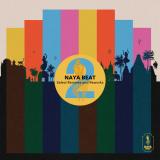
Naya Beat presents ‘Select Remixes and Reworks 2', a selection of new and exclusive dancefloor remixes featuring Thomaas Banks (Psychemagik), Dino Soccio (Pleasure of Love), Turbotito & Ragz (Naya Beat), and Woolfy vs. Projections. Putting a South Asian twist on the classic disco 12” remix format, Naya Beat have given some of dance music’s most exciting producers access to their storied back catalogue. Torchbearers of West Coast balearic, the California duo Woolfy vs Projections deliver an infectiously groovy electro funk version of Nainan Da Pyar De Gaya by Turbotito & Ragz and Say She She’s Piya Malik. Label cofounders, Turbotito & Ragz add some Naya Beat house flavour to Greek duo Boys’ Shorts Going Out Hoping To See You adding vocals by Australian Indian actress Pallavi Sharda. Thomaas Banks, one half of the celebrated UK duo Psychemagik, provides a scintillating dark wave remix of Tu Aaja by British Asian new wave pioneers Pinky Ann Rihal. And finally, Dino Soccio, head honcho of the LA-based disco edits label Pleasure of Love brings us a smooth as butter extended disco remix of Asha Puthli & Say She She’s recent classic Pawa! Cut to vinyl for the discerning DJ and listener by multi-Grammy-nominated Frank Merritt at The Carvery, the EP comes in a beautifully designed 12” disco sleeve with centre label cutout.
On its latest album »Music For Air«, the Berlin-based interdisciplinary duo Gamut Inc explores new possibilities of the computer-controlled pipe organ — from hypervirtuoso excess to nuanced automation and rhythms beyond the fixed grid. Composed and recorded during a two-week residency in Toulouse, the pieces move between harmony and noise, conjuring a euphorically intoxicating maelstrom of overlapping, accelerating sound.
Gamut Inc’s work with the computer-controlled organ actually began in 2009 with a commission from ON – Neue Musik Köln for the Kunst-Station Sankt Peter — at a time when few congregations were ready to open their instruments to this kind of work. When the duo of Marion Wörle and Maciej Śledziecki officially founded the ensemble in 2013 as an interdisciplinary project, they first developed their own music machines with instrument builder Gerhard Kern, returning to the organ in 2018 when more churches and venues had opened their doors … and Gamut Inc carried their practice across Europe and beyond, developing AGGREGATE (first a concert series and then an annual festival) into a platform dedicated to organ music of the 21st century.
Sharpening a critique of mechanisation, digitality, and the human in between, the project is conceived around the construction of pre-modern instruments and the control of these instruments by contemporary technologies, resulting in an aesthetic that bridges the very old and the very new. Recent works include the human-machine trilogy »Over The Edge Club« (2021), »Rossum’s Universal Robots« (2022), and »Zeroth Law« (2023, performed at Deutsche Oper Berlin with the RIAS Chamber Choir and the Logos Robot Orchestra), and »Black Square« (2025), a wind-dynamic modular organ built by Tony Decap, inaugurated at CTM Festival and broadcast on Deutschlandfunk Kultur and SWR Kultur. Their organ installation AGGREGAT#10, commissioned by Sónar Festival, was acquired for the permanent collection of Palau Güell Barcelona in 2022.
Gamut Inc’s latest album »Music For Air« was composed and recorded during a two-week residency in Toulouse on the wind-dynamic organ »L’Explorateur«, with individually computer-controlled wind pressure per pipe. The seven pieces move between harmony and noise, conjuring a euphorically intoxicating maelstrom of overlapping, accelerating sound and again exploring new possibilities of the computer-controlled pipe organ — from hypervirtuoso excess to nuanced automation and rhythms beyond the fixed grid. Sensual and ecstatic.
The Rio-based project Pra Gira Girar presents a new interpretation of the song Atabaque Chora, originally made famous by the trio Os Tincoãs. Written by Dadinho and Mateus Aleluia, the piece opens the group’s iconic 1977 album Os Tincoãs —and has now been chosen to mark the beginning of Pra Gira Girar’s own recording journey.
Formed by Alvaro Lancellotti, Michele Leal, and Alan de Deus on vocals, Pedro Costa on guitar, Kassin on bass, Zé Manoel on piano and vocals, Zero Telles (in memoriam) and Anna Magalhães on percussion, and Diogo Gomes on trumpet, the project was born from Alvaro Lancellotti’s long-standing admiration for the work of Os Tincoãs and his wish to create a live show celebrating the legendary trio.
For a year, Alvaro, Michele, Alan, and Pedro made up the core of the group, meeting weekly for rehearsals that became a deep dive into Os Tincoãs’ intricate vocal arrangements. These sessions were essential to recreating the grandeur and complexity of the Bahian trio’s music. Pedro Costa transcribed the vocal lines and, together with Michele Leal — a singer-songwriter with a background in choral singing — adapted the arrangements for a formation that, unlike Os Tincoãs, features a female voice.
Trumpeter, rapper and sonic wanderer Pan Amsterdam has carved out one of the most distinctive voices operating at the intersection of jazz and hip-hop today.
Pan Amsterdam is a musical enigma wrapped in an enduring riddle. His creator is a jazz musician from Houston who’s found fame working with Detroit punk rock God, Iggy Pop, and British indie royalty, Metronomy, and now makes shapeshifting, adventurous hip hop out of the music’s spiritual home, New York.
He’s an irreverent character born out of frustration and named after a misunderstanding, yet one who’s on the verge of releasing his fifth album of truth-slaying, genre-crossing rhymes and beats. The result is a catalogue that feels both deeply rooted in Black American musical tradition and completely untethered by convention.
Pan Amsterdam returns with ‘Panarama’, his fourth full length album and a bold reassertion of his hip hop identity, released via Def Pressé. Created by Houston-born, New York-based musician and composer Leron Thomas, the record finds Pan Amsterdam embracing the harder edges of his sound while continuing to blur the lines between jazz improvisation, abstract rap, punk attitude, and experimental production
Written as a response to contemporary life and the endless cycle of information, conflict and distraction that defines modern culture, ‘Panarama’ unfolds as a stream of consciousness journey through hyper-normalised realities. Across sixteen tracks, Thomas navigates social commentary, personal reflection, absurdist humour, and cultural critique, delivering his observations with the same spontaneity and freedom that have become central to the Pan Amsterdam project
Lead single ‘Szechuan Beef’, produced by acclaimed collaborator 1FS, serves as one of the album’s defining statements. Built around Thomas’ signature free-flowing delivery, the track explores the overwhelming nature of contemporary life, where domestic conflict, social division, entertainment scandals and political discourse become flattened into a constant stream of content.
In Thomas’ own words: “My stream of consciousness style comes quite naturally to me due to the conditioning of scroll down culture where everything, no matter how minor or extreme, is hyper normalised.”
Elsewhere, the track ‘Vanilla Ice’ was written in response to widely publicised ICE killings and the speed at which tragedy is absorbed and forgotten within online culture. Thomas channels the anxiety and emotional disorientation of endlessly consuming information, allowing his thoughts to unfold in real time as social commentary collides with everyday digital noise. The result is both deeply personal and sharply observational, reflecting the fragmented reality of modern life. Other album highlights include the cinematic, Interpol-esque opener - ‘Old Friend’ complete with shimmering guitar lines and an far-reaching introspective, no-filter vocal as Thomas teams up with Nick Zinner (Yeah Yeah Yeahs) and Brad Truax (Interpol) across multiple tracks, often the production traverses left-field indie territory, but always maintaining Pan Amsterdam’s unique musical identity throughout. For the hip hop purists and beats lovers there are plenty of riches to discover from the clever nostalgic sample flips of ‘Cutlery’, the sleepy lofi of ‘Shuriken’ and the wonky LA beat scene / early Flying Lotus era beats of ‘Drunken Noodles’ - all boasting quick witted lyricism. ‘Deep Fried Shiney Things’ explores early electro and industrial sonics while album finisher is an upbeat new wave / indie band cut which sees Thomas take a break from rapping, but of course never letting up on the sharp observations nonetheless
While his previous record explored more alternative territory, ‘Panarama’ marks a deliberate return to rap, as Pan Amsterdam explains:
“I just wanted to do a rap album again.I enjoyed making my last album, but I felt like rapping again. I like to have the freedom to move in between musical worlds that suit the current state I’m in. Frequency accommodating frequency.”
This philosophy runs throughout the album. Tracks move effortlessly between jazz-inflected arrangements, experimental beats, punk energy and underground hip hop aesthetics, allowing ideas to evolve organically rather than conforming to traditional structures. Thomas describes himself as an improviser first and foremost: “I think like an improvisor. That’s how my albums pretty much move. It’s improvisation.”
Featuring additional contributions from Spice Programmers, AnOtter and Mr. Shn, ‘Panarama’ presents a wide-ranging cast of collaborators while remaining firmly rooted in Thomas’ singular creative vision. The record embraces contradiction, humour and unpredictability, capturing fleeting thoughts and observations with the same freedom and spontaneity that define jazz improvisation itself.
A musical enigma wrapped in an enduring riddle, Pan Amsterdam has built a reputation as one of contemporary music’s true outsiders. The project emerged from frustration, experimentation and artistic freedom, with Thomas drawing equally from his background as a jazz musician and his collaborations with artists including Iggy Pop and Metronomy. Operating from New York while carrying the spirit of Houston’s musical heritage, Pan Amsterdam has developed a distinctive voice that sits comfortably between avant-garde jazz, underground hip hop and experimental music.
Reuniting with Def Pressé for ‘Panarama’, Thomas explores what he describes as the more hardcore side of his artistic identity:
“They let me do anything and everything I wanna do so long as it’s on audio, and I need that freedom. What may verbally be perceived as vulgar to one group of people may be very thoughtful and a poignant description of the times that we’re presently in, so I’m glad that I’m part of a label home that understands that.”
A new producer-led project from musician and composer Nitzan Dana, Islands on Tape arrives with Dust Conspiracy, a cinematic and deeply textured three-track EP balancing vintage exotica, library music, psychedelic groove and modern beat culture.
Previously known for his work with psychedelic post-rock outfit Meuban, Dana created Islands on Tape as a separate artistic identity, a space to explore instrumental composition and studio experimentation through a more personal lens. Across the EP, he draws on a wide palette of influences, from Sven Wunder and Maston to exotica pioneer Les Baxter, alongside the sample-driven worlds of Madlib and MF DOOM. The result is a record that feels loose and organic in spirit while remaining intricately arranged and carefully constructed throughout.
Recorded across just three sessions with a close circle of collaborators, Dust Conspiracy draws together live drums, flute, percussion, surf guitars, Farfisa organs and atmospheric textures into a sound equally indebted to 1960s soundtrack music, dusty hip-hop production and classic exotica records.
Opening track “Dust Conspiracy” began with a bassline inspired by late-night listening sessions and crate-dug hip-hop production. Initially built around sampled drums, the piece evolved into a fully live recording featuring drummer Lotan Yaish (El Khat, Şatellites) and percussionist Ron Avidan. Swirling organs, creeping rhythms and heavy cymbal work give the track the feel of a lost 1970s espionage soundtrack, smoky, hypnotic and cinematic.
Blending cinematic soul, psychedelic groove, exotica and rhythm-heavy instrumental production, Dust Conspiracy introduces Islands on Tape as a richly detailed new studio project, equally suited to late-night headphone listening, imagined film sequences and dusty, atmospheric dancefloors.
In the spring of 1971, somewhere between Brussels, Paris and a collective pop fever dream, Le Monde Fabuleux Des Yamasuki landed on vinyl. It sounded like nothing else then and it still does not today. More than half a century later, Sdban Records proudly presents a reissue of this singular cult album, available from April 3, 2026 on vinyl.
The album was produced by Jean Kluger and written both by Jean and Daniel Vangarde (aka Bangalter, later the father of Thomas Bangalter of Daft Punk), who were alreadywell ahead of their time, long before electronic music rewrote the rules of pop culture.
Released under the name Yamasuki, also referred to as The Yamasuki Singers, or The Yamasuki's, the project was never intended as a conventional band. It was a studio-born fantasy, a concept album disguised as a pop record. What began as a standalone single quickly expanded into a full-blown pan-cultural pop opera that ignored genres and common sense with joyful abandon.
Musically, the album sits at a delirious crossroads. Psychedelic pop collides with funk rhythms, samba and bubblegum melodies, full of chants and choruses in a phonetic pseudo-Japanese, written with the help of a dictionary. Kluger and Vangarde famously recruited a children's choir to perform the vocals, and for added spectacle, they brought in a Japanese judo grandmaster, whose ritualistic shouts and battle cries erupt throughout the record.
Several singles were released. One of them, Yamasuki, with accompanying dance move, appeared in the United Kingdom and France on John Peel's Dandelion label, a fitting home for a record that thrived on the margins of pop culture. Its B-side, Aieaoa, proved even more potent. In 1975, the song was reborn as A.I.E. (A Mwana) by Black Blood, an African group recording in Belgium, this time sung in Swahili. That melody would travel even further. Aie a Mwana became the debut single of English pop group Bananarama, and in 2010 it resurfaced once more as Helele, an official song of the FIFA World Cup, recorded by South African singer Velile Mchunu with Danish percussion duo Safri Duo. That version became the most widely known incarnation of the song. With Jean Kluger directly involved, it was less a cover than a continuation of the original idea.
The album's afterlife did not stop there. Over the years, Yamasuki has been quietly sampled, covered, and featured across media far beyond the realm of novelty pop. Kono Samourai was sampled in The Healer by Erykah Badu (2007), produced by Madlib, while Yama Yama has found its way into recent pop culture as well: appearing in the television series Fargo, on Angus Stone's project Dope Lemon, and on the 2008 Late Night Tales compilation curated by Arctic Monkeys drummer Matt Helders. Proof, if any were needed, that this strange little record carries a deeper musical DNA than its playful exterior might suggest.
This new reissue of Le Monde Fabuleux Des Yamasuki proves the renewed interest and respect for this cult album, faithful to the original spirit while finally giving it back the physical presence it deserves. In an era obsessed with genres and algorithmic neatness, Yamasuki still laughs, dances and karate-kicks its way past definitions. It reminds us that pop music can be playful without being disposable, strange without being cynical and joyfulwithout explanation. The world of Yamasuki was always fabulous, we are just lucky it found its way back to us!
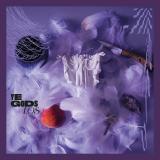
In William Blake’s Jerusalem, he argues that imagination itself is “The real and eternal world of which this vegetable universe is but a faint shadow” – it seems Antoni Maiovvi, would agree. Especially given that Ye Gods, his latest and most monolithic project to date, arrived directly from a dream. In this dream, Jaz Coleman of Killing Joke took him to task for easing off on his longtime study of hermetic ritual magick, and instructed him to atone by making a record under the name Ye Gods. Convinced this path was the correct one, he was duty bound to comply.And sure enough, the Ye Gods project began to evolve and metamorphosise, until this vehicle for ‘Occult Devotional Electronics’, became a beast capable of delivering ‘Los’ the towering and transformative new album for Rocket Recordings. Rich with texture, emotive songcraft and cinematic atmosphere across three expansive tracks, it’s a work that breaks new ground for this intrepid polymath. Somewhat akin to the creative deep-dive that Scott Walker took int
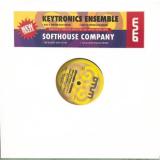
It all began in the late 1980s with *Calypso of House* by K.T.E. (released by Irma Records), a track that made history
in Italian house music.
The man behind the project, Francesco "Kekko" Montefiori, went on to collaborate with Claudio Rispoli (aka DJ
MozArt) under the name SOFTHOUSE COMPANY, creating cult classics like *What You Need*.
He later formed the duo Montefiori Cocktail with his twin brother, Federico "Chicco" Montefiori, touring the world together.
Now, the story continues.
Kekko Montefiori and Lorenzo "Meo" Meoni (resident DJ at BICIO PAPAO)
are launching OTUM Records to revive the Softhouse Company and Keytronics Ensemble projects.
The goal: to capture the original energy of the Italian House Music "Golden Age" and project it into the future.
No nostalgia—just high-quality dance music.
"Otum" means "excellent" in the slang of Italy’s Romagna region.