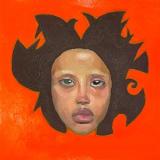
Mike Ladd. Diejenigen, die ihn kennen, sprechen diesen Namen mit einer gewissen Ehrfurcht aus. Wenn du mir eine unvollkommene Analogie gestattest: Ladd ist der Terrence Malick des Underground-Hip-Hop - ein kompromissloser Autor, dessen frühe Werke sowohl unkonventionell als auch von der Kritik gefeiert waren, bevor er sich abrupt aus der Szene zurückzog, die er mit aufgebaut hatte, und nach Paris abhob, um nie wieder von sich hören zu lassen. Natürlich ist die Realität komplexer als die Legende. Mike Ladd hat nie aufgehört, Musik zu machen; im Laufe der Jahre ist er bei allerlei unerwarteten Kollaborationen aufgetaucht - wer könnte seinen mitreißenden Auftritt auf billy woods' ,Aethiopes" vergessen -, hat den Soundtrack zu einer Netflix-Serie beigesteuert und mit bildenden Künstlern an Orten wie dem Pantheon in Paris zusammengearbeitet. Dabei sind all die Bühnen, auf denen er als Teil verschiedener Tournee-Bands und Live-Acts für Furore sorgte, noch gar nicht mitgezählt. Dennoch liegt Ladds letztes Soloalbum mehr als zehn Jahre zurück, und sein Meisterwerk ,Welcome to the Afterfuture" erschien Anfang 2000. Wenn wir der Analogie folgen wollen, ist ,Nonechosen" Mike Ladds ,The Thin Red Line. Ein unerschütterlicher Beweis dafür, dass sich der Künstler weiterentwickelt und gewachsen ist, dabei aber dieselbe Gravitas bewahrt hat, die seinen Namen zu dem gemacht hat, was er ist. Hier sind wir nun, tief in der ,Afterfuture", und es ist, als hätte Ladd schon immer auf diese Zeit gewartet und auf diesen Moment hingearbeitet. ,Jetzt weißt du, warum ich auf meinem Posten geblieben bin", rappt er auf ,Nonechosen", überzeugt davon, dass sich seine Geduld ausgezahlt hat. ,Nonechosen" ist ein Soloalbum, aber Ladd wird dir als Erster sagen, dass er es nicht allein geschafft hat; er hat schon immer mit alten Freunden zusammengearbeitet. No Surrender und Tom Degeeter haben an jeweiligen Tracks mitgewirkt. Sobald Mike das Album mit seiner eigenen Produktion zu 95 % fertiggestellt hatte, gab er es an Preservation weiter, der das Projekt mit ein paar gut platzierten Feinschliff-Maßnahmen auf ein neues Niveau hob. Backwoodz Studioz fühlt sich geehrt, Teil von Ladds kometenhaftem Comeback zu sein, und freut sich darauf, diesen wegweisenden Künstler einer neuen Generation von Hip-Hop-Fans gebührend vorzustellen, wenn wir schon dabei sind.
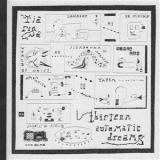
Frisch aus den Höllen von ,Misterio Lounge 3000" (2024, lumpy/Inscrutable Records), bewegt sich die berüchtigte Gruppe aus Mexiko-Stadt weiterhin zwischen kosmischer Elektronik der 70er,minimalistischem Elektro-Punk und dem Erbe des Techno-Pop aus dem Mexiko-Stadt der 80er. "The frogs went to sleep this afternoon; they started dreaming". Und hinter all dem verbirgt sich ein tiefgreifender Impuls der Metamorphose, der keinen Raum für Ruhe lässt und ein ,Ambystoma mexicanum" erweckt, frei von jeglicher Fußball- und Kommunalpolitik-Werbung, damit es uns von seinen Träumen erzählen kann. Es ist auf eine Reihe automatisierter Wahrnehmungen gestoßen, gefolgt von gepunkteten Linien, die auf den ersten Blick wie unverbundene Bildausschnitte wirken, in denen sich jedoch in jedem Einzelnen eine Vielzahl von Geschichten offenbart. 13 Songs, 33 U/min
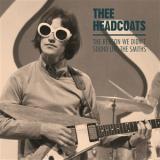
Zwei neue Songs von Thee Headcoats in einem passend an die Smiths angelehnten Cover! Die A-Seite ist aus ihrer kommenden LP "Children Of The Sect" und die B-Seite exklusiv auf dieser Veröffentlichung. Wir haben mit Billy Childish über die Single gesprochen_ Frage: "Hat dir irgendetwas an den Smiths gefallen?" Antwort: "Ja. Les Dawsons Version von ,Girlfriend in a Coma" (ich glaube, das ist der richtige Titel). Eigentlich habe ich sie gehasst, aber sie hatten ein paar ganz ordentliche Songtitel. Ihr Gitarrist kam mal auf mich zu und sprach mich an, als wir mit Modest Mouse in der Albert Hall mit unserer 100-Watt-PA spielten - er war sehr nett." Frage: "Auf dem Cover ist ein Bild von Dave Davies zu sehen. Was gefällt dir an den Kinks am besten? Hast du Ray oder Dave jemals getroffen?" Antwort: "Ich bin in den 1960er Jahren mit den Kinks aufgewachsen, zusammen mit den Stones, den Beatles, Bob Dylan und Jimi Hendrix. Als ich 1977 gefragt wurde, ob ich bei den Pop Rivets singen wolle, schlug ich vor, dass wir ,Hippy Hippy Shake", ,Wild Thing" und ,You Really Got Me" spielen sollten - Was mir an den Kinks am besten gefällt? Ich mag die R&B-Kinks? Daves Gitarrenspiel, und wir alle stehen total auf den tollen Schlagzeuger und Bassisten, und natürlich schreibt Ray gute Songs - also: Was gibt's da nicht zu lieben? Abgesehen von einer ganzen Menge. Ich habe noch nie einen echten Kink persönlich getroffen, aber wir kannten ein Mädchen, das sie im Rochester Odeon spielen sah. Sie und ihre Freunde baten Dave um ein Autogramm, und er jagte sie schreiend den Star Hill hinauf, wobei sein kleiner Stolz und seine Freude heraushingen."
Rubbermaidxxx is a recent music performance project by the Irish artist Anna McCarthy, rather than simply the title of one autonomous artwork. Rubbermaidxxx is a character or unstable identity, an emancipatory underdog with a heart for daredevilry. The project sits naturally within McCarthy’s larger practice, which moves between drawing, assemblage, happenings and collective actions.
Clad in a black balaclava and fetish climbing wear, she abseils from buildings before entering the stage. For the first performance in New York City, she was invited by Kyp Malone of TV on the Radio to perform at his club Francis Kite Club in Alphabet City, NYC and since has continued to make a name for herself hanging off façades, singing, dancing and mopping the floor together with her performance collaborators Miss Philip a.k.a. Philip Errico and Michael Tapper at Pianos NYC, Kottbusser Tor and Genezarethkirche Berlin or the Villa Stuck Museum in Munich.
The album was produced in Munich and New York in 2025 in collaboration with her brother Nick McCarthy (Franz Ferdinand) and Anton Kaun (Rumpeln). What started as a quick improv turned into a high-energy 4-hour session of the siblings playing manic ball with beats, bass, guitars and vocals resulting in what laid the basis to this album. In the weeks following, Anna McCarthy, who is known for her cut-up production style, reminiscent of albums such as White Noise or Flying Lotus, continued to develop the vocals, performance and music by mixing in an amalgam of field recordings with her narrative spoken word, including sounds of protests, dollar stores or ice-cream trucks, as well as collaborating with the noise artist Rumpeln for the last two tracks of the album.
McCarthy is also known as the lyricist and singer of What Are People For? (debut 2022 on Alien Transistor) with its dystopic dance music candy-cane shows and equally humorously critical tongue-in-cheek bangers such as Bring back the Dirt, Drones or Partytime. Anna McCarthy's spoken word, social urgency and enthusiasm to experiment across mediums is comparable to other contemporaries such as Moor Mother, Miho Hatori, Gonjasufi, Tricky, or Cibo Matto.
The name itself is telling. Rubbermaidxxx evokes elasticity, artificiality, domestic labour and the commercial world of cleaning and garbage. It suggests a body capable of stretching, absorbing filth and cleaning up after society – only to revolt against the role it has been assigned.
Rubbermaidxxx is a master of deception, juggling fact and fiction as a reflection of our times – a diamond thief, a protester, or even responsible for the Louvre heist? This album invites the listener and viewer in, playfully dismantling hierarchies and power structures as she goes through a hopeful amalgam of dance, protest & love songs.
Futurismo are proud to present DEVO’s NITROUS NIGHTMARE, Halloween Live ‘75. Never before released, or heard in it’s entirety, this legendary live performance is presented here in it’s full chaotic glory on limited edition 2xLP and 2xCD. The live release all hardcore Devo fans have been waiting for, Nitrous Nightmare demonstrates a band harnessing their artistic greatness in the purest of forms. This mythic performance captures Devo perfecting some of their most iconic concepts in the raw. Expertly restored, this live recording makes for a thrilling experience, it also captures Devo as a lightening rod for hostility. On Halloween 1975, Devo took the stage at the WHK Auditorium in Cleveland, in a supporting capacity for jazz legend Sun Ra, to perform for a raucous crowd dressed in the finest of Halloween cliché. Already riding high on Nitrous Oxide and booze supplied by the sponsoring radio station, this unaware horde was expecting to see a slick cover band churning out renditions of Bad Company hits, only to be subjected to an act of subversive performance art that would send the growingly aggravated crowd into eventual meltdown. Physical threats ensued, but Devo played on. Acting as a live companion release to Futurismo’s much lauded Art Devo, the tracklist featured here showcases the origins of de-evolution theory in a live setting. These songs would become some of their most famous material, with this recording believed to be the very first time ‘Jocko Homo’ was performed in front of a live audience; the full 12 minute version documented here is sure to please fans, even if it displeased the urban hippies and horror masked onlookers that evening. Whilst Devo may have felt they were trapped inside a negative energy vortex during that era, it is clear in retrospect that the band was using this energy to carve out the genesis of a sonic and visual art that has truly stood the test of time. The music performed that evening would mutate culture for decades to come, long after the denizens of the auditorium packed away their cheap vampire costumes and returned to their day jobs. Spanning 2xLP’s of unreleased live material, most of which has never been heard before, this wondrous performance draws purely from that integral early history. Mixed and mastered directly from recordings kept in the bands personal vaults, this live collection showcases why Devo was, and still is, one of the most important bands in American history. De-evolution is real. The art of DEVO is real. Here is the evidence. This 2xLP is housed in a gloss laminated wide spined sleeve. It has a tracklist that has been sourced directly from the archives, and contains colour inner sleeves and a fold-out containing archival imagery and liner notes by Gerald V Casale.
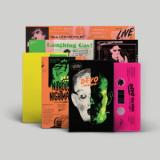
Futurismo are proud to present DEVO’s NITROUS NIGHTMARE, Halloween Live ‘75. Never before released, or heard in it’s entirety, this legendary live performance is presented here in it’s full chaotic glory on Super Limited edition Deluxe cassette format!
The live release all hardcore Devo fans have been waiting for, Nitrous Nightmare demonstrates a band harnessing their artistic greatness in the purest of forms. This mythic performance captures Devo perfecting some of their most iconic concepts in the raw. Expertly restored, this live recording makes for a thrilling experience, it also captures Devo as a lightening rod for hostility.
On Halloween 1975, Devo took the stage at the WHK Auditorium in Cleveland, in a supporting capacity for jazz legend Sun Ra, to perform for a raucous crowd dressed in the finest of Halloween cliché. Already riding high on Nitrous Oxide and booze supplied by the sponsoring radio station, this unaware horde was expecting to see a slick cover band churning out renditions of Bad Company hits, only to be subjected to an act of subversive performance art that would send the growingly aggravated crowd into eventual meltdown. Physical threats ensued, but Devo played on.
Forty years of cassette releases, pressed for the first time on vinyl
First of two instalments exploring the previously unreleased sonic archives of one of Poland’s most enigmatic
living artists - with its first volume focused on his deep listening practice and spiritual reverie (recorded 1990–2013)
The last time Andrzej Dudek-Dürer took a banknote bearing the face of the Polish anarchist Jarosław Dąbrowski from his pocket to trade it for a pair of shoes was in 1969. He bought them for 120zł - the equivalent of 100€ today - and never replaced them since then. Only rebuilt them, year after year, drawing a needle and thread through the leather each time it split, closing one wound before the next one opened. It became a ritual of precision, stitching a record of another year into their soles.
That same year, in Wrocław, he arrived at a conclusion that would recalibrate everything that followed. Convinced he was the reincarnation of Albrecht Dürer, he adopted the surname Dudek-Dürer, stopped cutting his hair and began wearing the same garments every day. It was the first ritual of many, though he wouldn't have called it that yet. Look closely enough, over the decades, and it is always the same gesture, returning in different material: hair growing in a single unbroken strand, a needle drawing thread through leather, sitar strings pulled taut across a neck he built with his own hands and magnetic tape spooling forward inside the cassette boxes stacked against his walls.
None of this began in a vacuum. Dudek-Dürer emerged from the Wrocław neo-avant-garde, in a Polish art world where an exhibition could be cancelled overnight by the stroke of a censor's pen. In 1973, his exhibition Auto-crucifixion was shut down by the state, and for a time he found himself blocked from exhibiting his own art at all - the one force in his life that ever came close to cutting the thread.
He seemed to experience it differently. In 1974, after long, patient research into sitar craftsmanship, he built his first prototype with his brother, a knowledgeable luthier. In 1978, in a smoked-out jazz club, he took his first steps into sound recording with the unreleased album Jazz From Underground with his first band. By 1979, recognition started to travel further than he could.
Turning toward Far-Eastern philosophy, meditation and the idea of reincarnation was another language of freedom for him. It was a way of claiming an inner territory the state could not reach, a border it could not close. Mail Art served a parallel function, reaching further out: in a country that restricted travel and expression, sending and receiving art through the postal system became an act of quiet rebellion.
The body, in his understanding, is only an envelope readied for constant transformation. From this came Metaphysical Telepathy: during the years he could not leave Poland, he treated that confinement as a rehearsal room, sending his mind out ahead on the same thread his body would later follow. Living Sculpture grew from the same root with performances of stillness beside static art objects, until the boundary between the object and the man beside it simply dissolved. Camera Meditation extended the same instinct into photography: a shutter click flattening three dimensions into two so that a single instant could be held forever. Inspired by the pioneers of self-portrait photography like Robert Cornelius, he used it to document time itself, and kept explaining to me: "You know. This is not about vanity. This is about observing time passing.”
The isolation did not end suddenly. It ended the way his own philosophy had already predicted it would, from the inside first. Mail Art quietly solved the problem politics couldn't. Correspondence built during years of confinement slowly worked its way through doors the state itself had kept locked. Contacts made through folded paper and stamps became invitations. Ultimately, invitations became passports.
In 1983 he made his first trip outside Poland, to Germany, in search of the audio technology he couldn’t get his hands on before. In 1985, he was invited by the Indian embassy in Poland to give a sitar concert on an instrument he had spent a decade patiently stringing together - half sitar, half tanpura, built from patience and determination. After the collapse of the People's Republic of Poland, the travels kept unspooling: South Korea, then Mexico, then Australia, Canada, New Zealand, Singapore, Japan and the United States - each stop leaving behind its own small knot of tape, tied off and carried home.
In the decades since, recognition arrived at the same unhurried pace: he conducted workshops at UC Berkeley, served as vice-president for artistic affairs of the Union of Polish Art Photographers and the Union of Polish Visual Artists between 2010 and 2014 and received the Bronze Medal for Merit to Culture - Gloria Artis. His visual work gradually entered collections including the National Museums of Warsaw, the Stedelijk Museum, Tate Modern, MoMA and the Venice Biennale. His musical practice, by contrast, never found that kind of room - left to circulate quietly, sharing his cassette tapes directly, waiting for someone willing to follow it further.
It took months before I could find a way to reach Andrzej Dudek-Dürer - his presence online is very close to nonexistent. Surprisingly, LinkedIn turned out to be the only door still open, a faintly absurd irony given everything else about him. I packed the strict minimum for a three-day trip and an empty notebook and made my way to Wrocław. His headquarters sits in the neighbourhood of Grabyszyn: a two-storey pre-war house that has belonged to his family for generations. The man who opened the door was long-haired, long-bearded, in his trademark leather shoes and patched jeans. We sat in his living room, in front of a computer where decades of recordings sat organised in cryptically named files, surrounded by books and objects that had arrived one layer at a time, leaving room for only two chairs in the middle. His shoes sat by the door, rebuilt so many times they had become their own quiet sculpture. Cassette tapes filled boxes against the walls, almost unlabelled, each one a spool of thread holding decades of sound that had never once been asked for, until now.
I listened for hours: meditating in front of strangers on the porch of a Seoul temple until the tourists stopped taking photos and simply waited with him; a stand-off with border guards at the US–Mexico crossing over an instrument they couldn't identify and didn't trust; a session with the Stockhausen family that he still, decades later, describes like it happened last week. All of it interrupted, occasionally, by the smell of soup boiling and fresh bread warming on the ceramic stove. After two days, it felt like being handed the end of a very long thread and asked, gently, to keep following it. I left with a USB drive holding his full discography, signed with his unmistakable signature.
Astral Meditations From A Living Statue is a length of that thread, drawn out from the boxes stacked against his walls - recordings gathered from different rooms, different countries, different decades. This first record breathes slowly: incense-thick, meditative, built for stillness. A cutting-edge séance in outer space where machines learn how to dream.
It begins with the neo-classical improvisations of Andrzej, space-delayed, recorded at Klub Muzyki i Literatury in Wrocław in 2002. 'When..So' opens the curtains with a deep-rooted meditation accompanied by slow-decaying piano figures illuminated by a candle-lit spirit gathering.
Los Angeles, 1990: a dormant villa, a grand piano, the voice of Bonnie Barnett. 'Exception' is captured in a single room, in a single afternoon - voice and keys circling each other, neither one leading, until the silence between the notes starts to feel like the instrument.
'The Meta...' and 'Tired Of...', recorded at Studio Morandi in Ponte Nossa, Italy, in 1992, settle into a sitar drone built entirely from patience - overtones stacking and beating against each other, strung by a man who never once set foot in India. 'Mastery Of...' follows, recorded the same year at Studio Suski in Łomianki, pushing that same hum further still, until pitch dissolves into a spectral reverie. 'Transcendental Sound', from 2000, closes the first record in a slow bath of celestial frequency - better heard beside the shores of the Odra river.
More than fifty years after deciding that a life could become an artwork, Andrzej Dudek-Dürer continues to inhabit that decision. His shoes keep wearing thin against the earth's crust. His hair keeps growing, one strand at a time. His cassette tapes keep spooling in the dark of their boxes.
Now the thread finds its last shape: a single unbroken groove, spiralling inward from the outer edge to the label at the centre. Never cut - the way nothing else in his life ever was. Drop the needle and it will find that groove and follow it, the same way a needle once followed leather, once followed a border it couldn't cross, once followed string into an instrument that didn't exist until he built it. This record is the other end of a thread that has been travelling for fifty years. For the length of both sides, it rests here, in your hands. This is a timeless proof that the Lord of the New Age was never lost."
Mit Planete Bleue veröffentlicht Philippe Katerine ein weiteres Kapitel in einer Karriere, die seit den frühen 1990er-Jahren konsequent eigene Wege zwischen Pop, Chanson, Performance-Kunst, Film und Literatur geht. Gemeinsam mit Produzent Nikola Feve (NK.F) entstanden Songs, die persönliche Beobachtungen und gesellschaftliche Themen aufgreifen, dabei jedoch stets den unverwechselbaren Blick des französischen Künstlers bewahren. Zwischen Poesie, Absurdität, Melancholie und feinem Humor bewegt sich Katerine fern gängiger Pop-Konventionen und hat sich damit einen festen Platz in der französischen Kulturlandschaft erarbeitet. Planete Bleue richtet sich an Hörerinnen und Hörer moderner französischer Popmusik ebenso wie an das kulturinteressierte Publikum, das Katerine aus seinen Arbeiten als Musiker, Schauspieler und Autor kennt.
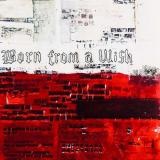
NYC-based artist Computerwife returns with her
highly anticipated sophomore album ‘Born From a
Wish’ via Danger Collective Records. Three years
in the making, the 11-track release elevates her
signature guitar-driven sound with richer
production and broader scope.
Exploring isolation, heartbreak and self-discovery,
singles ‘Nobody’ and ‘Foreverrr’ anchor
Computerwife’s most confident, mature,
emotionally resonant work to date, occupying the
liminal space between digital life and tangible
reality.
This November, Brownswood Recordings will release Mek Do & Mend, the debut album from self-taught producer, multi-instrumentalist, composer and artist Wonky Logic. Although his name may not yet be familiar to everyone, Wonky Logic (AKA Dwayne Kilvington) has spent the past two decades quietly becoming one of the UK's most respected musical collaborators. His career has moved comfortably between London's jazz, electronic and contemporary music scenes, performing and recording with artists including Nala Sinephro, Yussef Dayes, Nightmares On Wax, Shabaka Hutchings and Emma-Jean Thackray. Alongside his work as a producer and composer, he's been musical director for projects with Eddie Chacon, John Carroll Kirby and I.G Culture's LCSM, scored the feature documentary Zandra With A Zed, contributed music to A24's The Smashing Machine, and continues to lead music workshops with young people, refugees and people experiencing incarceration.
Far more than a collection of compositions, Mek Do & Mend is a deeply personal reflection on the people, places and experiences that have shaped Kilvington throughout his life. It's the story of growing up on a Leeds council estate, where music became both a creative outlet and a way of understanding the world. Making music often meant working with whatever was available: a second-hand keyboard, a makeshift studio desk or ageing equipment that simply had to last a little longer. The title itself came from a conversation with his mother, capturing the resourcefulness that defined his upbringing and continued into the making of the album itself, which was written and produced to a tight deadline around touring, family life and Kilvington's work as a musician and educator.
Built from material spanning more than fifteen years, Mek Do & Mend brings together some of Wonky Logic's earliest compositions alongside brand new pieces written during the making of the record itself. Childhood ideas sit alongside music conceived only months before recording, creating an album that draws together a lifetime of writing rather than documenting a single moment. Running throughout are voice notes from family members, teachers, friends, mentors and collaborators—not simply as interludes, but as a reminder that no creative life is ever self-made. Rather than telling his own story outright, Kilvington invites listeners to discover him through the people who've shaped him: an aunt remembering him playing in church as a child, lifelong friends recalling early experiments making beats together, fellow musicians from different stages of his career and his mother describing him in her own words. Together they reveal the invisible network of relationships, philosophies, communities and experiences behind the music. "The album exists somewhere between being a biography and an autobiography," says Dwayne. "The biography is in the voice notes and how other people see me. The autobiography is in the music."
That same philosophy extends to the musicians who appear on the record. Every contributor has played a meaningful role in Wonky Logic's life beyond the studio. Long-time collaborator Luke Wynter, Steam Down drummer Benji Appiah, partner Vanessa Rani, Jonathan Enser, Joe Bristow, Brother Portrait and Nubiya Imani all feature not simply because of their musicianship, but because they form part of the album's story.
Across its fourteen tracks, Mek Do & Mend moves effortlessly between dynamic jazz arrangements, pulsating broken rhythms, delicate, twinkling piano passages, interstellar synth textures and elegant brass lines. Album opener and first single 'Strange Attractor' begins with a shimmering introduction before unfolding into an exhilarating surge of rhythm and momentum. Named after the mathematical concept of the same name, it serves as the conceptual point of origin for the album. Written when Kilvington was just seventeen, the composition reflects the idea that even the most unpredictable lives are guided by hidden patterns that often only become visible with time. Second single 'A Thousand Hands' features the unmistakable vocal tones of Brother Portrait, whose cerebral lyricism drifts over a low-slung, constantly shifting groove as woozy synth lines ebb and flow overhead. At its heart, the track celebrates the family, friends, mentors and collaborators whose often unseen influence shapes who we become, echoing the album's belief that every achievement is, in some way, a collective one. LP focus track 'BAME (Beyond All Marginalised Expectations)' is a lush, spiralling composition, brimming with both emotion and resolve. Reclaiming an acronym long imposed on racialised communities in the UK, the piece transforms it into a statement of possibility rather than limitation: a defiant rejection of stereotypes and a refusal to let identity be defined by other people's expectations.
The album itself only exists because other people believed in it. Isabel Gracefield made the RAK sessions possible, Rick David brought the record together with his characteristically thoughtful mix, and Gilles Peterson committed to releasing it on Brownswood before hearing any of the music. Away from the stage, Kilvington works with the charity Finding Rhythms, writing and producing original records with people experiencing incarceration, while also leading workshops with Arts Train and Dovetail Orchestra.
Recorded live in a single day in Studio One at RAK, Mek Do & Mend was mixed by Rick David through an analogue Cadac console before being mastered by Stuart Hawkes at Metropolis. The aim wasn't nostalgia or audiophile perfection, but to create a record people could return to throughout their lives, discovering something new with each listen.
As Dwayne puts it: "I don't want this body of work to be reduced to a jazz record. It's more like a novel about life told through music."
Erstmals auf Vinyl, direkt von den Originalbändern gemastert: Das 1992er Album "Autocannibalism" von The Aints, einem Bandnamen, den Ed Kuepper während seiner produktiven Phase in den frühen 1990ern verwendete - bezugnehmend auf seine erste Band The Saints. Der australische Musikhistoriker Ian McFarlane beschrieb die Band wie folgt: "Mit ihren rasanten, gitarrenlastigen Stücken bildeten diese Alben das Gegenstück zu Kueppers Soloarbeiten." „In gewisser Weise waren The Aints ein Gegen- bzw. Parallelprojekt zu *Today Wonder*. Die Herangehensweise an das Material war sehr ähnlich, doch der Einsatz anderer Mittel führte zu einem völlig anderen Klangbild.“ – Ed Kuepper
Mit ihrem Solodebut "No Human Tongue Can Tell" gelingt Radie Peat eine eindrucksvolle Auseinandersetzung mit der Essenz der Folk Music. Die Sangerin von Lankum zahlt zu den pragenden Stimmen der sogenannten "Irish Green Wave" und verbindet auf diesem Album ihre außergewohnliche Kontra-Alt-Stimme mit tiefem Respekt fur die irische Gesangstradition. Als Interpretin und Multiinstrumentalistin haucht sie uberlieferten Liedern neues Leben ein und macht sie fur die Gegenwart relevant. Die ausgewahlten Songs erzahlen von Liebe, Verrat, ungewollter Schwangerschaft, Gewalt, Verlust und Widerstandskraft. In Stucken wie "The Moon and Stars" oder "Willow Garden" ruckt Peat weibliche Perspektiven in den Mittelpunkt und verleiht historischen Erzahlungen neue emotionale Kraft. Ihre prazise Stimmfuhrung, vielschichtigen Harmonien und sparsam eingesetzten Arrangements schaffen einen Raum, in dem individuelle Erfahrungen zu universellen Geschichten werden. Zugleich versteht Peat Folk als generationsubergreifenden Speicher menschlicher Erinnerung. Die Lieder tragen Spuren zahlloser Leben in sich, und genau diese Verbindung macht sie zeitlos. Atmospharische Stucke wie "Luisne", das melancholische "Same Old Man" oder das historische "Dark Horse on the Wind" zeigen ihre Fahigkeit, Tradition, Geschichte und personliche Interpretation miteinander zu verweben. Ein weiterer Hohepunkt ist "Still I Love Him", das die Ambivalenz von Liebe und Leid beleuchtet und aus einer Geschichte emotionaler Abhangigkeit eine Erzahlung uber Starke und Selbstbestimmung macht. Auch "Bonnie Boy" und das abschließende Triptychon "Cailin Deas" kreisen um weibliche Autonomie, gesellschaftliche Erwartungen und den Wert personlicher Freiheit. So entsteht ein Album, das archaisch und zeitgenossisch zugleich wirkt. Mit großer Empathie, musikalischer Raffinesse und kunstlerischer Eigenstandigkeit macht Radie Peat die Stimmen vergangener Generationen horbar und schafft eine Sammlung von Liedern, die Trost, Erkenntnis und Verbundenheit vermitteln. "No Human Tongue Can Tell" ist damit weit mehr als eine Bewahrung von Tradition: Es ist deren lebendige Weiterentwicklung.
Mit ihrem Solodebut "No Human Tongue Can Tell" gelingt Radie Peat eine eindrucksvolle Auseinandersetzung mit der Essenz der Folk Music. Die Sangerin von Lankum zahlt zu den pragenden Stimmen der sogenannten "Irish Green Wave" und verbindet auf diesem Album ihre außergewohnliche Kontra-Alt-Stimme mit tiefem Respekt fur die irische Gesangstradition. Als Interpretin und Multiinstrumentalistin haucht sie uberlieferten Liedern neues Leben ein und macht sie fur die Gegenwart relevant. Die ausgewahlten Songs erzahlen von Liebe, Verrat, ungewollter Schwangerschaft, Gewalt, Verlust und Widerstandskraft. In Stucken wie "The Moon and Stars" oder "Willow Garden" ruckt Peat weibliche Perspektiven in den Mittelpunkt und verleiht historischen Erzahlungen neue emotionale Kraft. Ihre prazise Stimmfuhrung, vielschichtigen Harmonien und sparsam eingesetzten Arrangements schaffen einen Raum, in dem individuelle Erfahrungen zu universellen Geschichten werden. Zugleich versteht Peat Folk als generationsubergreifenden Speicher menschlicher Erinnerung. Die Lieder tragen Spuren zahlloser Leben in sich, und genau diese Verbindung macht sie zeitlos. Atmospharische Stucke wie "Luisne", das melancholische "Same Old Man" oder das historische "Dark Horse on the Wind" zeigen ihre Fahigkeit, Tradition, Geschichte und personliche Interpretation miteinander zu verweben. Ein weiterer Hohepunkt ist "Still I Love Him", das die Ambivalenz von Liebe und Leid beleuchtet und aus einer Geschichte emotionaler Abhangigkeit eine Erzahlung uber Starke und Selbstbestimmung macht. Auch "Bonnie Boy" und das abschließende Triptychon "Cailin Deas" kreisen um weibliche Autonomie, gesellschaftliche Erwartungen und den Wert personlicher Freiheit. So entsteht ein Album, das archaisch und zeitgenossisch zugleich wirkt. Mit großer Empathie, musikalischer Raffinesse und kunstlerischer Eigenstandigkeit macht Radie Peat die Stimmen vergangener Generationen horbar und schafft eine Sammlung von Liedern, die Trost, Erkenntnis und Verbundenheit vermitteln. "No Human Tongue Can Tell" ist damit weit mehr als eine Bewahrung von Tradition: Es ist deren lebendige Weiterentwicklung.
Black Sheep is the influential hip‑hop duo from Queens, New York, formed by Andres “Dres” Vargas Titus and William “Mista Lawnge” McLean. Although both members hail from New York, they met as teenagers in Sanford, North Carolina, where their families had relocated. The duo became part of the celebrated Native Tongues Collective, alongside Jungle Brothers, A Tribe Called Quest, and De La Soul, a movement known for its creativity, positivity, and forward‑thinking approach to hip‑hop. After joining forces in 1989, Black Sheep made an immediate impact with their 1991 acclaimed debut album A Wolf In Sheep’s Clothing. The record earned widespread recognition for its inventive rhythms and sharp, witty, often humorous lyricism.
Their second album Non‑Fiction arrived in 1994, continuing their signature blend of jazzy hip-hop and clever, tongue‑in‑cheek storytelling. The album featured two singles “Without a Doubt” and “North South East West”.
Following its release, the group remained largely inactive throughout the decade, with the exception of Dres, who recorded a solo project under the moniker Dres The Black Sheep. Black Sheep eventually returned in 2006 with their long‑awaited third album 8WM / Novakane. Shortly thereafter, Mista Lawnge departed, while Dres has continued to release music under the Black Sheep name.
What is an edit? A correction, a confession, a DJ tool, a mild act of vandalism—or simply the result of listening to somebody else’s record and thinking: very good, but what if this bit went on a little longer?
For his contribution to the Running Back Mastermix series, Gilles Aiken aka Edward opens a folder that has apparently been filling up for quite some time.
The Giegling resident’s thirteen edits reach back through years of DJing, collecting and producing. Made for sets rather than release schedules, they form something like a musical autobiography told through other people’s records: Carl Craig, Roman Flügel, Motohiko Hamase, Kirk Degiorgio, Aubrey, Sven Väth, Michael Rother and more.
From Japanese ambient jazz and Detroit techno to dub techno, house, trance and kosmische music, these are not attempts to improve records that didn’t need improving. They are the small interventions that happen after living with music for a long time: a rhythm exposed, an entrance moved, a passage extended, the unnecessary made necessary.
“These records mean a lot to me,” says Edward. “They consist of edits I’ve gathered over the years, some of them going way back. In a way, they reflect my musical journey. All of these artists have been a huge influence on me as a producer and DJ.”
Usually, such edits remain on hard drives, USB sticks and in vaguely labelled folders. This time permissions were requested, publishers located and, somewhere, presumably, a spreadsheet became very important.
Miraculously, everybody said yes.
Thirteen thank-you notes to the music that helped make Edward Edward. Naturally, they require three records.
Mastermixed accordingly.
Also available on cassette,
What is an edit? A correction, a confession, a DJ tool, a mild act of vandalism—or simply the result of listening to somebody else’s record and thinking: very good, but what if this bit went on a little longer?
For his contribution to the Running Back Mastermix series, Gilles Aiken aka Edward opens a folder that has apparently been filling up for quite some time.
The Giegling resident’s thirteen edits reach back through years of DJing, collecting and producing. Made for sets rather than release schedules, they form something like a musical autobiography told through other people’s records: Carl Craig, Roman Flügel, Motohiko Hamase, Kirk Degiorgio, Aubrey, Sven Väth, Michael Rother and more.
From Japanese ambient jazz and Detroit techno to dub techno, house, trance and kosmische music, these are not attempts to improve records that didn’t need improving. They are the small interventions that happen after living with music for a long time: a rhythm exposed, an entrance moved, a passage extended, the unnecessary made necessary.
“These records mean a lot to me,” says Edward. “They consist of edits I’ve gathered over the years, some of them going way back. In a way, they reflect my musical journey. All of these artists have been a huge influence on me as a producer and DJ.”
Usually, such edits remain on hard drives, USB sticks and in vaguely labelled folders. This time permissions were requested, publishers located and, somewhere, presumably, a spreadsheet became very important.
Miraculously, everybody said yes.
Thirteen thank-you notes to the music that helped make Edward Edward. Naturally, they require three records.
Mastermixed accordingly.
Also available on cassette,
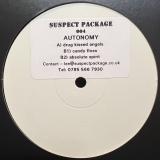
The fourth instalment on Daniel Poli's, Suspect Package released in 2002 produced
by Leonora Epremian aka Autonomy. A three-track EP with soulful techno-inspired
textures and rolling, UK groove. The A side features a collaborative project between
Leonora and Daniel Poli.
Some things in life are meant to be consumed whole: a perfectly paced movie, an oyster at Whitstable Bay, a novella on a sunny afternoon. Into this pantheon of singular experiences comes Runners, the second album from London instrumental rock quartet Dog Unit. The follow-up to At Home, the band’s cult favourite 2024 debut album, Runners moves seamlessly across its 42-minute runtime. It finds the quartet – comprising Sam Walton, Henry Scowcroft, James Weaver and Lucy Jamieson – crafting tracks that undulate, churn and yearn in service of a greater purpose as they plough fertile fields of sonic storytelling. Made over the first four months of 2026 at the band’s studio in Limehouse, East London, Runners finds the core group, alongside producer and long-time collaborator Mark Estall, operating with greater ambition and scope than ever before. This time they commissioned a string quartet specifically for this project, and reappointed noted experimental bass clarinetist Heather Roche, as well as taking in a cavalcade of instruments at their studio, including vintage synths, drum machines, pianos, and harmonium. The band’s music is often compared to cinema, and if At Homewas a charming micro-budget indie flick bursting with potential, Runners is a widescreen realisation that stands up to repeat viewings.
Often credited as the father of multi-media theatre, Alwin Nikolais (1910-1993) took complete creative control over his productions - including cutting-edge approaches to lighting and costume that transformed human bodies into shifting sculptural shapes, while also composing wildly innovative electro-acoustic and synth-based audio as accompaniment.
After initially experimenting with musique concrète and tape manipulation (as demonstrated on the 1959 LP Choreosonic Music of the New Dance Theatre of Alwin Nikolais) Nikolais became the first owner of Robert Moog's synthesizer at the Audio Engineering Society convention in New York in late 1964. Relying heavily on the Moog and later the Synclavier synth/sampler, these 21 tracks document Nikolais' highly-prescient compositions across the mid 1960s through to the late 1980s - existing not only as extensions of his other-worldly choreographic productions, but standalone pieces of foundational mid-century American electronic and experimental music.
"Born in Southington, Connecticut in 1910, Nikolais’s early years and early career were in acting, music and puppetry. It was not until the late 1930s that he began his work as dancer/choreographer in Hartford, Connecticut, where he was commissioned by the Avery Memorial Theatre, a part of the Wadsworth Atheneum, to create an evening-length work to the music of Ernst Krenek. Previously his work and study as a pianist-organist found him accompanying silent films. This sort of accompaniment required from the musician not only a playing skill but also a versatility in improvisation, matching movement to sound, and evoking mood to situation.
Nik was drawn initially to dance by his involvement with the percussion scores used by the illustrious early twentieth century German dancer Mary Wigman. In trying to learn more about percussion, he was lured into dance class and thus his career began. His development of music and dance occurred simultaneously. His introduction to the twelve-tone technique opened his mind to the expanding areas of atonal music, and his dealing with music as sound per se. In 1948, after being appointed director of the Henry Street Playhouse in New York, Nikolais formed the Playhouse Dance Company, later known as the Nikolais Dance Theater, and began his aesthetic orientation toward dance as a study of motion. By the 1950s, he had ceased creating literal dances and began his explorations and eventual milieu as an abstractionist.
Sound became an important part of his abstract theatre. For his first dances, which involved his new thinking of dance as both a visual and kinetic art, he used live percussion scores in which he directed his dancers to play instruments of all nature. There was a combination of children’s toy instruments as well as harsh and resonant automobile brake drums, and other pitched auto parts which he also used to accompany classes. Once he installed his own tape recording machines, he quickly used the limited range these instruments provided in a new way, slowing and increasing speed and reversing sound. He also made the sounds adhere to the choreographic structure (not the other way around), thereby giving the dance its independence from the musical phrasing. But the real need remained: the search for new sound. Nik made a sound library, recording noises and percussion and vocal sounds, which the French aptly called musique concrète. Needless to say, he became a master at splicing bits and pieces.
From 1956 to 1962 Nikolais composed eleven major scores for his theatre pieces using such techniques. In 1963, James Seawright, who at the time was assisting Nik in his productions and also working at the Columbia-Princeton Center for Electronic Music, recorded a sound bank for the production Imago (1963). With this material, Nikolais created his first synthesizer score. Imago won the Paris Grand Prix in 1968 and launched the Nikolais Dance Theatre towards its national and primarily international acclaim.
During the same period, Seawright came to Nik and told him of a young man who had invented and constructed a simplified synthesizer and insisted that Nik visit the electronic fair currently being held in New York. Nik did so and met Robert Moog. He was completely taken by the new machine and after making some suggestions to Moog, (which Moog made), Nik bought the inventor’s first machine with the aid of a Guggenheim Fellowship. Moog himself was astonished by what his machine could produce for Nik. This machine was later acquired by the Museum of Musical Instruments at the University of Michigan at Ann Arbor as the first Moog synthesizer. The Synclavier was Nik’s next source of sound and since the mid-1970s remained the major instrument in the Nikolais soundroom.
Alwin Nikolais has been honored and awarded throughout the world. He has received the French Legion of Honor, the Kennedy Center Honors, National Medal of the Arts, two Guggenheim Fellowships, as well as Mellon, Ford, and Rockefeller grants. He has been a recipient of NEA grants since 1966, been awarded five honorary doctorates, all for his remarkable achievements in Dance Theater. His genius has influenced several generations of artists."
—Murray Louis
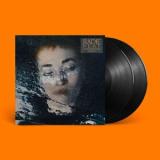
Soak’s fourth album, decembers, was born in literal silence. Contending with an autoimmune disease that prevented them from singing, it was the absence of sound that birthed the Derry artist’s most sonically and lyrically remarkable album to date.
The space that expanded from that enforced quiet, and the life lived within it - transitionary, liminal, escaping in search of connection - cracked something open. What floods in, is an album of stunning tenderness, honesty, and astonishing storytelling from an artist discovering the revelations at the end of the line.
In decembers, we travel on the road through America, walk the frost-glistened paths of Dublin at night, search for a meteor in Portugal, and return home to Derry. Everywhere, here is an artist evolving, exploring, releasing themselves, coming undone, and eventually, becoming.
At the core of the album is this lyrical statement: “Getting lost is getting free.” How brave it is to face the unknown. Because when you really go there, that’s where discovery lies. That discovery in decembers is a creative one, but it’s also about connection to people and place, to forgiveness, and ultimately to prioritising honesty. “A consistent theme is struggling for direction, battling the urge to run,” Soak says, “and instead, planting my feet.”
Soak’s fourth album, decembers, was born in literal silence. Contending with an autoimmune disease that prevented them from singing, it was the absence of sound that birthed the Derry artist’s most sonically and lyrically remarkable album to date.
The space that expanded from that enforced quiet, and the life lived within it - transitionary, liminal, escaping in search of connection - cracked something open. What floods in, is an album of stunning tenderness, honesty, and astonishing storytelling from an artist discovering the revelations at the end of the line.
In decembers, we travel on the road through America, walk the frost-glistened paths of Dublin at night, search for a meteor in Portugal, and return home to Derry. Everywhere, here is an artist evolving, exploring, releasing themselves, coming undone, and eventually, becoming.
At the core of the album is this lyrical statement: “Getting lost is getting free.” How brave it is to face the unknown. Because when you really go there, that’s where discovery lies. That discovery in decembers is a creative one, but it’s also about connection to people and place, to forgiveness, and ultimately to prioritising honesty. “A consistent theme is struggling for direction, battling the urge to run,” Soak says, “and instead, planting my feet.”
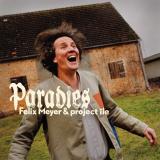
Die Band um ihren Sänger Felix Meyer bleibt auch bei ihrem neuesten Werk „Paradies“ dem Gestus vorausgegangener Veröffentlichungen treu,
wenngleich dieses Fundament in einem erneuerten Gewand erscheint. Autonom, unabhängig, einzigartig - lyrische Poesie in windschiefe Metaphern
gegossen findet über die Musik ihren Weg ins Epizentrum der Emotionen. Im Gegensatz zu den sechs vorangegangenen Alben, klingt „Paradies“
deutlich optimistischer, ohne dabei die delikate Grenze zum Euphorischen zu überschreiten. Die Texte, die zumeist von gescheiterter Liebe,
aufgegebenen Träumen und verlorenem Glauben handeln, gehören einem Typus von Lyrik an, die das Feld der individuellen Bedeutungen in eine
floskelfreie, poetische Gestalt verlagert. Instrumentiert vom mondëna quartet sowie den formidablen Mitmusikern, die bereits die Vorgängeralben
veredelt haben, verhindert der maßvolle und gelungene Einsatz der Streicher, dass das Gesamtkunstwerk „überzuckert“ wirkt. Ganz im Sinne der
Klangstruktur, deren sanfte Melancholie weder technische noch atmosphärische Härten hat. Denn andeuten ist mitunter mehr als ausspielen. Auch
finden sich etliche Songs auf „Paradies“, die in Kooperation mit anderen Künstlern eingespielt wurden. Durch die Mitwirkung von Jan Plewka (Der
versoffene Kater), Norbert Leisegang (Zug nach Marseille), Alin Coen (Himmel aus Stahl), Wencke Wollny (In den Wolken) sowie Fama M´Boup (Blume
mit Dornen), gewinnt das Album eine zusätzliche inspirierende, künstlerische Identität und Originalität, die dieses Album so einzigartig machen.
This has been a very personal project and a mammoth undertaking for us folks here PACE HQ: 12 tracks unearthed from the cult Scottish figure’s completely overlooked back catalogue. Collected archive material from the past 25 years, originally composed as an OST for the feature length film The Flesher (1992) which was also written, shot and directed by Rae. No copies remain. Deep cuts that span G-funk, hip-hop, house, synth-pop, electro, dub, downtempo, funk/soul, R’n’B with appearances from Rae’s heavyweight list of frequent collaborators… Bernie Worrell, Adrian Sherwood and Jimmy Douglass.
"In 1991, the Scottish Rugby Union & the Royal Bank of Scotland, commissioned me tae make the world's first Scotland World Cup music video... they didn’t pay me so I fought back. It took 18 years tae win, and I nearly lost everything. I turned to audio visual art: under the pseudonym Jock Pleasure - I wrote and directed a feature length film called The Flesher as well as creating 100s of full length DVDs and tracks” (Jesse Rae).
One man took on the banks and won, but it took its toll and in this totemic corpus of work Jesse Rae counts the cost. The Flesher is art as pure defiance: “this stuff is very dark and deep, it is such a vast body o’ work, but when I won my battle against the bank, I secretly returned tae Hodge Close (in the Scottish borders) and dropped the entire work sealed in stone intae the deep deep murky depths of that water, where it has remained since 2009. There are no mair copies."
What we have here then is the salvaged remains. A hopeful dunt of Scottish erotica that gets you right in the pits.
Splice DJ Screw with Dean Blunt, Moodymann, Prince, Cocteau Twins, MF DOOM, Luther Van fuckin’ Dross, Barry fuckin’ White; run that through the B-movie videotape static meets Harmony Korine, Les Blank & early Grand Theft Auto. Empty boulevards. Small-town strip joints. Late-night dial-up. Sacrifice and solace. Outside of the OST, there’s a cast of forgotten characters: primary school kids making house jams, teenage popstars from the Scottish Borders, and the rhapsodic Ayrshire soprano NIKA laying down haunting vocals in Miami.
Celebrated as a cult figure in the USA, Jesse’s work has never fully had the appreciation it deserves at home. Not really. Aye, we know Inside Out and The Thistle. But he’s too easily fobbed off as an eccentric outsider: a helmet-wearing, claymore-wielding gimmick. But do we really know the extent of what this man has done - and gone through - for the sake of art?
Two years after Return of the Boom Bap, KRS-One returned with his self-titled second solo album and again enlisted the beat-making excellence of DJ Premier as well as Showbiz, Diamond D and others behind the boards. Lead single 'MC's Act Like They Don't Know' is a stone cold classic that still gets heavy rotation and exemplifies One's lyrical heft. It is backed up by gems like 'Represent The Real Hip-Hop' featuring Das EFX, while Premier strikes again on the state-of-hip-hop anthem 'Rappers R. N. Dainja,' and 'De Automatic' delivers straight boom bap alongside Fat Joe. Political and social commentary runs deep on 'R.E.A.L.I.TY.' and 'Free Mumia' with Channel Live, while 'Wannabemceez' with Mad Lion keeps the sucker-MC disses coming.
Born and raised in the birthplace of House Music, Paul Johnson was known for his raw, soulful, and infectious sound, that helped shape Chicago's house scene and inspired generations of DJs worldwide in particular he was a massive inspiration to Daft Punk and the 'French Touch' scene.
Releasing a vast amount of music throughout the 1990s for some of the most consistently underground dance labels including legendary Chicago imprints Cajual, Relief and Dance Mania he finally gained global fame with his 1999 hit “Get Get Down,” a dancefloor anthem that topped charts across Europe. Despite facing physical challenges, including losing both legs in accidents, he remained an unstoppable force in music—touring, producing, and uplifting others with his resilient spirit and signature groove.
Re-pressed for our 35th anniversary, Paul Johnson’s classic 1995 debut album on Peacefrog, Bump Talkin is a timeless showcase of Paul’s signature deep, soulful house sound, blending irresistible peak-time, piano-driven anthems with a playful touch of bouncy Ghetto House energy.
They dont make em like this anymore...
RIP Paul Johnson.
Creativity has no borders and our artist have no boundaries, no genres attached just freedom.
Deep in Dis intl. proudly presents "SHAHRZAD" (DIDWAX001) by Parisian dj/producer Noiro. We are extremely gassed to showcase Noiro's eclectic and unique approach to club music with this 5 trax EP.
We start the journey with the highly experimental 'Kata Pulse', an intergalactic and powerful trip-hop influenced tune with a strong vocal game.
A2. 'Rude' follows the cosmic vibe perfectly with a bit more aggressive breakbeat but keeping a warm feeling at the same time. Where the b-boys at??
To wrap up the A-side, 'Aube Session' brings those mysterious and high cloud walker feelings. The dance floor is starting to get warm... crashy bells, dj scratches and twisted synth/bass lines turns on the auto pilot for what's to come flipping the record to the other side where Noiro depicts the rest of the story.
B1. '1F' is a club banger, structured around frenzy and hypnotic synths, solid drum patterns and an unflagging muffled bassline.
Closing the EP B2. 'Show Me' confirms it wasn't just fluke ladies and gentlemen, Noiro's distinctive and unique sound is here.
Carly Simon’s No. 1 smash “You’re So Vain” lingers as one of the most clever and famous songs ever recorded. The subject of mass speculation ever since its release, soon after which it occupied the top spot on multiple Billboard charts for weeks, the anthem kept a captive public guessing at the identity of its smug subject for decades. The question surrounding the protagonist’s identity remained perhaps the only mystery on the otherwise sexually open and autobiographically daring No Secrets, Simon’s commercial breakthrough and ‘70s singer-songwriter staple.
Sourced from the original master tapes, pressed at Fidelity Record Pressing in California, strictly limited to 3,000 numbered copies, and housed in a Stoughton gatefold jacket, Mobile Fidelity’s 180g 45RPM 2LP set affords the platinum-certified 1972 effort the finest sonic treatment it’s received on vinyl. Helmed by Richard Perry and recorded at London’s Trident Studios — where Beatles, David Bowie, and Elton John captured landmark LPs — No Secrets touts exceptional production qualities highlighted by this restorative reissue.
Audiophiles and record collectors, take note: This is the first time No Secrets has been available on 45RPM. The wider grooves and dead-quiet surfaces pay instant dividends. Simple, elegant, and disarming, songs seemingly float amid wide, deep soundstages. Simon’s voice takes on a confident, assertive tenor that emerges with accurate imaging, balanced tonality, and palpable presence. String arrangements and backing vocals come through with similar realism.
Enhanced by an all-star cast — Simon’s then-husband James Taylor, Paul and Linda McCartney, Mick Jagger, Lowell George, Klaus Voorman, Bobby Keys, Jim Keltner, Nicky Hopkins, and Bonnie Bramlett are among the renowned musicians who lend a hand — No Secrets advances Simon’s themes of personal introspectiveness, no-holds-barred reflectiveness, and feminist-inspired boldness. She makes every moment of No Secrets worth savoring. Simon invests her all in the songs, handling beautiful ballads, sassy folk-rock numbers, and bluesy fare with calm, composure, and candor.
While acknowledging her own regrets (“You’re So Vain”) and loss (“The Carter Family”), Simon champions the highs (“The Right Thing to Do”) and pains (“His Friends Are More Than Fond of Robin”) of love in a sincere manner indicative of her maturity as both an artist and singer. The New York native distinguishes “When You Close Your Eyes” with deep-rooted spirituality, recalls childhood joys via charming sentimentality on “It Was So Easy,” and and takes ownership of her persona on a cover of Taylor’s “Night Owl.”
“We have no secrets
/We tell each other everything,” Simon sings at the record’s midpoint, encapsulating both the themes and bravura of an effort that was nominated for four Grammy Awards and saw her write or co-write every song but one. Combined with Perry’s savvy instrumental arrangements, her self-assured performances and forthright lyrics grant No Secrets an edginess and relevance immune to the ravages of time.
Carly Simon’s quietly intense sophomore album comes across like an assertive notice nailed to a telephone pole for all to see. Bold, personal, and autobiographical, Anticipation announces the arrival of an artist who won’t back down. While Simon stands her ground on her eponymous debut, she elevates her passion and persona to heightened levels throughout this gold-certified record, dealing in private matters related to love, relationships, and desire. At times, Simon is nothing short of primal. She reflects on the difficulties of retaining your own identity while also giving yourself to a partner. Simon’s connection to her folk roots would never be stronger.
Sourced from the original master tapes, strictly limited to 3,000 numbered copies, pressed at Fidelity Record Pressing in California, and housed in a Stoughton gatefold jacket, Mobile Fidelity’s 180g 45RPM 2LP set of Anticipation lays bare the rich tapestries afforded by the spare blend of soft guitars, mellow orchestration, and dreamy melodies. Audiophiles and record collectors, take note: This is the first time Anticipation has been available on 45RPM. The wider grooves and dead-quiet surfaces prove extremely rewarding.
The rhythmic framework anchored by session pro Andy Newmark’s drumming sounds dynamic and balanced, with songs benefiting from a focused midrange and taut low-end. Simon’s attachment to and investment in each lyric is made evident by way of the intimate, hushed atmospherics and expansive responsiveness. And just as Simon’s vocals feel more transparent and direct, so, too, do the supporting choral arrangements.
Released before the singer-songwriter movement reached full bloom, Anticipation remains remarkable for the high-quality songwriting and Simon’s gutsy stance. The album cover — depicting the vocalist holding the gates at Queen Mary’s Garden in Regent’s Park and seemingly defying anyone to take her on — serves as a metaphor for the content within.
Known for having relationships with high-profile partners, Simon was heavily involved with Cat Stevens leading up to the recording of Anticipation. She draws from her experiences to craft tunes that resonate because of their honesty, realism, and strength. Few of those moments are better known than the Top 20 title track, which Simon composed in just 15 minutes as she waited for Stevens to pick her up for a date. Imbued with the nervousness, tension, and excitement that accompany the moments when a romance could go either way, the Grammy-nominated song presages the feminist-minded vulnerability and burning longing that informs a majority of the record.
On the soulful “Legend in Your Own Time,” also inspired by Stevens, Simon harnesses yearning as a conduit to feel-good paradise. Deemed by Rolling Stone an “absolute clincher, an awesome description of the psychic ravages of gone-nuts, know-nothing love,” her cover of Kris Kristofferson’s “I’ve Got to Have You” moans with no-holds-barred desire and breathtaking sensuality.
For all the wanting Simon pursues on Anticipation, her way of staying in control — vocally and personally — make the record a courageous statement of contemporary femininity. For further evidence, look to the bossa nova of “Summer’s Coming Around Again,” somber “Share the End,” soothing “Three Days,” and sincere “Julie Through the Glass,” a tribute to her young niece.
Simon would achieve international fame with her next album, No Secrets. Yet as this definitive reissue shows, Anticipation suggests the rest of the world was just a little late catching up to her.
In 2023, Kraków-based composer Martyna Basta and Los Angeles-based sound artist claire rousay were invited to Poland by Unsound for a short residency, where they spent a few days trading ideas and concepts, and brainstorming their first collaboration. Initially motivated to create lengthy, expansive pieces together, they also ended up experimenting with shorter vignettes, and ‘hotel room’ expresses these two extremes, featuring three long-form tracks and three brief, euphoric songs. “It wasn’t something we specifically planned,” explains Basta. “It just unfolded that way.” The most important stage of the process, however, was the period that followed the residency, when rousay and Basta began working on their sketches in isolation, trading drafts and sculpting the sounds independently before rousay handled the final mixdown. In the comfort of their own bedrooms, they were better able to reflect their individual creative routines, organically reaching a junction where their music felt truly unified. Even while they were in Poland, the duo joked that it might have been easier if they’d been holed up in separate rooms emailing each other.
Both artists have had an energetic few years: after steadily building a reputation for her diaristic and candid concrète experiments, rousay signed to Thrill Jockey in 2023, releasing the acclaimed ‘sentiment’, ‘a little death’ and the more eaze collaboration ‘no floor’; Basta, meanwhile, followed up 2023’s hallucinatory ‘Slowly Forgetting, Barely Remembering’ and her debut for Belgium’s Stroom imprint, ‘Diaries Beneath Fragile Glass’ with a studio album on !K7’s 7K sublabel: ‘Winged in Collapse’. The title of their collaboration reflects rousay and Basta’s hectic touring schedules in the wake of these releases, the constant feeling of displacement and the emotions that emerge when the environment is in flux. “I know we aren’t the only musicians traveling and creating work at the same time,” says rousay, “but being able to speak about that experience and all the things that come with it was comforting.” And the music itself, assembled from hypnagogic field recordings, spectral voices, electronics and filtered instrumental improvisations, sounds bewitchingly unmoored, not tied to a specific location but hovering around the uncanny space in-between.
Scratchy ASMR sounds introduce us to the opening track ‘zoom’, initially obscuring the duo’s elegiac harmonies. They are careful to let the various elements evolve at their own pace, with the fictile guitar drones melting into the foreground while Basta’s dissociated whispers and rousay’s illusory synths pick out the subtlest subliminal shades. It all builds to the piece’s dramatic third act, when layered chords ring out like organ blasts, enveloping the negative space. The shorter, more anxiety-provoking ‘denim’ is remarkably divergent, a dismantled folk memory pieced together from skeletal piano notes, vaporous choral echoes, haunting string plucks and pulsating feedback. Where the music aligns is in the mood itself, capturing a feeling that’s neither completely abstract nor fully referential. Not ambient exactly, ‘hotel room’ is a suite of soundscapes that gesture towards structure while repeatedly folding in on themselves.
On ‘Lost and Found’, wordless Autotuned ad-libs spiral around delicate guitar plucks and washing waves, coalescing into a faded Polaroid of opiated Americana, and on ‘Where Are You Now’, operatic squeals and corroded orchestral scrapes are juxtaposed with nauseous low-end tones. Evaporating until only industrial whirrs and music box chimes remain, the latter encapsulates the entire album’s chilling liminality, smudging saturated voices with casual electro-acoustic interjections before it erupts abruptly, transforming into a dense, pitch-skewed hymn. ‘hotel room’ plays like a surreal travelogue, teasing listeners with airy familiarities as it humidifies dry, awkward spaces. More a labyrinth of catacombs than a single, fixed chamber, it’s Escher-like – cryptic and seductive – and decked out with personal asides and intimate details that reward the most patient, curious listeners.
Mogwai release this new 30-year, career-spanning compilation. As with their debut single ‘Tuner’ in 1996, Happy Tears is being released via the band’s self-owned and run record label Rock Action Records, also celebrating its 30 year anniversary. The album features the physical release of the incredible dream-come-true pairing of Mogwai and Iggy Pop with the single “Underground”. Happy Tears also features highlights from across the band’s discography, including a previous digital only single and a special new re-working of a Mogwai classic, titled ‘Brand New Paths to Helicon 1,’ featuring the Budapest Art Orchestra, and orchestrated by Adam Wiltzie
(A Winged Victory For The Sullen, Stars Of The Lid).
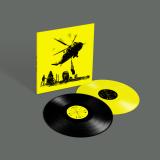
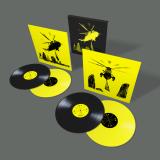
• The DLP features 13 tracks on one artwork matching black and one yellow vinyl.
Mogwai release this new 30-year, career-spanning compilation. As with their debut single ‘Tuner’ in 1996, Happy Tears is being released via the band’s self-owned and run record label Rock Action Records, also celebrating its 30 year anniversary. The album features the physical release of the incredible dream-come-true pairing of Mogwai and Iggy Pop with the single “Underground”. Happy Tears also features highlights from across the band’s discography, including a previous digital only single and a special new re-working of a Mogwai classic, titled ‘Brand New Paths to Helicon 1,’ featuring the Budapest Art Orchestra, and orchestrated by Adam Wiltzie
(A Winged Victory For The Sullen, Stars Of The Lid).
• The DLP features 13 tracks on one artwork matching black and one yellow vinyl.
Sextile, das in Los Angeles beheimatete Duo, das für seinen unbeugsamen, elektronischen Punk-Sound gefeiert wird, hat Details zu ihrem kommenden, starken Album „Yes, please.“ bekannt gegeben, das am 2. Mai 2025 auf Sacred Bones erscheint, sowie Pläne für eine umfangreiche Europatournee in diesem Sommer geteilt. Sextile, die sich derzeit mit ihren Labelkollegen Molchat Doma auf einer großen US-Tournee befinden, kündigen ihr neues Album mit der Single „Freak Eyes“ an, die ihren dunklen, pulsierenden Sound in neue Höhen treibt. Der Song beginnt mit einem fiesen Bass-Growl, das abrupt in einen Techno-Beat übergeht, der mit klirrender Kuhglocke und scharfer Hi-Hat gespickt ist. „I feel the pressure / Man the pressure I feel when we're together“, singt Sänger Brady Keehn kühl, aber bestimmt, in den ersten Zeilen. Inspiriert von der Art und Weise, wie Druck sowohl Herausforderungen als auch Verbesserungen hervorrufen kann, beschwört „Freak Eyes“ elektrisierende Bilder von schäbigen Hinterzimmern auf dem Sunset Strip und von in Leder gekleideten Tanzflächen in Lagerhäusern herauf.
Manche Bands finden ihren Groove und bleiben dabei, andere erfinden sich ständig neu. Sextile gehört zu den letzteren, die den Nervenkitzel einer sich ständig verändernden Landkarte genießen. Das Duo Melissa Scaduto und Brady Keehn aus Los Angeles macht Musik mit Lebenslust und lässt sich dabei von No Wave bis Hardstyle inspirieren. Ihr neuestes Album „yes, please.“ stößt in kühnes Neuland vor, indem es anarchisches Elektro-Feuer mit rohen persönlichen Erinnerungen verbindet - und mit genug aufgemotzten Bässen, um ein oder zwei Boxen zum Platzen zu bringen. „yes, please.“ ist ein Album der Kontraste: eine verletzliche Platte, die ihre Seele ebenso entblößt wie sie im Exzess schwelgt und zeigt, wie weit man seinen Sound treiben kann, wenn man seine Hemmungen abschüttelt. Zusammen verraten die beiden ein Selbstvertrauen, das niemals schwankt, und machen einen kühnen Spritzer auf dem schnellen Intro mit einer Rave-Sirene, die aus einer New Yorker Hausparty der `00er oder einem verschwitzten Brooklyn-Lagerhaus stammt. Auch der Geist des Electroclash pirscht sich an das Gebäude heran, zeigt seine Identität bei den mit Kuhglocken gespickten Donnerschlägen von „Freak Eyes“ und „Rearrange“ und sorgt mit „Women Respond to Bass“ für eine schmutzige Dancefloor-Bombe. „Push Ups“ - mit dem Gesang von Jehnny Beth - ist pure Muskelmusik, gestärkt durch einen wummernden Bass und ergänzt durch Synthies, die so hart hämmern wie Hagelkörner auf einem Glasdach. Aber hinter den Slogans, der Frechheit und der monstermäßigen Tanzenergie verbirgt sich eine Intimität, die man nur finden kann, wenn man sich über schmerzhafte, lebensverändernde Ereignisse öffnet. „Hospital“ und ‚Soggy Newports‘ reflektieren Scadutos erschütternde Erfahrungen in einer staatlichen Einrichtung in New York nach einem beinahe tödlichen Unfall. „Resist“ befasst sich mit Abtreibungsrechten, während ‚Penny Rose‘ das amerikanische Bildungswesen, künstliche Intelligenz und zukünftige Generationen thematisiert. Scadutos elastischer Gesang glänzt überall, von den messerscharfen Synthesizern von „S is For“ bis zu den Trance-Pop-Höhen von „Kids“ mit Izzy Glaudini von Automatic. „yes, please.“ ist eine actiongeladene Dance-Platte, vollgestopft mit wilden, berauschenden Gassenhauern, aber im gleichen Atemzug auch ein Zeugnis dafür, zu leben und niemals zurückzuschauen. Indem sie sich für eine neue, „befreiende“ Art des Musikmachens öffnen, haben Sextile ihr bisher kreativstes Werk geschaffen. Bisher, denn man spürt einfach, dass sie noch so viel mehr zu geben haben.
EVPHORIA is not just a record. It’s a trigger.
140 BPM of tension, ascent and release — engineered to push the dancefloor into collective hypnosis.
Balancing power house propulsion, techno pulse and large-scale emotional lift, the track transforms a strangely familiar sensation into something raw, direct and uncompromising. No nostalgia — only forward motion. A rise that refuses to come down.
The original version unfolds as a sustained euphoric surge: driving percussion, insistent hooks and controlled repetition built for peak-time unity.
The edit version distills that energy into a tighter DJ weapon — immediate, sharp, floor-focused.
On the B-side, Inflammable Noise appears in its instrumental form — pure club mechanics, no vocals, no distraction. A stripped version that amplifies tension and turns the track into a true dancefloor weapon. Already tested in demanding environments, it notably detonated a peak-time moment when Chloé Caillet played it at Berghain — a point where the room tipped over.
EVPHORIA moves freely across scenes — from house floors pushing tempo to techno basements and high-intensity dance spaces — built for DJs chasing the rupture point.
Pressed in a strict limited edition.
Vinyl only — no digital release.
Created under the EVPHORIA imprint by Hardrock Striker — dancefloor architect and driving force behind the Skylax universe — this release stands as a physical, autonomous club statement.
Sleeve artwork by H5 (Daft Punk, Air, Étienne de Crécy, Logorama, Kanye West / Adidas), reinforcing EVPHORIA as both a sonic and visual manifesto.
EVPHORIA doesn’t ask permission.
EVPHORIA triggers.
A record for the moment the room tips over.
Strong international support from Richie Hawtin, Arnaud Rebotini (Black Strobe), Kristian Beyer (Âme / Innervisions), Dax J, Ilario Alicante, Chris Fortier, Michel Gaubert, DJ Mag, KEXP Seattle, Byte FM, Tsugi, Waveform Transmitter and many more.
Outstanding reactions included: "This is just perfect... one of the best things I've heard in recent weeks. Supported!" (Club Furies), "Great release! Adding to Waveform Recommended." (Ste Knight), "Excellent work here! Will play on my show." (Fly Radio 104 FM), "Great – will play." (Radio Reverb), "Energetic and ethereal club energy." (CJSW Canada)
WRWTFWW Records announces the return of Louisiana-based composer and producer Jammin’ Sam Miller with A Link To The Past Tribute, his homage to the music of Zelda (A Link To The Past). His remake of the classic video game score is available as a limited edition green vinyl LP with artwork and sticker sheet by French illustrator Pierre Thyss, as well as an obi strip.
Originally composed by the legendary Koji Kondo, the epic 1991 Zelda soundtrack for the Super Nintendo Entertainment System is one of the most celebrated pieces of video game music ever, a sound that will automatically bring fans to a complete state of pixelized nostalgia bliss.
Jammin' Sam Miller entirely remade the soundtrack from scratch, note by note, without sampling any of the original audio. He recorded his cover versions by finding the original equipment used to create the score, translating the MIDI into a modern studio context, adding his keyboard sounds, and re-mixing and re-mastering the whole soundtrack with modern techniques. The result is a new experience of vintage Zelda music in full HD uncompressed glory and blessed with the beloved Jammin’ Sam Miller touch!
Second album of french incendiary fake big band Parasite Jazz. A krautrock, jazz-non-jazz, experimental album recorded along four seasons by three musicians (Alex Larsen, Tamara Goukassova & Théo Delaunay) from the french fringes ; members of Succhiamo, Diagonale des Yeux, Simple Music Experience, Violent Quand on Aime ... featuring Radio Hito, Kyle Knapp (Deliluh) & Hochiwah.
—
After its first release in 2023, the tiny big band Parasite Jazz brings its public iterations to fruition with “♫”, a testament to an alternate reality, matured voyaging across France over the span of four seasons.
It sees the music flee through exuberant forests and steep troglodytes ; a parallel genre movie with a soundtrack of diluvian rhythms, mocking chants, jazz noir and voodoo accidents. In this shifting, autonomous world, the elastic orchestra—whose members Radio Hito, Valentin Noiret, Kyle Knapp, and Hochiwah keep on appearing and disappearing—plays for nocturnal secrets and feverish cavalcades.